Category: Pharmaceuticals

  • The Penicillin Active Pharmaceutical Ingredients Market Is Witnessing Impact From Rising Bacterial Infections Driving Growth In The Market Due To Increasing Antibiotic Resistance And Global Health Burden

    The Penicillin Active Pharmaceutical Ingredients Market Is Witnessing Impact From Rising Bacterial Infections Driving Growth In The Market Due To Increasing Antibiotic Resistance And Global Health Burden

    The Business Research Company’s 2026 market reports feature enhanced tools like market attractiveness analysis, TAM assessment, and company scoring matrices, along with interactive dashboards, deeper supply chain insights, and startup coverage strengthening the depth, usability, and strategic value of insights.

    How Much Will The Market Value Of The Penicillin Active Pharmaceutical Ingredients Market Grow Between 2026 And 2030?

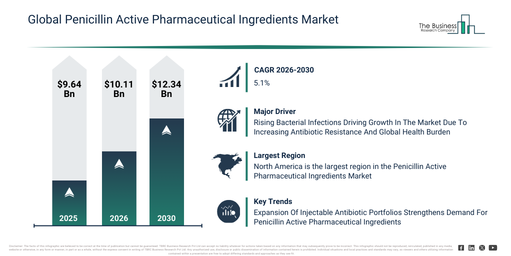
    The penicillin active pharmaceutical ingredients market size has demonstrated consistent growth in recent years. It is anticipated to expand from $9.64 billion in 2025 to $10.11 billion in 2026, reflecting a compound annual growth rate (CAGR) of 4.9%. The historical growth of the market can be ascribed to factors such as elevated global antibiotic demand, the expansion of generic drug manufacturing, an increase in infectious disease treatment, extensive large scale fermentation capacity, and a rise in hospital antibiotic usage.

    The penicillin active pharmaceutical ingredients market size is projected to experience robust expansion in the coming years. This market is anticipated to reach $12.34 billion by 2030, exhibiting a compound annual growth rate (CAGR) of 5.1%. Key factors driving this growth during the forecast period include an escalating burden of bacterial infections, the broadening of generic antibiotic markets, a rise in contract API manufacturing, the strengthening of antibiotic stockpiling initiatives, and an increase in pharmaceutical production within emerging markets. Noteworthy trends expected over the forecast period encompass high purity fermentation processes, the expansion of semisynthetic penicillin production, the adoption of continuous API manufacturing lines, sophisticated antibiotic quality testing, and the development of cost-efficient bulk antibiotic production methods.

    Access Your Free Sample Report For In-Depth Market Analysis:

    https://www.thebusinessresearchcompany.com/sample.aspx?id=33256&type=smp

    Which Key Factors Are Driving The Penicillin Active Pharmaceutical Ingredients Market Growth?

    An anticipated increase in the occurrence of bacterial infections is set to fuel the expansion of the penicillin active pharmaceutical ingredients market in the foreseeable future. These infections are conditions resulting from detrimental bacteria invading and reproducing within the body, leading to symptoms of illness and potential health issues. The escalating frequency of bacterial infections stems from antimicrobial resistance (AMR), where the excessive and incorrect use of antibiotics enables bacteria to develop resistance mechanisms, rendering infections more challenging to treat and more enduring in both clinical and public environments. Consequently, the heightened presence of bacterial infections stimulates a greater need for penicillin-derived antibiotics, which remain vital for addressing prevalent bacterial illnesses and confronting resistant strains in medical settings. For example, data from September 2024, provided by the US-based health research center, the Institute for Health Metrics and Evaluation, indicates that antibiotic-resistant infections might result in more than 39 million fatalities by 2050, with AMR bacteria contributing to a 75% rise in annual cases, from 4.71 to 8.22 million. Hence, the increasing rate of bacterial infections is a key factor propelling the growth of the penicillin active pharmaceutical ingredients market.

    How Are Segments Identified Within The Penicillin Active Pharmaceutical Ingredients Market Segment Framework?

    The penicillin active pharmaceutical ingredients market covered in this report is segmented –

    1) By Product Type: Penicillin G; Penicillin V; Ampicillin; Amoxicillin; Other Product Types

    2) By Formulation Type: Oral Formulations; Injectable Formulations; Topical Formulations

    3) By Distribution Channel: Direct Distribution; Online Pharmacies; Third Party Distributors

    4) By Application: Bacterial Infections; Respiratory Infections; Skin Infections; Urinary Tract Infections; Gastrointestinal Infections

    5) By End User: Hospitals; Pharmacies; Clinics; Academic And Research Institutions

    Subsegments:

    1) By Penicillin G: Injectable Penicillin G; Oral Penicillin G; Long Acting Penicillin G; Aqueous Penicillin G; Crystalline Penicillin G

    2) By Penicillin V: Oral Penicillin V; Tablet Penicillin V; Liquid Penicillin V; Immediate Release Penicillin V; Extended Release Penicillin V

    3) By Ampicillin: Injectable Ampicillin; Oral Ampicillin; Capsule Ampicillin; Liquid Ampicillin; Sodium Salt Ampicillin

    4) By Amoxicillin: Tablet Amoxicillin; Capsule Amoxicillin; Oral Suspension Amoxicillin; Extended Release Amoxicillin; Chewable Amoxicillin

    5) By Other Product Type: Dicloxacillin; Cloxacillin; Flucloxacillin; Oxacillin; Carbenicillin

    Which Trends Are Guiding The Direction Of The Penicillin Active Pharmaceutical Ingredients Market?

    Major companies operating in the penicillin active pharmaceutical ingredients (APIs) market are concentrating on enlarging their injectable antibiotic portfolios to improve treatment accessibility and fulfill hospital requirements for essential anti-infective therapies. Injectable antibiotic products are characterized as ready-to-use parenteral formulations derived from penicillin APIs, engineered to deliver quick and effective treatment for serious bacterial infections. For instance, in March 2025, Avenacy, a US-based pharmaceutical company, announced the introduction of five injectable antibiotic products in the U.S. market: Ampicillin for Injection, USP, Ampicillin and Sulbactam for Injection, USP, Nafcillin for Injection, USP, Penicillin G Potassium for Injection, USP, and Piperacillin and Tazobactam for Injection, USP, all designed to support acute care settings. These offerings encompass penicillin-based formulations utilized in addressing a broad spectrum of bacterial infections, thereby boosting demand for high-quality penicillin APIs and supporting consistent large-scale manufacturing and supply across healthcare facilities.

    Who Are The Companies Competing Within The Penicillin Active Pharmaceutical Ingredients Market?

    Major companies operating in the penicillin active pharmaceutical ingredients market are Merck & Co Inc, Pfizer Inc, Sanofi S.A., Novartis AG, GSK plc, Teva Pharmaceutical Industries Ltd, CSPC Zhongrun Pharmaceutical Co. Ltd, Aurobindo Pharma Ltd, Shionogi & Co. Ltd, North China Pharmaceutical Group Corporation, Centrient Pharmaceuticals B.V., Qilu Tianhe Pharmaceutical Co. Ltd, Jiangxi Fushine Pharmaceutical Co. Ltd, Harbin Pharmaceutical Group Co. Ltd, The United Laboratories International Holdings Limited, Sinopharm Weiqida Pharmaceutical Co. Ltd, Rochem International Inc, Sichuan Kelun Pharmaceutical Co. Ltd, Shandong Lukang Pharmaceutical Co. Ltd, Huaxing Pharmaceutical Co. Ltd, Jiangxi Huabang Pharmaceutical Co. Ltd, and Changzhou RedSun Pharmaceutical Co. Ltd.

    Get The Full Penicillin Active Pharmaceutical Ingredients Market Report:

    https://www.thebusinessresearchcompany.com/report/penicillin-active-pharmaceutical-ingredients-market-report

    Which Region Is The Leading Market For The Penicillin Active Pharmaceutical Ingredients Market?

    North America was the largest region in the penicillin active pharmaceutical ingredients (API) market in 2025. Asia-Pacific is expected to be the fastest-growing region in the forecast period. The regions covered in the penicillin active pharmaceutical ingredients market report are Asia-Pacific, South East Asia, Western Europe, Eastern Europe, North America, South America, Middle East, Africa.

    Request A Customized Penicillin Active Pharmaceutical Ingredients Market Report For Competitive Insights:

    https://www.thebusinessresearchcompany.com/customise?id=33256&type=smp

    Browse Through More Reports Similar to the Global Penicillin Active Pharmaceutical Ingredients Market 2026, By The Business Research Company

    Active Pharmaceutical Ingredients Market Report 2026

    https://www.thebusinessresearchcompany.com/report/active-pharmaceutical-ingredients-global-market-report

    Antibiotics Market Report 2026

    https://www.thebusinessresearchcompany.com/report/antibiotics-global-market-report

    Amoxicillin Market Report 2026

    https://www.thebusinessresearchcompany.com/report/amoxicillin-global-market-report

    Get in touch with us:

    The Business Research Company: https://www.thebusinessresearchcompany.com/

    Americas +1 310-496-7795

    Asia +44 7882 955267 & +91 8897263534

    Europe +44 7882 955267

    Email us at info@tbrc.info

    Follow us on:

    LinkedIn: https://in.linkedin.com/company/the-business-research-company

    YouTube: https://www.youtube.com/channel/UC24_fI0rV8cR5DxlCpgmyFQ

    Global Market Model: https://www.thebusinessresearchcompany.com/global-market-model
  • Growth In The Palmoplantar Keratoderma Market Is Being Driven By Escalating Prevalence Of Genetic Mutations Driving The Market Growth Due To Rising Identification Of Hereditary Skin Disorders

    Growth In The Palmoplantar Keratoderma Market Is Being Driven By Escalating Prevalence Of Genetic Mutations Driving The Market Growth Due To Rising Identification Of Hereditary Skin Disorders

    The Business Research Company’s 2026 market reports feature enhanced tools like market attractiveness analysis, TAM assessment, and company scoring matrices, along with interactive dashboards, deeper supply chain insights, and startup coverage strengthening the depth, usability, and strategic value of insights.

    What Changes In Market Value Are Expected For The Palmoplantar Keratoderma Market Over The 2026–2030 Period?

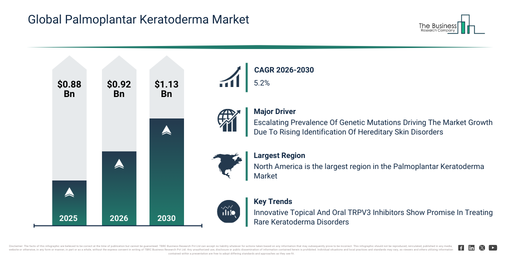
    The market for palmoplantar keratoderma has seen consistent expansion over recent years. This market is projected to expand from $0.88 billion in 2025 to $0.92 billion by 2026, demonstrating a compound annual growth rate (CAGR) of 4.9%. Historically, this growth has been driven by factors such as a rise in the diagnosis of rare dermatological disorders, the proliferation of dermatology specialty clinics, the increased availability of retinoid therapies, growing patient knowledge regarding genetic skin conditions, and enhanced dermatopathology testing capabilities.

    The palmoplantar keratoderma market is anticipated to show significant expansion in the upcoming years. It is projected to reach $1.13 billion by 2030, growing at a compound annual growth rate (CAGR) of 5.2%. The increase during the forecast period is attributable to the rise in targeted dermatology drugs, the broader availability of genetic screening, increased adoption of biologic therapy, the expansion of specialty dermatology pipelines, and more comprehensive orphan disease support programs. Important trends during this period are expected to include targeted biologic skin therapies, advanced genetic diagnostic panels, long-acting topical formulations, combination retinoid treatment protocols, and the integration of home-based phototherapy.

    Access Your Free Sample Report For In-Depth Market Analysis:

    https://www.thebusinessresearchcompany.com/sample.aspx?id=33255&type=smp

    What Primary Drivers Are Shaping The Palmoplantar Keratoderma Market?

    The increasing occurrence of genetic mutations is projected to stimulate the expansion of the palmoplantar keratoderma market in the future. Genetic mutations are alterations or discrepancies within DNA sequences that heighten susceptibility to inherited conditions and various skin disorders. The rising incidence of these mutations is a result of breakthroughs in genomic sequencing and extensive genetic testing, which allow for the detection and identification of a growing number of previously unacknowledged DNA variations across different populations. An increase in genetic mutations contributes to palmoplantar keratoderma by enlarging the segment of the population with inherited skin-gene modifications, thereby prompting earlier diagnosis and a greater requirement for specific management approaches. For instance, in January 2023, a report from the National Center for Biotechnology Information (NCBI), a division of the US-based National Library of Medicine (NLM), revealed that with approximately 140 million babies born each year, roughly 9.8 billion new human mutations are introduced into the gene pool annually. Therefore, the escalating prevalence of genetic mutations is fostering the growth of the palmoplantar keratoderma market.

    What Are The Key Segment Divisions In The Palmoplantar Keratoderma Market Segment Structure?

    The palmoplantar keratoderma market covered in this report is segmented –

    1) By Treatment Type: Topical Treatments; Systemic Treatments; Phototherapy; Surgical Interventions

    2) By Type: Non Lamellar Keratoderma; Lamellar Keratoderma; Epidermolytic Keratoderma; Palmoplantar Keratoderma With Systemic Involvement

    3) By Diagnosis Method: Clinical Examination; Histopathological Examination; Genetic Testing

    4) By Patient Type: Pediatric; Adult

    5) By Distribution Channel: Hospital Pharmacies; Retail Pharmacies; Online Pharmacies

    Subsegments:

    1) By Topical Treatments: Salicylic Acid Preparations; Urea Creams; Emollients; Retinoid Creams; Corticosteroid Creams

    2) By Systemic Treatments: Oral Retinoids; Oral Vitamin D Analogues; Oral Corticosteroids; Oral Immunosuppressants

    3) By Phototherapy: Ultraviolet A Therapy; Ultraviolet B Therapy; Psoralen Plus Ultraviolet A Therapy

    4) By Surgical Interventions: Excision Surgery; Laser Therapy; Dermabrasion; Skin Grafting

    What Trends Are Affecting The Growth Of The Palmoplantar Keratoderma Market?

    Leading companies in the palmoplantar keratoderma market are intensifying their focus on clinical trials to develop innovative drugs, such as TRPV3 inhibitors, aiming to deliver targeted, disease-modifying treatments that extend beyond merely alleviating symptoms. These TRPV3 inhibitors function by blocking the TRPV3 ion channel, which helps to normalize skin cell growth, strengthen the skin barrier, and diminish the pain and thickening associated with palmoplantar keratoderma. For instance, in June 2024, Kamari Pharma Ltd., a clinical-stage biotechnology company, introduced KM-001, a topical TRPV3 inhibitor, following encouraging Phase 1b clinical results. KM-001, formulated as a cream applied twice daily, demonstrated high safety with no severe adverse events, achieving an 87% overall responder rate in patients with pachyonychia congenita and punctate palmoplantar keratoderma type 1. Its unique mechanism of action aids in normalizing skin cell proliferation, enhancing epidermal barrier formation, and reducing pain in affected patients, thus offering a disease-modifying alternative to conventional treatments. Kamari Pharma intends to advance KM-001 into Phase 2 trials while also working on KM-023, an oral TRPV3 inhibitor, for broader keratoderma indications.

    Which Organizations Are Engaged In The Palmoplantar Keratoderma Market?

    Major companies operating in the palmoplantar keratoderma market are LEO Pharma, Krystal Biotech Inc., and Kamari Pharma.

    Get The Full Palmoplantar Keratoderma Market Report:

    https://www.thebusinessresearchcompany.com/report/palmoplantar-keratoderma-market-report

    Where Is The Palmoplantar Keratoderma Market Primarily Concentrated By Region?

    North America was the largest region in the palmoplantar keratoderma market in 2025. Asia – Pacific is expected to be the fastest-growing region in the forecast period. The regions covered in the palmoplantar keratoderma market report are Asia-Pacific, South East Asia, Western Europe, Eastern Europe, North America, South America, Middle East, Africa.

    Request A Customized Palmoplantar Keratoderma Market Report For Competitive Insights:

    https://www.thebusinessresearchcompany.com/customise?id=33255&type=smp

    Browse Through More Reports Similar to the Global Palmoplantar Keratoderma Market 2026, By The Business Research Company

    Actinic Keratosis Treatment Market Report 2026

    https://www.thebusinessresearchcompany.com/report/actinic-keratosis-treatment-global-market-report

    Palm Kernel Fatty Acids Market Report 2026

    https://www.thebusinessresearchcompany.com/report/palm-kernel-fatty-acids-global-market-report

    Neurotrophic Keratitis Treatment Market Report 2026

    https://www.thebusinessresearchcompany.com/report/neurotrophic-keratitis-treatment-global-market-report

    Get in touch with us:

    The Business Research Company: https://www.thebusinessresearchcompany.com/

    Americas +1 310-496-7795

    Asia +44 7882 955267 & +91 8897263534

    Europe +44 7882 955267

    Email us at info@tbrc.info

    Follow us on:

    LinkedIn: https://in.linkedin.com/company/the-business-research-company

    YouTube: https://www.youtube.com/channel/UC24_fI0rV8cR5DxlCpgmyFQ

    Global Market Model: https://www.thebusinessresearchcompany.com/global-market-model
  • Neuroendocrine Prostate Cancer Market Developments Shaping Growth Across The Forecast Period

    Neuroendocrine Prostate Cancer Market Developments Shaping Growth Across The Forecast Period

    The Business Research Company’s 2026 market reports feature enhanced tools like market attractiveness analysis, TAM assessment, and company scoring matrices, along with interactive dashboards, deeper supply chain insights, and startup coverage strengthening the depth, usability, and strategic value of insights.

    What Are The Market Size Estimates For The Neuroendocrine Prostate Cancer Market In 2026 And 2030?

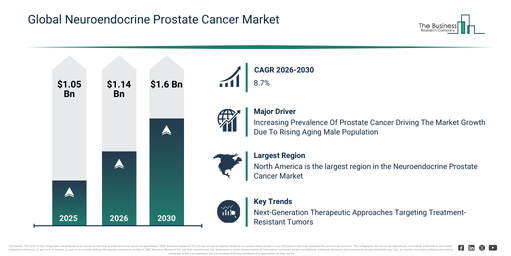
    The market for neuroendocrine prostate cancer has demonstrated robust expansion over recent years. This market is expected to increase from $1.05 billion in 2025 to $1.14 billion in 2026, achieving a compound annual growth rate (CAGR) of 8.5%. The historical growth can be linked to several factors, including an increase in prostate cancer diagnoses, the emergence of resistance to long-term hormone therapy, the diversification of oncology drug pipelines, the advancement of molecular pathology testing, and a greater specialization among cancer centers.

    The neuroendocrine prostate cancer market size is projected to experience robust growth over the next few years. It is expected to expand to $1.6 billion by 2030, demonstrating a compound annual growth rate (CAGR) of 8.7%. This anticipated growth during the forecast period can be attributed to factors such as the increasing adoption of precision oncology, a rise in biomarker-based treatment methods, the broadening of targeted therapies, augmented funding for rare cancer research, and more extensive use of genomic testing. Significant trends predicted for this period include patient segmentation driven by biomarkers, the application of combination oncology therapy protocols, sophisticated molecular diagnostic testing, the expansion of rare cancer clinical trials, and innovative targeted radiopharmaceutical approaches.

    Access Your Free Sample Report For In-Depth Market Analysis:

    https://www.thebusinessresearchcompany.com/sample.aspx?id=33242&type=smp

    What Significant Factors Are Influencing The Neuroendocrine Prostate Cancer Market Expansion?

    The rising incidence of prostate cancer is anticipated to drive the expansion of the neuroendocrine prostate cancer market in the coming years. This condition, a malignant tumor forming in the prostate gland, primarily impacts males aged 50 and above. Its increasing occurrence is largely attributable to the expanding elderly male demographic, as old age represents a significant risk factor for developing the illness. The widespread presence of prostate cancer fosters the development of neuroendocrine prostate cancer by enlarging the total patient population, prolonging exposure to androgen-deprivation treatments, and thereby heightening the probability of therapy-induced neuroendocrine differentiation in advanced and castration-resistant disease forms. As an illustration, the Centers for Disease Control and Prevention (CDC), a U.S. federal public health agency, stated in January 2025 that 255,395 new prostate cancer diagnoses were made in the United States in 2023, with 33,881 men succumbing to the illness. Consequently, the growing occurrence of prostate cancer is fueling the expansion of the neuroendocrine prostate cancer market.

    Which Segments Define The Neuroendocrine Prostate Cancer Market Segment Structure?

    The neuroendocrine prostate cancer market covered in this report is segmented –

    1) By Treatment: Chemotherapy; Hormonal Therapy

    2) By Therapeutics: Immunotherapy; Targeted Therapy

    3) By Disease Stage: Localized Disease; Advanced Disease; Metastatic Disease

    4) By End Users: Hospitals; Oncology Specialty Clinics; Cancer Research Institutes

    Subsegments:

    1) By Chemotherapy: Platinum Based Chemotherapy; Taxane Based Chemotherapy; Combination Chemotherapy; Second Line Chemotherapy

    2) By Hormonal Therapy: Androgen Deprivation Therapy; Androgen Receptor Inhibition; Hormone Synthesis Inhibition; Combined Hormonal Therapy

    What Trends Are Affecting The Direction Of The Neuroendocrine Prostate Cancer Market?

    Leading firms within the neuroendocrine prostate cancer market are prioritizing the creation of novel medications, specifically immune-modulating small-molecule therapies, with the aim of boosting immune responses and achieving better patient results. These immune-modulating small-molecule therapies are compounds taken orally, designed to activate the body’s natural immune system to identify and combat cancer cells. This mechanism assists in overcoming resistance often encountered with conventional therapies like hormone therapy or chemotherapy, by strengthening the immune system’s attack on tumors. A notable example occurred in February 2024, when BioXcel Therapeutics, a US-based clinical-stage biopharmaceutical company, obtained Fast Track Designation from the U.S. Food and Drug Administration for BXCL701. This drug is an immune-modulating small-molecule therapy specifically for neuroendocrine prostate cancer. BXCL701 functions by activating the NLRP3 inflammasome, promoting increased cytokine release, and preparing the immune system to target cancerous cells, thus providing an innovative strategy that works alongside immune checkpoint inhibitors. This Fast Track Designation is anticipated to expedite the clinical progression and regulatory assessment of BXCL701, highlighting its promise in addressing substantial unmet medical requirements in forms of prostate cancer that are aggressive and resistant to current treatments.

    Who Are The Established Players Within The Neuroendocrine Prostate Cancer Market?

    Major companies operating in the neuroendocrine prostate cancer market are Novartis AG, Amgen Inc., Phanes Therapeutics Inc., and BioXcel Therapeutics Inc.

    Get The Full Neuroendocrine Prostate Cancer Market Report:

    https://www.thebusinessresearchcompany.com/report/neuroendocrine-prostate-cancer-market-report

    Which Region Is The Largest In The Neuroendocrine Prostate Cancer Market?

    North America was the largest region in the neuroendocrine prostate cancer market in 2025. Asia-Pacific is expected to be the fastest-growing region in the forecast period. The regions covered in the neuroendocrine prostate cancer market report are Asia-Pacific, South East Asia, Western Europe, Eastern Europe, North America, South America, Middle East, Africa.

    Request A Customized Neuroendocrine Prostate Cancer Market Report For Competitive Insights:

    https://www.thebusinessresearchcompany.com/customise?id=33242&type=smp

    Browse Through More Reports Similar to the Global Neuroendocrine Prostate Cancer Market 2026, By The Business Research Company

    Neuroendocrine Tumor Treatment Market Report 2026

    https://www.thebusinessresearchcompany.com/report/neuroendocrine-tumor-treatment-global-market-report

    Prostate Cancer Drugs Market Report 2026

    https://www.thebusinessresearchcompany.com/report/prostate-cancer-drugs-global-market-report

    Prostate Cancer Nuclear Medicine Diagnostics Market Report 2026

    https://www.thebusinessresearchcompany.com/report/prostate-cancer-nuclear-medicine-diagnostics-global-market-report

    Get in touch with us:

    The Business Research Company: https://www.thebusinessresearchcompany.com/

    Americas +1 310-496-7795

    Asia +44 7882 955267 & +91 8897263534

    Europe +44 7882 955267

    Email us at info@tbrc.info

    Follow us on:

    LinkedIn: https://in.linkedin.com/company/the-business-research-company

    YouTube: https://www.youtube.com/channel/UC24_fI0rV8cR5DxlCpgmyFQ

    Global Market Model: https://www.thebusinessresearchcompany.com/global-market-model
  • Nervous System Active Pharmaceutical Ingredients Market Outlook Highlighting Key Drivers And Market Evolution

    Nervous System Active Pharmaceutical Ingredients Market Outlook Highlighting Key Drivers And Market Evolution

    The Business Research Company’s 2026 market reports feature enhanced tools like market attractiveness analysis, TAM assessment, and company scoring matrices, along with interactive dashboards, deeper supply chain insights, and startup coverage strengthening the depth, usability, and strategic value of insights.

    How Large Will The Nervous System Active Pharmaceutical Ingredients Market Be By 2030 Compared To Its 2026 Market Size?

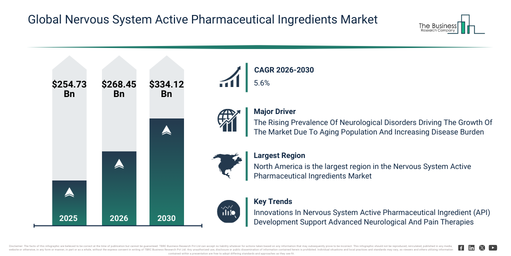
    The nervous system active pharmaceutical ingredients market has experienced significant growth in recent years. This market is anticipated to expand from $254.73 billion in 2025 to $268.45 billion in 2026, reflecting a compound annual growth rate (CAGR) of 5.4%. Historically, this expansion can be linked to several factors, including the increasing prevalence of neurological disorders, the broader application of psychiatric drugs, the growth in generic API manufacturing, a greater number of CNS drug approvals, and the expansion of contract API production.

    The nervous system active pharmaceutical ingredients market is projected to experience substantial expansion in the coming years, anticipated to reach $334.12 billion by 2030, exhibiting a compound annual growth rate (CAGR) of 5.6%. The growth during the forecast period is primarily attributed to the increasing burden of neurodegenerative diseases, the proliferation of specialty cns therapies, a rising demand for high purity apis, an uptick in outsourced api manufacturing, and the development of biologic neuro drugs. Key trends expected in this period include the advancement of high potency neurology api development, the synthesis of complex cns molecules, the emergence of peptide based neuro apis, the introduction of controlled release neuro api formats, and the formation of specialized neuro api cdmo partnerships.

    Access Your Free Sample Report For In-Depth Market Analysis:

    https://www.thebusinessresearchcompany.com/sample.aspx?id=33240&type=smp

    What Major Factors Are Driving The Nervous System Active Pharmaceutical Ingredients Market Forward?

    The expansion of the nervous system active pharmaceutical ingredients market is anticipated to be driven by the increasing incidence of neurological disorders in the future. These disorders encompass a wide array of medical conditions that impair the normal operation of the central and peripheral nervous systems, frequently leading to symptoms like seizures, paralysis, memory loss, or issues with coordination. The primary reason for the rise in neurological disorders is the global aging population, given that elderly individuals are more susceptible to neurodegenerative illnesses such as Alzheimer’s and Parkinson’s disease due to the natural decline and increased vulnerability of nerve cells to damage over time. Nervous system active pharmaceutical ingredients assist in managing neurological disorders by modifying neural signals and safeguarding nerve cells, consequently decelerating disease progression and improving symptom management in conditions including epilepsy, multiple sclerosis, and neurodegenerative diseases. For example, data from the Australian Institute of Health and Welfare, an Australia-based government agency, indicated that in 2024, approximately 425,000 Australians were affected by dementia. This number is anticipated to increase by 2.5 times, exceeding 1.1 million by 2065, with around 662,000 women and 390,000 men included in this projection. Consequently, the increasing occurrence of neurological disorders is a significant factor propelling the expansion of the nervous system active pharmaceutical ingredients market.

    What Are The Main Segments Within The Nervous System Active Pharmaceutical Ingredients Market Segment Structure?

    The nervous system active pharmaceutical ingredients market covered in this report is segmented –

    1) By Product: Cytokines; Vaccines; Fusion Proteins; Therapeutic Enzymes

    2) By Expression System: Mammalian; Microbial Yeast

    3) By Application: Diabetes; Cardiovascular Diseases; Oncology; Neurological Disorder

    4) By End User: Pharmaceutical Companies; Biopharmaceutical Companies; Contract Development And Manufacturing Organizations; Research And Development Laboratories; Generic Drug Manufacturers

    Subsegments:

    1) By Cytokines: Interleukin Cytokines; Interferon Cytokines; Tumor Necrosis Factor Cytokines; Growth Factor Cytokines; Chemokine Cytokines

    2) By Vaccines: Inactivated Vaccines; Live Attenuated Vaccines; Subunit Vaccines; Recombinant Vaccines; Conjugate Vaccines

    3) By Fusion Proteins: Antibody Fusion Proteins; Receptor Fusion Proteins; Enzyme Fusion Proteins; Ligand Fusion Proteins; Multifunctional Fusion Proteins

    4) By Therapeutic Enzymes: Replacement Enzymes; Digestive Enzymes; Metabolic Enzymes; Detoxifying Enzymes; Neuroprotective Enzymes

    Which Trends Are Impacting The Progress Of The Nervous System Active Pharmaceutical Ingredients Market?

    Major companies operating within the nervous system active pharmaceutical ingredients market are concentrating on developing novel solutions, such as cannabinoid-based active pharmaceutical ingredients, to boost the efficacy, safety, and precise delivery of treatments for neurological disorders. Cannabinoid-based active pharmaceutical ingredients (APIs) are highly purified natural or synthetic compounds that deliver therapeutic effects by targeting the body’s endocannabinoid system to aid in managing pain, epilepsy, nausea, and various neurological conditions. For instance, in March 2024, Brains Bioceutical Corp., a Canada-based pharmaceutical company, introduced solid D9 Tetrahydrocannabinol (THC), a cannabinoid-based active pharmaceutical ingredient designed to advance pharmaceutical research and drug development in neurological and pain management applications. This solid D9-THC API exhibits a crystalline structure that enhances storage stability and dosing accuracy compared to traditional cannabinoid extracts, thereby facilitating its use in research and formulation development across therapeutic areas where CNS-active agents are essential. The development of this product underscores the ongoing shift toward more sophisticated API formats capable of supporting precise, scalable pharmaceutical manufacturing.

    Who Are The Companies Participating In The Nervous System Active Pharmaceutical Ingredients Market?

    Major companies operating in the nervous system active pharmaceutical ingredients market are F. Hoffmann-La Roche Ltd., Pfizer Inc., Novartis AG., Thermo Fisher Scientific Inc., GSK plc, Eli Lilly and Company, Boehringer Ingelheim International GmbH, Teva Pharmaceutical Industries Ltd., Cipla Limited, Zydus Lifesciences Limited, Biocon Ltd., Siegfried Holding AG., Alkem Laboratories Ltd., Almac Group, Torrent Pharmaceuticals Ltd., Granules India Ltd., Wockhardt Ltd., Neuland Laboratories Ltd., Hetero Labs Ltd., MSN Laboratories Pvt. Ltd., and Piramal Pharma.

    Get The Full Nervous System Active Pharmaceutical Ingredients Market Report:

    https://www.thebusinessresearchcompany.com/report/nervous-system-active-pharmaceutical-ingredients-market-report

    Which Region Leads The Nervous System Active Pharmaceutical Ingredients Market In Overall Market Size?

    North America was the largest region in the nervous system active pharmaceutical ingredients market in 2025. Asia-Pacific is expected to be the fastest-growing region in the forecast period The regions covered in the nervous system active pharmaceutical ingredients market report are Asia-Pacific, South East Asia, Western Europe, Eastern Europe, North America, South America, Middle East, Africa.

    Request A Customized Nervous System Active Pharmaceutical Ingredients Market Report For Competitive Insights:

    https://www.thebusinessresearchcompany.com/customise?id=33240&type=smp

    Browse Through More Reports Similar to the Global Nervous System Active Pharmaceutical Ingredients Market 2026, By The Business Research Company

    Active Pharmaceutical Ingredients Market Report 2026

    https://www.thebusinessresearchcompany.com/report/active-pharmaceutical-ingredients-global-market-report

    Central Nervous System Drug Market Report 2026

    https://www.thebusinessresearchcompany.com/report/central-nervous-system-drug-global-market-report

    Generic Central Nervous System Drugs Market Report 2026

    https://www.thebusinessresearchcompany.com/report/generic-central-nervous-system-drugs-global-market-report

    Get in touch with us:

    The Business Research Company: https://www.thebusinessresearchcompany.com/

    Americas +1 310-496-7795

    Asia +44 7882 955267 & +91 8897263534

    Europe +44 7882 955267

    Email us at info@tbrc.info

    Follow us on:

    LinkedIn: https://in.linkedin.com/company/the-business-research-company

    YouTube: https://www.youtube.com/channel/UC24_fI0rV8cR5DxlCpgmyFQ

    Global Market Model: https://www.thebusinessresearchcompany.com/global-market-model
  • Monogenetic Disease Therapy Market Analysis Covering Growth Drivers And Future Outlook

    Monogenetic Disease Therapy Market Analysis Covering Growth Drivers And Future Outlook

    The Business Research Company’s 2026 market reports feature enhanced tools like market attractiveness analysis, TAM assessment, and company scoring matrices, along with interactive dashboards, deeper supply chain insights, and startup coverage strengthening the depth, usability, and strategic value of insights.

    From Its 2026 Market Size, What Value Is The Monogenetic Disease Therapy Market Projected To Reach By 2030?

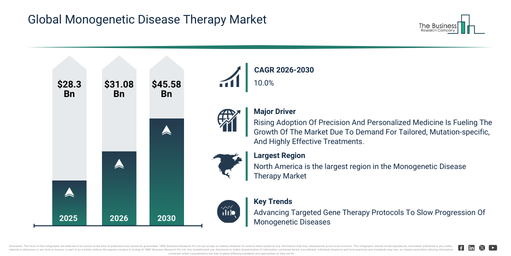
    The monogenetic disease therapy market has experienced substantial growth in recent years. Projections indicate its expansion from $28.3 billion in 2025 to $31.08 billion in 2026, exhibiting a compound annual growth rate (CAGR) of 9.8%. Historically, this growth can be attributed to progress in human genome research, the initiation of early gene therapy trials, an increase in rare disease diagnoses, orphan drug incentives, and advancements in viral vectors.

    The monogenetic disease therapy market size is anticipated to undergo swift expansion over the next few years. It is forecast to achieve a valuation of $45.58 billion by 2030, exhibiting a compound annual growth rate (CAGR) of 10.0%. This projected growth during the forecast period is primarily driven by the advancement of gene editing platforms, the proliferation of rare disease pipelines, higher rates of genetic screening, increased financing for personalized therapy, and wider regulatory approvals. Significant developments expected in this period encompass single gene targeted therapies, programs for gene replacement treatment, RNA-based genetic treatments, gene correction for rare diseases, and the design of precision genetic drugs.

    Access Your Free Sample Report For In-Depth Market Analysis:

    https://www.thebusinessresearchcompany.com/sample.aspx?id=33229&type=smp

    Which Strong Drivers Are Impacting The Monogenetic Disease Therapy Market Growth?

    The monogenetic disease therapy market is projected to see growth driven by the increasing adoption of precision and personalized medicine. This medical approach customizes disease prevention, diagnosis, and treatment according to an individual’s unique genetic, molecular, or lifestyle characteristics to optimize therapeutic efficacy and reduce adverse effects. The rising demand for precision and personalized medicine comes from healthcare providers and patients who seek tailored treatments that achieve maximum therapeutic benefit, minimize side effects, and address individual genetic, molecular, or lifestyle traits. Monogenetic disease therapy supports this by targeting a patient’s specific genetic mutation, enabling highly customized and effective interventions. For example, in February 2024, the Personalized Medicine Coalition, a US-based hospital and health care organization, stated that in 2023, the FDA approved 16 new personalized treatments for rare disease patients, a significant rise from six in 2022. Therefore, the expanding embrace of precision and personalized medicine is fueling the expansion of the monogenetic disease therapy market.

    Which Segment Types Are Examined In The Monogenetic Disease Therapy Market Segment Study?

    The monogenetic disease therapy market covered in this report is segmented –

    1) By Therapy Type: Pharmacological; Surgical; Blood Transfusion; Gene Therapies; Other Therapy Types

    2) By Inheritance Pattern: Autosomal; Chromosomal

    3) By Application: Cystic Fibrosis; Sickle Cell Anemia; Phenylketonuria; Other Applications

    4) By Distribution Channel: Hospital Pharmacy; Retail Pharmacy; Online Pharmacy

    5) By End-Users: Clinics; Hospitals; Diagnostic Centres; Home Healthcare; Other End-Users

    Subsegments:

    1) By Pharmacological: Small Molecule Drugs; Enzyme Replacement Therapies; Protein Replacement Therapies; Immunomodulatory Drugs; Targeted Molecular Therapies

    2) By Surgical: Organ Transplant Procedures; Tissue Repair Surgeries; Gene Editing Assisted Surgeries; Minimally Invasive Surgeries; Corrective Surgical Interventions

    3) By Blood Transfusion: Red Blood Cell Transfusions; Platelet Transfusions; Plasma Transfusions; Stem Cell Infusions; Autologous Blood Transfusions

    4) By Gene Therapies: Ex Vivo Gene Therapy; In Vivo Gene Therapy; Viral Vector Based Gene Therapy; Non Viral Vector Gene Therapy; Genome Editing Based Therapy

    5) By Other Therapy Types: Cell Based Therapies; RNA Based Therapies; Protein Based Therapies; Combination Therapies; Experimental Therapies

    Which Trends Are Contributing To Changes In The Monogenetic Disease Therapy Market?

    Major companies in the monogenetic disease therapy market are concentrating on developing innovative gene therapies, such as Duchenne muscular dystrophy (DMD)–targeted protocols, to slow disease progression and improve long-term patient outcomes. Duchenne muscular dystrophy–targeted protocols are structured clinical or therapeutic guidelines specifically designed to diagnose, monitor, and manage patients with Duchenne muscular dystrophy, focusing on slowing disease progression, improving muscle function, and addressing associated complications. As an example, in January 2026, Sarepta Therapeutics Inc, a US-based biopharmaceutical company, launched Elevidys for ambulatory patients aged four and older with DMD, reporting up to a 73% reduction in the rate of functional decline over three years compared with an external control group, underscoring the importance of early intervention to alter the disease course and improve quality of life.

    Which Players Are Part Of The Competitive Landscape Of The Monogenetic Disease Therapy Market?

    Major companies operating in the monogenetic disease therapy market are Pfizer Inc., Sanofi S.A., Astellas Pharma Inc., Vertex Pharmaceuticals Incorporated, Sarepta Therapeutics Inc., Ptc therapeutics inc., Crispr therapeutics ag, CRISPR Therapeutics, Voyager Therapeutics Inc., Oxford Biomedica plc, REGENXBIO INC., Arcturus therapeutics holdings inc., Editas medicine Inc., American Gene Technologies, UniQure NV., MeiraGTx Limited, Prime medicine, Abeona therapeutics Inc., Blue Cross Blue Shield Association, Rocket pharmaceuticals Inc.

    Get The Full Monogenetic Disease Therapy Market Report:

    https://www.thebusinessresearchcompany.com/report/monogenetic-disease-therapy-market-report

    Which Geographic Region Dominates The Monogenetic Disease Therapy Market?

    North America was the largest region in the monogenetic disease therapy market in 2025. Asia-Pacific is expected to be the fastest-growing region in the forecast period. The regions covered in the monogenetic disease therapy market report are Asia-Pacific, South East Asia, Western Europe, Eastern Europe, North America, South America, Middle East, Africa.

    Request A Customized Monogenetic Disease Therapy Market Report For Competitive Insights:

    https://www.thebusinessresearchcompany.com/customise?id=33229&type=smp

    Browse Through More Reports Similar to the Global Monogenetic Disease Therapy Market 2026, By The Business Research Company

    Cell And Gene Therapy Clinical Trial Services Market Report 2026

    https://www.thebusinessresearchcompany.com/report/cell-and-gene-therapy-clinical-trial-services-global-market-report

    Genes Therapy Market Report 2026

    https://www.thebusinessresearchcompany.com/report/genes-therapy-global-market-report

    Cell And Gene Therapy Supply Chain Or Logistics Market Report 2026

    https://www.thebusinessresearchcompany.com/report/cell-and-gene-therapy-supply-chain-or-logistics-global-market-report

    Get in touch with us:

    The Business Research Company: https://www.thebusinessresearchcompany.com/

    Americas +1 310-496-7795

    Asia +44 7882 955267 & +91 8897263534

    Europe +44 7882 955267

    Email us at info@tbrc.info

    Follow us on:

    LinkedIn: https://in.linkedin.com/company/the-business-research-company

    YouTube: https://www.youtube.com/channel/UC24_fI0rV8cR5DxlCpgmyFQ

    Global Market Model: https://www.thebusinessresearchcompany.com/global-market-model
  • Mitogen-Activated Protein Kinase Inhibitors Market Future Outlook Showing Growth Toward $5.21 Billion By 2030

    Mitogen-Activated Protein Kinase Inhibitors Market Future Outlook Showing Growth Toward $5.21 Billion By 2030

    The Business Research Company’s 2026 market reports feature enhanced tools like market attractiveness analysis, TAM assessment, and company scoring matrices, along with interactive dashboards, deeper supply chain insights, and startup coverage strengthening the depth, usability, and strategic value of insights.

    How Does The Market Size Of The Mitogen-Activated Protein Kinase Inhibitors Market Compare Between 2026 And 2030?

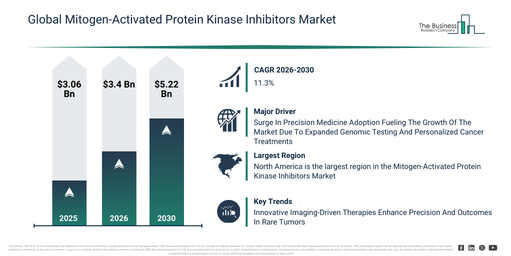
    The mitogen-activated protein kinase inhibitors market has observed rapid expansion in recent years. Its valuation is anticipated to climb from $3.06 billion in 2025 to $3.4 billion in 2026, reflecting a compound annual growth rate (CAGR) of 11.1%. Historically, this growth can be credited to the emergence of targeted cancer therapy, the discovery of MAPK pathway mutations, early BRAF and RAS research, the progression of precision oncology, and initial MEK drug approvals.

    The mitogen-activated protein kinase inhibitors market is anticipated to experience significant expansion over the next few years. It is projected to achieve a valuation of $5.22 billion by 2030, progressing at a compound annual growth rate (CAGR) of 11.3%. This growth during the forecast period is attributable to the proliferation of combination oncology trials, elevated biomarker testing rates, the advancement of personalized cancer care, broader approvals for various indications, and an increase in oncology drug pipelines. Prominent trends anticipated in the forecast period encompass selective MEK targeted therapies, combination targeted oncology regimens, biomarker-guided MEK treatment, oral targeted cancer inhibitors, and the development of next-generation MEK molecules.

    Access Your Free Sample Report For In-Depth Market Analysis:

    https://www.thebusinessresearchcompany.com/sample.aspx?id=33222&type=smp

    What Leading Drivers Are Supporting The Mitogen-Activated Protein Kinase Inhibitors Market Expansion?

    The mitogen-activated protein kinase kinase (MEK) inhibitors market is projected to expand due to the increasing integration of precision medicine. Precision medicine represents a healthcare strategy that customizes disease prevention, diagnosis, and treatment based on an individual’s genetic composition, lifestyle, and environmental factors. The rising acceptance of precision medicine is fueled by its improved treatment effectiveness, as therapies are specifically tailored to a patient’s genetic and molecular profile, leading to superior clinical outcomes and reduced trial-and-error in medical care. MEK inhibitors contribute to precision medicine by selectively targeting particular genetic mutations within the MAPK/ERK pathway, enabling personalized cancer treatments that enhance efficacy while minimizing harm to healthy cells. For instance, in February 2025, the National Health Service, a UK-based government agency, reported that in 2024, the NHS Genomic Medicine Service administered over 810,000 genomic tests across the life course in England, an 8% increase compared to 2023. These tests facilitate early diagnosis, patient stratification, and personalized treatment, which are essential components of precision medicine. Therefore, the broader adoption of precision medicine is propelling the growth of the mitogen-activated protein kinase kinase (MEK) inhibitors market.

    How Are Segments Identified Within The Mitogen-Activated Protein Kinase Inhibitors Market Segment Framework?

    The mitogen-activated protein kinase inhibitors market covered in this report is segmented –

    1) By Product Type: Allosteric Mitogen Activated Protein Kinase Kinase Inhibitors; Adenosine Triphosphate Competitive Mitogen Activated Protein Kinase Kinase Inhibitors

    2) By Target: Mitogen Activated Protein Kinase Kinase 1; Mitogen Activated Protein Kinase Kinase 2

    3) By Route Of Administration: Oral; Injectable

    4) By Application: Non Small Cell Lung Cancer; Metastatic Melanoma; Kirsten Rat Sarcoma Viral Oncogene Homolog And Neuroblastoma RAS Viral Oncogene Homolog Mutated Tumors; Thyroid Carcinoma; Lung Carcinoma; Other Applications

    5) By Distribution Channel: Hospital Pharmacy; Retail Pharmacy; Online Pharmacy

    Subsegments:

    1) By Allosteric Mitogen Activated Protein Kinase Kinase Inhibitors: First Generation Allosteric Inhibitors; Second Generation Allosteric Inhibitors; Highly Selective Allosteric Inhibitors; Dual Pathway Allosteric Inhibitors; Orally Active Allosteric Inhibitors

    2) By Adenosine Triphosphate Competitive Mitogen Activated Protein Kinase Kinase Inhibitors: First Generation Competitive Inhibitors; Second Generation Competitive Inhibitors; Highly Potent Competitive Inhibitors; Broad Spectrum Competitive Inhibitors; Targeted Competitive Inhibitors

    What Emerging Trends Are Seen In The Mitogen-Activated Protein Kinase Inhibitors Market?

    Major companies within the mitogen-activated protein kinase kinase (MEK) inhibitors market are prioritizing the development of efficacy through volumetric MRI with central review, aiming to enhance treatment precision, optimize patient outcomes, and expedite regulatory approvals for rare and difficult-to-treat tumors. This method involves measuring tumor response using precise 3D MRI-derived tumor volumes, with evaluations independently verified by a centralized expert panel to ensure accuracy and consistency. For instance, in February 2025, SpringWorks Therapeutics Inc., a US-based biopharmaceutical company, introduced Gomekli (mirdametinib), an orally administered MEK inhibitor that received approval from the U.S. Food and Drug Administration (FDA) for treating adult and pediatric patients aged 2 years and older suffering from neurofibromatosis type 1 (NF1)-associated symptomatic plexiform neurofibromas (PN); Gomekli functions by selectively inhibiting MEK enzymes within the MAPK signaling cascade, which leads to reduced tumor growth and symptomatic relief in the context of a rare genetic disorder where surgical interventions are frequently restricted, and it also enhances treatment accessibility by offering both capsule and dispersible tablet formulations, catering to patient populations experiencing swallowing difficulties.

    Who Are The Companies Competing Within The Mitogen-Activated Protein Kinase Inhibitors Market?

    Major companies operating in the mitogen-activated protein kinase inhibitors market are ShanghAI Fosun Pharmaceutical (Group) Co. Ltd., F. Hoffmann-La Roche AG, Pfizer Inc., Bayer AG, Novartis AG, AstraZeneca PLC, GlaxoSmithKline plc, Takeda Pharmaceutical Company Limited, Merck KGaA, Boehringer Ingelheim International GmbH, Ono Pharmaceutical Co. Ltd., Exelixis Inc., Laboratoires Pierre Fabre S.A., Day One Biopharmaceuticals Inc., CStone Pharmaceuticals Co. Ltd., Chia TAI Tianqing Pharmaceutical Group Co. Ltd., Immuneering Corporation, Atriva Therapeutics GmbH, ShanghAI Kechow Pharmaceutical Co. Ltd., NFlection Therapeutics Inc., and Verastem Inc.

    Get The Full Mitogen-Activated Protein Kinase Inhibitors Market Report:

    https://www.thebusinessresearchcompany.com/report/mitogen-activated-protein-kinase-inhibitors-market-report

    Which Region Has The Greatest Market Share In The Mitogen-Activated Protein Kinase Inhibitors Market?

    North America was the largest region in the mitogen-activated protein kinase kinase (MEK) inhibitors market in 2025. Asia-Pacific is expected to be the fastest-growing region in the forecast period. The regions covered in the mitogen-activated protein kinase inhibitors market report are Asia-Pacific, South East Asia, Western Europe, Eastern Europe, North America, South America, Middle East, Africa.

    Request A Customized Mitogen-Activated Protein Kinase Inhibitors Market Report For Competitive Insights:

    https://www.thebusinessresearchcompany.com/customise?id=33222&type=smp

    Browse Through More Reports Similar to the Global Mitogen-Activated Protein Kinase Inhibitors Market 2026, By The Business Research Company

    Kinase Inhibitors Market Report 2026

    https://www.thebusinessresearchcompany.com/report/kinase-inhibitors-global-market-report

    Tyrosine Kinase Inhibitors Market Report 2026

    https://www.thebusinessresearchcompany.com/report/tyrosine-kinase-inhibitors-global-market-report

    Janus Kinase Jak Inhibitors Market Report 2026

    https://www.thebusinessresearchcompany.com/report/janus-kinase-jak-inhibitors-global-market-report

    Get in touch with us:

    The Business Research Company: https://www.thebusinessresearchcompany.com/

    Americas +1 310-496-7795

    Asia +44 7882 955267 & +91 8897263534

    Europe +44 7882 955267

    Email us at info@tbrc.info

    Follow us on:

    LinkedIn: https://in.linkedin.com/company/the-business-research-company

    YouTube: https://www.youtube.com/channel/UC24_fI0rV8cR5DxlCpgmyFQ

    Global Market Model: https://www.thebusinessresearchcompany.com/global-market-model
  • Messenger Ribonucleic Acid (MRNA) Manufacturing Service Market Expansion Forecast Reaching $12.96 Billion By 2030 At 16.2% CAGR

    Messenger Ribonucleic Acid (MRNA) Manufacturing Service Market Expansion Forecast Reaching $12.96 Billion By 2030 At 16.2% CAGR

    The Business Research Company’s 2026 market reports feature enhanced tools like market attractiveness analysis, TAM assessment, and company scoring matrices, along with interactive dashboards, deeper supply chain insights, and startup coverage strengthening the depth, usability, and strategic value of insights.

    What Changes In Market Value Are Expected For The Messenger Ribonucleic Acid (MRNA) Manufacturing Service Market Over The 2026–2030 Period?

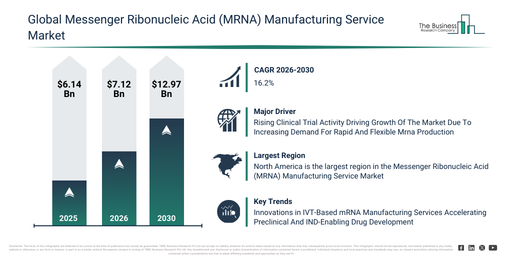
    Recent years have witnessed a rapid expansion in the messenger ribonucleic acid (mrna) manufacturing service market size. This market is projected to expand from $6.14 billion in 2025 to $7.12 billion in 2026, demonstrating a compound annual growth rate (CAGR) of 15.9%. Several factors contributed to this historical growth, including the surge in mrna therapeutics research, the necessity for emergency vaccine manufacturing, restricted in-house mrna production capabilities, an increase in CDMO collaborations, and the enlargement of biotech product portfolios.

    The messenger ribonucleic acid (mrna) manufacturing service market is anticipated to experience significant expansion over the coming years. Its valuation is projected to reach $12.97 billion by 2030, demonstrating a compound annual growth rate (CAGR) of 16.2%. This projected growth throughout the forecast period stems from factors such as a rise in mRNA therapy trials, an increase in contract manufacturing demand, the advancement of personalized medicine, greater outsourcing activities by biotechnology companies, and the scaling up of commercial mRNA products. Key trends anticipated during this period encompass integrated mRNA process development services, large-scale in vitro transcription production, comprehensive LNP encapsulation services, accelerated technology transfer initiatives, and GMP-grade mRNA batch manufacturing.

    Access Your Free Sample Report For In-Depth Market Analysis:

    https://www.thebusinessresearchcompany.com/sample.aspx?id=33216&type=smp

    Which Major Drivers Are Influencing The Expansion Of The Messenger Ribonucleic Acid (MRNA) Manufacturing Service Market?

    The increasing clinical trial activity is anticipated to drive the expansion of the messenger ribonucleic acid (mRNA) manufacturing service market in the future. Clinical trial activity pertains to all operations involved in carrying out and overseeing clinical studies to evaluate medical interventions in humans. This activity is on the rise primarily due to the growing adoption of digital and decentralized trial models, which enable more rapid patient recruitment, remote supervision, and more streamlined data collection across diverse populations. Messenger ribonucleic acid (mRNA) manufacturing services bolster clinical trial activity by guaranteeing swift and adaptable production of mRNA-based therapies, thus ensuring timely delivery for various trial stages and accelerating overall drug development. For instance, in December 2024, data from the Association of the British Pharmaceutical Industry (ABPI), a UK-based trade association, indicated that the number of industry clinical trials launched in the UK climbed to 426 in 2023, from 411 in 2022. Consequently, the surge in clinical trial activity is fueling the growth of the messenger ribonucleic acid (mRNA) manufacturing service market.

    How Is The Messenger Ribonucleic Acid (MRNA) Manufacturing Service Market Broken Down By Segment Categories?

    The messenger ribonucleic acid (mrna) manufacturing service market covered in this report is segmented –

    1) By Service Type: Process Development; Analytical Testing; Manufacturing; Fill-Finish; Other Service Types

    2) By Scale of Operation: Research And Preclinical Scale; Clinical Scale; Commercial Scale

    3) By Application: Vaccines; Therapeutics; Research; Other Applications

    4) By End-User: Pharmaceutical And Biotechnology Companies; Academic And Research Institutes; Other End-Users

    Subsegments:

    1) By Process Development: Template Design And Optimization; In Vitro Transcription Process Design; Formulation Development; Process Scale-Up And Technology Transfer; Process Validation Support

    2) By Analytical Testing: Identity And Purity Testing; Potency And Functional Assays; Impurity And Contaminant Analysis; Stability And Shelf Life Studies; Quality Control Release Testing

    3) By Manufacturing: Plasmid Deoxyribonucleic Acid Production; In Vitro Transcription Manufacturing; Enzymatic Capping And Tailoring; Purification And Concentration; Large-Scale Batch Production

    4) By Fill-Finish: Aseptic Filling Services; Vial And Syringe Filling; Lyophilization Services; Labeling And Packaging; Cold Chain Handling And Storage

    5) By Other Service Types: Regulatory Support Services; Quality Assurance And Documentation; Supply Chain And Logistics Support; Technology Consulting Services; Custom Manufacturing Solutions

    Which Trends Are Shaping The Messenger Ribonucleic Acid (MRNA) Manufacturing Service Market?

    Leading firms within the messenger ribonucleic acid (mRNA) manufacturing service market are prioritizing the creation of advanced techniques, such as in vitro transcription (IVT), to speed up the output of top-tier, therapeutic-grade mRNA for vaccines and personalized therapies. In vitro transcription (IVT) is a lab-based method wherein mRNA is synthesized from a DNA blueprint using RNA polymerase enzymes, allowing for mRNA creation external to biological cells for purposes spanning research, therapy, or vaccination. A pertinent example is that in May 2025, GenScript Biotech Corporation, a China-based biotechnology company, introduced a manufacturing service for mRNA adhering to GMP-like standards, designed to facilitate early-stage clinical investigations and research supporting investigational new drug applications. This offering delivers highly pure and scalable in vitro transcription (IVT) processes, ensuring strict oversight of key quality metrics like capping efficiency, poly(A) tail length, and impurity profiles. It aids in a swift progression from initial research phases to clinical trials through facilitating uniform production across batches, adaptable tailoring for various mRNA designs, and shortened development periods. Furthermore, the GMP-comparable structure guarantees preparedness for regulatory scrutiny by means of improved tracking, uniform operational procedures, and thorough quality records, assisting developers in mitigating risks associated with advanced manufacturing stages and expediting advancement in clinical trials.

    Which Players Are Present In The Messenger Ribonucleic Acid (MRNA) Manufacturing Service Market Space?

    Major companies operating in the messenger ribonucleic acid (mrna) manufacturing service market are Thermo Fisher Scientific Inc., Merck KGaA, FUJIFILM Biotechnologies, Evonik Industries AG, Lonza Group AG, Charles River Laboratories International Inc., Samsung Biologics Co. Ltd., WuXi Biologics Inc., Recipharm AB, Curia Global Inc., Emergent BioSolutions Inc., AGC Biologics Inc., Corden Pharma International GmbH, Rentschler Biopharma SE, GenScript ProBio, ST Pharm Co. Ltd., etherna Immunotherapies NV, BIOMAY AG., Porton Advanced Solutions Ltd., Wacker Biotech GmbH.

    Get The Full Messenger Ribonucleic Acid (MRNA) Manufacturing Service Market Report:

    https://www.thebusinessresearchcompany.com/report/messenger-ribonucleic-acid-mrna-manufacturing-service-market-report

    Where Is The Messenger Ribonucleic Acid (MRNA) Manufacturing Service Market Most Concentrated Geographically?

    North America was the largest region in the mRNA manufacturing service market in 2025. Asia-Pacific is expected to be the fastest-growing region in the forecast period. The regions covered in the messenger ribonucleic acid (mrna) manufacturing service market report are Asia-Pacific, South East Asia, Western Europe, Eastern Europe, North America, South America, Middle East, Africa.

    Request A Customized Messenger Ribonucleic Acid (MRNA) Manufacturing Service Market Report For Competitive Insights:

    https://www.thebusinessresearchcompany.com/customise?id=33216&type=smp

    Browse Through More Reports Similar to the Global Messenger Ribonucleic Acid (MRNA) Manufacturing Service Market 2026, By The Business Research Company

    Messenger Ribonucleic Acid Mrna Synthesis Raw Materials Market Report 2026

    https://www.thebusinessresearchcompany.com/report/messenger-ribonucleic-acid-mrna-synthesis-raw-materials-global-market-report

    Ribonucleic Acid Rna Sequencing Market Report 2026

    https://www.thebusinessresearchcompany.com/report/ribonucleic-acid-rna-sequencing-global-market-report

    Nucleic Acid Therapeutics Market Report 2026

    https://www.thebusinessresearchcompany.com/report/nucleic-acid-therapeutics-global-market-report

    Get in touch with us:

    The Business Research Company: https://www.thebusinessresearchcompany.com/

    Americas +1 310-496-7795

    Asia +44 7882 955267 & +91 8897263534

    Europe +44 7882 955267

    Email us at info@tbrc.info

    Follow us on:

    LinkedIn: https://in.linkedin.com/company/the-business-research-company

    YouTube: https://www.youtube.com/channel/UC24_fI0rV8cR5DxlCpgmyFQ

    Global Market Model: https://www.thebusinessresearchcompany.com/global-market-model
  • Messenger Ribonucleic Acid (mRNA) And Next-Generation Vaccine Platforms Market Revenue Projected To Hit $82.6 Billion By 2030 With 15.8% CAGR

    Messenger Ribonucleic Acid (mRNA) And Next-Generation Vaccine Platforms Market Revenue Projected To Hit $82.6 Billion By 2030 With 15.8% CAGR

    The Business Research Company’s 2026 market reports feature enhanced tools like market attractiveness analysis, TAM assessment, and company scoring matrices, along with interactive dashboards, deeper supply chain insights, and startup coverage strengthening the depth, usability, and strategic value of insights.

    By 2030, What Market Size Is The Messenger Ribonucleic Acid (mRNA) And Next-Generation Vaccine Platforms Market Expected To Reach Based On Its 2026 Value?

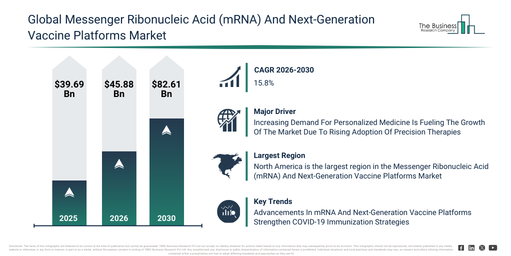
    The messenger ribonucleic acid (mrna) and next-generation vaccine platforms market size has expanded significantly in recent years. Projections indicate it will advance from $39.69 billion in 2025 to $45.88 billion in 2026, achieving a compound annual growth rate (CAGR) of 15.6%. This historical growth can be attributed to various factors, including covid 19 vaccine breakthroughs, prior viral vector research, global pandemic preparedness programs, advances in genomic sequencing, and early nucleic acid vaccine trials.

    The messenger ribonucleic acid (mrna) and next-generation vaccine platforms market is anticipated to experience significant expansion in the upcoming years. It is projected to achieve a size of $82.61 billion by 2030, exhibiting a compound annual growth rate (CAGR) of 15.8%. This growth during the forecast period can be attributed to factors such as the development of personalized cancer vaccines, the broadening of infectious disease pipelines, more rapid platform-based approvals, increased funding in biotechnology, and the wider application of therapeutic vaccines. Prominent trends expected in the forecast period include self-amplifying mrna platforms, optimized lipid nanoparticle delivery, modular vaccine platform designs, swift adaptation to pathogen targets, and innovative next-generation adjuvant systems.

    Access Your Free Sample Report For In-Depth Market Analysis:

    https://www.thebusinessresearchcompany.com/sample.aspx?id=33215&type=smp

    What Key Drivers Are Fueling The Growth Of The Messenger Ribonucleic Acid (mRNA) And Next-Generation Vaccine Platforms Market?

    Future expansion of the messenger ribonucleic acid (mRNA) and next-generation vaccine platforms market is anticipated due to the rising need for personalized medicine. Personalized medicine involves a healthcare strategy that customizes disease prevention and treatment plans according to an individual’s unique genetic makeup, molecular traits, and particular health circumstances. The escalating requirement for personalized medicine stems from the increasing occurrence of intricate and long-term illnesses, which necessitate precise and individualized therapeutic approaches to enhance both the effectiveness and safety of treatment. Messenger ribonucleic acid (mRNA) and next-generation vaccine platforms facilitate personalized medicine by allowing for quick, adaptable, and highly precise designs for vaccines and therapies, which can be adapted to specific genetic and disease profiles of individuals, thereby aiding in the provision of precision healthcare. As an illustration, the Personalized Medicine Coalition, a US-based hospital and health care organization, reported in February 2024 that the FDA cleared 16 novel personalized treatments for patients with rare diseases in 2023, an increase from six in 2022. Consequently, the expanding need for personalized medicine is fueling the expansion of the messenger ribonucleic acid (mRNA) and next-generation vaccine platforms market.

    What Are The Different Segment Types In The Messenger Ribonucleic Acid (mRNA) And Next-Generation Vaccine Platforms Market Segment Breakdown?

    The messenger ribonucleic acid (mrna) and next-generation vaccine platforms market covered in this report is segmented –

    1) By Vaccine Type: Messenger Ribonucleic Acid Vaccines; Deoxyribonucleic Acid (DNA) Vaccines; Viral Vector Vaccines; Protein Subunit Vaccines; Peptide Vaccines; Other Vaccine Types

    2) By Technology or Platform: Lipid Nanoparticle (LNP) Delivery; Self-Amplifying Messenger Ribonucleic Acid; Circular Messenger Ribonucleic Acid; Replicon or Non-replicating Platforms; Viral Vector Technologies

    3) By Disease Indication: Infectious Diseases; Oncology; Rare Diseases; Other Disease Indications

    4) By End User: Pharmaceutical and Biotechnology Companies; Contract Research Organizations (CROs); Academic and Research Institutes; Hospitals and Clinics

    Subsegments:

    1) By Messenger Ribonucleic Acid Vaccines: Conventional Messenger Ribonucleic Acid Vaccines; Self Amplifying Messenger Ribonucleic Acid Vaccines; Modified Messenger Ribonucleic Acid Vaccines; Circular Messenger Ribonucleic Acid Vaccines

    2) By Deoxyribonucleic Acid Vaccines: Plasmid Deoxyribonucleic Acid Vaccines; Viral Assisted Deoxyribonucleic Acid Vaccines; Synthetic Deoxyribonucleic Acid Vaccines; Gene Based Deoxyribonucleic Acid Vaccines

    3) By Viral Vector Vaccines: Adenovirus Based Viral Vector Vaccines; Lentivirus Based Viral Vector Vaccines; Poxvirus Based Viral Vector Vaccines; Measles Virus Based Viral Vector Vaccines

    4) By Protein Subunit Vaccines: Recombinant Protein Vaccines; Virus Like Particle Vaccines; Toxoid Based Protein Vaccines; Polysaccharide Conjugate Vaccines

    5) By Peptide Vaccines: Synthetic Peptide Vaccines; Personalized Peptide Vaccines; Multi Epitope Peptide Vaccines; Long Peptide Vaccines

    6) By Other Vaccine Types: Protein Subunit Vaccines, Virus-Like Particle Vaccines, Inactivated Vaccines, Live Attenuated Vaccines, Recombinant Vector Vaccines

    What Trends Are Influencing The Messenger Ribonucleic Acid (mRNA) And Next-Generation Vaccine Platforms Market?

    Leading companies operating in the mRNA and next-generation vaccine platforms market are concentrating their efforts on the creation of advanced mRNA-based COVID-19 vaccines. This focus aims to boost immune durability, expand variant coverage, and elevate overall vaccine efficacy. These innovative mRNA-based COVID-19 vaccines harness enhanced mRNA engineering and sophisticated delivery technologies, providing more extensive and lasting protection against both current and emerging SARS-CoV-2 variants. Furthermore, they offer improved safety, greater stability, and enhanced storage convenience, alongside the capability for swift adaptation to viral evolution. As an illustration, in June 2025, Moderna Inc., a US-based biotechnology company, launched mNEXSPIKE, its next-generation COVID-19 vaccine. This vaccine is engineered to enhance protection against both circulating and newly emerging SARS-CoV-2 variants. mNEXSPIKE features an updated spike protein antigen, which more closely aligns with recent variants, and is intended to deliver superior immune durability and effectiveness, thereby bolstering ongoing COVID-19 prevention initiatives and future booster strategies.

    Who Are The Well-Known Companies In The Messenger Ribonucleic Acid (mRNA) And Next-Generation Vaccine Platforms Market?

    Major companies operating in the messenger ribonucleic acid (mrna) and next-generation vaccine platforms market are Pfizer Inc., Sanofi S.A., AstraZeneca PLC, Thermo Fisher Scientific Inc., GSK plc, Takeda Pharmaceutical Company Limited, Daiichi Sankyo Company Limited, Moderna Inc., BioNTech SE, Novavax Inc., Walvax Biotechnology Co Ltd, Arcturus Therapeutics Inc, Gennova Biopharmaceuticals Ltd, Vaxxas Pty Ltd, Vaxart Inc, Ethris GmbH, The Biologicals and Vaccines Institute of Southern Africa Proprietary Limited, eTheRNA Immunotherapies NV, Stemirna Therapeutics Co Ltd, Primrose Bio Inc, Acuitas Therapeutics Inc, and Incepta Vaccine Ltd.

    Get The Full Messenger Ribonucleic Acid (mRNA) And Next-Generation Vaccine Platforms Market Report:

    https://www.thebusinessresearchcompany.com/report/messenger-ribonucleic-acid-mrna-and-next-generation-vaccine-platforms-market-report

    Which Region Dominates The Messenger Ribonucleic Acid (mRNA) And Next-Generation Vaccine Platforms Market By Market Share?

    North America was the largest region in the messenger ribonucleic acid (mRNA) and next-generation vaccine platforms market in 2025. Asia-Pacific is expected to be the fastest-growing region in the forecast period. The regions covered in the messenger ribonucleic acid (mrna) and next-generation vaccine platforms market report are Asia-Pacific, South East Asia, Western Europe, Eastern Europe, North America, South America, Middle East, Africa.

    Request A Customized Messenger Ribonucleic Acid (mRNA) And Next-Generation Vaccine Platforms Market Report For Competitive Insights:

    https://www.thebusinessresearchcompany.com/customise?id=33215&type=smp

    Browse Through More Reports Similar to the Global Messenger Ribonucleic Acid (mRNA) And Next-Generation Vaccine Platforms Market 2026, By The Business Research Company

    Mrna Cancer Vaccines And Therapeutics Market Report 2026

    https://www.thebusinessresearchcompany.com/report/mrna-cancer-vaccines-and-therapeutics-global-market-report

    Therapeutic Bcg Vaccines Market Report 2026

    https://www.thebusinessresearchcompany.com/report/therapeutic-bcg-vaccines-global-market-report

    Vaccines Market Report 2026

    https://www.thebusinessresearchcompany.com/report/vaccines-global-market-report

    Get in touch with us:

    The Business Research Company: https://www.thebusinessresearchcompany.com/

    Americas +1 310-496-7795

    Asia +44 7882 955267 & +91 8897263534

    Europe +44 7882 955267

    Email us at info@tbrc.info

    Follow us on:

    LinkedIn: https://in.linkedin.com/company/the-business-research-company

    YouTube: https://www.youtube.com/channel/UC24_fI0rV8cR5DxlCpgmyFQ

    Global Market Model: https://www.thebusinessresearchcompany.com/global-market-model

  • Global Messenger Ribo Nucleic Acid (mRNA) Vaccine Contract Development And Manufacturing Organization (CDMO) Market Set To Expand To $17.09 Billion By 2030 At 15.3% CAGR

    Global Messenger Ribo Nucleic Acid (mRNA) Vaccine Contract Development And Manufacturing Organization (CDMO) Market Set To Expand To $17.09 Billion By 2030 At 15.3% CAGR

    The Business Research Company’s 2026 market reports feature enhanced tools like market attractiveness analysis, TAM assessment, and company scoring matrices, along with interactive dashboards, deeper supply chain insights, and startup coverage strengthening the depth, usability, and strategic value of insights.

    What Is The Anticipated Rise In Market Value Of The Messenger Ribo Nucleic Acid (mRNA) Vaccine Contract Development And Manufacturing Organization (CDMO) Market During The Forecast Period?

    The market for messenger ribo nucleic acid (mrna) vaccine contract development and manufacturing organizations (cdmo) has experienced significant expansion recently. This market is projected to expand from $8.41 billion in 2025 to reach $9.68 billion by 2026, exhibiting a compound annual growth rate (CAGR) of 15.1%. Historically, this expansion was driven by several factors, including covid 19 vaccine programs, a surge in biotech startups, insufficient in-house manufacturing capabilities, an uptick in contract manufacturing, and accelerated mrna platform validation.

    The messenger ribo nucleic acid (mrna) vaccine contract development and manufacturing organization (cdmo) market size is anticipated to expand rapidly in the upcoming years. It is projected to achieve $17.1 billion by 2030, exhibiting a compound annual growth rate (CAGR) of 15.3%. This growth during the forecast period can be attributed to the increasing use of mRNA cancer vaccines, the emergence of personalized vaccines, a rise in CDMO partnerships, the demand for quick scale manufacturing, and an expanding pipeline of mRNA therapies. Significant trends for the forecast period include lipid nanoparticle formulation services, expedited mRNA process scale-up, integrated fill-finish outsourcing, flexible modular vaccine manufacturing suites, and comprehensive end-to-end mRNA development services.

    Access Your Free Sample Report For In-Depth Market Analysis:

    https://www.thebusinessresearchcompany.com/sample.aspx?id=33214&type=smp

    Which Drivers Are Supporting The Messenger Ribo Nucleic Acid (mRNA) Vaccine Contract Development And Manufacturing Organization (CDMO) Market Growth?

    The increasing occurrence of infectious and newly developing diseases is projected to drive the expansion of the mRNA vaccine CDMO market in the future. These diseases are defined as ailments stemming from pathogenic microbes that disseminate quickly or appear afresh, influenced by elements like environmental shifts, increasing urbanization, and greater worldwide connections. Enhanced international travel, higher population concentrations, and intertwined supply networks have accelerated the spread of pathogens, leading to more frequent, extensive, and challenging-to-contain disease outbreaks. mRNA vaccine CDMOs are vital in confronting these issues by facilitating the swift development, mass-producible manufacturing, and adaptable production of vaccines essential for countering evolving infectious dangers. The specialized manufacturing infrastructure and technical know-how required by mRNA technologies lead vaccine developers to partner with contract development and manufacturing organizations to speed up project timelines and guarantee production capability during epidemics. As an example, in May 2024, the World Health Organization (WHO), a specialized global health agency of the United Nations based in Switzerland, reported that by 30 April 2024, over 7.6 million dengue cases were registered worldwide with WHO, comprising 3.4 million confirmed cases, upwards of 16,000 severe cases, and exceeding 3,000 fatalities. This surge was notably prominent in the Region of the Americas, where the count of cases surpassed seven million by April 2024, which was higher than the 2023 annual total of 4.6 million cases. Consequently, the increasing incidence of infectious and emerging diseases is fueling the expansion of the mRNA vaccine CDMO market.

    Which Segment Classifications Are Used In The Messenger Ribo Nucleic Acid (mRNA) Vaccine Contract Development And Manufacturing Organization (CDMO) Market Segment Analysis?

    The messenger ribo nucleic acid (mrna) vaccine contract development and manufacturing organization (cdmo) market covered in this report is segmented –

    1) By Service Type: Process Development; Manufacturing; Analytical And Quality Control; Fill Finish; Packaging; Other Service Types

    2) By Vaccine Type: COVID-19 Vaccines; Cancer Vaccines; Infectious Disease Vaccines; Other Vaccine Types

    3) By Scale of Operation: Preclinical; Clinical; Commercial

    4) By End-User: Pharmaceutical Companies; Biotechnology Companies; Research Institutes; Other End-Users

    Subsegments:

    1) By Process Development: Formulation Optimization; Cell Line Development; Upstream Process Development; Process Scale-Up

    2) By Manufacturing: Lipid Nanoparticle Production; Enzymatic Capping; Purification Process

    3) By Analytical And Quality Control: Potency Testing; Purity Analysis; Stability Testing; Identity Testing; Microbial Testing

    4) By Fill Finish: Aseptic Filling; Vial Filling; Syringe Filling; Lyophilization

    5) By Packaging: Primary Packaging; Secondary Packaging; Labeling Operations; Cold Chain Packaging; Unit Dose Packaging

    6) By Other Service Types: Regulatory Support Services; Technology Transfer Services; Contract Development Services; Consulting Services; Supply Chain Management

    Which Trends Are Expected To Impact The Messenger Ribo Nucleic Acid (mRNA) Vaccine Contract Development And Manufacturing Organization (CDMO) Market?

    Major companies operating in the mRNA vaccine CDMO market are increasingly focusing on advanced innovations like phase-appropriate GMP mRNA contract development and manufacturing services to accelerate preclinical and IND-enabling development, all while maintaining regulatory-aligned quality standards and shorter timelines. Phase-appropriate GMP-like mRNA manufacturing refers to a production approach designed to deliver high-quality, regulatory-aware mRNA material suitable for preclinical and early development stages, without the cost and operational complexity associated with full GMP manufacturing. For instance, in May 2025, GenScript Biotech Corporation, a China-based global biotechnology reagents and services provider, launched a GMP-like mRNA manufacturing service aimed at supporting preclinical and IND-enabling development. The service delivers high-quality, regulatory-aware mRNA with reduced lead times and lower costs compared to traditional full GMP manufacturing, reflecting the growing demand for flexible, phase-appropriate CDMO solutions in the mRNA vaccine market.

    Which Firms Are Contributing To The Messenger Ribo Nucleic Acid (mRNA) Vaccine Contract Development And Manufacturing Organization (CDMO) Market Ecosystem?

    Major companies operating in the messenger ribo nucleic acid (mrna) vaccine contract development and manufacturing organization (cdmo) market are Sanofi S.A., Thermo Fisher Scientific Inc., FUJIFILM Diosynth Biotechnologies U.S.A. Inc., Danaher Corporation, Boehringer Ingelheim BioXcellence GmbH & Co. KG, AGC Biologics A/S, Eurofins Scientific SE, Lonza Group AG, BioNTech SE, Samsung Biologics Co. Ltd., WuXi Biologics (Cayman) Inc., Siegfried Holding AG, Recipharm AB, Vetter Pharma International GmbH, CordenPharma GmbH & Co. KG, Ajinomoto Bio-Pharma Services Inc., Novasep Holding S.A.S., Rentschler Biopharma SE, IDT Biologika GmbH, Wacker Biotech GmbH

    Get The Full Messenger Ribo Nucleic Acid (mRNA) Vaccine Contract Development And Manufacturing Organization (CDMO) Market Report:

    https://www.thebusinessresearchcompany.com/report/messenger-ribo-nucleic-acid-mrna-vaccine-contract-development-and-manufacturing-organization-cdmo-market-report

    Which Region Is The Largest In The Messenger Ribo Nucleic Acid (mRNA) Vaccine Contract Development And Manufacturing Organization (CDMO) Market?

    North America was the largest region in the mRNA vaccine contract development and manufacturing organization (CDMO) market in 2025. Asia-Pacific is expected to be the fastest-growing region in the forecast period. The regions covered in the messenger ribo nucleic acid (mrna) vaccine contract development and manufacturing organization (cdmo) market report are Asia-Pacific, South East Asia, Western Europe, Eastern Europe, North America, South America, Middle East, Africa.

    Request A Customized Messenger Ribo Nucleic Acid (mRNA) Vaccine Contract Development And Manufacturing Organization (CDMO) Market Report For Competitive Insights:

    https://www.thebusinessresearchcompany.com/customise?id=33214&type=smp

    Browse Through More Reports Similar to the Global Messenger Ribo Nucleic Acid (mRNA) Vaccine Contract Development And Manufacturing Organization (CDMO) Market 2026, By The Business Research Company

    Vaccine Contract Manufacturing Market Report 2026

    https://www.thebusinessresearchcompany.com/report/vaccine-contract-manufacturing-global-market-report

    Mrna Cancer Vaccines And Therapeutics Market Report 2026

    https://www.thebusinessresearchcompany.com/report/mrna-cancer-vaccines-and-therapeutics-global-market-report

    Therapeutic Bcg Vaccines Market Report 2026

    https://www.thebusinessresearchcompany.com/report/therapeutic-bcg-vaccines-global-market-report

    Get in touch with us:

    The Business Research Company: https://www.thebusinessresearchcompany.com/

    Americas +1 310-496-7795

    Asia +44 7882 955267 & +91 8897263534

    Europe +44 7882 955267

    Email us at info@tbrc.info

    Follow us on:

    LinkedIn: https://in.linkedin.com/company/the-business-research-company

    YouTube: https://www.youtube.com/channel/UC24_fI0rV8cR5DxlCpgmyFQ

    Global Market Model: https://www.thebusinessresearchcompany.com/global-market-model
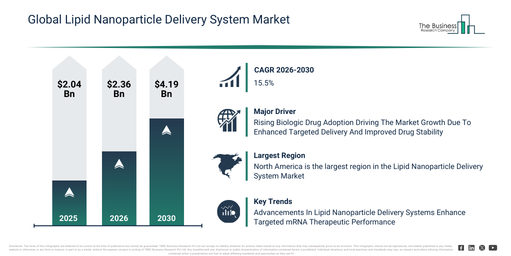
  • Lipid Nanoparticle Delivery System Market Forecast 2026–2030 Presenting Long-Term Industry Insights

    Lipid Nanoparticle Delivery System Market Forecast 2026–2030 Presenting Long-Term Industry Insights

    The Business Research Company’s 2026 market reports feature enhanced tools like market attractiveness analysis, TAM assessment, and company scoring matrices, along with interactive dashboards, deeper supply chain insights, and startup coverage strengthening the depth, usability, and strategic value of insights.

    How Large Will The Lipid Nanoparticle Delivery System Market Be By 2030 Compared To Its 2026 Market Size?

    The lipid nanoparticle delivery system market has experienced significant expansion in recent years. This market is expected to grow from $2.04 billion in 2025 to $2.36 billion in 2026, at a compound annual growth rate (CAGR) of 15.3%. The historical increase can be attributed to advancements in lipid chemistry research, the growth of nucleic acid therapeutics, the expansion of vaccine development programs, increased funding for gene therapy research, and the establishment of nanoparticle manufacturing capabilities.

    The lipid nanoparticle delivery system market is projected to experience substantial expansion in the coming years. This market is forecast to reach a valuation of $4.19 billion by 2030, exhibiting a compound annual growth rate (CAGR) of 15.5%. Key drivers for this anticipated growth include an expanding pipeline of RNA-based drugs, increasing financial commitments towards precision medicine, the wider availability of personalized therapeutics, an escalating need for scalable delivery platforms, and a rise in regulatory approvals for gene therapies. Significant trends expected during this period involve the increasing integration of mRNA-based therapeutics delivery, a heightened demand for ionizable lipid formulations, a sharpened focus on drug delivery systems that are precisely targeted, the expansion of manufacturing processes for scalable nanoparticles, and a greater emphasis on improving both delivery efficiency and stability.

    Access Your Free Sample Report For In-Depth Market Analysis:

    https://www.thebusinessresearchcompany.com/sample.aspx?id=33202&type=smp

    Which Key Drivers Are Affecting The Lipid Nanoparticle Delivery System Market Development?

    The increasing utilization of biologic drugs is projected to fuel the expansion of the lipid nanoparticle delivery system market moving forward. Biologic drugs are therapeutic substances created from living systems, such as proteins, antibodies, or cells, designed to manage illnesses that cannot be effectively treated by conventional chemical drugs. The adoption of biologic drugs is growing due to the escalating prevalence of chronic and complex diseases that demand targeted interventions. Lipid nanoparticle delivery systems improve the effectiveness of biologic drugs by encapsulating them to avoid degradation, promoting cellular absorption, and enabling precise delivery to specific tissues. For instance, in January 2023, according to Cardinal Health Inc., a US-based healthcare company, as of January 2022, the US had 33 biosimilar products approved by the FDA, with 21 available on the market. By 2023, FDA-approved biosimilars had increased to 40, with 25 commercially available. Thus, the rising acceptance of biologic drugs is a significant driver for the growth of the lipid nanoparticle delivery system market.

    What Segment Categories Shape The Lipid Nanoparticle Delivery System Market Segment Landscape?

    The lipid nanoparticle delivery system market covered in this report is segmented –

    1) By Product Type: Solid Lipid Nanoparticles; Nanostructured Lipid Carriers; Liposomes; Other Product Types

    2) By Route Of Administration: Oral; Injectable; Topical; Other Route Of Administrations

    3) By Application: Drug Delivery; Gene Therapy; Vaccines; Cosmetics; Other Applications

    4) By End-User: Pharmaceutical And Biotechnology Companies; Research Institutes; Hospitals And Clinics; Other End Users

    Subsegments:

    1) By Solid Lipid Nanoparticles: Glyceryl Monostearate Based; Glyceryl Behenate Based; Stearic Acid Based; Compritol Based

    2) By Nanostructured Lipid Carriers: Type I Nanostructured Lipid Carriers; Type II Nanostructured Lipid Carriers; Type III Nanostructured Lipid Carriers

    3) By Liposomes: Multilamellar Vesicles; Small Unilamellar Vesicles; Large Unilamellar Vesicles; Giant Unilamellar Vesicles

    4) By Other Product Types: Polymeric Lipid Nanoparticles; Lipid Polymer Hybrids; Micelles

    What Trends Are Transforming The Lipid Nanoparticle Delivery System Market?

    Leading firms within the lipid nanoparticle delivery system market are prioritizing the creation of sophisticated solutions, such as targeted mRNA delivery systems, with the aim of boosting the accuracy, efficacy, and safety of both gene therapies and vaccines. A targeted mRNA delivery system is defined as a technology employing lipid nanoparticles or other carriers to transport messenger RNA (mRNA) precisely to intended cells or tissues, thereby ensuring efficient protein production while reducing off-target effects and immune responses. For example, in November 2025, Acuitas Therapeutics Inc., a biotechnology company based in Canada, introduced Next-Generation Lipid Nanoparticle Advancements, designed to enhance the precise delivery and efficacy of mRNA therapeutics. This innovation offers up to fourfold potency gains for gene editing and vaccines, includes optimized lipids that limit liver exposure while sustaining effectiveness in mouse models, and incorporates DARPin-conjugated LNPs for specific T-lymphocyte delivery. These advancements improve ALC-315, a component of Pfizer-BioNTech’s COMIRNATY vaccine, by facilitating superior intramuscular mRNA delivery for cancer vaccines at reduced doses, with wider potential uses in CAR T-cell therapies, epigenetic treatments, multivalent vaccines for malaria or HIV or TB, and personalized oncology, thereby accelerating the development of safer, more effective mRNA therapies beyond hepatic applications.

    Who Are The Companies Operating Across The Lipid Nanoparticle Delivery System Market Value Chain?

    Major companies operating in the lipid nanoparticle delivery system market are Johnson and Johnson, Pfizer Inc, AstraZeneca plc, Avanti Polar Lipids Inc, Evonik Industries AG, Moderna Inc, Sanofi SA, BioNTech SE, Alnylam Pharmaceuticals Inc, Ascendia Pharmaceuticals Inc, Arcturus Therapeutics Holdings Inc, Lipoid GmbH, Creative Biolabs Inc, Acuitas Therapeutics Inc, Genevant Sciences GmbH, Polymun Scientific Immunbiologische Forschung GmbH, Carcell Biopharma Inc, Integrated Nanotherapeutics Inc, Sinopeg Biotech Co Ltd, CureVac NV, ReCode Therapeutics Inc, and Intellia Therapeutics Inc.

    Get The Full Lipid Nanoparticle Delivery System Market Report:

    https://www.thebusinessresearchcompany.com/report/lipid-nanoparticle-delivery-system-market-report

    Which Region Is The Leading Market For The Lipid Nanoparticle Delivery System Market?

    North America was the largest region in the lipid nanoparticle delivery system market in 2025. Asia-Pacific is expected to be the fastest-growing region in the forecast period. The regions covered in the lipid nanoparticle delivery system market report are Asia-Pacific, South East Asia, Western Europe, Eastern Europe, North America, South America, Middle East, Africa.

    Request A Customized Lipid Nanoparticle Delivery System Market Report For Competitive Insights:

    https://www.thebusinessresearchcompany.com/customise?id=33202&type=smp

    Browse Through More Reports Similar to the Global Lipid Nanoparticle Delivery System Market 2026, By The Business Research Company

    Lipid Nanoparticles Market Report 2026

    https://www.thebusinessresearchcompany.com/report/lipid-nanoparticles-global-market-report

    Liposomal Drug Delivery Devices Market Report 2026

    https://www.thebusinessresearchcompany.com/report/liposomal-drug-delivery-devices-global-market-report

    Advanced Drug Delivery Systems Market Report 2026

    https://www.thebusinessresearchcompany.com/report/advanced-drug-delivery-systems-global-market-report

    Get in touch with us:

    The Business Research Company: https://www.thebusinessresearchcompany.com/

    Americas +1 310-496-7795

    Asia +44 7882 955267 & +91 8897263534

    Europe +44 7882 955267

    Email us at info@tbrc.info

    Follow us on:

    LinkedIn: https://in.linkedin.com/company/the-business-research-company

    YouTube: https://www.youtube.com/channel/UC24_fI0rV8cR5DxlCpgmyFQ

    Global Market Model: https://www.thebusinessresearchcompany.com/global-market-model