Category: Pharmaceuticals

  • Kinase Drug Discovery Solutions Market Forecast Through 2030 With Insights On Market Patterns And Developments

    Kinase Drug Discovery Solutions Market Forecast Through 2030 With Insights On Market Patterns And Developments

    The Business Research Company’s 2026 market reports feature enhanced tools like market attractiveness analysis, TAM assessment, and company scoring matrices, along with interactive dashboards, deeper supply chain insights, and startup coverage strengthening the depth, usability, and strategic value of insights.

    How Is The Market Size Of The Kinase Drug Discovery Solutions Market Expected To Change From 2026 To 2030?

    The kinase drug discovery solutions market has experienced robust expansion in recent years. This market is projected to expand from $0.52 billion in 2025 to reach $0.56 billion by 2026, exhibiting a compound annual growth rate (CAGR) of 7.3%. Historically, this expansion can be linked to factors such as a rise in kinase-driven disease prevalence, the broadening of oncology research pipelines, innovations in assay development technologies, the expansion of contract research services, and increased investments in pharmaceutical R&D.

    The kinase drug discovery solutions market is projected to experience robust expansion over the coming years. By 2030, its value is anticipated to reach $0.74 billion, exhibiting a compound annual growth rate (CAGR) of 7.5%. This projected growth is driven by factors such as the increasing acceptance of precision oncology strategies, greater incorporation of computational modeling into drug discovery processes, the broadening scope of biologics and gene editing applications, a heightened need for accelerated lead optimization, and a rise in collaborations between pharmaceutical companies and Contract Research Organizations (CROs). Key trends anticipated during this period encompass the expanded deployment of AI in identifying kinase targets, the increasing utilization of structure-based drug design platforms, a greater demand for high-throughput screening services, the proliferation of integrated medicinal chemistry solutions, and an intensified concentration on developing selective kinase inhibitors.

    Access Your Free Sample Report For In-Depth Market Analysis:

    https://www.thebusinessresearchcompany.com/sample.aspx?id=33191&type=smp

    Which Strong Drivers Are Impacting The Kinase Drug Discovery Solutions Market Growth?

    The increasing focus on precision medicine is anticipated to drive the expansion of the kinase drug discovery solutions market in the future. This approach involves an escalating concentration within healthcare frameworks on creating and implementing treatments customized for individual patient traits, utilizing genetic, molecular, and biomarker data to enhance therapeutic results. The uptake of personalized medicine is increasing, driven by advancements in genomic and sequencing technologies, which have lessened the time, expense, and intricacy associated with genetic testing. Kinase drug discovery solutions aid precision medicine through their provision of assays, screening technologies, and analytical instruments necessary for identifying and refining kinase inhibitors that accurately target disease-pertinent pathways and enhance treatment effectiveness. As an illustration, in February 2024, the Personalized Medicine Coalition, a US-based nonprofit group, reported that in 2023, the FDA sanctioned 16 new personalized therapies for rare disease patients, marking a substantial rise from only six approvals in 2022. Consequently, the heightened emphasis on precision medicine is stimulating the development of the kinase drug discovery solutions market.

    How Are Different Segments Classified In The Kinase Drug Discovery Solutions Market Segment Analysis?

    The kinase drug discovery solutions market covered in this report is segmented –

    1) By Type: Small Molecules; Biologies; Antibodies; Gene Editing

    2) By Technology: High-Throughput Screening; Structure-Based Drug Design

    3) By Application: Cancer Research; Cardiovascular Diseases; Neurological Disorders; Metabolic Disorders; Autoimmune Diseases

    4) By End-User: Pharmaceutical Companies; Biotechnology Firms; Research Institutions; Academic Organizations

    Subsegments:

    1) By Small Molecules: Kinase Inhibitor Compounds; Allosteric Modulator Compounds; Covalent Inhibitor Compounds; Selective Kinase Modulator Compounds; Multi Target Kinase Inhibitor Compounds

    2) By Biologies: Recombinant Protein Therapeutics; Enzyme Based Therapeutics; Peptide Based Therapeutics; Fusion Protein Therapeutics; Protein Degradation Therapeutics

    3) By Antibodies: Monoclonal Antibodies; Bispecific Antibodies; Antibody Fragment Therapeutics; Conjugated Antibody Therapeutics; Humanized Antibody Therapeutics

    4) By Gene Editing: Clustered Regularly Interspaced Short Palindromic Repeats Based Editing; Transcription Activator Like Effector Nuclease Based Editing; Zinc Finger Nuclease Based Editing; Base Editing Technologies; Prime Editing Technologies

    Which Trends Are Contributing To Changes In The Kinase Drug Discovery Solutions Market?

    Major companies operating in the kinase drug discovery solutions market are focusing on developing advanced products, such as pre-packaged kinase activity detection kits, to enhance assay reliability and streamline inhibitor profiling in early-stage drug discovery. A ready-to-use kinase activity detection kit is a fully prepared assay solution that enables rapid measurement of kinase enzyme activity without extensive setup. It provides sensitive and accurate detection of phosphorylation events, facilitating efficient analysis of signaling pathways in research and drug development. For instance, in January 2026, Sino Biological, a US-based biotechnology company, launched the SwiftFluo TR-FRET Kinase Assay Kits, a ready-to-use, high-performance solution designed to support high-throughput screening of kinase inhibitors in drug discovery workflows. These kits leverage time-resolved fluorescence resonance energy transfer (TR-FRET) technology to deliver robust signal stability, reduced background interference, and improved assay consistency, enabling faster and more precise identification of promising kinase inhibitor candidates for therapeutic development.

    Who Are The Companies Driving Activity In The Kinase Drug Discovery Solutions Market?

    Major companies operating in the kinase drug discovery solutions market are Thermo Fisher Scientific Inc., Eurofins Scientific SE, Pharmaron Incorporated, KMD Bioscience Co. Ltd., GenScript Biotech Corporation, Sino Biological Inc., Reaction Biology Corp, Domainex Ltd, Creative Bioarray Inc, Carna Biosciences Inc., BPS Bioscience Inc., Syngene International Ltd, MedChemExpress LLC, Creative Biogene Inc, Kinexus Bioinformatics Corporation, Enzymlogic S.L., AssayQuant Technologies Inc., LC Sciences LLC, Luceome Biotechnologies LLC, and BOC Sciences Inc.

    Get The Full Kinase Drug Discovery Solutions Market Report:

    https://www.thebusinessresearchcompany.com/report/kinase-drug-discovery-solutions-market-report

    Which Region Has The Greatest Market Share In The Kinase Drug Discovery Solutions Market?

    North America was the largest region in the kinase drug discovery solutions market in 2025. Asia-Pacific is expected to be the fastest-growing region in the forecast period. The regions covered in the kinase drug discovery solutions market report are Asia-Pacific, South East Asia, Western Europe, Eastern Europe, North America, South America, Middle East, Africa.

    Request A Customized Kinase Drug Discovery Solutions Market Report For Competitive Insights:

    https://www.thebusinessresearchcompany.com/customise?id=33191&type=smp

    Browse Through More Reports Similar to the Global Kinase Drug Discovery Solutions Market 2026, By The Business Research Company

    Kinase Inhibitors Market Report 2026

    https://www.thebusinessresearchcompany.com/report/kinase-inhibitors-global-market-report

    Tyrosine Kinase Inhibitors Market Report 2026

    https://www.thebusinessresearchcompany.com/report/tyrosine-kinase-inhibitors-global-market-report

    Drug Discovery Technologies Market Report 2026

    https://www.thebusinessresearchcompany.com/report/drug-discovery-technologies-global-market-report

    Get in touch with us:

    The Business Research Company: https://www.thebusinessresearchcompany.com/

    Americas +1 310-496-7795

    Asia +44 7882 955267 & +91 8897263534

    Europe +44 7882 955267

    Email us at info@tbrc.info

    Follow us on:

    LinkedIn: https://in.linkedin.com/company/the-business-research-company

    YouTube: https://www.youtube.com/channel/UC24_fI0rV8cR5DxlCpgmyFQ

    Global Market Model: https://www.thebusinessresearchcompany.com/global-market-model

  • Rising Research And Development Investment Driving The Growth Of The Market Due To Enhanced Drug Innovation And Clinical Advancements Is Supporting Expansion In The Janus Kinase (JAK) 3 Inhibitor Market

    Rising Research And Development Investment Driving The Growth Of The Market Due To Enhanced Drug Innovation And Clinical Advancements Is Supporting Expansion In The Janus Kinase (JAK) 3 Inhibitor Market

    The Business Research Company’s 2026 market reports feature enhanced tools like market attractiveness analysis, TAM assessment, and company scoring matrices, along with interactive dashboards, deeper supply chain insights, and startup coverage strengthening the depth, usability, and strategic value of insights.

    How Much Growth In Market Value Is Expected For The Janus Kinase (JAK) 3 Inhibitor Market Between 2026 And 2030?

    The market for janus kinase (jak) 3 inhibitors has experienced rapid expansion recently. Projections indicate its value will increase from $8.3 billion in 2025 to $9.31 billion in 2026, demonstrating a compound annual growth rate (CAGR) of 12.2%. Historically, this growth can be ascribed to several factors, including progress in kinase inhibitor drug discovery, the rising incidence of autoimmune diseases, the initial clinical achievements of selective JAK inhibition, the broader application of oral immunomodulatory treatments, and the expansion of research into targeted therapies.

    The janus kinase (jak) 3 inhibitor market is projected for significant expansion in the coming years, with its size anticipated to reach $14.91 billion by 2030, exhibiting a compound annual growth rate (CAGR) of 12.5%. This forecasted growth can be attributed to several factors, including the wider adoption of precision immunology treatments, a greater demand for safer long-term immune therapies, the increasing incorporation of biomarker-guided treatment choices, growing financial commitment to advanced jak inhibitors, and the broadening of their therapeutic applications. Furthermore, major trends expected during this forecast period include the accelerated creation of highly selective jak3 inhibitors, an intensified emphasis on minimizing unintended immunosuppression, the increasing utilization of companion diagnostics, the broader availability of oral small molecule therapies, and more robust clinical investigations into autoimmune and inflammatory conditions.

    Access Your Free Sample Report For In-Depth Market Analysis:

    https://www.thebusinessresearchcompany.com/sample.aspx?id=33189&type=smp

    Which Factors Are Influencing The Growth Of The Janus Kinase (JAK) 3 Inhibitor Market?

    The janus kinase 3 (JAK3) inhibitor market is expected to expand going forward, driven by increasing investment in research and development. Research and development (R&D) is defined as a systematic process involving investigation, innovation, and the creation of new products, services, or processes to advance knowledge and stimulate business or technological progress. Investments in research and development are growing due to heightened competition, as companies commit more resources to innovation to differentiate their products and maintain a technological advantage in rapidly changing markets. These R&D investments are beneficial for Janus kinase 3 (JAK3) inhibitors by financing the extensive studies required to comprehend the drug’s mechanism, refine its chemical structure for improved specificity, and evaluate its safety and efficacy in clinical trials, thereby leading to more effective treatments with fewer side effects for conditions like autoimmune diseases and organ transplant rejection. For example, in November 2025, Eurostat, a statistical office located in Luxembourg, stated that the European Union allocated $475 billion (€403) billion to research and development in 2024, with this spending accounting for 2.24% of the region’s GDP. Therefore, the growing investment in research and development is stimulating the growth of the janus kinase 3 (JAK3) inhibitor market.

    How Are Segments Identified Within The Janus Kinase (JAK) 3 Inhibitor Market Segment Framework?

    The janus kinase (jak) 3 inhibitor market covered in this report is segmented –

    1) By Product Type: Selective Janus Kinase (JAK)3 Inhibitors; Pan-Janus Kinase (JAK) Inhibitors with Janus Kinase (JAK) 3 Activity

    2) By Therapeutic Indication: Rheumatoid Arthritis; Psoriasis; Ulcerative Colitis; Hematologic Malignancies; Other Therapeutic Indications

    3) By Route of Administration: Oral Tablets and Capsules; Topical Creams and Ointments; Subcutaneous and Parenteral Injections; Transdermal Drug Delivery Systems

    4) By Distribution Channel: Direct Sales to Healthcare Providers; Pharmaceutical Distributors and Wholesalers; Online and E-Pharmacy Channels

    5) By End User: Hospitals; Specialty Clinics; Retail Pharmacies and Outpatient Centers; Academic and Research Institutions

    Subsegments:

    1) By Selective Janus Kinase (JAK)3 Inhibitors: First Generation Selective Janus Kinase Three Inhibitors; Next Generation Highly Selective Janus Kinase Three Inhibitors; Oral Small Molecule Selective Janus Kinase Three Inhibitors; Immune Targeted Selective Janus Kinase Three Inhibitors

    2) By Pan-Janus Kinase (JAK) Inhibitors with JAK3 Activity: Multi Kinase Pan Janus Kinase Inhibitors; Broad Spectrum Immune Modulating Janus Kinase Inhibitors; Oral Systemic Pan Janus Kinase Therapies; Combination Activity Janus Kinase Inhibitor Therapies

    Which Trends Are Influencing Demand In The Janus Kinase (JAK) 3 Inhibitor Market?

    Leading firms in the janus kinase 3 (JAK3) inhibitor market are concentrating on creating novel solutions, including selective oral small-molecule JAK3 inhibitors. This effort aims to satisfy the increasing need for precise treatments for autoimmune and inflammatory diseases, offering enhanced safety. These selective oral small-molecule JAK3 inhibitors are defined as orally taken drugs with a low molecular weight, engineered to specifically suppress Janus kinase 3 (JAK3) without affecting other JAK family members like JAK1, JAK2, and TYK2. As an illustration, in June 2023, the US-based biopharmaceutical company Pfizer Inc. obtained approval from the U.S. Food and Drug Administration (FDA) for LITFULO (ritlecitinib). This is a groundbreaking once-daily oral JAK3-selective inhibitor intended for managing severe alopecia areata in adults and adolescents aged 12 years and older. Ritlecitinib targets and inhibits JAK3 and TEC family kinases, both of which are crucial contributors to immune-mediated inflammation that impacts hair follicles. This precise mechanism distinguishes it from conventional JAK inhibitors, providing a more targeted immunomodulatory strategy. The FDA’s endorsement was underpinned by favorable outcomes from the ALLEGRO Phase 2b/3 clinical trials, which showed notable scalp hair regrowth and cemented LITFULO’s position as a significant breakthrough in the JAK3 inhibitor market.

    Who Are The Companies Competing Within The Janus Kinase (JAK) 3 Inhibitor Market?

    Major companies operating in the janus kinase (jak) 3 inhibitor market are Merck & Co. Inc., Pfizer Inc., AbbVie Inc., Novartis AG, GlaxoSmithKline Plc, Eli Lilly and Company, Takeda Pharmaceutical Company Limited, Vertex Pharmaceuticals Incorporated, Sun Pharmaceutical Industries Limited, Incyte Corporation, LEO Pharma A/S, Alfasigma S.p.A., Karyopharm Therapeutics Inc., Rigel Pharmaceuticals Inc., Arcutis Biotherapeutics Inc., Theravance Biopharma Inc., Celon Pharma S.A., Aclaris Therapeutics Inc., Dizal Pharmaceutical Co. Ltd., Asana BioSciences LLC, Ajax Therapeutics Inc., Sareum Holdings plc, and MaxiNovel Pharmaceuticals Co. Ltd.

    Get The Full Janus Kinase (JAK) 3 Inhibitor Market Report:

    https://www.thebusinessresearchcompany.com/report/janus-kinase-jak-3-inhibitor-market-report

    Which Region Holds The Highest Market Share In The Janus Kinase (JAK) 3 Inhibitor Market?

    North America was the largest region in the janus kinase 3 (JAK3) inhibitor market in 2025. Asia-Pacific is expected to be the fastest-growing region in the forecast period. The regions covered in the janus kinase (jak) 3 inhibitor market report are Asia-Pacific, South East Asia, Western Europe, Eastern Europe, North America, South America, Middle East, Africa.

    Request A Customized Janus Kinase (JAK) 3 Inhibitor Market Report For Competitive Insights:

    https://www.thebusinessresearchcompany.com/customise?id=33189&type=smp

    Browse Through More Reports Similar to the Global Janus Kinase (JAK) 3 Inhibitor Market 2026, By The Business Research Company

    Janus Kinase Jak Inhibitors Market Report 2026

    https://www.thebusinessresearchcompany.com/report/janus-kinase-jak-inhibitors-global-market-report

    Kinase Inhibitors Market Report 2026

    https://www.thebusinessresearchcompany.com/report/kinase-inhibitors-global-market-report

    Tyrosine Kinase Inhibitors Market Report 2026

    https://www.thebusinessresearchcompany.com/report/tyrosine-kinase-inhibitors-global-market-report

    Get in touch with us:

    The Business Research Company: https://www.thebusinessresearchcompany.com/

    Americas +1 310-496-7795

    Asia +44 7882 955267 & +91 8897263534

    Europe +44 7882 955267

    Email us at info@tbrc.info

    Follow us on:

    LinkedIn: https://in.linkedin.com/company/the-business-research-company

    YouTube: https://www.youtube.com/channel/UC24_fI0rV8cR5DxlCpgmyFQ

    Global Market Model: https://www.thebusinessresearchcompany.com/global-market-model
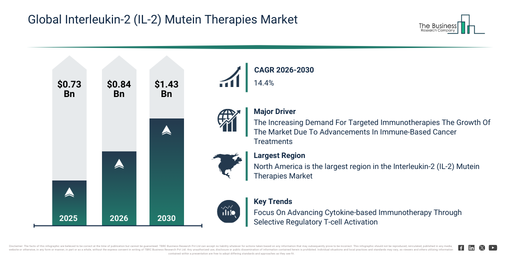
  • The Interleukin-2 (IL-2) Mutein Therapies Market Is Evolving Due To The Increasing Demand For Targeted Immunotherapies The Growth Of The Market Due To Advancements In Immune-Based Cancer Treatments

    The Interleukin-2 (IL-2) Mutein Therapies Market Is Evolving Due To The Increasing Demand For Targeted Immunotherapies The Growth Of The Market Due To Advancements In Immune-Based Cancer Treatments

    The Business Research Company’s 2026 market reports feature enhanced tools like market attractiveness analysis, TAM assessment, and company scoring matrices, along with interactive dashboards, deeper supply chain insights, and startup coverage strengthening the depth, usability, and strategic value of insights.

    How Does The Market Size Of The Interleukin-2 (IL-2) Mutein Therapies Market Compare Between 2026 And 2030?

    The interleukin-2 (il-2) mutein therapies market size has experienced rapid expansion in recent years. Its valuation is set to grow from $0.73 billion in 2025 to $0.84 billion in 2026, achieving a compound annual growth rate (CAGR) of 14.1%. This historical growth can be linked to advancements in cytokine engineering techniques, a greater understanding of immune signaling pathways, initial clinical successes of modified IL-2 therapies, increased investment in immuno-oncology research, and the rising incidence of immune-mediated diseases.

    The interleukin-2 (il-2) mutein therapies market is anticipated to experience swift expansion in the coming years, reaching $1.43 billion by 2030 with a compound annual growth rate (CAGR) of 14.4%. This projected growth throughout the forecast period stems from the broader adoption of personalized immunotherapy methods, an increase in clinical trial engagement for advanced cytokines, a heightened need for safer immune modulators, increasing regulatory backing for novel biologics, and a rise in collaborations between biotechnology and pharmaceutical firms. Significant developments expected during this period involve the intensified creation of receptor-biased il-2 muteins, a greater emphasis on reducing cytokine toxicity, wider application of combined immunotherapy protocols, the broadening of precise immune modulation strategies, and more robust clinical pipeline activities for both autoimmune and oncology treatments.

    Access Your Free Sample Report For In-Depth Market Analysis:

    https://www.thebusinessresearchcompany.com/sample.aspx?id=33185&type=smp

    Which Key Factors Are Driving The Interleukin-2 (IL-2) Mutein Therapies Market Growth?

    The rising need for targeted immunotherapies is anticipated to boost the growth of the interleukin-2 (IL-2) mutein therapies market. These therapies are designed to modify the immune system to specifically target cancer cells, reducing harm to healthy tissues. The demand for these treatments is increasing as healthcare professionals and researchers seek safer and more effective options compared to traditional chemotherapy and radiation, which often have significant side effects and limited precision. IL-2 mutein therapies advance targeted immunotherapies by using modified versions of interleukin-2 that selectively activate immune effector cells involved in fighting tumors, while minimizing the activation of pathways linked to widespread toxicity. For example, in April 2025, the Cancer Research Institute, a US-based non-profit organization, reported that FDA approvals included 17 new targeted immunotherapy agents in 2024, expanding choices for immune-based cancer treatment and increasing the number of eligible patients. Consequently, the increasing demand for targeted immunotherapies is propelling the growth of the interleukin-2 (IL-2) mutein therapies market.

    Which Segment Categories Are Included In The Interleukin-2 (IL-2) Mutein Therapies Market Segment Analysis?

    The interleukin-2 (il-2) mutein therapies market covered in this report is segmented –

    1) By Product Type: Monotherapy; Combination Therapy

    2) By Route Of Administration: Intravenous; Subcutaneous; Other Route Of Administrations

    3) By Application: Cancer; Autoimmune Diseases; Infectious Diseases; Other Applications

    4) By End User: Hospitals; Specialty Clinics; Research Institutes; Other End Users

    Subsegments:

    1) By Monotherapy: Single Agent Interleukin Two Mutein Therapy; Standalone Cytokine Based Immunotherapy; Targeted Immune Modulation Therapy

    2) By Combination Therapy: Interleukin Two Mutein With Immune Checkpoint Inhibitors; Interleukin Two Mutein With Chemotherapy; Interleukin Two Mutein With Targeted Biologic Therapies; Interleukin Two Mutein With Cell Based Therapies

    Which Trends Are Guiding The Direction Of The Interleukin-2 (IL-2) Mutein Therapies Market?

    Leading companies within the interleukin-2 (IL-2) mutein therapies market are increasingly prioritizing technological progress in cytokine-based immunotherapy, specifically focusing on selective regulatory T-cell (Treg) activation achieved through engineered IL-2 muteins. This selective regulatory T-cell activation via engineered IL-2 muteins entails employing genetically modified IL-2 proteins crafted to preferentially stimulate Tregs while simultaneously limiting the activation of effector immune cells. For instance, in December 2023, Almirall S.A., a pharmaceutical company based in Spain, launched the inaugural Phase I clinical study for ALM223, its engineered IL-2 mutein fusion protein, to assess its safety, pharmacokinetics, immunogenicity, and pharmacodynamics in individuals with autoimmune diseases. This particular candidate exhibits selective Treg activation, incorporates a modified Fc fusion to enhance molecular stability, and features an engineered cytokine backbone designed to optimize immune modulation. While these technological advancements highlight the significant potential of IL-2 muteins in delivering targeted immunomodulation and offering broader applicability for autoimmune conditions, their clinical efficacy and long-term safety profiles must still be thoroughly established through current and upcoming trials.

    Who Are The Active Companies Shaping The Interleukin-2 (IL-2) Mutein Therapies Market?

    Major companies operating in the interleukin-2 (il-2) mutein therapies market are Merck & Co. Inc., Sanofi S.A., Roche Holding AG, Bristol-Myers Squibb, Amgen Inc., Lonza Group AG, Alkermes plc, BioNTech SE, Xencor Inc., Innovent Biologics Inc., Ascendis Pharma A/S, ShanghAI Junshi Biosciences Co. Ltd., Mural Oncology Inc., ProBioGen AG, Werewolf Therapeutics Ltd., Philogen S.p.A., Cue Biopharma Inc., Medicenna Therapeutics Corp., Bright Peak Therapeutics Inc., Iovance Biotherapeutics Inc.

    Get The Full Interleukin-2 (IL-2) Mutein Therapies Market Report:

    https://www.thebusinessresearchcompany.com/report/interleukin-2-il-2-mutein-therapies-market-report

    Which Region Dominates The Interleukin-2 (IL-2) Mutein Therapies Market By Market Share?

    North America was the largest region in the interleukin 2 (IL-2) mutein therapies market in 2025. Asia-Pacific is expected to be the fastest-growing region in the forecast period. The regions covered in the interleukin-2 (il-2) mutein therapies market report are Asia-Pacific, South East Asia, Western Europe, Eastern Europe, North America, South America, Middle East, Africa.

    Request A Customized Interleukin-2 (IL-2) Mutein Therapies Market Report For Competitive Insights:

    https://www.thebusinessresearchcompany.com/customise?id=33185&type=smp

    Browse Through More Reports Similar to the Global Interleukin-2 (IL-2) Mutein Therapies Market 2026, By The Business Research Company

    Artificial Intelligence Ai Studio Market Report 2026

    https://www.thebusinessresearchcompany.com/report/artificial-intelligence-ai-studio-global-market-report

    Ai Content Marketing Market Report 2026

    https://www.thebusinessresearchcompany.com/report/ai-content-marketing-global-market-report

    Artificial Intelligence Services Market Report 2026

    https://www.thebusinessresearchcompany.com/report/artificial-intelligence-services-global-market-report

    Get in touch with us:

    The Business Research Company: https://www.thebusinessresearchcompany.com/

    Americas +1 310-496-7795

    Asia +44 7882 955267 & +91 8897263534

    Europe +44 7882 955267

    Email us at info@tbrc.info

    Follow us on:

    LinkedIn: https://in.linkedin.com/company/the-business-research-company

    YouTube: https://www.youtube.com/channel/UC24_fI0rV8cR5DxlCpgmyFQ

    Global Market Model: https://www.thebusinessresearchcompany.com/global-market-model

  • The Rise Of Innovations In Artificial Intelligence (AI) Accelerate In Silico Drug Discovery And Molecular Optimization Is Influencing The In Silico Drug Discovery Market

    The Rise Of Innovations In Artificial Intelligence (AI) Accelerate In Silico Drug Discovery And Molecular Optimization Is Influencing The In Silico Drug Discovery Market

    The Business Research Company’s 2026 market reports feature enhanced tools like market attractiveness analysis, TAM assessment, and company scoring matrices, along with interactive dashboards, deeper supply chain insights, and startup coverage strengthening the depth, usability, and strategic value of insights.

    What Is The Forecasted Market Size Trajectory Of The In Silico Drug Discovery Market From 2026 To 2030?

    The in silico drug discovery market size has experienced swift expansion in recent years. It is projected to grow from $4.21 billion in 2025 to $4.71 billion in 2026, exhibiting a compound annual growth rate (CAGR) of 11.8%. The increase observed in the historic period can be attributed to rising pharmaceutical R&D costs, early adoption of molecular modeling tools, growth in computational chemistry capabilities, expansion of genomic databases, and increasing collaboration between academia and industry.

    The in silico drug discovery market size is projected to experience substantial growth in the coming years, with an anticipated rise to $7.42 billion by 2030, demonstrating a compound annual growth rate (CAGR) of 12.1%. This expected increase throughout the forecast period is driven by various factors, including the escalating demand for more rapid drug development processes, the expanding utilization of machine learning in pharmacology, the broadening application of cloud computing in life sciences, a heightened focus on precision medicine, and the more widespread adoption of in silico clinical trial simulations. Key trends identified for this period encompass the increasing implementation of AI-driven virtual screening platforms, the rising uptake of cloud-based drug discovery software, the growing incorporation of predictive toxicology models, the expansion of tools for target identification and validation, and an enhanced emphasis on data-driven lead optimization.

    Access Your Free Sample Report For In-Depth Market Analysis:

    https://www.thebusinessresearchcompany.com/sample.aspx?id=33181&type=smp

    What Primary Drivers Are Shaping The In Silico Drug Discovery Market?

    The increasing investments in pharmaceutical research and development are projected to boost the expansion of the in silico drug discovery market in the coming years. Pharmaceutical research and development (R&D) investments refer to the capital and resources allocated by companies for the discovery, development, and testing of new drugs and therapies to ensure their safe and effective use. These pharmaceutical R&D investments are on the rise due to the growing demand for innovative treatments to tackle complex and chronic diseases, leading companies to invest more in creating targeted and effective solutions for unmet medical needs. Pharmaceutical R&D investments stimulate in silico drug discovery by accelerating candidate screening and optimization, allowing companies to pinpoint the most viable compounds, thereby enhancing research efficiency and maximizing returns on R&D expenditure. For example, in April 2025, data from the Office for National Statistics, a UK-based government agency, showed that the UK government’s net expenditure on research and development (R&D) climbed to $22.1 billion (£17.4 billion) in 2023, an increase from $20.45 billion (£16.1 billion) in 2022, representing an 8.2% surge. Thus, the growing pharmaceutical research and development investments are indeed propelling the in silico drug discovery market’s growth.

    How Is The In Silico Drug Discovery Market Broken Down By Segment Categories?

    The in silico drug discovery market covered in this report is segmented –

    1) By Component: Software; Services

    2) By Deployment: On-Premise; Cloud-Based Source

    3) By Drug-Discovery Phase: Target Identification And Validation; Hit Identification; Lead Optimization; Candidate Validation

    4) By Therapeutic Area: Oncology; Neurology; Cardiovascular; Infectious Diseases; Metabolic Disorders

    5) By End User: Pharmaceutical Companies; Biotechnology Firms; Academic And Research Institutes; Contract Research Organization

    Subsegments:

    1) By Software: Molecular Modeling And Simulation; Pharmacophore Modeling Software; Virtual Screening Tools; Quantitative Structure Activity Relationship Modeling; Protein Structure Prediction Software; Ligand Based Design Software; De Novo Drug Design Software; Cheminformatics And Data Analysis Tools

    2) By Services: Algorithm Development Services; Model Customization And Tailoring Services; Data Analytics Consulting Services; Computational Screening And Outsourcing Services; Protein Modeling And Simulation Services; Virtual Library Design Services; Target Assessment And Validation Services; Lead Optimization And Candidate Evaluation Services

    What Trends Are Affecting The Growth Of The In Silico Drug Discovery Market?

    Leading companies in the in silico drug discovery market are concentrating on creating innovative solutions, notably pharmaceutical-grade AI benchmarking platforms, to enhance the accuracy, efficiency, and predictive power of computational drug design and candidate screening. Such a platform entails rigorous testing of AI models against standard pharmaceutical datasets to guarantee precision, reliability, and regulatory compliance in drug discovery. For instance, in January 2026, Insilico Medicine Inc., a US-based clinical-stage biotechnology company, unveiled its Science MMAI Gym, a specialized training platform designed to improve large language models (LLMs) for drug discovery tasks. This platform aims to refine frontier LLMs into pharmaceutical-grade AI engines for drug discovery, leveraging proprietary datasets across chemistry, biology, and clinical domains. Its objective is to facilitate pharmaceutical superintelligence by boosting model performance up to 10x on benchmarks such as TargetBench and ClinBench, achieved through multi-task fine-tuning and reinforcement learning. Key advantages include versatile single-model reasoning, flexible membership programs featuring lab validation, and accelerated in silico tasks like retrosynthesis and trial prediction.

    Which Players Are Present In The In Silico Drug Discovery Market Space?

    Major companies operating in the in silico drug discovery market are NVIDIA Corporation, Dassault Systèmes, Clarivate, Schrödinger Inc., XtalPi Inc., Cresset Discovery Ltd., BenevolentAI, Simulations Plus Inc., Owkin Inc., Insilico Medicine, Recursion Pharmaceuticals Inc., Ardigen S.A., Aqemia, Iktos SA., Enveda Therapeutics Inc., Atomwise Inc., Turbine Simulated Cell Technologies Ltd., Optibrium Ltd., PostEra Inc., Insitro Inc., BioMap Inc., BioSolveIT GmbH, Quris Technologies LTD., and Nabla Bio Inc.

    Get The Full In Silico Drug Discovery Market Report:

    https://www.thebusinessresearchcompany.com/report/in-silico-drug-discovery-market-report

    Which Region Is The Largest In The In Silico Drug Discovery Market?

    North America was the largest region in the in silico drug discovery market in 2025. Asia-Pacific is expected to be the fastest-growing region in the forecast period. The regions covered in the in silico drug discovery market report are Asia-Pacific, South East Asia, Western Europe, Eastern Europe, North America, South America, Middle East, Africa.

    Request A Customized In Silico Drug Discovery Market Report For Competitive Insights:

    https://www.thebusinessresearchcompany.com/customise?id=33181&type=smp

    Browse Through More Reports Similar to the Global In Silico Drug Discovery Market 2026, By The Business Research Company

    In Silico Clinical Trials Market Report 2026

    https://www.thebusinessresearchcompany.com/report/in-silico-clinical-trials-global-market-report

    Drug Discovery Market Report 2026

    https://www.thebusinessresearchcompany.com/report/drug-discovery-global-market-report

    Drug Discovery Technologies Market Report 2026

    https://www.thebusinessresearchcompany.com/report/drug-discovery-technologies-global-market-report

    Get in touch with us:

    The Business Research Company: https://www.thebusinessresearchcompany.com/

    Americas +1 310-496-7795

    Asia +44 7882 955267 & +91 8897263534

    Europe +44 7882 955267

    Email us at info@tbrc.info

    Follow us on:

    LinkedIn: https://in.linkedin.com/company/the-business-research-company

    YouTube: https://www.youtube.com/channel/UC24_fI0rV8cR5DxlCpgmyFQ

    Global Market Model: https://www.thebusinessresearchcompany.com/global-market-model
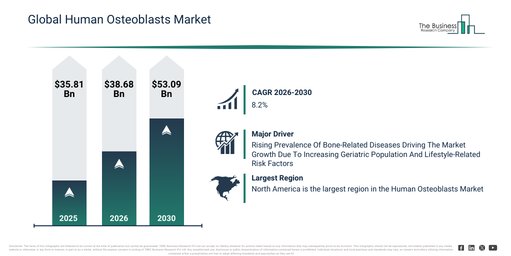
  • The Human Osteoblasts Market Is Witnessing Impact From Rising Prevalence Of Bone-Related Diseases Driving The Market Growth Due To Increasing Geriatric Population And Lifestyle-Related Risk Factors

    The Human Osteoblasts Market Is Witnessing Impact From Rising Prevalence Of Bone-Related Diseases Driving The Market Growth Due To Increasing Geriatric Population And Lifestyle-Related Risk Factors

    The Business Research Company’s 2026 market reports feature enhanced tools like market attractiveness analysis, TAM assessment, and company scoring matrices, along with interactive dashboards, deeper supply chain insights, and startup coverage strengthening the depth, usability, and strategic value of insights.

    What Changes In Market Value Are Expected For The Human Osteoblasts Market Over The 2026–2030 Period?

    The human osteoblasts market has demonstrated substantial growth in recent years. Its valuation is anticipated to rise from $35.81 billion in 2025 to $38.68 billion in 2026, achieving a compound annual growth rate (CAGR) of 8.0%. This historical expansion can be ascribed to several contributing factors, such as progress in cell culture technologies, the increasing occurrence of bone-related conditions, a rise in orthopedic research funding, the broadening of musculoskeletal research initiatives, and the availability of commercial cell lines.

    The human osteoblasts market is projected to experience robust expansion over the coming years. Its valuation is set to reach $53.09 billion by 2030, exhibiting a compound annual growth rate (CAGR) of 8.2%. This forecasted growth is primarily due to the increasing integration of regenerative medicine therapies, escalating investments in bone tissue engineering, the broadening scope of stem cell research applications, an expanding need for personalized orthopedic treatments, and their increasing utilization in drug screening platforms. Key trends anticipated during this period encompass the increased application of osteoblast cell cultures in research, a heightened demand for bone regeneration investigations, expanding implementation in orthopedic and spine research, the wider development of tissue engineering applications, and a stronger emphasis on superior-quality cell lines.

    Access Your Free Sample Report For In-Depth Market Analysis:

    https://www.thebusinessresearchcompany.com/sample.aspx?id=33173&type=smp

    What Key Drivers Are Fueling The Growth Of The Human Osteoblasts Market?

    An anticipated increase in bone-related ailments is set to boost the expansion of the human osteoblasts market in the coming years. These conditions are health issues that compromise the density, architecture, and robustness of bones, resulting in greater fragility and a higher propensity for fractures. The widespread occurrence of such diseases is escalating, primarily driven by the aging demographics in advanced nations, where chronological aging inherently contributes to diminished bone density and a heightened vulnerability to ailments like osteoporosis and osteopenia. Human osteoblasts play a crucial role in preventing bone deterioration and preserving skeletal integrity. They achieve this by stimulating new bone growth, facilitating mineralization, and managing the equilibrium between bone breakdown and regeneration, thus offering protection against conditions such as osteoporosis, fractures, and various metabolic bone disorders. For instance, in February 2024, Arthritis Australia, an Australia-based non-profit organization, reported that by 2040, the number of Australians afflicted with osteoarthritis (OA) is expected to climb to 3.11 million. This represents a 32% increase from 2.35 million in 2025, equating to an additional 762,515 individuals residing with OA nationwide. Consequently, the increasing incidence of bone-related diseases is fueling the expansion of the human osteoblasts market.

    Which Segment Classifications Are Used In The Human Osteoblasts Market Segment Analysis?

    The human osteoblasts market covered in this report is segmented –

    1) By Product: Human Cell Culture; Osteoblast Cell Lines

    2) By Application: Traumatic Injuries; Road Accidents; Regeneration Surgeries; Orthopedics; Musculoskeletal And Spine; Neurology

    3) By End User: Hospitals; Specialty Clinics; Ambulatory Surgical Centers

    Subsegments:

    1) By Human Cell Culture: Primary Human Osteoblast Cultures; Cryopreserved Human Osteoblast Cells; Fresh Human Osteoblast Cultures; Customized Human Cell Culture Media; Specialized Human Cell Culture Reagents

    2) By Osteoblast Cell Lines: Immortalized Osteoblast Cell Lines; Genetically Modified Osteoblast Cell Lines; Disease Specific Osteoblast Cell Lines; Research Grade Osteoblast Cell Lines; Commercially Available Osteoblast Cell Lines

    Which Firms Are Contributing To The Human Osteoblasts Market Ecosystem?

    Major companies operating in the human osteoblasts market are Merck KGaA, Thermo Fisher Scientific Inc., Lonza Group Ltd., STEMCELL Technologies Inc., Takara Bio Inc., BioIVT LLC, American Type Culture Collection, Cyagen Biosciences Inc., CELLINK AB, ScienCell Research Laboratories Inc., ZenBio Inc., Creative Bioarray Inc., PromoCell GmbH, ReproCELL Inc., MatTek Life Sciences Inc., Axol Bioscience Ltd., iXCells Biotechnologies USA Inc., Cell Applications Inc., Neuromics Inc., and Innoprot S.L.

    Get The Full Human Osteoblasts Market Report:

    https://www.thebusinessresearchcompany.com/report/human-osteoblasts-market-report

    Which Region Leads The Human Osteoblasts Market In Overall Market Size?

    North America was the largest region in the human osteoblasts market in 2025. Asia-Pacific is expected to be the fastest-growing region in the forecast period. The regions covered in the human osteoblasts market report are Asia-Pacific, South East Asia, Western Europe, Eastern Europe, North America, South America, Middle East, Africa.

    Request A Customized Human Osteoblasts Market Report For Competitive Insights:

    https://www.thebusinessresearchcompany.com/customise?id=33173&type=smp

    Browse Through More Reports Similar to the Global Human Osteoblasts Market 2026, By The Business Research Company

    Bone Grafts And Substitutes Market Report 2026

    https://www.thebusinessresearchcompany.com/report/bone-grafts-and-substitutes-global-market-report

    Osteoporosis Drugs Market Report 2026

    https://www.thebusinessresearchcompany.com/report/osteoporosis-drugs-global-market-report

    Advanced Orthopedic Technologies Implants And Regenerative Products Market Report 2026

    https://www.thebusinessresearchcompany.com/report/advanced-orthopedic-technologies-implants-and-regenerative-products-global-market-report

    Get in touch with us:

    The Business Research Company: https://www.thebusinessresearchcompany.com/

    Americas +1 310-496-7795

    Asia +44 7882 955267 & +91 8897263534

    Europe +44 7882 955267

    Email us at info@tbrc.info

    Follow us on:

    LinkedIn: https://in.linkedin.com/company/the-business-research-company

    YouTube: https://www.youtube.com/channel/UC24_fI0rV8cR5DxlCpgmyFQ

    Global Market Model: https://www.thebusinessresearchcompany.com/global-market-model

  • High-Throughput Screening Services Market Future Trends Influencing Growth Through 2030

    High-Throughput Screening Services Market Future Trends Influencing Growth Through 2030

    The Business Research Company’s 2026 market reports feature enhanced tools like market attractiveness analysis, TAM assessment, and company scoring matrices, along with interactive dashboards, deeper supply chain insights, and startup coverage strengthening the depth, usability, and strategic value of insights.

    What Level Of Market Value Growth Is Predicted For The High-Throughput Screening Services Market From 2026 To 2030?

    The high-throughput screening services market size has seen rapid expansion over recent years. It is forecast to grow from $23.02 billion in 2025 to $25.54 billion in 2026, exhibiting a compound annual growth rate (CAGR) of 11.0%. The historical growth of this market can be attributed to the expansion of pharmaceutical R&D activities, the increasing utilization of combinatorial chemistry libraries, the adoption of automated liquid handling systems, a rising demand for rapid target identification, and the availability of extensive compound libraries.

    The high-throughput screening services market is projected to experience swift expansion over the coming years. This market is set to reach $39.06 billion by 2030, demonstrating a compound annual growth rate (CAGR) of 11.2%. The expansion anticipated during this period is attributable to several factors, including greater investments in precision drug discovery, an intensified focus on biologics and complex targets, the widening scope of personalized medicine research, the increasing adoption of AI-assisted screening workflows, and the rising trend of outsourcing screening services to CROs. Key trends expected over the forecast horizon encompass the increasing deployment of automated robotic screening platforms, a surging demand for ultra-high-throughput screening services, the broader embrace of cell-based and label-free assays, the expansion of AI-driven data analysis within drug discovery, and a heightened emphasis on expediting hit-to-lead identification.

    Access Your Free Sample Report For In-Depth Market Analysis:

    https://www.thebusinessresearchcompany.com/sample.aspx?id=33169&type=smp

    What Significant Factors Are Influencing The High-Throughput Screening Services Market Expansion?

    The increasing prevalence of chronic and complex diseases is projected to fuel the expansion of the high-throughput screening services market. These long-standing conditions, characterized by involvement of various biological pathways and requiring ongoing management rather than brief interventions, are becoming more common. This rise is primarily due to an aging worldwide population, lifestyle factors, and enhanced disease identification, collectively intensifying the strain on healthcare infrastructure and boosting the need for innovative therapies. High-throughput screening (HTS) services assist research into these diseases by facilitating the swift and simultaneous assessment of numerous compounds against biological targets. Such capabilities hasten early-phase drug discovery, refine target identification, and aid in creating more potent treatments for multifaceted and persistent health issues. For example, data from April 2025, provided by the US-based federal agency, the Centers for Disease Control and Prevention (CDC), indicated that roughly 76.4% of adults in the United States, totaling over 194 million individuals, reported at least one chronic condition in 2023. Additionally, 51.4% (approximately 131 million people) stated they had multiple chronic conditions. Consequently, the increasing occurrence of chronic and complex illnesses is a key factor propelling the expansion of the high-throughput screening services market.

    What Are The Main Segments Within The High-Throughput Screening Services Market Segment Structure?

    The high-throughput screening services market covered in this report is segmented –

    1) By Products And Services: Instruments; Reagents And Kits; Services

    2) By Technology: Ultra-high-throughput Screening; Cell-based Assays; Lab-on-a-chip; Label-free Technology

    3) By Application: Target Identification; Primary Screening; Toxicology

    4) By End User: Pharmaceutical And Biotechnology Firms; Academia And Research Institutes; Contract Research Organizations

    Subsegments:

    1) By Instruments: Automated Screening Systems; Liquid Handling Systems; Detection And Imaging Systems; Data Acquisition Systems

    2) By Reagents And Kits: Assay Reagents; Screening Kits; Cell Based Reagents; Detection Reagents

    3) By Services: Assay Development And Optimization Services; Primary Screening Services; Hit Confirmation And Validation; Data Analysis And Bioinformatics Support; Specialized Screens; Project Management And Reporting

    What Trends Are Affecting The Direction Of The High-Throughput Screening Services Market?

    Leading companies within the high-throughput screening services market are prioritizing advancements in miniaturized and high-density assays, including systems that offer ultra-high screening speed with up to 27 detection channels. This emphasis is designed to enable faster, large-scale multiparametric analysis and to accelerate drug discovery workflows. The concept of ultra-high screening speed with up to 27 detection channels specifically denotes the capacity to swiftly analyze numerous biological parameters concurrently, thereby increasing data output and enhancing efficiency in high-throughput screening studies. As an illustration, in May 2024, Evotec SE, a drug discovery and development services company located in Germany, introduced extensive high-throughput screening services as part of its integrated early discovery platform. Evotec conducts large-scale biochemical and cell-based HTS campaigns employing highly automated, miniaturized assay systems and advanced data analytics. The company supports pharmaceutical and biotechnology partners by promptly identifying hit compounds and refining lead selection, consequently speeding up early-stage drug discovery programs.

    Who Are The Companies Participating In The High-Throughput Screening Services Market?

    Major companies operating in the high-throughput screening services market are Thermo Fisher Scientific Inc., Danaher Corporation, Merck KGaA, Corning Incorporated, Eurofins Scientific SE, Charles River Laboratories International Inc., Revvity Inc., Bio-Rad Laboratories Inc., Hamilton Company, Tecan Group Ltd., GenScript Biotech Corporation, Promega Corporation, Molecular Devices LLC, ShanghAI Medicilon Inc., Sygnature Discovery Limited, Selvita S.A., Cayman Chemical Company, Creative Bioarray Inc., Axxam S.p.A., Axcelead Inc., Creative Biolabs Inc., Enamine Ltd., Aurora Biomed Inc.

    Get The Full High-Throughput Screening Services Market Report:

    https://www.thebusinessresearchcompany.com/report/high-throughput-screening-services-market-report

    Which Region Is The Leading Market For The High-Throughput Screening Services Market?

    North America was the largest region in the high-throughput screening services market in 2025. Asia-Pacific is expected to be the fastest-growing region in the forecast period. The regions covered in the high-throughput screening services market report are Asia-Pacific, South East Asia, Western Europe, Eastern Europe, North America, South America, Middle East, Africa.

    Request A Customized High-Throughput Screening Services Market Report For Competitive Insights:

    https://www.thebusinessresearchcompany.com/customise?id=33169&type=smp

    Browse Through More Reports Similar to the Global High-Throughput Screening Services Market 2026, By The Business Research Company

    High Throughput Screening Hts Market Report 2026

    https://www.thebusinessresearchcompany.com/report/high-throughput-screening-hts-global-market-report

    Carrier Screening Market Report 2026

    https://www.thebusinessresearchcompany.com/report/carrier-screening-global-market-report

    Employment Screening Services Market Report 2026

    https://www.thebusinessresearchcompany.com/report/employment-screening-services-global-market-report

    Get in touch with us:

    The Business Research Company: https://www.thebusinessresearchcompany.com/

    Americas +1 310-496-7795

    Asia +44 7882 955267 & +91 8897263534

    Europe +44 7882 955267

    Email us at info@tbrc.info

    Follow us on:

    LinkedIn: https://in.linkedin.com/company/the-business-research-company

    YouTube: https://www.youtube.com/channel/UC24_fI0rV8cR5DxlCpgmyFQ

    Global Market Model: https://www.thebusinessresearchcompany.com/global-market-model

  • Hemophilia B Gene Therapy Market Insights On Growth Drivers, Trends, And Opportunities

    Hemophilia B Gene Therapy Market Insights On Growth Drivers, Trends, And Opportunities

    The Business Research Company’s 2026 market reports feature enhanced tools like market attractiveness analysis, TAM assessment, and company scoring matrices, along with interactive dashboards, deeper supply chain insights, and startup coverage strengthening the depth, usability, and strategic value of insights.

    What Are The Market Size Estimates For The Hemophilia B Gene Therapy Market In 2026 And 2030?

    The hemophilia b gene therapy market has experienced substantial expansion in recent years. Its valuation is projected to rise from $0.55 billion in 2025 to $0.71 billion in 2026, achieving a compound annual growth rate (CAGR) of 29.6%. This historical development can be ascribed to advancements in gene delivery technologies, a greater insight into hemophilia b genetics, the broadening of clinical research programs, the growing impact of lifelong replacement therapy, and the presence of specialized treatment centers.

    The market for hemophilia b gene therapy is projected to experience rapid expansion over the upcoming years. This market is anticipated to reach a valuation of $2.01 billion by 2030, demonstrating a compound annual growth rate (CAGR) of 29.8%. Several factors will drive this growth during the projection period, including a rise in gene therapy approvals, increased investments targeting rare disease treatments, a surge in demand for lasting therapeutic effects, the broadening of advanced manufacturing capacities, and the expansion of patient access initiatives. Key trends anticipated within this forecast timeframe encompass significant strides in single-dose curative treatments, an intensifying emphasis on sustained factor ix expression, the ongoing refinement of AAV vector designs, the broadening scope of personalized gene therapy methods, and improved regulatory harmonization for cutting-edge therapies.

    Access Your Free Sample Report For In-Depth Market Analysis:

    https://www.thebusinessresearchcompany.com/sample.aspx?id=33162&type=smp

    What Major Factors Are Driving The Hemophilia B Gene Therapy Market Forward?

    The growing number of gene therapy clinical trials is anticipated to drive the expansion of the hemophilia B gene therapy market. These trials are research studies designed to assess the safety, effectiveness, and long-term treatment potential of gene-based therapies in human participants. The increase in gene therapy clinical trials is fueled by greater investment from biopharmaceutical companies, developments in viral vector technology, supportive regulatory frameworks, and the necessity to address rare genetic disorders with significant unmet medical needs, including hemophilia B. Hemophilia B gene therapy benefits from this expanding landscape by utilizing established clinical development pathways, regulatory expertise, and manufacturing capabilities linked to in vivo gene delivery methods. For example, in January 2026, the Bioindustry Association (BIA) reported that the UK had 193 ongoing advanced therapy clinical trials, similar to 2024, with more than half in early stages, approximately 80% commercially sponsored, and over 80% focused on gene therapies, equally divided between ex vivo and in vivo approaches. Consequently, the increasing cell and gene therapy clinical trials are boosting the growth of the hemophilia B gene therapy market. The increasing embrace of personalized medicine is expected to drive the hemophilia B gene therapy market forward. Personalized medicine is a medical strategy that customizes disease prevention, diagnosis, and treatment based on an individual’s genetic, molecular, or clinical characteristics to enhance therapeutic results and minimize side effects. The growing adoption of personalized medicine is propelled by advances in genomics, better biomarker identification, and increasing regulatory backing for targeted therapies that depart from uniform treatment models. Hemophilia B gene therapy is well-aligned with personalized medicine principles, addressing the root genetic cause of the disease and providing long-term therapeutic advantages through individualized gene-based interventions. These therapies depend on patient-specific genetic and clinical profiling to determine suitability, optimize dosage, and monitor treatment longevity and safety. For instance, in February 2024, the Personalized Medicine Coalition stated that the US Food and Drug Administration approved 16 new personalized treatments for rare disease patients in 2023. Therefore, the rising adoption of personalized medicine is fueling the growth of the hemophilia B gene therapy market.

    What Segment Categories Shape The Hemophilia B Gene Therapy Market Segment Landscape?

    The hemophilia b gene therapy market covered in this report is segmented –

    1) By Therapy: Adeno-Associated Viral (AAV) Vectors; Lentiviral Vectors; Retroviral Vectors

    2) By Disease Severity: Severe Hemophilia B; Moderate Hemophilia B; Mild Hemophilia B

    3) By Treatment Type: On-Demand; Cure; Prophylaxis

    4) By Patient Age Group: Geriatric; Adults; Pediatric

    5) By Distribution Channel: Hospital Pharmacies; Specialty Pharmacies

    Subsegments:

    1) By Adeno-Associated Viral Vectors: Single-Stranded Adeno-Associated Viral Vectors; Self-Complementary Adeno-Associated Viral Vectors; Tissue Specific Promoter Adeno-Associated Viral Vectors; Capsid Modified Adeno-Associated Viral Vectors

    2) By Lentiviral Vectors: Integrating Lentiviral Vectors; Non-Integrating Lentiviral Vectors; Self-Inactivating Lentiviral Vectors; Pseudotyped Lentiviral Vectors

    3) By Retroviral Vectors: Gamma Retroviral Vectors; Alpha Retroviral Vectors; Moloney Murine Leukemia Virus Retroviral Vectors; Spumaretroviral Vectors

    Which Trends Are Impacting The Progress Of The Hemophilia B Gene Therapy Market?

    Leading companies within the hemophilia B gene therapy market are increasingly focusing on advancements in next-generation gene delivery platforms, particularly optimized adeno-associated virus (AAV)–based vector systems, to enhance both therapeutic efficacy and safety. These refined AAV-based vector systems act as sophisticated viral delivery mechanisms, enabling the efficient and controlled transfer of functional clotting factor IX genes into target hepatocytes, which supports long-term endogenous factor production. For instance, in May 2023, CSL Behring GmbH, a biotechnology firm based in Germany, obtained European Commission approval for HEMGENIX, which stands as the inaugural gene therapy sanctioned for managing hemophilia B. HEMGENIX is indicated for adult patients with severe or moderate hemophilia B who do not have a history of factor IX inhibitors, and it aims to reduce or eliminate the necessity for routine factor IX prophylaxis. Findings from the pivotal HOPE-B clinical study revealed that a significant portion of treated patients no longer required regular factor IX infusions, thereby demonstrating sustained therapeutic benefits and highlighting the potential of advanced AAV-based gene therapies in long-term disease management.

    Who Are The Companies Operating Across The Hemophilia B Gene Therapy Market Value Chain?

    Major companies operating in the hemophilia b gene therapy market are REGENXBIO Inc., Pfizer Inc., Bayer Aktiengesellschaft (Bayer AG), Thermo Fisher Scientific Inc., Takeda Pharmaceutical Company Limited, Merck KGaA, CSL Behring LLC, Lonza Group AG, Alnylam Pharmaceuticals Inc., GenScript ProBio LLC, Ultragenyx Pharmaceutical Inc., Takara Bio Inc., Sangamo Therapeutics Inc., Precision BioSciences Inc., Synthego Corporation, MaxCyte Inc., uniQure N.V., Freeline Therapeutics Ltd., Be Biopharma Inc., Asklepios BioPharmaceutical Inc., Cellectis S.A.

    Get The Full Hemophilia B Gene Therapy Market Report:

    https://www.thebusinessresearchcompany.com/report/hemophilia-b-gene-therapy-market-report

    Which Region Has The Greatest Market Share In The Hemophilia B Gene Therapy Market?

    North America was the largest region in the hemophilia b gene therapy market in 2025. Asia-Pacific is expected to be the fastest-growing region in the forecast period. The regions covered in the hemophilia b gene therapy market report are Asia-Pacific, South East Asia, Western Europe, Eastern Europe, North America, South America, Middle East, Africa.

    Request A Customized Hemophilia B Gene Therapy Market Report For Competitive Insights:

    https://www.thebusinessresearchcompany.com/customise?id=33162&type=smp

    Browse Through More Reports Similar to the Global Hemophilia B Gene Therapy Market 2026, By The Business Research Company

    Hepatitis Therapeutics Market Report 2026

    https://www.thebusinessresearchcompany.com/report/hepatitis-therapeutics-global-market-report

    Acquired Hemophilia Treatment Market Report 2026

    https://www.thebusinessresearchcompany.com/report/acquired-hemophilia-treatment-global-market-report

    Hemophilia Market Report 2026

    https://www.thebusinessresearchcompany.com/report/hemophilia-global-market-report

    Get in touch with us:

    The Business Research Company: https://www.thebusinessresearchcompany.com/

    Americas +1 310-496-7795

    Asia +44 7882 955267 & +91 8897263534

    Europe +44 7882 955267

    Email us at info@tbrc.info

    Follow us on:

    LinkedIn: https://in.linkedin.com/company/the-business-research-company

    YouTube: https://www.youtube.com/channel/UC24_fI0rV8cR5DxlCpgmyFQ

    Global Market Model: https://www.thebusinessresearchcompany.com/global-market-model

  • Group B Streptococcus Infection Treatment Market Outlook Highlighting Key Drivers And Market Evolution

    Group B Streptococcus Infection Treatment Market Outlook Highlighting Key Drivers And Market Evolution

    The Business Research Company’s 2026 market reports feature enhanced tools like market attractiveness analysis, TAM assessment, and company scoring matrices, along with interactive dashboards, deeper supply chain insights, and startup coverage strengthening the depth, usability, and strategic value of insights.

    What Is The Projected Increase In Market Value Of The Group B Streptococcus Infection Treatment Market During 2026–2030?

    The group b streptococcus infection treatment market size has experienced strong expansion in recent years. This market is set to increase from $1.26 billion in 2025 to $1.36 billion in 2026, progressing at a compound annual growth rate (CAGR) of 8.3%. The growth observed in the past can be attributed to several factors, including rising awareness of neonatal infections, the expansion of prenatal care programs, the widespread use of beta-lactam antibiotics, an increase in hospital-based screening protocols, and the availability of microbiological testing services.

    The market for group b streptococcus infection treatment is projected to experience substantial expansion over the coming years. This market is anticipated to reach a valuation of $1.89 billion by 2030, exhibiting a compound annual growth rate (CAGR) of 8.6%. Factors driving this growth during the projected period include the rising development of GBS vaccines, increased uptake of point-of-care diagnostics, a heightened focus on managing antimicrobial resistance, the broadening of molecular testing infrastructure, and a greater emphasis on preventive maternal healthcare. Key trends expected within this forecast timeframe encompass the increasing implementation of rapid molecular diagnostic testing, a greater focus on prenatal GBS screening programs, expanded utilization of antibiotic stewardship protocols, the development of new pipeline therapies for GBS prevention, and improved monitoring of maternal and neonatal outcomes.

    Access Your Free Sample Report For In-Depth Market Analysis:

    https://www.thebusinessresearchcompany.com/sample.aspx?id=33144&type=smp

    Which Strong Drivers Are Impacting The Group B Streptococcus Infection Treatment Market Growth?

    The anticipated increase in healthcare spending is expected to propel the growth of the group B streptococcus infection treatment market in the coming years. Healthcare expenditure refers to the total financial resources allocated for medical services, preventive care, medications, infrastructure, and related health initiatives aimed at maintaining or improving public health. This rise in expenditure is driven by the increasing prevalence of chronic and infectious diseases, which, in turn, generates a sustained need for long-term treatment, advanced therapies, and continuous medical attention. Enhanced healthcare expenditure strengthens the group B Streptococcus infection treatment sector by boosting investments in prenatal screening, clinical infrastructure, and vaccine research. These combined efforts lead to improved early detection, prevention, and effective management of GBS infections in mothers and newborns. For instance, in April 2025, the Office for National Statistics, a UK-based government organization, reported that overall healthcare spending rose by 6.5% from 2023 to 2024, indicating an acceleration compared to the 6.3% growth recorded in 2023. Thus, the growing healthcare expenditure is a significant driver for the expansion of the group B streptococcus infection treatment market.

    How Is The Group B Streptococcus Infection Treatment Market Categorized Across Its Segment Groups?

    The group b streptococcus infection treatment market covered in this report is segmented –

    1) By Treatment Type: Antibiotic Therapy; Intravenous Immunoglobulin (IVIG); Experimental Therapies

    2) By Drug Class: Beta-Lactam Antibiotic; Clindamycin And Alternatives; Pipeline Therapies

    3) By Route of Administration: Oral Administration; Intravenous Administration; Topical Application

    4) By Patient Type: Newborns; Pregnant Women; Immunocompromised Patients; Elderly Population

    5) By End User: Hospitals; Clinics; Research Institutions; Home Care Settings

    Subsegments:

    1) By Antibiotic Therapy: Penicillin Based Antibiotics; Cephalosporin Antibiotics; Macrolide Antibiotics; Aminoglycoside Antibiotics

    2) By Intravenous Immunoglobulin (IVIG): Standard Polyclonal Immunoglobulin; High Dose Immunoglobulin Therapy; Adjunctive Immunoglobulin Therapy

    3) By Experimental Therapies: Vaccine Based Therapies; Monoclonal Antibody Therapies; Bacteriophage Therapies; Immunomodulatory Therapies

    Which Trends Are Contributing To Changes In The Group B Streptococcus Infection Treatment Market?

    Key companies in the group B streptococcus infection treatment market are concentrating on creating cutting-edge products, including polysaccharide conjugate vaccines, with the goal of decreasing asymptomatic bacterial carriage. These vaccines are a type of immunization where bacterial surface sugars are chemically attached to a carrier protein, boosting immune recognition and producing a robust, enduring protective response, particularly for infants and young children. As an illustration, in September 2023, Omniose, a US-based biotechnology firm, disclosed receiving a grant award of up to $3.0 million from the National Institute of Allergy and Infectious Diseases, part of the U.S. National Institutes of Health, to aid in the creation of a Group B Streptococcus (GBS) vaccine. The distinguishing characteristic of this vaccine is its objective to achieve substantial efficacy via a considerably streamlined manufacturing method. Omniose’s platform utilizes synthetic biology and a single-step enzymatic process within an engineered E. coli cell to create GBS polysaccharide conjugate vaccines, thereby removing traditional chemical conjugation procedures. This method ensures the preservation of 100% of sialic acid residues on each capsular polysaccharide, which has been demonstrated as crucial for eliciting powerful functional antibody responses against particular GBS serotypes.

    Which Firms Are Influencing Competition In The Group B Streptococcus Infection Treatment Market?

    Major companies operating in the group b streptococcus infection treatment market are Merck & Co. Inc., Pfizer Inc., Sanofi S.A., Novartis AG, GlaxoSmithKline plc, Biological E. Limited, Serum Institute of India Pvt. Ltd., Walvax Biotechnology Co. Ltd., Vaxcyte Inc., Bharat Biotech International Limited, Clover Biopharmaceuticals Ltd., Biovac Institute (Pty) Ltd., Inventprise Inc., BioNet Asia Co. Ltd., GeneOne Life Science Inc., Alopexx Enterprises LLC, Wellstat Vaccines LLC, MinervaX ApS, and ShanghAI Zerun Biotechnology Co. Ltd.

    Get The Full Group B Streptococcus Infection Treatment Market Report:

    https://www.thebusinessresearchcompany.com/report/group-b-streptococcus-infection-treatment-market-report

    Where Is The Group B Streptococcus Infection Treatment Market Most Concentrated Geographically?

    North America was the largest region in the group B streptococcus infection treatment market in 2025. Asia-Pacific is expected to be the fastest-growing region in the forecast period. The regions covered in the group b streptococcus infection treatment market report are Asia-Pacific, South East Asia, Western Europe, Eastern Europe, North America, South America, Middle East, Africa.

    Request A Customized Group B Streptococcus Infection Treatment Market Report For Competitive Insights:

    https://www.thebusinessresearchcompany.com/customise?id=33144&type=smp

    Browse Through More Reports Similar to the Global Group B Streptococcus Infection Treatment Market 2026, By The Business Research Company

    Strep Throat Treatment Market Report 2026

    https://www.thebusinessresearchcompany.com/report/strep-throat-treatment-global-market-report

    Antibacterial Products Market Report 2026

    https://www.thebusinessresearchcompany.com/report/antibacterial-products-global-market-report

    Hospital Acquired Infection Control Market Report 2026

    https://www.thebusinessresearchcompany.com/report/hospital-acquired-infection-control-global-market-report

    Get in touch with us:

    The Business Research Company: https://www.thebusinessresearchcompany.com/

    Americas +1 310-496-7795

    Asia +44 7882 955267 & +91 8897263534

    Europe +44 7882 955267

    Email us at info@tbrc.info

    Follow us on:

    LinkedIn: https://in.linkedin.com/company/the-business-research-company

    YouTube: https://www.youtube.com/channel/UC24_fI0rV8cR5DxlCpgmyFQ

    Global Market Model: https://www.thebusinessresearchcompany.com/global-market-model

  • Good Manufacturing Practice (GMP) Services For Cell And Gene Therapy Market Overview 2026–2030 With Insights On Industry Developments

    Good Manufacturing Practice (GMP) Services For Cell And Gene Therapy Market Overview 2026–2030 With Insights On Industry Developments

    The Business Research Company’s 2026 market reports feature enhanced tools like market attractiveness analysis, TAM assessment, and company scoring matrices, along with interactive dashboards, deeper supply chain insights, and startup coverage strengthening the depth, usability, and strategic value of insights.

    How Is The Market Size Of The Good Manufacturing Practice (GMP) Services For Cell And Gene Therapy Market Expected To Change From 2026 To 2030?

    The market size for good manufacturing practice (gmp) services for cell and gene therapy has experienced rapid expansion in recent years. It is anticipated to grow from $2.49 billion in 2025 to $2.95 billion in 2026, achieving a compound annual growth rate (CAGR) of 18.6%. This historical growth can be attributed to several factors: an increase in clinical trials for advanced therapies, the expansion of cell therapy research programs, increasing regulatory standardization, the development of early-stage gmp facilities, and rising investment in biopharmaceutical manufacturing.

    The good manufacturing practice (gmp) services for cell and gene therapy market size is projected to experience swift expansion in the coming years. This market is anticipated to reach $5.88 billion by 2030, exhibiting a compound annual growth rate (CAGR) of 18.9%. The projected growth during this period stems from factors such as the increasing commercialization of gene therapies, an escalating need for scalable manufacturing capabilities, the expansion of personalized medicine pipelines, a rise in outsourcing activities to CDMOs, and the broader adoption of automated quality control systems. Key trends expected over the forecast period encompass a surging demand for commercial-scale cell and gene therapy manufacturing, the increasing utilization of viral vector production services, a heightened concentration on GMP-compliant automation, the expansion of fill-finish and cold chain services, and an intensified focus on regulatory compliance.

    Access Your Free Sample Report For In-Depth Market Analysis:

    https://www.thebusinessresearchcompany.com/sample.aspx?id=33124&type=smp

    What Key Factors Are Shaping The Good Manufacturing Practice (GMP) Services For Cell And Gene Therapy Market Landscape?

    The good manufacturing practice (GMP) services for cell and gene therapy market is projected to grow, driven by the increasing volume of cell and gene therapy clinical trials. These trials are defined as regulated investigations assessing the safety, effectiveness, and quality of advanced therapies, which employ genetically modified or live cells to address conditions like cancer, uncommon genetic disorders, and autoimmune diseases. The surge in these studies is attributed to greater research and development efforts in advanced therapies, increased funding from biotechnology and pharmaceutical firms, and a growing demand for novel treatments for unmet medical needs. Given that numerous trial sponsors lack internal GMP manufacturing capabilities, they are increasingly turning to specialized GMP service providers for compliant manufacturing, along with analytical testing, quality control, and quality assurance. Such services are vital to guaranteeing a secure, consistent, and prompt provision of clinical-grade materials throughout all stages of a trial. For example, in January 2026, the Bioindustry Association (BIA), a national trade association located in the UK, reported 193 active advanced therapy clinical trials in the UK; over half of these were in early stages, and more than 80% concentrated on gene therapies. Hence, the rising number of cell and gene therapy clinical trials is indeed fueling the expansion of the good manufacturing practice (GMP) services for cell and gene therapy market.

    How Are Segments Identified Within The Good Manufacturing Practice (GMP) Services For Cell And Gene Therapy Market Segment Framework?

    The good manufacturing practice (gmp) services for cell and gene therapy market covered in this report is segmented –

    1) By Service Type: Process Development; Manufacturing; Analytical and Quality Control; Fill-Finish; Other Service Types

    2) By Therapy Type: Cell Therapy; Gene Therapy; Combination Therapy

    3) By Phase: Preclinical; Clinical; Commercial

    4) By End-User: Pharmaceutical and Biotechnology Companies; Academic and Research Institutes; Other End-Users

    Subsegments:

    1) By Process Development: Vector Design Optimization; Cell Line Development; Upstream Process Optimization; Downstream Purification Development; Process Scale Up Studies

    2) By Manufacturing: Clinical Trial Material Production; Commercial Scale Manufacturing; Viral Vector Manufacturing; Plasmid Production Services; Cell Therapy Manufacturing

    3) By Analytical and Quality Control: Method Development And Validation; Potency And Efficacy Testing; Safety And Sterility Testing; Stability And Shelf Life Studies; Release Testing Services

    4) By Fill-Finish: Aseptic Filling Services; Vial And Syringe Filling; Lyophilization Services; Packaging And Labeling; Cold Chain Handling

    5) By Other Service Types: Regulatory Support Services; Technology Transfer Services; Supply Chain Management; Storage And Distribution; Post Manufacturing Support

    What Market Trends Are Affecting The Good Manufacturing Practice (GMP) Services For Cell And Gene Therapy Market?

    Companies operating in the good manufacturing practice (GMP) services for cell and gene therapy market are increasingly emphasizing the expansion of advanced manufacturing capabilities, particularly in cell therapy production, to back regional clinical trials and speed up therapy development. Cell therapy manufacturing encompasses GMP-compliant procedures for the collection, alteration, propagation, and preparation of therapeutic cells, guaranteeing product safety, quality, and clinical efficacy. For example, in July 2025, AGC Biologics, a US-based contract development and manufacturing organization (CDMO), introduced cell therapy process development and clinical manufacturing services at its Yokohama Technical Center in Japan. This facility supports GMP-compliant manufacturing for both preclinical and clinical trials, covering CAR-T therapies, induced pluripotent stem cells, and other stem cell platforms. Such an expansion bolsters AGC Biologics’ global GMP presence across Europe, North America, and Asia, enabling a more rapid and compliant journey for cell and gene therapies towards commercialization.

    Who Are The Companies Competing Within The Good Manufacturing Practice (GMP) Services For Cell And Gene Therapy Market?

    Major companies operating in the good manufacturing practice (gmp) services for cell and gene therapy market are Novartis AG, Boehringer Ingelheim BioXcellence GmbH, Batavia Biosciences B.V., FUJIFILM Diosynth Biotechnologies, AGC Biologics Inc., Lonza Group AG, WuXi AppTec Co. Ltd., BioNTech Innovative Manufacturing Services, Charles River Laboratories International Inc., Catalent Inc., Samsung Biologics Co. Ltd., Miltenyi Biotec GmbH, SK pharmteco Co. Ltd., KBI Biopharma Inc., Oxford Biomedica plc, OmniaBio Inc., RoslinCT Ltd., Pluri CDMO, SCTbio Inc., Made Scientific Inc., ENCell Co. Ltd.

    Get The Full Good Manufacturing Practice (GMP) Services For Cell And Gene Therapy Market Report:

    https://www.thebusinessresearchcompany.com/report/good-manufacturing-practice-gmp-services-for-cell-and-gene-therapy-market-report

    Which Region Dominates The Good Manufacturing Practice (GMP) Services For Cell And Gene Therapy Market By Market Share?

    North America was the largest region in the good manufacturing practice (GMP) services for cell and gene therapy market in 2025. Asia-Pacific is expected to be the fastest-growing region in the forecast period. The regions covered in the good manufacturing practice (gmp) services for cell and gene therapy market report are Asia-Pacific, South East Asia, Western Europe, Eastern Europe, North America, South America, Middle East, Africa.

    Request A Customized Good Manufacturing Practice (GMP) Services For Cell And Gene Therapy Market Report For Competitive Insights:

    https://www.thebusinessresearchcompany.com/customise?id=33124&type=smp

    Browse Through More Reports Similar to the Global Good Manufacturing Practice (GMP) Services For Cell And Gene Therapy Market 2026, By The Business Research Company

    Cell And Gene Therapy Manufacturing Services Market 2026

    https://www.thebusinessresearchcompany.com/report/cell-and-gene-therapy-manufacturing-services-market

    Gmp Cell Therapy Consumables Market Report 2026

    https://www.thebusinessresearchcompany.com/report/gmp-cell-therapy-consumables-global-market-report

    Cell And Gene Therapy Supply Chain Or Logistics Market Report 2026

    https://www.thebusinessresearchcompany.com/report/cell-and-gene-therapy-supply-chain-or-logistics-global-market-report

    Get in touch with us:

    The Business Research Company: https://www.thebusinessresearchcompany.com/

    Americas +1 310-496-7795

    Asia +44 7882 955267 & +91 8897263534

    Europe +44 7882 955267

    Email us at info@tbrc.info

    Follow us on:

    LinkedIn: https://in.linkedin.com/company/the-business-research-company

    YouTube: https://www.youtube.com/channel/UC24_fI0rV8cR5DxlCpgmyFQ

    Global Market Model: https://www.thebusinessresearchcompany.com/global-market-model
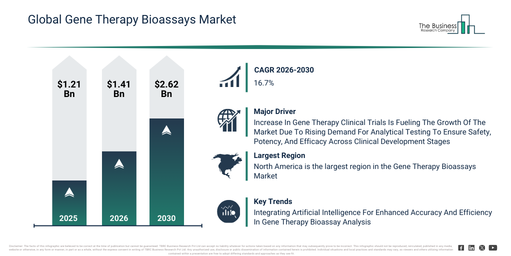
  • Gene Therapy Bioassays Market Analysis Covering Growth Drivers And Future Outlook

    Gene Therapy Bioassays Market Analysis Covering Growth Drivers And Future Outlook

    The Business Research Company’s 2026 market reports feature enhanced tools like market attractiveness analysis, TAM assessment, and company scoring matrices, along with interactive dashboards, deeper supply chain insights, and startup coverage strengthening the depth, usability, and strategic value of insights.

    How Much Growth In Market Value Is Expected For The Gene Therapy Bioassays Market Between 2026 And 2030?

    The gene therapy bioassays market has seen substantial growth in recent years. This market is anticipated to expand from $1.21 billion in 2025 to $1.41 billion in 2026, exhibiting a compound annual growth rate (CAGR) of 16.5%. In the past, this growth was primarily due to an increase in gene therapy research programs, the expansion of viral vector manufacturing, rising clinical trial activity, the implementation of standardized bioassay protocols, and heightened regulatory scrutiny on gene therapy products.

    The gene therapy bioassays market size is anticipated to experience significant expansion in the upcoming years, projected to reach $2.62 billion by 2030, exhibiting a compound annual growth rate (CAGR) of 16.7%. This growth during the forecast period is primarily driven by the escalating commercialization of gene therapies, the increasing need for high-throughput bioassay solutions, the expansion of personalized genetic medicine, rising investments in advanced cell and gene therapy pipelines, and a heightened focus on assay automation and reproducibility. Notable trends for the forecast period include the increasing adoption of cell-based potency assays, a rising demand for viral vector characterization tests, the growing utilization of automated bioassay platforms, the expansion of regulatory-compliant assay validation, and an enhanced emphasis on functional gene expression analysis.

    Access Your Free Sample Report For In-Depth Market Analysis:

    https://www.thebusinessresearchcompany.com/sample.aspx?id=33119&type=smp

    What Leading Drivers Are Supporting The Gene Therapy Bioassays Market Expansion?

    The rising volume of gene therapy clinical trials is projected to fuel expansion within the gene therapy bioassays market. These trials assess the safety, effectiveness, and biological function of gene-based treatments in human participants. Their proliferation is a result of heightened research and development activities and increased funding from biopharmaceutical firms aiming to satisfy critical medical demands using novel genetic therapies. Gene therapy bioassays are crucial for clinical progression, offering essential analytical evaluations to determine biological activity, potency, safety, and how the treatment works, throughout each developmental stage, with escalating regulatory demands as programs advance through clinical phases. For example, the Bioindustry Association (BIA), a national trade association based in the UK, reported that in January 2026, the UK had 193 ongoing advanced therapy clinical trials, with more than 80% specifically dedicated to gene therapies. Consequently, the substantial increase in gene therapy clinical trials is propelling the growth of the gene therapy bioassays market.

    Which Segment Categories Are Included In The Gene Therapy Bioassays Market Segment Analysis?

    The gene therapy bioassays market covered in this report is segmented –

    1) By Product Type: Cell-Based Assays; Viral Vector-Based Assays; Non-Viral Vector-Based Assays; Other Product Types

    2) By Service Type: Assay Development Services; Assay Validation Services; Quality Control Testing Services; Regulatory Support Services; Data Analysis And Reporting Services; Custom Bioassay Design Services

    3) By Application: Research And Development; Clinical Testing; Quality Control; Other Applications

    4) By End User: Biotechnology Companies; Pharmaceutical Companies; Contract Research Organizations; Academic And Research Institutes; Regulatory Laboratories

    Subsegments:

    1) By Cell-Based Assays: Reporter Gene Expression Assays; Cell Viability And Cytotoxicity Assays; Transduction Efficiency Assays; Functional Potency Cell Assays; Cellular Uptake And Localization Assays

    2) By Viral Vector-Based Assays: Adeno Associated Virus Vector Assays; Lentiviral Vector Characterization Assays; Retroviral Vector Titer Assays; Vector Genome Integrity Assays; Infectivity And Transduction Assays

    3) By Non-Viral Vector-Based Assays: Plasmid Deoxyribonucleic Acid Delivery Assays; Lipid Nanoparticle Transfection Assays; Polymeric Carrier Efficiency Assays; Physical Gene Delivery Evaluation Assays; Non Viral Vector Stability Assays

    4) By Other Product Types: Immunogenicity Assessment Assays; Biodistribution And Persistence Assays; Safety And Toxicity Bioassays; Analytical Method Development Assays; Custom Gene Therapy Bioassays

    What Emerging Trends Are Seen In The Gene Therapy Bioassays Market?

    Major companies operating in the gene therapy bioassays market are increasingly integrating artificial intelligence and machine learning into bioassay analysis, such as AI-enabled digital PCR data interpretation. This focus is aimed at enhancing accuracy, reducing experimental variability, accelerating result turnaround, and optimizing the assessment of therapeutic efficacy and safety in gene therapy development. AI-enabled dPCR data interpretation utilizes advanced algorithms to automate the analysis of results, distinguish true signals from background noise, and precisely quantify viral genomes or vector copy number with minimal human intervention. For instance, in April 2025, QIAGEN N.V., a Germany-based molecular diagnostics company, launched expanded QIAcuity lentivirus solutions, which include the QIAcuity RCL Quant Kit and CGT dPCR assays. These solutions offer algorithm-driven absolute quantification, multiplex and singleplex assay compatibility for vector genome and vector copy number analysis, and software-assisted data analysis workflows specifically designed to support regulatory-compliant decision-making in gene therapy bioassay applications.

    Who Are The Active Companies Shaping The Gene Therapy Bioassays Market?

    Major companies operating in the gene therapy bioassays market are Boehringer Ingelheim BioXcellence, AGC Biologics, ICON plc, Lonza Group AG, SGS SA, Eurofins Scientific SE, WuXi AppTec, Charles River Laboratories International Inc., Catalent Inc, Recipharm AB, KBI Biopharma, Syngene International Limited, QPS Holdings LLC, BioAgilytix Labs (operationally independent CRO), Oxford Biomedica plc, Viralgen Vector S.L., ProtaGene Inc., Center for Breakthrough Medicines, RoslinCT, Immunologix Labs, Genezen Laboratories

    Get The Full Gene Therapy Bioassays Market Report:

    https://www.thebusinessresearchcompany.com/report/gene-therapy-bioassays-market-report

    Which Region Leads The Gene Therapy Bioassays Market In Terms Of Market Share?

    North America was the largest region in the gene therapy bioassays market in 2025. Asia-Pacific is expected to be the fastest-growing region in the forecast period. The regions covered in the gene therapy bioassays market report are Asia-Pacific, South East Asia, Western Europe, Eastern Europe, North America, South America, Middle East, Africa.

    Request A Customized Gene Therapy Bioassays Market Report For Competitive Insights:

    https://www.thebusinessresearchcompany.com/customise?id=33119&type=smp

    Browse Through More Reports Similar to the Global Gene Therapy Bioassays Market 2026, By The Business Research Company

    Genes Therapy Market Report 2026

    https://www.thebusinessresearchcompany.com/report/genes-therapy-global-market-report

    Cell And Gene Therapy Clinical Trial Services Market Report 2026

    https://www.thebusinessresearchcompany.com/report/cell-and-gene-therapy-clinical-trial-services-global-market-report

    Cell And Gene Therapy Supply Chain Or Logistics Market Report 2026

    https://www.thebusinessresearchcompany.com/report/cell-and-gene-therapy-supply-chain-or-logistics-global-market-report

    Get in touch with us:

    The Business Research Company: https://www.thebusinessresearchcompany.com/

    Americas +1 310-496-7795

    Asia +44 7882 955267 & +91 8897263534

    Europe +44 7882 955267

    Email us at info@tbrc.info

    Follow us on:

    LinkedIn: https://in.linkedin.com/company/the-business-research-company

    YouTube: https://www.youtube.com/channel/UC24_fI0rV8cR5DxlCpgmyFQ

    Global Market Model: https://www.thebusinessresearchcompany.com/global-market-model