Category: Pharmaceuticals

  • Charge Variant Analysis Market Growth Outlook: Why Analysts Expect Continued Expansion

    Charge Variant Analysis Market Growth Outlook: Why Analysts Expect Continued Expansion

    Backed by market attractiveness analysis, total addressable market sizing, company benchmarking matrices, interactive Excel dashboards, wider supply chain intelligence, emerging startup coverage, and detailed product-level insights, The Business Research Company’s 2026 market reports are designed to offer research that is more actionable and strategically valuable than ever.

    Charge Variant Analysis Market Forecast: What Value Will The Market Reach By 2030?

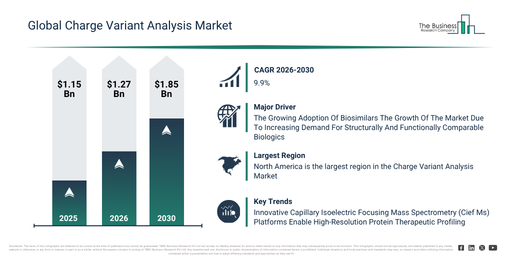
    The charge variant analysis market size has demonstrated significant expansion in recent years. It is projected to expand from $1.15 billion in 2025 to $1.27 billion in 2026, reflecting a compound annual growth rate (CAGR) of 9.7%. This historic growth can be ascribed to several factors, including the expanding biopharmaceutical production, a heightened demand for protein characterization, the widespread adoption of chromatography-based analysis, more stringent regulatory requirements for quality control, and innovations in electrophoresis techniques.

    The charge variant analysis market size is anticipated to experience substantial growth over the next few years. It is projected to reach $1.85 billion in 2030, displaying a compound annual growth rate (CAGR) of 9.9%. This expansion during the forecast period can be attributed to several factors, including the increasing demand for automated CVA systems, the rising adoption of AI-enabled data analysis, the expansion of the biologics and biosimilars market, a greater focus on real-time monitoring of protein variants, and the integration of high-throughput analytical platforms. Prominent trends throughout this period involve the increasing use of capillary electrophoresis techniques, a growing need for high-throughput ion exchange chromatography, the expanding integration of CVA software for data analysis, the development of analytical services for biopharmaceutical quality assurance and quality control (QA/QC), and an elevated emphasis on multi-product and platform development.

    Get A Free Sample Report With In-Depth Market Insights:

    https://thebusinessresearchcompany.com/sample_request?id=72094671&type=smp&name=Charge%20Variant%20Analysis%20Market%20Report%202026&utm_source=Blogs&utm_medium=Paid&utm_campaign=Oct_PR

    Charge Variant Analysis Market Growth Catalysts And Demand Drivers

    The increasing acceptance of biosimilars is projected to stimulate the expansion of the charge variant analysis market moving forward. Biosimilars represent biologic medical products that exhibit high similarity to an already approved reference biologic in terms of safety, efficacy, and quality, though they may possess slight distinctions in clinically inactive ingredients. The rising embrace of biosimilars is primarily due to the expiration of patents for original biologic drugs, which permits manufacturers to offer lower-cost, clinically equivalent alternatives, thereby enhancing market accessibility and competition. Charge variant analysis aids biosimilars by confirming their structural and functional comparability to the reference biologic, which allows for accurate assessment of product quality, stability, and therapeutic consistency. For example, in January 2023, according to Cardinal Health Inc., a US-based healthcare company, the volume of food and drug administration-approved biosimilar products in the U.S. climbed from 33 in 2022, with 21 accessible on the market, to 40 in 2023, with 25 commercially accessible. Therefore, the growing integration of biosimilars is driving the growth of the charge variant analysis market.

    Charge Variant Analysis Market Segment Analysis And Revenue Potential

    The charge variant analysis market covered in this report is segmented –

    1) By Technique: Ion Exchange Chromatography, Capillary Electrophoresis, Isoelectric Focusing, Other Techniques

    2) By Product Type: Instruments, Consumables, Software, Services

    3) By Application: Biopharmaceuticals, Research And Development, Quality Control, Other Applications

    4) By End-User: Pharmaceutical And Biotechnology Companies, Academic And Research Institutes, Contract Research Organizations, Other End-Users

    Subsegments:

    1) By Ion Exchange Chromatography: Strong Cation Exchange, Weak Cation Exchange, Strong Anion Exchange, Weak Anion Exchange

    2) By Capillary Electrophoresis: Capillary Zone Electrophoresis, Micellar Electrokinetic Chromatography, Capillary Gel Electrophoresis, Isoelectric Focusing Capillary Electrophoresis

    3) By Isoelectric Focusing: Preparative Isoelectric Focusing, Analytical Isoelectric Focusing, Immobilized pH Gradient Isoelectric Focusing

    4) By Other Techniques: High Performance Liquid Chromatography, Hydrophobic Interaction Chromatography, Affinity Chromatography, Mass Spectrometry Based Analysis

    Charge Variant Analysis Market Trends Shaping Long-Term Demand

    Leading firms within the charge variant analysis market are increasingly concentrating on creating novel analytical solutions, particularly sophisticated capillary isoelectric focusing–mass spectrometry (cIEF-MS) platforms, aiming to facilitate quicker, more accurate, and high-definition characterization of protein-based therapies. This analytical technique, cIEF-MS, operates by separating proteins according to their isoelectric point and then proceeds to identify and characterize charge variants through mass spectrometry, thereby enabling comprehensive and precise profiling of protein diversity. As an illustration, in June 2024, CMP Scientific Corp., a biotechnology enterprise based in the US, introduced the BioSummit CVA System, which is an advanced cIEF-MS platform designed for online charge variant analysis. This particular system integrates the company’s patented EMASS II CE-MS coupling technology with CR3520 cIEF-MS chemistry and an innovative time-of-flight mass spectrometer. This combination is engineered to provide superior sensitivity, enhanced durability, and smooth analytical processes, specifically optimized for characterizing recombinant proteins. It allows for the high-resolution separation and identification of charge variants within a single, integrated operation. Furthermore, it incorporates simplified reagent handling, improved operational stability, and extensive data analysis software, rendering it appropriate for biopharmaceutical research, quality control, and applications supporting regulatory compliance.

    Charge Variant Analysis Market Industry Leaders And Competitive Landscape

    Major companies operating in the charge variant analysis market are Thermo Fisher Scientific Inc., Merck KGaA, Danaher Corporation, SGS Société Générale de Surveillance SA, Lonza Group AG, Agilent Technologies Inc., Creative Proteomics Inc., WuXi AppTec Co Ltd., Charles River Laboratories International Inc., Sartorius AG, Shimadzu Corporation, Waters Corporation, Revvity Inc., Bio-Rad Laboratories Inc., Phenomenex Inc., Tosoh Bioscience LLC, JASCO Inc., Alturas Analytics Inc., BioPharmaSpec Inc., Eurofins Scientific SE.

    View The Full Charge Variant Analysis Market Report:

    https://thebusinessresearchcompany.com/report/charge-variant-analysis-market-report?utm_source=Blogs&utm_medium=Paid&utm_campaign=Oct_PR

    Charge Variant Analysis Market Regional Analysis And Leading Geography

    North America was the largest region in the charge variant analysis market in 2025. Asia-Pacific is expected to be the fastest-growing region in the forecast period. The regions covered in the charge variant analysis market report are Asia-Pacific, South East Asia, Western Europe, Eastern Europe, North America, South America, Middle East, Africa.

    Reach Out To Our Team:

    The Business Research Company: https://www.thebusinessresearchcompany.com/

    Americas: +1 310-496-7795

    Asia: +44 7882 955267 & +91 8897263534

    Europe: +44 7882 955267

    Email us at: marketing@tbrc.info

    Follow us on:

    LinkedIn: https://in.linkedin.com/company/the-business-research-company

    YouTube: https://www.youtube.com/channel/UC24_fI0rV8cR5DxlCpgmyFQ

    Global Market Model: https://www.thebusinessresearchcompany.com/global-market-model
  • Capsid Tropism Screening Platforms Market Outlook From 2026 To 2030: Key Growth Factors And Future Opportunities

    Capsid Tropism Screening Platforms Market Outlook From 2026 To 2030: Key Growth Factors And Future Opportunities

    Featuring market attractiveness scoring, total addressable market sizing, company benchmarking matrices, interactive Excel dashboards, deeper supply chain intelligence, emerging startup tracking, and granular product-level insights, The Business Research Company’s 2026 market reports are built to deliver research that is both more actionable and more strategically valuable.

    Capsid Tropism Screening Platforms Market Growth Potential: How Will Market Size Shift Through 2030?

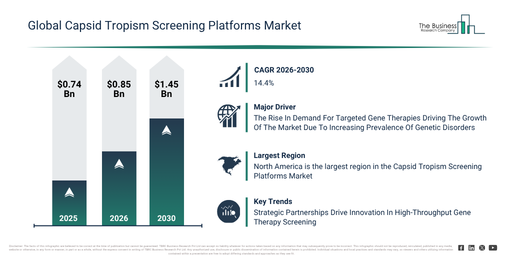
    The market size for capsid tropism screening platforms has seen rapid expansion in recent years. This market is expected to increase from $0.74 billion in 2025 to $0.85 billion in 2026, at a compound annual growth rate (CAGR) of 14.2%. The development observed in previous periods can be linked to increasing investment in gene therapy research, growing demand for viral vector optimization, adoption of flow cytometry and sequencing technologies, rising focus on personalized medicine, and expansion of pharmaceutical and biotech R&D infrastructure.

    The capsid tropism screening platforms market is anticipated to experience substantial growth in the coming years. It is projected to expand to $1.45 billion in 2030, demonstrating a compound annual growth rate (CAGR) of 14.4%. This projected growth can be attributed to several factors, including the increasing application of AI-driven capsid tropism analysis, the broader adoption of high-content imaging and microfluidics, a rising demand for single-cell sequencing and sophisticated screening platforms, the expansion of contract research organizations (CROs), and the enhanced integration of multiplex assay and digital PCR technologies. Furthermore, key trends for the forecast period include the increasing uptake of high-throughput screening platforms, an escalating demand for next-generation sequencing solutions, the wider integration of flow cytometry technologies, an expansion in the available assay kits and reagent offerings, and a heightened focus on gene therapy and vaccine development applications.

    Get A Free Sample Report With In-Depth Market Insights:

    https://thebusinessresearchcompany.com/sample_request?id=46680568&type=smp&name=Capsid%20Tropism%20Screening%20Platforms%20Market%20Report%202026&utm_source=Blogs&utm_medium=Paid&utm_campaign=Oct_PR

    Capsid Tropism Screening Platforms Market Growth Catalysts And Demand Drivers

    The heightened demand for targeted gene therapies is projected to fuel the expansion of the capsid tropism screening platforms market throughout the forecast period. These therapies focus on delivering therapeutic genetic material precisely to specific cells or tissues, aiming to correct, alter, or substitute flawed genes linked to illnesses. Several factors contribute to this escalating demand, such as the increasing occurrence of genetic and rare diseases, progress in vector engineering technologies, and greater investment in precision medicine strategies designed to enhance treatment effectiveness while reducing unintended side effects. Capsid tropism screening platforms are crucial in gene therapy development, as they facilitate the systematic assessment and selection of viral vectors that exhibit ideal tissue and cell specificity. For instance, in January 2024, according to the American Society of Gene & Cell Therapy, a US-based organization for gene and cell therapy, the number of gene therapies in Phase III clinical trials increased by 10% in the fourth quarter of 2023, representing the first quarterly increase since the third quarter of 2022. Consequently, the growing need for targeted gene therapies is a significant driver for the growth of the capsid tropism screening platforms market.

    Capsid Tropism Screening Platforms Market Breakdown By Product Type And Application

    The capsid tropism screening platforms market covered in this report is segmented –

    1) By Technology: High-Throughput Screening, Next-Generation Sequencing, Flow Cytometry, Other Technologies

    2) By Product Type: Assay Kits, Reagents, Instruments, Software, Services

    3) By Application: Gene Therapy Development, Vaccine Development, Drug Discovery, Other Applications

    4) By End-User: Pharmaceutical And Biotechnology Companies, Academic And Research Institutes, Contract Research Organizations, Other End-Users

    Subsegments:

    1) By High-Throughput Screening: Cell-Based Screening, Biochemical Screening, High-Content Screening, Automated Screening, Label-Free Screening

    2) By Next-Generation Sequencing: Short-Read Sequencing, Long-Read Sequencing, Targeted Sequencing, Whole-Genome Sequencing, Single-Cell Sequencing

    3) By Flow Cytometry: Conventional Flow Cytometry, Spectral Flow Cytometry, Imaging Flow Cytometry, Cell Sorting, Mass Cytometry

    4) By Other Technologies: Microfluidics-Based Screening, High-Content Imaging, Mass Spectrometry, Polymerase Chain Reaction And Digital Polymerase Chain Reaction, Immunoassay-Based Platforms

    Capsid Tropism Screening Platforms Market Trends Shaping Long-Term Demand

    Leading companies operating within the capsid tropism screening platforms market are forging strategic alliances to create innovative high-throughput and barcoded adeno-associated virus screening solutions. These strategic partnerships stimulate the expansion of the capsid tropism screening platforms market by facilitating the collaborative advancement of sophisticated adeno-associated virus screening technologies, diversifying product ranges, and expediting gene therapy research and its market entry. For example, in August 2025, PackGene Biotech Inc., a US-based biotechnology company, finalized a strategic licensing agreement with the Children’s Medical Research Institute (CMRI), an Australia-based independent organization, to commercialize barcoded high-throughput adeno-associated virus capsid screening kits. These kits empower researchers to swiftly assess multiple adeno-associated virus capsid variants simultaneously, leveraging a barcode system and next-generation sequencing. The aim of this collaboration is to accelerate gene therapy development through optimized capsid selection and improved access to advanced screening instruments.

    Capsid Tropism Screening Platforms Market Key Participants And Competitive Landscape

    Major companies operating in the capsid tropism screening platforms market are Sarepta Therapeutics Inc., Voyager Therapeutics Inc., Bluebird Bio Inc., Sangamo Therapeutics Inc., REGENXBIO Inc., MeiraGTx Holdings plc, Dyno Therapeutics Inc., 4D Molecular Therapeutics Inc., Asklepios BioPharmaceutical Inc., PackGene Biotech Inc., Creative Biolabs Inc., VectorBuilder Inc., uniQure N.V., Homology Medicines Inc., Capsida Biotherapeutics Inc., LogicBio Therapeutics Inc., Capsigen Inc., GeneMedi Inc., Spark Therapeutics Inc., Creative Biogene Inc.

    View The Full Capsid Tropism Screening Platforms Market Report:

    https://thebusinessresearchcompany.com/report/capsid-tropism-screening-platforms-market-report?utm_source=Blogs&utm_medium=Paid&utm_campaign=Oct_PR

    Capsid Tropism Screening Platforms Market Geographic Analysis: Where Is Demand Rising Fastest?

    North America was the largest region in the capsid tropism screening platforms market in 2025. Asia-Pacific is expected to be the fastest-growing region in the forecast period. The regions covered in the capsid tropism screening platforms market report are Asia-Pacific, South East Asia, Western Europe, Eastern Europe, North America, South America, Middle East, Africa.

    Reach Out To Our Team:

    The Business Research Company: https://www.thebusinessresearchcompany.com/

    Americas: +1 310-496-7795

    Asia: +44 7882 955267 & +91 8897263534

    Europe: +44 7882 955267

    Email us at: marketing@tbrc.info

    Follow us on:

    LinkedIn: https://in.linkedin.com/company/the-business-research-company

    YouTube: https://www.youtube.com/channel/UC24_fI0rV8cR5DxlCpgmyFQ

    Global Market Model: https://www.thebusinessresearchcompany.com/global-market-model
  • BioSignal Serums Market Growth Outlook From $5.73 Billion In 2026 To $7.48 Billion By 2030

    BioSignal Serums Market Growth Outlook From $5.73 Billion In 2026 To $7.48 Billion By 2030

    Featuring market attractiveness scoring, total addressable market sizing, company benchmarking matrices, interactive Excel dashboards, deeper supply chain intelligence, emerging startup tracking, and granular product-level insights, The Business Research Company’s 2026 market reports are built to deliver research that is both more actionable and more strategically valuable.

    BioSignal Serums Market Size Outlook: How Quickly Will Revenue Expand Through 2030?

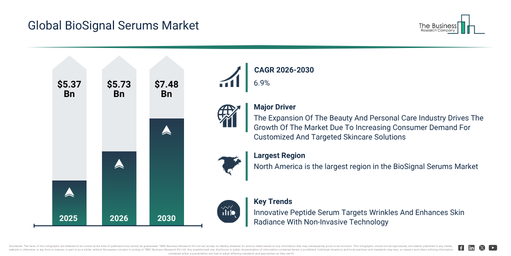
    The biosignal serums market size has shown robust growth in recent years. It is anticipated to expand from $5.37 billion in 2025 to $5.73 billion in 2026, registering a compound annual growth rate (CAGR) of 6.7%. The market’s historical expansion is largely due to factors such as increasing awareness of anti-aging skincare, the uptake of peptide and growth factor serums, the proliferation of dermatology clinics, rising consumer expenditure on medical aesthetics, and advancements in bioactive molecule formulation technology.

    The biosignal serums market is projected for substantial expansion in the coming years, with its value predicted to reach $7.48 billion by 2030, exhibiting a compound annual growth rate (CAGR) of 6.9%. This anticipated growth is largely propelled by elements such as the escalating demand for stem cell conditioned media serums, the growing clinical integration of cytokine infused serums, the rise of personalized skincare treatments, the broadening reach of online and e-commerce distribution, and increased research and development within biosignal serums. Furthermore, significant trends expected during this forecast period include a rising preference for peptide-based serums, the increased adoption of growth factor enriched serums, the expanded utilization of stem cell conditioned media serums, the broader availability of cytokine infused serums, and a heightened emphasis on professional dermatology and clinical applications.

    Get A Free Sample Report With In-Depth Market Insights:

    https://thebusinessresearchcompany.com/sample_request?id=10749348&type=smp&name=BioSignal%20Serums%20Market%20Report%202026&utm_source=Blogs&utm_medium=Paid&utm_campaign=Oct_PR

    BioSignal Serums Market Growth Factors: What’s Supporting Expansion?

    The biosignal serums market is anticipated to expand due to the burgeoning beauty and personal care industry. This sector covers various skincare, haircare, cosmetic, and wellness items, as consumers increasingly prioritize skin health, product effectiveness, and ingredient properties. Its expansion is largely propelled by higher disposable incomes, greater consumer understanding of skin health, and a rising demand for sophisticated skincare products that yield noticeable and enduring outcomes. Biosignal serums are in line with these trends, providing concentrated formulas with bioactive molecules engineered to engage with skin signaling pathways, thereby aiding specific skin repair, regeneration, and upkeep. For example, the British Beauty Council, a UK-based not-for-profit organization, reported in August 2024 that the beauty and personal care industry added £27.2 billion ($36.7 billion) to the UK economy in 2023, boosted by a 10% rise in household expenditure on personal care goods and services. Consequently, the surge in personalized skincare is fueling the expansion of the biosignal serums market.

    BioSignal Serums Market Segment Analysis: What Are The Core Market Categories?

    The biosignal serums market covered in this report is segmented –

    1) By Product Type: Peptide Based Serums, Growth Factor Enriched Serums, Cytokine Infused Serums, Stem Cell Conditioned Media Serums

    2) By Distribution Channel: Direct Sales to Clinics And Brands, Pharmaceutical And Medical Distributors, Specialty Cosmetic Retailers, Online Platforms And E-Commerce

    3) By Application: Anti-Aging or Wrinkle Reduction, Daily Skincare or Hydration, Pigmentation Treatment, Acne Treatment, Professional Dermatology Use

    4) By End User: Dermatology Clinics, Medical Aesthetic Centers, Hospitals And Specialty Clinics

    Subsegments:

    1) By Peptide Based Serums: Signal Peptides, Carrier Peptides, Enzyme Inhibitor Peptides, Neurotransmitter Peptides

    2) By Growth Factor Enriched Serums: Epidermal Growth Factor Serums, Fibroblast Growth Factor Serums, Vascular Endothelial Growth Factor Serums, Transforming Growth Factor Serums

    3) By Cytokine Infused Serums: Interleukin Serums, Interferon Serums, Tumor Necrosis Factor Serums, Colony Stimulating Factor Serums

    4) By Stem Cell Conditioned Media Serums: Adipose Derived Stem Cell Media Serums, Bone Marrow Stem Cell Media Serums, Umbilical Cord Stem Cell Media Serums, Induced Pluripotent Stem Cell Media Serums

    BioSignal Serums Market Industry Trends: What’s Reshaping Demand?

    Leading companies within the biosignal serums market are concentrating on developing novel solutions, such as sophisticated peptide-based serums, engineered to regulate cellular signaling and diminish the visible indications of aging. These advanced peptide serums are topical skincare formulations that utilize short chains of amino acids (peptides) to stimulate collagen production, modulate cellular signaling, and address concerns like wrinkles, firmness, and overall skin revitalization. For instance, in July 2024, SkinCeuticals LLC, a US-based medical skincare company, unveiled P TIOX, an innovative peptide serum designed to regulate wrinkle appearance and promote “glass skin” radiance. This is achieved through a patent-pending blend of advanced peptides (including 2% Acetyl Hexapeptide 8 and 2% Dipeptide Diaminobutyroyl), amplified by synergistic active components such as 5% polyhydroxy acid, 5% niacinamide, and 1% laminaria extract, aiming to hydrate, improve texture, and visibly correct up to nine types of expression lines without injectable treatments. This non-invasive formulation functions by combining neuromodulator-inspired peptides with exfoliating and hydrating agents to enhance smoothness and radiance across all skin types, providing benefits that go beyond those of traditional peptide or antioxidant serums by targeting both lines and overall complexion quality. It is also physician-tested to either complement professional procedures or function as an independent anti-aging solution.

    BioSignal Serums Market Company Landscape And Competitive Strategy

    Major companies operating in the biosignal serums market are Shiseido Company Limited, Obagi Cosmeceuticals LLC, Revision Skincare Incorporated, Biologique Recherche Paris, Sente Laboratories LLC, Neocutis S.A., NeoStrata Company Incorporated, ZO Skin Health Incorporated, Augustinus Bader GmbH, Zelens Limited, AQ Skin Solutions Incorporated, Cellese, Incorporated, Lifeline Skin Care Incorporated, Medik8 Limited, Rion Aesthetics Incorporated, ExoCoBio Incorporated, Suneva Medical Incorporated.

    View The Full BioSignal Serums Market Report:

    https://thebusinessresearchcompany.com/report/biosignal-serums-market-report?utm_source=Blogs&utm_medium=Paid&utm_campaign=Oct_PR

    BioSignal Serums Market Largest Region: Which Geography Holds The Highest Market Share?

    North America was the largest region in the biosignal serums market in 2025. Asia-Pacific is expected to be the fastest-growing region in the forecast period. The regions covered in the biosignal serums market report are Asia-Pacific, South East Asia, Western Europe, Eastern Europe, North America, South America, Middle East, Africa.

    Reach Out To Our Team:

    The Business Research Company: https://www.thebusinessresearchcompany.com/

    Americas: +1 310-496-7795

    Asia: +44 7882 955267 & +91 8897263534

    Europe: +44 7882 955267

    Email us at: marketing@tbrc.info

    Follow us on:

    LinkedIn: https://in.linkedin.com/company/the-business-research-company

    YouTube: https://www.youtube.com/channel/UC24_fI0rV8cR5DxlCpgmyFQ

    Global Market Model: https://www.thebusinessresearchcompany.com/global-market-model
  • Bioprocess Chemometrics Market Forecast To Reach $3.28 Billion By 2030: Key Growth Drivers And Industry Trends

    Bioprocess Chemometrics Market Forecast To Reach $3.28 Billion By 2030: Key Growth Drivers And Industry Trends

    Built to provide research that’s more actionable and strategically valuable, The Business Research Company’s 2026 market reports include market attractiveness analysis, total addressable market sizing, company benchmarking matrices, interactive Excel dashboards, broader supply chain intelligence, emerging startup tracking, and in-depth product insights.

    Bioprocess Chemometrics Market Size, Value And Growth Trajectory Through 2030

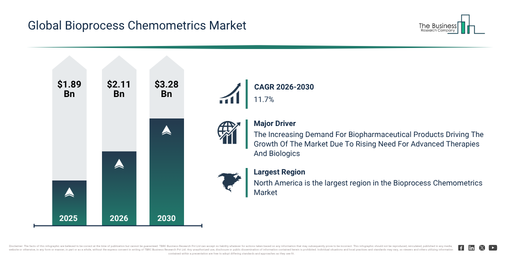
    The bioprocess chemometrics market size has shown swift growth in recent years. It is anticipated to expand from $1.89 billion in 2025 to $2.11 billion in 2026, registering a compound annual growth rate (CAGR) of 11.4%. The expansion observed in previous periods is primarily due to increasing biopharmaceutical manufacturing operations, the incorporation of analytical instrumentation, a rising need for process comprehension, technological breakthroughs in spectroscopy and chromatography, and an elevated demand for regulatory conformity.

    The bioprocess chemometrics market is anticipated to experience substantial growth over the next few years. It is forecast to attain a value of $3.28 billion in 2030, driven by a compound annual growth rate (CAGR) of 11.7%. This projected growth can be attributed to several factors, including the increasing deployment of AI-driven bioprocess analytics, the expansion of cloud-based bioprocess data platforms, the rising adoption of process automation, the broadening of food and environmental monitoring applications, and enhanced integration with bioreactor sensors and instrumentation. Notable trends expected during this forecast period encompass the increasing embrace of real-time bioprocess monitoring, a rising demand for advanced process modeling software, the growing integration of multivariate data analysis tools, an expansion of consulting and implementation services, and a heightened focus on process optimization within biomanufacturing.

    Get A Free Sample Report With In-Depth Market Insights:

    https://thebusinessresearchcompany.com/sample_request?id=40269341&type=smp&name=Bioprocess%20Chemometrics%20Market%20Report%202026&utm_source=Blogs&utm_medium=Paid&utm_campaign=Oct_PR

    Bioprocess Chemometrics Market Demand Drivers: What’s Powering Industry Growth?

    The increasing need for biopharmaceutical products is anticipated to fuel the expansion of the bioprocess chemometrics market. Biopharmaceutical products are biotechnologically produced medical drugs, encompassing proteins, antibodies, vaccines, and nucleic acids, designed to prevent, treat, or cure illnesses. The rising incidence of chronic and life-threatening diseases primarily drives the demand for these products, necessitating more advanced therapies and biologics to improve patient care. As biopharmaceutical manufacturing processes grow in complexity and scale, maintaining efficiency, consistency, and adherence to regulatory standards becomes progressively challenging. Bioprocess chemometrics addresses these challenges by employing advanced data analytics to monitor processes, streamline operations, and guarantee uniform product quality across different production scales. For instance, in July 2025, Sartorius AG, a Germany-based international life science technology company, reported that global sales of biopharmaceutical drugs reached USD 458 billion in 2024, representing 41% of the overall pharmaceutical market, an increase from 40% in 2023. Thus, the growing demand for biopharmaceutical products is expected to stimulate the bioprocess chemometrics market’s growth. The expanding demand for personalized medicine is projected to drive the growth of the bioprocess chemometrics market in the future. Personalized medicine involves medical treatments and therapies customized for individual patients based on their unique genetic profile, biomarkers, and specific disease characteristics. This demand is escalating due to advancements in genomic technologies and molecular diagnostics, which enable medical professionals to tailor treatments precisely to a patient’s genetic makeup, thereby enhancing therapeutic outcomes. Bioprocess chemometrics facilitates personalized medicine by analyzing intricate bioprocess data to optimize the creation of patient-specific biologics and therapies, ensuring greater efficacy and safety tailored to individual patient needs. For example, in February 2024, the Personalized Medicine Coalition, a US-based non-profit organization, stated that the Food and Drug Administration approved 16 new personalized treatments for patients with rare diseases in 2023, an increase from six in 2022, including seven cancer drugs and three for other conditions. Consequently, the rising demand for personalized medicine is propelling the growth of the bioprocess chemometrics market.

    Bioprocess Chemometrics Market Segment Breakdown: Which Categories Lead On Revenue?

    The bioprocess chemometrics market covered in this report is segmented –

    1) By Product Type: Software, Services, Instruments

    2) By Deployment Mode: On-Premises, Cloud-Based

    3) By Application: Biopharmaceutical Manufacturing, Food And Beverages, Environmental Monitoring, Chemical Industry, Other Applications

    Subsegments:

    1) By Software: Data Analysis Software, Process Modeling Software, Visualization Software, Workflow Management Software

    2) By Services: Consulting Services, Implementation Services, Training Services, Support And Maintenance Services

    3) By Instruments: Spectroscopy Instruments, Chromatography Instruments, Process Analyzers, Bioreactor Sensors

    Bioprocess Chemometrics Market Key Players Shaping Industry Direction

    Major companies operating in the bioprocess chemometrics market are JEOL Ltd., Siemens AG, ABB Ltd., Emerson Electric Co., Agilent Technologies Inc., Endress+Hauser Group, Mettler-Toledo International Inc., Yokogawa Electric Corporation, Sartorius AG, Shimadzu Corporation, Bruker Corporation, Revvity Inc., Bio‑Rad Laboratories Inc, HORIBA Ltd., Eppendorf SE, Metrohm AG, Advanced Chemistry Development Inc., Infors HT, Eigenvector Research Inc., FOSS Analytical A/S.

    View The Full Bioprocess Chemometrics Market Report:

    https://thebusinessresearchcompany.com/report/bioprocess-chemometrics-market-report?utm_source=Blogs&utm_medium=Paid&utm_campaign=Oct_PR

    Bioprocess Chemometrics Market Regional Analysis: Which Region Leads By Revenue?

    North America was the largest region in the bioprocess chemometrics market in 2025. Asia-Pacific is expected to be the fastest-growing region in the forecast period. The regions covered in the bioprocess chemometrics market report are Asia-Pacific, South East Asia, Western Europe, Eastern Europe, North America, South America, Middle East, Africa.

    Reach Out To Our Team:

    The Business Research Company: https://www.thebusinessresearchcompany.com/

    Americas: +1 310-496-7795

    Asia: +44 7882 955267 & +91 8897263534

    Europe: +44 7882 955267

    Email us at: marketing@tbrc.info

    Follow us on:

    LinkedIn: https://in.linkedin.com/company/the-business-research-company

    YouTube: https://www.youtube.com/channel/UC24_fI0rV8cR5DxlCpgmyFQ

    Global Market Model: https://www.thebusinessresearchcompany.com/global-market-model
  • Bioprocess Automation Software Market Research 2026: Market Size, Trends, Segments And Growth Forecast

    Bioprocess Automation Software Market Research 2026: Market Size, Trends, Segments And Growth Forecast

    Backed by market attractiveness analysis, total addressable market sizing, company benchmarking matrices, interactive Excel dashboards, wider supply chain intelligence, emerging startup coverage, and detailed product-level insights, The Business Research Company’s 2026 market reports are designed to offer research that is more actionable and strategically valuable than ever.

    Bioprocess Automation Software Market CAGR Outlook And Future Development

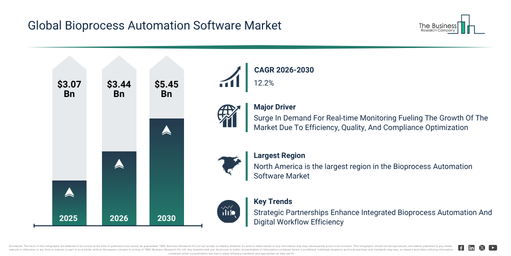
    The bioprocess automation software market has seen substantial expansion in recent times. Its value is projected to rise from $3.07 billion in 2025 to $3.44 billion in 2026, at a compound annual growth rate (CAGR) of 12.0%. This market’s historical growth can be attributed to several factors, including an increased demand for biopharmaceutical products, the uptake of automated process control systems, a growing need for consistent processes, the expansion of research and development activities, and the wider adoption of laboratory information management systems.

    The bioprocess automation software market is projected for swift expansion in the upcoming years. By 2030, this market is anticipated to reach a valuation of $5.45 billion, exhibiting a compound annual growth rate (CAGR) of 12.2%. This expansion during the projection period stems from several factors, including the increasing implementation of AI-powered process optimization, greater integration with cloud-based data management systems, an escalating need for predictive bioprocess monitoring, the broadening availability of hybrid automation solutions, and a heightened emphasis on minimizing human errors and operational expenditures. Key trends shaping the forecast period involve the wider embrace of cloud-based bioprocess automation software, an escalating requirement for real-time data analytics within bioprocessing, enhanced integration with IoT-capable bioreactors, the extension of automation for quality and regulatory compliance, and an intensified focus on optimizing both upstream and downstream processes.

    Get A Free Sample Report With In-Depth Market Insights:

    https://thebusinessresearchcompany.com/sample_request?id=70648650&type=smp&name=Bioprocess%20Automation%20Software%20Market%20Report%202026&utm_source=Blogs&utm_medium=Paid&utm_campaign=Oct_PR

    Bioprocess Automation Software Market Growth Drivers: What’s Behind The Acceleration?

    The increasing investment in research and development is anticipated to significantly advance the bioprocess automation software market. Research and development encompasses systematic activities undertaken by companies and institutions to generate new knowledge, improve existing offerings, or create innovative technologies and methods. This surge in R&D investment is primarily fueled by the rising demand for biologics and advanced therapeutics, leading pharmaceutical and biotechnology firms to dedicate substantial resources towards developing intricate biopharmaceutical products that necessitate sophisticated production processes. Such escalating R&D spending drives the demand for bioprocess automation software by requiring sophisticated digital systems to manage increasingly complex biomanufacturing workflows, ensure regulatory compliance, and optimize production efficiency across both research and commercial operations. For instance, in February 2025, the National Center for Science and Engineering Statistics (NCSES), a US-based government statistical agency, reported that U.S. research and development expenditures increased from $892 billion in 2022 to $940 billion in 2023, representing an expansion of $48 billion. Thus, the growing investment in research and development is a key factor boosting the bioprocess automation software market.

    Bioprocess Automation Software Market Segmentation: How Does The Market Break Down By Category?

    The bioprocess automation software market covered in this report is segmented –

    1) By Component: Software, Services

    2) By Deployment Type: On Premise, Cloud Based, Hybrid

    3) By Enterprise Size: Small And Medium Enterprises, Large Enterprises

    4) By Application: Upstream Processing, Downstream Processing, Quality Control, Manufacturing Operations, Data Management, Other Applications

    5) By End User: Pharmaceutical Companies, Research Institutes, Contract Manufacturing Organizations, Other End-Users

    Subsegments:

    1) By Software: Process Automation Software, Data Management Software, Quality Management Software, Regulatory Compliance Software, Analytics And Reporting Software

    2) By Services: Implementation Services, Consulting Services, Maintenance And Support Services, Training Services, Managed Services

    Bioprocess Automation Software Market Trends: What’s Defining The Industry’s Next Phase?

    Leading firms within the bioprocess automation software market are increasingly engaging in strategic collaborations. Their goal is to provide integrated digital solutions designed to enhance process control, strengthen data connectivity, and boost manufacturing efficiency. These strategic partnerships represent structured alliances where entities cooperate, leveraging their combined expertise and capabilities to achieve shared objectives. Such partnerships enable companies to foster innovation, access new markets, distribute risks, and reinforce their competitive standing, all without the need for a merger. An illustrative instance occurred in June 2024, when AGU, a German provider of bioprocess automation technologies, formed a partnership with Genedata, a bioinformatics software company based in Switzerland. This collaboration aimed to integrate AGU’s SmrtLine Data Cockpit middleware with the Genedata Biopharma Platform. The resulting unified bioprocess automation solution facilitates automated instrument data capture, optimizes data flow within GxP-regulated settings, and seeks to elevate efficiency and data integrity for biopharma process development.

    Bioprocess Automation Software Market Competitive Analysis Of Leading Industry Participants

    Major companies operating in the bioprocess automation software market are Honeywell International Inc., Danaher Corporation, Siemens Healthineers AG, Parker Hannifin Corporation, Rockwell Automation Inc., Yokogawa Electric Corporation, Getinge AB, Waters Corporation, Bioengineering AG, Eppendorf SE, Tecan Group Ltd., Repligen Corporation, Hamilton Company, Pierre Guerin SAS, Inscripta Inc., INFORS HT AG, Automated Control Concepts Inc., Synthace Ltd., Flownamics Inc., ILS Automation Inc., and PendoTECH Inc.

    View The Full Bioprocess Automation Software Market Report:

    https://thebusinessresearchcompany.com/report/bioprocess-automation-software-market-report?utm_source=Blogs&utm_medium=Paid&utm_campaign=Oct_PR

    Bioprocess Automation Software Market Geographic Distribution And Regional Opportunities

    North America was the largest region in the bioprocess automation software market in 2025. Asia-Pacific is expected to be the fastest-growing region in the forecast period. The regions covered in the bioprocess automation software market report are Asia-Pacific, South East Asia, Western Europe, Eastern Europe, North America, South America, Middle East, Africa.

    Reach Out To Our Team:

    The Business Research Company: https://www.thebusinessresearchcompany.com/

    Americas: +1 310-496-7795

    Asia: +44 7882 955267 & +91 8897263534

    Europe: +44 7882 955267

    Email us at: marketing@tbrc.info

    Follow us on:

    LinkedIn: https://in.linkedin.com/company/the-business-research-company

    YouTube: https://www.youtube.com/channel/UC24_fI0rV8cR5DxlCpgmyFQ

    Global Market Model: https://www.thebusinessresearchcompany.com/global-market-model
  • Biopharmaceutical Cold Chain Logistics Market Forecast 2026: Market Size, Competitive Landscape And Growth Drivers

    Biopharmaceutical Cold Chain Logistics Market Forecast 2026: Market Size, Competitive Landscape And Growth Drivers

    Featuring market attractiveness scoring, total addressable market sizing, company benchmarking matrices, interactive Excel dashboards, deeper supply chain intelligence, emerging startup tracking, and granular product-level insights, The Business Research Company’s 2026 market reports are built to deliver research that is both more actionable and more strategically valuable.

    Biopharmaceutical Cold Chain Logistics Market Set To Climb From $18 Billion In 2026 To $25.87 Billion By 2030

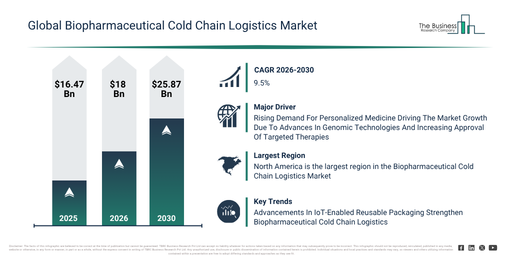
    The biopharmaceutical cold chain logistics market has seen substantial growth in recent years. It is forecast to expand from $16.47 billion in 2025 to $18 billion in 2026, demonstrating a compound annual growth rate (CAGR) of 9.3%. This historical development can be attributed to factors such as increasing biopharmaceutical production, higher demands for vaccine distribution, the expansion of clinical trial logistics, the development of refrigerated transport networks, and the implementation of passive insulated packaging.

    The biopharmaceutical cold chain logistics market size is anticipated to demonstrate substantial growth in the next few years. It is projected to reach $25.87 billion in 2030, expanding at a compound annual growth rate (CAGR) of 9.5%. This expansion during the forecast period is driven by factors such as the increasing implementation of active temperature-controlled containers, the heightened demand for cold chain monitoring services, the growing utilization of reusable thermal packaging, the broadening of short-term transit storage solutions, and the deeper integration with AI and IoT-enabled logistics systems. Noteworthy developments expected in this timeframe involve the greater adoption of temperature-controlled packaging solutions, the rising need for last-mile cold chain delivery, the increasing incorporation of real-time cold chain monitoring, the enlargement of refrigerated and cryogenic storage facilities, and an elevated focus on compliance and regulatory support services.

    Get A Free Sample Report With In-Depth Market Insights:

    https://thebusinessresearchcompany.com/sample_request?id=53471913&type=smp&name=Biopharmaceutical%20Cold%20Chain%20Logistics%20Market%20Report%202026&utm_source=Blogs&utm_medium=Paid&utm_campaign=Oct_PR

    Biopharmaceutical Cold Chain Logistics Market Growth Factors Behind Sustained Expansion

    The biopharmaceutical cold chain logistics market is projected to expand in the future due to the rising demand for personalized medicine. Personalized medicine is a strategy that customizes healthcare and treatments based on an individual patient’s distinct biological and personal characteristics. The utilization of personalized medicine is increasing, driven by developments in genomic technologies, which enable healthcare providers to analyze a patient’s genetic information swiftly and accurately, thereby facilitating more targeted and effective therapies. Biopharmaceutical cold chain logistics supports personalized medicine by maintaining the necessary temperature and handling conditions for individualized treatments, guaranteeing their effectiveness and safety until they are delivered to patients. For instance, in February 2024, according to the Personalized Medicine Coalition, a US-based non-profit organization, the FDA approved 16 new personalized treatments for rare disease patients in 2023, an increase from six in 2022. The personalized treatments newly approved in 2023 also comprised seven cancer drugs and three for other diseases and conditions. Therefore, the growing demand for personalized medicine is propelling the growth of the biopharmaceutical cold chain logistics market.

    Biopharmaceutical Cold Chain Logistics Market Segment Trends And Revenue Contributors

    The biopharmaceutical cold chain logistics market covered in this report is segmented –

    1) By Service Type: Transportation, Storage, Packaging, Other Service Types

    2) By Product Type: Vaccines, Clinical Trial Materials, Biopharmaceuticals, Other Product Types

    3) By Temperature Range: Refrigerated, Frozen, Cryogenic, Other Temperature Ranges

    4) By Mode Of Transportation: Airways, Roadways, Seaways, Railways

    5) By End-User: Pharmaceutical And Biotechnology Companies, Healthcare Providers, Research Institutes, Other End Users

    Subsegments:

    1) By Transportation: Refrigerated Road Transport, Temperature Controlled Air Freight, Insulated Sea Freight, Last Mile Cold Delivery

    2) By Storage: Refrigerated Warehousing, Frozen Storage Facilities, Cryogenic Storage, Short Term Transit Storage

    3) By Packaging: Passive Insulated Packaging, Active Temperature Controlled Containers, Reusable Thermal Packaging, Single Use Cold Chain Packaging

    4) By Other Service Types: Cold Chain Monitoring Services, Validation And Qualification Services, Inventory Management Services, Regulatory Compliance Support Services

    Biopharmaceutical Cold Chain Logistics Market Industry Trends Fueling Future Revenue Growth

    Major companies within the biopharmaceutical cold chain logistics market are concentrating on developing innovative solutions, such as reusable temperature-controlled pallet shippers, to ensure the safe, sustainable, and cost-efficient transportation of temperature-sensitive biologics. A reusable temperature-controlled pallet shipper is a durable, multi-use container designed to maintain stable temperatures for securely transporting sensitive biopharmaceuticals. For instance, in April 2025, Cold Chain Technologies LLC, a US-based packaging company, launched the reusable CCT Tower Elite, a 1600 L temperature-controlled pallet shipper specifically designed for life sciences logistics, which includes integrated IoT for real-time monitoring. This shipper is engineered to maintain stability for over 120 hours at temperatures such as <-60°C, +5°C, and +20°C through the use of phase-change materials, thereby supporting vaccines, biologics, and gene therapies in formats like RoSS® shells and API drums. Its lightweight, aircraft-compatible construction and global reuse network contribute to enhanced sustainability in pharmaceutical shipments.

    Biopharmaceutical Cold Chain Logistics Market Leading Companies And Competitive Benchmarking

    Major companies operating in the biopharmaceutical cold chain logistics market are Cencora Inc., DHL Group, United Parcel Service of America Inc., FedEx Corporation, A.P. Møller – Mærsk A/S, SF Holding Co. Ltd., Schenker AG, CEVA Logistics S.A., Nippon Express Holdings Inc., GXO Logistics Inc., Sonoco Products Company, Agility Public Warehousing Company K.S.C.P., Americold Realty Trust Inc., Marken Ltd., Pelican Products Inc., Cold Chain Technologies LLC, Controlant hf., Sensitech Inc., Envirotainer AB, QuickSTAT Global Life Science Logistics LLC, Cryopak Industries Inc., DGP Intelsius Ltd., Tower Cold Chain Solutions Ltd., and Snowman Logistics Limited.

    View The Full Biopharmaceutical Cold Chain Logistics Market Report:

    https://thebusinessresearchcompany.com/report/biopharmaceutical-cold-chain-logistics-market-report?utm_source=Blogs&utm_medium=Paid&utm_campaign=Oct_PR

    Biopharmaceutical Cold Chain Logistics Market Largest Region By Revenue And Market Share

    North America was the largest region in the biopharmaceutical cold chain logistics market in 2025. Asia-Pacific is expected to be the fastest-growing region in the forecast period. The regions covered in the biopharmaceutical cold chain logistics market report are Asia-Pacific, South East Asia, Western Europe, Eastern Europe, North America, South America, Middle East, Africa.

    Reach Out To Our Team:

    The Business Research Company: https://www.thebusinessresearchcompany.com/

    Americas: +1 310-496-7795

    Asia: +44 7882 955267 & +91 8897263534

    Europe: +44 7882 955267

    Email us at: marketing@tbrc.info

    Follow us on:

    LinkedIn: https://in.linkedin.com/company/the-business-research-company

    YouTube: https://www.youtube.com/channel/UC24_fI0rV8cR5DxlCpgmyFQ

    Global Market Model: https://www.thebusinessresearchcompany.com/global-market-model
  • Bioconjugation Reagents Market Analysis: $2.74 Billion Market Size In 2026 And Future Growth Prospects

    Bioconjugation Reagents Market Analysis: $2.74 Billion Market Size In 2026 And Future Growth Prospects

    Featuring market attractiveness scoring, total addressable market sizing, company benchmarking matrices, interactive Excel dashboards, deeper supply chain intelligence, emerging startup tracking, and granular product-level insights, The Business Research Company’s 2026 market reports are built to deliver research that is both more actionable and more strategically valuable.

    Bioconjugation Reagents Market Value Growth And Long-Term Outlook

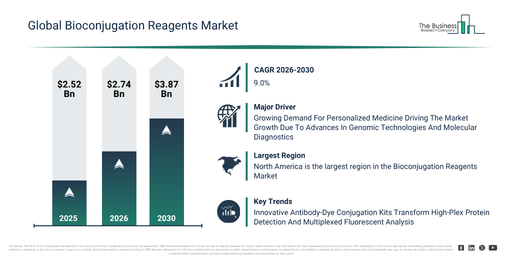
    The bioconjugation reagents market has experienced substantial growth in recent years. It is forecast to increase from $2.52 billion in 2025 to $2.74 billion in 2026, at a compound annual growth rate (CAGR) of 8.8%. This historical expansion can be linked to several key drivers, including heightened pharmaceutical and biotech research and development, the embrace of conventional bioconjugation reagents, a surging demand for proteomics and genomics research, the development of academic and research institutions, and the broadening of applications in diagnostics and molecular imaging.

    The bioconjugation reagents market is projected to experience substantial expansion over the upcoming years, reaching a valuation of $3.87 billion by 2030, demonstrating a compound annual growth rate (CAGR) of 9.0%. This growth during the projection period can be primarily attributed to several factors, including the escalating demand for antibody drug conjugates, the wider embrace of click chemistry and covalent conjugation techniques, an increased emphasis on precision medicine applications, the broadening availability of bioconjugation kits for oligonucleotide and enzyme research, and the incorporation of AI-driven reagent design and analytics. Key trends anticipated within the forecast timeframe encompass the expanding utilization of click chemistry-based conjugation methods, a surging requirement for antibody drug conjugates (ADC) in various applications, the increasing deployment of biotinylation and fluorescent labeling reagents, the development of covalent conjugation kits tailored for protein and enzyme research, and a heightened focus on high-precision molecular imaging and diagnostics.

    Get A Free Sample Report With In-Depth Market Insights:

    https://thebusinessresearchcompany.com/sample_request?id=53468548&type=smp&name=Bioconjugation%20Reagents%20Market%20Report%202026&utm_source=Blogs&utm_medium=Paid&utm_campaign=Oct_PR

    Bioconjugation Reagents Market Growth Catalysts And Demand Drivers

    The bioconjugation reagents market is anticipated to expand due to the increasing need for personalized medicine. This approach involves medical treatments and therapies customized for individual patients, considering their genetic profile, biomarkers, and particular disease traits. Enhanced genomic technologies and molecular diagnostics are fueling this demand, empowering doctors to customize treatments based on a patient’s genetic makeup, thereby improving treatment results. Bioconjugation reagents are crucial for developing personalized medicine as they facilitate the exact attachment of drugs, biomarkers, or imaging agents to specific molecules. This process enables targeted therapies and precise diagnostics, customized to an individual’s distinct genetic and molecular profile. For example, data from the Personalized Medicine Coalition, a US-based non-profit organization, indicates that in February 2024, the U.S. Food and Drug Administration approved 16 new personalized treatments for rare disease patients in 2023, a rise from six in 2022. These approvals included seven cancer drugs and three treatments for other diseases and conditions. Consequently, the escalating demand for personalized medicine is propelling the expansion of the bioconjugation reagents market.

    Bioconjugation Reagents Market Segment Landscape And Growth Outlook

    The bioconjugation reagents market covered in this report is segmented –

    1) By Product: Crosslinkers And Coupling Agents, Activated Esters, Thiol-Reactive Reagents, Amine-Reactive Reagents, Click Chemistry Reagents, Labeling Reagents And Linkers, Conjugation Kits, Covalent Conjugation, Click Chemistry-Based

    2) By Chemistry Type: Amine-Based Chemistry, Sulfhydryl-Based Chemistry, Carboxyl-Based Chemistry, Azide-Alkyne Chemistry, Photoreactive Chemistry

    3) By Sales Channel: Direct Sales, Distributors And Wholesalers, Online Platforms And Ecommerce, Specialty Retailers

    4) By Application: Drug Development, Antibody Drug Conjugates, Diagnostics, Molecular Imaging, Proteomics Research, Genomics Research

    5) By End-User: Pharmaceutical And Biotechnology Companies, Academic And Research Institutes, Diagnostic Laboratories, Other End Users

    Subsegments:

    1) By Crosslinkers And Coupling Agents: Homobifunctional Crosslinkers, Heterobifunctional Crosslinkers, Zero Length Crosslinkers, Cleavable Crosslinkers, Non Cleavable Crosslinkers

    2) By Activated Esters: N Hydroxysuccinimide Esters, Sulfo N Hydroxysuccinimide Esters, Tetrafluorophenyl Esters, Pentafluorophenyl Esters

    3) By Thiol-Reactive Reagents: Maleimide Reagents, Iodoacetyl Reagents, Pyridyl Disulfide Reagents, Bromoacetyl Reagents

    4) By Amine-Reactive Reagents: Isothiocyanate Reagents, Succinimidyl Ester Reagents, Carbodiimide Reagents, Imidoester Reagents

    5) By Click Chemistry Reagents: Azide Reagents, Alkyne Reagents, Strained Alkyne Reagents, Tetrazine Reagents

    6) By Labeling Reagents And Linkers: Fluorescent Labeling Reagents, Biotinylation Reagents, Enzyme Labeling Reagents, Polyethylene Glycol Linkers

    7) By Conjugation Kits: Antibody Conjugation Kits, Protein Conjugation Kits, Oligonucleotide Conjugation Kits, Enzyme Conjugation Kits

    8) By Covalent Conjugation: Amide Bond Formation, Thioether Bond Formation, Disulfide Bond Formation, Hydrazone Bond Formation

    9) By Click Chemistry-Based: Copper Catalyzed Azide Alkyne Cycloaddition, Strain Promoted Azide Alkyne Cycloaddition, Inverse Electron Demand Diels Alder Reaction

    Bioconjugation Reagents Market Trends Shaping Long-Term Demand

    Key companies operating in the bioconjugation reagents market are focusing on developing innovative products like antibody-dye conjugation kits to enable customizable, high-precision protein detection and multiplexed analysis. These kits allow researchers to attach fluorescent dyes to antibodies for targeted protein detection and aid in customizable, high-precision, and multiplexed analysis in assays such as flow cytometry and fluorescent western blots. For instance, in January 2025, Bio-Rad Laboratories Inc., a US-based life sciences and diagnostics company, launched the Trailblazer Tag and Trailblazer StarBright Dye Label Kits. These antibody-dye conjugation kits utilize SpyTag and SpyCatcher chemistry to covalently link StarBright Blue and StarBright Violet dyes to virtually any antibody. Such kits offer rapid, efficient conjugation with minimal antibody loss, enabling researchers to design bespoke high-plex panels for flow cytometry and streamline multiplex integration in fluorescent western blots. They provide flexibility in dye selection and compatibility with a wide range of antibodies, enhancing experimental customization while maintaining consistent fluorescence performance.

    Bioconjugation Reagents Market Top Companies Driving Competitive Growth

    Major companies operating in the bioconjugation reagents market are Thermo Fisher Scientific Inc., Merck KGaA, Danaher Corporation, Lonza Group Ltd, Bio-Rad Laboratories Inc., GenScript Biotech Corporation, Maravai LifeSciences, Santa Cruz Biotechnology Inc., Rockland Immunochemicals Inc., Amerigo Scientific, Creative Biolabs Inc., Bio-Synthesis Inc., TriLink BioTechnologies, Tonbo Biosciences, Lumiprobe Corporation, Biotium Inc., Jena Bioscience GmbH, Promega Corporation, SETA BioMedicals Srl, Dojindo Laboratories Inc., CellMosaic Inc.

    View The Full Bioconjugation Reagents Market Report:

    https://thebusinessresearchcompany.com/report/bioconjugation-reagents-market-report?utm_source=Blogs&utm_medium=Paid&utm_campaign=Oct_PR

    Bioconjugation Reagents Market Global Footprint: Which Region Leads The Industry?

    North America was the largest region in the bioconjugation reagents market in 2025. Asia-Pacific is expected to be the fastest-growing region in the forecast period. The regions covered in the bioconjugation reagents market report are Asia-Pacific, South East Asia, Western Europe, Eastern Europe, North America, South America, Middle East, Africa.

    Reach Out To Our Team:

    The Business Research Company: https://www.thebusinessresearchcompany.com/

    Americas: +1 310-496-7795

    Asia: +44 7882 955267 & +91 8897263534

    Europe: +44 7882 955267

    Email us at: marketing@tbrc.info

    Follow us on:

    LinkedIn: https://in.linkedin.com/company/the-business-research-company

    YouTube: https://www.youtube.com/channel/UC24_fI0rV8cR5DxlCpgmyFQ

    Global Market Model: https://www.thebusinessresearchcompany.com/global-market-model
  • Artificial Intelligence (AI) For De Novo Drug Design Market Trends Supporting 33.7% CAGR Growth Through 2030

    Artificial Intelligence (AI) For De Novo Drug Design Market Trends Supporting 33.7% CAGR Growth Through 2030

    Featuring market attractiveness scoring, total addressable market sizing, company benchmarking matrices, interactive Excel dashboards, deeper supply chain intelligence, emerging startup tracking, and granular product-level insights, The Business Research Company’s 2026 market reports are built to deliver research that is both more actionable and more strategically valuable.

    Artificial Intelligence (AI) For De Novo Drug Design Market Expansion Outlook: What Revenue Opportunities Are Ahead?

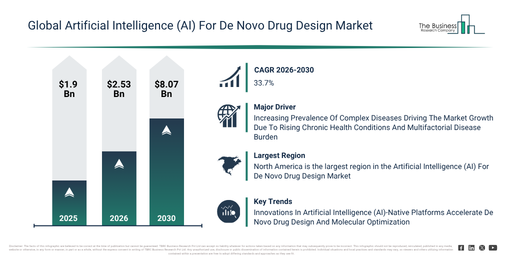
    The artificial intelligence (AI) for de novo drug design market has seen a significant increase in its size over recent years. It is projected to grow from $1.9 billion in 2025 to $2.53 billion in 2026, exhibiting a compound annual growth rate (CAGR) of 33.4%. The historical expansion can be attributed to factors such as elevated research and development costs in traditional drug discovery, a rising need for expedited drug development, the adoption of computational chemistry tools, increased pharmaceutical investments, and broader academic and research collaborations.

    The artificial intelligence (AI) for de novo drug design market is anticipated to experience substantial growth in the coming years. It is projected to reach $8.07 billion in 2030, exhibiting a compound annual growth rate (CAGR) of 33.7%. This expansion during the forecast period is propelled by factors such as the increasing integration of AI for lead compound generation, a rising utilization of ADMET prediction models, the growing convergence of cloud and on-premises deployment, the broadening of model development and data annotation services, and enhanced collaboration between pharmaceutical and biotech companies. Significant trends for the forecast period include the increasing adoption of cloud-based AI platforms, a surge in demand for deep learning-based drug design software, the progressive incorporation of workflow automation in drug discovery, the expansion of molecular property prediction tools, and an intensified focus on targeted therapeutic area applications.

    Get A Free Sample Report With In-Depth Market Insights:

    https://thebusinessresearchcompany.com/sample_request?id=50176632&type=smp&name=Artificial%20Intelligence%20%28AI%29%20For%20De%20Novo%20Drug%20Design%20Market%20Report%202026&utm_source=Blogs&utm_medium=Paid&utm_campaign=Oct_PR

    Artificial Intelligence (AI) For De Novo Drug Design Market Growth Factors Behind Sustained Expansion

    The escalating occurrence of complex diseases is anticipated to drive the expansion of artificial intelligence (AI) for the de novo drug design market in the coming years. Complex diseases are medical conditions resulting from a mix of genetic, environmental, and lifestyle elements, frequently impacting multiple bodily systems and necessitating sophisticated or extended medical care. The rise in these diseases is linked to unhealthy lifestyle choices, which elevate the likelihood of chronic illnesses like diabetes, cardiovascular diseases, and specific cancers. Artificial intelligence (AI) in de novo drug design facilitates the identification of new treatments by examining intricate biological information and forecasting promising drug candidates, thereby tackling the difficulties presented by complex, multifactorial, and chronic conditions. As an illustration, in February 2024, the World Health Organization, an international body situated in Switzerland, projected over 35 million new cancer cases by 2050, indicating a 77% increase relative to the estimated 20 million cases reported in 2022. Consequently, the growing incidence of complex diseases is fueling the development of the artificial intelligence (AI) for de novo drug design market.

    Artificial Intelligence (AI) For De Novo Drug Design Market Segment Breakdown: Which Categories Lead On Revenue?

    The artificial intelligence (AI) for de novo drug design market covered in this report is segmented –

    1) By Component: Software, Services

    2) By Therapeutic Area: Oncology, Neurological Disorders, Infectious Diseases, Cardiovascular Diseases, Rare Diseases, Metabolic Disorders, Other Therapeutic Areas

    3) By Deployment Mode: On-Premises, Cloud-Based

    4) By Application: Target Identification, Lead Compound Generation, Molecular Property Prediction, Absorption, Distribution, Metabolism, Excretion, And Toxicity (ADMET Prediction), Other Applications

    5) By End User: Pharmaceutical Companies, Biotechnology Companies, Academic And Research Institutes, Contract Research Organizations, Other End Users

    Subsegments:

    1) By Software: Cloud Based Software, On Premise Software, Machine Learning Software, Deep Learning Software, Molecular Modeling Software, Data Analytics Software, Workflow Automation Software

    2) By Services: Consulting Services, Integration Services, Maintenance And Support Services, Training And Education Services, Managed Services, Data Annotation Services, Model Development Services

    Artificial Intelligence (AI) For De Novo Drug Design Market Industry Trends Fueling Future Revenue Growth

    Leading companies operating within the artificial intelligence (AI) for de novo drug design market are concentrating on developing innovative solutions, such as AI-native drug discovery platforms, to accelerate the design and optimization of novel small molecules. These artificial intelligence (AI)-native drug discovery platforms are integrated systems that utilize AI models to generate, predict, and select new molecules from the ground up, thereby speeding up drug discovery by identifying promising compounds more quickly and efficiently than traditional trial-and-error methods. For example, in November 2025, Terray Therapeutics, a US-based biotechnology company, introduced EMMI (Experimentation Meets Machine Intelligence), an AI-native drug discovery platform specifically engineered for de novo small molecule design. This platform integrates Terray’s proprietary ultra-miniaturized experimental hardware with a highly automated laboratory and the Chemistry-Oriented AI Transformer Interface, third generation (COATI3) chemistry foundation model, to generate millions of novel molecules, predict their potency, select the most promising candidates, and iteratively optimize them. The platform’s generative AI employs reinforcement learning to propose synthetically accessible molecules, while predictive AI models rapidly evaluate properties like potency, selectivity, solubility, metabolism, and clearance, and the selection AI optimizes which molecules to synthesize to reduce time and cost by up to threefold compared to industry standards. EMMI is applicable across internal immunology programs as well as partnerships targeting previously unexplored chemical space, establishing it as a transformative tool for de novo drug design.

    Artificial Intelligence (AI) For De Novo Drug Design Market Key Participants And Competitive Landscape

    Major companies operating in the artificial intelligence (AI) for de novo drug design market are Schrödinger Inc., XtalPi Holdings Ltd., Owkin Inc., Insilico Medicine Inc., Recursion Pharmaceuticals Inc., Deep Genomics Inc., Iktos SA, Atomwise Inc., Terray Therapeutics Inc., Evogene Ltd., Genesis Therapeutics Inc., Insitro Inc., Verge Genomics Inc., DeepCure Inc., Cloud Pharmaceuticals Inc., Gero LLC, Chai Discovery Inc., Latent Labs Ltd., BioAge Labs Inc., Peptone Ltd., Generate Biomedicines Inc.

    View The Full Artificial Intelligence (AI) For De Novo Drug Design Market Report:

    https://thebusinessresearchcompany.com/report/artificial-intelligence-ai-for-de-novo-drug-design-market-report?utm_source=Blogs&utm_medium=Paid&utm_campaign=Oct_PR

    Artificial Intelligence (AI) For De Novo Drug Design Market Geographic Analysis: Where Is Demand Accelerating Fastest?

    North America was the largest region in the artificial intelligence (AI) for de novo drug design market in 2025. Asia-Pacific is expected to be the fastest-growing region in the forecast period. The regions covered in the artificial intelligence (AI) for de novo drug design market report are Asia-Pacific, South East Asia, Western Europe, Eastern Europe, North America, South America, Middle East, Africa.

    Reach Out To Our Team:

    The Business Research Company: https://www.thebusinessresearchcompany.com/

    Americas: +1 310-496-7795

    Asia: +44 7882 955267 & +91 8897263534

    Europe: +44 7882 955267

    Email us at: marketing@tbrc.info

    Follow us on:

    LinkedIn: https://in.linkedin.com/company/the-business-research-company

    YouTube: https://www.youtube.com/channel/UC24_fI0rV8cR5DxlCpgmyFQ

    Global Market Model: https://www.thebusinessresearchcompany.com/global-market-model
  • Affinity Ligands Market Trends Reshaping Industry Growth Through 2030

    Affinity Ligands Market Trends Reshaping Industry Growth Through 2030

    Backed by market attractiveness analysis, total addressable market sizing, company benchmarking matrices, interactive Excel dashboards, wider supply chain intelligence, emerging startup coverage, and detailed product-level insights, The Business Research Company’s 2026 market reports are designed to offer research that is more actionable and strategically valuable than ever.

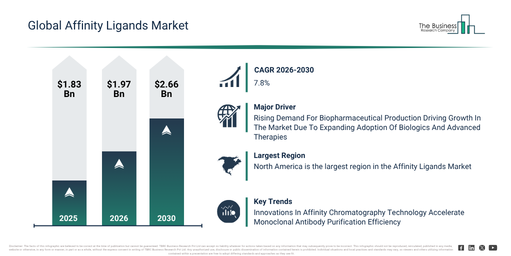
    Affinity Ligands Market Forecast: Value Set To Climb From $1.97 Billion To $2.66 Billion

    The affinity ligands market has experienced substantial expansion in recent years. This market is projected to expand from $1.83 billion in 2025 to $1.97 billion in 2026, demonstrating a compound annual growth rate (CAGR) of 7.6%. Historically, this growth has been driven by several factors, including an escalating need for targeted purification methods, advancements in pharmaceutical and biotech research, the embrace of protein-based ligands, the increased application of antibodies in diagnostics, and the proliferation of academic and research institutions.

    The affinity ligands market is set for robust expansion over the next few years. It is projected to achieve a value of $2.66 billion by 2030, growing at a compound annual growth rate (CAGR) of 7.8%. This anticipated growth during the forecast period is fueled by the increasing adoption of aptamers and synthetic ligands, a surging demand for high-throughput drug discovery, the rising integration of biosensors in diagnostic applications, the broadening of environmental and food testing applications, and a growing emphasis on personalized medicine and therapeutics. Key trends expected in this period include the increased embrace of synthetic and peptide ligands, a heightened demand for affinity chromatography applications, expanded integration into drug discovery and diagnostics, the development of high-specificity biosensor platforms, and a strengthened focus on protein and enzyme purification techniques.

    Get A Free Sample Report With In-Depth Market Insights:

    https://thebusinessresearchcompany.com/sample_request?id=86026673&type=smp&name=Affinity%20Ligands%20Market%20Report%202026&utm_source=Blogs&utm_medium=Paid&utm_campaign=Oct_PR

    Affinity Ligands Market Growth Drivers: What’s Behind The Acceleration?

    The escalating demand for biopharmaceutical manufacturing is anticipated to drive the expansion of the affinity ligands market. Biopharmaceutical production entails the industrial-scale creation of intricate biological therapeutic items such as monoclonal antibodies, vaccines, and recombinant proteins, utilizing biologically derived systems and procedures. The need for biopharmaceutical production is expanding due to the rising occurrence of chronic and infectious diseases, necessitating advanced therapies, vaccines, and biologic drugs for effective treatment and management. Affinity ligands improve biopharmaceutical manufacturing by providing highly specific binding sites that capture target biomolecules from complex mixtures, thereby facilitating rapid, efficient purification and reliable product quality. For instance, in June 2023, figures from the European Federation of Pharmaceutical Industries and Associations (EFPIA), a Belgium-based trade association representing Europe’s pharmaceutical industry, showed that total pharmaceutical production in Europe amounted to €390,000 million ($422,803 million) in 2023, an increase from €363,300 million ($393,857 million) in 2022. Thus, the increasing requirement for biopharmaceutical production is fueling the growth of the affinity ligands market.

    Affinity Ligands Market Segments: Where Is Growth Concentrated?

    The affinity ligands market covered in this report is segmented –

    1) By Product Type: Protein-Based Ligands, Synthetic Ligands, Peptide Ligands, Aptamers, Other Product Types

    2) By Target Molecule: Antibodies, Proteins, Enzymes, Nucleic Acids, Small Molecules

    3) By Application: Affinity Chromatography, Biosensors, Diagnostics, Therapeutics, Research And Development, Drug Discovery

    4) By End-Use Industry: Pharmaceutical And Biotechnology Companies, Academic And Research Institutes, Diagnostic Laboratories, Contract Research Organizations, Food And Beverage Industry, Environmental Testing

    Subsegments:

    1) By Protein-Based Ligands: Antibodies, Enzymes, Lectins, Albumins

    2) By Synthetic Ligands: Small Molecules, Polymers, Dendrimers, Magnetic Particles

    3) By Peptide Ligands: Linear Peptides, Cyclic Peptides, Modified Peptides, Functionalized Peptides

    4) By Aptamers: Deoxyribonucleic Acid Aptamers, Ribonucleic Acid Aptamers, Peptide Aptamers, Spiegelmers

    5) By Other Product Types: Carbohydrate Ligands, Lipid Ligands, Nucleic Acid Ligands, Hybrid Ligands

    Affinity Ligands Market Trends: What’s Defining The Industry’s Next Phase?

    Companies within the affinity ligands market are concentrating on creating sophisticated purification methods, such as membrane-based protein A chromatography platforms. These efforts aim to enhance processing speed, improve binding capabilities, and streamline downstream bioprocessing workflows. Membrane-based protein Chromatography platforms represent advanced purification technologies that integrate protein A affinity ligands within membrane structures to specifically bind and isolate monoclonal antibodies from complex bioprocess fluids, thereby facilitating faster throughput and heightened efficiency in downstream biomanufacturing operations. For instance, in October 2024, Sartorius AG, a Germany-based biopharmaceutical solutions provider, unveiled Sartobind Rapid A Lab, a laboratory-scale membrane chromatography device crafted for the swift and efficient capture of monoclonal antibodies. This solution employs Protein A affinity ligands incorporated into membrane adsorbers to offer high binding capacity, short cycle times, and scalability from lab to manufacturing, which supports process intensification and accelerates biologics development.

    Affinity Ligands Market Key Participants And Competitive Landscape

    Major companies operating in the affinity ligands market are Thermo Fisher Scientific Inc., Merck KGaA, Cube Biotech GmbH, Tosoh Corporation, Avantor Inc., Agilent Technologies Inc., Kaneka Corporation, Sartorius AG, PerkinElmer Inc., Waters Corporation, Bio-Rad Laboratories Inc., QIAGEN N.V., Repligen Corporation, GenScript Biotech Corporation, Purolite Corporation, Promega Corporation, Takara Bio Inc., BioWorks Inc., Biotage AB, BIA Separation d.o.o., KNAUER Wissenschaftliche Geräte GmbH, JNC Corporation, Aptamer Group.

    View The Full Affinity Ligands Market Report:

    https://thebusinessresearchcompany.com/report/affinity-ligands-market-report?utm_source=Blogs&utm_medium=Paid&utm_campaign=Oct_PR

    Affinity Ligands Market Geographic Analysis: Where Is Demand Rising Fastest?

    North America was the largest region in the affinity ligands market in 2025. Asia-Pacific is expected to be the fastest-growing region in the forecast period. The regions covered in the affinity ligands market report are Asia-Pacific, South East Asia, Western Europe, Eastern Europe, North America, South America, Middle East, Africa.

    Reach Out To Our Team:

    The Business Research Company: https://www.thebusinessresearchcompany.com/

    Americas: +1 310-496-7795

    Asia: +44 7882 955267 & +91 8897263534

    Europe: +44 7882 955267

    Email us at: marketing@tbrc.info

    Follow us on:

    LinkedIn: https://in.linkedin.com/company/the-business-research-company

    YouTube: https://www.youtube.com/channel/UC24_fI0rV8cR5DxlCpgmyFQ

    Global Market Model: https://www.thebusinessresearchcompany.com/global-market-model

  • Cloud Based Drug Discovery Platform Market Growth To $6.75 Billion Creates New Opportunities Across The Industry

    Featuring market attractiveness scoring, total addressable market sizing, company benchmarking matrices, interactive Excel dashboards, deeper supply chain intelligence, emerging startup tracking, and granular product-level insights, The Business Research Company’s 2026 market reports are built to deliver research that is both more actionable and more strategically valuable.

    Cloud Based Drug Discovery Platform Market Value Growth And Long-Term Outlook

    The cloud based drug discovery platform market has seen rapid expansion in recent years. Its size is expected to increase from $3.61 billion in 2025 to $4.09 billion in 2026, achieving a compound annual growth rate (CAGR) of 13.1%. This historical growth can be attributed to the rising adoption of cloud computing in life sciences, increasing investment in r&d by pharmaceutical companies, growth of high-performance computing infrastructure, demand for faster drug discovery timelines, and expansion of bioinformatics research capabilities.

    The cloud based drug discovery platform market is poised for substantial expansion in the coming years. It is projected to achieve a value of $6.75 billion in 2030, demonstrating a compound annual growth rate (CAGR) of 13.4%. This anticipated growth during the forecast period is fueled by factors such as the increasing utilization of artificial intelligence for drug design, the expanding adoption of hybrid and private cloud deployment models, the growing integration of multi-omics data for drug discovery processes, the proliferation of contract research organizations and academic collaborations, and the rising demands for regulatory compliance and data security. Prominent trends expected in this period include the wider acceptance of cloud-based drug discovery platforms, a heightened demand for virtual screening and molecular simulation instruments, advancements in AI-driven predictive modeling for optimizing drug candidates, the expansion of secure collaboration and data management offerings, and the deeper integration of bioinformatics and computational chemistry solutions.

    Get A Free Sample Report With In-Depth Market Insights:

    https://thebusinessresearchcompany.com/sample_request?id=38889384&type=smp&name=Cloud%20Based%20Drug%20Discovery%20Platform%20Market%20Report%202026&utm_source=Blogs&utm_medium=Paid&utm_campaign=Oct_PR

    Cloud Based Drug Discovery Platform Market Demand Drivers: What’s Powering Industry Growth?

    The increasing acceptance of personalized medicine is anticipated to drive the expansion of the cloud based drug discovery platform market in the future. Personalized medicine defines a medical approach that customizes treatment and prevention strategies to an individual’s distinct genetic makeup, lifestyle, and environment. The rising adoption of personalized medicine is primarily attributed to advancements in genomics, which allow for precise identification of genetic variations and tailored treatments for individuals. Cloud-based drug discovery platforms enhance the uptake of personalized medicine by offering scalable computing power and advanced analytics for examining patient-specific genetic, molecular, and clinical data. These platforms accelerate the discovery of targeted therapies, improve drug efficacy, and enable customized treatment plans, thereby supporting more precise and effective healthcare solutions. For instance, in February 2024, the Personalized Medicine Coalition (PMC), a US-based nonprofit organization, reported that the U.S. Food and Drug Administration (FDA) approved 26 new personalized medicines in 2023, which was a notable increase from the 12 approved in 2022. Consequently, the growing adoption of personalized medicine is a key driver for the growth of the cloud based drug discovery platform market.

    Cloud Based Drug Discovery Platform Market Segmentation: How Does The Market Break Down By Category?

    The cloud based drug discovery platform market covered in this report is segmented –

    1) By Component: Software, Services

    2) By Drug Discovery Stage: Target Identification, Lead Discovery, Preclinical Development, Clinical Development

    3) By Technology: Machine Learning, Artificial Intelligence, Computational Chemistry, Bioinformatics

    4) By Deployment Model: Public Cloud, Private Cloud, Hybrid Cloud

    5) By End User: Pharmaceutical Companies, Bioscience Research Organizations, Academic Institutions, Contract Research Organizations

    Subsegments:

    1) By Software: Molecular Modeling Tools, Data Analysis Platforms, Predictive Simulation Software, Visualization Tools, Collaboration Platforms

    2) By Services: Consulting Services, Implementation Services, Integration Services, Training And Support Services, Data Management Services

    Cloud Based Drug Discovery Platform Market Innovation Trends: What Developments Are Reshaping The Industry?

    Leading companies in the cloud based drug discovery platform market are concentrating on creating advanced technological solutions, such as AI-driven drug discovery systems, to enhance efficiency, boost prediction accuracy, and minimize the time and cost involved in introducing new drugs to market. AI-driven drug discovery platforms are defined as sophisticated computational systems that utilize artificial intelligence, encompassing machine learning and structure prediction, to formulate and refine drug candidates by analyzing biological data and molecular structures. For example, in May 2025, Viva Biotech, a China-based biotechnology company, unveiled its AI-driven drug discovery (AIDD) platform, an advanced cloud-enabled tool designed for early-stage research. This sophisticated and comprehensive platform features three primary modules—V-Scepter, V-Orb, and V-Mantle—that combine structure prediction, molecular dynamics, and generative AI for novel drug design. The platform’s functionalities include AI-generated antibody sequences, which reduce initial discovery time from months to less than a week, alongside lab-in-the-loop iterative cycles and proprietary Free Energy Perturbation calculations.

    Cloud Based Drug Discovery Platform Market Company Landscape And Competitive Strategy

    Major companies operating in the cloud based drug discovery platform market are Microsoft Corporation, Accenture plc, International Business Machines Corporation, Oracle Corporation, Tata Consultancy Services Limited, Dassault Systèmes SE, WuXi AppTec Co. Ltd., SAS Institute Inc., Schrödinger Inc., Valo Health Inc., Owkin Inc., Insilico Medicine Inc., Recursion Pharmaceuticals Inc., Relay Therapeutics Inc., BenevolentAI Limited, Deep Genomics Inc., Collaborative Drug Discovery Inc., Iktos SAS, Nimbus Therapeutics LLC, and Optibrium Limited.

    View The Full Cloud Based Drug Discovery Platform Market Report:

    https://thebusinessresearchcompany.com/report/cloud-based-drug-discovery-platform-market-report?utm_source=Blogs&utm_medium=Paid&utm_campaign=Oct_PR

    Cloud Based Drug Discovery Platform Market Largest Region: Which Geography Holds The Biggest Share?

    North America was the largest region in the cloud based drug discovery platform market in 2025. Asia-Pacific is expected to be the fastest-growing region in the forecast period. The regions covered in the cloud based drug discovery platform market report are Asia-Pacific, South East Asia, Western Europe, Eastern Europe, North America, South America, Middle East, Africa.

    Reach Out To Our Team:

    The Business Research Company: https://www.thebusinessresearchcompany.com/

    Americas: +1 310-496-7795

    Asia: +44 7882 955267 & +91 8897263534

    Europe: +44 7882 955267

    Email us at: marketing@tbrc.info

    Follow us on:

    LinkedIn: https://in.linkedin.com/company/the-business-research-company

    YouTube: https://www.youtube.com/channel/UC24_fI0rV8cR5DxlCpgmyFQ

    Global Market Model: https://www.thebusinessresearchcompany.com/global-market-model