Category: Pharmaceuticals

  • Viral Arthritis Vaccine Market Projected For Strong Expansion Through 2030: Key Trends And Future Outlook

    Viral Arthritis Vaccine Market Projected For Strong Expansion Through 2030: Key Trends And Future Outlook

    Built to provide research that’s more actionable and strategically valuable, The Business Research Company’s 2026 market reports include market attractiveness analysis, total addressable market sizing, company benchmarking matrices, interactive Excel dashboards, broader supply chain intelligence, emerging startup tracking, and in-depth product insights.

    Viral Arthritis Vaccine Market Forecast: Value Set To Climb From $7.36 Billion To $11.09 Billion

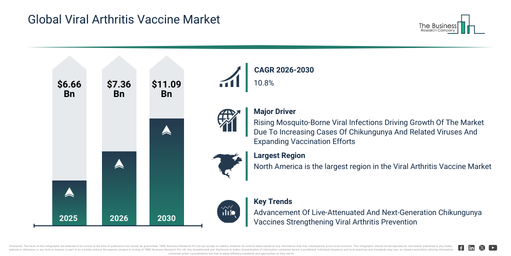
    The viral arthritis vaccine market size has seen rapid growth in recent years. It is anticipated to expand from $6.66 billion in 2025 to $7.36 billion in 2026, achieving a compound annual growth rate (CAGR) of 10.6%. This historical expansion can be attributed to factors such as the history of chikungunya outbreaks, innovations in vaccine platforms, worldwide immunization initiatives, research into zoonotic viruses, and public health preparedness endeavors.

    The viral arthritis vaccine market is projected to experience substantial expansion over the upcoming years. This market is anticipated to reach a valuation of $11.09 billion by 2030, exhibiting a compound annual growth rate (CAGR) of 10.8%. Factors driving this growth throughout the projected period include advanced vaccine platforms, the increasing risks posed by arboviruses, expedited clinical trials, increased exposure due to international travel, and the broadening scope of preventive immunization efforts. Key developments expected during this forecast span encompass mRNA-based viral arthritis vaccines, recombinant vector vaccine technologies, multivalent vaccines targeting arthritogenic viruses, agile vaccine design strategies, and enhanced adjuvanted immunogenic formulations.

    Get A Free Sample Report With In-Depth Market Insights:

    https://thebusinessresearchcompany.com/sample_request?id=84069442&type=smp&name=Viral%20Arthritis%20Vaccine%20Market%20Report%202026&utm_source=Blogs&utm_medium=Paid&utm_campaign=Oct_PR

    Viral Arthritis Vaccine Market Development Factors: What’s Supporting Demand?

    The increasing occurrence of mosquito-borne viral infections is anticipated to stimulate the expansion of the viral arthritis vaccine market moving forward. These infections are illnesses transmitted to humans through the bite of infected mosquitoes, encompassing chikungunya, Zika, and dengue viruses. Such infections can manifest as fever, joint pain, rash, and in some instances, enduring complications like viral arthritis. The rise in mosquito-borne viral infections is attributed to climate change, which fosters warmer temperatures and altered rainfall patterns, thus enlarging mosquito habitats and breeding periods. A viral arthritis vaccine aids in curbing mosquito-borne viral infections by preventing both infection and the progression of diseases stemming from viruses that cause joint inflammation, thereby reducing transmission risk and the disease burden in affected populations. For instance, in 2024, the World Health Organization (WHO), a Switzerland-based intergovernmental organization, reported over 7.6 million cases globally by April. This total tripled the number recorded during the equivalent period in 2023, with transmission continuing to extend across more than 90 countries. Hence, the growing incidence of mosquito-borne viral infections is propelling the growth of the viral arthritis vaccine market.

    Viral Arthritis Vaccine Market Segment Outlook: Which Categories Are Growing Fastest?

    The viral arthritis vaccine market covered in this report is segmented –

    1) By Type: Viral Arthritis Vaccine, Live; Viral Arthritis Vaccine, Inactivated

    2) By Virus Targeted: Chikungunya Virus; Rubella Virus; Parvovirus; Other Viral Arthritis-Causing Viruses

    3) By Application: Farms; Individual

    4) By End-User: Hospitals And Clinics; Vaccination Centers; Homecare; Government Programs

    Subsegments:

    1) By Viral Arthritis Vaccine, Live: Single Dose; Combination Dose; Recombinant Live Vaccine

    2) By Viral Arthritis Vaccine, Inactivated: Whole Virus Inactivated Vaccine; Split Virus Inactivated Vaccine; Adjuvanted Inactivated Vaccine

    Viral Arthritis Vaccine Market Transformation Trends: What Innovations Are Driving Change?

    Leading companies operating within the viral arthritis vaccine market are prioritizing the development of innovative vaccine candidates, such as live-attenuated and next-generation chikungunya vaccines, to address the escalating demand for effective prevention of viral-induced joint pain and persistent arthritic complications, particularly among vulnerable groups. These live-attenuated and next-generation chikungunya vaccines are sophisticated formulations designed to avert chikungunya virus infection by stimulating powerful and lasting immune responses. Live-attenuated vaccines achieve this by using weakened forms of the virus to closely mimic a natural infection and provide durable protection, while next-generation vaccines utilize modern platforms like viral vectors, recombinant proteins, or novel attenuation technologies to improve safety, immunogenicity, and wider applicability across populations. For example, in June 2025, Bavarian Nordic A/S, a Denmark-based biotechnology company, initiated a Phase 3 clinical study of its chikungunya vaccine in children, aiming to extend protection to pediatric populations in endemic regions where exposure early in life can lead to significant disease burden. This advancement to late-stage clinical evaluation demonstrates increasing confidence in the vaccine’s safety and immunogenicity profile and highlights ongoing efforts to broaden age indications, strengthen population-level immunity, and mitigate the global long-term impact of chikungunya-associated viral arthritis.

    Viral Arthritis Vaccine Market Top Companies Driving Competitive Growth

    Major companies operating in the viral arthritis vaccine market are Bavarian Nordic A/S, Serum Institute of India Private Limited, Valneva SE, Bharat Biotech International Limited, Panacea Biotec Ltd., The Biologicals and Vaccines Institute of Southern Africa (Pty) Ltd.

    View The Full Viral Arthritis Vaccine Market Report:

    https://thebusinessresearchcompany.com/report/viral-arthritis-vaccine-market-report?utm_source=Blogs&utm_medium=Paid&utm_campaign=Oct_PR

    Viral Arthritis Vaccine Market Global Footprint: Which Region Leads The Industry?

    North America was the largest region in the viral arthritis vaccine market in 2025. Asia-Pacific is expected to be the fastest-growing region in the forecast period. The regions covered in the viral arthritis vaccine market report are Asia-Pacific, South East Asia, Western Europe, Eastern Europe, North America, South America, Middle East, Africa.

    Reach Out To Our Team:

    The Business Research Company: https://www.thebusinessresearchcompany.com/

    Americas: +1 310-496-7795

    Asia: +44 7882 955267 & +91 8897263534

    Europe: +44 7882 955267

    Email us at: marketing@tbrc.info

    Follow us on:

    LinkedIn: https://in.linkedin.com/company/the-business-research-company

    YouTube: https://www.youtube.com/channel/UC24_fI0rV8cR5DxlCpgmyFQ

    Global Market Model: https://www.thebusinessresearchcompany.com/global-market-model
  • Water For Injection System Market CAGR Forecast Through 2030: Key Trends Shaping Industry Expansion

    Water For Injection System Market CAGR Forecast Through 2030: Key Trends Shaping Industry Expansion

    Backed by market attractiveness analysis, total addressable market sizing, company benchmarking matrices, interactive Excel dashboards, wider supply chain intelligence, emerging startup coverage, and detailed product-level insights, The Business Research Company’s 2026 market reports are designed to offer research that is more actionable and strategically valuable than ever.

    Water For Injection System Market CAGR Outlook And Future Development

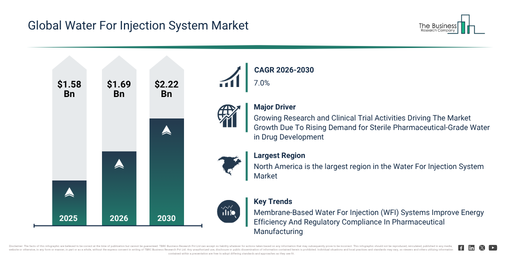
    The water for injection system market size has experienced robust growth recently. This market is projected to expand from $1.58 billion in 2025 to $1.69 billion in 2026, demonstrating a compound annual growth rate (CAGR) of 6.8%. The historical growth of the market can be linked to several factors, including the increasing demand for sterile injectable medicines, strict regulatory compliance requirements, the integration of traditional distillation and filtration systems, the expansion within pharmaceutical and biotech manufacturing, and a heightened emphasis on product safety and patient protection.

    The water for injection system market is projected to experience substantial expansion over the upcoming years, reaching $2.22 billion in 2030, driven by a compound annual growth rate (CAGR) of 7.0%. This anticipated growth throughout the forecast period stems from factors such as the increasing adoption of automated WFI systems, their integration with IoT-enabled monitoring, the implementation of predictive maintenance solutions, investments in energy-efficient systems, and the expanding infrastructure of the biotech and pharmaceutical sectors. Key developments anticipated during this period encompass automated WFI systems, continuous water quality monitoring, integration with manufacturing execution systems (MES), proactive maintenance for water systems, and the development of energy-efficient water generation technologies.

    Get A Free Sample Report With In-Depth Market Insights:

    https://thebusinessresearchcompany.com/sample_request?id=29877293&type=smp&name=Water%20For%20Injection%20System%20Market%20Report%202026&utm_source=Blogs&utm_medium=Paid&utm_campaign=Oct_PR

    Water For Injection System Market Growth Momentum: What Factors Are Shaping Demand?

    An anticipated surge in the Water for Injection (WFI) systems market is projected, driven by the expansion of research and clinical trial endeavors. These activities encompass structured scientific inquiries and controlled experiments designed to assess the safety, effectiveness, and caliber of novel pharmaceuticals, biologics, and therapeutic interventions prior to obtaining regulatory clearance. The uptick in research and clinical trials stems from the escalating incidence of intricate and enduring illnesses, which necessitates the creation of more potent and precise treatment options. This broadened scope of research and clinical trials directly fuels the need for pure, sterile water essential for the preparation, formulation, and processing stages of injectable pharmaceutical products and biologics. As an illustration, in December 2024, the Association of the British Pharmaceutical Industry, a trade association located in the UK, reported that the number of pharmaceutical industry trials initiated within the UK saw an increase for the second year in a row, progressing from 411 in 2022 to 426 in 2023. Consequently, the expanding volume of research and clinical trial activities is propelling the expansion of the Water for Injection (WFI) systems market.

    Water For Injection System Market Segment Analysis And Revenue Potential

    The water for injection system market covered in this report is segmented –

    1) By Product Type: Distillation Systems, Filtration Systems, Reverse Osmosis Systems, Other Product Types

    2) By Capacity: Small (<1000 L/h), Medium (1000–5000 L/h), Large (>5000 L/h)

    3) By Distribution Channel: Direct Sales, Distributors, Other Distribution Channels

    4) By End-User: Pharmaceutical Companies, Biotech Companies, Hospitals, Research Institutes, Other End-Users

    Subsegments:

    1) By Distillation Systems: Single Effect Distillation Systems, Multiple Effect Distillation Systems, Hybrid Distillation Systems, Steam Distillation Systems

    2) By Filtration Systems: Microfiltration Systems, Ultrafiltration Systems, Nanofiltration Systems, Crossflow Filtration Systems

    3) By Reverse Osmosis Systems: High Recovery Reverse Osmosis Systems, Low Energy Reverse Osmosis Systems, Brackish Water Reverse Osmosis Systems, Seawater Reverse Osmosis Systems

    4) By Other Product Types: Continuous Water For Injection Systems, Modular Water For Injection Systems, Automated Water For Injection Systems, Custom Engineered Water For Injection Systems

    Water For Injection System Market Trends Redefining Industry Growth

    Leading companies in the water for injection (WFI) system market are concentrating on developing advanced solutions, such as Sterile Water for Injection (WFI), to enhance the efficiency of pharmaceutical manufacturing, ensure regulatory adherence, and uphold high standards for product purity and patient safety. Sterile water for injection (WFI) is purified, sterile, and non-pyrogenic water utilized to dilute or dissolve injectable drugs, produced under stringent pharmacopeial standards to guarantee it is free from contaminants and endotoxins. For instance, in June 2024, Asahi Kasei Corporation, a Japan-based chemical and technology company, introduced a Microza hollow-fiber membrane system designed to produce WFI (water for injection), which is sterile water essential for preparing pharmaceutical injections. This system provides an energy-efficient alternative to conventional steam distillation, a process reliant on high CO₂-emitting steam generation, and offers advantages including reduced emissions, lower operating costs, a compact design, simplified operation, and exceptional endotoxin removal efficiency (>99.999%), thereby ensuring a safe and reliable WFI supply for pharmaceutical manufacturing.

    Water For Injection System Market Industry Leaders And Competitive Landscape

    Major companies operating in the water for injection system market are Thermo Fisher Scientific Inc., Asahi Kasei Corporation, Xylem Inc., BWT Holding GmbH, Sartorius AG, Organo Corporation, Nomura Micro Science Co Ltd, Fabtech Technologies Pvt Ltd, Kurita Water Industries Ltd., BRAM COR SpA, SKion Water GmbH, Suncombe Limited, Techno Hipurity Water Systems Pvt Ltd, Adinath International, Shanghai GenTech Co Ltd, SWJAL Process Pvt Ltd, Indu IonPure India Pvt Ltd, HANS Scientific LLC, Nanjing TianSure Machinery Co Ltd, VENPURE SYSTEM PVT LTD.

    View The Full Water For Injection System Market Report:

    https://thebusinessresearchcompany.com/report/water-for-injection-system-market-report?utm_source=Blogs&utm_medium=Paid&utm_campaign=Oct_PR

    Water For Injection System Market Regional Analysis And Leading Geography

    North America was the largest region in the water for injection system market in 2025. Asia-Pacific is expected to be the fastest-growing region in the forecast period. The regions covered in the water for injection system market report are Asia-Pacific, South East Asia, Western Europe, Eastern Europe, North America, South America, Middle East, Africa.

    Reach Out To Our Team:

    The Business Research Company: https://www.thebusinessresearchcompany.com/

    Americas: +1 310-496-7795

    Asia: +44 7882 955267 & +91 8897263534

    Europe: +44 7882 955267

    Email us at: marketing@tbrc.info

    Follow us on:

    LinkedIn: https://in.linkedin.com/company/the-business-research-company

    YouTube: https://www.youtube.com/channel/UC24_fI0rV8cR5DxlCpgmyFQ

    Global Market Model: https://www.thebusinessresearchcompany.com/global-market-model
  • Three-Dimensional (3D) Protein Structure Analysis Market 2026: Market Size, Growth Drivers And Emerging Opportunities

    Three-Dimensional (3D) Protein Structure Analysis Market 2026: Market Size, Growth Drivers And Emerging Opportunities

    Backed by market attractiveness analysis, total addressable market sizing, company benchmarking matrices, interactive Excel dashboards, wider supply chain intelligence, emerging startup coverage, and detailed product-level insights, The Business Research Company’s 2026 market reports are designed to offer research that is more actionable and strategically valuable than ever.

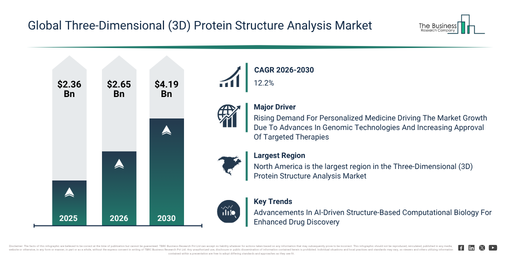
    Three-Dimensional (3D) Protein Structure Analysis Market Growth From $2.65 Billion In 2026 To $4.19 Billion By 2030 At A CAGR Of 12.2%

    The three-dimensional (3D) protein structure analysis market size has experienced rapid growth in recent years. It is anticipated to expand from $2.36 billion in 2025 to $2.65 billion in 2026, achieving a compound annual growth rate (CAGR) of 11.9%. The growth observed in the historic period can be linked to increasing investment in structural genomics, the adoption of x-ray crystallography and nmr spectroscopy, the growth of pharmaceutical r&d, a rising demand for biomarker identification, and the development of cryo-em technology.

    The three-dimensional (3D) protein structure analysis market is poised for significant expansion in the coming years. This sector is projected to reach $4.19 billion in 2030, growing at a compound annual growth rate (CAGR) of 12.2%. This forecasted increase is driven by the uptake of AI-driven structure prediction, the broadening use of cloud-based computational tools, the incorporation of multi-modal imaging techniques, an increasing emphasis on enzyme engineering, and a greater need for personalized medicine applications. Key trends anticipated during this period include AI-powered protein structure prediction, advanced high-resolution imaging methods, the integration of computational and experimental workflows, automated data processing and analysis, and the emergence of cloud-based structural biology platforms.

    Get A Free Sample Report With In-Depth Market Insights:

    https://thebusinessresearchcompany.com/sample_request?id=71406395&type=smp&name=Three-Dimensional%20%283D%29%20Protein%20Structure%20Analysis%20Market%20Report%202026&utm_source=Blogs&utm_medium=Paid&utm_campaign=Oct_PR

    Three-Dimensional (3D) Protein Structure Analysis Market Growth Momentum: What Factors Are Shaping Demand?

    The increasing requirement for individualized healthcare is anticipated to fuel the expansion of the three-dimensional (3D) protein structure analysis market. Personalized medicine involves customizing medical care and treatments to align with a patient’s unique biological and clinical profiles. Its wider implementation is propelled by breakthroughs in genomic technologies, which facilitate the discovery of genetic variations linked to diseases and specific molecular targets. Given that personalized medicine progressively depends on molecular insights for drug discovery and therapeutic development, 3D protein structure analysis is crucial in explaining how genetic differences affect protein shape and how drugs bind to them. As an illustration, in February 2024, data from the US-based non-profit Personalized Medicine Coalition revealed that the US Food and Drug Administration had endorsed 16 novel personalized treatments for rare disease patients, an increase from six in 2022, with this total comprising seven cancer therapies. Consequently, the rising demand for personalized medicine is a primary factor behind the expansion of the three-dimensional (3D) protein structure analysis market.

    Three-Dimensional (3D) Protein Structure Analysis Market Segment Landscape And Growth Outlook

    The three-dimensional (3D) protein structure analysis market covered in this report is segmented –

    1) By Component: Instruments and Imaging Systems, Software and Computational Tools, Reagents and Consumables, Services

    2) By Workflow: Sample Preparation, Data Acquisition, Data Processing, Structure Determination, Visualization and Interpretation

    3) By Technology: X-Ray Crystallography, Cryo-Electron Microscopy (Cryo-EM), Nuclear Magnetic Resonance (NMR) Spectroscopy, Small Angle X-Ray Scattering (SAXS), Computational Modeling and AI-Based Prediction, Mass Spectrometry-Based Methods

    4) By Application: Drug Discovery and Development, Structural Genomics, Biomarker Identification, Protein-Protein Interaction Studies, Enzyme Engineering and Industrial Biotech, Academic Research and Education

    5) By End-Use Industry: Pharmaceutical and Biotechnology Companies, Academic and Research Institutes, Contract Research Organizations, Healthcare and Diagnostics Companies, Agricultural and Industrial Biotech Firms

    Subsegments:

    1) By Instruments and Imaging Systems: X Ray Crystallography Systems, Cryogenic Electron Microscopy Systems, Nuclear Magnetic Resonance Spectroscopy Systems, Mass Spectrometry Systems For Structural Analysis, Protein Crystallization And Sample Preparation Instruments

    2) By Software and Computational Tools: Molecular Modeling And Simulation Software, Protein Structure Visualization Software, Structure Prediction And Folding Analysis Software, Molecular Docking And Interaction Analysis Software, Data Processing And Image Reconstruction Software

    3) By Reagents and Consumables: Protein Crystallization Reagents, Sample Preparation Kits, Labeling And Detection Reagents, Buffers And Stabilization Solutions, Microplates And Laboratory Consumables

    4) By Services: Protein Structure Determination Services, Molecular Modeling And Simulation Services, Structural Data Analysis Services, Instrument Maintenance And Technical Support Services, Contract Research And Custom Analysis Services

    Three-Dimensional (3D) Protein Structure Analysis Market Trends Redefining Industry Growth

    Companies engaged in the three-dimensional (3D) protein structure analysis market are concentrating on developing innovative solutions, including structure-based computational biology platforms, to accelerate drug discovery, achieve accurate protein modeling, and enhance target identification through advanced molecular simulations and AI-driven structural analysis. A structure-based computational biology platform functions as a digital system that utilizes three-dimensional protein structure data, molecular modeling, and simulation algorithms to analyze biomolecular interactions and support rational drug design and target validation. For instance, in March 2024, Basecamp Research, a UK-based AI company, introduced BaseFold, a deep learning model that substantially advances 3D protein structure prediction for large, complex proteins. By augmenting AlphaFold2 with its proprietary BaseGraph dataset sourced from global biodiversity, it achieves up to 6-fold higher accuracy and 3-fold better small molecule docking. This breakthrough serves to accelerate AI-driven drug discovery by enabling the precise modeling of challenging protein structures that were previously underrepresented in public data.

    Three-Dimensional (3D) Protein Structure Analysis Market Top Companies Driving Competitive Growth

    Major companies operating in the three-dimensional (3D) protein structure analysis market are Merck KGaA, Lonza Group AG, Agilent Technologies Inc., Dassault Systèmes, WuXi AppTec, Charles River Laboratories Inc., Bruker Corporation, Waters Corporation, Revvity, JEOL Ltd., Greiner Bio-One International GmbH, Cambridge Isotope Laboratories Inc., Creative Biostructure, Cambridge Crystallographic Data Centre, NanoImaging Services Inc., Molecular Dimensions Inc., DNASTAR Inc., Jena Bioscience GmbH, Arinax Scientific Instrumentation, Bio-Prodict B.V., CD ComputaBio, and Discngine SAS.

    View The Full Three-Dimensional (3D) Protein Structure Analysis Market Report:

    https://thebusinessresearchcompany.com/report/three-dimensional-3d-protein-structure-analysis-market-report?utm_source=Blogs&utm_medium=Paid&utm_campaign=Oct_PR

    Three-Dimensional (3D) Protein Structure Analysis Market Global Footprint: Which Region Leads The Industry?

    North America was the largest region in the three-dimensional (3D) protein structure analysis market in 2025. Asia-Pacific is expected to be the fastest-growing region in the forecast period. The regions covered in the three-dimensional (3D) protein structure analysis market report are Asia-Pacific, South East Asia, Western Europe, Eastern Europe, North America, South America, Middle East, Africa.

    Reach Out To Our Team:

    The Business Research Company: https://www.thebusinessresearchcompany.com/

    Americas: +1 310-496-7795

    Asia: +44 7882 955267 & +91 8897263534

    Europe: +44 7882 955267

    Email us at: marketing@tbrc.info

    Follow us on:

    LinkedIn: https://in.linkedin.com/company/the-business-research-company

    YouTube: https://www.youtube.com/channel/UC24_fI0rV8cR5DxlCpgmyFQ

    Global Market Model: https://www.thebusinessresearchcompany.com/global-market-model
  • Tetracyclines Market Valued At $30.14 Billion In 2026: Key Trends And Growth Drivers

    Tetracyclines Market Valued At $30.14 Billion In 2026: Key Trends And Growth Drivers

    Built to provide research that’s more actionable and strategically valuable, The Business Research Company’s 2026 market reports include market attractiveness analysis, total addressable market sizing, company benchmarking matrices, interactive Excel dashboards, broader supply chain intelligence, emerging startup tracking, and in-depth product insights.

    Tetracyclines Market Revenue Outlook: What CAGR Lies Ahead Through 2030?

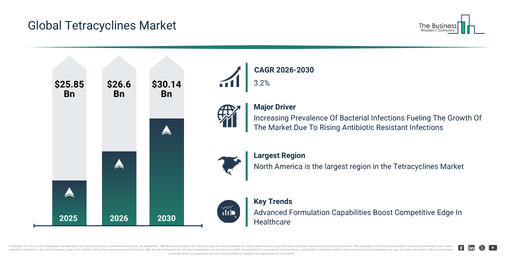
    The tetracyclines market has experienced steady expansion in recent years. It is anticipated to grow from a value of $25.85 billion in 2025 to $26.6 billion in 2026, exhibiting a compound annual growth rate (CAGR) of 2.9%. This market’s historical growth can be linked to the increasing incidence of bacterial infections, the expansion of hospital facilities, a rise in the production of generic drugs, advancements in pharmaceutical research and development, and governmental programs aimed at improving access to antibiotics.

    The tetracyclines market size is projected to experience consistent expansion over the coming years, reaching $30.14 billion in 2030 at a compound annual growth rate (CAGR) of 3.2%. This anticipated growth during the forecast period is primarily driven by factors such as the increasing demand for advanced tetracycline formulations, the incorporation of AI into drug development, the widening application of personalized medicine, a rise in biotechnology investments, and a concentrated effort on managing antibiotic resistance. Significant trends identified for the forecast period encompass the creation of novel tetracycline derivatives, drug discovery aided by AI, enhancements in oral bioavailability, therapy focused on specific infections, and optimization of formulation processes.

    Get A Free Sample Report With In-Depth Market Insights:

    https://thebusinessresearchcompany.com/sample_request?id=73626583&type=smp&name=Tetracyclines%20Market%20Report%202026&utm_source=Blogs&utm_medium=Paid&utm_campaign=Oct_PR

    Tetracyclines Market Demand Drivers: What’s Powering Industry Growth?

    The expanding occurrence of bacterial infections is anticipated to boost the growth of the tetracyclines market going forward. A bacterial infection is a condition where harmful bacteria invade and multiply in the body, leading to tissue damage and illness. The rise in the prevalence of these infections is increasing due to various factors, including a surge in antibiotic-resistant bacteria cases and poor sanitation and hygiene in certain regions. Tetracyclines provide effective treatment options against a wide range of bacterial pathogens, thus addressing the increasing prevalence of bacterial infections. For instance, according to Gov.UK, a UK-based government agency, there were an estimated 66,730 serious antibiotic-resistant infections in 2023, as reported in November 2024. Therefore, the increasing prevalence of bacterial infections is driving the growth of the tetracyclines market.

    Tetracyclines Market Segment Landscape: Which Areas Lead Development?

    The tetracyclines market covered in this report is segmented –

    1) By Generation: First Generation, Second Generation, Third Generation

    2) By Formulation: Tablets, Capsules, Injectables, Topical

    3) By Route of Administration: Oral, Parenteral, Other Routes of Administration

    4) By Distribution Channel: Hospital Pharmacy, Retail Pharmacy, Online Pharmacy

    5) By Application: Respiratory Infections, Gastrointestinal Tract Infections, Skin Infections, Other Applications

    Subsegments:

    1) By First Generation: Tetracycline, Oxytetracycline, Chlortetracycline, Demethylchlortetracycline

    2) By Second Generation: Doxycycline, Minocycline, Methacycline, Lymecycline

    3) By Third Generation: Tigecycline, Eravacycline, Omadacycline, Sarecycline

    Tetracyclines Market Innovation Trends: What Developments Are Reshaping The Industry?

    Leading companies in the tetracyclines market are concentrating on creating innovative solutions, such as advanced generic formulation development, to secure a competitive edge. This advanced generic formulation development involves applying optimized synthesis processes, bioequivalence engineering, and quality-controlled manufacturing systems to produce therapeutically equivalent antibacterial drugs with enhanced stability and regulatory compliance. For instance, in May 2024, Dr. Reddy’s Laboratories Ltd., an India-based pharmaceutical company, introduced doxycycline for injection USP in the United States. This product is a therapeutically equivalent generic version of vibramycin for injection and is prescribed for treating a wide array of bacterial infections. It provides cost-efficient hospital supplies, adheres to stringent US FDA-compliant manufacturing standards, and features ready-to-use injectable formulations, thereby improving accessibility to antimicrobial treatments.

    Tetracyclines Market Company Landscape And Competitive Strategy

    Major companies operating in the tetracyclines market are Pfizer Inc., Abbott Laboratories, Merck KGaA, Teva Pharmaceutical Industries Ltd., Sun Pharmaceutical Industries Ltd., Aurobindo Pharma Limited, Cipla Limited, Dr. Reddy’s Laboratories Ltd., Ax Pharmaceutical Corporation, DEVA Holding A.S., Hebei Veyong Pharmaceutical Co. Ltd., Century Pharmaceuticals Ltd., Lupin Pharmaceuticals Inc., Hefei TNJ Chemical Industry Co. Ltd., Zydus Lifesciences Limited, Everest Medicines Limited, Jai Radhe Sales, Indian Drugs Pharmaceuticals Limited, Anhui Sinotech Industrial Co. Ltd., Gyma Laboratories of America Inc.

    View The Full Tetracyclines Market Report:

    https://thebusinessresearchcompany.com/report/tetracyclines-market-report?utm_source=Blogs&utm_medium=Paid&utm_campaign=Oct_PR

    Tetracyclines Market Largest Region: Which Geography Holds The Biggest Share?

    North America was the largest region in the tetracyclines market in 2025. Asia-Pacific is expected to be the fastest-growing region in the forecast period. The regions covered in the tetracyclines market report are Asia-Pacific, South East Asia, Western Europe, Eastern Europe, North America, South America, Middle East, Africa.

    Reach Out To Our Team:

    The Business Research Company: https://www.thebusinessresearchcompany.com/

    Americas: +1 310-496-7795

    Asia: +44 7882 955267 & +91 8897263534

    Europe: +44 7882 955267

    Email us at: marketing@tbrc.info

    Follow us on:

    LinkedIn: https://in.linkedin.com/company/the-business-research-company

    YouTube: https://www.youtube.com/channel/UC24_fI0rV8cR5DxlCpgmyFQ

    Global Market Model: https://www.thebusinessresearchcompany.com/global-market-model
  • Synthetic Gene Circuits Market Forecast Insights: The Road To $4.64 Billion By 2030

    Synthetic Gene Circuits Market Forecast Insights: The Road To $4.64 Billion By 2030

    Featuring market attractiveness scoring, total addressable market sizing, company benchmarking matrices, interactive Excel dashboards, deeper supply chain intelligence, emerging startup tracking, and granular product-level insights, The Business Research Company’s 2026 market reports are built to deliver research that is both more actionable and more strategically valuable.

    Synthetic Gene Circuits Market Revenue Growth On Track For A 18.1% CAGR Through 2030

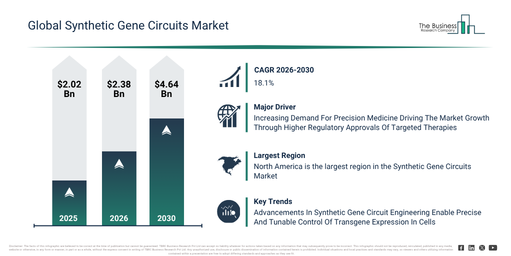
    The synthetic gene circuits market has experienced rapid expansion in recent years. It is projected to grow from $2.02 billion in 2025 to $2.38 billion by 2026, demonstrating a compound annual growth rate (CAGR) of 17.9%. The growth observed in the past can be ascribed to advancements in molecular biology techniques, increasing investment in biotechnology research, the integration of synthetic gene circuits into academic studies, a rising demand for targeted therapeutics, and the expansion of industrial biotechnology.

    The synthetic gene circuits market is projected to experience substantial expansion over the upcoming years. By 2030, this market is anticipated to reach a valuation of $4.64 billion, demonstrating a compound annual growth rate (CAGR) of 18.1%. This anticipated growth during the forecast period is primarily driven by factors such as the incorporation of AI into gene circuit design, the broadening of synthetic biology’s applications in healthcare, the increasing need for programmable cellular therapies, advancements in environmental biosensing, and the uptake of automated high-throughput screening methods. Key trends expected within this period encompass programmable gene expression circuits, the development of synthetic biological oscillators, innovations in genetic toggle switches, the use of cell-based biosensors, and advancements in metabolic pathway engineering.

    Get A Free Sample Report With In-Depth Market Insights:

    https://thebusinessresearchcompany.com/sample_request?id=91208573&type=smp&name=Synthetic%20Gene%20Circuits%20Market%20Report%202026&utm_source=Blogs&utm_medium=Paid&utm_campaign=Oct_PR

    Synthetic Gene Circuits Market Expansion Drivers: What’s Shaping Future Growth?

    The synthetic gene circuits market is projected to grow as the demand for precision medicine increases. Precision medicine is a medical strategy that tailors disease prevention and treatment plans according to an individual’s genetic profile, environment, and lifestyle to improve therapeutic effectiveness and safety. This rising demand for precision medicine is driven by the growing burden of cancer and rare genetic disorders, which require targeted and mutation-specific treatments. Synthetic gene circuits support precision medicine by allowing programmable control over gene expression and cellular responses, thus enabling researchers and manufacturers to create highly specific and patient-tailored therapeutic interventions. For instance, in February 2024, the Personalized Medicine Coalition, a US-based hospital and health care organization, reported that in 2023, the Food and Drug Administration (FDA) approved 16 new personalized treatments for rare disease patients, an increase from six in 2022. Therefore, the escalating demand for precision medicine is a key driver for the growth of the synthetic gene circuits market.

    Synthetic Gene Circuits Market Segment Landscape And Growth Outlook

    The synthetic gene circuits market covered in this report is segmented –

    1) By Product Type: Toggle Switches, Oscillators, Logic Gates, Other Product Types

    2) By Application: Healthcare And Therapeutics, Industrial Biotechnology, Research And Development, Agriculture, Other Applications

    3) By End User: Pharmaceutical And Biotechnology Companies, Academic And Research Institutes, Other End Users

    Subsegments:

    1) By Toggle Switches: Single Input Toggle Switches, Double Input Toggle Switches, Inducible Toggle Switches, Bistable Genetic Toggle Switches, Reversible Genetic Toggle Switches

    2) By Oscillators: Repressilator Circuits, Feedback Loop Oscillators, Inducible Genetic Oscillators, Synthetic Biological Clocks, Multi Component Oscillators

    3) By Logic Gates: And Logic Gates, Or Logic Gates, Not Logic Gates, Nand Logic Gates, Nor Logic Gates, Exclusive Or Logic Gates

    4) By Other Product Types: Signal Amplifier Circuits, Memory Storage Circuits, Pattern Formation Circuits, Sensor Responsive Circuits, Programmable Gene Expression Circuits

    Synthetic Gene Circuits Market Strategic Trends: What Defines The Next Growth Phase?

    Leading firms within the synthetic gene circuits market are concentrating their efforts on creating sophisticated modular synthetic gene circuits. This development aims to allow for exact, programmable, and scalable regulation of cellular activities, benefiting both therapeutic interventions and research endeavors. Such a circuit represents a flexible genetic structure, assembled from interchangeable DNA components, which work together to integrate sensing, processing, and response elements. Its purpose is to precisely govern gene expression and modulate cellular conduct. An illustrative example occurred in October 2025, when engineers at the Massachusetts Institute of Technology, a US-based private university, devised DIAL. This particular modular synthetic gene circuit achieves precise control over transgene expression within cells by incorporating an editable spacer situated between transcription factor binding sites and the promoter. These spacers are subsequently removed through recombinases, such as Cre, allowing for the adjustment of expression levels from an off or low state to a high state. This mechanism facilitates the creation of heritable and adjustable setpoints across an extensive dynamic range, proving valuable for applications in gene therapy and cell reprogramming.

    Synthetic Gene Circuits Market Competitive Overview And Top Companies

    Major companies operating in the synthetic gene circuits market are Thermo Fisher Scientific Inc, Broad Institute of MIT Harvard, GenScript Biotech Corporation, Twist Bioscience Corporation, Ginkgo Bioworks Holdings Inc, Bioneer Corporation, Weizmann Institute of Science, Wyss Institute at Harvard University, Telesis Bio Inc, Asimov Inc, Addgene Inc, Precigen Inc, Massachusetts Institute of Technology, Blue Heron Biotech LLC, Synlogic Inc, Max Planck Gesellschaft, Senti Biosciences Inc, Boston University Khalil Lab, ETH Zurich Fussenegger Lab, Cello Biosciences Inc, Caltech Synthetic Biology Group.

    View The Full Synthetic Gene Circuits Market Report:

    https://thebusinessresearchcompany.com/report/synthetic-gene-circuits-market-report?utm_source=Blogs&utm_medium=Paid&utm_campaign=Oct_PR

    Synthetic Gene Circuits Market Top Region: Where Does Most Revenue Come From?

    North America was the largest region in the synthetic gene circuits market in 2025. Asia-Pacific is expected to be the fastest-growing region in the forecast period. The regions covered in the synthetic gene circuits market report are Asia-Pacific, South East Asia, Western Europe, Eastern Europe, North America, South America, Middle East, Africa.

    Reach Out To Our Team:

    The Business Research Company: https://www.thebusinessresearchcompany.com/

    Americas: +1 310-496-7795

    Asia: +44 7882 955267 & +91 8897263534

    Europe: +44 7882 955267

    Email us at: marketing@tbrc.info

    Follow us on:

    LinkedIn: https://in.linkedin.com/company/the-business-research-company

    YouTube: https://www.youtube.com/channel/UC24_fI0rV8cR5DxlCpgmyFQ

    Global Market Model: https://www.thebusinessresearchcompany.com/global-market-model
  • Synthetic Antibody Library Market Forecast To Reach $2.86 Billion By 2030: Key Trends Explained

    Synthetic Antibody Library Market Forecast To Reach $2.86 Billion By 2030: Key Trends Explained

    Backed by market attractiveness analysis, total addressable market sizing, company benchmarking matrices, interactive Excel dashboards, wider supply chain intelligence, emerging startup coverage, and detailed product-level insights, The Business Research Company’s 2026 market reports are designed to offer research that is more actionable and strategically valuable than ever.

    Synthetic Antibody Library Market Poised To Hit $2.86 Billion By 2030 With A 12% CAGR

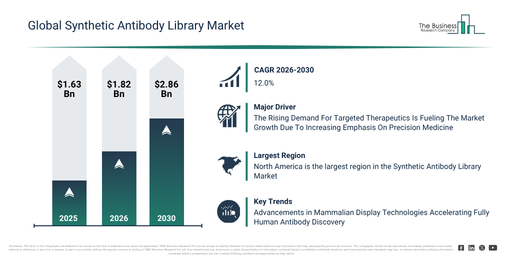
    Recent years have seen substantial growth in the synthetic antibody library market. Projections indicate an increase from $1.63 billion in 2025 to $1.82 billion in 2026, demonstrating a compound annual growth rate (CAGR) of 11.7%. During previous periods, the market’s expansion was fueled by a heightened need for therapeutic antibodies, the implementation of phage and yeast display technologies, an increase in biopharmaceutical research and development, more academic studies, and wider uses in diagnostics.

    The synthetic antibody library market is anticipated to expand significantly in the coming years. Projections indicate it will reach $2.86 billion by 2030, growing at a compound annual growth rate (CAGR) of 12.0%. This market’s expansion during the forecast period is propelled by factors such as the integration of AI in antibody design, increased demand for mRNA display libraries, initiatives in personalized medicine, greater investment in high-diversity libraries, and the growth of contract research organizations. Notable trends expected in this period involve high-throughput antibody screening, automated library construction, the integration of next-generation sequencing, computational antibody design, and the development of customizable antibody libraries.

    Get A Free Sample Report With In-Depth Market Insights:

    https://thebusinessresearchcompany.com/sample_request?id=26573238&type=smp&name=Synthetic%20Antibody%20Library%20Market%20Report%202026&utm_source=Blogs&utm_medium=Paid&utm_campaign=Oct_PR

    Synthetic Antibody Library Market Industry Drivers: What’s Behind The Revenue Growth?

    The increasing need for targeted therapeutics is anticipated to drive expansion in the synthetic antibody library market in the future. These treatments are precision-focused, designed to act specifically on molecular targets linked to diseases, thereby enhancing efficacy and reducing harm to healthy cells. Their adoption is growing, fueled by a greater emphasis on precision medicine and the development of biologic drugs, especially in areas like oncology and immune disorders, alongside an increase in clinical trials for these treatment methods. A synthetic antibody library facilitates targeted therapeutics by offering a strong platform for the quick discovery and creation of highly specific antibodies. These antibodies precisely attach to specific disease-related molecular targets, which aids in developing more accurate, effective, and safer treatment strategies. For example, the Global Oncology Trends 2024 report from IQVIA, a US-based healthcare analytics firm, indicated that over 2,000 new oncology clinical trials began in 2023. These trials concentrated on innovative cancer treatment modalities like cell and gene therapies, antibody-drug conjugates, multispecific antibodies, and radioligand therapies, all showing significant promise. Consequently, the increased demand for targeted therapeutics is a key factor propelling the expansion of the synthetic antibody library market.

    Synthetic Antibody Library Market Segment Analysis And Revenue Potential

    The synthetic antibody library market covered in this report is segmented –

    1) By Library Type: Phage Display Libraries, Yeast Display Libraries, Ribosome Display Libraries, Messenger Ribonucleic Acid (mRNA) Display Libraries, Other Library Types

    2) By Application: Therapeutic Development, Diagnostic Development, Research And Development, Other Applications

    3) By End-User: Pharmaceutical And Biotechnology Companies, Academic And Research Institutes, Contract Research Organizations, Other End-Users

    Subsegments:

    1) By Phage Display Libraries: Filamentous Phage Display Libraries, T7 Phage Display Libraries, Lambda Phage Display Libraries, Hybrid Phage Display Libraries

    2) By Yeast Display Libraries: Saccharomyces Cerevisiae Yeast Display Libraries, Pichia Pastoris Yeast Display Libraries, Surface-Displayed Yeast Libraries, Secreted Yeast Display Libraries

    3) By Ribosome Display Libraries: In Vitro Ribosome Display Libraries, Cell-Free Ribosome Display Libraries, High-Diversity Ribosome Display Libraries, Functional Ribosome Display Libraries

    4) By Messenger Ribonucleic Acid (mRNA) Display Libraries: In Vitro Messenger Ribonucleic Acid (mRNA) Display Libraries, Peptide-Messenger Ribonucleic Acid (mRNA) Fusion Libraries, Protein-Messenger Ribonucleic Acid (mRNA) Fusion Libraries, High-Throughput Messenger Ribonucleic Acid (mRNA) Display Libraries

    5) By Other Library Types: Phage Display Library, Yeast Display Library, Ribosome Display Library, mRNA Display Library, Bacterial Display Library, Mammalian Cell Display Library, Synthetic Peptide Library, Combinatorial Antibody Library, Single Domain Antibody Library, Nanobody Library

    #Synthetic Antibody Library Market Growth Trends: What’s Shaping The Future Outlook?

    Major companies operating within the synthetic antibody library market are concentrating on developing innovative solutions, such as mammalian-display-based synthetic antibody discovery platforms. These efforts aim to accelerate the discovery of high-affinity, fully human antibodies and reduce the development timelines for biologics. Mammalian-display-based synthetic antibody discovery platforms are systems that present synthetic antibody libraries on mammalian cells, facilitating the rapid selection of fully human, high-affinity antibodies with enhanced functional relevance and shorter development times compared to traditional display methods. For instance, in December 2025, Fusion Antibodies plc, an Ireland-based contract research organization, introduced the OptiMAL Human Antibody Discovery platform, an innovative mammalian-display-based synthetic antibody discovery platform that integrates the company’s proprietary naïve synthetic antibody library with mammalian display selection to expedite the identification of fully human, high-affinity antibodies. This platform utilizes a highly diverse, fully human synthetic antibody library expressed directly on mammalian cells, which enables the selection of candidates exhibiting native folding and appropriate post-translational modifications. The synergy of advanced cell-surface display and high-throughput screening technologies boosts binding specificity and functional relevance when compared to conventional phage display approaches. Moreover, the platform eliminates the requirement for downstream humanization, thereby shortening development timelines and reducing costs.

    Synthetic Antibody Library Market Competitive Landscape: Who Leads The Industry?

    Major companies operating in the synthetic antibody library market are Charles River Laboratories International Inc., Bio-Rad Laboratories Inc., Aragen Life Sciences Pvt. Ltd., Twist Bioscience Corporation, GenScript Biotech Corporation, Abzena plc, Harbour BioMed, Alector Inc., IRBM S.p.A., AbCellera Biologics Inc., Adimab LLC, Creative Biolabs Inc., ImmunoPrecise Antibodies Ltd., Eurofins Discovery Services Luxembourg Holding S.A., Isogenica Ltd., Ablexis LLC, AbDesign Labs LLC, Abwiz Bio Inc., Dynegene Inc., Hybrigenics Services SAS, ProSci Incorporated.

    View The Full Synthetic Antibody Library Market Report:

    https://thebusinessresearchcompany.com/report/synthetic-antibody-library-market-report?utm_source=Blogs&utm_medium=Paid&utm_campaign=Oct_PR

    Synthetic Antibody Library Market Geographic Landscape: Which Region Dominates Industry Growth?

    North America was the largest region in the Synthetic antibody library market in 2025. Asia-Pacific is expected to be the fastest-growing region in the forecast period. The regions covered in the synthetic antibody library market report are Asia-Pacific, South East Asia, Western Europe, Eastern Europe, North America, South America, Middle East, Africa.

    Reach Out To Our Team:

    The Business Research Company: https://www.thebusinessresearchcompany.com/

    Americas: +1 310-496-7795

    Asia: +44 7882 955267 & +91 8897263534

    Europe: +44 7882 955267

    Email us at: marketing@tbrc.info

    Follow us on:

    LinkedIn: https://in.linkedin.com/company/the-business-research-company

    YouTube: https://www.youtube.com/channel/UC24_fI0rV8cR5DxlCpgmyFQ

    Global Market Model: https://www.thebusinessresearchcompany.com/global-market-model
  • Self-Assembling Protein Nanoparticles Market Analysis: $1.81 Billion Market Size In 2026 And Future Growth Prospects

    Self-Assembling Protein Nanoparticles Market Analysis: $1.81 Billion Market Size In 2026 And Future Growth Prospects

    Featuring market attractiveness scoring, total addressable market sizing, company benchmarking matrices, interactive Excel dashboards, deeper supply chain intelligence, emerging startup tracking, and granular product-level insights, The Business Research Company’s 2026 market reports are built to deliver research that is both more actionable and more strategically valuable.

    Self-Assembling Protein Nanoparticles Market Growth Potential: How Will Market Size Shift Through 2030?

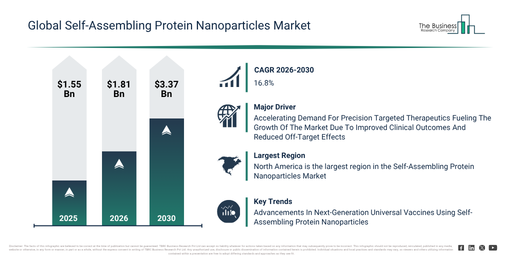
    The market for self-assembling protein nanoparticles has seen rapid expansion in recent years. It is projected to expand from $1.55 billion in 2025 to $1.81 billion in 2026, demonstrating a compound annual growth rate (CAGR) of 16.6%. In previous periods, this growth was primarily due to breakthroughs in recombinant protein technology, an increase in biopharmaceutical research, escalating vaccine development projects, rising demand for cancer and gene therapies, and the integration of structural biology engineering.

    The market for self-assembling protein nanoparticles is anticipated to experience substantial growth in the coming years. By 2030, its size is projected to reach $3.37 billion, exhibiting a compound annual growth rate (CAGR) of 16.8%. This expansion during the forecast period is propelled by factors such as the integration of computational protein design, the broadening of immunotherapy applications, a rising demand for personalized medicine, the adoption of self-assembly engineering platforms, and increased investment in modular nanoparticle platforms. Significant trends expected in this period include AI-driven protein design, modular nanoparticle engineering, optimization of targeted drug delivery, real-time diagnostic nanoparticle tracking, and the development of scaffold customization platforms.

    Get A Free Sample Report With In-Depth Market Insights:

    https://thebusinessresearchcompany.com/sample_request?id=78326729&type=smp&name=Self-Assembling%20Protein%20Nanoparticles%20Market%20Report%202026&utm_source=Blogs&utm_medium=Paid&utm_campaign=Oct_PR

    Self-Assembling Protein Nanoparticles Market Growth Momentum: What Factors Are Shaping Demand?

    The increasing need for precision targeted therapeutics is anticipated to drive the expansion of the self-assembling protein nanoparticles market in the future. Precision targeted therapeutics involve treatment methods designed to deliver therapeutic agents straight to particular cells, tissues, or molecular pathways, guided by individual disease traits, thereby enhancing effectiveness and minimizing unwanted side effects. This demand is growing because of the escalating worldwide prevalence of complex and chronic ailments that necessitate very specific and tailored treatment plans. Self-assembling protein nanoparticles facilitate precision targeted therapeutics by allowing the creation of consistent, programmable nanostructures capable of encapsulating and delivering drugs, antigens, or genetic material precisely to specific biological targets with regulated release profiles. For instance, in February 2024, the Personalized Medicine Coalition, a US-based nonprofit organization, reported that personalized medicines comprised over one-third of new United States Food and Drug Administration drug approvals in 2023, amounting to 26 targeted therapies, which was a considerably higher proportion than in 2022. Consequently, the growing demand for precision targeted therapeutics is fueling the expansion of the self-assembling protein nanoparticles market.

    Self-Assembling Protein Nanoparticles Market Segment Trends And Revenue Contributors

    The self-assembling protein nanoparticles market covered in this report is segmented –

    1) By Product Type: Vaccine Nanoparticles, Targeted Drug Delivery Nanoparticles, Diagnostic Nanoparticles, Protein-Based Nanocarriers, Research-Grade Nanoparticle Kits, Therapeutic Protein Nanoparticles, Imaging And Contrast Agent Nanoparticles

    2) By Design Approach: Virus-Like Particles, Ferritin-Based Nanoparticles, Encapsulin-Based Nanoparticles, Designed Oligomeric Proteins, Two-Component Co-Assembling Systems

    3) By Technology: Recombinant Protein Technology, Computational Protein Design, Structural Biology Engineering, Self-Assembly Engineering Platforms, Modular Nanoparticle Platforms

    4) By Application: Drug Delivery, Vaccine Development, Cancer Therapy, Gene Therapy, Diagnostics And Biosensing, Immunotherapy, Regenerative Medicine, Material Science Applications

    5) By End User: Biopharmaceutical Companies, Biotechnology Companies, Academic And Research Institutes, Contract Research Organizations, Diagnostic Laboratories

    Subsegments:

    1) By Vaccine Nanoparticles: Protein Cage Based Vaccine Nanoparticles, Virus Like Particle Vaccine Nanoparticles, Ferritin Scaffold Vaccine Nanoparticles, Encapsulin Derived Vaccine Nanoparticles

    2) By Targeted Drug Delivery Nanoparticles: Chemotherapeutic Loaded Protein Nanoparticles, Messenger Ribonucleic Acid Loaded Protein Nanoparticles, Small Molecule Encapsulated Protein Nanoparticles, Gene Editing Component Delivery Nanoparticles

    3) By Diagnostic Nanoparticles: Fluorescently Labeled Protein Nanoparticles, Enzyme Conjugated Protein Nanoparticles, Biomarker Targeted Detection Nanoparticles, Electrochemical Sensing Protein Nanoparticles

    4) By Protein-Based Nanocarriers: Surface Functionalized Protein Nanocarriers, Core Shell Structured Protein Nanocarriers, Stimuli Responsive Protein Nanocarriers, Ligand Targeted Protein Nanocarriers

    5) By Research-Grade Nanoparticle Kits: Pre Assembled Protein Nanoparticle Kits, Customizable Scaffold Nanoparticle Kits, Surface Modification Ready Nanoparticle Kits, Laboratory Validation Nanoparticle Kits

    6) By Therapeutic Protein Nanoparticles: Antibody Displaying Protein Nanoparticles, Cytokine Loaded Protein Nanoparticles, Peptide Functionalized Protein Nanoparticles, Enzyme Delivery Protein Nanoparticles

    7) By Imaging And Contrast Agent Nanoparticles: Magnetic Resonance Imaging Protein Nanoparticles, Fluorescent Imaging Protein Nanoparticles, Computed Tomography Contrast Protein Nanoparticles, Multimodal Imaging Protein Nanoparticles

    Self-Assembling Protein Nanoparticles Market Trends Redefining Industry Growth

    Leading firms within the self-assembling protein nanoparticles market are concentrating on creating novel solutions, like the advancement of next-generation universal vaccines, to bolster wide-ranging immunity and readiness for pandemics. This form of vaccine development involves the conceptualization, formulation, and assessment of sophisticated immunization methods designed to offer extensive and lasting defense against numerous strains or varieties within a single viral family. As an illustration, SK Bioscience, a biopharmaceutical entity based in South Korea, commenced a global Phase 1/2 clinical investigation for its vaccine candidate, GBP511, designed to target the Sarbecovirus Family, in January 2026. GBP511 utilizes the recombinant protein platform from SKYCovione, integrated with self-assembling nanoparticle technology pioneered by the Institute for Protein Design at the University of Washington School of Medicine. The study encompasses approximately 368 adults and is assessing safety, how well it’s tolerated, and its ability to provoke an immune response across various dose groups, both with and without an adjuvant, including direct comparisons to Comirnaty. Ultimately, this methodology seeks to generate extensive immune responses against present and anticipated future SARS-like coronaviruses, thereby contributing to universal vaccine efforts and pandemic readiness.

    Self-Assembling Protein Nanoparticles Market Competitive Landscape: Which Companies Lead The Industry?

    Major companies operating in the self-assembling protein nanoparticles market are Novavax Inc., Mika Biologics, VBI Vaccines Inc., Clover Biopharmaceuticals, Virometix AG, Medicago Inc., TechnoVax Inc., VLP Therapeutics LLC, Osivax SAS, Expres2ion Biotechnologies, SpyBiotech, SpyBiotech Ltd., Uvax Bio Inc., SK Bioscience Co. Ltd., Mynvax Private Limited, Vaxine Pty Ltd, Ufovax LLC.

    View The Full Self-Assembling Protein Nanoparticles Market Report:

    https://thebusinessresearchcompany.com/report/self-assembling-protein-nanoparticles-market-report?utm_source=Blogs&utm_medium=Paid&utm_campaign=Oct_PR

    Self-Assembling Protein Nanoparticles Market Regional Breakdown: Where Is Demand Concentrated?

    North America was the largest region in the self-assembling protein nanoparticles market in 2025. Asia-Pacific is expected to be the fastest-growing region in the forecast period. The regions covered in the self-assembling protein nanoparticles market report are Asia-Pacific, South East Asia, Western Europe, Eastern Europe, North America, South America, Middle East, Africa.

    Reach Out To Our Team:

    The Business Research Company: https://www.thebusinessresearchcompany.com/

    Americas: +1 310-496-7795

    Asia: +44 7882 955267 & +91 8897263534

    Europe: +44 7882 955267

    Email us at: marketing@tbrc.info

    Follow us on:

    LinkedIn: https://in.linkedin.com/company/the-business-research-company

    YouTube: https://www.youtube.com/channel/UC24_fI0rV8cR5DxlCpgmyFQ

    Global Market Model: https://www.thebusinessresearchcompany.com/global-market-model
  • Saponin-Based Adjuvants Market Reaches $1.97 Billion In 2026: Forecast And Growth Opportunities

    Saponin-Based Adjuvants Market Reaches $1.97 Billion In 2026: Forecast And Growth Opportunities

    Featuring market attractiveness scoring, total addressable market sizing, company benchmarking matrices, interactive Excel dashboards, deeper supply chain intelligence, emerging startup tracking, and granular product-level insights, The Business Research Company’s 2026 market reports are built to deliver research that is both more actionable and more strategically valuable.

    Saponin-Based Adjuvants Market Revenue Outlook: What CAGR Lies Ahead Through 2030?

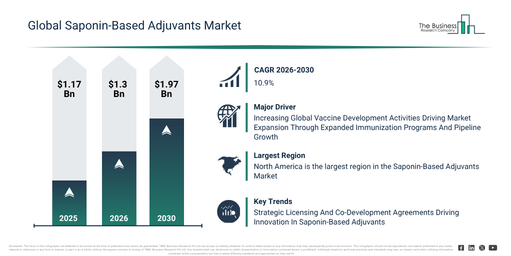
    The market for saponin-based adjuvants has experienced rapid expansion over recent years. This market is projected to expand from $1.17 billion in 2025 to $1.3 billion in 2026, demonstrating a compound annual growth rate (CAGR) of 10.7%. Historically, this growth can be ascribed to several factors including an increase in vaccine research endeavors, a heightened need for potent adjuvants, the expansion of both human and veterinary vaccine markets, progress in plant-based extraction methods, and supportive regulatory frameworks for adjuvant creation.

    The market size for saponin-based adjuvants is poised for swift expansion in the upcoming years. It is projected to reach $1.97 billion by 2030, demonstrating a compound annual growth rate (CAGR) of 10.9%. This anticipated growth during the forecast period is attributable to the adoption of synthetic and semi-synthetic saponin analogues, their integration with next-generation vaccine platforms, the broadening of veterinary vaccine applications, increased research and development investments in immunology, and a strategic focus on personalized and precision vaccine strategies. Key trends expected over this period include the creation of novel saponin formulations, improved vaccine immunogenicity, strategies for adjuvant dose sparing, incorporation with mRNA and protein-based vaccines, and advancements in standardization and quality control.

    Get A Free Sample Report With In-Depth Market Insights:

    https://thebusinessresearchcompany.com/sample_request?id=93784731&type=smp&name=Saponin-Based%20Adjuvants%20Market%20Report%202026&utm_source=Blogs&utm_medium=Paid&utm_campaign=Oct_PR

    Saponin-Based Adjuvants Market Industry Drivers: What’s Behind The Revenue Growth?

    The Saponin-Based Adjuvants market is anticipated to expand due to the rising need for vaccine development initiatives. These activities encompass the entire spectrum from research and clinical assessment to regulatory clearance and market introduction of novel or enhanced vaccines for both infectious and non-infectious conditions. Governments and international health bodies are intensifying vaccine development efforts, supported by ongoing financial investments aimed at preventing infectious diseases and preparing for pandemics. Saponin-Based Adjuvants play a crucial role in vaccine development by boosting antigen immunogenicity, facilitating dose reduction, and fortifying cellular immune responses within new vaccine formulations. For example, as reported by the World Health Organization, an international public health body headquartered in Switzerland, in April 2025, worldwide measles incidents reached approximately 10.3 million in 2023, marking an increase of around 20% from 2022. This underscores the escalating requirement for more extensive vaccine development and immunization campaigns. Consequently, the heightened demand for vaccine development initiatives is fueling the expansion of the Saponin-Based Adjuvants market.

    Saponin-Based Adjuvants Market Segment Landscape And Growth Outlook

    The saponin-based adjuvants market covered in this report is segmented –

    1) By Product Type: Purified Quillaja Saponin Extracts, QS-21 Saponin Fractions, Crude Saponin Extracts, Semi-Purified Saponin Blends, Synthetic And Semi-Synthetic Saponin Analogues

    2) By Source: Quillaja Saponaria, Soybean, Other Sources

    3) By Formulation: Particulate, Emulsion, Liposomal, Other Formulations

    4) By Application: Human Vaccines, Veterinary Vaccines, Research Applications, Other Applications

    5) By End-User: Pharmaceutical Companies, Research Institutes, Contract Research Organizations, Other End-Users

    Subsegments:

    1) By Purified Quillaja Saponin Extracts: High Purity Quillaja Extracts, Standardized Quillaja Extracts, Pharmaceutical Grade Quillaja Extracts, Vaccine Grade Quillaja Extracts

    2) By QS-21 Saponin Fractions: Clinical Grade QS-21 Fractions, Research Grade QS-21 Fractions, High Purity QS-21 Fractions, Stabilized QS-21 Formulations

    3) By Crude Saponin Extracts: Raw Plant Derived Saponin Extracts, Aqueous Crude Saponin Extracts, Alcohol Extracted Crude Saponins, Unstandardized Botanical Saponin Extracts

    4) By Semi-Purified Saponin Blends: Partially Refined Saponin Blends, Standardized Semi-Purified Blends, Blended Botanical Saponin Mixtures, Vaccine Grade Semi-Purified Blends

    5) By Synthetic And Semi-Synthetic Saponin Analogues: Fully Synthetic Saponin Analogues, Chemically Modified Saponin Derivatives, Structure Optimized Saponin Analogues, Low Toxicity Saponin Analogues

    #Saponin-Based Adjuvants Market Growth Trends: What’s Shaping The Future Outlook?

    Major companies in the saponin-based adjuvants market are concentrating on developing sustainable and scalable production alternatives, such as cultured plant cell-derived QS-21, to ensure supply chain stability, consistent quality, and reduced reliance on natural resources. Cultured plant cell-derived QS-21 describes an advanced manufacturing technique where this crucial vaccine adjuvant is cultivated from plant cells in a controlled laboratory environment, rather than being extracted from the bark of rare trees. For instance, in August 2024, SaponiQx, a US-based biomanufacturing company, launched STIMULON cultured plant cell QS-21, a cpcQS-21 adjuvant accessible for commercial acquisition through InvivoGen. This product is created using plant cell culture instead of tree bark, guaranteeing a consistent and scalable supply; it provides high purity, lot-to-lot consistency, and minimized environmental impact. Functionally, STIMULON cpcQS-21 maintains the same immunostimulatory strength as tree-derived QS-21 in stimulating both humoral and cellular immune responses, rendering it suitable for application in vaccines for infectious diseases such as malaria, shingles, and RSV.

    Saponin-Based Adjuvants Market Key Players Shaping Industry Direction

    Major companies operating in the saponin-based adjuvants market are GlaxoSmithKline plc, Croda International plc, HIPRA Human Health S.L, Novavax, Inc., Seppic S.A., Merck KGaA, Agenus Inc., PhytoLab GmbH & Co. KG, SPI Pharma Inc., InvivoGen, Desert King International, Adjuvatis S.A.S., Aphios Corporation, Vaxine Pty Ltd, Fatro S.p.A., Q-Vant Biosciences, AVT Pharmaceutical Inc., SaponiQx.

    View The Full Saponin-Based Adjuvants Market Report:

    https://thebusinessresearchcompany.com/report/saponin-based-adjuvants-market-report?utm_source=Blogs&utm_medium=Paid&utm_campaign=Oct_PR

    Saponin-Based Adjuvants Market Regional Analysis: Which Region Leads By Revenue?

    North America was the largest region in the saponin-based adjuvants market in 2025. Asia-Pacific is expected to be the fastest-growing region in the forecast period. The regions covered in the saponin-based adjuvants market report are Asia-Pacific, South East Asia, Western Europe, Eastern Europe, North America, South America, Middle East, Africa.

    Reach Out To Our Team:

    The Business Research Company: https://www.thebusinessresearchcompany.com/

    Americas: +1 310-496-7795

    Asia: +44 7882 955267 & +91 8897263534

    Europe: +44 7882 955267

    Email us at: marketing@tbrc.info

    Follow us on:

    LinkedIn: https://in.linkedin.com/company/the-business-research-company

    YouTube: https://www.youtube.com/channel/UC24_fI0rV8cR5DxlCpgmyFQ

    Global Market Model: https://www.thebusinessresearchcompany.com/global-market-model
  • Ribonucleic Acid (RNA) Splicing Modulators Market Analysis 2026: Market Size, Growth Trends And Industry Outlook

    Ribonucleic Acid (RNA) Splicing Modulators Market Analysis 2026: Market Size, Growth Trends And Industry Outlook

    Backed by market attractiveness analysis, total addressable market sizing, company benchmarking matrices, interactive Excel dashboards, wider supply chain intelligence, emerging startup coverage, and detailed product-level insights, The Business Research Company’s 2026 market reports are designed to offer research that is more actionable and strategically valuable than ever.

    Ribonucleic Acid (RNA) Splicing Modulators Market CAGR Outlook And Future Development

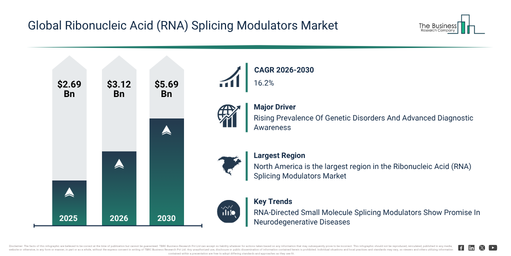
    The ribonucleic acid (RNA) splicing modulators market has seen considerable growth in recent years. Its valuation is expected to rise from $2.69 billion in 2025 to $3.12 billion in 2026, demonstrating a compound annual growth rate (CAGR) of 16.0%. This historical expansion can be attributed to factors such as the increasing prevalence of genetic disorders, advancements in molecular biology techniques, the growth of oncology therapeutics, rising research and development investments, and the adoption of antisense oligonucleotides.

    The ribonucleic acid (RNA) splicing modulators market is projected for substantial expansion in the coming years. Its value is anticipated to reach $5.69 billion by 2030, exhibiting a compound annual growth rate (CAGR) of 16.2%. This projected growth stems from factors such as the creation of AI-driven splicing modulators, the broader adoption of personalized medicine strategies, a rise in partnerships between pharmaceutical and biotechnology firms, improvements in drug delivery methods, and the approval of new therapeutic interventions by regulatory bodies. Key developments expected during this timeframe encompass targeted RNA splicing treatments, individualized genetic medicine, the utilization of high-throughput screening platforms, better incorporation of bioinformatics tools, and sophisticated molecular modeling techniques.

    Get A Free Sample Report With In-Depth Market Insights:

    https://thebusinessresearchcompany.com/sample_request?id=93832742&type=smp&name=Ribonucleic%20Acid%20%28RNA%29%20Splicing%20Modulators%20Market%20Report%202026&utm_source=Blogs&utm_medium=Paid&utm_campaign=Oct_PR

    Ribonucleic Acid (RNA) Splicing Modulators Market Demand Drivers Opening New Revenue Streams

    The ribonucleic acid (RNA) splicing modulators market is projected to expand due to the growing occurrence of genetic disorders. Genetic disorders are defined as conditions or illnesses stemming from irregularities in an individual’s DNA, such as mutations, deletions, or shifts in chromosomes that impair typical biological functions. A heightened awareness combined with improved diagnostic capabilities is leading to an increased identification of these cases, facilitating earlier diagnosis and intervention for inherited conditions. RNA splicing modulators contribute to managing genetic disorders by addressing and correcting abnormal RNA splicing events, thus presenting a therapeutic avenue for treating or controlling the genetic mutations that cause these conditions. For instance, the National Health Service, a UK-based government department, stated in May 2024 that 17,000 individuals live with sickle cell disease, an inherited genetic blood disorder, with approximately 250 new diagnoses occurring annually. Consequently, the increasing prevalence of genetic disorders is a key factor propelling the growth of the ribonucleic acid (RNA) splicing modulators market.

    Ribonucleic Acid (RNA) Splicing Modulators Market Segment Landscape: Which Areas Lead Development?

    The ribonucleic acid (RNA) splicing modulators market covered in this report is segmented –

    1) By Product Type: Small Molecule Modulators, Antisense Oligonucleotides, Small Interfering Ribonucleic Acid, Other Product Types

    2) By Route Of Administration: Subcutaneous, Intravenous, Intrathecal Central Nervous System Adjacent

    3) By Application: Cancer, Genetic Disorders, Neurological Disorders, Other Applications

    4) By End-User: Pharmaceutical Companies, Research Institutes, Hospitals And Clinics, Other End Users

    Subsegments:

    1) By Small Molecule Modulators: Splicing Factor Inhibitors, Ribonucleic Acid Binding Modulators, Kinase Modulators Affecting Splicing, Pre- Messenger Ribonucleic Acid Processing Modulators, Exon Skipping Enhancers

    2) By Antisense Oligonucleotides: Exon Skipping Antisense Oligonucleotides, Splice Site Modifying Antisense Oligonucleotides, Intronic Targeting Antisense Oligonucleotides, Messenger Ribonucleic Acid Degradation Inducing Antisense Oligonucleotides, Gene Expression Modulating Antisense Oligonucleotides

    3) By Small Interfering Ribonucleic Acid: Exon Skipping Small Interfering Ribonucleic Acid, Splice Site Small Interfering Ribonucleic Acid, Intronic Targeting Small Interfering Ribonucleic Acid, Pre- Messenger Ribonucleic Acid Processing Small Interfering Ribonucleic Acid, Gene Silencing Small Interfering Ribonucleic Acid

    4) By Other Product Types: Ribonucleoprotein Complex Modulators, Spliceosome Assembly Modulators, Ribonucleic Acid Editing Enzyme Modulators, Long Non-Coding Ribonucleic Acid Modulators, Messenger Ribonucleic Acid Modulators

    Ribonucleic Acid (RNA) Splicing Modulators Market Trends Powering Strategic Industry Growth

    Leading firms within the ribonucleic acid (RNA) splicing modulators market are prioritizing the development of sophisticated RNA-targeted drug discovery platforms, including RNA-directed small molecule splicing modulators, aiming to boost effectiveness, elevate safety, and tackle previously unaddressed requirements for neurodegenerative conditions. These RNA-directed small molecule splicing modulators function as compact compounds that attach to RNA, subsequently modifying pre-mRNA splicing to rectify or adjust splicing patterns, thereby addressing genetic disorders or malignancies. An example of this is Skyhawk Therapeutics, a US-based biotechnology company, which revealed favorable interim outcomes in September 2025 from its Phase 1 clinical trial for SKY-0515, intended for Huntington’s disease. This is an orally delivered, experimental small molecule RNA splicing modifier, engineered using the firm’s SKYSTAR platform. The trial results showed dose-dependent reductions of mutant huntingtin protein (up to 62%) and PMS1 mRNA in patients, alongside excellent brain penetration and a positive safety profile, indicating a promising dual-mechanism strategy to target fundamental disease processes autonomously.

    Ribonucleic Acid (RNA) Splicing Modulators Market Top Companies Driving Competitive Growth

    Major companies operating in the ribonucleic acid (RNA) splicing modulators market are F. Hoffmann-La Roche Ltd, Pfizer Inc., Novartis AG, Biogen Inc., PTC Therapeutics Inc., Ionis Pharmaceuticals Inc., Abivax SA, Twist Bioscience Corporation, Wave Life Sciences Ltd, Arrakis Therapeutics Inc., Remix Therapeutics Inc., Anima Biotech Inc., Rgenta Therapeutics Inc., Avidity Biosciences Inc., Skyhawk Therapeutics Inc., Stoke Therapeutics Inc., Accent Therapeutics Inc., Chordia Therapeutics Inc., Panorama Medicine Inc., Serna Therapeutics Inc., Ribometrix Inc., Envisagenics Inc., Dyne Therapeutics Inc.

    View The Full Ribonucleic Acid (RNA) Splicing Modulators Market Report:

    https://thebusinessresearchcompany.com/report/ribonucleic-acid-rna-splicing-modulators-market-report?utm_source=Blogs&utm_medium=Paid&utm_campaign=Oct_PR

    Ribonucleic Acid (RNA) Splicing Modulators Market Global Footprint: Which Region Leads The Industry?

    North America was the largest region in the ribonucleic acid (RNA) splicing modulators market in 2025. Asia-Pacific is expected to be the fastest-growing region in the forecast period. The regions covered in the ribonucleic acid (RNA) splicing modulators market report are Asia-Pacific, South East Asia, Western Europe, Eastern Europe, North America, South America, Middle East, Africa.

    Reach Out To Our Team:

    The Business Research Company: https://www.thebusinessresearchcompany.com/

    Americas: +1 310-496-7795

    Asia: +44 7882 955267 & +91 8897263534

    Europe: +44 7882 955267

    Email us at: marketing@tbrc.info

    Follow us on:

    LinkedIn: https://in.linkedin.com/company/the-business-research-company

    YouTube: https://www.youtube.com/channel/UC24_fI0rV8cR5DxlCpgmyFQ

    Global Market Model: https://www.thebusinessresearchcompany.com/global-market-model