Category: Pharmaceuticals

  • Inactivated Vaccines Market Forecast Through 2030 With Insights On Market Patterns And Developments

    Inactivated Vaccines Market Forecast Through 2030 With Insights On Market Patterns And Developments

    The Business Research Company’s 2026 market reports feature enhanced tools like market attractiveness analysis, TAM assessment, and company scoring matrices, along with interactive dashboards, deeper supply chain insights, and startup coverage strengthening the depth, usability, and strategic value of insights.

    How Much Growth In Market Value Is Expected For The Inactivated Vaccines Market Between 2026 And 2030?

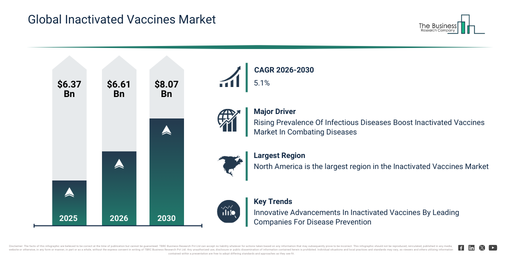
    The inactivated vaccines market has shown consistent expansion in recent years. Its size is anticipated to expand from $6.37 billion in 2025 to $6.61 billion in 2026, achieving a compound annual growth rate (CAGR) of 3.9%. This past growth can be ascribed to an increase in the incidence of infectious diseases, advances in virology research, government support for immunization, the broadening of healthcare infrastructure, and public awareness campaigns promoting vaccination.

    The inactivated vaccines market is projected to experience robust expansion over the coming years. This market is set to reach $8.07 billion by 2030, exhibiting a compound annual growth rate (CAGR) of 5.1%. Factors contributing to this anticipated growth include an expanding elderly demographic, improved healthcare accessibility in developing economies, innovations in vaccine administration methods, a surge in worldwide immunization efforts, and the increasing use of multi-dose and combination vaccines. Key trends foreseen for this period encompass improvements in vaccine composition, the broadening of cold chain infrastructure, a rising need for childhood vaccines, the expansion of governmental immunization schemes, and the ongoing creation of combination vaccines.

    Access Your Free Sample Report For In-Depth Market Analysis:

    https://www.thebusinessresearchcompany.com/sample.aspx?id=13018&type=smp

    What Leading Drivers Are Supporting The Inactivated Vaccines Market Expansion?

    The expanding occurrence of infectious diseases is projected to stimulate the growth of the inactivated vaccine market in the foreseeable future. These diseases are ailments stemming from pathogens such as bacteria, viruses, fungi, or parasites, which are transmissible between individuals, leading to diverse symptoms and health complications. Tuberculosis is a form of infectious disease. Inactivated vaccines leverage non-living pathogens to trigger an immune response, effectively averting conditions like polio, hepatitis A, and influenza. For example, a report from November 2023 by the Centers for Disease Control and Prevention, a US-based national public health agency, indicated that the count of tuberculosis patients in the USA climbed from 8,320 in 2022 to 9,615 in 2023, marking an increase of 1,295 cases. Hence, the escalating prevalence of infectious diseases is fueling the growth of the inactivated vaccine market.

    How Are Different Segments Classified In The Inactivated Vaccines Market Segment Analysis?

    The inactivated vaccines market covered in this report is segmented –

    1) By Type: Viral Vaccine, Bacterial Vaccine

    2) By Method Of Inactivation: Solvent Detergent, Radiation, pH Concentration, Heat Inactivation, Other Methods Of Inactivation

    3) By Distribution Channel: Hospital Pharmacy, Retail Pharmacy, Other Distribution Channels

    Subsegments:

    1) By Viral Vaccine: Inactivated Poliovirus Vaccine (IPV), Inactivated Influenza Vaccine, Inactivated Hepatitis A Vaccine, Inactivated Rabies Vaccine

    2) By Bacterial Vaccine: Inactivated Typhoid Vaccine, Inactivated Cholera Vaccine, Inactivated Pertussis Vaccine, Inactivated Plague Vaccine

    What Trends Are Shaping The Future Of The Inactivated Vaccines Market?

    Major companies operating in the inactivated vaccines market are concentrating on expanding product launches and securing regulatory approvals to bolster their global vaccine portfolios and address increasing immunization requirements. For instance, in April 2024, Sanofi S.A., a France-based healthcare company, introduced Verorab, its inactivated rabies vaccine, in the UK, making it available for all age groups in both pre-exposure and post-exposure circumstances. This launch emphasizes the company’s sustained efforts to broaden its range of inactivated vaccines and strengthen its global immunization offerings. The development also indicates rising investments and increasing regulatory momentum around inactivated vaccine development and approvals. As more companies advance similar products and diversify their portfolios, these strategic initiatives are collectively fostering substantial growth in the inactivated vaccines market, supporting broader protection against infectious diseases.

    Who Are The Companies Driving Activity In The Inactivated Vaccines Market?

    Major companies operating in the inactivated vaccines market are Pfizer Inc., Sinopharm Group Co. Ltd., Merck & Co. Inc., Sanofi S.A., GlaxoSmithKline plc, Takeda Pharmaceutical Company Limited, CSL Limited, Daiichi Sankyo Company Limited, Zydus Lifesciences Ltd., Sinovac Biotech Ltd., Biological E Limited, Hualan Biological Engineering Inc., Shenzhen Kangtai Biological Products Co. Ltd., Serum Institute of India Pvt. Ltd., Beijing Tiatan Biological Products Co. Ltd., Valneva SE, Beijing Minhai Biotechnology Co. Ltd., Bharat Biotech International Limited, Panacea Biotec Ltd., Sinergium Biotech SA, Bharat Immunologicals and Biologicals Corporation Limited, Haffkine Biopharmaceutical Corporation Limited, Incepta Vaccine Ltd., Changchun BCHT Biotechnology Co. Ltd.

    Get The Full Inactivated Vaccines Market Report:

    https://www.thebusinessresearchcompany.com/report/inactivated-vaccines-global-market-report

    Which Region Is The Top Contributor To The Inactivated Vaccines Market By Share?

    North America was the largest region in the inactivated vaccines market in 2025. Asia-Pacific is expected to be the fastest-growing region in the forecast period. The regions covered in the inactivated vaccines market report are Asia-Pacific, South East Asia, Western Europe, Eastern Europe, North America, South America, Middle East, Africa.

    Request A Customized Inactivated Vaccines Market Report For Competitive Insights:

    https://www.thebusinessresearchcompany.com/report/inactivated-vaccines-global-market-report

    Browse Through More Reports Similar to the Global Inactivated Vaccines Market 2026, By The Business Research Company

    Inactivated Vaccines Market Report 2026

    https://www.thebusinessresearchcompany.com/report/inactivated-vaccines-global-market-report

    Vaccines Market Report 2026

    https://www.thebusinessresearchcompany.com/report/vaccines-global-market-report

    Therapeutic Bcg Vaccines Market Report 2026

    https://www.thebusinessresearchcompany.com/report/therapeutic-bcg-vaccines-global-market-report

    Get in touch with us:

    The Business Research Company: https://www.thebusinessresearchcompany.com/

    Americas +1 310-496-7795

    Asia +44 7882 955267 & +91 8897263534

    Europe +44 7882 955267

    Email us at: marketing@tbrc.info

    Follow us on:

    LinkedIn: https://in.linkedin.com/company/the-business-research-company

    YouTube: https://www.youtube.com/channel/UC24_fI0rV8cR5DxlCpgmyFQ

    Global Market Model: https://www.thebusinessresearchcompany.com/global-market-model

  • Diagnostic Specialty Antibodies Market Analysis With Focus On Growth Potential And Future Outlook

    Diagnostic Specialty Antibodies Market Analysis With Focus On Growth Potential And Future Outlook

    The Business Research Company’s 2026 market reports feature enhanced tools like market attractiveness analysis, TAM assessment, and company scoring matrices, along with interactive dashboards, deeper supply chain insights, and startup coverage strengthening the depth, usability, and strategic value of insights.

    What Changes In Market Value Are Expected For The Diagnostic Specialty Antibodies Market Over The 2026–2030 Period?

    The market size for diagnostic specialty antibodies has experienced robust growth in recent years. It is projected to expand from $30.96 billion in 2025 to $32.82 billion in 2026, demonstrating a compound annual growth rate (CAGR) of 6.0%. This historical growth can be attributed to factors such as the increasing prevalence of infectious diseases, the expansion of hospital-based diagnostic testing, the rising adoption of immunoassay techniques, growing awareness of early disease detection, and the availability of conventional monoclonal antibody technologies.

    The diagnostic specialty antibodies market size is projected to experience substantial expansion in the coming years. This market is set to reach $42.84 billion by 2030, exhibiting a compound annual growth rate (CAGR) of 6.9%. This anticipated growth is primarily driven by factors such as the expansion of oncology diagnostics, an increasing need for rapid diagnostic tests, the proliferation of diagnostic laboratories in developing regions, innovations in recombinant antibody engineering, and heightened investments in biomarker-based diagnostics. Key developments influencing the market during this period encompass the growing embrace of precision diagnostics, broader infectious disease testing panels, a surge in the demand for high-specificity monoclonal antibodies, the proliferation of point-of-care diagnostic assays, and enhanced standardization of antibody validation and quality control processes.

    Access Your Free Sample Report For In-Depth Market Analysis:

    https://www.thebusinessresearchcompany.com/sample.aspx?id=12241&type=smp

    What Primary Drivers Are Shaping The Diagnostic Specialty Antibodies Market?

    An expanding base of patients requiring HIV diagnosis is anticipated to fuel the advancement of the diagnostic specialty antibodies market in the future. This trend signifies a rising count of individuals identified with Human Immunodeficiency Virus (HIV). With a greater number of people receiving an HIV diagnosis, the demand for diagnostic specialty antibodies grows, presenting opportunities for manufacturers to innovate and provide bespoke antibody-based diagnostic solutions for HIV testing. These products facilitate the identification of viral biomarkers, thereby assisting in the prompt detection and ongoing surveillance of HIV infection. For example, data released in October 2024 by the UK Health Security Agency, a UK government body, indicated an 11% rise in the HIV testing rate between 2022 and 2023. During 2023, the highest rate of testing was recorded among gay, bisexual, and other men who have sex with men (GBMSM), reaching 52,255 per 100,000. Conversely, heterosexual men and heterosexual and bisexual women showed considerably lower rates, at 1,894 and 3,106 per 100,000, respectively. Consequently, the increasing population of HIV diagnoses is a primary catalyst for the expansion of the diagnostic specialty antibodies market.

    How Is The Diagnostic Specialty Antibodies Market Categorized Across Its Segment Groups?

    The diagnostic specialty antibodies market covered in this report is segmented –

    1) By Antibody Type: Monoclonal Antibodies, Polyclonal Antibodies, Recombinant Polyclonal Antibodies

    2) By Application: Hepatitis, Tuberculosis, Dengue, Oncology, Human Immunodeficiency Virus (HIV), Infectious Disease, Other Applications

    3) By End User: Diagnostic Laboratories, Hospitals

    Subsegments:

    1) By Monoclonal Antibodies: Murine Monoclonal Antibodies, Chimeric Monoclonal Antibodies, Humanized Monoclonal Antibodies, Fully Human Monoclonal Antibodies

    2) By Polyclonal Antibodies: Rabbit Polyclonal Antibodies, Goat Polyclonal Antibodies, Sheep Polyclonal Antibodies

    3) By Recombinant Polyclonal Antibodies: Single-Chain Variable Fragment (scFv), Fab Fragments

    What Market Trends Are Affecting The Diagnostic Specialty Antibodies Market?

    Major companies in the diagnostic specialty antibodies market are primarily concentrating on devising innovative assays, like antibody assays, for the diagnosis of rare bleeding disorders and to achieve a competitive advantage in the sector. An Antibody assay is a laboratory method utilized to ascertain and quantify the existence and amount of antibodies within a biological sample. For instance, in May 2023, Versiti, a US-based nonprofit organization, introduced the Anti-von Willebrand Factor (VWF) Antibody Assay, an inventive assay designed to support clinicians in identifying patients with suspected acquired von Willebrand Disease (aVWD). This assay, developed through research at the Versiti Blood Research Institute, identifies both inhibitory and non-inhibitory antibodies that bind VWF, thereby presenting additional methods for anti-VWF antibody detection.

    Which Firms Are Influencing Competition In The Diagnostic Specialty Antibodies Market?

    Major companies operating in the diagnostic specialty antibodies market are F. Hoffmann-La Roche AG, Thermo Fisher Scientific Inc., Abbott Laboratories, Danaher Corporation, Merck KGaA, Becton Dickinson and Company, Agilent Technologies Inc., Sartorius AG, Bio-Rad Laboratories Inc., STEMCELL Technologies Inc., Abcam PLC, Enzo Life Sciences Inc., Rockland Immunochemicals Inc., Santa Cruz Biotechnology Inc., Creative Diagnostics, Novus Biologicals LLC, Precirix NV, Creative Biolabs Inc., Polymun Scientific Immunbiologische Forschung GmbH, Telix Pharmaceuticals Limited

    Get The Full Diagnostic Specialty Antibodies Market Report:

    https://www.thebusinessresearchcompany.com/report/diagnostic-specialty-antibodies-global-market-report

    Which Region Has The Greatest Market Share In The Diagnostic Specialty Antibodies Market?

    North America was the largest region in the diagnostic specialty antibodies market in 2025. Asia-Pacific is expected to be the fastest-growing region in the diagnostic specialty antibodies market report during the forecast period. The regions covered in the diagnostic specialty antibodies market report are Asia-Pacific, South East Asia, Western Europe, Eastern Europe, North America, South America, Middle East, Africa.

    Request A Customized Diagnostic Specialty Antibodies Market Report For Competitive Insights:

    https://www.thebusinessresearchcompany.com/report/diagnostic-specialty-antibodies-global-market-report

    Browse Through More Reports Similar to the Global Diagnostic Specialty Antibodies Market 2026, By The Business Research Company

    Diagnostic Specialty Antibodies Market Report 2026

    https://www.thebusinessresearchcompany.com/report/diagnostic-specialty-antibodies-global-market-report

    Antibody Discovery Market Report 2026

    https://www.thebusinessresearchcompany.com/report/antibody-discovery-global-market-report

    Monoclonal Antibodies Market Report 2026

    https://www.thebusinessresearchcompany.com/report/monoclonal-antibodies-global-market-report

    Get in touch with us:

    The Business Research Company: https://www.thebusinessresearchcompany.com/

    Americas +1 310-496-7795

    Asia +44 7882 955267 & +91 8897263534

    Europe +44 7882 955267

    Email us at: marketing@tbrc.info

    Follow us on:

    LinkedIn: https://in.linkedin.com/company/the-business-research-company

    YouTube: https://www.youtube.com/channel/UC24_fI0rV8cR5DxlCpgmyFQ

    Global Market Model: https://www.thebusinessresearchcompany.com/global-market-model

  • Inactivated Polio And Rabies Vaccines Market Outlook For 2026–2030 Covering Growth Drivers And Industry Trends

    Inactivated Polio And Rabies Vaccines Market Outlook For 2026–2030 Covering Growth Drivers And Industry Trends

    The Business Research Company’s 2026 market reports feature enhanced tools like market attractiveness analysis, TAM assessment, and company scoring matrices, along with interactive dashboards, deeper supply chain insights, and startup coverage strengthening the depth, usability, and strategic value of insights.

    What Is The Estimated Market Size Of The Inactivated Polio And Rabies Vaccines Market In 2026, And How Will Its Value Evolve By 2030?

    The inactivated polio and rabies vaccines market size has experienced significant growth in recent years. This market is projected to expand from $2.27 billion in 2025 to reach $2.4 billion in 2026, demonstrating a compound annual growth rate (CAGR) of 5.5%. This historical expansion can be attributed to global polio eradication initiatives, an increase in rabies incidence due to animal bites, the broadening of national immunization programs, heightened public sector vaccine procurement, and vaccination mandates from WHO and UNICEF.

    The inactivated polio and rabies vaccines market is projected to experience substantial expansion in the coming years. This market is set to reach $2.97 billion by 2030, demonstrating a compound annual growth rate (CAGR) of 5.5%. Key drivers for this anticipated growth include a heightened emphasis on achieving zero rabies fatalities, expanding pediatric immunization coverage across developing nations, improved healthcare accessibility in rural areas, increased demand for adult post-exposure prophylaxis, and bolstered pandemic preparedness infrastructure. Notable trends during this forecast period encompass the proliferation of combined ipv and rabies immunization initiatives, a move towards intradermal rabies vaccination for dose optimization, enhanced cold chain and vaccine logistics infrastructure, an increase in government-orchestrated mass immunization drives, and the growing acceptance of WHO-prequalified inactivated vaccines.

    Access Your Free Sample Report For In-Depth Market Analysis:

    https://www.thebusinessresearchcompany.com/sample.aspx?id=24252&type=smp

    Which Key Factors Are Driving The Inactivated Polio And Rabies Vaccines Market Growth?

    The escalating demand for efficacious vaccination initiatives is anticipated to drive the expansion of inactivated polio and rabies vaccines. These programs represent organized endeavors by governmental bodies or other groups to administer vaccines, thereby safeguarding individuals from diseases. The increase in such vaccination programs results from enhanced governmental commitments to avert outbreaks, mitigate healthcare expenses, and bolster overall public health. Such initiatives stimulate the demand for inactivated polio and rabies vaccines through elevated awareness, increased funding, and expanded coverage within vulnerable regions. Consistent vaccine uptake is maintained through extensive public campaigns and regular immunization schedules orchestrated by governmental and health organizations. A notable instance occurred in April 2024, when the Pan American Health Organization (PAHO), a US-based specialized agency, inaugurated the 22nd Vaccination Week in the Americas (VWA) under the theme ‘Engage now to protect your future GetVax.’ This event aimed to broaden vaccination coverage, particularly in unserved regions, by delivering more than 65 million doses. The core focus of this undertaking was to counteract misinformation and improve vaccine accessibility via robust community involvement and specifically designed campaigns. Consequently, the escalating need for effective vaccination programs is a primary catalyst for the expansion of the inactivated polio and rabies vaccines market.

    How Is The Inactivated Polio And Rabies Vaccines Market Categorized Across Its Segment Groups?

    The inactivated polio and rabies vaccines market covered in this report is segmented –

    1) By Product Type: Inactivated Polio Vaccine, Inactivated Rabies Vaccine

    2) By Method Of Inactivation: Solvent Detergent Method, Radiation Method, pH Concentration, Heat Inactivation, Other Method Of Inactivations

    3) By Distribution Channel: Government, Private

    4) By Application: Pediatrics, Adults

    Subsegments:

    1) By Inactivated Polio Vaccine: Injectable Inactivated Polio Vaccine, Oral Inactivated Polio Vaccine

    2) By Inactivated Rabies Vaccine: Injectable Inactivated Rabies Vaccine, Intradermal Inactivated Rabies Vaccine

    Which Trends Are Contributing To Changes In The Inactivated Polio And Rabies Vaccines Market?

    Leading companies in the inactivated polio and rabies vaccines market are concentrating on developing advanced products, such as killed virus rabies vaccines, to enhance immunogenicity and address the rising global demand for effective disease prevention. Killed virus rabies vaccines are formulated using rabies virus that has been rendered non-infectious through chemical or physical processes. These vaccines stimulate the immune system to produce protective antibodies without causing the disease, ensuring safety and effectiveness in both pre- and post-exposure prophylaxis. For instance, in April 2024, Sanofi, a UK-based pharmaceutical company, launched Verorab, an inactivated rabies vaccine, in the UK for pre-exposure and post-exposure prophylaxis of rabies in all age groups. The vaccine, licensed in the UK based on extensive clinical data from over 13,000 individuals, has been widely used in more than 80 countries. Verorab provides an effective immunization option for travelers to high-risk countries and for treatment after rabies exposure, with clinical trials showing strong immune responses and long-lasting protection.

    Which Firms Are Influencing Competition In The Inactivated Polio And Rabies Vaccines Market?

    Major companies operating in the inactivated polio and rabies vaccines market are Merck & Co Inc., Sanofi S.A., LG Chem Ltd., Boehringer Ingelheim International GmbH, Sinovac Biotech, Zoetis Inc., Cadila Pharmaceuticals, Zydus Lifesciences Limited, Biological E. Limited, Serum Institute of India (SII), Indian Immunologicals Limited (IIL), Instituto Butantan, Valneva SE, Bio Farma, Bharat Biotech, Bilthoven Biologicals, Panacea Biotec, Batavia Biosciences, Hilleman Laboratories, China National Pharmaceutical Group Co Ltd.

    Get The Full Inactivated Polio And Rabies Vaccines Market Report:

    https://www.thebusinessresearchcompany.com/report/inactivated-polio-and-rabies-vaccines-global-market-report

    Which Region Represents The Largest Share Of The Inactivated Polio And Rabies Vaccines Market?

    North America was the largest region in the inactivated polio and rabies vaccines market in 2025. The regions covered in the inactivated polio and rabies vaccines market report are Asia-Pacific, South East Asia, Western Europe, Eastern Europe, North America, South America, Middle East, Africa.

    Request A Customized Inactivated Polio And Rabies Vaccines Market Report For Competitive Insights:

    https://www.thebusinessresearchcompany.com/report/inactivated-polio-and-rabies-vaccines-global-market-report

    Browse Through More Reports Similar to the Global Inactivated Polio And Rabies Vaccines Market 2026, By The Business Research Company

    Preventive Vaccines Market Report 2026

    https://www.thebusinessresearchcompany.com/report/preventive-vaccines-global-market-report

    Preventive Vaccines Market Report 2026

    https://www.thebusinessresearchcompany.com/report/preventive-vaccines-global-market-report

    Inactivated Vaccines Market Report 2026

    https://www.thebusinessresearchcompany.com/report/inactivated-vaccines-global-market-report

    Get in touch with us:

    The Business Research Company: https://www.thebusinessresearchcompany.com/

    Americas +1 310-496-7795

    Asia +44 7882 955267 & +91 8897263534

    Europe +44 7882 955267

    Email us at: marketing@tbrc.info

    Follow us on:

    LinkedIn: https://in.linkedin.com/company/the-business-research-company

    YouTube: https://www.youtube.com/channel/UC24_fI0rV8cR5DxlCpgmyFQ

    Global Market Model: https://www.thebusinessresearchcompany.com/global-market-model
  • Diagnostic Enzyme Market Forecast Showing Industry Progress And Growth Trends

    Diagnostic Enzyme Market Forecast Showing Industry Progress And Growth Trends

    The Business Research Company’s 2026 market reports feature enhanced tools like market attractiveness analysis, TAM assessment, and company scoring matrices, along with interactive dashboards, deeper supply chain insights, and startup coverage strengthening the depth, usability, and strategic value of insights.

    By 2030, What Market Size Is The Diagnostic Enzyme Market Expected To Reach Based On Its 2026 Value?

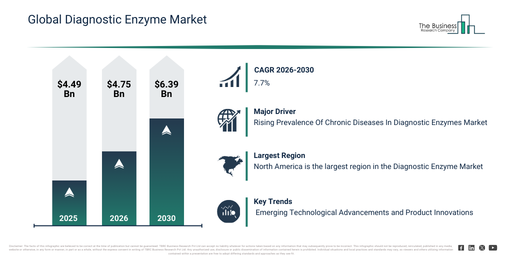
    The diagnostic enzyme market has seen robust growth in recent years. It is projected to expand from $4.49 billion in 2025 to $4.75 billion in 2026, achieving a compound annual growth rate (CAGR) of 5.7%. This historic period’s expansion can be attributed to several factors including the constrained availability of high-purity diagnostic enzymes, a dependence on traditional assay methods, the increasing occurrence of chronic diseases, the growth in biotechnology and research initiatives, and an enhanced awareness of diagnostics based on enzymes.

    The diagnostic enzyme market is anticipated to show significant expansion in the upcoming years. It is projected to reach $6.39 billion by 2030, demonstrating a compound annual growth rate (CAGR) of 7.7%. This growth during the forecast period is propelled by the advancement of sophisticated enzyme engineering techniques, the integration of diagnostic tools with digital health platforms, the increasing acceptance of point-of-care testing, the widening scope of pharmaceutical and biotech research and development, and a surge in government and private sector funding for diagnostic innovations. Prominent trends expected in the forecast period include the growing utilization of enzyme-based diagnostic kits, the development of personalized medicine and enhanced biomarker detection, the broader application in research and biotechnology, a heightened demand for highly specific and sensitive enzymes, and the incorporation of enzyme diagnostics into point-of-care testing.

    Access Your Free Sample Report For In-Depth Market Analysis:

    https://www.thebusinessresearchcompany.com/sample.aspx?id=3394&type=smp

    Which Major Drivers Are Influencing The Expansion Of The Diagnostic Enzyme Market?

    The increasing incidence of chronic diseases is projected to fuel the expansion of the diagnostic enzymes market in the future. Chronic disease refers to long-lasting health conditions that persist over three months or more. Diagnostic enzymes are utilized for the diagnosis and monitoring of various chronic diseases and medical conditions, aiding healthcare providers in assessing disease severity, monitoring the effectiveness of treatments, and adjusting treatment plans as required. For instance, in January 2023, according to the National Library of Medicine, a US-based agency, the number of people in the US aged 50 and older with at least one chronic condition is anticipated to increase by 99.5%, from 71.522 million to 142.66 million by 2050. Thus, the growing prevalence of chronic diseases acts as a driver for the diagnostic enzymes market’s growth.

    How Are Segments Identified Within The Diagnostic Enzyme Market Segment Framework?

    The diagnostic enzyme market covered in this report is segmented –

    1) By Product Type: Carbohydrases, Polymerases And Nucleases, Protease, Other Product Types

    2) By Source: Animals, Microorganisms, Plants

    3) By Application: Biocatalysts, Diagnostics, Pharmaceuticals, Research & Biotechnology

    Subsegments:

    1) By Carbohydrases: Amylases, Cellulases, Lactases, Glucosidases

    2) By Polymerases And Nucleases: DNA Polymerases, RNA Polymerases, Restriction Endonucleases, Exonucleases

    3) By Protease: Serine Proteases, Cysteine Proteases, Metalloproteases, Aspartic Proteases

    4) By Other Product Types: Oxidoreductases, Transferases, Lyases, Hydrolases

    Which Trends Are Influencing Demand In The Diagnostic Enzyme Market?

    Leading companies within the diagnostic enzyme market are prioritizing technological innovations, including digital PCR systems, to address the increasing need for high sensitivity and precise absolute quantification in clinical diagnostics, particularly for oncology and infectious disease testing. Digital PCR (dPCR) involves dividing a sample into thousands of tiny nanoliter reactions, enabling the absolute quantification of target nucleic acids without the need for standard curves. This contrasts with conventional quantitative PCR (qPCR), which estimates concentrations using reference standards and may offer less precision, particularly when target abundance is low. As an example, in September 2024, QIAGEN N.V., a biotechnology firm based in Germany, introduced the QIAcuityDx Digital PCR System, a dPCR instrument suitable for clinical applications. This particular system combines partitioning, thermocycling, and imaging functions into one automated device, thereby allowing the absolute quantification of DNA and RNA for uses like minimally invasive liquid biopsies in cancer monitoring. Notable characteristics of this system include its IVDR certification in Europe, 510(k) exemption in the U.S., intuitive software, and adaptable scheduling, all while facilitating the development of companion diagnostics through its GeneGlobe platform. The QIAcuityDx improves both precision and laboratory efficiency by minimizing manual intervention and providing consistent results, even when dealing with targets of low abundance.

    Who Are The Companies Competing Within The Diagnostic Enzyme Market?

    Major companies operating in the diagnostic enzyme market are Sanofi S.A., Advanced Enzymes Technologies, Aldevron LLC, Amano Enzymes Inc., Codexis Inc., EKF Diagnostic, Kaneka Eurogentec, Roche Holding AG, Sekisui Diagnostics LLC, Thermo Fisher Scientific Inc., Charles River Laboratories, Biocatalysts, Merck & Co. Inc., Chr. Hansen, Kerry Group, Dyadic International, Creative Enzymes, Pfizer Inc., Eli Lilly and Company, Bristol-Myers Squibb Company, GlaxoSmithKline plc, Johnson & Johnson, AbbVie Inc., Amgen Inc., Biogen Inc., Gilead Sciences Inc., Regeneron Pharmaceuticals Inc.

    Get The Full Diagnostic Enzyme Market Report:

    https://www.thebusinessresearchcompany.com/report/diagnostic-enzymes-global-market-report

    Which Region Accounts For The Largest Portion Of The Diagnostic Enzyme Market?

    North America was the largest region in the enzymes market in 2025. Middle East is expected to be the fastest-growing region in the diagnostic enzyme market report during the forecast period. The regions covered in the diagnostic enzyme market report are Asia-Pacific, South East Asia, Western Europe, Eastern Europe, North America, South America, Middle East, Africa.

    Request A Customized Diagnostic Enzyme Market Report For Competitive Insights:

    https://www.thebusinessresearchcompany.com/report/diagnostic-enzymes-global-market-report

    Browse Through More Reports Similar to the Global Diagnostic Enzyme Market 2026, By The Business Research Company

    Synthetic Biology Market Report 2026

    https://www.thebusinessresearchcompany.com/report/synthetic-biology-global-market-report

    Digestive Enzyme Market Report 2026

    https://www.thebusinessresearchcompany.com/report/digestive-enzyme-global-market-report

    Specialty Enzyme Market Report 2026

    https://www.thebusinessresearchcompany.com/report/specialty-enzyme-global-market-report

    Get in touch with us:

    The Business Research Company: https://www.thebusinessresearchcompany.com/

    Americas +1 310-496-7795

    Asia +44 7882 955267 & +91 8897263534

    Europe +44 7882 955267

    Email us at: marketing@tbrc.info

    Follow us on:

    LinkedIn: https://in.linkedin.com/company/the-business-research-company

    YouTube: https://www.youtube.com/channel/UC24_fI0rV8cR5DxlCpgmyFQ

    Global Market Model: https://www.thebusinessresearchcompany.com/global-market-model

  • Increasing Parasitic Infections To Drive Growth For Anthelmintic Drugs Is Supporting Expansion In The In Vivo Toxicology Market

    Increasing Parasitic Infections To Drive Growth For Anthelmintic Drugs Is Supporting Expansion In The In Vivo Toxicology Market

    The Business Research Company’s 2026 market reports feature enhanced tools like market attractiveness analysis, TAM assessment, and company scoring matrices, along with interactive dashboards, deeper supply chain insights, and startup coverage strengthening the depth, usability, and strategic value of insights.

    How Does The Market Size Of The In Vivo Toxicology Market Compare Between 2026 And 2030?

    The in vivo toxicology market has experienced substantial expansion in recent years. This market is projected to grow from $5.61 billion in 2025 to $6 billion in 2026, demonstrating a compound annual growth rate (CAGR) of 7.0%. Historically, this growth can be attributed to factors such as the limited availability of standardized animal models, reliance on manual laboratory procedures, increasing pharmaceutical R&D activities, the rising prevalence of chronic disease studies, and the adoption of basic imaging and analytical instruments.

    The in vivo toxicology market size is anticipated to show significant expansion in the coming years, with its value expected to reach $7.79 billion by 2030, growing at a compound annual growth rate (CAGR) of 6.7%. This projected growth during the forecast period is driven by factors such as the development of genetically modified organisms for targeted research, the integration of automated and high-throughput screening systems, an increase in CRO outsourcing for toxicology testing, advancements in in vivo imaging and monitoring technologies, and a rising focus on alternative models and the reduction of animal testing. Major trends foreseen for the forecast period include the increasing adoption of rodent and non-human primate models, a growing demand for advanced toxicology assay kits and reagents, the expansion of immunotoxicity and genotoxicity testing services, increased utilization of automated liquid handling and imaging systems, and enhanced regulatory compliance and ethical standards in animal testing.

    Access Your Free Sample Report For In-Depth Market Analysis:

    https://www.thebusinessresearchcompany.com/sample.aspx?id=25791&type=smp

    What Primary Drivers Are Shaping The In Vivo Toxicology Market?

    The in vivo toxicology market is projected to expand due to the rising volume of drug discoveries. This process entails the scientific identification and design of novel compounds intended for disease treatment or prevention. Advances in biotechnology have greatly accelerated drug discovery by improving disease understanding and facilitating the development of more precise therapies. In drug discovery, in vivo toxicology plays a crucial role, allowing for the assessment of safety, tolerability, and possible side effects of experimental compounds within entire living organisms. It aids in pinpointing toxicities that limit dosage and guides the formulation and dosing strategies before clinical trials begin. For example, in November 2024, data from the Patented Medicine Prices Review Board (PMPRB), a Canada-based government agency, indicated that more than 12,000 new medicines were undergoing clinical trials in 2023, a notable increase from approximately 9,000 in 2022. Of these, oncology comprised 33% of the development pipeline, while infectious and central nervous system diseases accounted for 13% and 12%, respectively. Consequently, the increasing volume of drug discoveries is fueling the expansion of the in vivo toxicology market.

    How Are Segments Identified Within The In Vivo Toxicology Market Segment Framework?

    The in vivo toxicology market covered in this report is segmented –

    1) By Product: Consumables, Instruments

    2) By Testing Types: Chronic Toxicity Testing, Sub-Chronic Toxicity Testing, Sub-Acute Toxicity Testing, Acute Toxicity Testing

    3) By Methodology: In Vivo Animal Models, Genetically Modified Organisms, Non-Human Primate Studies, Rodent Models, Larger Mammals

    4) By Application: Immunotoxicity, Systemic Toxicity, Carcinogenicity, Genotoxicity, Developmental And Reproductive Toxicity (DART), Other Applications

    5) By End-User: Pharmaceutical Companies, Biosimilars Manufacturers, Contract Research Organizations (CROs), Academic And Research Institutions, Biotechnology Firms

    Subsegments:

    1) By Consumables: Animal Models, Reagents And Kits, Assay Kits, Toxicology Testing Media, Antibodies, Biochemicals, Buffers And Solutions, Disposable Labware, Animal Feed, Diluents

    2) By Instruments: Imaging Systems, Flow Cytometers, PCR Machines, Spectrophotometers, Microscopes, Analyzers, Centrifuges, Incubators, Animal Monitoring Systems, Automated Liquid Handling Systems

    What Market Trends Are Affecting The In Vivo Toxicology Market?

    Major companies in the in vivo toxicology market are prioritizing the development of advanced solutions, including secure cloud-based real-time data platforms, to streamline study management and enhance the speed of decision-making. These platforms enable researchers and clients to securely and remotely access toxicology study data, milestones, planning tools, and documents, thereby fostering improved collaboration and transparency. For instance, in March 2023, Charles River Laboratories International Inc., a US-based contract research organization, launched Apollo, a secure cloud-based platform providing real-time access to toxicology study data. This platform is designed to support in vivo general toxicology studies with features for data visualization, planning, and milestone tracking. By offering real-time access to critical study information, it facilitates quicker and more informed decisions. The platform further assists in optimizing project planning and budget estimation throughout the drug development process, ultimately boosting precision, efficiency, and collaboration in in vivo research through the digitization of toxicology workflows.

    Who Are The Companies Competing Within The In Vivo Toxicology Market?

    Major companies operating in the in vivo toxicology market are Thermo Fisher Scientific Inc., Laboratory Corporation of America Holdings (Labcorp), Sigma-Aldrich Co. LLC, Eurofins Scientific SE, Agilent Technologies Inc., WuXi AppTec Co. Ltd., Charles River Laboratories International Inc., PerkinElmer Inc., Jubilant Life Sciences Limited, Evotec SE, The Jackson Laboratory, Inotiv Inc., Transcure Bioservices Pvt. Ltd.

    Get The Full In Vivo Toxicology Market Report:

    https://www.thebusinessresearchcompany.com/report/in-vivo-toxicology-global-market-report

    Which Geographic Region Dominates The In Vivo Toxicology Market?

    North America was the largest region in the in-vivo toxicology market in 2025. Asia-Pacific is expected to be the fastest-growing region in the forecast period. The regions covered in the in vivo toxicology market report are Asia-Pacific, South East Asia, Western Europe, Eastern Europe, North America, South America, Middle East, Africa.

    Request A Customized In Vivo Toxicology Market Report For Competitive Insights:

    https://www.thebusinessresearchcompany.com/report/in-vivo-toxicology-global-market-report

    Browse Through More Reports Similar to the Global In Vivo Toxicology Market 2026, By The Business Research Company

    In Vitro Toxicology Testing Market Report 2026

    https://www.thebusinessresearchcompany.com/report/in-vitro-toxicology-testing-global-market-report

    Adme Toxicology Testing Market Report 2026

    https://www.thebusinessresearchcompany.com/report/adme-toxicology-testing-global-market-report

    Genetic Toxicology Testing Market Report 2026

    https://www.thebusinessresearchcompany.com/report/genetic-toxicology-testing-global-market-report

    Get in touch with us:

    The Business Research Company: https://www.thebusinessresearchcompany.com/

    Americas +1 310-496-7795

    Asia +44 7882 955267 & +91 8897263534

    Europe +44 7882 955267

    Email us at: marketing@tbrc.info

    Follow us on:

    LinkedIn: https://in.linkedin.com/company/the-business-research-company

    YouTube: https://www.youtube.com/channel/UC24_fI0rV8cR5DxlCpgmyFQ

    Global Market Model: https://www.thebusinessresearchcompany.com/global-market-model
  • Diabetic Foot Ulcer Biologics Market Future Drivers Influencing Growth Through 2030

    Diabetic Foot Ulcer Biologics Market Future Drivers Influencing Growth Through 2030

    The Business Research Company’s 2026 market reports feature enhanced tools like market attractiveness analysis, TAM assessment, and company scoring matrices, along with interactive dashboards, deeper supply chain insights, and startup coverage strengthening the depth, usability, and strategic value of insights.

    What Is The Anticipated Rise In Market Value Of The Diabetic Foot Ulcer Biologics Market During The Forecast Period?

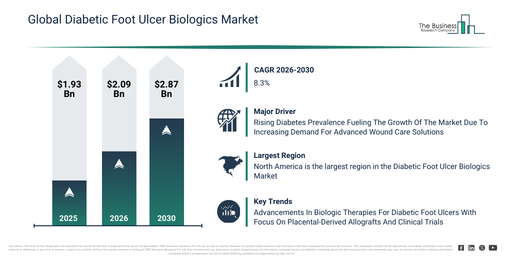
    The diabetic foot ulcer biologics market has experienced significant expansion recently. Its valuation is projected to increase from $1.93 billion in 2025 to $2.09 billion in 2026, exhibiting a compound annual growth rate (CAGR) of 8.3%. Historically, this growth was influenced by factors such as the limited availability of advanced biologics, the common use of conventional wound care treatments, the escalating occurrence of diabetes-related foot ulcers, the growing uptake by hospitals and clinics, and the absence of standardized treatment protocols.

    The diabetic foot ulcer biologics market size is anticipated to experience substantial expansion in the coming years. Its valuation is projected to reach $2.87 billion by 2030, demonstrating a compound annual growth rate (CAGR) of 8.3%. This growth during the forecast period can be attributed to technological advancements in stem cell and gene therapy, growing investment in tissue engineering research, increasing adoption of autologous and allogeneic cell-based biologics, the expansion of long-term care and ambulatory surgical centers, and rising awareness of personalized wound care solutions. Major trends anticipated in this period include the increasing adoption of stem cell and gene therapies, the rising use of collagen-based biologics for wound healing, the expansion of skin substitutes in diabetic foot ulcer management, the integration of advanced tissue engineering techniques, and a growing focus on personalized and targeted biologics treatments.

    Access Your Free Sample Report For In-Depth Market Analysis:

    https://www.thebusinessresearchcompany.com/sample.aspx?id=25751&type=smp

    What Key Drivers Are Fueling The Growth Of The Diabetic Foot Ulcer Biologics Market?

    The increasing incidence of diabetes is projected to drive expansion within the diabetic foot ulcer biologics market in the coming years. Diabetes, a long-term medical ailment, is identified by high blood sugar levels, occurring when the body fails to adequately produce or utilize insulin. This rise in diabetes cases stems from inactive lifestyles, thereby stimulating a greater need for sustained care options designed to efficiently control blood sugar with minimal daily inconvenience. Diabetic foot ulcer biologics play a crucial role in diabetes management because they speed up wound recovery, avert infections, and lessen issues associated with persistent foot ulcers. As an illustration, the International Diabetes Federation (IDF) Atlas, a non-profit entity based in Belgium, reported in April 2025 that in 2024, 9.5 million out of 589 million adults with diabetes had type 1, a figure anticipated to climb to 853 million by 2050. Consequently, the expanding occurrence of diabetes is fueling the growth of the diabetic foot ulcer biologics market.

    What Are The Key Segment Divisions In The Diabetic Foot Ulcer Biologics Market Segment Structure?

    The diabetic foot ulcer biologics market covered in this report is segmented –

    1) By Type: Growth Factors, Skin Substitutes, Collagen-Based Biologics, Cell-Based Biologics

    2) By Indication: Neuro-Ischemic Ulcers, Neuropathic Diabetic Foot Ulcer, Ischemic Diabetic Foot Ulcer

    3) By Technology: Gene Therapy, Stem Cell Therapy, Tissue Engineering

    4) By End User: Hospitals, Clinics, Ambulatory Surgical Centers, Long-Term Care Settings, Other End Users

    Subsegments:

    1) By Growth Factors: Platelet-Derived Growth Factor, Epidermal Growth Factor, Fibroblast Growth Factor, Vascular Endothelial Growth Factor

    2) By Skin Substitutes: Synthetic Skin Substitutes, Biological Skin Substitutes, Composite Skin Substitutes

    3) By Collagen-Based Biologics: Bovine-Derived Collagen, Porcine-Derived Collagen, Human-Derived Collagen

    4) By Cell-Based Biologics: Autologous Cell-Based Biologics, Allogeneic Cell-Based Biologics, Stem Cell-Based Biologics

    What Emerging Trends Are Seen In The Diabetic Foot Ulcer Biologics Market?

    Leading firms within the diabetic foot ulcer biologics market are concentrating their efforts on research and development for biologic treatments, like placental-derived allograft, aiming to accelerate wound recovery, lessen adverse effects, and better patient results in managing chronic foot ulcers. A placental-derived allograft refers to a biological tissue transplant sourced from donated human placental materials, including the amnion or chorion, and applied medically to foster healing, decrease inflammation, and aid in tissue regrowth. As an illustration, in January 2025, BioStem Technologies Inc., a US-based pharmaceutical company, initiated a clinical trial deploying its BioREtain technology alongside Vendaje for addressing diabetic foot ulcers. This investigation pits Vendaje when paired with conventional treatment against conventional treatment on its own, aiming to show its efficacy in mending stubborn diabetic foot ulcers. The study incorporates a follow-up stage to assess the enduring strength and steadiness of wounds once healed, thereby guaranteeing lasting treatment triumphs and diminishing the likelihood of ulcers reappearing.

    Which Organizations Are Engaged In The Diabetic Foot Ulcer Biologics Market?

    Major companies operating in the diabetic foot ulcer biologics market are Smith & Nephew plc, Integra LifeSciences Holdings Corp., Organogenesis Holdings Inc., MIMEDX Group Inc., LifeNet Health, Aroa Biosurgery, Tissue Regenix Group plc, Stempeutics Research, ACell Inc.,

    Get The Full Diabetic Foot Ulcer Biologics Market Report:

    https://www.thebusinessresearchcompany.com/report/diabetic-foot-ulcer-biologics-global-market-report

    Which Region Holds The Highest Market Share In The Diabetic Foot Ulcer Biologics Market?

    North America was the largest region in the diabetic foot ulcer biologics market in 2025. Asia-Pacific is expected to be the fastest-growing region in the forecast period. The regions covered in the diabetic foot ulcer biologics market report are Asia-Pacific, South East Asia, Western Europe, Eastern Europe, North America, South America, Middle East, Africa.

    Request A Customized Diabetic Foot Ulcer Biologics Market Report For Competitive Insights:

    https://www.thebusinessresearchcompany.com/report/diabetic-foot-ulcer-biologics-global-market-report

    Browse Through More Reports Similar to the Global Diabetic Foot Ulcer Biologics Market 2026, By The Business Research Company

    Diabetic Foot Ulcer Market Report 2026

    https://www.thebusinessresearchcompany.com/report/diabetic-foot-ulcer-global-market-report

    Diabetic Foot Ulcer Treatment Market Report 2026

    https://www.thebusinessresearchcompany.com/report/diabetic-foot-ulcer-treatment-global-market-report

    Diabetic Footwear Market Report 2026

    https://www.thebusinessresearchcompany.com/report/diabetic-footwear-global-market-report

    Get in touch with us:

    The Business Research Company: https://www.thebusinessresearchcompany.com/

    Americas +1 310-496-7795

    Asia +44 7882 955267 & +91 8897263534

    Europe +44 7882 955267

    Email us at: marketing@tbrc.info

    Follow us on:

    LinkedIn: https://in.linkedin.com/company/the-business-research-company

    YouTube: https://www.youtube.com/channel/UC24_fI0rV8cR5DxlCpgmyFQ

    Global Market Model: https://www.thebusinessresearchcompany.com/global-market-model

  • Rising Prevalence Of Inflammatory Bowel Disease Fuels Expansion Of Animal Growth Promoters And Performance Enhancers Is Contributing To Changes In The In Vitro Diagnostics Enzymes Market

    Rising Prevalence Of Inflammatory Bowel Disease Fuels Expansion Of Animal Growth Promoters And Performance Enhancers Is Contributing To Changes In The In Vitro Diagnostics Enzymes Market

    The Business Research Company’s 2026 market reports feature enhanced tools like market attractiveness analysis, TAM assessment, and company scoring matrices, along with interactive dashboards, deeper supply chain insights, and startup coverage strengthening the depth, usability, and strategic value of insights.

    What Is The Forecasted Market Size Trajectory Of The In Vitro Diagnostics Enzymes Market From 2026 To 2030?

    The in vitro diagnostics enzymes market has experienced significant expansion in recent years. This market is projected to rise from $2.3 billion in 2025 to $2.48 billion by 2026, demonstrating a compound annual growth rate (CAGR) of 7.8%. The historical growth can be attributed to the longstanding use of enzymes in clinical chemistry assays, expansion of laboratory-based diagnostic testing, widespread adoption of pcr and molecular diagnostics, growth of hospital and diagnostic laboratory infrastructure, and increased screening for infectious and chronic diseases.

    The in vitro diagnostics enzymes market is projected to witness significant growth in the coming years. It is expected to expand to $3.25 billion by 2030, achieving a compound annual growth rate (CAGR) of 7.0%. This anticipated growth during the forecast period can be attributed to the increasing prevalence of infectious and chronic diseases, a rising demand for swift and accurate diagnostic methods, the expansion of decentralized and point-of-care testing, advancements in personalized and precision diagnostics, and growing investment in sophisticated molecular diagnostic technologies. Noteworthy trends for the forecast period include an escalating demand for high-specificity enzymes within molecular diagnostics, the expanding use of enzymes in infectious disease testing panels, a wider adoption of enzyme-based point-of-care diagnostics, the proliferation of multiplex diagnostic assays employing enzyme systems, and a greater emphasis on enhancing enzyme stability and shelf-life.

    Access Your Free Sample Report For In-Depth Market Analysis:

    https://www.thebusinessresearchcompany.com/sample.aspx?id=15830&type=smp

    Which Major Drivers Are Influencing The Expansion Of The In Vitro Diagnostics Enzymes Market?

    The increasing incidence of cancer is anticipated to propel the growth of the in vitro diagnostics enzymes market going forward. Cancer describes a collection of diseases marked by the unchecked multiplication and spread of abnormal cells that can invade and damage healthy tissues. The rise in cancer cases is driven by infectious agents, dysfunctions in the immune system, and hormonal factors. The in vitro diagnostics enzymes market plays a vital role in supporting cancer care by enabling precise diagnostic assays essential for early detection, monitoring disease progression, selecting appropriate treatments, and developing personalized therapeutic strategies. For instance, in February 2024, the World Health Organization (WHO), a Switzerland-based intergovernmental organization, projected that global cancer cases would exceed 0.035 billion by 2050, representing a 77% increase from the estimated 0.02 billion cases in 2022. Thus, the escalating prevalence of cancer is a significant factor driving the expansion of the in vitro diagnostics enzymes market.

    What Are The Key Segment Divisions In The In Vitro Diagnostics Enzymes Market Segment Structure?

    The in vitro diagnostics enzymes market covered in this report is segmented –

    1) By Enzyme Type: Proteases, Polymerase And Transcriptase, Ribonuclease, Other Enzyme Types

    2) By Disease Type: Infectious Disease, Diabetes, Oncology, Cardiology, Nephrology, Autoimmune Diseases, Other Disease Types

    3) By Technology: Histology Assays, Molecular Diagnostics, Clinical Chemistry, Other Technologies

    4) By End Use: Pharma And Biotech, Hospital And Diagnostic Labs, Contract Research Organizations (CROs), Academic Labs

    Subsegments:

    1) By Proteases: Trypsin, Pepsin, Proteinase K

    2) By Polymerase And Transcriptase: DNA Polymerase, RNA Polymerase, Reverse Transcriptase

    3) By Ribonuclease: RNase A, RNase H

    4) By Other Enzyme Types: Dehydrogenases, Lipases, Ligases

    Which Trends Are Influencing Demand In The In Vitro Diagnostics Enzymes Market?

    Companies operating in the in vitro diagnostic enzymes market are strategically focusing on developing innovative products, such as autoimmune disorder detection kits, to expand their diagnostic capabilities, improve early identification of diseases, and strengthen their competitive position. These autoimmune disorder detection kits are specialized diagnostic instruments that utilize immunoassays, molecular methods, and antibody detection technologies to identify autoantibodies and biomarkers associated with autoimmune diseases, thereby enabling accurate and timely diagnoses. For instance, in September 2023, NeoDx Biotech Labs Pvt Ltd., an India-based manufacturer of in-vitro diagnostic kits, launched an autoimmune disorder detection IVD kit. This kit incorporates advanced immunoassays, molecular diagnostics, and precise antibody detection techniques, offering high sensitivity and specificity to assist clinicians in making faster and more reliable autoimmune disease diagnoses.

    Which Organizations Are Engaged In The In Vitro Diagnostics Enzymes Market?

    Major companies operating in the in vitro diagnostics enzymes market are F. Hoffmann-La Roche Ltd., Thermo Fisher Scientific Inc., Danaher Corporation, Merck KGaA, Siemens Healthineers AG, Becton Dickinson and Company, Agilent Technologies Inc., Grifols SA, Hologic Inc., PerkinElmer Inc., bioMérieux SA, QuidelOrtho Corporation, Sysmex Corporation, Bio-Rad Laboratories Inc., Qiagen N.V., DiaSorin SpA, Promega Corporation, Randox Laboratories Ltd., Meridian Bioscience Inc., Fujirebio Diagnostics Inc., Sekisui Diagnostics LLC, Trivitron Healthcare, Amicogen Inc., EKF Diagnostics Holdings plc, Advanced Enzymes Technologies Ltd., Biocatalysts Ltd.

    Get The Full In Vitro Diagnostics Enzymes Market Report:

    https://www.thebusinessresearchcompany.com/report/in-vitro-diagnostics-enzymes-global-market-report

    Which Region Is The Leading Market For The In Vitro Diagnostics Enzymes Market?

    North America was the largest region in the in vitro diagnostics enzymes market in 2025. Asia-Pacific is expected to be the fastest-growing region in the forecast period. The regions covered in the in vitro diagnostics enzymes market report are Asia-Pacific, South East Asia, Western Europe, Eastern Europe, North America, South America, Middle East, Africa.

    Request A Customized In Vitro Diagnostics Enzymes Market Report For Competitive Insights:

    https://www.thebusinessresearchcompany.com/report/in-vitro-diagnostics-enzymes-global-market-report

    Browse Through More Reports Similar to the Global In Vitro Diagnostics Enzymes Market 2026, By The Business Research Company

    In Vitro Diagnostics Enzymes Market Report 2026

    https://www.thebusinessresearchcompany.com/report/in-vitro-diagnostics-enzymes-global-market-report

    In Vitro Diagnostics Market Report 2026

    https://www.thebusinessresearchcompany.com/report/in-vitro-diagnostics-global-market-report

    Enzyme Market Report 2026

    https://www.thebusinessresearchcompany.com/report/enzyme-global-market-report

    Get in touch with us:

    The Business Research Company: https://www.thebusinessresearchcompany.com/

    Americas +1 310-496-7795

    Asia +44 7882 955267 & +91 8897263534

    Europe +44 7882 955267

    Email us at: marketing@tbrc.info

    Follow us on:

    LinkedIn: https://in.linkedin.com/company/the-business-research-company

    YouTube: https://www.youtube.com/channel/UC24_fI0rV8cR5DxlCpgmyFQ

    Global Market Model: https://www.thebusinessresearchcompany.com/global-market-model
  • Diabetes Therapeutics Market Growth Patterns And Forecast Outlook Through 2030

    Diabetes Therapeutics Market Growth Patterns And Forecast Outlook Through 2030

    The Business Research Company’s 2026 market reports feature enhanced tools like market attractiveness analysis, TAM assessment, and company scoring matrices, along with interactive dashboards, deeper supply chain insights, and startup coverage strengthening the depth, usability, and strategic value of insights.

    How Is The Market Size Of The Diabetes Therapeutics Market Expected To Scale Between 2026 And 2030?

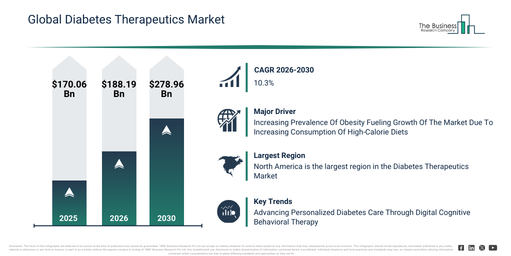
    The diabetes therapeutics market size has experienced rapid expansion in recent years. It is projected to increase from $170.06 billion in 2025 to $188.19 billion in 2026, at a compound annual growth rate (CAGR) of 10.7%. The market’s historical growth can be attributed to the limited availability of advanced therapeutics, a reliance on traditional oral anti-diabetic drugs, low awareness of preventive care, constrained distribution channels, and the growing burden of type 2 diabetes.

    The diabetes therapeutics market size is projected to experience substantial growth in the upcoming years, with an expected increase to $278.96 billion by 2030, achieving a compound annual growth rate (CAGR) of 10.3%. This expansion during the forecast period is primarily driven by the introduction of novel insulin analogs, the broadening availability of combination therapies, the widespread adoption of digital diabetes management solutions, a growing healthcare infrastructure dedicated to diabetes care, and the seamless integration of telemedicine and remote monitoring. Significant trends expected in this period include the escalating global prevalence of diabetes, an increased uptake of GLP-1 receptor agonists and SGLT-2 inhibitors, the expansion of both online and retail pharmacy networks, a concentrated focus on personalized diabetes management, and improved awareness regarding preventive care and early diagnosis.

    Access Your Free Sample Report For In-Depth Market Analysis:

    https://www.thebusinessresearchcompany.com/sample.aspx?id=25749&type=smp

    Which Drivers Are Supporting The Diabetes Therapeutics Market Growth?

    The growing incidence of obesity is projected to boost the expansion of the diabetes therapeutics market in the future. Obesity, characterized by an unhealthy accumulation of body fat, poses a significant health hazard and stands as a primary risk factor for type 2 diabetes. This rise in obesity can be attributed to increased consumption of high-calorie diets, as more individuals opt for processed and fast foods rich in sugar and fat, alongside reduced physical activity, resulting in substantial weight gain. Diabetes therapeutics aid in managing obesity by enhancing blood sugar regulation and facilitating weight loss through various medications, including GLP-1 receptor agonists. These agonists work by decreasing appetite and slowing down digestion, thereby improving the overall metabolic well-being of obese individuals. For example, a report from May 2024, issued by the UK’s Office for Health Improvement and Disparities, indicated that from 2022 to 2023, around 64% of adults aged 18 and above were classified as either overweight or obese. This figure represents an increase from the 63.8% recorded in the preceding year. Consequently, the expanding prevalence of obesity is a key driver for the growth within the diabetes therapeutics market.

    Which Segment Categories Are Included In The Diabetes Therapeutics Market Segment Analysis?

    The diabetes therapeutics market covered in this report is segmented –

    1) By Drug: Oral Anti-Diabetic Drugs, Insulin, Non-Insulin Injectable Drug, Combination Drug

    2) By Type: Diabetes 1, Diabetes 2

    3) By Route Of Administration: Oral, Subcutaneous, Intravenous

    4) By Distribution Channel: Online Pharmacies, Hospital Pharmacies, Retail Pharmacies

    5) By Application: Preventive, Treatment Or Care

    Subsegments:

    1) By Oral Anti-Diabetic Drugs: Biguanides, Sulfonylureas, DPP-4 Inhibitors, SGLT-2 Inhibitors, Thiazolidinediones, Meglitinides, Alpha-Glucosidase Inhibitors

    2) By Insulin: Rapid-Acting Insulin, Short-Acting Insulin, Intermediate-Acting Insulin, Long-Acting Insulin, Premixed Insulin

    3) By Non-Insulin Injectable Drug: GLP-1 Receptor Agonists, Amylin Analogs

    4) By Combination Drug: Oral Combination Therapies, Oral and Injectable Combination Therapies

    Which Trends Are Guiding The Direction Of The Diabetes Therapeutics Market?

    Leading companies in the diabetes therapeutics market are concentrating on developing innovative solutions, such as cognitive behavioral therapy (CBT), to improve personalized diabetes management and glycemic control for patients with type 2 diabetes. Cognitive behavioral therapy (CBT) is a structured, evidence-based psychological treatment designed to help individuals identify and alter unhelpful thought patterns and behaviors. For example, in October 2023, Better Therapeutics Inc., a US-based digital therapeutics company, released AspyreRx, a digital therapeutic app for diabetes. AspyreRx, which secured FDA authorization for treating type 2 diabetes, offers personalized cognitive behavioral therapy (CBT) to patients aged 18 and older, supporting behavioral changes that enhance diabetes management. Formerly known as BT-001, AspyreRx showed statistically and clinically significant, enduring reductions in A1c when compared to standard care, alongside improvements in blood pressure, weight, mood, and quality of life in a randomized controlled trial.

    Who Are The Active Companies Shaping The Diabetes Therapeutics Market?

    Major companies operating in the diabetes therapeutics market are Pfizer Inc., Merck & Co Inc., Novartis AG, Sanofi S.A., AstraZeneca PLC, Takeda Pharmaceutical Company Limited, Eli Lilly and Company, Novo Nordisk A/S, Boehringer Ingelheim International GmbH, Biocon Biologics Limited, MannKind Corporation, Lexicon Pharmaceuticals Inc., Adocia S.A., Oramed Pharmaceuticals Inc.

    Get The Full Diabetes Therapeutics Market Report:

    https://www.thebusinessresearchcompany.com/report/diabetes-therapeutics-global-market-report

    Where Is The Diabetes Therapeutics Market Most Concentrated Geographically?

    North America was the largest region in the diabetes therapeutics market in 2025. Asia-Pacific is expected to be the fastest-growing region in the forecast period. The regions covered in the diabetes therapeutics market report are Asia-Pacific, South East Asia, Western Europe, Eastern Europe, North America, South America, Middle East, Africa.

    Request A Customized Diabetes Therapeutics Market Report For Competitive Insights:

    https://www.thebusinessresearchcompany.com/report/diabetes-therapeutics-global-market-report

    Browse Through More Reports Similar to the Global Diabetes Therapeutics Market 2026, By The Business Research Company

    Antidiabetics Market Report 2026

    https://www.thebusinessresearchcompany.com/report/antidiabetics-global-market-report

    Non Insulin Therapies For Diabetes Market Report 2026

    https://www.thebusinessresearchcompany.com/report/non-insulin-therapies-for-diabetes-global-market-report

    Antidiabetics Market Report 2026

    https://www.thebusinessresearchcompany.com/report/antidiabetics-global-market-report

    Get in touch with us:

    The Business Research Company: https://www.thebusinessresearchcompany.com/

    Americas +1 310-496-7795

    Asia +44 7882 955267 & +91 8897263534

    Europe +44 7882 955267

    Email us at: marketing@tbrc.info

    Follow us on:

    LinkedIn: https://in.linkedin.com/company/the-business-research-company

    YouTube: https://www.youtube.com/channel/UC24_fI0rV8cR5DxlCpgmyFQ

    Global Market Model: https://www.thebusinessresearchcompany.com/global-market-model

  • The In Silico Protein Design Market Is Evolving Due To The Rise In Pharmaceutical R&D Spending Fueling Growth Due To Increasing Investment In Drug Innovation

    The In Silico Protein Design Market Is Evolving Due To The Rise In Pharmaceutical R&D Spending Fueling Growth Due To Increasing Investment In Drug Innovation

    The Business Research Company’s 2026 market reports feature enhanced tools like market attractiveness analysis, TAM assessment, and company scoring matrices, along with interactive dashboards, deeper supply chain insights, and startup coverage strengthening the depth, usability, and strategic value of insights.

    How Much Will The Market Value Of The In Silico Protein Design Market Grow Between 2026 And 2030?

    The in silico protein design market has seen substantial expansion in recent years. It is forecast to rise from $1.87 billion in 2025 to $2.27 billion in 2026, exhibiting a compound annual growth rate (CAGR) of 21.2%. This historical growth can be attributed to several factors: progress in computational biology tools, the increasing availability of protein structure databases, broader adoption of in silico methods in drug discovery, the proliferation of academic bioinformatics research, and a growing demand for cost-effective protein design approaches.

    The in silico protein design market size is poised for substantial expansion over the next few years, with projections indicating it will reach $4.86 billion by 2030, demonstrating a compound annual growth rate (CAGR) of 20.9%. This anticipated growth during the forecast period is driven by factors such as escalating investments in AI-based drug discovery, the increasing embrace of personalized medicine development, the growing infrastructure of cloud computing, the expanding application of automation in biological research, and stronger collaborations between biotechnology and software companies. Prominent trends for this period include the wider adoption of AI-driven protein modelling platforms, a rise in the use of cloud-based simulation software, greater integration of machine learning in structure prediction, the broadening of computational enzyme engineering, and an intensified focus on rapid protein optimization.

    Access Your Free Sample Report For In-Depth Market Analysis:

    https://www.thebusinessresearchcompany.com/sample.aspx?id=28248&type=smp

    What Key Drivers Are Fueling The Growth Of The In Silico Protein Design Market?

    The future expansion of the in silico protein design market is anticipated to be propelled by the rising demand for personalized medicine. This medical approach involves customizing treatment and prevention strategies based on an individual’s unique genetic makeup, lifestyle, and environment. The escalating need for personalized medicine is driven by advancements in genomic technologies and the increasing adoption of value-based care models, which focus on enhancing patient outcomes while simultaneously reducing overall healthcare costs. In silico protein design supports this demand by facilitating the swift development of customized therapeutic proteins tailored to individual patient profiles. For instance, in February 2024, according to the Personalized Medicine Coalition (PMC), a US-based non-profit organization, the FDA authorized 16 new personalized treatments for rare disease patients in 2023, a significant rise from just six approvals in 2022. Therefore, the growing requirement for personalized medicine is a key factor driving the growth of the in silico protein design market.

    Which Segment Categories Are Included In The In Silico Protein Design Market Segment Analysis?

    The in silico protein design market covered in this report is segmented –

    1) By Software Type: Cloud-Based Software, On-Premise Software

    2) By Technology Type: Molecular Modelling, Artificial Intelligence And Machine Learning Algorithms, Homology Modelling, Other Technology Types

    3) By Application: Drug Discovery And Development, Enzyme Engineering, Biomarker Discovery, Vaccinology, Academic Research

    4) By End-User: Pharmaceutical And Biotechnology Companies, Academic And Research Institutes, Other End-Users

    Subsegments:

    1) By Cloud-Based Software: Subscription-Based, Pay-Per-Use, Hybrid Cloud

    2) By On-Premise Software: Enterprise License, Perpetual License, Customized Solutions

    What Emerging Trends Are Seen In The In Silico Protein Design Market?

    Leading companies in the in silico protein design market are concentrating on developing advanced solutions, such as push-button protein design platforms, to expedite drug discovery, enhance therapeutic effectiveness, and facilitate the creation of novel biologics. These platforms are tools that enable scientists to rapidly create and modify proteins through automated, user-friendly processes without requiring extensive manual input. For instance, in July 2025, Latent Labs, a UK-based biotechnology company, unveiled Latent-X, a generative AI model accessible via a web-based push-button platform that allows users without coding expertise to submit targets and design macrocycles and mini-binders at the atomic level. This system yields 91–100% hit rates for macrocycles and 10–64% for mini-binders, attains picomolar to micromolar binding affinities with lab-verified specificity, and generates complete sequences and structures more than ten times faster than previous methods. This technological advancement is broadening accessibility and accelerating innovation in protein therapeutics.

    Who Are The Active Companies Shaping The In Silico Protein Design Market?

    Major companies operating in the in silico protein design market are Dassault Systèmes SE, Schrödinger Inc., Generate Biomedicines Inc., Insilico Medicine Inc., Chemical Computing Group ULC, Arzeda Corp., Outpace Bio Inc., Evozyne Inc., Cradle Bio B.V., Seismic Therapeutics Inc., Profluent Bio Inc., Nabla Bio Inc., Antiverse Ltd., EvolutionaryScale Inc., RevolKa Ltd., Molecular Discovery Ltd., Inte:Ligand GmbH, Kuano Ltd., AI Proteins Inc., Menten AI Inc.

    Get The Full In Silico Protein Design Market Report:

    https://www.thebusinessresearchcompany.com/report/in-silico-protein-design-global-market-report

    Where Is The In Silico Protein Design Market Primarily Concentrated By Region?

    North America was the largest region in the in silico protein design market in 2025. Asia-Pacific is expected to be the fastest-growing region in the forecast period. The regions covered in the in silico protein design market report are Asia-Pacific, South East Asia, Western Europe, Eastern Europe, North America, South America, Middle East, Africa.

    Request A Customized In Silico Protein Design Market Report For Competitive Insights:

    https://www.thebusinessresearchcompany.com/report/in-silico-protein-design-global-market-report

    Browse Through More Reports Similar to the Global In Silico Protein Design Market 2026, By The Business Research Company

    Protein Engineering Market Report 2026

    https://www.thebusinessresearchcompany.com/report/protein-engineering-global-market-report

    Research Grade Proteins Market Report 2026

    https://www.thebusinessresearchcompany.com/report/research-grade-proteins-global-market-report

    Protein Chip Market Report 2026

    https://www.thebusinessresearchcompany.com/report/protein-chip-global-market-report

    Get in touch with us:

    The Business Research Company: https://www.thebusinessresearchcompany.com/

    Americas +1 310-496-7795

    Asia +44 7882 955267 & +91 8897263534

    Europe +44 7882 955267

    Email us at: marketing@tbrc.info

    Follow us on:

    LinkedIn: https://in.linkedin.com/company/the-business-research-company

    YouTube: https://www.youtube.com/channel/UC24_fI0rV8cR5DxlCpgmyFQ

    Global Market Model: https://www.thebusinessresearchcompany.com/global-market-model
  • Diabetes Care Drugs Market Insights On Growth Drivers, Trends, And Opportunities

    Diabetes Care Drugs Market Insights On Growth Drivers, Trends, And Opportunities

    The Business Research Company’s 2026 market reports feature enhanced tools like market attractiveness analysis, TAM assessment, and company scoring matrices, along with interactive dashboards, deeper supply chain insights, and startup coverage strengthening the depth, usability, and strategic value of insights.

    What Level Of Market Value Growth Is Predicted For The Diabetes Care Drugs Market From 2026 To 2030?

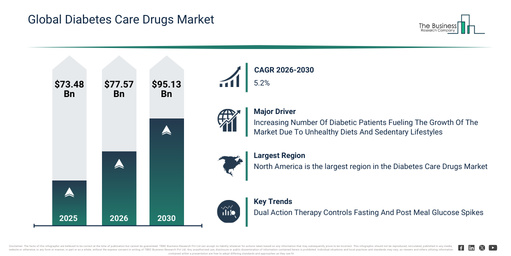
    The diabetes care drugs market size has shown robust growth recently. It is anticipated to expand from $73.48 billion in 2025 to $77.57 billion in 2026, achieving a compound annual growth rate (CAGR) of 5.6%. Key factors contributing to this growth in the past include the limited availability of advanced insulin formulations, increased awareness of diabetes management, improvements in healthcare infrastructure, a continued dependence on oral antidiabetic drugs, and the rising incidence of type 2 diabetes.

    The diabetes care drugs market is anticipated to show substantial growth in the upcoming years. It is projected to expand to $95.13 billion by 2030, with a compound annual growth rate (CAGR) of 5.2%. This expected growth during the forecast period is attributed to the development of novel GLP-1 receptor agonists, the increased adoption of SGLT-2 inhibitors, an expansion of injectable and inhalable drug options, the rise in home-based diabetes care, and the integration of digital health monitoring systems. Significant trends during this period include the rising global prevalence of diabetes, a greater embrace of combination therapies, advancements in personalized diabetes management, the expansion of specialty pharmacies and hospital distribution channels, and a focus on extended-release and patient-friendly drug formulations.

    Access Your Free Sample Report For In-Depth Market Analysis:

    https://www.thebusinessresearchcompany.com/sample.aspx?id=25748&type=smp

    What Key Factors Are Affecting The Diabetes Care Drugs Market Demand?

    The burgeoning population of individuals with diabetes is projected to fuel the expansion of the diabetes care drugs market moving forward. Diabetic patients are defined as those diagnosed with diabetes mellitus, a persistent health condition that impairs the body’s method of handling blood sugar, or glucose. The increase in the number of diabetic patients primarily results from unhealthy dietary habits and sedentary lifestyles, which contribute to both obesity and insulin resistance. Diabetes care drugs provide essential assistance to diabetic patients in effectively controlling their blood glucose levels, making them critical for managing both type 1 and type 2 diabetes. These medications help prevent health complications by stabilizing blood sugar, thus enhancing overall well-being and life quality. For instance, in June 2024, figures from the National Health Service, a UK-based government department, revealed that 3,615,330 individuals registered with a general practitioner (GP) were diagnosed with non-diabetic hyperglycemia or pre-diabetes in 2023, representing an 18% increase from 3,065,825 cases recorded in 2022. Therefore, the escalating count of diabetic patients is a key driver for the growth of the diabetes care drugs market.

    How Is The Diabetes Care Drugs Market Broken Down By Segment Categories?

    The diabetes care drugs market covered in this report is segmented –

    1) By Drug Class: Insulin, Biguanides, Sulfonylureas, Dipeptidyl Peptidase (DPP)‑4 Inhibitors, Sodium‑Glucose Co‑Transporter (SGLT)‑2 Inhibitors, Glucagon‑Like Peptide (GLP)-1 Receptor Agonists, Thiazolidinediones, Alpha-Glucosidase Inhibitors

    2) By Formulation Type: Tablets, Injections, Solutions, Gels, Extended-Release Formulations

    3) By Administration Route: Oral, Injectable, Inhalable

    4) By Condition: Diabetes Type 1, Diabetes Type 2

    5) By Distribution Channel: Hospital Pharmacies, Specialty Pharmacies

    Subsegments:

    1) By Insulin: Rapid-acting insulin, Short-acting insulin, Intermediate-acting insulin, Long-acting insulin, Pre-mixed insulin

    2) By Biguanides: Metformin Immediate Release (IR), Metformin Extended Release (ER)

    3) By Sulfonylureas: First-generation sulfonylureas, Second-generation sulfonylureas

    4) By Dipeptidyl Peptidase (DPP)‑4 Inhibitors: Sitagliptin, Saxagliptin, Linagliptin, Alogliptin

    5) By Sodium‑Glucose Co‑Transporter (SGLT)‑2 Inhibitors: Canagliflozin, Dapagliflozin, Empagliflozin, Ertugliflozin

    6) By Glucagon‑Like Peptide (GLP)-1 Receptor Agonists: Exenatide, Liraglutide, Dulaglutide, Semaglutide, Lixisenatide

    7) By Thiazolidinediones (TZDs): Pioglitazone, Rosiglitazone

    8) By Alpha-Glucosidase Inhibitors: Acarbose, Miglitol

    What Trends Are Affecting The Growth Of The Diabetes Care Drugs Market?

    Leading companies within the diabetes care drugs market are concentrating on developing advanced therapies, such as fixed-ratio combination treatments, to optimize glycemic regulation, improve patient compliance, and streamline treatment plans. These fixed-ratio combination therapies involve medications that blend two complementary antidiabetic agents into a single injection, offering a more convenient and effective method for diabetes management. For instance, in April 2024, Sanofi SA, a pharmaceutical firm based in France, introduced Soliqua, a once-daily fixed-ratio combination of insulin glargine and lixisenatide specifically formulated for adults suffering from type 2 diabetes and obesity. Soliqua brings together long-acting insulin glargine, which ensures stable fasting glucose control, with lixisenatide, identified as a GLP-1 receptor agonist. This blend enhances glucose-dependent insulin secretion, inhibits glucagon production, and slows gastric emptying to lower post-meal blood sugar levels, thereby providing extensive daily glycemic management. The introduction of Soliqua aims to simplify diabetes care, enhance glycemic control, and boost patient adherence by decreasing the necessity for multiple daily injections and minimizing potential adverse effects like hypoglycemia and weight gain.

    Which Players Are Present In The Diabetes Care Drugs Market Space?

    Major companies operating in the diabetes care drugs market are Johnson & Johnson, Merck & Co. Inc., Bayer AG, Sanofi S.A., Bristol‑Myers Squibb Company, AstraZeneca plc, Eli Lilly and Company, Teva Pharmaceuticals Limited, Astellas Pharma Inc., Sun Pharmaceutical Industries Ltd., Aurobindo Pharma Limited, Dr. Reddy’s Laboratories, Cipla Limited, Lupin Limited, Takeda Pharmaceutical Company Limited, Biocon Limited, Glenmark Pharmaceuticals Limited, Torrent Pharmaceuticals Ltd., Hanmi Pharmaceutical Limited, Wockhardt, Mitsubishi Tanabe Pharma, Gan & Lee Pharmaceuticals, Apotex.

    Get The Full Diabetes Care Drugs Market Report:

    https://www.thebusinessresearchcompany.com/report/diabetes-care-drugs-global-market-report

    Which Region Dominates The Diabetes Care Drugs Market By Market Share?

    North America was the largest region in the diabetes care drugs market in 2025. Asia-Pacific is expected to be the fastest-growing region in the forecast period. The regions covered in the diabetes care drugs market report are Asia-Pacific, South East Asia, Western Europe, Eastern Europe, North America, South America, Middle East, Africa.

    Request A Customized Diabetes Care Drugs Market Report For Competitive Insights:

    https://www.thebusinessresearchcompany.com/report/diabetes-care-drugs-global-market-report

    Browse Through More Reports Similar to the Global Diabetes Care Drugs Market 2026, By The Business Research Company

    Antidiabetics Market Report 2026

    https://www.thebusinessresearchcompany.com/report/antidiabetics-global-market-report

    Diabetes Care Devices Market 2026

    https://www.thebusinessresearchcompany.com/report/diabetes-care-devices-market

    Antidiabetics Market Report 2026

    https://www.thebusinessresearchcompany.com/report/antidiabetics-global-market-report

    Get in touch with us:

    The Business Research Company: https://www.thebusinessresearchcompany.com/

    Americas +1 310-496-7795

    Asia +44 7882 955267 & +91 8897263534

    Europe +44 7882 955267

    Email us at: marketing@tbrc.info

    Follow us on:

    LinkedIn: https://in.linkedin.com/company/the-business-research-company

    YouTube: https://www.youtube.com/channel/UC24_fI0rV8cR5DxlCpgmyFQ

    Global Market Model: https://www.thebusinessresearchcompany.com/global-market-model