Category: Pharmaceuticals

  • Dermal Regeneration Market Analysis Covering Growth Drivers And Future Outlook

    Dermal Regeneration Market Analysis Covering Growth Drivers And Future Outlook

    The Business Research Company’s 2026 market reports feature enhanced tools like market attractiveness analysis, TAM assessment, and company scoring matrices, along with interactive dashboards, deeper supply chain insights, and startup coverage strengthening the depth, usability, and strategic value of insights.

    How Is The Market Size Of The Dermal Regeneration Market Expected To Change From 2026 To 2030?

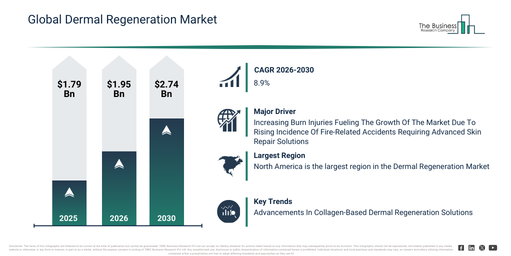
    The dermal regeneration market has shown significant expansion in recent years. It is projected to grow from $1.79 billion in 2025 to $1.95 billion in 2026, achieving a compound annual growth rate (CAGR) of 8.9%. The historical growth can be attributed to an increased occurrence of chronic wounds, a rise in burn injury cases, the growing acceptance of tissue engineering, the expansion of hospital wound care units, and advancements in biomaterial technologies.

    The dermal regeneration market is anticipated to experience substantial expansion over the upcoming years. This market is projected to reach a value of $2.74 billion by 2030, demonstrating a compound annual growth rate (CAGR) of 8.9%. Factors contributing to this growth during the forecast period include the increasing demand for minimally invasive skin repair, the broadening scope of aesthetic and reconstructive surgery, an expanding aging demographic, heightened investment in regenerative medicine, and progress in cell-based therapies. Key trends expected during this period encompass the increased acceptance of bioengineered skin substitutes, a rise in the application of collagen and biomaterial scaffolds, a greater need for advanced wound healing solutions, the proliferation of regenerative treatments in burn care, and more frequent deployment of dermal regeneration templates.

    Access Your Free Sample Report For In-Depth Market Analysis:

    https://www.thebusinessresearchcompany.com/sample.aspx?id=25746&type=smp

    What Factors Are Contributing To The Growth Of The Dermal Regeneration Market?

    A rise in burn injuries is anticipated to drive the expansion of the dermal regeneration market moving ahead. Such injuries are defined as harm inflicted upon the skin or deeper tissues resulting from exposure to heat, chemicals, electricity, radiation, or friction. These injuries are escalating because of the prevalent adoption of hazardous cooking fuels and devices, including open flames and inadequately maintained stoves, consequently increasing the likelihood of unintentional fires and scalds, especially within heavily populated and economically disadvantaged households. Burn injuries necessitate the application of dermal regeneration solutions, through the need for sophisticated tissue repair and skin restoration techniques for effective treatment of moderate to severe skin damage. For example, in January 2024, data from the Consumer Product Safety Commission (CPSC), a US-based federal government agency, indicated that 11 deaths linked to fireworks were reported, chiefly resulting from improper use and equipment failures. Approximately 14,700 people suffered fireworks-related injuries, representing a notable increase of roughly 38% in fatalities and 52% in injuries when contrasted with 2023. Consequently, the rise in burn injuries is fueling the expansion of the dermal regeneration market.

    What Are The Main Segments Within The Dermal Regeneration Market Segment Structure?

    The dermal regeneration market covered in this report is segmented –

    1) By Product Type: Skin Substitutes, Scaffolds, Other Product Types

    2) By Technology: Tissue Engineering, Cell-Based Therapies, Biomaterial-Based Therapies, Other Technologies

    3) By Source: Cow Collagen, Silicone

    4) By Application: Chronic Wounds, Burn Injuries, Acute Wounds, Plastic And Reconstructive Surgery, Other Applications

    5) By End Use: Hospitals, Dermatology And Aesthetic Clinics, Specialty Clinics, Ambulatory Surgical Centers (ASCs), Other End User

    Subsegments:

    1) By Skin Substitutes: Acellular Skin Substitutes, Cellular Skin Substitutes, Bioengineered Skin Substitutes, Synthetic Skin Substitutes, Allografts, Xenografts

    2) By Scaffolds: Collagen-Based Scaffolds, Synthetic Polymer Scaffolds, Composite Scaffolds, Hyaluronic Acid-Based Scaffolds, Fibrin-Based Scaffolds

    3) By Other Product Types: Dermal Regeneration Templates (DRTs), Hydrogel-Based Products, Growth Factor-Based Therapies, Matrices With Antimicrobial Agents

    Which Trends Are Impacting The Progress Of The Dermal Regeneration Market?

    Key companies operating in the dermal regeneration market are primarily focused on developing advanced solutions, including collagen-based dermal matrices, to provide superior biocompatibility and a diminished risk of immune rejection. A collagen-based dermal matrix is essentially a structure predominantly made of collagen that serves as a foundational support to encourage skin tissue growth and repair. As an illustration, in January 2025, Fesarius Therapeutics Inc., a biotechnology company based in the US, disclosed that its DermiSphere hydrogel Dermal Regeneration Template (DermiSphere hDRT) had been granted 510(k) approval by the US Food and Drug Administration (FDA). This particular product introduces a next generation of collagen-based dermal matrices specifically engineered to promote tissue integration, revascularization, and effective wound healing. It is designated for application in advanced wound care, reconstructive surgery, and regenerative medicine. DermiSphere hDRT thus represents an innovative approach to dermal regeneration, holding significant promise to revolutionize wound care methodologies.

    Who Are The Companies Participating In The Dermal Regeneration Market?

    Major companies operating in the dermal regeneration market are Smith & Nephew Plc, Integra LifeSciences Corp., Organogenesis Inc., MiMedx Group Inc., Regenity Biosciences Inc., Avita Medical Inc., Polynovo, Symatese Co., Stratatech, MedSkin Solutions Dr. Suwelack AG, Japan Tissue Engineering Co. Ltd., CollPlant Biotechnologies Ltd., Holostem Terapie Avanzate.

    Get The Full Dermal Regeneration Market Report:

    https://www.thebusinessresearchcompany.com/report/dermal-regeneration-global-market-report

    Which Geographic Region Dominates The Dermal Regeneration Market?

    North America was the largest region in the dermal regeneration market in 2025. Asia-Pacific is expected to be the fastest-growing region in the forecast period. The regions covered in the dermal regeneration market report are Asia-Pacific, South East Asia, Western Europe, Eastern Europe, North America, South America, Middle East, Africa.

    Request A Customized Dermal Regeneration Market Report For Competitive Insights:

    https://www.thebusinessresearchcompany.com/report/dermal-regeneration-global-market-report

    Browse Through More Reports Similar to the Global Dermal Regeneration Market 2026, By The Business Research Company

    Transdermal Skin Patche Market Report 2026

    https://www.thebusinessresearchcompany.com/report/transdermal-skin-patche-global-market-report

    Regenerative Medicine Market 2026

    https://www.thebusinessresearchcompany.com/report/regenerative-medicine-market

    Dermal Filler Market Report 2026

    https://www.thebusinessresearchcompany.com/report/dermal-filler-global-market-report

    Get in touch with us:

    The Business Research Company: https://www.thebusinessresearchcompany.com/

    Americas +1 310-496-7795

    Asia +44 7882 955267 & +91 8897263534

    Europe +44 7882 955267

    Email us at: marketing@tbrc.info

    Follow us on:

    LinkedIn: https://in.linkedin.com/company/the-business-research-company

    YouTube: https://www.youtube.com/channel/UC24_fI0rV8cR5DxlCpgmyFQ

    Global Market Model: https://www.thebusinessresearchcompany.com/global-market-model
  • Immunoglobulins Market Forecast Showing Industry Progress And Growth Trends

    Immunoglobulins Market Forecast Showing Industry Progress And Growth Trends

    The Business Research Company’s 2026 market reports feature enhanced tools like market attractiveness analysis, TAM assessment, and company scoring matrices, along with interactive dashboards, deeper supply chain insights, and startup coverage strengthening the depth, usability, and strategic value of insights.

    How Will The Market Value Of The Immunoglobulins Market Progress Between 2026 And 2030?

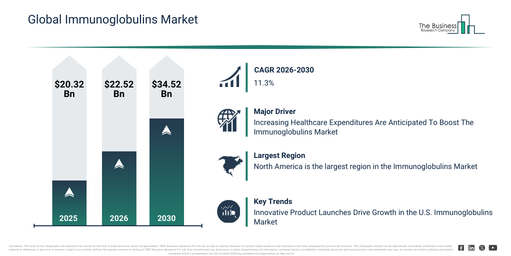
    The immunoglobulins market has experienced significant expansion in recent years. Forecasts suggest it will grow from $20.32 billion in 2025 to $22.52 billion in 2026, with a compound annual growth rate (CAGR) of 10.8%. This historical growth can be attributed to the increasing prevalence of immunodeficiency diseases, a rise in autoimmune disorder cases, improvements in hospital infrastructure, technological advancements in plasma fractionation, and expanding awareness regarding antibody therapies.

    The immunoglobulins market is anticipated to experience substantial expansion over the upcoming years. Its valuation is projected to reach $34.52 billion by 2030, demonstrating a compound annual growth rate (CAGR) of 11.3%. This projected growth stems from several factors, including breakthroughs in personalized medicine, the creation of innovative monoclonal antibodies, a rise in home-based subcutaneous treatments, the broadening of biotechnology and research facilities, and increasing governmental backing for immunotherapy initiatives. Key developments expected during this period involve tailored immunoglobulin therapy, a greater preference for subcutaneous administration, an increasing need for IVIG in treating autoimmune conditions, the wider availability of treatments for rare immunodeficiency disorders, and an escalation in monoclonal antibody research.

    Access Your Free Sample Report For In-Depth Market Analysis:

    https://www.thebusinessresearchcompany.com/sample.aspx?id=5284&type=smp

    What Major Factors Are Driving The Immunoglobulins Market Forward?

    The hyperphosphatemia treatment market is anticipated to expand due to increasing healthcare expenditure. These treatments, which target the reduction of elevated phosphate levels in the blood often seen in individuals with chronic kidney disease and similar conditions, benefit significantly from higher healthcare spending. Such increased investment facilitates wider availability of these therapies, fosters research and development for new treatments, and enhances overall patient management approaches. As an illustration, the Canadian Institute for Health Information reported in November 2023 that Canada’s total health spending for 2023 is estimated to reach $344 billion, amounting to $8,740 per person. This represents a 2.8% rise from 2022, a year that experienced only 1.5% growth in health spending, signaling a substantial recovery in healthcare investment. Consequently, the escalating healthcare expenditure is a key factor driving the expansion of the hyperphosphatemia treatment market.

    How Is The Immunoglobulins Market Segmented Across Different Segment Categories?

    The immunoglobulins market covered in this report is segmented –

    1) By Product: IGG, IGA, IGM, IGE, IGD

    2) By Mode Of Delivery: Intravenous Mode Of Delivery, Subcutaneous Mode Of Delivery

    3) By Application: Hypogammaglobulinemia, Chronic Inflammatory demyelinating polyneuropathy (CIDP), Immunodeficiency Disease, Myasthenia Gravis, Idiopathic thrombocytopenic purpura (ITP), Other Applications

    Subsegments:

    1) By IGG (Immunoglobulin G): IVIG (Intravenous Immunoglobulin), SCIG (Subcutaneous Immunoglobulin)

    2) By IGA (Immunoglobulin A): Monoclonal IGA, Polyvalent IGA

    3) By IGM (Immunoglobulin M): Monoclonal IGM, Polyvalent IGM

    4) By IGE (Immunoglobulin E): Allergen-Specific IGE, Monoclonal IGE

    5) By IGD (Immunoglobulin D): Research-Use IGD, Monoclonal IGD

    What Trends Are Affecting The Direction Of The Immunoglobulins Market?

    Companies operating within the immunoglobulins market are actively developing novel products, such as intravenous immunoglobulins, aimed at expanding their customer base, increasing sales, and boosting revenue. Illustratively, in September 2024, GC Biopharma, a biotechnology firm from South Korea, introduced ALYGLO (Immune Globulin Intravenous, Human-stwk) 10% Liquid into the U.S. market. This product is designed for treating primary humoral immunodeficiency (PI) in adults aged 17 and above and is now accessible to patients via specialty pharmacies. The launch holds considerable importance given that the U.S. represents the largest immunoglobulin market globally, with an estimated value of $11.6 billion. GC Biopharma projects ALYGLO sales to reach $50 million in its inaugural year, with aspirations to elevate this figure to $300 million by 2028. This ambitious growth plan relies on forming alliances with prominent U.S. pharmacy benefit managers and specialty pharmacies, which are vital for the efficient distribution of immunoglobulin products.

    Which Organizations Play A Role In The Immunoglobulins Market Landscape?

    Major companies operating in the immunoglobulins market are Baxter International Inc., CSL Behring LLC, Grifols S. A., Octapharma AG, China Biologic Products Holdings Inc., Kedrion SpA, LFB SA, Biotest AG, Sanquin Blood Supply Foundation, ADMA Biologics Inc., Option Care Health Inc., Shanghai RAAS Blood Products Co. Ltd., Antibody Solutions, Bio Products Laboratory Ltd., Immunovant Inc., Kamada Ltd., Emergent BioSolutions Inc., Fresenius Kabi AG, GlaxoSmithKline plc, Pfizer Inc., Roche Holding AG, Samsung Bioepis Co. Ltd., Takeda Pharmaceutical Company Limited, Teva Pharmaceutical Industries Ltd., Zydus Cadila Healthcare Limited

    Get The Full Immunoglobulins Market Report:

    https://www.thebusinessresearchcompany.com/report/immunoglobulins-global-market-report

    Which Region Is The Largest In The Immunoglobulins Market?

    North America was the largest region in the immunoglobulins market in 2025. Asia-Pacific is expected to be the fastest-growing region in the forecast period. The regions covered in the immunoglobulins market report are Asia-Pacific, South East Asia, Western Europe, Eastern Europe, North America, South America, Middle East, Africa.

    Request A Customized Immunoglobulins Market Report For Competitive Insights:

    https://www.thebusinessresearchcompany.com/report/immunoglobulins-global-market-report

    Browse Through More Reports Similar to the Global Immunoglobulins Market 2026, By The Business Research Company

    Immunoglobulins Market Report 2026

    https://www.thebusinessresearchcompany.com/report/immunoglobulins-global-market-report

    Hyperimmune Globulins Market Report 2026

    https://www.thebusinessresearchcompany.com/report/hyperimmune-globulins-global-market-report

    Immunoassay Market Report 2026

    https://www.thebusinessresearchcompany.com/report/immunoassay-global-market-report

    Get in touch with us:

    The Business Research Company: https://www.thebusinessresearchcompany.com/

    Americas +1 310-496-7795

    Asia +44 7882 955267 & +91 8897263534

    Europe +44 7882 955267

    Email us at: marketing@tbrc.info

    Follow us on:

    LinkedIn: https://in.linkedin.com/company/the-business-research-company

    YouTube: https://www.youtube.com/channel/UC24_fI0rV8cR5DxlCpgmyFQ

    Global Market Model: https://www.thebusinessresearchcompany.com/global-market-model
  • Immunoglobulin Fusion Protein Market Future Trends Influencing Growth Through 2030

    Immunoglobulin Fusion Protein Market Future Trends Influencing Growth Through 2030

    The Business Research Company’s 2026 market reports feature enhanced tools like market attractiveness analysis, TAM assessment, and company scoring matrices, along with interactive dashboards, deeper supply chain insights, and startup coverage strengthening the depth, usability, and strategic value of insights.

    What Are The Market Size Estimates For The Immunoglobulin Fusion Protein Market In 2026 And 2030?

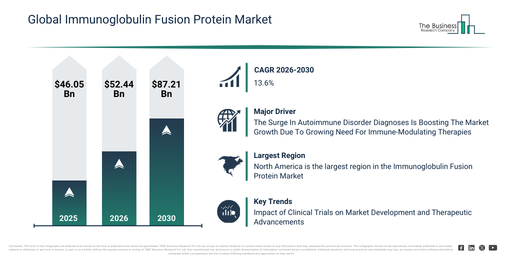
    The immunoglobulin fusion protein market has experienced significant expansion in recent years. This market is anticipated to expand from $46.05 billion in 2025 to $52.44 billion in 2026, demonstrating a compound annual growth rate (CAGR) of 13.9%. Historically, this growth can be attributed to advancements in biologic drugs, the rising prevalence of autoimmune diseases, the effectiveness of monoclonal antibodies, the integration of biologics in hospital settings, and improved chronic disease management.

    The market size for immunoglobulin fusion proteins is projected to experience substantial expansion over the coming years. This market is anticipated to reach a valuation of $87.21 billion by 2030, demonstrating a compound annual growth rate (CAGR) of 13.6%. Factors contributing to this growth within the projection period include the advancement of precision biologics, a robust pipeline for rare disease drugs, increasing biosimilar competition, sophisticated protein engineering techniques, and the demand for long-acting therapies. Key developments expected during this timeframe encompass the increasing creation of long-acting biologics, a greater adoption of Fc fusion technologies, wider applications in autoimmune and rare diseases, enhancements in drug stability and half-life engineering, and a surge in investments directed towards protein engineering platforms.

    Access Your Free Sample Report For In-Depth Market Analysis:

    https://www.thebusinessresearchcompany.com/sample.aspx?id=24568&type=smp

    Which Key Drivers Are Affecting The Immunoglobulin Fusion Protein Market Development?

    The growing incidence of autoimmune conditions is projected to drive expansion in the immunoglobulin fusion protein market. Autoimmune disorders are characterized by the body’s immune system erroneously targeting its own healthy cells and tissues. This rise in prevalence stems primarily from a blend of genetic predisposition and environmental elements, where inherited genes increase vulnerability, and triggers like infections or lifestyle choices contribute to the development of these ailments. Immunoglobulin fusion protein assists in managing autoimmune disorders by moderating the immune response to alleviate inflammation and prevent the immune system from attacking the body’s own tissues. As an illustration, in February 2024, Arthritis Australia, an Australia-based non-profit organization, reported that an estimated 562,378 individuals in Australia will have rheumatoid arthritis (RA) in 2025, constituting 14% of the total arthritis population. Looking ahead to 2040, the number of Australians afflicted with RA is predicted to climb by 33%, reaching 748,721 people. This signifies an increase of 186,343 individuals living with RA compared to the 2025 figures. Consequently, the increasing occurrence of autoimmune disorders is a key factor propelling the growth of the immunoglobulin fusion protein market.

    What Are The Main Segments Within The Immunoglobulin Fusion Protein Market Segment Structure?

    The immunoglobulin fusion protein market covered in this report is segmented –

    1) By Type: Monoclonal Antibodies, Polyclonal Antibodies, Bispecific Antibodies, Recombinant Antibodies

    2) By Drug Class: Immunosuppressive Drugs, Immunostimulatory Drugs

    3) By Mode of Administration: Intravenous, Subcutaneous, Intramuscular

    4) By Application: Autoimmune Disease, Eye Diseases, Diabetes, Hemophilia

    5) By End User: Hospitals, Clinics, Research Institutes

    Subsegments:

    1) By Monoclonal Antibodies: Human Monoclonal Antibodies, Humanized Monoclonal Antibodies, Chimeric Monoclonal Antibodies, Murine Monoclonal Antibodies

    2) By Polyclonal Antibodies: Animal-Derived Polyclonal Antibodies, Human-Derived Polyclonal Antibodies, Recombinant Polyclonal Antibodies

    3) By Bispecific Antibodies: Tandem Single-Chain Variable Fragment, Dual-Variable Domain Antibodies, Bispecific T-Cell Engagers (BiTEs), Dual-Affinity Re-Targeting Antibodies

    4) By Recombinant Antibodies: Fragment Antibodies, Full-Length Recombinant Antibodies, Antibody-Drug Conjugates (ADCs), Engineered Antibody Domains

    What Trends Are Influencing The Evolution Of The Immunoglobulin Fusion Protein Market?

    Companies prominent in the immunoglobulin fusion protein market are concentrating on conducting clinical trials to develop innovative products, such as bispecific antibody fusion proteins, with the goal of enhancing therapeutic efficacy and targeting multiple disease pathways. A bispecific antibody fusion protein refers to a genetically engineered molecule capable of simultaneously binding to two different targets, which helps to improve targeted therapy by drawing immune cells closer to tumor cells or by blocking several disease pathways concurrently. For instance, in February 2025, Innovent Biologics, Inc., a China-based biotechnology company, obtained its second Fast Track Designation (FTD) from the U.S. Food and Drug Administration (FDA) for IBI343, a bispecific antibody fusion protein designed to target advanced solid tumors. IBI343 is engineered to simultaneously engage tumor-associated antigens and immune effector cells, thereby increasing the precision and potency of anti-tumor immune responses. This designation is expected to accelerate the clinical advancement and regulatory review of IBI343, underscoring its potential to address significant unmet medical needs in oncology.

    Who Are The Companies Participating In The Immunoglobulin Fusion Protein Market?

    Major companies operating in the immunoglobulin fusion protein market are Amgen Inc., Pfizer Inc., Swedish Orphan Biovitrum AB (Sobi), Regeneron Pharmaceuticals Inc., Sanofi S.A., AbbVie Inc., Bristol-Myers Squibb Company, Roche Holding AG, Genentech Inc., UCB S.A., AstraZeneca PLC, CSL Behring, Takeda Pharmaceutical Company Limited, Novartis AG, Merck & Co. Inc., Biogen Inc., Horizon Therapeutics (Amgen subsidiary), Kyowa Kirin Co. Ltd., Ultragenyx Pharmaceutical Inc., Apellis Pharmaceuticals Inc., Alexion Pharmaceuticals (AstraZeneca subsidiary), Argenx SE, HanAll Biopharma Co. Ltd., Innovent Biologics Inc., 3SBio Inc.

    Get The Full Immunoglobulin Fusion Protein Market Report:

    https://www.thebusinessresearchcompany.com/report/immunoglobulin-fusion-protein-global-market-report

    Which Region Leads The Immunoglobulin Fusion Protein Market In Terms Of Market Share?

    North America was the largest region in the immunoglobulin fusion proteins market in 2025. Asia-Pacific is expected to be the fastest-growing region in the forecast period. The regions covered in the immunoglobulin fusion protein market report are Asia-Pacific, South East Asia, Western Europe, Eastern Europe, North America, South America, Middle East, Africa.

    Request A Customized Immunoglobulin Fusion Protein Market Report For Competitive Insights:

    https://www.thebusinessresearchcompany.com/report/immunoglobulin-fusion-protein-global-market-report

    Browse Through More Reports Similar to the Global Immunoglobulin Fusion Protein Market 2026, By The Business Research Company

    Immunoglobulins Market Report 2026

    https://www.thebusinessresearchcompany.com/report/immunoglobulins-global-market-report

    Monoclonal Antibodies Market Report 2026

    https://www.thebusinessresearchcompany.com/report/monoclonal-antibodies-global-market-report

    Recombinant Proteins Market Report 2026

    https://www.thebusinessresearchcompany.com/report/recombinant-proteins-global-market-report

    Get in touch with us:

    The Business Research Company: https://www.thebusinessresearchcompany.com/

    Americas +1 310-496-7795

    Asia +44 7882 955267 & +91 8897263534

    Europe +44 7882 955267

    Email us at: marketing@tbrc.info

    Follow us on:

    LinkedIn: https://in.linkedin.com/company/the-business-research-company

    YouTube: https://www.youtube.com/channel/UC24_fI0rV8cR5DxlCpgmyFQ

    Global Market Model: https://www.thebusinessresearchcompany.com/global-market-model

  • Deoxyribonucleic Acid (DNA) Repair Alkylating Agent Market Insights Highlighting Opportunities Supporting Growth To 2030

    Deoxyribonucleic Acid (DNA) Repair Alkylating Agent Market Insights Highlighting Opportunities Supporting Growth To 2030

    The Business Research Company’s 2026 market reports feature enhanced tools like market attractiveness analysis, TAM assessment, and company scoring matrices, along with interactive dashboards, deeper supply chain insights, and startup coverage strengthening the depth, usability, and strategic value of insights.

    From Its 2026 Market Size, What Value Is The Deoxyribonucleic Acid (DNA) Repair Alkylating Agent Market Projected To Reach By 2030?

    The market size for deoxyribonucleic acid (dna) repair alkylating agents has experienced substantial growth in recent years. Its valuation is expected to rise from $3.7 billion in 2025 to $4 billion in 2026, reflecting a compound annual growth rate (CAGR) of 8.1%. The expansion observed historically can be attributed to elements such as limited availability of alkylating agents, reliance on conventional chemotherapy regimens, a growing cancer patient population, increasing hospital-based oncology treatments, and the adoption of standard clinical protocols.

    The deoxyribonucleic acid (dna) repair alkylating agent market size is projected to experience robust expansion over the coming years. This market is anticipated to reach $5.45 billion by 2030, demonstrating a compound annual growth rate (CAGR) of 8.0%. Factors driving this growth during the forecast period include the advancement of new nitrogen mustards and nitrosoureas, the broadening of personalized oncology therapies, a rise in research and development investment for targeted alkylating agents, their incorporation with genomic testing and precision medicine, and increased awareness and uptake of refined treatment protocols. Key trends anticipated during the forecast period encompass a growing uptake of dna repair alkylating agents in cancer treatment, heightened research into innovative alkylating compounds, an increase in clinical trials and R&D endeavors, expanding applications of personalized medicine and targeted therapies, and a stronger emphasis on safety, optimal dosing, and adherence to regulations.

    Access Your Free Sample Report For In-Depth Market Analysis:

    https://www.thebusinessresearchcompany.com/sample.aspx?id=25745&type=smp

    Which Strong Drivers Are Impacting The Deoxyribonucleic Acid (DNA) Repair Alkylating Agent Market Growth?

    The escalating global occurrence of cancer cases is set to propel the growth of the DNA repair alkylating agent market in the future. Cancer describes a condition where specific cells within the body begin to multiply without control, potentially spreading to nearby tissues or other regions of the body. The global rise in cancer incidents is linked to an expanding aging demographic, which faces higher risks of developing cancer. DNA repair alkylating agents treat cancer by disrupting the DNA of rapidly growing tumor cells, thereby preventing their multiplication. This disruption leads to either cell death or a halt in growth, assisting in the control of tumor development. As an illustration, in February 2024, the World Health Organization, a Switzerland-based healthcare organization, reported an estimated 20 million new cancer cases in 2022, with projections suggesting this figure could exceed 35 million by 2050. Thus, the increasing prevalence of cancer cases globally is fueling the expansion of the DNA repair alkylating agent market.

    How Is Segmentation Applied In The Deoxyribonucleic Acid (DNA) Repair Alkylating Agent Market Segment Analysis?

    The deoxyribonucleic acid (dna) repair alkylating agent market covered in this report is segmented –

    1) By Product Type: Nitrogen Mustards, Nitrosoureas, Alkyl Sulfonates, Triazines, Other Product Types

    2) By Application: Cancer Treatment, Research And Development, Other Applications

    3) By End-User: Hospitals, Research Institutes, Pharmaceutical Companies, Other End-Users

    Subsegments:

    1) By Nitrogen Mustards: Mechlorethamine, Cyclophosphamide, Ifosfamide, Chlorambucil, Melphalan

    2) By Nitrosoureas: Carmustine (BCNU), Lomustine (CCNU), Streptozocin, Semustine

    3) By Alkyl Sulfonates: Busulfan, Treosulfan

    4) By Triazines: Dacarbazine, Temozolomide

    5) By Other Product Types: Thiotepa, Procarbazine, Bendamustine, Lurbinectedin

    What Trends Are Transforming The Deoxyribonucleic Acid (DNA) Repair Alkylating Agent Market?

    Leading companies in the deoxyribonucleic acid (DNA) repair alkylating agent market are concentrating on developing advanced solutions, such as epoxide forming alkylators. This focus aims to enhance therapeutic precision, minimize off-target toxicity, and improve outcomes in hematologic oncology. Epoxide forming alkylators are prodrugs that transform in vivo into highly reactive epoxide intermediates, which then alkylate and cross-link DNA, providing a more controlled activation profile compared to traditional bifunctional mustards. For example, in January 2025, Medexus Pharmaceuticals, a Canada-based pharmaceutical company, secured U.S. Food and Drug Administration (FDA) approval for GRAFAPEX (treosulfan). This alkylating agent is utilized with fludarabine as a preparative regimen for allogeneic hematopoietic stem-cell transplantation (alloHSCT) in adult and pediatric patients (aged one year or older) suffering from acute myeloid leukemia (AML) or myelodysplastic syndrome (MDS). Treosulfan is administered as a lyophilized powder for intravenous infusion and spontaneously converts into mono- and diepoxide metabolites that cross-link DNA. With its favorable pharmacokinetics, reduced long-term toxicity compared to busulfan-based regimens, and demonstrated survival benefit in a Phase III trial (MC-FludT.14/L), GRAFAPEX highlights the market’s progression toward more refined DNA-damaging agents for transplantation settings.

    Who Are The Companies Participating In The Deoxyribonucleic Acid (DNA) Repair Alkylating Agent Market Environment?

    Major companies operating in the deoxyribonucleic acid (dna) repair alkylating agent market are Bristol-Myers Squibb Company, Teva Pharmaceutical Industries Limited, Fresenius Kabi, Intas Pharmaceuticals, Dr. Reddy’s Laboratories, Aurobindo Pharma, Hikma Pharmaceuticals, Natco Pharma Ltd, Medac GmbH, Emcure Pharmaceuticals, Jiangsu Hengrui Pharmaceuticals Co. Ltd.

    Get The Full Deoxyribonucleic Acid (DNA) Repair Alkylating Agent Market Report:

    https://www.thebusinessresearchcompany.com/report/deoxyribonucleic-acid-dna-repair-alkylating-agent-global-market-report

    Which Region Is The Leading Market For The Deoxyribonucleic Acid (DNA) Repair Alkylating Agent Market?

    North America was the largest region in the deoxyribonucleic acid (DNA) repair alkylating agent market in 2025. Asia-Pacific is expected to be the fastest-growing region in the forecast period. The regions covered in the deoxyribonucleic acid (dna) repair alkylating agent market report are Asia-Pacific, South East Asia, Western Europe, Eastern Europe, North America, South America, Middle East, Africa.

    Request A Customized Deoxyribonucleic Acid (DNA) Repair Alkylating Agent Market Report For Competitive Insights:

    https://www.thebusinessresearchcompany.com/report/deoxyribonucleic-acid-dna-repair-alkylating-agent-global-market-report

    Browse Through More Reports Similar to the Global Deoxyribonucleic Acid (DNA) Repair Alkylating Agent Market 2026, By The Business Research Company

    Dna Repair Drugs Market Report 2026

    https://www.thebusinessresearchcompany.com/report/dna-repair-drugs-global-market-report

    Nucleic Acid Based Gene Therapy Market Report 2026

    https://www.thebusinessresearchcompany.com/report/nucleic-acid-based-gene-therapy-global-market-report

    Dna Based Skin Care Products Market Report 2026

    https://www.thebusinessresearchcompany.com/report/dna-based-skin-care-products-global-market-report

    Get in touch with us:

    The Business Research Company: https://www.thebusinessresearchcompany.com/

    Americas +1 310-496-7795

    Asia +44 7882 955267 & +91 8897263534

    Europe +44 7882 955267

    Email us at: marketing@tbrc.info

    Follow us on:

    LinkedIn: https://in.linkedin.com/company/the-business-research-company

    YouTube: https://www.youtube.com/channel/UC24_fI0rV8cR5DxlCpgmyFQ

    Global Market Model: https://www.thebusinessresearchcompany.com/global-market-model
  • Immunocytokines Market Growth Patterns And Forecast Outlook Through 2030

    Immunocytokines Market Growth Patterns And Forecast Outlook Through 2030

    The Business Research Company’s 2026 market reports feature enhanced tools like market attractiveness analysis, TAM assessment, and company scoring matrices, along with interactive dashboards, deeper supply chain insights, and startup coverage strengthening the depth, usability, and strategic value of insights.

    What Expansion In Market Value Is Forecasted For The Immunocytokines Market Between 2026 And 2030?

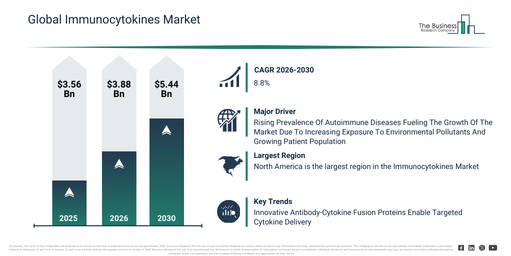
    The immunocytokines market has demonstrated robust growth in recent years. It is projected to expand from $3.56 billion in 2025 to $3.88 billion in 2026, at a compound annual growth rate (CAGR) of 9.0%. The market’s historical growth can be attributed to several factors, including the limited availability of targeted immunocytokine therapies, a reliance on conventional cytokine treatments, the escalating research in oncology and autoimmune conditions, an increase in clinical trials for cytokine therapies, and the adoption of basic immune-modulating treatment protocols.

    The immunocytokines market is set for substantial expansion in the coming years, projected to reach $5.44 billion by 2030, exhibiting a compound annual growth rate (CAGR) of 8.8%. This anticipated growth is driven by the progress in recombinant and modified interleukins, the broader application of tumor necrosis factor-based immunocytokines, increasing capital investment in antibody-cytokine fusion proteins, their growing acceptance in personalized cancer and autoimmune therapy, and the incorporation of immune modulators with advanced delivery systems. Significant trends anticipated include the increased use of immunocytokines in targeted cancer treatments, expanding research into cytokine-based immunotherapies for autoimmune conditions, a greater focus on reducing systemic toxicity through precise delivery, the proliferation of specialty clinics and research institutes employing immunocytokines, and the development of fusion proteins that combine cytokines with innovative antibody formats.

    Access Your Free Sample Report For In-Depth Market Analysis:

    https://www.thebusinessresearchcompany.com/sample.aspx?id=27315&type=smp

    What Factors Are Contributing To The Growth Of The Immunocytokines Market?

    An increasing incidence of autoimmune conditions is anticipated to fuel the expansion of the immunocytokines market in the future. These are disorders where the body’s immune system erroneously targets its own healthy cells and tissues. This escalating prevalence mainly stems from greater exposure to environmental contaminants, which can impair immune function and provoke immune responses against the body’s own tissues. Immunocytokines provide a solution for autoimmune diseases by integrating focused immune modulation with precise delivery, thereby making them highly suitable for reducing systemic adverse effects. They boost treatment efficacy by channeling cytokines directly to the diseased tissues, leading to better patient results and enhanced safety. For instance, data from February 2024 by Arthritis Australia, an Australia-based non-profit, indicates that approximately 562,378 Australians will be afflicted with RA in 2025, representing 14% of all arthritis cases during that year. By 2040, this figure is projected to increase by 33% to 748,721 people. This signifies an additional 186,343 Australians suffering from RA in 2040 compared to 2025. Consequently, the increasing occurrence of autoimmune diseases is stimulating the expansion of the immunocytokines market.

    How Is Segmentation Applied In The Immunocytokines Market Segment Analysis?

    The immunocytokines market covered in this report is segmented –

    1) By Product Type: Interleukins, Interferons, Tumor Necrosis Factors, Other Product Types

    2) By Mechanism Of Action: Antagonists, Agonists, Immune Modulators

    3) By Application: Cancer, Autoimmune Diseases, Infectious Diseases, Other Applications

    4) By End-User: Hospitals, Research Institutes, Specialty Clinics, Other End-Users

    Subsegments:

    1) By Interleukins: Recombinant Interleukin, Modified Interleukin

    2) By Interferons: Interferon Alpha, Interferon Beta, Interferon Gamma

    3) By Tumor Necrosis Factors: Tumor Necrosis Factor Alpha, Tumor Necrosis Factor Beta, Tumor Necrosis Factor Receptor Fusion Proteins

    4) By Other Product Types: Colony Stimulating Factors, Immunocytokines

    Which Trends Are Impacting The Progress Of The Immunocytokines Market?

    Leading companies in the immunocytokines market are focused on developing innovative solutions, such as antibody cytokine fusion proteins, to facilitate targeted cytokine delivery and enhance therapeutic effectiveness while minimizing systemic toxicity. Antibody cytokine fusion proteins are engineered molecules designed to merge the targeting precision of antibodies with the immune-modulating properties of cytokines, enabling direct delivery of therapy to diseased tissues like tumors or inflamed regions. For instance, in July 2023, SunHo BioPharmaceutical Co. Ltd., a China-based biopharmaceutical company, introduced IBB0979 (B7H3–IL-10 immunocytokine), a novel antibody-cytokine fusion protein intended for the treatment of advanced or metastatic solid tumors, which has now entered Phase I/II clinical trials. This innovative drug combines the tumor-targeting capabilities of the B7H3 antibody with the anti-inflammatory and immune-modulating effects of interleukin-10 (IL-10). IBB0979 is formulated to modify the tumor microenvironment by delivering IL-10 specifically to B7H3-expressing tumor cells, thereby reducing inflammation and boosting the immune response against cancer, potentially offering a new therapeutic strategy for difficult-to-treat solid tumors.

    Who Are The Companies Participating In The Immunocytokines Market Environment?

    Major companies operating in the immunocytokines market are Xencor Inc., Philogen S.p.A, Cytimmune Sciences Inc., Cytune Pharma S.A.S.

    Get The Full Immunocytokines Market Report:

    https://www.thebusinessresearchcompany.com/report/immunocytokines-global-market-report

    Which Region Leads The Immunocytokines Market In Overall Market Size?

    North America was the largest region in the immunocytokines market in 2025. Asia-Pacific is expected to be the fastest-growing region in the forecast period. The regions covered in the immunocytokines market report are Asia-Pacific, South East Asia, Western Europe, Eastern Europe, North America, South America, Middle East, Africa.

    Request A Customized Immunocytokines Market Report For Competitive Insights:

    https://www.thebusinessresearchcompany.com/report/immunocytokines-global-market-report

    Browse Through More Reports Similar to the Global Immunocytokines Market 2026, By The Business Research Company

    Nanotechnology Services Market Report 2026

    https://www.thebusinessresearchcompany.com/report/nanotechnology-services-global-market-report

    Healthcare Nanotechnology Market Report 2026

    https://www.thebusinessresearchcompany.com/report/healthcare-nanotechnology-global-market-report

    Nanotechnology Based Medical Devices Market Report 2026

    https://www.thebusinessresearchcompany.com/report/nanotechnology-based-medical-devices-global-market-report

    Get in touch with us:

    The Business Research Company: https://www.thebusinessresearchcompany.com/

    Americas +1 310-496-7795

    Asia +44 7882 955267 & +91 8897263534

    Europe +44 7882 955267

    Email us at: marketing@tbrc.info

    Follow us on:

    LinkedIn: https://in.linkedin.com/company/the-business-research-company

    YouTube: https://www.youtube.com/channel/UC24_fI0rV8cR5DxlCpgmyFQ

    Global Market Model: https://www.thebusinessresearchcompany.com/global-market-model

  • Deoxyribonucleic Acid (DNA) Nanotechnology Market Forecast 2026–2030 Highlighting Expansion Across Industries

    Deoxyribonucleic Acid (DNA) Nanotechnology Market Forecast 2026–2030 Highlighting Expansion Across Industries

    The Business Research Company’s 2026 market reports feature enhanced tools like market attractiveness analysis, TAM assessment, and company scoring matrices, along with interactive dashboards, deeper supply chain insights, and startup coverage strengthening the depth, usability, and strategic value of insights.

    How Much Growth In Market Value Is Expected For The Deoxyribonucleic Acid (DNA) Nanotechnology Market Between 2026 And 2030?

    The deoxyribonucleic acid (dna) nanotechnology market has experienced significant expansion in recent years. It is projected to increase from $6.97 billion in 2025 to $8.75 billion in 2026, achieving a compound annual growth rate (CAGR) of 25.5%. This historical growth can be attributed to several factors, including the emergence of dna nanotechnology research, a rise in academic and pharmaceutical investments, the development of basic dna nanostructures, the escalating demand for precision medicine, and early adoption in drug delivery and diagnostics.

    The deoxyribonucleic acid (dna) nanotechnology market is projected to experience substantial expansion in the coming years. By 2030, its valuation is anticipated to reach $21.48 billion, demonstrating a compound annual growth rate (CAGR) of 25.2%. This expected growth during the forecast period is primarily driven by its integration with biosensing and theranostic applications, the development of water-soluble and hybrid formulations, increasing investment in nanomedicine research, enhanced commercialization via online and direct sales channels, and its adoption in advanced nanofabrication techniques. Key developments anticipated in this period encompass progress in dna-based nanomachines and logic gate systems, an increase in dna origami and tile-based nanostructures, expanded application of dna nanotechnology for targeted drug delivery, the broadening of nanolithography and smart pill uses, and the creation of hybrid and multifunctional dna nanostructures.

    Access Your Free Sample Report For In-Depth Market Analysis:

    https://www.thebusinessresearchcompany.com/sample.aspx?id=27273&type=smp

    What Key Factors Are Shaping The Deoxyribonucleic Acid (DNA) Nanotechnology Market Landscape?

    The growing occurrence of genetic conditions is anticipated to fuel the expansion of the deoxyribonucleic acid (DNA) nanotechnology market in the future. Genetic diseases are disorders originating from changes or mutations in DNA, which can be inherited or manifest spontaneously, impacting health, development, or various body functions. This rise in prevalence is attributed to increased awareness and advancements in diagnostic technologies, enabling earlier and more accurate detection of previously undiagnosed conditions. Deoxyribonucleic acid (DNA) nanotechnology assists in addressing genetic diseases by facilitating precise targeting of defective genes, thereby allowing for accurate diagnosis and personalized treatment. It also enhances therapeutic outcomes through controlled drug delivery and gene editing, ultimately improving patient care and disease management. For instance, in July 2025, the National Blood Authority, an Australia-based blood management agency, reported 2,788 patients living with hereditary haemophilia A (HMA) in 2023–2024, an increase from 2,681 patients in 2022–2023. Thus, the increasing prevalence of genetic diseases is a significant driver for the growth of the deoxyribonucleic acid (DNA) nanotechnology market.

    What Segment Categories Shape The Deoxyribonucleic Acid (DNA) Nanotechnology Market Segment Landscape?

    The deoxyribonucleic acid (dna) nanotechnology market covered in this report is segmented –

    1) By Type: Dynamic Deoxyribonucleic Acid (DNA) Nanotechnology, Structural Deoxyribonucleic Acid (DNA) Nanotechnology

    2) By Formulation Type: Water-Soluble Formulations, Oil-Soluble Formulations, Hybrid Formulations

    3) By Distribution Channel: Online Sales, Direct Sales, Retail Sales, Distributors Or Wholesalers

    4) By Application: Smart Pills, Nanolithography, Targeted Drug Delivery, Other Applications

    5) By End-User: Academic And Research Institutions, Biotechnology And Pharmaceuticals, Other End-Users

    Subsegments:

    1) By Dynamic Deoxyribonucleic Acid Nanotechnology: Strand Displacement Circuits, Conformational Switching Devices, Deoxyribonucleic Acid Walkers, Logic Gate Systems, Nanomachines-Based On Deoxyribonucleic Acid

    2) By Structural Deoxyribonucleic Acid Nanotechnology: Tile-Based Structures, Deoxyribonucleic Acid Origami, Wireframe Nanostructures, Lattice-Based Designs, Hybrid Nanostructures

    What Trends Are Shaping The Future Of The Deoxyribonucleic Acid (DNA) Nanotechnology Market?

    Leading companies in the DNA nanotechnology market are concentrating on developing sophisticated solutions, such as artificial-intelligence-based DNA sequencing, to enhance accuracy and facilitate more precise molecular diagnostics and nanodevice design. Artificial intelligence-based DNA sequencing leverages AI to swiftly analyze and interpret DNA data, thereby improving accuracy, speed, and personalized disease detection. For example, in May 2025, the Indian Institute of Technology, an India-based technical institute, unveiled quantum AI nanotechnology that enables rapid, highly accurate, and cost-effective early detection of genetic mutations, including those linked to cancer. This technology merges explainable artificial intelligence with quantum transport mechanisms to decode raw electrical signals from DNA sequencing with unmatched precision. This quantum-AI approach utilizes solid-state nanopore or nanogap devices, capturing unique electronic signatures of nucleotides to enable comprehensive detection of natural, epigenetic, and artificial DNA mutations. The innovation offers the potential for transformative impacts in genomics, personalized medicine, and cancer diagnostics by allowing for early mutation detection and tailored treatment strategies.

    Who Are The Companies Operating Across The Deoxyribonucleic Acid (DNA) Nanotechnology Market Value Chain?

    Major companies operating in the deoxyribonucleic acid (dna) nanotechnology market are Twist Bioscience Corporation, SomaLogic Inc., Alamar Biosciences Inc., Nanion Technologies GmbH, Eligo Bioscience SA, DNA Nanobots LLC, Nanovery Limited, Parabon NanoLabs Inc., tilibit nanosystems GmbH, Luna Nanotech Inc., Code Biotherapeutics Inc., Sona Nanotech Inc., Cello Therapeutics Inc., Esya Labs Inc., NuProbe Global Inc., Ansa Biotechnologies Inc., GATTAquant GmbH, ARIZ Precision Medicine Inc., NanoApps Medical Inc., Aura Biosciences Inc.

    Get The Full Deoxyribonucleic Acid (DNA) Nanotechnology Market Report:

    https://www.thebusinessresearchcompany.com/report/deoxyribonucleic-acid-dna-nanotechnology-global-market-report

    Where Is The Deoxyribonucleic Acid (DNA) Nanotechnology Market Primarily Concentrated By Region?

    North America was the largest region in the deoxyribonucleic acid (DNA) nanotechnology market in 2025. Asia-Pacific is expected to be the fastest-growing region in the forecast period. The regions covered in the deoxyribonucleic acid (dna) nanotechnology market report are Asia-Pacific, South East Asia, Western Europe, Eastern Europe, North America, South America, Middle East, Africa.

    Request A Customized Deoxyribonucleic Acid (DNA) Nanotechnology Market Report For Competitive Insights:

    https://www.thebusinessresearchcompany.com/report/deoxyribonucleic-acid-dna-nanotechnology-global-market-report

    Browse Through More Reports Similar to the Global Deoxyribonucleic Acid (DNA) Nanotechnology Market 2026, By The Business Research Company

    Cumene Market Report 2026

    https://www.thebusinessresearchcompany.com/report/cumene-global-market-report

    White Cement Market Report 2026

    https://www.thebusinessresearchcompany.com/report/white-cement-global-market-report

    Green Cement Market Report 2026

    https://www.thebusinessresearchcompany.com/report/green-cement-global-market-report

    Get in touch with us:

    The Business Research Company: https://www.thebusinessresearchcompany.com/

    Americas +1 310-496-7795

    Asia +44 7882 955267 & +91 8897263534

    Europe +44 7882 955267

    Email us at: marketing@tbrc.info

    Follow us on:

    LinkedIn: https://in.linkedin.com/company/the-business-research-company

    YouTube: https://www.youtube.com/channel/UC24_fI0rV8cR5DxlCpgmyFQ

    Global Market Model: https://www.thebusinessresearchcompany.com/global-market-model
  • Ileostomy Products Market Insights On Growth Drivers, Trends, And Opportunities

    Ileostomy Products Market Insights On Growth Drivers, Trends, And Opportunities

    The Business Research Company’s 2026 market reports feature enhanced tools like market attractiveness analysis, TAM assessment, and company scoring matrices, along with interactive dashboards, deeper supply chain insights, and startup coverage strengthening the depth, usability, and strategic value of insights.

    How Large Will The Ileostomy Products Market Be By 2030 Compared To Its 2026 Market Size?

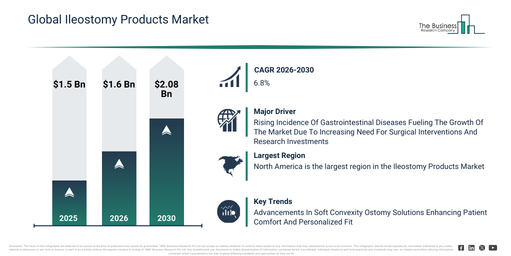
    The ileostomy products market size has witnessed strong expansion in recent years. It is anticipated to grow from $1.5 billion in 2025 to $1.6 billion in 2026, registering a compound annual growth rate (CAGR) of 6.8%. Historically, this growth can be attributed to a rise in colorectal and bowel surgeries, improved survival rates after gastrointestinal operations, the early implementation of basic ostomy systems, post-surgical care centered in hospitals, and limited options for product customization.

    The ileostomy products market is projected to undergo significant expansion over the coming years. It is forecast to reach $2.08 billion by 2030, exhibiting a compound annual growth rate (CAGR) of 6.8%. This growth during the forecast period can be attributed to several factors, including an expanding aging population, a growing preference for home healthcare options, innovations in ostomy materials and adhesives, greater patient awareness and education, and the increasing availability of outpatient surgical procedures. Prominent trends for the forecast period include a surging demand for long-term ostomy care products, a heightened preference for skin-friendly and leak-proof designs, an increase in home-based ostomy management, the development of customizable and patient-specific solutions, and an amplified focus on enhancing comfort and quality of life.

    Access Your Free Sample Report For In-Depth Market Analysis:

    https://www.thebusinessresearchcompany.com/sample.aspx?id=24247&type=smp

    Which Strong Drivers Are Impacting The Ileostomy Products Market Growth?

    A rising occurrence of gastrointestinal illnesses is projected to drive expansion in the ileostomy products market over the next few years. These conditions impact the digestive system, hindering proper digestion and the uptake of nutrients. The increase in gastrointestinal ailments is associated with poor dietary habits, specifically those high in processed items and lacking fiber, leading to compromised gut health and fostering conditions like IBS and inflammatory bowel disease. Ileostomy products are vital for managing specific gastrointestinal (GI) disorders where surgical procedures result in an ileostomy. These products are instrumental in enabling patients to maintain comfort and hygiene following the bypassing or removal of a section of their digestive tract. As an illustration, in June 2025, the Turkish Journal Of Gastroenterology, a journal based in Turkey, reported that 6.9 million people worldwide are currently affected by inflammatory bowel disease (IBD). Consequently, the growing prevalence of gastrointestinal diseases is set to significantly boost the ileostomy products market’s expansion.

    What Segment Categories Shape The Ileostomy Products Market Segment Landscape?

    The ileostomy products market covered in this report is segmented –

    1) By Type: Ileostomy Drainable Bags, Pouches, Flanges, Barriers, Accessories

    2) By Application: Permanent Ileostomy, Temporary Ileostomy

    3) By End User: Hospitals, Ambulatory Surgical Centers, Clinics, Other End Users

    Subsegments:

    1) By Ileostomy Drainable Bags: One-Piece Drainable Bags, Two-Piece Drainable Bags, Transparent Drainable Bags, Opaque Drainable Bags

    2) By Pouches: One-Piece Pouches, Two-Piece Pouches, Closed-End Pouches, High-Output Pouches, Urostomy Pouches

    3) By Flanges: Flat Flanges, Convex Flanges, Pre-Cut Flanges, Cut-To-Fit Flanges

    4) By Barriers: Skin Barrier Wafers, Extended Wear Barriers, Standard Wear Barriers, Moldable Barriers

    5) By Accessories: Barrier Rings, Barrier Strips, Ostomy Belt, Adhesive Removers, Deodorants, Skin Protectants, Seals And Pastes

    What Trends Are Transforming The Ileostomy Products Market?

    Leading companies in the ileostomy products market are concentrating on developing technologically advanced items, such as soft convexity ostomy solutions, to improve patient comfort. A soft convexity ostomy solution is an ostomy appliance designed with a gently curved (convex) baseplate that applies light pressure around the stoma. For instance, in April 2024, Convatec Group, a UK-based medical products and technology company, introduced the Esteem Body with Leak Defense. Convatec’s Esteem Body provides a selection of eight combinations, featuring four tension locations and two convex depths, enabling a customized fit to achieve optimal stoma protrusion and skin flattening. This adaptability ensures that each ostomate, based on their unique requirements, can find the most suitable fit. The product’s Leak Defense technology integrates Convatec’s gold-standard adhesives, Durahesive and Modified Stomahesive, with a soft convexity range to form a secure seal and prevent leaks while maintaining a predictable wear time. The new ‘body’ pouch is also engineered with a patented ‘8-shape’ design that minimizes sagging as it fills, further enhancing comfort and reliability.

    Who Are The Companies Operating Across The Ileostomy Products Market Value Chain?

    Major companies operating in the ileostomy products market are 3M Healthcare, B. Braun Melsungen AG, Smith & Nephew Plc, Hollister Incorporated, Coloplast A/S, ConvaTec Group Plc, Salts Healthcare Ltd, Welland Medical Ltd, Alcare Co. Ltd., Torbot Group, Cymed Micro Skin, Perfect Choice Medical Technologies, Schena Ostomy Technologies Inc., Flexicare (Group) Limited, TG Eakin Limited, Merlen Manufacturing Ltd, Pelican Healthcare Ltd, Nu-Hope Labs Inc., PermaType Medical, Fortis Medical Products Inc.

    Get The Full Ileostomy Products Market Report:

    https://www.thebusinessresearchcompany.com/report/ileostomy-products-global-market-report

    Which Region Is The Top Contributor To The Ileostomy Products Market By Share?

    North America was the largest region in the ileostomy products market in 2025. Asia-Pacific is expected to be the fastest-growing region in the forecast period. The regions covered in the ileostomy products market report are Asia-Pacific, South East Asia, Western Europe, Eastern Europe, North America, South America, Middle East, Africa.

    Request A Customized Ileostomy Products Market Report For Competitive Insights:

    https://www.thebusinessresearchcompany.com/report/ileostomy-products-global-market-report

    Browse Through More Reports Similar to the Global Ileostomy Products Market 2026, By The Business Research Company

    Gastrointestinal Devices Market Report 2026

    https://www.thebusinessresearchcompany.com/report/gastrointestinal-devices-global-market-report

    Incontinence And Ostomy Care Products Market Report 2026

    https://www.thebusinessresearchcompany.com/report/incontinence-and-ostomy-care-products-global-market-report

    Bathroom Products Market Report 2026

    https://www.thebusinessresearchcompany.com/report/bathroom-products-global-market-report

    Get in touch with us:

    The Business Research Company: https://www.thebusinessresearchcompany.com/

    Americas +1 310-496-7795

    Asia +44 7882 955267 & +91 8897263534

    Europe +44 7882 955267

    Email us at: marketing@tbrc.info

    Follow us on:

    LinkedIn: https://in.linkedin.com/company/the-business-research-company

    YouTube: https://www.youtube.com/channel/UC24_fI0rV8cR5DxlCpgmyFQ

    Global Market Model: https://www.thebusinessresearchcompany.com/global-market-model

  • Global Deoxyribonucleic Acid (DNA) Manufacturing Market Analysis For 2026–2030 With Strategic Insights

    Global Deoxyribonucleic Acid (DNA) Manufacturing Market Analysis For 2026–2030 With Strategic Insights

    The Business Research Company’s 2026 market reports feature enhanced tools like market attractiveness analysis, TAM assessment, and company scoring matrices, along with interactive dashboards, deeper supply chain insights, and startup coverage strengthening the depth, usability, and strategic value of insights.

    What Is The Estimated Market Size Of The Deoxyribonucleic Acid (DNA) Manufacturing Market In 2026, And How Will Its Value Evolve By 2030?

    The deoxyribonucleic acid (dna) manufacturing market size has experienced rapid growth in recent years. Its value is projected to rise from $5.58 billion in 2025 to $6.51 billion in 2026, demonstrating a compound annual growth rate (CAGR) of 16.7%. The expansion observed in the historic period can be ascribed to factors such as limited access to high-quality plasmid and synthetic dna, continued reliance on traditional chemical dna synthesis methods, expanding r&d in cell and gene therapies, a surge in academic and industrial research initiatives, and the escalating demand for oligonucleotide-based drugs.

    The deoxyribonucleic acid (dna) manufacturing market is projected to experience substantial growth over the coming years. This market is anticipated to reach $11.95 billion by 2030, exhibiting a compound annual growth rate (CAGR) of 16.4%. This expansion during the forecast period is fueled by advancements in enzymatic and chemical DNA synthesis technologies, the broadening of gene therapy and vaccine development pipelines, increasing embrace of GMP-grade DNA production, growing demand for lengthy and intricate DNA constructs, and the integration of automated DNA manufacturing platforms and digital workflows. Key trends anticipated for this period encompass a surge in demand for GMP-grade DNA for therapeutic uses, an increase in plasmid and synthetic DNA production for vaccine development, greater uptake of gene synthesis and codon optimization services, the widening scope of oligonucleotide synthesis for PCR, siRNA, and antisense applications, and the embedding of DNA manufacturing into cell and gene therapy pipelines.

    Access Your Free Sample Report For In-Depth Market Analysis:

    https://www.thebusinessresearchcompany.com/sample.aspx?id=27272&type=smp

    Which Factors Are Influencing The Growth Of The Deoxyribonucleic Acid (DNA) Manufacturing Market?

    The deoxyribonucleic acid (DNA) manufacturing market is anticipated to expand in the future, fueled by the rising demand for gene therapies. Gene therapies are defined as methods used to modify or replace faulty genes for disease treatment or prevention, while personalized medicine involves customizing medical treatment based on an individual’s genetic, biological, and lifestyle attributes. This heightened need for gene therapies stems from the growing incidence of genetic conditions like cystic fibrosis, sickle cell anemia, and particular forms of inherited blindness. Deoxyribonucleic acid (DNA) manufacturing facilitates gene therapies through its provision of bespoke, premium DNA sequences essential for creating and administering therapeutic genes capable of correcting or replacing deficient genetic material in individuals. As an illustration, in January 2024, the American Society of Gene & Cell Therapy, a US-based organization, reported that the fourth quarter of 2024 saw the number of pre-registration gene therapy programs achieve its most significant increase in over a year, with an 83% rise compared to the third quarter of 2024. Consequently, the expanding demand for gene therapies is propelling the growth of the deoxyribonucleic acid (DNA) manufacturing market.

    Which Segment Types Are Examined In The Deoxyribonucleic Acid (DNA) Manufacturing Market Segment Study?

    The deoxyribonucleic acid (dna) manufacturing market covered in this report is segmented –

    1) By Type: Plasmid Deoxyribonucleic Acid (DNA), Synthetic Deoxyribonucleic Acid (DNA), Gene Synthesis, Oligonucleotide Synthesis

    2) By Grade: Good Manufacturing Practices (GMP) Grade, Research And Development Grade

    3) By Application: Cell And Gene Therapy, Vaccines, Oligonucleotide-Based Drugs, Other Applications

    4) By End-Use: Pharmaceutical And Biotechnology Companies, Academic And Research Institutes, Contract Research Organizations

    Subsegments:

    1) By Plasmid Deoxyribonucleic Acid (DNA): GMP-Grade Plasmid DNA, Non-GMP-Grade Plasmid DNA, High Copy Number Plasmids, Low Copy Number Plasmids, Bacterial Fermentation-Based Plasmid Production, Transfection-Grade Plasmid DNA

    2) By Synthetic Deoxyribonucleic Acid (DNA): Enzymatic DNA Synthesis, Chemical DNA Synthesis, Long DNA Fragments, Short DNA Fragments, Single-Stranded Synthetic DNA, Double-Stranded Synthetic DNA

    3) By Gene Synthesis: Custom Gene Synthesis, Standard Gene Synthesis, Complex Gene Constructs, Codon Optimization Services, Gene Library Synthesis

    4) By Oligonucleotide Synthesis: DNA Oligonucleotides, Modified Oligonucleotides, Long Oligonucleotides, PCR Primers, SiRNA And Antisense Oligos, Adapter And Linker Oligos

    Which Trends Are Contributing To Changes In The Deoxyribonucleic Acid (DNA) Manufacturing Market?

    Major companies in the DNA manufacturing market are concentrating on developing innovative approaches, such as GMP-grade plasmid DNA production, to improve the quality, safety, and scalability of gene and cell therapy applications. GMP-grade plasmid DNA production refers to manufacturing plasmid DNA under Good Manufacturing Practice (GMP) conditions, which are regulatory guidelines designed to ensure the quality, safety, and consistency of biopharmaceutical products. For instance, in April 2025, ProBio Genomics Inc., a US-based contract development and manufacturing organization (CDMO), launched GMP Plasmid DNA Manufacturing Services in Hopewell, featuring in-house analytical testing, method development, and project management. This offering includes unique features like in-house process development, analytical testing, method development, and project management, which eliminates the need for multiple suppliers and accelerates development timelines. The service guarantees a high-quality output with ≥85% supercoiled plasmid DNA content while minimizing contamination risks. ProBio additionally provides GMP-like plasmids with a four-week delivery timeline and full GMP-grade plasmids within three months.

    Which Players Are Part Of The Competitive Landscape Of The Deoxyribonucleic Acid (DNA) Manufacturing Market?

    Major companies operating in the deoxyribonucleic acid (dna) manufacturing market are Thermo Fisher Scientific Inc., Merck KGaA, Lonza Group AG, Kaneka Corporation, Catalent Inc., Charles River Laboratories International Inc., WuXi Biologics Inc., AGC Biologics Inc., Integrated DNA Technologies Inc., GenScript Biotech Corporation, Takara Bio USA Inc., Twist Bioscience Corp., Ajinomoto Bio-Pharma Services, OriGene Technologies Inc., DNA Script SAS, Eurofins Genomics LLC, Touchlight Genetics Ltd., Elegen Inc., VGXI Inc., PlasmidFactory GmbH & Co. KG.

    Get The Full Deoxyribonucleic Acid (DNA) Manufacturing Market Report:

    https://www.thebusinessresearchcompany.com/report/deoxyribonucleic-acid-dna-manufacturing-global-market-report

    Which Region Has The Greatest Market Share In The Deoxyribonucleic Acid (DNA) Manufacturing Market?

    North America was the largest region in the deoxyribonucleic acid (DNA) manufacturing market in 2025. Asia-Pacific is expected to be the fastest-growing region in the forecast period. The regions covered in the deoxyribonucleic acid (dna) manufacturing market report are Asia-Pacific, South East Asia, Western Europe, Eastern Europe, North America, South America, Middle East, Africa.

    Request A Customized Deoxyribonucleic Acid (DNA) Manufacturing Market Report For Competitive Insights:

    https://www.thebusinessresearchcompany.com/report/deoxyribonucleic-acid-dna-manufacturing-global-market-report

    Browse Through More Reports Similar to the Global Deoxyribonucleic Acid (DNA) Manufacturing Market 2026, By The Business Research Company

    Electronic Equipment Repair Service Market Report 2026

    https://www.thebusinessresearchcompany.com/report/electronic-equipment-repair-service-global-market-report

    Maintenance Services Market Report 2026

    https://www.thebusinessresearchcompany.com/report/maintenance-services-global-market-report

    Industrial Maintenance Services Market Report 2026

    https://www.thebusinessresearchcompany.com/report/industrial-maintenance-services-global-market-report

    Get in touch with us:

    The Business Research Company: https://www.thebusinessresearchcompany.com/

    Americas +1 310-496-7795

    Asia +44 7882 955267 & +91 8897263534

    Europe +44 7882 955267

    Email us at: marketing@tbrc.info

    Follow us on:

    LinkedIn: https://in.linkedin.com/company/the-business-research-company

    YouTube: https://www.youtube.com/channel/UC24_fI0rV8cR5DxlCpgmyFQ

    Global Market Model: https://www.thebusinessresearchcompany.com/global-market-model
  • Ibrutinib Market Developments Shaping Growth Across The Forecast Period

    Ibrutinib Market Developments Shaping Growth Across The Forecast Period

    The Business Research Company’s 2026 market reports feature enhanced tools like market attractiveness analysis, TAM assessment, and company scoring matrices, along with interactive dashboards, deeper supply chain insights, and startup coverage strengthening the depth, usability, and strategic value of insights.

    What Is The Projected Increase In Market Value Of The Ibrutinib Market During 2026–2030?

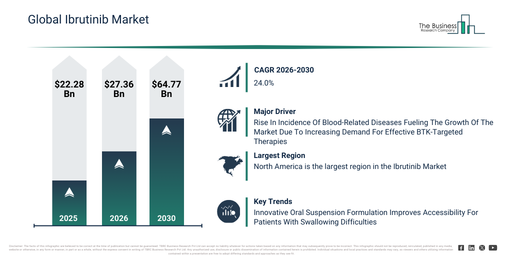
    The market for ibrutinib has experienced exponential expansion over recent years. Projections indicate it will expand from $22.28 billion in 2025 to $27.36 billion in 2026, achieving a compound annual growth rate (CAGR) of 22.8%. This historic growth can be attributed to several factors, including increasing prevalence of b-cell malignancies, approvals of ibrutinib for cll and sll, rising adoption of oral anticancer therapies, advancements in btki research, and growing awareness of targeted cancer therapies.

    The ibrutinib market size is anticipated to undergo substantial growth in the upcoming years, with projections indicating it will reach $64.77 billion by 2030, exhibiting a compound annual growth rate (CAGR) of 24.0%. This expansion during the forecast period is attributable to several factors, including the market’s broadening into new hematologic malignancies, the ongoing development of next-generation BTKI, an increase in partnerships between pharmaceutical and biotechnology firms, escalating investment in personalized oncology, and the proliferation of specialty oncology treatment centers. Furthermore, significant trends identified for the forecast period involve targeted BTK inhibition therapies, customized oncology treatments, advancements in oral small-molecule drug development, the adoption of combination therapy approaches, and the continued expansion of specialized oncology centers.

    Access Your Free Sample Report For In-Depth Market Analysis:

    https://www.thebusinessresearchcompany.com/sample.aspx?id=13250&type=smp

    What Key Factors Are Shaping The Ibrutinib Market Landscape?

    The growing prevalence of blood-related diseases is anticipated to accelerate the expansion of the ibrutinib market in the future. These medical conditions impact the constituents of blood, including red blood cells, white blood cells, platelets, or plasma. The rising occurrence of blood-related diseases is linked to aging populations, as elderly individuals are more prone to issues such as anemia, leukemia, and clotting disorders due to a decline in immune function and various accumulated health problems. Ibrutinib targets these blood-related ailments by inhibiting BTK signaling, which effectively slows the progression and viability of malignant B-cells. For instance, in 2024, the American Cancer Society, a US-based cancer organization, reported 62,770 new leukemia cases, with this number projected to increase to 66,890 in 2025. Thus, the increasing incidence of blood-related diseases is propelling the growth of the ibrutinib market.

    Which Segment Types Are Examined In The Ibrutinib Market Segment Study?

    The ibrutinib market covered in this report is segmented –

    1) By Type: Capsules, Tablets

    2) By Distribution Channel: Hospital Pharmacies, Retail Pharmacies, Online Pharmacies

    3) By Applications: Chronic Lymphocytic Leukemia (CLL), Small Lymphocytic Lymphoma (SLL), Other Applications

    4) By End-User: Hospitals, Clinics, Specialty Centers, Ambulatory Surgical Centers

    Subsegments:

    1) By Capsules: Hard Gelatin Capsules, Soft Gelatin Capsules

    2) By Tablets: Immediate Release Tablets, Extended Release Tablets

    What Trends Are Shaping The Future Of The Ibrutinib Market?

    Leading companies within the ibrutinib market are introducing novel flexible cancer treatment solutions, which offer adaptable formulations to assist patients experiencing difficulty swallowing conventional tablets or capsules, thereby enhancing treatment accessibility and convenience. Such flexible cancer treatment solutions represent a patient-focused strategy, engineered to boost treatment accessibility and ease through the provision of options like orally disintegrating tablets, chewable formulations, granules, or liquid suspensions, all designed for simple ingestion. An illustrative example occurred in February 2024, when Johnson & Johnson, a US-based healthcare firm, in partnership with its alliance collaborator Pharmacyclics LLC, a US-based biopharmaceutical company, declared FDA approval for an oral suspension variant of IMBRUVICA (ibrutinib). This expanded indication for IMBRUVICA encompasses therapeutic choices for adult individuals suffering from chronic lymphocytic leukemia (CLL), small lymphocytic lymphoma (SLL), Waldenström’s macroglobulinemia (WM), and chronic graft versus host disease (cGVHD), thereby presenting a more readily available option for patients who find swallowing tablets or capsules challenging.

    Which Players Are Part Of The Competitive Landscape Of The Ibrutinib Market?

    Major companies operating in the ibrutinib market are ABBVie Inc., Teva Pharmaceutical Industries Limited, Dr Reddy’s Laboratories Ltd., Apotex Inc., Cipla Limited, Zydus Lifesciences Limited, Sun Pharmaceutical Industries Ltd., Accord Healthcare Limited, Natco Pharma Ltd., Beacon Pharmaceuticals plc, MSN Laboratories Pvt Ltd., Hetero Drugs Ltd., Aurobindo Pharma Ltd., Glenmark Pharmaceuticals Ltd., Mylan N.V., Lupin Limited, Intas Pharmaceuticals Ltd., Cadila Healthcare Ltd., Torrent Pharmaceuticals Ltd., Alembic Pharmaceuticals Ltd.

    Get The Full Ibrutinib Market Report:

    https://www.thebusinessresearchcompany.com/report/ibrutinib-global-market-report

    Which Region Represents The Largest Share Of The Ibrutinib Market?

    North America was the largest region in the ibrutinib market in 2025. The regions covered in the ibrutinib market report are Asia-Pacific, South East Asia, Western Europe, Eastern Europe, North America, South America, Middle East, Africa.

    Request A Customized Ibrutinib Market Report For Competitive Insights:

    https://www.thebusinessresearchcompany.com/report/ibrutinib-global-market-report

    Browse Through More Reports Similar to the Global Ibrutinib Market 2026, By The Business Research Company

    Ibrutinib Market Report 2026

    https://www.thebusinessresearchcompany.com/report/ibrutinib-global-market-report

    Ranibizumab Market Report 2026

    https://www.thebusinessresearchcompany.com/report/ranibizumab-global-market-report

    Irritable Bowel Syndrome Ibs Treatment Market Report 2026

    https://www.thebusinessresearchcompany.com/report/irritable-bowel-syndrome-ibs-treatment-global-market-report

    Get in touch with us:

    The Business Research Company: https://www.thebusinessresearchcompany.com/

    Americas +1 310-496-7795

    Asia +44 7882 955267 & +91 8897263534

    Europe +44 7882 955267

    Email us at: marketing@tbrc.info

    Follow us on:

    LinkedIn: https://in.linkedin.com/company/the-business-research-company

    YouTube: https://www.youtube.com/channel/UC24_fI0rV8cR5DxlCpgmyFQ

    Global Market Model: https://www.thebusinessresearchcompany.com/global-market-model

  • Deoxycholic Acid Obesity Drugs Market Outlook 2026–2030 Driven By Growth Factors And Projections

    Deoxycholic Acid Obesity Drugs Market Outlook 2026–2030 Driven By Growth Factors And Projections

    The Business Research Company’s 2026 market reports feature enhanced tools like market attractiveness analysis, TAM assessment, and company scoring matrices, along with interactive dashboards, deeper supply chain insights, and startup coverage strengthening the depth, usability, and strategic value of insights.

    How Does The Market Size Of The Deoxycholic Acid Obesity Drugs Market Compare Between 2026 And 2030?

    The deoxycholic acid obesity drugs market has experienced rapid expansion in its size during recent years. It is projected to increase from $0.5 billion in 2025 to $0.57 billion in 2026, maintaining a compound annual growth rate (CAGR) of 14.4%. This growth observed in the historic period can be attributed to several factors, including increasing consumer awareness of aesthetic treatments, the expansion of medical aesthetics clinics, a rising acceptance of minimally invasive procedures, the availability of approved deoxycholic acid formulations, and a growth in disposable income.

    The deoxycholic acid obesity drugs market is projected to experience swift expansion over the coming years, with its size anticipated to reach $0.97 billion by 2030, exhibiting a compound annual growth rate (CAGR) of 14.1%. This growth during the forecast period is attributable to several factors, including the escalating demand for tailored aesthetic treatments, the proliferation of combination aesthetic protocols, a heightened emphasis on body contouring procedures, increasing investments in innovative aesthetic drugs, and deeper market penetration in developing regions. Key trends expected within this period encompass the growing acceptance of non-surgical methods for fat reduction, an increased call for injectable aesthetic solutions, the ongoing advancement of combined lipolytic therapies, the broadening of clinic-based services for body contouring, and a stronger focus on achieving aesthetic results customized to individual patients.

    Access Your Free Sample Report For In-Depth Market Analysis:

    https://www.thebusinessresearchcompany.com/sample.aspx?id=28192&type=smp

    What Leading Drivers Are Supporting The Deoxycholic Acid Obesity Drugs Market Expansion?

    The increasing prevalence of obesity is projected to fuel the expansion of the deoxycholic acid obesity drug market. Obesity rates indicate the proportion of a population categorized as overweight or obese based on their body mass index (BMI). The rise in these rates is attributed to unhealthy eating habits, such as a high consumption of processed foods and sugary beverages, which results in the accumulation of excess body fat. Deoxycholic acid obesity drugs contribute to reducing obesity by breaking down and removing surplus fat cells, thereby achieving targeted fat reduction and a better body shape. For example, the Office for Health Improvement and Disparities, a UK government body, reported in May 2025 that an estimated 64.5% of adults aged 18 and over in England were overweight or living with obesity from 2023 to 2024, an increase from 64.0% in 2022 to 2023. Consequently, the growing obesity rates are propelling the deoxycholic acid obesity drug market forward.

    How Are Different Segments Classified In The Deoxycholic Acid Obesity Drugs Market Segment Analysis?

    The deoxycholic acid obesity drugs market covered in this report is segmented –

    1) By Drug Type: ATX-101 (Deoxycholic Acid Injection Or Kybella Or Belkyra), Experimental Or Compounded Deoxycholic Acid Formulations, Combination Therapies, Oral Deoxycholic Acid Products

    2) By Formulation: Injectable, Topical

    3) By Distribution Channel: Direct Sales, Retail Pharmacies, Online Pharmacies

    4) By Application: Submental Fat Reduction, Abdominal Fat Reduction, Thighs Arms And Flanks, Lipomas And Localized Fat, Cellulite Management

    5) By End-User: Aesthetic Clinics, Dermatology Clinics, Plastic Surgery Centers, Hospitals, Home Administration

    Subsegments:

    1) By ATX-101 (Deoxycholic Acid Injection or Kybella or Belkyra): Standard Injectable, High-Purity Formulations, Combination Injection Therapies

    2) By Experimental Or Compounded Deoxycholic Acid Formulation: Clinical Trial Formulations, Compounded Customized Formulations

    3) By Combination Therapies: Deoxycholic Acid + Lipolytic Agents, Deoxycholic Acid + Enzyme Therapy

    4) By Oral Deoxycholic Acid Products: Capsules, Tablets, Liquid Formulations

    What Market Trends Are Affecting The Deoxycholic Acid Obesity Drugs Market?

    Leading companies in the deoxycholic acid obesity drug market are concentrating their efforts on developing advanced products, such as injectable deoxycholic acid obesity drugs, to enhance treatment efficacy and improve patient outcomes. Injectable deoxycholic acid obesity drugs utilize deoxycholic acid, a substance known for breaking down fat cells, and are administered as an injection to specifically target and reduce fat in certain areas. For instance, in March 2024, LG Chem Ltd., a South Korea-based chemicals company, introduced Bellacholine for the reduction of submental fat. This is a nonsurgical injection designed to reduce moderate to severe submental fat (double chin) by safely destroying fat cells using deoxycholic acid. It offers advantages including a body-compatible pH, minimal sedimentation, and the promotion of skin elasticity through collagen synthesis.

    Who Are The Companies Driving Activity In The Deoxycholic Acid Obesity Drugs Market?

    Major companies operating in the deoxycholic acid obesity drugs market are AbbVie Inc., Cipla Ltd., Glenmark Life Sciences Limited, Curia Global Inc., Daewoong Pharmaceutical Co. Ltd., Actylis, ICE Pharma, Cayman Chemical Company, Nacalai Tesque Inc., Sichuan Huiyu Pharmaceutical, Conscientia Industrial, Manus Aktteva Biopharma LLP, Jeevan Chemicals & Pharmaceuticals, Anhui Chem-Bright Bioengineering Co. Ltd., GlpBio Technology LLC, Legere Pharmaceuticals, Otto Chemie Pvt. Ltd., BOC Sciences, Guangzhou Green Cross Pharmaceutical, Prodotti Chimici e Alimentari S.P.A

    Get The Full Deoxycholic Acid Obesity Drugs Market Report:

    https://www.thebusinessresearchcompany.com/report/deoxycholic-acid-obesity-drugs-global-market-report

    Which Region Accounts For The Largest Portion Of The Deoxycholic Acid Obesity Drugs Market?

    North America was the largest region in the deoxycholic acid obesity drugs market in 2025. Asia-Pacific is expected to be the fastest-growing region in the forecast period. The regions covered in the deoxycholic acid obesity drugs market report are Asia-Pacific, South East Asia, Western Europe, Eastern Europe, North America, South America, Middle East, Africa.

    Request A Customized Deoxycholic Acid Obesity Drugs Market Report For Competitive Insights:

    https://www.thebusinessresearchcompany.com/report/deoxycholic-acid-obesity-drugs-global-market-report

    Browse Through More Reports Similar to the Global Deoxycholic Acid Obesity Drugs Market 2026, By The Business Research Company

    Metabolic Disorders Drugs Market Report 2026

    https://www.thebusinessresearchcompany.com/report/metabolic-disorders-drugs-global-market-report

    Weight Loss Drugs Market Report 2026

    https://www.thebusinessresearchcompany.com/report/weight-loss-drugs-global-market-report

    Weight Loss Supplements Market Report 2026

    https://www.thebusinessresearchcompany.com/report/weight-loss-supplements-global-market-report

    Get in touch with us:

    The Business Research Company: https://www.thebusinessresearchcompany.com/

    Americas +1 310-496-7795

    Asia +44 7882 955267 & +91 8897263534

    Europe +44 7882 955267

    Email us at: marketing@tbrc.info

    Follow us on:

    LinkedIn: https://in.linkedin.com/company/the-business-research-company

    YouTube: https://www.youtube.com/channel/UC24_fI0rV8cR5DxlCpgmyFQ

    Global Market Model: https://www.thebusinessresearchcompany.com/global-market-model