Category: Pharmaceuticals

  • Genomic Cancer Panel And Profiling Market Forecast Through 2030 With Insights On Market Patterns And Developments

    Genomic Cancer Panel And Profiling Market Forecast Through 2030 With Insights On Market Patterns And Developments

    The Business Research Company’s 2026 market reports feature enhanced tools like market attractiveness analysis, TAM assessment, and company scoring matrices, along with interactive dashboards, deeper supply chain insights, and startup coverage strengthening the depth, usability, and strategic value of insights.

    What Is The Projected Increase In Market Value Of The Genomic Cancer Panel And Profiling Market During 2026–2030?

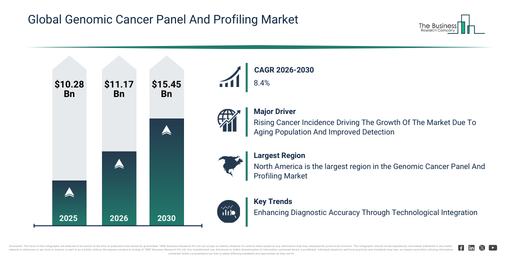
    The genomic cancer panel and profiling market has demonstrated strong growth in recent years. It is anticipated to increase from $10.28 billion in 2025 to $11.17 billion in 2026, achieving a compound annual growth rate (CAGR) of 8.7%. This historical expansion can be attributed to factors such as growth in cancer prevalence, advancement in sequencing technologies, expansion of oncology diagnostics, increased funding for genomic research, and the rising adoption of precision medicine.

    The market for genomic cancer panels and profiling is anticipated to experience substantial expansion in the coming years. This market is projected to reach $15.45 billion by 2030, demonstrating a compound annual growth rate (CAGR) of 8.4%. Key drivers for this growth during the forecast period include the widening application of companion diagnostics, the rising uptake of liquid biopsy, the incorporation of AI into genomic analysis, an increase in oncology screening initiatives, and the creation of more economical sequencing platforms. Significant trends identified for the forecast timeframe encompass the expanding utilization of multi-gene cancer panels, the increasing deployment of next-generation sequencing, the broadening scope of liquid biopsy testing, a heightened need for personalized oncology solutions, and the seamless integration of genomic insights into clinical decision-making processes.

    Access Your Free Sample Report For In-Depth Market Analysis:

    https://www.thebusinessresearchcompany.com/sample.aspx?id=24225&type=smp

    What Primary Drivers Are Shaping The Genomic Cancer Panel And Profiling Market?

    An escalating incidence of cancer is anticipated to fuel the expansion of the genomic cancer panel and profiling market moving forward. This increase in cancer, a disease marked by the unrestrained proliferation and dissemination of atypical cells within the body, is largely attributable to an aging global populace, which elevates the probability of developing the condition as human longevity extends. Genomic cancer panels and profiling are instrumental in oncology care by identifying specific genetic mutations and biomarkers, thereby facilitating personalized treatment approaches and enhancing capabilities for early detection and ongoing monitoring. For example, in January 2024, the American Cancer Society, a U.S.-based nonprofit organization, reported that in 2022, approximately 20 million new cancer cases were recorded worldwide, resulting in 9.7 million deaths. Primarily driven by demographic growth, the global cancer burden is projected to reach 35 million cases by 2050. Hence, the increasing number of cancer diagnoses will stimulate the growth of the genomic cancer panel and profiling market.

    Which Segment Classifications Are Used In The Genomic Cancer Panel And Profiling Market Segment Analysis?

    The genomic cancer panel and profiling market covered in this report is segmented –

    1) By Tissue Testing: Solid Tissue Testing, Liquid Tissue Testing

    2) By Technology: Next-Generation Sequencing (NGS), Polymerase Chain Reaction (PCR), Fluorescence In-Situ Hybridization (FISH), Immunohistochemistry (IHC), Other Technologies

    3) By Cancer Panel Type: Single-Gene Panel, Multi-Gene Panel

    4) By Application: Clinical, Research

    5) By End User: Hospitals, Research And Academic Institutes, Clinical And Diagnostic Laboratories, Other End Users

    Subsegments:

    1) By Solid Tissue Testing: Biopsy Samples, Surgical Resection Samples, Formalin-Fixed Paraffin-Embedded (FFPE) Tissues, Fresh Frozen Tissues

    2) By Liquid Tissue Testing: Blood, Urine, Saliva, Cerebrospinal Fluid (CSF), Other Bodily Fluids

    Which Trends Are Impacting The Progress Of The Genomic Cancer Panel And Profiling Market?

    Leading companies in the genomic cancer panel and profiling market are focusing on technological advancements, such as next-generation sequencers, to improve the precision, speed, and breadth of cancer diagnostics and enable more tailored treatment decisions. Next-generation sequencers represent sophisticated DNA sequencing technologies that allow for rapid, high-throughput analysis of genetic material to identify mutations, variations, and other genomic features. For instance, in April 2025, QIAGEN N.V., a Netherlands-based biotechnology company, launched QIAseq panels specifically designed for next-generation sequencers, facilitating comprehensive genomic profiling by analyzing over 700 genes. These panels are intended for both research and clinical applications, aiming to enhance cancer diagnostics and treatment strategies.

    Which Firms Are Contributing To The Genomic Cancer Panel And Profiling Market Ecosystem?

    Major companies operating in the genomic cancer panel and profiling market are Hoffmann-La Roche Ltd, Thermo Fisher Scientific Inc., Agilent Technologies Inc., Hologic Inc., Illumina Inc., Sysmex Corporation, QIAGEN N.V., Exact Sciences Corporation, ARUP Laboratories, Tempus Labs, Genscript Biotech Corporation, NeoGenomics Inc., Foundation Medicine, Invitae Corporation, Guardant Health Inc., Caris Life Sciences, Fulgent Genetics, NanoString Technologies Inc., Genecast Biotechnology Co. Ltd, Burning Rock DX, HTG Molecular Diagnostics Inc., Predictive Oncology Inc.

    Get The Full Genomic Cancer Panel And Profiling Market Report:

    https://www.thebusinessresearchcompany.com/report/genomic-cancer-panel-and-profiling-global-market-report

    Where Is The Genomic Cancer Panel And Profiling Market Primarily Concentrated By Region?

    North America was the largest region in the genomic cancer panel and profiling market in 2025. The regions covered in the genomic cancer panel and profiling market report are Asia-Pacific, South East Asia, Western Europe, Eastern Europe, North America, South America, Middle East, Africa.

    Request A Customized Genomic Cancer Panel And Profiling Market Report For Competitive Insights:

    https://www.thebusinessresearchcompany.com/report/genomic-cancer-panel-and-profiling-global-market-report

    Browse Through More Reports Similar to the Global Genomic Cancer Panel And Profiling Market 2026, By The Business Research Company

    Cancer Profiling Market Report 2026

    https://www.thebusinessresearchcompany.com/report/cancer-profiling-global-market-report

    Genomics In Cancer Care Market Report 2026

    https://www.thebusinessresearchcompany.com/report/genomics-in-cancer-care-global-market-report

    Cancer Tumor Profiling Market Report 2026

    https://www.thebusinessresearchcompany.com/report/cancer-tumor-profiling-global-market-report

    Get in touch with us:

    The Business Research Company: https://www.thebusinessresearchcompany.com/

    Americas +1 310-496-7795

    Asia +44 7882 955267 & +91 8897263534

    Europe +44 7882 955267

    Email us at: marketing@tbrc.info

    Follow us on:

    LinkedIn: https://in.linkedin.com/company/the-business-research-company

    YouTube: https://www.youtube.com/channel/UC24_fI0rV8cR5DxlCpgmyFQ

    Global Market Model: https://www.thebusinessresearchcompany.com/global-market-model
  • Genomic Biomarker Market Outlook For 2026–2030 Covering Growth Drivers And Industry Trends

    Genomic Biomarker Market Outlook For 2026–2030 Covering Growth Drivers And Industry Trends

    The Business Research Company’s 2026 market reports feature enhanced tools like market attractiveness analysis, TAM assessment, and company scoring matrices, along with interactive dashboards, deeper supply chain insights, and startup coverage strengthening the depth, usability, and strategic value of insights.

    How Is The Market Size Of The Genomic Biomarker Market Expected To Change From 2026 To 2030?

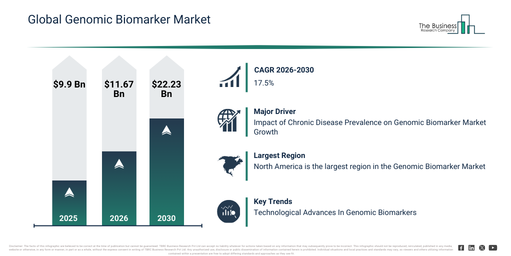
    The genomic biomarker market has seen rapid expansion in recent years. Its valuation is anticipated to increase from $9.9 billion in 2025 to $11.67 billion in 2026, achieving a compound annual growth rate (CAGR) of 17.8%. This historical surge in growth is primarily linked to factors such as greater investment in genomic research, the expansion of biomarker studies focused on oncology, enhanced access to next-generation sequencing technologies, increased collaboration between diagnostic and pharmaceutical companies, and the early adoption of personalized medicine approaches.

    The genomic biomarker market is projected to experience substantial expansion in the coming years. Its valuation is set to reach $22.23 billion by 2030, demonstrating a compound annual growth rate (CAGR) of 17.5%. This anticipated growth during the forecast period stems from factors such as the escalating demand for precision medicine therapies, the increasing integration of biomarkers into drug development processes, the wider adoption of companion diagnostics, a heightened emphasis on early disease detection, and strengthened regulatory backing for biomarker-driven approvals. Key trends anticipated over the forecast timeframe encompass the expanding uptake of predictive genomic biomarkers, the growing prevalence of pharmacogenomic testing, the deeper incorporation of genomic data into clinical decision-making, the broadening scope of biomarker-based oncology diagnostics, and an intensified focus on clinical validation benchmarks.

    Access Your Free Sample Report For In-Depth Market Analysis:

    https://www.thebusinessresearchcompany.com/sample.aspx?id=20557&type=smp

    Which Major Drivers Are Influencing The Expansion Of The Genomic Biomarker Market?

    The expanding occurrence of chronic illnesses is anticipated to fuel the expansion of the genomic biomarker market in the future. These are enduring health conditions that persist and typically develop gradually. The rising incidence of these diseases stems from an aging global populace and a surge in lifestyle-related ailments like obesity and diabetes. Genomic biomarkers facilitate prompt diagnosis and customized preventive measures for chronic diseases by pinpointing genetic susceptibilities and adapting treatments. Such a forward-thinking method contributes to lowering prevalence by targeting vulnerable individuals prior to the onset of the disease. For example, in September 2023, the World Health Organization (WHO), an intergovernmental organization based in Switzerland, reported that chronic diseases are responsible for 41 million deaths globally each year, constituting 74% of all fatalities. This total encompasses 17.9 million deaths from cardiovascular diseases, 9.3 million from cancer, 4.1 million from chronic respiratory diseases, and 2.0 million from diabetes. Consequently, the expanding occurrence of chronic illnesses is a key driver for the growth of genomic biomarkers.

    How Is The Genomic Biomarker Market Organized By Segment Classification?

    The genomic biomarker market covered in this report is segmented –

    1) By Type: Predictive Biomarkers, Prognostic Biomarkers

    2) By Disease Indication: Oncology, Cardiovascular Diseases, Neurological Diseases, Renal Disorders, Other Disease Indications

    3) By Validation: Analytical Validation, Clinical Validation, Clinical Utility

    4) By End-User: Hospitals, Diagnostic Centers, Research Laboratories, Other End Users

    Subsegments:

    1) By Predictive Biomarkers: Genetic Biomarkers For Disease Susceptibility, Pharmacogenomic Biomarkers For Drug Response, Early Detection Biomarkers For Disease Prediction, Biomarkers For Treatment Response Prediction

    2) By Prognostic Biomarkers: Biomarkers For Disease Progression, Biomarkers For Outcome Prediction, Survival And Recurrence Biomarkers, Biomarkers For Treatment Efficacy And Prognosis

    What Trends Are Transforming The Genomic Biomarker Market?

    Key companies operating within the genomic biomarker market are concentrating on developing sophisticated products, such as advanced liquid biopsy assays, to enable thorough genomic profiling of solid tumors. A liquid biopsy assay serves as a diagnostic test that scrutinizes genetic material, typically circulating tumor DNA (ctDNA), from a blood sample to both detect and monitor cancer. The identification of genomic biomarkers can furnish insights into specific mutations, gene expression profiles, or other genetic alterations associated with cancer. For instance, in November 2023, Illumina Inc., a US-based biotechnology company, launched an advanced liquid biopsy assay, the TruSight Oncology 500 ctDNA v2 (TSO 500 ctDNA v2), specifically for comprehensive genomic profiling of solid tumors. This assay offers enhanced analytical sensitivity by identifying low-frequency variants with just 20 ng of cell-free DNA, a decrease from 30 ng. It provides results in under four days, considerably speeding up genomic profiling compared to conventional techniques. Its streamlined workflow and impending automation will simplify lab integration and elevate efficiency.

    Who Are The Industry Participants Involved In The Genomic Biomarker Market?

    Major companies operating in the genomic biomarker market are Pfizer Inc., Roche Diagnostics, Thermo Fisher Scientific Inc., Merck KGaA, Eurofins Scientific SE, Agilent Technologies Inc., Illumina Inc., PerkinElmer Inc., Beckman Coulter Inc., Bio-Rad Laboratories Inc., Foundation Medicine Inc., QIAGEN N.V., Almac Group Ltd., Myriad Genetics Inc., Invitae Inc., Guardant Health Inc., Novogene Inc., Twist Bioscience Corp., NanoString Technologies Inc., Quanterix Corp., Personalis Inc., GENEWIZ Inc., Agena Bioscience Inc., Creative Diagnostics Ltd., OncoDNA SA, Genome Life Sciences Ltd., Epigenomics AG.

    Get The Full Genomic Biomarker Market Report:

    https://www.thebusinessresearchcompany.com/report/genomic-biomarker-global-market-report

    Which Region Has The Greatest Market Share In The Genomic Biomarker Market?

    North America was the largest region in the genomic biomarker market in 2025. Asia-Pacific is expected to be the fastest-growing region in the forecast period. The regions covered in the genomic biomarker market report are Asia-Pacific, South East Asia, Western Europe, Eastern Europe, North America, South America, Middle East, Africa.

    Request A Customized Genomic Biomarker Market Report For Competitive Insights:

    https://www.thebusinessresearchcompany.com/report/genomic-biomarker-global-market-report

    Browse Through More Reports Similar to the Global Genomic Biomarker Market 2026, By The Business Research Company

    Biomarkers Market Report 2026

    https://www.thebusinessresearchcompany.com/report/biomarkers-global-market-report

    Renal Biomarkers Market Report 2026

    https://www.thebusinessresearchcompany.com/report/renal-biomarkers-global-market-report

    Cancer Biomarker Market Report 2026

    https://www.thebusinessresearchcompany.com/report/cancer-biomarker-global-market-report

    Get in touch with us:

    The Business Research Company: https://www.thebusinessresearchcompany.com/

    Americas +1 310-496-7795

    Asia +44 7882 955267 & +91 8897263534

    Europe +44 7882 955267

    Email us at: marketing@tbrc.info

    Follow us on:

    LinkedIn: https://in.linkedin.com/company/the-business-research-company

    YouTube: https://www.youtube.com/channel/UC24_fI0rV8cR5DxlCpgmyFQ

    Global Market Model: https://www.thebusinessresearchcompany.com/global-market-model
  • Rising Prevalence Of Autoimmune Diseases Fueling Growth In The Is Supporting Expansion In The Genome Sequencing Market

    Rising Prevalence Of Autoimmune Diseases Fueling Growth In The Is Supporting Expansion In The Genome Sequencing Market

    The Business Research Company’s 2026 market reports feature enhanced tools like market attractiveness analysis, TAM assessment, and company scoring matrices, along with interactive dashboards, deeper supply chain insights, and startup coverage strengthening the depth, usability, and strategic value of insights.

    From Its 2026 Market Size, What Value Is The Genome Sequencing Market Projected To Reach By 2030?

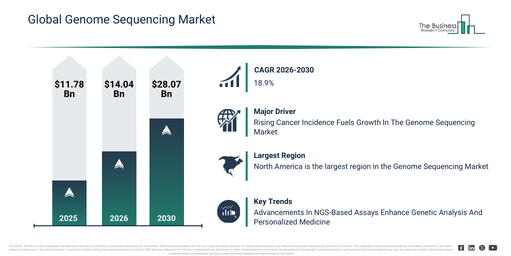
    The genome sequencing market size has experienced swift expansion in recent years. It is anticipated to increase from $11.78 billion in 2025 to $14.04 billion in 2026, demonstrating a compound annual growth rate (CAGR) of 19.2%. In the historical period, this growth can be attributed to elements such as the limited access to advanced sequencing systems, a reliance on conventional Sanger sequencing, the proliferation of genomics research initiatives, enhanced government financial support for genome projects, and a heightened awareness of personalized medicine.

    The genome sequencing market size is anticipated to experience rapid expansion in the upcoming years. It is forecasted to grow to $28.07 billion in 2030, achieving a compound annual growth rate (CAGR) of 18.9%. The drivers for this growth during the forecast period include the development of next-generation sequencing systems, the expansion of bioinformatics platforms, the increasing adoption of precision medicine programs, a rise in collaborations between biotech and pharmaceutical companies, and the growth in genomic data storage and management solutions. Major trends expected in this period encompass the increasing integration of next-generation sequencing (NGS) technologies, a rising demand for precision medicine and personalized therapies, the broadening of bioinformatics and data analysis services, an increase in environmental and microbiome genomics applications, and the incorporation of custom genome sequencing solutions in research.

    Access Your Free Sample Report For In-Depth Market Analysis:

    https://www.thebusinessresearchcompany.com/sample.aspx?id=19484&type=smp

    What Key Drivers Are Fueling The Growth Of The Genome Sequencing Market?

    The escalating incidence of cancer is anticipated to fuel the expansion of the genome sequencing market moving forward. Cancer is a collection of illnesses marked by the unregulated proliferation and dissemination of atypical cells, which can prove fatal if left unmanaged. The rise in cancer cases stems from various elements, including an aging populace, lifestyle choices, environmental exposures, and genetic predispositions. Genome sequencing aids in uncovering genetic mutations and susceptibilities to cancer, thereby enabling prompt identification and customized treatment approaches. It further uncovers inherited cancer risks and supports the monitoring of cancerous cell progression. For instance, in February 2024, according to the World Health Organization, a Switzerland-based intergovernmental organization, new cancer cases are projected to reach over 35 million by 2050, representing a 77% increase compared to 20 million cases in 2022. Consequently, the growing prevalence of cancer is propelling the development of the genome sequencing market.

    Which Segments Define The Genome Sequencing Market Segment Structure?

    The genome sequencing market covered in this report is segmented –

    1) By Product: Consumables, Systems And Software, Services

    2) By Technology: Polymerase Chain Reaction (PCR), Sequencing, Microarray, Nucleic Acid Extraction, Purification, Other Technologies

    3) By Applications: Diagnostics, Drug Discovery, Precision Medicine, Environmental Genomics, Research, Other Applications

    4) By End-User: Hospitals And Clinics, Biotechnology And Pharmaceutical Companies, Contract Research Organizations (CROs), Government, Research Centers, Academic And Government Institutes, Other End-Users

    Subsegments:

    1) By Consumables: Reagents And Kits, Sequencing Chips And Plates, Sample Preparation Products, Library Preparation Kits, DNA And RNA Extraction Kits

    2) By Systems And Software: Next-Generation Sequencing (NGS) Systems, Sanger Sequencing Systems, Bioinformatics Software And Analysis Tools, Data Management And Storage Solutions, Laboratory Information Management Systems (LIMS)

    3) By Services: Sequencing Services, Bioinformatics Analysis Services, Consultation And Support Services, Custom Genome Sequencing Solutions, Sample Collection And Preparation Services.

    What Trends Are Shaping The Future Of The Genome Sequencing Market?

    Major companies operating in the genome sequencing market are concentrating on creating sophisticated solutions, such as next-generation sequencing (NGS)-based assays, to improve the precision of genetic analysis and support personalized medicine strategies. NGS-based assays are defined as cutting-edge genomic technologies designed for the rapid and high-throughput sequencing of DNA or RNA for genetic material analysis. NGS facilitates the concurrent sequencing of millions of DNA or RNA fragments, thereby producing vast amounts of data efficiently and at a lower cost. For instance, in April 2023, Centogene N.V., a Germany-based provider of genetic diagnostics for rare diseases, launched CentoGenome, an enhanced Next Generation Sequencing (NGS)-based assay. This assay provides continuous diagnostic assistance, including proactive diagnosis confirmation and reclassification programs without additional charges, thus ensuring ongoing patient care and precise disease management. By employing a PCR-free methodology, CentoGenome mitigates bias and boosts sequencing quality, resulting in superior coverage of challenging genomic regions and deeper understanding of coding, regulatory, and intronic segments. The platform incorporates an automated bioinformatics pipeline and medical expert review, leveraging CENTOGENE’s vast bio databank compiled from data from about 700,000 patients across more than 120 countries. This comprehensive dataset significantly enhances the identification of disease-causing variants, such as those linked to spinal muscular atrophy and Parkinson’s disease.

    Who Are The Established Players Within The Genome Sequencing Market?

    Major companies operating in the genome sequencing market are F. Hoffmann-La Roche Ltd., Thermo Fisher Scientific Inc., Abbott Laboratories, Danaher Corporation, Merck KGaA, Siemens Healthineers, Becton Dickinson and Company, Eurofins Genomics, Agilent Technologies Inc., PerkinElmer, Illumina Inc., bioMérieux, Bio-Rad Laboratories Inc., QIAGEN N.V., 10x Genomics Inc., BGI Group, Oxford Nanopore Technologies plc, Pacific Biosciences of California Inc., GENEWIZ Inc., LI-COR Inc., CENTOGENE N.V., Bioneer Corporation, Strand Life Sciences Pvt Ltd., Nebula Genomics

    Get The Full Genome Sequencing Market Report:

    https://www.thebusinessresearchcompany.com/report/genome-sequencing-global-market-report

    Which Region Accounts For The Largest Portion Of The Genome Sequencing Market?

    North America was the largest region in the genome sequencing market in 2025. Asia-Pacific is expected to be the fastest-growing region in the forecast period. The regions covered in the genome sequencing market report are Asia-Pacific, South East Asia, Western Europe, Eastern Europe, North America, South America, Middle East, Africa.

    Request A Customized Genome Sequencing Market Report For Competitive Insights:

    https://www.thebusinessresearchcompany.com/report/genome-sequencing-global-market-report

    Browse Through More Reports Similar to the Global Genome Sequencing Market 2026, By The Business Research Company

    Genome Editing Or Genome Engineering Market Report 2026

    https://www.thebusinessresearchcompany.com/report/genome-editing-or-genome-engineering-global-market-report

    Single Cell Genome Sequencing Market Report 2026

    https://www.thebusinessresearchcompany.com/report/single-cell-genome-sequencing-global-market-report

    Whole Genome And Exome Sequencing Market Report 2026

    https://www.thebusinessresearchcompany.com/report/whole-genome-and-exome-sequencing-global-market-report

    Get in touch with us:

    The Business Research Company: https://www.thebusinessresearchcompany.com/

    Americas +1 310-496-7795

    Asia +44 7882 955267 & +91 8897263534

    Europe +44 7882 955267

    Email us at: marketing@tbrc.info

    Follow us on:

    LinkedIn: https://in.linkedin.com/company/the-business-research-company

    YouTube: https://www.youtube.com/channel/UC24_fI0rV8cR5DxlCpgmyFQ

    Global Market Model: https://www.thebusinessresearchcompany.com/global-market-model
  • Rising Prevalence Of Chronic Diseases Driving Growth Due To Increasing Demand For Gene Therapy Treatments Is Contributing To Changes In The Genitourinary Drugs Market

    Rising Prevalence Of Chronic Diseases Driving Growth Due To Increasing Demand For Gene Therapy Treatments Is Contributing To Changes In The Genitourinary Drugs Market

    The Business Research Company’s 2026 market reports feature enhanced tools like market attractiveness analysis, TAM assessment, and company scoring matrices, along with interactive dashboards, deeper supply chain insights, and startup coverage strengthening the depth, usability, and strategic value of insights.

    How Much Growth In Market Value Is Expected For The Genitourinary Drugs Market Between 2026 And 2030?

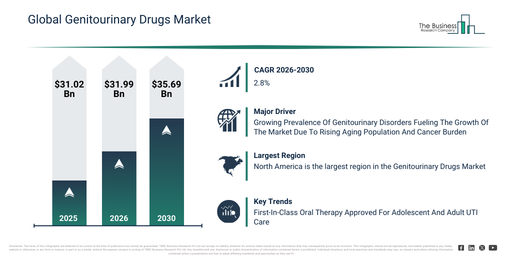
    The market size for genitourinary drugs has experienced consistent growth in recent years. This market is set to expand from $31.02 billion in 2025 to $31.99 billion in 2026, achieving a compound annual growth rate (CAGR) of 3.1%. The expansion observed historically can be attributed to the widespread occurrence of urinary tract infections, an aging population, the incidence of hormonal disorders, the increased reach of hospital pharmacies, and the broader adoption of prescription medications.

    The genitourinary drugs market is projected to experience consistent expansion over the upcoming years. Its valuation is anticipated to reach $35.69 billion by 2030, demonstrating a compound annual growth rate (CAGR) of 2.8%. This anticipated growth during the forecast timeframe is primarily driven by factors such as the adoption of personalized urology treatments, the rise of digital health platforms, increasing reproductive health awareness, the development of minimally invasive therapies, and the expansion of specialty clinics. Key trends expected within this period encompass an increasing demand for UTI and BPH treatments, a broader application of hormonal and fertility therapies, the diversification of oral and topical drug formulations, an intensified focus on women’s and men’s urological well-being, and the expansion of online pharmacy distribution channels.

    Access Your Free Sample Report For In-Depth Market Analysis:

    https://www.thebusinessresearchcompany.com/sample.aspx?id=24548&type=smp

    Which Drivers Are Supporting The Genitourinary Drugs Market Growth?

    The increasing incidence of genitourinary disorders is anticipated to stimulate the expansion of the genitourinary drugs market in the coming years. Genitourinary disorders refer to medical conditions affecting the genitourinary system, which consists of both urinary and reproductive organs, including infections, cancers, and various functional or structural problems. The rising occurrence of genitourinary disorders is attributed to the aging population, as age-related physiological changes heighten the risk of urinary and reproductive health conditions. Genitourinary drugs assist in managing genitourinary disorders by targeting conditions of the urinary and reproductive systems, providing relief from infections, inflammation, and dysfunction. They improve patient outcomes by enabling effective, convenient, and condition-specific treatment, thereby enhancing overall quality of life. For instance, in April 2024, according to a report by the American Cancer Society, a US-based non-profit organization, approximately 20 million new cancer cases were diagnosed globally in 2022, leading to 9.7 million deaths, and the number of cancer cases is projected to reach 35 million by 2050. Thus, the growing prevalence of genitourinary disorders is driving the growth of the genitourinary drugs market.

    How Is The Genitourinary Drugs Market Segmented Across Different Segment Categories?

    The genitourinary drugs market covered in this report is segmented –

    1) By Product: Urologicals, Hormonal Therapy, Gynecological, Anti-Infectives, Other Products

    2) By Route Of Administration: Oral, Parenteral, Topical

    3) By Application: Urinary Tract Infections (UTIs), Benign Prostatic Hyperplasia (BPH), Prostate Cancer, Overactive Bladder, Bladder Cancer, Other Applications

    4) By Distribution Channel: Hospital Pharmacies, Drug Store And Retail Pharmacies, Online Pharmacies

    Subsegments:

    1) By Urologicals: Benign Prostatic Hyperplasia (BPH) Drugs, Urinary Incontinence Drugs, Overactive Bladder (OAB) Drugs, Urolithiasis (Kidney Stone) Drugs, Erectile Dysfunction Drugs

    2) By Hormonal Therapy: Estrogen Therapy, Progestin Therapy, Gonadotropin-Releasing Hormone (GnRH) Agonists/Antagonists, Androgen Replacement Therapy, Selective Estrogen Receptor Modulators (SERMs)

    3) By Gynecological: Contraceptives, Menopausal Hormone Therapy, Fertility Drugs, Drugs for Endometriosis, Drugs for Polycystic Ovary Syndrome (PCOS)

    4) By Anti-Infectives: Urinary Tract Infection (UTI) Drugs, Sexually Transmitted Infection (STI) Drugs, Vaginal Antifungals, Antivirals

    5) By Other Products: Drugs for Chronic Pelvic Pain, Bladder Cancer Therapies, Interstitial Cystitis Drugs, Pelvic Organ Prolapse Treatment Drugs, Adjunctive Therapies

    Which Trends Are Contributing To Changes In The Genitourinary Drugs Market?

    Companies operating in the genitourinary drugs market are prioritizing the development of innovative products, such as oral antibiotics, to enhance treatment convenience, improve patient adherence, and effectively combat infections. Oral antibiotics refer to antibacterial medications taken orally to treat infections caused by bacteria. For instance, in March 2025, GSK plc, a UK-based pharmaceutical company, received approval from the US Food and Drug Administration (FDA) for Blujepa (gepotidacin). This drug is for treating uncomplicated urinary tract infections caused by susceptible bacteria in women and girls aged 12 and older. It is a novel, first-in-class oral antibiotic that operates by inhibiting bacterial DNA replication, specifically targeting two crucial enzymes: DNA gyrase and topoisomerase IV. Unlike traditional antibiotics, it binds to unique sites to overcome resistance, providing a targeted mechanism with improved safety and efficacy.

    Which Organizations Play A Role In The Genitourinary Drugs Market Landscape?

    Major companies operating in the genitourinary drugs market are Pfizer Inc., Johnson & Johnson, F. Hoffmann-La Roche AG, Merck & Co. Inc., Bayer AG, Novartis AG, Sanofi S.A., Bristol Myers Squibb, AstraZeneca plc, Abbott Laboratories, GSK plc, Eli Lilly and Company, Amgen Inc., Teva Pharmaceutical Industries Ltd., Astellas Pharma Inc., Ipsen Société Anonyme, Aurobindo Pharma Limited, Dr. Reddy’s Laboratories Limited, Cipla Limited, Hikma Pharmaceuticals Public Limited Company, Endo International Public Limited Company, Takeda Pharmaceutical Company Limited, Zydus Lifesciences Limited, Melinta Therapeutics Inc., Asieris Pharmaceuticals, Sun Pharmaceutical Industries Ltd.

    Get The Full Genitourinary Drugs Market Report:

    https://www.thebusinessresearchcompany.com/report/genitourinary-drugs-global-market-report

    Which Region Holds The Highest Market Share In The Genitourinary Drugs Market?

    North America was the largest region in the genitourinary drugs market in 2025. Asia-Pacific is expected to be the fastest-growing region in the forecast period. The regions covered in the genitourinary drugs market report are Asia-Pacific, South East Asia, Western Europe, Eastern Europe, North America, South America, Middle East, Africa.

    Request A Customized Genitourinary Drugs Market Report For Competitive Insights:

    https://www.thebusinessresearchcompany.com/report/genitourinary-drugs-global-market-report

    Browse Through More Reports Similar to the Global Genitourinary Drugs Market 2026, By The Business Research Company

    Genito Urinary Drugs Market Report 2026

    https://www.thebusinessresearchcompany.com/report/genito-urinary-drugs-global-market-report

    Generic Oncology Drugs Market Report 2026

    https://www.thebusinessresearchcompany.com/report/generic-oncology-drugs-global-market-report

    Pharmaceutical Label Market Report 2026

    https://www.thebusinessresearchcompany.com/report/pharmaceutical-label-global-market-report

    Get in touch with us:

    The Business Research Company: https://www.thebusinessresearchcompany.com/

    Americas +1 310-496-7795

    Asia +44 7882 955267 & +91 8897263534

    Europe +44 7882 955267

    Email us at: marketing@tbrc.info

    Follow us on:

    LinkedIn: https://in.linkedin.com/company/the-business-research-company

    YouTube: https://www.youtube.com/channel/UC24_fI0rV8cR5DxlCpgmyFQ

    Global Market Model: https://www.thebusinessresearchcompany.com/global-market-model

  • The Genetic Mutation Analysis Market Is Evolving Due To Rising Migraine Prevalence Driving Growth In The

    The Genetic Mutation Analysis Market Is Evolving Due To Rising Migraine Prevalence Driving Growth In The

    The Business Research Company’s 2026 market reports feature enhanced tools like market attractiveness analysis, TAM assessment, and company scoring matrices, along with interactive dashboards, deeper supply chain insights, and startup coverage strengthening the depth, usability, and strategic value of insights.

    What Is The Estimated Market Size Of The Genetic Mutation Analysis Market In 2026, And How Will Its Value Evolve By 2030?

    The market for genetic mutation analysis has experienced significant expansion recently. Projections indicate its size will increase from $6.65 billion in 2025 to reach $7.43 billion by 2026, demonstrating a compound annual growth rate (CAGR) of 11.7%. Historically, this expansion has been driven by factors such as limited access to advanced sequencing technologies, a growing awareness of genetic disorders, increasing research in oncology and inherited diseases, the adoption of PCR and microarray technologies, and the early development of bioinformatics tools.

    The genetic mutation analysis market size is projected to experience swift expansion over the coming years. This market is anticipated to reach $11.47 billion by 2030, exhibiting a compound annual growth rate (CAGR) of 11.5%. Several factors are expected to fuel this growth throughout the forecast period, including progress in crispr and ngs platforms, an increase in pharmacogenomics research, greater investments in genetic testing infrastructure, the incorporation of ai-driven data interpretation tools, and more partnerships between research institutions and biotechnology firms. Key trends anticipated during this period involve a greater embrace of next-generation sequencing and crispr technologies, growing need for personalized medicine and targeted therapies, the broadening of genetic testing services within clinical diagnostics, the merging of bioinformatics with data analysis platforms, and an uptick in studies concerning rare genetic disorders and pharmacogenomics.

    Access Your Free Sample Report For In-Depth Market Analysis:

    https://www.thebusinessresearchcompany.com/sample.aspx?id=27297&type=smp

    What Key Factors Are Affecting The Genetic Mutation Analysis Market Demand?

    The increasing occurrence of genetic disorders is anticipated to boost the expansion of the genetic mutation analysis market in the coming years. Genetic disorders are conditions resulting from DNA irregularities or alterations within an individual, which can either be passed down or emerge without prior inheritance. A contributing factor to the rising incidence of these disorders is the increased age of parents, which heightens the potential for genetic mutations during conception, consequently increasing the probability of such conditions in children. Genetic mutation analysis serves to identify alterations in genes that may cause or indicate the existence of genetic disorders, facilitating prompt diagnosis, specific therapies, and well-informed choices regarding reproduction or lifestyle. As an illustration, in October 2024, data from the Cystic Fibrosis Trust revealed that 11,148 cystic fibrosis patients were registered in 2022, a figure that climbed to 11,318 in 2023, showing a 1.5% rise in patient registrations annually. Thus, the growing prevalence of genetic disorders is a key factor propelling the growth of the genetic mutation analysis market.

    What Are The Main Segments Within The Genetic Mutation Analysis Market Segment Structure?

    The genetic mutation analysis market covered in this report is segmented –

    1) By Component: Hardware, Software, Services

    2) By Technology: Next-Generation Sequencing (NGS), Polymerase Chain Reaction (PCR), Microarray, Sanger Sequencing, Clustered Regularly Interspaced Short Palindromic Repeats (CRISPR)

    3) By Application: Oncology, Cardiovascular Diseases, Neurological Disorders, Infectious Diseases, Genetic Disorders, Pharmacogenomics

    4) By End User: Hospitals And Clinics, Research Institutes, Pharmaceutical And Biotechnology Companies, Diagnostic Laboratories

    Subsegments:

    1) By Hardware: Sequencers, Polymerase Chain Reaction (PCR) Machines, Microarray Instruments, Electrophoresis Systems, Imaging Systems

    2) By Software: Data Analysis Software, Sequence Alignment Tools, Variant Calling Software, Genome Annotation Software, Visualization Tools

    3) By Services: Genetic Testing Services, Data Interpretation Services, Bioinformatics Services, Sample Preparation Services, Clinical Reporting Services

    What Market Trends Are Affecting The Genetic Mutation Analysis Market?

    Leading firms within the genetic mutation analysis market are concentrating on creating novel solutions, including tissue-based next-generation sequencing (NGS) tests, aimed at improving accuracy in detecting significant genetic changes and informing individualized treatment plans. These tissue-based next-generation sequencing (NGS) tests serve as sophisticated diagnostic instruments, examining DNA or RNA from tissue samples to uncover genetic mutations, alterations, or biomarkers linked to conditions like cancer. As an illustration, in June 2024, Guardant Health Inc., a US-based oncology company, introduced the Guardant360 TissueNext test, which now identifies 498 genes in a tumor tissue sample. These genes, also known as cancer biomarkers, assist oncologists in pinpointing the most effective targeted therapies or treatment approaches for individuals with advanced cancer. Beyond the expanded gene panel, Guardant has refined the test’s operational processes to achieve a quicker turnaround time. The new Guardant360 TissueNext test will receive coverage for Medicare fee-for-service patients suffering from advanced solid tumor cancers as a distinct service. This coverage is based on the determination provided by Palmetto GBA, a Medicare administrative contractor for the Molecular Diagnostics Services program (MolDX), under its current local coverage policy.

    Who Are The Companies Participating In The Genetic Mutation Analysis Market?

    Major companies operating in the genetic mutation analysis market are F. Hoffmann-La Roche Ltd., Thermo Fisher Scientific Inc., Agilent Technologies Inc., Illumina Inc., Revvity Inc., Bio-Rad Laboratories Inc., QIAGEN N.V., Natera Inc., Myriad Genetics Inc., GenScript Biotech Corporation, Takara Bio Inc., 10x Genomics Inc., Oxford Nanopore Technologies Plc, Genomic Health Inc., Color Genomics Inc., Blueprint Medicines Corporation, GENEWIZ Inc., Pacific Biosciences of California Inc., Standard BioTools Inc., Personalis Inc., LGC Biosearch Technologies LLC, BGI Genomics Co. Ltd.

    Get The Full Genetic Mutation Analysis Market Report:

    https://www.thebusinessresearchcompany.com/report/genetic-mutation-analysis-global-market-report

    Where Is The Genetic Mutation Analysis Market Most Concentrated Geographically?

    North America was the largest region in the genetic mutation analysis market in 2025. The regions covered in the genetic mutation analysis market report are Asia-Pacific, South East Asia, Western Europe, Eastern Europe, North America, South America, Middle East, Africa.

    Request A Customized Genetic Mutation Analysis Market Report For Competitive Insights:

    https://www.thebusinessresearchcompany.com/report/genetic-mutation-analysis-global-market-report

    Browse Through More Reports Similar to the Global Genetic Mutation Analysis Market 2026, By The Business Research Company

    Mining Equipment Market Report 2026

    https://www.thebusinessresearchcompany.com/report/mining-equipment-global-market-report

    Electric Mining Equipment Market Report 2026

    https://www.thebusinessresearchcompany.com/report/electric-mining-equipment-global-market-report

    Autonomous Mining Equipment Market Report 2026

    https://www.thebusinessresearchcompany.com/report/autonomous-mining-equipment-global-market-report

    Get in touch with us:

    The Business Research Company: https://www.thebusinessresearchcompany.com/

    Americas +1 310-496-7795

    Asia +44 7882 955267 & +91 8897263534

    Europe +44 7882 955267

    Email us at: marketing@tbrc.info

    Follow us on:

    LinkedIn: https://in.linkedin.com/company/the-business-research-company

    YouTube: https://www.youtube.com/channel/UC24_fI0rV8cR5DxlCpgmyFQ

    Global Market Model: https://www.thebusinessresearchcompany.com/global-market-model
  • The Rise Of Impact Of Rising Healthcare Spending On Rare Disease Treatments Is Influencing The Genetic Analysis Market

    The Rise Of Impact Of Rising Healthcare Spending On Rare Disease Treatments Is Influencing The Genetic Analysis Market

    The Business Research Company’s 2026 market reports feature enhanced tools like market attractiveness analysis, TAM assessment, and company scoring matrices, along with interactive dashboards, deeper supply chain insights, and startup coverage strengthening the depth, usability, and strategic value of insights.

    How Does The Market Size Of The Genetic Analysis Market Compare Between 2026 And 2030?

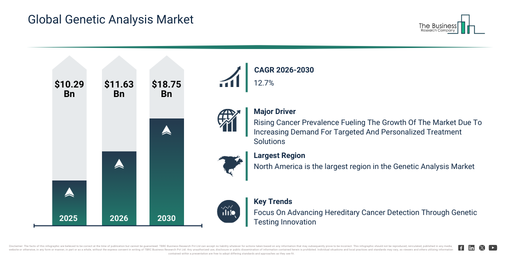
    The genetic analysis market has experienced significant expansion recently. It is projected to increase from $10.29 billion in 2025 to $11.63 billion in 2026, achieving a compound annual growth rate (CAGR) of 13.0%. This growth observed in the historic period is attributable to several factors, including the constrained availability of high-throughput sequencing platforms, a reliance on conventional genetic testing methods, heightened public understanding of genetic disorders, increased funding in research laboratories, and an expanding count of diagnostic centers.

    The genetic analysis market size is anticipated to undergo rapid growth over the next few years. It is projected to reach $18.75 billion in 2030, demonstrating a compound annual growth rate (CAGR) of 12.7%. This growth during the forecast period can be attributed to progress in ngs and real-time pcr technologies, the creation of cloud-based genomic data platforms, the expanding acceptance of personalized medicine, increasing governmental efforts for genetic disease screening, and the incorporation of ai and bioinformatics tools into diagnostics. Prominent trends for the forecast period include the expansion of next-generation sequencing (ngs) and pcr-based genetic testing, the rising adoption of pharmacogenomic testing for personalized medicine, an increase in prenatal and newborn genetic screening programs, a growing emphasis on rare disease and cancer genetic diagnostics, and the integration of bioinformatics and genomic data analysis tools.

    Access Your Free Sample Report For In-Depth Market Analysis:

    https://www.thebusinessresearchcompany.com/sample.aspx?id=27295&type=smp

    Which Primary Drivers Are Impacting The Genetic Analysis Market Growth?

    The escalating instances of cancer are projected to stimulate the expansion of the genetic analysis market moving forward. Cancer is defined as a condition where certain bodily cells multiply without control and can potentially disseminate to other regions. The surge in cancer cases is attributable to an aging demographic, as older individuals are more susceptible to acquiring genetic mutations and experiencing prolonged exposure to environmental and lifestyle factors that contribute to cancer’s onset. Genetic analysis offers advantages for cancer treatment by identifying precise genetic mutations responsible for the ailment, thus empowering doctors to select targeted treatments that are more efficacious and produce fewer side effects. For example, in May 2025, a report issued by the National Cancer Institute (NCI), a US-based organization for cancer research and training, stated that approximately 20 million people worldwide were newly diagnosed with cancer in 2022, and around 9.7 million lives were lost to it. Forecasts suggest that by 2050, the annual total of new cancer diagnoses could climb to 33 million, with cancer-related deaths anticipated to increase to 18.2 million. Hence, the increasing prevalence of cancer is propelling the growth of the genetic analysis market.

    How Is Segmentation Applied In The Genetic Analysis Market Segment Analysis?

    The genetic analysis market covered in this report is segmented –

    1) By Product: Reagents And Kits, Instruments, Software

    2) By Test: Predictive Genetic Testing, Carrier Testing, Prenatal And Newborn Testing, Disease Diagnostic Testing, Pharmacogenomic Testing, Other Tests

    3) By Technology: Next-Generation Sequencing (NGS), Real-Time PCR System, Other Technologies

    4) By Application: Cancer, Genetic Diseases, Cardiovascular Diseases, Rare Diseases, Infectious Diseases, Other Applications

    5) By End-Use: Hospitals, Research And Development Laboratories, Diagnostic Centers, Other End-Uses

    Subsegments:

    1) By Reagents And Kits: DNA Extraction Kits, RNA Extraction Kits, PCR Reagents, Sequencing Reagents, Library Preparation Kits, Electrophoresis Reagents, Microarray Kits, Genotyping Assay Kits, Target Enrichment Kits, Nucleic Acid Labeling Kits

    2) By Instruments: DNA Sequencers, PCR Machines, Microarray Scanners, Electrophoresis Systems, Real-Time PCR Systems, Automated Sample Preparation Systems, Genetic Analyzers, Bioanalyzers, Fragment Analyzers, Next-Generation Sequencing (NGS) Platforms

    3) By Software: Data Analysis Software, Bioinformatics Tools, Laboratory Information Management Systems (LIMS), Genomic Data Interpretation Software, DNA Sequence Alignment Tools, Variant Annotation Software, Clinical Decision Support Software, Cloud-Based Genomic Platforms, Workflow Management Software, Data Visualization Tools

    Which Trends Are Influencing Demand In The Genetic Analysis Market?

    Major companies operating in the genetic analysis market are prioritizing the development of advanced solutions, including genetic testing solutions, to enable preventive measures or early monitoring. Genetic testing solutions involve examining an individual’s DNA to detect changes or variations in genes that may be associated with certain health conditions or inherited traits. For instance, in June 2023, Devyser, a Sweden-based company specializing in diagnostic kit development, launched Devyser LynchFAP and Devyser BRCA PALB2, two genetic testing solutions designed for hereditary cancer. Devyser LynchFAP stands out by offering a complete solution for analyzing PMS2 and nine additional genes linked to hereditary colorectal cancer, effectively addressing the complex challenge of distinguishing PMS2 from its pseudogene PMS2CL. It represents the first commercial kit specifically engineered for precise analysis of the PMS2 gene. Devyser BRCA PALB2 enables targeted detection of genetic variants in BRCA1, BRCA2, and PALB2, which are key genes associated with an increased risk of breast and ovarian cancer. Its user-friendly design allows for quick integration into lab workflows and supports analysis of DNA from both blood and tumor samples within a single test.

    Who Are The Companies Participating In The Genetic Analysis Market Environment?

    Major companies operating in the genetic analysis market are Hoffmann-La Roche AG, Thermo Fisher Scientific Inc., Abbott Laboratories Inc., Danaher Corporation, Quest Diagnostics Inc., Illumina Inc., PerkinElmer Inc., BioRad Laboratories Inc., Qiagen NV, Oxford Nanopore Technologies Plc, 23andMe Inc., ELITech Group, MyHeritage Ltd., Dante Labs Inc., AutoGenomics Inc., IntegraGen SA, Family Tree DNA, 24 genetics, Centrillion Biosciences Inc., DNA Worldwide Group Ltd., Genebase.

    Get The Full Genetic Analysis Market Report:

    https://www.thebusinessresearchcompany.com/report/genetic-analysis-global-market-report

    Which Region Dominates The Genetic Analysis Market By Market Share?

    North America was the largest region in the genetic analysis market in 2025. Asia-Pacific is expected to be the fastest-growing region in the forecast period. The regions covered in the genetic analysis market report are Asia-Pacific, South East Asia, Western Europe, Eastern Europe, North America, South America, Middle East, Africa.

    Request A Customized Genetic Analysis Market Report For Competitive Insights:

    https://www.thebusinessresearchcompany.com/report/genetic-analysis-global-market-report

    Browse Through More Reports Similar to the Global Genetic Analysis Market 2026, By The Business Research Company

    Scanner Market Report 2026

    https://www.thebusinessresearchcompany.com/report/scanner-global-market-report

    Scanner Software Market Report 2026

    https://www.thebusinessresearchcompany.com/report/scanner-software-global-market-report

    Document Scanning Services Market Report 2026

    https://www.thebusinessresearchcompany.com/report/document-scanning-services-global-market-report

    Get in touch with us:

    The Business Research Company: https://www.thebusinessresearchcompany.com/

    Americas +1 310-496-7795

    Asia +44 7882 955267 & +91 8897263534

    Europe +44 7882 955267

    Email us at: marketing@tbrc.info

    Follow us on:

    LinkedIn: https://in.linkedin.com/company/the-business-research-company

    YouTube: https://www.youtube.com/channel/UC24_fI0rV8cR5DxlCpgmyFQ

    Global Market Model: https://www.thebusinessresearchcompany.com/global-market-model
  • Expanding Indications To Enhance Treatment For Achondroplasia And Skeletal Dysplasias Is Playing A Role In Shaping The Generic Pharmaceuticals Contract Manufacturing Market

    Expanding Indications To Enhance Treatment For Achondroplasia And Skeletal Dysplasias Is Playing A Role In Shaping The Generic Pharmaceuticals Contract Manufacturing Market

    The Business Research Company’s 2026 market reports feature enhanced tools like market attractiveness analysis, TAM assessment, and company scoring matrices, along with interactive dashboards, deeper supply chain insights, and startup coverage strengthening the depth, usability, and strategic value of insights.

    What Is The Forecasted Market Size Trajectory Of The Generic Pharmaceuticals Contract Manufacturing Market From 2026 To 2030?

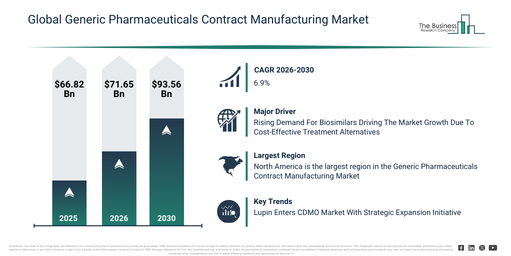
    The generic pharmaceuticals contract manufacturing market has experienced robust expansion in recent years. Projections indicate its size will increase from $66.82 billion in 2025 to $71.65 billion in 2026, advancing at a compound annual growth rate (CAGR) of 7.2%. Historically, this growth can be attributed to several factors such as the limited availability of contract manufacturing alternatives, a reliance on in-house generic drug production, the increasing demand for off-patent APIs, a surge in generic drug approvals, and mounting cost pressures on pharmaceutical companies.

    The generic pharmaceuticals contract manufacturing market size is anticipated to experience substantial expansion in the coming years. By 2030, this market is projected to reach $93.56 billion, expanding at a compound annual growth rate (CAGR) of 6.9%. Factors contributing to this growth during the projected period include an increase in worldwide generic drug demand, the expansion of contract manufacturing organizations (CMOs), the integration of sophisticated formulation technologies, a heightened emphasis on biologics and complex generics, and strengthened international regulatory partnerships. Key trends anticipated for the forecast timeframe encompass an upsurge in outsourcing generic drug production, an emphasis on cost-effective manufacturing and packaging, the broadening of services for injectable and tablet production, enhanced regulatory assistance and compliance offerings, and an increase in licensing and technology transfer activities for generic products.

    Access Your Free Sample Report For In-Depth Market Analysis:

    https://www.thebusinessresearchcompany.com/sample.aspx?id=25771&type=smp

    What Significant Factors Are Influencing The Generic Pharmaceuticals Contract Manufacturing Market Expansion?

    The increasing need for biosimilars is projected to fuel the expansion of the generic pharmaceuticals contract manufacturing market in the coming years. Biosimilars are biological medical products that exhibit significant similarity to existing approved reference biologics, presenting no noteworthy clinical differences in terms of safety, purity, or potency. This heightened demand for biosimilars stems primarily from their capacity to offer economical alternatives to costly biologic medications, thereby enhancing the accessibility of advanced therapies for patients and healthcare systems. Generic pharmaceuticals contract manufacturing assists biosimilars by providing economical, high-volume production capabilities and the necessary regulatory knowledge to accelerate their market introduction and maintain consistent quality. For instance, data from January 2023, reported by Cardinal Health Inc., a US-based healthcare company, indicated that in January 2022, the U.S. had 33 biosimilar products approved by the FDA, with 21 of them available on the market. Furthermore, by 2023, the total number of FDA-approved biosimilars had climbed to 40, with 25 commercially available. Consequently, the growing demand for biosimilars is a key driver for the expansion of the generic pharmaceuticals contract manufacturing market.

    What Segment Categories Shape The Generic Pharmaceuticals Contract Manufacturing Market Segment Landscape?

    The generic pharmaceuticals contract manufacturing market covered in this report is segmented –

    1) By Drug Type: Branded Generics, Unbranded Generics

    2) By Product Type: Pharmaceutical Active Pharmaceutical Ingredients, Formulations, Capsules, Tablets, Injectables

    3) By Route Of Administration: Oral, Parenteral, Topical, Other Routes Of Administration

    4) By Application: Oncology, Immunology, Antidiabetic, Neurology, Anticoagulants, Cardiovascular, Respiratory, Pain, Human Immunodeficiency Virus Antivirals

    5) By End-User Industry: Pharmaceutical Companies, Contract Research Organizations, Biotechnology Companies, Generic Drug Manufacturers

    Subsegments:

    1) By Branded Generics: Contract Development of Branded Formulations, Branded Generic Tablet Manufacturing, Branded Injectable Manufacturing, Packaging and Labeling for Branded Generics, Regulatory Support For Branded Generics

    2) By Unbranded Generics: Bulk Manufacturing of Off-Patent Active Pharmaceutical Ingredients, Generic Tablet Or Capsule Production, Parenteral Or Injectable Generic Manufacturing, Cost-Efficient Packaging for Unbranded Products, Licensing And Tech Transfer for Generic Products

    What Emerging Trends Are Seen In The Generic Pharmaceuticals Contract Manufacturing Market?

    Leading entities within the generic pharmaceutical contract manufacturing market are broadening their service offerings through the creation of specialized subsidiaries, addressing the increasing requirement for outsourced development and production. This strategic approach, involving the setup of specific subsidiaries, allows companies to optimize the manufacturing of active pharmaceutical ingredients (APIs), guaranteeing adherence to regulations, capacity for growth, and effective operations throughout the entire drug development process. An illustrative example occurred in July 2025, when Lupin, an Indian generic pharmaceutical firm, introduced its new subsidiary, Lupin Manufacturing Solutions (LMS), aiming to enter the contract development and manufacturing organization (CDMO) market. LMS functions as a specialized division focused on facilitating the development, production, and sale of APIs for its worldwide pharmaceutical collaborators. Bolstered by a leadership team with extensive experience in the biotech and pharmaceutical sectors, this subsidiary is well-equipped to provide premium contract services, thereby assisting pharmaceutical enterprises in expediting their market entry, all while upholding regulatory compliance and cost-effectiveness.

    Who Are The Companies Operating Across The Generic Pharmaceuticals Contract Manufacturing Market Value Chain?

    Major companies operating in the generic pharmaceuticals contract manufacturing market are WuXi AppTec Co. Ltd., Recipharm AB, Siegfried Holding AG, Curia Global Inc., Piramal Pharma Solutions, Laurus Labs Limited., Cambrex Corp., Alcami Corp. Inc, Neuland Laboratories Limited.

    Get The Full Generic Pharmaceuticals Contract Manufacturing Market Report:

    https://www.thebusinessresearchcompany.com/report/generic-pharmaceuticals-contract-manufacturing-global-market-report

    Which Region Is The Largest In The Generic Pharmaceuticals Contract Manufacturing Market?

    North America was the largest region in the generic pharmaceuticals contract manufacturing market in 2025. Asia-Pacific is expected to be the fastest-growing region in the forecast period. The regions covered in the generic pharmaceuticals contract manufacturing market report are Asia-Pacific, South East Asia, Western Europe, Eastern Europe, North America, South America, Middle East, Africa.

    Request A Customized Generic Pharmaceuticals Contract Manufacturing Market Report For Competitive Insights:

    https://www.thebusinessresearchcompany.com/report/generic-pharmaceuticals-contract-manufacturing-global-market-report

    Browse Through More Reports Similar to the Global Generic Pharmaceuticals Contract Manufacturing Market 2026, By The Business Research Company

    Pharmaceutical Contract Developments And Manufacturing Organization Cmo Market Report 2026

    https://www.thebusinessresearchcompany.com/report/pharmaceutical-contract-developments-and-manufacturing-organization-cmo-global-market-report

    Biopharmaceuticals Contract Manufacturing Market Report 2026

    https://www.thebusinessresearchcompany.com/report/biopharmaceuticals-contract-manufacturing-global-market-report

    Pharmaceutical Contract Packaging Market Report 2026

    https://www.thebusinessresearchcompany.com/report/pharmaceutical-contract-packaging-global-market-report

    Get in touch with us:

    The Business Research Company: https://www.thebusinessresearchcompany.com/

    Americas +1 310-496-7795

    Asia +44 7882 955267 & +91 8897263534

    Europe +44 7882 955267

    Email us at: marketing@tbrc.info

    Follow us on:

    LinkedIn: https://in.linkedin.com/company/the-business-research-company

    YouTube: https://www.youtube.com/channel/UC24_fI0rV8cR5DxlCpgmyFQ

    Global Market Model: https://www.thebusinessresearchcompany.com/global-market-model
  • The Generic Pharmaceuticals Market Is Witnessing Impact From Rising Prevalence Of Clostridioides Difficile Infections And Their Impact On Treatment Options

    The Generic Pharmaceuticals Market Is Witnessing Impact From Rising Prevalence Of Clostridioides Difficile Infections And Their Impact On Treatment Options

    The Business Research Company’s 2026 market reports feature enhanced tools like market attractiveness analysis, TAM assessment, and company scoring matrices, along with interactive dashboards, deeper supply chain insights, and startup coverage strengthening the depth, usability, and strategic value of insights.

    How Much Will The Market Value Of The Generic Pharmaceuticals Market Grow Between 2026 And 2030?

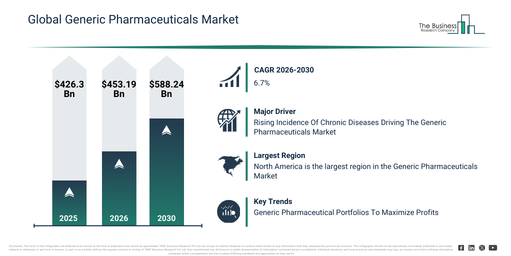
    The generic pharmaceuticals market has experienced substantial expansion in recent years. This market is projected to expand from $426.3 billion in 2025 to $453.19 billion in 2026, demonstrating a compound annual growth rate (CAGR) of 6.3%. Historically, this expansion has been driven by several factors, including the patent expirations of blockbuster drugs, escalating concerns over healthcare costs, increased understanding and acceptance of generics by both patients and medical professionals, the broadening of hospital and retail pharmacy infrastructures, and the rising uptake of oral and injectable generic formulations.

    The generic pharmaceuticals market is projected to experience substantial expansion over the upcoming years. Its valuation is anticipated to reach $588.24 billion by 2030, exhibiting a compound annual growth rate (CAGR) of 6.7%. This growth during the forecast period can be attributed to several factors, including the introduction of intricate generic drugs and extended-release formulations, increasing governmental backing for generics, a surge in demand for biosimilars, the proliferation of e-pharmacy platforms, and greater investment in automated manufacturing processes and digital quality oversight. Key trends anticipated during this period encompass a heightened need for economical generic medications, the diversification of generic drug portfolios into various therapeutic areas, an uptick in the adoption of both branded and over-the-counter (OTC) generics, the expansion of online and physical retail pharmacy distribution channels, and an intensified focus on adherence to regulations and quality assurance within generic drug production.

    Access Your Free Sample Report For In-Depth Market Analysis:

    https://www.thebusinessresearchcompany.com/sample.aspx?id=2479&type=smp

    Which Important Drivers Are Guiding The Generic Pharmaceuticals Market Growth?

    The rising occurrence of chronic illnesses is projected to fuel the expansion of the generic pharmaceuticals market moving ahead. These are defined as prolonged health conditions, often developing gradually and needing continuous care, including conditions like diabetes, cardiovascular diseases, and hypertension. The surge in chronic disease cases is driven by elements like an aging demographic, inactive routines, and poor eating patterns. Generic pharmaceuticals aid in managing chronic conditions by providing affordable, readily available, and equally effective substitutes for branded drugs, which encourages consistent treatment, lessens financial burden on individuals and health systems, and improves disease management and patient well-being. As an illustration, data from January 2023 by the Centers for Disease Control and Prevention (CDC), a federal agency in the US, indicated that in 2023, 76.4% of U.S. adults, totaling around 194 million people, reported at least one chronic condition. The prevalence rates were 59.5% among young adults, 78.4% for midlife adults, and 93.0% for older adults. Consequently, the rising incidence of chronic diseases is propelling the growth of the generic pharmaceuticals market.

    Which Segment Types Are Examined In The Generic Pharmaceuticals Market Segment Study?

    The generic pharmaceuticals market covered in this report is segmented –

    1) By Type: Biosimilars, Generics

    2) By Drug Delivery: Oral, Injectables, Dermal/Topical, Inhaled

    3) By Therapy: CNS, Cardiovascular, Dermatology, Genitourinary/Harmonal, Respiratory, Rheumatology, Diabetes, Oncology, Biosimilars, Others

    4) By Distribution Channel: Hospital Pharmacies, Retail Pharmacies, And Online Pharmacies

    Subsegments:

    1) By Biosimilars: Monoclonal Antibodies, Recombinant Proteins, Other Biologic Products

    2) By Generics: Branded Generics, Generic Small Molecules, Generic Extended-Release Formulations, Over-The-Counter (OTC) Generics

    Which Trends Are Guiding The Direction Of The Generic Pharmaceuticals Market?

    Leading entities operating within the generic pharmaceuticals market are integrating new efforts to introduce novel generic pharmaceutical products, seeking to optimize their profits within the market. The introduction of generic pharmaceutical products signifies the process of launching a generic version of a brand-name drug into the market. For instance, in July 2023, Amneal Pharmaceuticals Inc., a US-based publicly traded generics and specialty pharmaceutical firm, debuted its authorized generic for Xyrem 1 (Sodium Oxybate) oral solution CIII across the United States. Sodium oxybate oral solution, at 0.5 g/mL, serves as a central nervous system depressant and is prescribed for narcoleptic patients seven years of age and older who experience cataplexy or excessive daytime sleepiness (EDS).

    Which Players Are Part Of The Competitive Landscape Of The Generic Pharmaceuticals Market?

    Major companies operating in the generic pharmaceuticals market are Teva Pharmaceutical Industries Ltd., Sun Pharmaceutical Industries Ltd., Fresenius Kabi, Aurobindo Pharma Limited, Cipla Limited, Stada Arzneimittel AG, Lupin Pharmaceuticals Inc., Dr. Reddy’s Laboratories, Mylan Inc., Shanghai Generic Pharmaceuticals, Shanghai Acebright Generic Pharmaceuticals Group Co. Ltd., Sandoz, Glenmark, Kent Pharma, Zentiva, Apotex, Accord Healthcare Inc., AA Pharma Inc, LABORATORIOS SENOSIAIN SA DE CV (Senosiain), EMS Pharma, Eurofarma, Teuto Brasileiro, Biolab Farmaceutica, Cristalia, União Quimica, Mantecorp Farmasa, Libbs, Cimed, FQM Grupo, Spimaco, Jamjoom Pharma, Tabuk Pharmaceutical Manufacturing, Jazeera Pharmaceutical Industries, Adcock Ingram, Eurolab, Ranbaxy (Pty) Ltd, Aspen

    Get The Full Generic Pharmaceuticals Market Report:

    https://www.thebusinessresearchcompany.com/report/generic-pharmaceuticals-global-market-report

    Which Region Leads The Generic Pharmaceuticals Market In Terms Of Market Share?

    North America was the largest region in the generic pharmaceuticals market in 2025. Middle East is expected to be the fastest-growing region in the generic pharmaceuticals market report during the forecast period. The regions covered in the generic pharmaceuticals market report are Asia-Pacific, South East Asia, Western Europe, Eastern Europe, North America, South America, Middle East, Africa.

    Request A Customized Generic Pharmaceuticals Market Report For Competitive Insights:

    https://www.thebusinessresearchcompany.com/report/generic-pharmaceuticals-global-market-report

    Browse Through More Reports Similar to the Global Generic Pharmaceuticals Market 2026, By The Business Research Company

    Pharmaceutical Drugs Market Report 2026

    https://www.thebusinessresearchcompany.com/report/pharmaceutical-drugs-global-market-report

    Pharmaceutical Excipient Market Report 2026

    https://www.thebusinessresearchcompany.com/report/pharmaceutical-excipient-global-market-report

    Pharmaceutical Packaging Equipment Market Report 2026

    https://www.thebusinessresearchcompany.com/report/pharmaceutical-packaging-equipment-global-market-report

    Get in touch with us:

    The Business Research Company: https://www.thebusinessresearchcompany.com/

    Americas +1 310-496-7795

    Asia +44 7882 955267 & +91 8897263534

    Europe +44 7882 955267

    Email us at: marketing@tbrc.info

    Follow us on:

    LinkedIn: https://in.linkedin.com/company/the-business-research-company

    YouTube: https://www.youtube.com/channel/UC24_fI0rV8cR5DxlCpgmyFQ

    Global Market Model: https://www.thebusinessresearchcompany.com/global-market-model

  • Growth In The Generic Oncology Drugs Market Is Being Driven By Increasing Cancer Prevalence Driving Growth

    Growth In The Generic Oncology Drugs Market Is Being Driven By Increasing Cancer Prevalence Driving Growth

    The Business Research Company’s 2026 market reports feature enhanced tools like market attractiveness analysis, TAM assessment, and company scoring matrices, along with interactive dashboards, deeper supply chain insights, and startup coverage strengthening the depth, usability, and strategic value of insights.

    What Changes In Market Value Are Expected For The Generic Oncology Drugs Market Over The 2026–2030 Period?

    The generic oncology drugs market has shown robust expansion over recent years. Its value is projected to climb from $28.75 billion in 2025 to $30.52 billion in 2026, registering a compound annual growth rate (CAGR) of 6.1%. This historical development can be attributed to factors such as the expiry of patents on key oncology medications, a worldwide increase in cancer prevalence, greater understanding of affordable cancer treatment options, the proliferation of hospital and retail pharmacies, and government initiatives encouraging generic drug production.

    The generic oncology drugs market is projected to experience substantial expansion over the coming years. This market is set to reach $39.99 billion by 2030, exhibiting a compound annual growth rate (CAGR) of 7.0%. Several factors contribute to this anticipated growth, including the increasing adoption of precision medicine technologies, the integration of AI in drug development, the expansion of online pharmacies, improvements in healthcare infrastructure within emerging markets, and strategic collaborations focused on oncology drug distribution. Key trends expected during this forecast period encompass the growing prevalence of biosimilars in oncology treatment, the scaling up of generic drug manufacturing in developing economies, a rise in the use of both oral and parenteral chemotherapies, strategic alliances and licensing agreements among pharmaceutical firms, and an emphasis on affordable cancer treatments.

    Access Your Free Sample Report For In-Depth Market Analysis:

    https://www.thebusinessresearchcompany.com/sample.aspx?id=12174&type=smp

    What Major Factors Are Driving The Generic Oncology Drugs Market Forward?

    The generic oncology drugs market is expected to expand significantly due to a projected increase in cancer patients. Cancer is defined as the uncontrolled proliferation of cells, impacting various organs and contributing considerably to global morbidity and mortality. The availability of affordable generic oncology drugs is crucial for cancer treatment, as it enhances access to essential therapies, encourages market competition, and reduces healthcare costs. For instance, in January 2022, the National Cancer Institute (NCI), a US-based government agency, reported that approximately 5.4% of the population, or 18.1 million individuals, in the United States were cancer survivors. Additionally, 623,405 people were living with metastatic breast, prostate, lung, colorectal, or bladder cancer or metastatic melanoma in 2022, a number projected to increase to 693,452 by 2025. Thus, the notable rise in cancer patients is a key factor driving the growth of the generic oncology drugs market.

    How Are Different Segments Classified In The Generic Oncology Drugs Market Segment Analysis?

    The generic oncology drugs market covered in this report is segmented –

    1) By Molecule Type: Large Molecule, Small Molecule

    2) By Route Of Administration: Oral, Parenteral

    3) By Distribution Channel: Hospital Pharmacy, Retail Pharmacy, Online Pharmacies, Managed Care Institutions

    Subsegments:

    1) By Large Molecule: Monoclonal Antibodies, Biologics, Biosimilars

    2) By Small Molecule: Chemotherapeutics, Targeted Therapy Agents, Hormonal Therapy Drugs

    What Trends Are Affecting The Growth Of The Generic Oncology Drugs Market?

    Major companies operating in the generic oncology drugs market are prioritizing innovative advancements, such as next-generation oral oncology generics, to improve treatment accessibility, enhance patient convenience, and ensure therapeutic equivalence to high-cost branded cancer therapies. Next-generation oral oncology generics refer to advanced, bioequivalent oral formulations of established oncology drugs that integrate improved dosing flexibility, enhanced stability, and patient-friendly administration features, thereby expanding access to high-value cancer treatments in cost-constrained healthcare settings. For instance, in January 2023, MSN Laboratories Private Limited, an India-based pharmaceutical company specializing in generic drugs, launched Palborest, the world’s first generic Palbociclib tablets for advanced breast cancer treatment. This generic breast cancer drug offers a cost-effective alternative to the innovator tablet while maintaining bioequivalence. Its tablet dosage form provides a notable advantage over capsules as it can be taken with or without food and co-administered with proton pump inhibitors or antacids. Furthermore, the tablet formulation is free from lactose and gelatin, enhancing the drug’s efficacy.

    Who Are The Companies Driving Activity In The Generic Oncology Drugs Market?

    Major companies operating in the generic oncology drugs market are Pfizer Inc., AbbVie, Novartis AG, Bristol-Myers Squibb Company, AstraZeneca Plc, Abbott Laboratories, Fresenius Kabi AG, GlaxoSmithKline PLC, Eli Lilly and Company, Merck & Co. Inc., Baxter International Inc., Mylan N.V., Sun Pharmaceutical Industries Ltd., Teva Pharmaceutical Industries Ltd., Dr. Reddy’s Laboratories Ltd., Aurobindo Pharma Limited, Cipla Inc., Hikma Pharmaceuticals, Lupin Limited, Torrent Pharmaceuticals Ltd., Cadila Healthcare Ltd., Accord Healthcare

    Get The Full Generic Oncology Drugs Market Report:

    https://www.thebusinessresearchcompany.com/report/generic-oncology-drugs-global-market-report

    Which Region Leads The Generic Oncology Drugs Market In Overall Market Size?

    North America was the largest region in the generic oncology drugs market in 2025. The regions covered in the generic oncology drugs market report are Asia-Pacific, South East Asia, Western Europe, Eastern Europe, North America, South America, Middle East, Africa.

    Request A Customized Generic Oncology Drugs Market Report For Competitive Insights:

    https://www.thebusinessresearchcompany.com/report/generic-oncology-drugs-global-market-report

    Browse Through More Reports Similar to the Global Generic Oncology Drugs Market 2026, By The Business Research Company

    Generic Oncology Drugs Market Report 2026

    https://www.thebusinessresearchcompany.com/report/generic-oncology-drugs-global-market-report

    Oncology Drugs Market 2026

    https://www.thebusinessresearchcompany.com/report/oncology-drugs-market

    Oncology Drugs Market 2026

    https://www.thebusinessresearchcompany.com/report/oncology-drugs-market

    Get in touch with us:

    The Business Research Company: https://www.thebusinessresearchcompany.com/

    Americas +1 310-496-7795

    Asia +44 7882 955267 & +91 8897263534

    Europe +44 7882 955267

    Email us at: marketing@tbrc.info

    Follow us on:

    LinkedIn: https://in.linkedin.com/company/the-business-research-company

    YouTube: https://www.youtube.com/channel/UC24_fI0rV8cR5DxlCpgmyFQ

    Global Market Model: https://www.thebusinessresearchcompany.com/global-market-model

  • Generic Musculoskeletal Disorders Drugs Market Analysis With Focus On Growth Potential And Future Outlook

    Generic Musculoskeletal Disorders Drugs Market Analysis With Focus On Growth Potential And Future Outlook

    The Business Research Company’s 2026 market reports feature enhanced tools like market attractiveness analysis, TAM assessment, and company scoring matrices, along with interactive dashboards, deeper supply chain insights, and startup coverage strengthening the depth, usability, and strategic value of insights.

    By 2030, What Market Size Is The Generic Musculoskeletal Disorders Drugs Market Expected To Reach Based On Its 2026 Value?

    The generic musculoskeletal disorders drugs market size has experienced robust growth in recent years. It is anticipated to increase from $0.06 billion in 2025 to $0.07 billion in 2026, demonstrating a compound annual growth rate (CAGR) of 6.9%. This historical expansion can be attributed to the high prevalence of osteoarthritis and arthritis, an increasing aging population, the widespread use of pain management drugs, the expansion of hospital and retail pharmacies, and the availability of low-cost generics.

    The generic musculoskeletal disorders drugs market size is projected to demonstrate robust growth in the upcoming period. This market is predicted to reach $0.09 billion by 2030, exhibiting a compound annual growth rate (CAGR) of 6.9%. Several factors are driving this expansion during the projection period, including an increase in lifestyle-associated musculoskeletal disorder cases, enhanced healthcare accessibility in emerging economies, a greater emphasis on prompt diagnosis and therapeutic interventions, the broadening reach of online pharmacy networks, and a heightened need for cost-effective solutions in chronic pain management. Key trends anticipated during the forecast timeframe involve the greater acceptance of generic NSAIDs and pain relievers, a rising inclination towards oral medication forms, the proliferation of over-the-counter (OTC) options for musculoskeletal pain, an escalating requirement for economical prolonged treatment plans, and the more widespread application of combined drug regimens.

    Access Your Free Sample Report For In-Depth Market Analysis:

    https://www.thebusinessresearchcompany.com/sample.aspx?id=9433&type=smp

    Which Key Drivers Are Affecting The Generic Musculoskeletal Disorders Drugs Market Development?

    The rising uptake of telemedicine is anticipated to drive the expansion of the generic musculoskeletal disorders drugs market moving forward. Telemedicine involves utilizing telecommunications and digital technologies to deliver healthcare services remotely to patients and medical professionals. This method enables patients to consult with providers from a distance, facilitates timely appointments, enhances convenience, supports continuous care, reduces healthcare expenditures, improves medication adherence, and streamlines communication between patients and healthcare providers. As an illustration, in April 2023, FAIR Health Inc., a US-based non-profit organization, indicated that national telehealth usage climbed by 7.3%, increasing from 5.5% of medical claim lines in December 2022 to 5.9% in January 2023. Thus, the increasing adoption of telemedicine is a key factor propelling the growth of the generic musculoskeletal disorders drugs market.

    How Is The Generic Musculoskeletal Disorders Drugs Market Categorized Across Its Segment Groups?

    The generic musculoskeletal disorders drugs market covered in this report is segmented –

    1) By Treatment Type: Medication, Therapy, Other Treatment Types

    2) By Disorder Type: Osteoarthritis, Rheumatoid Arthritis, Spondylarthritis, Juvenile Idiopathic Arthritis, Psoriatic Arthritis, Fibromyalgia, Other Disorder Types

    3) By Route Of Administration: Oral, Parenteral, Other Routes

    4) By Distribution Channel: Hospital Pharmacy, Retail Pharmacy, Drug Store, Online Pharmacy

    Subsegments:

    1) By Medication: Non-Steroidal Anti-Inflammatory Drugs (NSAIDs), Analgesics, Corticosteroids, Disease-Modifying Antirheumatic Drugs (DMARDs), Biologics

    2) By Therapy: Physical Therapy, Occupational Therapy, Chiropractic Treatment, Massage Therapy

    3) By Other Treatment Types: Lifestyle Modifications, Alternative Therapies, Assistive Devices

    Which Trends Are Shaping The Generic Musculoskeletal Disorders Drugs Market?

    Major companies operating in the generic musculoskeletal disorders drugs market are concentrating on innovative products such as the non-permanent ossiofiber compression staple to increase their market revenues. This non-permanent ossiofiber compression staple is a medical device utilized in orthopedic and musculoskeletal surgeries for both fracture fixation and bone fusion, specifically engineered to offer temporary stability and compression, thereby promoting the healing and fusion of bones. For instance, in February 2023, Ossio Inc., a US-based company focused on developing innovative products for orthopedic and musculoskeletal applications, launched its non-permanent ossiofiber compression staple. Ossiofiber combines mechanical strength with spontaneous bone regeneration, providing an alternative to traditional resorbable and allograft implants and permanent metal hardware. By employing Ossiofiber Compression Staples, the company can provide solutions for a range of midfoot and hindfoot procedures, including flatfoot corrective procedures, Lapidus fusions, and midfoot fusions.

    Which Firms Are Influencing Competition In The Generic Musculoskeletal Disorders Drugs Market?

    Major companies operating in the generic musculoskeletal disorders drugs market are Pfizer Inc., Sanofi S.A., Eli Lilly and Company, Ampio Pharmaceuticals Inc., Amgen Inc., Boehringer Ingelheim International GmbH, Merck & Co. Inc., Sun Pharmaceutical Industries Ltd., Teva Pharmaceuticals Industries Ltd., AstraZeneca plc, Mitsubishi Tanabe Pharma Corporation, Horizon Therapeutics plc, Eisai Co. Ltd., Biogen Inc., Sino Biopharmaceutical Limited, Bristol-Myers Squibb Company, Johnson & Johnson Services Inc., AbbVie Inc., Novartis AG, F. Hoffmann-La Roche Ltd., Bayer AG, Mylan Pharmaceuticals Inc., Taisho Pharmaceutical Holdings Co. Ltd., Flexion Therapeutics Inc.

    Get The Full Generic Musculoskeletal Disorders Drugs Market Report:

    https://www.thebusinessresearchcompany.com/report/generic-musculoskeletal-disorders-drugs-global-market-report

    Which Region Is The Top Contributor To The Generic Musculoskeletal Disorders Drugs Market By Share?

    Asia-Pacific was the largest region in the generic musculoskeletal disorders drugs market in 2025. The regions covered in the generic musculoskeletal disorders drugs market report are Asia-Pacific, South East Asia, Western Europe, Eastern Europe, North America, South America, Middle East, Africa.

    Request A Customized Generic Musculoskeletal Disorders Drugs Market Report For Competitive Insights:

    https://www.thebusinessresearchcompany.com/report/generic-musculoskeletal-disorders-drugs-global-market-report

    Browse Through More Reports Similar to the Global Generic Musculoskeletal Disorders Drugs Market 2026, By The Business Research Company

    Generic Musculoskeletal Disorders Drugs Market Report 2026

    https://www.thebusinessresearchcompany.com/report/generic-musculoskeletal-disorders-drugs-global-market-report

    Musculoskeletal Disorder Drugs Market Report 2026

    https://www.thebusinessresearchcompany.com/report/musculoskeletal-disorder-drugs-global-market-report

    Musculoskeletal Disorder Drugs Market Report 2026

    https://www.thebusinessresearchcompany.com/report/musculoskeletal-disorder-drugs-global-market-report

    Get in touch with us:

    The Business Research Company: https://www.thebusinessresearchcompany.com/

    Americas +1 310-496-7795

    Asia +44 7882 955267 & +91 8897263534

    Europe +44 7882 955267

    Email us at: marketing@tbrc.info

    Follow us on:

    LinkedIn: https://in.linkedin.com/company/the-business-research-company

    YouTube: https://www.youtube.com/channel/UC24_fI0rV8cR5DxlCpgmyFQ

    Global Market Model: https://www.thebusinessresearchcompany.com/global-market-model