Category: Pharmaceuticals

  • Gene Silencing Market Insights Highlighting Opportunities Supporting Growth To 2030

    Gene Silencing Market Insights Highlighting Opportunities Supporting Growth To 2030

    The Business Research Company’s 2026 market reports feature enhanced tools like market attractiveness analysis, TAM assessment, and company scoring matrices, along with interactive dashboards, deeper supply chain insights, and startup coverage strengthening the depth, usability, and strategic value of insights.

    How Much Growth In Market Value Is Expected For The Gene Silencing Market Between 2026 And 2030?

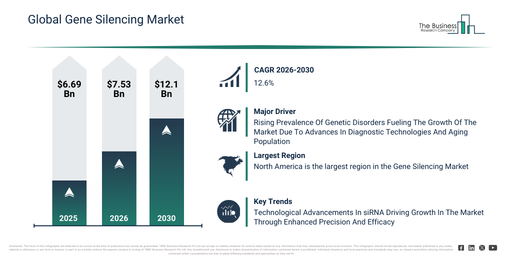
    The gene silencing market has experienced rapid expansion in recent years. It is forecast to grow from $6.69 billion in 2025 to $7.53 billion in 2026, demonstrating a compound annual growth rate (CAGR) of 12.5%. The historical growth can be attributed to advancements in molecular biology research, the discovery of RNA interference mechanisms, an increase in academic research funding, a rise in genetic disease studies, and augmented pharmaceutical R&D spending.

    The gene silencing market is projected for significant expansion in the coming years, set to reach $12.1 billion by 2030 with a compound annual growth rate (CAGR) of 12.6%. Factors contributing to this growth during the forecast period include the increasing number of gene therapy pipelines, a heightened demand for targeted therapeutics, the broadening scope of CRISPR applications, intensified clinical trial activity, and the innovation of next-generation gene editing tools. Key trends anticipated within the forecast period encompass the wider adoption of RNA interference technologies, greater utilization of CRISPR-based gene silencing, an expansion in therapeutic gene targeting strategies, an elevated focus on precision medicine applications, and a surge in investment directed towards genetic research.

    Access Your Free Sample Report For In-Depth Market Analysis:

    https://www.thebusinessresearchcompany.com/sample.aspx?id=24224&type=smp

    What Key Factors Are Affecting The Gene Silencing Market Demand?

    An increasing occurrence of genetic disorders is anticipated to stimulate the expansion of the gene silencing market in the future. These disorders are defined as health issues resulting from irregularities in a person’s DNA. Their identification is becoming more frequent, driven by progress in diagnostic methods, greater public understanding, and wider availability of genetic screening. The increase in genetic disorders stems from parents having children at an older age, which raises the likelihood of transmitting genetic mutations to their descendants. Gene silencing presents a promising method for managing genetic disorders, achieved by specifically deactivating the expression of defective or pathogenic genes. As an illustration, data from August 2023, provided by Down Syndrome UK, a charity based in the UK, indicates that approximately 40,000 individuals in the UK are impacted by Down syndrome, with roughly 1 in every 800 newborns affected by the condition. Consequently, the growing frequency of genetic disorders is fueling the expansion of the gene silencing market.

    How Is Segmentation Applied In The Gene Silencing Market Segment Analysis?

    The gene silencing market covered in this report is segmented –

    1) By Type: Transcriptional, Post-Transcriptional, Meiotic

    2) By Gene Silencing: RNA Interference (RNAi), Antisense Oligonucleotides (ASOs), Clustered Regularly Interspaced Short Palindromic Repeats(CRISPR) Or Cas9 -Based Gene Silencing, Other Gene Silencings

    3) By Application: Neurology, Oncology, Infectious Diseases, Metabolic Diseases, Therapeutics Manufacturing, Other Applications

    4) By End-Users: Pharmaceutical And Biotechnology Companies, Research Institutes and Academic Centers, Hospitals, Clinics, Other End-Users

    Subsegments:

    1) By Transcriptional: DNA Methylation, Histone Modification

    2) By Post-Transcriptional: RNA Interference (RNAi), Antisense Oligonucleotides, MicroRNA (miRNA) Mediated Silencing

    3) By Meiotic: Meiotic Gene Conversion, Transposable Element Silencing

    What Emerging Trends Are Seen In The Gene Silencing Market?

    Leading companies operating in the gene silencing market are focusing on developing innovative technologies, such as small interfering RNA (siRNA), to enhance the precision and efficacy of gene therapy. Small interfering RNA (siRNA) refers to a type of RNA molecule that plays a vital role in the RNA interference (RNAi) pathway by binding to specific messenger RNA (mRNA) and promoting its degradation, thereby preventing the production of disease-causing proteins. For instance, in October 2024, Judo Bio Inc., a US-based biotechnology company, launched siRNA, a next-generation drug that utilizes small interfering RNA (siRNA) for gene silencing. Its unique features include proprietary delivery systems, such as lipid nanoparticles or conjugated ligands, which ensure efficient uptake by specific cells or tissues, along with AI-driven platforms that accelerate the identification of viable gene targets.

    Who Are The Companies Participating In The Gene Silencing Market Environment?

    Major companies operating in the gene silencing market are Roche Holding AG, Merck & Co. Inc., AstraZeneca plc, Novartis International AG, Thermo Fisher Scientific Inc., Danaher Corporation, Agilent Technologies Inc., Illumina Inc., Bio-Rad Laboratories Inc., Bio-Techne Corporation, Alnylam Pharmaceuticals Inc., GenScript Biotech Corporation, Oxford BioMedica plc, Ionis Pharmaceuticals Inc., Arrowhead Pharmaceuticals Inc., Dicerna Pharmaceuticals Inc., New England Biolabs Inc., Quark Pharmaceuticals Inc., Sirion Biotech GmbH, Benitec Biopharma Limited, GeneCopoeia Inc., Revvity Inc.

    Get The Full Gene Silencing Market Report:

    https://www.thebusinessresearchcompany.com/report/gene-silencing-global-market-report

    Which Region Leads The Gene Silencing Market In Terms Of Market Share?

    North America was the largest region in the gene silencing market in 2025. Asia-Pacific is expected to be the fastest-growing region in the forecast period. The regions covered in the gene silencing market report are Asia-Pacific, South East Asia, Western Europe, Eastern Europe, North America, South America, Middle East, Africa.

    Request A Customized Gene Silencing Market Report For Competitive Insights:

    https://www.thebusinessresearchcompany.com/report/gene-silencing-global-market-report

    Browse Through More Reports Similar to the Global Gene Silencing Market 2026, By The Business Research Company

    Genes Therapy Market Report 2026

    https://www.thebusinessresearchcompany.com/report/genes-therapy-global-market-report

    Gene Editing Market Report 2026

    https://www.thebusinessresearchcompany.com/report/gene-editing-global-market-report

    Nucleic Acid Based Gene Therapy Market Report 2026

    https://www.thebusinessresearchcompany.com/report/nucleic-acid-based-gene-therapy-global-market-report

    Get in touch with us:

    The Business Research Company: https://www.thebusinessresearchcompany.com/

    Americas +1 310-496-7795

    Asia +44 7882 955267 & +91 8897263534

    Europe +44 7882 955267

    Email us at: marketing@tbrc.info

    Follow us on:

    LinkedIn: https://in.linkedin.com/company/the-business-research-company

    YouTube: https://www.youtube.com/channel/UC24_fI0rV8cR5DxlCpgmyFQ

    Global Market Model: https://www.thebusinessresearchcompany.com/global-market-model
  • Gene Expression Market Forecast 2026–2030 Highlighting Expansion Across Industries

    Gene Expression Market Forecast 2026–2030 Highlighting Expansion Across Industries

    The Business Research Company’s 2026 market reports feature enhanced tools like market attractiveness analysis, TAM assessment, and company scoring matrices, along with interactive dashboards, deeper supply chain insights, and startup coverage strengthening the depth, usability, and strategic value of insights.

    What Is The Estimated Market Size Of The Gene Expression Market In 2026, And How Will Its Value Evolve By 2030?

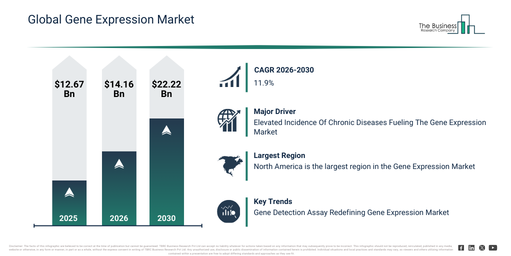
    The gene expression market size has experienced rapid expansion in recent years. It is anticipated to increase from $12.67 billion in 2025 to $14.16 billion in 2026, achieving a compound annual growth rate (CAGR) of 11.7%. The growth observed in the historical period is attributable to several factors, including increased funding for academic genomics research, the rising prevalence of chronic and genetic diseases, the early adoption of microarray technologies, the expansion of pharmaceutical R&D pipelines, and the growing utilization of PCR-based techniques.

    The gene expression market is projected for significant expansion in the coming years, with its size anticipated to reach $22.22 billion by 2030, exhibiting a compound annual growth rate (CAGR) of 11.9%. This growth throughout the forecast period stems from various factors, including advancements in RNA sequencing technologies, an increasing focus on precision medicine, the proliferation of clinical diagnostics applications, the integration of AI into gene expression data analysis, and expanding investments within the biotechnology industry. Major developments expected during this period include the wider application of single-cell gene expression analysis, a rise in the use of spatial transcriptomics, growing demand for high-throughput PCR platforms, the increasing adoption of multi-omics integration, and the standardization of gene expression workflows.

    Access Your Free Sample Report For In-Depth Market Analysis:

    https://www.thebusinessresearchcompany.com/sample.aspx?id=9156&type=smp

    Which Primary Drivers Are Impacting The Gene Expression Market Growth?

    The increasing prevalence of chronic diseases is projected to stimulate the expansion of the gene expression market moving forward. Chronic diseases are long-term health conditions that endure for an extended duration, typically three months or more. Gene expression analysis is employed in these conditions to unravel their underlying molecular mechanisms, pinpoint potential biomarkers, and formulate targeted therapeutic strategies. For instance, in June 2024, data from the National Health Service, a UK-based government department, revealed that 3,615,330 individuals registered with a general practitioner (GP) were diagnosed with non-diabetic hyperglycemia or pre-diabetes (a condition marked by elevated blood sugar levels, not severe enough to be classified as diabetes) in 2023. This marked an 18% increase from 3,065,825 cases in 2022. Thus, the escalation in chronic diseases will propel the growth of the gene expression market.

    What Segment Categories Shape The Gene Expression Market Segment Landscape?

    The gene expression market covered in this report is segmented –

    1) By Product: Kits And Reagents, DNA Chip Or Microarray, Other Products

    2) By Process: Sample Collection, Purification, cDNA Synthesis And Conversion, PCR Analysis, Data Analysis And Interpretation

    3) By Technique: RNA Exp, Promoter Analysis, Protein Exp. And Posttranslational Modification Analysis

    4) By Application: Drug Discovery And Development, Clinical Diagnostics, Biotechnology And Microbiology, Other Applications

    Subsegments:

    1) By Kits And Reagents: RNA Isolation Kits, cDNA Synthesis Kits, qPCR Kits, Reverse Transcription Kits, Other Reagents

    2) By DNA Chip Or Microarray: Expression Microarrays, Genotyping Microarrays, Comparative Genomic Hybridization Arrays

    3) By Other Products: Software For Data Analysis, Lab Instruments, Consumables

    Which Trends Are Guiding The Direction Of The Gene Expression Market?

    Leading companies in the gene expression market are concentrating on developing innovative products, such as gene detection assays, to gain a competitive edge and boost revenue. A gene detection assay within gene expression refers to a method for pinpointing and quantifying genetic molecules, offering insights into the activity and abundance of specific genes. For instance, in January 2023, Bio-Techne Corporation, a US-based biotech company specializing in research instruments, expanded its Advanced Cell Diagnostics (ACD)-branded RNAscope in situ hybridization (ISH) portfolio by launching the RNAscope Plus smRNA-RNA detection assay. This new assay facilitates the simultaneous fluorescent identification of a small regulatory RNA along with three target RNAs or RNA biomarkers in a single tissue section, providing single-cell and subcellular resolution. Tailored for large studies, the assay is compatible with the Leica Bond Rx platform and is available as a manual assay for convenient application. These therapeutic nucleic acids hold the potential to modify the expression and functionality of specific target genes, thereby enabling the creation of customized treatments for inherited or acquired diseases that have proven resistant to conventional therapies.

    Who Are The Companies Operating Across The Gene Expression Market Value Chain?

    Major companies operating in the gene expression market are Thermo Fisher Scientific Inc., Qiagen NV, Illumina Inc., Bio-Rad Laboratories Inc., Agilent Technologies Inc., PerkinElmer Inc., GE Healthcare, F Hoffmann-La Roche Ltd, Oxford Gene Technology IP Limited, Promega Corporation, OriGene Technologies Inc., Luminex Corporation, Takara Bio Inc., Danaher Corporation, ELITechGroup, Biocartis Group NV, Integragen SA, Oxford Nanopore Technologies Limited, Phalanx Biotech Group, Roche Holding AG, Sengenics Corporation Pte Ltd., GenXPro GmbH, Twist Bioscience Corporation, Zymo Research Corporation, Abcam plc., Bio-Techne Corporation

    Get The Full Gene Expression Market Report:

    https://www.thebusinessresearchcompany.com/report/gene-expression-global-market-report

    Which Region Leads The Gene Expression Market In Overall Market Size?

    North America was the largest region in the gene expression market in 2025. Asia-Pacific is expected to be the fastest-growing region in the gene expression market in the forecast period. The regions covered in the gene expression market report are Asia-Pacific, South East Asia, Western Europe, Eastern Europe, North America, South America, Middle East, Africa.

    Request A Customized Gene Expression Market Report For Competitive Insights:

    https://www.thebusinessresearchcompany.com/report/gene-expression-global-market-report

    Browse Through More Reports Similar to the Global Gene Expression Market 2026, By The Business Research Company

    Gene Expression Market Report 2026

    https://www.thebusinessresearchcompany.com/report/gene-expression-global-market-report

    Protein Expression Market Report 2026

    https://www.thebusinessresearchcompany.com/report/protein-expression-global-market-report

    Gene Synthesis Market Report 2026

    https://www.thebusinessresearchcompany.com/report/gene-synthesis-global-market-report

    Get in touch with us:

    The Business Research Company: https://www.thebusinessresearchcompany.com/

    Americas +1 310-496-7795

    Asia +44 7882 955267 & +91 8897263534

    Europe +44 7882 955267

    Email us at: marketing@tbrc.info

    Follow us on:

    LinkedIn: https://in.linkedin.com/company/the-business-research-company

    YouTube: https://www.youtube.com/channel/UC24_fI0rV8cR5DxlCpgmyFQ

    Global Market Model: https://www.thebusinessresearchcompany.com/global-market-model
  • Global Gene Circuit Therapeutics Market Analysis For 2026–2030 With Strategic Insights

    Global Gene Circuit Therapeutics Market Analysis For 2026–2030 With Strategic Insights

    The Business Research Company’s 2026 market reports feature enhanced tools like market attractiveness analysis, TAM assessment, and company scoring matrices, along with interactive dashboards, deeper supply chain insights, and startup coverage strengthening the depth, usability, and strategic value of insights.

    How Does The Market Size Of The Gene Circuit Therapeutics Market Compare Between 2026 And 2030?

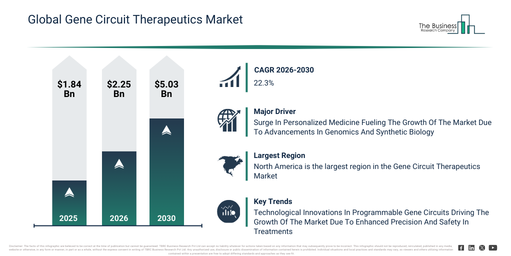
    The gene circuit therapeutics market size has experienced substantial expansion in recent years. It is forecast to increase from $1.84 billion in 2025 to $2.25 billion in 2026, achieving a compound annual growth rate (CAGR) of 22.3%. The drivers behind this historical growth include advances in synthetic biology research, early success of gene editing technologies, growing academic research funding, increased understanding of cellular signaling pathways, and expansion of immuno-oncology research.

    The gene circuit therapeutics market size is projected to experience substantial growth in the next few years. It is expected to expand to $5.03 billion by 2030, exhibiting a compound annual growth rate (CAGR) of 22.3%. This growth during the forecast period can be primarily attributed to the increasing clinical translation of gene circuit therapies, a rising demand for highly targeted treatments, the growing adoption of programmable cell therapies, an expansion of rare disease gene therapy pipelines, and increased investments in next-generation genetic medicines. Key trends anticipated in the forecast period include the increasing development of programmable gene circuits, a rising adoption of logic-gated cell therapies, the growing integration of synthetic biology platforms, an expansion of precision-controlled gene expression systems, and an enhanced focus on safety switch mechanisms.

    Access Your Free Sample Report For In-Depth Market Analysis:

    https://www.thebusinessresearchcompany.com/sample.aspx?id=28230&type=smp

    What Significant Factors Are Influencing The Gene Circuit Therapeutics Market Expansion?

    The increasing need for personalized medicine is anticipated to drive the expansion of the gene circuit therapeutics market moving forward. Personalized medicine involves customizing medical treatment to the unique characteristics of each patient, frequently based on genetic, biomarker, or molecular profiling. This heightened demand is propelled by innovations in genomics and synthetic biology, as these fields facilitate more accurate disease targeting and enhanced treatment outcomes. Gene circuit therapeutics are instrumental in supporting personalized medicine through the engineering of cells and microbes with programmable logic to detect, process, and react to specific disease conditions, thereby yielding safer, more effective, and patient-specific therapies. Notably, according to NHS England’s Genomics Statistical Commentary, a UK-based government authority, the overall count of personalized genomic tests reached 65,884 in 2024, marking a 14% increase from 2023, which reflects the rising demand for personalized medicine. Consequently, the burgeoning demand for personalized medicine has fueled the growth of the gene circuit therapeutics market.

    Which Segment Types Are Examined In The Gene Circuit Therapeutics Market Segment Study?

    The gene circuit therapeutics market covered in this report is segmented –

    1) By Product Type: Synthetic Gene Circuits, Programmable Cell Therapies, Gene Editing Tools, Other Product Types

    2) By Technology: Clustered Regularly Interspaced Short Palindromic Repeats (CRISPR), Transcription Activator-Like Effector Nuclease (TALEN), Zinc Finger Nucleases, Other Technologies

    3) By Application: Oncology, Rare Diseases, Infectious Diseases, Regenerative Medicine, Other Applications

    4) By End-User: Pharmaceutical And Biotechnology Companies, Academic And Research Institutes, Hospitals And Clinics, Other End-Users

    Subsegments:

    1) By Synthetic Gene Circuits: Switch-based Circuits, Logic Gate Circuits, Oscillatory Circuits, Memory Circuits

    2) By Programmable Cell Therapies: CAR-T Cell Therapy, TCR-T Cell Therapy, NK Cell Therapy, Stem Cell-Based Therapies

    3) By Gene Editing Tools: CRISPR-Cas Systems, TALENs, Zinc Finger Nucleases (ZFNs), Meganucleases

    4) By Others: RNA-Based Therapeutics, Antisense Oligonucleotides, Epigenome Editing Tools

    What Trends Are Affecting The Growth Of The Gene Circuit Therapeutics Market?

    Leading companies operating in the gene circuit therapeutics market are focusing on developing programmable gene circuits to achieve more precise disease targeting, controlled therapeutic responses, and improved safety. These programmable circuits are engineered genetic networks, built from DNA, RNA, and regulatory proteins, that are designed to mimic logical operations within cells, allowing them to sense biological inputs, process information, and generate specific outputs. For instance, in May 2023, Synlogic, Inc., a US-based clinical-stage biotechnology company, presented new data at the Synthetic Biology: Engineering, Evolution & Design (SEED) Conference on SYNB1353, a Synthetic Biotic drug candidate for homocystinuria (HCU). SYNB1353 employs genetically programmed probiotic bacteria with metabolic gene circuits, specifically designed to consume methionine and reduce toxic homocysteine levels. This illustrates how programmable circuits can be applied beyond oncology to rare metabolic disorders, highlighting their potential to create precise, durable, and patient-friendly medicines.

    Which Players Are Part Of The Competitive Landscape Of The Gene Circuit Therapeutics Market?

    Major companies operating in the gene circuit therapeutics market are GenScript Biotech, Agilent Technologies, Cellectis S.A., CRISPR Therapeutics, Beam Therapeutics, Twist Bioscience, Ginkgo Bioworks, Sangamo Therapeutics, Senti Biosciences, Editas Medicine, BlueRock Therapeutics, Synthego Corporation, Manus Bio, Strand Therapeutics, Dyno Therapeutics, Obsidian Therapeutics, Rubius Therapeutics, Precigen Inc., Aurealis Therapeutics, Synlogic Inc., Azalea Therapeutics

    Get The Full Gene Circuit Therapeutics Market Report:

    https://www.thebusinessresearchcompany.com/report/gene-circuit-therapeutics-global-market-report

    Which Region Is The Top Contributor To The Gene Circuit Therapeutics Market By Share?

    North America was the largest region in the gene circuit therapeutics market in 2025. Asia-Pacific is expected to be the fastest-growing region in the forecast period. The regions covered in the gene circuit therapeutics market report are Asia-Pacific, South East Asia, Western Europe, Eastern Europe, North America, South America, Middle East, Africa.

    Request A Customized Gene Circuit Therapeutics Market Report For Competitive Insights:

    https://www.thebusinessresearchcompany.com/report/gene-circuit-therapeutics-global-market-report

    Browse Through More Reports Similar to the Global Gene Circuit Therapeutics Market 2026, By The Business Research Company

    Genes Therapy Market Report 2026

    https://www.thebusinessresearchcompany.com/report/genes-therapy-global-market-report

    Nucleic Acid Based Gene Therapy Market Report 2026

    https://www.thebusinessresearchcompany.com/report/nucleic-acid-based-gene-therapy-global-market-report

    Gene Editing Market Report 2026

    https://www.thebusinessresearchcompany.com/report/gene-editing-global-market-report

    Get in touch with us:

    The Business Research Company: https://www.thebusinessresearchcompany.com/

    Americas +1 310-496-7795

    Asia +44 7882 955267 & +91 8897263534

    Europe +44 7882 955267

    Email us at: marketing@tbrc.info

    Follow us on:

    LinkedIn: https://in.linkedin.com/company/the-business-research-company

    YouTube: https://www.youtube.com/channel/UC24_fI0rV8cR5DxlCpgmyFQ

    Global Market Model: https://www.thebusinessresearchcompany.com/global-market-model
  • Gemcitabine Hydrochloride Market Outlook 2026–2030 Driven By Growth Factors And Projections

    Gemcitabine Hydrochloride Market Outlook 2026–2030 Driven By Growth Factors And Projections

    The Business Research Company’s 2026 market reports feature enhanced tools like market attractiveness analysis, TAM assessment, and company scoring matrices, along with interactive dashboards, deeper supply chain insights, and startup coverage strengthening the depth, usability, and strategic value of insights.

    What Is The Forecasted Market Size Trajectory Of The Gemcitabine Hydrochloride Market From 2026 To 2030?

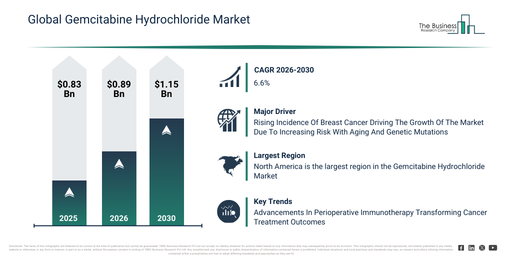
    The market size for gemcitabine hydrochloride has experienced robust expansion over recent years. Projections indicate a rise from $0.83 billion in 2025 to $0.89 billion in 2026, demonstrating a compound annual growth rate (CAGR) of 6.7%. Historically, this expansion has been driven by factors such as an increase in cancer incidence rates, the authorization of gemcitabine-based treatment plans, the enlargement of oncology hospitals, greater use of chemotherapy, and elevated investment in cancer research.

    The gemcitabine hydrochloride market is anticipated to experience substantial growth over the upcoming years, with projections indicating it will reach $1.15 billion by 2030, exhibiting a compound annual growth rate (CAGR) of 6.6%. This expected expansion during the forecast period is primarily driven by factors such as the increase in combination oncology therapies, the broadening of cancer care infrastructure, the rising incidence of solid tumors, the development of biosimilars, and improved access to oncology drugs. Significant trends anticipated in this period include the expanding application in combination chemotherapy, a growing demand for injectable oncology medications, the extension of hospital-based cancer treatments, an increasing emphasis on precision oncology, and its wider adoption across various cancer types.

    Access Your Free Sample Report For In-Depth Market Analysis:

    https://www.thebusinessresearchcompany.com/sample.aspx?id=24223&type=smp

    Which Important Drivers Are Guiding The Gemcitabine Hydrochloride Market Growth?

    The increasing occurrence of breast cancer is projected to propel the expansion of the gemcitabine hydrochloride market moving forward. Breast cancer describes a malignancy that originates in the cells of the breast, typically within the milk ducts or glands. An increase in life expectancy contributes to the rise in breast cancer cases, as longer lifespans allow more time for genetic mutations to accumulate, thereby elevating the risk of developing the disease. Gemcitabine hydrochloride is necessary for breast cancer treatment as it interferes with DNA replication, effectively slowing down the rapid division of abnormal cells. For example, according to the International Agency For Research On Cancer, a US-based health organization, it was forecast in February 2025 that annual new breast cancer cases would reach 3.2 million by 2050. Hence, the rising incidence of breast cancer will drive the growth of the gemcitabine hydrochloride market.

    How Are Different Segments Classified In The Gemcitabine Hydrochloride Market Segment Analysis?

    The gemcitabine hydrochloride market covered in this report is segmented –

    1) By Product Type: Injection, Solution, Other Product Types

    2) By Distribution Channel: Hospital Pharmacies, Retail Pharmacies, Online Pharmacies, Specialty Clinics

    3) By Application: Pancreatic Cancer, Non-Small Cell Lung Cancer, Bladder Cancer, Breast Cancer, Ovarian Cancer, Other Applications

    Subsegments:

    1) By Injection: Single-Dose Vials, Multi-Dose Vials, Prefilled Syringes

    2) By Solution: Ready-To-Use Liquid Solutions, Concentrated Solutions For Dilution

    3) By Other Product Types: Lyophilized Powder, Combination Formulations With Other Chemotherapeutic Agents

    Which Trends Are Shaping The Gemcitabine Hydrochloride Market?

    Leading companies in the gemcitabine hydrochloride market are concentrating on developing advanced therapies, such as perioperative immunotherapy, to boost treatment efficacy. Perioperative immunotherapy involves cancer treatment administered both before (neoadjuvant) and after (adjuvant) surgery to improve patient outcomes and reduce the likelihood of recurrence. For instance, in March 2025, AstraZeneca, a UK-based pharmaceutical company, secured US Food and Drug Administration (FDA) approval for Imfinzi (durvalumab). This approval marks the first and only perioperative immunotherapy cleared for treating muscle-invasive bladder cancer (MIBC). The treatment protocol combines Imfinzi with chemotherapy (gemcitabine and cisplatin) prior to surgery and continues with Imfinzi alone post-surgery. Clinical trials revealed improved survival rates and reduced risks of recurrence.

    Who Are The Companies Driving Activity In The Gemcitabine Hydrochloride Market?

    Major companies operating in the gemcitabine hydrochloride market are Fresenius Kabi, Eli Lilly and Company, Teva Pharmaceutical Industries Ltd., Intas Pharmaceuticals Ltd., Mylan NV, Accord Healthcare, Sandoz Group AG, Sun Pharmaceutical Industries Ltd., Apotex Inc., Dr. Reddy’s Laboratories, Cipla Ltd., Amneal Pharmaceuticals, Alkem Laboratories, Gland Pharma Ltd., Strides Pharma Science Ltd., Shilpa Medicare Ltd., ScinoPharm Taiwan Ltd., Orchid Pharma Ltd., Arevipharma GmbH, Qilu Pharmaceutical Co. Ltd.

    Get The Full Gemcitabine Hydrochloride Market Report:

    https://www.thebusinessresearchcompany.com/report/gemcitabine-hydrochloride-global-market-report

    Which Region Represents The Largest Share Of The Gemcitabine Hydrochloride Market?

    North America was the largest region in the gemcitabine hydrochloride market in 2025. Asia-Pacific is expected to be the fastest-growing region in the forecast period. The regions covered in the gemcitabine hydrochloride market report are Asia-Pacific, South East Asia, Western Europe, Eastern Europe, North America, South America, Middle East, Africa.

    Request A Customized Gemcitabine Hydrochloride Market Report For Competitive Insights:

    https://www.thebusinessresearchcompany.com/report/gemcitabine-hydrochloride-global-market-report

    Browse Through More Reports Similar to the Global Gemcitabine Hydrochloride Market 2026, By The Business Research Company

    Hydrochloric Acid Market Report 2026

    https://www.thebusinessresearchcompany.com/report/hydrochloric-acid-global-market-report

    Synthetic Gemstone Market Report 2026

    https://www.thebusinessresearchcompany.com/report/synthetic-gemstone-global-market-report

    Chlor Alkali Market Report 2026

    https://www.thebusinessresearchcompany.com/report/chlor-alkali-global-market-report

    Get in touch with us:

    The Business Research Company: https://www.thebusinessresearchcompany.com/

    Americas +1 310-496-7795

    Asia +44 7882 955267 & +91 8897263534

    Europe +44 7882 955267

    Email us at: marketing@tbrc.info

    Follow us on:

    LinkedIn: https://in.linkedin.com/company/the-business-research-company

    YouTube: https://www.youtube.com/channel/UC24_fI0rV8cR5DxlCpgmyFQ

    Global Market Model: https://www.thebusinessresearchcompany.com/global-market-model
  • Cyclosporine Market Growth Patterns And Forecast Outlook Through 2030

    Cyclosporine Market Growth Patterns And Forecast Outlook Through 2030

    The Business Research Company’s 2026 market reports feature enhanced tools like market attractiveness analysis, TAM assessment, and company scoring matrices, along with interactive dashboards, deeper supply chain insights, and startup coverage strengthening the depth, usability, and strategic value of insights.

    What Is The Estimated Market Size Of The Cyclosporine Market In 2026, And How Will Its Value Evolve By 2030?

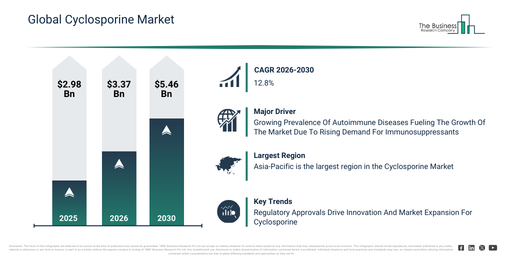
    The cyclosporine market has experienced rapid expansion in recent years. It is projected to grow from $2.98 billion in 2025 to $3.37 billion in 2026, at a compound annual growth rate (CAGR) of 13.0%. The historical increase in the market can be attributed to a rise in organ transplant procedures, its established effectiveness in immune suppression, the increasing prevalence of autoimmune diseases, early regulatory approvals, and the expanding use of hospital-based immunotherapy.

    The cyclosporine market is projected to witness substantial expansion in the forthcoming years. It is anticipated to grow to $5.46 billion by 2030, exhibiting a compound annual growth rate (CAGR) of 12.8%. This growth during the forecast period is attributable to the increasing prevalence of chronic autoimmune conditions, the expanding burden of ophthalmic diseases, enhanced transplant survival rates, broader availability of generics, and the rising adoption of outpatient immunosuppressive therapies. Key trends expected in the forecast period include the expanding application in autoimmune disease management, the growing uptake of ophthalmic cyclosporine formulations, a rising demand for long-term immunosuppressive treatments, increased usage in organ transplant maintenance regimens, and the proliferation of generic cyclosporine products.

    Access Your Free Sample Report For In-Depth Market Analysis:

    https://www.thebusinessresearchcompany.com/sample.aspx?id=23360&type=smp

    What Leading Drivers Are Supporting The Cyclosporine Market Expansion?

    The increasing occurrence of autoimmune conditions is anticipated to drive the expansion of the cyclosporine market in the future. Autoimmune conditions are characterized by the immune system mistakenly attacking the body’s healthy cells, leading to inflammation, tissue damage, and persistent ailments. This rise in autoimmune disease prevalence can be linked to genetic predispositions, as advancements in genetic testing have identified more individuals with inherited risks, thus increasing their susceptibility to these disorders. Cyclosporine proves effective for autoimmune diseases by inhibiting T-cell activation, thereby lessening detrimental immune responses against healthy tissues in conditions such as rheumatoid arthritis, psoriasis, and lupus. For instance, in October 2024, a comprehensive review published by Signal Transduction and Targeted Therapy, a journal from Nature, a UK-based peer-reviewed scientific publisher, indicated that approximately 8.4 million patients worldwide suffer from rheumatoid arthritis, with its total incidence rate increasing by 2-3% annually; furthermore, according to the Markov model approach, the affected populations are projected to reach approximately 13.5-17.4 million by 2040. Consequently, the expanding prevalence of autoimmune diseases is fueling the growth of the cyclosporine market.

    How Is The Cyclosporine Market Categorized Across Its Segment Groups?

    The cyclosporine market covered in this report is segmented –

    1) By Indication: Transplant Rejection Prophylaxis, Rheumatoid Arthritis, Psoriasis, Autoimmune Myasthenia Gravis, Dry Eye, Other Indications

    2) By Dosage Form: Capsule, Eye Drops, Liquid Solutions, Creams And Ointments

    3) By Route Of Administration: Oral, Topical, Parenteral

    4) By Distribution Channel: Hospital Pharmacies, Retail Pharmacies, Online Pharmacies

    5) By End-Users: Hospitals, Homecare, Speciality Centres, Other End-Users

    Subsegments:

    1) By Transplant Rejection Prophylaxis: Kidney Transplant, Liver Transplant, Heart Transplant, Lung Transplant, Other Transplants

    2) By Rheumatoid Arthritis: Moderate Rheumatoid Arthritis, Severe Rheumatoid Arthritis

    3) By Psoriasis: Plaque Psoriasis, Erythrodermic Psoriasis, Guttate Psoriasis, Pustular Psoriasis

    4) By Autoimmune Myasthenia Gravis: Generalized Myasthenia Gravis, Ocular Myasthenia Gravis

    5) By Dry Eye: Chronic Dry Eye, Severe Dry Eye

    6) By Other Indications: Atopic Dermatitis, Uveitis, Nephrotic Syndrome, Inflammatory Bowel Disease (IBD)

    What Emerging Trends Are Seen In The Cyclosporine Market?

    Leading companies in the cyclosporine market are prioritizing the attainment of regulatory clearances to broaden their product offerings and strengthen their presence in the industry. Regulatory approvals for cyclosporine serve to confirm its safety and effectiveness, thereby facilitating market entry and boosting confidence among both prescribers and patients. For instance, in June 2023, Novaliq GmbH, a Germany-based biopharmaceutical company, secured approval from the U.S. FDA for VEVYE (cyclosporine ophthalmic solution) 0.1%, a unique water-free ophthalmic medication formulated for treating dry eye disease (DED). This represents the first and only cyclosporine-based solution for this ailment, demonstrating its effectiveness in just four weeks. VEVYE utilizes an innovative water-free technology called EyeSol, which enhances cyclosporine’s bioavailability and prolongs its retention time on the ocular surface without incorporating preservatives, oils, or surfactants. The solution operates as a calcineurin inhibitor, contributing to the reduction of inflammation connected with dry eye disease.

    Which Firms Are Influencing Competition In The Cyclosporine Market?

    Major companies operating in the cyclosporine market are Novartis AG, Viatris Inc., Teva Pharmaceutical Industries Ltd, Sandoz International GmbH, Sun Pharmaceutical Industries Ltd, Apotex Inc., Cipla Ltd, Dr. Reddy’s Laboratories Ltd, Lupin Limited, Glenmark Pharmaceuticals Ltd, Taj Pharmaceuticals Limited, Panacea Biotec Ltd, Novaliq GmbH, Simson Pharma Limited, Strides Pharma Science Ltd, AdvaCare Pharma, JoinHub Pharma, Grevis Pharmaceuticals Pvt Ltd, GMT Pharma International, Logos Pharma.

    Get The Full Cyclosporine Market Report:

    https://www.thebusinessresearchcompany.com/report/cyclosporine-global-market-report

    Which Region Dominates The Cyclosporine Market By Market Share?

    Asia-Pacific was the largest region in the cyclosporine market in 2025. North America is expected to be the fastest-growing region in the forecast period. The regions covered in the cyclosporine market report are Asia-Pacific, South East Asia, Western Europe, Eastern Europe, North America, South America, Middle East, Africa.

    Request A Customized Cyclosporine Market Report For Competitive Insights:

    https://www.thebusinessresearchcompany.com/report/cyclosporine-global-market-report

    Browse Through More Reports Similar to the Global Cyclosporine Market 2026, By The Business Research Company

    Interstitial Cystitis Drugs Market Report 2026

    https://www.thebusinessresearchcompany.com/report/interstitial-cystitis-drugs-global-market-report

    Cyclohexylbenzene Market Report 2026

    https://www.thebusinessresearchcompany.com/report/cyclohexylbenzene-global-market-report

    Cyclin Dependent Kinase Cdk 4 Or 6 Inhibitor Drugs Market Report 2026

    https://www.thebusinessresearchcompany.com/report/cyclin-dependent-kinase-cdk-4-or-6-inhibitor-drugs-global-market-report

    Get in touch with us:

    The Business Research Company: https://www.thebusinessresearchcompany.com/

    Americas +1 310-496-7795

    Asia +44 7882 955267 & +91 8897263534

    Europe +44 7882 955267

    Email us at: marketing@tbrc.info

    Follow us on:

    LinkedIn: https://in.linkedin.com/company/the-business-research-company

    YouTube: https://www.youtube.com/channel/UC24_fI0rV8cR5DxlCpgmyFQ

    Global Market Model: https://www.thebusinessresearchcompany.com/global-market-model
  • Cyclin-Dependent Kinase (CDK) 4/6 Inhibitor Drugs Market Insights On Growth Drivers, Trends, And Opportunities

    Cyclin-Dependent Kinase (CDK) 4/6 Inhibitor Drugs Market Insights On Growth Drivers, Trends, And Opportunities

    The Business Research Company’s 2026 market reports feature enhanced tools like market attractiveness analysis, TAM assessment, and company scoring matrices, along with interactive dashboards, deeper supply chain insights, and startup coverage strengthening the depth, usability, and strategic value of insights.

    How Does The Market Size Of The Cyclin-Dependent Kinase (CDK) 4/6 Inhibitor Drugs Market Compare Between 2026 And 2030?

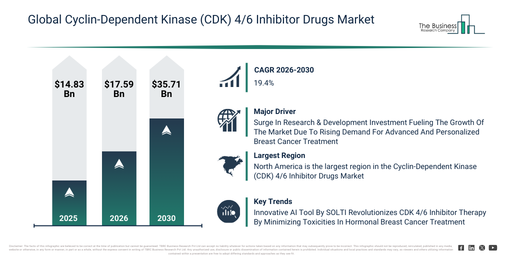
    The market for cyclin-dependent kinase (cdk) 4/6 inhibitor drugs has experienced rapid expansion in recent years. Forecasts indicate it will expand from $14.83 billion in 2025 to $17.59 billion by 2026, demonstrating a compound annual growth rate (CAGR) of 18.6%. Historically, this growth is primarily attributable to several factors, including the FDA’s approval of palbociclib, the rising occurrence of HR-positive HER2-negative breast cancer, the increasing uptake of targeted therapies within developed nations, a surge in clinical trials for cdk4/6 inhibitors, and collaborative efforts among pharmaceutical firms in oncology research.

    The market for cyclin-dependent kinase (cdk) 4/6 inhibitor drugs is projected to experience substantial expansion over the coming years. This market is set to reach a value of $35.71 billion by 2030, exhibiting a compound annual growth rate (CAGR) of 19.4%. Factors contributing to this anticipated growth include an increase in the elderly population affected by breast cancer, enhanced understanding of the advantages of targeted therapies, the development of oncology healthcare facilities in developing economies, the incorporation of digital health technologies for patient tracking, and elevated research and development efforts for advanced cdk4/6 inhibitors. Key trends anticipated during this period encompass individualized treatment plans, strategies involving combination therapies, the development of oral cdk4/6 inhibitor formulations, further market penetration in emerging oncology sectors, and the utilization of real-world evidence coupled with patient monitoring.

    Access Your Free Sample Report For In-Depth Market Analysis:

    https://www.thebusinessresearchcompany.com/sample.aspx?id=13121&type=smp

    Which Key Factors Are Driving The Cyclin-Dependent Kinase (CDK) 4/6 Inhibitor Drugs Market Growth?

    Heightened investment in research and development for breast cancer treatment is projected to fuel the expansion of the cyclin-dependent kinase (CDK) 4/6 inhibitor drugs market going forward. Breast cancer is characterized by the unchecked proliferation of aberrant cells within the breast, leading to tumor formation. This surge in breast cancer R&D investment stems from the increasing demand for more potent and tailored therapeutic approaches. Cyclin-dependent kinase (CDK) 4/6 inhibitor drugs function in breast cancer therapy by impeding proteins responsible for cancer cell proliferation, thereby aiding in the deceleration or arrest of tumor advancement. For example, the National Cancer Institute (NCI), a US-based government agency, allocated an estimated $542.0 million in FY 2023 specifically for breast cancer research, as reported in July 2025. Consequently, this elevated R&D spending for breast cancer treatments is a key driver for the growth of the cyclin-dependent kinase (CDK) 4/6 inhibitor drug market.

    How Are Segments Identified Within The Cyclin-Dependent Kinase (CDK) 4/6 Inhibitor Drugs Market Segment Framework?

    The cyclin-dependent kinase (cdk) 4/6 inhibitor drugs market covered in this report is segmented –

    1) By Drug Type: Palbociclib (Ibrance), Ribociclib (Kisqali), Abermaciclib (Verzenio)

    2) By Patient: Pre-Menopausal, Post-Menopausal, Other Patients

    3) By End-Users: Hospitals, Clinics, Research Laboratories, Retail Pharmacies

    Which Trends Are Guiding The Direction Of The Cyclin-Dependent Kinase (CDK) 4/6 Inhibitor Drugs Market?

    Leading companies in the cyclin-dependent kinase (CDK) 4/6 inhibitor drugs market are prioritizing the creation of advanced solutions, such as AI-powered tools, to mitigate treatment toxicities and address various significant industry needs. AI instruments for hormonal breast cancer therapy customize treatments to minimize adverse reactions, anticipate potential side effects, and facilitate timely interventions, ultimately boosting treatment safety and efficacy. For instance, in May 2024, SOLTI, an innovative breast cancer research entity from Spain, unveiled an AI-driven tool specifically designed to reduce toxicities in the treatment of hormonal breast cancer patients. This cutting-edge tool evaluates both cancerous and non-cancerous components within breast tissue samples, allowing for more precise predictions of treatment outcomes and aiding in the identification of patients who may not require intense chemotherapy. By curtailing unnecessary side effects and enabling personalized treatment regimens, the AI tool seeks to elevate patient quality of life and improve overall treatment effectiveness. This innovation builds on encouraging findings from SOLTI’s PATRICIA study, which underscored the merits of combining hormone therapy with targeted treatments for advanced ER+/HER2+ breast cancer.

    Who Are The Companies Competing Within The Cyclin-Dependent Kinase (CDK) 4/6 Inhibitor Drugs Market?

    Major companies operating in the cyclin-dependent kinase (cdk) 4/6 inhibitor drugs market are Pfizer Inc., Novartis AG, Eli Lilly and Company, AstraZeneca PLC, Roche Holding AG, Bristol-Myers Squibb Company, Merck & Co. Inc., Sanofi SA, Gilead Sciences Inc., Jiangsu Hengrui Medicine Co. Ltd., Innovent Biologics Inc., OncoMed Pharmaceuticals Inc., Puma Biotechnology Inc., Adlai Nortye Ltd., Arcus Biosciences Inc., Eisai Co. Ltd., G1 Therapeutics Inc., Simcere Pharmaceutical Group, Betta Pharmaceuticals Co. Ltd., Sihuan Pharmaceutical Holdings Group Ltd., Genor Biopharma Co. Ltd., Shanghai Fosun Pharmaceutical Group Co. Ltd.

    Get The Full Cyclin-Dependent Kinase (CDK) 4/6 Inhibitor Drugs Market Report:

    https://www.thebusinessresearchcompany.com/report/cyclin-dependent-kinase-cdk-4-or-6-inhibitor-drugs-global-market-report

    Which Region Is The Largest In The Cyclin-Dependent Kinase (CDK) 4/6 Inhibitor Drugs Market?

    North America was the largest region in the cyclin-dependent kinase (CDK) 4/6 inhibitor drugs market in 2025. The regions covered in the cyclin-dependent kinase (cdk) 4/6 inhibitor drugs market report are Asia-Pacific, South East Asia, Western Europe, Eastern Europe, North America, South America, Middle East, Africa.

    Request A Customized Cyclin-Dependent Kinase (CDK) 4/6 Inhibitor Drugs Market Report For Competitive Insights:

    https://www.thebusinessresearchcompany.com/report/cyclin-dependent-kinase-cdk-4-or-6-inhibitor-drugs-global-market-report

    Browse Through More Reports Similar to the Global Cyclin-Dependent Kinase (CDK) 4/6 Inhibitor Drugs Market 2026, By The Business Research Company

    Cyclin Dependent Kinase Cdk 4 Or 6 Inhibitor Drugs Market Report 2026

    https://www.thebusinessresearchcompany.com/report/cyclin-dependent-kinase-cdk-4-or-6-inhibitor-drugs-global-market-report

    Kinase Inhibitors Market Report 2026

    https://www.thebusinessresearchcompany.com/report/kinase-inhibitors-global-market-report

    Tyrosine Kinase Inhibitors Market Report 2026

    https://www.thebusinessresearchcompany.com/report/tyrosine-kinase-inhibitors-global-market-report

    Get in touch with us:

    The Business Research Company: https://www.thebusinessresearchcompany.com/

    Americas +1 310-496-7795

    Asia +44 7882 955267 & +91 8897263534

    Europe +44 7882 955267

    Email us at: marketing@tbrc.info

    Follow us on:

    LinkedIn: https://in.linkedin.com/company/the-business-research-company

    YouTube: https://www.youtube.com/channel/UC24_fI0rV8cR5DxlCpgmyFQ

    Global Market Model: https://www.thebusinessresearchcompany.com/global-market-model

  • C-X-C Chemokine Receptor Type 2 Market Developments Shaping Growth Across The Forecast Period

    C-X-C Chemokine Receptor Type 2 Market Developments Shaping Growth Across The Forecast Period

    The Business Research Company’s 2026 market reports feature enhanced tools like market attractiveness analysis, TAM assessment, and company scoring matrices, along with interactive dashboards, deeper supply chain insights, and startup coverage strengthening the depth, usability, and strategic value of insights.

    What Is The Forecasted Market Size Trajectory Of The C-X-C Chemokine Receptor Type 2 Market From 2026 To 2030?

    The market for c-x-c chemokine receptor type 2 has experienced rapid expansion in recent years. This market is projected to expand from $1.38 billion in 2025 to $1.55 billion in 2026, achieving a compound annual growth rate (CAGR) of 11.8%. Historically, this growth has been driven by factors including a limited understanding of cxcr2 biology, a reliance on conventional anti-inflammatory drugs, increasing research into chemokine signaling, early-stage monoclonal antibody development, and the rising prevalence of inflammatory diseases.

    The market for c-x-c chemokine receptor type 2 is projected to experience substantial expansion over the upcoming years. This market is anticipated to reach a valuation of $2.39 billion by 2030, exhibiting a compound annual growth rate (CAGR) of 11.5%. Key factors driving this expansion during the forecast period include the creation of new small molecule and peptide inhibitors, an increase in clinical trials for cxcr2 treatments, the growing acceptance of personalized and targeted immunotherapies, the incorporation of digital biomarkers and AI-driven drug discovery methods, and heightened pharmaceutical investment within the oncology and autoimmune sectors. Significant trends expected during this period encompass the introduction of selective cxcr2 inhibitors and combined cxcr1/2 inhibitors, progress in therapeutics based on monoclonal antibodies and peptides, a broadening of applications across cancer, autoimmune, and inflammatory conditions, an uptick in gene therapy and RNA-based treatments aimed at cxcr2, and the integration of cxcr2-targeted therapies with personalized medicine strategies.

    Access Your Free Sample Report For In-Depth Market Analysis:

    https://www.thebusinessresearchcompany.com/sample.aspx?id=27268&type=smp

    What Primary Drivers Are Shaping The C-X-C Chemokine Receptor Type 2 Market?

    An increasing incidence of inflammatory disorders is projected to boost the expansion of the C-X-C chemokine receptor type 2 market. These conditions are medical ailments resulting from the body’s immune system’s reaction, manifesting as swelling, redness, heat, discomfort, and impaired function in the affected body parts. A primary cause for the rise in inflammatory conditions is escalating environmental pollution, which provokes immune system reactions and persistent inflammation. C-X-C Chemokine Receptor Type 2 (CXCR2) plays a role in treating inflammatory conditions through its precise control over immune cell movement and inflammatory reactions. CXCR2 minimizes unintended effects by allowing for the development of small-molecule inhibitors and biologics that specifically adjust its activity, thereby enhancing treatment effectiveness and patient results. As an example, in May 2024, data from the Centers for Disease Control and Prevention, a US-based government agency, indicated that the occurrence of asthma among U.S. adults aged 18 and above grew from 8.7% in 2022 to 8.9% in 2023. Consequently, the increased occurrence of inflammatory conditions is propelling the expansion of the C-X-C chemokine receptor type 2 market.

    What Are The Key Segment Divisions In The C-X-C Chemokine Receptor Type 2 Market Segment Structure?

    The c-x-c chemokine receptor type 2 market covered in this report is segmented –

    1) By Product Type: Antagonists, Agonists, Inhibitors, Other Product Types

    2) By Drug Type: Monoclonal Antibodies, Small Molecule Inhibitors, Peptide-based Therapeutics, Gene Therapy Products

    3) By Route Of Administration: Intravenous, Subcutaneous, Oral, Topical

    4) By Application: Cancer Treatment, Autoimmune Disorders, Infectious Diseases, Inflammatory Diseases, Other Applications

    5) By End User: Hospitals, Research Institutions, Pharmaceutical Companies, Contract Research Organizations, Other End Users

    Subsegments:

    1) By Antagonists: Small Molecule Antagonists, Peptide Antagonists, Monoclonal Antibody Antagonists, Synthetic Antagonists

    2) By Agonists: Chemokine-Based Agonists, Recombinant Protein Agonists, Peptide-Based Agonists, Modified Cytokine Agonists

    3) By Inhibitors: Selective CXCR2 Inhibitors, Dual CXCR1 Or 2 Inhibitors, Allosteric Inhibitors, Irreversible Inhibitors

    4) By Other Product Types: RNA-Based Therapeutics, Gene Therapy Vectors, Cell-Based Therapeutics, Biologic Response Modifiers

    Which Organizations Are Engaged In The C-X-C Chemokine Receptor Type 2 Market?

    Major companies operating in the c-x-c chemokine receptor type 2 market are AstraZeneca plc, GSK plc, Eli Lilly and Company, Bio-Techne Corporation, Dompé Farmaceutici S.p.A., Miltenyi Biotec B.V. & Co. KG, Abcam plc, Selleck Chemicals LLC, Cell Signaling Technology Inc., RayBiotech Inc., Bethyl Laboratories Inc., Creative Biolabs Inc., TargetMol LLC, MedChemExpress LLC, BioCompare Inc., Boster Biological Technology Co. Ltd., TME Pharma GmbH, InvivoChem Ltd., Abbexa Ltd., Abiocode Inc.

    Get The Full C-X-C Chemokine Receptor Type 2 Market Report:

    https://www.thebusinessresearchcompany.com/report/c-x-c-chemokine-receptor-type-2-global-market-report

    Which Region Leads The C-X-C Chemokine Receptor Type 2 Market In Terms Of Market Share?

    North America was the largest region in the C-X-C chemokine receptor type 2 market in 2025. Asia-Pacific is expected to be the fastest-growing region in the forecast period. The regions covered in the c-x-c chemokine receptor type 2 market report are Asia-Pacific, South East Asia, Western Europe, Eastern Europe, North America, South America, Middle East, Africa.

    Request A Customized C-X-C Chemokine Receptor Type 2 Market Report For Competitive Insights:

    https://www.thebusinessresearchcompany.com/report/c-x-c-chemokine-receptor-type-2-global-market-report

    Browse Through More Reports Similar to the Global C-X-C Chemokine Receptor Type 2 Market 2026, By The Business Research Company

    Mortgage Lender Market Report 2026

    https://www.thebusinessresearchcompany.com/report/mortgage-lender-global-market-report

    Property And Casualty Insurance Market Report 2026

    https://www.thebusinessresearchcompany.com/report/property-and-casualty-insurance-global-market-report

    Home Insurance Market Report 2026

    https://www.thebusinessresearchcompany.com/report/home-insurance-global-market-report

    Get in touch with us:

    The Business Research Company: https://www.thebusinessresearchcompany.com/

    Americas +1 310-496-7795

    Asia +44 7882 955267 & +91 8897263534

    Europe +44 7882 955267

    Email us at: marketing@tbrc.info

    Follow us on:

    LinkedIn: https://in.linkedin.com/company/the-business-research-company

    YouTube: https://www.youtube.com/channel/UC24_fI0rV8cR5DxlCpgmyFQ

    Global Market Model: https://www.thebusinessresearchcompany.com/global-market-model
  • Custom Antibody Market Forecast With Insights On Demand And Industry Growth

    Custom Antibody Market Forecast With Insights On Demand And Industry Growth

    The Business Research Company’s 2026 market reports feature enhanced tools like market attractiveness analysis, TAM assessment, and company scoring matrices, along with interactive dashboards, deeper supply chain insights, and startup coverage strengthening the depth, usability, and strategic value of insights.

    How Much Will The Market Value Of The Custom Antibody Market Grow Between 2026 And 2030?

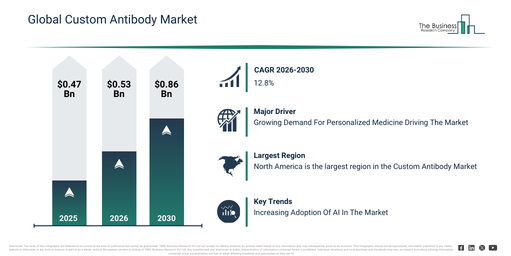
    The custom antibody market size has experienced rapid growth in recent years. It is projected to expand from $0.47 billion in 2025 to $0.53 billion in 2026, exhibiting a compound annual growth rate (CAGR) of 12.9%. The growth witnessed in the historic period can be attributed to growth in biomedical research, expansion of diagnostics testing, increased pharma r&d spending, advances in antibody engineering, and growth of academic research.

    The custom antibody market is set for significant expansion over the next few years. Its valuation is predicted to climb to $0.86 billion by 2030, demonstrating a compound annual growth rate (CAGR) of 12.8%. This anticipated growth is fueled by several factors such as the rise of personalized medicine, the broadening scope of biologics research, increased utilization of contract research organizations (CROs), an escalating demand for diagnostics, and advancements in precision oncology. Prominent trends throughout this forecast period encompass a growing need for customized research antibodies, their increased application in precision diagnostics, greater integration into drug discovery pipelines, the development of recombinant antibody technologies, and enhanced outsourcing to CROs.

    Access Your Free Sample Report For In-Depth Market Analysis:

    https://www.thebusinessresearchcompany.com/sample.aspx?id=21162&type=smp

    Which Major Drivers Are Influencing The Expansion Of The Custom Antibody Market?

    The increasing need for personalized medicine is anticipated to drive the expansion of the custom antibody market moving ahead. This medical approach involves customizing treatment and prevention methods based on a person’s genetics, lifestyle, and environmental conditions. This heightened demand stems from progress in genomics, a greater availability of therapies relying on biomarkers, and a growing patient preference for customized treatments that enhance effectiveness and minimize side effects. Custom antibody facilitates personalized medicine through the provision of specific and customized immune reagents, which improve disease detection, assist in therapeutic targeting, and aid in biomarker identification for individual treatment plans. For example, in February 2024, the US-based non-profit organization, Personalized Medicine Coalition, reported that in 2023, the Food and Drug Administration (FDA) sanctioned 16 novel personalized treatments for patients with rare diseases, a rise from 6 in 2022. Consequently, the increasing requirement for personalized medicine is fueling the expansion of the custom antibody market.

    Which Segment Categories Are Included In The Custom Antibody Market Segment Analysis?

    The custom antibody market covered in this report is segmented –

    1) By Type: Monoclonal Antibodies, Polyclonal Antibodies, Recombinant Antibodies, Other Types

    2) By Service: Antibody Development, Antibody Production And Purification, Antibody Fragmentation And Labeling

    3) By Source: Mice, Rabbit, Other Sources

    4) By Application: Oncology, Infectious Diseases, Neurology, Stem Cells, Immunology, Cardiovascular Diseases, Other Applications

    5) By End-User: Pharmaceutical And Biotechnology Companies, Academic And Research Institutes, Contract Research Organization, Hospitals And Clinics

    Subsegments:

    1) By Monoclonal Antibodies: Murine Monoclonal Antibodies, Chimeric Monoclonal Antibodies, Humanized Monoclonal Antibodies, Fully Human Monoclonal Antibodies

    2) By Polyclonal Antibodies: Rabbit Polyclonal Antibodies, Goat Polyclonal Antibodies, Sheep Polyclonal Antibodies, Other Animal-Derived Polyclonal Antibodies

    3) By Recombinant Antibodies: Single-Chain Variable Fragment (scFv), Nanobodies, Bispecific Antibodies, Antibody Fragments

    4) By Other Types: Aptamers, Nanobodies (Camelid Antibodies), Hybridomas

    Which Trends Are Shaping The Custom Antibody Market?

    Leading organizations within the custom antibody field are increasingly adopting cutting-edge technologies, particularly artificial intelligence, to advance antibody discovery, heighten specificity, and speed up developmental cycles. Artificial intelligence aids custom antibody formulation by refining antigen selection, foreseeing antibody-antigen binding, and optimizing candidate screening via machine learning, resulting in more rapid and cost-efficient biopharmaceutical investigations. As an illustration, in October 2024, Archon Biosciences Inc., a US-based biotechnology company, was established with $20 million in capital to produce algorithmically designed antibody cages capable of adapting existing antibodies for medicinal applications. Archon’s unique technological approach involves building antibodies into cage-like formations, which allows their attributes to be modified without altering their intrinsic frameworks. This advancement is intended to strengthen antibody binding to therapeutic targets while simultaneously diminishing unwanted interactions, thereby boosting overall efficacy and safety.

    Who Are The Active Companies Shaping The Custom Antibody Market?

    Major companies operating in the custom antibody market are Merck & Co. Inc., AbbVie Inc., Thermo Fisher Scientific Inc., Agilent Technologies Inc., Lonza Group AG, Bio-Rad Laboratories Inc., Bio-Techne Corporation, GenScript Biotech Corporation, BioLegend Inc., Abcam plc, Cusabio Biotech Co. Ltd., OriGene Technologies Inc., Cell Signaling Technology Inc., Abgent Inc., ProSci Incorporated, Santa Cruz Biotechnology Inc., Rockland Immunochemicals Inc., Creative Biolabs Inc., Novus Biologicals LLC, Creative Diagnostics Inc., Biorbyt Ltd., BIOTEM SAS, Capra Biosciences Inc., Pacific Immunology Inc., ProteoGenix SAS

    Get The Full Custom Antibody Market Report:

    https://www.thebusinessresearchcompany.com/report/custom-antibody-global-market-report

    Which Region Leads The Custom Antibody Market In Overall Market Size?

    North America was the largest region in the custom antibody market in 2025. Asia-Pacific is expected to be the fastest-growing region in the forecast period. The regions covered in the custom antibody market report are Asia-Pacific, South East Asia, Western Europe, Eastern Europe, North America, South America, Middle East, Africa.

    Request A Customized Custom Antibody Market Report For Competitive Insights:

    https://www.thebusinessresearchcompany.com/report/custom-antibody-global-market-report

    Browse Through More Reports Similar to the Global Custom Antibody Market 2026, By The Business Research Company

    Antibody Discovery Market Report 2026

    https://www.thebusinessresearchcompany.com/report/antibody-discovery-global-market-report

    Diagnostic Specialty Antibodies Market Report 2026

    https://www.thebusinessresearchcompany.com/report/diagnostic-specialty-antibodies-global-market-report

    Next Generation Antibody Therapeutics Market Report 2026

    https://www.thebusinessresearchcompany.com/report/next-generation-antibody-therapeutics-global-market-report

    Get in touch with us:

    The Business Research Company: https://www.thebusinessresearchcompany.com/

    Americas +1 310-496-7795

    Asia +44 7882 955267 & +91 8897263534

    Europe +44 7882 955267

    Email us at: marketing@tbrc.info

    Follow us on:

    LinkedIn: https://in.linkedin.com/company/the-business-research-company

    YouTube: https://www.youtube.com/channel/UC24_fI0rV8cR5DxlCpgmyFQ

    Global Market Model: https://www.thebusinessresearchcompany.com/global-market-model

  • CTLA4 Inhibitors Market Outlook Highlighting Key Drivers And Market Evolution

    CTLA4 Inhibitors Market Outlook Highlighting Key Drivers And Market Evolution

    The Business Research Company’s 2026 market reports feature enhanced tools like market attractiveness analysis, TAM assessment, and company scoring matrices, along with interactive dashboards, deeper supply chain insights, and startup coverage strengthening the depth, usability, and strategic value of insights.

    What Changes In Market Value Are Expected For The CTLA4 Inhibitors Market Over The 2026–2030 Period?

    The ctla4 inhibitors market size has seen rapid growth in recent years. It is anticipated to expand from $5.63 billion in 2025 to $6.54 billion in 2026, achieving a compound annual growth rate (CAGR) of 16.2%. The increase observed in past periods can be credited to advances in cancer immunology research, the approval of first CTLA4 inhibitors, rising cancer incidence rates, strong investment in oncology R&D, and increased regulatory support for biologics.

    The market for ctla4 inhibitors is anticipated to experience substantial expansion over the upcoming years. By 2030, this market is projected to reach $11.84 billion, demonstrating a compound annual growth rate (CAGR) of 16.0%. Factors contributing to this growth during the projected timeframe include the increasing uptake of precision oncology, the proliferation of combination immunotherapy approaches, a heightened need for lasting cancer remission, intensified activity in oncology drug development pipelines, and the worldwide growth of infrastructure for cancer treatment. Key trends anticipated during the forecast period encompass the expanding application of immunotherapy within oncology, the greater embrace of combined cancer therapies, the broadening scope of clinical trials for solid tumors, an amplified emphasis on modulating immune checkpoints, and the creation of advanced CTLA4 inhibitors.

    Access Your Free Sample Report For In-Depth Market Analysis:

    https://www.thebusinessresearchcompany.com/sample.aspx?id=23358&type=smp

    What Key Drivers Are Fueling The Growth Of The CTLA4 Inhibitors Market?

    The anticipated expansion of the CTLA4 inhibitors market is linked to the increasing occurrence of cancer. Cancer encompasses various illnesses defined by the unchecked proliferation and dissemination of atypical cells, capable of infiltrating adjacent tissues and impairing regular physiological processes. A primary factor contributing to the growing prevalence of cancer is extended exposure to carcinogens, which directly initiates genetic mutations culminating in the conversion of cells into malignant ones. Cytotoxic T-Lymphocyte-Associated Protein 4 (CTLA-4) inhibitors help manage the escalating burden of cancer by boosting the immune system’s capacity to identify and eradicate cancerous cells, consequently enhancing the effectiveness of treatment and providing novel therapeutic avenues for individuals suffering from advanced or resistant forms of cancer. As an illustration, in February 2024, the World Health Organization, an international public health entity headquartered in Switzerland, reported nearly 20 million new cancer cases in 2022, leading to around 10 million fatalities from the condition. Forecasts indicate that the yearly number of cancer cases might reach 35 million by 2050, representing a 77% surge compared to the figures from 2022. Consequently, the escalating incidence of cancer is fueling the expansion of the CTLA4 inhibitors market.

    How Is The CTLA4 Inhibitors Market Broken Down By Segment Categories?

    The ctla4 inhibitors market covered in this report is segmented –

    1) By Type: Monotherapy, Combination Therapy

    2) By Mechanism Of Action: Targeted Inhibition, Immune Checkpoint Blockade, Co-Stimulatory Boosting

    3) By Route Of Administration: Intravenous (IV), Subcutaneous

    4) By Indication: Melanoma, Non-Small Cell Lung Cancer (NSCLC), Colorectal Cancer, Other Malignancies

    5) By End User: Hospitals, Specialty Clinics, Research Institutions

    Subsegments:

    1) By Monotherapy: First-Line Treatment, Second-Line Treatment, Salvage Therapy

    2) By Combination Therapy Subsegments: CTLA-4 Inhibitors With PD-1/PD-L1 Inhibitors, CTLA-4 Inhibitors With Chemotherapy, CTLA-4 Inhibitors With Targeted Therapy, CTLA-4 Inhibitors With Radiotherapy, CTLA-4 Inhibitors With Other Immunotherapies

    What Trends Are Influencing The CTLA4 Inhibitors Market?

    Leading companies operating in the CTLA-4 inhibitors market are driving advancements in immunotherapies, specifically combination therapies, to strengthen the immune response against cancerous cells and improve patient outcomes for those with advanced or resistant cancers. Combination therapy refers to the concurrent application of two or more treatments for a disease or condition, which enhances the efficacy of CTLA-4 inhibitors by boosting the immune system’s ability to attack cancer cells more effectively than when used individually. For instance, in February 2025, Innovent Biologics Inc., a China-based biotechnology company, announced that the New Drug Application (NDA) for ipilimumab injection had been accepted by the Center for Drug Evaluation (CDE) of China’s National Medical Products Administration (NMPA) and granted Priority Review designation for combination with sintilimab as neoadjuvant treatment for resectable microsatellite instability-high (MSI-H) or mismatch repair deficient (dMMR) colon cancer. This development represents the first domestically developed CTLA-4 inhibitor in China, highlighting the expansion of local innovations in cancer treatment.

    Which Players Are Present In The CTLA4 Inhibitors Market Space?

    Major companies operating in the ctla4 inhibitors market are Bristol-Myers Squibb Company, Agenus Inc., Akeso Inc., Harbour BioMed, MacroGenics Inc., NextCure Inc., Xilio Therapeutics Inc., Shattuck Labs Inc., CytomX Therapeutics Inc., Regeneron Pharmaceuticals Inc., AstraZeneca plc, Merck & Co. Inc., BeiGene Ltd., Innovent Biologics Inc., Incyte Corporation, Pfizer Inc., Amgen Inc., Eli Lilly and Company, Novartis AG, BioNTech SE

    Get The Full CTLA4 Inhibitors Market Report:

    https://www.thebusinessresearchcompany.com/report/ctla4-inhibitors-global-market-report

    Which Region Is The Top Contributor To The CTLA4 Inhibitors Market By Share?

    North America was the largest region in the CTLA4 inhibitors market in 2025. Asia-Pacific is expected to be the fastest-growing region in the forecast period. The regions covered in the ctla4 inhibitors market report are Asia-Pacific, South East Asia, Western Europe, Eastern Europe, North America, South America, Middle East, Africa.

    Request A Customized CTLA4 Inhibitors Market Report For Competitive Insights:

    https://www.thebusinessresearchcompany.com/report/ctla4-inhibitors-global-market-report

    Browse Through More Reports Similar to the Global CTLA4 Inhibitors Market 2026, By The Business Research Company

    Mtor Inhibitors Market Report 2026

    https://www.thebusinessresearchcompany.com/report/mtor-inhibitors-global-market-report

    Ace Inhibitors Market Report 2026

    https://www.thebusinessresearchcompany.com/report/ace-inhibitors-global-market-report

    Dipeptide Peptidase 4 Inhibitors Market Report 2026

    https://www.thebusinessresearchcompany.com/report/dipeptide-peptidase-4-inhibitors-global-market-report

    Get in touch with us:

    The Business Research Company: https://www.thebusinessresearchcompany.com/

    Americas +1 310-496-7795

    Asia +44 7882 955267 & +91 8897263534

    Europe +44 7882 955267

    Email us at: marketing@tbrc.info

    Follow us on:

    LinkedIn: https://in.linkedin.com/company/the-business-research-company

    YouTube: https://www.youtube.com/channel/UC24_fI0rV8cR5DxlCpgmyFQ

    Global Market Model: https://www.thebusinessresearchcompany.com/global-market-model
  • Cryptococcosis Therapeutics Market Overview 2026–2030 With Insights On Industry Developments

    Cryptococcosis Therapeutics Market Overview 2026–2030 With Insights On Industry Developments

    The Business Research Company’s 2026 market reports feature enhanced tools like market attractiveness analysis, TAM assessment, and company scoring matrices, along with interactive dashboards, deeper supply chain insights, and startup coverage strengthening the depth, usability, and strategic value of insights.

    By 2030, What Market Size Is The Cryptococcosis Therapeutics Market Expected To Reach Based On Its 2026 Value?

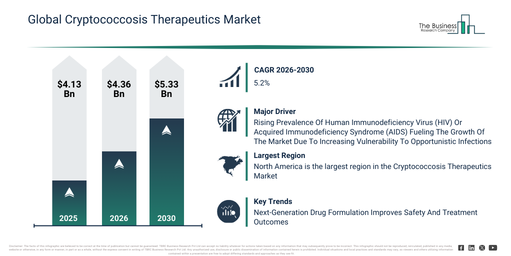
    The cryptococcosis therapeutics market has demonstrated substantial growth in recent years. It is anticipated to increase from $4.13 billion in 2025 to $4.36 billion in 2026, achieving a compound annual growth rate (CAGR) of 5.6%. The expansion witnessed during the historic period can be ascribed to several factors, including the constrained availability of antifungal therapeutics, the widespread occurrence of immunocompromised patients, the reliance on hospital-based treatment approaches, the prevalence of branded drugs, and the gradual acceptance of oral formulations.

    The cryptococcosis therapeutics market size is projected to experience substantial growth over the next few years. It is forecast to grow to $5.33 billion in 2030, achieving a compound annual growth rate (CAGR) of 5.2%. The expansion during this forecast period is attributed to several factors, including the rising incidence of cryptococcosis in developing regions, the introduction of novel antifungal agents, increasing awareness among healthcare providers, the broadening reach of online pharmacy channels, and a growing investment in combination and targeted therapies. Key trends anticipated in the forecast period include the increasing adoption of generic antifungal drugs, a growing preference for intravenous administration in severe cases, the expansion of both online and retail pharmacy distribution channels, a heightened focus on early diagnosis and treatment of cryptococcosis, and the development of combination therapies and novel formulations.

    Access Your Free Sample Report For In-Depth Market Analysis:

    https://www.thebusinessresearchcompany.com/sample.aspx?id=25733&type=smp

    Which Drivers Are Supporting The Cryptococcosis Therapeutics Market Growth?

    The increasing incidence of human immunodeficiency virus (HIV) or acquired immunodeficiency syndrome (AIDS) is anticipated to boost the expansion of the cryptococcosis therapeutics market in the future. This condition is a persistent, fatal illness resulting from a virus that compromises the immune system, leaving individuals susceptible to various infections and illnesses. The increase in HIV/AIDS cases in specific areas stems from inadequate healthcare access, hindering timely diagnosis, continuous treatment, and successful prevention strategies. Cryptococcosis therapeutics offer a means to manage HIV/AIDS by addressing opportunistic fungal infections frequently seen in those with weakened immune systems. These treatments enhance patient well-being by decreasing the likelihood of serious issues like cryptococcal meningitis, leading to an improved quality of life and facilitating long-term management of the disease. As an illustration, the UK Health Security Agency reported in October 2024 that England recorded 6,008 HIV diagnoses (including those previously diagnosed overseas) in 2023, representing a 51% increase from the 3,975 cases in 2022. Consequently, the growing occurrence of human immunodeficiency virus (HIV) or acquired immunodeficiency syndrome (AIDS) is fueling the expansion of the cryptococcosis therapeutics market.

    What Are The Different Segment Types In The Cryptococcosis Therapeutics Market Segment Breakdown?

    The cryptococcosis therapeutics market covered in this report is segmented –

    1) By Drug Type: Branded, Generic

    2) By Treatment: Amphotericin B, Flucytosine, Fluconazole, Other Treatments

    3) By Route Of Administration: Oral, Intravenous, Inhalation

    4) By Distribution Channel: Hospital Pharmacies, Retail Pharmacies, Online Pharmacies

    5) By End-User: Hospitals, Ambulatory Surgical Centers, Other End Users

    Subsegments:

    1) By Branded Drugs: Ambisome, Diflucan, Vfend, Noxafil, Cresemba

    2) By Generic Drugs: Amphotericin B Deoxycholate, Fluconazole, Flucytosine

    Which Trends Are Shaping Growth In The Cryptococcosis Therapeutics Market?

    Leading companies within the cryptococcosis therapeutics market are concentrating on conducting clinical trials to develop advanced treatments, such as oral lipid-nanocrystal (LNC) formulations, with the aim of enhancing treatment availability, mitigating toxicity, and improving patient results. Oral lipid-nanocrystal (LNC) formulations function as drug delivery mechanisms that encase medications within minute lipid-based crystals, enabling oral administration while specifically targeting tissues, including the central nervous system, and demonstrating less kidney toxicity compared to conventional intravenous therapies. For instance, in March 2023, Matinas BioPharma Holdings, Inc., a US-based biopharmaceutical firm, showcased MAT2203, its oral LNC amphotericin B, through two oral presentations at the European Congress of Clinical Microbiology & Infectious Diseases (ECCMID). The Phase 2 EnACT trial involving MAT2203 demonstrated an average early fungicidal activity surpassing the study’s initial benchmark, achieved approximately 95% two-week survival among an entirely oral group of 40 patients, and exhibited no signs of kidney toxicity after a six-week treatment period. MAT2203 utilizes Matinas’ exclusive LNC platform to transform an antifungal typically given intravenously into an orally administered therapy, underscoring its potential to alter the existing IV-centric treatment approach.

    Who Are The Well-Known Companies In The Cryptococcosis Therapeutics Market?

    Major companies operating in the cryptococcosis therapeutics market are Pfizer Inc., Merck & Co. Inc., Gilead Sciences Inc., Asahi Kasei Pharma Corporation, Astellas Pharma Inc., Sun Pharmaceutical Industries Limited, Dr. Reddy’s Laboratories Ltd., Cipla Limited, Basilea Pharmaceutica AG, F2G Limited, Century Pharmaceuticals Ltd., LGM Pharma LLC, Zeon Health Industries Pvt. Ltd., Matinas BioPharma Holdings Inc.

    Get The Full Cryptococcosis Therapeutics Market Report:

    https://www.thebusinessresearchcompany.com/report/cryptococcosis-therapeutics-global-market-report

    Which Region Represents The Largest Share Of The Cryptococcosis Therapeutics Market?

    North America was the largest region in the cryptococcosis therapeutics market in 2025. Asia-Pacific is expected to be the fastest-growing region in the forecast period. The regions covered in the cryptococcosis therapeutics market report are Asia-Pacific, South East Asia, Western Europe, Eastern Europe, North America, South America, Middle East, Africa.

    Request A Customized Cryptococcosis Therapeutics Market Report For Competitive Insights:

    https://www.thebusinessresearchcompany.com/report/cryptococcosis-therapeutics-global-market-report

    Browse Through More Reports Similar to the Global Cryptococcosis Therapeutics Market 2026, By The Business Research Company

    Infectious Disease Therapeutics Market Report 2026

    https://www.thebusinessresearchcompany.com/report/infectious-disease-therapeutics-global-market-report

    Cephalosporin Market Report 2026

    https://www.thebusinessresearchcompany.com/report/cephalosporin-global-market-report

    Anti Infective Drugs Market Report 2026

    https://www.thebusinessresearchcompany.com/report/anti-infective-drugs-global-market-report

    Get in touch with us:

    The Business Research Company: https://www.thebusinessresearchcompany.com/

    Americas +1 310-496-7795

    Asia +44 7882 955267 & +91 8897263534

    Europe +44 7882 955267

    Email us at: marketing@tbrc.info

    Follow us on:

    LinkedIn: https://in.linkedin.com/company/the-business-research-company

    YouTube: https://www.youtube.com/channel/UC24_fI0rV8cR5DxlCpgmyFQ

    Global Market Model: https://www.thebusinessresearchcompany.com/global-market-model