Category: Pharmaceuticals

  • Generic Injectables Market Forecast Showing Industry Progress And Growth Trends

    Generic Injectables Market Forecast Showing Industry Progress And Growth Trends

    The Business Research Company’s 2026 market reports feature enhanced tools like market attractiveness analysis, TAM assessment, and company scoring matrices, along with interactive dashboards, deeper supply chain insights, and startup coverage strengthening the depth, usability, and strategic value of insights.

    What Is The Anticipated Rise In Market Value Of The Generic Injectables Market During The Forecast Period?

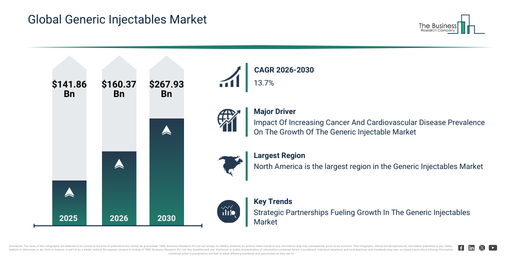
    The generic injectables market has experienced significant expansion in recent years. This market is projected to grow from $141.86 billion in 2025 to $160.37 billion in 2026, exhibiting a compound annual growth rate (CAGR) of 13.0%. Historically, this growth has been fueled by factors such as the expiration of patents for branded injectables, an increasing prevalence of chronic diseases, a rise in healthcare expenditure, the growing demand for biosimilars, and advancements in sterile manufacturing technologies.

    The generic injectables market is anticipated to exhibit significant expansion over the next few years. It is projected to reach a size of $267.93 billion by 2030, demonstrating a compound annual growth rate (CAGR) of 13.7%. This growth during the forecast period is propelled by developments in biosimilar research, the expanding healthcare infrastructure within emerging markets, enhanced government incentives for generic drugs, the integration of AI and digital instruments in manufacturing processes, and increasing alliances between pharmaceutical enterprises. Prominent trends expected in this period include a rise in the uptake of generic biologics, an increasing preference for affordable injectable medicines, a growing number of regulatory approvals for biosimilars, the extension of hospital and retail pharmacy systems, and a sharpened focus on sterility and quality assurance.

    Access Your Free Sample Report For In-Depth Market Analysis:

    https://www.thebusinessresearchcompany.com/sample.aspx?id=10776&type=smp

    What Factors Are Contributing To The Growth Of The Generic Injectables Market?

    The growing incidence of cancer and cardiovascular diseases is anticipated to fuel the expansion of the generic injectable market. These injectables are vital in managing cancer, a condition where body cells multiply uncontrollably and spread, and cardiovascular diseases, which are heart and blood vessel disorders. They offer pharmaceutical equivalence or bioequivalence to branded drugs, improving drug availability and access for more affordable treatment. For example, data from the American Cancer Society, a US-based non-profit, indicated in January 2024 that the United States is expected to record 2,001,140 new cancer cases and 611,720 cancer deaths in 2024, an increase from 1,958,310 cases and 609,820 deaths in 2023. Similarly, in the UK, the British Heart Foundation, a UK-based charity, reported in September 2025 that over 7.6 million people (comprising more than 4 million men and over 3.6 million women) are living with cardiovascular disease. Projections further suggest this number could increase by approximately 1 million by 2030 and about 2 million by 2040, primarily due to an aging population and better survival rates. Consequently, the increasing prevalence of cancer and cardiovascular diseases is a key factor boosting the growth of the generic injectable market.

    How Are Segments Identified Within The Generic Injectables Market Segment Framework?

    The generic injectables market covered in this report is segmented –

    1) By Product Type: Monoclonal Antibodies, Cytokines, Insulin, Vaccines, Other Products

    2) By Container Type: Vials, Ampoules, Premix, Prefilled Syringes, Other Containers

    3) By Route Of Administration: Intravenous, Intramuscular, Subcutaneous, Other Routes Of Administration

    4) By Distribution Channel: Hospital Pharmacy, Retail Pharmacy, Drug Stores, Online Prescription Stores

    5) By Application: Oncology, Diabetes , Infectious Diseases , Blood Disorders , Musculoskeletal Disorders , Hormonal Disorders , Pain Management , CNS Diseases , Cardiovascular Diseases

    Subsegments:

    1) By Monoclonal Antibodies: IgG Monoclonal Antibodies, IgM Monoclonal Antibodies, Other Types Of Monoclonal Antibodies

    2) By Cytokines: Interferons, Interleukins, Tumor Necrosis Factor (TNF) Inhibitors

    3) By Insulin: Rapid-Acting Insulin, Long-Acting Insulin, Combination Insulin

    4) By Vaccines: Inactivated Vaccines, Live Attenuated Vaccines, Recombinant Vaccines

    5) By Other Products: Hormones, Peptides, Enzymes

    What Trends Are Influencing The Generic Injectables Market?

    Key players within the generic injectables market are forging strategic partnerships and collaborations to maintain their market standing. These strategic partnerships denote cooperative relationships established between two or more entities to achieve particular business aims or objectives. For example, in December 2023, ITAAN Pharma, a Canada-based pharmaceutical company specializing in injectable medications, collaborated with ACIC Pharmaceuticals, also a Canada-based pharmaceutical company. Through this alliance, both firms are pooling their resources in a joint initiative to develop generic injectables for the North American market.

    Who Are The Companies Competing Within The Generic Injectables Market?

    Major companies operating in the generic injectables market are Baxter International Inc., Sanofi SA, AstraZeneca plc., Johnson & Johnson, Merck & Co. Inc., Biocon Limited, Lupin Limited, Dr. Reddy’s Laboratories Ltd., Teva Pharmaceutical Industries Ltd., Cipla Limited, Aurobindo Pharma Limited, Samsung Biologics Co. Ltd., Piramal Pharma Limited, Bristol-Myers Squibb Company, Pfizer Inc., Hikma Pharmaceuticals PLC, Sandoz International GmbH, Mylan N.V., Sun Pharmaceutical Industries Ltd., Wockhardt Limited

    Get The Full Generic Injectables Market Report:

    https://www.thebusinessresearchcompany.com/report/generic-injectables-global-market-report

    Which Region Represents The Largest Share Of The Generic Injectables Market?

    North America was the largest region in the generic injectable market in 2025. Asia-Pacific is expected to be the fastest-growing region in the forecast period. The regions covered in the generic injectables market report are Asia-Pacific, South East Asia, Western Europe, Eastern Europe, North America, South America, Middle East, Africa.

    Request A Customized Generic Injectables Market Report For Competitive Insights:

    https://www.thebusinessresearchcompany.com/report/generic-injectables-global-market-report

    Browse Through More Reports Similar to the Global Generic Injectables Market 2026, By The Business Research Company

    Generic Injectables Market Report 2026

    https://www.thebusinessresearchcompany.com/report/generic-injectables-global-market-report

    Generic Oncology Sterile Injectable Market Report 2026

    https://www.thebusinessresearchcompany.com/report/generic-oncology-sterile-injectable-global-market-report

    Specialty Generics Market Report 2026

    https://www.thebusinessresearchcompany.com/report/specialty-generics-global-market-report

    Get in touch with us:

    The Business Research Company: https://www.thebusinessresearchcompany.com/

    Americas +1 310-496-7795

    Asia +44 7882 955267 & +91 8897263534

    Europe +44 7882 955267

    Email us at: marketing@tbrc.info

    Follow us on:

    LinkedIn: https://in.linkedin.com/company/the-business-research-company

    YouTube: https://www.youtube.com/channel/UC24_fI0rV8cR5DxlCpgmyFQ

    Global Market Model: https://www.thebusinessresearchcompany.com/global-market-model
  • Generic Central Nervous System Drugs Market Future Drivers Influencing Growth Through 2030

    Generic Central Nervous System Drugs Market Future Drivers Influencing Growth Through 2030

    The Business Research Company’s 2026 market reports feature enhanced tools like market attractiveness analysis, TAM assessment, and company scoring matrices, along with interactive dashboards, deeper supply chain insights, and startup coverage strengthening the depth, usability, and strategic value of insights.

    How Is The Market Size Of The Generic Central Nervous System Drugs Market Expected To Scale Between 2026 And 2030?

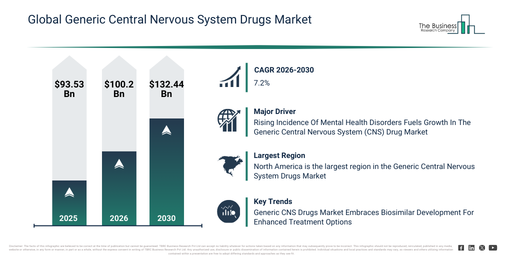
    The generic central nervous system drugs market size has experienced robust expansion in recent years. This market is projected to increase from $93.53 billion in 2025 to $100.2 billion in 2026, achieving a compound annual growth rate (CAGR) of 7.1%. Historical growth in this sector is linked to the increasing prevalence of anxiety and insomnia, the restricted accessibility of branded CNS medications, heightened research and development spending in generics, greater public understanding of mental health, and financial limitations within healthcare systems.

    The generic central nervous system drugs market is projected to experience significant expansion over the next few years. It is anticipated to grow to $132.44 billion by 2030, demonstrating a compound annual growth rate (CAGR) of 7.2%. The expected growth during this forecast period is attributed to factors such as the expansion of generic drug manufacturing, the increasing adoption of digital therapeutics, the integration of AI in CNS drug discovery, a rising demand for outpatient and home care, and an increasing population affected by neurodegenerative diseases. Major trends identified for the forecast period include the rising prevalence of neurological disorders, an increase in generic drug adoption, the broadening of home-based and outpatient care, a heightened focus on mental health and stress management, and the development of multi-mechanism CNS drugs.

    Access Your Free Sample Report For In-Depth Market Analysis:

    https://www.thebusinessresearchcompany.com/sample.aspx?id=9315&type=smp

    Which Strong Drivers Are Impacting The Generic Central Nervous System Drugs Market Growth?

    The rising prevalence of mental health conditions is anticipated to drive the expansion of the generic central nervous system (CNS) drug market in the future. A mental health disorder refers to a clinically significant impairment in an individual’s thinking, emotional control, or behavior, often associated with distress or difficulties in crucial life functions. Generic central nervous system (CNS) drugs are vital for addressing mental health disorders, offering cost-effective and readily available therapeutic solutions. For example, data from November 2023, sourced from the National Health Service, a UK government department, indicated that in 2023, around one in five people aged 8 to 25 years were estimated to experience a probable mental disorder. This breakdown showed 20.3% among 8 to 16-year-olds, 23.3% for 17 to 19-year-olds, and 21.7% in the 20 to 25-year-old demographic. Consequently, the growing occurrence of mental health disorders is stimulating the generic central nervous system (CNS) drug market.

    What Are The Key Segment Divisions In The Generic Central Nervous System Drugs Market Segment Structure?

    The generic central nervous system drugs market covered in this report is segmented –

    1) By Type: Multiple Sclerosis (MS), Anti-Psychotic, Analgesics, Anti-Parkinson Drugs, Anesthetics, Anti-Epileptics, Anti-Depressants, Other Types

    2) By Drug Classification: Branded Drugs, Generic Drugs

    3) By Disease: Neurovascular Diseases, CNS Trauma, Mental Health, Neurodegenerative Diseases, Infectious Diseases, CNS Cancer

    4) By Route Of Administration: Oral, Intravenous, Intranasal Or Inhalation, Other Route Of Administrations

    5) By Mode Of Purchase: Over-The-counter drugs, Prescription-Based Drugs

    6) By Distribution Channel: Hospital Pharmacies, Retail Pharmacies, Other Distribution Channels

    Subsegments:

    1) By Multiple Sclerosis (MS): Interferons, Glatiramer Acetate, Sphingosine-1 Phosphate Receptor Modulators, Monoclonal Antibodies

    2) By Anti-Psychotic: Atypical Antipsychotics, Typical Antipsychotics

    3) By Analgesics: Non-Opioid Analgesics, Opioid Analgesics, Combination Analgesics

    4) By Anti-Parkinson Drugs: Dopamine Agonists, MAO-B Inhibitors, COMT Inhibitors, Anticholinergics

    5) By Anesthetics: General Anesthetics, Local Anesthetics

    6) By Anti-Epileptics: Sodium Channel Blockers, GABA Enhancers, Glutamate Modulators, Other Mechanisms

    7) By Anti-Depressants: Selective Serotonin Reuptake Inhibitors (SSRIs), Serotonin-Norepinephrine Reuptake Inhibitors (SNRIs), Tricyclic Antidepressants (TCAs), Monoamine Oxidase Inhibitors (MAOIs), Atypical Antidepressants

    8) By Other Types: Cognitive Enhancers, Anxiolytics, Sleep Aids

    Which Trends Are Shaping Growth In The Generic Central Nervous System Drugs Market?

    Leading firms within the generic central nervous system drugs market are concentrating their efforts on creating biosimilars for central nervous system (CNS) ailments. The increasing development and subsequent approval of biosimilars targeting specific biologic medications for CNS disorders represent an emerging trend, providing more economically viable options compared to their branded counterparts. As an illustration, Sandoz, a pharmaceutical company based in Switzerland, introduced natalizumab-sztn in October 2023, marking it as the initial biosimilar therapy for various relapsing types of multiple sclerosis (MS). These include clinically isolated syndrome, relapsing-remitting MS, and active secondary progressive MS. MS itself is a chronic and progressive autoimmune condition impacting the central nervous system. Most individuals afflicted by the disease experience cycles of remission and relapse, which detrimentally affects their overall quality of life. This particular treatment will be contraindicated for patients suffering from progressive multifocal leukoencephalopathy (PML) and also for those with a prior history of PML.

    Which Organizations Are Engaged In The Generic Central Nervous System Drugs Market?

    Major companies operating in the generic central nervous system drugs market are Biogen Inc., Johnson & Johnson, Hoffmann-La Roche Ltd, Novartis AG, UCB, Sanofi, Pfizer Inc., Merck KGaA, Sumitomo Dainippon Pharma, AbbVie, Recipharm AB, Neuraxpharm, Sun Pharmaceutical Ltd, Ranbaxy Laboratories, Merz Pharma GmbH & Co. KGaA, AstraZeneca, Apotex, Bayer, GlaxoSmithKline, Amgen, Abbott Laboratories, Janssen Pharmaceutica, Teva Canada, Accord Healthcare Inc., Acerus Pharmaceuticals, EMS Pharma, Hypermarcas, Eurofarma, Teuto Brasileiro, Biolab Farmaceutica, Cristalia, União Quimica, Boehringer Ingelheim, Eli Lilly and Company, Adcock Ingram

    Get The Full Generic Central Nervous System Drugs Market Report:

    https://www.thebusinessresearchcompany.com/report/generic-central-nervous-system-drugs-global-market-report

    Which Geographic Region Dominates The Generic Central Nervous System Drugs Market?

    North America was the largest region in the generic central nervous system drugs market in 2025. The regions covered in the generic central nervous system drugs market report are Asia-Pacific, South East Asia, Western Europe, Eastern Europe, North America, South America, Middle East, Africa.

    Request A Customized Generic Central Nervous System Drugs Market Report For Competitive Insights:

    https://www.thebusinessresearchcompany.com/report/generic-central-nervous-system-drugs-global-market-report

    Browse Through More Reports Similar to the Global Generic Central Nervous System Drugs Market 2026, By The Business Research Company

    Generic Central Nervous System Drugs Market Report 2026

    https://www.thebusinessresearchcompany.com/report/generic-central-nervous-system-drugs-global-market-report

    Central Nervous System Drug Market Report 2026

    https://www.thebusinessresearchcompany.com/report/central-nervous-system-drug-global-market-report

    Neurological Disorder Drugs Market Report 2026

    https://www.thebusinessresearchcompany.com/report/neurological-disorder-drugs-global-market-report

    Get in touch with us:

    The Business Research Company: https://www.thebusinessresearchcompany.com/

    Americas +1 310-496-7795

    Asia +44 7882 955267 & +91 8897263534

    Europe +44 7882 955267

    Email us at: marketing@tbrc.info

    Follow us on:

    LinkedIn: https://in.linkedin.com/company/the-business-research-company

    YouTube: https://www.youtube.com/channel/UC24_fI0rV8cR5DxlCpgmyFQ

    Global Market Model: https://www.thebusinessresearchcompany.com/global-market-model

  • General Anesthesia Drugs Market Growth Patterns And Forecast Outlook Through 2030

    General Anesthesia Drugs Market Growth Patterns And Forecast Outlook Through 2030

    The Business Research Company’s 2026 market reports feature enhanced tools like market attractiveness analysis, TAM assessment, and company scoring matrices, along with interactive dashboards, deeper supply chain insights, and startup coverage strengthening the depth, usability, and strategic value of insights.

    What Level Of Market Value Growth Is Predicted For The General Anesthesia Drugs Market From 2026 To 2030?

    The general anesthesia drugs market has experienced a consistent expansion in size in recent years. This market is projected to grow from $5.17 billion in 2025 to $5.35 billion in 2026, achieving a compound annual growth rate (CAGR) of 3.5%. The historical growth can be attributed to an increase in surgical interventions, the worldwide expansion of hospitals, the established clinical efficacy of anesthetic agents, a rise in trauma and emergency surgeries, and advancements in surgical infrastructure.

    The general anesthesia drugs market is projected to experience consistent expansion over the upcoming years. By 2030, this market is anticipated to reach a valuation of $6.16 billion, demonstrating a compound annual growth rate (CAGR) of 3.6%. Key factors contributing to this projected growth include an uptick in minimally invasive surgical procedures, the expansion of ambulatory surgical centers, a growing elderly demographic, increased demand for cosmetic and elective operations, and advancements in anesthesia monitoring technology. Significant trends expected during this period encompass a global surge in surgical procedure volumes, an increasing inclination towards short-acting anesthetic agents, broader application in outpatient and day-care settings, the spread of multimodal anesthesia protocols, and heightened demand stemming from an aging patient population undergoing surgery.

    Access Your Free Sample Report For In-Depth Market Analysis:

    https://www.thebusinessresearchcompany.com/sample.aspx?id=23407&type=smp

    What Key Factors Are Shaping The General Anesthesia Drugs Market Landscape?

    The increasing number of surgical procedures is projected to fuel the expansion of the general anesthesia drugs market in the future. These procedures are medical interventions carried out by skilled professionals to address illnesses, injuries, or anomalies, frequently entailing an incision or the use of specific instruments to reach internal organs and tissues. This increase in surgeries is prompted by a rising incidence of chronic conditions, many of which necessitate surgical intervention for successful management. General anesthesia medications are essential during operations to induce a state of unconsciousness and alleviate pain, guaranteeing patient immobility and lack of awareness throughout intricate or invasive surgical processes. For instance, in June 2024, the American Society of Plastic Surgeons, a US-based non-profit organization that manages minimally invasive procedures, experienced a 7% growth in 2023, an increase of 2% from 2022. Therefore, the increasing volume of surgical procedures drives the growth of the general anesthesia drugs market. The growth of the general anesthesia drugs market is anticipated to be driven by the ongoing expansion of healthcare infrastructure. This infrastructure encompasses the comprehensive system of hospitals, clinics, diagnostic facilities, and ancillary medical establishments that ensure the availability of high-quality healthcare services for the populace. The development of healthcare infrastructure is spurred by rising investments from both governmental and private sectors, an expanding population, and an increasing need for sophisticated medical treatments. General anesthesia drugs facilitate the growth of healthcare infrastructure by allowing for greater surgical throughput and backing financial commitments towards contemporary operating theaters and sophisticated anesthesia equipment. For instance, in April 2024, according to American Medical Association, a US-based professional organizations company, U.S. health spending rose by 7.5% in 2023, reaching $4.9 trillion or $14,570 per person, marking a sharp acceleration compared with the 4.6% increase recorded in 2022. Therefore, the expansion in healthcare infrastructure is driving growth in the general anesthesia drugs market.

    Which Segment Categories Are Included In The General Anesthesia Drugs Market Segment Analysis?

    The general anesthesia drugs market covered in this report is segmented –

    1) By Drug: Sevoflurane, Propofol, Dexmedetomidine, Remifentanil, Desflurane, Midazolam, Other Drugs

    2) By Route Of Administration: Intravenous, Inhaled

    3) By Application: Cardiovascular Surgery, Orthopedic Surgery, Neurosurgery, General Surgery, Cosmetic Surgery, Other Applications

    4) By End-Use: Hospitals, Ambulatory Surgical Centers, Clinics, Other End-Users

    Subsegments:

    1) By Sevoflurane: Inhalation Anesthesia, Pediatric Anesthesia, Outpatient Procedures

    2) By Propofol: Induction Anesthesia, Maintenance Anesthesia, ICU Sedation

    3) By Dexmedetomidine: Procedural Sedation, ICU Sedation, Postoperative Sedation

    4) By Remifentanil: Opioid-Based Anesthesia, Short Surgical Procedures, Pain Management

    5) By Desflurane: Inhalation Anesthesia, Rapid Recovery Procedures, Outpatient Surgeries

    6) By Midazolam: Preoperative Sedation, Procedural Sedation, ICU Sedation

    7) By Other Drugs: Thiopental Sodium, Etomidate, Isoflurane, Ketamine

    What Trends Are Affecting The Direction Of The General Anesthesia Drugs Market?

    Leading companies in the general anesthesia drugs market are concentrating on developing innovative anesthetic medications, such as short-acting benzodiazepines, to bolster patient safety, facilitate quicker recovery, and enhance surgical efficiency. Short-acting benzodiazepines, like midazolam, are commonly employed for procedural sedation due to their swift onset and brief duration of effect. For example, in August 2023, PAION AG, a Germany-based biotechnology company, launched Byfavo (remimazolam) for general anesthesia in the Netherlands, marking its initial commercial availability in Europe. This drug exhibits rapid onset and offset of action, with its effects typically becoming apparent within 1 to 1.5 minutes and recovery generally occurring within 11 to 14 minutes post-administration, making it a highly effective choice for short surgical interventions. It is predominantly metabolized by hepatic esterases, enzymes broadly distributed in the body, rather than through cytochrome-dependent liver pathways in humans. Furthermore, akin to other benzodiazepines, it is accompanied by a readily accessible antidote, flumazenil, which can quickly reverse sedation or anesthesia should the need arise.

    Who Are The Active Companies Shaping The General Anesthesia Drugs Market?

    Major companies operating in the general anesthesia drugs market are Baxter International Inc., Fresenius Kabi USA LLC, Piramal Critical Care, B. Braun SE, Hikma Pharmaceuticals PLC, Mylan N.V., Viatris Inc., Jiangsu Hengrui Pharmaceutical Co. Ltd., Sun Pharmaceutical Industries Ltd., Aspen Pharmacare Holdings Limited, Claris Lifesciences Limited, Pfizer CentreOne, Abbott Laboratories Inc., Dr. Reddy’s Laboratories Ltd., Aurobindo Pharma Limited, Lupin Limited, Sini Pharma Pvt Ltd., Safeline Pharmaceuticals (Pty) Ltd, Rouzel Pharma Pvt Ltd, Avet Pharmaceuticals Inc.

    Get The Full General Anesthesia Drugs Market Report:

    https://www.thebusinessresearchcompany.com/report/general-anesthesia-drugs-global-market-report

    Which Region Is The Leading Market For The General Anesthesia Drugs Market?

    North America was the largest region in the general anesthesia drugs market in 2025. Asia-Pacific is expected to be the fastest-growing region in the forecast period. The regions covered in the general anesthesia drugs market report are Asia-Pacific, South East Asia, Western Europe, Eastern Europe, North America, South America, Middle East, Africa.

    Request A Customized General Anesthesia Drugs Market Report For Competitive Insights:

    https://www.thebusinessresearchcompany.com/report/general-anesthesia-drugs-global-market-report

    Browse Through More Reports Similar to the Global General Anesthesia Drugs Market 2026, By The Business Research Company

    Local Anesthesia Drugs Market Report 2026

    https://www.thebusinessresearchcompany.com/report/local-anesthesia-drugs-global-market-report

    Anesthetics Market Report 2026

    https://www.thebusinessresearchcompany.com/report/anesthetics-global-market-report

    Dental Anesthesia Market Report 2026

    https://www.thebusinessresearchcompany.com/report/dental-anesthesia-global-market-report

    Get in touch with us:

    The Business Research Company: https://www.thebusinessresearchcompany.com/

    Americas +1 310-496-7795

    Asia +44 7882 955267 & +91 8897263534

    Europe +44 7882 955267

    Email us at: marketing@tbrc.info

    Follow us on:

    LinkedIn: https://in.linkedin.com/company/the-business-research-company

    YouTube: https://www.youtube.com/channel/UC24_fI0rV8cR5DxlCpgmyFQ

    Global Market Model: https://www.thebusinessresearchcompany.com/global-market-model
  • Gene-Editing Transfection Chemicals Market Insights On Growth Drivers, Trends, And Opportunities

    Gene-Editing Transfection Chemicals Market Insights On Growth Drivers, Trends, And Opportunities

    The Business Research Company’s 2026 market reports feature enhanced tools like market attractiveness analysis, TAM assessment, and company scoring matrices, along with interactive dashboards, deeper supply chain insights, and startup coverage strengthening the depth, usability, and strategic value of insights.

    How Will The Market Value Of The Gene-Editing Transfection Chemicals Market Progress Between 2026 And 2030?

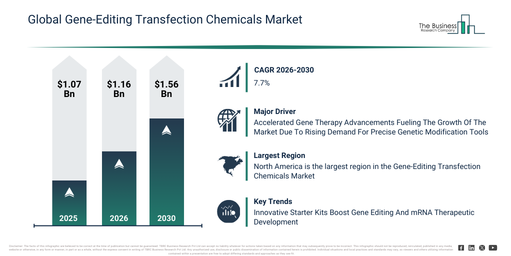
    The gene-editing transfection chemicals market has shown significant growth over the past few years. It is anticipated to increase from $1.07 billion in 2025 to $1.16 billion in 2026, at a compound annual growth rate (CAGR) of 8.4%. The expansion observed in prior periods was driven by factors including the limited availability of high-efficiency transfection chemicals, a dependence on traditional delivery methods, increasing activity in academic and research institutions, rising investment in biotechnology research, and the early adoption of gene-editing tools.

    The gene-editing transfection chemicals market is projected to experience robust expansion in the coming years. This market is anticipated to reach a valuation of $1.56 billion by 2030, exhibiting a compound annual growth rate (CAGR) of 7.7%. Factors contributing to this growth during the forecast period include the advancement of lipid, polymer, and peptide-based chemicals, an increasing need for accurate gene-editing applications, the expansion of research and development in the pharmaceutical and biotechnology sectors, the incorporation of automated transfection platforms, and a rise in regulatory approvals and standardized methodologies. Key trends expected within the forecast timeframe encompass a growing preference for lipid-based transfection chemicals, a greater utilization of polymer and peptide-based delivery systems, an increase in both non-viral and viral delivery methods, the broadening of gene-editing applications in drug discovery and disease modeling, and a concentrated effort on enhancing transfection efficiency and cellular viability.

    Access Your Free Sample Report For In-Depth Market Analysis:

    https://www.thebusinessresearchcompany.com/sample.aspx?id=25770&type=smp

    Which Factors Are Influencing The Growth Of The Gene-Editing Transfection Chemicals Market?

    Advanced gene therapy investigations are anticipated to fuel expansion in the gene-editing transfection chemicals market moving forward. Gene therapy is defined as a method designed to address or avert illnesses through the direct alteration or rectification of faulty genes within individual cells. The swift progress in gene therapy research stems from innovations in gene-editing technologies like CRISPR, which empower scientists to accurately identify and alter flawed genes causing genetic conditions. Crucial instruments in gene therapy research and development, gene-editing transfection chemicals facilitate the effective transfer of genetic material, including CRISPR-Cas9 elements, mRNA, and plasmid DNA, into human cells. An illustrative example comes from December 2024, where the American Society of Gene & Cell Therapy (ASGCT), a US-based non-profit medical and scientific organization, reported that the Food and Drug Administration (FDA) sanctioned six gene therapy products in 2023, an increase from five approvals in 2022. Consequently, the intensifying research efforts in gene therapy are propelling the expansion of the gene-editing transfection chemicals market.

    How Is The Gene-Editing Transfection Chemicals Market Broken Down By Segment Categories?

    The gene-editing transfection chemicals market covered in this report is segmented –

    1) By Chemical Type: Lipid-Based, Polymer-Based, Peptide-Based, Other Chemical Types

    2) By Delivery Mechanism: Non-Viral, Viral

    3) By Application: Biomedical Research, Drug Discovery, Disease Modeling, Agricultural Biotechnology, Vaccine Development, Other Applications

    4) By End-User: Academic And Research Institutes, Biotechnology Companies, Pharmaceutical Companies, Other End-Users

    Subsegments:

    1) By Lipid-Based: Cationic Lipids, Neutral Lipids, Ionizable Lipids

    2) By Polymer-Based: Polyethyleneimine (PEI), Poly(L-Lysine) (PLL), Dendrimers

    3) By Peptide-Based: Cell-Penetrating Peptides (CPPs), Amphipathic Peptides, Targeting Peptides

    4) By Other Chemical Types: Inorganic Nanoparticles, Hybrid Nanoparticles

    What Trends Are Influencing The Evolution Of The Gene-Editing Transfection Chemicals Market?

    Leading companies operating within the gene-editing transfection chemicals market are concentrating on introducing innovative solutions, such as lipid nanoparticle (LNP) starter kits, to optimize gene therapy and mRNA delivery processes. Lipid nanoparticle (LNP) starter kits are defined as ready-to-use formulations or toolkits comprising pre-optimized lipid components and protocols, designed to facilitate the creation and evaluation of LNP-based delivery systems. For instance, in February 2024, CordenPharma, a Switzerland-based pharmaceutical company, launched Lipid NanoParticle (LNP) Starter Kits to support researchers and developers in formulating and optimizing mRNA-based therapeutics, including vaccines and gene therapies. These kits contain four key lipids, specifically ionizable lipids, helper lipids, sterols, and PEGylated lipids, which are sourced from commercial-scale, high-purity materials to ensure batch-to-batch consistency and minimize the risk of losing valuable payloads during development. By offering a reliable and scalable lipid platform, CordenPharma aims to accelerate the gene editing and mRNA therapeutic development process while safeguarding high-value genetic payloads.

    Which Players Are Present In The Gene-Editing Transfection Chemicals Market Space?

    Major companies operating in the gene-editing transfection chemicals market are Thermo Fisher Scientific Inc., Merck KGaA, Lonza Group AG, Takara Bio Inc., Mirus Bio LLC, OZ Biosciences SAS, Genlantis Inc., Polyplus-Transfection SA, Altogen Biosystems LLC, SignaGen Laboratories.

    Get The Full Gene-Editing Transfection Chemicals Market Report:

    https://www.thebusinessresearchcompany.com/report/gene-editing-transfection-chemicals-global-market-report

    Where Is The Gene-Editing Transfection Chemicals Market Primarily Concentrated By Region?

    North America was the largest region in the gene-editing transfection chemicals market in 2025. The regions covered in the gene-editing transfection chemicals market report are Asia-Pacific, South East Asia, Western Europe, Eastern Europe, North America, South America, Middle East, Africa.

    Request A Customized Gene-Editing Transfection Chemicals Market Report For Competitive Insights:

    https://www.thebusinessresearchcompany.com/report/gene-editing-transfection-chemicals-global-market-report

    Browse Through More Reports Similar to the Global Gene-Editing Transfection Chemicals Market 2026, By The Business Research Company

    Gene Editing Market Report 2026

    https://www.thebusinessresearchcompany.com/report/gene-editing-global-market-report

    Crispr Gene Editing Market Report 2026

    https://www.thebusinessresearchcompany.com/report/crispr-gene-editing-global-market-report

    Genome Editing Or Genome Engineering Market Report 2026

    https://www.thebusinessresearchcompany.com/report/genome-editing-or-genome-engineering-global-market-report

    Get in touch with us:

    The Business Research Company: https://www.thebusinessresearchcompany.com/

    Americas +1 310-496-7795

    Asia +44 7882 955267 & +91 8897263534

    Europe +44 7882 955267

    Email us at: marketing@tbrc.info

    Follow us on:

    LinkedIn: https://in.linkedin.com/company/the-business-research-company

    YouTube: https://www.youtube.com/channel/UC24_fI0rV8cR5DxlCpgmyFQ

    Global Market Model: https://www.thebusinessresearchcompany.com/global-market-model
  • Gene-Circuit Cell Therapy Market Developments Shaping Growth Across The Forecast Period

    Gene-Circuit Cell Therapy Market Developments Shaping Growth Across The Forecast Period

    The Business Research Company’s 2026 market reports feature enhanced tools like market attractiveness analysis, TAM assessment, and company scoring matrices, along with interactive dashboards, deeper supply chain insights, and startup coverage strengthening the depth, usability, and strategic value of insights.

    What Are The Market Size Estimates For The Gene-Circuit Cell Therapy Market In 2026 And 2030?

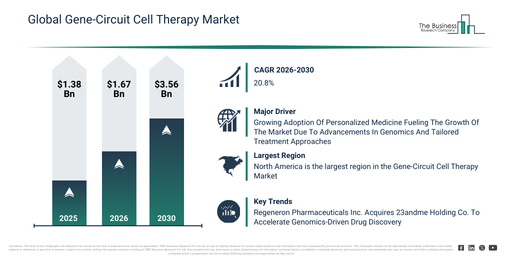
    The market size for gene-circuit cell therapy has experienced substantial growth over recent years. It is projected to expand from $1.38 billion in 2025 to $1.67 billion in 2026, exhibiting a compound annual growth rate (CAGR) of 21.1%. The historical rise can be ascribed to advancements in cell engineering technologies, the successful deployment of CAR-T cell therapies, the proliferation of gene editing platforms, increasing clinical experience with cell therapies, and a boost in biotechnology investments.

    The gene-circuit cell therapy market size is anticipated to experience substantial expansion in the coming years. This market is projected to reach $3.56 billion by 2030, exhibiting a compound annual growth rate (CAGR) of 20.8%. This expansion throughout the forecast period stems from factors such as the increasing commercialization of gene-circuit cell therapies, a rising need for controllable immunotherapies, the broadening of oncology-focused pipelines, the growing uptake of allogeneic platforms, and progress in scalable cell manufacturing techniques. Key developments anticipated during this period encompass the increased integration of synthetic gene circuits in cell therapy, the growing creation of logic-controlled immune cells, the expanding application of off-the-shelf allogeneic therapies, the proliferation of dynamic cellular response systems, and a heightened emphasis on treatment safety and control.

    Access Your Free Sample Report For In-Depth Market Analysis:

    https://www.thebusinessresearchcompany.com/sample.aspx?id=28233&type=smp

    What Leading Drivers Are Supporting The Gene-Circuit Cell Therapy Market Expansion?

    The future expansion of the gene-circuit cell therapy market is anticipated to be propelled by the increasing acceptance of personalized medicine. Personalized medicine, by definition, is a healthcare strategy that customizes treatment and prevention plans based on an individual’s distinct genetic profile, lifestyle choices, and environmental factors. The wider embrace of personalized medicine is primarily attributed to progress in genomics, allowing for the accurate detection of genetic differences and the development of customized therapies for patients. Gene-circuit cell therapy complements personalized medicine by offering precise and controllable therapeutic methods, rendering it particularly suitable for managing intricate and long-term illnesses. This therapy boosts treatment accuracy by adapting interventions to meet specific patient requirements, thereby enhancing the efficacy of treatment and improving general health results. For example, data from February 2024, released by the US-based nonprofit Personalized Medicine Coalition (PMC), indicated that the U.S. Food and Drug Administration (FDA) authorized 26 novel personalized medicines in 2023, marking a considerable rise from the 12 approved in 2022. Consequently, the expanding use of personalized medicine is acting as a catalyst for the growth of the gene-circuit cell therapy market.

    What Are The Different Segment Types In The Gene-Circuit Cell Therapy Market Segment Breakdown?

    The gene-circuit cell therapy market covered in this report is segmented –

    1) By Product Type: Autologous, Allogeneic

    2) By Technology: Clustered Regularly Interspaced Short Palindromic Repeats (CRISPR), Transcription Activator-Like Effector Nuclease (TALEN), Zinc Finger Nuclease (ZFN), Other Technologies

    3) By Application: Oncology, Genetic Disorders, Infectious Diseases, Other Applications

    4) By End-User: Hospitals And Clinics, Research Institutes, Biotechnology And Pharmaceutical Companies, Other End Users

    Subsegments:

    1) By Autologous: Chimeric Antigen Receptor (CAR)-T Cell Therapies, T-Cell Receptor (TCR)-T Cell Therapies, Natural Killer (NK) Cell Therapies, Stem Cell-Based Therapies

    2) By Allogeneic: Off-The-Shelf Chimeric Antigen Receptor (CAR)-T Cell Therapies, Off-The-Shelf Natural Killer (NK) Cell Therapies, TT-Cell Receptor (TCR)-T Cell Therapies, Stem Cell-Derived Therapies

    Which Trends Are Impacting The Progress Of The Gene-Circuit Cell Therapy Market?

    Leading companies in the gene-circuit cell therapy market are prioritizing the creation of advanced therapeutic platforms, such as CRISPR-based gene editing systems, to enhance treatment precision, improve patient outcomes, and address genetic diseases previously considered untreatable. CRISPR-based gene editing systems are defined as innovative technologies that enable precise genomic modifications, allowing for the correction of genetic defects or the introduction of therapeutic genes into cells. For example, in December 2023, Vertex Pharmaceuticals Inc., a US-based biopharmaceutical company, formed a partnership with CRISPR Therapeutics Inc., a US-based biotechnology research company, and obtained conditional marketing authorization from the United Kingdom (U.K.) Medicines and Healthcare products Regulatory Agency (MHRA) for CASGEVY (exagamglogene autotemcel, exa-cel). This treatment is indicated for patients aged 12 and older with sickle cell disease (SCD) experiencing recurrent vaso-occlusive crises or transfusion-dependent beta thalassemia (TDT). Casgevy functions by editing a patient’s hematopoietic stem cells to reactivate fetal hemoglobin production, which in turn reduces or eliminates disease symptoms and offers a potential functional cure for these conditions.

    Who Are The Well-Known Companies In The Gene-Circuit Cell Therapy Market?

    Major companies operating in the gene-circuit cell therapy market are Tmunity Therapeutics Inc., Ginkgo Bioworks Holdings Inc., Arcellx Inc., Beam Therapeutics Inc., CRISPR Therapeutics AG, Intellia Therapeutics Inc., Orchard Therapeutics plc, Fate Therapeutics Inc., Rubius Therapeutics Inc., BlueRock Therapeutics LP (a subsidiary of Bayer AG), Precigen Inc., SparingVision, Alaunos Therapeutics Inc., Cartesian Therapeutics Inc., Lyell Immunopharma Inc., Synlogic Inc., Senti Biosciences Inc., Autolus Therapeutics plc, Cellectis S.A., Sotio Biotech

    Get The Full Gene-Circuit Cell Therapy Market Report:

    https://www.thebusinessresearchcompany.com/report/gene-circuit-cell-therapy-global-market-report

    Which Region Has The Greatest Market Share In The Gene-Circuit Cell Therapy Market?

    North America was the largest region in the gene-circuit cell therapy market in 2025. The regions covered in the gene-circuit cell therapy market report are Asia-Pacific, South East Asia, Western Europe, Eastern Europe, North America, South America, Middle East, Africa.

    Request A Customized Gene-Circuit Cell Therapy Market Report For Competitive Insights:

    https://www.thebusinessresearchcompany.com/report/gene-circuit-cell-therapy-global-market-report

    Browse Through More Reports Similar to the Global Gene-Circuit Cell Therapy Market 2026, By The Business Research Company

    Genes Therapy Market Report 2026

    https://www.thebusinessresearchcompany.com/report/genes-therapy-global-market-report

    Cell And Gene Therapy Clinical Trial Services Market Report 2026

    https://www.thebusinessresearchcompany.com/report/cell-and-gene-therapy-clinical-trial-services-global-market-report

    Nucleic Acid Based Gene Therapy Market Report 2026

    https://www.thebusinessresearchcompany.com/report/nucleic-acid-based-gene-therapy-global-market-report

    Get in touch with us:

    The Business Research Company: https://www.thebusinessresearchcompany.com/

    Americas +1 310-496-7795

    Asia +44 7882 955267 & +91 8897263534

    Europe +44 7882 955267

    Email us at: marketing@tbrc.info

    Follow us on:

    LinkedIn: https://in.linkedin.com/company/the-business-research-company

    YouTube: https://www.youtube.com/channel/UC24_fI0rV8cR5DxlCpgmyFQ

    Global Market Model: https://www.thebusinessresearchcompany.com/global-market-model

  • Gene Therapy On Neurological Diseases Market Forecast With Insights On Demand And Industry Growth

    Gene Therapy On Neurological Diseases Market Forecast With Insights On Demand And Industry Growth

    The Business Research Company’s 2026 market reports feature enhanced tools like market attractiveness analysis, TAM assessment, and company scoring matrices, along with interactive dashboards, deeper supply chain insights, and startup coverage strengthening the depth, usability, and strategic value of insights.

    What Expansion In Market Value Is Forecasted For The Gene Therapy On Neurological Diseases Market Between 2026 And 2030?

    The market for gene therapy on neurological diseases has expanded significantly in recent years. This market is forecasted to increase from $3.55 billion in 2025 to $4.01 billion in 2026, achieving a compound annual growth rate (CAGR) of 13.0%. Historically, this expansion can be linked to several factors: limited gene therapy options for neurological diseases, the growing prevalence of alzheimer’s and parkinsons disease, a persistent reliance on conventional treatment methods, heightened awareness of genetic approaches, and initial clinical trials of viral vectors.

    The gene therapy for neurological diseases market is poised for significant expansion in the coming years. It is projected to achieve a size of $6.48 billion by 2030, growing at a compound annual growth rate (CAGR) of 12.7%. The anticipated growth during this period can be attributed to several factors, including the advancement of adeno-associated virus and lentiviral therapies, the increased adoption of non-viral delivery platforms, a surge in regulatory approvals for neurological gene treatments, greater investment in research and development for precise genetic interventions, and the integration of digital monitoring and AI-assisted patient management. Prominent developments in the forecast period encompass escalating investment in both viral and non-viral gene therapy platforms, the broadening application of gene therapies across neurological disorders, an intensified focus on personalized and targeted genetic treatments, the proliferation of hospital and clinic-based gene therapy programs, and the innovation of advanced delivery methods for neurological gene therapy.

    Access Your Free Sample Report For In-Depth Market Analysis:

    https://www.thebusinessresearchcompany.com/sample.aspx?id=27294&type=smp

    Which Key Factors Are Driving The Gene Therapy On Neurological Diseases Market Growth?

    The increasing occurrence of neurological disorders is expected to drive the expansion of the gene therapy on neurological diseases market moving forward. Neurological disorders are health conditions that impact the brain, spinal cord, and nerves, leading to a variety of symptoms including cognitive, motor, and sensory impairments. The rising prevalence of neurological disorders is linked to the aging population, as aging gradually impairs neuronal function, reduces brain plasticity, and elevates oxidative stress, contributing to the development and progression of these conditions. Gene therapy for neurological diseases assists in managing these disorders by addressing their fundamental genetic causes, presenting potential long-term or permanent treatment solutions. It improves patient outcomes by restoring or modifying gene function, reducing symptoms, and minimizing the need for repetitive interventions, thereby enhancing overall quality of life. For instance, in July 2024, according to the National Health Service, a UK-based government agency, there were 487,432 patients diagnosed with dementia (a progressive brain disorder affecting memory, thinking, and daily activities) by June 30, 2024, an increase of 3,155 cases compared to May 31, 2024. Therefore, the growing incidence of neurological disorders is propelling the growth of the gene therapy on neurological diseases market.

    Which Segment Classifications Are Used In The Gene Therapy On Neurological Diseases Market Segment Analysis?

    The gene therapy on neurological diseases market covered in this report is segmented –

    1) By Type: Viral Gene Therapy, Non-Viral Gene Therapy

    2) By Target Disease: Alzheimer’s Disease, Parkinsons Disease, Amyotrophic Lateral Sclerosis (ALS), Huntington’s Disease, Multiple Sclerosis

    3) By Administration Route: Intravenous, Intrathecal, Intranasal, Intracerebral, Other Administration Routes

    4) By Application: Hospital, Clinic, Other Applications

    Subsegments:

    1) By Viral Gene Therapy Type: Adeno Associated Virus, Lentivirus, Retrovirus, Herpes Simplex Virus, Adenovirus

    2) By Non-Viral Gene Therapy Type: Liposomes, Nanoparticles, Electroporation, Gene Gun, Naked Plasmid Deoxyribonucleic Acid (DNA)

    What Trends Are Transforming The Gene Therapy On Neurological Diseases Market?

    Firms operating within the gene therapy on neurological diseases market are concentrating on creating sophisticated viral delivery systems, specifically the adeno-associated virus serotype 2 (AAV2) vector, to enhance targeted gene delivery, boost effectiveness, minimize immune responses, and allow for prolonged therapeutic effects. The adeno-associated virus serotype 2 (AAV2) vector is defined as a modified, non-pathogenic viral carrier system employed in gene therapy to transport therapeutic genes into specific target cells, predominantly neurons, ensuring their sustained expression. As an illustration, in November 2024, PTC Therapeutics Inc., a biopharmaceutical firm based in the US, secured approval from the U.S. Food and Drug Administration (FDA) for its gene therapy designed to treat aromatic L-amino acid decarboxylase (AADC) deficiency. This particular therapy utilizes an AAV2 vector to introduce a functional DDC gene copy into the putamen, thereby facilitating dopamine production and enhancing motor functions. Characterized by a single, intraputaminal infusion, it aims to deliver lasting therapeutic advantages, considerably boosting motor function and alleviating debilitating symptoms without requiring subsequent treatments.

    Which Firms Are Contributing To The Gene Therapy On Neurological Diseases Market Ecosystem?

    Major companies operating in the gene therapy on neurological diseases market are Novartis AG, Biogen Inc., Sarepta Therapeutics Inc., PTC Therapeutics Inc., Oxford Biomedica plc, Regenxbio Inc., Passage Bio Inc., Intellia Therapeutics Inc., Voyager Therapeutics Inc., UniQure N.V., AviadoBio Ltd., Capsida Biotherapeutics Inc., StrideBio Inc., Lysogene S.A., Wave Life Sciences Ltd., Taysha Gene Therapies Inc., Abeona Therapeutics Inc., CRISPR Therapeutics AG

    Get The Full Gene Therapy On Neurological Diseases Market Report:

    https://www.thebusinessresearchcompany.com/report/gene-therapy-on-neurological-diseases-global-market-report

    Which Region Accounts For The Largest Portion Of The Gene Therapy On Neurological Diseases Market?

    North America was the largest region in the gene therapy on neurological diseases market in 2025. Asia-Pacific is expected to be the fastest-growing region in the forecast period. The regions covered in the gene therapy on neurological diseases market report are Asia-Pacific, South East Asia, Western Europe, Eastern Europe, North America, South America, Middle East, Africa.

    Request A Customized Gene Therapy On Neurological Diseases Market Report For Competitive Insights:

    https://www.thebusinessresearchcompany.com/report/gene-therapy-on-neurological-diseases-global-market-report

    Browse Through More Reports Similar to the Global Gene Therapy On Neurological Diseases Market 2026, By The Business Research Company

    Switchboard Market Report 2026

    https://www.thebusinessresearchcompany.com/report/switchboard-global-market-report

    Mobile Computer Market 2026

    https://www.thebusinessresearchcompany.com/report/mobile-computer-market

    Surfing Boards Market Report 2026

    https://www.thebusinessresearchcompany.com/report/surfing-boards-global-market-report

    Get in touch with us:

    The Business Research Company: https://www.thebusinessresearchcompany.com/

    Americas +1 310-496-7795

    Asia +44 7882 955267 & +91 8897263534

    Europe +44 7882 955267

    Email us at: marketing@tbrc.info

    Follow us on:

    LinkedIn: https://in.linkedin.com/company/the-business-research-company

    YouTube: https://www.youtube.com/channel/UC24_fI0rV8cR5DxlCpgmyFQ

    Global Market Model: https://www.thebusinessresearchcompany.com/global-market-model
  • Gene Therapy For Parkinson’s Disease Market Outlook Highlighting Key Drivers And Market Evolution

    Gene Therapy For Parkinson’s Disease Market Outlook Highlighting Key Drivers And Market Evolution

    The Business Research Company’s 2026 market reports feature enhanced tools like market attractiveness analysis, TAM assessment, and company scoring matrices, along with interactive dashboards, deeper supply chain insights, and startup coverage strengthening the depth, usability, and strategic value of insights.

    How Large Will The Gene Therapy For Parkinson’s Disease Market Be By 2030 Compared To Its 2026 Market Size?

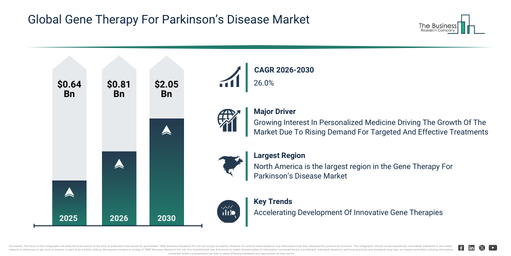
    The gene therapy for parkinson’s disease market size has seen rapid expansion over recent years. It is projected to grow from $0.64 billion in 2025 to $0.81 billion in 2026, achieving a compound annual growth rate (CAGR) of 26.3%. This historical growth can be attributed to advancements in viral vector engineering, a deeper understanding of parkinson’s disease pathology, increased neuroscience research funding, the availability of improved delivery technologies, and successful early clinical trials.

    The market size for gene therapy designed to treat Parkinson’s disease is anticipated to experience substantial expansion in the coming years. It is projected to achieve a value of $2.05 billion by 2030, progressing at a compound annual growth rate (CAGR) of 26.0%. This growth during the forecast period can be attributed to factors such as increasing investments in therapies for neurodegenerative diseases, a growing adoption of personalized gene therapy techniques, the broadening of late-stage clinical pipelines, a rising demand for treatments that modify disease progression, and advancements in minimally invasive delivery methods. Key trends during this period are expected to include the increasing development of viral vector-based therapies, a heightened focus on approaches for dopamine restoration, expanded utilization of neurotrophic factor gene delivery, the proliferation of precision intracerebral delivery techniques, and an enhanced emphasis on achieving long-term therapeutic efficacy.

    Access Your Free Sample Report For In-Depth Market Analysis:

    https://www.thebusinessresearchcompany.com/sample.aspx?id=28231&type=smp

    What Primary Drivers Are Shaping The Gene Therapy For Parkinson’s Disease Market?

    The expanding enthusiasm for personalized medicine is projected to stimulate the expansion of the gene therapy for Parkinson’s disease market in the future. Personalized medicine is defined as a medical methodology that customizes treatment and prevention plans based on an individual’s genetic makeup, lifestyle, and environmental factors. The appeal of personalized medicine is increasing, driven by a rising need for targeted treatments that enhance therapeutic efficacy while reducing negative side effects. Within personalized medicine, gene therapy for Parkinson’s disease utilizes the delivery of customized genetic alterations to reinstate dopamine function and target disease mechanisms specific to individual patients. For example, in February 2024, the US-based non-profit organization, the Personalized Medicine Coalition, indicated that in 2023, the US Food and Drug Administration (FDA) approved 16 new personalized treatments for patients with rare diseases, a significant leap from the 6 approvals observed in 2022. Consequently, the rising focus on personalized medicine is propelling the development of the gene therapy for Parkinson’s disease market.

    How Is The Gene Therapy For Parkinson’s Disease Market Organized By Segment Classification?

    The gene therapy for parkinson’s disease market covered in this report is segmented –

    1) By Therapy Type: In Vivo Gene Therapy, Ex Vivo Gene Therapy

    2) By Vector Type: Viral Vectors, Non-Viral Vectors

    3) By Target Gene: Aromatic L-Amino Acid Decarboxylase (AADC), Glial Cell Line-Derived Neurotrophic Factor (GDNF), Neurturin, Other Target Genes

    4) By Delivery Method: Intracerebral, Intravenous, Other Delivery Methods

    5) By End-User: Hospitals, Specialty Clinics, Research Institutes, Other End-Users

    Subsegments:

    1) By In Vivo Gene Therapy: Viral Vectors, Non-Viral Vectors

    2) By Ex Vivo Gene Therapy: Autologous Cell-Based Gene Therapy, Allogeneic Cell-Based Gene Therapy

    What Trends Are Shaping The Future Of The Gene Therapy For Parkinson’s Disease Market?

    Leading companies are actively involved in the gene therapy for Parkinson’s disease market, with efforts concentrated on developing more precise treatments, such as regenerative medicine advanced therapy, to improve neuronal survival, restore dopamine function, and offer long-lasting disease-modifying benefits for patients afflicted with Parkinson’s disease. Regenerative medicine advanced therapy (RMAT) refers to a specific United States Food and Drug Administration (FDA) designation granted to various regenerative medicine products, including cell therapies, gene therapies, and tissue-engineered products, which are designed to treat, modify, reverse, or cure serious or life-threatening ailments. For instance, in February 2025, Asklepios BioPharmaceutical, Inc. (AskBio), a US-based gene therapy company, introduced AB-1005, an investigational AAV2-GDNF gene therapy that was awarded FDA regenerative medicine advanced therapy (RMAT) designation. This designation, intended to accelerate the development and review of promising therapies, was given based on data provided by AskBio, which included clinical evidence from its Phase Ib open-label, uncontrolled trial, demonstrating AB-1005’s capacity to slow the progression of the disease and enhance motor function in Parkinson’s patients.

    Who Are The Industry Participants Involved In The Gene Therapy For Parkinson’s Disease Market?

    Major companies operating in the gene therapy for parkinson’s disease market are Merck & Co. Inc., Bayer AG, Sanofi S.A., Eli Lilly and Company, Biogen Inc., PTC Therapeutics Inc., Zambon S.p.A., Oxford BioMedica plc, Voyager Therapeutics Inc., Insilico Medicine Inc., Spur Therapeutics Inc., Cerevance Inc., MeiraGTx Holdings plc, BlackfinBio Inc., Partner Therapeutics Inc., Kenai Therapeutics Inc., CureSen Therapeutics Inc., BioVie Inc., Clexio Biosciences Ltd., Tetraneuron S.L.

    Get The Full Gene Therapy For Parkinson’s Disease Market Report:

    https://www.thebusinessresearchcompany.com/report/gene-therapy-for-parkinsons-disease-global-market-report

    Which Region Holds The Highest Market Share In The Gene Therapy For Parkinson’s Disease Market?

    North America was the largest region in the gene therapy for parkinson’s disease market in 2025. Asia-Pacific is expected to be the fastest-growing region in the forecast period. The regions covered in the gene therapy for parkinson’s disease market report are Asia-Pacific, South East Asia, Western Europe, Eastern Europe, North America, South America, Middle East, Africa.

    Request A Customized Gene Therapy For Parkinson’s Disease Market Report For Competitive Insights:

    https://www.thebusinessresearchcompany.com/report/gene-therapy-for-parkinsons-disease-global-market-report

    Browse Through More Reports Similar to the Global Gene Therapy For Parkinson’s Disease Market 2026, By The Business Research Company

    Genes Therapy Market Report 2026

    https://www.thebusinessresearchcompany.com/report/genes-therapy-global-market-report

    Anti Parkinson Drugs Market Report 2026

    https://www.thebusinessresearchcompany.com/report/anti-parkinson-drugs-global-market-report

    Nucleic Acid Based Gene Therapy Market Report 2026

    https://www.thebusinessresearchcompany.com/report/nucleic-acid-based-gene-therapy-global-market-report

    Get in touch with us:

    The Business Research Company: https://www.thebusinessresearchcompany.com/

    Americas +1 310-496-7795

    Asia +44 7882 955267 & +91 8897263534

    Europe +44 7882 955267

    Email us at: marketing@tbrc.info

    Follow us on:

    LinkedIn: https://in.linkedin.com/company/the-business-research-company

    YouTube: https://www.youtube.com/channel/UC24_fI0rV8cR5DxlCpgmyFQ

    Global Market Model: https://www.thebusinessresearchcompany.com/global-market-model

  • Gene Therapy For Inherited Genetic Disorders Market Overview 2026–2030 With Insights On Industry Developments

    Gene Therapy For Inherited Genetic Disorders Market Overview 2026–2030 With Insights On Industry Developments

    The Business Research Company’s 2026 market reports feature enhanced tools like market attractiveness analysis, TAM assessment, and company scoring matrices, along with interactive dashboards, deeper supply chain insights, and startup coverage strengthening the depth, usability, and strategic value of insights.

    What Is The Projected Increase In Market Value Of The Gene Therapy For Inherited Genetic Disorders Market During 2026–2030?

    The gene therapy for inherited genetic disorders market has witnessed rapid growth in recent years. It is expected to expand from $4.05 billion in 2025 to $4.84 billion in 2026, exhibiting a compound annual growth rate (CAGR) of 19.3%. Historically, this growth can be attributed to several factors including the restricted availability of advanced gene therapy techniques, the reliance on conventional treatments for genetic disorders, a rise in the prevalence of inherited genetic diseases, early clinical research focusing on viral vectors, and increasing awareness regarding rare disease management.

    The gene therapy for inherited genetic disorders market size is anticipated to experience substantial growth in the coming years, with projections indicating it will reach $9.69 billion by 2030, demonstrating a compound annual growth rate (CAGR) of 19.0%. This expansion during the forecast period is propelled by the ongoing development of innovative viral vectors and gene editing technologies, the broadening application of RNA-based therapies, an increasing adoption rate of ex vivo stem cell therapies, rising investments in personalized gene therapies, and the enhanced capabilities of hospitals and specialty clinics for gene therapy administration. Significant trends expected in this period include the wider application of viral vector-based therapies for rare genetic disorders, an increase in ex vivo gene therapy applications, the growing acceptance of RNA-based therapeutics, a heightened focus on treating neurological and ophthalmic disorders, and the integration of personalized medicine principles within gene therapy.

    Access Your Free Sample Report For In-Depth Market Analysis:

    https://www.thebusinessresearchcompany.com/sample.aspx?id=27293&type=smp

    Which Major Drivers Are Influencing The Expansion Of The Gene Therapy For Inherited Genetic Disorders Market?

    The expanding need for personalized medicine is anticipated to drive the advancement of the gene therapy for inherited genetic disorders market in the future. This approach involves customizing medical treatments based on an individual’s genetic blueprint and unique characteristics to provide optimal care. Its prevalence is on the rise, spurred by developments in genetic technologies that facilitate easier and more cost-effective customization of therapies according to a person’s distinct genetic composition. Personalized medicine significantly enhances gene therapy by adapting treatments to each patient’s specific genetic profile, thereby guaranteeing accurate gene targeting and delivery, boosting efficacy, and minimizing adverse reactions. As an illustration, in February 2024, data from the US-based non-profit Personalized Medicine Coalition indicated that the United States Food and Drug Administration (FDA) sanctioned 16 novel personalized treatments for patients with rare diseases in 2023, an increase from 6 approvals in 2022. Among the personalized treatments newly approved in 2023 were also seven medications for cancer and three for various other illnesses and conditions. Consequently, the increasing requirement for personalized medicine is fueling the expansion of the gene therapy for inherited genetic disorders market.

    Which Segments Define The Gene Therapy For Inherited Genetic Disorders Market Segment Structure?

    The gene therapy for inherited genetic disorders market covered in this report is segmented –

    1) By Type: Viral Vector-Based Therapies, Gene Editing Techniques, Ribonucleic Acid-Based Therapies, Ex Vivo Gene Therapy

    2) By Application: Inherited Metabolic Disorders, Neurological Disorders, Cardiovascular Disorders, Musculoskeletal Disorders, Ophthalmic Disorders

    3) By End-User: Hospitals, Specialty Clinics, Research Institutes, Other End-Users

    Subsegments:

    1) By Viral Vector-Based Therapies: Adenovirus Vectors, Adeno-Associated Virus (AAV) Vectors, Lentivirus Vectors

    2) By Gene Editing Techniques: Zinc Finger Nucleases (ZFNs), Transcription Activator-Like Effector Nucleases (TALENs), Meganucleases

    3) By Ribonucleic Acid-Based Therapies: Small Interfering Ribonucleic Acid, Antisense Oligonucleotides (ASOs), Messenger Ribonucleic Acid (mRNA) Therapies

    4) By Ex Vivo Gene Therapy: Hematopoietic Stem Cell Gene Therapy, Mesenchymal Stem Cell Gene Therapy, Induced Pluripotent Stem Cell (iPSC) Therapy

    Which Trends Are Contributing To Changes In The Gene Therapy For Inherited Genetic Disorders Market?

    Leading firms within the gene therapy for inherited genetic disorders market are concentrating on creating novel approaches, including ex-vivo CRISPR/Cas9-based gene-edited cell therapies. This focus aims to address the growing need for single-application, potentially curative remedies that diminish ongoing reliance on transfusions, frequent hospital stays, and substantial long-term care expenses associated with inherited blood and metabolic conditions. This ex-vivo CRISPR/Cas9 gene-edited cell therapy method entails collecting a patient’s hematopoietic stem cells, employing CRISPR/Cas9 to accurately modify genes responsible for disease (or elements that boost protective fetal hemoglobin), and subsequently reintroducing these altered cells to enable engraftment and deliver sustained therapeutic advantages. As an illustration, in December 2023, the US-based biopharmaceutical company Vertex Pharmaceuticals secured U.S. Food and Drug Administration (FDA) approval and initiated commercial release for CASGEVY (exagamglogene autotemcel). This treatment is a CRISPR/Cas9-based, ex-vivo gene-edited cell therapy designed for sickle cell disease, an inherited genetic disorder. CASGEVY is created using a patient’s own hematopoietic stem cells, which are genetically altered to elevate fetal hemoglobin. The therapy’s makeup primarily consists of autologous stem cells modified via CRISPR/Cas9. Its purpose is to achieve sustained increases in fetal hemoglobin levels, thereby preventing the sickling of red blood cells. Noteworthy attributes include accurate genome editing (CRISPR/Cas9) conducted outside the body and a single dose providing lasting results. Its chief use is for severe sickle cell disease (with other related conditions currently undergoing regulatory assessment), and trial outcomes have demonstrated significant decreases in vaso-occlusive crises and the need for transfusions when compared to previous standard treatments.

    Who Are The Established Players Within The Gene Therapy For Inherited Genetic Disorders Market?

    Major companies operating in the gene therapy for inherited genetic disorders market are Sanofi S.A., Novartis AG, Astellas Pharma Inc., Vertex Pharmaceuticals Incorporated, Genentech, Biomarin Pharmaceutical Inc, Sarepta Therapeutics Inc., Krystal Biotech Inc., Rocket Pharmaceuticals Inc., Sangamo Therapeutics Inc., REGENXBIO Inc., Passage Bio Inc., Voyager Therapeutics Inc., Generation Bio Co., Avrobio Inc, Editas Medicine Inc., MeiraGTx Holdings Plc, uniQure N.V., Intellia Therapeutics Inc., Bluebird Bio Inc, 4D Molecular Therapeutics Inc., CRISPR Therapeutics AG

    Get The Full Gene Therapy For Inherited Genetic Disorders Market Report:

    https://www.thebusinessresearchcompany.com/report/gene-therapy-for-inherited-genetic-disorders-global-market-report

    Where Is The Gene Therapy For Inherited Genetic Disorders Market Most Concentrated Geographically?

    North America was the largest region in the gene therapy for inherited genetic disorders market in 2025. Asia-Pacific is expected to be the fastest-growing region in the forecast period. The regions covered in the gene therapy for inherited genetic disorders market report are Asia-Pacific, South East Asia, Western Europe, Eastern Europe, North America, South America, Middle East, Africa.

    Request A Customized Gene Therapy For Inherited Genetic Disorders Market Report For Competitive Insights:

    https://www.thebusinessresearchcompany.com/report/gene-therapy-for-inherited-genetic-disorders-global-market-report

    Browse Through More Reports Similar to the Global Gene Therapy For Inherited Genetic Disorders Market 2026, By The Business Research Company

    Asphalt Mixing Plants Market Report 2026

    https://www.thebusinessresearchcompany.com/report/asphalt-mixing-plants-global-market-report

    Asphalt Pavers Market Report 2026

    https://www.thebusinessresearchcompany.com/report/asphalt-pavers-global-market-report

    Asphalt Additives Market Report 2026

    https://www.thebusinessresearchcompany.com/report/asphalt-additives-global-market-report

    Get in touch with us:

    The Business Research Company: https://www.thebusinessresearchcompany.com/

    Americas +1 310-496-7795

    Asia +44 7882 955267 & +91 8897263534

    Europe +44 7882 955267

    Email us at: marketing@tbrc.info

    Follow us on:

    LinkedIn: https://in.linkedin.com/company/the-business-research-company

    YouTube: https://www.youtube.com/channel/UC24_fI0rV8cR5DxlCpgmyFQ

    Global Market Model: https://www.thebusinessresearchcompany.com/global-market-model
  • Gene Therapy Market Forecast Highlighting Key Trends And Expansion Potential

    Gene Therapy Market Forecast Highlighting Key Trends And Expansion Potential

    The Business Research Company’s 2026 market reports feature enhanced tools like market attractiveness analysis, TAM assessment, and company scoring matrices, along with interactive dashboards, deeper supply chain insights, and startup coverage strengthening the depth, usability, and strategic value of insights.

    How Is The Market Size Of The Gene Therapy Market Expected To Change From 2026 To 2030?

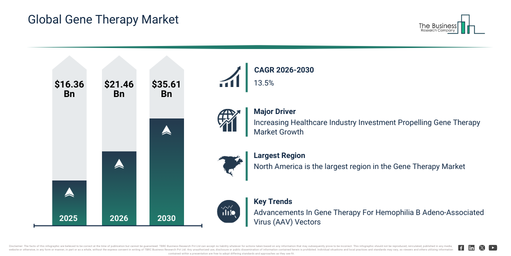
    The gene therapy market has witnessed substantial expansion in recent years. Its value is projected to climb from $16.36 billion in 2025 to $21.46 billion in 2026, indicating a compound annual growth rate (CAGR) of 31.2%. The historical increase can be attributed to the rising prevalence of genetic disorders, advancements in viral vector technology, greater r&d investments in gene therapy, encouraging government policies, and increased awareness of rare diseases.

    The gene therapy market is poised for substantial growth in the coming years. It is projected to reach $35.61 billion by 2030, demonstrating a compound annual growth rate (CAGR) of 13.5%.

    The foreseen expansion during this period can be attributed to factors such as the broadening scope of personalized medicine, the emergence of CRISPR and other gene editing therapies, a rise in both private and public funding, the integration of artificial intelligence into gene therapy research, and an increase in collaborative international clinical trials.

    Significant trends anticipated for the forecast period include the ongoing development of personalized gene therapies, wider adoption of CRISPR and gene editing technologies, an expansion of regulatory and ethical frameworks, innovations in advanced viral and non-viral vectors, and continued collaborative research alongside clinical trials.

    Access Your Free Sample Report For In-Depth Market Analysis:

    https://www.thebusinessresearchcompany.com/sample.aspx?id=3395&type=smp

    What Key Drivers Are Fueling The Growth Of The Gene Therapy Market?

    Increased financial commitment in the healthcare sector is anticipated to drive the expansion of the gene therapy market in the future. This type of investment involves dedicating capital to entities that offer medical services, produce medical devices or pharmaceuticals, offer health insurance, or contribute to the broader healthcare domain. Such investments are crucial for the gene therapy industry, given that numerous pharmaceutical firms are channeling funds to bolster their patent holdings and forge profitable partnerships. Furthermore, strategic funding facilitates the creation of innovative and sophisticated gene therapy solutions. For example, in April 2025, the American Medical Association, a US-based Professional organizations, reported that U.S. health spending in 2023 rose by 7.5% to $4.9 trillion, equating to $14,570 per capita, which exceeded the 4.6% increase recorded in 2022. Consequently, the increased financial input into the healthcare industry is fueling the expansion of the gene therapy market.

    How Is The Gene Therapy Market Segmented Across Different Segment Categories?

    The gene therapy market covered in this report is segmented –

    1) By Gene Therapy Type: Germline Therapy, Somatic Cell Therapy

    2) By Vector: Viral Vector, Non-Viral Vector

    3) By Application: Oncology, Orphan Disease, Knee Osteoarthritis, Neurological Disorders

    4) By End Users: Biopharmaceutical Companies, Research Institutes, Other End Users

    Subsegments:

    1) By Germline Therapy: Inherited Disease Treatment, Genetic Modification Of Embryos, Gene Editing Techniques, Ethical And Regulatory Considerations

    2) By Somatic Cell Therapy: Cancer Gene Therapy, Monogenic Disorder Treatment, Gene Replacement Therapy, RNA-Based Therapies, Gene Editing Techniques

    What Market Trends Are Affecting The Gene Therapy Market?

    Major companies operating in the gene therapy market are primarily focused on developing advanced products, including adeno-associated virus (AAV) vectors, to enhance the precision and effectiveness of gene delivery in treating various genetic disorders. An adeno-associated virus (AAV) vector is a widely utilized tool in gene therapy for delivering genetic material into cells. For example, in April 2024, Pfizer Inc., a US-based global biopharmaceutical company, received approval from the Food and Drug Administration (FDA), a US-based federal agency for protecting the public health, for BEQVEZ (fidanacogene elaparvovec-dzkt). BEQVEZ (fidanacogene elaparvovec-dzkt) is a gene therapy intended for treating adults with moderate to severe hemophilia B, a genetic bleeding disorder marked by a deficiency in clotting factor IX (FIX) that can result in excessive bleeding. This therapy employs an adeno-associated virus (AAV) vector to deliver a functional copy of the FIX gene directly into liver cells, thereby enabling the natural production of this vital clotting factor.

    Which Organizations Play A Role In The Gene Therapy Market Landscape?

    Major companies operating in the gene therapy market are UniQure NV, REGENXBIO Inc., Bristol-Myers Squibb, BioMarin Pharmaceuticals Inc., Jazz Pharmaceuticals Inc., Biocon, EdiGene Inc, Takeda Pharmaceutical, Daiichi Sankyo Company, Mitsubishi Tanabe Pharma, Merck, Lonza, Pfizer, Cellular Biomedicine Group, GenScript, Albumedix Ltd, Catalent, Freeline Therapeutics, DiNAQOR AG, Vivet Therapeutics, Allergan, Amgen, Biocad, Celgene Corporation, Johnson & Johnson, Eli Lilly and Company, AstraZeneca, Bayer AG, Juno Therapeutics, Allogene Therapeutics, Bluebird Bio, Regen BioPharma, Bellicum, BrainStorm Cell Therapeutics, Pluristem, Sanofi

    Get The Full Gene Therapy Market Report:

    https://www.thebusinessresearchcompany.com/report/genes-therapy-global-market-report

    Which Region Dominates The Gene Therapy Market By Market Share?

    North America was the largest region in the gene therapy market in 2025. The regions covered in the gene therapy market report are Asia-Pacific, South East Asia, Western Europe, Eastern Europe, North America, South America, Middle East, Africa.

    Request A Customized Gene Therapy Market Report For Competitive Insights:

    https://www.thebusinessresearchcompany.com/report/genes-therapy-global-market-report

    Browse Through More Reports Similar to the Global Gene Therapy Market 2026, By The Business Research Company

    Genes Therapy Market Report 2026

    https://www.thebusinessresearchcompany.com/report/genes-therapy-global-market-report

    Nucleic Acid Based Gene Therapy Market Report 2026

    https://www.thebusinessresearchcompany.com/report/nucleic-acid-based-gene-therapy-global-market-report

    Gene Editing Market Report 2026

    https://www.thebusinessresearchcompany.com/report/gene-editing-global-market-report

    Get in touch with us:

    The Business Research Company: https://www.thebusinessresearchcompany.com/

    Americas +1 310-496-7795

    Asia +44 7882 955267 & +91 8897263534

    Europe +44 7882 955267

    Email us at: marketing@tbrc.info

    Follow us on:

    LinkedIn: https://in.linkedin.com/company/the-business-research-company

    YouTube: https://www.youtube.com/channel/UC24_fI0rV8cR5DxlCpgmyFQ

    Global Market Model: https://www.thebusinessresearchcompany.com/global-market-model
  • Gene Synthesis Market Analysis Covering Growth Drivers And Future Outlook

    Gene Synthesis Market Analysis Covering Growth Drivers And Future Outlook

    The Business Research Company’s 2026 market reports feature enhanced tools like market attractiveness analysis, TAM assessment, and company scoring matrices, along with interactive dashboards, deeper supply chain insights, and startup coverage strengthening the depth, usability, and strategic value of insights.

    From Its 2026 Market Size, What Value Is The Gene Synthesis Market Projected To Reach By 2030?

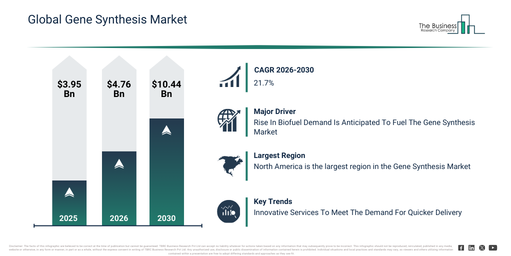
    The gene synthesis market has shown significant expansion in recent years. Its value is expected to rise from $3.95 billion in 2025 to $4.76 billion in 2026, exhibiting a compound annual growth rate (CAGR) of 20.7%. Factors contributing to its past growth include progress in recombinant dna technology, increased research and development in pharmaceuticals, the integration of automated synthesis platforms, the proliferation of academic research institutes, and a growing requirement for gene editing tools.

    The gene synthesis market size is projected to experience substantial growth in the upcoming years. Its value is expected to escalate to $10.44 billion by 2030, demonstrating a compound annual growth rate (CAGR) of 21.7%. This expansion during the forecast period is primarily driven by the surge in gene and cell therapy development, heightened investment in synthetic biology, increasing vaccine development initiatives, the broadening scope of contract research organizations, and the growing application of viral DNA synthesis in diagnostics. Significant trends for this period include the wider adoption of synthetic biology applications, the rise of personalized gene therapies, an increased requirement for high-fidelity DNA synthesis, advancements in enzyme-based synthesis techniques, and a boost in academic and government research programs.

    Access Your Free Sample Report For In-Depth Market Analysis:

    https://www.thebusinessresearchcompany.com/sample.aspx?id=10084&type=smp

    Which Drivers Are Supporting The Gene Synthesis Market Growth?

    The future expansion of the gene synthesis market is anticipated to be fueled by increasing biofuel demand. Biofuels serve as a sustainable energy alternative to conventional fossil fuels, originating from organic matter like plants or animal waste. In the context of biofuel creation, gene synthesis plays a role in modifying microorganisms to develop more efficient metabolic processes for transforming organic substances into biofuels. For example, the International Energy Agency (IEA), an intergovernmental body based in France, reported in June 2023 that biofuel demand in advanced economies is forecast to climb by 6%, which equates to 5700 million liters, between 2022 and 2024, predominantly in the United States and Europe. Consequently, the growing need for biofuels is stimulating the gene synthesis market.

    What Are The Main Segments Within The Gene Synthesis Market Segment Structure?

    The gene synthesis market covered in this report is segmented –

    1) By Method: Solid-Phase Synthesis, Chip-Based Synthesis, PCR-Based Enzyme Synthesis

    2) By Service: Antibody DNA Synthesis, Viral DNA Synthesis, Other Services

    3) By Application: Gene And Cell Therapy Development, Vaccine Development, Disease Diagnosis, Other Applications

    4) By End-User: Biotechnology And Pharmaceutical Companies, Academic And Government Research Institutes, Contract Research Organizations

    Subsegments:

    1) By Solid-Phase Synthesis: Phosphoramidite Method, H-phosphonate Method

    2) By Chip-Based Synthesis: Microarray Technology, Light-Directed Synthesis

    3) By PCR-Based Enzyme Synthesis: Polymerase Chain Reaction (PCR), Reverse Transcription PCR (RT-PCR)

    Which Trends Are Influencing Demand In The Gene Synthesis Market?

    Leading companies in the gene synthesis market are increasingly focused on deploying advanced platforms, including silicon-based DNA synthesis platforms, to satisfy the demand for faster delivery and secure a competitive advantage. A silicon-based DNA synthesis platform represents a technology that employs silicon wafers to enable the miniaturization of the chemical reactions involved in the creation of DNA during the gene synthesis process. For instance, in November 2023, Twist Bioscience Corporation, a US-based biotechnology company, unveiled Twist Express Genes, a rapid gene synthesis service offering a five to seven business days turnaround time. This service utilizes a silicon-based DNA synthesis platform to meet customer expectations for quicker delivery. The Express Genes service is intended to support researchers across industry and academia who either procure DNA from suppliers or synthesize genes independently, thereby providing a comprehensive solution for their gene production needs. Furthermore, GenScript pledges plasmid yield and 100% sequence accuracy, upholding elevated standards of quality and reliability across its product offerings.

    Who Are The Companies Participating In The Gene Synthesis Market?

    Major companies operating in the gene synthesis market are Genscript Biotech Corporation, Twist Bioscience Corp., ProteoGenix Inc., Biomatik Corporation, ProMab Biotechnologies Inc., Thermo Fisher Scientific Inc., Integrated DNA Technologies Inc., OriGene Technologies Inc., GenScript Corp., Merck KGaA, Codex DNA Inc., Genewiz Inc., Eurofins Genomics LLC, BioCat GmbH, Bioneer Pacific Co. Ltd., Bio Basic Inc., Beijing SBS Genetech Co. Ltd, Creative Biogene Inc, Exonbio LLC., Trenzyme GmbH, Polygen GmbH, MACROGEN CO. LTD., Synbio Technologies LLC

    Get The Full Gene Synthesis Market Report:

    https://www.thebusinessresearchcompany.com/report/gene-synthesis-global-market-report

    Which Region Is The Largest In The Gene Synthesis Market?

    North America was the largest region in the gene synthesis market in 2025. Asia-Pacific is expected to be the fastest-growing region in the global gene synthesis market report during the forecast period. The regions covered in the gene synthesis market report are Asia-Pacific, South East Asia, Western Europe, Eastern Europe, North America, South America, Middle East, Africa.

    Request A Customized Gene Synthesis Market Report For Competitive Insights:

    https://www.thebusinessresearchcompany.com/report/gene-synthesis-global-market-report

    Browse Through More Reports Similar to the Global Gene Synthesis Market 2026, By The Business Research Company

    Gene Synthesis Market Report 2026

    https://www.thebusinessresearchcompany.com/report/gene-synthesis-global-market-report

    Gene Editing Market Report 2026

    https://www.thebusinessresearchcompany.com/report/gene-editing-global-market-report

    Oligonucleotide Synthesis Market Report 2026

    https://www.thebusinessresearchcompany.com/report/oligonucleotide-synthesis-global-market-report

    Get in touch with us:

    The Business Research Company: https://www.thebusinessresearchcompany.com/

    Americas +1 310-496-7795

    Asia +44 7882 955267 & +91 8897263534

    Europe +44 7882 955267

    Email us at: marketing@tbrc.info

    Follow us on:

    LinkedIn: https://in.linkedin.com/company/the-business-research-company

    YouTube: https://www.youtube.com/channel/UC24_fI0rV8cR5DxlCpgmyFQ

    Global Market Model: https://www.thebusinessresearchcompany.com/global-market-model