Category: Pharmaceuticals

  • Global TCR Therapy Market 2026 advancing with next-gen immunotherapies

    Global TCR Therapy Market 2026 advancing with next-gen immunotherapies

    The Business Research Company’s 2026 market reports include new capabilities such as market attractiveness scoring and analysis, total addressable market analysis, company scoring matrix, interactive excel data dashboard, improved supply chain analysis, upcoming startups in the market, and overview of key products, aimed at improving the depth, usability, and strategic value of the insights delivered.

    What Market Valuation Is Forecasted For The TCR Therapy Market By 2030 Starting From Its 2026 Size?

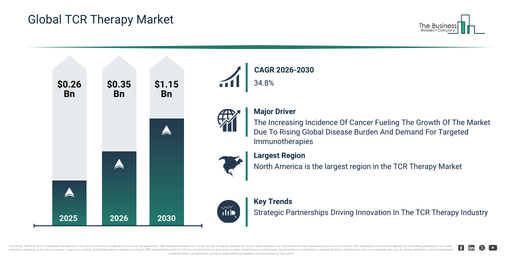
    The tcr therapy market has experienced rapid expansion in recent years. This market is projected to grow from $0.26 billion in 2025 to $0.35 billion in 2026, demonstrating a compound annual growth rate (CAGR) of 35.5%. The historical growth can be attributed to several factors including the early adoption of autologous tcr therapies, advancements in gene editing technologies, an increase in clinical trials for cancer immunotherapy, the rising incidence of hematologic malignancies, and collaborations between biotech firms and hospitals.

    The tcr therapy market is projected to experience substantial growth in the upcoming years. Its valuation is anticipated to reach $1.15 billion by 2030, demonstrating a compound annual growth rate (CAGR) of 34.8%. Factors contributing to this growth during the projected period include the rise of off-the-shelf allogeneic tcr therapies, the incorporation of AI in tcr design, wider reach into emerging markets, regulatory clearances for novel tcr indications, and improvements in combination immunotherapy methods. Key trends expected over the forecast horizon encompass the development of personalized tcr therapy, the prevalence of off-the-shelf allogeneic tcr therapies, sophisticated combination immunotherapy strategies, increased accessibility through hospitals and specialty clinics, and advanced tcr gene editing techniques.

    Download the Free Sample Report to Explore Key Market Insights:

    https://www.thebusinessresearchcompany.com/sample.aspx?id=14517&type=smp

    What Primary Drivers Are Shaping The Development Of The TCR Therapy Market?

    The projected expansion of the T-cell receptor (TCR) therapy market is anticipated to be fueled by the rising occurrence of cancer. Characterized by the uncontrolled proliferation and dissemination of abnormal cells, cancer is influenced by elements like aging populations, lifestyle choices, genetic susceptibilities, and environmental factors. This escalation in cancer diagnoses contributes to a growing worldwide health burden, necessitating innovative therapeutic methods capable of delivering more accurate and lasting clinical results. TCR therapy addresses this escalating medical requirement by modifying T cells to specifically identify and eliminate cancer cells, offering a highly precise immunotherapy solution for challenging and resistant tumors. As an illustration, the American Cancer Society, a US-based non-profit organization, reported an increase in the estimated new cases of lymphoma cancer from 89,010 in 2022 to 89,380 in 2023. Consequently, the growing frequency of cancer cases is stimulating the development of the T-cell receptor (TCR) therapy market.

    Which Segment Categories Define The TCR Therapy Market?

    The tcr therapy market covered in this report is segmented –

    1) By Product Type: Infusions, Injectables, Other Product Types

    2) By Indication: Leukemia, Lymphoma, Myeloma, Other Indication

    3) By Distribution Channel: Online, Offline

    4) By End-User: Hospital Pharmacy, Specialty Clinics

    Subsegments:

    1) By Infusions: Autologous TCR Infusions, Allogeneic TCR Infusions

    2) By Injectables: TCR-based Injectable Formulations, Injectable TCR Gene Therapies

    3) By Other Product Types: TCR-Engineered Cell Therapies, TCR Combination Therapies with Other Immunotherapies, TCR-Based Biologics

    What Major Market Trends Are Driving Changes In The TCR Therapy Market?

    Leading companies in the TCR therapy industry are adopting strategic partnership strategies to deliver essential treatments to patients and gain a competitive edge in the market. Such strategic collaborations involve businesses leveraging each other’s strengths and resources to achieve mutual benefits and success. For instance, in December 2023, ImmunoScape, a US-based biotechnology company, collaborated with the Experimental Drug Development Centre (EDDC), a Singapore-based pharmaceutical company, to create new TCR-based bispecific molecules for solid tumors. This partnership intends to utilize ImmunoScape’s expertise in systems immunology and computational biology, along with EDDC’s capabilities, to advance research in this field and establish a strategic alliance that harnesses their unique strengths to accelerate the development of more accessible and potentially more effective cancer treatments.

    Who Are The Top Companies Competing In The TCR Therapy Market?

    Major companies operating in the tcr therapy market are Immunocore Limited, Immatics N.V., Adaptimmune Therapeutics plc, Alaunos Therapeutics Inc., Zelluna Immunotherapy AS, Lion TCR Pte Ltd, TCRCure Biopharma Corp., China Immunotech Inc., Bluebird bio Inc., Poseida Therapeutics Inc., Fate Therapeutics Inc., Atara Biotherapeutics Inc., Precision Biosciences Inc., Cellectis S.A., Cellular Biomedicine Group Inc., Takara Bio Inc., Tessa Therapeutics, Pfizer Inc., Novartis AG, Bristol Myers Squibb Company

    Read the full tcr therapy market report here:

    https://www.thebusinessresearchcompany.com/report/tcr-therapy-global-market-report

    How Does The TCR Therapy Market Perform Across Major Global Regions?

    North America was the largest region in the TCR therapy market in 2025. Asia-Pacific is expected to be the fastest-growing region in the forecast period. The regions covered in the tcr therapy market report are Asia-Pacific, South East Asia, Western Europe, Eastern Europe, North America, South America, Middle East, Africa.

    Request A Tailored TCR Therapy Market Research Report For Competitive Advantage:

    https://www.thebusinessresearchcompany.com/customise?id=14517&type=smp

    Browse Through More Reports Similar to the Global TCR Therapy Market 2026, By The Business Research Company

    Tcr Therapy Market Report 2026

    https://www.thebusinessresearchcompany.com/report/tcr-therapy-global-market-report

    Music Therapy Market Report 2026

    https://www.thebusinessresearchcompany.com/report/music-therapy-global-market-report

    Addictions Therapeutics Market Report 2026

    https://www.thebusinessresearchcompany.com/report/addictions-therapeutics-global-market-report

    Get in touch with us:

    The Business Research Company: https://www.thebusinessresearchcompany.com/

    Americas +1 310-496-7795

    Asia +44 7882 955267 & +91 8897263534

    Europe +44 7882 955267

    Email us at info@tbrc.info

    Follow us on:

    LinkedIn: https://in.linkedin.com/company/the-business-research-company

    YouTube: https://www.youtube.com/channel/UC24_fI0rV8cR5DxlCpgmyFQ

    Global Market Model: https://www.thebusinessresearchcompany.com/global-market-model
  • Tazarotene Market 2026–2035 growing with dermatology advancements

    Tazarotene Market 2026–2035 growing with dermatology advancements

    The Business Research Company’s 2026 market reports include new capabilities such as market attractiveness scoring and analysis, total addressable market analysis, company scoring matrix, interactive excel data dashboard, improved supply chain analysis, upcoming startups in the market, and overview of key products, aimed at improving the depth, usability, and strategic value of the insights delivered.

    How Is The Market Size Of The Tazarotene Market Expected To Change Between 2026 And 2030?

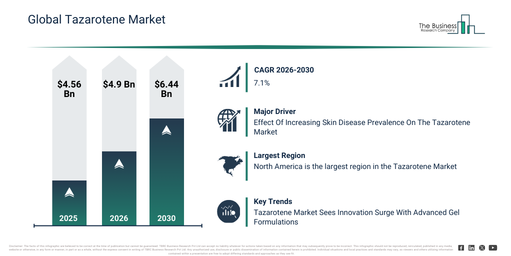
    The tazarotene market has experienced substantial growth in its size over recent years. It is projected to expand from $4.56 billion in 2025 to $4.9 billion in 2026, reflecting a compound annual growth rate (CAGR) of 7.4%. The factors contributing to its growth during the historic period include the increasing prevalence of dermatological disorders, the expansion of prescription topical treatments, the growth of dermatology clinic networks, the acceptance of retinoid-based therapies, and advancements in topical drug formulation technologies.

    The tazarotene market is projected to experience robust expansion in the coming years, with its size anticipated to reach $6.44 billion by 2030, demonstrating a compound annual growth rate (CAGR) of 7.1%. This projected growth during the forecast period is primarily driven by factors such as the rising need for highly effective dermatology treatments, an increase in clinical research endeavors, a greater emphasis on personalized skincare solutions, the proliferation of pharmaceutical-grade dermatology products, and stricter regulatory oversight for topical medications. Key trends foreseen in this period encompass a growing uptake of topical retinoid therapies, an increased utilization of high-purity dermatological APIs, a sharpened focus on developing treatments for acne and psoriasis, the advancement of sophisticated topical formulations, and a heightened commitment to ensuring clinical efficacy and safety.

    Download the Free Sample Report to Explore Key Market Insights:

    https://www.thebusinessresearchcompany.com/sample.aspx?id=20658&type=smp

    Which Major Factors Are Driving The Expansion Of The Tazarotene Market?

    The escalating incidence of dermatological conditions is anticipated to fuel the expansion of the tazarotene market moving ahead. These conditions encompass diverse ailments impacting the skin’s look, integrity, and utility, frequently manifesting as symptoms like rashes, pruritus, irritation, or sores. The growing prevalence of skin ailments is propelled by escalating levels of environmental contaminants, evolving climatic patterns, individual lifestyle choices, hereditary susceptibilities, and heightened contact with sensitizers and irritants. Tazarotene finds application in managing dermatological issues like acne and psoriasis, aiding in the reduction of inflammatory responses and fostering robust skin cell regeneration. As an illustration, in December 2023, data from the National Institutes of Health (NIH), a U.S. government’s leading medical research organization, indicated that the global incidence of atopic dermatitis hit 2.6%, impacting approximately 204 million individuals globally. Consequently, the rising frequency of skin disorders is bolstering expansion within the tazarotene market.

    How Is The Tazarotene Market Structured Across Different Segments?

    The tazarotene market covered in this report is segmented –

    1) By Type: Purity = 98%, Purity = 99%

    2) By Form: Foam, Cream, Gel

    3) By Application: Psoriasis, Acne, Sun-Damaged, Other Applications

    Subsegments:

    1) By Purity = 98%: Tazarotene With 98% Purity For Research And Development, Pharmaceutical-Grade Tazarotene (= 98% Purity), Tazarotene Formulations For Dermatological Use (= 98% Purity)

    2) By Purity = 99%: High-Purity Tazarotene (= 99%) For Pharmaceutical Applications, Cosmetic-Grade Tazarotene (= 99% Purity), Tazarotene For Clinical Trials (= 99% Purity), Specialized Tazarotene Compounds (= 99% Purity)

    Which Trends Are Shaping The Future Of The Tazarotene Market?

    Leading companies in the tazarotene market are concentrating on developing innovative products, particularly generic topical formulations. Their objective is to offer a high-quality, cost-effective alternative and broaden access to efficacious treatments for conditions like plaque psoriasis and facial acne. Generic topical formulations are externally applied medications that are bioequivalent to their brand-name counterparts, containing the same active ingredients in similar concentrations, but typically at a lower price. For instance, in June 2023, Padagis LLC, a US-based pharmaceutical manufacturer, introduced Tazarotene Gel, which is a generic version of Tazorac Gel. This gel delivers the same therapeutic benefits for treating plaque psoriasis and facial acne vulgaris at a more economical price point. As the second generic prescription product available in this market, it boosts competition and improves accessibility, making it a valuable addition to the dermatological product spectrum.

    Which Major Players Dominate The Tazarotene Market?

    Major companies operating in the tazarotene market are Cardinal Health, AbbVie Inc., GSK plc., Sandoz Group AG, Sun Pharmaceutical Industries Ltd., Perrigo Company, Seqens SAS, Glenmark Pharmaceuticals, Taro Pharmaceutical Industries, Olon S.p.A, Piramal Healthcare Ltd., Jiangsu Lianhuan Pharmaceutical Group, Cosette Pharmaceuticals Inc., Padagis US LLC, Ortho Dermatologics, Solaris Pharma Corp, Actavis Inc., Bioindustria L.I.M. Spa, Chongqing Huapont Pharmaceutical Co. Ltd.

    Read the full tazarotene market report here:

    https://www.thebusinessresearchcompany.com/report/tazarotene-global-market-report

    Which Region Currently Holds The Largest Share Of The Tazarotene Market?

    North America was the largest region in the tazarotene market in 2025. The regions covered in the tazarotene market report are Asia-Pacific, South East Asia, Western Europe, Eastern Europe, North America, South America, Middle East, Africa.

    Request A Tailored Tazarotene Market Research Report For Competitive Advantage:

    https://www.thebusinessresearchcompany.com/customise?id=20658&type=smp

    Browse Through More Reports Similar to the Global Tazarotene Market 2026, By The Business Research Company

    Vitamin And Mineral Market Report 2026

    https://www.thebusinessresearchcompany.com/report/vitamin-and-mineral-global-market-report

    Multivitamin Capsules And Tablets Market Report 2026

    https://www.thebusinessresearchcompany.com/report/multivitamin-capsules-and-tablets-global-market-report

    Vitamin D Market Report 2026

    https://www.thebusinessresearchcompany.com/report/vitamin-d-global-market-report

    Get in touch with us:

    The Business Research Company: https://www.thebusinessresearchcompany.com/

    Americas +1 310-496-7795

    Asia +44 7882 955267 & +91 8897263534

    Europe +44 7882 955267

    Email us at info@tbrc.info

    Follow us on:

    LinkedIn: https://in.linkedin.com/company/the-business-research-company

    YouTube: https://www.youtube.com/channel/UC24_fI0rV8cR5DxlCpgmyFQ

    Global Market Model: https://www.thebusinessresearchcompany.com/global-market-model

  • Targeted Alpha-Therapy Market 2026 gaining traction with precision oncology

    Targeted Alpha-Therapy Market 2026 gaining traction with precision oncology

    The Business Research Company’s 2026 market reports include new capabilities such as market attractiveness scoring and analysis, total addressable market analysis, company scoring matrix, interactive excel data dashboard, improved supply chain analysis, upcoming startups in the market, and overview of key products, aimed at improving the depth, usability, and strategic value of the insights delivered.

    What Is The Market Size Of The Targeted Alpha-Therapy Market In 2026 And What Value Is Projected For 2030?

    The targeted alpha-therapy market size has experienced significant growth recently. It is projected to expand from $1.03 billion in 2025 to $1.2 billion in 2026, achieving a compound annual growth rate (CAGR) of 17.2%. The expansion observed in prior periods is attributable to advancements in nuclear medicine research, growing unmet needs in advanced cancer treatment, an increase in radiopharmaceutical clinical trials, the availability of medical isotopes, and the rising adoption of targeted radiation therapy.

    The targeted alpha-therapy market size is poised for rapid expansion in the coming years, with projections indicating it will reach $2.25 billion by 2030, advancing at a compound annual growth rate (CAGR) of 17.0%. This upward trajectory during the forecast period can be attributed to several factors, including increased investment in isotope manufacturing infrastructure, the rising embrace of personalized radiotherapy, the broadening of targeted alpha therapies into new indications, growing regulatory backing for radiopharmaceuticals, and enhanced cooperation between nuclear and oncology specialists. Furthermore, key trends anticipated in this period encompass the escalating development of alpha-emitting radiopharmaceuticals, a surge in the use of targeted radioligand therapies, an intensified focus on precision radiation delivery, the expansion of isotope production capabilities, and improved integration of targeting molecules.

    Download the Free Sample Report to Explore Key Market Insights:

    https://www.thebusinessresearchcompany.com/sample.aspx?id=28337&type=smp

    What Key Drivers Are Influencing The Growth Of The Targeted Alpha-Therapy Market?

    The increasing emphasis on precision medicine is projected to stimulate the growth of the targeted alpha-therapy market moving forward. Precision medicine represents a healthcare approach that customizes prevention, diagnosis, and treatment based on an individual’s unique genetic profile, lifestyle, and environment to achieve more effective health outcomes. The rise of precision medicine is attributed to the expanding availability of genetic testing, which enables more accurate diagnoses and specifically targeted treatments, thereby enhancing patient results. Targeted alpha-therapy plays a crucial role in precision medicine by directly delivering highly potent alpha-emitting isotopes to cancer cells, ensuring personalized and precise treatment while minimizing damage to healthy tissues. As an example, the American Pharmaceutical Review, a US-based journal company, reported in March 2024 that global spending on precision medicine treatments was nearly $32 billion in 2022 and is expected to exceed $124 billion by 2027. Thus, the heightened focus on precision medicine is a primary driver for the growth of the targeted alpha-therapy market.

    What Are The Key Segments Of The Targeted Alpha-Therapy Market?

    The targeted alpha-therapy market covered in this report is segmented –

    1) By Isotope Type: Actinium-225, Radium-223, Lead-212, Bismuth-213, Other Isotype Types

    2) By Application: Prostate Cancer, Bone Metastases, Pancreatic Cancer, Other Applications

    3) By End-User: Hospitals, Cancer Research Institutes, Specialty Clinics, Lymphoma, Other End Users

    Subsegments:

    1) By Actinium-225: Ac-225 Lintuzumab, Ac-225 PSMA-617, Ac-225 DOTATATE

    2) By Radium-223: Radium-223 Dichloride (Xofigo)

    3) By Lead-212: Pb-212 DOTAMTATE (AlphaMedix), Pb-212 TCMC-Trastuzumab

    4) By Bismuth-213: Bi-213 Lintuzumab, Bi-213 DOTATOC

    5) By Other Isotope Types: Thorium-227, Astatine-211, Terbium-149

    What Key Trends Are Influencing The Development Of The Targeted Alpha-Therapy Market?

    Leading companies in the targeted alpha-therapy market are concentrating on developing innovative solutions, such as peptide receptor radionuclide therapy, to enhance the effectiveness of targeted cancer treatment, reduce unwanted side effects, and improve patient outcomes. Peptide receptor radionuclide therapy (PRRT) is a targeted cancer treatment that delivers radioactive isotopes directly to tumor cells by attaching them to peptides that specifically bind to receptors overexpressed on cancer cells, thereby minimizing damage to healthy tissue. For instance, in February 2024, RadioMedix Inc., a US-based biotechnology company, partnered with Orano Med, a US-based pharma company, and their product, AlphaMedix (lead-212-Dotamtate), aimed at treating neuroendocrine tumors, became the first targeted alpha therapy to receive FDA breakthrough device designation. It is designed to treat advanced gastroenteropancreatic neuroendocrine tumors by directly delivering highly potent alpha radiation to cancer cells while sparing healthy tissue. Its primary advantage is rooted in the high energy and short path length of alpha particles, which cause lethal DNA damage to tumor cells with minimal toxicity. This therapy presents a promising option for patients who are new to or have shown limited response to current beta-emitter treatments, with the goal of improving efficacy and safety in hard-to-treat neuroendocrine tumors.

    Who Are The Leading Companies Operating In The Targeted Alpha-Therapy Market?

    Major companies operating in the targeted alpha-therapy market are Bayer Aktiengesellschaft, Novartis AG, Lantheus Holdings Inc., Telix Pharmaceuticals Limited, Eckert & Ziegler Strahlen- und Medizintechnik AG, Actinium Pharmaceuticals Inc., RayzeBio Inc., ITM Isotope Technologies Munich SE, ARTBIO Inc., AdvanCell Pty Ltd., IONETIX Corporation, Abdera Therapeutics Inc., Aktis Oncology Inc., Alpha-9 Oncology Inc., Clarity Pharmaceuticals Pty Ltd., Nucleus RadioPharma, Oncoinvent AS, PanTera, Perspective Therapeutics Inc., RadioMedix Inc.

    Read the full targeted alpha-therapy market report here:

    https://www.thebusinessresearchcompany.com/report/targeted-alpha-therapy-global-market-report

    Which Region Is Expected To Register The Fastest Growth In The Targeted Alpha-Therapy Market?

    North America was the largest region in the targeted alpha-therapy market in 2025. Asia Pacific is expected to be the fastest-growing region in the forecast period. The regions covered in the targeted alpha-therapy market report are Asia-Pacific, South East Asia, Western Europe, Eastern Europe, North America, South America, Middle East, Africa.

    Request A Tailored Targeted Alpha-Therapy Market Research Report For Competitive Advantage:

    https://www.thebusinessresearchcompany.com/customise?id=28337&type=smp

    Browse Through More Reports Similar to the Global Targeted Alpha-Therapy Market 2026, By The Business Research Company

    Targeted Therapy Market Report 2026

    https://www.thebusinessresearchcompany.com/report/targeted-therapy-global-market-report

    Alpha Hydroxy Acid Market Report 2026

    https://www.thebusinessresearchcompany.com/report/alpha-hydroxy-acid-global-market-report

    Alpha 1 Antitrypsin Deficiency Augmentation Therapy Market Report 2026

    https://www.thebusinessresearchcompany.com/report/alpha-1-antitrypsin-deficiency-augmentation-therapy-global-market-report

    Get in touch with us:

    The Business Research Company: https://www.thebusinessresearchcompany.com/

    Americas +1 310-496-7795

    Asia +44 7882 955267 & +91 8897263534

    Europe +44 7882 955267

    Email us at info@tbrc.info

    Follow us on:

    LinkedIn: https://in.linkedin.com/company/the-business-research-company

    YouTube: https://www.youtube.com/channel/UC24_fI0rV8cR5DxlCpgmyFQ

    Global Market Model: https://www.thebusinessresearchcompany.com/global-market-model
  • Global Tardive Dyskinesia Treatment Market 2026–2035 strengthening neurological care

    Global Tardive Dyskinesia Treatment Market 2026–2035 strengthening neurological care

    The Business Research Company’s 2026 market reports include new capabilities such as market attractiveness scoring and analysis, total addressable market analysis, company scoring matrix, interactive excel data dashboard, improved supply chain analysis, upcoming startups in the market, and overview of key products, aimed at improving the depth, usability, and strategic value of the insights delivered.

    What Will Be The Estimated Market Valuation Of The Tardive Dyskinesia Treatment Market By The End Of 2030?

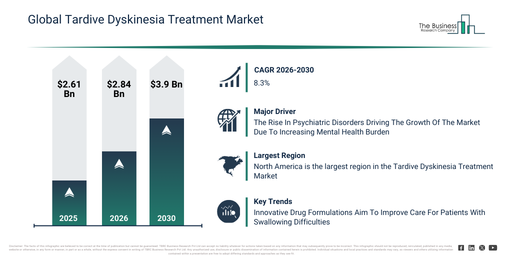
    The tardive dyskinesia treatment market size has seen significant expansion in recent years. This market is forecast to increase from $2.61 billion in 2025 to $2.84 billion in 2026, demonstrating a compound annual growth rate (CAGR) of 8.8%. The historical growth of this market stems from elements such as the prolonged consumption of antipsychotic medications, a rise in awareness regarding tardive dyskinesia, the limited availability of specific treatment alternatives, the growing occurrence of mental health disorders, and the development of hospital neurology departments.

    The tardive dyskinesia treatment market is projected to experience substantial growth over the coming years. This market is anticipated to reach $3.9 billion by 2030, exhibiting a compound annual growth rate (CAGR) of 8.3%. This projected growth during the forecast period can be primarily attributed to several factors, including the introduction of new dopamine-depleting therapies, wider acceptance of deep brain stimulation, broader uses of botulinum toxin, the incorporation of telemedicine for managing movement disorders, and increased funding for individualized rehabilitation and cognitive therapies. Key trends expected during the forecast period involve the growing uptake of dopamine-depleting agents and anticholinergic drugs, a heightened demand for botulinum toxin injections specifically for focal dyskinesia, an expansion in the application of deep brain stimulation for treatment-resistant tardive dyskinesia, the development of personalized injection strategies and multi-target DBS techniques, and the incorporation of cognitive behavioral therapy alongside supportive rehabilitation initiatives.

    Download the Free Sample Report to Explore Key Market Insights:

    https://www.thebusinessresearchcompany.com/sample.aspx?id=27431&type=smp

    What Major Growth Drivers Are Shaping The Outlook Of The Tardive Dyskinesia Treatment Market?

    The growing incidence of psychiatric disorders is expected to drive the expansion of the tardive dyskinesia treatment market. Psychiatric disorders cover a broad spectrum of mental health conditions that affect an individual’s mood, thought processes, behavior, and overall daily functioning, often requiring professional diagnosis and therapy. The prevalence of these disorders is increasing due to heightened stress and lifestyle pressures, which include heavy workloads, social isolation, and insufficient time for personal well-being. Tardive dyskinesia treatment plays a crucial role in managing involuntary movement symptoms, thereby improving overall treatment effectiveness and enhancing the quality of life for those with psychiatric disorders who depend on long-term antipsychotic medication. As an illustration, in November 2023, data from NHS England, a UK government health agency, indicated that around 20.3 % of children aged 8 to 16, 23.3 % of individuals aged 17 to 19, and 21.7 % of those aged 20 to 25 had a probable mental disorder in 2023. Consequently, the rising prevalence of psychiatric disorders is a key factor propelling the growth of the tardive dyskinesia treatment market.

    Which Segment Classifications Shape The Tardive Dyskinesia Treatment Market?

    The tardive dyskinesia treatment market covered in this report is segmented –

    1) By Treatment Type: Medications, Botulinum Toxin Injections, Deep Brain Stimulation, Other Treatment Types

    2) By Drug: Valbenazine, Amantadine, Tetrabenazine, Clonazepam, Other Drugs

    3) By Route Of Administration: Oral Administration, Injection, Transdermal Patches

    4) By Distribution Channel: Hospital Pharmacies, Retail Pharmacies, Other Distribution Channels

    5) By End-Users: Hospitals, Specialty Clinics, Other End-Users

    Subsegments:

    1) By Medications: Antipsychotic Medications, Benzodiazepines, Dopamine-Depleting Agents, Anticholinergic Agents

    2) By Botulinum Toxin Injections: Facial Muscle Injections, Neck Muscle Injections, Limb Muscle Injections, Customized Injection Protocols

    3) By Deep Brain Stimulation: Subthalamic Nucleus Stimulation, Globus Pallidus Interna Stimulation, Thalamic Stimulation, Multi-Target Stimulation

    4) By Other Treatment Types: Supportive Therapies, Cognitive Behavioral Therapy, Physical Rehabilitation, Emerging Experimental Treatments

    How Are Trends Impacting The Tardive Dyskinesia Treatment Market?

    Leading companies operating within the tardive dyskinesia treatment market are concentrating on developing innovative medications, such as sprinkle capsule formulations, to enhance medication adherence for patients facing swallowing challenges. These sprinkle capsule formulations are designed to be opened and dispersed onto soft food, making them easier for individuals with dysphagia or difficulty consuming whole capsules to swallow. For example, in July 2024, Neurocrine Biosciences Inc., a US-based biotechnology company, introduced Ingrezza sprinkle (valbenazine) capsules, which stands as the leading prescribed vesicular monoamine transporter 2 (VMAT2) inhibitor for the treatment of adults with tardive dyskinesia and chorea linked to Huntington’s disease. This VMAT2 inhibitor functions by regulating dopamine levels in the brain to aid in managing involuntary movements. The drug is offered as a once-daily oral capsule, including a sprinkle formulation specifically developed to simplify administration for patients who experience difficulty swallowing.

    Which Companies Are Expanding Their Footprint In The Tardive Dyskinesia Treatment Market?

    Major companies operating in the tardive dyskinesia treatment market are AbbVie Inc., Takeda Pharmaceutical Company Limited, Teva Pharmaceutical Industries Limited, Otsuka Pharmaceutical Co. Ltd., Jazz Pharmaceuticals plc, Kyowa Kirin Co Ltd., H. Lundbeck A/S, Neurocrine Biosciences Inc., Acadia Pharmaceuticals Inc., Upsher-Smith Laboratories LLC, Adamas Pharmaceuticals Inc., Sunovion Pharmaceuticals Inc., Mitsubishi Tanabe Pharma Corporation.

    Read the full tardive dyskinesia treatment market report here:

    https://www.thebusinessresearchcompany.com/report/tardive-dyskinesia-treatment-global-market-report

    Which Regions Are Projected To Dominate The Tardive Dyskinesia Treatment Market In The Coming Years?

    North America was the largest region in the tardive dyskinesia treatment market in 2025. Asia-Pacific is expected to be the fastest-growing region in the forecast period. The regions covered in the tardive dyskinesia treatment market report are Asia-Pacific, South East Asia, Western Europe, Eastern Europe, North America, South America, Middle East, Africa.

    Request A Tailored Tardive Dyskinesia Treatment Market Research Report For Competitive Advantage:

    https://www.thebusinessresearchcompany.com/customise?id=27431&type=smp

    Browse Through More Reports Similar to the Global Tardive Dyskinesia Treatment Market 2026, By The Business Research Company

    Tax Preparation Services Market Report 2026

    https://www.thebusinessresearchcompany.com/report/tax-preparation-services-global-market-report

    Tax Management Software Market Report 2026

    https://www.thebusinessresearchcompany.com/report/tax-management-software-global-market-report

    Tax Management Market Report 2026

    https://www.thebusinessresearchcompany.com/report/tax-management-global-market-report

    Get in touch with us:

    The Business Research Company: https://www.thebusinessresearchcompany.com/

    Americas +1 310-496-7795

    Asia +44 7882 955267 & +91 8897263534

    Europe +44 7882 955267

    Email us at info@tbrc.info

    Follow us on:

    LinkedIn: https://in.linkedin.com/company/the-business-research-company

    YouTube: https://www.youtube.com/channel/UC24_fI0rV8cR5DxlCpgmyFQ

    Global Market Model: https://www.thebusinessresearchcompany.com/global-market-model
  • Tardive Dyskinesia Therapeutics Market 2026 unlocking new treatment pathways

    Tardive Dyskinesia Therapeutics Market 2026 unlocking new treatment pathways

    The Business Research Company’s 2026 market reports include new capabilities such as market attractiveness scoring and analysis, total addressable market analysis, company scoring matrix, interactive excel data dashboard, improved supply chain analysis, upcoming startups in the market, and overview of key products, aimed at improving the depth, usability, and strategic value of the insights delivered.

    What Market Size Growth Is Projected For The Tardive Dyskinesia Therapeutics Market During The Forecast Period 2026–2030?

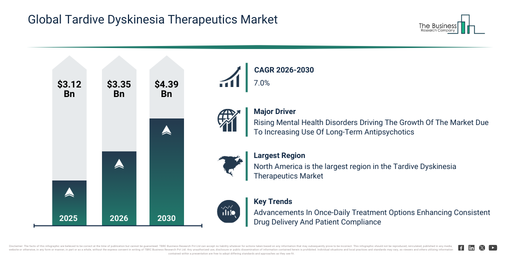
    The tardive dyskinesia therapeutics market size has experienced substantial growth in recent years. Its value is projected to increase from $3.12 billion in 2025 to $3.35 billion in 2026, demonstrating a compound annual growth rate (CAGR) of 7.4%. The expansion observed historically can be attributed to several factors, including the scarcity of treatment options for tardive dyskinesia, a dependence on conventional antipsychotic management, inadequate patient awareness, the rising prevalence of antipsychotic use, and limited specialized treatment centers.

    The tardive dyskinesia therapeutics market is projected to experience substantial expansion over the upcoming years, reaching a size of $4.39 billion by 2030, driven by a compound annual growth rate (CAGR) of 7.0%. This projected expansion is primarily due to several factors, including the creation of innovative treatments for tardive dyskinesia, increased investment in research and development for neurological conditions, a growing inclination towards homecare environments, the proliferation of specialized treatment facilities, improved patient oversight, and advancements in digital therapeutics. Key developments anticipated during this period encompass the increasing use of deutetrabenazine and valbenazine, a heightened emphasis on individualized neurological treatments, the broadening availability of homecare and remote treatment alternatives, a rising understanding of tardive dyskinesia caused by medication, and a strong focus on ensuring safety and adherence in long-term therapy.

    Download the Free Sample Report to Explore Key Market Insights:

    https://www.thebusinessresearchcompany.com/sample.aspx?id=24718&type=smp

    What Drivers Are Expected To Influence The Tardive Dyskinesia Therapeutics Market During The Forecast Period?

    The rising occurrence of mental health conditions is anticipated to drive the expansion of the tardive dyskinesia therapeutics market in the future. These disorders are defined as states impacting an individual’s cognition, feelings, conduct, or daily functionality, frequently leading to considerable discomfort or challenges in everyday living. The surge in mental health issues stems from growing social isolation, as the move towards digital interactions and rapid lifestyles has diminished valuable face-to-face contacts, fostering heightened sensations of solitude and emotional pressure. Tardive dyskinesia therapeutics aid individuals with mental disorders by controlling involuntary movement symptoms resulting from prolonged antipsychotic medication, consequently enhancing compliance with treatment and improving their overall quality of life. For example, in 2024, data from the National Alliance On Mental Illness, a US-based organization, indicates that psychosis spectrum and mood disorders are responsible for almost 600,000 annual hospitalizations among those aged 18-44 in the U.S. Consequently, the expanding occurrence of mental health conditions fuels the tardive dyskinesia therapeutics market.

    What Market Segments Are Evaluated Within The Tardive Dyskinesia Therapeutics Market?

    The tardive dyskinesia therapeutics market covered in this report is segmented –

    1) By Drug: Deutetrabenazine, Valbenazine, Other Drugs

    2) By Product Type: Solid Dosage Forms, Tablets, Capsules, Liquid Dosage Form

    3) By Application: Antipsychotic-Induced Tardive Dyskinesia, Other Drug-Induced Tardive Dyskinesia, Idiopathic Tardive Dyskinesia

    4) By End-User: Hospitals, Clinics, Specialty Treatment Centers, Homecare Settings

    Subsegments:

    1) By Deutetrabenazine: Dosage Forms, Line Of Therapy, Distribution Channel

    2) By Valbenazine: Dosage Forms, Patient Age Group, Distribution Channel

    3) By Other Drugs: Drug Class Or Type, Dosage Forms, Treatment Duration

    What Industry Trends Are Redefining The Tardive Dyskinesia Therapeutics Market?

    Leading companies in the tardive dyskinesia therapeutics market are prioritizing the development of advanced products, including once-daily treatment choices, to help maintain more consistent drug levels within the body. Once-daily treatment options refer to medications or therapies designed for administration just once daily, thereby simplifying dosing schedules and improving patient adherence. For instance, in May 2024, Teva Pharmaceutical Industries Limited, an Israel-based biopharmaceutical company, announced the U.S. Food and Drug Administration (FDA) approval of AUSTEDO XR tablets for treating adults suffering from tardive dyskinesia (TD) and Huntington’s disease (HD) chorea. The recent authorization of AUSTEDO XR provides patients with proven effectiveness in managing involuntary movements, alongside the added convenience of a once-daily, single-pill dosage. This new formulation delivers clinically therapeutic doses, which have been confirmed through pivotal clinical trials. Additionally, it is now accessible in four distinct tablet strengths: 30 mg, 36 mg, 42 mg, and 48 mg.

    Who Are The Top Market Participants Influencing The Tardive Dyskinesia Therapeutics Market?

    Major companies operating in the tardive dyskinesia therapeutics market are Neurocrine Biosciences Inc., Teva Pharmaceutical Industries Ltd., Otsuka Pharmaceutical Co. Ltd., Lundbeck A/S, Mitsubishi Tanabe Pharma Corporation, AbbVie Inc., Pfizer Inc., Novartis AG, Sun Pharmaceutical Industries Ltd., Dr. Reddy’s Laboratories Ltd., Zydus Lifesciences Ltd., Lupin Limited, Amneal Pharmaceuticals Inc., Lannett Company Inc., Alembic Pharmaceuticals Ltd., Aurobindo Pharma Ltd., Hikma Pharmaceuticals PLC, Accord Healthcare Ltd., Cipla Ltd., Glenmark Pharmaceuticals Ltd., Sunovion Pharmaceuticals Inc., Indivior PLC, Viatris Inc., Alkem Laboratories Ltd., Intas Pharmaceuticals Ltd., Som Biotech Ltd., Addex Therapeutics Ltd., Luye Pharma Group Ltd., Apotex Inc., Sandoz Group AG, Torrent Pharmaceuticals Ltd., Jubilant Pharmova Ltd., Taro Pharmaceutical Industries Ltd., Cadila Pharmaceuticals Ltd.

    Read the full tardive dyskinesia therapeutics market report here:

    https://www.thebusinessresearchcompany.com/report/tardive-dyskinesia-therapeutics-global-market-report

    Which Region Is Forecast To Lead The Tardive Dyskinesia Therapeutics Market In Terms Of Market Size?

    North America was the largest region in the tardive dyskinesia therapeutics market in 2025. Asia-Pacific is expected to be the fastest-growing region in the forecast period. The regions covered in the tardive dyskinesia therapeutics market report are Asia-Pacific, South East Asia, Western Europe, Eastern Europe, North America, South America, Middle East, Africa.

    Request A Tailored Tardive Dyskinesia Therapeutics Market Research Report For Competitive Advantage:

    https://www.thebusinessresearchcompany.com/customise?id=24718&type=smp

    Browse Through More Reports Similar to the Global Tardive Dyskinesia Therapeutics Market 2026, By The Business Research Company

    Leukemia Therapeutics Market Report 2026

    https://www.thebusinessresearchcompany.com/report/leukemia-therapeutics-global-market-report

    Bipolar Disorder Therapeutics Market Report 2026

    https://www.thebusinessresearchcompany.com/report/bipolar-disorder-therapeutics-global-market-report

    Peptide Therapeutics Market Report 2026

    https://www.thebusinessresearchcompany.com/report/peptide-therapeutics-global-market-report

    Get in touch with us:

    The Business Research Company: https://www.thebusinessresearchcompany.com/

    Americas +1 310-496-7795

    Asia +44 7882 955267 & +91 8897263534

    Europe +44 7882 955267

    Email us at info@tbrc.info

    Follow us on:

    LinkedIn: https://in.linkedin.com/company/the-business-research-company

    YouTube: https://www.youtube.com/channel/UC24_fI0rV8cR5DxlCpgmyFQ

    Global Market Model: https://www.thebusinessresearchcompany.com/global-market-model
  • Global Tacrolimus Market 2026–2035 expanding with transplant medicine demand

    Global Tacrolimus Market 2026–2035 expanding with transplant medicine demand

    The Business Research Company’s 2026 market reports include new capabilities such as market attractiveness scoring and analysis, total addressable market analysis, company scoring matrix, interactive excel data dashboard, improved supply chain analysis, upcoming startups in the market, and overview of key products, aimed at improving the depth, usability, and strategic value of the insights delivered.

    How Will The Market Size Of The Tacrolimus Market Evolve From 2026 To 2030?

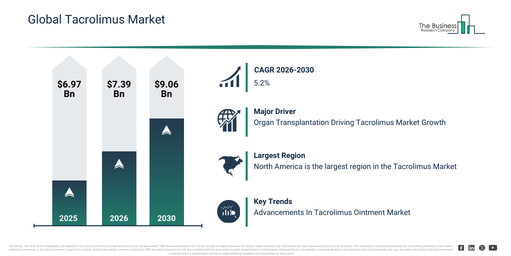
    The tacrolimus market size has seen substantial growth in recent years. It is projected to expand from $6.97 billion in 2025 to $7.39 billion in 2026, demonstrating a compound annual growth rate (CAGR) of 6.0%. This historical growth can be linked to the rise in organ transplantation procedures, the proven clinical efficacy of tacrolimus, an increasing prevalence of autoimmune and inflammatory conditions, enhanced transplant success rates, and the expansion of healthcare infrastructure for transplant care.

    The tacrolimus market size is anticipated to undergo significant expansion over the next few years, projected to reach $9.06 billion by 2030, exhibiting a compound annual growth rate (CAGR) of 5.2%. This growth during the forecast period is primarily driven by an increasing number of kidney and liver transplants, the escalating demand for cost-effective generic drugs, expanded off-label use in dermatology, advancements in immunosuppressive drug monitoring, and the proliferation of transplant programs in emerging economies. Noteworthy trends for the forecast period include a rising demand for post-transplant immunosuppressive therapies, broader application of tacrolimus in dermatological uses, a growing inclination towards generic immunosuppressant drugs, improved long-term organ transplant survival rates, and greater adoption of topical tacrolimus formulations.

    Download the Free Sample Report to Explore Key Market Insights:

    https://www.thebusinessresearchcompany.com/sample.aspx?id=15679&type=smp

    What Drivers Are Influencing The Tacrolimus Market?

    The tacrolimus market is anticipated to expand due to a rising number of organ transplant procedures. Organ transplantation involves surgically replacing a non-functional organ by transferring an organ or tissue from a donor to a recipient. The demand for these transplantations is increasing, driven by advancements in medical technology, improved surgical techniques, greater public awareness of organ donation, and superior post-transplant care. Tacrolimus plays a crucial role in organ transplantation by suppressing T-cell activation and decreasing cytokine production, which prevents the immune system from rejecting the new organ. For example, the Organ Procurement and Transplantation Network, a US-based non-profit organization, reported in January 2025 a slight increase in kidney transplants, reaching 27,759 in 2024, marking a 1.6 percent rise from 2023. Conversely, heart transplant procedures stayed largely consistent, with 4,572 performed in 2024 compared to 4,545 in 2023. Consequently, the growing volume of organ transplant procedures is fueling the tacrolimus market. The expanding geriatric population is projected to stimulate the growth of the tacrolimus market. The geriatric population consists of individuals generally 65 years and older, who are older adults facing distinct healthcare, social, and physiological demands linked with aging. This demographic rise is mainly attributed to increased life expectancy, enabling more individuals to live longer due to improved healthcare, better management of diseases, and enhanced living standards. Tacrolimus assists the geriatric population by regulating immune responses to avert organ rejection and handle autoimmune diseases, thereby addressing the heightened vulnerability to immune-related issues in older individuals. For example, data from July 2024, provided by the UK Parliament’s House of Commons Library, a UK-based government administration, showed 12.7 million people aged 65 or above in the UK in 2022, constituting 19% of the overall population. This figure is forecast to grow to 22.1 million by 2072, making up 27% of the population. Thus, the escalating geriatric population is propelling the expansion of the tacrolimus market.

    Which Segment Areas Are Covered In The Tacrolimus Market Analysis?

    The tacrolimus market covered in this report is segmented –

    1) By Product Type: Tacrolimus Capsules And Tablets, Tacrolimus Injection, Tacrolimus Granules

    2) By Application: Immunosuppression, Other Applications

    3) By End User: Organ Transplant Centers, Hospitals, Clinics, Other End Users

    Subsegments:

    1) By Tacrolimus Capsules And Tablets: Oral Capsules, Oral Tablets

    2) By Tacrolimus Injection: Injectable Solution, Injectable Powder

    3) By Tacrolimus Granules: Oral Granules (For Suspension)

    What Key Developments And Trends Are Impacting The Tacrolimus Market?

    Leading companies in the tacrolimus market are actively engaged in developing advanced pharmaceuticals, such as tacrolimus ointments, to cater to the increasing demand for innovative treatments for dermatological conditions while simultaneously enhancing patient care. Tacrolimus ointment functions as a topical treatment that contains tacrolimus, an immunosuppressive agent primarily utilized for managing inflammatory skin conditions. For example, in August 2023, Glenmark, an India-based pharmaceutical company, received approval from the United States Food and Drug Administration (US FDA) for Tacrolimus Ointment 0.03%, which is the generic equivalent of Protopic Ointment 0.03%. Glenmark Pharmaceuticals will be responsible for distributing Tacrolimus Ointment, 0.03%, throughout the United States. This drug is prescribed for treating moderate-to-severe atopic dermatitis, a skin ailment characterized by inflammation, redness, and itching.

    Which Global Companies Are Actively Competing In The Tacrolimus Market?

    Major companies operating in the tacrolimus market are Astellas Pharma Inc, Novartis AG, Abbott Laboratories, Viatris Inc., Teva Pharmaceutical Industries Limited, Sandoz Inc, Sun Pharmaceutical Industries Limited, Dr. Reddy’s Laboratories Ltd., Cipla Limited, Lupin Limited, Hikma Pharmaceuticals, Biocon Ltd., Zydus Lifesciences Limited, Torrent Pharmaceuticals Limited, Alembic Pharmaceuticals Limited, Wockhardt Limited, Zhejiang Hisun Pharmaceutical Co. Ltd., Huadong Medicine Co Ltd, Glenmark Pharmaceuticals Ltd., Panacea Biotec

    Read the full tacrolimus market report here:

    https://www.thebusinessresearchcompany.com/report/tacrolimus-global-market-report

    Which Regions Are Expected To Experience Rapid Expansion In The Tacrolimus Market?

    North America was the largest region in the tacrolimus market in 2025. The regions covered in the tacrolimus market report are Asia-Pacific, South East Asia, Western Europe, Eastern Europe, North America, South America, Middle East, Africa.

    Request A Tailored Tacrolimus Market Research Report For Competitive Advantage:

    https://www.thebusinessresearchcompany.com/customise?id=15679&type=smp

    Browse Through More Reports Similar to the Global Tacrolimus Market 2026, By The Business Research Company

    Tacrolimus Market Report 2026

    https://www.thebusinessresearchcompany.com/report/tacrolimus-global-market-report

    Hard Seltzer Market Report 2026

    https://www.thebusinessresearchcompany.com/report/hard-seltzer-global-market-report

    Saccharin Market Report 2026

    https://www.thebusinessresearchcompany.com/report/saccharin-global-market-report

    Get in touch with us:

    The Business Research Company: https://www.thebusinessresearchcompany.com/

    Americas +1 310-496-7795

    Asia +44 7882 955267 & +91 8897263534

    Europe +44 7882 955267

    Email us at info@tbrc.info

    Follow us on:

    LinkedIn: https://in.linkedin.com/company/the-business-research-company

    YouTube: https://www.youtube.com/channel/UC24_fI0rV8cR5DxlCpgmyFQ

    Global Market Model: https://www.thebusinessresearchcompany.com/global-market-model

  • T Cell CD3 Epsilon Chain Market 2026 growing with cell-based therapy developments

    T Cell CD3 Epsilon Chain Market 2026 growing with cell-based therapy developments

    The Business Research Company’s 2026 market reports include new capabilities such as market attractiveness scoring and analysis, total addressable market analysis, company scoring matrix, interactive excel data dashboard, improved supply chain analysis, upcoming startups in the market, and overview of key products, aimed at improving the depth, usability, and strategic value of the insights delivered.

    What Is The Forecasted Market Value Of The T Cell Surface Glycoprotein CD3 Epsilon Chain Market Across 2026–2030?

    The market size for t cell surface glycoprotein cd3 epsilon chain has experienced robust growth recently. This market is projected to expand from $1.23 billion in 2025 to $1.35 billion in 2026, demonstrating a compound annual growth rate (CAGR) of 9.8%. Historically, this expansion has been driven by factors such as the identification of the cd3 epsilon chain in t-cell signaling, the advancement of fundamental immunology research methodologies, the emergence of early monoclonal antibody technologies, an increase in academic investigations into t-cell functions, and the rising application of flow cytometry in laboratory settings.

    The t cell surface glycoprotein cd3 epsilon chain market is projected to experience robust expansion over the coming years. By 2030, this market is anticipated to achieve a valuation of $1.89 billion, advancing at a compound annual growth rate (CAGR) of 8.8%. This projected increase can be ascribed to advancements in translational and clinical research, the growing range of cancer immunotherapy applications, the development of recombinant antibodies and associated kits, rising investments in pharmaceutical and biotech R&D, and the integration of the cd3 epsilon chain into sophisticated disease modeling. Prominent trends for the forecast period include an increase in cancer immunotherapy research utilizing the cd3 epsilon chain, the growing adoption of monoclonal and recombinant antibodies in research, the expansion of flow cytometry and cell culture applications, an intensified focus on translational and clinical research, and the incorporation of the cd3 epsilon chain into studies of autoimmune and infectious diseases.

    Download the Free Sample Report to Explore Key Market Insights:

    https://www.thebusinessresearchcompany.com/sample.aspx?id=27430&type=smp

    What Drivers Are Shaping The Future Growth Of The T Cell Surface Glycoprotein CD3 Epsilon Chain Market?

    The T cell surface glycoprotein CD3 epsilon chain market is anticipated to expand due to the rising occurrence of autoimmune conditions. Autoimmune diseases are defined as disorders where the body’s immune system erroneously targets its own healthy cells and tissues. The escalating incidence of these diseases largely stems from greater exposure to environmental contaminants, which can impair immune system functionality and provoke immune assaults on the body’s own structures. The T cell surface glycoprotein CD3 epsilon chain improves the management of autoimmune diseases by moderating T cell activity, positioning it as a crucial target for therapeutic interventions. This mechanism assists in curbing excessive immune responses, thereby lessening tissue damage and enhancing patient results. For example, data from February 2024, provided by Arthritis Australia, an Australian non-profit organization, projects that approximately 562,378 Australians will be afflicted with RA in 2025, constituting 14% of all arthritis cases for that year. By 2040, this figure is predicted to increase by 33%, reaching 748,721 individuals. This signifies an additional 186,343 Australians suffering from RA in 2040 compared to 2025. Consequently, the expanding prevalence of autoimmune diseases is propelling the expansion of the T cell surface glycoprotein CD3 epsilon chain market.

    What Segmentation Levels Are Considered In The T Cell Surface Glycoprotein CD3 Epsilon Chain Market?

    The t cell surface glycoprotein cd3 epsilon chain market covered in this report is segmented –

    1) By Product Type: Antibodies, Reagents, Kits, Cell Lines

    2) By Technology: Monoclonal Antibodies Technology, Recombinant Deoxyribonucleic Acid Technology, Cell Culture Technology, Flow Cytometry Technology

    3) By Research Purpose: Basic Research, Translational Research, Clinical Research, Pharmacological Research

    4) By Application: Cancer Immunotherapy, Autoimmune Disease Treatment, Transplant Rejection, Infectious Disease Treatment, Research And Development

    5) By End-User: Pharmaceutical Companies, Biotechnology Firms, Research Institutes, Academic Institutions, Hospitals And Clinics

    Subsegments:

    1) By Antibodies: Monoclonal Antibodies, Polyclonal Antibodies, Recombinant Antibodies

    2) By Reagents: Blocking Reagents, Labeling Reagents, Detection Reagents, Isotype Controls

    3) By Kits: Enzyme Linked Immunosorbent Assay Kits, Flow Cytometry Kits, Western Blot Kits, Immunoprecipitation Kits

    4) By Cell Lines: Human Cell Lines, Mouse Cell Lines, Rat Cell Lines, Hybridoma Cell Lines

    What Trends Are Projected To Affect The T Cell Surface Glycoprotein CD3 Epsilon Chain Market?

    Key companies active in the T cell surface glycoprotein CD3 epsilon chain market are concentrating on the development of advanced therapies, such as bispecific antibodies, to enhance treatment effectiveness, improve patient outcomes, and address cancers that are difficult to treat. Bispecific antibodies are engineered molecules designed to simultaneously attach to two distinct antigens, for instance, CD3 on T cells and a tumor-specific antigen, thereby redirecting immune cells towards cancer cells. As an illustration, in August 2023, Janssen Pharmaceutical Companies of Johnson & Johnson, a US-based pharmaceutical company, secured accelerated approval from the US Food and Drug Administration (FDA) for TALVEY (talquetamab-tgvs). This drug is a first-in-class bispecific T-cell engaging antibody intended for adult patients suffering from relapsed or refractory multiple myeloma who have previously undergone at least four lines of therapy. TALVEY is administered via subcutaneous injection either weekly or biweekly, following an initial step-up dosing phase, which allows for flexibility in treatment regimens. It works by targeting both the CD3 epsilon chain on T cells and GPRC5D on myeloma cells, activating the immune system to attack cancer cells.

    Which Leading Firms Are Contributing To The Growth Of The T Cell Surface Glycoprotein CD3 Epsilon Chain Market?

    Major companies operating in the t cell surface glycoprotein cd3 epsilon chain market are Merck & Co. Inc., Becton Dickinson and Company, Bio-Techne Corporation, Abcam plc, Sino Biological Inc., MacroGenics Inc., ACROBiosystems Inc., ABclonal Technology Co Ltd., GeneTex Inc., Santa Cruz Biotechnology Inc., Novus Biologicals LLC, Bioss Antibodies Inc., MedChemExpress MCE LLC, Biorbyt Ltd., Boster Biological Technology Co Ltd., Abbexa Limited, Novatein Biosciences LLC, AssayPro LLC, ProteoGenix, Cloud-Clone Corp.

    Read the full t cell surface glycoprotein cd3 epsilon chain market report here:

    https://www.thebusinessresearchcompany.com/report/t-cell-surface-glycoprotein-cd3-epsilon-chain-global-market-report

    Which Geographic Regions Are Influencing Demand In The T Cell Surface Glycoprotein CD3 Epsilon Chain Market?

    North America was the largest region in the T cell surface glycoprotein CD3 epsilon chain market in 2025. Asia-Pacific is expected to be the fastest-growing region in the forecast period. The regions covered in the t cell surface glycoprotein cd3 epsilon chain market report are Asia-Pacific, South East Asia, Western Europe, Eastern Europe, North America, South America, Middle East, Africa.

    Request A Tailored T Cell Surface Glycoprotein CD3 Epsilon Chain Market Research Report For Competitive Advantage:

    https://www.thebusinessresearchcompany.com/customise?id=27430&type=smp

    Browse Through More Reports Similar to the Global T Cell Surface Glycoprotein CD3 Epsilon Chain Market 2026, By The Business Research Company

    Green Technology And Sustainability Market Report 2026

    https://www.thebusinessresearchcompany.com/report/green-technology-and-sustainability-global-market-report

    Renewable Energy Certificates Market Report 2026

    https://www.thebusinessresearchcompany.com/report/renewable-energy-certificates-global-market-report

    Management System Certification Market Report 2026

    https://www.thebusinessresearchcompany.com/report/management-system-certification-global-market-report

    Get in touch with us:

    The Business Research Company: https://www.thebusinessresearchcompany.com/

    Americas +1 310-496-7795

    Asia +44 7882 955267 & +91 8897263534

    Europe +44 7882 955267

    Email us at info@tbrc.info

    Follow us on:

    LinkedIn: https://in.linkedin.com/company/the-business-research-company

    YouTube: https://www.youtube.com/channel/UC24_fI0rV8cR5DxlCpgmyFQ

    Global Market Model: https://www.thebusinessresearchcompany.com/global-market-model

  • T Cell CD28 Market 2026–2035 advancing with targeted immune response strategies

    T Cell CD28 Market 2026–2035 advancing with targeted immune response strategies

    The Business Research Company’s 2026 market reports include new capabilities such as market attractiveness scoring and analysis, total addressable market analysis, company scoring matrix, interactive excel data dashboard, improved supply chain analysis, upcoming startups in the market, and overview of key products, aimed at improving the depth, usability, and strategic value of the insights delivered.

    What Market Size Increase Is Anticipated For The T Cell Specific Surface Glycoprotein CD28 Market Over The 2026–2030 Period?

    The market size for t cell specific surface glycoprotein cd28 has experienced robust growth in recent years. It is anticipated to expand from $1.62 billion in 2025 to $1.78 billion in 2026, exhibiting a compound annual growth rate (CAGR) of 10.0%. The historical period’s growth can be primarily attributed to the early identification of cd28 as a t-cell co-stimulatory receptor, expanding immunology research, a rising prevalence of autoimmune diseases, increasing cancer research initiatives, and the limited availability of monoclonal antibody therapies.

    The t cell specific surface glycoprotein cd28 market is poised for robust expansion over the coming years, with projections indicating it will attain a size of $2.58 billion by 2030, advancing at a compound annual growth rate (CAGR) of 9.7%. This anticipated growth during the forecast period is primarily attributable to several factors, including the ongoing development of lulizumab pegol and novel cd28 inhibitors, the broadening scope of preclinical and clinical trials, the integration of cd28-targeted therapies into both autoimmune and cancer treatment protocols, a surge in investment within biopharmaceutical research, and advancements in immunomodulation and monoclonal antibody engineering. Noteworthy trends anticipated in this period encompass the increasing adoption of flow cytometry and ELISA technologies, an uptick in applications across immunology and cancer research, the escalating development of innovative cd28 inhibitors and biobetters, an expansion in stem cell and autoimmune disease research efforts, and the incorporation of lulizumab pegol into preclinical and clinical studies.

    Download the Free Sample Report to Explore Key Market Insights:

    https://www.thebusinessresearchcompany.com/sample.aspx?id=27429&type=smp

    Which Economic Or Industry Drivers Are Impacting The T Cell Specific Surface Glycoprotein CD28 Market?

    The future expansion of the T cell-specific surface glycoprotein CD28 market is anticipated, driven by the increasing focus on personalized medicine. This medical strategy customizes treatments for individual patients, considering their unique genetic makeup, environmental influences, and lifestyle choices to achieve better results and enhance care quality. Advances in genomic technologies, allowing for exact identification of genetic differences and personalized therapies, are boosting the need for personalized medicine. By facilitating targeted immune modulation, T cell-specific surface glycoprotein CD28 plays a role in personalized medicine, leading to more accurate and potent therapies. It improves therapeutic results through fostering optimal T cell activation and refining immune responses specific to each patient. For example, data from February 2024, provided by the US-based nonprofit Personalized Medicine Coalition (PMC), indicates that the U.S. Food and Drug Administration (FDA) sanctioned 26 novel personalized medicines in 2023, marking a rise from the 12 approved in 2022. Consequently, the heightened focus on personalized medicine is a key factor propelling the expansion of the T cell-specific surface glycoprotein CD28 market.

    How Is The T Cell Specific Surface Glycoprotein CD28 Market Segmented Across Key Categories?

    The t cell specific surface glycoprotein cd28 market covered in this report is segmented –

    1) By Type: FPT 155, FR 104, Lulizumab Pegol, Other Types

    2) By Technology: Flow Cytometry, EnzymeLinked Immunosorbent Assay (ELISA), Polymerase Chain Reaction (PCR), Weste Blotting, Immunohistochemistry

    3) By Distribution Channel: Direct Sales, Distributors, Ecommerce, Retail Pharmacies, Wholesalers

    4) By Application: Immunology Research, Cancer Research, Autoimmune Diseases, Infectious Diseases, Stem Cell Research

    5) By End-User: Hospitals, Research Laboratories, Academic Institutions, Pharmaceutical Companies, Diagnostic Laboratories

    Subsegments:

    1) By FPT 155: Preclinical Studies, Clinical Trials, Oncology Applications, Licensing And Partnerships

    2) By FR 104: Autoimmune Disease Applications, Rheumatoid Arthritis Trials, Transplant Rejection Studies, Research Collaborations

    3) By Lulizumab Pegol: Systemic Lupus Erythematosus (SLE) Studies, Immunomodulation Research, Biopharmaceutical Development, Monoclonal Antibody Engineering

    4) By Other Types: Novel CD28 Inhibitors, Combination Therapies, Biosimilars And Biobetters, Emerging Research Compounds

    Which Upcoming Trends Are Expected To Influence The T Cell Specific Surface Glycoprotein CD28 Market?

    Leading entities within the T cell-specific surface glycoprotein CD28 market are concentrating on creating novel offerings, particularly combination immunotherapies, with the aim of improving T cell activation, bolstering anti-tumor effectiveness, and elevating patient treatment outcomes. These immunotherapies involve therapeutic strategies that merge several immune-centric methods to strengthen the body’s defensive capabilities against illness. An illustrative example is from February 2025, when Rondo Therapeutics Inc., a US-based biopharmaceutical firm, disclosed preclinical findings concerning RNDO 564, which is a new CD28 Nectin 4 costimulatory bispecific antibody developed for advanced bladder cancer. This antibody is designed to specifically activate CD28 present on T cells when it binds to tumor cells that express Nectin-4, thereby boosting T-cell-mediated destruction of tumors while simultaneously reducing unintended toxicity. The presented data showcased significant anti-tumor effectiveness in preclinical studies, providing a basis for its continued progression as a prospective treatment option for individuals suffering from metastatic urothelial carcinoma.

    Who Are The Dominant Players Shaping The T Cell Specific Surface Glycoprotein CD28 Market Landscape?

    Major companies operating in the t cell specific surface glycoprotein cd28 market are Gilead Sciences Inc., Johnson & Johnson, Novartis AG, Bristol-Myers Squibb Company, Takeda Pharmaceutical Company Limited, Becton Dickinson and Company, Regeneron Pharmaceuticals Inc., Bio-Techne Corporation, STEMCELL Technologies Inc., Miltenyi Biotec B.V. & Co. KG, Sino Biological Inc., Xencor Inc., ACROBiosystems Co. Ltd., Fate Therapeutics Inc., Medigene AG, Alpine Immune Sciences Inc., Adaptimmune Therapeutics plc, OSE Immunotherapeutics SA, Creative Biolabs Inc., Rondo Therapeutics Inc.

    Read the full t cell specific surface glycoprotein cd28 market report here:

    https://www.thebusinessresearchcompany.com/report/t-cell-specific-surface-glycoprotein-cd28-global-market-report

    What Are The Top-Performing Regions Within The T Cell Specific Surface Glycoprotein CD28 Market?

    North America was the largest region in the T cell-specific surface glycoprotein CD28 market in 2025. Asia-Pacific is expected to be the fastest-growing region in the forecast period. The regions covered in the t cell specific surface glycoprotein cd28 market report are Asia-Pacific, South East Asia, Western Europe, Eastern Europe, North America, South America, Middle East, Africa.

    Request A Tailored T Cell Specific Surface Glycoprotein CD28 Market Research Report For Competitive Advantage:

    https://www.thebusinessresearchcompany.com/customise?id=27429&type=smp

    Browse Through More Reports Similar to the Global T Cell Specific Surface Glycoprotein CD28 Market 2026, By The Business Research Company

    Monitor Market Report 2026

    https://www.thebusinessresearchcompany.com/report/monitor-global-market-report

    Display Monitor Market Report 2026

    https://www.thebusinessresearchcompany.com/report/display-monitor-global-market-report

    Holter Monitor Market Report 2026

    https://www.thebusinessresearchcompany.com/report/holter-monitor-global-market-report

    Get in touch with us:

    The Business Research Company: https://www.thebusinessresearchcompany.com/

    Americas +1 310-496-7795

    Asia +44 7882 955267 & +91 8897263534

    Europe +44 7882 955267

    Email us at info@tbrc.info

    Follow us on:

    LinkedIn: https://in.linkedin.com/company/the-business-research-company

    YouTube: https://www.youtube.com/channel/UC24_fI0rV8cR5DxlCpgmyFQ

    Global Market Model: https://www.thebusinessresearchcompany.com/global-market-model

  • TCR-Based Antibody Market Outlook 2026–2030 driven by immunotherapy innovations

    TCR-Based Antibody Market Outlook 2026–2030 driven by immunotherapy innovations

    The Business Research Company’s 2026 market reports include new capabilities such as market attractiveness scoring and analysis, total addressable market analysis, company scoring matrix, interactive excel data dashboard, improved supply chain analysis, upcoming startups in the market, and overview of key products, aimed at improving the depth, usability, and strategic value of the insights delivered.

    How Much Is The T Cell Receptor (TCR) Based Antibody Market Expected To Grow In Terms Of Market Value Between 2026 And 2030?

    The t cell receptor (tcr) based antibody market has experienced substantial expansion in its size over recent years. Forecasts indicate it will expand from $3.04 billion in 2025 to reach $3.58 billion by 2026, exhibiting a compound annual growth rate (CAGR) of 17.8%. Historically, this growth has been driven by factors such as restricted access to tcr-based antibody technologies, a prevalent dependence on conventional monoclonal antibody therapies, the increasing prevalence of cancer and autoimmune diseases, intensified research efforts in immunotherapy, and the granting of regulatory approvals for initial tcr antibody candidates.

    The t cell receptor (tcr) based antibody market is projected to experience substantial expansion in the coming years. This market is anticipated to reach $6.86 billion by 2030, exhibiting a compound annual growth rate (CAGR) of 17.7%. Factors contributing to this growth during the forecast period include the progress in bispecific and conjugated antibody development, the rising uptake of personalized and dual-targeting treatments, the enlargement of clinical trials for cancer and infectious diseases, increased partnerships between biotechnology firms and research institutions, and the incorporation of AI and digital technologies into antibody design and evaluation. Key trends observed over the forecast period encompass the evolution of tcr-based monoclonal and bispecific antibodies, the broadening use of cancer immunotherapy, the increase in dual-targeting and cytotoxic t-cell treatments, escalating investment in diagnostic testing and personalized medicine, and the creation of conjugated antibody therapeutics.

    Download the Free Sample Report to Explore Key Market Insights:

    https://www.thebusinessresearchcompany.com/sample.aspx?id=27428&type=smp

    What Major Drivers Are Influencing Demand In The T Cell Receptor (TCR) Based Antibody Market?

    The T-cell receptor-based antibody market is anticipated to grow significantly in the future, driven by the rising prevalence of cancer. Cancer prevalence refers to the total count of individuals, including both newly and previously diagnosed cases, who are alive with a history of cancer at a particular moment. This increase in cancer prevalence is attributed to lifestyle factors such as inadequate diet, smoking, alcohol consumption, and exposure to environmental pollutants, which elevate the risk of developing various cancers. T-cell receptor-based antibodies enhance cancer treatment by precisely targeting tumor cells, thereby boosting therapeutic accuracy. They enable the immune system to more effectively identify and destroy cancer cells, leading to improved treatment efficacy and reduced side effects. For instance, in January 2023, the American Cancer Society (ACS), a US-based non-profit organization, estimated 1,958,310 new cancer cases and 609,820 cancer-related deaths were expected in the United States during 2023. Consequently, the increasing prevalence of cancer is a key driver for the growth of the T-cell receptor-based antibody market.

    What Major Segment Divisions Exist Within The T Cell Receptor (TCR) Based Antibody Market?

    The t cell receptor (tcr) based antibody market covered in this report is segmented –

    1) By Type Of Antibody: Monoclonal Antibodies, Bispecific Antibodies, Conjugated Antibodies

    2) By Target Antigen: Tumor-Associated Antigens, Viral Antigens, Autoimmune Antigens, Other Target Antigens

    3) By Therapeutic Approach: Cytotoxic T-Cell Therapies, Regulator T-Cell Therapies, Dual-Targeting Therapies

    4) By Application: Cancer Immunotherapy, Infectious Diseases, Autoimmune Diseases, Transplant Rejection

    5) By End-Users: Hospitals, Research Institutes, Specialty Clinics, Other End-Users

    Subsegments:

    1) By Monoclonal Antibodies: Fully Human Antibodies, Humanized Antibodies, Chimeric Antibodies, Murine Antibodies

    2) By Bispecific Antibodies: Tandem Single Chain Variable Fragment Antibodies, Dual Variable Domain Immunoglobulin Antibodies, Bispecific T Cell Engager Antibodies, Dual Affinity Re-Targeting Antibodies

    3) By Conjugated Antibodies: Antibody Drug Conjugates, Radioimmunoconjugates, Immunotoxins, Fluorescent Conjugated Antibodies

    How Are Trends Shaping The Direction Of The T Cell Receptor (TCR) Based Antibody Market?

    Leading companies in the T Cell Receptor (TCR) Based Antibody market are prioritizing the development of innovative solutions, such as fully human TCR-mimic antibodies, to specifically target intracellular tumor antigens with high precision. These engineered antibodies function by mimicking T cell receptors to recognize peptide antigens presented by HLA molecules. This allows them to effectively target intracellular tumor antigens inaccessible to traditional antibodies, thereby boosting the accuracy and efficacy of cancer immunotherapy. For example, in December 2023, Biocytogen Pharmaceuticals (Beijing) Co., Ltd., a China-based biotechnology firm, showcased a fully human TCR-mimic antibody designed against NY-ESO-1/HLA-A02 at the SITC 2023 conference. This antibody, created using Biocytogen’s proprietary RenTCR-mimic mouse platform, exhibits high affinity and specificity in binding to the NY-ESO-1 peptide–HLA complex and induces targeted cytotoxicity in HLA-A02-positive, NY-ESO-1–expressing tumor cells. Key attributes of this antibody include its fully human sequence, which reduces immunogenicity; its capability to target intracellular tumor antigens, broadening the array of druggable targets; and its versatility for use in T-cell engagers, bispecifics, or CAR-T formats. Preclinical data confirmed the specific killing of NY-ESO-1+/HLA-A02+ cells, highlighting its promise as an advanced cancer immunotherapy.

    Which Companies Are Leading Innovation In The T Cell Receptor (TCR) Based Antibody Market?

    Major companies operating in the t cell receptor (tcr) based antibody market are Pfizer Inc., Bristol-Myers Squibb Company, Novartis AG, GSK plc, Amgen Inc., GenScript Biotech Corporation, Biocytogen Pharmaceuticals Co. Ltd., Immunocore Holdings plc, Xencor Inc., Fate Therapeutics Inc., Eureka Therapeutics Inc., TScan Therapeutics Inc., Alloy Therapeutics Inc., Affini-T Therapeutics Inc., Medigene AG, 3T Biosciences Inc., Nona Biosciences, Alithea Biotechnology GmbH, Nextera Therapeutics Inc., TCRCure Biopharma Ltd.

    Read the full t cell receptor (tcr) based antibody market report here:

    https://www.thebusinessresearchcompany.com/report/t-cell-receptor-tcr-based-antibody-global-market-report

    Which Region Shows The Strongest Potential For Future Growth In The T Cell Receptor (TCR) Based Antibody Market?

    North America was the largest region in the T cell receptor (TCR)-based antibody market in 2025. Asia-Pacific is expected to be the fastest-growing region in the forecast period. The regions covered in the t cell receptor (tcr) based antibody market report are Asia-Pacific, South East Asia, Western Europe, Eastern Europe, North America, South America, Middle East, Africa.

    Request A Tailored T Cell Receptor (TCR) Based Antibody Market Research Report For Competitive Advantage:

    https://www.thebusinessresearchcompany.com/customise?id=27428&type=smp

    Browse Through More Reports Similar to the Global T Cell Receptor (TCR) Based Antibody Market 2026, By The Business Research Company

    Steam Turbine Market Report 2026

    https://www.thebusinessresearchcompany.com/report/steam-turbine-global-market-report

    Steam Turbine Market Report 2026

    https://www.thebusinessresearchcompany.com/report/steam-turbine-global-market-report

    Steam And Air Conditioning Supply Market Report 2026

    https://www.thebusinessresearchcompany.com/report/steam-and-air-conditioning-supply-global-market-report

    Get in touch with us:

    The Business Research Company: https://www.thebusinessresearchcompany.com/

    Americas +1 310-496-7795

    Asia +44 7882 955267 & +91 8897263534

    Europe +44 7882 955267

    Email us at info@tbrc.info

    Follow us on:

    LinkedIn: https://in.linkedin.com/company/the-business-research-company

    YouTube: https://www.youtube.com/channel/UC24_fI0rV8cR5DxlCpgmyFQ

    Global Market Model: https://www.thebusinessresearchcompany.com/global-market-model

  • Increasing autoimmune disorders are fueling the Systemic Lupus Erythematosus Treatment Market 2026

    Increasing autoimmune disorders are fueling the Systemic Lupus Erythematosus Treatment Market 2026

    The Business Research Company’s 2026 market reports include new capabilities such as market attractiveness scoring and analysis, total addressable market analysis, company scoring matrix, interactive excel data dashboard, improved supply chain analysis, upcoming startups in the market, and overview of key products, aimed at improving the depth, usability, and strategic value of the insights delivered.

    What Market Value Is Expected For The Systemic Lupus Erythematosus Treatment Market At The End Of The 2026–2030 Forecast Period?

    The systemic lupus erythematosus treatment market has witnessed significant growth in recent years. It is anticipated to expand from $3.31 billion in 2025 to $3.68 billion in 2026, achieving a compound annual growth rate (CAGR) of 11.2%. The historical expansion of this market can be linked to the increasing prevalence of systemic lupus erythematosus, heightened awareness concerning autoimmune diseases, advancements in immunosuppressive medications, the broadened reach of hospital and retail pharmacy networks, and an uptick in chronic disease management programs.

    The systemic lupus erythematosus treatment market size is anticipated to undergo significant expansion in the coming years. It is projected to increase to $5.66 billion by 2030, demonstrating a compound annual growth rate (CAGR) of 11.3%. This projected growth is driven by the uptake of biologics and targeted therapies, the integration of AI and digital health tools, increased government and private funding for lupus research, the extension of telemedicine platforms, and advancements in personalized medicine and biomarker-driven treatment. Prominent trends expected in the forecast period include personalized immunosuppressive therapy, the development of biologic drugs for lupus, telemedicine and remote patient monitoring, programs for patient adherence and medication management, and advanced diagnostic and biomarker tools.

    Download the Free Sample Report to Explore Key Market Insights:

    https://www.thebusinessresearchcompany.com/sample.aspx?id=9163&type=smp

    Which Market Drivers Are Supporting The Expansion Of The Systemic Lupus Erythematosus Treatment Market?

    An increasing incidence of autoimmune disorders is anticipated to drive the expansion of the systemic lupus erythematosus treatment market in the future. Autoimmune diseases are conditions where a person’s immune system mistakenly targets and attacks their own body. They develop when the immune system perceives parts of the body as foreign invaders, leading the body to produce autoantibodies, proteins that then assault healthy cells. Systemic lupus erythematosus is specifically an autoimmune condition where the immune system attacks its own tissues, resulting in extensive inflammation and harm to various organs, including the joints, skin, brain, lungs, kidneys, and blood vessels. For example, data from May 2023, provided by the UK-based research institution, the University of Oxford, indicates that autoimmune disorders impact 10% of the world’s population, specifically affecting 13% of women and 7% of males. Consequently, the growing prevalence of autoimmune disorders is fueling the expansion of the systemic lupus erythematosus treatment market.

    What Segment Types Make Up The Systemic Lupus Erythematosus Treatment Market?

    The systemic lupus erythematosus treatment market covered in this report is segmented –

    1) By Drug: Antimalarial Drugs, Non-Steroidal Anti-Inflammatory Drugs (NSAIDS), Corticosteroids, Immunosuppressive Drugs

    2) By Route Of Administration: Sub-Cutaneous, Oral, Intravenous

    3) By Application: Hospital Pharmacies, Retail Pharmacies, Online Sales

    Subsegments:

    1) By Antimalarial Drugs: Hydroxychloroquine, Chloroquine

    2) By Non-Steroidal Anti-Inflammatory Drugs (NSAIDs): Ibuprofen, Naproxen, Aspirin

    3) By Corticosteroids: Prednisone, Methylprednisolone

    4) By Immunosuppressive Drugs: Azathioprine, Mycophenolate Mofetil, Cyclophosphamide, Belimumab

    Which Market Trends Are Creating New Opportunities In The Systemic Lupus Erythematosus Treatment Market?

    Leading companies within the systemic lupus erythematosus (SLE) treatment market are concentrating their investments on advanced therapies, including monoclonal antibodies and oral immunomodulators, to enhance treatment efficacy and address the unmet needs of patients dealing with this chronic autoimmune disease. These innovative treatments encompass biologics, small molecules, and other therapeutic modalities that specifically target pathways involved in immune dysregulation. For instance, in March 2023, NImmune Biopharma, a US-based biopharmaceutical company, launched NIM-1324. This therapy is designed to target the underlying immune dysregulation associated with Systemic Lupus Erythematosus (SLE), aiming to provide a more effective and targeted treatment for patients. NIM-1324, a Phase-2-ready oral therapeutic candidate, targets the LANCL2 pathway and enhances immunoregulatory functions, striving to offer a safer and more effective treatment option for Systemic Lupus Erythematosus (SLE) and Rheumatoid Arthritis (RA). The development of NIM-1324 is integrated into NImmune’s broader strategy to utilize advanced computational modeling and bioinformatics for streamlining drug discovery and development.

    Who Are The Key Players Driving Competition In The Systemic Lupus Erythematosus Treatment Market?

    Major companies operating in the systemic lupus erythematosus treatment market are GlaxoSmithKline plc, Pfizer Inc, Merck & Co Inc, Bristol-Myers Squibb Company Inc, Sanofi SA, Eli Lilly and Company, Johnson & Johnson Services Inc, Novartis International AG, AbbVie Inc, Viatris Inc, Horizon Therapeutics plc, EMD Serono Inc, Kyowa Kirin Co. Ltd, ImmuPharma plc, Aurinia Pharmaceuticals Inc, UCB Pharma, Amgen Inc, Anthera Pharmaceuticals Inc, Kezar Life Sciences, Vera Therapeutics Inc.

    Read the full systemic lupus erythematosus treatment market report here:

    https://www.thebusinessresearchcompany.com/report/systemic-lupus-erythematosus-treatment-global-market-report

    How Is The Systemic Lupus Erythematosus Treatment Market Distributed Across Key Geographic Regions?

    North America was the largest region in the systemic lupus erythematosus treatment market in 2025. The regions covered in the systemic lupus erythematosus treatment market report are Asia-Pacific, South East Asia, Western Europe, Eastern Europe, North America, South America, Middle East, Africa.

    Request A Tailored Systemic Lupus Erythematosus Treatment Market Research Report For Competitive Advantage:

    https://www.thebusinessresearchcompany.com/customise?id=9163&type=smp

    Browse Through More Reports Similar to the Global Systemic Lupus Erythematosus Treatment Market 2026, By The Business Research Company

    Systemic Lupus Erythematosus Treatment Market Report 2026

    https://www.thebusinessresearchcompany.com/report/systemic-lupus-erythematosus-treatment-global-market-report

    Lupus Therapeutics Market Report 2026

    https://www.thebusinessresearchcompany.com/report/lupus-therapeutics-global-market-report

    Cutaneous Lupus Erythematosus Market Report 2026

    https://www.thebusinessresearchcompany.com/report/cutaneous-lupus-erythematosus-global-market-report

    Get in touch with us:

    The Business Research Company: https://www.thebusinessresearchcompany.com/

    Americas +1 310-496-7795

    Asia +44 7882 955267 & +91 8897263534

    Europe +44 7882 955267

    Email us at info@tbrc.info

    Follow us on:

    LinkedIn: https://in.linkedin.com/company/the-business-research-company

    YouTube: https://www.youtube.com/channel/UC24_fI0rV8cR5DxlCpgmyFQ

    Global Market Model: https://www.thebusinessresearchcompany.com/global-market-model