Category: Pharmaceuticals

  • Stem Cell Therapy Market 2026 surging toward $16.12 billion by 2030

    Stem Cell Therapy Market 2026 surging toward $16.12 billion by 2030

    The Business Research Company’s 2026 market reports include new capabilities such as market attractiveness scoring and analysis, total addressable market analysis, company scoring matrix, interactive excel data dashboard, improved supply chain analysis, upcoming startups in the market, and overview of key products, aimed at improving the depth, usability, and strategic value of the insights delivered.

    How Will The Market Size Of The Stem Cell Therapy Market Evolve From 2026 To 2030?

    The stem cell therapy market size has observed rapid expansion in recent years. It is anticipated to increase from $9.26 billion in 2025 to $10.51 billion in 2026, exhibiting a compound annual growth rate (CAGR) of 13.5%. The expansion witnessed historically can be linked to the constrained efficacy of conventional treatments, the growing occurrence of chronic and degenerative diseases, augmented funding for academic and clinical research, the initial successes of bone marrow transplantation, and a heightened recognition of regenerative medicine.

    The stem cell therapy market is projected for significant expansion in the coming years. This market is anticipated to reach $16.12 billion by 2030, exhibiting a compound annual growth rate (CAGR) of 11.3%. This projected growth can be ascribed to several factors, including the expansion of therapeutic uses beyond hematology, enhanced clinical results from combination therapies, increased investment from biotechnology companies, greater approval from regulatory bodies, and the rising need for personalized medicine. Key trends during this period are expected to involve the broader application of cell-based regenerative therapies, a surge in the uptake of autologous stem cell methods, a rise in clinical trials for multisystem disorders, improvements in stem cell banking facilities, and the increasing incorporation of stem cell therapy within oncology.

    Download the Free Sample Report to Explore Key Market Insights:

    https://www.thebusinessresearchcompany.com/sample.aspx?id=3399&type=smp

    What Major Drivers Are Influencing Demand In The Stem Cell Therapy Market?

    The burgeoning advancement of personalized medicine is anticipated to drive the expansion of the stem cell therapy market in the future. Personalized medicine, also known as precision medicine, refers to a healthcare strategy that considers a patient’s unique genetic makeup, environmental factors, and lifestyle choices when formulating treatment regimens. This approach customizes stem cell therapies for individual patients, utilizing their distinct genetic and medical information to boost treatment efficacy, minimize negative reactions, and prioritize the patient’s overall health. This focus on the individual patient, combined with accurate patient identification, improved clinical trial outcomes, and broader market reach, is poised to increase the attractiveness of stem cell therapies and stimulate market development. As an illustration, in February 2024, the Personalized Medicine Coalition, a US-based non-profit organization, reported that the FDA approved 16 novel personalized treatments for rare disease patients in 2023, an increase from six approvals in 2022. Among the personalized treatments newly approved in 2023 were seven medications for cancer and three for various other diseases and conditions. Consequently, the expanding evolution of personalized medicine is undeniably a key factor propelling the growth of the stem cell therapy market.

    Which Segment Areas Are Covered In The Stem Cell Therapy Market Analysis?

    The stem cell therapy market covered in this report is segmented –

    1) By Type: Allogeneic Stem Cell Therapy, Autologous Stem Cell Therapy

    2) By Cell Source: Adult Stem Cells, Induced Pluripotent Stem Cells, Embryonic Stem Cells

    3) By Application: Musculoskeletal Disorders and Wounds & Injuries, Cancer, Autoimmune Disorders, Others

    4) By End-Users: Hospitals And Clinics, Research Centers, Others

    What Key Developments And Trends Are Impacting The Stem Cell Therapy Market?

    Leading companies within the stem cell therapy market are prioritizing the development of advanced automated manufacturing technologies, such as end-to-end microfluidic-based cell processing platforms, to enhance the scalability, consistency, and efficiency of cell therapy production. These end-to-end microfluidic platforms are integrated automated systems that leverage microfluidic technology to execute all essential steps of cell therapy manufacturing within a singular closed, precise, and scalable unit. For instance, in March 2025, Limula SA, a Switzerland-based cell therapy technology company, unveiled LimONE, designed to streamline the production of autologous and allogeneic cell therapies. LimONE integrates automated cell enrichment, bioprocessing, and final product formulation into one modular system, thereby enabling standardized, scalable, and cost-efficient cell therapy manufacturing. By minimizing process variability and facilitating continuous, closed-system production, LimONE boosts manufacturing reliability and aids in the broader clinical and commercial adoption of stem cell and other cell-based therapies.

    Which Global Companies Are Actively Competing In The Stem Cell Therapy Market?

    Major companies operating in the stem cell therapy market are Fujifilm Holding Corporation, Thermo Fisher Scientific Inc., Takara Bio Inc., MEDIPOST Co. Ltd., Astellas Pharma Inc., Catalent Inc., Pharmicell Co. Ltd., JCR Pharmaceuticals Co. Ltd., Stemedica Cell Technologies Inc., Pluristem Technologies Ltd, Becton Dickinson Private Limited, Stem Cell Technologies India Pvt. Ltd, Cordlife India Pvt. Ltd, Lifecell International Pvt. Ltd, Stemcyte India Therapeutics Private Limited, Stempeutics Research Private Limited, Anterogen Co. Ltd, Tonghua Dongbao Pharmaceutical Co, China Biologic Products Holdings Inc, Cellerix, Cellgenix, NSgene, Tigenix, Renuron Group, Smart Cells, Genenta Science, Amsterdam Molecular Therapeutics (AMT), Ark Therapeutics, Arthrogen Bv, Diamyd Medical Ab, Oxford Biomedica, Transgene, Oncoarendi Therapeutics, Celon Pharma, Osiris Therapeutics, Capricortherapeutics, Cellular Dynamics, Discgenics, Takeda Pharmaceuticals, Kolon Tissue Gene, Athersys, Cyro-Cell International, Geron Corporation, Mesoblast Ltd, Astrom Biosciences Inc, Invitrogen, Cytori Therapeutics Inc, Nuvasive Inc, Aldagen Inc, Caladrius Biosciences Inc, Biogen Sa, Gamida Cell Ltd, Hisun Pharma, Novartis

    Read the full stem cell therapy market report here:

    https://www.thebusinessresearchcompany.com/report/stem-cells-therapy-global-market-report

    Which Region Shows The Strongest Potential For Future Growth In The Stem Cell Therapy Market?

    North America was the largest region in the stem cell therapy market in 2025. The Middle East is expected to be the fastest-growing region in the global stem cell therapy market during the forecast period. The regions covered in the stem cell therapy market report are Asia-Pacific, South East Asia, Western Europe, Eastern Europe, North America, South America, Middle East, Africa.

    Request A Tailored Stem Cell Therapy Market Research Report For Competitive Advantage:

    https://www.thebusinessresearchcompany.com/customise?id=3399&type=smp

    Browse Through More Reports Similar to the Global Stem Cell Therapy Market 2026, By The Business Research Company

    Stem Cells Therapy Market Report 2026

    https://www.thebusinessresearchcompany.com/report/stem-cells-therapy-global-market-report

    Cells Therapy Market Report 2026

    https://www.thebusinessresearchcompany.com/report/cells-therapy-global-market-report

    Cell Therapy Technologies Market Report 2026

    https://www.thebusinessresearchcompany.com/report/cell-therapy-technologies-global-market-report

    Get in touch with us:

    The Business Research Company: https://www.thebusinessresearchcompany.com/

    Americas +1 310-496-7795

    Asia +44 7882 955267 & +91 8897263534

    Europe +44 7882 955267

    Email us at info@tbrc.info

    Follow us on:

    LinkedIn: https://in.linkedin.com/company/the-business-research-company

    YouTube: https://www.youtube.com/channel/UC24_fI0rV8cR5DxlCpgmyFQ

    Global Market Model: https://www.thebusinessresearchcompany.com/global-market-model
  • STAY-C for Feed Market 2026 approaching $6.96 billion by 2030

    STAY-C for Feed Market 2026 approaching $6.96 billion by 2030

    The Business Research Company’s 2026 market reports include new capabilities such as market attractiveness scoring and analysis, total addressable market analysis, company scoring matrix, interactive excel data dashboard, improved supply chain analysis, upcoming startups in the market, and overview of key products, aimed at improving the depth, usability, and strategic value of the insights delivered.

    What Is The Forecasted Market Value Of The STAY-C For Feed Market Across 2026–2030?

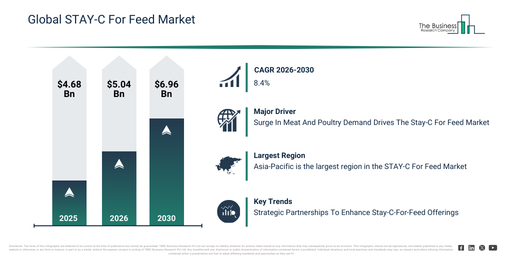
    The stay-c for feed market size has experienced strong growth in recent years. It is projected to expand from $4.68 billion in 2025 to $5.04 billion in 2026, demonstrating a compound annual growth rate (CAGR) of 7.7%. The market’s growth during the historic period is attributable to several factors, including an increasing focus on animal health and immunity, the expansion of commercial poultry and swine farming, a rising awareness of vitamin deficiencies in livestock, the broader development of compound feed manufacturing, and the historical use of vitamin c for stress management in animals.

    The stay-c for feed market is projected to experience substantial expansion in the coming years, reaching $6.96 billion by 2030, demonstrating a compound annual growth rate (CAGR) of 8.4%. This anticipated growth during the forecast period is primarily driven by factors such as the increasing worldwide demand for animal protein, the expansion of aquaculture and functional feeds, the greater integration of precision nutrition in livestock management, the need for high-performing and stable feed additives, and supportive regulatory frameworks aimed at enhancing feed quality standards. Key trends identified for this period involve a growing need for stable vitamin c sources in animal nutrition, a rise in the application of antioxidant feed additives to bolster livestock immunity, an increase in stay-c supplementation in aquaculture feed, a move towards feed additives with enhanced bioavailability, and the broader development of commercial livestock farming along with more intensive feeding methodologies.

    Download the Free Sample Report to Explore Key Market Insights:

    https://www.thebusinessresearchcompany.com/sample.aspx?id=12007&type=smp

    Which Market Drivers Are Supporting The Expansion Of The STAY-C For Feed Market?

    The increasing demand for meat and poultry products is anticipated to propel the growth of the STAY-C for feed market. Meat encompasses animal flesh consumed as food, including fish, fowl, and poultry. STAY-C is vital for maintaining the health of feed and synthesizing collagen, which provides support for muscles, vascular tissues, bones, and cartilage. For illustration, data from the Australian Bureau of Statistics, an Australia-based government agency, revealed that pig meat production climbed by 5.9% in the March 2023 quarter, reaching 117,512 tonnes, up from 111,000 tonnes in December 2022. Consequently, this surge in demand for meat and poultry products is a key driver for the STAY-C for feed market’s expansion.

    What Segmentation Levels Are Considered In The STAY-C For Feed Market?

    The stay-c for feed market covered in this report is segmented –

    1) By Function: Single Functioned, Multi Functioned

    2) By Formulation: Dry, Liquid, Other Formulations

    3) By Livestock: Swine, Ruminants, Poultry, Aquatic Animals, Other Livestock

    Subsegments:

    1) By Single Functioned: Stay-c For Specific Feed Types, Basic Formulations With A Single Benefit

    2) By Multi Functioned: Stay-c With Multiple Benefits, Formulations Combining Various Ingredients For Enhanced Performance

    What Trends Are Projected To Affect The STAY-C For Feed Market?

    Leading companies in the Stay-C-for-feed market are concentrating on strategic collaborations to advance product innovation, extend market reach, and enhance animal health offerings. These partnerships involve two or more organizations combining their resources, knowledge, and efforts to achieve mutual goals. For example, in February 2024, Cargill, Incorporated, a US-based food corporation that provides STAY-C for feed, partnered with Enough, a UK-based producer of mycoprotein-based food. This alliance saw Cargill invest in Enough’s Series C funding round and sign a commercial agreement to utilize and market its Abunda mycoprotein. Abunda, produced via a zero-waste fermentation process using fungi and sustainably sourced sugars from Cargill’s glucose syrup, is a complete food ingredient rich in amino acids and dietary fiber. This expanded partnership with Cargill is anticipated to enable the co-creation of alternative protein foods and help scale production across Europe and beyond.

    Which Leading Firms Are Contributing To The Growth Of The STAY-C For Feed Market?

    Major companies operating in the stay-c for feed market are BASF SE, DSM Firmenich AG, Evonik Industries AG, Cargill Incorporated, Balchem Corporation, Adisseo France SAS, Zhejiang NHU Company Ltd, Northeast Pharmaceutical Group Co Ltd, CSPC Pharmaceutical Group Ltd, Shandong Luwei Pharmaceutical Co Ltd, Hebei Welcome Pharmaceutical Co Ltd, Henan Huaxing Pharmaceutical Co Ltd, Shandong Tianli Pharmaceutical Co Ltd, Anhui Tiger Biotech Co Ltd, Hubei Artec Biotechnology Co Ltd, Shanghai Longyu Biotechnology Co Ltd, Hugestone Enterprise Co Ltd, Shandong Hongda Biotechnology Co Ltd, Jiangsu Kolod Food Ingredients Co Ltd, Zhejiang Delekang Food Co Ltd, Anhui Biochem Biotechnology Co Ltd, Hebei Zhongsheng Pharmaceutical Co Ltd

    Read the full stay-c for feed market report here:

    https://www.thebusinessresearchcompany.com/report/stay-c-for-feed-global-market-report

    How Is The STAY-C For Feed Market Distributed Across Key Geographic Regions?

    Asia-Pacific was the largest region in the STAY-C for feed market in 2025. The regions covered in the stay-c for feed market report are Asia-Pacific, South East Asia, Western Europe, Eastern Europe, North America, South America, Middle East, Africa.

    Request A Tailored STAY-C For Feed Market Research Report For Competitive Advantage:

    https://www.thebusinessresearchcompany.com/customise?id=12007&type=smp

    Browse Through More Reports Similar to the Global STAY-C For Feed Market 2026, By The Business Research Company

    Stay C For Feed Market Report 2026

    https://www.thebusinessresearchcompany.com/report/stay-c-for-feed-global-market-report

    Continuous Delivery Market Report 2026

    https://www.thebusinessresearchcompany.com/report/continuous-delivery-global-market-report

    Starter Feed Market Report 2026

    https://www.thebusinessresearchcompany.com/report/starter-feed-global-market-report

    Get in touch with us:

    The Business Research Company: https://www.thebusinessresearchcompany.com/

    Americas +1 310-496-7795

    Asia +44 7882 955267 & +91 8897263534

    Europe +44 7882 955267

    Email us at info@tbrc.info

    Follow us on:

    LinkedIn: https://in.linkedin.com/company/the-business-research-company

    YouTube: https://www.youtube.com/channel/UC24_fI0rV8cR5DxlCpgmyFQ

    Global Market Model: https://www.thebusinessresearchcompany.com/global-market-model
  • Sprycel Market 2026 reaching $2.65 billion by 2030

    Sprycel Market 2026 reaching $2.65 billion by 2030

    The Business Research Company’s 2026 market reports include new capabilities such as market attractiveness scoring and analysis, total addressable market analysis, company scoring matrix, interactive excel data dashboard, improved supply chain analysis, upcoming startups in the market, and overview of key products, aimed at improving the depth, usability, and strategic value of the insights delivered.

    What Market Size Increase Is Anticipated For The Sprycel Market Over The 2026–2030 Period?

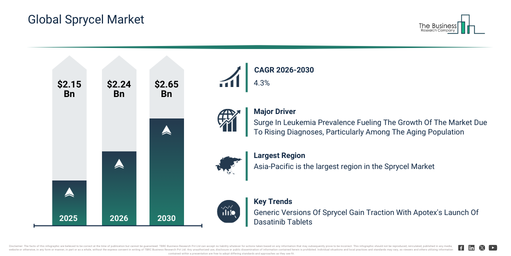
    The sprycel market has experienced consistent expansion over recent years. Projections indicate its size will increase from $2.15 billion in 2025 to $2.24 billion in 2026, demonstrating a compound annual growth rate (CAGR) of 4.3%. This historical growth is attributable to factors such as a high incidence of leukemia, patient resistance to initial treatments, the proven efficacy of tyrosine kinase inhibitors, the integration of oncology services in hospitals, and various regulatory approvals.

    The sprycel market is projected to experience consistent expansion over the coming years. By 2030, its value is anticipated to reach $2.65 billion, growing at a compound annual growth rate (CAGR) of 4.3%. This projected increase during the forecast period stems from advancements such as the rise of precision oncology, tailored cancer treatments, the broadening of specialty care, innovations in oncology drugs, and enhanced survival rates. Key trends anticipated during this period encompass the sustained application of targeted leukemia therapies, increased utilization in drug-resistant cml, the wider availability of precision oncology treatments, the proliferation of specialty oncology pharmacies, and an emphasis on long-term disease management.

    Download the Free Sample Report to Explore Key Market Insights:

    https://www.thebusinessresearchcompany.com/sample.aspx?id=24407&type=smp

    What Underlying Factors Are Accelerating The Growth Of The Sprycel Market?

    The expanding incidence of leukemia is anticipated to stimulate the future growth of the sprycel market. Leukemia is defined as a cancer affecting the blood and bone marrow, marked by an overproduction of abnormal white blood cells. This increase in leukemia cases is largely linked to the aging demographic, as older individuals face a higher risk of developing the condition, resulting in more frequent diagnoses. Sprycel (dasatinib) serves as a treatment for particular forms of leukemia, including Philadelphia chromosome-positive chronic myeloid leukemia (CML) and acute lymphoblastic leukemia (ALL), by impeding the BCR-ABL protein responsible for cancer cell proliferation. As an illustration, the American Cancer Society (ACS), a US-based nonprofit health organization committed to eradicating cancer as a major health concern, reported approximately 59,610 leukemia diagnoses in 2023, alongside an estimated 23,940 deaths. Consequently, the growing occurrence of leukemia is propelling the expansion of the sprycel market.

    How Is The Sprycel Market Segmented Across Key Categories?

    The sprycel market covered in this report is segmented –

    1) By Indication: Chronic Myeloid Leukemia, Acute Lymphoblastic Leukemia

    2) By Dosage Forms: Tablets, Oral Suspension

    3) By Distribution Channel: Hospitals and Clinics, Retail Pharmacies, Online Pharmacies, Specialty Pharmacies

    Subsegments:

    1) By Chronic Myeloid Leukemia: Newly Diagnosed Chronic Phase CML, Imatinib-Resistant Or Intolerant CML, Accelerated Phase CML, Blast Phase CML

    2) By Acute Lymphoblastic Leukemia: Philadelphia Chromosome-Positive (Ph+) ALL In Adults, Philadelphia Chromosome-Positive (Ph+) ALL In Pediatric Patients, Relapsed Or Refractory Ph+ ALL

    Which Upcoming Trends Are Expected To Influence The Sprycel Market?

    Leading companies in the sprycel market are concentrating on developing a generic version of sprycel to benefit from the approaching loss of exclusivity and to satisfy the increasing demand for cost-effective cancer treatments. A generic sprycel refers to dasatinib-based medicines produced by other firms once the original patent expires, providing the same therapeutic benefits at a lower price. For example, in September 2024, Apotex Corp., a pharmaceutical company based in Canada, launched dasatinib tablets, a generic sprycel, which is a kinase inhibitor used for treating specific forms of leukemia. Dasatinib functions as a kinase inhibitor to manage certain kinds of leukemia in adults and children aged one year and older, including Philadelphia chromosome-positive chronic myeloid leukemia (CML) and acute lymphoblastic leukemia (ALL), especially when earlier treatments were ineffective or not tolerated. The product is manufactured to high-quality standards, being latex-free, sugar-free, dye-free, alcohol-free, and preservative-free, and is offered in bottles of 30 or 60 tablets, depending on its strength.

    Who Are The Dominant Players Shaping The Sprycel Market Landscape?

    Major companies operating in the sprycel market are Bristol-Myers Squibb Company, Otsuka Pharmaceutical Co. Ltd., Beacon Pharmaceuticals Limited, Panacea Biotec Limited, Apotex Corp., Hubei Haosun Pharmaceutical Co. Ltd., Dr. Reddy’s Laboratories Ltd., Lupin Limited, Zydus Lifesciences Limited, Biocon Limited, Zentiva k.s., Alembic Pharmaceuticals Limited, Granules India Limited, Natco Pharma Limited, Shilpa Medicare Limited, Prasco Laboratories, Stason Pharmaceuticals Inc., HRV Global Life Sciences Pvt. Ltd., Sichuan Elixir Pharmaceutical Co. Ltd., Gonane Pharma Limited

    Read the full sprycel market report here:

    https://www.thebusinessresearchcompany.com/report/sprycel-global-market-report

    Which Region Is Projected To Dominate The Sprycel Market During The Forecast Period?

    Asia-Pacific was the largest region in the sprycel market in 2025. North America is expected to be the fastest-growing region in the forecast period. The regions covered in the sprycel market report are Asia-Pacific, South East Asia, Western Europe, Eastern Europe, North America, South America, Middle East, Africa.

    Request A Tailored Sprycel Market Research Report For Competitive Advantage:

    https://www.thebusinessresearchcompany.com/customise?id=24407&type=smp

    Browse Through More Reports Similar to the Global Sprycel Market 2026, By The Business Research Company

    Mycelium Market Report 2026

    https://www.thebusinessresearchcompany.com/report/mycelium-global-market-report

    Geocells Market Report 2026

    https://www.thebusinessresearchcompany.com/report/geocells-global-market-report

    Cellulase Market Report 2026

    https://www.thebusinessresearchcompany.com/report/cellulase-global-market-report

    Get in touch with us:

    The Business Research Company: https://www.thebusinessresearchcompany.com/

    Americas +1 310-496-7795

    Asia +44 7882 955267 & +91 8897263534

    Europe +44 7882 955267

    Email us at info@tbrc.info

    Follow us on:

    LinkedIn: https://in.linkedin.com/company/the-business-research-company

    YouTube: https://www.youtube.com/channel/UC24_fI0rV8cR5DxlCpgmyFQ

    Global Market Model: https://www.thebusinessresearchcompany.com/global-market-model
  • Spray-Dried Biologics Market 2026 growing toward $3.2 billion by 2030

    Spray-Dried Biologics Market 2026 growing toward $3.2 billion by 2030

    The Business Research Company’s 2026 market reports include new capabilities such as market attractiveness scoring and analysis, total addressable market analysis, company scoring matrix, interactive excel data dashboard, improved supply chain analysis, upcoming startups in the market, and overview of key products, aimed at improving the depth, usability, and strategic value of the insights delivered.

    How Much Is The Spray-Dried Biologics Market Expected To Grow In Terms Of Market Value Between 2026 And 2030?

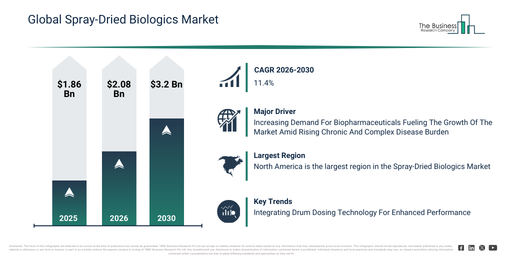
    The spray-dried biologics market has seen swift growth in its size over recent years. It is anticipated to expand from $1.86 billion in 2025 to $2.08 billion in 2026, demonstrating a compound annual growth rate (CAGR) of 11.7%. The expansion observed in the historical period is attributable to advancements in biologics formulation science, an increase in biologic drug approvals, the necessity for improved drug stability, the growth of vaccine manufacturing capacity, and the adoption of advanced pharmaceutical processing technologies.

    The spray-dried biologics market is anticipated to experience substantial growth over the next few years, reaching a valuation of $3.2 billion by 2030 with a compound annual growth rate (CAGR) of 11.4%. This projected increase is largely due to factors such as the escalating demand for non-injectable biologics, greater investments in dry powder delivery systems, the expansion of worldwide vaccine production, an intensified focus on minimizing cold-chain dependency, and progress in spray-drying equipment design. Prominent trends for this period include the increasing adoption of spray-drying methods for biologic stabilization, a rise in the need for inhalable and oral biologic formulations, the broadening of continuous spray-drying processes, the expanding application of dry powder biologics in vaccine development, and an enhanced focus on prolonging product shelf-life.

    Download the Free Sample Report to Explore Key Market Insights:

    https://www.thebusinessresearchcompany.com/sample.aspx?id=30401&type=smp

    Which Growth Drivers Are Contributing To The Progress Of The Spray-Dried Biologics Market?

    The rising need for biopharmaceuticals is anticipated to drive expansion within the spray-dried biologics market in the foreseeable future. Biopharmaceuticals represent therapeutic items originating from biological origins, such as living cells, proteins, and various biomolecules. The increasing global prevalence of chronic and intricate health conditions is fueling the heightened demand for biopharmaceuticals, generating an urgent requirement for treatments characterized by greater specificity, enhanced effectiveness, and reduced systemic adverse reactions. The spray-dried biologics industry observes heightened interest as the swift growth of biopharmaceuticals compels enterprises to adopt adaptable formulation techniques that boost stability, prolong shelf life, and optimize delivery efficiency. For instance, in February 2025, the World Health Organization (WHO), an international public health body based in Switzerland, reported that its essential medicines list (EML) in 2023 featured 81 biologic therapies, making up over 15% of all essential medicines. Consequently, the rising need for biopharmaceuticals is a key factor driving the expansion of the spray-dried biologics market.

    What Major Segment Divisions Exist Within The Spray-Dried Biologics Market?

    The spray-dried biologics market covered in this report is segmented –

    1) By Product Type: Monoclonal Antibodies, Vaccines, Enzymes, Hormones, Other Product Types

    2) By Route Of Administration: Oral, Inhalation Or Pulmonary, Injectable, Topical

    3) By End-User: Hospitals, Research Institutes, Pharmaceutical And Biotechnology Companies, Other End-Users

    Subsegments:

    1) By Monoclonal Antibodies: Chimeric Antibodies, Humanized Antibodies, Fully Human Antibodies, Bispecific Antibodies, Antibody Fragments

    2) By Vaccines: Live Attenuated Vaccines, Inactivated Vaccines, Subunit Vaccines, Toxoid Vaccines, Viral Vector Vaccines, Recombinant Protein Vaccines

    3) By Enzymes: Therapeutic Enzymes, Digestive Enzymes, Metabolic Enzymes, Recombinant Enzymes, Replacement Enzymes

    4) By Hormones: Peptide Hormones, Protein Hormones, Steroid Hormones, Recombinant Hormones, Growth Hormones

    5) By Other Product Types: Blood Factors, Cytokines, Fusion Proteins, Nucleic Acid Therapeutics, Cell Culture Media Proteins

    How Are Trends Shaping The Direction Of The Spray-Dried Biologics Market?

    Leading companies within the spray-dried biologics market are concentrating on integrating technological advancements, such as drum dosing technology, to improve dose accuracy, powder handling efficiency, and reliable large-scale capsule filling. This advanced powder-filling method employs a rotating drum with precision-engineered dosing cavities and vacuum-assisted transfer to accurately meter and deposit dry powders into capsules, thereby enabling consistent low-dose filling, enhanced flow management for spray-dried powders, and high-throughput scalability. For example, in February 2024, Catalent Inc., a US-based contract development and manufacturing organization (CDMO), upgraded its inhalation manufacturing facility in the US, incorporating potent capsule-filling capabilities powered by drum-based dosing systems and in-line advanced mass verification. This enhanced platform supports the precise filling of engineered and spray-dried powders, offering real-time dose validation and controlled low-humidity processing. The upgrade consequently boosts manufacturing efficiency, product consistency, and readiness for commercial-scale production of spray-dried biologic dry-powder inhalation therapies.

    Which Companies Are Leading Innovation In The Spray-Dried Biologics Market?

    Major companies operating in the spray-dried biologics market are Thermo Fisher Scientific Inc., Evonik Industries AG, Lonza Group AG, GEA Group, Fareva Group, Almac Group Limited, Seqens Group, Fabbrica Italiana Sintetici S.p.A., CordenPharma International, Hovione FarmaCiencia SA, Veranova Inc., Pace Analytical Services LLC, Olon S.p.A., Nova Laboratories Ltd, Leukocare AG, Micro Sphere SA, Seran Bioscience LLC, CritiTech Particle Engineering Solutions LLC, Xedev BV, BÜCHI Labortechnik AG.

    Read the full spray-dried biologics market report here:

    https://www.thebusinessresearchcompany.com/report/global-spray-dried-biologics-market-report

    What Are The Leading Geographic Regions In The Spray-Dried Biologics Market?

    North America was the largest region in the spray-dried biologics market in 2025. Asia-Pacific is expected to be the fastest-growing region in the forecast period. The regions covered in the spray-dried biologics market report are Asia-Pacific, South East Asia, Western Europe, Eastern Europe, North America, South America, Middle East, Africa.

    Request A Tailored Spray-Dried Biologics Market Research Report For Competitive Advantage:

    https://www.thebusinessresearchcompany.com/customise?id=30401&type=smp

    Browse Through More Reports Similar to the Global Spray-Dried Biologics Market 2026, By The Business Research Company

    Biologics Testing Market Report 2026

    https://www.thebusinessresearchcompany.com/report/biologics-testing-global-market-report

    Spray Drying Equipment Market Report 2026

    https://www.thebusinessresearchcompany.com/report/spray-drying-equipment-global-market-report

    Agricultural Biologics Market Report 2026

    https://www.thebusinessresearchcompany.com/report/agricultural-biologics-global-market-report

    Get in touch with us:

    The Business Research Company: https://www.thebusinessresearchcompany.com/

    Americas +1 310-496-7795

    Asia +44 7882 955267 & +91 8897263534

    Europe +44 7882 955267

    Email us at info@tbrc.info

    Follow us on:

    LinkedIn: https://in.linkedin.com/company/the-business-research-company

    YouTube: https://www.youtube.com/channel/UC24_fI0rV8cR5DxlCpgmyFQ

    Global Market Model: https://www.thebusinessresearchcompany.com/global-market-model
  • Global Sports Medicine Market 2026 expected to reach $12.77 billion by 2030

    Global Sports Medicine Market 2026 expected to reach $12.77 billion by 2030

    The Business Research Company’s 2026 market reports include new capabilities such as market attractiveness scoring and analysis, total addressable market analysis, company scoring matrix, interactive excel data dashboard, improved supply chain analysis, upcoming startups in the market, and overview of key products, aimed at improving the depth, usability, and strategic value of the insights delivered.

    What Market Value Is Expected For The Sports Medicine Market At The End Of The 2026–2030 Forecast Period?

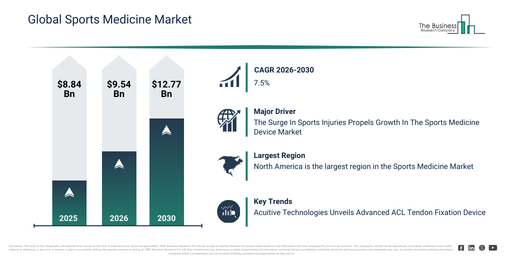
    The sports medicine market has demonstrated substantial growth in recent years. It is projected to expand from $8.84 billion in 2025 to $9.54 billion in 2026, achieving a compound annual growth rate (CAGR) of 8.0%. This historical increase can be attributed to a rising occurrence of sports injuries, enhanced awareness concerning musculoskeletal health, the increasing adoption of orthopedic devices, the expansion of sports facilities and professional leagues, and advancements in surgical procedures.

    The sports medicine market is projected to experience substantial expansion over the upcoming years. Its value is anticipated to reach $12.77 billion by 2030, exhibiting a compound annual growth rate (CAGR) of 7.5%. This expansion during the forecast timeframe is attributable to several factors, including an increased demand for tele-rehabilitation, the incorporation of AI in injury diagnosis, the widespread use of wearable recovery devices, a heightened emphasis on preventive care, and an expanding demographic of aging athletes. Key trends characterizing this period encompass minimally invasive surgical approaches, customized rehabilitation plans, tele-rehabilitation alongside remote monitoring, sophisticated diagnostics for sports injuries, and wearable devices for tracking performance and recovery.

    Download the Free Sample Report to Explore Key Market Insights:

    https://www.thebusinessresearchcompany.com/sample.aspx?id=9376&type=smp

    What Primary Drivers Are Shaping The Development Of The Sports Medicine Market?

    An anticipated increase in sports injuries is projected to stimulate expansion within the sports medicine device market moving ahead. A sports injury encompasses diverse forms of wounds frequently sustained during physical exercise. Beyond merely treating injuries, sports medicine devices find application in performance enhancement, physical rehabilitation, and preventing harm, thus, the growing prevalence of sports injuries is set to propel the sports medicine device market. As an illustration, in October 2024, data from Insideworldfootball, a UK-based online news service, indicated that sports injuries totaled 4,123 during the 2023-24 season, representing a 4% rise when contrasted with the 2022-23 period. Consequently, the escalating occurrence of sports injuries is fueling the expansion of the sports medicine device market.

    What Segment Types Make Up The Sports Medicine Market?

    The sports medicine market covered in this report is segmented –

    1) By Product: Orthopedic Devices, Body Reconstruction And Repair, Body Support And Recovery, Body Monitoring And Evaluation, Accessories

    2) By Orthopedic Product: Artificial Joint Implants, Arthroscopy Devices, Fracture Repair Devices, Prosthesis, Orthobiologic

    3) By Recovery And Support Product: Braces, Performance Monitoring Devices, Accessories, Other Recovery Products

    4) By Application: Knee Injury, Shoulder Injury, Ankle-Foot Injury, Back-Spine Injury, Hand-Wrist Injury, Hip-Groin Injury, Arm-Elbow Injury

    5) By End Users: Ambulatory Surgical Centers, Hospitals, Orthopedic Clinics, Other End Users

    Subsegments:

    1) By Orthopedic Devices: Braces And Supports, Splints, Orthopedic Implants

    2) By Body Reconstruction And Repair: Surgical Instruments, Biologics, Soft Tissue Repair Devices

    3) By Body Support And Recovery: Compression Wear, Rehabilitation Devices, Physiotherapy Equipment

    4) By Body Monitoring And Evaluation: Wearable Sensors, Diagnostic Imaging Devices, Motion Analysis Systems

    5) By Accessories: Ice Packs And Heat Wraps, Taping And Strapping Materials, Therapeutic Gel Packs

    Which Market Trends Are Creating New Opportunities In The Sports Medicine Market?

    Companies active in the sports medicine device market are concentrating on developing innovative solutions, such as advanced resorbable tendon-fixation technologies. This effort aims to satisfy the increasing demand for more robust fixation, less invasive procedures, and devices that encourage natural healing in orthopedic and sports injury repairs. These particular technologies employ bioresorbable materials meticulously engineered to imitate natural bone properties, thereby offering enhanced biocompatibility and minimizing long-term complications compared to conventional metal implants. For example, in June 2023, Acuitive Technologies Inc., a US-based medical device manufacturer, unveiled the CITRELOCK ACL Tendon Fixation Device, an innovative system crafted for secure tendon fixation. The device incorporates a spiral thread for effortless insertion and strong anchoring without harming the tendon, and it integrates Citregen, an advanced resorbable material optimized for orthopedic applications. Citregen mirrors natural bone composition, delivers compressive strength comparable to cortical bone, and demonstrates a modulus similar to trabecular bone, which together provide strong fixation, natural integration, and predictable resorption.

    Who Are The Key Players Driving Competition In The Sports Medicine Market?

    Major companies operating in the sports medicine market are Stryker Corporation, Arthrex Inc., Zimmer Biomet Holdings Inc., Smith & Nephew plc, Mueller Sports Medicine Inc., Karl Storz SE & Co KG, CONMED Corporation, Johnson & Johnson, DJ Orthopedics LLC, Breg Inc., RTI Surgical Inc., Performance Health International Limited, Bauerfeind AG, Ossur Corporate, Cramer Product Inc., Medtronic plc, Bioventus LLC, Hanger Inc., AlloSource Inc., Surgalign Holdings Inc., DePuy Synthes Companies, Acumed LLC, Integra LifeSciences Corporation, Orthofix Medical Inc., Musculoskeletal Transplant Foundation

    Read the full sports medicine market report here:

    https://www.thebusinessresearchcompany.com/report/sports-medicine-devices-global-market-report

    How Does The Sports Medicine Market Perform Across Major Global Regions?

    North America was the largest region in the sports medicine device market in 2025. Asia-Pacific is expected to be the fastest-growing region in the sports medicine devices market report during the forecast period. The regions covered in the sports medicine market report are Asia-Pacific, South East Asia, Western Europe, Eastern Europe, North America, South America, Middle East, Africa.

    Request A Tailored Sports Medicine Market Research Report For Competitive Advantage:

    https://www.thebusinessresearchcompany.com/customise?id=9376&type=smp

    Browse Through More Reports Similar to the Global Sports Medicine Market 2026, By The Business Research Company

    Sports Medicine Market Report 2026

    https://www.thebusinessresearchcompany.com/report/sports-medicine-global-market-report

    Sports Medicine Devices Market Report 2026

    https://www.thebusinessresearchcompany.com/report/sports-medicine-devices-global-market-report

    Sports Medicine Market Report 2026

    https://www.thebusinessresearchcompany.com/report/sports-medicine-global-market-report

    Get in touch with us:

    The Business Research Company: https://www.thebusinessresearchcompany.com/

    Americas +1 310-496-7795

    Asia +44 7882 955267 & +91 8897263534

    Europe +44 7882 955267

    Email us at info@tbrc.info

    Follow us on:

    LinkedIn: https://in.linkedin.com/company/the-business-research-company

    YouTube: https://www.youtube.com/channel/UC24_fI0rV8cR5DxlCpgmyFQ

    Global Market Model: https://www.thebusinessresearchcompany.com/global-market-model

  • Spine Biologics Market 2026 projected to reach $3.17 billion by 2030

    Spine Biologics Market 2026 projected to reach $3.17 billion by 2030

    The Business Research Company’s 2026 market reports include new capabilities such as market attractiveness scoring and analysis, total addressable market analysis, company scoring matrix, interactive excel data dashboard, improved supply chain analysis, upcoming startups in the market, and overview of key products, aimed at improving the depth, usability, and strategic value of the insights delivered.

    What Is The Estimated Market Size Of The Spine Biologics Market During 2026–2030?

    The spine biologics market size has demonstrated robust growth in recent years. It is projected to expand from $2.47 billion in 2025 to $2.61 billion in 2026, at a compound annual growth rate (CAGR) of 5.5%. This historical expansion can be ascribed to factors such as the increasing prevalence of degenerative spine disorders, a rising number of spinal fusion surgeries, the limitations of traditional bone grafts, a growing aging population, and improving surgical outcomes with biologics.

    The spine biologics market is projected for consistent expansion in the coming years, with its size expected to reach $3.17 billion by 2030, exhibiting a compound annual growth rate (CAGR) of 5.0%. This anticipated growth throughout the forecast period can be attributed to several factors, including the increasing demand for regenerative medicine solutions, the rise in minimally invasive spine surgeries, a greater focus on reducing post-surgical complications, advancements in biologic materials technology, and increased healthcare spending on orthopedic care. Major trends within the forecast period include the rising adoption of biologic bone grafts in spinal fusion, an increasing utilization of synthetic bone graft substitutes, a growing preference for minimally invasive spine procedures, the expansion of cell-based and regenerative spine therapies, and a higher demand for faster bone healing solutions.

    Download the Free Sample Report to Explore Key Market Insights:

    https://www.thebusinessresearchcompany.com/sample.aspx?id=15928&type=smp

    Which Major Factors Are Driving The Expansion Of The Spine Biologics Market?

    The increasing incidence of road accidents is projected to fuel the expansion of the spinal biologics market. These unintended vehicle collisions on public roads are a significant cause of traumatic spinal injuries, which often require advanced biologic interventions. The rise in road accident rates is attributed to elements such as greater traffic volumes, distracted and impaired driving, and insufficient road infrastructure. Spinal biologics play a vital role in supporting patient recovery by promoting spinal fusion, accelerating bone healing, minimizing surgical complications, and improving long-term functional outcomes. For instance, in August 2025, the International Transport Forum, a France-based intergovernmental organization, reported that Australia experienced 1,297 road deaths in 2024, indicating a 4% increase compared to 2023. Therefore, the growing number of road accidents is a primary driver for the spinal biologics market’s growth.

    How Are The Various Segments Of The Spine Biologics Market Categorized?

    The spine biologics market covered in this report is segmented –

    1) By Product: Bone Allografts, Bone Graft Substitute, Platelet Rich Plasma, Bone Marrow Aspirate Therapy

    2) By Surgery Type: Anterior Cervical Discectomy And Fusion (ACDF), ??Posterior Lumbar Interbody Fusion (PLIF), Transforaminal Lumbar Interbody Fusion (TLIF), ??Anterior Lumbar Interbody Fusion (ALIF), ??Lateral Lumbar Interbody Fusion (LLIF), Other Surgery Types

    3) By Application: Spinal Fusion, Spinal Non-Union And Fracture Repair, Degenerative Disc Disease Treatment, Other Applications

    4) By End User: Hospitals, Spinal Surgery Centers, Orthopedic Clinics, Other End Users

    Subsegments:

    1) By Bone Allografts: Fresh Allografts, Freeze-Dried Allografts

    2) By Bone Graft Substitute: Synthetic Bone Grafts, Demineralized Bone Matrix (DBM), Calcium Phosphate-Based Grafts, Platelet Rich Plasma (PRP)

    3) By Bone Marrow Aspirate Therapy: Concentrated Bone Marrow Aspirate, Bone Marrow Concentrates

    What Trends Are Affecting The Expansion Of The Spine Biologics Market?

    Key players in the spinal biologics market are concentrating on developing advanced solutions, including regenerative biologics, to enhance spinal fusion outcomes and surgical efficiency. Regenerative biologics are medical products originating from natural or engineered biological materials that encourage the repair, regeneration, or replacement of damaged tissues. For example, in October 2025, Aurora Spine Corporation, a Canada-based manufacturing company, unveiled a new biologics portfolio under its specialized division, Aurora Biologics, with the goal of improving spinal fusion success. These portfolios present 100% allograft bone products such as TURBO FUSE Fiber Putty and OSTEO BRIDGE Sponge Strips, specifically designed to better spinal fusion outcomes. These biologics are incorporated with Aurora’s minimally invasive spinal implant technologies, thereby boosting surgical efficiency and long-term patient recovery. This introduction broadens Aurora’s biologics offerings by over 30%, stimulating growth and aligning with their mission to simplify complex spine care.

    Which Major Firms Influence Developments In The Spine Biologics Market?

    Major companies operating in the spine biologics market are Medtronic PLC, Johnson & Johnson Services Inc., Stryker Corporation, Zimmer Biomet Holdings Inc., Integra LifeSciences Corporation, RTI Surgical Inc., LifeNet Health Inc., Xtant Medical Holdings Inc., Kuros Biosciences A.G., Cerapedics Inc, Aziyo Biologics, Bone Biologics Corp., Orthofix Medical Inc., NuVasive Inc., SeaSpine Holdings Corporation, Exactech Inc., DePuy Synthes, Globus Medical Inc., Spine Wave Inc., Osiris Therapeutics Inc.

    Read the full spine biologics market report here:

    https://www.thebusinessresearchcompany.com/report/spine-biologics-global-market-report

    Which Region Currently Holds The Largest Share Of The Spine Biologics Market?

    North America was the largest region in the spine biologics market in 2025. Asia-Pacific is expected to be the fastest-growing region in the forecast period. The regions covered in the spine biologics market report are Asia-Pacific, South East Asia, Western Europe, Eastern Europe, North America, South America, Middle East, Africa.

    Request A Tailored Spine Biologics Market Research Report For Competitive Advantage:

    https://www.thebusinessresearchcompany.com/customise?id=15928&type=smp

    Browse Through More Reports Similar to the Global Spine Biologics Market 2026, By The Business Research Company

    Spine Biologics Market Report 2026

    https://www.thebusinessresearchcompany.com/report/spine-biologics-global-market-report

    Spine Implants Market Report 2026

    https://www.thebusinessresearchcompany.com/report/spine-implants-global-market-report

    Spinal Imaging Market Report 2026

    https://www.thebusinessresearchcompany.com/report/spinal-imaging-global-market-report

    Get in touch with us:

    The Business Research Company: https://www.thebusinessresearchcompany.com/

    Americas +1 310-496-7795

    Asia +44 7882 955267 & +91 8897263534

    Europe +44 7882 955267

    Email us at info@tbrc.info

    Follow us on:

    LinkedIn: https://in.linkedin.com/company/the-business-research-company

    YouTube: https://www.youtube.com/channel/UC24_fI0rV8cR5DxlCpgmyFQ

    Global Market Model: https://www.thebusinessresearchcompany.com/global-market-model
  • Spinal Muscular Atrophy Treatment Market 2026–2035 expanding with gene therapy breakthroughs

    Spinal Muscular Atrophy Treatment Market 2026–2035 expanding with gene therapy breakthroughs

    The Business Research Company’s 2026 market reports include new capabilities such as market attractiveness scoring and analysis, total addressable market analysis, company scoring matrix, interactive excel data dashboard, improved supply chain analysis, upcoming startups in the market, and overview of key products, aimed at improving the depth, usability, and strategic value of the insights delivered.

    What Market Size Expansion Is Predicted For The Spinal Muscular Atrophy Treatment Market Between 2026 And 2030?

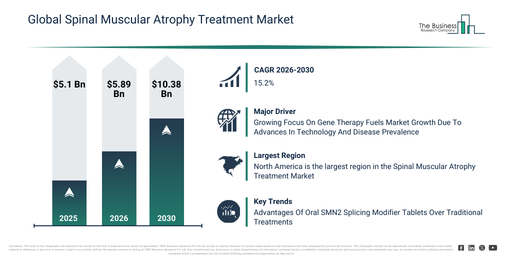
    The spinal muscular atrophy treatment market has experienced substantial expansion in its size over recent years. This market is projected to expand from $5.1 billion in 2025 to reach $5.89 billion in 2026, demonstrating a compound annual growth rate (CAGR) of 15.5%. Historically, this growth has been linked to factors such as restricted therapeutic choices for SMA, insufficient public understanding of genetic conditions, a dependence on hospital-centric care, the gradual integration of novel treatments, and the absence of comprehensive early diagnosis initiatives.

    The spinal muscular atrophy treatment market is projected to experience swift expansion over the coming years. By 2030, its size is predicted to reach $10.38 billion, demonstrating a compound annual growth rate (CAGR) of 15.2%. This anticipated growth during the forecast period is driven by factors such as the advancement of sophisticated gene therapies, increased funding for SMA research, expanded newborn screening programs, the proliferation of specialized clinics and homecare options, and the incorporation of digital health and telemedicine technologies. Key trends foreseen in this period encompass the growing acceptance of gene therapy and SMN2-modifying therapies, a heightened emphasis on prompt diagnosis and newborn screening protocols, an increase in homecare and specialized clinic-based SMA management, the enlargement of multidisciplinary care teams assisting SMA patients, and the widespread adoption of telehealth alongside remote patient monitoring.

    Download the Free Sample Report to Explore Key Market Insights:

    https://www.thebusinessresearchcompany.com/sample.aspx?id=24714&type=smp

    What Key Drivers Are Influencing The Growth Of The Spinal Muscular Atrophy Treatment Market?

    The spinal muscular atrophy treatment market is anticipated to expand due to increasing attention on gene therapy. This medical technique, gene therapy, entails altering an individual’s genetic material (DNA or RNA) for disease treatment or prevention. The heightened interest in gene therapy stems mainly from its capacity to address the fundamental cause of genetic disorders by directly adjusting or substituting defective genes, providing sustained or lasting therapeutic outcomes unlike conventional therapies. Treatments for spinal muscular atrophy benefit from gene therapy, exemplified by onasemnogene abeparvovec (Zolgensma), which offers a single, targeted method to deliver a working SMN1 gene copy, substantially enhancing motor function and patient quality of life for those with SMA. As an illustration, the American Society of Gene and Cell Therapy, a US-based entity, reported in January 2024 that gene therapies undergoing Phase III trials saw a 10% rise in the fourth quarter of 2023 compared to the previous quarter, marking the initial such increase since the third quarter of 2022. Consequently, the increasing emphasis on gene therapy is a key driver for the expansion of the spinal muscular atrophy treatment market.

    Which Market Segments Are Examined In The Spinal Muscular Atrophy Treatment Market Study?

    The spinal muscular atrophy treatment market covered in this report is segmented –

    1) By Treatment: Medication, Physical Therapy, Surgery, Other Treatments

    2) By Type: Werdnig-Hoffmann Disease, Infant Spinal Muscular Atrophy, Kugelberg-Welander Disease, Adult Spinal Muscular Atrophy

    3) By Route Of Administration: Oral, Parenteral

    4) By Distribution Channel: Hospital Pharmacies, Retail Pharmacies, Other Distribution Channels

    5) By End User: Hospitals, Homecare, Specialty Clinics, Other End Users

    Subsegments:

    1) By Medication: Nusinersen (Spinraza), Onasemnogene Abeparvovec-Xioi (Zolgensma), Risdiplam (Evrysdi), Antisense Oligonucleotides, Spinal Muscular Atrophy (SMN2) Splicing Modifiers, Corticosteroids, Supportive Medications

    2) By Physical Therapy: Occupational Therapy, Respiratory Therapy, Aquatic Therapy, Orthotic Support, Assistive Mobility Devices, Range-Of-Motion Exercises

    3) By Surgery: Spinal Fusion Surgery, Scoliosis Correction Surgery, Orthopedic Surgery, Gastrostomy Tube Placement, Tracheostomy

    4) By Other Treatments: Nutritional Support, Respiratory Support, Psychosocial Support And Counseling, Genetic Counseling, Stem Cell Therapy

    Which Trends Are Influencing The Spinal Muscular Atrophy Treatment Market?

    Major companies operating in the spinal muscular atrophy treatment market are concentrating on developing innovative formulations, such as survival motor neuron 2 (SMN2) splicing modifier tablets, to enhance motor function and slow the advancement of the disease. These survival motor neuron 2 (SMN2) splicing modifier tablets are oral medications engineered to alter the splicing of the SMN2 gene, which facilitates the production of functional SMN protein crucial for motor neuron survival. By increasing the levels of full-length SMN protein, these tablets contribute to treating spinal muscular atrophy (SMA), thereby improving muscle function and decelerating disease progression. For example, in February 2025, Genentech, Inc., a US-based biotechnology company, obtained U.S. Food and Drug Administration approval for its Evrysdi (risdiplam) tablet, which is the first and only non-invasive SMN2 splicing modifier tablet approved for the treatment of SMA. The Evrysdi tablet provides comparable efficacy and safety to the existing oral solution, along with added benefits such as room-temperature storage and simplified administration for patients aged 2 years and older who weigh more than 44 lbs (20 kgs), offering greater convenience and flexibility in managing the condition.

    Who Are The Primary Competitors In The Spinal Muscular Atrophy Treatment Market?

    Major companies operating in the spinal muscular atrophy treatment market are F. Hoffmann-La Roche Ltd, Novartis AG, Biogen Inc., Ionis Pharmaceuticals Inc., Chugai Pharmaceutical Co. Ltd, PTC Therapeutics Inc., Voyager Therapeutics Inc., Scholar Rock Holding Corporation, Genethon, Exegenesis Bio Inc., Alcyone Therapeutics Inc., Biophytis SA, Ractigen Therapeutics, Sarepta Therapeutics Inc., Astellas Pharma Inc., Pfizer Inc., AstraZeneca PLC, Roche Molecular Systems Inc., Avexis Inc., Cytokinetics Incorporated, Repligen Corporation, Neurogene Inc., Solid Biosciences Inc., Entrada Therapeutics Inc., Regenxbio Inc., Rocket Pharmaceuticals Inc., Asklepios BioPharmaceutical (AskBio) Inc., Ultragenyx Pharmaceutical Inc., Catalyst Pharmaceuticals Inc., NMD Pharma A/S, Biohaven Pharmaceutical Holding Company Ltd, Vybion Inc., Apteeus SAS, BIOCAD INDIA PRIVATE LIMITED

    Read the full spinal muscular atrophy treatment market report here:

    https://www.thebusinessresearchcompany.com/report/spinal-muscular-atrophy-treatment-global-market-report

    Which Region Is Expected To Register The Fastest Growth In The Spinal Muscular Atrophy Treatment Market?

    North America was the largest region in the spinal muscular atrophy treatment market in 2025. Asia-Pacific is expected to be the fastest-growing region in the forecast period. The regions covered in the spinal muscular atrophy treatment market report are Asia-Pacific, South East Asia, Western Europe, Eastern Europe, North America, South America, Middle East, Africa.

    Request A Tailored Spinal Muscular Atrophy Treatment Market Research Report For Competitive Advantage:

    https://www.thebusinessresearchcompany.com/customise?id=24714&type=smp

    Browse Through More Reports Similar to the Global Spinal Muscular Atrophy Treatment Market 2026, By The Business Research Company

    Spinal Surgery Devices And Equipment Market Report 2026

    https://www.thebusinessresearchcompany.com/report/spinal-surgery-devices-and-equipment-global-market-report

    Cerebrospinal Fluid Management Csf Devices And Equipment Market Report 2026

    https://www.thebusinessresearchcompany.com/report/cerebrospinal-fluid-management-csf-devices-and-equipment-global-market-report

    Spinal Imaging Market Report 2026

    https://www.thebusinessresearchcompany.com/report/spinal-imaging-global-market-report

    Get in touch with us:

    The Business Research Company: https://www.thebusinessresearchcompany.com/

    Americas +1 310-496-7795

    Asia +44 7882 955267 & +91 8897263534

    Europe +44 7882 955267

    Email us at info@tbrc.info

    Follow us on:

    LinkedIn: https://in.linkedin.com/company/the-business-research-company

    YouTube: https://www.youtube.com/channel/UC24_fI0rV8cR5DxlCpgmyFQ

    Global Market Model: https://www.thebusinessresearchcompany.com/global-market-model
  • S1PR Modulator Drugs Market 2026 gaining traction in autoimmune disease management

    S1PR Modulator Drugs Market 2026 gaining traction in autoimmune disease management

    The Business Research Company’s 2026 market reports include new capabilities such as market attractiveness scoring and analysis, total addressable market analysis, company scoring matrix, interactive excel data dashboard, improved supply chain analysis, upcoming startups in the market, and overview of key products, aimed at improving the depth, usability, and strategic value of the insights delivered.

    How Large Is The Sphingosine 1 Phosphate Receptor (S1PR) Modulator Drugs Market Projected To Become By 2030 Based On Its 2026 Valuation?

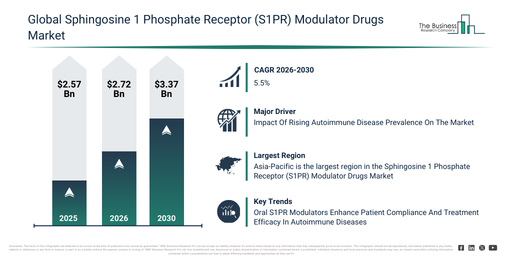
    The sphingosine 1 phosphate receptor (s1pr) modulator drugs market size has experienced significant expansion in recent years. This market is anticipated to increase from $2.57 billion in 2025 to $2.72 billion in 2026, with a compound annual growth rate (CAGR) of 5.6%. Historically, this growth can be ascribed to the clinical achievements of fingolimod, the rising prevalence of autoimmune diseases, the broadening of neurology treatment protocols, the adoption of hospital-based immunotherapy, and regulatory clearances for s1pr drugs.

    The sphingosine 1 phosphate receptor (s1pr) modulator drugs market is projected to experience substantial growth in the upcoming years. This market is set to reach $3.37 billion by 2030, expanding at a compound annual growth rate (CAGR) of 5.5%. Factors contributing to this growth during the forecast period include an increasing patient base for multiple sclerosis, the broadening of s1pr drug pipelines, a greater inclination towards oral immunotherapies, higher diagnosis rates for autoimmune diseases, and the expanding adoption of specialty clinics. Key trends anticipated in the forecast period involve the expanding application of immune cell trafficking modulators, their wider incorporation into multiple sclerosis treatments, the growth of oral immunomodulatory therapies, a sharpened focus on targeted immune modulation, and greater utilization in chronic autoimmune conditions.

    Download the Free Sample Report to Explore Key Market Insights:

    https://www.thebusinessresearchcompany.com/sample.aspx?id=21288&type=smp

    What Major Growth Drivers Are Shaping The Outlook Of The Sphingosine 1 Phosphate Receptor (S1PR) Modulator Drugs Market?

    An anticipated increase in the occurrence of autoimmune conditions is projected to drive the expansion of the sphingosine 1 phosphate receptor (S1PR) modulator drugs market. These conditions involve the immune system erroneously targeting healthy bodily cells, leading to inflammation and subsequent damage. The growing frequency of autoimmune diseases stems from genetic predispositions, environmental influences, shifts in lifestyle, and advancements in diagnostic methods. S1PR modulator drugs are employed in treating autoimmune diseases to control the movement of immune cells, thereby diminishing inflammation in ailments such as multiple sclerosis and ulcerative colitis. As an illustration, data from February 2025 by the Australian Broadcasting Corporation, an Australian national public broadcaster, indicates that inflammatory bowel disease affects nearly 180,000 Australians today. This includes 93,700 individuals with Crohn’s Disease and 80,430 with Ulcerative Colitis, and this total is forecasted to increase to 200,000 within the coming 10 years. Consequently, the escalating occurrence of autoimmune diseases is fueling the development of the sphingosine 1-phosphate receptor (S1PR) modulator drugs market.

    What Segment Groups Are Identified Within The Sphingosine 1 Phosphate Receptor (S1PR) Modulator Drugs Market?

    The sphingosine 1 phosphate receptor (s1pr) modulator drugs market covered in this report is segmented –

    1) By Type: Fingolimod, Ozanimod

    2) By Route Of Administration: Oral, Injectable

    3) By Application: Multiple Sclerosis, Cardiovascular Diseases, Transplant Rejection

    4) By End User: Hospital, Rehabilitation Centres, Retail Pharmacies

    Subsegments:

    1) By Fingolimod: Branded Formulations, Generic Formulations

    2) By Ozanimod: Oral Capsules, Other Formulations

    What Trends Are Advancing Progress In The Sphingosine 1 Phosphate Receptor (S1PR) Modulator Drugs Market?

    Leading companies in the sphingosine 1 phosphate receptor (S1PR) modulator drugs market are progressing with oral therapies, such as etrasimod (VELSIPITY), to improve patient compliance, bolster effectiveness, and extend treatment options for immuno inflammatory disorders. An oral S1PR modulator functions as a small molecule pill that specifically attaches to S1P receptors, thereby regulating immune cell movement and decreasing inflammation. For example, in October 2023, Pfizer, a US-based pharmaceutical and biotechnology company, gained FDA approval for VELSIPITY (etrasimod) for moderately to severely active ulcerative colitis; this once-daily medication provides high receptor selectivity, a positive safety profile, and convenient oral administration.

    Which Companies Hold Significant Positions In The Sphingosine 1 Phosphate Receptor (S1PR) Modulator Drugs Market?

    Major companies operating in the sphingosine 1 phosphate receptor (s1pr) modulator drugs market are Novartis International AG, Bristol Myers Squibb Company, Celgene Corporation, Biogen Inc., Pfizer Inc., Merck & Co. Inc., AbbVie Inc., Johnson & Johnson, Ventyx Biosciences Inc., Arena Pharmaceuticals, Idorsia Pharmaceuticals Ltd., Sun Pharmaceutical Industries Ltd., Eisai Co. Ltd., Ono Pharmaceutical Co. Ltd., KYORIN Pharmaceutical Co. Ltd., Actelion Pharmaceuticals Ltd., Vanda Pharmaceuticals Inc., Juvisé Pharmaceuticals, Priothera Limited, Teva Pharmaceutical Industries Ltd.

    Read the full sphingosine 1 phosphate receptor (s1pr) modulator drugs market report here:

    https://www.thebusinessresearchcompany.com/report/sphingosine-1-phosphate-receptor-s1pr-modulator-drugs-global-market-report

    Which Regions Are Projected To Dominate The Sphingosine 1 Phosphate Receptor (S1PR) Modulator Drugs Market In The Coming Years?

    Asia-Pacific was the largest region in the sphingosine 1 phosphate receptor (S1PR) modulator drugs market in 2025. The regions covered in the sphingosine 1 phosphate receptor (s1pr) modulator drugs market report are Asia-Pacific, South East Asia, Western Europe, Eastern Europe, North America, South America, Middle East, Africa.

    Request A Tailored Sphingosine 1 Phosphate Receptor (S1PR) Modulator Drugs Market Research Report For Competitive Advantage:

    https://www.thebusinessresearchcompany.com/customise?id=21288&type=smp

    Browse Through More Reports Similar to the Global Sphingosine 1 Phosphate Receptor (S1PR) Modulator Drugs Market 2026, By The Business Research Company

    Muscarinic Acetylcholine Receptor Market Report 2026

    https://www.thebusinessresearchcompany.com/report/muscarinic-acetylcholine-receptor-global-market-report

    Glp 1 Receptor Agonist Market Report 2026

    https://www.thebusinessresearchcompany.com/report/glp-1-receptor-agonist-global-market-report

    Antispasmodics Drugs Market Report 2026

    https://www.thebusinessresearchcompany.com/report/antispasmodics-drugs-global-market-report

    Get in touch with us:

    The Business Research Company: https://www.thebusinessresearchcompany.com/

    Americas +1 310-496-7795

    Asia +44 7882 955267 & +91 8897263534

    Europe +44 7882 955267

    Email us at info@tbrc.info

    Follow us on:

    LinkedIn: https://in.linkedin.com/company/the-business-research-company

    YouTube: https://www.youtube.com/channel/UC24_fI0rV8cR5DxlCpgmyFQ

    Global Market Model: https://www.thebusinessresearchcompany.com/global-market-model
  • COVID-19 antiviral drugs market 2026–2035 evolving with continued focus on infectious disease preparedness

    COVID-19 antiviral drugs market 2026–2035 evolving with continued focus on infectious disease preparedness

    The Business Research Company’s 2026 market reports include new capabilities such as market attractiveness scoring and analysis, total addressable market analysis, company scoring matrix, interactive excel data dashboard, improved supply chain analysis, upcoming startups in the market, and overview of key products, aimed at improving the depth, usability, and strategic value of the insights delivered.

    What Market Value Is Anticipated For The Specific Antiviral Drugs For COVID 19 Market Over The Period 2026–2030?

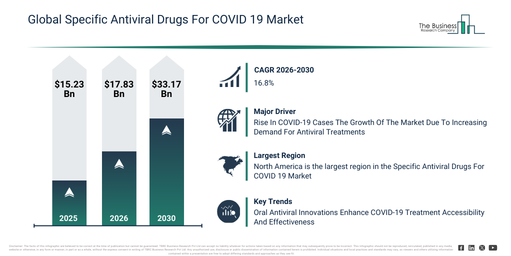
    The market size for specific antiviral drugs targeting covid 19 has expanded quickly in recent years. It is projected to increase from $15.23 billion in 2025 to $17.83 billion by 2026, exhibiting a compound annual growth rate (CAGR) of 17.1%. Historically, this expansion can be linked to the rapid dissemination of covid-19, emergency use authorizations, the reliance on traditional antiviral drug classifications, limited global production capabilities, and high hospitalization rates.

    The specific antiviral drugs for covid 19 market size is projected to experience swift expansion over the coming years. This market is anticipated to reach a valuation of $33.17 billion by 2030, demonstrating a compound annual growth rate (CAGR) of 16.8%. The projected growth during this period can be ascribed to several factors, including the advancement of next-generation antiviral medications, an increase in collaborations between public and private entities, a rise in the uptake of preventive treatments, the broadening use of combination therapies, and the incorporation of personalized medicine strategies. Key trends expected during the forecast period encompass greater investment in the development of COVID-19 antiviral drugs, an increasing preference for oral antiviral tablets, an expansion of monoclonal antibody-based treatments, the widening of hospital and retail distribution networks, and a concentrated effort on providing targeted therapies for patients who are hospitalized or at high risk.

    Download the Free Sample Report to Explore Key Market Insights:

    https://www.thebusinessresearchcompany.com/sample.aspx?id=24713&type=smp

    What Drivers Are Expected To Influence The Specific Antiviral Drugs For COVID 19 Market During The Forecast Period?

    An increasing number of COVID-19 cases is projected to stimulate the expansion of the specific antiviral drugs for the COVID-19 market going forward. COVID-19 cases refer to individuals confirmed positive for the SARS-CoV-2 virus, which is the cause of COVID-19. This surge in COVID-19 cases is attributed to the emergence of new variants that demonstrate easier transmission and can partially evade immunity from vaccines or prior infections. Specific antiviral drugs for COVID-19 are beneficial in reducing the severity and duration of the illness, leading to improved patient outcomes and a lower overall burden from COVID-19 cases. For instance, in May 2025, the World Health Organization, a Switzerland-based global public health agency, indicated that the Eastern Mediterranean region’s test positivity rate surged from 4% to 17% in early 2025, surpassing the rate from the identical period in 2024. Therefore, the escalating number of COVID-19 cases fuels the growth of the specific antiviral drugs for the COVID-19 market.

    How Is The Specific Antiviral Drugs For COVID 19 Market Divided Into Its Major Segments?

    The specific antiviral drugs for covid 19 market covered in this report is segmented –

    1) By Type: Tablet, Injection

    2) By Indication: Hospitalized Patients, Non-Hospitalized Patients, Preventive Treatment

    3) By Drug Class: Nucleoside Analogues, Protease Inhibitors, Ribonucleic Acid Polymerase Inhibitors, Entry Inhibitors, Monoclonal Antibodies

    4) By Route Of Administration: Oral, Intravenous, Subcutaneous, Inhalation

    5) By Distribution Channel: Hospital Pharmacies, Retail Pharmacies, Other Distribution Channels

    Subsegments:

    1) By Tablet: Oral Antiviral Tablets, Combination Antiviral Tablets, Extended-Release Tablets

    2) By Injection: Intravenous (IV) Antiviral Injections, Intramuscular (IM) Antiviral Injections, Subcutaneous Antiviral Injections

    How Are Trends Transforming The Specific Antiviral Drugs For COVID 19 Market Landscape?

    Leading companies in the specific antiviral drugs for the COVID-19 market are concentrating on developing innovative treatments, such as oral antiviral therapies, to improve both accessibility and effectiveness of care. These oral antiviral therapies are medicines taken by mouth to prevent the replication of viruses like COVID-19, presenting a convenient and efficient treatment choice. For example, in March 2024, Shionogi And Co., a pharmaceutical company located in Japan, launched Xocova and received full standard approval from Japan’s Ministry of Health, Labour and Welfare (MHLW) for the antiviral drug ensitrelvir. Additionally, this drug also provides post-exposure prophylaxis by considerably decreasing the risk of symptomatic COVID-19 among exposed individuals and reduces the length of symptoms with a positive safety record.

    Who Are The Prominent Organizations Shaping The Specific Antiviral Drugs For COVID 19 Market?

    Major companies operating in the specific antiviral drugs for covid 19 market are Pfizer Inc., Merck & Co. Inc., Gilead Sciences Inc., Shionogi & Co. Ltd., Cipla Limited, Hetero Drugs Limited, Roche Holding AG, Johnson & Johnson, Novartis AG, GSK plc, Eli Lilly and Company, Regeneron Pharmaceuticals Inc., Sun Pharmaceutical Industries Ltd., Beximco Pharmaceuticals Limited, Atea Pharmaceuticals Inc., Enanta Pharmaceuticals Inc., RedHill Biopharma Ltd., Synairgen plc, Dr. Reddy’s Laboratories Ltd., Aurobindo Pharma Ltd., Lupin Limited, Natco Pharma Ltd., Zydus Lifesciences Ltd., Viatris Inc., Teva Pharmaceutical Industries Ltd., Hikma Pharmaceuticals PLC, Alkem Laboratories Ltd., Torrent Pharmaceuticals Ltd., Apotex Inc., Mylan N.V.

    Read the full specific antiviral drugs for covid 19 market report here:

    https://www.thebusinessresearchcompany.com/report/specific-antiviral-drugs-for-covid-19-global-market-report

    Which Region Is Forecast To Lead The Specific Antiviral Drugs For COVID 19 Market In Terms Of Market Size?

    North America was the largest region in the specific antiviral drugs for COVID 19 market in 2025. Asia-Pacific is expected to be the fastest-growing region in the forecast period. The regions covered in the specific antiviral drugs for covid 19 market report are Asia-Pacific, South East Asia, Western Europe, Eastern Europe, North America, South America, Middle East, Africa.

    Request A Tailored Specific Antiviral Drugs For COVID 19 Market Research Report For Competitive Advantage:

    https://www.thebusinessresearchcompany.com/customise?id=24713&type=smp

    Browse Through More Reports Similar to the Global Specific Antiviral Drugs For COVID 19 Market 2026, By The Business Research Company

    Antivirals Market Report 2026

    https://www.thebusinessresearchcompany.com/report/antivirals-global-market-report

    The Antiviral And Antimicrobial Coatings Market Report 2026

    https://www.thebusinessresearchcompany.com/report/the-antiviral-and-antimicrobial-coatings-global-market-report

    Antiviral Combination Therapy Market Report 2026

    https://www.thebusinessresearchcompany.com/report/antiviral-combination-therapy-global-market-report

    Get in touch with us:

    The Business Research Company: https://www.thebusinessresearchcompany.com/

    Americas +1 310-496-7795

    Asia +44 7882 955267 & +91 8897263534

    Europe +44 7882 955267

    Email us at info@tbrc.info

    Follow us on:

    LinkedIn: https://in.linkedin.com/company/the-business-research-company

    YouTube: https://www.youtube.com/channel/UC24_fI0rV8cR5DxlCpgmyFQ

    Global Market Model: https://www.thebusinessresearchcompany.com/global-market-model
  • Specialty Supplements Market 2026 growing with increasing health and wellness awareness

    Specialty Supplements Market 2026 growing with increasing health and wellness awareness

    The Business Research Company’s 2026 market reports include new capabilities such as market attractiveness scoring and analysis, total addressable market analysis, company scoring matrix, interactive excel data dashboard, improved supply chain analysis, upcoming startups in the market, and overview of key products, aimed at improving the depth, usability, and strategic value of the insights delivered.

    What Is The Expected Market Size Of The Specialty Supplements Market From 2026 To 2030?

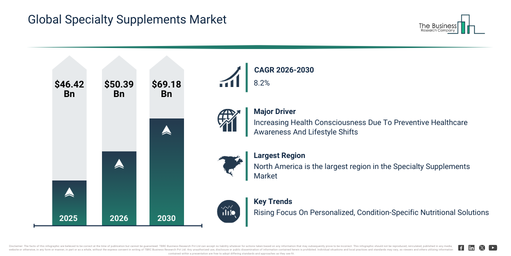
    The specialty supplements market has shown strong growth in recent years. This market is projected to expand from $46.42 billion in 2025 to $50.39 billion in 2026, achieving a compound annual growth rate (CAGR) of 8.6%. Factors contributing to its historical growth include growing awareness of dietary supplements, the rising prevalence of lifestyle-related health conditions, limited availability of clinically validated specialty supplements, increasing health-conscious consumer behavior, and a reliance on conventional retail distribution channels.

    The specialty supplements market is projected to experience substantial expansion over the coming years. By 2030, this market is anticipated to reach $69.18 billion, exhibiting a compound annual growth rate (CAGR) of 8.2%. Factors contributing to this growth during the projected timeframe include innovations in supplement formulation technology, the broader availability of personalized nutrition options, the increasing embrace of e-commerce for health-related items, a surge in demand from both older adults and children, and enhanced regulatory backing along with quality certifications for supplements. Key trends expected within this period encompass a heightened consumer interest in specific health-focused supplements, a greater emphasis on products supporting immune function and overall wellness, the expansion of sports nutrition and performance-enhancing supplements, the proliferation of online and direct-to-consumer sales routes, and improved formulations incorporating ingredients backed by clinical research.

    Download the Free Sample Report to Explore Key Market Insights:

    https://www.thebusinessresearchcompany.com/sample.aspx?id=24712&type=smp

    What Drivers Are Influencing The Specialty Supplements Market?

    Growing health awareness is anticipated to boost the expansion of the specialty supplements market in the future. This concept denotes individuals’ active engagement and mindfulness in preserving and enhancing their health via lifestyle decisions, dietary habits, physical activity, and preventative measures. The surge in health consciousness stems from people actively looking for methods to sustain their well-being, avert sickness, and embrace healthier living through educated selections regarding diet and supplementation. Specialty supplements aid health-aware individuals by offering specific nutritional items designed to help them uphold and better their well-being with scientifically developed formulas. A relevant example is that in 2023, data from the Global Wellness Institute, a US-based nonprofit organization, revealed the global wellness economy hit $6.3 trillion, showing substantial growth after the pandemic, with projections indicating a robust 7.3% annual increase until 2028. Consequently, the heightened focus on health is fueling the expansion of the specialty supplements market.

    Which Segments Are Included In The Analysis Of The Specialty Supplements Market?

    The specialty supplements market covered in this report is segmented –

    1) By Type: Vitamins, Minerals, Herbal Supplements, Amino Acids, Probiotics, Other Types

    2) By Application: Sports Nutrition, Bone And Joint Health, Digestive Health, Immune Health, Other Applications

    3) By Distribution Channel: Online Retailers, Health Food Stores, Pharmacies, Supermarkets, Direct Selling, Fitness Centers, Other Distribution Channels

    4) By End User: Adults, Geriatric, Pregnant Women, Children, Other End Users

    Subsegments:

    1) By Vitamins: Vitamin A, Vitamin B Complex, Vitamin C, Vitamin D, Vitamin E, Vitamin K

    2) By Minerals: Calcium, Magnesium, Zinc, Iron, Potassium, Selenium, Copper

    3) By Herbal Supplements: Ginseng, Echinacea, Turmeric, Garlic, Ginkgo Biloba, Ashwagandha

    4) By Amino Acids: Branched-Chain Amino Acids (BCAA), Glutamine, Arginine, Lysine, Taurine, Tyrosine

    5) By Probiotics: Lactobacillus, Bifidobacterium, Saccharomyces, Streptococcus, Bacillus

    6) By Other Types: Enzymes, Omega Fatty Acids, Coenzyme Q10, Antioxidants, Collagen Supplements

    Which Trends Are Impacting The Growth Of The Specialty Supplements Market?

    Major companies operating in the specialty supplements market are focusing on personalized and condition-specific nutrition, such as the condition-specific supplementation model, to deliver targeted nutritional solutions that support individualized health needs and enhance the effectiveness of wellness and therapeutic regimens. The condition-specific supplementation model involves the creation of nutritional products customized to address the unique physiological requirements and health challenges associated with particular medical conditions or treatments. For instance, in March 2025, The Vitamin Shoppe, a US-based retailer and contract manufacturer of nutritional products, launched GLP-1 Support from Whole Health Rx, a specialty supplement intended to aid weight management and metabolic health. This product utilizes GLP-1 (glucagon-like peptide-1) analogs to help regulate appetite and improve glucose metabolism. Formulated for daily use, GLP-1 Support offers a convenient, science-backed approach to supporting healthy weight loss and sustained energy levels.

    Which Key Industry Participants Are Active In The Specialty Supplements Market?

    Major companies operating in the specialty supplements market are Thorne HealthTech Inc., Life Extension Foundation Buyers Club Inc., Bactolac Pharmaceutical Inc., Designs for Health Inc., Ritual Inc., Seed Health Inc., SDC Nutrition Inc., Oriflame Holding AG, Bio Nutraceuticals Inc., HUM Nutrition Inc., Advanced Supplements LLC, True Nutrition Inc., ACF Pharma LLC, Lemme Wellness Inc., Vimergy LLC, 1Mission Nutrition LLC, Nugen Research Inc., Beyond Organic LLC, Fungi Perfecti LLC (operates as Host Defense Mushrooms), New Life Vitamins Inc.

    Read the full specialty supplements market report here:

    https://www.thebusinessresearchcompany.com/report/specialty-supplements-global-market-report

    Which Regions Are Expected To Experience Rapid Expansion In The Specialty Supplements Market?

    North America was the largest region in the specialty supplements market in 2025. The regions covered in the specialty supplements market report are Asia-Pacific, South East Asia, Western Europe, Eastern Europe, North America, South America, Middle East, Africa.

    Request A Tailored Specialty Supplements Market Research Report For Competitive Advantage:

    https://www.thebusinessresearchcompany.com/customise?id=24712&type=smp

    Browse Through More Reports Similar to the Global Specialty Supplements Market 2026, By The Business Research Company

    Botanical Supplements Market Report 2026

    https://www.thebusinessresearchcompany.com/report/botanical-supplements-global-market-report

    Herbal Supplements Market Report 2026

    https://www.thebusinessresearchcompany.com/report/herbal-supplements-global-market-report

    Probiotics Dietary Supplements Market Report 2026

    https://www.thebusinessresearchcompany.com/report/probiotics-dietary-supplements-global-market-report

    Get in touch with us:

    The Business Research Company: https://www.thebusinessresearchcompany.com/

    Americas +1 310-496-7795

    Asia +44 7882 955267 & +91 8897263534

    Europe +44 7882 955267

    Email us at info@tbrc.info

    Follow us on:

    LinkedIn: https://in.linkedin.com/company/the-business-research-company

    YouTube: https://www.youtube.com/channel/UC24_fI0rV8cR5DxlCpgmyFQ

    Global Market Model: https://www.thebusinessresearchcompany.com/global-market-model