Blog

  • Interactive Fitness Market Forecast 2026: Market Size, Competitive Landscape And Growth Drivers

    Interactive Fitness Market Forecast 2026: Market Size, Competitive Landscape And Growth Drivers

    Backed by market attractiveness analysis, total addressable market sizing, company benchmarking matrices, interactive Excel dashboards, wider supply chain intelligence, emerging startup coverage, and detailed product-level insights, The Business Research Company’s 2026 market reports are designed to offer research that is more actionable and strategically valuable than ever.

    Interactive Fitness Market Set To Climb From $5.81 Billion In 2026 To $8.01 Billion By 2030

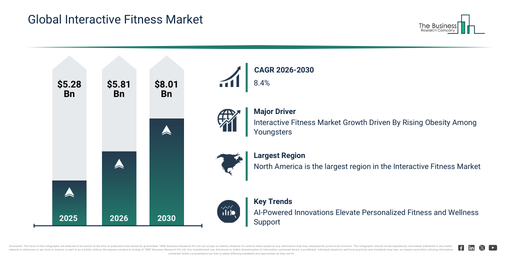
    The interactive fitness market has demonstrated substantial growth in recent years. This market is expected to expand from $5.28 billion in 2025 to $5.81 billion in 2026, exhibiting a compound annual growth rate (CAGR) of 9.9%. The historical period’s growth can be ascribed to several factors, including the growth of connected fitness devices, increased health and wellness awareness, the rise of digital fitness platforms, the expansion of home fitness trends, and increased smartphone and wearable adoption.

    The interactive fitness market is anticipated to experience robust expansion over the coming years. Projections indicate it will reach $8.01 billion by 2030, demonstrating a compound annual growth rate (CAGR) of 8.4%. Several factors are expected to drive this growth during the forecast period, including an escalating demand for immersive workout experiences, an increasing inclination towards personalized fitness solutions, greater adoption of smart home devices, the broadening of subscription-based fitness models, and an intensified emphasis on preventive health and wellness. Key trends anticipated during this period encompass a surging demand for interactive at-home workouts, the expanding appeal of gamified fitness experiences, a rise in the uptake of live and on-demand virtual classes, the proliferation of personalized and adaptive training programs, and the incorporation of social and community-centric fitness functionalities.

    Get A Free Sample Report With In-Depth Market Insights:

    https://thebusinessresearchcompany.com/sample_request?id=45208009&type=smp&name=Interactive%20Fitness%20Market%20Report%202026&utm_source=Blogs&utm_medium=Paid&utm_campaign=Oct_PR

    Interactive Fitness Market Growth Backed By Core Demand Fundamentals

    An increasing incidence of obesity in young individuals is anticipated to propel the growth of the interactive fitness market in the future. Obesity, a medical condition, involves the excessive build-up of body fat, resulting in health problems and a higher likelihood of various diseases. The growing occurrence of obesity in young people stems from sedentary lifestyles, unhealthy dietary habits, environmental factors, and genetic predisposition. Interactive fitness offers a significant solution for those battling obesity, delivering engaging, personalized, and accessible workout experiences that aid their progress towards improved health and fitness. As an illustration, in November 2024, data from the National Health Service (NHS) Digital, a UK government health data agency, revealed an increase in obesity prevalence among children aged 4 to 5 years, rising from 9.2% in 2022/23 to 9.6% in 2023/24. Consequently, the increasing rates of obesity among young people are driving the growth of the interactive fitness market.

    Interactive Fitness Market Segment Analysis And Revenue Potential

    The interactive fitness market covered in this report is segmented –

    1) By Product: Fitness Equipment, Software System

    2) By Application: Gym, Household

    3) By End-User: Residential, Nonresidential

    Subsegments:

    1) By Fitness Equipment: Cardio Equipment (Treadmills, Stationary Bikes, Rowing Machines), Strength Training Equipment (Free Weights, Resistance Bands, Weight Machines), Connected Wearables (Smartwatches, Fitness Trackers), Smart Fitness Machines (Peloton, Smart Ellipticals), Fitness Accessories (Yoga Mats, Resistance Bands, Kettlebells)

    2) By Software System: Fitness Tracking Software (Apps For Tracking Exercise, Nutrition, And Progress), Virtual Fitness Classes (Live Streaming Workouts, On-Demand Exercise Programs), Fitness Gamification Platforms (Apps Incorporate Game-like Elements), Personal Training Software (Custom Workout Plans, AI-driven Coaching), Health And Wellness Platforms (Integrated Fitness And Health Tracking, Wellness Programs)

    Interactive Fitness Market Growth Trends Reshaping The Competitive Landscape

    Leading interactive fitness firms are concentrating on creating sophisticated offerings, like artificial intelligence (AI)-powered health companions, to boost personalized exercise planning, increase user involvement, and foster healthier living results. These AI-driven health companions are digital platforms utilizing artificial intelligence to provide customized exercise advice, dietary suggestions, recovery information, and immediate assistance, aiding users in refining their fitness regimens. As an example, in July 2025, Life Time Group Holdings Inc., a US-based health and fitness firm, introduced L•AI•C (pronounced “lay-see”), a free AI-driven health companion incorporated into its mobile application. Intended to offer scientifically supported, personalized assistance, this solution produces customized workout programs, dietary and supplement advice, and recovery suggestions, drawing from Life Time’s vast knowledge base in fitness and wellness. Furthermore, the platform utilizes generative AI and is engineered for future integration with wearable technology, allowing for greater customization and more engaging user interactions.

    Interactive Fitness Market Key Players Shaping Industry Direction

    Major companies operating in the interactive fitness market are Peloton Interactive Inc., Fitbit Inc., iFit, Beachbody LLC, Precor, Flywheel Sports Inc., Bowflex, Nautilus Inc., Life Fitness, TECHNOGYM Spa, Matrix Fitness, Echelon Fitness Multimedia LLC, EGYM Inc., Hydrow Inc., Horizon Fitness, FightCamp, Paradigm Health and Wellness Inc., NordicTrack, Nexersys Corp., Zwift Inc., MYX Fitness

    View The Full Interactive Fitness Market Report:

    https://thebusinessresearchcompany.com/report/interactive-fitness-global-market-report?utm_source=Blogs&utm_medium=Paid&utm_campaign=Oct_PR

    Interactive Fitness Market Geographic Spread And Regional Opportunities

    North America was the largest region in the interactive fitness market in 2025. Asia-Pacific is expected to be the fastest-growing region in the forecast period. The regions covered in the interactive fitness market report are Asia-Pacific, South East Asia, Western Europe, Eastern Europe, North America, South America, Middle East, Africa.

    Reach Out To Our Team:

    The Business Research Company: https://www.thebusinessresearchcompany.com/

    Americas: +1 310-496-7795

    Asia: +44 7882 955267 & +91 8897263534

    Europe: +44 7882 955267

    Email us at: marketing@tbrc.info

    Follow us on:

    LinkedIn: https://in.linkedin.com/company/the-business-research-company

    YouTube: https://www.youtube.com/channel/UC24_fI0rV8cR5DxlCpgmyFQ

    Global Market Model: https://www.thebusinessresearchcompany.com/global-market-model
  • Healthcare IoT Security Market Analysis 2026: Market Size, Growth Trends And Industry Outlook

    Healthcare IoT Security Market Analysis 2026: Market Size, Growth Trends And Industry Outlook

    Built to provide research that’s more actionable and strategically valuable, The Business Research Company’s 2026 market reports include market attractiveness analysis, total addressable market sizing, company benchmarking matrices, interactive Excel dashboards, broader supply chain intelligence, emerging startup tracking, and in-depth product insights.

    Healthcare IoT Security Market Revenue Outlook: What CAGR Lies Ahead Through 2030?

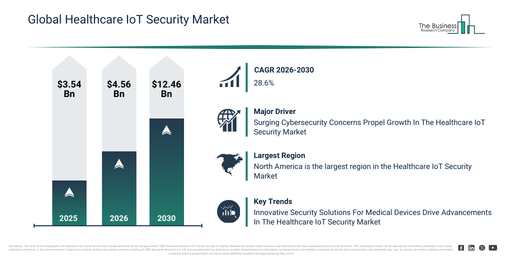
    The healthcare iot security market size has seen substantial expansion in recent years. It is projected to increase from $3.54 billion in 2025 to $4.56 billion in 2026, demonstrating a compound annual growth rate (CAGR) of 28.8%. This historical growth can be linked to several factors, including the increasing integration of connected medical devices, a rise in healthcare data breach incidents, the broadening of remote patient monitoring systems, the development of cloud-based healthcare platforms, and greater regulatory scrutiny regarding patient data security.

    The healthcare iot security market size is anticipated to experience rapid expansion in the coming years. Its valuation is projected to reach $12.46 billion by 2030, exhibiting a compound annual growth rate (CAGR) of 28.6%. This forecasted expansion is driven by several factors, including heightened investments in AI-driven security analytics, a growing need for comprehensive IoT security platforms, the broadening of telehealth ecosystems, an increased emphasis on compliance-focused security frameworks, and wider adoption of managed healthcare security services. Key developments anticipated during this period encompass the increased integration of zero-trust security frameworks, a rise in the implementation of device authentication solutions, the expanding application of encrypted medical IoT communications, the growth of cloud security solutions for healthcare IoT, and a stronger emphasis on real-time threat detection.

    Get A Free Sample Report With In-Depth Market Insights:

    https://thebusinessresearchcompany.com/sample_request?id=78024823&type=smp&name=Healthcare%20IoT%20Security%20Market%20Report%202026&utm_source=Blogs&utm_medium=Paid&utm_campaign=Nov_PR

    Healthcare IoT Security Market Demand Drivers Opening New Revenue Streams

    The expansion of the healthcare IoT security market is anticipated to be driven by increasing cybersecurity concerns. These concerns encompass the various potential threats, risks, and weaknesses linked to information technology and digital systems. In the healthcare industry, IoT security mitigates cybersecurity risks through ensuring the protection of sensitive patient data and medical documentation. As an illustration, the Australian Signals Directorate, an Australian government department, reported that in October 2025, its ACSC division handled more than 42,500 calls to the Australian Cyber Security Hotline during FY2024–25, marking a 16% rise compared to the prior year. Additionally, ASD’s ACSC addressed over 1,200 cybersecurity incidents, representing an 11% increase. Consequently, the increasing prevalence of cybersecurity concerns is fueling the development of the healthcare IoT security market.

    Healthcare IoT Security Market Segment Breakdown: Which Categories Lead On Revenue?

    The healthcare iot security market covered in this report is segmented –

    1) By Component: Solution, Services

    2) By Security Type: Application Security, Cloud Security, Endpoint Security, Network Security, Other Security Types

    3) By End-use: Hospitals, Surgical Centers, and Clinics, Clinical Research Organizations, Research and Diagnostic Laboratories

    Subsegments:

    1) By Solution: Identity And Access Management (IAM), Data Encryption And Tokenization, Intrusion Detection And Prevention Systems (IDPS), Device Authentication And Management, Secure Network Communication

    2) By Services: Consulting Services, Risk Assessment And Management, Managed Security Services, Training And Education Services, Support And Maintenance Services

    Healthcare IoT Security Market Transformation Trends: What Innovations Are Driving Change?

    Leading companies in the healthcare IoT security market are focusing on developing innovative products, such as AI-driven patient-data summarisation, to convert extensive streams of connected health-device data into actionable clinical insights and streamline care workflows. AI-driven patient-data summarisation is defined as a capability where AI models automatically analyze longitudinal sensor and device data, detect significant changes or risks, and generate clinician-ready summaries and notes for integration into electronic health records (EHRs). For instance, in February 2025, Validic Inc., a US-based digital health company, launched its complete suite of health IoT and remote-patient-management solutions, powered by generative AI, on the AWS Marketplace. This offering supports hundreds of FDA-listed in-home monitoring devices and consumer wearables, streaming real-world data into client applications for engagement, outcomes tracking, and device ecosystem management. It integrates longitudinal personal-health data into the EHR, enabling programs for chronic-disease management, high-risk pregnancy, GLP-1 weight-management, transitions of care, and physical-activity tracking, thus allowing the rollout of enterprise-scale programs without new integrations.

    Healthcare IoT Security Market Leading Players And Competitive Positioning

    Major companies operating in the healthcare iot security market are Microsoft Corporation, Deutsche Telekom AG, Dell Corporation, Intel Corporation, IBM Corporation, Cisco Systems, Oracle Corporation, Palo Alto Networks Inc., Fortinet Inc., Symantec Corporation (NortonLifeLock), Check Point Software Technologies, Trend Micro Inc., Kaspersky Lab, Sophos Group Plc, Claroty, Eurotech SpA, Inside Secure SA, CloudWave, Cynerio, ICterra, Medigate by Claroty, Asimily, CyberMDX, SecureFLO LLC, Agile Cyber Security Solutions LLC, Intelen Inc., Security Mentor

    View The Full Healthcare IoT Security Market Report:

    https://thebusinessresearchcompany.com/report/healthcare-iot-security-global-market-report?utm_source=Blogs&utm_medium=Paid&utm_campaign=Nov_PR

    Healthcare IoT Security Market Regional Analysis: Which Geography Leads On Revenue?

    North America was the largest region in the healthcare IoT security market in 2025. The regions covered in the healthcare iot security market report are Asia-Pacific, South East Asia, Western Europe, Eastern Europe, North America, South America, Middle East, Africa.

    Reach Out To Our Team:

    The Business Research Company: https://www.thebusinessresearchcompany.com/

    Americas: +1 310-496-7795

    Asia: +44 7882 955267 & +91 8897263534

    Europe: +44 7882 955267

    Email us at: marketing@tbrc.info

    Follow us on:

    LinkedIn: https://in.linkedin.com/company/the-business-research-company

    YouTube: https://www.youtube.com/channel/UC24_fI0rV8cR5DxlCpgmyFQ

    Global Market Model: https://www.thebusinessresearchcompany.com/global-market-model
  • Healthcare Information Technology (IT) Outsourcing Market Growth To $101.17 Billion Creates New Opportunities Across The Industry

    Healthcare Information Technology (IT) Outsourcing Market Growth To $101.17 Billion Creates New Opportunities Across The Industry

    Backed by market attractiveness analysis, total addressable market sizing, company benchmarking matrices, interactive Excel dashboards, wider supply chain intelligence, emerging startup coverage, and detailed product-level insights, The Business Research Company’s 2026 market reports are designed to offer research that is more actionable and strategically valuable than ever.

    Healthcare Information Technology (IT) Outsourcing Market Growth Analysis: How Will Revenue Trend Over The Forecast Period?

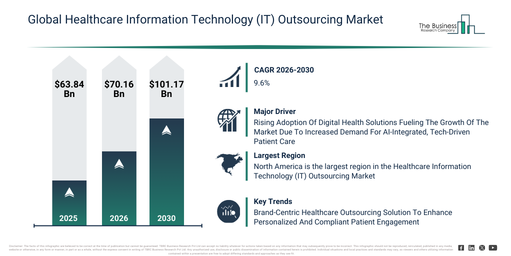
    The healthcare information technology (it) outsourcing market size has seen robust growth in recent years. It is anticipated to increase from $63.84 billion in 2025 to $70.16 billion in 2026, achieving a compound annual growth rate (CAGR) of 9.9%. This historical expansion can be attributed to several factors, including the increasing complexity of healthcare digitization, rising operational cost pressures, the expansion of electronic health record systems, a growing shortage of internal IT expertise, and increased regulatory compliance requirements.

    The market for healthcare information technology (IT) outsourcing is projected to experience substantial growth over the upcoming years. This market is anticipated to reach $101.17 billion by 2030, exhibiting a compound annual growth rate (CAGR) of 9.6%. This projected expansion can be attributed to several factors, including the increasing integration of cloud-native healthcare systems, greater investments in AI-powered IT services, a heightened need for secure data management outsourcing, the broadening of healthcare interoperability initiatives, and an intensified focus on IT support for value-based care. Key trends for this period encompass a rise in the outsourcing of healthcare IT operations, an increasing demand for managed cloud and infrastructure services, the expanding use of cybersecurity outsourcing within the healthcare sector, the enlargement of revenue cycle management outsourcing, and an elevated emphasis on scalable IT support frameworks.

    Get A Free Sample Report With In-Depth Market Insights:

    https://thebusinessresearchcompany.com/sample_request?id=50341459&type=smp&name=Healthcare%20Information%20Technology%20%28IT%29%20Outsourcing%20Market%20Report%202026&utm_source=Blogs&utm_medium=Paid&utm_campaign=Nov_PR

    Healthcare Information Technology (IT) Outsourcing Market Growth Backed By Core Demand Fundamentals

    The increasing use of digital health innovations is anticipated to fuel expansion in the healthcare information technology (IT) outsourcing market moving forward. These solutions encompass technology-based tools and platforms designed to improve healthcare services, patient involvement, and general health management, incorporating advancements like telemedicine, mobile applications, and wearable technologies. Healthcare providers are increasingly adopting digital health solutions as they look for economical methods to provide care, leveraging technologies like telemedicine and remote monitoring to lessen hospital visits and optimize workflows. Healthcare IT outsourcing aids digital health initiatives by providing expert knowledge and essential infrastructure for effective data management, improved security, and faster implementation of digital health solutions. For example, data from July 2024, published by the European Commission, a Belgium-based body, revealed that the Digital Decade e Health Indicator Study reported an average 79% access rate to electronic health records (EHR) via online portals across the EU, an increase from 72% in 2022. Consequently, the growing uptake of digital health solutions is propelling the expansion of the healthcare information technology (IT) outsourcing market.

    Healthcare Information Technology (IT) Outsourcing Market Segmentation: How Does The Market Break Down By Category?

    The healthcare information technology (it) outsourcing market covered in this report is segmented –

    1) By Type: Provider Healthcare IT Outsourcing, Electronic Health Records (EHR), Payers Healthcare IT Outsourcing, Operational Healthcare IT Outsourcing, Life Sciences Healthcare IT Outsourcing, Information Technology (IT) Infrastructure Outsourcing

    2) By Technology: Artificial Intelligence And Machine Learning, Blockchain Technology, Internet Of Things, Big Data Analytics, Cybersecurity Solutions

    3) By Deployment Model: On-Premises, Cloud-Based, Hybrid

    4) By End User: Healthcare Provider System, Pharmaceutical, Biotechnology, Clinical Research Organization (CRO), Health Insurance

    Subsegments:

    1) By Provider Healthcare IT Outsourcing: Hospital Information Technology Outsourcing, Clinic Information Technology Outsourcing, Ambulatory Care Information Technology Outsourcing

    2) By Electronic Health Records (EHR): EHR Implementation Outsourcing, EHR Maintenance And Support, EHR Data Migration Services

    3) By Payers Healthcare IT Outsourcing: Claims Processing Outsourcing, Member Management Outsourcing, Billing And Payment Services Outsourcing

    4) By Operational Healthcare IT Outsourcing: Revenue Cycle Management (RCM), Medical Coding And Billing, Appointment Scheduling And Patient Management

    5) By Life Sciences Healthcare IT Outsourcing: Clinical Data Management, Regulatory Compliance And Reporting, Drug Safety And Pharmacovigilance

    6) By Information Technology (IT) Infrastructure Outsourcing: Network Management, Data Center Management, Cloud Infrastructure Services

    #Healthcare Information Technology (IT) Outsourcing Market Growth Trends: What’s Shaping The Future Outlook?

    Leading companies in the healthcare information technology (IT) outsourcing market are concentrating on developing novel solutions, such as brand-centric healthcare outsourcing, to address the increasing need for tailored patient engagement, operational effectiveness, and distinct service provision. Brand-centric healthcare outsourcing involves the provision of outsourced healthcare services that correspond with a healthcare organization’s brand identity, thereby guaranteeing consistent, individualized, and superior patient interactions across all communication points. For example, in March 2025, Clear Harbor LLC, a US-based customer care and BPO company, unveiled a dedicated brand-centric healthcare outsourcing solution aimed at providing deeply engaging, empathetic patient experiences for clinics, hospitals, and health systems. This new offering modifies Clear Harbor’s established brand-centric outsourcing framework to suit the particular sensitivities and regulatory requirements of healthcare, ensuring patient interactions embody the provider’s brand values with both empathy and clarity. The solution incorporates nearshore contact centers staffed by native English-speaking professionals who are educated in healthcare compliance and adult learning methods, with an emphasis on privacy, HIPAA regulations, and empathetic communication.

    Healthcare Information Technology (IT) Outsourcing Market Competitive Overview And Top Companies

    Major companies operating in the healthcare information technology (it) outsourcing market are McKesson Corporation, Optum Inc, Dell Technologies Inc, Accenture plc, International Business Machines Corporation, Oracle Corporation, Hewlett Packard Enterprise Company, Tata Consultancy Services Limited, Capgemini SE, NTT DATA Corporation, Cognizant Technology Solutions Corporation, Infosys Limited, DXC Technology Company, Wipro Limited, Epic Systems Corporation, Change Healthcare Holdings LLC, Exela Technologies Inc, Omega Healthcare Management Services Private Limited, Veradigm Inc, Cerner Corporation, Allscripts Healthcare Solutions, HCL Technologies Limited

    View The Full Healthcare Information Technology (IT) Outsourcing Market Report:

    https://thebusinessresearchcompany.com/report/healthcare-information-technology-it-outsourcing-global-market-report?utm_source=Blogs&utm_medium=Paid&utm_campaign=Nov_PR

    Healthcare Information Technology (IT) Outsourcing Market Geographic Spread And Regional Opportunities

    North America was the largest region in the healthcare information technology (IT) outsourcing market in 2025. Asia-Pacific is expected to be the fastest-growing region in the forecast period. The regions covered in the healthcare information technology (it) outsourcing market report are Asia-Pacific, South East Asia, Western Europe, Eastern Europe, North America, South America, Middle East, Africa.

    Reach Out To Our Team:

    The Business Research Company: https://www.thebusinessresearchcompany.com/

    Americas: +1 310-496-7795

    Asia: +44 7882 955267 & +91 8897263534

    Europe: +44 7882 955267

    Email us at: marketing@tbrc.info

    Follow us on:

    LinkedIn: https://in.linkedin.com/company/the-business-research-company

    YouTube: https://www.youtube.com/channel/UC24_fI0rV8cR5DxlCpgmyFQ

    Global Market Model: https://www.thebusinessresearchcompany.com/global-market-model
  • Healthcare Information System Market Forecast: Breaking Down The Numbers Behind Future Expansion

    Healthcare Information System Market Forecast: Breaking Down The Numbers Behind Future Expansion

    Featuring market attractiveness scoring, total addressable market sizing, company benchmarking matrices, interactive Excel dashboards, deeper supply chain intelligence, emerging startup tracking, and granular product-level insights, The Business Research Company’s 2026 market reports are built to deliver research that is both more actionable and more strategically valuable.

    Healthcare Information System Market Forecast: What Value Will The Market Reach By 2030?

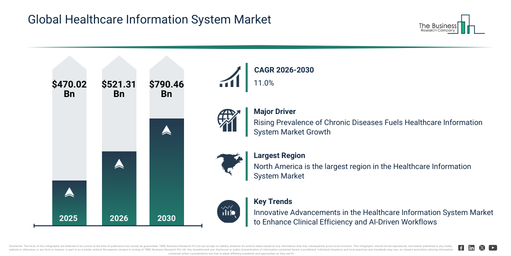
    The healthcare information system market has experienced swift expansion recently. This market is projected to expand from $470.02 billion in 2025 to $521.31 billion in 2026, exhibiting a compound annual growth rate (CAGR) of 10.9%. Historically, this expansion has been driven by factors such as the increasing digitization of patient records, widespread adoption of electronic health records in hospitals, the enlargement of healthcare infrastructure, a heightened need for operational efficiency within hospitals, and the escalating volume of healthcare data.

    The healthcare information system market is anticipated to experience substantial growth in the upcoming years, with projections indicating a rise to $790.46 billion by 2030, reflecting a compound annual growth rate (CAGR) of 11.0%. This expansion during the forecast period is attributable to increased investments in cloud-native healthcare platforms, a growing focus on population health management, the expansion of AI-enabled clinical analytics, an increasing regulatory emphasis on data transparency, and a rising demand for interoperable healthcare ecosystems. Furthermore, key trends in this period include the broadening adoption of integrated hospital information platforms, the increasing deployment of cloud-based HIS solutions, a heightened focus on interoperability across healthcare systems, the wider development of data-driven clinical decision support tools, and an enhanced emphasis on secure health data management.

    Get A Free Sample Report With In-Depth Market Insights:

    https://thebusinessresearchcompany.com/sample_request?id=61210609&type=smp&name=Healthcare%20Information%20System%20Market%20Report%202026&utm_source=Blogs&utm_medium=Paid&utm_campaign=Nov_PR

    Healthcare Information System Market Growth Catalysts And Demand Drivers

    An increasing incidence of chronic diseases is anticipated to stimulate the future expansion of the healthcare information system market. Chronic diseases are enduring health issues that commonly necessitate continuous medical attention, limit daily activities, or both. Healthcare information systems can empower healthcare providers to manage patient information, track health results, and enhance the quality of care for those afflicted with chronic illnesses. As an illustration, a report from April 2025 by the Centers for Disease Control and Prevention, a US-based federal agency, revealed that in 2023, approximately 76.4% of U.S. adults indicated having at least one of 12 specified chronic conditions. Additionally, 51.4% of U.S. adults reported experiencing multiple chronic conditions. Thus, the escalating presence of chronic diseases is a key factor propelling the growth of the healthcare information system market.

    Healthcare Information System Market Segment Trends And Revenue Contributors

    The healthcare information system market covered in this report is segmented –

    1) By Component: Hardware, Software And Systems, Services

    2) By Deployment: Web-based, On-Premises, Cloud-Based

    3) By Application: Hospital Information System, Pharmacy Automation Systems, Laboratory Informatics, Revenue Cycle Management, Medical Imaging Information System

    4) By End-Use: Hospitals, Diagnostic Centers, Academic And Research Institutes

    Subsegments:

    1) By Hardware: Servers, Networking Equipment, Storage Devices

    2) By Software And Systems: Electronic Health Records (EHR), Practice Management Software, Radiology Information Systems (RIS), Laboratory Information Systems (LIS), Health Information Exchange (HIE)

    3) By Services: Consulting Services, Implementation Services, Maintenance And Support Services, Training And Education Services, Managed Services

    Healthcare Information System Market Industry Trends: What’s Reshaping Demand?

    Leading companies within the healthcare information system market are increasingly prioritizing technological advancements, such as AI-powered, voice-first electronic health record (EHR) platforms. This focus aims to address the growing need for streamlined clinical workflows, alleviate documentation burdens, and provide enhanced decision support, driven by clinician burnout, expanding patient volumes, and the shift towards value-based care. An AI-powered, voice-first EHR platform integrates generative AI, natural language processing, and voice-enabled commands, allowing clinicians to interact with the system more intuitively, automate documentation, and access insights in real time, a departure from traditional EHRs that heavily rely on manual data entry and rigid interfaces. For instance, in August 2025, Oracle Health, a US-based health IT company, unveiled its next-generation AI-powered EHR, conceptualized as a voice-first solution featuring embedded AI agents. This platform leverages Oracle Cloud Infrastructure and combines multimodal voice and screen interactions, enabling clinicians to dictate commands, retrieve patient data, summarize recent notes, and receive AI-assisted clinical recommendations; it also supports the integration of custom AI models and third-party applications, thereby enhancing personalization, efficiency, and scalability across various healthcare settings. This innovative solution seeks to minimize clinician clicks, improve the accuracy of documentation, and optimize patient care workflows.

    Healthcare Information System Market Competitive Landscape: Which Companies Lead The Industry?

    Major companies operating in the healthcare information system market are McKesson Corporation, Hewlett Packard, Siemens Healthineers, Philips Healthcare, GE Healthcare, 3M Health Care, Wipro Limited, Cerner Corporation, Infor, Epic Systems Corporation, Agfa Gevaert Group, Allscripts Healthcare LLC, Athenahealth Inc., Neusoft Medical Systems Co. Ltd., eClinicalWorks, Carestream Health, Medidata Solutions Inc., NextGen Healthcare, NXGN Management LLC, Greenway Health LLC, Dedalus S.p.A, e-MDs Incorporation, Novarad Corporation

    View The Full Healthcare Information System Market Report:

    https://thebusinessresearchcompany.com/report/healthcare-information-system-global-market-report?utm_source=Blogs&utm_medium=Paid&utm_campaign=Nov_PR

    Healthcare Information System Market Top Region By Revenue And Market Share

    North America was the largest region in the healthcare information system market in 2025. Asia-Pacific is expected to be the fastest-growing region in the forecast period. The regions covered in the healthcare information system market report are Asia-Pacific, South East Asia, Western Europe, Eastern Europe, North America, South America, Middle East, Africa.

    Reach Out To Our Team:

    The Business Research Company: https://www.thebusinessresearchcompany.com/

    Americas: +1 310-496-7795

    Asia: +44 7882 955267 & +91 8897263534

    Europe: +44 7882 955267

    Email us at: marketing@tbrc.info

    Follow us on:

    LinkedIn: https://in.linkedin.com/company/the-business-research-company

    YouTube: https://www.youtube.com/channel/UC24_fI0rV8cR5DxlCpgmyFQ

    Global Market Model: https://www.thebusinessresearchcompany.com/global-market-model

  • Healthcare Identity Management Market Expected To Grow At 12.4% CAGR Through 2030: What Businesses Need To Know

    Healthcare Identity Management Market Expected To Grow At 12.4% CAGR Through 2030: What Businesses Need To Know

    Built to provide research that’s more actionable and strategically valuable, The Business Research Company’s 2026 market reports include market attractiveness analysis, total addressable market sizing, company benchmarking matrices, interactive Excel dashboards, broader supply chain intelligence, emerging startup tracking, and in-depth product insights.

    Healthcare Identity Management Market Size Outlook: How Quickly Will Revenue Expand Through 2030?

    The healthcare identity management market has experienced significant expansion in recent years. It is anticipated to grow from $5.14 billion in 2025 to $5.78 billion by 2026, at a compound annual growth rate (CAGR) of 12.5%. This growth observed in the past can be ascribed to several factors, including the increasing digitization of healthcare records, the rise of cybersecurity threats, the adoption of electronic health records, growing regulatory mandates for data protection, and the expansion of healthcare IT systems.

    The healthcare identity management market size is projected to experience substantial growth over the coming years. This market is anticipated to reach $9.23 billion by 2030, exhibiting a compound annual growth rate (CAGR) of 12.4%. This anticipated growth during the forecast period is fueled by several factors, including heightened investments in zero-trust security models, a growing need for seamless patient identity management, the expanding use of cloud-based healthcare platforms, increasing integration of IoT authentication, and a greater emphasis on privacy-preserving technologies. Key developments expected in this period encompass the rising adoption of biometric authentication systems, an increased utilization of multi-factor authentication within healthcare, the expanding deployment of cloud-based identity management solutions, the growth of interoperable identity platforms, and a strengthened focus on both regulatory compliance and data security.

    Get A Free Sample Report With In-Depth Market Insights:

    https://thebusinessresearchcompany.com/sample_request?id=33275645&type=smp&name=Healthcare%20Identity%20Management%20Market%20Report%202026&utm_source=Blogs&utm_medium=Paid&utm_campaign=Nov_PR

    Healthcare Identity Management Market Opportunity Drivers: What’s Unlocking New Revenue Potential?

    The increasing occurrence of security breaches is anticipated to drive expansion in the healthcare identity management market. A security breach involves unauthorized entry to or revelation of sensitive data, systems, or networks, which could lead to harm or misuse. The surge in security breaches stems from various reasons, such as elevated cyber threats, the growing digital infrastructure, and mistakes made by people. To ensure only authorized persons can access sensitive patient data, healthcare identity management systems utilize multi-factor authentication (MFA) and biometric verification. This method substantially reduces the likelihood of unauthorized access and strengthens security protocols against possible breaches. For example, the Identity Theft Resource Center, a US non-profit, reported in January 2024 that approximately 725 data breaches occurred in 2023, leading to the exposure of over 133 million records. This indicates an ongoing rise in healthcare data breaches during that year. Consequently, the escalating number of security breaches is fueling the expansion of the healthcare identity management market.

    Healthcare Identity Management Market Segment Analysis Spotlighting Growth Areas

    The healthcare identity management market covered in this report is segmented –

    1) By Solution: Identity And Access Management (IAM), Authentication, Verification, Access Management And Authorization

    2) By Deployment Mode: On-Premises, Cloud-Based, Hybrid

    3) By Technology: Biometric Authentication, Radio Frequency Identification And Smart Card, Single Sign-On (SSO), Multi-Factor Authentication (MFA), Internet Of Things Authentication

    4) By End User: Hospitals And Clinics, Diagnostic Laboratories, Research Institutions, Health Insurance Companies

    Subsegments:

    1) By Identity And Access Management (IAM): User Provisioning And De-Provisioning, Role-Based Access Control (RBAC), Single Sign-On (SSO), Directory Services

    2) By Authentication: Multi-Factor Authentication (MFA), Biometric Authentication, Passwordless Authentication, One-Time Password (OTP) Authentication

    3) By Verification: Identity Verification Solutions, Credential Verification Services, Document Verification Systems

    4) By Access Management And Authorization: Access Control Policies, User Role Management, Session Management, Audit And Compliance Management

    Healthcare Identity Management Market Innovation Trends: What Developments Are Reshaping The Industry?

    Companies operating in the healthcare identity management sector are focusing on developing advanced technologies, such as multi-factor authentication, to enhance security by providing additional protection against unauthorized access. Multi-factor authentication (MFA) is a security protocol that strengthens user verification by requiring two or more independent credentials to confirm identity access. For instance, in March 2023, Clario, a US-based technology company, introduced the Federated Identity Management (FIM) System. This system improves security and user convenience by allowing individuals to access multiple systems and organizations with a single login credential, thereby streamlining the authentication process. FIM integrates with external identity providers, enabling clients to use their trusted credentials to securely access Clario’s platform. It also incorporates single-sign-on (SSO) and multi-factor authentication (MFA) to bolster security, particularly for those participating in clinical trials.

    Healthcare Identity Management Market Leading Companies: Who Holds The Strongest Market Presence?

    Major companies operating in the healthcare identity management market are Deloitte Touche Tohmatsu Limited, Oracle Corporation, Infosys Limited, Atos SE, Okta Inc., CyberArk Software Ltd., SailPoint Technologies Holdings Inc., Ping Identity Corporation, Saviynt Inc., ForgeRock Inc., Simeio Solutions LLC, One Identity LLC, Veritis Group Inc., Radiant Logic Inc., Promobi Technologies Private Limited, Ubisecure Inc., Zluri Inc., Evidian, Optimal IdM LLC, My1Login Limited

    View The Full Healthcare Identity Management Market Report:

    https://thebusinessresearchcompany.com/report/healthcare-identity-management-global-market-report?utm_source=Blogs&utm_medium=Paid&utm_campaign=Nov_PR

    Healthcare Identity Management Market Regional Analysis And Top Geography

    North America was the largest region in the healthcare identity management market in 2025. Asia-Pacific is expected to be the fastest-growing region in the forecast period. The regions covered in the healthcare identity management market report are Asia-Pacific, South East Asia, Western Europe, Eastern Europe, North America, South America, Middle East, Africa.

    Reach Out To Our Team:

    The Business Research Company: https://www.thebusinessresearchcompany.com/

    Americas: +1 310-496-7795

    Asia: +44 7882 955267 & +91 8897263534

    Europe: +44 7882 955267

    Email us at: marketing@tbrc.info

    Follow us on:

    LinkedIn: https://in.linkedin.com/company/the-business-research-company

    YouTube: https://www.youtube.com/channel/UC24_fI0rV8cR5DxlCpgmyFQ

    Global Market Model: https://www.thebusinessresearchcompany.com/global-market-model
  • Healthcare Gamification Market Forecast To Reach $10.86 Billion By 2030: Key Trends Explained

    Healthcare Gamification Market Forecast To Reach $10.86 Billion By 2030: Key Trends Explained

    Backed by market attractiveness analysis, total addressable market sizing, company benchmarking matrices, interactive Excel dashboards, wider supply chain intelligence, emerging startup coverage, and detailed product-level insights, The Business Research Company’s 2026 market reports are designed to offer research that is more actionable and strategically valuable than ever.

    Healthcare Gamification Market Size, Value And Growth Trajectory Through 2030

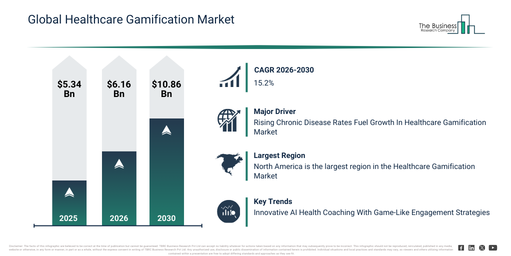
    The healthcare gamification market has witnessed significant growth in recent years. It is projected to expand from $5.34 billion in 2025 to $6.16 billion in 2026, achieving a compound annual growth rate (CAGR) of 15.3%. This historical growth can be linked to factors such as increased smartphone adoption in the healthcare sector, a heightened need for patient engagement solutions, the widespread use of digital wellness platforms, the development of remote care programs, and the incorporation of gamification into medical education.

    The healthcare gamification sector is projected for substantial expansion in the coming years. Its valuation is anticipated to reach $10.86 billion by 2030, exhibiting a compound annual growth rate (CAGR) of 15.2%. This growth during the prediction period is largely fueled by factors such as the expanding application of AI-driven customized gamification, the escalating need for preventative healthcare remedies, the spread of digital therapeutics, an intensified emphasis on sustained patient compliance, and greater capital expenditure in health engagement tools. Key trends foreseen for this timeframe encompass the wider acceptance of gamified platforms for patient engagement, the increased utilization of mobile health games, the broader implementation of gamification within therapeutic programs, the proliferation of applications aimed at behavior modification and wellness, and a heightened concentration on customized health experiences.

    Get A Free Sample Report With In-Depth Market Insights:

    https://thebusinessresearchcompany.com/sample_request?id=86491219&type=smp&name=Healthcare%20Gamification%20Market%20Report%202026&utm_source=Blogs&utm_medium=Paid&utm_campaign=Nov_PR

    Healthcare Gamification Market Growth Momentum: What Factors Are Shaping Demand?

    The rising occurrence of lifestyle-related and chronic illnesses is anticipated to drive expansion within the healthcare gamification market in the future. These conditions encompass health issues often affected or worsened by personal behaviors and routines, alongside enduring circumstances. Healthcare gamification offers an effective approach to tackling lifestyle-related and chronic ailments, utilizing game principles and design features to encourage individuals to embrace healthier lifestyles and better self-manage their health. For example, in June 2023, the Institute for Health Metrics and Evaluation, a US-based public health research institute, disclosed that over half a billion people globally were living with diabetes. This figure is projected to more than double, reaching 1.3 billion people by 2050. Consequently, the growing frequency of lifestyle-related and chronic diseases is fueling the expansion of the healthcare gamification market.

    Healthcare Gamification Market Segment Performance And Emerging Opportunities

    The healthcare gamification market covered in this report is segmented –

    1) By Type: Casual Games, Serious Games, Exercise Games, Brain Training Games, Other Types

    2) By Application: Health And Wellness Management, Medical Training And Education, Patient Engagement, Physical Therapy And Rehabilitation, Behavior Change And Lifestyle Improvement, Other Applications

    3) By End User: Hospitals And Clinics, Pharmaceutical Companies, Medical Schools And Training Institutions, Patients, Healthcare Professionals, Other End Users

    Subsegments:

    1) By Casual Games: Mobile Casual Games, Web-Based Casual Games

    2) By Serious Games: Educational Healthcare Games, Simulation-Based Training Games

    3) By Exercise Games: Fitness Games, Motion-Sensing Games

    4) By Brain Training Games: Cognitive Skill Games, Memory Improvement Games, Attention And Focus Games

    5) By Other Types: Virtual Reality (VR) Games, Augmented Reality (AR) Games, Social And Multiplayer Health Games

    Healthcare Gamification Market Trends: What’s Defining The Industry’s Next Phase?

    Leading companies in the healthcare gamification market are concentrating on developing innovative products with advanced technologies, such as AI health coaches that incorporate gamification, to enhance their market profitability. An AI health coach with gamification refers to a digital platform that utilizes artificial intelligence to deliver personalized health coaching and motivation, integrating game-like elements to engage and encourage users in achieving their health and fitness goals. For instance, in May 2023, T-Systems International GmbH, a Germany-based IT company, launched MagMoves. MagMoves aims to revolutionize virtual care by combining gamified healthcare, customization, and personalization to promote proactive and preventative health. The application is designed to make healthcare engaging and enjoyable, elevating the experience of virtual care. It leverages artificial intelligence to offer a gamified virtual health coach experience, encouraging a proactive approach to managing health.

    Healthcare Gamification Market Key Players: Which Companies Lead Industry Competition?

    Major companies operating in the healthcare gamification market are Nike Inc., Adidas AG, Omada Health Inc., Happify Inc., WellDoc Inc., Akili Inc., Kaia Health, Mango Health, Pear Therapeutics, CogniFit Inc., Ayogo Health Inc., Freespira, Syandus Inc., Badgeville Inc., Google LLC, Microsoft Corporation, Medtronic PLC, Cognizant, Rally Health, BioSerenity, Biofourmis, MPS Interactive Systems Limited, Axonify Inc.

    View The Full Healthcare Gamification Market Report:

    https://thebusinessresearchcompany.com/report/healthcare-gamification-global-market-report?utm_source=Blogs&utm_medium=Paid&utm_campaign=Nov_PR

    Healthcare Gamification Market Geographic Analysis: Where Is Demand Rising Fastest?

    North America was the largest region in the healthcare gamification market in 2025. Europe was the fastest-growing region in the forecast period. The regions covered in the healthcare gamification market report are Asia-Pacific, South East Asia, Western Europe, Eastern Europe, North America, South America, Middle East, Africa.

    Reach Out To Our Team:

    The Business Research Company: https://www.thebusinessresearchcompany.com/

    Americas: +1 310-496-7795

    Asia: +44 7882 955267 & +91 8897263534

    Europe: +44 7882 955267

    Email us at: marketing@tbrc.info

    Follow us on:

    LinkedIn: https://in.linkedin.com/company/the-business-research-company

    YouTube: https://www.youtube.com/channel/UC24_fI0rV8cR5DxlCpgmyFQ

    Global Market Model: https://www.thebusinessresearchcompany.com/global-market-model
  • Healthcare Fraud Detection Market Size Forecast From 2026 To 2030: Key Industry Trends

    Healthcare Fraud Detection Market Size Forecast From 2026 To 2030: Key Industry Trends

    Featuring market attractiveness scoring, total addressable market sizing, company benchmarking matrices, interactive Excel dashboards, deeper supply chain intelligence, emerging startup tracking, and granular product-level insights, The Business Research Company’s 2026 market reports are built to deliver research that is both more actionable and more strategically valuable.

    Healthcare Fraud Detection Market CAGR Outlook And Future Development

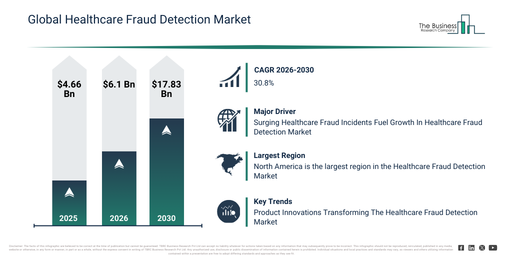
    The healthcare fraud detection market has witnessed substantial expansion recently. This market is projected to expand from $4.66 billion in 2025 to $6.1 billion in 2026, exhibiting a compound annual growth rate (CAGR) of 31.0%. Historically, this growth has been driven by factors such as the increasing volume of healthcare claims, a rise in billing fraud and abusive practices, the integration of data analytics into healthcare finance, intensified regulatory supervision, and the digitalization of healthcare payment methods.

    The healthcare fraud detection market is projected to experience rapid expansion in the coming years. It is anticipated to reach a valuation of $17.83 billion by 2030, exhibiting a compound annual growth rate (CAGR) of 30.8%. This projected growth is driven by several factors, including greater investments in sophisticated analytics solutions, a surging need for automated tools to prevent fraud, the expansion of cloud-based healthcare platforms, increasing incorporation of machine learning into claims processing, and a heightened emphasis on managing costs. Key trends expected during this period involve the wider adoption of AI-powered fraud detection platforms, increased application of predictive analytics for reviewing claims, the growing implementation of real-time payment integrity solutions, the expansion of cloud-based systems for fraud detection, and a stronger commitment to data transparency and compliance.

    Get A Free Sample Report With In-Depth Market Insights:

    https://thebusinessresearchcompany.com/sample_request?id=91106671&type=smp&name=Healthcare%20Fraud%20Detection%20Market%20Report%202026&utm_source=Blogs&utm_medium=Paid&utm_campaign=Nov_PR

    Healthcare Fraud Detection Market Expansion Drivers: What’s Shaping Future Growth?

    The increasing occurrence of fraudulent activities within the healthcare sector is anticipated to boost the healthcare fraud detection market in the coming years. These events involve the intentional falsification of patient details and insurance claims, aimed at securing illicit profits or infringing upon an individual’s legal entitlements. An illustrative example occurred in June 2024, when the Department of Justice, a federal executive department based in the US, revealed a nationwide healthcare fraud takedown in 2024. This operation indicted 193 defendants, among whom were 76 medical professionals, for alleged intended losses totaling approximately US$ 2.75 billion and actual losses amounting to US$ 1.6 billion. Consequently, the growing prevalence of fraudulent incidents within the healthcare industry is projected to stimulate the expansion of the healthcare fraud detection market.

    Healthcare Fraud Detection Market Segment Landscape And Growth Outlook

    The healthcare fraud detection market covered in this report is segmented –

    1) By Type: Descriptive Analytics, Predictive Analytics, Prescriptive Analytics

    2) By Model: On-Premise Delivery, On-Demand Delivery

    3) By Component: Services, Software

    4) By Application: Insurance Claims Review, Payment Integrity

    5) By End User: Healthcare Payers, Government Agencies, Other End-Users

    Subsegments:

    1) By Descriptive Analytics: Data Mining, Reporting Tools, Historical Data Analysis

    2) By Predictive Analytics: Risk Scoring Models, Machine Learning Algorithms, Trend Analysis

    3) By Prescriptive Analytics: Decision Support Systems, Optimization Algorithms, Scenario Analysis And Simulations

    Healthcare Fraud Detection Market Industry Trends Fueling Future Revenue Growth

    Leading companies within the healthcare fraud detection market are concentrating on developing innovative solutions, such as advanced insurance fraud detection platforms, to enhance real-time claim monitoring, bolster data verification, and reduce fraudulent activities across both healthcare and insurance systems. Insurance fraud detection platforms are defined as integrated technology suites that utilize advanced analytics, continuous monitoring, and automated data validation to pinpoint suspicious behavior, flag high-risk claims, and provide investigators with actionable insights. For instance, in June 2023, Verisk Analytics Inc., a US-based analytics company, in collaboration with Kyndryl Holdings, Inc., introduced an advanced technology suite specifically designed to prevent insurance fraud in Israel’s compulsory insurance market. This enhanced anti-fraud engine, leveraging Kyndryl’s high-performance computing capabilities and Verisk’s domain expertise, facilitates real-time monitoring of auto claims for bodily injury. Supported by 24/7 managed services and sophisticated analytics, the system verifies applicant information, cross-checks records with government and external databases, and streamlines data investigation for claim adjusters. This partnership aims to improve claims integrity, detect fraud more efficiently, and address evolving consumer expectations in an increasingly digitized insurance landscape, thereby reinforcing technological progress in the healthcare fraud detection market.

    Healthcare Fraud Detection Market Competitive Landscape: Who Leads The Industry?

    Major companies operating in the healthcare fraud detection market are International Business Machines Corporation, Cotiviti Inc., Fair Isaac Corporation, SAS Institute Inc., RELX Group PLC, LexisNexis Risk Solutions Group, EXL Service Holdings Inc., Qlarant Inc., Change Healthcare LLC, Codoxo Inc., Pondera Solutions Inc., HMS Holdings Corp., FraudLens Inc., FraudScope Inc., Healthcare Fraud Shield LLC, MultiPlan Corporation, CGI Inc., DXC Technology Company, Conduent Incorporated, HCL Technologies Limited, Wipro Limited, H2O.ai Inc., McKesson Corporation

    View The Full Healthcare Fraud Detection Market Report:

    https://thebusinessresearchcompany.com/report/healthcare-fraud-detection-global-market-report?utm_source=Blogs&utm_medium=Paid&utm_campaign=Nov_PR

    Healthcare Fraud Detection Market Global Footprint: Which Region Leads The Market?

    North America was the largest region in the healthcare fraud detection market in 2025. The regions covered in the healthcare fraud detection market report are Asia-Pacific, South East Asia, Western Europe, Eastern Europe, North America, South America, Middle East, Africa.

    Reach Out To Our Team:

    The Business Research Company: https://www.thebusinessresearchcompany.com/

    Americas: +1 310-496-7795

    Asia: +44 7882 955267 & +91 8897263534

    Europe: +44 7882 955267

    Email us at: marketing@tbrc.info

    Follow us on:

    LinkedIn: https://in.linkedin.com/company/the-business-research-company

    YouTube: https://www.youtube.com/channel/UC24_fI0rV8cR5DxlCpgmyFQ

    Global Market Model: https://www.thebusinessresearchcompany.com/global-market-model
  • Healthcare Facility Management Market 2026: Market Size, Growth Drivers And Emerging Opportunities

    Healthcare Facility Management Market 2026: Market Size, Growth Drivers And Emerging Opportunities

    Built to provide research that’s more actionable and strategically valuable, The Business Research Company’s 2026 market reports include market attractiveness analysis, total addressable market sizing, company benchmarking matrices, interactive Excel dashboards, broader supply chain intelligence, emerging startup tracking, and in-depth product insights.

    Healthcare Facility Management Market Set To Climb From $320.67 Billion In 2026 To $499.26 Billion By 2030

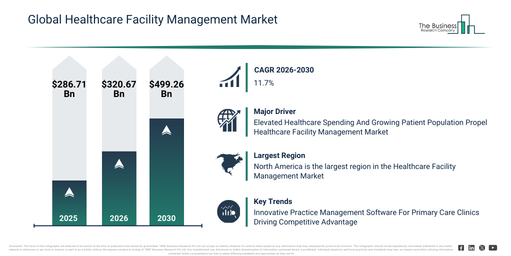
    The healthcare facility management market size has experienced swift expansion in recent years. This market is forecast to grow from $286.71 billion in 2025 to $320.67 billion in 2026, exhibiting a compound annual growth rate (CAGR) of 11.8%. The historical period’s growth can be attributed to factors such as the expansion of hospital infrastructure, a heightened need for operational efficiency in healthcare facilities, increasingly stringent regulatory compliance requirements, the rise of multi-specialty hospitals, and the adoption of centralized facility management systems.

    The healthcare facility management market is projected for substantial expansion over the upcoming years. Its size is anticipated to reach $499.26 billion by 2030, exhibiting a compound annual growth rate (CAGR) of 11.7%. This anticipated growth during the forecast period is driven by factors such as greater investments in smart hospital technologies, a heightened demand for sustainable healthcare infrastructure, the proliferation of IoT-enabled facility monitoring, an increasing inclination towards outsourced facility services, and a magnified emphasis on optimizing costs within healthcare operations. Key trends for the forecast period encompass a wider adoption of smart facility management systems, an escalating utilization of predictive maintenance technologies, a reinforced focus on constructing energy-efficient healthcare buildings, the expansion of outsourced facility services, and a heightened emphasis on ensuring patient safety and regulatory compliance.

    Get A Free Sample Report With In-Depth Market Insights:

    https://thebusinessresearchcompany.com/sample_request?id=83858373&type=smp&name=Healthcare%20Facility%20Management%20Market%20Report%202026&utm_source=Blogs&utm_medium=Paid&utm_campaign=Nov_PR

    Healthcare Facility Management Market Development Factors: What’s Supporting Demand?

    An expanding patient population, coupled with increasing healthcare spending from both private and public entities within healthcare systems, is a primary driver for the growth of the healthcare facility management market. Governmental and private investments in healthcare across various countries bolster the development of healthcare systems, ultimately enhancing patient services. This, in turn, facilitates the broader adoption of healthcare facility management within the healthcare infrastructure. For instance, the Office for National Statistics, a UK-based government department, reported in May 2024 that total healthcare expenditure experienced a 5.6% nominal increase from 2022 to 2023. This marked a significant acceleration compared to the 0.9% growth observed in 2022. Consequently, the financial commitments by private and public participants in healthcare systems are propelling the expansion of the healthcare facility management market.

    Healthcare Facility Management Market Breakdown By Product Type And Application

    The healthcare facility management market covered in this report is segmented –

    1) By Type: Hard Services, Soft Services, Other Services

    2) By Business Model: Outsourced, In-House

    3) By End User: Hospitals And Clinics, Long-Term Healthcare Facilities

    Subsegments:

    1) By Hard Services: Building Maintenance, Mechanical And Electrical Services, Infrastructure Management

    2) By Soft Services: Cleaning And Sanitation, Security Services, Catering And Food Services

    3) By Other Services: Waste Management, Grounds Maintenance, Pest Control Services

    Healthcare Facility Management Market Trends Powering Strategic Industry Growth

    Major companies operating in the healthcare facility management market are developing innovative solutions, such as practice management software, for primary care clinics to gain a competitive advantage and increase revenue. Practice management software for primary care clinics refers to specialized software applications designed to streamline and optimize the administrative and operational tasks within a primary care clinic or medical practice. For instance, in August 2023, Kumo, a Malysia-based healthcare company, launched KumoDoc, a practice management software tailored for primary care clinics, with a primary focus on improving efficiency and optimizing clinic operations. KumoDoc offers an array of features, including synchronized appointment scheduling with patient notifications through WhatsApp, efficient medical inventory management, a secure telehealth platform, algorithms for fraud detection, and seamless billing processes. It brings together electronic medical records to facilitate real-time collaboration, delivering benefits to both clinics and patients. KumoDoc adopts a customer-centric approach, aiming to enhance and streamline healthcare processes for providers. The software simplifies the healthcare experience, making it efficient, personalized, and convenient. Its innovative technology and user-friendly interface are designed to support medical practitioners in managing daily clinic administration, benefiting primary care and medical wellness centers.

    Healthcare Facility Management Market Company Landscape And Competitive Strategy

    Major companies operating in the healthcare facility management market are ABM Industries Inc., ISS World Services A/S, Jones Lang LaSalle IP Inc., Medxcel Facility Management LLC, Mitie Group PLC, Aramark Corporation, Compass Group PLC, Ecolab Inc., Sodexo SVC India Pvt. Ltd., OCS Group Limited, Serco Group PLC, Vanguard Resources Inc., Arora Holdings Limited, Cushman & Wakefield, CBRE Group Inc., Johnson Controls International PLC, Crothall Healthcare, C&W Facility Services Inc., AM Facilities Management Service Ltd., Emcor Facilities Services Inc., Epic Facilities Management, Stericycle Inc.

    View The Full Healthcare Facility Management Market Report:

    https://thebusinessresearchcompany.com/report/healthcare-facility-management-global-market-report?utm_source=Blogs&utm_medium=Paid&utm_campaign=Nov_PR

    Healthcare Facility Management Market Regional Split: Which Areas Are Fueling Growth?

    North America was the largest region in the healthcare facility management market in 2025. The regions covered in the healthcare facility management market report are Asia-Pacific, South East Asia, Western Europe, Eastern Europe, North America, South America, Middle East, Africa.

    Reach Out To Our Team:

    The Business Research Company: https://www.thebusinessresearchcompany.com/

    Americas: +1 310-496-7795

    Asia: +44 7882 955267 & +91 8897263534

    Europe: +44 7882 955267

    Email us at: marketing@tbrc.info

    Follow us on:

    LinkedIn: https://in.linkedin.com/company/the-business-research-company

    YouTube: https://www.youtube.com/channel/UC24_fI0rV8cR5DxlCpgmyFQ

    Global Market Model: https://www.thebusinessresearchcompany.com/global-market-model
  • Healthcare Extended Reality Market Set To Expand From $45.3 Billion In 2026: Growth Outlook Through 2030

    Healthcare Extended Reality Market Set To Expand From $45.3 Billion In 2026: Growth Outlook Through 2030

    Backed by market attractiveness analysis, total addressable market sizing, company benchmarking matrices, interactive Excel dashboards, wider supply chain intelligence, emerging startup coverage, and detailed product-level insights, The Business Research Company’s 2026 market reports are designed to offer research that is more actionable and strategically valuable than ever.

    Healthcare Extended Reality Market Forecast: Value Set To Climb From $14.84 Billion To $45.3 Billion

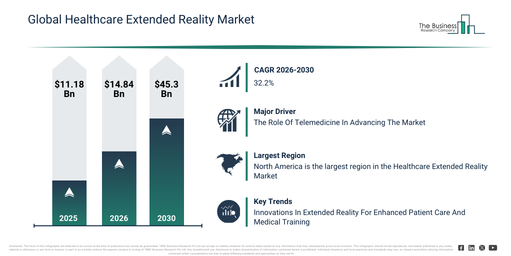
    The healthcare extended reality market size has experienced significant expansion in recent years. It is anticipated to increase from $11.18 billion in 2025 to $14.84 billion in 2026, demonstrating a compound annual growth rate (CAGR) of 32.8%. The growth observed in the past can be attributed to factors like the increasing application of simulation-based medical education, rising investments in digital healthcare tools, the expanded adoption of minimally invasive procedures, the broadening of telemedicine services, and the availability of advanced visualization hardware.

    The healthcare extended reality market is projected to experience rapid expansion over the coming years, with its valuation anticipated to reach $45.3 billion by 2030, exhibiting a compound annual growth rate (CAGR) of 32.2%. This growth during the projection period can be attributed to several factors, including the increasing integration of XR with AI-driven diagnostics, a rising demand for remote and immersive care delivery, the expansion of precision medicine applications, a growing emphasis on personalized patient engagement, and increased funding directed towards digital health innovation. Key trends expected during the forecast period encompass the increasing adoption of immersive medical training platforms, a rising utilization of XR in surgical planning and guidance, the growing implementation of virtual rehabilitation programs, the expansion of remote consultations leveraging XR tools, and an enhanced focus on patient-centric immersive therapies.

    Get A Free Sample Report With In-Depth Market Insights:

    https://thebusinessresearchcompany.com/sample_request?id=69922329&type=smp&name=Healthcare%20Extended%20Reality%20Market%20Report%202026&utm_source=Blogs&utm_medium=Paid&utm_campaign=Nov_PR

    Healthcare Extended Reality Market Industry Drivers: What’s Behind The Revenue Growth?

    The rising adoption of telemedicine is projected to stimulate the expansion of the healthcare extended reality market. Telemedicine involves the application of telecommunications technology to deliver medical services and care remotely, enabling individuals to consult with healthcare professionals without needing an in-person visit to a medical facility. The increased prevalence of telemedicine can be attributed to the escalating desire for convenient healthcare access and technological advancements that facilitate remote consultations and monitoring. Healthcare extended reality (XR) enhances telemedicine by offering immersive remote consultations, virtual examinations, and interactive training, thereby improving patient engagement, the accuracy of diagnoses, and collaborative care among healthcare professionals. For instance, in June 2024, according to the Health-tech news, a UK-based innovative platform for the health tech community, in April 2024, there were 1,301,924 GP appointments classed as video or online, a significant rise from 172,114 in April 2023. Therefore, the growing uptake of telemedicine is propelling the growth of the healthcare extended reality market.

    Healthcare Extended Reality Market Segment Analysis And Revenue Potential

    The healthcare extended reality market covered in this report is segmented –

    1) By Component: Hardware, Software, Services

    2) By Technology: Augmented Reality, Virtual Reality, Mixed Reality

    3) By Application: Surgery, Therapy, Education And Training, Rehabilitation, Pain Management, Other Applications

    4) By End User: Hospitals, Clinics And Surgical Centers, Research Organizations, Diagnostics Laboratories, Other End Users

    Subsegments:

    1) By Hardware: Head-Mounted Displays (HMDs), Smart Glasses, Haptic Feedback Devices, Sensors and Cameras

    2) By Software: Virtual Reality (VR) Software, Augmented Reality (AR) Software, Mixed Reality (MR) Software, Simulation and Training Software

    3) By Services: Consulting Services, Integration And Deployment Services, Support And Maintenance Services, Training And Education Services

    Healthcare Extended Reality Market Growth Trends Reshaping The Competitive Landscape

    Major companies involved in healthcare extended reality are focusing on developing innovative technologies, such as integrating virtual and augmented reality technologies, to enhance medical training, patient treatment, and surgical planning. The integration of virtual and augmented reality technologies improves user experiences by blending digital content with the real world, creating immersive and interactive environments. For instance, in April 2024, SindyXR Inc., a US-based telehealth group therapy platform company, launched its first extended reality (XR)-based group health support system, which enhances patient care through immersive educational experiences that boost engagement and enable remote access to healthcare services. It also aids in mental health treatments, alleviates pain perception, and promotes collaboration among healthcare professionals, resulting in improved health outcomes.

    Healthcare Extended Reality Market Key Players Shaping Industry Direction

    Major companies operating in the healthcare extended reality market are Microsoft Corporation, Meta Platforms Inc, NVIDIA Corporation, Medtronic plc, EON Reality Inc, Osso VR Inc, zSpace Inc, VirtaMed AG, Surgical Theater Inc, XRHealth, AppliedVR Inc, OramaVR Inc, Apprentice.io, GigXR Inc, PrecisionOS Technology Inc, SentiAR Inc, FundamentalVR, Medical Realities, ImmersiveTouch, Luxsonic Technologies, EchoPixel

    View The Full Healthcare Extended Reality Market Report:

    https://thebusinessresearchcompany.com/report/healthcare-extended-reality-global-market-report2024?utm_source=Blogs&utm_medium=Paid&utm_campaign=Nov_PR

    Healthcare Extended Reality Market Top Region: Where Does Most Revenue Come From?

    North America was the largest region in the healthcare extended reality market in 2025. The regions covered in the healthcare extended reality market report are Asia-Pacific, South East Asia, Western Europe, Eastern Europe, North America, South America, Middle East, Africa.

    Reach Out To Our Team:

    The Business Research Company: https://www.thebusinessresearchcompany.com/

    Americas: +1 310-496-7795

    Asia: +44 7882 955267 & +91 8897263534

    Europe: +44 7882 955267

    Email us at: marketing@tbrc.info

    Follow us on:

    LinkedIn: https://in.linkedin.com/company/the-business-research-company

    YouTube: https://www.youtube.com/channel/UC24_fI0rV8cR5DxlCpgmyFQ

    Global Market Model: https://www.thebusinessresearchcompany.com/global-market-model
  • Healthcare ERP Consulting Services Market Size And Growth In 2026: Key Factors Shaping Future Demand

    Healthcare ERP Consulting Services Market Size And Growth In 2026: Key Factors Shaping Future Demand

    Featuring market attractiveness scoring, total addressable market sizing, company benchmarking matrices, interactive Excel dashboards, deeper supply chain intelligence, emerging startup tracking, and granular product-level insights, The Business Research Company’s 2026 market reports are built to deliver research that is both more actionable and more strategically valuable.

    Healthcare ERP Consulting Services Market Revenue Growth On Track For A 10.7% CAGR Through 2030

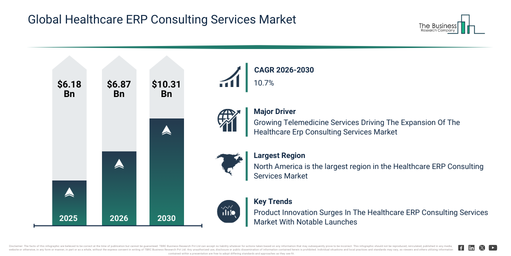
    The healthcare erp consulting services market has experienced significant expansion in recent years. Its size is projected to increase from $6.18 billion in 2025 to $6.87 billion in 2026, achieving a compound annual growth rate (CAGR) of 11.3%. This growth during the historic period stems from factors such as the rising complexity of healthcare operations, the expansion of hospital networks, an escalating demand for financial transparency, the integration of digital hospital management systems, and an increase in regulatory reporting requirements.

    The healthcare erp consulting services market is projected for substantial expansion in the coming years. By 2030, this market is anticipated to reach $10.31 billion, demonstrating a compound annual growth rate (CAGR) of 10.7%. This expansion during the forecast period is driven by factors such as greater investments in cloud-native erp platforms, an increasing need for real-time operational analytics, the proliferation of value-based healthcare models, a heightened emphasis on cybersecurity compliance, and the wider uptake of integrated healthcare IT ecosystems. Key trends anticipated over this period encompass a rise in the adoption of cloud-based healthcare erp systems, a growing requirement for erp implementation and integration services, an intensified focus on data-driven hospital management, the broadening scope of compliance and regulatory consulting, and a stronger emphasis on optimizing workflows.

    Get A Free Sample Report With In-Depth Market Insights:

    https://thebusinessresearchcompany.com/sample_request?id=46486922&type=smp&name=Healthcare%20ERP%20Consulting%20Services%20Market%20Report%202026&utm_source=Blogs&utm_medium=Paid&utm_campaign=Nov_PR

    Healthcare ERP Consulting Services Market Growth Factors: What’s Supporting Expansion?

    The expansion of telemedicine services is projected to propel the advancement of the healthcare ERP consulting services market in the future. These services involve providing healthcare, medical advice, and clinical support from a distance, leveraging telecommunications technology, mainly the Internet and video conferencing platforms. Significant volumes of patient information are produced by telemedicine platforms. Healthcare ERP systems play a crucial role in consolidating this data with existing healthcare records and optimizing procedures for patient management and billing. An example is found in September 2024, where the Australian Bureau of Statistics (ABS), Australia’s national statistical agency, reported that in 2023–24, 83.5% of males utilized telehealth services, representing a rise from 78.6% in 2022–23. Consequently, the expansion of telemedicine services is stimulating the growth within the healthcare ERP consulting services market.

    Healthcare ERP Consulting Services Market Segmentation And Category Overview

    The healthcare erp consulting services market covered in this report is segmented –

    1) By Functionality: Implementation, Training And Education, Other Functionalities

    2) By Deployment: On-Premise ERP Consulting, Cloud-Based ERP Consulting, Hybrid ERP Consulting

    3) By End-User: Hospitals and Health Systems, Clinics and Ambulatory Care Centers, Diagnostic and Imaging Centers, Specialty Healthcare Providers, Other Healthcare Facilities

    Subsegments:

    1) By Implementation: System Integration, Configuration, Data Migration

    2) By Training and Education: User Training, Administrator Training, Ongoing Education Programs

    3) By Other Functionality: Process Optimization, Change Management, Compliance And Regulatory Support

    Healthcare ERP Consulting Services Market Trends Shaping Long-Term Demand

    Leading companies active in the healthcare ERP consulting services market are developing advanced solutions that incorporate features tailored for healthcare, enabling organizations to enhance their operations and improve patient care through customized enterprise resource planning systems. Healthcare-specific capabilities refer to functionalities and attributes designed to meet the distinct requirements of the healthcare industry. For example, in September 2023, Oracle Corporation, a US-based computer software company, unveiled the Fusion Cloud Applications Suite, featuring new healthcare-specific capabilities aimed at increasing operational efficiency and elevating patient care. These healthcare-specific capabilities include financial consolidation and reporting, procurement, replenishment planning, and recall management. These features will be incorporated into Oracle Fusion Cloud Enterprise Resource Planning (ERP), Oracle Fusion Cloud Enterprise Performance Management (EPM), and Oracle Fusion Cloud Supply Chain & Manufacturing (SCM).

    Healthcare ERP Consulting Services Market Competitive Analysis Of Leading Industry Participants

    Major companies operating in the healthcare erp consulting services market are Accenture plc, Deloitte Touche Tohmatsu, PricewaterhouseCoopers, Infosys Limited, Atos Information Technology GmbH, Avaap USA LLC, Wipro Limited, KPMG International Limited, Clarkston Consulting, JDC Systems Innovations, The RockWood Group INC., AIM Solutions, Alithya Group Inc., LeverX International LLC, Panorama Consulting Group, Traction Consulting Group, Cognizant Technology Solutions India Private Limited, HCL Technologies, IBM Corporation, Tata Consultancy Services Limited, Tech Mahindra Limited, Ernst & Young Global Limited

    View The Full Healthcare ERP Consulting Services Market Report:

    https://thebusinessresearchcompany.com/report/healthcare-ERP-consulting-services-global-market-report?utm_source=Blogs&utm_medium=Paid&utm_campaign=Nov_PR

    Healthcare ERP Consulting Services Market Regional Breakdown: Where Is Demand Concentrated?

    North America was the largest region in the healthcare ERP consulting services market in 2025. The regions covered in the healthcare erp consulting services market report are Asia-Pacific, South East Asia, Western Europe, Eastern Europe, North America, South America, Middle East, Africa.

    Reach Out To Our Team:

    The Business Research Company: https://www.thebusinessresearchcompany.com/

    Americas: +1 310-496-7795

    Asia: +44 7882 955267 & +91 8897263534

    Europe: +44 7882 955267

    Email us at: marketing@tbrc.info

    Follow us on:

    LinkedIn: https://in.linkedin.com/company/the-business-research-company

    YouTube: https://www.youtube.com/channel/UC24_fI0rV8cR5DxlCpgmyFQ

    Global Market Model: https://www.thebusinessresearchcompany.com/global-market-model