Blog

  • Healthcare Data Interoperability Market Forecast Insights: The Road To $14.98 Billion By 2030

    Healthcare Data Interoperability Market Forecast Insights: The Road To $14.98 Billion By 2030

    Backed by market attractiveness analysis, total addressable market sizing, company benchmarking matrices, interactive Excel dashboards, wider supply chain intelligence, emerging startup coverage, and detailed product-level insights, The Business Research Company’s 2026 market reports are designed to offer research that is more actionable and strategically valuable than ever.

    Healthcare Data Interoperability Market Forecast: What Value Will The Market Reach By 2030?

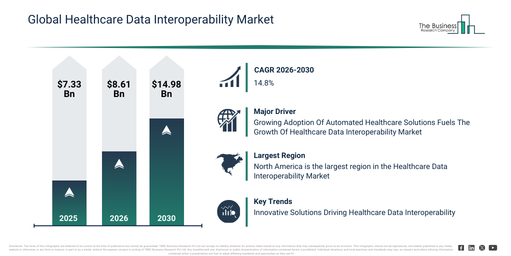
    The healthcare data interoperability market has seen substantial growth in recent years. It is projected to increase from $7.33 billion in 2025 to $8.61 billion in 2026, achieving a compound annual growth rate (CAGR) of 17.6%. This historical expansion can be attributed to several factors, including the increasing digitization of healthcare records, the expansion of electronic health record systems, a growing need for coordinated patient care, the development of multi-provider healthcare networks, and regulatory efforts aimed at standardizing health data.

    The healthcare data interoperability market is expected to undergo significant expansion over the next few years. It is projected to reach $14.98 billion by 2030, growing at a compound annual growth rate (CAGR) of 14.8%. This anticipated growth throughout the forecast period stems from factors such as the increasing adoption of value-based care models, growing investments in connected healthcare IT infrastructure, a rising demand for interoperable telehealth platforms, the expansion of national health information exchanges, and a greater focus on patient-centric data access. Prominent trends for the forecast period include the increasing adoption of standardized health data exchange frameworks, the growing integration of cross-platform clinical systems, a rising demand for real-time patient data access, the expansion of secure API-based interoperability solutions, and an enhanced focus on semantic data harmonization.

    Get A Free Sample Report With In-Depth Market Insights:

    https://thebusinessresearchcompany.com/sample_request?id=11960213&type=smp&name=Healthcare%20Data%20Interoperability%20Market%20Report%202026&utm_source=Blogs&utm_medium=Paid&utm_campaign=Nov_PR

    Healthcare Data Interoperability Market Industry Drivers: What’s Behind The Revenue Growth?

    The increasing implementation of automated healthcare solutions is anticipated to boost the expansion of healthcare data interoperability in the coming period. Automated healthcare solutions are defined as technology-driven tools and systems crafted to streamline and improve various aspects of healthcare service delivery and management. The rising uptake of these solutions in the healthcare industry is fueled by the demand for enhanced efficiency, accuracy, and improved patient care. Healthcare data interoperability allows automated healthcare solutions to seamlessly integrate and exchange patient information, thereby facilitating superior care delivery. Moreover, interoperability enables these solutions to optimize clinical workflows through the automation of routine tasks such as data entry, documentation, and administrative processes. For instance, in March 2024, according to the NHS England, a UK-based organization, $148.21 million (£113 million) was allocated in 2024 by NHS England to 86 AI-based projects in health and care, with these AI projects currently being evaluated across 408 sites throughout the UK, covering 466 live AI-based trials. Thus, the expanding adoption of automated healthcare solutions is a key driver for the growth of the healthcare data interoperability market.

    Healthcare Data Interoperability Market Breakdown By Product Type And Application

    The healthcare data interoperability market covered in this report is segmented –

    1) By Model: Centralized, Hybrid, Decentralized

    2) By Deployment: Cloud-Based, On-Premises

    3) By Level: Foundational, Structural, Semantic

    4) By Application: Diagnosis, Treatment, Other Applications

    5) By End User: Healthcare Providers, Healthcare Payers, Pharmacies

    Subsegments:

    1) By Centralized: Single Point Of Control, Unified Data Repository, Centralized Management And Storage

    2) By Hybrid: Combination Of Centralized And Decentralized Approaches, Distributed Data Management With Centralized Control, Flexible Data Exchange Models

    3) By Decentralized: Distributed Data Storage, Peer-To-Peer Data Sharing, Localized Control And Management

    Healthcare Data Interoperability Market Growth Trends Reshaping The Competitive Landscape

    Leading entities within the healthcare data interoperability market are crafting novel, advanced solutions, including digital platforms, to secure a competitive advantage. These digital platforms are defined as internet-based systems or applications that enable user interaction, transaction processing, and information exchange, encompassing examples like online retail sites, social networking platforms, and cloud-hosted service environments. An illustrative example is KMS Healthcare, a company based in the US, which introduced its CONNECT interoperability solution in August 2023. This platform aims to streamline data interchange between electronic health records (EHRs). The advanced solution incorporates customizable, pre-validated FHIR APIs alongside an HL7 conversion engine, collectively assisting healthcare providers in addressing interoperability hurdles and enhancing data integration processes. The CONNECT platform grants immediate access to prominent EHR systems, empowering developers to swiftly test and build applications, thereby substantially lowering the expenses and intricate nature involved in setting up isolated sandbox connections.

    Healthcare Data Interoperability Market Company Landscape And Competitive Strategy

    Major companies operating in the healthcare data interoperability market are Optum Inc., Oracle Corporation, Cognizant Technology Solutions, Koninklijke Philips NV, Wipro Limited, Epic Systems Corporation, Infor Inc, Virtusa Corp, Deevita LLC, Ciox Health, Veradigm LLC, ViSolve Inc., Change Healthcare, InterSystems Corporation, NextGen Healthcare Inc., eMids, Consensus Cloud Solutions Inc., Merative, Orion Health Group Limited, Teletracking Technologies, OSP Labs, Jitterbit, Nalashaa Solutions, Lyniate, MphRx, iNTERFACEWARE Inc

    View The Full Healthcare Data Interoperability Market Report:

    https://thebusinessresearchcompany.com/report/healthcare-data-interoperability-global-market-report?utm_source=Blogs&utm_medium=Paid&utm_campaign=Nov_PR

    Healthcare Data Interoperability Market Regional Breakdown: Where Is Demand Concentrated?

    North America was the largest region in the healthcare data interoperability market in 2025. Asia Pacific is expected to be the fastest-growing region in the forecast period. The regions covered in the healthcare data interoperability market report are Asia-Pacific, South East Asia, Western Europe, Eastern Europe, North America, South America, Middle East, Africa.

    Reach Out To Our Team:

    The Business Research Company: https://www.thebusinessresearchcompany.com/

    Americas: +1 310-496-7795

    Asia: +44 7882 955267 & +91 8897263534

    Europe: +44 7882 955267

    Email us at: marketing@tbrc.info

    Follow us on:

    LinkedIn: https://in.linkedin.com/company/the-business-research-company

    YouTube: https://www.youtube.com/channel/UC24_fI0rV8cR5DxlCpgmyFQ

    Global Market Model: https://www.thebusinessresearchcompany.com/global-market-model
  • Healthcare Data Integration Market Explained: What Is Fueling Growth To $5.83 Billion By 2030?

    Healthcare Data Integration Market Explained: What Is Fueling Growth To $5.83 Billion By 2030?

    Featuring market attractiveness scoring, total addressable market sizing, company benchmarking matrices, interactive Excel dashboards, deeper supply chain intelligence, emerging startup tracking, and granular product-level insights, The Business Research Company’s 2026 market reports are built to deliver research that is both more actionable and more strategically valuable.

    Healthcare Data Integration Market Size Outlook: How Quickly Will Revenue Expand Through 2030?

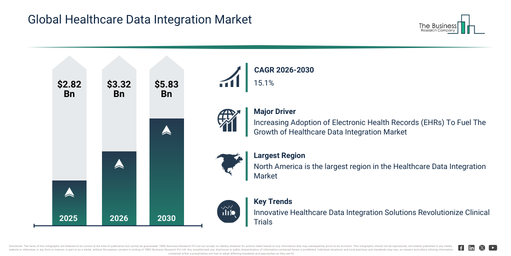
    The market for healthcare data integration has experienced significant growth recently. Projections indicate a rise from $2.82 billion in 2025 to $3.32 billion in 2026, demonstrating a compound annual growth rate (CAGR) of 17.9%. Historically, this expansion has been driven by factors such as the increasing fragmentation of healthcare data systems, the wider adoption of electronic health records, the growth of multi-provider healthcare networks, the rising need for operational analytics, and the accessibility of integration middleware tools.

    The healthcare data integration market is projected for significant expansion in the coming years. Its valuation is anticipated to reach $5.83 billion by 2030, exhibiting a compound annual growth rate (CAGR) of 15.1%. This projected growth is driven by factors such as the increasing implementation of interoperable healthcare systems, greater financial commitments to data-centric care models, the widening scope of population health management efforts, an intensified emphasis on automating regulatory reporting, and a rising need for adaptable cloud integration solutions. Key developments expected during this period involve the greater uptake of consolidated data integration platforms, a surging requirement for instant clinical data accessibility, the broader incorporation of interoperability standards, the enlargement of cloud-based integration offerings, and a sharpened focus on data governance and adherence.

    Get A Free Sample Report With In-Depth Market Insights:

    https://thebusinessresearchcompany.com/sample_request?id=75984755&type=smp&name=Healthcare%20Data%20Integration%20Market%20Report%202026&utm_source=Blogs&utm_medium=Paid&utm_campaign=Nov_PR

    Healthcare Data Integration Market Growth Factors: What’s Supporting Expansion?

    The future expansion of the healthcare data integration market is anticipated to be driven by the growing embrace of electronic health records (EHRs). These digital platforms effectively store and manage patient health data, facilitating seamless access, exchange, and analysis among medical practitioners. The escalating need for EHR IT systems stems from their enhanced efficiency, centralized and accessible data, improved interoperability, and greater patient involvement. Healthcare data integration solutions play a vital role in ensuring interoperability by linking EHR systems with various other healthcare IT platforms, including laboratory information systems (LIS), pharmacy systems, and radiology systems. For example, a report in May 2024 from the Journal of Medical Internet Research, a peer-reviewed journal based in Canada, indicated that 38.78% of US adults had utilized telehealth services within the previous year. Consequently, the increasing implementation of electronic health records (EHRs) is fostering the development of the healthcare data integration market.

    Healthcare Data Integration Market Segment Analysis And Revenue Potential

    The healthcare data integration market covered in this report is segmented –

    1) By Component: Tools, Services

    2) By Type Of Integration: Application Integration, Data Integration, Device Integration, Healthcare Information Exchange (HIE), System Integration, Other Integrations

    3) By Deployment: Cloud, On-Premises

    4) By Business Application: Operations And Supply Chain, Finance

    5) By End-user: Hospital, Clinics, Laboratories, Other End-Users

    Subsegments:

    1) By Tools: Data Integration Software, Middleware Solutions, Data Mapping Tools, Etl (Extract, Transform, Load) Tools

    2) By Services: Data Integration Consulting, Implementation And Support Services, Cloud Integration Services, Managed Data Services

    Healthcare Data Integration Market Trends Shaping Long-Term Demand

    Major companies operating in the healthcare data integration market are developing innovative data integration offerings, such as Clinical Data Studio and Health Record Connect, to gain a competitive advantage. These solutions, Clinical Data Studio and Health Record Connect, are new data integration tools that improve and streamline clinical data workflows in clinical trials. For example, in November 2023, Medidata Solutions Inc., a US-based technology company focused on software as a service for clinical trials, introduced Clinical Data Studio and Health Record Connect, an integration solution crafted to enhance and accelerate clinical trials. Medidata’s clinical data offerings optimize workflows by incorporating lab data, electronic health records, and sensors. Clinical Data Studio aids in data standardization, while Health Record Connect integrates clinical research into healthcare data, transforming study conduct with AI insights. These solutions improve trial outcomes by leveraging actionable data insights and enhancing data quality and management processes. They merge healthcare data sources to boost efficiencies and improve patient outcomes in clinical research settings.

    Healthcare Data Integration Market Key Players Shaping Industry Direction

    Major companies operating in the healthcare data integration market are McKesson Corporation, International Business Machines Corporation, Oracle Corporation, Koninklijke Philips N.V, GE Healthcare, Cerner Corporation, SAS Institute Inc, Epic Systems Corporation, Allscripts Healthcare Solutions Inc, Informatica Inc, Siemens Healthineers AG, InterSystems Corporation, NXGN Management LLC, Optum Inc, Health Catalyst, Innovaccer Inc, Orion Health, Veradigm LLC, Denodo Technologies, 1upHealth

    View The Full Healthcare Data Integration Market Report:

    https://thebusinessresearchcompany.com/report/healthcare-data-integration-global-market-report?utm_source=Blogs&utm_medium=Paid&utm_campaign=Nov_PR

    Healthcare Data Integration Market Geographic Landscape: Which Region Leads Industry Growth?

    North America was the largest region in the healthcare data integration market in 2025. Asia-Pacific is expected to be the fastest-growing region in the forecast period. The regions covered in the healthcare data integration market report are Asia-Pacific, South East Asia, Western Europe, Eastern Europe, North America, South America, Middle East, Africa.

    Reach Out To Our Team:

    The Business Research Company: https://www.thebusinessresearchcompany.com/

    Americas: +1 310-496-7795

    Asia: +44 7882 955267 & +91 8897263534

    Europe: +44 7882 955267

    Email us at: marketing@tbrc.info

    Follow us on:

    LinkedIn: https://in.linkedin.com/company/the-business-research-company

    YouTube: https://www.youtube.com/channel/UC24_fI0rV8cR5DxlCpgmyFQ

    Global Market Model: https://www.thebusinessresearchcompany.com/global-market-model
  • Healthcare Data Annotation Tools Market Forecast To Reach $1.09 Billion By 2030: Key Trends Explained

    Healthcare Data Annotation Tools Market Forecast To Reach $1.09 Billion By 2030: Key Trends Explained

    Built to provide research that’s more actionable and strategically valuable, The Business Research Company’s 2026 market reports include market attractiveness analysis, total addressable market sizing, company benchmarking matrices, interactive Excel dashboards, broader supply chain intelligence, emerging startup tracking, and in-depth product insights.

    Healthcare Data Annotation Tools Market Size, Value And Growth Trajectory Through 2030

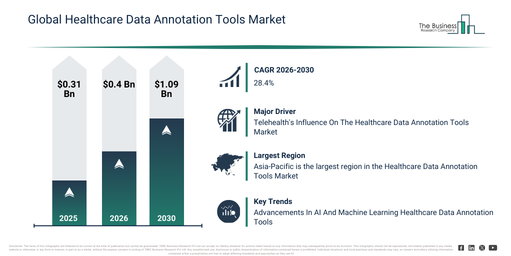
    The size of the healthcare data annotation tools market has seen substantial growth in recent years. This market is set to expand from $0.31 billion in 2025 to $0.4 billion in 2026, achieving a compound annual growth rate (CAGR) of 28.3%. The historical expansion of this market can be attributed to factors such as the increasing use of AI in medical imaging, the growth of digital pathology datasets, the expansion of clinical decision support systems, the availability of large healthcare datasets, and the early adoption of machine learning in diagnostics.

    The healthcare data annotation tools market is projected for significant expansion in the coming years. Its value is forecast to reach $1.09 billion by 2030, exhibiting a compound annual growth rate (CAGR) of 28.4%. This anticipated growth is driven by factors such as the expanding deployment of AI-powered diagnostic instruments, a heightened need for scalable annotation platforms, the broadening of personalized medicine applications, escalating investments in healthcare AI startups, and a greater emphasis on regulatory oversight for AI model validation. Key trends anticipated during this period encompass a surging demand for meticulously labeled medical data, the increasing integration of automated annotation tools, the wider application of multimodal data annotation, the scaling up of AI training data pipelines, and a sharpened emphasis on the precision and adherence of annotation processes.

    Get A Free Sample Report With In-Depth Market Insights:

    https://thebusinessresearchcompany.com/sample_request?id=15611452&type=smp&name=Healthcare%20Data%20Annotation%20Tools%20Market%20Report%202026&utm_source=Blogs&utm_medium=Paid&utm_campaign=Nov_PR

    Healthcare Data Annotation Tools Market Demand Drivers: What’s Powering Industry Growth?

    The rising adoption of telehealth is anticipated to boost the healthcare data annotation tools market’s expansion in the upcoming period. Telehealth involves employing electronic information and telecommunication technologies to assist in long-distance clinical health care, health-related education for patients and professionals, health administration, and public health. In telemedicine, healthcare data annotation tools are utilized to accurately identify and categorize medical data, thus enabling more effective evaluation, planning of therapy, and remote monitoring of patients. For instance, data from September 2024, published by the Australian Bureau of Statistics (ABS), the national statistical agency of Australia, showed that in 2023–24, 83.5% of males reported using telehealth services, an increase from 78.6% in 2022–23. This escalating utilization of telehealth is consequently propelling the healthcare data annotation tools market.

    Healthcare Data Annotation Tools Market Segmentation And Category Overview

    The healthcare data annotation tools market covered in this report is segmented –

    1) By Type: Text, Image And Video, Audio

    2) By Technology: Manual, Semi-Supervised, Automatic

    3) By End-User: Hospitals, Diagnostic Imaging Centers, Healthcare Technology Companies, Other End-Users

    Subsegments:

    1) By Text: Natural Language Processing (NLP) Annotation, Entity Recognition, Text Classification

    2) By Image and Video: Medical Image Labeling, Object Detection, Semantic Segmentation, Video Frame Annotation

    3) By Audio: Speech Recognition Annotation, Voice Data Labeling, Audio Transcription

    Healthcare Data Annotation Tools Market Innovation Trends Shaping Future Development

    Leading companies in healthcare data annotation tools are concentrating on creating advanced technological solutions, such as AI-driven healthcare data annotation tools, to help accelerate the annotation of videos for AI development. These AI-based healthcare data annotation tools are software solutions that utilize artificial intelligence (AI) technologies to annotate and label data relevant to healthcare. For instance, in August 2023, iMerit Technology, a US-based artificial intelligence (AI) data solutions company, introduced Ango Hub, an end-to-end, enterprise-level technology platform designed to offer a full suite of data annotation tools for AI and analytics on a single platform. This platform is engineered to provide an extensive array of data annotation services, leveraging automation at every stage, from data preparation and selection to workflow design, specialized annotation tools, quality assurance, and reporting. Ango Hub has been employed for medical image annotation. iMerit’s Ango Hub is a novel, purpose-built application founded on a generative AI framework, intended to expedite development in significant vertical areas like medical artificial intelligence.

    Healthcare Data Annotation Tools Market Competitive Analysis Of Leading Industry Participants

    Major companies operating in the healthcare data annotation tools market are Infosys BPM, iMerit Technology, Appen Limited, Scale AI, CloudFactory Limited, Innodata, Cogito Tech LLC, Defined.ai, Shaip, Sama AI, Labelbox, SuperAnnotate LLC, Label Your Data, Playment, V7, NetraMark Corp, Keymakr Inc, Dataloop AI, Haidata, Hive AI, Turing, Capestart, Anolytics, Explorium, Alegion AI Inc, Lynxcare, Trillbit, Kotwel

    View The Full Healthcare Data Annotation Tools Market Report:

    https://thebusinessresearchcompany.com/report/healthcare-data-annotation-tools-global-market-report?utm_source=Blogs&utm_medium=Paid&utm_campaign=Nov_PR

    Healthcare Data Annotation Tools Market Largest Region: Which Geography Holds The Biggest Share?

    Asia-Pacific was the largest region in the healthcare data annotation tools market in 2025. The regions covered in the healthcare data annotation tools market report are Asia-Pacific, South East Asia, Western Europe, Eastern Europe, North America, South America, Middle East, Africa.

    Reach Out To Our Team:

    The Business Research Company: https://www.thebusinessresearchcompany.com/

    Americas: +1 310-496-7795

    Asia: +44 7882 955267 & +91 8897263534

    Europe: +44 7882 955267

    Email us at: marketing@tbrc.info

    Follow us on:

    LinkedIn: https://in.linkedin.com/company/the-business-research-company

    YouTube: https://www.youtube.com/channel/UC24_fI0rV8cR5DxlCpgmyFQ

    Global Market Model: https://www.thebusinessresearchcompany.com/global-market-model
  • Healthcare Cybersecurity Market Analysis: Understanding The Drivers Behind 15.6% CAGR Through 2030 Growth

    Healthcare Cybersecurity Market Analysis: Understanding The Drivers Behind 15.6% CAGR Through 2030 Growth

    Backed by market attractiveness analysis, total addressable market sizing, company benchmarking matrices, interactive Excel dashboards, wider supply chain intelligence, emerging startup coverage, and detailed product-level insights, The Business Research Company’s 2026 market reports are designed to offer research that is more actionable and strategically valuable than ever.

    Healthcare Cybersecurity Market CAGR Outlook And Future Development

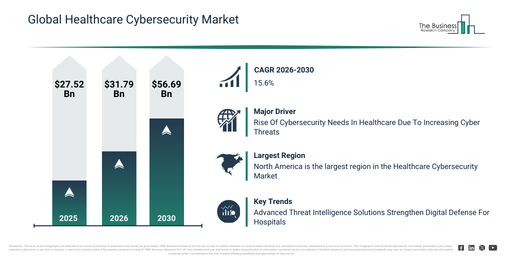
    The healthcare cybersecurity market size has observed substantial growth recently. It is anticipated to increase from $27.52 billion in 2025 to $31.79 billion in 2026, demonstrating a compound annual growth rate (CAGR) of 15.5%. The expansion witnessed in previous periods is attributable to factors such as the growing digitization of healthcare records, an uptick in cyberattack incidents affecting hospitals, the implementation of electronic health records, the proliferation of connected medical devices, and an intensifying regulatory focus on safeguarding patient data.

    The healthcare cybersecurity market is projected to experience substantial growth in the upcoming years. This market is anticipated to reach a size of $56.69 billion by 2030, demonstrating a compound annual growth rate (CAGR) of 15.6%. Factors contributing to this expansion during the forecast period include greater financial commitments to healthcare IT security, a heightened need for real-time threat surveillance, the proliferation of cloud-based healthcare solutions, an intensified emphasis on preventing ransomware attacks, and the enhanced incorporation of cybersecurity within medical device development. Key developments expected during this period involve the wider implementation of sophisticated threat detection systems, a growing acceptance of zero-trust security models, the increasing integration of AI-driven security analytics, the broadening scope of cybersecurity solutions for medical devices, and a stronger emphasis on adhering to regulatory standards and protecting data privacy.

    Get A Free Sample Report With In-Depth Market Insights:

    https://thebusinessresearchcompany.com/sample_request?id=31397739&type=smp&name=Healthcare%20Cybersecurity%20Market%20Report%202026&utm_source=Blogs&utm_medium=Paid&utm_campaign=Nov_PR

    Healthcare Cybersecurity Market Growth Drivers: What’s Behind The Acceleration?

    The rising prevalence of cyberattacks is projected to fuel the expansion of the healthcare cybersecurity market moving forward. These attacks are malicious attempts to disrupt, damage, or gain unauthorized access to computer systems, networks, or devices. The increase in cyberattacks is due to financially motivated threat actors targeting organizations to steal sensitive data, execute ransomware operations, and exploit vulnerabilities for monetary gain. Healthcare cybersecurity supports this driver by offering advanced security tools that safeguard patient information, protect clinical operations, and prevent data breaches that could disrupt care delivery. For instance, in October 2025, according to the Australian Signals Directorate, a Australia-based government agency, in FY2024–25, the Australian Signals Directorate’s (ASD) Australian Cyber Security Centre (ACSC) received over 42,500 calls to the Australian Cyber Security Hotline, marking a 16% rise from the previous year. Therefore, the escalating number of cyberattacks is driving the growth of the healthcare cybersecurity market.

    Healthcare Cybersecurity Market Segment Outlook: Which Categories Are Growing Fastest?

    The healthcare cybersecurity market covered in this report is segmented –

    1) By Solution: Identity And Access Management, Risk And Compliance Management, Antivirus And Antimalware, Distributed Denial Of Service (DDoS) Mitigation, Security Information And Event Management, Intrusion Detection System/ Intrusion Prevention System, Other Solutions

    2) By Security: Network Security, Endpoint Security, Application Security, Content Security

    3) By Threat: Malware, Distributed Denial Of Service (DDoS) Threats, Advanced Persistent Threat, Spyware, Lost Or Stolen Devices, Other Threats

    4) By End User: Pharma And Chemicals, Medical Devices, Health Insurance, Hospitals, Other End Users

    Subsegments:

    1) By Identity And Access Management: User Authentication, Role-Based Access Control, Single Sign-On

    2) By Risk And Compliance Management: Risk Assessment Tools, Compliance Management Solutions, Policy Management Software

    3) By Antivirus And Antimalware: Antivirus Software, Antimalware Solutions, Endpoint Protection

    4) By Distributed Denial Of Service (Ddos) Mitigation: Traffic Filtering, Rate Limiting, Ddos Protection Services

    5) By Security Information And Event Management (SIEM): Log Management, Security Monitoring, Incident Response

    6) By Intrusion Detection System Or Intrusion Prevention System (IDS Or IPS): Network-Based IDS Or IPS, Host-Based IDS Or IPS, Hybrid IDS Or IPS

    7) By Other Solutions: Data Encryption Solutions, Threat Intelligence Services, Security Training And Awareness Programs

    Healthcare Cybersecurity Market Trends Redefining Industry Growth

    Leading companies within the healthcare cybersecurity market are dedicated to developing advanced solutions, such as platforms for healthcare-specific threat intelligence, to enhance the protection of electronic health records, connected medical devices, and critical clinical systems against increasingly sophisticated cyberattacks. These healthcare-tailored threat intelligence platforms are cybersecurity systems designed for hospitals and health systems that consolidate threat feeds focused on the sector, link indicators of compromise, and automate response workflows, aiding security teams in detecting, prioritizing, and mitigating attacks targeting healthcare infrastructure. For example, in December 2024, Cyware Labs Inc., a US-based cybersecurity software company, introduced its Healthcare Tuned Threat Intelligence Platform (HC-TIP) to deliver curated, sector-specific threat intelligence to hospitals and clinical networks. This platform offers real-time visibility into ransomware attacks, medical-device vulnerabilities, and other healthcare-focused cyber risks. It also strengthens incident response by providing pre-built workflows and automated threat-sharing capabilities customized to the unique security requirements of the healthcare sector.

    Healthcare Cybersecurity Market Leading Companies And Competitive Benchmarking

    Major companies operating in the healthcare cybersecurity market are Microsoft Corporation, Intel Corporation, International Business Machines Corporation, Cisco Systems Inc., Broadcom Inc., Thales Group, Palo Alto Networks Inc., Juniper Networks Inc., Fortinet Inc., Gen Digital Inc., Splunk Inc., Checkpoint Software Technologies Ltd., Trend Micro Inc., Crowdstrike Holdings Inc., Fortra LLC, Tenable Inc., Rapid7 Inc., Qualys Inc., McAfee Corp., Forescout Technologies Inc., LogRhythm Inc., Claroty Ltd., Sophos Ltd., Fortified Health Security, Sensato Cybersecurity Solutions

    View The Full Healthcare Cybersecurity Market Report:

    https://thebusinessresearchcompany.com/report/healthcare-cybersecurity-global-market-report?utm_source=Blogs&utm_medium=Paid&utm_campaign=Nov_PR

    Healthcare Cybersecurity Market Regional Analysis: Which Geography Leads On Revenue?

    North America was the largest region in the healthcare cybersecurity market in 2025. Asia-Pacific is expected to be the fastest-growing region in the forecast period. The regions covered in the healthcare cybersecurity market report are Asia-Pacific, South East Asia, Western Europe, Eastern Europe, North America, South America, Middle East, Africa.

    Reach Out To Our Team:

    The Business Research Company: https://www.thebusinessresearchcompany.com/

    Americas: +1 310-496-7795

    Asia: +44 7882 955267 & +91 8897263534

    Europe: +44 7882 955267

    Email us at: marketing@tbrc.info

    Follow us on:

    LinkedIn: https://in.linkedin.com/company/the-business-research-company

    YouTube: https://www.youtube.com/channel/UC24_fI0rV8cR5DxlCpgmyFQ

    Global Market Model: https://www.thebusinessresearchcompany.com/global-market-model
  • Healthcare Cyber Security Market Growth To $69.91 Billion By 2030: What’s Driving The Expansion?

    Healthcare Cyber Security Market Growth To $69.91 Billion By 2030: What’s Driving The Expansion?

    Featuring market attractiveness scoring, total addressable market sizing, company benchmarking matrices, interactive Excel dashboards, deeper supply chain intelligence, emerging startup tracking, and granular product-level insights, The Business Research Company’s 2026 market reports are built to deliver research that is both more actionable and more strategically valuable.

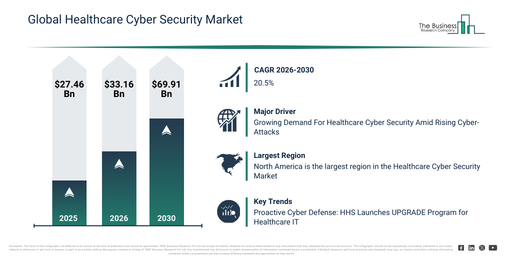
    Healthcare Cyber Security Market Set To Climb From $33.16 Billion In 2026 To $69.91 Billion By 2030

    The healthcare cyber security market has experienced substantial expansion in recent years. Projections indicate it will grow from $27.46 billion in 2025 to $33.16 billion in 2026, at a compound annual growth rate (CAGR) of 20.7%. This historical growth can be attributed to the increasing digitization of healthcare operations, a rise in healthcare data breaches, the expansion of connected medical devices, the adoption of electronic health records, and growing regulatory scrutiny on data protection.

    The healthcare cyber security market is projected to experience substantial growth in the coming years. This market is set to reach $69.91 billion by 2030, exhibiting a compound annual growth rate (CAGR) of 20.5%. Factors contributing to this growth during the forecast period include greater investments in sophisticated cybersecurity platforms, the rising use of AI-based threat analytics, the expansion of telehealth and remote care services, an increasing emphasis on ransomware prevention, and a surging demand for integrated security management. Key trends anticipated in the same period involve the increased deployment of zero-trust security frameworks, a growing embrace of cloud-based security solutions, a heightened focus on medical device cybersecurity, the broadening of AI-driven threat detection systems, and a strengthened commitment to regulatory compliance security.

    Get A Free Sample Report With In-Depth Market Insights:

    https://thebusinessresearchcompany.com/sample_request?id=78023493&type=smp&name=Healthcare%20Cyber%20Security%20Market%20Report%202026&utm_source=Blogs&utm_medium=Paid&utm_campaign=Nov_PR

    Healthcare Cyber Security Market Growth Factors Behind Sustained Expansion

    Growing instances of healthcare cyber-attacks are anticipated to fuel the expansion of the healthcare cyber-security market in the future. The increasing digitalization within the healthcare sector has led to a rise in cyber-attacks, necessitating the use of diverse healthcare cyber security software for protection, consequently boosting the demand for healthcare cyber security. As an illustration, in February 2023, the United States Department of Health and Human Services, a US-based federal government agency established to deliver vital human services, reported that healthcare providers across the United States experienced a remarkable 104% surge in data breaches between mid-2022 and mid-2023, escalating from 160 to 327 incidents. This concerning escalation resulted in the exposure of data belonging to over 40 million patients, marking a 60% YoY rise during the first half of 2023. Consequently, the escalating number of healthcare cyberattacks is a primary factor propelling the expansion of the healthcare cyber security market in the years ahead.

    Healthcare Cyber Security Market Segment Landscape: Which Areas Lead Development?

    The healthcare cyber security market covered in this report is segmented –

    1) By Threat Type: Malware, Distributed Denial Of Service (DDoS), Advanced Persistent Threats (APT), Spyware, Other Threat Types

    2) By Solution: Identity And Access Management, Risk And Compliance Management, Antivirus and Antimalware, DDoS Mitigation, Security Information And Event Management, Intrusion Detection System And Intrusion Prevention System, Others Solutions

    3) By Security Measures: Application Security, Network Security, Device Security, Other Security Measures

    4) By Deployment: On-Premises, Cloud-Based

    5) By End User: Pharmaceutical Industries, Biotechnology Industries, Hospital, Medical Device Companies, Health Insurance Companies, Other End Users

    Subsegments:

    1) By Malware: Ransomware, Trojans, Viruses, Worms

    2) By Distributed Denial Of Service (DDoS): Volumetric Attacks, Protocol Attacks, Application Layer Attacks

    3) By Advanced Persistent Threats (APT): Targeted Attacks, Spear Phishing, Insider Threats

    4) By Spyware: Keyloggers, Adware, Tracking Cookies

    5) By Other Threat Types: Phishing Attacks, Credential Theft, Man-In-The-Middle Attacks, Data Breaches

    Healthcare Cyber Security Market Strategic Trends: What Defines The Next Growth Phase?

    Leading companies operating within the healthcare cybersecurity market are allocating resources to advanced security initiatives, such as artificial intelligence, threat mitigation, and machine learning, to counteract the escalating cyber threats targeting sensitive patient data and healthcare systems. These programs are designed to build a platform that allows hospitals to simulate their digital environments, thereby identifying potential vulnerabilities before cybercriminals can exploit them. For example, in May 2024, the Advanced Research Projects Agency for Health, a US-based research funding agency supporting biomedical and health breakthroughs, initiated the UPGRADE program, allocating $50 million to develop cybersecurity tools specifically for healthcare IT teams, with a focus on proactive vulnerability assessment and threat mitigation. This particular initiative aims to automatically pinpoint and remedy software vulnerabilities with minimal disruption to hospital operations, addressing continuous cybersecurity challenges within the healthcare sector.

    Healthcare Cyber Security Market Industry Leaders And Competitive Landscape

    Major companies operating in the healthcare cyber security market are Irdeto a Verizon company, Lockheed Martin Corporation, Intel Corporation, IBM Corporation, Cisco Systems Inc., Northrop Grumman Corporation, Broadcom Inc., Atos SE, Booz Allen Hamilton Inc., Palo Alto Networks Inc., McAfee LLC, Check Point Software Technologies Ltd., Trend Micro Incorporated, Kaspersky Lab, CyberArk Software Ltd., Imperva Inc., FireEye Inc., Imprivata Inc., Claroty Inc., Forescout Technologies Inc, Menlo Security Inc., Bitglass Inc., Medigate Ltd., Fortified Health Security Inc., Sensato Cybersecurity Solutions Inc., CybelAngel, Armis Inc., CrowdStrike Inc.

    View The Full Healthcare Cyber Security Market Report:

    https://thebusinessresearchcompany.com/report/healthcare-cyber-security-global-market-report?utm_source=Blogs&utm_medium=Paid&utm_campaign=Nov_PR

    Healthcare Cyber Security Market Geographic Spread And Regional Opportunities

    North America was the largest region in the healthcare cyber security market in 2025. The regions covered in the healthcare cyber security market report are Asia-Pacific, South East Asia, Western Europe, Eastern Europe, North America, South America, Middle East, Africa.

    Reach Out To Our Team:

    The Business Research Company: https://www.thebusinessresearchcompany.com/

    Americas: +1 310-496-7795

    Asia: +44 7882 955267 & +91 8897263534

    Europe: +44 7882 955267

    Email us at: marketing@tbrc.info

    Follow us on:

    LinkedIn: https://in.linkedin.com/company/the-business-research-company

    YouTube: https://www.youtube.com/channel/UC24_fI0rV8cR5DxlCpgmyFQ

    Global Market Model: https://www.thebusinessresearchcompany.com/global-market-model
  • Healthcare CRO Services Market Trends Reshaping Industry Growth Through 2030

    Healthcare CRO Services Market Trends Reshaping Industry Growth Through 2030

    Built to provide research that’s more actionable and strategically valuable, The Business Research Company’s 2026 market reports include market attractiveness analysis, total addressable market sizing, company benchmarking matrices, interactive Excel dashboards, broader supply chain intelligence, emerging startup tracking, and in-depth product insights.

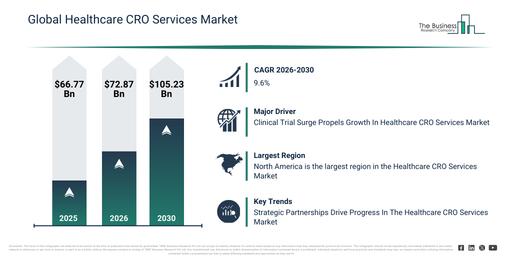
    Healthcare CRO Services Market Forecast: Value Set To Climb From $72.87 Billion To $105.23 Billion

    The healthcare CRO services market size has shown substantial growth in recent years. It is forecast to increase from $66.77 billion in 2025 to $72.87 billion in 2026, exhibiting a compound annual growth rate (CAGR) of 9.1%. The expansion observed in the historic period is attributable to the rising number of clinical trials worldwide, increased research and development expenditure, the complex nature of regulatory approval processes, the expansion of pharmaceutical pipelines, and the availability of specialized CRO expertise.

    The healthcare CRO services market is anticipated to experience substantial expansion over the coming years. Its valuation is projected to reach $105.23 billion by 2030, demonstrating a compound annual growth rate (CAGR) of 9.6%. This projected growth during the forecast period is primarily driven by factors such as the increasing embrace of decentralized clinical trials, a heightened need for expedited drug development timelines, the broadening scope of biologics and biosimilar investigations, a stronger emphasis on generating real-world evidence, and augmented financial commitments to precision medicine research. Key trends anticipated during this period encompass the escalating outsourcing of clinical trial functions, a greater uptake of data-centric trial management approaches, an increasing call for comprehensive end-to-end CRO services, the proliferation of decentralized and virtual clinical trials, and a sharpened focus on providing regulatory compliance assistance.

    Get A Free Sample Report With In-Depth Market Insights:

    https://thebusinessresearchcompany.com/sample_request?id=39723554&type=smp&name=Healthcare%20CRO%20Services%20Market%20Report%202026&utm_source=Blogs&utm_medium=Paid&utm_campaign=Nov_PR

    Healthcare CRO Services Market Demand Drivers Opening New Revenue Streams

    The anticipated rise in clinical trials is projected to fuel the expansion of the healthcare CRO services market in the future. These trials are defined as scientific investigations with human subjects, conducted to evaluate the safety and efficacy of novel medical treatments, including pharmaceuticals, therapeutic methods, medical devices, or procedural approaches. Contract research organizations (CROs) are integral to the clinical trial lifecycle, providing diverse services that assist pharmaceutical and biotechnology firms in the efficient and effective planning, execution, and oversight of their research. Illustratively, in December 2024, the Association of the British Pharmaceutical Industry (ABPI), an organization situated in the UK, indicated that the overall count of clinical trials commenced within the UK increased from 411 in 2022 to 426 in 2023. Consequently, the growing volume of clinical trials is propelling the expansion of the healthcare CRO services market.

    Healthcare CRO Services Market Segments: Where Is Growth Concentrated?

    The healthcare cro services market covered in this report is segmented –

    1) By Service Type: Early Phase Development, Clinical Development Services, Laboratory Services, Consulting Services

    2) By Therapeutic Area: Oncology, CNS Disorder, Cardiovascular Disease, Metabolic Disease, Infectious Disease, Diabetes, Other Therapeutic Areas

    3) By End User: Pharmaceutical Companies, Medical Device Companies, Academic Institutes

    Subsegments:

    1) By Early Phase Development: Preclinical Studies, Phase I Trials, Formulation Development

    2) By Clinical Development Services: Phase II Trials, Phase III Trials, Patient Recruitment And Retention, Site Management

    3) By Laboratory Services: Bioanalytical Testing, Clinical Laboratory Services, Safety And Toxicology Testing

    4) By Consulting Services: Regulatory Affairs Consulting, Market Access And Commercialization, Strategic Planning And Feasibility Studies

    Healthcare CRO Services Market Transformation Trends: What Innovations Are Driving Change?

    Major companies within the healthcare CRO services market are increasingly forming strategic partnerships to deliver advanced Proteomics CRO services for biopharmaceutical and biomarker clients globally. These strategic collaborations involve businesses combining their individual strengths and resources to achieve shared advantages and success. As an illustration, in January 2023, Bruker Corporation, a US-based manufacturer of scientific instruments, joined forces with Biognosys AG, a Switzerland-based provider of healthcare CRO services. This alliance between Bruker and Biognosys is expected to create unique synergies, utilizing Biognosys’ wide array of proprietary proteomics services, software, and kits in conjunction with Bruker’s pioneering timsTOF platform. Such a strategic partnership will culminate in the inauguration of Biognosys’ first laboratory for sophisticated proteomics CRO services in the United States.

    Healthcare CRO Services Market Key Participants And Competitive Landscape

    Major companies operating in the healthcare cro services market are Laboratory Corporation of America Holdings., IQVIA Inc., Icon Plc., PPD Inc., Wuxi Apptec Co. Ltd., Syneos Health Inc., Parexel International Corporation, Charles River Laboratories International Inc., Covance Inc., Medpace Inc., Pharmaron Beijing Co. Ltd., BioClinica Inc., Chiltern International Ltd., Evotec SE, PSI CRO AG, Premier Research Group Ltd., Worldwide Clinical Trials Inc., Caidya, BioTelemetry Inc., Syngene International Limited, Novotech CRO, Celerion, GVK Biosciences Private Limited, Synteract Inc., Veristat LLC., ACM Global Laboratories, ClinTec Luxembourg SA, Clinlogix LLC

    View The Full Healthcare CRO Services Market Report:

    https://thebusinessresearchcompany.com/report/healthcare-CRO-services-global-market-report?utm_source=Blogs&utm_medium=Paid&utm_campaign=Nov_PR

    Healthcare CRO Services Market Top Region By Revenue And Market Share

    North America was the largest region in the healthcare CRO services market in 2025. Asia-Pacific is expected to be the fastest-growing region in the forecast period. The regions covered in the healthcare cro services market report are Asia-Pacific, South East Asia, Western Europe, Eastern Europe, North America, South America, Middle East, Africa.

    Reach Out To Our Team:

    The Business Research Company: https://www.thebusinessresearchcompany.com/

    Americas: +1 310-496-7795

    Asia: +44 7882 955267 & +91 8897263534

    Europe: +44 7882 955267

    Email us at: marketing@tbrc.info

    Follow us on:

    LinkedIn: https://in.linkedin.com/company/the-business-research-company

    YouTube: https://www.youtube.com/channel/UC24_fI0rV8cR5DxlCpgmyFQ

    Global Market Model: https://www.thebusinessresearchcompany.com/global-market-model
  • Healthcare CRM Market Growth To $52.41 Billion Creates New Opportunities Across The Industry

    Healthcare CRM Market Growth To $52.41 Billion Creates New Opportunities Across The Industry

    Backed by market attractiveness analysis, total addressable market sizing, company benchmarking matrices, interactive Excel dashboards, wider supply chain intelligence, emerging startup coverage, and detailed product-level insights, The Business Research Company’s 2026 market reports are designed to offer research that is more actionable and strategically valuable than ever.

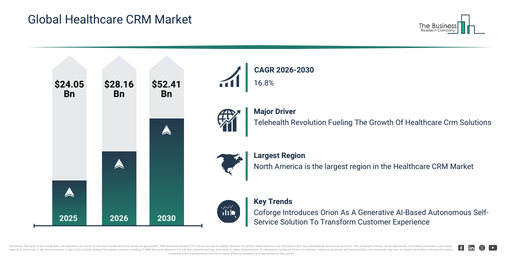
    Healthcare CRM Market Revenue Growth On Track For A 16.8% CAGR Through 2030

    The healthcare CRM market size has seen rapid expansion in recent years. It is projected to increase from $24.05 billion in 2025 to $28.16 billion in 2026, achieving a compound annual growth rate (CAGR) of 17.1%. This historical growth can be linked to the expanding digitization of healthcare records, a greater demand for patient relationship management, the proliferation of private healthcare providers, an elevated focus on patient experience management, and the presence of healthcare IT infrastructure.

    The healthcare crm market is projected to experience swift expansion over the coming years. This market is anticipated to reach a valuation of $52.41 billion by 2030, exhibiting a compound annual growth rate (CAGR) of 16.8%. Factors driving this growth during the projected period include the growing embrace of value-based care models, increased funding for digital health platforms, a rising need for tailored healthcare engagement, the proliferation of cloud-native crm deployments, and heightened regulatory attention to patient data transparency. Key trends foreseen for this period encompass the wider adoption of unified patient data platforms, expanded application of predictive analytics in patient engagement, deeper integration of crm with ehr systems, the broadening availability of cloud-based healthcare crm solutions, and an intensified emphasis on personalized patient communication.

    Get A Free Sample Report With In-Depth Market Insights:

    https://thebusinessresearchcompany.com/sample_request?id=42309539&type=smp&name=Healthcare%20CRM%20Market%20Report%202026&utm_source=Blogs&utm_medium=Paid&utm_campaign=Nov_PR

    Healthcare CRM Market Growth Backed By Core Demand Fundamentals

    The expanding integration of telehealth is anticipated to boost the healthcare CRM market’s growth in the coming years. Telehealth refers to a broad scope of electronic information and communications technology applications across various healthcare elements, including clinical care, patient and professional health education, health management, and public health. It enables the remote delivery of health services by digitally connecting patients and healthcare professionals. Healthcare CRM systems are vital in telehealth as they offer the necessary tools and functionalities to efficiently manage patient interactions, scheduling, data integration, and communication, thereby enhancing patient engagement and the provision of remote healthcare services. For instance, in June 2024, according to Health-tech news, a UK-based innovative platform for the health tech community, April 2024 recorded 1,301,924 GP appointments classified as video or online, substantially more than the 172,114 recorded in April 2023. Consequently, the increasing adoption of telehealth is propelling the healthcare CRM market.

    Healthcare CRM Market Segment Analysis: What Are The Core Market Categories?

    The healthcare crm market covered in this report is segmented –

    1) By Component: Software, Services

    2) By Technology: Predictive, Mobile, Social, Collaborative, Other Technologies

    3) By Deployment Model: On-Premise Model, Web or Cloud-based Model

    4) By Application: Community Outreach, Community Health Education, Service Outreach or Promotion, Financial Donor Management, Case Coordination, Patient Information Management, Pre-Authorizations or Eligibility, Other Applications

    5) By End-Users: Providers, Payers, Life Science Industry

    Subsegments:

    1) By Software: Patient Relationship Management Software, Marketing Automation Software, Analytics And Reporting Tools, Appointment Scheduling Software

    2) By Services: Consulting Services, Implementation Services, Training And Support Services, Maintenance Services

    #Healthcare CRM Market Growth Trends: What’s Shaping The Future Outlook?

    Leading companies in the healthcare CRM market are developing advanced technologies, such as artificial intelligence (AI)-driven autonomous self-service solutions, which empower patients to manage their healthcare requirements more efficiently and enhance their overall experience. An AI-based autonomous self-service solution is a technology platform that uses artificial intelligence (AI) to allow customers to independently resolve issues or acquire information without direct human involvement. For example, in March 2024, Coforge Limited, an India-based information technology company, introduced Orion. Orion is a generative AI-based autonomous self-service solution specifically designed to improve customer experience across various industries. This innovative platform automates both outbound and inbound calls, enabling proactive customer engagement and providing intelligent responses to inquiries, which significantly boosts traditional automation capabilities. Orion seamlessly integrates with existing CRM systems and third-party application programming interfaces (APIs), effectively addressing challenges like high error rates and reducing the resource-intensive nature of training.

    Healthcare CRM Market Top Companies Driving Competitive Growth

    Major companies operating in the healthcare crm market are Accenture plc, Allscripts Healthcare LLC, Amdocs, Cerner Corporation, Healthgrades Marketplace LLC, IBM Corporation, Infor Inc., Microsoft Corporation, NICE Systems Inc., Oracle Corporation, Pegasystems Inc., R1 RCM Inc., SAP SE, SugarCRM Inc., Veeva Systems Inc., Verint Systems Inc., Zoho Corporation Pvt. Ltd., Athenahealth, ChARM Health Pty Ltd., CureMD Inc., DocPlanner Group, DrChrono, eClinicalWorks, Epic Systems Corp., Evariant Co., Greenway Health, HubSpot Inc., Insightly Inc.

    View The Full Healthcare CRM Market Report:

    https://thebusinessresearchcompany.com/report/healthcare-crm-global-market-report?utm_source=Blogs&utm_medium=Paid&utm_campaign=Nov_PR

    Healthcare CRM Market Regional Analysis And Top Geography

    North America was the largest region in the healthcare CRM market in 2025. The regions covered in the healthcare crm market report are Asia-Pacific, South East Asia, Western Europe, Eastern Europe, North America, South America, Middle East, Africa.

    Reach Out To Our Team:

    The Business Research Company: https://www.thebusinessresearchcompany.com/

    Americas: +1 310-496-7795

    Asia: +44 7882 955267 & +91 8897263534

    Europe: +44 7882 955267

    Email us at: marketing@tbrc.info

    Follow us on:

    LinkedIn: https://in.linkedin.com/company/the-business-research-company

    YouTube: https://www.youtube.com/channel/UC24_fI0rV8cR5DxlCpgmyFQ

    Global Market Model: https://www.thebusinessresearchcompany.com/global-market-model
  • Healthcare Content Management System Market Forecast: Breaking Down The Numbers Behind Future Expansion

    Healthcare Content Management System Market Forecast: Breaking Down The Numbers Behind Future Expansion

    Featuring market attractiveness scoring, total addressable market sizing, company benchmarking matrices, interactive Excel dashboards, deeper supply chain intelligence, emerging startup tracking, and granular product-level insights, The Business Research Company’s 2026 market reports are built to deliver research that is both more actionable and more strategically valuable.

    Healthcare Content Management System Market Value Growth And Long-Term Outlook

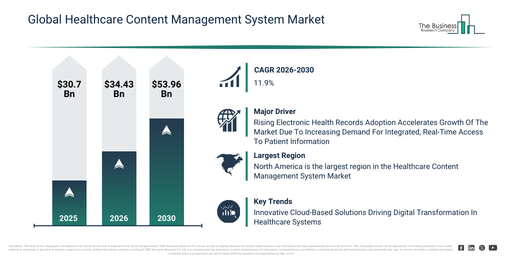
    The healthcare content management system market has experienced rapid expansion in recent years. Its value is projected to rise from $30.7 billion in 2025 to $34.43 billion in 2026, reflecting a compound annual growth rate (CAGR) of 12.2%. This market’s historical growth can be attributed to several factors, including the expansion of electronic health record adoption, increasing healthcare digitization initiatives, rising regulatory documentation requirements, the growth of healthcare data volumes, and improved IT infrastructure in healthcare organizations.

    The healthcare content management system market is anticipated to experience substantial growth over the next few years. It is projected to expand to $53.96 billion by 2030, demonstrating a compound annual growth rate (CAGR) of 11.9%. This expansion in the forecast period can be attributed to factors such as the increasing migration towards cloud-native healthcare systems, a rising demand for real-time content accessibility, the broadening requirements for telemedicine documentation, a growing emphasis on data security and privacy compliance, and the increasing integration of AI-driven content analytics. Significant trends during this period include the escalating adoption of cloud-based content management platforms, a rising demand for interoperable healthcare data systems, a heightened focus on regulatory-compliant document management, the expansion of AI-assisted content classification tools, and an enhanced emphasis on secure data access and collaboration.

    Get A Free Sample Report With In-Depth Market Insights:

    https://thebusinessresearchcompany.com/sample_request?id=92797793&type=smp&name=Healthcare%20Content%20Management%20System%20Market%20Report%202026&utm_source=Blogs&utm_medium=Paid&utm_campaign=Nov_PR

    Healthcare Content Management System Market Growth Catalysts And Demand Drivers

    The increasing integration of electronic health records (EHRs) is anticipated to stimulate expansion within the healthcare content management system market in the future. EHRs are digital compilations of patient health data, structured to enhance the ease of access, organization, and standard of care. The uptake of electronic health records is fueled by the imperative to elevate patient care via immediate access to precise and complete medical information. A healthcare content management system (CMS) facilitates EHRs by simplifying the process of acquiring, archiving, and retrieving unorganized data, thereby allowing healthcare professionals to access all pertinent patient details from a singular, integrated platform. As an illustration, in July 2024, data from the European Commission, an organization based in Belgium, revealed that Europe demonstrated advancements in eHealth maturity during 2024, with the EU27-average overall composite score climbing to 79% from 72% in the preceding year. Consequently, the growing embrace of electronic health records (EHRs) is propelling the expansion of the healthcare content management system market.

    Healthcare Content Management System Market Segment Breakdown: Which Categories Lead On Revenue?

    The healthcare content management system market covered in this report is segmented –

    1) By Component: Software, Services

    2) By Distribution Channel: Direct Sales, Distributors, Online Platforms

    3) By Application: Telemedicine, Patient Data Management, Regulatory Compliance, Workflow Management

    4) By End User: Hospitals And Health Systems, Ambulatory Surgical Centers, Diagnostic And Imaging Centers, Payers Or Insurance Providers, Long-Term Care Facilities

    Subsegments:

    1) By Software: On-Premise, Cloud-Based

    2) By Services: Implementation And Integration, Support And Maintenance, Consulting

    Healthcare Content Management System Market Industry Trends: What’s Reshaping Demand?

    Companies within the healthcare content management system market are actively engaged in creating advanced solutions, including cloud-native architecture, to bolster data accessibility, scalability, and seamless integration throughout healthcare systems. Cloud-native architecture represents a contemporary application development methodology that utilizes cloud computing frameworks to construct systems that are scalable, robust, and simple to deploy, employing technologies such as containers, microservices, and automated DevOps practices. As an illustration, in October 2024, Oracle Corporation, a US-based computer software company, introduced a cutting-edge electronic health record (EHR) system aimed at optimizing clinical workflows and elevating patient care. This system significantly improves healthcare by delivering comprehensive, real-time patient data and insights powered by AI, thereby enhancing clinical decision-making and lessening administrative load. Furthermore, these innovations facilitate secure data exchange, improved coordination of care, and contribute to enhanced patient safety and better overall outcomes.

    Healthcare Content Management System Market Leading Players And Competitive Positioning

    Major companies operating in the healthcare content management system market are Microsoft Corporation, Hitachi Ltd., IBM Corporation, Oracle Corporation, Capgemini SE, GE Healthcare Technologies Inc., CGI Inc., Xerox Holdings Corporation, Adobe Inc., Infor Inc., OpenText Corporation, Epic Systems Corporation, Veeva Systems Inc., NextGen Healthcare Inc., Sitecore Holding II A/S, M-Files Corporation, Laserfiche, Alfresco Software Inc., Samsung Healthcare, SoftTech Health LLC, Hyland Software Inc., InterSystems Corporation

    View The Full Healthcare Content Management System Market Report:

    https://thebusinessresearchcompany.com/report/healthcare-content-management-system-global-market-report?utm_source=Blogs&utm_medium=Paid&utm_campaign=Nov_PR

    Healthcare Content Management System Market Geographic Analysis: Where Is Demand Rising Fastest?

    North America was the largest region in the healthcare content management system market in 2025. Asia-Pacific is expected to be the fastest-growing region in the forecast period. The regions covered in the healthcare content management system market report are Asia-Pacific, South East Asia, Western Europe, Eastern Europe, North America, South America, Middle East, Africa.

    Reach Out To Our Team:

    The Business Research Company: https://www.thebusinessresearchcompany.com/

    Americas: +1 310-496-7795

    Asia: +44 7882 955267 & +91 8897263534

    Europe: +44 7882 955267

    Email us at: marketing@tbrc.info

    Follow us on:

    LinkedIn: https://in.linkedin.com/company/the-business-research-company

    YouTube: https://www.youtube.com/channel/UC24_fI0rV8cR5DxlCpgmyFQ

    Global Market Model: https://www.thebusinessresearchcompany.com/global-market-model
  • Healthcare Consumables Market Expected To Grow At 10.5% CAGR Through 2030: What Businesses Need To Know

    Healthcare Consumables Market Expected To Grow At 10.5% CAGR Through 2030: What Businesses Need To Know

    Built to provide research that’s more actionable and strategically valuable, The Business Research Company’s 2026 market reports include market attractiveness analysis, total addressable market sizing, company benchmarking matrices, interactive Excel dashboards, broader supply chain intelligence, emerging startup tracking, and in-depth product insights.

    Healthcare Consumables Market Poised To Hit $568.82 Billion By 2030 With A 10.5% CAGR

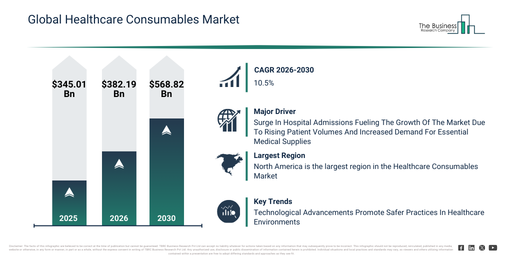
    The healthcare consumables market has seen substantial expansion in recent years. It is anticipated to expand from $345.01 billion in 2025 to $382.19 billion in 2026, achieving a compound annual growth rate (CAGR) of 10.8%. This historical growth can be linked to several factors, including a rise in hospitalization rates, an increase in surgical procedure volumes, the widespread application of disposable medical products, the expansion of diagnostic testing, and the growth of chronic disease management.

    The size of the healthcare consumables market is projected to experience swift expansion over the coming years. This market is forecast to reach $568.82 billion by 2030, exhibiting a compound annual growth rate (CAGR) of 10.5%. The anticipated growth during this period stems from factors such as a heightened demand for home-based patient care supplies, a growing focus on eco-friendly consumables, the broadening scope of point-of-care diagnostics, increasing investments directed towards infection control, and the expanding utilization of advanced sterilization consumables. Key trends foreseen over the forecast horizon encompass a surge in demand for single-use medical products, an intensified focus on infection prevention consumables, the widespread adoption of home healthcare consumables, an uptick in the use of sustainable and biodegradable materials, and improved supply chain traceability for consumables.

    Get A Free Sample Report With In-Depth Market Insights:

    https://thebusinessresearchcompany.com/sample_request?id=63571501&type=smp&name=Healthcare%20Consumables%20Market%20Report%202026&utm_source=Blogs&utm_medium=Paid&utm_campaign=Nov_PR

    Healthcare Consumables Market Opportunity Drivers: What’s Unlocking New Revenue Potential?

    An increase in hospital admissions is anticipated to fuel the expansion of the healthcare consumables market in the future. Hospital admission signifies the formal entry of an individual into a medical facility for care or treatment. Multiple factors contribute to the rise in hospital admissions, including an aging demographic, the growing occurrence of chronic illnesses, and developments in medical science. During hospital admissions, healthcare consumables encompass crucial items like gloves, syringes, bandages, and surgical tools, all essential for effective patient care and medical interventions. For example, data from September 2024, provided by the UK-based publicly funded National Health Service (NHS), showed that England registered 17.6 million finished admission episodes (FAEs) over the 12 months concluding on March 31, 2024. This highlights a greater need for consumables vital for patient care. Consequently, the increasing volume of hospital admissions is a key driver for the expansion of the healthcare consumables market.

    Healthcare Consumables Market Segmentation: How Does The Market Break Down By Category?

    The healthcare consumables market covered in this report is segmented –

    1) By Product Type: Wound Care Consumables, Diagnostic Consumables, Respiratory Supplies, Drug Delivery Products, Dialysis Consumables, Sterilization Consumables, Incontinence Products, Hands Sanitizer, Other Product Types

    2) By Raw Materials: Rubber, Non-woven Materials, Glass, Metals, Plastic Resin, Paper, Other Raw Materials

    3) By End User: Hospitals, Specialty Clinics, Other End-Users

    Subsegments:

    1) By Wound Care Consumables: Dressings (Hydrocolloid, Foam, Alginate, etc.), Bandages, Gauze And Sponges, Antiseptic Solutions, Wound Closure Devices (Staples, Sutures), Burn Care Products, Surgical Drains

    2) By Diagnostic Consumables: Blood Glucose Test Strips, Pregnancy Test Kits, Urine Test Strips, Pregnancy & Ovulation Test Kits, Hematology Consumables, Point-of-Care Testing Kits, Diagnostic Reagents And Chemicals

    3) By Respiratory Supplies: Oxygen Masks and Nasal Cannulas, Nebulizer Masks and Tubing Sets, Ventilator Circuits and Consumables, Endotracheal and Tracheostomy Tubes, Breathing Filters, Disposable Respiratory Masks

    4) By Drug Delivery Products: Syringes and Needles, IV Catheters and Cannulas, IV Administration Sets, Insulin Pens and Pen Needles, Inhaler Consumables, Transdermal Drug Delivery Patches, Infusion Sets and Tubing

    5) By Dialysis Consumables: Dialysis Filters (Dialyzers), Dialysis Tubing Sets, Dialysis Solution (Dialysate), Bloodline Tubing, Peritoneal Dialysis Kits, Catheters For Dialysis Access

    6) By Sterilization Consumables: Sterilization Wraps And Pouches, Sterilization Indicators (Chemical And Biological), Autoclave Bags, Disinfectants And Sterilizing Solutions, Gas Sterilization Consumables

    7) By Incontinence Products: Adult Diapers and Briefs, Incontinence Pads and Liners, Protective Underpads, Disposable Bed Protectors, Incontinence Care Wipes

    8) By Hand Sanitizer: Alcohol-Based Hand Sanitizers, Non-Alcohol-Based Hand Sanitizers, Hand Sanitizing Wipes, Medical-Grade Hand Hygiene Solutions

    9) By Other Product Types: Surgical Gloves, Medical Masks and Face Shields, Surgical Drapes and Gowns, Disposable Medical Apparel, Single-Use Medical Accessories

    Healthcare Consumables Market Innovation Trends: What Developments Are Reshaping The Industry?

    Major companies operating in the healthcare consumables market are concentrating on creating innovative solutions, such as passive safety syringes, with the aim of improving patient safety, mitigating unintentional needle-stick incidents, and aiding in infection control across clinical and hospital environments. These passive safety syringes are single-use injection devices equipped with built-in mechanisms that automatically engage once an injection is complete to retract or shield the needle, thereby preventing reuse and accidental needlesticks without needing extra user activation steps. For instance, in January 2024, medmix Drug Delivery, a Switzerland-based medical-device manufacturing company, introduced SicuroJect, a disposable passive-needle safety device specifically for subcutaneous injections. SicuroJect is available in two variants compatible with standard pre-filled 1 mL or 2.25 mL syringes (glass or plastic), retains the standard injection technique of traditional syringes, and can be supplied either as an off-the-shelf safety syringe or as part of a full-service development platform that includes design verification, assembly, secondary packaging, and serialization. Designed primarily to elevate user safety for healthcare professionals or patients administering injections, SicuroJect underscores a broader trend within the healthcare consumables market toward devices that not only deliver medications but also prioritize safety, sterility, and regulatory compliance.

    Healthcare Consumables Market Competitive Overview And Top Companies

    Major companies operating in the healthcare consumables market are Cardinal Health Inc., Johnson & Johnson, Abbott Laboratories, 3M Company, Siemens Healthineers, Becton Dickinson and Company (BD), Philips Healthcare, Stryker Corporation, GE HealthCare Technologies Inc, Boston Scientific Corporation, B. Braun Melsungen AG, Alcon Laboratories Inc., Fresenius Kabi AG, Zimmer Biomet Holdings Inc., Terumo Corporation, Smith & Nephew plc, Hologic Inc., Nipro Corporation, Coloplast A/S, Dexcom Inc., Hollister Incorporated, AngioDynamics Inc., Biolife Solutions Inc., Medi-Plast Ltd., Ortho Clinical Diagnostics

    View The Full Healthcare Consumables Market Report:

    https://thebusinessresearchcompany.com/report/healthcare-consumables-global-market-report?utm_source=Blogs&utm_medium=Paid&utm_campaign=Nov_PR

    Healthcare Consumables Market Global Footprint: Which Region Leads The Market?

    North America was the largest region in the healthcare consumables market in 2025. The regions covered in the healthcare consumables market report are Asia-Pacific, South East Asia, Western Europe, Eastern Europe, North America, South America, Middle East, Africa.

    Reach Out To Our Team:

    The Business Research Company: https://www.thebusinessresearchcompany.com/

    Americas: +1 310-496-7795

    Asia: +44 7882 955267 & +91 8897263534

    Europe: +44 7882 955267

    Email us at: marketing@tbrc.info

    Follow us on:

    LinkedIn: https://in.linkedin.com/company/the-business-research-company

    YouTube: https://www.youtube.com/channel/UC24_fI0rV8cR5DxlCpgmyFQ

    Global Market Model: https://www.thebusinessresearchcompany.com/global-market-model
  • Healthcare Consulting Services Market Forecast To Reach $63.11 Billion By 2030: Key Trends Explained

    Healthcare Consulting Services Market Forecast To Reach $63.11 Billion By 2030: Key Trends Explained

    Backed by market attractiveness analysis, total addressable market sizing, company benchmarking matrices, interactive Excel dashboards, wider supply chain intelligence, emerging startup coverage, and detailed product-level insights, The Business Research Company’s 2026 market reports are designed to offer research that is more actionable and strategically valuable than ever.

    Healthcare Consulting Services Market Size And Revenue Outlook Through 2030

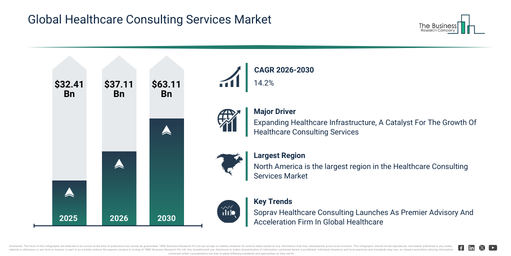
    The healthcare consulting services market has shown substantial growth in recent times. Its size is expected to increase from $32.41 billion in 2025 to $37.11 billion in 2026, advancing at a compound annual growth rate (CAGR) of 14.5%. This historical expansion is linked to elements such as the increasing complexity of healthcare operations, heightened pressures related to healthcare expenditure, the integration of health IT systems, evolving regulatory changes in healthcare, and the ongoing demand for strategies to optimize costs.

    The healthcare consulting services market size is projected to experience considerable expansion in the upcoming years. It is expected to reach $63.11 billion by 2030, growing at a compound annual growth rate (CAGR) of 14.2%. The anticipated growth during this forecast period stems from factors such as increased investments in healthcare digitalization, a rising need for AI-enabled consulting insights, the broadening of value-based care models, a stronger focus on integrated care delivery, and the integration of advanced analytics into healthcare decision-making processes. Major trends identified for the forecast period include an escalating demand for digital transformation consulting, a greater emphasis on revenue cycle optimization services, the increasing uptake of data-driven healthcare strategies, the expansion of regulatory and compliance advisory services, and a reinforced focus on consulting for operational efficiency.

    Get A Free Sample Report With In-Depth Market Insights:

    https://thebusinessresearchcompany.com/sample_request?id=7155&type=smp&name=Healthcare%20Consulting%20Services%20Market%20Report%202026&utm_source=Blogs&utm_medium=Paid&utm_campaign=Nov_PR

    Healthcare Consulting Services Market Growth Momentum: What Factors Are Shaping Demand?

    The growth of the healthcare consulting services market is anticipated to be propelled by the expanding healthcare infrastructure in the coming years. Healthcare infrastructure refers to the foundational structural elements and tangible assets, such as buildings, furnishings, machinery, and staff, that support the delivery of healthcare services within a medical facility or organization. It includes all components necessary to provide medical care and assistance to people in the community. Healthcare consulting services are vital for optimizing healthcare infrastructure by offering strategic perspectives, regulatory assistance, and practical suggestions to improve the standard, effectiveness, and overall efficiency of healthcare delivery. These services aid healthcare firms in adapting to evolving market trends, technological improvements, and changing patient expectations, all while maintaining regulatory compliance. For instance, in May 2024, the Office for National Statistics, a UK-based government department, reported that total healthcare expenditure experienced a 5.6% increase in nominal terms from 2022 to 2023, which signifies a notable acceleration compared to the 0.9% growth observed in 2022. Therefore, the expanding healthcare infrastructure is driving the healthcare consulting services market.

    Healthcare Consulting Services Market Segment Trends And Revenue Contributors

    The healthcare consulting services market covered in this report is segmented –

    1) By Consulting Type: Strategy and Transformation Consulting, Operational and Performance Improvement Consulting, Clinical and Care Delivery Consulting, Health Information Technology Consulting

    2) By Functional Area: Enterprise and Organizational Management, Clinical Operations and Quality Improvement, Information Technology and Digital Enablement

    3) By Engagement Model: Advisory and Assessment Services, Implementation and Integration Services, Managed and Outsourced Consulting Services

    4) By End User: Healthcare Providers, Government and Public Health Bodies, Health Insurance Payers, Pharmaceutical and Biotechnology Companies

    Subsegments:

    1) By Strategy and Transformation Consulting: Organizational Strategy and Road-Mapping, Business Model Transformation, Mergers, Acquisitions, and Integration Advisory, Value-Based Care and Population Health Strategy, Market Entry and Growth Strategy, Change Management and Leadership Advisory

    2) By Operational and Performance Improvement Consulting: Workflow and Process Optimization, Cost Reduction and Efficiency Improvement, Capacity, Throughput, and Resource Planning, Supply Chain and Procurement Optimization, Lean, Six Sigma, and Continuous Improvement Consulting, Performance Benchmarking and KPI Development

    3) By Clinical and Care Delivery Consulting: Care Pathway and Service Line Optimization, Clinical Quality and Patient Safety Improvement, Clinical Workforce and Productivity Optimization, Outcomes Measurement and Reporting, Patient Experience and Engagement Consulting, Clinical Governance and Standardization

    4) By Health Information Technology Consulting: Electronic Health Record (EHR) Advisory and Implementation, Health Information Exchange and Interoperability Consulting, Digital Health and Telehealth Strategy Consulting, Data Governance and Health IT Architecture Advisory, Cybersecurity, Privacy, and Compliance Consulting, Health IT Optimization and Modernization

    Healthcare Consulting Services Market Trends: What’s Defining The Industry’s Next Phase?

    Leading companies in the healthcare consulting services market are consistently expanding and introducing innovations to cater to the industry’s evolving requirements. For example, Soprav Healthcare Consulting, an India-based consulting company, commenced operations in April 2024, establishing itself as a premier healthcare advisory and acceleration firm. This firm’s objective is to deliver extensive regulatory, investment, financial, organizational, and operational assistance to a broad spectrum of healthcare entities, including hospitals, medical practitioners, pharmaceuticals, med-tech, digital health-tech, wellness, and other B2B2C markets within the global healthcare spectrum. Soprav prioritizes close cooperation with healthcare innovators to support product commercialization and manage complex regulatory frameworks.

    Healthcare Consulting Services Market Competitive Landscape: Which Companies Lead The Industry?

    Major companies operating in the healthcare consulting services market are Alvarez and Marsal Holdings LLC, Bain & Company Inc., Boston Consulting Group, Cognizant Technology Solutions Corp., Deloitte Consulting LLP, Ernst and Young Global Limited, FTI Consulting, Huron Consulting Group Inc., International Business Machines Corporation, IQVIA Holdings Inc., McKinsey and Company, PricewaterhouseCoopers International Limited, Accenture PLC, Advisory Board Company, Avalere Health LLC, Chartis Group, ECG Management Consultants, Health Catalyst Inc., L.E.K. Consulting, Leidos Holdings Inc., McBee Associates Inc., Navigant Technologies Private Limited, Nordic Consulting, Optum Inc., Pivot Point Consulting, Stax Inc., Vynamic LLC

    View The Full Healthcare Consulting Services Market Report:

    https://thebusinessresearchcompany.com/report/healthcare-consulting-services-global-market-report?utm_source=Blogs&utm_medium=Paid&utm_campaign=Nov_PR

    Healthcare Consulting Services Market Regional Split: Which Areas Are Fueling Growth?

    North America was the largest region in the healthcare consulting services market in 2025. Asia-Pacific is expected to be the fastest-growing region in the forecast period. The regions covered in the healthcare consulting services market report are Asia-Pacific, South East Asia, Western Europe, Eastern Europe, North America, South America, Middle East, Africa.

    Reach Out To Our Team:

    The Business Research Company: https://www.thebusinessresearchcompany.com/

    Americas: +1 310-496-7795

    Asia: +44 7882 955267 & +91 8897263534

    Europe: +44 7882 955267

    Email us at: marketing@tbrc.info

    Follow us on:

    LinkedIn: https://in.linkedin.com/company/the-business-research-company

    YouTube: https://www.youtube.com/channel/UC24_fI0rV8cR5DxlCpgmyFQ

    Global Market Model: https://www.thebusinessresearchcompany.com/global-market-model