Blog

  • Healthcare Compliance Software Market Analysis Through 2030: Market Size, Growth Trends And Industry Outlook

    Healthcare Compliance Software Market Analysis Through 2030: Market Size, Growth Trends And Industry Outlook

    Featuring market attractiveness scoring, total addressable market sizing, company benchmarking matrices, interactive Excel dashboards, deeper supply chain intelligence, emerging startup tracking, and granular product-level insights, The Business Research Company’s 2026 market reports are built to deliver research that is both more actionable and more strategically valuable.

    Healthcare Compliance Software Market Growth From $3.58 Billion In 2026 To $5.62 Billion By 2030 At A CAGR Of 12%

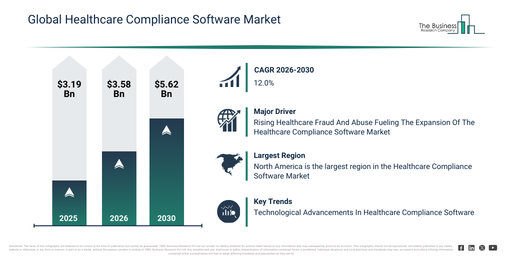
    The healthcare compliance software market has experienced rapid growth in its size over recent years. It is anticipated to expand from $3.19 billion in 2025 to $3.58 billion in 2026, demonstrating a compound annual growth rate (CAGR) of 12.1%. The historical growth can be attributed to several factors, including increasing regulatory scrutiny in healthcare, the adoption of electronic health records, rising data breach incidents, the growth in healthcare IT systems, and the demand for standardized compliance processes.

    The healthcare compliance software market is poised for significant expansion over the coming years. This market is projected to reach $5.62 billion by 2030, exhibiting a compound annual growth rate (CAGR) of 12.0%. The anticipated growth during this period stems from several factors, including the escalating need for ongoing compliance oversight, increased capital allocation to regulatory technology, the proliferation of AI-powered compliance analytics, wider acceptance of cloud-based governance instruments, and a sharpened emphasis on preventative risk management. Key developments expected within the forecast timeframe encompass the increasing embrace of cloud-based compliance platforms, a surge in the utilization of automated audit and reporting mechanisms, the deepening integration of risk management solutions, the broadening of real-time compliance tracking, and a heightened emphasis on data privacy safeguards.

    Get A Free Sample Report With In-Depth Market Insights:

    https://thebusinessresearchcompany.com/sample_request?id=30702175&type=smp&name=Healthcare%20Compliance%20Software%20Market%20Report%202026&utm_source=Blogs&utm_medium=Paid&utm_campaign=Nov_PR

    Healthcare Compliance Software Market Expansion Drivers: What’s Shaping Future Growth?

    A rising incidence of healthcare fraud and abuse is anticipated to fuel the expansion of the healthcare compliance software market in the future. Such fraud and abuse denote intentional and misleading actions within the healthcare framework, encompassing fraudulent claims, misrepresentation, or other unlawful acts designed to secure unapproved financial gains or advantages, thereby undermining the honesty and efficiency of healthcare provisions. Healthcare compliance software serves to improve adherence to regulations, identify irregularities in billing, and implement strict oversight, consequently protecting against illegal operations and maintaining the soundness of healthcare systems. For example, in 2024, data from the United States Sentencing Commission (USSC), a US-based government agency, revealed that among the 61,678 cases presented to the Commission during fiscal year 2024, 395 pertained to health care fraud. Consequently, the growing prevalence of healthcare fraud and abuse is propelling the expansion of the healthcare compliance software market.

    Healthcare Compliance Software Market Segment Analysis Spotlighting Growth Areas

    The healthcare compliance software market covered in this report is segmented –

    1) By Product Type: On-Premise, Cloud-Based

    2) By Application: Policy And Procedure Management, Auditing Tools, Training Management And Tracking, Medical Billing And Coding, License, Certificate, And Contract Tracking, Incident Management, Accreditation Management

    3) By End-User: Hospitals, Specialty Clinics, Other End Users

    Subsegments:

    1) By On-Premise: On-Premise Healthcare Compliance Management, On-Premise Regulatory Reporting Software, On-Premise Risk Management Software

    2) By Cloud-Based: Cloud-Based Healthcare Compliance Management, Cloud-Based Regulatory Reporting Software, Cloud-Based Risk Management Software

    Healthcare Compliance Software Market Industry Trends Fueling Future Revenue Growth

    Leading companies in the healthcare compliance software market are concentrating on technological innovations, such as healthcare compliance platforms, to improve the effectiveness and efficiency of regulatory healthcare compliance. A healthcare compliance platform is a thorough software solution built to assist healthcare organizations in managing and maintaining their compliance. For example, in October 2023, Compliancy Group, a US-based provider of cloud-based software, introduced The Guard. It functions as a centralized hub for overseeing all facets of compliance, covering everything from risk assessment and policy administration to audit preparation and educational initiatives. The Guard is a comprehensive, cloud-based software platform specifically designed to aid healthcare organizations in attaining and sustaining compliance with various regulations, primarily HIPAA, SOC 2, and OSHA.

    Healthcare Compliance Software Market Leading Companies: Who Holds The Strongest Market Presence?

    Major companies operating in the healthcare compliance software market are Wolters Kluwer, Cerner Corporation, Change Healthcare Inc., Beacon Healthcare Systems Inc., RLDatix Ltd., Accruent LLC, HealthStream Inc., Symplr, Intelex Technologies, AHM Holding Inc., iContracts, Sprinto Corporation, Healthicity LLC, Panacea Healthcare Solutions LLC, VigiLanz Corporation, Contract Guardian Inc., MedTraine LLC, Atlantic.net, Complete Medical SolutionsLLC, Verge Solutions LLC, HCS

    View The Full Healthcare Compliance Software Market Report:

    https://thebusinessresearchcompany.com/report/healthcare-compliance-software-global-market-report?utm_source=Blogs&utm_medium=Paid&utm_campaign=Nov_PR

    Healthcare Compliance Software Market Top Region: Where Does Most Revenue Come From?

    North America was the largest region in the healthcare compliance software market in 2025. Asia-Pacific is expected to be the fastest-growing region in the forecast period. The regions covered in the healthcare compliance software market report are Asia-Pacific, South East Asia, Western Europe, Eastern Europe, North America, South America, Middle East, Africa.

    Reach Out To Our Team:

    The Business Research Company: https://www.thebusinessresearchcompany.com/

    Americas: +1 310-496-7795

    Asia: +44 7882 955267 & +91 8897263534

    Europe: +44 7882 955267

    Email us at: marketing@tbrc.info

    Follow us on:

    LinkedIn: https://in.linkedin.com/company/the-business-research-company

    YouTube: https://www.youtube.com/channel/UC24_fI0rV8cR5DxlCpgmyFQ

    Global Market Model: https://www.thebusinessresearchcompany.com/global-market-model
  • Healthcare Companion Robots Market Outlook From 2026 To 2030: Key Growth Factors And Future Opportunities

    Healthcare Companion Robots Market Outlook From 2026 To 2030: Key Growth Factors And Future Opportunities

    Built to provide research that’s more actionable and strategically valuable, The Business Research Company’s 2026 market reports include market attractiveness analysis, total addressable market sizing, company benchmarking matrices, interactive Excel dashboards, broader supply chain intelligence, emerging startup tracking, and in-depth product insights.

    Healthcare Companion Robots Market Expansion Outlook: What Revenue Opportunities Are Ahead?

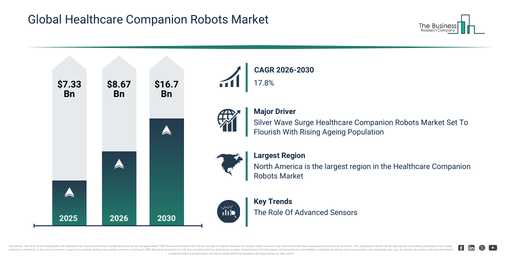
    The market size for healthcare companion robots has shown rapid expansion in recent years. It is anticipated to grow from $7.33 billion in 2025 to $8.67 billion in 2026, achieving a compound annual growth rate (CAGR) of 18.3%. Historically, this market expansion can be attributed to a rising elderly population, an increasing demand for assisted living solutions, a shortage of healthcare caregivers, the adoption of robotics in therapy settings, and improvements in robotic sensor technologies.

    The healthcare companion robots market is projected to undergo significant expansion in the coming years. It is forecasted to reach $16.7 billion by 2030, exhibiting a compound annual growth rate (CAGR) of 17.8%. This anticipated growth during the forecast period stems from factors such as the increasing deployment of socially assistive robots, heightened investments in personalized healthcare robotics, the broadening of home-based care models, a rising acceptance of robotic companionship, and advancements in AI-driven behavioral analytics. Noteworthy trends during this period encompass the growing adoption of AI-enabled companion robots, an increased utilization of robots for elderly care support, the expanding integration of personalized care algorithms, enhanced emotion recognition capabilities, and a stronger emphasis on human-robot interaction.

    Get A Free Sample Report With In-Depth Market Insights:

    https://thebusinessresearchcompany.com/sample_request?id=35004000&type=smp&name=Healthcare%20Companion%20Robots%20Market%20Report%202026&utm_source=Blogs&utm_medium=Paid&utm_campaign=Nov_PR

    Healthcare Companion Robots Market Development Factors: What’s Supporting Demand?

    The expanding elderly demographic is anticipated to fuel expansion within the healthcare companion robot’s market. As the number of senior citizens grows, so does the demand for companion robots, which are specifically designed to offer in-home care and support to older individuals. Furthermore, governments across different nations are actively pursuing initiatives to encourage the adoption of healthcare companion robots. For instance, the Office for the National Statistics, a UK-based organization, stated in October 2025 that the UK recorded 625,000 people aged 90 or over in 2024, an increase of 2.2% from 612,000 in mid-2023. Consequently, the increasing ageing population is projected to be a key driver for the growth of the healthcare companion robots market during the forecast period.

    Healthcare Companion Robots Market Segment Performance And Emerging Opportunities

    The healthcare companion robots market covered in this report is segmented –

    1) By Type: Animal-like Robots, Humanoid Robots

    2) By Age Group: Children, Geriatric

    3) By Application: Emotional Support And Companionship, Therapy And Rehabilitation Assistance, Monitoring And Safety Assistance, Cognitive Stimulation And Dementia Care, Pediatric Support And Developmental Aid, Entertainment And Engagement

    Subsegments:

    1) By Animal-Like Robots: Robotic Pets, Interactive Animal Simulators

    2) By Humanoid Robots: Social Companion Robots, Assistance Robots For Elderly Care

    Healthcare Companion Robots Market Trends Powering Strategic Industry Growth

    Major companies operating in the healthcare companion robot market are concentrating on innovative technologies, such as advanced sensors, to improve patient monitoring, refine interaction capabilities, and deliver personalized care solutions. Advanced sensors are intricate devices that collect and interpret complex data from their surroundings, frequently integrating AI and IoT for enhanced functionality and accuracy. For instance, in February 2023, Elephant Robotics Technology Co., Ltd., a Chinese high-tech enterprise specializing in robot research and development, introduced MetaCat. The MetaCat incorporates multiple touch sensors, voice recognition capabilities, and expressive LED lights. These features enable it to mimic a cat’s purrs, meows, and eye movements, thereby augmenting its lifelike qualities.

    Healthcare Companion Robots Market Key Players: Which Companies Lead Industry Competition?

    Major companies operating in the healthcare companion robots market are Blue Frog Robotics SAS, Intuition Robotics Ltd., No Isolation AS, Honda Motor Co. Ltd., Hanson Robotics Limited, Ubtech Robotics Corp. Ltd., Emotix Inc., Catalia Health Inc., Care Coach Inc., F&P Robotics AG, Giraff Technologies AB, Leka SAS, SoftBank Robotics, Toyota, Paro Robots, PAL Robotics, Robosoft Systems, Sanbot Technology, Aldebaran Robotics, Mayfield Robotics

    View The Full Healthcare Companion Robots Market Report:

    https://thebusinessresearchcompany.com/report/healthcare-companion-robots-global-market-report?utm_source=Blogs&utm_medium=Paid&utm_campaign=Nov_PR

    Healthcare Companion Robots Market Regional Breakdown: Where Is Demand Concentrated?

    North America was the largest region in the healthcare companion robots market share in 2025. The regions covered in the healthcare companion robots market report are Asia-Pacific, South East Asia, Western Europe, Eastern Europe, North America, South America, Middle East, Africa.

    Reach Out To Our Team:

    The Business Research Company: https://www.thebusinessresearchcompany.com/

    Americas: +1 310-496-7795

    Asia: +44 7882 955267 & +91 8897263534

    Europe: +44 7882 955267

    Email us at: marketing@tbrc.info

    Follow us on:

    LinkedIn: https://in.linkedin.com/company/the-business-research-company

    YouTube: https://www.youtube.com/channel/UC24_fI0rV8cR5DxlCpgmyFQ

    Global Market Model: https://www.thebusinessresearchcompany.com/global-market-model
  • Healthcare Command Centers Market Growth Forecast: Market Size, Key Trends And Emerging Opportunities Through 2030

    Healthcare Command Centers Market Growth Forecast: Market Size, Key Trends And Emerging Opportunities Through 2030

    Backed by market attractiveness analysis, total addressable market sizing, company benchmarking matrices, interactive Excel dashboards, wider supply chain intelligence, emerging startup coverage, and detailed product-level insights, The Business Research Company’s 2026 market reports are designed to offer research that is more actionable and strategically valuable than ever.

    Healthcare Command Centers Market Growth Potential: How Will Market Size Shift Through 2030?

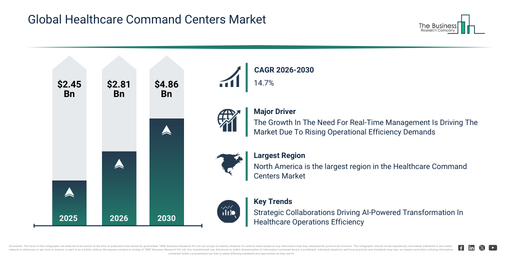
    The healthcare command centers market size has seen swift expansion recently. It is anticipated to increase from $2.45 billion in 2025 to $2.81 billion in 2026, reflecting a compound annual growth rate (CAGR) of 14.9%. Historically, this market’s expansion can be attributed to factors like the escalating complexity of hospital operations, an increase in patient volume within acute care facilities, the early uptake of hospital analytics platforms, a heightened emphasis on operational efficiency, and the growth of centralized care coordination models.

    The healthcare command centers market is projected to experience substantial growth in the coming years, anticipated to reach $4.86 billion by 2030 with a compound annual growth rate (CAGR) of 14.7%. This expansion during the forecast period is attributed to the increasing demand for data-driven clinical decision-making, rising investments in smart hospital infrastructure, the broadening of telehealth coordination capabilities, the growing adoption of AI-enabled hospital management tools, and a heightened focus on value-based healthcare delivery. Key trends shaping the forecast period encompass the increasing deployment of real-time hospital operations dashboards, the expanding utilization of predictive analytics for patient flow, the growing integration of multisource clinical data systems, the proliferation of virtual and hybrid command centers, and an enhanced focus on proactive resource optimization.

    Get A Free Sample Report With In-Depth Market Insights:

    https://thebusinessresearchcompany.com/sample_request?id=10245001&type=smp&name=Healthcare%20Command%20Centers%20Market%20Report%202026&utm_source=Blogs&utm_medium=Paid&utm_campaign=Nov_PR

    Healthcare Command Centers Market Industry Drivers: What’s Behind The Revenue Growth?

    The rising demand for real-time management is anticipated to drive the healthcare command centers market forward. Real-time management involves ongoing observation and reaction to current operations or data as incidents unfold, facilitating instant decision-making and peak performance. The increasing necessity for such management stems from the desire for quicker decisions and improved operational effectiveness, particularly within intricate environments like healthcare. Healthcare command centers address this by combining information from various sources, including patient flow, bed occupancy, and resource utilization, to enable constant oversight, swift decisions, and prompt actions across all healthcare operations. For instance, in October 2025, the British Medical Association (BMA), a professional body and trade union for doctors in the UK, reported that the latest Referral to Treatment (RTT) data for August 2025 indicated roughly 6.26 million patients were awaiting treatment across 7.41 million cases, with approximately 2.89 million waiting over 18 weeks and nearly 191,500 waiting more than a year. Consequently, the increasing need for real-time management is fueling the growth of the healthcare command centers market.

    Healthcare Command Centers Market Segment Landscape And Growth Outlook

    The healthcare command centers market covered in this report is segmented –

    1) By Component: Software, Hardware, Services

    2) By Command Center Type: Capacity And Bed Management, Operations And Resource Centers, Clinical Command Centers, Emergency Operations Centers, Security Operations Centers

    3) By Deployment Mode: On-Premise, Cloud-Based, Hybrid

    4) By Application: Patient Flow And Capacity Management, Bed Management, Staff Allocation And Scheduling, Emergency Response And Crisis Management, Real-Time Decision Support, Telehealth And Remote Care Coordination

    5) By End User: Large Health Systems, Academic Medical Centers, Community And Regional Hospitals, Ambulatory Surgery Centers And Integrated Clinics, Managed Service Providers

    Subsegments:

    1) By Software: Real-Time Dashboards And Visualization, Predictive Analytics And Forecasting, Scheduling And Procedure Optimization, Event Or Alarm And Incident Management, Integrations And Middleware, Collaboration Or Communication Workspace

    2) By Hardware: Display Walls And Visualization Hardware, Networking And Edge Appliances, On-Site Monitoring Stations Or Consoles

    3) By Services: Implementation And Integration Services, Managed Services Or Virtual Command Center Operations, Consulting, Training And Continuous Optimization, Data Science Or Model Tuning

    Healthcare Command Centers Market Growth Trends Reshaping The Competitive Landscape

    Major companies active in the healthcare command centers market are increasingly focusing on establishing strategic partnerships to advance technological innovation, enhance operational intelligence, and improve patient care efficiency through integrated, data-driven solutions. These strategic collaborations represent alliances between technology providers and healthcare institutions, designed to integrate clinical expertise with advanced analytics, artificial intelligence, and real-time management capabilities to optimize hospital operations and outcomes. An illustrative instance occurred in October 2025, when GE HealthCare, a U.S.-based medical technology company, collaborated with The Queen’s Health Systems, a U.S.-based healthcare network, and Duke Health, a U.S.-based academic medical center, to co-develop cloud-first, AI-driven hospital operations software within its CareIntellect family. This collaboration aims to utilize predictive analytics for the real-time optimization of patient flow, staffing, and resource utilization, consequently improving efficiency, reducing patient length of stay, and supporting the delivery of high-quality, patient-centered care.

    Healthcare Command Centers Market Competitive Landscape: Who Leads The Industry?

    Major companies operating in the healthcare command centers market are Deloitte Touche Tohmatsu Limited, Siemens Healthineers AG, Koninklijke Philips N.V., General Electric Company, Oracle Corporation, Epic Systems Corporation, Dedalus S.p.A., symplr, Inc., Columna Flow, Inc., Care Logistics, Inc., TeleTracking Technologies, Inc., LeanTaaS, Inc., Alcidion Pty Ltd, Qventus, Inc., ABOUT Healthcare, Inc., Pointcore, Inc., Hospital IQ, Inc., TAGNOS, Inc., WellSky Corporation, Cerner Corporation

    View The Full Healthcare Command Centers Market Report:

    https://thebusinessresearchcompany.com/report/global-healthcare-command-centers-market-report?utm_source=Blogs&utm_medium=Paid&utm_campaign=Nov_PR

    Healthcare Command Centers Market Geographic Landscape: Which Region Leads Industry Growth?

    North America was the largest region in the healthcare command centers market in 2025. Asia-Pacific is expected to be the fastest-growing region in the forecast period. The regions covered in the healthcare command centers market report are Asia-Pacific, South East Asia, Western Europe, Eastern Europe, North America, South America, Middle East, Africa.

    Reach Out To Our Team:

    The Business Research Company: https://www.thebusinessresearchcompany.com/

    Americas: +1 310-496-7795

    Asia: +44 7882 955267 & +91 8897263534

    Europe: +44 7882 955267

    Email us at: marketing@tbrc.info

    Follow us on:

    LinkedIn: https://in.linkedin.com/company/the-business-research-company

    YouTube: https://www.youtube.com/channel/UC24_fI0rV8cR5DxlCpgmyFQ

    Global Market Model: https://www.thebusinessresearchcompany.com/global-market-model
  • Healthcare Cloud Infrastructure Market CAGR Forecast Through 2030: Key Trends Shaping Industry Expansion

    Healthcare Cloud Infrastructure Market CAGR Forecast Through 2030: Key Trends Shaping Industry Expansion

    Featuring market attractiveness scoring, total addressable market sizing, company benchmarking matrices, interactive Excel dashboards, deeper supply chain intelligence, emerging startup tracking, and granular product-level insights, The Business Research Company’s 2026 market reports are built to deliver research that is both more actionable and more strategically valuable.

    Healthcare Cloud Infrastructure Market Value Analysis: What Growth Lies Ahead Over The Forecast Period?

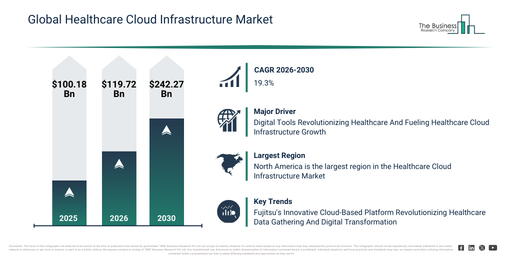
    The healthcare cloud infrastructure market size has experienced rapid growth in recent years. It is projected to expand from $100.18 billion in 2025 to $119.72 billion in 2026, demonstrating a compound annual growth rate (CAGR) of 19.5%. The historical growth can be ascribed to the increasing digitization of healthcare records, the expansion of telehealth platforms, a rising demand for scalable IT infrastructure, the adoption of electronic health records, and the broader expansion of healthcare data volumes.

    The healthcare cloud infrastructure market is anticipated to experience substantial growth over the next few years, with projections indicating it will climb to $242.27 billion by 2030, achieving a compound annual growth rate (CAGR) of 19.3%. This expansion during the forecast period is propelled by factors such as the increasing shift towards cloud-native healthcare applications, a heightened focus on data privacy and security compliance, the broadening scope of AI-enabled healthcare analytics, growing investments in hybrid cloud models, and the demand for cost-efficient healthcare IT infrastructure. Key trends observed in this period include the rising adoption of hybrid cloud architectures, an increasing need for secure healthcare data storage, the growing utilization of scalable cloud computing resources, the expansion of disaster recovery and backup solutions, and an enhanced emphasis on interoperable infrastructure.

    Get A Free Sample Report With In-Depth Market Insights:

    https://thebusinessresearchcompany.com/sample_request?id=83775693&type=smp&name=Healthcare%20Cloud%20Infrastructure%20Market%20Report%202026&utm_source=Blogs&utm_medium=Paid&utm_campaign=Nov_PR

    Healthcare Cloud Infrastructure Market Growth Factors: What’s Supporting Expansion?

    The expansion of digital tool integration within the healthcare sector is anticipated to fuel the growth of the healthcare cloud infrastructure market in the foreseeable future. These tools encompass software, hardware, and services that leverage information and communication technology, empowering both healthcare professionals and patients to make well-informed decisions. Specific examples include electronic health records (EHRs), electronic medical records (EMRs), mobile health (mHealth) applications, wearable devices, telehealth and telemedicine platforms, and customized medicine, all designed to enhance healthcare delivery. Healthcare cloud infrastructure plays a crucial role in numerous digital applications, boosting the efficiency, interconnectedness, and security of healthcare services. It stands as a foundational element for the digital transformation of the healthcare industry, facilitating improved patient care, operational effectiveness, and innovation in healthcare solutions and technology. This trend is underscored by data from January 2025, where Deloitte Touche Tohmatsu Limited, a UK-based software company, reported that approximately 70% of respondents consider investments in digital tools and platforms essential, 60% prioritize core technologies such as EMRs and ERP, and nearly 90% of C-suite executives foresee an acceleration in digital technology adoption during 2025. Consequently, the increasing embrace of digital tools within the healthcare domain is a significant driver for the healthcare cloud infrastructure market.

    Healthcare Cloud Infrastructure Market Breakdown By Product Type And Application

    The healthcare cloud infrastructure market covered in this report is segmented –

    1) By Component: Hardware, Services

    2) By Deployment Model: Private Cloud, Hybrid Cloud, Public Cloud

    3) By End-User: Healthcare Providers, Healthcare Payers

    Subsegments:

    1) By Hardware: Servers, Storage Devices, Networking Equipment, Security Appliances

    2) By Services: Cloud Storage Services, Cloud Computing Services, Cloud Security Services, Consulting And Integration Services

    Healthcare Cloud Infrastructure Market Trends Shaping Long-Term Demand

    Leading companies in the healthcare cloud infrastructure market are concentrating on product advancements like cloud-based platforms to better address the requirements of their existing customers. A cloud-based platform constitutes the operating system and hardware of a server located in an Internet-connected data center. It facilitates the remote and scalable co-existence of software and hardware devices. Businesses choose to lease access to computing services such as databases, servers, storage, statistical analysis, networking, software, and intelligence, rather than constructing and maintaining their own data centers or computer infrastructure. For example, in March 2023, Fujitsu Limited, a Japan-based corporation specializing in information and communications technology equipment and services, introduced a new, innovative, and distinct cloud-based platform. This advanced cloud-based platform allows users to securely collect and leverage health-related data to accelerate digital transformation in the medical industry. The new product is consistent with Fujitsu’s continuous efforts to contribute to establishing a healthy society, aligning with Fujitsu Uvance’s ‘healthy living’ goal for creating a sustainable world. The platform’s notable attributes include the automatic translation of healthcare data into HL7 FHIR, the upcoming medical information standard, the compilation of a broad spectrum of health-related information, and robust security protocols to ensure protected data consumption.

    Healthcare Cloud Infrastructure Market Company Landscape And Competitive Strategy

    Major companies operating in the healthcare cloud infrastructure market are Amazon.com Inc., Microsoft Corporation, Google LLC, Oracle Corporation, International Business Machines Corporation, Hewlett Packard Enterprise, Dell Inc., NetApp Inc., Cisco Systems Inc., VMware Inc., SAP SE, Alibaba Group Holding Ltd, Tencent Holdings Ltd, NTT Ltd, Fujitsu Limited, Hitachi Ltd, Iron Mountain Incorporated, Equinix Inc., Digital Realty Trust Inc., ClearDATA Networks Inc.

    View The Full Healthcare Cloud Infrastructure Market Report:

    https://thebusinessresearchcompany.com/report/healthcare-cloud-infrastructure-global-market-report?utm_source=Blogs&utm_medium=Paid&utm_campaign=Nov_PR

    Healthcare Cloud Infrastructure Market Largest Region: Which Geography Holds The Biggest Share?

    North America was the largest region in the healthcare cloud computing market in 2025. Asia-Pacific is expected to be the fastest-growing region in the forecast period. The regions covered in the healthcare cloud infrastructure market report are Asia-Pacific, South East Asia, Western Europe, Eastern Europe, North America, South America, Middle East, Africa.

    Reach Out To Our Team:

    The Business Research Company: https://www.thebusinessresearchcompany.com/

    Americas: +1 310-496-7795

    Asia: +44 7882 955267 & +91 8897263534

    Europe: +44 7882 955267

    Email us at: marketing@tbrc.info

    Follow us on:

    LinkedIn: https://in.linkedin.com/company/the-business-research-company

    YouTube: https://www.youtube.com/channel/UC24_fI0rV8cR5DxlCpgmyFQ

    Global Market Model: https://www.thebusinessresearchcompany.com/global-market-model
  • Healthcare Claims Management Solutions Market To Witness 7% CAGR Growth Through 2030: Key Industry Drivers

    Healthcare Claims Management Solutions Market To Witness 7% CAGR Growth Through 2030: Key Industry Drivers

    Built to provide research that’s more actionable and strategically valuable, The Business Research Company’s 2026 market reports include market attractiveness analysis, total addressable market sizing, company benchmarking matrices, interactive Excel dashboards, broader supply chain intelligence, emerging startup tracking, and in-depth product insights.

    Healthcare Claims Management Solutions Market Size Forecast: How Big Could The Market Get By 2030?

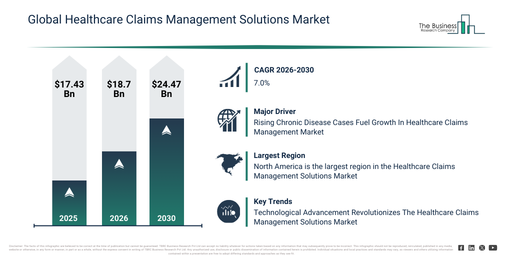
    The healthcare claims management solutions market has experienced robust growth in recent years. It is projected to expand from $17.43 billion in 2025 to $18.7 billion in 2026, demonstrating a compound annual growth rate (CAGR) of 7.3%. Historically, this growth has been driven by increasing healthcare insurance coverage, rising claim volumes across providers, the adoption of digital billing systems, the growing complexity of reimbursement processes, and the demand for faster claim settlement.

    The market for healthcare claims management solutions is projected to experience robust expansion in the coming years. This market is predicted to reach $24.47 billion by 2030, driven by a compound annual growth rate (CAGR) of 7.0%. Several factors contribute to this growth over the forecast period, including the increased adoption of AI-driven claims platforms, a heightened focus on value-based care reimbursement, the broadening of cloud-based claims solutions, a greater emphasis on automating regulatory compliance, and the demand for real-time claims transparency. Key trends anticipated during the forecast period involve a rise in the uptake of automated claims processing systems, increased application of predictive analytics to improve claims accuracy, a growing integration of real-time patient data access, the proliferation of fraud detection and prevention instruments, and an amplified emphasis on data security and compliance.

    Get A Free Sample Report With In-Depth Market Insights:

    https://thebusinessresearchcompany.com/sample_request?id=40329534&type=smp&name=Healthcare%20Claims%20Management%20Solutions%20Market%20Report%202026&utm_source=Blogs&utm_medium=Paid&utm_campaign=Nov_PR

    Healthcare Claims Management Solutions Market Demand Drivers: What’s Powering Industry Growth?

    The expanding occurrence of chronic diseases is anticipated to fuel the expansion of the healthcare claims management solutions market in the future. Chronic diseases are characterized as long-term health conditions that persist over an extended period, typically requiring ongoing medical oversight. Healthcare claims management solutions offer crucial support for the efficient and accurate processing of claims, ensuring that healthcare providers receive timely reimbursement for services related to chronic disease management. For instance, in January 2023, according to the National Center for Biotechnology Information (NCBI), a US-based National Library of Medicine, it is projected that by the year 2050, the number of individuals aged 50 years and older who have at least one chronic illness will surge by 99.5%, rising to 142.66 million. Therefore, the increasing incidence of chronic diseases will propel the healthcare claims management solutions market.

    Healthcare Claims Management Solutions Market Segment Analysis And Revenue Potential

    The healthcare claims management solutions market covered in this report is segmented –

    1) By Type: Software, Services

    2) By Deployment Mode: Web-Based, Cloud-Based, On-Premise

    3) By End-User: Healthcare Payers, Healthcare Providers, Other End-Users

    Subsegments:

    1) By Software: Claims Processing Software, Revenue Cycle Management Software, Medical Billing Software, Analytics And Reporting Tools

    2) By Services: Consulting Services, Implementation Services, Training And Support Services, Claims Auditing Services

    Healthcare Claims Management Solutions Market Innovation Trends Shaping Future Development

    Major companies within the healthcare claims management solutions market are prioritizing product innovation, exemplified by developments like the AI-enabled claims data activator Suite, to maintain their competitive standing. The Claims Data Activator facilitates data interoperability, intelligent analytics, and smart reporting by employing Document AI, the Healthcare Natural Language API, and the Healthcare API to transform unstructured data into structured information. For instance, in April 2023, Google LLC, a US-based technology corporation, launched a new Google Cloud AI-enabled claims data activator. This system is designed to assist health plans and providers in decreasing administrative costs and responsibilities by converting unstructured data into structured data, thereby empowering specialists to make swifter, more insightful decisions that enhance patient care.

    Healthcare Claims Management Solutions Market Key Players Shaping Industry Direction

    Major companies operating in the healthcare claims management solutions market are Allscripts Healthcare Solutions Inc, Athenahealth, McKesson Corporation, Oracle Corporation, Availity LLC, Cerner Corporation, Change Healthcare, Conifer Health Solutions LLC, eClinicalWorks, Emdeon Inc, Epic Systems Corporation, Inovalon Co, InstaMed LLC, Kareo Co, NaviNet Inc, NTT Data Services, Optum Inc, SSI Group LLC, Cognizant Technology Ltd, TruBridge Co, Waystar Co, ZirMed Inc

    View The Full Healthcare Claims Management Solutions Market Report:

    https://thebusinessresearchcompany.com/report/healthcare-claims-management-solutions-global-market-report?utm_source=Blogs&utm_medium=Paid&utm_campaign=Nov_PR

    Healthcare Claims Management Solutions Market Regional Analysis: Which Geography Leads On Revenue?

    North America was the largest region in the healthcare claim management solution market in 2025. Asia-Pacific is expected to be the fastest-growing region in the forecast period. The regions covered in the healthcare claims management solutions market report are Asia-Pacific, South East Asia, Western Europe, Eastern Europe, North America, South America, Middle East, Africa.

    Reach Out To Our Team:

    The Business Research Company: https://www.thebusinessresearchcompany.com/

    Americas: +1 310-496-7795

    Asia: +44 7882 955267 & +91 8897263534

    Europe: +44 7882 955267

    Email us at: marketing@tbrc.info

    Follow us on:

    LinkedIn: https://in.linkedin.com/company/the-business-research-company

    YouTube: https://www.youtube.com/channel/UC24_fI0rV8cR5DxlCpgmyFQ

    Global Market Model: https://www.thebusinessresearchcompany.com/global-market-model
  • Healthcare Business Process Outsourcing (BPO) Market Projected For Strong Expansion Through 2030: Key Trends And Future Outlook

    Healthcare Business Process Outsourcing (BPO) Market Projected For Strong Expansion Through 2030: Key Trends And Future Outlook

    Backed by market attractiveness analysis, total addressable market sizing, company benchmarking matrices, interactive Excel dashboards, wider supply chain intelligence, emerging startup coverage, and detailed product-level insights, The Business Research Company’s 2026 market reports are designed to offer research that is more actionable and strategically valuable than ever.

    Healthcare Business Process Outsourcing (BPO) Market Revenue Outlook: What CAGR Lies Ahead Through 2030?

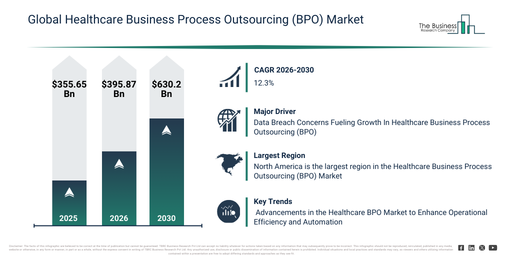
    The healthcare business process outsourcing (bpo) market has experienced rapid growth in its size over recent years. It is anticipated to expand from $355.65 billion in 2025 to $395.87 billion in 2026, driven by a compound annual growth rate (CAGR) of 11.3%. The historical increase in this market can be attributed to several factors, including the increasing administrative complexity in healthcare operations, rising operational costs for providers and payers, the expansion of health insurance coverage, growing regulatory compliance requirements, and the early adoption of outsourced billing services.

    The healthcare business process outsourcing (bpo) market is projected to experience substantial expansion in the coming years, reaching $630.2 billion by 2030 at a compound annual growth rate (CAGR) of 12.3%. This anticipated growth is driven by several factors, including a heightened demand for scalable outsourcing solutions, increased capital allocation towards AI-powered BPO services, the broadening of support for value-based care administration, an intensified emphasis on cybersecurity and compliance in outsourcing, and an ongoing transition to digital healthcare processes. Key developments anticipated during this timeframe encompass a greater uptake of comprehensive revenue cycle outsourcing, an increased application of automation in claims and billing procedures, an escalating need for compliance and data security offerings, the enlargement of IT infrastructure management outsourcing, and a heightened priority on optimizing expenditures.

    Get A Free Sample Report With In-Depth Market Insights:

    https://thebusinessresearchcompany.com/sample_request?id=24630124&type=smp&name=Healthcare%20Business%20Process%20Outsourcing%20%28BPO%29%20Market%20Report%202026&utm_source=Blogs&utm_medium=Paid&utm_campaign=Nov_PR

    Healthcare Business Process Outsourcing (BPO) Market Growth Drivers: What’s Behind The Acceleration?

    Rising occurrences of data breaches are expected to fuel the expansion of the healthcare business process outsourcing market in the coming years. A data breach is defined as the unauthorized access, disclosure, acquisition, or sharing of sensitive or private information. Healthcare BPO providers implement robust data handling procedures and security protocols to ensure the confidentiality and integrity of patient data. For instance, in January 2025, the Identity Theft Resource Center (ITRC), a US-based non-profit organization, reported that the number of data compromises in 2023 (3,205) increased by 78 percentage points when compared to 2022 (1,801). Consequently, the increasing data threats are driving the growth of the healthcare business process outsourcing market.

    Healthcare Business Process Outsourcing (BPO) Market Segmentation And Category Overview

    The healthcare business process outsourcing (bpo) market covered in this report is segmented –

    1) By Service Type: Provider Outsourcing Services, Payer Outsourcing Services, Operational Outsourcing Services, Information Technology Infrastructure Management Services

    2) By Provider Service: Revenue Cycle Management, Patient Enrollment, Patient Care

    3) By Solution: Manufacturing, Research And Development, Non-Clinical Services

    4) By End User: Healthcare Providers, Healthcare Payers, Other End-Users

    Subsegments:

    1) By Provider Outsourcing Services: Medical Billing And Coding, Revenue Cycle Management, Patient Scheduling And Registration, Telehealth Services

    2) By Payer Outsourcing Services: Claims Processing, Member Enrollment And Eligibility Verification, Fraud Detection And Prevention, Customer Support Services

    3) By Operational Outsourcing Services: Human Resources Outsourcing, Procurement And Supply Chain Management, Facility Management Services, Administrative Support Services

    4) By Information Technology Infrastructure Management Services: IT Help Desk Support, Cloud Services Management, Network Management, Data Security And Compliance Services

    Healthcare Business Process Outsourcing (BPO) Market Trends Redefining Industry Growth

    Major companies operating within the healthcare business process outsourcing (BPO) market are increasingly embracing technological advancements, such as agentic AI-powered digital workforce platforms, to address the growing demand for fewer claim denials, greater operational efficiency, and scalable, cost-effective revenue cycle management. An agentic AI-powered digital workforce platform, unlike traditional BPO models that are heavily reliant on manual processing and rigid rule-based workflows, employs intelligent digital agents driven by AI, natural language understanding, machine learning, and automation to autonomously perform or assist with complex back-office tasks, including eligibility verification, denial management, prior authorization, and appeals. For example, in October 2025, AGS Health, a US-based revenue cycle management and BPO services provider, launched its Agentic Digital Workforce Solutions, a collection of AI agents specifically tailored for RCM. These agents provide human-like reasoning and decision support by understanding natural language, adapting to evolving payer rules, and collaborating with human staff, thereby automating high-volume repetitive tasks while identifying actionable next steps. The solution integrates generative AI, RPA, and workflow orchestration to reduce denial rates, improve clean claim ratios, and enhance cash flow, allowing RCM teams to dedicate their efforts to more high-value work.

    Healthcare Business Process Outsourcing (BPO) Market Competitive Analysis Of Leading Industry Participants

    Major companies operating in the healthcare business process outsourcing (bpo) market are UnitedHealth Group Incorporated, Accenture plc, International Business Machines Corporation, Tata Consultancy Services Limited, Cognizant Technology Solutions Corporation, IQVIA Holdings Inc., Quintiles IMS Holdings Inc., HCL Technologies Limited, Infosys Limited, Wipro Limited, Sutherland Global Services Inc., Xerox Holdings Corporation, Genpact Limited, Access Healthcare Services Pvt. Ltd., Parexel International Corporation, R1 RCM Inc., NTT Data Corporation, EXLService Holdings Inc., Sykes Enterprises Incorporated, WNS Limited, Firstsource Solutions Limited, Invensis Technologies Pvt. Ltd., Hinduja Global Solutions Limited, Mphasis Limited, GeBBS Healthcare Solutions Inc., Akurate Management Solutions Pvt Ltd., Gevity Consulting Inc., Octopus Tech Solutions Pvt Ltd.

    View The Full Healthcare Business Process Outsourcing (BPO) Market Report:

    https://thebusinessresearchcompany.com/report/healthcare-business-process-outsourcing-bpo-global-market-report?utm_source=Blogs&utm_medium=Paid&utm_campaign=Nov_PR

    Healthcare Business Process Outsourcing (BPO) Market Geographic Spread And Regional Opportunities

    North America was the largest region in the healthcare business process outsourcing (BPO) market in 2025. Asia-Pacific is expected to be the fastest-growing region in the forecast period. The regions covered in the healthcare business process outsourcing (bpo) market report are Asia-Pacific, South East Asia, Western Europe, Eastern Europe, North America, South America, Middle East, Africa.

    Reach Out To Our Team:

    The Business Research Company: https://www.thebusinessresearchcompany.com/

    Americas: +1 310-496-7795

    Asia: +44 7882 955267 & +91 8897263534

    Europe: +44 7882 955267

    Email us at: marketing@tbrc.info

    Follow us on:

    LinkedIn: https://in.linkedin.com/company/the-business-research-company

    YouTube: https://www.youtube.com/channel/UC24_fI0rV8cR5DxlCpgmyFQ

    Global Market Model: https://www.thebusinessresearchcompany.com/global-market-model
  • Healthcare Business Intelligence Market Outlook 2026–2030: Growth Trends, Market Dynamics And Emerging Opportunities

    Healthcare Business Intelligence Market Outlook 2026–2030: Growth Trends, Market Dynamics And Emerging Opportunities

    Featuring market attractiveness scoring, total addressable market sizing, company benchmarking matrices, interactive Excel dashboards, deeper supply chain intelligence, emerging startup tracking, and granular product-level insights, The Business Research Company’s 2026 market reports are built to deliver research that is both more actionable and more strategically valuable.

    Healthcare Business Intelligence Market Growth Analysis: How Will Revenue Trend Over The Forecast Period?

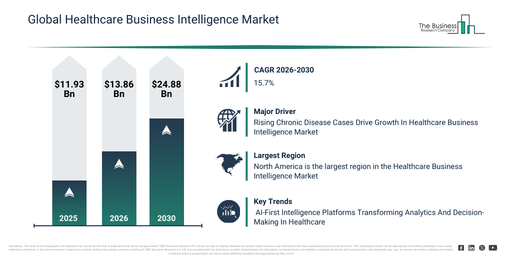
    The healthcare business intelligence market size has experienced significant expansion in recent years. This market is set to expand from $11.93 billion in 2025 to $13.86 billion in 2026, demonstrating a compound annual growth rate (CAGR) of 16.2%. The historical surge can be linked to the greater availability of electronic health data, the initial adoption of reporting and dashboard tools, increasing pressure to curb healthcare costs, the broadening of performance measurement practices, and an elevated focus on operational transparency.

    The healthcare business intelligence market is poised for significant expansion in the next few years, with its valuation expected to reach $24.88 billion by 2030, demonstrating a compound annual growth rate (CAGR) of 15.7%. This projected growth throughout the forecast period can be attributed to several factors, including increased investments in AI-driven analytics, a rising demand for population health insights, the expansion of value-based care analytics, greater adoption of cloud-based BI platforms, and continuous advancements in healthcare data interoperability. Noteworthy trends during this period encompass the increasing uptake of advanced healthcare analytics platforms, a growing utilization of predictive and prescriptive analytics, the expanding integration of real-time data visualization tools, the proliferation of cloud-based business intelligence solutions, and an enhanced focus on data-driven decision making.

    Get A Free Sample Report With In-Depth Market Insights:

    https://thebusinessresearchcompany.com/sample_request?id=58087464&type=smp&name=Healthcare%20Business%20Intelligence%20Market%20Report%202026&utm_source=Blogs&utm_medium=Paid&utm_campaign=Nov_PR

    Healthcare Business Intelligence Market Growth Factors Behind Sustained Expansion

    The rising occurrence of chronic diseases is anticipated to drive the future expansion of the healthcare business intelligence market. Chronic diseases refer to long-lasting health conditions that persist over an extended period and typically require ongoing medical management. Healthcare business intelligence is utilized in chronic disease management to enhance patient care, improve resource allocation, reduce costs, and facilitate data-driven decision-making for better outcomes in long-term patient health. For instance, in January 2023, according to the National Center for Biotechnology Information (NCBI), a US-based National Library of Medicine, it is projected that by 2050, the number of individuals aged 50 years and older who have at least one chronic illness will surge by 99.5%, rising to 142.66 million. Therefore, the increasing incidence of chronic diseases will propel the healthcare business intelligence market.

    Healthcare Business Intelligence Market Segment Outlook: Which Categories Are Growing Fastest?

    The healthcare business intelligence market covered in this report is segmented –

    1) By Component: Platforms, Software, Services

    2) By Function: Query and Reporting, OLAP and Visualization, Performance Management

    3) By Mode of Delivery: On-Premise Model, Hybrid Model, Cloud-Based Model

    4) By Application: Financial Analysis, Clinical Data Analysis, Patient Care Analysis, Other Applications

    5) By End-User: Payers, Healthcare Providers, Other End-Users

    Subsegments:

    1) By Platforms: Cloud-Based Platforms, On-Premise Platforms

    2) By Software: Analytics Software, Reporting Software, Data Visualization Tools, Dashboard Software

    3) By Services: Consulting Services, Implementation Services, Training and Support Services, Maintenance Services

    Healthcare Business Intelligence Market Strategic Trends: What Defines The Next Growth Phase?

    Leading companies within the healthcare business intelligence (BI) market are increasingly concentrating on technological advancements, such as AI-first healthcare intelligence platforms, to address the growing need for real-time predictive analytics, integrated cross-domain data, and scalable decision support. This drive is influenced by factors including the increasing adoption of electronic health records (EHR), rising operational costs, and mandates for value-based care. An AI-first healthcare intelligence platform is characterized as a cloud-native system that integrates diverse data sources (such as clinical, financial, operational, and HR), applies machine learning and integrated AI agents or copilots, and provides self-service tools for analytics and workflow automation. Unlike traditional BI tools, which often rely on static reports and isolated data, these platforms offer dynamic, predictive, and prescriptive insights that can act on data in near real time. For instance, in May 2025, Innovaccer, a US-based healthcare AI company, introduced Innovaccer Gravity, an intelligence platform designed for healthcare. Built on a modern, cloud-agnostic architecture (compatible with AWS, Azure, Snowflake, Databricks) and compliant with HIPAA, HITRUST, and SOC 2, Gravity unifies EHR, claims, financial, operational, and supply chain data via over 400 pre-built connectors and more than 100 FHIR resources. It features a data fabric layer, pre-trained AI models (such as OCR and speech analytics), and low-code or no-code studios for building custom AI agents and workflows, enabling healthcare organizations with comprehensive cross-domain intelligence, self-serve analytics, and a quicker return on investment at a reduced total cost of ownership. This platform ultimately contributes to better patient care, improved operational efficiency, and stronger financial performance.

    Healthcare Business Intelligence Market Leading Companies And Competitive Benchmarking

    Major companies operating in the healthcare business intelligence market are Microsoft Corporation, Oracle Corporation, Tableau Software, SAP SE, IBM Corporation, QlikTech International AB, Sisense Inc, SAS Institute Inc, BOARD International, Yellowfin BI, MicroStrategy Incorporated, Infor Inc, Domo Inc., Information Builders, Perficient Inc., Tibco Software Inc., Panorama Software Inc, Definitive Healthcare, Dimensional Insight Inc., Looker Data Sciences Inc., GoodData Corporation, Phocas Software, Pyramid Analytics Inc., Dundas Data Visualization Inc., Alteryx Inc., ThoughtSpot Inc., Rapid Insight Inc., Aptean Inc., Health Catalyst Inc., Arcadia.io Inc., MedeAnalytics Inc., McKesson Corporation, Optum Inc., Cerner Corporation, Allscripts Healthcare Solutions Inc., Athenahealth Inc., Epic Systems Corporation, GE Healthcare, Philips Healthcare, Siemens Healthineers, Change Healthcare

    View The Full Healthcare Business Intelligence Market Report:

    https://thebusinessresearchcompany.com/report/healthcare-business-intelligence-global-market-report?utm_source=Blogs&utm_medium=Paid&utm_campaign=Nov_PR

    Healthcare Business Intelligence Market Top Region By Revenue And Market Share

    North America was the largest region in the healthcare business intelligence market in 2025. Asia-Pacific is expected to be the fastest-growing region in the forecast period. The regions covered in the healthcare business intelligence market report are Asia-Pacific, South East Asia, Western Europe, Eastern Europe, North America, South America, Middle East, Africa.

    Reach Out To Our Team:

    The Business Research Company: https://www.thebusinessresearchcompany.com/

    Americas: +1 310-496-7795

    Asia: +44 7882 955267 & +91 8897263534

    Europe: +44 7882 955267

    Email us at: marketing@tbrc.info

    Follow us on:

    LinkedIn: https://in.linkedin.com/company/the-business-research-company

    YouTube: https://www.youtube.com/channel/UC24_fI0rV8cR5DxlCpgmyFQ

    Global Market Model: https://www.thebusinessresearchcompany.com/global-market-model
  • Healthcare Business Collaboration Tools Market Growth Outlook From $50.88 Billion In 2026 To $127.29 Billion By 2030

    Healthcare Business Collaboration Tools Market Growth Outlook From $50.88 Billion In 2026 To $127.29 Billion By 2030

    Built to provide research that’s more actionable and strategically valuable, The Business Research Company’s 2026 market reports include market attractiveness analysis, total addressable market sizing, company benchmarking matrices, interactive Excel dashboards, broader supply chain intelligence, emerging startup tracking, and in-depth product insights.

    Healthcare Business Collaboration Tools Market Forecast: What Value Will The Market Reach By 2030?

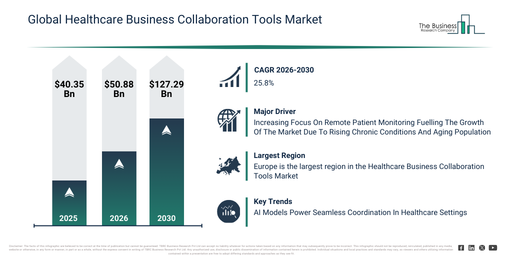
    The healthcare business collaboration tools market size has experienced dramatic growth in recent years. It is projected to expand from $40.35 billion in 2025 to $50.88 billion in 2026, at a compound annual growth rate (CAGR) of 26.1%. This market’s historical growth can be attributed to several factors, including the increasing digitization of healthcare administration, the expansion of multi-location healthcare networks, the early adoption of telehealth communication tools, the growing need for care coordination, and rising regulatory documentation requirements.

    The healthcare business collaboration tools market size is projected to experience substantial growth in the upcoming years. It is forecast to reach $127.29 billion by 2030, demonstrating a compound annual growth rate (CAGR) of 25.8%. This expansion during the forecast period is propelled by factors such as increasing demand for interoperable collaboration platforms, rising investments in digital healthcare ecosystems, the expansion of remote care coordination models, a growing focus on real-time clinical collaboration, and the continuous enhancement of cybersecurity frameworks. Prominent trends throughout this period encompass the increasing adoption of cloud-based collaboration platforms, the rising use of secure healthcare communication tools, the growing integration of workflow management solutions, the expansion of virtual meeting and telecollaboration tools, and an enhanced focus on data privacy and compliance.

    Get A Free Sample Report With In-Depth Market Insights:

    https://thebusinessresearchcompany.com/sample_request?id=98296045&type=smp&name=Healthcare%20Business%20Collaboration%20Tools%20Market%20Report%202026&utm_source=Blogs&utm_medium=Paid&utm_campaign=Nov_PR

    Healthcare Business Collaboration Tools Market Demand Drivers Opening New Revenue Streams

    A rising emphasis on remote patient monitoring is anticipated to fuel expansion in the healthcare business collaboration tools market. Remote Patient Monitoring (RPM) involves utilizing digital tools to gather health data from patients remotely and convey it to providers for evaluation and advice. This heightened focus on RPM stems from an expanding elderly demographic and a corresponding surge in chronic illnesses, both necessitating ongoing, extended care and immediate health surveillance. Such collaboration tools improve RPM capabilities by facilitating immediate data exchange and communication, thereby guaranteeing prompt interventions and streamlined care delivery. These tools contribute to better patient outcomes through their support for continuous oversight and effective decision-making among healthcare teams. For example, in August 2025, the US Department of Health and Human Services, a US based government administration, reported that in 2024, nearly 1 million enrollees utilized remote patient monitoring, representing a 27-percent increase compared to 2023. Consequently, the magnified attention on remote patient monitoring is a key driver for the expansion of the healthcare business collaboration tools market.

    Healthcare Business Collaboration Tools Market Segment Landscape: Which Areas Lead Development?

    The healthcare business collaboration tools market covered in this report is segmented –

    1) By Type: Conferencing Software, Communication And Coordination Software

    2) By Deployment: Cloud, On-Premises

    3) By End-User: Large Facilities, Small And Medium Facilities

    Subsegments:

    1) By Conferencing Software: Video Conferencing, Audio Conferencing, Web Conferencing, Virtual Meeting Platforms

    2) By Communication And Coordination Software: Messaging Platforms, Patient Coordination Tools, Collaborative Care Solutions, Workflow Management Systems

    Healthcare Business Collaboration Tools Market Transformation Trends: What Innovations Are Driving Change?

    Leading companies operating in the healthcare business collaboration tools market are concentrating on developing innovative solutions, such as healthcare artificial intelligence (AI) models, to offer clients enhanced support, pain alleviation, and improved coordination for more effective healthcare delivery. Healthcare artificial intelligence (AI) models are sophisticated AI systems designed to integrate and analyze a wide range of medical data, thereby enhancing clinical decision-making and patient outcomes. For instance, in October 2024, Microsoft Corporation, a US-based technology company, introduced Microsoft Cloud for Healthcare, aiming to improve patient engagement, team collaboration, and healthcare insights. This innovative healthcare business collaboration tool, incorporating artificial intelligence (AI) models, streamlines communication, enhances workflow efficiency, and supports seamless coordination among healthcare teams, ultimately boosting patient care and operational effectiveness. Microsoft Cloud for Healthcare specifically enhances patient care, team collaboration, and operations through AI-driven insights and secure data management.

    Healthcare Business Collaboration Tools Market Industry Leaders And Competitive Landscape

    Major companies operating in the healthcare business collaboration tools market are Microsoft Corporation, Google LLC, Salesforce Inc, Zoom Video Communications Inc, RingCentral Inc, Cisco Systems Inc, Verizon Communications Inc, Teladoc Health Inc, Doximity Inc, TigerConnect Inc, Zocdoc Inc, Health Catalyst Inc, Zoho Corporation, Slack Technologies, Asana Inc, Mondaycom Ltd, Smartsheet Inc, FlowForma Limited, OnPage Corporation, Gladinet Inc

    View The Full Healthcare Business Collaboration Tools Market Report:

    https://thebusinessresearchcompany.com/report/healthcare-business-collaboration-tools-global-market-report?utm_source=Blogs&utm_medium=Paid&utm_campaign=Nov_PR

    Healthcare Business Collaboration Tools Market Regional Analysis And Top Geography

    Europe was the largest region in the healthcare business collaboration tools market in 2025. Asia-Pacific is expected to be the fastest-growing region in the forecast period. The regions covered in the healthcare business collaboration tools market report are Asia-Pacific, South East Asia, Western Europe, Eastern Europe, North America, South America, Middle East, Africa.

    Reach Out To Our Team:

    The Business Research Company: https://www.thebusinessresearchcompany.com/

    Americas: +1 310-496-7795

    Asia: +44 7882 955267 & +91 8897263534

    Europe: +44 7882 955267

    Email us at: marketing@tbrc.info

    Follow us on:

    LinkedIn: https://in.linkedin.com/company/the-business-research-company

    YouTube: https://www.youtube.com/channel/UC24_fI0rV8cR5DxlCpgmyFQ

    Global Market Model: https://www.thebusinessresearchcompany.com/global-market-model
  • Healthcare Biometrics Market Forecast To Reach $27.64 Billion By 2030: Key Growth Drivers And Industry Trends

    Healthcare Biometrics Market Forecast To Reach $27.64 Billion By 2030: Key Growth Drivers And Industry Trends

    Backed by market attractiveness analysis, total addressable market sizing, company benchmarking matrices, interactive Excel dashboards, wider supply chain intelligence, emerging startup coverage, and detailed product-level insights, The Business Research Company’s 2026 market reports are designed to offer research that is more actionable and strategically valuable than ever.

    Healthcare Biometrics Market Size Outlook: How Quickly Will Revenue Expand Through 2030?

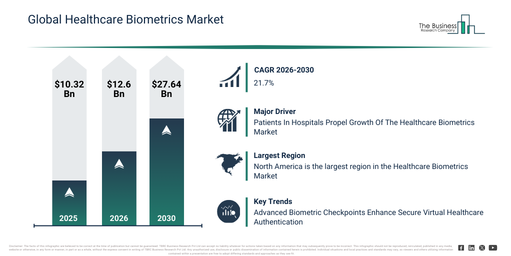
    The healthcare biometrics market has undergone substantial growth in recent years. It is projected to increase from $10.32 billion in 2025 to $12.6 billion in 2026, demonstrating a compound annual growth rate (CAGR) of 22.0%. The historical growth is attributable to factors such as the increasing digitization of healthcare records, a rise in patient identity fraud incidents, the early uptake of fingerprint and facial recognition technologies, the expansion of hospital information systems, and a regulatory focus on data protection.

    The healthcare biometrics market size is projected to experience rapid expansion in the coming years. It is anticipated to reach $27.64 billion by 2030, demonstrating a compound annual growth rate (CAGR) of 21.7%. This expansion during the forecast period is largely driven by the increasing adoption of AI-enabled biometric analytics, the broadening of telehealth and remote monitoring services, growing investments in healthcare cybersecurity, a rising demand for seamless patient access management, and the integration of biometrics with digital health platforms. Major developments expected during this timeframe include an increasing deployment of multi-modal biometric authentication, the rising use of contactless patient identification, growing integration of biometrics with EHR systems, the expansion of remote patient authentication solutions, and an enhanced focus on data security and privacy.

    Get A Free Sample Report With In-Depth Market Insights:

    https://thebusinessresearchcompany.com/sample_request?id=73900276&type=smp&name=Healthcare%20Biometrics%20Market%20Report%202026&utm_source=Blogs&utm_medium=Paid&utm_campaign=Nov_PR

    Healthcare Biometrics Market Growth Backed By Core Demand Fundamentals

    The expanding patient population within hospitals is anticipated to drive the future growth of the healthcare biometrics market. This rise in patient numbers is attributable to an aging demographic, a higher prevalence of chronic illnesses, and improved access to healthcare services. Healthcare biometrics offers benefits to hospital patients by enhancing security and providing personalized care through precise identification and authentication of individuals. For instance, in September 2024, Public Health, a UK-based not-for-profit organization, reported that approximately 0.7 million Scottish residents (one in eight of the population) were admitted to hospital in 2023/24. Among these, three out of ten patients (31%) experienced more than one admission. Overall, there were just over 1.1 million admissions into hospitals in 2023/24, signifying a 4% increase compared to last year (2022/23). Consequently, the growing number of patients in hospitals is a significant driver for the growth of the healthcare biometrics market.

    Healthcare Biometrics Market Segments: Where Is Growth Concentrated?

    The healthcare biometrics market covered in this report is segmented –

    1) By Technology: Fingerprint Recognition, Face Recognition, Voice Recognition, Vein Recognition, Iris Recognition

    2) By Application: Medical Record And Data Center Security, Patient Identification And Tracking, Care Provider Authentication, Home Or Remote Patient Monitoring, Other Applications

    3) By End-User: Hospitals, Clinics, Clinical Laboratories, Healthcare Institutions

    Subsegments:

    1) By Fingerprint Recognition: Optical Fingerprint Recognition, Capacitive Fingerprint Recognition, Ultrasonic Fingerprint Recognition, Thermal Fingerprint Recognition, Multi-Factor Fingerprint Authentication Systems

    2) By Face Recognition: 2D Face Recognition, 3D Face Recognition, Infrared Face Recognition, Facial Thermography, Real-Time Face Recognition Systems

    3) By Voice Recognition: Speaker Identification Systems, Speaker Verification Systems, Voice Biometric Authentication, AI-Powered Voice Recognition For Healthcare, Multi-Modal Voice Recognition Systems

    4) By Vein Recognition: Palm Vein Recognition, Finger Vein Recognition, Infrared Vein Pattern Recognition, Near-Infrared Vein Imaging

    5) By Iris Recognition: Near-Infrared Iris Scanning, Multi-Spectral Iris Recognition, High-Speed Iris Recognition Systems, Real-Time Iris Recognition Solutions

    #Healthcare Biometrics Market Growth Trends: What’s Shaping The Future Outlook?

    Leading companies in healthcare biometrics are concentrating on creating advanced patient identity authentication systems to bolster security and refine the precision of patient care. These patient identity verification solutions are sophisticated technologies engineered to accurately and securely confirm patients’ identities, thereby improving both safety and operational efficiency in healthcare environments. For example, in February 2024, VerifiNow, a US-based biometric verification provider, launched PatientVerifi, a biometric identity verification solution specifically for telehealth providers. This solution employs voice biometrics, facial recognition, and liveness detection to accurately authenticate patients during virtual appointments. This technology effectively diminishes the dangers of incorrect patient identification, malpractice claims due to misdiagnosis, and prescription misuse. PatientVerifi is designed for integration with widely used video platforms like Zoom and Microsoft Teams, which helps improve compliance with healthcare regulations and protects both patients and providers.

    Healthcare Biometrics Market Key Participants And Competitive Landscape

    Major companies operating in the healthcare biometrics market are Fujitsu Limited, NEC Corporation, Siemens Healthineers AG, Thales Group, IDEMIA SA, GoForward Inc., Zkteco Inc., Imprivata Inc, M2SYS LLC, Cross Match Technologies Inc., Daon Inc., Facephi, Aware Inc., Integrated Biometrics, Suprema Inc, eyeLock, Bio-Key International, Facetec Inc., RightPatient, Morpho Dys

    View The Full Healthcare Biometrics Market Report:

    https://thebusinessresearchcompany.com/report/healthcare-biometrics-global-market-report?utm_source=Blogs&utm_medium=Paid&utm_campaign=Nov_PR

    Healthcare Biometrics Market Geographic Analysis: Where Is Demand Rising Fastest?

    North America was the largest region in the healthcare biometrics market in 2025. Asia-Pacific is expected to be the fastest-growing region in the forecast period. The regions covered in the healthcare biometrics market report are Asia-Pacific, South East Asia, Western Europe, Eastern Europe, North America, South America, Middle East, Africa.

    Reach Out To Our Team:

    The Business Research Company: https://www.thebusinessresearchcompany.com/

    Americas: +1 310-496-7795

    Asia: +44 7882 955267 & +91 8897263534

    Europe: +44 7882 955267

    Email us at: marketing@tbrc.info

    Follow us on:

    LinkedIn: https://in.linkedin.com/company/the-business-research-company

    YouTube: https://www.youtube.com/channel/UC24_fI0rV8cR5DxlCpgmyFQ

    Global Market Model: https://www.thebusinessresearchcompany.com/global-market-model
  • Healthcare Automation Market Research 2026: Market Size, Trends, Segments And Growth Forecast

    Healthcare Automation Market Research 2026: Market Size, Trends, Segments And Growth Forecast

    Featuring market attractiveness scoring, total addressable market sizing, company benchmarking matrices, interactive Excel dashboards, deeper supply chain intelligence, emerging startup tracking, and granular product-level insights, The Business Research Company’s 2026 market reports are built to deliver research that is both more actionable and more strategically valuable.

    Healthcare Automation Market Size, Value And Growth Trajectory Through 2030

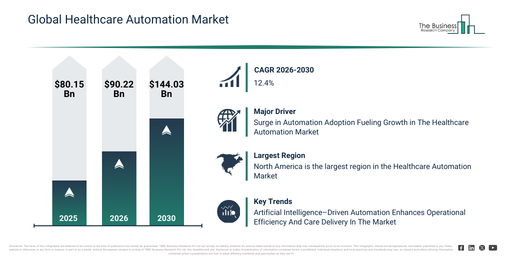
    The healthcare automation market has witnessed significant expansion in recent years. This market is anticipated to grow from $80.15 billion in 2025 to $90.22 billion by 2026, achieving a compound annual growth rate (CAGR) of 12.6%. The expansion observed in the past can be linked to factors such as the increasing digitization of healthcare processes, a heightened need for minimizing errors in service delivery, the early implementation of laboratory automation systems, the broader adoption of electronic health records, and a stronger emphasis on patient safety.

    The healthcare automation market is projected to experience substantial expansion in the coming years. This market is anticipated to reach $144.03 billion by 2030, demonstrating a compound annual growth rate (CAGR) of 12.4%. This expansion during the projection period stems from escalating investments in intelligent hospitals, the increasing uptake of AI-powered automation tools, the proliferation of remote patient monitoring solutions, the rising need for unified healthcare platforms, and ongoing improvements in healthcare software compatibility. Key trends foreseen over this period encompass a greater embrace of automated clinical processes, the growing implementation of intelligent monitoring and alert systems, increased incorporation of software-led care automation, the broader use of robotics in diagnostic and pharmacy automation, and a heightened emphasis on improving operational efficiency.

    Get A Free Sample Report With In-Depth Market Insights:

    https://thebusinessresearchcompany.com/sample_request?id=51953950&type=smp&name=Healthcare%20Automation%20Market%20Report%202026&utm_source=Blogs&utm_medium=Paid&utm_campaign=Nov_PR

    Healthcare Automation Market Growth Catalysts And Demand Drivers

    The expanding integration of automation is fueling expansion within the healthcare automation market. This adoption specifically entails the implementation of advanced solutions within healthcare settings. Medical institutions are embracing healthcare automation with the aim of boosting operational efficiency and simplifying various tasks. As an illustration, the Future Health Index 2023 Australian report, a significant global healthcare survey released in July 2023 by the Netherlands-based multinational conglomerate corporation Koninklijke Philips N.V, revealed that close to half (47%) of healthcare leaders are employing automation to improve patient-focused procedures like automated appointment scheduling. Concurrently, 43% are deploying it to refine internal operations, which encompasses automating administrative duties and enhancing workflows. Consequently, this rising trend of automation integration is projected to drive further growth in the healthcare automation market in the foreseeable future.

    Healthcare Automation Market Segment Analysis: What Are The Core Market Categories?

    The healthcare automation market covered in this report is segmented –

    1) By Component: Equipment, Software, Services

    2) By Application: Therapeutic Automation, Lab And Pharmacy Automation, Diagnostics And Monitoring Automation

    3) By End-User: Pharmacies, Research Institutes And Labs

    Subsegments:

    1) By Equipment: Automated Laboratory Equipment, Pharmacy Automation Systems, Surgical Robots, Point-Of-Care Testing Devices

    2) By Software: Laboratory Information Management Systems (LIMS), Electronic Health Records (EHR) Systems, Workflow Management Software, Clinical Decision Support Systems (CDSS)

    3) By Services: Consulting Services, Integration Services, Maintenance And Support Services

    Healthcare Automation Market Industry Trends: What’s Reshaping Demand?

    Leading companies active in the healthcare automation market are prioritizing the development of advanced systems, including AI-powered automation platforms, to enhance clinical decision-making, streamline administrative tasks, and improve overall patient services. AI-driven healthcare automation involves the deployment of intelligent technologies capable of analyzing extensive datasets, optimizing population health management, facilitating care coordination, and enabling efficient administrative operations, all while maintaining high levels of accuracy, regulatory compliance, and data security. For example, in August 2023, Innovaccer Inc., a US-based healthcare data platform company, launched its AI Automation Suite, Sara for Healthcare. This suite of AI solutions is designed to support population health management, customer relationship management, value-based care, self-service analytics, and comprehensive care management and coordination. Developed to meet the strict safety, security, compliance, and scalability requirements of healthcare IT, the platform demonstrates how the adoption of AI is transforming the healthcare automation market by enhancing efficiency and elevating care quality.

    Healthcare Automation Market Top Companies Driving Competitive Growth

    Major companies operating in the healthcare automation market are 3M Company, Accuray Inc, Allscripts Healthcare Solutions, Becton Dickinson and Company, Danaher Corporation, General Electric Company, International Business Machines Corporation, Intuitive Surgical Inc, Koninklijke Philips N.V, McKesson Corporation, MedeAnalytics, Medtronic plc, Oracle Corporation, Stryker Corporation, Tecan Group Ltd, Abbott Laboratories, Agilent Technologies, Athenahealth, Elekta, Epic Systems Corporation, Hologic Inc

    View The Full Healthcare Automation Market Report:

    https://thebusinessresearchcompany.com/report/healthcare-automation-global-market-report?utm_source=Blogs&utm_medium=Paid&utm_campaign=Nov_PR

    Healthcare Automation Market Global Footprint: Which Region Leads The Market?

    North America was the largest region in the healthcare automation market in 2025. The regions covered in the healthcare automation market report are Asia-Pacific, South East Asia, Western Europe, Eastern Europe, North America, South America, Middle East, Africa.

    Reach Out To Our Team:

    The Business Research Company: https://www.thebusinessresearchcompany.com/

    Americas: +1 310-496-7795

    Asia: +44 7882 955267 & +91 8897263534

    Europe: +44 7882 955267

    Email us at: marketing@tbrc.info

    Follow us on:

    LinkedIn: https://in.linkedin.com/company/the-business-research-company

    YouTube: https://www.youtube.com/channel/UC24_fI0rV8cR5DxlCpgmyFQ

    Global Market Model: https://www.thebusinessresearchcompany.com/global-market-model