Blog

  • Healthcare Assistive Robot Market Forecast 2026: Market Size, Competitive Landscape And Growth Drivers

    Healthcare Assistive Robot Market Forecast 2026: Market Size, Competitive Landscape And Growth Drivers

    Built to provide research that’s more actionable and strategically valuable, The Business Research Company’s 2026 market reports include market attractiveness analysis, total addressable market sizing, company benchmarking matrices, interactive Excel dashboards, broader supply chain intelligence, emerging startup tracking, and in-depth product insights.

    Healthcare Assistive Robot Market CAGR Outlook And Future Development

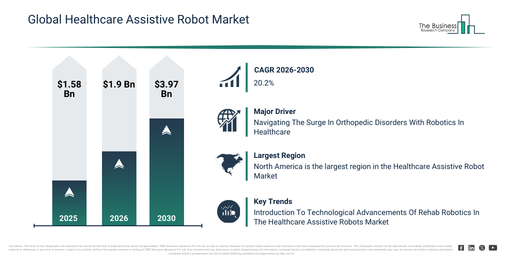
    The healthcare assistive robot market has shown substantial growth in recent years. Projections indicate it will expand from $1.58 billion in 2025 to reach $1.9 billion by 2026, exhibiting a compound annual growth rate (CAGR) of 20.1%. This historical growth is due to factors such as an expanding elderly population needing care, the increasing strain on healthcare personnel, the early integration of rehabilitation robotics, a rise in hospital automation projects, and greater receptiveness to robotic assistance within care environments.

    The healthcare assistive robot market is projected for rapid expansion in the coming years. Its value is anticipated to reach $3.97 billion by 2030, exhibiting a compound annual growth rate (CAGR) of 20.2%. Factors contributing to this growth over the forecast period include a heightened demand for home-based healthcare solutions, increased capital allocation towards intelligent care technologies, the proliferation of remote and virtual care frameworks, an intensifying emphasis on patient autonomy and improved quality of life, alongside continuous technological progress in robotics and artificial intelligence. Key trends for the upcoming period encompass a wider acceptance of companion and socially assistive robots, an uptick in the deployment of mobility assistance and rehabilitation robots, the expanding incorporation of remote patient monitoring functionalities, the extended use of telepresence robots within clinical environments, and a sharpened focus on the design of human-robot interactions.

    Get A Free Sample Report With In-Depth Market Insights:

    https://thebusinessresearchcompany.com/sample_request?id=59125658&type=smp&name=Healthcare%20Assistive%20Robot%20Market%20Report%202026&utm_source=Blogs&utm_medium=Paid&utm_campaign=Nov_PR

    Healthcare Assistive Robot Market Opportunity Drivers: What’s Unlocking New Revenue Potential?

    The escalating occurrence of orthopedic disorders is anticipated to stimulate the future expansion of the healthcare assistive robot market. Orthopedic disorders are defined as a wide array of conditions impacting the musculoskeletal system, which includes bones, joints, ligaments, tendons, muscles, and nerves. Healthcare assistive robots for orthopedic disorders provide support for mobility and rehabilitation, and facilitate precise surgical procedures, thus improving patient care and recovery. For example, in August 2023, data from the Institute for Health Metrics and Evaluation (IHME), a US-based research institution, indicated that almost 1 billion people are expected to develop osteoarthritis by 2050, with knee cases projected to increase by 75% and hand cases by 50%. This surge in orthopedic disorder incidence is consequently propelling the growth of the healthcare assistive robot market.

    Healthcare Assistive Robot Market Segment Breakdown: Which Categories Lead On Revenue?

    The healthcare assistive robot market covered in this report is segmented –

    1) By Type: Care Robot, Surgical Assistive Robot

    2) By Portability: Fixed Base, Mobile

    3) By End User: Hospitals, Clinics, Ambulatory Surgical Centers, Other End Users

    Subsegments:

    1) By Care Robot: Companion Robots, Rehabilitation Robots, Mobility Assistance Robots, Telepresence Robots, Hygiene And Sanitation Robots

    2) By Surgical Assistive Robot: Robotic Surgical Systems, Robotic Endoscopic Systems, Robotic Orthopedic Systems, Robotic Assistance For Minimally Invasive Surgeries

    Healthcare Assistive Robot Market Innovation Trends: What Developments Are Reshaping The Industry?

    Major companies operating in the healthcare assistive robot market are developing innovative technologies, such as gait therapy software, to increase their profitability in the sector. Gait therapy software refers to specialized programs that guide robots in assisting patients with walking exercises, aiming to improve mobility and rehabilitation outcomes. For instance, in January 2024, Ekso Bionics Holdings Inc., a US-based robotic exoskeleton manufacturer, launched GaitCoach Software for EksoNR, a clinical rehabilitation wearable robot designed for exoskeletal assistance. This development revolutionized gait therapy with its capability to tailor sessions to individual patient needs, provide real-time, dynamic feedback, and deliver precise guidance akin to that of an additional clinical observer. This innovative software, which succeeds SmartAssist, enhances the integration of robotics in rehabilitation, as evidenced by 96% of experienced EksoNR users finding it highly intuitive and 93% valuing its guidance for simplifying usage.

    Healthcare Assistive Robot Market Leading Players And Competitive Positioning

    Major companies operating in the healthcare assistive robot market are HONDA Motor Co. Ltd., Johnson & Johnson, Medtronic PLC, ABB Ltd., Stryker Corporation, Zimmer Biomet Holdings Inc., Intuitive Surgical Inc., OmniCell Inc., Globus Medical Inc., SoftBank Robotics Group Corp., Kinova Inc., CMR Surgical Ltd., Diligent Robotics Inc., Cyberdyne Inc., Ekso Bionics Holdings Inc., Titan Medical Inc., ReWalk Robotics Ltd., Focal Meditech BV, Barrett Technology, Rex Bionics Ltd., Bionik Laboratories Corp.

    View The Full Healthcare Assistive Robot Market Report:

    https://thebusinessresearchcompany.com/report/healthcare-assistive-robot-global-market-report?utm_source=Blogs&utm_medium=Paid&utm_campaign=Nov_PR

    Healthcare Assistive Robot Market Regional Split: Which Areas Are Fueling Growth?

    North America was the largest region in the healthcare assistive robot market in 2025. The regions covered in the healthcare assistive robot market report are Asia-Pacific, South East Asia, Western Europe, Eastern Europe, North America, South America, Middle East, Africa.

    Reach Out To Our Team:

    The Business Research Company: https://www.thebusinessresearchcompany.com/

    Americas: +1 310-496-7795

    Asia: +44 7882 955267 & +91 8897263534

    Europe: +44 7882 955267

    Email us at: marketing@tbrc.info

    Follow us on:

    LinkedIn: https://in.linkedin.com/company/the-business-research-company

    YouTube: https://www.youtube.com/channel/UC24_fI0rV8cR5DxlCpgmyFQ

    Global Market Model: https://www.thebusinessresearchcompany.com/global-market-model
  • Healthcare And Laboratory Labels Market Size In 2026: Regional Growth, Key Segments And Future Outlook

    Healthcare And Laboratory Labels Market Size In 2026: Regional Growth, Key Segments And Future Outlook

    Backed by market attractiveness analysis, total addressable market sizing, company benchmarking matrices, interactive Excel dashboards, wider supply chain intelligence, emerging startup coverage, and detailed product-level insights, The Business Research Company’s 2026 market reports are designed to offer research that is more actionable and strategically valuable than ever.

    Healthcare And Laboratory Labels Market Set To Climb From $11.12 Billion In 2026 To $13.53 Billion By 2030

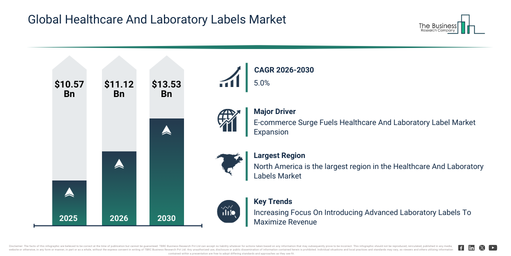
    The healthcare and laboratory labels market has experienced substantial expansion in recent years. This sector is projected to grow from $10.57 billion in 2025 to $11.12 billion in 2026, demonstrating a compound annual growth rate (CAGR) of 5.3%. The growth observed in the past can be attributed to the expansion of pharmaceutical manufacturing, rising laboratory sample volumes, increasing regulatory labeling requirements, advancements in hospital inventory management, and the wider adoption of barcode-based identification.

    The healthcare and laboratory labels market is poised for significant expansion in the coming years. This market is projected to reach $13.53 billion by 2030, exhibiting a compound annual growth rate (CAGR) of 5.0%. Factors driving this expansion during the forecast period include the greater integration of RFID-enabled labels, a heightened emphasis on sustainable labeling materials, the proliferation of automated labeling systems, the escalating need for accurate sample tracking, and increased financial commitments to intelligent healthcare infrastructure. Key trends anticipated within this period involve the rising uptake of durable and chemical-resistant labels, a growing requirement for robust traceability and identification methods, the wider application of smart and barcode-equipped labels, the enlargement of labeling systems adhering to regulations, and a stronger emphasis on ensuring long-term label efficacy.

    Get A Free Sample Report With In-Depth Market Insights:

    https://thebusinessresearchcompany.com/sample_request?id=12967062&type=smp&name=Healthcare%20And%20Laboratory%20Labels%20Market%20Report%202026&utm_source=Blogs&utm_medium=Paid&utm_campaign=Nov_PR

    Healthcare And Laboratory Labels Market Growth Momentum: What Factors Are Shaping Demand?

    The increasing reach of e-commerce is anticipated to boost the healthcare and laboratory label market’s expansion in the future. E-commerce, by definition, involves the digital exchange of products and services via the internet. This includes various online operations such as web-based purchasing, digital payment methods, and internet-based promotional efforts. Within the e-commerce landscape, healthcare and laboratory labels are vital for delivering precise product details, adhering to regulatory mandates, and improving the tracking capabilities of medical and lab materials. As an illustration, the US Census Bureau, a US-based Department of Commerce, reported in November 2023 that U.S. retail e-commerce sales were projected at an estimated $271.7 billion in the third quarter of 2023, representing a 0.9% (±0.4%) rise from the prior quarter. When compared to the third quarter of 2022, e-commerce sales grew by 7.8% (±1.2%), whereas total retail sales climbed by 2.0% (±0.4%) over the identical timeframe. By the third quarter of 2023, e-commerce accounted for 14.9% of all sales. Consequently, the ongoing expansion of e-commerce is a key catalyst for the growth experienced by the healthcare and laboratory label market.

    Healthcare And Laboratory Labels Market Segmentation: How Does The Market Break Down By Category?

    The healthcare and laboratory labels market covered in this report is segmented –

    1) By Material: Nylon, Polyester, Polyolefin, Vinyl, Other Materials

    2) By Technology: Thermal Transfer, Direct Thermal, Laser

    3) By End-User: Pharmaceuticals, Medical Device, Blood Banks, Hospital Services, Laboratories

    Subsegments:

    1) By Nylon: Nylon-Based Medical Labels, Nylon-Based Laboratory Labels

    2) By Polyester: Polyester Medical Labels, Polyester Laboratory Labels

    3) By Polyolefin: Polyolefin Medical Labels, Polyolefin Laboratory Labels

    4) By Vinyl: Vinyl Medical Labels, Vinyl Laboratory Labels

    5) By Other Materials: Polyimide, Polyethylene, Specialty Materials

    Healthcare And Laboratory Labels Market Trends: What’s Defining The Industry’s Next Phase?

    Leading companies operating in the healthcare and laboratory labels market are increasingly focusing on introducing sophisticated laboratory labels to maximize their revenues. These advanced laboratory labels are specialized tags developed for application in laboratory settings. They are crucial for identifying and tracking laboratory samples, equipment, and other items. For instance, in April 2023, Brady Corporation, a US-based equipment manufacturing company, launched the Matt White Polypropylene RFID (Radio Frequency Identification) petri dish label for laboratories. This label measures 65 x 6 mm and can be effortlessly affixed to delicate and expensive lab equipment, including petri dishes. It is engineered for use in extreme temperatures and chemical environments, rendering it ideal for monitoring lab samples and equipment. The label is constructed from a durable polypropylene material capable of withstanding temperatures up to 185°F, alongside chemicals such as acids and bases. Moreover, it is water-resistant and suitable for autoclaving. An integrated RFID chip enables quick and easy scanning to identify the sample or equipment it is attached to.

    Healthcare And Laboratory Labels Market Competitive Overview And Top Companies

    Major companies operating in the healthcare and laboratory labels market are Cardinal Health Inc., 3M Company, UPM Raflatac, Avery Dennison Corporation, CCL Industries Inc., Zebra Technologies Corporation, Multi-Color Corporation, Brady Corporation, Schreiner Group, Resource Label Group, General Data Company, Sato America LLC, Tekra Corporation, PlatinumCode, ID Technology, Shamrock Labels, Tapecon Inc., DuraFast Label Company, Weber Packaging Solutions Inc., LabTAG, Consolidated Label Co., Watson Label Products

    View The Full Healthcare And Laboratory Labels Market Report:

    https://thebusinessresearchcompany.com/report/healthcare-and-laboratory-labels-global-market-report?utm_source=Blogs&utm_medium=Paid&utm_campaign=Nov_PR

    Healthcare And Laboratory Labels Market Top Region: Where Does Most Revenue Come From?

    North America was the largest region in the healthcare and laboratory labels market in 2025. Asia-Pacific is expected to be the fastest-growing region in the forecast period. The regions covered in the healthcare and laboratory labels market report are Asia-Pacific, South East Asia, Western Europe, Eastern Europe, North America, South America, Middle East, Africa.

    Reach Out To Our Team:

    The Business Research Company: https://www.thebusinessresearchcompany.com/

    Americas: +1 310-496-7795

    Asia: +44 7882 955267 & +91 8897263534

    Europe: +44 7882 955267

    Email us at: marketing@tbrc.info

    Follow us on:

    LinkedIn: https://in.linkedin.com/company/the-business-research-company

    YouTube: https://www.youtube.com/channel/UC24_fI0rV8cR5DxlCpgmyFQ

    Global Market Model: https://www.thebusinessresearchcompany.com/global-market-model
  • Healthcare Analytical Testing Services Market Growth Forecast Through 2030: Market Size And Trends In 2026

    Healthcare Analytical Testing Services Market Growth Forecast Through 2030: Market Size And Trends In 2026

    Featuring market attractiveness scoring, total addressable market sizing, company benchmarking matrices, interactive Excel dashboards, deeper supply chain intelligence, emerging startup tracking, and granular product-level insights, The Business Research Company’s 2026 market reports are built to deliver research that is both more actionable and more strategically valuable.

    Healthcare Analytical Testing Services Market Forecast: Value Set To Climb From $8.7 Billion To $14.64 Billion

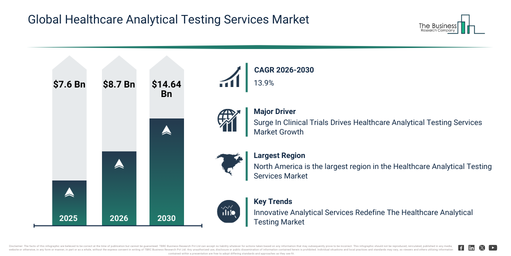
    The market for healthcare analytical testing services has experienced substantial expansion recently. This market is projected to expand from $7.6 billion in 2025 to $8.7 billion in 2026, demonstrating a compound annual growth rate (CAGR) of 14.6%. Historically, this growth can be ascribed to several factors, including heightened pharmaceutical research and development endeavors, the increasing intricacy of biologic drugs, the widening scope of contract research services, evolving regulatory testing mandates, and a stronger emphasis on quality assurance.

    The healthcare analytical testing services market is poised for rapid expansion over the next few years. It is projected to ascend to $14.64 billion by 2030, demonstrating a compound annual growth rate (CAGR) of 13.9%. This anticipated growth can be attributed to several factors during the forecast period, such as the increasing embrace of AI-enabled lab analytics, a rising need for high-throughput testing services, the broadening development of personalized medicine, a growing emphasis on rapid microbial detection, and the expanding practice of outsourcing analytical validation. Significant trends expected in the forecast period include a heightened demand for advanced bioanalytical testing, the increasing adoption of automated laboratory systems, a stronger focus on validation services that adhere to regulatory standards, the further expansion of outsourced analytical testing, and improved integration of digital laboratory platforms.

    Get A Free Sample Report With In-Depth Market Insights:

    https://thebusinessresearchcompany.com/sample_request?id=97691974&type=smp&name=Healthcare%20Analytical%20Testing%20Services%20Market%20Report%202026&utm_source=Blogs&utm_medium=Paid&utm_campaign=Nov_PR

    Healthcare Analytical Testing Services Market Expansion Drivers: What’s Shaping Future Growth?

    An expansion in the volume of clinical trials is projected to fuel the growth of the healthcare analytical testing services market. These trials are research endeavors involving human subjects, designed to assess the safety and effectiveness of medical interventions or treatments. The surge in clinical trials is largely attributable to the escalating incidence of chronic and rare diseases, which generates a heightened need for novel and successful therapeutic options. Within clinical trials, healthcare analytical testing services play a crucial role in evaluating drug safety and efficacy, determining appropriate dosing and formulation, ensuring data integrity, and maintaining quality control. As an illustration, in December 2024, the Association of the British Pharmaceutical Industry (ABPI), an organization based in the UK, reported that the number of pharmaceutical industry trials initiated in the UK grew for the second consecutive year, moving from 411 in 2022 to 426 in 2023. Consequently, a greater volume of clinical trials is anticipated to boost the expansion of the healthcare analytical testing services market.

    Healthcare Analytical Testing Services Market Segment Trends And Revenue Contributors

    The healthcare analytical testing services market covered in this report is segmented –

    1) By Type: Bioanalytical Testing Services, Physical Characterization Services, Method Development And Validation Testing Services, Raw Material Testing Services, Batch-Release Testing Services, Stability Testing, Microbial Testing Services

    2) By Application: Drug Discovery And Preclinical Research, Clinical Trials (Phase I–III), Quality Control And Batch-Release Testing, Stability Studies And Shelf-Life Characterization, Regulatory Compliance And Submission Support, Manufacturing Process Support And Troubleshooting, Post-Market Surveillance And Pharmacovigilance Testing

    3) By End User: Pharmaceutical And Biopharmaceutical Companies, Medical Device Companies, Contract Research Organizations

    Subsegments:

    1) By Bioanalytical Testing Services: Pharmacokinetics Testing, Biomarker Analysis

    2) By Physical Characterization Services: Particle Size Analysis, Surface Area Analysis

    3) By Method Development and Validation Testing Services: Analytical Method Development, Method Validation

    4) By Raw Material Testing Services: Identity Testing, Purity Testing,

    5) By Batch-Release Testing Services: Quality Control Testing, Compliance Testing

    6) By Stability Testing: Accelerated Stability Testing, Long-Term Stability Testing

    7) By Microbial Testing Services: Sterility Testing, Endotoxin Testing

    Healthcare Analytical Testing Services Market Industry Trends Fueling Future Revenue Growth

    Major companies within the healthcare analytical testing services market are concentrating on innovative provisions such as broad bioanalytical coverage to comprehensively support drug development, from its discovery phase through late-stage clinical trials, including pharmacokinetic (PK) and pharmacodynamic (PD) assessments. Broad bioanalytical coverage specifically refers to a bioanalytical service’s capacity to manage a wide array of testing demands across various molecule types and stages of drug development. For instance, in August 2024, SGS Life Science Services SA, a Switzerland-based contract research organization (CRO) renowned for analytical development and quality control laboratory services, unveiled a new bioanalytical testing lab. This specialized laboratory is designed to measure drugs, their metabolites, and other biologically relevant molecules present in biological samples. Additionally, it provides cell-based assays for cellular biomarkers and precise quantification.

    Healthcare Analytical Testing Services Market Competitive Landscape: Which Companies Lead The Industry?

    Major companies operating in the healthcare analytical testing services market are Almac Group, ALS Limited, Anacura Life Sciences, Charles River Laboratories International Inc., Element Materials Technology Group, Eurofins Scientific SE, ICON plc, Impact Analytical Testing Lab, Intertek Group plc, Pace Analytical Services LLC, PPD Inc., SourceBio International plc, Steris Corporation, Syneos Health Inc., WuXi AppTec, Analytical Bio-Chemistry Laboratories, Avance Biosciences, Avista Pharma Solutions, Avomeen Analytical Services, BioPharma Services Inc., Boston Analytical, Laboratory Corporation, MedPharm Inc., Micro Quality Labs, Microbac Laboratories, Nelson Laboratories LLC, Pacific Biolabs Inc.

    View The Full Healthcare Analytical Testing Services Market Report:

    https://thebusinessresearchcompany.com/report/healthcare-analytical-testing-services-global-market-report?utm_source=Blogs&utm_medium=Paid&utm_campaign=Nov_PR

    Healthcare Analytical Testing Services Market Regional Breakdown: Where Is Demand Concentrated?

    North America was the largest region in the healthcare analytical testing services market in 2025. Asia-Pacific is expected to be the fastest-growing region in the forecast period. The regions covered in the healthcare analytical testing services market report are Asia-Pacific, South East Asia, Western Europe, Eastern Europe, North America, South America, Middle East, Africa.

    Reach Out To Our Team:

    The Business Research Company: https://www.thebusinessresearchcompany.com/

    Americas: +1 310-496-7795

    Asia: +44 7882 955267 & +91 8897263534

    Europe: +44 7882 955267

    Email us at: marketing@tbrc.info

    Follow us on:

    LinkedIn: https://in.linkedin.com/company/the-business-research-company

    YouTube: https://www.youtube.com/channel/UC24_fI0rV8cR5DxlCpgmyFQ

    Global Market Model: https://www.thebusinessresearchcompany.com/global-market-model
  • Healthcare Advertising Market Analysis: $51.23 Billion Market Size In 2026 And Future Growth Prospects

    Healthcare Advertising Market Analysis: $51.23 Billion Market Size In 2026 And Future Growth Prospects

    Built to provide research that’s more actionable and strategically valuable, The Business Research Company’s 2026 market reports include market attractiveness analysis, total addressable market sizing, company benchmarking matrices, interactive Excel dashboards, broader supply chain intelligence, emerging startup tracking, and in-depth product insights.

    Healthcare Advertising Market Revenue Growth On Track For A 6.7% CAGR Through 2030

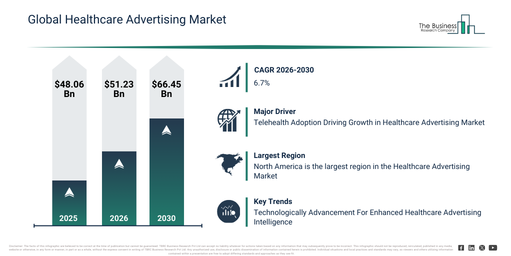
    The healthcare advertising market has experienced robust expansion over the past few years. Projections indicate it will increase from $48.06 billion in 2025 to $51.23 billion in 2026, demonstrating a compound annual growth rate (CAGR) of 6.6%. Factors contributing to this historical growth include the proliferation of private healthcare services, heightened competition among healthcare providers, intensified patient awareness campaigns, the rise in digital media usage, and broader acceptance of direct-to-consumer healthcare advertising.

    The healthcare advertising market is anticipated to experience robust expansion over the coming years. By 2030, its value is projected to reach $66.45 billion, exhibiting a compound annual growth rate (CAGR) of 6.7%. Key factors driving this growth during the forecast period include the greater uptake of AI-powered targeting tools, escalating demand for integrated omnichannel healthcare campaigns, wider promotion of telemedicine services, a heightened emphasis on quantifiable advertising results, and increased financial commitments to establishing healthcare brands. Significant trends expected throughout this period encompass a growing move towards digital healthcare initiatives, more frequent application of data-driven advertising approaches, wider implementation of personalized patient communication, the proliferation of influencer and content marketing frameworks, and a stronger emphasis on messaging that adheres to regulations.

    Get A Free Sample Report With In-Depth Market Insights:

    https://thebusinessresearchcompany.com/sample_request?id=73747413&type=smp&name=Healthcare%20Advertising%20Market%20Report%202026&utm_source=Blogs&utm_medium=Paid&utm_campaign=Nov_PR

    Healthcare Advertising Market Development Factors: What’s Supporting Demand?

    The increasing integration of telehealth is anticipated to significantly boost the healthcare advertising market. Telehealth, also known as telecommunications in healthcare, involves the use of digital technologies and communication tools to deliver remote healthcare services, consultations, monitoring, and educational content. Healthcare advertising has progressively utilized telehealth to connect with patients, offer care services regardless of physical location or mobility constraints, and to drive targeted campaigns that enhance patient engagement, improve healthcare services, better patient outcomes, and elevate the overall healthcare experience. For instance, in April 2023, FAIR Health Inc., a US-based non-profit organization, documented that national telehealth use in 2023 climbed by 7.3%, increasing from 5.5% of medical claim lines in December 2022 to 5.9% in January 2023. This evidence underscores how the expanding adoption of telehealth is a primary driver for the healthcare advertising market’s growth.

    Healthcare Advertising Market Segment Analysis Spotlighting Growth Areas

    The healthcare advertising market covered in this report is segmented –

    1) By Type: Traditional, Digital, Public Relations, Unique Branding And Awareness, Internal Marketing, Physician Referrals, Other Types

    2) By Approach: Direct-To-Consumer Advertising, Healthcare Professional (Detailing)

    3) By Application: Biotechnology Companies, Medical Insurance, Other Applications

    Subsegments:

    1) By Traditional: Print, Television, Radio, Outdoor

    2) By Digital: Social Media Advertising, Search Engine Marketing (SEM), Display Advertising, Email Marketing, Mobile Advertising

    3) By Public Relations: Media Relations, Community Relations, Crisis Management, Press Releases

    4) By Unique Branding And Awareness: Brand Identity Development, Cause Marketing, Sponsorships And Events

    5) By Internal Marketing: Employee Communications, Internal Newsletters

    6) By Physician Referrals: Referral Programs, Physician Outreach, Networking Events

    7) By Other Types: Influencer Marketing, Content Marketing, Patient Testimonials And Case Studies

    Healthcare Advertising Market Trends Powering Strategic Industry Growth

    Leading companies within the healthcare advertising market are concentrating on innovative healthcare advancements, such as DeepIntent Copilot, to elevate their advertising strategies. DeepIntent Copilot serves as an AI-powered tool embedded in the DeepIntent healthcare advertising platform, providing actionable insights and recommendations based on real-time media data. Illustratively, in September 2023, DeepIntent, the US-based healthcare advertising platform, introduced DeepIntent Copilot, an AI-driven tool designed for intelligent healthcare advertising. Its primary aim is to optimize campaign strategies, maximize media investments, and enhance performance and efficiency within healthcare advertising. By utilizing unique connected datasets from across DeepIntent’s platform, the tool delivers practical insights and suggestions focused on achieving healthcare-specific goals. Moreover, it revolutionizes healthcare advertising through its provision of actionable insights, reduction in the time needed to achieve a positive ROI, and improved adaptability to real-time market fluctuations.

    Healthcare Advertising Market Leading Companies: Who Holds The Strongest Market Presence?

    Major companies operating in the healthcare advertising market are WPP plc, PUBLICIS GROUPE, Omnicom Group, Syneos Health, MCCANN WORLDGROUP, Ogilvy Healthworld LLC, Digitas Health, CMI Media Group, Response Mine Interactive Inc, SAGEFROG MARKETING, Practice Builders, ProperExpression, Maricich Health, Intrepy Healthcare Marketing, ParkerWhite Brand Interactive, Distill Health LLC, High Level Marketing Inc, Dobies Health Marketing, Healthcare Success LLC, Communications Strategy Group

    View The Full Healthcare Advertising Market Report:

    https://thebusinessresearchcompany.com/report/healthcare-advertising-global-market-report?utm_source=Blogs&utm_medium=Paid&utm_campaign=Nov_PR

    Healthcare Advertising Market Geographic Landscape: Which Region Leads Industry Growth?

    North America was the largest region in the healthcare advertising market in 2025. The regions covered in the healthcare advertising market report are Asia-Pacific, South East Asia, Western Europe, Eastern Europe, North America, South America, Middle East, Africa.

    Reach Out To Our Team:

    The Business Research Company: https://www.thebusinessresearchcompany.com/

    Americas: +1 310-496-7795

    Asia: +44 7882 955267 & +91 8897263534

    Europe: +44 7882 955267

    Email us at: marketing@tbrc.info

    Follow us on:

    LinkedIn: https://in.linkedin.com/company/the-business-research-company

    YouTube: https://www.youtube.com/channel/UC24_fI0rV8cR5DxlCpgmyFQ

    Global Market Model: https://www.thebusinessresearchcompany.com/global-market-model
  • Healthcare Additive Manufacturing Market 2026 Market Size And Growth Forecast: Key Trends To Watch

    Healthcare Additive Manufacturing Market 2026 Market Size And Growth Forecast: Key Trends To Watch

    Backed by market attractiveness analysis, total addressable market sizing, company benchmarking matrices, interactive Excel dashboards, wider supply chain intelligence, emerging startup coverage, and detailed product-level insights, The Business Research Company’s 2026 market reports are designed to offer research that is more actionable and strategically valuable than ever.

    Healthcare Additive Manufacturing Market Value Growth And Long-Term Outlook

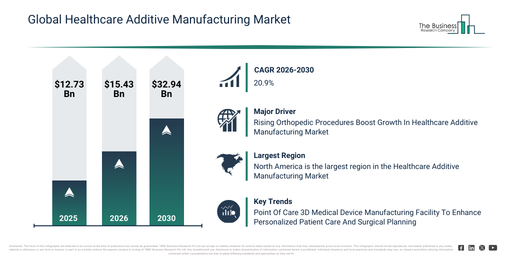
    The healthcare additive manufacturing market has experienced exponential expansion in recent years. Its valuation is expected to rise from $12.73 billion in 2025 to $15.43 billion by 2026, with a compound annual growth rate (CAGR) of 21.2%. This historical expansion is largely due to factors such as rising demand for tailored medical solutions, breakthroughs in 3D printing technologies, the initial integration of additive manufacturing in orthopedic procedures, increasing research into bioprinting, and the authorization of printed medical devices.

    The healthcare additive manufacturing market size is projected to experience substantial expansion over the upcoming years. By 2030, this market is forecasted to reach $32.94 billion, exhibiting a compound annual growth rate (CAGR) of 20.9%. This projected expansion during the forecast timeframe is primarily driven by factors such as the expanding use of bioprinting for tissue engineering, increased financial commitments in digital healthcare production, an escalating need for rapid prototyping within healthcare, the broadening of hospital-based printing capabilities, and breakthroughs in multi-material printing technologies. Key trends anticipated in this period encompass the wider acceptance of patient-specific 3D printed implants, a rising application of biocompatible printing substances, the growth of point-of-care additive manufacturing, increased incorporation of digital design and simulation tools, and a heightened emphasis on customized prosthetics and orthotics.

    Get A Free Sample Report With In-Depth Market Insights:

    https://thebusinessresearchcompany.com/sample_request?id=13878890&type=smp&name=Healthcare%20Additive%20Manufacturing%20Market%20Report%202026&utm_source=Blogs&utm_medium=Paid&utm_campaign=Nov_PR

    Healthcare Additive Manufacturing Market Industry Drivers: What’s Behind The Revenue Growth?

    The healthcare additive manufacturing market is projected to expand due to an expected rise in orthopedic procedures. Orthopedic procedures encompass both surgical and non-surgical interventions designed to rectify problems within the musculoskeletal system, a complex network comprising bones, joints, ligaments, tendons, muscles, and nerves. This increasing demand for orthopedic interventions stems from an aging demographic facing joint degeneration, alongside a notable increase in sports-related injuries that necessitate surgical treatment. Healthcare additive manufacturing significantly enhances orthopedic procedures through its capacity to produce personalized implants and prosthetics, thereby ensuring an exact fit and superior results. It also contributes to faster patient recovery and more effective surgical planning. For example, data released by GOV.UK, a UK-based government agency, in December 2023, indicated that during the financial year 2022-2023, a total of 102,025 orthopedic procedures were reported for mandatory surveillance. This represented a 10.2% rise from the 92,608 procedures documented in the preceding financial year. Consequently, the expanding volume of orthopedic procedures is a key impetus for the growth of the healthcare additive manufacturing market.

    Healthcare Additive Manufacturing Market Segment Performance And Emerging Opportunities

    The healthcare additive manufacturing market covered in this report is segmented –

    1) By Material: Metals And Alloys, Polymers, Biological Cells, Other Materials

    2) By Technology: Stereolithography, Deposition Modeling, Electron Beam Melting, Laser Sintering, Jetting Technology, Other Technologies

    3) By Application: Medical Implants, Prosthetics, Wearable Devices, Tissue Engineering, Other Applications

    Subsegments:

    1) By Metals and Alloys: Titanium Alloys, Stainless Steel, Cobalt Chrome Alloys, Aluminum Alloys, Nickel Alloys

    2) By Polymers: Thermoplastics, Biodegradable Polymers, Photopolymer Resins, Polyetheretherketone (PEEK), Polyamide (Nylon)

    3) By Biological Cells: Stem Cells, Human Cells For Tissue Engineering, Bioinks For 3D Printing, Cell-Based Bioprinting Materials

    4) By Other Materials: Ceramics, Glass-Based Materials, Composite Materials, Gelatin-Based And Collagen-Based Materials

    Healthcare Additive Manufacturing Market Growth Trends Reshaping The Competitive Landscape

    Major companies operating in the healthcare additive manufacturing market are intensifying their efforts through investments in point-of-care 3D medical device manufacturing facilities, seeking to improve personalized treatment options and enhance patient outcomes. Point of care 3D medical device manufacturing signifies the creation of medical devices directly at or near the location of patient care, leveraging 3D printing technology. For example, in June 2024, Ricoh USA Inc., a US-based imaging and electronics company, unveiled its initial Point of Care 3D medical device manufacturing facility, named the RICOH 3D for Healthcare Innovation Studio, situated in Winston-Salem, North Carolina. This advanced facility intends to offer clinicians prompt access to 3D-printed anatomic models, thereby optimizing surgical planning and patient education across various medical domains, including craniomaxillofacial, orthopedic, and cardiovascular applications. By enabling the swift production of patient-specific models derived from medical images, the facility stimulates cooperation among interdisciplinary teams, fostering innovation in tailored patient care.

    Healthcare Additive Manufacturing Market Key Players: Which Companies Lead Industry Competition?

    Major companies operating in the healthcare additive manufacturing market are General Electric Company, HP Inc., Jabil Inc., Medtronic PLC, Stryker Corporation, Zimmer Biomet, Globus Medical, EOS GmbH, Stratasys Ltd., 3D Systems Corporation, Materialise N.V., Desktop Metal Inc., Paragon Medical, Fathom Manufacturing, SLM Solutions Group AG, EnvisionTEC GmbH, Nano Dimension Ltd., Shapeways Inc., Xact Metal Inc., Raise3D Technologies Inc., Nanoscribe GmbH, Lithoz, Vesalio

    View The Full Healthcare Additive Manufacturing Market Report:

    https://thebusinessresearchcompany.com/report/healthcare-additive-manufacturing-global-market-report?utm_source=Blogs&utm_medium=Paid&utm_campaign=Nov_PR

    Healthcare Additive Manufacturing Market Largest Region: Which Geography Holds The Biggest Share?

    North America was the largest region in the healthcare additive manufacturing market in 2025. Asia-Pacific is expected to be the fastest-growing region in the forecast period. The regions covered in the healthcare additive manufacturing market report are Asia-Pacific, South East Asia, Western Europe, Eastern Europe, North America, South America, Middle East, Africa.

    Reach Out To Our Team:

    The Business Research Company: https://www.thebusinessresearchcompany.com/

    Americas: +1 310-496-7795

    Asia: +44 7882 955267 & +91 8897263534

    Europe: +44 7882 955267

    Email us at: marketing@tbrc.info

    Follow us on:

    LinkedIn: https://in.linkedin.com/company/the-business-research-company

    YouTube: https://www.youtube.com/channel/UC24_fI0rV8cR5DxlCpgmyFQ

    Global Market Model: https://www.thebusinessresearchcompany.com/global-market-model
  • Health Status Record Software Market Size Forecast: How The Industry Is Expected To Grow From 2026 To 2030

    Health Status Record Software Market Size Forecast: How The Industry Is Expected To Grow From 2026 To 2030

    Featuring market attractiveness scoring, total addressable market sizing, company benchmarking matrices, interactive Excel dashboards, deeper supply chain intelligence, emerging startup tracking, and granular product-level insights, The Business Research Company’s 2026 market reports are built to deliver research that is both more actionable and more strategically valuable.

    Health Status Record Software Market Poised To Hit $13.14 Billion By 2030 With A 11.5% CAGR

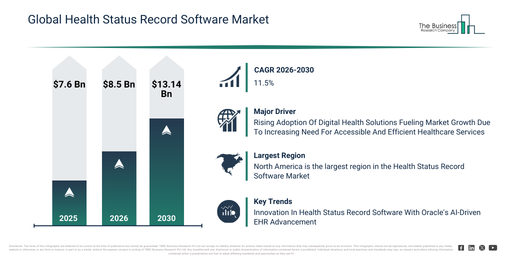
    The market size for health status record software has seen swift expansion over recent years. Projections indicate it will expand from $7.6 billion in 2025 to $8.5 billion in 2026, achieving a compound annual growth rate (CAGR) of 11.8%. Historically, this growth has been driven by factors such as the increasing digitization of healthcare records, the rising adoption of electronic health systems, an increase in hospital information system deployments, enhancements in healthcare IT infrastructure, and the growing demand for centralized patient data.

    The health status record software market is projected to experience substantial expansion over the coming years. This market is forecast to reach $13.14 billion by 2030, demonstrating a compound annual growth rate (CAGR) of 11.5%. This anticipated growth during the forecast period is fueled by several factors, including increasing investments in AI-driven clinical decision support, a growing demand for remote healthcare monitoring, the expansion of value-based care models, a heightened regulatory focus on data interoperability, and the increasing adoption of predictive health analytics. Key trends expected within this period encompass the increasing adoption of cloud-based health record platforms, a rising demand for interoperable health data systems, a growing emphasis on real-time patient monitoring, the expansion of secure data sharing frameworks, and an enhanced focus on patient-centric digital records.

    Get A Free Sample Report With In-Depth Market Insights:

    https://thebusinessresearchcompany.com/sample_request?id=87020340&type=smp&name=Health%20Status%20Record%20Software%20Market%20Report%202026&utm_source=Blogs&utm_medium=Paid&utm_campaign=Nov_PR

    Health Status Record Software Market Growth Factors: What’s Supporting Expansion?

    The escalating need for digital health solutions is anticipated to drive expansion in the health status record software market. These solutions leverage technology, including mobile applications, wearables, telemedicine, and health information systems, to enhance healthcare delivery, accessibility, and patient outcomes. Their rise stems from a heightened call for remote healthcare services, fueled by wider smartphone and internet availability. Health status record software plays a crucial role by offering a unified, real-time platform for managing and sharing patient information, thereby facilitating more effective and knowledgeable remote care. For instance, Accretive Edge, a US-based healthcare tech company, reported in May 2025 that telehealth in the U.S. generated $48.37 billion in 2023 and is projected to expand nearly tenfold to $467.8 billion by 2034. Consequently, the expanding need for digital health solutions is expected to boost the growth of the health status record software market.

    Health Status Record Software Market Segment Landscape And Growth Outlook

    The health status record software market covered in this report is segmented –

    1) By Type: Cloud-Based, Web-Based

    2) By Component: Software, Services

    3) By Application: Patient Management, Clinical Data Management, Population Health Management

    4) By End-User: Hospitals, Clinics, Ambulatory Surgical Centers

    Subsegments:

    1) By Cloud-Based: Public Cloud, Private Cloud, Hybrid Cloud

    2) By Web-Based: On-Premises Web-Based, Hosted Web-Based, Software As A Service Web-Based

    Health Status Record Software Market Trends Shaping Long-Term Demand

    Companies operating in the health status record software market are concentrating on developing innovative technologies, such as the health clinical AI agent, to enhance clinical decision-making, automate administrative tasks, and improve patient care through real-time data insights and AI-driven support. A health clinical AI agent is an artificial intelligence–powered tool crafted to assist healthcare professionals by automating routine clinical tasks, providing real-time insights, and streamlining workflows within electronic health record systems, thus enhancing decision-making and patient care. For instance, in October 2024, Oracle Corporation, a US-based computer software company, introduced its next-generation Electronic Health Record (EHR) system. This next-generation EHR system from Oracle is engineered to unify patient data across providers, facilitating a more connected and comprehensive overview of health records. It boosts clinical efficiency by utilizing AI-powered insights and intuitive workflows. The system’s goals include improving patient outcomes, reducing administrative burdens, and supporting more informed decision-making.

    Health Status Record Software Market Competitive Landscape: Who Leads The Industry?

    Major companies operating in the health status record software market are McKesson Corporation, General Electric Healthcare, Epic Systems Corporation, eClinicalWorks LLC, Medical Information Technology Inc., Greenway Health LLC, WebPT Inc., CureMD Healthcare, Softclinic Software, DrChrono Inc., RXNT Inc., Amazing Charts LLC, Intrahealth Systems Limited, Allscripts Healthcare LLC, Electronic Medical Records Systems, Kareo Inc., OpenEMR Foundation, iPatientCare Inc., MedicalMine Inc., QHR Technologies Inc.

    View The Full Health Status Record Software Market Report:

    https://thebusinessresearchcompany.com/report/health-status-record-software-global-market-report?utm_source=Blogs&utm_medium=Paid&utm_campaign=Nov_PR

    Health Status Record Software Market Regional Analysis: Which Geography Leads On Revenue?

    North America was the largest region in the health status record software market in 2025. Asia-Pacific is expected to be the fastest-growing region in the forecast period. The regions covered in the health status record software market report are Asia-Pacific, South East Asia, Western Europe, Eastern Europe, North America, South America, Middle East, Africa.

    Reach Out To Our Team:

    The Business Research Company: https://www.thebusinessresearchcompany.com/

    Americas: +1 310-496-7795

    Asia: +44 7882 955267 & +91 8897263534

    Europe: +44 7882 955267

    Email us at: marketing@tbrc.info

    Follow us on:

    LinkedIn: https://in.linkedin.com/company/the-business-research-company

    YouTube: https://www.youtube.com/channel/UC24_fI0rV8cR5DxlCpgmyFQ

    Global Market Model: https://www.thebusinessresearchcompany.com/global-market-model
  • Health Insurance Portability And Accountability Act (HIPAA)-Compliant Robot Storage Market Reaches $5.05 Billion In 2026: Forecast And Growth Opportunities

    Health Insurance Portability And Accountability Act (HIPAA)-Compliant Robot Storage Market Reaches $5.05 Billion In 2026: Forecast And Growth Opportunities

    Built to provide research that’s more actionable and strategically valuable, The Business Research Company’s 2026 market reports include market attractiveness analysis, total addressable market sizing, company benchmarking matrices, interactive Excel dashboards, broader supply chain intelligence, emerging startup tracking, and in-depth product insights.

    Health Insurance Portability And Accountability Act (HIPAA)-Compliant Robot Storage Market Size And Revenue Outlook Through 2030

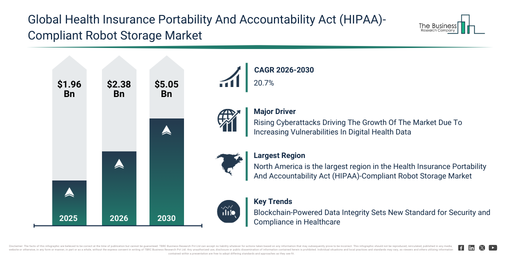
    The health insurance portability and accountability act (hipaa)-compliant robot storage market size has expanded significantly in recent years. This market is projected to grow from $1.96 billion in 2025 to $2.38 billion in 2026, exhibiting a compound annual growth rate (CAGR) of 21.0%. The historical growth of this market can be attributed to the proliferation of healthcare automation initiatives, the escalating demand for regulatory compliance, the increasing adoption of robotic systems within the healthcare sector, the expansion of electronic medical records, and the availability of automated storage technologies.

    The market for health insurance portability and accountability act (hipaa)-compliant robot storage is anticipated to experience substantial expansion in the coming years, projected to reach $5.05 billion by 2030, exhibiting a compound annual growth rate (CAGR) of 20.7%. Factors driving this expansion over the forecast period include greater investments in secure automation for healthcare, an escalating need for compliant robotic data storage solutions, the broadening of cloud-based healthcare infrastructure, heightened attention to cybersecurity within medical robotics, and the increasing implementation of smart inventory management systems. Key trends during this same period encompass the growing uptake of secure robotic storage systems, a heightened requirement for hipaa-compliant data management, the expanding integration of automated inventory tracking, the proliferation of encrypted healthcare storage platforms, and a strengthened emphasis on ongoing compliance monitoring.

    Get A Free Sample Report With In-Depth Market Insights:

    https://thebusinessresearchcompany.com/sample_request?id=30822281&type=smp&name=Health%20Insurance%20Portability%20And%20Accountability%20Act%20%28HIPAA%29-Compliant%20Robot%20Storage%20Market%20Report%202026&utm_source=Blogs&utm_medium=Paid&utm_campaign=Nov_PR

    Health Insurance Portability And Accountability Act (HIPAA)-Compliant Robot Storage Market Demand Drivers: What’s Powering Industry Growth?

    The increasing anxieties regarding cyberattacks are anticipated to boost the expansion of the health insurance portability and accountability act (HIPAA)-compliant robot storage market. Cyberattacks involve intentional efforts to access, harm, or illicitly obtain data from computer systems, networks, or digital apparatuses. These attacks are becoming more frequent as a result of the rapid proliferation of digital information and interconnected devices, providing more susceptible targets for malicious entities to exploit. HIPAA-compliant robot storage is advantageous in combating cyberattacks by employing robust encryption and stringent access management, thereby guaranteeing that sensitive health information stays protected and out of reach for unapproved individuals, even during a breach attempt. For example, in July 2024, Check Point Software Technologies Ltd., an Israel-based cybersecurity firm, reported that corporate networks experienced a 30% surge in weekly attacks in the second quarter of 2024 compared to the second quarter of 2023, alongside a 25% rise when juxtaposed with the first quarter of 2024. Consequently, the escalating worries about cyberattacks are propelling the expansion of the health insurance portability and accountability act (HIPAA)-compliant robot storage market.

    Health Insurance Portability And Accountability Act (HIPAA)-Compliant Robot Storage Market Breakdown By Product Type And Application

    The health insurance portability and accountability act (hipaa)-compliant robot storage market covered in this report is segmented –

    1) By Component: Hardware, Software, Services

    2) By Deployment Mode: On-Premises, Cloud-Based

    3) By Application: Healthcare Data Management, Medical Records Storage, Pharmacy Automation, Laboratory Automation, Other Applications

    4) By End-User: Hospitals, Clinics, Diagnostic Centers, Pharmacies, Other End-Users

    Subsegments:

    1) By Hardware: Robotic Storage Units, Automated Shelving Systems, Sensor Devices, Barcode Scanners, Access Control Panels

    2) By Software: Inventory Management Software, Compliance Monitoring Software, Data Analytics Software, Scheduling And Workflow Software, Security Management Software

    3) By Services: Installation Services, Maintenance And Support Services, Training Services, Consultation Services, Cloud Integration Services

    Health Insurance Portability And Accountability Act (HIPAA)-Compliant Robot Storage Market Innovation Trends Shaping Future Development

    Leading companies active in the health insurance portability and accountability act (HIPAA)-compliant robot storage market are prioritizing the development of advanced strategies, including blockchain-enabled immutability and decentralized security, to reinforce data integrity, build trust, and equip healthcare organizations with resilient, forward-looking storage solutions. Blockchain-enabled immutability denotes the blockchain technology’s ability to generate permanent, tamper-proof records, ensuring that once healthcare data is stored, it remains unaltered and undeletable. For example, in January 2024, Seal Storage Technology, a Canada-based company focused on decentralized cloud storage within the blockchain and data storage industry, achieved health insurance portability and accountability act (HIPAA) certification. This accomplishment enables it to enter Business Associate Agreements (BAAs) for managing protected health information (PHI) and strengthens its compliance by also meeting the strict requirements of the health information technology for economic and clinical health (HITECH) Act, thus enhancing its capability to safeguard sensitive healthcare data. This milestone transcends a simple regulatory audit, marking an expansion of Seal’s capacity to deliver secure and compliant data management solutions to healthcare organizations. Through its blockchain-powered architecture, the company guarantees the verifiability, traceability, and integrity of healthcare records while eliminating risks of tampering or data loss. This advancement highlights Seal’s commitment to establishing the highest standards of data protection and providing healthcare providers and patients with assurance in the security and integrity of their critical information.

    Health Insurance Portability And Accountability Act (HIPAA)-Compliant Robot Storage Market Company Landscape And Competitive Strategy

    Major companies operating in the health insurance portability and accountability act (hipaa)-compliant robot storage market are Microsoft Corp., Amazon Web Services Inc., IBM Corporation, Oracle Corporation, Siemens Healthineers AG, Koninklijke Philips N.V., NetApp Inc., Iron Mountain Incorporated, Pure Storage Inc., Hitachi Vantara LLC, Dell Technologies Inc., Hewlett Packard Enterprise (HPE), Dropbox Inc., Box Inc., CommVault Systems Inc., Datto Inc., Wasabi Technologies Inc., Backblaze Inc., iDrive Inc., SpinBackup Inc.

    View The Full Health Insurance Portability And Accountability Act (HIPAA)-Compliant Robot Storage Market Report:

    https://thebusinessresearchcompany.com/report/health-insurance-portability-and-accountability-act-hipaa-compliant-robot-storage-global-market-report?utm_source=Blogs&utm_medium=Paid&utm_campaign=Nov_PR

    Health Insurance Portability And Accountability Act (HIPAA)-Compliant Robot Storage Market Geographic Spread And Regional Opportunities

    North America was the largest region in the health insurance portability and accountability act (HIPAA)-compliant robot storage market in 2025. Asia-Pacific is expected to be the fastest-growing region in the forecast period. The regions covered in the health insurance portability and accountability act (hipaa)-compliant robot storage market report are Asia-Pacific, South East Asia, Western Europe, Eastern Europe, North America, South America, Middle East, Africa.

    Reach Out To Our Team:

    The Business Research Company: https://www.thebusinessresearchcompany.com/

    Americas: +1 310-496-7795

    Asia: +44 7882 955267 & +91 8897263534

    Europe: +44 7882 955267

    Email us at: marketing@tbrc.info

    Follow us on:

    LinkedIn: https://in.linkedin.com/company/the-business-research-company

    YouTube: https://www.youtube.com/channel/UC24_fI0rV8cR5DxlCpgmyFQ

    Global Market Model: https://www.thebusinessresearchcompany.com/global-market-model
  • Health Economics and Outcomes Research (HEOR) Services Market Growth In 2026: Market Size, Key Drivers And Future Outlook

    Health Economics and Outcomes Research (HEOR) Services Market Growth In 2026: Market Size, Key Drivers And Future Outlook

    Backed by market attractiveness analysis, total addressable market sizing, company benchmarking matrices, interactive Excel dashboards, wider supply chain intelligence, emerging startup coverage, and detailed product-level insights, The Business Research Company’s 2026 market reports are designed to offer research that is more actionable and strategically valuable than ever.

    Health Economics and Outcomes Research (HEOR) Services Market Growth From $1.97 Billion In 2026 To $3.12 Billion By 2030 At A CAGR Of 12.2%

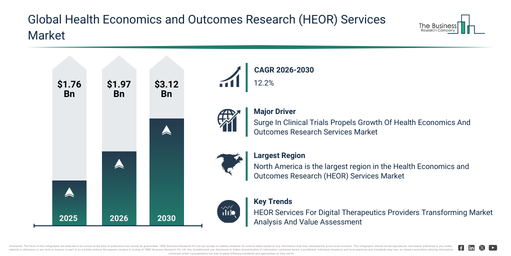
    The health economics and outcomes research (HEOR) services market has demonstrated significant expansion in recent years. Its valuation is anticipated to climb from $1.76 billion in 2025 to $1.97 billion in 2026, exhibiting a compound annual growth rate (CAGR) of 12.1%. The growth observed in prior periods can be attributed to several factors, including increasing healthcare cost containment pressures, a rising demand for payer-focused evidence, the expansion of pharmaceutical clinical research, the broadening use of epidemiological data, and an increased reliance on outsourced research services.

    The health economics and outcomes research (heor) services market size is projected to experience substantial growth in the coming years. This market is anticipated to reach $3.12 billion by 2030, exhibiting a compound annual growth rate (CAGR) of 12.2%. This growth over the forecast period is attributable to several factors, including the increasing adoption of AI-driven health economic models, a surging demand for personalized medicine assessments, the wider availability of real-world data, a heightened focus on outcomes-based reimbursement, and increasing regulatory scrutiny concerning pricing strategies. Key trends expected during this period involve the expanded use of real-world evidence analytics, a growing demand for value-based healthcare assessments, the increasing integration of advanced economic modeling, the broadening of market access consulting services, and an intensified focus on regulatory-compliant outcomes research.

    Get A Free Sample Report With In-Depth Market Insights:

    https://thebusinessresearchcompany.com/sample_request?id=45870358&type=smp&name=Health%20Economics%20and%20Outcomes%20Research%20%28HEOR%29%20Services%20Market%20Report%202026&utm_source=Blogs&utm_medium=Paid&utm_campaign=Nov_PR

    Health Economics and Outcomes Research (HEOR) Services Market Growth Drivers: What’s Behind The Acceleration?

    The increasing volume of clinical trials is anticipated to boost the expansion of the health economics and outcomes research services market in the future. These trials represent research investigations involving human subjects, designed to assess the safety and efficacy of novel medical treatments, interventions, or diagnostic methods. HEOR services find application in clinical trials for assessing the economic implications, cost-effectiveness, and practical outcomes of medical interventions, thereby offering crucial information for strategic decisions and reimbursement plans. As an illustration, the Association of the British Pharmaceutical Industry (ABPI), an organization based in the UK, reported in December 2024 that the quantity of pharmaceutical industry trials initiated within the UK climbed for the second consecutive year, progressing from 411 in 2022 to 426 in 2023. Consequently, this rise in clinical trials is fueling the expansion of the health economics and outcomes research services market.

    Health Economics and Outcomes Research (HEOR) Services Market Segment Analysis And Revenue Potential

    The health economics and outcomes research (heor) services market covered in this report is segmented –

    1) By Service: Real World Evidence, Payer Evidence, Pricing And Reimbursement, Epidemiology Studies, Market Access, Other Services

    2) By Offering: Outsourced, In-House

    3) By Service Provider: Consultancy, Contract Research Organizations (CRO)

    4) By End-Use: Healthcare Provider, Healthcare Payers, Biotechnology And Pharmaceutical Companies, Government Organization, Other End-Users

    Subsegments:

    1) By Real World Evidence: Data Analysis And Interpretation, Patient Registries, Observational Studies

    2) By Payer Evidence: Health Technology Assessments (HTAs): Value Dossier Development, Payer Engagement Strategies

    3) By Pricing And Reimbursement: Pricing Strategy Development: Reimbursement Submission Support, Economic Modeling

    4) By Epidemiology Studies: Disease Burden Analysis: Prevalence And Incidence Studies, Natural History Studies

    5) By Market Access: Market Assessment, Stakeholder Engagement, Health Economic Models

    6) By Other Services: Clinical Outcomes Assessment, Patient Reported Outcomes (PRO) Studies, Health Economic Consulting

    Health Economics and Outcomes Research (HEOR) Services Market Trends Redefining Industry Growth

    Major companies operating in the health economics and outcomes research (HEOR) services market are increasingly focusing on developing HEOR services tailored for digital therapeutics providers. These firms are aiming to apply health economics and outcomes research (HEOR) services to expanded sectors like digital therapeutics to support vendors with enhanced market analysis. For instance, in November 2023, Curavit, a US-based research organization, launched Health Economics and Outcomes Research (HEOR) specifically designed for digital therapeutic trials. The core of these services will involve evaluating the health economics value of digital therapeutics, with the company conducting assessments at both individual patient and population levels of care. To accurately quantify the financial impact of the digital therapeutic, HEOR will be incorporated into clinical trials and analyzed at the study close-out phase.

    Health Economics and Outcomes Research (HEOR) Services Market Key Players Shaping Industry Direction

    Major companies operating in the health economics and outcomes research (heor) services market are McKesson Corporation, Optum Inc., Cardinal Health, IQVIA Inc., ICON PLC, PPD Inc., Syneos Health, Medlior Health Outcomes Research Ltd., Axtria Inc., Parexel International, RTI Health Solutions, Wellth Inc., Westat, SidekickHealth, Analysis Group, Carelon Research, Precision Health Economics, Avalon Health Economics LLC, Lumanity Inc., Pharmerit BV, Epistemix Inc., Bohn Epidemiology LLC

    View The Full Health Economics and Outcomes Research (HEOR) Services Market Report:

    https://thebusinessresearchcompany.com/report/health-economics-and-outcomes-research-HEOR-services-global-market-report?utm_source=Blogs&utm_medium=Paid&utm_campaign=Nov_PR

    Health Economics and Outcomes Research (HEOR) Services Market Top Region By Revenue And Market Share

    North America was the largest region in the health economics and outcomes research (HEOR) services market in 2025. Asia-Pacific is expected to be the fastest-growing region in the forecast period. The regions covered in the health economics and outcomes research (heor) services market report are Asia-Pacific, South East Asia, Western Europe, Eastern Europe, North America, South America, Middle East, Africa.

    Reach Out To Our Team:

    The Business Research Company: https://www.thebusinessresearchcompany.com/

    Americas: +1 310-496-7795

    Asia: +44 7882 955267 & +91 8897263534

    Europe: +44 7882 955267

    Email us at: marketing@tbrc.info

    Follow us on:

    LinkedIn: https://in.linkedin.com/company/the-business-research-company

    YouTube: https://www.youtube.com/channel/UC24_fI0rV8cR5DxlCpgmyFQ

    Global Market Model: https://www.thebusinessresearchcompany.com/global-market-model
  • Health Coach Market Size And Forecast 2026–2030: Trends Driving Industry Expansion

    Health Coach Market Size And Forecast 2026–2030: Trends Driving Industry Expansion

    Featuring market attractiveness scoring, total addressable market sizing, company benchmarking matrices, interactive Excel dashboards, deeper supply chain intelligence, emerging startup tracking, and granular product-level insights, The Business Research Company’s 2026 market reports are built to deliver research that is both more actionable and more strategically valuable.

    Health Coach Market Expansion Outlook: What Revenue Opportunities Are Ahead?

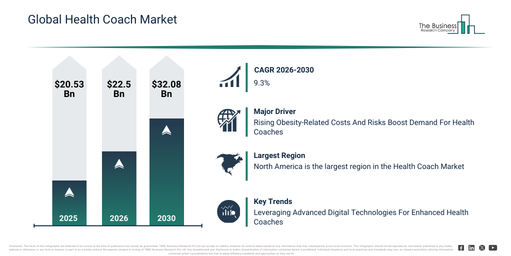
    The health coach market size has experienced strong growth in recent years. Projections indicate it will increase from $20.53 billion in 2025 to $22.5 billion in 2026, achieving a compound annual growth rate (CAGR) of 9.6%. The historical expansion of this market is attributable to factors including increasing awareness of lifestyle-related health issues, the expansion of wellness-focused healthcare services, a growing demand for personalized health guidance, the rise of corporate health programs, and a wider acceptance of coaching-based interventions.

    The health coach market is anticipated to experience robust expansion over the coming years. This market is projected to reach $32.08 billion by 2030, exhibiting a compound annual growth rate (CAGR) of 9.3%. Factors contributing to this growth during the forecast period include the greater adoption of virtual and hybrid coaching approaches, an elevated emphasis on sustainable behavior change solutions, the enlargement of employer-funded wellness programs, the increasing incorporation of wearables with coaching services, and boosted investments in digital health platforms. Significant trends expected during this period involve a surge in the uptake of digital health coaching platforms, a heightened need for tailored wellness programs, the expanded utilization of AI-powered behavior tracking instruments, the broadening of corporate wellness endeavors, and an increased concentration on preventative healthcare frameworks.

    Get A Free Sample Report With In-Depth Market Insights:

    https://thebusinessresearchcompany.com/sample_request?id=60154319&type=smp&name=Health%20Coach%20Market%20Report%202026&utm_source=Blogs&utm_medium=Paid&utm_campaign=Nov_PR

    Health Coach Market Growth Factors Behind Sustained Expansion

    The rising prevalence of obesity is expected to stimulate the health coach market. Obesity is a medical condition characterized by an excessive buildup of body fat, which poses significant health risks. The increase in obesity cases can be attributed to factors such as poor dietary habits, a lack of physical activity, and sedentary lifestyles. A health coach provides support for individuals dealing with obesity by offering personalized guidance on nutrition, exercise, and changes in lifestyle to promote weight loss and improve overall health. For instance, in May 2024, according to the Office for Health Improvement and Disparities, a UK-based government department for health and social care, from 2022 to 2023, 64.0% of adults aged 18 years and over in England were estimated to be overweight or living with obesity. Therefore, the increasing instances of obesity will drive the health coach market.

    Health Coach Market Segmentation And Category Overview

    The health coach market covered in this report is segmented –

    1) By Type: Holistic Health Coaching, Wellness Health Coaching, Primal Or Paleo Health Coaching

    2) By Service Type: Nutrition Coaching, Exercise And Fitness Coaching, Lifestyle Coaching, Weight Management Coaching, Chronic Condition Coaching, Stress Management Coaching, Other Service Types

    3) By Coach Type: Personal Coach, Family Coach, Corporate Coach

    4) By Mode: Online, Offline

    5) By End Users: Fitness Centre, Corporate Organizations, Individuals

    Subsegments:

    1) By Holistic Health Coaching: Mindfulness and Stress Management, Nutrition and Dietary Guidance, Lifestyle and Habit Change Coaching

    2) By Wellness Health Coaching: Fitness and Exercise Coaching, Preventive Health Coaching

    3) By Primal or Paleo Health Coaching: Paleo Diet Coaching, Primal Lifestyle Coaching, Fitness and Movement Guidance within Primal Framework

    Health Coach Market Strategic Trends: What Defines The Next Growth Phase?

    Leading companies within the health coach market are enhancing their services through the sophisticated integration of digital technologies, notably artificial intelligence (AI) based hyper-personalization. This approach is designed to elevate user engagement, provide customized health recommendations, and improve overall client outcomes by delivering highly personalized and data-driven coaching experiences. AI-based Hyper-personalization utilizes advanced data analytics and artificial intelligence to offer deeply tailored experiences and suggestions based on individuals’ distinct preferences, behaviors, and needs. For example, in July 2024, Thrive Global, a US-based behavior tech company, introduced its artificial intelligence (AI)-driven Health Coach. This product employs AI-powered hyper-personalization to deliver specific health advice derived from an individual’s biometric data and preferences, emphasizing the improvement of key daily behaviors such as sleep and nutrition. The aim is to enhance well-being and ensure that technology contributes to beneficial health transformations.

    Health Coach Market Competitive Analysis Of Leading Industry Participants

    Major companies operating in the health coach market are Noom Inc., Omada Health Inc., Vida Health Inc., Virta Health Corp., HealthifyMe Wellness Private Limited, BetterUp Inc., Precision Nutrition Inc., 8fit GmbH, Coach Me Healthy, Season Health, Lark Health, Wellcoaches Corporation, Naturally Slim, Wondr Health, Found Health, Second Nature, VidaFuel, AbleTo, Wellable, Nudge Health

    View The Full Health Coach Market Report:

    https://thebusinessresearchcompany.com/report/health-coach-global-market-report?utm_source=Blogs&utm_medium=Paid&utm_campaign=Nov_PR

    Health Coach Market Regional Analysis And Top Geography

    North America was the largest region in the health coach market in 2025. Asia-Pacific is expected to be the fastest-growing region in the forecast period. The regions covered in the health coach market report are Asia-Pacific, South East Asia, Western Europe, Eastern Europe, North America, South America, Middle East, Africa.

    Reach Out To Our Team:

    The Business Research Company: https://www.thebusinessresearchcompany.com/

    Americas: +1 310-496-7795

    Asia: +44 7882 955267 & +91 8897263534

    Europe: +44 7882 955267

    Email us at: marketing@tbrc.info

    Follow us on:

    LinkedIn: https://in.linkedin.com/company/the-business-research-company

    YouTube: https://www.youtube.com/channel/UC24_fI0rV8cR5DxlCpgmyFQ

    Global Market Model: https://www.thebusinessresearchcompany.com/global-market-model
  • Health Check-Up Market 2026 Outlook: Market Size, CAGR And Key Growth Opportunities

    Health Check-Up Market 2026 Outlook: Market Size, CAGR And Key Growth Opportunities

    Built to provide research that’s more actionable and strategically valuable, The Business Research Company’s 2026 market reports include market attractiveness analysis, total addressable market sizing, company benchmarking matrices, interactive Excel dashboards, broader supply chain intelligence, emerging startup tracking, and in-depth product insights.

    Health Check-Up Market Growth Potential: How Will Market Size Shift Through 2030?

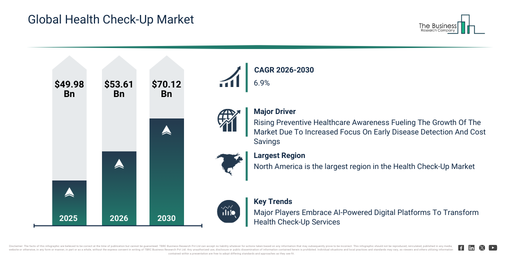
    The health check-up market has experienced robust growth in recent years. It is anticipated to expand from $49.98 billion in 2025 to $53.61 billion in 2026, demonstrating a compound annual growth rate (CAGR) of 7.3%. This historical expansion is attributable to factors such as the increasing prevalence of lifestyle-related diseases, the broadening of diagnostic laboratory networks, a heightened awareness of preventive healthcare, the rise in employer-sponsored health programs, and the accessibility of advanced diagnostic technologies.

    The health check-up market size is poised for robust expansion in the upcoming years. It is predicted to climb to $70.12 billion by 2030, demonstrating a compound annual growth rate (CAGR) of 6.9%. This anticipated growth during the forecast period can be attributed to factors such as an escalating demand for tailored health assessments, the increasing integration of AI-based diagnostic technologies, the broadening scope of remote and at-home health testing options, rising investments in infrastructure for preventive healthcare, and an amplified focus on the management of population health. Significant trends expected in this period include the wider adoption of preventive health screening initiatives, a surge in the utilization of automated diagnostic systems, the deeper integration of digital health records within check-ups, the expansion of corporate and wellness health packages, and an intensified concentration on the early detection of diseases.

    Get A Free Sample Report With In-Depth Market Insights:

    https://thebusinessresearchcompany.com/sample_request?id=31090545&type=smp&name=Health%20Check-Up%20Market%20Report%202026&utm_source=Blogs&utm_medium=Paid&utm_campaign=Nov_PR

    Health Check-Up Market Demand Drivers Opening New Revenue Streams

    The rising demand for preventive healthcare is anticipated to boost the expansion of the health check-up market in the future. Preventive healthcare involves proactive steps such as screenings, immunizations, and lifestyle changes implemented to avert illnesses or identify them early for superior health outcomes. The need for preventive healthcare is growing as more individuals realize that prompt disease detection can considerably enhance treatment success and lower long-term medical expenses. Health check-ups support preventive healthcare by enabling the early discovery of possible health problems before symptoms emerge, thereby lowering the likelihood of severe sickness and bettering long-term health outcomes. For instance, according to the UK Health Security Agency, a UK-based government department, in 2025, the 12-month coverage of the 6-in-1 vaccine in England increased by 0.1 percentage points to 91.2%, while coverage of the MenB vaccine also rose by 0.1 percentage points to 91%, reflecting a positive advancement in preventive healthcare efforts. Consequently, the heightened demand for preventive healthcare is propelling the growth of the health check-up market.

    Health Check-Up Market Segment Outlook: Which Categories Are Growing Fastest?

    The health check-up market covered in this report is segmented –

    1) By Type: General Health Check-Up, Preventive Health Check-Up, Specialized Health Check-Up, Routine And Wellness Health Check-Up

    2) By Age Group: 0-18 Years, 19-30 Years, 31-45 Years, 46-60 Years, 61 Years And Above

    3) By Technology: Automated Analyzers, Imaging Systems, Biomarkers

    4) By Application: Cardiovascular Diseases, Metabolic Disorders, Cancer, Inflammatory Conditions, Musculoskeletal Disorders, Neurological Conditions, Other Applications

    5) By End-User: Hospital-Based Laboratories, Standalone Laboratories, Central Laboratories, Ambulatory Care Centers, Other End-Users

    Subsegments:

    1) By General Health Check-Up: Basic Physical Examination, Vital Signs Monitoring, Blood Tests, Urine Analysis, Chest X-Ray, ECG (Electrocardiogram)

    2) By Preventive Health Check-Up: Cancer Screenings, Cardiovascular Risk Assessment, Diabetes Screening, Hypertension Screening, Obesity And BMI Evaluation, Immunization And Vaccination Review

    3) By Specialized Health Check-Up: Cardiac Health Check-Up, Neurological Health Check-Up, Renal Function Check-Up, Gastrointestinal Health Check-Up, Pulmonary Function Tests, Women’s And Men’s Health Packages

    4) By Routine And Wellness Health Check-Up: Annual Health Check-Up, Executive Health Packages, Corporate Or Employee Wellness Check-Up, Lifestyle Disease Screening, Nutritional Assessment, Fitness And Stress Assessment

    Health Check-Up Market Transformation Trends: What Innovations Are Driving Change?

    Major companies within the health check-up market are concentrating on creating innovative solutions, including AI-driven digital health checkup platforms, to boost diagnostic accuracy, streamline testing processes, and offer personalized health assessments. These AI-powered digital health checkup platforms are intelligent systems that utilize artificial intelligence to analyze medical data, thereby facilitating quicker, more precise, and individualized health evaluations. As an example, in March 2024, Ubie Inc., a US-based health tech startup, launched its Checkup platform, an AI-powered digital health tool designed to assist patients in self-monitoring their health, managing medications, and improving communication with their healthcare providers. The platform enables users to track symptoms, vital signs, and condition-specific metrics (starting with asthma), receive automated reminders for medications and appointments, and directly share health updates with their care teams. By consolidating health data and integrating with Ubie’s broader ecosystem, Checkup aims to simplify self-care management, reduce fragmentation across various health tools, and support better health outcomes for both patients and providers.

    Health Check-Up Market Leading Companies And Competitive Benchmarking

    Major companies operating in the health check-up market are Kaiser Foundation Health Plan Inc, Laboratory Corporation Of America Holdings, Quest Diagnostics Incorporated, Eurofins Scientific SE, SYNLAB International GmbH, Nuffield Health, Unilabs International SA, Raffles Medical Group Ltd, ARUP Laboratories, Max Healthcare Institute Limited, Samsung Medical Center, Thyrocare Technologies Limited, Dr Lal PathLabs Limited, Acu Med Medical Group Inc, Metropolis Healthcare Limited, The Cooper Clinic Inc, Healthway Medical Group Limited, Mediway Medical Group, Sun Medical Center, Tokyo Midtown Medical Corporation, Apollo Hospitals Enterprise Limited, Fortis Healthcare Limited, Medanta The Medicity

    View The Full Health Check-Up Market Report:

    https://thebusinessresearchcompany.com/report/health-check-up-global-market-report?utm_source=Blogs&utm_medium=Paid&utm_campaign=Nov_PR

    Health Check-Up Market Geographic Analysis: Where Is Demand Rising Fastest?

    North America was the largest region in the health check-up market in 2025. Asia-Pacific is expected to be the fastest-growing region in the forecast period. The regions covered in the health check-up market report are Asia-Pacific, South East Asia, Western Europe, Eastern Europe, North America, South America, Middle East, Africa.

    Reach Out To Our Team:

    The Business Research Company: https://www.thebusinessresearchcompany.com/

    Americas: +1 310-496-7795

    Asia: +44 7882 955267 & +91 8897263534

    Europe: +44 7882 955267

    Email us at: marketing@tbrc.info

    Follow us on:

    LinkedIn: https://in.linkedin.com/company/the-business-research-company

    YouTube: https://www.youtube.com/channel/UC24_fI0rV8cR5DxlCpgmyFQ

    Global Market Model: https://www.thebusinessresearchcompany.com/global-market-model