Blog

  • Home Rehabilitation Products And Services Market Expected To Grow At 6.7% CAGR Through 2030: What Businesses Need To Know

    Home Rehabilitation Products And Services Market Expected To Grow At 6.7% CAGR Through 2030: What Businesses Need To Know

    Featuring market attractiveness scoring, total addressable market sizing, company benchmarking matrices, interactive Excel dashboards, deeper supply chain intelligence, emerging startup tracking, and granular product-level insights, The Business Research Company’s 2026 market reports are built to deliver research that is both more actionable and more strategically valuable.

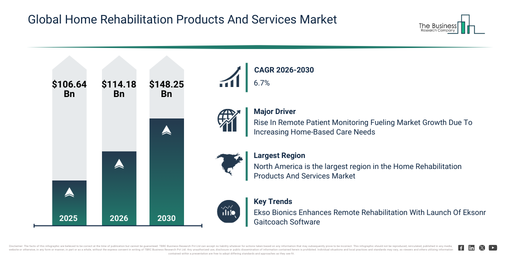
    Home Rehabilitation Products And Services Market Growth From $114.18 Billion In 2026 To $148.25 Billion By 2030 At A CAGR Of 6.7%

    The market size for home rehabilitation products and services has seen substantial growth over recent years. It is projected to expand from $106.64 billion in 2025 to $114.18 billion in 2026, exhibiting a compound annual growth rate (CAGR) of 7.1%. The historical growth can be linked to a rising aging population, an increasing incidence of chronic conditions, the expansion of home healthcare services, a growing focus on post-acute care, and improvements in assistive device availability.

    The home rehabilitation products and services market is projected to experience robust expansion over the coming years. This market is forecast to reach $148.25 billion by 2030, driven by a compound annual growth rate (CAGR) of 6.7%. The anticipated growth during this period stems from factors such as the increasing embrace of digital rehabilitation platforms, greater investments in remote patient monitoring, the expansion of home-based chronic care management, a rising demand for personalized therapy programs, and a heightened emphasis on cost-effective rehabilitation delivery methods. Key trends foreseen for the forecast period encompass a wider adoption of remote rehabilitation monitoring tools, an escalating demand for home-based therapy services, the increasing integration of smart assistive devices, the expansion of virtual rehabilitation platforms, and an elevated focus on fostering patient independence and recovery.

    Get A Free Sample Report With In-Depth Market Insights:

    https://thebusinessresearchcompany.com/sample_request?id=23915350&type=smp&name=Home%20Rehabilitation%20Products%20And%20Services%20Market%20Report%202026&utm_source=Blogs&utm_medium=Paid&utm_campaign=Nov_PR

    Home Rehabilitation Products And Services Market Growth Factors Behind Sustained Expansion

    The increasing adoption of remote patient monitoring is anticipated to drive expansion in the home rehabilitation products and services market in the future. Remote Patient Monitoring (RPM) involves leveraging digital tools to observe and record patient health information beyond traditional medical environments, enabling healthcare professionals to oversee and direct patient recovery from a distance. The growth of RPM stems from an increased need for care delivered at home, especially for older adults, those recuperating from operations or injuries, and people managing long-term health issues. Home rehabilitation products and services facilitate remote patient monitoring by equipping patients with essential tools and treatments in their homes, concurrently allowing healthcare providers to monitor their progress, compliance, and healing process instantly. For example, a survey conducted in August 2023 by Vivalink Inc., a US-based healthcare technology firm, revealed that 81% of clinicians utilize remote patient monitoring (RPM), a significant rise from 20% in 2021, representing a 305% increase. Furthermore, 84% of existing RPM users intend to broaden its application in 2024. Consequently, the increased prevalence of remote patient monitoring is fueling the expansion of the home rehabilitation products and services market.

    Home Rehabilitation Products And Services Market Segment Landscape And Growth Outlook

    The home rehabilitation products and services market covered in this report is segmented –

    1) By Product Type: General Aids, Positioning Devices, Body Support Devices, Wheelchairs

    2) By Service Type: Occupational Therapy, Speech Therapy, Physical Therapy, Respiratory Therapy

    3) By Distribution Channel: Retail Store, Online Channel

    4) By Application: Disabilities, Geriatric People

    5) By End User: Homecare, Hospitals And Clinics, Ambulatory Care Center, Nursing Care Center

    Subsegments:

    1) By General Aids: Walkers, Crutches, Canes, Reaching Aids, Dressing Aids

    2) By Positioning Devices: Patient Transfer Boards, Slide Sheets, Bed Positioning Pillows, Wheelchair Cushions, Limb Positioning Supports

    3) By Body Support Devices: Braces And Orthotic Supports, Cervical Collars, Back Supports, Knee And Ankle Supports, Compression Garments

    4) By Wheelchairs: Manual Wheelchairs, Electric (Powered) Wheelchairs, Transport Wheelchairs, Standing Wheelchairs, Reclining Wheelchairs

    Home Rehabilitation Products And Services Market Strategic Trends: What Defines The Next Growth Phase?

    Major companies active in the home rehabilitation products and services market are prioritizing innovative solutions, such as integrated telehealth platforms. These platforms aim to improve remote care coordination, boost treatment adherence, and deliver seamless recovery experiences for patients across clinical and home settings. Integrated telehealth platforms are cloud-based digital health systems that merge remote monitoring, video consultations, and data analytics, connecting patients with clinicians for real-time rehabilitation guidance and progress tracking. For example, in January 2024, Ekso Bionics Holdings Inc., a US-based company specializing in medical exoskeletons, introduced the EksoNR GaitCoach software to enhance gait training during rehabilitation therapy. This software acts as a real-time analytical tool, providing intelligent gait feedback to therapists by evaluating key parameters like step symmetry, stride length, swing time, and trunk lean. It alerts therapists to gait deviations in a prioritized manner, facilitating timely, targeted adjustments during training sessions. The software also supports dynamic control, allowing immediate modifications to swing and stance assistance, thus personalizing therapy to each patient’s specific needs.

    Home Rehabilitation Products And Services Market Competitive Landscape: Who Leads The Industry?

    Major companies operating in the home rehabilitation products and services market are Medline Industries LP, Stryker Corporation, Bayada Home Health Care Inc, Maxim Healthcare Services Inc, LHC Group Inc, Enovis Corporation, Invacare Corporation, Norco Inc, Arjo Inc, Amedisys Inc, Drive DeVilbiss Healthcare LLC, Performance Health LLC, Handicare Stairlifts International, AliMed Inc, GF Health Products Inc, Dynatronics Corporation, Prism Medical Ltd, Ekso Bionics Holdings Inc, Medical Depot Inc, Sunrise Medical LLC, Ottobock SE And Co KGaA, Permobil AB

    View The Full Home Rehabilitation Products And Services Market Report:

    https://thebusinessresearchcompany.com/report/home-rehabilitation-products-and-services-global-market-report?utm_source=Blogs&utm_medium=Paid&utm_campaign=Nov_PR

    Home Rehabilitation Products And Services Market Geographic Analysis: Where Is Demand Rising Fastest?

    North America was the largest region in the home rehabilitation products and services market in 2025. Asia-Pacific is expected to be the fastest-growing region in the forecast period. The regions covered in the home rehabilitation products and services market report are Asia-Pacific, South East Asia, Western Europe, Eastern Europe, North America, South America, Middle East, Africa.

    Reach Out To Our Team:

    The Business Research Company: https://www.thebusinessresearchcompany.com/

    Americas: +1 310-496-7795

    Asia: +44 7882 955267 & +91 8897263534

    Europe: +44 7882 955267

    Email us at: marketing@tbrc.info

    Follow us on:

    LinkedIn: https://in.linkedin.com/company/the-business-research-company

    YouTube: https://www.youtube.com/channel/UC24_fI0rV8cR5DxlCpgmyFQ

    Global Market Model: https://www.thebusinessresearchcompany.com/global-market-model
  • Home Infusion Therapy Market Forecast To Reach $57.28 Billion By 2030: Key Trends Explained

    Home Infusion Therapy Market Forecast To Reach $57.28 Billion By 2030: Key Trends Explained

    Built to provide research that’s more actionable and strategically valuable, The Business Research Company’s 2026 market reports include market attractiveness analysis, total addressable market sizing, company benchmarking matrices, interactive Excel dashboards, broader supply chain intelligence, emerging startup tracking, and in-depth product insights.

    Home Infusion Therapy Market Expansion Outlook: What Revenue Opportunities Are Ahead?

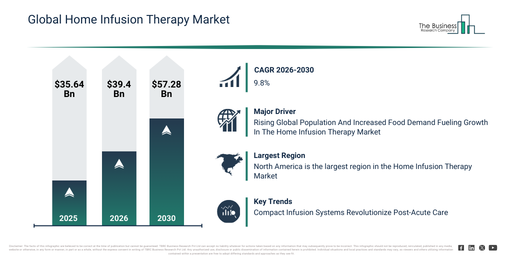
    The home infusion therapy market size has experienced significant expansion in recent years. It is projected to grow from $35.64 billion in 2025 to $39.4 billion in 2026, reflecting a compound annual growth rate (CAGR) of 10.6%. This historical increase can be ascribed to elements such as escalating hospitalization costs, the rising incidence of chronic and infectious diseases, broader access to basic infusion pumps, increasing patient acceptance of home-based clinical treatments, and a scarcity of inpatient hospital beds.

    The home infusion therapy market is anticipated to experience substantial growth in the coming years. It is projected to expand to $57.28 billion by 2030, driven by a compound annual growth rate (CAGR) of 9.8%. This expansion during the forecast period is primarily attributed to factors such as the increasing utilization of biologics and specialty pharmaceuticals, a rising need for long-term nutrition and hydration therapy, a growing preference for outpatient and home treatment models, the broadening of skilled nursing support for home infusion services, and intensifying healthcare cost containment initiatives. Significant trends expected during this period include a noticeable shift from hospital-based to home-based infusion care, a greater adoption of self-administered and nurse-assisted therapies, an increase in long-term infusion treatments for chronic and complex conditions, the wider administration of specialty and high-cost drugs at home, and an enhanced focus on patient convenience and continuity of care.

    Get A Free Sample Report With In-Depth Market Insights:

    https://thebusinessresearchcompany.com/sample_request?id=34505556&type=smp&name=Home%20Infusion%20Therapy%20Market%20Report%202026&utm_source=Blogs&utm_medium=Paid&utm_campaign=Nov_PR

    Home Infusion Therapy Market Demand Drivers Opening New Revenue Streams

    The expanding population and the subsequent increase in food demand are projected to fuel the advancement of the home infusion therapy market moving forward. Food refers to a substance composed of protein, carbohydrates, fat, and other nutrients essential for an organism’s growth, vital processes, and energy provision. It stands as a crucial element for patients undergoing home infusion therapy, and the rising population has led to an increase in the number of elderly individuals who require this treatment. For instance, in January 2024, the United States Department of Agriculture, a US-based federal executive department, reported that in 2023, food expenditures constituted an average of 12.9 percent of U.S. household spending, a slight rise from 12.8 percent in 2022. Therefore, the growing population and the resultant surge in food demand will drive the expansion of the home infusion therapy market.

    Home Infusion Therapy Market Breakdown By Product Type And Application

    The home infusion therapy market covered in this report is segmented –

    1) By Product: Infusion Pumps, Intravenous Sets, IV Cannulas, Needleless Connectors

    2) By Administration: Intramuscular, Subcutaneously

    3) By Application: Total Parenteral Nutrition?, Anti-infective Therapy, Hydration Therapy, Chemotherapy, IVIg or Specialty Pharmaceuticals, Other Applications

    4) By End User: Patients, Nurse, Other End Users

    Subsegments:

    1) By Infusion Pumps: Electronic Infusion Pumps, Ambulatory Infusion Pumps, Volumetric Infusion Pumps

    2) By Intravenous Sets: Standard IV Sets, Blood Administration Sets, IV Extension Sets

    3) By IV Cannulas: Peripheral IV Cannulas, Central Venous Catheters (CVCs), Midline Catheters

    4) By Needleless Connectors: Luer-Lock Needleless Connectors, Valved Needleless Connectors, Non-Valved Needleless Connectors

    Home Infusion Therapy Market Transformation Trends: What Innovations Are Driving Change?

    Companies operating in the home infusion therapy market are increasingly concentrating on introducing compact infusion systems, such as the Avoset Infusion Platform, to gain a competitive edge. The Avoset Infusion Platform is a connected, multi-therapy ambulatory infusion system created to revolutionize post-acute care and specialty infusion therapy. For instance, in April 2023, Eitan Medical Ltd., an Israel-based medical device company, introduced the Avoset Infusion Platform. This platform is designed to provide compact and simplified technology that enhances the user experience and transforms post-acute care and specialty infusion therapy. It includes the Avoset infusion pump and offers remote monitoring capabilities and integration with the AvosetGo app, with goals of improving patient outcomes, promoting comfort, and enabling independence throughout the treatment cycle.

    Home Infusion Therapy Market Company Landscape And Competitive Strategy

    Major companies operating in the home infusion therapy market are Option Care Health Inc, KabaFusion Holdings LLC, PromptCare Companies, CSI Pharmacy LLC, Healix Infusion Therapy Inc, InfuCare Rx Inc, Integrated Home Care Services Inc, IVX Health Inc, Nations Home Infusion LLC, Oso Home Care LLC, Palmetto Infusion Services LLC, Penn Home Infusion Therapy, Premier Infusion Care LLC, Basic Home Infusion Inc, ARJ Infusion Services Inc, Beacon Infusion Healthcare Services LLC, CarepathRx LLC, National Pharmacy Services LLC, Kroger Specialty Infusion, Metro Infusion Center

    View The Full Home Infusion Therapy Market Report:

    https://thebusinessresearchcompany.com/report/home-infusion-therapy-global-market-report?utm_source=Blogs&utm_medium=Paid&utm_campaign=Nov_PR

    Home Infusion Therapy Market Global Footprint: Which Region Leads The Market?

    North America was the largest region in the home infusion therapy market in 2025. Asia-Pacific is expected to be the fastest-growing region in the forecast period. The regions covered in the home infusion therapy market report are Asia-Pacific, South East Asia, Western Europe, Eastern Europe, North America, South America, Middle East, Africa.

    Reach Out To Our Team:

    The Business Research Company: https://www.thebusinessresearchcompany.com/

    Americas: +1 310-496-7795

    Asia: +44 7882 955267 & +91 8897263534

    Europe: +44 7882 955267

    Email us at: marketing@tbrc.info

    Follow us on:

    LinkedIn: https://in.linkedin.com/company/the-business-research-company

    YouTube: https://www.youtube.com/channel/UC24_fI0rV8cR5DxlCpgmyFQ

    Global Market Model: https://www.thebusinessresearchcompany.com/global-market-model
  • Home Healthcare Software Market Analysis Through 2030: Market Size, Growth Trends And Industry Outlook

    Home Healthcare Software Market Analysis Through 2030: Market Size, Growth Trends And Industry Outlook

    Backed by market attractiveness analysis, total addressable market sizing, company benchmarking matrices, interactive Excel dashboards, wider supply chain intelligence, emerging startup coverage, and detailed product-level insights, The Business Research Company’s 2026 market reports are designed to offer research that is more actionable and strategically valuable than ever.

    Home Healthcare Software Market Growth Potential: How Will Market Size Shift Through 2030?

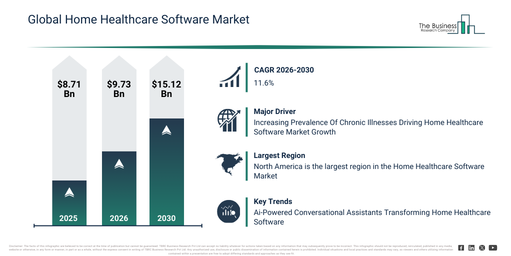
    The home healthcare software market size has experienced swift expansion recently. Projections indicate its value will escalate from $8.71 billion in 2025 to $9.73 billion in 2026, achieving a compound annual growth rate (CAGR) of 11.7%. The historical expansion can be attributed to increased demand for home-based care services, greater digitization of patient records, a heightened requirement for care coordination among providers, the proliferation of homecare agencies, and the integration of fundamental telehealth solutions.

    The home healthcare software market is projected to experience substantial expansion over the upcoming years. Its valuation is anticipated to reach $15.12 billion by 2030, exhibiting a compound annual growth rate (CAGR) of 11.6%. This projected increase is largely due to factors such as the growing management of chronic diseases in home settings, the increasing demand for instant access to patient information, the spread of cloud-based health platforms, a heightened emphasis on operational effectiveness within homecare agencies, and a stronger regulatory focus on precise data and reporting. Key developments expected during this period involve the broadening of integrated care coordination systems, an uptick in the use of telehealth and virtual care services, a greater concentration on refining workflows and scheduling, an expansion in data-centric patient tracking and reporting, and the wider implementation of compliance and billing automation in homecare.

    Get A Free Sample Report With In-Depth Market Insights:

    https://thebusinessresearchcompany.com/sample_request?id=72231478&type=smp&name=Home%20Healthcare%20Software%20Market%20Report%202026&utm_source=Blogs&utm_medium=Paid&utm_campaign=Nov_PR

    Home Healthcare Software Market Growth Backed By Core Demand Fundamentals

    The escalating occurrence of chronic illnesses is anticipated to fuel the expansion of the home healthcare software market in the future. These conditions are defined as health issues persisting for at least a year, requiring ongoing medical attention, limiting daily functions, or both. The growing commonness of such illnesses can be attributed to factors like an aging population, poor lifestyle choices, urban development, inherited predispositions, better disease management and diagnostic methods, and evolving food systems. Home healthcare software aids in the management of chronic conditions by allowing medical professionals to remotely observe patient health, monitor their advancement, and confirm adherence to prescribed therapies. As an illustration, data released in April 2025 by the Centers for Disease Control and Prevention (CDC), a US-based federal agency, showed that in 2023, approximately 194 million U.S. adults, or 76.4%, stated they had at least one chronic condition. This prevalence rate stood at 59.5% for young adults, 78.4% for midlife adults, and peaked at 93.0% for older adults. Consequently, the expanding occurrence of chronic illnesses is propelling the expansion of the home healthcare software market.

    Home Healthcare Software Market Segment Analysis And Revenue Potential

    The home healthcare software market covered in this report is segmented –

    1) By Product: Clinical Management Systems, Hospice Systems, Agency Software Systems, Tele-Health Systems

    2) By Usage: Clinical Homecare Systems, Non-Clinical Homecare Systems

    3) By Delivery Mode: Web-Based Software, On-Premises Software, Cloud-Based Software

    4) By End User: Hospice Agencies, Homecare Agencies, Private Duty, Other End Users

    Subsegments:

    1) By Clinical Management Systems: Electronic Health Records (EHR), Patient Scheduling And Workflow Management, Care Plan Management, Clinical Decision Support

    2) By Hospice Systems: Hospice Care Management, Palliative Care Documentation, Hospice Billing And Reporting

    3) By Agency Software Systems: Home Care Agency Management, Billing And Scheduling Software, Employee Management And Compliance, Patient And Family Communication Tools

    4) By Tele-Health Systems: Telemedicine Platforms, Remote Patient Monitoring, Video Consultation Software, Telehealth Reporting And Analytics

    #Home Healthcare Software Market Growth Trends: What’s Shaping The Future Outlook?

    Leading companies within the home healthcare software market are prioritizing the development of advanced solutions, such as AI-powered conversational assistants, to improve patient interaction, optimize care coordination, and enhance operational efficiency for home healthcare providers. An AI-powered conversational assistant is a software system that utilizes artificial intelligence, particularly natural language processing and machine learning, to comprehend, interpret, and respond to human speech in a conversational manner. For instance, in June 2025, AlayaCare, a Canada-based company offering cloud-based home and community care solutions, launched Layla, an AI-driven assistant tailored for home care. Layla provides comprehensive access to data across care plans, client records, visit notes, and schedules; offers mobile-first support for caregivers on the move; ensures a secure, HIPAA-compliant infrastructure; and incorporates trusted clinical knowledge for accurate medical advice. By enabling quicker, safer decision-making and reducing administrative workloads, Layla exemplifies the next generation of home healthcare software innovations.

    Home Healthcare Software Market Key Players Shaping Industry Direction

    Major companies operating in the home healthcare software market are Mckesson Corporation, DarioHealth Corp., Koninklijke Philips N.V., GE HealthCare Technologies Inc., B. Braun SE, Cerner Corporation, ResMed Inc., NextGen Healthcare Information System LLC, Medical Information Technology Inc. (Meditech), Homecare Homebase LLC, AlayaCare USA Inc., Omada Health Inc., Loyal Healthcare LLC, Casamba Home & Hospice, Axxess Technology Solutions Inc., Delta Health Technologies Inc., Family First Inc., KanTime Inc., ClearCare Inc. (WellSky), Thornberry Ltd., Centex AxisCare LLC, Alora Healthcare Systems Inc., Carallel LLC, HomeHero Inc.

    View The Full Home Healthcare Software Market Report:

    https://thebusinessresearchcompany.com/report/home-healthcare-software-global-market-report?utm_source=Blogs&utm_medium=Paid&utm_campaign=Nov_PR

    Home Healthcare Software Market Regional Split: Which Areas Are Fueling Growth?

    North America was the largest region in the home healthcare software market in 2025. Asia-Pacific is expected to be the fastest-growing region in the forecast period. The regions covered in the home healthcare software market report are Asia-Pacific, South East Asia, Western Europe, Eastern Europe, North America, South America, Middle East, Africa.

    Reach Out To Our Team:

    The Business Research Company: https://www.thebusinessresearchcompany.com/

    Americas: +1 310-496-7795

    Asia: +44 7882 955267 & +91 8897263534

    Europe: +44 7882 955267

    Email us at: marketing@tbrc.info

    Follow us on:

    LinkedIn: https://in.linkedin.com/company/the-business-research-company

    YouTube: https://www.youtube.com/channel/UC24_fI0rV8cR5DxlCpgmyFQ

    Global Market Model: https://www.thebusinessresearchcompany.com/global-market-model
  • Home Healthcare Market Outlook From 2026 To 2030: Key Growth Factors And Future Opportunities

    Home Healthcare Market Outlook From 2026 To 2030: Key Growth Factors And Future Opportunities

    Featuring market attractiveness scoring, total addressable market sizing, company benchmarking matrices, interactive Excel dashboards, deeper supply chain intelligence, emerging startup tracking, and granular product-level insights, The Business Research Company’s 2026 market reports are built to deliver research that is both more actionable and more strategically valuable.

    Home Healthcare Market Value Analysis: What Growth Lies Ahead Over The Forecast Period?

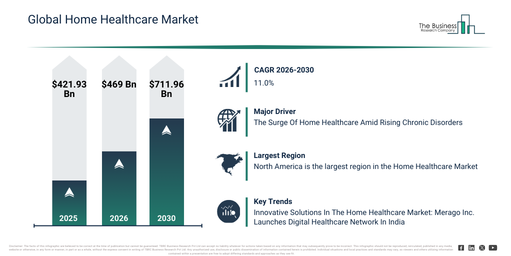
    The home healthcare market size has seen rapid growth in recent years. It is anticipated to expand from $421.93 billion in 2025 to $469 billion in 2026, exhibiting a compound annual growth rate (CAGR) of 11.2%. The historical expansion of this market can be attributed to several factors including an increasing aging population, a rise in the prevalence of chronic diseases, escalating hospital costs, government initiatives supporting home care, and the development of healthcare infrastructure.

    The home healthcare market is projected for substantial expansion in the coming years. By 2030, this market is anticipated to reach $711.96 billion, exhibiting a compound annual growth rate (CAGR) of 11.0%. Factors contributing to this growth during the forecast period include a preference for treatment at home, an increase in the prevalence of long-term diseases, a surge in demand for medical devices for home use, greater private healthcare expenditure, and limited hospital capacity. Key trends during this period encompass an increasing need for chronic disease management within the home setting, wider acceptance of preventative home healthcare, an expansion of home-based respiratory and oxygen therapies, a rise in the application of home diagnostic and monitoring tools, and a transition from hospital-based care to recovery at home.

    Get A Free Sample Report With In-Depth Market Insights:

    https://thebusinessresearchcompany.com/sample_request?id=56405881&type=smp&name=Home%20Healthcare%20Market%20Report%202026&utm_source=Blogs&utm_medium=Paid&utm_campaign=Nov_PR

    Home Healthcare Market Growth Catalysts And Demand Drivers

    The growing occurrence of chronic illnesses is anticipated to boost the expansion of the home healthcare market in the future. Chronic disorders are defined as long-term health conditions that typically advance slowly and continue for prolonged durations, often throughout an individual’s entire life. Home healthcare provides essential support in the thorough management of chronic diseases by offering personalized, patient-focused care within a familiar setting. For example, data from January 2023, released by the National Institutes of Health, a US-based government agency, indicates that by 2035, an estimated 35.66% (ranging from 33.36% to 36.04%) of adults aged 50 and older are predicted to suffer from at least one chronic condition. This proportion is forecasted to increase to 47.81% (with a range of 46.09% to 49.71%) by 2050. Consequently, the rising incidence of chronic disorders is fueling the growth of the home healthcare market.

    Home Healthcare Market Segmentation And Category Overview

    The home healthcare market covered in this report is segmented –

    1) By Equipment: Therapeutic, Diagnostic, Mobility Care

    2) By Services: Rehabilitation Services, Respiratory Therapy Services, Infusion Therapy Services, Other Services

    3) By Indication: Cardiovascular Disorders And Hypertension, Diabetes, Respiratory Diseases, Cancer, Wound Care, Other Indications

    Subsegments:

    1) By Therapeutic: Oxygen Therapy Equipment (Concentrators, Tanks), Infusion Pumps, Nebulizers, CPAP Machines, Home Dialysis Machines

    2) By Diagnostic: Blood Glucose Monitors, Blood Pressure Monitors, Thermometers, Pulse Oximeters, Home Cholesterol Test Kits

    3) By Mobility Care: Wheelchairs (Manual And Electric), Walkers And Rollators, Crutches, Mobility Scooters, Lift Chairs

    Home Healthcare Market Industry Trends: What’s Reshaping Demand?

    Leading firms within the home healthcare market are prioritizing the creation of sophisticated offerings, including personalized home healthcare management, with the aim of improving patient results and streamlining the provision of care. This personal home healthcare management encompasses a framework of services and technological tools specifically crafted to support people in overseeing their health and well-being from their residences. As an illustration, during September 2023, Merago Inc., a digital health technology firm based in the US, introduced home healthcare services in India through a partnership with Portea Medical, thereby forming the Merago Digital Healthcare Network. The objective of this venture is to deliver an extensive array of services, such as urgent and post-operative care, directly to patients’ residences. Utilizing technology, the collaboration endeavors to boost the accessibility and effectiveness of healthcare provision, responding to the growing need for home-centric solutions driven by an elderly populace and the rise in chronic illnesses.

    Home Healthcare Market Competitive Analysis Of Leading Industry Participants

    Major companies operating in the home healthcare market are CVS Health Corporation, McKesson Corporation, MediCar Home Health Services Inc., Humana Inc., Fresenius SE & Co. KGaA, Medline Industries LP, Becton Dickinson and Company, Koninklijke Philips N.V., Baxter International Inc., B. Braun Melsungen AG, Kindred Healthcare Inc., Encompass Health Corporation, ResMed Inc., Brookdale Senior Living Inc., Maxim Healthcare Services Inc., Amedisys Inc., AccentCare Inc., OMRON Healthcare Inc. (Omron Corporation), LHC Group Inc., Enhabit Home Health & Hospice LLC, Addus HomeCare Corporation, Invacare Corporation, Zorgers, American Well Corporation, Honor Home Care Inc.,A&D Company Limited, Grand World Elder Care, Sunrise Senior Living LLC

    View The Full Home Healthcare Market Report:

    https://thebusinessresearchcompany.com/report/home-healthcare-global-market-report?utm_source=Blogs&utm_medium=Paid&utm_campaign=Nov_PR

    Home Healthcare Market Top Region: Where Does Most Revenue Come From?

    North America was the largest region in the home healthcare market in 2025. Asia-Pacific is expected to be the fastest-growing region in the forecast period. The regions covered in the home healthcare market report are Asia-Pacific, South East Asia, Western Europe, Eastern Europe, North America, South America, Middle East, Africa.

    Reach Out To Our Team:

    The Business Research Company: https://www.thebusinessresearchcompany.com/

    Americas: +1 310-496-7795

    Asia: +44 7882 955267 & +91 8897263534

    Europe: +44 7882 955267

    Email us at: marketing@tbrc.info

    Follow us on:

    LinkedIn: https://in.linkedin.com/company/the-business-research-company

    YouTube: https://www.youtube.com/channel/UC24_fI0rV8cR5DxlCpgmyFQ

    Global Market Model: https://www.thebusinessresearchcompany.com/global-market-model
  • Home Health Care And Residential Nursing Care Services Market Growth Forecast: Market Size, Key Trends And Emerging Opportunities Through 2030

    Home Health Care And Residential Nursing Care Services Market Growth Forecast: Market Size, Key Trends And Emerging Opportunities Through 2030

    Built to provide research that’s more actionable and strategically valuable, The Business Research Company’s 2026 market reports include market attractiveness analysis, total addressable market sizing, company benchmarking matrices, interactive Excel dashboards, broader supply chain intelligence, emerging startup tracking, and in-depth product insights.

    Home Health Care And Residential Nursing Care Services Market Size Forecast: How Big Could The Market Get By 2030?

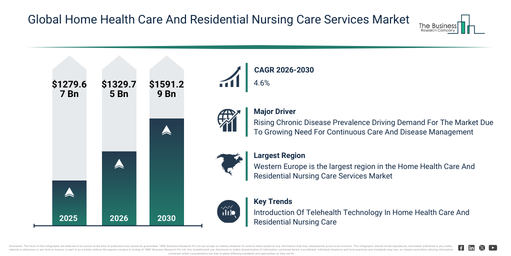
    The home health care and residential nursing care services market size has experienced steady expansion in recent years. This market is set to increase from $1279.67 billion in 2025 to $1329.75 billion in 2026, demonstrating a compound annual growth rate (CAGR) of 3.9%. Historical growth can be attributed to several factors, including an aging population’s growth, escalating hospital overcrowding, a rise in chronic disease prevalence, government healthcare funding, and the growth in institutional care facilities.

    The size of the home health care and residential nursing care services market is anticipated to exhibit sustained growth over the upcoming period. This market is forecasted to reach $1591.29 billion by 2030, demonstrating a compound annual growth rate (CAGR) of 4.6%. Factors contributing to this growth during the forecast period include increased adoption of home-based care, an escalating elderly dependency ratio, greater private healthcare expenditure, a scarcity of hospital beds, and the rising need for long-term care. Key trends identified for this period encompass a heightened preference for clinical care delivered at home, the broadening of post-acute and rehabilitation services, an increasing requirement for geriatric and chronic care, a transition towards value-based home care frameworks, and the incorporation of multidisciplinary care teams.

    Get A Free Sample Report With In-Depth Market Insights:

    https://thebusinessresearchcompany.com/sample_request?id=96539134&type=smp&name=Home%20Health%20Care%20And%20Residential%20Nursing%20Care%20Services%20Market%20Report%202026&utm_source=Blogs&utm_medium=Paid&utm_campaign=Nov_PR

    Home Health Care And Residential Nursing Care Services Market Opportunity Drivers: What’s Unlocking New Revenue Potential?

    The increasing occurrence of chronic illnesses is anticipated to boost the expansion of the home health care and residential nursing care services market in the future. These are enduring health conditions that advance gradually, generally demanding continuous management rather than a definitive cure. The increase in chronic diseases is primarily linked to detrimental lifestyle choices like inadequate nutrition, lack of physical activity, tobacco use, and excessive alcohol intake, which elevate the likelihood of developing conditions such as diabetes and heart disease. Services in home health care and residential nursing care assist in handling chronic conditions through consistent medical oversight, medication administration, tailored care programs, and aid with everyday tasks, allowing patients to manage symptoms, avoid complications, and uphold a superior quality of life in their own residences. For example, data from April 2025 from the U.S. federal agency, the Centers for Disease Control and Prevention (CDC), indicated that around 194 million U.S. adults, or 76.4%, reported having at least one chronic condition in 2023. This condition affected 59.5% of young adults, 78.4% of midlife adults, and 93.0% of older adults. Consequently, the growing incidence of chronic diseases is fueling the expansion of the home health care and residential nursing care services market.

    Home Health Care And Residential Nursing Care Services Market Segment Outlook: Which Categories Are Growing Fastest?

    The home health care and residential nursing care services market covered in this report is segmented –

    1) By Type: Home Health Care Providers, Nursing Care Facilities

    2) By Type of Expenditure: Public, Private

    3) By End User Gender: Male, Female

    Subsegments:

    1) By Home Health Care Providers: Skilled Nursing Services, Physical Therapy Services, Occupational Therapy Services, Home Health Aide Services, Medical Social Services

    2) By Nursing Care Facilities: Skilled Nursing Facilities (SNFs), Long-Term Care Facilities, Rehabilitation Facilities, Hospice Care Facilities

    Home Health Care And Residential Nursing Care Services Market Innovation Trends: What Developments Are Reshaping The Industry?

    Leading companies active in the home health care and residential nursing care services market are prioritizing the advancement of sophisticated technologies, such as telehealth technology, to uphold their market presence. Telehealth technology encompasses the application of digital and communication tools to deliver remote healthcare services, consultations, monitoring, and support to patients. For example, in April 2023, AvaSure, a US-based healthcare company, launched an innovative virtual nursing application and care model that merges telehealth technology with a nursing team to aid the incorporation of clinical technology. This pioneering model improves patient care and safety through the creation of a collaborative environment where virtual teams support on-site healthcare professionals. This innovation responds to the changing requirements in the healthcare market and enables hospitals and health systems to upgrade their patient care services.

    Home Health Care And Residential Nursing Care Services Market Leading Companies And Competitive Benchmarking

    Major companies operating in the home health care and residential nursing care services market are UnitedHealth Group Incorporated, Kaiser Permanente, Kindred Healthcare, Orpea, Encompass Home Health, Option Care Health Inc., Elara Caring, Genesis Healthcare Corp., The Ensign Group Inc., Brookdale Senior Living, LHC Group Inc., Chemed Corp., Sunrise Senior Living, Amedisys Inc., BrightStar Care, Aveanna Healthcare Holdings Inc., Gentiva Health Services, Enhabit Inc., Addus HomeCare Corporation, Extendicare, Signify Health Inc., Atria Senior Living Group, Home Instead Senior Care, Assisted Living Inc., AdaptHealth Corp, Apria Inc, Rotech Healthcare Holdings Inc., eWellness Healthcare Corporation

    View The Full Home Health Care And Residential Nursing Care Services Market Report:

    https://thebusinessresearchcompany.com/report/Home-Health-Care-And-Residential-Nursing-Care-Services-Global-Market-Report?utm_source=Blogs&utm_medium=Paid&utm_campaign=Nov_PR

    Home Health Care And Residential Nursing Care Services Market Regional Breakdown: Where Is Demand Concentrated?

    Western Europe was the largest region in the home health care and residential nursing care services market in 2025. North America was the second largest region in the home health care and residential nursing care services market. The regions covered in the home health care and residential nursing care services market report are Asia-Pacific, South East Asia, Western Europe, Eastern Europe, North America, South America, Middle East, Africa.

    Reach Out To Our Team:

    The Business Research Company: https://www.thebusinessresearchcompany.com/

    Americas: +1 310-496-7795

    Asia: +44 7882 955267 & +91 8897263534

    Europe: +44 7882 955267

    Email us at: marketing@tbrc.info

    Follow us on:

    LinkedIn: https://in.linkedin.com/company/the-business-research-company

    YouTube: https://www.youtube.com/channel/UC24_fI0rV8cR5DxlCpgmyFQ

    Global Market Model: https://www.thebusinessresearchcompany.com/global-market-model
  • Home Care Services Market CAGR Forecast Through 2030: Key Trends Shaping Industry Expansion

    Home Care Services Market CAGR Forecast Through 2030: Key Trends Shaping Industry Expansion

    Backed by market attractiveness analysis, total addressable market sizing, company benchmarking matrices, interactive Excel dashboards, wider supply chain intelligence, emerging startup coverage, and detailed product-level insights, The Business Research Company’s 2026 market reports are designed to offer research that is more actionable and strategically valuable than ever.

    Home Care Services Market Revenue Outlook: What CAGR Lies Ahead Through 2030?

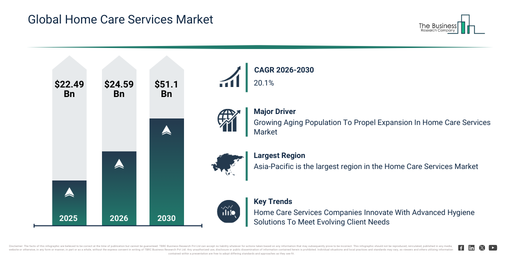
    The home care services market size has experienced significant expansion over recent years. It is anticipated to increase from $22.49 billion in 2025 to $24.59 billion in 2026, achieving a compound annual growth rate (CAGR) of 9.3%. This historical growth can be linked to an expanding aging demographic, a growing preference for in-home care, the development of various residential service models, the proliferation of professional caregiving services, and the improved affordability of home care solutions.

    The home care services market is projected to experience rapid expansion over the coming years. Its valuation is anticipated to reach $51.1 billion by 2030, demonstrating a compound annual growth rate (CAGR) of 20.1%. This growth during the projection period stems from several factors, including a heightened demand for technology-supported home services, the broadening of senior living assistance initiatives, an increasing emphasis on preventive and wellness care within the home setting, rising capital injections into digital home service platforms, and the expanding uptake of subscription-based care frameworks. Key trends anticipated during this period encompass the growing integration of remote care management systems, an increasing need for customized home care solutions, the expansion of home care services incorporating telehealth, a surge in the utilization of digital tools for scheduling and monitoring, and a reinforced commitment to supporting elderly and chronically ill individuals.

    Get A Free Sample Report With In-Depth Market Insights:

    https://thebusinessresearchcompany.com/sample_request?id=88270223&type=smp&name=Home%20Care%20Services%20Market%20Report%202026&utm_source=Blogs&utm_medium=Paid&utm_campaign=Nov_PR

    Home Care Services Market Growth Momentum: What Factors Are Shaping Demand?

    An expanding elderly demographic is anticipated to stimulate the expansion of the home care services market in the future. This demographic shift signifies an increasing percentage of older persons within society, primarily resulting from extended lifespans and reduced fertility rates. Home care services play a crucial role by enabling older adults to uphold a better quality of life, remain engaged with their communities, and lessen their reliance on institutionalized care, thereby facilitating aging in place. These services are customized to individual seniors’ needs and preferences, ensuring personalized care that addresses specific health conditions and lifestyles. For example, data from the United Nations (UN), a US-based intergovernmental organization, indicated in 2023 that the global population aged 65 and older is forecasted to exceed double its current size, growing from 761 million in 2021 to 1.6 billion by 2050. Consequently, the growth of the elderly population will be a key impetus for the home care services market.

    Home Care Services Market Segment Landscape: Which Areas Lead Development?

    The home care services market covered in this report is segmented –

    1) By Service: Medical Home Care Services, Personal Home Care Services

    2) By Care Duration: Hourly Care, Daily Care, Live-In Care, Short-Term Care, Long-Term Care

    3) By Application: Residential Home Care, Senior Living at Home, Post-Hospitalization Home Care

    4) By End User: Geriatric Patients, Adult Patients, Pediatric Patients, Disabled Individuals, Post-Surgical Patients, Chronically Ill Patients

    Subsegments:

    1) By Medical Home Care Services: Skilled Nursing Care, Physician Home Visits, Medication Management, Wound Care, Chronic Disease Management, Post-Surgical Care, Rehabilitation Therapy

    2) By Personal Home Care Services: Assistance with Activities of Daily Living, Mobility Assistance, Companionship Services, Meal Preparation, Light Housekeeping (care-related only), Transportation Assistance

    Home Care Services Market Trends: What’s Defining The Industry’s Next Phase?

    Leading companies in the home care services market are concentrating on providing novel services, such as In-home hygiene services, to uplift their clients’ overall well-being and life quality. In-home hygiene services involve personal care and cleaning assistance delivered within a person’s home to maintain tidiness and foster general wellness. These particular services are highly advantageous for individuals needing support due to age, disability, illness, or recuperation from surgery. For example, in April 2024, Major Maids House Cleaning Company, a US-based firm specializing in home care services, introduced cutting-edge hygiene solutions in Tampa. This initiative showcases the company’s commitment to delivering top-tier, safe, and effective cleaning solutions, especially given the heightened public awareness regarding hygiene and sanitation. Their offerings include a range of services such as general house cleaning, deep cleaning, move-in/move-out cleaning, and home organization.

    Home Care Services Market Industry Leaders And Competitive Landscape

    Major companies operating in the home care services market are Right at Home Inc., BrightStar Group Holdings Inc., Interim HealthCare Inc., LHC Group Inc., AccentCare Inc., Bayada Home Health Care, Comfort Keepers, ComForCare, Senior Helpers, Amada Senior Care, FirstLight Home Care, Always Best Care Senior Services, Amedisys Inc., Synergy HomeCare Franchising LLC, Griswold Home Care, Family Resource Home Care, Maxim Healthcare Services Inc., TheKey, Honor Technology Inc., Visiting Angels Living Assistance Limited

    View The Full Home Care Services Market Report:

    https://thebusinessresearchcompany.com/report/home-care-services-global-market-report?utm_source=Blogs&utm_medium=Paid&utm_campaign=Nov_PR

    Home Care Services Market Geographic Landscape: Which Region Leads Industry Growth?

    Asia-Pacific was the largest region in the home care services market in 2025. The regions covered in the home care services market report are Asia-Pacific, South East Asia, Western Europe, Eastern Europe, North America, South America, Middle East, Africa.

    Reach Out To Our Team:

    The Business Research Company: https://www.thebusinessresearchcompany.com/

    Americas: +1 310-496-7795

    Asia: +44 7882 955267 & +91 8897263534

    Europe: +44 7882 955267

    Email us at: marketing@tbrc.info

    Follow us on:

    LinkedIn: https://in.linkedin.com/company/the-business-research-company

    YouTube: https://www.youtube.com/channel/UC24_fI0rV8cR5DxlCpgmyFQ

    Global Market Model: https://www.thebusinessresearchcompany.com/global-market-model
  • Home Blood Pressure Monitoring Devices Market To Witness 13% CAGR Growth Through 2030: Key Industry Drivers

    Home Blood Pressure Monitoring Devices Market To Witness 13% CAGR Growth Through 2030: Key Industry Drivers

    Featuring market attractiveness scoring, total addressable market sizing, company benchmarking matrices, interactive Excel dashboards, deeper supply chain intelligence, emerging startup tracking, and granular product-level insights, The Business Research Company’s 2026 market reports are built to deliver research that is both more actionable and more strategically valuable.

    Home Blood Pressure Monitoring Devices Market Growth Analysis: How Will Revenue Trend Over The Forecast Period?

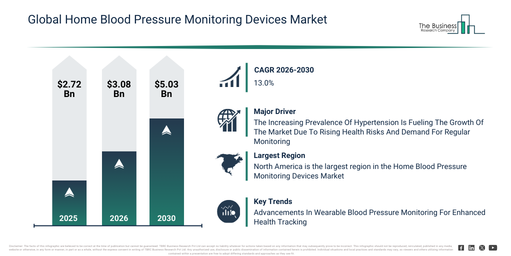
    The home blood pressure monitoring devices market size has experienced rapid growth in recent years. It is projected to expand from $2.72 billion in 2025 to $3.08 billion in 2026, exhibiting a compound annual growth rate (CAGR) of 13.2%. The historical growth of this market can be attributed to the increasing prevalence of hypertension, a growing awareness of preventive healthcare, the expansion of home healthcare adoption, improved affordability of digital health devices, and the availability of portable monitoring equipment.

    The home blood pressure monitoring devices market is poised for significant expansion in the coming years. Projections indicate it will reach a value of $5.03 billion by 2030, exhibiting a robust compound annual growth rate (CAGR) of 13.0%. This anticipated growth during the forecast period is driven by several factors, including the escalating demand for remote cardiovascular monitoring, the increasing integration of AI-based health analytics, the widening reach of telemedicine services, a heightened emphasis on managing chronic diseases, and the growing uptake of connected medical devices. Key trends expected to shape the market in the same period encompass the increasing adoption of connected blood pressure devices, a surging demand for home-based hypertension monitoring solutions, the growing incorporation of mobile health applications, the expansion of remote patient monitoring initiatives, and an enhanced emphasis on designing user-friendly devices.

    Get A Free Sample Report With In-Depth Market Insights:

    https://thebusinessresearchcompany.com/sample_request?id=20870072&type=smp&name=Home%20Blood%20Pressure%20Monitoring%20Devices%20Market%20Report%202026&utm_source=Blogs&utm_medium=Paid&utm_campaign=Nov_PR

    Home Blood Pressure Monitoring Devices Market Expansion Drivers: What’s Shaping Future Growth?

    The increasing prevalence of hypertension is projected to propel the growth of the home blood pressure monitoring devices market. Hypertension is defined as a state of persistently high blood pressure, which elevates the risk of heart disease, stroke, and other severe health complications. The escalating incidence of hypertension is attributed to a combination of unhealthy lifestyles, such as poor dietary habits, inadequate physical activity, smoking, excessive alcohol intake, and chronic stress, all of which disrupt normal blood pressure regulation and cause damage to blood vessels over time. Home blood pressure monitoring devices enable individuals to routinely track their blood pressure, allowing for early detection of hypertension, more effective management of treatment plans, and more informed discussions with healthcare providers. For instance, in January 2025, the Center for Disease Control and Prevention, a US-based government agency, reported that in 2023, high blood pressure was a primary or contributing cause of 664,470 deaths in the United States. Therefore, the rising prevalence of hypertension is a key driver for the home blood pressure monitoring devices market.

    Home Blood Pressure Monitoring Devices Market Segments: Where Is Growth Concentrated?

    The home blood pressure monitoring devices market covered in this report is segmented –

    1) By Product: Aneroid Blood Pressure Monitors, Digital Blood Pressure Monitors, Instruments and Accessories

    2) By Connectivity: Bluetooth, Wireless Fidelity (Wi-Fi), Universal Serial Bus (USB), Non-Connected

    3) By Distribution Channel: Retail Pharmacies, Online Pharmacies, Other Distribution Channels

    Subsegments:

    1) By Aneroid Blood Pressure Monitors: Manual Aneroid Monitors, Pocket-Sized Aneroid Monitors

    2) By Digital Blood Pressure Monitors: Upper Arm Monitors, Wrist Monitors

    3) By Instruments and Accessories: Blood Pressure Cuffs, Cuff Holders, Power Adapters

    Home Blood Pressure Monitoring Devices Market Industry Trends Fueling Future Revenue Growth

    Leading firms within the home blood pressure monitoring devices market are dedicating efforts to creating sophisticated devices, including wearable blood pressure monitors, aiming to provide consumers with an easier and more comfortable method for daily blood pressure tracking. These wearable monitors are compact, body-worn gadgets that constantly measure blood pressure through either sensors or oscillometric methods. They supply immediate data, facilitating continuous oversight, prompt identification of anomalies, and smooth connectivity with mobile applications for individualized health management. An example of this is Aktiia, a Switzerland-based healthcare technology company, which in November 2024, introduced a continuous blood pressure monitoring (CBPM) bracelet that secured approval from Health Canada. This represented the company’s initial entry into a market outside of Europe. The product’s debut in Canada offers a non-invasive, wearable gadget capable of continuous blood pressure tracking. Its approval confirms the device’s clinical effectiveness and ensures compliance with Canada’s healthcare benchmarks. This broadening of presence emphasizes Aktiia’s dedication to delivering groundbreaking health solutions worldwide.

    Home Blood Pressure Monitoring Devices Market Key Participants And Competitive Landscape

    Major companies operating in the home blood pressure monitoring devices market are Philips, Panasonic Holdings Corporation, Omron Corporation, Beurer GmbH, Withings SA, Microlife AG, Rossmax International Ltd., Qardio Inc., Homedics Inc., American Diagnostic Corporation, A&D Company Ltd., Medisana AG, Terumo Corporation, Jiangsu Yuyue Medical Equipment Co. Ltd., TaiDoc Technology Corporation, Andon Health Co. Ltd., ForaCare Suisse AG, Citizen Watch Co. Ltd., Nissei Co. Ltd., Transtek Medical Electronics Co. Ltd.

    View The Full Home Blood Pressure Monitoring Devices Market Report:

    https://thebusinessresearchcompany.com/report/home-blood-pressure-monitoring-devices-global-market-report?utm_source=Blogs&utm_medium=Paid&utm_campaign=Nov_PR

    Home Blood Pressure Monitoring Devices Market Largest Region: Which Geography Holds The Biggest Share?

    North America was the largest region in the home blood pressure monitoring devices market in 2025. Asia-Pacific is expected to be the fastest-growing region in the forecast period. The regions covered in the home blood pressure monitoring devices market report are Asia-Pacific, South East Asia, Western Europe, Eastern Europe, North America, South America, Middle East, Africa.

    Reach Out To Our Team:

    The Business Research Company: https://www.thebusinessresearchcompany.com/

    Americas: +1 310-496-7795

    Asia: +44 7882 955267 & +91 8897263534

    Europe: +44 7882 955267

    Email us at: marketing@tbrc.info

    Follow us on:

    LinkedIn: https://in.linkedin.com/company/the-business-research-company

    YouTube: https://www.youtube.com/channel/UC24_fI0rV8cR5DxlCpgmyFQ

    Global Market Model: https://www.thebusinessresearchcompany.com/global-market-model
  • Hollow Fiber Membranes Market Projected For Strong Expansion Through 2030: Key Trends And Future Outlook

    Hollow Fiber Membranes Market Projected For Strong Expansion Through 2030: Key Trends And Future Outlook

    Built to provide research that’s more actionable and strategically valuable, The Business Research Company’s 2026 market reports include market attractiveness analysis, total addressable market sizing, company benchmarking matrices, interactive Excel dashboards, broader supply chain intelligence, emerging startup tracking, and in-depth product insights.

    Hollow Fiber Membranes Market Forecast: What Value Will The Market Reach By 2030?

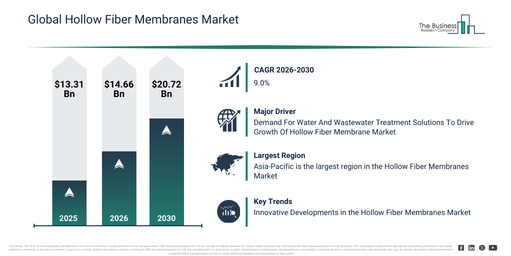
    The hollow fiber membranes market size has observed rapid expansion in recent years. It is forecast to increase from $13.31 billion in 2025 to $14.66 billion in 2026, demonstrating a compound annual growth rate (CAGR) of 10.2%. The growth witnessed in the past can be attributed to the rising needs for industrial water treatment, the expansion of pharmaceutical manufacturing, the increasing uptake of membrane filtration systems, a growing demand for clean water solutions, and the accessibility of polymer membrane materials.

    The hollow fiber membranes market is projected for substantial expansion in the coming years. This market is set to reach $20.72 billion by 2030, exhibiting a compound annual growth rate (CAGR) of 9.0%. This anticipated growth during the forecast period is fueled by several factors, including heightened investments in sustainable water infrastructure, a surge in demand for biopharmaceutical filtration, the expansion of membrane-based separation processes, a greater emphasis on energy-efficient filtration, and the increasing uptake of sophisticated membrane materials. Key trends expected during this period involve a wider embrace of advanced filtration technologies, an escalating demand for high-performance separation membranes, the expanded application of hollow fiber membranes in bioprocessing, the broadening of water and wastewater treatment uses, and a sharpened focus on membrane durability and operational efficiency.

    Get A Free Sample Report With In-Depth Market Insights:

    https://thebusinessresearchcompany.com/sample_request?id=91373126&type=smp&name=Hollow%20Fiber%20Membranes%20Market%20Report%202026&utm_source=Blogs&utm_medium=Paid&utm_campaign=Nov_PR

    Hollow Fiber Membranes Market Development Factors: What’s Supporting Demand?

    The hollow fiber membrane market is projected to expand due to the increasing need for water and wastewater treatment solutions. These solutions encompass technologies, systems, and services aimed at efficiently managing and purifying water and wastewater, guaranteeing its quality and safety across diverse industrial, commercial, and municipal uses. Key drivers for water and wastewater treatment solutions include industrial growth, escalating global water scarcity, and heightened awareness regarding the health risks posed by water contaminants. Hollow fiber membranes play a crucial role in water and wastewater treatment solutions, enhancing the purification of freshwater (water treatment) and the cleansing of used water (wastewater treatment) to eliminate pollutants and ensure compliance with health and safety standards for drinking, industrial applications, and environmental release. An example of this trend is seen in Ireland, where, according to the Central Statistics Office (an Ireland-based government agency), the count of registered domestic wastewater treatment systems increased by 1.1% to 492,359 in 2023, as reported in May 2024. Consequently, the rising demand for water and wastewater treatment solutions is a significant factor propelling the expansion of the hollow fiber membrane market.

    Hollow Fiber Membranes Market Segment Analysis: What Are The Core Market Categories?

    The hollow fiber membranes market covered in this report is segmented –

    1) By Filtration Type: Microfiltration, Ultrafiltration, Reverse Osmosis

    2) By Material: Polymer, Ceramic

    3) By End-User: Water And Wastewater Treatment, Food And Beverages, Biotechnology, Pharmaceuticals And Chemicals, Other End-Users

    Subsegments:

    1) By Microfiltration: Low-Pressure Microfiltration, High-Pressure Microfiltration, Cross-Flow Microfiltration, Dead-End Microfiltration

    2) By Ultrafiltration: Low-Pressure Ultrafiltration, High-Pressure Ultrafiltration, Cross-Flow Ultrafiltration, Dead-End Ultrafiltration

    3) By Reverse Osmosis: Low-Pressure Reverse Osmosis, High-Pressure Reverse Osmosis, Seawater Reverse Osmosis, Brackish Water Reverse Osmosis

    Hollow Fiber Membranes Market Trends Powering Strategic Industry Growth

    Companies prominent in the hollow fiber membranes market are driving innovation by developing products like membrane systems, which aim to boost filtration efficiency and offer solutions for water treatment. Essentially, a membrane system functions as a filtration or separation technology that utilizes a semi-permeable membrane to differentiate substances in liquid or gas mixtures based on attributes such as size or charge. Illustratively, Asahi Kasei Corporation, a Japanese chemical firm, introduced Microza, a new hollow-fiber membrane filtration system, in April 2024. This specific hollow-fiber membrane system is engineered to generate water for injection with significantly lower energy consumption and reduced CO2 emission. Its applications span diverse fields, including pharmaceuticals, biotechnology, food processing, environmental protection, and water treatment.

    Hollow Fiber Membranes Market Top Companies Driving Competitive Growth

    Major companies operating in the hollow fiber membranes market are Veolia, LG Chem, 3M Company, Mitsubishi Chemical Group Corporation, Sumitomo Electric Industries Ltd., Asahi Kasei Corporation, Toray Industries Inc., Evonik Industries AG, Parker Hannifin Corporation, DuPont de Nemours Inc., Kuraray Co. Ltd., GEA Group, Sartorius AG, Pentair, UBE Corporation, Toyobo Co. Ltd., Pall Corporation, Hydranautics, Applied Membranes Inc., Koch Separation Solutions, Synder Filtration Inc., SpinTek, Memstar Corporation, JIUWU HI-TECH Membrane Technology, Daicen Corporation

    View The Full Hollow Fiber Membranes Market Report:

    https://thebusinessresearchcompany.com/report/hollow-fiber-membranes-global-market-report?utm_source=Blogs&utm_medium=Paid&utm_campaign=Nov_PR

    Hollow Fiber Membranes Market Regional Analysis: Which Geography Leads On Revenue?

    Asia-Pacific was the largest region in the hollow fiber membranes market in 2025. Europe is expected to be the fastest-growing region in the forecast period. The regions covered in the hollow fiber membranes market report are Asia-Pacific, South East Asia, Western Europe, Eastern Europe, North America, South America, Middle East, Africa.

    Reach Out To Our Team:

    The Business Research Company: https://www.thebusinessresearchcompany.com/

    Americas: +1 310-496-7795

    Asia: +44 7882 955267 & +91 8897263534

    Europe: +44 7882 955267

    Email us at: marketing@tbrc.info

    Follow us on:

    LinkedIn: https://in.linkedin.com/company/the-business-research-company

    YouTube: https://www.youtube.com/channel/UC24_fI0rV8cR5DxlCpgmyFQ

    Global Market Model: https://www.thebusinessresearchcompany.com/global-market-model
  • Histoplasmosis Treatment Market Outlook 2026–2030: Growth Trends, Market Dynamics And Emerging Opportunities

    Histoplasmosis Treatment Market Outlook 2026–2030: Growth Trends, Market Dynamics And Emerging Opportunities

    Backed by market attractiveness analysis, total addressable market sizing, company benchmarking matrices, interactive Excel dashboards, wider supply chain intelligence, emerging startup coverage, and detailed product-level insights, The Business Research Company’s 2026 market reports are designed to offer research that is more actionable and strategically valuable than ever.

    Histoplasmosis Treatment Market Size Outlook: How Quickly Will Revenue Expand Through 2030?

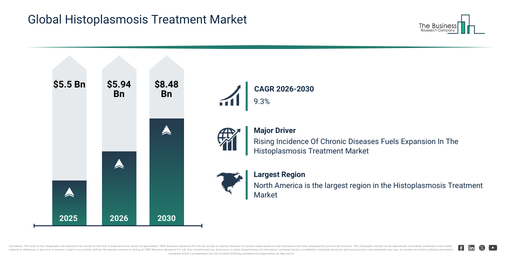
    The histoplasmosis treatment market size has experienced significant expansion in recent years. It is forecast to increase from $5.5 billion in 2025 to $5.94 billion in 2026, achieving a compound annual growth rate (CAGR) of 8.0%. The past growth in this sector is attributable to factors such as the rising occurrence of fungal infections, the broader adoption of antifungal medications, the establishment of more hospital treatment facilities, enhanced diagnostic recognition, and the availability of diverse broad-spectrum antifungal drugs.

    The market size for histoplasmosis treatment is anticipated to experience robust expansion over the next several years. It is projected to achieve a valuation of $8.48 billion by 2030, progressing at a compound annual growth rate (CAGR) of 9.3%. The drivers behind this growth within the forecast period encompass an escalating demand for sophisticated antifungal formulations, a heightened concentration on care for immunocompromised patients, the broadening of oral antifungal therapies, increasing financial commitments to infectious disease research, and the wider integration of treatment protocols based on established guidelines. Significant developments expected during this period include a greater utilization of targeted antifungal treatments, a rise in the adoption of early diagnostic and therapeutic strategies, an intensifying focus on managing severe fungal infections, the expansion of antifungal care provided within hospitals, and a stronger emphasis on individualized patient treatment approaches.

    Get A Free Sample Report With In-Depth Market Insights:

    https://thebusinessresearchcompany.com/sample_request?id=67574097&type=smp&name=Histoplasmosis%20Treatment%20Market%20Report%202026&utm_source=Blogs&utm_medium=Paid&utm_campaign=Nov_PR

    Histoplasmosis Treatment Market Industry Drivers: What’s Behind The Revenue Growth?

    The increasing occurrence of chronic illnesses is anticipated to boost the histoplasmosis treatment market’s expansion. A chronic disease is defined as a condition persisting for three months or longer, potentially worsening over time. Histoplasmosis treatment offers benefits such as enhanced respiratory health, reduced inflammation, improved immune system function, and a better quality of life for individuals dealing with chronic diseases. For example, data released in April 2025 by the Centers for Disease Control and Prevention (CDC), a US-based federal agency, indicated that in 2023, around 194 million U.S. adults, or 76.4%, reported experiencing at least one chronic condition. This prevalence stood at 59.5% for young adults, 78.4% for midlife adults, and 93.0% for older adults. Consequently, the growing incidence of chronic diseases is propelling the growth of the histoplasmosis treatment market.

    Histoplasmosis Treatment Market Segment Breakdown: Which Categories Lead On Revenue?

    The histoplasmosis treatment market covered in this report is segmented –

    1) By Drug Type: Amphotericin B, Itraconazole, Other Drug Types

    2) By Mode of Administration: Injectable, Oral, Other Modes of Administration

    3) By Patient Type: Pediatric, Adult

    4) By End-User: Hospital Pharmacies, Private Clinics, Drug Stores, Retail Pharmacies, Other End-Users

    Subsegments:

    1) By Amphotericin B: Liposomal Amphotericin B, Conventional Amphotericin B

    2) By Itraconazole: Capsule Form, Oral Solution

    3) By Other Drug Types: Posaconazole, Voriconazole

    Histoplasmosis Treatment Market Leading Players And Competitive Positioning

    Major companies operating in the histoplasmosis treatment market are Pfizer Inc., Johnson and Johnson Ltd., F. Hoffmann-La Roche AG, Merck and Co. Inc., AbbVie Inc., Novartis AG, Sanofi S.A, Bristol Myers Squibb, AstraZeneca Plc, Abbott laboratories, GSK Plc, Eli Lilly and Company, Gilead Sciences, Teva Pharmaceutical Industries Ltd., Astellas pharma US Inc., Mylan N.V., Biogen Inc., Bausch Health Companies Inc., Mitsubishi Tanabe Pharma Corporation, AB Science, Ionis Pharmaceuticals Inc., Advanz Pharma Corp., Leadiant Biosciences, IMMY, Sigma Tau Pharmaceuticals Inc.

    View The Full Histoplasmosis Treatment Market Report:

    https://thebusinessresearchcompany.com/report/histoplasmosis-treatment-global-market-report?utm_source=Blogs&utm_medium=Paid&utm_campaign=Nov_PR

    Histoplasmosis Treatment Market Geographic Spread And Regional Opportunities

    North America was the largest region in the histoplasmosis treatment market in 2025. The regions covered in the histoplasmosis treatment market report are Asia-Pacific, South East Asia, Western Europe, Eastern Europe, North America, South America, Middle East, Africa.

    Reach Out To Our Team:

    The Business Research Company: https://www.thebusinessresearchcompany.com/

    Americas: +1 310-496-7795

    Asia: +44 7882 955267 & +91 8897263534

    Europe: +44 7882 955267

    Email us at: marketing@tbrc.info

    Follow us on:

    LinkedIn: https://in.linkedin.com/company/the-business-research-company

    YouTube: https://www.youtube.com/channel/UC24_fI0rV8cR5DxlCpgmyFQ

    Global Market Model: https://www.thebusinessresearchcompany.com/global-market-model

  • Histone Deacetylase (HDAC) Inhibitors Market Growth Outlook From $1.42 Billion In 2026 To $1.89 Billion By 2030

    Histone Deacetylase (HDAC) Inhibitors Market Growth Outlook From $1.42 Billion In 2026 To $1.89 Billion By 2030

    Featuring market attractiveness scoring, total addressable market sizing, company benchmarking matrices, interactive Excel dashboards, deeper supply chain intelligence, emerging startup tracking, and granular product-level insights, The Business Research Company’s 2026 market reports are built to deliver research that is both more actionable and more strategically valuable.

    Histone Deacetylase (HDAC) Inhibitors Market Size, Value And Growth Trajectory Through 2030

    The histone deacetylase (hdac) inhibitors market size has experienced robust growth in recent years. It is anticipated to expand from $1.32 billion in 2025 to $1.42 billion in 2026, demonstrating a compound annual growth rate (CAGR) of 7.5%. This historical expansion was fueled by increasing oncology drug research activity, a rising understanding of epigenetic mechanisms, the proliferation of clinical trial programs, growing pharmaceutical R&D investments, and the accessibility of advanced molecular screening tools.

    The histone deacetylase (hdac) inhibitors market is projected for significant expansion over the coming years. This market is set to reach $1.89 billion by 2030, exhibiting a compound annual growth rate (CAGR) of 7.4%. Factors contributing to this anticipated growth include a greater uptake of personalized cancer treatments, increased funding for epigenetic drug innovation, broader neurology-related hdac research, a heightened need for targeted medicines, and more regulatory approvals for new hdac inhibitors. Key trends anticipated during this period encompass a stronger emphasis on targeted epigenetic therapies, the accelerated development of selective hdac inhibitors, a wider application of combination oncology treatments, the expansion of precision medicine drug development pipelines, and a greater focus on biomarker-driven drug discovery.

    Get A Free Sample Report With In-Depth Market Insights:

    https://thebusinessresearchcompany.com/sample_request?id=68817757&type=smp&name=Histone%20Deacetylase%20%28HDAC%29%20Inhibitors%20Market%20Report%202026&utm_source=Blogs&utm_medium=Paid&utm_campaign=Nov_PR

    Histone Deacetylase (HDAC) Inhibitors Market Growth Factors: What’s Supporting Expansion?

    The anticipated expansion of the histone deacetylase (HDAC) inhibitors market is primarily driven by the increasing prevalence of neurodegenerative conditions. These conditions involve the gradual deterioration and demise of neurons within the brain and spinal cord, resulting in impairments in cognitive and motor functions. Noteworthy examples include Alzheimer’s, which is distinguished by memory loss and a decline in cognitive abilities, stemming from the presence of amyloid plaques and tau tangles. Various elements contribute to the increasing occurrence of neurodegenerative disorders, including advanced age, extended lifespans, genetic predispositions, and environmental influences. Research is underway on histone deacetylase (HDAC) inhibitors as prospective therapeutic options for neurodegenerative disorders, given their capacity to regulate gene expression and offer neuroprotective benefits. A relevant example comes from August 2024, where the Centers for Disease Control and Prevention, a federal agency in the United States, reported an estimated 6.7 million older adults presently affected by Alzheimer’s disease in the United States. This figure is projected to climb to almost 14 million by 2060. Consequently, the growing occurrence of neurodegenerative conditions is a key factor propelling the expansion of the histone deacetylase (HDAC) inhibitors market.

    Histone Deacetylase (HDAC) Inhibitors Market Segmentation: How Does The Market Break Down By Category?

    The histone deacetylase (hdac) inhibitors market covered in this report is segmented –

    1) By Class: Class I HDACs, Class II HDACs, Class III HDACs

    2) By Route Of Administration: Oral HDAC Inhibitors, Parenteral HDAC Inhibitors

    3) By Application: Oncology, Neurology, Other Applications

    4) By End User: Hospitals, Academic And Research Institutes, Pharmaceutical Companies, Other End Users

    Subsegments:

    1) By Class I HDACs: HDAC1, HDAC2, HDAC3, HDAC8

    2) By Class II HDACs: HDAC4, HDAC5, HDAC6, HDAC7, HDAC9, HDAC10

    3) By Class III HDACs (Sirtuins): SIRT1, SIRT2, SIRT3, SIRT4, SIRT5, SIRT6, SIRT7

    Histone Deacetylase (HDAC) Inhibitors Market Trends Shaping Long-Term Demand

    Companies prominently involved in the histone deacetylase (HDAC) inhibitors market are concentrating on devising innovative solutions, such as HDAC inhibitors for cancer treatment, to boost effectiveness and lessen adverse reactions. Histone deacetylase (HDAC) inhibitors constitute a category of pharmaceutical compounds employed in managing cancer. Their mechanism involves impeding the action of HDAC enzymes, which typically divest acetyl groups from histone proteins. This hindrance leads to elevated acetylation of histones, thereby altering chromatin structure and influencing gene expression. For example, in September 2023, Shuttle Pharmaceuticals Holdings Inc., a US-based entity focused on developing leading-edge cancer therapies, obtained New HDAC Inhibitor Patents for Cancer Treatment from the U.S. Patent and Trademark Office. These advanced inhibitors are precisely engineered to target particular HDAC enzymes linked to cancer progression, with the goal of disrupting irregular gene expression patterns that foster tumor expansion and metastasis. The patented agents display enhanced strength and specificity, thereby minimizing unintended effects and improving patient safety profiles during treatment.

    Histone Deacetylase (HDAC) Inhibitors Market Competitive Overview And Top Companies

    Major companies operating in the histone deacetylase (hdac) inhibitors market are Bristol-Myers Squibb Company, Novartis AG, Merck KGaA, Abcam plc, Pharmacyclics LLC, R&D Systems Inc., Tenaya Therapeutics Inc., Syndax Pharmaceuticals Inc., Italfarmaco SpA, InvivoGen Corporation, TCI Chemicals (India) Pvt. Ltd., 4SC AG, Medivir AB, Mirati Therapeutics Inc., Spectrum Pharmaceuticals Inc., Curis Inc., Acetylon Pharmaceuticals Inc., Oryzon Genomics SA, Xynomic Pharmaceuticals Inc., Celleron Therapeutics Ltd., Midatech Pharma PLC, Karus Therapeutics Ltd., Shenzhen Chipscreen Biosciences Co. Ltd.

    View The Full Histone Deacetylase (HDAC) Inhibitors Market Report:

    https://thebusinessresearchcompany.com/report/histone-deacetylase-hdac-inhibitors-global-market-report?utm_source=Blogs&utm_medium=Paid&utm_campaign=Nov_PR

    Histone Deacetylase (HDAC) Inhibitors Market Top Region By Revenue And Market Share

    North America was the largest region in the histone deacetylase (HDAC) inhibitors market in 2025. Asia-Pacific is expected to be the fastest-growing region in the forecast period. The regions covered in the histone deacetylase (hdac) inhibitors market report are Asia-Pacific, South East Asia, Western Europe, Eastern Europe, North America, South America, Middle East, Africa.

    Reach Out To Our Team:

    The Business Research Company: https://www.thebusinessresearchcompany.com/

    Americas: +1 310-496-7795

    Asia: +44 7882 955267 & +91 8897263534

    Europe: +44 7882 955267

    Email us at: marketing@tbrc.info

    Follow us on:

    LinkedIn: https://in.linkedin.com/company/the-business-research-company

    YouTube: https://www.youtube.com/channel/UC24_fI0rV8cR5DxlCpgmyFQ

    Global Market Model: https://www.thebusinessresearchcompany.com/global-market-model