Blog

  • Human Epidermal Growth Factor Market 2026: Market Size, Growth Drivers And Emerging Opportunities

    Human Epidermal Growth Factor Market 2026: Market Size, Growth Drivers And Emerging Opportunities

    Featuring market attractiveness scoring, total addressable market sizing, company benchmarking matrices, interactive Excel dashboards, deeper supply chain intelligence, emerging startup tracking, and granular product-level insights, The Business Research Company’s 2026 market reports are built to deliver research that is both more actionable and more strategically valuable.

    Human Epidermal Growth Factor Market CAGR Outlook And Future Development

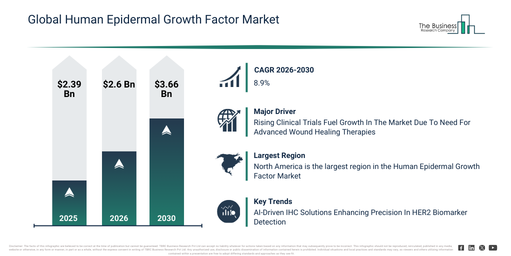
    In recent years, the human epidermal growth factor market has experienced substantial growth. This market is projected to expand from $2.39 billion in 2025 to $2.6 billion in 2026, exhibiting a compound annual growth rate (CAGR) of 9.2%. Historically, this expansion has been driven by factors such as the increasing need for wound care treatments, the growing application of biologics in dermatology, developments in protein purification technologies, the rise of regenerative medicine research, and the greater clinical acceptance of growth factor therapies.

    The human epidermal growth factor market is projected for significant expansion in the coming years, anticipated to reach $3.66 billion by 2030, exhibiting a compound annual growth rate (CAGR) of 8.9%. This anticipated growth is driven by factors such as a surge in demand for tissue regeneration therapies, increased investments in biologics manufacturing, the broadening scope of cosmetic and aesthetic procedures, a heightened focus on precision biologics, and expanded research into new growth factor applications. Key trends during this period encompass the growing utilization of recombinant growth factors, increasing integration into advanced wound care, broader application within dermatology and aesthetic medicine, an expansion of clinical research dedicated to regenerative therapies, and an intensified emphasis on high-purity biologic formulations.

    Get A Free Sample Report With In-Depth Market Insights:

    https://thebusinessresearchcompany.com/sample_request?id=90923493&type=smp&name=Human%20Epidermal%20Growth%20Factor%20Market%20Report%202026&utm_source=Blogs&utm_medium=Paid&utm_campaign=Nov_PR

    Human Epidermal Growth Factor Market Growth Factors: What’s Supporting Expansion?

    The expansion of clinical trials is projected to fuel the advancement of the human epidermal growth factor market in the coming years. These trials are research endeavors conducted on human subjects to assess the safety, efficacy, and adverse effects of various medical interventions and treatments. The surge in clinical trials stems from a rising need for tailored and novel therapies, which necessitate thorough evaluation for both safety and effectiveness. Human epidermal growth factor (hEGF) plays a supportive role in clinical trials by fostering cell proliferation and tissue repair, thereby facilitating the assessment of treatments for wound healing, skin regeneration, and similar conditions. For instance, in December 2024, the Association of the British Pharmaceutical Industry, a UK-based government and NHS entity focused on improving patient access to new treatments, stated that the total number of industry clinical trials initiated in the UK rose from 411 trials in 2022 to 426 in 2023. Consequently, the uptick in clinical trials is a significant factor propelling the growth of the human epidermal growth factor market.

    Human Epidermal Growth Factor Market Segment Outlook: Which Categories Are Growing Fastest?

    The human epidermal growth factor market covered in this report is segmented –

    1) By Product Type: Recombinant Human Epidermal Growth Factor, Natural Human Epidermal Growth Factor

    2) By Formulation: Injectable Form, Topical Form, Oral Form

    3) By Distribution Channel: Direct Sales, Online Pharmacies, Retail Pharmacies, Hospital Pharmacies, Specialty Clinics

    4) By Application: Dermatology, Oncology, Ophthalmology, Wound Healing, Cosmetic Procedures

    5) By End-User: Hospitals, Clinics, Research Institutes, Other End-Users

    Subsegments:

    1) By Recombinant Human Epidermal Growth Factor: Injectable Solutions, Oncology Therapeutics, Eye Drops, Wound Healing Agents

    2) By Natural Human Epidermal Growth Factor: Plasma-Derived Products, Colostrum-Based Products, Amniotic Fluid-Derived Products, Salivary-Derived Formulations

    Human Epidermal Growth Factor Market Industry Trends: What’s Reshaping Demand?

    Major companies operating in the human epidermal growth factor market are directing their efforts toward developing technological advancements, such as AI-powered immunohistochemistry (IHC) scoring solutions. These innovations are designed to enhance the precision, speed, and reproducibility of biomarker detection and cancer diagnostics. An AI-powered immunohistochemistry (IHC) scoring solution represents a technology that employs artificial intelligence algorithms to automatically analyze and quantify protein expression in tissue samples stained via IHC, thus improving accuracy, consistency, and speed in diagnostic pathology. For example, in September 2023, Ibex Medical Analytics, an Israel-based company, launched an Ibex Breast HER2. This product increases the precision and consistency of HER2 biomarker scoring in breast cancer, particularly in challenging HER2-low cases, leading to optimized treatment pathways and improved patient outcomes. Its main benefits include highly accurate, reproducible, and efficient HER2 IHC scoring, assisting pathologists in making confident, objective decisions for targeted therapy selection.

    Human Epidermal Growth Factor Market Leading Companies And Competitive Benchmarking

    Major companies operating in the human epidermal growth factor market are Pfizer Inc, Johnson & Johnson Services Inc, F. Hoffmann-La Roche AG, Merck & Co. Inc., Bayer AG, AstraZeneca plc, Novartis AG, GlaxoSmithKline Plc, Amgen Inc, Lonza Group AG, STEMCELL Technologies, Abcam plc, BioLegend Inc, RayBiotech Inc, Enzo Life Sciences Inc, Neocutis S.A, Proteintech Group Inc, Creative BioMart Co. Ltd, Abbkine Scientific Co. Ltd

    View The Full Human Epidermal Growth Factor Market Report:

    https://thebusinessresearchcompany.com/report/human-epidermal-growth-factor-global-market-report?utm_source=Blogs&utm_medium=Paid&utm_campaign=Nov_PR

    Human Epidermal Growth Factor Market Top Region By Revenue And Market Share

    North America was the largest region in the human epidermal growth factor market in 2025. Asia-Pacific is expected to be the fastest-growing region in the forecast period. The regions covered in the human epidermal growth factor market report are Asia-Pacific, South East Asia, Western Europe, Eastern Europe, North America, South America, Middle East, Africa.

    Reach Out To Our Team:

    The Business Research Company: https://www.thebusinessresearchcompany.com/

    Americas: +1 310-496-7795

    Asia: +44 7882 955267 & +91 8897263534

    Europe: +44 7882 955267

    Email us at: marketing@tbrc.info

    Follow us on:

    LinkedIn: https://in.linkedin.com/company/the-business-research-company

    YouTube: https://www.youtube.com/channel/UC24_fI0rV8cR5DxlCpgmyFQ

    Global Market Model: https://www.thebusinessresearchcompany.com/global-market-model
  • Human Embryonic Stem Cells Market Set To Expand From $2.12 Billion In 2026: Growth Outlook Through 2030

    Human Embryonic Stem Cells Market Set To Expand From $2.12 Billion In 2026: Growth Outlook Through 2030

    Built to provide research that’s more actionable and strategically valuable, The Business Research Company’s 2026 market reports include market attractiveness analysis, total addressable market sizing, company benchmarking matrices, interactive Excel dashboards, broader supply chain intelligence, emerging startup tracking, and in-depth product insights.

    Human Embryonic Stem Cells Market Set To Climb From $1.51 Billion In 2026 To $2.12 Billion By 2030

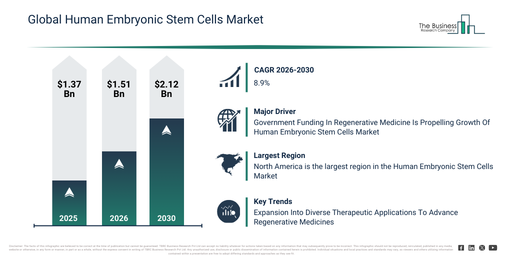
    The human embryonic stem cells market has experienced rapid expansion in recent years. Forecasts indicate that it will increase from $1.37 billion in 2025 to $1.51 billion in 2026, demonstrating a compound annual growth rate (CAGR) of 10.1%. Historically, this growth is linked to factors such as the initial discovery of embryonic stem cell pluripotency, increased funding for stem cell research, the rising prevalence of chronic and degenerative illnesses, the broadening of academic and government-supported research initiatives, and improvements in cell culture and preservation methods.

    The human embryonic stem cells market is projected to experience substantial expansion in the coming years. By 2030, its valuation is anticipated to reach $2.12 billion, advancing at a compound annual growth rate (CAGR) of 8.9%. This projected growth is driven by factors such as an escalating demand for regenerative therapies, a rise in clinical trials utilizing stem cell applications, a heightened emphasis on personalized medicine, the broadening of translational research efforts, and increased financial support for cutting-edge cell-based therapeutics. Key developments expected during this timeframe involve the expanded utilization of hESCs in regenerative medicine investigations, their increasing deployment in disease modeling and drug discovery, a heightened concentration on cell-based treatments for degenerative conditions, the growth of stem cell banking services alongside standardized cell lines, and a reinforced commitment to ethical adherence and regulatory supervision.

    Get A Free Sample Report With In-Depth Market Insights:

    https://thebusinessresearchcompany.com/sample_request?id=80289213&type=smp&name=Human%20Embryonic%20Stem%20Cells%20Market%20Report%202026&utm_source=Blogs&utm_medium=Paid&utm_campaign=Nov_PR

    Human Embryonic Stem Cells Market Demand Drivers: What’s Powering Industry Growth?

    Future expansion of the human embryonic stem cells market is anticipated, driven by government investment in regenerative medicine development. Regenerative medicine constitutes a healthcare sector dedicated to the repair, replacement, or regeneration of compromised tissues or organs to reinstate normal bodily functions. Enhanced governmental financial support for regenerative medicine is observed, attributed to factors including the growing incidence of chronic illnesses, progress in stem cell research, and the promise of new treatments for better patient results. Within regenerative medicine, human embryonic stem cells find application in creating potential therapies aimed at mending or substituting impaired bodily tissues and organs. As an illustration, the Office for National Statistics, a UK government body, indicated in May 2024 that overall healthcare spending grew by 5.6% nominally from 2022 to 2023. This represents a substantial acceleration compared to the 0.9% increase recorded in 2022. Consequently, government investment in advancing regenerative medicine is fueling the expansion of the human embryonic stem cells market.

    Human Embryonic Stem Cells Market Segment Landscape: Which Areas Lead Development?

    The human embryonic stem cells market covered in this report is segmented –

    1) By Cell Category: Human Embryonic Stem Cells, Embryonic Stem Cell Lines, Genetically Modified hESCs

    2) By Product: Regenerative Medicine, Stem Cell Biology Research, Tissue Engineering, Toxicology Testing

    3) By Application: Research, Clinical Trials, Other Applications

    Subsegments:

    1) By Human Embryonic Stem Cells (hESCs): Clinical-Grade hESCs, Research-Grade hESCs, Undifferentiated hESCs

    2) By Embryonic Stem Cell Lines: Registered / Approved hESC Lines, Disease-Specific hESC Lines, Xeno-Free hESC Lines

    3) By Genetically Modified hESCs: Gene-Edited hESCs (CRISPR-based), Reporter hESC Lines, Knock-In / Knock-Out hESCs

    Human Embryonic Stem Cells Market Innovation Trends: What Developments Are Reshaping The Industry?

    Major companies in the human embryonic stem cell market are prioritizing expansion into diverse therapeutic applications, including the use of pluripotent stem cells for Parkinson’s disease treatment, to secure a competitive advantage. For Parkinson’s disease, pluripotent stem cells are employed to generate dopaminergic neurons, with the goal of substituting lost dopamine-producing neurons and restoring motor function. For example, in October 2023, Bayer AG., a Germany-based pharmaceutical and biotechnology company, launched its first Cell Therapy Manufacturing Facility in California, investing $250 million to enable global production of cell and gene therapies. This facility is initially focused on producing BlueRock Therapeutics’ bemdaneprocel, which is derived from pluripotent stem cells (PSC) for Parkinson’s disease. The site incorporates fully electric manufacturing capabilities to address the industry’s need for regenerative medicine manufacturing capacity.

    Human Embryonic Stem Cells Market Industry Leaders And Competitive Landscape

    Major companies operating in the human embryonic stem cells market are Lineage Cell Therapeutics Inc., ViaCyte Inc., Astellas Pharma Inc., Novo Nordisk A/S, Roche Holding AG, Pfizer Inc., Sanofi, Takeda Pharmaceutical Company Limited, Bayer AG, AstraZeneca PLC, Johnson & Johnson, GlaxoSmithKline plc, Regeneron Pharmaceuticals Inc., Vertex Pharmaceuticals Inc., Fate Therapeutics Inc., BlueRock Therapeutics, Cell Cure Neurosciences Ltd., Advanced Cell Technology, ReNeuron Group plc, Neuralstem Inc.

    View The Full Human Embryonic Stem Cells Market Report:

    https://thebusinessresearchcompany.com/report/human-embryonic-stem-cells-global-market-report?utm_source=Blogs&utm_medium=Paid&utm_campaign=Nov_PR

    Human Embryonic Stem Cells Market Regional Analysis And Top Geography

    North America was the largest region in the human embryonic stem cells market in 2025. Asia-Pacific is expected to be the fastest-growing region in the forecast period. The regions covered in the human embryonic stem cells market report are Asia-Pacific, South East Asia, Western Europe, Eastern Europe, North America, South America, Middle East, Africa.

    Reach Out To Our Team:

    The Business Research Company: https://www.thebusinessresearchcompany.com/

    Americas: +1 310-496-7795

    Asia: +44 7882 955267 & +91 8897263534

    Europe: +44 7882 955267

    Email us at: marketing@tbrc.info

    Follow us on:

    LinkedIn: https://in.linkedin.com/company/the-business-research-company

    YouTube: https://www.youtube.com/channel/UC24_fI0rV8cR5DxlCpgmyFQ

    Global Market Model: https://www.thebusinessresearchcompany.com/global-market-model
  • Human Chorionic Gonadotropin Market Size And Growth In 2026: Key Factors Shaping Future Demand

    Human Chorionic Gonadotropin Market Size And Growth In 2026: Key Factors Shaping Future Demand

    Backed by market attractiveness analysis, total addressable market sizing, company benchmarking matrices, interactive Excel dashboards, wider supply chain intelligence, emerging startup coverage, and detailed product-level insights, The Business Research Company’s 2026 market reports are designed to offer research that is more actionable and strategically valuable than ever.

    Human Chorionic Gonadotropin Market Forecast: Value Set To Climb From $1.11 Billion To $1.52 Billion

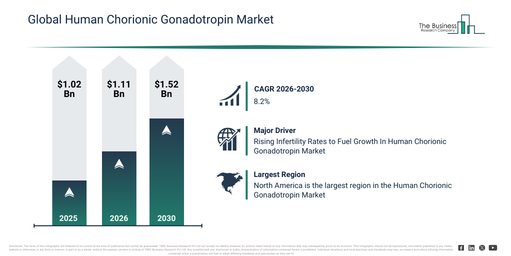
    The human chorionic gonadotropin market size has shown significant growth in recent years. It is anticipated to increase from $1.02 billion in 2025 to $1.11 billion in 2026, achieving a compound annual growth rate (CAGR) of 8.3%. The expansion observed in the past can be linked to the rising occurrence of infertility, an increase in fertility clinics globally, the established clinical application of hCG in reproductive medicine, enhanced understanding of treatments for hormonal imbalances, and the presence of hCG products derived from natural sources.

    The human chorionic gonadotropin market is projected to experience robust expansion over the coming years, anticipated to reach $1.52 billion by 2030, demonstrating a compound annual growth rate (CAGR) of 8.2%. This growth during the forecast period can be attributed to several factors, including the increasing demand for assisted reproductive technologies, greater adoption of recombinant hormones, an expanding emphasis on precision fertility treatments, the widening reach of online and retail pharmacy distribution, and heightened investment in reproductive health research. Furthermore, key trends expected throughout the forecast period involve the expanded utilization of hCG in assisted reproductive treatments, a surge in demand for hormonal therapies to manage infertility, the growing acceptance of recombinant hCG products, the broadening of hCG applications for male hormonal disorders, and an enhanced focus on developing standardized and high-purity hormone formulations.

    Get A Free Sample Report With In-Depth Market Insights:

    https://thebusinessresearchcompany.com/sample_request?id=20799294&type=smp&name=Human%20Chorionic%20Gonadotropin%20Market%20Report%202026&utm_source=Blogs&utm_medium=Paid&utm_campaign=Nov_PR

    Human Chorionic Gonadotropin Market Growth Drivers: What’s Behind The Acceleration?

    The rising prevalence of infertility is anticipated to propel the expansion of the human chorionic gonadotropin market in the future. Infertility is defined as the inability to achieve pregnancy after a minimum of one year of regular, unprotected sexual activity. This rate is escalating as more individuals and couples encounter challenges in conception, attributed to factors such as postponing parenthood, shifts in lifestyle, exposure to environmental elements, and underlying health issues. Human chorionic gonadotropin (hCG) serves as a treatment for infertility, aiding in stimulating ovulation in women and boosting testosterone production in men, thereby promoting egg release and enhancing fertility results. For example, data from April 2023 by the World Health Organization, a Switzerland-based intergovernmental body, indicated that approximately 17.5% of the global adult population, or about one in six individuals, were impacted by infertility, underscoring the vital demand for more affordable and quality fertility services. Consequently, the increasing rate of infertility is a key factor boosting the growth of the human chorionic gonadotropin market. The expanding elderly demographic is projected to stimulate the growth of the human chorionic gonadotropin market in the coming years. An aging population signifies a societal trend where the proportion of older people increases, primarily due to longer life expectancies and decreased birth rates. This demographic shift is accelerating because healthcare improvements have led to extended lifespans. Human chorionic gonadotropin (hCG) is utilized by older adults to aid in balancing hormones and sustaining testosterone levels. For instance, the Population Reference Bureau, a US-based non-profit, stated in January 2024 that the population of Americans aged 65 and above is projected to climb from 58 million in 2022 to 82 million by 2050, representing a 47% increase. Consequently, this age bracket’s share of the total U.S. population will expand from 17% to 23% within this timeframe. Thus, the increasing aging population is a significant factor propelling the expansion of the human chorionic gonadotropin market.

    Human Chorionic Gonadotropin Market Segments: Where Is Growth Concentrated?

    The human chorionic gonadotropin market covered in this report is segmented –

    1) By Technology: Natural Source Extraction, Recombinant Technology

    2) By Therapeutic Area: Female Infertility Treatment, Oligospermic Treatment, Male Hypogonadism, Other Therapeutic Areas

    3) By Distribution Channel: Hospital Pharmacies, Retail Pharmacies, Online Pharmacies

    4) By End User: Fertility Clinics, Research Institutions, Other End Users

    Subsegments:

    1) By Natural Source Extraction: Extraction From Pregnant Women’s Urine, Purified Urinary hCG (u-hCG) Formulations

    2) By Recombinant Technology: Recombinant Hcg, Recombinant Hcg For Therapeutic Use, Recombinant Hcg For Diagnostic Applications

    Human Chorionic Gonadotropin Market Key Participants And Competitive Landscape

    Major companies operating in the human chorionic gonadotropin market are Ferring Pharmaceuticals, Merck KGaA, Organon, IBSA Institut Biochimique, Teva Pharmaceutical Industries, Sandoz, Sun Pharmaceutical Industries, Cipla, Zydus Lifesciences, Lupin, Intas Pharmaceuticals, Hikma Pharmaceuticals, Aspen Pharmacare, Menarini Group, Bharat Serums and Vaccines, Serum Institute of India, LG Chem Life Sciences, Dong-A ST, Livzon Pharmaceutical Group, SciGen

    View The Full Human Chorionic Gonadotropin Market Report:

    https://thebusinessresearchcompany.com/report/human-chorionic-gonadotropin-global-market-report?utm_source=Blogs&utm_medium=Paid&utm_campaign=Nov_PR

    Human Chorionic Gonadotropin Market Geographic Analysis: Where Is Demand Rising Fastest?

    North America was the largest region in the human chorionic gonadotropin market in 2025. Asia-Pacific is expected to be the fastest-growing region in the forecast period. The regions covered in the human chorionic gonadotropin market report are Asia-Pacific, South East Asia, Western Europe, Eastern Europe, North America, South America, Middle East, Africa.

    Reach Out To Our Team:

    The Business Research Company: https://www.thebusinessresearchcompany.com/

    Americas: +1 310-496-7795

    Asia: +44 7882 955267 & +91 8897263534

    Europe: +44 7882 955267

    Email us at: marketing@tbrc.info

    Follow us on:

    LinkedIn: https://in.linkedin.com/company/the-business-research-company

    YouTube: https://www.youtube.com/channel/UC24_fI0rV8cR5DxlCpgmyFQ

    Global Market Model: https://www.thebusinessresearchcompany.com/global-market-model
  • Hospitals And Outpatient Care Centers Market Forecast 2026–2030: Market Size, Trends And Growth Opportunities

    Hospitals And Outpatient Care Centers Market Forecast 2026–2030: Market Size, Trends And Growth Opportunities

    Featuring market attractiveness scoring, total addressable market sizing, company benchmarking matrices, interactive Excel dashboards, deeper supply chain intelligence, emerging startup tracking, and granular product-level insights, The Business Research Company’s 2026 market reports are built to deliver research that is both more actionable and more strategically valuable.

    Hospitals And Outpatient Care Centers Market Revenue Growth On Track For A 4.3% CAGR Through 2030

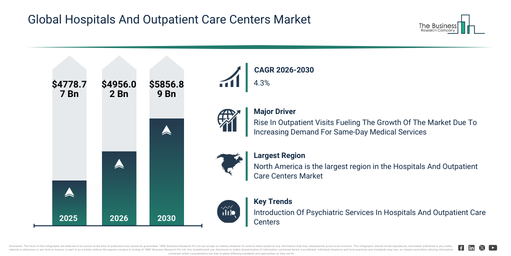
    The size of the hospitals and outpatient care centers market has experienced steady expansion in recent years. It is expected to grow from $4778.77 billion in 2025 to $4956.02 billion in 2026, achieving a compound annual growth rate (CAGR) of 3.7%. The historical progression can be linked to factors including rising healthcare costs, an increasing preference for non-residential treatment, the expansion of dialysis and ambulatory care services, a growing burden on hospital inpatient capacity, and improvements in minimally invasive procedures.

    The hospitals and outpatient care centers market size is anticipated to experience consistent expansion over the upcoming years. By 2030, this market is projected to reach $5856.89 billion, expanding at a compound annual growth rate (CAGR) of 4.3%. This projected growth is driven by several factors, including the wider adoption of outpatient treatment pathways, increased investments in specialty clinics, a rising need for easily accessible healthcare services, a broadening of private healthcare spending, and a greater emphasis on shortening hospital stays. Key trends expected during this period involve a growing transition from inpatient to outpatient care models, an increased demand for same-day and short-stay medical procedures, the continuous development of specialized outpatient centers, an intensified focus on delivering cost-effective care, and the extension of preventive and diagnostic services beyond traditional hospital settings.

    Get A Free Sample Report With In-Depth Market Insights:

    https://thebusinessresearchcompany.com/sample_request?id=35581177&type=smp&name=Hospitals%20And%20Outpatient%20Care%20Centers%20Market%20Report%202026&utm_source=Blogs&utm_medium=Paid&utm_campaign=Nov_PR

    Hospitals And Outpatient Care Centers Market Growth Factors Behind Sustained Expansion

    The increasing volume of outpatient appointments is anticipated to drive the expansion of the hospitals and outpatient care centers market going forward. Outpatient care encompasses medical or health services rendered to individuals who do not necessitate an overnight stay in a hospital or medical facility. This type of care typically involves consultations, diagnostic tests, treatments, and minor procedures that can be finished in one day, enabling patients to return home the same day. Hospitals and outpatient care centers are crucial for providing specialized medical services to outpatients, ensuring prompt diagnosis, effective treatment, and ongoing support, which improves healthcare accessibility and patient well-being. As an illustration, in September 2024, the National Health Service (NHS), a UK-based government department, stated that outpatient appointments in 2023–24 totaled 135.4 million, representing an 8.8% increase compared to the prior year. Consequently, the rising frequency of outpatient visits is fueling the expansion of the hospitals and outpatient care centers market.

    Hospitals And Outpatient Care Centers Market Segment Analysis: What Are The Core Market Categories?

    The hospitals and outpatient care centers market covered in this report is segmented –

    1) By Type: Hospitals, Outpatient Care Centers

    2) By Type of Expenditure: Public, Private

    3) By End User Gender: Male, Female

    Subsegments:

    1) By Hospitals: Public Hospitals, Private Hospitals, Specialty Hospitals (Cardiac, Orthopedic, Maternity), Teaching Hospitals, General Hospitals

    2) By Outpatient Care Centers: Ambulatory Surgical Centers (ASCs), Dialysis Centers, Urgent Care Centers, Diagnostic Laboratories, Specialty Clinics (Dermatology, Ophthalmology)

    Hospitals And Outpatient Care Centers Market Industry Trends Fueling Future Revenue Growth

    Leading enterprises within the hospitals and outpatient care centers market are concentrating on introducing inventive services, such as psychiatric care, to secure a competitive advantage. Psychiatric services constitute a healthcare domain dedicated to the identification, therapy, and oversight of mental and emotional health conditions. For example, in October 2023, Nutex Health Inc., a US-based company specializing in healthcare management and operations, rolled out new psychiatric services at hospitals across Texas. This service provides specialized care for both adult and adolescent patients presenting with acute psychiatric needs in the emergency room, through collaboration with psychiatric providers. Patients undergo a psychiatric evaluation in the emergency room, and a tailored treatment plan is then furnished, which can include psychiatric interventions performed in the emergency room if deemed necessary.

    Hospitals And Outpatient Care Centers Market Top Companies Driving Competitive Growth

    Major companies operating in the hospitals and outpatient care centers market are HCA Healthcare, Tenet Healthcare, Community Health Systems, Universal Health Services, Ascension, CommonSpirit Health, Trinity Health, Mayo Clinic, Cleveland Clinic, Johns Hopkins Health System, Kaiser Permanente, Ramsay Health Care, Spire Healthcare, Apollo Hospitals Enterprise, Fortis Healthcare, Max Healthcare Institute, IHH Healthcare, Mediclinic International, Narayana Health, Fresenius Medical Care

    View The Full Hospitals And Outpatient Care Centers Market Report:

    https://thebusinessresearchcompany.com/report/Hospitals-And-Outpatient-Care-Centers-Global-Market-Report?utm_source=Blogs&utm_medium=Paid&utm_campaign=Nov_PR

    Hospitals And Outpatient Care Centers Market Global Footprint: Which Region Leads The Market?

    North America was the largest region in the hospitals and outpatient care centers market in 2025. Asia-Pacific was the second largest region in the hospitals and outpatient care centers market. The regions covered in the hospitals and outpatient care centers market report are Asia-Pacific, South East Asia, Western Europe, Eastern Europe, North America, South America, Middle East, Africa.

    Reach Out To Our Team:

    The Business Research Company: https://www.thebusinessresearchcompany.com/

    Americas: +1 310-496-7795

    Asia: +44 7882 955267 & +91 8897263534

    Europe: +44 7882 955267

    Email us at: marketing@tbrc.info

    Follow us on:

    LinkedIn: https://in.linkedin.com/company/the-business-research-company

    YouTube: https://www.youtube.com/channel/UC24_fI0rV8cR5DxlCpgmyFQ

    Global Market Model: https://www.thebusinessresearchcompany.com/global-market-model
  • Hospital-Acquired Infection Control Market Size Reaches $37.7 Billion In 2026: What Is Driving Growth?

    Hospital-Acquired Infection Control Market Size Reaches $37.7 Billion In 2026: What Is Driving Growth?

    Built to provide research that’s more actionable and strategically valuable, The Business Research Company’s 2026 market reports include market attractiveness analysis, total addressable market sizing, company benchmarking matrices, interactive Excel dashboards, broader supply chain intelligence, emerging startup tracking, and in-depth product insights.

    Hospital-Acquired Infection Control Market Value Growth And Long-Term Outlook

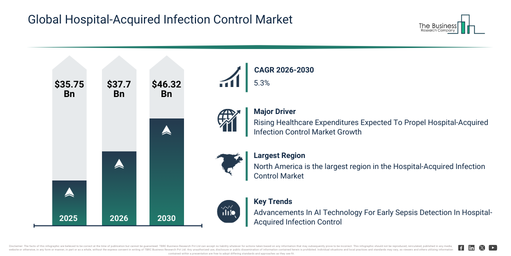
    The hospital-acquired infection control market has demonstrated robust growth in recent years. This market is projected to expand from $35.75 billion in 2025 to $37.7 billion in 2026, achieving a compound annual growth rate (CAGR) of 5.4%. Historically, this expansion has been influenced by factors such as a rising incidence of hospital-acquired infections, increased utilization of invasive medical procedures, growing awareness of patient safety standards, the enlargement of intensive care units, and the implementation of stricter hospital hygiene regulations.

    The hospital-acquired infection control market is anticipated to experience substantial expansion over the upcoming years. Its valuation is projected to reach $46.32 billion by 2030, demonstrating a compound annual growth rate (CAGR) of 5.3%. This expansion during the forecast timeframe is attributable to heightened regulatory enforcement concerning infection control, the increasing integration of automated sterilization techniques, an escalating need for swift microbial testing, the broadening of surveillance and reporting frameworks, and augmented investments in hospital infection prevention infrastructure. Key trends anticipated for this period encompass a heightened focus on averting cross-contamination within medical facilities, the greater uptake of sophisticated sterilization and disinfection protocols, an intensified commitment to ongoing infection surveillance, the proliferation of automated and high-level disinfection offerings, and a rising requirement for all-encompassing infection prevention initiatives.

    Get A Free Sample Report With In-Depth Market Insights:

    https://thebusinessresearchcompany.com/sample_request?id=23841776&type=smp&name=Hospital-Acquired%20Infection%20Control%20Market%20Report%202026&utm_source=Blogs&utm_medium=Paid&utm_campaign=Nov_PR

    Hospital-Acquired Infection Control Market Demand Drivers Opening New Revenue Streams

    Rising healthcare expenditures are anticipated to propel the growth of the hospital-acquired infection control market. This expenditure refers to the total amount dedicated to healthcare-related services, products, and activities within a specific period, applicable at individual, community, national, or global levels. As healthcare spending increases, hospitals and healthcare facilities are likely to allocate more resources towards adopting advanced infection prevention technologies, including innovative solutions such as sophisticated disinfection systems, smart monitoring devices, and other methods to enhance overall infection control. For instance, data from the UK’s Office for National Statistics in May 2024 indicated that total healthcare expenditure in nominal terms rose by 5.6% between 2022 and 2023, a considerable increase compared to the 0.9% growth seen in 2022. Therefore, continued growth in healthcare expenditure will further drive the expansion of the hospital-acquired infection control market.

    Hospital-Acquired Infection Control Market Segment Breakdown: Which Categories Lead On Revenue?

    The hospital-acquired infection control market covered in this report is segmented –

    1) By Product: Sterilizers, Disinfectors, Endoscope Reprocessors, Microbial Testing Instruments, Consumables, Disinfectants, Infection Prevention And Surveillance Software, Other Products

    2) By Technology: Phenotypic Methods, Genotypic Methods

    3) By Diseases: Hospital Acquired Pneumonia, Bloodstream Infections, Surgical Site Infections, Gastrointestinal Infections, Urinary Tract Infection, Other Diseases

    4) By Application: Disease Testing, Drug-Resistance Testing

    5) By End User: Hospitals, ICUs, Ambulatory Surgical, Diagnostic Centers, Nursing Homes, Maternity Centers, Other End Users

    Subsegments:

    1) By Sterilizers: Steam Sterilizers, Ethylene Oxide Sterilizers, Hydrogen Peroxide Sterilizers

    2) By Disinfectors: Washer Disinfectors, Automated Disinfectors

    3) By Endoscope Reprocessors: High-Level Disinfection Reprocessors, Automated Endoscope Reprocessors

    4) By Microbial Testing Instruments: Culture Systems, Rapid Microbial Testing Systems

    5) By Consumables: Sterilization Wraps, Filters, Personal Protective Equipment (PPE)

    6) By Disinfectants: Alcohol-based Disinfectants, Chlorine-based Disinfectants, Quaternary Ammonium Compounds

    7) By Infection Prevention And Surveillance Software: Surveillance Software Solutions, Data Management Software

    8) By Other Products: Cleaning Equipment, Air Purification Systems

    Hospital-Acquired Infection Control Market Trends Powering Strategic Industry Growth

    Major companies operating in the hospital-acquired infection control market are concentrating on developing novel technological solutions, including AI systems, to assist in the early identification of sepsis. This effort aims to improve patient outcomes by facilitating rapid diagnosis and treatment. An AI system designed to identify sepsis utilizes advanced technological solutions that employ artificial intelligence and machine learning algorithms to detect the initial signs of sepsis in patients. For instance, in April 2024, Prenosis Inc., a US-based medical clinic, secured FDA marketing authorization for its Sepsis ImmunoScore. This represents the first AI-driven system specifically developed to predict sepsis, a life-threatening condition capable of leading to severe complications. This innovative tool enhances early detection through real-time data analysis, enabling healthcare professionals to intervene more swiftly and effectively. The integration of AI is intended to support, rather than replace, medical staff in their decision-making, ultimately leading to improved patient outcomes and reduced healthcare costs.

    Hospital-Acquired Infection Control Market Leading Players And Competitive Positioning

    Major companies operating in the hospital-acquired infection control market are Johnson and Johnson, P&G Professional, Honeywell International Inc., MMM Group, 3M Company, Becton Dickinson and Company, Reckitt Benckiser Group plc., Ecolab Inc, Olympus Corporation, Miele Group, Biomerieux SA, Getinge AB, Halyard Health Inc., Ansell Limited, Sotera Health LLC, Contec Inc., Cantel Medical Corp., Belimed AG, Nanosonics Limited, Advanced Sterilization Products Services Inc, Steelco S.P.A, Schülke & Mayr GmbH, Metrex Research LLC, Tristel Solutions Ltd., Whiteley Corporation, PDI Inc., Steris Healthcare PVT Ltd, Matachana Group, Pal International Ltd., Xttrium Laboratories Inc., Zep Inc.

    View The Full Hospital-Acquired Infection Control Market Report:

    https://thebusinessresearchcompany.com/report/hospital-acquired-infection-control-global-market-report?utm_source=Blogs&utm_medium=Paid&utm_campaign=Nov_PR

    Hospital-Acquired Infection Control Market Regional Split: Which Areas Are Fueling Growth?

    North America was the largest region in the hospital-acquired infection control market in 2025. Asia-Pacific is expected to be the fastest-growing region in the forecast period. The regions covered in the hospital-acquired infection control market report are Asia-Pacific, South East Asia, Western Europe, Eastern Europe, North America, South America, Middle East, Africa.

    Reach Out To Our Team:

    The Business Research Company: https://www.thebusinessresearchcompany.com/

    Americas: +1 310-496-7795

    Asia: +44 7882 955267 & +91 8897263534

    Europe: +44 7882 955267

    Email us at: marketing@tbrc.info

    Follow us on:

    LinkedIn: https://in.linkedin.com/company/the-business-research-company

    YouTube: https://www.youtube.com/channel/UC24_fI0rV8cR5DxlCpgmyFQ

    Global Market Model: https://www.thebusinessresearchcompany.com/global-market-model
  • Hospital Robots Market Valued At $4.6 Billion In 2026: Key Trends And Growth Drivers

    Hospital Robots Market Valued At $4.6 Billion In 2026: Key Trends And Growth Drivers

    Backed by market attractiveness analysis, total addressable market sizing, company benchmarking matrices, interactive Excel dashboards, wider supply chain intelligence, emerging startup coverage, and detailed product-level insights, The Business Research Company’s 2026 market reports are designed to offer research that is more actionable and strategically valuable than ever.

    Hospital Robots Market Poised To Hit $4.6 Billion By 2030 With A 15.5% CAGR

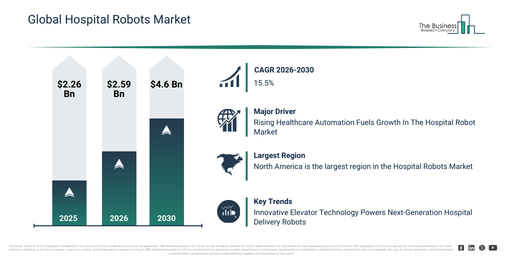
    The hospital robots market size has experienced swift expansion in recent years. This market is projected to grow from $2.26 billion in 2025 to $2.59 billion in 2026, achieving a compound annual growth rate (CAGR) of 14.3%. The growth observed in the historic period can be attributed to the shortage of healthcare staff, increasing surgical procedure volumes, the rising need for infection control in hospitals, the early adoption of robotic-assisted surgery, and the growing demand for automation in pharmacies and labs.

    The hospital robots market is projected to experience significant growth in the coming years. It is anticipated to reach $4.6 billion by 2030, demonstrating a compound annual growth rate (CAGR) of 15.5%. This expansion during the forecast period can be linked to greater investments in smart hospital facilities, an increasing need for contactless healthcare options, the broader use of minimally invasive surgical techniques, a heightened emphasis on operational efficiency and personnel safety, and ongoing progress in autonomous and intelligent robotic systems. Key developments anticipated during this time include a greater deployment of robots for non-clinical duties within hospitals, a rise in the use of robotic assistance for surgeries and rehabilitation, an expanding application of robots for infection control and disinfection, the growth of automation in pharmacies and laboratories, and a stronger focus on enhancing the workforce and ensuring safety.

    Get A Free Sample Report With In-Depth Market Insights:

    https://thebusinessresearchcompany.com/sample_request?id=17302772&type=smp&name=Hospital%20Robots%20Market%20Report%202026&utm_source=Blogs&utm_medium=Paid&utm_campaign=Nov_PR

    Hospital Robots Market Growth Backed By Core Demand Fundamentals

    The hospital robot market is expected to experience growth, propelled by the rising prevalence of healthcare automation. This refers to the application of technology and software to streamline and optimize various procedures within the healthcare industry. Hospital robots are utilized in healthcare automation to support surgeons during minimally invasive operations in operating rooms. As an illustration, in September 2024, the World Economic Forum, a Switzerland-based international non-governmental organization, forecast that the robotic-assisted surgery market is set for substantial expansion, reaching over $14 billion by 2026, an increase from just over $10 billion in 2023. Therefore, the growth of the hospital robot market is being driven by increasing healthcare automation.

    Hospital Robots Market Segmentation: How Does The Market Break Down By Category?

    The hospital robots market covered in this report is segmented –

    1) By Product Type: Autonomous Mobile Robots, Disinfecting or Sterilization Robots, Laboratory Robots, Pharmacy Robots

    2) By Deployment: Laparoscopy, Pharmacy Applications, Orthopedic Surgery, Physical Rehabilitation, Neurosurgery

    3) By End User: Hospitals, Ambulatory Surgery Centers, Rehabilitation Centers

    Subsegments:

    1) By Autonomous Mobile Robots: Patient Transport Robots, Supply Delivery Robots, Waste Management Robots

    2) By Disinfecting Or Sterilization Robots: UV Light Sterilization Robots, Hydrogen Peroxide Sterilization Robots, Ozone Sterilization Robots

    3) By Laboratory Robots: Sample Handling Robots, Specimen Transport Robots, Lab Automation Robots

    4) By Pharmacy Robots: Medication Dispensing Robots, Prescription Filling Robots, Inventory Management Robots

    Hospital Robots Market Growth Trends Reshaping The Competitive Landscape

    Leading companies in the hospital robot market are intensifying their efforts to introduce hospital delivery robots equipped with elevator technology, aiming to maximize their revenues in the market. Elevator technology serves as a solution integrated into hospital robots, enabling them to navigate between floors efficiently and quickly. For instance, in June 2023, Relay Robotics Inc., a US-based robotics solutions company, launched RelayRx for healthcare. RelayRx is a hospital delivery robot developed to address the nursing shortage. These robots assist in transporting hospital supplies such as test specimens, drugs, and equipment, ensuring secure movement through busy hospital environments with enhanced navigational capabilities and chain-of-custody security features. It can move freely throughout a hospital, connecting areas like the pharmacy and blood bank with patient rooms in an average of seven minutes, utilizing Relay’s proprietary elevator technology.

    Hospital Robots Market Competitive Overview And Top Companies

    Major companies operating in the hospital robots market are Intuitive Surgical Inc, Medtronic Plc, Johnson and Johnson, Stryker Corporation, Siemens Healthineers, ABB Group, KUKA AG, Aethon Inc, Omnicell Inc, Blue Ocean Robotics, SoftBank Robotics, PAL Robotics, Cyberdyne Inc, Stereotaxis Inc, Medrobotics Corporation, Renishaw Plc, Yujin Robot Co Ltd, Globus Medical Inc, Accuray Incorporated, Brainlab AG, Hocoma AG, ReWalk Robotics Ltd, Smith and Nephew

    View The Full Hospital Robots Market Report:

    https://thebusinessresearchcompany.com/report/hospital-robots-global-market-report?utm_source=Blogs&utm_medium=Paid&utm_campaign=Nov_PR

    Hospital Robots Market Top Region: Where Does Most Revenue Come From?

    North America was the largest region in the hospital robots market in 2025. The regions covered in the hospital robots market report are Asia-Pacific, South East Asia, Western Europe, Eastern Europe, North America, South America, Middle East, Africa.

    Reach Out To Our Team:

    The Business Research Company: https://www.thebusinessresearchcompany.com/

    Americas: +1 310-496-7795

    Asia: +44 7882 955267 & +91 8897263534

    Europe: +44 7882 955267

    Email us at: marketing@tbrc.info

    Follow us on:

    LinkedIn: https://in.linkedin.com/company/the-business-research-company

    YouTube: https://www.youtube.com/channel/UC24_fI0rV8cR5DxlCpgmyFQ

    Global Market Model: https://www.thebusinessresearchcompany.com/global-market-model
  • Hospital Outsourcing Market Size In 2026: Growth Outlook And Forecast Through 2030

    Hospital Outsourcing Market Size In 2026: Growth Outlook And Forecast Through 2030

    Featuring market attractiveness scoring, total addressable market sizing, company benchmarking matrices, interactive Excel dashboards, deeper supply chain intelligence, emerging startup tracking, and granular product-level insights, The Business Research Company’s 2026 market reports are built to deliver research that is both more actionable and more strategically valuable.

    Hospital Outsourcing Market Size And Revenue Outlook Through 2030

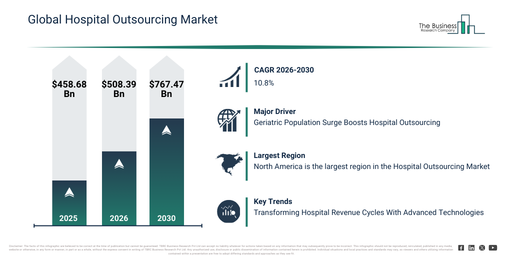
    The hospital outsourcing market size has expanded significantly in recent years. It is anticipated to increase from $458.68 billion in 2025 to $508.39 billion in 2026, demonstrating a compound annual growth rate (CAGR) of 10.8%. This market’s historical growth can be attributed to rising hospital operational costs, a shortage of skilled in-house staff, the increasing complexity of hospital operations, the expansion of private healthcare facilities, and the early adoption of outsourced support services.

    The hospital outsourcing market is projected to experience substantial expansion in the coming years. This market is set to reach $767.47 billion by 2030, demonstrating a compound annual growth rate (CAGR) of 10.8%. This anticipated growth is driven by several factors, including the escalating need to enhance hospital profitability, the increasing requirement for specialized healthcare IT and clinical services, the expansion of extensive hospital networks, a heightened emphasis on service quality and regulatory compliance, and a growing acceptance of enduring outsourcing collaborations. Key trends anticipated during this period involve a rise in outsourcing non-core hospital functions, an increased need for specialized external service providers, a greater emphasis on optimizing costs and operational efficiency, the broadening of end-to-end managed service agreements, and a preference for adaptable and scalable service frameworks.

    Get A Free Sample Report With In-Depth Market Insights:

    https://thebusinessresearchcompany.com/sample_request?id=52749682&type=smp&name=Hospital%20Outsourcing%20Market%20Report%202026&utm_source=Blogs&utm_medium=Paid&utm_campaign=Nov_PR

    Hospital Outsourcing Market Growth Catalysts And Demand Drivers

    The escalating growth of the geriatric population is projected to fuel the expansion of the hospital outsourcing market in the foreseeable future. The geriatric population refers to the elderly or senior citizen demographic group within a population. Hospital outsourcing enhances healthcare for the elderly by delivering specialized care, utilizing technology for remote services, improving documentation, and providing cost-effective solutions to address the unique challenges faced by older adults. For instance, in January 2024, according to a report published by the US-based Pew Research Center Organization, in 2024 it was 0.2% and the geriatric population is increasing by 0.5% in 2054. Therefore, rising growth in geriatric population is driving the growth of the hospital outsourcing market.

    Hospital Outsourcing Market Segment Trends And Revenue Contributors

    The hospital outsourcing market covered in this report is segmented –

    1) By Hospital Type: Private, Public

    2) By Hospital Size: Small And Medium Hospitals, Large Hospitals

    3) By Services: Healthcare IT, Clinical Services, Business Services, Transportation Services, Other Services

    4) By End-Users: Nursing Homes And Assisted Living, Specialty Hospitals, General Medical And Surgical Hospitals, Emergency And Other Outpatient Care Centers, Other End Users

    Subsegments:

    1) By Private: For-profit Hospitals, Non-profit Hospitals

    2) By Public: Government Hospitals, Community Hospitals

    Hospital Outsourcing Market Trends Shaping Long-Term Demand

    Leading companies in the hospital outsourcing market are innovating advanced technologies, including digital platforms, to enhance revenue cycle performance, thereby increasing their market profitability. A digital platform is a technology-driven solution crafted to streamline and optimize various administrative and financial operations within healthcare organizations. For example, in October 2023, Omega Healthcare, a US-based healthcare services provider, unveiled the Omega Digital Platform. This platform incorporates AI, RPA, ML, bots, and NLP. Omega Healthcare’s solutions improve efficiency in revenue cycle tasks, minimizing human involvement and reallocating resources. The objective is to achieve outcomes such as reducing coding costs with over 95% accuracy and decreasing accounts receivable days, ultimately optimizing revenue for providers, payers, pharma, and clinical research organizations. Omega’s proprietary technology and analytics aim to boost efficiencies, cut costs, expedite cash flow, and enhance financial outcomes.

    Hospital Outsourcing Market Competitive Landscape: Which Companies Lead The Industry?

    Major companies operating in the hospital outsourcing market are Sodexo S.A., Aramark Corporation, ABM Industries Incorporated, Cerner Corporation, AllScripts Healthcare Solutions Inc., Steris Plc, Getinge AB, Sotera Health LLC, Sterigenics International LLC, TriMedx LLC, LogistiCare Solutions LLC, Integrated Medical Transport Inc., Flatworld Solutions, MMM Group, Belimed AG, Matachana Group, Schülke & Mayr GmbH, 3M Company, Becton Dickinson and Company, Honeywell International Inc., Fortive Corporation, Ansell Limited, Pal International Ltd., PDI Inc., Reckitt Benckiser Group plc, bioMérieux S.A., Alere Inc., Cantel Medical, Halyard Health Inc.

    View The Full Hospital Outsourcing Market Report:

    https://thebusinessresearchcompany.com/report/hospital-outsourcing-global-market-report?utm_source=Blogs&utm_medium=Paid&utm_campaign=Nov_PR

    Hospital Outsourcing Market Regional Breakdown: Where Is Demand Concentrated?

    North America was the largest region in the hospital outsourcing market in 2025. The regions covered in the hospital outsourcing market report are Asia-Pacific, South East Asia, Western Europe, Eastern Europe, North America, South America, Middle East, Africa.

    Reach Out To Our Team:

    The Business Research Company: https://www.thebusinessresearchcompany.com/

    Americas: +1 310-496-7795

    Asia: +44 7882 955267 & +91 8897263534

    Europe: +44 7882 955267

    Email us at: marketing@tbrc.info

    Follow us on:

    LinkedIn: https://in.linkedin.com/company/the-business-research-company

    YouTube: https://www.youtube.com/channel/UC24_fI0rV8cR5DxlCpgmyFQ

    Global Market Model: https://www.thebusinessresearchcompany.com/global-market-model
  • Hospital Logistics Robots Market Trends Supporting 18.5% CAGR Growth Through 2030

    Hospital Logistics Robots Market Trends Supporting 18.5% CAGR Growth Through 2030

    Built to provide research that’s more actionable and strategically valuable, The Business Research Company’s 2026 market reports include market attractiveness analysis, total addressable market sizing, company benchmarking matrices, interactive Excel dashboards, broader supply chain intelligence, emerging startup tracking, and in-depth product insights.

    Hospital Logistics Robots Market Value Analysis: What Growth Lies Ahead Over The Forecast Period?

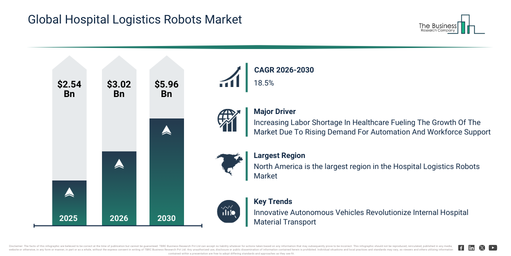
    The hospital logistics robots market has experienced significant expansion recently. It is forecast to rise from $2.54 billion in 2025 to $3.02 billion in 2026, demonstrating a compound annual growth rate (CAGR) of 18.9%. Historically, this growth can be attributed to increasing hospital workload pressures, rising labor shortages in healthcare facilities, the expansion of large multi-specialty hospitals, a growing focus on operational efficiency, and the increased adoption of automated material handling solutions.

    The hospital logistics robots market is projected for substantial expansion over the upcoming years. By 2030, this market is anticipated to reach $5.96 billion, exhibiting a compound annual growth rate (CAGR) of 18.5%. Factors driving this growth during the forecast period include greater investments in intelligent hospital infrastructure, the increasing integration of AI-enabled navigation systems, the broadening application of robotics in pharmacy and laboratory operations, a rising need for contamination-free logistical solutions, and the expanded deployment of real-time asset tracking. Key trends anticipated for this period encompass the wider implementation of autonomous supply transport robots, a growing reliance on contactless internal logistics systems, deeper integration with hospital information systems, the proliferation of multi-task robotic platforms, and a heightened emphasis on automating infection control.

    Get A Free Sample Report With In-Depth Market Insights:

    https://thebusinessresearchcompany.com/sample_request?id=11974727&type=smp&name=Hospital%20Logistics%20Robots%20Market%20Report%202026&utm_source=Blogs&utm_medium=Paid&utm_campaign=Nov_PR

    Hospital Logistics Robots Market Demand Drivers: What’s Powering Industry Growth?

    The escalating scarcity of healthcare professionals is anticipated to fuel the expansion of the hospital logistics robots market in the future. A healthcare labor shortage occurs when the need for skilled workers surpasses the available supply, resulting in staffing deficiencies that impact the provision of medical services. This shortage is intensifying, primarily due to the retirement of seasoned personnel, which contributes to a substantial depletion of experienced individuals within the sector. Hospital logistics robots offer a solution to these labor shortfalls by automating routine responsibilities, enabling staff to prioritize essential patient care and enhance overall operational effectiveness. For example, in February 2023, a report from the American Hospital Association (AHA), a United States-based healthcare organization, highlighted that as of early 2023, Department of Health and Human Services (HHS) data showed 623 hospitals, or 16.7% of those surveyed, anticipated a severe staffing crisis. Consequently, the growing deficits in healthcare staffing are a key impetus behind the advancement of the hospital logistics robots market.

    Hospital Logistics Robots Market Segment Performance And Emerging Opportunities

    The hospital logistics robots market covered in this report is segmented –

    1) By Type: Autonomous Guided Vehicles, Mobile Robot Platforms

    2) By Component: Sensors, Actuators, Controllers, Power Supply, Navigation Systems

    3) By Technology: Artificial Intelligence And Machine Vision, Autonomous Navigation And SLAM, Fleet Management Software, IoT And Connectivity Technologies

    4) By Application: Food Delivery, Laboratory, Laundry Delivery, Pharmacy, Sterile Goods Or Surgical Supplies Delivery, Waste Transportation

    5) By End-User: Hospitals, Ambulatory Surgical Centers, Rehabilitation Centers, Research Institutes, Other End Users

    Subsegments:

    1) By Autonomous Guided Vehicles: Automated Delivery Robots, Disinfection Robots, Patient Transport Robots, Inventory Management Robots, Medication Dispensing Robots

    2) By Mobile Robot Platforms: Automated Guided Vehicles, Autonomous Mobile Robots, Service Robots, Inspection Robots, Delivery Robots

    Hospital Logistics Robots Market Innovation Trends Shaping Future Development

    Leading companies in the hospital logistics robots market are concentrating on creating cutting-edge products, like autonomous guided vehicles (AGVs), to boost automated material movement and enhance operational effectiveness in healthcare settings. Autonomous guided vehicles are robots that operate independently, designed to move materials within hospitals securely and effectively without requiring human input. As an illustration, in June 2023, EK Robotics GmbH, a German robotics firm, introduced its Medi Move model series of automated guided vehicles (AGVs), specifically designed for automating internal hospital logistics. These robots are built with a stainless steel chassis and a lifting table, capable of transporting loads up to 500 kg and elevating them up to 170 mm. They are able to move at velocities reaching 1.7 m/s and possess a unique symmetrical six-wheel configuration, allowing them to pivot around their own axis, thus needing little space to maneuver. The system incorporates 360° laser scanner navigation for safety and is engineered for uninterrupted 24/7 hospital logistics activities across various floors.

    Hospital Logistics Robots Market Key Players: Which Companies Lead Industry Competition?

    Major companies operating in the hospital logistics robots market are Panasonic Holdings Corporation, Omron Corporation, Keenon Robotics Co. Ltd., Mobile Industrial Robots A/S, Locus Robotics Corporation, Robosoft Systems Pvt. Ltd., Blue Ocean Robotics A/S, Diligent Robotics Inc., Relay Robotics Inc, Yujin Robot Co. Ltd., Pudu Robotics Technology Co. Ltd., Aethon Inc., Vecna Robotics LLC., DS Automotion GmbH, Shenzhen Han’s Robot Co. Ltd., Richtech Robotics Co. Ltd., PAL Robotics S.L., DF Automation and Robotics S.A., CCS Robotics GmbH

    View The Full Hospital Logistics Robots Market Report:

    https://thebusinessresearchcompany.com/report/hospital-logistics-robots-global-market-report202?utm_source=Blogs&utm_medium=Paid&utm_campaign=Nov_PR

    Hospital Logistics Robots Market Geographic Spread And Regional Opportunities

    North America was the largest region in the hospital logistics robots market in 2025. Asia-Pacific is expected to be the fastest-growing region in the forecast period. The regions covered in the hospital logistics robots market report are Asia-Pacific, South East Asia, Western Europe, Eastern Europe, North America, South America, Middle East, Africa.

    Reach Out To Our Team:

    The Business Research Company: https://www.thebusinessresearchcompany.com/

    Americas: +1 310-496-7795

    Asia: +44 7882 955267 & +91 8897263534

    Europe: +44 7882 955267

    Email us at: marketing@tbrc.info

    Follow us on:

    LinkedIn: https://in.linkedin.com/company/the-business-research-company

    YouTube: https://www.youtube.com/channel/UC24_fI0rV8cR5DxlCpgmyFQ

    Global Market Model: https://www.thebusinessresearchcompany.com/global-market-model
  • Hospital Information System Market Forecast Highlights A $225.01 Billion Opportunity For Industry Participants

    Hospital Information System Market Forecast Highlights A $225.01 Billion Opportunity For Industry Participants

    Backed by market attractiveness analysis, total addressable market sizing, company benchmarking matrices, interactive Excel dashboards, wider supply chain intelligence, emerging startup coverage, and detailed product-level insights, The Business Research Company’s 2026 market reports are designed to offer research that is more actionable and strategically valuable than ever.

    Hospital Information System Market Size Forecast: How Big Could The Market Get By 2030?

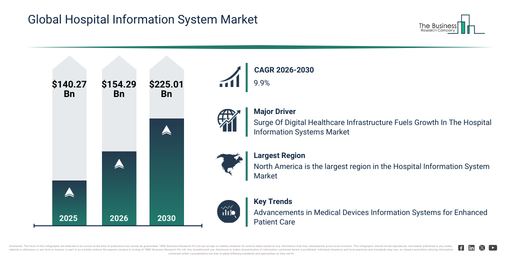
    The hospital information system market has demonstrated strong growth in recent years. It is expected to expand from $140.27 billion in 2025 to $154.29 billion in 2026, achieving a compound annual growth rate (CAGR) of 10.0%. This historical growth can be attributed to the transition from paper-based to digital hospital records, growing patient data volumes, increasing complexity of hospital operations, expansion of hospital IT infrastructure, and the need for centralized data management.

    The hospital information system market is projected to experience significant expansion in the coming years. It is anticipated to grow to $225.01 billion by 2030, demonstrating a compound annual growth rate (CAGR) of 9.9%. This projected growth can be attributed to an escalating demand for real-time healthcare data access, the increasing adoption of cloud-based hospital systems, a heightened focus on data-driven hospital management, the expansion of multi-specialty hospitals, and a rising regulatory emphasis on data integrity. Prominent trends for the forecast period include the increasing adoption of integrated hospital information platforms, a growing demand for centralized patient data management, an expanding focus on interoperability across hospital departments, the broadening of real-time clinical and administrative reporting, and an increased emphasis on operational and data accuracy.

    Get A Free Sample Report With In-Depth Market Insights:

    https://thebusinessresearchcompany.com/sample_request?id=98719481&type=smp&name=Hospital%20Information%20System%20Market%20Report%202026&utm_source=Blogs&utm_medium=Paid&utm_campaign=Nov_PR

    Hospital Information System Market Growth Drivers: What’s Behind The Acceleration?

    The increasing application of digital healthcare infrastructure is projected to drive the future growth of the hospital information systems market. This infrastructure encompasses digital technologies within the healthcare sector, designed to deliver enhanced medical services, including capabilities like real-time tracking of medical data via wearable devices. The deployment of digital healthcare infrastructure within hospitals aids in enhancing patient monitoring. As an illustration, data from Deloitte Touche Tohmatsu Limited, a UK-based software company, indicated in January 2025 that approximately 70% of individuals surveyed consider investments in digital tools and platforms crucial. Furthermore, 60% place importance on fundamental technologies such as EMRs and ERP systems, and almost 90% of C-suite executives foresee an increased pace of digital technology integration in 2025. Consequently, the expanding utilization of digital healthcare infrastructure is indeed propelling the development of the hospital information systems market.

    Hospital Information System Market Segment Landscape And Growth Outlook

    The hospital information system market covered in this report is segmented –

    1) By Components: Hardware, Software, Services

    2) By Type: Clinical Information Systems, Administrative Information Systems, Electronic Medical Records, Laboratory Information Systems, Radiology Information Systems, Pharmacy Information Systems, Other Types

    3) By Deployment: Web-Based, On-Premises, Cloud-Based

    4) By End-User: Hospitals, Insurance Companies

    Subsegments:

    1) By Hardware: Servers, Workstations, Networking Equipment, Peripheral Devices

    2) By Software: Electronic Health Records (EHR) Software, Practice Management Software, Clinical Information Systems, Revenue Cycle Management Software

    3) By Services: Implementation Services, Support And Maintenance Services, Training And Consulting Services, Managed Services

    Hospital Information System Market Trends Redefining Industry Growth

    Leading companies in the hospital information system market are concentrating their efforts on rolling out innovative offerings, such as medical devices information systems, to enhance patient care, streamline workflows, and improve data management across various healthcare facilities. Medical devices information systems are defined as integrated software solutions crafted to oversee and monitor medical equipment within healthcare environments, enabling the collection, analysis, and sharing of data to elevate patient safety and operational efficiency. For instance, in July 2024, the World Health Organization (WHO), a Switzerland-based intergovernmental organization, introduced MeDevIS. The MeDevIS (Medical Devices Information System) platform operates as a global open-access repository for medical device information, thus assisting governments and healthcare practitioners in making more effective decisions. It includes over 2,300 types of medical devices pertinent to various health issues, simplifying access to dependable data and supporting procurement in settings with limited resources.

    Hospital Information System Market Competitive Landscape: Who Leads The Industry?

    Major companies operating in the hospital information system market are Cerner Corporation, McKesson Corporation, Allscripts Healthcare Solutions Inc., Athenahealth Inc., Epic Systems Corp, NextGen Healthcare, Computer Programs and Systems Inc, Dedalus SpA, Agfa-Gevaert NV, Siemens Healthineers AG, Philips Healthcare, Change Healthcare, Optum, Oracle Corporation, Infor Inc., Greenway Health, CureMD Healthcare, Canadian Health Systems Inc, MED e-care Healthcare Solutions Inc, MV Sistemas, General Electric Company, CISCO Systems Inc, Honeywell Lifesciences

    View The Full Hospital Information System Market Report:

    https://thebusinessresearchcompany.com/report/hospital-information-system-global-market-report?utm_source=Blogs&utm_medium=Paid&utm_campaign=Nov_PR

    Hospital Information System Market Top Region By Revenue And Market Share

    North America was the largest region in the hospital information systems market in 2025. Asia-Pacific is expected to be the fastest-growing region in the forecast period. The regions covered in the hospital information system market report are Asia-Pacific, South East Asia, Western Europe, Eastern Europe, North America, South America, Middle East, Africa.

    Reach Out To Our Team:

    The Business Research Company: https://www.thebusinessresearchcompany.com/

    Americas: +1 310-496-7795

    Asia: +44 7882 955267 & +91 8897263534

    Europe: +44 7882 955267

    Email us at: marketing@tbrc.info

    Follow us on:

    LinkedIn: https://in.linkedin.com/company/the-business-research-company

    YouTube: https://www.youtube.com/channel/UC24_fI0rV8cR5DxlCpgmyFQ

    Global Market Model: https://www.thebusinessresearchcompany.com/global-market-model
  • Hospital EMR Systems Market Analysis: How The Industry Is Evolving Toward A $28.39 Billion Future

    Hospital EMR Systems Market Analysis: How The Industry Is Evolving Toward A $28.39 Billion Future

    Featuring market attractiveness scoring, total addressable market sizing, company benchmarking matrices, interactive Excel dashboards, deeper supply chain intelligence, emerging startup tracking, and granular product-level insights, The Business Research Company’s 2026 market reports are built to deliver research that is both more actionable and more strategically valuable.

    Hospital EMR Systems Market Revenue Outlook: What CAGR Lies Ahead Through 2030?

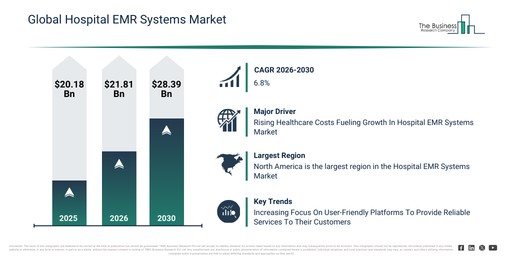
    The market for hospital EMR systems has experienced strong growth in recent years. This market is expected to expand from $20.18 billion in 2025 to $21.81 billion in 2026, achieving a compound annual growth rate (CAGR) of 8.1%. Historically, this growth can be attributed to government directives for electronic health records, an increasing volume of patient data within hospitals, the growing imperative to replace paper-based records, the expansion of hospital IT infrastructure, and a heightened focus on clinical documentation efficiency.

    The market size for hospital emr systems is anticipated to demonstrate significant expansion in the upcoming years. It is forecasted to reach $28.39 billion by 2030, growing at a compound annual growth rate (CAGR) of 6.8%. This projected increase during the forecast period is driven by factors such as a heightened demand for real-time patient information access, the increased implementation of cloud-based hospital platforms, a growing emphasis on evidence-based clinical decision-making, the expansion of emr solutions designed for specific specialties, and augmented investments in smart hospital transformation. Notable trends expected during this period encompass the rising adoption of unified digital patient records, an increasing need for interoperable hospital information systems, a stronger focus on standardizing clinical workflows, the broader availability of mobile and remote emr access for medical staff, and an elevated emphasis on data precision and comprehensive clinical documentation.

    Get A Free Sample Report With In-Depth Market Insights:

    https://thebusinessresearchcompany.com/sample_request?id=30979201&type=smp&name=Hospital%20EMR%20Systems%20Market%20Report%202026&utm_source=Blogs&utm_medium=Paid&utm_campaign=Nov_PR

    Hospital EMR Systems Market Growth Factors Behind Sustained Expansion

    The increasing healthcare costs are anticipated to propel the growth of the hospital EMR systems market moving forward. These costs refer to the expenses associated with the provision of medical services, treatments, and products aimed at maintaining or improving an individual’s health. EMR systems can facilitate more cost-efficient and high-quality healthcare delivery, enhance operational efficiency, improve clinical decision support, and help prevent medication errors. For example, in March 2024, the Health Foundation, a UK-based non-governmental organization, indicated that planned health spending in the UK is expected to rise to $240 billion (£192 billion) in 2024/25 from $227.5 billion (£182 billion) in 2022/23. Additionally, in January 2024, KFF Health System Tracker, a US-based independent source for health policy research, polling, and journalism, reported that health spending in the USA is projected to increase by 5% from 2023 to 2024, reaching $4.9 trillion. Therefore, the escalating healthcare costs are significantly driving the expansion of the hospital EMR systems market.

    Hospital EMR Systems Market Breakdown By Product Type And Application

    The hospital emr systems market covered in this report is segmented –

    1) By Component: Services, Software, Hardware

    2) By Type: General EMR Solutions, Specialty EMR Solutions

    3) By Delivery Mode: On-premise, Cloud-based

    4) By Hospital Size: Small And Medium-Sized Hospitals, Large Hospital

    Subsegments:

    1) By Services: Implementation Services, Consulting Services, Maintenance And Support Services, Training Services

    2) By Software: Cloud-Based EMR Software, On-Premise EMR Software, Specialty-Specific EMR Software, Mobile EMR Applications

    3) By Hardware: Servers, Workstations, Networking Equipment, Peripheral Devices

    Hospital EMR Systems Market Strategic Trends: What Defines The Next Growth Phase?

    Leading entities within the hospital EMR systems market are prioritizing the development of user-friendly platforms to deliver dependable services to their clientele. Such a platform within hospital electronic medical record (EMR) systems presents an intuitive interface and streamlined workflows, thereby enabling healthcare professionals to navigate effortlessly and utilize the system with ease. An illustrative example is Syra Health Corp, a US-based healthcare company, which introduced Careplus in October 2023. CarePlus functions as a scalable, secure, and intuitive platform designed to facilitate telehealth integration and optimize clinical operations. This proprietary electronic medical record (EMR) system was specifically developed for small to medium-sized healthcare facilities. Another unique characteristic of CarePlus is its capability to interact with laboratories, radiology systems, and other EMRs, effectively resolving interoperability challenges. Furthermore, CarePlus offers a cost-effective solution that can be customized to fulfill the precise needs of any organization.

    Hospital EMR Systems Market Company Landscape And Competitive Strategy

    Major companies operating in the hospital emr systems market are Epic Systems Corporation, Medical Information Technology Inc., Computer Programs and Systems Inc., MEDHOST Inc., InterSystems Corporation, Cantata Health Solutions, Harris Healthcare, Healthland Inc., Siemens Healthineers, McKesson Corporation, Allscripts Healthcare Solutions Inc., Cerner Corporation, Athenahealth Inc., NextGen Healthcare Information Systems LLC, GE Healthcare Technologies Inc., MEDITECH Expanse, CPSI Evident, Sunrise Clinical Manager, Truven Health Analytics, DXC Technology Healthcare

    View The Full Hospital EMR Systems Market Report:

    https://thebusinessresearchcompany.com/report/hospital-EMR-systems-global-market-report?utm_source=Blogs&utm_medium=Paid&utm_campaign=Nov_PR

    Hospital EMR Systems Market Regional Analysis And Top Geography

    North America was the largest region in the hospital EMR systems market in 2025. The regions covered in the hospital emr systems market report are Asia-Pacific, South East Asia, Western Europe, Eastern Europe, North America, South America, Middle East, Africa.

    Reach Out To Our Team:

    The Business Research Company: https://www.thebusinessresearchcompany.com/

    Americas: +1 310-496-7795

    Asia: +44 7882 955267 & +91 8897263534

    Europe: +44 7882 955267

    Email us at: marketing@tbrc.info

    Follow us on:

    LinkedIn: https://in.linkedin.com/company/the-business-research-company

    YouTube: https://www.youtube.com/channel/UC24_fI0rV8cR5DxlCpgmyFQ

    Global Market Model: https://www.thebusinessresearchcompany.com/global-market-model