Blog

  • Hospital Emergency Department Market Outlook Through 2030: Understanding The Growth Opportunity

    Hospital Emergency Department Market Outlook Through 2030: Understanding The Growth Opportunity

    Built to provide research that’s more actionable and strategically valuable, The Business Research Company’s 2026 market reports include market attractiveness analysis, total addressable market sizing, company benchmarking matrices, interactive Excel dashboards, broader supply chain intelligence, emerging startup tracking, and in-depth product insights.

    Hospital Emergency Department Market Growth Analysis: How Will Revenue Trend Over The Forecast Period?

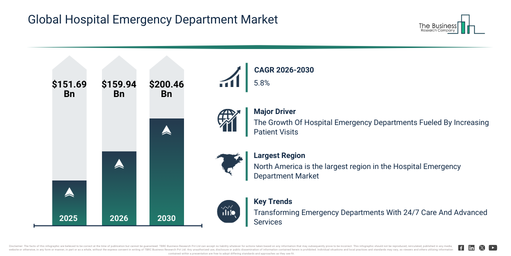
    The hospital emergency department market has experienced significant expansion recently. This market is expected to increase from $151.69 billion in 2025 to $159.94 billion in 2026, achieving a compound annual growth rate (CAGR) of 5.4%. During previous periods, this growth was primarily due to a higher incidence of accidents and trauma cases, an increasing urban population density, a rising prevalence of acute and chronic conditions, the development of hospital emergency infrastructure, and an uptick in emergency admissions caused by infectious diseases.

    The market for hospital emergency departments is projected to experience substantial expansion over the coming years. This market is set to reach $200.46 billion by 2030, exhibiting a compound annual growth rate (CAGR) of 5.8%. This anticipated growth is driven by factors such as the increasing congestion in emergency departments, a heightened demand for quicker emergency responses, the expanding necessity for unified emergency care systems, the proliferation of connected emergency medical services, and increased capital flow into emergency healthcare infrastructure. Key trends during this period are expected to encompass an intensified effort to shorten emergency department waiting periods, a surging requirement for more efficient patient triage and processing, a greater focus on cohesive emergency care processes, broader 24/7 emergency service availability, and a stronger emphasis on critical care preparedness and overall capacity.

    Get A Free Sample Report With In-Depth Market Insights:

    https://thebusinessresearchcompany.com/sample_request?id=92873773&type=smp&name=Hospital%20Emergency%20Department%20Market%20Report%202026&utm_source=Blogs&utm_medium=Paid&utm_campaign=Nov_PR

    Hospital Emergency Department Market Demand Drivers Opening New Revenue Streams

    The frequency of individuals seeking care at hospital emergency departments is projected to drive the expansion of the hospital emergency department market in the future. An emergency department (ED) serves as a dedicated medical unit specializing in urgent care, providing immediate outpatient services to individuals requiring prompt attention for their medical conditions. The increasing volume of patients requiring emergency medical attention fuels the need for enhanced facilities, resources, and services within hospital emergency departments. As an illustration, in December 2024, data from a report issued by the National Health Service (NHS), a government department situated in the UK, indicated 552,592 emergency admissions during that month, signifying a 1.2% rise compared to December 2023. Consequently, the widespread occurrence of visits to hospital emergency departments is stimulating the expansion of the hospital emergency department market.

    Hospital Emergency Department Market Segment Analysis And Revenue Potential

    The hospital emergency department market covered in this report is segmented –

    1) By Emergency Department Type: General Emergency Department, Trauma Emergency Department, Pediatric Emergency Department, Cardiac Emergency Department, Neurologic Or Stroke Emergency Department

    2) By Connectivity: Wired, Wireless

    3) By Application: Emergency Patient Monitoring, Diagnostic Imaging And Reporting, Electronic Health Records And Clinical Workflow, Emergency Communication And Coordination

    Subsegments:

    1) By General Emergency Department: Adult General Emergency Department, Mixed Adult–Pediatric Emergency Department

    2) By Trauma Emergency Department: Level I Trauma Center ED, Level II Trauma Center ED, Level III Trauma Center ED

    3) By Pediatric Emergency Department: Standalone Pediatric Emergency Department, Pediatric Emergency Unit within General Hospital

    4) By Cardiac Emergency Department: Acute Coronary Syndrome (ACS) Emergency Unit, Chest Pain Emergency Unit

    5) By Neurologic or Stroke Emergency Department: Comprehensive Stroke Center ED, Primary Stroke Center ED

    Hospital Emergency Department Market Transformation Trends: What Innovations Are Driving Change?

    Leading companies within the hospital emergency department market are prioritizing advancements, particularly the introduction of 24/7 availability, to effectively manage a broad spectrum of emergency situations. This 24/7 availability signifies a service or system’s capacity to be continuously accessible and operational around the clock, every day of the week. An illustrative example occurred in June 2024, when TriLife Hospital, a healthcare provider based in India, inaugurated an extensive emergency department designed to deliver complete emergency care. This newly established emergency department in Bengaluru aims to fulfill the increasing need for urgent medical attention by offering round-the-clock services for diverse medical, surgical, and traumatic emergencies. The department is outfitted with cutting-edge medical technology, including an operating theater and advanced imaging machines, thereby guaranteeing thorough patient care. Furthermore, an innovative “One Patient, One Attender, One Bill” model has been implemented to streamline patient journeys by assigning a dedicated medical professional to each individual case. Supported by a team exceeding 100 trained specialists, the facility is equipped to competently handle various emergencies.

    Hospital Emergency Department Market Key Players Shaping Industry Direction

    Major companies operating in the hospital emergency department market are Massachusetts General Hospital, Mayo Clinic Hospital, NYC Health + Hospitals, University of Michigan Health – Ann Arbor, Cedars-Sinai Medical Center, Barnes-Jewish Hospital, New York-Presbyterian Hospital, Ronald Reagan UCLA Medical Center, Texas Health Resources, Baystate Medical Center, Hartford Hospital, Parkland Health, Lakeland Regional Health, Sharp Grossmont Hospital, St. Joseph’s Health, Butler Memorial Hospital, USA Health, Natchitoches Regional Medical Center, Schoolcraft Memorial Hospital, Brigham and Women’s Hospital, Grady Memorial Hospital, Baptist Health South Florida, Montefiore Medical Center, LAC+USC Medical Center

    View The Full Hospital Emergency Department Market Report:

    https://thebusinessresearchcompany.com/report/hospital-emergency-department-global-market-report?utm_source=Blogs&utm_medium=Paid&utm_campaign=Nov_PR

    Hospital Emergency Department Market Geographic Analysis: Where Is Demand Rising Fastest?

    North America was the largest region in the hospital emergency department market in 2025. The regions covered in the hospital emergency department market report are Asia-Pacific, South East Asia, Western Europe, Eastern Europe, North America, South America, Middle East, Africa.

    Reach Out To Our Team:

    The Business Research Company: https://www.thebusinessresearchcompany.com/

    Americas: +1 310-496-7795

    Asia: +44 7882 955267 & +91 8897263534

    Europe: +44 7882 955267

    Email us at: marketing@tbrc.info

    Follow us on:

    LinkedIn: https://in.linkedin.com/company/the-business-research-company

    YouTube: https://www.youtube.com/channel/UC24_fI0rV8cR5DxlCpgmyFQ

    Global Market Model: https://www.thebusinessresearchcompany.com/global-market-model
  • Hospital Capacity Management Solutions Market Growth Potential: What The Latest Forecast Reveals

    Hospital Capacity Management Solutions Market Growth Potential: What The Latest Forecast Reveals

    Backed by market attractiveness analysis, total addressable market sizing, company benchmarking matrices, interactive Excel dashboards, wider supply chain intelligence, emerging startup coverage, and detailed product-level insights, The Business Research Company’s 2026 market reports are designed to offer research that is more actionable and strategically valuable than ever.

    Hospital Capacity Management Solutions Market Forecast: What Value Will The Market Reach By 2030?

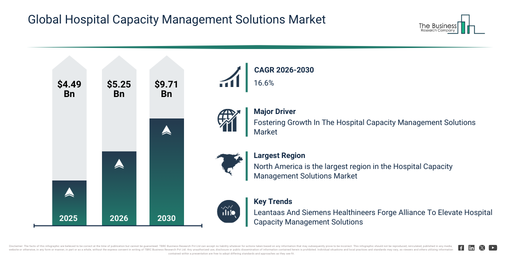
    The hospital capacity management solutions market has observed substantial growth in its size in recent years. This market is projected to expand from $4.49 billion in 2025 to $5.25 billion in 2026, demonstrating a compound annual growth rate (CAGR) of 17.0%. The expansion witnessed in the past can be linked to factors like increasing hospital overcrowding challenges, higher patient admission rates, a constrained supply of hospital beds, escalating operational inefficiencies within hospitals, and the introduction of fundamental bed and asset tracking systems.

    The hospital capacity management solutions market size is projected to experience rapid expansion over the next few years. This market is anticipated to reach $9.71 billion by 2030, demonstrating a compound annual growth rate (CAGR) of 16.6%. This projected growth is fueled by several factors, including the escalating requirement for real-time hospital capacity planning, increased capital deployment in intelligent hospital infrastructure, a heightened emphasis on shortening patient wait durations, the proliferation of integrated hospital management systems, and the intensifying imperative to manage healthcare operational expenditures. Key trends during this period are expected to encompass an enhanced focus on real-time capacity transparency, wider implementation of integrated patient flow management systems, a rising call for predictive capacity planning, the broadening of centralized hospital resource optimization strategies, and a greater emphasis on financially prudent capacity utilization.

    Get A Free Sample Report With In-Depth Market Insights:

    https://thebusinessresearchcompany.com/sample_request?id=73592499&type=smp&name=Hospital%20Capacity%20Management%20Solutions%20Market%20Report%202026&utm_source=Blogs&utm_medium=Paid&utm_campaign=Nov_PR

    Hospital Capacity Management Solutions Market Growth Backed By Core Demand Fundamentals

    Government-led initiatives to boost patient satisfaction and improve care quality have propelled the expansion of the hospital capacity management solutions market. Governments are actively promoting programs designed to enhance healthcare quality. These efforts are prompting increased investment in hospital capacity management solutions to accelerate and optimize healthcare processes. For instance, in May 2023, the Government of India, alongside the World Bank, a US-based international financial institution, finalized two complementary loans, each amounting to $500 million, aimed at fostering the advancement of India’s health sector. This combined financing of $1 billion will support the Pradhan Mantri-Ayushman Bharat Health Infrastructure Mission (PM-ABHIM), which seeks to strengthen public healthcare infrastructure across the country. Consequently, such undertakings are expected to drive growth within the hospital capacity management solutions market.

    Hospital Capacity Management Solutions Market Segmentation And Category Overview

    The hospital capacity management solutions market covered in this report is segmented –

    1) By Component: Software, Services

    2) By Product: Asset Management, Patient Flow Management Solutions

    3) By Mode Of Delivery: On-Premise, Cloud-Based

    4) By Application: Standalone Solutions, Integrated Solutions

    5) By End-User: Hospitals, Ambulatory Surgical Centers

    Subsegments:

    1) By Software: Capacity Planning Software, Patient Flow Management Software, Bed Management Software, Reporting And Analytics Tools

    2) By Services: Consulting Services, Implementation Services, Support And Maintenance Services

    #Hospital Capacity Management Solutions Market Growth Trends: What’s Shaping The Future Outlook?

    Leading companies within the hospital capacity management solutions market are establishing strategic alliances to enhance their business standing. A strategic partnership involves a formal collaboration between two or more entities, such as companies or organizations, uniting to achieve shared objectives, often with a long-term perspective. For example, in April 2023, LeanTaaS, a US-based company providing AI-powered and SaaS (Software as a Service)-based solutions for capacity management, staffing optimization, and patient flow in healthcare systems, announced a strategic partnership with Siemens Healthineers, a Germany-based medical technology company. This collaboration intends to empower large hospitals and health systems within the Siemens Healthineers network to improve outcomes, including better patient access, increased physician and staffing satisfaction, and stronger financial performance. The agreement facilitates the deployment of system-wide tools designed to optimize capacity, leveraging LeanTaaS’ artificial intelligence (AI) and machine learning (ML) predictive and prescriptive analytics solutions, combined with Siemens Healthineers’ enterprise-wide management expertise.

    Hospital Capacity Management Solutions Market Competitive Analysis Of Leading Industry Participants

    Major companies operating in the hospital capacity management solutions market are GE HealthCare Technologies Inc., TeleTracking Technologies Inc., Alcidion Corp., Koninklijke Philips N.V., Epic Systems Corporation, Care Logistic Inc., INFINITT Healthcare Co. Ltd., WellSky Corporation, Change Healthcare, Allscripts Healthcare Solutions Inc., Cerner Corporation, Medworxx Solutions Inc., Infosys Limited, McKesson Corporation, NextGen Healthcare Inc., HealthStream Inc., Optum Inc., Premier Inc., JVS Technologies Pvt Ltd., Simul8 Corporation

    View The Full Hospital Capacity Management Solutions Market Report:

    https://thebusinessresearchcompany.com/report/hospital-capacity-management-solutions-global-market-report?utm_source=Blogs&utm_medium=Paid&utm_campaign=Nov_PR

    Hospital Capacity Management Solutions Market Global Footprint: Which Region Leads The Market?

    North America was the largest region in the hospital capacity management solutions market in 2025. The regions covered in the hospital capacity management solutions market report are Asia-Pacific, South East Asia, Western Europe, Eastern Europe, North America, South America, Middle East, Africa.

    Reach Out To Our Team:

    The Business Research Company: https://www.thebusinessresearchcompany.com/

    Americas: +1 310-496-7795

    Asia: +44 7882 955267 & +91 8897263534

    Europe: +44 7882 955267

    Email us at: marketing@tbrc.info

    Follow us on:

    LinkedIn: https://in.linkedin.com/company/the-business-research-company

    YouTube: https://www.youtube.com/channel/UC24_fI0rV8cR5DxlCpgmyFQ

    Global Market Model: https://www.thebusinessresearchcompany.com/global-market-model
  • Hospital Bed Management Systems Market Growth Outlook: Why Analysts Expect Continued Expansion

    Hospital Bed Management Systems Market Growth Outlook: Why Analysts Expect Continued Expansion

    Featuring market attractiveness scoring, total addressable market sizing, company benchmarking matrices, interactive Excel dashboards, deeper supply chain intelligence, emerging startup tracking, and granular product-level insights, The Business Research Company’s 2026 market reports are built to deliver research that is both more actionable and more strategically valuable.

    Hospital Bed Management Systems Market Size Outlook: How Quickly Will Revenue Expand Through 2030?

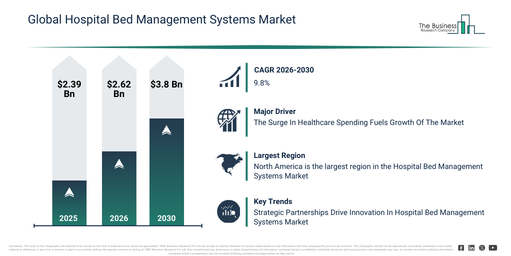
    The hospital bed management systems market size has demonstrated significant expansion in recent years. It is anticipated to increase from $2.39 billion in 2025 to $2.62 billion in 2026, achieving a compound annual growth rate (CAGR) of 9.7%. This historic growth can be attributed to several factors, including an increase in patient admission volumes, the rising imperative to shorten patient wait times, the escalating complexity of hospital operations, the spread of large multi-specialty hospitals, and the adoption of fundamental hospital information systems.

    The hospital bed management systems market is set for significant expansion in the coming years. It is forecast to attain a value of $3.8 billion by 2030, growing at a compound annual growth rate (CAGR) of 9.8%. This anticipated growth is influenced by a rising demand for operational efficiency, an increased focus on enhancing patient throughput, the proliferation of cloud-based hospital management solutions, a growing imperative for data-driven decision making, and greater investments in smart hospital infrastructure. Notable trends expected during this period involve a heightened emphasis on optimizing bed utilization rates, the increasing adoption of centralized patient flow management, a growing need for real-time visibility into bed availability, the expansion of analytics-driven capacity planning, and the deeper integration of bed management with broader hospital operations.

    Get A Free Sample Report With In-Depth Market Insights:

    https://thebusinessresearchcompany.com/sample_request?id=77444628&type=smp&name=Hospital%20Bed%20Management%20Systems%20Market%20Report%202026&utm_source=Blogs&utm_medium=Paid&utm_campaign=Nov_PR

    Hospital Bed Management Systems Market Growth Catalysts And Demand Drivers

    The hospital bed management systems market is anticipated to be propelled by an increase in healthcare spending. Healthcare spending represents the total financial resources allocated to the healthcare sector within a specific region, country, or organization. Elevated healthcare expenditure facilitates the adoption of more advanced Hospital Bed Management Systems (HBMS), which can enhance efficiency, improve patient care, optimize resource utilization, and positively impact bed capacity. This increased funding supports the implementation of HBMS and aids in the efficient use of resources. For instance, in May 2023, the Office for National Statistics, a UK government department, reported that healthcare spending in the UK grew by 5.6% between 2022 and 2023, an increase from 0.9% growth in 2022. The UK’s healthcare expenditure reached approximately $317.63 billion (£292 billion) in 2023. Therefore, the expansion of healthcare spending is a significant driver for the growth of the hospital bed management systems market.

    Hospital Bed Management Systems Market Segment Outlook: Which Categories Are Growing Fastest?

    The hospital bed management systems market covered in this report is segmented –

    1) By Component: Services, Software

    2) By Mode Of Delivery: On-Premise, Cloud-Based

    3) By Hospital Bed Management Systems Type: Acute Care Bed, Critical Care Bed

    4) By End User: Hospitals, Ambulatory Surgical Centers, Other End Users

    Subsegments:

    1) By Services: Consulting Services, Implementation Services, Training And Support Services

    2) By Software: Bed Management Software, Patient Flow Management Software, Bed Occupancy And Allocation Software, Reporting And Analytics Software

    Hospital Bed Management Systems Market Industry Trends: What’s Reshaping Demand?

    Leading companies active in the hospital bed management systems market are concentrating on forging strategic alliances to develop advanced offerings and gain a competitive edge. A strategic partnership involves a collaborative arrangement between two or more entities, designed to achieve mutually beneficial aims that would be difficult or impossible to accomplish individually. For instance, in August 2023, TeleTracking Technologies, a US-based company focused on healthcare operations platforms, unveiled electronic bed management systems. This extensive system provides real-time information on bed availability and patient status, aiming to improve patient flow and capacity management by automating bed turnover and patient placement, thereby reducing idle bed time and enhancing efficiency. Predictive analytics assist in anticipating future bed demand, enabling hospitals to adjust resources accordingly. Better communication among departments helps decrease delays and bottlenecks, ensuring prompt and suitable care for patients and enhancing their overall experience. Similarly, Maidstone and Tunbridge Wells NHS Trust adopted a new bed management system, which notably improved bed turnaround times and patient care. These technologies streamline communication throughout departments, reduce waiting periods, and enhance overall hospital operations.

    Hospital Bed Management Systems Market Leading Companies And Competitive Benchmarking

    Major companies operating in the hospital bed management systems market are TeleTracking Technologies, LeanTaaS, Central Logic, Terawe Corporation, The Access Group, Epic Systems Corporation, MEDITECH, Allscripts Healthcare Solutions, Infor Inc., McKesson Corporation, Siemens Healthineers, GE Healthcare Technologies Inc., Koninklijke Philips N.V., Lyngsoe Systems A/S, PatientKeeper Inc., CareCloud Corporation, Veradigm Inc., Omnicell Inc., Advanced Data Systems Corporation, QGenda Inc., Innovaccer Inc., Agfa HealthCare NV

    View The Full Hospital Bed Management Systems Market Report:

    https://thebusinessresearchcompany.com/report/hospital-bed-management-systems-global-market-report?utm_source=Blogs&utm_medium=Paid&utm_campaign=Nov_PR

    Hospital Bed Management Systems Market Regional Split: Which Areas Are Fueling Growth?

    North America was the largest region in the hospital bed management systems market in 2025. The regions covered in the hospital bed management systems market report are Asia-Pacific, South East Asia, Western Europe, Eastern Europe, North America, South America, Middle East, Africa.

    Reach Out To Our Team:

    The Business Research Company: https://www.thebusinessresearchcompany.com/

    Americas: +1 310-496-7795

    Asia: +44 7882 955267 & +91 8897263534

    Europe: +44 7882 955267

    Email us at: marketing@tbrc.info

    Follow us on:

    LinkedIn: https://in.linkedin.com/company/the-business-research-company

    YouTube: https://www.youtube.com/channel/UC24_fI0rV8cR5DxlCpgmyFQ

    Global Market Model: https://www.thebusinessresearchcompany.com/global-market-model
  • Hospital Asset Tracking and Inventory Management Systems Market Forecast Insights: The Road To $45.63 Billion By 2030

    Hospital Asset Tracking and Inventory Management Systems Market Forecast Insights: The Road To $45.63 Billion By 2030

    Built to provide research that’s more actionable and strategically valuable, The Business Research Company’s 2026 market reports include market attractiveness analysis, total addressable market sizing, company benchmarking matrices, interactive Excel dashboards, broader supply chain intelligence, emerging startup tracking, and in-depth product insights.

    Hospital Asset Tracking and Inventory Management Systems Market Size, Value And Growth Trajectory Through 2030

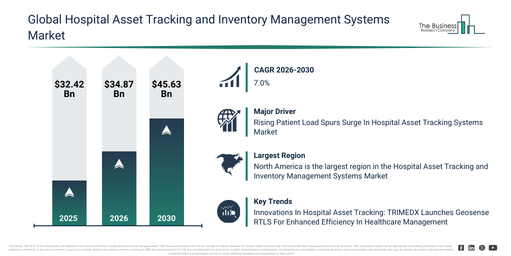
    The hospital asset tracking and inventory management systems market size has demonstrated significant expansion in recent years. It is anticipated to increase from $32.42 billion in 2025 to $34.87 billion in 2026, reflecting a compound annual growth rate (CAGR) of 7.5%. This growth observed in the historic period is attributable to the expanding hospital infrastructure, a rise in losses stemming from misplaced medical equipment, the increasing complexity of hospital inventory management, a growing requirement for emergency equipment availability, and the adoption of basic RFID and barcode systems.

    The hospital asset tracking and inventory management systems market is projected to experience robust expansion over the coming years, reaching a valuation of $45.63 billion by 2030, driven by a compound annual growth rate (CAGR) of 7.0%. This anticipated growth during the forecast period is fueled by several factors, including a heightened demand for operational efficiency within hospitals, an escalating requirement for real-time asset visibility, the proliferation of smart hospital programs, a greater emphasis on optimizing costs and tracking utilization, and increased regulatory focus on equipment accountability. Key developments expected in this period encompass the wider implementation of real-time equipment tracking solutions, a concentrated effort to minimize asset loss and misplacement, an escalating need for automated inventory oversight in healthcare facilities, the broadening of preventive equipment maintenance management, and a deeper integration of asset tracking with overall hospital operations.

    Get A Free Sample Report With In-Depth Market Insights:

    https://thebusinessresearchcompany.com/sample_request?id=63072986&type=smp&name=Hospital%20Asset%20Tracking%20and%20Inventory%20Management%20Systems%20Market%20Report%202026&utm_source=Blogs&utm_medium=Paid&utm_campaign=Nov_PR

    Hospital Asset Tracking and Inventory Management Systems Market Opportunity Drivers: What’s Unlocking New Revenue Potential?

    An increasing patient burden in hospitals has fueled the expansion of the market for hospital asset tracking and inventory management systems moving ahead. The escalating number of individuals needing hospital care is attributed to the COVID-19 pandemic, various lifestyle diseases, and other medical conditions, including cancer. This surge in patient numbers has consequently boosted the need for equipment and inventory, thereby propelling the market growth for asset tracking and inventory management systems. For example, data from May 2024 by the Nuffield Trust, a UK charitable organization, indicates that the proportion of patients in private hospitals in England grew from 5.6% before the pandemic to 7.5% during the 2022/23 timeframe. Consequently, the rising patient volume in hospitals is a key factor propelling the expansion of the hospital asset tracking and inventory management systems market.

    Hospital Asset Tracking and Inventory Management Systems Market Segment Landscape: Which Areas Lead Development?

    The hospital asset tracking and inventory management systems market covered in this report is segmented –

    1) By Product Type: Mobile, Fixed

    2) By Technology: Hardware, Software

    3) By Application: Equipment Or Device Or Supplies Tracking, Equipment Maintenance

    Subsegments:

    1) By Mobile: Mobile Asset Tracking Devices, Mobile Inventory Management Applications

    2) By Fixed: Fixed Asset Tracking Systems, Fixed Inventory Management Solutions

    Hospital Asset Tracking and Inventory Management Systems Market Innovation Trends: What Developments Are Reshaping The Industry?

    Major companies operating in the hospital asset tracking and inventory management systems market are developing innovative products, such as healthcare asset management, to boost efficiency, lower costs, and enhance patient care. Healthcare asset management refers to a structured methodology for overseeing a healthcare organization’s assets, which can encompass medical equipment, facilities, IT infrastructure, and human resources. For instance, in April 2024, TRIMEDX, a US-based biotechnology company, launched GeoSense, an advanced Real-Time Location System (RTLS) specifically designed for healthcare asset management. This groundbreaking system provides room-level accuracy in tracking medical devices, significantly cutting search times by up to 50% and enabling healthcare staff to focus more on patient care. GeoSense seamlessly integrates with TRIMEDX’s existing data platforms and includes a user-friendly mobile application for rapid device location at the point of care.

    Hospital Asset Tracking and Inventory Management Systems Market Industry Leaders And Competitive Landscape

    Major companies operating in the hospital asset tracking and inventory management systems market are IBM Corporation, Honeywell International Inc., Siemens Healthineers AG, GE Healthcare, Stanley Black & Decker, Avery Dennison Corporation, Zebra Technologies Corporation, ThingMagic (Trimble Inc.), Infor Inc., CenTrak (Halma plc), Epicor Software Corporation, Jadak- A Novanta Company, Midmark Corporation, Ascom Holding AG, Impinj Inc., Elpas Solutions, Identiv Inc., Sato Holdings Corporation, Alien Technology, Censis Technologies, Mobile Aspects, Ekahau Inc., AiRISTA Flow Inc, Sonitor Technologies Inc, Cybra Corporation, LogiTag Systems

    View The Full Hospital Asset Tracking and Inventory Management Systems Market Report:

    https://thebusinessresearchcompany.com/report/hospital-asset-tracking-and-inventory-management-systems-global-market-report?utm_source=Blogs&utm_medium=Paid&utm_campaign=Nov_PR

    Hospital Asset Tracking and Inventory Management Systems Market Top Region: Where Does Most Revenue Come From?

    North America was the largest region in the hospital asset tracking and inventory market in 2025. The regions covered in the hospital asset tracking and inventory management systems market report are Asia-Pacific, South East Asia, Western Europe, Eastern Europe, North America, South America, Middle East, Africa.

    Reach Out To Our Team:

    The Business Research Company: https://www.thebusinessresearchcompany.com/

    Americas: +1 310-496-7795

    Asia: +44 7882 955267 & +91 8897263534

    Europe: +44 7882 955267

    Email us at: marketing@tbrc.info

    Follow us on:

    LinkedIn: https://in.linkedin.com/company/the-business-research-company

    YouTube: https://www.youtube.com/channel/UC24_fI0rV8cR5DxlCpgmyFQ

    Global Market Model: https://www.thebusinessresearchcompany.com/global-market-model
  • Hospital And Nursing Home Probiotics Market Explained: What Is Fueling Growth To $2.86 Billion By 2030?

    Hospital And Nursing Home Probiotics Market Explained: What Is Fueling Growth To $2.86 Billion By 2030?

    Backed by market attractiveness analysis, total addressable market sizing, company benchmarking matrices, interactive Excel dashboards, wider supply chain intelligence, emerging startup coverage, and detailed product-level insights, The Business Research Company’s 2026 market reports are designed to offer research that is more actionable and strategically valuable than ever.

    Hospital And Nursing Home Probiotics Market CAGR Outlook And Future Development

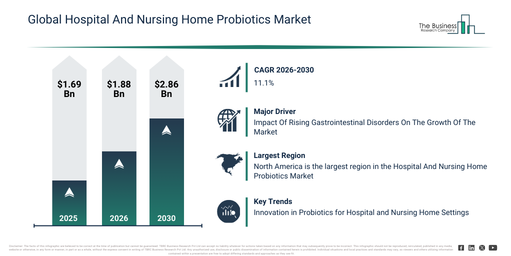
    The hospital and nursing home probiotics market size has experienced rapid expansion over recent years. This market is projected to expand from $1.69 billion in 2025 to $1.88 billion in 2026, demonstrating a compound annual growth rate (CAGR) of 11.4%. Historically, this growth has stemmed from an increased understanding of gut health advantages, a rise in antibiotic consumption leading to digestive issues, a growing elderly demographic residing in nursing homes, the broadening of clinical nutrition applications, and an expanding selection of probiotic products.

    The hospital and nursing home probiotics market is poised for significant expansion over the coming years, with its size projected to reach $2.86 billion by 2030, achieving a robust compound annual growth rate (CAGR) of 11.1%. This substantial growth is primarily attributed to a heightened focus on microbiome-based health management, an increasing demand for immune support solutions, the rising prevalence of gastrointestinal disorders, the ongoing expansion of hospital-based preventive care programs, and the greater utilization of probiotics within long-term care facilities. Key developments anticipated in this period include the increasing integration of probiotics into clinical nutrition protocols, their growing acceptance for the care of elderly and immunocompromised patients, a rising trend of incorporating probiotics into preventive healthcare regimens, the diversification into condition-specific probiotic formulations, and their broader recognition as an adjunct therapy in hospital settings.

    Get A Free Sample Report With In-Depth Market Insights:

    https://thebusinessresearchcompany.com/sample_request?id=91895183&type=smp&name=Hospital%20And%20Nursing%20Home%20Probiotics%20Market%20Report%202026&utm_source=Blogs&utm_medium=Paid&utm_campaign=Nov_PR

    Hospital And Nursing Home Probiotics Market Growth Momentum: What Factors Are Shaping Demand?

    The escalating occurrence of gastrointestinal ailments is projected to boost the expansion of the hospital and nursing home probiotics market in the foreseeable future. Gastrointestinal disorders encompass various health issues affecting the digestive tract, including conditions like irritable bowel syndrome (IBS), inflammatory bowel disease (IBD), gastroesophageal reflux disease (GERD), and constipation. The heightened frequency of these disorders is ascribed to factors such as substandard dietary practices, increased consumption of processed foods, sedentary habits, and elevated stress levels. Hospital and nursing home probiotics play a role in managing gastrointestinal disorders by re-establishing a healthy balance of beneficial gut bacteria, supporting digestive health, and relieving symptoms such as diarrhea, constipation, and bloating. For instance, in December 2023, according to the IBD Registry, a UK-based non-profit organization, by 2023, the number of individuals with Inflammatory Bowel Disease (IBD) reached over 5,300, marking an increase of more than 3,000 members compared to 2022. Thus, the growing prevalence of gastrointestinal disorders is a key driver for the hospital and nursing home probiotics market’s development.

    Hospital And Nursing Home Probiotics Market Segments: Where Is Growth Concentrated?

    The hospital and nursing home probiotics market covered in this report is segmented –

    1) By Indication: Antibiotic-Associated Diarrhea, Irritable Bowel Syndrome, Clostridium difficile Infection, Inflammatory Bowel Disease, General Gut Health

    2) By Formulation Type: Capsules, Powder, Liquid

    3) By Patient Group: Adults, Elderly, Immunocompromised Patients, Patients With Gastrointestinal Disorders

    4) By Distribution Channel: Hospitals, Nursing Homes, Healthcare Facilities

    5) By Application: Gut Health, Immunity

    Subsegments:

    1) By Antibiotic-Associated Diarrhea (AAD): Prevention of AAD, Treatment of AAD

    2) By Irritable Bowel Syndrome (IBS): IBS With Diarrhea (IBS-D), IBS With Constipation (IBS-C), Mixed IBS (IBS-M)

    3) By Clostridium Difficile Infection (CDI): Prevention of CDI Recurrence, Treatment Of CDI

    4) By Inflammatory Bowel Disease (IBD): Crohn’s Disease, Ulcerative Colitis

    5) By General Gut Health: Immune System Support, Digestive Health, Gut Microbiome Restoration

    Hospital And Nursing Home Probiotics Market Trends: What’s Defining The Industry’s Next Phase?

    Major companies operating in the hospital and nursing home probiotics market are concentrating on developing innovative products, such as probiotic solutions, to enhance patient gut health, improve recovery times, and reduce antibiotic-associated side effects. Probiotic solutions refer to products comprising live microorganisms that provide health benefits when consumed in adequate amounts, typically by improving the balance of beneficial bacteria in the digestive system. For instance, in October 2024, Probi AB, a Sweden-based biotechnology company specializing in probiotics, unveiled Metabolic Health by Probi for healthcare settings. Metabolic Health by Probi is a clinically backed probiotic solution designed to support metabolic well-being, cardiovascular health, weight management, and blood pressure regulation by combining two proprietary probiotic strains, Lactiplantibacillus plantarum 299v (LP299V) and Lacticaseibacillus paracasei 8700:2 (L. Paracasei 8700:2).

    Hospital And Nursing Home Probiotics Market Key Participants And Competitive Landscape

    Major companies operating in the hospital and nursing home probiotics market are Nestlé Health Science, Abbott Laboratories, Danone S.A., Yakult Honsha Co. Ltd., BioGaia AB, Lactalis Group, General Mills Inc., Arla Foods Group, Glanbia PLC, SymbioPharm GmbH, Klaire Labs, Procter & Gamble Company, Vitakem Nutraceuticals, Synlogic Inc., Bayer AG, Sanofi, Meiji Holdings Co. Ltd., Morinaga Milk Industry Co. Ltd., Otsuka Holdings Co. Ltd., Reckitt Benckiser Group plc

    View The Full Hospital And Nursing Home Probiotics Market Report:

    https://thebusinessresearchcompany.com/report/hospital-and-nursing-home-probiotics-global-market-report?utm_source=Blogs&utm_medium=Paid&utm_campaign=Nov_PR

    Hospital And Nursing Home Probiotics Market Regional Breakdown: Where Is Demand Concentrated?

    North America was the largest region in the hospital and nursing home probiotics market in 2025. The regions covered in the hospital and nursing home probiotics market report are Asia-Pacific, South East Asia, Western Europe, Eastern Europe, North America, South America, Middle East, Africa.

    Reach Out To Our Team:

    The Business Research Company: https://www.thebusinessresearchcompany.com/

    Americas: +1 310-496-7795

    Asia: +44 7882 955267 & +91 8897263534

    Europe: +44 7882 955267

    Email us at: marketing@tbrc.info

    Follow us on:

    LinkedIn: https://in.linkedin.com/company/the-business-research-company

    YouTube: https://www.youtube.com/channel/UC24_fI0rV8cR5DxlCpgmyFQ

    Global Market Model: https://www.thebusinessresearchcompany.com/global-market-model
  • Hospice Care Market Forecast To Reach $9 Billion By 2030: Key Trends Explained

    Hospice Care Market Forecast To Reach $9 Billion By 2030: Key Trends Explained

    Featuring market attractiveness scoring, total addressable market sizing, company benchmarking matrices, interactive Excel dashboards, deeper supply chain intelligence, emerging startup tracking, and granular product-level insights, The Business Research Company’s 2026 market reports are built to deliver research that is both more actionable and more strategically valuable.

    Hospice Care Market Set To Climb From $5.93 Billion In 2026 To $9 Billion By 2030

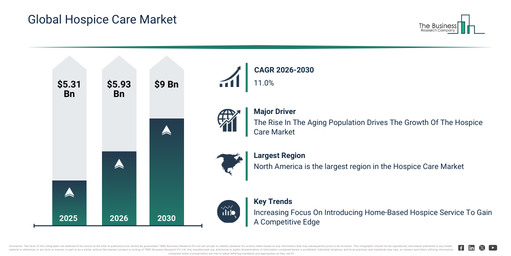
    The hospice care market size has seen rapid growth over recent years. It is anticipated to expand from $5.31 billion in 2025 to $5.93 billion in 2026, achieving a compound annual growth rate (CAGR) of 11.7%. This historic period’s growth is attributable to factors such as growing awareness of end-of-life care options, an increasing prevalence of terminal illnesses, the expansion of hospice care centers, rising acceptance of palliative care approaches, and support from non-profit and community organizations.

    The hospice care market size is anticipated to experience substantial growth over the next few years, projected to reach $9 billion in 2030 with a compound annual growth rate (CAGR) of 11.0%. This expansion during the forecast period is driven by an increasing aging population, a rising demand for home-based end-of-life care, a heightened focus on quality of life outcomes, the proliferation of specialized hospice nursing services, and growing needs for caregiver support and counseling. Key developments expected during this period include the broadening of home-based hospice care services, an intensified emphasis on patient-centered comfort and dignity, the increasing integration of multidisciplinary care teams, a rising demand for palliative and pain management services, and the expansion of family and caregiver support initiatives.

    Get A Free Sample Report With In-Depth Market Insights:

    https://thebusinessresearchcompany.com/sample_request?id=98649989&type=smp&name=Hospice%20Care%20Market%20Report%202026&utm_source=Blogs&utm_medium=Paid&utm_campaign=Nov_PR

    Hospice Care Market Expansion Drivers: What’s Shaping Future Growth?

    The growing aging population is anticipated to drive the expansion of the hospice care market. An aging population signifies a demographic shift characterized by an increasing percentage of elderly individuals within a society, often stemming from longer life expectancy and declining birth rates. Hospice care offers specialized support and comfort to this aging demographic battling terminal illnesses, prioritizing their quality of life and pain management in their final phases. For instance, in July 2024, figures from the UK Parliament’s House of Commons Library, a UK-based government administration, revealed that in 2022, there were 12.7 million people aged 65 or older in the UK, accounting for 19% of the total population. This figure is projected to climb to 22.1 million by 2072, making up 27% of the population. Consequently, the rise in the aging population is propelling the growth of the hospice care market.

    Hospice Care Market Segment Analysis: What Are The Core Market Categories?

    The hospice care market covered in this report is segmented –

    1) By Type: Nursing Services, Medical Supply Services, Physician Services, Other Types

    2) By Payer And Payment Mode: Private Health Insurance, Public And Government Programs, Out Of Pocket (Self Pay), Charitable And NGO And Philanthropic Funding, Employer Sponsored And Corporate Benefits

    3) By Application: Home Settings, Hospitals, Specialty Nursing Homes, Hospice Care Centers

    Subsegments:

    1) By Nursing Services: Skilled Nursing Care, Home Health Aide Services, Palliative Care Nursing

    2) By Medical Supply Services: Durable Medical Equipment (DME), Medication Management And Supplies, Mobility Aids And Supplies

    3) By Physician Services: On-Call Physician Services, Pain Management Consultation, Care Coordination Services

    4) By Other Types of Services: Psychological And Counseling Services, Spiritual Care Services, Respite Care Services

    Hospice Care Market Industry Trends Fueling Future Revenue Growth

    Leading companies in the hospice care market are prioritizing the development of innovative solutions, such as home-based hospice services, to gain a competitive edge. These home-based services deliver specialized medical attention, emotional assistance, and comfort to individuals facing terminal illnesses within the familiar and comfortable setting of their residences, thus improving their quality of life during the concluding stages of sickness. For example, in July 2023, Kaiser Permanente, a US-based healthcare company, introduced a home-based hospice service known as Care at Home. This service allows members with serious illnesses to receive necessary care in the comfort of their own homes. The program is an essential element of Kaiser Permanente’s integrated care delivery model, which aims to provide extensive choices for patients throughout their entire care journey. The Care at Home program is managed through specialized command centers, guided by physician-led teams, who remotely coordinate patient care, supported by in-home visits.

    Hospice Care Market Top Companies Driving Competitive Growth

    Major companies operating in the hospice care market are Dierksen Hospice, Kindred at Home, PruittHealth Inc., Covenant Care, AseraCare Hospice, Bristol Hospice, Brookdale Hospice, Capital Caring, Community Hospice & Palliative Care, Compassus, Continuum Care Hospice, Crossroads Hospice, Encompass Health Corp., Four Seasons Hospice, Gentiva Hospice, Gilchrist Hospice Care, Grace Hospice, Halcyon Hospice & Palliative Care, Harbor Light Hospice, Heartland Hospice, Hope Hospice, Hospice of Dayton, Hospice of the Chesapeake, Hospice of the Valley, Odyssey Healthcare, Ohio’s Hospice, Pathways Home Health and Hospice, Premier Hospice and Palliative Care, Seasons Hospice & Palliative Care, Suncoast Hospice, Tidewell Hospice, VITAS Healthcare

    View The Full Hospice Care Market Report:

    https://thebusinessresearchcompany.com/report/hospice-care-global-market-report?utm_source=Blogs&utm_medium=Paid&utm_campaign=Nov_PR

    Hospice Care Market Geographic Landscape: Which Region Leads Industry Growth?

    North America was the largest region in the hospice care market in 2025. The regions covered in the hospice care market report are Asia-Pacific, South East Asia, Western Europe, Eastern Europe, North America, South America, Middle East, Africa.

    Reach Out To Our Team:

    The Business Research Company: https://www.thebusinessresearchcompany.com/

    Americas: +1 310-496-7795

    Asia: +44 7882 955267 & +91 8897263534

    Europe: +44 7882 955267

    Email us at: marketing@tbrc.info

    Follow us on:

    LinkedIn: https://in.linkedin.com/company/the-business-research-company

    YouTube: https://www.youtube.com/channel/UC24_fI0rV8cR5DxlCpgmyFQ

    Global Market Model: https://www.thebusinessresearchcompany.com/global-market-model
  • Hormone Refractory Prostate Cancer Market Analysis: Understanding The Drivers Behind 10% CAGR Through 2030 Growth

    Hormone Refractory Prostate Cancer Market Analysis: Understanding The Drivers Behind 10% CAGR Through 2030 Growth

    Built to provide research that’s more actionable and strategically valuable, The Business Research Company’s 2026 market reports include market attractiveness analysis, total addressable market sizing, company benchmarking matrices, interactive Excel dashboards, broader supply chain intelligence, emerging startup tracking, and in-depth product insights.

    Hormone Refractory Prostate Cancer Market Forecast: Value Set To Climb From $8.95 Billion To $13.09 Billion

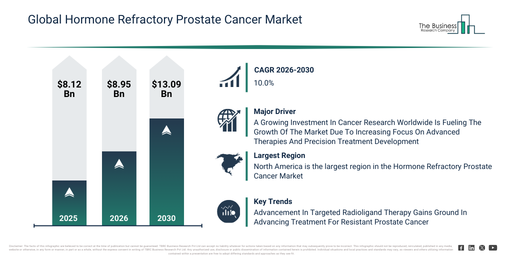
    The market for hormone refractory prostate cancer has experienced rapid expansion in its size over recent years. This market is projected to expand from $8.12 billion in 2025 to $8.95 billion by 2026, demonstrating a compound annual growth rate (CAGR) of 10.2%. Historically, this growth can be attributed to several factors including the increasing occurrence of advanced prostate cancer, the widespread use of androgen deprivation therapy, an uptick in the availability of chemotherapy agents, the rising application of PSA-based disease monitoring, and the broadening of oncology care infrastructure.

    The market size for hormone refractory prostate cancer is projected to experience robust expansion over the next few years. It is predicted to reach $13.09 billion by 2030, growing at a compound annual growth rate (CAGR) of 10.0%. This anticipated growth can be attributed to several factors, including the increasing development of targeted therapies, heightened clinical trial activity concerning castration-resistant prostate cancer, a rising demand for personalized oncology care, the expansion of immuno-oncology pipelines, and increased healthcare expenditure on cancer treatments. Significant trends during this period are expected to involve the wider adoption of precision oncology therapies, an increase in the use of combination drug regimens, the growing integration of biomarker-based treatment selection, the broader application of immunotherapy in advanced prostate cancer, and an intensified focus on personalized treatment pathways.

    Get A Free Sample Report With In-Depth Market Insights:

    https://thebusinessresearchcompany.com/sample_request?id=36156069&type=smp&name=Hormone%20Refractory%20Prostate%20Cancer%20Market%20Report%202026&utm_source=Blogs&utm_medium=Paid&utm_campaign=Nov_PR

    Hormone Refractory Prostate Cancer Market Development Factors: What’s Supporting Demand?

    Increasing funding dedicated to cancer research is anticipated to drive expansion within the hormone-refractory prostate cancer market in the future. This investment encompasses financial and resource backing aimed at progressing novel methods for cancer detection, treatment, and prevention. The uptick in cancer research funding is a response to the escalating worldwide cancer burden, which necessitates more potent and specific therapeutic options. Funding for cancer research stimulates advancements in the treatment of hormone-refractory prostate cancer, facilitating the development of sophisticated therapies like radioligand treatments and hormone inhibitors. Furthermore, it provides financial support for clinical trials and biomarker studies, aiming to improve the accuracy and results of treatments. For example, the Cancer Research Institute (CRI), a US-based nonprofit committed to advancing immunotherapy research, allocated approximately $22.8 million in the 2023–2024 fiscal year, as reported in August 2024. This funding supported 64 new grants distributed among researchers from 42 institutions spanning seven countries. Consequently, the expanding investment in cancer research is a primary factor fueling the expansion of the hormone-refractory prostate cancer market.

    Hormone Refractory Prostate Cancer Market Segment Breakdown: Which Categories Lead On Revenue?

    The hormone refractory prostate cancer market covered in this report is segmented –

    1) By Treatment Type: Chemotherapy, Hormonal Therapy, Immunotherapy, Radiation Therapy, Surgery

    2) By Distribution Channel: Hospital Pharmacies, Retail Pharmacies, Online Pharmacies

    3) By End-User: Hospitals, Ambulatory Surgical Centers, Specialty Clinics, Other End-Users

    Subsegments:

    1) By Chemotherapy: Docetaxel, Cabazitaxel, Mitoxantrone, Estramustin

    2) By Hormonal Therapy: Anti-Androgens, CYP17 Inhibitors, LHRH Agonists, LHRH Antagonists

    3) By Immunotherapy: Cancer Vaccines, Immune Checkpoint Inhibitors, Adoptive Cell Therapy

    4) By Radiation Therapy: External Beam Radiation Therapy (EBRT), Brachytherapy, Radionuclide Therapy

    5) By Surgery: Radical Prostatectomy, Orchiectomy, Transurethral Resection Of The Prostate (TURP)

    Hormone Refractory Prostate Cancer Market Trends Powering Strategic Industry Growth

    Leading companies in the hormone-refractory prostate cancer market are concentrating on developing advanced therapies, such as intravenous radioligand therapy, to enhance survival rates for patients with resistant forms of the disease. Intravenous radioligand therapy is a precision treatment that utilizes radioactive molecules attached to ligands to identify and bind to cancer-specific markers, internally destroying cancer cells while preserving surrounding healthy tissue. For instance, in March 2025, Novartis AG, a Switzerland-based pharmaceutical corporation, introduced Pluvicto (lutetium Lu 177 vipivotide tetraxetan) following its approval from the Food and Drug Administration (FDA). This therapy is designed for earlier administration in patients with prostate-specific membrane antigen (PSMA)-positive metastatic castration-resistant prostate cancer (mCRPC) who have received prior treatment with an androgen receptor pathway inhibitor (ARPI) and are candidates to delay chemotherapy. Based on the Phase III PSMAfore trial, this expanded indication approximately triples the eligible patient population and demonstrated that Pluvicto reduced the risk of radiographic progression or death by 59% and more than doubled median radiographic progression-free survival compared to a change in ARPI. Pluvicto stands as the first targeted radioligand therapy approved for use before chemotherapy in this specific setting, offering a new treatment option that delays disease progression with a favorable safety profile.

    Hormone Refractory Prostate Cancer Market Leading Players And Competitive Positioning

    Major companies operating in the hormone refractory prostate cancer market are Pfizer Inc, Johnson And Johnson, F Hoffmann La Roche Ltd, Merck And Co Inc, AbbVie Inc, Bayer AG, Sanofi SA, Bristol Myers Squibb Company, Novartis AG, AstraZeneca Plc, Eli Lilly And Company, Amgen Inc, Astellas Pharma Inc, Ipsen Pharma, Exelixis Inc, Orion Corporation, Lantheus Holdings Inc, Clovis Oncology Inc, Telix Pharmaceuticals, Dendreon Pharmaceuticals LLC, Janssen Pharmaceuticals Inc, Bayer Healthcare Pharmaceuticals Inc

    View The Full Hormone Refractory Prostate Cancer Market Report:

    https://thebusinessresearchcompany.com/report/hormone-refractory-prostate-cancer-global-market-report?utm_source=Blogs&utm_medium=Paid&utm_campaign=Nov_PR

    Hormone Refractory Prostate Cancer Market Largest Region: Which Geography Holds The Biggest Share?

    North America was the largest region in the hormone-refractory prostate cancer market in 2025. Asia-Pacific is expected to be the fastest-growing region in the forecast period. The regions covered in the hormone refractory prostate cancer market report are Asia-Pacific, South East Asia, Western Europe, Eastern Europe, North America, South America, Middle East, Africa.

    Reach Out To Our Team:

    The Business Research Company: https://www.thebusinessresearchcompany.com/

    Americas: +1 310-496-7795

    Asia: +44 7882 955267 & +91 8897263534

    Europe: +44 7882 955267

    Email us at: marketing@tbrc.info

    Follow us on:

    LinkedIn: https://in.linkedin.com/company/the-business-research-company

    YouTube: https://www.youtube.com/channel/UC24_fI0rV8cR5DxlCpgmyFQ

    Global Market Model: https://www.thebusinessresearchcompany.com/global-market-model
  • Horizontal Laminar Air Flow Cabinet Market Growth To $4.69 Billion By 2030: What’s Driving The Expansion?

    Horizontal Laminar Air Flow Cabinet Market Growth To $4.69 Billion By 2030: What’s Driving The Expansion?

    Backed by market attractiveness analysis, total addressable market sizing, company benchmarking matrices, interactive Excel dashboards, wider supply chain intelligence, emerging startup coverage, and detailed product-level insights, The Business Research Company’s 2026 market reports are designed to offer research that is more actionable and strategically valuable than ever.

    Horizontal Laminar Air Flow Cabinet Market Revenue Growth On Track For A 6.7% CAGR Through 2030

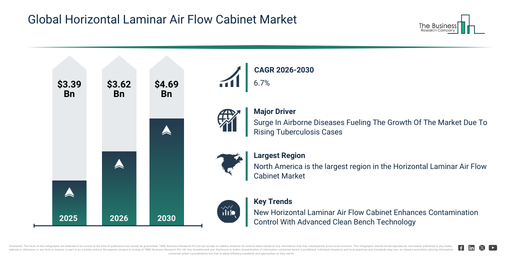
    The horizontal laminar air flow cabinet market has demonstrated significant expansion over recent years. Its value is anticipated to increase from $3.39 billion in 2025 to $3.62 billion in 2026, registering a compound annual growth rate (CAGR) of 7.0%. The historical development of this market is attributable to factors such as an escalation in pharmaceutical manufacturing capabilities, the widening scope of life science research endeavors, an increased preference for sterile laboratory environments, more stringent laboratory safety protocols, and the expanding utilization of cleanroom equipment.

    The market for horizontal laminar air flow cabinets is projected to experience robust expansion over the coming years. This market is anticipated to reach $4.69 billion by 2030, demonstrating a compound annual growth rate (CAGR) of 6.7%. The anticipated expansion during this forecast period stems from factors such as heightened investments in biopharmaceutical research, an escalating need for sophisticated laboratory safety gear, the proliferation of electronics and semiconductor laboratories, a heightened emphasis on production free from contamination, and the greater substitution of traditional lab workstations. Key trends foreseen for the forecast horizon encompass the wider implementation of high-efficiency HEPA and ULPA filtration, a burgeoning requirement for compact and portable cabinet configurations, an increased concentration on energy-saving airflow systems, the broadening availability of tailored cabinets for specific laboratory needs, and a reinforced commitment to standards for controlling contamination.

    Get A Free Sample Report With In-Depth Market Insights:

    https://thebusinessresearchcompany.com/sample_request?id=49717873&type=smp&name=Horizontal%20Laminar%20Air%20Flow%20Cabinet%20Market%20Report%202026&utm_source=Blogs&utm_medium=Paid&utm_campaign=Nov_PR

    Horizontal Laminar Air Flow Cabinet Market Industry Drivers: What’s Behind The Revenue Growth?

    The future expansion of the horizontal laminar air flow cabinet market is anticipated to be fueled by the rising occurrence of airborne diseases. Conditions such as tuberculosis, influenza, and measles are spread through the air via minute particles and droplets expelled when an infected individual coughs, sneezes, or converses. The escalating incidence of these airborne illnesses is influenced by factors including heightened urbanization, global travel, and shifts in weather patterns. Horizontal laminar air flow cabinets are instrumental in mitigating airborne diseases by delivering a constant, unidirectional stream of HEPA-filtered air across the workspace, thus establishing a sterile setting that diminishes the potential for airborne contamination and the spread of pathogens. For instance, in October 2024, the Global Tuberculosis Report, issued by the Switzerland-based global health agency, the World Health Organization, indicated that the worldwide count of newly diagnosed tuberculosis (TB) cases reached 8.2 million in 2023, representing an increase from 7.5 million in 2022. Consequently, the increasing prevalence of airborne diseases is driving the horizontal laminar air flow cabinet market.

    Horizontal Laminar Air Flow Cabinet Market Segmentation: How Does The Market Break Down By Category?

    The horizontal laminar air flow cabinet market covered in this report is segmented –

    1) By Type: Mobile Horizontal Laminar Air Flow Cabinet, Bench Top Horizontal Laminar Air Flow Cabinet, Table Top Horizontal Laminar Air Flow Cabinet

    2) By Filtration System: High Efficiency Particulate Air (HEPA) Filtration, Ultra Low Particulate Air (ULPA) Filtration

    3) By Application: Pharmaceutical Industry, Medical And Healthcare Sector, Chemical Laboratories, Food And Beverage Industry, Electronics Industry, Life Science Research

    Subsegments:

    1) By Mobile Horizontal Laminar Air Flow Cabinet: Single-Sided Mobile Cabinets, Double-Sided Mobile Cabinets

    2) By Bench Top Horizontal Laminar Air Flow Cabinet: Small Capacity Bench Top Cabinets, Large Capacity Bench Top Cabinets

    3) By Table Top Horizontal Laminar Air Flow Cabinet: Standard Table Top Cabinets, Compact Table Top Cabinets

    Horizontal Laminar Air Flow Cabinet Market Growth Trends Reshaping The Competitive Landscape

    Leading companies in the horizontal laminar air flow cabinet market are innovating flow hood solutions, such as clean bench technology, to offer a safer and more efficient working environment for laboratory applications. This clean bench technology within horizontal laminar air flow cabinets involves employing filtered, sterile airflow to safeguard samples and experiments from external contaminants. For instance, in August 2023, Labconco Corporation, a US-based laboratory equipment manufacturing company, launched the Nexus horizontal clean bench, an advanced laminar flow hood providing superior protection for non-hazardous samples in pharmaceutical and life science settings. It is equipped with an intuitive Nexus OS featuring a 5” touchscreen, cap technology for precise airflow, and energy-efficient electronically commutated motor (ECM) blowers, which collectively ensure simple disinfection and minimal contamination risk.

    Horizontal Laminar Air Flow Cabinet Market Competitive Overview And Top Companies

    Major companies operating in the horizontal laminar air flow cabinet market are Thermo Fisher Scientific Inc., Avantor Inc., Getinge AB, Allegro Global Pvt. Ltd., BioBase Group, Kewaunee Scientific Corporation, Telstar, Erlab Group, NuAire Inc., Airtech Japan Ltd., Labconco Corporation, Germfree Laboratories Inc., Bionics Scientific Technologies Pvt. Ltd., Air Science LLC, Esco Lifesciences Group, Labtron Equipment Ltd., Brinda Pharma Technologies Pvt. Ltd., LAMSYSTEMS GmbH, Monmouth Scientific Limited, Cleatech LLC, MRC Laboratory Equipment Ltd., iGene Labserve Private Limited, Bigneat Ltd., Labstac Ltd., Alpha Linear Co. Ltd.

    View The Full Horizontal Laminar Air Flow Cabinet Market Report:

    https://thebusinessresearchcompany.com/report/horizontal-laminar-air-flow-cabinet-global-market-report?utm_source=Blogs&utm_medium=Paid&utm_campaign=Nov_PR

    Horizontal Laminar Air Flow Cabinet Market Regional Analysis: Which Geography Leads On Revenue?

    North America was the largest region in the horizontal laminar air flow cabinet market in 2025. The regions covered in the horizontal laminar air flow cabinet market report are Asia-Pacific, South East Asia, Western Europe, Eastern Europe, North America, South America, Middle East, Africa.

    Reach Out To Our Team:

    The Business Research Company: https://www.thebusinessresearchcompany.com/

    Americas: +1 310-496-7795

    Asia: +44 7882 955267 & +91 8897263534

    Europe: +44 7882 955267

    Email us at: marketing@tbrc.info

    Follow us on:

    LinkedIn: https://in.linkedin.com/company/the-business-research-company

    YouTube: https://www.youtube.com/channel/UC24_fI0rV8cR5DxlCpgmyFQ

    Global Market Model: https://www.thebusinessresearchcompany.com/global-market-model

  • Homeopathy Medicine Treatment Market Trends Reshaping Industry Growth Through 2030

    Homeopathy Medicine Treatment Market Trends Reshaping Industry Growth Through 2030

    Featuring market attractiveness scoring, total addressable market sizing, company benchmarking matrices, interactive Excel dashboards, deeper supply chain intelligence, emerging startup tracking, and granular product-level insights, The Business Research Company’s 2026 market reports are built to deliver research that is both more actionable and more strategically valuable.

    Homeopathy Medicine Treatment Market Value Growth And Long-Term Outlook

    The homeopathy medicine treatment market size has experienced considerable expansion in recent years. It is anticipated to rise from $13.02 billion in 2025 to $14.96 billion in 2026, demonstrating a compound annual growth rate (CAGR) of 14.8%. Factors contributing to its historical growth include the enduring cultural acceptance of homeopathy, heightened worries about the side effects of conventional medicines, the cost-effectiveness of homeopathic treatments, an increase in independent homeopathic clinics, and greater consumer confidence in natural remedies.

    The size of the homeopathy medicine treatment market is projected to experience substantial expansion over the coming years. This market is anticipated to reach $25.65 billion by 2030, exhibiting a compound annual growth rate (CAGR) of 14.4%. Factors contributing to this growth during the forecast period include an increased emphasis on preventive healthcare, a rising demand for personalized and holistic medical approaches, the proliferation of digital health commerce platforms, a heightened interest in immunity-enhancing treatments, and a growing consumer preference for sustainable healthcare options. Key trends anticipated for the forecast period encompass a stronger inclination towards natural and holistic treatment methods, an escalating demand for preventive and wellness-focused therapies, a greater acceptance of alternative medicine for long-term health issues, the broadening availability of over-the-counter homeopathic remedies, and an increase in online and direct-to-consumer access to homeopathy.

    Get A Free Sample Report With In-Depth Market Insights:

    https://thebusinessresearchcompany.com/sample_request?id=85960055&type=smp&name=Homeopathy%20Medicine%20Treatment%20Market%20Report%202026&utm_source=Blogs&utm_medium=Paid&utm_campaign=Nov_PR

    Homeopathy Medicine Treatment Market Growth Factors: What’s Supporting Expansion?

    The increasing understanding and recognition of homeopathic treatments are projected to fuel the expansion of the homeopathy medicine treatment market in the coming years. Homeopathic medicines constitute a crucial aspect of homeopathy, prescribed based on a patient’s specific symptoms along with their comprehensive physical, mental, and emotional profile. This rising awareness regarding homeopathic treatment is attributable to its natural, non-intrusive methodology and minimal adverse effects compared to conventional pharmaceuticals, as consumers are progressively searching for integrated and personalized healthcare choices. The benefits of minimal side effects, customized therapy, and an all-encompassing approach have led to wider acceptance and promoted greater adoption, consequently boosting the demand for homeopathic medicines and associated services. For instance, in March 2023, the Ministry of Ayush, an agency of the Government of India, signed 24 Country-to-Country Memorandum of Understanding (MoUs) for cooperation in traditional medicine and homeopathy with foreign nations. Therefore, the growing awareness concerning the homeopathic treatment option is driving the growth of the homeopathy medicine treatment market.

    Homeopathy Medicine Treatment Market Segment Trends And Revenue Contributors

    The homeopathy medicine treatment market covered in this report is segmented –

    1) By Product Type: Single Remedies, Combination Remedies, Complex Medicines

    2) By Application: Chronic Diseases, Acute Diseases, Preventive Care

    3) By Distribution Channel: Retail Pharmacies, Online Platforms, Homeopathic Clinics

    Subsegments:

    1) By Single Remedies: Dilutions, Mother Tinctures, Bio-Chemic Tablets, Medicated Pellets

    2) By Combination Remedies: Tablet Formulations, Liquid Formulations, Powder Formulations, Globules

    3) By Complex Medicines: Anti-Allergic Complex, Pain Relief Complex, Immunity Boosting Complex, Respiratory Care Complex

    Homeopathy Medicine Treatment Market Trends Shaping Long-Term Demand

    Leading companies in the homeopathy medicine treatment market are concentrating on creating inventive solutions, like online homeopathy medicine platforms, to boost ease of access and user convenience. An AI assistant homeopathic medicine tool serves as a digital platform or application powered by artificial intelligence, aiding users in identifying suitable homeopathic remedies based on their symptoms and individual health details. For example, in April 2024, Homeopathic.AI, a Canada-based retail health and personal care provider, unveiled the first AI assistant specifically for homeopathic medicine. This pioneering system utilizes advanced algorithms and a comprehensive database to furnish users with personalized, accurate health advice. Its goal is to satisfy the rising demand for alternative medicine by making homeopathic guidance more widely available globally. This inclination towards AI integration emphasizes the industry’s pivot towards employing technology to improve the scope and efficiency of homeopathic remedies.

    Homeopathy Medicine Treatment Market Competitive Landscape: Which Companies Lead The Industry?

    Major companies operating in the homeopathy medicine treatment market are Dr. Willmar Schwabe GmbH & Co. KG, ?Boiron, Weleda, Biologische Heilmittel Heel GmbH, Bakson’s Homoeopathy, Ainsworths, Homeocare International, Dr. Reckeweg & Co. GmbH, Allen Homeopathy, Bharat Homeopathy, Dr. Batra’s Homeopathy, Positive Homeopathy, Hahnemann Laboratories Inc., Similia Homoeopathic Clinic, Homeocan Inc., Life Force, Radient Pharma, New Life Homoeopathy, Vital Homeos, A Nelson & Co Limited, Adelmar Pharma GmbH, Ralson Remedies, Hapdco, Adel German Homeopathy, Sharda Boiron Laboratories Global, Haslab

    View The Full Homeopathy Medicine Treatment Market Report:

    https://thebusinessresearchcompany.com/report/homeopathy-medicine-treatment-global-market-report?utm_source=Blogs&utm_medium=Paid&utm_campaign=Nov_PR

    Homeopathy Medicine Treatment Market Geographic Spread And Regional Opportunities

    Europe was the largest region in the homeopathy medicine treatment market in 2025. Asia-Pacific is expected to be the fastest-growing region in the forecast period. The regions covered in the homeopathy medicine treatment market report are Asia-Pacific, South East Asia, Western Europe, Eastern Europe, North America, South America, Middle East, Africa.

    Reach Out To Our Team:

    The Business Research Company: https://www.thebusinessresearchcompany.com/

    Americas: +1 310-496-7795

    Asia: +44 7882 955267 & +91 8897263534

    Europe: +44 7882 955267

    Email us at: marketing@tbrc.info

    Follow us on:

    LinkedIn: https://in.linkedin.com/company/the-business-research-company

    YouTube: https://www.youtube.com/channel/UC24_fI0rV8cR5DxlCpgmyFQ

    Global Market Model: https://www.thebusinessresearchcompany.com/global-market-model
  • Home Vision Screening App Market Growth To $1.39 Billion Creates New Opportunities Across The Industry

    Home Vision Screening App Market Growth To $1.39 Billion Creates New Opportunities Across The Industry

    Built to provide research that’s more actionable and strategically valuable, The Business Research Company’s 2026 market reports include market attractiveness analysis, total addressable market sizing, company benchmarking matrices, interactive Excel dashboards, broader supply chain intelligence, emerging startup tracking, and in-depth product insights.

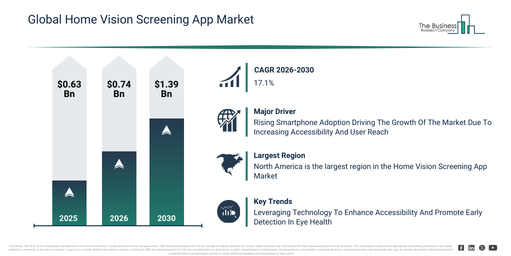
    Home Vision Screening App Market Poised To Hit $1.39 Billion By 2030 With A 17.1% CAGR

    The home vision screening app market size has seen rapid growth in recent years. It is expected to expand from $0.63 billion in 2025 to $0.74 billion in 2026, achieving a compound annual growth rate (CAGR) of 17.4%. This historical growth can be attributed to increasing smartphone penetration, rising awareness of preventive eye health, the expansion of digital health literacy, improved mobile display resolution, and the growing adoption of home-based screening tools.

    The home vision screening app market size is set for substantial expansion over the next few years, with projections indicating it will reach $1.39 billion by 2030, demonstrating a compound annual growth rate (CAGR) of 17.1%. This anticipated growth can be attributed to a rising demand for early detection of vision disorders, increased integration with tele-ophthalmology services, advancements in AI-powered diagnostic accuracy, expanding usage in school screening programs, and a heightened focus on accessible eye care solutions. Notable trends during this forecast period include the increasing adoption of self-guided vision screening tools, a rise in the use of smartphone-based visual diagnostics, greater integration of AI-assisted vision analysis, an expansion of screening applications for pediatric and geriatric populations, and an enhanced emphasis on early detection and continuous monitoring.

    Get A Free Sample Report With In-Depth Market Insights:

    https://thebusinessresearchcompany.com/sample_request?id=28577034&type=smp&name=Home%20Vision%20Screening%20App%20Market%20Report%202026&utm_source=Blogs&utm_medium=Paid&utm_campaign=Nov_PR

    Home Vision Screening App Market Demand Drivers: What’s Powering Industry Growth?

    The expanding adoption of smartphones is anticipated to propel the growth of the home vision screening app market in the future. These handheld devices integrate communication, internet access, and computing functions into a single unit. The rise in smartphone ownership is driven by increasing internet penetration, which allows more individuals convenient access to online services, social media, and digital entertainment from their devices. High smartphone penetration significantly supports home vision screening apps by ensuring widespread accessibility, as a greater number of users can easily download and utilize these apps for eye tests without requiring specialized equipment or clinic visits. For instance, in February 2023, according to a report by Uswitch Limited, a UK-based online and telephone comparison and switching service provider, it is expected that by 2025, 95% of the 68.3 million people living in the UK will own smartphones. Consequently, the increasing use of smartphones is poised to propel the growth of the home vision screening app market.

    Home Vision Screening App Market Segment Analysis Spotlighting Growth Areas

    The home vision screening app market covered in this report is segmented –

    1) By Product Type: Visual Acuity Apps, Color Vision Apps, Eye Health Monitoring Apps, Other Product Types

    2) By Platform: iOS, Android, Windows, Other Platforms

    3) By Distribution Channel: App Stores, Online Platforms, Other Distribution Channels

    4) By Application: Children, Adults, Elderly, Other Applications

    5) By End-User: Individuals, Hospitals And Clinics, Schools, Other End-Users

    Subsegments:

    1) By Visual Acuity Apps: Distance Vision Test, Near Vision Test, Astigmatism Test, Contrast Sensitivity Test

    2) By Color Vision Apps: Red Green Color Test, Blue Yellow Color Test, Complete Color Blindness Test

    3) By Eye Health Monitoring Apps: Dry Eye Monitoring, Glaucoma Monitoring, Macular Degeneration Monitoring, Cataract Progress Tracking

    4) By Other Product Types: Pediatric Vision Screening, Binocular Vision Assessment, Low Vision Support, Eye Exercise And Therapy

    Home Vision Screening App Market Innovation Trends Shaping Future Development

    Major companies operating in the home vision screening app market are focusing on developing advanced approaches, such as multilingual home self-assessment, to enhance accessibility, enable early detection of vision problems, and empower users to take proactive steps in managing their eye health from the comfort of their homes. Multilingual home self-assessment is a feature that allows users to perform eye health evaluations at home using an app that supports multiple languages, ensuring accessibility for diverse populations. For instance, in February 2024, L V Prasad Eye Institute, an India-based eye institute, and Infosys Limited, an India-based information technology (IT) services and consulting company, launched a new home vision screening app. This innovative app enables users to perform comprehensive eye assessments from the comfort of their homes, providing early alerts for potential vision issues, facilitating timely medical intervention, and making eye care more accessible to individuals in remote or underserved areas.

    Home Vision Screening App Market Leading Companies: Who Holds The Strongest Market Presence?

    Major companies operating in the home vision screening app market are Carl Zeiss Vision GmbH, Acuity Pro LLC, Visibly Inc., Vula Vision by hearX Group, EyeQue Corporation, EyeXam LLC, GoCheck Kids, Peek Vision Limited, Smart Optometry LLC, Vivid Vision Inc., Eyenuk Inc., NovaSight Ltd., Oculocare Medical AG, Vision.app Ltd., Clear Inc., WHOeyes App, Opternative Inc., OrCam Technologies Ltd., iCare Home, EyecareLive Inc.

    View The Full Home Vision Screening App Market Report:

    https://thebusinessresearchcompany.com/report/home-vision-screening-app-global-market-report?utm_source=Blogs&utm_medium=Paid&utm_campaign=Nov_PR

    Home Vision Screening App Market Top Region By Revenue And Market Share

    North America was the largest region in the home vision screening app market in 2025. Asia-Pacific is expected to be the fastest-growing region in the forecast period. The regions covered in the home vision screening app market report are Asia-Pacific, South East Asia, Western Europe, Eastern Europe, North America, South America, Middle East, Africa.

    Reach Out To Our Team:

    The Business Research Company: https://www.thebusinessresearchcompany.com/

    Americas: +1 310-496-7795

    Asia: +44 7882 955267 & +91 8897263534

    Europe: +44 7882 955267

    Email us at: marketing@tbrc.info

    Follow us on:

    LinkedIn: https://in.linkedin.com/company/the-business-research-company

    YouTube: https://www.youtube.com/channel/UC24_fI0rV8cR5DxlCpgmyFQ

    Global Market Model: https://www.thebusinessresearchcompany.com/global-market-model