Blog

  • Retail Clinics And In Store Healthcare Market Size Reaches $45.82 Billion In 2026: What Is Driving Growth?

    Retail Clinics And In Store Healthcare Market Size Reaches $45.82 Billion In 2026: What Is Driving Growth?

    Featuring market attractiveness scoring, total addressable market sizing, company benchmarking matrices, interactive Excel dashboards, deeper supply chain intelligence, emerging startup tracking, and granular product-level insights, The Business Research Company’s 2026 market reports are built to deliver research that is both more actionable and more strategically valuable.

    Retail Clinics And In Store Healthcare Market Set To Climb From $45.82 Billion In 2026 To $90.78 Billion By 2030

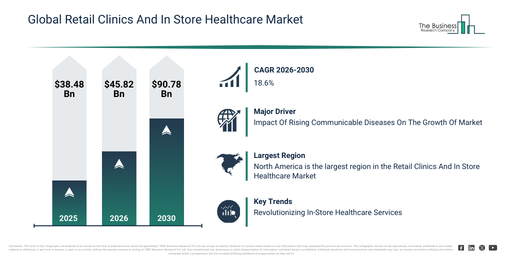
    The retail clinics and in store healthcare market has seen substantial growth in recent years. This market is expected to expand from $38.48 billion in 2025 to $45.82 billion in 2026, demonstrating a compound annual growth rate (CAGR) of 19.1%. The historic period’s growth can be attributed to factors such as increasing healthcare access gaps, a rising consumer preference for retail-based care, the expansion of pharmacy-led health services, growth in outpatient service demand, and increasing preventive care awareness.

    The retail clinics and in store healthcare market is anticipated to undergo significant expansion in the coming years, reaching $90.78 billion by 2030 with a compound annual growth rate (CAGR) of 18.6%. This projected growth stems from increased investments in integrated retail healthcare networks, a rising acceptance of insurance-linked retail services, an expansion of chronic care offerings, the growing utilization of digital health platforms, and stronger collaborations between retailers and healthcare providers. Prominent trends for this period involve greater integration of in-store healthcare services, an uptick in the adoption of preventive and wellness programs, the extension of chronic disease management into retail settings, the increasing use of digital payment and insurance models, and a heightened focus on patient convenience and access.

    Get A Free Sample Report With In-Depth Market Insights:

    https://thebusinessresearchcompany.com/sample_request?id=12108806&type=smp&name=Retail%20Clinics%20And%20In%20Store%20Healthcare%20Market%20Report%202026&utm_source=Blogs&utm_medium=Paid&utm_campaign=Nov_PR

    Retail Clinics And In Store Healthcare Market Growth Factors: What’s Supporting Expansion?

    An increasing incidence of communicable diseases is anticipated to drive the expansion of the retail clinics and in-store healthcare market moving ahead. These diseases are conditions stemming from infectious agents, including bacteria, viruses, fungi, or parasites, which are transmissible between individuals via diverse transmission methods. The escalation in communicable diseases is attributable to elements like inadequate sanitation, insufficient vaccination, and congested living environments. Retail clinics and in-store healthcare offerings play a role in managing communicable diseases by offering convenient availability of preventive care, immunizations, and timely diagnosis, consequently diminishing the propagation of infections and fostering improved public health results.

    Retail Clinics And In Store Healthcare Market Segment Analysis And Revenue Potential

    The retail clinics and in store healthcare market covered in this report is segmented –

    1) By Service Type: Acute Care, Preventive Care, Wellness And Screening, Chronic Disease Management

    2) By Ownership: Retail-Owned, Hospital-Owned, Independent

    3) By Payment Mode: Insurance, Out-Of-Pocket

    4) By Application: Big Box Retailer, Drugstore Chain, Grocery Chain, Standalone Drug Store

    Subsegments:

    1) By Acute Care: Treatment For Minor Injuries, Treatment For Common Illnesses, Infections And Skin Conditions

    2) By Preventive Care: Vaccinations And Immunizations, Health Risk Assessments, Counseling And Education On Lifestyle Changes

    3) By Wellness And Screening: Blood Pressure Monitoring, Cholesterol And Blood Glucose Screening, Weight Management And Body Composition Analysis

    4) By Chronic Disease Management: Diabetes Management, Hypertension Monitoring, Asthma And COPD Management

    Retail Clinics And In Store Healthcare Market Trends Shaping Long-Term Demand

    Major entities operating within the retail clinics and in-store healthcare market are prioritizing the development of advanced solutions, including innovative in-store comprehensive healthcare services, to boost customer convenience. These in-store comprehensive healthcare services provide a spectrum of medical offerings directly within a retail environment, encompassing enhanced pharmacy and healthcare services, enabling customers to manage their well-being at one central point.

    Retail Clinics And In Store Healthcare Market Key Players Shaping Industry Direction

    Major companies operating in the retail clinics and in store healthcare market are Walmart Inc., CVS Health Corporation, Walgreens Boots Alliance Inc., The Kroger Co., Albertsons Companies Inc., Tesco PLC, Publix Super Markets Inc., Loblaw Companies Limited, H E B LP, Asda Stores Limited, Rite Aid Corporation, Giant Eagle Inc., Lloyds Pharmacy Limited, Superdrug Stores PLC, Waitrose And Partners, Bashas Inc., Safeway Inc., RediClinic LLC, MinuteClinic LLC, Take Care Health Systems

    View The Full Retail Clinics And In Store Healthcare Market Report:

    https://thebusinessresearchcompany.com/report/retail-clinics-and-in-store-healthcare-global-market-report?utm_source=Blogs&utm_medium=Paid&utm_campaign=Nov_PR

    Retail Clinics And In Store Healthcare Market Regional Analysis: Which Geography Leads On Revenue?

    North America was the largest region in the retail clinics and the in-store healthcare market in 2025. Asia-Pacific is expected to be the fastest-growing region in the forecast period. The regions covered in the retail clinics and in store healthcare market report are Asia-Pacific, South East Asia, Western Europe, Eastern Europe, North America, South America, Middle East, Africa.

    Reach Out To Our Team:

    The Business Research Company: https://www.thebusinessresearchcompany.com/

    Americas: +1 310-496-7795

    Asia: +44 7882 955267 & +91 8897263534

    Europe: +44 7882 955267

    Email us at: marketing@tbrc.info

    Follow us on:

    LinkedIn: https://in.linkedin.com/company/the-business-research-company

    YouTube: https://www.youtube.com/channel/UC24_fI0rV8cR5DxlCpgmyFQ

    Global Market Model: https://www.thebusinessresearchcompany.com/global-market-model
  • Retail Clinics Market Valued At $12.48 Billion In 2026: Key Trends And Growth Drivers

    Retail Clinics Market Valued At $12.48 Billion In 2026: Key Trends And Growth Drivers

    Built to provide research that’s more actionable and strategically valuable, The Business Research Company’s 2026 market reports include market attractiveness analysis, total addressable market sizing, company benchmarking matrices, interactive Excel dashboards, broader supply chain intelligence, emerging startup tracking, and in-depth product insights.

    Retail Clinics Market Forecast: Value Set To Climb From $7.66 Billion To $12.48 Billion

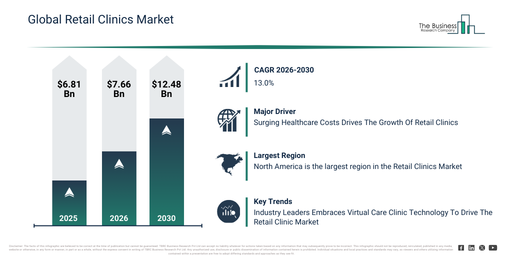
    The retail clinics market has seen substantial growth in recent years. This market is expected to expand from $6.81 billion in 2025 to $7.66 billion in 2026, achieving a compound annual growth rate (CAGR) of 12.5%. The expansion observed in previous periods is attributable to factors such as the increasing strain on conventional healthcare systems, greater consumer demand for convenient care, the proliferation of pharmacy-based clinics, rising healthcare expenses, and the growing acceptance of walk-in care models.

    The retail clinics market is projected to experience substantial expansion over the upcoming years. This market is anticipated to reach a valuation of $12.48 billion by 2030, demonstrating a compound annual growth rate (CAGR) of 13.0%. Factors contributing to this growth during the forecast timeframe include the wider acceptance of hybrid care approaches, augmented investments in retail healthcare facilities, enhanced incorporation of telehealth solutions, an increase in chronic care provisions within retail clinics, and a heightened emphasis on value-based care provision. Key trends foreseen for the forecast period encompass the broadening reach of retail-centric healthcare paradigms, a surging need for accessible primary care, greater utilization of point-of-care diagnostic tools, the incorporation of digital health records into retail clinics, and an intensified concentration on preventive health services.

    Get A Free Sample Report With In-Depth Market Insights:

    https://thebusinessresearchcompany.com/sample_request?id=29170868&type=smp&name=Retail%20Clinics%20Market%20Report%202026&utm_source=Blogs&utm_medium=Paid&utm_campaign=Nov_PR

    Retail Clinics Market Demand Drivers: What’s Powering Industry Growth?

    Elevated healthcare expenses are anticipated to stimulate expansion within the retail clinic sector in the foreseeable future. These costs encompass the total expenditures for medical services, treatments, and products intended to preserve or enhance an individual’s health. The escalating prices of traditional healthcare services have prompted individuals to seek more economical options, thereby fueling the demand for retail clinics that provide affordable and transparent pricing.

    Retail Clinics Market Segmentation And Category Overview

    The retail clinics market covered in this report is segmented –

    1) By Service Type: Preventive Care, Immunization, Minor Illness, Injury Treatment, Other Service Types

    2) By Service Model: Membership, Insurance-Based Model, Fee-For-Service

    3) By Ownership: Standalone, Hospital-Owned, Investor-Owned, Other Ownerships

    4) By Application: Vaccination, Point-Of-Care, Clinical Chemistry And Immunoassay, Other Applications

    5) By End Use: Stores, Malls, Hospitals, Other End Uses

    Subsegments:

    1) By Preventive Care: Health Screenings, Wellness Exams, Chronic Disease Management

    2) By Immunization: Vaccinations For Children, Adult Vaccinations, Travel Vaccinations

    3) By Minor Illness: Cold And Flu Treatment, Allergies, Ear Infections

    4) By Injury Treatment: Sprains And Strains, Minor Cuts And Burns, Fracture Management

    5) By Other Service Types: Physical Exams, Lab Testing, Health Education And Counseling

    Retail Clinics Market Innovation Trends Shaping Future Development

    Key companies operating within the retail clinic market are prioritizing technological innovations, such as virtual care clinics, to establish a competitive edge. A virtual care clinic represents a healthcare delivery model that provides medical services, consultations, and support remotely through digital and online technologies.

    Retail Clinics Market Competitive Analysis Of Leading Industry Participants

    Major companies operating in the retail clinics market are The Kroger Co., CVS Health Corporation, Rite Aid Corp., Walmart Inc., Walgreen Co., NextCare, Bellin Health Systems, Aurora Health Care, Sutter Health, Kaiser Foundation Health Plan Inc., Geisinger Health, Centennial Medical Group, Access Health, AtlantiCare, RediClinic LLC, Wellness Express LLC, MedExpress Urgent Care, Concentra Inc., The Little Clinic, FastMed Urgent Care, CityMD, U.S. HealthWorks Inc., Fastcare, Carespot

    View The Full Retail Clinics Market Report:

    https://thebusinessresearchcompany.com/report/retail-clinics-global-market-report?utm_source=Blogs&utm_medium=Paid&utm_campaign=Nov_PR

    Retail Clinics Market Geographic Spread And Regional Opportunities

    North America was the largest region in the retail clinics market in 2025. The regions covered in the retail clinics market report are Asia-Pacific, South East Asia, Western Europe, Eastern Europe, North America, South America, Middle East, Africa.

    Reach Out To Our Team:

    The Business Research Company: https://www.thebusinessresearchcompany.com/

    Americas: +1 310-496-7795

    Asia: +44 7882 955267 & +91 8897263534

    Europe: +44 7882 955267

    Email us at: marketing@tbrc.info

    Follow us on:

    LinkedIn: https://in.linkedin.com/company/the-business-research-company

    YouTube: https://www.youtube.com/channel/UC24_fI0rV8cR5DxlCpgmyFQ

    Global Market Model: https://www.thebusinessresearchcompany.com/global-market-model
  • Restless Leg Syndrome Market Size In 2026: Growth Outlook And Forecast Through 2030

    Restless Leg Syndrome Market Size In 2026: Growth Outlook And Forecast Through 2030

    Backed by market attractiveness analysis, total addressable market sizing, company benchmarking matrices, interactive Excel dashboards, wider supply chain intelligence, emerging startup coverage, and detailed product-level insights, The Business Research Company’s 2026 market reports are designed to offer research that is more actionable and strategically valuable than ever.

    Restless Leg Syndrome Market Revenue Growth On Track For A 13% CAGR Through 2030

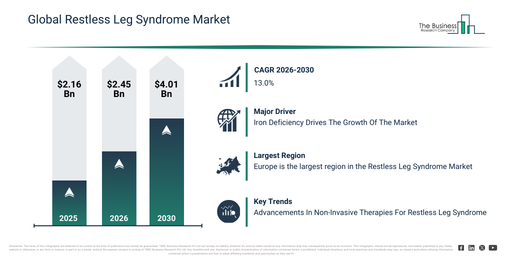
    The restless leg syndrome market has experienced rapid expansion in recent years. Forecasts show it will escalate from $2.16 billion in 2025 to $2.45 billion in 2026, demonstrating a compound annual growth rate (CAGR) of 13.4%. Historically, this growth can be attributed to several factors such as the increasing diagnosis of neurological disorders, a rising prevalence of iron deficiency conditions, enhanced awareness of sleep-related health concerns, the proliferation of neurology specialty clinics, and improved access to oral medications.

    The market for restless leg syndrome is projected to experience substantial expansion in the coming years, reaching a valuation of $4.01 billion by 2030, driven by a compound annual growth rate (CAGR) of 13.0%. This anticipated growth during the forecast period is fueled by several factors, including a heightened emphasis on individualized neurological treatments, a surging need for enduring symptom management solutions, the wider availability of digital sleep health instruments, increased research into non-dopaminergic remedies, and improved patient understanding and diagnostic processes. Key trends expected over the forecast period encompass a greater utilization of dopamine modulating therapies, an increasing preference for non-pharmacological treatment methods, a heightened concentration on managing sleep disorders, the development of more personalized treatment strategies, and a deeper understanding of the origins of secondary restless leg syndrome.

    Get A Free Sample Report With In-Depth Market Insights:

    https://thebusinessresearchcompany.com/sample_request?id=19802498&type=smp&name=Restless%20Leg%20Syndrome%20Market%20Report%202026&utm_source=Blogs&utm_medium=Paid&utm_campaign=Nov_PR

    Restless Leg Syndrome Market Growth Drivers: What’s Behind The Acceleration?

    The escalating occurrence of iron deficiency is anticipated to stimulate the expansion of the restless leg syndrome market in the future. Iron deficiency is defined as a condition where the body lacks sufficient iron for the production of healthy red blood cells, leading to symptoms such as exhaustion, frailty, and pale skin. The rising frequency of iron deficiency stems from factors like insufficient dietary intake, blood loss, malabsorption issues, and elevated iron needs during gestation or growth. Treatment for restless leg syndrome frequently involves iron supplementation or adjustments to diet, which not only assist in alleviating uncomfortable urges and sensations but also work to correct the underlying iron deficiency by replenishing the body’s iron stores, enhancing red blood cell creation, and restoring proper neurological function.

    Restless Leg Syndrome Market Segment Outlook: Which Categories Are Growing Fastest?

    The restless leg syndrome market covered in this report is segmented –

    1) By Type: Primary Restless Legs Syndrome, Secondary Restless Legs Syndrome

    2) By Treatment Type: Medicine And Devices, Surgery

    3) By Route Of Administration: Oral, Injectable

    4) By Distribution Channel: Hospital Pharmacy, Retail Pharmacy, Online Pharmacy

    5) By Application: Neurological Treatment, Sleep Disorders, Movement Disorders, Symptom Management

    Subsegments:

    1) By Primary Restless Legs Syndrome: Idiopathic Restless Legs Syndrome, Hereditary Restless Legs Syndrome

    2) By Secondary Restless Legs Syndrome: Iron Deficiency-related Restless Legs Syndrome, Chronic Kidney Disease-related Restless Legs Syndrome, Pregnancy-related Restless Legs Syndrome, Medication-induced Restless Legs Syndrome

    Restless Leg Syndrome Market Trends Redefining Industry Growth

    Leading companies in the restless leg syndrome (RLS) market are dedicated to developing inventive solutions, such as new non-invasive therapies, to improve symptom management and enhance patient outcomes. Novel non-invasive therapies are innovative medical treatments that do not require surgery or skin penetration, aiming to relieve various conditions through advanced techniques like electrical stimulation, light therapy, or external devices.

    Restless Leg Syndrome Market Leading Companies And Competitive Benchmarking

    Major companies operating in the restless leg syndrome market are Pfizer Inc., Roche Holding AG, Merck And Co Inc., Novartis International AG, GlaxoSmithKline plc, Teva Pharmaceutical Industries Ltd., Boehringer Ingelheim International GmbH, Astellas Pharma Inc., UCB S.A., Kyowa Kirin Co Ltd., Amneal Pharmaceuticals Inc., Lupin Pharmaceuticals Inc., Alembic Pharmaceuticals Limited, Mundipharma International Limited, Azurity Pharmaceuticals LLC, Otsuka Pharmaceutical Co Ltd., Horizon Therapeutics plc, Mylan N.V., Sun Pharmaceutical Industries Ltd., Zydus Lifesciences Ltd., Cipla Ltd., Dr Reddys Laboratories Ltd., Hikma Pharmaceuticals plc, Almirall S.A.

    View The Full Restless Leg Syndrome Market Report:

    https://thebusinessresearchcompany.com/report/restless-leg-syndrome-global-market-report?utm_source=Blogs&utm_medium=Paid&utm_campaign=Nov_PR

    Restless Leg Syndrome Market Top Region By Revenue And Market Share

    Europe was the largest region in the restless leg syndrome market in 2025. North-America is expected to be the fastest-growing region in the forecast period. The regions covered in the restless leg syndrome market report are Asia-Pacific, South East Asia, Western Europe, Eastern Europe, North America, South America, Middle East, Africa.

    Reach Out To Our Team:

    The Business Research Company: https://www.thebusinessresearchcompany.com/

    Americas: +1 310-496-7795

    Asia: +44 7882 955267 & +91 8897263534

    Europe: +44 7882 955267

    Email us at: marketing@tbrc.info

    Follow us on:

    LinkedIn: https://in.linkedin.com/company/the-business-research-company

    YouTube: https://www.youtube.com/channel/UC24_fI0rV8cR5DxlCpgmyFQ

    Global Market Model: https://www.thebusinessresearchcompany.com/global-market-model
  • Respiratory Syncytial Virus (RSV) Therapeutics Market Trends Supporting 23% CAGR Growth Through 2030

    Respiratory Syncytial Virus (RSV) Therapeutics Market Trends Supporting 23% CAGR Growth Through 2030

    Featuring market attractiveness scoring, total addressable market sizing, company benchmarking matrices, interactive Excel dashboards, deeper supply chain intelligence, emerging startup tracking, and granular product-level insights, The Business Research Company’s 2026 market reports are built to deliver research that is both more actionable and more strategically valuable.

    Respiratory Syncytial Virus (RSV) Therapeutics Market Value Growth And Long-Term Outlook

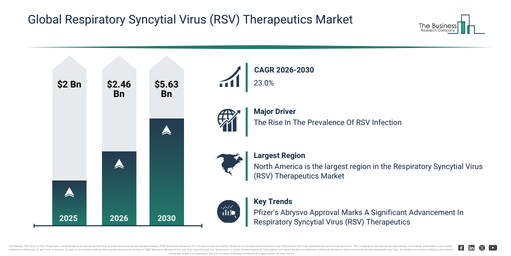
    The respiratory syncytial virus (rsv) therapeutics market size has seen substantial growth in recent years. It is anticipated to increase from $2 billion in 2025 to $2.46 billion in 2026, achieving a compound annual growth rate (CAGR) of 23.2%. This historical growth is attributable to factors such as rising rsv-related hospitalization rates, a sustained reliance on supportive care treatments, the initial uptake of palivizumab therapy, an increase in pediatric healthcare expenditure, and broader access to hospital-based treatments.

    The respiratory syncytial virus (rsv) therapeutics market size is projected to experience substantial expansion in the coming years, reaching $5.63 billion by 2030, with a compound annual growth rate (CAGR) of 23.0%. This growth during the forecast period is driven by factors such as heightened investments in rsv vaccine and drug development, an increasing focus on long-acting antibodies, a rising demand for pediatric antiviral therapies, the expansion of outpatient treatment options, and a surge in regulatory approvals for novel rsv drugs. Key trends anticipated over this period encompass the escalating development of monoclonal antibody therapies, an increased emphasis on antiviral drug innovation, the growing adoption of immune prophylaxis treatments, the proliferation of rsv therapies tailored for pediatric patients, and an enhanced focus on long-acting preventive drugs.

    Get A Free Sample Report With In-Depth Market Insights:

    https://thebusinessresearchcompany.com/sample_request?id=42818806&type=smp&name=Respiratory%20Syncytial%20Virus%20%28RSV%29%20Therapeutics%20Market%20Report%202026&utm_source=Blogs&utm_medium=Paid&utm_campaign=Nov_PR

    Respiratory Syncytial Virus (RSV) Therapeutics Market Growth Factors Behind Sustained Expansion

    The increasing incidence of RSV infection is fueling the expansion of the respiratory syncytial virus (RSV) therapeutics market in the foreseeable future. RSV stands as a common respiratory ailment, capable of leading to mild to severe respiratory tract infections, particularly affecting infants, young children, the elderly, and individuals with weakened immune systems. The growing number of RSV infections necessitates the creation of novel therapies to meet the escalating demand and lessen the impact of complications associated with RSV.

    Respiratory Syncytial Virus (RSV) Therapeutics Market Segment Landscape: Which Areas Lead Development?

    The respiratory syncytial virus (rsv) therapeutics market covered in this report is segmented –

    1) By Drug: Palivizumab, Ribavirin, Other Drugs

    2) By Treatment: Immune Prophylaxis, Supportive Care, Antiviral Medications

    3) By Dosage Form: Oral, Injectable, Other Dosage Forms

    4) By Patient Type: Pediatrics, Adults

    5) By Distribution Channel: Hospital Pharmacies, Retail Pharmacies, Online Pharmacies

    Subsegments:

    1) By Palivizumab: Monoclonal Antibody, Long-Acting Monoclonal Antibody

    2) By Ribavirin: Antiviral Medication, Inhalation Antiviral Formulation

    3) By Other Drugs: Cidofovir, Nitazoxanide, Other Experimental Or Off-Label Treatments

    Respiratory Syncytial Virus (RSV) Therapeutics Market Strategic Trends: What Defines The Next Growth Phase?

    Companies operating within the respiratory syncytial virus (RSV) therapeutics market are primarily focused on creating innovative products, such as next-generation prefusion F-protein vaccines, to bolster immune protection and lessen the severity of RSV-related illness. These groundbreaking RSV vaccines incorporate stabilized prefusion F-protein antigens, meticulously engineered to trigger a more robust and specific immune response compared to traditional formulations.

    Respiratory Syncytial Virus (RSV) Therapeutics Market Industry Leaders And Competitive Landscape

    Major companies operating in the respiratory syncytial virus (rsv) therapeutics market are F Hoffmann La Roche Ltd, Merck And Co Inc, Novartis AG, Sanofi S.A., AstraZeneca PLC, GlaxoSmithKline plc, Gilead Sciences Inc, Moderna Inc, Regeneron Pharmaceuticals Inc, Novavax AB, Vir Biotechnology Inc, Enanta Pharmaceuticals Inc, Kyorin Pharmaceutical Co Ltd, Bavarian Nordic A S, Lupin Limited, Hetero Healthcare Ltd, Inovio Pharmaceuticals Inc, Ascletis Pharma Inc, NanoBio Corporation, Vaxart Inc, Ark Biosciences Private Limited, Pulmocide Ltd, Pfizer Inc, Takeda Pharmaceutical Company Limited

    View The Full Respiratory Syncytial Virus (RSV) Therapeutics Market Report:

    https://thebusinessresearchcompany.com/report/respiratory-syncytial-virus-RSV-therapeutics-global-market-report?utm_source=Blogs&utm_medium=Paid&utm_campaign=Nov_PR

    Respiratory Syncytial Virus (RSV) Therapeutics Market Regional Analysis And Top Geography

    North America was the largest region in the respiratory syncytial virus (RSV) therapeutics market in 2025. Asia Pacific is expected to be the fastest-growing region in the forecast period. The regions covered in the respiratory syncytial virus (rsv) therapeutics market report are Asia-Pacific, South East Asia, Western Europe, Eastern Europe, North America, South America, Middle East, Africa.

    Reach Out To Our Team:

    The Business Research Company: https://www.thebusinessresearchcompany.com/

    Americas: +1 310-496-7795

    Asia: +44 7882 955267 & +91 8897263534

    Europe: +44 7882 955267

    Email us at: marketing@tbrc.info

    Follow us on:

    LinkedIn: https://in.linkedin.com/company/the-business-research-company

    YouTube: https://www.youtube.com/channel/UC24_fI0rV8cR5DxlCpgmyFQ

    Global Market Model: https://www.thebusinessresearchcompany.com/global-market-model
  • Respiratory Syncytial Virus (RSV) Diagnostics Market Forecast Highlights A $1.84 Billion Opportunity For Industry Participants

    Respiratory Syncytial Virus (RSV) Diagnostics Market Forecast Highlights A $1.84 Billion Opportunity For Industry Participants

    Built to provide research that’s more actionable and strategically valuable, The Business Research Company’s 2026 market reports include market attractiveness analysis, total addressable market sizing, company benchmarking matrices, interactive Excel dashboards, broader supply chain intelligence, emerging startup tracking, and in-depth product insights.

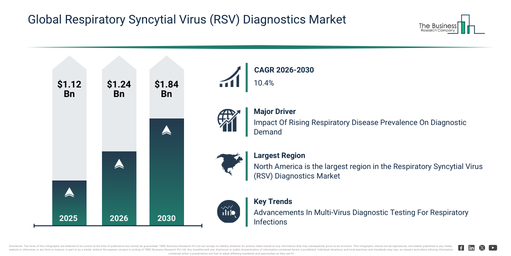
    Respiratory Syncytial Virus (RSV) Diagnostics Market Poised To Hit $1.84 Billion By 2030 With A 10.4% CAGR

    The respiratory syncytial virus (rsv) diagnostics market has seen significant growth in its size over recent years. It is anticipated to expand from $1.12 billion in 2025 to $1.24 billion in 2026, achieving a compound annual growth rate (CAGR) of 10.7%. This historical growth can be linked to factors such as an escalating incidence of pediatric respiratory infections, a rise in hospitalization rates among elderly populations, greater accessibility to immunoassay technologies, the broadening of diagnostic laboratory networks, and heightened clinical awareness regarding rsv.

    The respiratory syncytial virus (rsv) diagnostics market is projected for significant expansion in the coming years, with its valuation reaching $1.84 billion by 2030, exhibiting a compound annual growth rate (CAGR) of 10.4%. This anticipated growth is driven by several factors, including a greater need for prompt and precise respiratory diagnosis, the increasing popularity of home testing kits, heightened investments in molecular diagnostics, broader acceptance of multiplex testing, and a stronger emphasis on preventive care for children. Key developments anticipated during this period involve the wider implementation of rapid point-of-care rsv tests, an increase in the application of molecular diagnostic assays, the expanding integration of multiplex respiratory panels, the further rollout of home-based rsv testing solutions, and a heightened focus on diagnosing infants early.

    Get A Free Sample Report With In-Depth Market Insights:

    https://thebusinessresearchcompany.com/sample_request?id=38331878&type=smp&name=Respiratory%20Syncytial%20Virus%20%28RSV%29%20Diagnostics%20Market%20Report%202026&utm_source=Blogs&utm_medium=Paid&utm_campaign=Nov_PR

    Respiratory Syncytial Virus (RSV) Diagnostics Market Demand Drivers Opening New Revenue Streams

    An escalating prevalence of respiratory diseases is projected to stimulate the expansion of the respiratory syncytial virus (RSV) diagnostics market moving forward. Respiratory diseases encompass a range of conditions affecting the airways and lungs, impeding proper breathing and oxygen exchange. These include ailments such as asthma, chronic obstructive pulmonary disease (COPD), pneumonia, and various respiratory infections. The rise in respiratory disease cases stems from factors like increased air pollution, smoking habits, climate change, urbanization, and the growing occurrence of infections and chronic conditions such as asthma and COPD. The detection of respiratory syncytial virus (RSV) is vital for managing respiratory diseases, as it enables accurate and timely identification of RSV infections. This, in turn, facilitates appropriate treatment, management, and the prevention of severe complications, especially for vulnerable populations.

    Respiratory Syncytial Virus (RSV) Diagnostics Market Segments: Where Is Growth Concentrated?

    The respiratory syncytial virus (rsv) diagnostics market covered in this report is segmented –

    1) By Product Type: Kits And Assays, Instruments, Reagents, Other Product Types

    2) By Technology: Molecular Diagnostics, Immunoassays, Rapid Antigen Detection Tests, Other Technologies

    3) By Sample Type: Nasal Swabs, Throat Swabs, Bronchoalveolar Lavage

    4) By End User: Hospitals, Diagnostic Laboratories, Home Care Settings, Other End Users

    Subsegments:

    1) By Kits And Assays: Rapid Antigen Detection Kits, PCR-based Assays, Serological Assays

    2) By Instruments: PCR Analyzers, Immunoassay Analyzers

    3) By Reagents: PCR Reagents, Antibody Reagents, Enzyme Reagents

    4) By Other Product Types: Sample Collection Devices, Transport Media

    Respiratory Syncytial Virus (RSV) Diagnostics Market Transformation Trends: What Innovations Are Driving Change?

    Companies operating within the respiratory syncytial virus (RSV) diagnostics market are actively developing innovative products, such as respiratory virus combination testing, to deliver accurate and efficient solutions for customers. Respiratory virus combination testing represents a diagnostic technique that simultaneously identifies multiple respiratory viruses, including influenza, respiratory syncytial virus (RSV), and others, within a single sample to facilitate the recognition of viral infections.

    Respiratory Syncytial Virus (RSV) Diagnostics Market Key Participants And Competitive Landscape

    Major companies operating in the respiratory syncytial virus (rsv) diagnostics market are F. Hoffmann-La Roche Ltd., Thermo Fisher Scientific Inc., Abbott Laboratories, Siemens Healthineers AG, Merck KGaA, Becton, Dickinson, and Company, Quest Diagnostics Incorporated, Hologic Inc., BIOMÉRIEUX SA, QuidelOrtho Corporation, Bio-Rad Laboratories Inc., DiaSorin S.p.A., Acon Laboratories Inc., Cepheid Inc., Meridian Bioscience Inc., Seegene Inc., LumiraDx Ltd., Sekisui Diagnostics Ltd., Boditech Med Inc., Trinity Biotech plc, R-Biopharm AG, GeneTex Inc., Creative Diagnostics, Certest Biotec S.L., Clarity Diagnostics LLC, Genes 2Me LLP, Coris BioConcept S.A.

    View The Full Respiratory Syncytial Virus (RSV) Diagnostics Market Report:

    https://thebusinessresearchcompany.com/report/respiratory-syncytial-virus-rsv-diagnostics-global-market-report?utm_source=Blogs&utm_medium=Paid&utm_campaign=Nov_PR

    Respiratory Syncytial Virus (RSV) Diagnostics Market Geographic Analysis: Where Is Demand Rising Fastest?

    North America was the largest region in the respiratory syncytial virus (RSV) diagnostics market in 2025. Asia-Pacific is expected to be the fastest-growing region in the forecast period. The regions covered in the respiratory syncytial virus (rsv) diagnostics market report are Asia-Pacific, South East Asia, Western Europe, Eastern Europe, North America, South America, Middle East, Africa.

    Reach Out To Our Team:

    The Business Research Company: https://www.thebusinessresearchcompany.com/

    Americas: +1 310-496-7795

    Asia: +44 7882 955267 & +91 8897263534

    Europe: +44 7882 955267

    Email us at: marketing@tbrc.info

    Follow us on:

    LinkedIn: https://in.linkedin.com/company/the-business-research-company

    YouTube: https://www.youtube.com/channel/UC24_fI0rV8cR5DxlCpgmyFQ

    Global Market Model: https://www.thebusinessresearchcompany.com/global-market-model
  • Respiratory Disease Testing Market Analysis: How The Industry Is Evolving Toward A $4.93 Billion Future

    Respiratory Disease Testing Market Analysis: How The Industry Is Evolving Toward A $4.93 Billion Future

    Backed by market attractiveness analysis, total addressable market sizing, company benchmarking matrices, interactive Excel dashboards, wider supply chain intelligence, emerging startup coverage, and detailed product-level insights, The Business Research Company’s 2026 market reports are designed to offer research that is more actionable and strategically valuable than ever.

    Respiratory Disease Testing Market Size And Revenue Outlook Through 2030

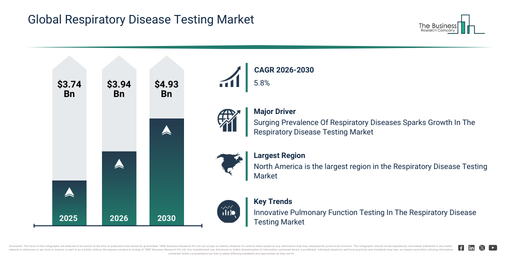
    The size of the respiratory disease testing market has experienced robust expansion over recent years. It is anticipated to grow from $3.74 billion in 2025 to $3.94 billion in 2026, demonstrating a compound annual growth rate (CAGR) of 5.3%. This historical growth can be linked to several factors, including the increasing occurrence of chronic respiratory ailments, an expansion in hospital diagnostic capabilities, a rise in awareness for early disease detection, the adoption of spirometry testing, and an increase in healthcare screening initiatives.

    The market for respiratory disease testing is projected to experience robust expansion over the coming years. This market is set to reach $4.93 billion by 2030, exhibiting a compound annual growth rate (CAGR) of 5.8%. Several factors contribute to this growth during the forecast period, including the heightened need for quick and precise respiratory diagnostics, a surge in investments towards diagnostic infrastructure, the spread of home-based respiratory testing, the increasing incorporation of AI-powered diagnostic instruments, and a greater emphasis on managing population health. Key developments anticipated within this period involve the greater uptake of early diagnostic testing solutions, the expanding application of in-vitro diagnostic respiratory tests, the increasing integration of digital pulmonary monitoring instruments, the broadening scope of point-of-care respiratory testing, and a stronger emphasis on proactive respiratory care.

    Get A Free Sample Report With In-Depth Market Insights:

    https://thebusinessresearchcompany.com/sample_request?id=26359628&type=smp&name=Respiratory%20Disease%20Testing%20Market%20Report%202026&utm_source=Blogs&utm_medium=Paid&utm_campaign=Nov_PR

    Respiratory Disease Testing Market Growth Backed By Core Demand Fundamentals

    The escalating occurrence of respiratory ailments is poised to bolster the respiratory disease testing market in the coming years. Respiratory diseases are defined as medical conditions impacting the respiratory system, which includes the lungs, bronchi, trachea, larynx, pharynx, and nasal passages. The primary application of respiratory disease testing lies in the early detection and diagnosis of these conditions, enabling quicker treatment and management. This early intervention can help hinder the disease’s progression and is also crucial for controlling the spread of infectious respiratory diseases while mitigating the risk of complications.

    Respiratory Disease Testing Market Segment Analysis: What Are The Core Market Categories?

    The respiratory disease testing market covered in this report is segmented –

    1) By Test Type: Imaging Tests, Mechanical Tests, In-Vitro Diagnostic Tests

    2) By Products: Lung Volume, Imaging, Spirometry, Peak Flow, Blood Gas, Other Products

    3) By Application: Chronic Obstructive Pulmonary Disease, Lung Cancer, Asthma, Tuberculosis, Other Applications

    4) By End-User: Hospitals, Physician clinics, Clinical laboratories, Other End-Users

    Subsegments:

    1) By Imaging Tests: X-rays, Computed Tomography (CT) Scans, Magnetic Resonance Imaging (MRI), Positron Emission Tomography (PET) Scans

    2) By Mechanical Tests: Spirometry, Peak Flow Measurement, Lung Volume Measurement, Diffusion Capacity Tests

    3) By In-Vitro Diagnostic Tests: PCR Tests, Antigen Tests, Antibody Tests, Culture Tests

    #Respiratory Disease Testing Market Growth Trends: What’s Shaping The Future Outlook?

    Leading companies within the respiratory disease testing market are concentrating on developing sophisticated products, such as pulmonary function testing, to achieve a competitive edge. Pulmonary function tests represent a collection of assessments that gauge lung functionality and an individual’s breathing capacity.

    Respiratory Disease Testing Market Top Companies Driving Competitive Growth

    Major companies operating in the respiratory disease testing market are Medtronic plc, Abbott Laboratories, Seimens Healthineers AG, Koninklijke Philips N.V., ResMed Inc., Thermo Fisher Scientific Inc., Beckton Dickinson And Company, F. Hoffmann-La Roche Ltd., Nihon Kohden Corporation, GE HealthCare Technologies Inc., Fisher And Paykel Healthcare Corporation Limited, Qiagen N.V., Medical Graphics Corporation, COSMED srl, ndd Medizintechnik AG, Vitalograph Ltd., MGC Diagnostics Corporation, Vyaire Medical Inc., Masimo Corporation, Hamilton Medical AG, Drägerwerk AG & Co. KGaA, Schiller AG, Nonin Medical Inc.

    View The Full Respiratory Disease Testing Market Report:

    https://thebusinessresearchcompany.com/report/respiratory-disease-testing-global-market-report?utm_source=Blogs&utm_medium=Paid&utm_campaign=Nov_PR

    Respiratory Disease Testing Market Global Footprint: Which Region Leads The Market?

    North America was the largest region in the respiratory disease testing market in 2025. Asia-Pacific is expected to be the fastest growing region in the global respiratory disease testing market during the forecast period. The regions covered in the respiratory disease testing market report are Asia-Pacific, South East Asia, Western Europe, Eastern Europe, North America, South America, Middle East, Africa.

    Reach Out To Our Team:

    The Business Research Company: https://www.thebusinessresearchcompany.com/

    Americas: +1 310-496-7795

    Asia: +44 7882 955267 & +91 8897263534

    Europe: +44 7882 955267

    Email us at: marketing@tbrc.info

    Follow us on:

    LinkedIn: https://in.linkedin.com/company/the-business-research-company

    YouTube: https://www.youtube.com/channel/UC24_fI0rV8cR5DxlCpgmyFQ

    Global Market Model: https://www.thebusinessresearchcompany.com/global-market-model
  • Resorbable Vascular Scaffolds Market Outlook Through 2030: Understanding The Growth Opportunity

    Resorbable Vascular Scaffolds Market Outlook Through 2030: Understanding The Growth Opportunity

    Featuring market attractiveness scoring, total addressable market sizing, company benchmarking matrices, interactive Excel dashboards, deeper supply chain intelligence, emerging startup tracking, and granular product-level insights, The Business Research Company’s 2026 market reports are built to deliver research that is both more actionable and more strategically valuable.

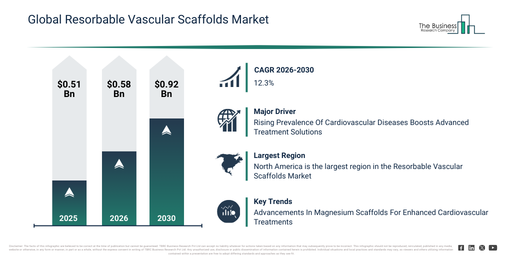
    Resorbable Vascular Scaffolds Market Growth From $0.58 Billion In 2026 To $0.92 Billion By 2030 At A CAGR Of 12.3%

    The resorbable vascular scaffolds market size has seen substantial growth over recent years. Its valuation is predicted to climb from $0.51 billion in 2025 to $0.58 billion in 2026, achieving a compound annual growth rate (CAGR) of 12.6%. This historical development can be ascribed to progress in polymer-based medical materials, a rising incidence of cardiovascular diseases, the expansion of interventional cardiology procedures, increasing uptake of minimally invasive treatments, and the availability of clinical evidence endorsing scaffold utilization.

    The resorbable vascular scaffolds market size is projected to experience substantial expansion over the coming years, reaching $0.92 billion by 2030, driven by a compound annual growth rate (CAGR) of 12.3%. This anticipated growth is linked to factors such as a heightened demand for safer alternatives to permanent stents, growing investments in cardiovascular device innovation, the broadening of bioresorbable material research, an increasing emphasis on patient-specific treatment solutions, and enhanced regulatory support for sophisticated vascular devices. Additionally, key trends foreseen during this period encompass the accelerated development of bioabsorbable scaffold materials, the rising integration of next-generation vascular implants, an intensifying focus on temporary vessel support technologies, the expansion of clinical trials for resorbable devices, and a stronger emphasis on achieving favorable long-term patient outcomes.

    Get A Free Sample Report With In-Depth Market Insights:

    https://thebusinessresearchcompany.com/sample_request?id=99406743&type=smp&name=Resorbable%20Vascular%20Scaffolds%20Market%20Report%202026&utm_source=Blogs&utm_medium=Paid&utm_campaign=Nov_PR

    Resorbable Vascular Scaffolds Market Growth Catalysts And Demand Drivers

    The rising occurrence of cardiovascular ailments is anticipated to propel the expansion of the resorbable vascular scaffolds market in the future. These heart conditions stem from elements like unhealthy lifestyle choices, advancing age, elevated blood pressure, high cholesterol levels, diabetes, smoking habits, and genetic susceptibilities. Resorbable vascular scaffolds are transforming how cardiovascular diseases are treated, offering transient structural support to re-establish blood flow, progressively dissolving over time. This approach mitigates long-term issues linked to permanent implants and fosters the natural recovery and operation of blood vessels.

    Resorbable Vascular Scaffolds Market Segment Breakdown: Which Categories Lead On Revenue?

    The resorbable vascular scaffolds market covered in this report is segmented –

    1) By Product Design: Multilumen, Single Lumen

    2) By Material Type: Poly-Glycolic Acid, Poly-L-Lactic Acid, Poly-L-Lactic-Co-Glycolic Acid

    3) By Deployment Technique: Balloon-Expandable, Self-Expandable

    4) By Application: Coronary Artery Disease, Peripheral Vascular Disease, Pulmonary Artery Disease

    5) By End User: Ambulatory Surgical Centers, Hospitals, Specialty Clinics

    Subsegments:

    1) By Multilumen: Helical Design, Braided Design, Other Multilumen Designs

    2) By Single Lumen: Straight Tube Design, Corrugated Tube Design, Other Single Lumen Designs

    Resorbable Vascular Scaffolds Market Industry Trends: What’s Reshaping Demand?

    Leading companies in the resorbable vascular scaffolds market are developing magnesium scaffolds to enhance biocompatibility and provide improved mechanical support. These magnesium scaffolds facilitate natural vessel healing while reducing inflammation and complications often associated with traditional polymer-based scaffolds.

    Resorbable Vascular Scaffolds Market Leading Players And Competitive Positioning

    Major companies operating in the resorbable vascular scaffolds market are Abbott Laboratories, Medtronic plc, Boston Scientific Corporation, Terumo Corporation, Biotronik, Lepu Medical Technology, Biosensors International, Blue Medical, Reva Medical, Elixir Medical, S3V Vascular Technologies, Amaranth Medical Inc., Meril Life Sciences Pvt. Ltd., Arterius Limited, Zorion Medical, Kyoto Medical Planning Co. Ltd., ICON Interventional Systems, MicroPort Scientific Corporation, Cook Medical, Cardinal Health Interventional Division, Medinol Ltd., Alvimedica, OrbusNeich Medical

    View The Full Resorbable Vascular Scaffolds Market Report:

    https://thebusinessresearchcompany.com/report/resorbable-vascular-scaffolds-global-market-report?utm_source=Blogs&utm_medium=Paid&utm_campaign=Nov_PR

    Resorbable Vascular Scaffolds Market Regional Split: Which Areas Are Fueling Growth?

    North America was the largest region in the resorbable vascular scaffolds market in 2025. Asia-Pacific is expected to be the fastest-growing region in the forecast period. The regions covered in the resorbable vascular scaffolds market report are Asia-Pacific, South East Asia, Western Europe, Eastern Europe, North America, South America, Middle East, Africa.

    Reach Out To Our Team:

    The Business Research Company: https://www.thebusinessresearchcompany.com/

    Americas: +1 310-496-7795

    Asia: +44 7882 955267 & +91 8897263534

    Europe: +44 7882 955267

    Email us at: marketing@tbrc.info

    Follow us on:

    LinkedIn: https://in.linkedin.com/company/the-business-research-company

    YouTube: https://www.youtube.com/channel/UC24_fI0rV8cR5DxlCpgmyFQ

    Global Market Model: https://www.thebusinessresearchcompany.com/global-market-model
  • Resistance Bands Market Growth Potential: What The Latest Forecast Reveals

    Resistance Bands Market Growth Potential: What The Latest Forecast Reveals

    Built to provide research that’s more actionable and strategically valuable, The Business Research Company’s 2026 market reports include market attractiveness analysis, total addressable market sizing, company benchmarking matrices, interactive Excel dashboards, broader supply chain intelligence, emerging startup tracking, and in-depth product insights.

    Resistance Bands Market Expansion Outlook: What Revenue Opportunities Are Ahead?

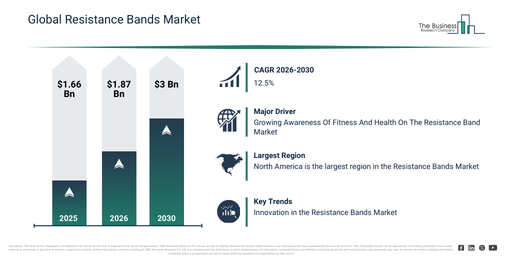
    The resistance bands market has demonstrated rapid expansion in recent years. It is anticipated to grow from $1.66 billion in 2025 to $1.87 billion in 2026, achieving a compound annual growth rate (CAGR) of 12.4%. The historical increase can be ascribed to the development of home fitness culture, heightened awareness of physical wellness, the extension of physiotherapy and rehabilitation services, increased involvement in strength training, and the cost-effectiveness of resistance-based equipment.

    The resistance bands market size is anticipated to experience rapid growth over the next few years. Its valuation is projected to reach $3 billion by 2030, demonstrating a compound annual growth rate (CAGR) of 12.5%. This expansion during the forecast period is propelled by factors such as the escalating demand for personalized fitness solutions, the increasing adoption of digital fitness programs, the broadening scope of sports injury rehabilitation, a growing emphasis on sustainable fitness products, and the deeper penetration of online fitness retail channels. Key developments foreseen in this period include a greater uptake of home-based fitness solutions, a rising need for portable strength training equipment, the wider application of resistance bands in rehabilitation programs, a heightened focus on multi-resistance training sets, and enhanced product innovation specifically in material durability.

    Get A Free Sample Report With In-Depth Market Insights:

    https://thebusinessresearchcompany.com/sample_request?id=73229255&type=smp&name=Resistance%20Bands%20Market%20Report%202026&utm_source=Blogs&utm_medium=Paid&utm_campaign=Nov_PR

    Resistance Bands Market Opportunity Drivers: What’s Unlocking New Revenue Potential?

    The increasing understanding of fitness and health is anticipated to drive the expansion of the resistance band market in the future. These two concepts, fitness and health, are linked, defining an individual’s comprehensive physical and mental well-being. While fitness primarily covers physical attributes like strength and endurance, health extends to a wider range, including physical, mental, and social aspects of well-being. Resistance bands contribute positively to improving fitness and health due to their ease of use and benefits for activities such as strength training, weight loss, enhancing sports performance, recovering from injuries, and building functional fitness.

    Resistance Bands Market Segmentation: How Does The Market Break Down By Category?

    The resistance bands market covered in this report is segmented –

    1) By Type: Tube Resistance Bands, Pull-up Resistance Bands, Therapy Resistance Bands, Other Resistance Bands

    2) By Material: Fabric, Latex

    3) By Distribution Channel: Specialty Stores, Supermarkets And Hypermarkets, Online Retail, Other Distribution Channels

    4) By Application: Individuals, Health And Sports Clubs

    Subsegments:

    1) By Tube Resistance Bands: Single Tube Bands, Double Tube Bands, Triple Tube Bands

    2) By Pull-up Resistance Bands: Light Resistance Bands, Medium Resistance Bands, Heavy Resistance Bands

    3) By Therapy Resistance Bands: Physical Therapy Bands, Rehabilitation Bands

    4) By Other Resistance Bands: Figure 8 Resistance Bands, Loop Resistance Bands, Flat Resistance Bands

    Resistance Bands Market Innovation Trends: What Developments Are Reshaping The Industry?

    Leading companies within the resistance bands market are creating novel products, including stretchable bands, to elevate user experience and optimize workout efficacy. These stretchable bands are elastic resistance bands that can be extended to various lengths, delivering diverse resistance levels during exercises, thus enhancing both strength training and flexibility routines.

    Resistance Bands Market Competitive Overview And Top Companies

    Major companies operating in the resistance bands market are Lifeline Fitness, Everlast Worldwide Inc., Rogue Fitness Inc., Gaia Inc., Perform Better Inc., RDX Sports, Body-Solid Inc., SPRI Products Inc., ProsourceFit, WODFitters, Theraband Inc., Bodylastics USA Inc., Black Mountain Products Inc, GoFit LLC, Fitness Gear, Serious Steel Fitness, Power Systems Inc, Fitness Anywhere LLC (TRX), Gold’s Gym International Inc, Liveup Sports Co.Ltd, Sling Shot, Wacces Inc., RitFit Inc

    View The Full Resistance Bands Market Report:

    https://thebusinessresearchcompany.com/report/resistance-bands-global-market-report?utm_source=Blogs&utm_medium=Paid&utm_campaign=Nov_PR

    Resistance Bands Market Top Region: Where Does Most Revenue Come From?

    North America was the largest region in the resistance bands market in 2025. The regions covered in the resistance bands market report are Asia-Pacific, South East Asia, Western Europe, Eastern Europe, North America, South America, Middle East, Africa.

    Reach Out To Our Team:

    The Business Research Company: https://www.thebusinessresearchcompany.com/

    Americas: +1 310-496-7795

    Asia: +44 7882 955267 & +91 8897263534

    Europe: +44 7882 955267

    Email us at: marketing@tbrc.info

    Follow us on:

    LinkedIn: https://in.linkedin.com/company/the-business-research-company

    YouTube: https://www.youtube.com/channel/UC24_fI0rV8cR5DxlCpgmyFQ

    Global Market Model: https://www.thebusinessresearchcompany.com/global-market-model
  • Residential Substance Abuse And Mental Health Facilities Market Growth Outlook: Why Analysts Expect Continued Expansion

    Residential Substance Abuse And Mental Health Facilities Market Growth Outlook: Why Analysts Expect Continued Expansion

    Backed by market attractiveness analysis, total addressable market sizing, company benchmarking matrices, interactive Excel dashboards, wider supply chain intelligence, emerging startup coverage, and detailed product-level insights, The Business Research Company’s 2026 market reports are designed to offer research that is more actionable and strategically valuable than ever.

    Residential Substance Abuse And Mental Health Facilities Market Growth Potential: How Will Market Size Shift Through 2030?

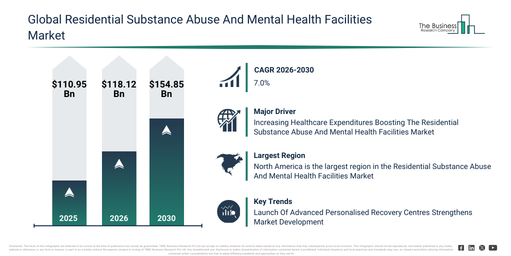
    The residential substance abuse and mental health facilities market has seen robust expansion in recent times. This market is anticipated to grow from $110.95 billion in 2025 to $118.12 billion in 2026, achieving a compound annual growth rate (CAGR) of 6.5%. The historical growth can be ascribed to elements such as the increasing prevalence of substance abuse disorders, rising awareness of mental health conditions, expansion of public healthcare funding, growth of private residential care facilities, and increasing acceptance of inpatient treatment models.

    The residential substance abuse and mental health facilities market size is anticipated to experience robust growth in the coming years. It is projected to expand to $154.85 billion by 2030, reflecting a compound annual growth rate (CAGR) of 7.0%. This growth during the forecast period can be attributed to several factors, including an escalating demand for comprehensive residential treatment solutions, a greater focus on long-term recovery outcomes, the expanding integration of digital health within care facilities, increasing investments in behavioral health infrastructure, and a rising emphasis on outcome-based care models. Prominent trends expected in this period include the increased integration of digital patient monitoring systems, a growing adoption of evidence-based residential care models, an intensified focus on personalized treatment programs, the expansion of integrated mental health and substance abuse services, and a heightened emphasis on patient safety and compliance.

    Get A Free Sample Report With In-Depth Market Insights:

    https://thebusinessresearchcompany.com/sample_request?id=34556262&type=smp&name=Residential%20Substance%20Abuse%20And%20Mental%20Health%20Facilities%20Market%20Report%202026&utm_source=Blogs&utm_medium=Paid&utm_campaign=Nov_PR

    Residential Substance Abuse And Mental Health Facilities Market Growth Momentum: What Factors Are Shaping Demand?

    The residential substance abuse and mental health facilities market is anticipated to experience growth driven by increasing healthcare expenditures. These expenditures encompass all costs associated with the provision of health services, family planning activities, nutrition programs, and emergency support primarily focused on health outcomes. Greater healthcare spending facilitates improved access to specialized care, elevates treatment standards, and expands capabilities to confront the increasing challenges of mental health and addiction within society.

    Residential Substance Abuse And Mental Health Facilities Market Segment Trends And Revenue Contributors

    The residential substance abuse and mental health facilities market covered in this report is segmented –

    1) By Type: Residential Mental Health And Intellectual Disability Facilities, Substance Abuse Centers

    2) By Type of Expenditure: Public, Private

    3) By End User Gender: Male, Female

    Subsegments:

    1) By Residential Mental Health And Intellectual Disability Facilities: Psychiatric Care Homes, Intellectual Disability Facilities, Dual Diagnosis Facilities

    2) By Substance Abuse Centers: Alcohol Rehabilitation Centers, Drug Rehabilitation Centers, Combined Substance Abuse Treatment Facilities

    Residential Substance Abuse And Mental Health Facilities Market Trends: What’s Defining The Industry’s Next Phase?

    Leading companies within the residential substance abuse and mental health facilities market are concentrating on creating advanced 360-degree personalized care models to improve patient-centric recovery outcomes. This comprehensive 360-degree personalized care approach integrates medical, psychological, social, and physical interventions, customizing them for each individual rather than implementing a standardized program.

    Residential Substance Abuse And Mental Health Facilities Market Competitive Landscape: Which Companies Lead The Industry?

    Major companies operating in the residential substance abuse and mental health facilities market are Kaiser Permanente, Universal Health Services Inc., Ohio Department of Mental Health and Addiction Services, NHS England, Acadia Healthcare Company, CareTech Holdings PLC, Pyramid Healthcare, Haven Behavioral Healthcare, American Addiction Centers, Behavioral Health Network Inc. (BHN), Promises Behavioral Health, Aware Recovery Care, The MENTOR Network, Strategic Behavioral Health, Ascension Seton, North Range Behavioral Health, Phoenix House, Caron Treatment Centers, Sierra Tucson, The Meadows, Rogers Behavioral Health, Timberline Knolls Residential Treatment Center, The Ranch, The Recovery Village, Sunspire Health, Summit BHC, The Aviary Recovery Center, The Meadows, The MENTOR Network, The Pavilion

    View The Full Residential Substance Abuse And Mental Health Facilities Market Report:

    https://thebusinessresearchcompany.com/report/Residential-Substance-Abuse-And-Mental-Health-Facilities-Global-Market-Report?utm_source=Blogs&utm_medium=Paid&utm_campaign=Nov_PR

    Residential Substance Abuse And Mental Health Facilities Market Regional Breakdown: Where Is Demand Concentrated?

    North America was the largest region in the residential substance abuse and mental health facilities market in 2025. Western Europe was the second largest region in the residential substance abuse and mental health facilities market. The regions covered in the residential substance abuse and mental health facilities market report are Asia-Pacific, South East Asia, Western Europe, Eastern Europe, North America, South America, Middle East, Africa.

    Reach Out To Our Team:

    The Business Research Company: https://www.thebusinessresearchcompany.com/

    Americas: +1 310-496-7795

    Asia: +44 7882 955267 & +91 8897263534

    Europe: +44 7882 955267

    Email us at: marketing@tbrc.info

    Follow us on:

    LinkedIn: https://in.linkedin.com/company/the-business-research-company

    YouTube: https://www.youtube.com/channel/UC24_fI0rV8cR5DxlCpgmyFQ

    Global Market Model: https://www.thebusinessresearchcompany.com/global-market-model
  • Residential Intellectual And Development Disability Care Market Forecast Insights: The Road To $268.25 Billion By 2030

    Residential Intellectual And Development Disability Care Market Forecast Insights: The Road To $268.25 Billion By 2030

    Featuring market attractiveness scoring, total addressable market sizing, company benchmarking matrices, interactive Excel dashboards, deeper supply chain intelligence, emerging startup tracking, and granular product-level insights, The Business Research Company’s 2026 market reports are built to deliver research that is both more actionable and more strategically valuable.

    Residential Intellectual And Development Disability Care Market Value Analysis: What Growth Lies Ahead Over The Forecast Period?

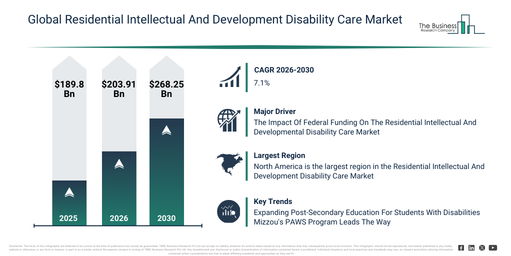
    The residential intellectual and development disability care market size has experienced robust growth in recent years. It is projected to expand from $189.8 billion in 2025 to $203.91 billion in 2026, driven by a compound annual growth rate (CAGR) of 7.4%. This historical growth can be attributed to the expansion of community-based disability care programs, increasing awareness of intellectual and developmental disabilities, the development of residential care infrastructure, a rising demand for assisted living services, and the increased availability of trained care professionals.

    The residential intellectual and development disability care market size is projected to experience substantial expansion over the upcoming years. This market is anticipated to reach $268.25 billion by 2030, exhibiting a compound annual growth rate (CAGR) of 7.1%. Factors contributing to this growth during the forecast period include the increasing incorporation of technology-enabled care solutions, an escalating need for individualized disability support services, the broadening of government-funded care programs, a heightened emphasis on outcome-based care frameworks, and increasing capital allocation towards the modernization of residential care facilities. Key trends expected during this period encompass the widespread uptake of digital care management platforms, the expanding integration of remote monitoring technologies, the proliferation of personalized care schemes, a stronger emphasis on fostering skill development and independence training, and improved collaboration between healthcare and social services.

    Get A Free Sample Report With In-Depth Market Insights:

    https://thebusinessresearchcompany.com/sample_request?id=91896654&type=smp&name=Residential%20Intellectual%20And%20Development%20Disability%20Care%20Market%20Report%202026&utm_source=Blogs&utm_medium=Paid&utm_campaign=Nov_PR

    Residential Intellectual And Development Disability Care Market Expansion Drivers: What’s Shaping Future Growth?

    The augmented federal funding allocated for initiatives supporting individuals with intellectual disabilities is projected to drive the expansion of the residential intellectual and developmental disability care market. This surge in federal funding for programs assisting individuals with intellectual disabilities results from heightened awareness of their needs, persistent advocacy for improved services, and a steadfast commitment to inclusive policy measures designed to elevate their quality of life and ensure equal opportunities. Federal financial backing for these programs significantly bolsters residential care by supplying the necessary financial resources for services, comprehensive support, and crucial infrastructure upgrades.

    Residential Intellectual And Development Disability Care Market Segment Analysis Spotlighting Growth Areas

    The residential intellectual and development disability care market covered in this report is segmented –

    1) By Indication: Attention-Deficit Or Hyperactivity Disorder (ADHD), Autism Spectrum Disorders, Intellectual Disability, Learning Disorders, Other Indications

    2) By Mode Of Operation: State-Run Facilities, Medicaid Funded Services, Private Large Facilities, Privately Run Small Facilities

    3) By Number Of Beds: 4 To 9, 10 To 19, 20 To 49, 50 To 99, 100 To 199, 200 And More Beds

    4) By End-User: Hospitals, Intermediate Care Facilities, Group Homes, Private Home, Intellectual And Developmental Disability Facilities

    Subsegments:

    1) By Attention-Deficit Or Hyperactivity Disorder (ADHD): Behavioral Therapy, Medication Management, Support Services

    2) By Autism Spectrum Disorders: Applied Behavior Analysis (ABA) Therapy, Social Skills Training, Speech Therapy

    3) By Intellectual Disability: Residential Support Services, Day Programs, Vocational Training

    4) By Learning Disorders: Educational Support Services, Tutoring Programs, Skill Development Workshops

    5) By Other Indications: Dual Diagnosis Support, Mental Health Services, Therapeutic Recreation Programs

    Residential Intellectual And Development Disability Care Market Industry Trends Fueling Future Revenue Growth

    Companies operating in the residential intellectual and developmental disability care market are increasingly prioritizing post-secondary education programs. These initiatives aim to equip students within university communities with life skills, job readiness, and social integration. Such specialized programs offer academic, vocational, and life skills training to support students with intellectual and developmental disabilities in their transition to adulthood and employment.

    Residential Intellectual And Development Disability Care Market Leading Companies: Who Holds The Strongest Market Presence?

    Major companies operating in the residential intellectual and development disability care market are Acadia Healthcare, Sheppard Pratt Health System Inc., Cerebral Palsy Associations of New York State, Merakey Allegheny Valley School, WellLife Network Inc., Alliance Health, Texana Center, Cuyahoga County Board of Developmental Disabilities, Lutheran Family Services Rocky Mountains, Metrocare Services, The Arc of the United States, New Vista Nursing and Rehabilitation Center, Lutheran Services in America Inc., St. Joseph’s Center, Beacon Health Options Inc., SPOT Rehabilitation & Home Health Care, Durham County Community Living Programs Inc., Mosaic Community Services, Heritage Christian Services, UCP of Central Florida

    View The Full Residential Intellectual And Development Disability Care Market Report:

    https://thebusinessresearchcompany.com/report/residential-intellectual-and-development-disability-care-global-market-report?utm_source=Blogs&utm_medium=Paid&utm_campaign=Nov_PR

    Residential Intellectual And Development Disability Care Market Geographic Landscape: Which Region Leads Industry Growth?

    North America was the largest region in the residential intellectual and development disability care market in 2025. Asia-Pacific is expected to be the fastest-growing region in the forecast period. The regions covered in the residential intellectual and development disability care market report are Asia-Pacific, South East Asia, Western Europe, Eastern Europe, North America, South America, Middle East, Africa.

    Reach Out To Our Team:

    The Business Research Company: https://www.thebusinessresearchcompany.com/

    Americas: +1 310-496-7795

    Asia: +44 7882 955267 & +91 8897263534

    Europe: +44 7882 955267

    Email us at: marketing@tbrc.info

    Follow us on:

    LinkedIn: https://in.linkedin.com/company/the-business-research-company

    YouTube: https://www.youtube.com/channel/UC24_fI0rV8cR5DxlCpgmyFQ

    Global Market Model: https://www.thebusinessresearchcompany.com/global-market-model