Blog

  • Remote Irritable Bowel Syndrome (IBS) Monitoring Market Outlook From 2026 To 2030: Key Growth Factors And Future Opportunities

    Remote Irritable Bowel Syndrome (IBS) Monitoring Market Outlook From 2026 To 2030: Key Growth Factors And Future Opportunities

    Backed by market attractiveness analysis, total addressable market sizing, company benchmarking matrices, interactive Excel dashboards, wider supply chain intelligence, emerging startup coverage, and detailed product-level insights, The Business Research Company’s 2026 market reports are designed to offer research that is more actionable and strategically valuable than ever.

    Remote Irritable Bowel Syndrome (IBS) Monitoring Market Value Growth And Long-Term Outlook

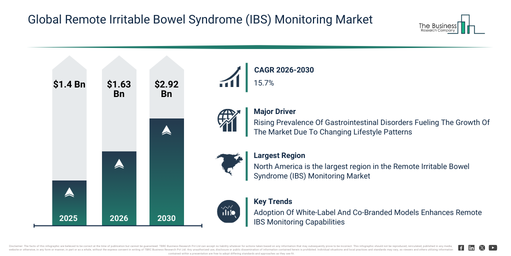
    The remote irritable bowel syndrome (IBS) monitoring market has experienced rapid expansion in recent years. It is projected to grow from $1.4 billion in 2025 to $1.63 billion in 2026, at a compound annual growth rate (CAGR) of 16.0%. This historical growth can be attributed to the increasing prevalence of irritable bowel syndrome, the development of digital health platforms, the rising adoption of telehealth services, the expansion of smartphone-based health monitoring, and the availability of cloud-based patient data systems.

    The remote irritable bowel syndrome (ibs) monitoring market is anticipated to experience substantial expansion in the coming years. This market is projected to reach $2.92 billion by 2030, exhibiting a compound annual growth rate (CAGR) of 15.7%. This projected growth during the forecast period is primarily driven by factors such as a heightened demand for individualized gastrointestinal care, the growing incorporation of remote diagnostic tools, the broadening of value-based healthcare frameworks, the expanding application of predictive analytics in managing diseases, and increasing financial commitments to digital therapeutics. Key developments expected during this timeframe encompass the escalating utilization of AI-powered symptom analysis, the increasing uptake of mobile health monitoring platforms, the wider integration of wearable IBS tracking devices, the proliferation of personalized treatment management instruments, and a heightened emphasis on solutions designed to improve patient engagement.

    Get A Free Sample Report With In-Depth Market Insights:

    https://thebusinessresearchcompany.com/sample_request?id=38487226&type=smp&name=Remote%20Irritable%20Bowel%20Syndrome%20%28IBS%29%20Monitoring%20Market%20Report%202026&utm_source=Blogs&utm_medium=Paid&utm_campaign=Nov_PR

    Remote Irritable Bowel Syndrome (IBS) Monitoring Market Growth Momentum: What Factors Are Shaping Demand?

    The expansion of the remote irritable bowel syndrome (IBS) monitoring market is anticipated to be fueled by the rising occurrence of gastrointestinal disorders in the future. These disorders are conditions that hinder the digestive system’s regular operation, disrupting digestion and bowel movements. A primary contributor to the rise in gastrointestinal disorders is unhealthy eating patterns, which negatively impact gut health and digestion, leading to inflammation and symptoms like bloating and discomfort. Through remote irritable bowel syndrome (IBS) monitoring, patients can experience reduced symptom severity and decelerated disease progression, thanks to the early detection of triggers and continuous management, ultimately resulting in superior patient outcomes and enhanced quality of life.

    Remote Irritable Bowel Syndrome (IBS) Monitoring Market Segmentation: How Does The Market Break Down By Category?

    The remote irritable bowel syndrome (ibs) monitoring market covered in this report is segmented –

    1) By Component: Devices, Software, Services

    2) By Application: Diagnosis, Symptom Tracking, Treatment Management, Patient Education, Other Applications

    3) By End-User: Hospitals And Clinics, Homecare Settings, Research Institutes, Other End-Users

    Subsegments:

    1) By Devices: Wearable Monitoring Devices, Non-Wearable Monitoring Devices, Portable Monitoring Devices, Implantable Monitoring Devices

    2) By Software: Data Analytics Software, Mobile Health Applications, Remote Monitoring Platforms, Cloud-Based Software Solutions

    3) By Services: Teleconsultation Services, Data Management Services, Technical Support Services, Training And Education Services

    Remote Irritable Bowel Syndrome (IBS) Monitoring Market Trends: What’s Defining The Industry’s Next Phase?

    Major companies operating in the remote irritable bowel syndrome (IBS) monitoring market are concentrating on developing white-label or co-branded service models to leverage established digital infrastructure and clinical support systems. This type of service model enables healthcare providers to deliver ready-made digital health solutions under their brand, combining trusted identity with proven technology to ensure faster deployment, lower costs, and a seamless patient experience.

    Remote Irritable Bowel Syndrome (IBS) Monitoring Market Competitive Overview And Top Companies

    Major companies operating in the remote irritable bowel syndrome (ibs) monitoring market are Indegene, Vivante Health, Thryve Health, Heali AI Corp., Mahana Therapeutics Inc., metaMe Health Inc., Seed Health, Ayble Health, Oshi health, Salvo Health Inc., modifyhealth Inc., Food marble, nerva health, MyGiHealth, Sun Genomics, Dietahealth, Dige Health, Nori health, Sequenex, Bowelle.

    View The Full Remote Irritable Bowel Syndrome (IBS) Monitoring Market Report:

    https://thebusinessresearchcompany.com/report/remote-irritable-bowel-syndrome-ibs-monitoring-global-market-report?utm_source=Blogs&utm_medium=Paid&utm_campaign=Nov_PR

    Remote Irritable Bowel Syndrome (IBS) Monitoring Market Geographic Landscape: Which Region Leads Industry Growth?

    North America was the largest region in the remote irritable bowel syndrome (IBS) monitoring market in 2025. Asia-Pacific is expected to be the fastest-growing region in the forecast period. The regions covered in the remote irritable bowel syndrome (ibs) monitoring market report are Asia-Pacific, South East Asia, Western Europe, Eastern Europe, North America, South America, Middle East, Africa.

    Reach Out To Our Team:

    The Business Research Company: https://www.thebusinessresearchcompany.com/

    Americas: +1 310-496-7795

    Asia: +44 7882 955267 & +91 8897263534

    Europe: +44 7882 955267

    Email us at: marketing@tbrc.info

    Follow us on:

    LinkedIn: https://in.linkedin.com/company/the-business-research-company

    YouTube: https://www.youtube.com/channel/UC24_fI0rV8cR5DxlCpgmyFQ

    Global Market Model: https://www.thebusinessresearchcompany.com/global-market-model
  • Remote Healthcare Market Growth Forecast: Market Size, Key Trends And Emerging Opportunities Through 2030

    Remote Healthcare Market Growth Forecast: Market Size, Key Trends And Emerging Opportunities Through 2030

    Featuring market attractiveness scoring, total addressable market sizing, company benchmarking matrices, interactive Excel dashboards, deeper supply chain intelligence, emerging startup tracking, and granular product-level insights, The Business Research Company’s 2026 market reports are built to deliver research that is both more actionable and more strategically valuable.

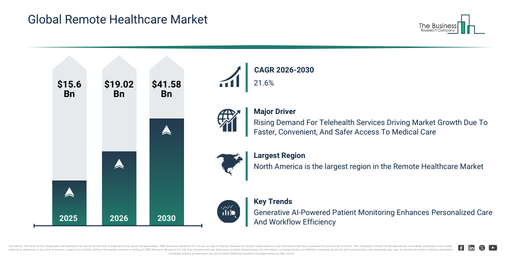
    Remote Healthcare Market Poised To Hit $41.58 Billion By 2030 With A 21.6% CAGR

    The remote healthcare market size has experienced significant expansion in recent years. It is anticipated to increase from $15.6 billion in 2025 to $19.02 billion in 2026, growing at a compound annual growth rate (CAGR) of 21.9%. Historically, this market’s growth has been fueled by factors such as widening healthcare access gaps, the development of digital health infrastructure, an increasing prevalence of chronic conditions, greater internet and smartphone penetration, and the acceptance of virtual healthcare models.

    The remote healthcare market is projected to experience substantial expansion over the upcoming years. By 2030, this market is anticipated to reach $41.58 billion, exhibiting a compound annual growth rate (CAGR) of 21.6%. This forecasted growth is driven by several factors, including heightened investments in digital health platforms, a growing need for care solutions delivered at home, the broader adoption of remote monitoring technologies, an increased emphasis on value-driven healthcare, and the greater incorporation of AI and analytics into care provision. Key trends projected during this period involve the wider embrace of teleconsultation services, a surge in the utilization of remote patient monitoring devices, the proliferation of virtual care platforms, a sharper focus on managing chronic diseases, and the increasing incorporation of AI-powered clinical support tools.

    Get A Free Sample Report With In-Depth Market Insights:

    https://thebusinessresearchcompany.com/sample_request?id=91428947&type=smp&name=Remote%20Healthcare%20Market%20Report%202026&utm_source=Blogs&utm_medium=Paid&utm_campaign=Nov_PR

    Remote Healthcare Market Expansion Drivers: What’s Shaping Future Growth?

    The anticipated expansion of the remote healthcare market is significantly influenced by the rising demand for telehealth services. Telehealth services involve leveraging digital technologies to provide healthcare remotely, enabling virtual connections between patients and providers for consultations, diagnoses, monitoring, and treatment. The increased adoption of telehealth services stems from individuals seeking quicker, more convenient, and secure healthcare access, including remote consultations, ongoing monitoring, and less travel. These services enhance remote healthcare by offering accessible and prompt medical care and consultations, particularly benefiting patients in remote or underserved regions by eliminating travel requirements.

    Remote Healthcare Market Segment Trends And Revenue Contributors

    The remote healthcare market covered in this report is segmented –

    1) By Service: Remote Patient Monitoring, Real Time Virtual Health, Tele-ICU (Telemedicine Intensive Care Unit)

    2) By Deployment Mode: On-Premises, Cloud

    3) By Application: Diagnosis, Cardiology, Obstetrics, Senior Care, Other Applications

    4) By End-User: Hospitals, Clinics, Home Care Settings, Other End-Users

    Subsegments:

    1) By Remote Patient Monitoring: Chronic Disease Monitoring, Postoperative Monitoring, Vital Signs Monitoring, Medication Adherence Monitoring, Remote Fetal Monitoring

    2) By Real Time Virtual Health: Video Consultations, Audio Consultations, Remote Diagnosis And Treatment, Virtual Specialist Consultations, Mental Health Teletherapy Sessions

    3) By Tele-ICU (Telemedicine Intensive Care Unit): Continuous Patient Monitoring, Remote Specialist Consultation, Alarm And Event Management, Data Analytics And Decision Support, Remote Ventilator Management

    Remote Healthcare Market Industry Trends Fueling Future Revenue Growth

    Major companies operating in the remote healthcare market are concentrating on developing technologically advanced solutions, such as generative AI-powered remote patient monitoring assistants and real-time diagnostics, with the goal of improving patient engagement and enabling personalized care delivery. A generative AI-powered remote patient monitoring assistant functions as an intelligent system that harnesses AI to analyze real-time health data, produce personalized insights, and automate patient communication to elevate remote care provision. For instance, in February 2025, Validic Inc., a US-based digital health company, introduced a generative AI-powered assistant within its Validic Impact platform to enhance remote patient monitoring. This assistant automatically interprets and summarizes complex health data, identifies health trends, generates concise data summaries, facilitates time-based comparisons, streamlines clinical workflows, and eases providers’ administrative load. Built on a secure, HITRUST-certified, HIPAA-compliant infrastructure, this system supports numerous health conditions and is compatible with hundreds of devices, thereby empowering clinicians to deliver more personalized, proactive, and efficient care.

    Remote Healthcare Market Competitive Landscape: Which Companies Lead The Industry?

    Major companies operating in the remote healthcare market are Medtronic plc, Siemens Healthcare GmbH, Koninklijke Philips N.V., GE Healthcare Limited, Resideo Technologies Inc., Teladoc Health Inc., Comarch S.A., American Well Corporation, MDLive Inc., Doctor on Demand Inc., CallHealth Services Pvt. Ltd., Talkspace, AMC Health Inc., 98point6 Technologies, Altibbi Inc., GlobalMed Inc., Binah.ai Ltd., InTouch Health Inc., Vivify Health Inc., VSee Lab Inc.

    View The Full Remote Healthcare Market Report:

    https://thebusinessresearchcompany.com/report/remote-healthcare-global-market-report?utm_source=Blogs&utm_medium=Paid&utm_campaign=Nov_PR

    Remote Healthcare Market Largest Region: Which Geography Holds The Biggest Share?

    North America was the largest region in the remote healthcare market in 2025. The regions covered in the remote healthcare market report are Asia-Pacific, South East Asia, Western Europe, Eastern Europe, North America, South America, Middle East, Africa.

    Reach Out To Our Team:

    The Business Research Company: https://www.thebusinessresearchcompany.com/

    Americas: +1 310-496-7795

    Asia: +44 7882 955267 & +91 8897263534

    Europe: +44 7882 955267

    Email us at: marketing@tbrc.info

    Follow us on:

    LinkedIn: https://in.linkedin.com/company/the-business-research-company

    YouTube: https://www.youtube.com/channel/UC24_fI0rV8cR5DxlCpgmyFQ

    Global Market Model: https://www.thebusinessresearchcompany.com/global-market-model
  • Remote Health Monitoring Market CAGR Forecast Through 2030: Key Trends Shaping Industry Expansion

    Remote Health Monitoring Market CAGR Forecast Through 2030: Key Trends Shaping Industry Expansion

    Built to provide research that’s more actionable and strategically valuable, The Business Research Company’s 2026 market reports include market attractiveness analysis, total addressable market sizing, company benchmarking matrices, interactive Excel dashboards, broader supply chain intelligence, emerging startup tracking, and in-depth product insights.

    Remote Health Monitoring Market Size And Revenue Outlook Through 2030

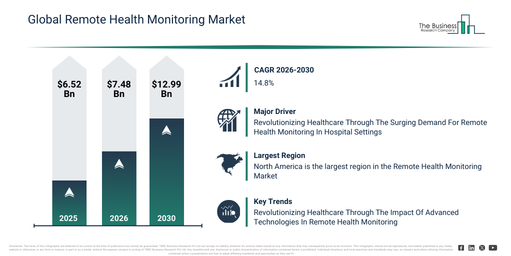
    The remote health monitoring market has seen rapid expansion in recent years. It is anticipated to increase from $6.52 billion in 2025 to $7.48 billion in 2026, exhibiting a compound annual growth rate (CAGR) of 14.7%. This historical growth can be attributed to several factors including the expansion of telehealth services, the rising prevalence of chronic diseases, increased adoption of connected medical devices, growing healthcare digitization, and the expansion of home care settings.

    The remote health monitoring market is projected to experience swift expansion in the upcoming years. By 2030, this market is anticipated to reach $12.99 billion, demonstrating a compound annual growth rate (CAGR) of 14.8%. Factors contributing to this growth during the forecast period include greater investments in digital health platforms, an escalating demand for tailored remote care, the broadening of AI-driven clinical decision support, an increasing emphasis on value-based healthcare models, and the wider integration of continuous monitoring technologies. Key trends during the same period encompass the growing uptake of wearable health monitoring devices, an increase in continuous remote patient monitoring, greater incorporation of AI-based health analytics, the expansion of home-based chronic care monitoring, and a heightened emphasis on preventive healthcare.

    Get A Free Sample Report With In-Depth Market Insights:

    https://thebusinessresearchcompany.com/sample_request?id=68272330&type=smp&name=Remote%20Health%20Monitoring%20Market%20Report%202026&utm_source=Blogs&utm_medium=Paid&utm_campaign=Nov_PR

    Remote Health Monitoring Market Development Factors: What’s Supporting Demand?

    The future growth of the remote health monitoring market is expected to be driven by the increasing demand within hospitals. Hospitals are extensive and intricate healthcare institutions that provide a broad spectrum of medical services, treatment, and care to individuals who are ill or injured. Implementing remote health monitoring in these facilities can lead to healthcare that is more patient-centered, efficient, and proactive, allowing for timely interventions, continuous oversight, fewer hospital readmissions, early disease detection, and improved data accuracy, ultimately contributing to superior patient outcomes.

    Remote Health Monitoring Market Segment Analysis Spotlighting Growth Areas

    The remote health monitoring market covered in this report is segmented –

    1) By Devices: Respiratory Monitoring, Blood Glucose Monitoring, Cardiac Monitoring, Multi-Parameter Monitoring

    2) By Application: Cancer Treatment, Cardiovascular Diseases, Diabetes Treatment, Sleep Disorder, Weight Management And Fitness Monitoring, Other Applications

    3) By End-User: Home Care Settings, Hospitals Or Clinics, Other End-Users

    Subsegments:

    1) By Respiratory Monitoring: Spirometers, Pulse Oximeters, Capnometers, Respiratory Rate Monitors

    2) By Blood Glucose Monitoring: Glucometers, Continuous Glucose Monitors (CGMs), Smart Insulin Pens

    3) By Cardiac Monitoring: ECG Monitors, Holter Monitors, Implantable Cardiac Monitors, Blood Pressure Monitors

    4) By Multi-Parameter Monitoring: Vital Sign Monitors, Telemetry Systems, Wearable Health Monitors

    Remote Health Monitoring Market Trends Powering Strategic Industry Growth

    Leading companies in the remote health monitoring market are integrating advanced technologies like cloud computing and artificial intelligence (AI) into their systems to enhance accuracy. AI and machine learning utilize mathematical data models, allowing computers to learn independently, which is crucial for transforming how healthcare organizations manage remote patient monitoring at scale and improve patient outcomes.

    Remote Health Monitoring Market Leading Companies: Who Holds The Strongest Market Presence?

    Major companies operating in the remote health monitoring market are Nihon Kohden Corporation, Koninklijke Philips NV, Omron Corporation, F. Hoffmann-La Roche Ltd., American Telecare Inc., GE Healthcare Company, Masimo Corporation, Abbott Laboratories, Biotronik SE & Co. KG, Athelas Inc., Dexcom Inc., Senseonics Holdings Inc., Medtronic plc, Health Recovery Solutions Inc., Babyscripts Inc., TytoCare Ltd., Accuhealth Inc., Vivify Health Inc., Get Well Network Inc., VitalTech Holdings Inc., Rimidi Inc., SeamlessMD Inc., Raziel Health Inc., Conversa Health Inc.

    View The Full Remote Health Monitoring Market Report:

    https://thebusinessresearchcompany.com/report/remote-health-monitoring-global-market-report?utm_source=Blogs&utm_medium=Paid&utm_campaign=Nov_PR

    Remote Health Monitoring Market Regional Analysis: Which Geography Leads On Revenue?

    North America was the largest region in the remote health monitoring market in 2025. The regions covered in the remote health monitoring market report are Asia-Pacific, South East Asia, Western Europe, Eastern Europe, North America, South America, Middle East, Africa.

    Reach Out To Our Team:

    The Business Research Company: https://www.thebusinessresearchcompany.com/

    Americas: +1 310-496-7795

    Asia: +44 7882 955267 & +91 8897263534

    Europe: +44 7882 955267

    Email us at: marketing@tbrc.info

    Follow us on:

    LinkedIn: https://in.linkedin.com/company/the-business-research-company

    YouTube: https://www.youtube.com/channel/UC24_fI0rV8cR5DxlCpgmyFQ

    Global Market Model: https://www.thebusinessresearchcompany.com/global-market-model
  • Remote Diagnostics Market To Witness 9% CAGR Growth Through 2030: Key Industry Drivers

    Remote Diagnostics Market To Witness 9% CAGR Growth Through 2030: Key Industry Drivers

    Backed by market attractiveness analysis, total addressable market sizing, company benchmarking matrices, interactive Excel dashboards, wider supply chain intelligence, emerging startup coverage, and detailed product-level insights, The Business Research Company’s 2026 market reports are designed to offer research that is more actionable and strategically valuable than ever.

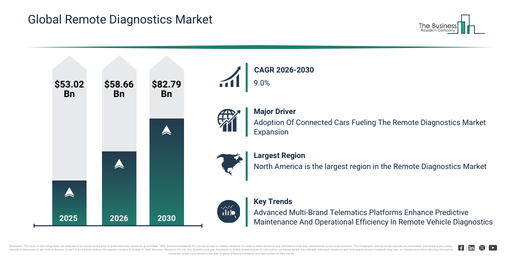
    Remote Diagnostics Market Growth From $58.66 Billion In 2026 To $82.79 Billion By 2030 At A CAGR Of 9%

    The remote diagnostics market size has seen swift expansion in recent years. This market is set to increase from $53.02 billion in 2025 to $58.66 billion in 2026, registering a compound annual growth rate (CAGR) of 10.7%. The surge during the preceding period can be linked to factors like the growing complexity of vehicle electrification, the spread of connected vehicle technologies, a heightened need for quicker service resolution, the rise of fleet management systems, and a greater reliance on telematics data.

    The remote diagnostics market is anticipated to experience robust expansion in the coming years. This market is projected to reach $82.79 billion by 2030, exhibiting a compound annual growth rate (CAGR) of 9.0%. Factors driving this growth during the forecast period include the greater uptake of AI-driven diagnostics, increased investments in connected mobility platforms, the broadening of over-the-air diagnostics capabilities, the rising need for remote vehicle support services, and the deeper integration of diagnostics with fleet analytics. Key trends anticipated in this period encompass the wider adoption of cloud-based diagnostic platforms, the increased application of predictive maintenance diagnostics, the expanding integration of real-time vehicle health monitoring, the extension of remote software-based troubleshooting, and a heightened emphasis on minimizing downtime.

    Get A Free Sample Report With In-Depth Market Insights:

    https://thebusinessresearchcompany.com/sample_request?id=44219717&type=smp&name=Remote%20Diagnostics%20Market%20Report%202026&utm_source=Blogs&utm_medium=Paid&utm_campaign=Nov_PR

    Remote Diagnostics Market Industry Drivers: What’s Behind The Revenue Growth?

    The increasing prevalence of connected vehicles is anticipated to fuel the expansion of the remote diagnostics market in the future. Connected cars are automobiles equipped with Internet access and, frequently, a wireless local area network (Wi-Fi), enabling them to link and interact with various devices, networks, and services. The demand for these vehicles is escalating due to factors such as a greater need for convenience and efficiency, enhanced safety and security, entertainment options, and seamless connectivity. Connected cars transmit live data, facilitating the early identification of problems and removing the necessity for manual inspections. Furthermore, they boost safety by automatically relaying diagnostic information to emergency services during collisions, leading to faster responses and potentially life-saving interventions.

    Remote Diagnostics Market Segment Performance And Emerging Opportunities

    The remote diagnostics market covered in this report is segmented –

    1) By Product Type: Software, Diagnostic Equipment

    2) By Connectivity: 3G (Third Generation), 4G LTE (Fourth Generation Long Term Evolution), Wi-Fi (Wireless Fidelity), Bluetooth

    3) By Application: Roadside Assistance, Vehicle Tracking, Vehicle State Alert, Crash Notification, Training Assistance, Other Applications

    4) By Vehicle Type: Commercial Vehicles, Passenger Vehicles

    Subsegments:

    1) By Software: Diagnostic Software, Remote Monitoring Software, Diagnostic Reporting Software

    2) By Diagnostic Equipment: On-Board Diagnostic Devices, Portable Diagnostic Devices, Imaging Systems For Remote Diagnosis

    Remote Diagnostics Market Growth Trends Reshaping The Competitive Landscape

    Leading firms within the remote diagnostics market are concentrating on creating sophisticated solutions, including multi-brand telematics platforms, to enhance real-time vehicle surveillance, proactive upkeep, and overall service effectiveness. These multi-brand telematics platforms represent integrated systems designed to gather and examine live performance data from vehicles of various makes, thereby facilitating anticipatory diagnostics and bolstering fleet dependability.

    Remote Diagnostics Market Key Players: Which Companies Lead Industry Competition?

    Major companies operating in the remote diagnostics market are Toyota Motor Corporation, Ford Motor Company, Robert Bosch GmbH, Tesla Inc., Nissan Motor Co. Ltd., Denso Corporation, Qualcomm Technologies Inc., Continental AG, Mercedes Benz Group AG, ABB Ltd., Aptiv PLC, SKF Group, OMRON Corporation, Tech Mahindra Limited, Snap On Incorporated, Vector Informatik GmbH, Softing AG, Delphi Technologies, AVL DiTEST GmbH, Vidiwave Ltd., OnStar Corporation, Harman International Industries Inc., Valeo SA, ZF Friedrichshafen AG

    View The Full Remote Diagnostics Market Report:

    https://thebusinessresearchcompany.com/report/remote-diagnostics-global-market-report?utm_source=Blogs&utm_medium=Paid&utm_campaign=Nov_PR

    Remote Diagnostics Market Geographic Spread And Regional Opportunities

    North America was the largest region in the remote diagnostics market in 2025. Asia-Pacific is expected to be the fastest-growing region in the forecast period. The regions covered in the remote diagnostics market report are Asia-Pacific, South East Asia, Western Europe, Eastern Europe, North America, South America, Middle East, Africa.

    Reach Out To Our Team:

    The Business Research Company: https://www.thebusinessresearchcompany.com/

    Americas: +1 310-496-7795

    Asia: +44 7882 955267 & +91 8897263534

    Europe: +44 7882 955267

    Email us at: marketing@tbrc.info

    Follow us on:

    LinkedIn: https://in.linkedin.com/company/the-business-research-company

    YouTube: https://www.youtube.com/channel/UC24_fI0rV8cR5DxlCpgmyFQ

    Global Market Model: https://www.thebusinessresearchcompany.com/global-market-model
  • Relationship Genetic Tests Market Projected For Strong Expansion Through 2030: Key Trends And Future Outlook

    Relationship Genetic Tests Market Projected For Strong Expansion Through 2030: Key Trends And Future Outlook

    Featuring market attractiveness scoring, total addressable market sizing, company benchmarking matrices, interactive Excel dashboards, deeper supply chain intelligence, emerging startup tracking, and granular product-level insights, The Business Research Company’s 2026 market reports are built to deliver research that is both more actionable and more strategically valuable.

    Relationship Genetic Tests Market Expansion Outlook: What Revenue Opportunities Are Ahead?

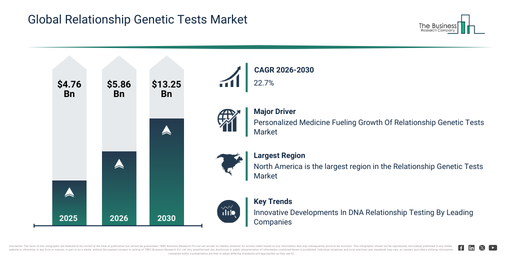
    The relationship genetic tests market has experienced significant expansion in its size over recent years. It is projected to climb from $4.76 billion in 2025 to $5.86 billion in 2026, achieving a compound annual growth rate (CAGR) of 22.9%. The market’s growth in previous periods can be ascribed to a growing understanding of genetic relationship testing, the establishment of more forensic DNA laboratories, an elevated demand for paternity and kinship examinations, improvements in DNA amplification methods, and the accessibility of economical genetic test kits.

    The relationship genetic tests market size is projected to experience substantial expansion over the upcoming years. This market is predicted to reach $13.25 billion by 2030, exhibiting a compound annual growth rate (CAGR) of 22.7%. Factors contributing to this growth during the forecast period include the increasing incorporation of digital reporting platforms, a rising need for swift relationship verification, the expansion of legally admissible DNA testing services, the growing embrace of online genetic services, and an enhanced focus on secure genetic data management. Key trends anticipated during this period encompass the increasing uptake of direct-to-consumer genetic testing, a growing utilization of advanced DNA marker analysis, escalating demand for legal and forensic genetic tests, the broadening of non-invasive sample collection methods, and a heightened emphasis on data accuracy and confidentiality.

    Get A Free Sample Report With In-Depth Market Insights:

    https://thebusinessresearchcompany.com/sample_request?id=79844081&type=smp&name=Relationship%20Genetic%20Tests%20Market%20Report%202026&utm_source=Blogs&utm_medium=Paid&utm_campaign=Nov_PR

    Relationship Genetic Tests Market Growth Factors: What’s Supporting Expansion?

    The future expansion of the relationship genetic tests market is anticipated to be driven by the rising uptake of personalized medicine. This medical methodology customizes treatments and health management plans according to an individual’s unique genetic makeup, environmental influences, and lifestyle choices, leading to more precise and effective care. The increase in personalized medicine adoption stems from breakthroughs in genetic research, easier access to genomic information, and a heightened focus on customized healthcare solutions designed to address individual genetic profiles and distinct health requirements. Within personalized medicine, relationship genetic tests offer valuable information regarding genetic connections and inherited susceptibilities, enabling the customization of preventative measures, therapeutic approaches, and health oversight plans in line with a person’s genetic background.

    Relationship Genetic Tests Market Segment Landscape And Growth Outlook

    The relationship genetic tests market covered in this report is segmented –

    1) By Type: Siblings DNA Test, Grandparentage Test, Genetic Reconstruction Test, Other Types

    2) By Sample: Saliva, Urine, Blood

    3) By Application: Direct-To-Consumer, Legal Service Tests

    Subsegments:

    1) By Siblings DNA Test: Full Siblings DNA Test, Half Siblings DNA Test, Triangulation DNA Testing, Autosomal DNA Testing for Siblings

    2) By Grandparentage Test: Grandparent-Grandchild DNA Test, Grandparentage Verification Through Autosomal Testing, Y-DNA And mtDNA Testing for Grandparentage

    3) By Genetic Reconstruction Test: Ancestry Reconstruction Test, Genetic Family Tree Construction, Genetic Relationship Analysis

    4) By Other Types: Paternity Test, Maternity Test, Avuncular Test, Cousin Relationship Test

    Relationship Genetic Tests Market Trends Shaping Long-Term Demand

    Leading firms within the relationship genetic tests market are concentrating on creating novel testing methods, such as DNA relationship testing, to improve the precision and trustworthiness of genetic kinship evaluations. This type of genetic examination, DNA relationship testing, identifies biological connections among people through DNA analysis.

    Relationship Genetic Tests Market Competitive Landscape: Who Leads The Industry?

    Major companies operating in the relationship genetic tests market are Laboratory Corporation of America Holdings, Quest Diagnostics Incorporated, Myriad Genetics Inc., Invitae Corporation, Ancestry.com LLC, 23andMe Inc., Ambry Genetics Corporation, Color Health Inc., MyHeritage Ltd., DNA Diagnostics Center Inc., EasyDNA, AlphaBiolabs Ltd., Living DNA Ltd., Pathway Genomics Corporation, Anglia DNA Services Ltd., African Ancestry Inc., Canadian DNA Services Inc., DNA Family Check, Circle DNA, iGene

    View The Full Relationship Genetic Tests Market Report:

    https://thebusinessresearchcompany.com/report/relationship-genetic-tests-global-market-report?utm_source=Blogs&utm_medium=Paid&utm_campaign=Nov_PR

    Relationship Genetic Tests Market Top Region By Revenue And Market Share

    North America was the largest region in the relationship genetic tests market in 2025. The regions covered in the relationship genetic tests market report are Asia-Pacific, South East Asia, Western Europe, Eastern Europe, North America, South America, Middle East, Africa.

    Reach Out To Our Team:

    The Business Research Company: https://www.thebusinessresearchcompany.com/

    Americas: +1 310-496-7795

    Asia: +44 7882 955267 & +91 8897263534

    Europe: +44 7882 955267

    Email us at: marketing@tbrc.info

    Follow us on:

    LinkedIn: https://in.linkedin.com/company/the-business-research-company

    YouTube: https://www.youtube.com/channel/UC24_fI0rV8cR5DxlCpgmyFQ

    Global Market Model: https://www.thebusinessresearchcompany.com/global-market-model
  • Relapsing-Remitting Multiple Sclerosis Market Outlook 2026–2030: Growth Trends, Market Dynamics And Emerging Opportunities

    Relapsing-Remitting Multiple Sclerosis Market Outlook 2026–2030: Growth Trends, Market Dynamics And Emerging Opportunities

    Built to provide research that’s more actionable and strategically valuable, The Business Research Company’s 2026 market reports include market attractiveness analysis, total addressable market sizing, company benchmarking matrices, interactive Excel dashboards, broader supply chain intelligence, emerging startup tracking, and in-depth product insights.

    Relapsing-Remitting Multiple Sclerosis Market Growth Potential: How Will Market Size Shift Through 2030?

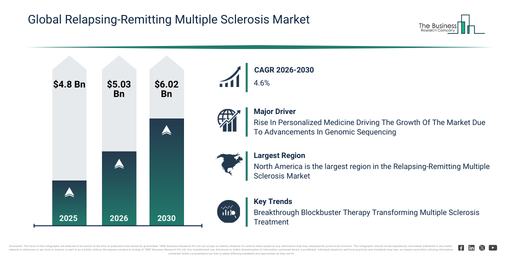
    The relapsing-remitting multiple sclerosis market has demonstrated steady expansion in recent years. It is projected to grow from $4.8 billion in 2025 to $5.03 billion in 2026, at a compound annual growth rate (CAGR) of 4.9%. This historical growth can be attributed to several factors, including improvements in multiple sclerosis diagnosis rates, the wider availability of immunomodulating therapies, increased clinical research in autoimmune diseases, growing neurologist awareness of rrms, and the expansion of specialty neurology clinics.

    The market for relapsing-remitting multiple sclerosis is anticipated to experience consistent expansion over the upcoming years. This market is projected to reach $6.02 billion by 2030, exhibiting a compound annual growth rate (CAGR) of 4.6%. This expansion during the forecast timeframe is attributable to several factors, including the escalating development of advanced rrms treatments, a heightened emphasis on precision medicine strategies, the broader availability of oral and minimally invasive therapies, expanding patient adherence initiatives, and increased funding for research into neurodegenerative diseases. Key trends anticipated for this period encompass a greater uptake of targeted disease-modifying therapies, a surge in the application of personalized treatment plans, an intensified focus on early detection and continuous disease surveillance, the proliferation of oral immunomodulatory medications, and a stronger commitment to long-term management of the condition.

    Get A Free Sample Report With In-Depth Market Insights:

    https://thebusinessresearchcompany.com/sample_request?id=86672007&type=smp&name=Relapsing-Remitting%20Multiple%20Sclerosis%20Market%20Report%202026&utm_source=Blogs&utm_medium=Paid&utm_campaign=Nov_PR

    Relapsing-Remitting Multiple Sclerosis Market Demand Drivers: What’s Powering Industry Growth?

    The future expansion of the relapsing-remitting multiple sclerosis (RRMS) market is anticipated to be driven by the rising uptake of personalized medicine. This medical strategy customizes treatments and therapies based on an individual’s unique genetic makeup, environmental influences, and lifestyle choices, aiming for optimal health results. Its growth is fueled by progress in genomic sequencing, allowing for accurate detection of genetic variations and biomarkers, thereby facilitating more precise and potent treatments. Relapsing-remitting multiple sclerosis (RRMS) exemplifies the necessity of personalized medicine by demonstrating how customized therapeutic approaches can manage individual differences in disease advancement, symptom intensity, and reaction to treatment, ultimately enhancing patient well-being.

    Relapsing-Remitting Multiple Sclerosis Market Breakdown By Product Type And Application

    The relapsing-remitting multiple sclerosis market covered in this report is segmented –

    1) By Drug Type: Beta-Interferon, Cladribine, Dimethyl Fumarate, Fingolimod, Ozanimod, Other Drug Types

    2) By Route Of Administration: Subcutaneous, Intravenous

    3) By Treatment: Immunomodulating Drugs, NrF2 Activators, Interferons, Other Treatments

    4) By End-User: Hospitals, Clinics, Other End-Users

    Subsegments:

    1) By Beta-Interferon: Interferon Beta-1a, Interferon Beta-1b

    2) By Cladribine: Oral Cladribine, Injectable Cladribine

    3) By Dimethyl Fumarate: Tecfidera, Vumerity

    4) By Fingolimod: Gilenya Fingolimod, Generic Fingolimod

    5) By Ozanimod: Zeposia, Generic Ozanimod Formulations

    6) By Other Drug Types: Natalizumab, Alemtuzumab, Ocrelizumab, Siponimod, Teriflunomide

    Relapsing-Remitting Multiple Sclerosis Market Innovation Trends Shaping Future Development

    Major companies operating in the relapsing-remitting multiple sclerosis market are prioritizing the development of innovative treatment approaches, including breakthrough blockbuster therapies, to enhance treatment efficacy, improve patient outcomes, and redefine the standard of care for relapsing-remitting multiple sclerosis (RRMS). A breakthrough blockbuster therapy refers to an innovative and highly effective treatment that significantly advances medical care, often addressing unmet needs or providing superior outcomes compared to existing therapies.

    Relapsing-Remitting Multiple Sclerosis Market Company Landscape And Competitive Strategy

    Major companies operating in the relapsing-remitting multiple sclerosis market are Johnson And Johnson Services Inc., F Hoffmann La Roche Ltd, Bayer AG, Sanofi S.A., Bristol Myers Squibb Company, Novartis AG, Merck KGaA, Viatris Inc., Teva Pharmaceutical Industries Ltd., Biogen Inc., Genentech Inc., Hikma Pharmaceuticals LLC, Glenmark Pharmaceuticals Limited, CinnaGen Co, Zenas BioPharma Inc., Roche Diagnostics GmbH, Sandoz AG, Sun Pharmaceutical Industries Ltd., Dr Reddys Laboratories Ltd., Zydus Lifesciences Ltd., AbbVie Neurology Division, Almirall S.A., UCB S.A., Otsuka Pharmaceutical Co. Ltd.

    View The Full Relapsing-Remitting Multiple Sclerosis Market Report:

    https://thebusinessresearchcompany.com/report/relapsing-remitting-multiple-sclerosis-global-market-report?utm_source=Blogs&utm_medium=Paid&utm_campaign=Nov_PR

    Relapsing-Remitting Multiple Sclerosis Market Regional Analysis And Top Geography

    North America was the largest region in the relapsing-remitting multiple sclerosis market in 2025. Asia-Pacific is expected to be the fastest-growing region in the forecast period. The regions covered in the relapsing-remitting multiple sclerosis market report are Asia-Pacific, South East Asia, Western Europe, Eastern Europe, North America, South America, Middle East, Africa.

    Reach Out To Our Team:

    The Business Research Company: https://www.thebusinessresearchcompany.com/

    Americas: +1 310-496-7795

    Asia: +44 7882 955267 & +91 8897263534

    Europe: +44 7882 955267

    Email us at: marketing@tbrc.info

    Follow us on:

    LinkedIn: https://in.linkedin.com/company/the-business-research-company

    YouTube: https://www.youtube.com/channel/UC24_fI0rV8cR5DxlCpgmyFQ

    Global Market Model: https://www.thebusinessresearchcompany.com/global-market-model
  • Rehabilitation Products Market Growth Outlook From $15.89 Billion In 2026 To $19.84 Billion By 2030

    Rehabilitation Products Market Growth Outlook From $15.89 Billion In 2026 To $19.84 Billion By 2030

    Backed by market attractiveness analysis, total addressable market sizing, company benchmarking matrices, interactive Excel dashboards, wider supply chain intelligence, emerging startup coverage, and detailed product-level insights, The Business Research Company’s 2026 market reports are designed to offer research that is more actionable and strategically valuable than ever.

    Rehabilitation Products Market Value Analysis: What Growth Lies Ahead Over The Forecast Period?

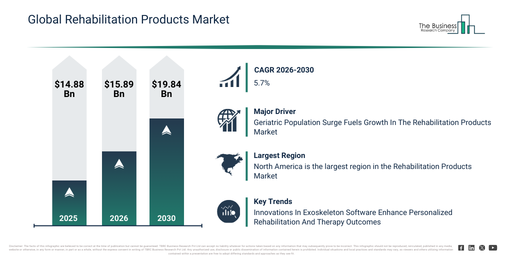
    The rehabilitation products market has experienced significant expansion in recent times. Projections indicate it will increase from $14.88 billion in 2025 to $15.89 billion in 2026, with a compound annual growth rate (CAGR) of 6.8%. This historical growth can be linked to factors such as an escalating incidence of physical disabilities, an aging global population, the expansion of rehabilitation facilities, heightened awareness regarding post-surgery recovery solutions, and the wider availability of assistive medical devices.

    The rehabilitation products market is projected to experience substantial expansion in the coming years. This market is anticipated to reach a valuation of $19.84 billion by 2030, demonstrating a compound annual growth rate (CAGR) of 5.7%. This projected growth is driven by several factors, including the surging demand for home healthcare solutions, the growing integration of connected rehabilitation technologies, the broadening availability of tele-rehabilitation services, a heightened emphasis on individualized recovery programs, and increased spending on rehabilitation products within the healthcare sector. Key trends expected during this period involve the greater uptake of smart rehabilitation devices, an escalating need for customized assistive equipment, the wider incorporation of connected mobility aids, the expansion of rehabilitation solutions provided in home settings, and a more pronounced focus on designing products around patient needs.

    Get A Free Sample Report With In-Depth Market Insights:

    https://thebusinessresearchcompany.com/sample_request?id=42533286&type=smp&name=Rehabilitation%20Products%20Market%20Report%202026&utm_source=Blogs&utm_medium=Paid&utm_campaign=Nov_PR

    Rehabilitation Products Market Growth Drivers: What’s Behind The Acceleration?

    The growing senior demographic is projected to boost the rehabilitation products market moving ahead. This demographic comprises individuals aged 65 and above, distinguished by particular health challenges and requirements linked to the aging process. The expansion of this older population segment is largely due to extended life expectancies, fueled by medical progress and decreasing birth rates. Rehabilitation products serve to foster functional autonomy, mobility, and general well-being for seniors, thereby empowering older adults to maintain active, satisfying lives as they advance in years. Specifically, items like walking aids and mobility scooters offer crucial support and help, allowing older individuals to navigate safely and without reliance on others.

    Rehabilitation Products Market Segment Analysis And Revenue Potential

    The rehabilitation products market covered in this report is segmented –

    1) By Product Type: Medical Bed, Mobility Scooter, Walker, Cane, Patient Lift, Sling, Other Product Types

    2) By Application: Physical Rehabilitation And Training, Strength, Endurance, And Pain Reduction, Occupational Rehabilitation And Training

    3) By End User: Physiotherapist, Orthopedists, Rehab Centers, Occupational Therapists, Speech Therapists, Other End Users

    Subsegments:

    1) By Medical Bed: Electric Medical Bed, Manual Medical Bed, Bariatric Medical Bed, Other Medical Beds

    2) By Mobility Scooter: 3-Wheel Mobility Scooter, 4-Wheel Mobility Scooter, Heavy Duty Mobility Scooter, Compact Mobility Scooter

    3) By Walker: Standard Walker, Folding Walker, Rollator Walker, Knee Walker

    4) By Cane: Standard Cane, Quad Cane, Folding Cane, Walking Stick

    5) By Patient Lift: Manual Patient Lift, Electric Patient Lift, Ceiling Lift, Standing Patient Lift

    6) By Sling: Patient Transfer Sling, Hammock Sling, Universal Sling, Other Slings

    7) By Other Product Types: Wheelchairs, Crutches, Orthopedic Braces, Other Rehabilitation Products

    Rehabilitation Products Market Trends Redefining Industry Growth

    Leading firms within the rehabilitation products market are directing their efforts towards crafting sophisticated offerings, including intelligent exoskeleton software, with the aim of boosting individual therapy customization, patient participation, and overall recovery results. This intelligent exoskeleton software represents a technological capability that furnishes live guidance and data-informed observations during gait training, thereby empowering therapists to fine-tune treatment strategies and observe patient advancement with greater efficacy.

    Rehabilitation Products Market Key Players Shaping Industry Direction

    Major companies operating in the rehabilitation products market are Medline Industries Inc., Stryker Corporation, Zimmer Biomet Holdings, Smith & Nephew plc, Ottobock SE & Co. KGaA, DJO Global Inc., Sunrise Medical Inc., Össur (OSSR.Co), Drive DeVilbiss Healthcare (Medical Depot Inc.), Joerns Healthcare, Invacare Corporation IVC, Caremax Rehabilitation Equipment Co. Ltd., Etac AB, GF Health Products Inc., Prism Medical UK, Dynatronics Corporation, Biodex Medical Systems Inc., Carex Health Brands Inc., Roma Medical, Hocoma AG, Ekso Bionics, EZ Way Inc., Proxomed Medizintechnik, Hill-Rom Services Inc., Klinik Medifit

    View The Full Rehabilitation Products Market Report:

    https://thebusinessresearchcompany.com/report/rehabilitation-products-global-market-report?utm_source=Blogs&utm_medium=Paid&utm_campaign=Nov_PR

    Rehabilitation Products Market Geographic Analysis: Where Is Demand Rising Fastest?

    North America was the largest region in the rehabilitation products market in 2025. Asia-Pacific is expected to be the fastest-growing region in the forecast period. The regions covered in the rehabilitation products market report are Asia-Pacific, South East Asia, Western Europe, Eastern Europe, North America, South America, Middle East, Africa.

    Reach Out To Our Team:

    The Business Research Company: https://www.thebusinessresearchcompany.com/

    Americas: +1 310-496-7795

    Asia: +44 7882 955267 & +91 8897263534

    Europe: +44 7882 955267

    Email us at: marketing@tbrc.info

    Follow us on:

    LinkedIn: https://in.linkedin.com/company/the-business-research-company

    YouTube: https://www.youtube.com/channel/UC24_fI0rV8cR5DxlCpgmyFQ

    Global Market Model: https://www.thebusinessresearchcompany.com/global-market-model
  • Regenerative Xenograft Market Forecast To Reach $2.3 Billion By 2030: Key Growth Drivers And Industry Trends

    Regenerative Xenograft Market Forecast To Reach $2.3 Billion By 2030: Key Growth Drivers And Industry Trends

    Featuring market attractiveness scoring, total addressable market sizing, company benchmarking matrices, interactive Excel dashboards, deeper supply chain intelligence, emerging startup tracking, and granular product-level insights, The Business Research Company’s 2026 market reports are built to deliver research that is both more actionable and more strategically valuable.

    Regenerative Xenograft Market Size Forecast: How Big Could The Market Get By 2030?

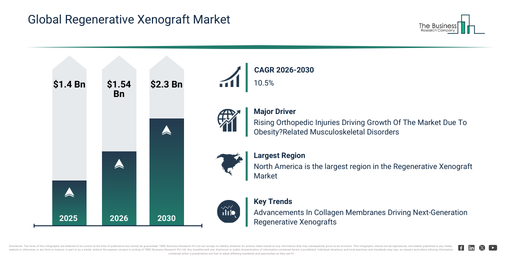
    The regenerative xenograft market size has experienced significant expansion in recent years. This market is projected to expand from $1.4 billion in 2025 to $1.54 billion by 2026, demonstrating a compound annual growth rate (CAGR) of 10.6%. Historically, this growth has been driven by several factors, including an increase in reconstructive and orthopedic surgeries, the growing adoption of biologic graft materials, innovations in tissue preservation technologies, a rising need for dental bone substitutes, and an overall expansion in surgical treatment volumes.

    The regenerative xenograft market size is projected to experience swift expansion in the coming years. By 2030, this market is anticipated to reach $2.3 billion, demonstrating a compound annual growth rate (CAGR) of 10.5%. This expansion during the forecast period is fueled by several factors, including a growing preference for biologic graft solutions, increasing investments in regenerative surgery, the broadening scope of cosmetic and reconstructive procedures, an intensifying focus on better healing outcomes, and advancements in xenograft sourcing and processing. Key developments expected in the forecast period involve a greater uptake of advanced xenograft processing techniques, increasing demand for dental and orthopedic xenografts, an intensified emphasis on biocompatibility and integration, the wider availability of ready-to-use xenograft formulations, and improved standardization of xenograft products.

    Get A Free Sample Report With In-Depth Market Insights:

    https://thebusinessresearchcompany.com/sample_request?id=54909086&type=smp&name=Regenerative%20Xenograft%20Market%20Report%202026&utm_source=Blogs&utm_medium=Paid&utm_campaign=Nov_PR

    Regenerative Xenograft Market Growth Factors Behind Sustained Expansion

    The escalating incidence of orthopedic injuries is anticipated to drive the growth of the regenerative xenograft market. Orthopedic injuries pertain to damage to the musculoskeletal system, including bones, joints, muscles, tendons, and ligaments, and commonly present as fractures, dislocations, sprains, or tears. This rise in orthopedic injuries is largely attributed to obesity and excess body weight, which exert additional mechanical stress on bones and joints, leading to accelerated wear and tear and a heightened risk of fractures and joint degeneration. Regenerative xenografts address the increasing occurrence of orthopedic injuries by supplying advanced animal-derived biomaterials that encourage bone and joint repair, enhance tissue regeneration, and restore musculoskeletal function.

    Regenerative Xenograft Market Segmentation And Category Overview

    The regenerative xenograft market covered in this report is segmented –

    1) By Type Of Xenograft: Bone Xenografts, Cartilage Xenografts, Dermal Xenografts, Dental Xenografts, Vascular Xenografts

    2) By Formulation: Powdered Form, Liquid Form, Gel Form, Sheet Form, Composite Form

    3) By Source Of Donor: Porcine Xenografts, Bovine Xenografts, Equine Xenografts, Canine Xenografts

    4) By Application: Orthopedic Surgery, Dental Surgery, Cardiovascular Surgery, Wound Healing, Cosmetic Surgery

    5) By End-User: Hospitals, Ambulatory Surgical Centers, Specialty Clinics, Research Institutes, Other End-Users

    Subsegments:

    1) By Bone Xenografts: Cortical Bone, Cancellous Bone, Demineralized Bone Matrix, Bone Blocks, Bone Chips

    2) By Cartilage Xenografts: Articular Cartilage, Meniscal Cartilage, Nasal Cartilage, Auricular Cartilage

    3) By Dermal Xenografts: Acellular Dermal Matrix, Crosslinked Dermal Scaffold, Non-Crosslinked Dermal Scaffold, Composite Dermal Grafts

    4) By Dental Xenografts: Bone Substitute Granules, Membranes And Barriers, Block Grafts, Socket Preservation Materials

    5) By Vascular Xenografts: Vascular Patches, Vascular Grafts, Heart Valve Xenografts, Pericardial Patches

    Regenerative Xenograft Market Strategic Trends: What Defines The Next Growth Phase?

    Leading companies in the regenerative xenograft market are concentrating on technological breakthroughs, such as the creation of sophisticated collagen membranes, to address the growing demand for dependable bone regeneration, enhanced implant longevity, and optimal tissue integration. These advanced collagen membranes are biocompatible, resorbable materials crafted to support the healing of bone and soft tissues, offering superior handling, adaptability, and stability when compared to conventional non-resorbable membranes that often necessitate a second surgical removal. For instance, in October 2025, Geistlich Pharma, a Switzerland-based regenerative biomaterials company, unveiled Geistlich Bio-Gide Forte, an advanced collagen membrane that builds upon its established Bio-Gide technology. Geistlich Bio-Gide Forte features increased strength and stability, unfolds easily, conforms flexibly to defect sites, and can be precisely cut even when hydrated, thereby simplifying complex clinical procedures. Its distinctive design facilitates faster and more reliable bone and tissue regeneration, improves implant survival rates, and is suitable for applications in periodontal, implantology, and reconstructive surgeries. The membrane is currently obtainable in North America, with its European market launch underway, and is provided in various sizes to accommodate diverse surgical requirements.

    Regenerative Xenograft Market Competitive Analysis Of Leading Industry Participants

    Major companies operating in the regenerative xenograft market are Stryker Corporation, Zimmer Biomet Holdings Inc., Smith & Nephew plc, Dentsply Sirona, Arthrex Inc., Integra LifeSciences Corporation, Nobel Biocare, Organogenesis Holdings Inc., Osstem Implant, MiMedx Group Inc., Vericel Corporation, LifeNet Health, BioTissue Holdings Inc., Geistlich Pharma AG, RTI Surgical Holdings Inc., Tissue Regenix Group plc, Viscus Biologics, Botiss Biomaterials GmbH, Revivicor Inc., Genoss Co. Ltd.

    View The Full Regenerative Xenograft Market Report:

    https://thebusinessresearchcompany.com/report/global-regenerative-xenograft-market-report?utm_source=Blogs&utm_medium=Paid&utm_campaign=Nov_PR

    Regenerative Xenograft Market Global Footprint: Which Region Leads The Market?

    North America was the largest region in the regenerative xenograft market in 2025. Asia-Pacific is expected to be the fastest-growing region in the forecast period. The regions covered in the regenerative xenograft market report are Asia-Pacific, South East Asia, Western Europe, Eastern Europe, North America, South America, Middle East, Africa.

    Reach Out To Our Team:

    The Business Research Company: https://www.thebusinessresearchcompany.com/

    Americas: +1 310-496-7795

    Asia: +44 7882 955267 & +91 8897263534

    Europe: +44 7882 955267

    Email us at: marketing@tbrc.info

    Follow us on:

    LinkedIn: https://in.linkedin.com/company/the-business-research-company

    YouTube: https://www.youtube.com/channel/UC24_fI0rV8cR5DxlCpgmyFQ

    Global Market Model: https://www.thebusinessresearchcompany.com/global-market-model
  • Regenerative Dentistry Market Research 2026: Market Size, Trends, Segments And Growth Forecast

    Regenerative Dentistry Market Research 2026: Market Size, Trends, Segments And Growth Forecast

    Built to provide research that’s more actionable and strategically valuable, The Business Research Company’s 2026 market reports include market attractiveness analysis, total addressable market sizing, company benchmarking matrices, interactive Excel dashboards, broader supply chain intelligence, emerging startup tracking, and in-depth product insights.

    Regenerative Dentistry Market Revenue Outlook: What CAGR Lies Ahead Through 2030?

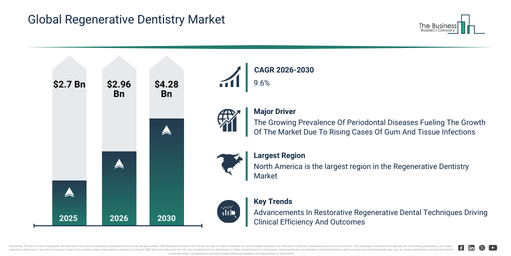
    The regenerative dentistry market has experienced robust expansion in recent years. Projections indicate it will expand from $2.7 billion in 2025 to $2.96 billion in 2026, exhibiting a compound annual growth rate (CAGR) of 9.8%. Historically, this growth can be ascribed to factors such as a greater incidence of dental disorders, innovations in biomaterial research, heightened understanding of regenerative dental procedures, the proliferation of specialized dental clinics, and the initial integration of tissue engineering methods.

    The regenerative dentistry market is projected to experience substantial expansion in the coming years. Its value is anticipated to reach $4.28 billion by 2030, demonstrating a compound annual growth rate (CAGR) of 9.6%. This anticipated growth during the forecast period stems from factors such as heightened investments in regenerative medicine research, an increasing need for less invasive dental options, the broadening of clinical trials for bioengineered dental structures, greater embrace of biologic dental interventions, and advancements in scaffold and growth factor technologies. Key developments expected during the forecast timeframe encompass the wider implementation of stem cell-derived dental treatments, increasing utilization of bioactive and biomimetic substances, an intensified focus on regenerating pulp and periodontal tissues, the expansion of customized regenerative dental procedures, and improved incorporation of sophisticated tissue engineering methods.

    Get A Free Sample Report With In-Depth Market Insights:

    https://thebusinessresearchcompany.com/sample_request?id=59119187&type=smp&name=Regenerative%20Dentistry%20Market%20Report%202026&utm_source=Blogs&utm_medium=Paid&utm_campaign=Nov_PR

    Regenerative Dentistry Market Demand Drivers Opening New Revenue Streams

    The increasing occurrence of periodontal diseases is projected to contribute significantly to the expansion of the regenerative dentistry market in the future. These diseases are inflammatory infections that impact the tissues supporting teeth, including the gums, periodontal ligament, and alveolar bone, often leading to symptoms such as swollen gums, bleeding, and, in severe cases, tooth loss. The rising prevalence of periodontal diseases is primarily caused by inadequate oral hygiene, which results in plaque buildup and subsequent gum infections. Regenerative dentistry plays a vital role in addressing this growing issue by repairing damaged gum and bone tissues using advanced biomaterials and innovative stem cell-based therapies. For instance, according to Mint Dental Centre, a UK-based provider of exceptional dental care, the proportion of the UK population affected by gum disease is expected to increase from 42% in 2025 to 54% by 2050, reflecting a substantial upward trend in prevalence throughout the projection period. Therefore, the escalating prevalence of periodontal diseases is anticipated to propel the growth of the regenerative dentistry market.

    Regenerative Dentistry Market Segment Outlook: Which Categories Are Growing Fastest?

    The regenerative dentistry market covered in this report is segmented –

    1) By Type: Natural, Synthetic

    2) By Tissue Type: Hard Tissue, Soft Tissue

    3) By Technology: Tissue Engineering, Stem Cell Therapy, Other Technologies

    4) By Application: Periodontal Regeneration, Endodontic Regeneration, Tooth Reconstruction, Bone Regeneration, Other Applications

    5) By End-User: Hospitals, Dental Clinics, Other End-Users

    Subsegments:

    1) By Natural: Autologous Bone Graft, Demineralized Bone Matrix Allograft, Mineralized Cortico Cancellous Allograft, Bovine Derived Xenograft, Porcine Derived Xenograft, Collagen Barrier Membrane

    2) By Synthetic: Hydroxyapatite Ceramic, Beta Tricalcium Phosphate, Biphasic Calcium Phosphate, Bioactive Glass Granules, Calcium Sulfate Bone Cement, Poly Lactic Acid Resorbable Membrane, Poly Glycolic Acid Scaffold, Poly Caprolactone Composite Scaffold

    Regenerative Dentistry Market Transformation Trends: What Innovations Are Driving Change?

    Leading companies within the regenerative dentistry market are prioritizing enhancements in restorative regenerative dental techniques, such as the application of allograft bone in a syringe, to elevate the effectiveness of bone grafting, improve patient outcomes, and streamline surgical processes for dental practitioners. An allograft bone in a syringe represents a pre-filled, ready-to-administer bone graft material sourced from human donor bone tissue, which has undergone processing, sterilization, and packaging in a syringe format to offer ease of use and accuracy during surgical or dental interventions.

    Regenerative Dentistry Market Leading Companies And Competitive Benchmarking

    Major companies operating in the regenerative dentistry market are Stryker Corporation, Zimmer Biomet Holdings Inc., Smith & Nephew plc, Dentsply Sirona, Arthrex Inc., Integra LifeSciences Corporation, Nobel Biocare, Organogenesis Holdings Inc., Osstem Implant, MiMedx Group Inc., Vericel Corporation, LifeNet Health, BioTissue Holdings Inc., Geistlich Pharma AG, RTI Surgical Holdings Inc., Tissue Regenix Group plc, Viscus Biologics, Botiss Biomaterials GmbH, Revivicor Inc., Genoss Co. Ltd.

    View The Full Regenerative Dentistry Market Report:

    https://thebusinessresearchcompany.com/report/global-regenerative-dentistry-market-report?utm_source=Blogs&utm_medium=Paid&utm_campaign=Nov_PR

    Regenerative Dentistry Market Regional Split: Which Areas Are Fueling Growth?

    North America was the largest region in the regenerative dentistry market in 2025. Asia-Pacific is expected to be the fastest-growing region in the forecast period. The regions covered in the regenerative dentistry market report are Asia-Pacific, South East Asia, Western Europe, Eastern Europe, North America, South America, Middle East, Africa.

    Reach Out To Our Team:

    The Business Research Company: https://www.thebusinessresearchcompany.com/

    Americas: +1 310-496-7795

    Asia: +44 7882 955267 & +91 8897263534

    Europe: +44 7882 955267

    Email us at: marketing@tbrc.info

    Follow us on:

    LinkedIn: https://in.linkedin.com/company/the-business-research-company

    YouTube: https://www.youtube.com/channel/UC24_fI0rV8cR5DxlCpgmyFQ

    Global Market Model: https://www.thebusinessresearchcompany.com/global-market-model
  • Referral Management Market Forecast 2026: Market Size, Competitive Landscape And Growth Drivers

    Referral Management Market Forecast 2026: Market Size, Competitive Landscape And Growth Drivers

    Backed by market attractiveness analysis, total addressable market sizing, company benchmarking matrices, interactive Excel dashboards, wider supply chain intelligence, emerging startup coverage, and detailed product-level insights, The Business Research Company’s 2026 market reports are designed to offer research that is more actionable and strategically valuable than ever.

    Referral Management Market Growth Analysis: How Will Revenue Trend Over The Forecast Period?

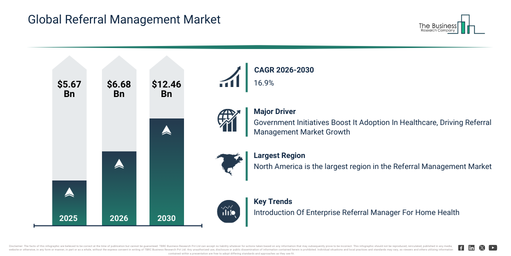
    The referral management market size has observed rapid expansion in recent years. It is projected to increase from $5.67 billion in 2025 to $6.68 billion in 2026, reflecting a compound annual growth rate (CAGR) of 17.7%. The growth witnessed in the past can be attributed to the escalating complexity of healthcare delivery networks, an increase in patient volumes across various care settings, the early integration of digital health platforms, a heightened focus on care coordination, and the broadening of provider networks.

    The referral management market is projected for substantial expansion in the coming years. It is anticipated to reach $12.46 billion by 2030, exhibiting a compound annual growth rate (CAGR) of 16.9%. This growth during the forecast period is attributable to increasing investments in value-based care models, a growing demand for real-time referral visibility, the expansion of AI-driven care navigation tools, the rising adoption of integrated health information systems, and an increased focus on patient experience optimization. Prominent trends for the forecast period include the increasing adoption of cloud-based referral platforms, rising integration with electronic health records, the growing use of automated referral tracking, the expansion of interoperable care coordination systems, and an enhanced focus on reducing patient leakage.

    Get A Free Sample Report With In-Depth Market Insights:

    https://thebusinessresearchcompany.com/sample_request?id=87745236&type=smp&name=Referral%20Management%20Market%20Report%202026&utm_source=Blogs&utm_medium=Paid&utm_campaign=Nov_PR

    Referral Management Market Growth Backed By Core Demand Fundamentals

    Government initiatives aimed at integrating information technology solutions into healthcare systems are expected to drive the growth of the referral management market. Information technology is crucial in the healthcare industry, assisting in the delivery of more accurate, actionable, and accessible information related to patients’ health.

    Referral Management Market Segment Landscape: Which Areas Lead Development?

    The referral management market covered in this report is segmented –

    1) By Type: Self-Referral, Professional-Referral, Third Party-Referral

    2) By Component: Software, Services

    3) By Delivery Mode: Web-Based Delivery Mode, Cloud-Based Delivery Mode, On-Premise Delivery Mode

    4) By End User: Provider, Payer, Other End Users

    Subsegments:

    1) By Self-Referral: Direct Patient Self-Referral, Online Self-Referral Platforms, Patient Initiated Referrals via Portals

    2) By Professional-Referral: Physician-to-Physician Referrals, Specialist Referrals, Collaborative Care Referrals

    3) By Third Party-Referral: Insurance-Based Referrals, Managed Care Referrals, Referral Services

    #Referral Management Market Growth Trends: What’s Shaping The Future Outlook?

    Leading companies in the referral management market are developing advanced technological innovations in healthcare, such as the Enterprise Referral Manager. This software is designed to centralize referrals and integrate referral information into the EHR system to enhance the overall referral process.

    Referral Management Market Industry Leaders And Competitive Landscape

    Major companies operating in the referral management market are Allscripts Healthcare Solutions Inc., CarePort Health Inc., The Advisory Board Company, eHealth Technologies Inc., Kyruus Inc., Arcadia Data Inc., Dental Care Links LLC, McKesson Corporation, ReferralMD Inc., Keet Health Inc., Change Healthcare Holdings Inc., Conifer Health Solutions LLC, athenahealth Inc., Cerner Corporation, Eceptionist Inc., InSync Healthcare Solutions LLC, AristaMD Inc., HealthLinkNow Inc., Healthgrades Operating Company Inc., HealthTap Inc., Innovaccer Inc., InteliChart Inc., Luma Health Inc., Medici Technologies Inc., MyHealthDirect Inc., NextGen Healthcare Inc., Nudge Inc., PatientPop Inc., Phynd Technologies Inc., Qventus Inc., Radix Health Inc., Relatient Inc., SaaS Healthcare Inc., Salesforce.com Inc., SCI Solutions Inc., SimpleVisit Inc., Solutionreach Inc., Teladoc Health Inc., TigerConnect Inc., Updox LLC, VSee Lab Inc., WellSky Corporation, Zocdoc Inc.

    View The Full Referral Management Market Report:

    https://thebusinessresearchcompany.com/report/referral-management-global-market-report?utm_source=Blogs&utm_medium=Paid&utm_campaign=Nov_PR

    Referral Management Market Top Region: Where Does Most Revenue Come From?

    North America was the largest region in the referral management market in 2025. Asia-Pacific is expected to be the fastest-growing region in the referral management market share during the forecast period. The regions covered in the referral management market report are Asia-Pacific, South East Asia, Western Europe, Eastern Europe, North America, South America, Middle East, Africa.

    Reach Out To Our Team:

    The Business Research Company: https://www.thebusinessresearchcompany.com/

    Americas: +1 310-496-7795

    Asia: +44 7882 955267 & +91 8897263534

    Europe: +44 7882 955267

    Email us at: marketing@tbrc.info

    Follow us on:

    LinkedIn: https://in.linkedin.com/company/the-business-research-company

    YouTube: https://www.youtube.com/channel/UC24_fI0rV8cR5DxlCpgmyFQ

    Global Market Model: https://www.thebusinessresearchcompany.com/global-market-model