Blog

  • General Dental Devices And Equipment Market Projected For Strong Expansion Through 2030: Key Trends And Future Outlook

    General Dental Devices And Equipment Market Projected For Strong Expansion Through 2030: Key Trends And Future Outlook

    Built to provide research that’s more actionable and strategically valuable, The Business Research Company’s 2026 market reports include market attractiveness analysis, total addressable market sizing, company benchmarking matrices, interactive Excel dashboards, broader supply chain intelligence, emerging startup tracking, and in-depth product insights.

    General Dental Devices And Equipment Market Expansion Outlook: What Revenue Opportunities Are Ahead?

    The general dental devices and equipment market has experienced robust expansion in recent years. Forecasts indicate that its valuation is set to increase from $13.12 billion in 2025 to $14.3 billion in 2026, exhibiting a compound annual growth rate (CAGR) of 9.0%. This historical growth can be attributed to several factors, including the expansion of dental clinics and laboratories, a rising prevalence of oral health disorders, an increasing demand for restorative dental procedures, the growing use of diagnostic dental imaging, and improved access to dental care services.

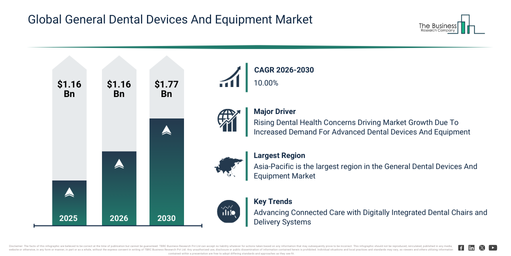
    The general dental devices and equipment market is projected for substantial expansion over the coming years, reaching $20.94 billion in 2030, driven by a compound annual growth rate (CAGR) of 10.0%. This anticipated growth is primarily due to factors such as the wider uptake of digital dentistry workflows, a heightened demand for cosmetic dental procedures, the development of chairside dental solutions, increasing capital directed towards smart dental clinics, and a greater emphasis on ensuring patient comfort and operational efficiency. Key trends expected during this period involve the greater integration of digital dental imaging systems, an elevated demand for CAD/CAM dental solutions, the increased application of minimally invasive dental tools, an enlargement of dental laser applications, and a reinforced emphasis on infection control equipment.

    Get A Free Sample Report With In-Depth Market Insights:

    https://thebusinessresearchcompany.com/sample_request?id=32988724&type=smp&name=General%20Dental%20Devices%20And%20Equipment%20Market%20Report%202026&utm_source=Blogs&utm_medium=Paid&utm_campaign=Oct_PR

    General Dental Devices And Equipment Market Development Factors: What’s Supporting Demand?

    The increasing prevalence of dental health issues is propelling the expansion of the dental devices and equipment market. These health concerns encompass a growing number of oral conditions like cavities, gum disease, tooth decay, malocclusion, and various oral infections, all of which necessitate prompt diagnosis, preventative measures, and efficient treatment. The escalation of these dental problems stems from factors such as inadequate oral hygiene, elevated sugar intake, an aging global populace, tobacco use, and an increasing understanding of how oral health influences overall physical well-being. This escalating burden of dental problems stimulates the dental devices and equipment market by generating greater demand for sophisticated diagnostic tools, treatment implements, and therapeutic options designed to enhance oral care standards and patient results. A notable example is the finding from September 2025, reported by the Royal College of Surgeons of England, a UK-based professional membership organization for surgeons, which indicated that 21,162 children aged 5 to 9 were hospitalized for tooth decay in 2024-2025, marking a small rise from the preceding year. Consequently, escalating dental health concerns are driving the development of the dental devices and equipment market.

    General Dental Devices And Equipment Market Segmentation And Category Overview

    The general dental devices and equipment market covered in this report is segmented –

    1) By Type: Systems and Parts, Dental Implant, Crown and Bridge, Dental Biomaterial, Dental Chair and Equipment, Other Dental Device

    2) By Treatment: Orthodontic, Endodontic, Peridontic, Prosthodontic

    3) By Application: Hospitals and Clinics, Dental Laboratories

    Subsegments:

    1) By Systems And Parts: Dental X-Ray Systems, Cad Or Cam Systems, Imaging Systems And Parts, Sterilization Equipment, Diagnostic Instruments, Handpieces And Motors

    2) By Dental Implant: Endosteal Implants, Subperiosteal Implants, Transosteal Implants, Implant Parts (Abutments, Screws)

    3) By Crown And Bridge: Ceramic Crowns, Porcelain-Fused-To-Metal Crowns, Metal Crowns, Dental Bridges (Fixed, Removable), Bridge Parts (Abutments, Pontics)

    4) By Dental Biomaterial: Bone Grafts And Substitutes, Dental Adhesives And Sealants, Resin-Based Composites, Dental Cements, Gutta-Percha And Other Root Canal Materials

    5) By Dental Chair And Equipment: Dental Examination Chairs, Surgical Chairs, Dental Delivery Systems, Dental Unit Equipment (Air Compressors, Suction Systems), Operatory Lights, Instrument Trays And Stands

    6) By Other Dental Device: Orthodontic Devices (Braces, Aligners), Dental Lasers, Intraoral Cameras, Teeth Whitening Systems, Dental Hand Instruments (Probes, Scalers), Endodontic Devices

    General Dental Devices And Equipment Market Transformation Trends: What Innovations Are Driving Change?

    Leading companies in the dental devices and equipment market are increasingly emphasizing technological advancements, such as digital connectivity and integrated platform solutions, aiming to enhance clinical workflows, patient care, and equipment management. These digitally connected and integrated platform solutions are intelligent, software-enabled platforms offering real-time data integration, remote monitoring, and seamless interoperability with practice management technologies. For example, in June 2025, A-dec, a US-based dental equipment manufacturer, launched its inaugural digitally connected delivery systems, the A-dec 500 Pro and A-dec 300 Pro. These systems feature the updatable A-dec+ software platform, which supports improved connectivity and user experience in dental operatories. Such innovative systems empower dentists to obtain centralized insights and remotely update equipment, laying a groundwork for future smart dental technologies.

    General Dental Devices And Equipment Market Leading Companies And Competitive Benchmarking

    Major companies operating in the general dental devices and equipment market are Straumann Group, 3M Company, Zimmer Biomet Holdings Inc., Danaher Corporation, Denstply International Inc., A-Dec Inc., Carestream Health Inc., Biolase Inc., Sirona Dental Systems, Noble Biocare, Planmeca OY, Astra Tech Ab, Aap Implantate AG, Biohorizons Implants System Inc., Biomet 3i Inc., Dentatus Ab, Gendex ltd., Henry Schein Inc., Hoya Conbio Ltd., Hu-Freidy Mfg Co., J. Morita Usa Inc., Keystone Dental Inc., Midmark Corp., Nakanishi Inc., GC Corporation, Aseptico Inc., Envista Holdings Corporation, Ivoclar Vivadent AG, KaVo Dental, Patterson Dental, Brasseler USA, American Eagle Instruments Inc., Bien-Air Medical Technologies, Castellini S.p.A., Coltene Whaledent AG, DentalEZ Group, Directa AB, Kerr Corporation, Premier Dental Products Company

    View The Full General Dental Devices And Equipment Market Report:

    https://thebusinessresearchcompany.com/report/general-dental-devices-and-equipment-global-market-report?utm_source=Blogs&utm_medium=Paid&utm_campaign=Oct_PR

    General Dental Devices And Equipment Market Top Region By Revenue And Market Share

    Asia-Pacific was the largest region in the global general dental equipment market in 2025. Western Europe was the second-largest region in the general dental equipment market. The regions covered in the general dental devices and equipment market report are Asia-Pacific, South East Asia, Western Europe, Eastern Europe, North America, South America, Middle East, Africa.

    Reach Out To Our Team:

    The Business Research Company: https://www.thebusinessresearchcompany.com/

    Americas: +1 310-496-7795

    Asia: +44 7882 955267 & +91 8897263534

    Europe: +44 7882 955267

    Email us at: marketing@tbrc.info

    Follow us on:

    LinkedIn: https://in.linkedin.com/company/the-business-research-company

    YouTube: https://www.youtube.com/channel/UC24_fI0rV8cR5DxlCpgmyFQ

    Global Market Model: https://www.thebusinessresearchcompany.com/global-market-model
  • Gel Implants Market Outlook 2026–2030: Growth Trends, Market Dynamics And Emerging Opportunities

    Gel Implants Market Outlook 2026–2030: Growth Trends, Market Dynamics And Emerging Opportunities

    Backed by market attractiveness analysis, total addressable market sizing, company benchmarking matrices, interactive Excel dashboards, wider supply chain intelligence, emerging startup coverage, and detailed product-level insights, The Business Research Company’s 2026 market reports are designed to offer research that is more actionable and strategically valuable than ever.

    Gel Implants Market Growth Potential: How Will Market Size Shift Through 2030?

    The gel implants market has observed significant expansion in recent years. It is anticipated to expand from $1.39 billion in 2025 to $1.46 billion in 2026, registering a compound annual growth rate (CAGR) of 5.4%. This historical rise can be ascribed to a surge in cosmetic surgery procedures, heightened recognition of aesthetic appeal, an increasing volume of reconstructive surgeries, advancements in implant materials, and the proliferation of specialized cosmetic clinics.

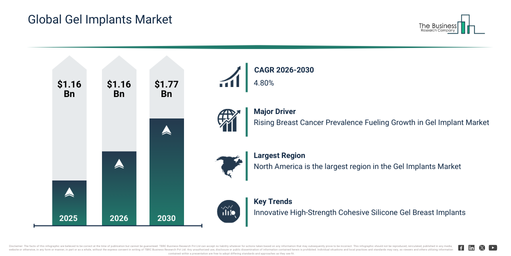
    The gel implants market is projected to experience consistent expansion over the upcoming years. This market is anticipated to reach $1.77 billion by 2030, exhibiting a compound annual growth rate (CAGR) of 4.8%. Key drivers for this growth during the forecast period include an increasing demand for customized aesthetic solutions, broader acceptance of cosmetic procedures among various age demographics, a rise in reconstructive surgeries post-breast cancer, the expansion of medical tourism for cosmetic interventions, and an increased emphasis on body sculpting and augmentation. Significant trends observed in the projected timeframe encompass a growing inclination towards natural-appearing aesthetic improvements, an escalating need for reconstructive operations after trauma and cancer, wider implementation of advanced silicone and cohesive gel implants, the proliferation of minimally invasive cosmetic techniques, and a heightened focus on the enduring safety and longevity of implants.

    Get A Free Sample Report With In-Depth Market Insights:

    https://thebusinessresearchcompany.com/sample_request?id=85205825&type=smp&name=Gel%20Implants%20Market%20Report%202026&utm_source=Blogs&utm_medium=Paid&utm_campaign=Oct_PR

    Gel Implants Market Industry Drivers: What’s Behind The Revenue Growth?

    The growing incidence of breast cancer is anticipated to boost the expansion of the gel implant market moving forward. Breast cancer is a malignancy that starts in mammary cells and can emerge from various breast areas, such as the milk ducts (known as ductal carcinoma) or the milk-generating glands (termed lobular carcinoma). This increasing prevalence stems from enhanced awareness and screening efforts, an aging demographic, shifts in reproductive behaviors, and lifestyle elements. Treatment for breast cancer frequently includes mastectomy, necessitating breast reconstruction with devices like gel implants, which help restore lost breast volume and form. For example, in September 2025, the National Breast Cancer Foundation, an Australian non-profit supporting breast cancer research, highlighted that in the U.S., 1 in 8 women will develop breast cancer, with over 378,000 new invasive and non-invasive cases projected for 2025, indicating widespread personal connections to the disease. Consequently, the rising incidence of breast cancer is propelling the growth of the gel implant market.

    Gel Implants Market Segment Outlook: Which Categories Are Growing Fastest?

    The gel implants market covered in this report is segmented –

    1) By Product: Silicone Gel Implants, Gummy Bear Implants

    2) By Application: Cosmetic Surgery, Reconstructive Surgery

    3) By End User: Specialty Clinics, Hospitals

    Subsegments:

    1) By Silicone Gel Implants: Round Silicone Gel Implants, Anatomical (Teardrop) Silicone Gel Implants

    2) By Gummy Bear Implants: Textured Gummy Bear Implants, Smooth Gummy Bear Implants

    #Gel Implants Market Growth Trends: What’s Shaping The Future Outlook?

    Leading companies in the gel implant sector are innovating products, such as high-strength cohesive silicone gel breast implants, to boost market revenue. These particular breast implants incorporate a denser silicone gel that maintains its form more effectively, offering a natural feel and improved durability, which lessens the chance of rupture or leakage. For example, in July 2023, Sientra, a US-based gel implant producer, introduced its high-strength cohesive silicone gel breast implants in Canada. These new breast implants are crafted to provide a more natural look and feel, supported by clinically established low complication rates. Sientra holds the distinction of being the first new silicone gel breast implant manufacturer to receive approval from Health Canada.

    Gel Implants Market Industry Leaders And Competitive Landscape

    Major companies operating in the gel implants market are Allergan Aesthetics, Sientra Inc, Establishment Labs Holdings Inc, GC Aesthetics, POLYTECH Health & Aesthetics GmbH, Silimed, Ideal Implant, HansBiomed Co Ltd, Groupe Sebbin SAS, Cereplas, Arion Laboratories, Guangzhou Wanhe Plastic Materials, Aesthetic Medical International, Motiva, AptarGroup, Revolutions Medical, Biodermis, Hugel, DareBio, Keller Medical, Restorative Technologies, Eternal Beauty, Lattice Medical, ImpLite Ltd, Eurosilicone S A S, Nagor Ltd, Biosil Limited

    View The Full Gel Implants Market Report:

    https://thebusinessresearchcompany.com/report/gel-implants-global-market-report?utm_source=Blogs&utm_medium=Paid&utm_campaign=Oct_PR

    Gel Implants Market Regional Analysis And Top Geography

    North America was the largest region in the gel implants market in 2025. The regions covered in the gel implants market report are Asia-Pacific, South East Asia, Western Europe, Eastern Europe, North America, South America, Middle East, Africa.

    Reach Out To Our Team:

    The Business Research Company: https://www.thebusinessresearchcompany.com/

    Americas: +1 310-496-7795

    Asia: +44 7882 955267 & +91 8897263534

    Europe: +44 7882 955267

    Email us at: marketing@tbrc.info

    Follow us on:

    LinkedIn: https://in.linkedin.com/company/the-business-research-company

    YouTube: https://www.youtube.com/channel/UC24_fI0rV8cR5DxlCpgmyFQ

    Global Market Model: https://www.thebusinessresearchcompany.com/global-market-model
  • Gastrointestinal Devices Market Growth Outlook From $12.69 Billion In 2026 To $17.46 Billion By 2030

    Gastrointestinal Devices Market Growth Outlook From $12.69 Billion In 2026 To $17.46 Billion By 2030

    Featuring market attractiveness scoring, total addressable market sizing, company benchmarking matrices, interactive Excel dashboards, deeper supply chain intelligence, emerging startup tracking, and granular product-level insights, The Business Research Company’s 2026 market reports are built to deliver research that is both more actionable and more strategically valuable.

    Gastrointestinal Devices Market Value Analysis: What Growth Lies Ahead Over The Forecast Period?

    The gastrointestinal devices market size has demonstrated strong growth in recent years. It is anticipated to grow from $11.7 billion in 2025 to $12.69 billion in 2026, at a compound annual growth rate (CAGR) of 8.5%. The expansion witnessed in the past can be attributed to the rising prevalence of gastrointestinal disorders, the establishment of more hospital gastroenterology departments, technological advancements in endoscopic imaging, the increase in screening programs, and the broader availability of advanced GI devices.

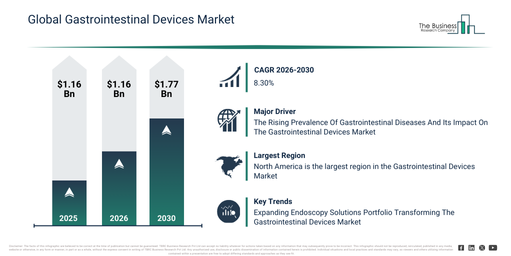
    The gastrointestinal devices market is projected to experience substantial growth in the upcoming years. Its valuation is expected to reach $17.46 billion in 2030, growing at a compound annual growth rate (CAGR) of 8.3%. This expansion during the forecast period can be attributed to factors such as the increasing integration of AI-assisted GI diagnostics, rising investments in advanced endoscopy centers, the broadening scope of outpatient GI procedures, a growing demand for single-use GI devices, and a heightened emphasis on patient safety and operational efficiency. Key trends anticipated in the projection timeframe include the increasing adoption of advanced GI endoscopic procedures, a surge in the utilization of capsule endoscopy systems, a growing preference for minimally invasive GI treatments, the expansion of therapeutic endoscopy applications, and a reinforced focus on early disease detection tools.

    Get A Free Sample Report With In-Depth Market Insights:

    https://thebusinessresearchcompany.com/sample_request?id=59898803&type=smp&name=Gastrointestinal%20Devices%20Market%20Report%202026&utm_source=Blogs&utm_medium=Paid&utm_campaign=Oct_PR

    Gastrointestinal Devices Market Growth Factors: What’s Supporting Expansion?

    The expansion of the gastrointestinal devices market is anticipated to be driven by the escalating occurrence of gastrointestinal diseases. These conditions, which affect the digestive tract and related organs, present symptoms ranging from minor discomfort to severe complications. A significant factor in the growing prevalence of these diseases is the aging global demographic, as older individuals experience higher rates of digestive system disorders that necessitate increased medical intervention. This rise in diagnoses, in turn, fuels a greater demand for specialized diagnostic and therapeutic devices, enabling healthcare providers to manage these conditions effectively. For instance, in July 2023, Crohn’s and Colitis Canada, a Canada-based national, volunteer-based charity, reported that by 2035, the number of inflammatory bowel disease (IBD) sufferers in Canada is projected to reach 470,000, an increase from an estimated 322,600 in 2023. This upward trend in gastrointestinal disease prevalence is thus a key stimulant for the growth of the gastrointestinal devices market.

    Gastrointestinal Devices Market Segment Landscape: Which Areas Lead Development?

    The gastrointestinal devices market covered in this report is segmented –

    1) By Product Type: GI Videoscopes, Biopsy Devices, Endoscopic Retrograde Cholangiopancreatography Devices (ERCP), Capsule Endoscopy, Endoscopic Ultrasound, Endoscopic Mucosal Resection (EMR), Hemostasis Devices, Other Product Types

    2) By Sales Channel: Online Retailing, Medical Stores And Brand Outlet

    3) By End Users: Hospitals, Clinics And Dialysis Centers, Ambulatory Surgical Center

    Subsegments:

    1) By GI Videoscopes: Flexible Videoscopes, Rigid Videoscopes

    2) By Biopsy Devices: Needle Biopsy Devices, Forceps Biopsy Devices, Punch Biopsy Devices

    3) By Endoscopic Retrograde Cholangiopancreatography Devices (ERCP): ERCP Cannulas, Guidewires, Balloon Sweep Devices

    4) By Capsule Endoscopy: Small Intestine Capsule Endoscopes, Esophageal Capsule Endoscopes, Colonic Capsule Endoscopes

    5) By Endoscopic Ultrasound: EUS Scopes, EUS-guided Fine-needle Aspiration (FNA) Devices

    6) By Endoscopic Mucosal Resection (EMR): EMR Kits, EMR Suction Devices

    7) By Hemostasis Devices: Mechanical Hemostasis Devices, Thermal Hemostasis Devices, Chemical Hemostasis Agents

    8) By Other Product Types: Enteral Feeding Devices, Gastrostomy Tubes, Accessories For GI Devices

    Gastrointestinal Devices Market Industry Trends: What’s Reshaping Demand?

    Leading companies in the gastrointestinal devices market are intensifying their efforts to broaden their portfolio of endoscopy solutions, aiming to secure a competitive advantage. This expansion of the endoscopy solutions portfolio involves the development and introduction of novel products and services within the endoscopy domain. Endoscopy itself is a medical procedure utilizing an endoscope, a flexible or rigid tubular device, to inspect the body’s interior. For example, in January 2023, Fujifilm India Private Limited, an India-based imaging solutions company, unveiled ClutchCutter and FushKnife, a fresh collection of endoscopy solutions portfolios designed for therapeutic gastrointestinal applications. ClutchCutter, a rotatable forceps capable of performing three functions simultaneously, aids clinicians in coagulation, dissection, and making incisions. Engineered for the most challenging procedures, ClutchCutter boasts an insulated outer edge for optimal durability and jagged, serrated jaws for enhanced grasping. In contrast, the FlushKnife is a diathermic slitter that allows medical professionals to execute various tasks, including marking, flushing, incision, dissection, and coagulation. A key benefit of this product is its ball-tip option, which provides excellent traction, enabling efficient dissection of the target tissue and coagulation.

    Gastrointestinal Devices Market Key Participants And Competitive Landscape

    Major companies operating in the gastrointestinal devices market are B. Braun Melsungen AG, Olympus Corporation, Interscope Inc., Steris plc, Cook Group Incorporated, MICRO-TECH Co. Ltd., Cantel Medical Corp., CONMED Corporation, PENTAX Medical Company, Karl Storz SE & Co. KG, US Endoscopy Inc., Richard Wolf GmbH, Motus GI Holdings Inc., Congentix Medical Inc., ERBE Elektromedizin GmbH, Creo Medical Group plc, GI Dynamics Inc., Mauna Kea Technologies SA, EndoMaster Pte Ltd., Fujifilm Holdings Corporation

    View The Full Gastrointestinal Devices Market Report:

    https://thebusinessresearchcompany.com/report/gastrointestinal-devices-global-market-report?utm_source=Blogs&utm_medium=Paid&utm_campaign=Oct_PR

    Gastrointestinal Devices Market Geographic Analysis: Where Is Demand Rising Fastest?

    North America was the largest region in the gastrointestinal devices market in 2025. Asia-Pacific was the second largest region in the gastrointestinal devices market report. The regions covered in the gastrointestinal devices market report are Asia-Pacific, South East Asia, Western Europe, Eastern Europe, North America, South America, Middle East, Africa.

    Reach Out To Our Team:

    The Business Research Company: https://www.thebusinessresearchcompany.com/

    Americas: +1 310-496-7795

    Asia: +44 7882 955267 & +91 8897263534

    Europe: +44 7882 955267

    Email us at: marketing@tbrc.info

    Follow us on:

    LinkedIn: https://in.linkedin.com/company/the-business-research-company

    YouTube: https://www.youtube.com/channel/UC24_fI0rV8cR5DxlCpgmyFQ

    Global Market Model: https://www.thebusinessresearchcompany.com/global-market-model
  • Gastrointestinal Bleeding Treatment Devices Market Forecast To Reach $1.39 Billion By 2030: Key Growth Drivers And Industry Trends

    Gastrointestinal Bleeding Treatment Devices Market Forecast To Reach $1.39 Billion By 2030: Key Growth Drivers And Industry Trends

    Built to provide research that’s more actionable and strategically valuable, The Business Research Company’s 2026 market reports include market attractiveness analysis, total addressable market sizing, company benchmarking matrices, interactive Excel dashboards, broader supply chain intelligence, emerging startup tracking, and in-depth product insights.

    Gastrointestinal Bleeding Treatment Devices Market Size Forecast: How Big Could The Market Get By 2030?

    The market for gastrointestinal bleeding treatment devices has experienced robust expansion in recent years. It is projected to expand from $0.92 billion in 2025 to $1 billion by 2026, exhibiting a compound annual growth rate (CAGR) of 8.7%. Historically, this growth has been fueled by factors such as the increasing occurrence of gastrointestinal disorders, the growing prevalence of peptic ulcer disease, the broader implementation of endoscopic diagnostic procedures, an uptick in hospital-based GI interventions, and the presence of sophisticated endoscopy equipment.

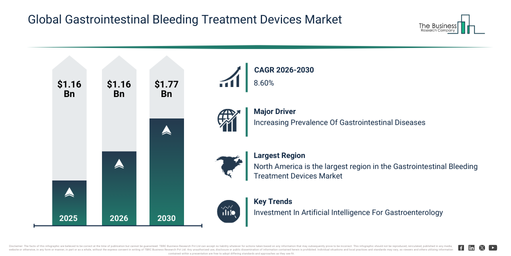
    The gastrointestinal bleeding treatment devices market is projected to experience substantial expansion in the coming years, reaching $1.39 billion by 2030, demonstrating a compound annual growth rate (CAGR) of 8.6%. This anticipated growth during the forecast period is fueled by factors such as the heightened uptake of next-generation endoscopic devices, an escalating demand for outpatient GI procedures, a sharpened emphasis on detecting bleeding early, the proliferation of ambulatory surgical centers, and increased capital flow into advanced GI care technologies. Key developments expected in this period encompass the greater integration of sophisticated endoscopic hemostasis devices, an uptick in the application of minimally invasive GI bleeding treatments, a surging need for accurate thermal ablation tools, the broadening availability of mechanical hemostatic solutions, and an intensified drive towards rapid bleeding management technologies.

    Get A Free Sample Report With In-Depth Market Insights:

    https://thebusinessresearchcompany.com/sample_request?id=90509579&type=smp&name=Gastrointestinal%20Bleeding%20Treatment%20Devices%20Market%20Report%202026&utm_source=Blogs&utm_medium=Paid&utm_campaign=Oct_PR

    Gastrointestinal Bleeding Treatment Devices Market Demand Drivers: What’s Powering Industry Growth?

    The increasing burden of gastrointestinal disorders is anticipated to make the market more profitable. These diseases can stem from various factors, including a low fiber diet, stress, insufficient water intake, high consumption of dairy foods, inactive lifestyles, aging, and genetic predispositions. For instance, a report from October 2024 by the US-based National Library of Medicine indicated that in 2023, 825 per 100,000 Canadians were afflicted with inflammatory bowel disease (IBD), impacting over 320,000 individuals. Furthermore, forecasts suggest this count might increase to 1.1% of the population, roughly 470,000 Canadians, by 2035. Consequently, the growing prevalence of disorders related to the GI tract is a significant market driver.

    Gastrointestinal Bleeding Treatment Devices Market Segments: Where Is Growth Concentrated?

    The gastrointestinal bleeding treatment devices market covered in this report is segmented –

    1) By Product: Endoscopic Thermal Hemostasis Devices, Mechanical Hemostasis Devices, Injection-Based Hemostasis Devices, Topical Hemostatic Agents & Powders, Combination Or Multimodal Hemostasis Devices

    2) By GI Tract Division: Upper GI Tract, Lower GI Tract

    3) By End User: Hospitals Or Clinics, Ambulatory Surgical Centers, Other End-users

    Subsegments:

    1) By Endoscopic Thermal Hemostasis Devices: Electrocautery And Electrosurgical Coagulation Devices, Argon Plasma Coagulation (APC) Devices, Radiofrequency Ablation (RFA) Devices, Laser Coagulation Devices, Heater Probe Devices

    2) By Mechanical Hemostasis Devices: Hemostatic Clips (Through-the-Scope And Over-the-Scope Clips), Endoscopic Band Ligation Devices, Endoscopic Suturing Devices, Compression And Tamponade Devices

    3) By Injection-Based Hemostasis Devices: Epinephrine Injection Systems, Sclerosant Injection Devices, Cyanoacrylate Glue Injection Devices, Saline And Combination Injection Systems

    4) By Topical Hemostatic Agents And Powders: Hemostatic Powder Sprays, Absorbable Hemostatic Agents, Fibrin-Based Sealants, Collagen-Based Hemostatic Agents

    5) By Combination And Multimodal Hemostasis Devices: Thermal And Mechanical Combination Systems, Injection And Mechanical Combination Systems, Integrated Multimodal Endoscopic Hemostasis Platforms

    Gastrointestinal Bleeding Treatment Devices Market Innovation Trends: What Developments Are Reshaping The Industry?

    Leading companies in the gastrointestinal bleeding treatment devices market are prioritizing the creation of advanced solutions like Hemospray, aiming to boost the effectiveness of treating acute bleeding within the GI tract. Hemospray itself is a hemostatic powder crafted to manage and control active gastrointestinal bleeding. For example, in January 2024, AIG Hospitals, an India-based medical institution, launched Hemospray, hailing it as a breakthrough in regulating GI bleeding. This particular hemostatic agent is specifically engineered for deployment in endoscopic procedures to control acute GI bleeding. Hemospray stands out due to its simple application, robust safety record, and its proven capability to halt various types of GI bleeds, encompassing conditions from peptic ulcers to variceal hemorrhages.

    Gastrointestinal Bleeding Treatment Devices Market Top Companies Driving Competitive Growth

    Major companies operating in the gastrointestinal bleeding treatment devices market are CONMED Corporation, Boston Scientific Corporation, Ovesco Endoscopy AG, Olympus Corporation, Cook Medical, Erbe Elektromedizin GmbH, Steris plc, Medtronic plc, Johnson & Johnson, Abbott Laboratories, Fujifilm Holdings Corporation, Pentax Medical, Merit Medical Systems, Teleflex Incorporated, AngioDynamics, BTG International Ltd., Smiths Medical, Terumo Corporation, Nipro Corporation, C. R. Bard Inc., EndoChoice Holdings Inc., GI Supply Inc., Hemostasis LLC

    View The Full Gastrointestinal Bleeding Treatment Devices Market Report:

    https://thebusinessresearchcompany.com/report/gastrointestinal-bleeding-treatment-devices-global-market-report?utm_source=Blogs&utm_medium=Paid&utm_campaign=Oct_PR

    Gastrointestinal Bleeding Treatment Devices Market Global Footprint: Which Region Leads The Market?

    North America was the largest region in the gastrointestinal bleeding treatment devices market in 2025. Asia-Pacific is expected to be the fastest-growing region in the forecast period. The regions covered in the gastrointestinal bleeding treatment devices market report are Asia-Pacific, South East Asia, Western Europe, Eastern Europe, North America, South America, Middle East, Africa.

    Reach Out To Our Team:

    The Business Research Company: https://www.thebusinessresearchcompany.com/

    Americas: +1 310-496-7795

    Asia: +44 7882 955267 & +91 8897263534

    Europe: +44 7882 955267

    Email us at: marketing@tbrc.info

    Follow us on:

    LinkedIn: https://in.linkedin.com/company/the-business-research-company

    YouTube: https://www.youtube.com/channel/UC24_fI0rV8cR5DxlCpgmyFQ

    Global Market Model: https://www.thebusinessresearchcompany.com/global-market-model
  • Gastroenteritis Testing Market Research 2026: Market Size, Trends, Segments And Growth Forecast

    Gastroenteritis Testing Market Research 2026: Market Size, Trends, Segments And Growth Forecast

    Backed by market attractiveness analysis, total addressable market sizing, company benchmarking matrices, interactive Excel dashboards, wider supply chain intelligence, emerging startup coverage, and detailed product-level insights, The Business Research Company’s 2026 market reports are designed to offer research that is more actionable and strategically valuable than ever.

    Gastroenteritis Testing Market Revenue Outlook: What CAGR Lies Ahead Through 2030?

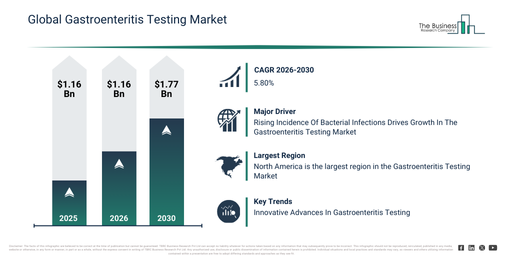
    The gastroenteritis testing market has shown robust growth in recent years. It is projected to increase from $4.18 billion in 2025 to $4.44 billion in 2026, at a compound annual growth rate (CAGR) of 6.1%. The expansion observed in the past can be attributed to several factors, including the continued dependence on conventional immunoassay and culture-based techniques, the limited accessibility of advanced molecular diagnostics, a rise in the prevalence of gastrointestinal infections, improvements in hospital and clinic diagnostic capabilities, and the growing number of research institutes conducting studies on infectious diseases.

    The gastroenteritis testing market is poised for significant expansion over the next few years. It is forecast to attain a value of $5.55 billion by 2030, driven by a compound annual growth rate (CAGR) of 5.8%. This growth throughout the projected period is attributable to advancements in molecular diagnostic technologies, an increasing need for rapid point-of-care testing solutions, augmented funding for infectious disease research, wider adoption of integrated laboratory information systems, and the extension of gastroenteritis testing services into emerging markets. Prominent developments anticipated during this forecast period include an escalating demand for swift and accurate gastroenteritis diagnostics, a growing preference for molecular diagnostic testing methodologies, the expansion of testing panels to cover viral, bacterial, and parasitic infections, an increase in point-of-care and hospital-based diagnostic services, and a more concentrated focus on epidemiological surveillance and outbreak control.

    Get A Free Sample Report With In-Depth Market Insights:

    https://thebusinessresearchcompany.com/sample_request?id=43585479&type=smp&name=Gastroenteritis%20Testing%20Market%20Report%202026&utm_source=Blogs&utm_medium=Paid&utm_campaign=Oct_PR

    Gastroenteritis Testing Market Growth Drivers: What’s Behind The Acceleration?

    The escalating occurrence of bacterial infections is anticipated to stimulate the future growth of the gastroenteritis testing market. The rise in these infections is driven by factors such as enhanced antibiotic resistance, increased population density, and greater global travel, which together facilitate the spread of resistant bacteria. Gastroenteritis testing is crucial for bacterial infections to accurately identify the specific pathogen causing symptoms like diarrhea and vomiting, which then guides appropriate treatment and helps prevent further spread of infection. For instance, in 2024, GOV.UK, a UK-based organization, reported that cases of serious bacteraemia caused by antibiotic-resistant bacteria had increased by 9.3% since 2023, rising from 18,740 cases in 2023 to 20,484 cases in 2024. Consequently, the increasing incidence of bacterial infections is a key factor propelling the expansion of the gastroenteritis testing market.

    Gastroenteritis Testing Market Segment Analysis: What Are The Core Market Categories?

    The gastroenteritis testing market covered in this report is segmented –

    1) By Type: Viral Gastrointestinal Infections, Bacterial Gastrointestinal Infections, Parasitic Gastrointestinal Infections

    2) By Disease Strains: Bacterial Strains, Viral Strains, Parasitic Strains

    3) By Testing Methods: Immunoassay Testing, Conventional Testing, Molecular Diagnostic Testing

    4) By End-User: Hospitals, Clinics Or Medical Centers, Research Institutes, Diagnostic Laboratories

    Subsegments:

    1) By Viral Gastrointestinal Infections: Norovirus, Rotavirus, Astrovirus, Adenovirus, Sapovirus

    2) By Bacterial Gastrointestinal Infections: Escherichia coli (E. coli), Salmonella, Campylobacter, Shigella, Clostridium perfringens

    3) By Parasitic Gastrointestinal Infections: Giardia lamblia, Entamoeba histolytica, Cryptosporidium, Trichinella, Strongyloides stercoralis

    Gastroenteritis Testing Market Trends: What’s Defining The Industry’s Next Phase?

    Leading companies in the gastroenteritis testing market are developing innovative products, such as molecular gastrointestinal tests, to deliver high sensitivity and specificity. A molecular gastrointestinal test functions as a diagnostic technique that utilizes molecular methods, like polymerase chain reaction (PCR), to identify and detect specific genetic material from pathogens or organisms present in gastrointestinal samples. For example, in June 2024, QIAGEN N.V., a Germany-based provider of sample and assay technologies, introduced the QIAstat-Dx Gastrointestinal Panel 2. This panel is distinguished by its capability to swiftly and comprehensively detect up to 16 clinically relevant bacterial, viral, and parasitic pathogens responsible for most gastrointestinal infections. It leverages real-time polymerase chain reaction (PCR) technology to amplify multiple genetic targets in a single reaction, marking a substantial enhancement over traditional microbiological methods that typically demand 24 hours to 10 days for sample incubation.

    Gastroenteritis Testing Market Leading Players And Competitive Positioning

    Major companies operating in the gastroenteritis testing market are F. Hoffmann-La Roche Ltd., Merck & Co. Inc., Abbott Diagnostics, Laboratory Corporation of America Holdings, Thermo Fisher Scientific Inc., Eurofins Scientific SE, Hologic Inc., Becton Dickinson and Company, bioMérieux SA, Quest Diagnostics Incorporated, DiaSorin S.p.A., Bio-Rad Laboratories Inc., Randox Laboratories Ltd., ARUP Laboratories, Meridian Bioscience Inc., MedGenome, Trinity Biotech plc, Savyon Diagnostics Ltd., Coris BioConcept, Aster Clinical Research & Diagnostic Centre Pvt. Ltd., Alimetrix Inc., Luminex Corporation

    View The Full Gastroenteritis Testing Market Report:

    https://thebusinessresearchcompany.com/report/gastroenteritis-testing-global-market-report?utm_source=Blogs&utm_medium=Paid&utm_campaign=Oct_PR

    Gastroenteritis Testing Market Regional Split: Which Areas Are Fueling Growth?

    North America was the largest region in the gastroenteritis testing market in 2025. Asia-Pacific is expected to be the fastest-growing region in the forecast period. The regions covered in the gastroenteritis testing market report are Asia-Pacific, South East Asia, Western Europe, Eastern Europe, North America, South America, Middle East, Africa.

    Reach Out To Our Team:

    The Business Research Company: https://www.thebusinessresearchcompany.com/

    Americas: +1 310-496-7795

    Asia: +44 7882 955267 & +91 8897263534

    Europe: +44 7882 955267

    Email us at: marketing@tbrc.info

    Follow us on:

    LinkedIn: https://in.linkedin.com/company/the-business-research-company

    YouTube: https://www.youtube.com/channel/UC24_fI0rV8cR5DxlCpgmyFQ

    Global Market Model: https://www.thebusinessresearchcompany.com/global-market-model
  • Gastric Cancer Diagnostic Market Forecast 2026: Market Size, Competitive Landscape And Growth Drivers

    Gastric Cancer Diagnostic Market Forecast 2026: Market Size, Competitive Landscape And Growth Drivers

    Featuring market attractiveness scoring, total addressable market sizing, company benchmarking matrices, interactive Excel dashboards, deeper supply chain intelligence, emerging startup tracking, and granular product-level insights, The Business Research Company’s 2026 market reports are built to deliver research that is both more actionable and more strategically valuable.

    Gastric Cancer Diagnostic Market Growth Analysis: How Will Revenue Trend Over The Forecast Period?

    The gastric cancer diagnostic market has shown significant growth in recent times. It is forecast to increase from $2.78 billion in 2025 to $2.98 billion in 2026, achieving a compound annual growth rate (CAGR) of 7.2%. This historical expansion can be attributed to several factors, including the limited availability of fluorescent probes, a reliance on traditional single-color FISH methods, growing genetic research initiatives, an increase in hospital and laboratory infrastructure, and the adoption of basic cytogenetic diagnostics.

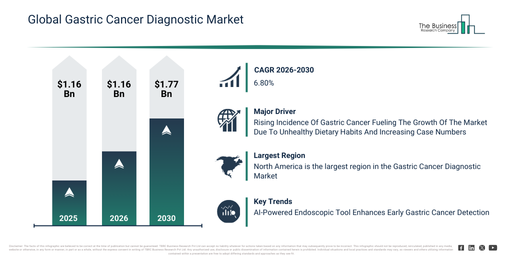
    Significant expansion is anticipated for the gastric cancer diagnostic market in the upcoming years. Projections indicate its value will reach $3.87 billion by 2030, exhibiting a compound annual growth rate (CAGR) of 6.8%. This growth during the forecast period is propelled by factors such as the creation of multiplex and high-throughput probes, the increasing need for precision medicine, broader genetic and pharmaceutical research, improvements in imaging and quantification technologies, and stricter regulatory compliance and quality standards. Key trends expected over the forecast period encompass a greater uptake of multiplex and high-throughput FISH probes, an increase in genetic and molecular diagnostic applications, expanded utilization in clinical and pharmaceutical research, the incorporation of advanced imaging and analysis technologies, and a sharpened emphasis on probe accuracy and sensitivity.

    Get A Free Sample Report With In-Depth Market Insights:

    https://thebusinessresearchcompany.com/sample_request?id=90141428&type=smp&name=Gastric%20Cancer%20Diagnostic%20Market%20Report%202026&utm_source=Blogs&utm_medium=Paid&utm_campaign=Oct_PR

    Gastric Cancer Diagnostic Market Growth Factors Behind Sustained Expansion

    The increasing occurrence of gastric cancer is anticipated to drive the expansion of the gastric cancer diagnostic market in the future. Gastric cancer is defined as a malignant tumor located in the stomach lining, characterized by the uncontrolled proliferation of cells, which creates a mass capable of invading adjacent tissues and metastasizing throughout the body. This growing incidence of gastric cancer stems from unhealthy dietary practices, since a significant intake of salted, smoked, and processed foods elevates the risk of stomach lining damage and subsequent cancer development. Gastric cancer diagnostics assist in diagnosing gastric cancer by allowing for the early identification of malignant lesions, which is crucial for prompt treatment and better patient recovery. These diagnostics improve clinical effectiveness through the provision of accurate and quick results, thereby facilitating enhanced disease management. For example, data from May 2024, published by the American Cancer Society, a US-based nonprofit organization, indicated that new stomach cancer cases totaled 26,890 in 2024, marking an increase from 26,500 cases reported in 2023. Consequently, the escalating incidence of gastric cancer is a key factor propelling the growth of the gastric cancer diagnostic market.

    Gastric Cancer Diagnostic Market Segment Breakdown: Which Categories Lead On Revenue?

    The gastric cancer diagnostic market covered in this report is segmented –

    1) By Diagnostic Type: Endoscopy, Imaging, Biopsy, Laboratory Tests, Biomarker-Based Testing

    2) By Product: Reagents And Consumables, Instruments

    3) By Technology: Molecular Diagnostics, Immunoassays, Next-Generation Sequencing, Other Technologies

    4) By Application: Early Diagnosis, Screening, Monitoring

    5) By End User: Hospitals, Clinics, Diagnostic Laboratories, Other End Users

    Subsegments:

    1) By Endoscopy: Conventional Endoscopy, Chromoendoscopy, Narrow Band Imaging, Confocal Laser Endomicroscopy, Capsule Endoscopy

    2) By Imaging: Computed Tomography, Magnetic Resonance Imaging, Positron Emission Tomography, Ultrasound

    3) By Biopsy: Forceps Biopsy, Needle Biopsy, Endoscopic Ultrasound-Guided Biopsy, Laparoscopic Biopsy

    4) By Laboratory Tests: Blood Tests, Stool Tests, Urea Breath Test, Serology

    5) By Biomarker-Based Testing: Genetic Testing, Protein Biomarker Testing, Circulating Tumor DNA Testing, Microribonucleic Acid Testing

    Gastric Cancer Diagnostic Market Industry Trends Fueling Future Revenue Growth

    Companies operating within the gastric cancer diagnostic market are concentrating on the creation of cutting-edge diagnostic instruments, such as artificial intelligence-based endoscopic diagnostic support devices, to enhance both early detection capabilities and diagnostic accuracy. Artificial intelligence-based endoscopic diagnostic support devices are AI-driven tools that assist in identifying and evaluating gastrointestinal abnormalities during an endoscopy. As an example, in March 2024, AI Medical Service Inc., a Japanese medical technology firm, launched GastroAI-model G, an AI-powered system designed to support endoscopic diagnosis. This system helps gastroenterologists during endoscopic procedures by analyzing video images in real time to locate potential cancerous lesions. It leverages deep learning to detect suspicious areas indicative of early gastric cancer, which may require a biopsy or further examination. When these lesions are identified, the system instantly alerts the physician by highlighting the area with a rectangle on the endoscopic screen, thereby improving diagnostic accuracy and enabling earlier cancer detection.

    Gastric Cancer Diagnostic Market Competitive Overview And Top Companies

    Major companies operating in the gastric cancer diagnostic market are F. Hoffmann-La Roche Ltd., Thermo Fisher Scientific Inc., Abbott Laboratories, Becton Dickinson and Company, Quest Diagnostics Incorporated, Agilent Technologies Inc., Illumina Inc., bioMérieux SA, Qiagen N.V., DiaSorin S.p.A, Natera Inc., Myriad Genetics Inc., Fulgent Genetics Inc., Foundation Medicine Inc., Invitae Corporation, NeoGenomics Laboratories Inc., Fujirebio Inc., MiRXES Pte Ltd., BIOCEPT Inc., Pillar Biosciences Inc.

    View The Full Gastric Cancer Diagnostic Market Report:

    https://thebusinessresearchcompany.com/report/gastric-cancer-diagnostic-global-market-report?utm_source=Blogs&utm_medium=Paid&utm_campaign=Oct_PR

    Gastric Cancer Diagnostic Market Top Region: Where Does Most Revenue Come From?

    North America was the largest region in the gastric cancer diagnostic market in 2025. Asia Pacific is expected to be the fastest-growing region in the forecast period. The regions covered in the gastric cancer diagnostic market report are Asia-Pacific, South East Asia, Western Europe, Eastern Europe, North America, South America, Middle East, Africa.

    Reach Out To Our Team:

    The Business Research Company: https://www.thebusinessresearchcompany.com/

    Americas: +1 310-496-7795

    Asia: +44 7882 955267 & +91 8897263534

    Europe: +44 7882 955267

    Email us at: marketing@tbrc.info

    Follow us on:

    LinkedIn: https://in.linkedin.com/company/the-business-research-company

    YouTube: https://www.youtube.com/channel/UC24_fI0rV8cR5DxlCpgmyFQ

    Global Market Model: https://www.thebusinessresearchcompany.com/global-market-model
  • Gait Analyzer Market Size In 2026: Regional Growth, Key Segments And Future Outlook

    Gait Analyzer Market Size In 2026: Regional Growth, Key Segments And Future Outlook

    Built to provide research that’s more actionable and strategically valuable, The Business Research Company’s 2026 market reports include market attractiveness analysis, total addressable market sizing, company benchmarking matrices, interactive Excel dashboards, broader supply chain intelligence, emerging startup tracking, and in-depth product insights.

    Gait Analyzer Market Forecast: What Value Will The Market Reach By 2030?

    The gait analyzer market size has experienced rapid expansion in recent years. Its value is projected to increase from $1.41 billion in 2025 to $1.56 billion in 2026, demonstrating a compound annual growth rate (CAGR) of 10.6%. The historical growth of this market can be attributed to several factors, including the increasing prevalence of musculoskeletal disorders, the proliferation of rehabilitation and physiotherapy centers, a rising awareness regarding mobility assessment in clinical care, the adoption of gait analysis in sports medicine, and an expansion of research studies focused on human movement.

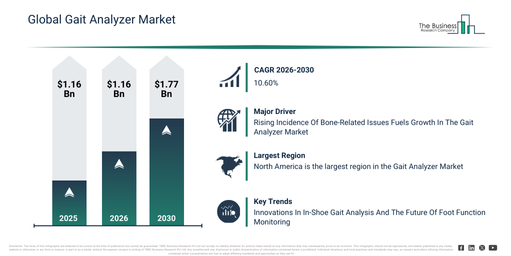
    The gait analyzer market size is anticipated to undergo significant expansion in the next few years. It is projected to grow to $2.33 billion in 2030 at a compound annual growth rate (CAGR) of 10.6%. This growth during the forecast period can be attributed to an aging population with mobility impairments, an increased focus on preventive healthcare and early diagnosis, the development of home-based rehabilitation solutions, a rising demand for personalized treatment planning, and the expansion of sports and fitness monitoring applications. Noteworthy trends in the forecast period involve the growing adoption of wearable gait analysis systems, an increasing utilization of gait analysis in rehabilitation and physiotherapy, the wider application of gait assessment in sports performance monitoring, the expanding deployment of portable and home-based gait analyzers, and a rising demand for objective mobility and posture assessment tools.

    Get A Free Sample Report With In-Depth Market Insights:

    https://thebusinessresearchcompany.com/sample_request?id=16894908&type=smp&name=Gait%20Analyzer%20Market%20Report%202026&utm_source=Blogs&utm_medium=Paid&utm_campaign=Oct_PR

    Gait Analyzer Market Demand Drivers Opening New Revenue Streams

    The projected rise in bone-related health concerns is anticipated to fuel the expansion of the gait analyzer market. These issues involve various conditions and disorders impacting the architectural integrity, robustness, and operational capacity of bones. Such conditions may stem from genetic predispositions, inadequate nutrition, physical injuries, infections, or other health complications. The growing prevalence of bone-related problems is attributed to an aging demographic, inactive lifestyles, dietary shortfalls, and inherited traits. Gait analyzers play a crucial role in addressing bone-related challenges, providing advantages like precise diagnosis, ongoing monitoring, tailored therapeutic approaches, complication avoidance, pre-surgical planning, research capabilities, patient instruction, and an enhanced overall quality of life. As an illustration, data from February 2023, released by the National Library of Medicine, a US-based biomedical library, projects that total hip arthroplasty (THA) and total knee arthroplasty (TKA) procedures will see an increase of 719,364 and 1.22 million, respectively, by the year 2040. Moreover, by 2060, TKAs are forecast to reach 2.91 million, while THAs are expected to reach 1.98 million. Consequently, the rising incidence of bone-related conditions is stimulating the expansion of the gait analyzer market.

    Gait Analyzer Market Segmentation: How Does The Market Break Down By Category?

    The gait analyzer market covered in this report is segmented –

    1) By Type: With Heart Rate Monitoring, Without Heart Rate Monitoring

    2) By Age: Pediatric, Adult

    3) By Application: Household, Commercial, Other Applications

    Subsegments:

    1) By With Heart Rate Monitoring: Wearable Gait Analyzers With Integrated Heart Rate Sensors, Gait Analysis Systems With Ecg Or Pulse Rate Monitoring, Smart Insoles With Heart Rate Tracking, Portable Gait Monitors With Biometric Feedback

    2) By Without Heart Rate Monitoring: Standalone Gait Analysis Systems (Pressure Mats, Motion Sensors), 3D Motion Capture Systems For Gait Analysis, Video-Based Gait Analysis Systems, Treadmills With Gait Analysis Features (Without Heart Rate Monitoring)

    Gait Analyzer Market Trends Powering Strategic Industry Growth

    Leading companies within the gait analyzer market are prioritizing the creation of advanced products, including in-shoe foot function and gait analysis systems, to deliver accurate, real-time data concerning foot mechanics and gait patterns. These in-shoe systems provide thorough and ongoing insights into both foot mechanics and gait, which assists significantly in clinical evaluations and enhances athletic performance. As an illustration, in June 2023, Tekscan, a US-based manufacturer of gait analyzers, introduced F-Scan GO, a new compact in-shoe foot function and gait analysis system specifically designed for biomechanics researchers. This system offers an uncompromised solution for in-shoe gait analysis, enabling natural gait movement while gathering extensive sensor data at unparalleled sampling rates. This innovation further solidifies Tekscan’s dominant position in the realm of in-shoe gait analysis, a leadership underpinned by numerous research-validated studies.

    Gait Analyzer Market Competitive Landscape: Which Companies Lead The Industry?

    Major companies operating in the gait analyzer market are Kistler Group, Movella Holdings Inc, Tekscan Inc, BTS Bioengineering Corp, Delsys Inc, Noraxon USA Inc, BioSensics LLC, Advanced Mechanical Technology Inc, Motion Analysis Corporation, Qualisys AB, Zebris Medical GmbH, Medilogic GmbH, ProtoKinetics LLC, Microgate Srl, Sensor Medica Srl, DIERS International GmbH, ReTiSense Inc, Novel GmbH, Moticon GmbH, Vicon Motion Systems Ltd

    View The Full Gait Analyzer Market Report:

    https://thebusinessresearchcompany.com/report/gait-analyzer-global-market-report?utm_source=Blogs&utm_medium=Paid&utm_campaign=Oct_PR

    Gait Analyzer Market Regional Breakdown: Where Is Demand Concentrated?

    North America was the largest region in the gait analyzer market in 2025. The regions covered in the gait analyzer market report are Asia-Pacific, South East Asia, Western Europe, Eastern Europe, North America, South America, Middle East, Africa.

    Reach Out To Our Team:

    The Business Research Company: https://www.thebusinessresearchcompany.com/

    Americas: +1 310-496-7795

    Asia: +44 7882 955267 & +91 8897263534

    Europe: +44 7882 955267

    Email us at: marketing@tbrc.info

    Follow us on:

    LinkedIn: https://in.linkedin.com/company/the-business-research-company

    YouTube: https://www.youtube.com/channel/UC24_fI0rV8cR5DxlCpgmyFQ

    Global Market Model: https://www.thebusinessresearchcompany.com/global-market-model
  • Functional Brain Imaging System Market Growth Forecast Through 2030: Market Size And Trends In 2026

    Functional Brain Imaging System Market Growth Forecast Through 2030: Market Size And Trends In 2026

    Backed by market attractiveness analysis, total addressable market sizing, company benchmarking matrices, interactive Excel dashboards, wider supply chain intelligence, emerging startup coverage, and detailed product-level insights, The Business Research Company’s 2026 market reports are designed to offer research that is more actionable and strategically valuable than ever.

    Functional Brain Imaging System Market Size Outlook: How Quickly Will Revenue Expand Through 2030?

    The functional brain imaging system market has demonstrated significant growth in recent years. Its expansion is projected from $5.08 billion in 2025 to $5.45 billion in 2026, achieving a compound annual growth rate (CAGR) of 7.4%. Historically, this market’s growth can be attributed to factors including the limited availability of high-resolution imaging systems, a reliance on traditional imaging techniques, an increase in the prevalence of neurological disorders, expanding academic research into brain function, and the early adoption of fMRI technologies.

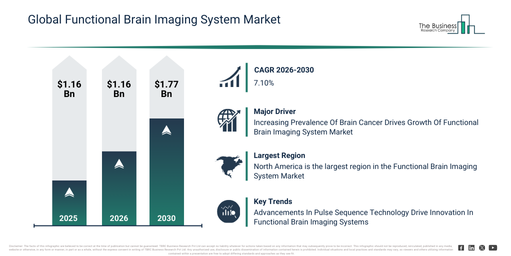
    The functional brain imaging system market is expected to experience significant expansion in the coming years. It is projected to grow to $7.17 billion in 2030, at a compound annual growth rate (CAGR) of 7.1%. This anticipated growth can be attributed to several factors, including developments in portable and wearable fNIRS devices, the increased incorporation of AI in brain imaging analysis, the broadening availability of hybrid PET/MRI and PET/CT systems, an increase in funding for cognitive neuroscience research, and the enhancement of hospital and diagnostic imaging infrastructure. Prominent trends throughout this forecast period include the increasing adoption of functional brain imaging in clinical diagnoses, the integration of portable and wearable brain imaging technologies, an uptick in research applications for cognitive science, a heightened focus on neurology and psychiatry applications, and the expansion of hybrid imaging modalities for brain investigations.

    Get A Free Sample Report With In-Depth Market Insights:

    https://thebusinessresearchcompany.com/sample_request?id=97057781&type=smp&name=Functional%20Brain%20Imaging%20System%20Market%20Report%202026&utm_source=Blogs&utm_medium=Paid&utm_campaign=Oct_PR

    Functional Brain Imaging System Market Growth Backed By Core Demand Fundamentals

    The functional brain imaging system market is anticipated to experience growth going forward, spurred by the rising prevalence of brain cancer. Brain cancer is defined as a condition where aberrant cells in the brain multiply without control, forming a tumor that can disrupt brain function. The increasing incidence of brain cancer stems from factors such as an aging demographic, advancements in detection methods, environmental hazards, and improved reporting systems. Functional brain imaging systems significantly enhance diagnostic precision, facilitate the development of safer and more efficacious treatment strategies, and provide continuous monitoring to better outcomes for individuals battling brain cancer. For example, in 2023, according to Cancer Australia, a cancer control agency of the Government of Australia, Australia recorded 1,597 deaths attributed to brain cancer, comprising 956 males and 641 females; by 2025, the number of projected deaths is expected to climb to 1,639, affecting 979 males and 660 females. Therefore, the expanding prevalence of brain cancer is a significant driver for the growth of the functional brain imaging system market.

    Functional Brain Imaging System Market Segment Trends And Revenue Contributors

    The functional brain imaging system market covered in this report is segmented –

    1) By Type: Functional Magnetic Resonance Imaging (fMRI) Systems, Functional Near Infrared Spectroscopy (fNIRS) Systems, Positron Emission Tomography (PET) System, Others Types

    2) By Application: Hospital, Diagnostic imaging center, Other Applications

    3) By End-User: Neurology, Psychiatry, Oncology, Cognitive Science

    Subsegments:

    1) By Functional Magnetic Resonance Imaging (fMRI) Systems: Research-Grade Functional Magnetic Resonance Imaging (fMRI) Systems, Clinical Functional Magnetic Resonance Imaging (fMRI) Systems, High-Field Functional Magnetic Resonance Imaging (fMRI) Systems, Resting-State Functional Magnetic Resonance Imaging (fMRI) Systems

    2) By Functional Near Infrared Spectroscopy (fNIRS) Systems: Portable Functional Near Infrared Spectroscopy (fNIRS) Systems, Multi-Channel Functional Near Infrared Spectroscopy (fNIRS) Systems, Wearable Functional Near Infrared Spectroscopy (fNIRS) Devices, Clinical Functional Near Infrared Spectroscopy (fNIRS) Systems

    3) By Positron Emission Tomography (PET) Systems: Whole-Body Positron Emission Tomography (PET) Systems, Dedicated Brain Positron Emission Tomography (PET) Systems

    4) By Other Types: Electroencephalography (EEG) Systems, Magnetoencephalography (MEG) Systems, Diffusion Tensor Imaging (DTI) Systems, Transcranial Magnetic Stimulation (TMS) Systems

    Functional Brain Imaging System Market Growth Trends Reshaping The Competitive Landscape

    Leading companies in the functional brain imaging system market are concentrating on developing innovative solutions, such as pulse sequence technology, to improve image resolution, enhance diagnostic accuracy, and decrease scan times, ultimately leading to more effective and efficient brain imaging procedures. Pulse sequence technology in functional brain imaging systems refers to a series of timed radiofrequency (RF) pulses and magnetic field gradients applied during an MRI scan to manage how the MRI system generates images. For instance, in July 2024, Fujifilm Holdings Corporation, a Japan-based company that produces photographic films, launched Aperto Lucent, an open 0.4-tesla MRI system. This system incorporates RADAR motion compensating pulse sequence technology, which reduces the need for rescans and mitigates motion artifacts, often a significant challenge in MRI exams. The APERTO Lucent leverages Fujifilm’s well-known permanent magnet technology, simplifying installation and reducing operational costs by minimizing the requirement for additional equipment to maintain the magnetic field.

    Functional Brain Imaging System Market Competitive Landscape: Who Leads The Industry?

    Major companies operating in the functional brain imaging system market are Siemens Healthineers AG, General Electric HealthCare Technologies Inc., NordicNeuroLab AS, Koninklijke Philips N.V., Shimadzu Corporation, Toshiba International Corporation, Elekta AB, Canon Medical Systems Corporation, Cortech Solutions Inc., Compumedics Ltd., Brain Products GmbH, Aspect Imaging Ltd., ANT Neuro GmbH, BIOPAC Systems Inc., Neuroelectrics Corporation, Twente Medical Systems International(TMSI) B.V., Advanced Brain Monitoring Inc., Gowerlabs Ltd., Artinis Medical Systems B.V., NIRx Medical Technologies LLC

    View The Full Functional Brain Imaging System Market Report:

    https://thebusinessresearchcompany.com/report/functional-brain-imaging-system-global-market-report?utm_source=Blogs&utm_medium=Paid&utm_campaign=Oct_PR

    Functional Brain Imaging System Market Geographic Landscape: Which Region Dominates Industry Growth?

    North America was the largest region in the functional brain imaging system market in 2025. The regions covered in the functional brain imaging system market report are Asia-Pacific, South East Asia, Western Europe, Eastern Europe, North America, South America, Middle East, Africa.

    Reach Out To Our Team:

    The Business Research Company: https://www.thebusinessresearchcompany.com/

    Americas: +1 310-496-7795

    Asia: +44 7882 955267 & +91 8897263534

    Europe: +44 7882 955267

    Email us at: marketing@tbrc.info

    Follow us on:

    LinkedIn: https://in.linkedin.com/company/the-business-research-company

    YouTube: https://www.youtube.com/channel/UC24_fI0rV8cR5DxlCpgmyFQ

    Global Market Model: https://www.thebusinessresearchcompany.com/global-market-model
  • Fully Automatic Biochemistry Analyzer Market Analysis: $3.72 Billion Market Size In 2026 And Future Growth Prospects

    Fully Automatic Biochemistry Analyzer Market Analysis: $3.72 Billion Market Size In 2026 And Future Growth Prospects

    Featuring market attractiveness scoring, total addressable market sizing, company benchmarking matrices, interactive Excel dashboards, deeper supply chain intelligence, emerging startup tracking, and granular product-level insights, The Business Research Company’s 2026 market reports are built to deliver research that is both more actionable and more strategically valuable.

    Fully Automatic Biochemistry Analyzer Market Size, Value And Growth Trajectory Through 2030

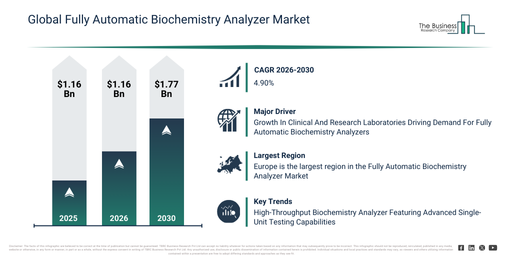
    The fully automatic biochemistry analyzer market size has demonstrated consistent growth over recent years. It is projected to expand from $3.55 billion in 2025 to $3.72 billion in 2026, achieving a compound annual growth rate (CAGR) of 5.0%. This historical growth can be attributed to an increase in clinical laboratory testing volumes, the expansion of hospital diagnostic infrastructure, the rising prevalence of chronic and metabolic diseases, the growing adoption of automated lab instruments, and the necessity for faster diagnostic turnaround times.

    The fully automatic biochemistry analyzer market is anticipated to show consistent growth over the next few years, with projections indicating it will reach $4.5 billion in 2030, exhibiting a compound annual growth rate (CAGR) of 4.9%. The expansion during this forecast period is attributable to several factors, including the increasing demand for widespread diagnostic screening, the development of diagnostic laboratory networks, a heightened focus on economical laboratory operations, the proliferation of pharmaceutical and biotech research activities, and increased investments in healthcare automation. Significant trends expected during this time include the growing adoption of fully automated laboratory workflows, a rising need for high-throughput clinical testing, the expanded use of integrated sample and reagent handling systems, the increased deployment of biochemistry analyzers in decentralized diagnostic settings, and an elevated emphasis on accuracy and standardization in clinical testing.

    Get A Free Sample Report With In-Depth Market Insights:

    https://thebusinessresearchcompany.com/sample_request?id=85384400&type=smp&name=Fully%20Automatic%20Biochemistry%20Analyzer%20Market%20Report%202026&utm_source=Blogs&utm_medium=Paid&utm_campaign=Oct_PR

    Fully Automatic Biochemistry Analyzer Market Growth Catalysts And Demand Drivers

    The expansion of clinical and research laboratories is anticipated to stimulate the growth of the fully automatic biochemistry analyzer market moving forward. These facilities are defined as places that perform diagnostic tests and conduct scientific research using biological samples. The increased presence of clinical and research laboratories has gained traction due to higher investments in biomedical research, clinical trials, and personalized medicine. Furthermore, significant funding from governments, private organizations, and grants supports the development of these research facilities and laboratories. Fully automatic biochemistry analyzers improve the efficiency and accuracy of clinical and research laboratories by automating complex testing processes, which also assists labs in managing large volumes of samples, ensuring consistent results, and supporting advanced research initiatives. For instance, in March 2025, according to IQVIA, a US-based human data science company, in 2024, funding reached a 10-year high of $102 billion, marking a substantial rise from the $71 billion recorded in 2023. Therefore, the growth in clinical and research laboratories is driving the fully automatic biochemistry analyzer market.

    Fully Automatic Biochemistry Analyzer Market Segment Analysis Spotlighting Growth Areas

    The fully automatic biochemistry analyzer market covered in this report is segmented –

    1) By Type: Bench Top, Floor-Standing

    2) By Application: Disease Diagnosis, Drugs Of Abuse Testing, Drug Discovery, In Vitro Diagnosis, Other Applications

    3) By End Users: Pharmaceutical And Biotech Companies, Hospitals And Clinics, Diagnostic Laboratories, Point Of Care Centers, Other End-Users

    Subsegments:

    1) By Bench Top: Small Capacity Bench Top Analyzers, Medium Capacity Bench Top Analyzers, High Throughput Bench Top Analyzers, Compact Bench Top Analyzers For Limited Space

    2) By Floor-Standing: High Capacity Floor-standing Analyzers, Fully Automated Floor-Standing Biochemistry Analyzers, Modular Floor-Standing Systems, Multi-Station Floor-Standing Analyzers

    Fully Automatic Biochemistry Analyzer Market Trends Shaping Long-Term Demand

    Leading companies in the fully automatic biochemistry analyzer market are progressing clinical research technologies, such as single-unit throughput testing, to provide more effective and accurate diagnostics. Single-unit throughput tests are designed to evaluate the performance or processing capacity of an individual analyzer when operating under defined conditions. For instance, in March 2025, Shenzhen YHLO Biotech Co., a biotechnology company based in China, launched the YHLO iBC 2000 Fully Automated Biochemistry Analyzer. This advanced platform boasts a high throughput capability of up to 3,200 tests per hour per unit, with the option to link several units to achieve a maximum throughput of 9,200 tests per hour. The introduction of this system enhances YHLO’s mid-to-high throughput biochemistry product line, integrates with its CLIA and total laboratory automation solutions, supports a wide range of clinical requirements, and underscores the company’s dedication to innovation and collaborative research and development in delivering intelligent, high-performance laboratory solutions globally.

    Fully Automatic Biochemistry Analyzer Market Company Landscape And Competitive Strategy

    Major companies operating in the fully automatic biochemistry analyzer market are Roche Holding AG, Thermo Fisher Scientific Inc., Abbott Laboratories, Siemens Healthineers, Fujifilm Corporation, Mindray Bio-Medical Electronics Co. Ltd., Hitachi High-Technologies Corporation, Beckman Coulter Inc., Sysmex Corporation, Bio-Rad Laboratories Inc., Ortho Clinical Diagnostics, Horiba Medical Ltd, DiaSorin S.p.A., Randox Laboratories Ltd., Dirui Industries Co. Ltd., Trivitron Healthcare Ltd, EKF Diagnostics Holdings plc, A. Menarini Diagnostics Srl, Analytical Technologies Limited, Urit Medical Electronic Group, Adaltis Inc.

    View The Full Fully Automatic Biochemistry Analyzer Market Report:

    https://thebusinessresearchcompany.com/report/fully-automatic-biochemistry-analyzer-global-market-report?utm_source=Blogs&utm_medium=Paid&utm_campaign=Oct_PR

    Fully Automatic Biochemistry Analyzer Market Largest Region: Which Geography Holds The Highest Market Share?

    Europe was the largest region in the fully automatic biochemistry analyzer market in 2025. The regions covered in the fully automatic biochemistry analyzer market report are Asia-Pacific, South East Asia, Western Europe, Eastern Europe, North America, South America, Middle East, Africa.

    Reach Out To Our Team:

    The Business Research Company: https://www.thebusinessresearchcompany.com/

    Americas: +1 310-496-7795

    Asia: +44 7882 955267 & +91 8897263534

    Europe: +44 7882 955267

    Email us at: marketing@tbrc.info

    Follow us on:

    LinkedIn: https://in.linkedin.com/company/the-business-research-company

    YouTube: https://www.youtube.com/channel/UC24_fI0rV8cR5DxlCpgmyFQ

    Global Market Model: https://www.thebusinessresearchcompany.com/global-market-model
  • Full Dentures Market 2026 Market Size And Growth Forecast: Key Trends To Watch

    Full Dentures Market 2026 Market Size And Growth Forecast: Key Trends To Watch

    Built to provide research that’s more actionable and strategically valuable, The Business Research Company’s 2026 market reports include market attractiveness analysis, total addressable market sizing, company benchmarking matrices, interactive Excel dashboards, broader supply chain intelligence, emerging startup tracking, and in-depth product insights.

    Full Dentures Market CAGR Outlook And Future Development

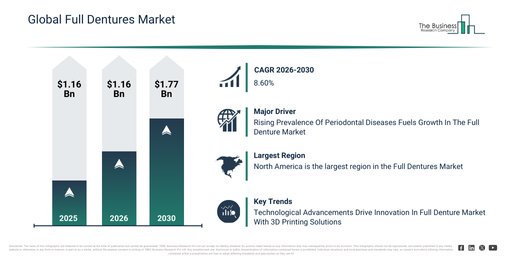
    The full dentures market size has experienced strong growth in recent years. It is forecast to increase from $1.67 billion in 2025 to $1.82 billion in 2026, exhibiting a compound annual growth rate (CAGR) of 8.9%. The market’s growth during the historic period can be attributed to factors such as the continued reliance on conventional acrylic and porcelain dentures, limited access to dental prosthetic technologies, an increase in edentulism within the aging population, rising awareness of oral health, and the influence of traditional dental clinics driving denture adoption.

    The full dentures market is projected to experience substantial expansion in the coming years, anticipated to reach $2.53 billion in 2030, exhibiting a compound annual growth rate (CAGR) of 8.6%. This projected growth is driven by several factors, including advancements in CAD/CAM and 3D-printing technologies, an increase in disposable income and dental spending, the rise of dental tourism, a growing preference for implant-supported dentures, and the development of biocompatible and advanced denture materials. Key trends anticipated during this period encompass the increased adoption of implant-supported dentures, a surging demand for aesthetically pleasing and natural-looking dentures, the expansion of 3D-printed and CAD/CAM dentures, the proliferation of dental clinics and specialized dental hospitals, and an emphasis on lightweight and flexible denture materials.

    Get A Free Sample Report With In-Depth Market Insights:

    https://thebusinessresearchcompany.com/sample_request?id=79617084&type=smp&name=Full%20Dentures%20Market%20Report%202026&utm_source=Blogs&utm_medium=Paid&utm_campaign=Oct_PR

    Full Dentures Market Opportunity Drivers: What’s Unlocking New Revenue Potential?

    The increasing occurrence of periodontal diseases is projected to propel the expansion of the full denture market in the future. These conditions, also known as periodontic diseases, involve inflammatory states that impact the teeth’s supporting structures. The widespread nature of periodontal disease stems from the commonality of gum issues, inadequate oral hygiene, an aging demographic, and growing understanding of how oral health influences general well-being. Full dentures offer support to oral soft tissues and can assist in preserving the mouth’s and jaw’s natural form, possibly lessening problems linked with periodontal disease. Such dentures can substitute missing teeth, avoiding further extractions and aiding in sustaining oral function. For example, as reported by the National Center for Biotechnology Information, a US-based organization that provides biomedical and genomic information resources, the count of individuals affected by periodontitis is expected to surpass 1.5 billion by 2050, as stated in October 2025. Consequently, the rising incidence of periodontal diseases acts as a catalyst for growth in the full denture market.

    Full Dentures Market Segment Performance And Emerging Opportunities

    The full dentures market covered in this report is segmented –

    1) By Material: Acrylic Dentures, Ceramic Dentures, Porcelain Dentures, Metal Dentures, Other Materials

    2) By Technology: Conventional Dentures, Implant-Supported Dentures, Computer-Aided Design (CAD) And Computer-Aided Manufacturing (CAM) Dentures

    3) By Usage: Removable, Fixed

    4) By Distribution Channel: Direct Sales, Distributor, Online, Pharmacy And Drug Store

    5) By End-User: Specialized Dental Hospitals, Somatology Departments In General Hospitals, Dental Clinics

    Subsegments:

    1) By Acrylic Dentures: Conventional Acrylic Dentures, Flexible Acrylic Dentures, Lightweight Acrylic Dentures, Acrylic Dentures With Natural Appearance

    2) By Ceramic Dentures: High-Strength Ceramic Dentures, Monolithic Ceramic Dentures, Layered Ceramic Dentures, Ceramic Dentures With Aesthetic Enhancements

    3) By Porcelain Dentures: Conventional Porcelain Dentures, Porcelain Dentures With Metal Framework, Porcelain Dentures With High Aesthetic Value, Stain-Resistant Porcelain Dentures

    4) By Metal Dentures: Partial Metal Dentures, Full Metal Dentures, Titanium Dentures, Gold Alloy Dentures

    5) By Other Materials: Composite Dentures, 3d-Printed Dentures, Biocompatible Dentures, Custom-Made Dentures With Advanced Materials

    Full Dentures Market Innovation Trends Shaping Future Development

    Leading companies operating within the full denture market are prioritizing the development of innovative solutions, such as 3D-printed permanent denture solutions, to elevate patient satisfaction by providing customized options that are more efficient and quicker to produce. A 3D-printed permanent denture solution refers to a denture manufacturing process utilizing 3D printing technology, which delivers a modern, effective, and highly adaptable solution for individuals requiring dental prosthetics. For instance, in February 2023, Stratasys Ltd., a US-based additive manufacturing company, launched TrueDent, the first monolithic, full-color 3D-printed permanent dentures solution. This pioneering method simplifies the denture production process by enabling the creation of a complete denture in a single print, rather than assembling multiple parts. The technology employs advanced materials that offer both aesthetic appeal and functional durability, thereby addressing common issues in traditional denture manufacturing. The full-color capability not only improves the visual quality of the dentures but also allows for better matching of the prosthetics to the patient’s natural gum and tooth colors.

    Full Dentures Market Key Players Shaping Industry Direction

    Major companies operating in the full dentures market are 3M Company, Henry Schein Inc., Zimmer Biomet Holdings Inc., Dentsply Sirona Inc., Straumann Holding AG, Ivoclar Vivadent AG, VITA Zahnfabrik H. Rauter GmbH & Co. KG, Young Innovations Inc., VOCO GmbH, Keystone Dental Inc., BEGO GmbH and Co. K.G., Kuraray Co. Ltd., GC International AG, J. Morita Corporation, Kulzer GmbH, Modern Dental Group Limited, Nissin Dental Products Inc., YAMAHACHI DENTAL MFG CO, AvaDent Digital Dental Solutions, National Dentex Labs, Shofu Inc., COLTENE Holding AG, SCHEU-DENTAL GmbH, Lang Dental Manufacturing Company Inc.

    View The Full Full Dentures Market Report:

    https://thebusinessresearchcompany.com/report/full-dentures-global-market-report?utm_source=Blogs&utm_medium=Paid&utm_campaign=Oct_PR

    Full Dentures Market Regional Analysis: Which Region Leads By Revenue?

    North America was the largest region in the full dentures market in 2025. The regions covered in the full dentures market report are Asia-Pacific, South East Asia, Western Europe, Eastern Europe, North America, South America, Middle East, Africa.

    Reach Out To Our Team:

    The Business Research Company: https://www.thebusinessresearchcompany.com/

    Americas: +1 310-496-7795

    Asia: +44 7882 955267 & +91 8897263534

    Europe: +44 7882 955267

    Email us at: marketing@tbrc.info

    Follow us on:

    LinkedIn: https://in.linkedin.com/company/the-business-research-company

    YouTube: https://www.youtube.com/channel/UC24_fI0rV8cR5DxlCpgmyFQ

    Global Market Model: https://www.thebusinessresearchcompany.com/global-market-model