Blog

  • Folding-Wheel Personal Mobility Robot Market Growth Outlook For 2026: Drivers, Trends And Future Opportunities

    Folding-Wheel Personal Mobility Robot Market Growth Outlook For 2026: Drivers, Trends And Future Opportunities

    Featuring market attractiveness scoring, total addressable market sizing, company benchmarking matrices, interactive Excel dashboards, deeper supply chain intelligence, emerging startup tracking, and granular product-level insights, The Business Research Company’s 2026 market reports are built to deliver research that is both more actionable and more strategically valuable.

    Folding-Wheel Personal Mobility Robot Market Size Forecast: How Big Could The Market Get By 2030?

    The folding-wheel personal mobility robot market has expanded quickly in recent years. It is anticipated to expand from $1.67 billion in 2025 to $1.93 billion in 2026, exhibiting a compound annual growth rate (CAGR) of 16.0%. This historical market expansion can be ascribed to increasing urban commuting difficulties, the early adoption of personal mobility robots, the evolution of foldable wheel mechanisms, a heightened understanding of mobility aids, and the incorporation of electric mobility technology.

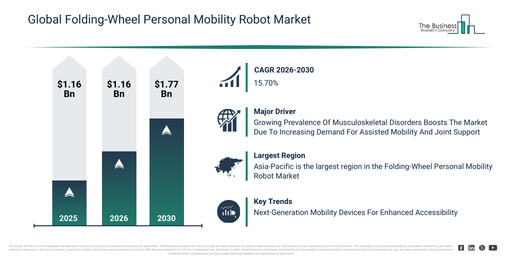
    The folding-wheel personal mobility robot market is anticipated to experience substantial expansion in the coming years. Projections indicate it will reach a value of $3.47 billion by 2030, demonstrating a compound annual growth rate (CAGR) of 15.7%. This projected increase is linked to factors such as AI-driven route optimization, the development of smart city infrastructure, its application in elderly care and rehabilitation, advancements in battery life and energy density, and integration with IoT-connected devices. Key developments expected during this period involve compact foldable mobility design, sensor-based navigation, AI-assisted personal commuting, enhanced battery optimization and energy efficiency, and remote-controlled mobility assistance.

    Get A Free Sample Report With In-Depth Market Insights:

    https://thebusinessresearchcompany.com/sample_request?id=77726108&type=smp&name=Folding-Wheel%20Personal%20Mobility%20Robot%20Market%20Report%202026&utm_source=Blogs&utm_medium=Paid&utm_campaign=Oct_PR

    Folding-Wheel Personal Mobility Robot Market Growth Catalysts And Demand Drivers

    The growing occurrence of musculoskeletal disorders is projected to boost the expansion of the folding-wheel personal mobility robot market moving ahead. These conditions, known as MSDs, involve ailments affecting muscles, bones, joints, or connective tissues, resulting in pain and restricted movement. The increase in MSDs stems from inactive lifestyles that weaken muscles and joints, alongside heightened strain due to lack of activity. Folding-wheel personal mobility robots provide support to individuals with musculoskeletal disorders by facilitating movement, alleviating stress on joints and muscles, and aiding everyday mobility, which allows users to travel greater distances securely and with reduced discomfort. For example, GOV.UK, a UK government agency, reported in January 2024 that in 2023, 18.4% of people aged 16 and above stated they had a long-term musculoskeletal (MSK) condition, which is an increase from 17.6% in 2022. Consequently, the increasing prevalence of musculoskeletal disorders is propelling the expansion of the folding-wheel personal mobility robot market. The escalating healthcare spending is anticipated to fuel the expansion of the folding-wheel personal mobility robot market in the future. This expenditure represents the cumulative cost dedicated to medical services, equipment, and innovative technologies designed to enhance health results. The growth in healthcare spending is attributed to the rising need for sophisticated medical technologies, with hospitals and clinics increasing their investments in cutting-edge equipment and digital approaches to elevate patient care and outcomes. Higher healthcare spending allows medical facilities and homecare services to provide folding-wheel personal mobility robots, thereby improving mobility, comfort, and daily life for those with restricted physical movement. For instance, the Centers for Medicare & Medicaid Services, a US government agency, reported in June 2025 that in 2023, national health expenditures (NHE) rose by 7.5%, amounting to $4.9 trillion, which translates to an average of $14,570 per person and constitutes 17.6% of the Gross Domestic Product (GDP). Medicare spending saw an 8.1% increase, reaching $1,029.8 billion, accounting for 21% of total NHE. Consequently, the increase in healthcare expenditure is stimulating the expansion of the folding-wheel personal mobility robot market.

    Folding-Wheel Personal Mobility Robot Market Segment Trends And Revenue Contributors

    The folding-wheel personal mobility robot market covered in this report is segmented –

    1) By Product Type: Automatic Folding-Wheel Personal Mobility Robots, Semi-Automatic Folding-Wheel Personal Mobility Robots, Self-Balancing Folding-Wheel Personal Mobility Robots, Smart Robotic Folding Mobility Robots

    2) By Folding & Control Technology: Remote-Controlled Folding Robots, Sensor-Based Automatic Folding Robots, App-Controlled Folding Mobility Robots, AI-Assisted Self-Balancing Folding Robots

    3) By Wheel Configuration: Two-Wheel Folding Mobility Robots, Three-Wheel Folding Mobility Robots, Four-Wheel Folding Mobility Robots

    4) By Application: Personal Urban Mobility, Assisted Mobility for Elderly Users, Healthcare Mobility Assistance, Rehabilitation and Recovery Mobility, Travel and Portable Mobility Assistance

    5) By End-User: Individual Users, Elderly and Mobility-Impaired Users, Hospitals and Clinics, Rehabilitation Centers, Assisted Living and Care Facilities

    Subsegments:

    1) By Automatic Folding-Wheel Personal Mobility Robots: Automatic Folding-Wheel Personal Mobility Robots, One-Touch Button Folding Mobility Robots, Remote-Controlled Folding Mobility Robots, App-Enabled Automatic Folding Mobility Robots, Fully Autonomous Folding Mechanism Robots

    2) By Semi-Automatic Folding-Wheel Personal Mobility Robots: Semi-Automatic Folding-Wheel Personal Mobility Robots, Assisted Folding Mobility Robots (Motor-Assisted Fold), Power-Lock Semi-Automatic Folding Robots, Hybrid Manual-Electric Folding Mobility Robots, Sensor-Triggered Assisted Folding Robots

    3) By Self-Balancing Folding-Wheel Personal Mobility Robots: Two-Wheel Gyroscopic Self-Balancing Folding Robots, AI-Stabilized Self-Balancing Folding Mobility Robots, Dynamic Terrain-Adaptive Folding Robots, Lean-Controlled Self-Balancing Folding Robots

    4) By Smart Robotic Folding Mobility Robots: AI-Enabled Smart Folding Mobility Robots, IoT-Connected Folding Mobility Robots, Voice-Controlled Folding Personal Mobility Robots, Health-Monitoring Integrated Folding Mobility Robots

    Folding-Wheel Personal Mobility Robot Market Trends Shaping Long-Term Demand

    Major corporations operating within the folding-wheel personal mobility robot market are directing their efforts toward developing advanced solutions, such as the omni traction drive systems, to elevate maneuverability, stability, and user convenience across diverse types of terrain. An omni traction drive system refers to a wheel and motor technology that allows a personal mobility robot to navigate smoothly in any direction, including sideways and diagonally, while consistently maintaining stability and traction on varied surfaces. As an illustration, in September 2025, Honda Motor Co. Ltd., a Japan-based manufacturing company, unveiled a UNI-ONE hands-free personal mobility device in Japan, intended to provide enhanced, self-balancing mobility for its users. This innovation enables individuals to move simply by shifting their body weight, thereby keeping their hands free and facilitating natural multitasking. Its adjustable height brings the user’s eye level closer to that of standing people, thus fostering natural communication and diminishing social barriers. UNI-ONE aims to alleviate physical strain, expand mobility options for a wide range of users, and boost productivity by supporting movement in workplaces, extensive venues, and daily activities.

    Folding-Wheel Personal Mobility Robot Market Key Players Shaping Industry Direction

    Major companies operating in the folding-wheel personal mobility robot market are WHILL Inc., Airwheel, Cheelcare, Robooter, XSTO Mobility, Mobius Mobility, ComfyGo, Golden Technologies, Pride Mobility Products, ZiiLIF, SUPERPI, ALBA Robot, Care for Mobility, Zuowei Technology, Mobot, Bbr Robot, Zinger Chair, KD Smart Chair, EzLite Cruiser, Trident Mobility

    View The Full Folding-Wheel Personal Mobility Robot Market Report:

    https://thebusinessresearchcompany.com/report/folding-wheel-personal-mobility-robot-global-market-report?utm_source=Blogs&utm_medium=Paid&utm_campaign=Oct_PR

    Folding-Wheel Personal Mobility Robot Market Regional Analysis: Which Geography Leads On Revenue?

    Asia-Pacific was the largest region in the folding-wheel personal mobility robot market in 2025. The regions covered in the folding-wheel personal mobility robot market report are Asia-Pacific, South East Asia, Western Europe, Eastern Europe, North America, South America, Middle East, Africa.

    Reach Out To Our Team:

    The Business Research Company: https://www.thebusinessresearchcompany.com/

    Americas: +1 310-496-7795

    Asia: +44 7882 955267 & +91 8897263534

    Europe: +44 7882 955267

    Email us at: marketing@tbrc.info

    Follow us on:

    LinkedIn: https://in.linkedin.com/company/the-business-research-company

    YouTube: https://www.youtube.com/channel/UC24_fI0rV8cR5DxlCpgmyFQ

    Global Market Model: https://www.thebusinessresearchcompany.com/global-market-model
  • Focused Ultrasound System Market Size Forecast From 2026 To 2030: Key Industry Trends

    Focused Ultrasound System Market Size Forecast From 2026 To 2030: Key Industry Trends

    Built to provide research that’s more actionable and strategically valuable, The Business Research Company’s 2026 market reports include market attractiveness analysis, total addressable market sizing, company benchmarking matrices, interactive Excel dashboards, broader supply chain intelligence, emerging startup tracking, and in-depth product insights.

    Focused Ultrasound System Market Revenue Outlook: What CAGR Lies Ahead Through 2030?

    The focused ultrasound system market size has seen significant growth in recent years. It is projected to expand from $4.33 billion in 2025 to $4.79 billion in 2026, achieving a compound annual growth rate (CAGR) of 10.7%. The historical increase in this market can be attributed to several factors including advancements in ultrasound imaging, a rising demand for non-invasive therapies, early successes in tumor ablation procedures, the completion of clinical validation studies, and widespread hospital technology upgrades.

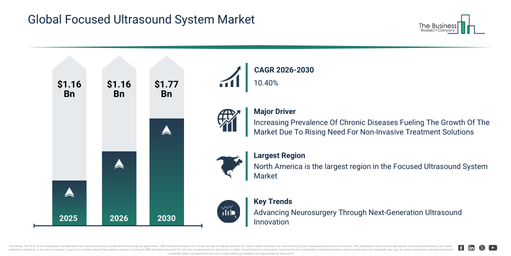
    The market for focused ultrasound systems is projected to experience swift expansion over the coming years. By 2030, its value is anticipated to reach $7.13 billion, demonstrating a compound annual growth rate (CAGR) of 10.4%. Factors contributing to this growth during the forecast timeframe include an increasing elderly population, the broadening scope of therapeutic applications, significant investment in precision medicine, favorable regulatory approvals, and a rise in neurological disorder occurrences. Key trends observed within this period encompass the development of non-invasive therapeutic methods, the wider application in neurological fields, enhanced deployment in oncology treatments, the embrace of image-guided precision therapy, and greater engagement in clinical research.

    Get A Free Sample Report With In-Depth Market Insights:

    https://thebusinessresearchcompany.com/sample_request?id=82205233&type=smp&name=Focused%20Ultrasound%20System%20Market%20Report%202026&utm_source=Blogs&utm_medium=Paid&utm_campaign=Oct_PR

    Focused Ultrasound System Market Opportunity Drivers: What’s Unlocking New Revenue Potential?

    The rising occurrence of chronic illnesses is anticipated to propel the expansion of the focused ultrasound system market in the coming years. These conditions are defined as enduring health issues that manifest slowly, persist over prolonged durations, and generally require ongoing medical attention and oversight. Their increase is attributed to inactive lifestyles, which heighten the likelihood of conditions such as obesity, diabetes, and cardiovascular problems. Focused ultrasound systems offer a significant method for addressing chronic diseases through their ability to non-surgically target and eliminate affected tissue, thereby reducing discomfort and enhancing bodily function without requiring invasive procedures. For instance, as reported in August 2024 by the Macmillan Cancer Support, a UK-based organization, over 3 million individuals in the UK are living with cancer in 2024, with this number expected to climb to 3.5 million by 2025, 4 million by 2030, and 5.3 million by 2040. Consequently, the expanding occurrence of chronic illnesses is fostering the development of the focused ultrasound system market.

    Focused Ultrasound System Market Segment Analysis Spotlighting Growth Areas

    The focused ultrasound system market covered in this report is segmented –

    1) By Component: Devices, Consumables, Software, Accessories

    2) By Type: Thermal Ablation Systems, Mechanical Ablation Systems, Microbubble Ultrasound Systems, High-Intensity Focused Ultrasound (HIFU) Systems

    3) By Technology: Ultrasound Imaging Systems, Non-linear Ultrasound Systems, Thermal Imaging Systems, Diagnostic Ultrasound Systems

    4) By Application: Clinical Applications, Uterine Fibroids, Prostate Cancer, Essential Tremor, Dermatology, Breast Cancer, Glaucoma, Back Pain, Research Applications, Other Applications

    5) By End-User: Hospitals, Specialty Clinics, Ambulatory Surgical Centers, Other End Users

    Subsegments:

    1) By Devices: MR-Guided Focused Ultrasound Systems, Ultrasound-Guided Focused Ultrasound Systems, High-Intensity Focused Ultrasound (HIFU) Systems, Low-Intensity Focused Ultrasound Systems

    2) By Consumables: Coupling Gel, Treatment Kits, Disposable Pads, Acoustic Coupling Media

    3) By Software: Treatment Planning Software, Imaging And Navigation Software, Monitoring And Feedback Software, Data Management And Analysis Tools

    4) By Accessories: Positioning Devices, Patient Tables, Cooling Systems, Mounting Frames And Adapters

    Focused Ultrasound System Market Innovation Trends Shaping Future Development

    Major companies engaged in the focused ultrasound system market are prioritizing the creation of advanced offerings, such as MR-guided focused ultrasound systems, with the goal of enhancing treatment effectiveness, expanding clinical applications, and elevating patient outcomes. A MR-guided focused ultrasound (MRgFUS) system is a medical device that intricately combines high-intensity focused ultrasound (HIFU) with magnetic resonance imaging (MRI) to precisely and non-invasively treat targeted tissues. For example, in January 2024, Insightec, a medical technology company based in Israel, unveiled Exablate Prime, which represents the next generation of its MR-guided focused ultrasound system. Exablate Prime significantly improves incisionless neurosurgery by boosting precision, operational efficiency, and the patient experience. Key advancements include an intuitive user interface, automated calculations, sub-millimetric targeting control, real-time thermal monitoring, sophisticated lesion shaping, and improved MRI visualization. The system also features upgraded cybersecurity, PACS connectivity, and an optional 3T head coil for sharper imaging. These enhancements position Exablate Prime as a breakthrough in focused ultrasound neurosurgery, broadening treatment possibilities for various movement disorders.

    Focused Ultrasound System Market Competitive Analysis Of Leading Industry Participants

    Major companies operating in the focused ultrasound system market are Medtronic plc, InSightec Ltd., EDAP TMS S.A., Image Guided Therapy S.A., Chongqing Haifu Medical Technology Co.Ltd., Shanghai A&S Technology Development Co.Ltd., Alpinion Medical Systems Co Ltd, SonaCare Medical LLC, Profound Medical Inc., Mianyang Sonic Electronic Ltd., Theraclion SA, Focal One, Ultrasound Technologies Ltd., Sonic Concepts Inc., HistoSonics Inc., FUS Instruments Inc., Changjiangyuan Technology Development Co Ltd, NaviFUS Corp, Neurosona Co Ltd, EpiSonica Corp, Wuxi Haiying Medical Technology Co Ltd, Kona Medical Inc, EyeTechCare SA, IMGT Co Ltd, NanoFUS Ltd, Mirabilis Medical Inc, AeonMD

    View The Full Focused Ultrasound System Market Report:

    https://thebusinessresearchcompany.com/report/focused-ultrasound-system-global-market-report?utm_source=Blogs&utm_medium=Paid&utm_campaign=Oct_PR

    Focused Ultrasound System Market Geographic Spread And Regional Opportunities

    North America was the largest region in the focused ultrasound system market in 2025. Asia-Pacific is expected to be the fastest-growing region in the forecast period. The regions covered in the focused ultrasound system market report are Asia-Pacific, South East Asia, Western Europe, Eastern Europe, North America, South America, Middle East, Africa.

    Reach Out To Our Team:

    The Business Research Company: https://www.thebusinessresearchcompany.com/

    Americas: +1 310-496-7795

    Asia: +44 7882 955267 & +91 8897263534

    Europe: +44 7882 955267

    Email us at: marketing@tbrc.info

    Follow us on:

    LinkedIn: https://in.linkedin.com/company/the-business-research-company

    YouTube: https://www.youtube.com/channel/UC24_fI0rV8cR5DxlCpgmyFQ

    Global Market Model: https://www.thebusinessresearchcompany.com/global-market-model
  • Fluoroscopy Equipment Market 2026: Market Size, Growth Drivers And Emerging Opportunities

    Fluoroscopy Equipment Market 2026: Market Size, Growth Drivers And Emerging Opportunities

    Backed by market attractiveness analysis, total addressable market sizing, company benchmarking matrices, interactive Excel dashboards, wider supply chain intelligence, emerging startup coverage, and detailed product-level insights, The Business Research Company’s 2026 market reports are designed to offer research that is more actionable and strategically valuable than ever.

    Fluoroscopy Equipment Market Growth Analysis: How Will Revenue Trend Over The Forecast Period?

    The fluoroscopy equipment market size has experienced significant expansion in recent years. It is anticipated to increase from $6.79 billion in 2025 to $7.15 billion in 2026, achieving a compound annual growth rate (CAGR) of 5.4%. The historical growth within this market can be attributed to factors such as an increase in interventional procedures, the broadening of diagnostic imaging infrastructure, a greater utilization of fluoroscopy in orthopedic surgeries, innovations in x-ray imaging technology, and increased investments by hospitals in imaging equipment.

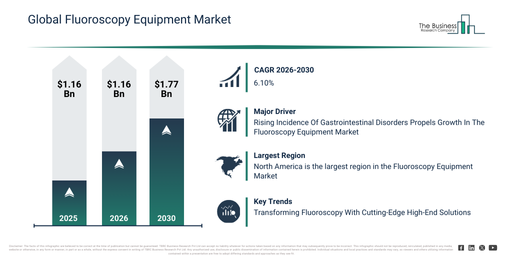
    The fluoroscopy equipment market is projected to experience robust expansion in the coming years, with its size expected to reach $9.07 billion in 2030, exhibiting a compound annual growth rate (CAGR) of 6.1%. This growth during the forecast period is driven by factors such as the increasing demand for real-time imaging guidance, the rising adoption of AI-powered diagnostic imaging, the expansion of outpatient surgical centers, a growing focus on radiation safety standards, and the increasing replacement of legacy imaging systems. Significant developments anticipated in this period include the wider adoption of digital fluoroscopy systems, an escalating demand for mobile C-arm imaging solutions, the growing integration of AI-assisted image processing, the expansion of minimally invasive procedure guidance, and an enhanced emphasis on radiation dose reduction.

    Get A Free Sample Report With In-Depth Market Insights:

    https://thebusinessresearchcompany.com/sample_request?id=56920905&type=smp&name=Fluoroscopy%20Equipment%20Market%20Report%202026&utm_source=Blogs&utm_medium=Paid&utm_campaign=Oct_PR

    Fluoroscopy Equipment Market Growth Momentum: What Factors Are Shaping Demand?

    The rising occurrence of gastrointestinal disorders is anticipated to stimulate the future expansion of the fluoroscopy equipment market. Gastrointestinal (GI) disorders are defined as illnesses affecting any part of the gastrointestinal tract. Fluoroscopy plays a significant role in both the diagnosis and management of various gastrointestinal (GI) disorders. It utilizes real-time X-rays to visualize internal organs and their motions, which is particularly beneficial for observing dynamic actions such as swallowing, digestion, and bowel movements. For example, in January 2024, the American Cancer Society, a US-based non-profit organization, estimated that approximately 26,890 new cases of stomach cancer are foreseen in the U.S. in 2024, with 16,160 cases impacting men and 10,730 women. Additionally, this form of cancer is predicted to result in about 10,880 deaths, consisting of 6,490 men and 4,390 women. Hence, the increasing prevalence of gastrointestinal disorders is a key driver for the growth of the fluoroscopy equipment market.

    Fluoroscopy Equipment Market Segment Performance And Emerging Opportunities

    The fluoroscopy equipment market covered in this report is segmented –

    1) By Product: Fixed Fluoroscopy Equipment, Mobile C-Arms, Fixed C-Arms

    2) By Application: Diagnostic, Surgical, Other Applications

    3) By End-User: Hospitals, Diagnostic Centers, Other End-Users

    Subsegments:

    1) By Fixed Fluoroscopy Equipment: Conventional Fluoroscopy Systems, Digital Fluoroscopy Systems

    2) By Mobile C-Arms: Mini C-Arms, Full-Size Mobile C-Arms

    3) By Fixed C-Arms: High-Performance Fixed C-Arms, Standard Fixed C-Arms

    Fluoroscopy Equipment Market Trends Redefining Industry Growth

    Leading companies operating in the fluoroscopy equipment market are focusing their efforts on creating advanced solutions such as motorized mobile C-arms to achieve a competitive advantage. A motorized mobile C-arm is a flexible imaging system utilized in medical settings, delivering real-time X-ray imaging and positioned on a wheeled base for straightforward maneuverability during surgical and diagnostic procedures. For instance, in February 2024, Royal Philips, a Netherlands-based technology company, unveiled the Zenition 90 Motorized mobile C-arm. The Zenition 90 Motorized mobile C-arm is notable for its impressive speed and user-friendly design, enabling surgeons to effortlessly control it from beside the operating table. Its intuitive controls and time-saving attributes improve surgical flexibility and autonomy. This system is engineered to provide exceptional image quality, even in the most intricate procedures, particularly for vascular necessities. With automated workflows, a Touch Screen Module for image management, and sophisticated software solutions, the Zenition 90 Motorized significantly boosts clinical effectiveness.

    Fluoroscopy Equipment Market Leading Companies And Competitive Benchmarking

    Major companies operating in the fluoroscopy equipment market are Siemens Healthineers AG, Koninklijke Philips N.V., GE HealthCare Technologies Inc., Canon Medical Systems Corporation, Fujifilm Holdings Corporation, Shimadzu Corporation, Hitachi Medical Corporation, Mindray Medical International Limited, Hologic Inc., Ziehm Imaging GmbH, Carestream Health Inc., Agfa-Gevaert N.V., Allengers Medical Systems Limited, Orthoscan Inc., Toshiba Medical Systems Corporation, Analogic Corporation, Medonica Co. Ltd., Perlove Medical Equipment Co. Ltd., Villa Sistemi Medicali S.p.A., MS Westfalia GmbH

    View The Full Fluoroscopy Equipment Market Report:

    https://thebusinessresearchcompany.com/report/fluoroscopy-equipment-global-market-report?utm_source=Blogs&utm_medium=Paid&utm_campaign=Oct_PR

    Fluoroscopy Equipment Market Top Region By Revenue And Market Share

    North America was the largest region in the fluoroscopy equipment market in 2025. Asia-Pacific is expected to be the fastest-growing region in the forecast period. The regions covered in the fluoroscopy equipment market report are Asia-Pacific, South East Asia, Western Europe, Eastern Europe, North America, South America, Middle East, Africa.

    Reach Out To Our Team:

    The Business Research Company: https://www.thebusinessresearchcompany.com/

    Americas: +1 310-496-7795

    Asia: +44 7882 955267 & +91 8897263534

    Europe: +44 7882 955267

    Email us at: marketing@tbrc.info

    Follow us on:

    LinkedIn: https://in.linkedin.com/company/the-business-research-company

    YouTube: https://www.youtube.com/channel/UC24_fI0rV8cR5DxlCpgmyFQ

    Global Market Model: https://www.thebusinessresearchcompany.com/global-market-model
  • Fluorescent In Situ Hybridization Probe Market Set To Expand From $2.39 Billion In 2026: Growth Outlook Through 2030

    Fluorescent In Situ Hybridization Probe Market Set To Expand From $2.39 Billion In 2026: Growth Outlook Through 2030

    Featuring market attractiveness scoring, total addressable market sizing, company benchmarking matrices, interactive Excel dashboards, deeper supply chain intelligence, emerging startup tracking, and granular product-level insights, The Business Research Company’s 2026 market reports are built to deliver research that is both more actionable and more strategically valuable.

    Fluorescent In Situ Hybridization Probe Market Forecast: What Value Will The Market Reach By 2030?

    The fluorescent in situ hybridization probe market size has experienced robust growth in recent years. It is anticipated to expand from $1.68 billion in 2025 to $1.8 billion in 2026, indicating a compound annual growth rate (CAGR) of 7.1%. The expansion observed in the historic period is largely attributable to the limited availability of fluorescent probes, the reliance on conventional single-color FISH, an increasing awareness of genetic diagnostics, a rise in research funding for molecular biology, and the wider adoption of fluorescence microscopy.

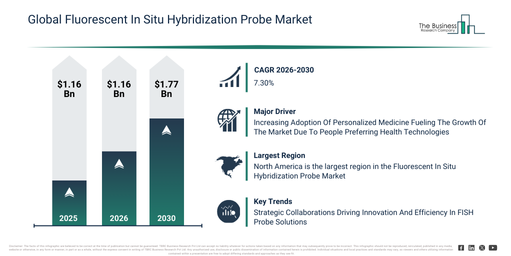
    The market size for fluorescent in situ hybridization probes is projected to experience substantial growth over the coming years. It is forecast to expand to $2.39 billion by 2030, exhibiting a compound annual growth rate (CAGR) of 7.3%. The anticipated growth during this period is attributable to the ongoing development of multiplex and combinatorial barcoded probes, an increase in personalized medicine applications, the expansion of pharmaceutical and biotechnology research, a rise in regulatory compliance and standardization, and the integration with AI-driven image analysis and data analytics. Significant trends expected in the forecast period include the rising adoption of FISH probes in clinical diagnostics, the broadening of multiplex and high-throughput screening techniques, their increasing utilization in genetic and agricultural research, integration with advanced imaging and analysis tools, and a dedicated focus on custom probe development for personalized medicine.

    Get A Free Sample Report With In-Depth Market Insights:

    https://thebusinessresearchcompany.com/sample_request?id=96499858&type=smp&name=Fluorescent%20In%20Situ%20Hybridization%20Probe%20Market%20Report%202026&utm_source=Blogs&utm_medium=Paid&utm_campaign=Oct_PR

    Fluorescent In Situ Hybridization Probe Market Expansion Drivers: What’s Shaping Future Growth?

    The rising embrace of personalized medicine is projected to fuel expansion within the fluorescent in situ hybridization probe market moving ahead. Personalized medicine denotes a healthcare approach that leverages details regarding an individual’s genetic makeup and lifestyle to customize treatments and care plans specifically for them. This growing acceptance of personalized medicine stems from individuals favoring health technologies that provide real-time monitoring and treatment strategies tailored to their distinct biological characteristics. Fluorescent in situ hybridization (FISH) probes aid personalized medicine by facilitating accurate identification of genetic anomalies at the chromosomal level, which in turn informs bespoke therapeutic choices based on a person’s unique genetic profile. For example, in February 2024, data from the Personalized Medicine Coalition, a US-based non-profit organization, indicated that the FDA sanctioned 16 new personalized therapies for rare disease patients in 2023, a significant rise from six in 2022. Consequently, the increasing integration of personalized medicine is a key driver for the growth of the fluorescent in situ hybridization probe market.

    Fluorescent In Situ Hybridization Probe Market Segment Landscape And Growth Outlook

    The fluorescent in situ hybridization probe market covered in this report is segmented –

    1) By Type: Deoxyribonucleic Acid (DNA) Probes, Ribonucleic Acid (RNA) Probes, Multiplex Probes

    2) By Target: Genes, Chromosomes, Other Targets

    3) By Technology: Single-Color Fluorescence In Situ Hybridization (FISH), Multiplex Fluorescence In Situ Hybridization (FISH), Quantitative Fluorescence In Situ Hybridization (FISH), Others Technologies

    4) By Application: Clinical Diagnostics, Research Applications, Agricultural Biotechnology, Pharmaceutical Research, Genetic Research

    5) By End User: Hospitals And Clinics, Research Laboratories, Pharmaceutical Companies, Biotechnology Companies

    Subsegments:

    1) By Deoxyribonucleic Acid (DNA) Probes: Centromeric Probes, Telomeric Probes, Whole Chromosome Paint Probes, Locus-Specific Identifier (LSI) Probes, Comparative Genomic Hybridization (CGH) Probes, Gene Fusion Probes

    2) By Ribonucleic Acid (RNA) Probes: mRNA Probes, Long Non-Coding RNA (lncRNA) Probes, MicroRNA (miRNA) Probes, Single-Molecule RNA FISH Probes (smFISH), Circular RNA (circRNA) Probes, Multiplexed Error-Robust FISH (MERFISH) Probes

    3) By Multiplex Probes: Multicolor DNA FISH Probes, Multigene Expression Analysis Probes, High-Throughput Screening Probes, Multiplex smFISH Probes, Combinatorial Barcoded Probes, Simultaneous DNA/RNA Detection Probes

    Fluorescent In Situ Hybridization Probe Market Strategic Trends: What Defines The Next Growth Phase?

    Leading companies within the fluorescent in situ hybridization probe market are increasingly forming strategic alliances to gain entry into novel markets, acquire advanced technologies, or leverage specialized expertise, thereby circumventing the challenges and expenses associated with independent development. A strategic collaboration is defined as a deliberate partnership between multiple entities, wherein they combine their respective strengths and resources to achieve common long-term objectives and reciprocal advantages. An illustrative instance occurred in April 2025, when Empire Genomics, a US-based molecular diagnostics company, partnered with BioDot, a US-based provider of automated precision dispensing solutions, to introduce the BDot Probe Line. The BDot Probe Line presents a unique offering: FISH probes that are pre-optimized for use with automated systems, thereby resolving a significant hurdle commonly faced in clinical cytogenetics and molecular pathology laboratories. These specific probes are engineered for immediate application, requiring no manual adjustments, which guarantees seamless compatibility and functionality with the Biodot CellWriter S system. This advancement minimizes the necessity for technician involvement, optimizes laboratory workflows, and accelerates the delivery of diagnostic results. The initial collection of BDot Probe Panels facilitates FISH analysis for numerous hematologic malignancies, such as MM, MDS, CML, AML, ALL, along with various other prevalent blood-related disorders.

    Fluorescent In Situ Hybridization Probe Market Industry Leaders And Competitive Landscape

    Major companies operating in the fluorescent in situ hybridization probe market are Thermo Fisher Scientific Inc., Abbott Laboratories, Oxford Gene Technology IP Limited, Sigma-Aldrich Co. LLC, Agilent Technologies Inc., Bio-Rad Laboratories Inc., QIAGEN N.V., Leica Biosystems Nussloch GmbH, Biocare Medical LLC, Enzo Biochem Inc., LGC Biosearch Technologies, ZytoVision GmbH, Creative Biolabs Inc., Empire Genomics LLC, MetaSystems GmbH, Abnova Corporation, Mirus Bio LLC, Genemed Biotechnologies Inc., Molecular Instruments Inc., Cytocell Technologies Limited.

    View The Full Fluorescent In Situ Hybridization Probe Market Report:

    https://thebusinessresearchcompany.com/report/fluorescent-in-situ-hybridization-probe-global-market-report?utm_source=Blogs&utm_medium=Paid&utm_campaign=Oct_PR

    Fluorescent In Situ Hybridization Probe Market Regional Analysis And Top Geography

    North America was the largest region in the fluorescent in situ hybridization probe market in 2025. Asia-Pacific is expected to be the fastest-growing region in the forecast period. The regions covered in the fluorescent in situ hybridization probe market report are Asia-Pacific, South East Asia, Western Europe, Eastern Europe, North America, South America, Middle East, Africa.

    Reach Out To Our Team:

    The Business Research Company: https://www.thebusinessresearchcompany.com/

    Americas: +1 310-496-7795

    Asia: +44 7882 955267 & +91 8897263534

    Europe: +44 7882 955267

    Email us at: marketing@tbrc.info

    Follow us on:

    LinkedIn: https://in.linkedin.com/company/the-business-research-company

    YouTube: https://www.youtube.com/channel/UC24_fI0rV8cR5DxlCpgmyFQ

    Global Market Model: https://www.thebusinessresearchcompany.com/global-market-model
  • Fluid-Cooled Radiofrequency Ablation Market Size And Growth In 2026: Key Factors Shaping Future Demand

    Fluid-Cooled Radiofrequency Ablation Market Size And Growth In 2026: Key Factors Shaping Future Demand

    Built to provide research that’s more actionable and strategically valuable, The Business Research Company’s 2026 market reports include market attractiveness analysis, total addressable market sizing, company benchmarking matrices, interactive Excel dashboards, broader supply chain intelligence, emerging startup tracking, and in-depth product insights.

    Fluid-Cooled Radiofrequency Ablation Market Size Outlook: How Quickly Will Revenue Expand Through 2030?

    The market for fluid-cooled radiofrequency ablation has experienced robust expansion in recent times. Projections indicate its value will increase from $2.79 billion in 2025 to $3.06 billion in 2026, demonstrating a compound annual growth rate (CAGR) of 9.4%. Historically, this expansion has been driven by factors such as the scarcity of internally cooled RF ablation devices, a dependence on traditional RF ablation systems, a rise in the incidence of cardiac arrhythmias and various tumors, improvements in hospital and surgical center infrastructure, and the uptake of standard accessory products.

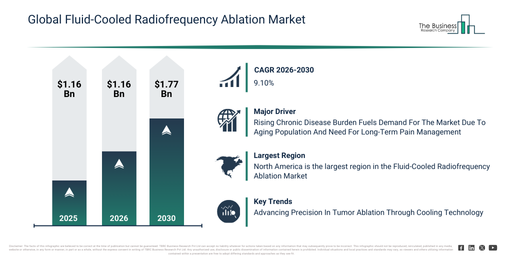
    The fluid-cooled radiofrequency ablation market is projected to experience substantial expansion in the coming years. By 2030, this market is anticipated to reach a valuation of $4.34 billion, exhibiting a compound annual growth rate (CAGR) of 9.1%. This anticipated growth is driven by several factors, including ongoing technological progress in fluid-cooling systems, increased capital expenditure in minimally invasive medical interventions, greater incorporation of imaging and real-time feedback mechanisms, an expanding range of oncology and cardiology applications, and enhanced recognition and utilization within ambulatory surgical centers and specialized clinics. Key trends expected during this period encompass a broader acceptance of fluid-cooled RF ablation for both cardiology and oncology, the evolution of monopolar and bipolar RF ablation devices, the incorporation of real-time feedback systems to achieve accurate tissue ablation, a surge in the utilization of complementary products like catheters and electrodes, and an increasing need for both closed-loop and disposable cooling setups.

    Get A Free Sample Report With In-Depth Market Insights:

    https://thebusinessresearchcompany.com/sample_request?id=51675187&type=smp&name=Fluid-Cooled%20Radiofrequency%20Ablation%20Market%20Report%202026&utm_source=Blogs&utm_medium=Paid&utm_campaign=Oct_PR

    Fluid-Cooled Radiofrequency Ablation Market Development Factors: What’s Supporting Demand?

    The expansion of the fluid-cooled radiofrequency ablation market is anticipated to be fueled by the increasing occurrence of chronic diseases. These are defined as health conditions that persist for a year or more, necessitating continuous medical attention and potentially restricting daily activities. The prevalence of chronic diseases is growing as the population ages, given that older individuals are more susceptible to long-term health issues. Fluid-cooled radiofrequency ablation aids in managing chronic diseases by precisely targeting nerve tissues with heat to obstruct pain signals, thus providing sustained relief for ailments such as chronic back pain and arthritis. For instance, data from July 2024 by the Australian Institute of Health and Welfare indicated that in 2023, chronic conditions were responsible for an estimated 4.4 million years of healthy life lost among Australians, making up 85% of the country’s total disease burden for that year. Consequently, the increasing prevalence of chronic diseases is a key factor propelling the fluid-cooled radiofrequency ablation market’s expansion. The expansion of the fluid-cooled radiofrequency ablation market is expected to be propelled by the increasing geriatric population. The geriatric population encompasses individuals aged 65 and above, representing older adults who frequently require specialized medical care, social assistance, and policy considerations due to their age-related physiological, medical, and functional requirements. This demographic’s growth is primarily attributable to enhanced life expectancy, which stems from advancements in healthcare enabling people to live longer, thereby increasing the proportion of individuals transitioning into older age brackets and enlarging the overall elderly populace. Fluid-cooled radiofrequency ablation offers advantages to the geriatric population by providing a minimally invasive, highly effective option for pain relief that minimizes tissue damage and facilitates quicker recovery, ultimately enhancing mobility and the general quality of life for older adults. For instance, a report published in January 2024 by the World Bank, a United States-based economic data organization, indicated that approximately 17.4% of the U.S. population in 2023 comprised individuals aged 65 and older. Hence, the expanding geriatric population is a significant driver for the fluid-cooled radiofrequency ablation market.

    Fluid-Cooled Radiofrequency Ablation Market Breakdown By Product Type And Application

    The fluid-cooled radiofrequency ablation market covered in this report is segmented –

    1) By Product Type: Radiofrequency Ablation Devices, Accessory Products, Fluid-Cooling Systems

    2) By Technology: Integrated Imaging Technology, Real-Time Feedback Systems

    3) By Target Tissue: Solid Tumors, Soft Tissue Tumors, Bone Tumors

    4) By Application: Cardiology, Oncology, Pain Management, Urology, Other Applications

    5) By End-User: Hospitals, Ambulatory Surgical Centers, Specialty Clinics, Other End Users

    Subsegments:

    1) By Radiofrequency Ablation Devices: Monopolar Radiofrequency Ablation Devices, Bipolar Radiofrequency Ablation Devices, Internally Cooled Radiofrequency Ablation Devices

    2) By Accessory Products: Radiofrequency Ablation Catheters, Radiofrequency Ablation Electrodes, Introducers And Sheaths

    3) By Fluid-Cooling Systems: Peristaltic Pump Systems, Closed-Loop Cooling Systems, Disposable Tubing Sets

    Fluid-Cooled Radiofrequency Ablation Market Transformation Trends: What Innovations Are Driving Change?

    Leading companies in the fluid-cooled radiofrequency ablation market are prioritizing the creation of innovative products, such as internally cooled radiofrequency ablation systems, to optimize heat dissipation, boost procedural accuracy, and reduce harm to surrounding healthy tissues. These internally cooled radiofrequency ablation systems are medical devices that deliver RF energy to ablate tissue by circulating fluid inside the electrode, preventing overheating and allowing for deeper, more effective treatment. In March 2024, Medtronic Plc secured FDA 510(k) clearance for its OsteoCool 2.0 bone tumor ablation system, engineered to enhance the treatment of painful bone tumors with improved precision and efficiency. The system facilitates the simultaneous deployment of four internally cooled probes, enabling the ablation of multiple vertebral bodies or the creation of larger ablation zones. Delivering 20 watts per channel, it is recognized as the most powerful bone tumor ablation system on the market, thereby enhancing the efficiency of tumor destruction. Its internal water-cooling technology guarantees predictable ablations while minimizing the risk of overheating adjacent tissues, making treatments safer. The OsteoCool 2.0 is designed to offer effective pain relief and palliative care for malignant bone metastases and benign tumors, such as osteoid osteoma, thereby improving patient outcomes through minimally invasive procedures.

    Fluid-Cooled Radiofrequency Ablation Market Key Participants And Competitive Landscape

    Major companies operating in the fluid-cooled radiofrequency ablation market are Johnson & Johnson, Abbott Laboratories, Medtronic plc, Stryker Corporation, Boston Scientific Corporation, Olympus Corporation, CONMED Corporation, Lepu Medical Technology, MicroPort Scientific Corporation, Avanos Medical, Japan Lifeline Co. Ltd., AtriCure Inc, AngioDynamics, SyMap Medical, CardioFocus Inc, Imricor Medical Systems Inc., Stereotaxis Inc., Autonomix Medical, Innoblative Designs Inc, livetec Ingenieurbüro GmbH

    View The Full Fluid-Cooled Radiofrequency Ablation Market Report:

    https://thebusinessresearchcompany.com/report/fluid-cooled-radiofrequency-ablation-global-market-report?utm_source=Blogs&utm_medium=Paid&utm_campaign=Oct_PR

    Fluid-Cooled Radiofrequency Ablation Market Geographic Analysis: Where Is Demand Rising Fastest?

    North America was the largest region in the fluid-cooled radiofrequency ablation market in 2025. Asia-Pacific is expected to be the fastest-growing region in the forecast period. The regions covered in the fluid-cooled radiofrequency ablation market report are Asia-Pacific, South East Asia, Western Europe, Eastern Europe, North America, South America, Middle East, Africa.

    Reach Out To Our Team:

    The Business Research Company: https://www.thebusinessresearchcompany.com/

    Americas: +1 310-496-7795

    Asia: +44 7882 955267 & +91 8897263534

    Europe: +44 7882 955267

    Email us at: marketing@tbrc.info

    Follow us on:

    LinkedIn: https://in.linkedin.com/company/the-business-research-company

    YouTube: https://www.youtube.com/channel/UC24_fI0rV8cR5DxlCpgmyFQ

    Global Market Model: https://www.thebusinessresearchcompany.com/global-market-model
  • Fluid Aspiration Systems Market Forecast 2026–2030: Market Size, Trends And Growth Opportunities

    Fluid Aspiration Systems Market Forecast 2026–2030: Market Size, Trends And Growth Opportunities

    Backed by market attractiveness analysis, total addressable market sizing, company benchmarking matrices, interactive Excel dashboards, wider supply chain intelligence, emerging startup coverage, and detailed product-level insights, The Business Research Company’s 2026 market reports are designed to offer research that is more actionable and strategically valuable than ever.

    Fluid Aspiration Systems Market Size, Value And Growth Trajectory Through 2030

    The fluid aspiration systems market has experienced significant growth in recent years. This market is expected to expand from $1.28 billion in 2025 to $1.4 billion in 2026, at a compound annual growth rate (CAGR) of 9.4%. The historical expansion can be attributed to factors such as the reliance on manual fluid aspiration methods, the limited availability of automated systems, the increasing hospital and laboratory infrastructure, the rising demand for fluid management in surgeries, and the standardization of suction devices.

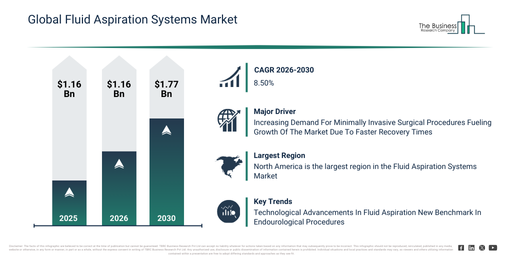
    The fluid aspiration systems market is set for considerable expansion in the coming years, with expectations to reach $1.94 billion by 2030, exhibiting a compound annual growth rate (CAGR) of 8.5%. This growth during the forecast period is fueled by several factors, including the advancement of electromechanical and automatic aspiration systems, their integration with smart hospital and laboratory equipment, an increase in biomedical research and diagnostics activities, the adoption of safety and contamination prevention protocols, and the broadening applications in industrial and aquaculture fluid management. Significant trends predicted for this period encompass the rising adoption of automatic and electromechanical fluid aspiration systems, a greater use of biocompatible and sterilizable materials, an upsurge in healthcare and medical research applications, the expansion of closed-loop and high-throughput suction systems, and a strong emphasis on safety, contamination control, and efficient fluid handling.

    Get A Free Sample Report With In-Depth Market Insights:

    https://thebusinessresearchcompany.com/sample_request?id=24496733&type=smp&name=Fluid%20Aspiration%20Systems%20Market%20Report%202026&utm_source=Blogs&utm_medium=Paid&utm_campaign=Oct_PR

    Fluid Aspiration Systems Market Industry Drivers: What’s Behind The Revenue Growth?

    The fluid aspiration systems market is expected to experience growth due to the rising demand for minimally invasive surgical procedures. These procedures are characterized by small incisions and the use of specialized tools, such as cameras and instruments, to perform operations with reduced bodily damage compared to traditional open surgery. The heightened demand for minimally invasive surgical procedures is attributed to benefits such as faster patient recovery, which leads to quicker healing, shorter hospital stays, and an earlier resumption of normal activities. Fluid aspiration systems facilitate minimally invasive surgeries by effectively removing blood, bodily fluids, and debris from the surgical site, thereby ensuring clear visibility and diminishing the need for larger incisions. For example, in June 2024, the American Society of Plastic Surgeons, a US-based organization of board-certified plastic surgeons, reported a 7% increase in minimally invasive procedures in 2023, with the total number exceeding 25 million. Thus, the increasing adoption of minimally invasive surgical procedures is a significant factor propelling the expansion of the fluid aspiration systems market.

    Fluid Aspiration Systems Market Segment Analysis And Revenue Potential

    The fluid aspiration systems market covered in this report is segmented –

    1) By Product Type: Manual Fluid Aspiration Systems, Automatic Fluid Aspiration Systems, Electromechanical Fluid Aspiration Systems, Use Specific Fluid Aspiration Systems

    2) By Material Type: Plastic, Metal, Glass, Biocompatible Materials

    3) By Distribution Channel: Direct Sales, Online Retail, Distributors, Wholesale Suppliers

    4) By Application: Healthcare, Medical Research, Industrial Applications, Aquaculture

    5) By End User: Hospitals, Diagnostic Laboratories, Research Institutes, Other End Users

    Subsegments:

    1) By Manual Fluid Aspiration Systems: Syringe-Based Aspirators, Manual Vacuum Pumps, Handheld Suction Devices, Disposable Aspiration Kits

    2) By Automatic Fluid Aspiration Systems: Motorized Vacuum Aspirators, Programmable Suction Units, Closed-Loop Aspiration Systems, High-Throughput Suction Systems

    3) By Electromechanical Fluid Aspiration Systems: Peristaltic Pump Aspirators, Diaphragm Pump Systems, Gear-Driven Aspiration Units, Integrated Aspiration And Dispensing Modules

    4) By Use-Specific Fluid Aspiration Systems: Surgical Aspiration Systems, Laboratory Aspiration Systems, Dental Fluid Suction Devices, Endoscopic Suction Systems, Obstetric Or Gynecological Aspiration Devices

    #Fluid Aspiration Systems Market Growth Trends: What’s Shaping The Future Outlook?

    Major companies operating in the fluid aspiration systems market are focusing on developing advanced technologies, such as continuous vacuum-assisted clearance (CVAC) technology, to enhance stone clearance efficiency while maintaining safe intrarenal pressure during endourological procedures. Continuous vacuum-assisted clearance (CVAC) technology refers to an advanced fluid aspiration mechanism used during endourological procedures, which enables the continuous removal of stone fragments and irrigation fluid through controlled suction. For instance, in March 2025, Calyxo Inc., a U.S.-based provider of vacuum-assisted retrieval devices, launched the Continuous Vacuum-Assisted Clearance (CVAC) System, which efficiently evacuates stone fragments and irrigation fluid during endourological procedures. The CVAC system offers advanced features that set it apart from traditional aspiration technologies. It integrates a continuous vacuum mechanism that actively removes stone fragments and irrigation fluid in real time, significantly enhancing procedural efficiency. Unlike conventional systems, the CVAC System maintains stable and safe intrarenal pressure throughout the procedure, thereby reducing the risk of renal trauma and postoperative complications. Its closed-loop aspiration design enables effective fragment evacuation without compromising visibility or procedural control. Together, these innovations contribute to faster stone clearance, improved safety profiles, and better patient outcomes.

    Fluid Aspiration Systems Market Top Companies Driving Competitive Growth

    Major companies operating in the fluid aspiration systems market are Olympus Corporation, Drägerwerk AG & Co. KGaA, Teleflex Incorporated, Cook Medical LLC, Merit Medical Systems Inc., Penumbra Inc., Hamilton Company, DeRoyal Industries Inc., SKAN AG, INTEGRA Biosciences AG, Gilson Inc., Labconco Corporation, Weinmann Emergency Medical Technology GmbH + Co KG, Clements Medical Equipment Pty Ltd., Vacuubrand GmbH & Co. KG, KNF Group, Nouvag AG, Haeberle GmbH + Co. KG, Hospitech Respiration Ltd., Welch Vacuum Technology.

    View The Full Fluid Aspiration Systems Market Report:

    https://thebusinessresearchcompany.com/report/fluid-aspiration-systems-global-market-report?utm_source=Blogs&utm_medium=Paid&utm_campaign=Oct_PR

    Fluid Aspiration Systems Market Global Footprint: Which Region Leads The Market?

    North America was the largest region in the fluid aspiration systems market in 2025. Asia-Pacific is expected to be the fastest-growing region in the forecast period. The regions covered in the fluid aspiration systems market report are Asia-Pacific, South East Asia, Western Europe, Eastern Europe, North America, South America, Middle East, Africa.

    Reach Out To Our Team:

    The Business Research Company: https://www.thebusinessresearchcompany.com/

    Americas: +1 310-496-7795

    Asia: +44 7882 955267 & +91 8897263534

    Europe: +44 7882 955267

    Email us at: marketing@tbrc.info

    Follow us on:

    LinkedIn: https://in.linkedin.com/company/the-business-research-company

    YouTube: https://www.youtube.com/channel/UC24_fI0rV8cR5DxlCpgmyFQ

    Global Market Model: https://www.thebusinessresearchcompany.com/global-market-model
  • Flow Diverters Market Size Reaches $0.62 Billion In 2026: What Is Driving Growth?

    Flow Diverters Market Size Reaches $0.62 Billion In 2026: What Is Driving Growth?

    Featuring market attractiveness scoring, total addressable market sizing, company benchmarking matrices, interactive Excel dashboards, deeper supply chain intelligence, emerging startup tracking, and granular product-level insights, The Business Research Company’s 2026 market reports are built to deliver research that is both more actionable and more strategically valuable.

    Flow Diverters Market CAGR Outlook And Future Development

    The market for flow diverters has witnessed rapid expansion in recent years. It is anticipated to rise from $0.55 billion in 2025 to $0.62 billion in 2026, progressing at a compound annual growth rate (CAGR) of 11.7%. This historical growth can be attributed to factors such as the limited availability of specialized flow diverters, the dependence on conventional surgical clipping and coiling methods, increasing public knowledge about intracranial aneurysm treatment, the enhancement of neurovascular capabilities in hospitals and clinics, and the uptake of early-generation nitinol stents.

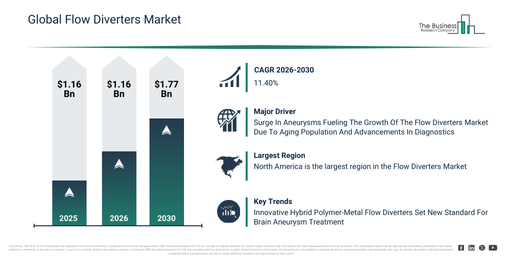
    The flow diverters market is projected to experience substantial expansion over the next few years. It is forecast to achieve a valuation of $0.95 billion by 2030, demonstrating a compound annual growth rate (CAGR) of 11.4%. This anticipated growth during the forecast period can be attributed to several factors, including the advancement of next-generation flow diverters with improved flexibility, increasing demand for minimally invasive neurovascular procedures, rising investment in hospital endovascular infrastructure, more regulatory approvals for new devices, and the integration of imaging and AI-assisted deployment technologies. Prominent trends throughout this period involve the growing adoption of minimally invasive neurovascular interventions, the increased application of flow diverters in complex aneurysm cases, the development of sophisticated nitinol and cobalt-chromium devices, the expansion of endovascular treatment centers, and a focused effort on reducing procedure complications and enhancing patient safety.

    Get A Free Sample Report With In-Depth Market Insights:

    https://thebusinessresearchcompany.com/sample_request?id=14515046&type=smp&name=Flow%20Diverters%20Market%20Report%202026&utm_source=Blogs&utm_medium=Paid&utm_campaign=Oct_PR

    Flow Diverters Market Growth Factors: What’s Supporting Expansion?

    The expanding occurrence of aneurysms is anticipated to stimulate the growth of the flow diverters market. Aneurysms are characterized as atypical bulges or expansions in a blood vessel’s wall, typically caused by a weakening of the vessel structure. The heightened prevalence of aneurysms is fueled by an aging population and advancements in diagnostic technologies, which lead to improved detection rates and greater awareness, thereby increasing the number of diagnosed instances. Flow diverters assist in managing the increasing prevalence of aneurysms by redirecting blood flow away from the compromised vessel area, thereby encouraging healing, decreasing the risk of rupture, and offering a minimally invasive alternative to traditional surgical interventions. For instance, in November 2025, according to the PubMed, a U.S.-based biomedical literature database or search engine, it was reported that about 3% of adults have an unruptured intracranial aneurysm, and this prevalence can increase to 10% in high-risk groups. Therefore, the escalating prevalence of aneurysms is a key driver for the expansion of the flow diverters market.

    Flow Diverters Market Segmentation And Category Overview

    The flow diverters market covered in this report is segmented –

    1) By Type: Pipeline Embolization Device, Silk Flow Diverter, Surpass Flow Diverter, Flow Redirection Endoluminal Device, Other Types

    2) By Material: Nitinol, Cobalt-Chromium Alloy, Stainless Steel, Other Materials

    3) By Application: Intracranial Aneurysms, Arteriovenous Malformations, Complex Wide-Neck Aneurysms, Other Applications

    4) By End-User: Hospital And Clinics, Ambulatory Surgical Centre

    Subsegments:

    1) By Pipeline Embolization Device: Classic Pipeline Embolization Device, Pipeline Flex Embolization Device, Pipeline Shield Technology

    2) By Silk Flow Diverter: Silk+ Flow Diverter, Silk Vista Baby

    3) By Surpass Flow Diverter: Surpass Streamline, Surpass Evolve

    4) By Flow Redirection Endoluminal Device: FRED Jr., FRED X

    5) By Other Types: DERIVO Embolization Device, p64 Flow Modulation Device, Tubridge Flow Diverter

    Flow Diverters Market Industry Trends: What’s Reshaping Demand?

    Major companies operating in the flow diverters market are concentrating on advancements in material science, such as polymer-based neurovascular stents, to boost device performance, improve bodily compatibility, encourage natural vessel healing, and lessen the need for extended blood-thinning medication. A polymer-based neurovascular stent is a medical device designed to provide structural support and maintain the openness of blood vessels in the brain (neurovasculature), particularly for addressing conditions like aneurysms, stenosis, or vascular malformations. For instance, in June 2023, Fluid Biomed, a medical device start-up located in Canada, announced the world’s initial implantation of a polymer-based neurovascular stent in human patients. This innovative device, named the ReSolv stent, is specifically developed for the treatment of brain aneurysms. Unlike conventional hybrid polymer-metal stents, the ReSolv stent is constructed entirely from polymer and is engineered to gradually break down as the blood vessel recovers. This unique composition has the potential to minimize the need for long-term blood-thinning medication while supporting the vessel’s inherent healing process.

    Flow Diverters Market Leading Players And Competitive Positioning

    Major companies operating in the flow diverters market are Johnson & Johnson, Medtronic plc, Stryker Corporation, Terumo Corporation, MicroPort Scientific Corporation, Penumbra Inc., Phenox GmbH, Sino Medical Sciences Technology Inc., Balt Extrusion S.A.S., Sequent Medical Inc., Wallaby Medical Ltd., Zylox Tonbridge Medical Technology Co. Ltd., Acandis GmbH & Co. KG, Fluid Biomed Inc., Oxford Endovascular Ltd., EndoStream Medical Ltd., Rapid Medical Ltd., Cerus Endovascular Ltd., NeuroVasc Technologies Inc., Shape Memory Medical Inc., Vesalio LLC

    View The Full Flow Diverters Market Report:

    https://thebusinessresearchcompany.com/report/flow-diverters-global-market-report?utm_source=Blogs&utm_medium=Paid&utm_campaign=Oct_PR

    Flow Diverters Market Regional Split: Which Areas Are Fueling Growth?

    North America was the largest region in the flow diverters market in 2025. Asia-Pacific is expected to be the fastest-growing region in the forecast period. The regions covered in the flow diverters market report are Asia-Pacific, South East Asia, Western Europe, Eastern Europe, North America, South America, Middle East, Africa.

    Reach Out To Our Team:

    The Business Research Company: https://www.thebusinessresearchcompany.com/

    Americas: +1 310-496-7795

    Asia: +44 7882 955267 & +91 8897263534

    Europe: +44 7882 955267

    Email us at: marketing@tbrc.info

    Follow us on:

    LinkedIn: https://in.linkedin.com/company/the-business-research-company

    YouTube: https://www.youtube.com/channel/UC24_fI0rV8cR5DxlCpgmyFQ

    Global Market Model: https://www.thebusinessresearchcompany.com/global-market-model
  • Flexible Endoscopes Market Valued At $15.08 Billion In 2026: Key Trends And Growth Drivers

    Flexible Endoscopes Market Valued At $15.08 Billion In 2026: Key Trends And Growth Drivers

    Built to provide research that’s more actionable and strategically valuable, The Business Research Company’s 2026 market reports include market attractiveness analysis, total addressable market sizing, company benchmarking matrices, interactive Excel dashboards, broader supply chain intelligence, emerging startup tracking, and in-depth product insights.

    Flexible Endoscopes Market Set To Climb From $11.13 Billion In 2026 To $15.08 Billion By 2030

    The flexible endoscopes market has shown substantial growth in recent years. It is projected to expand from $10.41 billion in 2025 to $11.13 billion in 2026, achieving a compound annual growth rate (CAGR) of 6.9%. Historically, this expansion has been driven by an increasing preference for minimally invasive surgical procedures, the broadening of hospital endoscopy departments, a greater accessibility of flexible endoscopic platforms, rising volumes of diagnostic procedures, and advancements in fiber optics technology.

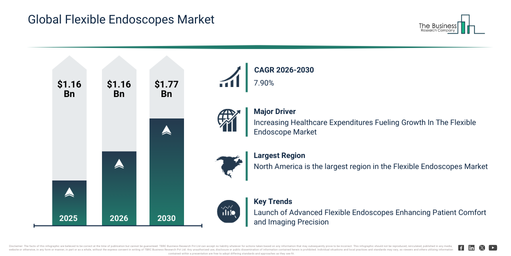
    The flexible endoscopes market size is anticipated to expand significantly over the next few years, with projections indicating it will reach $15.08 billion by 2030, driven by a compound annual growth rate (CAGR) of 7.9%. This growth in the forecast period is primarily due to an increasing demand for outpatient endoscopic procedures, rising investments in AI-assisted visualization tools, the broader application of endoscopy across various medical specialties, a growing adoption of disposable endoscopes, and an increased focus on procedure efficiency and patient outcomes. Key trends expected in this period include the rising adoption of video-based flexible endoscopes, an escalating demand for minimally invasive surgical procedures, the continuous integration of advanced imaging and visualization systems, the expansion of multi-specialty endoscopic applications, and an enhanced emphasis on device reprocessing and sterility.

    Get A Free Sample Report With In-Depth Market Insights:

    https://thebusinessresearchcompany.com/sample_request?id=71254351&type=smp&name=Flexible%20Endoscopes%20Market%20Report%202026&utm_source=Blogs&utm_medium=Paid&utm_campaign=Oct_PR

    Flexible Endoscopes Market Demand Drivers: What’s Powering Industry Growth?

    The future expansion of the flexible endoscope market is anticipated to be driven by increasing healthcare spending. Healthcare expenditures refer to the cumulative financial investment or costs linked to delivering medical care and services. Greater financial commitment to flexible endoscopes improves patient treatment and outcomes by facilitating the acquisition of sophisticated endoscopic devices, educating healthcare personnel, and supporting research and development efforts. For instance, in April 2025, the Office for National Statistics, a UK government department, reported that overall healthcare spending grew by 6.5% nominally between 2023 and 2024, and by 2.4% in real terms when adjusted for inflation. Consequently, the expansion of healthcare spending is stimulating the flexible endoscope market’s development.

    Flexible Endoscopes Market Segment Outlook: Which Categories Are Growing Fastest?

    The flexible endoscopes market covered in this report is segmented –

    1) By Product: Fiberscope, Video Endoscope

    2) By Application: GI Endoscopy, Pulmonary Endoscopy, ENT Endoscopy, Obstetrics or Gynecology, Urology, Other Applications

    3) By End User: Hospitals, Ambulatory Surgery Centers, Other End Users

    Subsegments:

    1) By Fiberscope: Standard Fiberscope, Specialty Fiberscope

    2) By Video Endoscope: Rigid Video Endoscope, Flexible Video Endoscope

    Flexible Endoscopes Market Innovation Trends: What Developments Are Reshaping The Industry?

    Leading firms in the flexible endoscopes sector are developing novel products and securing necessary approvals to maintain their competitive standing. Ongoing advancements in flexible endoscopes consistently offer increased patient comfort, refined ergonomics, and superior imaging performance. As an example, in September 2023, Olympus Corporation, a prominent Japanese company in endoscopic technology, introduced the EVIS X1 flexible endoscopy system. This system comprises the GIF 1100 gastrointestinal videoscope and the CF HQ1100DL/I colonovideoscope, intended for examining both upper and lower digestive tracts. These particular flexible endoscopes come with a lighter control unit for easier manipulation, high-definition imaging offering greater clarity, and enhanced navigability in constricted or winding anatomical structures. Their sophisticated design provides medical professionals with high-resolution visuals, increased accuracy during procedures, and less discomfort for patients throughout endoscopic examinations. Additionally, it facilitates streamlined workflows and decreases fatigue for the operator.

    Flexible Endoscopes Market Competitive Overview And Top Companies

    Major companies operating in the flexible endoscopes market are Medtronic Plc, Fujifilm Holdings Corporation, Stryker Corporation, Boston Scientific Corporation, Olympus Corporation, HOYA Corporation, Smith & Nephew Plc, EndoChoice International, Pentax Medical, Ambu Inc., Richard Wolf GmbH, Cooper Surgical Inc, Ethicon Endo-surgery LLC, Vimex Endoscopy, Endo-Flex GmbH, Machida Endoscope Co Ltd, XION GmbH, Huger Medical Instrument Co. Ltd., Endomed Systems Gmbh, Karl Storz GmbH & Co. KG., Laborie Medical Technologies Inc, ACMI Corporation

    View The Full Flexible Endoscopes Market Report:

    https://thebusinessresearchcompany.com/report/flexible-endoscopes-global-market-report?utm_source=Blogs&utm_medium=Paid&utm_campaign=Oct_PR

    Flexible Endoscopes Market Top Region: Where Does Most Revenue Come From?

    North America was the largest region in the flexible endoscopes market in 2025. Asia-Pacific is expected to be the fastest-growing region in the forecast period. The regions covered in the flexible endoscopes market report are Asia-Pacific, South East Asia, Western Europe, Eastern Europe, North America, South America, Middle East, Africa.

    Reach Out To Our Team:

    The Business Research Company: https://www.thebusinessresearchcompany.com/

    Americas: +1 310-496-7795

    Asia: +44 7882 955267 & +91 8897263534

    Europe: +44 7882 955267

    Email us at: marketing@tbrc.info

    Follow us on:

    LinkedIn: https://in.linkedin.com/company/the-business-research-company

    YouTube: https://www.youtube.com/channel/UC24_fI0rV8cR5DxlCpgmyFQ

    Global Market Model: https://www.thebusinessresearchcompany.com/global-market-model

  • Fixed-Dose Combination Inhalers Market Size In 2026: Growth Outlook And Forecast Through 2030

    Fixed-Dose Combination Inhalers Market Size In 2026: Growth Outlook And Forecast Through 2030

    Backed by market attractiveness analysis, total addressable market sizing, company benchmarking matrices, interactive Excel dashboards, wider supply chain intelligence, emerging startup coverage, and detailed product-level insights, The Business Research Company’s 2026 market reports are designed to offer research that is more actionable and strategically valuable than ever.

    Fixed-Dose Combination Inhalers Market Forecast: Value Set To Climb From $15.58 Billion To $22.83 Billion

    The fixed-dose combination inhalers market size has seen swift growth recently. It is projected to expand from $14.12 billion in 2025 to $15.58 billion in 2026, achieving a compound annual growth rate (CAGR) of 10.3%. This historic expansion can be attributed to the limited availability of combination inhalers, the increasing prevalence of respiratory diseases, a reliance on single-drug therapy, rising healthcare awareness, and the expansion of hospital pharmacy networks.

    The market for fixed-dose combination inhalers is anticipated to show significant expansion in the coming years, with projections indicating it will reach $22.83 billion by 2030, achieving a compound annual growth rate (CAGR) of 10.0%. This expected growth during the forecast period is largely driven by advancements in triple and multi-drug inhalers, the expansion of management programs for chronic respiratory diseases, increased adoption of telehealth and e-pharmacy platforms, a rise in regulatory clearances for combination treatments, and a growing demand from patients for convenient inhaler options. Important developments foreseen during this period include the wider acceptance of fixed-dose combination therapy, enhanced patient adherence and compliance, the broadening of markets for asthma and COPD treatments, the innovation of user-friendly inhaler devices, and the expansion of distribution through online and retail pharmacies.

    Get A Free Sample Report With In-Depth Market Insights:

    https://thebusinessresearchcompany.com/sample_request?id=88153320&type=smp&name=Fixed-Dose%20Combination%20Inhalers%20Market%20Report%202026&utm_source=Blogs&utm_medium=Paid&utm_campaign=Oct_PR

    Fixed-Dose Combination Inhalers Market Growth Drivers: What’s Behind The Acceleration?

    The rising occurrence of asthma is anticipated to boost the expansion of the fixed-dose combination inhalers market. Asthma is defined as a chronic inflammatory condition affecting the airways, leading to breathing problems as a result of narrowed airways and excessive mucus. The growing prevalence of asthma is attributed to escalating air pollution, which irritates and inflames the airways, thereby increasing individuals’ vulnerability to respiratory problems. Fixed-dose combination (FDC) inhalers assist in managing asthma by delivering a combination of two medications—usually a corticosteroid to decrease airway inflammation and a bronchodilator to relax airway muscles—within one device, enhancing symptom management and patient adherence. As an illustration, the National Asthma Council, an Australia-based nonprofit national body dedicated to asthma prevention and management, reported in October 2024 that Australia registered 474 asthma related deaths in 2023, consisting of 325 female and 149 male fatalities, marking an increase from 473 deaths in 2022. Consequently, the escalating incidence of asthma is fueling the growth of the fixed-dose combination inhalers market.

    Fixed-Dose Combination Inhalers Market Segment Landscape: Which Areas Lead Development?

    The fixed-dose combination inhalers market covered in this report is segmented –

    1) By Combination: Corticosteroid And Bronchodilator Combination Inhalers, Long-Acting Beta Agonist And Inhaled Corticosteroid Combination Inhalers, Triple Combination, Other Combinations

    2) By Indication: Asthma, Chronic Obstructive Pulmonary Disorder, Other Indications

    3) By Distribution Channel: Retail Pharmacies, Hospital Pharmacies, Online Pharmacies

    Subsegments:

    1) By Corticosteroid And Bronchodilator Combination Inhalers: Beclomethasone + Salbutamol, Fluticasone + Salmeterol, Budesonide + Formoterol

    2) By Long-Acting Beta Agonist And Inhaled Corticosteroid Combination Inhalers: Salmeterol + Fluticasone, Vilanterol + Fluticasone, Formoterol + Budesonide

    3) By Triple Combination: Fluticasone + Umeclidinium + Vilanterol, Beclometasone + Formoterol + Glycopyrronium, Budesonide + Glycopyrrolate + Formoterol

    4) By Other Combinations: Tiotropium + Olodaterol, Mometasone + Formoterol, Indacaterol + Glycopyrronium

    Fixed-Dose Combination Inhalers Market Trends: What’s Defining The Industry’s Next Phase?

    Major companies within the fixed-dose combination inhaler market are channeling efforts into crafting groundbreaking solutions, including fixed-dose triple combination dry powder inhalers. These innovations aim to bolster treatment efficacy, improve patient adherence, and simplify the management of chronic respiratory ailments such as asthma and chronic obstructive pulmonary disease (COPD). A fixed-dose triple combination dry powder inhaler is an individual inhalation device that delivers a consistent dose of three medications for managing asthma and COPD. For example, in November 2023, Lupin Limited, an India-based pharmaceutical company, introduced Vilfuro G specifically for treating chronic obstructive pulmonary disease. This product, a fixed-dose triple combination inhaler for chronic obstructive pulmonary disease, works by improving lung function, diminishing symptoms like breathlessness and cough, and aiding in the prevention of disease exacerbations. Its daily single dose and triple-action formulation offer effective enduring management for moderate to severe chronic obstructive pulmonary disease.

    Fixed-Dose Combination Inhalers Market Competitive Landscape: Which Companies Lead The Industry?

    Major companies operating in the fixed-dose combination inhalers market are Novartis AG., AstraZeneca plc., GlaxoSmithKline plc., Viatris Inc., Teva Pharmaceutical Industries Ltd., Boehringer Ingelheim, Chiesi Farmaceutici S.p.A., Dr. Reddy’s Laboratories, Cipla Ltd., Hikma Pharmaceuticals plc., Amneal Pharmaceuticals Inc., Lupin Limited, Zydus Lifesciences Ltd., Glenmark Pharmaceuticals Ltd., Orion Corporation, Alembic Pharmaceuticals Ltd., Sava Healthcare Limited, Micro Labs Limited, Indoco Remedies Ltd., Vectura Group plc., Pulmatrix Inc.

    View The Full Fixed-Dose Combination Inhalers Market Report:

    https://thebusinessresearchcompany.com/report/fixed-dose-combination-inhalers-global-market-report?utm_source=Blogs&utm_medium=Paid&utm_campaign=Oct_PR

    Fixed-Dose Combination Inhalers Market Regional Breakdown: Where Is Demand Concentrated?

    North America was the largest region in the fixed-dose combination inhalers market in 2025. Asia-Pacific is expected to be the fastest-growing region in the forecast period. The regions covered in the fixed-dose combination inhalers market report are Asia-Pacific, South East Asia, Western Europe, Eastern Europe, North America, South America, Middle East, Africa.

    Reach Out To Our Team:

    The Business Research Company: https://www.thebusinessresearchcompany.com/

    Americas: +1 310-496-7795

    Asia: +44 7882 955267 & +91 8897263534

    Europe: +44 7882 955267

    Email us at: marketing@tbrc.info

    Follow us on:

    LinkedIn: https://in.linkedin.com/company/the-business-research-company

    YouTube: https://www.youtube.com/channel/UC24_fI0rV8cR5DxlCpgmyFQ

    Global Market Model: https://www.thebusinessresearchcompany.com/global-market-model
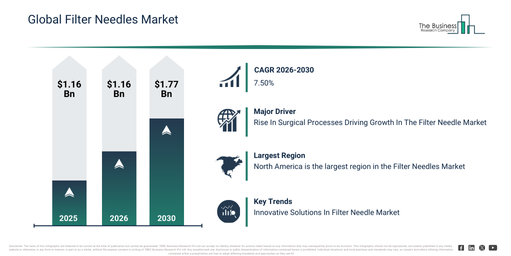
  • Filter Needles Market Trends Supporting 7.5% CAGR Growth Through 2030

    Filter Needles Market Trends Supporting 7.5% CAGR Growth Through 2030

    Featuring market attractiveness scoring, total addressable market sizing, company benchmarking matrices, interactive Excel dashboards, deeper supply chain intelligence, emerging startup tracking, and granular product-level insights, The Business Research Company’s 2026 market reports are built to deliver research that is both more actionable and more strategically valuable.

    Filter Needles Market Revenue Growth On Track For A 7.5% CAGR Through 2030

    The filter needles market has experienced significant growth in recent years. It is projected to expand from $1.72 billion in 2025 to $1.86 billion in 2026, demonstrating a compound annual growth rate (CAGR) of 8.4%. The growth witnessed during the historic period can be attributed to the escalating use of injectable medications, a heightened awareness of medication contamination risks, the expansion of hospital and clinical infrastructure, an increase in pharmaceutical compounding practices, and a stronger emphasis on patient safety standards.

    The filter needles market is projected to experience substantial expansion over the coming years. Its value is set to reach $2.48 billion by 2030, exhibiting a compound annual growth rate (CAGR) of 7.5%. This anticipated growth during the forecast period is fueled by several factors, including an escalating need for secure injection methods, increased application of reconstituted and ampoule-based medications, stricter regulatory emphasis on medication safety, the proliferation of outpatient and ambulatory care facilities, and the expanding volume of laboratory and diagnostic tests. Key trends anticipated during this period encompass a heightened focus on secure drug preparation techniques, the expanding deployment of filter needles in handling injectable drugs, a broader uptake of single-use sterile medical supplies, increasing requirements from hospital and clinical environments, and the extended application of filter needles in various laboratory uses.

    Get A Free Sample Report With In-Depth Market Insights:

    https://thebusinessresearchcompany.com/sample_request?id=99108140&type=smp&name=Filter%20Needles%20Market%20Report%202026&utm_source=Blogs&utm_medium=Paid&utm_campaign=Oct_PR

    Filter Needles Market Growth Factors Behind Sustained Expansion

    The projected expansion of the filter needle market is anticipated to be fueled by an uptick in surgical procedures in the coming years. Surgical processes encompass medical interventions carried out by surgeons or other medical experts to address illnesses, wounds, or physical irregularities through operations. This rise in surgical procedures stems from progress in medical technology, broader availability of healthcare amenities, and the increasing occurrence of chronic conditions that necessitate surgical treatment. Filter needles are crucial in these procedures to guarantee the integrity and sterility of medicinal preparations, thereby safeguarding patient well-being and mitigating the possibility of contamination or infection during operations. For example, in July 2024, the American Society of Plastic Surgeons, a US-based non-governmental organization, reported that Liposuction was the most favored surgical plastic surgery procedure in their 2024 statistics, showing a 1% increase in individuals choosing the procedure in 2024 vs 2023. Consequently, the growing number of surgical processes is a key factor propelling the filter needle market forward. Future expansion of the filter needles market is projected to be fueled by the escalating healthcare expenditure. Healthcare expenditure denotes the aggregate financial outlay made by individuals, entities, or governments for the prevention, treatment, and ongoing management of health issues. This growth in healthcare spending is attributed to breakthroughs in medical technology, given that novel diagnostic instruments, therapies, and pioneering treatments frequently involve greater costs, leading to an overall increase in healthcare sector spending. Enhanced healthcare spending encourages the uptake of filter needles by allowing medical facilities and clinics to invest in injectable consumables that are safer, meet regulatory standards, and are of superior quality. For instance, in December 2024, data from the Centers for Medicare & Medicaid Services, a US-based agency overseeing Medicare and Medicaid, indicated that U.S. health care expenditures rose by 7.5% in 2023, reaching $4.9 trillion, which translates to approximately $14,570 per person. Consequently, the growing healthcare expenditure is a primary impetus for the filter needles market.

    Filter Needles Market Segments: Where Is Growth Concentrated?

    The filter needles market covered in this report is segmented –

    1) By Type: Membrane Filter Needles, Depth Filter Needles, Other Types

    2) By Raw Material: Stainless Steel, Glass, Other Raw Materials

    3) By Application: Drug Preparation, Laboratory Procedures, Other Applications

    4) By End Use: Hospitals, Clinics, Ambulatory Surgery Centers, Other End Uses

    Subsegments:

    1) By Membrane Filter Needles: Polypropylene Membrane Filter Needles, Nylon Membrane Filter Needles, PVDF Membrane Filter Needles

    2) By Depth Filter Needles: Fiberglass Depth Filter Needles, Cellulose Depth Filter Needles, Polypropylene Depth Filter Needles

    3) By Other Types: Activated Carbon Filter Needles, Glass Fiber Filter Needles, Stainless Steel Filter Needles

    Filter Needles Market Industry Trends Fueling Future Revenue Growth

    Leading firms in the filter needle market are prioritizing the creation of novel products, particularly all-in-one design filter needles, aiming to achieve a competitive advantage. These all-in-one filter needles remove the necessity for healthcare professionals to change needles following medication filtration, thereby streamlining the process of preparing medication. An example occurred in May 2024, when CarrTech Corp., a US-based medical device enterprise, introduced the FROG (Filter Removal of Glass) device. This patented medical instrument was engineered to simplify extracting medications from glass ampoules. As an all-in-one filter needle, FROG enables technicians and providers to draw medication from ampoules without interchanging needles, consequently lowering the potential for needle stick injuries, contamination, and harm to patients.

    Filter Needles Market Competitive Landscape: Who Leads The Industry?

    Major companies operating in the filter needles market are Becton Dickinson and Company, B Braun Medical Inc, Terumo Corporation, Nipro Medical Corporation, Cardinal Health, Baxter International Inc, Vygon SA, SOL Millennium Medical Inc, ICU Medical Inc, Merit Medical Systems Inc, Medline Industries Inc, Hindustan Syringes and Medical Devices Ltd, Shandong Weigao Group Medical Polymer Co Ltd, Zhejiang Kindly Medical Devices Co Ltd, Jiangsu Kangjin Medical Co Ltd, Anhui Tiankang Medical Technology Co Ltd, Changzhou Jinlong Medical Plastic Appliance Co Ltd, Shanghai Mekon Medical Devices Co Ltd, Changzhou SUNTON Medical Technology Co Ltd, Bionic Medizintechnik GmbH

    View The Full Filter Needles Market Report:

    https://thebusinessresearchcompany.com/report/filter-needles-global-market-report?utm_source=Blogs&utm_medium=Paid&utm_campaign=Oct_PR

    Filter Needles Market Geographic Landscape: Which Region Dominates Industry Growth?

    North America was the largest region in the filter needles market in 2025. Asia-Pacific is expected to be the fastest-growing region in the forecast period. The regions covered in the filter needles market report are Asia-Pacific, South East Asia, Western Europe, Eastern Europe, North America, South America, Middle East, Africa.

    Reach Out To Our Team:

    The Business Research Company: https://www.thebusinessresearchcompany.com/

    Americas: +1 310-496-7795

    Asia: +44 7882 955267 & +91 8897263534

    Europe: +44 7882 955267

    Email us at: marketing@tbrc.info

    Follow us on:

    LinkedIn: https://in.linkedin.com/company/the-business-research-company

    YouTube: https://www.youtube.com/channel/UC24_fI0rV8cR5DxlCpgmyFQ

    Global Market Model: https://www.thebusinessresearchcompany.com/global-market-model