Blog

  • Fragile X Syndrome (FXS) Treatment Market Size Forecast: How The Industry Is Expected To Grow From 2026 To 2030

    Fragile X Syndrome (FXS) Treatment Market Size Forecast: How The Industry Is Expected To Grow From 2026 To 2030

    Backed by market attractiveness analysis, total addressable market sizing, company benchmarking matrices, interactive Excel dashboards, wider supply chain intelligence, emerging startup coverage, and detailed product-level insights, The Business Research Company’s 2026 market reports are designed to offer research that is more actionable and strategically valuable than ever.

    Fragile X Syndrome (FXS) Treatment Market Set To Climb From $2.23 Billion In 2026 To $3 Billion By 2030

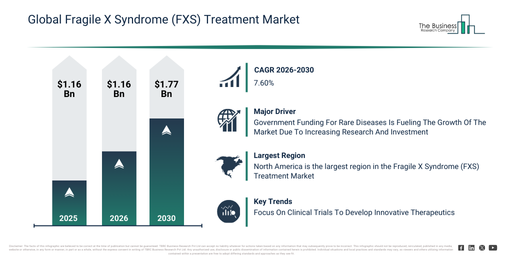
    The Fragile X Syndrome (FXS) treatment market has seen substantial growth over recent years. It is anticipated to expand from $2.07 billion in 2025 to $2.23 billion in 2026, showing a compound annual growth rate (CAGR) of 7.8%. This historical growth can be linked to a deeper clinical understanding of fragile X syndrome, the expansion of behavioral therapy programs, an increasing availability of psychiatric medications, a rise in diagnosis rates for genetic disorders, and improved access to specialized care centers.

    The fragile x syndrome (fxs) treatment market is poised for significant expansion over the upcoming years. It is projected to reach $3 billion in 2030, advancing at a compound annual growth rate (CAGR) of 7.6%. This projected growth is driven by increased investments in precision medicine research, the broadening scope of gene-targeted therapies, a surge in clinical trial activities for rare diseases, a heightened focus on early genetic screening, and stronger collaborations between biotechnology companies and research institutions. Prominent trends for the forecast period encompass an intensified focus on targeted pharmacological therapies, the increasing integration of behavioral and drug-based treatment modalities, the expansion of personalized treatment strategies, growing adoption rates of early diagnosis and intervention programs, and the enhanced development of novel mGluR5 and GABA-based therapies.

    Get A Free Sample Report With In-Depth Market Insights:

    https://thebusinessresearchcompany.com/sample_request?id=46256816&type=smp&name=Fragile%20X%20Syndrome%20%28FXS%29%20Treatment%20Market%20Report%202026&utm_source=Blogs&utm_medium=Paid&utm_campaign=Oct_PR

    Fragile X Syndrome (FXS) Treatment Market Growth Momentum: What Factors Are Shaping Demand?

    Future expansion of the fragile X syndrome (FXS) treatment market is anticipated to be fueled by government investments in rare diseases. These are defined as health conditions impacting a small segment of the population, frequently characterized by being chronic, degenerative, and potentially fatal. The rise in the occurrence of rare diseases largely stems from enhanced diagnostic abilities, with progress in genetic testing, imaging technologies, and data analytics allowing medical professionals to more precisely identify and categorize conditions that were previously not diagnosed or incorrectly diagnosed. Treatment for fragile X syndrome (FXS) is crucial in securing government support for rare diseases because it highlights the significance of specialized therapies and prompt intervention, thereby raising awareness and channelizing funds towards broader research and healthcare initiatives. As an illustration, in February 2024, the UK government, as reported by the UK Parliament’s House of Commons Library, a government administration, committed a £14 million ($17.3 million) investment to create a national research platform for rare diseases, comprising 11 research nodes throughout the UK and a central coordinating entity. Consequently, government financial support for rare diseases is stimulating expansion in the fragile X syndrome (FXS) treatment market.

    Fragile X Syndrome (FXS) Treatment Market Segment Landscape And Growth Outlook

    The fragile x syndrome (fxs) treatment market covered in this report is segmented –

    1) By Treatment Type: Pharmacological Treatment, Psychotherapy, Education And Training

    2) By Route of Administration: Oral, Injectable, Intranasal And Transdermal Delivery Routes

    3) By Related Disorder: Fragile X Syndrome, Fragile X Mental Retardation 1 (FMR1)-Related Primary Ovarian Insufficiency, Fragile X-Associated Tremor, Fragile X-Associated Neuropsychiatric Disorders, Other Related Disorders

    4) By Patient Age Group: Children, Adults, Elderly

    5) By End-User: Hospitals, Specialty Clinics, Other End Users

    Subsegments:

    1) By Pharmacological Treatment: Antidepressants, Antipsychotics, Stimulants, Anticonvulsants, Anti-Anxiety Medications, mGluR5 Antagonists (Metabotropic Glutamate Receptor 5 Antagonists), GABA Agonists (Gamma-Aminobutyric Acid Agonists)

    2) By Psychotherapy: Cognitive Behavioral Therapy (CBT), Family Therapy, Social Skills Training, Occupational Therapy, Speech And Language Therapy, Applied Behavior Analysis (ABA)

    3) By Education And Training: Special Education Programs, Individualized Education Programs (IEPs), Parent Training And Support, Behavioral Intervention Plans, Skill-Building Workshops, Inclusive Classroom Strategies

    Fragile X Syndrome (FXS) Treatment Market Trends Redefining Industry Growth

    Leading firms within the fragile X syndrome (FXS) treatment market are prioritizing the creation of novel products, such as calcium-activated potassium (BK) channel activators, with the goal of addressing underlying neurological processes and enhancing therapeutic results for patients. A calcium-activated potassium (BK) channel activator is a compound designed to boost the function of BK channels, which play a crucial role in controlling cellular excitability and the release of neurotransmitters. For instance, in January 2025, Spinogenix Inc., a biotechnology research firm based in the US, secured Fast Track designation from the U.S. Food and Drug Administration (FDA) for SPG601, a calcium-activated potassium (BK) channel activator intended for the treatment of fragile X syndrome (FXS). This designation facilitates accelerated clinical development and regulatory scrutiny, moving a new treatment designed to address synaptic dysfunction closer to patients. This particular designation highlights the pressing requirement for effective therapies for fragile X syndrome and emphasizes the therapeutic promise of SPG601 to alleviate cognitive and behavioral symptoms by targeting fundamental neurological mechanisms.

    Fragile X Syndrome (FXS) Treatment Market Competitive Analysis Of Leading Industry Participants

    Major companies operating in the fragile x syndrome (fxs) treatment market are F. Hoffmann-La Roche Ltd, Shionogi & Co. Ltd., Marinus Pharmaceuticals Inc., Healx Ltd, Neuren Pharmaceuticals Limited, Fulcrum Therapeutics Inc., Neuronascent Inc., Autifony Therapeutics Limited, Quadrant Biosciences Inc., Neurolixis Inc., Taysha Gene Therapies Inc., Ovid Therapeutics Inc., Spinogenix Inc., Epigen Biosciences Inc., Confluence Pharmaceuticals Inc., Actinogen Medical Limited, Anavex Life Sciences Corp., FRAXA Research Foundation Inc., Zynerba Pharmaceuticals Inc., BioMarin Pharmaceutical Inc., PTC Therapeutics Inc., Sage Therapeutics Inc., Neurocrine Biosciences Inc., Ionis Pharmaceuticals Inc.

    View The Full Fragile X Syndrome (FXS) Treatment Market Report:

    https://thebusinessresearchcompany.com/report/fragile-x-syndrome-fxs-treatment-global-market-report?utm_source=Blogs&utm_medium=Paid&utm_campaign=Oct_PR

    Fragile X Syndrome (FXS) Treatment Market Geographic Distribution And Regional Opportunities

    North America was the largest region in the fragile X syndrome FXS treatment market in 2025. Asia-Pacific is expected to be the fastest-growing region in the forecast period. The regions covered in the fragile x syndrome (fxs) treatment market report are Asia-Pacific, South East Asia, Western Europe, Eastern Europe, North America, South America, Middle East, Africa.

    Reach Out To Our Team:

    The Business Research Company: https://www.thebusinessresearchcompany.com/

    Americas: +1 310-496-7795

    Asia: +44 7882 955267 & +91 8897263534

    Europe: +44 7882 955267

    Email us at: marketing@tbrc.info

    Follow us on:

    LinkedIn: https://in.linkedin.com/company/the-business-research-company

    YouTube: https://www.youtube.com/channel/UC24_fI0rV8cR5DxlCpgmyFQ

    Global Market Model: https://www.thebusinessresearchcompany.com/global-market-model
  • Fracture Fixation Products Market Reaches $16.23 Billion In 2026: Forecast And Growth Opportunities

    Fracture Fixation Products Market Reaches $16.23 Billion In 2026: Forecast And Growth Opportunities

    Featuring market attractiveness scoring, total addressable market sizing, company benchmarking matrices, interactive Excel dashboards, deeper supply chain intelligence, emerging startup tracking, and granular product-level insights, The Business Research Company’s 2026 market reports are built to deliver research that is both more actionable and more strategically valuable.

    Fracture Fixation Products Market Forecast: Value Set To Climb From $12.24 Billion To $16.23 Billion

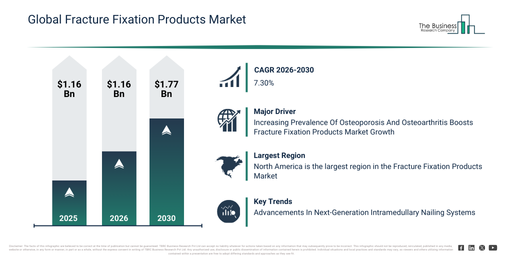
    The fracture fixation products market has experienced robust expansion in recent years. Its size is projected to increase from $11.32 billion in 2025 to $12.24 billion in 2026, indicating a compound annual growth rate (CAGR) of 8.1%. This historical growth can be attributed to a rising incidence of road accidents, an increase in orthopedic surgical volumes, a growing aging population more susceptible to fractures, the expansion of hospital orthopedic departments, and enhanced awareness of fracture treatment options.

    The fracture fixation products market size is anticipated to undergo significant growth in the upcoming years. It is projected to expand to $16.23 billion in 2030, exhibiting a compound annual growth rate (CAGR) of 7.3%. This expansion during the forecast period can be attributed to the rising incidence of sports-related injuries, increasing adoption of advanced orthopedic implants, the proliferation of ambulatory surgical centers, a growing prevalence of osteoporosis, and enhanced access to trauma care facilities. Key trends expected in the forecast period include the increasing uptake of bio-absorbable fixation devices, growing demand for fracture fixation in trauma and accident scenarios, an expanding preference for minimally invasive orthopedic procedures, the development of small bone fracture management solutions, and a greater use of customized fixation systems for complex fractures.

    Get A Free Sample Report With In-Depth Market Insights:

    https://thebusinessresearchcompany.com/sample_request?id=11875329&type=smp&name=Fracture%20Fixation%20Products%20Market%20Report%202026&utm_source=Blogs&utm_medium=Paid&utm_campaign=Oct_PR

    Fracture Fixation Products Market Expansion Drivers: What’s Shaping Future Growth?

    The increasing incidence of osteoporosis and osteoarthritis is set to propel the expansion of the fracture fixation products market moving forward. Osteoporosis describes a condition where bones become weakened and more susceptible to fractures, while osteoarthritis is a degenerative joint ailment characterized by cartilage breakdown, pain, and restricted joint movement. The occurrence of both osteoporosis and osteoarthritis is growing due to factors such as extended lifespans, escalating rates of obesity, and a rise in traumatic incidents like sports injuries. Fracture fixation products are necessary for osteoporosis to stabilize fragile bones prone to breaks, and for osteoarthritis to provide support and facilitate repair for joints damaged by cartilage degradation. For instance, in June 2025, Arthritis & Osteoporosis Tasmania, an Australia-based nonprofit organization, reported that the number of Australians aged 50 and over diagnosed with osteoporosis or osteopenia in 2023 is projected to climb by 23%, reaching 7.7 million by 2033. Therefore, the rising prevalence of osteoporosis and osteoarthritis significantly drives the growth of the fracture fixation products market.

    Fracture Fixation Products Market Breakdown By Product Type And Application

    The fracture fixation products market covered in this report is segmented –

    1) By Type: Internal Fixation Product, External Fixation Product, Small Bone Fracture Management Products, Other Types

    2) By Fracture Location: Upper Extremities, Hip And Pelvis, Lower Extremities

    3) By Application: Metallic Fixators, Bio-Absorbable Fixators, Other Applications

    4) By End Users: Hospitals And Clinics, Orthopedic Centers, Ambulatory Surgical Centers, Other End Users

    Subsegments:

    1) By Internal Fixation Product: Plates And Screws, Intramedullary Nails/Rods, Pins And Wires, Bone Grafts, Cannulated Screws

    2) By External Fixation Product: Unilateral Fixators, Circular Fixators, Hybrid Fixators, Bone Lengthening Devices, Trauma Fixators

    3) By Small Bone Fracture Management Products: Finger And Toe Fixation Devices, Hand And Wrist Plates, Ankle Fixation Plates, Mini External Fixators, Small Intramedullary Nails

    4) By Other Types: Bioabsorbable Fixation Devices, Orthobiologic Products, 3D-Printed Fixation Devices, Orthopedic Pins

    Fracture Fixation Products Market Strategic Trends: What Defines The Next Growth Phase?

    Companies operating within the fracture fixation products market are actively developing next-generation intramedullary nailing systems, aiming to enhance surgical outcomes and accelerate patient recovery. These advanced intramedullary nailing systems are sophisticated medical devices employed in orthopedic surgery for stabilizing and treating fractures found in long bones, such as the femur and tibia. As an illustration, in March 2024, Stryker Corporation, a US-based medical technology company, launched the Gamma4 Hip Fracture Nailing System in the European market. This latest Gamma4 system from Stryker represents a significant advancement in intramedullary nailing technology, designed for the efficient treatment of hip and femur fractures while simultaneously improving procedural workflows for surgeons. The Gamma system has achieved its advancements by refining processes, standardizing procedures, and incorporating meticulous attention to detail, all with the objective of improving surgical techniques and overall usability.

    Fracture Fixation Products Market Leading Companies And Competitive Benchmarking

    Major companies operating in the fracture fixation products market are Johnson and Johnson, Medtronic Plc, Stryker Corporation, Zimmer Biomet Holdings Inc, Smith and Nephew plc, NuVasive Inc., Globus Medical Inc., Wright Medical Group N.V., Orthofix Medical Inc., KLS Martin SE & Co. KG, Paragon 28 Inc., Acumed LLC, Narang Medical Ltd., GPC Medical Ltd., Inion Oy, Vast Ortho Inc, Extremity Medical LLC, Citieffe s.r.l., Bioretec Ltd., Arthrex Inc

    View The Full Fracture Fixation Products Market Report:

    https://thebusinessresearchcompany.com/report/fracture-fixation-products-global-market-report?utm_source=Blogs&utm_medium=Paid&utm_campaign=Oct_PR

    Fracture Fixation Products Market Largest Region By Revenue And Market Share

    North America was the largest region in the fracture fixation products market in 2025. Asia-Pacific is expected to be the fastest-growing region in the forecast period. The regions covered in the fracture fixation products market report are Asia-Pacific, South East Asia, Western Europe, Eastern Europe, North America, South America, Middle East, Africa.

    Reach Out To Our Team:

    The Business Research Company: https://www.thebusinessresearchcompany.com/

    Americas: +1 310-496-7795

    Asia: +44 7882 955267 & +91 8897263534

    Europe: +44 7882 955267

    Email us at: marketing@tbrc.info

    Follow us on:

    LinkedIn: https://in.linkedin.com/company/the-business-research-company

    YouTube: https://www.youtube.com/channel/UC24_fI0rV8cR5DxlCpgmyFQ

    Global Market Model: https://www.thebusinessresearchcompany.com/global-market-model
  • Fractional Radio Frequency Body Device Market Growth In 2026: Market Size, Key Drivers And Future Outlook

    Fractional Radio Frequency Body Device Market Growth In 2026: Market Size, Key Drivers And Future Outlook

    Built to provide research that’s more actionable and strategically valuable, The Business Research Company’s 2026 market reports include market attractiveness analysis, total addressable market sizing, company benchmarking matrices, interactive Excel dashboards, broader supply chain intelligence, emerging startup tracking, and in-depth product insights.

    Fractional Radio Frequency Body Device Market Revenue Growth On Track For A 13.5% CAGR Through 2030

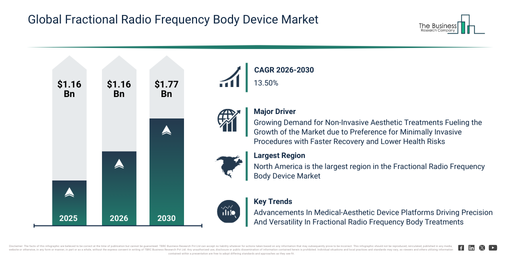
    The fractional radio frequency body device market has experienced swift expansion over recent years. Its value is anticipated to increase from $1.22 billion in 2025 to $1.39 billion in 2026, exhibiting a compound annual growth rate (CAGR) of 13.7%. This historic growth can be attributed to factors such as a rise in cosmetic procedures, continuous advancements in RF technology, a growing demand for non-surgical treatment options, the proliferation of medical spas, and heightened awareness surrounding body aesthetics.

    The fractional radio frequency body device market size is poised for substantial expansion in the next few years, with projections indicating it will attain $2.31 billion by 2030, growing at a compound annual growth rate (CAGR) of 13.5%. This anticipated growth during the forecast period is largely driven by advancements in portable devices, increasing concerns related to obesity, the proliferation of home-use devices, rising disposable income, and a heightened acceptance of aesthetic treatments. Furthermore, key trends identified for this period encompass the growth of non-invasive body contouring, an escalating demand for skin tightening procedures, the adoption of portable RF body devices, an expansion in medical spa services, and an increased consumer focus on aesthetic wellness.

    Get A Free Sample Report With In-Depth Market Insights:

    https://thebusinessresearchcompany.com/sample_request?id=97454893&type=smp&name=Fractional%20Radio%20Frequency%20Body%20Device%20Market%20Report%202026&utm_source=Blogs&utm_medium=Paid&utm_campaign=Oct_PR

    Fractional Radio Frequency Body Device Market Development Factors: What’s Supporting Demand?

    The increasing preference for non-invasive aesthetic treatments is projected to fuel the expansion of the fractional radio frequency body device market. These treatments are cosmetic procedures that enhance appearance without requiring surgery, offering advantages such as quicker recovery times and reduced health concerns. The escalating demand for non-invasive aesthetic options stems from patients’ growing inclination towards minimally invasive methods for skin tightening and body contouring. Fractional RF body devices effectively meet this demand by providing noticeable outcomes with little downtime, thus aligning with the broader consumer shift towards non-surgical alternatives. For instance, data from the American Society of Plastic Surgeons (ASPS), a US-based professional association, revealed that practitioners performed 28.5 million aesthetic minimally invasive treatments in 2024, a rise from 28.1 million in 2023, marking a 1.5% year-over-year increase, as reported in June 2025. Consequently, the rising demand for non-invasive aesthetic treatments is a key driver for the growth of the fractional radio frequency body device market.

    Fractional Radio Frequency Body Device Market Segment Analysis And Revenue Potential

    The fractional radio frequency body device market covered in this report is segmented –

    1) By Product Type: Portable Fractional Radio Frequency Body Devices, Non-Portable Fractional Radio Frequency Body Devices

    2) By Distribution Channel: Direct Sales, Online Retail, Other Distribution Channels

    3) By Application: Skin Tightening, Body Contouring, Cellulite Reduction, Wrinkle Reduction, Other Applications

    4) By End-User: Hospitals, Dermatology Clinics, Medical Spas, Other End Users

    Subsegments:

    1) By Portable Fractional Radio Frequency Body Devices, Handheld Devices, Battery-Operated Devices, Rechargeable Devices, Wireless or Smart-Connected Devices

    2) By Non-Portable Fractional Radio Frequency Body Devices, Tabletop Devices, Trolley-Based Devices, Stationary Clinical Systems, Multi-Functional Integrated Systems

    Fractional Radio Frequency Body Device Market Transformation Trends: What Innovations Are Driving Change?

    Leading companies in the fractional radio frequency body device market are emphasizing technological advancements, such as medical-aesthetic device platforms, to enhance treatment accuracy, improve patient comfort, and provide multi-application capabilities. A medical-aesthetic device platform is an integrated system that incorporates various technologies and applicators into a single unit, enabling a broad spectrum of skin and body treatments. For instance, in February 2023, Candela Corporation, a US-based medical aesthetic device company, unveiled the Profound Matrix system, a long-pulse radio frequency microneedling platform. This system is developed for minimally invasive skin and body procedures, primarily targeting issues such as skin laxity, wrinkles, and body contouring. Its Matrix Pro applicator allows for precise microneedling using radio frequency energy, while the Depth Intelligence technology ensures uniform penetration and energy delivery, customized according to individual tissue characteristics.

    Fractional Radio Frequency Body Device Market Industry Leaders And Competitive Landscape

    Major companies operating in the fractional radio frequency body device market are Hologic Inc., InMode Ltd., BTL Industries Inc., Lumenis Ltd., Cynosure LLC, Venus Concept, Cutera Inc., Lutronic Corporation, Alma Lasers, Solta Medical, Fotona d.o.o., Sciton Inc., Sisram Medical, Quanta System S.p.A., Sharplight Technologies Ltd., Jeisys Medical Inc., Candela Corporation, EndyMed Medical Ltd., Syneron Medical Ltd., Viora Ltd.

    View The Full Fractional Radio Frequency Body Device Market Report:

    https://thebusinessresearchcompany.com/report/fractional-radio-frequency-body-device-global-market-report?utm_source=Blogs&utm_medium=Paid&utm_campaign=Oct_PR

    Fractional Radio Frequency Body Device Market Regional Analysis And Leading Geography

    North America was the largest region in the fractional radio frequency body device market in 2025. Asia-Pacific is expected to be the fastest-growing region in the forecast period. The regions covered in the fractional radio frequency body device market report are Asia-Pacific, South East Asia, Western Europe, Eastern Europe, North America, South America, Middle East, Africa.

    Reach Out To Our Team:

    The Business Research Company: https://www.thebusinessresearchcompany.com/

    Americas: +1 310-496-7795

    Asia: +44 7882 955267 & +91 8897263534

    Europe: +44 7882 955267

    Email us at: marketing@tbrc.info

    Follow us on:

    LinkedIn: https://in.linkedin.com/company/the-business-research-company

    YouTube: https://www.youtube.com/channel/UC24_fI0rV8cR5DxlCpgmyFQ

    Global Market Model: https://www.thebusinessresearchcompany.com/global-market-model
  • Fractional Radio Frequency (RF) Microneedle Device Market Size And Forecast 2026–2030: Trends Driving Industry Expansion

    Fractional Radio Frequency (RF) Microneedle Device Market Size And Forecast 2026–2030: Trends Driving Industry Expansion

    Backed by market attractiveness analysis, total addressable market sizing, company benchmarking matrices, interactive Excel dashboards, wider supply chain intelligence, emerging startup coverage, and detailed product-level insights, The Business Research Company’s 2026 market reports are designed to offer research that is more actionable and strategically valuable than ever.

    Fractional Radio Frequency (RF) Microneedle Device Market Value Growth And Long-Term Outlook

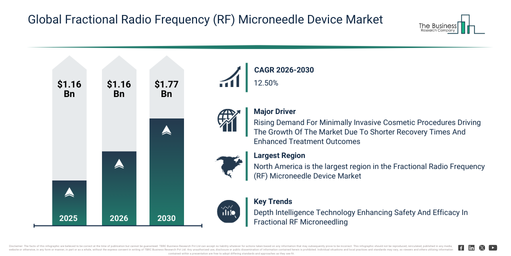
    The fractional radio frequency (rf) microneedle device market size has experienced swift expansion recently. This market is expected to expand from $1.02 billion in 2025 to $1.15 billion in 2026, registering a compound annual growth rate (CAGR) of 12.8%. The historical growth can be ascribed to factors such as increased aesthetic consciousness, the demand for collagen stimulation, a rise in acne scar treatments, technological advancements, and the expansion of dermatology practices.

    The fractional radio frequency (rf) microneedle device market is poised for significant expansion over the coming years. This market is projected to reach a value of $1.85 billion by 2030, exhibiting a compound annual growth rate (CAGR) of 12.5%. This growth during the forecast period is fueled by several factors, including increasing demand for cosmetic procedures, higher disposable incomes, advancements in microneedle technology, the expanding medical aesthetics sector, and the impact of social media. Key trends observed within the forecast timeframe encompass a surging demand for minimally invasive aesthetic treatments, a greater preference for therapies with quick recovery, tailored skin rejuvenation options, the rise of combined aesthetic therapies, and an increase in dermatology clinic openings.

    Get A Free Sample Report With In-Depth Market Insights:

    https://thebusinessresearchcompany.com/sample_request?id=99209505&type=smp&name=Fractional%20Radio%20Frequency%20%28RF%29%20Microneedle%20Device%20Market%20Report%202026&utm_source=Blogs&utm_medium=Paid&utm_campaign=Oct_PR

    Fractional Radio Frequency (RF) Microneedle Device Market Industry Drivers: What’s Behind The Revenue Growth?

    The anticipated expansion of the fractional radio frequency (RF) microneedle device market in the coming years is largely due to the escalating demand for minimally invasive cosmetic procedures. These treatments improve appearance using methods such as injections, lasers, or minor incisions, providing less downtime and lower risks compared to conventional surgery. The rising popularity of minimally invasive cosmetic procedures stems from patients’ preference for quicker recovery times, allowing them to return to their daily routines promptly. Fractional RF microneedle devices ensure safe, precise, and consistent outcomes by employing insulated or adjustable-depth needles to target particular skin layers. As an illustration, in June 2024, data from the American Society of Plastic Surgeons, a US-based specialty organization, revealed a 7 percent growth in minimally invasive procedures in 2023, surpassing surgical procedures by 2 percent. Notably, neuromodulator injections and hyaluronic acid fillers each exceeded 9 million and 5 million treatments, respectively. Consequently, the increasing demand for minimally invasive cosmetic procedures is a primary driver for the growth of the fractional RF microneedle device market.

    Fractional Radio Frequency (RF) Microneedle Device Market Segmentation And Category Overview

    The fractional radio frequency (rf) microneedle device market covered in this report is segmented –

    1) By Product Type: Single-Needle Devices, Multi-Needle Devices

    2) By Application: Skin Rejuvenation, Acne Scar Treatment, Wrinkle Reduction, Hyperpigmentation, Other Applications

    3) By End-User: Hospitals, Dermatology Clinics, Aesthetic Centers, Other End-Users

    Subsegments:

    1) By Single-Needle Devices: Insulated Single-Needle, Non-Insulated Single-Needle, Adjustable Depth Single-Needle, Fixed Depth Single-Needle

    2) By Multi-Needle Devices: Insulated Multi-Needle, Non-Insulated Multi-Needle, Adjustable Depth Multi-Needle, Fixed Depth Multi-Needle, Disposable Tip Multi-Needle, Reusable Tip Multi-Needle

    #Fractional Radio Frequency (RF) Microneedle Device Market Growth Trends: What’s Shaping The Future Outlook?

    Companies in the fractional radio frequency (RF) microneedle device market are concentrating on developing depth intelligence-enabled RF delivery systems to ensure precise, safe, and consistent treatments. These systems allow for exact control of radiofrequency energy at targeted skin layers, ensuring uniform treatment, minimizing tissue damage, and enhancing safety and effectiveness. For instance, in February 2023, Candela, a US-based medical aesthetics company, launched the Profound Matrix System, a fractional radio frequency (RF) microneedle device. This device integrates the Matrix Pro applicator featuring depth intelligence technology, provides real-time impedance feedback, and supports three user-controlled depth and energy settings in a single insertion. The Profound Matrix System enables practitioners to customize treatments for individual patient needs, improving outcomes in skin tightening, wrinkle reduction, and overall facial rejuvenation.

    Fractional Radio Frequency (RF) Microneedle Device Market Key Participants And Competitive Landscape

    Major companies operating in the fractional radio frequency (rf) microneedle device market are Hologic Inc., InMode Ltd., Lumenis Be Ltd., Candela Medical Inc., Cutera Inc., Lutronic Corporation, Venus Concept Inc., Dermatrix Inc., Cartessa Aesthetics LLC, Beijing Nubway Science & Technology Co. Ltd., Jeisys Medical Inc., WONTECH Co. Ltd., EndyMed Medical Ltd., Deka Medical, Agnes Medical Co. Ltd., Dermatude B.V., Ilooda Co. Ltd., Viol Co. Ltd., Aesthetics Biomedical Inc., Xi’an Prima Beauty Equipment Co. Ltd.

    View The Full Fractional Radio Frequency (RF) Microneedle Device Market Report:

    https://thebusinessresearchcompany.com/report/fractional-radio-frequency-rf-microneedle-device-global-market-report?utm_source=Blogs&utm_medium=Paid&utm_campaign=Oct_PR

    Fractional Radio Frequency (RF) Microneedle Device Market Geographic Analysis: Where Is Demand Accelerating Fastest?

    North America was the largest region in the fractional radio frequency (RF) microneedle device market in 2025. Asia-Pacific is expected to be the fastest-growing region in the forecast period. The regions covered in the fractional radio frequency (rf) microneedle device market report are Asia-Pacific, South East Asia, Western Europe, Eastern Europe, North America, South America, Middle East, Africa.

    Reach Out To Our Team:

    The Business Research Company: https://www.thebusinessresearchcompany.com/

    Americas: +1 310-496-7795

    Asia: +44 7882 955267 & +91 8897263534

    Europe: +44 7882 955267

    Email us at: marketing@tbrc.info

    Follow us on:

    LinkedIn: https://in.linkedin.com/company/the-business-research-company

    YouTube: https://www.youtube.com/channel/UC24_fI0rV8cR5DxlCpgmyFQ

    Global Market Model: https://www.thebusinessresearchcompany.com/global-market-model
  • Foreign Body Removal Market 2026 Outlook: Market Size, CAGR And Key Growth Opportunities

    Foreign Body Removal Market 2026 Outlook: Market Size, CAGR And Key Growth Opportunities

    Featuring market attractiveness scoring, total addressable market sizing, company benchmarking matrices, interactive Excel dashboards, deeper supply chain intelligence, emerging startup tracking, and granular product-level insights, The Business Research Company’s 2026 market reports are built to deliver research that is both more actionable and more strategically valuable.

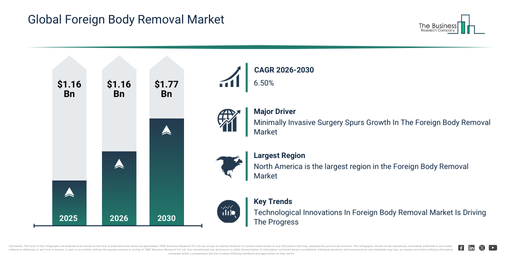
    Foreign Body Removal Market Poised To Hit $2.89 Billion By 2030 With A 6.5% CAGR

    The foreign body removal market has experienced strong growth in recent years. Its size is projected to expand from $2.1 billion in 2025 to $2.24 billion in 2026, at a compound annual growth rate (CAGR) of 6.9%. This historical expansion can be attributed to the increasing incidence of accidental ingestion cases, the expansion of emergency medical services, the availability of basic surgical instruments, rising hospital admission rates, and increasing awareness of prompt foreign body removal.

    The foreign body removal market is projected to experience substantial expansion in the coming years. This market is set to reach $2.89 billion in 2030, exhibiting a compound annual growth rate (CAGR) of 6.5%. The projected increase during this period stems from various factors, including the greater uptake of advanced endoscopic technologies, a surge in demand for outpatient surgical procedures, the proliferation of ambulatory surgical centers, rising investments in emergency care infrastructure, and a heightened emphasis on minimally invasive treatment methods. Key developments anticipated in the forecast period encompass a growing preference for minimally invasive retrieval devices, expanded application of endoscopic tools for foreign body removal, increasing need for precise surgical instruments, an increase in emergency care interventions, and an amplified focus on ensuring patient safety and procedural effectiveness.

    Get A Free Sample Report With In-Depth Market Insights:

    https://thebusinessresearchcompany.com/sample_request?id=42797931&type=smp&name=Foreign%20Body%20Removal%20Market%20Report%202026&utm_source=Blogs&utm_medium=Paid&utm_campaign=Oct_PR

    Foreign Body Removal Market Growth Factors: What’s Supporting Expansion?

    The increasing adoption of minimally invasive surgery is anticipated to propel the expansion of the foreign body removal market. Minimally invasive surgery constitutes procedures involving smaller incisions, a quicker recovery period, and fewer stitches. Foreign body removal is a type of minimally invasive surgical procedure specifically designed to extract objects that have been swallowed and become stuck in the digestive system or any other bodily region. The performance of minimally invasive surgery for foreign body removal directly contributes to an elevated demand for these services. For instance, in February 2024, the American Academy of Facial Plastic and Reconstructive Surgery, a US-based non-profit organization, reported that approximately 83% of all medical procedures performed in 2023 were minimally invasive, with standard surgical procedures making up the remaining 17%. Additionally, data from the American Society of Plastic Surgeons, a US-based specialty organization, indicated that the total number of cosmetic minimally invasive procedures increased from 23.7 million in 2022 to 25.4 million in 2023. Therefore, the growing demand for minimally invasive surgery is a primary driver for the foreign body removal market.

    Foreign Body Removal Market Segment Outlook: Which Categories Are Growing Fastest?

    The foreign body removal market covered in this report is segmented –

    1) By Device Type: Forceps, Retrieval Baskets, Balloon Catheter, Other Device Types

    2) By Application: Stomach, Gut, Mouth, Ear, Nose, Other Applications

    3) By End Users: Hospitals And Clinics, Ambulatory Surgical Centers, Other End Users

    Subsegments:

    1) By Forceps: Grasping Forceps, Biopsy Forceps

    2) By Retrieval Baskets: Standard Retrieval Baskets, Angled Retrieval Baskets

    3) By Balloon Catheter: Inflatable Balloon Catheters, Non-Inflatable Balloon Catheters

    4) By Other Device Types: Endoscopic Instruments, Magnetic Retrieval Devices, Specimen Traps

    Foreign Body Removal Market Industry Trends: What’s Reshaping Demand?

    Leading companies in the foreign body removal market are concentrating on developing innovative products, such as microsurgery instruments, to provide surgeons with unmatched control and precision during complex operations, thereby enhancing surgical results and patient experiences. Microsurgery instruments are specialized tools crafted for exact manipulation and intervention within very small bodily tissues, facilitating intricate procedures like the repair of blood vessels and nerves under magnification. For instance, in November 2023, Surtex Instruments, a UK-based medical instrument manufacturer, launched the Infinex series. This series boasts diamond-dusted jaws on microsurgery forceps and needle holders, improving grip and stability, while the Maestro series features precision-crafted micro scissors and forceps for flawless execution. The significance of these advancements lies in their capacity to equip surgeons with superior tools that ensure better surgical outcomes, reduced patient trauma, and more rapid recovery periods.

    Foreign Body Removal Market Top Companies Driving Competitive Growth

    Major companies operating in the foreign body removal market are Boston Scientific Corporation, CONMED Corporation, MEDIVATORS Inc., Applied Medical Resources Corporation, Olympus Corporation, Diversatek Inc., Cook Medical LLC, Medtronic plc, Stryker Corporation, Smith & Nephew plc, Johnson & Johnson Services Inc., B. Braun Melsungen AG, Teleflex Incorporated, Merit Medical Systems Inc., Terumo Corporation, Abbott Laboratories, Cardinal Health Inc., Becton Dickinson and Company, Teleflex Medical OEM, AngioDynamics Inc., Hologic Inc., Integra LifeSciences Holdings Corporation, Zimmer Biomet Holdings Inc., Karl Storz SE & Co. KG, Fujifilm Holdings Corporation, Richard Wolf GmbH, Pentax Medical Company

    View The Full Foreign Body Removal Market Report:

    https://thebusinessresearchcompany.com/report/foreign-body-removal-global-market-report?utm_source=Blogs&utm_medium=Paid&utm_campaign=Oct_PR

    Foreign Body Removal Market Global Footprint: Which Region Leads The Industry?

    North America was the largest region in the foreign body removal market in 2025. The regions covered in the foreign body removal market report are Asia-Pacific, South East Asia, Western Europe, Eastern Europe, North America, South America, Middle East, Africa.

    Reach Out To Our Team:

    The Business Research Company: https://www.thebusinessresearchcompany.com/

    Americas: +1 310-496-7795

    Asia: +44 7882 955267 & +91 8897263534

    Europe: +44 7882 955267

    Email us at: marketing@tbrc.info

    Follow us on:

    LinkedIn: https://in.linkedin.com/company/the-business-research-company

    YouTube: https://www.youtube.com/channel/UC24_fI0rV8cR5DxlCpgmyFQ

    Global Market Model: https://www.thebusinessresearchcompany.com/global-market-model
  • Forceps And Spatulas Market Size Growth: From $2.24 Billion In 2026 To $2.93 Billion By 2030

    Forceps And Spatulas Market Size Growth: From $2.24 Billion In 2026 To $2.93 Billion By 2030

    Built to provide research that’s more actionable and strategically valuable, The Business Research Company’s 2026 market reports include market attractiveness analysis, total addressable market sizing, company benchmarking matrices, interactive Excel dashboards, broader supply chain intelligence, emerging startup tracking, and in-depth product insights.

    Forceps And Spatulas Market Size And Revenue Outlook Through 2030

    The forceps and spatulas market size has demonstrated robust growth over recent years. Projections indicate it will expand from $2.08 billion in 2025 to $2.24 billion in 2026, achieving a compound annual growth rate (CAGR) of 7.8%. The factors contributing to this historical growth include an increase in surgical procedure volumes, the expansion of hospital and surgical infrastructure, a heightened emphasis on infection control, a growing demand for reusable stainless steel instruments, and the development of specialty surgical disciplines.

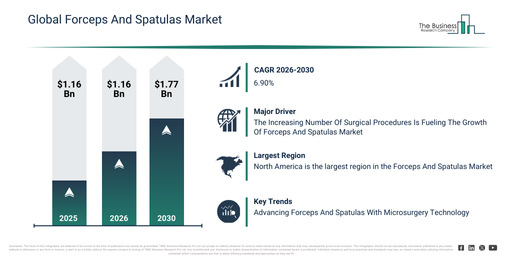
    The market for forceps and spatulas is anticipated to experience robust expansion over the coming years. Its valuation is projected to reach $2.93 billion by 2030, progressing at a compound annual growth rate (CAGR) of 6.9%. This projected growth during the forecast period is attributable to several factors, including the rising volume of minimally invasive surgical procedures, an increasing inclination towards disposable surgical equipment, a heightened demand for high-precision surgical instruments, the proliferation of ambulatory surgical centers, and increased capital expenditure in sophisticated surgical healthcare. Key trends anticipated within the forecast period encompass a greater acceptance of disposable surgical instruments, an escalating need for precise instruments in intricate operations, enhanced utilization of specialized forceps in microsurgery and cardiovascular interventions, a move towards sterile and single-use medical devices, and a broader application of these tools in diverse surgical environments.

    Get A Free Sample Report With In-Depth Market Insights:

    https://thebusinessresearchcompany.com/sample_request?id=11827823&type=smp&name=Forceps%20And%20Spatulas%20Market%20Report%202026&utm_source=Blogs&utm_medium=Paid&utm_campaign=Oct_PR

    Forceps And Spatulas Market Demand Drivers: What’s Powering Industry Growth?

    The expansion of the forceps and spatulas market is projected to be driven by the rising volume of surgical procedures. Surgical procedures are medical interventions performed to diagnose or treat conditions through physical modification of body tissues or organs. This increase in surgical interventions is attributable to progress in medical technology, an older demographic needing more treatments, a wider spread of chronic illnesses, and heightened patient demands for better post-treatment quality of life. Within surgical contexts, forceps and spatulas are instrumental for manipulating tissues, extracting materials, and handling various substances. Surgeons depend on forceps for accurate tissue grasping and handling, and spatulas are vital for spreading, mixing, and applying substances during operations, underscoring their critical role in improving surgical accuracy and patient results. For example, data from June 2024 by the International Society of Aesthetic Plastic Surgery (ISAPS), a US-based nonprofit, revealed that total surgical and non-surgical procedures collectively rose by 3.4% in 2023, reaching 34.9 million. This surge was primarily propelled by a 5.5% increase in surgical procedures. Plastic surgeons carried out over 15.8 million surgical procedures and 19.1 million non-surgical procedures, signifying a 40% overall growth in procedures during the past four years. Consequently, the rising volume of surgical interventions is a key catalyst for the expansion of the forceps and spatulas market.

    Forceps And Spatulas Market Segment Landscape: Which Areas Lead Development?

    The forceps and spatulas market covered in this report is segmented –

    1) By Type: Trulla Spatulas, Taper Blade Spatulas, Nuffield Spatulas, Porcelain Spatulas, Micro Spatulas, Sterile Spatulas, Double Spatulas or Spoon Spatulas, Other Types

    2) By Spatula Material: Polystyrene Or Nylon, Polypropylene And Polytetrafluoroethylene (PTFE) Or Porcelain, Stainless Steel And Nickel

    3) By Forceps Types: Disposable Forceps, Reusable Polytetrafluoroethylene (PTFE)- Coated Forceps, Stainless Steel Forceps, Dissecting Forceps, Tissue Forceps, Iris Forceps, Pointed Forceps, Filter Forceps, Other Forcep Types

    4) By Usability: Disposable Surgical Equipment, Reusable Surgical Equipment

    5) By Application: Neurosurgery, Plastic And Reconstructive Surgeries, Wound Closure, Urology, Obstetrics And Gynecology, Thoracic Surgery, Micro-Vascular Surgery, Cardiovascular Surgery, Orthopedic Surgery

    Subsegments:

    1) By Trulla Spatulas: Laboratory Trulla Spatulas, Surgical Trulla Spatulas

    2) By Taper Blade Spatulas: Flexible Taper Blade Spatulas, Rigid Taper Blade Spatulas

    3) By Nuffield Spatulas: Standard Nuffield Spatulas, Wide Blade Nuffield Spatulas

    4) By Porcelain Spatulas: Short-Handled Porcelain Spatulas, Long-Handled Porcelain Spatulas

    5) By Micro Spatulas: Single-Ended Micro Spatulas, Double-Ended Micro Spatulas

    6) By Sterile Spatulas: Individually Packaged Sterile Spatulas, Bulk Packaged Sterile Spatulas

    7) By Double Spatulas Or Spoon Spatulas: Flat-End And Spoon-End Spatulas, Curved-End And Spoon-End Spatulas

    8) By Other Types: Plastic Spatulas, Metal Spatulas, Wooden Spatulas, Silicone Spatulas

    Forceps And Spatulas Market Innovation Trends: What Developments Are Reshaping The Industry?

    Leading companies within the forceps and spatulas market are concentrating on developing technologically advanced products, particularly those incorporating microsurgery technology, to gain a competitive edge. This specialized technology involves highly refined instruments and techniques for conducting intricate surgical procedures on minute structures, frequently utilizing microscopes and precision tools. It empowers surgeons to operate on delicate tissues and structures such as nerves, blood vessels, and small tumors with exceptional accuracy and minimal damage to surrounding areas. For instance, in November 2023, Surtex Instruments Limited, a UK-based medical instrument manufacturer, unveiled its Infinex series of microsurgery instruments, engineered to equip surgeons with unparalleled control and precision, even in the most demanding surgical scenarios. The Infinex series signifies a major progression in microsurgery technology, prioritizing remarkable precision to enhance surgical outcomes, reduce patient trauma, and accelerate recovery times. This series includes meticulously manufactured micro scissors, forceps, and needle holders, embodying Surtex’s commitment to flawless performance and superior patient results.

    Forceps And Spatulas Market Leading Players And Competitive Positioning

    Major companies operating in the forceps and spatulas market are Thermo Fisher Scientific Inc., Paramount Industries, Merck KGaA, Stryker Corporation, B. Braun Melsungen AG, VWR International LLC, Integra LifeSciences Corporation, KLS Martin Group, Aesculap Inc., Teleflex Medical OEM, Symmetry Surgical Inc., Sklar Surgical Instruments, Bharat Surgical Co., Boss Instruments Ltd., Uteshiya Medicare, Jay Shakti Industries, Stingray Surgical Products LLC, Surtex Instruments Ltd., Sontec Instruments Inc., GSource LLC, Roboz Surgical Instrument Co., Kumpulan Saintifik, Stille AB

    View The Full Forceps And Spatulas Market Report:

    https://thebusinessresearchcompany.com/report/forceps-and-spatulas-global-market-report?utm_source=Blogs&utm_medium=Paid&utm_campaign=Oct_PR

    Forceps And Spatulas Market Regional Distribution: Which Areas Power Market Growth?

    North America was the largest region in the forceps and spatulas market in 2025. The regions covered in the forceps and spatulas market report are Asia-Pacific, South East Asia, Western Europe, Eastern Europe, North America, South America, Middle East, Africa.

    Reach Out To Our Team:

    The Business Research Company: https://www.thebusinessresearchcompany.com/

    Americas: +1 310-496-7795

    Asia: +44 7882 955267 & +91 8897263534

    Europe: +44 7882 955267

    Email us at: marketing@tbrc.info

    Follow us on:

    LinkedIn: https://in.linkedin.com/company/the-business-research-company

    YouTube: https://www.youtube.com/channel/UC24_fI0rV8cR5DxlCpgmyFQ

    Global Market Model: https://www.thebusinessresearchcompany.com/global-market-model
  • Foot Drop Treatment Devices Market Analysis 2026: Market Size, Growth Trends And Industry Outlook

    Foot Drop Treatment Devices Market Analysis 2026: Market Size, Growth Trends And Industry Outlook

    Backed by market attractiveness analysis, total addressable market sizing, company benchmarking matrices, interactive Excel dashboards, wider supply chain intelligence, emerging startup coverage, and detailed product-level insights, The Business Research Company’s 2026 market reports are designed to offer research that is more actionable and strategically valuable than ever.

    Foot Drop Treatment Devices Market Growth From $2.65 Billion In 2026 To $3.59 Billion By 2030 At A CAGR Of 7.9%

    The foot drop treatment devices market has seen significant expansion in recent years. Projections indicate it will grow from $2.45 billion in 2025 to $2.65 billion in 2026, at a compound annual growth rate (CAGR) of 8.1%. This historical growth can be attributed to several factors, including the increasing occurrence of neurological disorders, a rise in cases of stroke-related mobility impairment, the expansion of rehabilitation centers, the growing availability of orthotic devices, and enhanced clinical awareness regarding foot drop management.

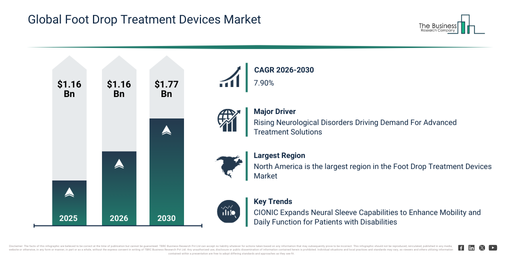
    The foot drop treatment devices market size is projected to experience robust expansion over the coming years. It is anticipated to grow to $3.59 billion in 2030, exhibiting a compound annual growth rate (CAGR) of 7.9%. This projected growth during the forecast period is primarily driven by factors such as the greater acceptance of sophisticated neurorehabilitation technologies, an increasing need for mobility assistance in homecare settings, the broadening availability of customized orthotic solutions, an elevated emphasis on enhancing life quality, and innovations in wearable medical devices. Key developments anticipated in this period encompass the wider utilization of functional electrical stimulation devices, a heightened preference for bespoke orthotic braces, the increasing incorporation of light and adaptable materials, the proliferation of rehabilitation options available at home, and a stronger commitment to boosting patient mobility.

    Get A Free Sample Report With In-Depth Market Insights:

    https://thebusinessresearchcompany.com/sample_request?id=30115518&type=smp&name=Foot%20Drop%20Treatment%20Devices%20Market%20Report%202026&utm_source=Blogs&utm_medium=Paid&utm_campaign=Oct_PR

    Foot Drop Treatment Devices Market Growth Drivers: What’s Behind The Acceleration?

    The projected expansion of the foot drop treatment devices market is anticipated to be fueled by the rising occurrence of neurological disorders and related injuries. These conditions involve damage, disease, or deterioration of the nervous system, impacting the brain, spinal cord, and nerves, thereby causing impairments in motor function, sensory perception, cognitive abilities, or behavior. An aging global demographic, enhanced diagnostic capabilities, lifestyle choices, environmental factors, and medical technological progress enabling improved detection and therapy contribute to the growing prevalence of such disorders and injuries. For those afflicted with neurological disorders and injuries, these devices are crucial because such conditions frequently impair the capacity to raise the foot, leading to challenges in walking and an elevated susceptibility to falls. By aiding in foot elevation, these devices provide essential support and stability, consequently boosting mobility and enriching the quality of life for affected individuals. A relevant example is the World Federation of Neurology, a UK-based group of national neurological societies, which reported in October 2023 that over 40% of the world’s population currently lives with a neurological condition, a figure projected to almost double by 2050. Consequently, the escalating occurrence of neurological disorders and injuries is a key factor propelling the expansion of the foot drop treatment devices market.

    Foot Drop Treatment Devices Market Segments: Where Is Growth Concentrated?

    The foot drop treatment devices market covered in this report is segmented –

    1) By Product Type: Electrical Stimulator, Braces Or Splints

    2) By Application: Neuropathy, Muscle Disorders, Brain And Spinal Disorders, Other Applications

    3) By End User: Hospitals, Ambulatory Surgical Centers, Clinics, Homecare Settings

    Subsegments:

    1) By Electrical Stimulator: Functional Electrical Stimulation (FES) Devices, Neuromuscular Electrical Stimulation (NMES) Devices, Transcutaneous Electrical Nerve Stimulation (TENS) Devices, Others

    2) By Braces Or Splints: Ankle-Foot Orthoses (AFO), Dynamic Ankle-Foot Orthoses (DAFO), Hinged Ankle Braces, Custom-Made Braces, Others

    Foot Drop Treatment Devices Market Trends: What’s Defining The Industry’s Next Phase?

    Leading companies within the foot drop treatment devices market are prioritizing technological advancements, such as software-driven, wearable bionic garments that integrate functional electrical stimulation with real-time mobility tracking, to enhance walking, strength, and independence for individuals with neuromuscular impairments. Software-Powered Wearable Bionic Devices facilitate personalized functional training, comprehensive progress monitoring, and seamless integration into activities of daily living, thereby helping patients regain mobility, climb stairs, walk, and perform essential daily tasks more independently. For instance, in May 2024, CIONIC, a U.S.-based neurotechnology company, announced updates to its FDA-cleared Cionic Neural Sleeve, introducing new functional exercises and detailed activity tracking reports for patients with multiple sclerosis, strokes, spinal cord injuries, and other upper motor neuron diagnoses. The lightweight, durable leg sleeve combines gait lab diagnostics with functional electrical stimulation and is smartphone-operated, allowing software-driven updates to be deployed to all users simultaneously, empowering patients to improve their functional mobility and daily independence.

    Foot Drop Treatment Devices Market Competitive Overview And Top Companies

    Major companies operating in the foot drop treatment devices market are Cardinal Health Inc., Stryker Corporation, Henry Schein Inc., Smith & Nephew LLC, Ottobock, Hanger Inc., Ossur, Bauerfeind USA Inc., Breg Inc., B. Braun Melsungen AG, Trulife Ltd., Orthomerica Products Inc., Bioness Inc., Evolution Health Care Pvt. Ltd., Aspen Medical Products, Allard Inc., Footmaxx, ProCare, DJO Global Inc., ALIMCO, Saebo Inc., Axio Bionics LLC, Thrive Orthopedics, Turbomed Orthotics, Accord Medical Products Private Limited

    View The Full Foot Drop Treatment Devices Market Report:

    https://thebusinessresearchcompany.com/report/foot-drop-treatment-devices-global-market-report?utm_source=Blogs&utm_medium=Paid&utm_campaign=Oct_PR

    Foot Drop Treatment Devices Market Leading Geography: Which Region Contributes The Most Revenue?

    North America was the largest region in the foot drop treatment devices market in 2025. Asia-Pacific is expected to be the fastest-growing region in the forecast period. The regions covered in the foot drop treatment devices market report are Asia-Pacific, South East Asia, Western Europe, Eastern Europe, North America, South America, Middle East, Africa.

    Reach Out To Our Team:

    The Business Research Company: https://www.thebusinessresearchcompany.com/

    Americas: +1 310-496-7795

    Asia: +44 7882 955267 & +91 8897263534

    Europe: +44 7882 955267

    Email us at: marketing@tbrc.info

    Follow us on:

    LinkedIn: https://in.linkedin.com/company/the-business-research-company

    YouTube: https://www.youtube.com/channel/UC24_fI0rV8cR5DxlCpgmyFQ

    Global Market Model: https://www.thebusinessresearchcompany.com/global-market-model
  • Foot And Ankle Devices Market Forecast To 2030: Starting From $10.77 Billion In 2026

    Foot And Ankle Devices Market Forecast To 2030: Starting From $10.77 Billion In 2026

    Featuring market attractiveness scoring, total addressable market sizing, company benchmarking matrices, interactive Excel dashboards, deeper supply chain intelligence, emerging startup tracking, and granular product-level insights, The Business Research Company’s 2026 market reports are built to deliver research that is both more actionable and more strategically valuable.

    Foot And Ankle Devices Market Expansion Outlook: What Revenue Opportunities Are Ahead?

    The foot and ankle devices market has experienced rapid growth in its size over recent years. The market is projected to expand from $6.6 billion in 2025 to $7.3 billion in 2026, achieving a compound annual growth rate (CAGR) of 10.6%. This historical growth can be attributed to several factors, including the increasing prevalence of foot and ankle disorders, a rising geriatric population, the growing incidence of diabetes-related foot complications, an expansion of orthopedic surgical procedures, and improved access to specialized orthopedic care.

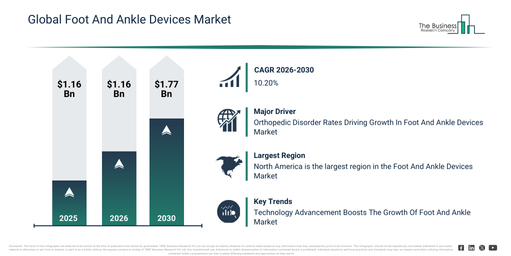
    The foot and ankle devices market is projected to experience substantial expansion in the coming years. By 2030, this market is forecast to reach a size of $10.77 billion, demonstrating a compound annual growth rate (CAGR) of 10.2%. Key drivers for this projected growth include a heightened demand for customized orthopedic solutions, the increasing embrace of minimally invasive surgical methods, a stronger emphasis on outcomes from post-surgical rehabilitation, wider application of advanced biomaterials, and greater investment in orthopedic device innovation. Notable trends anticipated during this period encompass the growing adoption of personalized orthopedic implants, the increased utilization of sophisticated bracing and support solutions, a heightened concentration on minimally invasive procedures for the foot and ankle, the expansion of devices for diabetic foot care, and a greater focus on patient-specific prosthetics.

    Get A Free Sample Report With In-Depth Market Insights:

    https://thebusinessresearchcompany.com/sample_request?id=71941625&type=smp&name=Foot%20And%20Ankle%20Devices%20Market%20Report%202026&utm_source=Blogs&utm_medium=Paid&utm_campaign=Oct_PR

    Foot And Ankle Devices Market Growth Factors Behind Sustained Expansion

    The anticipated increase in orthopedic disorder rates is set to drive expansion within the foot and ankle devices market. Orthopedic disorders are conditions impacting the musculoskeletal system, leading to damage in muscle and bone tissues, encompassing components such as bones, cartilage, ligaments, tendons, and other connective tissues. These foot and ankle devices serve to treat diverse fusions, fractures, and osteotomies affecting the forefoot, midfoot, and rearfoot regions, thereby contributing to the market’s growth. As an illustration, data released in October 2023 by the National Center for Biotechnology Information (NCBI), a US-based government research organization, indicates a projected surge of 115% (107-124) in reported cases of other musculoskeletal disorders from 2020 to 2050. This is expected to result in an estimated 1060 million (95% UI 964-1170) prevalent cases by 2050, with most regions anticipated to experience at least a 50% rise in cases during the same period from 2020 to 2050. Consequently, the escalating incidence of orthopedic disorders is propelling the expansion of the foot and ankle devices market.

    Foot And Ankle Devices Market Segment Analysis: What Are The Core Market Categories?

    The foot and ankle devices market covered in this report is segmented –

    1) By Product: Bracing and Support Devices, Foot and Ankle Surgical Implants

    2) By Cause Of Injury: Trauma, Diabetes, Neurological Disorders

    3) By End User: Hospitals, Ambulatory Surgery Centers, Orthopedic Clinics, Rehabilitation Centers

    Subsegments:

    1) By Bracing and Support Devices: Ankle Braces, Foot Orthoses (Arch Supports), Night Splints

    2) By Foot and Ankle Surgical Implants: Plates and Screws, Intramedullary Nails and Rods, Arthrodesis (Fusion) Devices, Total Ankle Replacement (TAR) Systems, External Fixation Devices, Bioabsorbable Fixation Devices

    Foot And Ankle Devices Market Industry Trends Fueling Future Revenue Growth

    Leading companies in the foot and ankle market are advancing technologies like navigation systems to boost surgical precision, enhance patient outcomes, and decrease operative time for intricate procedures. A navigation system in this market refers to computer-assisted surgical technology that offers live, three-dimensional guidance to help surgeons accurately align and position implants during operations. For example, in March 2025, Exactech, a U.S.-based orthopedic medical device firm, launched its GPS Ankle navigation system, marking a first-to-market release for total ankle replacement surgeries. This system merges real-time intraoperative guidance with Exactech’s Vantage 3D and 3D+ ankle implants, enabling surgeons to precisely match resections performed in the operating room to their preoperative CT-based plan with significant accuracy (2 mm / 2°). This sophisticated navigation platform improves surgical accuracy, minimizes dependence on fluoroscopy, and supports data-driven choices through its integration with Exactech’s Active Intelligence™ ecosystem.

    Foot And Ankle Devices Market Competitive Landscape: Which Companies Lead The Industry?

    Major companies operating in the foot and ankle devices market are Aap Implantate AG, Acumed LLC, Advanced Orthopaedic Solutions Inc., Arthrex Inc., CONMED Corporation, DePuy Synthes Companies, DonJoy Inc., Extremity Medical LLC, FH ORTHOPEDICS S.A.S., Integra LifeSciences Holdings Corporation, Medartis Holding AG, Mondeal Medical Systems GmbH, Orthofix Medical Inc., Smith & Nephew plc, Stryker Corporation, Tornier N.V., Vilex in Tennessee Inc., Wright Medical Technology Inc., Zimmer Biomet Holdings Inc., KYOCERA Medical Corporation, Medacta International SA, Merete Medical GmbH, Inovedis SAS, OsteoMed LLC

    View The Full Foot And Ankle Devices Market Report:

    https://thebusinessresearchcompany.com/report/foot-and-ankle-devices-global-market-report?utm_source=Blogs&utm_medium=Paid&utm_campaign=Oct_PR

    Foot And Ankle Devices Market Regional Outlook: Where Is Opportunity Concentrated?

    North America was the largest region in the foot and ankle devices market in 2025. Asia-Pacific is expected to be the fastest-growing region in the forecast period. The regions covered in the foot and ankle devices market report are Asia-Pacific, South East Asia, Western Europe, Eastern Europe, North America, South America, Middle East, Africa.

    Reach Out To Our Team:

    The Business Research Company: https://www.thebusinessresearchcompany.com/

    Americas: +1 310-496-7795

    Asia: +44 7882 955267 & +91 8897263534

    Europe: +44 7882 955267

    Email us at: marketing@tbrc.info

    Follow us on:

    LinkedIn: https://in.linkedin.com/company/the-business-research-company

    YouTube: https://www.youtube.com/channel/UC24_fI0rV8cR5DxlCpgmyFQ

    Global Market Model: https://www.thebusinessresearchcompany.com/global-market-model
  • Food Testing Kits Market Size In 2026 And Beyond: Understanding Future Growth Potential

    Food Testing Kits Market Size In 2026 And Beyond: Understanding Future Growth Potential

    Built to provide research that’s more actionable and strategically valuable, The Business Research Company’s 2026 market reports include market attractiveness analysis, total addressable market sizing, company benchmarking matrices, interactive Excel dashboards, broader supply chain intelligence, emerging startup tracking, and in-depth product insights.

    Food Testing Kits Market Growth Potential: How Will Market Size Shift Through 2030?

    The food testing kits market has experienced substantial growth in recent years. It is anticipated to increase from $3.33 billion in 2025 to $3.72 billion in 2026, exhibiting a compound annual growth rate (CAGR) of 11.8%. The growth observed in the past can be attributed to factors such as increasingly stringent food safety regulations, a rise in packaged food consumption, the expansion of food processing facilities, a higher incidence of foodborne illnesses, and the widespread availability of standardized testing kits.

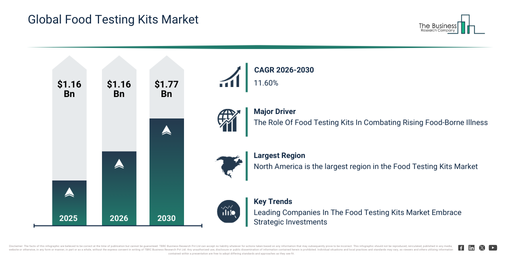
    The food testing kits market is anticipated to undergo significant expansion over the next few years. It is projected to grow to $5.76 billion in 2030, with a compound annual growth rate (CAGR) of 11.6%. This growth during the forecast period can be attributed to factors such as the increasing need for real-time food quality monitoring, the rising adoption of portable testing solutions, the expansion of food export compliance testing, a growing emphasis on supply chain transparency, and the increasing integration of digital food safety platforms. Prominent trends for the forecast period include the increasing uptake of rapid food testing kits, a rising demand for on-site food safety testing, the growing application of PCR-based detection methods, the expansion of allergen and GMO testing solutions, and an enhanced focus on regulatory compliance testing.

    Get A Free Sample Report With In-Depth Market Insights:

    https://thebusinessresearchcompany.com/sample_request?id=60293042&type=smp&name=Food%20Testing%20Kits%20Market%20Report%202026&utm_source=Blogs&utm_medium=Paid&utm_campaign=Oct_PR

    Food Testing Kits Market Demand Drivers Opening New Revenue Streams

    An increasing number of food-borne illness incidents is projected to stimulate expansion within the food testing kits market over the next few years. This condition arises from the consumption of food or beverages that are tainted. These kits prove highly beneficial in lessening the intake of unwholesome food, thereby diminishing the occurrence of food-borne illnesses. As an illustration, data from the European Food Safety Authority (EFSA), an Italy-based food authority agency, indicated in December 2024 that the total foodborne outbreaks stood at 5,691 cases in 2023, representing a 1.2% rise from 2022. Consequently, the growing prevalence of food-borne illness cases is a significant factor propelling the growth of the food testing kits market.

    Food Testing Kits Market Segment Breakdown: Which Categories Lead On Revenue?

    The food testing kits market covered in this report is segmented –

    1) By Technology: PCR-based, Immunoassay-based, Enzyme Substrate-based

    2) By Target Tested: Pathogens, Meat Species, GMOs, Allergens, Mycotoxins, Other Target Tested

    3) By Sample: Meat, Poultry, And Seafood, Dairy Products, Packaged Food, Fruits and Vegetables, Cereals, Grains, and Pulses, Nuts, Seeds, and Spices, Other Samples

    Subsegments:

    1) By PCR-based: Real-Time PCR Kits, Conventional PCR Kits, Multiplex PCR Kits

    2) By Immunoassay-based: Enzyme-Linked Immunosorbent Assay (ELISA) Kits, Lateral Flow Immunoassay Kits, Radioimmunoassay Kits

    3) By Enzyme Substrate-based: Colorimetric Assay Kits, Fluorometric Assay Kits, Chemiluminescent Assay Kits

    Food Testing Kits Market Trends Powering Strategic Industry Growth

    Companies operating within the food testing kits market are concentrating on strategic investments to facilitate the availability of food testing kits for home use. Such investment entails committing resources, including money, time, or effort, to secure later advantages. Through this approach, Zeo aims to provide home food testing kits to customers. As an illustration, Genetic Systems Diagnostics, a German biotechnology and diagnostics firm, introduced DNAllergen real-time PCR kits in August 2023, designed for the dependable identification of specific allergen sequences in food products through molecular techniques. These DNAllergen real-time PCR kits enable precise detection of particular allergens in food items using molecular methods. A feeder component further automates the loading and counting of Petrifilm plates, which are diagnostic tools created for the accurate identification of allergenic sequences that might prove difficult for conventional immunoassays to detect. A significant advantage of these kits is their improved sensitivity and specificity, which ensures accurate detection without cross-reactivity with similar species, allowing for the distinction of celery from mustard and rapeseed, for example. Each kit offers a cost-effective solution with 50 reactions, making it a viable option for both laboratories and food manufacturers.

    Food Testing Kits Market Competitive Landscape: Who Leads The Industry?

    Major companies operating in the food testing kits market are Agilent Technologies Inc., Bio-Rad Laboratories Inc., bioMérieux SA, EnviroLogix Inc., Merck KGaA, Neogen Corporation, PerkinElmer Inc., QIAGEN N.V., Romer Labs Inc., Thermo Fisher Scientific Inc., Erber Group, DNA Diagnostic A/S, Elabscience Biotechnology Co. Ltd., Creative Diagnostics, AES Laboratories Pvt. Ltd., Luminex Corporation, Randox Laboratories Ltd., Hygiena LLC, Charm Sciences Inc., Bruker Corporation, FOSS A/S, IDEXX Laboratories Inc.

    View The Full Food Testing Kits Market Report:

    https://thebusinessresearchcompany.com/report/Food-Testing-Kits-global-market-report?utm_source=Blogs&utm_medium=Paid&utm_campaign=Oct_PR

    Food Testing Kits Market Geographic Landscape: Which Region Leads Industry Growth?

    North America was the largest region in the food testing kits market in 2025. Asia-Pacific is expected to be the fastest growing region in the forecast period. The regions covered in the food testing kits market report are Asia-Pacific, South East Asia, Western Europe, Eastern Europe, North America, South America, Middle East, Africa.

    Reach Out To Our Team:

    The Business Research Company: https://www.thebusinessresearchcompany.com/

    Americas: +1 310-496-7795

    Asia: +44 7882 955267 & +91 8897263534

    Europe: +44 7882 955267

    Email us at: marketing@tbrc.info

    Follow us on:

    LinkedIn: https://in.linkedin.com/company/the-business-research-company

    YouTube: https://www.youtube.com/channel/UC24_fI0rV8cR5DxlCpgmyFQ

    Global Market Model: https://www.thebusinessresearchcompany.com/global-market-model
  • Food and Beverage Testing Kits Market Reaches $36.39 Billion In 2026: Key Developments Shaping Expansion

    Food and Beverage Testing Kits Market Reaches $36.39 Billion In 2026: Key Developments Shaping Expansion

    Backed by market attractiveness analysis, total addressable market sizing, company benchmarking matrices, interactive Excel dashboards, wider supply chain intelligence, emerging startup coverage, and detailed product-level insights, The Business Research Company’s 2026 market reports are designed to offer research that is more actionable and strategically valuable than ever.

    Food and Beverage Testing Kits Market Value Analysis: What Growth Lies Ahead Over The Forecast Period?

    The food and beverage testing kits market size has experienced significant expansion in recent years. This market is anticipated to increase from $23.29 billion in 2025 to $24.93 billion in 2026, achieving a compound annual growth rate (CAGR) of 7.0%. The growth observed in prior periods can be attributed to the use of manual and conventional testing approaches, the restricted supply of rapid testing kits, an uptick in foodborne illness incidents, more stringent regulatory demands for food safety, and a reliance on laboratory-based testing apparatus.

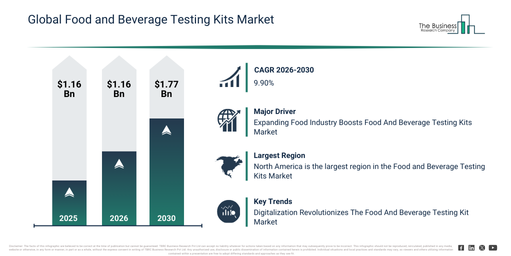
    The food and beverage testing kits market is projected to experience substantial expansion over the upcoming years. This market is forecast to reach $36.39 billion by 2030, exhibiting a compound annual growth rate (CAGR) of 9.9%. Factors contributing to this growth include innovations in portable testing devices, the increasing uptake of rapid testing methods, a heightened need for GMO and pesticide identification, the expanding processed food and beverage sector, and the incorporation of cloud-based data management and analytical tools. Key trends anticipated during this period encompass a rising demand for swift food and beverage analysis, a greater emphasis on identifying pathogens and contaminants, the widespread use of portable and on-site testing equipment, enhanced quality control measures across dairy, meat, and seafood products, and an increased consumption of consumables and sample collection kits.

    Get A Free Sample Report With In-Depth Market Insights:

    https://thebusinessresearchcompany.com/sample_request?id=12507360&type=smp&name=Food%20and%20Beverage%20Testing%20Kits%20Market%20Report%202026&utm_source=Blogs&utm_medium=Paid&utm_campaign=Oct_PR

    Food and Beverage Testing Kits Market Growth Backed By Core Demand Fundamentals

    The expanding food industry is anticipated to boost the growth of the food and beverage testing kits market moving forward. This industry constitutes an intricate, global network of various businesses that provide most of the food consumed by people worldwide. Its scope covers all facets of food production and sale, including farming, manufacturing, packaging, distribution, retail, and catering. Food and beverage testing kits are utilized to ensure the safety of food products by detecting chemical, microbiological, and physical contaminants. For instance, in June 2023, according to the Food and Agriculture Organization of the United Nations, an Italy-based specialized agency of the United Nations, the world’s cereal stocks were predicted to increase by 1.7% over their initial levels, reaching a record 873 million tons. Global coarse grain production was projected to hit 1,513 million tons in 2023, representing a 3.0% rise from the 2022 level. For the third consecutive season, global sugar consumption is expected to climb in 2022–2023, up 1.6 million tons, or 0.9%, over the prior season. Therefore, the growing food industry is a primary driver for the expansion of the food and beverage testing kits market.

    Food and Beverage Testing Kits Market Segmentation: How Does The Market Break Down By Category?

    The food and beverage testing kits market covered in this report is segmented –

    1) By Product: Consumables, Equipment

    2) By Technology: Traditional, Rapid

    3) By Contaminants Type: Pathogens, GMO’s, Pesticides, Toxins

    4) By Application: Meat, Poultry, Seafood, Dairy, Processed Foods, Fruits And Vegetables

    Subsegments:

    1) By Consumables: Test Strips, Reagents And Chemicals, Sample Collection Kits

    2) By Equipment: Portable Testing Devices, Laboratory Analyzers, Spectrophotometers, pH Meters

    Food and Beverage Testing Kits Market Growth Trends Reshaping The Competitive Landscape

    Leading firms within the food and beverage testing kits market are increasingly prioritizing the integration of digitalization into the food testing industry, aiming to foster sustainability and secure a market advantage. This digitalization involves leveraging digital technologies to enhance food safety, quality, and operational efficiency across the food and beverage testing kit sector. A notable example is the launch of the Rapid Food Testing Kit (RAFT) portal in June 2023 by the Food Safety and Standards Authority of India (FSSAI), an India-based statutory body under the Ministry of Health and Family Welfare. This digital platform was introduced to streamline the RAFT Scheme’s operations, thereby guaranteeing transparency and accountability. For applicants’ convenience, all processes, ranging from application handling to certificate issuance and renewal, are now electronically completable. This move towards digitalization promotes the paperless functioning of the RAFT system, thereby encouraging the adoption of advanced technologies for food testing, screening, and surveillance objectives.

    Food and Beverage Testing Kits Market Company Landscape And Competitive Strategy

    Major companies operating in the food and beverage testing kits market are Eurofins Scientific, Thermo Fisher Scientific Inc., Bio-Rad Laboratories Inc., Neogen Corporation, PerkinElmer Inc., Merck KGaA, Agilent Technologies Inc., Danaher Corporation, 3M Company, Qiagen N.V., Intertek Group plc, TÜV SÜD, ALS Limited, Romer Labs Division Holding GmbH, Charm Sciences Inc., Hygiena LLC, IDEXX Laboratories Inc., EnviroLogix Inc., Randox Laboratories Ltd., Biomerieux SA, R-Biopharm AG, Biocheck Inc., Ab Sciex LLC, Merck Millipore, SGS SA, Bureau Veritas SA, Covance Inc., GeneDisc Technologies, Envirologix

    View The Full Food and Beverage Testing Kits Market Report:

    https://thebusinessresearchcompany.com/report/food-and-beverage-testing-kits-global-market-report?utm_source=Blogs&utm_medium=Paid&utm_campaign=Oct_PR

    Food and Beverage Testing Kits Market Largest Region: Which Geography Holds The Biggest Share?

    North America was the largest region in the food and beverage testing kits market in 2025. Western Europe was the second largest region in the food and beverage testing kits market report. The regions covered in the food and beverage testing kits market report are Asia-Pacific, South East Asia, Western Europe, Eastern Europe, North America, South America, Middle East, Africa.

    Reach Out To Our Team:

    The Business Research Company: https://www.thebusinessresearchcompany.com/

    Americas: +1 310-496-7795

    Asia: +44 7882 955267 & +91 8897263534

    Europe: +44 7882 955267

    Email us at: marketing@tbrc.info

    Follow us on:

    LinkedIn: https://in.linkedin.com/company/the-business-research-company

    YouTube: https://www.youtube.com/channel/UC24_fI0rV8cR5DxlCpgmyFQ

    Global Market Model: https://www.thebusinessresearchcompany.com/global-market-model