Blog

  • Post-Operative Nausea And Vomiting Market Analysis 2026: Market Size, Growth Trends And Industry Outlook

    Post-Operative Nausea And Vomiting Market Analysis 2026: Market Size, Growth Trends And Industry Outlook

    Backed by market attractiveness analysis, total addressable market sizing, company benchmarking matrices, interactive Excel dashboards, wider supply chain intelligence, emerging startup coverage, and detailed product-level insights, The Business Research Company’s 2026 market reports are designed to offer research that is more actionable and strategically valuable than ever.

    Post-Operative Nausea And Vomiting Market Poised To Hit $3.13 Billion By 2030 With A 6.7% CAGR

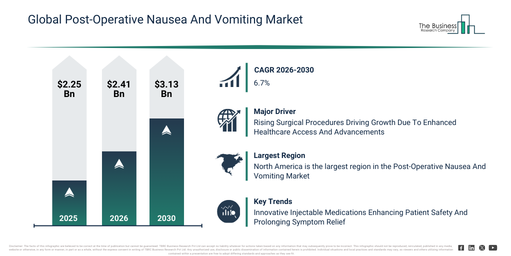
    The post-operative nausea and vomiting market has shown robust expansion in recent years. This market is anticipated to increase from $2.25 billion in 2025 to $2.41 billion in 2026, driven by a compound annual growth rate (CAGR) of 7.0%. Factors contributing to its historical growth include a rise in surgical procedure volumes, the more widespread application of general anesthesia, the availability of serotonin antagonist drugs, the development of hospital surgical infrastructure, and refined post-operative care guidelines.

    The market for post-operative nausea and vomiting is projected to experience substantial expansion in the coming years, reaching a valuation of $3.13 billion by 2030, exhibiting a compound annual growth rate (CAGR) of 6.7%. This projected growth during the forecast period is primarily driven by factors such as an escalating demand for individualized anesthesia care, the increasing implementation of preventive antiemetic protocols, the proliferation of ambulatory surgical centers, a heightened emphasis on patient satisfaction indicators, and increased funding directed towards innovation in perioperative care. Key trends anticipated over the forecast period encompass a greater acceptance of multimodal PONV management approaches, an increase in the utilization of combined antiemetic treatments, an intensified focus on treatment protocols categorized by risk, a broader application of non-pharmacological methods, and a reinforced commitment to patient comfort and swift recovery.

    Get A Free Sample Report With In-Depth Market Insights:

    https://thebusinessresearchcompany.com/sample_request?id=62166413&type=smp&name=Post-Operative%20Nausea%20And%20Vomiting%20Market%20Report%202026&utm_source=Blogs&utm_medium=Paid&utm_campaign=Nov_PR

    Post-Operative Nausea And Vomiting Market Growth Momentum: What Factors Are Shaping Demand?

    An increase in surgical procedures is anticipated to fuel the expansion of the post-operative nausea and vomiting market in the future. Surgical procedures involve medical interventions utilizing instruments to identify, address, or eliminate impaired tissues, organs, or irregularities through incision or manipulation. The growing volume of surgical operations stems from progress in medical technology, making these interventions more secure, efficient, and less invasive, thereby enhancing patient willingness and broader application. Effective management of post-operative nausea and vomiting improves surgical processes by boosting patient comfort, decreasing recuperation periods, lowering complication risks, facilitating seamless post-operative attention, and ultimately elevating overall surgical results.

    Post-Operative Nausea And Vomiting Market Segment Performance And Emerging Opportunities

    The post-operative nausea and vomiting market covered in this report is segmented –

    1) By Treatment Type: Serotonin Antagonists, Steroids, Dopamine Antagonists, Neurokinin NK-1 Receptor Antagonists, Non-pharmacological Treatment, Other Treatment Types

    2) By Route Of Administration: Oral, Intravenous, Transdermal, Other Route Of Administrations

    3) By Patient Demographics: Pediatric Patients, Adult Patients, Geriatric Patients

    4) By Surgical Procedure Type: Orthopedic Surgery, Gynecological Surgery, General Surgery, Cardiac Surgery, Ophthalmic Surgery

    5) By End-User: Hospitals, Ambulatory Surgical Centers, Specialty Clinics, Other End-Users

    Subsegments:

    1) By Serotonin Antagonists Type: Ondansetron, Granisetron, Palonosetron, Dolasetron, Tropisetron

    2) By Steroids Type: Dexamethasone, Methylprednisolone, Hydrocortisone, Prednisolone, Betamethasone

    3) By Dopamine Antagonists Type: Metoclopramide, Droperidol, Prochlorperazine, Domperidone, Chlorpromazine

    4) By Neurokinin NK-1 Receptor Antagonists Type: Aprepitant, Fosaprepitant, Rolapitant, Netupitant, Casopitant

    5) By Non-Pharmacological Treatment Type: Acupressure, Aromatherapy, Hypnotherapy, Electroacupuncture, Ginger Supplements

    6) By Other Treatment Types: Antihistamines, Anticholinergics, Cannabinoids, Combination Therapy, Herbal & Natural Remedies

    Post-Operative Nausea And Vomiting Market Trends: What’s Defining The Industry’s Next Phase?

    Leading firms in the post-operative nausea and vomiting sector are concentrating on creating vital injectable drugs, including the market introduction of a regulatory-approved pharmaceutical injectable designed to improve antiemetic treatment in clinical environments. Such a launch signifies the bringing of an FDA or other authority-approved injectable medication to market for clinical application, only after all necessary regulatory clearances and adherence procedures have been completed.

    Post-Operative Nausea And Vomiting Market Key Players: Which Companies Lead Industry Competition?

    Major companies operating in the post-operative nausea and vomiting market are Pfizer Inc., Merck KGaA, Novartis AG, GlaxoSmithKline Plc, Takeda Pharmaceutical Company Limited, Baxter Corporation, Teva Pharmaceutical Industries Ltd., Sandoz Group AG, Daiichi Sankyo Inc., Fresenius Kabi AG, Eisai Co. Ltd., Dr. Reddy’s Laboratories, Cipla Ltd., Alkem Laboratories Ltd., Eagle Pharmaceuticals Inc., Helsinn Healthcare SA, Heron Therapeutics Inc., Sun Pharmaceutical Industries Ltd., Johnson And Johnson, Sanofi, Aurobindo Pharma Ltd., Lupin Limited

    View The Full Post-Operative Nausea And Vomiting Market Report:

    https://thebusinessresearchcompany.com/report/post-operative-nausea-and-vomiting-global-market-report?utm_source=Blogs&utm_medium=Paid&utm_campaign=Nov_PR

    Post-Operative Nausea And Vomiting Market Regional Breakdown: Where Is Demand Concentrated?

    North America was the largest region in the post-operative nausea and vomiting market in 2025. Asia-Pacific is expected to be the fastest-growing region in the forecast period. The regions covered in the post-operative nausea and vomiting market report are Asia-Pacific, South East Asia, Western Europe, Eastern Europe, North America, South America, Middle East, Africa.

    Reach Out To Our Team:

    The Business Research Company: https://www.thebusinessresearchcompany.com/

    Americas: +1 310-496-7795

    Asia: +44 7882 955267 & +91 8897263534

    Europe: +44 7882 955267

    Email us at: marketing@tbrc.info

    Follow us on:

    LinkedIn: https://in.linkedin.com/company/the-business-research-company

    YouTube: https://www.youtube.com/channel/UC24_fI0rV8cR5DxlCpgmyFQ

    Global Market Model: https://www.thebusinessresearchcompany.com/global-market-model
  • Post-Operative Cataract Surgery Inflammation Treatment Market Growth To $6.78 Billion Creates New Opportunities Across The Industry

    Post-Operative Cataract Surgery Inflammation Treatment Market Growth To $6.78 Billion Creates New Opportunities Across The Industry

    Featuring market attractiveness scoring, total addressable market sizing, company benchmarking matrices, interactive Excel dashboards, deeper supply chain intelligence, emerging startup tracking, and granular product-level insights, The Business Research Company’s 2026 market reports are built to deliver research that is both more actionable and more strategically valuable.

    Post-Operative Cataract Surgery Inflammation Treatment Market Size And Revenue Outlook Through 2030

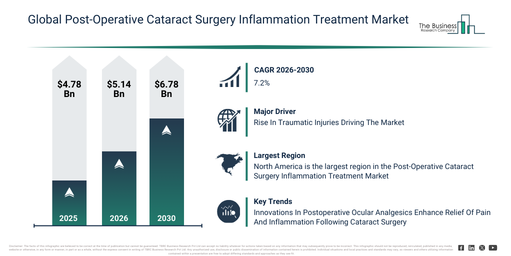
    The post-operative cataract surgery inflammation treatment market size has shown substantial expansion over recent years. It is anticipated to expand from $4.78 billion in 2025 to $5.14 billion in 2026, achieving a compound annual growth rate (CAGR) of 7.5%. This historical growth can be linked to several factors, including an increase in cataract surgery volumes, enhanced availability of ophthalmic anti-inflammatory drugs, the proliferation of outpatient surgical centers, advancements in surgical techniques, and an expanding aging population.

    The market for treating inflammation following cataract surgery is projected to experience substantial expansion in the coming years. This market is set to reach $6.78 billion by 2030, exhibiting a compound annual growth rate (CAGR) of 7.2%. This expansion during the forecast period is driven by factors such as a heightened demand for sophisticated eye formulations, an intensified emphasis on minimizing complications after surgery, the proliferation of less invasive eye procedures, increased funding for ophthalmology research, and a greater uptake of customized patient treatment plans. Key developments anticipated during this time frame involve a greater deployment of combined anti-inflammatory treatments, an increasing preference for ophthalmic NSAIDs, a stronger commitment to quicker recovery post-surgery, the spread of eye care guidelines within hospitals, and an intensified focus on averting complications after surgical procedures.

    Get A Free Sample Report With In-Depth Market Insights:

    https://thebusinessresearchcompany.com/sample_request?id=84022946&type=smp&name=Post-Operative%20Cataract%20Surgery%20Inflammation%20Treatment%20Market%20Report%202026&utm_source=Blogs&utm_medium=Paid&utm_campaign=Nov_PR

    Post-Operative Cataract Surgery Inflammation Treatment Market Expansion Drivers: What’s Shaping Future Growth?

    The post-operative cataract surgery inflammation treatment market is anticipated to expand going forward, driven by an escalation in traumatic injuries. These are sudden physical injuries resulting from external forces like accidents, falls, violence, or sports impacts, encompassing everything from minor cuts to severe fractures, burns, brain injuries, and spinal damage. The increase in traumatic injuries can be attributed to elements such as a greater number of road traffic accidents, workplace hazards, sports-related incidents, violence, natural disasters, and aging populations more susceptible to falls. Post-operative cataract surgery inflammation treatment aids in addressing traumatic injuries by reducing ocular inflammation, lessening pain, and preventing complications that could hinder visual recovery.

    Post-Operative Cataract Surgery Inflammation Treatment Market Segment Landscape And Growth Outlook

    The post-operative cataract surgery inflammation treatment market covered in this report is segmented –

    1) By Drug Class: Bromfenac, Indomethacin, Diclofenac, Flurbiprofen, Nepafenac

    2) By Route of Administration: Topical Ophthalmic, Intracameral And Ophthalmic Use

    3) By Distribution Channel: Hospital pharmacy, Online Pharmacy, Retail pharmacy

    Subsegments:

    1) By Bromfenac: Bromfenac Ophthalmic Solution 0.07%, Bromfenac Ophthalmic Solution 0.09%, Combination Therapies With Bromfenac

    2) By Indomethacin: Indomethacin Ophthalmic Solution 0.1%, Indomethacin Ophthalmic NSAID Formulations, Ophthalmic Anti-Inflammatory Solutions

    3) By Diclofenac: Diclofenac Ophthalmic Solution 0.1%, Diclofenac Ophthalmic Drops, Ophthalmic NSAID Preparations

    4) By Flurbiprofen: Flurbiprofen Ophthalmic Solution 0.03%, Adjunctive Use In Ocular Surgery, Combination Therapies With Flurbiprofen

    5) By Nepafenac: Nepafenac Ophthalmic Suspension 0.1%, Nepafenac Ophthalmic Suspension 0.3%

    Post-Operative Cataract Surgery Inflammation Treatment Market Industry Trends Fueling Future Revenue Growth

    Leading companies in the post-operative cataract surgery inflammation treatment market are concentrating on developing innovative treatments, such as postoperative ocular analgesics, to improve the management of pain and inflammation after ocular surgery. Postoperative ocular analgesics are therapeutic agents specifically formulated to alleviate pain and reduce inflammation in the eye following surgical procedures, thereby promoting patient comfort and supporting optimal recovery outcomes.

    Post-Operative Cataract Surgery Inflammation Treatment Market Competitive Landscape: Who Leads The Industry?

    Major companies operating in the post-operative cataract surgery inflammation treatment market are Alcon Inc, Bausch & Lomb Incorporated, Santen Pharmaceutical Co. Ltd., Novartis AG, Pfizer Inc., Merck & Co. Inc., Sun Pharmaceutical Industries Limited, EyePoint Pharmaceuticals Inc, Ocular Therapeutix Inc., Oculis Holding AG, Senju Pharmaceutical Co. Ltd., Nicox S.A., Formosa Pharmaceuticals Inc, Eyenovia Inc., Surface Ophthalmics Inc., ImprimisRx LLC, NTC Srl, VivaVision Biotech Inc., Bio-Tissue Inc., Mallinckrodt plc

    View The Full Post-Operative Cataract Surgery Inflammation Treatment Market Report:

    https://thebusinessresearchcompany.com/report/post-operative-cataract-surgery-inflammation-treatment-global-market-report?utm_source=Blogs&utm_medium=Paid&utm_campaign=Nov_PR

    Post-Operative Cataract Surgery Inflammation Treatment Market Geographic Landscape: Which Region Leads Industry Growth?

    North America was the largest region in the post-operative cataract surgery inflammation treatment market in 2025. Asia-Pacific is expected to be the fastest-growing region in the forecast period. The regions covered in the post-operative cataract surgery inflammation treatment market report are Asia-Pacific, South East Asia, Western Europe, Eastern Europe, North America, South America, Middle East, Africa.

    Reach Out To Our Team:

    The Business Research Company: https://www.thebusinessresearchcompany.com/

    Americas: +1 310-496-7795

    Asia: +44 7882 955267 & +91 8897263534

    Europe: +44 7882 955267

    Email us at: marketing@tbrc.info

    Follow us on:

    LinkedIn: https://in.linkedin.com/company/the-business-research-company

    YouTube: https://www.youtube.com/channel/UC24_fI0rV8cR5DxlCpgmyFQ

    Global Market Model: https://www.thebusinessresearchcompany.com/global-market-model
  • Postnatal Health Supplement Market Forecast: Breaking Down The Numbers Behind Future Expansion

    Postnatal Health Supplement Market Forecast: Breaking Down The Numbers Behind Future Expansion

    Built to provide research that’s more actionable and strategically valuable, The Business Research Company’s 2026 market reports include market attractiveness analysis, total addressable market sizing, company benchmarking matrices, interactive Excel dashboards, broader supply chain intelligence, emerging startup tracking, and in-depth product insights.

    Postnatal Health Supplement Market Growth From $1.58 Billion In 2026 To $2.14 Billion By 2030 At A CAGR Of 7.8%

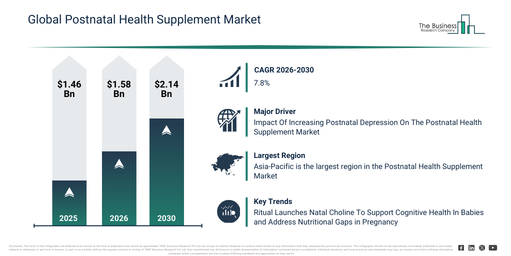
    The market size for postnatal health supplements has experienced significant growth over recent years. This sector is projected to expand from $1.46 billion in 2025 to reach $1.58 billion in 2026, demonstrating a compound annual growth rate (CAGR) of 7.8%. Historically, this expansion has been fueled by factors such as increasing awareness regarding maternal health, a rise in dietary supplement consumption, the widening of pharmacy distribution networks, the availability of comprehensive prenatal to postnatal nutrition programs, and growing initiatives supporting breastfeeding.

    The postnatal health supplement market is anticipated to experience substantial expansion in the forthcoming years. This market is forecasted to achieve a size of $2.14 billion by 2030, demonstrating a compound annual growth rate (CAGR) of 7.8%. The projected growth during this period is attributable to the increasing demand for customized maternal nutrition, a greater focus on supplements for immunity and recovery, the proliferation of e-commerce health platforms, continuous innovation in postnatal product formulations, and rising investments in nutrition dedicated to women’s health. Significant trends expected in the forecast timeframe include an escalating demand for postnatal supplements with clean labels, a growing preference for tailored nutrition solutions, the expanding adoption of plant-based supplement formulations, the extension of online and direct-to-consumer sales channels, and an intensified concentration on lactation support products.

    Get A Free Sample Report With In-Depth Market Insights:

    https://thebusinessresearchcompany.com/sample_request?id=41539216&type=smp&name=Postnatal%20Health%20Supplement%20Market%20Report%202026&utm_source=Blogs&utm_medium=Paid&utm_campaign=Nov_PR

    Postnatal Health Supplement Market Development Factors: What’s Supporting Demand?

    The rising incidence of postnatal depression is anticipated to drive the expansion of postnatal health supplements in the future. Postnatal depression is a mental disorder experienced by women following childbirth, characterized by profound sadness, anxiety, and fatigue, potentially hindering a mother’s ability to care for herself or her infant. This rise in postnatal depression stems from societal and lifestyle elements, physiological shifts, and a history of mental health conditions. Postnatal health supplements provide essential nutrients vital for recovery and emotional balance, aiding in refilling diminished reserves, boosting consumer trust, and fostering general well-being.

    Postnatal Health Supplement Market Breakdown By Product Type And Application

    The postnatal health supplement market covered in this report is segmented –

    1) By Product Type: Vitamins And Minerals, Herbal Supplements, Proteins, Omega-3, Probiotics, Other Product Types

    2) By Form: Capsules Or Tablets, Soft Gels, Liquid, Powder, Other Forms

    3) By Sales Channel: Online Sales Channel, Direct Sales Channel, Pharmacies Or Drug Stores, Other Sales Channels

    4) By Application: General Well-Being And Lactation Support, Weight Management, Immune And Digestive Health, Bone And Joint Health, Heart Health, Eye Health, Other Applications

    Subsegments:

    1) By Vitamins And Minerals: Vitamin D Supplements, Vitamin B12 Supplements, Calcium And Magnesium Supplements, Iron Supplements, Folic Acid Supplements, Multivitamins For Postnatal Care

    2) By Herbal Supplements: Fenugreek, Ginger, Raspberry Leaf, Ashwagandha, Turmeric, Milk Thistle, Echinacea

    3) By Proteins: Whey Protein, Plant-Based Protein, Collagen Protein, Protein Blends

    4) By Omega-3: Fish Oil Supplements, Algal Oil Supplements, Omega-3 Fatty Acids

    5) By Probiotics: Lactobacillus Supplements, Bifidobacterium Supplements, Multi-Strain Probiotic Supplements, Postnatal-Specific Probiotics

    6) By Other Product Types: Fiber Supplements, Antioxidant Supplements, Postnatal Gels And Liquids, Immune Boosting Supplements, Postnatal Energy And Metabolism Boosters

    Postnatal Health Supplement Market Trends Powering Strategic Industry Growth

    Key players in the postnatal health supplement market are concentrating on developing innovative products, like choline chloride supplements, which offer choline, a crucial nutrient vital for supporting liver function, brain development, muscle movement, and the health of the nervous system. Choline chloride is extensively utilized to promote cognitive health, enhance memory, and maintain healthy cell membranes.

    Postnatal Health Supplement Market Company Landscape And Competitive Strategy

    Major companies operating in the postnatal health supplement market are The Honest Company, Garden of Life, Nordic Naturals, MegaFood, New Chapter, One A Day, Vitabiotics Ltd., Mommy’s Bliss, Pink Stork, Nutrafol, Perelel Health, Theralogix, Dr. Vaidya’s, Pure Essence Labs, Eu Natural, NATURELO Premium Supplements, FAIRHAVEN HEALTH, HealthyHey Nutrition, HeraNow, Amma360, GoBiotix

    View The Full Postnatal Health Supplement Market Report:

    https://thebusinessresearchcompany.com/report/postnatal-health-supplement-global-market-report?utm_source=Blogs&utm_medium=Paid&utm_campaign=Nov_PR

    Postnatal Health Supplement Market Largest Region: Which Geography Holds The Biggest Share?

    Asia-Pacific was the largest region in the postnatal health supplement market in 2025. North America is expected to be the fastest-growing region in the forecast period. The regions covered in the postnatal health supplement market report are Asia-Pacific, South East Asia, Western Europe, Eastern Europe, North America, South America, Middle East, Africa.

    Reach Out To Our Team:

    The Business Research Company: https://www.thebusinessresearchcompany.com/

    Americas: +1 310-496-7795

    Asia: +44 7882 955267 & +91 8897263534

    Europe: +44 7882 955267

    Email us at: marketing@tbrc.info

    Follow us on:

    LinkedIn: https://in.linkedin.com/company/the-business-research-company

    YouTube: https://www.youtube.com/channel/UC24_fI0rV8cR5DxlCpgmyFQ

    Global Market Model: https://www.thebusinessresearchcompany.com/global-market-model
  • Postmenopausal Osteoporosis Treatment Market Expected To Grow At 6.4% CAGR Through 2030: What Businesses Need To Know

    Postmenopausal Osteoporosis Treatment Market Expected To Grow At 6.4% CAGR Through 2030: What Businesses Need To Know

    Backed by market attractiveness analysis, total addressable market sizing, company benchmarking matrices, interactive Excel dashboards, wider supply chain intelligence, emerging startup coverage, and detailed product-level insights, The Business Research Company’s 2026 market reports are designed to offer research that is more actionable and strategically valuable than ever.

    Postmenopausal Osteoporosis Treatment Market Expansion Outlook: What Revenue Opportunities Are Ahead?

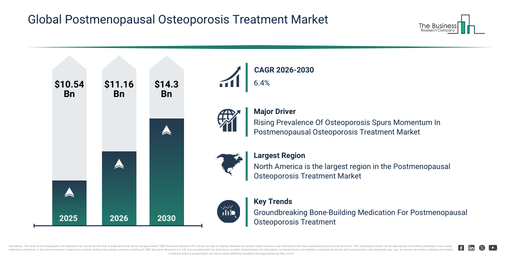
    The postmenopausal osteoporosis treatment market has shown significant expansion in recent years. This market is anticipated to increase from $10.54 billion in 2025 to $11.16 billion in 2026, advancing at a compound annual growth rate (CAGR) of 5.9%. Historically, this expansion has been linked to factors including a rising postmenopausal population, heightened awareness of bone health, the widespread availability of bisphosphonate therapies, enhancements in diagnostic screening for bone density, and the proliferation of specialty care clinics.

    The postmenopausal osteoporosis treatment market is projected to experience substantial expansion in the coming years. This market is anticipated to reach $14.3 billion by 2030, exhibiting a compound annual growth rate (CAGR) of 6.4%. Its anticipated growth during this period stems from factors such as a heightened demand for biologic and hormone-based therapies, greater investments in osteoporosis research, the proliferation of personalized treatment methods, an intensified emphasis on preventive healthcare, and wider implementation of advanced diagnostic instruments. Key developments shaping the market during the forecast period encompass a broader uptake of targeted osteoporosis therapies, an increase in injectable and long-acting treatment options, a strengthened focus on early diagnosis and risk assessment, the advancement of combination drug regimens, and a greater commitment to strategies for preventing fractures.

    Get A Free Sample Report With In-Depth Market Insights:

    https://thebusinessresearchcompany.com/sample_request?id=67879483&type=smp&name=Postmenopausal%20Osteoporosis%20Treatment%20Market%20Report%202026&utm_source=Blogs&utm_medium=Paid&utm_campaign=Nov_PR

    Postmenopausal Osteoporosis Treatment Market Industry Drivers: What’s Behind The Revenue Growth?

    The rising incidence of osteoporosis is projected to boost the expansion of the postmenopausal osteoporosis treatment market in the coming years. This condition, osteoporosis, is characterized by a reduction in bone density and the degradation of bone tissue, leading to greater fragility and a higher susceptibility to fractures. Treatments for postmenopausal osteoporosis are crucial for preventing or managing the disorder, thereby lowering fracture risk and enhancing the quality of life and general health prospects for those impacted.

    Postmenopausal Osteoporosis Treatment Market Segment Analysis And Revenue Potential

    The postmenopausal osteoporosis treatment market covered in this report is segmented –

    1) By Drug Type: Bisphosphonates, Vitamin D3, Estrogen Agonist Or Antagonist, Hormone Replacement Therapy, Parathyroid Hormone Therapy, Other Drug Types

    2) By Route Of Administration: Oral, Parenteral, Other Routes Of Administration

    3) By Distribution Channel: Hospital Pharmacies, Retail Pharmacies, Other Distribution Channels

    Subsegments:

    1) By Bisphosphonates: Alendronate, Risedronate, Zoledronic Acid

    2) By Vitamin D3: Cholecalciferol, Ergocalciferol

    3) By Estrogen Agonist Or Antagonist: Selective Estrogen Receptor Modulators (SERMs), Tamoxifen

    4) By Hormone Replacement Therapy: Estrogen Therapy, Combined Estrogen-Progestin Therapy

    5) By Parathyroid Hormone Therapy: Teriparatide, Abaloparatide

    6) By Other Drug Types: Calcitonin, RANK Ligand Inhibitors

    Postmenopausal Osteoporosis Treatment Market Growth Trends Reshaping The Competitive Landscape

    Leading companies in the postmenopausal osteoporosis treatment market are developing innovative products, such as advanced bone-building medications, to enhance their offerings and achieve a competitive advantage. Bone-building medications are typically administered through injections to promote bone health and density.

    Postmenopausal Osteoporosis Treatment Market Key Players Shaping Industry Direction

    Major companies operating in the postmenopausal osteoporosis treatment market are Pfizer Inc., Johnson and Johnson, Merck and Co. Inc., Eli Lilly and Company, Amgen Inc., Novartis AG, Sanofi SA, AbbVie Inc., Bayer AG, F. Hoffmann-La Roche AG, Takeda Pharmaceutical Company Limited, Daiichi Sankyo Company Ltd., Viatris Inc., Teva Pharmaceutical Industries Ltd., Sandoz International GmbH, Fresenius Kabi AG, Sun Pharmaceutical Industries Ltd., Cipla Inc., Dr. Reddys Laboratories Ltd., Lupin Limited

    View The Full Postmenopausal Osteoporosis Treatment Market Report:

    https://thebusinessresearchcompany.com/report/postmenopausal-osteoporosis-treatment-global-market-report?utm_source=Blogs&utm_medium=Paid&utm_campaign=Nov_PR

    Postmenopausal Osteoporosis Treatment Market Regional Analysis: Which Geography Leads On Revenue?

    North America was the largest region in the postmenopausal osteoporosis treatment market in 2025. The regions covered in the postmenopausal osteoporosis treatment market report are Asia-Pacific, South East Asia, Western Europe, Eastern Europe, North America, South America, Middle East, Africa.

    Reach Out To Our Team:

    The Business Research Company: https://www.thebusinessresearchcompany.com/

    Americas: +1 310-496-7795

    Asia: +44 7882 955267 & +91 8897263534

    Europe: +44 7882 955267

    Email us at: marketing@tbrc.info

    Follow us on:

    LinkedIn: https://in.linkedin.com/company/the-business-research-company

    YouTube: https://www.youtube.com/channel/UC24_fI0rV8cR5DxlCpgmyFQ

    Global Market Model: https://www.thebusinessresearchcompany.com/global-market-model
  • Post-Acute Care Market Forecast To Reach $1304.01 Billion By 2030: Key Trends Explained

    Post-Acute Care Market Forecast To Reach $1304.01 Billion By 2030: Key Trends Explained

    Featuring market attractiveness scoring, total addressable market sizing, company benchmarking matrices, interactive Excel dashboards, deeper supply chain intelligence, emerging startup tracking, and granular product-level insights, The Business Research Company’s 2026 market reports are built to deliver research that is both more actionable and more strategically valuable.

    Post-Acute Care Market Growth Potential: How Will Market Size Shift Through 2030?

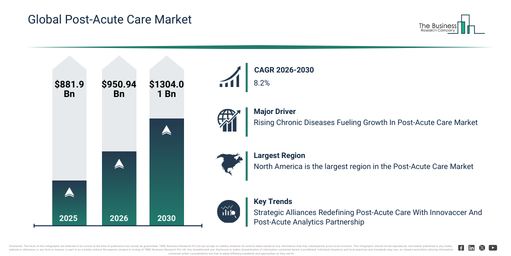
    The post-acute care market has demonstrated substantial growth in recent years. Its size is anticipated to expand from $881.9 billion in 2025 to $950.94 billion in 2026, at a compound annual growth rate (CAGR) of 7.8%. The historical expansion of this market is attributable to an increasing aging population, a higher prevalence of chronic diseases, a greater volume of hospital discharges, the growth of skilled nursing infrastructure, and enhanced rehabilitation care protocols.

    The post-acute care market is projected to experience substantial expansion over the upcoming years. By 2030, this market is anticipated to reach a value of $1304.01 billion, demonstrating an 8.2% compound annual growth rate (CAGR). This projected growth is driven by several factors, including an escalating demand for value-based care models, greater integration of digital health platforms, the broadening of home healthcare services, an intensified effort to decrease hospital readmissions, and increased capital flowing into integrated care networks. Key trends expected during this period involve a shift towards home-based post-acute care models, the growing incorporation of remote patient monitoring systems, a heightened focus on seamless transitional care coordination, the broadening of rehabilitation services leveraging telehealth, and a stronger emphasis on recovery pathways centered around the patient.

    Get A Free Sample Report With In-Depth Market Insights:

    https://thebusinessresearchcompany.com/sample_request?id=80337172&type=smp&name=Post-Acute%20Care%20Market%20Report%202026&utm_source=Blogs&utm_medium=Paid&utm_campaign=Nov_PR

    Post-Acute Care Market Growth Factors: What’s Supporting Expansion?

    The expanding incidence of chronic diseases is anticipated to fuel the expansion of the post-acute care market moving ahead. A chronic disease is defined as an illness or health condition that gradually develops, persists, or has long-term consequences. Post-acute care, which encompasses interventions such as surgery, physical therapy, psychological counseling, and radiotherapy, offers various treatment approaches for chronic illnesses, though medication remains a highly favored therapeutic method. As the prevalence of chronic diseases rises, so does the requirement for post-acute care.

    Post-Acute Care Market Segmentation And Category Overview

    The post-acute care market covered in this report is segmented –

    1) By Service: Skilled Nursing Facilities, Inpatient Rehabilitation Facilities, Long Term Care Hospitals, Hospice Care, Home Healthcare Agencies, Other Services

    2) By Conditions: Amputations, Wound Management, Brain Injury, Spinal Cord Injury, Neurological Disorders, Other Conditions

    3) By Age: Elderly, Adult, Others

    4) By Delivery Model: Hospital-Based, Freestanding, Home-Based

    5) By Application: Chronic Care, Rehabilitation, Post-Acute Care

    Subsegments:

    1) By Skilled Nursing Facilities: Rehabilitation Services, Long-Term Care Services, Transitional Care Services

    2) By Inpatient Rehabilitation Facilities: Physical Rehabilitation, Occupational Rehabilitation, Speech Rehabilitation

    3) By Long Term Care Hospitals: Ventilator Care, Complex Medical Care, Chronic Disease Management

    4) By Hospice Care: In-Home Hospice Care, Hospice Facilities, Palliative Care Services

    5) By Home Healthcare Agencies: Nursing Care, Physical Therapy, Medical Social Services

    6) By Other Services: Respite Care, Adult Day Care, Telehealth Services

    Post-Acute Care Market Trends Shaping Long-Term Demand

    Leading firms within the post-acute sector are engaging in alliances to secure a market advantage. Such collaborations in the post-acute care segment seek to improve the provision of value-based care.

    Post-Acute Care Market Competitive Analysis Of Leading Industry Participants

    Major companies operating in the post-acute care market are Amedisys Inc., Kindred Healthcare, Encompass Health Corporation, LHC Group Inc., Genesis Healthcare, Brookdale Senior Living Solutions, National HealthCare Corporation, The Ensign Group Inc., ProMedica Senior Care, PruittHealth Holdings Inc., Signature HealthCARE LLC, SavaSeniorCare Administrative Services Inc., Life Care Centers of America Inc., Vibra Healthcare LLC, Diversicare Healthcare Services Inc., Nexion Health Inc., Marquis Health Services LLC, CareOne Management LLC, Golden Living Senior Lifestyle Support, Five Star Senior Living Inc.

    View The Full Post-Acute Care Market Report:

    https://thebusinessresearchcompany.com/report/post-acute-care-global-market-report?utm_source=Blogs&utm_medium=Paid&utm_campaign=Nov_PR

    Post-Acute Care Market Geographic Spread And Regional Opportunities

    North America was the largest region in the post-acute care market in 2025. North America is expected to be the fastest-growing region in the global post-acute care market during the forecast period. The regions covered in the post-acute care market report are Asia-Pacific, South East Asia, Western Europe, Eastern Europe, North America, South America, Middle East, Africa.

    Reach Out To Our Team:

    The Business Research Company: https://www.thebusinessresearchcompany.com/

    Americas: +1 310-496-7795

    Asia: +44 7882 955267 & +91 8897263534

    Europe: +44 7882 955267

    Email us at: marketing@tbrc.info

    Follow us on:

    LinkedIn: https://in.linkedin.com/company/the-business-research-company

    YouTube: https://www.youtube.com/channel/UC24_fI0rV8cR5DxlCpgmyFQ

    Global Market Model: https://www.thebusinessresearchcompany.com/global-market-model
  • Post Operative Pain Management Market Size Forecast From 2026 To 2030: Key Industry Trends

    Post Operative Pain Management Market Size Forecast From 2026 To 2030: Key Industry Trends

    Built to provide research that’s more actionable and strategically valuable, The Business Research Company’s 2026 market reports include market attractiveness analysis, total addressable market sizing, company benchmarking matrices, interactive Excel dashboards, broader supply chain intelligence, emerging startup tracking, and in-depth product insights.

    Post Operative Pain Management Market Value Analysis: What Growth Lies Ahead Over The Forecast Period?

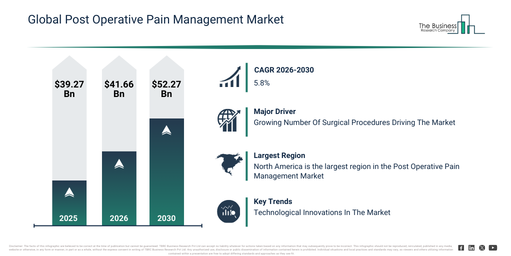
    The post operative pain management market size has demonstrated robust growth over recent years. It is forecast to expand from $39.27 billion in 2025 to $41.66 billion in 2026, achieving a compound annual growth rate (CAGR) of 6.1%. This historical expansion can be linked to a rising volume of surgical procedures, the extensive application of opioid-based analgesics, the expansion of pain management programs within hospitals, the availability of injectable treatments for pain, and an increasing understanding of postoperative care standards.

    The post operative pain management market size is projected to experience robust expansion over the coming years. By 2030, its valuation is anticipated to reach $52.27 billion, demonstrating a compound annual growth rate (CAGR) of 5.8%. This projected expansion during the forecast period is primarily driven by factors such as a heightened demand for pain management methods that reduce opioid use, the increasing integration of digital tools for pain monitoring, the broadening implementation of enhanced recovery after surgery protocols, a greater emphasis on patient-focused pain care, and growing financial commitments to advanced analgesic treatments. Key developments expected during this timeframe involve a wider embrace of multimodal pain management strategies, the increased utilization of patient-controlled analgesia systems, a renewed focus on non-opioid pain solutions, the development of individualized post-surgical pain protocols, and more comprehensive tracking of postoperative recuperation.

    Get A Free Sample Report With In-Depth Market Insights:

    https://thebusinessresearchcompany.com/sample_request?id=18674012&type=smp&name=Post%20Operative%20Pain%20Management%20Market%20Report%202026&utm_source=Blogs&utm_medium=Paid&utm_campaign=Nov_PR

    Post Operative Pain Management Market Demand Drivers: What’s Powering Industry Growth?

    The rising volume of surgical procedures is projected to fuel the expansion of the postoperative pain management market in the coming period. These procedures encompass medical operations conducted by skilled surgeons for the diagnosis, treatment, or management of diseases, injuries, or various conditions. This uptick in surgical interventions stems from an aging population, an increase in chronic diseases, advancements in medical technology, improved access to healthcare, and a greater demand for elective surgeries. Effective postoperative pain management is crucial as it enhances recovery, minimizes complications, boosts patient comfort, and contributes to superior surgical outcomes by effectively managing pain and facilitating quicker rehabilitation.

    Post Operative Pain Management Market Segment Outlook: Which Categories Are Growing Fastest?

    The post operative pain management market covered in this report is segmented –

    1) By Pain Type: Acute Pain, Moderate Pain, Severe Pain

    2) By Drug Class: Opioids, Non-steroidal anti-inflammatory drugs (NSAIDs), Cyclooxygenase-2-selective inhibitors (COX-2 inhibitors), Other Drug Classes

    3) By Route Of Administration: Injectable, Oral, Topical, Other Routes Of Administration

    4) By Distribution Channel: Hospital Pharmacies, Retail Pharmacies, Other Distribution Channels

    5) By Application: Cancer Pain, Arthritic Pain, Neuropathic Pain, Musculoskeletal Pain, Post-Surgical Pain Syndromes

    Subsegments:

    1) By Acute Pain: Non-Opioid Analgesics, Opioid Analgesics, Local Anesthetics, Other Acute Pain Treatments

    2) By Moderate Pain: NSAIDs, Acetaminophen, Weak Opioids, Combination Therapies, Other Moderate Pain Treatments

    3) By Severe Pain: Strong Opioids, Patient-Controlled Analgesia (PCA), Epidural Analgesia, Nerve Blocks, Other Severe Pain Treatments

    Post Operative Pain Management Market Innovation Trends Shaping Future Development

    Major companies operating within the post-operative pain management market are dedicating efforts to developing technological advancements, such as cryoablation probes, to effectively lessen pain by targeting nerves with controlled cooling. A cryoablation probe is a medical device employed to freeze and eliminate targeted nerve tissues or abnormal cells, typically for pain management or the treatment of tumors.

    Post Operative Pain Management Market Leading Companies And Competitive Benchmarking

    Major companies operating in the post operative pain management market are Johnson & Johnson, Merck & Co. Inc., Bayer AG, Novartis AG, Sun Pharmaceutical Industries Ltd., Cipla Inc., Hikma Pharmaceuticals PLC, Mallinckrodt plc, Pacira BioSciences Inc, Endo International plc, Heron Therapeutics Inc., Cara Therapeutics Inc., Scilex Pharmaceuticals Inc., Taiwan Liposome Company Ltd, Durect Corporation, Trevena Inc., Teikoku Pharma USA Inc, AFT Pharmaceuticals Limited, Allay Therapeutics Inc, Virpax Pharmaceuticals Inc.

    View The Full Post Operative Pain Management Market Report:

    https://thebusinessresearchcompany.com/report/post-operative-pain-management-global-market-report?utm_source=Blogs&utm_medium=Paid&utm_campaign=Nov_PR

    Post Operative Pain Management Market Top Region By Revenue And Market Share

    North America was the largest region in the postoperative pain management market in 2025. Asia-Pacific is expected to be the fastest-growing region in the forecast period. The regions covered in the post operative pain management market report are Asia-Pacific, South East Asia, Western Europe, Eastern Europe, North America, South America, Middle East, Africa.

    Reach Out To Our Team:

    The Business Research Company: https://www.thebusinessresearchcompany.com/

    Americas: +1 310-496-7795

    Asia: +44 7882 955267 & +91 8897263534

    Europe: +44 7882 955267

    Email us at: marketing@tbrc.info

    Follow us on:

    LinkedIn: https://in.linkedin.com/company/the-business-research-company

    YouTube: https://www.youtube.com/channel/UC24_fI0rV8cR5DxlCpgmyFQ

    Global Market Model: https://www.thebusinessresearchcompany.com/global-market-model
  • Positron Emission Tomography (PET) Nuclear Medicine Market 2026: Market Size, Growth Drivers And Emerging Opportunities

    Positron Emission Tomography (PET) Nuclear Medicine Market 2026: Market Size, Growth Drivers And Emerging Opportunities

    Backed by market attractiveness analysis, total addressable market sizing, company benchmarking matrices, interactive Excel dashboards, wider supply chain intelligence, emerging startup coverage, and detailed product-level insights, The Business Research Company’s 2026 market reports are designed to offer research that is more actionable and strategically valuable than ever.

    Positron Emission Tomography (PET) Nuclear Medicine Market Size Forecast: How Big Could The Market Get By 2030?

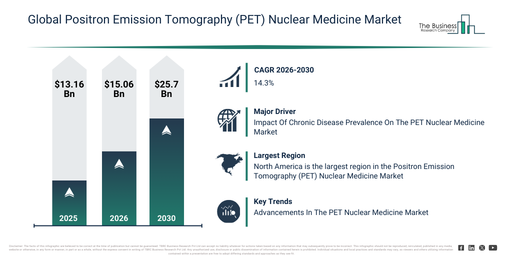
    The positron emission tomography (PET) nuclear medicine market has seen rapid expansion in its size recently. It is projected to increase from $13.16 billion in 2025 to $15.06 billion in 2026, achieving a compound annual growth rate (CAGR) of 14.5%. This growth observed historically can be linked to a rise in cancer diagnosis rates, the expansion of nuclear medicine facilities, the extensive use of F-18 radiotracers, an increase in cardiology imaging applications, and enhancements in radiopharmaceutical production.

    The positron emission tomography (pet) nuclear medicine market is anticipated to experience substantial expansion over the upcoming years. This market is projected to reach a valuation of $25.7 billion by 2030, exhibiting a compound annual growth rate (CAGR) of 14.3%. Factors contributing to this growth during the projected timeframe include heightened investments in molecular imaging, a growing need for personalized medicine diagnostics, the broadening of neurological imaging uses, improvements in radiotracer creation, and the increasing uptake of hybrid imaging systems. Key trends anticipated for the forecast period involve the expanded use of sophisticated radiotracers, greater application of PET imaging within oncology, increased merging of PET with CT and MRI technologies, the broadening scope of precision diagnostic imaging, and a stronger emphasis on early disease identification.

    Get A Free Sample Report With In-Depth Market Insights:

    https://thebusinessresearchcompany.com/sample_request?id=40026092&type=smp&name=Positron%20Emission%20Tomography%20%28PET%29%20Nuclear%20Medicine%20Market%20Report%202026&utm_source=Blogs&utm_medium=Paid&utm_campaign=Nov_PR

    Positron Emission Tomography (PET) Nuclear Medicine Market Growth Drivers: What’s Behind The Acceleration?

    The expanding occurrence of chronic illnesses is anticipated to fuel the expansion of the positron emission tomography (PET) nuclear medicine market in the future. A chronic ailment refers to a health condition that endures for an extended period, generally exceeding three months, often necessitating continuous medical care or restricting daily routines. This increase in chronic diseases stems from various factors including an aging global populace, insufficient physical activity, poor dietary practices, and environmental hazards. PET nuclear medicine plays a crucial role in managing chronic diseases through advanced imaging techniques that facilitate early identification, accurate diagnosis, and continuous oversight of these conditions.

    Positron Emission Tomography (PET) Nuclear Medicine Market Segment Landscape: Which Areas Lead Development?

    The positron emission tomography (pet) nuclear medicine market covered in this report is segmented –

    1) By Type: F-18, Rb-82, Other Types

    2) By Procedure: Diagnostic Procedures, Hybrid PET CT Procedures, Positron Emission Tomography Procedures, Therapeutic Procedures, Beta Emitter Procedures, Alpha Emitter Procedures, Targeted Radiopharmaceutical Therapy

    3) By Application: Oncology, Cardiology, Neurology, Other Applications

    4) By End User: Hospitals, Diagnostic Centers, Research Institutes

    Subsegments:

    1) By F-18 (Fluorine-18): F-18 FDG (Fluorodeoxyglucose), F-18 NaF (Sodium Fluoride), F-18 Fluorocholine

    2) By Rb-82 (Rubidium-82): Rb-82 for Myocardial Perfusion Imaging, Rb-82 for Cardiac PET Stress Testing, Rb-82 for Other Cardiac Applications

    3) By Other Types: C-11 (Carbon-11), N-13 (Nitrogen-13), O-15 (Oxygen-15), Ga-68 (Gallium-68)

    Positron Emission Tomography (PET) Nuclear Medicine Market Trends Redefining Industry Growth

    Leading companies in the positron emission tomography (PET) nuclear medicine market are advancing technologically sophisticated products, such as PET slice scanners, to yield high-resolution images of metabolic processes. A PET slice scanner is a medical imaging device that integrates positron emission tomography (PET) with advanced computing methods to generate detailed, cross-sectional views of metabolic activities within the body, facilitating the detection and monitoring of diseases, especially cancer.

    Positron Emission Tomography (PET) Nuclear Medicine Market Industry Leaders And Competitive Landscape

    Major companies operating in the positron emission tomography (pet) nuclear medicine market are Siemens Healthineers AG, GE HealthCare Technologies Inc., Koninklijke Philips N.V., Canon Medical Systems Corporation, Fujifilm Holdings Corporation, Shimadzu Corporation, Toshiba America Medical Systems Inc., Mediso Medical Imaging Systems Ltd., Lantheus Holdings Inc., Jubilant DraxImage Inc., Advanced Accelerator Applications, Eckert & Ziegler Strahlen- und Medizintechnik AG, Cardinal Health, NorthStar Medical Radioisotopes LLC, Bruker Corporation, Digirad Corporation, Neusoft Medical Systems Co. Ltd., Agfa HealthCare NV, Bayer AG, Positron Corporation

    View The Full Positron Emission Tomography (PET) Nuclear Medicine Market Report:

    https://thebusinessresearchcompany.com/report/positron-emission-tomography-pet-nuclear-medicine-global-market-report?utm_source=Blogs&utm_medium=Paid&utm_campaign=Nov_PR

    Positron Emission Tomography (PET) Nuclear Medicine Market Regional Analysis And Top Geography

    North America was the largest region in the positron emission tomography (PET) nuclear medicine market in 2025. Asia-Pacific is expected to be the fastest-growing region in the forecast period. The regions covered in the positron emission tomography (pet) nuclear medicine market report are Asia-Pacific, South East Asia, Western Europe, Eastern Europe, North America, South America, Middle East, Africa.

    Reach Out To Our Team:

    The Business Research Company: https://www.thebusinessresearchcompany.com/

    Americas: +1 310-496-7795

    Asia: +44 7882 955267 & +91 8897263534

    Europe: +44 7882 955267

    Email us at: marketing@tbrc.info

    Follow us on:

    LinkedIn: https://in.linkedin.com/company/the-business-research-company

    YouTube: https://www.youtube.com/channel/UC24_fI0rV8cR5DxlCpgmyFQ

    Global Market Model: https://www.thebusinessresearchcompany.com/global-market-model
  • Portal Hypertension Management Market Set To Expand From $4.39 Billion In 2026: Growth Outlook Through 2030

    Portal Hypertension Management Market Set To Expand From $4.39 Billion In 2026: Growth Outlook Through 2030

    Featuring market attractiveness scoring, total addressable market sizing, company benchmarking matrices, interactive Excel dashboards, deeper supply chain intelligence, emerging startup tracking, and granular product-level insights, The Business Research Company’s 2026 market reports are built to deliver research that is both more actionable and more strategically valuable.

    Portal Hypertension Management Market Revenue Outlook: What CAGR Lies Ahead Through 2030?

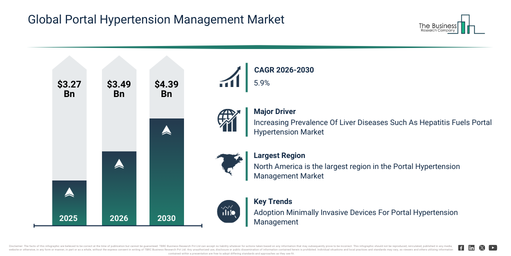
    The market for portal hypertension management has experienced robust expansion in recent years. It is forecast to increase from $3.27 billion in 2025 to $3.49 billion in 2026, achieving a compound annual growth rate (CAGR) of 6.8%. This historical growth can be attributed to several factors including the rising prevalence of liver cirrhosis, the increased incidence of alcohol-related liver disease, the availability of beta-blocker therapies, the wider use of endoscopic treatment procedures, and the expansion of specialized hepatology care.

    The portal hypertension management market is projected to experience substantial expansion in the coming years. By 2030, this market is anticipated to reach a valuation of $4.39 billion, exhibiting a compound annual growth rate (CAGR) of 5.9%. This growth during the projected period stems from several factors, including heightened demand for sophisticated liver disease management, increased implementation of TIPS procedures, a concentrated effort on preventing complications, the proliferation of specialized liver clinics, and greater investment in precision hepatology therapies. Key trends foreseen during the forecast timeframe encompass a wider embrace of minimally invasive treatment methods, the expanding application of endoscopic techniques for variceal management, a heightened emphasis on strategies for early intervention, the broadening availability of combination drug therapies, and improved surveillance of portal pressure readings.

    Get A Free Sample Report With In-Depth Market Insights:

    https://thebusinessresearchcompany.com/sample_request?id=71451371&type=smp&name=Portal%20Hypertension%20Management%20Market%20Report%202026&utm_source=Blogs&utm_medium=Paid&utm_campaign=Nov_PR

    Portal Hypertension Management Market Growth Factors Behind Sustained Expansion

    The growing occurrence of liver ailments is anticipated to fuel the expansion of the portal hypertension management market in the future. Liver disease encompasses various conditions impacting the liver’s structure or function, frequently resulting in symptoms like jaundice, tiredness, and abdominal discomfort, with origins including viral infections, excessive alcohol consumption, or metabolic issues. These diseases often arise from alcohol intake, viral hepatitis infections, fatty liver disease linked to obesity, and metabolic disturbances. Managing portal hypertension in the context of liver disease seeks to lower pressure within the portal vein system, thereby mitigating complications like variceal hemorrhage, fluid retention (ascites), and hepatic encephalopathy, ultimately enhancing patient recovery.

    Portal Hypertension Management Market Segments: Where Is Growth Concentrated?

    The portal hypertension management market covered in this report is segmented –

    1) By Treatment Type: Medications, Non-Surgical Procedures, Surgery

    2) By Procedure Type: Transjugular Intrahepatic Portosystemic Shunt (TIPS), Other Procedure Types

    3) By End-User: Hospitals, Specialty Clinics, Other End-Users

    Subsegments:

    1) By Medications: Beta-Blockers, Vasodilators, Diuretics, Antibiotics, Other Medications

    2) By Non-Surgical Procedures: Endoscopic Variceal Ligation (EVL), Endoscopic Sclerotherapy, Transjugular Intrahepatic Portosystemic Shunt (TIPS), Balloon Occlusion

    3) By Surgery: Liver Transplantation, Portosystemic Shunt Surgery, Surgical Decompression Of Portal Vein, Other Surgical Procedures

    Portal Hypertension Management Market Strategic Trends: What Defines The Next Growth Phase?

    Leading firms within the portal hypertension management market are increasingly utilizing sophisticated minimally invasive devices, aiming to improve treatment efficacy and mitigate associated procedural dangers. These devices are defined as medical instruments engineered to conduct procedures with minimal interference to adjacent tissues, generally by way of small cuts or inherent bodily orifices.

    Portal Hypertension Management Market Key Participants And Competitive Landscape

    Major companies operating in the portal hypertension management market are Pfizer Inc., AbbVie Inc., Bayer AG, Sanofi SA, Bristol-Myers Squibb Company, AstraZeneca PLC, Novartis AG, GlaxoSmithKline plc, Eli Lilly and Company, Gilead Sciences Inc., Merck & Co., Boehringer Ingelheim International GmbH, Amneal Pharmaceuticals LLC, Lupin Ltd., Daiichi Sankyo, Dr. Falk Pharma GmbH, Cumberland Pharmaceuticals Inc., Ono Pharmaceutical Co. Ltd., Takeda Pharmaceutical Company Limited, Ipsen Pharma, Eisai Co. Ltd., Johnson & Johnson

    View The Full Portal Hypertension Management Market Report:

    https://thebusinessresearchcompany.com/report/portal-hypertension-management-global-market-report?utm_source=Blogs&utm_medium=Paid&utm_campaign=Nov_PR

    Portal Hypertension Management Market Geographic Analysis: Where Is Demand Rising Fastest?

    North America was the largest region in the portal hypertension management market in 2025. The regions covered in the portal hypertension management market report are Asia-Pacific, South East Asia, Western Europe, Eastern Europe, North America, South America, Middle East, Africa.

    Reach Out To Our Team:

    The Business Research Company: https://www.thebusinessresearchcompany.com/

    Americas: +1 310-496-7795

    Asia: +44 7882 955267 & +91 8897263534

    Europe: +44 7882 955267

    Email us at: marketing@tbrc.info

    Follow us on:

    LinkedIn: https://in.linkedin.com/company/the-business-research-company

    YouTube: https://www.youtube.com/channel/UC24_fI0rV8cR5DxlCpgmyFQ

    Global Market Model: https://www.thebusinessresearchcompany.com/global-market-model
  • Portable Vascular Doppler Market Size And Growth In 2026: Key Factors Shaping Future Demand

    Portable Vascular Doppler Market Size And Growth In 2026: Key Factors Shaping Future Demand

    Built to provide research that’s more actionable and strategically valuable, The Business Research Company’s 2026 market reports include market attractiveness analysis, total addressable market sizing, company benchmarking matrices, interactive Excel dashboards, broader supply chain intelligence, emerging startup tracking, and in-depth product insights.

    Portable Vascular Doppler Market Growth Analysis: How Will Revenue Trend Over The Forecast Period?

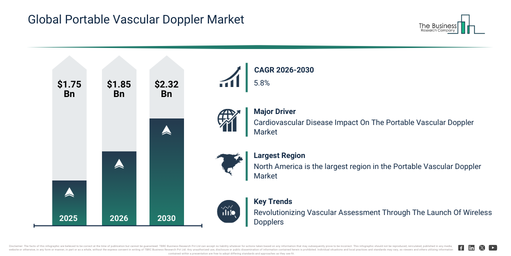
    The portable vascular doppler market has shown significant growth in recent years. Its size is anticipated to expand from $1.75 billion in 2025 to $1.85 billion in 2026, reflecting a compound annual growth rate (CAGR) of 5.9%. This historical market growth can be attributed to several factors, including the increasing occurrence of vascular disorders, the widespread application of doppler ultrasound technology, an uptick in outpatient diagnostic procedures, the rising need for fetal monitoring devices, and the availability of compact ultrasound components.

    The portable vascular doppler market size is anticipated to experience substantial expansion in the coming years. This market is projected to reach $2.32 billion by 2030, exhibiting a compound annual growth rate (CAGR) of 5.8%. The foreseen growth is largely due to factors such as the increasing acceptance of point-of-care diagnostic instruments, a heightened emphasis on the early identification of vascular diseases, the broadening use of portable diagnostics within home healthcare settings, continuous technological improvements in signal processing, and an escalating demand for economical diagnostic solutions. Key trends anticipated during this period encompass the wider utilization of handheld doppler units, an increasing incorporation of visual and audio flow display functionalities, an expanding need for point-of-care vascular diagnostic tools, the proliferation of portable devices in primary care environments, and a strengthened commitment to non-invasive blood flow monitoring.

    Get A Free Sample Report With In-Depth Market Insights:

    https://thebusinessresearchcompany.com/sample_request?id=35910778&type=smp&name=Portable%20Vascular%20Doppler%20Market%20Report%202026&utm_source=Blogs&utm_medium=Paid&utm_campaign=Nov_PR

    Portable Vascular Doppler Market Demand Drivers Opening New Revenue Streams

    The increasing incidence of cardiovascular diseases (CVD) is anticipated to drive the expansion of the portable vascular doppler market in the foreseeable future. CVD constitutes a spectrum of disorders that impact the heart and its associated blood vessels. The global surge in CVD can be attributed to dietary patterns involving unhealthy processed foods and insufficient consumption of fruits and vegetables. Additionally, sedentary lifestyles, suboptimal nutritional choices, and high rates of obesity play a significant role in the rise of cardiovascular problems. Portable vascular doppler devices empower healthcare providers with enhanced diagnostic capabilities, allowing for the early detection and effective management of cardiovascular conditions, thereby improving patient outcomes and mitigating the risk of complications tied to vascular ailments.

    Portable Vascular Doppler Market Segment Analysis: What Are The Core Market Categories?

    The portable vascular doppler market covered in this report is segmented –

    1) By Type: Type I, Type II

    2) By Disease Type: Atherosclerosis, Peripheral Artery Disease (PAD), Carotid Artery Disease, Venous Thromboembolism And Deep Vein Thrombosis Assessment, Collagen Vascular Disease, Cerebrovascular Disease, Other Disease Types

    3) By Application: Hospital, Clinic, Other Applications

    Subsegments:

    1) By Type I: Handheld Vascular Doppler, Single-Channel Vascular Doppler, Doppler With Audio And Visual Display

    2) By Type II: Multi-Channel Vascular Doppler, Doppler With Advanced Imaging Features, Doppler With Enhanced Signal Processing, Vascular Doppler With Integrated Pulse Oximetry

    Portable Vascular Doppler Market Transformation Trends: What Innovations Are Driving Change?

    Leading companies within the portable vascular doppler market are primarily focusing on the development of handheld technology, such as wireless handheld vascular doppler devices, to enhance the convenience and accuracy of diagnostics, which subsequently increases market share and fosters customer loyalty. Wireless handheld vascular Doppler devices serve as portable, user-friendly tools that utilize Doppler ultrasound technology to effectively assess and monitor blood flow throughout the vascular system, providing immediate data through wireless connectivity. Illustratively, in February 2025, Nurodata Inc., a Taiwan-based medical device company, secured FDA 510(k) clearance for its NUSONO handheld ultrasound scanners (NUSONO-C35, NUSONO-L75, NUSONO-P25). These devices are classified under 21 CFR 892.1550 as Ultrasonic Pulsed Doppler Imaging Systems (Class II), which permits their marketing in the U.S. as substantially equivalent to existing legally marketed predicate devices.

    Portable Vascular Doppler Market Top Companies Driving Competitive Growth

    Major companies operating in the portable vascular doppler market are Siemens Healthineers, GE HealthCare Technologies Inc., CooperSurgical Inc., Natus Medical Incorporated, Schiller AG, Edan Instruments Inc., Meditech Equipment Co. Ltd., CHISON Medical Technologies Co. Ltd, Huntleigh Healthcare Ltd., Medistim ASA, Compumedics Limited, LRE Medical GmbH, Perimed AB, Nicolet Vascular Inc, Parks Medical Electronics Inc., Koven Technology Inc., Sifin Diagnostics GmbH, Hadeco Inc., D.E. Hokanson Inc., Advanced Instrumentations Inc., ELCAT GmbH, Multigon Industries Inc., Newman Medical LLC, SonoSite Inc., Viasonix Ltd.

    View The Full Portable Vascular Doppler Market Report:

    https://thebusinessresearchcompany.com/report/portable-vascular-doppler-global-market-report?utm_source=Blogs&utm_medium=Paid&utm_campaign=Nov_PR

    Portable Vascular Doppler Market Global Footprint: Which Region Leads The Market?

    North America was the largest region in the portable vascular doppler market in 2025. Asia-Pacific is expected to be the fastest-growing region in the forecast period. The regions covered in the portable vascular doppler market report are Asia-Pacific, South East Asia, Western Europe, Eastern Europe, North America, South America, Middle East, Africa.

    Reach Out To Our Team:

    The Business Research Company: https://www.thebusinessresearchcompany.com/

    Americas: +1 310-496-7795

    Asia: +44 7882 955267 & +91 8897263534

    Europe: +44 7882 955267

    Email us at: marketing@tbrc.info

    Follow us on:

    LinkedIn: https://in.linkedin.com/company/the-business-research-company

    YouTube: https://www.youtube.com/channel/UC24_fI0rV8cR5DxlCpgmyFQ

    Global Market Model: https://www.thebusinessresearchcompany.com/global-market-model
  • Portable Magnetic Resonance Imaging (MRI) Market Forecast 2026–2030: Market Size, Trends And Growth Opportunities

    Portable Magnetic Resonance Imaging (MRI) Market Forecast 2026–2030: Market Size, Trends And Growth Opportunities

    Backed by market attractiveness analysis, total addressable market sizing, company benchmarking matrices, interactive Excel dashboards, wider supply chain intelligence, emerging startup coverage, and detailed product-level insights, The Business Research Company’s 2026 market reports are designed to offer research that is more actionable and strategically valuable than ever.

    Portable Magnetic Resonance Imaging (MRI) Market Forecast: What Value Will The Market Reach By 2030?

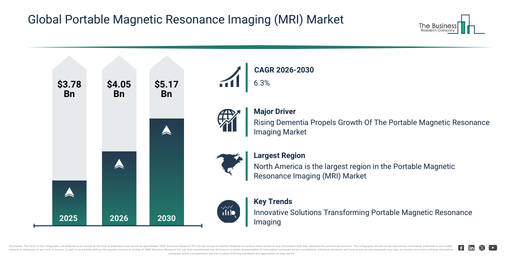
    The portable magnetic resonance imaging (mri) market size has demonstrated significant expansion in recent years. It is anticipated to increase from $3.78 billion in 2025 to $4.05 billion in 2026, achieving a compound annual growth rate (CAGR) of 7.1%. The market’s past growth can be ascribed to several factors, including the increasing demand for advanced diagnostic imaging, the constraints posed by conventional fixed mri systems, a heightened focus on critical care diagnostics, the rising need for emergency and trauma imaging, and the initial development of low-field mri technologies.

    The portable magnetic resonance imaging (mri) market is projected to experience robust expansion over the coming years. Its valuation is anticipated to reach $5.17 billion by 2030, exhibiting a compound annual growth rate (CAGR) of 6.3%. This projected growth is driven by factors such as the increasing integration of decentralized healthcare, heightened investments in portable diagnostic innovations, a surge in the need for imaging services in distant and poorly served areas, progress in compact magnet development, and the expansion of point-of-care diagnostic facilities. Key developments anticipated during this timeframe involve the growing use of bedside and point-of-care mri setups, an escalating need for compact and mobile imaging equipment, broader application of low-field mri technologies, broadened mri availability in isolated and urgent care environments, and an intensified emphasis on swift diagnostic imaging.

    Get A Free Sample Report With In-Depth Market Insights:

    https://thebusinessresearchcompany.com/sample_request?id=94563031&type=smp&name=Portable%20Magnetic%20Resonance%20Imaging%20%28MRI%29%20Market%20Report%202026&utm_source=Blogs&utm_medium=Paid&utm_campaign=Nov_PR

    Portable Magnetic Resonance Imaging (MRI) Market Growth Backed By Core Demand Fundamentals

    The escalating number of dementia cases is projected to propel the growth of the portable magnetic resonance imaging market going forward. Dementia encompasses a group of progressive neurological disorders characterized by a decline in cognitive function, affecting memory, thinking, behavior, and the ability to perform daily activities. The increasing prevalence of dementia is attributed to aging populations globally and improved diagnostic capabilities, leading to better detection of the condition. Portable magnetic resonance imaging (MRI) is used for dementia by providing on-site brain imaging to assess structural changes and aid in diagnosing and monitoring the condition in various settings, including clinics and care facilities.

    Portable Magnetic Resonance Imaging (MRI) Market Segment Breakdown: Which Categories Lead On Revenue?

    The portable magnetic resonance imaging (mri) market covered in this report is segmented –

    1) By Product: Superconducting-Magnet-Based Portable Magnetic Resonance Imaging (MRI), Electromagnet-Based Portable Magnetic Resonance Imaging (MRI), Permanent-Magnet-Based Portable Magnetic Resonance Imaging (MRI)

    2) By Application: Neurology, Musculoskeletal, Gastroenterology, Other Applications

    3) By End User: Hospitals, Diagnostic Centers, Ambulatory Surgery Centers, Other End Users

    Subsegments:

    1) By Superconducting-Magnet-Based Portable MRI: High-Field Superconducting MRI, Low-Field Superconducting MRI, Compact Superconducting MRI Systems, Superconducting MRI For Neurological Imaging, Superconducting MRI For Musculoskeletal Imaging

    2) By Electromagnet-Based Portable MRI: Low-Field Electromagnet MRI Systems, Medium-Field Electromagnet MRI Systems, Electromagnetic MRI For Point-Of-Care Use, Electromagnet MRI For Diagnostic Imaging, Portable Electromagnet MRI For Emergency Settings

    3) By Permanent-Magnet-Based Portable MRI: High-Resolution Permanent Magnet MRI, Low-Field Permanent Magnet MRI, Compact Permanent Magnet MRI Systems, Permanent Magnet MRI For Field Use, Permanent Magnet MRI For Bedside Human Imaging

    #Portable Magnetic Resonance Imaging (MRI) Market Growth Trends: What’s Shaping The Future Outlook?

    Leading companies within the portable magnetic resonance imaging market are concentrating on developing mobile imaging solutions to enhance diagnostic speed and patient outcomes, particularly for critically ill neurological patients. Portable MRI systems are engineered to deliver high-quality imaging directly at the point of care, thereby reducing the necessity to transport patients to dedicated imaging suites and supporting swift clinical decision-making.

    Portable Magnetic Resonance Imaging (MRI) Market Leading Players And Competitive Positioning

    Major companies operating in the portable magnetic resonance imaging (mri) market are Siemens Healthineers AG, Koninklijke Philips N.V., Alliance HealthCare Services Inc., Akumin Inc., Esaote SpA, Meridian Group International Inc., JMP Medical Ltd, DMS Health Pvt. Ltd, Cobalt Health, Aurora Imaging Technology Inc., Kings Medical Group Inc., Hyperfine Inc., Burgess Diagnostics Ltd, Interim Diagnostic Imaging Ltd, PrizMED Imaging Solution Inc., Radiology Management Solutions Ltd, Medco Blue LLC, Odulair LLC, Lamboo Medical Ltd, Advanced Mobility & Shelter Technologies LLC

    View The Full Portable Magnetic Resonance Imaging (MRI) Market Report:

    https://thebusinessresearchcompany.com/report/portable-magnetic-resonance-imaging-mri-global-market-report?utm_source=Blogs&utm_medium=Paid&utm_campaign=Nov_PR

    Portable Magnetic Resonance Imaging (MRI) Market Regional Split: Which Areas Are Fueling Growth?

    North America was the largest region in the portable magnetic resonance imaging (MRI) market in 2025. Asia-Pacific is expected to be the fastest-growing region in the forecast period. The regions covered in the portable magnetic resonance imaging (mri) market report are Asia-Pacific, South East Asia, Western Europe, Eastern Europe, North America, South America, Middle East, Africa.

    Reach Out To Our Team:

    The Business Research Company: https://www.thebusinessresearchcompany.com/

    Americas: +1 310-496-7795

    Asia: +44 7882 955267 & +91 8897263534

    Europe: +44 7882 955267

    Email us at: marketing@tbrc.info

    Follow us on:

    LinkedIn: https://in.linkedin.com/company/the-business-research-company

    YouTube: https://www.youtube.com/channel/UC24_fI0rV8cR5DxlCpgmyFQ

    Global Market Model: https://www.thebusinessresearchcompany.com/global-market-model