Blog

  • Antibody Contract Manufacturing Market Size And Forecast 2026–2030: Trends Driving Industry Expansion

    Antibody Contract Manufacturing Market Size And Forecast 2026–2030: Trends Driving Industry Expansion

    Built to provide research that’s more actionable and strategically valuable, The Business Research Company’s 2026 market reports include market attractiveness analysis, total addressable market sizing, company benchmarking matrices, interactive Excel dashboards, broader supply chain intelligence, emerging startup tracking, and in-depth product insights.

    Antibody Contract Manufacturing Market Size Forecast: How Big Could The Market Get By 2030?

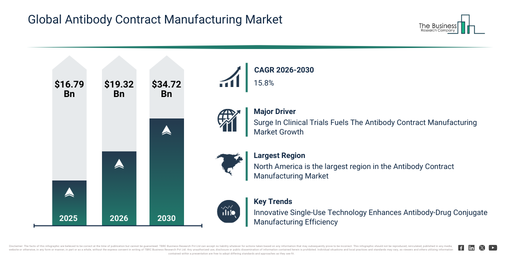
    The antibody contract manufacturing market has experienced rapid expansion in recent years. It is projected to increase from $16.79 billion in 2025 to $19.32 billion in 2026, at a compound annual growth rate (CAGR) of 15.0%. This growth observed in the past can be attributed to rising biologics development pipelines, increased outsourcing by biopharmaceutical companies, the expansion of mammalian cell culture platforms, growing clinical trial activity for antibodies, and the availability of specialized cmo infrastructure.

    The antibody contract manufacturing market is anticipated to experience significant expansion over the coming years. This market is projected to reach $34.72 billion by 2030, exhibiting a compound annual growth rate (CAGR) of 15.8%. This expansion during the projection period stems from factors such as increasing demand for commercial-scale antibody manufacturing, heightened investments in advanced biologics, a greater emphasis on manufacturing models that are cost-effective, the broadening of personalized medicine pipelines, and a rise in regulatory approvals for antibody-based therapies. Key trends anticipated during this period encompass the enlargement of large-scale antibody production capabilities, increasing integration of single-use bioprocessing technologies, a burgeoning demand for bispecific antibodies and ADCs, a sharpened focus on adaptable and scalable manufacturing approaches, and an elevated commitment to regulatory adherence and quality management.

    Get A Free Sample Report With In-Depth Market Insights:

    https://thebusinessresearchcompany.com/sample_request?id=87113271&type=smp&name=Antibody%20Contract%20Manufacturing%20Market%20Report%202026&utm_source=Blogs&utm_medium=Paid&utm_campaign=Oct_PR

    Antibody Contract Manufacturing Market Opportunity Drivers: What’s Unlocking New Revenue Potential?

    The increasing volume of clinical trials is projected to fuel the expansion of the antibody contract manufacturing market moving ahead. These trials involve human participants in research to assess the safety and efficacy of novel medical treatments, interventions, or diagnostic methods. As the count of clinical trials utilizing antibody-based therapeutics or diagnostics grows, the demand for high-quality antibodies rises, necessitating a prompt and compliant supply for these trials. For example, data from May 2023, provided by ClinicalTrials.gov, an entity of the National Institutes of Health (NIH) – a US-based government agency overseeing medical research – revealed a surge in registered clinical trial studies across all 50 states of the United States and 221 countries, increasing from 399,499 in 2022 to 437,533 in 2023. Furthermore, approximately 241,498 studies, representing 53% of the total, were recorded outside the United States, whereas 140,492 studies (31%) were registered solely within the United States. Consequently, the increasing volume of clinical trials is stimulating the expansion of the antibody contract manufacturing market.

    Antibody Contract Manufacturing Market Segmentation: How Does The Market Break Down By Category?

    The antibody contract manufacturing market covered in this report is segmented –

    1) By Product: Monoclonal Antibodies, Polyclonal Antibodies, Other Products

    2) By Source: Mammalian, Microbial

    3) By Scale Of Operation: Preclinical, Clinical, Commercial

    4) By End-User: Biopharmaceutical Companies, Research Laboratories, Other End Users

    Subsegments:

    1) By Monoclonal Antibodies: Therapeutic Monoclonal Antibodies, Diagnostic Monoclonal Antibodies

    2) By Polyclonal Antibodies: Research Polyclonal Antibodies, Therapeutic Polyclonal Antibodies

    3) By Other Products: Bispecific Antibodies, Antibody-Drug Conjugates (ADCs), Fusion Proteins

    Antibody Contract Manufacturing Market Innovation Trends Shaping Future Development

    Leading companies in the antibody contract manufacturing market are concentrating on innovations such as single-use technology, which minimizes cross-contamination risks and reduces operational costs. Single-use technology (SUT) refers to disposable components and systems utilized in biopharmaceutical manufacturing processes. For instance, in September 2024, Merck & Co., a US-based pharmaceutical company, launched the Mobius ADC Reactor, specifically designed to enhance the manufacturing of antibody-drug conjugates. This novel single-use reactor, created for antibody drug conjugate manufacturing, significantly boosts production efficiency by 70% compared to traditional stainless steel or glass methods. Its single-use nature reduces cross-contamination risks and operational expenses, allowing for quicker turnaround times. Additionally, advanced film technology improves bag strength and leak resistance, thereby safeguarding the integrity of highly potent active pharmaceutical ingredients. This innovation supports biopharmaceutical companies in producing critical therapies more safely and efficiently.

    Antibody Contract Manufacturing Market Competitive Overview And Top Companies

    Major companies operating in the antibody contract manufacturing market are Lonza Group AG, Catalent Inc, Samsung Biologics Co Ltd, Wuxi Biologics Cayman Inc, Thermo Fisher Scientific Inc, Boehringer Ingelheim BioXcellence, AGC Biologics, FUJIFILM Diosynth Biotechnologies, AbbVie Inc, Charles River Laboratories International Inc, mAbxience, KBI Biopharma Inc, Abzena Ltd, Just-Evotec Biologics, Northway Biotech, Cerbios-Pharma, Scorpius BioManufacturing, Lotte Biologics, Rentschler Biopharma SE, Cytiva (Life Sciences CDMO), Xcellon Biologics, Celonic AG, Syngene International Ltd

    View The Full Antibody Contract Manufacturing Market Report:

    https://thebusinessresearchcompany.com/report/antibody-contract-manufacturing-global-market-report?utm_source=Blogs&utm_medium=Paid&utm_campaign=Oct_PR

    Antibody Contract Manufacturing Market Geographic Landscape: Which Region Leads Industry Growth?

    North America was the largest region in the antibody contract manufacturing market in 2025. Asia-Pacific is expected to be the fastest-growing region in the forecast period. The regions covered in the antibody contract manufacturing market report are Asia-Pacific, South East Asia, Western Europe, Eastern Europe, North America, South America, Middle East, Africa.

    Reach Out To Our Team:

    The Business Research Company: https://www.thebusinessresearchcompany.com/

    Americas: +1 310-496-7795

    Asia: +44 7882 955267 & +91 8897263534

    Europe: +44 7882 955267

    Email us at: marketing@tbrc.info

    Follow us on:

    LinkedIn: https://in.linkedin.com/company/the-business-research-company

    YouTube: https://www.youtube.com/channel/UC24_fI0rV8cR5DxlCpgmyFQ

    Global Market Model: https://www.thebusinessresearchcompany.com/global-market-model
  • Antibodies Market 2026 Outlook: Market Size, CAGR And Key Growth Opportunities

    Antibodies Market 2026 Outlook: Market Size, CAGR And Key Growth Opportunities

    Backed by market attractiveness analysis, total addressable market sizing, company benchmarking matrices, interactive Excel dashboards, wider supply chain intelligence, emerging startup coverage, and detailed product-level insights, The Business Research Company’s 2026 market reports are designed to offer research that is more actionable and strategically valuable than ever.

    Antibodies Market Revenue Outlook: What CAGR Lies Ahead Through 2030?

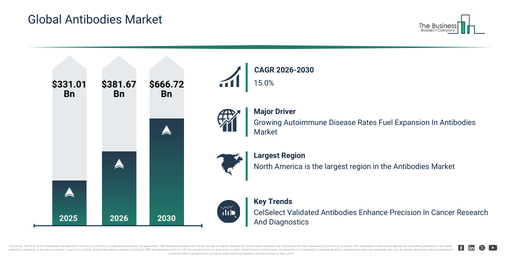
    The antibodies market has experienced rapid growth in recent years. It is forecast to increase from $331.01 billion in 2025 to $381.67 billion in 2026, demonstrating a compound annual growth rate (CAGR) of 15.3%. This historical expansion is attributable to breakthroughs in immunology research, greater investment in biologics development, the expansion of oncology treatment programs, the rising prevalence of autoimmune diseases, and improved methods for antibody production.

    The antibodies market size is projected to experience swift expansion in the coming years. This market is anticipated to reach $666.72 billion by 2030, exhibiting a compound annual growth rate (CAGR) of 15.0%. Factors driving this growth during the projected period include the rising acceptance of precision immunotherapies, a heightened demand for advanced antibody formats, the expansion of biosimilar antibody development, an intensifying focus on personalized medicine, and an increase in global biologics manufacturing capabilities. Key trends anticipated over the forecast period encompass the broadening of monoclonal antibody development pipelines, an escalating demand for antibody-drug conjugates, a stronger emphasis on targeted immunotherapies, the wider application of antibodies in treating chronic diseases, and a greater focus on scalable biomanufacturing.

    Get A Free Sample Report With In-Depth Market Insights:

    https://thebusinessresearchcompany.com/sample_request?id=65445497&type=smp&name=Antibodies%20Market%20Report%202026&utm_source=Blogs&utm_medium=Paid&utm_campaign=Oct_PR

    Antibodies Market Growth Momentum: What Factors Are Shaping Demand?

    The increasing occurrence of autoimmune conditions is anticipated to drive the expansion of the antibodies market in the future. These diseases involve the immune system mistakenly attacking and harming its own healthy tissues, encompassing ailments like rheumatoid arthritis, lupus, and multiple sclerosis. The escalating incidence of autoimmune disorders stems from environmental influences, genetic predispositions, and changes in lifestyle. Antibodies work by targeting and inactivating particular immune cells or inflammatory agents that improperly assault the body’s tissues, leading to decreased inflammation and symptom relief. A clear example is from May 2024, when the Multiple Sclerosis International Federation, a UK-based non-profit organization, reported that the worldwide population affected by multiple sclerosis grew from 2.8 million in 2020 to 2.9 million in 2023. Consequently, the expanding prevalence of autoimmune diseases is fueling the antibodies market.

    Antibodies Market Segment Trends And Revenue Contributors

    The antibodies market covered in this report is segmented –

    1) By Product Type: Monoclonal Antibodies, Polyclonal Antibodies, Antibody Drug Complexes

    2) By Disease Indication: Cardiovascular Diseases, Central Nervous System (CNS) Disorders, Cancer, Autoimmune Disorders, Other Indications

    3) By End User: Hospitals, Long Term Care Facilities, Research Institutes, Other End Users

    Subsegments:

    1) By Monoclonal Antibodies: IgG Monoclonal Antibodies, IgM Monoclonal Antibodies, IgA Monoclonal Antibodies, Other Isotypes

    2) By Polyclonal Antibodies: Serum-derived Polyclonal Antibodies, Purified Polyclonal Antibodies, Antibody Fractionation Products

    3) By Antibody Drug Complexes: Conjugated Antibodies, Bispecific Antibodies, Antibody-Drug Conjugates (ADCs)

    Antibodies Market Trends Redefining Industry Growth

    Major companies operating in the antibodies market are actively developing validated antibodies to enhance accuracy and ensure consistent results across diagnostics and therapeutics. These validated antibodies are thoroughly tested and confirmed for their accuracy and specificity in detecting target proteins, thereby increasing the credibility of research outcomes and guaranteeing the quality and effectiveness of antibody-based products. For instance, in March 2024, Bio-Rad Laboratories, a US-based life science research and clinical diagnostics manufacturing company, launched Celselect slides validated antibodies for enumerating rare cells and circulating tumor cells (CTCs), which improves the study of tumor heterogeneity and disease progression. Compatible with Bio-Rad’s Celselect Slides Enumeration Stain Kits, these antibodies enable precise CTC detection, representing a significant advancement in supporting sophisticated cancer research and diagnostics.

    Antibodies Market Competitive Landscape: Which Companies Lead The Industry?

    Major companies operating in the antibodies market are Pfizer Inc., Johnson & Johnson Services Inc., F. Hoffmann-La Roche Ltd., Merck & Co Inc., AbbVie Inc., Sanofi S.A., Bristol Myers Squibb Company, Novartis AG, GSK plc, Takeda Pharmaceutical Company Limited, Eli Lilly and Company, Amgen Inc., Regeneron Pharmaceuticals Inc., Biogen Inc., Alexion Pharmaceuticals Inc., Incyte Corporation, Kyowa Kirin Co Ltd, Ultragenyx Pharmaceutical Inc, Xencor Inc., MacroGenics Inc., ImmunoGen Inc., Sorrento Therapeutics Inc., Beam Therapeutics Inc., SAB Biotherapeutics Inc., bluebird bio Inc., Iovance Biotherapeutics Inc.

    View The Full Antibodies Market Report:

    https://thebusinessresearchcompany.com/report/antibodies-global-market-report?utm_source=Blogs&utm_medium=Paid&utm_campaign=Oct_PR

    Antibodies Market Largest Region: Which Geography Holds The Biggest Share?

    North America was the largest region in the antibodies market in 2025. Asia-Pacific is expected to be the fastest-growing region in the forecast period. The regions covered in the antibodies market report are Asia-Pacific, South East Asia, Western Europe, Eastern Europe, North America, South America, Middle East, Africa.

    Reach Out To Our Team:

    The Business Research Company: https://www.thebusinessresearchcompany.com/

    Americas: +1 310-496-7795

    Asia: +44 7882 955267 & +91 8897263534

    Europe: +44 7882 955267

    Email us at: marketing@tbrc.info

    Follow us on:

    LinkedIn: https://in.linkedin.com/company/the-business-research-company

    YouTube: https://www.youtube.com/channel/UC24_fI0rV8cR5DxlCpgmyFQ

    Global Market Model: https://www.thebusinessresearchcompany.com/global-market-model
  • Antibiotic Resistance Market Size Growth: From $13.73 Billion In 2026 To $18.22 Billion By 2030

    Antibiotic Resistance Market Size Growth: From $13.73 Billion In 2026 To $18.22 Billion By 2030

    Featuring market attractiveness scoring, total addressable market sizing, company benchmarking matrices, interactive Excel dashboards, deeper supply chain intelligence, emerging startup tracking, and granular product-level insights, The Business Research Company’s 2026 market reports are built to deliver research that is both more actionable and more strategically valuable.

    Antibiotic Resistance Market Growth Analysis: How Will Revenue Trend Over The Forecast Period?

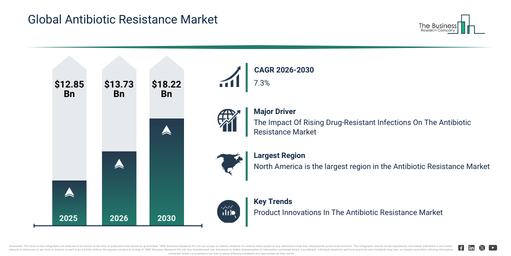
    The antibiotic resistance market size has experienced significant expansion in recent years. This market is projected to expand from $12.85 billion in 2025 to reach $13.73 billion in 2026, at a compound annual growth rate (CAGR) of 6.8%. Historically, this growth has been driven by factors including widespread antibiotic misuse, an increase in hospital-acquired infections, the expanded use of broad-spectrum antibiotics, the limited availability of novel antibiotics, and the rising prevalence of resistant pathogens.

    The antibiotic resistance market is projected for robust expansion in the coming years, with its size anticipated to reach $18.22 billion by 2030, exhibiting a compound annual growth rate (CAGR) of 7.3%. This growth during the forecast period is propelled by factors such as heightened investments in antimicrobial research and development, wider adoption of precision diagnostics, the broadening of global resistance surveillance networks, a sharpened emphasis on alternative therapeutic approaches, and a rise in public-private collaborations. Key developments expected in the forecast period encompass an intensified concentration on creating new antibiotics, an increased uptake of combination drug treatments, wider application of rapid diagnostic tests, the scaling up of antimicrobial stewardship initiatives, and improved monitoring of resistant pathogens.

    Get A Free Sample Report With In-Depth Market Insights:

    https://thebusinessresearchcompany.com/sample_request?id=26007827&type=smp&name=Antibiotic%20Resistance%20Market%20Report%202026&utm_source=Blogs&utm_medium=Paid&utm_campaign=Oct_PR

    Antibiotic Resistance Market Expansion Drivers: What’s Shaping Future Growth?

    The rising occurrence of drug-resistant infections is anticipated to stimulate the expansion of the antibiotic-resistance market moving forward. These infections are conditions brought about by bacteria that have developed resistance, making the resulting infection considerably more challenging or even impossible to cure. Antimicrobial resistance drugs aid in treating various drug-resistant infections, leading to improved antibiotic treatment outcomes for both target and nontarget pathogens, depending on the specifics of resistance mechanisms and the interaction structure of the microbiome community. As an illustration, in November 2025, the UK Health Security Agency, a UK-based government agency responsible for all health security in England, reported that the number of deaths among individuals with antibiotic-resistant infections climbed from 2,041 in 2023 to 2,379 in 2024, marking an increase of 338 deaths over a single year. Thus, the widespread nature of drug-resistant infections is propelling the antibiotic-resistance market.

    Antibiotic Resistance Market Segment Analysis Spotlighting Growth Areas

    The antibiotic resistance market covered in this report is segmented –

    1) By Drug Class: Beta Lactum Antibiotic, Cephalosporins, Quinolones Antibiotics, Macrolide Antibiotics, Tetracyclines, Oxazolidinones, Other Drug Classes

    2) By Pathogen: Staphylococcus Aureus, Staphylococcus Pneumonia, Neisseria Gonorrhoeae, Enterococcus Faecium, Escherichia Coli, Klebsiella Pneumonia, Shigella, Clostridium Difficile, Other Pathogens

    3) By Disease Type: Urinary Tract Infection, Intra-Abdominal Infection, Blood Stream infections, Clostridium Difficile Infections, Other Disease Types

    4) By Mechanism Of Action: Protein Synthesis Inhibitors, Cell Wall Synthesis Inhibitors, RNA Synthesis Inhibitors, DNA Synthesis Inhibitors, Other Mechanism Of Actions

    5) By End Users: Hospitals, Homecare, Specialty Clinics, Other End-users

    Subsegments:

    1) By Beta Lactam Antibiotics: Penicillins, Cephalosporins, Carbapenems, Monobactams

    2) By Cephalosporins: First-generation, Second-generation, Third-generation, Fourth-generation

    3) By Quinolones Antibiotics: Fluoroquinolones, Other Quinolones

    4) By Macrolide Antibiotics: Erythromycin, Azithromycin, Clarithromycin

    5) By Tetracyclines: Doxycycline, Minocycline, Tetracycline

    6) By Oxazolidinones: Linezolid, Tedizolid

    7) By Other Drug Classes: Glycopeptides, Lipopeptides, Streptogramins, Polymyxins

    Antibiotic Resistance Market Strategic Trends: What Defines The Next Growth Phase?

    Companies operating in the antibiotic resistance market are prioritizing the development of innovative products to enhance treatment efficacy, ensure patient safety, and address the growing challenge of multi-drug resistant (MDR) infections. For instance, in January 2023, Alkem Laboratories Limited, an India-based pharmaceutical company, launched Zidavi, a novel antibiotic specifically designed to combat MDR infections, thereby improving its availability, affordability, and accessibility while saving the lives of critically ill patients. Zidavi is a distinct combination of ceftazidime and avibactam capable of treating infections caused by MDR gram-negative pathogens. It is supplied as a sterile powdered concentrate for reconstitution, with each single-dose vial containing ceftazidime pentahydrate equivalent to 2 g ceftazidime and avibactam sodium equivalent to 0.5 g avibactam. This product offers an effective alternative for managing hospital-acquired pneumonia (HAP) and severe intra-abdominal infections (IAIs) caused by pathogens resistant to meropenem and colistin.

    Antibiotic Resistance Market Leading Companies: Who Holds The Strongest Market Presence?

    Major companies operating in the antibiotic resistance market are Pfizer Inc., Johnson and Johnson, F. Hoffmann-La Roche Ltd, AbbVie Inc., Novartis AG, Merck and Co. Inc., Bristol-Myers Squibb, Sanofi S.A., AstraZeneca, GlaxoSmithKline Plc, Eli Lilly and Company, Boehringer Ingelheim International GmbH, Astellas Pharma, Daiichi Sankyo, Chugai Pharmaceutical Co. Ltd., Teva Pharmaceutical Industries Ltd., Paratek Pharmaceuticals Inc., Basilea Pharmaceutica Ltd., Theravance Biopharma Inc., Nabriva Therapeutics Plc, Seres Therapeutics Inc., Armata Pharmaceuticals Inc.

    View The Full Antibiotic Resistance Market Report:

    https://thebusinessresearchcompany.com/report/antibiotic-resistance-global-market-report?utm_source=Blogs&utm_medium=Paid&utm_campaign=Oct_PR

    Antibiotic Resistance Market Regional Analysis: Which Geography Leads On Revenue?

    North America was the largest region in the antibiotic resistance market in 2025. Asia-Pacific is expected to be the fastest-growing region in the forecast period. The regions covered in the antibiotic resistance market report are Asia-Pacific, South East Asia, Western Europe, Eastern Europe, North America, South America, Middle East, Africa.

    Reach Out To Our Team:

    The Business Research Company: https://www.thebusinessresearchcompany.com/

    Americas: +1 310-496-7795

    Asia: +44 7882 955267 & +91 8897263534

    Europe: +44 7882 955267

    Email us at: marketing@tbrc.info

    Follow us on:

    LinkedIn: https://in.linkedin.com/company/the-business-research-company

    YouTube: https://www.youtube.com/channel/UC24_fI0rV8cR5DxlCpgmyFQ

    Global Market Model: https://www.thebusinessresearchcompany.com/global-market-model
  • Biotech Flavors Market Outlook Through 2030: Understanding The Growth Opportunity

    Biotech Flavors Market Outlook Through 2030: Understanding The Growth Opportunity

    Featuring market attractiveness scoring, total addressable market sizing, company benchmarking matrices, interactive Excel dashboards, deeper supply chain intelligence, emerging startup tracking, and granular product-level insights, The Business Research Company’s 2026 market reports are built to deliver research that is both more actionable and more strategically valuable.

    Biotech Flavors Market CAGR Outlook And Future Development

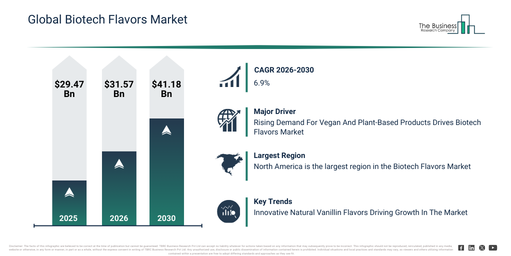
    The biotech flavors market size has seen significant growth in recent years. It is projected to expand from $29.47 billion in 2025 to $31.57 billion in 2026, achieving a compound annual growth rate (CAGR) of 7.1%. This historical growth can be attributed to increasing consumer preference for natural flavors, advancements in fermentation technology, the expansion of processed food consumption, the growth in functional food production, and the rising use of biotech ingredients.

    The biotech flavors market is projected to experience substantial expansion over the upcoming years. By 2030, its value is anticipated to reach $41.18 billion, exhibiting a compound annual growth rate (CAGR) of 6.9%. This projected growth is driven by several factors, including a heightened demand for plant-based and alternative food options, the widening availability of personalized nutrition products, increased capital flow into sustainable flavor innovation, stronger regulatory backing for natural ingredients, and the rising integration of biotech-derived food solutions. Key developments expected during this timeframe involve the greater incorporation of flavor compounds originating from fermentation, an escalating preference for natural and clean-label flavors, the increased application of enzyme-modified flavor ingredients, broader customization in flavor creation, and a stronger emphasis on environmentally friendly flavor manufacturing.

    Get A Free Sample Report With In-Depth Market Insights:

    https://thebusinessresearchcompany.com/sample_request?id=53695187&type=smp&name=Biotech%20Flavors%20Market%20Report%202026&utm_source=Blogs&utm_medium=Paid&utm_campaign=Oct_PR

    Biotech Flavors Market Growth Catalysts And Demand Drivers

    The increasing consumer desire for vegan and plant-based offerings is poised to drive the expansion of the biotech flavors market in the coming period. Vegan and plant-based products are defined as items crafted solely from plant-derived ingredients, completely omitting all animal-sourced components such as meat, dairy, eggs, honey, and other by-products. This surge in consumer demand for vegan and plant-based products is fueled by growing awareness about health, concerns regarding environmental sustainability, and ethical standpoints on animal welfare. Biotech flavors play a crucial role by enhancing the taste profiles of these vegan and plant-based alternatives through the sustainable replication of natural flavors, thus ensuring authenticity and appeal to consumers. As an illustration, a report released in August 2024 by ProVeg International, a Germany-based non-profit organization, indicated that in 2023, 38% of survey participants followed a flexitarian, pescatarian, vegetarian, or vegan diet. Hence, the rising consumer demand for vegan and plant-based products is a primary force propelling the biotech flavors market.

    Biotech Flavors Market Segment Trends And Revenue Contributors

    The biotech flavors market covered in this report is segmented –

    1) By Type: Vanilla And Vanillin, Fruity Flavor, Other Types

    2) By Form: Liquid, Powder, Paste

    3) By Source: Microbial, Plant, Animal

    4) By Functional: Sweeteners, Enhancers, Modifiers, Maskers

    5) By Application: Dairy Products, Beverages, Confectionery Products, Non-Dairy Ice-cream, Bakery Products, Nutraceuticals, Other Applications

    Subsegments:

    1) By Vanilla And Vanillin: Natural Vanilla Extracts, Fermentation-Derived Vanillin, Enzyme-Modified Vanillin

    2) By Fruity Flavor: Citrus-Based Flavors, Berry-Based Flavors, Tropical Fruit Flavors

    3) By Other Types: Floral Flavors, Spicy Flavors, Herbal And Mint Flavors

    Biotech Flavors Market Trends Shaping Long-Term Demand

    Major companies operating in the biotech flavors market are focusing on developing innovative solutions, such as natural vanillin flavors, to meet the growing consumer demand for clean-label, sustainable, and plant-based ingredients that align with preferences for healthier and environmentally friendly products. Natural vanillin flavors denote flavor compounds originating from natural sources, predominantly the vanilla bean or through biotechnological methods like fermentation, that reproduce vanilla’s characteristic sweet, warm, and aromatic taste. For instance, in October 2023, Spero Renewables, a biotechnology company specializing in sustainable flavor and fragrance ingredients, launched a next-generation natural vanillin produced from ferulic acid sourced from non-GMO corn fiber via a fermentation process. This vanillin is clean-label, traceable, and suitable for natural and organic food formulations, as it derives from a renewable agricultural feedstock rather than petroleum or vanilla beans. This innovation aligns with increasing consumer demand for environmentally friendly and plant-based flavor solutions while providing flavor manufacturers with a highly pure, sustainable vanillin ingredient that meets strict regulatory standards.

    Biotech Flavors Market Competitive Landscape: Which Companies Lead The Industry?

    Major companies operating in the biotech flavors market are The Archer-Daniels-Midland Company, International Flavors & Fragrances Inc., Kerry Group plc, dsm-firmenich AG, Givaudan S.A., Döhler GmbH, Frutarom Industries, Centrale Suiker Maatschappij (CSM) N V, Takasago International Corporation, Naturex S.A., MANE SA, Synthite Industries Ltd., Flavorchem Corporation, Bell Flavors & Fragrances Inc., Jeneil Biotech, Conagen Inc., Blue Pacific Flavors Inc., Amines BioTech Pvt. Ltd., Keva Flavours Pvt. Ltd.

    View The Full Biotech Flavors Market Report:

    https://thebusinessresearchcompany.com/report/biotech-flavors-global-market-report?utm_source=Blogs&utm_medium=Paid&utm_campaign=Oct_PR

    Biotech Flavors Market Geographic Analysis: Where Is Demand Rising Fastest?

    North America was the largest region in the biotech flavors market in 2025. Asia-Pacific is expected to be the fastest-growing region in the forecast period. The regions covered in the biotech flavors market report are Asia-Pacific, South East Asia, Western Europe, Eastern Europe, North America, South America, Middle East, Africa.

    Reach Out To Our Team:

    The Business Research Company: https://www.thebusinessresearchcompany.com/

    Americas: +1 310-496-7795

    Asia: +44 7882 955267 & +91 8897263534

    Europe: +44 7882 955267

    Email us at: marketing@tbrc.info

    Follow us on:

    LinkedIn: https://in.linkedin.com/company/the-business-research-company

    YouTube: https://www.youtube.com/channel/UC24_fI0rV8cR5DxlCpgmyFQ

    Global Market Model: https://www.thebusinessresearchcompany.com/global-market-model
  • Biosurgery Market Growth Potential: What The Latest Forecast Reveals

    Biosurgery Market Growth Potential: What The Latest Forecast Reveals

    Built to provide research that’s more actionable and strategically valuable, The Business Research Company’s 2026 market reports include market attractiveness analysis, total addressable market sizing, company benchmarking matrices, interactive Excel dashboards, broader supply chain intelligence, emerging startup tracking, and in-depth product insights.

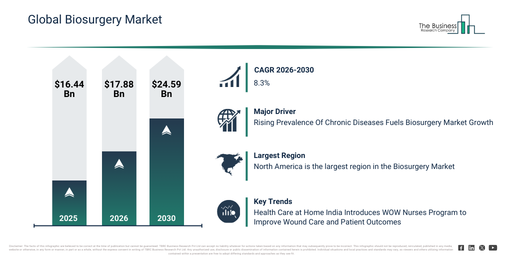
    Biosurgery Market Set To Climb From $17.88 Billion In 2026 To $24.59 Billion By 2030

    The biosurgery market size has demonstrated robust growth in recent years. It is anticipated to increase from $16.44 billion in 2025 to $17.88 billion in 2026, achieving a compound annual growth rate (CAGR) of 8.7%. The expansion witnessed in the past can be credited to an elevated volume of surgical procedures, a growing prevalence of chronic wounds, the broadening of hospital infrastructure, the incorporation of contemporary surgical materials, and advancements in the safety characteristics of biosurgical products.

    The biosurgery market is projected for significant expansion over the coming years, reaching a valuation of $24.59 billion by 2030, exhibiting a compound annual growth rate (CAGR) of 8.3%. This anticipated growth during the forecast period is driven by several factors, including a heightened demand for advanced wound care solutions, a greater emphasis on reducing complications post-surgery, the expansion of outpatient surgical procedures, increased investments in innovating biosurgical products, and the rising uptake of biologics-based surgical aids. Key trends expected during this period involve the increasing use of advanced hemostatic agents, a growing demand for synthetic surgical sealants, the wider application of bio-based adhesion barriers, the broadening of minimally invasive surgical solutions, and a stronger emphasis on achieving quicker wound healing results.

    Get A Free Sample Report With In-Depth Market Insights:

    https://thebusinessresearchcompany.com/sample_request?id=14408420&type=smp&name=Biosurgery%20Market%20Report%202026&utm_source=Blogs&utm_medium=Paid&utm_campaign=Oct_PR

    Biosurgery Market Opportunity Drivers: What’s Unlocking New Revenue Potential?

    The expanding prevalence of chronic illnesses is anticipated to drive the future expansion of the biosurgery market. These are defined as health conditions lasting a year or more, requiring ongoing medical attention, limiting daily activities, or a combination of these factors. In the US, chronic conditions like diabetes, cancer, and heart disease are primary contributors to mortality and disability. Biosurgery serves to remove necrotic tissue, reduce infection risk, and accelerate the healing of persistent wounds. For example, the World Health Organization, a specialized agency of the United Nations located in Switzerland, reported in September 2025 that noncommunicable diseases (NCDs) account for 74% of deaths worldwide. Consequently, the rising occurrence of chronic disease is fueling the expansion of the biosurgery market.

    Biosurgery Market Segment Analysis Spotlighting Growth Areas

    The biosurgery market covered in this report is segmented –

    1) By Product: Bone-Graft Substitutes, Soft-Tissue Attachments, Hemostatic Agents, Surgical Sealants And Adhesives, Adhesion Barriers, Staple Line Reinforcement

    2) By Source: Natural Or Biologics Products, Synthetic Products

    3) By Application: Orthopedic Surgery, General Surgery, Neurological Surgery, Cardiovascular Surgery, Gynecological Surgery, Other Applications

    4) By End-User: Hospitals, Clinics, Other End-Users

    Subsegments:

    1) By Bone-Graft Substitutes: Synthetic Bone Grafts, Natural Bone Grafts

    2) By Soft-Tissue Attachments: Mesh Products, Biological Grafts

    3) By Hemostatic Agents: Powdered Agents, Gel-based Agents

    4) By Surgical Sealants And Adhesives: Fibrin Sealants, Synthetic Sealants

    5) By Adhesion Barriers: Absorbable Barriers, Non-absorbable Barriers

    6) By Staple Line Reinforcement: Reinforcement Devices, Surgical Staples

    Biosurgery Market Innovation Trends Shaping Future Development

    Companies operating within the biosurgery market are leveraging technological advancements, such as advanced wound care technology, to enhance healing outcomes, reduce infection rates, and improve patient recovery times through innovative products and techniques. Advanced wound care technology encompasses novel methods and products designed to boost wound healing, prevent infection, and improve patient results. For instance, in September 2024, Health Care at Home India Pvt Ltd, an India-based company that manufactures medical products, launched WOW (Warriors of Woundcare) Nurses. The WOW Nurses initiative seeks to proactively prevent and treat bedsores, which are common complications for patients with limited mobility. Bedsores can significantly slow recovery, increase hospital stays, and elevate infection risk.

    Biosurgery Market Leading Companies: Who Holds The Strongest Market Presence?

    Major companies operating in the biosurgery market are Baxter International Inc., B. Braun SE, Becton, Dickinson and Company, Hemostasis LLC, Integra LifeSciences Corporation, Johnson & Johnson Services Inc., CryoLife Inc., Zimmer Biomet Holdings Inc., Kuros Biosciences AG, Orthofix Medical Inc., Smith & Nephew plc, Medtronic plc, Stryker Corp., Tissue Regenix Group plc, Aroa Biosurgery Ltd., Anika Therapeutics Inc., Arthrex Inc., B Braun Surgical SA, Biom’Up SA, Boston Scientific Corporation, Coloplast Corp., Cook Medical Inc., Genzyme Corporation

    View The Full Biosurgery Market Report:

    https://thebusinessresearchcompany.com/report/biosurgery-global-market-report?utm_source=Blogs&utm_medium=Paid&utm_campaign=Oct_PR

    Biosurgery Market Global Footprint: Which Region Leads The Market?

    North America was the largest region in the biosurgery market in 2025. Asia-Pacific is expected to be the fastest-growing region in the biosurgery market report during the forecast period. The regions covered in the biosurgery market report are Asia-Pacific, South East Asia, Western Europe, Eastern Europe, North America, South America, Middle East, Africa.

    Reach Out To Our Team:

    The Business Research Company: https://www.thebusinessresearchcompany.com/

    Americas: +1 310-496-7795

    Asia: +44 7882 955267 & +91 8897263534

    Europe: +44 7882 955267

    Email us at: marketing@tbrc.info

    Follow us on:

    LinkedIn: https://in.linkedin.com/company/the-business-research-company

    YouTube: https://www.youtube.com/channel/UC24_fI0rV8cR5DxlCpgmyFQ

    Global Market Model: https://www.thebusinessresearchcompany.com/global-market-model
  • Biosimilar Testing Services Market Growth Outlook: Why Analysts Expect Continued Expansion

    Biosimilar Testing Services Market Growth Outlook: Why Analysts Expect Continued Expansion

    Backed by market attractiveness analysis, total addressable market sizing, company benchmarking matrices, interactive Excel dashboards, wider supply chain intelligence, emerging startup coverage, and detailed product-level insights, The Business Research Company’s 2026 market reports are designed to offer research that is more actionable and strategically valuable than ever.

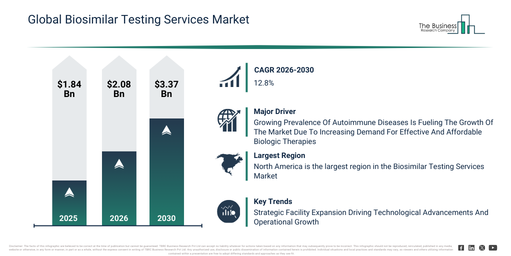
    Biosimilar Testing Services Market Forecast: Value Set To Climb From $2.08 Billion To $3.37 Billion

    The biosimilar testing services market size has seen rapid expansion in recent years. It is anticipated to expand from $1.84 billion in 2025 to $2.08 billion in 2026, at a compound annual growth rate (CAGR) of 13.0%. The growth observed historically can be attributed to the broadening of biosimilar development pipelines, an uptick in regulatory approvals for biosimilars, the expansion of biologics manufacturing, an increasing reliance on CRO testing services, and enhancements in analytical testing technologies.

    The biosimilar testing services market is poised for significant expansion in the upcoming years. It is forecast to grow to $3.37 billion by 2030, achieving a compound annual growth rate (CAGR) of 12.8%. This anticipated growth during the forecast period is driven by factors such as the increasing demand for economically viable biologic alternatives, the global expansion of biosimilar markets, the escalating complexity of biologic molecules, a heightened focus on comparability studies, and increased investments in biosimilar research and development. Prominent trends for the forecast period include a surging demand for comprehensive analytical characterization, the growing adoption of sophisticated bioanalytical assays, a greater emphasis on testing services that adhere to regulatory standards, the expansion of outsourced support for biosimilar development, and an enhanced focus on method validation and consistency.

    Get A Free Sample Report With In-Depth Market Insights:

    https://thebusinessresearchcompany.com/sample_request?id=65032624&type=smp&name=Biosimilar%20Testing%20Services%20Market%20Report%202026&utm_source=Blogs&utm_medium=Paid&utm_campaign=Oct_PR

    Biosimilar Testing Services Market Growth Momentum: What Factors Are Shaping Demand?

    The anticipated expansion of the biosimilar testing services market is significantly influenced by the increasing occurrence of autoimmune conditions. Autoimmune diseases are characterized by the immune system mistakenly attacking healthy cells and tissues within the body, leading to inflammation and damage. This rising prevalence creates a demand for potent biologic therapies to manage chronic symptoms, reduce flare-ups, and enhance patient outcomes in the long run. Biosimilar testing services play a crucial role by verifying that biosimilars are safe, effective, and comparable to their original biologic counterparts, thereby making these therapeutic options more accessible and affordable. For example, data from Arthritis Australia, an Australian non-profit, indicated in February 2024 that an estimated 562,378 Australians would be living with RA by 2025, representing 14% of all arthritis cases that year. This figure is projected to increase by 33% to 748,721 individuals by 2040, marking an increase of 186,343 Australians with RA from 2025 levels. Consequently, the growing incidence of autoimmune diseases is a key factor propelling the expansion of the biosimilar testing services market.

    Biosimilar Testing Services Market Segment Performance And Emerging Opportunities

    The biosimilar testing services market covered in this report is segmented –

    1) By Service Type: Analytical Testing, Bioanalytical Testing, Stability Testing, Method Development And Validation, Other Service Types

    2) By Technology: Cell-Based Assays, Chromatography Techniques, Mass Spectrometry, Bioassays

    3) By Molecule Type: Monoclonal Antibodies, Recombinant Hormones, Insulin, Interferons, Enzymes, Other Molecule Types

    4) By Application: Oncology, Autoimmune Diseases, Blood Disorders, Growth Hormone Deficiency, Other Applications

    5) By End User: Pharmaceutical Companies, Biotechnology Companies, Contract Research Organizations, Academic Research Institutes, Government Agencies

    Subsegments:

    1) By Analytical Testing: Protein Characterization, Impurity Profiling, Potency Testing, Glycosylation Analysis, Structural Analysis

    2) By Bioanalytical Testing: Pharmacokinetics Analysis, Immunogenicity Testing, Biomarker Analysis, Drug Concentration Measurement, Toxicokinetics Testing

    3) By Stability Testing: Long-Term Stability Testing, Accelerated Stability Testing, Stress Testing, Photostability Testing, Temperature Cycling Studies

    4) By Method Development And Validation: Analytical Method Development, Bioanalytical Method Development, Method Validation, Process Validation, Assay Development

    5) By Other Service Types: Immunogenicity Assessment, Formulation Development, Microbial Testing, Release Testing, Regulatory Consulting

    Biosimilar Testing Services Market Trends Redefining Industry Growth

    Key players in the biosimilar testing services market are concentrating on expanding their facilities to bring in new technologies or enhanced capabilities, which improves productivity and competitive edge. Facility expansion refers to the action of increasing the size or upgrading existing physical premises or infrastructure to accommodate heightened operational demands or anticipated growth. For instance, in October 2023, Tanvex BioPharma USA Inc., a US-based biotechnology company, unveiled Tanvex CDMO. This modern contract development and manufacturing organization, situated in San Diego, provides comprehensive biologics development and manufacturing services, including cell line development, process optimization, analytical testing, and regulatory support. The aim of this new facility is to hasten the progression of biopharmaceutical products from their conceptual stage to commercial scale, employing advanced technologies and seasoned teams to deliver innovative and transformative biologics to patients across the globe.

    Biosimilar Testing Services Market Key Players: Which Companies Lead Industry Competition?

    Major companies operating in the biosimilar testing services market are Thermo Fisher Scientific Inc., IQVIA Laboratories, Laboratory Corporation of America Holdings, Eurofins Scientific SE, SGS Société Générale de Surveillance SA, WuXi AppTec Co. Ltd., Intertek Group plc, Samsung Biologics Co. Ltd., Almac Group Limited, Syngene International Limited, Shanghai Medicilon Inc., Kymos Group S.L., Pacific BioLabs Inc., Profacgen Inc., ExcellGene SA, BioPharmaSpec Ltd., Charles River Laboratories International Inc., Covance Inc., PPD Inc., ICON plc, Parexel International Corporation, Frontage Laboratories Inc.

    View The Full Biosimilar Testing Services Market Report:

    https://thebusinessresearchcompany.com/report/biosimilar-testing-services-global-market-report?utm_source=Blogs&utm_medium=Paid&utm_campaign=Oct_PR

    Biosimilar Testing Services Market Regional Split: Which Areas Are Fueling Growth?

    North America was the largest region in the biosimilar testing services market in 2025. Asia-Pacific is expected to be the fastest-growing region in the forecast period. The regions covered in the biosimilar testing services market report are Asia-Pacific, South East Asia, Western Europe, Eastern Europe, North America, South America, Middle East, Africa.

    Reach Out To Our Team:

    The Business Research Company: https://www.thebusinessresearchcompany.com/

    Americas: +1 310-496-7795

    Asia: +44 7882 955267 & +91 8897263534

    Europe: +44 7882 955267

    Email us at: marketing@tbrc.info

    Follow us on:

    LinkedIn: https://in.linkedin.com/company/the-business-research-company

    YouTube: https://www.youtube.com/channel/UC24_fI0rV8cR5DxlCpgmyFQ

    Global Market Model: https://www.thebusinessresearchcompany.com/global-market-model
  • Bioresorbable Medical Material Market Forecast Insights: The Road To $2.77 Billion By 2030

    Bioresorbable Medical Material Market Forecast Insights: The Road To $2.77 Billion By 2030

    Featuring market attractiveness scoring, total addressable market sizing, company benchmarking matrices, interactive Excel dashboards, deeper supply chain intelligence, emerging startup tracking, and granular product-level insights, The Business Research Company’s 2026 market reports are built to deliver research that is both more actionable and more strategically valuable.

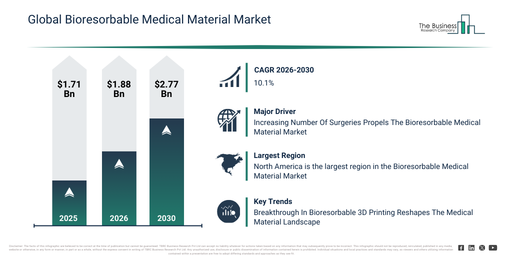
    Bioresorbable Medical Material Market Revenue Growth On Track For A 10.1% CAGR Through 2030

    The bioresorbable medical material market has experienced strong growth in recent years. It is projected to expand from $1.71 billion in 2025 to $1.88 billion in 2026, demonstrating a compound annual growth rate (CAGR) of 9.9%. This historical growth can be attributed to the increasing utilization of biodegradable polymers in medical devices, a rise in surgical implant procedures, the growing demand for minimally invasive treatments, advancements made in polymer chemistry, and the expansion of biomedical research activities.

    The bioresorbable medical material market is projected to experience substantial expansion over the coming years. Its valuation is predicted to reach $2.77 billion by 2030, demonstrating a compound annual growth rate (CAGR) of 10.1%. This expansion during the projection period stems from several factors, including the increasing integration of regenerative medicine solutions, a surging need for advanced implant materials, the broadening scope of personalized medical devices, increased financial commitments to tissue engineering technologies, and a heightened emphasis on minimizing follow-up surgeries. Key developments foreseen in this period encompass the growing integration of bioresorbable polymer implants, the escalating utilization of transient medical implants, a heightened requirement for sophisticated tissue engineering scaffolds, the proliferation of drug-eluting bioresorbable devices, and a stronger emphasis on materials with precisely managed degradation.

    Get A Free Sample Report With In-Depth Market Insights:

    https://thebusinessresearchcompany.com/sample_request?id=44496975&type=smp&name=Bioresorbable%20Medical%20Material%20Market%20Report%202026&utm_source=Blogs&utm_medium=Paid&utm_campaign=Oct_PR

    Bioresorbable Medical Material Market Expansion Drivers: What’s Shaping Future Growth?

    The rising volume of surgical procedures is projected to drive the future expansion of the bioresorbable medical material market. These interventions are defined as medical treatments necessitating an incision and the use of tools to rectify or arrest disease within a living body. Bioresorbable polymers are utilized in the fabrication of medical devices, especially within the fields of neurology, orthopedics, and cosmetic surgery. These materials enable the creation of products such as sutures, anchors, and screws. For instance, in June 2024, according to the International Society of Aesthetic Plastic Surgery (ISAPS), a US-based organization, aesthetic procedures reached nearly 35 million in 2023, with the total number of surgical and non-surgical procedures rising by 3.4% to 34.9 million. Consequently, the growing frequency of surgeries acts as a significant impetus for the growth of the bioresorbable medical material market.

    Bioresorbable Medical Material Market Segment Landscape And Growth Outlook

    The bioresorbable medical material market covered in this report is segmented –

    1) By Type: Polylactic Acid (PLA), Polyglycolic Acid (PGA), Polysaccharides, Polycaprolactone (PCL), Poly Lactic-Co-Glycolic Acid (PLGA)

    2) By Application: Drug Delivery, Orthopedics, Other Applications

    3) By End-User: Hospitals And Clinics, Ambulatory Surgical Centers, Research Institutes, Other End-Users

    Subsegments:

    1) By Polylactic Acid (PLA): Low Molecular Weight PLA, High Molecular Weight PLA, PLA Blends

    2) By Polyglycolic Acid (PGA): Homopolymer PGA, Copolymer PGA

    3) By Polysaccharides: Chitosan, Alginate, Hyaluronic Acid Derivatives

    4) By Polycaprolactone (PCL): Standard PCL, PCL Copolymers

    5) By Poly Lactic-Co-Glycolic Acid (PLGA): 50:50 PLGA, 75:25 PLGA

    Bioresorbable Medical Material Market Strategic Trends: What Defines The Next Growth Phase?

    Prominent companies active in the bioresorbable medical material market are dedicating efforts to devising novel biomaterials for 3D printing applications to uphold their industry standing. These novel biomaterials are sophisticated, bioresorbable substances crafted to safely disintegrate within the body while concurrently supporting the production of high-performance medical devices. As an illustration, in September 2023, Zeus Industrial Products, Inc., a US-based enterprise focused on advanced polymer solutions, introduced Absorv XSE, a next-generation tubing for bioresorbable vascular scaffolds. This offering elevates the functionality of vascular treatment devices by allowing broad customization across polymer categories and dimensions, enabling finely tuned mechanical and absorption attributes. Absorv XSE ensures enhanced wall-thickness consistency for reliable manufacturing and delivers approximately 25% more usable scaffolds after laser cutting compared to earlier versions.

    Bioresorbable Medical Material Market Competitive Landscape: Who Leads The Industry?

    Major companies operating in the bioresorbable medical material market are Johnson & Johnson, Abbott Laboratories, Medtronic PLC, Kureha Corporation, Evonik Industries AG, Stryker Corporation, Toray Industries Inc., Mitsui Chemicals Inc., Arkema S.A., Royal DSM N.V., Zimmer Biomet Holdings Inc., Ashland Global Holdings Inc., Corbion N.V., Zeus Industrial Products Inc., Unitika Ltd., Danimer Scientific, Synbra Technology, KLS Martin Group, Durect Corporation, Putnam Plastics Corporation, Zhejiang Haizheng Biomaterials Co. Ltd., NatureWorks LLC, Foster Corporation, Poly-Med Inc., Futerro S.A., TotalEnergies Corbion B.V.

    View The Full Bioresorbable Medical Material Market Report:

    https://thebusinessresearchcompany.com/report/bioresorbable-medical-material-global-market-report?utm_source=Blogs&utm_medium=Paid&utm_campaign=Oct_PR

    Bioresorbable Medical Material Market Top Region: Where Does Most Revenue Come From?

    North America was the largest region in the bioresorbable medical material market in 2025. Asia-Pacific is expected to be the fastest-growing region in the bioresorbable medical material market report during the forecast period. The regions covered in the bioresorbable medical material market report are Asia-Pacific, South East Asia, Western Europe, Eastern Europe, North America, South America, Middle East, Africa.

    Reach Out To Our Team:

    The Business Research Company: https://www.thebusinessresearchcompany.com/

    Americas: +1 310-496-7795

    Asia: +44 7882 955267 & +91 8897263534

    Europe: +44 7882 955267

    Email us at: marketing@tbrc.info

    Follow us on:

    LinkedIn: https://in.linkedin.com/company/the-business-research-company

    YouTube: https://www.youtube.com/channel/UC24_fI0rV8cR5DxlCpgmyFQ

    Global Market Model: https://www.thebusinessresearchcompany.com/global-market-model
  • Bioreactors Market Explained: What Is Fueling Growth To $21.03 Billion By 2030?

    Bioreactors Market Explained: What Is Fueling Growth To $21.03 Billion By 2030?

    Built to provide research that’s more actionable and strategically valuable, The Business Research Company’s 2026 market reports include market attractiveness analysis, total addressable market sizing, company benchmarking matrices, interactive Excel dashboards, broader supply chain intelligence, emerging startup tracking, and in-depth product insights.

    Bioreactors Market Value Growth And Long-Term Outlook

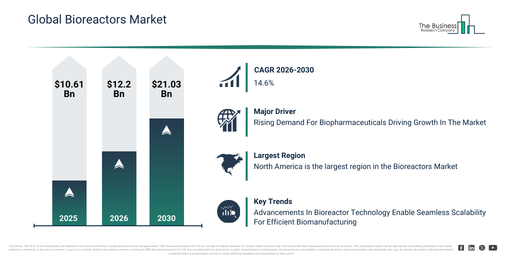
    The bioreactors market has experienced substantial expansion in recent times. This market is projected to expand from $10.61 billion in 2025 to $12.2 billion by 2026, demonstrating a compound annual growth rate (CAGR) of 15.0%. Historically, this growth can be attributed to factors such as the increased production of biologics, the rise of fermentation-based manufacturing, the growing adoption of fed-batch processes, increased investment in biopharma R&D, and the availability of advanced bioprocess control systems.

    The bioreactors market is projected to expand significantly in the coming years, with its size expected to reach $21.03 billion by 2030, exhibiting a compound annual growth rate (CAGR) of 14.6%. This anticipated growth during the forecast period is driven by factors such as an escalating demand for high-yield bioprocessing, the expansion of personalized medicine manufacturing, increasing integration of AI-driven process optimization, a heightened focus on production efficiency, and the broader adoption of continuous manufacturing models. Noteworthy trends anticipated in this period include the increased embrace of automated bioreactor systems, a rising utilization of continuous bioprocessing technologies, growing requirements for scalable bioreactor platforms, the proliferation of single-use bioreactor solutions, and an enhanced emphasis on process monitoring and control.

    Get A Free Sample Report With In-Depth Market Insights:

    https://thebusinessresearchcompany.com/sample_request?id=14669611&type=smp&name=Bioreactors%20Market%20Report%202026&utm_source=Blogs&utm_medium=Paid&utm_campaign=Oct_PR

    Bioreactors Market Development Factors: What’s Supporting Demand?

    The expanding need for biopharmaceuticals is anticipated to fuel the expansion of the bioreactors market in the coming years. Biopharmaceuticals are medical products sourced from biological origins, including proteins, cells, and living organisms, utilized for the prevention, treatment, or management of diverse illnesses. This rising demand stems from breakthroughs in medical research, the rise of personalized medicine, and the requirement for novel treatments, resulting in enhanced global healthcare outcomes. Bioreactors prove beneficial for biopharmaceuticals by facilitating the efficient and scalable manufacturing of therapeutic products, guaranteeing uniform quality, lowering production expenses, and aiding in the creation of innovative, life-improving medications. As an illustration, in November 2025, the Organisation for Economic Co operation and Development, a France-based intergovernmental economic organization, indicated that the average per capita spending on retail pharmaceuticals stood at USD 766 (adjusted for purchasing power disparities) across OECD countries in 2023. Consequently, the growing need for biopharmaceuticals is stimulating the expansion of the bioreactors market.

    Bioreactors Market Breakdown By Product Type And Application

    The bioreactors market covered in this report is segmented –

    1) By Type Of Bioprocess: Batch And Fed-Batch, Continuous

    2) By Cell: Mammalian Cells, Bacterial Cells, Yeast Cells, Other Cells

    3) By Control: Manual, Automated

    4) By Usage: Lab Scale Production, Pilot Scale Production, Full Scale Production

    5) By End-Use: Research And Development (R&D) Organizations, Biopharmaceutical (Biopharma) Manufacturers, Contract Manufacturing Organizations (CMOS)

    Subsegments:

    1) By Batch And Fed-Batch: Traditional Batch Bioreactors, Fed-Batch Bioreactors

    2) By Continuous: Perfusion Bioreactors, Continuous Stirred Tank Bioreactors (CSTR)

    Bioreactors Market Transformation Trends: What Innovations Are Driving Change?

    Leading companies in the bioreactors market are concentrating on developing advanced products, such as fixed-bed bioreactors, to support the cultivation of more complex biological cultures. A fixed-bed bioreactor is a type of bioreactor where biological organisms are attached to a solid support, which is typically composed of porous materials like beads, fibers, or granules. This design improves mass transfer, minimizes shear stress, and provides enhanced control over the biological processes. For instance, in October 2024, Univercells Technologies, a biotechnology company based in Belgium, launched the Scale-X Nexo bioreactor. This innovative bioreactor, featuring a 0.5 m² growth surface, is specifically designed to optimize cell culture process development, offering substantial benefits for biopharmaceutical companies and research institutions. The Scale-X Nexo enables seamless scalability to larger models, reduces media and reagent consumption, and has the potential to lower operational costs by up to 60% compared to traditional entry-level bioreactors. Additionally, its integration with the Skaia Vision application software further boosts productivity by providing precise cell count estimations without the need for direct sampling.

    Bioreactors Market Company Landscape And Competitive Strategy

    Major companies operating in the bioreactors market are Thermo Fisher Scientific Inc., Danaher Corporation, Merck KGaA, GE HealthCare Technologies Inc., Cytiva Bioscience Holding Ltd., Sartorius AG, Cellexus Ltd., Getinge AB, Eppendorf AG, ZETA Holding, Pierre Guerin, PBS Biotech Inc., TAP Biosystems, BBI-Biotech GmbH, HiTec Zang GmbH, Bioengineering AG, Infors AG, Univercells Technologies SA, CerCell A/S, Bailun Biotechnology Co. Ltd., BioNet, Shanghai Ritai Medicine Equipment Project Co. Ltd.

    View The Full Bioreactors Market Report:

    https://thebusinessresearchcompany.com/report/bioreactors-global-market-report?utm_source=Blogs&utm_medium=Paid&utm_campaign=Oct_PR

    Bioreactors Market Regional Breakdown: Where Is Demand Concentrated?

    North America was the largest region in the bioreactors market in 2025. Asia-Pacific is expected to be the fastest-growing region in the forecast period. The regions covered in the bioreactors market report are Asia-Pacific, South East Asia, Western Europe, Eastern Europe, North America, South America, Middle East, Africa.

    Reach Out To Our Team:

    The Business Research Company: https://www.thebusinessresearchcompany.com/

    Americas: +1 310-496-7795

    Asia: +44 7882 955267 & +91 8897263534

    Europe: +44 7882 955267

    Email us at: marketing@tbrc.info

    Follow us on:

    LinkedIn: https://in.linkedin.com/company/the-business-research-company

    YouTube: https://www.youtube.com/channel/UC24_fI0rV8cR5DxlCpgmyFQ

    Global Market Model: https://www.thebusinessresearchcompany.com/global-market-model
  • Bioprocess Bags Market Forecast To Reach $8.14 Billion By 2030: Key Trends Explained

    Bioprocess Bags Market Forecast To Reach $8.14 Billion By 2030: Key Trends Explained

    Backed by market attractiveness analysis, total addressable market sizing, company benchmarking matrices, interactive Excel dashboards, wider supply chain intelligence, emerging startup coverage, and detailed product-level insights, The Business Research Company’s 2026 market reports are designed to offer research that is more actionable and strategically valuable than ever.

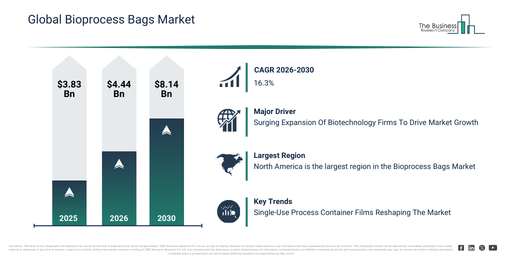
    Bioprocess Bags Market Poised To Hit $8.14 Billion By 2030 With A 16.3% CAGR

    The bioprocess bags market has seen substantial growth recently. Its valuation is set to rise from $3.83 billion in 2025 to $4.44 billion in 2026, progressing at a compound annual growth rate (CAGR) of 16.1%. Historically, this expansion has been driven by growth in biopharmaceutical manufacturing, increasing adoption of disposable technologies, expansion of contract manufacturing services, rising focus on process flexibility, and the availability of standardized single-use components.

    The bioprocess bags market is projected to experience substantial expansion over the next few years, reaching $8.14 billion by 2030 with a compound annual growth rate (CAGR) of 16.3%. This anticipated growth is primarily fueled by a surge in demand for biologics and vaccines, the enlargement of cell and gene therapy manufacturing, increased capital expenditure in modular bioprocessing facilities, a heightened focus on economical production methods, and enhanced regulatory backing for single-use technologies. Key developments emerging within this period encompass the wider embrace of single-use bioprocessing solutions, a heightened need for sterile disposable vessels, the increasing application of 3D bioprocess bags in cell cultivation, the proliferation of adaptable manufacturing processes, and a greater emphasis on mitigating contamination risks.

    Get A Free Sample Report With In-Depth Market Insights:

    https://thebusinessresearchcompany.com/sample_request?id=50059707&type=smp&name=Bioprocess%20Bags%20Market%20Report%202026&utm_source=Blogs&utm_medium=Paid&utm_campaign=Oct_PR

    Bioprocess Bags Market Industry Drivers: What’s Behind The Revenue Growth?

    The accelerated development of biotechnology firms is projected to drive the expansion of the bioprocess bag market moving forward. These companies leverage biological knowledge, tools, and techniques to develop products and services for various industries. Bioprocess bags offer several benefits to the biotechnology sector, including a reduced environmental footprint, flexibility, cost-effectiveness, time efficiency, and enhanced contamination control. For example, in January 2024, LondonLovesTech, a UK-based digital media and tech news publisher, reported that biotech companies and startups collectively raised $136.3B in 2023, demonstrating that funding activity remained above the pre-pandemic levels. Therefore, the significant growth of biotechnology firms is a key factor propelling the bioprocess bag market.

    Bioprocess Bags Market Segment Analysis And Revenue Potential

    The bioprocess bags market covered in this report is segmented –

    1) By Type: 2D Bioprocess Bags, 3D Bioprocess Bags, Other Types

    2) By Workflow: Upstream Process, Downstream Process, Process Development

    3) By Capacity: Small, Medium, Large, Extra Large

    4) By Application: Buffer And Media Storage, Cell Culture, Cell Separation And Harvest, Chromatography Feed And Collection, Ultrafiltration And Diafiltration, Intermediate And Final Product Hold, Other Applications

    5) By End-User: Pharmaceutical Companies, Biopharmaceutical Companies, Biotechnology Labs, Academic Labs

    Subsegments:

    1) By 2D Bioprocess Bags: Flat Bags, Customized 2D Bags

    2) By 3D Bioprocess Bags: Bioreactor Bags, Storage Bags, Mixing Bags

    3) By Other Types: Tubing And Connectors, Filters And Filter Assemblies, Bag Support Stands, Accessories For Sterilization And Storage

    #Bioprocess Bags Market Growth Trends: What’s Shaping The Future Outlook?

    Leading companies in the bioprocess bag market are developing novel products like single-use process container films to secure a competitive advantage. These films are flexible materials or sheets specifically engineered for the construction of single-use process containers within bioprocessing and pharmaceutical manufacturing contexts. For instance, in April 2023, Merck KGaA, a Germany-based pharmaceutical company, introduced Ultimus Single-Use Process Container Film, an advanced solution designed to address challenges in bioprocessing liquid applications. Built with a proprietary woven nylon structure, the Ultimus film offers extreme durability and leak resistance, providing 10 times greater abrasion resistance, 2.8 times greater tensile strength, and twice the puncture strength compared to other single-use bioprocessing films. This advancement aims to minimize disruptions in manufacturing operations and enhance operational efficiency. Additionally, the Ultimus Single-Use Process Container Film incorporates an animal origin-free contact resin. This attribute is designed to achieve a low extractable profile, meeting stringent regulatory requirements and industry standards.

    Bioprocess Bags Market Key Players Shaping Industry Direction

    Major companies operating in the bioprocess bags market are Saint-Gobain Group, Charter Medical LLC, Thermo Fisher Scientific Inc., 3M Company, Danaher Corporation, Merck KGaA, GE Healthcare, Parker Hannifin Corporation, Corning Incorporated, Avantor Inc., Lonza Group, GEA Group Aktiengesellschaft, Sartorius AG, Entegris Inc., W. L. Gore & Associates Inc., Repligen Corporation, ESI Technologies Group, Colder Products Company, CellBios Healthcare and Lifesciences Pvt Ltd., PBS Biotech

    View The Full Bioprocess Bags Market Report:

    https://thebusinessresearchcompany.com/report/bioprocess-bags-global-market-report?utm_source=Blogs&utm_medium=Paid&utm_campaign=Oct_PR

    Bioprocess Bags Market Geographic Landscape: Which Region Leads Industry Growth?

    North America was the largest region in the bioprocess bags market in 2025. Asia-Pacific is expected to be the fastest-growing region in the forecast period. The regions covered in the bioprocess bags market report are Asia-Pacific, South East Asia, Western Europe, Eastern Europe, North America, South America, Middle East, Africa.

    Reach Out To Our Team:

    The Business Research Company: https://www.thebusinessresearchcompany.com/

    Americas: +1 310-496-7795

    Asia: +44 7882 955267 & +91 8897263534

    Europe: +44 7882 955267

    Email us at: marketing@tbrc.info

    Follow us on:

    LinkedIn: https://in.linkedin.com/company/the-business-research-company

    YouTube: https://www.youtube.com/channel/UC24_fI0rV8cR5DxlCpgmyFQ

    Global Market Model: https://www.thebusinessresearchcompany.com/global-market-model
  • Biopreservation Market Analysis: Understanding The Drivers Behind 13.2% CAGR Through 2030 Growth

    Biopreservation Market Analysis: Understanding The Drivers Behind 13.2% CAGR Through 2030 Growth

    Featuring market attractiveness scoring, total addressable market sizing, company benchmarking matrices, interactive Excel dashboards, deeper supply chain intelligence, emerging startup tracking, and granular product-level insights, The Business Research Company’s 2026 market reports are built to deliver research that is both more actionable and more strategically valuable.

    Biopreservation Market Size And Revenue Outlook Through 2030

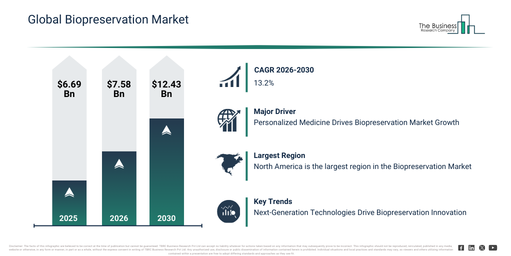
    The biopreservation market size has experienced rapid expansion in recent years. Projections indicate an increase in its value from $6.69 billion in 2025 to $7.58 billion in 2026, demonstrating a compound annual growth rate (CAGR) of 13.3%. Historical growth in this sector has been driven by factors such as the expansion of biobanking activities, an increase in clinical research studies, the rising use of biospecimens in diagnostics, enhanced availability of preservation equipment, and the adoption of standardized storage protocols.

    The biopreservation market is anticipated to experience significant expansion over the coming years. This market is projected to reach $12.43 billion by 2030, exhibiting a compound annual growth rate (CAGR) of 13.2%. Key drivers for this growth during the forecast period include the escalating demand for regenerative medicine samples, the broadening scope of precision medicine research, increased capital allocation for biorepository infrastructure, a heightened emphasis on ensuring sample quality, and the global surge in clinical trial undertakings. Significant trends expected over this period encompass the wider adoption of sophisticated cryopreservation methods, a growing need for solutions for long-term biospecimen storage, the increasing application of specialized biopreservation media, the expansion of consolidated biorepository facilities, and a stronger commitment to maintaining sample integrity and traceability.

    Get A Free Sample Report With In-Depth Market Insights:

    https://thebusinessresearchcompany.com/sample_request?id=72710582&type=smp&name=Biopreservation%20Market%20Report%202026&utm_source=Blogs&utm_medium=Paid&utm_campaign=Oct_PR

    Biopreservation Market Growth Factors: What’s Supporting Expansion?

    The escalating demand for personalized medicine is significantly boosting the growth of the biopreservation market. This type of medicine offers treatments specifically designed for individual patients and their particular diseases. The creation of these tailored medicines is supported by biobanks, which preserve human tissues and cells through biopreservation techniques. For example, in February 2024, the Personalized Medicine Coalition, a US-based non-profit organization, indicated that the FDA approved 16 novel personalized therapies for patients with rare diseases in 2023, a notable increase from six in 2022. Thus, the continuous rise in demand for personalized medicine is anticipated to drive the biopreservation market’s expansion moving forward.

    Biopreservation Market Segmentation And Category Overview

    The biopreservation market covered in this report is segmented –

    1) By Type: Biopreservation Equipment, Biopreservation Media

    2) By Biospecimen: Human Tissue Samples, Organs, Stem Cells, Other Biospecimens

    3) By Application: Therapeutic Applications, Research Applications, Clinical Trials, Other Applications

    4) By End User: Biobanks, Gene Banks, Hospitals, Other End Users

    Subsegments:

    1) By Biopreservation Equipment: Freezers, Liquid Nitrogen Tanks, Refrigerators, Incubators

    2) By Biopreservation Media: Cryoprotectants, Growth Media, Supplementary Media

    Biopreservation Market Industry Trends: What’s Reshaping Demand?

    Companies operating within the biopreservation market are prioritizing the development of innovative solutions, such as cryopreservation solutions, to address the increasing demand for preserving intricate tissues and organs over extended periods. Cryopreservation is defined as the process of protecting biological material at extremely low temperatures (−196°C), achieved either very quickly, as seen in seed storage, or gradually with controlled dehydration, providing advantages over conventional storage methods by sustaining viability and functionality for longer durations. For example, in April 2024, Pluristyx, Inc., a US-based biotechnology company, introduced PluriFreeze Cryopreservation Media, engineered to boost the viability and functionality of human-derived pluripotent stem cells (iPSCs) and other fragile cell types during freezing and thawing. PluriFreeze is formulated exclusively from synthetic and animal-origin-free (AOF) materials. Its low viscosity supports automation and large-scale cell production, while the accompanying DMSO-free wash solution, PluriPrep, allows for extended processing times, thereby optimizing cell handling and recovery for research and clinical uses.

    Biopreservation Market Competitive Analysis Of Leading Industry Participants

    Major companies operating in the biopreservation market are Thermo Fisher Scientific Inc., BioLife Solutions Inc., VWR International LLC, BioCision LLC, Lifeline Scientific Inc., Biomatrica Inc., Custom Biogenic System Inc., QIAGEN NV, ThermoGenesis Holdings Inc., MVE Biological Solutions LLC, Taylor-Wharton America Inc., X-Therma Inc., Cesca Therapeutics Inc., Core Dynamics Ltd., The Merck Group, Azenta US Inc., Avantor Inc., Bio-Techne Corporation, Worthington Industries Inc., Chart Industries Inc., Cryoport Inc., LabVantage Solutions Inc., Brooks Automation Inc., BioVault Technical Ltd., Biomatik Corporation, Biostorage Technologies Inc., Arctiko A/S, Eppendorf AG, Panasonic Healthcare Co. Ltd., BioSpherix Ltd.

    View The Full Biopreservation Market Report:

    https://thebusinessresearchcompany.com/report/biopreservation-global-market-report?utm_source=Blogs&utm_medium=Paid&utm_campaign=Oct_PR

    Biopreservation Market Largest Region: Which Geography Holds The Biggest Share?

    North America was the largest region in the biopreservation market share in 2025. The regions covered in the biopreservation market report are Asia-Pacific, South East Asia, Western Europe, Eastern Europe, North America, South America, Middle East, Africa.

    Reach Out To Our Team:

    The Business Research Company: https://www.thebusinessresearchcompany.com/

    Americas: +1 310-496-7795

    Asia: +44 7882 955267 & +91 8897263534

    Europe: +44 7882 955267

    Email us at: marketing@tbrc.info

    Follow us on:

    LinkedIn: https://in.linkedin.com/company/the-business-research-company

    YouTube: https://www.youtube.com/channel/UC24_fI0rV8cR5DxlCpgmyFQ

    Global Market Model: https://www.thebusinessresearchcompany.com/global-market-model