Blog

  • Biologics Testing Market To Witness 17.2% CAGR Growth Through 2030: Key Industry Drivers

    Biologics Testing Market To Witness 17.2% CAGR Growth Through 2030: Key Industry Drivers

    Backed by market attractiveness analysis, total addressable market sizing, company benchmarking matrices, interactive Excel dashboards, wider supply chain intelligence, emerging startup coverage, and detailed product-level insights, The Business Research Company’s 2026 market reports are designed to offer research that is more actionable and strategically valuable than ever.

    Biologics Testing Market CAGR Outlook And Future Development

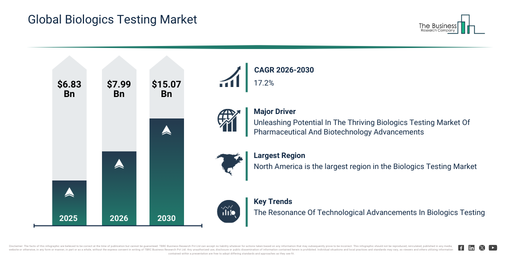
    The biologics testing market size has experienced significant expansion in recent years. It is anticipated to grow from $6.83 billion in 2025 to $7.99 billion in 2026, reflecting a compound annual growth rate (CAGR) of 17.0%. The historical growth of this market can be attributed to several factors, including increasing biologics manufacturing volumes, the expansion of vaccine development programs, rising regulatory expectations for product safety, a wider adoption of monoclonal antibody therapies, and the growth of contract testing laboratories.

    The biologics testing market is projected to expand significantly in the coming years. This market is anticipated to reach a valuation of $15.07 billion by 2030, exhibiting a compound annual growth rate (CAGR) of 17.2%. This expansion during the forecast period is driven by several factors, including the surging demand for rapid release testing, the growing uptake of automated quality control systems, the broadening requirements for cell and gene therapy testing, an increased emphasis on data integrity, and higher investments in digital laboratory infrastructure. Key trends anticipated over the forecast period encompass the wider adoption of advanced analytical testing platforms, an escalating demand for comprehensive biologics quality testing, the increasing application of high-sensitivity assays, the growth of outsourced testing services, and a heightened focus on regulatory compliance testing.

    Get A Free Sample Report With In-Depth Market Insights:

    https://thebusinessresearchcompany.com/sample_request?id=10592357&type=smp&name=Biologics%20Testing%20Market%20Report%202026&utm_source=Blogs&utm_medium=Paid&utm_campaign=Oct_PR

    Biologics Testing Market Industry Drivers: What’s Behind The Revenue Growth?

    The expanding pharmaceutical and biotechnology industries are anticipated to drive the biologics testing market forward. The pharmaceutical sector primarily concentrates on developing and producing medications for various diseases and health conditions. Conversely, the biotechnology industry focuses on applying technology to biological science and healthcare. Biologics testing encompasses examinations to pinpoint and quantify impurities, assess stability, and evaluate the immune response to a drug. The growth within the pharmaceutical and biotechnology industries has also led to advancements in biologics testing technology, including the creation of new analytical instruments and methodologies. This has facilitated more precise and efficient testing, thereby decreasing the time and cost associated with bringing new biologics to market. For instance, in July 2024, as per Eurostat, a Belgium-based governing body, pharmaceutical production in the EU rose to €44 billion ($46.7 billion) in 2023, demonstrating considerable growth in the sector. Hence, the rapidly growing pharmaceutical and biotechnology industries are fueling the expansion of the biologics testing market.

    Biologics Testing Market Breakdown By Product Type And Application

    The biologics testing market covered in this report is segmented –

    1) By Product: Reagents And Kits, Instruments, Other Products

    2) By Test Type: Endotoxin Test, Sterility Test, Mycoplasma Tests, Bioburden Tests, Residual Host-Cell Proteins And DNA Detection Tests, Virus Safety Test, Other Test Types

    3) By Application: Vaccine Development And Manufacturing, Monoclonal Antibodies Development And Manufacturing, Cellular And Gene Therapy Products Development And Manufacturing, Blood And Blood Products Development And Manufacturing, Other Applications

    Subsegments:

    1) By Reagents And Kits: ELISA Kits, PCR Kits, Cell Culture Reagents

    2) By Instruments: Spectrophotometers, Chromatography Systems, Microplate Readers

    3) By Other Products: Software, Consumables, Reference Standards

    #Biologics Testing Market Growth Trends: What’s Shaping The Future Outlook?

    Key players within the biological testing market are introducing novel technologies, such as protein engineering methods, to enhance market profitability. Protein engineering involves the systematic design and alteration of proteins to generate new or improved versions possessing desired characteristics. For instance, in July 2023, Queensland University of Technology, an Australia-based university, unveiled an innovative protein-engineering technique that facilitates the swift and precise creation of new diagnostic tests. This technology presents a fresh strategy for improving and expanding laboratory testing, which is expected to have a notable positive influence on both public health and the economy.

    Biologics Testing Market Company Landscape And Competitive Strategy

    Major companies operating in the biologics testing market are Charles River Laboratories Inc., Thermo Fisher Scientific Inc., Merck KGaA, SGS Société Générale de Surveillance SA, WuXi AppTec Co. Ltd., Sartorius AG, Cytovance Biologics Inc., Pace Analytical Services Inc., Avance Biosciences Inc., Biomerieux SA, Lonza Group Ltd., Genscript Biotech Corp., Bio-Rad Laboratories Inc., Accugen Laboratories Inc., Gibraltar Laboratories Inc., Jordi Labs, Bioquell Limited, Southern Research, Promega Corporation, Lancaster Laboratories Inc., Toxikon Corporation, Eurofins BioPharma Product Testing, QIAGEN N.V., Danaher Corporation, Agilent Technologies Inc., PerkinElmer Inc., Abbott Laboratories, Beckman Coulter Inc., Becton Dickinson and Company, Roche Holding AG

    View The Full Biologics Testing Market Report:

    https://thebusinessresearchcompany.com/report/biologics-testing-global-market-report?utm_source=Blogs&utm_medium=Paid&utm_campaign=Oct_PR

    Biologics Testing Market Largest Region: Which Geography Holds The Biggest Share?

    North America was the largest region in the biologics testing market in 2025. Asia-Pacific is expected to be the fastest-growing region in the global biologics testing market duirng the forecast period. The regions covered in the biologics testing market report are Asia-Pacific, South East Asia, Western Europe, Eastern Europe, North America, South America, Middle East, Africa.

    Reach Out To Our Team:

    The Business Research Company: https://www.thebusinessresearchcompany.com/

    Americas: +1 310-496-7795

    Asia: +44 7882 955267 & +91 8897263534

    Europe: +44 7882 955267

    Email us at: marketing@tbrc.info

    Follow us on:

    LinkedIn: https://in.linkedin.com/company/the-business-research-company

    YouTube: https://www.youtube.com/channel/UC24_fI0rV8cR5DxlCpgmyFQ

    Global Market Model: https://www.thebusinessresearchcompany.com/global-market-model
  • Biologics Outsourcing Market Projected For Strong Expansion Through 2030: Key Trends And Future Outlook

    Biologics Outsourcing Market Projected For Strong Expansion Through 2030: Key Trends And Future Outlook

    Featuring market attractiveness scoring, total addressable market sizing, company benchmarking matrices, interactive Excel dashboards, deeper supply chain intelligence, emerging startup tracking, and granular product-level insights, The Business Research Company’s 2026 market reports are built to deliver research that is both more actionable and more strategically valuable.

    Biologics Outsourcing Market Set To Climb From $25.57 Billion In 2026 To $42.43 Billion By 2030

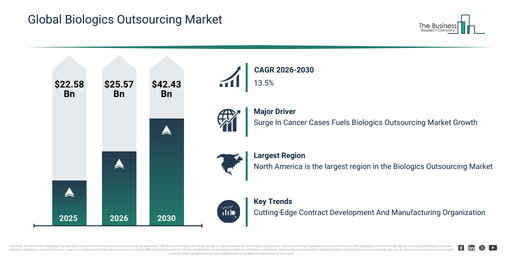
    The biologics outsourcing market has experienced significant growth in recent years. It is anticipated to expand from $22.58 billion in 2025 to $25.57 billion in 2026, exhibiting a compound annual growth rate (CAGR) of 13.2%. The historical increase can be ascribed to a rise in biologics commercialization activities, the increasing capital intensity of biologics facilities, the expansion of biosimilar development programs, the growing complexity of regulatory compliance, and increased collaboration between pharmaceutical companies and CDMOs.

    The biologics outsourcing market is anticipated to undergo significant growth in the coming years. It is projected to expand to $42.43 billion by 2030, achieving a compound annual growth rate (CAGR) of 13.5%. This forecasted growth can be attributed to factors such as increasing demand for large-scale biologics production, a rise in investments towards multi-product manufacturing sites, the broadening scope of cell and gene therapy outsourcing, a heightened focus on ensuring supply chain resilience, and the growing adoption of digital manufacturing platforms. Prominent trends expected during this period include an increase in the strategic outsourcing of biologic manufacturing, a rising need for comprehensive end-to-end outsourcing services, an emerging preference for flexible manufacturing partnerships, the expansion of global CDMO networks, and an enhanced concentration on optimizing costs and managing risks.

    Get A Free Sample Report With In-Depth Market Insights:

    https://thebusinessresearchcompany.com/sample_request?id=89696305&type=smp&name=Biologics%20Outsourcing%20Market%20Report%202026&utm_source=Blogs&utm_medium=Paid&utm_campaign=Oct_PR

    Biologics Outsourcing Market Growth Factors: What’s Supporting Expansion?

    The increasing incidence of cancer is anticipated to fuel the expansion of the biologics outsourcing market moving forward. Cancer encompasses a wide range of diseases characterized by the uncontrolled multiplication of abnormal cells within almost any organ or tissue, which then exceed their normal limits, potentially invading adjacent body parts or metastasizing to other organs. In the context of cancer, biologics outsourcing is crucial as it offers specialized knowledge, facilities, and resources essential for the creation, production, and clinical provision of biologic treatments. These include monoclonal antibodies, immunotherapies, and other targeted biologics utilized for the diagnosis, therapy, and ongoing management of diverse cancer types. As an illustration, data from the National Center for Biotechnology Information, a US-based intergovernmental organization, revealed that in January 2023, the United States recorded 1,958,310 new cancer cases, with 609,820 cancer deaths projected for 2023. Moreover, annual new cancer cases are projected to climb to 29.5 million, and cancer-related fatalities are expected to reach 16.4 million by 2040. Consequently, the growing prevalence of cancer cases is a key impetus for the expansion of the biologics outsourcing market.

    Biologics Outsourcing Market Segment Analysis And Revenue Potential

    The biologics outsourcing market covered in this report is segmented –

    1) By Product Type: Antibodies, Recombinant, Vaccines, Protein, Other Products

    2) By Source: Human, Microbial, Other Sources

    3) By Application: Oncology, Cellular And Gene Therapy, Blood And Blood-Related Products Development, Vaccine Development, Stem Cell Research, Other Applications

    4) By End User: Pharmaceutical Industries, Biotechnology Industries, Contract Development And Manufacturing Organization (CDMO)

    Subsegments:

    1) By Antibodies: Monoclonal Antibodies, Polyclonal Antibodies

    2) By Recombinant: Recombinant Proteins, Recombinant DNA Products

    3) By Vaccines: Therapeutic Vaccines, Preventive Vaccines

    4) By Protein: Enzymes, Hormones, Cytokines

    5) By Other Products: Gene Therapies, Cell Therapies, Biosimilars

    Biologics Outsourcing Market Industry Trends: What’s Reshaping Demand?

    Leading companies within the biologics outsourcing market are prioritizing the establishment of new Contract Development and Manufacturing Organizations (CDMOs) to maintain their market position. A CDMO is a firm offering diverse services to pharmaceutical and biotechnology companies concerning the development and production of drugs and other therapeutic goods. For instance, in October 2023, Tanvex BioPharma USA Inc., a US-based developer and manufacturer of biopharmaceuticals, introduced Tanvex CDMO. This new arm of the company provides comprehensive services for the development and manufacturing of biologics, addressing the needs of the biopharmaceutical industry. Situated in San Diego’s Sorrento Valley biotech hub, Tanvex CDMO features a 100,000-square-foot facility. This facility includes a state-of-the-art Research and Development (R&D) center, two mammalian Good Manufacturing Practice (GMP) manufacturing suites, one microbial GMP manufacturing suite, Quality Control (QC) laboratories, and a GMP warehouse. Leveraging Tanvex BioPharma USA Inc.’s proven track record, Tanvex CDMO aims to assist early-stage companies in progressing mammalian and microbial-derived biologics from initial concept to commercialization, offering a substantial contribution to the development of novel biologics and biosimilars.

    Biologics Outsourcing Market Key Players Shaping Industry Direction

    Major companies operating in the biologics outsourcing market are AbbVie Inc., Thermo Fisher Scientific Inc., Boehringer Ingelheim GmbH, Lonza Group Ag, Catalent Inc., Sartorius Stedim Biotech S.A., Charles River Laboratories International Inc., WuXi Biologics Inc., Samsung Biologics Co. Ltd., Emergent BioSolutions Inc., CordenPharma GmbH, Ajinomoto Bio-Pharma Services, Syngene International Limited, Rentschler Biopharma SE, Albany Molecular Research Inc., KBI Biopharma Inc., Fujifilm Diosynth Biotechnologies Inc., Avid Bioservices Inc., BioVectra Inc., ProBioGen AG, ABL Inc., Vibalogics GmbH, JHL Biotech Inc., Goodwin Biotechnology Inc., Crown Bioscience Inc., Cytovance Biologics Inc., LakePharma Inc., AGC Biologics GmbH, Biomay AG, Polpharma Biologics S.A.

    View The Full Biologics Outsourcing Market Report:

    https://thebusinessresearchcompany.com/report/biologics-outsourcing-global-market-report?utm_source=Blogs&utm_medium=Paid&utm_campaign=Oct_PR

    Biologics Outsourcing Market Regional Analysis: Which Geography Leads On Revenue?

    North America was the largest region in the biologics outsourcing market in 2025. The regions covered in the biologics outsourcing market report are Asia-Pacific, South East Asia, Western Europe, Eastern Europe, North America, South America, Middle East, Africa.

    Reach Out To Our Team:

    The Business Research Company: https://www.thebusinessresearchcompany.com/

    Americas: +1 310-496-7795

    Asia: +44 7882 955267 & +91 8897263534

    Europe: +44 7882 955267

    Email us at: marketing@tbrc.info

    Follow us on:

    LinkedIn: https://in.linkedin.com/company/the-business-research-company

    YouTube: https://www.youtube.com/channel/UC24_fI0rV8cR5DxlCpgmyFQ

    Global Market Model: https://www.thebusinessresearchcompany.com/global-market-model

  • Biologics Contract Development Market Outlook 2026–2030: Growth Trends, Market Dynamics And Emerging Opportunities

    Biologics Contract Development Market Outlook 2026–2030: Growth Trends, Market Dynamics And Emerging Opportunities

    Built to provide research that’s more actionable and strategically valuable, The Business Research Company’s 2026 market reports include market attractiveness analysis, total addressable market sizing, company benchmarking matrices, interactive Excel dashboards, broader supply chain intelligence, emerging startup tracking, and in-depth product insights.

    Biologics Contract Development Market Forecast: Value Set To Climb From $9.53 Billion To $14.46 Billion

    The biologics contract development market has experienced significant expansion in recent years. This market is projected to expand from $8.55 billion in 2025 to reach $9.53 billion in 2026, demonstrating a compound annual growth rate (CAGR) of 11.4%. Historically, this growth was driven by factors such as the increasing complexity of the biologics pipeline, escalating costs associated with in-house manufacturing, the broadening scope of monoclonal antibody development, the expansion of early-stage biologics research, and a greater dependency on specialized CDMOs.

    The biologics contract development market is anticipated to experience substantial growth over the next few years, with its size projected to reach $14.46 billion by 2030, exhibiting a compound annual growth rate (CAGR) of 11.0%. This expansion during the forecast period can be attributed to factors such as increasing demand for rapid biologics scale-up, rising investments in advanced mammalian cell platforms, the broadening of oncology biologics pipelines, a heightened focus on flexible manufacturing capacity, and the growing adoption of digital bioprocess optimization. Key trends expected in this period include an increasing tendency to outsource biologics process development, a rising requirement for scalable cell line development, the wider integration of single-use bioprocessing systems, the expansion of integrated CDMO service models, and an intensified drive toward accelerating speed-to-clinic development.

    Get A Free Sample Report With In-Depth Market Insights:

    https://thebusinessresearchcompany.com/sample_request?id=29626789&type=smp&name=Biologics%20Contract%20Development%20Market%20Report%202026&utm_source=Blogs&utm_medium=Paid&utm_campaign=Oct_PR

    Biologics Contract Development Market Demand Drivers: What’s Powering Industry Growth?

    The increasing occurrence of chronic illnesses is anticipated to fuel the biologics contract development market moving forward. These are defined as conditions lasting a year or longer, demanding ongoing medical attention. The uptick in chronic disease cases is generating greater demand for the creation of novel medications, including biologics, thereby stimulating the biologics contract development market. For example, in September 2024, reports issued by the Office for Health Improvement & Disparities, a UK-based government body, indicated that during the first half of 2023, there were 3,940 excess deaths linked to chronic lower respiratory diseases, representing a 30% rise compared to anticipated figures. For the entire year, this figure climbed to 5,363, an overall increase of 22%. Consequently, the growing prevalence of chronic diseases is set to propel the growth of the biologics contract development market.

    Biologics Contract Development Market Segmentation And Category Overview

    The biologics contract development market covered in this report is segmented –

    1) By Source: Microbial, Mammalian, Other Sources

    2) By Indication: Oncology, Immunological Disorders, Cardiovascular Disorders, Hematological Disorders, Other Indications

    3) By Product Service: Cell Line Development, Process Development, Other Product Services

    Subsegments:

    1) By Microbial: Bacterial Sources, Yeast Sources, Fungal Sources

    2) By Mammalian: Chinese Hamster Ovary (CHO) Cells, Human Embryonic Kidney (HEK) Cells, Hybridoma Cells

    3) By Other Sources: Plant-Based Systems, Insect Cell Systems, Algal Sources

    Biologics Contract Development Market Innovation Trends: What Developments Are Reshaping The Industry?

    Leading companies engaged in biologics contract development are emphasizing the integration of data analytics into their development processes. These major firms are incorporating digital technologies and data analytics into biologics development workflows to enhance process monitoring, data analysis, and informed decision-making, consequently improving efficiency and productivity. For example, in October 2023, WuXi Biologics, a China-based company focused on biologics contract development and manufacturing, introduced its WuXiUI high-productivity bioprocessing platform. WuXiUI is WuXi Biologics’ proprietary ultra-intensified intermittent-perfusion fed-batch platform, which has been successfully created and implemented both internally and in biologics development and manufacturing projects for clients. This platform facilitates, among other things, real-time observation of crucial process parameters using integrated Process Analytical Technology tools, boosts cell culture productivity, and forecasts product quality and yield profiles under various process conditions, given appropriate process data inputs.

    Biologics Contract Development Market Competitive Analysis Of Leading Industry Participants

    Major companies operating in the biologics contract development market are WuXi Biologics, Abzena Ltd., Fujifilm Diosynth Biotechnologies, KBI Biopharma, AGC Biologics, Thermo Fisher Scientific Inc, LakePharma Inc., GenScript Biotech Corporation, Bionova Scientific Inc., Boehringer Ingelheim GmbH, Samsung BioLogics, Forge Biologics, Lonza Group, Catalent Inc., Cytovance Biologics, Emergent BioSolutions, Eurofins CDMO, Merck Group, Patheon N.V., ProBioGen AG, Rentschler Biopharma SE, Syngene International Limited, Vibalogics GmbH, Yposkesi

    View The Full Biologics Contract Development Market Report:

    https://thebusinessresearchcompany.com/report/biologics-contract-development-global-market-report?utm_source=Blogs&utm_medium=Paid&utm_campaign=Oct_PR

    Biologics Contract Development Market Geographic Spread And Regional Opportunities

    North America was the largest region in the biologics contract development market share in 2025. Asia-Pacific is expected to be the fastest-growing region in the forecast period. The regions covered in the biologics contract development market report are Asia-Pacific, South East Asia, Western Europe, Eastern Europe, North America, South America, Middle East, Africa.

    Reach Out To Our Team:

    The Business Research Company: https://www.thebusinessresearchcompany.com/

    Americas: +1 310-496-7795

    Asia: +44 7882 955267 & +91 8897263534

    Europe: +44 7882 955267

    Email us at: marketing@tbrc.info

    Follow us on:

    LinkedIn: https://in.linkedin.com/company/the-business-research-company

    YouTube: https://www.youtube.com/channel/UC24_fI0rV8cR5DxlCpgmyFQ

    Global Market Model: https://www.thebusinessresearchcompany.com/global-market-model
  • Biological Safety Testing Products And Services Market Growth Outlook From $6.93 Billion In 2026 To $11.34 Billion By 2030

    Biological Safety Testing Products And Services Market Growth Outlook From $6.93 Billion In 2026 To $11.34 Billion By 2030

    Backed by market attractiveness analysis, total addressable market sizing, company benchmarking matrices, interactive Excel dashboards, wider supply chain intelligence, emerging startup coverage, and detailed product-level insights, The Business Research Company’s 2026 market reports are designed to offer research that is more actionable and strategically valuable than ever.

    Biological Safety Testing Products And Services Market Revenue Growth On Track For A 13.1% CAGR Through 2030

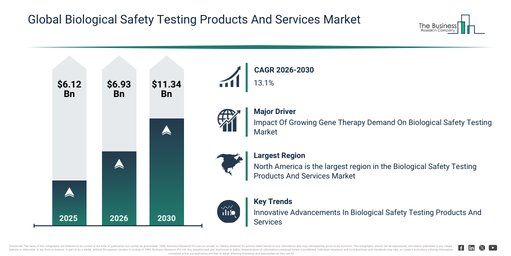
    The biological safety testing products and services market has experienced significant expansion recently. Projections indicate a rise in this market, moving from $6.12 billion in 2025 to $6.93 billion in 2026, demonstrating a compound annual growth rate (CAGR) of 13.3%. Historically, this expansion has been driven by factors such as increased vaccine and biologic production, a boost in pharmaceutical manufacturing capabilities, stricter regulatory oversight concerning product safety, greater integration of cell and gene therapies, and an uptick in clinical research endeavors.

    The biological safety testing products and services market is projected to experience swift expansion in the coming years. This market is forecast to reach $11.34 billion by 2030, exhibiting a compound annual growth rate (CAGR) of 13.1%. Factors driving this growth during the projection period include a heightened demand for sophisticated biologics safety assays, greater investments in automated testing solutions, the broadening of gene and cell therapy development pipelines, an increasing requirement for quicker release testing, and a stronger focus on reducing contamination risks. Key trends anticipated within this forecast timeframe encompass the wider embrace of rapid microbial detection techniques, a surging demand for automated sterility testing systems, the expanded application of PCR-based safety testing, an increase in outsourced biological testing services, and a reinforced commitment to regulatory-compliant testing approaches.

    Get A Free Sample Report With In-Depth Market Insights:

    https://thebusinessresearchcompany.com/sample_request?id=72451881&type=smp&name=Biological%20Safety%20Testing%20Products%20And%20Services%20Market%20Report%202026&utm_source=Blogs&utm_medium=Paid&utm_campaign=Oct_PR

    Biological Safety Testing Products And Services Market Growth Drivers: What’s Behind The Acceleration?

    The increasing need for gene therapies is anticipated to drive the expansion of the biological safety testing products and services market in the future. Gene therapy, a medical strategy, involves utilizing genes to address or avert illnesses by substituting, altering, or complementing defective genes. Greater investment and research focused on gene mutation, coupled with favorable regulatory frameworks, are further accelerating innovation and broadening the applications of gene therapeutics. Within gene therapy, biological safety testing products and services play a crucial role in guaranteeing that viral vectors and genetic materials are free from contaminants and safe for application. As an illustration, a document released by the American Society of Gene & Cell Therapy, a US-based non-profit medical and scientific organization, indicated in January 2024 that the quantity of gene therapies undergoing Phase III clinical trials experienced a 10% rise in quarter four, 2023. This marked the initial quarterly surge of its kind since quarter three, 2022. Consequently, the escalating demand for gene therapies is a key driver for the biological safety testing products and services market.

    Biological Safety Testing Products And Services Market Segment Outlook: Which Categories Are Growing Fastest?

    The biological safety testing products and services market covered in this report is segmented –

    1) By Product: Reagents And Kits, Instruments, Services

    2) By Test Type: Endotoxin Tests, Sterility Tests, Cell Line Authentication And Characterization Tests, Bioburden Tests, Adventitious Agent Detection Tests, Residual Host Contamination Detection Tests, Other Test Types

    3) By Application: Vaccines And Therapeutics, Blood And Blood-Based Products, Gene Therapy, Tissue And Tissue-based Products, Stem Cell

    Subsegments:

    1) By Reagents And Kits: Endotoxin Testing Kits, Mycoplasma Detection Kits, Sterility Testing Kits, Microbial Detection Reagents, Cell Culture Media Reagents

    2) By Instruments: PCR Instruments, Microplate Readers, Bioluminescence Detection Systems, Automated Cell Culture Systems, ELISA Readers

    3) By Services: Microbial Testing Services, Biocompatibility Testing Services, Endotoxin Testing Services, Environmental Monitoring Services, Consulting And Validation Services

    Biological Safety Testing Products And Services Market Trends: What’s Defining The Industry’s Next Phase?

    Leading companies within the biological safety testing products and services market are actively developing swift, animal-free bacterial endotoxin testing solutions to enhance patient safety and accelerate drug development processes. This innovative methodology strives to reduce testing periods and improve reliability, all while avoiding the use of animal-based products. For example, in January 2024, Charles River Laboratories International, a US-based pharmaceutical and biotechnology company, launched its Endosafe Trillium cartridge. This product leverages recombinant technology to detect and quantify endotoxins without relying on animal-derived materials. As the first rapid animal-free bacterial endotoxin test, it provides a faster turnaround time and eliminates the requirement for animal-derived reagents, thereby boosting sustainability and ethical testing practices. The aim of this product is to furnish rapid, accurate results, concurrently decreasing reliance on traditional Limulus amebocyte lysate (LAL), which is sourced from horseshoe crabs.

    Biological Safety Testing Products And Services Market Leading Companies And Competitive Benchmarking

    Major companies operating in the biological safety testing products and services market are Merck KGaA, Thermo Fisher Scientific Inc., Quest Diagnostics Incorporated, SGS Société Générale de Surveillance SA, Eurofins Scientific, Agilent Technologies Inc., Lonza Group AG, WuXi AppTec Co. Ltd., Charles River Laboratories Inc., BioMérieux SA, Almac Group, Samsung Biologics Co. Ltd., Maravai LifeSciences Holdings Inc., Genscript Biotech Corp, Wako Pure Chemical Industries Ltd., Associates of Cape Cod Inc., InvivoGen S.A.S., Microcoat Biotechnologie GmbH, BSL BIOSERVICE Scientific Laboratories Munich GmbH, Redberry, PathoQuest

    View The Full Biological Safety Testing Products And Services Market Report:

    https://thebusinessresearchcompany.com/report/biological-safety-testing-products-and-services-global-market-report?utm_source=Blogs&utm_medium=Paid&utm_campaign=Oct_PR

    Biological Safety Testing Products And Services Market Top Region By Revenue And Market Share

    North America was the largest region in the biological safety testing products and services market in 2025. Asia-Pacific is expected to be the fastest-growing region in the forecast period. The regions covered in the biological safety testing products and services market report are Asia-Pacific, South East Asia, Western Europe, Eastern Europe, North America, South America, Middle East, Africa.

    Reach Out To Our Team:

    The Business Research Company: https://www.thebusinessresearchcompany.com/

    Americas: +1 310-496-7795

    Asia: +44 7882 955267 & +91 8897263534

    Europe: +44 7882 955267

    Email us at: marketing@tbrc.info

    Follow us on:

    LinkedIn: https://in.linkedin.com/company/the-business-research-company

    YouTube: https://www.youtube.com/channel/UC24_fI0rV8cR5DxlCpgmyFQ

    Global Market Model: https://www.thebusinessresearchcompany.com/global-market-model
  • Biological Polymerase Chain Reaction (PCR) Technology Market Forecast To Reach $26.69 Billion By 2030: Key Growth Drivers And Industry Trends

    Biological Polymerase Chain Reaction (PCR) Technology Market Forecast To Reach $26.69 Billion By 2030: Key Growth Drivers And Industry Trends

    Featuring market attractiveness scoring, total addressable market sizing, company benchmarking matrices, interactive Excel dashboards, deeper supply chain intelligence, emerging startup tracking, and granular product-level insights, The Business Research Company’s 2026 market reports are built to deliver research that is both more actionable and more strategically valuable.

    Biological Polymerase Chain Reaction (PCR) Technology Market Value Growth And Long-Term Outlook

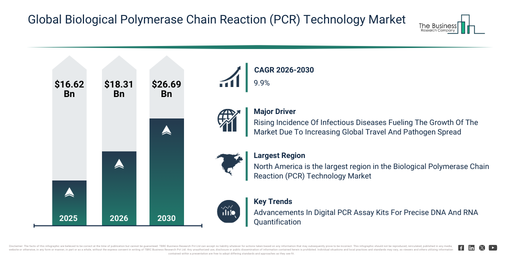
    The biological polymerase chain reaction (PCR) technology market has seen rapid expansion in recent years. It is projected to increase from $16.62 billion in 2025 to $18.31 billion in 2026, achieving a compound annual growth rate (CAGR) of 10.2%. The growth observed in the past can be attributed to the broader adoption of molecular diagnostics, increased use of PCR in testing for infectious diseases, a rise in genomic research activities, growing demand for accurate nucleic acid amplification, and advancements in thermal cycler technologies.

    The biological polymerase chain reaction (pcr) technology market is projected to experience substantial expansion in the coming years. By 2030, this market is anticipated to reach $26.69 billion, demonstrating a compound annual growth rate (CAGR) of 9.9%. This projected growth is driven by several factors, including the increasing uptake of point-of-care pcr systems, the expanding application of pcr in oncology and genetic testing, the broadening scope of personalized medicine, rising capital expenditure in laboratory automation, and the escalating need for quick diagnostic solutions. Key trends expected during the forecast period encompass the wider adoption of real-time and digital pcr methods, a surge in demand for highly sensitive molecular diagnostics, the increasing incorporation of pcr data analysis software, the broadening of multiplex and high-throughput pcr uses, and a heightened emphasis on automating workflows.

    Get A Free Sample Report With In-Depth Market Insights:

    https://thebusinessresearchcompany.com/sample_request?id=69032197&type=smp&name=Biological%20Polymerase%20Chain%20Reaction%20%28PCR%29%20Technology%20Market%20Report%202026&utm_source=Blogs&utm_medium=Paid&utm_campaign=Oct_PR

    Biological Polymerase Chain Reaction (PCR) Technology Market Growth Factors Behind Sustained Expansion

    The increasing occurrence of infectious diseases is anticipated to drive the expansion of the biological polymerase chain reaction (PCR) technology market in the future. Infectious diseases are disorders and illnesses stemming from organisms like bacteria, viruses, fungi, or parasites. The growing prevalence of infectious diseases is fueled by increased international travel, which contributes to the rapid and extensive dissemination of pathogens across various geographical areas. Biological polymerase chain reaction (PCR) technology assists in combating infectious diseases by facilitating the swift and precise identification of pathogens, thereby enabling prompt diagnosis, appropriate treatment, and efficient management of outbreaks. For example, in December 2024, data from the World Health Organization, a Switzerland-based intergovernmental agency, indicated that in 2023, malaria, a significant infectious disease, resulted in an estimated 263 million cases worldwide, representing an increase of approximately 252 million from 2022. Its case incidence stood at 60.4 per 1,000 population at risk, an increase from 58.6 in 2022, and it led to 597,000 deaths. Notably, 94 percent of cases and 95 percent of deaths occurred within the WHO African Region. Consequently, the increasing occurrence of infectious diseases is stimulating the expansion of the biological polymerase chain reaction (PCR) technology market.

    Biological Polymerase Chain Reaction (PCR) Technology Market Segment Landscape: Which Areas Lead Development?

    The biological polymerase chain reaction (pcr) technology market covered in this report is segmented –

    1) By Product Type: Reagents, Consumables, Software And Services

    2) By Technique: Real-Time Polymerase Chain Reaction (PCR), Conventional Polymerase Chain Reaction (PCR), Digital Polymerase Chain Reaction (PCR), Reverse Transcription Polymerase Chain Reaction (PCR), Hot-Start Polymerase Chain Reaction (PCR), Multiplex Polymerase Chain Reaction (PCR), Other Polymerase Chain Reaction (PCR) Techniques

    3) By Application: Diagnostic Applications, Genotyping, Nucleic Acid Detection, Gene Expression Analysis, Nucleic Acid Synthesis, Genetic Sequencing, Environmental Applications, Standard Validation Or Verification, Other Applications

    4) By End User: Hospital Laboratories, Diagnostic Laboratories, Academic And Government Organizations, Pharma-Biotech Companies, Other End Users

    Subsegments:

    1) By Reagents: DNA Polymerase, DNTPs, Primers And Probes, Buffers And Master Mixes, Enzymes, Nucleic Acid Templates, Additives And Enhancers

    2) By Consumables: PCR Tubes, PCR Plates, Sealing Films And Mats, Microplates, Reaction Vessels, Pipette Tips, PCR Strips

    3) By Software And Services: PCR Data Analysis Software, Real-Time PCR Analysis Software, Cloud-Based Data Storage Solutions, PCR Workflow Management Tools, Technical Support Services, Calibration And Maintenance Services, Training And Consultation Services

    Biological Polymerase Chain Reaction (PCR) Technology Market Industry Trends Fueling Future Revenue Growth

    Leading companies in the biological polymerase chain reaction (PCR) technology market are prioritizing technological advancements, such as digital PCR assay kits, to enable precise and efficient quantification of DNA and RNA for applications in biopharma research, cell and gene therapies, and food safety. These digital PCR assay kits are laboratory reagent kits designed for highly sensitive and accurate DNA or RNA quantification using digital PCR technology. For instance, in November 2023, QIAGEN, a Netherlands-based provider of molecular biology solutions, launched its QIAcuity Digital PCR Kits and updated QIAcuity software to broaden their utility in biopharma and food-safety testing. These kits employ optimized reagents and consumables to partition nucleic acid samples into thousands of nanoliter-scale reactions, allowing for sensitive detection and quantification of rare variants or pathogens. The enhanced software offers automated analysis, workflow guidance, and data visualization for easier interpretation. Key features include high sensitivity, a wide dynamic range, multiplexing capability, and user-friendly operation. Applications extend to gene expression analysis, mutation detection, microbial testing, and quality control, providing increased accuracy, reduced hands-on time, and reliable low-copy detection across research and regulatory settings.

    Biological Polymerase Chain Reaction (PCR) Technology Market Industry Leaders And Competitive Landscape

    Major companies operating in the biological polymerase chain reaction (pcr) technology market are F. Hoffmann-La Roche Ltd., Thermo Fisher Scientific Inc., Danaher Corporation, Merck KGaA, Agilent Technologies Inc., Revvity Inc., Bio-Rad Laboratories Inc., QIAGEN N.V., Eppendorf AG, Cepheid Inc., Bio-Techne Corporation, GenScript Biotech Corporation, Takara Bio Inc., Promega Corporation, Analytik Jena GmbH+Co. KG, New England Biolabs Inc., Enzo Biochem Inc., LGC Biosearch Technologies Inc., Bioline Reagents Ltd., Illumina Inc., Abbott Laboratories

    View The Full Biological Polymerase Chain Reaction (PCR) Technology Market Report:

    https://thebusinessresearchcompany.com/report/biological-polymerase-chain-reaction-pcr-technology-global-market-report?utm_source=Blogs&utm_medium=Paid&utm_campaign=Oct_PR

    Biological Polymerase Chain Reaction (PCR) Technology Market Regional Analysis And Top Geography

    North America was the largest region in the biological polymerase chain reaction (PCR) technology market in 2025. Asia-Pacific is expected to be the fastest-growing region in the forecast period. The regions covered in the biological polymerase chain reaction (pcr) technology market report are Asia-Pacific, South East Asia, Western Europe, Eastern Europe, North America, South America, Middle East, Africa.

    Reach Out To Our Team:

    The Business Research Company: https://www.thebusinessresearchcompany.com/

    Americas: +1 310-496-7795

    Asia: +44 7882 955267 & +91 8897263534

    Europe: +44 7882 955267

    Email us at: marketing@tbrc.info

    Follow us on:

    LinkedIn: https://in.linkedin.com/company/the-business-research-company

    YouTube: https://www.youtube.com/channel/UC24_fI0rV8cR5DxlCpgmyFQ

    Global Market Model: https://www.thebusinessresearchcompany.com/global-market-model
  • Biological Microscope Market Research 2026: Market Size, Trends, Segments And Growth Forecast

    Biological Microscope Market Research 2026: Market Size, Trends, Segments And Growth Forecast

    Built to provide research that’s more actionable and strategically valuable, The Business Research Company’s 2026 market reports include market attractiveness analysis, total addressable market sizing, company benchmarking matrices, interactive Excel dashboards, broader supply chain intelligence, emerging startup tracking, and in-depth product insights.

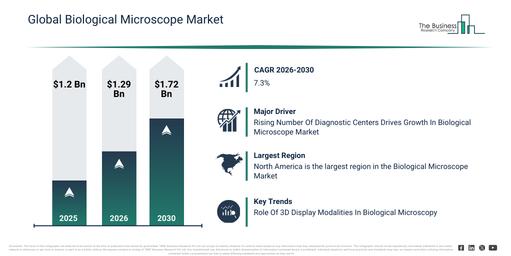
    Biological Microscope Market Poised To Hit $1.72 Billion By 2030 With A 7.3% CAGR

    The biological microscope market has experienced robust expansion in recent years. Projections indicate a rise from $1.2 billion in 2025 to $1.29 billion by 2026, demonstrating a compound annual growth rate (CAGR) of 7.5%. Historically, this growth can be attributed to several factors including the increase in biological research activities, an upsurge in medical diagnostics testing, wider adoption of microscopy in educational settings, the advent of advanced optical technologies, and growing investments in laboratory infrastructure.

    The biological microscope market size is projected to demonstrate robust growth in the coming years, expected to reach $1.72 billion by 2030, driven by a compound annual growth rate (CAGR) of 7.3%. The expansion anticipated during this forecast period stems from an escalating demand for automated microscopy solutions, the proliferation of AI-enabled image analysis tools, increased integration into clinical diagnostics, a growing emphasis on high-throughput imaging, and intensified research in cellular and molecular biology. Significant trends identified for this period encompass the increasing uptake of digital and smart microscopy systems, a rising need for high-resolution imaging capabilities, enhanced integration of image analysis software, the broadening application of fluorescence and electron microscopy, and a greater focus on ergonomic and modular microscope designs.

    Get A Free Sample Report With In-Depth Market Insights:

    https://thebusinessresearchcompany.com/sample_request?id=79964948&type=smp&name=Biological%20Microscope%20Market%20Report%202026&utm_source=Blogs&utm_medium=Paid&utm_campaign=Oct_PR

    Biological Microscope Market Demand Drivers Opening New Revenue Streams

    The increasing count of diagnostic centers is projected to drive the expansion of the biological microscope market in the future. This rise in diagnostic centers stems from heightened health awareness and a move towards preventive healthcare, encouraging more individuals to pursue early diagnostic screenings. Additionally, advancements in diagnostic technologies, greater healthcare expenditure, and the imperative to manage chronic conditions such as diabetes and cardiovascular diseases require consistent diagnostic evaluations. Biological microscopes are employed by diagnostic centers to boost the precision and effectiveness of diagnostic testing, simultaneously enhancing disease identification, aiding research, and guaranteeing superior patient care. For example, a report from PubMed Central, a US-based government-funded research organization, stated in June 2024 that a survey involved 920 laboratories from 55 countries worldwide, comprising 401 government hospital laboratories, 296 private hospital laboratories, and 223 commercial laboratories. Key findings highlighted the necessity for digitalization and automation throughout the diagnostic process. Overall, the monitoring of key performance indicators (KPIs) associated with healthcare performance was typically minimal (ranging from 10–30% of all laboratories), with a significant finding that merely 19% of laboratories tracked KPIs aimed at accelerating diagnosis and treatment. Consequently, the growing demand for diagnostic centers is fueling the biological microscope market.

    Biological Microscope Market Segments: Where Is Growth Concentrated?

    The biological microscope market covered in this report is segmented –

    1) By Type: Max 50x, Above 50x

    2) By Eyepiece Style: Monocular, Binocular, Trinocular

    3) By Application: Medical Center, Research Center, Other Applications

    Subsegments:

    1) By Max 50x: Optical Microscopes (Max 50x Magnification), Compound Microscopes (Max 50x Magnification)

    2) By Above 50x: Compound Microscopes (Above 50x Magnification), Fluorescence Microscopes (Above 50x Magnification)

    Biological Microscope Market Trends Powering Strategic Industry Growth

    Leading companies in the biological microscope market are concentrating on integrating display technologies for three-dimensional views, such as serial block-face imaging, to boost imaging accuracy and facilitate advanced research by offering deeper understanding of complex biological structures. Serial block-face imaging (SBFI) serves as a method for producing detailed three-dimensional reconstructions of biological samples by sequentially capturing images of thin sections from a sample block under a microscope. For example, in June 2023, Carl Zeiss AG, an optoelectronics manufacturer from Germany, introduced the ZEISS Volutome, an advanced integrated system designed for 3D imaging of cellular ultrastructure. This system is specifically developed for ZEISS field emission scanning electron microscopes (FE-SEM) and combines both hardware and software to ensure seamless serial block-face imaging, covering image acquisition, processing, segmentation, and visualization. It simplifies sample preparation and automates processes, and it can be transformed into a standard FE-SEM by replacing its ultramicrotome with a conventional SEM stage, thus offering versatility for various applications.

    Biological Microscope Market Key Participants And Competitive Landscape

    Major companies operating in the biological microscope market are Thermo Fisher Scientific Inc., Carl Zeiss AG, Olympus Corporation, Nikon Corporation, Bruker Corporation, JEOL Ltd., Keyence Corporation, Meiji Techno Co. Ltd., Motic Instruments Inc., Optika Microscopes, Accu-Scope Inc., Swift Optical Instruments, Vision Engineering Ltd, Bresser GmbH, Mitutoyo Corporation, Huvitz Co. Ltd., Nanolive SA, TESCAN Orsay Holding, Aspex Corporation, Bio-Rad Laboratories Inc.

    View The Full Biological Microscope Market Report:

    https://thebusinessresearchcompany.com/report/biological-microscope-global-market-report?utm_source=Blogs&utm_medium=Paid&utm_campaign=Oct_PR

    Biological Microscope Market Geographic Analysis: Where Is Demand Rising Fastest?

    North America was the largest region in the biological microscope market in 2025. Asia-Pacific is expected to be the fastest-growing region in the forecast period. The regions covered in the biological microscope market report are Asia-Pacific, South East Asia, Western Europe, Eastern Europe, North America, South America, Middle East, Africa.

    Reach Out To Our Team:

    The Business Research Company: https://www.thebusinessresearchcompany.com/

    Americas: +1 310-496-7795

    Asia: +44 7882 955267 & +91 8897263534

    Europe: +44 7882 955267

    Email us at: marketing@tbrc.info

    Follow us on:

    LinkedIn: https://in.linkedin.com/company/the-business-research-company

    YouTube: https://www.youtube.com/channel/UC24_fI0rV8cR5DxlCpgmyFQ

    Global Market Model: https://www.thebusinessresearchcompany.com/global-market-model
  • Biologic Imaging Reagents Market Forecast 2026: Market Size, Competitive Landscape And Growth Drivers

    Biologic Imaging Reagents Market Forecast 2026: Market Size, Competitive Landscape And Growth Drivers

    Backed by market attractiveness analysis, total addressable market sizing, company benchmarking matrices, interactive Excel dashboards, wider supply chain intelligence, emerging startup coverage, and detailed product-level insights, The Business Research Company’s 2026 market reports are designed to offer research that is more actionable and strategically valuable than ever.

    Biologic Imaging Reagents Market Size And Revenue Outlook Through 2030

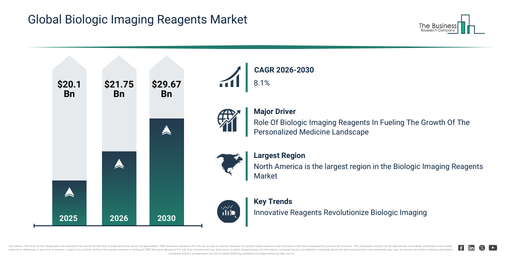
    The market size for biologic imaging reagents has demonstrated robust expansion over recent years. This market is projected to expand from $20.1 billion in 2025 to $21.75 billion in 2026, achieving a compound annual growth rate (CAGR) of 8.2%. Historically, this growth can be ascribed to several factors, including the increase in biomedical imaging research, the broadening of clinical diagnostic imaging procedures, the greater adoption of contrast agents for disease detection, the availability of sophisticated imaging modalities, and increased financial commitments to life science research.

    The biologic imaging reagents market is projected to experience robust expansion over the coming years. This market is anticipated to reach $29.67 billion by 2030, demonstrating a compound annual growth rate (CAGR) of 8.1%. The expansion during this forecast period stems from factors such as a heightened demand for precise imaging techniques, the broadening scope of molecular imaging applications, an uptick in the use of AI-assisted image analysis, a stronger emphasis on personalized diagnostics, and greater research investment in sophisticated imaging reagents. Key trends emerging in this period encompass the wider adoption of target-specific imaging probes, increased utilization of fluorescent and radiolabeled reagents, the deepening integration of imaging reagents within drug development processes, the broadening of multimodal imaging applications, and a sharpened focus on highly sensitive imaging agents.

    Get A Free Sample Report With In-Depth Market Insights:

    https://thebusinessresearchcompany.com/sample_request?id=40395680&type=smp&name=Biologic%20Imaging%20Reagents%20Market%20Report%202026&utm_source=Blogs&utm_medium=Paid&utm_campaign=Oct_PR

    Biologic Imaging Reagents Market Growth Backed By Core Demand Fundamentals

    The escalating demand for personalized medicine is projected to drive expansion within the biologic imaging reagents market. This approach in healthcare customizes medical decisions and therapies according to the specific characteristics of individual patients. Within personalized medicine, biologic imaging reagents facilitate the visualization and assessment of molecular and cellular biological processes, specifically adapted for individual patients. As an illustration, data from February 2024, provided by the US-based Personalized Medicine Coalition, highlighted the importance of 26 newly approved personalized treatments, 19 broadened applications for current personalized medicines, and 17 notable new or expanded uses for 12 diagnostic testing products. Consequently, the heightened need for personalized medicine fuels the expansion of the biologic imaging reagents market.

    Biologic Imaging Reagents Market Segment Analysis: What Are The Core Market Categories?

    The biologic imaging reagents market covered in this report is segmented –

    1) By Product: Contrast Reagents, Optical Imaging Reagents, Radiopharmaceuticals

    2) By Modality: Magnetic Resonance Imaging (MRI), Ultrasound, X-Ray And Computerized Tomography (CT), Nuclear, Optical Imaging, Other Modalities

    3) By Application: In Vitro, In Vivo

    4) By End User: Diagnostic Laboratories, Imaging Centers, Life Science Companies, Research And Academic Institutes, Other End Users

    Subsegments:

    1) By Contrast Reagents: X-ray Contrast Agents, MRI Contrast Agents, Ultrasound Contrast Agents

    2) By Optical Imaging Reagents: Fluorescent Dyes, Bioluminescent Reagents, Quantum Dots

    3) By Radiopharmaceuticals: Diagnostic Radiopharmaceuticals, Therapeutic Radiopharmaceuticals

    Biologic Imaging Reagents Market Growth Trends Reshaping The Competitive Landscape

    Leading companies in the biologic imaging reagents market are focused on developing innovative reagents, such as novel dye technology, offering researchers and clinicians an advanced tool for visualizing and improving the sensitivity and specificity of biologic imaging. Novel dye technology involves the creation of new dyes for various applications, including biological imaging. For instance, in December 2024, BioLegend, a US-based provider of research reagents and biologic imaging tools, launched Spark PLUS UV395 and Spark PLUS B550 dyes. This new family of fluorochromes allows researchers to achieve higher brightness, an improved signal-to-noise ratio, and more accurate multicolor analysis than standard dyes. This is due to the employment of advanced dye engineering and computational optimization. The computational algorithms analyzed existing data from the excitation and emission profiles of commercially available fluorochromes, then determined the optimal spectral positions and chemical structures to develop these novel dyes.

    Biologic Imaging Reagents Market Top Companies Driving Competitive Growth

    Major companies operating in the biologic imaging reagents market are Cardinal Health Inc., Johnson And Johnson Services Inc., Bayer Healthcare AG, Thermo Fisher Scientific Inc., Siemens Healthcare GmbH, Koninklijke Philips N.V., GE HealthCare Technologies Inc., FluoroPharma Medical Inc., Lonza Group AG, PerkinElmer Inc., Bio-Rad Laboratories Inc., Bracco Diagnostics Inc., Leica Microsystems GmbH, Lantheus Medical Imaging Inc., Guerbet SA, Miltenyi Biotec B.V. and Co. KG, Promega Corporation, Abcam plc., Luminex Corporation, LI-COR Biosciences, FUJIFILM VisualSonics Inc., ABX Advanced Biochemical Compounds GmbH, Dickinson and Company (BD), Becton, Dickinson and Company, Illumina Inc., Stryker Corporation, MILabs

    View The Full Biologic Imaging Reagents Market Report:

    https://thebusinessresearchcompany.com/report/biologic-imaging-reagents-global-market-report?utm_source=Blogs&utm_medium=Paid&utm_campaign=Oct_PR

    Biologic Imaging Reagents Market Global Footprint: Which Region Leads The Market?

    North America was the largest region in the biologic imaging reagents market in 2025. Asia-Pacific is expected to be the fastest-growing region in the forecast period. The regions covered in the biologic imaging reagents market report are Asia-Pacific, South East Asia, Western Europe, Eastern Europe, North America, South America, Middle East, Africa.

    Reach Out To Our Team:

    The Business Research Company: https://www.thebusinessresearchcompany.com/

    Americas: +1 310-496-7795

    Asia: +44 7882 955267 & +91 8897263534

    Europe: +44 7882 955267

    Email us at: marketing@tbrc.info

    Follow us on:

    LinkedIn: https://in.linkedin.com/company/the-business-research-company

    YouTube: https://www.youtube.com/channel/UC24_fI0rV8cR5DxlCpgmyFQ

    Global Market Model: https://www.thebusinessresearchcompany.com/global-market-model
  • Bioinformatics In In-Vitro Diagnostics (IVD) Testing Market Size In 2026: Regional Growth, Key Segments And Future Outlook

    Bioinformatics In In-Vitro Diagnostics (IVD) Testing Market Size In 2026: Regional Growth, Key Segments And Future Outlook

    Featuring market attractiveness scoring, total addressable market sizing, company benchmarking matrices, interactive Excel dashboards, deeper supply chain intelligence, emerging startup tracking, and granular product-level insights, The Business Research Company’s 2026 market reports are built to deliver research that is both more actionable and more strategically valuable.

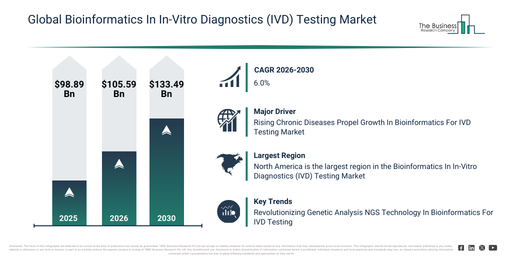
    Bioinformatics In In-Vitro Diagnostics (IVD) Testing Market Growth From $105.59 Billion In 2026 To $133.49 Billion By 2030 At A CAGR Of 6%

    The bioinformatics in in-vitro diagnostics (ivd) testing market size has experienced strong growth over recent years. It is anticipated to increase from $98.89 billion in 2025 to $105.59 billion in 2026, exhibiting a compound annual growth rate (CAGR) of 6.8%. This historical expansion can be attributed to several factors, including the rising volumes of molecular diagnostic testing, the expanded integration of next-generation sequencing in diagnostics, the development of centralized diagnostic laboratories, the availability of advanced diagnostic hardware, and the increasing utilization of data-driven clinical decision support.

    The bioinformatics in in-vitro diagnostics (IVD) testing market is projected to experience substantial growth over the coming years. This market is anticipated to reach $133.49 billion by 2030, expanding at a compound annual growth rate (CAGR) of 6.0%. Factors contributing to this growth during the forecast period include the escalating demand for precise diagnostics, the broadened scope of personalized medicine diagnostics, increased investments in AI-powered diagnostic platforms, the expanding utilization of cloud-based diagnostic analytics, and greater regulatory approval for digital diagnostics. Key trends expected within this period encompass the increased application of AI-driven diagnostic interpretation software, the surging adoption of cloud-enabled IVD bioinformatics platforms, the deepening integration of molecular and clinical data sets, the proliferation of companion diagnostics analytics, and an intensified emphasis on processing diagnostic data in real-time.

    Get A Free Sample Report With In-Depth Market Insights:

    https://thebusinessresearchcompany.com/sample_request?id=56333758&type=smp&name=Bioinformatics%20In%20In-Vitro%20Diagnostics%20%28IVD%29%20Testing%20Market%20Report%202026&utm_source=Blogs&utm_medium=Paid&utm_campaign=Oct_PR

    Bioinformatics In In-Vitro Diagnostics (IVD) Testing Market Growth Catalysts And Demand Drivers

    The rising incidence of cancer is anticipated to boost the expansion of bioinformatics within the IVD testing market moving ahead. Cancer broadly refers to a collection of illnesses marked by uncontrolled cell proliferation capable of invading and metastasizing to other areas of the body. The growing occurrence of cancer stems from diverse elements linked to exposure, lifestyle choices, and environmental impacts. In IVD testing, bioinformatics revolutionizes cancer diagnostics by offering accurate, tailored, and exhaustive genetic information, which improves early identification, informs treatment choices, and betters patient results. For example, in February 2024, the World Health Organization, a specialized agency of the United Nations based in Switzerland, reported a forecast of over 35 million new cancer cases by 2050. Consequently, the escalating prevalence of cancer is a key driver for bioinformatics in the IVD testing market.

    Bioinformatics In In-Vitro Diagnostics (IVD) Testing Market Segment Breakdown: Which Categories Lead On Revenue?

    The bioinformatics in in-vitro diagnostics (ivd) testing market covered in this report is segmented –

    1) By Component: Hardware, Software

    2) By Type Of Test: Blood Based Tests, Tissue Based Tests

    3) By Application: Cardiovascular Diseases, Chronic Diseases, Diabetes, Cancer, Other Applications

    Subsegments:

    1) By Hardware: Analyzers, Laboratory Equipment, Data Storage Devices, Sensors And Detectors, Workstations And Data Processing Hardware

    2) By Software: Bioinformatics Platforms, Data Management and Integration Software, Analytics And Interpretation Software, Cloud-Based Software Solutions, AI-Based Software For Diagnostics

    Bioinformatics In In-Vitro Diagnostics (IVD) Testing Market Trends Shaping Long-Term Demand

    Leading companies in the bioinformatics in the IVD testing market are concentrating on developing innovative solutions, such as next-generation sequencing (NGS) technology. These efforts aim to improve the detection and analysis of genetic mutations, enhance diagnostic accuracy, and facilitate personalized medicine approaches. Next-generation sequencing (NGS) itself is a high-throughput technology designed for the rapid sequencing of entire genomes or specific DNA and RNA regions, thereby enabling comprehensive genetic analysis. For instance, in January 2024, QIAGEN Digital Insights, the bioinformatics division of the Netherlands-based molecular diagnostics company QIAGEN, introduced LightSpeed. This ultra-fast NGS secondary-analysis software accelerator is integrated into its CLC Genomics Workbench Premium platform. The LightSpeed module allows laboratories to process somatic cancer NGS data at unprecedented speed, converting raw sequencing files (FASTQ) into variant calls (VCF) in mere minutes, while also reducing the cost per sample. LightSpeed supports high-throughput cancer panels and is compatible with both cloud-based and on-premises workflows, which empowers bioinformatics teams to quickly analyze multiple tumor genes and biomarkers from a single sample to guide precision oncology decision-making.

    Bioinformatics In In-Vitro Diagnostics (IVD) Testing Market Leading Players And Competitive Positioning

    Major companies operating in the bioinformatics in in-vitro diagnostics (ivd) testing market are Illumina Inc, Thermo Fisher Scientific Inc, QIAGEN N.V, Agilent Technologies Inc, PerkinElmer Inc, Roche Holding AG, BGI Genomics Co Ltd, DNAnexus Inc, Seven Bridges Genomics Inc, Dassault Systèmes SE (BIOVIA), Genedata AG, Partek Inc, Data4Cure Inc, Ontoforce NV, Geneious (Biomatters), SoftGenetics LLC, Eagle Genomics Ltd, Wuxi NextCODE Genomics, Bio‑Rad Laboratories Inc, Eurofins Scientific SE

    View The Full Bioinformatics In In-Vitro Diagnostics (IVD) Testing Market Report:

    https://thebusinessresearchcompany.com/report/bioinformatics-in-in-vitro-diagnostics-ivd-testing-global-market-report?utm_source=Blogs&utm_medium=Paid&utm_campaign=Oct_PR

    Bioinformatics In In-Vitro Diagnostics (IVD) Testing Market Regional Split: Which Areas Are Fueling Growth?

    North America was the largest region in the bioinformatics in in-vitro diagnostics (IVD) testing market in 2025. Asia-Pacific is expected to be the fastest-growing region in the forecast period. The regions covered in the bioinformatics in in-vitro diagnostics (ivd) testing market report are Asia-Pacific, South East Asia, Western Europe, Eastern Europe, North America, South America, Middle East, Africa.

    Reach Out To Our Team:

    The Business Research Company: https://www.thebusinessresearchcompany.com/

    Americas: +1 310-496-7795

    Asia: +44 7882 955267 & +91 8897263534

    Europe: +44 7882 955267

    Email us at: marketing@tbrc.info

    Follow us on:

    LinkedIn: https://in.linkedin.com/company/the-business-research-company

    YouTube: https://www.youtube.com/channel/UC24_fI0rV8cR5DxlCpgmyFQ

    Global Market Model: https://www.thebusinessresearchcompany.com/global-market-model
  • Bioinformatics Market Growth Forecast Through 2030: Market Size And Trends In 2026

    Bioinformatics Market Growth Forecast Through 2030: Market Size And Trends In 2026

    Built to provide research that’s more actionable and strategically valuable, The Business Research Company’s 2026 market reports include market attractiveness analysis, total addressable market sizing, company benchmarking matrices, interactive Excel dashboards, broader supply chain intelligence, emerging startup tracking, and in-depth product insights.

    Bioinformatics Market Expansion Outlook: What Revenue Opportunities Are Ahead?

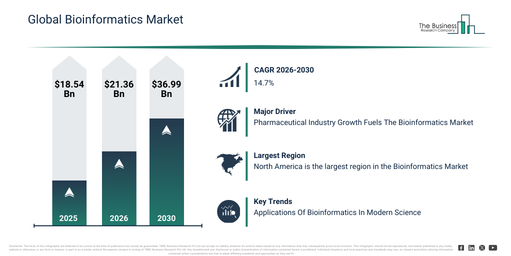
    The bioinformatics market size has experienced significant expansion in recent years. It is anticipated to grow from $18.54 billion in 2025 to $21.36 billion in 2026, exhibiting a compound annual growth rate (CAGR) of 15.2%. The contributing factors to its growth in the historic period include the expansion of genomic research initiatives, growth in sequencing data volumes, rising demand for computational biology tools, increased use of bioinformatics in drug discovery, and the availability of advanced data analysis platforms.

    The bioinformatics market is projected to experience swift expansion over the coming years. By 2030, its valuation is anticipated to reach $36.99 billion, expanding at a compound annual growth rate (CAGR) of 14.7%. This projected growth stems from several factors, including heightened investments in precision medicine initiatives, the growing embrace of AI-powered biological data interpretation, the broadening scope of population genomics research, an escalating need for adaptable bioinformatics solutions, and a heightened emphasis on data security and adherence to regulations. Key developments expected during this timeframe encompass the wider acceptance of AI-powered genomic analysis instruments, the expanding deployment of cloud-based bioinformatics platforms, increased convergence of multi-omics data analysis, the enhancement of high-throughput data processing capabilities, and a greater emphasis on data interoperability and exchange.

    Get A Free Sample Report With In-Depth Market Insights:

    https://thebusinessresearchcompany.com/sample_request?id=27790096&type=smp&name=Bioinformatics%20Market%20Report%202026&utm_source=Blogs&utm_medium=Paid&utm_campaign=Oct_PR

    Bioinformatics Market Opportunity Drivers: What’s Unlocking New Revenue Potential?

    The expanding pharmaceutical sector is anticipated to drive the bioinformatics market’s future growth. This industry encompasses the detection, creation, and manufacturing of medications and drugs by both public and private organizations. Within pharmaceuticals, bioinformatics plays a crucial role in significantly speeding up drug discovery and development, lowering expenses, and enhancing the effectiveness and safety of treatments. As an illustration, the European Federation of Pharmaceutical Industries and Associations (EFPIA), a trade group based in Belgium, reported in November 2024 that global pharmaceutical sales in 2024 saw North America contribute 54.8%, while Europe contributed 22.7%. Consequently, the expanding pharmaceutical sector is a primary force behind the bioinformatics market’s expansion.

    Bioinformatics Market Segmentation: How Does The Market Break Down By Category?

    The bioinformatics market covered in this report is segmented –

    1) By Products and Services: Knowledge Management Tools, Data Analysis Platforms, Services

    2) By Application: Metabolomics, Molecular Phylogenetics, Transcriptomics, Proteomics, Genomics

    3) By End Users: Pharmaceutics, Animal Study, Agriculture

    Subsegments:

    1) By Knowledge Management Tools: Data Integration Tools, Literature Mining Tools, Data Repositories And Databases, Biological Data Visualization Tools

    2) By Data Analysis Platforms: Genomic Data Analysis Platforms, Proteomics Data Analysis Platforms, Transcriptomics Data Analysis Platforms, Metabolomics Data Analysis Platforms

    3) By Services: Data Analysis Services, Consulting Services, Software And Platform-As-A-Service (PaaS), Bioinformatics Research And Development Services

    Bioinformatics Market Innovation Trends Shaping Future Development

    Major companies in the bioinformatics market are concentrating on developing technologically advanced solutions, such as bioinformatics platforms, to enhance data analysis capabilities, improve precision in personalized medicine, and accelerate drug discovery processes. A bioinformatics platform is defined as a software system or an integrated suite of tools crafted to manage, analyze, and interpret biological data, including genomic, proteomic, and metabolomic information, thereby supporting research and clinical decision-making. For instance, in February 2024, Metabolon, Inc., a US-based biotechnology company, launched an integrated bioinformatics platform. This platform offers an extensive set of analytical tools designed to streamline metabolomics research, enabling users to conduct complex analyses with ease. Key features include advanced visualization tools like volcano plots and principal component analysis (PCA), along with innovative biomarker lenses, which provide targeted insights into specific pathways and diseases.

    Bioinformatics Market Competitive Overview And Top Companies

    Major companies operating in the bioinformatics market are Agilent Technologies Inc., Illumina Inc., QIAGEN NV, Affymetrix Inc., Thermo Fisher Scientific Inc., BGI Group, Dassault Systems SE, Bruker Corporation, Biomax Informatix AG, DNASTAR Inc., Partek Inc., Geneva Bioinformatics SA, Accelrys Inc., Nonlinear Dynamics SA, Sophia Genetics SA, Celera Corporation, Tripos Inc., IBM Life Sciences, GNS Healthcare Inc., DNAnexus Inc., Syapse Inc.

    View The Full Bioinformatics Market Report:

    https://thebusinessresearchcompany.com/report/Bioinformatics-Global-Market-Report?utm_source=Blogs&utm_medium=Paid&utm_campaign=Oct_PR

    Bioinformatics Market Top Region: Where Does Most Revenue Come From?

    North America was the largest region in the bioinformatics market in 2025. Western Europe was the second largest region in the bioinformatics market analysis. The regions covered in the bioinformatics market report are Asia-Pacific, South East Asia, Western Europe, Eastern Europe, North America, South America, Middle East, Africa.

    Reach Out To Our Team:

    The Business Research Company: https://www.thebusinessresearchcompany.com/

    Americas: +1 310-496-7795

    Asia: +44 7882 955267 & +91 8897263534

    Europe: +44 7882 955267

    Email us at: marketing@tbrc.info

    Follow us on:

    LinkedIn: https://in.linkedin.com/company/the-business-research-company

    YouTube: https://www.youtube.com/channel/UC24_fI0rV8cR5DxlCpgmyFQ

    Global Market Model: https://www.thebusinessresearchcompany.com/global-market-model
  • Bioidentical Hormones Market Analysis: $8.47 Billion Market Size In 2026 And Future Growth Prospects

    Bioidentical Hormones Market Analysis: $8.47 Billion Market Size In 2026 And Future Growth Prospects

    Backed by market attractiveness analysis, total addressable market sizing, company benchmarking matrices, interactive Excel dashboards, wider supply chain intelligence, emerging startup coverage, and detailed product-level insights, The Business Research Company’s 2026 market reports are designed to offer research that is more actionable and strategically valuable than ever.

    Bioidentical Hormones Market Growth Potential: How Will Market Size Shift Through 2030?

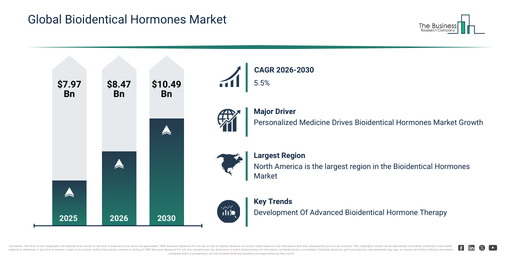
    The bioidentical hormones market has exhibited significant growth in recent years. It is projected to expand from $7.97 billion in 2025 to $8.47 billion in 2026, achieving a compound annual growth rate (CAGR) of 6.3%. This historical expansion can be attributed to the increasing prevalence of menopausal and andropausal symptoms, heightened awareness regarding hormone imbalance treatments, the establishment of specialty hormone clinics, the accessibility of compounding pharmacy services, and the growing acceptance of bioidentical hormones in clinical practice.

    The bioidentical hormones market size is anticipated to experience substantial growth in the coming years. It is forecast to expand to $10.49 billion by 2030, demonstrating a compound annual growth rate (CAGR) of 5.5%. This projected expansion during the forecast period is driven by an escalating focus on personalized medicine approaches, an increasing demand for safer hormone therapies, the expansion of aging population demographics, the growing integration of digital health monitoring in HRT, and increasing clinical research on bioidentical hormone efficacy. Significant trends within the forecast period include the increasing adoption of personalized hormone replacement therapies, a rising demand for compounded bioidentical hormone formulations, the growing utilization of transdermal delivery methods, the expansion of patient-specific dosing approaches, and an enhanced focus on hormone therapy safety and efficacy.

    Get A Free Sample Report With In-Depth Market Insights:

    https://thebusinessresearchcompany.com/sample_request?id=32196380&type=smp&name=Bioidentical%20Hormones%20Market%20Report%202026&utm_source=Blogs&utm_medium=Paid&utm_campaign=Oct_PR

    Bioidentical Hormones Market Growth Momentum: What Factors Are Shaping Demand?

    The increasing need for personalized medicine is anticipated to drive the expansion of the bioidentical hormones market in the future. Personalized medicine involves customizing medical care based on individual traits like genetics or lifestyle, aiming to maximize effectiveness and reduce negative side effects. This rising demand for personalized medicine stems from its capacity to deliver superior treatments, progress in genomics, the growing intricacy of diseases, and backing from regulations. Bioidentical hormones present a customized method within personalized medicine, aligning with a patient’s distinct hormonal makeup, thereby enhancing treatment success and lessening adverse reactions. As an illustration, in February 2024, the Personalized Medicine Coalition, a US-based non-profit organization, reported that the FDA approved 16 new personalized therapies for individuals with rare diseases in 2023, an increase from six in 2022. Consequently, the heightened demand for personalized medicine is fueling the growth of the bioidentical hormones market.

    Bioidentical Hormones Market Segment Trends And Revenue Contributors

    The bioidentical hormones market covered in this report is segmented –

    1) By Hormone Type: Estrogen, Progesterone, Testosterone

    2) By Product Type: Tablet And Capsule, Cream And Gel, Patch And Implant

    3) By Distribution Channel: Hospital Pharmacies, Retail Pharmacies, Online Pharmacies, Other Distribution Channels

    4) By Application: Menopause Management, Hormone Replacement Therapy (HRT), Andropause Management

    5) By End-use: Hospitals, Gynecology Clinics

    Subsegments:

    1) By Estrogen: Estrone (E1), Estradiol (E2), Estriol (E3), Bioidentical Estradiol Creams, Bioidentical Estrone Creams

    2) By Progesterone: Bioidentical Progesterone Creams, Bioidentical Progesterone Capsules

    3) By Testosterone: Bioidentical Testosterone Creams, Bioidentical Testosterone Pellets, Bioidentical Testosterone Gels

    Bioidentical Hormones Market Trends Redefining Industry Growth

    Leading companies in the bioidentical hormones market are intensifying their efforts to develop advanced solutions, such as bioidentical hormone replacement therapy, to offer more effective and personalized treatment options for hormonal imbalances and related health conditions. Bioidentical hormone replacement therapy (BHRT) involves utilizing hormones that are chemically identical to those naturally produced by the human body to address hormone imbalances and associated symptoms. For instance, in May 2024, Jagsonpal Pharmaceuticals Limited, an India-based pharmaceutical company, launched MemUp HRT, a US FDA-approved bioidentical hormone therapy. This product offers a single-pill solution combining US FDA-approved bioidentical estradiol and progesterone, with support available in nine regional languages. This launch capitalizes on bioidentical hormones for balanced hormone replacement and a single-pill formulation to improve patient compliance, significantly raising awareness about menopause management, enhancing patient outcomes, and expanding healthcare options for women in India.

    Bioidentical Hormones Market Competitive Landscape: Which Companies Lead The Industry?

    Major companies operating in the bioidentical hormones market are TherapeuticsMD Inc., Bayer AG, Gedeon Richter Plc, Noven Pharmaceuticals Inc., AbbVie Inc., Pfizer Inc., Merck KGaA, Orion Pharma AB, Hikma Pharmaceuticals Plc, Actiza Pharmaceutical Private Limited, AnazaoHealth Corp., Women’s International Pharmacy Inc., Wells Pharmacy Network, Advantage Pharmaceuticals Inc., Apotheca Compounding Pharmacy, SottoPelle Inc., Biostation, Neuva Aesthetics, Papillon Medical, Bravado Labs, BionPharma Inc.

    View The Full Bioidentical Hormones Market Report:

    https://thebusinessresearchcompany.com/report/bioidentical-hormones-global-market-report?utm_source=Blogs&utm_medium=Paid&utm_campaign=Oct_PR

    Bioidentical Hormones Market Regional Breakdown: Where Is Demand Concentrated?

    North America was the largest region in the bioidentical hormones market in 2025. Asia-Pacific is expected to be the fastest-growing region in the forecast period. The regions covered in the bioidentical hormones market report are Asia-Pacific, South East Asia, Western Europe, Eastern Europe, North America, South America, Middle East, Africa.

    Reach Out To Our Team:

    The Business Research Company: https://www.thebusinessresearchcompany.com/

    Americas: +1 310-496-7795

    Asia: +44 7882 955267 & +91 8897263534

    Europe: +44 7882 955267

    Email us at: marketing@tbrc.info

    Follow us on:

    LinkedIn: https://in.linkedin.com/company/the-business-research-company

    YouTube: https://www.youtube.com/channel/UC24_fI0rV8cR5DxlCpgmyFQ

    Global Market Model: https://www.thebusinessresearchcompany.com/global-market-model