Blog

  • Polycystic Ovarian Syndrome Treatment Market Explained: What Is Fueling Growth To $7.28 Billion By 2030?

    Polycystic Ovarian Syndrome Treatment Market Explained: What Is Fueling Growth To $7.28 Billion By 2030?

    Built to provide research that’s more actionable and strategically valuable, The Business Research Company’s 2026 market reports include market attractiveness analysis, total addressable market sizing, company benchmarking matrices, interactive Excel dashboards, broader supply chain intelligence, emerging startup tracking, and in-depth product insights.

    Polycystic Ovarian Syndrome Treatment Market Expansion Outlook: What Revenue Opportunities Are Ahead?

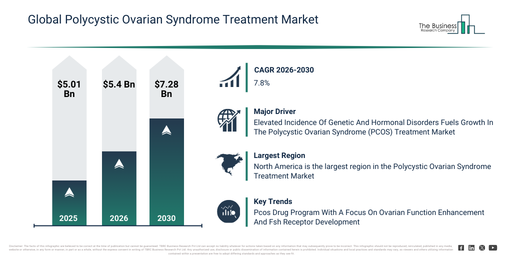
    The polycystic ovarian syndrome treatment market size has demonstrated strong growth over recent years. It is anticipated to expand from $5.01 billion in 2025 to $5.4 billion in 2026, achieving a compound annual growth rate (CAGR) of 7.7%. This historic growth can be attributed to several factors, including an increase in the prevalence of hormonal disorders among women, improved diagnostic awareness of PCOS, the availability of oral contraceptive therapies, the expansion of gynecology care services, and a rising focus on fertility treatments.

    The polycystic ovarian syndrome treatment market size is anticipated to experience robust expansion over the coming years. This market is projected to ascend to $7.28 billion by 2030, driven by a compound annual growth rate (CAGR) of 7.8%. The expansion during the forecast period is fueled by increasing demand for personalized PCOS treatment plans, the growing adoption of insulin-sensitizing agents, the expansion of minimally invasive surgical interventions, a rising focus on long-term metabolic health management, and increased research into novel hormonal therapies. Furthermore, major trends in the forecast period include the growing use of combination drug therapies, rising adoption of lifestyle-integrated treatment approaches, an increased focus on early diagnosis and screening, expanding use of hormonal regulation therapies, and improved patient awareness and treatment adherence.

    Get A Free Sample Report With In-Depth Market Insights:

    https://thebusinessresearchcompany.com/sample_request?id=53183137&type=smp&name=Polycystic%20Ovarian%20Syndrome%20Treatment%20Market%20Report%202026&utm_source=Blogs&utm_medium=Paid&utm_campaign=Nov_PR

    Polycystic Ovarian Syndrome Treatment Market Demand Drivers Opening New Revenue Streams

    The global increase in genetic and hormonal disorders is a key factor propelling the expansion of the polycystic ovarian syndrome (PCOS) treatment market. PCOS is a common hormonal condition found in premenopausal women worldwide, characterized by reproductive, endocrine, and metabolic irregularities.

    Polycystic Ovarian Syndrome Treatment Market Segments: Where Is Growth Concentrated?

    The polycystic ovarian syndrome treatment market covered in this report is segmented –

    1) By Drug Type: Oral Contraceptives, Ornithine Decarboxylase Inhibitors, Insulin-Sensitizing Agents, Anti-Depressants, Diuretics, Aromatase Inhibitors

    2) By Surgery Type: Ovarian Wedge Resection, Laparoscopic Ovarian Drilling

    3) By End User: Hospitals And Clinics, Ambulatory Surgical Centers, Diagnostic Centers, Gynecology Centers, Reproductive Health And Fertility Clinics

    Subsegments:

    1) By Oral Contraceptives: Combined Oral Contraceptives (COCs), Progestin-Only Pills

    2) By Ornithine Decarboxylase Inhibitors: Drugs Targeting Ovarian Androgen Production, Inhibitors Targeting Polyamine Synthesis

    3) By Insulin-Sensitizing Agents: Metformin, Thiazolidinediones (TZDs)

    4) By Anti-Depressants: Selective Serotonin Reuptake Inhibitors (SSRIs), Serotonin-Norepinephrine Reuptake Inhibitors (SNRIs)

    5) By Diuretics: Spironolactone, Furosemide

    6) By Aromatase Inhibitors: Letrozole, Anastrozole

    Polycystic Ovarian Syndrome Treatment Market Transformation Trends: What Innovations Are Driving Change?

    Major companies operating in the polycystic ovarian syndrome treatment are introducing new programs such as the PCOS Drug Program to increase their profitability in the market. The PCOS Drug Program is a treatment plan that combines lifestyle changes and medications to manage the symptoms of Polycystic Ovary Syndrome (PCOS).

    Polycystic Ovarian Syndrome Treatment Market Key Participants And Competitive Landscape

    Major companies operating in the polycystic ovarian syndrome treatment market are Bristol-Myer Squibb Co, Bayer AG, Pfizer Inc., Merck KGaA, Sanofi SA, AstraZeneca PLC, Novartis AG, Teva Pharmaceutical Industries Limited, Abbott Laboratories, Allergan plc, Johnson and Johnson, Ferring Pharmaceuticals Inc., Takeda Pharmaceutical Company Limited, Organon & Co, Forendo Pharma Ltd., GlaxoSmithKline plc, AbbVie Inc., Eli Lilly and Company, Mylan NV, Lupin Pharmaceuticals Inc., HRA Pharma SAS, CooperSurgical Inc., TherapeuticsMD Inc., Agile Therapeutics Inc., Aurobindo Pharma Limited, Sun Pharmaceutical Industries Ltd., Zydus Cadila Healthcare Limited, Glenmark Pharmaceuticals Limited

    View The Full Polycystic Ovarian Syndrome Treatment Market Report:

    https://thebusinessresearchcompany.com/report/Polycystic-Ovarian-Syndrome-Treatment-Global-Market-Report?utm_source=Blogs&utm_medium=Paid&utm_campaign=Nov_PR

    Polycystic Ovarian Syndrome Treatment Market Regional Split: Which Areas Are Fueling Growth?

    North America was the largest region in the polycystic ovarian syndrome treatment market in 2025. Western Europe was the second largest region in the polycystic ovarian syndrome treatment market. The regions covered in the polycystic ovarian syndrome treatment market report are Asia-Pacific, South East Asia, Western Europe, Eastern Europe, North America, South America, Middle East, Africa.

    Reach Out To Our Team:

    The Business Research Company: https://www.thebusinessresearchcompany.com/

    Americas: +1 310-496-7795

    Asia: +44 7882 955267 & +91 8897263534

    Europe: +44 7882 955267

    Email us at: marketing@tbrc.info

    Follow us on:

    LinkedIn: https://in.linkedin.com/company/the-business-research-company

    YouTube: https://www.youtube.com/channel/UC24_fI0rV8cR5DxlCpgmyFQ

    Global Market Model: https://www.thebusinessresearchcompany.com/global-market-model
  • Poly ADP-Ribose Polymerase (PARP) Inhibitor Market Forecast To Reach $14.93 Billion By 2030: Key Trends Explained

    Poly ADP-Ribose Polymerase (PARP) Inhibitor Market Forecast To Reach $14.93 Billion By 2030: Key Trends Explained

    Backed by market attractiveness analysis, total addressable market sizing, company benchmarking matrices, interactive Excel dashboards, wider supply chain intelligence, emerging startup coverage, and detailed product-level insights, The Business Research Company’s 2026 market reports are designed to offer research that is more actionable and strategically valuable than ever.

    Poly ADP-Ribose Polymerase (PARP) Inhibitor Market Growth Potential: How Will Market Size Shift Through 2030?

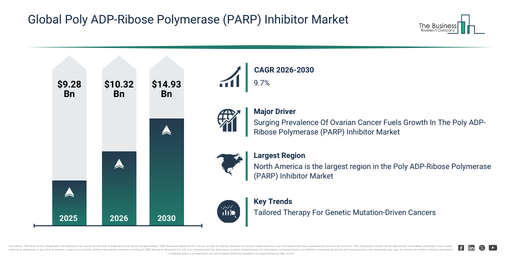
    The market for poly adp-ribose polymerase (parp) inhibitors has seen rapid expansion in recent years. It is projected to increase from $9.28 billion in 2025 to $10.32 billion in 2026, achieving a compound annual growth rate (CAGR) of 11.2%. This historical growth can be attributed to rising cancer incidence rates, developments in DNA repair pathway research, regulatory clearances for initial PARP inhibitor products, the increasing acceptance of targeted cancer treatments, and the expansion of clinical research in oncology.

    The poly adp-ribose polymerase (parp) inhibitor market size anticipates substantial expansion in the coming years. This market is projected to reach $14.93 billion by 2030, exhibiting a compound annual growth rate (CAGR) of 9.7%. Factors contributing to this growth during the outlook period include a heightened emphasis on precision oncology, the emergence of advanced parp inhibitors, broader therapeutic applications extending beyond ovarian and breast cancers, augmented funding for oncology drug development, and a rise in the utilization of companion diagnostics. Key developments expected in the forecast timeframe encompass the wider application of parp inhibitors within combination treatment regimens, a concentrated effort on therapies for BRCA-mutated cancers, an increase in clinical studies for novel parp compounds, the growing acceptance of tailored oncology treatments, and improved patient classification through the use of biomarkers.

    Get A Free Sample Report With In-Depth Market Insights:

    https://thebusinessresearchcompany.com/sample_request?id=64898890&type=smp&name=Poly%20ADP-Ribose%20Polymerase%20%28PARP%29%20Inhibitor%20Market%20Report%202026&utm_source=Blogs&utm_medium=Paid&utm_campaign=Nov_PR

    Poly ADP-Ribose Polymerase (PARP) Inhibitor Market Growth Backed By Core Demand Fundamentals

    The expanding occurrence of ovarian cancer is anticipated to fuel the expansion of the poly ADP-ribose polymerase (PARP) inhibitor market in the future. Ovarian cancer is defined as a malignant growth that forms in one or both ovaries, essential components of the female reproductive system responsible for egg and hormone production. The rise in ovarian cancer cases can be attributed to factors such as genetic susceptibility, an aging demographic, environmental influences, and hormonal dysregulation. In the treatment of ovarian cancer, poly ADP-Ribose Polymerase (PARP) Inhibitors function by targeting DNA repair pathways, particularly in individuals with BRCA mutations, thereby inducing synthetic lethality and boosting tumor cell demise.

    Poly ADP-Ribose Polymerase (PARP) Inhibitor Market Segment Analysis: What Are The Core Market Categories?

    The poly adp-ribose polymerase (parp) inhibitor market covered in this report is segmented –

    1) By Drug Type: Talazoparib, Veliparib, Olaparib, Other Drug Types

    2) By Distribution Channel: Hospital Pharmacy, Online Pharmacy, Retail Pharmacy, Other Distribution Channels

    3) By Application: Ovarian Cancer, Breast Cancer, Other Applications

    4) By End Users: Hospitals, Homecare, Specialty Clinics, Other End Users

    Subsegments:

    1) By Talazoparib: Talazoparib For Breast Cancer, Talazoparib For Ovarian Cancer, Talazoparib For Prostate Cancer, Talazoparib For Other Cancers

    2) By Veliparib: Veliparib For Breast Cancer, Veliparib For Ovarian Cancer, Veliparib For Non-Small Cell Lung Cancer (Nsclc), Veliparib For Other Cancers

    3) By Olaparib: Olaparib For Breast Cancer (Her2-negative), Olaparib For Ovarian Cancer (Brca-mutated), Olaparib For Prostate Cancer (Brca-Mutated), Olaparib For Pancreatic Cancer (Brca-Mutated), Olaparib For Other Cancers

    4) By Other Drug Types: Niraparib, Rucaparib, Pembrolizumab (Combination Therapy With Parp Inhibitors), Other Parp Inhibitors (Emerging Drugs In Clinical Trials)

    #Poly ADP-Ribose Polymerase (PARP) Inhibitor Market Growth Trends: What’s Shaping The Future Outlook?

    Leading companies within the poly ADP-ribose polymerase (PARP) inhibitor market are actively developing generic PARP inhibitors, aiming to provide a customized treatment strategy for cancer patients with specific genetic mutations. These generic PARP inhibitors function by blocking the activity of the enzyme poly ADP-ribose polymerase (PARP).

    Poly ADP-Ribose Polymerase (PARP) Inhibitor Market Top Companies Driving Competitive Growth

    Major companies operating in the poly adp-ribose polymerase (parp) inhibitor market are Pfizer Inc., Johnson & Johnson Services Inc., AbbVie Inc., Bayer AG, Novartis AG, Sanofi S.A., AstraZeneca plc, GlaxoSmithKline plc, Takeda Pharmaceutical Company Limited, Merck KGaA, Teva Pharmaceutical Industries Ltd., Daiichi Sankyo Company Limited, Ipsen Biopharmaceuticals Inc., Genentech Inc., Seattle Genetics Inc., Medivation Inc., Myriad Genetics Inc., PharmaMar S.A., Clovis Oncology, Tolero Pharmaceuticals Inc., Everest Pharmaceuticals, Verastem Inc.

    View The Full Poly ADP-Ribose Polymerase (PARP) Inhibitor Market Report:

    https://thebusinessresearchcompany.com/report/poly-adp-ribose-polymerase-parp-inhibitor-global-market-report?utm_source=Blogs&utm_medium=Paid&utm_campaign=Nov_PR

    Poly ADP-Ribose Polymerase (PARP) Inhibitor Market Top Region: Where Does Most Revenue Come From?

    North America was the largest region in the poly ADP-ribose polymerase (PARP) inhibitor market in 2025. Asia-Pacific is expected to be the fastest-growing region in the forecast period. The regions covered in the poly adp-ribose polymerase (parp) inhibitor market report are Asia-Pacific, South East Asia, Western Europe, Eastern Europe, North America, South America, Middle East, Africa.

    Reach Out To Our Team:

    The Business Research Company: https://www.thebusinessresearchcompany.com/

    Americas: +1 310-496-7795

    Asia: +44 7882 955267 & +91 8897263534

    Europe: +44 7882 955267

    Email us at: marketing@tbrc.info

    Follow us on:

    LinkedIn: https://in.linkedin.com/company/the-business-research-company

    YouTube: https://www.youtube.com/channel/UC24_fI0rV8cR5DxlCpgmyFQ

    Global Market Model: https://www.thebusinessresearchcompany.com/global-market-model

  • Pollen Allergy Market Analysis: Understanding The Drivers Behind 7.8% CAGR Through 2030 Growth

    Pollen Allergy Market Analysis: Understanding The Drivers Behind 7.8% CAGR Through 2030 Growth

    Featuring market attractiveness scoring, total addressable market sizing, company benchmarking matrices, interactive Excel dashboards, deeper supply chain intelligence, emerging startup tracking, and granular product-level insights, The Business Research Company’s 2026 market reports are built to deliver research that is both more actionable and more strategically valuable.

    Pollen Allergy Market Value Analysis: What Growth Lies Ahead Over The Forecast Period?

    The pollen allergy market has experienced significant expansion in recent years. Its size is expected to increase from $7.49 billion in 2025 to $8.09 billion in 2026, at a compound annual growth rate (CAGR) of 8.1%. This historical growth can be attributed to several factors, including the increasing prevalence of seasonal allergies, greater environmental pollen exposure, the expansion of allergy diagnostic services, the widespread availability of antihistamine medications, and the enhancement of allergy awareness programs.

    The pollen allergy market is poised for significant expansion in the coming years, with its size projected to reach $10.94 billion by 2030, demonstrating a compound annual growth rate (CAGR) of 7.8%. This anticipated growth throughout the forecast period stems from factors such as the increasing embrace of immunotherapy treatments, escalating investments in precision allergy diagnostics, a heightened emphasis on preventive allergy care, the broadening scope of biologic allergy treatments, and the growing integration of digital tools for allergy monitoring. Prominent trends for the forecast period include a wider adoption of personalized allergy therapies, an increase in the use of advanced diagnostic testing for allergens, a rising demand for long-term immunotherapy solutions, the expansion of seasonal allergy management programs, and an intensified focus on early allergy diagnosis.

    Get A Free Sample Report With In-Depth Market Insights:

    https://thebusinessresearchcompany.com/sample_request?id=70709905&type=smp&name=Pollen%20Allergy%20Market%20Report%202026&utm_source=Blogs&utm_medium=Paid&utm_campaign=Nov_PR

    Pollen Allergy Market Growth Catalysts And Demand Drivers

    The increasing prevalence of allergic rhinitis is expected to drive the growth of the pollen allergen market going forward. Allergic rhinitis is an allergic condition that inflames the nose, leading to sneezing, a blocked nose, and itchy eyes, primarily caused by pollen or dust. The escalation in allergic rhinitis is attributed to factors such as environmental pollution, climate change, urbanization, and lifestyle shifts, all of which contribute to increased exposure to allergens and pollutants. This prevalent condition, directly caused by pollen allergies, results in inflammation within the nasal passages upon exposure to pollen.

    Pollen Allergy Market Segment Breakdown: Which Categories Lead On Revenue?

    The pollen allergy market covered in this report is segmented –

    1) By Product Type: Instruments, Consumables, Services

    2) By Allergen Type: Environmental Allergens, Inhaled, Airborne Allergens, Other Allergen Types

    3) By Therapeutics Drug class: Antihistamines, Decongestants, Corticosteroids, Mast Cell Stabilizers, Leukotriene Inhibitors, Nasal Anticholinergics, Immunomodulators, Auto injectable Epinephrine, Immunotherapy

    4) By End-User: Diagnostic Laboratories, Hospitals

    Subsegments:

    1) By Instruments: Allergy Testing Equipment, Diagnostic Devices, Monitoring Devices

    2) By Consumables: Allergy Test Kits, Pollen Filters, Diagnostic Reagents, Treatment Medications (Antihistamines)

    3) By Services: Allergy Testing Services, Immunotherapy Services, Consultation And Diagnostic Services

    Pollen Allergy Market Industry Trends: What’s Reshaping Demand?

    Leading companies in the pollen allergy market are focused on developing extensive allergy care platforms, aiming to provide integrated solutions for the diagnosis, treatment, and management of allergies, which ensures better patient outcomes and convenience. A comprehensive allergy care platform for pollen allergy refers to an integrated system or service that offers complete support to individuals suffering from pollen allergies.

    Pollen Allergy Market Leading Players And Competitive Positioning

    Major companies operating in the pollen allergy market are Johnson & Johnson, F. Hoffmann-La Roche Ltd., Merck KGaA, AbbVie Inc., Bayer AG, Sanofi SA, AstraZeneca Plc, Novartis AG, GlaxoSmithKline PLC, Astellas Pharma Inc., Bausch Health Companies Inc., Sun Pharmaceutical Industries Ltd, Genentech Inc., Omega Pharma, ALK Abello, Stallergenes Greer, Aimmune Therapeutics, Allergy Therapeutics, McNeil Consumer Healthcare, Meda Pharmaceuticals Inc, HAL Allergy Group, Allergopharma, Biomay AG, Leti Pharma, Alerpharma S.A

    View The Full Pollen Allergy Market Report:

    https://thebusinessresearchcompany.com/report/pollen-allergy-global-market-report?utm_source=Blogs&utm_medium=Paid&utm_campaign=Nov_PR

    Pollen Allergy Market Regional Breakdown: Where Is Demand Concentrated?

    North America was the largest region in the pollen allergy market in 2025. Asia-Pacific is expected to be the fastest-growing region in the forecast period. The regions covered in the pollen allergy market report are Asia-Pacific, South East Asia, Western Europe, Eastern Europe, North America, South America, Middle East, Africa.

    Reach Out To Our Team:

    The Business Research Company: https://www.thebusinessresearchcompany.com/

    Americas: +1 310-496-7795

    Asia: +44 7882 955267 & +91 8897263534

    Europe: +44 7882 955267

    Email us at: marketing@tbrc.info

    Follow us on:

    LinkedIn: https://in.linkedin.com/company/the-business-research-company

    YouTube: https://www.youtube.com/channel/UC24_fI0rV8cR5DxlCpgmyFQ

    Global Market Model: https://www.thebusinessresearchcompany.com/global-market-model
  • Point-of-Care Glucose Testing Market Growth To $6.95 Billion By 2030: What’s Driving The Expansion?

    Point-of-Care Glucose Testing Market Growth To $6.95 Billion By 2030: What’s Driving The Expansion?

    Built to provide research that’s more actionable and strategically valuable, The Business Research Company’s 2026 market reports include market attractiveness analysis, total addressable market sizing, company benchmarking matrices, interactive Excel dashboards, broader supply chain intelligence, emerging startup tracking, and in-depth product insights.

    Point-of-Care Glucose Testing Market Size Forecast: How Big Could The Market Get By 2030?

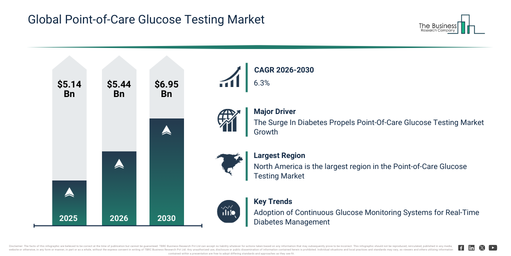
    The point-of-care glucose testing market has experienced substantial expansion in recent years. It is anticipated to grow from $5.14 billion in 2025 to $5.44 billion in 2026, exhibiting a compound annual growth rate (CAGR) of 5.8%. The historical increase in this market can be attributed to the rising prevalence of diabetes, a greater adoption of self-monitoring practices, the availability of affordable glucose meters, the broadening of outpatient diabetes care, and an increasing awareness of glycemic control.

    The point-of-care glucose testing market is anticipated to expand significantly over the coming years. This market is projected to reach a valuation of $6.95 billion by 2030, exhibiting a compound annual growth rate (CAGR) of 6.3%. The expansion predicted for this period is driven by factors such as the increasing uptake of connected glucose monitoring systems, enhanced integration with mobile health applications, a surge in demand for non-invasive monitoring solutions, the broadening of remote patient monitoring initiatives, and a heightened emphasis on individualized diabetes care. Key developments expected during the forecast timeframe encompass the wider adoption of Bluetooth-enabled glucose meters, an increase in the utilization of continuous glucose monitoring devices, a growing inclination towards at-home glucose testing, the broadening of digital platforms for diabetes management, and a stronger focus on patient self-monitoring.

    Get A Free Sample Report With In-Depth Market Insights:

    https://thebusinessresearchcompany.com/sample_request?id=21001209&type=smp&name=Point-of-Care%20Glucose%20Testing%20Market%20Report%202026&utm_source=Blogs&utm_medium=Paid&utm_campaign=Nov_PR

    Point-of-Care Glucose Testing Market Opportunity Drivers: What’s Unlocking New Revenue Potential?

    The increasing occurrence of diabetes is projected to drive expansion within the point-of-care glucose testing market in the future. Diabetes, a persistent metabolic condition, causes elevated blood glucose levels, which can progressively harm vital organs such as the heart, blood vessels, eyes, kidneys, and nerves. This point-of-care glucose testing technology is commonly employed to ascertain glucose levels in hospitalized individuals, enabling quick treatment choices when blood sugar fluctuates, thereby improving therapeutic output and diabetes management.

    Point-of-Care Glucose Testing Market Segmentation: How Does The Market Break Down By Category?

    The point-of-care glucose testing market covered in this report is segmented –

    1) By Product: Lancet And Lancing Devices, Strips, Meters

    2) By Testing Site: Fingertips, Alternate Site Testing

    3) By Applications: Type-1 Diabetes, Type-2 Diabetes

    4) By End-User: Professional Diagnostic Centers, Hospitals And Clinics, Home Care Settings, Other End Users

    Subsegments:

    1) By Lancet And Lancing Devices: Single-Use Lancets, Multi-Use Lancets, Adjustable Lancing Devices

    2) By Strips: Glucose Test Strips, Ketone Test Strips, Combo Strips (Glucose And Ketone)

    3) By Meters: Blood Glucose Meters, Continuous Glucose Monitoring (CGM) Meters, Bluetooth-Enabled Meters

    Point-of-Care Glucose Testing Market Innovation Trends: What Developments Are Reshaping The Industry?

    Major companies within the point-of-care glucose testing market are concentrating on developing technological advancements, such as wearable continuous glucose monitoring (CGM) systems equipped with predictive analytics. These innovations aim to enhance real-time glucose tracking, improve glycemic control, and lessen the burden of manual testing. A CGM system operates with a small sensor placed under the skin, continuously measuring interstitial glucose levels and transmitting this data to a mobile application. This facilitates proactive management through instant alerts and trend predictions.

    Point-of-Care Glucose Testing Market Competitive Overview And Top Companies

    Major companies operating in the point-of-care glucose testing market are F Hoffmann-La Roche Ltd., Abbott Laboratories Inc., Siemens Healthineers, TaiDoc Technology Corporation, Nipro Corporation, Dexcom Inc., LifeScan Inc., Nova Biomedical Corporation, Ypsomed AG, Ascensia Diabetes Care Holdings AG, Trividia Health Inc., Radiometer Medical ApS, HemoCue AB, EKF Diagnostics Holdings plc, Trinity Biotech plc, Bionime Corporation, PTS Diagnostics, ForaCare Inc., Menarini Diagnostics, ACON Laboratories Inc., Senseonics Holdings Inc., Prodigy Diabetes Care LLC, Nemaura Medical Inc., Medtronic plc

    View The Full Point-of-Care Glucose Testing Market Report:

    https://thebusinessresearchcompany.com/report/point-of-care-glucose-testing-global-market-report?utm_source=Blogs&utm_medium=Paid&utm_campaign=Nov_PR

    Point-of-Care Glucose Testing Market Geographic Landscape: Which Region Leads Industry Growth?

    North America was the largest region in the point-of-care glucose testing market in 2025. The regions covered in the point-of-care glucose testing market report are Asia-Pacific, South East Asia, Western Europe, Eastern Europe, North America, South America, Middle East, Africa.

    Reach Out To Our Team:

    The Business Research Company: https://www.thebusinessresearchcompany.com/

    Americas: +1 310-496-7795

    Asia: +44 7882 955267 & +91 8897263534

    Europe: +44 7882 955267

    Email us at: marketing@tbrc.info

    Follow us on:

    LinkedIn: https://in.linkedin.com/company/the-business-research-company

    YouTube: https://www.youtube.com/channel/UC24_fI0rV8cR5DxlCpgmyFQ

    Global Market Model: https://www.thebusinessresearchcompany.com/global-market-model
  • Point-Of-Care Data Management Software Market Trends Reshaping Industry Growth Through 2030

    Point-Of-Care Data Management Software Market Trends Reshaping Industry Growth Through 2030

    Backed by market attractiveness analysis, total addressable market sizing, company benchmarking matrices, interactive Excel dashboards, wider supply chain intelligence, emerging startup coverage, and detailed product-level insights, The Business Research Company’s 2026 market reports are designed to offer research that is more actionable and strategically valuable than ever.

    Point-Of-Care Data Management Software Market Revenue Outlook: What CAGR Lies Ahead Through 2030?

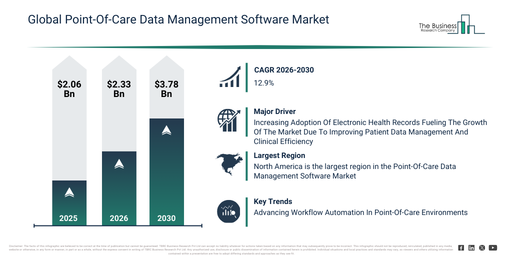
    The market size for point-of-care data management software has witnessed rapid growth in recent years. It is anticipated to increase from $2.06 billion in 2025 to $2.33 billion in 2026, achieving a compound annual growth rate (CAGR) of 13.1%. This historical expansion can be linked to the increased deployment of point-of-care diagnostic devices, the broadening of digital health infrastructure, a heightened necessity for workflow optimization, evolving regulatory demands for data accuracy, and the adoption of electronic health records.

    The point-of-care data management software market is anticipated to experience significant expansion over the coming years. This market is projected to reach $3.78 billion by 2030, exhibiting a compound annual growth rate (CAGR) of 12.9%. This expansion during the forecast period is largely driven by a heightened need for real-time diagnostics integration, the expanding application of AI-powered clinical analytics, the widening scope of remote patient monitoring, an intensifying emphasis on interoperability standards, and growing capital injection into digital healthcare platforms. Key developments expected during this timeframe involve the greater integration of device connectivity platforms, increased uptake of cloud-based data management solutions, the expanding utilization of real-time clinical decision support tools, the broadening of interoperable healthcare data ecosystems, and a strengthened commitment to data security and compliance.

    Get A Free Sample Report With In-Depth Market Insights:

    https://thebusinessresearchcompany.com/sample_request?id=51532876&type=smp&name=Point-Of-Care%20Data%20Management%20Software%20Market%20Report%202026&utm_source=Blogs&utm_medium=Paid&utm_campaign=Nov_PR

    Point-Of-Care Data Management Software Market Growth Momentum: What Factors Are Shaping Demand?

    The future expansion of the point-of-care data management software market is anticipated to be propelled by the rising uptake of electronic health records. Electronic Health Records (EHRs) are digital compilations of a patient’s medical background, therapies, and diagnostic outcomes, specifically designed for secure exchange among healthcare providers to enhance treatment and coordination. The increasing implementation of electronic health records is a response to the growing necessity for efficient patient data management, which allows for simplified access, improved accuracy, and better coordination of care. Point-of-care data management software strengthens electronic health record systems by facilitating real-time data capture and seamless integration, rendering it highly effective for clinics and bedside diagnostics. This software reduces the need for manual data entry by automatically updating patient records, thereby enhancing clinical efficiency and supporting better decision-making.

    Point-Of-Care Data Management Software Market Segment Trends And Revenue Contributors

    The point-of-care data management software market covered in this report is segmented –

    1) By Type: Standalone Software, Integrated Software

    2) By Deployment Mode: Cloud-Based, On-Premises, Hybrid Solutions

    3) By Technology: Artificial Intelligence, Machine Learning, Blockchain, Internet Of Things (IoT), Big Data Analytics

    4) By Applications: Infectious Disease Devices, Glucose Monitoring, Coagulation Monitoring, Urinalysis, Cardiometabolic Monitoring, Cancer Markers, Hematology, Other Point-Of-Care Applications

    5) By End User: Hospitals, Clinics, Ambulatory Care Center, Home Healthcare, Diagnostic Laboratories

    Subsegments:

    1) By Standalone Software: Device-Specific Data Management Systems, Modular Clinical Information Systems, Laboratory Data Analysis Tools, Remote Patient Monitoring Software

    2) By Integrated Software: Hospital Information System Integrated Platforms, Electronic Health Record Embedded Solutions, Cloud-Based Interoperable Platforms, Multi-Device Connectivity And Data Integration Systems

    Point-Of-Care Data Management Software Market Trends: What’s Defining The Industry’s Next Phase?

    Leading companies in the point-of-care (POC) data management software market are concentrating on integrating advanced POC middleware connectivity to improve efficiency, automate workflows, and ensure compliance. POC middleware functions as an intermediary platform, linking multiple near-patient testing devices with central healthcare information systems to facilitate real-time data transmission, operator-competency tracking, standardized reporting, and quality-control monitoring.

    Point-Of-Care Data Management Software Market Competitive Landscape: Which Companies Lead The Industry?

    Major companies operating in the point-of-care data management software market are F. Hoffmann-La Roche Ltd., Oracle Health Inc., Thermo Fisher Scientific Inc., Abbott Point of Care Inc., Danaher Corporation, Siemens Healthineers AG, GE HealthCare Technologies Inc., Athenahealth Inc., InterSystems Corporation, eClinicalWorks LLC, Medical Information Technology Inc., NextGen Healthcare Inc., Randox Laboratories Ltd., Greenway Health LLC, Care Cloud Inc., CureMD.com Inc., Telcor Inc., Orchard Software Corporation, HealthEC LLC, Sunquest Information Systems Inc.

    View The Full Point-Of-Care Data Management Software Market Report:

    https://thebusinessresearchcompany.com/report/point-of-care-data-management-software-global-market-report?utm_source=Blogs&utm_medium=Paid&utm_campaign=Nov_PR

    Point-Of-Care Data Management Software Market Largest Region: Which Geography Holds The Biggest Share?

    North America was the largest region in the point-of-care data management software market in 2025. Asia-Pacific is expected to be the fastest-growing region in the forecast period. The regions covered in the point-of-care data management software market report are Asia-Pacific, South East Asia, Western Europe, Eastern Europe, North America, South America, Middle East, Africa.

    Reach Out To Our Team:

    The Business Research Company: https://www.thebusinessresearchcompany.com/

    Americas: +1 310-496-7795

    Asia: +44 7882 955267 & +91 8897263534

    Europe: +44 7882 955267

    Email us at: marketing@tbrc.info

    Follow us on:

    LinkedIn: https://in.linkedin.com/company/the-business-research-company

    YouTube: https://www.youtube.com/channel/UC24_fI0rV8cR5DxlCpgmyFQ

    Global Market Model: https://www.thebusinessresearchcompany.com/global-market-model
  • Point of Care Ultrasound Market Growth To $6.55 Billion Creates New Opportunities Across The Industry

    Point of Care Ultrasound Market Growth To $6.55 Billion Creates New Opportunities Across The Industry

    Featuring market attractiveness scoring, total addressable market sizing, company benchmarking matrices, interactive Excel dashboards, deeper supply chain intelligence, emerging startup tracking, and granular product-level insights, The Business Research Company’s 2026 market reports are built to deliver research that is both more actionable and more strategically valuable.

    Point of Care Ultrasound Market Growth Analysis: How Will Revenue Trend Over The Forecast Period?

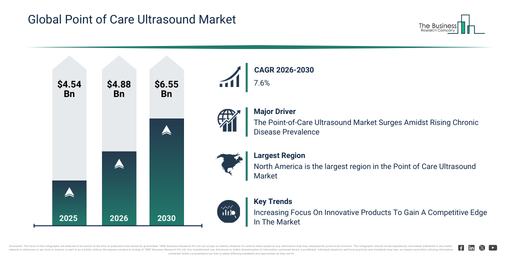
    The point of care ultrasound market has demonstrated significant expansion over the past few years. It is anticipated to increase from $4.54 billion in 2025 to $4.88 billion in 2026, achieving a compound annual growth rate (CAGR) of 7.5%. This market’s historical growth can be ascribed to several factors, including the escalating demand for real-time diagnostic imaging, the broadening of emergency and critical care services, the uptake of portable medical devices, the proliferation of point-of-care clinical practices, and advancements in ultrasound hardware miniaturization.

    The point of care ultrasound market size is projected to experience substantial expansion in the coming years. This market is anticipated to reach $6.55 billion by 2030, exhibiting a compound annual growth rate (CAGR) of 7.6%. Factors contributing to this growth during the forecast period include the increasing uptake of AI-enabled ultrasound systems, a surge in demand for handheld imaging devices, the broadening of PoCUS training initiatives, greater utilization in outpatient and ambulatory environments, and enhanced integration with electronic health records. Key trends observed during this period involve the growing adoption of handheld ultrasound devices, the increased application of bedside imaging in emergency medical settings, the expanding integration of AI-assisted image interpretation, the wider deployment of portable diagnostic ultrasound applications, and a heightened emphasis on supporting rapid clinical decision-making.

    Get A Free Sample Report With In-Depth Market Insights:

    https://thebusinessresearchcompany.com/sample_request?id=59114366&type=smp&name=Point%20of%20Care%20Ultrasound%20Market%20Report%202026&utm_source=Blogs&utm_medium=Paid&utm_campaign=Nov_PR

    Point of Care Ultrasound Market Expansion Drivers: What’s Shaping Future Growth?

    The increasing incidence of chronic illnesses is anticipated to fuel the expansion of the point-of-care ultrasound market in the foreseeable future. These long-term medical conditions, also known as non-communicable diseases (NCDs), are characterized by their extended duration and often gradual progression. POCUS (point of care ultrasound) proves essential in handling chronic ailments and enhancing patient results due to its capacity for early identification, tailored therapeutic approaches, and distant supervision.

    Point of Care Ultrasound Market Segment Analysis Spotlighting Growth Areas

    The point of care ultrasound market covered in this report is segmented –

    1) By Type: Diagnostic Devices, Therapeutic Devices

    2) By Portability: Trolley Based Devices, Handheld Devices

    3) By Application: Emergency Medicine, Cardiology, Obstetrics And Gynecology, Urology, Vascular Surgery, Musculoskeletal, Other Applications

    4) By End-User: Hospitals, Clinics, Maternity Centers, Ambulatory Surgical Centers (ASCs), Other End Users

    Subsegments:

    1) By Diagnostic Devices: Portable Ultrasound Systems, Handheld Ultrasound Devices, Cart-Based Ultrasound Machines

    2) By Therapeutic Devices: Ultrasound-Guided Injection Systems, Ultrasound Therapy Devices, Ablation Devices

    Point of Care Ultrasound Market Industry Trends Fueling Future Revenue Growth

    Leading companies within the point-of-care ultrasound market are concentrating on developing technologically advanced offerings, such as ultrasound-on-chip technology, to improve imaging features and stimulate innovation in medical diagnostics. This approach miniaturizes ultrasound components onto a single chip, making compact and portable ultrasound devices possible for various medical imaging applications. Such innovation enhances the availability of ultrasound diagnostics, with potential progress in point-of-care and wearable healthcare instruments.

    Point of Care Ultrasound Market Leading Companies: Who Holds The Strongest Market Presence?

    Major companies operating in the point of care ultrasound market are Samsung Electronics Co. Ltd., Hitachi Ltd., Siemens Healthineers GmbH, Fujifilm Holdings Corporation, Koninklijke Philips N.V., GE HealthCare Technologies Inc., Toshiba Medical Systems Corporation, Fukuda Denshi Co. Ltd., FUJIFILM Sonosite Inc., Analogic Corporation, Esaote SPA, Zimmer MedizinSysteme GmbH, Chison Medical Imaging Co. Ltd., Butterfly Network Inc., Terason Division Teratech Corporation, ALPINION Medical Systems Co. Ltd., Shenzhen AnaSonic Bio-Medical Technology Co. Ltd., Healcerion Co. Ltd., Edan Instruments Inc., Shenzhen Landwind Industry Co. Ltd., United Imaging Healthcare, Mindray Medical International Limited, Samsung Medison Co. Ltd.

    View The Full Point of Care Ultrasound Market Report:

    https://thebusinessresearchcompany.com/report/point-of-care-ultrasound-global-market-report?utm_source=Blogs&utm_medium=Paid&utm_campaign=Nov_PR

    Point of Care Ultrasound Market Regional Analysis: Which Geography Leads On Revenue?

    North America was the largest region in the point of care ultrasound market in 2025. Asia-Pacific is expected to be the fastest-growing region in the forecast period. The regions covered in the point of care ultrasound market report are Asia-Pacific, South East Asia, Western Europe, Eastern Europe, North America, South America, Middle East, Africa.

    Reach Out To Our Team:

    The Business Research Company: https://www.thebusinessresearchcompany.com/

    Americas: +1 310-496-7795

    Asia: +44 7882 955267 & +91 8897263534

    Europe: +44 7882 955267

    Email us at: marketing@tbrc.info

    Follow us on:

    LinkedIn: https://in.linkedin.com/company/the-business-research-company

    YouTube: https://www.youtube.com/channel/UC24_fI0rV8cR5DxlCpgmyFQ

    Global Market Model: https://www.thebusinessresearchcompany.com/global-market-model
  • Point Of Care Infectious Disease Testing Market Forecast: Breaking Down The Numbers Behind Future Expansion

    Point Of Care Infectious Disease Testing Market Forecast: Breaking Down The Numbers Behind Future Expansion

    Built to provide research that’s more actionable and strategically valuable, The Business Research Company’s 2026 market reports include market attractiveness analysis, total addressable market sizing, company benchmarking matrices, interactive Excel dashboards, broader supply chain intelligence, emerging startup tracking, and in-depth product insights.

    Point Of Care Infectious Disease Testing Market Forecast: What Value Will The Market Reach By 2030?

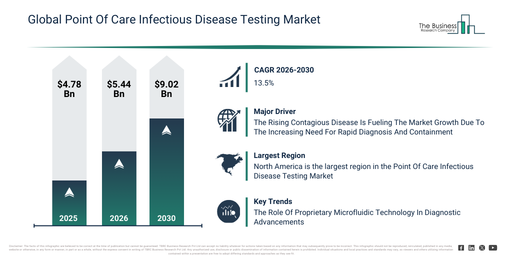
    The point of care infectious disease testing market size has demonstrated rapid growth in recent years. It is projected to increase from $4.78 billion in 2025 to $5.44 billion in 2026, registering a compound annual growth rate (CAGR) of 13.7%. This historic growth can be attributed to factors such as a rising incidence of infectious diseases, an increased demand for rapid diagnostics, the expansion of decentralized healthcare delivery, the availability of lateral flow testing technologies, and the growing application of rapid screening in hospitals.

    The point of care infectious disease testing market size is projected to experience swift expansion in the coming years. This market is set to reach $9.02 billion by 2030, achieving a compound annual growth rate (CAGR) of 13.5%. Its anticipated growth during this forecast period stems from factors such as the increasing uptake of self-testing solutions, the expansion of molecular point-of-care diagnostics, escalating investments in digital health integration, a heightened emphasis on outbreak readiness, and the surging demand for affordable rapid tests. Significant trends identified for this period encompass the rising adoption of rapid molecular point-of-care tests, an increasing demand for home-based infectious disease testing, the broadening application of multiplex diagnostic kits, the proliferation of portable diagnostic instruments, and a stronger commitment to early disease detection.

    Get A Free Sample Report With In-Depth Market Insights:

    https://thebusinessresearchcompany.com/sample_request?id=88387391&type=smp&name=Point%20Of%20Care%20Infectious%20Disease%20Testing%20Market%20Report%202026&utm_source=Blogs&utm_medium=Paid&utm_campaign=Nov_PR

    Point Of Care Infectious Disease Testing Market Development Factors: What’s Supporting Demand?

    The increasing prevalence of contagious diseases is anticipated to fuel the expansion of the point of care infectious disease testing market in the future. A contagious disease is defined as an ailment transmissible between individuals via direct contact, airborne particles, or alternative transmission methods. The growing occurrence of contagious diseases primarily stems from enhanced human mobility, given that increased travel across areas and nations promotes more rapid and widespread dissemination of infectious agents. Point of care infectious disease testing speeds up the identification and diagnosis of contagious diseases, allowing for prompt treatment and diminishing the likelihood of community-level transmission.

    Point Of Care Infectious Disease Testing Market Segment Performance And Emerging Opportunities

    The point of care infectious disease testing market covered in this report is segmented –

    1) By Product: Kits And Reagents, Instruments

    2) By Technology: Lateral Flow Immunoassay, Agglutination Test, Flow-through Test Or Immunoconcentration Assay, Molecular Diagnostics, Other Technologies

    3) By Disease: Human Immunodeficiency Virus Point-of-Care Testing, Clostridium Difficile Point-of-Care Testing, Hepatitis B Virus Point-of-Care Testing, Pneumonia or Streptococcus Associated Infections, Respiratory Syncytial Virus Point-of-Care Testing, Human Papillomavirus Point-of-Care Testing, Influenza Or Flu Point-of-Care Testing, Other Diseases

    4) By End Use: Hospitals, Diagnostic Centers, Research and Academic Institutes, Homecare Settings, Other End Users

    Subsegments:

    1) By Kits And Reagents: Test Kits, Reagents

    2) By Instruments: Portable Devices, Automated Analyzers

    Point Of Care Infectious Disease Testing Market Trends Powering Strategic Industry Growth

    Leading companies in the point-of-care infectious disease testing market are prioritizing the integration of innovative technologies, such as proprietary microfluidic technology, to improve test accuracy, reduce the time required for results, and enhance patient outcomes. Proprietary microfluidic technology involves specialized systems that precisely manipulate small volumes of fluids at the microscale, enabling fast, accurate, and cost-efficient analysis. This technology aids point of care (POC) infectious disease testing by facilitating quick, on-site pathogen detection, complete with integrated sample collection, analysis, and result delivery, thus boosting diagnostic speed and accessibility without the need for centralized laboratory testing.

    Point Of Care Infectious Disease Testing Market Key Players: Which Companies Lead Industry Competition?

    Major companies operating in the point of care infectious disease testing market are Cardinal Health, F Hoffmann La Roche Ltd, Thermo Fisher Scientific Inc., Abbott Laboratories, Siemens Healthineers AG, Becton Dickinson and Company, bioMérieux Société Anonyme, QuidelOrtho Corporation, Bio Rad Laboratories Inc., DiaSorin Società per Azioni, Danaher Corporation, Cue Health Inc., Nova Biomedical Corporation, Seegene Incorporated, Biosynex Société Anonyme, Trivitron Healthcare Private Limited, EKF Diagnostics Holdings plc, Trinity Biotech Public Limited Company, bioLytical Laboratories Inc., Cepheid Inc., LumiraDx UK Ltd., Meridian Bioscience Inc., GenBody Inc.

    View The Full Point Of Care Infectious Disease Testing Market Report:

    https://thebusinessresearchcompany.com/report/point-of-care-infectious-disease-testing-global-market-report?utm_source=Blogs&utm_medium=Paid&utm_campaign=Nov_PR

    Point Of Care Infectious Disease Testing Market Geographic Spread And Regional Opportunities

    North America was the largest region in the point of care infectious disease testing market in 2025. Asia-Pacific is expected to be the Fastest-Growing region in the forecast period. The regions covered in the point of care infectious disease testing market report are Asia-Pacific, South East Asia, Western Europe, Eastern Europe, North America, South America, Middle East, Africa.

    Reach Out To Our Team:

    The Business Research Company: https://www.thebusinessresearchcompany.com/

    Americas: +1 310-496-7795

    Asia: +44 7882 955267 & +91 8897263534

    Europe: +44 7882 955267

    Email us at: marketing@tbrc.info

    Follow us on:

    LinkedIn: https://in.linkedin.com/company/the-business-research-company

    YouTube: https://www.youtube.com/channel/UC24_fI0rV8cR5DxlCpgmyFQ

    Global Market Model: https://www.thebusinessresearchcompany.com/global-market-model
  • Point of Care Diagnostics Market Expected To Grow At 9.6% CAGR Through 2030: What Businesses Need To Know

    Point of Care Diagnostics Market Expected To Grow At 9.6% CAGR Through 2030: What Businesses Need To Know

    Backed by market attractiveness analysis, total addressable market sizing, company benchmarking matrices, interactive Excel dashboards, wider supply chain intelligence, emerging startup coverage, and detailed product-level insights, The Business Research Company’s 2026 market reports are designed to offer research that is more actionable and strategically valuable than ever.

    Point of Care Diagnostics Market Size Outlook: How Quickly Will Revenue Expand Through 2030?

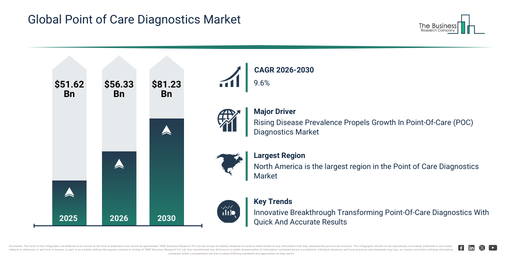
    The point of care diagnostics market size has experienced strong growth in recent years. It is projected to expand from $51.62 billion in 2025 to $56.33 billion in 2026, exhibiting a compound annual growth rate (CAGR) of 9.1%. This historical growth can be attributed to the increasing prevalence of chronic and infectious diseases, the expansion of decentralized healthcare models, the growing use of glucose monitoring systems, a rising demand for quick diagnostic results, and increasing awareness of preventive healthcare.

    The point of care diagnostics market is projected to experience robust expansion over the coming years. Its valuation is anticipated to reach $81.23 billion by 2030, exhibiting a compound annual growth rate (CAGR) of 9.6%. This projected growth during the forecast period stems from several factors, including the increasing creation of multiplex testing platforms, the growing incorporation of digital connectivity within diagnostics, the broadening scope of home healthcare diagnostics, the escalating need for personalized medicine, and the greater uptake of AI-enabled diagnostic instruments. Key developments anticipated in this period encompass a rise in the adoption of rapid diagnostic test kits, an increase in the utilization of home-based testing devices, a heightened demand for infectious disease POC tests, the expansion of over-the-counter (OTC) diagnostic products, and an intensified focus on facilitating real-time clinical decision-making.

    Get A Free Sample Report With In-Depth Market Insights:

    https://thebusinessresearchcompany.com/sample_request?id=62186427&type=smp&name=Point%20of%20Care%20Diagnostics%20Market%20Report%202026&utm_source=Blogs&utm_medium=Paid&utm_campaign=Nov_PR

    Point of Care Diagnostics Market Industry Drivers: What’s Behind The Revenue Growth?

    The expanding occurrence of chronic and infectious diseases is propelling the point of care (POC) diagnostics market. Chronic illnesses are conditions that advance gradually over time and typically persist for 3 months or longer. Point-of-care diagnostics offers significant utility in the straightforward management of chronic diseases and sees widespread adoption due to its convenience.

    Point of Care Diagnostics Market Segment Landscape And Growth Outlook

    The point of care diagnostics market covered in this report is segmented –

    1) By Product: Glucose Monitoring Kits, Infectious Diseases Testing Kits, Pregnancy And Fertility Testing Kits, Hematology Testing Kits, Cardiometabolic Monitoring Kits, Urinalysis Testing Kits, Cholesterol Test Strips, Other Products

    2) By Mode Of Prescription: Prescription Based Devices, OTC (Over-The-Counter) Based Devices

    3) By End User: Professional Diagnostic Centers, Research Laboratories, Home Care, Other End-Users

    Subsegments:

    1) By Glucose Monitoring Kits: Blood Glucose Meters, Test Strips

    2) By Infectious Diseases Testing Kits: Rapid Antigen Tests, PCR Testing Kits, Serology Tests

    3) By Pregnancy And Fertility Testing Kits: Home Pregnancy Tests, Ovulation Predictor Kits

    4) By Hematology Testing Kits: Complete Blood Count (CBC) Test Kits, Coagulation Test Kits

    5) By Cardiometabolic Monitoring Kits: Lipid Profile Test Kits, Blood Pressure Monitors

    6) By Urinalysis Testing Kits: Dipstick Test Kits, Urine Culture Kits

    7) By Cholesterol Test Strips: Home Cholesterol Testing Kits

    8) By Other Products: Customizable Test Kits, Point Of Care Testing Platforms

    Point of Care Diagnostics Market Growth Trends Reshaping The Competitive Landscape

    Leading companies within the point-of-care (POC) diagnostics market are concentrating on advancing technological innovations, such as rapid PCR systems, to secure a competitive advantage. A rapid PCR system represents a form of polymerase chain reaction (PCR) test capable of delivering results more quickly than standard PCR tests.

    Point of Care Diagnostics Market Competitive Landscape: Who Leads The Industry?

    Major companies operating in the point of care diagnostics market are Abbott Laboratories, Siemens Healthineers AG, Beckman Coulter Inc., Becton Dickinson and Company, Instrumentation Laboratory Company, Nova Biomedical Corporation, Qiagen NV, F Hoffmann La Roche Ltd, Biomeriux SA, Quidel Corporation, Orasure Technologies Inc., Johnson and Johnson, Thermo Fisher Scientific Inc., Sysmex Corporation, Sinocare Inc., Arkray Inc., Danaher Corporation, Chembio Diagnostics Inc., EKF Diagnostics Holdings plc, Trinity Biotech plc, Fluxergy Inc., LumiraDx UK Ltd., Meridian Bioscience Inc., Nipro Europe Group Companies, AccuBioTech Co. Ltd., Atlas Genetics Ltd., Biomeme Inc., Cepheid Inc.

    View The Full Point of Care Diagnostics Market Report:

    https://thebusinessresearchcompany.com/report/point-of-care-diagnostics-global-market-report?utm_source=Blogs&utm_medium=Paid&utm_campaign=Nov_PR

    Point of Care Diagnostics Market Top Region By Revenue And Market Share

    North America was the largest region in the point of care diagnostics market in 2025. Asia-Pacific is expected to be the fastest-growing region in the point of care diagnostics market report during the forecast period. The regions covered in the point of care diagnostics market report are Asia-Pacific, South East Asia, Western Europe, Eastern Europe, North America, South America, Middle East, Africa.

    Reach Out To Our Team:

    The Business Research Company: https://www.thebusinessresearchcompany.com/

    Americas: +1 310-496-7795

    Asia: +44 7882 955267 & +91 8897263534

    Europe: +44 7882 955267

    Email us at: marketing@tbrc.info

    Follow us on:

    LinkedIn: https://in.linkedin.com/company/the-business-research-company

    YouTube: https://www.youtube.com/channel/UC24_fI0rV8cR5DxlCpgmyFQ

    Global Market Model: https://www.thebusinessresearchcompany.com/global-market-model
  • Podiatric Products Market Forecast To Reach $6.35 Billion By 2030: Key Trends Explained

    Podiatric Products Market Forecast To Reach $6.35 Billion By 2030: Key Trends Explained

    Featuring market attractiveness scoring, total addressable market sizing, company benchmarking matrices, interactive Excel dashboards, deeper supply chain intelligence, emerging startup tracking, and granular product-level insights, The Business Research Company’s 2026 market reports are built to deliver research that is both more actionable and more strategically valuable.

    Podiatric Products Market Size, Value And Growth Trajectory Through 2030

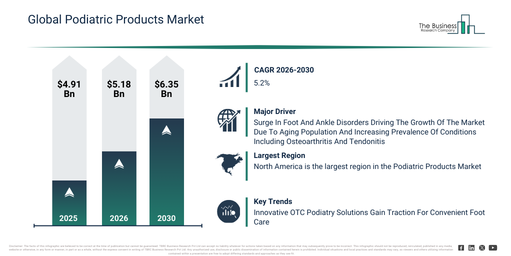
    The podiatric products market has experienced substantial growth in recent years. It is projected to increase from $4.91 billion in 2025 to $5.18 billion in 2026, reflecting a compound annual growth rate (CAGR) of 5.4%. This historical expansion can be linked to several factors, including the rising occurrence of foot and ankle conditions, an increase in diabetes-related complications, the broadening of podiatric clinical services, enhanced awareness of foot health, and the availability of various supportive footwear solutions.

    The podiatric products market is projected to experience substantial expansion in the coming years, with its value anticipated to reach $6.35 billion by 2030, driven by a compound annual growth rate (CAGR) of 5.2%. This growth over the forecast period is attributable to several factors, including the increasing incorporation of digital foot scanning technologies, a rising need for individualized podiatric care, the broadening availability of home-based foot care products, increasing capital allocation to smart orthotic solutions, and a heightened emphasis on preventive healthcare. Key trends expected during this period involve an increasing call for bespoke orthotic solutions, the growing deployment of sophisticated gait analysis instruments, wider acceptance of 3D-printed footwear items, the expansion of initiatives for preventive foot care, and an intensified focus on managing diabetic foot conditions.

    Get A Free Sample Report With In-Depth Market Insights:

    https://thebusinessresearchcompany.com/sample_request?id=36735367&type=smp&name=Podiatric%20Products%20Market%20Report%202026&utm_source=Blogs&utm_medium=Paid&utm_campaign=Nov_PR

    Podiatric Products Market Growth Factors: What’s Supporting Expansion?

    The increasing incidence of foot and ankle ailments is anticipated to drive the expansion of the podiatric products market in the future. These disorders encompass various issues impacting the feet and ankles, including discomfort, inflammation, injuries, or structural irregularities, which can impede comfortable walking, standing, or movement. A significant factor contributing to this growing prevalence is the aging demographic, as older people are more susceptible to conditions like osteoarthritis and tendonitis, resulting from the natural degradation of joints over time. Podiatric products offer valuable assistance for foot and ankle disorders by delivering effective support, alleviating pain, and providing corrective remedies through items such as orthotics, specialized footwear, braces, and diagnostic instruments, all of which aid in symptom management, enhancing mobility, and averting additional complications.

    Podiatric Products Market Breakdown By Product Type And Application

    The podiatric products market covered in this report is segmented –

    1) By Product Type: Orthotics, Braces And Supports, Gels And Pads, Footwear, Other Types

    2) By Diagnostic Tools: Gait Analysis Software, Foot Pressure Measurement Devices, 3D Scanners For Foot Imprints, Ultrasound Devices, X-Ray Equipment

    3) By Distribution Channel: Direct Sales, Distribution Through Healthcare Providers, Online Channels, Other Distribution Channels

    4) By Application: Prevention And Treatment Of Foot Disorders, Management Of Chronic Conditions, Wound Care And Healing, Foot Surgery And Rehabilitation, Other Applications

    5) By End-User: Hospitals And Clinics, Outpatient Facilities, Retail Pharmacies, Online Retailers, Other End Users

    Subsegments:

    1) By Orthotics: Custom-Made Orthotics, Prefabricated Orthotics, Functional Orthotics, Accommodative Orthotics

    2) By Braces And Supports: Ankle Braces, Toe Separators And Bunion Splints, Plantar Fasciitis Night Splints, Foot Drop Braces

    3) By Gels And Pads: Heel Cups And Cushions, Metatarsal Pads, Toe Caps And Gel Sleeves, Corn And Callus Protectors

    4) By Footwear: Diabetic Footwear, Orthopedic Shoes, Post-Operative Shoes, Insoles And Arch Supports

    5) By Other Types: Antifungal Creams And Sprays, Nail Care Products, Skin Care And Moisturizers For Feet, Foot Baths And Massagers

    Podiatric Products Market Trends Shaping Long-Term Demand

    Major companies operating within the podiatric products market are concentrating on developing advanced solutions, such as over-the-counter podiatry items, to satisfy the increasing demand for user-friendly, potent, and accessible foot care treatments. An over-the-counter podiatry product refers to a non-prescription remedy utilized to manage common foot ailments, including odor, infections, and dryness, offering convenient and accessible foot care for everyday use.

    Podiatric Products Market Company Landscape And Competitive Strategy

    Major companies operating in the podiatric products market are Brook Sports Inc., Ottobock SE & Co. KGaA, Össur hf, Implus Footcare LLC, Hanger Inc., Good Feet Worldwide LLC, Aetrex Worldwide Inc., Dansko LLC, Cascade Orthopedic Supply LP, Bauerfeind AG, Superfeet Worldwide LLC, Apis Footwear Company, Solo Laboratories Inc., ComfortFit Labs Inc., PediFix Inc., Tynor Orthotics Private Limited, DARCO International Inc., Digitsole SAS, Orthofeet Inc., Foot Levelers Inc., Breg Inc., TheraBand LLC, Bird & Cronin Inc., Alimed Inc.

    View The Full Podiatric Products Market Report:

    https://thebusinessresearchcompany.com/report/podiatric-products-global-market-report?utm_source=Blogs&utm_medium=Paid&utm_campaign=Nov_PR

    Podiatric Products Market Regional Analysis And Top Geography

    North America was the largest region in the podiatric products market in 2025. Asia-Pacific is expected to be the fastest-growing region in the forecast period. The regions covered in the podiatric products market report are Asia-Pacific, South East Asia, Western Europe, Eastern Europe, North America, South America, Middle East, Africa.

    Reach Out To Our Team:

    The Business Research Company: https://www.thebusinessresearchcompany.com/

    Americas: +1 310-496-7795

    Asia: +44 7882 955267 & +91 8897263534

    Europe: +44 7882 955267

    Email us at: marketing@tbrc.info

    Follow us on:

    LinkedIn: https://in.linkedin.com/company/the-business-research-company

    YouTube: https://www.youtube.com/channel/UC24_fI0rV8cR5DxlCpgmyFQ

    Global Market Model: https://www.thebusinessresearchcompany.com/global-market-model
  • POC Medical Imaging Market Analysis Through 2030: Market Size, Growth Trends And Industry Outlook

    POC Medical Imaging Market Analysis Through 2030: Market Size, Growth Trends And Industry Outlook

    Built to provide research that’s more actionable and strategically valuable, The Business Research Company’s 2026 market reports include market attractiveness analysis, total addressable market sizing, company benchmarking matrices, interactive Excel dashboards, broader supply chain intelligence, emerging startup tracking, and in-depth product insights.

    POC Medical Imaging Market CAGR Outlook And Future Development

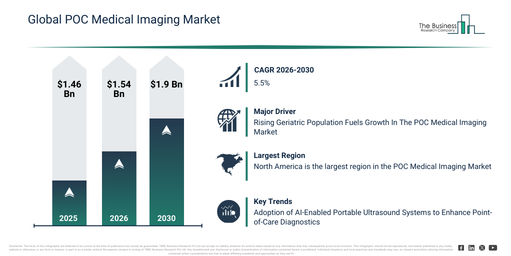
    The poc medical imaging market has experienced consistent growth in recent years. It is anticipated to expand from $1.46 billion in 2025 to $1.54 billion in 2026, exhibiting a compound annual growth rate (CAGR) of 5.0%. This historical growth can be linked to factors such as the expansion of emergency and critical care services, an increasing need for rapid diagnostics, the greater utilization of mobile healthcare units, the technological miniaturization of imaging devices, and the rising adoption of ultrasound imaging.

    The poc medical imaging market size is set to experience robust expansion over the next few years. It is projected to reach $1.9 billion by 2030, achieving a compound annual growth rate (CAGR) of 5.5%. This growth during the forecast period is fueled by escalating investments in point-of-care diagnostics, the rising demand for decentralized healthcare delivery, the increasing availability of AI-enabled imaging solutions, the growing utilization of home-based diagnostic tools, and an amplified focus on workflow efficiency in hospitals. Significant trends expected during this period include the increasing adoption of portable imaging devices, a surge in the use of bedside diagnostic imaging, the expanding integration of AI-based image interpretation, a wider range of handheld ultrasound applications, and an enhanced emphasis on rapid clinical decision support.

    Get A Free Sample Report With In-Depth Market Insights:

    https://thebusinessresearchcompany.com/sample_request?id=29847360&type=smp&name=POC%20Medical%20Imaging%20Market%20Report%202026&utm_source=Blogs&utm_medium=Paid&utm_campaign=Nov_PR

    POC Medical Imaging Market Demand Drivers: What’s Powering Industry Growth?

    The expansion of the geriatric population is anticipated to fuel the advancement of POC medical imaging in the foreseeable future. The geriatric population consists of individuals typically 65 years and older, who are classified as elderly. POC medical imaging holds a crucial position in caring for the elderly by providing rapid and easily accessible diagnostic evaluations, catering to the distinct health requirements of older persons, and enabling prompt actions for conditions linked to aging.

    POC Medical Imaging Market Segment Analysis And Revenue Potential

    The poc medical imaging market covered in this report is segmented –

    1) By Product: X-Ray, Computed Tomography (CT), Ultrasound

    2) By Application: Cardiology, Gynecology Or Obstetrics, Oncology, Orthopedics, Neurology, Other Applications

    3) By End-User: Hospitals, Clinics And Diagnostic Centers, Ambulatory Surgical Centers (ASCs), Home Care Settings

    Subsegments:

    1) By X-Ray: Portable X-Ray Machines, Mobile X-Ray Units, Digital X-Ray Systems

    2) By Computed Tomography (CT): Portable CT Scanners, Mobile CT Units, Cone Beam CT Systems

    3) By Ultrasound: Portable Ultrasound Devices, Handheld Ultrasound Systems, Compact Ultrasound Machines

    POC Medical Imaging Market Innovation Trends Shaping Future Development

    Key entities within the POC medical imaging market are engaged in fostering technological progress, particularly in the realm of AI-enabled portable ultrasound systems designed for prompt, bedside diagnostic assessments. These systems are intended to elevate workflow efficiency, diagnostic precision, and overall availability in urgent and critical medical situations. An AI-enabled portable ultrasound unit integrates compact, handheld hardware with advanced imaging programs and automated interpretation capabilities, allowing clinicians to conduct high-quality scans directly at the patient’s location. This stands in contrast to conventional bulky, hospital-based ultrasound devices that necessitate specialized operators and designated areas. For instance, in June 2025, Royal Philips N.V., a Netherlands-based health-technology company, unveiled the Flash Ultrasound System 5100 POC. This offering delivers exceptional image clarity through sophisticated transducer technology, includes AI-supported automated measurements, features an intuitive touchscreen interface for real-time visualization, and supports rapid diagnostic processes in emergency, ICU, and musculoskeletal applications, thus providing a faster, more accessible substitute for conventional imaging solutions.

    POC Medical Imaging Market Key Players Shaping Industry Direction

    Major companies operating in the poc medical imaging market are GE Healthcare Technologies Inc., Siemens Healthineers AG, Canon Medical Systems Corp., Samsung Medison Co. Ltd., Xoran Technologies LLC, NeuroLogica Corp., Fujifilm Holdings Corporation, Carestream Health Inc., Philips Medical Systems Technologies Ltd., Mindray Medical India Pvt. Ltd., Esaote Biomedica SpA, CurveBeam AI Limited, Planmed Oy, Toshiba Medical Systems Corporation, Neusoft Medical Systems, Hitachi Medical Systems America Inc., Hologic Inc., Shimadzu Corporation, Agfa-Gevaert N.V., Konica Minolta Inc., Sectra AB, Danaher Corporation, Butterfly Network Inc., United Imaging Healthcare, Shenzhen Anke High Tech Co. Ltd

    View The Full POC Medical Imaging Market Report:

    https://thebusinessresearchcompany.com/report/POC-medical-imaging-global-market-report?utm_source=Blogs&utm_medium=Paid&utm_campaign=Nov_PR

    POC Medical Imaging Market Geographic Analysis: Where Is Demand Rising Fastest?

    North America was the largest region in the POC medical imaging market in 2025.Asia-Pacific is expected to be the fastest-growing region in the global POC medical imaging market report during the forecast period. The regions covered in the poc medical imaging market report are Asia-Pacific, South East Asia, Western Europe, Eastern Europe, North America, South America, Middle East, Africa.

    Reach Out To Our Team:

    The Business Research Company: https://www.thebusinessresearchcompany.com/

    Americas: +1 310-496-7795

    Asia: +44 7882 955267 & +91 8897263534

    Europe: +44 7882 955267

    Email us at: marketing@tbrc.info

    Follow us on:

    LinkedIn: https://in.linkedin.com/company/the-business-research-company

    YouTube: https://www.youtube.com/channel/UC24_fI0rV8cR5DxlCpgmyFQ

    Global Market Model: https://www.thebusinessresearchcompany.com/global-market-model