Blog

  • Erythrocytes Monoclonal Antibody Market Growth Forecast Through 2030: Market Size And Trends In 2026

    Erythrocytes Monoclonal Antibody Market Growth Forecast Through 2030: Market Size And Trends In 2026

    Built to provide research that’s more actionable and strategically valuable, The Business Research Company’s 2026 market reports include market attractiveness analysis, total addressable market sizing, company benchmarking matrices, interactive Excel dashboards, broader supply chain intelligence, emerging startup tracking, and in-depth product insights.

    Erythrocytes Monoclonal Antibody Market Size Forecast: How Big Could The Market Get By 2030?

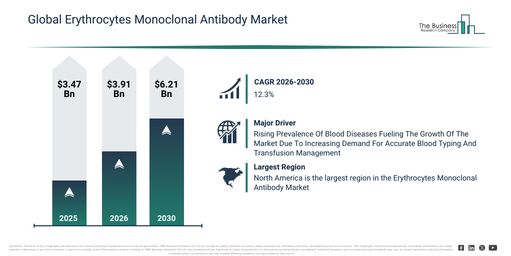
    The erythrocytes monoclonal antibody market has experienced substantial expansion in recent years. This market is set to increase from $3.47 billion in 2025 to $3.91 billion in 2026, at a compound annual growth rate (CAGR) of 12.6%. Historically, this growth can be ascribed to the proliferation of clinical diagnostic laboratories, an uptick in blood transfusion procedures, the wider adoption of standardized blood testing protocols, advancements in immunohematology research, and the improved accessibility of monoclonal antibody technologies.

    The erythrocytes monoclonal antibody market is anticipated to experience swift expansion over the coming years. Its value is projected to reach $6.21 billion by 2030, demonstrating a compound annual growth rate (CAGR) of 12.3%. This expansion during the forecast period is primarily driven by greater investments in automated blood testing platforms, a growing need for swift and precise diagnostics, the expansion of precision laboratory medicine, increasing incorporation of AI into diagnostic processes, and a heightened emphasis on blood safety regulations. Key developments expected in this period encompass the expanded application of monoclonal antibodies in blood typing, a wider implementation of automated immunohematology systems, the proliferation of advanced diagnostic assays, an escalating demand for high-specificity antibody reagents, and a stronger focus on transfusion safety.

    Get A Free Sample Report With In-Depth Market Insights:

    https://thebusinessresearchcompany.com/sample_request?id=41585922&type=smp&name=Erythrocytes%20Monoclonal%20Antibody%20Market%20Report%202026&utm_source=Blogs&utm_medium=Paid&utm_campaign=Oct_PR

    Erythrocytes Monoclonal Antibody Market Demand Drivers: What’s Powering Industry Growth?

    An anticipated increase in blood disease cases is projected to boost the expansion of the erythrocytes monoclonal antibody market going forward. These conditions encompass medical issues impacting the makeup, operation, or generation of blood, involving anomalies in red blood cells, white blood cells, platelets, hemoglobin, or plasma. This growing occurrence of blood diseases primarily stems from the increasing rates of chronic illnesses, which directly affect blood health and necessitate continuous oversight. Erythrocytes monoclonal antibodies assist in managing blood disorders by precisely targeting red blood cell antigens, thereby facilitating accurate blood typing and compatibility assessments. These antibodies also contribute to the diagnosis and surveillance of transfusion-associated issues, enhancing patient safety and therapeutic results. For example, as reported in July 2024 by the Perth Blood Institute, an Australia-based nonprofit organization, approximately 19,400 Australians receive a blood cancer diagnosis each year, with projections indicating 275,000 cases by 2035. Consequently, the increasing occurrence of blood diseases is a key factor propelling the growth of the erythrocytes monoclonal antibody market.

    Erythrocytes Monoclonal Antibody Market Segment Analysis And Revenue Potential

    The erythrocytes monoclonal antibody market covered in this report is segmented –

    1) By Type: Immunoglobulin G (IgG) Monoclonal Antibody, Immunoglobulin M (IgM) Monoclonal Antibody, Immunoglobulin A (IgA) Monoclonal Antibody, Immunoglobulin E (IgE) Monoclonal Antibody

    2) By Source: Human-Derived, Mouse- Derived, Chimeric, Humanized

    3) By Application: Flow Cytometry, ELISA (Enzyme-Linked Immunosorbent Assay), Western Blot, Immunoprecipitation, Other Applications

    4) By End Use: Hospital, Clinical Laboratories, Academic And Research Institutes, Pharmaceutical Companies

    Subsegments:

    1) By Immunoglobulin G (IgG) Monoclonal Antibody: Humanized Immunoglobulin G, Fully Human Immunoglobulin G, Chimeric Immunoglobulin G, Murine Immunoglobulin G

    2) By Immunoglobulin M (IgM) Monoclonal Antibody: Pentameric Immunoglobulin M, Hexameric Immunoglobulin M, Recombinant Immunoglobulin M

    3) By Immunoglobulin A (IgA) Monoclonal Antibody: Secretory Immunoglobulin A, Serum Immunoglobulin A, Dimeric Immunoglobulin A

    4) By Immunoglobulin E (IgE) Monoclonal Antibody: Allergen-Specific Immunoglobulin E, Anti-Immunoglobulin E Therapeutic Antibody

    Erythrocytes Monoclonal Antibody Market Key Players Shaping Industry Direction

    Major companies operating in the erythrocytes monoclonal antibody market are Micro Life Sciences Pvt. Ltd., Bio-Rad Laboratories Inc., Bio-Techne Corporation, OriGene Technologies Inc., RayBiotech Inc., Creative Diagnostics Inc., Diagast S.A., JMitra & Co. Pvt. Ltd., Mediclone Biotech Pvt. Ltd., LifeSpan BioSciences Inc., Arigo Biolaboratories Corporation, Alba Bioscience Ltd., MyBioSource Inc., Siwa Biotech Corp., Lorne Laboratories Ltd., Tulip Diagnostics Pvt. Ltd., Shiva Scientific Pvt. Ltd., Biorbyt Ltd., Assay Genie Pvt. Ltd., Abbexa Ltd.

    View The Full Erythrocytes Monoclonal Antibody Market Report:

    https://thebusinessresearchcompany.com/report/global-erythrocytes-monoclonal-antibody-market-report?utm_source=Blogs&utm_medium=Paid&utm_campaign=Oct_PR

    Erythrocytes Monoclonal Antibody Market Regional Analysis: Which Region Leads By Revenue?

    North America was the largest region in the erythrocytes monoclonal antibody market in 2025. Asia-Pacific is expected to be the fastest-growing region in the forecast period. The regions covered in the erythrocytes monoclonal antibody market report are Asia-Pacific, South East Asia, Western Europe, Eastern Europe, North America, South America, Middle East, Africa.

    Reach Out To Our Team:

    The Business Research Company: https://www.thebusinessresearchcompany.com/

    Americas: +1 310-496-7795

    Asia: +44 7882 955267 & +91 8897263534

    Europe: +44 7882 955267

    Email us at: marketing@tbrc.info

    Follow us on:

    LinkedIn: https://in.linkedin.com/company/the-business-research-company

    YouTube: https://www.youtube.com/channel/UC24_fI0rV8cR5DxlCpgmyFQ

    Global Market Model: https://www.thebusinessresearchcompany.com/global-market-model
  • Laparoscopic Ports Market Growth Outlook For 2026: Drivers, Trends And Future Opportunities

    Laparoscopic Ports Market Growth Outlook For 2026: Drivers, Trends And Future Opportunities

    Featuring market attractiveness scoring, total addressable market sizing, company benchmarking matrices, interactive Excel dashboards, deeper supply chain intelligence, emerging startup tracking, and granular product-level insights, The Business Research Company’s 2026 market reports are built to deliver research that is both more actionable and more strategically valuable.

    Laparoscopic Ports Market Size, Value And Growth Trajectory Through 2030

    The laparoscopic ports market has experienced substantial expansion in recent years. It is projected to increase from $4.68 billion in 2025 to $5.13 billion in 2026, reflecting a compound annual growth rate (CAGR) of 9.6%. This historical growth can be attributed to several factors including the limited availability of specialized laparoscopic ports, the dependence on standard trocar systems, an increase in general surgical procedures, expanding hospital infrastructure, and a heightened awareness regarding the advantages of minimally invasive surgery.

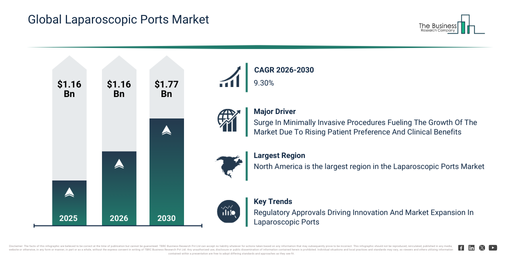
    The laparoscopic ports market is projected to experience substantial growth in the coming years. This market is set to reach $7.31 billion by 2030, exhibiting a compound annual growth rate (CAGR) of 9.3%. The expansion during the forecast period can be attributed to the development of bladed and multi-access ports, technological advancements in polymer and silicone materials, the increasing number of ambulatory surgical centers, a rising demand for specialized surgical procedures, and the integration of laparoscopic ports with robotic-assisted surgery. Major trends identified for this period include a greater adoption of minimally invasive surgeries, an increasing use of multi-access ports for complex procedures, a strong focus on patient safety and the reduction of surgical trauma, a demand for versatile ports compatible with multiple instruments, and growth in specialized surgeries such as bariatric and urological procedures.

    Get A Free Sample Report With In-Depth Market Insights:

    https://thebusinessresearchcompany.com/sample_request?id=18408532&type=smp&name=Laparoscopic%20Ports%20Market%20Report%202026&utm_source=Blogs&utm_medium=Paid&utm_campaign=Oct_PR

    Laparoscopic Ports Market Growth Momentum: What Factors Are Shaping Demand?

    An increasing inclination towards minimally invasive surgical techniques is anticipated to drive expansion in the laparoscopic ports market in the future. These surgeries involve operating through small cuts with specific tools and cameras, rather than the extensive incisions typical of conventional open surgery. This growing favoritism for minimally invasive methods stems from their smaller incisions, leading to less harm to the skin and tissues beneath, thereby lessening pain and leaving minimal scars. Laparoscopic ports facilitate accurate instrument entry during minimally invasive operations, effectively reducing the need for large cuts and contributing to less discomfort, faster healing, and diminished scarring. As an illustration, data from The Aesthetic Society, a US-based plastic surgery and cosmetic medicine body, shows that Americans invested more than $11.8 billion in aesthetic procedures in August 2023, representing a 2% rise from the prior year. Consequently, the heightened demand for minimally invasive surgeries is a key factor propelling the expansion of the laparoscopic ports market.

    Laparoscopic Ports Market Segment Analysis: What Are The Core Market Categories?

    The laparoscopic ports market covered in this report is segmented –

    1) By Product: Standard Laparoscopic Ports, Bladed Laparoscopic Ports, Multi-Access Ports

    2) By Material: Polymer Ports, Silicone Ports, Metal Ports

    3) By Distribution Channel: Direct Sales, Indirect Sales, Online Sales

    4) By Application: General Surgery, Bariatric Surgery, Colorectal Surgery, Urological Surgery, Gynecological Surgery, Other Applications

    5) By End-User: Hospitals, Ambulatory Surgical Centers, Specialty Clinics, Other End-Users

    Subsegments:

    1) By Standard Laparoscopic Ports: Trocar Ports, Cannula Ports, Optical Ports

    2) By Bladed Laparoscopic Ports: Single-Bladed Ports, Double-Bladed Ports, Curved-Bladed Ports

    3) By Multi-Access Ports: Single Incision Multi-Access Ports, Dual Incision Multi-Access Ports, Triple Incision Multi-Access Ports

    Laparoscopic Ports Market Trends Redefining Industry Growth

    Leading companies in the laparoscopic ports market are prioritizing the acquisition of regulatory approvals to expedite product commercialization and broaden their market footprint. Regulatory approvals signify the official authorization granted by governmental agencies or regulatory bodies, confirming that a medical device, drug, or treatment adheres to established safety, quality, and efficacy standards, thereby permitting its legal marketing and use. For instance, in December 2023, Xpan Inc., a Canada-based medical device company, secured FDA 510(k) clearance for its Xpan Universal Trocar System. This minimally invasive surgical access device enters the body as a 3 mm port and can expand up to 12 mm during a procedure, offering flexibility while mitigating tissue trauma. This radial dilation method reduces tissue trauma compared to traditional cutting, potentially lowering complications and improving postoperative recovery. The system serves as a universal access solution, accommodating instruments ranging from 3 mm up to 12 mm, with the aim of ensuring maximum safety for patients and providing enhanced flexibility, reliability, and cost-effectiveness for surgeons and hospitals. This device is intended for use in laparoscopic and thoracoscopic procedures, facilitating access to abdominal and thoracic cavities for both diagnostic and operative interventions.

    Laparoscopic Ports Market Industry Leaders And Competitive Landscape

    Major companies operating in the laparoscopic ports market are Medtronic plc, Olympus Corporation, Teleflex Incorporated, Karl Storz SE & Co. KG, Applied Medical Resources Corporation, CONMED Corporation, Aesculap Inc., Richard Wolf GmbH, Double Medical, B. Braun Melsungen AG, Microline Surgical Inc., Hangzhou Kangji Medical Instruments Co. Ltd., Unimax Medical Systems Inc., Purple Surgical International Ltd., Surgical Innovations Limited, LaproSurge Ltd., Sejong Medical Co. Ltd., Grena Ltd., LIVSMED Inc., Victor Medical Instruments Co. Ltd.

    View The Full Laparoscopic Ports Market Report:

    https://thebusinessresearchcompany.com/report/laparoscopic-ports-global-market-report?utm_source=Blogs&utm_medium=Paid&utm_campaign=Oct_PR

    Laparoscopic Ports Market Regional Analysis And Leading Geography

    North America was the largest region in the laparoscopic ports market in 2025. Asia-Pacific is expected to be the fastest-growing region in the forecast period. The regions covered in the laparoscopic ports market report are Asia-Pacific, South East Asia, Western Europe, Eastern Europe, North America, South America, Middle East, Africa.

    Reach Out To Our Team:

    The Business Research Company: https://www.thebusinessresearchcompany.com/

    Americas: +1 310-496-7795

    Asia: +44 7882 955267 & +91 8897263534

    Europe: +44 7882 955267

    Email us at: marketing@tbrc.info

    Follow us on:

    LinkedIn: https://in.linkedin.com/company/the-business-research-company

    YouTube: https://www.youtube.com/channel/UC24_fI0rV8cR5DxlCpgmyFQ

    Global Market Model: https://www.thebusinessresearchcompany.com/global-market-model
  • Laparoscopic Instruments Market Size Forecast From 2026 To 2030: Key Industry Trends

    Laparoscopic Instruments Market Size Forecast From 2026 To 2030: Key Industry Trends

    Built to provide research that’s more actionable and strategically valuable, The Business Research Company’s 2026 market reports include market attractiveness analysis, total addressable market sizing, company benchmarking matrices, interactive Excel dashboards, broader supply chain intelligence, emerging startup tracking, and in-depth product insights.

    Laparoscopic Instruments Market CAGR Outlook And Future Development

    The laparoscopic instruments market size has experienced robust growth over recent years. It will grow from $14.72 billion in 2025 to $16.05 billion in 2026 at a compound annual growth rate (CAGR) of 9.0%. Historically, this expansion was driven by factors such as the restricted accessibility of laparoscopic instruments, a dependence on traditional surgical methods, an increase in general and gynecological surgical procedures, improvements in hospital infrastructure, and the uptake of energy-based surgical equipment.

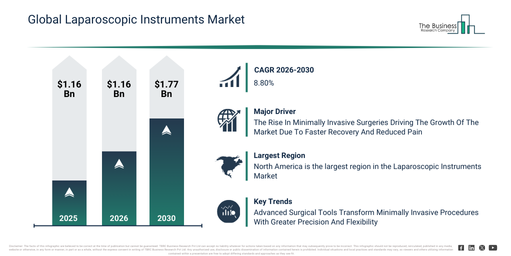
    The laparoscopic instruments market size is anticipated to undergo significant expansion in the upcoming years. It is projected to achieve a value of $22.47 billion by 2030, demonstrating a compound annual growth rate (CAGR) of 8.8%. This growth during the forecast period can be attributed to several factors such as technological advancements in robotic-assisted surgery, a heightened demand for minimally invasive and single-incision procedures, an increase in bariatric and colorectal surgeries, greater investment in advanced visualization and imaging systems, and the expansion of academic and research institutions employing laparoscopic systems. Notable trends expected in this period include the rising adoption of minimally invasive surgeries, an increased use of advanced visualization technologies, a growing preference for single-incision laparoscopy, the spread of robotic-assisted laparoscopic procedures, and an enhanced focus on ergonomics and surgeon safety.

    Get A Free Sample Report With In-Depth Market Insights:

    https://thebusinessresearchcompany.com/sample_request?id=30138359&type=smp&name=Laparoscopic%20Instruments%20Market%20Report%202026&utm_source=Blogs&utm_medium=Paid&utm_campaign=Oct_PR

    Laparoscopic Instruments Market Expansion Drivers: What’s Shaping Future Growth?

    The growing adoption of minimally invasive surgeries is projected to boost the expansion of the laparoscopic instruments market moving forward. Minimally invasive surgeries are medical procedures carried out through small incisions with specialized instruments, resulting in less tissue trauma, reduced pain, and faster patient recovery compared to traditional open surgery. The increase in minimally invasive surgeries is attributed to greater patient demand for quicker recovery, given that these procedures typically entail smaller incisions, less tissue damage, and decreased pain. Laparoscopic instruments are utilized by surgeons in these procedures to perform precise operations through tiny incisions, offering enhanced visualization and control. For instance, in June 2024, the Private Healthcare Information Network (PHIN), a UK-based independent, not-for-profit company, revealed that in the first quarter of 2024, a total of 22,700 robot-assisted procedures were performed, representing a 45% increase compared to the same period in 2023. Therefore, the rising number of minimally invasive surgeries is a primary driver for the growth of the laparoscopic instruments market.

    Laparoscopic Instruments Market Segment Breakdown: Which Categories Lead On Revenue?

    The laparoscopic instruments market covered in this report is segmented –

    1) By Product: Laparoscopes, Energy Systems, Trocars, Closure Devices, Suction Or Irrigation Device, Insufflation Device, Robot-Assisted Systems, Hand Access Instruments

    2) By Material Type: Stainless Steel, Plastic, Flexible Materials, Optical Fiber

    3) By Technology: Conventional Laparoscopy, Robotic-Assisted Laparoscopy, Single-Incision Laparoscopy, Advanced Visualization Technology

    4) By Application: General Surgery, Gynecological Surgery, Colorectal Surgery, Bariatric Surgery, Other Applications

    5) By End User: Hospitals, Ambulatory Surgical Centers, Specialty Clinics, Research Laboratories, Academic Institutions

    Subsegments:

    1) By Laparoscopes: Video Laparoscopes, Fiber Optic Laparoscopes

    2) By Energy Systems: Monopolar Energy Devices, Bipolar Energy Devices, Ultrasonic Energy Devices, Hybrid Energy Devices

    3) By Trocars: Optical Trocars, Bladeless Trocars, Bladed Trocars, Dilating Trocars

    4) By Closure Devices: Clip Appliers, Endoscopic Suturing Devices, Stapling Devices, Dilating Trocars

    5) By Suction Or Irrigation Device: Standalone Suction Devices, Standalone Irrigation Devices, Combined Suction And Irrigation Devices

    6) By Insufflation Device: Automatic Insufflators, Manual Insufflators

    7) By Robot-Assisted Systems: Robotic Surgical Systems, Robotic Camera Manipulators, Robotic Instrument Control Systems

    8) By Hand Access Instruments: Hand Assist Devices, Hand Ports, Sealing Gel Systems

    Laparoscopic Instruments Market Strategic Trends: What Defines The Next Growth Phase?

    Leading companies active in the laparoscopic instruments market are concentrating on developing sophisticated technologies, such as wristed articulating instruments, to improve surgical accuracy and enhance minimally invasive operations. These wristed articulating instruments are advanced surgical tools incorporating a wrist-like joint, which grants greater flexibility and range of motion, allowing surgeons to execute precise movements during minimally invasive procedures. For instance, in October 2024, LivsMed Inc., a US-based medical device design and manufacturing company, launched the ArtiSential 5, the first 5 mm wristed articulating laparoscopic instrument series on the market. This range delivers superior flexibility, better ergonomics, and tactile feedback, enabling surgeons to perform minimally invasive procedures with heightened precision and control. The reduced size contributes to smaller incision sizes, quicker patient recovery, and diminished surgical costs, thereby making advanced wristed articulation available in any operating room, with or without robotic systems.

    Laparoscopic Instruments Market Key Participants And Competitive Landscape

    Major companies operating in the laparoscopic instruments market are Johnson And Johnson, Medtronic plc, Fujifilm Holdings Corporation, Stryker Corporation, Intuitive Surgical Inc., Hoya Corporation, Smith And Nephew plc, Steris plc, Teleflex Incorporated, Karl Storz SE And Co. KG, Integra LifeSciences Holdings Corporation, CONMED Corporation, Richard Wolf GmbH, B. Braun Melsungen AG, PAJUNK, Purple Surgical UK Limited, GerMedUSA Inc, Xcellance Medical Technologies Pvt. Ltd, IndoSurgicals Private Limited, Dolphin Surgical Industries, LivsMed USA Inc, Medcity Surgicals

    View The Full Laparoscopic Instruments Market Report:

    https://thebusinessresearchcompany.com/report/laparoscopic-instruments-global-market-report?utm_source=Blogs&utm_medium=Paid&utm_campaign=Oct_PR

    Laparoscopic Instruments Market Geographic Analysis: Where Is Demand Accelerating Fastest?

    North America was the largest region in the laparoscopic instruments market in 2025. Asia-Pacific is expected to be the fastest-growing region in the forecast period. The regions covered in the laparoscopic instruments market report are Asia-Pacific, South East Asia, Western Europe, Eastern Europe, North America, South America, Middle East, Africa.

    Reach Out To Our Team:

    The Business Research Company: https://www.thebusinessresearchcompany.com/

    Americas: +1 310-496-7795

    Asia: +44 7882 955267 & +91 8897263534

    Europe: +44 7882 955267

    Email us at: marketing@tbrc.info

    Follow us on:

    LinkedIn: https://in.linkedin.com/company/the-business-research-company

    YouTube: https://www.youtube.com/channel/UC24_fI0rV8cR5DxlCpgmyFQ

    Global Market Model: https://www.thebusinessresearchcompany.com/global-market-model
  • Lancing Devices And Equipment Market 2026: Market Size, Growth Drivers And Emerging Opportunities

    Lancing Devices And Equipment Market 2026: Market Size, Growth Drivers And Emerging Opportunities

    Backed by market attractiveness analysis, total addressable market sizing, company benchmarking matrices, interactive Excel dashboards, wider supply chain intelligence, emerging startup coverage, and detailed product-level insights, The Business Research Company’s 2026 market reports are designed to offer research that is more actionable and strategically valuable than ever.

    Lancing Devices And Equipment Market Set To Climb From $3.52 Billion In 2026 To $4.98 Billion By 2030

    The lancing devices and equipment market size has demonstrated significant expansion in recent years. This market is set to expand from $3.25 billion in 2025 to $3.52 billion in 2026, registering a compound annual growth rate (CAGR) of 8.4%. The upward trend observed in the past can be attributed to the escalating occurrence of diabetes, the broadening implementation of self-monitoring blood glucose practices, improved access to disposable medical devices, advancements in lancet safety designs, and the growth of point-of-care diagnostics.

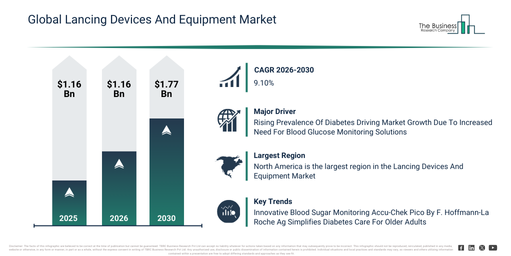
    The lancing devices and equipment market is projected to experience robust expansion in the coming years. It is forecast to increase to $4.98 billion in 2030, achieving a compound annual growth rate (CAGR) of 9.1%. This anticipated growth during the forecast period stems from factors such as the escalating demand for home diagnostics solutions, an intensified focus on patient comfort and adherence, the expansion of chronic disease monitoring initiatives, the rising integration of minimally invasive sampling devices, and increased capital directed towards personal healthcare technologies. Prominent trends expected in this period encompass the wider adoption of single-use safety lancets, an increasing preference for sampling devices designed to minimize pain, the growing use of glucose monitoring at home, developments in adjustable depth lancing technologies, and a strengthened emphasis on infection prevention.

    Get A Free Sample Report With In-Depth Market Insights:

    https://thebusinessresearchcompany.com/sample_request?id=28463250&type=smp&name=Lancing%20Devices%20And%20Equipment%20Market%20Report%202026&utm_source=Blogs&utm_medium=Paid&utm_campaign=Oct_PR

    Lancing Devices And Equipment Market Development Factors: What’s Supporting Demand?

    The increasing incidence of diabetes is propelling the expansion of the lancing devices and equipment market. Diabetes, a persistent metabolic condition marked by high blood sugar levels, necessitates frequent surveillance for effective management and to avert issues like neuropathy, cardiovascular disease, and kidney damage. This growing occurrence of diabetes stems from rising obesity rates, which induce insulin resistance and metabolic irregularities, ultimately contributing to the disease’s onset. The expanding prevalence of diabetes, in turn, bolsters the lancing devices and equipment sector by heightening the need for reliable, precise, and user-friendly blood sampling instruments, facilitating regular glucose checks both at home and in healthcare environments. For example, reports from The Guardian, a United Kingdom based news organization, indicated that in February 2025, the United Kingdom saw 12.2 million individuals impacted by diabetes or non-diabetic hyperglycaemia. This figure comprised 4.6 million with diagnosed diabetes, 1.3 million with undiagnosed diabetes, and 6.3 million with non-diabetic hyperglycaemia, marking an increase from approximately 12.1 million cases observed between 2023 and 2024. Consequently, the increasing prevalence of diabetes is a key driver for the expansion of the lancing devices and equipment market.

    Lancing Devices And Equipment Market Segmentation: How Does The Market Break Down By Category?

    The lancing devices and equipment market covered in this report is segmented –

    1) By Usage Mode: Reusable, Disposable

    2) By Product: Safety Lancets, Standard Lancets

    3) By Penetration Depth: 0.8mm-1mm, 1.1mm- 1.5mm, 1.6mm-2.0mm, Other Penetration Depths

    4) By End User: Hospitals and Clinics, Homecare and Home Diagnostics, Diagnostic Centres and Medical Institutions, Research and Academic Laboratories, Other End User

    Subsegments:

    1) By Reusable: Manual Reusable Lancets, Automated Reusable Lancets

    2) By Disposable: Pre-filled Disposable Lancets, Single-use Lancets

    Lancing Devices And Equipment Market Transformation Trends: What Innovations Are Driving Change?

    Leading companies operating in the lancing devices and equipment market are engaged in developing innovative products, such as disposable lancing devices, to ensure a more convenient and comfortable experience for blood sugar monitoring. A disposable lancing device is a compact, portable instrument designed to prick the skin and collect a small blood sample for glucose testing. For instance, in August 2023, F. Hoffmann-La Roche AG, a Switzerland-based pharmaceutical company, introduced Accu-Chek Pico. This fully disposable lancing device aims to simplify and enhance the convenience of blood sugar monitoring for individuals with diabetes, especially older adults. It offers numerous benefits for people with diabetes, particularly older adults. Its attributes include ease of use, gentleness on the skin, consistent lancing depths, and complete disposability. Additionally, it is compatible with a range of Accu-Chek blood glucose meters, which further assists people with diabetes.

    Lancing Devices And Equipment Market Top Companies Driving Competitive Growth

    Major companies operating in the lancing devices and equipment market are Abbott laboratories, B. Braun Melsungen AG, Terumo Corporation, F. Hoffmann-La Roche AG, LifeScan Inc., Ascensia Diabetes Care Holdings AG, Becton Dickinson and Company, Bayer AG, Medtronic plc, ARKRAY Inc., Sanofi S.A., Ypsomed Holding AG, Sarstedt AG & Co., Greiner Bio-One, HTL-STREFA S.A, Guangzhou Improve Medical Instruments Co. Ltd., UltiMed Inc., Allison Medical Inc., Artsana S.p.a., Perrigo Diabetes Care, MedExel Co. Ltd., Simple Diagnostics, Stat Medical Inc., Trividia Health, Eli Lilly and Company, Roche Diagnostics, Terumo Corporation, LifeScan, Dynarex Corporation, Dealmed Medical Supplies LLC, Advanced Diabetic Solutions, Medline Industries Inc., Owen Mumford, ARKRAY USA Inc., Nipro Diagnostics Inc., AgaMatrix Inc., Nova Biomedical, Prodigy Diabetes Care LLC, ACON Laboratories Inc.

    View The Full Lancing Devices And Equipment Market Report:

    https://thebusinessresearchcompany.com/report/lancing-devices-and-equipment-global-market-report?utm_source=Blogs&utm_medium=Paid&utm_campaign=Oct_PR

    Lancing Devices And Equipment Market Global Footprint: Which Region Leads The Industry?

    North America was the largest region in the global lancing devices and equipment market in 2025. Western Europe was the second-largest region in the lancing devices and equipment market. The regions covered in the lancing devices and equipment market report are Asia-Pacific, South East Asia, Western Europe, Eastern Europe, North America, South America, Middle East, Africa.

    Reach Out To Our Team:

    The Business Research Company: https://www.thebusinessresearchcompany.com/

    Americas: +1 310-496-7795

    Asia: +44 7882 955267 & +91 8897263534

    Europe: +44 7882 955267

    Email us at: marketing@tbrc.info

    Follow us on:

    LinkedIn: https://in.linkedin.com/company/the-business-research-company

    YouTube: https://www.youtube.com/channel/UC24_fI0rV8cR5DxlCpgmyFQ

    Global Market Model: https://www.thebusinessresearchcompany.com/global-market-model
  • Erleada Market Analysis: $3.3 Billion Market Size In 2026 And Future Growth Prospects

    Erleada Market Analysis: $3.3 Billion Market Size In 2026 And Future Growth Prospects

    Backed by market attractiveness analysis, total addressable market sizing, company benchmarking matrices, interactive Excel dashboards, wider supply chain intelligence, emerging startup coverage, and detailed product-level insights, The Business Research Company’s 2026 market reports are designed to offer research that is more actionable and strategically valuable than ever.

    Erleada Market Revenue Outlook: What CAGR Lies Ahead Through 2030?

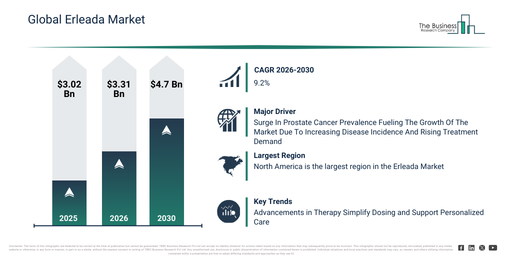
    The erleada market has demonstrated robust growth in recent years. Projections indicate it will expand from $3.02 billion in 2025 to $3.31 billion by 2026, reflecting a compound annual growth rate (CAGR) of 9.5%. This historical upward trend was driven by factors including an increase in prostate cancer diagnoses, enhanced availability of advanced oncology medications, the broader adoption of hormone-based cancer treatments, a rise in the utilization of oral cancer drugs, and successful regulatory clearances for targeted prostate cancer therapies.

    The erleada market is projected for substantial expansion over the coming years, reaching $4.7 billion in 2030 at a compound annual growth rate (CAGR) of 9.2%. This forecasted expansion is driven by a rising need for tailored prostate cancer interventions, broader management strategies for metastatic prostate cancer, a greater emphasis on patient-focused oral treatments, wider implementation of precision oncology methods, and ongoing innovation in next-generation androgen inhibitors. Key developments anticipated during this period encompass the expanded application of androgen receptor inhibitors in prostate cancer care, increased uptake of combined hormone therapies, a wider availability of oral oncology treatment choices, an intensified focus on managing prostate cancer at earlier stages, and improved oversight of treatment efficacy.

    Get A Free Sample Report With In-Depth Market Insights:

    https://thebusinessresearchcompany.com/sample_request?id=91727013&type=smp&name=Erleada%20Market%20Report%202026&utm_source=Blogs&utm_medium=Paid&utm_campaign=Oct_PR

    Erleada Market Growth Drivers: What’s Behind The Acceleration?

    The increasing incidence of prostate cancer is projected to fuel the expansion of the Erleada market in the future. Prostate cancer is defined as a cancerous growth originating in the prostate gland, an organ integral to the male reproductive system. The growing occurrence of prostate cancer is linked to longer life expectancies, given that advanced age substantially increases the risk of developing this condition. Erleada addresses prostate cancer by inhibiting androgen receptors, thereby stopping male hormones from encouraging the proliferation and metastasis of cancer cells. For example, figures released by the Australian Government in November 2025 indicated approximately 28,868 new prostate cancer cases, representing about 30% of all new male cancer diagnoses, alongside an estimated 3,975 deaths. Consequently, the escalating prevalence of prostate cancer is a key factor propelling the Erleada market’s expansion. Increased healthcare spending is anticipated to stimulate the future growth of the Erleada market. Healthcare expenditure encompasses the overall financial outlay by individuals, entities, or governments dedicated to preventing, addressing, and overseeing health-related conditions. This rise in expenditure stems from progress in medical technology, where novel diagnostic methods, treatments, and pioneering therapies frequently entail higher expenses, consequently elevating total healthcare spending. Elevated healthcare spending facilitates the adoption of Erleada by enhancing patient accessibility, affordability, reimbursement mechanisms, and the foundational infrastructure for oncology care. As an illustration, data from December 2024 by the Centers for Medicare & Medicaid Services—a U.S. agency managing Medicare and Medicaid—revealed that in 2023, U.S. health care spending rose by 7.5%, reaching $4.9 trillion, which translates to approximately $14,570 per person. Consequently, the escalation in healthcare expenditure is a primary driver for the expansion of the Erleada market.

    Erleada Market Segmentation And Category Overview

    The erleada market covered in this report is segmented –

    1) By Type: Branded, Generic

    2) By Indication Or Disease Stage: Metastatic Castration-Resistant Prostate Cancer (mCRPC), Non-Metastatic Castration-Resistant Prostate Cancer (nmCRPC), Metastatic Castration-Sensitive Prostate Cancer (mCSPC)

    3) By Distribution Channel: Hospital Pharmacies, Retail Pharmacies, Other Distribution Channels

    4) By Patient Type Or End User: Hospitals, Specialty Clinics Or Oncology Centers, Home Care Or Outpatient Settings

    Subsegments:

    1) By Branded: Innovator Brand, Co-Branded Formulation, Licensed Brand Extension

    2) By Generic: Unbranded Generic, Authorized Generic, Parallel Import Generic

    Erleada Market Trends: What’s Defining The Industry’s Next Phase?

    Within the erleada market, major companies are concentrating on innovations like reduced pill burden to improve patient convenience, foster better treatment adherence, and offer more personalized therapy options for prostate cancer patients. Reduced pill burden entails decreasing the number of pills a patient needs to take, either by combining medications or lessening dosing frequency, which helps enhance treatment adherence and overall patient comfort. Illustratively, in April 2023, Johnson & Johnson, a U.S.-based company engaged in developing, manufacturing, and selling pharmaceuticals for various diseases including oncology, immunology, and neuroscience, as well as medical devices for surgery, orthopedics, and vision, announced the availability of an additional tablet strength of Erleada (apalutamide) in the United States. This introduction of the 240 mg tablet establishes the first and only option for a once-daily, single-tablet Androgen Receptor Inhibitor (ARI) approved for the treatment of patients with non-metastatic castration-resistant prostate cancer (nmCRPC) and for patients with metastatic castration-sensitive prostate cancer (mCSPC).

    Erleada Market Competitive Analysis Of Leading Industry Participants

    Major companies operating in the erleada market are Johnson & Johnson

    View The Full Erleada Market Report:

    https://thebusinessresearchcompany.com/report/global-erleada-market-report?utm_source=Blogs&utm_medium=Paid&utm_campaign=Oct_PR

    Erleada Market Geographic Distribution And Regional Opportunities

    North America was the largest region in the erleada market in 2025. Asia-Pacific is expected to be the fastest-growing region in the forecast period. The regions covered in the erleada market report are Asia-Pacific, South East Asia, Western Europe, Eastern Europe, North America, South America, Middle East, Africa.

    Reach Out To Our Team:

    The Business Research Company: https://www.thebusinessresearchcompany.com/

    Americas: +1 310-496-7795

    Asia: +44 7882 955267 & +91 8897263534

    Europe: +44 7882 955267

    Email us at: marketing@tbrc.info

    Follow us on:

    LinkedIn: https://in.linkedin.com/company/the-business-research-company

    YouTube: https://www.youtube.com/channel/UC24_fI0rV8cR5DxlCpgmyFQ

    Global Market Model: https://www.thebusinessresearchcompany.com/global-market-model
  • Lancet Market Set To Expand From $4.71 Billion In 2026: Growth Outlook Through 2030

    Lancet Market Set To Expand From $4.71 Billion In 2026: Growth Outlook Through 2030

    Featuring market attractiveness scoring, total addressable market sizing, company benchmarking matrices, interactive Excel dashboards, deeper supply chain intelligence, emerging startup tracking, and granular product-level insights, The Business Research Company’s 2026 market reports are built to deliver research that is both more actionable and more strategically valuable.

    Lancet Market Forecast: Value Set To Climb From $3.11 Billion To $4.71 Billion

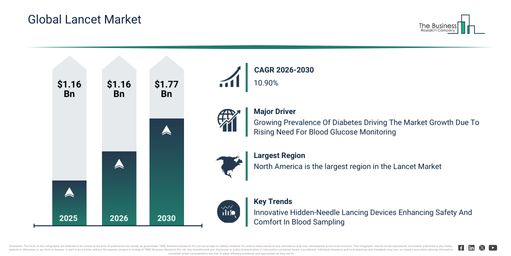
    The lancet market has experienced rapid expansion in recent years. It is projected to grow from $2.8 billion in 2025 to $3.11 billion in 2026, achieving a compound annual growth rate (CAGR) of 11.1%. This historical growth can be attributed to factors such as the rising prevalence of diabetes, advancements in hospital infrastructure, increased awareness regarding blood testing, a demand for point-of-care diagnostics, and the development of safety lancets.

    The size of the lancet market is projected to experience swift expansion over the coming years. It is predicted to reach $4.71 billion by 2030, demonstrating a compound annual growth rate (CAGR) of 10.9%. This anticipated growth during the forecast period can be linked to several factors, including innovations in lancet design, the increasing use of homecare testing kits, their incorporation into digital health platforms, market expansion in developing regions, and greater regulatory backing for safety devices. Key trends anticipated during the same period encompass the miniaturization of medical equipment, a heightened emphasis on patient safety, the growing acceptance of home healthcare, the rise of point-of-care diagnostics, and the development of environmentally friendly and sustainable medical instruments.

    Get A Free Sample Report With In-Depth Market Insights:

    https://thebusinessresearchcompany.com/sample_request?id=75161730&type=smp&name=Lancet%20Market%20Report%202026&utm_source=Blogs&utm_medium=Paid&utm_campaign=Oct_PR

    Lancet Market Industry Drivers: What’s Behind The Revenue Growth?

    The increasing occurrence of diabetes is projected to fuel the expansion of the lancet market in the coming years. Diabetes is a chronic medical condition impacting how the body converts food into energy, often due to issues with insulin production or utilization. This rise in diabetes cases is primarily linked to unhealthy lifestyle choices, including poor nutrition, insufficient physical activity, and increasing obesity rates, all of which contribute to insulin resistance and elevated blood sugar levels. Lancets aid in diabetes management by facilitating consistent blood glucose monitoring through safe and accurate fingertip pricking, which is crucial for effective control, early detection of sugar variations, and prompt adjustments in treatment, diet, or lifestyle to avert complications. For example, in June 2024, the National Health Service, a UK-based government entity, reported that in 2023, the NHS identified over half a million (549,000) additional individuals in England at risk of developing type 2 diabetes. This elevated the overall count of people with non-diabetic hyperglycemia, or pre-diabetes, registered with a GP to 3,615,330. This marked a significant surge when contrasted with 3,065,825 in 2022, showing an increase of nearly 20%. Consequently, the rising prevalence of diabetes is propelling the growth of the lancet market.

    Lancet Market Segment Trends And Revenue Contributors

    The lancet market covered in this report is segmented –

    1) By Type: Safety Lancet, Push Button Safety Lancet, Pressure Activated Safety Lancet, Side Button Safety Lancet, Personal Lancet

    2) By Gauze Size: 22 Gauze And Below, 23 Gauze –33 Gauze, Above 33 Gauze

    3) By Application: Glucose Testing, Hemoglobin Testing, Coagulation Testing, Cholesterol Testing, Allergy Testing, Neonatal Testing, Other Applications

    4) By End User: Hospitals, Clinics, Ambulatory Surgery Centers, Homecare Settings, Other End Users

    Subsegments:

    1) By Safety Lancet: Needle Lancet, Blade Lancet, Microneedle Safety Lancets

    2) By Push Button Safety Lancet: Fixed Depth Push Button Lancet, Adjustable Depth Push Button Lancet

    3) By Pressure Activated Safety Lancet: Contact Activated Lancet, Spring-Loaded Pressure Lancet

    4) By Side Button Safety Lancet: Retractable Needle Side Button Lancet, Non-Retractable Needle Side Button Lancet

    5) By Personal Lancet: Reusable Personal Lancet, Single-Use Personal Lancet

    #Lancet Market Growth Trends: What’s Shaping The Future Outlook?

    Major companies operating in the lancet market are increasingly prioritizing the integration of advanced innovations, such as total path control vertical-drive technology, to enhance the accuracy of sampling and alleviate discomfort during blood collection. This particular technology functions by guiding the lancet needle along a direct, vertical trajectory throughout both insertion and retraction phases. Such regulated movement significantly decreases lateral shifts, thereby lessening tissue harm, vibrations, and pain, ultimately providing users with a more precise and comfortable blood sampling experience. Illustratively, SteriLance Medical (Suzhou) Inc., a China-based medical device firm, unveiled its OneStep lancing device and SoftSense lancets in Spain in July 2025. This introduction presented a lancing solution featuring a cap-free, hidden-needle design, leveraging patent-protected total path control vertical-drive technology to enable virtually pain-free blood sampling and improve user safety. The one-step device is characterized by a four-step operation—insert, twist, press, and eject—which streamlines the lancing procedure by cutting down preparatory actions by approximately 70% compared to traditional lancing pens.

    Lancet Market Leading Players And Competitive Positioning

    Major companies operating in the lancet market are Cardinal Health Inc., F. Hoffmann-La Roche Ltd, Abbott Laboratories, Becton Dickinson and Company, Terumo Corporation, SARSTEDT AG & Co. KG, B. Braun Melsungen AG, Owen Mumford Limited, Amkay Products Pvt. Ltd, NARANG MEDICAL LIMITED, GBUK GROUP LIMITED, ARKRAY HEALTHCARE PRIVATE LIMITED, Sterimed Medical Devices Private Limited, MediPurpose Pte. Ltd, Carelife USA Inc., Shandong Lianfa Medical Plastic Products Co. Ltd, Ambimed Healthcare Private Limited, Greiner Bio-One International GmbH, Roche Diabetes Care GmbH, Ypsomed Holding AG, TaiDoc Technology Corporation, HTL STREFA S.A.

    View The Full Lancet Market Report:

    https://thebusinessresearchcompany.com/report/lancet-global-market-report?utm_source=Blogs&utm_medium=Paid&utm_campaign=Oct_PR

    Lancet Market Regional Distribution: Which Areas Power Market Growth?

    North America was the largest region in the lancet market in 2025. Asia-Pacific is expected to be the fastest-growing region in the forecast period. The regions covered in the lancet market report are Asia-Pacific, South East Asia, Western Europe, Eastern Europe, North America, South America, Middle East, Africa.

    Reach Out To Our Team:

    The Business Research Company: https://www.thebusinessresearchcompany.com/

    Americas: +1 310-496-7795

    Asia: +44 7882 955267 & +91 8897263534

    Europe: +44 7882 955267

    Email us at: marketing@tbrc.info

    Follow us on:

    LinkedIn: https://in.linkedin.com/company/the-business-research-company

    YouTube: https://www.youtube.com/channel/UC24_fI0rV8cR5DxlCpgmyFQ

    Global Market Model: https://www.thebusinessresearchcompany.com/global-market-model
  • Epinephrine Market 2026 Market Size And Growth Forecast: Key Trends To Watch

    Epinephrine Market 2026 Market Size And Growth Forecast: Key Trends To Watch

    Featuring market attractiveness scoring, total addressable market sizing, company benchmarking matrices, interactive Excel dashboards, deeper supply chain intelligence, emerging startup tracking, and granular product-level insights, The Business Research Company’s 2026 market reports are built to deliver research that is both more actionable and more strategically valuable.

    Epinephrine Market Growth Analysis: How Will Revenue Trend Over The Forecast Period?

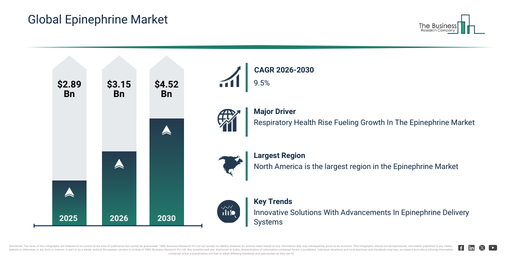
    The epinephrine market has experienced substantial expansion in recent years. Its valuation is projected to increase from $2.89 billion in 2025 to $3.15 billion in 2026, at a compound annual growth rate (CAGR) of 8.8%. This historical growth can be ascribed to several factors, including the rising incidence of severe allergic reactions, the increasing prevalence of food and drug allergies, heightened awareness of anaphylaxis management, the expansion of hospital-based emergency care, and the accessibility of branded epinephrine injections.

    The epinephrine market is expected to demonstrate robust expansion in the coming years, with projections indicating it will reach $4.52 billion by 2030, exhibiting a compound annual growth rate (CAGR) of 9.5%. This anticipated growth during the forecast period is primarily driven by factors such as the increasing development of self-administration devices, the expansion of epinephrine programs in schools and public spaces, the rising prevalence of online pharmacies, an increase in generic drug approvals, and improvements in cold-chain and drug delivery infrastructure. Significant trends in the forecast period include the growing adoption of auto-injectors for emergency use, an escalating demand for prefilled, ready-to-use epinephrine devices, the wider application of epinephrine in community and homecare settings, a concentrated effort on extending shelf-life and improving formulation stability, and an increasing focus on affordable generic epinephrine products.

    Get A Free Sample Report With In-Depth Market Insights:

    https://thebusinessresearchcompany.com/sample_request?id=82754597&type=smp&name=Epinephrine%20Market%20Report%202026&utm_source=Blogs&utm_medium=Paid&utm_campaign=Oct_PR

    Epinephrine Market Growth Factors Behind Sustained Expansion

    The increasing occurrence of chronic respiratory diseases is projected to fuel the expansion of the epinephrine market. These conditions, which affect the lungs and airways of the human body’s respiratory system and can lead to complications, are growing in prevalence. Examples like asthma, chronic obstructive pulmonary disease (COPD), interstitial lung disease, pulmonary sarcoidosis, and pneumoconiosis are on the rise due to air pollution and harmful environmental, occupational, and behavioral inhalation exposures. Epinephrine serves as a vital medication in treating severe asthma attacks and anaphylactic reactions, which often cause respiratory distress and potentially fatal complications. For instance, in December 2023, a research study published by JAMA Network Open, a medical journal by the American Medical Association, estimated that the global burden of chronic obstructive pulmonary disease (COPD) could reach nearly 600 million cases worldwide by 2050, indicating a 23% increase in prevalence. Therefore, as the incidence of chronic respiratory diseases continues to climb, the need for epinephrine is also expected to rise.

    Epinephrine Market Segment Outlook: Which Categories Are Growing Fastest?

    The epinephrine market covered in this report is segmented –

    1) By Type: Prefilled Syringe, Auto-injector, Ampoules And Vials

    2) By Application: Anaphylaxis, Cardiac Arrest, Superficial Bleeding, Respiratory Disorders, Other Applications

    3) By Distribution Channel: Hospital Pharmacies, Retail Pharmacies, Online Pharmacies

    Subsegments:

    1) By Prefilled Syringe: Single-Dose Prefilled Syringes, Multi-Dose Prefilled Syringes

    2) By Auto-Injector: Manual Auto-Injectors, Electronic Auto-Injectors

    3) By Ampoules And Vials: Single-Dose Ampoules, Multi-Dose Vials

    Epinephrine Market Industry Trends Fueling Future Revenue Growth

    Leading companies within the epinephrine market are actively pursuing the development of innovative solutions, such as sulfite-free injections and advanced auto-injector technologies. This strategic focus aims to satisfy the increasing demand for safer formulations, enhanced user convenience, and improved emergency preparedness for anaphylaxis care. Sulfite-free epinephrine injections represent preservative-free formulations specifically designed to mitigate risks of sulfite-related hypersensitivity, thereby offering a more secure alternative compared to traditional epinephrine products containing sulfites. Illustratively, in March 2023, American Regent, a pharmaceutical firm based in the US, launched its sulfite-free Epinephrine Injection, USP. This Epinephrine Injection, USP, is indicated for the urgent treatment of Type I allergic reactions, including anaphylaxis, which can arise from insect stings or bites, foods, drugs, sera, diagnostic testing substances, and other allergens, along with idiopathic or exercise-induced anaphylaxis. Additionally, epinephrine is also prescribed to raise the mean arterial blood pressure in adult patients suffering from hypotension associated with septic shock.

    Epinephrine Market Leading Companies And Competitive Benchmarking

    Major companies operating in the epinephrine market are Pfizer Inc., Teva Pharmaceutical Industries Ltd., Amneal Pharmaceuticals Inc., Bausch Health Companies Inc., Sanofi SA, Viatris Inc., Kaleo Inc., Gland Pharma Limited, Adamis Pharmaceuticals Corporation, Merit Pharmaceutical, Antares Pharma Inc., Sandoz International GmbH, Tianjin Jinyao Group Co. Ltd., Amphastar Pharmaceuticals Inc., Par Sterile Products LLC, Amedra Pharmaceuticals LLC, Intas Pharmaceuticals Ltd., Cipla Limited, Sun Pharmaceutical Industries Ltd., Mylan N V

    View The Full Epinephrine Market Report:

    https://thebusinessresearchcompany.com/report/epinephrine-global-market-report?utm_source=Blogs&utm_medium=Paid&utm_campaign=Oct_PR

    Epinephrine Market Largest Region By Revenue And Market Share

    North America was the largest region in the epinephrine market in 2025. The regions covered in the epinephrine market report are Asia-Pacific, South East Asia, Western Europe, Eastern Europe, North America, South America, Middle East, Africa.

    Reach Out To Our Team:

    The Business Research Company: https://www.thebusinessresearchcompany.com/

    Americas: +1 310-496-7795

    Asia: +44 7882 955267 & +91 8897263534

    Europe: +44 7882 955267

    Email us at: marketing@tbrc.info

    Follow us on:

    LinkedIn: https://in.linkedin.com/company/the-business-research-company

    YouTube: https://www.youtube.com/channel/UC24_fI0rV8cR5DxlCpgmyFQ

    Global Market Model: https://www.thebusinessresearchcompany.com/global-market-model
  • Laceration Closure Devices Market Size And Growth In 2026: Key Factors Shaping Future Demand

    Laceration Closure Devices Market Size And Growth In 2026: Key Factors Shaping Future Demand

    Built to provide research that’s more actionable and strategically valuable, The Business Research Company’s 2026 market reports include market attractiveness analysis, total addressable market sizing, company benchmarking matrices, interactive Excel dashboards, broader supply chain intelligence, emerging startup tracking, and in-depth product insights.

    Laceration Closure Devices Market Revenue Growth On Track For A 6.4% CAGR Through 2030

    The laceration closure devices market size has experienced strong growth in recent years. It is anticipated to increase from $10.31 billion in 2025 to $11.05 billion in 2026, at a compound annual growth rate (CAGR) of 7.2%. Historically, this expansion has been propelled by a rising incidence of traumatic injuries, an increasing number of emergency department visits, the widespread use of sutures and staples in wound care, growing surgical procedure volumes, and heightened awareness of proper wound management.

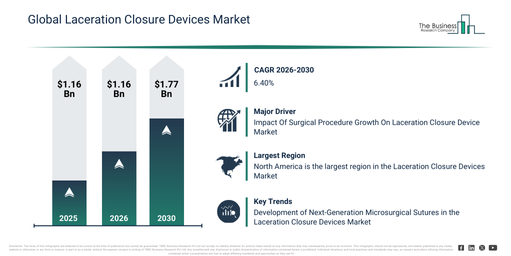
    The laceration closure devices market is expected to experience substantial growth over the coming years. This market is projected to reach $14.17 billion by 2030, showing a compound annual growth rate (CAGR) of 6.4%. The expansion during this forecast period is driven by factors such as increasing demand for minimally invasive wound closure techniques, a heightened focus on outpatient and ambulatory care, a growing preference for solutions that facilitate faster healing, broader access to advanced wound care products, and an intensified emphasis on patient comfort and aesthetic results. Significant trends anticipated in this period include the rising adoption of non-invasive wound closure options, a clear preference for skin adhesives and closure strips over sutures, the expanded application of laceration closure devices in emergency care settings, the growth of rapid wound management in outpatient environments, and a concentrated effort towards achieving reduced scarring and quicker healing outcomes.

    Get A Free Sample Report With In-Depth Market Insights:

    https://thebusinessresearchcompany.com/sample_request?id=37249859&type=smp&name=Laceration%20Closure%20Devices%20Market%20Report%202026&utm_source=Blogs&utm_medium=Paid&utm_campaign=Oct_PR

    Laceration Closure Devices Market Growth Factors: What’s Supporting Expansion?

    The projected expansion of the laceration closure device market is anticipated to be fueled by a rise in surgical procedures. These procedures are medical interventions utilizing invasive methods for diagnosing, treating, or managing various injuries, diseases, or conditions. Factors contributing to this increase include an aging global demographic, progress in medical technology, and a growing demand for elective surgical interventions. In surgical contexts, laceration closure devices offer advantages by efficiently sealing wounds, shortening operational durations, mitigating tissue damage, and accelerating recovery relative to conventional sutures. As an illustration, data from June 2024 by the International Society of Aesthetic Plastic Surgery (ISAPS), a US-based nonprofit professional entity, indicated a 3.4% overall increase in surgical and non-surgical procedures in 2023, totaling 34.9 million. This particular expansion was predominantly due to a 5.5% surge in surgical procedures. Plastic surgeons conducted more than 15.8 million surgical procedures and 19.1 million non-surgical procedures, signifying a 40% cumulative rise in procedures over the past four years. Consequently, the escalating volume of surgical procedures is a key impetus for the expansion of the laceration closure device market.

    Laceration Closure Devices Market Segment Analysis Spotlighting Growth Areas

    The laceration closure devices market covered in this report is segmented –

    1) By Product: Staples, Adhesives, Sutures, Strips, Wound Strips, Mechanical Wound Closure Devices

    2) By Wound Type: Acute, Surgical Wounds

    3) By End-User: Hospitals, Ambulatory Surgery Centers, Other End-Users

    Subsegments:

    1) By Staples: Stainless Steel Staples, Titanium Staples

    2) By Adhesives: Tissue Adhesives, Surgical Adhesives

    3) By Sutures: Absorbable Sutures, Non-Absorbable Sutures

    4) By Strips: Steri-Strips, Wound Closure Strips

    5) By Wound Strips: Paper Wound Strips, Fabric Wound Strips

    6) By Mechanical Wound Closure Devices: Skin Closures, Wound Closure Clips

    Laceration Closure Devices Market Industry Trends: What’s Reshaping Demand?

    Major companies within the laceration closure devices market are prioritizing the development of innovative solutions, such as next-generation microsurgical sutures, to enhance precision, reduce recovery time, and improve patient outcomes. These advanced, ultra-fine sutures are specifically designed for precise, minimally invasive surgical procedures, offering improved biocompatibility, strength, and reduced tissue trauma for more effective healing and faster recovery. For instance, in October 2024, Corza Medical GmbH, a US-based manufacturing company, unveiled Onatec Ophthalmic Microsurgical Sutures at the American Academy of Ophthalmology Conference. The Onatec ophthalmic microsurgical sutures are meticulously crafted from highly tempered stainless steel, ensuring durability and precision, and are engineered to improve tissue penetration and minimize trauma during eye surgeries. Their sophisticated manufacturing process ensures optimal geometries for stitching in delicate and small anatomical spaces.

    Laceration Closure Devices Market Competitive Overview And Top Companies

    Major companies operating in the laceration closure devices market are Johnson & Johnson, 3M Company, Medtronic plc, Becton Dickinson and Company, B. Braun Melsungen AG, Smith & Nephew plc, Teleflex Incorporated, Integra LifeSciences Corporation, Mölnlycke Health Care AB, Aspen Surgical Products, BSN medical GmbH, Stryker Corporation, Baxter International Inc, Terumo Corporation, Arthrex Inc, Zimmer Biomet Holdings Inc, Meril Life Sciences Pvt Ltd, Healthium Medtech, Medline Industries, Peters Surgical

    View The Full Laceration Closure Devices Market Report:

    https://thebusinessresearchcompany.com/report/laceration-closure-devices-global-market-report?utm_source=Blogs&utm_medium=Paid&utm_campaign=Oct_PR

    Laceration Closure Devices Market Leading Geography: Which Region Contributes The Most Revenue?

    North America was the largest region in the laceration closure devices market in 2025. Asia-Pacific is expected to be the fastest-growing region in the forecast period. The regions covered in the laceration closure devices market report are Asia-Pacific, South East Asia, Western Europe, Eastern Europe, North America, South America, Middle East, Africa.

    Reach Out To Our Team:

    The Business Research Company: https://www.thebusinessresearchcompany.com/

    Americas: +1 310-496-7795

    Asia: +44 7882 955267 & +91 8897263534

    Europe: +44 7882 955267

    Email us at: marketing@tbrc.info

    Follow us on:

    LinkedIn: https://in.linkedin.com/company/the-business-research-company

    YouTube: https://www.youtube.com/channel/UC24_fI0rV8cR5DxlCpgmyFQ

    Global Market Model: https://www.thebusinessresearchcompany.com/global-market-model
  • Laboratory Robotics Market Forecast 2026–2030: Market Size, Trends And Growth Opportunities

    Laboratory Robotics Market Forecast 2026–2030: Market Size, Trends And Growth Opportunities

    Backed by market attractiveness analysis, total addressable market sizing, company benchmarking matrices, interactive Excel dashboards, wider supply chain intelligence, emerging startup coverage, and detailed product-level insights, The Business Research Company’s 2026 market reports are designed to offer research that is more actionable and strategically valuable than ever.

    Laboratory Robotics Market Value Growth And Long-Term Outlook

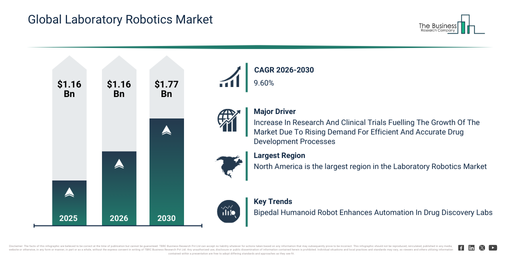
    The laboratory robotics market has demonstrated robust growth in recent years. It is anticipated to expand from $2.93 billion in 2025 to $3.22 billion in 2026, showing a compound annual growth rate (CAGR) of 9.9%. This historical expansion can be traced to various factors including widespread manual sample handling practices, the limited extent of automation in laboratories, a significant dependency on labor, the increasing establishment of research laboratory infrastructure, and a heightened demand for precision and reproducibility.

    The laboratory robotics market size is projected to experience robust expansion over the coming years. By 2030, it is anticipated to reach $4.64 billion, exhibiting a compound annual growth rate (CAGR) of 9.6%. This growth during the forecast period can be attributed to several factors, including the advancement of sophisticated robotic arms and automated workstations, the incorporation of AI-driven workflow enhancements, increasing investments in genomics and proteomics studies, the proliferation of clinical diagnostics facilities, and the uptake of cloud-based platforms for data analysis and visualization. Key trends during this period encompass the greater adoption of automated liquid handling systems, the growing integration of laboratory information management systems (LIMS), an increase in high-throughput screening and sample processing, the broader application of robotics in drug discovery and clinical diagnostics, and an emphasis on minimizing human error and improving workflow efficiency.

    Get A Free Sample Report With In-Depth Market Insights:

    https://thebusinessresearchcompany.com/sample_request?id=36024360&type=smp&name=Laboratory%20Robotics%20Market%20Report%202026&utm_source=Blogs&utm_medium=Paid&utm_campaign=Oct_PR

    Laboratory Robotics Market Demand Drivers: What’s Powering Industry Growth?

    Anticipated expansion of the laboratory robotics market is linked to the growing volume of research and clinical trials. These trials encompass methodical investigations aimed at finding, assessing, and confirming the safety, effectiveness, and best application of novel drugs, treatments, or medical technologies involving human participants. The surge in these studies is a consequence of the rising incidence of intricate and long-term illnesses, which fuels the need for innovative and more potent therapeutic solutions. Laboratory robotics significantly improves research and clinical trials through task automation, boosting operational efficiency, and minimizing human errors. They expedite experimental processes, enhance the precision of data, and facilitate high-throughput screening, thereby accelerating the speed and improving the caliber of scientific discoveries. A notable example is provided by the Association of the British Pharmaceutical Industry (ABPI), a UK-based organization, which reported in December 2024 that the number of pharmaceutical industry trials initiated in the UK grew for the second successive year, climbing from 411 in 2022 to 426 in 2023. Consequently, the uptick in research and clinical trials is propelling the expansion of the laboratory robotics market.

    Laboratory Robotics Market Segment Performance And Emerging Opportunities

    The laboratory robotics market covered in this report is segmented –

    1) By Component: Hardware, Software, Services

    2) By Product Type: Automated Liquid Handling Robots, Automated Plate Handlers, Robotic Arms, Lab Automation Workstations, Microplate Readers And Washers

    3) By Application: Drug Discovery, Clinical Diagnosis, Microbiology Solutions, Genomics Solutions, Proteomics Solutions

    4) By End User: Clinical Laboratory, Research Laboratory

    Subsegments:

    1) By Hardware: Robotic Arms, Automated Liquid Handlers, Microplate Movers, Sample Storage Systems, Sensors And Cameras, Lab-On-A-Chip Devices, Pipetting Robots, Workstations

    2) By Software: Workflow Management Software, Data Analysis And Visualization Tools, Robotic Control Software, Laboratory Information Management Systems (LIMS), Scheduling Software, Integration And Interface Software

    3) By Services: Installation And Commissioning, Maintenance And Repair, Calibration Services, Training And Support, Software Upgrades And System Integration, Validation And Compliance Services

    Laboratory Robotics Market Innovation Trends: What Developments Are Reshaping The Industry?

    Major companies operating in the laboratory robotics market are focusing on developing technologically advanced solutions, such as bipedal humanoid robotic lab assistants, to enhance automation, improve precision, and increase operational efficiency in laboratory workflows. A bipedal humanoid robotic lab assistant refers to a robot designed with two legs and a human-like structure, capable of performing laboratory tasks that typically require human movement and dexterity. For instance, in March 2025, Insilico Medicine, a US-based biotechnology company, launched a bipedal humanoid robot within its fully robotic, AI-powered drug discovery laboratory. This humanoid robot is designed to operate equipment traditionally meant for humans, helping to bridge the gap in automation by handling tasks such as data acquisition, experiment tracking, reagent handling, and lab supervision. The goal is to create a truly autonomous research facility where AI and robotics collaborate seamlessly, reducing the need for human intervention in mundane yet essential lab processes. This development marks a significant advancement toward fully autonomous drug discovery, with the humanoid enhancing efficiency and enabling advanced workflows in both pharmaceutical and broader scientific research.

    Laboratory Robotics Market Competitive Landscape: Which Companies Lead The Industry?

    Major companies operating in the laboratory robotics market are Thermo Fisher Scientific Inc., Agilent Technologies Inc., Sartorius AG, PerkinElmer Inc., Beckman Coulter Life Sciences, Tecan Group Ltd., Hamilton Company, Hudson Robotics Inc., Peak Analysis & Automation (PAA), Opentrons Labworks Inc., HighRes Biosolutions Inc., Aurora Biomed Inc., AutoGen Inc., Robotic Automation Inc., Staubli Robotics, KUKA AG, FANUC Corporation, DENSO Robotics, Precise Automation Inc., Labman Automation Ltd., Biosero Inc., Chemspeed Technologies AG, Synchron Lab Automation, SPT Labtech Ltd.

    View The Full Laboratory Robotics Market Report:

    https://thebusinessresearchcompany.com/report/laboratory-robotics-global-market-report?utm_source=Blogs&utm_medium=Paid&utm_campaign=Oct_PR

    Laboratory Robotics Market Regional Outlook: Where Is Opportunity Concentrated?

    North America was the largest region in the laboratory robotics market in 2025. Asia-Pacific is expected to be the fastest-growing region in the forecast period. The regions covered in the laboratory robotics market report are Asia-Pacific, South East Asia, Western Europe, Eastern Europe, North America, South America, Middle East, Africa.

    Reach Out To Our Team:

    The Business Research Company: https://www.thebusinessresearchcompany.com/

    Americas: +1 310-496-7795

    Asia: +44 7882 955267 & +91 8897263534

    Europe: +44 7882 955267

    Email us at: marketing@tbrc.info

    Follow us on:

    LinkedIn: https://in.linkedin.com/company/the-business-research-company

    YouTube: https://www.youtube.com/channel/UC24_fI0rV8cR5DxlCpgmyFQ

    Global Market Model: https://www.thebusinessresearchcompany.com/global-market-model
  • Epilepsy Drugs Market Size Forecast: How The Industry Is Expected To Grow From 2026 To 2030

    Epilepsy Drugs Market Size Forecast: How The Industry Is Expected To Grow From 2026 To 2030

    Built to provide research that’s more actionable and strategically valuable, The Business Research Company’s 2026 market reports include market attractiveness analysis, total addressable market sizing, company benchmarking matrices, interactive Excel dashboards, broader supply chain intelligence, emerging startup tracking, and in-depth product insights.

    Epilepsy Drugs Market Forecast: What Value Will The Market Reach By 2030?

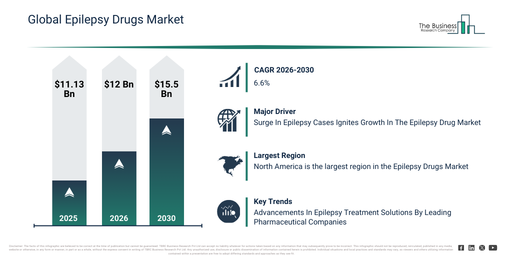
    The epilepsy drugs market has demonstrated robust expansion in recent years. Looking ahead, it is projected to expand from $11.13 billion in 2025 to $12 billion in 2026, exhibiting a compound annual growth rate (CAGR) of 7.8%. The historical growth can be linked to several factors, including the enduring prevalence of epilepsy across all age groups, the established clinical adoption of first-generation antiepileptic medications, the expansion of neurology care provisions, the accessibility of affordable generic antiseizure drugs, and an elevated rate of seizure disorder diagnoses.

    The epilepsy drugs market size is projected to experience substantial expansion over the upcoming years, reaching $15.5 billion by 2030, driven by a compound annual growth rate (CAGR) of 6.6%. This anticipated growth during the forecast period can be attributed to several factors, including the increasing global prevalence of epilepsy, the wider uptake of more recent antiepileptic medications, enhanced understanding and management of epilepsy, broadened availability of neurological care in developing regions, and the desire for drugs with better safety and tolerability characteristics. Key trends anticipated during this period involve a consistent need for broad-spectrum antiepileptic drugs, the expanding utilization of second and third-generation anti-epileptics, a heightened emphasis on treatments providing long-term seizure management, an increasing preference for oral antiepileptic forms, and ongoing dependence on combination drug regimens for epilepsy that is resistant to treatment.

    Get A Free Sample Report With In-Depth Market Insights:

    https://thebusinessresearchcompany.com/sample_request?id=91714732&type=smp&name=Epilepsy%20Drugs%20Market%20Report%202026&utm_source=Blogs&utm_medium=Paid&utm_campaign=Oct_PR

    Epilepsy Drugs Market Demand Drivers Opening New Revenue Streams

    The increasing incidence of individuals affected by epilepsy is anticipated to drive the expansion of the epilepsy drug market in the foreseeable future. Epilepsy is characterized as a neurological disorder marked by recurrent seizures, which can vary in intensity and their impact on daily life. This condition is more prevalent among older age groups, and individuals who are survivors of traumatic brain injuries (TBIs), strokes, brain tumors, and other neurological conditions face a higher risk of developing epilepsy. Epilepsy drugs function by stabilizing electrical activity in the brain, thereby reducing the likelihood and severity of seizures, which helps in the management and control of epilepsy. For instance, in February 2024, according to the world health organization, a US-based national agency, worldwide, approximately 5 million individuals receive an epilepsy diagnosis annually, with high-income countries reporting an estimated 49 cases per 100,000 people annually, while in low- and middle-income nations, this rate can soar to 139 cases per 100,000. Consequently, the rising in number of people affected with epilepsy is fueling the growth of the epilepsy drug market.

    Epilepsy Drugs Market Segment Landscape: Which Areas Lead Development?

    The epilepsy drugs market covered in this report is segmented –

    1) By Seizure Type: Focal Seizures, Generalized Seizures

    2) By Generation Type: First Generation Anti-Epileptics, Second Generation Anti-Epileptics, Third Generation Anti-Epileptics

    3) By Route Of Administration: Oral, Intravenous, Intra-Muscular

    4) By Distribution Channel: Drug Stores And Retail Pharmacies, Hospital Pharmacies

    Subsegments:

    1) By Focal Seizures: Simple Focal Seizures, Complex Focal Seizures

    2) By Generalized Seizures: Tonic-Clonic Seizures (Grand Mal), Absence Seizures (Petit Mal), Myoclonic Seizures, Tonic Seizures, Atonic Seizures

    Epilepsy Drugs Market Trends Powering Strategic Industry Growth

    Leading companies active in the epilepsy drug market are concentrating on developing innovative treatments to enhance seizure control and improve the quality of life for patients. These innovative epilepsy treatments may involve new drug formulations, advanced neurostimulation techniques, individualized precision medicine approaches, gene therapies, and emerging technologies such as closed-loop systems for seizure detection and intervention. For example, in January 2024, Akumentis Healthcare, an India-based pharmaceutical company, launched Clasepi, a prescription cannabidiol (CBD) drug specifically formulated to treat seizures associated with Lennox-Gastaut Syndrome (LGS), Dravet Syndrome, or Tuberous Sclerosis Complex (TSC) in patients aged 1 year and older. It has received approval from the Drug Controller General of India (DCGI) and has demonstrated effectiveness in reducing seizures, particularly in cases where conventional anti-seizure medications have proven unsuccessful.

    Epilepsy Drugs Market Industry Leaders And Competitive Landscape

    Major companies operating in the epilepsy drugs market are Pfizer Inc, SK Biopharmaceuticals, Sanofi, Abbott Laboratories, Novartis AG, GlaxoSmithKline plc, H. Lundbeck, Viatris, Otsuka America Pharmaceutical Inc, Bausch Health Companies Inc, UCB S.A, Sun Pharmaceutical Industries Ltd, Eisai Co Ltd, Sumitomo Pharma Co Ltd, Jazz Pharmaceuticals plc, Dr. Reddy’s Laboratories Ltd, Angelini S.p.a, Amneal Pharmaceuticals, Alkem Laboratories, Sunovion Pharmaceuticals Inc, Upsher-Smith, Zogenix, Neurelis Inc

    View The Full Epilepsy Drugs Market Report:

    https://thebusinessresearchcompany.com/report/epilepsy-drugs-global-market-report?utm_source=Blogs&utm_medium=Paid&utm_campaign=Oct_PR

    Epilepsy Drugs Market Regional Analysis And Leading Geography

    North America was the largest region in the epilepsy drugs market in 2025. The regions covered in the epilepsy drugs market report are Asia-Pacific, South East Asia, Western Europe, Eastern Europe, North America, South America, Middle East, Africa.

    Reach Out To Our Team:

    The Business Research Company: https://www.thebusinessresearchcompany.com/

    Americas: +1 310-496-7795

    Asia: +44 7882 955267 & +91 8897263534

    Europe: +44 7882 955267

    Email us at: marketing@tbrc.info

    Follow us on:

    LinkedIn: https://in.linkedin.com/company/the-business-research-company

    YouTube: https://www.youtube.com/channel/UC24_fI0rV8cR5DxlCpgmyFQ

    Global Market Model: https://www.thebusinessresearchcompany.com/global-market-model