Blog

  • Laboratory Mixer Market Size Reaches $2.13 Billion In 2026: What Is Driving Growth?

    Laboratory Mixer Market Size Reaches $2.13 Billion In 2026: What Is Driving Growth?

    Featuring market attractiveness scoring, total addressable market sizing, company benchmarking matrices, interactive Excel dashboards, deeper supply chain intelligence, emerging startup tracking, and granular product-level insights, The Business Research Company’s 2026 market reports are built to deliver research that is both more actionable and more strategically valuable.

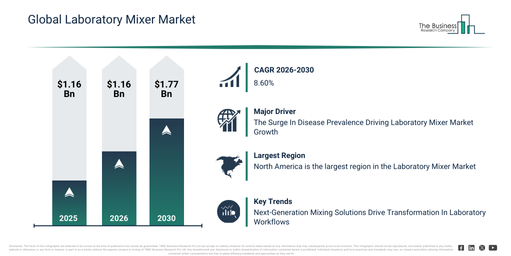
    Laboratory Mixer Market Poised To Hit $2.96 Billion By 2030 With A 8.6% CAGR

    The laboratory mixer market size has experienced robust expansion in recent years. This market is projected to expand from $1.95 billion in 2025 to $2.13 billion in 2026, demonstrating a compound annual growth rate (CAGR) of 9.2%. Historically, this growth was driven by factors such as the rise in pharmaceutical research endeavors, the proliferation of biotechnology laboratories, increased adoption of laboratory automation, the growing need for standardized sample preparation, and the availability of sophisticated laboratory instruments.

    The laboratory mixer market is projected to experience substantial expansion over the coming years. Its valuation is anticipated to reach $2.96 billion by 2030, with a compound annual growth rate (CAGR) of 8.6%. This anticipated growth during the forecast timeframe is attributable to heightened investments in life sciences research, the growing uptake of automated laboratory processes, the expansion of personalized medicine studies, an increasing emphasis on data-centric experimentation, and a rising need for high-throughput laboratory instruments. Key trends foreseen in this period encompass the wider acceptance of digital laboratory mixing devices, an escalating requirement for precise sample preparation, the broader implementation of automated mixing solutions, the development of laboratory mixers suitable for multiple applications, and a strengthened commitment to ensuring reproducibility and accuracy.

    Get A Free Sample Report With In-Depth Market Insights:

    https://thebusinessresearchcompany.com/sample_request?id=74293431&type=smp&name=Laboratory%20Mixer%20Market%20Report%202026&utm_source=Blogs&utm_medium=Paid&utm_campaign=Oct_PR

    Laboratory Mixer Market Growth Drivers: What’s Behind The Acceleration?

    The rising prevalence of diseases is a significant factor contributing to the laboratory mixer’s market growth. This increase in disease prevalence leads to heightened laboratory diagnostic testing, along with research and development activities. A laboratory mixer is an indispensable common tool in all laboratories, performing essential tasks such as mixing, dissolving, and emulsifying materials. For instance, in September 2023, the World Health Organization, a Switzerland-based specialized agency of the United Nations, reported 41 million annual global fatalities due to non-communicable diseases (NCDs) or chronic conditions, representing 74% of total deaths. These deaths specifically included 17.9 million from cardiovascular diseases, 9.3 million from cancer, 4.1 million from chronic respiratory diseases, and 2.0 million from diabetes. Therefore, the growing prevalence of diseases is anticipated to propel the growth of the laboratory mixer market in the coming years.

    Laboratory Mixer Market Segment Landscape And Growth Outlook

    The laboratory mixer market covered in this report is segmented –

    1) By Product: Shakers, Magnetic Stirrers, Vortex Mixers, Overhead Stirrers, Accessories

    2) By Platform: Digital Devices, Analog Devices

    3) By Operability: Gyratory Movement, Linear Movement, Rocking Or Tilting Movement, Orbital Movement

    4) By End-User: Research Laboratories And Institutes, Pharmaceutical And Biotechnology Companies, Other End-Users

    Subsegments:

    1) By Shakers: Orbital Shakers, Rocking Shakers, Incubator Shakers

    2) By Magnetic Stirrers: Hot Plate Magnetic Stirrers, Digital Magnetic Stirrers, Multi-Position Magnetic Stirrers

    3) By Vortex Mixers: Mini Vortex Mixers, High-Speed Vortex Mixers

    4) By Overhead Stirrers: Single-Speed Overhead Stirrers, Variable-Speed Overhead Stirrers

    5) By Accessories: Mixing Barrels, Stirring Rods

    Laboratory Mixer Market Trends: What’s Defining The Industry’s Next Phase?

    Major companies in the laboratory mixers market are concentrating on developing advanced products, such as touch-screen vortex mixers, to improve precision, enhance user comfort, and meet the rising demand for efficient, contamination-free sample mixing in modern laboratories. A touch-screen vortex mixer is a lab apparatus that uses orbital motion for rapid sample agitation, featuring a digital, glove-compatible touchscreen for precise speed and time control, which helps researchers achieve more consistent, sterile, and user-friendly sample preparation. For instance, in February 2024, Starlab International GmbH, a Germany-based laboratory-instrument manufacturing company, launched the Starlab Vortex Mixer, an innovative device created for next-generation labs. This mixer showcases a sleek curved industrial design, a glove-friendly touchscreen, and a speed range from 300 to 3,500 rpm with two operational modes (touch and continuous). It also incorporates one-touch preset options for speed and timing, a power-saving sleep mode, anti-slip feet for stability, and optional adapters for microplates or up to 15 microcentrifuge tubes (running up to 1,500 rpm), allowing for gentle to vigorous mixing across various types of vessels. This design facilitates the seamless resuspension of cells or chemical pellets while maintaining a low noise level for an undisturbed lab environment.

    Laboratory Mixer Market Competitive Landscape: Who Leads The Industry?

    Major companies operating in the laboratory mixer market are Thermo Fisher Scientific Inc., Eppendorf AG, IKA Works Inc., Heidolph Instruments GmbH & Co. KG, Bio-Rad Laboratories Inc., Remi Elektrotechnik Limited, Benchmark Scientific Inc., Grant Instruments Ltd., VELP Scientifica Srl, OHAUS Corporation, Scilogex LLC, Boekel Scientific, Cleaver Scientific Ltd., Major Science, Jeio Tech Co. Ltd., Labconco Corporation, Sheldon Manufacturing Inc., Ratek Instruments Pty Ltd., Nickel-Electro Ltd., Sainty International Group Co. Ltd.

    View The Full Laboratory Mixer Market Report:

    https://thebusinessresearchcompany.com/report/laboratory-mixer-global-market-report?utm_source=Blogs&utm_medium=Paid&utm_campaign=Oct_PR

    Laboratory Mixer Market Geographic Landscape: Which Region Leads Industry Growth?

    North America was the largest region in the laboratory mixer market in 2025. Asia-Pacific is expected to be the fastest region in the laboratory mixer market share during forecast period. The regions covered in the laboratory mixer market report are Asia-Pacific, South East Asia, Western Europe, Eastern Europe, North America, South America, Middle East, Africa.

    Reach Out To Our Team:

    The Business Research Company: https://www.thebusinessresearchcompany.com/

    Americas: +1 310-496-7795

    Asia: +44 7882 955267 & +91 8897263534

    Europe: +44 7882 955267

    Email us at: marketing@tbrc.info

    Follow us on:

    LinkedIn: https://in.linkedin.com/company/the-business-research-company

    YouTube: https://www.youtube.com/channel/UC24_fI0rV8cR5DxlCpgmyFQ

    Global Market Model: https://www.thebusinessresearchcompany.com/global-market-model
  • Laboratory Centrifuge Market Valued At $2.22 Billion In 2026: Key Trends And Growth Drivers

    Laboratory Centrifuge Market Valued At $2.22 Billion In 2026: Key Trends And Growth Drivers

    Built to provide research that’s more actionable and strategically valuable, The Business Research Company’s 2026 market reports include market attractiveness analysis, total addressable market sizing, company benchmarking matrices, interactive Excel dashboards, broader supply chain intelligence, emerging startup tracking, and in-depth product insights.

    Laboratory Centrifuge Market Size And Revenue Outlook Through 2030

    The laboratory centrifuge market has shown significant expansion in recent years. It is anticipated to increase from $1.64 billion in 2025 to $1.74 billion in 2026, exhibiting a compound annual growth rate (CAGR) of 6.0%. This historic growth is largely attributable to the rise in biomedical research activities, the broadening of hospital diagnostic testing, the expanded application of centrifugation in genomics workflows, the availability of modern laboratory infrastructure, and an increase in clinical sample processing volumes.

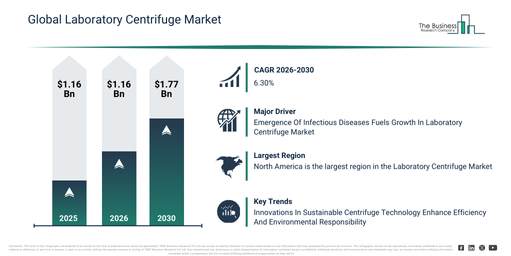
    The laboratory centrifuge market size is anticipated to experience substantial growth in the coming years. It is projected to expand to $2.22 billion by 2030, achieving a compound annual growth rate (CAGR) of 6.3%. This growth during the forecast period is attributed to the increasing demand for automated centrifuge systems, the expansion of molecular diagnostics, the growing adoption of precision medicine, rising investments in life sciences research, and an increased focus on optimizing laboratory efficiency. Key trends for the forecast period include the increasing adoption of high-speed centrifugation systems, a rising demand for refrigerated and ultracentrifuges, the growing integration of digital control interfaces, the expansion of compact benchtop centrifuges, and an enhanced focus on sample integrity.

    Get A Free Sample Report With In-Depth Market Insights:

    https://thebusinessresearchcompany.com/sample_request?id=64703608&type=smp&name=Laboratory%20Centrifuge%20Market%20Report%202026&utm_source=Blogs&utm_medium=Paid&utm_campaign=Oct_PR

    Laboratory Centrifuge Market Growth Factors Behind Sustained Expansion

    The laboratory centrifuge market is experiencing growth due to the rise of infectious diseases. A growing global disease burden stems from widespread infections caused by illnesses like SARS, the Zika virus, Ebola, and COVID-19 across different regions globally. Zoonotic infectious agents, which are animal diseases that adapt to infect humans, are estimated to account for approximately 60% of identified human pathogens and up to 75% of new human pathogens. Significant shifts in the epidemiology of infectious diseases are anticipated with climate change, altering the geographical distribution of microbes and vectors. As microbes can adapt to elevated temperatures, there’s increasing worry that global warming will favor heat-tolerant microbes capable of overcoming human endothermy defenses, consequently introducing novel infectious diseases and modifying the epidemiology of numerous current ailments. Laboratory centrifuge systems find application in the purification of cells, organelles, viruses, proteins, and nucleic acids. For example, data released by the UK Health Security Agency in August 2024 revealed that England recorded 368 measles cases in 2023, a substantial increase of nearly sevenfold compared to the 53 cases reported in 2022. The West Midlands contributed 44% of these cases, while London accounted for 33%. Consequently, the appearance of infectious diseases fuels the need for laboratory testing solutions, thereby stimulating the laboratory centrifuge market.

    Laboratory Centrifuge Market Breakdown By Product Type And Application

    The laboratory centrifuge market covered in this report is segmented –

    1) By Product: Equipment, Accessories

    2) By Model Type: Benchtop Centrifuges, Floor-Standing Centrifuges

    3) By Rotor Design: Fixed-Angle Rotors, Swinging-Bucket Rotors, Vertical Rotors, Other Rotors

    4) By Application: Diagnostics, Microbiology, Cellomics, Genomics, Proteomics, Blood Component Separation, Other Applications

    5) By End User: Hospitals, Biotechnology And Pharmaceutical Companies, Academic And Research Institutions

    Subsegments:

    1) By Equipment: Floor Model Centrifuges, Bench-Top Centrifuges, Ultracentrifuges, Microcentrifuges, High-Speed Centrifuges, Refrigerated Centrifuges, Clinical Centrifuges, Continuous Flow Centrifuges

    2) By Accessories: Rotors, Buckets, Adapters, Tubes And Containers, Cleaning And Maintenance Kits

    Laboratory Centrifuge Market Industry Trends Fueling Future Revenue Growth

    Leading companies in the laboratory centrifuge market are concentrating on developing advanced products, such as centrifuges incorporating natural refrigerant cooling systems, with the aim of reducing environmental impact and boosting performance for high-throughput applications. Natural refrigerant cooling system-based centrifuges are devices that utilize environmentally friendly coolants to maintain samples at low temperatures while spinning them rapidly for effective material separation and protection of temperature-sensitive items. For instance, in March 2025, Thermo Fisher Scientific, a US-based life sciences company, introduced its first more sustainable large-capacity and superspeed centrifuges, which are equipped with a next-generation natural refrigerant cooling system. This system is designed to support high-speed and high-volume laboratory workflows. These centrifuges offer precise temperature control, improved energy efficiency, and a reduced environmental footprint, thereby assisting laboratories in achieving both operational excellence and sustainability goals.

    Laboratory Centrifuge Market Company Landscape And Competitive Strategy

    Major companies operating in the laboratory centrifuge market are Thermo Fisher Scientific Inc., Danaher Corporation, Agilent Technologies Inc., Sartorius AG, PerkinElmer Inc., Shimadzu Corporation, Bio-Rad Laboratories Inc., Hettich Holding GmbH & Co KG, Eppendorf AG, Haier Biomedical Co Ltd., Heal Force Bio-Medical Engineering Co Ltd., Harvard Bioscience Inc., REMI GROUP, VISION Scientific Co Ltd., LW Scientific, Sigma Laborzentrifugen GmbH, Benchmark Scientific Inc., Neuation Technologies Pvt Ltd., Laby Instruments Industry, HERMLE Labortechnik GmbH, Antylia Scientific Instrument Co Ltd., Meditech Technologies India Private Limited, Andreas Hettich GmbH & Co KG

    View The Full Laboratory Centrifuge Market Report:

    https://thebusinessresearchcompany.com/report/laboratory-centrifuge-global-market-report?utm_source=Blogs&utm_medium=Paid&utm_campaign=Oct_PR

    Laboratory Centrifuge Market Largest Region: Which Geography Holds The Biggest Share?

    North America was the largest region in the laboratory centrifuge market in 2025. The regions covered in the laboratory centrifuge market report are Asia-Pacific, South East Asia, Western Europe, Eastern Europe, North America, South America, Middle East, Africa.

    Reach Out To Our Team:

    The Business Research Company: https://www.thebusinessresearchcompany.com/

    Americas: +1 310-496-7795

    Asia: +44 7882 955267 & +91 8897263534

    Europe: +44 7882 955267

    Email us at: marketing@tbrc.info

    Follow us on:

    LinkedIn: https://in.linkedin.com/company/the-business-research-company

    YouTube: https://www.youtube.com/channel/UC24_fI0rV8cR5DxlCpgmyFQ

    Global Market Model: https://www.thebusinessresearchcompany.com/global-market-model
  • Epigenetics Drugs And Diagnostic Technologies Market Reaches $49.78 Billion In 2026: Forecast And Growth Opportunities

    Epigenetics Drugs And Diagnostic Technologies Market Reaches $49.78 Billion In 2026: Forecast And Growth Opportunities

    Backed by market attractiveness analysis, total addressable market sizing, company benchmarking matrices, interactive Excel dashboards, wider supply chain intelligence, emerging startup coverage, and detailed product-level insights, The Business Research Company’s 2026 market reports are designed to offer research that is more actionable and strategically valuable than ever.

    Epigenetics Drugs And Diagnostic Technologies Market Size Outlook: How Quickly Will Revenue Expand Through 2030?

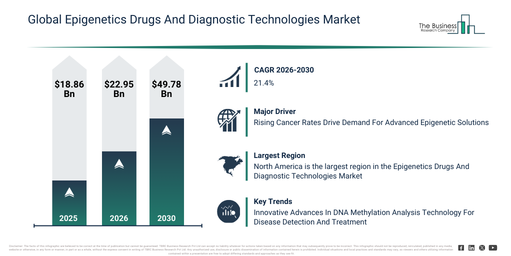
    The epigenetics drugs and diagnostic technologies market size has experienced significant growth in recent years. This market is projected to expand from $18.86 billion in 2025 to $22.95 billion in 2026, exhibiting a compound annual growth rate (CAGR) of 21.7%. The growth observed in the historical period can be attributed to factors such as the restricted access to epigenetic diagnostic technologies, a dependence on traditional genetic testing, the rising incidence of oncology and inflammatory conditions, increasing recognition of epigenetic therapies, and the implementation of fundamental methylation and acetylation assays.

    The epigenetics drugs and diagnostic technologies market size is anticipated to undergo significant growth in the coming years, projected to reach $49.78 billion in 2030, demonstrating a compound annual growth rate (CAGR) of 21.4%. This expansion during the forecast period is attributed to several factors, including the development of advanced microRNA and lncRNA therapeutics, the broadening of high-throughput chromatin profiling platforms, increasing investment in personalized epigenetic medicine, the greater adoption of bioinformatics tools for epigenetic analysis, and the integration of epigenetic diagnostics into routine clinical workflows. Major trends expected in this period include the wider availability of epigenetic biomarker-based diagnostics, the growing use of histone modification inhibitors for therapy, the continued development of microRNA and lncRNA-based therapeutics, a heightened focus on personalized epigenetic medicine, and the incorporation of high-throughput epigenetic profiling in clinical research.

    Get A Free Sample Report With In-Depth Market Insights:

    https://thebusinessresearchcompany.com/sample_request?id=11717258&type=smp&name=Epigenetics%20Drugs%20And%20Diagnostic%20Technologies%20Market%20Report%202026&utm_source=Blogs&utm_medium=Paid&utm_campaign=Oct_PR

    Epigenetics Drugs And Diagnostic Technologies Market Growth Backed By Core Demand Fundamentals

    The epigenetics drugs and diagnostic technologies market is projected to expand due to the rising incidence of cancer. Cancer refers to a range of illnesses characterized by uncontrolled cell division that can spread or invade other body parts. The widespread occurrence of cancer is attributable to factors such as aging populations, changes in lifestyle, environmental pollutants, genetic predispositions, and advancements in diagnostic techniques. Epigenetic drugs and diagnostic technologies are instrumental in addressing the growing cancer challenge by targeting and altering gene expression, thereby enabling early detection and customized treatment strategies. For illustration, the World Health Organization, a Switzerland-based international organization dedicated to global health policy and public health initiatives, reported in February 2024 that more than 35 million new cancer cases are anticipated by 2050. This signifies a 77% surge from the estimated 20 million cases in 2022. Thus, the increasing prevalence of cancer is a key driver for the growth of the epigenetics drugs and diagnostic technologies market.

    Epigenetics Drugs And Diagnostic Technologies Market Segments: Where Is Growth Concentrated?

    The epigenetics drugs and diagnostic technologies market covered in this report is segmented –

    1) By Technology: Deoxyribonucleic Acid (DNA) Methylation, Histone Methylation, Histone Acetylation, Large Non Coding Ribonucleic Acid (RNA), MicroRNA Modification, Chromatin Structures

    2) By Application: Oncology, Solid Tumors, Liquid Tumors, Non Oncology, Inflammatory Diseases, Metabolic Diseases, Infectious Diseases, Cardiovascular Diseases, Other Applications

    3) By End-User: Hospitals And Clinics, Diagnostic Centers, Other End Users

    Subsegments:

    1) By Deoxyribonucleic Acid (DNA) Methylation: Methylation Inhibitors, Methylation Detection Kits, Methylation Profiling Technologies, Bisulfite Sequencing

    2) By Histone Methylation: Histone Methyltransferase Inhibitors, Histone Demethylase Inhibitors, Histone Methylation Assays, Chromatin Immunoprecipitation (ChIP) Techniques

    3) By Histone Acetylation: Histone Acetyltransferase Inhibitors, Histone Deacetylase Inhibitors (HDACi), Acetylation Detection Kits, Western Blotting for Acetylation

    4) By Large Non-Coding Ribonucleic Acid (RNA): lncRNA Expression Profiling, lncRNA Modulation Technologies, lncRNA Detection Kits, Bioinformatics Tools for lncRNA Analysis

    5) By MicroRNA Modification: MicroRNA Mimics, MicroRNA Inhibitors, MicroRNA Expression Analysis, MicroRNA Detection Assays

    6) By Chromatin Structures: Chromatin Remodeling Agents, Chromatin Accessibility Assays, 3D Chromatin Architecture Technologies, Nuclear Imaging Techniques

    Epigenetics Drugs And Diagnostic Technologies Market Growth Trends Reshaping The Competitive Landscape

    Leading firms within the epigenetics drugs and diagnostic technologies market prioritize creating cutting-edge solutions, including DNA methylation analysis technology, to boost the accuracy and impact of identifying illnesses, refine tailored treatment approaches, and deepen knowledge of gene control across different conditions. This DNA methylation analysis technology encompasses various methods designed to examine DNA methylation patterns, a chemical alteration to DNA where a methyl group is attached to the cytosine base. As an illustration, in August 2023, Watchmaker Genomics Inc., a biotechnology firm located in the US, collaborated with Exact Sciences Corp., a US-based company specializing in molecular diagnostics, to create and market a new DNA methylation analysis technology called TET-assisted pyridine borane sequencing (TAPS). The partnership seeks to improve cancer screening and diagnostic abilities by utilizing Watchmaker’s proficiency in designing DNA-modifying enzymes to refine the TAPS chemistry. This is crucial for detecting cancer early and for tracking minimal residual disease (MRD) via liquid biopsies, as DNA methylation patterns function as indicators of health status.

    Epigenetics Drugs And Diagnostic Technologies Market Key Participants And Competitive Landscape

    Major companies operating in the epigenetics drugs and diagnostic technologies market are Pfizer Inc., F. Hoffmann-La Roche Ltd., Merck & Co Inc., Novartis AG, Bristol-Myers Squibb Company, Thermo Fisher Scientific Inc., AstraZeneca PLC, Illumina Inc., QIAGEN NV, Exact Sciences Corporation, Abcam PLC, Syndax Pharmaceuticals Inc., Astex Pharmaceuticals Inc., Diagenode LLC, Cisbio Bioassays, 4SC AG, Verogen Inc., Watchmaker Genomics Inc., Oryzon Genomics SA, Cell Centric Ltd., Epiaxis Therapeutics

    View The Full Epigenetics Drugs And Diagnostic Technologies Market Report:

    https://thebusinessresearchcompany.com/report/epigenetics-drugs-and-diagnostic-technologies-global-market-report?utm_source=Blogs&utm_medium=Paid&utm_campaign=Oct_PR

    Epigenetics Drugs And Diagnostic Technologies Market Geographic Analysis: Where Is Demand Accelerating Fastest?

    North America was the largest region in the epigenetics drugs and diagnostic technologies market in 2025. Asia-Pacific is expected to be the fastest-growing region in the forecast period. The regions covered in the epigenetics drugs and diagnostic technologies market report are Asia-Pacific, South East Asia, Western Europe, Eastern Europe, North America, South America, Middle East, Africa.

    Reach Out To Our Team:

    The Business Research Company: https://www.thebusinessresearchcompany.com/

    Americas: +1 310-496-7795

    Asia: +44 7882 955267 & +91 8897263534

    Europe: +44 7882 955267

    Email us at: marketing@tbrc.info

    Follow us on:

    LinkedIn: https://in.linkedin.com/company/the-business-research-company

    YouTube: https://www.youtube.com/channel/UC24_fI0rV8cR5DxlCpgmyFQ

    Global Market Model: https://www.thebusinessresearchcompany.com/global-market-model
  • Laboratory Bunsen Burner Market Size In 2026: Growth Outlook And Forecast Through 2030

    Laboratory Bunsen Burner Market Size In 2026: Growth Outlook And Forecast Through 2030

    Backed by market attractiveness analysis, total addressable market sizing, company benchmarking matrices, interactive Excel dashboards, wider supply chain intelligence, emerging startup coverage, and detailed product-level insights, The Business Research Company’s 2026 market reports are designed to offer research that is more actionable and strategically valuable than ever.

    Laboratory Bunsen Burner Market Growth From $9.96 Billion In 2026 To $13.16 Billion By 2030 At A CAGR Of 7.2%

    The laboratory bunsen burner market size has exhibited robust expansion in recent years. It is anticipated to grow from $9.28 billion in 2025 to $9.96 billion in 2026, achieving a compound annual growth rate (CAGR) of 7.3%. The market’s past growth can be ascribed to several factors, including the expansion of academic and teaching laboratories, the widespread adoption of gas-based heating equipment, the increase in laboratory-based education, heightened laboratory safety awareness, and an escalating demand for basic laboratory heating tools.

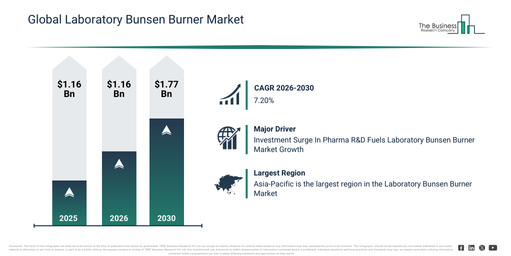
    The laboratory bunsen burner market is projected to experience substantial expansion over the next few years. It is expected to reach a value of $13.16 billion in 2030, exhibiting a compound annual growth rate (CAGR) of 7.2%. This growth during the forecast period is driven by several factors, including the increasing integration of electric laboratory equipment, a heightened emphasis on fire safety within laboratories, the expansion of research infrastructure in developing economies, rising financial commitments to science education, and a growing need for portable laboratory heating solutions. Significant trends anticipated in the forecast period encompass a rising preference for safer, controlled-flame laboratory equipment, the increasing adoption of electric bunsen burners in educational laboratories, a surging demand for precise and adjustable flame control, the expansion of laboratory infrastructure across academic and research institutions, and an intensified focus on laboratory safety and standardization.

    Get A Free Sample Report With In-Depth Market Insights:

    https://thebusinessresearchcompany.com/sample_request?id=87229860&type=smp&name=Laboratory%20Bunsen%20Burner%20Market%20Report%202026&utm_source=Blogs&utm_medium=Paid&utm_campaign=Oct_PR

    Laboratory Bunsen Burner Market Demand Drivers Opening New Revenue Streams

    Increased financial commitment to pharmaceutical research and development is anticipated to boost the expansion of the laboratory bunsen burner market in the future. This rise in investment stems from the increasing occurrence of chronic and infectious illnesses, heightening the demand for novel treatments and remedies. Furthermore, the push for targeted therapies and personalized medicine stimulates research, with government incentives and grants providing additional encouragement for funding. Within pharmaceutical research and development, laboratory bunsen burners serve to sterilize instruments, carry out chemical reactions, and prepare specimens for analytical processes. For example, IQVIA, a US-based healthcare intelligence and life sciences firm, reported in January 2024 that worldwide medicine consumption has risen by 14% over the last five years and is forecast to climb an additional 12% by 2028, achieving 3.8 trillion defined daily doses each year. Consequently, the increasing investment in pharmaceutical research and development will drive the growth of the laboratory bunsen burner market. The expansion of educational facilities is anticipated to stimulate the growth of the laboratory bunsen burner market in the upcoming period. This increase in educational infrastructure is fueled by expanding student numbers, elevated birth rates, and higher enrollment figures. Moreover, a stronger emphasis on educational quality and accessibility, coupled with increased public and private financial support, propels the development of schools and institutions of higher learning. In educational settings, laboratory bunsen burners are employed for heating, sterilization, and carrying out experiments necessitating a regulated flame. For instance, data from March 2024 by the Chinese Ministry of Education, a China-based International Education organization, indicated that China possessed 3,074 higher-educational institutions in 2023, marking an increase of 61 institutions from the 3,013 institutions reported in 2022, signifying a growth rate of approximately 2%. Hence, the growing number of educational facilities will boost the growth of the laboratory bunsen burner market.

    Laboratory Bunsen Burner Market Segment Analysis And Revenue Potential

    The laboratory bunsen burner market covered in this report is segmented –

    1) By Type: Electric Powered, Gas Fired

    2) By Parts: Stand Or Base, Barrel Or Chimney, Collar, Air Holes, Gas Valve, Gas Intake

    3) By Application: Universities And Colleges, Research Institute, Other Applications

    Subsegments:

    1) By Electric Powered: Flame-Simulation Electric Laboratory Burners, Infrared-Based Electric Laboratory Burners, Hot-Element Electric Laboratory Burners

    2) By Gas Fired: Single-Outlet Gas Bunsen Burners, Double-Outlet Gas Bunsen Burners, Micro Gas Bunsen Burners, Adjustable Flame Gas Bunsen Burners

    Laboratory Bunsen Burner Market Key Players Shaping Industry Direction

    Major companies operating in the laboratory bunsen burner market are Carl Friedrich Usbeck, Eisco Scientific, Glassco Laboratory Equipment, Borosil Glass Works Ltd, Narang Medical Ltd., Scilabware Limited, REMI Elektrotechnik Ltd, Khera Instruments Pvt Ltd, Jainco Lab Products, JSGW Laboratory Glassware, Polylab Scientific, Sun LabTek Equipments, Humboldt Mfg Co, United Scientific Supplies, Yamato Scientific Co Ltd, Electrothermal Engineering Ltd, Jeio Tech Co Ltd, Faithful Instrument Co Ltd, Laboid International, Sico Research Laboratories

    View The Full Laboratory Bunsen Burner Market Report:

    https://thebusinessresearchcompany.com/report/laboratory-bunsen-burner-global-market-report?utm_source=Blogs&utm_medium=Paid&utm_campaign=Oct_PR

    Laboratory Bunsen Burner Market Regional Analysis: Which Geography Leads On Revenue?

    Asia-Pacific was the largest region in the laboratory bunsen burner market in 2025. The regions covered in the laboratory bunsen burner market report are Asia-Pacific, South East Asia, Western Europe, Eastern Europe, North America, South America, Middle East, Africa.

    Reach Out To Our Team:

    The Business Research Company: https://www.thebusinessresearchcompany.com/

    Americas: +1 310-496-7795

    Asia: +44 7882 955267 & +91 8897263534

    Europe: +44 7882 955267

    Email us at: marketing@tbrc.info

    Follow us on:

    LinkedIn: https://in.linkedin.com/company/the-business-research-company

    YouTube: https://www.youtube.com/channel/UC24_fI0rV8cR5DxlCpgmyFQ

    Global Market Model: https://www.thebusinessresearchcompany.com/global-market-model
  • Epidermal Growth Factor Patch Market Growth In 2026: Market Size, Key Drivers And Future Outlook

    Epidermal Growth Factor Patch Market Growth In 2026: Market Size, Key Drivers And Future Outlook

    Featuring market attractiveness scoring, total addressable market sizing, company benchmarking matrices, interactive Excel dashboards, deeper supply chain intelligence, emerging startup tracking, and granular product-level insights, The Business Research Company’s 2026 market reports are built to deliver research that is both more actionable and more strategically valuable.

    Epidermal Growth Factor Patch Market Size, Value And Growth Trajectory Through 2030

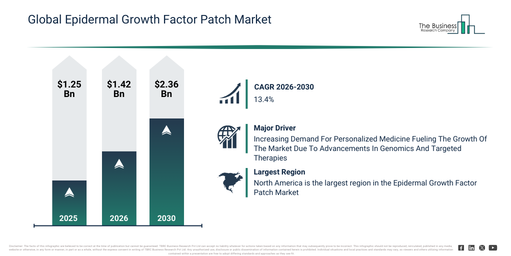
    The epidermal growth factor patch market size has experienced swift expansion in recent years. It is anticipated to grow from $1.25 billion in 2025 to $1.42 billion in 2026, achieving a compound annual growth rate (CAGR) of 13.8%. This historical growth stems from factors such as the increasing utilization of growth factors in dermatology, the wider adoption of wound care products, a heightened demand for aesthetic skin treatments, the progressive availability of advanced transdermal technologies, and the rising acceptance of patch-based therapies.

    The epidermal growth factor patch market is projected to experience swift expansion in the coming years. It is anticipated to reach $2.36 billion by 2030, exhibiting a compound annual growth rate (CAGR) of 13.4%. This growth during the projection period stems from factors such as the increasing acceptance of regenerative skincare solutions, a rising need for scar and anti-aging remedies, the broadening scope of home-based dermatological care, increased investment in sophisticated biomaterial research, and a greater emphasis on patient-friendly delivery methods. Key trends expected over the forecast horizon encompass the growing uptake of transdermal growth factor application, wider utilization of microneedle patch technologies, an increasing call for non-invasive wound healing options, the spread of advanced skincare patch uses, and a sharpened focus on the engineering of controlled-release patches.

    Get A Free Sample Report With In-Depth Market Insights:

    https://thebusinessresearchcompany.com/sample_request?id=72874637&type=smp&name=Epidermal%20Growth%20Factor%20Patch%20Market%20Report%202026&utm_source=Blogs&utm_medium=Paid&utm_campaign=Oct_PR

    Epidermal Growth Factor Patch Market Growth Catalysts And Demand Drivers

    The rising demand for personalized medicine is projected to drive the expansion of the epidermal growth factor patch market in the coming years. Personalized medicine is defined as a healthcare strategy that customizes treatment and prevention plans to suit an individual’s unique genetic profile, lifestyle, and environment. The increasing adoption of personalized medicine is predominantly attributed to advancements in genomics, which enable precise detection of genetic variations and the creation of tailored treatments for individuals. Epidermal Growth Factor (EGF) patches enhance personalized medicine by offering targeted and localized delivery of growth factors, making them highly effective for wound healing and skin regeneration. They expedite recovery by promoting cell proliferation and tissue repair, leading to improved patient-specific treatment outcomes. For example, in February 2024, as reported by the Personalized Medicine Coalition (PMC), a US-based nonprofit organization, the U.S. Food and Drug Administration (FDA) approved 26 new personalized medicines in 2023, a significant rise from the 12 approvals in 2022. Therefore, the growing demand for personalized medicine is a key factor propelling the growth of the epidermal growth factor patch market.

    Epidermal Growth Factor Patch Market Segment Analysis: What Are The Core Market Categories?

    The epidermal growth factor patch market covered in this report is segmented –

    1) By Product Type: Hydrogel Patches, Microneedle Patches, Film Patches, Other Product Types

    2) By Application: Wound Healing, Anti-Aging, Scar Treatment, Skin Rejuvenation, Other Applications

    3) By Distribution Channel: Online Pharmacies, Retail Pharmacies, Hospital Pharmacies, Other Distribution Channels

    4) By End-User: Hospitals And Clinics, Dermatology Centers, Home Care, Other End-Users

    Subsegments:

    1) By Hydrogel Patches: Moisturizing Repair, Anti Aging, Scar Reduction, Wound Healing

    2) By Microneedle Patches: Epidermal Growth Factor Delivery, Vaccine Delivery, Pain Management, Cosmetic Treatment

    3) By Film Patches: Skin Brightening, Anti Wrinkle, Acne Treatment, Hydration Boost

    4) By Other Product Types: Cooling Soothing, Anti Inflammatory, Detoxifying, Skin Firming

    Epidermal Growth Factor Patch Market Top Companies Driving Competitive Growth

    Major companies operating in the epidermal growth factor patch market are Nissha Co. Ltd., Daewoong Pharmaceutical Co. Ltd., Kindeva Drug Delivery L.L.C., LTS Lohmann Therapie-Systeme AG, Teikoku Seiyaku Co. Ltd., Katecho Inc., QuadMedicine Inc., DermaJect AB, Micropoint Technologies Ltd., CD Bioparticles Inc., CosMED Pharmaceutical Co. Ltd., Alliqua BioMedical Inc., NEXGEL Inc., Pocono Pharma Inc., Micron Biomedical Inc., Raphas Co. Ltd., Heber Biotech S.A., Zosano Pharma Corporation, Hebei Feifan Biotechnology Co. Ltd., QuadMedicine Inc.

    View The Full Epidermal Growth Factor Patch Market Report:

    https://thebusinessresearchcompany.com/report/epidermal-growth-factor-patch-global-market-report?utm_source=Blogs&utm_medium=Paid&utm_campaign=Oct_PR

    Epidermal Growth Factor Patch Market Global Footprint: Which Region Leads The Industry?

    North America was the largest region in the epidermal growth factor patch market in 2025. Asia-Pacific is expected to be the fastest-growing region in the forecast period. The regions covered in the epidermal growth factor patch market report are Asia-Pacific, South East Asia, Western Europe, Eastern Europe, North America, South America, Middle East, Africa.

    Reach Out To Our Team:

    The Business Research Company: https://www.thebusinessresearchcompany.com/

    Americas: +1 310-496-7795

    Asia: +44 7882 955267 & +91 8897263534

    Europe: +44 7882 955267

    Email us at: marketing@tbrc.info

    Follow us on:

    LinkedIn: https://in.linkedin.com/company/the-business-research-company

    YouTube: https://www.youtube.com/channel/UC24_fI0rV8cR5DxlCpgmyFQ

    Global Market Model: https://www.thebusinessresearchcompany.com/global-market-model
  • Laboratory Automation Systems Market Trends Supporting 7.4% CAGR Growth Through 2030

    Laboratory Automation Systems Market Trends Supporting 7.4% CAGR Growth Through 2030

    Featuring market attractiveness scoring, total addressable market sizing, company benchmarking matrices, interactive Excel dashboards, deeper supply chain intelligence, emerging startup tracking, and granular product-level insights, The Business Research Company’s 2026 market reports are built to deliver research that is both more actionable and more strategically valuable.

    Laboratory Automation Systems Market Expansion Outlook: What Revenue Opportunities Are Ahead?

    The market for laboratory automation systems has shown significant expansion in recent years. It is anticipated to increase from $5.85 billion in 2025 to $6.31 billion in 2026, achieving a compound annual growth rate (CAGR) of 7.9%. This past growth can be ascribed to several factors, including an increase in test volumes within clinical laboratories, a growing requirement for standardized diagnostics, the broadening of pharmaceutical research activities, a deficit of skilled laboratory personnel, and the increasing complexity inherent in laboratory workflows.

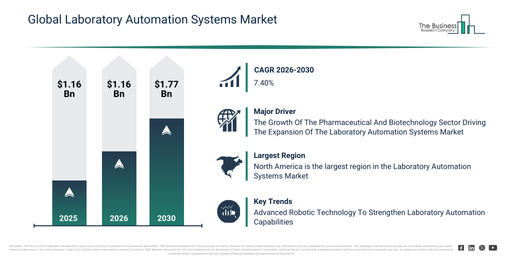
    The laboratory automation systems market is anticipated to undergo significant expansion over the next few years. It is projected to reach $8.4 billion in 2030, achieving a compound annual growth rate (CAGR) of 7.4%. The growth observed throughout the forecast period stems from factors such as the increasing uptake of AI-driven lab automation, rising investments in smart laboratories, a growing demand for high-throughput testing, the expansion of genomics and proteomics research, and a heightened focus on reducing errors and improving efficiency. Prominent trends for the forecast period include the increasing adoption of end-to-end laboratory automation, the rising deployment of robotic sample handling systems, the growing integration of data management platforms, the expansion of modular automation solutions, and an enhanced focus on workflow standardization.

    Get A Free Sample Report With In-Depth Market Insights:

    https://thebusinessresearchcompany.com/sample_request?id=2560&type=smp&name=Laboratory%20Automation%20Systems%20Market%20Report%202026&utm_source=Blogs&utm_medium=Paid&utm_campaign=Oct_PR

    Laboratory Automation Systems Market Growth Backed By Core Demand Fundamentals

    The expanding pharmaceutical and biotechnology sector is projected to boost the growth of the laboratory automation systems market in the future. This sector encompasses businesses involved in discovering and developing drugs, manufacturing biologics, and conducting advanced therapeutic research, marked by significant R&D efforts and swift innovation. Increased R&D investments fuel the sector’s expansion, creating a demand for automation systems like robotic liquid handlers, automated sample preparation, and high-throughput screening to improve efficiency, minimize errors, and quicken discovery processes. For example, in June 2023, data from the European Federation of Pharmaceutical Industries and Associations (EFPIA), a Belgium-based trade group representing Europe’s pharmaceutical industry, showed that total pharmaceutical production in Europe reached €390,000 million ($422,803 million) in 2023, an increase from €363,300 million ($393,857 million) in 2022. Consequently, the development of the pharmaceutical and biotechnology sectors is accelerating the expansion of the laboratory automation systems market.

    Laboratory Automation Systems Market Segmentation And Category Overview

    The laboratory automation systems market covered in this report is segmented –

    1) By Type: Modular Automation, Total Lab Automation

    2) By Equipment And Software: Automated Liquid Handling, Microplate Readers, Standalone Robots, Automated Storage, Retrieval

    3) By Application: Drug Discovery, Clinical Diagnostics, Genomics Solutions, Proteomics Solutions, Others

    4) By End User: Biotechnology And Pharmaceutical Industries, Research Institutes, Hospitals And Private Labs, Academic Institutes

    Subsegments:

    1) By Modular Automation: Robotic Systems for Sample Handling, Automated Liquid Handling Systems, Modular Sample Storage Systems

    2) By Total Lab Automation: Integrated Workflow Systems, Fully Automated Laboratory Analyzers, Comprehensive Data Management Solutions

    Laboratory Automation Systems Market Growth Trends Reshaping The Competitive Landscape

    Key players in the laboratory automation market are rolling out advanced technologies, such as the Flex Robot, to gain a competitive edge. This Flex robot is specifically engineered to deliver a sophisticated yet affordable automation platform for life scientists. For instance, in May 2023, Opentrons, a US-based lab automation company, released its latest innovation, the Flex robot, with the objective of making advanced lab automation solutions more accessible to life scientists. The robot is capable of conducting a wide range of experiments, including those developed by large language models (LLMs) like ChatGPT.

    Laboratory Automation Systems Market Competitive Analysis Of Leading Industry Participants

    Major companies operating in the laboratory automation systems market are Abbott Laboratories, Danaher Corporation, Thermo Fisher Scientific, Agilent Technologies Inc., Tecan Group Ltd., PerkinElmer Inc., QIAGEN N.V., Becton Dickinson and Company, Siemens AG, Brooks Automation Inc., Hamilton Company, Eppendorf AG, Biotek Instruments Inc., Bee Robotics Ltd, Gilson Inc., Biomerieux, Sysmex Corporation, Formulatrix, Beckman Coulter, Roche Diagnostics

    View The Full Laboratory Automation Systems Market Report:

    https://thebusinessresearchcompany.com/report/laboratory-automation-systems-global-market-report?utm_source=Blogs&utm_medium=Paid&utm_campaign=Oct_PR

    Laboratory Automation Systems Market Geographic Spread And Regional Opportunities

    North America was the largest region in the laboratory automation systems market in 2025. Asia-Pacific is expected to be the fastest-growing region in the forecast period. The regions covered in the laboratory automation systems market report are Asia-Pacific, South East Asia, Western Europe, Eastern Europe, North America, South America, Middle East, Africa.

    Reach Out To Our Team:

    The Business Research Company: https://www.thebusinessresearchcompany.com/

    Americas: +1 310-496-7795

    Asia: +44 7882 955267 & +91 8897263534

    Europe: +44 7882 955267

    Email us at: marketing@tbrc.info

    Follow us on:

    LinkedIn: https://in.linkedin.com/company/the-business-research-company

    YouTube: https://www.youtube.com/channel/UC24_fI0rV8cR5DxlCpgmyFQ

    Global Market Model: https://www.thebusinessresearchcompany.com/global-market-model
  • Laboratory Accessories Market Forecast Highlights A $971.55 Billion Opportunity For Industry Participants

    Laboratory Accessories Market Forecast Highlights A $971.55 Billion Opportunity For Industry Participants

    Built to provide research that’s more actionable and strategically valuable, The Business Research Company’s 2026 market reports include market attractiveness analysis, total addressable market sizing, company benchmarking matrices, interactive Excel dashboards, broader supply chain intelligence, emerging startup tracking, and in-depth product insights.

    Laboratory Accessories Market Growth Potential: How Will Market Size Shift Through 2030?

    The laboratory accessories market size has experienced robust expansion in recent years. Looking ahead, it is projected to grow from $660.04 billion in 2025 to $713.28 billion in 2026, demonstrating a compound annual growth rate (CAGR) of 8.1%. This historical growth can be largely attributed to the expansion of clinical and diagnostic laboratories, the growth in academic and research institutions, increasing laboratory testing volumes, a rising focus on laboratory safety standards, and growing investments in scientific research.

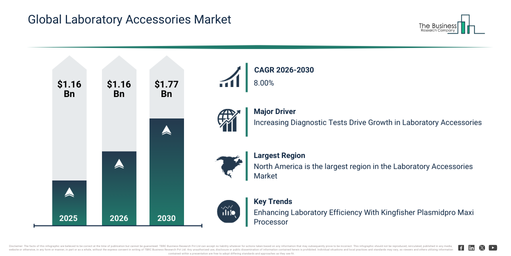
    The laboratory accessories market size is set to experience robust expansion in the upcoming years. It is projected to grow to $971.55 billion in 2030 at a compound annual growth rate (CAGR) of 8.0%. This anticipated growth during the forecast period is fueled by factors such as the increasing demand for products that support laboratory automation, intensified research and development activities in the pharmaceutical and biotechnology industries, the rising necessity for healthcare diagnostic testing, the development of laboratory infrastructure in emerging markets, and a heightened focus on achieving efficiency and accuracy in laboratory operations. Major trends influencing this period include a growing requirement for durable and high-quality laboratory consumables, a greater emphasis on safety and compliance accessories for laboratories, an increase in the standardization of laboratory workflows and equipment, the expansion of laboratory infrastructure across healthcare and research sectors, and a preference for ergonomically designed and space-optimized lab furniture.

    Get A Free Sample Report With In-Depth Market Insights:

    https://thebusinessresearchcompany.com/sample_request?id=22434714&type=smp&name=Laboratory%20Accessories%20Market%20Report%202026&utm_source=Blogs&utm_medium=Paid&utm_campaign=Oct_PR

    Laboratory Accessories Market Growth Catalysts And Demand Drivers

    The expanding volume of diagnostic tests is projected to stimulate the growth of the laboratory accessories market moving forward. Diagnostic tests refer to medical procedures designed to ascertain the presence, nature, or origin of a disease or condition in patients. This increase in diagnostic tests is attributed to improved healthcare access, the imperative for chronic disease management, heightened patient expectations, and the availability of genetic testing. Laboratory accessories are indispensable at every phase of the diagnostic testing process, from collecting and preparing samples to analyzing and documenting results. They ensure the accuracy, efficiency, and safety of diagnostic tests, ultimately providing reliable and actionable results for patient care. For instance, in November 2023, the Diagnostic Imaging Dataset Annual Statistical, a UK-based government organization, reported that England performed 45.0 million imaging tests in March 2023, an increase from 44.0 million in the previous year, signifying a growth of 2.2%. Therefore, the rising number of diagnostic tests drives the laboratory accessories market.

    Laboratory Accessories Market Segment Outlook: Which Categories Are Growing Fastest?

    The laboratory accessories market covered in this report is segmented –

    1) By Product Type: Instruments, Glassware, Lab Tables, Consumables, Other Product Types

    2) By Laboratory Type: Clinical And Diagnostics Labs, Pharma, Biotech, And Medical Device Companies, Academic And Research Labs

    3) By Application: Academic, Hospitals, Private Laboratories, Biotechnology, Other Applications

    Subsegments:

    1) By Instruments: Laboratory Analyzers, Centrifuges, Microscopes, Spectrophotometers, Ph Meters

    2) By Glassware: Beakers, Flasks, Test Tubes, Pipettes, Burettes, Petri Dishes

    3) By Lab Tables: Workbenches, Laboratory Island Tables, Height-Adjustable Lab Tables, Chemical-Resistant Tables

    4) By Consumables: Gloves And Lab Coats, Filters And Membranes, Test Strips, Disposable Pipettes, Culture Media

    5) By Other Product Types: Lab Safety Equipment, Storage Solutions, Lab Cleanliness Product

    Laboratory Accessories Market Trends Shaping Long-Term Demand

    Leading firms within the laboratory accessories market prioritize the creation of novel products, like automated plasmid purification systems. These systems aim to deliver high-throughput capabilities, enhance experimental consistency, and facilitate advanced uses in molecular biology, clinical diagnostics, and pharmaceutical development. Specifically, an automated plasmid purification system represents a sophisticated laboratory instrument engineered to simplify the isolation of plasmid DNA (pDNA) from bacterial cultures, eliminating the need for manual steps. As an illustration, in June 2024, Thermo Fisher Scientific, a US-based life science and clinical research company, introduced the Thermo Scientific KingFisher PlasmidPro Maxi Processor. This is a completely automated maxi-scale system for purifying plasmid DNA (pDNA). The design of this particular system aims to optimize the purification workflow, consequently boosting the efficiency of laboratory operations crucial for the discovery and advancement of therapeutic solutions. This groundbreaking development seeks to minimize manual inaccuracies and augment throughput, primarily benefiting molecular biology and genetic research.

    Laboratory Accessories Market Leading Companies And Competitive Benchmarking

    Major companies operating in the laboratory accessories market are Thermo Fisher Scientific Inc., The Merck Group, Agilent Technologies Inc., Sartorius AG, PerkinElmer Inc., Mettler-Toledo International Inc., Endress+Hauser Group Services AG, Shimadzu Corporation, Waters Corporation, Bio-Rad Laboratories Inc., Bruker Corporation, Horiba Ltd., Eppendorf AG, Metrohm AG, Hamilton Company, Analytik Jena AG, Labconco Corporation, Rigaku Corporation, Biotix Inc., SP Industries Inc, Corning Incorporated, Tecan Group Ltd.

    View The Full Laboratory Accessories Market Report:

    https://thebusinessresearchcompany.com/report/laboratory-accessories-global-market-report?utm_source=Blogs&utm_medium=Paid&utm_campaign=Oct_PR

    Laboratory Accessories Market Top Region By Revenue And Market Share

    North America was the largest region in the laboratory accessories market in 2025. Asia-Pacific is expected to be the fastest-growing region in the forecast period. The regions covered in the laboratory accessories market report are Asia-Pacific, South East Asia, Western Europe, Eastern Europe, North America, South America, Middle East, Africa.

    Reach Out To Our Team:

    The Business Research Company: https://www.thebusinessresearchcompany.com/

    Americas: +1 310-496-7795

    Asia: +44 7882 955267 & +91 8897263534

    Europe: +44 7882 955267

    Email us at: marketing@tbrc.info

    Follow us on:

    LinkedIn: https://in.linkedin.com/company/the-business-research-company

    YouTube: https://www.youtube.com/channel/UC24_fI0rV8cR5DxlCpgmyFQ

    Global Market Model: https://www.thebusinessresearchcompany.com/global-market-model
  • E-Pharmacy Market Size And Forecast 2026–2030: Trends Driving Industry Expansion

    E-Pharmacy Market Size And Forecast 2026–2030: Trends Driving Industry Expansion

    Built to provide research that’s more actionable and strategically valuable, The Business Research Company’s 2026 market reports include market attractiveness analysis, total addressable market sizing, company benchmarking matrices, interactive Excel dashboards, broader supply chain intelligence, emerging startup tracking, and in-depth product insights.

    E-Pharmacy Market CAGR Outlook And Future Development

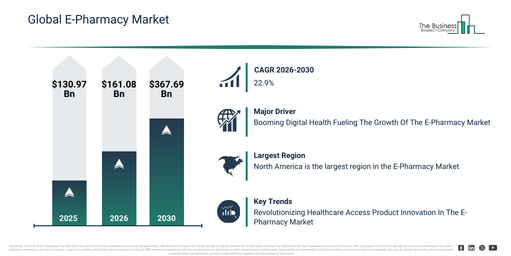
    The e-pharmacy market has experienced significant expansion in recent years. Its valuation is set to rise from $130.97 billion in 2025 to $161.08 billion in 2026, achieving a compound annual growth rate (CAGR) of 23.0%. The historical growth trajectory can be ascribed to elements such as increased internet penetration, a growing urban population, the escalating prevalence of chronic illnesses, broader smartphone adoption, and the timely acceptance of online retail models.

    The e-pharmacy market is projected to experience significant expansion over the coming years, reaching a valuation of $367.69 billion by 2030, with a compound annual growth rate (CAGR) of 22.9%. This expansion during the forecast period is propelled by factors such as the incorporation of AI into pharmacy operations, a heightened need for doorstep healthcare, greater adoption of digital payment methods, regulatory backing for electronic prescriptions, and broadened access to in both semi-urban and rural regions. Key trends anticipated for this period encompass the swift rise of app-centric e-pharmacy platforms, an increase in home delivery and same-day fulfillment options, greater uptake of e-prescriptions and digital refill services, a surge in demand for chronic disease medication subscriptions, and an evolving consumer preference for pharmacy services that are contactless.

    Get A Free Sample Report With In-Depth Market Insights:

    https://thebusinessresearchcompany.com/sample_request?id=58979311&type=smp&name=E-Pharmacy%20Market%20Report%202026&utm_source=Blogs&utm_medium=Paid&utm_campaign=Oct_PR

    E-Pharmacy Market Opportunity Drivers: What’s Unlocking New Revenue Potential?

    The thriving digital health sector is projected to drive the growth of healthcare IT and telemedicine markets in the upcoming years. Digital health encompasses various technologies such as telemedicine, mobile health applications, wearable devices, and virtual consultations that improve access to care, patient involvement, and healthcare efficiency. The rise in the adoption of digital health is propelled by patient demand for convenient care, advancements in technology, and supportive regulatory frameworks. For instance, in May 2024, a report published by Eurostat, a Luxembourg-based government agency, indicated that in 2023, 8.5% of individuals in the EU aged 16 to 74 utilized the internet for online consultations. Hence, the increasing deployment of digital health solutions is fostering market expansion.

    E-Pharmacy Market Segment Breakdown: Which Categories Lead On Revenue?

    The e-pharmacy market covered in this report is segmented –

    1) By Drug Type: Prescription Drugs, Over-The-Counter (OTC) Drugs

    2) By Product Type: Skin Care, Dental, Cold And Flu, Vitamins, Weight Loss, Other Product Types

    3) By Payment Method: Cash on Delivery, Online Payment

    4) By Platform: App-Based, Web-Based

    Subsegments:

    1) By Prescription Drugs: Chronic Disease Medications, Acute Disease Medications, Specialty Drugs, Controlled Substances

    2) By Over-The-Counter (OTC) Drugs: Pain Relievers, Cold And Allergy Medications, Digestive Health Products, Vitamins And Supplements

    E-Pharmacy Market Innovation Trends Shaping Future Development

    Leading companies within the E-Pharmacy market are harnessing digital technology to improve patient access to medicines, providing services such as at-home delivery, virtual consultations, and individualized medication management to enhance healthcare convenience and adherence. For example, in January 2024, Eli Lilly and Company, a US-based pharmaceutical firm, launched LillyDirect, a new digital healthcare experience in the U.S. This unique platform is specifically designed to simplify healthcare access for patients living with chronic conditions like obesity, migraine, and diabetes, offering personalized disease management resources, telehealth services, and direct home delivery of medications. LillyDirect incorporates LillyDirect Pharmacy Solutions, a component that allows patients to order select Lilly medications online for direct delivery to their homes via partnered online pharmacy fulfillment services, thereby increasing user convenience.

    E-Pharmacy Market Leading Players And Competitive Positioning

    Major companies operating in the e-pharmacy market are Walgreen Company, Express Scripts Holding Company, CVS Health Corporation, DocMorris N. V, OptumRx Holdings LLC, PharmEasy, Tata 1mg, Netmeds, Amazon Inc., Apollo Pharmacy Ltd., Rowlands Phamacy, The Kroger Co., Wal-Mart Stores Inc., Medlife International Private Limited, MedPlus Health Services Private Limited, Medikabazaar Private Limited, MedPlusMart Private Limited, MedsIndia Limited, MedsOnCall Healthcare Private Limited, MedsSure Healthcare Private Limited, MedsDelight Healthcare Private Limited, MedsBazaar Healthcare Private Limited

    View The Full E-Pharmacy Market Report:

    https://thebusinessresearchcompany.com/report/E-pharmacy-global-market-report?utm_source=Blogs&utm_medium=Paid&utm_campaign=Oct_PR

    E-Pharmacy Market Regional Distribution: Which Areas Power Market Growth?

    North America was the largest region in the e-pharmacy market in 2025. Asia-Pacific is expected to be the fastest-growing region in the forecast period. The regions covered in the e-pharmacy market report are Asia-Pacific, South East Asia, Western Europe, Eastern Europe, North America, South America, Middle East, Africa.

    Reach Out To Our Team:

    The Business Research Company: https://www.thebusinessresearchcompany.com/

    Americas: +1 310-496-7795

    Asia: +44 7882 955267 & +91 8897263534

    Europe: +44 7882 955267

    Email us at: marketing@tbrc.info

    Follow us on:

    LinkedIn: https://in.linkedin.com/company/the-business-research-company

    YouTube: https://www.youtube.com/channel/UC24_fI0rV8cR5DxlCpgmyFQ

    Global Market Model: https://www.thebusinessresearchcompany.com/global-market-model
  • Lab-On-Skin Microfluidic Patch Market Analysis: How The Industry Is Evolving Toward A $3.57 Billion Future

    Lab-On-Skin Microfluidic Patch Market Analysis: How The Industry Is Evolving Toward A $3.57 Billion Future

    Backed by market attractiveness analysis, total addressable market sizing, company benchmarking matrices, interactive Excel dashboards, wider supply chain intelligence, emerging startup coverage, and detailed product-level insights, The Business Research Company’s 2026 market reports are designed to offer research that is more actionable and strategically valuable than ever.

    Lab-On-Skin Microfluidic Patch Market Value Analysis: What Growth Lies Ahead Over The Forecast Period?

    The market size for lab-on-skin microfluidic patches has experienced significant expansion in recent years. This market is projected to increase from $1.44 billion in 2025 to reach $1.73 billion by 2026, reflecting a compound annual growth rate (CAGR) of 20.1%. Historically, this growth was influenced by progress in microfluidics, the adoption of wearable healthcare technology, the rise of sports analytics, a growing need for non-invasive diagnostic tools, and ongoing research in biofluid analysis.

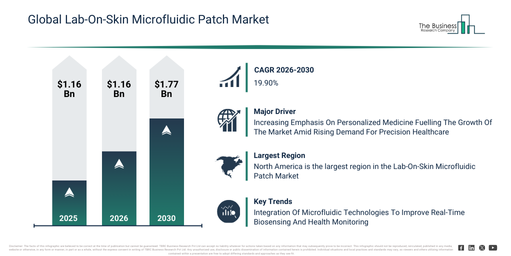
    The lab-on-skin microfluidic patch market is anticipated to experience significant expansion in the coming years, with its valuation expected to reach $3.57 billion by 2030, displaying a compound annual growth rate (CAGR) of 19.9%. This projected growth is attributed to the integration of AI-driven analytics, the increasing scope of personalized medicine, the expansion of remote patient monitoring, its adoption within the fitness and wellness sectors, and technological innovations in patch materials. Key trends foreseen during this period include continuous health monitoring, non-invasive diagnostics, personalized medicine devices, sports and fitness analytics, and real-time biomarker detection.

    Get A Free Sample Report With In-Depth Market Insights:

    https://thebusinessresearchcompany.com/sample_request?id=78177481&type=smp&name=Lab-On-Skin%20Microfluidic%20Patch%20Market%20Report%202026&utm_source=Blogs&utm_medium=Paid&utm_campaign=Oct_PR

    Lab-On-Skin Microfluidic Patch Market Opportunity Drivers: What’s Unlocking New Revenue Potential?

    The increasing focus on personalized medicine is anticipated to drive the expansion of the lab-on-skin microfluidic patch market. Personalized medicine involves a healthcare methodology that customizes medical attention based on each patient’s unique characteristics, leveraging genetic, biomarker, and clinical data to enhance treatment efficacy. The growing application of personalized medicine is fueled by progress in genomics and biotechnology, which enable precise diagnoses and targeted interventions, improving patient results and minimizing ineffective therapies. Lab-on-skin microfluidic patches facilitate personalized medicine through continuous monitoring of individual biomarkers, enabling timely and tailored treatment decisions. For example, in February 2024, the Personalized Medicine Coalition (PMC), a US-based nonprofit organization promoting personalized medicine, noted that the US Food and Drug Administration (FDA) sanctioned 16 new personalized treatments for rare disease patients in 2023, an increase from six in 2022. Thus, the heightened emphasis on personalized medicine is stimulating growth in the lab-on-skin microfluidic patch market.

    Lab-On-Skin Microfluidic Patch Market Segment Landscape: Which Areas Lead Development?

    The lab-on-skin microfluidic patch market covered in this report is segmented –

    1) By Product Type: Diagnostic Patches, Monitoring Patches

    2) By Material Type: Polymer-Based, Hybrid, Other Material Types

    3) By Application: Healthcare Monitoring, Disease Diagnosis, Sports And Fitness, Other Applications

    4) By End-User: Hospitals And Clinics, Homecare, Research Institutes, Sports And Fitness Centers, Other End-Users

    Subsegments:

    1) By Diagnostic Patches: Sweat-Based Microfluidic Diagnostic Patches, Interstitial Fluid Microfluidic Diagnostic Patches, Glucose and Metabolite Detection Microfluidic Patches, Electrolyte and Biomarker Analysis Microfluidic Patches, Multi-Analyte Lab-on-Skin Diagnostic Patches

    2) By Monitoring Patches: Continuous Hydration Monitoring Microfluidic Patches, Continuous Lactate Monitoring Microfluidic Patches, Electrolyte Balance Monitoring Microfluidic Patches, Stress and Fatigue Monitoring Microfluidic Patches (Biochemical-Based), Personalized Health Monitoring Lab-on-Skin Patches

    Lab-On-Skin Microfluidic Patch Market Innovation Trends Shaping Future Development

    Leading companies in the lab-on-skin microfluidic patch market are concentrating on developing technological innovations, such as sweat-sensing patches, to facilitate real-time health surveillance and personalized diagnostic capabilities. A sweat-sensing patch is a wearable instrument designed to gather and examine sweat for the purpose of real-time tracking of biomarkers, electrolytes, and various other physiological indicators. As an example, in April 2024, Epicore Biosystems Inc., a US-based digital health company, introduced Connected Hydration, which comprises a wearable microfluidic patch alongside a mobile application, developed to aid industrial employees in avoiding dehydration and heat stress via ongoing monitoring of sweat and electrolytes. This system delivers real-time individualized hydration data, vibration notifications, and AI-driven guidance to optimize fluid consumption prior to the onset of tiredness or harm. Through the integration of lab-on-skin sensing, cloud analytics, and an extended battery life design, Connected Hydration improves worker safety, boosts productivity, and strengthens resilience in harsh heat conditions across global industrial sectors.

    Lab-On-Skin Microfluidic Patch Market Industry Leaders And Competitive Landscape

    Major companies operating in the lab-on-skin microfluidic patch market are Epicore Biosystems, Xsensio SA, Persperity Health Inc., Nutromics Pty Ltd., Biolinq Inc., Flow Bio Ltd., GraphWear Technologies Inc., GENTAG Inc., Nemaura Medical Inc., Kenzen Inc., Aline Inc., Eccrine Systems Inc., Nix Biosensors, Sonera, Zansors LLC, PointFit Technology Co. Ltd., Bitome Inc., Arma Biosciences, VivaLNK Inc., MC10 Inc., BioIntelliSense Inc.

    View The Full Lab-On-Skin Microfluidic Patch Market Report:

    https://thebusinessresearchcompany.com/report/lab-on-skin-microfluidic-patch-global-market-report?utm_source=Blogs&utm_medium=Paid&utm_campaign=Oct_PR

    Lab-On-Skin Microfluidic Patch Market Regional Analysis And Top Geography

    North America was the largest region in the lab-on-skin microfluidic patch market in 2025. Asia-Pacific is expected to be the fastest-growing region in the forecast period. The regions covered in the lab-on-skin microfluidic patch market report are Asia-Pacific, South East Asia, Western Europe, Eastern Europe, North America, South America, Middle East, Africa.

    Reach Out To Our Team:

    The Business Research Company: https://www.thebusinessresearchcompany.com/

    Americas: +1 310-496-7795

    Asia: +44 7882 955267 & +91 8897263534

    Europe: +44 7882 955267

    Email us at: marketing@tbrc.info

    Follow us on:

    LinkedIn: https://in.linkedin.com/company/the-business-research-company

    YouTube: https://www.youtube.com/channel/UC24_fI0rV8cR5DxlCpgmyFQ

    Global Market Model: https://www.thebusinessresearchcompany.com/global-market-model
  • Label-Free Array Systems Market Outlook Through 2030: Understanding The Growth Opportunity

    Label-Free Array Systems Market Outlook Through 2030: Understanding The Growth Opportunity

    Featuring market attractiveness scoring, total addressable market sizing, company benchmarking matrices, interactive Excel dashboards, deeper supply chain intelligence, emerging startup tracking, and granular product-level insights, The Business Research Company’s 2026 market reports are built to deliver research that is both more actionable and more strategically valuable.

    Label-Free Array Systems Market Size Forecast: How Big Could The Market Get By 2030?

    The label-free array systems market has demonstrated robust expansion in recent years. It is anticipated to increase from $1.48 billion in 2025 to $1.59 billion in 2026, at a compound annual growth rate (CAGR) of 7.6%. The historical surge in this market can be linked to factors such as the restricted availability of label-free platforms, the reliance on traditional labeling techniques, an uptick in pharmaceutical research and development, the growth of academic and research institutes, and the embrace of conventional biosensors.

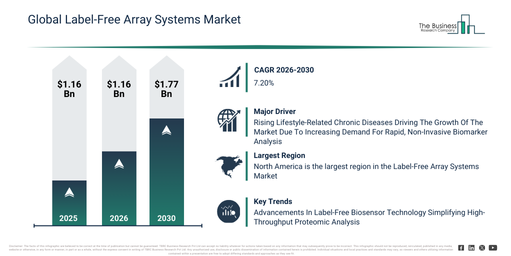
    The label-free array systems market is anticipated to experience substantial expansion in the coming years, growing to $2.1 billion in 2030 at a compound annual growth rate (CAGR) of 7.2%. This projected expansion over the forecast period is propelled by developments in surface plasmon resonance and bio-layer interferometry, increased uptake by contract research organizations (CROs), an escalating need for highly efficient and automated systems, a heightened emphasis on kinetics and affinity mapping, and the incorporation of artificial intelligence and big data analytics. Key trends during this period encompass the wider embrace of label-free detection techniques, a surging requirement for analyzing molecular interactions in real time, the incorporation of advanced high-throughput screening features, expanded application in drug discovery and protein-protein interaction research, and a sharpened focus on improving the sensitivity and precision of assays.

    Get A Free Sample Report With In-Depth Market Insights:

    https://thebusinessresearchcompany.com/sample_request?id=23288432&type=smp&name=Label-Free%20Array%20Systems%20Market%20Report%202026&utm_source=Blogs&utm_medium=Paid&utm_campaign=Oct_PR

    Label-Free Array Systems Market Growth Momentum: What Factors Are Shaping Demand?

    The escalating threat of lifestyle-related chronic diseases is projected to propel the expansion of the label-free array systems market in the coming years. These long-term conditions are primarily caused by unhealthy behaviors such as poor diet, insufficient physical activity, smoking, and excessive alcohol consumption. The rise in lifestyle-related chronic diseases is linked to increasing sedentary lifestyles, as more individuals engage in desk-bound professions and screen-based leisure activities, reducing physical movement and negatively affecting metabolic health. Label-free array systems are advanced biosensing technologies designed for real-time, high-throughput detection of biomolecular interactions without the use of fluorescent or radioactive labels. These systems are becoming increasingly crucial in mitigating the risk of lifestyle-related chronic diseases by enabling early detection, risk assessment, and personalized prevention strategies. For instance, a report from April 2025 by the Centers for Disease Control and Prevention, a US-based federal government agency, indicated that in 2023, 76.4% (representing 194 million) of US adults reported one or more chronic conditions, including 59.5%, 78.4%, and 93.0% of young, midlife, and older adults, respectively. Additionally, 51.4% (representing 130 million) of US adults reported multiple chronic conditions (MCC), comprising 27.1%, 52.7%, and 78.8% of young, midlife, and older adults, respectively. Therefore, the growing risk of lifestyle-related chronic diseases will further stimulate the growth of the label-free array systems market.

    Label-Free Array Systems Market Segments: Where Is Growth Concentrated?

    The label-free array systems market covered in this report is segmented –

    1) By Technology: Surface Plasmon Resonance, Bio Layer Interferometry, Cellular Dielectric Spectroscopy, Other Technologies

    2) By Accessories: Sensor Chips, Reagents, Consumables, Other Accessories

    3) By Application: Drug Discovery, Protein-Protein Interactions, Receptor Ligand Assays, Thermodynamics, Kinetics Or Affinity Mapping, Other Applications

    4) By End-User: Pharmaceutical And Biotechnology Companies, Academic And Research Institutes, Contract Research Organizations, Other End Users

    Subsegments:

    1) By Surface Plasmon Resonance: Imaging SPR, SPR Microscopy, Multi-Parametric SPR, Localized SPR

    2) By Bio Layer Interferometry: Fiber Optic-Based BLI, Plate-Based BLI, High-Throughput BLI Systems

    3) By Cellular Dielectric Spectroscopy: Real-Time Impedance-Based Systems, Multi-Well Plate CDS Platforms, Label-Free Cytotoxicity Assays

    4) By Other Technologies: Microcantilever-Based Systems, Optical Waveguide Grating Sensors, Quartz Crystal Microbalance (QCM), Field-Effect Transistor (FET)-Based Biosensors

    Label-Free Array Systems Market Trends Redefining Industry Growth

    Major companies within the label-free array systems market are concentrating on developing advanced solutions, including label-free biosensors, to simplify the testing process. Label-free biosensors are analytical devices designed to directly detect biological interactions without the need for fluorescent or radioactive tags. For instance, in February 2024, SPOC Proteomics Inc., a US-based life science company, launched its customizable SPOC protein biosensor chips. This innovation offers real-time, label-free biosensing for up to 1,000 fully folded proteins on a small 1.5 cm² SPR chip. It utilizes a unique technique that produces proteins directly from DNA in tiny nanoliter wells while simultaneously capturing and purifying these proteins on the sensor surface. This approach circumvents the traditional recombinant protein production process, leading to cost reductions of 10 to 100 times compared to standard methods. Moreover, SPOC protein biosensor chips uniquely provide extensive qualitative, quantitative, and kinetic data, making them ideal for high-throughput proteomic studies.

    Label-Free Array Systems Market Key Participants And Competitive Landscape

    Major companies operating in the label-free array systems market are Merck KGaA, Thermo Fisher Scientific Inc, Agilent Technologies Inc, Cytiva, PerkinElmer Inc, Sartorius AG, Bruker Corporation, Horiba Instruments Incorporated, Malvern Panalytical Ltd, Reichert Inc, Attana AB, NanoSPR Devices, BioNavis Ltd, Biosensing Instrument Inc, GeSiM Co, Plexera LLC, Plasmetrix, Nicoya Lifesciences Inc, Creoptix AG, Sierra Sensors GmbH

    View The Full Label-Free Array Systems Market Report:

    https://thebusinessresearchcompany.com/report/label-free-array-systems-global-market-report?utm_source=Blogs&utm_medium=Paid&utm_campaign=Oct_PR

    Label-Free Array Systems Market Geographic Analysis: Where Is Demand Rising Fastest?

    North America was the largest region in the label-free array systems market in 2025. Asia-Pacific is expected to be the fastest-growing region in the forecast period. The regions covered in the label-free array systems market report are Asia-Pacific, South East Asia, Western Europe, Eastern Europe, North America, South America, Middle East, Africa.

    Reach Out To Our Team:

    The Business Research Company: https://www.thebusinessresearchcompany.com/

    Americas: +1 310-496-7795

    Asia: +44 7882 955267 & +91 8897263534

    Europe: +44 7882 955267

    Email us at: marketing@tbrc.info

    Follow us on:

    LinkedIn: https://in.linkedin.com/company/the-business-research-company

    YouTube: https://www.youtube.com/channel/UC24_fI0rV8cR5DxlCpgmyFQ

    Global Market Model: https://www.thebusinessresearchcompany.com/global-market-model