Blog

  • Physical Therapy Rehabilitation Market Analysis 2026: Market Size, Growth Trends And Industry Outlook

    Physical Therapy Rehabilitation Market Analysis 2026: Market Size, Growth Trends And Industry Outlook

    Built to provide research that’s more actionable and strategically valuable, The Business Research Company’s 2026 market reports include market attractiveness analysis, total addressable market sizing, company benchmarking matrices, interactive Excel dashboards, broader supply chain intelligence, emerging startup tracking, and in-depth product insights.

    Physical Therapy Rehabilitation Market Value Growth And Long-Term Outlook

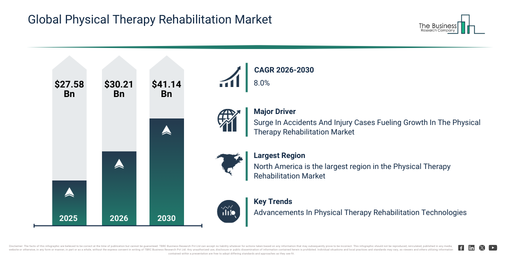
    The physical therapy rehabilitation market has experienced robust expansion over the past few years. This market is projected to expand from $27.58 billion in 2025 to $30.21 billion by 2026, demonstrating a compound annual growth rate (CAGR) of 9.5%. This historical development can be credited to several factors, including a rise in post-surgical rehabilitation requirements, the broadening of hospital-based rehabilitation initiatives, the implementation of electronic health records within therapeutic environments, a growing incidence of chronic mobility issues, and the accessibility of fundamental rehabilitation apparatus.

    The physical therapy rehabilitation market is projected to experience substantial expansion over the coming years. Its size is anticipated to reach $41.14 billion by 2030, exhibiting a compound annual growth rate (CAGR) of 8.0%. This anticipated growth during the forecast period is primarily driven by increasing financial commitments to digital rehabilitation platforms, a surging need for recovery options at home, the proliferation of AI-powered tools for therapy planning, the wider adoption of internet-connected rehabilitation devices, and a dedicated emphasis on enhancing patient outcomes over the long term. Key trends expected during this period involve the wider embrace of tele-rehabilitation platforms, the increasing incorporation of software for rehabilitation management, an expanding utilization of therapeutic robotics and specialized devices, the broadened deployment of solutions for remote patient monitoring, and a heightened emphasis on rehabilitation outcomes guided by data.

    Get A Free Sample Report With In-Depth Market Insights:

    https://thebusinessresearchcompany.com/sample_request?id=24576805&type=smp&name=Physical%20Therapy%20Rehabilitation%20Market%20Report%202026&utm_source=Blogs&utm_medium=Paid&utm_campaign=Nov_PR

    Physical Therapy Rehabilitation Market Development Factors: What’s Supporting Demand?

    An anticipated increase in accident and injury occurrences is poised to stimulate the physical therapy rehabilitation market in the coming years. This escalation in accidents and injuries stems from factors such as distracted driving, insufficient safety protocols, and increased engagement in risky behaviors. For those affected by accidents and injuries, physical therapy rehabilitation plays a vital role in facilitating recovery and regaining mobility.

    Physical Therapy Rehabilitation Market Segment Trends And Revenue Contributors

    The physical therapy rehabilitation market covered in this report is segmented –

    1) By Solution: Software, Hardware

    2) By Application: Hip Joint, Spinal Cord Injuries, Forearms And Wrist Joints, Shoulder And Elbow Joint, Knee Joint, Other Applications

    3) By End User: Ambulatory Surgical Centre, Self-insured Employer, Healthcare IDN (Integrated Delivery Network), Commercial Payer, Government Organization, Physiotherapy Clinics, Hospitals, Homecare And Rehabilitation Centers

    Subsegments:

    1) By Software: Rehabilitation Management Software, Electronic Health Records (EHR) Software, Patient Monitoring Software, Tele-Rehabilitation Software

    2) By Hardware: Therapeutic Equipment, Exercise Equipment, Mobility Devices, Therapeutic Robots And Devices

    Physical Therapy Rehabilitation Market Trends Powering Strategic Industry Growth

    Leading companies in the physical therapy rehabilitation market are prioritizing the adoption of advanced artificial intelligence (AI)-powered solutions to gain a competitive advantage. These AI-based solutions are designed to enhance patient care, streamline therapy sessions, and improve overall patient treatment outcomes. They utilize machine learning algorithms to analyze patient data, monitor progress, personalize treatment plans, and deliver real-time feedback to both therapists and patients.

    Physical Therapy Rehabilitation Market Competitive Landscape: Which Companies Lead The Industry?

    Major companies operating in the physical therapy rehabilitation market are Medline Industries LP, Cerner Corporation, Smith+Nephew, Invacare Corporation, Caremax Rehabilitation Equipment Co. Ltd, Drive DeVilbiss Healthcare, SWORD Health Inc, Kareo Inc, Hinge Health Inc, Saunders Group, Reflexion Health, Graham-Field, Isalus LLC, Dynatronics Corporation, Meditab, Alimed Medical Supplies, Carex Health Brands, Roma Medical Aid Ltd, Motekforce Link, Hausmann Industries, GestureTek HEALTH, TherapySync, MIRA Rehab Limited, Hocoma AG, ReWalk Robotics Ltd, Ekso Bionics Holdings Inc

    View The Full Physical Therapy Rehabilitation Market Report:

    https://thebusinessresearchcompany.com/report/physical-therapy-rehabilitation-global-market-report?utm_source=Blogs&utm_medium=Paid&utm_campaign=Nov_PR

    Physical Therapy Rehabilitation Market Regional Analysis And Top Geography

    North America was the largest region in the physical therapy rehabilitation market in 2025. Asia Pacific is expected to be the fastest-growing region in the forecast period. The regions covered in the physical therapy rehabilitation market report are Asia-Pacific, South East Asia, Western Europe, Eastern Europe, North America, South America, Middle East, Africa.

    Reach Out To Our Team:

    The Business Research Company: https://www.thebusinessresearchcompany.com/

    Americas: +1 310-496-7795

    Asia: +44 7882 955267 & +91 8897263534

    Europe: +44 7882 955267

    Email us at: marketing@tbrc.info

    Follow us on:

    LinkedIn: https://in.linkedin.com/company/the-business-research-company

    YouTube: https://www.youtube.com/channel/UC24_fI0rV8cR5DxlCpgmyFQ

    Global Market Model: https://www.thebusinessresearchcompany.com/global-market-model
  • Physical Therapy Market Growth To $39.51 Billion Creates New Opportunities Across The Industry

    Physical Therapy Market Growth To $39.51 Billion Creates New Opportunities Across The Industry

    Backed by market attractiveness analysis, total addressable market sizing, company benchmarking matrices, interactive Excel dashboards, wider supply chain intelligence, emerging startup coverage, and detailed product-level insights, The Business Research Company’s 2026 market reports are designed to offer research that is more actionable and strategically valuable than ever.

    Physical Therapy Market Poised To Hit $39.51 Billion By 2030 With A 5.7% CAGR

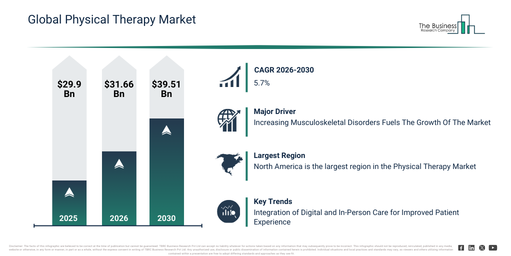
    The physical therapy market size has experienced significant expansion over recent years. This market is projected to grow from $29.9 billion in 2025 to $31.66 billion in 2026, exhibiting a compound annual growth rate (CAGR) of 5.9%. The historical growth of this market can be attributed to factors such as the increasing incidence of musculoskeletal disorders, a growing number of surgical procedures, the expansion of rehabilitation services within hospitals, heightened awareness of the benefits of physical rehabilitation, and the accessibility of trained physical therapists.

    The physical therapy market is projected to experience robust expansion in the coming years. Its valuation is anticipated to reach $39.51 billion by 2030, driven by a compound annual growth rate (CAGR) of 5.7%. This growth during the forecast period can be attributed to factors such as an expanding aging demographic, the increasing uptake of digital health platforms, the proliferation of home-based rehabilitation services, greater investments in rehabilitation technologies, and a heightened need for preventive physical therapy. Key trends anticipated for this period encompass the wider acceptance of tele-physical therapy services, the increasing utilization of robotics for rehabilitation, a surging call for tailored therapy programs, the broadening scope of sports and orthopedic rehabilitation services, and an intensified emphasis on outcome-based patient care.

    Get A Free Sample Report With In-Depth Market Insights:

    https://thebusinessresearchcompany.com/sample_request?id=42343366&type=smp&name=Physical%20Therapy%20Market%20Report%202026&utm_source=Blogs&utm_medium=Paid&utm_campaign=Nov_PR

    Physical Therapy Market Industry Drivers: What’s Behind The Revenue Growth?

    The projected increase in musculoskeletal disorders is set to drive the expansion of the physical therapy market. Musculoskeletal disorders (MSDs) are medical conditions affecting various parts of the musculoskeletal system, including muscles, bones, tendons, and ligaments. Physical therapy is crucial for the prevention, treatment, and management of MSDs, concentrating on aspects such as education, ergonomics instruction, modifications for workplace safety, on-site treatment, and programs for returning to work.

    Physical Therapy Market Segment Analysis Spotlighting Growth Areas

    The physical therapy market covered in this report is segmented –

    1) By Type: Orthopedic Physical Therapy, Geriatric Physical Therapy, Neurological Physical Therapy, Cardiopulmonary And Pulmonary Physical Therapy, Other Types

    2) By Age Group: Pediatrics, Adults, Elderly

    3) By End-Use: Hospitals And Clinics, Community Centers, Sports Centers, Convalescent Homes, Schools And Sports Academies, Other End-Uses

    Subsegments:

    1) By Orthopedic Physical Therapy: Post-Surgical Rehabilitation, Sports Injury Rehabilitation, Joint And Muscle Pain Management, Fracture And Trauma Recovery

    2) By Geriatric Physical Therapy: Fall Prevention And Balance Training, Arthritis And Osteoporosis Management, Mobility And Strength Training, Neuromuscular Disorders Treatment

    3) By Neurological Physical Therapy: Stroke Rehabilitation, Parkinson’s Disease Therapy, Spinal Cord Injury Rehabilitation, Multiple Sclerosis Therapy, Traumatic Brain Injury (TBI) Recovery

    4) By Cardiopulmonary And Pulmonary Physical Therapy: Cardiovascular Rehabilitation, Pulmonary Rehabilitation (COPD, Asthma), Post-Heart Surgery Rehabilitation, Breathing Exercises And Techniques

    5) By Other Types: Pediatric Physical Therapy, Women’s Health Physical Therapy, Vestibular Therapy, Occupational Therapy And Pain Management

    Physical Therapy Market Growth Trends Reshaping The Competitive Landscape

    Leading companies within the physical therapy market are merging digital and face-to-face care to elevate the patient experience. This integrated approach delivers comprehensive treatment, enabling patients to receive personalized, hands-on care while benefiting from the ease and backing of digital tools.

    Physical Therapy Market Leading Companies: Who Holds The Strongest Market Presence?

    Major companies operating in the physical therapy market are HCA Healthcare, Geisinger Health System (GHS), Select Medical Corporation, Kindred Healthcare Holdings LLC, Genesis HealthCare, Mercy Aged and Community Care Ltd., Rush-Copley Medical Center, Savaseniorcare LLC, DJO LLC, Concentra Inc., Professional Physical Therapy, Benchmark Physical Therapy, ATI Physical Therapy, US Physical Therapy Inc., PIVOT Physical Therapy, Athletico Physical Therapy, ProHealth Limited, NovaCare Rehabilitation, OrthoCarolina, Performance Health Supply Inc., Dynatronics Corporation, Enraf-Nonius B.V., Rehab Alternatives PLLC, BTL Industries, EMS Physio Ltd., Knight Health Holdings LLC, ProActive Physical Therapy, ITO Co. Ltd., AmeriCare Physical Therapy, Therapydia Inc.

    View The Full Physical Therapy Market Report:

    https://thebusinessresearchcompany.com/report/physical-therapy-global-market-report?utm_source=Blogs&utm_medium=Paid&utm_campaign=Nov_PR

    Physical Therapy Market Geographic Analysis: Where Is Demand Rising Fastest?

    North America was the largest region in the physical therapy market in 2025. Asia-Pacific is expected to be the fastest-growing region in the forecast period. The regions covered in the physical therapy market report are Asia-Pacific, South East Asia, Western Europe, Eastern Europe, North America, South America, Middle East, Africa.

    Reach Out To Our Team:

    The Business Research Company: https://www.thebusinessresearchcompany.com/

    Americas: +1 310-496-7795

    Asia: +44 7882 955267 & +91 8897263534

    Europe: +44 7882 955267

    Email us at: marketing@tbrc.info

    Follow us on:

    LinkedIn: https://in.linkedin.com/company/the-business-research-company

    YouTube: https://www.youtube.com/channel/UC24_fI0rV8cR5DxlCpgmyFQ

    Global Market Model: https://www.thebusinessresearchcompany.com/global-market-model
  • Phosphor Screen Scanners Market Forecast: Breaking Down The Numbers Behind Future Expansion

    Phosphor Screen Scanners Market Forecast: Breaking Down The Numbers Behind Future Expansion

    Featuring market attractiveness scoring, total addressable market sizing, company benchmarking matrices, interactive Excel dashboards, deeper supply chain intelligence, emerging startup tracking, and granular product-level insights, The Business Research Company’s 2026 market reports are built to deliver research that is both more actionable and more strategically valuable.

    Phosphor Screen Scanners Market Size And Revenue Outlook Through 2030

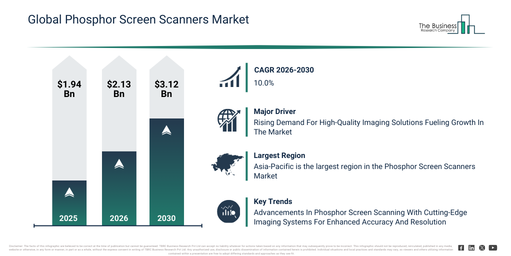
    The phosphor screen scanners market has experienced significant growth in recent years. It is projected to expand from $1.94 billion in 2025 to $2.13 billion in 2026, recording a compound annual growth rate (CAGR) of 10.2%. Historically, this growth can be attributed to several factors including the transition from analog to digital imaging, the expansion of diagnostic imaging applications in healthcare, the increase in industrial testing uses, the heightened adoption of phosphor imaging plates, and the availability of compact scanning technologies.

    The market for phosphor screen scanners is projected to experience robust expansion over the coming years. This market is anticipated to reach $3.12 billion by 2030, demonstrating a compound annual growth rate (CAGR) of 10.0%. The upward trajectory during the forecast period is fueled by several factors, including the surging requirement for sophisticated medical diagnostics, escalating investments in research imaging facilities, the spread of portable imaging alternatives, the increasing integration of automation within laboratories, and continuous improvements in scanner resolution technologies. Key trends anticipated during this period encompass the growing uptake of high-resolution imaging systems, an increased call for portable diagnostic scanners, the wider incorporation of digital image processing software, the broadening scope of medical and industrial imaging uses, and a sharpened emphasis on workflow efficiency.

    Get A Free Sample Report With In-Depth Market Insights:

    https://thebusinessresearchcompany.com/sample_request?id=43388011&type=smp&name=Phosphor%20Screen%20Scanners%20Market%20Report%202026&utm_source=Blogs&utm_medium=Paid&utm_campaign=Nov_PR

    Phosphor Screen Scanners Market Growth Factors: What’s Supporting Expansion?

    The phosphor screen scanners market is set for growth due to the escalating need for high-quality imaging solutions. These advanced technologies and systems are crucial for generating clear, accurate, and detailed images of the human body, serving diagnostic, therapeutic, and monitoring objectives. The rising prevalence of chronic diseases, continuous technological progress, an aging global population, and the expansion of healthcare infrastructure are all contributing to the increased demand for such medical imaging. Phosphor screen scanners facilitate high-quality imaging by capturing detailed, high-resolution images with excellent contrast using a photostimulable phosphor (PSP) screen, which records the image upon exposure to radiation or light.

    Phosphor Screen Scanners Market Segment Performance And Emerging Opportunities

    The phosphor screen scanners market covered in this report is segmented –

    1) By Product Type: Desktop Phosphor Screen Scanners, Portable Phosphor Screen Scanners

    2) By Application: Medical Imaging, Industrial Testing, Research Laboratories, Other Application

    3) By End-User: Hospitals, Diagnostic Centers, Research Institutes, Other End Users

    Subsegments:

    1) By Desktop Phosphor Screen Scanners: Standard Desktop Scanners, High-Resolution Desktop Scanners

    2) By Portable Phosphor Screen Scanners: Battery-Operated Portable Scanners, Compact Portable Scanners

    Phosphor Screen Scanners Market Trends Shaping Long-Term Demand

    Leading companies in the phosphor screen scanners market are prioritizing the creation of advanced technological solutions, such as laser-driven scanning systems, to elevate the precision, pace, and clarity of their scanning offerings. A laser-based scanning system is a technology that uses laser beams to obtain exact measurements, produce detailed images, or scan items and environments.

    Phosphor Screen Scanners Market Key Players: Which Companies Lead Industry Competition?

    Major companies operating in the phosphor screen scanners market are PerkinElmer Inc., Philips Healthcare, GE HealthCare, Konica Minolta, Bio-Rad Laboratories, Agfa-Gevaert Group, Eastman Kodak Company, Carestream Health, Oxford Instruments Plc, Carestream Dental, Air Techniques, AGFA Healthcare, GIDS GmbH, Imago Systems, FUJIFILM Holdings Corporation, Teledyne DALSA, Hamamatsu Photonics K.K., Rayence Co. Ltd., Analogic Corporation, Vieworks Co. Ltd., Canon Medical Systems Corporation, Shimadzu Corporation

    View The Full Phosphor Screen Scanners Market Report:

    https://thebusinessresearchcompany.com/report/phosphor-screen-scanners-global-market-report?utm_source=Blogs&utm_medium=Paid&utm_campaign=Nov_PR

    Phosphor Screen Scanners Market Global Footprint: Which Region Leads The Market?

    Asia-Pacific was the largest region in the phosphor screen scanners market in 2025. The regions covered in the phosphor screen scanners market report are Asia-Pacific, South East Asia, Western Europe, Eastern Europe, North America, South America, Middle East, Africa.

    Reach Out To Our Team:

    The Business Research Company: https://www.thebusinessresearchcompany.com/

    Americas: +1 310-496-7795

    Asia: +44 7882 955267 & +91 8897263534

    Europe: +44 7882 955267

    Email us at: marketing@tbrc.info

    Follow us on:

    LinkedIn: https://in.linkedin.com/company/the-business-research-company

    YouTube: https://www.youtube.com/channel/UC24_fI0rV8cR5DxlCpgmyFQ

    Global Market Model: https://www.thebusinessresearchcompany.com/global-market-model
  • Pheochromocytoma Market Expected To Grow At 4.6% CAGR Through 2030: What Businesses Need To Know

    Pheochromocytoma Market Expected To Grow At 4.6% CAGR Through 2030: What Businesses Need To Know

    Built to provide research that’s more actionable and strategically valuable, The Business Research Company’s 2026 market reports include market attractiveness analysis, total addressable market sizing, company benchmarking matrices, interactive Excel dashboards, broader supply chain intelligence, emerging startup tracking, and in-depth product insights.

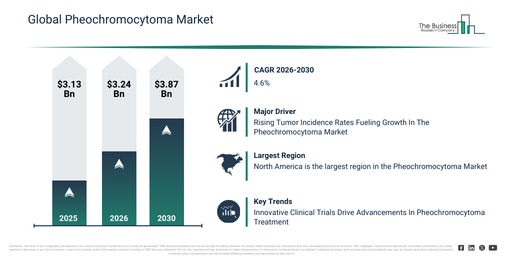
    Pheochromocytoma Market Growth From $3.24 Billion In 2026 To $3.87 Billion By 2030 At A CAGR Of 4.6%

    The pheochromocytoma market size has exhibited consistent growth in recent years. It is projected to expand from $3.13 billion in 2025 to $3.24 billion in 2026, registering a compound annual growth rate (CAGR) of 3.5%. Historically, this growth can be ascribed to advancements in diagnosing adrenal tumors, the provision of surgical treatment alternatives, increasing clinical recognition of endocrine tumors, the proliferation of imaging-based diagnostic instruments, and a rise in documented cases of hypertension-related ailments.

    The pheochromocytoma market size is anticipated to experience consistent expansion over the upcoming years. It is projected to reach $3.87 billion by 2030, exhibiting a compound annual growth rate (CAGR) of 4.6%. This projected growth during the forecast period stems from the increasing integration of precision oncology strategies, augmented investments in rare tumor investigations, the broadening scope of genetic screening initiatives, the heightened application of targeted therapies, and innovations in radionuclide treatment methodologies. Key developments anticipated in this period encompass the greater adoption of sophisticated imaging diagnostics, the rising utilization of genetic testing for tumor identification, a developing preference for minimally invasive surgical interventions, the continued expansion of targeted radionuclide therapies, and an intensified focus on detecting diseases early.

    Get A Free Sample Report With In-Depth Market Insights:

    https://thebusinessresearchcompany.com/sample_request?id=16614116&type=smp&name=Pheochromocytoma%20Market%20Report%202026&utm_source=Blogs&utm_medium=Paid&utm_campaign=Nov_PR

    Pheochromocytoma Market Demand Drivers: What’s Powering Industry Growth?

    The increasing occurrence of tumors is projected to boost the expansion of the pheochromocytoma market in the future. Tumors are defined as unusual cell growths, which can be either benign (non-cancerous) or malignant (cancerous). The rising prevalence of tumors and cancers highlights the necessity for enhanced medical understanding, precise diagnostic methods, and customized treatment plans to effectively manage desmoid pheochromocytoma. Pheochromocytoma, a rare tumor originating in the adrenal glands, contributes to the rising frequency of tumors by increasing the total count of diagnosed endocrine neoplasms, as advancements in detection and greater awareness result in more identified cases.

    Pheochromocytoma Market Segment Landscape And Growth Outlook

    The pheochromocytoma market covered in this report is segmented –

    1) By Type: Adrenal Pheochromocytoma, Extra-Adrenal Pheochromocytoma

    2) By Treatment: Medication, Surgery, Radionuclide Treatment, Other Treatments

    3) By Diagnosis: Laboratory Tests, Imaging Tests, Genetic Testing

    4) By End Users: Hospitals, Clinics, Research And Academic Institutes, Other End Users

    Subsegments:

    1) By Adrenal Pheochromocytoma: Unilateral Adrenal Pheochromocytoma, Bilateral Adrenal Pheochromocytoma

    2) By Extra-Adrenal Pheochromocytoma: Sympathetic Paraganglioma, Parasympathetic Paraganglioma

    Pheochromocytoma Market Innovation Trends Shaping Future Development

    Leading corporations within the pheochromocytoma market are actively conducting clinical trials to examine novel treatment approaches, therapies, and medications for pheochromocytoma, which facilitates the development of more effective and targeted treatments and subsequently improves patient outcomes. For example, in May 2025, Merck & Co., a US-based biopharmaceutical company, obtained Food and Drug Administration (FDA) approval for Welireg (belzutifan), an oral therapy for adults and pediatric patients (= 12 years) diagnosed with locally advanced pheochromocytoma or paraganglioma (PPGL). This treatment operates by selectively inhibiting hypoxia-inducible factor 2 alpha (HIF 2a), a key molecular driver in numerous PPGL tumors, thereby aiding in the reduction of tumor progression. Moreover, Welireg is designed as a convenient oral therapy, offering a targeted, non-surgical option for the long-term management of advanced pheochromocytoma and paraganglioma (PPGL) in eligible patients.

    Pheochromocytoma Market Competitive Landscape: Who Leads The Industry?

    Major companies operating in the pheochromocytoma market are Pfizer Inc., Novartis AG, Sanofi S.A., Bristol-Myers Squibb Company, AstraZeneca Plc, Abbott Laboratories, Takeda Pharmaceutical Company Limited, Merck KGaA, Teva Pharmaceutical Company Limited, Mylan N.V., Bausch Health Companies Inc., Daiichi Sankyo Company Limited, Eisai Co. Ltd., Apotex Inc., Sun Pharmaceutical Industries Ltd., Hikma Pharmaceuticals PLC, Endo International plc, Exelixis Inc., Lupin Limited, Lantheus Holdings Inc., Curium Pharma, ANI Pharmaceuticals Inc., Jubilant Cadista Pharmaceuticals Inc., WellSpring Pharmaceutical Corporation, HRA Pharma SE

    View The Full Pheochromocytoma Market Report:

    https://thebusinessresearchcompany.com/report/pheochromocytoma-global-market-report?utm_source=Blogs&utm_medium=Paid&utm_campaign=Nov_PR

    Pheochromocytoma Market Regional Split: Which Areas Are Fueling Growth?

    North America was the largest region in the pheochromocytoma market in 2025. Asia-Pacific is expected to be the fastest-growing region in the forecast period. The regions covered in the pheochromocytoma market report are Asia-Pacific, South East Asia, Western Europe, Eastern Europe, North America, South America, Middle East, Africa.

    Reach Out To Our Team:

    The Business Research Company: https://www.thebusinessresearchcompany.com/

    Americas: +1 310-496-7795

    Asia: +44 7882 955267 & +91 8897263534

    Europe: +44 7882 955267

    Email us at: marketing@tbrc.info

    Follow us on:

    LinkedIn: https://in.linkedin.com/company/the-business-research-company

    YouTube: https://www.youtube.com/channel/UC24_fI0rV8cR5DxlCpgmyFQ

    Global Market Model: https://www.thebusinessresearchcompany.com/global-market-model
  • Phenylketonuria (PKU) Market Forecast To Reach $1.4 Billion By 2030: Key Trends Explained

    Phenylketonuria (PKU) Market Forecast To Reach $1.4 Billion By 2030: Key Trends Explained

    Backed by market attractiveness analysis, total addressable market sizing, company benchmarking matrices, interactive Excel dashboards, wider supply chain intelligence, emerging startup coverage, and detailed product-level insights, The Business Research Company’s 2026 market reports are designed to offer research that is more actionable and strategically valuable than ever.

    Phenylketonuria (PKU) Market Expansion Outlook: What Revenue Opportunities Are Ahead?

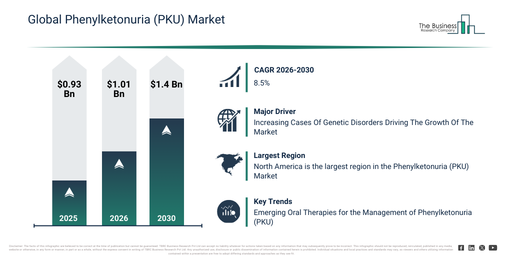
    The phenylketonuria (pku) market has experienced robust expansion over the past few years. Projections indicate a rise from $0.93 billion in 2025 to $1.01 billion by 2026, demonstrating a compound annual growth rate (CAGR) of 8.8%. This historical expansion is linked to factors such as enhanced awareness of uncommon metabolic conditions, the broadening of newborn screening programs, the introduction of diet-focused treatment choices, a rise in PKU diagnosis rates, and initial clinical investigations into enzyme therapies.

    The market for phenylketonuria (pku) is projected to experience robust expansion over the coming years. By 2030, its valuation is anticipated to reach $1.4 billion, demonstrating a compound annual growth rate (CAGR) of 8.5%. This projected growth is driven by factors such as an expanding pipeline of gene therapies, the increasing embrace of precision medicine strategies, heightened investments in rare disease research, the wider availability of home-based management options, and a rising need for long-term disease control treatments. Key trends foreseen during this period involve a greater uptake of enzyme replacement therapies, an intensified focus on developing gene therapies, a surging requirement for customized dietary management solutions, the broadening of newborn screening initiatives, and improved incorporation of digital tools for patient monitoring.

    Get A Free Sample Report With In-Depth Market Insights:

    https://thebusinessresearchcompany.com/sample_request?id=28419916&type=smp&name=Phenylketonuria%20%28PKU%29%20Market%20Report%202026&utm_source=Blogs&utm_medium=Paid&utm_campaign=Nov_PR

    Phenylketonuria (PKU) Market Growth Drivers: What’s Behind The Acceleration?

    The phenylketonuria (PKU) market is anticipated to expand due to the rising incidence of genetic disorders. These disorders are defined as health conditions resulting from anomalies in an individual’s DNA, including genetic mutations, deletions, or duplications of genes or chromosomes. The increase in genetic disorder cases stems from various factors like escalating maternal age, environmental impacts, developments in diagnostic methods, and greater public awareness, which collectively enhance detection rates. Phenylketonuria itself offers insight into genetic disorders by illustrating how inherited enzyme deficits can result in severe metabolic issues.

    Phenylketonuria (PKU) Market Breakdown By Product Type And Application

    The phenylketonuria (pku) market covered in this report is segmented –

    1) By Type: Hyperphenylalaninemia, Mild Phenylketonuria (PKU), Moderate And Variant, Classic Phenylketonuria (PKU)

    2) By Treatment Type: Enzyme Replacement Therapy, Gene Therapy, Medication, Dietary Therapy

    3) By Diagnosis: Genetic Testing, Biochemical Testing, Newborn Screening

    4) By End-User: Specialty Clinics, Research Institutes, Home Healthcare, Hospitals

    Subsegments:

    1) By Hyperphenylalaninemia: Mild Hyperphenylalaninemia, Moderate Hyperphenylalaninemia, Severe Hyperphenylalaninemia

    2) By Mild Phenylketonuria (PKU): Mild PKU with dietary management, Mild PKU with enzyme supplementation

    3) By Moderate And Variant: Moderate PKU with medication, Variant PKU with treatment variations

    4) By Classic Phenylketonuria (PKU): Classic PKU with strict dietary management, Classic PKU with enzyme replacement therapy

    Phenylketonuria (PKU) Market Trends Redefining Industry Growth

    Leading companies in the phenylketonuria (PKU) market are concentrating on developing novel products, such as oral therapy, which aims to reduce blood phenylalanine (Phe) levels, thereby preventing the toxic buildup responsible for complications in phenylketonuria (PKU). Oral therapy is a medical treatment administered by mouth, with medicine swallowed and absorbed through the digestive system. For instance, in July 2025, PTC Therapeutics, a US-based biopharmaceutical company, received Food and Drug Administration (FDA) approval for Sephience (sepiapterin), an oral therapy for children and adults with sepiapterin-responsive PKU/hyperphenylalaninemia. This treatment improves phenylalanine metabolism by boosting the activity of the deficient PAH enzyme through increased tetrahydrobiopterin (BH4) levels, which helps to decrease blood phenylalanine concentrations. Additionally, Sephience is designed for use alongside a phenylalanine-restricted diet, offering a convenient and targeted option for the long-term management of PKU in individuals who respond to it.

    Phenylketonuria (PKU) Market Company Landscape And Competitive Strategy

    Major companies operating in the phenylketonuria (pku) market are Abbott Laboratories, Merck KGaA, Agios Pharmaceuticals Inc., BioMarin Pharmaceutical Inc., PTC Therapeutics Inc., Ultragenyx Pharmaceutical Inc., Nutricia International Private Limited, Codexis Inc., Eton Pharmaceuticals Inc., Vitaflo International Ltd., American Gene Technologies International Inc., Cambrooke Therapeutics Inc., Generation Bio Co., Mead Johnson & Company LLC, Synlogic Inc., Homology Medicines Inc., Aeglea BioTherapeutics Inc., MetaX Biosciences Ltd., SOM Biotech SL, Applied Molecular Transport Inc., Codexis Genomics, Bluebird Bio Inc., Alnylam Pharmaceuticals Inc.

    View The Full Phenylketonuria (PKU) Market Report:

    https://thebusinessresearchcompany.com/report/phenylketonuria-pku-global-market-report?utm_source=Blogs&utm_medium=Paid&utm_campaign=Nov_PR

    Phenylketonuria (PKU) Market Top Region: Where Does Most Revenue Come From?

    North America was the largest region in the phenylketonuria (PKU) market in 2025. Europe is expected to be the fastest-growing region in the forecast period. The regions covered in the phenylketonuria (pku) market report are Asia-Pacific, South East Asia, Western Europe, Eastern Europe, North America, South America, Middle East, Africa.

    Reach Out To Our Team:

    The Business Research Company: https://www.thebusinessresearchcompany.com/

    Americas: +1 310-496-7795

    Asia: +44 7882 955267 & +91 8897263534

    Europe: +44 7882 955267

    Email us at: marketing@tbrc.info

    Follow us on:

    LinkedIn: https://in.linkedin.com/company/the-business-research-company

    YouTube: https://www.youtube.com/channel/UC24_fI0rV8cR5DxlCpgmyFQ

    Global Market Model: https://www.thebusinessresearchcompany.com/global-market-model
  • Pharyngitis Treatment Market Size Forecast From 2026 To 2030: Key Industry Trends

    Pharyngitis Treatment Market Size Forecast From 2026 To 2030: Key Industry Trends

    Featuring market attractiveness scoring, total addressable market sizing, company benchmarking matrices, interactive Excel dashboards, deeper supply chain intelligence, emerging startup tracking, and granular product-level insights, The Business Research Company’s 2026 market reports are built to deliver research that is both more actionable and more strategically valuable.

    Pharyngitis Treatment Market Growth Potential: How Will Market Size Shift Through 2030?

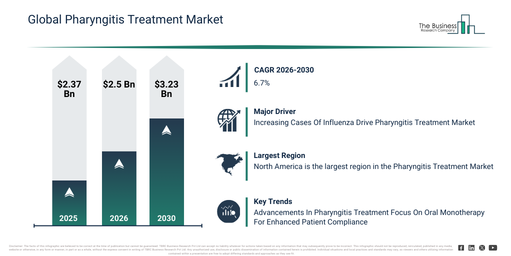
    The pharyngitis treatment market has experienced significant expansion recently. It is projected to expand from $2.37 billion in 2025 to $2.5 billion in 2026, exhibiting a compound annual growth rate (CAGR) of 5.6%. Historically, this growth has been driven by factors such as the increasing prevalence of upper respiratory infections, the extensive application of antibiotics in primary care, the readily available nature of broad-spectrum antibiotics, the broadening of hospital treatment protocols, and the expansion of outpatient treatment environments.

    The pharyngitis treatment market is projected to experience substantial expansion in the coming years. This market is forecast to reach a value of $3.23 billion by 2030, exhibiting a compound annual growth rate (CAGR) of 6.7%. Key drivers for this anticipated growth include a heightened emphasis on precise infection management, an escalating need for therapies mindful of resistance, the broadening of digital diagnostic platforms, increased funding for new antibiotic discovery, and the expanding implementation of home-based care strategies. Significant developments anticipated during this period encompass the increased creation of targeted antibiotic treatments, a rise in the uptake of rapid diagnostic aids, wider utilization of combination drug protocols, the proliferation of treatment models integrated with telemedicine, and a strengthened commitment to antimicrobial stewardship.

    Get A Free Sample Report With In-Depth Market Insights:

    https://thebusinessresearchcompany.com/sample_request?id=34001808&type=smp&name=Pharyngitis%20Treatment%20Market%20Report%202026&utm_source=Blogs&utm_medium=Paid&utm_campaign=Nov_PR

    Pharyngitis Treatment Market Growth Factors Behind Sustained Expansion

    The increasing occurrence of influenza is projected to stimulate the expansion of the pharyngitis treatment market moving forward. Influenza, widely recognized as the flu, is an infectious respiratory illness caused by influenza viruses. Pharyngitis treatment is primarily employed to manage influenza and proves beneficial for the flu by easing symptoms such as inflammation or irritation. This treatment also focuses on relieving allergies and preventing serious complications like pneumonia and bronchitis.

    Pharyngitis Treatment Market Segment Analysis And Revenue Potential

    The pharyngitis treatment market covered in this report is segmented –

    1) By Drug Class: Beta Lactams, Macrolides, Cephalosporins, Fluoroquinolones, Tetracycline, Other Drug Classes

    2) By Source Of Infection: Viral, Bacterial

    3) By Modes Of Delivery: Oral, Intravenous, Intramuscular, Other Modes Of Delivery

    4) By End-Users: Hospitals, Homecare, Specialty Centers, Other End-Users

    Subsegments:

    1) By Beta Lactams: Penicillins, Amoxicillin, Ampicillin

    2) By Macrolides: Erythromycin, Azithromycin, Clarithromycin

    3) By Cephalosporins: Cefuroxime, Ceftriaxone, Cefdinir

    4) By Fluoroquinolones: Ciprofloxacin, Levofloxacin, Moxifloxacin

    5) By Tetracycline: Doxycycline, Minocycline, Tetracycline

    6) By Other Drug Classes: Clindamycin, Sulfonamides, Carbapenems

    Pharyngitis Treatment Market Strategic Trends: What Defines The Next Growth Phase?

    Leading companies in the pharyngitis treatment market are concentrating on developing innovative products, such as oral monotherapy, to improve patient adherence and offer effective, convenient treatment solutions. Oral monotherapy refers to the use of a single medication administered orally to treat a specific condition or disease, involving just one therapeutic agent instead of a combination of multiple treatments to achieve the desired effect.

    Pharyngitis Treatment Market Key Players Shaping Industry Direction

    Major companies operating in the pharyngitis treatment market are Pfizer Inc., GlaxoSmithKline PLC, Pliva Hrvatska D.o.o., Viatris Inc., Teva Pharmaceutical Industries Ltd., Takeda Pharmaceutical Company Limited, Eli Lilly and Company, Boehringer Ingelheim International GmbH, Fresenius Kabi AG, Bausch Health Companies Inc., Sun Pharmaceutical Industries Ltd., Dr. Reddy’s Laboratories Ltd., Cipla Limited, Hikma Pharmaceuticals plc, Lupin Limited, Aurobindo Pharma Limited, Sandoz Group AG, Alkem Laboratories Ltd., Zydus Lifesciences Ltd., Torrent Pharmaceuticals Ltd., Alembic Pharmaceuticals Ltd., Intas Pharmaceuticals Ltd., Macleods Pharmaceuticals Ltd.

    View The Full Pharyngitis Treatment Market Report:

    https://thebusinessresearchcompany.com/report/pharyngitis-treatment-global-market-report?utm_source=Blogs&utm_medium=Paid&utm_campaign=Nov_PR

    Pharyngitis Treatment Market Regional Breakdown: Where Is Demand Concentrated?

    North America was the largest region in the pharyngitis treatment market in 2025. Asia-Pacific is expected to be the fastest-growing region in the forecast period. The regions covered in the pharyngitis treatment market report are Asia-Pacific, South East Asia, Western Europe, Eastern Europe, North America, South America, Middle East, Africa.

    Reach Out To Our Team:

    The Business Research Company: https://www.thebusinessresearchcompany.com/

    Americas: +1 310-496-7795

    Asia: +44 7882 955267 & +91 8897263534

    Europe: +44 7882 955267

    Email us at: marketing@tbrc.info

    Follow us on:

    LinkedIn: https://in.linkedin.com/company/the-business-research-company

    YouTube: https://www.youtube.com/channel/UC24_fI0rV8cR5DxlCpgmyFQ

    Global Market Model: https://www.thebusinessresearchcompany.com/global-market-model
  • Pharmacy Prescription Retrieval Robot Market 2026: Market Size, Growth Drivers And Emerging Opportunities

    Pharmacy Prescription Retrieval Robot Market 2026: Market Size, Growth Drivers And Emerging Opportunities

    Built to provide research that’s more actionable and strategically valuable, The Business Research Company’s 2026 market reports include market attractiveness analysis, total addressable market sizing, company benchmarking matrices, interactive Excel dashboards, broader supply chain intelligence, emerging startup tracking, and in-depth product insights.

    Pharmacy Prescription Retrieval Robot Market Value Analysis: What Growth Lies Ahead Over The Forecast Period?

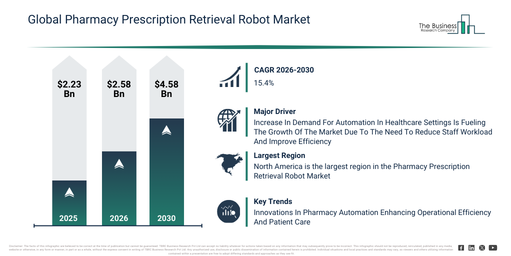
    The pharmacy prescription retrieval robot market has experienced rapid growth in recent years. It is anticipated to expand from $2.23 billion in 2025 to $2.58 billion in 2026, achieving a compound annual growth rate (CAGR) of 15.7%. The historical progression of this market can be ascribed to increasing prescription volumes in hospitals, a rising focus on medication error reduction, the expansion of centralized pharmacy models, growth in outpatient pharmacy services, and increasing adoption of automation in healthcare.

    The pharmacy prescription retrieval robot market size is poised for substantial expansion in the coming years. It is projected to climb to $4.58 billion by 2030, achieving a compound annual growth rate (CAGR) of 15.4%. This growth throughout the forecast period stems from factors such as increasing demand for fully automated pharmacies, rising integration with hospital information systems, the expansion of robotic solutions within retail pharmacies, a growing focus on operational efficiency, and increasing investments in smart healthcare infrastructure. Significant trends expected during this period include the rising deployment of automated pharmacy dispensing systems, increasing adoption of robotic inventory management, growing integration of AI-based error reduction systems, the expansion of high-density medication storage solutions, and an enhanced focus on prescription accuracy.

    Get A Free Sample Report With In-Depth Market Insights:

    https://thebusinessresearchcompany.com/sample_request?id=85860282&type=smp&name=Pharmacy%20Prescription%20Retrieval%20Robot%20Market%20Report%202026&utm_source=Blogs&utm_medium=Paid&utm_campaign=Nov_PR

    Pharmacy Prescription Retrieval Robot Market Demand Drivers Opening New Revenue Streams

    The market for pharmacy prescription retrieval robots is anticipated to expand due to the escalating demand for automation within healthcare environments. Automation in healthcare involves utilizing technologies such as robotics, artificial intelligence (AI), and digital systems to streamline various clinical, administrative, and operational processes, thereby enhancing efficiency, reducing errors, and improving patient care. This heightened need for automation stems from the desire to lessen the workload on staff, as automated systems manage repetitive tasks, allowing healthcare professionals to dedicate more time to direct patient care. Pharmacy prescription retrieval robots specifically fuel this automation demand by simplifying prescription dispensing and decreasing the burden on pharmacists.

    Pharmacy Prescription Retrieval Robot Market Segmentation And Category Overview

    The pharmacy prescription retrieval robot market covered in this report is segmented –

    1) By Product Type: Automated Dispensing Robots, Prescription Retrieval Robots, Medication Storage Robots

    2) By Application: Hospital Pharmacies, Retail Pharmacies, Clinic Pharmacies, Other Applications

    3) By End-User: Hospitals, Retail Pharmacies, Clinics, Other End-Users

    Subsegments:

    1) By Automated Dispensing Robots: Cabinet-Based Robots, Carousel-Based Robots, Robotic Arm Systems, Conveyor-Based Systems

    2) By Prescription Retrieval Robots: Mobile Retrieval Robots, Stationary Retrieval Robots, Hybrid Retrieval Systems

    3) By Medication Storage Robots: Vertical Storage Units, Horizontal Storage Units, Modular Storage Systems

    Pharmacy Prescription Retrieval Robot Market Transformation Trends: What Innovations Are Driving Change?

    Leading companies in the pharmacy prescription retrieval robot market are concentrating on creating sophisticated technologies, such as micro-fulfillment technology, to streamline prescription dispensing, lessen pharmacy workload, boost efficiency, and improve patient support. Micro-fulfillment technology describes an automated system utilizing robotics, conveyors, and digital instruments to process, store, and dispense large volumes of prescriptions or items from central facilities, leading to quicker order completion, reduced inventory waste, and enhanced operational effectiveness. For example, in May 2025, Walgreens Boots Alliance, a US-based retail pharmacy chain, introduced an advanced robotic prescription retrieval system. This innovation improves pharmacy operations by automating the processing of maintenance prescriptions for chronic conditions, decreasing routine duties for staff, reducing fulfillment costs by nearly 13%, minimizing surplus inventory, and enabling pharmacists to allocate more time to clinical offerings such as vaccinations and health screenings, which signifies a considerable advancement in both efficiency and patient care.

    Pharmacy Prescription Retrieval Robot Market Competitive Analysis Of Leading Industry Participants

    Major companies operating in the pharmacy prescription retrieval robot market are McKesson Corporation, Becton Dickinson and Company, Omnicell Inc., Meditech Pharmacy Automation Inc., ScriptPro LLC, ARxIUM Inc., Knapp AG, MedAvail Technologies Inc., Tosho Inc., Yuyama Co. Ltd., NewIcon Inc., Willach Pharmacy Solutions GmbH, Shenzhen RSS Technology Co. Ltd., Pearson Medical Technologies Inc., Swisslog Healthcare, Capsa Healthcare, RxSafe LLC, TouchPoint Medical, Becton Dickinson – Pyxis Solutions, Kirby Lester LLC

    View The Full Pharmacy Prescription Retrieval Robot Market Report:

    https://thebusinessresearchcompany.com/report/pharmacy-prescription-retrieval-robot-global-market-report?utm_source=Blogs&utm_medium=Paid&utm_campaign=Nov_PR

    Pharmacy Prescription Retrieval Robot Market Geographic Landscape: Which Region Leads Industry Growth?

    North America was the largest region in the pharmacy prescription retrieval robot market in 2025. Asia-Pacific is expected to be the fastest-growing region in the forecast period. The regions covered in the pharmacy prescription retrieval robot market report are Asia-Pacific, South East Asia, Western Europe, Eastern Europe, North America, South America, Middle East, Africa.

    Reach Out To Our Team:

    The Business Research Company: https://www.thebusinessresearchcompany.com/

    Americas: +1 310-496-7795

    Asia: +44 7882 955267 & +91 8897263534

    Europe: +44 7882 955267

    Email us at: marketing@tbrc.info

    Follow us on:

    LinkedIn: https://in.linkedin.com/company/the-business-research-company

    YouTube: https://www.youtube.com/channel/UC24_fI0rV8cR5DxlCpgmyFQ

    Global Market Model: https://www.thebusinessresearchcompany.com/global-market-model
  • Pharmacy Management System Market Set To Expand From $200.09 Billion In 2026: Growth Outlook Through 2030

    Pharmacy Management System Market Set To Expand From $200.09 Billion In 2026: Growth Outlook Through 2030

    Backed by market attractiveness analysis, total addressable market sizing, company benchmarking matrices, interactive Excel dashboards, wider supply chain intelligence, emerging startup coverage, and detailed product-level insights, The Business Research Company’s 2026 market reports are designed to offer research that is more actionable and strategically valuable than ever.

    Pharmacy Management System Market Size Forecast: How Big Could The Market Get By 2030?

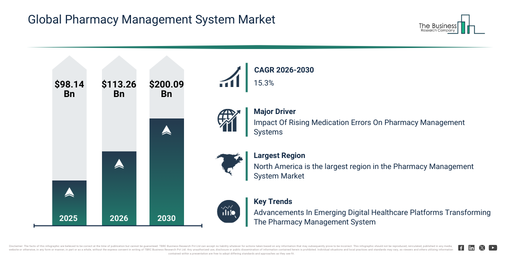
    The pharmacy management system market size has demonstrated rapid growth in recent years. It is anticipated to expand from $98.14 billion in 2025 to $113.26 billion in 2026, reflecting a compound annual growth rate (CAGR) of 15.4%. The growth observed in the historic period stems from increasing digitization of pharmacy operations, rising prescription transaction volumes, the growing need for centralized patient records, the expansion of retail pharmacy chains, and the adoption of basic pharmacy software solutions.

    The pharmacy management system market is anticipated to experience significant growth in the coming years, with its size projected to reach $200.09 billion by 2030, exhibiting a compound annual growth rate (CAGR) of 15.3%. This expansion during the forecast period is attributed to factors like the increasing migration to cloud-native PMS solutions, a rising adoption of AI-enabled decision support, the expansion of omnichannel pharmacy operations, a growing demand for interoperability with healthcare systems, and an increasing focus on data-driven pharmacy management. Major trends expected in this period include the escalating adoption of cloud-based pharmacy platforms, rising integration of inventory and billing systems, a growing use of real-time prescription processing, the expansion of data analytics and reporting capabilities, and an enhanced focus on regulatory compliance automation.

    Get A Free Sample Report With In-Depth Market Insights:

    https://thebusinessresearchcompany.com/sample_request?id=95618608&type=smp&name=Pharmacy%20Management%20System%20Market%20Report%202026&utm_source=Blogs&utm_medium=Paid&utm_campaign=Nov_PR

    Pharmacy Management System Market Growth Backed By Core Demand Fundamentals

    The escalating financial burden of medication errors is projected to stimulate the expansion of the pharmacy management system market moving forward. Medication errors are defined as mistakes occurring during the prescribing, dispensing, and administration of medications, leading to potential or actual harm to patients. The occurrence of medication errors originates from the complexity of medication regimens, inadequate communication among healthcare providers, and technological limitations within medication administration systems. A pharmacy management system aids in mitigating medication errors by automating prescription processing, ensuring accurate patient data management, offering drug interaction checks, facilitating real-time access to patient medication histories, and enhancing the precision and safety of medication dispensing.

    Pharmacy Management System Market Segment Outlook: Which Categories Are Growing Fastest?

    The pharmacy management system market covered in this report is segmented –

    1) By Component: Software, Hardware, Services

    2) By Deployment: Web Based, On Premise

    3) By End User: Inpatient Pharmacies, Outpatient Pharmacies

    Subsegments:

    1) By Software: Prescription Management Software, Inventory Management Software, Medication Therapy Management (MTM) Software, Point-Of-Sale (POS) Systems, Drug Interaction Or Drug Database Software, Pharmacy Workflow Management Software, Reporting And Analytics Software

    2) By Hardware: Automated Dispensing Machines (ADM), Barcode Scanners And Printers, Pharmacy Kiosks, Labeling And Packaging Equipment, Tablet And Capsule Counter Machines, Temperature Monitoring Devices

    3) By Services: Installation And Integration Services, Training And Support Services, Consulting Services, Maintenance Services, Cloud Hosting And Data Management Services

    #Pharmacy Management System Market Growth Trends: What’s Shaping The Future Outlook?

    Major companies operating in the pharmacy management system market are developing advanced solutions, such as digital healthcare platforms, enabling patients to access a comprehensive online ecosystem of health services.

    Pharmacy Management System Market Leading Companies And Competitive Benchmarking

    Major companies operating in the pharmacy management system market are McKesson Corporation, Cardinal Health Inc., Becton Dickinson and Company, Epic Systems Corporation, Omnicell Inc., Epicor Software Corporation, Agfa-Gevaert NV, NextGen Healthcare Information Systems LLC, Veradigm LLC, Computer Programs and Systems Inc., Clanwilliam Health Limited, ScriptPro LLC, Swisslog Healthcare AG, LS Retail ehf., ARxIUM Inc., PioneerRx LLC, Octal IT Solution LLC, Liberty Software Inc., Datascan Pharmacy Inc., Supplylogix LLC, Cerner Corporation, Meditech Inc., QS1 Data Systems, RedSail Technologies, McKesson Pharmacy Systems

    View The Full Pharmacy Management System Market Report:

    https://thebusinessresearchcompany.com/report/pharmacy-management-system-global-market-report?utm_source=Blogs&utm_medium=Paid&utm_campaign=Nov_PR

    Pharmacy Management System Market Largest Region: Which Geography Holds The Biggest Share?

    North America was the largest region in the pharmacy management system market in 2025. Asia-Pacific is expected to be the fastest-growing region in the forecast period. The regions covered in the pharmacy management system market report are Asia-Pacific, South East Asia, Western Europe, Eastern Europe, North America, South America, Middle East, Africa.

    Reach Out To Our Team:

    The Business Research Company: https://www.thebusinessresearchcompany.com/

    Americas: +1 310-496-7795

    Asia: +44 7882 955267 & +91 8897263534

    Europe: +44 7882 955267

    Email us at: marketing@tbrc.info

    Follow us on:

    LinkedIn: https://in.linkedin.com/company/the-business-research-company

    YouTube: https://www.youtube.com/channel/UC24_fI0rV8cR5DxlCpgmyFQ

    Global Market Model: https://www.thebusinessresearchcompany.com/global-market-model
  • Pharmacy Benefit Management Market Size And Growth In 2026: Key Factors Shaping Future Demand

    Pharmacy Benefit Management Market Size And Growth In 2026: Key Factors Shaping Future Demand

    Featuring market attractiveness scoring, total addressable market sizing, company benchmarking matrices, interactive Excel dashboards, deeper supply chain intelligence, emerging startup tracking, and granular product-level insights, The Business Research Company’s 2026 market reports are built to deliver research that is both more actionable and more strategically valuable.

    Pharmacy Benefit Management Market Revenue Outlook: What CAGR Lies Ahead Through 2030?

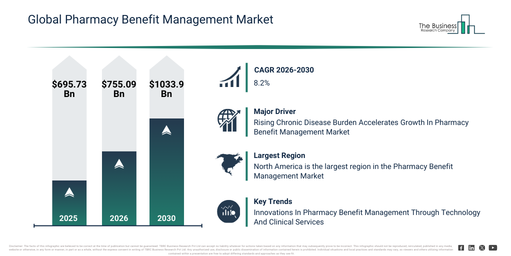
    The pharmacy benefit management market has experienced significant growth in recent years. This market is set to expand from $695.73 billion in 2025 to $755.09 billion in 2026, achieving a compound annual growth rate (CAGR) of 8.5%. The historical increase in the market size can be linked to factors such as rising healthcare expenditure levels, the expansion of insured populations, the increasing complexity of drug pricing, the early adoption of managed pharmacy networks, and the growth of mail-order pharmacy services.

    The pharmacy benefit management market is projected to experience substantial expansion in the coming years. By 2030, its value is forecast to reach $1033.9 billion, achieving an 8.2% compound annual growth rate (CAGR). This anticipated growth during the forecast period can be ascribed to several factors, including the escalating adoption of AI-powered cost optimization tools, a heightened emphasis on value-based care frameworks, the broadening scope of specialty drug management, increased regulatory oversight concerning drug pricing, and the progressive digitalization of pharmacy benefit platforms. Key trends anticipated during this period encompass the greater embrace of data-driven formulary management, an uptick in the application of predictive cost analytics, the deepening integration of digital claims processing systems, the enlargement of specialty pharmacy management offerings, and an intensified commitment to cost containment initiatives.

    Get A Free Sample Report With In-Depth Market Insights:

    https://thebusinessresearchcompany.com/sample_request?id=91561192&type=smp&name=Pharmacy%20Benefit%20Management%20Market%20Report%202026&utm_source=Blogs&utm_medium=Paid&utm_campaign=Nov_PR

    Pharmacy Benefit Management Market Growth Catalysts And Demand Drivers

    The pharmacy benefit management market is projected to expand due to the growing prevalence of chronic diseases. These are long-term health conditions that typically last for three months or more. Pharmacy benefit management plays a crucial role in addressing chronic diseases by optimizing access to medications, encouraging patient adherence, and employing cost-effective approaches to improve health outcomes and quality of life for those with long-term medical conditions.

    Pharmacy Benefit Management Market Segment Landscape: Which Areas Lead Development?

    The pharmacy benefit management market covered in this report is segmented –

    1) By Services: Mail-Delivery, Specialty Pharmacy, Preferred Network Pharmacy

    2) By Type: Commercial Health Plans, Self-Insured Employer Plans, Medicare Part D Plans, Federal Employees Health Benefits Program

    3) By End User: Pharmacy Benefit Management Organization, Mail Order Pharmacies, Retail Pharmacies, Inpatient Pharmacies, Outpatient Pharmacies

    Subsegments:

    1) By Mail-Delivery: Maintenance Medications, Acute Care Medications, Patient Education And Support Services

    2) By Specialty Pharmacy: High-Cost Medications, Biologics And Biosimilars, Disease Management Services

    3) By Preferred Network Pharmacy: Retail Pharmacy Networks, Contracted Pharmacy Networks, Urgent Care Pharmacy Services

    Pharmacy Benefit Management Market Industry Trends: What’s Reshaping Demand?

    Prominent organizations within the pharmacy benefit management market are prioritizing the creation of innovative solutions, such as medication therapy management. This particular solution enables a thorough assessment and refinement of a patient’s medication regimen, along with resolving drug-related issues through sophisticated technology. Medication therapy management itself is a clinical service delivered by pharmacists, with the goal of optimizing how a patient uses their medication and enhancing health outcomes. For example, in May 2025, America’s TPA LLC, an independent US-based health innovator specializing in pharmacy management solutions, introduced EZrx. This next-generation pharmacy solution incorporates six cost-reduction strategies, which encompass therapeutic substitution and prior authorization. Moreover, it supplies advanced analytics and member engagement tools to further streamline pharmacy benefit management and improve clinical results.

    Pharmacy Benefit Management Market Industry Leaders And Competitive Landscape

    Major companies operating in the pharmacy benefit management market are CVS Health Corporation, Cigna Corporation, Centene Corporation, Anthem Inc., OptumRx Inc., Humana Pharmacy Solutions Inc., Magellan Health Inc., Prime Therapeutics LLC, MaxorPlus Ltd., RxAdvance Corp, MedImpact Healthcare Systems Inc., PerformRx LLC., Navitus Health Solutions LLC, WellDyneRx Inc., Healthesystems LLC., Catalyst Rx Inc., Argus Health Systems Inc., Innoviant Pharmacy Inc., Pharmaceutical Strategies Group, ProCare Rx Inc., FutureScripts LLC., National CooperativeRx, ScriptCare Ltd., US Script Inc., LDI Integrated Pharmacy Services LLC, RxPreferred Benefits, SinfoníaRx Inc.

    View The Full Pharmacy Benefit Management Market Report:

    https://thebusinessresearchcompany.com/report/pharmacy-benefit-management-global-market-report?utm_source=Blogs&utm_medium=Paid&utm_campaign=Nov_PR

    Pharmacy Benefit Management Market Regional Analysis: Which Geography Leads On Revenue?

    North America was the largest region in the pharmacy benefit management market in 2025. Asia-Pacific is expected to be the fastest-growing region in the forecast period. The regions covered in the pharmacy benefit management market report are Asia-Pacific, South East Asia, Western Europe, Eastern Europe, North America, South America, Middle East, Africa.

    Reach Out To Our Team:

    The Business Research Company: https://www.thebusinessresearchcompany.com/

    Americas: +1 310-496-7795

    Asia: +44 7882 955267 & +91 8897263534

    Europe: +44 7882 955267

    Email us at: marketing@tbrc.info

    Follow us on:

    LinkedIn: https://in.linkedin.com/company/the-business-research-company

    YouTube: https://www.youtube.com/channel/UC24_fI0rV8cR5DxlCpgmyFQ

    Global Market Model: https://www.thebusinessresearchcompany.com/global-market-model
  • Pharmacy Automation Systems Market Forecast 2026–2030: Market Size, Trends And Growth Opportunities

    Pharmacy Automation Systems Market Forecast 2026–2030: Market Size, Trends And Growth Opportunities

    Built to provide research that’s more actionable and strategically valuable, The Business Research Company’s 2026 market reports include market attractiveness analysis, total addressable market sizing, company benchmarking matrices, interactive Excel dashboards, broader supply chain intelligence, emerging startup tracking, and in-depth product insights.

    Pharmacy Automation Systems Market Growth Analysis: How Will Revenue Trend Over The Forecast Period?

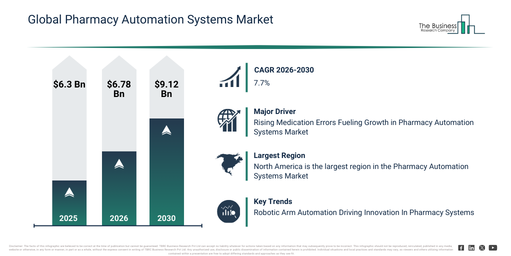
    The pharmacy automation systems market size has shown strong growth in recent years. It is forecast to increase from $6.3 billion in 2025 to $6.78 billion in 2026, reflecting a compound annual growth rate (CAGR) of 7.7%. The expansion observed in the historic period can be linked to increasing hospital digitization initiatives, rising complexity of medication management, growing adoption of centralized pharmacy models, demand for reduced dispensing errors, and the expansion of automated storage systems.

    The pharmacy automation systems market is projected to experience robust expansion over the coming years, with its size expected to reach $9.12 billion by 2030, driven by a compound annual growth rate (CAGR) of 7.7%. This anticipated growth during the forecast period is fueled by heightened investments in completely autonomous pharmacy systems, the growing embrace of intelligent compounding solutions, the broadening scope of mail-order pharmacy automation, the increasing incorporation of AI-powered dispensing analytics, and a greater emphasis on adaptable pharmacy infrastructure. Key trends expected within this period involve a surge in the adoption of entirely automated medication dispensing systems, an increase in the utilization of robotic compounding technologies, the expanded implementation of tabletop counting systems, the wider availability of integrated packaging and labeling solutions, and a heightened commitment to comprehensive pharmacy automation from start to finish.

    Get A Free Sample Report With In-Depth Market Insights:

    https://thebusinessresearchcompany.com/sample_request?id=83652329&type=smp&name=Pharmacy%20Automation%20Systems%20Market%20Report%202026&utm_source=Blogs&utm_medium=Paid&utm_campaign=Nov_PR

    Pharmacy Automation Systems Market Opportunity Drivers: What’s Unlocking New Revenue Potential?

    The rising prevalence of medication errors is projected to drive the expansion of the pharmacy automation systems market in the future. Medication errors are defined as preventable mishaps or mistakes associated with drug usage, potentially occurring at any stage of healthcare, including prescribing, dispensing, administering, and monitoring. Automated pharmacy systems ensure precise and complete documentation of dispensed medications and patient medical histories. This facilitates easy information access for healthcare professionals, thereby mitigating the risk of errors stemming from inadequate or absent data.

    Pharmacy Automation Systems Market Segments: Where Is Growth Concentrated?

    The pharmacy automation systems market covered in this report is segmented –

    1) By Product Type: Automated Medication Dispensing Systems, Automated Medication Compounding Systems, Automated Packaging And Labelling Systems, Automated Table Top Counters, Automated Storage And Retrieval Systems

    2) By Mode Of Automation: Semi-Automatic Systems, Fully-Automatic Systems

    3) By End User: Inpatient Pharmacies, Outpatient Pharmacies, Retail Pharmacies, Pharmacy Benefit Management Organizations And Mail-Order Pharmacies

    Subsegments:

    1) By Automated Medication Dispensing Systems: Centralized Dispensing Systems, Decentralized Dispensing Systems

    2) By Automated Medication Compounding Systems: IV Compounding Systems, Oral Compounding Systems

    3) By Automated Packaging And Labelling Systems: Blister Packaging Systems, Bottle Filling And Labelling Systems

    4) By Automated Tabletop Counters: Tablet Counters, Capsule Counters

    5) By Automated Storage And Retrieval Systems: Robotic Storage Systems, Carousel Systems

    Pharmacy Automation Systems Market Innovation Trends: What Developments Are Reshaping The Industry?

    Leading companies in the pharmacy automation systems market are concentrating on developing advanced products, including robotic arm automation, which facilitates precise medication selection and dispensing, thereby reducing human error and enhancing operational efficiency within pharmacies. Robotic arm automation involves the utilization of a robotic arm designed to manipulate objects for automated task execution, equipped with sensors to manage items with accuracy and speed across healthcare industries.

    Pharmacy Automation Systems Market Key Participants And Competitive Landscape

    Major companies operating in the pharmacy automation systems market are AmerisourceBergen Corporation, Cardinal Health, Danaher Corporation, Becton Dickinson and Company, Cerner Corporation, Epic Systems Corporation, KUKA AG Swisslog Healthcare, Automated Healthcare Systems Incorporated, Omnicell Inc., Swisslog Holdings AG, Parata Systems LLC, ScriptPro LLC, Capsa Healthcare, ARxIUM Inc., Talyst LLC, Kirby Lester LLC, Yuyama Co. Ltd., RxSafe LLC, Pharmatech Corporation, Pearson Medical Technologies, Hy-Tek Medical Limited, Deenova S.R.L, Willach Group, TouchPoint Medical

    View The Full Pharmacy Automation Systems Market Report:

    https://thebusinessresearchcompany.com/report/pharmacy-automation-systems-global-market-report?utm_source=Blogs&utm_medium=Paid&utm_campaign=Nov_PR

    Pharmacy Automation Systems Market Geographic Spread And Regional Opportunities

    North America was the largest region in the pharmacy automation systems market in 2025. The regions covered in the pharmacy automation systems market report are Asia-Pacific, South East Asia, Western Europe, Eastern Europe, North America, South America, Middle East, Africa.

    Reach Out To Our Team:

    The Business Research Company: https://www.thebusinessresearchcompany.com/

    Americas: +1 310-496-7795

    Asia: +44 7882 955267 & +91 8897263534

    Europe: +44 7882 955267

    Email us at: marketing@tbrc.info

    Follow us on:

    LinkedIn: https://in.linkedin.com/company/the-business-research-company

    YouTube: https://www.youtube.com/channel/UC24_fI0rV8cR5DxlCpgmyFQ

    Global Market Model: https://www.thebusinessresearchcompany.com/global-market-model