Blog

  • Plant Biotechnology Equipment Market Size In 2026: Regional Growth, Key Segments And Future Outlook

    Plant Biotechnology Equipment Market Size In 2026: Regional Growth, Key Segments And Future Outlook

    Featuring market attractiveness scoring, total addressable market sizing, company benchmarking matrices, interactive Excel dashboards, deeper supply chain intelligence, emerging startup tracking, and granular product-level insights, The Business Research Company’s 2026 market reports are built to deliver research that is both more actionable and more strategically valuable.

    Plant Biotechnology Equipment Market Size Forecast: How Big Could The Market Get By 2030?

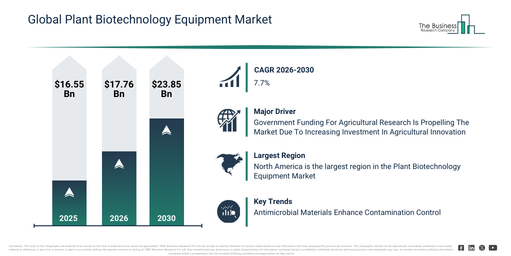
    The plant biotechnology equipment market has experienced robust growth in recent years. This market is projected to expand from $16.55 billion in 2025 to $17.76 billion in 2026, demonstrating a compound annual growth rate (CAGR) of 7.3%. The historical increase in this market can be attributed to several factors, including enhanced investments in agricultural biotechnology research, the broadening of plant genetic engineering programs, an escalating demand for disease-resistant crops, the expansion of academic and institutional research endeavors, and the accessibility of advanced laboratory instrumentation.

    The plant biotechnology equipment market is anticipated to experience substantial expansion over the upcoming years. This market is projected to reach $23.85 billion by 2030, exhibiting a compound annual growth rate (CAGR) of 7.7%. This projected growth is driven by factors such as the greater acceptance of precision agriculture biotechnology, a heightened emphasis on developing climate-resilient crops, the widening scope of commercial plant biotech uses, increased automation in research laboratories, and a rising need for sustainable crop improvement solutions. Key trends anticipated during this period encompass the greater incorporation of advanced tissue culture systems, increased utilization of gene editing and CRISPR tools, broader integration of automated bioreactors, a spread in high-throughput plant analysis equipment, and a sharper focus on improving crop precision.

    Get A Free Sample Report With In-Depth Market Insights:

    https://thebusinessresearchcompany.com/sample_request?id=29150&type=smp&name=Plant%20Biotechnology%20Equipment%20Market%20Report%202026&utm_source=Blogs&utm_medium=Paid&utm_campaign=Nov_PR

    Plant Biotechnology Equipment Market Growth Factors: What’s Supporting Expansion?

    Government funding for agricultural research is projected to drive the future expansion of the plant biotechnology equipment market. This financial support, provided by national or regional governments, aims to encourage research and development in agriculture, thereby enhancing productivity, sustainability, and innovation in farming practices. The increasing demand for food security amidst the difficulties posed by climate change is prompting an rise in agricultural research funding. The plant biotechnology equipment market benefits from such investments by providing essential tools and technologies that facilitate sophisticated crop development, innovation, and research efficiency.

    Plant Biotechnology Equipment Market Segment Landscape And Growth Outlook

    The plant biotechnology equipment market covered in this report is segmented –

    1) By Equipment Type: Bioreactors, Fermenters, Incubators, Centrifuges, Chromatography Systems

    2) By Technology: Clustered Regularly Interspaced Short Palindromic Repeats Tools, Next Generation Sequencing, Polymerase Chain Reaction (PCR) Technology

    3) By Application: Genetic Engineering, Plant Tissue Culture, Molecular Farming, Biopesticides, Biofertilizers

    4) By End User: Agriculture, Research Institutions, Biotechnology Companies, Pharmaceutical Companies, Food And Beverage Industry

    Subsegments:

    1) By Bioreactors: Stirred Tank Bioreactors, Airlift Bioreactors, Fixed Bed Bioreactors, Wave Bioreactors, Disposable Bioreactors

    2) By Fermenters: Batch Fermenters, Fed-Batch Fermenters, Continuous Fermenters, Solid-State Fermenters, Airlift Fermenters

    3) By Incubators: CO2 Incubators, Shaking Incubators, Refrigerated Incubators, Drying Incubators, Humidity-Controlled Incubators

    4) By Centrifuges: Benchtop Centrifuges, High-Speed Centrifuges, Ultracentrifuges, Refrigerated Centrifuges, Floor-Standing Centrifuges

    5) By Chromatography Systems: High-Performance Liquid Chromatography (HPLC), Gas Chromatography (GC), Ion-Exchange Chromatography, Affinity Chromatography, Size-Exclusion Chromatography

    Plant Biotechnology Equipment Market Trends Shaping Long-Term Demand

    Leading companies in the plant biotechnology equipment market are concentrating on developing cell culture systems and cultivation-free bioprocessing platforms, such as plant cell suspension culture with molecular fingerprint replication, to enable consistent, scalable production of high-value plant-derived compounds. Plant cell suspension culture with molecular fingerprint replication constitutes a controlled cultivation technique where plant cells are grown in liquid media to generate compounds that precisely match the molecular profile of the source plant. For instance, in March 2025, PHC Corporation of North America, a US-based laboratory equipment company, launched the PHCbi MCO-171AICUVD-PA high-heat CO2 incubator. This system features an antimicrobial inCu-saFe interior that combines copper’s germicidal properties with stainless steel durability, a Safe Cell UV-LED germicidal bulb, and an optional 11-hour high-heat sterilization cycle for decontamination. By introducing advanced incubation technologies, PHC enhances controlled plant cell culture applications, underscoring the significance of sterility and consistency in plant biotechnology workflows.

    Plant Biotechnology Equipment Market Competitive Landscape: Who Leads The Industry?

    Major companies operating in the plant biotechnology equipment market are Thermo Fisher Scientific Inc., Illumina Inc., Agilent Technologies Inc., QIAGEN N.V., PerkinElmer Inc., Waters Corporation, Sartorius AG, Bruker Corporation, Eppendorf AG, Oxford Nanopore Technologies plc, Hamilton Company, Shimadzu Corporation, Corning Incorporated, Analytik Jena GmbH+Co. KG, Photon Systems Instruments, Labconco Corporation, Memmert GmbH, Esco Lifesciences Group Ltd., Qubit Systems Inc., LemnaTec GmbH

    View The Full Plant Biotechnology Equipment Market Report:

    https://thebusinessresearchcompany.com/report/plant-biotechnology-equipment-global-market-report?utm_source=Blogs&utm_medium=Paid&utm_campaign=Nov_PR

    Plant Biotechnology Equipment Market Geographic Analysis: Where Is Demand Rising Fastest?

    North America was the largest region in the plant biotechnology equipment market in 2025. Asia-Pacific is expected to be the fastest-growing region in the forecast period. The regions covered in the plant biotechnology equipment market report are Asia-Pacific, South East Asia, Western Europe, Eastern Europe, North America, South America, Middle East, Africa.

    Reach Out To Our Team:

    The Business Research Company: https://www.thebusinessresearchcompany.com/

    Americas: +1 310-496-7795

    Asia: +44 7882 955267 & +91 8897263534

    Europe: +44 7882 955267

    Email us at: marketing@tbrc.info

    Follow us on:

    LinkedIn: https://in.linkedin.com/company/the-business-research-company

    YouTube: https://www.youtube.com/channel/UC24_fI0rV8cR5DxlCpgmyFQ

    Global Market Model: https://www.thebusinessresearchcompany.com/global-market-model
  • Pituitary Dwarf Treatment Market Growth Forecast Through 2030: Market Size And Trends In 2026

    Pituitary Dwarf Treatment Market Growth Forecast Through 2030: Market Size And Trends In 2026

    Built to provide research that’s more actionable and strategically valuable, The Business Research Company’s 2026 market reports include market attractiveness analysis, total addressable market sizing, company benchmarking matrices, interactive Excel dashboards, broader supply chain intelligence, emerging startup tracking, and in-depth product insights.

    Pituitary Dwarf Treatment Market Revenue Outlook: What CAGR Lies Ahead Through 2030?

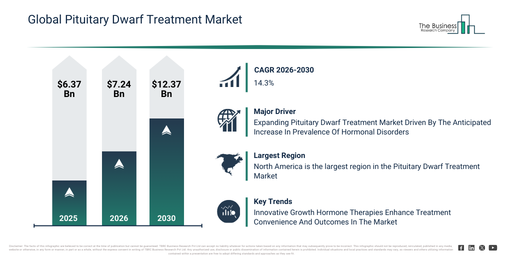
    The pituitary dwarf treatment market size has experienced substantial growth in recent years. It is anticipated to increase from $6.37 billion in 2025 to $7.24 billion in 2026, exhibiting a compound annual growth rate (CAGR) of 13.7%. This historic expansion can be attributed to several factors, including rising awareness of growth hormone deficiency, the broadening of pediatric endocrine care services, advancements in diagnostic capabilities, the growing availability of hormone replacement therapies, and enhanced healthcare access in developed regions.

    The pituitary dwarf treatment market size is projected to experience swift expansion over the coming years. It is anticipated to reach $12.37 billion by 2030, demonstrating a compound annual growth rate (CAGR) of 14.3%. The market’s growth during this forecast period is attributable to factors such as increased investment in rare disease therapies, a rising demand for long-acting growth hormone treatments, the broadening of precision endocrinology approaches, the growing adoption of personalized medicine, and an increased emphasis on early childhood intervention programs. Prominent trends throughout the forecast period include the wider acceptance of recombinant growth hormone therapies, a sharpened focus on early diagnosis and intervention, the increasing utilization of long-acting hormone formulations, the expansion of specialized endocrine care services, and a stronger emphasis on personalized treatment protocols.

    Get A Free Sample Report With In-Depth Market Insights:

    https://thebusinessresearchcompany.com/sample_request?id=34510323&type=smp&name=Pituitary%20Dwarf%20Treatment%20Market%20Report%202026&utm_source=Blogs&utm_medium=Paid&utm_campaign=Nov_PR

    Pituitary Dwarf Treatment Market Demand Drivers: What’s Powering Industry Growth?

    The pituitary dwarf treatment market is anticipated to expand due to an increase in the occurrence of hormonal disorders. These medical conditions involve irregularities in the endocrine system’s function. The pituitary gland, situated at the brain’s base, is crucial for controlling the production and release of hormones, such as growth hormone (GH).

    Pituitary Dwarf Treatment Market Breakdown By Product Type And Application

    The pituitary dwarf treatment market covered in this report is segmented –

    1) By Type: Pituitary Dwarfism Type I, Pituitary Dwarfism Type II, Pituitary Dwarfism Type III, Pituitary Dwarfism Type IV, Other Types

    2) By Treatment: Surgery, Additional Therapy, Drugs, Other Treatments

    3) By Route Of Administration: Parenteral, Other Routes Of Administrations

    4) By End User: Hospitals, Homecare, Specialty Clinics, Other End Users

    Subsegments:

    1) By Pituitary Dwarfism Type I: Growth Hormone Deficiency, Hypopituitarism

    2) By Pituitary Dwarfism Type II: Isolated Growth Hormone Deficiency, Combined Pituitary Hormone Deficiency

    3) By Pituitary Dwarfism Type III: Congenital Anomalies, Genetic Disorders

    4) By Pituitary Dwarfism Type IV: Acquired Causes, Other Hormonal Imbalances

    5) By Other Types: Idiopathic Dwarfism, Syndromic Dwarfism

    Pituitary Dwarf Treatment Market Innovation Trends Shaping Future Development

    Major companies in the pituitary dwarf treatment market are concentrating on developing sophisticated therapeutic products, such as long-acting growth hormone formulations, to improve patient adherence, enhance clinical outcomes, and strengthen their competitive standing. These long-acting growth hormone therapies refer to injectable medications designed to sustain stable hormone levels for extended periods, thereby reducing dosing frequency and increasing convenience for both pediatric and adult patients with growth deficiencies.

    Pituitary Dwarf Treatment Market Company Landscape And Competitive Strategy

    Major companies operating in the pituitary dwarf treatment market are Pfizer Inc., Merck and Co Inc., Novartis AG, Sanofi S.A., Eli Lilly and Company, Novo Nordisk A/S, Mylan N.V., Teva Pharmaceutical Industries Ltd, Ipsen Pharma S.A., Genentech Inc., Apotex Inc., Cipla Limited, Ferring Pharmaceuticals, Anhui Anke Biotechnology Group Co Ltd., Amneal Pharmaceuticals LLC, BioMarin Pharmaceutical Inc., Biopartners GmbH, Xiamen Amoytop Biotech Co Ltd, GeneScience Pharmaceuticals Co Ltd, LG Chem Ltd, Sandoz International GmbH, Sun Pharmaceutical Industries Ltd

    View The Full Pituitary Dwarf Treatment Market Report:

    https://thebusinessresearchcompany.com/report/pituitary-dwarf-treatment-global-market-report?utm_source=Blogs&utm_medium=Paid&utm_campaign=Nov_PR

    Pituitary Dwarf Treatment Market Global Footprint: Which Region Leads The Market?

    North America was the largest region in the pituitary dwarf treatment market in 2025. The regions covered in the pituitary dwarf treatment market report are Asia-Pacific, South East Asia, Western Europe, Eastern Europe, North America, South America, Middle East, Africa.

    Reach Out To Our Team:

    The Business Research Company: https://www.thebusinessresearchcompany.com/

    Americas: +1 310-496-7795

    Asia: +44 7882 955267 & +91 8897263534

    Europe: +44 7882 955267

    Email us at: marketing@tbrc.info

    Follow us on:

    LinkedIn: https://in.linkedin.com/company/the-business-research-company

    YouTube: https://www.youtube.com/channel/UC24_fI0rV8cR5DxlCpgmyFQ

    Global Market Model: https://www.thebusinessresearchcompany.com/global-market-model
  • Pigmented Lesion Treatment Market Analysis: $3.84 Billion Market Size In 2026 And Future Growth Prospects

    Pigmented Lesion Treatment Market Analysis: $3.84 Billion Market Size In 2026 And Future Growth Prospects

    Backed by market attractiveness analysis, total addressable market sizing, company benchmarking matrices, interactive Excel dashboards, wider supply chain intelligence, emerging startup coverage, and detailed product-level insights, The Business Research Company’s 2026 market reports are designed to offer research that is more actionable and strategically valuable than ever.

    Pigmented Lesion Treatment Market Growth Analysis: How Will Revenue Trend Over The Forecast Period?

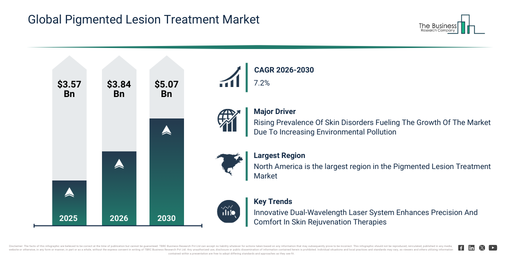
    The pigmented lesion treatment market has witnessed robust expansion in recent years. Looking ahead, it is projected to expand from $3.57 billion in 2025 to $3.84 billion in 2026, maintaining a compound annual growth rate (CAGR) of 7.6%. The expansion observed in the past period is primarily attributable to several factors, including the increasing occurrence of pigmentation disorders, heightened consumer awareness regarding aesthetic treatments, the proliferation of dermatology clinic networks, enhanced access to cosmetic dermatology services, and the rise of medical-grade skincare solutions.

    The pigmented lesion treatment market size is anticipated to experience substantial expansion over the coming years. Its valuation is projected to reach $5.07 billion by 2030, demonstrating a compound annual growth rate (CAGR) of 7.2%. This projected growth during the forecast period is primarily driven by several factors, including a growing preference for minimally invasive procedures, the increasing integration of AI-assisted skin analysis, the proliferation of aesthetic medicine clinics, a heightened focus on customized treatment outcomes, and increased financial commitments towards advanced dermatology devices. Key trends expected in this period encompass a rise in the use of sophisticated laser-based treatments, a greater demand for non-invasive therapies for pigmentation, an intensified focus on individualized skin treatment plans, the wider availability of energy-based dermatology devices, and a stronger emphasis on optimizing aesthetic outcomes.

    Get A Free Sample Report With In-Depth Market Insights:

    https://thebusinessresearchcompany.com/sample_request?id=13756652&type=smp&name=Pigmented%20Lesion%20Treatment%20Market%20Report%202026&utm_source=Blogs&utm_medium=Paid&utm_campaign=Nov_PR

    Pigmented Lesion Treatment Market Growth Drivers: What’s Behind The Acceleration?

    The increasing occurrence of skin disorders is anticipated to fuel the expansion of the pigmented lesion treatment market moving ahead. Skin disorders refer to a diverse range of conditions that impact the skin’s structure, function, or appearance, often leading to symptoms such as inflammation, irritation, or abnormal growths. These conditions include acne, eczema, psoriasis, dermatitis, vitiligo, fungal infections, warts, and skin cancer. The prevalence of skin disorders is rising due to increased environmental pollution, as pollutants can compromise the skin barrier and trigger inflammatory or allergic reactions. Pigmented lesion treatment aids in managing skin disorders by targeting atypical skin pigmentation, making it beneficial for conditions like age spots, melasma, and freckles. This treatment improves skin appearance through advanced technologies, elevating dermatological care and patient confidence.

    Pigmented Lesion Treatment Market Segment Analysis And Revenue Potential

    The pigmented lesion treatment market covered in this report is segmented –

    1) By Treatment Type: Laser Therapy, Topical Creams, Chemical Peels, Microdermabrasion, Other Treatment Types

    2) By Product Type: Lasers And Energy-Based Devices, Radiofrequency (RF) Devices, Micro-Focused Ultrasound, Intense Pulsed Light Devices

    3) By Age Group: Children, Adults, Older Adults

    4) By Application: Melasma, Freckles, Age Spots, Nevus, Other Applications

    5) By End User: Dermatology Clinics, Beauty Clinics, Other End Users

    Subsegments:

    1) By Laser Therapy: Fractional Laser Treatment, Q-Switched Laser Treatment, Intense Pulsed Light Therapy, Picosecond Laser Treatment, Ablative Laser Treatment

    2) By Topical Creams: Hydroquinone-Based Creams, Retinoid-Based Creams, Corticosteroid Creams, Azelaic Acid Creams, Kojic Acid Creams

    3) By Chemical Peels: Glycolic Acid Peels, Salicylic Acid Peels, Trichloroacetic Acid Peels, Lactic Acid Peels, Phenol Peels

    4) By Microdermabrasion: Crystal Microdermabrasion, Diamond Tip Microdermabrasion, Hydra Microdermabrasion, At-Home Microdermabrasion Kits, Medical-Grade Microdermabrasion

    5) By Other Treatment Types: Cryotherapy, Radiofrequency Therapy, Ultrasound Therapy, Dermabrasion, Natural And Herbal Remedies

    Pigmented Lesion Treatment Market Trends Redefining Industry Growth

    Companies operating within the pigmented lesion treatment market are increasingly focused on developing sophisticated products, such as dual-wavelength fractional laser systems, to improve the precision and effectiveness of treatments for various skin pigmentation concerns. These dual-wavelength fractional laser systems are advanced dermatological devices that combine two laser wavelengths to concurrently target both the superficial and deep layers of the skin, leading to more potent treatment for pigmented lesions and overall skin rejuvenation. For instance, in April 2025, Bausch Health Companies Inc., a Canada-based pharmaceutical company, and Solta Medical Corporation, a US-based aesthetics business division of Bausch Health Companies Inc., introduced Fraxel FTX, an advanced laser resurfacing system. This novel device incorporates dual-wavelength fractional lasers, specifically 1550 nm erbium-glass and 1927 nm thulium, engineered to address both deep and superficial strata of the skin. It includes a redesigned handpiece that is 20% lighter and equipped with integrated cooling technology to enhance patient comfort. Additionally, the system incorporates intelligent optical tracking with Accutrac for precise and consistent treatment delivery, along with a modern color touchscreen interface that allows for customizable treatment options.

    Pigmented Lesion Treatment Market Key Players Shaping Industry Direction

    Major companies operating in the pigmented lesion treatment market are EL.EN S.p.A., Candela Medical Corporation, Alma Lasers Ltd., Cutera Inc., Lutronic Corporation, Fotona d.o.o., Sciton Inc., Solta Medical Inc., Inmode Ltd., Strata Skin Sciences Inc., Lumenis Ltd., Syneron Medical Ltd., Quanta System S.P.A, Sharplight Technologies Ltd., Beijing Sincoheren Science and Technology Development Co. Ltd., Venus Concept Inc., Lynton Lasers Ltd., Eufoton S.R.L., Asclepion Laser Technologies Gmbh, DEKA M.E.L.A. Srl

    View The Full Pigmented Lesion Treatment Market Report:

    https://thebusinessresearchcompany.com/report/pigmented-lesion-treatment-global-market-report?utm_source=Blogs&utm_medium=Paid&utm_campaign=Nov_PR

    Pigmented Lesion Treatment Market Regional Split: Which Areas Are Fueling Growth?

    North America was the largest region in the pigmented lesion treatment market in 2025. Asia-Pacific is expected to be the fastest-growing region in the forecast period. The regions covered in the pigmented lesion treatment market report are Asia-Pacific, South East Asia, Western Europe, Eastern Europe, North America, South America, Middle East, Africa.

    Reach Out To Our Team:

    The Business Research Company: https://www.thebusinessresearchcompany.com/

    Americas: +1 310-496-7795

    Asia: +44 7882 955267 & +91 8897263534

    Europe: +44 7882 955267

    Email us at: marketing@tbrc.info

    Follow us on:

    LinkedIn: https://in.linkedin.com/company/the-business-research-company

    YouTube: https://www.youtube.com/channel/UC24_fI0rV8cR5DxlCpgmyFQ

    Global Market Model: https://www.thebusinessresearchcompany.com/global-market-model
  • Pigmentation Disorders Treatment Market 2026 Market Size And Growth Forecast: Key Trends To Watch

    Pigmentation Disorders Treatment Market 2026 Market Size And Growth Forecast: Key Trends To Watch

    Featuring market attractiveness scoring, total addressable market sizing, company benchmarking matrices, interactive Excel dashboards, deeper supply chain intelligence, emerging startup tracking, and granular product-level insights, The Business Research Company’s 2026 market reports are built to deliver research that is both more actionable and more strategically valuable.

    Pigmentation Disorders Treatment Market Forecast: What Value Will The Market Reach By 2030?

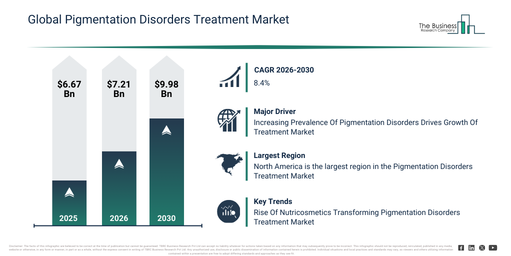
    The market size for treating pigmentation disorders has shown substantial expansion in recent years. It is anticipated to increase from $6.67 billion in 2025 to $7.21 billion in 2026, at a compound annual growth rate (CAGR) of 8.1%. This historical growth can be linked to the rising occurrence of skin pigmentation disorders, growing awareness of aesthetic dermatology, the proliferation of dermatology clinic networks, the increasing application of topical depigmenting agents, and improved accessibility to dermatological care.

    The pigmentation disorders treatment market size is anticipated to demonstrate robust growth over the next few years, with projections indicating it will expand to $9.98 billion by 2030, achieving a compound annual growth rate (CAGR) of 8.4%. This growth in the forecast period is driven by factors such as the increasing adoption of precision dermatology solutions, a rising demand for non-invasive cosmetic procedures, the expansion of advanced laser and phototherapy technologies, a growing focus on personalized treatment protocols, and increasing investment in dermatology research and innovation. Prominent trends for the forecast period include the increasing adoption of laser-based skin treatments, a rising demand for combination therapy approaches, the growing use of advanced topical formulations, the expansion of minimally invasive dermatological procedures, and an enhanced focus on personalized skin treatment regimens.

    Get A Free Sample Report With In-Depth Market Insights:

    https://thebusinessresearchcompany.com/sample_request?id=23166062&type=smp&name=Pigmentation%20Disorders%20Treatment%20Market%20Report%202026&utm_source=Blogs&utm_medium=Paid&utm_campaign=Nov_PR

    Pigmentation Disorders Treatment Market Growth Factors Behind Sustained Expansion

    The rising incidence of pigmentation disorders is projected to boost the expansion of the pigmentation disorder treatment market moving forward. These disorders are characterized by atypical or uneven coloration of the skin, hair, or eyes, resulting from various factors such as genetic predispositions, hormonal fluctuations, sun exposure, or underlying medical conditions. Therapeutic strategies for pigmentation disorders encompass diverse approaches like topical medications, laser therapy, chemical peels, and microdermabrasion. These treatments aim to diminish or lighten dark spots, patches, or irregular skin pigmentation that stem from conditions such as albinism, melasma, vitiligo, or hyperpigmentation.

    Pigmentation Disorders Treatment Market Segmentation And Category Overview

    The pigmentation disorders treatment market covered in this report is segmented –

    1) By Treatment Type: Topical Treatment, Dermabrasion, Chemical Peels, Laser Treatment, Phototherapy, Other Treatment Types

    2) By Drugs: Calcineurin Inhibitors, Melanocyte-Stimulating Hormone, Other Drug Types

    3) By Type Of Disorder: Albinism, Vitiligo, Melasma, Post-Inflammatory Hyperpigmentation (PIH), Other Types Of Disorder

    4) By Route Of Administration: Oral, Topical, Other Routes Of Administration

    5) By Distribution Channel: Dermatology Clinics, Aesthetic Clinics, Drugstores And Cosmetic Stores, E-Commerce, Other Distribution Channels

    Subsegments:

    1) By Topical Treatment: Corticosteroids, Retinoids, Hydroquinone

    2) By Dermabrasion: Microdermabrasion, Diamond Tip Dermabrasion, Crystal Dermabrasion

    3) By Chemical Peels: Superficial Peels, Medium Peels, Deep Peels

    4) By Laser Treatment: Fractional Lasers, Q-Switched Lasers, Intense Pulsed Light (IPL)

    5) By Phototherapy: UVB Phototherapy, Narrowband UVB Phototherapy

    6) By Other Treatment Types: Cryotherapy, Depigmentation Therapy, Microneedling, Platelet-Rich Plasma (PRP) Therapy

    Pigmentation Disorders Treatment Market Strategic Trends: What Defines The Next Growth Phase?

    Prominent companies in the pigmentation disorders treatment market are directing their efforts towards creating nutricosmetics products. The incorporation of nutricosmetics, which entails using oral supplements to improve skin health, is steadily gaining popularity. Nutrients such as antioxidants and vitamins are advocated for their potential advantages to pigmentation and overall skin condition.

    Pigmentation Disorders Treatment Market Competitive Analysis Of Leading Industry Participants

    Major companies operating in the pigmentation disorders treatment market are AbbVie Inc., Novartis AG, Sanofi S.A., Bristol-Myers Squibb, L’Oréal S.A., Bausch Health Companies Inc., Bayer AG, Strides Pharma Science Limited, Galderma S.A., Incyte Corporation, Dr. Reddy’s Laboratories Ltd., Laboratories Pierre Fabre, Glenmark Pharmaceuticals Limited, Dermavant Sciences Inc., Lumenis Be Ltd., Accord Healthcare, Obagi Medical Products Inc., Fotona d.o.o., Sesderma SL, DermaMed Solutions LLC, Vivier Pharma, Arcutis Biotherapeutics, Scientis SA, Philadelphia Pharmaceutical

    View The Full Pigmentation Disorders Treatment Market Report:

    https://thebusinessresearchcompany.com/report/pigmentation-disorders-treatment-global-market-report?utm_source=Blogs&utm_medium=Paid&utm_campaign=Nov_PR

    Pigmentation Disorders Treatment Market Top Region: Where Does Most Revenue Come From?

    North America was the largest region in the pigmentation disorders treatment market in 2025. Asia-Pacific is expected to be the fastest-growing region in the forecast period. The regions covered in the pigmentation disorders treatment market report are Asia-Pacific, South East Asia, Western Europe, Eastern Europe, North America, South America, Middle East, Africa.

    Reach Out To Our Team:

    The Business Research Company: https://www.thebusinessresearchcompany.com/

    Americas: +1 310-496-7795

    Asia: +44 7882 955267 & +91 8897263534

    Europe: +44 7882 955267

    Email us at: marketing@tbrc.info

    Follow us on:

    LinkedIn: https://in.linkedin.com/company/the-business-research-company

    YouTube: https://www.youtube.com/channel/UC24_fI0rV8cR5DxlCpgmyFQ

    Global Market Model: https://www.thebusinessresearchcompany.com/global-market-model
  • Physiotherapy Services Market Size Forecast: How The Industry Is Expected To Grow From 2026 To 2030

    Physiotherapy Services Market Size Forecast: How The Industry Is Expected To Grow From 2026 To 2030

    Built to provide research that’s more actionable and strategically valuable, The Business Research Company’s 2026 market reports include market attractiveness analysis, total addressable market sizing, company benchmarking matrices, interactive Excel dashboards, broader supply chain intelligence, emerging startup tracking, and in-depth product insights.

    Physiotherapy Services Market Size Outlook: How Quickly Will Revenue Expand Through 2030?

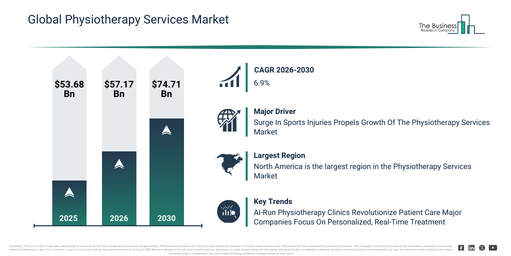
    The physiotherapy services market has shown robust expansion in recent years. This market is set to increase from $53.68 billion in 2025 to $57.17 billion in 2026, achieving a compound annual growth rate (CAGR) of 6.5%. The historical growth trajectory is largely due to factors such as the increasing incidence of musculoskeletal disorders, a growing aging population, the expansion of sports injury rehabilitation needs, heightened awareness of physical therapy benefits, and the broader availability of outpatient physiotherapy services.

    The physiotherapy services market is anticipated to undergo substantial expansion over the forthcoming years. This market is projected to reach a valuation of $74.71 billion by 2030, exhibiting a compound annual growth rate (CAGR) of 6.9%. This projected growth during the forecast period is fueled by several factors, including the increasing integration of digital health platforms, a heightened demand for home-based care options, the broadening scope of rehabilitation for geriatric and chronic disease patients, a rising emphasis on value-based healthcare frameworks, and the expanding incorporation of technologically advanced physiotherapy instruments. Furthermore, key trends expected during this period encompass the wider acceptance of tele-rehabilitation services, an increased utilization of digital tools for assessment and monitoring, a surging need for customized therapy approaches, the expansion of in-home physiotherapy offerings, and a sharpened focus on preventative and wellness-centric care strategies.

    Get A Free Sample Report With In-Depth Market Insights:

    https://thebusinessresearchcompany.com/sample_request?id=71520124&type=smp&name=Physiotherapy%20Services%20Market%20Report%202026&utm_source=Blogs&utm_medium=Paid&utm_campaign=Nov_PR

    Physiotherapy Services Market Demand Drivers Opening New Revenue Streams

    An anticipated increase in sports injury occurrences is projected to drive the expansion of the physiotherapy services market in the future. A sports injury is defined as any damage or harm sustained during sports or athletic participation. For sports injuries, physiotherapy services are vital, as they aid in prompt rehabilitation, manage musculoskeletal problems, and bring back optimal bodily function, allowing athletes to recover both effectively and safely and get back to their sport with a lower chance of re-injury.

    Physiotherapy Services Market Segment Outlook: Which Categories Are Growing Fastest?

    The physiotherapy services market covered in this report is segmented –

    1) By Type: Hydrotherapy, Electric Stimulation, Ultrasound, Heat Therapy, Therapeutic Exercise, Continuous Passive Motion (CPM)

    2) By Application: Cardiovascular And Pulmonary, Geriatric, Integumentary, Neurological, Orthopedic, Palliative Care, Pediatric, Women’s Health, Other Applications

    3) By End-User: Hospitals, Private Practices, Outpatient Clinics, Sports And Fitness Facility Centers, Other End-Users

    Subsegments:

    1) By Hydrotherapy: Aquatic Therapy, Contrast Bath Therapy, Whirlpool Therapy

    2) By Electric Stimulation: Transcutaneous Electrical Nerve Stimulation (TENS), Neuromuscular Electrical Stimulation (NMES), Interferential Current Therapy

    3) By Ultrasound: Therapeutic Ultrasound, Shockwave Therapy

    4) By Heat Therapy: Moist Heat Packs, Infrared Therapy, Paraffin Wax Treatment

    5) By Therapeutic Exercise: Strengthening Exercises, Flexibility Exercises, Balance And Coordination Training

    6) By Continuous Passive Motion (CPM): Knee CPM Machines, Shoulder CPM Machines, Ankle CPM Machines

    Physiotherapy Services Market Transformation Trends: What Innovations Are Driving Change?

    Major companies in the physiotherapy services market are concentrating on introducing AI-powered physiotherapy clinics to improve patient outcomes, optimize treatment processes, and offer personalized rehabilitation plans. AI-run physiotherapy clinics are healthcare facilities that integrate artificial intelligence (AI) technology to aid in the diagnosis, monitoring, and treatment of patients undergoing physiotherapy. This initiative will allow patients to access automated video appointments with a digital physiotherapist on the same day they seek care.

    Physiotherapy Services Market Leading Companies And Competitive Benchmarking

    Major companies operating in the physiotherapy services market are ITO Co. Ltd., DJO Global Inc., Professional Physical Therapy, NovaCare Rehabilitation, Pivot Physical Therapy, Apollo Hospitals Enterprise Ltd., U.S. Physical Therapy Inc., BTL Industries Inc., ATI Physical Therapy LLC, Zynex Medical Inc., Zimmer MedizinSysteme GmbH, Storz Medical AG, Enraf-Nonius B.V., Patterson Medical Ltd., RICHMAR, eLuma, Rehab Alternatives, Maven Physical Therapy & Performance, Elam Sports O’ahu Therapy & Training, Willis Street Physiotherapy Limited, AmeriCare Physical Therapy, Olean Physical Therapy Professionals PLLC, Triumph Physical Therapy LLC, Meier & Marsh Professional Therapies, FullMotion Physical Therapy LLC, EMS Physio Ltd.

    View The Full Physiotherapy Services Market Report:

    https://thebusinessresearchcompany.com/report/physiotherapy-services-global-market-report?utm_source=Blogs&utm_medium=Paid&utm_campaign=Nov_PR

    Physiotherapy Services Market Regional Breakdown: Where Is Demand Concentrated?

    North America was the largest region in the physiotherapy services market in 2025. Asia-Pacific is expected to be the fastest-growing region in the forecast period. The regions covered in the physiotherapy services market report are Asia-Pacific, South East Asia, Western Europe, Eastern Europe, North America, South America, Middle East, Africa.

    Reach Out To Our Team:

    The Business Research Company: https://www.thebusinessresearchcompany.com/

    Americas: +1 310-496-7795

    Asia: +44 7882 955267 & +91 8897263534

    Europe: +44 7882 955267

    Email us at: marketing@tbrc.info

    Follow us on:

    LinkedIn: https://in.linkedin.com/company/the-business-research-company

    YouTube: https://www.youtube.com/channel/UC24_fI0rV8cR5DxlCpgmyFQ

    Global Market Model: https://www.thebusinessresearchcompany.com/global-market-model
  • Physiotherapy And Rehabilitation Products And Services Market Reaches $312.78 Billion In 2026: Forecast And Growth Opportunities

    Physiotherapy And Rehabilitation Products And Services Market Reaches $312.78 Billion In 2026: Forecast And Growth Opportunities

    Backed by market attractiveness analysis, total addressable market sizing, company benchmarking matrices, interactive Excel dashboards, wider supply chain intelligence, emerging startup coverage, and detailed product-level insights, The Business Research Company’s 2026 market reports are designed to offer research that is more actionable and strategically valuable than ever.

    Physiotherapy And Rehabilitation Products And Services Market Size, Value And Growth Trajectory Through 2030

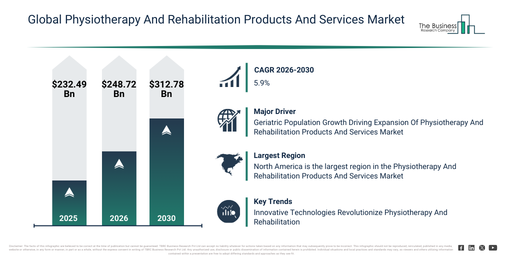
    The physiotherapy and rehabilitation products and services market has seen robust growth in recent years. It is anticipated to expand from $232.49 billion in 2025 to $248.72 billion in 2026, achieving a compound annual growth rate (CAGR) of 7.0%. Historically, this growth can be attributed to a rising incidence of physical injuries and disabilities, the expansion of rehabilitation facilities, increasing awareness of long-term recovery care, an uptick in sports injury treatment, and enhanced access to therapy services.

    The market for physiotherapy and rehabilitation products and services is projected to experience robust expansion over the coming years. This market is anticipated to reach a valuation of $312.78 billion by 2030, demonstrating a compound annual growth rate (CAGR) of 5.9%. Factors contributing to this growth during the forecast period include the increasing uptake of virtual rehabilitation programs, greater investments in intelligent therapy equipment, the expansion of care services for the aging population, an enhanced focus on optimizing patient outcomes, and the growing integration of AI-powered therapy planning. Key trends expected over the forecast period encompass the increasing integration of digital rehabilitation platforms, a surging demand for home-based rehabilitation services, the expanding adoption of personalized therapy programs, the broader availability of advanced assistive devices, and a heightened emphasis on rehabilitation based on outcomes.

    Get A Free Sample Report With In-Depth Market Insights:

    https://thebusinessresearchcompany.com/sample_request?id=93727867&type=smp&name=Physiotherapy%20And%20Rehabilitation%20Products%20And%20Services%20Market%20Report%202026&utm_source=Blogs&utm_medium=Paid&utm_campaign=Nov_PR

    Physiotherapy And Rehabilitation Products And Services Market Growth Backed By Core Demand Fundamentals

    The expanding geriatric population is projected to propel the physiotherapy and rehabilitation products and services market moving forward. This demographic encompasses individuals 65 and older, identified by unique health concerns and requirements linked to aging. The growth in the geriatric population generates heightened demand for physiotherapy and rehabilitation products and services, as older adults frequently need specialized aids and equipment to address mobility issues and enhance their overall well-being, thus fostering growth opportunities for companies serving this aging group.

    Physiotherapy And Rehabilitation Products And Services Market Segment Landscape: Which Areas Lead Development?

    The physiotherapy and rehabilitation products and services market covered in this report is segmented –

    1) By Product Type: Physiotherapy, Rehabilitation

    2) By Gender: Male, Female

    3) By Income Group: Low, Middle, High

    4) By Payment Mode: Out-Of-Pocket, Insurance Payers

    5) By End User: Hospitals, Physiotherapy Centers Or Clinics, Rehabilitation Centers, Home Care Settings, Physician Offices, Nursing And Residential Homes, Other End-users

    Subsegments:

    1) By Physiotherapy: Manual Therapy Equipment, Exercise Therapy Equipment, Electrotherapy Equipment, Hydrotherapy Equipment, Posture Correctors And Braces

    2) By Rehabilitation: Mobility Aids, Orthopedic Braces And Supports, Continuous Passive Motion (CPM) Devices, Neurorehabilitation Devices, Prosthetics And Orthotics

    #Physiotherapy And Rehabilitation Products And Services Market Growth Trends: What’s Shaping The Future Outlook?

    Leading companies operating in the physiotherapy and rehabilitation products and services market are concentrating on developing innovative technologies, such as transcutaneous electrical nerve stimulation, which facilitates the use of low-voltage electrical currents through skin-applied electrodes to stimulate nerves for pain alleviation. Transcutaneous Electrical Nerve Stimulation (TENS) describes a non-invasive pain relief treatment that utilizes low-voltage electrical currents delivered via electrodes placed on the skin; these currents stimulate sensory nerves to modify or block pain signals travelling to the brain, offering respite from acute or chronic pain.

    Physiotherapy And Rehabilitation Products And Services Market Industry Leaders And Competitive Landscape

    Major companies operating in the physiotherapy and rehabilitation products and services market are Medline Industries Inc., Stryker Corporation, Select Medical Corporation, ITO Co. Ltd., Enovis Corporation, Ottobock, DJO Global Inc., Upstream Rehabilitation Inc., Össur (OSSR.CO), Patterson Medical, ATI Physical Therapy Inc., U.S. Physical Therapy Inc., BSN Medical GmbH, Athletico Physical Therapy, Zynex Medical Inc., Performance Health, Zimmer MedizinSysteme GmbH, Dynatronics Corporation, Biodex Medical Systems Inc., MindMaze Healthcare, Enraf-Nonius B.V., EMS Physio Ltd., Tartan Group, Lifespan Physical Therapy Services

    View The Full Physiotherapy And Rehabilitation Products And Services Market Report:

    https://thebusinessresearchcompany.com/report/physiotherapy-and-rehabilitation-products-and-services-global-market-report?utm_source=Blogs&utm_medium=Paid&utm_campaign=Nov_PR

    Physiotherapy And Rehabilitation Products And Services Market Geographic Landscape: Which Region Leads Industry Growth?

    North America was the largest region in the physiotherapy and rehabilitation products and services market in 2025. Asia Pacific is expected to be the fastest-growing region in the forecast period. The regions covered in the physiotherapy and rehabilitation products and services market report are Asia-Pacific, South East Asia, Western Europe, Eastern Europe, North America, South America, Middle East, Africa.

    Reach Out To Our Team:

    The Business Research Company: https://www.thebusinessresearchcompany.com/

    Americas: +1 310-496-7795

    Asia: +44 7882 955267 & +91 8897263534

    Europe: +44 7882 955267

    Email us at: marketing@tbrc.info

    Follow us on:

    LinkedIn: https://in.linkedin.com/company/the-business-research-company

    YouTube: https://www.youtube.com/channel/UC24_fI0rV8cR5DxlCpgmyFQ

    Global Market Model: https://www.thebusinessresearchcompany.com/global-market-model
  • Physiological Saline Market Growth In 2026: Market Size, Key Drivers And Future Outlook

    Physiological Saline Market Growth In 2026: Market Size, Key Drivers And Future Outlook

    Featuring market attractiveness scoring, total addressable market sizing, company benchmarking matrices, interactive Excel dashboards, deeper supply chain intelligence, emerging startup tracking, and granular product-level insights, The Business Research Company’s 2026 market reports are built to deliver research that is both more actionable and more strategically valuable.

    Physiological Saline Market CAGR Outlook And Future Development

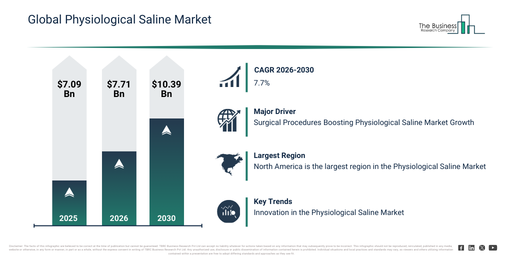
    The physiological saline market has seen significant expansion over recent years. It is anticipated to expand from $7.09 billion in 2025 to $7.71 billion in 2026, achieving a compound annual growth rate (CAGR) of 8.8%. This historical market growth is primarily due to factors such as the broadening of hospital and clinic networks, the increasing application of intravenous therapies, a rise in surgical procedure volumes, an escalating need for emergency medical supplies, and enhancements in pharmaceutical manufacturing capacity.

    The physiological saline market is projected to experience strong growth in the coming years. It is expected to expand to $10.39 billion by 2030, exhibiting a compound annual growth rate (CAGR) of 7.7%. This anticipated growth during the forecast period can be attributed to several factors, including the increasing demand from chronic disease management, a rising focus on infection control practices, the expansion of outpatient and home care services, growing investments in pharmaceutical automation, and an increasing emphasis on supply chain resilience. Major trends identified for the forecast period include an increasing demand for sterile and ready-to-use solutions, the rising adoption of large-volume infusion products, a growing focus on quality and safety standards, the expansion of automated saline production processes, and an enhanced emphasis on supply chain reliability.

    Get A Free Sample Report With In-Depth Market Insights:

    https://thebusinessresearchcompany.com/sample_request?id=89516494&type=smp&name=Physiological%20Saline%20Market%20Report%202026&utm_source=Blogs&utm_medium=Paid&utm_campaign=Nov_PR

    Physiological Saline Market Growth Catalysts And Demand Drivers

    The expansion of surgical procedures is anticipated to fuel the future growth of the physiological saline market. Surgical procedures themselves encompass medical interventions carried out by trained healthcare professionals to diagnose, address, or remedy illnesses, injuries, or bodily anomalies through invasive approaches involving cuts, removals, stitches, or other manipulations. This increase in surgical activity can be attributed to advancements in surgical techniques, enhanced availability of healthcare services, and a maturing demographic with elevated medical needs, thereby stimulating the requirement for surgical interventions. During these procedures, physiological saline is utilized for cleaning wounds, moisturizing tissues, and as an irrigation medium.

    Physiological Saline Market Segments: Where Is Growth Concentrated?

    The physiological saline market covered in this report is segmented –

    1) By Type: Normal Saline, Hypertonic Saline, Hypotonic Saline

    2) By Application: Acute Health Conditions, Chronic Diseases, Skin Abrasions And Burns, Other Applications

    3) By End Users: Hospitals, Clinics, Recovery Centers, Other End Users

    Subsegments:

    1) By Normal Saline: 0.9% Sodium Chloride Solution, Sterile Normal Saline

    2) By Hypertonic Saline: 3% Sodium Chloride Solution, 5% Sodium Chloride Solution

    3) By Hypotonic Saline: 0.45% Sodium Chloride Solution, 0.225% Sodium Chloride Solution

    Physiological Saline Market Industry Trends: What’s Reshaping Demand?

    Major companies operating in the physiological saline market are developing innovative products, such as premixed hypertonic saline, which offers a ready-to-use solution that helps medical professionals administer the precise amount of saline more easily and safely during emergencies. Premixed hypertonic saline is defined as a solution of saline (sodium chloride) that has been pre-prepared with a salt concentration higher than that of normal saline, and it is commonly utilized in medical environments to manage conditions like hyponatremia or to assist in lung therapy.

    Physiological Saline Market Key Participants And Competitive Landscape

    Major companies operating in the physiological saline market are Cardinal Health Inc., Pfizer Inc., Fresenius Kabi AG, Merck KGaA, Baxter International Inc., Otsuka Pharmaceutical Co. Ltd, Grifols S.A., B Braun Medical Inc, Hikma Pharmaceuticals PLC, Amneal Pharmaceuticals Inc., Teva Pharmaceutical Industries Ltd, Pfizer Hospira Inc., JW Pharmaceutical Corporation, Kelun Pharmaceutical Co. Ltd, Sichuan Kelun Pharmaceutical Co. Ltd, ICU Medical Inc., Nipro Corporation, Aurobindo Pharma Ltd, Sun Pharmaceutical Industries Ltd, Cipla Ltd, Lupin Ltd

    View The Full Physiological Saline Market Report:

    https://thebusinessresearchcompany.com/report/physiological-saline-global-market-report?utm_source=Blogs&utm_medium=Paid&utm_campaign=Nov_PR

    Physiological Saline Market Largest Region: Which Geography Holds The Biggest Share?

    North America was the largest region in the physiological saline market in 2025. The regions covered in the physiological saline market report are Asia-Pacific, South East Asia, Western Europe, Eastern Europe, North America, South America, Middle East, Africa.

    Reach Out To Our Team:

    The Business Research Company: https://www.thebusinessresearchcompany.com/

    Americas: +1 310-496-7795

    Asia: +44 7882 955267 & +91 8897263534

    Europe: +44 7882 955267

    Email us at: marketing@tbrc.info

    Follow us on:

    LinkedIn: https://in.linkedin.com/company/the-business-research-company

    YouTube: https://www.youtube.com/channel/UC24_fI0rV8cR5DxlCpgmyFQ

    Global Market Model: https://www.thebusinessresearchcompany.com/global-market-model
  • Physiological Monitors Market Size And Forecast 2026–2030: Trends Driving Industry Expansion

    Physiological Monitors Market Size And Forecast 2026–2030: Trends Driving Industry Expansion

    Built to provide research that’s more actionable and strategically valuable, The Business Research Company’s 2026 market reports include market attractiveness analysis, total addressable market sizing, company benchmarking matrices, interactive Excel dashboards, broader supply chain intelligence, emerging startup tracking, and in-depth product insights.

    Physiological Monitors Market Set To Climb From $126.97 Billion In 2026 To $196.49 Billion By 2030

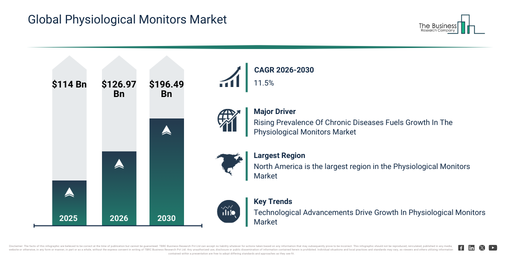
    The physiological monitors market size has shown rapid expansion in recent years. It is anticipated to increase from $114 billion in 2025 to $126.97 billion in 2026, exhibiting a compound annual growth rate (CAGR) of 11.4%. This growth observed in the historic period is attributable to the increasing prevalence of chronic diseases, the expansion of hospital intensive care units, the growing adoption of patient monitoring standards, a rising demand for real-time vital tracking, and improvements in sensor technology.

    The physiological monitors market size is predicted to undergo significant growth over the next few years, reaching $196.49 billion by 2030, exhibiting a compound annual growth rate (CAGR) of 11.5%. This expansion during the forecast period is attributable to the increasing uptake of home-based monitoring solutions, escalating investments in connected healthcare infrastructure, the broadening of AI-enabled monitoring analytics, a growing demand for preventive patient care, and enhanced integration with electronic health records. Key trends anticipated within this timeframe include a wider adoption of continuous monitoring devices, a rising need for remote patient monitoring, the progressive integration of wearable health sensors, the expansion of multi-parameter monitoring systems, and an increased emphasis on early warning and alert systems.

    Get A Free Sample Report With In-Depth Market Insights:

    https://thebusinessresearchcompany.com/sample_request?id=64755859&type=smp&name=Physiological%20Monitors%20Market%20Report%202026&utm_source=Blogs&utm_medium=Paid&utm_campaign=Nov_PR

    Physiological Monitors Market Opportunity Drivers: What’s Unlocking New Revenue Potential?

    The increasing occurrence of long-term illnesses is anticipated to boost the expansion of the physiological monitors market in the future. A chronic disease is defined as a health problem or state characterized by persistent symptoms that endure for a minimum of one year. The rise in chronic diseases stems from inactive lifestyles, which cause extended periods of physical inactivity, leading to issues like obesity, compromised cardiovascular health, and diminished metabolic function over time. Physiological monitors assist in handling the widespread occurrence of chronic diseases by offering live health data, thus facilitating prompt interventions and customized care for those with long-term conditions.

    Physiological Monitors Market Segment Analysis: What Are The Core Market Categories?

    The physiological monitors market covered in this report is segmented –

    1) By Type: Hemodynamic Monitoring Devices, Neuromonitoring Devices, Cardiac Monitoring Devices, Respiratory Monitoring Devices, Other Types

    2) By Application: Cardiology, Neurology, Respiratory, Fetal And Neonatal, Weight Management And Fitness Monitoring, Other Applications

    3) By End User: Hospital, Clinic, Other End Users

    Subsegments:

    1) By Hemodynamic Monitoring Devices: Invasive Hemodynamic Monitors, Non-Invasive Hemodynamic Monitors

    2) By Neuromonitoring Devices: EEG Monitors, Intracranial Pressure Monitors, Brain Function Monitors

    3) By Cardiac Monitoring Devices: ECG Monitors, Holter Monitors, Implantable Cardiac Monitors

    4) By Respiratory Monitoring Devices: Pulse Oximeters, Capnometers, Spirometers

    5) By Other Types: Temperature Monitors, Blood Glucose Monitors, Multivariable Monitors

    Physiological Monitors Market Innovation Trends: What Developments Are Reshaping The Industry?

    Leading companies operating within the physiological monitors market are intensifying their efforts on developing advanced solutions, such as wireless patient monitoring systems, to secure a competitive advantage in the sector. A wireless patient monitoring system represents a technological evolution that removes the necessity for wires or cables to continuously observe a patient’s vital signs, including blood pressure, heart rate, and oxygen levels, among others. For instance, in January 2025, NOVOSOUND LTD, a medical technology company from Scotland, presented its ultrasound blood pressure monitoring system at the Consumer Electronics Show 2025. This system is designed to offer continuous, cuff-free blood pressure tracking, aiding in the early detection of hypertension and enhancing cardiovascular health management, and employs thin-film wearable ultrasound sensors placed on the patient’s body to monitor arterial pressure in real time. Additionally, it provides real-time data transmission to connected devices, enabling users or clinicians to remotely and continuously track blood pressure trends.

    Physiological Monitors Market Top Companies Driving Competitive Growth

    Major companies operating in the physiological monitors market are Panasonic Corporation, Abbott Laboratories, Medtronic plc, Siemens Healthineers, Becton Dickinson and Company, Philips Healthcare, GE Healthcare, Baxter International Inc., Boston Scientific Corporation, OMRON Healthcare Co. Ltd., Edwards Lifesciences Corporation, Mindray Medical International Ltd., Smiths Medical, Hill-Rom Holdings Inc., Masimo Corporation, Nihon Kohden Corporation, OSI Systems Inc., Spacelabs Healthcare, Kontron AG, Welch Allyn, Natus Medical Incorporated, A&D Company Limited, Nonin Medical Inc., CAS Medical Systems Inc.

    View The Full Physiological Monitors Market Report:

    https://thebusinessresearchcompany.com/report/physiological-monitors-global-market-report?utm_source=Blogs&utm_medium=Paid&utm_campaign=Nov_PR

    Physiological Monitors Market Regional Analysis: Which Geography Leads On Revenue?

    North America was the largest region in the physiological monitors market in 2025. Asia-Pacific is expected to be the fastest-growing region in the forecast period. The regions covered in the physiological monitors market report are Asia-Pacific, South East Asia, Western Europe, Eastern Europe, North America, South America, Middle East, Africa.

    Reach Out To Our Team:

    The Business Research Company: https://www.thebusinessresearchcompany.com/

    Americas: +1 310-496-7795

    Asia: +44 7882 955267 & +91 8897263534

    Europe: +44 7882 955267

    Email us at: marketing@tbrc.info

    Follow us on:

    LinkedIn: https://in.linkedin.com/company/the-business-research-company

    YouTube: https://www.youtube.com/channel/UC24_fI0rV8cR5DxlCpgmyFQ

    Global Market Model: https://www.thebusinessresearchcompany.com/global-market-model
  • Physicians And Other Health Practitioners Market 2026 Outlook: Market Size, CAGR And Key Growth Opportunities

    Physicians And Other Health Practitioners Market 2026 Outlook: Market Size, CAGR And Key Growth Opportunities

    Backed by market attractiveness analysis, total addressable market sizing, company benchmarking matrices, interactive Excel dashboards, wider supply chain intelligence, emerging startup coverage, and detailed product-level insights, The Business Research Company’s 2026 market reports are designed to offer research that is more actionable and strategically valuable than ever.

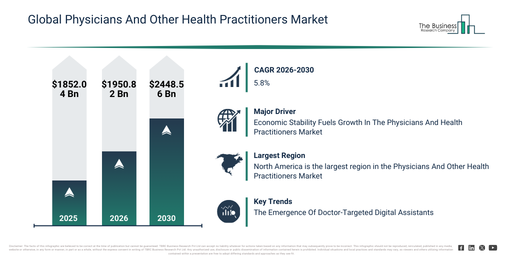
    Physicians And Other Health Practitioners Market Forecast: Value Set To Climb From $1950.82 Billion To $2448.56 Billion

    The physicians and other health practitioners market has shown substantial growth in recent times. It is anticipated to increase from $1852.04 billion in 2025 to $1950.82 billion in 2026, exhibiting a compound annual growth rate (CAGR) of 5.3%. During the historical period, this expansion can be ascribed to several factors, including the development of healthcare infrastructure, heightened patient awareness regarding medical services, an increase in specialist physician availability, the growing incidence of chronic diseases, and enhanced access to primary care services.

    The market size for physicians and other health practitioners is projected to experience substantial expansion in the upcoming years. This market is forecast to reach $2448.56 billion by 2030, exhibiting a compound annual growth rate (CAGR) of 5.8%. Factors driving this growth during the projected period include a surging demand for virtual healthcare delivery, escalating investments in digital health platforms, broader adoption of precision medicine, an increased emphasis on value-based healthcare models, and the growing incorporation of AI into diagnostics. Key trends anticipated for the forecast period encompass the wider embrace of telemedicine services, greater utilization of data-driven clinical decision support, a strengthened focus on preventive and personalized care, the proliferation of multispecialty medical practices, and improved integration of digital health records.

    Get A Free Sample Report With In-Depth Market Insights:

    https://thebusinessresearchcompany.com/sample_request?id=56136043&type=smp&name=Physicians%20And%20Other%20Health%20Practitioners%20Market%20Report%202026&utm_source=Blogs&utm_medium=Paid&utm_campaign=Nov_PR

    Physicians And Other Health Practitioners Market Growth Momentum: What Factors Are Shaping Demand?

    The market for physicians and other health practitioners benefits from the steady economic growth anticipated across numerous developed and developing nations. Economic growth is characterized by an expansion in the production of goods and services within an economy over a particular period, typically measured by the rise in gross domestic product (GDP). This economic expansion is increasing due to advancements in industrial and technological sectors that boost productivity and output. Physicians and other health practitioners contribute to economic growth by enhancing population health, which in turn improves workforce productivity and reduces economic burdens associated with healthcare.

    Physicians And Other Health Practitioners Market Segment Breakdown: Which Categories Lead On Revenue?

    The physicians and other health practitioners market covered in this report is segmented –

    1) By Type: Specialist Doctors, Primary Care Doctors, Podiatrists, Physical Therapists, Optometrists, Chiropractors

    2) By Type of Expenditure: Public, Private

    3) By End User Gender: Male, Female

    Subsegments:

    1) By Specialist Doctors: Cardiologists, Neurologists, Dermatologists, Endocrinologists, Orthopedic Surgeons, Gastroenterologists, Obstetricians And Gynecologists

    2) By Primary Care Doctors: General Practitioners (GPs), Family Medicine Physicians, Internal Medicine Physicians, Pediatricians

    3) By Podiatrists: Foot and Ankle Surgeons, Podiatric Dermatologists

    4) By Physical Therapists: Orthopedic Physical Therapists, Neurological Physical Therapists, Pediatric Physical Therapists, Geriatric Physical Therapists

    5) By Optometrists: Ocular Disease Optometrists, Pediatric Optometrists, Contact Lens Specialists, Vision Rehabilitation Specialists

    6) By Chiropractors: Sports Chiropractors, Pediatric Chiropractors, Neurologic Chiropractors, Wellness Chiropractors

    Physicians And Other Health Practitioners Market Trends: What’s Defining The Industry’s Next Phase?

    Leading companies within the physicians and other health practitioners sector are concentrating on developing innovative solutions, such as digital assistants for medical professionals, to achieve a competitive advantage. A digital assistant for doctors refers to an AI-powered software or application specifically engineered to assist healthcare practitioners, particularly physicians, with various clinical and administrative responsibilities.

    Physicians And Other Health Practitioners Market Leading Players And Competitive Positioning

    Major companies operating in the physicians and other health practitioners market are IHH Healthcare, MEDNAX, Fresenius Medical Care AG & Co. KGaA, NHS England, US Physical Therapy, Healthway Medical Corp Ltd, Universal Health Services, UnitedHealth Group, CVS Health Corp., Elevance Health, Centene Corporation, HCA Healthcare Inc., Molina Healthcare Inc., Cerner Corporation, Epic Systems Corporation, Athenahealth Inc., Allscripts Healthcare Solutions Inc., Teladoc Health Inc., Humana Inc., Anthem Inc., Kaiser Permanente, Mayo Clinic Health System, Cleveland Clinic, Intermountain Healthcare, Ascension Health

    View The Full Physicians And Other Health Practitioners Market Report:

    https://thebusinessresearchcompany.com/report/physician-and-other-health-practitioner-global-market-report?utm_source=Blogs&utm_medium=Paid&utm_campaign=Nov_PR

    Physicians And Other Health Practitioners Market Geographic Spread And Regional Opportunities

    North America was the largest region in the physicians and other health practitioners market in 2025. Asia-Pacific was the second largest region in the physicians and other health practitioners market. The regions covered in the physicians and other health practitioners market report are Asia-Pacific, South East Asia, Western Europe, Eastern Europe, North America, South America, Middle East, Africa.

    Reach Out To Our Team:

    The Business Research Company: https://www.thebusinessresearchcompany.com/

    Americas: +1 310-496-7795

    Asia: +44 7882 955267 & +91 8897263534

    Europe: +44 7882 955267

    Email us at: marketing@tbrc.info

    Follow us on:

    LinkedIn: https://in.linkedin.com/company/the-business-research-company

    YouTube: https://www.youtube.com/channel/UC24_fI0rV8cR5DxlCpgmyFQ

    Global Market Model: https://www.thebusinessresearchcompany.com/global-market-model
  • Physical Therapy Supplies Market Size Growth: From $16.81 Billion In 2026 To $20.45 Billion By 2030

    Physical Therapy Supplies Market Size Growth: From $16.81 Billion In 2026 To $20.45 Billion By 2030

    Featuring market attractiveness scoring, total addressable market sizing, company benchmarking matrices, interactive Excel dashboards, deeper supply chain intelligence, emerging startup tracking, and granular product-level insights, The Business Research Company’s 2026 market reports are built to deliver research that is both more actionable and more strategically valuable.

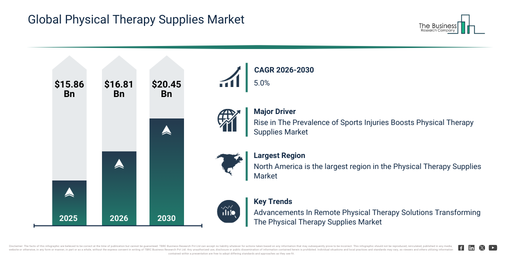
    Physical Therapy Supplies Market Revenue Growth On Track For A 5% CAGR Through 2030

    The physical therapy supplies market size has shown significant expansion in recent years. This market is projected to expand from $15.86 billion in 2025 to $16.81 billion in 2026, achieving a compound annual growth rate (CAGR) of 6.0%. Historically, this growth can be linked to factors such as the increasing occurrence of musculoskeletal disorders, the proliferation of rehabilitation centers, an escalating elderly population, greater recognition of the advantages of physical therapy, and improved access to therapy equipment.

    The physical therapy supplies market is projected to experience substantial expansion in the coming years, reaching a valuation of $20.45 billion by 2030, driven by a compound annual growth rate (CAGR) of 5.0%. This anticipated growth is primarily due to factors such as the wider uptake of remote physiotherapy solutions, an increase in demand for home healthcare services, the broadening of digital rehabilitation platforms, a heightened emphasis on preventive healthcare, and the greater incorporation of technology into therapy delivery. Key trends during this period are expected to encompass the growing acceptance of smart rehabilitation devices, a surge in demand for therapy equipment for use at home, the expanding utilization of wearable therapy accessories, the development of more personalized therapy programs, and a stronger commitment to patient-focused rehabilitation instruments.

    Get A Free Sample Report With In-Depth Market Insights:

    https://thebusinessresearchcompany.com/sample_request?id=32826837&type=smp&name=Physical%20Therapy%20Supplies%20Market%20Report%202026&utm_source=Blogs&utm_medium=Paid&utm_campaign=Nov_PR

    Physical Therapy Supplies Market Expansion Drivers: What’s Shaping Future Growth?

    The growing occurrence of sports injuries is projected to boost the physical therapy supplies market in the future. Sports injuries are defined as harm sustained during athletic endeavors or exercise, frequently resulting from sudden impacts, repetitive strain, or incorrect form. The escalation in the frequency of sports injuries can be linked to heightened participation, insufficient preparation, and problems related to equipment. Physical therapy supplies play a crucial role in the recovery from sports injuries, enabling specific exercises, fostering muscle reinforcement, and assisting in the restoration of movement and capabilities, thereby allowing athletes to recuperate more quickly and safely re-enter their sports.

    Physical Therapy Supplies Market Segmentation: How Does The Market Break Down By Category?

    The physical therapy supplies market covered in this report is segmented –

    1) By Type: Hydrotherapy, Cryotherapy, Continuous Passive Motion, Ultrasound, Electric Stimulation, Heat Therapy, Therapeutic Exercise, Other Types

    2) By Demographics: Non-Geriatric Population, Geriatric Population

    3) By Application: Neurology, Musculoskeletal, Pediatrics, Cardiovascular And Pulmonary, Other Applications

    4) By End Use: Hospitals And Clinics, Rehabilitation Centers, Other End-Uses

    Subsegments:

    1) By Hydrotherapy: Aquatic Therapy Equipment, Whirlpool Baths, Hydrocollator Packs

    2) By Cryotherapy: Ice Packs And Wraps, Cryo Machines, Cold Compression Therapy Devices

    3) By Continuous Passive Motion: CPM Machines For Joint Rehabilitation, Hand And Knee CPM Devices

    4) By Ultrasound: Therapeutic Ultrasound Machines, Ultrasound Gel And Accessories

    5) By Electric Stimulation: TENS Units, EMS Devices, Iontophoresis Devices

    6) By Heat Therapy: Heating Pads, Heat Wraps, Hot Packs

    7) By Therapeutic Exercise: Resistance Bands, Exercise Balls, Foam Rollers

    8) By Other Types: Posture Correctors, Orthotics And Braces, Supportive Tapes And Bandages

    Physical Therapy Supplies Market Industry Trends Fueling Future Revenue Growth

    Leading companies within the physical therapy supplies market are concentrating on developing advanced therapy solutions, including remote physical therapy options, to improve patient care, increase access to therapy, and achieve optimal treatment results. These solutions make use of telecommunication technologies like video conferencing, mobile applications, and wearable devices to enable virtual interactions between patients and therapists.

    Physical Therapy Supplies Market Competitive Overview And Top Companies

    Major companies operating in the physical therapy supplies market are Enovis Corporation, DJO Global Inc., BTL Industries, BSN Medical GmbH, Whitehall Manufacturing, Phymed S.R.L., Zynex Medical Inc., Patterson Medical, Performance Health, Zimmer MedizinSysteme GmbH, Dynatronics Corporation, Biodex Medical Systems Inc., Medsource USA INC, Enraf Nonius International, Storz Medical AG, CRS Rehabilitacja Sportowa, RICHMAR, EMS Physio Ltd, SEERS Medical Ltd, Tartan Group, HMS Medical Systems, Life Care Systems, ITO Co. Ltd, Grupo Roan, Chattanooga Group, DJO Surgical

    View The Full Physical Therapy Supplies Market Report:

    https://thebusinessresearchcompany.com/report/physical-therapy-supplies-global-market-report?utm_source=Blogs&utm_medium=Paid&utm_campaign=Nov_PR

    Physical Therapy Supplies Market Top Region By Revenue And Market Share

    North America was the largest region in the physical therapy supplies market in 2025. The regions covered in the physical therapy supplies market report are Asia-Pacific, South East Asia, Western Europe, Eastern Europe, North America, South America, Middle East, Africa.

    Reach Out To Our Team:

    The Business Research Company: https://www.thebusinessresearchcompany.com/

    Americas: +1 310-496-7795

    Asia: +44 7882 955267 & +91 8897263534

    Europe: +44 7882 955267

    Email us at: marketing@tbrc.info

    Follow us on:

    LinkedIn: https://in.linkedin.com/company/the-business-research-company

    YouTube: https://www.youtube.com/channel/UC24_fI0rV8cR5DxlCpgmyFQ

    Global Market Model: https://www.thebusinessresearchcompany.com/global-market-model