Blog

  • AI-based Surgical Robots Market Size And Forecast 2026–2030: Trends Driving Industry Expansion

    AI-based Surgical Robots Market Size And Forecast 2026–2030: Trends Driving Industry Expansion

    Backed by market attractiveness analysis, total addressable market sizing, company benchmarking matrices, interactive Excel dashboards, wider supply chain intelligence, emerging startup coverage, and detailed product-level insights, The Business Research Company’s 2026 market reports are designed to offer research that is more actionable and strategically valuable than ever.

    AI-based Surgical Robots Market Growth Potential: How Will Market Size Shift Through 2030?

    The ai-based surgical robots market has witnessed substantial expansion in recent years. Its valuation is anticipated to climb from $7.96 billion in 2025 to $9.37 billion in 2026, demonstrating a compound annual growth rate (CAGR) of 17.8%. This historical growth can be ascribed to elements such as the increasing embrace of minimally invasive surgical procedures, rising investments directed towards hospital automation, an increase in complex surgical operations, the expansion of robotic-assisted operating room facilities, and greater surgeon approval of robotic platforms.

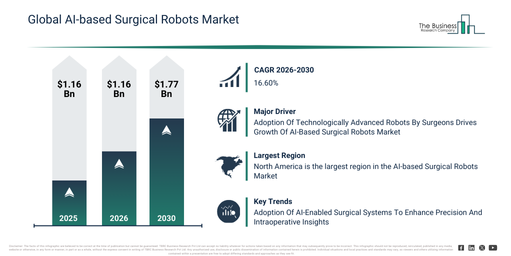
    The ai-based surgical robots market is set for substantial expansion in the upcoming years. Its valuation is anticipated to climb to $17.35 billion by 2030, demonstrating a compound annual growth rate (CAGR) of 16.6%. This projected growth throughout the forecast period stems from factors such as increasing demand for ai-driven surgical planning, a rising focus on outcome-based healthcare delivery, the expansion of robotic surgery into new specialties, growing investments in smart operating theaters, and an increasing adoption of data-driven surgical workflows. Significant trends during this period encompass the increasing adoption of ai-assisted surgical decision systems, rising integration of advanced robotic vision and navigation, a growing demand for minimally invasive surgical procedures, the expansion of robotic surgery training programs, and an enhanced focus on surgical precision and accuracy.

    Get A Free Sample Report With In-Depth Market Insights:

    https://thebusinessresearchcompany.com/sample_request?id=16157808&type=smp&name=AI-based%20Surgical%20Robots%20Market%20Report%202026&utm_source=Blogs&utm_medium=Paid&utm_campaign=Sep_PR

    AI-based Surgical Robots Market Industry Drivers: What’s Behind The Revenue Growth?

    The growing embrace of technologically advanced robots by surgeons for a variety of applications has stimulated the expansion of the AI-based surgical robots market. Robots are automated devices capable of executing preprogrammed tasks. As technology advances, AI is also being utilized to boost the efficiency, accuracy, and overall performance of robots. AI-based surgical robots are employed in diverse surgeries and specializations such as neurology, urology, ENT, thoracic surgery, colorectal surgery, and others. For instance, in 2023, according to Oliver Wyman, a US-based management consulting firm, robotic surgery accounts for 2% of surgeries across Europe and approximately 15% in the US. Thus, the increasing integration of technologically advanced robots by surgeons for various uses is a primary driver for the growth of the AI-based surgical robot market.

    AI-based Surgical Robots Market Segment Landscape: Which Areas Lead Development?

    The ai-based surgical robots market covered in this report is segmented –

    1) By Product: Services, Instrument and Accessories

    2) By Application: Orthopedics, Neurology, Urology, Gynecology, Other Applications

    3) By End User: Hospitals, Ambulatory Surgical Centers

    Subsegments:

    1) By Services: Installation and Commissioning Services, Training and Support Services, Maintenance and Repair Services

    2) By Instruments and Accessories: Surgical Instruments, Vision Systems and Cameras, Software for Surgical Planning and Navigation, Consumables and Disposable Accessories, Integration Solutions, Specialized Robotic Systems

    #AI-based Surgical Robots Market Growth Trends: What’s Shaping The Future Outlook?

    Leading companies in the AI-based surgical robots market are intensifying their efforts to develop technological advancements, such as AI-powered force-feedback systems, designed for enhanced ergonomic precision and real-time surgical insight, ultimately aiming to improve safety, performance, and surgeon feedback. A force-feedback system functions by utilizing sensors in the instrument tips to measure the pressure applied to tissues, subsequently sending haptic data back to the surgeon, allowing them to sense tissue interaction. This capability addresses a crucial limitation of traditional robotic systems, which typically lack tactile feedback. For example, in March 2024, Intuitive Surgical, a US-based medical robotics company, unveiled the da Vinci 5 surgical robot. This system features force-feedback instruments that demonstrated up to 43% less force exerted on tissue during preclinical testing. It also offers more than 10,000× the computing power of its predecessor and incorporates AI-driven analytics such as Case Insights to support data-driven improvements in surgical performance. The system further integrates with the My Intuitive app, the SimNow VR simulator, and the Intuitive Hub edge-computing platform to boost workflow efficiency, enhance surgeon training, and optimize clinical outcomes.

    AI-based Surgical Robots Market Company Landscape And Competitive Strategy

    Major companies operating in the ai-based surgical robots market are Accuray Incorporated, Intuitive Surgical Inc., Medtronic plc, Medrobotics Corporation, Zimmer Biomet Holdings Inc., Transenterix Inc., Stryker Corporation, Activ Surgical Inc., Titan Medical Inc., CMR Surgical Inc., Smith and Nephew plc, Auris Health Inc., EndoMaster Pte Ltd., Globus Medical Inc., Johnson & Johnson, Memic Innovative Surgery Ltd., Microbot Medical Inc., Renishaw plc, Synaptive Medical Inc., Think Surgical Inc., XACT Robotics Ltd., Vicarious Surgical Inc., Asensus Surgical Inc., Brainlab AG, IMRIS Inc.

    View The Full AI-based Surgical Robots Market Report:

    https://thebusinessresearchcompany.com/report/AI-Based-surgical-robots-global-market-report?utm_source=Blogs&utm_medium=Paid&utm_campaign=Sep_PR

    AI-based Surgical Robots Market Largest Region: Which Geography Holds The Biggest Share?

    North America was the largest region in the AI-based surgical robots market in 2025. Asia-Pacific is expected to be the fastest-growing region in the AI-based surgical robots market share during the forecast period. The regions covered in the ai-based surgical robots market report are Asia-Pacific, South East Asia, Western Europe, Eastern Europe, North America, South America, Middle East, Africa.

    Reach Out To Our Team:

    The Business Research Company: https://www.thebusinessresearchcompany.com/

    Americas: +1 310-496-7795

    Asia: +44 7882 955267 & +91 8897263534

    Europe: +44 7882 955267

    Email us at: marketing@tbrc.info

    Follow us on:

    LinkedIn: https://in.linkedin.com/company/the-business-research-company

    YouTube: https://www.youtube.com/channel/UC24_fI0rV8cR5DxlCpgmyFQ

    Global Market Model: https://www.thebusinessresearchcompany.com/global-market-model
  • AI Skin Analysis Instruments Market 2026 Outlook: Market Size, CAGR And Key Growth Opportunities

    AI Skin Analysis Instruments Market 2026 Outlook: Market Size, CAGR And Key Growth Opportunities

    Featuring market attractiveness scoring, total addressable market sizing, company benchmarking matrices, interactive Excel dashboards, deeper supply chain intelligence, emerging startup tracking, and granular product-level insights, The Business Research Company’s 2026 market reports are built to deliver research that is both more actionable and more strategically valuable.

    AI Skin Analysis Instruments Market Value Analysis: What Growth Lies Ahead Over The Forecast Period?

    The ai skin analysis instruments market has experienced substantial expansion in recent years. It is projected to grow from $2.14 billion in 2025 to $2.54 billion in 2026, exhibiting a compound annual growth rate (CAGR) of 18.8%. This historical growth can be attributed to several factors, including the increasing adoption of digital dermatology tools, a rising demand for objective skin assessment, the expansion of aesthetic and cosmetic clinics, the growing use of imaging technologies in skincare, and the availability of advanced computing algorithms.

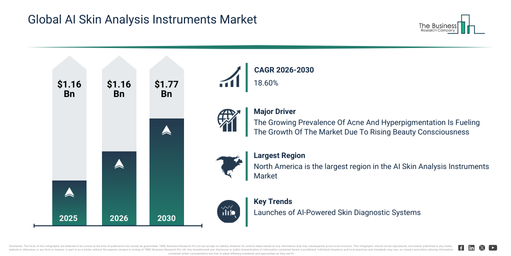
    The ai skin analysis instruments market size is anticipated to undergo substantial growth in the next few years. It is projected to reach $5.03 billion in 2030, progressing at a compound annual growth rate (CAGR) of 18.6%. This expansion during the forecast period can be ascribed to an increasing need for personalized skincare solutions, the rising integration of AI with consumer health devices, the broadening scope of home-based skin monitoring, augmented investments in digital beauty technologies, and a heightened focus on preventive skin health. Key trends expected in the forecast period include the expanding adoption of AI-driven skin diagnostic platforms, the growing utilization of multispectral and imaging-based analysis tools, the increasing integration of mobile and app-based skin assessment solutions, the enlargement of personalized skincare recommendation systems, and an intensified focus on data accuracy and consistency.

    Get A Free Sample Report With In-Depth Market Insights:

    https://thebusinessresearchcompany.com/sample_request?id=24137&type=smp&name=AI%20Skin%20Analysis%20Instruments%20Market%20Report%202026&utm_source=Blogs&utm_medium=Paid&utm_campaign=Sep_PR

    AI Skin Analysis Instruments Market Growth Factors: What’s Supporting Expansion?

    The increasing occurrence of skin conditions like acne and hyperpigmentation is anticipated to boost the expansion of the artificial intelligence (AI) skin analysis instruments market in the future. These skin disorders, including acne and hyperpigmentation, are recognized as prevalent inflammatory and pigmentary conditions marked by eruptions and dark areas resulting from melanin overproduction post-irritation or injury. The escalating need for remedies targeting acne and hyperpigmentation is fueled by heightened beauty awareness and social media impact, leading individuals to become more cognizant of skin flaws and eager to pursue specific treatments. For example, data from September 2024, published by the Journal of the American Academy of Dermatology (JAAD), a prominent US dermatology group, revealed that approximately 15% of the 7,126 surveyed individuals reported post-inflammatory hyperpigmentation, predominantly women (56%) with an average age of 39 years. Additionally, 30% of these individuals had a phototype >IV, contrasting with 25% globally, thus highlighting a significant and susceptible demographic for pigmentary skin issues. Furthermore, 71% of those suffering from PIH indicated previous acne, and 85% felt that earlier acne intervention could have averted it, emphasizing the increasing prevalence of hyperpigmentation stemming from acne among the populace. Consequently, the expanding occurrence of skin conditions like acne and hyperpigmentation is propelling the artificial intelligence (AI) skin analysis instruments.

    AI Skin Analysis Instruments Market Segments: Where Is Growth Concentrated?

    The ai skin analysis instruments market covered in this report is segmented –

    1) By Product Type: Handheld Skin Analysis Devices, Desktop Skin Analyzers, Wearable Skin Monitors, Mobile Application-Based Analyzers

    2) By Technology: Multispectral Imaging, Optical Coherence Tomography (OCT), Ultrasound Technology, Artificial Intelligence Algorithms

    3) By Distribution Channel: Online Sales, Retail Stores, Direct Sales, Distributor Partnerships

    4) By Application: Skin Type Analysis, Skin Condition Diagnosis, Product Recommendations, Home Skincare Routine Optimization

    5) By End User: Hospitals And Clinics, Beauty And Skincare Clinics, Research Institutions, Home Users, Cosmetics Manufacturers

    Subsegments:

    1) By Handheld Skin Analysis Devices: AI-Enabled Dermatoscopes, Portable Spectrometers With AI Skin Diagnostics, Smart Beauty Scanners With AI Integration

    2) By Desktop Skin Analyzers: Multi-Spectrum Imaging Systems With AI Analysis, Clinical-Grade AI Diagnostic Platforms, AI-Assisted Diagnostic Imaging Stations

    3) By Wearable Skin Monitors: AI-Powered UV Exposure Trackers, Smart Patches For Hydration And PH Monitoring, Continuous Skin Health Monitoring Bands With AI

    4) By Mobile Application-Based Analyzers: AI Skin Health Apps Using Smartphone Cameras, Cloud-Based AI Dermatology Platforms, Real-Time Acne, Wrinkle, And Pigmentation Analyzers Via Mobile

    AI Skin Analysis Instruments Market Industry Trends: What’s Reshaping Demand?

    Major companies within the AI Skin Analysis Instruments market are increasingly focusing on AI-powered skin diagnostic systems, which include digital skin analysis tools that utilize computer vision and machine-learning algorithms to evaluate skin biomarkers and propose personalized skincare routines. These digital analysis tools typically refer to software or platforms that process skin images, such as selfies, employing AI to quantify parameters like wrinkles, pigmentation, pores, and texture, along with other clinically relevant skin metrics, subsequently using these insights to guide product selection or skincare regimens. A notable example occurred in April 2024, when NAOS, a France-based skincare company, launched Skin Observer, an AI-driven digital skin-analysis service developed in collaboration with Haut.AI. This platform is designed to evaluate more than 150 skin-biomarker data points, leveraging Haut.AI’s advanced computer-vision and machine-learning algorithms to deliver clinical-grade assessments with high precision. It further personalizes recommendations by tracking changes in an individual’s skin condition over time and tailoring skincare routines to their specific goals and preferences. Created for both consumers and professionals, this service aims to enhance skin-health monitoring, support evidence-based product choices, and strengthen NAOS’s market position in data-powered, personalized skincare solutions.

    AI Skin Analysis Instruments Market Key Players Shaping Industry Direction

    Major companies operating in the ai skin analysis instruments market are L’Oréal S.A., Meitu Inc., Neutrogena Corporation, Foreo AB, Perfect Corp., FotoFinder Systems Inc., DJM Medical Instrument GmbH, Beijing ADSS Development Co. Ltd., Canfield Scientific Inc., MetaOptima Technology Inc., Shiseido Company Limited, Aesthetic Bureau Pty Ltd., Haut.AI OÜ, Shanghai May Skin Information Technology Co. Ltd., SkinVision B.V., Zemits Inc., VISIA Skin Analysis (Canfield), HiMirror (Caliber Interactive), WaySkin Inc., SK-II Skin Analysis Solutions

    View The Full AI Skin Analysis Instruments Market Report:

    https://thebusinessresearchcompany.com/report/ai-skin-analysis-instruments-global-market-report?utm_source=Blogs&utm_medium=Paid&utm_campaign=Sep_PR

    AI Skin Analysis Instruments Market Regional Analysis: Which Geography Leads On Revenue?

    North America was the largest region in the AI skin analysis instruments market in 2025. Asia-Pacific is expected to be the fastest-growing region in the forecast period. The regions covered in the ai skin analysis instruments market report are Asia-Pacific, South East Asia, Western Europe, Eastern Europe, North America, South America, Middle East, Africa.

    Reach Out To Our Team:

    The Business Research Company: https://www.thebusinessresearchcompany.com/

    Americas: +1 310-496-7795

    Asia: +44 7882 955267 & +91 8897263534

    Europe: +44 7882 955267

    Email us at: marketing@tbrc.info

    Follow us on:

    LinkedIn: https://in.linkedin.com/company/the-business-research-company

    YouTube: https://www.youtube.com/channel/UC24_fI0rV8cR5DxlCpgmyFQ

    Global Market Model: https://www.thebusinessresearchcompany.com/global-market-model
  • Agarose Gel Electrophoresis System Market Size Growth: From $4.13 Billion In 2026 To $5.63 Billion By 2030

    Agarose Gel Electrophoresis System Market Size Growth: From $4.13 Billion In 2026 To $5.63 Billion By 2030

    Built to provide research that’s more actionable and strategically valuable, The Business Research Company’s 2026 market reports include market attractiveness analysis, total addressable market sizing, company benchmarking matrices, interactive Excel dashboards, broader supply chain intelligence, emerging startup tracking, and in-depth product insights.

    Agarose Gel Electrophoresis System Market Size Forecast: How Big Could The Market Get By 2030?

    The agarose gel electrophoresis system market has demonstrated substantial expansion in recent years. This market is expected to increase from $3.81 billion in 2025 to $4.13 billion in 2026, achieving a compound annual growth rate (CAGR) of 8.4%. In previous periods, this growth was primarily due to factors like the reliance on manual agarose gel preparation, the limited availability of precast gels, an increase in molecular biology research, the standardization of laboratory protocols, and a rising number of testing centers.

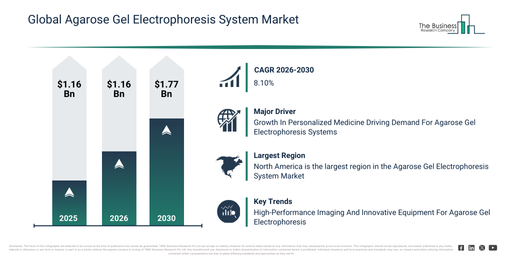
    The market size for agarose gel electrophoresis systems is projected to experience significant growth in the coming years. It is set to expand to $5.63 billion by 2030, achieving a compound annual growth rate (CAGR) of 8.1%. This anticipated growth during the forecast period stems from factors such as the automation of agarose gel electrophoresis systems, the creation of high-throughput tray and tape systems, an increase in genomics and proteomics research, a surge in demand from clinical diagnostics, and the integration with digital laboratory management systems. Prominent trends for the forecast period encompass the rising adoption of precast agarose gels, an increasing need for multi-well and customized tray systems, the expansion of laboratory and testing centers, a growing emphasis on high-throughput DNA/RNA analysis, and enhanced integration with automated laboratory equipment.

    Get A Free Sample Report With In-Depth Market Insights:

    https://thebusinessresearchcompany.com/sample_request?id=62317945&type=smp&name=Agarose%20Gel%20Electrophoresis%20System%20Market%20Report%202026&utm_source=Blogs&utm_medium=Paid&utm_campaign=Sep_PR

    Agarose Gel Electrophoresis System Market Demand Drivers: What’s Powering Industry Growth?

    The expanding emphasis on personalized medicine is projected to boost the expansion of the agarose gel electrophoresis system market. Personalized medicine involves customizing medical treatments and healthcare approaches to align with an individual’s distinct genetic makeup, environmental influences, and lifestyle choices. This increase in demand for personalized medicine stems from its capacity to enhance treatment results, improve drug effectiveness, reduce negative side effects, and deliver precise therapies tailored to individual genetic and lifestyle profiles. Agarose gel electrophoresis plays a crucial role in personalized medicine by allowing the separation and examination of DNA fragments, assisting in genetic screening, and pinpointing particular genetic variations pertinent to individual treatment plans. As an example, in February 2024, the Personalized Medicine Coalition, a US-based non-profit organization, reported that the FDA cleared 16 new personalized therapies for rare disease patients in 2023, an increase from six in 2022. Consequently, the increased attention on personalized medicine is set to fuel the growth of the agarose gel electrophoresis system market.

    Agarose Gel Electrophoresis System Market Segment Analysis: What Are The Core Market Categories?

    The agarose gel electrophoresis system market covered in this report is segmented –

    1) By Product: Tray Style, Tape Style, Dam Style

    2) By Gel Type: Pourable Agarose Gel, Precast Agarose Gel

    3) By Application: Testing Center, Laboratory, Other Applications

    Subsegments:

    1) By Tray Style: Standard Tray Systems, Multi-well Tray Systems, Customized Tray Systems

    2) By Tape Style: Adhesive Tape Systems, Modular Tape Systems, Pre-cast Tape Systems

    3) By Dam Style: Fixed Dam Systems, Removable Dam Systems, Integrated Dam Systems

    Agarose Gel Electrophoresis System Market Innovation Trends: What Developments Are Reshaping The Industry?

    Leading companies in the agarose gel electrophoresis system market are focusing on creating advanced solutions, such as high-performance and high-resolution gel imaging systems, to elevate accuracy, efficiency, and overall research capabilities. High-performance and high-resolution gel imaging refers to the capacity of these systems to capture detailed, clear, and precise images of gel electrophoresis results, thereby enabling accurate visualization of bands and precise quantification of nucleic acids or proteins with minimal distortion and high sensitivity. For example, in December 2023, Transgen Biotech Co. Ltd., a China-based biotechnology research company, launched the TSE-N multi-purpose horizontal electrophoresis system and the TSI-100 gel imaging system, which offer advanced functionalities for agarose gel electrophoresis. These systems provide accurate electrophoresis performance and high-resolution gel imaging, significantly enhancing precision and efficiency in molecular biology research. The equipment features both white light and ultraviolet light sources for the digital image processing of gels stained with silver, fluorescent, film, Coomassie brilliant blue, and nucleic acid dyes.

    Agarose Gel Electrophoresis System Market Competitive Analysis Of Leading Industry Participants

    Major companies operating in the agarose gel electrophoresis system market are Thermo Fisher Scientific Inc., Merck KGaA, Lonza Group Ltd, Agilent Technologies Inc., Kaneka Corporation, VWR International, Beckman Coulter Inc, PerkinElmer Inc., Bio-Rad Laboratories Inc., QIAGEN N.V., Bioneer Corporation, Analytik Jena, Sebia Group, Major Science Co. Ltd., Biocompare Inc., Geno Technology Inc., Cleaver Scientific Ltd., IBI Scientific, C.B.S. Scientific Company, DH Life Sciences LLC., Hoefer Inc., Roylab Pte Ltd.

    View The Full Agarose Gel Electrophoresis System Market Report:

    https://thebusinessresearchcompany.com/report/agarose-gel-electrophoresis-system-global-market-report?utm_source=Blogs&utm_medium=Paid&utm_campaign=Sep_PR

    Agarose Gel Electrophoresis System Market Geographic Spread And Regional Opportunities

    North America was the largest region in the agarose gel electrophoresis system market in 2025. Asia-Pacific is expected to be the fastest-growing region in the forecast period. The regions covered in the agarose gel electrophoresis system market report are Asia-Pacific, South East Asia, Western Europe, Eastern Europe, North America, South America, Middle East, Africa.

    Reach Out To Our Team:

    The Business Research Company: https://www.thebusinessresearchcompany.com/

    Americas: +1 310-496-7795

    Asia: +44 7882 955267 & +91 8897263534

    Europe: +44 7882 955267

    Email us at: marketing@tbrc.info

    Follow us on:

    LinkedIn: https://in.linkedin.com/company/the-business-research-company

    YouTube: https://www.youtube.com/channel/UC24_fI0rV8cR5DxlCpgmyFQ

    Global Market Model: https://www.thebusinessresearchcompany.com/global-market-model
  • Aesthetic Implants Market Analysis 2026: Market Size, Growth Trends And Industry Outlook

    Aesthetic Implants Market Analysis 2026: Market Size, Growth Trends And Industry Outlook

    Backed by market attractiveness analysis, total addressable market sizing, company benchmarking matrices, interactive Excel dashboards, wider supply chain intelligence, emerging startup coverage, and detailed product-level insights, The Business Research Company’s 2026 market reports are designed to offer research that is more actionable and strategically valuable than ever.

    Aesthetic Implants Market Revenue Outlook: What CAGR Lies Ahead Through 2030?

    The aesthetic implants market has experienced significant growth in recent years. It is projected to increase from $5.58 billion in 2025 to $6 billion in 2026, at a compound annual growth rate (CAGR) of 7.7%. This historic expansion can be attributed to the rising acceptance of cosmetic and reconstructive surgeries, an increasing demand for breast augmentation and facial contouring, the enhanced availability of polymer and silicone-based implant materials, the proliferation of specialty cosmetic surgery clinics, and the growing influence of beauty standards and lifestyle preferences.

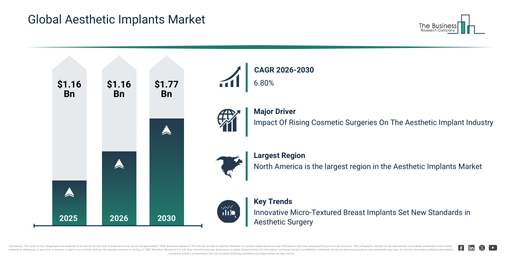
    The aesthetic implants market is poised for significant expansion in the foreseeable future. It is projected to reach $7.82 billion by 2030, demonstrating a compound annual growth rate (CAGR) of 6.8%. This anticipated growth during the forecast period stems from several factors: the escalating uptake of sophisticated implant production and tailored design methods, a surging demand for aesthetic interventions in developing economies, a heightened emphasis on ensuring patient well-being and reducing complications, a broadened acceptance of male aesthetic treatments, and a greater prevalence of less invasive and outpatient cosmetic operations. Noteworthy trends anticipated in this period encompass a heightened call for cosmetic improvements within breast, facial, and body sculpting categories; a rising embrace of minimally invasive aesthetic implant procedures aimed at shortening recovery and minimizing scars; an evolving consumer inclination towards personalized and patient-specific implant configurations; a wider application of biocompatible and durable implant substances for enhanced safety; and a broadening acceptance of aesthetic implants among male and younger demographics.

    Get A Free Sample Report With In-Depth Market Insights:

    https://thebusinessresearchcompany.com/sample_request?id=34167567&type=smp&name=Aesthetic%20Implants%20Market%20Report%202026&utm_source=Blogs&utm_medium=Paid&utm_campaign=Sep_PR

    Aesthetic Implants Market Growth Drivers: What’s Behind The Acceleration?

    The aesthetic implant market is anticipated to experience growth, propelled by an uptick in cosmetic surgeries. These medical procedures involve surgical techniques aimed at enhancing or altering an individual’s appearance. The expansion of cosmetic surgery is fueled by technological progress, evolving beauty standards, and improved accessibility, catering to personal desires for enhanced looks and greater self-confidence. Aesthetic implants are seeing increased utilization in these surgeries to improve physical appearance, correct deformities, and achieve more natural and durable outcomes, thus addressing the increasing demand for aesthetic improvements. For example, in April 2025, the British Association of Aesthetic Plastic Surgeons, a professional organization from the UK, reported that 25,972 surgical procedures were carried out in 2023, with women making up 93% of all cosmetic surgeries. Men represented the remaining 7% of these procedures. Hence, the increasing number of cosmetic surgeries is expected to stimulate the growth of the aesthetic implant market.

    Aesthetic Implants Market Segment Breakdown: Which Categories Lead On Revenue?

    The aesthetic implants market covered in this report is segmented –

    1) By Product Type: Breast Implants, Dental Implants, Facial Implants, Other Product Types

    2) By Material: Metals, Ceramic, Polymer, Biological

    3) By Gender Type: Female, Male

    4) By End-User: Hospital, Specialty Clinics, Other End-Users

    Subsegments:

    1) By Breast Implants: Silicone Gel Implants, Saline Implants, Structured Breast Implants

    2) By Dental Implants: Endosteal Implants, Subperiosteal Implants, Zygomatic Implants

    3) By Facial Implants: Chin Implants, Cheek Implants, Jaw Implants, Rhinoplasty Implants

    4) By Other Product Types: Buttock Implants, Calf Implants, Pectoral Implants

    Aesthetic Implants Market Trends: What’s Defining The Industry’s Next Phase?

    Major companies operating in the aesthetic implant market are innovating biocompatible materials, such as silicone-based breast implants, to enhance patient outcomes and safety, provide more natural-looking results, and minimize complications. Silicone-based breast implants are medical devices employed in cosmetic and reconstructive surgery, which contain a cohesive silicone gel within a silicone elastomer shell, crafted to improve breast size and shape with a natural look and feel. For instance, in April 2024, GC Aesthetics, an Ireland-based designer, manufacturer, and distributor of breast implants and medical devices, launched the LUNA XT, the world’s first micro-textured anatomical breast implant approved under the new European Medical Device Regulation (MDR). The LUNA XT Anatomical Breast Implant offers advanced support for women undergoing immediate and delayed breast reconstruction surgery. Featuring a micro-textured surface, cohesive silicone gel, and a high-performance shell, it represents a state-of-the-art option for women seeking breast procedures.

    Aesthetic Implants Market Leading Companies And Competitive Benchmarking

    Major companies operating in the aesthetic implants market are Zimmer Biomet Holdings Inc., Dentsply Sirona Inc., Institut Straumann AG, Integra LifeSciences Holdings Corporation, RTI Surgical Holdings Inc., Establishment Labs Holdings Inc., Silimed Indústria de Implantes Ltda., Sientra Inc., GC Aesthetics plc, Hans Biomed Corp., Sebbin, PMT Corporation, POLYTECH Health & Aesthetics GmbH, AVINENT Implant System, Implantech Associates Inc., Symatese Group, Ideal Implant Incorporated, Nagor Ltd, CEREPLAS, Surgiform Innovative Surgical Products, Alpha Aesthetics LLC, Lattice Medical

    View The Full Aesthetic Implants Market Report:

    https://thebusinessresearchcompany.com/report/aesthetic-implants-global-market-report?utm_source=Blogs&utm_medium=Paid&utm_campaign=Sep_PR

    Aesthetic Implants Market Top Region By Revenue And Market Share

    North America was the largest region in the aesthetic implants market in 2025. The regions covered in the aesthetic implants market report are Asia-Pacific, South East Asia, Western Europe, Eastern Europe, North America, South America, Middle East, Africa.

    Reach Out To Our Team:

    The Business Research Company: https://www.thebusinessresearchcompany.com/

    Americas: +1 310-496-7795

    Asia: +44 7882 955267 & +91 8897263534

    Europe: +44 7882 955267

    Email us at: marketing@tbrc.info

    Follow us on:

    LinkedIn: https://in.linkedin.com/company/the-business-research-company

    YouTube: https://www.youtube.com/channel/UC24_fI0rV8cR5DxlCpgmyFQ

    Global Market Model: https://www.thebusinessresearchcompany.com/global-market-model
  • Aerosol Drug Delivery Devices Market Forecast To 2030: Starting From $64.94 Billion In 2026

    Aerosol Drug Delivery Devices Market Forecast To 2030: Starting From $64.94 Billion In 2026

    Featuring market attractiveness scoring, total addressable market sizing, company benchmarking matrices, interactive Excel dashboards, deeper supply chain intelligence, emerging startup tracking, and granular product-level insights, The Business Research Company’s 2026 market reports are built to deliver research that is both more actionable and more strategically valuable.

    Aerosol Drug Delivery Devices Market Growth Analysis: How Will Revenue Trend Over The Forecast Period?

    The aerosol drug delivery devices market size has seen significant growth in recent years. Its value is expected to rise from $41.55 billion in 2025 to $45.54 billion in 2026, exhibiting a compound annual growth rate (CAGR) of 9.6%. This historical expansion can be ascribed to several factors, including an increasing incidence of asthma and COPD, reliance on conventional inhaler technologies, a rise in hospital-based respiratory care, the expansion of pharmaceutical aerosol formulations, and growing awareness of pulmonary drug delivery.

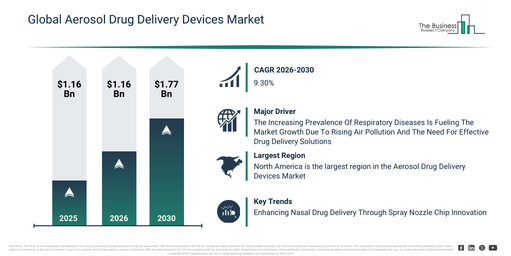
    The aerosol drug delivery devices market is poised for robust expansion in the upcoming years. It is projected to attain a valuation of $64.94 billion by 2030, exhibiting a compound annual growth rate (CAGR) of 9.3%. This anticipated growth during the forecast period can be attributed to the advancement of smart inhalers and digital monitoring, the expansion of homecare and self-administration therapies, the increasing application of aerosol drugs beyond respiratory uses, progress in aerosolization and formulation science, and a rise in regulatory approvals for inhaled treatments. Significant trends expected during this period include a growing adoption of inhalation-based therapies, an increased demand for portable and homecare aerosol devices, a heightened focus on optimizing particle size, the proliferation of smart and connected inhalation devices, and an escalating prevalence of chronic respiratory conditions.

    Get A Free Sample Report With In-Depth Market Insights:

    https://thebusinessresearchcompany.com/sample_request?id=19772661&type=smp&name=Aerosol%20Drug%20Delivery%20Devices%20Market%20Report%202026&utm_source=Blogs&utm_medium=Paid&utm_campaign=Sep_PR

    Aerosol Drug Delivery Devices Market Growth Factors Behind Sustained Expansion

    The growing occurrence of respiratory illnesses is projected to drive the expansion of the aerosol drug delivery devices market moving forward. Respiratory diseases are medical conditions affecting the lungs and other parts of the respiratory system, making normal breathing difficult. This rise in respiratory diseases is largely attributed to increasing air pollution, where irritants such as particulate matter, nitrogen dioxide (NO₂), and ozone (O₃) irritate the respiratory tract, leading to chronic conditions like asthma, bronchitis, and chronic obstructive pulmonary disease (COPD). Aerosol drug delivery devices assist in the treatment of respiratory diseases by directly delivering medication to the lungs, resulting in faster therapeutic effects and improved treatment effectiveness. This also helps in minimizing systemic side effects and improving patient compliance through targeted and non-invasive administration. For example, in November 2024, the Australian Institute of Health and Welfare, an Australian government agency, reported that in 2023, respiratory conditions contributed 7.2% to the overall disease burden, 8.5% to illnesses causing disability without death, and 5.8% to premature deaths. Therefore, the increasing prevalence of respiratory diseases is boosting the growth of the aerosol drug delivery devices market.

    Aerosol Drug Delivery Devices Market Segmentation: How Does The Market Break Down By Category?

    The aerosol drug delivery devices market covered in this report is segmented –

    1) By Product Type: Metered Dose Inhalers (MDIs), Dry Powder Inhalers (DPIs), Nebulizers, Smart Inhalers, Other Product Types

    2) By Component: Delivery Devices, Compressor Units, Medication Containers, Accessories And Consumables

    3) By Application: Asthma, Chronic Obstructive Pulmonary Disease, Cystic Fibrosis, Non-Respiratory Diseases, Diabetes, Analgesia, Parkinson’s Diseases

    4) By Distribution Channel: Hospital Pharmacies, Retail Pharmacies, Online Pharmacies, Other Distribution Channels

    5) By End User: Hospitals, Homecare Settings, Pharmaceutical Companies, Research Institutions, Other End Users

    Subsegments:

    1) By Metered Dose Inhalers (MDIs): Conventional Metered Dose Inhalers, Breath-Actuated Metered Dose Inhalers, Pressurized Metered Dose Inhalers

    2) By Dry Powder Inhalers (DPIs): Single-Dose Dry Powder Inhalers, Multi-Dose Dry Powder Inhalers, Reservoir Dry Powder Inhalers

    3) By Nebulizers: Jet Nebulizers, Ultrasonic Nebulizers, Mesh Nebulizers

    4) By Smart Inhalers: Bluetooth-Enabled Smart Inhalers, Sensor-Based Smart Inhalers, App-Connected Smart Inhalers

    5) By Other Product Types: Soft Mist Inhalers, Nasal Spray Inhalers, Disposable Inhalers

    Aerosol Drug Delivery Devices Market Industry Trends Fueling Future Revenue Growth

    Leading companies within the aerosol drug delivery devices market are concentrating on developing innovative technologies, such as spray nozzle chip technology, to enhance drug delivery precision, improve nasal cavity coverage, and increase patient comfort. Spray nozzle chip technology refers to a micro-engineered component designed to generate a fine, uniform aerosol mist for drug delivery. For instance, in October 2024, Aero Pump GmbH, a Germany-based manufacturing company, partnered with Resyca B.V., a Netherlands-based pharmaceutical company, to launch the Ultra Soft Nasal Pump Spray, a device that leverages spray nozzle chip technology to deliver a fine and uniform soft mist. This enhances drug delivery precision, nasal cavity coverage, and patient comfort for applications such as nose-to-brain therapies and nasal vaccinations. This innovative spray nozzle chip facilitates slow-moving aerosol particles that can reach deeper areas of the nasal passage, thereby improving drug absorption in hard-to-reach regions such as the olfactory zone.

    Aerosol Drug Delivery Devices Market Industry Leaders And Competitive Landscape

    Major companies operating in the aerosol drug delivery devices market are Merck And Co Inc, Novartis AG, AstraZeneca PLC, GSK PLC, Boehringer Ingelheim Pharma GmbH And Co KG, Koninklijke Philips NV, Teva Pharmaceutical Industries Ltd, Omron Healthcare Inc, AptarGroup Inc, Chiesi Farmaceutici SPA, Cipla Inc, Gerresheimer AG, Drive DeVilbiss Healthcare LLC, Beximco Pharmaceuticals Limited, Aerogen Limited, PARI GmbH, Pneuma Respiratory Inc, Iconovo AB, Vectura Group Ltd, MannKind Corporation, Trudell Medical International, InspiRx Inc

    View The Full Aerosol Drug Delivery Devices Market Report:

    https://thebusinessresearchcompany.com/report/aerosol-drug-delivery-devices-global-market-report?utm_source=Blogs&utm_medium=Paid&utm_campaign=Sep_PR

    Aerosol Drug Delivery Devices Market Regional Analysis And Top Geography

    North America was the largest region in the aerosol drug delivery devices market in 2025. Asia-Pacific is expected to be the fastest-growing region in the forecast period. The regions covered in the aerosol drug delivery devices market report are Asia-Pacific, South East Asia, Western Europe, Eastern Europe, North America, South America, Middle East, Africa.

    Reach Out To Our Team:

    The Business Research Company: https://www.thebusinessresearchcompany.com/

    Americas: +1 310-496-7795

    Asia: +44 7882 955267 & +91 8897263534

    Europe: +44 7882 955267

    Email us at: marketing@tbrc.info

    Follow us on:

    LinkedIn: https://in.linkedin.com/company/the-business-research-company

    YouTube: https://www.youtube.com/channel/UC24_fI0rV8cR5DxlCpgmyFQ

    Global Market Model: https://www.thebusinessresearchcompany.com/global-market-model
  • Aerosol Delivery Devices Market Size In 2026 And Beyond: Understanding Future Growth Potential

    Aerosol Delivery Devices Market Size In 2026 And Beyond: Understanding Future Growth Potential

    Built to provide research that’s more actionable and strategically valuable, The Business Research Company’s 2026 market reports include market attractiveness analysis, total addressable market sizing, company benchmarking matrices, interactive Excel dashboards, broader supply chain intelligence, emerging startup tracking, and in-depth product insights.

    Aerosol Delivery Devices Market Forecast: What Value Will The Market Reach By 2030?

    The aerosol delivery devices market size has demonstrated significant growth in recent years. It is anticipated to expand from $51.24 billion in 2025 to $55.42 billion in 2026, exhibiting a compound annual growth rate (CAGR) of 8.1%. This historical growth can be attributed to several factors, including the increasing prevalence of asthma and COPD cases, the rising usage of metered dose inhalers in clinical practice, an increase in hospital procurement of nebulizers and DPIs, the expansion of respiratory therapy programs across healthcare systems, and a heightened focus on targeted pulmonary drug delivery.

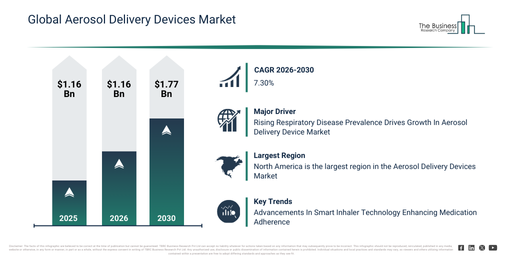
    The aerosol delivery devices market is projected to experience substantial expansion over the coming years, reaching a valuation of $73.33 billion in 2030, demonstrating a compound annual growth rate (CAGR) of 7.3%. This anticipated growth is driven by several factors, including the increasing integration of home care respiratory treatment devices, a rising demand for portable mesh and ultrasonic nebulizer systems, a notable shift towards patient-focused inhalation technologies, the broadening of retail and e-commerce distribution channels, and an escalating focus on enhancing treatment compliance for chronic respiratory conditions. Key trends during this forecast timeframe encompass an intensified clinical concentration on optimizing aerosol drug delivery for managing respiratory disorders, the expanding uptake of sophisticated inhalation platforms within asthma and COPD treatment areas, a surging inclination towards portable and home-based aerosol delivery solutions for ongoing therapeutic support, the wider application of nebulizers and dry powder inhalers among pediatric and geriatric patient populations, and a continued push for developing user-friendly inhalation interfaces to bolster adherence and improve treatment results.

    Get A Free Sample Report With In-Depth Market Insights:

    https://thebusinessresearchcompany.com/sample_request?id=21096261&type=smp&name=Aerosol%20Delivery%20Devices%20Market%20Report%202026&utm_source=Blogs&utm_medium=Paid&utm_campaign=Sep_PR

    Aerosol Delivery Devices Market Demand Drivers Opening New Revenue Streams

    The increasing incidence of respiratory illnesses is anticipated to boost the expansion of the aerosol delivery device market. Respiratory diseases cover a wide spectrum of ailments impacting the airways, lungs, and the entire respiratory system. Cases of these diseases arise from factors like air pollution, smoking, allergens, and respiratory infections. Aerosol delivery devices are crucial in managing respiratory diseases, as they facilitate the efficient administration of medications, such as bronchodilators and corticosteroids, directly to the lungs, thereby enhancing therapeutic results and patient adherence. For instance, in June 2025, data from the World Health Organization/European Respiratory Society, a Europe-based health agency, indicated that the population living with chronic respiratory diseases in the WHO European Region surged to 81.7 million in 2025, surpassing earlier projections, with a significant number of cases still undetected. Therefore, the growing prevalence of respiratory diseases will stimulate the growth of the aerosol delivery device market.

    Aerosol Delivery Devices Market Segment Trends And Revenue Contributors

    The aerosol delivery devices market covered in this report is segmented –

    1) By Product: Dry Powder Inhalers, Metered Dose Inhalers, Nebulizers

    2) By Application: Asthma, Chronic Obstructive Pulmonary Disease, Cystic Fibrosis

    3) By Distribution Channel: Retail Pharmacies, Hospital Pharmacies, E Commerce

    Subsegments:

    1) By Dry Powder Inhalers (DPIs): Single-Dose DPIs, Multi-Dose DPIs

    2) By Metered Dose Inhalers (MDIs): Conventional MDIs, MDIs With Spacer/Chamber

    3) By Nebulizers: Jet Nebulizers, Ultrasonic Nebulizers, Mesh Nebulizers

    Aerosol Delivery Devices Market Trends Powering Strategic Industry Growth

    Major companies within the aerosol delivery device market are concentrating on innovative inhaler dose tracking solutions, such as smart inhaler dose monitoring devices, to boost medication compliance and enable real-time tracking of inhaler usage. A smart inhaler dose monitoring device represents an electronic system that monitors and records inhaler consumption, delivering live dose oversight and adherence data. For instance, in June 2024, Aseptika Ltd., a UK-based MedTech company, unveiled the groundbreaking PUFFClicker3 Universal Inhaler. This smart inhaler dose counter attaches to various inhalers, utilizing sensors to log each dose. It offers real-time dose monitoring, a user-friendly interface, and Bluetooth connectivity to sync with health apps, helping patients follow medication schedules and providing healthcare providers with comprehensive adherence information.

    Aerosol Delivery Devices Market Key Participants And Competitive Landscape

    Major companies operating in the aerosol delivery devices market are AstraZeneca plc, Novartis AG, GlaxoSmithKline plc, 3M Company, Becton Dickinson and Company, Koninklijke Philips NV, Teva Pharmaceutical Industries Ltd, Draegerwerk AG & Co KGaA, Chiesi Farmaceutici SpA, Vectura Group plc, Sunovion Pharmaceuticals Inc., Omron Healthcare Inc., PARI GmbH, Aerogen Inc, Clement Clarke International Ltd, Iconovo AB, Boehringer Ingelheim GmbH, Cipla Ltd, Cipla Respiratory Devices, Cipla Pharma Ltd, Mylan NV

    View The Full Aerosol Delivery Devices Market Report:

    https://thebusinessresearchcompany.com/report/aerosol-delivery-devices-global-market-report?utm_source=Blogs&utm_medium=Paid&utm_campaign=Sep_PR

    Aerosol Delivery Devices Market Geographic Analysis: Where Is Demand Rising Fastest?

    North America was the largest region in the aerosol delivery devices market in 2025. Asia-Pacific is expected to be the fastest-growing region in the forecast period. The regions covered in the aerosol delivery devices market report are Asia-Pacific, South East Asia, Western Europe, Eastern Europe, North America, South America, Middle East, Africa.

    Reach Out To Our Team:

    The Business Research Company: https://www.thebusinessresearchcompany.com/

    Americas: +1 310-496-7795

    Asia: +44 7882 955267 & +91 8897263534

    Europe: +44 7882 955267

    Email us at: marketing@tbrc.info

    Follow us on:

    LinkedIn: https://in.linkedin.com/company/the-business-research-company

    YouTube: https://www.youtube.com/channel/UC24_fI0rV8cR5DxlCpgmyFQ

    Global Market Model: https://www.thebusinessresearchcompany.com/global-market-model
  • Advanced Wound Care Market Reaches $16.43 Billion In 2026: Key Developments Shaping Expansion

    Advanced Wound Care Market Reaches $16.43 Billion In 2026: Key Developments Shaping Expansion

    Backed by market attractiveness analysis, total addressable market sizing, company benchmarking matrices, interactive Excel dashboards, wider supply chain intelligence, emerging startup coverage, and detailed product-level insights, The Business Research Company’s 2026 market reports are designed to offer research that is more actionable and strategically valuable than ever.

    Advanced Wound Care Market Size Outlook: How Quickly Will Revenue Expand Through 2030?

    The advanced wound care market has demonstrated significant expansion in recent years. It is anticipated to grow from $11.61 billion in 2025 to $12.43 billion in 2026, exhibiting a compound annual growth rate (CAGR) of 7.0%. This historical growth can be attributed to several factors, including the increasing incidence of chronic and acute wounds, the broadening scope of hospital wound care departments, a higher occurrence of surgical wounds, the expanding diabetic population, and the accessibility of advanced wound care products.

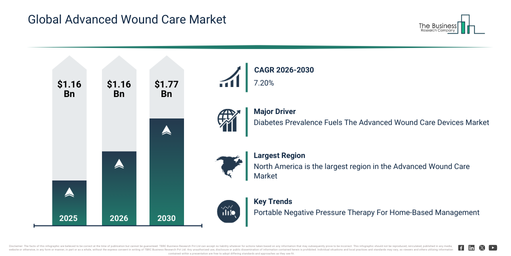
    The advanced wound care market is anticipated to show significant expansion in the coming years, with its size expected to reach $16.43 billion in 2030, demonstrating a compound annual growth rate (CAGR) of 7.2%. This projected growth throughout the forecast period stems from factors such as increasing demand for advanced wound healing solutions, a rise in the adoption of home healthcare wound management, the broadening of personalized wound treatment approaches, an increased emphasis on reducing healing time, and heightened investment in wound care innovation. Notable trends for the forecast period encompass the increasing use of moist wound healing technologies, a growing utilization of antimicrobial and active dressings, the expanding integration of NPWT systems, the proliferation of bioengineered skin substitutes, and an intensified focus on chronic wound management.

    Get A Free Sample Report With In-Depth Market Insights:

    https://thebusinessresearchcompany.com/sample_request?id=66963141&type=smp&name=Advanced%20Wound%20Care%20Market%20Report%202026&utm_source=Blogs&utm_medium=Paid&utm_campaign=Sep_PR

    Advanced Wound Care Market Growth Backed By Core Demand Fundamentals

    The increasing prevalence of diabetes is anticipated to propel the expansion of the advanced wound care devices market in the future. Diabetes is a chronic health condition marked by elevated blood glucose levels, stemming from the body’s inability to produce or effectively utilize insulin, a hormone crucial for blood sugar regulation. This rising incidence of diabetes fuels a greater demand for specialized advanced wound care devices, underscoring the necessity for continuous innovation and investment in technologies to address the specific difficulties presented by diabetic wounds and improve patient outcomes. Advanced wound care offers benefits for diabetes by fostering quicker healing of chronic wounds, lowering infection risks, preventing complications such as ulcers or amputations, and enhancing overall skin health for diabetic patients. For example, in June 2024, the National Health Service (NHS), a UK-based government department, reported that in 2023, the NHS identified over 549,000 additional individuals in England at risk of developing type 2 diabetes. This increased the total number of people with non-diabetic hyperglycemia, or pre-diabetes, registered with a GP, to 3,615,330. This figure represents a significant rise when compared to 3,065,825 in 2022, indicating a growth of nearly 20%. Hence, the expanding prevalence of diabetes is a key driver for the growth of the advanced wound care devices market.

    Advanced Wound Care Market Segment Analysis Spotlighting Growth Areas

    The advanced wound care market covered in this report is segmented –

    1) By Product: Moist, Antimicrobial, Active

    2) By Application: Chronic Wounds, Acute Wounds

    3) By End User: Hospitals, Specialty Clinics, Home Healthcare, Other End Users

    Subsegments:

    1) By Moist: Hydrocolloid Dressings, Hydrogels, Foam Dressings

    2) By Antimicrobial: Silver-Infused Dressings, Honey-Infused Dressings, Iodine-Containing Dressings

    3) By Active: Negative Pressure Wound Therapy (NPWT), Bioengineered Skin Substitutes

    Advanced Wound Care Market Growth Trends Reshaping The Competitive Landscape

    Leading companies in the advanced wound care market are concentrating on developing novel solutions, such as portable and patient-centric negative pressure wound therapy (NPWT) systems. This effort addresses the increasing demand for more accessible and home-based chronic wound management, driven by the healthcare sector’s ongoing shift towards outpatient settings and remote care models. Negative pressure wound therapy operates by applying controlled suction, or sub-atmospheric pressure, to wounds. This method fosters healing through the removal of exudate, reduction of edema, and stimulation of tissue growth, offering active and continuous management as opposed to the passive coverage provided by conventional dressings. For instance, in April 2024, Smith+Nephew PLC, a UK-based medical technology company, introduced the RENASYS EDGE NPWT System in the U.S. This device is specifically engineered for chronic wound patients receiving care at home, notable for being compact, lightweight, and quiet. Its discreet canister and near-field communication interface enhance user-friendliness, providing intuitive step-by-step setup guidance. The system’s quiet operation ensures it does not attract undue attention, supports uninterrupted therapy in mobile settings, and comes with round-the-clock clinical support. Furthermore, Smith+Nephew collaborated with national distributors, SunMED Medical Solutions and First Nation Group, to broaden the device’s availability, consequently boosting patient independence and treatment adherence.

    Advanced Wound Care Market Top Companies Driving Competitive Growth

    Major companies operating in the advanced wound care market are Integra LifeSciences Corp., Mölnlycke Health Care, Johnson & Johnson Services Inc., Medline Industries Inc., Medtronic plc, Organogenesis Holdings Inc., Smith & Nephew plc, B. Braun Melsungen AG, Coloplast A/S, ConvaTec Group plc, Hollister Incorporated, URGO Medical Ltd., Lohmann & Rauscher GmbH & Co. KG, MiMedx Group Inc., BSN medical GmbH, Paul Hartmann AG, Johnson & Johnson Medical Devices Group, Beiersdorf AG, Zimmer Biomet Holdings Inc., Misonix Inc., Cardinal Health Inc., Nestlé Health Science SA, Becton Dickinson and Company

    View The Full Advanced Wound Care Market Report:

    https://thebusinessresearchcompany.com/report/advanced-wound-care-global-market-report?utm_source=Blogs&utm_medium=Paid&utm_campaign=Sep_PR

    Advanced Wound Care Market Global Footprint: Which Region Leads The Market?

    North America was the largest region in the advanced wound care devices market in 2025. Asia-Pacific is expected to be the fastest-growing region in the advanced wound care devices market report during the forecast period. The regions covered in the advanced wound care market report are Asia-Pacific, South East Asia, Western Europe, Eastern Europe, North America, South America, Middle East, Africa.

    Reach Out To Our Team:

    The Business Research Company: https://www.thebusinessresearchcompany.com/

    Americas: +1 310-496-7795

    Asia: +44 7882 955267 & +91 8897263534

    Europe: +44 7882 955267

    Email us at: marketing@tbrc.info

    Follow us on:

    LinkedIn: https://in.linkedin.com/company/the-business-research-company

    YouTube: https://www.youtube.com/channel/UC24_fI0rV8cR5DxlCpgmyFQ

    Global Market Model: https://www.thebusinessresearchcompany.com/global-market-model
  • Advanced Orthopedic Technologies, Implants, And Regenerative Products Market Growth Outlook For 2026: Drivers, Trends And Future Opportunities

    Advanced Orthopedic Technologies, Implants, And Regenerative Products Market Growth Outlook For 2026: Drivers, Trends And Future Opportunities

    Featuring market attractiveness scoring, total addressable market sizing, company benchmarking matrices, interactive Excel dashboards, deeper supply chain intelligence, emerging startup tracking, and granular product-level insights, The Business Research Company’s 2026 market reports are built to deliver research that is both more actionable and more strategically valuable.

    Advanced Orthopedic Technologies, Implants, And Regenerative Products Market Size, Value And Growth Trajectory Through 2030

    The advanced orthopedic technologies, implants, and regenerative products market size has experienced strong growth in recent years. This market is projected to expand from $69.58 billion in 2025 to $74.2 billion in 2026, demonstrating a compound annual growth rate (CAGR) of 6.6%. The historical growth of this market can be attributed to factors such as the rising prevalence of musculoskeletal disorders, increasing orthopedic surgical volumes, advancements in implant material science, the expansion of specialty orthopedic clinics, and improved access to joint replacement procedures.

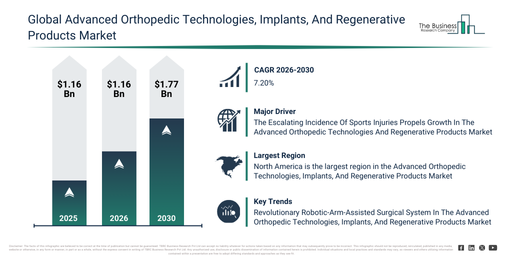
    The advanced orthopedic technologies, implants, and regenerative products market size is anticipated to undergo robust growth over the next few years. It is forecast to expand to $98.14 billion in 2030 at a compound annual growth rate (CAGR) of 7.2%. This growth in the projection period is attributable to an escalating demand for patient-specific implants, increasing integration of biologics in orthopedics, augmented investments in regenerative medicine research, the proliferation of robotic-assisted orthopedic surgeries, and the enhancement of long-term implant outcomes. Noteworthy trends during the forecast period encompass the growing acceptance of regenerative orthopedic therapies, the rising application of advanced implant materials, the expanding incorporation of smart orthopedic implants, the spread of minimally invasive orthopedic procedures, and a heightened focus on personalized orthopedic treatments.

    Get A Free Sample Report With In-Depth Market Insights:

    https://thebusinessresearchcompany.com/sample_request?id=13700714&type=smp&name=Advanced%20Orthopedic%20Technologies%2C%20Implants%2C%20And%20Regenerative%20Products%20Market%20Report%202026&utm_source=Blogs&utm_medium=Paid&utm_campaign=Sep_PR

    Advanced Orthopedic Technologies, Implants, And Regenerative Products Market Growth Catalysts And Demand Drivers

    The increasing occurrence of sports injuries is anticipated to drive the expansion of the advanced orthopedic technologies, implants, and regenerative products market in the coming years. Sports injuries are defined as those sustained while participating in athletic activities or exercising. These injuries have the potential to affect muscles, bones, ligaments, joints, and tendons, among other areas. The prevalence of sports-related injuries is rising as more individuals engage in sports and physical activities. This development subsequently fuels demand for orthopedic technology and regenerative products that facilitate injury healing, tissue restoration, and faster recovery. For instance, according to the U.S. National Safety Council, a US-based public health and safety organization, the number of sports and recreational injuries reached 564,845 in 2024, an increase from 482,886 injuries in 2023. Therefore, the growing incidence of sports injuries is a significant driver for the advanced orthopedic technologies, implants, and regenerative products market.

    Advanced Orthopedic Technologies, Implants, And Regenerative Products Market Segment Performance And Emerging Opportunities

    The advanced orthopedic technologies, implants, and regenerative products market covered in this report is segmented –

    1) By Type: Implants, Regenerative Products

    2) By Site: Hip And Pelvis, Foot And Ankle, Knee And Thigh, Hand And Wrist, Shoulder, Arm And Elbow, Spine, Craniomaxillofacial

    3) By Application: Hospitals, Ambulatory Surgical Centers, Specialty Clinics, Other Applications

    Subsegments:

    1) By Implants: Joint Implants, Bone Implants, Spine Implants

    2) By Regenerative Products: Stem Cell Products, Platelet-Rich Plasma (PRP) Products, Bone Graft Substitutes

    Advanced Orthopedic Technologies, Implants, And Regenerative Products Market Trends Shaping Long-Term Demand

    Leading companies within the advanced orthopedic technologies, implants, and regenerative products market are directing their efforts towards innovative offerings, such as robotic-arm-assisted surgical systems, to more effectively address the needs of their existing customers. A robotic-arm-assisted surgical system is a sophisticated medical instrument designed to enhance the precision and effectiveness of surgical interventions. For example, in March 2023, Stryker Corporation, a US-based medical technology enterprise, unveiled Mako Total Knee 2.0. This Mako Total Knee 2.0 system is a robotic-arm-assisted surgical device specifically engineered to improve total knee arthroplasty (TKA) procedures by incorporating an intuitive design, an adaptable workflow, and advanced capabilities such as a digital tensioner, which enables physicians to assess knee stability during the operation without requiring additional instruments. Mako Total Knee 2.0 is built upon the foundation of Mako SmartRobotics and its three essential components: 3D CT-based planning, AccuStopTM haptic technology, and insightful data analytics, all of which have demonstrated superior outcomes for patients undergoing whole knee, total hip, and partial knee procedures when compared to manual surgical methods.

    Advanced Orthopedic Technologies, Implants, And Regenerative Products Market Leading Players And Competitive Positioning

    Major companies operating in the advanced orthopedic technologies, implants, and regenerative products market are Johnson & Johnson, Medtronic PLC, Stryker Corporation, B Braun Medical Inc., Zimmer Biomet Holdings Inc., Smith & Nephew PLC, Arthrex Inc., Integra LifeSciences Holdings Corporation, Lepu Medical Technology Co Ltd., NuVasive Inc., CONMED Corporation, Globus Medical Inc., Wright Medical Group N.V., Bioventus LLC, Orthofix Medical Inc., Alphatec Holdings Inc., Acumed LLC, MiMedx Group Inc., Exactech Inc., Anika Therapeutics Inc., DJO Global Inc., Misonix Inc., Osiris Therapeutics Inc., Bacterin International Holdings Inc., Cerapedics Inc., Histogenics Corporation, Kuros Biosciences AG, Life Spine Inc., Aurora Spine Corporation, Camber Spine Technologies LLC.

    View The Full Advanced Orthopedic Technologies, Implants, And Regenerative Products Market Report:

    https://thebusinessresearchcompany.com/report/advanced-orthopedic-technologies-implants-and-regenerative-products-global-market-report?utm_source=Blogs&utm_medium=Paid&utm_campaign=Sep_PR

    Advanced Orthopedic Technologies, Implants, And Regenerative Products Market Regional Split: Which Areas Are Fueling Growth?

    North America was the largest region in the advanced orthopedic technologies, implants, and regenerative products market in 2025. Asia-Pacific is expected to be the fastest-growing region in the forecast period. The regions covered in the advanced orthopedic technologies, implants, and regenerative products market report are Asia-Pacific, South East Asia, Western Europe, Eastern Europe, North America, South America, Middle East, Africa.

    Reach Out To Our Team:

    The Business Research Company: https://www.thebusinessresearchcompany.com/

    Americas: +1 310-496-7795

    Asia: +44 7882 955267 & +91 8897263534

    Europe: +44 7882 955267

    Email us at: marketing@tbrc.info

    Follow us on:

    LinkedIn: https://in.linkedin.com/company/the-business-research-company

    YouTube: https://www.youtube.com/channel/UC24_fI0rV8cR5DxlCpgmyFQ

    Global Market Model: https://www.thebusinessresearchcompany.com/global-market-model
  • Advanced Life Support (ALS) Training Manikins Market Size Forecast From 2026 To 2030: Key Industry Trends

    Advanced Life Support (ALS) Training Manikins Market Size Forecast From 2026 To 2030: Key Industry Trends

    Built to provide research that’s more actionable and strategically valuable, The Business Research Company’s 2026 market reports include market attractiveness analysis, total addressable market sizing, company benchmarking matrices, interactive Excel dashboards, broader supply chain intelligence, emerging startup tracking, and in-depth product insights.

    Advanced Life Support (ALS) Training Manikins Market CAGR Outlook And Future Development

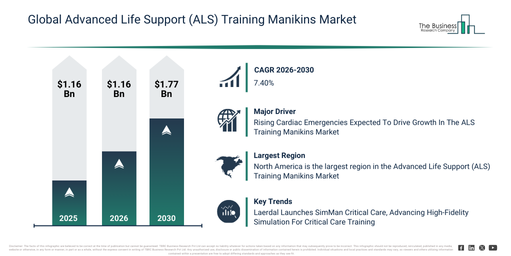
    The market size for advanced life support (ALS) training manikins has experienced robust growth in recent years. It will grow from $1.42 billion in 2025 to $1.53 billion in 2026 at a compound annual growth rate (CAGR) of 7.7%. This historical growth can be attributed to factors such as the restricted availability of advanced manikins, the reliance on basic CPR training tools, an increase in hospital-based training programs, rising awareness concerning emergency care training, and the adoption of manual skill assessment methods.

    The advanced life support (als) training manikins market is projected to experience substantial expansion over the upcoming years. It is anticipated to reach $2.04 billion in 2030, exhibiting a compound annual growth rate (CAGR) of 7.4%. This growth during the forecast period can be primarily attributed to several factors, including the creation of high-fidelity simulation manikins, their integration with augmented reality (AR) and virtual reality (VR) training platforms, the enlargement of certification programs for healthcare practitioners, rising investments in medical training facilities, and the widespread adoption of connected and smart training tools. Key trends anticipated over this period encompass the incorporation of realistic anatomical characteristics into manikins, the embrace of multi-age training solutions covering adults, children, and infants, the increasing deployment of automated external defibrillator (AED) and trauma simulation manikins, the extension of programs within hospitals and training centers, and a heightened emphasis on evaluating skills and issuing certifications.

    Get A Free Sample Report With In-Depth Market Insights:

    https://thebusinessresearchcompany.com/sample_request?id=39826280&type=smp&name=Advanced%20Life%20Support%20%28ALS%29%20Training%20Manikins%20Market%20Report%202026&utm_source=Blogs&utm_medium=Paid&utm_campaign=Sep_PR

    Advanced Life Support (ALS) Training Manikins Market Opportunity Drivers: What’s Unlocking New Revenue Potential?

    The anticipated expansion of the advanced life support training (ALS) manikins market is fueled by an increasing occurrence of cardiac emergencies. These emergencies encompass critical heart-related medical events, including heart attacks, abrupt cardiac arrest, or serious arrhythmias, demanding immediate action to avert fatalities or significant health issues. This surge in cardiac incidents stems from escalating rates of obesity, hypertension, and diabetes, along with lifestyle factors like inadequate diet, sedentary habits, and smoking. Advanced life support training manikins serve a vital role in addressing cardiac emergencies by replicating lifelike scenarios, enabling practice of crucial skills such as cardiopulmonary resuscitation (CPR), defibrillation, and advanced cardiac life support techniques, thereby empowering healthcare professionals to hone their reactions to cardiac arrest. For example, data from May 2023, supplied by the Centers for Disease Control and Prevention, a US-based government agency, indicated that more than 695,000 individuals in the US succumbed to heart disease, representing one out of every five deaths. Consequently, the increasing occurrence of cardiac emergencies acts as a significant catalyst for the expansion of the advanced life support training (ALS) manikins market.

    Advanced Life Support (ALS) Training Manikins Market Segment Landscape And Growth Outlook

    The advanced life support (als) training manikins market covered in this report is segmented –

    1) By Type: Adult, Child, Infant

    2) By Manikin Category: Adult Cardiopulmonary Resuscitation Manikins, Full Body Manikins, Choking Manikins, Injection Simulators, Other Manikin Categories

    3) By Application: Hospital And Clinic, Training Center, Other Applications

    Subsegments:

    1) By Adult: Full-Body Adult Manikins, Half-Body Adult Manikins, Adult CPR Manikins, Adult Trauma Manikins, Adult AED (Automated External Defibrillator) Training Manikins

    2) By Child: Full-Body Child Manikins, Half-Body Child Manikins, Child CPR Manikins, Child Trauma Manikins, Child AED Training Manikins

    3) By Infant: Full-Body Infant Manikins, Half-Body Infant Manikins, Infant CPR Manikins, Infant Trauma Manikins, Infant Airway Management Manikins.

    Advanced Life Support (ALS) Training Manikins Market Innovation Trends Shaping Future Development

    Leading firms within the advanced life support training (ALS) manikins market are concentrating on creating novel offerings, including high-fidelity patient simulators, with the aim of improving patient care for critical and respiratory conditions that are life-threatening. These high-fidelity patient simulators serve as sophisticated training tools, mirroring genuine physiological reactions and medical scenarios, thereby enabling thorough and precise practice of clinical competencies. As an example, in March 2024, Laerdal Medical AS, a healthcare provider based in Norway, collaborated with IngMar Medical, a US-based manufacturer of medical equipment, to introduce SimMan Critical Care, which is a high-fidelity simulator tailored for extensive critical care and respiratory education. This particular high-fidelity simulation model provides extensive functionalities for rehearsing crucial care situations, featuring authentic physiological responses like breath sounds, heartbeats, and detectable pulses. It incorporates advanced technology for observing and handling diverse emergencies, encompassing cardiac arrest, respiratory distress, and shock. The manikin delivers immediate feedback and is compatible with simulation software to monitor performance and support debriefing discussions.

    Advanced Life Support (ALS) Training Manikins Market Competitive Overview And Top Companies

    Major companies operating in the advanced life support (als) training manikins market are HealthFirst Medical Corporation, CAE Inc., Ambu A S, Laerdal Medical, Nasco, 3B Scientific, Life‑Assist Inc., Gaumard Scientific Company Inc., Medisol International, Simulaids Ltd., Prestan Products, TruCorp Ltd., Simulaids Inc., Zoll Medical Corporation, Simulab Corporation, Prometheus Medical, Jordan Anesthesia, Richmond Products, Harvard Apparatus, GrahamField, Medical Simulation Corporation, Simbionix, Limbs & Things Ltd., BT Inc., Medical‑X, Koken Co Ltd., Sakamoto Model Corporation, Yuan Technology Limited, V4EMS Inc., SmartMan Inc., RealityWorks Inc., Adam Rouilly Ltd.

    View The Full Advanced Life Support (ALS) Training Manikins Market Report:

    https://thebusinessresearchcompany.com/report/advanced-life-support-als-training-manikins-global-market-report?utm_source=Blogs&utm_medium=Paid&utm_campaign=Sep_PR

    Advanced Life Support (ALS) Training Manikins Market Top Region: Where Does Most Revenue Come From?

    North America was the largest region in the advanced life support (ALS) training manikins’ market in 2025. The regions covered in the advanced life support (als) training manikins market report are Asia-Pacific, South East Asia, Western Europe, Eastern Europe, North America, South America, Middle East, Africa.

    Reach Out To Our Team:

    The Business Research Company: https://www.thebusinessresearchcompany.com/

    Americas: +1 310-496-7795

    Asia: +44 7882 955267 & +91 8897263534

    Europe: +44 7882 955267

    Email us at: marketing@tbrc.info

    Follow us on:

    LinkedIn: https://in.linkedin.com/company/the-business-research-company

    YouTube: https://www.youtube.com/channel/UC24_fI0rV8cR5DxlCpgmyFQ

    Global Market Model: https://www.thebusinessresearchcompany.com/global-market-model
  • Advanced Drug Delivery Systems Market 2026: Market Size, Growth Drivers And Emerging Opportunities

    Advanced Drug Delivery Systems Market 2026: Market Size, Growth Drivers And Emerging Opportunities

    Backed by market attractiveness analysis, total addressable market sizing, company benchmarking matrices, interactive Excel dashboards, wider supply chain intelligence, emerging startup coverage, and detailed product-level insights, The Business Research Company’s 2026 market reports are designed to offer research that is more actionable and strategically valuable than ever.

    Advanced Drug Delivery Systems Market Set To Climb From $310.15 Billion In 2026 To $433.56 Billion By 2030

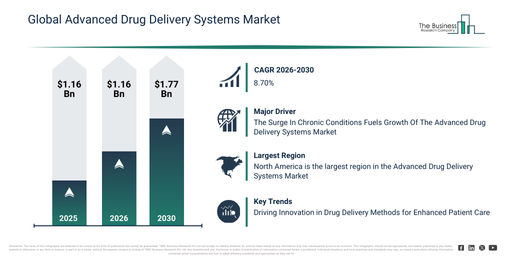
    The advanced drug delivery systems market has witnessed considerable growth in recent years. It is forecast to expand from $285.59 billion in 2025 to $310.15 billion in 2026, achieving a compound annual growth rate (CAGR) of 8.6%. The historical increase in market size can be attributed to the broadening of pharmaceutical R&D activities, the increasing incidence of chronic diseases, innovations in formulation science, the proliferation of injectable drug therapies, and a greater focus on treatment effectiveness.

    The advanced drug delivery systems market is projected to experience robust expansion over the coming years. This market is anticipated to reach a valuation of $433.56 billion in 2030, progressing at a compound annual growth rate (CAGR) of 8.7%. This expansion during the projection period stems from factors such as the heightened need for personalized medicine, increased integration of biologics, broader application of nanotechnology-based treatments, a stronger emphasis on mitigating adverse drug effects, and amplified investments in cutting-edge pharmaceutical delivery methods. Key developments foreseen for the forecast horizon encompass a greater embrace of targeted drug delivery techniques, expanded utilization of nanocarrier-based products, escalating requirements for controlled release mechanisms, the growth of solutions for biologic and biosimilar delivery, and an elevated prioritization of patient-centered drug management.

    Get A Free Sample Report With In-Depth Market Insights:

    https://thebusinessresearchcompany.com/sample_request?id=98605278&type=smp&name=Advanced%20Drug%20Delivery%20Systems%20Market%20Report%202026&utm_source=Blogs&utm_medium=Paid&utm_campaign=Sep_PR

    Advanced Drug Delivery Systems Market Growth Momentum: What Factors Are Shaping Demand?

    The rising occurrence of chronic conditions is projected to stimulate the expansion of the advanced drug delivery systems market moving forward. Chronic conditions are health issues persisting for a year or more, often necessitating continuous medical care, restricting daily activities, or both. Various risky behaviors, such as tobacco use and exposure to secondhand smoke, poor nutrition, physical inactivity, and excessive alcohol consumption, are linked to the development of chronic diseases. Advanced drug delivery systems facilitate the precise delivery of therapeutic agents to specific bodily sites impacted by chronic conditions, ensuring the medication reaches its intended action area, thereby enhancing its effectiveness and minimizing side effects. For instance, in May 2023, according to The United Nations (UN), a US-based intergovernmental organization to promote international cooperation and maintain international peace and security, chronic diseases are responsible for seven out of 10 deaths in the US, killing more than 1.7 million Americans each year. Thus, the increasing prevalence of chronic conditions is a key driver for the growth of the advanced drug delivery systems market.

    Advanced Drug Delivery Systems Market Breakdown By Product Type And Application

    The advanced drug delivery systems market covered in this report is segmented –

    1) By Type: Oral Drug Delivery System, Injection-Based Drug Delivery System, Inhalation Or Pulmonary Drug Delivery System, Transdermal Drug Delivery System, Transmucosal Drug Delivery System, Carrier-Based Drug Delivery System, Other Types

    2) By Carrier Type: Liposomes, Nanoparticles, Microspheres, Other Carrier Types

    3) By Technology: Prodrug, Implants And Intrauterine Devices, Targeted Drug Delivery, Polymeric Drug Delivery, Other Technologies

    4) By Application: Cardiovascular Diseases, Oncology, Urology, Diabetes, CNS (Central Nervous System), Ophthalmology, Inflammatory Diseases, Infections, Other Applications

    5) By End User: Hospitals, Specialized clinics, Clinical Research And Development Centers

    Subsegments:

    1) By Oral Drug Delivery System: Solid Dosage Forms, Liquid Dosage Forms, Novel Oral Delivery Systems

    2) By Injection-Based Drug Delivery System: Autoinjectors, Microneedle-Based Systems

    3) By Inhalation Or Pulmonary Drug Delivery System: Metered-Dose Inhalers (MDIs), Dry Powder Inhalers (DPIs), Nebulizers, Soft Mist Inhalers

    4) By Transdermal Drug Delivery System: Transdermal Patches, Microneedle Patches, Iontophoresis Systems

    5) By Transmucosal Drug Delivery System: Buccal Delivery Systems, Sublingual Delivery Systems, Nasal Delivery Systems

    6) By Carrier-Based Drug Delivery System: Liposomes, Nanoparticles, Dendrimers, Niosomes

    7) By Other Types: Implantable Drug Delivery Systems, Targeted Delivery Systems, Bioadhesive Drug Delivery Systems

    Advanced Drug Delivery Systems Market Trends Redefining Industry Growth

    Companies operating in the advanced drug delivery system market are strategically focusing on developing innovative solutions, including subcutaneous biologic delivery technologies, to cater to the escalating demand for convenient, swift, and patient-friendly methods for administering complex therapies. Subcutaneous biologic delivery facilitates the administration of high-volume drugs beneath the skin, offering a less intrusive alternative to conventional intravenous infusion. For example, in June 2023, Halozyme Therapeutics, Inc., a US-based biopharmaceutical company, announced that the FDA had approved VYVGART Hytrulo with ENHANZE, an innovative subcutaneous formulation intended for generalized myasthenia gravis. This product integrates efgartigimod alfa with Halozyme’s recombinant human hyaluronidase PH20 (rHuPH20), enabling rapid, high-volume subcutaneous delivery with a single injection. It effectively reduces infusion time to mere seconds, significantly enhances patient convenience, supports treatment in non-hospital settings, and maintains clinical efficacy comparable to IV administration.

    Advanced Drug Delivery Systems Market Competitive Landscape: Which Companies Lead The Industry?

    Major companies operating in the advanced drug delivery systems market are Pfizer Inc., Johnson and Johnson Services Inc., Roche Holding AG, Abbvie Inc., Bayer AG, Novartis AG, AstraZeneca plc, GlaxoSmithKline plc, 3M Company, Medtronic plc, Eli Lilly and Company, Boehringer Ingelheim GmbH, Amgen Inc., Merck Group, Becton Dickinson and Company, Baxter International Inc., Teva Pharmaceutical Industries Ltd., Sanofi S.A., Boston Scientific Corporation, Astellas Pharma Inc., Catalent Inc., Nipro Corporation, AptarGroup Inc., West Pharmaceutical Services Inc., Gerresheimer AG, Insulet Corporation

    View The Full Advanced Drug Delivery Systems Market Report:

    https://thebusinessresearchcompany.com/report/advanced-drug-delivery-systems-global-market-report?utm_source=Blogs&utm_medium=Paid&utm_campaign=Sep_PR

    Advanced Drug Delivery Systems Market Regional Breakdown: Where Is Demand Concentrated?

    North America was the largest region in the advanced drug delivery systems market in 2025. Asia-Pacific is expected to be the fastest-growing region in the forecast period. The regions covered in the advanced drug delivery systems market report are Asia-Pacific, South East Asia, Western Europe, Eastern Europe, North America, South America, Middle East, Africa.

    Reach Out To Our Team:

    The Business Research Company: https://www.thebusinessresearchcompany.com/

    Americas: +1 310-496-7795

    Asia: +44 7882 955267 & +91 8897263534

    Europe: +44 7882 955267

    Email us at: marketing@tbrc.info

    Follow us on:

    LinkedIn: https://in.linkedin.com/company/the-business-research-company

    YouTube: https://www.youtube.com/channel/UC24_fI0rV8cR5DxlCpgmyFQ

    Global Market Model: https://www.thebusinessresearchcompany.com/global-market-model