Blog

  • Ablation Devices Market Growth Potential: What The Latest Forecast Reveals

    Ablation Devices Market Growth Potential: What The Latest Forecast Reveals

    Built to provide research that’s more actionable and strategically valuable, The Business Research Company’s 2026 market reports include market attractiveness analysis, total addressable market sizing, company benchmarking matrices, interactive Excel dashboards, broader supply chain intelligence, emerging startup tracking, and in-depth product insights.

    Ablation Devices Market Revenue Outlook: What CAGR Lies Ahead Through 2030?

    The ablation devices market has witnessed significant growth over recent years. It is projected to increase from $9.25 billion in 2025 to $10.12 billion in 2026, at a compound annual growth rate (CAGR) of 9.5%. This historical expansion can be attributed to various factors, including the rising incidence of cancer treatment procedures, the growing acceptance of ablation in cardiac arrhythmia management, an increase in hospital installations of radiofrequency and laser ablation systems, the broadening clinical adoption of minimally invasive therapy alternatives, and the increased use of cryoablation and microwave ablation in specialty care.

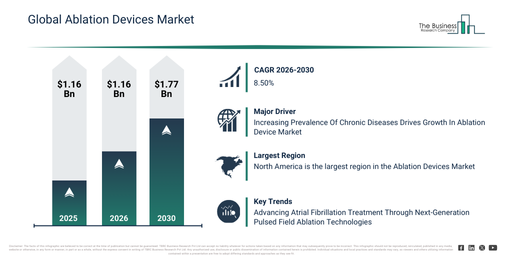
    The ablation devices market is projected to experience substantial expansion over the coming years, reaching a valuation of $14.02 billion by 2030, demonstrating a compound annual growth rate (CAGR) of 8.5%. This anticipated growth during the forecast period can be primarily linked to several factors, including an escalating need for highly precise targeted tissue ablation technologies, the increasing integration of robotic and automatic ablation systems, the broadening scope of ablation applications across numerous therapeutic domains, intensified investment in outpatient and ambulatory surgical facilities, and a rising inclination towards minimally invasive procedures that offer quicker recovery times. Key developments expected throughout this period encompass a greater adoption of minimally invasive ablation techniques in both oncology and cardiology, an uptick in the use of radiofrequency and microwave ablation systems for focused tissue destruction, a developing preference for cryoablation and hydrothermal ablation in specific clinical scenarios, the widening clinical deployment of laser and ultrasound ablation devices for accurate therapeutic results, and the increased implementation of ablation technologies in ambulatory and outpatient surgical environments.

    Get A Free Sample Report With In-Depth Market Insights:

    https://thebusinessresearchcompany.com/sample_request?id=68880970&type=smp&name=Ablation%20Devices%20Market%20Report%202026&utm_source=Blogs&utm_medium=Paid&utm_campaign=Sep_PR

    Ablation Devices Market Opportunity Drivers: What’s Unlocking New Revenue Potential?

    The rising incidence of chronic diseases is anticipated to boost the expansion of the ablation device market in the future. The growing occurrence of these conditions is attributed to evolving lifestyles, an aging demographic, and extended lifespans. Ablation devices serve to precisely eliminate atypical tissue in chronic illnesses, presenting minimally invasive treatment avenues for ailments such as cardiac arrhythmias and certain malignancies. For example, research published in January 2023 by Frontiers in Public Health, a scientific journal based in Switzerland, predicts that 35.66% of the adult population aged 50 and above in the United States will suffer from at least one chronic condition by 2035, a figure projected to increase to 47.81% by 2050. Furthermore, the proportion of adults experiencing multimorbidity is expected to reach 3.659% by 2035, further increasing to 5.017% by 2050. Consequently, the growing prevalence of chronic diseases is a significant factor propelling the growth of the ablation device market.

    Ablation Devices Market Segment Performance And Emerging Opportunities

    The ablation devices market covered in this report is segmented –

    1) By Product: Laser Ablators, Radiofrequency Ablators, Microwave Ablators, Ultrasound Ablators, Electric Ablators, Hydrothermal Ablators, Cryoablators

    2) By Technology Type: Radiofrequency Ablation, Microwave Ablation, Cryoablation, High-Intensity Focused Ultrasound, Laser Interstitial Thermal Ablation, Other Technology Types

    3) By Function: Automatic, Robotic

    4) By End-Users: Hospitals And Clinics, Ambulatory Surgical Centers, Others End-Users

    Subsegments:

    1) By Laser Ablators: Diode Laser Systems, CO2 Laser Systems, Nd-YAG Laser Systems

    2) By Radiofrequency Ablators: Monopolar Radiofrequency Ablators, Bipolar Radiofrequency Ablators

    3) By Microwave Ablators: Microwave Ablation Systems

    4) By Ultrasound Ablators: High-Intensity Focused Ultrasound (HIFU) Systems

    5) By Electric Ablators: Electrosurgical Ablators

    6) By Hydrothermal Ablators: Steam Ablation Systems

    7) By Cryoablators: Cryoablation Systems

    Ablation Devices Market Innovation Trends Shaping Future Development

    Major companies operating in the ablation devices market are concentrating on developing inventive solutions such as pulsed field ablation systems to elevate safety and procedural efficiency in atrial fibrillation treatment. Pulsed field ablation (PFA) utilizes short, high-voltage electric pulses to create non-thermal, tissue-selective lesions that rapidly ablate myocardium while sparing adjacent structures, thereby lessening the risk of collateral thermal injury. For instance, on February 2024, Medtronic plc, a US-based medical device company, announced the successful completion of its first commercial cases using the PulseSelect pulsed field ablation system alongside its bi-directional 10F FlexCath Contour sheath; physician feedback highlighted short procedure times, excellent signal quality for pulmonary vein validation, minimal muscle contraction, and the system’s status as the first FDA-approved PFA option accessible for treating both paroxysmal and persistent atrial fibrillation.

    Ablation Devices Market Competitive Landscape: Which Companies Lead The Industry?

    Major companies operating in the ablation devices market are Medtronic plc, Boston Scientific Corporation, Johnson & Johnson, Abbott Laboratories, AngioDynamics Inc, CONMED Corporation, Olympus Corporation, Smith & Nephew plc, AtriCure Inc, Stryker Corporation, Biotronik SE & Co KG, BTG plc, Terumo Corporation, Varian Medical Systems Inc, Hologic Inc, Accuray Inc, Bard Inc, Elekta AB, Misonix Inc, Japan Lifeline Co Ltd

    View The Full Ablation Devices Market Report:

    https://thebusinessresearchcompany.com/report/ablation-devices-global-market-report?utm_source=Blogs&utm_medium=Paid&utm_campaign=Sep_PR

    Ablation Devices Market Regional Outlook: Where Is Opportunity Concentrated?

    North America was the largest region in the ablation devices market in 2025. Asia-Pacific is expected to be the fastest-growing region in the forecast period. The regions covered in the ablation devices market report are Asia-Pacific, South East Asia, Western Europe, Eastern Europe, North America, South America, Middle East, Africa.

    Reach Out To Our Team:

    The Business Research Company: https://www.thebusinessresearchcompany.com/

    Americas: +1 310-496-7795

    Asia: +44 7882 955267 & +91 8897263534

    Europe: +44 7882 955267

    Email us at: marketing@tbrc.info

    Follow us on:

    LinkedIn: https://in.linkedin.com/company/the-business-research-company

    YouTube: https://www.youtube.com/channel/UC24_fI0rV8cR5DxlCpgmyFQ

    Global Market Model: https://www.thebusinessresearchcompany.com/global-market-model
  • Abdominal Aortic Aneurysm (AAA) Repair Devices Market Growth Outlook: Why Analysts Expect Continued Expansion

    Abdominal Aortic Aneurysm (AAA) Repair Devices Market Growth Outlook: Why Analysts Expect Continued Expansion

    Backed by market attractiveness analysis, total addressable market sizing, company benchmarking matrices, interactive Excel dashboards, wider supply chain intelligence, emerging startup coverage, and detailed product-level insights, The Business Research Company’s 2026 market reports are designed to offer research that is more actionable and strategically valuable than ever.

    Abdominal Aortic Aneurysm (AAA) Repair Devices Market Growth Analysis: How Will Revenue Trend Over The Forecast Period?

    The abdominal aortic aneurysm (aaa) repair devices market size has observed significant growth in recent years. This market is set to expand from $2.56 billion in 2025 to $2.76 billion in 2026, demonstrating a compound annual growth rate (CAGR) of 7.6%. The historical increase can be attributed to a rising prevalence of abdominal aortic aneurysms, greater utilization of endovascular repair techniques, an expansion in vascular surgery capabilities, advancements in stent graft materials, and improved availability of diagnostic imaging.

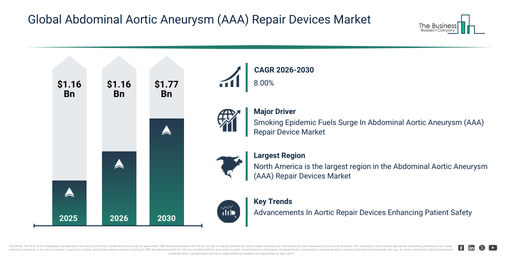
    The abdominal aortic aneurysm (aaa) repair devices market is projected to experience robust expansion over the coming years. Its value is anticipated to reach $3.75 billion by 2030, exhibiting a compound annual growth rate (CAGR) of 8.0%. Factors contributing to this growth during the forecast period include a heightened preference for less invasive treatments, a globally increasing aging demographic, the proliferation of specialized vascular facilities, a rising need for customized graft designs, and greater investment in cardiovascular device innovation. Key trends observed throughout this period will encompass the increasing uptake of minimally invasive EVAR procedures, a greater utilization of custom and fenestrated stent grafts, an intensified focus on solutions for complex anatomical treatments, the broadening use of imaging-guided deployment methods, and a reinforced emphasis on the lasting durability of devices.

    Get A Free Sample Report With In-Depth Market Insights:

    https://thebusinessresearchcompany.com/sample_request?id=20577821&type=smp&name=Abdominal%20Aortic%20Aneurysm%20%28AAA%29%20Repair%20Devices%20Market%20Report%202026&utm_source=Blogs&utm_medium=Paid&utm_campaign=Sep_PR

    Abdominal Aortic Aneurysm (AAA) Repair Devices Market Growth Momentum: What Factors Are Shaping Demand?

    The abdominal aortic aneurysm (AAA) repair device market is projected to grow, driven by the significant incidence of smoking. This practice involves burning a substance, typically tobacco, and inhaling or tasting the resulting smoke, leading to the absorption of nicotine and other potentially harmful chemicals into the body. Abdominal aortic aneurysm (AAA) repair devices play a vital role in addressing the elevated health risks associated with smoking, offering effective interventions, minimizing potential complications, and enhancing patient outcomes via advanced treatment methodologies. As an illustration, in May 2023, the Centers for Disease Control and Prevention, a US-based government agency, reported an estimated 28.3 million U.S. adults smoke cigarettes, and approximately 3.08 million U.S. middle and high school students use at least one tobacco product. Daily, around 1,600 U.S. youth younger than 18 smoke their first cigarette. Thus, the widespread occurrence of smoking is a key factor propelling the expansion of the abdominal aortic aneurysm repair devices market.

    Abdominal Aortic Aneurysm (AAA) Repair Devices Market Segment Landscape And Growth Outlook

    The abdominal aortic aneurysm (aaa) repair devices market covered in this report is segmented –

    1) By Product Type: Endovascular Stent Graft System, Open Surgical Synthetic Vascular Grafts

    2) By Site: Infrarenal AAA, Pararenal AAA

    3) By Application: Traditional Anatomy, Complex Anatomy

    4) By End-User: Hospitals, Ambulatory Surgical Centers, Other End-Users

    Subsegments:

    1) By Endovascular Stent Graft System: Bifurcated Stent Graft, Aorto-Uni-Iliac Stent Graft

    2) By Open Surgical Synthetic Vascular Grafts: Woven Polyester (Dacron) Vascular Grafts, Knitted Polyester (Dacron) Vascular Grafts, Expanded Polytetrafluoroethylene (ePTFE) Vascular Grafts

    Abdominal Aortic Aneurysm (AAA) Repair Devices Market Trends Redefining Industry Growth

    Key players in the abdominal aortic aneurysm (AAA) repair devices market are prioritizing the creation of technologically advanced solutions, such as atraumatic tips, to elevate patient safety. An atraumatic tip is a design element in medical instruments intended to lessen tissue damage and trauma during their insertion or manipulation in surgical operations. For example, in June 2024, Medtronic PLC., an Ireland-based medical device company, introduced the Steerant Aortic Guidewire, a specialized medical device developed to boost the precision and safety of endovascular procedures targeting aortic aneurysms, specifically for endovascular aneurysm repair (EVAR) and thoracic endovascular aortic repair (TEVAR). Crafted from PTFE-coated stainless steel, this guidewire possesses a diameter of 0.035 inches and is offered in lengths of 200 cm and 260 cm, with options for single- and double-curve tip arrangements. Its design incorporates a soft, atraumatic tip that transitions smoothly to a stiffer main body, thereby offering crucial protection for sensitive aortic anatomy while ensuring sufficient support for the deployment of other medical devices.

    Abdominal Aortic Aneurysm (AAA) Repair Devices Market Competitive Landscape: Who Leads The Industry?

    Major companies operating in the abdominal aortic aneurysm (aaa) repair devices market are Medtronic plc, Cook Medical LLC, Endologix Inc, Terumo Corporation, MicroPort Scientific Corporation, Lifetech Scientific Co Ltd, Lepu Medical Technology Co Ltd, Getinge AB, B Braun Melsungen AG, Artivion Inc, LeMaitre Vascular Inc, Nipro Corporation, Hexacath SA, Endospan Ltd, Hangzhou Endonom Medtech Co Ltd, Beijing Endoncare Medical Devices Co Ltd, Beijing Advanced Cardiovascular Technologies Co Ltd, Beijing Jinyu Medical Device Co Ltd, Latecba SA, Edwards Lifesciences Corporation

    View The Full Abdominal Aortic Aneurysm (AAA) Repair Devices Market Report:

    https://thebusinessresearchcompany.com/report/abdominal-aortic-aneurysm-aaa-repair-devices-global-market-report?utm_source=Blogs&utm_medium=Paid&utm_campaign=Sep_PR

    Abdominal Aortic Aneurysm (AAA) Repair Devices Market Geographic Landscape: Which Region Leads Industry Growth?

    North America was the largest region in the abdominal aortic aneurysm (AAA) repair devices market in 2025.Asia-Pacific is expected to be the fastest-growing region in the global abdominal aortic aneurysm (AAA) repair devices market report during the forecast period. The regions covered in the abdominal aortic aneurysm (aaa) repair devices market report are Asia-Pacific, South East Asia, Western Europe, Eastern Europe, North America, South America, Middle East, Africa.

    Reach Out To Our Team:

    The Business Research Company: https://www.thebusinessresearchcompany.com/

    Americas: +1 310-496-7795

    Asia: +44 7882 955267 & +91 8897263534

    Europe: +44 7882 955267

    Email us at: marketing@tbrc.info

    Follow us on:

    LinkedIn: https://in.linkedin.com/company/the-business-research-company

    YouTube: https://www.youtube.com/channel/UC24_fI0rV8cR5DxlCpgmyFQ

    Global Market Model: https://www.thebusinessresearchcompany.com/global-market-model
  • 5G Remote Surgery Market Forecast Insights: The Road To $6.83 Billion By 2030

    5G Remote Surgery Market Forecast Insights: The Road To $6.83 Billion By 2030

    Featuring market attractiveness scoring, total addressable market sizing, company benchmarking matrices, interactive Excel dashboards, deeper supply chain intelligence, emerging startup tracking, and granular product-level insights, The Business Research Company’s 2026 market reports are built to deliver research that is both more actionable and more strategically valuable.

    5G Remote Surgery Market Forecast: What Value Will The Market Reach By 2030?

    The 5g remote surgery market has experienced substantial expansion in recent years. Its value is projected to rise from $1.8 billion in 2025 to $2.35 billion in 2026, demonstrating a compound annual growth rate (CAGR) of 30.8%. Factors contributing to its historical growth include the increased adoption of robotic surgery, the escalating demand for telemedicine services, advancements in network infrastructure, the proliferation of specialized surgical centers, and a growing need for advanced surgical techniques.

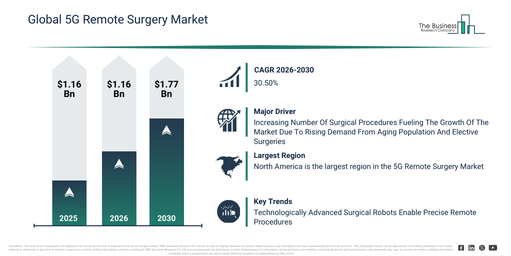
    The 5g remote surgery market size is anticipated to undergo significant growth in the upcoming years. It will grow to $6.83 billion in 2030 at a compound annual growth rate (CAGR) of 30.5%. This expansion during the forecast period is attributable to the implementation of 5G-enabled remote surgery platforms, AI-powered surgical planning, its integration with hospital IoT systems, cloud-based surgical monitoring, and a rise in cross-regional tele-surgery collaborations. Prominent trends expected in the forecast period include low-latency remote robotic surgery, AI-assisted surgical decision support, integration with IoT and smart hospitals, cloud-based surgical data analytics, and multi-site surgical collaboration.

    Get A Free Sample Report With In-Depth Market Insights:

    https://thebusinessresearchcompany.com/sample_request?id=88888383&type=smp&name=5G%20Remote%20Surgery%20Market%20Report%202026&utm_source=Blogs&utm_medium=Paid&utm_campaign=Sep_PR

    5G Remote Surgery Market Expansion Drivers: What’s Shaping Future Growth?

    The future expansion of the 5G remote surgery market will be driven by the increasing frequency of surgical operations. These medical procedures entail healthcare professionals utilizing invasive methods to address various diseases, injuries, or deformities. A significant factor contributing to the rise in surgical activities is an aging demographic, which results in a greater necessity for surgeries like joint replacements and cardiovascular interventions. 5G remote surgery supports surgical procedures by allowing real-time control of robotic systems and providing high-definition imaging, enabling surgeons to conduct operations from distant places. This technology improves the accuracy of procedures, minimizes travel restrictions, and enhances patients’ access to specialized medical attention. For instance, in May 2025, the Australian Institute of Health and Welfare, an Australia-based government agency, reported that 778,500 patients were admitted for surgery from public hospital elective surgery waiting lists in 2023-24, representing a 5.8% increase compared with 2022-23. Consequently, the growing number of surgical procedures is propelling the growth of the 5G remote surgery market.

    5G Remote Surgery Market Breakdown By Product Type And Application

    The 5g remote surgery market covered in this report is segmented –

    1) By Component: Hardware, Software, Services

    2) By Connectivity: Standalone 5G, Non-Standalone 5G

    3) By Application: Cardiology Surgery, Orthopedic Surgery, Neurosurgery, Gynecological Surgery, Other Applications

    4) By End-User: Hospitals, Ambulatory Surgical Centers, Specialty Clinics, Other End-Users

    Subsegments:

    1) By Hardware: Surgical Robot, Communication Equipment, Imaging Devices, Sensors

    2) By Software: Surgical Planning Software, Remote Monitoring Software, Imaging Analysis Software, Data Management Software

    3) By Services: Remote Surgical Assistance, Training And Education, Maintenance And Support, Consulting Services

    5G Remote Surgery Market Strategic Trends: What Defines The Next Growth Phase?

    Leading companies in the 5G remote surgery market are concentrating on developing advanced products, such as surgical robots, to enable accurate, real-time remote operations and improve patient outcomes. Surgical robots are computer-assisted robotic systems designed to help surgeons conduct precise and minimally invasive procedures, often with enhanced dexterity, accuracy, and control. For instance, in May 2023, Shanghai MicroPort MedBot (Group) Co. Ltd., a China-based manufacturing company, secured marketing approval from the Brazilian Health Surveillance Agency (ANVISA) for its Honghu (marketed overseas as SkyWalker) orthopedic surgical robot. Honghu integrates 5G remote capabilities with CT-guided imaging to assist surgeons in performing highly precise joint replacement surgeries, including minimally invasive procedures. It utilizes robotic arms to enhance accuracy, allows for detailed preoperative surgical planning, and can manage complex cases such as severe rheumatoid arthritis or surgeries following fractures. The robot has received approval in multiple regions and has been validated through hundreds of robot-assisted procedures, demonstrating its reliability and increasing adoption across various markets.

    5G Remote Surgery Market Company Landscape And Competitive Strategy

    Major companies operating in the 5g remote surgery market are Verizon Communications Inc., Huawei Technologies Co. Ltd., Johnson And Johnson Ethicon Inc., Telefónica S.A., Siemens Healthineers AG, Soliton Systems Inc., PT Telekomunikasi Selular, Smith And Nephew plc, NTT DOCOMO Inc., CMR Surgical Ltd., Shanghai MicroPort MedBot (Group) Co. Ltd., Proximie Limited., Tianjin Tinavi Medical Technology Co. Ltd., Sovato Inc., Virtual Incision Corporation, Medrobotics Corporation, Avail Medsystems, SS Innovations International Inc., Shenzhen Edge Medical Co. Ltd., Sina Robotics Inc.

    View The Full 5G Remote Surgery Market Report:

    https://thebusinessresearchcompany.com/report/5g-remote-surgery-global-market-report?utm_source=Blogs&utm_medium=Paid&utm_campaign=Sep_PR

    5G Remote Surgery Market Largest Region: Which Geography Holds The Biggest Share?

    North America was the largest region in the 5G remote surgery market in 2025. The regions covered in the 5g remote surgery market report are Asia-Pacific, South East Asia, Western Europe, Eastern Europe, North America, South America, Middle East, Africa.

    Reach Out To Our Team:

    The Business Research Company: https://www.thebusinessresearchcompany.com/

    Americas: +1 310-496-7795

    Asia: +44 7882 955267 & +91 8897263534

    Europe: +44 7882 955267

    Email us at: marketing@tbrc.info

    Follow us on:

    LinkedIn: https://in.linkedin.com/company/the-business-research-company

    YouTube: https://www.youtube.com/channel/UC24_fI0rV8cR5DxlCpgmyFQ

    Global Market Model: https://www.thebusinessresearchcompany.com/global-market-model
  • 3D Printing In Healthcare Market Explained: What Is Fueling Growth To $5.99 Billion By 2030?

    3D Printing In Healthcare Market Explained: What Is Fueling Growth To $5.99 Billion By 2030?

    Built to provide research that’s more actionable and strategically valuable, The Business Research Company’s 2026 market reports include market attractiveness analysis, total addressable market sizing, company benchmarking matrices, interactive Excel dashboards, broader supply chain intelligence, emerging startup tracking, and in-depth product insights.

    3D Printing In Healthcare Market Size Outlook: How Quickly Will Revenue Expand Through 2030?

    The market size for 3D printing in healthcare has seen rapid expansion in recent years. It is anticipated to increase from $2.47 billion in 2025 to $2.95 billion in 2026, exhibiting a compound annual growth rate (CAGR) of 19.3%. The growth witnessed in the past can be attributed to improvements in additive manufacturing technologies, the early adoption of 3D printed surgical guides, an increase in academic research related to medical printing, the expanded application of anatomical modeling, and the availability of a wide array of printable biomaterials.

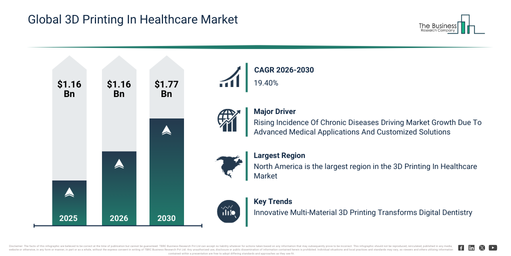
    The market for 3D printing in healthcare is projected to experience significant expansion over the coming years. This market is anticipated to reach $5.99 billion by 2030, demonstrating a compound annual growth rate (CAGR) of 19.4%. Factors contributing to this growth during the projection period include greater capital allocation for bioprinting research, a surge in the need for customized healthcare options, the broader application of regenerative medicine, the increasing implementation of point-of-care production, and a rise in regulatory clearances for printed medical devices. Key trends anticipated during this period involve the wider acceptance of medical devices tailored to individual patients, the increased deployment of bioprinting technologies, a greater call for bespoke surgical models, the proliferation of 3D printed implants and prosthetics, and improved synergy between digital design and manufacturing processes.

    Get A Free Sample Report With In-Depth Market Insights:

    https://thebusinessresearchcompany.com/sample_request?id=46310709&type=smp&name=3D%20Printing%20In%20Healthcare%20Market%20Report%202026&utm_source=Blogs&utm_medium=Paid&utm_campaign=Sep_PR

    3D Printing In Healthcare Market Development Factors: What’s Supporting Demand?

    The growing occurrence of chronic diseases is projected to drive the expansion of the 3D printing market in the future. These are long-term health conditions characterized by persistent and often incurable medical conditions, such as diabetes, hypertension, and arthritis. The increase in chronic disease incidence is attributed to the widespread adoption of modifiable behavioral risk factors including sedentary lifestyles, diets high in processed foods, and high rates of tobacco and alcohol consumption. 3D printing assists in the creation of customized medical devices and implants for chronic diseases, thereby enhancing treatment options through personalized and precise solutions. For instance, in June 2024, the National Health Service, a UK-based government department, stated that 3,615,330 individuals registered with a general practitioner (GP) were diagnosed with non-diabetic hyperglycemia or pre-diabetes (a condition with elevated blood sugar levels, not high enough to be classified as diabetes) in 2023, signifying an 18% increase from 3,065,825 cases in 2022. Consequently, the rising incidence of chronic diseases is fueling the 3D printing market.

    3D Printing In Healthcare Market Segment Analysis And Revenue Potential

    The 3D printing in healthcare market covered in this report is segmented –

    1) By Component: System, Material, Services

    2) By Technology: Laser Beam Melting (LBM), Electron Beam Melting (EBM), Photo Polymerization, Droplet Deposition, Laminated Object Manufacturing, Wax Deposition Modeling, Bio Printing

    3) By Application: Personalized Medical Equipment, Models For Surgical Planning And Education, Prosthetics And Implants, Biomaterials, Printing Personalized Medicine, Other Applications

    4) By End User: Medical And Surgical Centers, Pharmaceutical And Biotechnology Companies, Academic Institutions

    Subsegments:

    1) By System: 3D Printers, 3D Bioprinters, Scanners, Other Systems.

    2) By Material: Plastics, Metals, Ceramics, Biomaterials, Other Materials.

    3) By Services: Custom Prosthetics, Implants, Surgical Guides, Medical Device Prototyping, Tissue Engineering.

    3D Printing In Healthcare Market Transformation Trends: What Innovations Are Driving Change?

    Major companies in the 3D printing in healthcare market are focusing on technological innovations such as multi-material 3D printing. This advancement facilitates the creation of intricate, patient-tailored restorations with improved precision, efficiency, and aesthetics. Multi-material printing is a 3D printing process that enables the simultaneous fabrication of objects utilizing two or more distinct materials, allowing for complex, functional, and customized designs within a single print. For example, in July 2024, Stratasys Ltd. introduced the DentaJet XL, a high-speed PolyJet 3D printer specifically designed for digital dental labs. Featuring a large print tray and 4 kg hot-swap resin cartridges, it supports continuous printing of up to 102 crowns and bridges at once. Its super high-speed mode elevates productivity by up to 50%, while simultaneous dual-material printing permits the creation of multi-component dental restorations in a single run. Integrated software automates part arrangement and large-batch post-processing, thereby cutting labor and costs while enhancing accuracy, throughput, and safety in large-scale dental manufacturing.

    3D Printing In Healthcare Market Key Players Shaping Industry Direction

    Major companies operating in the 3d printing in healthcare market are Hewlett-Packard Company, Stratasys Ltd., EOS GmbH – Electro Optical Systems, 3D Systems Corporation, Formlabs Inc., Materialise NV, Ultimaker BV, SLM Solutions Group AG, Arcam AB, The ExOne Company, EnvisionTEC GmbH, Concept Laser GmbH, MedPrin Regenerative Medical Technologies Co. Ltd., Medical Molding Inc., Nanoscribe GmbH & Co. KG, Oxford Performance Materials Inc., Aspect Biosystems Ltd., Cyfuse Biomedical K.K., Anatomics Pty. Ltd., Organovo Holdings Inc, 3D Bioprinting Solutions, Allevi Inc

    View The Full 3D Printing In Healthcare Market Report:

    https://thebusinessresearchcompany.com/report/3d-printing-in-healthcare-global-market-report?utm_source=Blogs&utm_medium=Paid&utm_campaign=Sep_PR

    3D Printing In Healthcare Market Regional Analysis: Which Geography Leads On Revenue?

    North America was the largest region in the 3D printing in healthcare market in 2025. Asia Pacific is expected to be the fastest-growing region in the forecast period. The regions covered in the 3D printing in healthcare market report are Asia-Pacific, South East Asia, Western Europe, Eastern Europe, North America, South America, Middle East, Africa.

    Reach Out To Our Team:

    The Business Research Company: https://www.thebusinessresearchcompany.com/

    Americas: +1 310-496-7795

    Asia: +44 7882 955267 & +91 8897263534

    Europe: +44 7882 955267

    Email us at: marketing@tbrc.info

    Follow us on:

    LinkedIn: https://in.linkedin.com/company/the-business-research-company

    YouTube: https://www.youtube.com/channel/UC24_fI0rV8cR5DxlCpgmyFQ

    Global Market Model: https://www.thebusinessresearchcompany.com/global-market-model
  • 3D Printed Prosthetics Market Forecast To Reach $0 Billion By 2030: Key Trends Explained

    3D Printed Prosthetics Market Forecast To Reach $0 Billion By 2030: Key Trends Explained

    Backed by market attractiveness analysis, total addressable market sizing, company benchmarking matrices, interactive Excel dashboards, wider supply chain intelligence, emerging startup coverage, and detailed product-level insights, The Business Research Company’s 2026 market reports are designed to offer research that is more actionable and strategically valuable than ever.

    3D Printed Prosthetics Market Size, Value And Growth Trajectory Through 2030

    The 3D printed prosthetics market has witnessed significant expansion in recent years. Its valuation is set to increase from $0 billion in 2025 to $0 billion in 2026, demonstrating a compound annual growth rate (CAGR) of 15.8%. This historical growth can be linked to several factors, including a higher incidence of limb loss, constrained access to conventional prosthetic manufacturing, the initial adoption of desktop 3D printing, an expansion of rehabilitation centers, and enhancements in prosthetic design software.

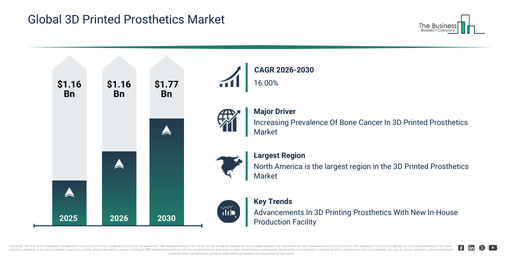
    The 3D printed prosthetics market size is projected to experience substantial expansion in the coming years. This market is anticipated to reach $0 billion by 2030, demonstrating a compound annual growth rate (CAGR) of 16.0%. Factors contributing to this growth during the forecast period include an increasing need for cost-effective prosthetic options, the spread of humanitarian and outreach initiatives for prosthetics, the growing use of sophisticated polymers, the greater incorporation of sensor-equipped prosthetics, and advancements in design for durability and comfort. Key developments expected during this period encompass a rise in the uptake of affordable custom prosthetics, a heightened preference for materials that are both light and long-lasting, the expanded application of digital limb scanning technologies, the broadening of prosthetic solutions for children and personalized needs, and a stronger emphasis on customizing for both function and appearance.

    Get A Free Sample Report With In-Depth Market Insights:

    https://thebusinessresearchcompany.com/sample_request?id=23001277&type=smp&name=3D%20Printed%20Prosthetics%20Market%20Report%202026&utm_source=Blogs&utm_medium=Paid&utm_campaign=Sep_PR

    3D Printed Prosthetics Market Industry Drivers: What’s Behind The Revenue Growth?

    The rising incidence of bone cancer is anticipated to drive the expansion of the 3D printed prosthetics market in the future. Bone cancer, a seldom-occurring malignancy, either originates in the bone tissue itself (classified as primary bone cancer) or metastasizes to the bones from other regions of the body. Within the context of bone cancer treatment, 3D printed prosthetic devices serve to mend cancer-damaged bones and act as substitutes for traditional tumor prostheses, as well as auto or allobone grafts used in bone reconstruction. As an illustration, in January 2025, data from the American Cancer Society (ACS), a US-based non-profit organization, projects around 3,770 new instances of primary bone and joint cancer for 2025—comprising 2,150 in males and 1,620 in females—and approximately 2,190 associated fatalities, including 1,240 men and 950 women. Consequently, the growing occurrence of bone cancer is propelling the development of the 3D printed prosthetics market.

    3D Printed Prosthetics Market Segmentation And Category Overview

    The 3D printed prosthetics market covered in this report is segmented –

    1) By Type: Sockets, Limbs, Joints, Covers

    2) By Material: Polypropylene, Polyethylene, Acrylics, Polyurethane

    3) By End-User: Hospitals, Rehabilitation Centers, Prosthetic Clinics

    Subsegments:

    1) By Sockets: Adjustable Sockets, Standard Sockets

    2) By Limbs: Upper Limb Prosthetics, Lower Limb Prosthetics

    3) By Joints: Knee Joints, Ankle Joints, Elbow Joints

    4) By Covers: Cosmetic Covers, Functional Covers

    #3D Printed Prosthetics Market Growth Trends: What’s Shaping The Future Outlook?

    Leading companies in the 3D-printing prosthetics market are increasingly concentrating on advanced capabilities like in-house additive manufacturing to improve product quality, manufacturing speed, and customization options. In-house additive manufacturing describes a system where the entire production process—including design, printing, cooling, post-processing, and final finishing—is executed within a single location, facilitating tighter quality control and quicker lead times. For instance, in February 2025, WIMBA, a Poland-based provider of custom-fit 3D-printed pet orthotics and prosthetics, launched a new in-house 3D-printing facility in Kraków, which is equipped with integrated processes for printing, cooling, and sandblasting. This investment empowers WIMBA to maintain strict quality standards, deliver most standard orthotics within 10 working days, shorten waiting periods for veterinary clinics, and continually innovate with new materials and designs to better support pets and veterinary professionals globally.

    3D Printed Prosthetics Market Competitive Analysis Of Leading Industry Participants

    Major companies operating in the 3d printed prosthetics market are Open Bionics, LimbForge Inc., UNYQ Inc., Mecuris GmbH, YouBionic Srl, Create Prosthetics Inc., Bio3D Technologies Pte Ltd., Protosthetics LLC, 3T RPD Ltd., Bionicohand, Limbitless Solutions, Instalimb, Bionic Prosthetics and Orthotics, Eqwal Group (Steeper Group), Prothea, Motorica, WillowWood, Psyonic, HopeLabs

    View The Full 3D Printed Prosthetics Market Report:

    https://thebusinessresearchcompany.com/report/3D-printed-prosthetics-global-market-report?utm_source=Blogs&utm_medium=Paid&utm_campaign=Sep_PR

    3D Printed Prosthetics Market Geographic Spread And Regional Opportunities

    North America was the largest region in the 3D printing medical prosthetics market in 2025. Asia-Pacific was the second-largest region in the global 3D printed prosthetics market. The regions covered in the 3D printed prosthetics market report are Asia-Pacific, South East Asia, Western Europe, Eastern Europe, North America, South America, Middle East, Africa.

    Reach Out To Our Team:

    The Business Research Company: https://www.thebusinessresearchcompany.com/

    Americas: +1 310-496-7795

    Asia: +44 7882 955267 & +91 8897263534

    Europe: +44 7882 955267

    Email us at: marketing@tbrc.info

    Follow us on:

    LinkedIn: https://in.linkedin.com/company/the-business-research-company

    YouTube: https://www.youtube.com/channel/UC24_fI0rV8cR5DxlCpgmyFQ

    Global Market Model: https://www.thebusinessresearchcompany.com/global-market-model
  • 3D Printed Medical Devices Market Analysis: Understanding The Drivers Behind 16.3% CAGR Through 2030 Growth

    3D Printed Medical Devices Market Analysis: Understanding The Drivers Behind 16.3% CAGR Through 2030 Growth

    Featuring market attractiveness scoring, total addressable market sizing, company benchmarking matrices, interactive Excel dashboards, deeper supply chain intelligence, emerging startup tracking, and granular product-level insights, The Business Research Company’s 2026 market reports are built to deliver research that is both more actionable and more strategically valuable.

    3D Printed Medical Devices Market CAGR Outlook And Future Development

    The market for 3D printed medical devices has experienced rapid expansion in recent years. It is projected to increase from $4.1 billion in 2025 to $4.83 billion in 2026, at a compound annual growth rate (CAGR) of 17.7%. The growth observed in the past can be linked to a rise in demand for personalized medical solutions, the early adoption of printed surgical tools in clinical practice, enhancements in medical imaging to print workflows, increased academic research endeavors, and the availability of certified printing systems.

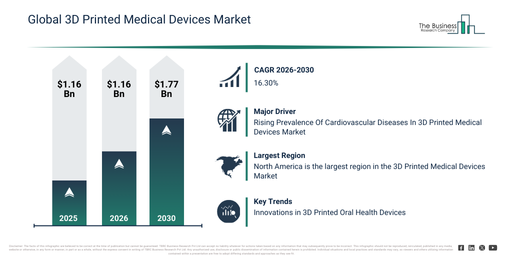
    The 3D printed medical devices market is projected to experience substantial expansion over the upcoming years. Its valuation is anticipated to reach $8.83 billion by 2030, exhibiting a compound annual growth rate (CAGR) of 16.3%. This projected increase during the forecast period is fueled by several factors, including the proliferation of point-of-care manufacturing approaches, enhanced regulatory frameworks for printed medical devices, increased financial commitments to digital healthcare infrastructure, a heightened need for accelerated device development, and progress in bioprinting and tissue engineering. Key developments expected within this period encompass a greater embrace of personalized medical device manufacturing, increased utilization of multi-material printing techniques, deeper incorporation of software-driven design solutions, the growth of on-demand medical device production, and a stronger emphasis on rapid prototyping and validation processes.

    Get A Free Sample Report With In-Depth Market Insights:

    https://thebusinessresearchcompany.com/sample_request?id=61287381&type=smp&name=3D%20Printed%20Medical%20Devices%20Market%20Report%202026&utm_source=Blogs&utm_medium=Paid&utm_campaign=Sep_PR

    3D Printed Medical Devices Market Growth Factors: What’s Supporting Expansion?

    The increasing incidence of cardiovascular diseases is projected to drive the expansion of the 3D printed medical device market ahead. Cardiovascular diseases (CVDs) encompass a group of conditions that affect the heart and blood vessels, often known as heart or circulatory diseases. For treating these conditions, 3D printed medical devices are employed to create patient-specific cardiac models using medical imaging data, such as computed tomography (CT) scans and magnetic resonance imaging (MRI). As an illustration, in September 2025, the British Heart Foundation, a UK-based charity, reported that over 7.6 million people across the UK—including more than 4 million men and over 3.6 million women—are currently living with cardiovascular disease. Furthermore, projections indicate that this number might increase by around 1 million by 2030 and approximately 2 million by 2040, influenced by an aging population and better survival rates. Therefore, the escalating prevalence of cardiovascular diseases is propelling the growth of the 3D printed medical device market.

    3D Printed Medical Devices Market Segment Outlook: Which Categories Are Growing Fastest?

    The 3D printed medical devices market covered in this report is segmented –

    1) By Type: Implants, Surgical instruments, Prosthetics, Tissue engineering devices

    2) By Raw Material: Plastics, Biomaterial inks, Metals and Alloys

    3) By Technology: Fused Deposition Modelling, Digital Light Processing, Stereolithography, Selective Laser melting

    4) By Application: Orthopedic, Spinal, Dental, Hearing Aids, Other Applications

    5) By End User: Hospitals, Other End Users

    Subsegments:

    1) By Implants: Orthopedic Implants, Dental Implants, Cranial Implants

    2) By Surgical Instruments: Customized Surgical Tools, 3D Printed Guides And Templates

    3) By Prosthetics: Limb Prosthetics, Facial Prosthetics

    4) By Tissue Engineering Devices: Scaffolds, Bioprinted Tissues

    3D Printed Medical Devices Market Industry Trends: What’s Reshaping Demand?

    Major companies active in the 3D printed medical devices market are concentrating on bringing new products to market, such as oral health devices, aimed at advancing dental care through personalized patient solutions. Oral health devices encompass products specifically crafted for the prevention, diagnosis, and treatment of various dental issues, including 3D-printed aligners, dentures, and surgical guides that boost patient comfort and precision in dental procedures. As an illustration, in January 2024, Proclaim, a US-based enterprise, unveiled its Custom-Jet Oral Health System. This novel Custom-Jet Oral Health System incorporates a 3D printed mouthpiece engineered to eradicate detrimental bacteria, particularly P.Gingivalis, in a mere seven seconds. This groundbreaking device is clinically validated to enhance oral health, substantially diminishing indicators of gum disease and elevating overall systemic health.

    3D Printed Medical Devices Market Leading Companies And Competitive Benchmarking

    Major companies operating in the 3d printed medical devices market are 3D Systems Corporation, Stratasys Ltd, Materialise NV, EOS GmbH Electro Optical Systems, Renishaw plc, SLM Solutions Group AG, Arcam AB, Concept Laser GmbH, EnvisionTEC Inc, Carbon Inc, Formlabs Inc, Oxford Performance Materials Inc, Organovo Holdings Inc, Cyfuse Biomedical KK, Bio3D Technologies Pte Ltd, FabRx Ltd, Nano3D Biosciences Inc, Aspect Biosystems Ltd, Cellink AB, 3T RPD Ltd

    View The Full 3D Printed Medical Devices Market Report:

    https://thebusinessresearchcompany.com/report/3D-printed-medical-devices-global-market-report?utm_source=Blogs&utm_medium=Paid&utm_campaign=Sep_PR

    3D Printed Medical Devices Market Top Region By Revenue And Market Share

    North America was the largest region in the 3D printed medical devices market in 2025. Western Europe was the second largest region in the global 3D printed medical devices market report. The regions covered in the 3D printed medical devices market report are Asia-Pacific, South East Asia, Western Europe, Eastern Europe, North America, South America, Middle East, Africa.

    Reach Out To Our Team:

    The Business Research Company: https://www.thebusinessresearchcompany.com/

    Americas: +1 310-496-7795

    Asia: +44 7882 955267 & +91 8897263534

    Europe: +44 7882 955267

    Email us at: marketing@tbrc.info

    Follow us on:

    LinkedIn: https://in.linkedin.com/company/the-business-research-company

    YouTube: https://www.youtube.com/channel/UC24_fI0rV8cR5DxlCpgmyFQ

    Global Market Model: https://www.thebusinessresearchcompany.com/global-market-model
  • 3D Printed Implants Market Growth To $9.51 Billion By 2030: What’s Driving The Expansion?

    3D Printed Implants Market Growth To $9.51 Billion By 2030: What’s Driving The Expansion?

    Built to provide research that’s more actionable and strategically valuable, The Business Research Company’s 2026 market reports include market attractiveness analysis, total addressable market sizing, company benchmarking matrices, interactive Excel dashboards, broader supply chain intelligence, emerging startup tracking, and in-depth product insights.

    3D Printed Implants Market Set To Climb From $4.64 Billion In 2026 To $9.51 Billion By 2030

    The 3D printed implants market has seen substantial growth in recent years. It is forecast to increase from $3.9 billion in 2025 to $4.64 billion in 2026, achieving a compound annual growth rate (CAGR) of 18.9%. The historical expansion of this market can be attributed to several factors, including a rise in orthopedic and dental disorders, the early adoption of additive manufacturing in healthcare, continuous improvements in medical-grade 3D printing materials, increasing acceptance of customized implants by surgeons, and regulatory approvals for printed implants.

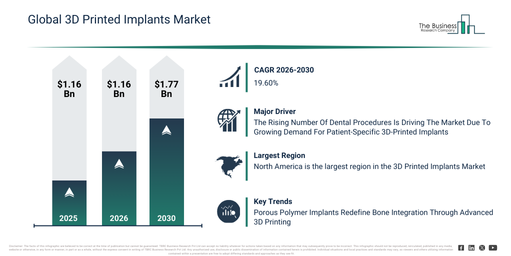
    The 3D printed implants market is anticipated to experience substantial growth in the coming years. It is projected to expand to $9.51 billion in 2030, demonstrating a compound annual growth rate (CAGR) of 19.6%. This anticipated expansion during the forecast period is attributed to several factors, including the increasing demand for customized healthcare solutions, the proliferation of cranio-maxillofacial and orthopedic surgical procedures, growing financial commitments to biocompatible materials, the expanded application of digital twin technologies in implant design, and advancements in high-resolution 3D printing systems. Key developments expected during this period involve the increasing adoption of implant designs tailored to individual patients, a rise in the use of sophisticated metal and polymer printing materials, deeper integration of digital surgical planning, an expansion into complex anatomical implant applications, and an intensified focus on the precision and proper fit of implants.

    Get A Free Sample Report With In-Depth Market Insights:

    https://thebusinessresearchcompany.com/sample_request?id=82470746&type=smp&name=3D%20Printed%20Implants%20Market%20Report%202026&utm_source=Blogs&utm_medium=Paid&utm_campaign=Sep_PR

    3D Printed Implants Market Demand Drivers: What’s Powering Industry Growth?

    The 3D-printed implants market is anticipated to grow in the future due to an increasing number of dental procedures. These procedures encompass medical treatments and interventions performed by dental professionals, such as dentists and dental hygienists, for the diagnosis, prevention, or treatment of various oral health conditions and dental issues. The surge in dental treatments is boosting demand for personalized, patient-specific 3D-printed implants, including crowns, bridges, and prosthetic devices, which are specifically designed to match a patient’s unique dental anatomy. As an illustration, in November 2024, data from the NHS Business Services Authority (NHSBSA), a UK-based Special Health Authority, showed that dental services delivered 34 million treatment courses—marking a 4.3% rise from 2022/23—with overall activity climbing 3.4% to 73 million units. Additionally, 18 million adults were seen over the 24 months to March 2024, 6.6 million children were seen in the 12 months to March 2024, and 31% of adult treatments involved a scale and polish. Thus, the increasing application of dental procedures is a key driver for the growth of the 3D-printed implants market.

    3D Printed Implants Market Segment Landscape: Which Areas Lead Development?

    The 3D printed implants market covered in this report is segmented –

    1) By Implantation Technology: Laser Beam Melting, Electronic Beam Melting

    2) By Application: Dental, Orthopedic, Cranio-maxillofacial

    3) By End Users: Medical And Surgical Centers, Medical Institution

    Subsegments:

    1) By Laser Beam Melting (LBM): Selective Laser Melting (SLM), Direct Metal Laser Sintering (DMLS)

    2) By Electronic Beam Melting (EBM): Vacuum EBM, Atmospheric EBM

    3D Printed Implants Market Innovation Trends: What Developments Are Reshaping The Industry?

    Leading companies within the 3D printed implants market are concentrating on developing innovative products like porous PEEK implants to enhance bone integration and optimize clinical outcomes in orthopedic and spinal procedures. A porous PEEK implant is an additively manufactured polymer-based device engineered with interconnected porous structures to support biological ingrowth while maintaining mechanical properties compatible with human bone. For instance, in September 2024, Nvision Biomedical Technologies, a US-based medical device and implant manufacturer, announced that the U.S. Food and Drug Administration (FDA) had granted clearance for the first 3D-printed PEEK interbody system made from PEEK-OPTIMA. The system incorporates an additively manufactured porous architecture designed to promote multidirectional bone ingrowth and enhance implant fixation during cervical and lumbar spinal fusion. It also provides mechanical performance similar to natural bone and improved radiolucency, enabling surgeons to more accurately assess fusion progression and reduce the risk of implant subsidence.

    3D Printed Implants Market Industry Leaders And Competitive Landscape

    Major companies operating in the 3d printed implants market are Johnson & Johnson, Medtronic plc, Stryker Corporation, Zimmer Biomet Holdings Inc, Lima Corporation, Smith & Nephew plc, Globus Medical Inc, Exactech Inc, KLS Martin Group, Materialise NV, Xilloc Medical B V, 3D LifePrints Ltd, Oxford Performance Materials, Cyfuse Medical, Cyfuse Biomedical K K, SINTX Technologies Inc, restor3d Inc, Additive Orthopaedics Inc, Conformis Inc, Anatomics Pty Ltd

    View The Full 3D Printed Implants Market Report:

    https://thebusinessresearchcompany.com/report/3D-printed-implants-global-market-report?utm_source=Blogs&utm_medium=Paid&utm_campaign=Sep_PR

    3D Printed Implants Market Regional Analysis And Top Geography

    North America was the largest region in the 3D printed medical implants market in 2025. Asia-Pacific was the second-largest region in the global 3D printed medical implants market. The regions covered in the 3D printed implants market report are Asia-Pacific, South East Asia, Western Europe, Eastern Europe, North America, South America, Middle East, Africa.

    Reach Out To Our Team:

    The Business Research Company: https://www.thebusinessresearchcompany.com/

    Americas: +1 310-496-7795

    Asia: +44 7882 955267 & +91 8897263534

    Europe: +44 7882 955267

    Email us at: marketing@tbrc.info

    Follow us on:

    LinkedIn: https://in.linkedin.com/company/the-business-research-company

    YouTube: https://www.youtube.com/channel/UC24_fI0rV8cR5DxlCpgmyFQ

    Global Market Model: https://www.thebusinessresearchcompany.com/global-market-model
  • 3D Orthopedics/Prosthetics Market Trends Reshaping Industry Growth Through 2030

    3D Orthopedics/Prosthetics Market Trends Reshaping Industry Growth Through 2030

    Backed by market attractiveness analysis, total addressable market sizing, company benchmarking matrices, interactive Excel dashboards, wider supply chain intelligence, emerging startup coverage, and detailed product-level insights, The Business Research Company’s 2026 market reports are designed to offer research that is more actionable and strategically valuable than ever.

    3D Orthopedics/Prosthetics Market Forecast: Value Set To Climb From $3.75 Billion To $4.77 Billion

    The 3D orthopedics/prosthetics market size has demonstrated robust expansion in recent years. This market is anticipated to climb from $3.55 billion in 2025 to $3.75 billion in 2026, achieving a compound annual growth rate (CAGR) of 5.5%. The historical growth trajectory can be attributed to a rising prevalence of limb loss and orthopedic injuries, ongoing innovations in additive manufacturing technologies, the expanding accessibility of rehabilitation services, increasing acceptance of prosthetic alternatives, and progress in material science developments.

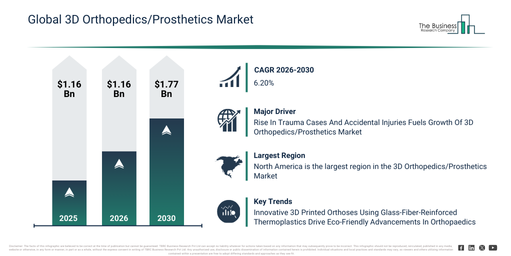
    The 3D orthopedics/prosthetics market size is projected to undergo significant expansion in the upcoming years. This market is expected to reach $4.77 billion by 2030, driven by a compound annual growth rate (CAGR) of 6.2%. The anticipated growth during this period stems from several factors, including increasing investments in advanced smart prosthetic technologies, a rising demand for personalized medical devices, the continuous expansion of digital orthopedic design platforms, a growing emphasis on enhancing patient mobility outcomes, and the wider adoption of AI-assisted prosthetic design. Prominent trends expected in the forecast period involve the increasing use of 3D printed customized prosthetics, a heightened demand for patient-specific orthopedic devices, the growing integration of smart and sensor-enabled prosthetics, the expansion of hybrid and electric-powered prosthetic systems, and an enhanced focus on rapid prototyping and design flexibility.

    Get A Free Sample Report With In-Depth Market Insights:

    https://thebusinessresearchcompany.com/sample_request?id=14747384&type=smp&name=3D%20Orthopedics%2FProsthetics%20Market%20Report%202026&utm_source=Blogs&utm_medium=Paid&utm_campaign=Sep_PR

    3D Orthopedics/Prosthetics Market Growth Drivers: What’s Behind The Acceleration?

    Elevated instances of trauma and accidental injuries are fueling the expansion of the 3D orthopedics/prosthetics market. Orthopedic prosthetics refers to the application of artificial limbs (prostheses) designed to enhance the function and way of life for individuals experiencing limb loss. A prosthesis must integrate suitable alignment, construction, materials, and design to precisely meet the functional requirements of the user. As an illustration, the Wisconsin Department of Health Services, a US-based public health department, indicated that in December 2023, Trauma System Hospitals in Wisconsin observed a 4% surge in treated traumatic injuries during 2023, coupled with a 3% rise specifically in pediatric trauma incidents. Additionally, 2023 saw 44,970 entries into the trauma system and 38,198 distinct injury events. Consequently, the growing occurrence of trauma cases and accidental injuries propels the 3D orthopedics/prosthetics market.

    3D Orthopedics/Prosthetics Market Segments: Where Is Growth Concentrated?

    The 3D orthopedics/prosthetics market covered in this report is segmented –

    1) By Product Type: Upper Extremity Orthopedic And Prosthetics, Lower Extremity Orthopedic And Prosthetics, Other Product Types

    2) By Technology: Conventional, Electric-powered, Hybrid

    3) By End User: Hospitals, Orthopedic And Prosthetic Centers, Rehabilitation Center, Other End-Users

    Subsegments:

    1) By Upper Extremity Orthopedic And Prosthetics: Prosthetic Arms, Prosthetic Hands, Orthotic Braces for Arms, Shoulder and Elbow Supports

    2) By Lower Extremity Orthopedic And Prosthetics: Prosthetic Legs, Prosthetic Feet, Orthotic Braces for Legs, Knee and Ankle Supports

    3) By Other Product Types: Custom-Made Orthopedic Devices, 3D Printed Implants, Surgical Guides and Templates, Rehabilitation Devices

    3D Orthopedics/Prosthetics Market Trends: What’s Defining The Industry’s Next Phase?

    Key players operating in the 3D orthopedics or prosthetics market are concentrating on creating advanced solutions, including orthoses made from glass-fiber-reinforced thermoplastics, to boost their resilience, structural integrity, and precision in customization. A glass-fiber-reinforced thermoplastic is a high-performance composite material that offers superior strength, flexibility, and resistance to impact, making it well-suited for producing patient-specific orthopedic devices through additive manufacturing. For instance, in March 2024, CRP Technology, an Italy-based 3D-printing company, displayed its 3D-printed orthoses at the SuperPower Design exhibition. These orthoses, produced using selective laser sintering and Windform GT material, demonstrated the capacity to create highly customized, durable support devices precisely tailored to individual anatomical requirements.

    3D Orthopedics/Prosthetics Market Key Participants And Competitive Landscape

    Major companies operating in the 3d orthopedics/prosthetics market are Zimmer Biomet, Ottobock Inc., DJO Global Inc., Instalimb Inc., Open Bionics, Tornier Inc., Corin Group Plc., Exactech Inc., United Orthopedic Corporation, Stryker Corporation, Allegra Orthopedics, Globus Medical Inc., NEOORTHO, Smith & Nephew, Ortosintese, IMPOL Próteses Ortopédicas, Wright Medical, B. Braun, Meril Life, Matrix Medical, Lithotech Medical, 3D Systems

    View The Full 3D Orthopedics/Prosthetics Market Report:

    https://thebusinessresearchcompany.com/report/3D-orthpedics-prosthetics-global-market-report?utm_source=Blogs&utm_medium=Paid&utm_campaign=Sep_PR

    3D Orthopedics/Prosthetics Market Geographic Analysis: Where Is Demand Rising Fastest?

    North America was the largest region in the 3D orthopedics/prosthetics market in 2025. Asia-Pacific is expected to be the fastest-growing region in the forecast period. The regions covered in the 3D orthopedics/prosthetics market report are Asia-Pacific, South East Asia, Western Europe, Eastern Europe, North America, South America, Middle East, Africa.

    Reach Out To Our Team:

    The Business Research Company: https://www.thebusinessresearchcompany.com/

    Americas: +1 310-496-7795

    Asia: +44 7882 955267 & +91 8897263534

    Europe: +44 7882 955267

    Email us at: marketing@tbrc.info

    Follow us on:

    LinkedIn: https://in.linkedin.com/company/the-business-research-company

    YouTube: https://www.youtube.com/channel/UC24_fI0rV8cR5DxlCpgmyFQ

    Global Market Model: https://www.thebusinessresearchcompany.com/global-market-model

  • 3D Medical Imaging Devices Market Growth To $20.16 Billion Creates New Opportunities Across The Industry

    3D Medical Imaging Devices Market Growth To $20.16 Billion Creates New Opportunities Across The Industry

    Featuring market attractiveness scoring, total addressable market sizing, company benchmarking matrices, interactive Excel dashboards, deeper supply chain intelligence, emerging startup tracking, and granular product-level insights, The Business Research Company’s 2026 market reports are built to deliver research that is both more actionable and more strategically valuable.

    3D Medical Imaging Devices Market Revenue Growth On Track For A 8.1% CAGR Through 2030

    The 3D medical imaging devices market size has experienced significant expansion in recent years. This market is projected to increase from $13.68 billion in 2025 to $14.76 billion in 2026, demonstrating a compound annual growth rate (CAGR) of 7.9%. Historically, this growth has been fueled by several factors, including developments in medical imaging technologies, the proliferation of diagnostic imaging centers, a rising need for intricate anatomical visualization, the increasing occurrence of chronic diseases, and an expansion in hospital imaging infrastructure.

    The 3D medical imaging devices market size is projected to experience robust expansion over the coming years. By 2030, this market is anticipated to reach $20.16 billion, demonstrating a compound annual growth rate (CAGR) of 8.1%. This expansion during the forecast period can be attributed to factors such as the increasing embrace of AI-driven diagnostics, growing investments in precision medicine, the broadening of advanced imaging applications within oncology and cardiology, a rising need for early disease detection, and the greater integration of cloud-based imaging platforms. Key developments expected during this period include enhanced integration of AI-enabled image reconstruction, a surge in the adoption of high-resolution 3D imaging modalities, wider utilization of sophisticated visualization software, the proliferation of multi-modality imaging platforms, and an intensified focus on improving diagnostic accuracy and speed.

    Get A Free Sample Report With In-Depth Market Insights:

    https://thebusinessresearchcompany.com/sample_request?id=62395276&type=smp&name=3D%20Medical%20Imaging%20Devices%20Market%20Report%202026&utm_source=Blogs&utm_medium=Paid&utm_campaign=Sep_PR

    3D Medical Imaging Devices Market Growth Factors Behind Sustained Expansion

    The future expansion of the 3D medical imaging market is anticipated to be driven by the rising incidence of chronic ailments. These conditions are defined as health issues that endure for an extended duration, typically three months or longer. Advanced 3D medical imaging methods, including computed tomography (CT) scans and magnetic resonance imaging (MRI), offer precise three-dimensional visualizations of internal body structures, allowing medical experts to identify and diagnose chronic illnesses in their initial phases. Illustratively, data from the US-based National Library of Medicine in January 2023 indicated a projected 99.5% increase, reaching 142.66 million, by 2050, in the count of individuals aged 50 and above in the US afflicted with at least one chronic condition. Consequently, the escalating occurrence of chronic diseases serves as a primary impetus for the growth of the 3D medical imaging market.

    3D Medical Imaging Devices Market Segment Analysis: What Are The Core Market Categories?

    The 3D medical imaging devices market covered in this report is segmented –

    1) By Type: Ultrasound, X-ray, CT Scan, Other Types

    2) By Application: Gynecology and Obstetrics, Cardiology, Neurology, Orthopedics, Oncology

    3) By End User: Diagnostic Centers, Hospitals, Research Centers

    Subsegments:

    1) By Ultrasound: 3D Or 4D Ultrasound, Contrast-Enhanced Ultrasound

    2) By X-Ray: 3D Mammography Or Tomosynthesis, Cone Beam CT Or CBCT For X-Ray Imaging, Fluoroscopy

    3) By CT Scan: Spiral Or Helical CT, Cone Beam CT Or CBCT, Dual-Energy CT

    4) By Other Types: MRI Or Magnetic Resonance Imaging, Positron Emission Tomography Or PET, Single Photon Emission Computed Tomography Or SPECT, 3D Endoscopic Imaging Systems

    3D Medical Imaging Devices Market Industry Trends Fueling Future Revenue Growth

    Leading companies operating in the 3D medical imaging market are developing new immersive learning platforms to offer reliable services to their clients. An immersive learning platform in 3D medical imaging utilizes hyper-realistic 3D medical visuals, derived from MRI and CT scans, for the purpose of educating medical professionals and students. For example, in August 2023, GigXR, Inc., an innovative US-based company and supplier of holographic training solutions, unveiled the DICOM XR Library. The DICOM XR Library is a collaborative collection of 3D DICOM holograms that delivers extremely realistic 3D medical imagery sourced from computed tomography (CT) scans and magnetic resonance imaging (MRI). This system offers 360-degree diagnostic imaging, empowering instructors to more effectively prepare learners through medically accurate simulations for observation and assessment.

    3D Medical Imaging Devices Market Top Companies Driving Competitive Growth

    Major companies operating in the 3d medical imaging devices market are GE Healthcare, Royal Philips, Siemens AG, Materialise NV, Toshiba Group, Samsung Medison Co. Ltd., Shimadzu Corporation, Analogic Corporation, Digirad Corporation, Del Medical Systems Group, Hologic Inc., Carestream Health Inc., Ambra Health, Fovia, Mach7 Technologies Ltd., Barco NV, TomTec Imaging Systems GmbH, Fujifilm Holdings Corporation, 3D Systems Healthcare, Canon Medical Systems Corporation, ContextVision AB, Curvebeam AI Ltd., EchoPixel Inc., EOS Imaging, Esaote SpA, Hitachi Healthcare, Intrasense, Konica Minolta Healthcare, Mobius Imaging, Neusoft Medical Systems, Pie Medical Imaging, Planmed Oy, Sectra, Shenzhen Mindray Bio-Medical Electronics, Varian Medical Systems, Ziehm Imaging GmbH

    View The Full 3D Medical Imaging Devices Market Report:

    https://thebusinessresearchcompany.com/report/3D-medical-imaging-devices-global-market-report?utm_source=Blogs&utm_medium=Paid&utm_campaign=Sep_PR

    3D Medical Imaging Devices Market Global Footprint: Which Region Leads The Market?

    Western Europe was the largest region in the 3D medical imaging market in 2025. Asia-Pacific was the second-largest region in the global 3D medical imaging devices market. The regions covered in the 3D medical imaging devices market report are Asia-Pacific, South East Asia, Western Europe, Eastern Europe, North America, South America, Middle East, Africa.

    Reach Out To Our Team:

    The Business Research Company: https://www.thebusinessresearchcompany.com/

    Americas: +1 310-496-7795

    Asia: +44 7882 955267 & +91 8897263534

    Europe: +44 7882 955267

    Email us at: marketing@tbrc.info

    Follow us on:

    LinkedIn: https://in.linkedin.com/company/the-business-research-company

    YouTube: https://www.youtube.com/channel/UC24_fI0rV8cR5DxlCpgmyFQ

    Global Market Model: https://www.thebusinessresearchcompany.com/global-market-model
  • 3D Dental Scanners Market Forecast: Breaking Down The Numbers Behind Future Expansion

    3D Dental Scanners Market Forecast: Breaking Down The Numbers Behind Future Expansion

    Built to provide research that’s more actionable and strategically valuable, The Business Research Company’s 2026 market reports include market attractiveness analysis, total addressable market sizing, company benchmarking matrices, interactive Excel dashboards, broader supply chain intelligence, emerging startup tracking, and in-depth product insights.

    3D Dental Scanners Market Value Growth And Long-Term Outlook

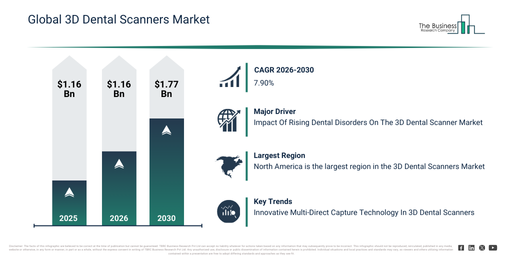
    The 3D dental scanners market size has experienced strong growth in recent years. This market is projected to expand from $2.19 billion in 2025 to $2.36 billion in 2026, exhibiting a compound annual growth rate (CAGR) of 7.9%. The historical growth can be attributed to several factors, including an increase in orthodontic and prosthodontic treatment volumes, a growing shift from manual impressions to digital workflows, the rising installation of CBCT systems in dental practices, the expanding adoption of digital dentistry in hospitals and dental clinics, and the increasing usage of laboratory scanners for restoration fabrication.

    The 3D dental scanners market is poised for significant expansion over the next few years, with projections indicating it will reach $3.19 billion in 2030, driven by a compound annual growth rate (CAGR) of 7.9%. This anticipated growth is primarily fueled by a rising demand for chairside intraoral scanning solutions, an increased preference for minimally invasive and precise dental procedures, the growing integration of digital scanning into implantology planning, the wider adoption of portable and handheld dental scanners, and enhanced investment in advanced 3D imaging capabilities across dental facilities. Throughout the forecast period, key trends are expected to include the expanding utilization of intraoral 3D dental scanners for chairside diagnostics and treatment planning, the increased application of CBCT scanners for detailed orthodontic and implantology imaging, a surge in demand for handheld and portable dental scanners in clinical environments, the broader implementation of laboratory dental scanners for precise prosthodontic workflows, and a noticeable shift towards digital impressions over traditional mold-based methods.

    Get A Free Sample Report With In-Depth Market Insights:

    https://thebusinessresearchcompany.com/sample_request?id=12076502&type=smp&name=3D%20Dental%20Scanners%20Market%20Report%202026&utm_source=Blogs&utm_medium=Paid&utm_campaign=Sep_PR

    3D Dental Scanners Market Demand Drivers Opening New Revenue Streams

    An increasing number of dental disorders is projected to boost the expansion of the global 3D dental scanner market. Dental disorders encompass any irregularities, illnesses, or states within the oral cavity that necessitate evaluation, diagnosis, and often intervention by dental professionals to uphold oral health and avert complications. The rise in these disorders is attributable to factors such as inadequate oral hygiene routines, greater intake of sugary foods and beverages, and limited access to dental care services. 3D dental scanners are crucial for managing dental disorders, as they enable precise diagnosis, meticulous treatment planning, and the fabrication of personalized dental prosthetics with superior accuracy and efficiency. For instance, in October 2024, the Australian Institute of Health and Welfare, an Australia-based government agency, reported that in 2022–23, roughly 87,400 hospitalizations occurred due to dental conditions that could have been prevented with timely treatment. Children aged 5–9 years showed the highest rate of these preventable hospitalizations, reaching 12.3 per 1,000 population. Hence, the increasing prevalence of dental disorders is stimulating the growth of the 3D dental scanner market.

    3D Dental Scanners Market Segment Breakdown: Which Categories Lead On Revenue?

    The 3D dental scanners market covered in this report is segmented –

    1) By Type: Desktop Or Laboratory 3D Dental Scanners, Intraoral 3D Dental Scanners, Hand-Held 3D Dental Scanners, Cone Beam Computerized Tomography

    2) By Application: Prosthodontics, Orthodontics, Implantology

    3) By End-User: Hospitals, Dental Clinics, Research And Academic Institutes

    Subsegments:

    1) By Desktop Or Laboratory 3D Dental Scanners: Optical Laboratory Scanners, Structured Light Laboratory Scanners

    2) By Intraoral 3D Dental Scanners: Wireless Intraoral Scanners, Wired Intraoral Scanners

    3) By Hand-Held 3D Dental Scanners: Laser-Based Hand-Held Scanners, Structured Light Hand-Held Scanners

    4) By Cone Beam Computerized Tomography (CBCT): Standard Field-Of-View CBCT Scanners, Extended Field-Of-View CBCT Scanners

    3D Dental Scanners Market Trends Powering Strategic Industry Growth

    Leading companies in the dental 3D scanner sector are concentrating on developing advanced technology, such as multi-direct capture technology, to improve scanning precision and efficiency. This development aims to enable more accurate dental treatments and streamlined operational workflows. Multi-direct capture technology in 3D dental scanners refers to a method where multiple images or scans are simultaneously collected from various angles. For example, in January 2024, Align Technology Inc., a US-based medical device company, launched its iTero Lumina intraoral scanner. This scanner is notable for its unique ability to offer a 3X wider field of capture from a significantly smaller and lighter wand, ensuring faster scanning, higher accuracy, improved visualization, and a more comfortable user experience. It stands out with a larger capture distance of up to 25 mm, which simplifies the scanning of intricate oral areas like narrow or deep palates, edentulous spaces, and partially erupted teeth with minimal adjustments. This advanced technology effortlessly gathers extensive data and finer details, producing exceptional scan quality and photorealistic 3D models, thereby eliminating the need for bulky digital cameras and traditional cheek retractors.

    3D Dental Scanners Market Leading Players And Competitive Positioning

    Major companies operating in the 3d dental scanners market are Danaher Corporation, Dentsply Sirona Inc., Align Technology Inc., Midmark Corp., J. Morita Corporation, 3Shape Inc., Roland DG Corp., KaVo Dental GmbH, Amann Girrbach AG, Zirkonzahn, Carestream Health India Pvt. Ltd., Imes-icore GmbH, Planmeca Group Company, Hint-ELS GmbH, Dental Wings Inc., Condor Technologies Inc., Imetric 3D SA, Medit Corporation, Owandy Radiology, 3M Co.

    View The Full 3D Dental Scanners Market Report:

    https://thebusinessresearchcompany.com/report/3d-dental-scanners-global-market-report?utm_source=Blogs&utm_medium=Paid&utm_campaign=Sep_PR

    3D Dental Scanners Market Regional Split: Which Areas Are Fueling Growth?

    North America was the largest region in the 3D dental scanners market in 2025. Asia-Pacific is expected to be the fastest-growing region in the forecast period. The regions covered in the 3D dental scanners market report are Asia-Pacific, South East Asia, Western Europe, Eastern Europe, North America, South America, Middle East, Africa.

    Reach Out To Our Team:

    The Business Research Company: https://www.thebusinessresearchcompany.com/

    Americas: +1 310-496-7795

    Asia: +44 7882 955267 & +91 8897263534

    Europe: +44 7882 955267

    Email us at: marketing@tbrc.info

    Follow us on:

    LinkedIn: https://in.linkedin.com/company/the-business-research-company

    YouTube: https://www.youtube.com/channel/UC24_fI0rV8cR5DxlCpgmyFQ

    Global Market Model: https://www.thebusinessresearchcompany.com/global-market-model