Blog

  • Orthopedic Support Systems Market Outlook 2026–2030: Growth Trends, Market Dynamics And Emerging Opportunities

    Orthopedic Support Systems Market Outlook 2026–2030: Growth Trends, Market Dynamics And Emerging Opportunities

    Backed by market attractiveness analysis, total addressable market sizing, company benchmarking matrices, interactive Excel dashboards, wider supply chain intelligence, emerging startup coverage, and detailed product-level insights, The Business Research Company’s 2026 market reports are designed to offer research that is more actionable and strategically valuable than ever.

    Orthopedic Support Systems Market Revenue Growth On Track For A 7.6% CAGR Through 2030

    The orthopedic support systems market size has shown strong expansion in recent years. It is anticipated to increase from $3.92 billion in 2025 to $4.27 billion in 2026, demonstrating a compound annual growth rate (CAGR) of 9.0%. This historical growth can be attributed to a rising prevalence of musculoskeletal injuries and orthopedic disorders, the increasing utilization of braces and supports in post-surgical rehabilitation, an expansion of sports medicine and trauma care services, the growing availability of orthopedic support products through clinical and retail channels, and the early adoption of compression bandages and splints in acute care management.

    The orthopedic support systems market size is anticipated to experience substantial expansion over the next few years. It is projected to grow to $5.73 billion in 2030, demonstrating a compound annual growth rate (CAGR) of 7.6%. This growth during the forecast period can be attributed to an aging population dealing with chronic mobility and joint conditions, an increasing demand for home-based rehabilitation and supportive care, the rising utilization of lower body extremity supports for mobility assistance, growing acceptance of pediatric orthopedic support solutions, and the expansion of preventive support usage in fitness and sports activities. Significant trends expected in this period include a rising demand for orthopedic braces and supports for injury recovery, increased utilization of orthotic supports for pain relief and mobility enhancement, the growing adoption of pediatric and adult-specific orthopedic support solutions, an expansion of sports injury and rehabilitation use cases for support systems, and a growing preference for non-invasive musculoskeletal support and alignment devices.

    Get A Free Sample Report With In-Depth Market Insights:

    https://thebusinessresearchcompany.com/sample_request?id=52416638&type=smp&name=Orthopedic%20Support%20Systems%20Market%20Report%202026&utm_source=Blogs&utm_medium=Paid&utm_campaign=Sep_PR

    Orthopedic Support Systems Market Demand Drivers: What’s Powering Industry Growth?

    The rising incidence of musculoskeletal disorders is anticipated to fuel the expansion of the orthopedic support systems market in the foreseeable future. These disorders encompass conditions impacting the body’s muscles, bones, nerves, and other soft tissues, leading to pain and discomfort. The increase in musculoskeletal disorders stems from factors such as aging populations, inactive lifestyles, obesity, occupational hazards, and suboptimal workplace ergonomics. Orthopedic support systems are vital for the comprehensive management of musculoskeletal disorders, assisting in handling conditions, promoting healing and rehabilitation, preventing injuries, and enhancing functional abilities. For instance, in June 2024, according to the Australian Institute of Health and Welfare, an Australia-based national agency for health and welfare statistics, the proportion of individuals living with chronic musculoskeletal conditions reached 29% of the population in 2024, amounting to approximately 7.3 million individuals. This figure represents an increase from the level reflected in 2022, when these conditions were associated with 10,446 deaths. Consequently, the escalating prevalence of musculoskeletal disorders is driving the growth of the orthopedic support systems market.

    Orthopedic Support Systems Market Segment Landscape And Growth Outlook

    The orthopedic support systems market covered in this report is segmented –

    1) By Product: Braces And Support, Splint, Bandage And Sleeves, Strap

    2) By Patient: Adult, Pediatric

    3) By Application: Upper Body Extremities, Lower Body Extremities

    Subsegments:

    1) By Braces And Support: Knee Braces, Ankle Braces, Back Braces, Wrist Braces, Elbow Braces

    2) By Splint: Hand Splints, Leg Splints, Finger Splints

    3) By Bandage And Sleeves: Compression Bandages, Elastic Sleeves, Arm Sleeves, Knee Sleeves

    4) By Strap: Knee Straps, Shoulder Straps, Elbow Straps, Wrist Straps

    Orthopedic Support Systems Market Innovation Trends: What Developments Are Reshaping The Industry?

    Leading companies in the orthopedic support systems market are developing innovative products, such as VRTX spinal support systems, to gain a competitive advantage. The VRTX spinal support system is a medical device engineered to support and stabilize the spine, treating conditions like spinal fractures or instability by assisting the affected area, enabling patients to move with more comfort, and alleviating pain. For example, in October 2023, Aspen Medical Products, a US-based medical equipment manufacturer, introduced a VRTX spinal support system. This advanced technology provides a prefabricated design with adjustable sizing for optimal motion restriction in cases of multi-level spinal injuries. The system incorporates a collar, Cervicothoracic Orthosis, Lumbosacral Orthosis, Thoracolumbosacral Orthosis, and Cervico-Thoracolumbosacral Orthosis, with its modular design ensuring simple application and quick readiness for patients requiring effective care. The VRTX System, an off-the-shelf solution, aims to decrease hospital stays, minimize complications, and improve operational efficiency by enhancing time and inventory management in healthcare facilities.

    Orthopedic Support Systems Market Industry Leaders And Competitive Landscape

    Major companies operating in the orthopedic support systems market are Johnson & Johnson, Medline Industries, Zimmer Biomet Holdings, Smith & Nephew plc, Stryker Corporation, Ottobock Healthcare, DJO Global Inc., Hanger Clinic, Ossur Corporate, Wright Medical Group N.V., Deroyal Industries, Performance Health’s, McDavid Knee Guard Inc., Trulife’s, Boston Orthotics & Prosthetics, Bauerfeind AG, Mueller Sports Medicine Inc., Breg Inc., Becker Orthopedic, Thuasne, Sigvaris

    View The Full Orthopedic Support Systems Market Report:

    https://thebusinessresearchcompany.com/report/orthopedic-support-systems-global-market-report?utm_source=Blogs&utm_medium=Paid&utm_campaign=Sep_PR

    Orthopedic Support Systems Market Regional Analysis And Top Geography

    North America was the largest region in the orthopedic support systems market in 2025. Asia-Pacific is expected to be the fastest-growing region in the forecast period. The regions covered in the orthopedic support systems market report are Asia-Pacific, South East Asia, Western Europe, Eastern Europe, North America, South America, Middle East, Africa.

    Reach Out To Our Team:

    The Business Research Company: https://www.thebusinessresearchcompany.com/

    Americas: +1 310-496-7795

    Asia: +44 7882 955267 & +91 8897263534

    Europe: +44 7882 955267

    Email us at: marketing@tbrc.info

    Follow us on:

    LinkedIn: https://in.linkedin.com/company/the-business-research-company

    YouTube: https://www.youtube.com/channel/UC24_fI0rV8cR5DxlCpgmyFQ

    Global Market Model: https://www.thebusinessresearchcompany.com/global-market-model

  • Orthopedic Splints Market Growth Outlook From $2.51 Billion In 2026 To $3.52 Billion By 2030

    Orthopedic Splints Market Growth Outlook From $2.51 Billion In 2026 To $3.52 Billion By 2030

    Featuring market attractiveness scoring, total addressable market sizing, company benchmarking matrices, interactive Excel dashboards, deeper supply chain intelligence, emerging startup tracking, and granular product-level insights, The Business Research Company’s 2026 market reports are built to deliver research that is both more actionable and more strategically valuable.

    Orthopedic Splints Market Value Growth And Long-Term Outlook

    The orthopedic splints market has shown substantial growth in recent times. It is projected to expand from $2.3 billion in 2025 to $2.51 billion in 2026, achieving a compound annual growth rate (CAGR) of 9.0%. This market’s historical expansion can be linked to a rise in fracture incidents, the broadening of emergency care, increased involvement in sports, the growth of hospital trauma services, and the accessibility of ready-to-use splints.

    The orthopedic splints market is projected to experience robust expansion over the coming years. The market is predicted to reach a valuation of $3.52 billion by 2030, exhibiting a compound annual growth rate (CAGR) of 8.8%. This expansion during the forecast period can be linked to factors such as the rise in ambulatory care, the need for economical immobilization solutions, advancements in splint materials, injuries common among the aging population, and the increasing availability of home recovery services. Key trends expected within the forecast timeframe encompass an increasing preference for prefabricated splints, advancements in treatments for sports injuries, more widespread application in emergency medical settings, a leaning towards lightweight materials, and the broadening scope of outpatient orthopedic services.

    Get A Free Sample Report With In-Depth Market Insights:

    https://thebusinessresearchcompany.com/sample_request?id=37254501&type=smp&name=Orthopedic%20Splints%20Market%20Report%202026&utm_source=Blogs&utm_medium=Paid&utm_campaign=Sep_PR

    Orthopedic Splints Market Growth Drivers: What’s Behind The Acceleration?

    An escalating occurrence of musculoskeletal disorders is anticipated to stimulate the expansion of the orthopedic splints market in the foreseeable future. Musculoskeletal disorders are conditions that impact the body’s muscles, bones, joints, tendons, and ligaments, resulting in pain, stiffness, and restricted movement. The prevalence of these disorders is increasing due to sedentary lifestyles, as extended periods of inactivity weaken muscles, diminish flexibility, and elevate the risk of issues related to joints and bones. Orthopedic splints enhance the management of musculoskeletal disorders by providing targeted support, stabilizing affected areas, reducing strain to ease discomfort, and improving joint alignment, which ultimately aids recovery and boosts mobility. For instance, in January 2024, according to Gov.UK, a UK-based government agency, the prevalence of long-term musculoskeletal (MSK) conditions among people aged 16 and over increased from 17.6% in 2022 to 18.4% in 2023, where the prevalence was 20.9% in females and 15.8% in males. Therefore, the growing incidence of musculoskeletal disorders is a key driver for the growth of the orthopedic splints market.

    Orthopedic Splints Market Breakdown By Product Type And Application

    The orthopedic splints market covered in this report is segmented –

    1) By Product: Fiberglass Splints, Plastic Splints, Tools And Accessories, Other Products

    2) By Application: Lower Extremity, Upper Extremity, Spinal

    3) By End-User: Hospitals, Specialty Centers, Other End-User

    Subsegments:

    1) By Fiberglass Splints: Pre-Cut Fiberglass Splints, Roll Fiberglass Splints, Waterproof Fiberglass Splints, Padded Fiberglass Splints

    2) By Plastic Splints: Rigid Plastic Splints, Moldable Plastic Splints, Transparent Plastic Splints, Perforated Plastic Splints

    3) By Tools And Accessories: Splint Rollers, Splint Padding, Fasteners And Straps, Cutting Tools

    4) By Other Products: Hybrid Splints, Inflatable Splints, Metal Reinforced Splints, Custom Splints

    Orthopedic Splints Market Trends: What’s Defining The Industry’s Next Phase?

    Leading companies within the orthopedic splints market are increasingly concentrating on digital-health-supported splinting solutions, including remote-monitoring splints. These solutions incorporate connected sensor-based systems to monitor healing metrics such as motion, pressure, and strain in real time, thereby empowering clinicians to refine rehabilitation processes and enhance patient results. An illustrative example occurred in January 2024, when Xenco Medical, a medical device company based in the US, unveiled its TrabeculeX Continuum. This system represents a fusion of digital health and biomaterials, linking the TrabeculeX Bioactive Matrix—a regenerative scaffold designed with submicron surface architecture for three-dimensional bone formation and hydroxycarbonate-apatite development—with the TrabeculeX Recovery App. The app allows surgeons to prescribe tailored rehabilitation plans and maintain continuous postoperative engagement through asynchronous video and text communication. This progress demonstrates how prominent companies are redefining the orthopedic splints market by integrating networked monitoring and therapeutic direction into advanced splinting environments.

    Orthopedic Splints Market Key Participants And Competitive Landscape

    Major companies operating in the orthopedic splints market are 3M Company, Zimmer Biomet Holdings Inc., Össur hf., DeRoyal Industries Inc., Breg Inc., Trulife, Tynor Orthotics Pvt Ltd., Bauerfeind AG, Alimed, Bird & Cronin Inc., medi GmbH & Co KG, GPC Medical Ltd., SAM Medical Products, Otto Bock Healthcare, Orthosys, DJO Global, Thuasne Group, Navchetan Orthopedic Appliances, United Ortho, Vive Health, Dynarex Corporation, Neo G Medical

    View The Full Orthopedic Splints Market Report:

    https://thebusinessresearchcompany.com/report/orthopedic-splints-global-market-report?utm_source=Blogs&utm_medium=Paid&utm_campaign=Sep_PR

    Orthopedic Splints Market Geographic Analysis: Where Is Demand Rising Fastest?

    North America was the largest region in the orthopedic splints market in 2025. Asia-Pacific is expected to be the fastest-growing region in the forecast period. The regions covered in the orthopedic splints market report are Asia-Pacific, South East Asia, Western Europe, Eastern Europe, North America, South America, Middle East, Africa.

    Reach Out To Our Team:

    The Business Research Company: https://www.thebusinessresearchcompany.com/

    Americas: +1 310-496-7795

    Asia: +44 7882 955267 & +91 8897263534

    Europe: +44 7882 955267

    Email us at: marketing@tbrc.info

    Follow us on:

    LinkedIn: https://in.linkedin.com/company/the-business-research-company

    YouTube: https://www.youtube.com/channel/UC24_fI0rV8cR5DxlCpgmyFQ

    Global Market Model: https://www.thebusinessresearchcompany.com/global-market-model
  • Orthopedic Spine Navigation System Market Forecast To Reach $27.84 Billion By 2030: Key Growth Drivers And Industry Trends

    Orthopedic Spine Navigation System Market Forecast To Reach $27.84 Billion By 2030: Key Growth Drivers And Industry Trends

    Built to provide research that’s more actionable and strategically valuable, The Business Research Company’s 2026 market reports include market attractiveness analysis, total addressable market sizing, company benchmarking matrices, interactive Excel dashboards, broader supply chain intelligence, emerging startup tracking, and in-depth product insights.

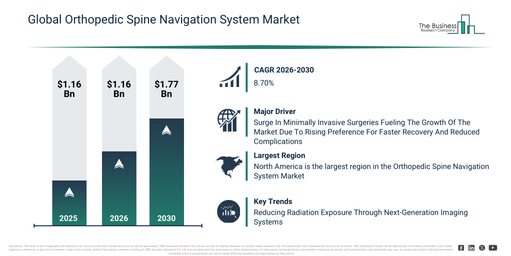
    Orthopedic Spine Navigation System Market Poised To Hit $27.84 Billion By 2030 With A 8.7% CAGR

    The orthopedic spine navigation system market has demonstrated robust growth over recent years. It is anticipated to increase from $18.26 billion in 2025 to $19.91 billion in 2026, registering a compound annual growth rate (CAGR) of 9.0%. The expansion observed in prior periods can be attributed to several factors, including the initial limited availability of navigation technologies, a reliance on traditional surgical approaches, the high expense of early navigation systems, an increase in spine surgery procedures, and a growing understanding of the benefits of enhanced surgical accuracy.

    The market for orthopedic spine navigation systems is projected to experience robust expansion over the coming years. This market is anticipated to reach a valuation of $27.84 billion by 2030, exhibiting a compound annual growth rate (CAGR) of 8.7%. This expansion during the forecast period is fueled by progress in AI-driven navigation, the merging with robotic surgical platforms, increased uptake in ambulatory surgery centers, the wider use of minimally invasive techniques, and the creation of hybrid electromagnetic-optical systems. Key developments foreseen include the growing acceptance of image-guided spine surgeries, increased deployment of intraoperative navigation systems, the merging of preoperative and intraoperative imaging data, an emphasis on minimizing surgical errors and enhancing precision, and the broadened application of minimally invasive spine surgery procedures.

    Get A Free Sample Report With In-Depth Market Insights:

    https://thebusinessresearchcompany.com/sample_request?id=84808414&type=smp&name=Orthopedic%20Spine%20Navigation%20System%20Market%20Report%202026&utm_source=Blogs&utm_medium=Paid&utm_campaign=Sep_PR

    Orthopedic Spine Navigation System Market Growth Factors Behind Sustained Expansion

    The growing need for minimally invasive surgical procedures is anticipated to fuel the expansion of the orthopedic spine navigation system market in the future. These surgeries involve conducting medical operations via small cuts instead of extensive incisions, leading to diminished tissue harm, less discomfort, quicker hospital discharges, and accelerated healing periods. The increase in minimally invasive surgeries stems from their ability to cause less physical trauma, facilitating faster recovery and briefer hospitalizations. Orthopedic spine navigation systems aid minimally invasive procedures by boosting surgical accuracy, providing live imaging and guidance, and minimizing potential complications, thus enhancing overall operational effectiveness and patient results. For instance, in June 2025, according to the National Health Service, a UK-based government department, it was reported that by 2035, half a million operations per year will be supported by robotic-assisted surgery, up from 70,000 in 2023/24. It was also noted that usage will rise from one in five procedures today to becoming the default approach for many minimally invasive operations. Consequently, the rising need for minimally invasive surgeries is propelling the expansion of the orthopedic spine navigation system market.

    Orthopedic Spine Navigation System Market Segment Analysis And Revenue Potential

    The orthopedic spine navigation system market covered in this report is segmented –

    1) By Type: Electromagnetic, Optical, Other Types

    2) By Modality: Intraoperative, Preoperative

    3) By Application: Deformity Correction, Cervical Spine Surgery, Thoracolumbar Spine Surgery, Sacroiliac Joint Surgery

    4) By End-User: Hospitals, Ambulatory Surgery Centers, Orthopedic Clinics

    Subsegments:

    1) By Electromagnetic: Electromagnetic Tracking Systems, Hybrid Electromagnetic Navigation, Portable Electromagnetic Navigation Units

    2) By Optical: Passive Optical Tracking Systems, Active Optical Tracking Systems, Hybrid Optical Navigation

    3) By Other Types: Ultrasound-Based Navigation Systems, Fluoroscopic Navigation Systems, Computed Tomography-Based Navigation Systems

    Orthopedic Spine Navigation System Market Industry Trends Fueling Future Revenue Growth

    Leading companies in the orthopedic spine navigation system market are concentrating on developing advanced technologies, such as proprietary camera technologies, to enhance real-time 3D imaging, improve surgical accuracy, reduce radiation exposure, and streamline minimally invasive procedures for superior patient outcomes. Proprietary camera technology refers to a unique or exclusive imaging system developed and owned by a company, often protected by patents or trade secrets. For instance, in September 2023, Orthofix Medical Inc., a US-based medical technology company, launched its 7D FLASH Navigation Percutaneous Module 2.0, completing the first US cases with enhanced planning features to better support minimally invasive spine surgery. The 7D FLASH Navigation System enables navigated spinal fusion procedures for both open and minimally invasive surgery techniques, prioritizing safety, speed, and efficiency. Using visible light to quickly create 3D images, the system’s proprietary camera and machine-vision technology address common navigation challenges while reducing radiation exposure for staff and patients in open procedures.

    Orthopedic Spine Navigation System Market Top Companies Driving Competitive Growth

    Major companies operating in the orthopedic spine navigation system market are Johnson & Johnson, Medtronic Plc, Siemens Healthineers AG, Stryker Corporation, GE Healthcare Technologies Inc., Zimmer Biomet Holdings Inc., Globus Medical Inc., MicroPort Scientific Corporation, Orthofix Medical Inc., Hefei Meyer Optoelectronic Technology INC., B. Braun Melsungen AG, Spineart, Alphatec Holdings Inc., Augmedics Inc., Fiagon GmbH, Medivis Inc., Nanjing Perlove Medical Equipment Co. Ltd., Captiva Spine Inc., Surglasses Inc., HRS NAVIGATION.

    View The Full Orthopedic Spine Navigation System Market Report:

    https://thebusinessresearchcompany.com/report/orthopedic-spine-navigation-system-global-market-report?utm_source=Blogs&utm_medium=Paid&utm_campaign=Sep_PR

    Orthopedic Spine Navigation System Market Global Footprint: Which Region Leads The Market?

    North America was the largest region in the orthopedic spine navigation system market in 2025. Asia-Pacific is expected to be the fastest-growing region in the forecast period. The regions covered in the orthopedic spine navigation system market report are Asia-Pacific, South East Asia, Western Europe, Eastern Europe, North America, South America, Middle East, Africa.

    Reach Out To Our Team:

    The Business Research Company: https://www.thebusinessresearchcompany.com/

    Americas: +1 310-496-7795

    Asia: +44 7882 955267 & +91 8897263534

    Europe: +44 7882 955267

    Email us at: marketing@tbrc.info

    Follow us on:

    LinkedIn: https://in.linkedin.com/company/the-business-research-company

    YouTube: https://www.youtube.com/channel/UC24_fI0rV8cR5DxlCpgmyFQ

    Global Market Model: https://www.thebusinessresearchcompany.com/global-market-model

  • Orthopedic Screws Market Research 2026: Market Size, Trends, Segments And Growth Forecast

    Orthopedic Screws Market Research 2026: Market Size, Trends, Segments And Growth Forecast

    Backed by market attractiveness analysis, total addressable market sizing, company benchmarking matrices, interactive Excel dashboards, wider supply chain intelligence, emerging startup coverage, and detailed product-level insights, The Business Research Company’s 2026 market reports are designed to offer research that is more actionable and strategically valuable than ever.

    Orthopedic Screws Market Size And Revenue Outlook Through 2030

    The orthopedic screws market size has observed substantial growth in recent years. It is anticipated to expand from $1.32 billion in 2025 to $1.39 billion in 2026, driven by a compound annual growth rate (CAGR) of 5.1%. The growth witnessed in previous periods is attributable to the increasing occurrence of traumatic fractures and orthopedic injuries, the rising prevalence of orthopedic surgeries performed in hospital settings, the initial clinical validation of stainless steel and titanium screw systems, the proliferation of ambulatory surgical centers dedicated to fracture fixation, and the expanding adoption of internal fixation techniques among adult demographics.

    The orthopedic screws market is anticipated to experience substantial expansion in the coming years, with its size projected to reach $1.76 billion by 2030, reflecting a compound annual growth rate (CAGR) of 6.1%. This projected increase during the forecast period is propelled by several factors, including a growing elderly population prone to osteoporosis-related fractures, a greater need for bioabsorbable screw options, an uptick in orthopedic surgical procedures in developing economies, increased application of lower extremity screw systems in trauma treatment, and the broadened use of specialized screws in managing pediatric fractures. Additionally, significant developments expected in this period encompass the increased deployment of titanium screws for intricate fracture stabilization, a rising inclination towards bioabsorbable orthopedic screws for trauma and sports injuries, an expansion in the number of surgical interventions for lower extremity fracture repairs, the wider application of specially designed screws in pediatric and geriatric fracture care, and the growing clinical adoption of compression screws to improve bone healing.

    Get A Free Sample Report With In-Depth Market Insights:

    https://thebusinessresearchcompany.com/sample_request?id=49495616&type=smp&name=Orthopedic%20Screws%20Market%20Report%202026&utm_source=Blogs&utm_medium=Paid&utm_campaign=Sep_PR

    Orthopedic Screws Market Demand Drivers Opening New Revenue Streams

    The increasing frequency of road accidents is anticipated to drive the growth of the orthopedic screw market. Road accidents, defined as incidents on public roadways involving at least one vehicle that result in injury or fatality, are a primary indication for orthopedic implant surgeries, which encompass screws and plates, alongside other traumatic events like sports-related injuries. For example, in December 2023, data from the Transport Accident Commission, an Australia-based government agency, revealed that 295 people lost their lives on Victorian roads in 2023, marking a 22.4% increase (54 more fatalities) compared to 2022. Additionally, there were 261 fatal crashes, which was an increase of 22 (9%) from the 239 recorded in the preceding year. Therefore, the rising occurrences of road accidents will significantly contribute to the expansion of the orthopedic screw market.

    Orthopedic Screws Market Segmentation And Category Overview

    The orthopedic screws market covered in this report is segmented –

    1) By Type: Upper Extremity, Lower Extremity

    2) By Material: Stainless Steel, Titanium, Bioabsorbable

    3) By Application: Hospitals, Ambulatory Surgical Centers (ASCs), Other Applications

    4) By End User: Pediatrics, Adults, Geriatrics

    Subsegments:

    1) By Upper Extremity: Humeral Screws, Clavicle Screws, Scapula Screws

    2) By Lower Extremity: Femoral Screws, Tibial Screws, Ankle Screws

    Orthopedic Screws Market Trends Powering Strategic Industry Growth

    Leading companies in the orthopedic screw market are concentrating on developing sustainable and innovative products, such as bioresorbable implants, to gain competitive advantages. These bioresorbable implants enhance recovery and reduce the invasiveness of medical procedures, eliminating the need for subsequent implant removal surgeries. For instance, in March 2023, Bioretec Inc., a Finland-based manufacturer of pediatric and adult orthopedic implants, received U.S. Food and Drug Administration approval for the RemeOs trauma screw. This product is the first orthopedic screw incorporating a bioresorbable metal implant, which has been substantiated through clinical trials and previously received a breakthrough device designation from the U.S. Food and Drug Administration. These bioresorbable metals combine the surgical techniques of traditional metal implants with the patient-friendly care and benefits associated with recent bioresorbable polymer implants, thereby making implant removal surgeries unnecessary.

    Orthopedic Screws Market Leading Players And Competitive Positioning

    Major companies operating in the orthopedic screws market are Johnson & Johnson, Stryker Corporation, Zimmer Biomet Holdings Inc, Smith & Nephew plc, Arthrex Inc, Integra LifeSciences Corporation, Wright Medical Group N.V., Tecomet Inc, Exactech Inc., Leistritz Advanced Technologies, Paragon 28 Inc, Acumed LLC, DJO Global, Elos Medtech, Precipart Inc, Royal Oak Medical Devices Inc, AccuRounds Inc, TYBER MEDICAL LLC, GPC Medical Ltd, Unity Precision Manufacturing, Hammill Medical Inc, Advanced Orthopaedic Solutions, Extremity Medical LLC, High Tech Turning Co, The Orthopaedic Implant Company, Diamond Orthopedic, Vilex Inc.

    View The Full Orthopedic Screws Market Report:

    https://thebusinessresearchcompany.com/report/orthopedic-screws-global-market-report?utm_source=Blogs&utm_medium=Paid&utm_campaign=Sep_PR

    Orthopedic Screws Market Regional Split: Which Areas Are Fueling Growth?

    North America was the largest region in the orthopedic screws market in 2025. The regions covered in the orthopedic screws market report are Asia-Pacific, South East Asia, Western Europe, Eastern Europe, North America, South America, Middle East, Africa.

    Reach Out To Our Team:

    The Business Research Company: https://www.thebusinessresearchcompany.com/

    Americas: +1 310-496-7795

    Asia: +44 7882 955267 & +91 8897263534

    Europe: +44 7882 955267

    Email us at: marketing@tbrc.info

    Follow us on:

    LinkedIn: https://in.linkedin.com/company/the-business-research-company

    YouTube: https://www.youtube.com/channel/UC24_fI0rV8cR5DxlCpgmyFQ

    Global Market Model: https://www.thebusinessresearchcompany.com/global-market-model
  • Orthopedic Regenerative Surgical Products Market Forecast 2026: Market Size, Competitive Landscape And Growth Drivers

    Orthopedic Regenerative Surgical Products Market Forecast 2026: Market Size, Competitive Landscape And Growth Drivers

    Featuring market attractiveness scoring, total addressable market sizing, company benchmarking matrices, interactive Excel dashboards, deeper supply chain intelligence, emerging startup tracking, and granular product-level insights, The Business Research Company’s 2026 market reports are built to deliver research that is both more actionable and more strategically valuable.

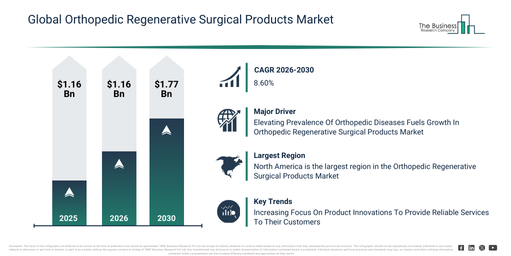
    Orthopedic Regenerative Surgical Products Market Growth From $5.32 Billion In 2026 To $7.39 Billion By 2030 At A CAGR Of 8.6%

    The orthopedic regenerative surgical products market size has experienced significant expansion in recent years. It is projected to grow from $4.88 billion in 2025 to $5.32 billion in 2026, achieving a compound annual growth rate (CAGR) of 9.1%. The growth observed in previous periods is attributable to the increasing prevalence of musculoskeletal disorders, a rising demand for joint preservation treatments, the expansion of sports injury management, the growing acceptance of regenerative therapies, and improvements in biologic processing techniques.

    The orthopedic regenerative surgical products market is anticipated to experience robust expansion over the next few years. It is forecast to grow to $7.39 billion in 2030, demonstrating a compound annual growth rate (CAGR) of 8.6%. This growth throughout the forecast period can be attributed to several factors, including the increasing adoption of stem cell-based treatments, a rising focus on non-surgical orthopedic interventions, the expansion of regenerative medicine clinics, growing investments in biologics research, and an increasing demand for personalized orthopedic therapies. Significant trends during this period include the increasing adoption of platelet-rich plasma therapies, a rising demand for cell-based regenerative solutions, the growing use of synthetic bone grafts, the expansion of minimally invasive regenerative procedures, and an enhanced focus on tissue repair outcomes.

    Get A Free Sample Report With In-Depth Market Insights:

    https://thebusinessresearchcompany.com/sample_request?id=96979021&type=smp&name=Orthopedic%20Regenerative%20Surgical%20Products%20Market%20Report%202026&utm_source=Blogs&utm_medium=Paid&utm_campaign=Sep_PR

    Orthopedic Regenerative Surgical Products Market Growth Backed By Core Demand Fundamentals

    The global increase in orthopedic diseases is anticipated to foster expansion within the orthopedic regenerative surgical products market. These orthopedic regenerative surgical products play a role in averting orthopedic issues like fractures, sprains, and strains, alongside chronic ailments linked to persistent functional limitations and disability. As an illustration, a report released in June 2024 by the Australian Bureau of Statistics, a statistical agency based in Australia, indicated that musculoskeletal conditions made up 12.8% of the overall disease burden (DALY), 23.1% of the non-fatal burden (YLD), and 0.8% of the fatal burden (YLL) in 2023. Consequently, the growing incidence of orthopedic diseases propels the market for orthopedic regenerative surgical products.

    Orthopedic Regenerative Surgical Products Market Segment Outlook: Which Categories Are Growing Fastest?

    The orthopedic regenerative surgical products market covered in this report is segmented –

    1) By Product: Allograft, Synthetic, Cell-based, Viscosupplements

    2) By Application: Orthopedic Pain Management, Trauma Repair, Cartilage and Tendon Repair

    3) By End User: Hospitals, Ambulatory Surgical Centers, Other End Users

    Subsegments:

    1) By Allograft: Bone Allograft, Soft Tissue Allograft, Osteoinductive Allograft, Osteoconductive Allograft

    2) By Synthetic: Synthetic Bone Grafts, Synthetic Soft Tissue Grafts, Composite Synthetic Grafts

    3) By Cell-based: Stem Cell Therapies, Platelet-Rich Plasma (PRP), Mesenchymal Stem Cells (MSCs)

    4) By Viscosupplements: Hyaluronic Acid Injections, Sodium Hyaluronate

    Orthopedic Regenerative Surgical Products Market Growth Trends Reshaping The Competitive Landscape

    Major companies operating in the orthopedic regenerative surgical products market are focusing on innovative products such as non-permanent ossiofiber compression staple to drive revenues in their market. This non-permanent ossiofiber compression staple is a medical device utilized in orthopedic and musculoskeletal surgeries for fracture fixation and bone fusion, designed to offer temporary stability and compression to facilitate the healing and fusion of bones. For instance, in February 2023, Ossio Inc., a US-based company specializing in creating innovative products for orthopedic and musculoskeletal applications, launched the non-permanent ossiofiber compression staple. Ossiofiber combines mechanical strength with spontaneous bone regeneration, providing an alternative to traditional resorbable and allograft implants and permanent metal hardware. By employing Ossiofiber Compression Staples, the company is able to provide solutions for a variety of midfoot and hindfoot procedures, such as flatfoot corrective procedures, Lapidus fusions, and midfoot fusions.

    Orthopedic Regenerative Surgical Products Market Competitive Overview And Top Companies

    Major companies operating in the orthopedic regenerative surgical products market are Baxter International Inc., Zimmer Biomet Holdings Inc., Stryker Corporation, Smith&Nephew plc, Allosource, Anika Therapeutics Inc., Vericel Corporation, Amniox Medical Inc., MIMEDX Group Inc., Aptissen S.A, Arthrex Inc., Bioventus LLC, Conmed Corporation, DePuy Synthes Inc., Exactech Inc., Globus Medical Inc., Integra LifeSciences Corporation, Johnson & Johnson Medical Devices group, Kuros Biosciences AG, Medtronic plc, NuVasive Inc., Orthofix Medical Inc., Osiris Therapeutics Inc., RTI Surgical Inc., Terumo BCT Inc., Tissue Regenix Group plc, Wright Medical Group N.V., Xtant Medical Holdings Inc., Camber Spine Technologies, Lima Corporate, Life Spine Inc., CollPlant Biotechnologies Ltd.

    View The Full Orthopedic Regenerative Surgical Products Market Report:

    https://thebusinessresearchcompany.com/report/orthopedic-regenerative-surgical-products-global-market-report?utm_source=Blogs&utm_medium=Paid&utm_campaign=Sep_PR

    Orthopedic Regenerative Surgical Products Market Top Region: Where Does Most Revenue Come From?

    North America was the largest region in the orthopedic regenerative surgical products market in 2025. Asia-Pacific is expected to be the fastest-growing region in the forecast period. The regions covered in the orthopedic regenerative surgical products market report are Asia-Pacific, South East Asia, Western Europe, Eastern Europe, North America, South America, Middle East, Africa.

    Reach Out To Our Team:

    The Business Research Company: https://www.thebusinessresearchcompany.com/

    Americas: +1 310-496-7795

    Asia: +44 7882 955267 & +91 8897263534

    Europe: +44 7882 955267

    Email us at: marketing@tbrc.info

    Follow us on:

    LinkedIn: https://in.linkedin.com/company/the-business-research-company

    YouTube: https://www.youtube.com/channel/UC24_fI0rV8cR5DxlCpgmyFQ

    Global Market Model: https://www.thebusinessresearchcompany.com/global-market-model

  • Orthopedic Prosthetics Market Size In 2026: Regional Growth, Key Segments And Future Outlook

    Orthopedic Prosthetics Market Size In 2026: Regional Growth, Key Segments And Future Outlook

    Built to provide research that’s more actionable and strategically valuable, The Business Research Company’s 2026 market reports include market attractiveness analysis, total addressable market sizing, company benchmarking matrices, interactive Excel dashboards, broader supply chain intelligence, emerging startup tracking, and in-depth product insights.

    Orthopedic Prosthetics Market Expansion Outlook: What Revenue Opportunities Are Ahead?

    The orthopedic prosthetics market has witnessed robust expansion in recent years. It is anticipated to increase from $2.06 billion in 2025 to $2.17 billion in 2026, exhibiting a compound annual growth rate (CAGR) of 5.6%. Historically, this market’s growth can be attributed to a rising incidence of limb loss due to trauma and various diseases, the widening scope of rehabilitation services, enhancements in prosthetic manufacturing technologies, the proliferation of prosthetic clinics, and a greater understanding of available mobility solutions.

    The orthopedic prosthetics market is projected to experience substantial growth over the coming years, reaching $2.72 billion by 2030, demonstrating a compound annual growth rate (CAGR) of 5.8%. This anticipated expansion throughout the forecast period can be attributed to several factors, including the rising demand for smart and connected prosthetics, increased investments in bionic limb technologies, the broadening of personalized prosthetic fitting services, a heightened focus on enhancing the quality of life, and the growing integration of AI-enabled prosthetic control systems. Key trends anticipated during this period involve the increasing adoption of advanced prosthetic materials, a growing prevalence of electric-powered prosthetics, the expansion of customized prosthetic solutions, the rising incorporation of sensor-based prosthetic systems, and an elevated emphasis on functional mobility.

    Get A Free Sample Report With In-Depth Market Insights:

    https://thebusinessresearchcompany.com/sample_request?id=2542&type=smp&name=Orthopedic%20Prosthetics%20Market%20Report%202026&utm_source=Blogs&utm_medium=Paid&utm_campaign=Sep_PR

    Orthopedic Prosthetics Market Growth Catalysts And Demand Drivers

    The increasing incidence of orthopedic conditions is set to fuel the expansion of the robotic prosthetics market moving forward. Orthopedic diseases are defined as ailments and disorders affecting the musculoskeletal system, encompassing muscles, bones, nerves, and joints. Prosthetics play a crucial role in orthopedics, specifically in the treatment and correction of musculoskeletal disorders and injuries through limb replacement, gait rehabilitation, and greater accuracy in orthopedic surgical procedures. For example, in May 2023, an article from the National Center For Biotechnology Information, a US-based government agency, stated that low back pain (LBP) is anticipated to increase to 843 million by 2050. Hence, the rising occurrence of orthopedic diseases is propelling the growth of the robotic prosthetics market.

    Orthopedic Prosthetics Market Segment Landscape: Which Areas Lead Development?

    The orthopedic prosthetics market covered in this report is segmented –

    1) By Product Type: Upper Extremity Prosthetics, Lower Extremity Prosthetics, Sockets, Other Products

    2) By Technology: Conventional orthopedic prosthetics, Electric-powered orthopedic prosthetics, Hybrid orthopedic prosthetics

    3) By End Users: Hospitals, Prosthetic Clinics, Rehabilitation Center, Other End Users

    Subsegments:

    1) By Upper Extremity Prosthetics: Prosthetic Arms, Prosthetic Hands, Prosthetic Shoulders

    2) By Lower Extremity Prosthetics: Prosthetic Legs, Prosthetic Knees, Prosthetic Feet

    3) By Sockets: Transfemoral Sockets, Transtibial Sockets, Below Knee Sockets, Above Knee Sockets

    4) By Other Products: Prosthetic Accessories, Prosthetic Linings

    Orthopedic Prosthetics Market Trends Shaping Long-Term Demand

    Companies operating in the orthopedic prosthetics market are concentrating on launching advanced products, like sports prosthetics, to offer athletes prosthetic feet specifically engineered for their athletic applications. A sports prosthetic represents a specialized prosthetic foot designed to meet the unique demands of sports and high-impact activities, delivering enhanced energy return, durability, and stability. For example, in February 2025, Össur, an Iceland-based orthopedic technology company, introduced the Pro Flex Terra, a next-generation, multi-blade carbon-fiber foot that combines the softness and flexibility of low-active prosthetics with the powerful energy return of high-active feet. It incorporates a patented pre-compressed top blade and a three-step foam design utilizing BASF’s Cellasto, allowing it to adapt to various walking and running conditions.

    Orthopedic Prosthetics Market Competitive Landscape: Which Companies Lead The Industry?

    Major companies operating in the orthopedic prosthetics market are Otto Bock HealthCare GmbH, Blatchford Ltd., Zimmer Biomet Inc., DePuy Synthes, Stryker Corporation, WillowWood, Smith and Nephew plc, Biomet Inc., Touch Bionics Inc., Fillauer Companies Inc., Advanced Arm Dynamics, Bock Healthcare Gmbh, Medtronic Spine LLC, DJO Global, Integra Lifesciences, NuVasive Inc., Globus Medical, Wright Medical Group Inc., Arthrex Inc., Johnson & Johnson, OrthoPediatrics Corp., WishBone Medical Inc., Hanger Inc., Howard Orthopaedics Inc., Exactech Inc., Ossur hf., B. Braun Melsungen AG, Mobius Bionics LLC, Esper Bionics, ToughWare Prosthetics, Enovis, Argomedical AG, Astrek Innovations Pvt Ltd., Boston Orthotics & Prosthetics, LeTourneau Lifelike Orthotics and Prosthetics Inc., TASKA Prosthetics, Naked Prosthetics, Steeper Inc., medi GmbH & Co. KG, Orthotic & Prosthetic Lab Inc., Trulife Group Limited

    View The Full Orthopedic Prosthetics Market Report:

    https://thebusinessresearchcompany.com/report/orthopedic-prosthetics-global-market-report?utm_source=Blogs&utm_medium=Paid&utm_campaign=Sep_PR

    Orthopedic Prosthetics Market Regional Breakdown: Where Is Demand Concentrated?

    North America was the largest region in the global orthopedic prosthetics market in 2025. Western Europe was the second-largest region in the orthopedic prosthetics market. The regions covered in the orthopedic prosthetics market report are Asia-Pacific, South East Asia, Western Europe, Eastern Europe, North America, South America, Middle East, Africa.

    Reach Out To Our Team:

    The Business Research Company: https://www.thebusinessresearchcompany.com/

    Americas: +1 310-496-7795

    Asia: +44 7882 955267 & +91 8897263534

    Europe: +44 7882 955267

    Email us at: marketing@tbrc.info

    Follow us on:

    LinkedIn: https://in.linkedin.com/company/the-business-research-company

    YouTube: https://www.youtube.com/channel/UC24_fI0rV8cR5DxlCpgmyFQ

    Global Market Model: https://www.thebusinessresearchcompany.com/global-market-model
  • Orthopedic Power Tools Market Growth Forecast Through 2030: Market Size And Trends In 2026

    Orthopedic Power Tools Market Growth Forecast Through 2030: Market Size And Trends In 2026

    Backed by market attractiveness analysis, total addressable market sizing, company benchmarking matrices, interactive Excel dashboards, wider supply chain intelligence, emerging startup coverage, and detailed product-level insights, The Business Research Company’s 2026 market reports are designed to offer research that is more actionable and strategically valuable than ever.

    Orthopedic Power Tools Market Growth Potential: How Will Market Size Shift Through 2030?

    The orthopedic power tools market size has demonstrated robust growth over recent years. It is anticipated to expand from $1.47 billion in 2025 to $1.56 billion by 2026, exhibiting a compound annual growth rate (CAGR) of 6.5%. The expansion witnessed in the past can be attributed to an increasing number of orthopedic trauma cases, the proliferation of joint replacement surgeries, a rise in the incidence of sports injuries, enhancements in surgical infrastructure, and the broader availability of powered surgical tools.

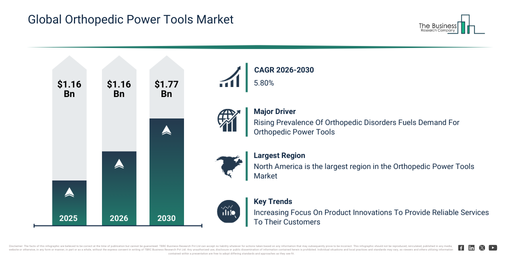
    The orthopedic power tools market is projected to experience substantial expansion over the upcoming years. It is forecast to reach $1.96 billion by 2030, exhibiting a compound annual growth rate (CAGR) of 5.8%. This anticipated growth during the projection period stems from factors such as a heightened demand for minimally invasive surgical interventions, a surge in the adoption of cordless surgical instruments, the expansion of outpatient orthopedic procedures, an intensified focus on enhancing surgical efficiency, and ongoing innovations in orthopedic device engineering. Prominent developments expected throughout the forecast horizon encompass a greater uptake of battery-operated surgical implements, an increasing need for high-speed orthopedic systems, wider utilization of ergonomically designed power tools, the proliferation of minimally invasive orthopedic procedures, and a sharpened emphasis on surgical precision.

    Get A Free Sample Report With In-Depth Market Insights:

    https://thebusinessresearchcompany.com/sample_request?id=35120622&type=smp&name=Orthopedic%20Power%20Tools%20Market%20Report%202026&utm_source=Blogs&utm_medium=Paid&utm_campaign=Sep_PR

    Orthopedic Power Tools Market Opportunity Drivers: What’s Unlocking New Revenue Potential?

    The rising incidence of orthopedic disorders within the global population is anticipated to propel the orthopedic power tools market. Orthopedics primarily addresses the treatment of abnormalities or functional limitations affecting the skeletal system, most notably the spine along with its accompanying structures, ligaments, and muscles. These orthopedic power tools are employed in managing such orthopedic ailments. For instance, in June 2024, a report issued by the Australian Bureau of Statistics, an Australia-based statistical agency, indicated that musculoskeletal conditions were responsible for 12.8% of the total disease burden (DALY), 23.1% of the non-fatal burden (YLD), and 0.8% of the fatal burden (YLL) in 2023. Consequently, the escalating prevalence of orthopedic disorders is expected to drive an increase in the demand for orthopedic power tools during the forecast period.

    Orthopedic Power Tools Market Segments: Where Is Growth Concentrated?

    The orthopedic power tools market covered in this report is segmented –

    1) By Product Type: Large Bone Orthopedic Power Tools, Small Bone Orthopedic Power Tools, High Speed Bone Orthopedic Power Tools, Orthopedic Reamers

    2) By Technology: Pneumatic Powered, Battery Operated, Electric Powered

    3) By End User: Orthopedic Hospitals, Orthopedic Clinics, Ambulatory Surgical Centers

    Subsegments:

    1) By Large Bone Orthopedic Power Tools: Saws, Drills, Screwdrivers

    2) By Small Bone Orthopedic Power Tools: Micro Saws, Micro Drills, Micro Screwdrivers

    3) By High Speed Bone Orthopedic Power Tools: High-Speed Drills, High-Speed Saws, High-Speed Motors

    4) By Orthopedic Reamers: Cannulated Reamers, Solid Reamers, Variable Diameter Reamers

    Orthopedic Power Tools Market Innovation Trends Shaping Future Development

    Leading companies within the orthopedic power tools market are prioritizing cutting-edge products, such as Robotic systems, to fuel revenue growth. A robotic-assisted solution signifies a technology that leverages robotic systems to optimize surgical and rehabilitation processes, offering increased precision, greater control, and minimally invasive choices for superior patient outcomes. For example, in October 2023, Johnson & Johnson MedTech, a U.S.-based medical technology company, debuted the VELYS Robotic-Assisted Solution through its orthopaedics division, DePuy Synthes, in the European market. This innovative system was successfully deployed for Total Knee procedures in Germany, Belgium, and Switzerland. With this introduction, DePuy Synthes enhances its Digital Surgery Platform, providing advanced technologies designed to address the shortcomings of previous-generation orthopaedic robots and improving the accuracy of joint replacement surgeries.

    Orthopedic Power Tools Market Competitive Landscape: Who Leads The Industry?

    Major companies operating in the orthopedic power tools market are De Soutter Medical Ltd., B Braun Melsungen AG, Aygun Surgical Instruments Co. Inc., Medtronic plc, DePuy Synthes Inc., ConMed Corporation, Stryker Corporation, Zimmer Biomet Holdings Inc., Arthrex Inc., Smith and Nephew plc, Exactech Inc., Allo Tech Co. Ltd., Microaire Surgical Instruments Inc., Adeor Medical AG, Manman Manufacturing Company Pvt. Ltd., Bosch Healthcare Solutions GmbH, DynaMedic Co. Ltd., Arbutus Medical Inc., Aesculap AG, Becton Dickinson and Company, Biomet Inc., Brasseler USA, Ceterix Orthopaedics Inc., Corin Group, Elite Surgical Pvt. Ltd., GPC Medical Ltd., Integra LifeSciences Holdings Corp., Intrauma S.p.A., Medicon Genossenschaft, Medline Industries Inc., Ortho Solutions GmbH, OsteoMed Inc.

    View The Full Orthopedic Power Tools Market Report:

    https://thebusinessresearchcompany.com/report/orthopedic-power-tools-global-market-report?utm_source=Blogs&utm_medium=Paid&utm_campaign=Sep_PR

    Orthopedic Power Tools Market Geographic Landscape: Which Region Dominates Industry Growth?

    North America was the largest region in the orthopedic power tools market in 2025. Asia-Pacific is expected to be the fastest-growing region in the forecast period. The regions covered in the orthopedic power tools market report are Asia-Pacific, South East Asia, Western Europe, Eastern Europe, North America, South America, Middle East, Africa.

    Reach Out To Our Team:

    The Business Research Company: https://www.thebusinessresearchcompany.com/

    Americas: +1 310-496-7795

    Asia: +44 7882 955267 & +91 8897263534

    Europe: +44 7882 955267

    Email us at: marketing@tbrc.info

    Follow us on:

    LinkedIn: https://in.linkedin.com/company/the-business-research-company

    YouTube: https://www.youtube.com/channel/UC24_fI0rV8cR5DxlCpgmyFQ

    Global Market Model: https://www.thebusinessresearchcompany.com/global-market-model
  • Orthopedic Implants Market Analysis: $43.36 Billion Market Size In 2026 And Future Growth Prospects

    Orthopedic Implants Market Analysis: $43.36 Billion Market Size In 2026 And Future Growth Prospects

    Featuring market attractiveness scoring, total addressable market sizing, company benchmarking matrices, interactive Excel dashboards, deeper supply chain intelligence, emerging startup tracking, and granular product-level insights, The Business Research Company’s 2026 market reports are built to deliver research that is both more actionable and more strategically valuable.

    Orthopedic Implants Market Value Analysis: What Growth Lies Ahead Over The Forecast Period?

    The orthopedic implants market size has exhibited substantial growth in recent years. This market is set to expand from $40.9 billion in 2025 to $43.36 billion in 2026, advancing at a compound annual growth rate (CAGR) of 6.0%. Historically, the market’s expansion can be linked to the limited availability of advanced biomaterials, a reliance on conventional metallic implants, a rising prevalence of orthopedic disorders, enhancing hospital infrastructure, and increased awareness regarding joint replacement procedures.

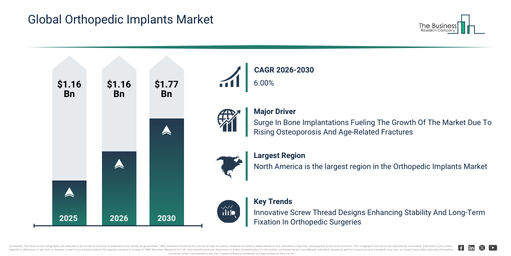
    The orthopedic implants market is projected to experience substantial expansion over the coming years, reaching a valuation of $54.65 billion in 2030, demonstrating a compound annual growth rate (CAGR) of 6.0%. This anticipated growth can be linked to factors such as advancements in ceramic and polymer-based implant technologies, the increasing use of intelligent surgical tools, a growing elderly population requiring orthopedic care, the proliferation of outpatient orthopedic centers, and the incorporation of digital imaging along with robotic-assisted surgical methods. Key trends anticipated during this period encompass a surge in the need for total and partial joint replacement operations, the growing embrace of sophisticated biomaterials, an increase in minimally invasive orthopedic interventions, the enlargement of ambulatory surgical centers, and a heightened emphasis on recovery and rehabilitation after surgery.

    Get A Free Sample Report With In-Depth Market Insights:

    https://thebusinessresearchcompany.com/sample_request?id=82680864&type=smp&name=Orthopedic%20Implants%20Market%20Report%202026&utm_source=Blogs&utm_medium=Paid&utm_campaign=Sep_PR

    Orthopedic Implants Market Growth Momentum: What Factors Are Shaping Demand?

    The expanding need for bone implantations is projected to boost the orthopedic implants market’s future growth. Bone implantations involve surgical interventions where synthetic materials, such as metal or ceramic devices, are inserted into bone tissue to mend, substitute, or reinforce compromised or absent bone structures. The increase in bone implantations stems from the rising occurrence of osteoporosis and fractures among older demographics, which mandates surgical repair and bone grafting techniques to regain functionality and movement. Within these procedures, orthopedic implants serve to substitute, support, or stabilize damaged or absent bone structures, thereby aiding in functional recovery and encouraging healing. For instance, in August 2024, Healthy Bones Australia, an Australia-based non-profit organization, disclosed that 6.2 million Australians aged 50 and over suffered from inadequate bone health in 2023, with 77% experiencing osteopenia and 23% osteoporosis, a figure anticipated to climb to 7.7 million by 2033. Consequently, the increasing requirement for bone implantations is propelling the expansion of the orthopedic implants market.

    Orthopedic Implants Market Segment Analysis: What Are The Core Market Categories?

    The orthopedic implants market covered in this report is segmented –

    1) By Product Type: Knee Implants, Dental Implants, Hip Implants, Spinal Implants, Other Product Types

    2) By Biomaterial: Ceramic Biomaterials, Metallic Biomaterials, Polymers Biomaterials, Other Biomaterials

    3) By End-User: Hospitals, Orthopedic Clinics, Ambulatory Surgical Centers, Other End-Users

    Subsegments:

    1) By Knee Implants: Total Knee Replacement Implants, Partial Knee Replacement Implants, Revision Knee Replacement Implants

    2) By Dental Implants: Endosteal Implants, Subperiosteal Implants, Zygomatic Implants

    3) By Hip Implants: Total Hip Replacement Implants, Partial Hip Replacement Implants, Revision Hip Replacement Implants, Hip Resurfacing Implants

    4) By Spinal Implants: Fusion Devices, Non-Fusion Devices (Motion Preservation Devices), Spinal Bone Stimulators

    5) By Other Product Types: Shoulder Implants, Elbow Implants, Ankle And Foot Implants, Wrist Implants

    Orthopedic Implants Market Trends Redefining Industry Growth

    Major companies engaged in the orthopedic implants market are prioritizing sophisticated innovations like orthopedic fixation systems to improve implant stability, increase pullout strength in cancellous bone, and ensure enduring fixation in orthopedic procedures. Orthopedic fixation systems are medical instruments utilized to stabilize and support fractured or surgically modified bones, promoting correct alignment and healing through internal or external mechanical assistance. For example, in March 2025, Orthopedic Implant Company, a US-based manufacturer of surgical implants, introduced the mini fragment plating system, providing adaptable and effective solutions for orthopedic trauma surgeries. Featuring flexible plate designs, advanced screw options, and surgeon-friendly functionalities, this system simplifies inventory and supports value-based care while sustaining high clinical performance.

    Orthopedic Implants Market Company Landscape And Competitive Strategy

    Major companies operating in the orthopedic implants market are Johnson & Johnson, Stryker Corporation, Zimmer Biomet, Smith & Nephew plc, Arthrex Inc., Enovis Corporation, Integra LifeSciences Holdings Corporation, NuVasive Inc., Medacta International, Orthofix Medical Inc., Exactech Inc., B. Braun Melsungen AG, Acumed, Xtant Medical Holdings, Siora Surgical Pvt. Ltd., Auxein Medical, Adler Ortho, DePuy Synthes (Johnson & Johnson Orthopaedics), Globus Medical Inc., LimaCorporate S.p.A., MicroPort Orthopedics, Corin Group, Kyocera Medical, United Orthopedic Corporation

    View The Full Orthopedic Implants Market Report:

    https://thebusinessresearchcompany.com/report/orthopedic-implants-global-market-report?utm_source=Blogs&utm_medium=Paid&utm_campaign=Sep_PR

    Orthopedic Implants Market Largest Region: Which Geography Holds The Highest Market Share?

    North America was the largest region in the orthopedic implants market in 2025. Asia-Pacific is expected to be the fastest-growing region in the forecast period. The regions covered in the orthopedic implants market report are Asia-Pacific, South East Asia, Western Europe, Eastern Europe, North America, South America, Middle East, Africa.

    Reach Out To Our Team:

    The Business Research Company: https://www.thebusinessresearchcompany.com/

    Americas: +1 310-496-7795

    Asia: +44 7882 955267 & +91 8897263534

    Europe: +44 7882 955267

    Email us at: marketing@tbrc.info

    Follow us on:

    LinkedIn: https://in.linkedin.com/company/the-business-research-company

    YouTube: https://www.youtube.com/channel/UC24_fI0rV8cR5DxlCpgmyFQ

    Global Market Model: https://www.thebusinessresearchcompany.com/global-market-model
  • Orthopedic Imaging Equipment Market 2026 Market Size And Growth Forecast: Key Trends To Watch

    Orthopedic Imaging Equipment Market 2026 Market Size And Growth Forecast: Key Trends To Watch

    Built to provide research that’s more actionable and strategically valuable, The Business Research Company’s 2026 market reports include market attractiveness analysis, total addressable market sizing, company benchmarking matrices, interactive Excel dashboards, broader supply chain intelligence, emerging startup tracking, and in-depth product insights.

    Orthopedic Imaging Equipment Market Size Forecast: How Big Could The Market Get By 2030?

    The orthopedic imaging equipment market has demonstrated strong growth in recent years. Its value is projected to rise from $10.74 billion in 2025 to $11.33 billion in 2026, at a compound annual growth rate (CAGR) of 5.6%. This historical expansion can be attributed to an increasing incidence of musculoskeletal disorders, a greater volume of orthopedic surgical procedures, the expansion of hospital imaging infrastructure, growing utilization of diagnostic imaging in trauma care, and the availability of advanced imaging technologies.

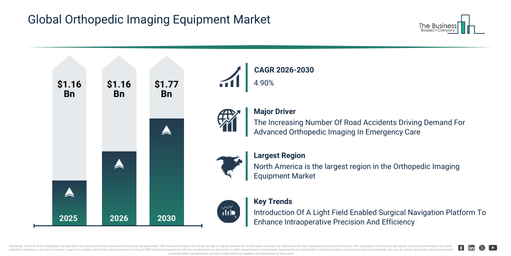
    The orthopedic imaging equipment market size is anticipated to expand consistently in the coming years. It is expected to reach $13.72 billion in 2030, demonstrating a compound annual growth rate (CAGR) of 4.9%. This growth over the forecast period is primarily fueled by an escalating demand for early and accurate orthopedic diagnosis, increasing investments in AI-enabled imaging platforms, the expansion of outpatient orthopedic care facilities, a rising aging population affected by joint disorders, and a growing emphasis on minimally invasive treatment planning. Significant trends during this period include the increased adoption of AI-assisted image analysis, the rising deployment of high-resolution imaging modalities, the growing integration of multi-modality imaging systems, the expansion of portable and point-of-care imaging devices, and an enhanced focus on workflow optimization in orthopedic diagnostics.

    Get A Free Sample Report With In-Depth Market Insights:

    https://thebusinessresearchcompany.com/sample_request?id=64474705&type=smp&name=Orthopedic%20Imaging%20Equipment%20Market%20Report%202026&utm_source=Blogs&utm_medium=Paid&utm_campaign=Sep_PR

    Orthopedic Imaging Equipment Market Expansion Drivers: What’s Shaping Future Growth?

    A rising incidence of road accidents is anticipated to propel the expansion of the orthopedic imaging equipment market in the future. Road accidents are defined as any incident occurring on a thoroughfare involving vehicles, pedestrians, cyclists, or other road users, resulting in damage to assets, physical harm, or fatalities. The escalating number of such accidents is attributed to various factors, including distracted driving, excessive speed, impaired driving, insufficient infrastructure, and human error, further compounded by societal shifts like urbanization and technological distractions. In the context of road accidents, orthopedic imaging equipment delivers detailed images of bone fractures, joint dislocations, and soft tissue injuries, thereby assisting in precise diagnosis and treatment planning, which consequently improves patient outcomes and facilitates rapid recovery. For instance, in August 2025, the International Transport Forum, a France-based intergovernmental organization, indicated that Australia registered 1,297 road deaths in 2024, signifying a 4% increase when compared to 2023. Thus, the growing occurrence of road accidents is indeed a key driver for the orthopedic imaging equipment market’s growth.

    Orthopedic Imaging Equipment Market Segment Breakdown: Which Categories Lead On Revenue?

    The orthopedic imaging equipment market covered in this report is segmented –

    1) By Imaging Modality: X-Ray Systems, Computed Tomography Imaging Systems, Magnetic Resonance Imaging Systems, Electron Optical System Imaging Systems, Ultrasound Imaging Systems, Nuclear Imaging Systems

    2) By Indication: Acute Injuries, Sports Injuries, Trauma Cases, Chronic Orthopedic Disorders, Osteoarthritis, Osteoporosis, Prolapsed Disc, Degenerative Joint Diseases

    3) By End User: Hospitals, Radiology Centers, Emergency Care Facilities, Ambulatory Surgical Centers

    Subsegments:

    1) By X-Ray Systems: Fixed Orthopedic X-Ray Systems, Mobile Orthopedic X-Ray Systems, Digital Radiography Systems

    2) By Computed Tomography Imaging Systems: Multislice Computed Tomography Scanners, Cone Beam Computed Tomography Systems

    3) By Magnetic Resonance Imaging Systems: High-Field Magnetic Resonance Imaging Systems, Mid-Field Magnetic Resonance Imaging Systems, Low-Field Magnetic Resonance Imaging Systems

    4) By Electron Optical System Imaging Systems: Full-Body Electron Optical System Imaging, Lower Limb Electron Optical System Imaging

    5) By Ultrasound Imaging Systems: Portable Ultrasound Imaging Systems, Cart-Based Ultrasound Imaging Systems

    6) By Nuclear Imaging Systems: Single Photon Emission Computed Tomography Systems, Positron Emission Tomography Systems

    Orthopedic Imaging Equipment Market Strategic Trends: What Defines The Next Growth Phase?

    Leading companies in the orthopedic imaging equipment market are concentrating on developing advanced solutions, such as next-generation light-field-enabled surgical navigation platforms, to replace conventional intraoperative imaging and guidance methods. A next-generation solution represents an innovative imaging and navigation technology that enhances surgical precision by offering real-time 3D visualizations, reducing radiation exposure, and improving workflow efficiency during orthopedic procedures. For instance, in April 2023, Proprio Inc., a US-based surgical technology company, received FDA clearance for Paradigm, the world’s first light-field-enabled spine surgery navigation platform. This innovation supersedes traditional fluoroscopy-dependent workflows by delivering high-resolution, real-time imaging of the surgical field through advanced light-field sensors and AI-driven 3D reconstruction. It facilitates dynamic anatomical visualization, precise instrument tracking, and integration with preoperative scans without requiring continuous radiation. Integrated with Proprio’s intelligent surgical guidance capabilities, Paradigm provides surgeons with enhanced accuracy, improved intraoperative decision-making, and a safer operating environment. The platform enhances clinical outcomes, streamlines surgical workflows, and supports better overall efficiency in orthopedic and spine procedures.

    Orthopedic Imaging Equipment Market Key Players Shaping Industry Direction

    Major companies operating in the orthopedic imaging equipment market are Hitachi Ltd., Siemens AG, Toshiba Corporation, FUJIFILM Corporation, Koninklijke Philips N.V., GE HealthCare Technologies Inc., Hologic Inc., Shenzhen Mindray Bio-Medical Electronics Co. Ltd., Shimadzu Corporation, Canon Medical Systems Corporation, Neusoft Corporation, Planmed Oy, Agfa-Gevaert N.V., Carestream Health, Esaote SpA, Ziehm Imaging GmbH, EOS Imaging, NeuroLogica Corp., Swissray International Inc., Xoran Technologies LLC, Allengers Medical Systems Ltd., Konica Minolta Healthcare Americas Inc., Hi-Tech Medical Imaging

    View The Full Orthopedic Imaging Equipment Market Report:

    https://thebusinessresearchcompany.com/report/orthopedic-imaging-equipment-global-market-report?utm_source=Blogs&utm_medium=Paid&utm_campaign=Sep_PR

    Orthopedic Imaging Equipment Market Regional Analysis: Which Region Leads By Revenue?

    North America was the largest region in the orthopedic imaging equipment market in 2025. Asia-Pacific is expected to be the fastest-growing region in the forecast period. The regions covered in the orthopedic imaging equipment market report are Asia-Pacific, South East Asia, Western Europe, Eastern Europe, North America, South America, Middle East, Africa.

    Reach Out To Our Team:

    The Business Research Company: https://www.thebusinessresearchcompany.com/

    Americas: +1 310-496-7795

    Asia: +44 7882 955267 & +91 8897263534

    Europe: +44 7882 955267

    Email us at: marketing@tbrc.info

    Follow us on:

    LinkedIn: https://in.linkedin.com/company/the-business-research-company

    YouTube: https://www.youtube.com/channel/UC24_fI0rV8cR5DxlCpgmyFQ

    Global Market Model: https://www.thebusinessresearchcompany.com/global-market-model
  • Orthopedic Devices Market Size Forecast: How The Industry Is Expected To Grow From 2026 To 2030

    Orthopedic Devices Market Size Forecast: How The Industry Is Expected To Grow From 2026 To 2030

    Backed by market attractiveness analysis, total addressable market sizing, company benchmarking matrices, interactive Excel dashboards, wider supply chain intelligence, emerging startup coverage, and detailed product-level insights, The Business Research Company’s 2026 market reports are designed to offer research that is more actionable and strategically valuable than ever.

    Orthopedic Devices Market Revenue Outlook: What CAGR Lies Ahead Through 2030?

    The orthopedic devices market has demonstrated consistent growth in size over recent years. It is anticipated to expand from $50.26 billion in 2025 to $52.67 billion in 2026, achieving a compound annual growth rate (CAGR) of 4.8%. The historical growth in this market can be linked to the rising incidence of musculoskeletal disorders, an increasing number of orthopedic trauma cases, the expanding aging population, a surge in joint replacement procedures, and enhancements in surgical techniques.

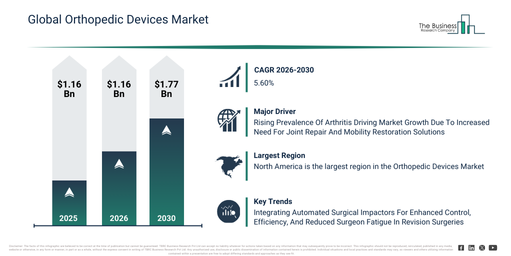
    The orthopedic devices market is projected to experience substantial expansion over the upcoming years. Its valuation is anticipated to reach $65.4 billion by 2030, progressing at a compound annual growth rate (CAGR) of 5.6%. This anticipated growth can be attributed to several factors such as the increasing acceptance of patient-specific implants, heightened investments in regenerative orthopedics, the broader scope of outpatient orthopedic procedures, an intensifying emphasis on rapid recovery solutions, and ongoing breakthroughs in orthopedic biomaterials. Key trends during this period are expected to encompass the growing uptake of personalized orthopedic implants, an increasing preference for minimally invasive orthopedic techniques, the expanded application of advanced biomaterials, the proliferation of 3D-printed orthopedic devices, and a heightened emphasis on post-surgical rehabilitation strategies.

    Get A Free Sample Report With In-Depth Market Insights:

    https://thebusinessresearchcompany.com/sample_request?id=75526420&type=smp&name=Orthopedic%20Devices%20Market%20Report%202026&utm_source=Blogs&utm_medium=Paid&utm_campaign=Sep_PR

    Orthopedic Devices Market Development Factors: What’s Supporting Demand?

    The growing incidence of arthritis is anticipated to significantly advance the orthopedic device market. Arthritis describes a category of musculoskeletal ailments marked by joint inflammation, discomfort, and stiffness, with osteoarthritis and rheumatoid arthritis being the most prevalent forms. This increased occurrence is attributed to an aging global populace and lifestyle elements such as obesity, which heighten the risk of joint degradation over time. The expanding prevalence of arthritis provides momentum to the orthopedic device market by fueling demand for implants, joint reconstruction devices, braces, and advanced mobility support solutions that help restore function and alleviate pain. For instance, in August 2023, the Institute for Health Metrics and Evaluation, a US-based health research organization, projected that nearly 1 billion people are expected to be living with osteoarthritis by 2050, with 15% of adults aged thirty and above currently affected, and with osteoarthritis of the knee predicted to rise by 75% and osteoarthritis of the hand expected to increase by 50% by midcentury. Thus, the escalating prevalence of arthritis will drive the growth of the orthopedic device market.

    Orthopedic Devices Market Segmentation: How Does The Market Break Down By Category?

    The orthopedic devices market covered in this report is segmented –

    1) By Product: Instruments/Equipment, Disposables

    2) By Device Class: Joint Reconstruction Devices And Equipment, Spinal Surgery Devices And Equipment, Trauma Fixation Devices And Equipment, Orthobiologics Devices And Equipment, Arthroscopy Devices And Equipment, Orthopedic Braces And Support Devices And Equipment, Craniomaxillofacial (CMF) Devices And Equipment, Orthopedic Prosthetics

    3) By Type of Expenditure: Public, Private

    4) By End User: Hospitals And Clinics, Diagnostic Laboratories, Other End Users

    Subsegments:

    1) By Instruments/Equipment: Surgical Instruments, Imaging Equipment, Rehabilitation Equipment, Bone Plates and Screws, Joint Replacement Devices, Orthopedic Fixation Devices

    2) By Disposables: Surgical Drapes and Covers, Sterile Gloves, Sutures and Staples, Gauze and Dressings, Orthopedic Casting Supplies, Biologics

    Orthopedic Devices Market Transformation Trends: What Innovations Are Driving Change?

    Leading companies within the orthopedic devices market are increasingly prioritizing technological innovations, such as automated surgical impactors, to enhance implant management during joint replacement surgeries, ease the physical strain on surgeons, and optimize intraoperative processes. Automated surgical impactors are advanced, power-operated medical instruments designed to deliver precise and consistent impaction forces during various orthopedic operations, including total hip arthroplasty. These devices significantly reduce surgeon exhaustion, improve the accuracy of procedures, and boost efficiency when compared to the use of manual mallets. For instance, in June 2025, Johnson & Johnson MedTech, a US-based firm specializing in orthopedic technologies and solutions, introduced the KINCISE 2 System. This system functions as an automated surgical impactor approved for both knee and hip revision procedures. A key enhancement in this new iteration is its acetabular cup extraction capability, positioning it as the sole automated instrument cleared to remove firmly fixed acetabular components, a particularly difficult phase in hip revision surgery. By automating this specific task, KINCISE 2 contributes to lessening surgeon fatigue and refining the surgical workflow, particularly in contrast to conventional manual impactors.

    Orthopedic Devices Market Competitive Analysis Of Leading Industry Participants

    Major companies operating in the orthopedic devices market are Aesculap Implant Systems LLC, Johnson & Johnson, Medtronic Inc., Stryker Corporation, B. Braun Group, Zimmer Biomet Holdings, Smith & Nephew plc, Arthrex, Allegra Orthopaedics, Enovis, Integra LifeSciences Corporation, NuVasive Inc., DJO Global, CONMED Corporation, Globus Medical Inc., MicroPort Scientific Corporation, Össur, Orthofix Medical Inc., DeRoyal Industries, Alphatec Holdings Inc., LimaCorporate S.p.A., Exactech Inc., Acumed LLC, Corin Group PLC, Waldemar Link GmbH & Co. KG, ConforMIS Inc., FH Orthopedics, Nippon Sigmax Co. Ltd., Implantcast GmbH, Mathys AG Bettlach, Medacta International SA, OrthAlign Inc., OrthoPediatrics Corp., OrthoSensor Inc., Paradigm Spine LLC, SpineGuard SA

    View The Full Orthopedic Devices Market Report:

    https://thebusinessresearchcompany.com/report/orthopedic-devices-global-market-report?utm_source=Blogs&utm_medium=Paid&utm_campaign=Sep_PR

    Orthopedic Devices Market Geographic Distribution And Regional Opportunities

    North America was the largest region in the global orthopedic devices market in 2025. Asia-Pacific is expected to be the fastest-growing region in the forecast period. The regions covered in the orthopedic devices market report are Asia-Pacific, South East Asia, Western Europe, Eastern Europe, North America, South America, Middle East, Africa.

    Reach Out To Our Team:

    The Business Research Company: https://www.thebusinessresearchcompany.com/

    Americas: +1 310-496-7795

    Asia: +44 7882 955267 & +91 8897263534

    Europe: +44 7882 955267

    Email us at: marketing@tbrc.info

    Follow us on:

    LinkedIn: https://in.linkedin.com/company/the-business-research-company

    YouTube: https://www.youtube.com/channel/UC24_fI0rV8cR5DxlCpgmyFQ

    Global Market Model: https://www.thebusinessresearchcompany.com/global-market-model