Blog

  • 3D Bioprinting Market Expected To Grow At 23.2% CAGR Through 2030: What Businesses Need To Know

    3D Bioprinting Market Expected To Grow At 23.2% CAGR Through 2030: What Businesses Need To Know

    Backed by market attractiveness analysis, total addressable market sizing, company benchmarking matrices, interactive Excel dashboards, wider supply chain intelligence, emerging startup coverage, and detailed product-level insights, The Business Research Company’s 2026 market reports are designed to offer research that is more actionable and strategically valuable than ever.

    3D Bioprinting Market Poised To Hit $6.21 Billion By 2030 With A 23.2% CAGR

    The 3D bioprinting market has experienced rapid expansion in recent years. This market is projected to expand from $2.19 billion in 2025 to $2.7 billion in 2026, exhibiting a compound annual growth rate (CAGR) of 23.0%. Historically, this growth has been fueled by increased funding for biomedical research, a growing need for in vitro drug testing models, the early embrace of regenerative medicine, advancements in cell culture technologies, and the expanding application of 3D printing within healthcare.

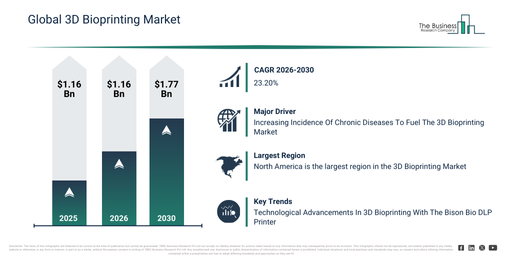
    The 3D bioprinting market size is anticipated to undergo substantial expansion in the upcoming years, with projections indicating it will reach $6.21 billion in 2030, exhibiting a compound annual growth rate (CAGR) of 23.2%. This expected growth during the forecast period is fueled by elements such as the increasing scope of personalized medicine, a growing demand for organ transplantation, supportive regulatory environments for bioprinted tissues, advancements in biopharmaceutical research pipelines, and innovations in scalable bioprinting platforms. Key developments projected for this period involve tissue engineering for regenerative therapies, the creation of patient-specific implants, the ongoing development of advanced bioink formulations, the emergence of high-resolution multi-material bioprinting, and the eventual clinical application of printed tissues.

    Get A Free Sample Report With In-Depth Market Insights:

    https://thebusinessresearchcompany.com/sample_request?id=50567622&type=smp&name=3D%20Bioprinting%20Market%20Report%202026&utm_source=Blogs&utm_medium=Paid&utm_campaign=Sep_PR

    3D Bioprinting Market Growth Backed By Core Demand Fundamentals

    The increasing occurrence of chronic diseases is anticipated to propel the growth of the 3D bioprinting market going forward. A chronic disease is a medical condition that endures for an extended period, typically three months or longer, and often persists throughout an individual’s life. 3D bioprinting is utilized in creating tissue models for chronic disease research and potential organ replacement therapies. For instance, in June 2024, according to the National Health Service, a UK-based government department, 3,615,330 individuals registered with a general practitioner (GP) were diagnosed with non-diabetic hyperglycemia or pre-diabetes (a condition with elevated blood sugar levels, not high enough to be classified as diabetes) in 2023, marking an 18% increase from 3,065,825 cases in 2022. Therefore, the increasing incidence of chronic diseases is driving the growth of the 3D bioprinting market.

    3D Bioprinting Market Segmentation: How Does The Market Break Down By Category?

    The 3D bioprinting market covered in this report is segmented –

    1) By Component: 3D Bioprinters, Bioinks

    2) By Material: Living Cells, Hydrogels, Extracellular Matrices, Other Materials

    3) By Application: Research Applications, Clinical Application, Other Applications

    4) By End User: Research Organization And Academic Institutes, Biopharmaceutical Companies, Hospitals, Other End Users

    Subsegments:

    1) By 3D Bioprinters: Inkjet 3D Bioprinters, Microextrusion 3D Bioprinters, Laser-Assisted 3D Bioprinters, Stereolithography (SLA) Bioprinters

    2) By Bioinks: Natural Bioinks, Synthetic Bioinks, Hybrid Bioinks

    3D Bioprinting Market Growth Trends Reshaping The Competitive Landscape

    Leading companies in the 3D bioprinting market are concentrating on creating technologically advanced solutions, such as 3D bioprinters, to improve the accuracy and effectiveness of tissue engineering and regenerative medicine. These 3D bioprinters are instruments that use bioinks containing living cells to construct three-dimensional tissue and organ structures for medical research and regenerative medicine applications. For example, in June 2024, Tethon 3D, a US developer specializing in ceramic powder and metal-polymer products, introduced the Bison Bio DLP 3D bioprinter, marking its first venture into the bioprinting market, developed in collaboration with Carima. This cutting-edge printer offers adjustable build sizes (30 × 20 mm, 57 × 32 mm, and 96 × 54 mm) and is compatible with Tethon’s unique LAP photoinitiator and GelMA hydrogel bioink, which are vital for bioprinting live tissues. Measuring 24 × 24 × 24 inches and weighing 75 lbs, the Bison Bio is available for $19,950 and seeks to foster progress in healthcare by enabling the creation of intricate tissues and organs for biomedical research, ultimately contributing to personalized medicine and regenerative therapies.

    3D Bioprinting Market Competitive Overview And Top Companies

    Major companies operating in the 3d bioprinting market are Organovo Holdings Inc., Allevi Inc., Cellink AB, Aspect Biosystems Ltd., Cyfuse Biomedical KK, Poietis SA, TeVido BioDevices, Nano3D Biosciences Inc., RegenHU Ltd., GeSiM mbH, Advanced Solutions Life Sciences LLC, Regenovo Biotechnology Co. Ltd., Regemat 3D S.L., Bio3D Technologies, ROKIT Healthcare Co. Ltd., Inventia Life Science Pvt. Ltd., Vivax Bio LLC, 3D Biotek LLC, 3D Bio Corp, 3D Bioprinting Solutions, BICO Group AB, CollPlant Biotechnologies Ltd., 3D Systems Corporation, EnvisionTEC GmbH, GE HealthCare Technologies Inc., Nuclera Nucleics Ltd.

    View The Full 3D Bioprinting Market Report:

    https://thebusinessresearchcompany.com/report/3D-bioprinting-global-market-report?utm_source=Blogs&utm_medium=Paid&utm_campaign=Sep_PR

    3D Bioprinting Market Top Region: Where Does Most Revenue Come From?

    North America was the largest region in the 3D bioprinting market in 2025. Asia-Pacific is expected to be the fastest-growing region in the 3D bioprinting market during the forecast period. The regions covered in the 3D bioprinting market report are Asia-Pacific, South East Asia, Western Europe, Eastern Europe, North America, South America, Middle East, Africa.

    Reach Out To Our Team:

    The Business Research Company: https://www.thebusinessresearchcompany.com/

    Americas: +1 310-496-7795

    Asia: +44 7882 955267 & +91 8897263534

    Europe: +44 7882 955267

    Email us at: marketing@tbrc.info

    Follow us on:

    LinkedIn: https://in.linkedin.com/company/the-business-research-company

    YouTube: https://www.youtube.com/channel/UC24_fI0rV8cR5DxlCpgmyFQ

    Global Market Model: https://www.thebusinessresearchcompany.com/global-market-model

  • 3D And 4D Ultrasound Devices Market Forecast To Reach $39.28 Billion By 2030: Key Trends Explained

    3D And 4D Ultrasound Devices Market Forecast To Reach $39.28 Billion By 2030: Key Trends Explained

    Featuring market attractiveness scoring, total addressable market sizing, company benchmarking matrices, interactive Excel dashboards, deeper supply chain intelligence, emerging startup tracking, and granular product-level insights, The Business Research Company’s 2026 market reports are built to deliver research that is both more actionable and more strategically valuable.

    3D And 4D Ultrasound Devices Market Size And Revenue Outlook Through 2030

    The market size for 3D and 4D ultrasound devices has experienced significant growth in recent years. It is projected to expand from $14.07 billion in 2025 to $17.25 billion in 2026, at a compound annual growth rate (CAGR) of 22.6%. Historically, this expansion has been driven by the increasing use of ultrasound imaging in prenatal care, the development of diagnostic imaging infrastructure, a greater supply of skilled sonography professionals, rising awareness of early disease detection, and the adoption of non-invasive diagnostic tools.

    The 3D and 4D ultrasound devices market size is anticipated to experience significant expansion in the upcoming years. It is forecast to grow to $39.28 billion in 2030, demonstrating a compound annual growth rate (CAGR) of 22.8%. This projected increase is propelled by factors such as a heightened demand for advanced prenatal diagnostics, increased investments in portable imaging technologies, the expansion of point-of-care diagnostics, the growing utilization of AI-assisted image interpretation, and an increasing focus on early-stage disease detection. Prominent trends within this forecast period include the rising adoption of high-resolution fetal imaging systems, an escalating demand for portable and point-of-care ultrasound devices, the deeper integration of advanced visualization software, the broadening of multi-specialty diagnostic applications, and an enhanced emphasis on workflow efficiency and imaging accuracy.

    Get A Free Sample Report With In-Depth Market Insights:

    https://thebusinessresearchcompany.com/sample_request?id=87933770&type=smp&name=3D%20And%204D%20Ultrasound%20Devices%20Market%20Report%202026&utm_source=Blogs&utm_medium=Paid&utm_campaign=Sep_PR

    3D And 4D Ultrasound Devices Market Growth Catalysts And Demand Drivers

    The increasing prevalence of chronic diseases is anticipated to propel the growth of the 3D and 4D ultrasound devices market going forward. These conditions are defined as long-term health issues that endure over an extended period, frequently necessitating ongoing management and medical care. The rising occurrence of chronic diseases is primarily attributed to factors such as sedentary lifestyles, unhealthy diets, and an aging population. 3D and 4D ultrasound devices assist in diagnosing and monitoring chronic diseases by offering detailed, three-dimensional images that enhance the visualization and assessment of affected organs and structures. For instance, in January 2023, the National Library of Medicine, a US-based agency, indicated that the number of people in the US aged 50 and older experiencing at least one chronic condition would increase by 99.5%, equating to 142.66 million, by 2050. Therefore, the expanding prevalence of chronic diseases acts as a key driver for the growth of the 3D and 4D ultrasound devices market.

    3D And 4D Ultrasound Devices Market Segment Trends And Revenue Contributors

    The 3D and 4d ultrasound devices market covered in this report is segmented –

    1) By Type: Stationary 3D And 4D Ultrasound Devices, Portable 3D And 4D Ultrasound Devices

    2) By Display: Color Ultrasound, Black And White (B/W) Ultrasound

    3) By Portability: Trolley Or Cart-Based Ultrasound Systems, Compact Or Handheld Ultrasound Systems, Point-Of-Care (PoC) Ultrasound Systems

    4) By Application: Radiology Or General Imaging, Obstetrics Or Gynecology, Cardiology, Urology, Vascular, Orthopedic And Musculoskeletal, Pain Management, Other Applications

    5) By End-User: Hospitals, Surgical Centers And Diagnostic Centers, Maternity Centers, Ambulatory Care Centers, Other End-Users

    Subsegments:

    1) By Stationary 3D And 4D Ultrasound Devices: Console-Based Systems, High-Performance Ultrasound Machines, Advanced Imaging Systems

    2) By Portable 3D And 4D Ultrasound Devices: Handheld Ultrasound Devices, Mobile Ultrasound Systems, Compact Point-Of-Care Ultrasound Machines

    3D And 4D Ultrasound Devices Market Trends Shaping Long-Term Demand

    Major companies engaged in the 3D and 4D ultrasound devices market are focused on developing technologically advanced products, such as ultrasound-on-chip technology, to enhance imaging capabilities and drive innovation in medical diagnostics. This approach miniaturizes ultrasound components onto a single chip, allowing for compact and portable ultrasound devices across various medical imaging applications. This innovation improves access to ultrasound diagnostics with potential advancements in point-of-care and wearable healthcare devices. For instance, in June 2023, Butterfly Network Inc., a US-based manufacturer of medical imaging devices, launched the Butterfly iQ3, the latest iteration of its handheld point-of-care ultrasound (POCUS) system. It utilizes P4.3 ultrasound-on-chip technology, featuring the world’s fastest digital data transfer rate. This system is engineered to deliver enhanced high-resolution imaging and portable ultrasound imaging with advanced 3D capabilities and boasts double the processing power of its forerunner, the Butterfly iQ+.

    3D And 4D Ultrasound Devices Market Competitive Landscape: Which Companies Lead The Industry?

    Major companies operating in the 3d and 4d ultrasound devices market are Hitachi Ltd., Toshiba Corporation, Siemens Healthineers, Koninklijke Philips N.V., GE HealthCare Technologies Inc., Fujifilm Holdings Corporation, Konica Minolta Healthcare Americas Inc., Hologic Inc., Mindray Medical International Limited, Canon Medical Systems Corporation, Samsung Medison Co. Ltd., Mobisante Inc., Esaote S.p.A, Shimadzu Medical Systems USA, Terason, Alpinion Medical Systems Co. Ltd., Shenzhen Bestman Instrument Co. Ltd., Chison Medical Technologies Co. Ltd., Edan Instruments Inc., Mindray DS USA

    View The Full 3D And 4D Ultrasound Devices Market Report:

    https://thebusinessresearchcompany.com/report/3d-and-4d-ultrasound-devices-global-market-report?utm_source=Blogs&utm_medium=Paid&utm_campaign=Sep_PR

    3D And 4D Ultrasound Devices Market Regional Breakdown: Where Is Demand Concentrated?

    North America was the largest region in the 3D and 4D ultrasound devices market in 2025. Asia-Pacific is expected to be the fastest-growing region in the forecast period. The regions covered in the 3D and 4D ultrasound devices market report are Asia-Pacific, South East Asia, Western Europe, Eastern Europe, North America, South America, Middle East, Africa.

    Reach Out To Our Team:

    The Business Research Company: https://www.thebusinessresearchcompany.com/

    Americas: +1 310-496-7795

    Asia: +44 7882 955267 & +91 8897263534

    Europe: +44 7882 955267

    Email us at: marketing@tbrc.info

    Follow us on:

    LinkedIn: https://in.linkedin.com/company/the-business-research-company

    YouTube: https://www.youtube.com/channel/UC24_fI0rV8cR5DxlCpgmyFQ

    Global Market Model: https://www.thebusinessresearchcompany.com/global-market-model
  • 3D Bioprinting Market Expected To Grow At 23.2% CAGR Through 2030: What Businesses Need To Know

    3D Bioprinting Market Expected To Grow At 23.2% CAGR Through 2030: What Businesses Need To Know

    Backed by market attractiveness analysis, total addressable market sizing, company benchmarking matrices, interactive Excel dashboards, wider supply chain intelligence, emerging startup coverage, and detailed product-level insights, The Business Research Company’s 2026 market reports are designed to offer research that is more actionable and strategically valuable than ever.

    #3D Bioprinting Market Poised To Hit $6.21 Billion By 2030 With A 23.2% CAGR#_x000D_

    The 3D bioprinting market has experienced rapid expansion in recent years. This market is projected to expand from $2.19 billion in 2025 to $2.7 billion in 2026, exhibiting a compound annual growth rate (CAGR) of 23.0%. Historically, this growth has been fueled by increased funding for biomedical research, a growing need for in vitro drug testing models, the early embrace of regenerative medicine, advancements in cell culture technologies, and the expanding application of 3D printing within healthcare._x000D_

    _x000D_

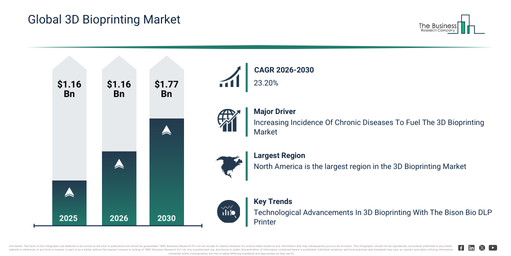
    The 3D bioprinting market size is anticipated to undergo substantial expansion in the upcoming years, with projections indicating it will reach $6.21 billion in 2030, exhibiting a compound annual growth rate (CAGR) of 23.2%. This expected growth during the forecast period is fueled by elements such as the increasing scope of personalized medicine, a growing demand for organ transplantation, supportive regulatory environments for bioprinted tissues, advancements in biopharmaceutical research pipelines, and innovations in scalable bioprinting platforms. Key developments projected for this period involve tissue engineering for regenerative therapies, the creation of patient-specific implants, the ongoing development of advanced bioink formulations, the emergence of high-resolution multi-material bioprinting, and the eventual clinical application of printed tissues._x000D_

    _x000D_

    #Get A Free Sample Report With In-Depth Market Insights:#_x000D_

    https://thebusinessresearchcompany.com/sample_request?id=50567622&type=smp&name=3D%20Bioprinting%20Market%20Report%202026&utm_source=Blogs&utm_medium=Paid&utm_campaign=Sep_PR_x000D_

    _x000D_

    #3D Bioprinting Market Growth Backed By Core Demand Fundamentals#_x000D_

    The increasing occurrence of chronic diseases is anticipated to propel the growth of the 3D bioprinting market going forward. A chronic disease is a medical condition that endures for an extended period, typically three months or longer, and often persists throughout an individual’s life. 3D bioprinting is utilized in creating tissue models for chronic disease research and potential organ replacement therapies. For instance, in June 2024, according to the National Health Service, a UK-based government department, 3,615,330 individuals registered with a general practitioner (GP) were diagnosed with non-diabetic hyperglycemia or pre-diabetes (a condition with elevated blood sugar levels, not high enough to be classified as diabetes) in 2023, marking an 18% increase from 3,065,825 cases in 2022. Therefore, the increasing incidence of chronic diseases is driving the growth of the 3D bioprinting market._x000D_

    _x000D_

    #3D Bioprinting Market Segmentation: How Does The Market Break Down By Category?#_x000D_

    The 3D bioprinting market covered in this report is segmented – _x000D_

    _x000D_

    1) By Component: 3D Bioprinters, Bioinks_x000D_

    2) By Material: Living Cells, Hydrogels, Extracellular Matrices, Other Materials_x000D_

    3) By Application: Research Applications, Clinical Application, Other Applications_x000D_

    4) By End User: Research Organization And Academic Institutes, Biopharmaceutical Companies, Hospitals, Other End Users_x000D_

    _x000D_

    Subsegments:_x000D_

    1) By 3D Bioprinters: Inkjet 3D Bioprinters, Microextrusion 3D Bioprinters, Laser-Assisted 3D Bioprinters, Stereolithography (SLA) Bioprinters _x000D_

    2) By Bioinks: Natural Bioinks, Synthetic Bioinks, Hybrid Bioinks_x000D_

    _x000D_

    #3D Bioprinting Market Growth Trends Reshaping The Competitive Landscape#_x000D_

    Leading companies in the 3D bioprinting market are concentrating on creating technologically advanced solutions, such as 3D bioprinters, to improve the accuracy and effectiveness of tissue engineering and regenerative medicine. These 3D bioprinters are instruments that use bioinks containing living cells to construct three-dimensional tissue and organ structures for medical research and regenerative medicine applications. For example, in June 2024, Tethon 3D, a US developer specializing in ceramic powder and metal-polymer products, introduced the Bison Bio DLP 3D bioprinter, marking its first venture into the bioprinting market, developed in collaboration with Carima. This cutting-edge printer offers adjustable build sizes (30 × 20 mm, 57 × 32 mm, and 96 × 54 mm) and is compatible with Tethon’s unique LAP photoinitiator and GelMA hydrogel bioink, which are vital for bioprinting live tissues. Measuring 24 × 24 × 24 inches and weighing 75 lbs, the Bison Bio is available for $19,950 and seeks to foster progress in healthcare by enabling the creation of intricate tissues and organs for biomedical research, ultimately contributing to personalized medicine and regenerative therapies._x000D_

    _x000D_

    #3D Bioprinting Market Competitive Overview And Top Companies#_x000D_

    Major companies operating in the 3d bioprinting market are Organovo Holdings Inc., Allevi Inc., Cellink AB, Aspect Biosystems Ltd., Cyfuse Biomedical KK, Poietis SA, TeVido BioDevices, Nano3D Biosciences Inc., RegenHU Ltd., GeSiM mbH, Advanced Solutions Life Sciences LLC, Regenovo Biotechnology Co. Ltd., Regemat 3D S.L., Bio3D Technologies, ROKIT Healthcare Co. Ltd., Inventia Life Science Pvt. Ltd., Vivax Bio LLC, 3D Biotek LLC, 3D Bio Corp, 3D Bioprinting Solutions, BICO Group AB, CollPlant Biotechnologies Ltd., 3D Systems Corporation, EnvisionTEC GmbH, GE HealthCare Technologies Inc., Nuclera Nucleics Ltd. _x000D_

    _x000D_

    #View The Full 3D Bioprinting Market Report:#_x000D_

    https://thebusinessresearchcompany.com/report/3D-bioprinting-global-market-report?utm_source=Blogs&utm_medium=Paid&utm_campaign=Sep_PR_x000D_

    _x000D_

    #3D Bioprinting Market Top Region: Where Does Most Revenue Come From?#_x000D_

    North America was the largest region in the 3D bioprinting market in 2025. Asia-Pacific is expected to be the fastest-growing region in the 3D bioprinting market during the forecast period. The regions covered in the 3D bioprinting market report are Asia-Pacific, South East Asia, Western Europe, Eastern Europe, North America, South America, Middle East, Africa._x000D_

    _x000D_

    #Reach Out To Our Team:#_x000D_

    _x000D_

    The Business Research Company: https://www.thebusinessresearchcompany.com/_x000D_

    Americas: +1 310-496-7795_x000D_

    Asia: +44 7882 955267 & +91 8897263534_x000D_

    Europe: +44 7882 955267_x000D_

    Email us at: marketing@tbrc.info_x000D_

    _x000D_

    #Follow us on:#_x000D_

    _x000D_

    LinkedIn: https://in.linkedin.com/company/the-business-research-company_x000D_

    YouTube: https://www.youtube.com/channel/UC24_fI0rV8cR5DxlCpgmyFQ_x000D_

    Global Market Model: https://www.thebusinessresearchcompany.com/global-market-model

  • 3D And 4D Ultrasound Devices Market Forecast To Reach $39.28 Billion By 2030: Key Trends Explained

    3D And 4D Ultrasound Devices Market Forecast To Reach $39.28 Billion By 2030: Key Trends Explained

    Featuring market attractiveness scoring, total addressable market sizing, company benchmarking matrices, interactive Excel dashboards, deeper supply chain intelligence, emerging startup tracking, and granular product-level insights, The Business Research Company’s 2026 market reports are built to deliver research that is both more actionable and more strategically valuable.

    #3D And 4D Ultrasound Devices Market Size And Revenue Outlook Through 2030#_x000D_

    The market size for 3D and 4D ultrasound devices has experienced significant growth in recent years. It is projected to expand from $14.07 billion in 2025 to $17.25 billion in 2026, at a compound annual growth rate (CAGR) of 22.6%. Historically, this expansion has been driven by the increasing use of ultrasound imaging in prenatal care, the development of diagnostic imaging infrastructure, a greater supply of skilled sonography professionals, rising awareness of early disease detection, and the adoption of non-invasive diagnostic tools._x000D_

    _x000D_

    The 3D and 4D ultrasound devices market size is anticipated to experience significant expansion in the upcoming years. It is forecast to grow to $39.28 billion in 2030, demonstrating a compound annual growth rate (CAGR) of 22.8%. This projected increase is propelled by factors such as a heightened demand for advanced prenatal diagnostics, increased investments in portable imaging technologies, the expansion of point-of-care diagnostics, the growing utilization of AI-assisted image interpretation, and an increasing focus on early-stage disease detection. Prominent trends within this forecast period include the rising adoption of high-resolution fetal imaging systems, an escalating demand for portable and point-of-care ultrasound devices, the deeper integration of advanced visualization software, the broadening of multi-specialty diagnostic applications, and an enhanced emphasis on workflow efficiency and imaging accuracy._x000D_

    _x000D_

    #Get A Free Sample Report With In-Depth Market Insights:#_x000D_

    https://thebusinessresearchcompany.com/sample_request?id=87933770&type=smp&name=3D%20And%204D%20Ultrasound%20Devices%20Market%20Report%202026&utm_source=Blogs&utm_medium=Paid&utm_campaign=Sep_PR_x000D_

    _x000D_

    #3D And 4D Ultrasound Devices Market Growth Catalysts And Demand Drivers#_x000D_

    The increasing prevalence of chronic diseases is anticipated to propel the growth of the 3D and 4D ultrasound devices market going forward. These conditions are defined as long-term health issues that endure over an extended period, frequently necessitating ongoing management and medical care. The rising occurrence of chronic diseases is primarily attributed to factors such as sedentary lifestyles, unhealthy diets, and an aging population. 3D and 4D ultrasound devices assist in diagnosing and monitoring chronic diseases by offering detailed, three-dimensional images that enhance the visualization and assessment of affected organs and structures. For instance, in January 2023, the National Library of Medicine, a US-based agency, indicated that the number of people in the US aged 50 and older experiencing at least one chronic condition would increase by 99.5%, equating to 142.66 million, by 2050. Therefore, the expanding prevalence of chronic diseases acts as a key driver for the growth of the 3D and 4D ultrasound devices market._x000D_

    _x000D_

    #3D And 4D Ultrasound Devices Market Segment Trends And Revenue Contributors#_x000D_

    The 3D and 4d ultrasound devices market covered in this report is segmented – _x000D_

    _x000D_

    1) By Type: Stationary 3D And 4D Ultrasound Devices, Portable 3D And 4D Ultrasound Devices_x000D_

    2) By Display: Color Ultrasound, Black And White (B/W) Ultrasound_x000D_

    3) By Portability: Trolley Or Cart-Based Ultrasound Systems, Compact Or Handheld Ultrasound Systems, Point-Of-Care (PoC) Ultrasound Systems_x000D_

    4) By Application: Radiology Or General Imaging, Obstetrics Or Gynecology, Cardiology, Urology, Vascular, Orthopedic And Musculoskeletal, Pain Management, Other Applications_x000D_

    5) By End-User: Hospitals, Surgical Centers And Diagnostic Centers, Maternity Centers, Ambulatory Care Centers, Other End-Users_x000D_

    _x000D_

    Subsegments:_x000D_

    1) By Stationary 3D And 4D Ultrasound Devices: Console-Based Systems, High-Performance Ultrasound Machines, Advanced Imaging Systems _x000D_

    2) By Portable 3D And 4D Ultrasound Devices: Handheld Ultrasound Devices, Mobile Ultrasound Systems, Compact Point-Of-Care Ultrasound Machines _x000D_

    _x000D_

    _x000D_

    #3D And 4D Ultrasound Devices Market Trends Shaping Long-Term Demand#_x000D_

    Major companies engaged in the 3D and 4D ultrasound devices market are focused on developing technologically advanced products, such as ultrasound-on-chip technology, to enhance imaging capabilities and drive innovation in medical diagnostics. This approach miniaturizes ultrasound components onto a single chip, allowing for compact and portable ultrasound devices across various medical imaging applications. This innovation improves access to ultrasound diagnostics with potential advancements in point-of-care and wearable healthcare devices. For instance, in June 2023, Butterfly Network Inc., a US-based manufacturer of medical imaging devices, launched the Butterfly iQ3, the latest iteration of its handheld point-of-care ultrasound (POCUS) system. It utilizes P4.3 ultrasound-on-chip technology, featuring the world’s fastest digital data transfer rate. This system is engineered to deliver enhanced high-resolution imaging and portable ultrasound imaging with advanced 3D capabilities and boasts double the processing power of its forerunner, the Butterfly iQ+._x000D_

    _x000D_

    #3D And 4D Ultrasound Devices Market Competitive Landscape: Which Companies Lead The Industry?#_x000D_

    Major companies operating in the 3d and 4d ultrasound devices market are Hitachi Ltd., Toshiba Corporation, Siemens Healthineers, Koninklijke Philips N.V., GE HealthCare Technologies Inc., Fujifilm Holdings Corporation, Konica Minolta Healthcare Americas Inc., Hologic Inc., Mindray Medical International Limited, Canon Medical Systems Corporation, Samsung Medison Co. Ltd., Mobisante Inc., Esaote S.p.A, Shimadzu Medical Systems USA, Terason, Alpinion Medical Systems Co. Ltd., Shenzhen Bestman Instrument Co. Ltd., Chison Medical Technologies Co. Ltd., Edan Instruments Inc., Mindray DS USA _x000D_

    _x000D_

    #View The Full 3D And 4D Ultrasound Devices Market Report:#_x000D_

    https://thebusinessresearchcompany.com/report/3d-and-4d-ultrasound-devices-global-market-report?utm_source=Blogs&utm_medium=Paid&utm_campaign=Sep_PR_x000D_

    _x000D_

    #3D And 4D Ultrasound Devices Market Regional Breakdown: Where Is Demand Concentrated?#_x000D_

    North America was the largest region in the 3D and 4D ultrasound devices market in 2025. Asia-Pacific is expected to be the fastest-growing region in the forecast period. The regions covered in the 3D and 4D ultrasound devices market report are Asia-Pacific, South East Asia, Western Europe, Eastern Europe, North America, South America, Middle East, Africa._x000D_

    _x000D_

    #Reach Out To Our Team:#_x000D_

    _x000D_

    The Business Research Company: https://www.thebusinessresearchcompany.com/_x000D_

    Americas: +1 310-496-7795_x000D_

    Asia: +44 7882 955267 & +91 8897263534_x000D_

    Europe: +44 7882 955267_x000D_

    Email us at: marketing@tbrc.info_x000D_

    _x000D_

    #Follow us on:#_x000D_

    _x000D_

    LinkedIn: https://in.linkedin.com/company/the-business-research-company_x000D_

    YouTube: https://www.youtube.com/channel/UC24_fI0rV8cR5DxlCpgmyFQ_x000D_

    Global Market Model: https://www.thebusinessresearchcompany.com/global-market-model

  • Osseointegration Implants Market Analysis Through 2030: Market Size, Growth Trends And Industry Outlook

    Osseointegration Implants Market Analysis Through 2030: Market Size, Growth Trends And Industry Outlook

    Backed by market attractiveness analysis, total addressable market sizing, company benchmarking matrices, interactive Excel dashboards, wider supply chain intelligence, emerging startup coverage, and detailed product-level insights, The Business Research Company’s 2026 market reports are designed to offer research that is more actionable and strategically valuable than ever.

    Osseointegration Implants Market Forecast: What Value Will The Market Reach By 2030?

    The osseointegration implants market has demonstrated robust expansion recently. This market is set to expand from $7.72 billion in 2025 to $8.35 billion in 2026, progressing at a compound annual growth rate (CAGR) of 8.3%. Historically, the market’s growth can be ascribed to a restricted array of implant material options, the increasing incidence of bone-related conditions, an expanding elderly population, the dependence on traditional surgical approaches, and the rising number of dental and orthopedic procedures.

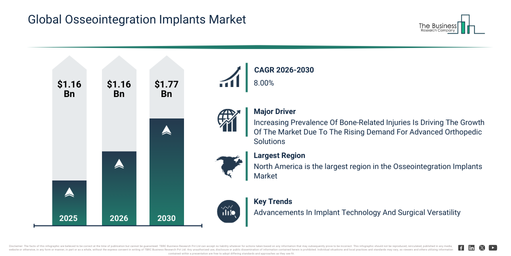
    The osseointegration implants market is anticipated to experience substantial growth in the upcoming years. Its size is projected to reach $11.36 billion by 2030, demonstrating a compound annual growth rate (CAGR) of 8.0%. This expansion during the forecast period can be attributed to the development of advanced implant materials and coatings, technological integration in surgical planning, increasing adoption of robotic-assisted surgeries, the expansion of global implant markets, and a rising awareness of post-operative rehabilitation and patient outcomes. Major trends expected in the forecast period include the rising adoption of titanium and ceramic implants, increasing demand for minimally invasive surgical procedures, growth in dental and orthopedic implant surgeries, advancements in surface coatings and osseointegration technology, and the expansion of ambulatory surgical centers and specialized clinics.

    Get A Free Sample Report With In-Depth Market Insights:

    https://thebusinessresearchcompany.com/sample_request?id=22519580&type=smp&name=Osseointegration%20Implants%20Market%20Report%202026&utm_source=Blogs&utm_medium=Paid&utm_campaign=Sep_PR

    Osseointegration Implants Market Opportunity Drivers: What’s Unlocking New Revenue Potential?

    The rising occurrence of bone-related injuries is expected to drive the growth of the osseointegration implants market in the coming years. Bone-related injuries are defined as physical damages to bones, including fractures, breaks, or joint dislocations. The increase in these injuries primarily stems from the growing elderly population, whose bones are generally more fragile and susceptible to fractures. Osseointegration implants assist in the treatment of bone injuries by securely attaching prosthetics directly to the bone, thereby enhancing support and aiding the healing process. For instance, in August 2024, a report published by Healthy Bones Australia, an Australia-based non-governmental organization, revealed that a fracture occurred every 2.7 minutes in Australia in 2023. This rate is projected to intensify to one fracture every 30 seconds by 2033. Consequently, the increasing prevalence of bone-related injuries is a key factor propelling the expansion of the osseointegration implants market.

    Osseointegration Implants Market Segment Analysis: What Are The Core Market Categories?

    The osseointegration implants market covered in this report is segmented –

    1) By Product: Dental Implants, Hip Implants, Knee Implants, Spinal Implants, Other Products

    2) By Material: Ceramic Implants, Zirconia Implants, Stainless Steel Implants, Titanium Implants, Metallic Implants, Other Materials

    3) By End User: Hospitals, Ambulatory Surgical Centers, Dental Clinics, Other End-Users

    Subsegments:

    1) By Dental Implants: Endosteal Implants, Subperiosteal Implants, Zygomatic Implants, Mini Dental Implants, Basal Implants

    2) By Hip Implants: Total Hip Replacement, Partial Hip Replacement, Hip Resurfacing, Revision Hip Implants

    3) By Knee Implants: Total Knee Replacement, Partial Knee Replacement, Revision Knee Implants

    4) By Spinal Implants: Interbody Fusion Devices, Pedicle Screws, Rods And Plates, Artificial Discs, Spinal Cages

    5) By Other Products: Shoulder Implants, Elbow Implants, Ankle Implants, Wrist Implants, Other Joint Implants

    Osseointegration Implants Market Innovation Trends Shaping Future Development

    Leading companies active in the osseointegration implants market are prioritizing the incorporation of digital dentistry, including elements like surgical and restorative adaptability, to provide dental professionals with advanced implant solutions that boost treatment predictability and patient outcomes. Surgical and restorative versatility refers to the implant’s design to function effectively with various surgical techniques and prosthetic options, making it suitable for diverse clinical situations. For example, in February 2024, ZimVie Inc., a US-based life sciences company, introduced the TSX Implant. This cutting-edge implant is engineered for immediate placement and loading, supported by over two decades of clinical data that confirm long-term bone health and prosthetic stability. The TSX Implant effortlessly integrates with ZimVie’s digital dentistry solutions and flexible surgical protocols, thereby simplifying procedures and improving predictability for dental professionals. This introduction highlights the company’s commitment to innovation and its leadership in the market.

    Osseointegration Implants Market Competitive Landscape: Which Companies Lead The Industry?

    Major companies operating in the osseointegration implants market are Johnson And Johnson, Medtronic plc, Stryker Corporation, Zimmer Biomet Holdings Inc, Smith And Nephew plc, Dentsply Sirona Inc, Institut Straumann AG, Straumann Holding AG, DePuy Synthes, Cochlear Limited, OSSTEM Implant Co Ltd, B Braun Melsungen AG, Bicon LLC, Megagen Implant Co Ltd, CAMLOG Biotechnologies GmbH, Integrum, Nobel Biocare Services AG, BioHorizons Inc, Neodent, Southern Implants

    View The Full Osseointegration Implants Market Report:

    https://thebusinessresearchcompany.com/report/osseointegration-implants-global-market-report?utm_source=Blogs&utm_medium=Paid&utm_campaign=Sep_PR

    Osseointegration Implants Market Regional Outlook: Where Is Opportunity Concentrated?

    North America was the largest region in the osseointegration implants market in 2025. Asia-Pacific is expected to be the fastest-growing region in the forecast period. The regions covered in the osseointegration implants market report are Asia-Pacific, South East Asia, Western Europe, Eastern Europe, North America, South America, Middle East, Africa.

    Reach Out To Our Team:

    The Business Research Company: https://www.thebusinessresearchcompany.com/

    Americas: +1 310-496-7795

    Asia: +44 7882 955267 & +91 8897263534

    Europe: +44 7882 955267

    Email us at: marketing@tbrc.info

    Follow us on:

    LinkedIn: https://in.linkedin.com/company/the-business-research-company

    YouTube: https://www.youtube.com/channel/UC24_fI0rV8cR5DxlCpgmyFQ

    Global Market Model: https://www.thebusinessresearchcompany.com/global-market-model

  • Orthotics Market Outlook From 2026 To 2030: Key Growth Factors And Future Opportunities

    Orthotics Market Outlook From 2026 To 2030: Key Growth Factors And Future Opportunities

    Featuring market attractiveness scoring, total addressable market sizing, company benchmarking matrices, interactive Excel dashboards, deeper supply chain intelligence, emerging startup tracking, and granular product-level insights, The Business Research Company’s 2026 market reports are built to deliver research that is both more actionable and more strategically valuable.

    Orthotics Market Size Outlook: How Quickly Will Revenue Expand Through 2030?

    The orthotics market size has experienced robust expansion over recent years. This market is projected to expand from $4.32 billion in 2025 to $4.7 billion in 2026, demonstrating a compound annual growth rate (CAGR) of 8.7%. Historically, this expansion has been driven by factors such as the restricted accessibility of custom orthotics, the dependence on prefabricated orthotic devices, a surge in foot-related conditions, an expanding senior demographic, and heightened consciousness regarding musculoskeletal health.

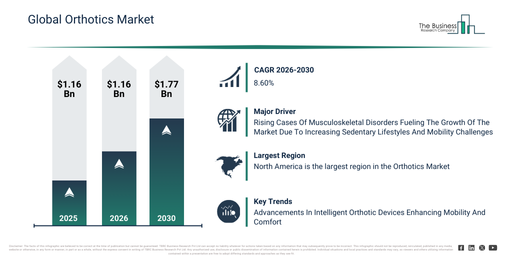
    The orthotics market is anticipated to show significant growth in the coming years, with its size projected to reach $6.53 billion in 2030, at a compound annual growth rate (CAGR) of 8.6%. This growth during the forecast period is fueled by technological progress in 3D scanning and printing, the expansion of custom orthotics manufacturing, integration with wearable smart devices, increasing demand for diabetic foot care solutions, and the growing adoption of e-commerce and online distribution. Major trends expected in this period include the rising use of custom orthotics for personalized care, enhanced awareness of foot and lower limb health, an increase in diabetic neuropathy and related complications, the expansion of online distribution channels for orthotics, and a design focus on comfort, stability, and posture correction.

    Get A Free Sample Report With In-Depth Market Insights:

    https://thebusinessresearchcompany.com/sample_request?id=67354517&type=smp&name=Orthotics%20Market%20Report%202026&utm_source=Blogs&utm_medium=Paid&utm_campaign=Sep_PR

    Orthotics Market Growth Momentum: What Factors Are Shaping Demand?

    The rising incidence of musculoskeletal conditions is expected to propel the expansion of the orthotics market in the future. These disorders involve injuries or ailments impacting muscles, bones, joints, tendons, ligaments, and nerves, frequently leading to discomfort, rigidity, and limited movement. The increase in such disorders stems from more sedentary lifestyles, as extended periods of sitting and insufficient physical activity contribute to muscle frailty, joint rigidity, and poor posture. Orthotic devices assist in managing musculoskeletal issues through enhanced body alignment, pain relief, and providing support to joints and muscles. They improve movement, rectify biomechanical problems, and avert additional injuries, proving beneficial for ailments such as plantar fasciitis, arthritis, and lower back pain. For example, a January 2024 report from the Office for Health Improvement and Disparities, a UK government body, indicated that the proportion of individuals aged 16 and above reporting a long-term musculoskeletal (MSK) condition increased to 18.4 % in 2023, an ascent from 17.6 % in 2022. Consequently, the growing occurrence of musculoskeletal disorders is a key factor propelling the expansion of the orthotics market.

    Orthotics Market Segment Breakdown: Which Categories Lead On Revenue?

    The orthotics market covered in this report is segmented –

    1) By Type: Prefabricated, Custom

    2) By Distribution Channel: Drug Stores, Hospitals And Specialty Clinics, Online Stores, Other Distribution Channels

    3) By Application: Diabetic Neuropath, Ball Of Foot Discomfort, Other Applications

    Subsegments:

    1) By Prefabricated: Off-the-shelf Insoles, Bracing And Support Orthotics, Shoe Inserts, Heel Liners And Cushions,

    2) By Custom: Custom Foot Orthotics, Custom Ankle-Foot Orthotics, Custom Lower Limb Orthotics.

    Orthotics Market Trends Redefining Industry Growth

    Leading companies in the orthotics market are concentrating on developing technologically advanced products, such as intelligent orthotic devices, to offer personalized and real-time adjustments. These intelligent orthotic devices are sophisticated support systems equipped with sensors and smart technologies that adapt to the user’s movements in real-time, thereby enhancing comfort, stability, and mobility. For instance, in October 2023, Blatchford, a UK-based prosthetics manufacturer, unveiled Tectus, an intelligent orthotic device. This unique orthotic device is specifically designed for individuals with partial lower limb paralysis, providing improved comfort, natural movement, and increased safety. It connects to a custom-made KAFO and integrates spring, hydraulic, and sensor technologies to replicate a more natural gait cycle. A prominent feature is its ‘spring assist’ system. This system utilizes adjustable control to ensure the leg extends completely during the swing phase of walking, imitating natural movement and delivering superior walking efficiency.

    Orthotics Market Competitive Landscape: Who Leads The Industry?

    Major companies operating in the orthotics market are Ottobock SE & Co. KGaA, Hanger Inc., Össur hf, DeRoyal Industries Inc., Breg Inc., Trulife Group Limited, Tynor Orthotics Private Limited, Proteor SAS, Fillauer LLC, Steeper Group Limited, Orthomerica Products Inc., The Ohio Willow Wood Company, Thuasne Group, Becker Orthopedic, medi GmbH & Co. KG, Allard International, SureStep LLC, Reh4Mat Sp. z o.o., Endolite Ltd., Massons Healthcare Pty Ltd.

    View The Full Orthotics Market Report:

    https://thebusinessresearchcompany.com/report/orthotics-global-market-report?utm_source=Blogs&utm_medium=Paid&utm_campaign=Sep_PR

    Orthotics Market Geographic Landscape: Which Region Leads Industry Growth?

    North America was the largest region in the orthotics market in 2025. Asia-Pacific is expected to be the fastest-growing region in the forecast period. The regions covered in the orthotics market report are Asia-Pacific, South East Asia, Western Europe, Eastern Europe, North America, South America, Middle East, Africa.

    Reach Out To Our Team:

    The Business Research Company: https://www.thebusinessresearchcompany.com/

    Americas: +1 310-496-7795

    Asia: +44 7882 955267 & +91 8897263534

    Europe: +44 7882 955267

    Email us at: marketing@tbrc.info

    Follow us on:

    LinkedIn: https://in.linkedin.com/company/the-business-research-company

    YouTube: https://www.youtube.com/channel/UC24_fI0rV8cR5DxlCpgmyFQ

    Global Market Model: https://www.thebusinessresearchcompany.com/global-market-model
  • Orthotic Insole 3-D Printer Market Growth Forecast: Market Size, Key Trends And Emerging Opportunities Through 2030

    Orthotic Insole 3-D Printer Market Growth Forecast: Market Size, Key Trends And Emerging Opportunities Through 2030

    Built to provide research that’s more actionable and strategically valuable, The Business Research Company’s 2026 market reports include market attractiveness analysis, total addressable market sizing, company benchmarking matrices, interactive Excel dashboards, broader supply chain intelligence, emerging startup tracking, and in-depth product insights.

    Orthotic Insole 3-D Printer Market Size, Value And Growth Trajectory Through 2030

    The orthotic insole 3-d printer market size has seen a rapid increase recently. It is expected to expand from $0.62 billion in 2025 to $0.71 billion in 2026, achieving a compound annual growth rate (CAGR) of 14.3%. This market’s historical development can be ascribed to several factors, including the surge in orthopedic treatments, the embrace of additive manufacturing, the need for personalized insoles, progress in 3-d printing materials, and the clinical approval of orthotic products.

    The orthotic insole 3-d printer market size is predicted to undergo significant expansion in the coming years. It is forecasted to reach $1.21 billion in 2030, demonstrating a compound annual growth rate (CAGR) of 14.0%. This anticipated growth during the forecast period is driven by advancements such as AI-driven foot scanning, their integration with rehabilitation programs, broader application in sports and healthcare, more efficient production cycles, and the use of sustainable and recyclable printing materials. Prominent trends for the forecast duration include the development of custom 3-d printed insoles, the digitization of foot biomechanics, multi-material printing capabilities, the introduction of desktop orthotic printers, and enhanced integration within medical and sports applications.

    Get A Free Sample Report With In-Depth Market Insights:

    https://thebusinessresearchcompany.com/sample_request?id=48912712&type=smp&name=Orthotic%20Insole%203-D%20Printer%20Market%20Report%202026&utm_source=Blogs&utm_medium=Paid&utm_campaign=Sep_PR

    Orthotic Insole 3-D Printer Market Expansion Drivers: What’s Shaping Future Growth?

    The increasing prevalence of personalized medicine is expected to propel the growth of the orthotic insole 3-D printer market going forward. Personalized medicine is the approach of customizing medical treatment to an individual’s genetic, molecular, and clinical characteristics for more precise and effective care. This approach is increasing due to advancements in genomics, enabling treatments tailored to a patient’s unique genetic profile for greater effectiveness and safety. Orthotic insole 3-D printers facilitate personalized medicine by producing custom-fit insoles tailored to each patient’s unique foot anatomy and biomechanical needs for improved therapeutic outcomes. For instance, in February 2024, according to the Personalized Medicine Coalition, a US-based non-profit organization, in 2023, the FDA approved 16 new personalized treatments for rare disease patients, an increase from six in 2022. The newly approved personalized treatments for 2023 also encompassed seven cancer drugs and three for other diseases and conditions. Therefore, the increasing prevalence of personalized medicine is driving the growth of the orthotic insole 3-D printer market.

    Orthotic Insole 3-D Printer Market Segmentation: How Does The Market Break Down By Category?

    The orthotic insole 3-d printer market covered in this report is segmented –

    1) By Product Type: Fused Deposition Modeling (FDM), Stereolithography (SLA), Selective Laser Sintering (SLS), Other Product Types

    2) By Material: Thermoplastics, Photopolymers, Elastomers, Other Materials

    3) By Distribution Channel: Direct Sales, Online Retail, Specialty Stores, Other Distribution Channels

    4) By Application: Medical And Healthcare, Sports And Athletics, Personal Use, Other Applications

    5) By End User: Hospitals And Clinics, Orthopedic Centers, Rehabilitation Centers, Homecare

    Subsegments:

    1) By Fused Deposition Modeling: Desktop Printers, Industrial Printers, Hybrid Printers

    2) By Stereolithography: Resin Printers, Digital Light Processing Printers, Continuous Liquid Interface Printers

    3) By Selective Laser Sintering: Polymer SLS Printers (Nylon/TPU-Based), Flexible Elastomer SLS Printers, Medical-Grade SLS Printers for Orthotics

    4) By Other Product Types: Multi Jet Fusion (MJF) Printers, Digital Light Processing (DLP) Printers, Material Jetting Printers, Binder Jetting Printers

    Orthotic Insole 3-D Printer Market Strategic Trends: What Defines The Next Growth Phase?

    Leading companies within the orthotic insoles 3D printer market are prioritizing the development of innovative strategies, such as personalized additive manufacturing, to produce custom-fit insoles. These developments aim to improve patient comfort, enhance mobility, and optimize therapeutic outcomes. Personalized additive manufacturing describes a 3D printing process that generates customized products, like orthotic insoles, specifically tailored to an individual’s unique anatomy and specifications for an optimal fit and functionality. For instance, in May 2024, CREATE IT REAL A/S, a Denmark-based technology and research company, introduced a new 3D printing service platform for custom orthopedics, simplifying digital manufacturing access for orthopedic professionals. This platform empowers orthopedic professionals to easily and quickly order fully customized braces, insoles, and supports, without requiring extensive manufacturing or technical expertise. The service streamlines workflows, significantly reduces material waste by over 85%, and elevates patient comfort through superior fit and pressure distribution, utilizing advanced programmable foam technology. This service ultimately makes digital manufacturing accessible, scalable, and sustainable for clinics of any size, thereby transforming orthopedic care with rapid, cost-effective, and environmentally friendly solutions.

    Orthotic Insole 3-D Printer Market Company Landscape And Competitive Strategy

    Major companies operating in the orthotic insole 3-d printer market are HP Inc., Stratasys, 3D Systems Corporation, Formlabs Inc., Materialise NV, Prodways Group S.A., EOS GmbH, SLM Solutions Group AG, Carbon Inc., Desktop Metal Inc., Raise3D Technologies Inc., Shenzhen PioCreat 3D Technology Co. Ltd., HeyGears, iSUN3D, UnionTech, EnvisionTEC GmbH, Voxelcare ApS., LuxCreo, Nexa3D, XYZprinting Inc.

    View The Full Orthotic Insole 3-D Printer Market Report:

    https://thebusinessresearchcompany.com/report/orthotic-insole-3-d-printer-global-market-report?utm_source=Blogs&utm_medium=Paid&utm_campaign=Sep_PR

    Orthotic Insole 3-D Printer Market Largest Region: Which Geography Holds The Biggest Share?

    North America was the largest region in the orthotic insole 3-D printer market in 2025. Asia-Pacific is expected to be the fastest-growing region in the forecast period. The regions covered in the orthotic insole 3-d printer market report are Asia-Pacific, South East Asia, Western Europe, Eastern Europe, North America, South America, Middle East, Africa.

    Reach Out To Our Team:

    The Business Research Company: https://www.thebusinessresearchcompany.com/

    Americas: +1 310-496-7795

    Asia: +44 7882 955267 & +91 8897263534

    Europe: +44 7882 955267

    Email us at: marketing@tbrc.info

    Follow us on:

    LinkedIn: https://in.linkedin.com/company/the-business-research-company

    YouTube: https://www.youtube.com/channel/UC24_fI0rV8cR5DxlCpgmyFQ

    Global Market Model: https://www.thebusinessresearchcompany.com/global-market-model
  • Orthopedic Trauma Devices Market CAGR Forecast Through 2030: Key Trends Shaping Industry Expansion

    Orthopedic Trauma Devices Market CAGR Forecast Through 2030: Key Trends Shaping Industry Expansion

    Backed by market attractiveness analysis, total addressable market sizing, company benchmarking matrices, interactive Excel dashboards, wider supply chain intelligence, emerging startup coverage, and detailed product-level insights, The Business Research Company’s 2026 market reports are designed to offer research that is more actionable and strategically valuable than ever.

    Orthotic Gel Insole Market CAGR Outlook And Future Development

    The orthotic gel insole market size has shown substantial growth in recent years. It is anticipated to increase from $2.18 billion in 2025 to $2.38 billion in 2026, achieving a compound annual growth rate (CAGR) of 9.2%. The expansion observed in the past can be attributed to several factors including a rise in foot disorders, increased participation in sports, greater awareness regarding foot health, advancements in gel material technology, and the proliferation of e-commerce distribution.

    The orthotic gel insole market is expected to demonstrate significant expansion in the coming years, reaching a valuation of $3.35 billion by 2030, growing at a compound annual growth rate (CAGR) of 8.9%. This anticipated growth during the forecast period can be attributed to several factors, including advancements in customizable and therapeutic gel insoles, the incorporation of smart sensors, an expanding presence in both elderly and pediatric demographics, the increasing demand from athleisure and sports sectors, and the development of online retail channels. Prominent trends for the forecast period include innovations in shock absorption gel, personalized orthotic insoles, enhancements in sports performance gels, the application of memory foam gel technology, and therapeutic gel solutions for medical use.

    Get A Free Sample Report With In-Depth Market Insights:

    https://thebusinessresearchcompany.com/sample_request?id=72219381&type=smp&name=Orthotic%20Gel%20Insole%20Market%20Report%202026&utm_source=Blogs&utm_medium=Paid&utm_campaign=Sep_PR

    Orthotic Gel Insole Market Development Factors: What’s Supporting Demand?

    The rising incidence of foot conditions is projected to propel the expansion of the orthotic gel insole market in the future. Foot-related disorders are medical issues that impact the structure, function, or health of the feet, leading to pain, discomfort, or mobility challenges. The prevalence of these disorders is increasing due to more sedentary lifestyles, which contribute to obesity and excessive pressure on the feet. Orthotic gel insoles assist with foot-related disorders by providing targeted cushioning and support, making them ideal for individuals with conditions such as plantar fasciitis, heel pain, and flat feet. They alleviate discomfort and enhance mobility by reducing pressure on the feet, improving overall daily comfort and activity. For instance, in June 2024, according to Orthopaedic Research UK, a UK-based medical research charity, around 23% of adults aged 18 to 65 are living with hallux valgus (bunions), with the prevalence rising to 36% in individuals over 65. Consequently, the increasing prevalence of foot-related disorders is driving the growth of the orthotic gel insole market.

    Orthotic Gel Insole Market Segment Trends And Revenue Contributors

    The orthotic gel insole market covered in this report is segmented –

    1) By Product Type: Full-Length Insoles, 3/4 Length Insoles, Heel Inserts, Arch Support Insoles, Other Products

    2) By Material: Silicone Gel, Polyurethane Gel, Thermoplastic Gel, Other Materials

    3) By Distribution Channel: Online Stores, Pharmacies And Drug Stores, Specialty Stores, Supermarkets Or Hypermarkets, Other Distribution Channels

    4) By Application: Sports And Athletics, Medical, Personal Use, Other Applications

    5) By End-User: Adults, Children, Elderly

    Subsegments:

    1) By Full-Length Insoles: Cushioning Gel Insoles, Shock Absorption Gel Insoles, Memory Foam Gel Insoles, Sport Performance Gel Insoles, Medical Or Therapeutic Gel Insoles

    2) By 3/4 Length Insoles: Arch Support Gel Insoles, Heel Cushion Gel Insoles, Forefoot Gel Pads, Metatarsal Gel Inserts

    3) By Heel Inserts: Gel Heel Cups, Gel Heel Pads, Anti-Fatigue Gel Inserts, Plantar Fasciitis Gel Heel Supports

    4) By Arch Support Insoles: High Arch Gel Insoles, Medium Arch Gel Insoles, Flat Arch Or Low Arch Gel Insoles, Orthopedic Or Therapeutic Arch Gel Insoles

    5) By Other Products: Gel Insoles For Diabetic Care, Gel Insoles For Work Or Industrial Shoes

    Orthotic Gel Insole Market Transformation Trends: What Innovations Are Driving Change?

    Leading companies in the orthotic gel insole market are increasingly adopting a strategic partnership strategy to improve technology integration and extend their market influence. This collaborative approach involves two or more organizations combining their resources, expertise, and efforts to achieve mutual goals. For example, in March 2024, Frido, an India-based consumer healthcare brand, formed a partnership with Royal Challengers Bengaluru (RCB), an India-based professional T20 cricket franchise, marking a pioneering alliance between an insole brand and a T20 League team. This initiative includes the introduction of a special edition sports insole and technical socks designed to address knee and foot issues like plantar fasciitis, heel pain, and other lower body discomforts. The collaboration emphasizes Frido’s dedication to innovation in sports and orthotic solutions, expanding its product line through a focused and prominent engagement with the Indian Premier League (IPL) franchise.

    Orthotic Gel Insole Market Key Players Shaping Industry Direction

    Major companies operating in the orthotic gel insole market are New Balance Athletics Inc., Aetrex Worldwide Inc., Bauerfeind AG, Superfeet Worldwide Inc., Sorbothane Inc., ProFoot Inc., Sidas SAS, Spenco Medical Corporation, Protalus Inc., PolyGel LLC, Medi-Dyne Healthcare Products Ltd., FootBalance System Ltd., Sole Sports & Health Ltd., Currex GmbH, FORM Insoles Inc., Foot Science International Ltd., Scholl’s Wellness Company LLC, Scheinkopf GmbH, Stable Step LLC, FootActive Ltd., Pedors Shoes Inc., Implus Footcare LLC, Vive Health LLC, Dr. Frederick’s Original LLC

    View The Full Orthotic Gel Insole Market Report:

    https://thebusinessresearchcompany.com/report/orthotic-gel-insole-global-market-report?utm_source=Blogs&utm_medium=Paid&utm_campaign=Sep_PR

    Orthotic Gel Insole Market Regional Analysis: Which Geography Leads On Revenue?

    North America was the largest region in the orthotic gel insole market in 2025. Asia-Pacific is expected to be the fastest-growing region in the forecast period. The regions covered in the orthotic gel insole market report are Asia-Pacific, South East Asia, Western Europe, Eastern Europe, North America, South America, Middle East, Africa.

    Reach Out To Our Team:

    The Business Research Company: https://www.thebusinessresearchcompany.com/

    Americas: +1 310-496-7795

    Asia: +44 7882 955267 & +91 8897263534

    Europe: +44 7882 955267

    Email us at: marketing@tbrc.info

    Follow us on:

    LinkedIn: https://in.linkedin.com/company/the-business-research-company

    YouTube: https://www.youtube.com/channel/UC24_fI0rV8cR5DxlCpgmyFQ

    Global Market Model: https://www.thebusinessresearchcompany.com/global-market-model

  • Orthopedic Trauma Devices Market To Witness 7% CAGR Growth Through 2030: Key Industry Drivers

    Orthopedic Trauma Devices Market To Witness 7% CAGR Growth Through 2030: Key Industry Drivers

    Featuring market attractiveness scoring, total addressable market sizing, company benchmarking matrices, interactive Excel dashboards, deeper supply chain intelligence, emerging startup tracking, and granular product-level insights, The Business Research Company’s 2026 market reports are built to deliver research that is both more actionable and more strategically valuable.

    Orthopedic Trauma Devices Market Set To Climb From $10.02 Billion In 2026 To $13.13 Billion By 2030

    The orthopedic trauma devices market size has shown significant growth in recent years. It is projected to increase from $9.36 billion in 2025 to $10.02 billion in 2026, achieving a compound annual growth rate (CAGR) of 7.1%. The expansion observed in the past can be attributed to several factors, including the rising occurrence of road accidents and trauma injuries, an increasing geriatric population more prone to fractures, the ongoing development of orthopedic surgical infrastructure, enhanced availability of trauma care facilities, and a broader acceptance of surgical fracture fixation.

    The orthopedic trauma devices market is projected to experience robust expansion over the coming years. This market is set to reach $13.13 billion by 2030, exhibiting a compound annual growth rate (CAGR) of 7.0%. This anticipated growth throughout the forecast period stems from factors such as the greater acceptance of patient-specific implants, an increasing need for minimally invasive trauma surgeries, escalating investments in orthopedic research and development, the growth of advanced trauma centers, and an enhanced focus on swift post-surgical recovery. Key trends anticipated during this period encompass the wider embrace of sophisticated internal fixation systems, the growing utilization of bioabsorbable trauma implants, a heightened preference for minimally invasive trauma procedures, the wider availability of customized orthopedic implants, and an intensified focus on solutions for quicker bone healing.

    Get A Free Sample Report With In-Depth Market Insights:

    https://thebusinessresearchcompany.com/sample_request?id=86993117&type=smp&name=Orthopedic%20Trauma%20Devices%20Market%20Report%202026&utm_source=Blogs&utm_medium=Paid&utm_campaign=Sep_PR

    Orthopedic Trauma Devices Market Industry Drivers: What’s Behind The Revenue Growth?

    The increasing incidence of sports-related injuries is anticipated to drive the future expansion of the orthopedic trauma devices market. These injuries involve physical harm or damage sustained during athletic activities, frequently impacting muscles, joints, or bones. The rise in sports-related injuries is attributed to many athletes using improper techniques or inadequate equipment, which places excessive strain on their bodies and elevates the risk of harm. Orthopedic trauma devices are crucial in treating sports-related injuries by stabilizing fractures, ensuring proper bone alignment, and promoting faster, more effective recovery. For instance, in January 2025, as reported by the National Institutes of Health (NIH), a US-based government agency, sports-related injuries among the elderly are expected to increase by 119%, reaching 111,245 cases by 2040. Thus, the growing number of sports-related injuries is propelling the growth of the orthopedic trauma devices market.

    Orthopedic Trauma Devices Market Segment Analysis Spotlighting Growth Areas

    The orthopedic trauma devices market covered in this report is segmented –

    1) By Product: Internal Fixators, External Fixators

    2) By Material Type: Bioabsorbable Materials, Non-Absorbable Materials, Other Material Types

    3) By Application: Fractures, Soft Tissue Injuries, Joint Reconstruction, Spinal Injuries, Arthroplasty

    4) By End-Users: Hospitals And Clinics, Ambulatory Surgical Centers, Orthopedic Centers, Emergency Departments, Other End-Users

    Subsegments:

    1) By Internal Fixators: Screws, Plates, Intramedullary Nails, Other Internal Fixators

    2) By External Fixators: Unilateral Fixators, Circular Fixators, Hybrid Fixators

    #Orthopedic Trauma Devices Market Growth Trends: What’s Shaping The Future Outlook?

    Leading companies operating within the orthopedic trauma devices market are concentrating on developing innovative orthopedic trauma solutions to enhance fracture stabilization, improve surgical outcomes, and optimize procedural efficiency. These innovative orthopedic trauma solutions refer to advanced medical devices and techniques designed to improve the treatment of bone and joint injuries through enhanced surgical precision, faster recovery, and better patient outcomes. For instance, in October 2024, Globus Medical Inc., a US-based orthopedic medical device company, introduced a new range of orthopedic trauma solutions, further strengthening its trauma care offerings. The launch notably featured the TENSOR Suture Button System, its first suture-based device designed for single-incision syndesmotic repair. These products aim to improve surgical outcomes with advanced features such as polyaxial locking technology, streamlined suture management, and precise fixation for small bone fractures. The portfolio also integrates PRECICE limb-lengthening nail technologies for complex trauma cases.

    Orthopedic Trauma Devices Market Competitive Analysis Of Leading Industry Participants

    Major companies operating in the orthopedic trauma devices market are Johnson & Johnson Services Inc., Stryker Corporation, Smith & Nephew Plc, Globus Medical Inc., Acrotec Medtech, Double Medical Technology Inc., Meril Life Sciences Pvt. Ltd., Narang Medical Limited, GPC Medical Ltd., Aysam Orthopaedics And Medical Devices, Auxein Corp., Inion Inc., Advanced Orthopaedic Solutions Inc., AF MEDICAL GmbH, Austofix Australia Pty Ltd, Citieffe s.r.l., Madison Ortho Inc., Orthomed Inc., OrthoXel, DePuy Synthes, Zimmer Biomet Holdings Inc., Orthofix Medical Inc., MicroPort Orthopedics Inc.

    View The Full Orthopedic Trauma Devices Market Report:

    https://thebusinessresearchcompany.com/report/orthopedic-trauma-devices-global-market-report?utm_source=Blogs&utm_medium=Paid&utm_campaign=Sep_PR

    Orthopedic Trauma Devices Market Geographic Spread And Regional Opportunities

    North America was the largest region in the orthopedic trauma devices market in 2025. Asia-Pacific is expected to be the fastest-growing region in the forecast period. The regions covered in the orthopedic trauma devices market report are Asia-Pacific, South East Asia, Western Europe, Eastern Europe, North America, South America, Middle East, Africa.

    Reach Out To Our Team:

    The Business Research Company: https://www.thebusinessresearchcompany.com/

    Americas: +1 310-496-7795

    Asia: +44 7882 955267 & +91 8897263534

    Europe: +44 7882 955267

    Email us at: marketing@tbrc.info

    Follow us on:

    LinkedIn: https://in.linkedin.com/company/the-business-research-company

    YouTube: https://www.youtube.com/channel/UC24_fI0rV8cR5DxlCpgmyFQ

    Global Market Model: https://www.thebusinessresearchcompany.com/global-market-model

  • Orthopedic Surgical Robots Market Projected For Strong Expansion Through 2030: Key Trends And Future Outlook

    Orthopedic Surgical Robots Market Projected For Strong Expansion Through 2030: Key Trends And Future Outlook

    Built to provide research that’s more actionable and strategically valuable, The Business Research Company’s 2026 market reports include market attractiveness analysis, total addressable market sizing, company benchmarking matrices, interactive Excel dashboards, broader supply chain intelligence, emerging startup tracking, and in-depth product insights.

    Orthopedic Surgical Robots Market Forecast: Value Set To Climb From $1.41 Billion To $2.13 Billion

    The orthopedic surgical robots market has demonstrated significant expansion in its size recently. It is projected to expand from $1.26 billion in 2025 to $1.41 billion in 2026 at a compound annual growth rate (CAGR) of 12.0%. This historical growth can be attributed to an increase in orthopedic implant surgeries, a rising preference among surgeons for precision-guided systems, the expansion of robotic surgery training programs, increased investments by hospitals in surgical robotics, and the availability of advanced navigation technologies.

    The orthopedic surgical robots market size is projected to experience swift expansion over the coming years. This market is anticipated to reach $2.13 billion in 2030, showing a compound annual growth rate (CAGR) of 10.8%. Factors contributing to this growth during the projected period include the growing demand for personalized orthopedic procedures, the increasing acceptance of outpatient robotic surgeries, the expansion of software-powered surgical ecosystems, a heightened emphasis on lowering surgical revision rates, and the greater integration of robotics with cutting-edge imaging technologies. Key trends for the forecast duration encompass the increasing uptake of robot-assisted joint replacement procedures, the expanding utilization of real-time surgical navigation systems, the progressing integration of AI-based surgical planning software, the broadening scope of minimally invasive robotic orthopedic procedures, and a stronger emphasis on surgical accuracy and repeatability.

    Get A Free Sample Report With In-Depth Market Insights:

    https://thebusinessresearchcompany.com/sample_request?id=20402530&type=smp&name=Orthopedic%20Surgical%20Robots%20Market%20Report%202026&utm_source=Blogs&utm_medium=Paid&utm_campaign=Sep_PR

    Orthopedic Surgical Robots Market Growth Factors: What’s Supporting Expansion?

    The rising prevalence of bone degenerative diseases is anticipated to fuel the expansion of the orthopedic surgical robot market. These conditions involve the gradual deterioration of bone tissue, leading to weaker bones, discomfort, and a higher susceptibility to fractures and other complications. The increase in these diseases is attributed to factors such as an aging demographic, inactive lifestyles, inadequate nutrition, and the greater incidence of chronic ailments like obesity and diabetes. Orthopedic surgical robots are utilized in addressing bone degenerative diseases to boost precision and accuracy during operations, thereby enhancing patient results. For example, in August 2023, the Institute for Health Metrics and Evaluation (IHME), a US-based research institution, projected that nearly 1 billion people are expected to have osteoarthritis, with knee osteoarthritis estimated to increase by 75% and hand osteoarthritis by 50% by 2050. Consequently, the growing occurrence of bone degenerative diseases is propelling the growth of the orthopedic surgical robot market.

    Orthopedic Surgical Robots Market Segment Performance And Emerging Opportunities

    The orthopedic surgical robots market covered in this report is segmented –

    1) By Product: Robotic System, Robotic Accessories, Software And Services

    2) By Application: Partial Knee Replacement, Total Knee Replacement, Minimally Invasive Surgery (MIS) Fusion, Other Applications

    3) By End-User: Ambulatory Surgical Centers, Hospitals, Specialty Clinics, Other End-Users

    Subsegments:

    1) By Robotic System: Surgical Robotic Systems For Joint Replacement, Spine Surgery Robotic Systems, Robotic Systems For Trauma And Fracture Care

    2) By Robotic Accessories: Robotic End Effectors, Instrumentation Kits, Positioning And Support Tools

    3) By Software And Services: Robotic System Software, Surgical Planning And Simulation Software, Maintenance And Support Services

    Orthopedic Surgical Robots Market Industry Trends: What’s Reshaping Demand?

    Leading companies in the orthopedic surgical robot market are developing intelligent robotics solutions to revolutionize surgical procedures. These smart robotics solutions are advanced robotic systems that integrate artificial intelligence (AI), machine learning, and Internet of Things (IoT) technologies to execute complex tasks with significant autonomy, precision, and adaptability. For example, in March 2023, Stryker Corporation, a US-based medical device company, introduced Mako Total Knee 2.0 as an addition to its Mako SmartRobotics portfolio. The Mako Total Knee 2.0 features AccuStop haptic technology, which provides tactile feedback to surgeons during operations, thereby improving accuracy and safety. Moreover, the system incorporates surgical planning and navigation capabilities, simplifying complex procedures through full-spectrum active and passive hybrid optical tracking, an advanced camera, and sophisticated processing algorithms.

    Orthopedic Surgical Robots Market Leading Companies And Competitive Benchmarking

    Major companies operating in the orthopedic surgical robots market are Johnson & Johnson, Medtronic plc, Stryker Corporation, Zimmer Biomet Holdings Inc., Smith & Nephew plc, Globus Medical Inc., MicroPort Orthopedics Inc., Renishaw plc, Medacta International, Aesculap Inc., Brainlab, Exactech Inc., Corin Group, THINK Surgical Inc., TINAVI Medical Technologies Co Ltd., CUREXO Inc., Monogram Technologies Inc., MAKO Surgical Corp, Orthotaxy Inc., Medical Microinstruments SA

    View The Full Orthopedic Surgical Robots Market Report:

    https://thebusinessresearchcompany.com/report/orthopedic-surgical-robots-global-market-report?utm_source=Blogs&utm_medium=Paid&utm_campaign=Sep_PR

    Orthopedic Surgical Robots Market Top Region By Revenue And Market Share

    North America was the largest region in the orthopedic surgical robots market in 2025. Asia-Pacific is expected to be the fastest-growing region in the forecast period. The regions covered in the orthopedic surgical robots market report are Asia-Pacific, South East Asia, Western Europe, Eastern Europe, North America, South America, Middle East, Africa.

    Reach Out To Our Team:

    The Business Research Company: https://www.thebusinessresearchcompany.com/

    Americas: +1 310-496-7795

    Asia: +44 7882 955267 & +91 8897263534

    Europe: +44 7882 955267

    Email us at: marketing@tbrc.info

    Follow us on:

    LinkedIn: https://in.linkedin.com/company/the-business-research-company

    YouTube: https://www.youtube.com/channel/UC24_fI0rV8cR5DxlCpgmyFQ

    Global Market Model: https://www.thebusinessresearchcompany.com/global-market-model