Blog

  • Ophthalmic Eye Dropper Market Growth To $20.07 Billion Creates New Opportunities Across The Industry

    Ophthalmic Eye Dropper Market Growth To $20.07 Billion Creates New Opportunities Across The Industry

    Featuring market attractiveness scoring, total addressable market sizing, company benchmarking matrices, interactive Excel dashboards, deeper supply chain intelligence, emerging startup tracking, and granular product-level insights, The Business Research Company’s 2026 market reports are built to deliver research that is both more actionable and more strategically valuable.

    Ophthalmic Eye Dropper Market Growth Potential: How Will Market Size Shift Through 2030?

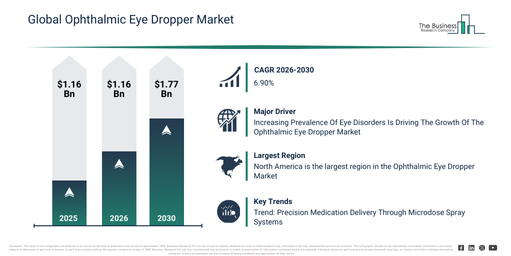
    The ophthalmic eye dropper market size has demonstrated robust growth in recent years. It is projected to expand from $14.28 billion in 2025 to $15.39 billion in 2026, at a compound annual growth rate (CAGR) of 7.7%. The growth observed in the historical period can be attributed to the rising prevalence of ophthalmic disorders, the increasing use of topical eye medications, the expansion of outpatient ophthalmic treatments, the growing availability of OTC eye care products, and the wider adoption of home-based eye treatments.

    The ophthalmic eye dropper market is anticipated to experience substantial growth in the coming years. By 2030, this market is forecasted to reach $20.07 billion, demonstrating a compound annual growth rate (CAGR) of 6.9%. This expansion during the forecast period is driven by factors such as a heightened demand for sophisticated ophthalmic drug delivery methods, an expanding elderly population suffering from eye conditions, broader management of chronic eye diseases, a growing inclination towards preservative-free formulations, and advancements in sterile packaging innovations. Key trends anticipated during this period involve the greater uptake of preservative-free eye droppers, a surging need for unidose packaging, an increased emphasis on precise drug dispensing, the development of more user-friendly dropper designs, and an intensified commitment to sterility assurance.

    Get A Free Sample Report With In-Depth Market Insights:

    https://thebusinessresearchcompany.com/sample_request?id=17153419&type=smp&name=Ophthalmic%20Eye%20Dropper%20Market%20Report%202026&utm_source=Blogs&utm_medium=Paid&utm_campaign=Sep_PR

    Ophthalmic Eye Dropper Market Growth Backed By Core Demand Fundamentals

    The future expansion of the ophthalmic eye dropper market is expected to be propelled by the increasing occurrence of eye disorders. These medical conditions represent a wide array of issues affecting the eyes, leading to impaired vision or discomfort. The rising incidence of eye disorders stems from various factors, including environmental influences, increased use of contact lenses, changes in lifestyle, gender differences, and vitamin deficiencies. Ophthalmic eye droppers serve to deliver precise dosages of medication directly into the eyes for managing diverse eye ailments. For instance, in January 2024, the Centers for Disease Control and Prevention, a US-based science and data-driven service organization that protects the public’s health, indicated that over 3.4 million Americans aged 40 years and older were blind or visually impaired, a number anticipated to double by 2030. Therefore, the growing prevalence of eye disorders is a significant driver for the ophthalmic eye dropper market’s growth.

    Ophthalmic Eye Dropper Market Breakdown By Product Type And Application

    The ophthalmic eye dropper market covered in this report is segmented –

    1) By Eye Dropper: Unidose Eye Dropper, Preserved Multi-Dose Eye Dropper, Preservative-Free Multi-Dose Eye Dropper

    2) By Drug Type: Prescription Drugs, Over-The-Counter (OTC) Drugs

    3) By Treatment Type: Dry Eye, Glaucoma, Allergies, Conjunctivitis, Other Treatment Type

    4) By End-Use: Hospitals, Ophthalmic Centers, Homecare Settings, Other End-Users

    Subsegments:

    1) By Unidose Eye Dropper: Single Use Containers, Disposable Dropper Systems

    2) By Preserved Multi-Dose Eye Dropper: Eye Droppers With Preservative Solutions, Multi-Dose Containers With Built-In Preservation

    3) By Preservative-Free Multi-Dose Eye Dropper: Multi-Dose Containers Without Preservatives, Non-Preserved, Sterile Eye Drop Systems

    Ophthalmic Eye Dropper Market Growth Trends Reshaping The Competitive Landscape

    Leading companies in the ophthalmic eye dropper market are concentrating on creating sophisticated solutions, like microdose spray delivery systems, to supersede conventional eye dropper bottles. A microdose spray delivery system is a technology that precisely delivers controlled amounts of medication directly to the ocular surface, thereby reducing waste, systemic exposure, and dosing inaccuracies. For example, in May 2023, Hyperion DeFi Inc., a US-based pharmaceutical technology company, introduced MydCombi, leveraging its Optejet platform. This breakthrough aims to replace traditional eyedropper bottles by administering medication in microdroplets (~6–8 µL) directly to the eye without causing discomfort or spillage. Integrated with Eyenovia’s drug-device platform, it ensures precise dosing, enhances patient adherence, and minimizes the risk of adverse effects. This microdose delivery system ultimately improves treatment effectiveness, enhances the patient experience, and simplifies the administration of ocular drugs.

    Ophthalmic Eye Dropper Market Company Landscape And Competitive Strategy

    Major companies operating in the ophthalmic eye dropper market are Pfizer Inc., AbbVie Inc., Novartis AG, Alcon Inc., Bausch & Lomb Incorporated, Intas Pharmaceuticals Ltd., AptarGroup Inc, Cipla Ltd, Gerresheimer AG, Lupin Ltd., Santen Pharmaceutical Co Ltd., Rohto Pharmaceutical Co Ltd., Silgan Dispensing Systems, Akorn Operating Company LLC, Nemera Development S.A., Ajanta Pharma Ltd., Perrigo Company plc, Bora Pharmaceuticals Co Ltd., Sun Pharmaceutical Industries Limited, PanOptica Inc.

    View The Full Ophthalmic Eye Dropper Market Report:

    https://thebusinessresearchcompany.com/report/ophthalmic-eye-dropper-global-market-report?utm_source=Blogs&utm_medium=Paid&utm_campaign=Sep_PR

    Ophthalmic Eye Dropper Market Largest Region: Which Geography Holds The Biggest Share?

    North America was the largest region in the ophthalmic eye dropper market in 2025. Asia-Pacific is expected to be the fastest-growing region in the forecast period. The regions covered in the ophthalmic eye dropper market report are Asia-Pacific, South East Asia, Western Europe, Eastern Europe, North America, South America, Middle East, Africa.

    Reach Out To Our Team:

    The Business Research Company: https://www.thebusinessresearchcompany.com/

    Americas: +1 310-496-7795

    Asia: +44 7882 955267 & +91 8897263534

    Europe: +44 7882 955267

    Email us at: marketing@tbrc.info

    Follow us on:

    LinkedIn: https://in.linkedin.com/company/the-business-research-company

    YouTube: https://www.youtube.com/channel/UC24_fI0rV8cR5DxlCpgmyFQ

    Global Market Model: https://www.thebusinessresearchcompany.com/global-market-model
  • Ophthalmic Equipment Market Forecast: Breaking Down The Numbers Behind Future Expansion

    Ophthalmic Equipment Market Forecast: Breaking Down The Numbers Behind Future Expansion

    Built to provide research that’s more actionable and strategically valuable, The Business Research Company’s 2026 market reports include market attractiveness analysis, total addressable market sizing, company benchmarking matrices, interactive Excel dashboards, broader supply chain intelligence, emerging startup tracking, and in-depth product insights.

    Ophthalmic Equipment Market Value Analysis: What Growth Lies Ahead Over The Forecast Period?

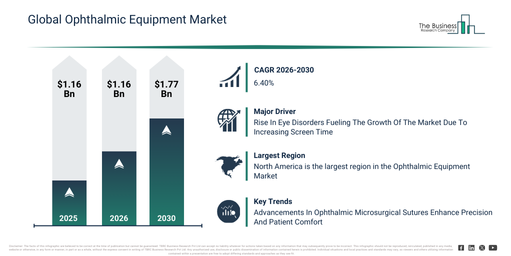
    The ophthalmic equipment market size has seen strong growth in recent years. It is forecast to grow from $69.54 billion in 2025 to $74.2 billion in 2026, demonstrating a compound annual growth rate (CAGR) of 6.7%. The expansion observed in prior periods can be attributed to factors such as limited access to advanced ophthalmic equipment, a reliance on conventional diagnostic tools, the increasing prevalence of cataract and glaucoma, a rising number of ophthalmology clinics, and improved awareness about vision care.

    The ophthalmic equipment market size is projected to experience substantial expansion over the next few years. This market is set to reach $95.09 billion in 2030, growing at a compound annual growth rate (CAGR) of 6.4%. The expected growth during the forecast period is driven by technological advancements in laser and OCT devices, increasing demand for refractive and retinal surgeries, the proliferation of optical retail centers, the wider adoption of phacoemulsification and microsurgical instruments, and the integration of AI and digital solutions in ophthalmic care. Key trends in the upcoming period include a rising uptake of advanced ophthalmic imaging devices, an increasing preference for minimally invasive eye surgeries, the development of customized intraocular lenses (IOLs), the expansion of ambulatory surgical centers (ASCs) for eye care, and an enhanced focus on the early detection and screening of eye diseases.

    Get A Free Sample Report With In-Depth Market Insights:

    https://thebusinessresearchcompany.com/sample_request?id=52986098&type=smp&name=Ophthalmic%20Equipment%20Market%20Report%202026&utm_source=Blogs&utm_medium=Paid&utm_campaign=Sep_PR

    Ophthalmic Equipment Market Growth Catalysts And Demand Drivers

    The increasing prevalence of eye disorders is expected to propel the ophthalmic equipment market’s expansion. An eye disorder refers to a condition impacting the eye’s structure or function, potentially leading to vision impairment or discomfort. The rise in eye disorders stems from increased screen time, which causes prolonged eye strain and contributes to vision problems such as digital eye strain and nearsightedness. Ophthalmic equipment is necessary for addressing eye disorders, as it enables precise diagnosis and effective treatment, aiding in early issue detection and improved patient outcomes. For instance, a May 2024 report from the Centers for Disease Control and Prevention, a US-based government agency, projected that without effective interventions, cases of diabetic retinopathy could increase by 72% and cataracts by 87% by 2050. Additionally, the number of individuals with vision impairment and blindness might rise by as much as 150%. Therefore, the growing rates of eye disorders will significantly boost the ophthalmic equipment market.

    Ophthalmic Equipment Market Segment Analysis And Revenue Potential

    The ophthalmic equipment market covered in this report is segmented –

    1) By Product Type: Ophthalmic Surgical Devices, Ophthalmic Diagnostic Devices, Ophthalmic Vision Care Devices

    2) By Technology: Laser Technology, Optical Coherence Tomography, Ultrasound Technology, Phacoemulsification

    3) By Application: Cataract Surgery, Retinal Surgery, Glaucoma Surgery, Refractive Surgery

    4) By End-Users: Hospitals, Ophthalmology Clinics, Ambulatory Surgical Centers (ASCs), Optical Retail Centers, Other End-Users

    Subsegments:

    1) By Ophthalmic Surgical Devices: Phacoemulsification Devices, Laser Surgical Devices, Vitrectomy Devices, Ophthalmic Microsurgical Instruments, Intraocular Lenses (IOLs), Ophthalmic Cryotherapy Devices

    2) By Ophthalmic Diagnostic Devices: Slit Lamp Microscopes, Optical Coherence Tomography (OCT) Devices, Visual Field Analyzers, Fundus Cameras, Keratometers, Pachymeters, Retinal Imaging Devices, Tonometers

    3) By Ophthalmic Vision Care Devices: Contact Lens Fitters, Autorefractors, Lens Meters, Trial Lens Sets, Phoropters, Lens Edgers, Vision Screening Devices

    Ophthalmic Equipment Market Trends Shaping Long-Term Demand

    Leading companies within the ophthalmic equipment market are concentrating on creating technologically advanced products, such as ophthalmic microsurgical sutures, with the goal of decreasing the likelihood of infection and inflammation. Ophthalmic microsurgical sutures represent exceptionally fine threads specifically engineered for eye surgeons to precisely stitch and close fragile tissues during various eye operations. For instance, in October 2024, Corza Medical, a medical technology company based in the US, introduced its Onatec ophthalmic microsurgical sutures. Corza Medical fabricates Onatec needles using highly tempered stainless steel, which delivers excellent bending resistance and extended durability. Their sophisticated automated manufacturing approach guarantees precise needle shapes and accurate grinds, making it possible to stitch delicate tissues even in very small regions. The needles are characterized by a superior surface finish that ensures smooth penetration, thereby minimizing trauma to tissues. This combination of accuracy and high quality ultimately enhances patient comfort throughout ophthalmic microsurgeries.

    Ophthalmic Equipment Market Key Players Shaping Industry Direction

    Major companies operating in the ophthalmic equipment market are Alcon Inc, Bausch Lomb Corp, Carl Zeiss Meditec AG, Rodenstock GmbH, Leica Microsystems, Corza Medical, EXTREME d o o, BVI Medical Inc, Heine Optotechnik, Essilor International S A, Rumex International Co, Designs For Vision, FCI S A S, Stille AB, Visionix Ltd, Optotek Medical, Coburn Technologies Inc, Haag Streit AG, MDT Medical Devices Manufacturer, Carleton Limited, Topcon Corporation, Nidek Co Ltd

    View The Full Ophthalmic Equipment Market Report:

    https://thebusinessresearchcompany.com/report/ophthalmic-equipment-global-market-report?utm_source=Blogs&utm_medium=Paid&utm_campaign=Sep_PR

    Ophthalmic Equipment Market Regional Analysis: Which Geography Leads On Revenue?

    North America was the largest region in the ophthalmic wquipment market in 2025. Asia-Pacific is expected to be the fastest-growing region in the forecast period. The regions covered in the ophthalmic equipment market report are Asia-Pacific, South East Asia, Western Europe, Eastern Europe, North America, South America, Middle East, Africa.

    Reach Out To Our Team:

    The Business Research Company: https://www.thebusinessresearchcompany.com/

    Americas: +1 310-496-7795

    Asia: +44 7882 955267 & +91 8897263534

    Europe: +44 7882 955267

    Email us at: marketing@tbrc.info

    Follow us on:

    LinkedIn: https://in.linkedin.com/company/the-business-research-company

    YouTube: https://www.youtube.com/channel/UC24_fI0rV8cR5DxlCpgmyFQ

    Global Market Model: https://www.thebusinessresearchcompany.com/global-market-model
  • Ophthalmic Devices Market Expected To Grow At 8.3% CAGR Through 2030: What Businesses Need To Know

    Ophthalmic Devices Market Expected To Grow At 8.3% CAGR Through 2030: What Businesses Need To Know

    Backed by market attractiveness analysis, total addressable market sizing, company benchmarking matrices, interactive Excel dashboards, wider supply chain intelligence, emerging startup coverage, and detailed product-level insights, The Business Research Company’s 2026 market reports are designed to offer research that is more actionable and strategically valuable than ever.

    Ophthalmic Devices Market Size Forecast: How Big Could The Market Get By 2030?

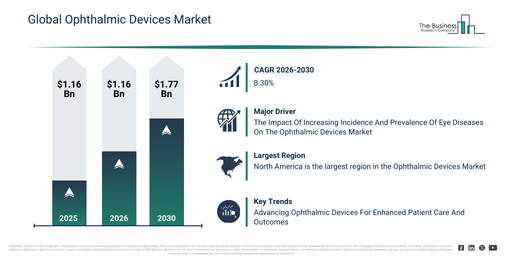
    The ophthalmic devices market has observed substantial growth in recent years. It is projected to increase from $47.31 billion in 2025 to $51.1 billion in 2026, demonstrating a compound annual growth rate (CAGR) of 8.0%. This past expansion can be ascribed to several factors, including the rising prevalence of vision impairment, the expansion of ophthalmic clinics and hospitals, an increase in cataract surgery volumes, the growing adoption of corrective vision devices, and the availability of advanced ophthalmic diagnostics.

    The ophthalmic devices market is projected to experience substantial expansion over the upcoming years. This market is anticipated to reach $70.19 billion by 2030, exhibiting a compound annual growth rate (CAGR) of 8.3%. Factors driving this growth during the forecast period include a rising need for treatments addressing age-related eye conditions, the increasing use of AI-powered ophthalmic diagnostic tools, the proliferation of outpatient eye surgery facilities, a heightened emphasis on proactive eye health, and greater investment in innovative ophthalmic technologies. Key trends expected over the forecast period encompass the wider acceptance of sophisticated diagnostic ophthalmic imaging, an uptick in the application of minimally invasive eye surgery instruments, the broader incorporation of digital eye examination solutions, the proliferation of laser vision correction systems, and an amplified focus on detecting eye diseases at an earlier stage.

    Get A Free Sample Report With In-Depth Market Insights:

    https://thebusinessresearchcompany.com/sample_request?id=11323451&type=smp&name=Ophthalmic%20Devices%20Market%20Report%202026&utm_source=Blogs&utm_medium=Paid&utm_campaign=Sep_PR

    Ophthalmic Devices Market Opportunity Drivers: What’s Unlocking New Revenue Potential?

    The rising occurrence and widespread presence of eye conditions are anticipated to fuel the expansion of the ophthalmic device market. Conditions affecting the eyes, including age-related macular degeneration (AMD), glaucoma, and cataracts, are increasingly recognized as primary contributors to visual impairment and total vision loss worldwide. Essential for the identification, therapy, and control of diverse eye ailments and issues, ophthalmic devices hold significant importance. As an example, in August 2024, data from the National Health Service, a public sector organization, indicated that in 2024, NHS-funded sight tests reached an unprecedented level exceeding 841,000, representing a 6.6% increase relative to 2023. This growing frequency and widespread occurrence of eye-related conditions are projected to stimulate the adoption of ophthalmic devices for both diagnosing and treating ocular ailments.

    Ophthalmic Devices Market Segmentation And Category Overview

    The ophthalmic devices market covered in this report is segmented –

    1) By Device: Vision Care Devices And Equipment, Cataract Surgery Devices And Equipment, Refractive Surgery Devices And Equipment, Diagnostic And Monitoring Ophthalmic Devices And Equipment

    2) By Product: Instruments Or Equipment, Disposables

    3) By End User: Hospitals And Clinics, Diagnostic Laboratories, Other End Users

    4) By Type of Expenditure: Public, Private

    Subsegments:

    1) By Vision Care Devices And Equipment: Eyeglasses, Contact Lenses, Low Vision Aids

    2) By Cataract Surgery Devices And Equipment: Cataract Surgery Instruments, Cataract Surgery Implants (Intraocular Lenses), Cataract Surgery Devices (Phacoemulsification Systems)

    3) By Refractive Surgery Devices And Equipment: LASIK Devices, SMILE Surgery Devices, PRK Surgery Devices

    4) By Diagnostic And Monitoring Ophthalmic Devices And Equipment: Fundus Cameras, Optical Coherence Tomography (OCT) Scanners, Perimeters, Retinal Imaging Systems, Slit Lamps

    Ophthalmic Devices Market Innovation Trends Shaping Future Development

    Major companies operating within the ophthalmic devices market are concentrating on developing advanced products to maintain their standing. They are dedicating investments to research and development efforts to introduce innovative products and expand their market share. As an illustration, in May 2023, Sight Sciences Inc, a US-based eyecare technology company committed to generating innovative solutions designed to transform care and improve patients’ lives, announced the creation of two new ophthalmic systems, specifically its proprietary glaucoma and dry eye technologies, the OMNI Surgical System and the TearCare System. The OMNI Surgical System technology will enable surgeons to execute minimally invasive, implant-free glaucoma procedures for adults diagnosed with primary open-angle glaucoma. The TearCare System technology, intended for dry eye, permits an interventional eyelid procedure for affected meibomian glands and is specified for the delivery of localized heat therapy to adult patients experiencing evaporative dry eye disease due to meibomian gland dysfunction.

    Ophthalmic Devices Market Competitive Analysis Of Leading Industry Participants

    Major companies operating in the ophthalmic devices market are Luxottica Group S.p.A., Johnson & Johnson, Hoya Corporation, CooperVision AG, Bausch Health Companies Inc., Carl Zeiss AG, Flex Ltd., Nidek Co. Ltd., Topcon Corporation, Alcon Inc., EssilorLuxottica, Novartis AG, Regeneron Pharmaceuticals Inc., Roche Holding AG, Santen Pharmaceutical Co. Ltd., Rohto Pharmaceutical Co. Ltd., Menicon Co. Ltd., Chengdu Kanghong Pharmaceutical, Glaukos Corporation, STAAR Surgical Company, Omeros Corporation, Aerie Pharmaceuticals Inc., Alimera Sciences Inc., Iridex

    View The Full Ophthalmic Devices Market Report:

    https://thebusinessresearchcompany.com/report/ophthalmic-devices-global-market-report?utm_source=Blogs&utm_medium=Paid&utm_campaign=Sep_PR

    Ophthalmic Devices Market Geographic Spread And Regional Opportunities

    North America was the largest region in the global ophthalmic devices market in 2025. Asia-Pacific was the second largest region in the global ophthalmic devices market. Africa. was the smallest region in the global ophthalmic devices market. The regions covered in the ophthalmic devices market report are Asia-Pacific, South East Asia, Western Europe, Eastern Europe, North America, South America, Middle East, Africa.

    Reach Out To Our Team:

    The Business Research Company: https://www.thebusinessresearchcompany.com/

    Americas: +1 310-496-7795

    Asia: +44 7882 955267 & +91 8897263534

    Europe: +44 7882 955267

    Email us at: marketing@tbrc.info

    Follow us on:

    LinkedIn: https://in.linkedin.com/company/the-business-research-company

    YouTube: https://www.youtube.com/channel/UC24_fI0rV8cR5DxlCpgmyFQ

    Global Market Model: https://www.thebusinessresearchcompany.com/global-market-model
  • Ophthalmic Cryo Unit Market Forecast To Reach $0.72 Billion By 2030: Key Trends Explained

    Ophthalmic Cryo Unit Market Forecast To Reach $0.72 Billion By 2030: Key Trends Explained

    Featuring market attractiveness scoring, total addressable market sizing, company benchmarking matrices, interactive Excel dashboards, deeper supply chain intelligence, emerging startup tracking, and granular product-level insights, The Business Research Company’s 2026 market reports are built to deliver research that is both more actionable and more strategically valuable.

    Ophthalmic Cryo Unit Market Revenue Outlook: What CAGR Lies Ahead Through 2030?

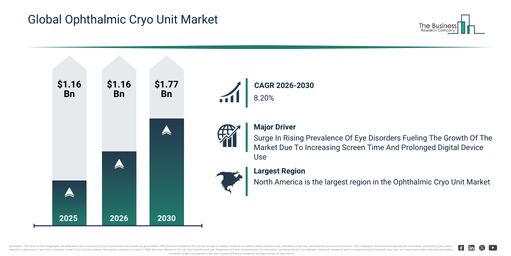
    The ophthalmic cryo unit market has experienced significant growth in recent years. It is projected to expand from $0.48 billion in 2025 to $0.52 billion in 2026, achieving a compound annual growth rate (CAGR) of 8.5%. This historical growth can be linked to factors such as an increase in ophthalmic surgeries, advancements in cryosurgery techniques, the rising prevalence of eye disorders, the adoption of portable cryo units, and the expansion of ophthalmic clinics.

    The ophthalmic cryo unit market is projected to experience robust expansion over the coming years. Its valuation is anticipated to reach $0.72 billion by 2030, demonstrating a compound annual growth rate (CAGR) of 8.2%. This anticipated growth during the forecast period is fueled by factors such as the incorporation of digital surgery systems, the creation of advanced cryo devices, the broadening of ophthalmic markets in developing regions, the increasing embrace of minimally invasive cryotherapy, and enhanced device portability. Key trends expected within this period encompass the rise of portable cryo devices, advancements in high-precision cryotherapy, the availability of battery-operated ophthalmic units, their seamless integration into surgical suites, and multi-application ophthalmic cryo solutions.

    Get A Free Sample Report With In-Depth Market Insights:

    https://thebusinessresearchcompany.com/sample_request?id=49904166&type=smp&name=Ophthalmic%20Cryo%20Unit%20Market%20Report%202026&utm_source=Blogs&utm_medium=Paid&utm_campaign=Sep_PR

    Ophthalmic Cryo Unit Market Growth Momentum: What Factors Are Shaping Demand?

    The increasing incidence of eye conditions is anticipated to drive expansion in the ophthalmic cryo unit market. Eye disorders encompass ailments impacting any portion of the eye, as well as the surrounding structures. This surge in eye disorders is largely due to extended screen time, where significant exposure to digital screens causes eye strain and contributes to issues such as dry eye and myopia. An ophthalmic cryo unit offers a solution for diverse eye conditions, employing controlled freezing to eliminate or mend impaired tissue, thereby efficiently addressing problems like retinal tears, glaucoma, and cataracts via accurate and minimally invasive cryotherapy. As an illustration, in July 2025, data from GOV.UK, a government agency in the UK, revealed that 3.7 million individuals were responsible for 9.8 million hospital outpatient vision appointments in England during the financial year ending 2024. The Northwest region exhibited the highest attendance, reaching 6,432 per 100,000 people, which marked a 4% increase compared to the prior year. Consequently, the growing occurrence of eye disorders is fueling the expansion of the ophthalmic cryo unit market.

    Ophthalmic Cryo Unit Market Segment Outlook: Which Categories Are Growing Fastest?

    The ophthalmic cryo unit market covered in this report is segmented –

    1) By Product Type: Portable Ophthalmic Cryo Units, Stationary Ophthalmic Cryo Units

    2) By Technology: Traditional Cryosurgery, Hightech Cryo Units

    3) By Reimbursement Channel: Private Insurances, Public Insurances, Out Of Pocket Payments

    4) By End User: Hospitals, Ophthalmic Clinics, Ambulatory Surgical Centers, Other End Users

    Subsegments:

    1) By Portable Ophthalmic Cryo Units: Handheld Cryo Units, Compact Tabletop Cryo Units, Battery Operated Cryo Units

    2) By Stationary Ophthalmic Cryo Units: Floor Mounted Cryo Units, Tabletop Cryo Units, Integrated Surgical Suite Cryo Units

    Ophthalmic Cryo Unit Market Leading Companies And Competitive Benchmarking

    Major companies operating in the ophthalmic cryo unit market are Metrum Cryoflex, Cryo Concepts LP, Cryo IQ Inc., Appasamy Associates, Phakos Co., Beijing Brightway Medical Instrument Co. Ltd., RS Surgicles, Advin Health Care, Basco India, Keeler Ltd., Erbe Elektromedizin GmbH, Inomed, BVI Medical Inc., Topcon Corporation, Bausch + Lomb Corp., Halma Plc, MIRA Inc., Oertli Instrumente AG, Alcon, Ziemer Ophthalmic Systems AG

    View The Full Ophthalmic Cryo Unit Market Report:

    https://thebusinessresearchcompany.com/report/ophthalmic-cryo-unit-global-market-report?utm_source=Blogs&utm_medium=Paid&utm_campaign=Sep_PR

    Ophthalmic Cryo Unit Market Top Region By Revenue And Market Share

    North America was the largest region in the ophthalmic cryo unit market in 2025. Asia-Pacific is expected to be the fastest-growing region in the forecast period. The regions covered in the ophthalmic cryo unit market report are Asia-Pacific, South East Asia, Western Europe, Eastern Europe, North America, South America, Middle East, Africa.

    Reach Out To Our Team:

    The Business Research Company: https://www.thebusinessresearchcompany.com/

    Americas: +1 310-496-7795

    Asia: +44 7882 955267 & +91 8897263534

    Europe: +44 7882 955267

    Email us at: marketing@tbrc.info

    Follow us on:

    LinkedIn: https://in.linkedin.com/company/the-business-research-company

    YouTube: https://www.youtube.com/channel/UC24_fI0rV8cR5DxlCpgmyFQ

    Global Market Model: https://www.thebusinessresearchcompany.com/global-market-model
  • Ophthalmic Artificial Intelligence-Assisted Diagnosis Market Analysis Through 2030: Market Size, Growth Trends And Industry Outlook

    Ophthalmic Artificial Intelligence-Assisted Diagnosis Market Analysis Through 2030: Market Size, Growth Trends And Industry Outlook

    Backed by market attractiveness analysis, total addressable market sizing, company benchmarking matrices, interactive Excel dashboards, wider supply chain intelligence, emerging startup coverage, and detailed product-level insights, The Business Research Company’s 2026 market reports are designed to offer research that is more actionable and strategically valuable than ever.

    Ophthalmic Artificial Intelligence-Assisted Diagnosis Market Growth Analysis: How Will Revenue Trend Over The Forecast Period?

    The ophthalmic artificial intelligence-assisted diagnosis market size has experienced rapid expansion recently. It is projected to increase from $2.17 billion in 2025 to $2.57 billion in 2026, driven by a compound annual growth rate (CAGR) of 18.5%. The historical growth of this market can be attributed to the increasing adoption of digital imaging devices, the rising prevalence of eye diseases, enhanced awareness surrounding early diagnosis, the integration of AI in clinical trials, and advancements in retinal imaging technology.

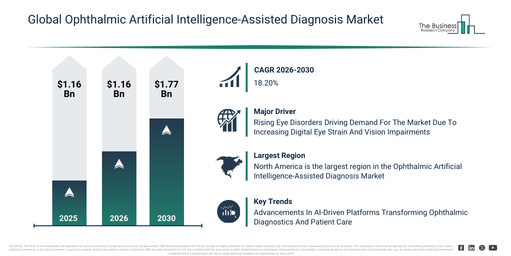
    The ophthalmic artificial intelligence-assisted diagnosis market size is anticipated to experience swift expansion in the coming years. It is projected to grow to $5.03 billion in 2030, demonstrating a compound annual growth rate (CAGR) of 18.2%. The anticipated growth within this period can be attributed to the proliferation of cloud-based AI diagnostic platforms, the expansion of tele-ophthalmology services, improved AI algorithms for rare eye disorders, partnerships formed between AI developers and hospitals, and the increased adoption of predictive ophthalmology. Major trends expected during the forecast period include AI-based retinal imaging analysis, deep learning-powered disease detection, predictive ophthalmology models, automated patient record analysis, and the integration of AI with clinical workflows.

    Get A Free Sample Report With In-Depth Market Insights:

    https://thebusinessresearchcompany.com/sample_request?id=93569494&type=smp&name=Ophthalmic%20Artificial%20Intelligence-Assisted%20Diagnosis%20Market%20Report%202026&utm_source=Blogs&utm_medium=Paid&utm_campaign=Sep_PR

    Ophthalmic Artificial Intelligence-Assisted Diagnosis Market Expansion Drivers: What’s Shaping Future Growth?

    The increasing occurrence of eye conditions is anticipated to fuel the expansion of the ophthalmic artificial intelligence-assisted diagnosis market. Eye disorders are health issues or anomalies impacting the eye’s structure or function, potentially leading to impaired vision or ocular health problems. These disorders are becoming more common due to increased screen time from digital device use, leading to digital eye strain, dryness, and long-term vision problems from extended blue light exposure and decreased blinking. Ophthalmic artificial intelligence-assisted diagnosis provides assistance by examining medical images and patient information to identify, categorize, and foresee eye disorders precisely and early, thereby facilitating prompt treatment and lessening the chance of vision loss. For example, in August 2023, the World Health Organization (WHO), a Switzerland-based United Nations agency, reported estimates from 2023 indicating that over 2.2 billion people experience near or distance vision impairment—with more than 1 billion of these cases being preventable or untreated. Refractive errors and cataracts persist as primary causes, yet only 36% of those with refractive error-related impairment and just 17% of those with cataract-related impairment have access to effective interventions. Consequently, the growing prevalence of eye disorders is propelling the development of the ophthalmic artificial intelligence-assisted diagnosis market.

    Ophthalmic Artificial Intelligence-Assisted Diagnosis Market Segment Landscape: Which Areas Lead Development?

    The ophthalmic artificial intelligence-assisted diagnosis market covered in this report is segmented –

    1) By Type: Cloud-Based, On-Premises

    2) By Technology: Deep Learning, Machine Learning, Computer Vision, Other Technologies

    3) By Application: Hospital, Clinic, Imaging Centre

    Subsegments:

    1) By Cloud-Based: Public Cloud, Private Cloud, Hybrid Cloud

    2) By On-Premises: Local Server Deployment, Enterprise Data Center Deployment, Private Network Deployment

    Ophthalmic Artificial Intelligence-Assisted Diagnosis Market Strategic Trends: What Defines The Next Growth Phase?

    Leading companies in the ophthalmic artificial intelligence-assisted diagnosis market are concentrating on developing novel solutions, such as an ocular data-as-a-service platform, to improve diagnostic accuracy, optimize patient care, and enable proactive insights for eye conditions. An ocular data-as-a-service platform is a digital offering that delivers eye health data on demand, empowering ophthalmologists, clinics, and AI diagnostic tools to remotely access, share, and analyze retinal images and other ocular information for enhanced diagnosis, monitoring, and research. For instance, in May 2025, Topcon Healthcare Solutions Inc., a US-based digital healthcare solutions company, unveiled IDHea, designed to streamline ophthalmic diagnostics and improve patient outcomes. This cloud-based platform accelerates AI and digital health innovation by providing rapid, secure access to real-world and clinical ocular datasets. It enables researchers to drive advancements in both eye and systemic disease care by transforming clinical data into actionable, AI-powered insights. Founded on the FAST principle, meaning Fast, Accessible, Safe, and Transparent, IDHea facilitates predictive, personalized, and proactive patient care while maintaining stringent privacy and governance standards.

    Ophthalmic Artificial Intelligence-Assisted Diagnosis Market Industry Leaders And Competitive Landscape

    Major companies operating in the ophthalmic artificial intelligence-assisted diagnosis market are IDx Technologies Inc., Digital Diagnostics Inc., AEYE Health Inc., Eyenuk Inc., OphtAI, Oivi Tech Private Limited, Altris Inc., JuneBrain Inc., Mediwhale Inc., MONA.health BV, Remidio Innovative Solutions Pvt. Ltd., Retinalyze System A/S, Retmarker, RetinaRisk, Ikerian AG, VoxelCloud Inc., Visulytix Ltd., Aiforia Technologies Plc, DeepTek Inc., EyRIS Pte Ltd., Neurodynamics Solutions Inc.

    View The Full Ophthalmic Artificial Intelligence-Assisted Diagnosis Market Report:

    https://thebusinessresearchcompany.com/report/ophthalmic-artificial-intelligence-assisted-diagnosis-global-market-report?utm_source=Blogs&utm_medium=Paid&utm_campaign=Sep_PR

    Ophthalmic Artificial Intelligence-Assisted Diagnosis Market Regional Analysis And Top Geography

    North America was the largest region in the ophthalmic artificial intelligence-assisted diagnosis market in 2025. Asia-Pacific is expected to be the fastest-growing region in the forecast period. The regions covered in the ophthalmic artificial intelligence-assisted diagnosis market report are Asia-Pacific, South East Asia, Western Europe, Eastern Europe, North America, South America, Middle East, Africa.

    Reach Out To Our Team:

    The Business Research Company: https://www.thebusinessresearchcompany.com/

    Americas: +1 310-496-7795

    Asia: +44 7882 955267 & +91 8897263534

    Europe: +44 7882 955267

    Email us at: marketing@tbrc.info

    Follow us on:

    LinkedIn: https://in.linkedin.com/company/the-business-research-company

    YouTube: https://www.youtube.com/channel/UC24_fI0rV8cR5DxlCpgmyFQ

    Global Market Model: https://www.thebusinessresearchcompany.com/global-market-model
  • Operating-Room Instrument Sterile Robot Market Outlook From 2026 To 2030: Key Growth Factors And Future Opportunities

    Operating-Room Instrument Sterile Robot Market Outlook From 2026 To 2030: Key Growth Factors And Future Opportunities

    Featuring market attractiveness scoring, total addressable market sizing, company benchmarking matrices, interactive Excel dashboards, deeper supply chain intelligence, emerging startup tracking, and granular product-level insights, The Business Research Company’s 2026 market reports are built to deliver research that is both more actionable and more strategically valuable.

    Operating-Room Instrument Sterile Robot Market Forecast: What Value Will The Market Reach By 2030?

    The market size for operating-room instrument sterile robots has experienced rapid expansion recently. This market is projected to expand from $1.92 billion in 2025 to $2.18 billion in 2026, demonstrating a compound annual growth rate (CAGR) of 13.7%. Historically, this growth can be attributed to several factors including an increase in hospital-acquired infection rates, the wider adoption of robotic surgery, continuous technological advancements in sterilization, a heightened demand for procedural efficiency, and the overall expansion of healthcare robotics.

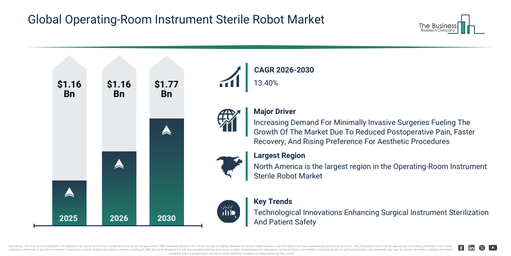
    The operating-room instrument sterile robot market is poised for significant expansion over the coming years. This market is projected to reach $3.61 billion by 2030, exhibiting a compound annual growth rate (CAGR) of 13.4%. Key drivers for this anticipated growth during the forecast period include the integration with smart hospital ecosystems, AI-driven instrument tracking, an increase in ambulatory surgical centers, sophisticated chemical sterilization techniques, and more cost-effective robotic systems. Prominent trends expected in the forecast period encompass automated sterilization workflows, the adoption of UV-C and hydrogen peroxide sterilization, mobile sterile instrument robots, seamless integration with hospital IT systems, and hybrid semi-automated sterilization approaches.

    Get A Free Sample Report With In-Depth Market Insights:

    https://thebusinessresearchcompany.com/sample_request?id=84306224&type=smp&name=Operating-Room%20Instrument%20Sterile%20Robot%20Market%20Report%202026&utm_source=Blogs&utm_medium=Paid&utm_campaign=Sep_PR

    Operating-Room Instrument Sterile Robot Market Development Factors: What’s Supporting Demand?

    The increasing demand for minimally invasive surgeries is anticipated to fuel the expansion of the operating-room instrument sterile robot market going forward. Minimally invasive surgeries are defined as surgical procedures carried out through small incisions utilizing specialized instruments and methods to lessen tissue harm and promote faster patient recovery. The heightened interest in minimally invasive surgeries stems from benefits like reduced postoperative pain, as smaller incisions minimize tissue damage and enhance patient comfort. Operating room sterile instrument robots contribute to meeting the demand for minimally invasive surgeries by ensuring consistently sterilized instruments, lowering infection risks, and facilitating the high precision required for such intricate procedures. For instance, in June 2024, according to the American Society of Plastic Surgeons, a US-based professional organization, minimally invasive procedures experienced a 7% growth in 2023, surpassing traditional surgical procedures by 2%. Consequently, the increasing demand for minimally invasive surgeries is driving the growth of the operating-room instrument sterile robot market.

    Operating-Room Instrument Sterile Robot Market Segments: Where Is Growth Concentrated?

    The operating-room instrument sterile robot market covered in this report is segmented –

    1) By Product Type: Fully Automated Instrument Handling Robots, Semi-Automated Instrument Handling Robots, Hybrid Instrument Management Robots

    2) By Sterility Maintenance Technology: UV-C Assisted Instrument Sterility Robots, Chemical-Based Local Instrument Sterility Robots, Enclosed Sterile Compartment Robots, Touchless Handling and Containment Robots

    3) By Mobility Type: Mobile Operating-Room Instrument Robots, Fixed or Ceiling-Mounted Instrument Robots

    4) By Application: General Surgery Operating Rooms, Orthopedic Surgery Operating Rooms, Cardiovascular Surgery Operating Rooms, Neurosurgery Operating Rooms, Minimally Invasive Surgery Operating Rooms

    5) By End-User: Public Hospitals, Private Hospitals, Specialty Surgical Centers, Ambulatory Surgical Centers

    Subsegments:

    1) By Fully Automated Instrument Handling Robots: Autonomous Instrument Delivery Robots, Autonomous Instrument Retrieval Robots, Robotic Instrument Sorting and Organization Systems, Enclosed Sterile Instrument Transport Robots, AI-Guided Instrument Selection and Handover Robots

    2) By Semi-Automated Instrument Handling Robots: Staff-Assisted Robotic Instrument Handling Systems, Robotic Instrument Positioning and Holding Devices, Partially Autonomous Instrument Transfer Robots, Touchless Instrument Pass-Through Robots, Human-in-the-Loop Instrument Management Robots

    3) By Hybrid Instrument Management Robots: Instrument Handling Robots with Integrated Local Sterility Modules, Mobile-Fixed Hybrid Instrument Management Robots, Multi-Function Instrument Handling and Tracking Robots, Instrument Handling Robots Integrated with OR Workflow Systems, Sterile Instrument Logistics and Inventory Hybrid Robots

    Operating-Room Instrument Sterile Robot Market Transformation Trends: What Innovations Are Driving Change?

    Major companies within the operating-room instrument sterile robot market are concentrating on creating novel methodologies, such as whole-room pulsed UV germicidal sterilization. Their aim is to supply hospitals with sophisticated solutions that elevate surgical instrument sterilization, mitigate infection dangers, and enhance overall patient safety and operational effectiveness. Whole-room pulsed UV germicidal sterilization functions as a disinfection technique, employing high-intensity, broad-spectrum ultraviolet light pulses to eradicate microorganisms from surfaces throughout unoccupied spaces. As an illustration, in February 2023, Xenex Disinfection Services Inc., a US-based entity specializing in advanced ultraviolet (UV) light technology, unveiled the LightStrike+ whole-room pulsed UV germicidal sterilization system. This inventive apparatus is engineered to achieve rapid and efficient microbial reduction on non-porous, non-critical medical device surfaces within vacant operating rooms and clinical environments. It incorporates sophisticated safety features, biocompatibility evaluations, and software management to guarantee reliable sterilization, lessen the potential for hospital-acquired infections, and supplement current manual cleaning and disinfection procedures.

    Operating-Room Instrument Sterile Robot Market Key Participants And Competitive Landscape

    Major companies operating in the operating-room instrument sterile robot market are Intuitive Surgical Inc., Stryker Corporation, Johnson and Johnson, Medtronic plc, Zimmer Biomet Holdings Inc., Smith and Nephew plc, Asensus Surgical Inc., CMR Surgical Ltd., Medrobotics Corporation, Titan Medical Inc., Avateramedical GmbH, Medicaroid Corporation, Rob Surgical Systems S L, Moon Surgical SAS, SS Innovations International Inc., Virtuoso Surgical Inc., Vicarious Surgical Inc., Noah Medical Corporation, EndoQuest Robotics Inc., Medical Microinstruments SpA

    View The Full Operating-Room Instrument Sterile Robot Market Report:

    https://thebusinessresearchcompany.com/report/operating-room-instrument-sterile-robot-global-market-report?utm_source=Blogs&utm_medium=Paid&utm_campaign=Sep_PR

    Operating-Room Instrument Sterile Robot Market Geographic Analysis: Where Is Demand Rising Fastest?

    North America was the largest region in the operating-room instrument sterile robot market in 2025. Asia-Pacific is expected to be the fastest-growing region in the forecast period. The regions covered in the operating-room instrument sterile robot market report are Asia-Pacific, South East Asia, Western Europe, Eastern Europe, North America, South America, Middle East, Africa.

    Reach Out To Our Team:

    The Business Research Company: https://www.thebusinessresearchcompany.com/

    Americas: +1 310-496-7795

    Asia: +44 7882 955267 & +91 8897263534

    Europe: +44 7882 955267

    Email us at: marketing@tbrc.info

    Follow us on:

    LinkedIn: https://in.linkedin.com/company/the-business-research-company

    YouTube: https://www.youtube.com/channel/UC24_fI0rV8cR5DxlCpgmyFQ

    Global Market Model: https://www.thebusinessresearchcompany.com/global-market-model
  • Operating Tables And Lights Market Growth Forecast: Market Size, Key Trends And Emerging Opportunities Through 2030

    Operating Tables And Lights Market Growth Forecast: Market Size, Key Trends And Emerging Opportunities Through 2030

    Built to provide research that’s more actionable and strategically valuable, The Business Research Company’s 2026 market reports include market attractiveness analysis, total addressable market sizing, company benchmarking matrices, interactive Excel dashboards, broader supply chain intelligence, emerging startup tracking, and in-depth product insights.

    Operating Tables And Lights Market Size Outlook: How Quickly Will Revenue Expand Through 2030?

    The market for operating tables and lights has demonstrated consistent expansion in recent years. It is anticipated to increase from $1.47 billion in 2025 to $1.53 billion in 2026, with a compound annual growth rate (CAGR) of 4.5%. The historical growth of this market can be attributed to the rising global number of surgical procedures, the expansion of hospital operating room capacities, increased investments in modern surgical infrastructure, the growing adoption of minimally invasive surgeries, and improved access to advanced OR equipment.

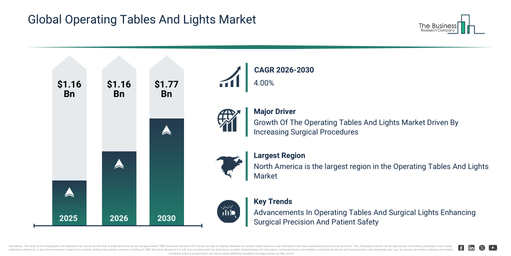
    The operating tables and lights market is anticipated to exhibit consistent growth in the upcoming years. It is projected to expand to $1.79 billion in 2030, demonstrating a compound annual growth rate (CAGR) of 4.0%. This growth during the forecast period stems from factors such as an escalating demand for smart operating rooms, a sharpened focus on workflow efficiency during surgical procedures, the expansion of outpatient surgical facilities, increasing investments in energy-efficient medical equipment, and the growing need to replace older operating tables and lights. Significant trends expected in this period include the rising adoption of electrically powered operating tables, an increased demand for LED surgical lighting systems, the broader integration of adjustable and modular table designs, the expansion of hybrid operating room equipment, and an enhanced emphasis on surgical ergonomics.

    Get A Free Sample Report With In-Depth Market Insights:

    https://thebusinessresearchcompany.com/sample_request?id=13419048&type=smp&name=Operating%20Tables%20And%20Lights%20Market%20Report%202026&utm_source=Blogs&utm_medium=Paid&utm_campaign=Sep_PR

    Operating Tables And Lights Market Industry Drivers: What’s Behind The Revenue Growth?

    The increasing volume of surgical operations is anticipated to drive expansion in the operating tables and lights market in the future. Surgical procedures are defined as medical interventions utilizing manual and instrumental techniques carried out by surgeons to diagnose, treat, or rectify various conditions, injuries, or illnesses. This rise in surgical interventions stems from factors such as an aging demographic, progress in medical technology, enhanced healthcare accessibility, and superior diagnostic abilities. Crucially, operating tables and lights are essential in contemporary surgery, contributing to greater precision, safety, and efficiency during operations, ultimately leading to better patient results. For example, data from November 2023, published by the Australian Institute of Health and Welfare (AIHW), an Australia-based government agency, indicated that approximately 735,500 people underwent surgery from public hospital elective surgery waiting lists during 2022–2023, representing an 18% rise compared to 2021-2022. Consequently, the growing frequency of surgical procedures is projected to significantly boost the expansion of the operating tables and lights market.

    Operating Tables And Lights Market Segment Analysis: What Are The Core Market Categories?

    The operating tables and lights market covered in this report is segmented –

    1) By Product Type: Operating Tables, Operating Room Lights

    2) By Operation: Manual Operating Table, Power Operating Table

    3) By End-User: Hospitals, Ambulatory Surgical Centers, Emergency Centers, Other End-Users

    Subsegments:

    1) By Operating Tables: Manual Operating Tables, Electric Operating Tables, Hydraulic Operating Tables, Surgical Stretcher Tables

    2) By Operating Room Lights: Ceiling-Mounted Surgical Lights, Wall-Mounted Surgical Lights, Mobile Surgical Lights, Examination Lights

    #Operating Tables And Lights Market Growth Trends: What’s Shaping The Future Outlook?

    Leading entities within the operating tables and lights market are concentrating on creating novel offerings, including user-centric designs, aimed at elevating surgical accuracy and bettering patient recovery. These intuitive products prioritize straightforwardness and operational simplicity, allowing users to engage with them effectively without encountering complexity or requiring extensive instruction. Common attributes of these items include readily understandable controls, uncluttered interfaces, and designs that are easy to access, thereby enriching the total user interaction. As an illustration, Getinge AB, a medical technology firm based in Sweden, introduced the Maquet Corin operating room (OR) table and the Maquet Ezea surgical light in August 2024, with the objective of boosting surgical effectiveness, ensuring greater safety, and improving the user’s interaction in operating environments. The Maquet Corin operating room (OR) table incorporates an intuitive interface that facilitates smoother workflows and fosters improved collaboration among surgical personnel, further equipped with intelligent safety mechanisms like collision detection and warnings for overloads. Conversely, the Maquet Ezea surgical light highlights ease of use and resilience, offering powerful lighting alongside sophisticated functionalities such as eye-sensitive dimming and an elevated color rendering index, crucial for precise color display during surgical procedures.

    Operating Tables And Lights Market Top Companies Driving Competitive Growth

    Major companies operating in the operating tables and lights market are Siemens AG, Stryker Corporation, GE Healthcare, STERIS Corporation, Shenzhen Mindray Bio-Medical Electronics Co. Ltd., Drägerwerk AG & Co. KGaA, Getinge AB, Heal Force Bio-Meditech Holdings Limited, AGA Sanitaetsartikel GmbH, Famed Zywiec Sp. z o.o., Alvo Medical Sp. z o.o., Mizuho OSI, Merivaara Corp, Mediland Enterprise Corporation, BenQ Medical Technology, UFSK-International OSYS GmbH, Fazzini SRL, Lojer Oy, Medifa-hesse GmbH & Co. KG, Ningbo Techart Medical Equipment Co. Ltd., OPT Surgisystems S.R.L.

    View The Full Operating Tables And Lights Market Report:

    https://thebusinessresearchcompany.com/report/operating-tables-and-lights-global-market-report?utm_source=Blogs&utm_medium=Paid&utm_campaign=Sep_PR

    Operating Tables And Lights Market Global Footprint: Which Region Leads The Market?

    North America was the largest region in the operating tables and lights market in 2025. The regions covered in the operating tables and lights market report are Asia-Pacific, South East Asia, Western Europe, Eastern Europe, North America, South America, Middle East, Africa.

    Reach Out To Our Team:

    The Business Research Company: https://www.thebusinessresearchcompany.com/

    Americas: +1 310-496-7795

    Asia: +44 7882 955267 & +91 8897263534

    Europe: +44 7882 955267

    Email us at: marketing@tbrc.info

    Follow us on:

    LinkedIn: https://in.linkedin.com/company/the-business-research-company

    YouTube: https://www.youtube.com/channel/UC24_fI0rV8cR5DxlCpgmyFQ

    Global Market Model: https://www.thebusinessresearchcompany.com/global-market-model
  • Open Surgery Instruments Market CAGR Forecast Through 2030: Key Trends Shaping Industry Expansion

    Open Surgery Instruments Market CAGR Forecast Through 2030: Key Trends Shaping Industry Expansion

    Backed by market attractiveness analysis, total addressable market sizing, company benchmarking matrices, interactive Excel dashboards, wider supply chain intelligence, emerging startup coverage, and detailed product-level insights, The Business Research Company’s 2026 market reports are designed to offer research that is more actionable and strategically valuable than ever.

    Operating Room Equipment Market Size, Value And Growth Trajectory Through 2030

    The operating room equipment market size has seen robust expansion in recent times. Its projected growth will take it from $17.05 billion in 2025 to $17.95 billion in 2026, demonstrating a compound annual growth rate (CAGR) of 5.2%. Historically, this growth can be ascribed to several factors, including an increase in surgical procedure volumes, the expansion of hospital infrastructure, a higher prevalence of chronic diseases necessitating surgery, enhanced access to sophisticated surgical technologies, and the increasing embrace of minimally invasive procedures.

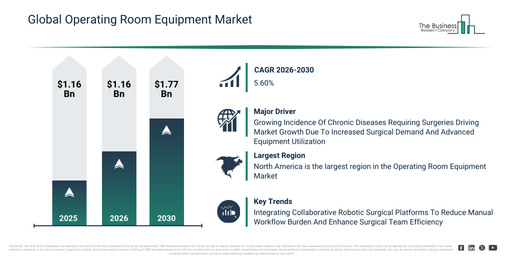
    The operating room equipment market is set for significant expansion in the coming years, projected to achieve a valuation of $22.36 billion by 2030, driven by a compound annual growth rate (CAGR) of 5.6%. This anticipated growth stems from factors such as increased capital allocation for smart hospitals, a rising requirement for real-time integration of surgical data, the broadening footprint of outpatient and ambulatory surgery centers, an intensified focus on patient safety innovations, and sustained advancements in surgical equipment design. Prominent trends foreseen for this period encompass the increased uptake of integrated operating room systems, an escalating demand for sophisticated patient monitoring solutions, the wider application of minimally invasive surgical equipment, the proliferation of smart anesthesia delivery systems, and a heightened emphasis on optimizing surgical workflow.

    Get A Free Sample Report With In-Depth Market Insights:

    https://thebusinessresearchcompany.com/sample_request?id=10335285&type=smp&name=Operating%20Room%20Equipment%20Market%20Report%202026&utm_source=Blogs&utm_medium=Paid&utm_campaign=Sep_PR

    Operating Room Equipment Market Growth Factors: What’s Supporting Expansion?

    The increasing occurrence of chronic illnesses necessitating surgical interventions is projected to fuel the expansion of the operating room equipment market. These are medical conditions of prolonged duration, typically lasting at least three months. This escalating prevalence of chronic ailments stems from an aging global populace and the widespread adoption of inactive lifestyles alongside unhealthy eating habits. The rising number of chronic diseases needing surgery boosts the operating room equipment sector by elevating the need for sophisticated surgical instruments, patient observation systems, surgical tables, and diagnostic imaging devices, all crucial for secure and effective operations. As an illustration, data from June 2024, provided by the National Health Service, a UK-based government department, indicated that 3,615,330 individuals registered with a general practitioner (GP) received a diagnosis of non-diabetic hyperglycemia or pre-diabetes (a state characterized by elevated blood sugar not yet reaching diabetic levels) in 2023. This represented an 18% surge from 3,065,825 instances recorded in 2022. Consequently, the increased occurrence of chronic conditions necessitating surgical interventions is propelling the growth of the operating room equipment market.

    Operating Room Equipment Market Segment Breakdown: Which Categories Lead On Revenue?

    The operating room equipment market covered in this report is segmented –

    1) By Type: Anesthesia Devices, Endoscopes, Operating Room Lights, Operating Tables, Electrosurgical Devices, Surgical Imaging Devices, Patient Monitors

    2) By Application: Cardiovascular Surgery, Thoracic Surgery, Neurosurgery, Other Applications

    3) By End User: Hospitals, Outpatient Facilities And Ambulatory Surgery Centers

    Subsegments:

    1) By Anesthesia Devices: Anesthesia Machines, Vaporizers, Anesthesia Monitors

    2) By Endoscopes: Rigid Endoscopes, Flexible Endoscopes, Accessories For Endoscopy

    3) By Operating Room Lights: Surgical LED Lights, Surgical Halogen Lights, Examination Lights

    4) By Operating Tables: General Surgical Tables, Specialty Surgical Tables, Adjustable Operating Tables

    5) By Electrosurgical Devices: Electrosurgical Generators, Electrosurgical Instruments, Smoke Evacuators

    6) By Surgical Imaging Devices: C-Arms, Surgical Ultrasound Systems, Intraoperative CT Scanners

    7) By Patient Monitors: Multi-Parameter Monitors, Bedside Monitors, Portable Monitors

    Operating Room Equipment Market Industry Trends: What’s Reshaping Demand?

    Prominent companies active in the operating room equipment market are prioritizing the integration of collaborative robotic assistance systems to minimize manual workflow duplication, heighten surgical accuracy, and boost staff output during medical procedures. These cooperative platforms provide aid to surgeons and surgical technologists through automated instrumentation control, consistent support, and features that optimize workflow, thereby lessening physical exertion and streamlining operating room operations. For instance, in November 2024, Moon Surgical, a US-based surgical robotics company, unveiled its Maestro Platform at Lee Health. The platform is designed to augment surgical teams and improve procedural consistency. The company reports that Maestro assists operating rooms in saving the equivalent of 8.3 full working days of surgical technologist time by automating routine tasks and enhancing intraoperative support. This illustrates a broader industry movement towards augmentative robotics, intended to alleviate staff pressure, reduce procedural delays, and improve overall operating room efficiency.

    Operating Room Equipment Market Leading Players And Competitive Positioning

    Major companies operating in the operating room equipment market are Medtronic, Olympus, GE, Stryker, Philips, Getinge, Drägerwerk, Hill-Rom, Nihon Kohden, Steris, STAAN Bio-Med Engineering, GE Healthcare, Covidien, Philips Healthcare, Smiths Medical, Metran, Siemens Healthcare, Opto Circuits, Fukuda Denshi, Canon Medical Systems, Mindray, Boston Scientific, DePuy Synthes, Simeon Medical, Teleflex, Johnson & Johnson, Alvo Medical, Mizuho OSI, Karl Storz, KLS Martin Group

    View The Full Operating Room Equipment Market Report:

    https://thebusinessresearchcompany.com/report/operating-room-equipment-global-market-report?utm_source=Blogs&utm_medium=Paid&utm_campaign=Sep_PR

    Operating Room Equipment Market Regional Split: Which Areas Are Fueling Growth?

    North America was the largest region in the global operating room equipment market in 2025. Asia-Pacific is expected to be the fastest-growing region in the forecast period. The regions covered in the operating room equipment market report are Asia-Pacific, South East Asia, Western Europe, Eastern Europe, North America, South America, Middle East, Africa.

    Reach Out To Our Team:

    The Business Research Company: https://www.thebusinessresearchcompany.com/

    Americas: +1 310-496-7795

    Asia: +44 7882 955267 & +91 8897263534

    Europe: +44 7882 955267

    Email us at: marketing@tbrc.info

    Follow us on:

    LinkedIn: https://in.linkedin.com/company/the-business-research-company

    YouTube: https://www.youtube.com/channel/UC24_fI0rV8cR5DxlCpgmyFQ

    Global Market Model: https://www.thebusinessresearchcompany.com/global-market-model
  • Open Surgery Instruments Market To Witness 5.8% CAGR Growth Through 2030: Key Industry Drivers

    Open Surgery Instruments Market To Witness 5.8% CAGR Growth Through 2030: Key Industry Drivers

    Featuring market attractiveness scoring, total addressable market sizing, company benchmarking matrices, interactive Excel dashboards, deeper supply chain intelligence, emerging startup tracking, and granular product-level insights, The Business Research Company’s 2026 market reports are built to deliver research that is both more actionable and more strategically valuable.

    Open Surgery Instruments Market CAGR Outlook And Future Development

    The open surgery instruments market has demonstrated robust expansion in recent years. It will grow from $68.04 billion in 2025 to $72.38 billion in 2026 at a compound annual growth rate (CAGR) of 6.4%. The historical increase in market size is due to factors such as a rise in the volume of open surgical procedures, the expansion of hospital surgical infrastructure, greater availability of trained surgeons, the increasing use of standardized surgical kits, and ongoing improvements in instrument metallurgy.

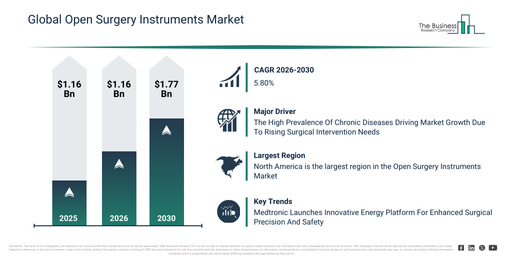
    The open surgery instruments market size is projected to experience robust expansion over the coming years, with expectations to reach $90.57 billion in 2030 at a compound annual growth rate (CAGR) of 5.8%. This anticipated growth during the forecast period is attributable to factors such as the increasing integration of advanced surgical technologies, a rising demand for multi-specialty surgical instruments, the proliferation of complex surgical procedures, a heightened emphasis on reducing surgical complications, and growing investments in hospital operating room upgrades. Key trends for the forecast period include a surging demand for high-precision surgical instruments, increased utilization of reusable and sterilizable tools, wider adoption of ergonomic instrument designs, the expansion of advanced energy-based surgical devices, and an enhanced focus on surgical accuracy.

    Get A Free Sample Report With In-Depth Market Insights:

    https://thebusinessresearchcompany.com/sample_request?id=64690250&type=smp&name=Open%20Surgery%20Instruments%20Market%20Report%202026&utm_source=Blogs&utm_medium=Paid&utm_campaign=Sep_PR

    Open Surgery Instruments Market Demand Drivers: What’s Powering Industry Growth?

    The growing occurrence of chronic diseases is anticipated to fuel the expansion of the open surgery instrument market in the future. These conditions persist over a long duration, necessitate ongoing medical care or supervision, and significantly affect an individual’s quality of life. The increase in chronic diseases stems from various factors, including evolving lifestyles, an aging demographic, enhanced access to healthcare, and genetic susceptibilities. Open surgery instruments improve and simplify the surgical management of chronic illnesses, enabling healthcare professionals to achieve greater procedural accuracy, shorten recovery periods, and guarantee patient safety and welfare during operations. For example, data from May 2023, shared by the World Health Organization, a United Nations health agency situated in Switzerland, indicates that non-communicable diseases (NCDs) are currently responsible for almost three-quarters of worldwide deaths, with forecasts suggesting this figure could climb to 86% by 2048. Consequently, the widespread occurrence of chronic diseases is a key factor boosting the growth of the open surgery instrument market.

    Open Surgery Instruments Market Segmentation: How Does The Market Break Down By Category?

    The open surgery instruments market covered in this report is segmented –

    1) By Product: Scalpel, Scissors, Forceps, Clamps, Needles And Suture, Retractors, Suction, Staplers And Clips, Energy Systems

    2) By Application: Cardiothoracic Surgery, Urologic Surgery, Orthopedic Surgery

    3) By End-User: Hospitals, Ambulatory Surgery Centers, Clinics

    Subsegments:

    1) By Scalpel: Disposable Scalpels, Reusable Scalpels

    2) By Scissors: Straight Scissors, Curved Scissors, Metzenbaum Scissors, Mayo Scissors

    3) By Forceps: Tissue Forceps, Surgical Forceps, Hemostatic Forceps

    4) By Clamps: Hemostatic Clamps, Tissue Clamps, Surgical Clamps

    5) By Needles And Suture: Surgical Needles, Absorbable Sutures, Non-Absorbable Sutures

    6) By Retractors: Handheld Retractors, Self-Retaining Retractors

    7) By Suction: Manual Suction Devices, Electric Suction Devices

    8) By Staplers And Clips: Surgical Staplers, Hemostatic Clips, Skin Staplers

    9) By Energy Systems: Electrosurgical Units, Laser Energy Systems, Ultrasonic Energy Systems

    Open Surgery Instruments Market Innovation Trends: What Developments Are Reshaping The Industry?

    Major companies engaged in the open surgery instruments market are concentrating on developing advanced solutions, specifically next-generation surgical energy platforms, to supersede conventional electrosurgical devices. A next-generation surgical energy platform is defined as a device that enhances procedural precision and safety by dynamically modulating energy delivery, improving vessel sealing, and facilitating more efficient tissue dissection during surgery. For instance, in September 2025, Medtronic Plc., a US-based medical technology company, introduced the Valleylab FT10 Energy Platform in India. This innovation replaces older electrosurgical devices by offering versatile energy modalities, including monopolar, bipolar, and advanced vessel sealing, to support open surgical procedures. It provides real-time tissue sensing and optimized energy control, enabling surgeons to achieve better procedural outcomes with a reduced risk of collateral damage. Integrated with Medtronic’s surgical support programs, encompassing training and workflow integration, it delivers a seamless clinical experience. The Valleylab FT10 Energy Platform enhances patient safety, simplifies surgical workflow, and aids in boosting the adoption of advanced energy solutions in operating rooms.

    Open Surgery Instruments Market Competitive Overview And Top Companies

    Major companies operating in the open surgery instruments market are Johnson & Johnson Services Inc., Medtronic, Olympus, Terumo Corporation, B. Braun Medical Ltd., Cook Medical, Teleflex Incorporated, Mölnlycke Health Care AB, Integra LifeSciences Corporation, ConMed Corporation, C.R. Bard Inc., KLS Martin Group, Aspen Surgical Products Inc., Scanlan International Inc., Sklar Surgical Instruments, Grena Ltd., ELMED Incorporated, Aesculap Inc., Medline Industries Inc., HuFriedyGroup

    View The Full Open Surgery Instruments Market Report:

    https://thebusinessresearchcompany.com/report/open-surgery-instruments-global-market-report?utm_source=Blogs&utm_medium=Paid&utm_campaign=Sep_PR

    Open Surgery Instruments Market Top Region: Where Does Most Revenue Come From?

    North America was the largest region in the open surgery instruments market in 2025. Asia-Pacific is expected to be the fastest-growing region in the forecast period. The regions covered in the open surgery instruments market report are Asia-Pacific, South East Asia, Western Europe, Eastern Europe, North America, South America, Middle East, Africa.

    Reach Out To Our Team:

    The Business Research Company: https://www.thebusinessresearchcompany.com/

    Americas: +1 310-496-7795

    Asia: +44 7882 955267 & +91 8897263534

    Europe: +44 7882 955267

    Email us at: marketing@tbrc.info

    Follow us on:

    LinkedIn: https://in.linkedin.com/company/the-business-research-company

    YouTube: https://www.youtube.com/channel/UC24_fI0rV8cR5DxlCpgmyFQ

    Global Market Model: https://www.thebusinessresearchcompany.com/global-market-model

  • Oncology Molecular Diagnostics Market Projected For Strong Expansion Through 2030: Key Trends And Future Outlook

    Oncology Molecular Diagnostics Market Projected For Strong Expansion Through 2030: Key Trends And Future Outlook

    Built to provide research that’s more actionable and strategically valuable, The Business Research Company’s 2026 market reports include market attractiveness analysis, total addressable market sizing, company benchmarking matrices, interactive Excel dashboards, broader supply chain intelligence, emerging startup tracking, and in-depth product insights.

    Oncology Molecular Diagnostics Market Set To Climb From $6.34 Billion In 2026 To $10.13 Billion By 2030

    The oncology molecular diagnostics market has experienced significant expansion in recent years. This market is projected to grow from $5.65 billion in 2025 to $6.34 billion in 2026, exhibiting a compound annual growth rate (CAGR) of 12.2%. Historically, this growth can be attributed to factors such as the increasing prevalence of cancer, the adoption of PCR and sequencing technologies, enhanced oncology research funding, the expansion of hospital diagnostic capabilities, and regulatory approvals for molecular tests.

    The size of the oncology molecular diagnostics market is projected for significant expansion over the coming years. It is anticipated to reach $10.13 billion in 2030, exhibiting a compound annual growth rate (CAGR) of 12.4%. This projected expansion during the forecast period is fueled by factors such as the embrace of precision oncology, progress in liquid biopsy techniques, the need for customized treatments, AI-powered data analysis, and deeper market penetration in developing regions. Key developments anticipated during this timeframe involve an increase in companion diagnostics, greater reliance on liquid biopsy, the broader implementation of biomarker-based testing, more extensive cancer screening initiatives, and the imperative for prompt and precise cancer identification.

    Get A Free Sample Report With In-Depth Market Insights:

    https://thebusinessresearchcompany.com/sample_request?id=3457&type=smp&name=Oncology%20Molecular%20Diagnostics%20Market%20Report%202026&utm_source=Blogs&utm_medium=Paid&utm_campaign=Sep_PR

    Oncology Molecular Diagnostics Market Growth Drivers: What’s Behind The Acceleration?

    The growing need for personalized medicine is anticipated to fuel the expansion of the oncology molecular diagnostics market moving forward. Personalized medicine describes an innovative method in medical care and treatment that adapts medical choices, practices, interventions, and drug therapies to each specific patient. Oncology molecular diagnostics play a vital role in personalized medicine for cancer patients by offering tailored treatment plans, improved drug selection, and more precise, efficacious, and individualized treatment approaches, thereby enhancing patient results and overall quality of life. For instance, in February 2024, the Personalized Medicine Coalition, a US-based nonprofit organization, reported that in 2023, the FDA approved 16 new personalized treatments for rare disease patients, an increase from six in 2022. Therefore, the rising demand for personalized medicine is a key driver for the growth of the oncology molecular diagnostics market.

    Oncology Molecular Diagnostics Market Segment Trends And Revenue Contributors

    The oncology molecular diagnostics market covered in this report is segmented –

    1) By Product: Instruments, Reagents, Other Products

    2) By Technology: Polymerase Chain Reaction (PCR), In-Situ Hybridization (ISH), Isothermic Nucleic Acid Amplification Technology (INNAT), Chips And Microarrays, Sequencing, Mass Spectroscopy, Transcription Mediated Amplification (TMA), Other Technologies

    3) By End User: Hospitals, Diagnostic Centers, Academic And Research Institutes, Other End Users

    Subsegments:

    1) By Instruments: Polymerase Chain Reaction (PCR) Machines, Sequencers, Microarray Platforms, Fluorescence In Situ Hybridization (FISH) Instruments

    2) By Reagents: DNA And RNA Extraction Kits, PCR Reagents And Kits, NGS Library Preparation Kits, Diagnostic Assay Reagents

    3) By Other Products: Software For Data Analysis And Interpretation, Quality Control And Calibration Products, Consumables, For Molecular Testing, Biomarkers For Oncology Testing

    Oncology Molecular Diagnostics Market Trends: What’s Defining The Industry’s Next Phase?

    Leading companies in the oncology molecular diagnostics market are concentrating on evolving genomics technologies, including next-generation cancer genome sequencing, computational analytics, and innovative tumor modeling, to enhance early cancer detection, identify mutations, and refine personalized treatment strategies. These advancements improve diagnostic accuracy, reduce processing times, and cater to the increasing need for localized, high-accuracy molecular testing. An illustration of this is OncoHelix-CoLab, a Canada-based precision oncology provider focused on genomic and immunologic profiling, advanced molecular diagnostics, and immune-profile testing, which inaugurated a cutting-edge laboratory at Burjeel Medical City in the UAE in May 2024. This facility, a result of a collaboration between Burjeel Holdings and OncoHelix, bolsters regional diagnostic capabilities by enabling complex molecular and immunology tests to be performed locally, thus eliminating the need to send them abroad. Among its specialized services are advanced assays for various cancers, including prostate cancer, further supported by partnerships such as its collaboration with Nanostics for the ClarityDX Prostate test.

    Oncology Molecular Diagnostics Market Competitive Landscape: Which Companies Lead The Industry?

    Major companies operating in the oncology molecular diagnostics market are F. Hoffmann-La Roche AG, Bayer AG, Thermo Fisher Scientific Inc., Abbott Laboratories, Danaher Corporation, Siemens Healthcare AG, Becton Dickinson and Company, Agilent Technologies Inc., HTG Molecular Diagnostics Inc., Hologic Inc., Illumina Inc., bioMérieux SA, Beckman Coulter Inc., Sysmex Corporation, Bio-Rad Laboratories Inc., Qiagen N.V., Exact Sciences Corp., Bio-Techne Corporation, OPKO Health Inc., Myriad Genetics Inc., Guardant Health AMEA, Veracyte Inc., Adaptive Biotechnologies Corp., Foundation Medicine Inc., Pacific Biosciences of California Inc., NanoString Technologies Inc., Genomic Health Inc.

    View The Full Oncology Molecular Diagnostics Market Report:

    https://thebusinessresearchcompany.com/report/oncology-molecular-diagnostics-global-market-report?utm_source=Blogs&utm_medium=Paid&utm_campaign=Sep_PR

    Oncology Molecular Diagnostics Market Regional Breakdown: Where Is Demand Concentrated?

    North America was the largest region in the oncology molecular diagnostics market in 2025. Western Europe was the second largest region in the global oncology molecular diagnostics market report. The regions covered in the oncology molecular diagnostics market report are Asia-Pacific, South East Asia, Western Europe, Eastern Europe, North America, South America, Middle East, Africa.

    Reach Out To Our Team:

    The Business Research Company: https://www.thebusinessresearchcompany.com/

    Americas: +1 310-496-7795

    Asia: +44 7882 955267 & +91 8897263534

    Europe: +44 7882 955267

    Email us at: marketing@tbrc.info

    Follow us on:

    LinkedIn: https://in.linkedin.com/company/the-business-research-company

    YouTube: https://www.youtube.com/channel/UC24_fI0rV8cR5DxlCpgmyFQ

    Global Market Model: https://www.thebusinessresearchcompany.com/global-market-model