Blog

  • Oncology Devices Market Outlook 2026–2030: Growth Trends, Market Dynamics And Emerging Opportunities

    Oncology Devices Market Outlook 2026–2030: Growth Trends, Market Dynamics And Emerging Opportunities

    Backed by market attractiveness analysis, total addressable market sizing, company benchmarking matrices, interactive Excel dashboards, wider supply chain intelligence, emerging startup coverage, and detailed product-level insights, The Business Research Company’s 2026 market reports are designed to offer research that is more actionable and strategically valuable than ever.

    Oncology Devices Market Forecast: Value Set To Climb From $210.15 Billion To $397.27 Billion

    The oncology devices market has seen substantial growth in recent years. It is projected to expand from $177.72 billion in 2025 to $210.15 billion in 2026, achieving a compound annual growth rate (CAGR) of 18.2%. This historical expansion can be attributed to factors such as increasing global cancer incidence rates, the enlargement of hospital oncology departments, a growing need for early diagnosis technologies, the availability of advanced imaging systems, and rising awareness of cancer screening programs.

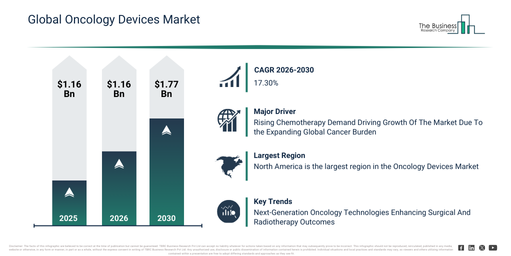
    The oncology devices market is projected to experience substantial expansion in the coming years. This sector is anticipated to reach $397.27 billion by 2030, exhibiting a compound annual growth rate (CAGR) of 17.3%. This projected expansion during the forecast period is driven by several factors, including the increasing embrace of personalized cancer treatment devices, greater financial commitments to oncology infrastructure, the proliferation of outpatient facilities for cancer care, the expanding application of AI-powered diagnostic tools, and a heightened emphasis on solutions for precision oncology. Key developments anticipated during this timeframe involve a greater uptake of sophisticated cancer diagnostic devices, increased deployment of image-guided oncology therapies, broader incorporation of minimally invasive tools for cancer treatment, the widening availability of precision radiation therapy equipment, and a stronger focus on identifying cancer at earlier stages.

    Get A Free Sample Report With In-Depth Market Insights:

    https://thebusinessresearchcompany.com/sample_request?id=55201161&type=smp&name=Oncology%20Devices%20Market%20Report%202026&utm_source=Blogs&utm_medium=Paid&utm_campaign=Sep_PR

    Oncology Devices Market Growth Factors Behind Sustained Expansion

    The escalating need for chemotherapy is poised to drive the expansion of the oncology devices market moving forward. Chemotherapy, a cancer therapy, employs potent drugs to obliterate rapidly proliferating cells, thereby slowing or arresting the proliferation and dissemination of tumors. The demand for chemotherapy is on the rise, stemming from the increasing global prevalence of cancer, as a higher number of diagnosed cases necessitates effective, widely available treatments that can address diverse cancer types and stages. Oncology devices enhance chemotherapy by enabling more secure and precise drug delivery and oversight, which consequently improves treatment effectiveness and patient results. For example, in January 2025, the U.S. National Cancer Institute, a U.S.-based federal cancer research agency, projected that new cancer cases in the United States would reach 2.04 million, an increase from 1.96 million in 2023, emphasizing the growing requirement for chemotherapy administration systems. Therefore, the increasing demand for chemotherapy is fueling the growth of the oncology devices market.

    Oncology Devices Market Segment Analysis Spotlighting Growth Areas

    The oncology devices market covered in this report is segmented –

    1) By Device Type: Brachytherapy Devices, Endoscopic Devices

    2) By Therapy: Chemotherapy, Hormone Therapy, Biotherapy/Immunotherapy, Radition Therapy

    3) By End User: Hospitals, Cancer Research Institutes, Other End Users

    Subsegments:

    1) By Brachytherapy Devices: Afterloaders (High-Dose Rate (HDR) And Low-Dose Rate (LDR)), Applicators, Seeds, Accessories

    2) By Endoscopic Devices: Endoscopes (Flexible, Rigid, Capsule), Endoscopic Ultrasound Systems, Endoscopic Accessories

    Oncology Devices Market Industry Trends Fueling Future Revenue Growth

    Major companies in the oncology devices market are concentrating on developing sophisticated, precision-focused solutions to elevate treatment accuracy, improve patient safety, and enhance clinical workflow efficiency. These innovations prioritize minimally invasive technologies, superior visualization, and real-time therapy optimization to support improved outcomes for various cancer types. For example, in April 2025, ZEISS, a Germany-based medical technology company, secured FDA 510(k) clearance for its INTRABEAM 700 system, which is a next-generation robotic-assisted intraoperative radiotherapy (IORT) platform engineered for targeted radiation delivery in neuro-oncology and breast cancer procedures. The system provides enhanced precision, optimized ergonomics, and seamless integration into surgical workflows, empowering clinicians to administer localized radiation during surgery while minimizing exposure to surrounding healthy tissue. By incorporating advanced imaging, robotics, and comprehensive treatment-planning capabilities, the INTRABEAM 700 boosts therapeutic accuracy, facilitates quicker clinical decision-making, and aligns with the industry’s progression towards technologically advanced, patient-centric oncology care.

    Oncology Devices Market Competitive Landscape: Who Leads The Industry?

    Major companies operating in the oncology devices market are Eckert & Ziegler BEBIG GmbH, Oncura Inc., GE Healthcare, Medtronic plc, Varian Medical Systems Inc., Elekta AB, Theragenics Corporation, Accuray Incorporated, Roche Diagnostics, IBA Group, Biogenex Laboratories, Becton Dickinson and Company, Siemens Healthineers, Philips Healthcare, Hologic Inc., IBA AG, ViewRay Inc., Canon Medical Systems Corporation, Brainlab, PerkinElmer, RaySearch Laboratories, Mevion Medical Systems, Vision RT, IsoRay, RefleXion Medical, Alpha Tau Medical, Nanobiotix, Mirada Medical Ltd., Navidea Biopharmaceuticals Inc.

    View The Full Oncology Devices Market Report:

    https://thebusinessresearchcompany.com/report/oncology-devices-global-market-report?utm_source=Blogs&utm_medium=Paid&utm_campaign=Sep_PR

    Oncology Devices Market Geographic Landscape: Which Region Dominates Industry Growth?

    North America was the largest region in the oncology devices market in 2025. Asia-Pacific was the second-largest region in the oncology devices market report. The regions covered in the oncology devices market report are Asia-Pacific, South East Asia, Western Europe, Eastern Europe, North America, South America, Middle East, Africa.

    Reach Out To Our Team:

    The Business Research Company: https://www.thebusinessresearchcompany.com/

    Americas: +1 310-496-7795

    Asia: +44 7882 955267 & +91 8897263534

    Europe: +44 7882 955267

    Email us at: marketing@tbrc.info

    Follow us on:

    LinkedIn: https://in.linkedin.com/company/the-business-research-company

    YouTube: https://www.youtube.com/channel/UC24_fI0rV8cR5DxlCpgmyFQ

    Global Market Model: https://www.thebusinessresearchcompany.com/global-market-model
  • Integrase Inhibitors Market Trends Reshaping Industry Growth Through 2030

    Integrase Inhibitors Market Trends Reshaping Industry Growth Through 2030

    Backed by market attractiveness analysis, total addressable market sizing, company benchmarking matrices, interactive Excel dashboards, wider supply chain intelligence, emerging startup coverage, and detailed product-level insights, The Business Research Company’s 2026 market reports are designed to offer research that is more actionable and strategically valuable than ever.

    Integrase Inhibitors Market Set To Climb From $4.96 Billion In 2026 To $6.34 Billion By 2030

    The integrase inhibitors market has demonstrated strong growth in recent years. It is anticipated to expand from $4.66 billion in 2025 to $4.96 billion in 2026, at a compound annual growth rate (CAGR) of 6.4%. This historical growth can be linked to factors such as increasing global HIV prevalence, expanded access to antiretroviral treatment, the availability of effective oral HIV therapies, the development of healthcare infrastructure in developing regions, and support from international health organizations.

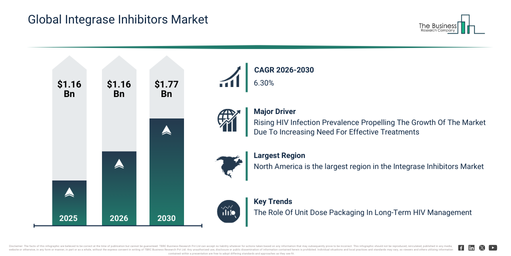
    The integrase inhibitors market size is anticipated to undergo substantial expansion in the coming years. This market is projected to attain $6.34 billion in 2030, demonstrating a compound annual growth rate (CAGR) of 6.3%. This growth during the forecast period can be ascribed to the increasing development of next-generation integrase inhibitors, a rising emphasis on long-acting HIV therapies, the broadening of personalized HIV treatment approaches, expanding investments in antiviral drug research, and a heightened focus on global HIV eradication initiatives. Noteworthy trends expected in the forecast period include the increasing utilization of integrase inhibitors in first-line HIV therapy, a rise in the adoption of combination antiretroviral regimens, the expansion of long-acting drug formulations, an escalating focus on improving drug tolerability, and enhanced access to HIV treatment programs.

    Get A Free Sample Report With In-Depth Market Insights:

    https://thebusinessresearchcompany.com/sample_request?id=90940863&type=smp&name=Integrase%20Inhibitors%20Market%20Report%202026&utm_source=Blogs&utm_medium=Paid&utm_campaign=Oct_PR

    Integrase Inhibitors Market Growth Catalysts And Demand Drivers

    The increasing incidence of HIV infection is anticipated to drive the expansion of the integrase inhibitors market moving forward. HIV infection is a chronic viral condition originating from the human immunodeficiency virus, which attacks and impairs the immune system by eliminating CD4+ T cells, consequently heightening susceptibility to other infections and diseases. The growing occurrence of HIV infection primarily stems from insufficient access to quality healthcare, which impedes efforts in prevention, testing, and treatment, particularly in marginalized communities. Integrase inhibitors are employed in HIV treatment to effectively block the virus from integrating its genetic material into human DNA, thereby reducing viral replication and assisting in controlling the infection, which can help lower the overall prevalence of HIV. For instance, in October 2024, according to gov.uk, a UK-based public sector information website, in 2023, England recorded 6,008 new HIV diagnoses, reflecting a 51% increase compared to 3,975 cases in 2022. Therefore, the rising prevalence of HIV infection will propel the growth of the integrase inhibitors market.

    Integrase Inhibitors Market Segment Performance And Emerging Opportunities

    The integrase inhibitors market covered in this report is segmented –

    1) By Drugs: Raltegravir, Dolutagravir, Elvitegravir, Bictegravir

    2) By Route of Administration: Oral, Intravenous, Long-Acting Oral And Injectable Formulations

    3) By Distribution Channel: Hospital Pharmacies, Retail Pharmacies, Online Pharmacies

    4) By Therapeutic Area: HIV-1 And HIV-2 Infection, HCV Infection, HIV Combination Antiretroviral Therapy

    5) By End User: Hospitals, Clinics, Research Institutes

    Subsegments:

    1) By Raltegravir: Oral Tablet, Oral Suspension, Intravenous (IV) Injection

    2) By Dolutegravir: Oral Tablet, Oral Suspension

    3) By Elvitegravir: Oral Tablet, Oral Suspension

    4) By Bictegravir: Oral Tablet, Fixed-Dose Combination Tablet

    Integrase Inhibitors Market Trends Shaping Long-Term Demand

    Key companies within the integrase inhibitors market are focusing on developing novel packaging options, such as unit dose packaging, to elevate patient adherence, enhance convenience, and ensure the secure and efficient distribution of antiretroviral treatments, especially for long-term HIV management. Unit dose packaging represents a pharmaceutical packaging method where each individual medication dose is separately sealed, thus ensuring precise dosage, convenience, and improved medication safety for patients. For example, in February 2024, ViiV Healthcare, a UK-based pharmaceutical company specializing in the development of HIV treatments, released Dovato (dolutegravir/lamivudine) in a blister pack format in the U.S. This product is authorized as a complete regimen for managing HIV-1 infection in adults who have not received prior antiretroviral (ARV) treatment or for those who are virologically suppressed (HIV-1 RNA <50 copies/mL) on a stable ARV regimen, without a history of treatment failure or known resistance to any part of Dovato.

    Integrase Inhibitors Market Competitive Overview And Top Companies

    Major companies operating in the integrase inhibitors market are Merck & Co. Inc., GlaxoSmithKline plc, Gilead Sciences Inc., ViiV Healthcare, Viatris Inc., Hetero Pharmaceuticals Ltd., Apotex Inc., Shionogi & Co. Ltd., Aurobindo Pharma Ltd., Dr. Reddy’s Laboratories Ltd., Cipla Limited, Lupin Limited, Sun Pharmaceutical Industries Ltd., Mylan Laboratories (Viatris), Teva Pharmaceutical Industries Ltd., Alvogen Pharma, Macleods Pharmaceuticals Ltd., Laurus Labs Ltd., Emcure Pharmaceuticals Ltd., Zydus Lifesciences Limited, Strides Pharma Science Limited, MSN Laboratories Pvt. Ltd.

    View The Full Integrase Inhibitors Market Report:

    https://thebusinessresearchcompany.com/report/integrase-inhibitors-global-market-report?utm_source=Blogs&utm_medium=Paid&utm_campaign=Oct_PR

    Integrase Inhibitors Market Leading Geography: Which Region Contributes The Most Revenue?

    North America was the largest region in the integrase inhibitors market in 2025. The regions covered in the integrase inhibitors market report are Asia-Pacific, South East Asia, Western Europe, Eastern Europe, North America, South America, Middle East, Africa.

    Reach Out To Our Team:

    The Business Research Company: https://www.thebusinessresearchcompany.com/

    Americas: +1 310-496-7795

    Asia: +44 7882 955267 & +91 8897263534

    Europe: +44 7882 955267

    Email us at: marketing@tbrc.info

    Follow us on:

    LinkedIn: https://in.linkedin.com/company/the-business-research-company

    YouTube: https://www.youtube.com/channel/UC24_fI0rV8cR5DxlCpgmyFQ

    Global Market Model: https://www.thebusinessresearchcompany.com/global-market-model
  • Insulin Pens, Syringes, Pumps And Injectors Market Growth To $40.45 Billion Creates New Opportunities Across The Industry

    Insulin Pens, Syringes, Pumps And Injectors Market Growth To $40.45 Billion Creates New Opportunities Across The Industry

    Featuring market attractiveness scoring, total addressable market sizing, company benchmarking matrices, interactive Excel dashboards, deeper supply chain intelligence, emerging startup tracking, and granular product-level insights, The Business Research Company’s 2026 market reports are built to deliver research that is both more actionable and more strategically valuable.

    Insulin Pens, Syringes, Pumps And Injectors Market Forecast: Value Set To Climb From $26.14 Billion To $40.45 Billion

    The insulin pens, syringes, pumps and injectors market has witnessed rapid expansion in recent years. This market is set to expand from $23.52 billion in 2025 to $26.14 billion in 2026, exhibiting a compound annual growth rate (CAGR) of 11.1%. Factors contributing to its historical growth include the escalating prevalence of diabetes, increased reliance on insulin therapy, the emergence of homecare treatment solutions, the introduction of disposable insulin delivery devices, and advancements in patient self-management practices.

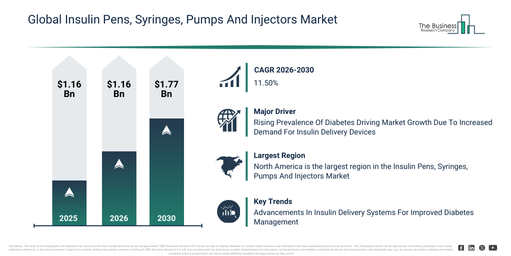
    The market for insulin pens, syringes, pumps, and injectors is projected to experience substantial expansion in the coming years. It is anticipated to reach $40.45 billion in 2030, exhibiting a compound annual growth rate (CAGR) of 11.5%. This anticipated growth during the forecast period is primarily driven by factors such as the greater acceptance of connected diabetes devices, an increased emphasis on automated insulin delivery methods, the broadening of digital platforms for diabetes management, heightened investments in wearable insulin technologies, and a growing need for less invasive delivery systems. Key trends expected over this period encompass a rise in the uptake of smart insulin delivery tools, more widespread utilization of patch and tubeless pumps, an escalating desire for managing diabetes at home, the development of connected insulin monitoring solutions, and a stronger emphasis on improving patient convenience.

    Get A Free Sample Report With In-Depth Market Insights:

    https://thebusinessresearchcompany.com/sample_request?id=12343734&type=smp&name=Insulin%20Pens%2C%20Syringes%2C%20Pumps%20And%20Injectors%20Market%20Report%202026&utm_source=Blogs&utm_medium=Paid&utm_campaign=Oct_PR

    Insulin Pens, Syringes, Pumps And Injectors Market Opportunity Drivers: What’s Unlocking New Revenue Potential?

    The global rise in diabetes prevalence is propelling the expansion of the insulin pens, syringes, pumps, and injectors market. Diabetes is a chronic health condition where the body struggles to maintain normal blood sugar levels, either due to insufficient insulin production or the body’s inability to use insulin effectively, leading to elevated blood glucose. This rising occurrence of diabetes stems from increasingly inactive lifestyles coupled with widespread consumption of high-calorie, unhealthy diets rich in sugars and fats, contributing to obesity and insulin resistance. The growing number of diabetes cases is consequently stimulating the insulin delivery devices market, as more individuals require insulin pens, syringes, pumps, and injectors for effective and convenient management. For instance, in April 2025, the International Diabetes Federation, a Belgium-based organization comprising over 240 national diabetes associations, reported that China’s total adult population of approximately 1.07 billion had a diabetes prevalence of 11.9% among adults, resulting in approximately 148 million total cases of diabetes in adults. Thus, the escalating global prevalence of diabetes is a primary driver for the growth of the insulin pens, syringes, pumps, and injectors market.

    Insulin Pens, Syringes, Pumps And Injectors Market Segment Landscape And Growth Outlook

    The insulin pens, syringes, pumps and injectors market covered in this report is segmented –

    1) By Type: Pens, Injectors And Pumps, Syringes

    2) By Pens: Reusable, Disposable

    3) By Pumps: Tubed Pumps, Tubeless Pumps

    4) By End Users: Hospitals, Homecare, Other End Users

    Subsegments:

    1) By Pens: Disposable Insulin Pens, Reusable Insulin Pens

    2) By Injectors And Pumps: Insulin Injectors, Insulin Pumps, Traditional Insulin Pumps, Patch Insulin Pumps

    3) By Syringes: Disposable Syringes, Reusable Syringes

    Insulin Pens, Syringes, Pumps And Injectors Market Innovation Trends Shaping Future Development

    Many enterprises operating within the insulin pens, syringes, pumps, and injectors market are prioritizing technological advancements in insulin delivery systems to ensure effective and safe insulin administration. These insulin delivery systems are instruments crafted to provide insulin to diabetic patients, incorporating devices such as pens, syringes, pumps, and injectors, thereby enabling precise and effective regulation of blood sugar. For instance, in June 2024, Insulet Corporation, a US-based medical equipment manufacturing company, unveiled Omnipod 5. This is a tubeless automated insulin delivery system developed for individuals with type 1 diabetes aged two and older. It represents the first system capable of integrating with both Dexcom G6 and Abbott FreeStyle Libre 2 Plus continuous glucose monitors, offering distinct compatibility with these leading CGM brands for improved diabetes management.

    Insulin Pens, Syringes, Pumps And Injectors Market Competitive Landscape: Which Companies Lead The Industry?

    Major companies operating in the insulin pens, syringes, pumps and injectors market are Novo Nordisk A/S, Eli Lilly and Company, Medtronic plc, Abbott Laboratories, Insulet Corporation, Sanofi Aventis, F. Hoffmann-La Roche Ltd, Becton Dickinson and Company, Animas Corporation, Ypsomed Holding AG, Dickinson and Company, Valeritas Inc., MannKind Corporation, Tandem Diabetes Care Inc., Biocon Ltd., B. Braun Melsungen AG, Terumo Corporation, Teleflex Incorporated, Nipro Corporation, Smiths Medical Inc., Owen Mumford, UltiMed Inc., Ypsomed Holding, Ascensia Diabetes Care, Trividia Health, ARKRAY Inc., AgaMatrix Inc., Medline Industries LP, Gerresheimer AG, West Pharmaceutical Services Inc., SHL Medical AG, Zhejiang POCTech Medical Co.Ltd., Jiangsu Wanhai Medical Instruments Co. Ltd.

    View The Full Insulin Pens, Syringes, Pumps And Injectors Market Report:

    https://thebusinessresearchcompany.com/report/insulin-pens-syringes-pumps-and-injectors-global-market-report?utm_source=Blogs&utm_medium=Paid&utm_campaign=Oct_PR

    Insulin Pens, Syringes, Pumps And Injectors Market Regional Outlook: Where Is Opportunity Concentrated?

    North America was the largest region in the global insulin pens, syringes, pumps, and injectors devices and equipment market in 2025. Asia-Pacific was the second-largest region in insulin pens, syringes, pumps, and injectors devices and equipment market. The regions covered in the insulin pens, syringes, pumps and injectors market report are Asia-Pacific, South East Asia, Western Europe, Eastern Europe, North America, South America, Middle East, Africa.

    Reach Out To Our Team:

    The Business Research Company: https://www.thebusinessresearchcompany.com/

    Americas: +1 310-496-7795

    Asia: +44 7882 955267 & +91 8897263534

    Europe: +44 7882 955267

    Email us at: marketing@tbrc.info

    Follow us on:

    LinkedIn: https://in.linkedin.com/company/the-business-research-company

    YouTube: https://www.youtube.com/channel/UC24_fI0rV8cR5DxlCpgmyFQ

    Global Market Model: https://www.thebusinessresearchcompany.com/global-market-model
  • Insulin Patch Pumps Market Forecast: Breaking Down The Numbers Behind Future Expansion

    Insulin Patch Pumps Market Forecast: Breaking Down The Numbers Behind Future Expansion

    Built to provide research that’s more actionable and strategically valuable, The Business Research Company’s 2026 market reports include market attractiveness analysis, total addressable market sizing, company benchmarking matrices, interactive Excel dashboards, broader supply chain intelligence, emerging startup tracking, and in-depth product insights.

    Insulin Patch Pumps Market Revenue Growth On Track For A 10.2% CAGR Through 2030

    The insulin patch pumps market size has expanded swiftly in recent years. It is anticipated to increase from $1.56 billion in 2025 to $1.73 billion in 2026, achieving a compound annual growth rate (CAGR) of 10.8%. This historical growth can be attributed to the rising global prevalence of diabetes, an increased demand for intensive insulin therapy, broader adoption of insulin pumps, enhancements in wearable medical device technology, and greater patient awareness of advanced diabetes management.

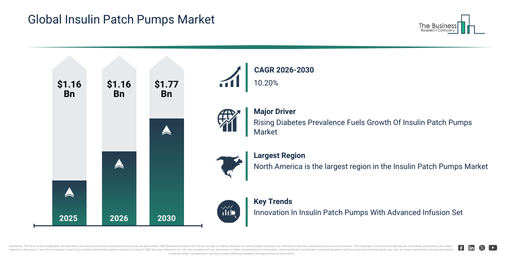
    The insulin patch pumps market is poised for substantial growth over the coming years. It is projected to expand to a value of $2.55 billion by 2030, demonstrating a compound annual growth rate of 10.2%. This growth within the forecast period can be attributed to the increasing adoption of closed-loop insulin delivery systems, rising investments in digital diabetes care, the expansion of personalized insulin therapy solutions, growing demand for remote glucose monitoring, and advancements in miniaturized pump technologies. Significant trends during this period include the increasing uptake of tubeless patch pump systems, a rising demand for connected and smart insulin pumps, the growing integration of continuous glucose monitoring, the expansion of automated insulin delivery technologies, and an enhanced focus on discreet and wearable designs.

    Get A Free Sample Report With In-Depth Market Insights:

    https://thebusinessresearchcompany.com/sample_request?id=21992445&type=smp&name=Insulin%20Patch%20Pumps%20Market%20Report%202026&utm_source=Blogs&utm_medium=Paid&utm_campaign=Oct_PR

    Insulin Patch Pumps Market Growth Momentum: What Factors Are Shaping Demand?

    The escalating global incidence of diabetes is anticipated to fuel the expansion of the insulin patch pumps market during the forecast period. This widespread ailment, stemming from diverse lifestyle and dietary factors, necessitates effective management solutions. Insulin patch pumps provide a convenient method for direct insulin delivery, with many individuals living with diabetes preferring them over conventional injections. The increasing prevalence of diabetes, therefore, stimulates the demand for insulin patch pumps. For instance, in March 2024, data from the Office for Health Improvement & Disparities, a UK-based government department, revealed notable progress between March 2022 and March 2023. The percentage of individuals with type 1 diabetes receiving all eight recommended care processes increased by 22%, and for type 2 diabetes, it rose by 21%. Concurrently, the percentage achieving target HbA1c levels reached 37.9%, which was the highest value ever reported by the National Diabetes Audit (NDA). Consequently, the growing global prevalence of diabetes is poised to drive the growth of the insulin patch pumps market.

    Insulin Patch Pumps Market Breakdown By Product Type And Application

    The insulin patch pumps market covered in this report is segmented –

    1) By Type: Reusable Insulin Patch Pumps, Fully Disposable Insulin Patch Pumps, Smart Or Connected Insulin Patch Pumps, Automated Insulin Patch Pumps

    2) By Mode: Basal, Bolus

    3) By Application: Type 1 Diabetes, Type 2 Diabetes

    Subsegments:

    1) By Reusable Insulin Patch Pumps: Reusable Controller with Disposable Patch Modules, Reusable Controller with Replaceable Insulin Reservoirs, Hybrid Reusable Patch Pump Systems

    2) By Fully Disposable Insulin Patch Pumps: Pre-Filled Disposable Insulin Patch Pumps, Refillable Disposable Insulin Patch Pumps, Short-Wear Disposable Patch Pumps (24–72 hours)

    3) By Smart or Connected Insulin Patch Pumps: Bluetooth-Enabled Insulin Patch Pumps, Mobile App-Integrated Patch Pumps, Cloud-Connected Insulin Patch Pumps

    4) By Automated Insulin Patch Pumps: Hybrid Closed-Loop Insulin Patch Pumps, Fully Closed-Loop (Autonomous) Insulin Patch Pumps, CGM-Integrated Automated Patch Pumps

    Insulin Patch Pumps Market Trends Redefining Industry Growth

    Leading companies in the insulin patch pump sector are concentrating on developing novel products, such as the Infusion Set for Insulin Pumps, to offer dependable services to consumers. The Infusion Set for Insulin Pumps functions as an insulin patch pump, engineered for up to 7 days of wear for the subcutaneous delivery of insulin. For example, in September 2024, Embecta, a U.S.-based diabetes care firm, obtained FDA 510(k) clearance for its inaugural insulin patch pump, which includes a 300-unit insulin reservoir and is designed for up to 3 days of wear. This product introduction signifies a considerable advancement in insulin delivery by providing a flexible, convenient option for individuals with diabetes, integrating patch-pump technology with a potentially reduced device burden.

    Insulin Patch Pumps Market Competitive Landscape: Who Leads The Industry?

    Major companies operating in the insulin patch pumps market are Insulet Corporation, Medtronic PLC, Tandem Diabetes Care Inc., Ypsomed Holding AG, AMF Medical SA, Cequr SA, Debiotech SA, Bigfoot Biomedical Inc., Valeritas Inc., Cellnovo Group SA, Medella Health Ltd., ViCentra B.V., SFC Fluidics Inc., Pancreum Inc., Beta Bionics Inc., Embecta Corp., SOOIL Development Co. Ltd., EOFLOW Co. Ltd., 3S Corporation, Apex Medical Devices

    View The Full Insulin Patch Pumps Market Report:

    https://thebusinessresearchcompany.com/report/insulin-patch-pumps-global-market-report?utm_source=Blogs&utm_medium=Paid&utm_campaign=Oct_PR

    Insulin Patch Pumps Market Geographic Landscape: Which Region Leads Industry Growth?

    North America was the largest region in the insulin patch pumps market in 2025. Asia-Pacific is expected to be the fastest-growing region in the forecast period. The regions covered in the insulin patch pumps market report are Asia-Pacific, South East Asia, Western Europe, Eastern Europe, North America, South America, Middle East, Africa.

    Reach Out To Our Team:

    The Business Research Company: https://www.thebusinessresearchcompany.com/

    Americas: +1 310-496-7795

    Asia: +44 7882 955267 & +91 8897263534

    Europe: +44 7882 955267

    Email us at: marketing@tbrc.info

    Follow us on:

    LinkedIn: https://in.linkedin.com/company/the-business-research-company

    YouTube: https://www.youtube.com/channel/UC24_fI0rV8cR5DxlCpgmyFQ

    Global Market Model: https://www.thebusinessresearchcompany.com/global-market-model
  • Insulin Delivery Devices Market Expected To Grow At 8% CAGR Through 2030: What Businesses Need To Know

    Insulin Delivery Devices Market Expected To Grow At 8% CAGR Through 2030: What Businesses Need To Know

    Backed by market attractiveness analysis, total addressable market sizing, company benchmarking matrices, interactive Excel dashboards, wider supply chain intelligence, emerging startup coverage, and detailed product-level insights, The Business Research Company’s 2026 market reports are designed to offer research that is more actionable and strategically valuable than ever.

    Insulin Delivery Devices Market Value Growth And Long-Term Outlook

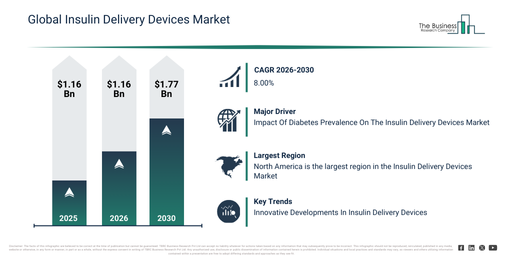
    The market size for insulin delivery devices has demonstrated substantial growth over recent years. It is forecast to grow from $19.07 billion in 2025 to $20.61 billion in 2026, achieving a compound annual growth rate (CAGR) of 8.1%. Historically, this expansion has been driven by the rising prevalence of diabetes, growing awareness of diabetes management, increased availability of insulin therapies, expansion of healthcare access, and a rising adoption of self-injection practices.

    The insulin delivery devices market is anticipated to experience robust expansion over the coming years. This sector is projected to reach a valuation of $28.03 billion by 2030, demonstrating an 8.0% compound annual growth rate (CAGR). The primary drivers for this growth during the forecast period include the expanding global diabetic population, a heightened need for convenient methods of insulin delivery, increased emphasis on long-term diabetes management, broader access to diabetes care in developing regions, and the growing integration of home healthcare solutions. Key developments expected during this period involve a greater shift towards insulin pens compared to conventional syringes, a surge in demand for insulin pumps offering continuous delivery, an increasing preference for intuitive and portable insulin devices, the broadening of home-based diabetes management options, and an escalated use of disposable and pre-filled insulin delivery solutions.

    Get A Free Sample Report With In-Depth Market Insights:

    https://thebusinessresearchcompany.com/sample_request?id=74999484&type=smp&name=Insulin%20Delivery%20Devices%20Market%20Report%202026&utm_source=Blogs&utm_medium=Paid&utm_campaign=Oct_PR

    Insulin Delivery Devices Market Expansion Drivers: What’s Shaping Future Growth?

    The increasing incidence of diabetes is projected to drive the expansion of the insulin delivery devices market in the future. Diabetes is defined as a chronic condition characterized by elevated blood sugar levels, stemming from either inadequate insulin production by the pancreas or the body’s inability to effectively use insulin. The rise in diabetes rates globally is primarily due to factors such as sedentary lifestyles, unhealthy diets, and escalating obesity rates. Insulin delivery devices are essential for individuals with diabetes to efficiently manage their blood sugar levels by administering insulin in a controlled and convenient manner, thus preventing complications and promoting health. For instance, according to the International Diabetes Federation, a Belgium-based non-governmental organization, in 2024, approximately 589 million adults aged 20–79 are living with diabetes worldwide. This figure is projected to increase to 853 million by 2050. Consequently, the expanding prevalence of diabetes is a significant driver for the growth of the insulin delivery devices market.

    Insulin Delivery Devices Market Segment Analysis And Revenue Potential

    The insulin delivery devices market covered in this report is segmented –

    1) By Type: Insulin Syringes, Insulin Jet Injectors, Pen Needles, Reusable Insulin Pens, Disposable Insulin Pens

    2) By Disease Indication: Type 1, Type 2

    3) By Distribution Channels: Hospital Pharmacies, Retail Pharmacies, Online Sales, Diabetes Clinics Or Centers

    Subsegments:

    1) By Insulin Syringes: Standard Insulin Syringes, Insulin Syringes With Fixed Or Adjustable Needle Length

    2) By Insulin Jet Injectors: Needle-Free Insulin Jet Injectors, High-Pressure Insulin Jet Injectors

    3) By Pen Needles: Short Pen Needles, Long Pen Needles

    4) By Reusable Insulin Pens: Reusable Pens With Replaceable Cartridges, Refillable Insulin Pens

    5) By Disposable Insulin Pens: Single-Use Disposable Insulin Pens, Pre-Filled Disposable Insulin Pens

    Insulin Delivery Devices Market Strategic Trends: What Defines The Next Growth Phase?

    Leading companies in the insulin delivery devices sector are actively developing innovative products, such as insulin pumps, designed to offer continuous or customizable insulin administration. Insulin pumps are programmable medical devices that deliver insulin either continuously or as required through a catheter placed beneath the skin. For instance, in May 2023, Beta Bionics, a US-based medical technology firm, announced that its iLet ACE Pump and iLet Dosing Decision Software received U.S. Food and Drug Administration approval. The iLet Bionic Pancreas system is engineered for individuals aged six and older diagnosed with type 1 diabetes, merging two devices with a compatible FDA-cleared integrated continuous glucose monitor (iCGM). It operates using an automated insulin dosing (AID) system, driven by an adaptive closed-loop algorithm, which initially only requires the user’s body weight for setup, thereby eliminating the need for additional insulin dosing parameters. Unlike traditional pump therapy, this system necessitates no manual adjustment of settings, which simplifies its initiation and management. The iLet device also features a meal announcement capability that streamlines mealtime insulin dosing by classifying meals as small, medium, or large, with the underlying algorithm learning and adapting to individual insulin requirements over time.

    Insulin Delivery Devices Market Company Landscape And Competitive Strategy

    Major companies operating in the insulin delivery devices market are Novo Nordisk A/S, Medtronic Plc, Insulet Corporation, Tandem Diabetes Care Inc., Ypsomed Holding AG, Becton Dickinson and Company, Sanofi SA, Eli Lilly and Company, Abbott Laboratories, EOFlow Co. Ltd., Beta Bionics Inc., Bigfoot Biomedical Inc., CeQur Corporation, Emperra GmbH, Debiotech SA, AMF Medical SA, Aerami Therapeutics Inc., Andain Inc., Apex Medical Devices, Animas Corporation

    View The Full Insulin Delivery Devices Market Report:

    https://thebusinessresearchcompany.com/report/insulin-delivery-devices-global-market-report?utm_source=Blogs&utm_medium=Paid&utm_campaign=Oct_PR

    Insulin Delivery Devices Market Largest Region: Which Geography Holds The Biggest Share?

    North America was the largest region in the insulin delivery devices market in 2025. Asia-Pacific is expected to be the fastest-growing region in the forecast period. The regions covered in the insulin delivery devices market report are Asia-Pacific, South East Asia, Western Europe, Eastern Europe, North America, South America, Middle East, Africa.

    Reach Out To Our Team:

    The Business Research Company: https://www.thebusinessresearchcompany.com/

    Americas: +1 310-496-7795

    Asia: +44 7882 955267 & +91 8897263534

    Europe: +44 7882 955267

    Email us at: marketing@tbrc.info

    Follow us on:

    LinkedIn: https://in.linkedin.com/company/the-business-research-company

    YouTube: https://www.youtube.com/channel/UC24_fI0rV8cR5DxlCpgmyFQ

    Global Market Model: https://www.thebusinessresearchcompany.com/global-market-model
  • Insufflation Devices Market Forecast To Reach $4.16 Billion By 2030: Key Trends Explained

    Insufflation Devices Market Forecast To Reach $4.16 Billion By 2030: Key Trends Explained

    Featuring market attractiveness scoring, total addressable market sizing, company benchmarking matrices, interactive Excel dashboards, deeper supply chain intelligence, emerging startup tracking, and granular product-level insights, The Business Research Company’s 2026 market reports are built to deliver research that is both more actionable and more strategically valuable.

    Insufflation Devices Market Poised To Hit $4.16 Billion By 2030 With A 7.3% CAGR

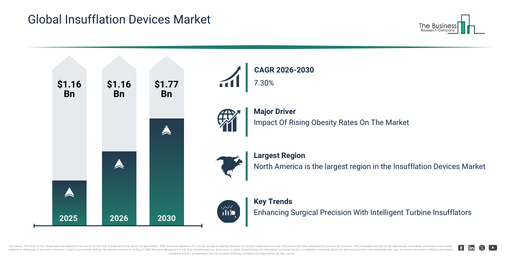
    The insufflation devices market has experienced substantial growth in recent years. Forecasts indicate its size will increase from $2.93 billion in 2025 to $3.14 billion by 2026, achieving a compound annual growth rate (CAGR) of 7.4%. This historical expansion can be primarily ascribed to factors like the escalating volume of laparoscopic surgeries, the rise in bariatric and cardiac procedures, the growing acceptance of minimally invasive techniques, the expansion of surgical infrastructure, and the wider availability of advanced surgical devices.

    The insufflation devices market is projected to experience substantial expansion in the coming years. This market is predicted to reach $4.16 billion in 2030, exhibiting a compound annual growth rate (CAGR) of 7.3%. This anticipated growth during the projection period stems from several factors, including a heightened demand for precise surgical tools, a greater emphasis on improving patient recovery, the proliferation of outpatient surgical facilities, a growing inclination towards disposable devices, and the increasing incorporation of digital surgical platforms. Key trends anticipated over this forecast period encompass the increased utilization of electronic insufflation systems, the rising uptake of disposable insufflation devices, the expanding integration of pressure and flow monitoring capabilities, the wider application of minimally invasive surgical techniques, and an elevated focus on the accuracy and safety of these devices.

    Get A Free Sample Report With In-Depth Market Insights:

    https://thebusinessresearchcompany.com/sample_request?id=60557996&type=smp&name=Insufflation%20Devices%20Market%20Report%202026&utm_source=Blogs&utm_medium=Paid&utm_campaign=Oct_PR

    Insufflation Devices Market Development Factors: What’s Supporting Demand?

    The insufflation devices market is anticipated to expand due to the increasing prevalence of obesity. Obesity rates denote the proportion of individuals within a population considered obese, generally identified by a body mass index (BMI) of 30 or higher. This surge in obesity is primarily attributed to factors such as unhealthy eating habits, insufficient physical activity, greater intake of processed foods, and inactive lifestyles. In obesity treatments, insufflation devices play a crucial role by inflating the abdominal cavity during procedures like bariatric surgery, thereby improving visibility and surgical access. For example, the World Heart Foundation, a global cardiovascular community based in Switzerland, reported in March 2023 that around 2.3 billion adults and children globally are either obese or overweight, a figure expected to climb to 2.7 billion by 2025 if current trends persist. Consequently, the increasing rates of obesity are a significant driver for the growth of the insufflation devices market. The expansion of healthcare facilities and systems is anticipated to drive the growth of the insufflation devices market. Healthcare infrastructure encompasses the physical, technological, and organizational assets essential for the efficient provision of medical services, such as hospitals, clinics, diagnostic centers, medical equipment, and health IT systems. This expansion is fueled by an increasing global population, a rising incidence of chronic diseases, and governmental efforts to enhance healthcare accessibility, all of which mandate the creation of new facilities and the upgrading of existing ones. For instance, the Office for National Statistics, a UK government department, reported in May 2023 that UK healthcare spending saw a 5.6% rise between 2022 and 2023, a significant increase compared to the 0.9% growth observed in 2022. The total UK healthcare expenditure reached approximately $317.63 billion (£292 billion) in 2023. Consequently, the ongoing development of healthcare infrastructure is a key factor propelling the insufflation devices market forward.

    Insufflation Devices Market Segmentation And Category Overview

    The insufflation devices market covered in this report is segmented –

    1) By Type: Disposable, Reusable

    2) By Application: Laparoscopic Surgery, Bariatric Surgery, Cardiac Surgery

    3) By End-Use: Hospitals, Clinics, Ambulatory Surgical Centers

    Subsegments:

    1) By Disposable: Single-Use Insufflation Devices, Disposable Insufflation Tubes

    2) By Reusable: Reusable Insufflation Devices (Manual Or Electronic), Reusable Insufflation Tubes

    Insufflation Devices Market Transformation Trends: What Innovations Are Driving Change?

    Companies operating in the insufflation devices market are prioritizing the creation of innovative products, such as intelligent turbine insufflators, aiming to enhance precision, minimize complications during surgery, and improve patient recovery in minimally invasive procedures. An intelligent turbine insufflator is a medical instrument designed to deliver controlled, high-pressure airflow for insufflation during minimally invasive operations, equipped with advanced capabilities for accuracy and safety. For example, in October 2024, Politecnico di Milano, an Italy-based university, joined forces with Erasmus Medical Center, a Netherlands-based medical center, to engineer insufflators that elevate surgical procedures by generating a temporary cavity inside the body using pressurized gas. This development overcomes existing insufflator limitations by continuously modifying pressure based on the patient’s tissue and breathing patterns. The patented intelligent turbine insufflation not only improves surgical conditions but also patient outcomes, by reducing the requirement for large incisions and enabling more precise control throughout the surgery.

    Insufflation Devices Market Key Players Shaping Industry Direction

    Major companies operating in the insufflation devices market are Cardinal Health Inc., Johnson & Johnson, Medtronic plc, Fujifilm Holdings Corporation, Becton Dickinson and Company, Stryker Corporation, Olympus Corporation, Hoya Corporation, Smith & Nephew PLC, Mindray Medical International Limited, STERIS Corporation, CooperSurgical Inc., Teleflex Incorporated, Karl Storz SE & Co. KG, ConMed Corporation, Applied Medical Resources Corporation, Richard Wolf GmbH, B. Braun Melsungen AG, Pennine Healthcare Limited, Micro-Tech Endoscopy Co. Ltd.

    View The Full Insufflation Devices Market Report:

    https://thebusinessresearchcompany.com/report/insufflation-devices-global-market-report?utm_source=Blogs&utm_medium=Paid&utm_campaign=Oct_PR

    Insufflation Devices Market Regional Analysis: Which Geography Leads On Revenue?

    North America is the largest region in the insufflation devices market in 2025. Asia-Pacific is expected to be the fastest-growing region in the forecast period. The regions covered in the insufflation devices market report are Asia-Pacific, South East Asia, Western Europe, Eastern Europe, North America, South America, Middle East, Africa.

    Reach Out To Our Team:

    The Business Research Company: https://www.thebusinessresearchcompany.com/

    Americas: +1 310-496-7795

    Asia: +44 7882 955267 & +91 8897263534

    Europe: +44 7882 955267

    Email us at: marketing@tbrc.info

    Follow us on:

    LinkedIn: https://in.linkedin.com/company/the-business-research-company

    YouTube: https://www.youtube.com/channel/UC24_fI0rV8cR5DxlCpgmyFQ

    Global Market Model: https://www.thebusinessresearchcompany.com/global-market-model
  • Wellness And Preventive Healthcare Market Forecast 2026: Market Size, Competitive Landscape And Growth Drivers

    Wellness And Preventive Healthcare Market Forecast 2026: Market Size, Competitive Landscape And Growth Drivers

    Featuring market attractiveness scoring, total addressable market sizing, company benchmarking matrices, interactive Excel dashboards, deeper supply chain intelligence, emerging startup tracking, and granular product-level insights, The Business Research Company’s 2026 market reports are built to deliver research that is both more actionable and more strategically valuable.

    Wellness And Preventive Healthcare Market Growth Potential: How Will Market Size Shift Through 2030?

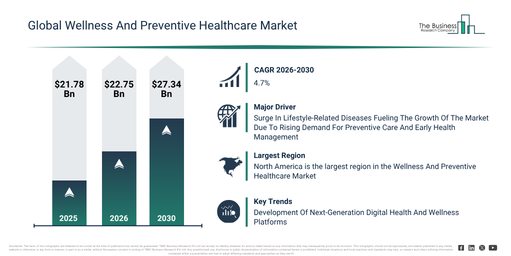
    The wellness and preventive healthcare market has experienced consistent expansion in recent years. It is anticipated to grow from $21.78 billion in 2025 to $22.75 billion in 2026, demonstrating a compound annual growth rate (CAGR) of 4.5%. The historical growth of this market can be ascribed to an increase in awareness concerning preventive healthcare, the rising adoption of health screening programs, a growing occurrence of chronic diseases, the spread of wellness and fitness culture, and the enhancement of healthcare infrastructure and diagnostic facilities.

    The wellness and preventive healthcare market is projected to experience consistent expansion over the upcoming years. Its value is anticipated to reach $27.34 billion by 2030, exhibiting a compound annual growth rate (CAGR) of 4.7%. This expansion during the projection period stems from various factors, such as the increasing desire for personalized health solutions and diagnostics based on genomics, the wider uptake of AI-powered health monitoring, the deeper integration of wellness applications with wearable technology, the spread of hybrid care models, and a greater emphasis on health data analytics and proactive health management. Key developments expected during this timeframe involve the rising usage of wearable health devices, the growing demand for online wellness platforms, the enhanced integration of lifestyle management programs, the broader availability of preventive diagnostic services, and an increased focus on corporate wellness programs.

    Get A Free Sample Report With In-Depth Market Insights:

    https://thebusinessresearchcompany.com/sample_request?id=72419950&type=smp&name=Wellness%20And%20Preventive%20Healthcare%20Market%20Report%202026&utm_source=Blogs&utm_medium=Paid&utm_campaign=Oct_PR

    Wellness And Preventive Healthcare Market Industry Drivers: What’s Behind The Revenue Growth?

    The increasing occurrence of lifestyle-related conditions such as diabetes and obesity is anticipated to fuel the expansion of the wellness and preventive healthcare market moving ahead. These conditions, encompassing diabetes and obesity, are persistent health issues predominantly linked to poor nutritional habits, a lack of physical activity, and prolonged behavioral patterns that negatively impact metabolic well-being and elevate the chances of complications like cardiovascular diseases. The proliferation of such ailments is significantly influenced by inactive lifestyles and inadequate eating patterns, especially in developed nations, thereby boosting the need for preventive health measures. To meet this requirement, the wellness and preventive healthcare sector provides services such as early health assessments, tailored dietary advice, exercise management schemes, and monitoring for chronic disease risks, empowering people to avert or proficiently handle these conditions. As an illustration, in September 2024, data from the Centers for Disease Control and Prevention (CDC), a U.S.-based federal public health agency, showed that 23 U.S. states had adult obesity prevalence rates of 35% or higher in 2023, underscoring the increasing impact of lifestyle-related illnesses. Consequently, the escalating occurrence of lifestyle-related diseases like diabetes and obesity is propelling the expansion of the wellness and preventive healthcare market.

    Wellness And Preventive Healthcare Market Segment Landscape And Growth Outlook

    The wellness and preventive healthcare market covered in this report is segmented –

    1) By Type: Health Screening, Preventive Diagnostics, Lifestyle Management, Wellness Apps, Wearables

    2) By Delivery Mode: Online Wellness Platforms, Offline Healthcare Centers, Hybrid Care Models

    3) By Age Group: Children And Adolescents, Adults, Geriatric Population

    4) By End User: Individuals, Corporate Organizations, Healthcare Providers, Insurance Companies

    Subsegments:

    1) By Health Screening: Blood Pressure Screening, Cholesterol And Lipid Screening, Cancer Screening, Diabetes Screening, Body Mass Index Assessment

    2) By Preventive Diagnostics: Genetic Risk Assessment, Immunization And Vaccination Testing, Cardiovascular Risk Diagnostics, Bone Density Testing, Hormonal Level Assessment

    3) By Lifestyle Management: Nutrition And Diet Counseling, Physical Activity Monitoring, Stress Management Programs, Sleep Pattern Monitoring, Behavioral Coaching Programs

    4) By Wellness Apps: Meditation And Mindfulness Applications, Nutrition Tracking Applications, Fitness Tracking Applications, Sleep Tracking Applications, Chronic Condition Management Applications

    5) By Wearables: Smart Watches With Health Sensors, Fitness Bands With Heart Rate Monitoring, Glucose Monitoring Devices, Sleep Tracking Devices, Activity And Step Tracking Devices

    #Wellness And Preventive Healthcare Market Growth Trends: What’s Shaping The Future Outlook?

    Major companies within the wellness and preventive healthcare sector are concentrating on creating integrated digital health solutions, including AI-driven personalized programs for managing obesity. These solutions are designed to support long-term weight management, enhance the prevention of chronic diseases, and deliver comprehensive patient care. Such programs integrate telehealth services, clinical support, and behavioral interventions to address both the physiological and lifestyle factors associated with weight management. For example, in May 2023, Noom, Inc., a U.S.-based provider of digital health platforms, launched Noom Med. This initiative offers a comprehensive obesity care program that combines telehealth services with personalized psychological tools. The program connects patients with clinicians and health coaches to deliver tailored treatment plans, incorporating medical evaluation, support for behavior change, and prescription-based interventions where appropriate, thereby promoting sustainable weight management and improved health outcomes.

    Wellness And Preventive Healthcare Market Competitive Landscape: Who Leads The Industry?

    Major companies operating in the wellness and preventive healthcare market are Cardinal Health Technologies LLC, Nestlé S.A., Johnson & Johnson, Merck & Co. Inc., Pfizer Inc., Bayer AG, Sanofi S.A., Novartis AG, AstraZeneca PLC, Thermo Fisher Scientific Inc., Abbott Laboratories Inc., Eli Lilly and Company, Medtronic PLC, Danone Corporation, Takeda Pharmaceutical Company, Amgen Inc., Siemens Healthineers AG, Philips Healthcare Inc., GE Healthcare Technologies Inc., Teva Pharmaceutical Industries, Baxter International, Biogen Inc., Herbalife Nutrition, Illumina Inc., Amway Inc.

    View The Full Wellness And Preventive Healthcare Market Report:

    https://thebusinessresearchcompany.com/report/wellness-and-preventive-healthcare-market-report?utm_source=Blogs&utm_medium=Paid&utm_campaign=Oct_PR

    Wellness And Preventive Healthcare Market Geographic Landscape: Which Region Dominates Industry Growth?

    North America was the largest region in the wellness and preventive healthcare market in 2025. Asia-Pacific is expected to be the fastest-growing region in the forecast period. The regions covered in the wellness and preventive healthcare market report are Asia-Pacific, South East Asia, Western Europe, Eastern Europe, North America, South America, Middle East, Africa.

    Reach Out To Our Team:

    The Business Research Company: https://www.thebusinessresearchcompany.com/

    Americas: +1 310-496-7795

    Asia: +44 7882 955267 & +91 8897263534

    Europe: +44 7882 955267

    Email us at: marketing@tbrc.info

    Follow us on:

    LinkedIn: https://in.linkedin.com/company/the-business-research-company

    YouTube: https://www.youtube.com/channel/UC24_fI0rV8cR5DxlCpgmyFQ

    Global Market Model: https://www.thebusinessresearchcompany.com/global-market-model
  • Throat Soothing Hard Candy Market Analysis: How The Industry Is Evolving Toward A $6.42 Billion Future

    Throat Soothing Hard Candy Market Analysis: How The Industry Is Evolving Toward A $6.42 Billion Future

    Backed by market attractiveness analysis, total addressable market sizing, company benchmarking matrices, interactive Excel dashboards, wider supply chain intelligence, emerging startup coverage, and detailed product-level insights, The Business Research Company’s 2026 market reports are designed to offer research that is more actionable and strategically valuable than ever.

    Throat Soothing Hard Candy Market Set To Climb From $5.09 Billion In 2026 To $6.42 Billion By 2030

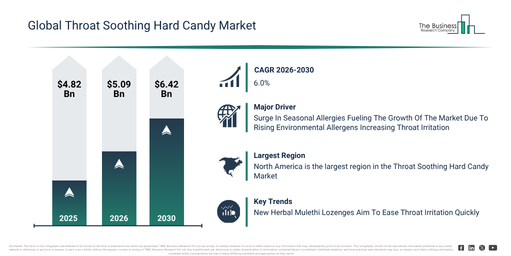
    The throat soothing hard candy market has demonstrated robust expansion over recent years. It is anticipated to increase from $4.82 billion in 2025 to $5.09 billion in 2026, registering a compound annual growth rate (CAGR) of 5.7%. This historic period’s growth can be linked to a rise in throat infections and irritation cases, greater understanding of natural remedies, the escalating preference for menthol-infused products, the expansion of retail pharmacy networks, and the incorporation of traditional herbal ingredients into candies.

    The throat soothing hard candy market is anticipated to experience substantial expansion over the upcoming years. It is forecast to reach $6.42 billion by 2030, exhibiting a compound annual growth rate (CAGR) of 6.0%. This expansion during the forecast period is attributable to several factors, including an increasing demand for functional and immunity-enhancing candies, a growing preference for organic and natural sweetening agents, the widening of online and direct-to-consumer sales channels, an increased emphasis on wellness for both children and adults, and the incorporation of novel formulations and diverse flavor profiles. Key trends anticipated during the same period encompass a heightened demand for herbal and natural components, the increasing use of sugar-free options, the rising appeal of honey-infused soothing candies, the expansion of online and e-commerce distribution platforms, and a growing emphasis on products aimed at both children and adults.

    Get A Free Sample Report With In-Depth Market Insights:

    https://thebusinessresearchcompany.com/sample_request?id=64052456&type=smp&name=Throat%20Soothing%20Hard%20Candy%20Market%20Report%202026&utm_source=Blogs&utm_medium=Paid&utm_campaign=Oct_PR

    Throat Soothing Hard Candy Market Demand Drivers: What’s Powering Industry Growth?

    The rising occurrence of seasonal allergies is anticipated to drive the expansion of the throat soothing hard candy market in the future. These allergies are allergic responses caused by environmental irritants like pollen, mold spores, and airborne particles, typically manifesting at specific times of the year and often leading to throat irritation, coughing, and dryness. The increase in seasonal allergies is primarily due to elevated pollen levels, growing air pollution, and evolving climate conditions, which prolong allergy seasons and heighten exposure to allergens. Throat soothing hard candy provides relief for symptoms linked to seasonal allergies through accessible over-the-counter products containing ingredients such as menthol, honey, and herbal extracts that alleviate throat irritation and dryness. For example, in January 2026, the Centers for Disease Control and Prevention (CDC) reported that 31.7% of US adults had a diagnosed allergic condition, including seasonal allergies, eczema, or food allergies. Consequently, the increasing incidence of seasonal allergies is fostering the growth of the throat soothing hard candy market.

    Throat Soothing Hard Candy Market Segment Landscape And Growth Outlook

    The throat soothing hard candy market covered in this report is segmented –

    1) By Product Type: Herbal Throat Soothing Hard Candy, Menthol Throat Soothing Hard Candy, Honey-Based Throat Soothing Hard Candy, Other Product Types

    2) By Formulation: Sugar-Based, Sugar-Free

    3) By Distribution Channel: Supermarkets And Hypermarkets, Pharmacies, Online Stores, Convenience Stores, Other Distribution Channels

    4) By End-User: Adults, Children

    Subsegments:

    1) By Herbal Throat Soothing Hard Candy: Tulsi Based Hard Candy, Ginger Extract Hard Candy, Licorice Root Hard Candy, Eucalyptus Herbal Hard Candy

    2) By Menthol Throat Soothing Hard Candy: Strong Menthol Hard Candy, Cooling Mint Hard Candy, Extra Strength Menthol Candy, Sugar Free Menthol Candy

    3) By Honey-Based Throat Soothing Hard Candy: Pure Honey Hard Candy, Honey Lemon Hard Candy, Honey Ginger Hard Candy, Organic Honey Hard Candy

    4) By Other Product Types: Vitamin Enriched Hard Candy, Propolis Infused Hard Candy, Herbal Blend Hard Candy, Fruit Infused Hard Candy

    Throat Soothing Hard Candy Market Innovation Trends: What Developments Are Reshaping The Industry?

    Major companies in the throat soothing hard candy market are focusing on developing natural ingredient-based formulations, such as herbal flavor infusions. These are designed to enhance throat comfort, reduce irritation, and offer relief from soreness and dryness. Herbal flavor infusions denote throat candy formulations that include natural ingredients like mulethi (licorice), honey, or menthol, traditionally recognized for their soothing and anti-inflammatory attributes that help alleviate throat irritation and ease coughing. For instance, in March 2026, Cofsils, an India-based confectionery and healthcare brand, broadened its throat lozenge variety with a new Mulethi flavor, specifically intended to provide quick relief for sore throats. This product, developed to assist consumers experiencing seasonal allergies, cold symptoms, or throat discomfort, merges traditional herbal ingredients with modern confectionery technology to deliver soothing relief, a pleasant taste, and improved overall oral comfort.

    Throat Soothing Hard Candy Market Leading Companies And Competitive Benchmarking

    Major companies operating in the throat soothing hard candy market are Procter & Gamble Co., GlaxoSmithKline plc, Mondelez International, Inc., Reckitt Benckiser Group plc, Cipla Limited, Dabur India Ltd., Prestige Consumer Healthcare Inc., Ricola AG, Himalaya Wellness Company, Bliss GVS Pharma Ltd., Gelnova Laboratories Pvt. Ltd., Healing Pharma India Pvt. Ltd., Multani Pharmaceuticals Pvt. Ltd., Biovencer Healthcare Pvt. Ltd., Zinda Tilismath, Doetsch Grether AG, Ernest Jackson & Co., Lofthouse of Fleetwood Ltd, Nin Jiom Medicine Manufactory Ltd, Throat Discs Ltd.

    View The Full Throat Soothing Hard Candy Market Report:

    https://thebusinessresearchcompany.com/report/throat-soothing-hard-candy-market-report?utm_source=Blogs&utm_medium=Paid&utm_campaign=Oct_PR

    Throat Soothing Hard Candy Market Largest Region By Revenue And Market Share

    North America was the largest region in the throat soothing hard candy market in 2025. Asia-Pacific is expected to be the fastest-growing region in the forecast period. The regions covered in the throat soothing hard candy market report are Asia-Pacific, South East Asia, Western Europe, Eastern Europe, North America, South America, Middle East, Africa.

    Reach Out To Our Team:

    The Business Research Company: https://www.thebusinessresearchcompany.com/

    Americas: +1 310-496-7795

    Asia: +44 7882 955267 & +91 8897263534

    Europe: +44 7882 955267

    Email us at: marketing@tbrc.info

    Follow us on:

    LinkedIn: https://in.linkedin.com/company/the-business-research-company

    YouTube: https://www.youtube.com/channel/UC24_fI0rV8cR5DxlCpgmyFQ

    Global Market Model: https://www.thebusinessresearchcompany.com/global-market-model
  • Thermoformed Medical Packaging Market Outlook Through 2030: Understanding The Growth Opportunity

    Thermoformed Medical Packaging Market Outlook Through 2030: Understanding The Growth Opportunity

    Featuring market attractiveness scoring, total addressable market sizing, company benchmarking matrices, interactive Excel dashboards, deeper supply chain intelligence, emerging startup tracking, and granular product-level insights, The Business Research Company’s 2026 market reports are built to deliver research that is both more actionable and more strategically valuable.

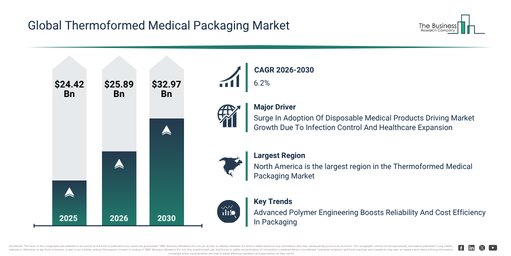
    Thermoformed Medical Packaging Market Forecast: Value Set To Climb From $25.89 Billion To $32.97 Billion

    The thermoformed medical packaging market has experienced significant growth in recent years. It is projected to expand from $24.42 billion in 2025 to $25.89 billion in 2026, demonstrating a compound annual growth rate (CAGR) of 6.0%. The historical expansion of this market can be attributed to factors like the increasing production of pharmaceuticals, rising usage of medical devices, enhanced regulatory compliance for packaging, the adoption of PETG and APET materials, and the overall expansion of healthcare infrastructure.

    The thermoformed medical packaging market size is projected to exhibit robust growth in the upcoming years, with an expectation to reach $32.97 billion by 2030, maintaining a compound annual growth rate (CAGR) of 6.2%. This expansion during the forecast period is attributable to an increased demand for personalized medical packaging, the growing adoption of biodegradable and sustainable materials, the rising integration of automation into thermoforming processes, the widening scope of sterile packaging for vaccines and injectables, and an escalating requirement for packaging traceability and serialization. Significant trends anticipated in this period include an increasing demand for sterile and tamper-proof packaging, the rising popularity of custom thermoformed trays and clamshells, the expanded use of high-barrier materials for pharmaceutical protection, the proliferation of single-use medical packaging solutions, and a heightened focus on cost-effective packaging for drug delivery.

    Get A Free Sample Report With In-Depth Market Insights:

    https://thebusinessresearchcompany.com/sample_request?id=34086465&type=smp&name=Thermoformed%20Medical%20Packaging%20Market%20Report%202026&utm_source=Blogs&utm_medium=Paid&utm_campaign=Oct_PR

    Thermoformed Medical Packaging Market Growth Drivers: What’s Behind The Acceleration?

    The increasing adoption of disposable medical products is anticipated to propel the expansion of the thermoformed medical packaging market in the coming period. Disposable medical products are defined as single-use medical items, including syringes, catheters, surgical trays, surgical gowns, diagnostic kits, and protective equipment, specifically designed for one-time use before being discarded to prevent contamination and infection. The increasing embrace of disposable medical products is attributed to rising concerns about infection control, as these items are crucial in preventing cross-contamination and enhancing patient safety. Thermoformed medical packaging significantly improves disposable medical products by providing sterile, durable, and precisely molded protective solutions, which guarantee safety, extend shelf life, and maintain product integrity during both storage and transportation. For example, in February 2026, data from the Government Commercial Function, a UK-based government agency, indicates that clinical teams at Barts Health NHS Trust are projected to use approximately 400,000 gowns annually across their theaters. Consequently, the increasing adoption of disposable medical products is a key driver for the growth of the thermoformed medical packaging market.

    Thermoformed Medical Packaging Market Breakdown By Product Type And Application

    The thermoformed medical packaging market covered in this report is segmented –

    1) By Product Type: Blister Packs, Trays And Lids, Clamshells, Vials And Ampoules

    2) By Material: Polyethylene Terephthalate Glycol (PETG), Amorphous Polyethylene Terephthalate (APET), Polypropylene (PP), Polystyrene (PS), Polyvinyl Chloride (PVC), Other Materials

    3) By Application: Medical Devices And Instruments, Pharmaceuticals And Drug Delivery, Implants And Prosthetics, Surgical And Wound Care Products, Other Applications

    4) By End-User: Pharmaceutical And Biotechnology Companies, Medical Device Manufacturers

    Subsegments:

    1) By Blister Packs: Pharmaceutical Tablets, Capsules, Medical Devices, Nutraceuticals

    2) By Trays And Lids: Surgical Trays, Diagnostic Trays, Instrument Trays, Sample Collection Trays

    3) By Clamshells: Medical Device Packaging, Surgical Instrument Packaging, Diagnostic Kit Packaging, Laboratory Equipment Packaging

    4) By Vials And Ampoules: Injectable Medicines, Vaccines, Blood Collection, Laboratory Reagents

    Thermoformed Medical Packaging Market Trends: What’s Defining The Industry’s Next Phase?

    Key companies operating in the thermoformed medical packaging market are prioritizing technological advancements, such as those involving amorphous polyethylene terephthalate (APET)-based materials, to improve packaging clarity, strength, sterilization compatibility, and sustainability, concurrently boosting manufacturing efficiency. An amorphous polyethylene terephthalate (APET)-based formulation describes a type of polyethylene terephthalate plastic where the polymer chains are arranged in a non-crystalline (amorphous) structure, providing high transparency and good mechanical strength. For example, in October 2025, Amcor plc., a Switzerland-based packaging company, is set to launch AmSecure, an innovative thermoformed medical and pharmaceutical packaging solution built on amorphous polyethylene terephthalate (APET). This solution provides superior clarity, robust mechanical performance, and compatibility with standard sterilization processes, while also supporting various raw material sourcing options to improve supply chain reliability and meet recyclability criteria. It offers healthcare manufacturers an economical and sustainable packaging platform. Available in pre-formed trays and roll stock formats, it works with a range of lids and pouches, allowing for adaptable packaging configurations for medical devices and pharmaceutical products, guaranteeing sterility, convenience, and ease of use during both storage and clinical application.

    Thermoformed Medical Packaging Market Industry Leaders And Competitive Landscape

    Major companies operating in the thermoformed medical packaging market are Amcor plc, TOPPAN Holdings, Klockner Pentaplast Group, Constantia Flexibles Group GmbH, Gerresheimer AG, Winpak Ltd., Inteplast Group Corporation, Prent Corporation, Nelipak Corporation, Placon Corporation, Plastic Ingenuity Inc., Brentwood Industries Inc., Display Pack Inc., TO Plastics Inc., Dordan Manufacturing Company, Dordan Manufacturing Company Inc., Tru-Form Plastics Inc., GY Packaging USA Inc., Abon Plastic S.r.l., TekPak Solutions Inc.

    View The Full Thermoformed Medical Packaging Market Report:

    https://thebusinessresearchcompany.com/report/thermoformed-medical-packaging-market-report?utm_source=Blogs&utm_medium=Paid&utm_campaign=Oct_PR

    Thermoformed Medical Packaging Market Regional Analysis And Leading Geography

    North America was the largest region in the thermoformed medical packaging market in 2025. Asis-Pacific is expected to be the fastest-growing region in the forecast period. The regions covered in the thermoformed medical packaging market report are Asia-Pacific, South East Asia, Western Europe, Eastern Europe, North America, South America, Middle East, Africa.

    Reach Out To Our Team:

    The Business Research Company: https://www.thebusinessresearchcompany.com/

    Americas: +1 310-496-7795

    Asia: +44 7882 955267 & +91 8897263534

    Europe: +44 7882 955267

    Email us at: marketing@tbrc.info

    Follow us on:

    LinkedIn: https://in.linkedin.com/company/the-business-research-company

    YouTube: https://www.youtube.com/channel/UC24_fI0rV8cR5DxlCpgmyFQ

    Global Market Model: https://www.thebusinessresearchcompany.com/global-market-model

  • Teen Acne Sulfur Mask Market Forecast To Reach $1.64 Billion By 2030: Key Trends Explained

    Teen Acne Sulfur Mask Market Forecast To Reach $1.64 Billion By 2030: Key Trends Explained

    Backed by market attractiveness analysis, total addressable market sizing, company benchmarking matrices, interactive Excel dashboards, wider supply chain intelligence, emerging startup coverage, and detailed product-level insights, The Business Research Company’s 2026 market reports are designed to offer research that is more actionable and strategically valuable than ever.

    Teen Acne Sulfur Mask Market Growth From $1.22 Billion In 2026 To $1.64 Billion By 2030 At A CAGR Of 7.6%

    The teen acne sulfur mask market has demonstrated robust expansion recently. Its value is projected to rise from $1.14 billion in 2025 to $1.22 billion in 2026, exhibiting a compound annual growth rate (CAGR) of 7.4%. Historically, this growth has stemmed from factors such as the rising incidence of teenage acne, the uptake of sulfur-based skincare items, heightened awareness of over-the-counter (OTC) skincare, the growing impact of social media on teenage skincare routines, and an increase in dermatology-endorsed product availability.

    The teen acne sulfur mask market is anticipated to experience substantial expansion in the coming years. This market is projected to reach $1.64 billion by 2030, demonstrating a compound annual growth rate (CAGR) of 7.6%. Factors driving this growth during the forecast period include an increasing need for customized teen skincare, greater use of masks with multiple ingredients, the spread of e-commerce and internet-based retail, a heightened understanding of skin sensitivity and safety, and the creation of potent, dermatologist-developed masks. Significant trends expected during this period involve the growing appeal of readily available sulfur masks, an increased desire for products tailored to teens’ skin, the broader integration of multi-ingredient formulas, the extension of online sales platforms, and a greater emphasis on facial application and precise acne solutions.

    Get A Free Sample Report With In-Depth Market Insights:

    https://thebusinessresearchcompany.com/sample_request?id=53166287&type=smp&name=Teen%20Acne%20Sulfur%20Mask%20Market%20Report%202026&utm_source=Blogs&utm_medium=Paid&utm_campaign=Oct_PR

    Teen Acne Sulfur Mask Market Opportunity Drivers: What’s Unlocking New Revenue Potential?

    The increasing occurrence of teenage acne is anticipated to fuel the expansion of the teen acne sulfur mask market moving forward. This skin condition, common in adolescents, is characterized by pimples, blackheads, and whiteheads, primarily resulting from hormonal shifts and excessive oil production. The surge in teenage acne is largely attributed to hormonal changes during puberty, leading to heightened sebum production, pore blockages, and an ideal environment for acne-causing bacteria. Teen acne sulfur masks combat this by diminishing oiliness, alleviating inflammation, and fostering clearer skin through their antibacterial and exfoliating properties. For instance, a May 2024 report from the Journal of the American Academy of Dermatology, a US-based scientific publication, indicated an overall acne prevalence of 20.5%, with the highest incidence, 28.3%, noted in the 16 to 24 age demographic. Consequently, the growing prevalence of teenage acne is stimulating the growth of the teen acne sulfur mask market. The upward trend in personal care expenditures is anticipated to boost the teen acne sulfur mask market in the coming years. Personal care spending encompasses the funds consumers allocate to products and services aimed at hygiene, grooming, and aesthetic improvement, including items for skincare, haircare, cosmetics, and personal grooming services. This increase in personal care spending is driven by a heightened consumer focus on self-care and appearance, leading to greater demand for hygiene, skincare, and grooming products. Elevated personal care spending consequently stimulates the demand for products such as teen acne sulfur masks, as individuals are more inclined to invest in specific skincare solutions for both preventing and treating acne. For instance, data from the Bureau of Labor Statistics, a US-based government agency, indicated in December 2025 that personal care product and service spending grew from $950 in 2023 to $978 in 2024, marking a 2.9% increase, which followed a robust 9.7% growth from 2022 to 2023, signifying consistent consumer spending growth in this area. Therefore, the rising spending on personal care is propelling the growth of the teen acne sulfur mask market.

    Teen Acne Sulfur Mask Market Segments: Where Is Growth Concentrated?

    The teen acne sulfur mask market covered in this report is segmented –

    1) By Product Type: Over-The-Counter, Prescription

    2) By Formulation: Cream, Gel, Mask, Cleanser, Other Formulations

    3) By Distribution Channel: Online Stores, Pharmacies, Supermarkets, Specialty Stores, Other Distribution Channels

    4) By Application: Face, Body

    5) By End User: Teenagers, Young Adults

    Subsegments:

    1) By Over-The-Counter: Sulfur Clay Mask, Sulfur Cream Mask, Sulfur Gel Mask, Sulfur Peel Off Mask

    2) By Prescription: High Strength Sulfur Mask, Sulfur And Salicylic Acid Mask, Sulfur And Benzoyl Peroxide Mask, Dermatologist Formulated Sulfur Mask

    Teen Acne Sulfur Mask Market Innovation Trends Shaping Future Development

    Leading companies in the teen acne sulfur mask market are concentrating on developing innovative solutions like tri-active clay masks to effectively address excess oil, clear clogged pores, and minimize acne breakouts in teenagers. A tri-active clay mask is a skincare product that cleanses, exfoliates, and soothes the skin to assist in preventing and treating acne. For example, in July 2023, Murad, a US-based skincare brand, introduced its Rapid Relief Acne Sulfur Mask, which is a tri-active clay mask created for quick acne treatment. This mask combines sulfur, salicylic acid, and Austrian peat extract to effectively target pimples and blackheads. It promises rapid oil reduction, pimple shrinkage, and redness relief, supported by clinical findings demonstrating 92% less oil after a single use. Its non-drying, easy-rinse formula quickly gained popularity at retailers such as Ulta and Sephora.

    Teen Acne Sulfur Mask Market Competitive Landscape: Which Companies Lead The Industry?

    Major companies operating in the teen acne sulfur mask market are Clinique Laboratories LLC, Dermalogica Inc., Murad LLC, Peter Thomas Roth Labs LLC, Bioelements Inc., Sunday Riley Modern Skincare LLC, GlyMed Plus, Bubble Skincare Ltd., Herbivore Botanicals LLC, Topicals Inc., CLARA Dermatology LLC, Versed Skincare LLC, Control Corrective Skincare Systems Inc., Joesoef Skin Care LLC, Raya Beauty Inc., The Facial Lounge LLC, Starface World Inc., Cocokind Inc., Ebanel Laboratories Inc., The Bolden Company LLC, Vivant Skin Care LLC, DAHL Skincare LLC.

    View The Full Teen Acne Sulfur Mask Market Report:

    https://thebusinessresearchcompany.com/report/teen-acne-sulfur-mask-market-report?utm_source=Blogs&utm_medium=Paid&utm_campaign=Oct_PR

    Teen Acne Sulfur Mask Market Regional Outlook: Where Is Opportunity Concentrated?

    North America was the largest region in the teen acne sulfur mask market in 2025. Asia-Pacific is expected to be the fastest-growing region in the forecast period. The regions covered in the teen acne sulfur mask market report are Asia-Pacific, South East Asia, Western Europe, Eastern Europe, North America, South America, Middle East, Africa.

    Reach Out To Our Team:

    The Business Research Company: https://www.thebusinessresearchcompany.com/

    Americas: +1 310-496-7795

    Asia: +44 7882 955267 & +91 8897263534

    Europe: +44 7882 955267

    Email us at: marketing@tbrc.info

    Follow us on:

    LinkedIn: https://in.linkedin.com/company/the-business-research-company

    YouTube: https://www.youtube.com/channel/UC24_fI0rV8cR5DxlCpgmyFQ

    Global Market Model: https://www.thebusinessresearchcompany.com/global-market-model