Blog

  • Spare Parts Kitting For Aseptic Fillers Market 2026 Market Size And Growth Forecast: Key Trends To Watch

    Spare Parts Kitting For Aseptic Fillers Market 2026 Market Size And Growth Forecast: Key Trends To Watch

    Built to provide research that’s more actionable and strategically valuable, The Business Research Company’s 2026 market reports include market attractiveness analysis, total addressable market sizing, company benchmarking matrices, interactive Excel dashboards, broader supply chain intelligence, emerging startup tracking, and in-depth product insights.

    Spare Parts Kitting For Aseptic Fillers Market Revenue Outlook: What CAGR Lies Ahead Through 2030?

    The spare parts kitting for aseptic fillers market size has experienced strong growth over recent years. It is projected to increase from $1.22 billion in 2025 to $1.33 billion in 2026, exhibiting a compound annual growth rate (CAGR) of 9.1%. This historical expansion can be attributed to various factors, including the increasing implementation of aseptic fillers, a rise in downtime due to equipment malfunctions, growth in the production capacities of the pharmaceutical and dairy industries, the adoption of standardized spare parts kits, and intensified regulatory oversight regarding sterile production processes.

    The market for spare parts kitting for aseptic fillers is projected to experience substantial expansion over the upcoming years. This market is anticipated to reach a value of $1.9 billion by 2030, demonstrating a compound annual growth rate (CAGR) of 9.4%. This growth during the forecast period is primarily driven by factors such as the increasing need for predictive maintenance strategies, the growing adoption of personalized spare parts kits, enhanced automation within aseptic filler operations, the proliferation of online platforms for industrial spares, and a heightened emphasis on reducing production downtime. Key trends defining this period involve the increasing uptake of preventive maintenance spare kits, an elevated demand for tailored spare parts kits, the broader incorporation of real-time inventory tracking, the expansion of OEM and direct-to-plant distribution networks, and an intensified commitment to ensuring sterility and compliance.

    Get A Free Sample Report With In-Depth Market Insights:

    https://thebusinessresearchcompany.com/sample_request?id=43691147&type=smp&name=Spare%20Parts%20Kitting%20For%20Aseptic%20Fillers%20Market%20Report%202026&utm_source=Blogs&utm_medium=Paid&utm_campaign=Oct_PR

    Spare Parts Kitting For Aseptic Fillers Market Growth Backed By Core Demand Fundamentals

    The increasing need for packaged beverages is anticipated to drive the expansion of the spare parts kitting for aseptic fillers market in the future. These beverages encompass ready-to-drink fruit juices, nectars, dairy-based options, functional drinks, and soft drinks, which undergo processing and sealing to guarantee safety, quality, and a longer shelf life. Consumers’ preference for convenient, hygienic, and products with extended shelf life is fueling the rise in demand for packaged beverages, a trend further bolstered by urbanization, evolving lifestyles, and a greater intake of on-the-go drinks across worldwide markets. Spare parts kitting for aseptic fillers plays a crucial role in packaged beverage production by guaranteeing the prompt supply of essential replacement parts, minimizing downtime associated with maintenance, and facilitating effective preventive servicing for aseptic filling lines. This capability assists manufacturers in sustaining uninterrupted production, uniform quality, and high levels of operational efficiency. As an illustration, data from the International Juice and Soft Drinks Review by AIJN, a Belgium-based fruit juice association, indicated that in September 2024, the European Union (EU)-27 consumed 6.8 billion liters of fruit juices and nectars in 2023, representing a 7% year-on-year increase. Consequently, the rising demand for aseptic packaging is projected to stimulate the expansion of the spare parts kitting for the aseptic fillers market.

    Spare Parts Kitting For Aseptic Fillers Market Segment Analysis And Revenue Potential

    The spare parts kitting for aseptic fillers market covered in this report is segmented –

    1) By Filler Type: Vial Aseptic Fillers, Syringe Aseptic Fillers, Cartridge Aseptic Fillers, Bottle Aseptic Fillers, Ampoule Aseptic Fillers

    2) By Kit Type: Preventive Maintenance Kits, Corrective Maintenance Kits, Consumable Spare Parts Kits, Critical Spare Parts Kits, Customized Spare Parts Kits

    3) By Distribution Channel: Original Equipment Manufacturer Sales, Third Party Service Providers, Online Industrial Spare Platforms, Direct To Plant Contracts, Specialized Regional Machinery Distributors

    4) By End User Industry: Dairy And Beverage Production, Pharmaceutical And Biotech Firms, Processed Food Packaging Facilities, Cosmetic And Personal Care, Contract Development And Manufacturing Organizations (CDMOs)

    Subsegments:

    1) By Vial Aseptic Fillers: Rotary Vial Fillers, Linear Vial Fillers, Blow Fill Seal Vial Fillers, Stopper Placement Vial Fillers

    2) By Syringe Aseptic Fillers: Prefilled Syringe Fillers, Manual Syringe Fillers, Automatic Syringe Fillers, Semi Automatic Syringe Fillers

    3) By Cartridge Aseptic Fillers: Single Cartridge Fillers, Multi Cartridge Fillers, Rotary Cartridge Fillers, Linear Cartridge Fillers

    4) By Bottle Aseptic Fillers: Glass Bottle Fillers, Plastic Bottle Fillers, Rotary Bottle Fillers, Linear Bottle Fillers

    5) By Ampoule Aseptic Fillers: Small Volume Ampoule Fillers, Large Volume Ampoule Fillers, Rotary Ampoule Fillers, Linear Ampoule Fillers

    Spare Parts Kitting For Aseptic Fillers Market Growth Trends Reshaping The Competitive Landscape

    Leading companies in the spare parts kitting for aseptic fillers market are increasingly concentrating on technological innovations, specifically AI-powered predictive parts and kit management, to achieve a competitive advantage. These solutions harness artificial intelligence to foresee maintenance demands, forecast component failures within aseptic filling systems, and automatically restock vital spare parts kits, thereby enhancing operational efficiency and cutting down on unexpected downtime in regulated production settings. For instance, in September 2024, ThroughPut.AI, a US-based supply chain analytics company, unveiled AI-powered predictive parts and kit management features created to support high-precision manufacturing equipment, including aseptic filling lines utilized in pharmaceutical and biopharmaceutical facilities. This platform delivers real-time forecasts for aseptic filler spare part needs, intelligent prioritization of essential versus non-essential components, and agile safety stock optimization.

    Spare Parts Kitting For Aseptic Fillers Market Competitive Landscape: Which Companies Lead The Industry?

    Major companies operating in the spare parts kitting for aseptic fillers market are Tetra Pak International S.A., GEA Group AG, Krones AG, SIG Group AG, Coesia S.p.A., Syntegon Technology GmbH, SIDEL Group, SPX FLOW Inc., OPTIMA packaging group GmbH, Marchesini Group S.p.A., Bausch+Ströbel SE + Co. KG, Watson-Marlow Fluid Technology Solutions, Dara Pharmaceutical Packaging, Serac Group, Serac Inc., KHS GmbH, IMA S.p.A., Ronchi Mario S.p.A., Groninger & Co. GmbH, IC Filling Systems S.r.l.

    View The Full Spare Parts Kitting For Aseptic Fillers Market Report:

    https://thebusinessresearchcompany.com/report/spare-parts-kitting-for-aseptic-fillers-market-report?utm_source=Blogs&utm_medium=Paid&utm_campaign=Oct_PR

    Spare Parts Kitting For Aseptic Fillers Market Regional Outlook: Where Is Opportunity Concentrated?

    North America was the largest region in the spare parts kitting for aseptic fillers market in 2025. Asia-Pacific is expected to be the fastest-growing region in the forecast period. The regions covered in the spare parts kitting for aseptic fillers market report are Asia-Pacific, South East Asia, Western Europe, Eastern Europe, North America, South America, Middle East, Africa.

    Reach Out To Our Team:

    The Business Research Company: https://www.thebusinessresearchcompany.com/

    Americas: +1 310-496-7795

    Asia: +44 7882 955267 & +91 8897263534

    Europe: +44 7882 955267

    Email us at: marketing@tbrc.info

    Follow us on:

    LinkedIn: https://in.linkedin.com/company/the-business-research-company

    YouTube: https://www.youtube.com/channel/UC24_fI0rV8cR5DxlCpgmyFQ

    Global Market Model: https://www.thebusinessresearchcompany.com/global-market-model
  • Spa Equipment Trolley Market Size Forecast: How The Industry Is Expected To Grow From 2026 To 2030

    Spa Equipment Trolley Market Size Forecast: How The Industry Is Expected To Grow From 2026 To 2030

    Backed by market attractiveness analysis, total addressable market sizing, company benchmarking matrices, interactive Excel dashboards, wider supply chain intelligence, emerging startup coverage, and detailed product-level insights, The Business Research Company’s 2026 market reports are designed to offer research that is more actionable and strategically valuable than ever.

    Spa Equipment Trolley Market Growth Analysis: How Will Revenue Trend Over The Forecast Period?

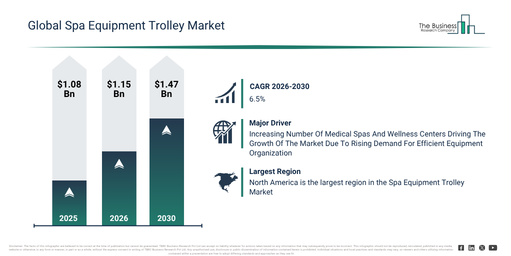
    The spa equipment trolley market size has experienced robust growth in recent years. This market is projected to expand from $1.08 billion in 2025 to $1.15 billion in 2026, at a compound annual growth rate (CAGR) of 6.3%. The growth observed in the preceding period can be attributed to the proliferation of beauty salons and wellness centers, the increasing demand for spa treatments, the utilization of stainless steel and plastic trolleys, a heightened need for organized treatment setups, and the expansion of mobile treatment services.

    The spa equipment trolley market size is anticipated to undergo significant expansion in the next few years, projected to reach $1.47 billion by 2030 with a compound annual growth rate (CAGR) of 6.5%. The projected growth can be attributed to factors such as increasing consumer demand for modular and multifunctional trolleys, the rising adoption of electric and motorized spa trolleys, a heightened focus on ergonomics and staff efficiency, the expansion of online sales channels and specialty stores, and the growing incorporation of eco-friendly and sustainable materials. Major developments expected during this forecast period include the increasing use of mobile spa trolleys, a rising need for multi-shelf and adjustable trolley designs, a strengthening emphasis on durable and hygienic materials, the proliferation of specialized and compact spa carts, and the enhanced integration of ergonomic and space-saving designs.

    Get A Free Sample Report With In-Depth Market Insights:

    https://thebusinessresearchcompany.com/sample_request?id=47413089&type=smp&name=Spa%20Equipment%20Trolley%20Market%20Report%202026&utm_source=Blogs&utm_medium=Paid&utm_campaign=Oct_PR

    Spa Equipment Trolley Market Growth Catalysts And Demand Drivers

    The expansion of medical spas and wellness centers is projected to drive the growth of the spa equipment trolley market in the foreseeable future. These establishments integrate conventional spa services with sophisticated aesthetic and therapeutic procedures, including skincare, laser treatments, and holistic well-being offerings. The surge in medical spas and wellness centers is largely attributable to greater consumer focus on self-care and increased disposable incomes. Within these environments, spa equipment trolleys play a crucial role by enabling efficient organization, storage, and movement of essential tools and devices, thus allowing practitioners to provide smooth, sanitary treatments and enhance operational efficiency. As an illustration, the American Med Spa Association, a US-based industry body, reported in November 2024 that the overall count of medical spas expanded considerably, escalating from 8,899 sites in 2022 to 10,488 in 2023, indicating substantial sector development. Consequently, the increasing presence of medical spas and wellness centers is a key factor propelling the spa equipment trolley market. The swift expansion of e-commerce is anticipated to advance the spa equipment trolley market moving forward. E-commerce entails the transaction of goods and services via digital channels, empowering businesses to engage a larger clientele with enhanced ease and effectiveness. The rising prevalence of e-commerce stems from increased smartphone adoption and evolving consumer inclinations towards online shopping, driven by convenience, competitive pricing, and a broader selection of products. Spa equipment trolleys are increasingly available through e-commerce platforms, providing spa proprietors, wellness facilities, and independent practitioners with the ability to readily compare items, explore diverse options, and receive doorstep delivery, thereby optimizing their purchasing procedures. For example, the United States Census Bureau, a prominent US agency, indicated in March 2026 that e-commerce sales during the fourth quarter of 2025 saw an estimated rise of 5.6% (±1.8%) when contrasted with the equivalent period in 2024. Thus, the rapid proliferation of e-commerce is a significant driver for the spa equipment trolley market.

    Spa Equipment Trolley Market Segmentation And Category Overview

    The spa equipment trolley market covered in this report is segmented –

    1) By Product Type: Single-Shelf Trolleys, Multi-Shelf Trolleys, Mobile Trolleys, Stationary Trolleys, Other Product Types

    2) By Material: Stainless Steel, Wood, Plastic, Other Materials

    3) By Distribution Channel: Online Stores, Specialty Stores, Direct Sales, Other Distribution Channels

    4) By Application: Beauty Salons, Spas, Wellness Centers, Other Applications

    Subsegments:

    1) By Single-Shelf Trolleys: Wooden Single-Shelf Trolleys, Metal Single-Shelf Trolleys, Plastic Single-Shelf Trolleys, Stainless Steel Single-Shelf Trolleys, Acrylic Single-Shelf Trolleys

    2) By Multi-Shelf Trolleys: Adjustable Multi-Shelf Trolleys, Fixed Multi-Shelf Trolleys, Metal Multi-Shelf Trolleys, Wooden Multi-Shelf Trolleys, Plastic Multi-Shelf Trolleys

    3) By Mobile Trolleys: Wheeled Spa Trolleys, Folding Mobile Trolleys, Electric Mobile Trolleys, Compact Mobile Trolleys, Modular Mobile Trolleys

    4) By Stationary Trolleys: Wall Mounted Stationary Trolleys, Fixed Frame Stationary Trolleys, Countertop Stationary Trolleys, Heavy Duty Stationary Trolleys, Multi-Purpose Stationary Trolleys

    5) By Other Product Types: Corner Trolleys, Compact Spa Carts, Pedicure Trolleys, Adjustable Height Trolleys, Specialty Treatment Trolleys

    Spa Equipment Trolley Market Competitive Landscape: Who Leads The Industry?

    Major companies operating in the spa equipment trolley market are Ellisons Limited, Oakworks Inc., Beauty Solutions by Jacko Ltd, Gharieni Group GmbH, Living Earth Crafts LLC, REM UK Ltd, ComfortSoul Spa Equipment Ltd, Lemi Group S.r.l., DIR Salon Furniture Co. Ltd., Belava LLC, Spa Source LLC, Comfortel Furniture Pty Ltd, Spa Vision Ltd, Salon Ambience S.r.l., Kingwin Salon Equipment Co. Ltd., Tom Spa Beauty Salon Equipment Co. Ltd., Kangmei Beauty Equipment Co. Ltd., NJ Salon Furniture Co. Ltd., PJS Beauty Salon Equipment Ltd, Glow Beauty Case Ltd.

    View The Full Spa Equipment Trolley Market Report:

    https://thebusinessresearchcompany.com/report/spa-equipment-trolley-market-report?utm_source=Blogs&utm_medium=Paid&utm_campaign=Oct_PR

    Spa Equipment Trolley Market Geographic Landscape: Which Region Leads Industry Growth?

    North America was the largest region in the spa equipment trolley market in 2025. Asia-Pacific is expected to be the fastest-growing region in the forecast period. The regions covered in the spa equipment trolley market report are Asia-Pacific, South East Asia, Western Europe, Eastern Europe, North America, South America, Middle East, Africa.

    Reach Out To Our Team:

    The Business Research Company: https://www.thebusinessresearchcompany.com/

    Americas: +1 310-496-7795

    Asia: +44 7882 955267 & +91 8897263534

    Europe: +44 7882 955267

    Email us at: marketing@tbrc.info

    Follow us on:

    LinkedIn: https://in.linkedin.com/company/the-business-research-company

    YouTube: https://www.youtube.com/channel/UC24_fI0rV8cR5DxlCpgmyFQ

    Global Market Model: https://www.thebusinessresearchcompany.com/global-market-model
  • Smoking Condensate Filtration Systems Market Size Growth: From $1.81 Billion In 2026 To $2.47 Billion By 2030

    Smoking Condensate Filtration Systems Market Size Growth: From $1.81 Billion In 2026 To $2.47 Billion By 2030

    Built to provide research that’s more actionable and strategically valuable, The Business Research Company’s 2026 market reports include market attractiveness analysis, total addressable market sizing, company benchmarking matrices, interactive Excel dashboards, broader supply chain intelligence, emerging startup tracking, and in-depth product insights.

    Smoking Condensate Filtration Systems Market Set To Climb From $1.81 Billion In 2026 To $2.47 Billion By 2030

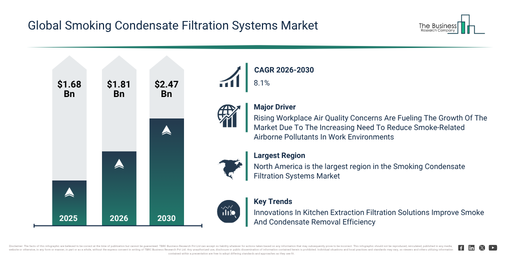
    The smoking condensate filtration systems market has shown significant expansion in recent years. This market is expected to increase from $1.68 billion in 2025 to $1.81 billion in 2026, achieving a compound annual growth rate (CAGR) of 7.9%. The market’s past growth can be linked to factors such as rising tobacco and cigarette production, an escalating demand for clean laboratory environments, the implementation of mechanical filtration systems, increasingly stringent environmental regulations, and expanded research efforts in smoke analysis.

    The smoking condensate filtration systems market is projected to experience substantial expansion in the coming years. This market is anticipated to reach $2.47 billion by 2030, demonstrating a compound annual growth rate (CAGR) of 8.1%. Factors contributing to this growth during the forecast period include the increasing adoption of hybrid filtration systems, an enhanced focus on industrial and commercial applications, greater integration with automated smoking machinery, the expansion of direct and online distribution channels, and a rising demand for high-efficiency condensate capture solutions. Key trends expected over the forecast period encompass the wider embrace of activated carbon filtration systems, an uptick in the demand for multi-stage electrostatic precipitators, further integration of hybrid filtration systems, the broadening use of synthetic and composite filtration media, and an increasing emphasis on filtration systems designed for industrial smoke analysis.

    Get A Free Sample Report With In-Depth Market Insights:

    https://thebusinessresearchcompany.com/sample_request?id=29458115&type=smp&name=Smoking%20Condensate%20Filtration%20Systems%20Market%20Report%202026&utm_source=Blogs&utm_medium=Paid&utm_campaign=Oct_PR

    Smoking Condensate Filtration Systems Market Industry Drivers: What’s Behind The Revenue Growth?

    The future expansion of the smoking condensate filtration systems market is anticipated due to increasing worries about workplace air quality. Workplace air quality describes the state and purity of air in professional settings, which impacts staff health, safety, and output. These concerns are escalating because of greater exposure to detrimental airborne particles and smoke-related contaminants, which can harm respiratory health and general well-being at work. Smoking condensate filtration systems offer a solution to these issues by trapping condensed smoke particles and sticky substances from exhaust airflow, thereby lowering airborne pollutants and fostering healthier indoor work settings. For example, in April 2024, the American Lung Association, a US-based non-profit health group, reported that 131 million individuals in the United States reside in regions with unhealthy air pollution levels, accounting for approximately 39% of the population. This highlights a significant rise in exposure to dangerous airborne pollutants, which further amplifies workplace air quality concerns. Consequently, the increasing focus on workplace air quality is fueling the expansion of the smoking condensate filtration systems market. The expanding count of restaurants and commercial kitchens is projected to stimulate the growth of the smoking condensate filtration systems market in the future. These are specialized food service venues that prepare and serve large quantities of food, producing substantial amounts of smoke, grease, and combustion by-products during their cooking processes. This rapid increase in the food service industry stems mainly from growing urbanization and a greater consumer inclination for dining out. More individuals in urban areas look for convenient meal choices away from home, which results in the widespread creation of new eateries and commercial cooking spaces. The surge in restaurants and commercial kitchens directly boosts the demand for smoking condensate filtration systems. This is because such establishments need efficient ventilation and condensate handling systems to meet health standards, preserve air quality, and manage the smoke and grease produced by extensive cooking. For example, in 2024, Aviko, a Netherlands-based food company, reported that the UK fast food sector expanded from $24.01 billion (£20.61 billion) in 2022 to $25.68 billion (£22.04 billion) in 2023. Furthermore, the percentage of UK consumers dining at fast-food restaurants grew to 45% in 2023. Thus, the increasing count of restaurants and commercial kitchens is stimulating the expansion of the smoking condensate filtration systems market.

    Smoking Condensate Filtration Systems Market Segment Breakdown: Which Categories Lead On Revenue?

    The smoking condensate filtration systems market covered in this report is segmented –

    1) By Product Type: Electrostatic Precipitators, Mechanical Filters, Activated Carbon Filters, Hybrid Systems, Other Product Types

    2) By Filtration Media: Synthetic, Natural, Composite, Other Filtration Media

    3) By Distribution Channel: Direct Sales, Distributors, Online Sales, Other Distribution Channels

    4) By Application: Industrial, Commercial, Residential, Other Applications

    5) By End-User: Tobacco Industry, Food Processing, Chemical Industry, Hospitality, Other End-Users

    Subsegments:

    1) By Electrostatic Precipitators: Dry Electrostatic Precipitators, Wet Electrostatic Precipitators, Single Stage Electrostatic Precipitators, Multi Stage Electrostatic Precipitators

    2) By Mechanical Filters: Cartridge Mechanical Filters, Baghouse Mechanical Filters, Panel Mechanical Filters, Pleated Mechanical Filters

    3) By Activated Carbon Filters: Granular Activated Carbon Filters, Powdered Activated Carbon Filters, Pelletized Activated Carbon Filters, Impregnated Activated Carbon Filters

    4) By Hybrid Systems: Electrostatic And Mechanical Hybrid Systems, Electrostatic And Activated Carbon Hybrid Systems, Mechanical And Activated Carbon Hybrid Systems, Multi Stage Integrated Hybrid Systems

    5) By Other Product Types: Water Based Scrubber Filtration Systems, Cyclone Based Filtration Systems, Thermal Oxidation Filtration Systems, Catalytic Filtration Systems

    #Smoking Condensate Filtration Systems Market Growth Trends: What’s Shaping The Future Outlook?

    Key players within the smoking condensate filtration systems market are concentrating on developing advanced offerings, such as integrated kitchen extraction filtration products, with the goal of improving smoke capture efficiency, minimizing condensate accumulation, and maintaining cleaner exhaust systems. Kitchen extraction filtration products are specialized solutions engineered to remove grease, smoke condensate, and airborne particles from commercial kitchen exhaust systems, thereby helping to sustain hygiene and enhance air quality. For instance, in April 2025, Plasma Clean Air, a UK-based manufacturer of air movement and filtration equipment, launched Electro-clean ESP, Electro-clean UV, and Carb-clean activated carbon, a new range of kitchen filtration products designed to keep extraction systems clean from the canopy to the extract. Electro-clean ESP serves as an electrostatic precipitator, created to capture grease and smoke particles from kitchen extraction systems, which assists in keeping ductwork cleaner and mitigating fire risks. Electro-clean UV combines electrostatic precipitation with UV ozone technology to eliminate grease, smoke, and cooking odors while reducing the frequency of duct cleaning. Carb-clean activated carbon is an odor control filtration system that removes VOCs, ozone, and airborne contaminants utilizing a lightweight honeycomb carbon structure. Collectively, these systems offer energy-efficient control of grease, smoke, and odors, simultaneously supporting modular integration and adherence to regulatory standards.

    Smoking Condensate Filtration Systems Market Industry Leaders And Competitive Landscape

    Major companies operating in the smoking condensate filtration systems market are Honeywell International Inc., Cerulean, Pushpam Group, Walker Filtration Limited, KMA Umwelttechnik GmbH, Air Quality Engineering Inc., Borgwaldt KC GmbH, Cleankek, R.K. Engg. Works Pvt. Ltd., Plasma Clean Air Ltd., Hastings Air Energy Control Inc., Ecotone Systems Private Limited, Ventsys Industries, Ontrack Enterprises, Blue Ox Air Cleaners Inc., PP Aquatech Private Limited, Breetee, Veeaar Engineering, Beijing Taktvoll Technology Co. Ltd., Aeppl Air Pollution Control Systems Pvt. Ltd.

    View The Full Smoking Condensate Filtration Systems Market Report:

    https://thebusinessresearchcompany.com/report/smoking-condensate-filtration-systems-market-report?utm_source=Blogs&utm_medium=Paid&utm_campaign=Oct_PR

    Smoking Condensate Filtration Systems Market Regional Analysis And Top Geography

    North America was the largest region in the smoking condensate filtration systems market in 2025. Asia-Pacific is expected to be the fastest-growing region in the forecast period. The regions covered in the smoking condensate filtration systems market report are Asia-Pacific, South East Asia, Western Europe, Eastern Europe, North America, South America, Middle East, Africa.

    Reach Out To Our Team:

    The Business Research Company: https://www.thebusinessresearchcompany.com/

    Americas: +1 310-496-7795

    Asia: +44 7882 955267 & +91 8897263534

    Europe: +44 7882 955267

    Email us at: marketing@tbrc.info

    Follow us on:

    LinkedIn: https://in.linkedin.com/company/the-business-research-company

    YouTube: https://www.youtube.com/channel/UC24_fI0rV8cR5DxlCpgmyFQ

    Global Market Model: https://www.thebusinessresearchcompany.com/global-market-model
  • Secrets Hygiene Management Market Explained: What Is Fueling Growth To $43.39 Billion By 2030?

    Secrets Hygiene Management Market Explained: What Is Fueling Growth To $43.39 Billion By 2030?

    Built to provide research that’s more actionable and strategically valuable, The Business Research Company’s 2026 market reports include market attractiveness analysis, total addressable market sizing, company benchmarking matrices, interactive Excel dashboards, broader supply chain intelligence, emerging startup tracking, and in-depth product insights.

    Secrets Hygiene Management Market Poised To Hit $43.39 Billion By 2030 With A 9.1% CAGR

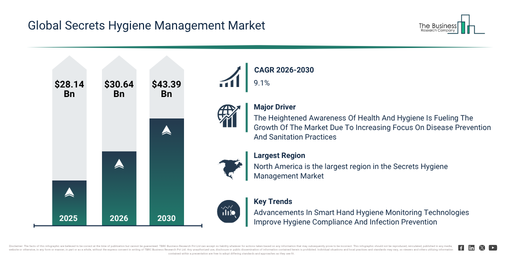
    The secrets hygiene management market has observed significant growth in recent years. It is projected to expand from $28.14 billion in 2025 to $30.64 billion in 2026, demonstrating a compound annual growth rate (CAGR) of 8.9%. This historical expansion was primarily fueled by an increasing awareness of feminine hygiene, the adoption of fundamental washroom hygiene solutions, a growing demand for sanitary disposal systems, the introduction of more corporate hygiene programs, and the broader provision of hygiene services in hospitals and various institutions.

    The secrets hygiene management market size is anticipated to experience robust expansion in the coming years. It is projected to reach $43.39 billion by 2030, demonstrating a compound annual growth rate (CAGR) of 9.1%. This growth during the forecast period is attributable to the increasing uptake of smart hygiene monitoring systems, a rising demand for eco-friendly and biodegradable hygiene products, the expansion of automated vending and replenishment solutions, growing corporate and workplace hygiene initiatives, and the enhanced integration of IoT-enabled hygiene management platforms. Significant trends expected in this period include the increased adoption of eco-friendly menstrual hygiene products, a rising demand for automated washroom hygiene solutions, the growing integration of smart IoT-enabled vending systems, the proliferation of subscription-based hygiene services, and an escalating focus on workplace and institutional hygiene programs.

    Get A Free Sample Report With In-Depth Market Insights:

    https://thebusinessresearchcompany.com/sample_request?id=31861454&type=smp&name=Secrets%20Hygiene%20Management%20Market%20Report%202026&utm_source=Blogs&utm_medium=Paid&utm_campaign=Oct_PR

    Secrets Hygiene Management Market Growth Momentum: What Factors Are Shaping Demand?

    The increased understanding of health and cleanliness is anticipated to drive expansion in the secret hygiene management market in the future. Health and hygiene encompass methods used to preserve cleanliness and avert disease transmission, thereby safeguarding human welfare. The recognition of health and hygiene is growing, attributed to a global focus on preventing illnesses and improving sanitation within communities and institutions. Secrets hygiene management facilitates health and hygiene awareness through structured oversight, systematic management of hygiene procedures, and enhanced responsibility for upholding sanitation levels across various locations. As an illustration, data from August 2025 by the United Nations International Children’s Emergency Fund (UNICEF), a humanitarian aid organization based in the US, indicated that in 2024, 1.7 billion individuals continued to lack essential hygiene provisions, with 611 million having no handwashing facilities. In contrast, four nations had already attained universal access (>99%) to fundamental hygiene services, and an additional nine were projected to achieve this by 2030. Consequently, an elevated understanding of health and hygiene serves as a key driver for the expansion of the secret hygiene management market.

    Secrets Hygiene Management Market Segmentation And Category Overview

    The secrets hygiene management market covered in this report is segmented –

    1) By Service Type: Menstrual Hygiene Services, Washroom Hygiene Solutions, Sanitary Disposal Systems, Vending Solutions, Smart Hygiene Monitoring, Subscription-Based Services, Workplace Hygiene Programs, Institutional Hygiene, Eco-Friendly Products, Customized Hygiene Plans

    2) By Product Type: Sanitizers, Disinfectants, Hygiene Monitoring Systems, Odor Control Products, Other Product Types

    3) By Distribution Channel: Online Stores, Supermarkets/Hypermarkets, Specialty Stores, Other Distribution Channels

    4) By Application: Residential, Commercial, Industrial, Other Applications

    5) By End-User: Hospitals, Restaurants, Hotels, Households, Offices, Other End-Users

    Subsegments:

    1) By Menstrual Hygiene Services: Sanitary Pad Disposal Services, Tampon Disposal Services, Menstrual Cup Hygiene Services, Sanitary Product Vending And Replenishment, Menstrual Waste Collection And Treatment

    2) By Washroom Hygiene Solutions: Automated Air Freshening Systems, Hand Wash And Sanitizer Dispensers, Toilet Seat Sanitization Systems, Surface Disinfectant Dispensers, Restroom Cleaning And Maintenance Services

    3) By Sanitary Disposal Systems: Feminine Hygiene Disposal Bins, Medical And Sanitary Waste Bins, Touch-Free Sanitary Disposal Units, Biodegradable Sanitary Disposal Systems, Waste Collection And Incineration Units

    4) By Vending Solutions: Sanitary Napkin Vending Machines, Tampon Vending Machines, Hygiene Essentials Vending Machines, Smart IoT-Enabled Vending Machines, Contactless Vending Systems

    5) By Smart Hygiene Monitoring: IoT Restroom Usage Sensors, Hygiene Compliance Monitoring Software, Smart Refill Alert Systems, Occupancy And Traffic Monitoring Sensors, Remote Hygiene Management Dashboards

    6) By Subscription-Based Services: Hygiene Product Replenishment Subscriptions, Washroom Consumables Supply Subscriptions, Scheduled Sanitary Waste Collection Plans, Periodic Hygiene Maintenance Contracts, Automated Refill Subscription Services

    7) By Workplace Hygiene Programs: Corporate Washroom Hygiene Management, Employee Menstrual Wellness Programs, Workplace Sanitation Compliance Services, Office Hygiene Training And Awareness Programs, Hygiene Supply Management Services

    8) By Institutional Hygiene: Hospital Hygiene Management Solutions, School And University Hygiene Programs, Airport And Transport Hub Hygiene Services, Government Facility Hygiene Services, Hospitality Sector Hygiene Management

    9) By Eco-Friendly Products: Biodegradable Sanitary Pads, Compostable Disposal Bags, Recyclable Hygiene Dispensers, Plant-Based Cleaning Agents, Low-Carbon Hygiene Product Solutions

    10) By Customized Hygiene Plans: Site-Specific Hygiene Service Packages, Industry-Specific Hygiene Programs, Tailored Waste Disposal Management Plans, Customized Hygiene Monitoring Systems, Integrated Facility Hygiene Solutions

    Secrets Hygiene Management Market Trends Redefining Industry Growth

    Leading firms within the secret hygiene management market are concentrating on creating sophisticated solutions, like automated hand hygiene tracking systems, aiming to elevate sanitation adherence, refine hygiene oversight, and lessen infection spread in medical and organizational settings. Automated hand hygiene tracking denotes a system leveraging technology to observe and log handwashing occurrences, thereby ensuring compliance with hygiene standards and boosting responsibility. As an illustration, in November 2024, BioVigil, a healthcare technology firm based in the US, commenced full-scale production of its AccuWash technology, following a successful pilot phase that showed enhanced individual hand hygiene monitoring. The AccuWash system is engineered to automatically observe and confirm handwashing activities, empowering healthcare facilities and various organizations to oversee hygiene adherence instantly, strengthen infection prevention methods, and foster safer sanitary conditions across different work settings and establishments.

    Secrets Hygiene Management Market Leading Companies And Competitive Benchmarking

    Major companies operating in the secrets hygiene management market are Rentokil Initial plc, PHS Group, American Specialties Inc., Bradley Corporation, Hagleitner Hygiene International GmbH, Bobrick Washroom Equipment Inc., Vectair Systems Limited, Fine Air System Private Limited, Mediclinics S.A., PadCare Labs Private Limited, Dolphin Solutions Ltd, Aunt Flow Inc., HLL Lifecare Limited, Sparkle Hygiene Products Private Limited, Mayflower Washroom Solutions Limited, Aakar Innovations Private Limited, Saathi Eco Innovations India Private Limited, Naree Care Private Limited, Nevex Limited, Kallisto Hygiene Private Limited, Sanipod Limited.

    View The Full Secrets Hygiene Management Market Report:

    https://thebusinessresearchcompany.com/report/secrets-hygiene-management-market-report?utm_source=Blogs&utm_medium=Paid&utm_campaign=Oct_PR

    Secrets Hygiene Management Market Top Region By Revenue And Market Share

    North America was the largest region in the secrets hygiene management market in 2025. Asia-Pacific is expected to be the fastest-growing region in the forecast period. The regions covered in the secrets hygiene management market report are Asia-Pacific, South East Asia, Western Europe, Eastern Europe, North America, South America, Middle East, Africa.

    Reach Out To Our Team:

    The Business Research Company: https://www.thebusinessresearchcompany.com/

    Americas: +1 310-496-7795

    Asia: +44 7882 955267 & +91 8897263534

    Europe: +44 7882 955267

    Email us at: marketing@tbrc.info

    Follow us on:

    LinkedIn: https://in.linkedin.com/company/the-business-research-company

    YouTube: https://www.youtube.com/channel/UC24_fI0rV8cR5DxlCpgmyFQ

    Global Market Model: https://www.thebusinessresearchcompany.com/global-market-model
  • Postbiotic Ferment Lysates Market Growth To $2.19 Billion By 2030: What’s Driving The Expansion?

    Postbiotic Ferment Lysates Market Growth To $2.19 Billion By 2030: What’s Driving The Expansion?

    Built to provide research that’s more actionable and strategically valuable, The Business Research Company’s 2026 market reports include market attractiveness analysis, total addressable market sizing, company benchmarking matrices, interactive Excel dashboards, broader supply chain intelligence, emerging startup tracking, and in-depth product insights.

    Postbiotic Ferment Lysates Market Growth From $1.31 Billion In 2026 To $2.19 Billion By 2030 At A CAGR Of 13.7%

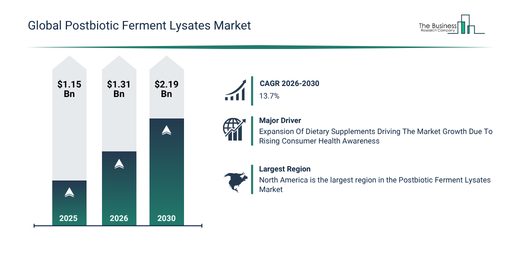
    The postbiotic ferment lysates market has seen rapid expansion over the past few years. It is anticipated to grow from $1.15 billion in 2025 to $1.31 billion in 2026, achieving a compound annual growth rate (CAGR) of 13.4%. This historical growth can be attributed to several factors, including increasing awareness of skin microbiome health, the greater incorporation of probiotics in personal care products, the adoption of postbiotic formulations in cosmetics, a rising demand for natural and bioactive ingredients, and the expansion of skincare and haircare product portfolios.

    The market for postbiotic ferment lysates is projected to experience substantial expansion over the coming years, reaching $2.19 billion by 2030, exhibiting a compound annual growth rate (CAGR) of 13.7%. This anticipated growth during the forecast period is driven by an intensified focus on functional and therapeutic postbiotics, heightened research and development activities concerning bacterial and yeast ferment lysates, an escalating demand across pharmaceutical and nutraceutical sectors, the broadening of online and specialized distribution channels, and an increasing consumer inclination towards anti-aging and hydration solutions. Key trends identified for the forecast period encompass the greater adoption of postbiotic products in liquid and serum formats, a surging demand for bacterial and yeast-derived lysates, their increasing incorporation into skincare and haircare formulations, the proliferation of freeze-dried and spray-dried powder variants, and a heightened emphasis on benefits related to anti-aging and hydration.

    Get A Free Sample Report With In-Depth Market Insights:

    https://thebusinessresearchcompany.com/sample_request?id=82147627&type=smp&name=Postbiotic%20Ferment%20Lysates%20Market%20Report%202026&utm_source=Blogs&utm_medium=Paid&utm_campaign=Oct_PR

    Postbiotic Ferment Lysates Market Demand Drivers: What’s Powering Industry Growth?

    The postbiotic ferment lysates market is anticipated to expand due to the increasing growth of dietary supplements. These supplements are manufactured goods designed to enhance a person’s diet by supplying essential nutrients such as vitamins, minerals, amino acids, and other bioactive compounds that might not be adequately obtained through regular food consumption alone. The primary factor behind the rising proliferation of dietary supplements is a heightened consumer interest in preventive healthcare, as people increasingly look for proactive, scientifically supported nutritional approaches to manage their long-term health, rather than relying solely on traditional medical interventions. This increase in the adoption of dietary supplements directly boosts the need for postbiotic ferment lysates, given their growing inclusion in supplement formulas to provide benefits like gut health, immune system support, and microbiome balance. For illustration, according to HerbalGram, a US-based international nonprofit organization, in September 2024, the total annual sales of herbal dietary supplements in the US saw an increase from $12.018 billion in 2022 to $12.551 billion in 2023, representing a growth of 4.4%. Consequently, the expansion of dietary supplements is a key driver for the growth of the postbiotic ferment lysates market. The growing cosmetic industry is projected to fuel the expansion of the postbiotic ferment lysates market in the future. This sector encompasses the creation, distribution, and sale of items designed to cleanse, beautify, and improve the human body’s appearance, including various skincare, haircare, makeup, and personal care formulations. The cosmetic industry’s ascent is primarily fueled by increasing consumer consciousness regarding skin health and the broad impact of social media, which has heightened the desire for inventive, scientifically supported beauty products, especially among younger populations. This boost in cosmetic activity directly elevates the need for advanced bioactive components such as postbiotic ferment lysates, which are increasingly integrated into high-end skincare products for their abilities to strengthen the skin barrier, reduce inflammation, and balance the microbiome. For example, a report released by the British Beauty Council, a UK-based organization, in July 2024, indicated that the personal care sector contributed £27.2 billion ($30.44 billion) to the GDP in 2023, marking an 11% increase compared to 2022. This expansion is attributed to a 10% rise in household expenditure on personal care goods and services across the UK. Therefore, the expanding cosmetic industry is a significant driver for the growth of the postbiotic ferment lysates market.

    Postbiotic Ferment Lysates Market Segment Outlook: Which Categories Are Growing Fastest?

    The postbiotic ferment lysates market covered in this report is segmented –

    1) By Product Type: Liquid, Powder, Cream, Serum, Other Product Types

    2) By Source: Bacterial, Yeast, Fungal, Other Sources

    3) By Distribution Channel: Online Stores, Supermarkets Or Hypermarkets, Specialty Stores, Other Distribution Channels

    4) By Application: Skincare, Haircare, Pharmaceuticals, Nutraceuticals, Other Applications

    5) By End-User: Cosmetic Industry, Pharmaceutical Industry, Personal Care, Other End-Users

    Subsegments:

    1) By Liquid: Water-Based, Oil-Based, Alcohol-Based, Glycerin-Based

    2) By Powder: Freeze-Dried, Spray-Dried, Granular, Micronized

    3) By Cream: Emulsion, Lotion, Balm, Gel-Cream

    4) By Serum: Hydrating, Anti-Aging, Brightening, Repairing

    5) By Other Product Types: Capsule, Tablet, Stick, Sheet Mask

    Postbiotic Ferment Lysates Market Key Players Shaping Industry Direction

    Major companies operating in the postbiotic ferment lysates market are The Procter & Gamble Company, DSM-Firmenich AG, International Flavors & Fragrances Inc., Lallemand Inc., Seppic SA, Mibelle AG, Lucas Meyer Cosmetics by IFF, Active Concepts LLC, Bloomage Biotechnology Corporation Limited, Codif Technologie Naturelle SAS, Greentech SA, Biocogent LLC, Vytrus Biotech S.A., Chemisches Laboratorium Dr. Kurt Richter GmbH, Codex Beauty Labs Inc., Lactobio A/S, Lipotrue S.L., Senyuan Biotechnology Co. Ltd., Active Cells Biotechnology S.r.l., Dermat India.

    View The Full Postbiotic Ferment Lysates Market Report:

    https://thebusinessresearchcompany.com/report/postbiotic-ferment-lysates-market-report?utm_source=Blogs&utm_medium=Paid&utm_campaign=Oct_PR

    Postbiotic Ferment Lysates Market Regional Analysis: Which Region Leads By Revenue?

    North America was the largest region in the postbiotic ferment lysates market in 2025. Asia-Pacific is expected to be the fastest-growing region in the forecast period. The regions covered in the postbiotic ferment lysates market report are Asia-Pacific, South East Asia, Western Europe, Eastern Europe, North America, South America, Middle East, Africa.

    Reach Out To Our Team:

    The Business Research Company: https://www.thebusinessresearchcompany.com/

    Americas: +1 310-496-7795

    Asia: +44 7882 955267 & +91 8897263534

    Europe: +44 7882 955267

    Email us at: marketing@tbrc.info

    Follow us on:

    LinkedIn: https://in.linkedin.com/company/the-business-research-company

    YouTube: https://www.youtube.com/channel/UC24_fI0rV8cR5DxlCpgmyFQ

    Global Market Model: https://www.thebusinessresearchcompany.com/global-market-model
  • Pharmaceutical Depyrogenation Equipment Market Growth Forecast: Market Size, Key Trends And Emerging Opportunities Through 2030

    Pharmaceutical Depyrogenation Equipment Market Growth Forecast: Market Size, Key Trends And Emerging Opportunities Through 2030

    Built to provide research that’s more actionable and strategically valuable, The Business Research Company’s 2026 market reports include market attractiveness analysis, total addressable market sizing, company benchmarking matrices, interactive Excel dashboards, broader supply chain intelligence, emerging startup tracking, and in-depth product insights.

    Pharmaceutical Depyrogenation Equipment Market Size Outlook: How Quickly Will Revenue Expand Through 2030?

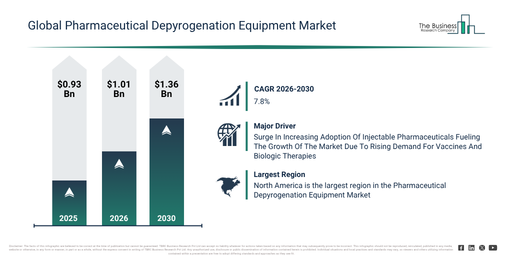
    The pharmaceutical depyrogenation equipment market has shown substantial growth in recent years. This market is anticipated to increase from $0.93 billion in 2025 to $1.01 billion in 2026, achieving a compound annual growth rate (CAGR) of 7.6%. The expansion witnessed in the past can be attributed to factors such as increasing pharmaceutical production volumes, a rising incidence of injectable drug manufacturing, the demand for sterile glassware and containers, regulatory requirements for endotoxin-free products, and the adoption of conventional batch depyrogenation systems.

    The pharmaceutical depyrogenation equipment market is projected to experience substantial expansion in the coming years. This market is anticipated to reach $1.36 billion by 2030, exhibiting a compound annual growth rate (CAGR) of 7.8%. The projected increase during this period is driven by factors such as the rise in vaccine and biologics manufacturing, the uptake of automated and high-throughput depyrogenation solutions, increased research and development efforts in sterile manufacturing technologies, the incorporation of sophisticated monitoring and IoT-enabled control systems, and the global proliferation of contract manufacturing organizations (CMOs). Key trends foreseen for the forecast period encompass a growing need for automated depyrogenation systems, a greater embrace of high-temperature dry heat sterilization, the broadening application of depyrogenation equipment in vaccine and biologics production, an escalating emphasis on regulatory adherence and sterility benchmarks, and the incorporation of real-time monitoring and process control mechanisms.

    Get A Free Sample Report With In-Depth Market Insights:

    https://thebusinessresearchcompany.com/sample_request?id=12917917&type=smp&name=Pharmaceutical%20Depyrogenation%20Equipment%20Market%20Report%202026&utm_source=Blogs&utm_medium=Paid&utm_campaign=Oct_PR

    Pharmaceutical Depyrogenation Equipment Market Expansion Drivers: What’s Shaping Future Growth?

    The increasing adoption of injectable pharmaceuticals is anticipated to fuel the expansion of the pharmaceutical depyrogenation equipment market in the coming years. Injectable drugs are sterile formulations administered directly into the body via syringes or infusions, bypassing the digestive system. Their rise is attributed to the growing prevalence of chronic conditions such as diabetes and cancer, which demand prompt and effective drug delivery. Pharmaceutical depyrogenation equipment plays a crucial role in supporting injectable pharmaceuticals by eliminating pyrogens and endotoxins from drug containers, thereby guaranteeing sterility and patient safety. For example, in July 2024, data from the United Nations Children’s Fund (UNICEF), a US-based international organization that provides humanitarian and developmental aid to children worldwide, indicated that the worldwide percentage of adolescent girls receiving at least one dose of the HPV vaccine saw an increase from 20% in 2022 to 27% in 2023, representing a 7-percentage-point rise. Consequently, the rising use of injectable pharmaceuticals is propelling the growth of the pharmaceutical depyrogenation equipment market. The growth of the biopharmaceutical and biotechnology industry is projected to drive forward the pharmaceutical depyrogenation equipment market. This industry focuses on developing medical treatments utilizing biological systems and advancing drug discovery, vaccine development, and therapies through innovations like genetic engineering and molecular biology. The rapid expansion of this sector is largely due to increased investment in the research and development of new biologics, biosimilars, and advanced therapies, all of which require extremely controlled and contamination-free manufacturing environments. The escalating scale of biopharmaceutical production heightens the necessity for depyrogenation equipment, as these systems are vital for ensuring endotoxin-free conditions essential for the safe production of injectable drugs, vaccines, and biological treatments. As an illustration, in January 2023, Cardinal Health Inc., a US-based healthcare company, reported that as of January 2022, the US had 33 FDA-approved biosimilar products, with 21 commercially available. By 2023, the number of FDA-approved biosimilars had risen to 40, with 25 available in the market. Therefore, the expansion of the biopharmaceutical and biotechnology industry is a key driver for the growth of the pharmaceutical depyrogenation equipment market.

    Pharmaceutical Depyrogenation Equipment Market Segment Performance And Emerging Opportunities

    The pharmaceutical depyrogenation equipment market covered in this report is segmented –

    1) By Equipment Type: Depyrogenation Tunnels, Dry Heat Sterilizers, Depyrogenation Ovens, Vial And Ampoule Depyrogenation Systems, Automated Depyrogenation Chambers

    2) By Technology: Conveyor-Based Systems, Batch Processing Ovens, Continuous Flow Tunnels, High-Temperature Plasma Systems

    3) By Application: Ampoules, Penicillin Bottles, Syringes

    4) By End-User: Pharmaceutical Manufacturers, Biotechnology Companies, Contract Manufacturing Organizations (CMOs), Research And Academic Institutes, Vaccine And Biologics Manufacturing Facilities

    Subsegments:

    1) By Depyrogenation Tunnels: Conveyor Depyrogenation Tunnels, Modular Depyrogenation Tunnels, High Throughput Depyrogenation Tunnels, Compact Depyrogenation Tunnels

    2) By Dry Heat Sterilizers: Horizontal Dry Heat Sterilizers, Vertical Dry Heat Sterilizers, Laboratory Dry Heat Sterilizers, Industrial Dry Heat Sterilizers

    3) By Depyrogenation Ovens: Bench Top Depyrogenation Ovens, Floor Standing Depyrogenation Ovens, High Capacity Depyrogenation Ovens, Programmable Depyrogenation Ovens

    4) By Vial And Ampoule Depyrogenation Systems: Glass Vial Depyrogenation Systems, Ampoule Depyrogenation Systems, Combined Vial And Ampoule Depyrogenation Systems, High Speed Container Depyrogenation Systems

    5) By Automated Depyrogenation Chambers: Fully Automated Depyrogenation Chambers, Semi Automated Depyrogenation Chambers, Programmable Depyrogenation Chambers, Large Capacity Depyrogenation Chambers

    Pharmaceutical Depyrogenation Equipment Market Competitive Landscape: Which Companies Lead The Industry?

    Major companies operating in the pharmaceutical depyrogenation equipment market are STERIS Public Limited Company, Getinge Aktiebolag, Azbil Telstar Sociedad Limitada Unipersonal, Syntegon Technology Gesellschaft mit beschränkter Haftung, Belimed Aktiengesellschaft, Shibuya Corporation (Kabushiki Kaisha Shibuya Kogyo), OPTIMA Packaging Group Gesellschaft mit beschränkter Haftung, Marchesini Group Società per Azioni, Bausch + Ströbel SE & Co. Kommanditgesellschaft, Shanghai Tofflon Science and Technology Group Co. Ltd., Zhangjiagang Tofflon Machinery Co. Ltd., Fedegari Autoclavi Società per Azioni, Pharmalab India Private Limited, Steriline Società a responsabilità limitata, De Lama Società per Azioni, Dara Pharmaceutical Packaging S.A., Neelam Industries Private Limited, Lodha International Limited Liability Partnership, Stericox India Private Limited, Steelco.

    View The Full Pharmaceutical Depyrogenation Equipment Market Report:

    https://thebusinessresearchcompany.com/report/pharmaceutical-depyrogenation-equipment-market-report?utm_source=Blogs&utm_medium=Paid&utm_campaign=Oct_PR

    Pharmaceutical Depyrogenation Equipment Market Regional Outlook: Where Is Opportunity Concentrated?

    North America was the largest region in the pharmaceutical depyrogenation equipment market in 2025. Asia-Pacific is expected to be the fastest-growing region in the forecast period. The regions covered in the pharmaceutical depyrogenation equipment market report are Asia-Pacific, South East Asia, Western Europe, Eastern Europe, North America, South America, Middle East, Africa.

    Reach Out To Our Team:

    The Business Research Company: https://www.thebusinessresearchcompany.com/

    Americas: +1 310-496-7795

    Asia: +44 7882 955267 & +91 8897263534

    Europe: +44 7882 955267

    Email us at: marketing@tbrc.info

    Follow us on:

    LinkedIn: https://in.linkedin.com/company/the-business-research-company

    YouTube: https://www.youtube.com/channel/UC24_fI0rV8cR5DxlCpgmyFQ

    Global Market Model: https://www.thebusinessresearchcompany.com/global-market-model
  • On-The-Go Greens Sticks Market Analysis: $1.74 Billion Market Size In 2026 And Future Growth Prospects

    On-The-Go Greens Sticks Market Analysis: $1.74 Billion Market Size In 2026 And Future Growth Prospects

    Featuring market attractiveness scoring, total addressable market sizing, company benchmarking matrices, interactive Excel dashboards, deeper supply chain intelligence, emerging startup tracking, and granular product-level insights, The Business Research Company’s 2026 market reports are built to deliver research that is both more actionable and more strategically valuable.

    On-The-Go Greens Sticks Market Growth Potential: How Will Market Size Shift Through 2030?

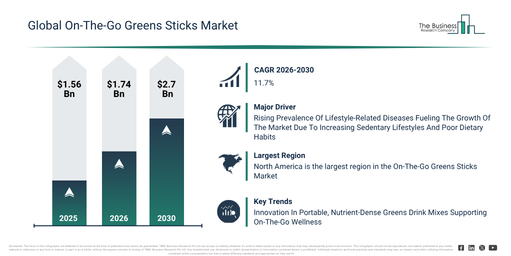
    The on-the-go greens sticks market has experienced rapid expansion in recent years. It is anticipated to grow from $1.56 billion in 2025 to $1.74 billion in 2026, reflecting a compound annual growth rate (CAGR) of 11.4%. The historical increase in market size can be attributed to several factors including consumers’ increasing health consciousness, a rising awareness of nutritional deficiencies, the expanding urban population with busy lifestyles, the growth of retail and e-commerce channels, and the adoption of superfood and functional ingredients.

    The market for on-the-go greens sticks is projected for substantial expansion in the coming years, reaching $2.7 billion by 2030, exhibiting a compound annual growth rate (CAGR) of 11.7%. This projected growth is driven by factors such as the increasing popularity of plant-based and organic dietary habits, the rising need for customized nutrition, greater integration of artificial intelligence and data analytics for product suggestions, the proliferation of online health and wellness platforms, and an enhanced emphasis on immune and digestive system well-being. Key trends anticipated during this period encompass a heightened demand for easily accessible nutritional options for active lifestyles, an increasing inclination towards ingredients derived from plants and superfoods, the wider use of functional supplements aimed at digestive health, the broadening availability of individualized nutrition and wellness offerings, and the growing favorability of powdered stick packs for individuals with demanding schedules.

    Get A Free Sample Report With In-Depth Market Insights:

    https://thebusinessresearchcompany.com/sample_request?id=34796384&type=smp&name=On-The-Go%20Greens%20Sticks%20Market%20Report%202026&utm_source=Blogs&utm_medium=Paid&utm_campaign=Oct_PR

    On-The-Go Greens Sticks Market Growth Momentum: What Factors Are Shaping Demand?

    The increasing incidence of lifestyle-related diseases is anticipated to boost the growth of the on-the-go greens sticks market in the future. These diseases are chronic health conditions that primarily arise from unhealthy habits such as poor diet, insufficient physical activity, excessive calorie intake, and prolonged sedentary behavior. The rising prevalence of lifestyle-related diseases stems from increasingly sedentary lifestyles, with more individuals dedicating extended hours to desk work and digital activities involving limited physical movement. On-the-go greens sticks assist in managing lifestyle-related health risks by providing a convenient source of plant-based nutrients, vitamins, and minerals, thereby facilitating balanced nutrition even when fresh foods are less accessible. For instance, in March 2025, the World Obesity Federation, a UK-based membership organization, predicted that by 2030, nearly 3 billion adults, representing about 50% of the global adult population, will be affected by overweight or obesity. This growing prevalence of lifestyle-related diseases is, therefore, fueling the expansion of the on-the-go greens sticks market.

    On-The-Go Greens Sticks Market Segment Trends And Revenue Contributors

    The on-the-go greens sticks market covered in this report is segmented –

    1) By Product Type: Superfood Greens Sticks, Protein Greens Sticks, Detox Greens Sticks, Other Product Types

    2) By Distribution Channel: Online Stores, Supermarkets And Hypermarkets, Convenience Stores, Specialty Stores, Other Distribution Channels

    3) By Application: Nutritional Supplements, Meal Replacements, Sports Nutrition, Other Applications

    4) By End User: Adults, Children, Elderly, Other End Users

    Subsegments:

    1) By Superfood Greens Sticks: Organic Superfood Greens Sticks, Fruit And Greens Blend Sticks, Algae Based Greens Sticks, Herbal Superfood Greens Sticks, Vegetable Greens Blend Sticks

    2) By Protein Greens Sticks: Plant Protein Greens Sticks, Pea Protein Greens Sticks, Rice Protein Greens Sticks, Hemp Protein Greens Sticks, Mixed Plant Protein Greens Sticks

    3) By Detox Greens Sticks: Herbal Detox Greens Sticks, Fiber Enriched Detox Greens Sticks, Chlorophyll Detox Greens Sticks, Alkalizing Detox Greens Sticks, Liver Support Detox Greens Sticks

    4) By Other Product Types: Probiotic Greens Sticks, Vitamin Enriched Greens Sticks, Adaptogenic Greens Sticks, Energy Boost Greens Sticks, Immune Support Greens Sticks

    On-The-Go Greens Sticks Market Trends Redefining Industry Growth

    Major companies operating in the on-the-go greens sticks market are focusing on developing convenient and nutrient-dense solutions, such as portable tangerine-flavored drink mixes, to support daily nutrition, improve portability, and cater to busy consumer lifestyles. A portable tangerine-flavored drink mix is a convenient powdered or stick-pack beverage that dissolves in water to deliver a refreshing citrus drink with added hydration or nutritional benefits. For instance, in May 2025, Good Enough Brands, a US-based health and wellness company, launched a Good Enough Greens Mix, a tangerine-flavored drink mix designed to deliver enhanced nutrition in a portable, easy-to-use format. The product combines a blend of plant-based ingredients, including leafy greens, fruits, and functional nutrients, aimed at supporting energy, digestion, and overall wellness while enabling consumers to maintain healthy habits on the go.

    On-The-Go Greens Sticks Market Competitive Landscape: Which Companies Lead The Industry?

    Major companies operating in the on-the-go greens sticks market are Nestlé S.A., Glanbia plc, 1st Phorm LLC, Grove Collaborative Inc., Nutricost LLC, Athletic Greens International Inc., Life Extension Foundation Buyers Club Inc., Organifi LLC, Grüns LLC, Zeon Lifesciences Limited, Sunwarrior LLC, Organixx LLC, Bare Performance Nutrition LLC, Pines International Inc., Beam Organics Inc., WelleCo Pty Ltd, Axe & Sledge Supplements LLC, MuscleSport LLC, NutraChamps LLC, MacroLife Naturals Inc., Vimergy LLC, Codeage LLC, Ora Organic LLC, Rewind Greens LLC, Kuli Kuli Foods Inc.

    View The Full On-The-Go Greens Sticks Market Report:

    https://thebusinessresearchcompany.com/report/on-the-go-greens-sticks-market-report?utm_source=Blogs&utm_medium=Paid&utm_campaign=Oct_PR

    On-The-Go Greens Sticks Market Regional Breakdown: Where Is Demand Concentrated?

    North America was the largest region in the on-the-go greens sticks market in 2025. Asia-Pacific is expected to be the fastest-growing region in the forecast period. The regions covered in the on-the-go greens sticks market report are Asia-Pacific, South East Asia, Western Europe, Eastern Europe, North America, South America, Middle East, Africa.

    Reach Out To Our Team:

    The Business Research Company: https://www.thebusinessresearchcompany.com/

    Americas: +1 310-496-7795

    Asia: +44 7882 955267 & +91 8897263534

    Europe: +44 7882 955267

    Email us at: marketing@tbrc.info

    Follow us on:

    LinkedIn: https://in.linkedin.com/company/the-business-research-company

    YouTube: https://www.youtube.com/channel/UC24_fI0rV8cR5DxlCpgmyFQ

    Global Market Model: https://www.thebusinessresearchcompany.com/global-market-model

  • Neurointerventional Balloon Dilatation Catheter Market Size In 2026 And Beyond: Understanding Future Growth Potential

    Neurointerventional Balloon Dilatation Catheter Market Size In 2026 And Beyond: Understanding Future Growth Potential

    Built to provide research that’s more actionable and strategically valuable, The Business Research Company’s 2026 market reports include market attractiveness analysis, total addressable market sizing, company benchmarking matrices, interactive Excel dashboards, broader supply chain intelligence, emerging startup tracking, and in-depth product insights.

    Neurointerventional Balloon Dilatation Catheter Market Forecast: Value Set To Climb From $2.06 Billion To $3.96 Billion

    The size of the neurointerventional balloon dilatation catheter market has experienced rapid expansion in recent years. It will grow from $1.75 billion in 2025 to $2.06 billion in 2026 at a compound annual growth rate (CAGR) of 17.5%. The expansion observed in the historic period can be attributed to increasing prevalence of cerebrovascular diseases, advancements in catheter design and materials, rising number of neurovascular surgeries, growth of hospital and specialty clinic infrastructure, and increasing awareness of minimally invasive procedures.

    The neurointerventional balloon dilatation catheter market size is projected for significant expansion in the coming years. This market is forecasted to attain a value of $3.96 billion by 2030, demonstrating a compound annual growth rate (CAGR) of 17.8%. Factors contributing to this growth during the forecast period include advancements in compliant and non-compliant balloon technologies, the rising use of drug-coated balloons, an increase in ambulatory surgical centers, the incorporation of AI-assisted imaging systems, and the broadening of intracranial treatment applications. Key trends observed within the forecast timeframe involve the increasing implementation of neurointerventional procedures, a surge in the application of drug-coated balloon technologies, an escalating demand for steerable and tapered balloons, the widening scope of both intracranial and extracranial applications, and the integration of imaging and navigation systems into balloon catheters.

    Get A Free Sample Report With In-Depth Market Insights:

    https://thebusinessresearchcompany.com/sample_request?id=14797178&type=smp&name=Neurointerventional%20Balloon%20Dilatation%20Catheter%20Market%20Report%202026&utm_source=Blogs&utm_medium=Paid&utm_campaign=Oct_PR

    Neurointerventional Balloon Dilatation Catheter Market Growth Catalysts And Demand Drivers

    The increasing occurrence of stroke and intracranial stenosis is projected to boost the expansion of the neurointerventional balloon dilatation catheter market. Intracranial stenosis, a condition characterized by the narrowing of brain arteries, is frequently linked to stroke and heightens the likelihood of ischemic events. The growing rates of stroke and intracranial stenosis are fueled by demographic shifts towards older populations, who are more prone to arterial constriction and cerebrovascular incidents. Neurointerventional balloon dilatation catheters address these conditions by expanding constricted brain arteries, thereby re-establishing blood flow and diminishing the danger of ischemic events. For example, in December 2025, the Stroke Foundation, an Australia-based Non-profit organization, reported that stroke remains one of Australia’s leading causes of death, accounting for 9,147 lives in 2024, with a stroke occurring every 11 minutes. Consequently, the rising incidence of stroke and intracranial stenosis is anticipated to stimulate the growth of the neurointerventional balloon dilatation catheter market. The increasing demand for minimally invasive medical techniques is set to drive the expansion of the neurointerventional balloon dilatation catheter market. Minimally invasive procedures are defined as medical or cosmetic interventions carried out with minimal cuts or tissue harm, frequently employing tools such as needles, catheters, or small instruments. This growing preference is largely due to the decreased risk of complications associated with them, as they require smaller incisions and present lower probabilities of infection or hemorrhage. The neurointerventional balloon dilatation catheter facilitates these minimally invasive approaches by enabling accurate expansion of constricted brain arteries via small vascular entry points, thereby diminishing the necessity for open surgery and accelerating recovery periods. For example, in June 2024, data from the American Society of Plastic Surgeons, a US-based non-profit organization, revealed that minimally invasive procedures reached 5.29 million in 2023, marking an 8% rise compared to 2022. As a result, the growing preference for minimally invasive procedures is projected to fuel the growth of the neurointerventional balloon dilatation catheter market.

    Neurointerventional Balloon Dilatation Catheter Market Segment Analysis: What Are The Core Market Categories?

    The neurointerventional balloon dilatation catheter market covered in this report is segmented –

    1) By Product Type: Compliant, Non Compliant, Semi Compliant

    2) By Balloon Shape: Standard, Steerable, Tapered

    3) By Coating Technology: Drug Coated, Plain

    4) By Application: Extracranial, Intracranial

    5) By End-User: Ambulatory Surgical Centers, Hospitals, Specialty Clinics

    Subsegments:

    1) By Compliant: Low Pressure Compliant Balloon, Medium Pressure Compliant Balloon, High Elasticity Compliant Balloon

    2) By Non Compliant: High Pressure Non Compliant Balloon, Ultra High Pressure Non Compliant Balloon, Controlled Diameter Non Compliant Balloon

    3) By Semi Compliant: Moderate Pressure Semi Compliant Balloon, Balanced Compliance Balloon, Flexible Semi Compliant Balloon

    Neurointerventional Balloon Dilatation Catheter Market Competitive Overview And Top Companies

    Major companies operating in the neurointerventional balloon dilatation catheter market are Johnson & Johnson, Medtronic plc, Stryker Corporation, Koninklijke Philips N.V., Boston Scientific Corporation, B. Braun Melsungen AG, Terumo Corporation, Kaneka Corporation, Nipro Corporation, Penumbra Inc., Lepu Medical Technology Co. Ltd., MicroPort Scientific Corporation, Asahi Intecc Co. Ltd., APT Medical Inc., Sino Medical Sciences Technology Inc., Peijia Medical Limited, Scientia Vascular Inc., Wallaby Medical Inc., Zylox-Tonbridge Medical Technology Co. Ltd., Acandis GmbH & Co. KG, Princeton Medical Scientific Inc., Cordis a Cardinal Health Company, DK MEDTECH Corporation.

    View The Full Neurointerventional Balloon Dilatation Catheter Market Report:

    https://thebusinessresearchcompany.com/report/neurointerventional-balloon-dilatation-catheter-market-report?utm_source=Blogs&utm_medium=Paid&utm_campaign=Oct_PR

    Neurointerventional Balloon Dilatation Catheter Market Leading Geography: Which Region Contributes The Most Revenue?

    North America was the largest region in the neurointerventional balloon dilatation catheter market in 2025. Asia-Pacific is expected to be the fastest-growing region in the forecast period. The regions covered in the neurointerventional balloon dilatation catheter market report are Asia-Pacific, South East Asia, Western Europe, Eastern Europe, North America, South America, Middle East, Africa.

    Reach Out To Our Team:

    The Business Research Company: https://www.thebusinessresearchcompany.com/

    Americas: +1 310-496-7795

    Asia: +44 7882 955267 & +91 8897263534

    Europe: +44 7882 955267

    Email us at: marketing@tbrc.info

    Follow us on:

    LinkedIn: https://in.linkedin.com/company/the-business-research-company

    YouTube: https://www.youtube.com/channel/UC24_fI0rV8cR5DxlCpgmyFQ

    Global Market Model: https://www.thebusinessresearchcompany.com/global-market-model

  • Multi-Arm Polyethylene Glycol (PEG) Derivatives Market Size And Growth In 2026: Key Factors Shaping Future Demand

    Multi-Arm Polyethylene Glycol (PEG) Derivatives Market Size And Growth In 2026: Key Factors Shaping Future Demand

    Built to provide research that’s more actionable and strategically valuable, The Business Research Company’s 2026 market reports include market attractiveness analysis, total addressable market sizing, company benchmarking matrices, interactive Excel dashboards, broader supply chain intelligence, emerging startup tracking, and in-depth product insights.

    Multi-Arm Polyethylene Glycol (PEG) Derivatives Market Expansion Outlook: What Revenue Opportunities Are Ahead?

    The multi-arm polyethylene glycol (PEG) derivatives market has experienced swift expansion in recent years. This market is projected to expand from $6.02 billion in 2025 to $6.72 billion in 2026, exhibiting a compound annual growth rate (CAGR) of 11.6%. Historically, this expansion has been driven by factors such as progress in polymer chemistry, increased pharmaceutical research and development, a rise in biomedical research endeavors, a heightened emphasis on drug formulation stability, and the broadening of tissue engineering applications.

    The multi-arm polyethylene glycol (PEG) derivatives market size is anticipated to experience substantial growth in the upcoming years. It is projected to expand to $10.5 billion by 2030, achieving a compound annual growth rate (CAGR) of 11.8%. This expansion during the forecast period is primarily driven by the increasing integration of targeted drug delivery systems, advancements in regenerative medicine and tissue engineering, a growing need for personalized medicine, technological innovations in functionalization methods, and the expanding use in cosmetics and biomaterials applications. Significant trends anticipated for this period include a heightened demand for functionalized multi-arm PEG derivatives, expanding applications in drug delivery and tissue engineering, an increased focus on bioconjugation and pegylation techniques, broadening usage in diagnostics and medical devices, and greater adoption across cosmetics, personal care, and surface coatings.

    Get A Free Sample Report With In-Depth Market Insights:

    https://thebusinessresearchcompany.com/sample_request?id=35063442&type=smp&name=Multi-Arm%20Polyethylene%20Glycol%20%28PEG%29%20Derivatives%20Market%20Report%202026&utm_source=Blogs&utm_medium=Paid&utm_campaign=Oct_PR

    Multi-Arm Polyethylene Glycol (PEG) Derivatives Market Growth Factors: What’s Supporting Expansion?

    The expanding biopharmaceutical and biotechnology sectors are projected to fuel the expansion of the multi-arm polyethylene glycol (PEG) derivatives market in the foreseeable future. These industries encompass businesses and research facilities focused on creating biologics, vaccines, cell therapies, and gene-based treatments through biological processes and molecular techniques. Their growth is accelerating because of increased global investment in research and development initiatives for biological therapeutics. Multi-arm polyethylene glycol (PEG) derivatives aid biopharmaceutical advancements by enhancing the solubility, stability, and bioavailability of therapeutic proteins, peptides, and antibodies, thus facilitating effective drug formulation and delivery. For example, GOV.UK, a public sector information website from the UK, reported in October 2025 that the South East region had the highest life sciences employment across all UK ITL 1 regions, with 84,800 employees in 2023/2024, making up 24% of the total workforce. Consequently, the expansion of the biopharmaceutical and biotechnology industries is a key factor propelling the multi-arm polyethylene glycol (PEG) derivatives market forward.

    Multi-Arm Polyethylene Glycol (PEG) Derivatives Market Segment Landscape And Growth Outlook

    The multi-arm polyethylene glycol (PEG) derivatives market covered in this report is segmented –

    1) By Type: 3-Arm Polyethylene Glycol (PEG) Derivatives, 4-Arm Polyethylene Glycol (PEG) Derivatives, 6-Arm Polyethylene Glycol (PEG) Derivatives, 8-Arm Polyethylene Glycol (PEG) Derivatives, Other Multi-Arm PEG Derivatives

    2) By Functional Group: Amine Polyethylene Glycol (PEG) Derivatives, N-Hydroxysuccinimide Ester Polyethylene Glycol (PEG) Derivatives, Maleimide Polyethylene Glycol (PEG) Derivatives, Thiol Polyethylene Glycol (PEG) Derivatives, Azide Polyethylene Glycol (PEG) Derivatives, Vinyl Sulfone Polyethylene Glycol (PEG) Derivatives

    3) By Purity Grade: Monodisperse (Uniform), Polydisperse

    4) By Application: Drug Delivery, Tissue Engineering, Medical Devices, Bioconjugation And PEGylation, Diagnostics, Cosmetics And Personal Care, Surface Coatings And Biomaterials

    5) By End User: Pharmaceutical Companies, Biotechnology Companies, Research And Academic Institutes, Medical Device Manufacturers, Cosmetics And Personal Care Manufacturers

    Subsegments:

    1) By 3-Arm Polyethylene Glycol Derivatives: 3-Arm Hydroxyl Functionalized Polyethylene Glycol Derivatives, 3-Arm Amine Functionalized Polyethylene Glycol Derivatives, 3-Arm Carboxyl Functionalized Polyethylene Glycol Derivatives, 3-Arm Maleimide Functionalized Polyethylene Glycol Derivatives, 3-Arm Succinimidyl Functionalized Polyethylene Glycol Derivatives

    2) By 4-Arm Polyethylene Glycol Derivatives: 4-Arm Hydroxyl Functionalized Polyethylene Glycol Derivatives, 4-Arm Amine Functionalized Polyethylene Glycol Derivatives, 4-Arm Carboxyl Functionalized Polyethylene Glycol Derivatives, 4-Arm Maleimide Functionalized Polyethylene Glycol Derivatives, 4-Arm Succinimidyl Functionalized Polyethylene Glycol Derivatives

    3) By 6-Arm Polyethylene Glycol Derivatives: 6-Arm Hydroxyl Functionalized Polyethylene Glycol Derivatives, 6-Arm Amine Functionalized Polyethylene Glycol Derivatives, 6-Arm Carboxyl Functionalized Polyethylene Glycol Derivatives, 6-Arm Maleimide Functionalized Polyethylene Glycol Derivatives, 6-Arm Succinimidyl Functionalized Polyethylene Glycol Derivatives

    4) By 8-Arm Polyethylene Glycol Derivatives: 8-Arm Hydroxyl Functionalized Polyethylene Glycol Derivatives, 8-Arm Amine Functionalized Polyethylene Glycol Derivatives, 8-Arm Carboxyl Functionalized Polyethylene Glycol Derivatives, 8-Arm Maleimide Functionalized Polyethylene Glycol Derivatives, 8-Arm Succinimidyl Functionalized Polyethylene Glycol Derivatives

    5) By Other Multi-Arm Polyethylene Glycol Derivatives: Multi Arm Thiol Functionalized Polyethylene Glycol Derivatives, Multi Arm Aldehyde Functionalized Polyethylene Glycol Derivatives, Multi Arm Vinyl Sulfone Functionalized Polyethylene Glycol Derivatives, Multi Arm Epoxy Functionalized Polyethylene Glycol Derivatives, Multi Arm Methacrylate Functionalized Polyethylene Glycol Derivatives

    Multi-Arm Polyethylene Glycol (PEG) Derivatives Market Industry Trends: What’s Reshaping Demand?

    Leading companies in the multi-arm polyethylene glycol (PEG) derivatives market are concentrating on advancing precision polymer architecture design, including the development of multi-functionalized star-shaped polyethylene glycol linkers. These linkers are crucial for enabling controlled crosslinking, targeted attachment of biomolecules, and the formation of tunable hydrogels for various biomedical applications. Multi-functionalized star-shaped polyethylene glycol linkers are polymers where multiple polyethylene glycol chains emanate from a central core and conclude with reactive functional groups, such as maleimide, thiol, or norbornene, which facilitate accurate molecular coupling and the creation of stable polymer networks. For instance, in August 2024, Biopharma PEG Scientific Inc., a US-based biotechnology company, expanded its Multi-Arm PEG Product Line. This initiative was undertaken to bolster its range of high-purity PEG derivatives, specifically designed for advanced drug delivery, bioconjugation, and therapeutic development, thereby enhancing functionality, stability, and customization for intricate biopharmaceutical formulations. These derivatives are instrumental in efficient hydrogel formation, boosting cross-linking performance in drug delivery systems, and supporting improved stability and function in regenerative medicine and three-dimensional cell culture research.

    Multi-Arm Polyethylene Glycol (PEG) Derivatives Market Leading Companies And Competitive Benchmarking

    Major companies operating in the multi-arm polyethylene glycol (PEG) derivatives market are Merck KGaA, NOF Corporation, Avanti Polar Lipids Inc., JenKem Technology Co. Ltd., Huateng Pharmaceuticals Co. Ltd., Biochempeg Scientific Inc., Nanocs Inc., PEGWorks, Iris Biotech GmbH, Biopharma PEG Scientific Inc., Laysan Bio Inc., BroadPharm, Quanta BioDesign Ltd., Polypure AS, SunBio Corporation, PurePEG, Rapp Polymere GmbH, Advanced Biochemicals LLC, CD Bioparticles, BOC Sciences, Xiamen Sinopeg Biotech Co. Ltd.

    View The Full Multi-Arm Polyethylene Glycol (PEG) Derivatives Market Report:

    https://thebusinessresearchcompany.com/report/multi-arm-polyethylene-glycol-peg-derivatives-market-report?utm_source=Blogs&utm_medium=Paid&utm_campaign=Oct_PR

    Multi-Arm Polyethylene Glycol (PEG) Derivatives Market Top Region By Revenue And Market Share

    North America was the largest region in the multi-arm polyethylene glycol (PEG) derivatives market in 2025. Asia-Pacific is expected to be the fastest-growing region in the forecast period. The regions covered in the multi-arm polyethylene glycol (PEG) derivatives market report are Asia-Pacific, South East Asia, Western Europe, Eastern Europe, North America, South America, Middle East, Africa.

    Reach Out To Our Team:

    The Business Research Company: https://www.thebusinessresearchcompany.com/

    Americas: +1 310-496-7795

    Asia: +44 7882 955267 & +91 8897263534

    Europe: +44 7882 955267

    Email us at: marketing@tbrc.info

    Follow us on:

    LinkedIn: https://in.linkedin.com/company/the-business-research-company

    YouTube: https://www.youtube.com/channel/UC24_fI0rV8cR5DxlCpgmyFQ

    Global Market Model: https://www.thebusinessresearchcompany.com/global-market-model
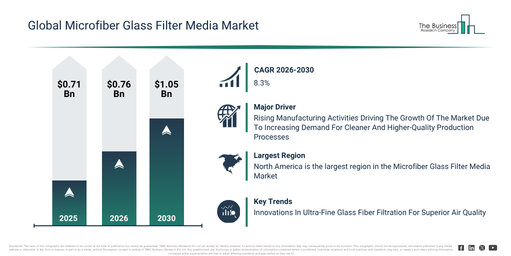
  • Microfiber Glass Filter Media Market Growth Outlook: Why Analysts Expect Continued Expansion

    Microfiber Glass Filter Media Market Growth Outlook: Why Analysts Expect Continued Expansion

    Backed by market attractiveness analysis, total addressable market sizing, company benchmarking matrices, interactive Excel dashboards, wider supply chain intelligence, emerging startup coverage, and detailed product-level insights, The Business Research Company’s 2026 market reports are designed to offer research that is more actionable and strategically valuable than ever.

    Microfiber Glass Filter Media Market Set To Climb From $0.76 Billion In 2026 To $1.05 Billion By 2030

    The microfiber glass filter media market has demonstrated strong growth in recent years. It is projected to expand from $0.71 billion in 2025 to $0.76 billion in 2026, at a compound annual growth rate (CAGR) of 8.1%. The market’s past growth can be ascribed to increased awareness of indoor air quality, the expansion of healthcare and pharmaceutical sectors, escalating industrial pollution, the implementation of cleanroom standards, and regulatory requirements for air filtration efficiency.

    The microfiber glass filter media market is projected to experience substantial growth in the coming years, anticipated to reach $1.05 billion by 2030, at a compound annual growth rate (CAGR) of 8.3%. This expansion during the forecast period is attributed to factors such as the increasing number of cleanroom facilities, the rising demand for energy-efficient filtration media, ongoing technological advancements in microfiber glass filter production, growing investments in environmental monitoring, and the expanding use of filtration in research laboratories. Key trends expected throughout the forecast period involve an escalating demand for high-efficiency air filtration systems, the broader adoption of HEPA and ULPA filter media, increased application of microfiber glass filters within the healthcare and pharmaceutical sectors, the expansion of industrial and laboratory filtration applications, and a strong focus on achieving low pressure drop combined with high dust holding capacity.

    Get A Free Sample Report With In-Depth Market Insights:

    https://thebusinessresearchcompany.com/sample_request?id=61346872&type=smp&name=Microfiber%20Glass%20Filter%20Media%20Market%20Report%202026&utm_source=Blogs&utm_medium=Paid&utm_campaign=Oct_PR

    Microfiber Glass Filter Media Market Development Factors: What’s Supporting Demand?

    The rise in manufacturing activities is projected to propel the expansion of the microfiber glass filter media market. These activities encompass processes that convert raw materials or components into finished products through labor, machinery, and technology. Manufacturing activities are increasing due to escalating consumer demand for goods, which encourages companies to expand their production capabilities and adopt more efficient technologies to fulfill market needs. Microfiber glass filter media enhances manufacturing processes by effectively capturing minute airborne or liquid-borne particles, ensuring cleaner production environments and consistently superior product quality. For example, as reported by the House of Commons Library, a UK-based information resource, in April 2026, monthly manufacturing output saw a 0.1% increase in January 2026, with growth evident in five out of 13 subsectors. Over the three months leading up to January 2026, manufacturing output grew by 1.5% compared to the preceding quarter. Therefore, the expansion in manufacturing activities is anticipated to drive growth in the microfiber glass filter media market.

    Microfiber Glass Filter Media Market Segment Trends And Revenue Contributors

    The microfiber glass filter media market covered in this report is segmented –

    1) By Product Type: Glass Microfiber Filter Paper, Glass Microfiber Filter Membranes, High Efficiency Particulate Air (HEPA) Filter Media Sheets, Ultra Low Penetration Air (ULPA) Filter Media Sheets, Glass Fiber Filter Pads, Glass Microfiber Filter Discs, Glass Microfiber Filter Rolls

    2) By Filtration Type: Air Filtration, Liquid Filtration

    3) By Distribution Channel: Direct Sales, Distributors And Wholesalers, Online Sales

    4) By Application: American Society Of Heating, Refrigerating And Air-Conditioning Engineers (ASHRAE), High Efficiency Particulate Air (HEPA), Ultra Low Penetration Air (ULPA)

    5) By End-User Industry: Healthcare Or Pharmaceuticals, Environmental Or Water Treatment, Manufacturing Or Industrial, Laboratories Or Research

    Subsegments:

    1) By Glass Microfiber Filter Paper: Quantitative Filter Paper, Qualitative Filter Paper, Binder Free Filter Paper, Binder Containing Filter Paper

    2) By Glass Microfiber Filter Membranes: Hydrophilic Glass Microfiber Membranes, Hydrophobic Glass Microfiber Membranes, Reinforced Glass Microfiber Membranes, Non Reinforced Glass Microfiber Membranes

    3) By High Efficiency Particulate Air (HEPA) Filter Media Sheets: Standard Efficiency High Efficiency Particulate Air (HEPA) Media Sheets, High Dust Holding High Efficiency Particulate Air (HEPA) Media Sheets, Low Pressure Drop High Efficiency Particulate Air (HEPA) Media Sheets, High Temperature Resistant High Efficiency Particulate Air (HEPA) Media Sheets

    4) By Ultra Low Penetration Air (ULPA) Filter Media Sheets: Ultra High Efficiency Filter Media Sheets, Cleanroom Grade Filter Media Sheets, Low Resistance Ultra Fine Filter Media Sheets, High Capacity Particle Retention Filter Media Sheets

    5) By Glass Fiber Filter Pads: Pre Filtration Glass Fiber Pads, High Efficiency Glass Fiber Pads, Coarse Particle Filtration Pads, Fine Particle Filtration Pads

    6) By Glass Microfiber Filter Discs: Sterile Filtration Discs, Analytical Filtration Discs, Laboratory Grade Filtration Discs, High Purity Filtration Discs

    7) By Glass Microfiber Filter Rolls: Industrial Filtration Rolls, Laboratory Filtration Rolls, High Efficiency Filtration Rolls, Continuous Process Filtration Rolls

    Microfiber Glass Filter Media Market Transformation Trends: What Innovations Are Driving Change?

    Leading companies within the microfiber glass filter media market are concentrating on advancements in ultra-fine glass fiber manufacturing, including improved thermal stability and sophisticated microfiber glass filtration media. These efforts aim to achieve superior particle capture efficiency, better airflow performance, and increased durability for high-efficiency air filtration applications. Enhanced thermal stability signifies the media’s capacity to retain its structural integrity and filtration capabilities even in high-temperature settings, thereby guaranteeing reliability in challenging HVAC and industrial environments. For instance, in November 2024, US-based Johns Manville, an insulation and engineered products manufacturer, inaugurated a cutting-edge micro fiberglass production line at its Wertheim, Germany facility to produce Evalith micro fiberglass nonwovens. These materials are engineered to trap particles as tiny as one micrometer, encompassing viruses, bacteria, and dust, while guaranteeing long-lasting and steady filtration efficacy. This innovation also boosts energy efficiency, assisting filter producers in attaining better ratings, decreasing energy use, and promoting environmentally friendly indoor air solutions.

    Microfiber Glass Filter Media Market Competitive Analysis Of Leading Industry Participants

    Major companies operating in the microfiber glass filter media market are Parker-Hannifin Corporation, Johns Manville, Sinoma Science & Technology Co. Ltd., Ahlstrom-Munksjö Oyj, Alkegen LLC, Sogefi Group S.p.A, Camfil AB, Hollingsworth & Vose Company, Freudenberg Filtration Technologies GmbH & Co. KG, Chongqing Zaisheng Technology Co. Ltd., Macherey-Nagel GmbH & Co. KG, Hokuetsu Corporation, Spectrum Chemical Manufacturing Corp., Porvair Filtration Group Plc, MANN+HUMMEL Gruppe, Meissner Filtration Products Inc., Cobetter Filtration Co. Ltd., I.W. Tremont Corporation, Sterlitech Corporation, HI-Q Environmental Products Inc.

    View The Full Microfiber Glass Filter Media Market Report:

    https://thebusinessresearchcompany.com/report/microfiber-glass-filter-media-market-report?utm_source=Blogs&utm_medium=Paid&utm_campaign=Oct_PR

    Microfiber Glass Filter Media Market Geographic Distribution And Regional Opportunities

    North America was the largest region in the microfiber glass filter media market in 2025. Asia-Pacific is expected to be the fastest-growing region in the forecast period. The regions covered in the microfiber glass filter media market report are Asia-Pacific, South East Asia, Western Europe, Eastern Europe, North America, South America, Middle East, Africa.

    Reach Out To Our Team:

    The Business Research Company: https://www.thebusinessresearchcompany.com/

    Americas: +1 310-496-7795

    Asia: +44 7882 955267 & +91 8897263534

    Europe: +44 7882 955267

    Email us at: marketing@tbrc.info

    Follow us on:

    LinkedIn: https://in.linkedin.com/company/the-business-research-company

    YouTube: https://www.youtube.com/channel/UC24_fI0rV8cR5DxlCpgmyFQ

    Global Market Model: https://www.thebusinessresearchcompany.com/global-market-model