Blog

  • Menopausal Disorder Treatment Market Analysis Through 2030: Market Size, Growth Trends And Industry Outlook

    Menopausal Disorder Treatment Market Analysis Through 2030: Market Size, Growth Trends And Industry Outlook

    Featuring market attractiveness scoring, total addressable market sizing, company benchmarking matrices, interactive Excel dashboards, deeper supply chain intelligence, emerging startup tracking, and granular product-level insights, The Business Research Company’s 2026 market reports are built to deliver research that is both more actionable and more strategically valuable.

    Menopausal Disorder Treatment Market Value Growth And Long-Term Outlook

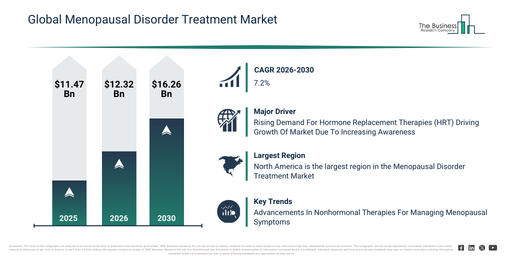
    The menopausal disorder treatment market has experienced significant expansion in recent years. It is projected to increase from $11.47 billion in 2025 to $12.32 billion in 2026, exhibiting a compound annual growth rate (CAGR) of 7.4%. This historical growth can be ascribed to a number of factors, including the expanding aging female demographic, the widespread application of hormone replacement therapy, more frequent diagnosis of menopausal symptoms, the extension of gynecology care services, and improved healthcare access for women.

    The menopausal disorder treatment market is projected to experience substantial expansion over the coming years, reaching $16.26 billion by 2030, exhibiting a compound annual growth rate (CAGR) of 7.2%. This anticipated growth during the forecast period is driven by several factors, such as a heightened demand for safer menopause therapies, a greater emphasis on tailored treatment strategies, increased recognition of the long-term risks associated with hormone replacement therapy (HRT), the proliferation of digital platforms dedicated to women’s health, and the growing uptake of proactive women’s healthcare practices. Concurrently, key trends defining this period encompass a surging preference for non-hormonal approaches to menopause management, the expanding acceptance of personalized hormone replacement therapy, wider incorporation of lifestyle and behavioral changes, the broadening availability of herbal and natural menopause remedies, and enhanced understanding of how to manage menopausal symptoms.

    Get A Free Sample Report With In-Depth Market Insights:

    https://thebusinessresearchcompany.com/sample_request?id=31640829&type=smp&name=Menopausal%20Disorder%20Treatment%20Market%20Report%202026&utm_source=Blogs&utm_medium=Paid&utm_campaign=Oct_PR

    Menopausal Disorder Treatment Market Growth Factors Behind Sustained Expansion

    The escalating demand for hormone replacement therapies (HRT) is projected to fuel the expansion of the menopausal disorder treatment market. Hormone replacement therapy (HRT) refers to a medical intervention involving the supplementation or replacement of hormones to alleviate symptoms linked with menopause or hormone imbalances. The increase in these therapies is driven by growing awareness and the need for effective management of menopausal symptoms and hormonal imbalances. HRT treats menopausal disorder by directly replenishing estrogen and progesterone levels, which aids in restoring hormonal balance and reducing disruptive symptoms such as hot flashes, night sweats, and mood swings, ultimately improving quality of life. For instance, in October 2024, the NHS Business Services Authority (NHSBSA), a UK-based organization offering various support services, reported a 22% surge in prescribed HRT items to 13 million, coupled with a 12% increase in identified patients, rising from 2.3 million in 2022/23 to 2.6 million in 2023/24. Therefore, the rising demand for hormone replacement therapies is a significant driver for the menopausal disorder treatment market’s growth.

    Menopausal Disorder Treatment Market Segment Landscape And Growth Outlook

    The menopausal disorder treatment market covered in this report is segmented –

    1) By Treatment Type: Hormone Replacement Therapy, Non-Hormonal Treatment, Herbal Supplements, Lifestyle Modifications

    2) By Stages: Menopause, Postmenopause, Perimenopause

    3) By Application: Hot Flashes, Night Sweats, Mood Swings, Vaginal Dryness

    4) By Distribution Channel: Hospital Pharmacy, Retail Pharmacy, Online Pharmacy, Other Distribution Channels

    5) By End-Users: Hospitals, Specialty Clinics, Homecare, Other End-Users

    Subsegments:

    1) By Hormone Replacement Therapy (HRT): Estrogen Therapy, Progesterone Therapy, Combination Therapy, Transdermal Patches, Vaginal Estrogen, Oral Tablets

    2) By Non-Hormonal Treatment: Selective Estrogen Receptor Modulators (SERMs), Antidepressants, Gabapentin, Clonidine, Bisphosphonates, Calcium And Vitamin D Supplements

    3) By Herbal Supplements: Black Cohosh, Red Clover, Dong Quai, Ginseng, Soy Isoflavones, Flaxseed

    4) By Lifestyle Modifications: Dietary Changes, Regular Physical Exercise, Stress Management Techniques, Cognitive Behavioral Therapy (CBT), Smoking Cessation, Sleep Hygiene Practices

    Menopausal Disorder Treatment Market Industry Trends Fueling Future Revenue Growth

    Leading firms within the menopausal disorder treatment market are developing novel nonhormonal neurokinin 3 (NK3) receptor antagonist medications, aimed at effectively managing vasomotor symptoms without requiring hormone therapy. These pioneering nonhormonal neurokinin 3 (NK3) receptor antagonist therapies represent innovative approaches that inhibit NK3 receptors to alleviate menopausal symptoms, eliminating the need for hormonal intervention. A notable instance occurred in December 2023 when Astellas Pharma Inc., a Japanese pharmaceutical company, secured approval from the European Commission for Veozah (fezolinetant). This drug is a non-hormonal NK3 receptor antagonist specifically designed for addressing moderate to severe vasomotor symptoms (VMS), including hot flashes and night sweats, in women experiencing menopause. Its mechanism involves targeting specific neurons within the brain’s temperature regulation center, thereby diminishing the occurrence and severity of these symptoms.

    Menopausal Disorder Treatment Market Competitive Landscape: Who Leads The Industry?

    Major companies operating in the menopausal disorder treatment market are Pfizer Inc., F. Hoffmann-La Roche Ltd, Merck & Co Inc., Novartis AG, Bayer AG, Bristol-Myers Squibb Company, Sanofi SA, AstraZeneca plc, Eli Lilly and Company, Novo Nordisk A/S, Abbott Laboratories, GlaxoSmithKline plc, Teva Pharmaceutical Industries Ltd., Ipsen SA, Dr. Reddy’s Laboratories Ltd., Theramex, Besins Healthcare, Mithra Pharmaceuticals, Duchesnay USA, Fervent Pharmaceuticals, Joylux Inc., TherapeuticsMD Inc.

    View The Full Menopausal Disorder Treatment Market Report:

    https://thebusinessresearchcompany.com/report/menopausal-disorder-treatment-global-market-report?utm_source=Blogs&utm_medium=Paid&utm_campaign=Oct_PR

    Menopausal Disorder Treatment Market Largest Region By Revenue And Market Share

    North America was the largest region in the menopausal disorder treatment market in 2025. The regions covered in the menopausal disorder treatment market report are Asia-Pacific, South East Asia, Western Europe, Eastern Europe, North America, South America, Middle East, Africa.

    Reach Out To Our Team:

    The Business Research Company: https://www.thebusinessresearchcompany.com/

    Americas: +1 310-496-7795

    Asia: +44 7882 955267 & +91 8897263534

    Europe: +44 7882 955267

    Email us at: marketing@tbrc.info

    Follow us on:

    LinkedIn: https://in.linkedin.com/company/the-business-research-company

    YouTube: https://www.youtube.com/channel/UC24_fI0rV8cR5DxlCpgmyFQ

    Global Market Model: https://www.thebusinessresearchcompany.com/global-market-model
  • Meningococcal Vaccines Market Outlook From 2026 To 2030: Key Growth Factors And Future Opportunities

    Meningococcal Vaccines Market Outlook From 2026 To 2030: Key Growth Factors And Future Opportunities

    Built to provide research that’s more actionable and strategically valuable, The Business Research Company’s 2026 market reports include market attractiveness analysis, total addressable market sizing, company benchmarking matrices, interactive Excel dashboards, broader supply chain intelligence, emerging startup tracking, and in-depth product insights.

    Meningococcal Vaccines Market Poised To Hit $6.58 Billion By 2030 With A 9.1% CAGR

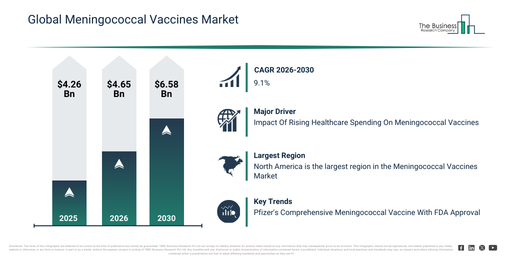
    The meningococcal vaccines market size has experienced robust growth in recent years. It is projected to increase from $4.26 billion in 2025 to $4.65 billion in 2026, exhibiting a compound annual growth rate (CAGR) of 9.3%. The expansion observed in the historical period can be attributed to the availability of meningococcal conjugate vaccines, an escalation in the occurrence of meningitis outbreaks, governmental immunization initiatives, expanding pediatric vaccination rates, and enhanced public health funding.

    The meningococcal vaccines market is anticipated to experience robust expansion in the coming years. It is projected to reach $6.58 billion in 2030, exhibiting a compound annual growth rate (CAGR) of 9.1%. This growth during the forecast period can be attributed to several factors, including advancements in vaccine technology, the expansion of global immunization programs, a rise in awareness regarding meningococcal disease, the formation of strategic partnerships and collaborations, and an increase in vaccination initiatives targeting adolescents and young adults. Key trends anticipated within this period involve the expansion of pediatric vaccination programs, the development of broad-spectrum meningococcal vaccines, increased government-led immunization efforts, heightened awareness concerning meningococcal disease prevention, and the growth of vaccination campaigns in schools and colleges.

    Get A Free Sample Report With In-Depth Market Insights:

    https://thebusinessresearchcompany.com/sample_request?id=39311036&type=smp&name=Meningococcal%20Vaccines%20Market%20Report%202026&utm_source=Blogs&utm_medium=Paid&utm_campaign=Oct_PR

    Meningococcal Vaccines Market Demand Drivers Opening New Revenue Streams

    The meningococcal vaccine market is anticipated to grow, driven by an uptick in healthcare spending. Healthcare includes institutions providing residential care, nursing facilities, and intermediate care for individuals with mental illnesses or intellectual disabilities. A significant discussion point has been the high cost of newer vaccine generations compared to previous ones, prompting scrutiny into whether their benefits justify their prices. Consequently, assessing the comprehensive social and economic advantages of vaccination is becoming an increasingly vital area of study in the literature concerning vaccine valuation. For instance, an article published by the American Medical Association in April 2025 indicated that U.S. health spending increased by 7.5% in 2023, reaching $4.9 trillion or $14,570 per capita. This expansion rate is considerably higher than the 4.6% increase recorded in 2022. Therefore, the expanding healthcare expenditure is fueling the growth of the meningococcal vaccine market.

    Meningococcal Vaccines Market Breakdown By Product Type And Application

    The meningococcal vaccines market covered in this report is segmented –

    1) By Vaccine Type: Meningococcal Conjugate Vaccine, Polysaccharide, Subcapsular Vaccine

    2) By Serotype: Men Acwy, Men B/Bc, Men C

    3) By Age Group: Infants, Children, Adolescents and Young Adults, Adults

    4) By Distribution Channel: Pharmacies, Community Clinics, Public Health Agencies, Other Channels

    5) By End user: Hospitals, Research, Academic Institutes

    Subsegments:

    1) By Meningococcal Conjugate Vaccine: Quadrivalent Conjugate Vaccine (MenACWY), Bivalent Conjugate Vaccine

    2) By Polysaccharide Vaccine: Meningococcal Polysaccharide Vaccine (MPSV4), Group C Polysaccharide Vaccine

    3) By Subcapsular Vaccine: Meningococcal B Vaccine (MenB), Combination Subcapsular Vaccines

    Meningococcal Vaccines Market Trends Powering Strategic Industry Growth

    Major companies in the meningococcal vaccines market are developing new vaccines to prevent various serogroups, aiming to boost their market profitability. Meningococcal vaccines are designed as preventive measures to shield individuals from infections caused by specific serogroups of the Neisseria meningitidis bacteria. For instance, in October 2023, Pfizer Inc., a US-based pharmaceutical company, obtained FDA approval for its vaccine, PENBRAYA. With extensive serogroup coverage, PENBRAYA is the most comprehensive U.S.-approved meningococcal vaccine, protecting against groups A, B, C, W, and Y. The FDA approval is supported by robust Phase 2 and 3 trial data, confirming non-inferior immunogenicity compared to Trumenba + Menveo across all serogroups, alongside a favorable safety profile. Pfizer’s September 2022 announcement had previously revealed positive outcomes from a Phase 3 trial, which assessed PENBRAYA’s safety, tolerability, and immunogenicity against existing licensed meningococcal vaccines.

    Meningococcal Vaccines Market Company Landscape And Competitive Strategy

    Major companies operating in the meningococcal vaccines market are Pfizer Inc.,GlaxoSmithKline plc,Sanofi Pasteur,Merck & Co. Inc.,Serum Institute of India Pvt. Ltd.,Bio-Manguinhos,Walvax Biotechnology Co. Ltd.,Bharat Biotech,Panacea Biotec Ltd.,CSL Limited,Minhai Biotechnology Co. Ltd.,Hualan Biological Engineering Inc.,Shenzhen Kangtai Biological Products Co. Ltd.,Chongqing Zhifei Biological Products Co. Ltd.,Incepta Pharmaceuticals Ltd.,Biological E. Limited,Biokangtai,Biomed Pvt Ltd.,Biocine SCL,Bavarian Nordic A/S

    View The Full Meningococcal Vaccines Market Report:

    https://thebusinessresearchcompany.com/report/meningococcal-vaccines-global-market-report?utm_source=Blogs&utm_medium=Paid&utm_campaign=Oct_PR

    Meningococcal Vaccines Market Regional Analysis And Leading Geography

    North America was the largest region in the meningococcal vaccines market in 2025. Asia-Pacific is expected to be the fastest-growing region in the meningococcal vaccines market report during the forecast period. The regions covered in the meningococcal vaccines market report are Asia-Pacific, South East Asia, Western Europe, Eastern Europe, North America, South America, Middle East, Africa.

    Reach Out To Our Team:

    The Business Research Company: https://www.thebusinessresearchcompany.com/

    Americas: +1 310-496-7795

    Asia: +44 7882 955267 & +91 8897263534

    Europe: +44 7882 955267

    Email us at: marketing@tbrc.info

    Follow us on:

    LinkedIn: https://in.linkedin.com/company/the-business-research-company

    YouTube: https://www.youtube.com/channel/UC24_fI0rV8cR5DxlCpgmyFQ

    Global Market Model: https://www.thebusinessresearchcompany.com/global-market-model
  • Memantine HCl Market Growth Forecast: Market Size, Key Trends And Emerging Opportunities Through 2030

    Memantine HCl Market Growth Forecast: Market Size, Key Trends And Emerging Opportunities Through 2030

    Backed by market attractiveness analysis, total addressable market sizing, company benchmarking matrices, interactive Excel dashboards, wider supply chain intelligence, emerging startup coverage, and detailed product-level insights, The Business Research Company’s 2026 market reports are designed to offer research that is more actionable and strategically valuable than ever.

    Memantine HCl Market Size And Revenue Outlook Through 2030

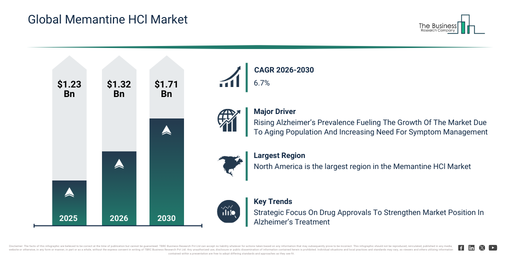
    The memantine hcl market size has exhibited strong growth in recent years. It is anticipated to expand from $1.23 billion in 2025 to $1.32 billion in 2026, showing a compound annual growth rate (CAGR) of 7.0%. This historical expansion can be linked to factors such as an increasing aging population, the prevalence of Alzheimer’s disease, neurologist-prescribed therapies, hospital-based dementia care, and the adoption of branded drugs.

    The memantine hcl market is anticipated to exhibit robust expansion over the next few years. Its valuation is projected to reach $1.71 billion by 2030, reflecting a compound annual growth rate (CAGR) of 6.7%. This expected growth during the forecast period is driven by factors such as increasing dementia diagnosis rates, the rise of home-based elderly care, the expansion of the generic market, demand for extended-release dosage forms, and advancements in digital cognitive monitoring. Key trends in the same period include a growing demand for Alzheimer’s disease therapies, increased utilization of combination dementia treatments, wider availability of generic drugs, the growth of long-term cognitive care, and the ongoing development of extended-release formulations.

    Get A Free Sample Report With In-Depth Market Insights:

    https://thebusinessresearchcompany.com/sample_request?id=99188656&type=smp&name=Memantine%20HCl%20Market%20Report%202026&utm_source=Blogs&utm_medium=Paid&utm_campaign=Oct_PR

    Memantine HCl Market Growth Backed By Core Demand Fundamentals

    The increasing occurrence of Alzheimer’s disease is anticipated to drive the expansion of the memantine HCl market in the future. Alzheimer’s disease is defined as a progressive neurological condition that mainly impacts memory, cognitive processes, conduct, and the capacity for daily functions. This surge in Alzheimer’s cases stems from an aging demographic, where improved healthcare and nutrition lead to extended lifespans, consequently increasing the population of older individuals who face a greater risk. Memantine HCl offers a treatment for Alzheimer’s disease, acting as a medication that decelerates the worsening of moderate to severe symptoms by managing unusual glutamate activity within the brain, which in turn enhances cognitive abilities, recall, and everyday activities for those affected. For example, a report from the National Library of Medicine, a US-based national library, stated that in April 2025, 7.2 million Americans aged 65 and older are living with Alzheimer’s dementia, with projections indicating a potential increase to 13.8 million by 2060. Consequently, the growing prevalence of Alzheimer’s disease is propelling the expansion of the Memantine HCl market.

    Memantine HCl Market Segment Analysis And Revenue Potential

    The memantine hcl market covered in this report is segmented –

    1) By Product Type: Tablet Formulation, Oral Solution, Extended-Release Capsules

    2) By Dosage Form: Standard Dosage (5 mg, 10 mg), Customized Dosage Solutions

    3) By Distribution Channel: Hospital Pharmacies, Retail Pharmacies, Online Pharmacies

    4) By Application: Alzheimer’s Disease Treatment, Vascular Dementia Management, Off-Label Uses

    5) By End User: Hospitals, Long-Term Care Facilities, Home Healthcare, Outpatient Clinics

    Subsegments:

    1) By Tablet Formulation: Immediate-Release Tablets, Film-Coated Tablets, Dispersible Tablets, Chewable Tablets, Scored Tablets

    2) By Oral Solution: Ready-To-Use Oral Solution, Concentrated Oral Solution (Requires Dilution), Flavored Oral Solution, Sugar-Free Oral Solution, Alcohol-Free Oral Solution

    3) By Extended-Release Capsules: Once-Daily ER Capsules, Multi-Particulate Capsule Formulations, Bead-Filled ER Capsules, Liquid-Filled ER Capsules, High-Dose ER Capsules

    Memantine HCl Market Growth Trends Reshaping The Competitive Landscape

    Leading companies in the memantine HCl market are strategically prioritizing the acquisition of regulatory clearances to enlarge their market footprint and bolster their function in combating alzheimer’s disease and other neurodegenerative conditions. Regulatory approvals constitute official permissions given by governmental or regulatory entities, such as the U.S. Food and Drug Administration (FDA). These authorizations enable pharmaceutical products, medical devices, or therapies to be lawfully commercialized and consumed by the public. For example, in January 2025, Amneal Pharmaceuticals Inc., a U.S.-based pharmaceutical enterprise, obtained FDA approval for memantine/donepezil extended-release capsules and everolimus tablets for oral suspension, alongside a provisional U.S. FDA approval for rifaximin. The memantine/donepezil extended-release capsules, offered in 14-10 mg and 28-10 mg concentrations, serve as a generic equivalent to AbbVie’s Namzaric. This fixed-dose combination comprises memantine hydrochloride, identified as an NMDA receptor antagonist, and donepezil hydrochloride, an acetylcholinesterase inhibitor. It is prescribed for addressing moderate to severe dementia of the alzheimer’s type in patients who are stable on 10 mg of donepezil hydrochloride once daily.

    Memantine HCl Market Key Players Shaping Industry Direction

    Major companies operating in the memantine hcl market are Sun Pharmaceutical Industries Ltd, Dr. Reddy’s Laboratories Ltd, Lupin Limited, Amneal Pharmaceuticals Inc., Zydus Lifesciences Limited, Ajanta Pharma Limited, ANI Pharmaceuticals Inc., Uquifa S.A., Procos S.p.A., Orchid Pharma Limited, Forest Laboratories LLC, Olon S.p.A., Smilax Laboratories Limited, Consern Pharma Private Limited, Pellets Pharma Limited, Zeal MediPharma, Hermes Chemical Industries, JPN Pharma Pvt Ltd., Murli Krishna Pharma Pvt Ltd., Prudence Pharma Chem.

    View The Full Memantine HCl Market Report:

    https://thebusinessresearchcompany.com/report/memantine-hcl-global-market-report?utm_source=Blogs&utm_medium=Paid&utm_campaign=Oct_PR

    Memantine HCl Market Geographic Analysis: Where Is Demand Accelerating Fastest?

    North America was the largest region in the memantine HCl market in 2025. Asia-Pacific is expected to be the fastest-growing region in the forecast period. The regions covered in the memantine hcl market report are Asia-Pacific, South East Asia, Western Europe, Eastern Europe, North America, South America, Middle East, Africa.

    Reach Out To Our Team:

    The Business Research Company: https://www.thebusinessresearchcompany.com/

    Americas: +1 310-496-7795

    Asia: +44 7882 955267 & +91 8897263534

    Europe: +44 7882 955267

    Email us at: marketing@tbrc.info

    Follow us on:

    LinkedIn: https://in.linkedin.com/company/the-business-research-company

    YouTube: https://www.youtube.com/channel/UC24_fI0rV8cR5DxlCpgmyFQ

    Global Market Model: https://www.thebusinessresearchcompany.com/global-market-model
  • Melatonin Supplements Market CAGR Forecast Through 2030: Key Trends Shaping Industry Expansion

    Melatonin Supplements Market CAGR Forecast Through 2030: Key Trends Shaping Industry Expansion

    Featuring market attractiveness scoring, total addressable market sizing, company benchmarking matrices, interactive Excel dashboards, deeper supply chain intelligence, emerging startup tracking, and granular product-level insights, The Business Research Company’s 2026 market reports are built to deliver research that is both more actionable and more strategically valuable.

    Melatonin Supplements Market Growth From $3.08 Billion In 2026 To $4.88 Billion By 2030 At A CAGR Of 12.2%

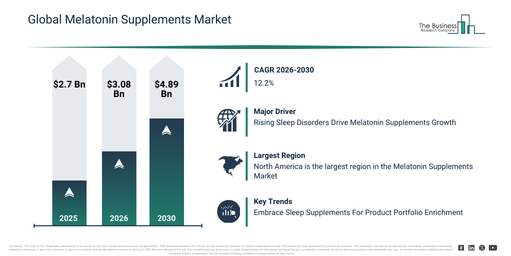
    The melatonin supplements market has experienced rapid expansion in recent years. Its valuation is projected to increase from $2.7 billion in 2025 to $3.08 billion by 2026, demonstrating a compound annual growth rate (CAGR) of 14.3%. Historically, this expansion has been driven by factors such as the rising incidence of sleep disorders and insomnia, the broad accessibility of over-the-counter melatonin products, increased understanding of circadian rhythm management, a preference for sleep aids that are not habit-forming, and early uptake by frequent travelers and individuals working shifts.

    The melatonin supplements market is anticipated to experience significant expansion over the coming years. Its value is projected to reach $4.89 billion by 2030, demonstrating a compound annual growth rate (CAGR) of 12.2%. This projected increase during the forecast period stems from several factors, including heightened global stress levels and increased screen time affecting sleep quality, an expanding elderly population facing sleep difficulties, a greater emphasis on mental well-being and improving sleep, the introduction of more melatonin formulations for children and seniors, and the growing presence of online platforms for supplement sales. Key trends anticipated during this period encompass a surge in consumer uptake of sleep health supplements, increasing preference for over-the-counter sleep solutions, the availability of melatonin products in diverse dosage formats, a rise in melatonin’s application for managing jet lag and sleep disturbances from shift work, and a growing inclination towards clean-label and naturally sourced melatonin items.

    Get A Free Sample Report With In-Depth Market Insights:

    https://thebusinessresearchcompany.com/sample_request?id=53666072&type=smp&name=Melatonin%20Supplements%20Market%20Report%202026&utm_source=Blogs&utm_medium=Paid&utm_campaign=Oct_PR

    Melatonin Supplements Market Growth Catalysts And Demand Drivers

    The increasing occurrence of sleep disturbances is anticipated to fuel the expansion of the melatonin supplements market in the future. Sleep disorders are conditions impacting the quality, timing, or length of sleep, resulting in diminished daytime performance and overall well-being. The rise in sleep disorder prevalence can be attributed to shifts in lifestyle, extensive screen time, poor sleep habits, and an aging demographic. The melatonin supplements market assists those with sleep disorders by offering additional melatonin to help regulate circadian rhythms, enhance sleep patterns, and ease conditions like jet lag and delayed sleep phase disorders. For example, in November 2023, Sleep Care Online, a US-based telemedicine company, reported that approximately 50 to 70 million people suffer from chronic sleep issues, primarily insomnia, sleep apnea, and narcolepsy. Consequently, the growing incidence of sleep disorders is stimulating the development of the melatonin supplements market.

    Melatonin Supplements Market Segmentation And Category Overview

    The melatonin supplements market covered in this report is segmented –

    1) By Type: Natural Melatonin, Synthetic Melatonin

    2) By Form: Tablets And Capsules, Liquid, Sublingual Pellets, Other Forms

    3) By Distribution Channel: Supermarkets And Hypermarkets, Drug Stores, Online Retail, Other Distribution Channels

    4) By Application: Alzheimer’s Disease, Weak Immune System, Osteoporosis, Nerve Pain, Other Applications

    5) By End User: Adults, Children

    Subsegments:

    1) By Natural Melatonin: Plant-Based Melatonin

    2) By Synthetic Melatonin: Tablet Or capsule Form, Liquid Form, Chewable Or softgel Form, Sublingual Melatonin

    Melatonin Supplements Market Trends Shaping Long-Term Demand

    Leading companies within the melatonin supplements market are directing their efforts towards creating advanced sleep aids designed to elevate sleep quality, promote relaxation, and resolve common difficulties such as struggling to fall asleep or remain asleep. Sleep supplements themselves are defined as dietary products specifically formulated with ingredients like melatonin to foster healthy sleep rhythms, encourage peaceful slumber, and lessen instances of waking up during the night. Illustrating this trend, in May 2024, Natrol LLC, a US-based manufacturer of dietary supplements, unveiled time-release melatonin gummies. These gummies feature an innovative dual-action delivery system that first provides an immediate dose of melatonin to facilitate quick sleep onset, followed by a controlled, extended release to ensure continuous sleep throughout the night. Available in various strengths, these particular gummies are crafted using clean ingredients, free from artificial flavors, sweeteners, and dyes, thereby presenting a natural and efficacious option for achieving undisturbed, restorative sleep.

    Melatonin Supplements Market Competitive Analysis Of Leading Industry Participants

    Major companies operating in the melatonin supplements market are Walgreens Boots Alliance Inc., Swanson Health Products Incorporated, Vitacost.com Inc., Now Health Group Inc., The Himalaya Drug Company, Jarrow Industries Inc., Natrol Inc., Life Extension, Natural Factors Nutritional Products Inc., Robinson Pharma Inc., Country Life LLC, Pharmavite LLC, Pure Encapsulations LLC, Solgar Inc., Solaray Inc, Mason Vitamins Inc., The Nature’s Bounty Co., Optimum Nutrition Inc., Douglas Laboratories, Puritan’s Pride Inc., Nature Made, Amazing Nutrition Inc., Just Potent LLC, Source Naturals Inc., Bio-Tech Pharmacal Inc.

    View The Full Melatonin Supplements Market Report:

    https://thebusinessresearchcompany.com/report/melatonin-supplements-global-market-report?utm_source=Blogs&utm_medium=Paid&utm_campaign=Oct_PR

    Melatonin Supplements Market Global Footprint: Which Region Leads The Industry?

    North America was the largest region in the melatonin supplements market in 2025. The regions covered in the melatonin supplements market report are Asia-Pacific, South East Asia, Western Europe, Eastern Europe, North America, South America, Middle East, Africa.

    Reach Out To Our Team:

    The Business Research Company: https://www.thebusinessresearchcompany.com/

    Americas: +1 310-496-7795

    Asia: +44 7882 955267 & +91 8897263534

    Europe: +44 7882 955267

    Email us at: marketing@tbrc.info

    Follow us on:

    LinkedIn: https://in.linkedin.com/company/the-business-research-company

    YouTube: https://www.youtube.com/channel/UC24_fI0rV8cR5DxlCpgmyFQ

    Global Market Model: https://www.thebusinessresearchcompany.com/global-market-model
  • Melanoma Therapeutics Market To Witness 11% CAGR Growth Through 2030: Key Industry Drivers

    Melanoma Therapeutics Market To Witness 11% CAGR Growth Through 2030: Key Industry Drivers

    Built to provide research that’s more actionable and strategically valuable, The Business Research Company’s 2026 market reports include market attractiveness analysis, total addressable market sizing, company benchmarking matrices, interactive Excel dashboards, broader supply chain intelligence, emerging startup tracking, and in-depth product insights.

    Melanoma Therapeutics Market Expansion Outlook: What Revenue Opportunities Are Ahead?

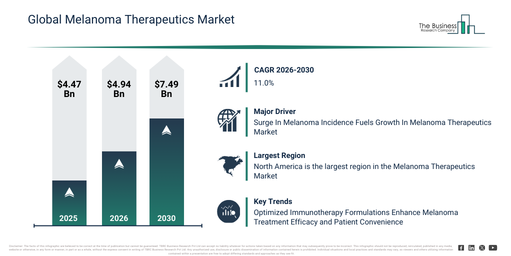
    In recent years, the size of the melanoma therapeutics market has rapidly expanded. This market is projected to increase from $4.47 billion in 2025 to $4.94 billion in 2026, achieving a compound annual growth rate (CAGR) of 10.4%. Historically, this expansion has been driven by factors such as a higher incidence of melanoma, the innovation of monoclonal antibodies, greater awareness regarding skin cancer, improvements in radiation therapy, and the integration of dermatoscopy.

    The melanoma therapeutics market size is anticipated to experience significant expansion in the coming years, reaching $7.49 billion in 2030 at a compound annual growth rate (CAGR) of 11.0%. This growth during the projected period is attributed to the rise of precision medicine, the broader availability of immunotherapy treatments, new developments in small molecule inhibitors, increasing healthcare spending, and the growing integration of AI in diagnostics. Major trends foreseen for this period include the development of personalized melanoma therapies, increased adoption of immunotherapy, continued innovation in targeted therapies, the integration of advanced diagnostic techniques, and the implementation of combination treatment strategies.

    Get A Free Sample Report With In-Depth Market Insights:

    https://thebusinessresearchcompany.com/sample_request?id=29901778&type=smp&name=Melanoma%20Therapeutics%20Market%20Report%202026&utm_source=Blogs&utm_medium=Paid&utm_campaign=Oct_PR

    Melanoma Therapeutics Market Opportunity Drivers: What’s Unlocking New Revenue Potential?

    The growing occurrence of melanoma is anticipated to propel the expansion of the melanoma therapeutics market going forward. Melanoma refers to a skin cancer that originates from melanocytes, and melanoma therapeutics are the therapies and drugs used to treat melanoma patients to alleviate the cancer. Thus, the increasing incidence of melanoma boosts the sales of melanoma therapeutics. For instance, in August 2024, according to a report published by the Australian Institute of Health and Welfare, an Australian-based national agency for information and statistics on Australia’s health and welfare, by 2034, Australia is projected to have approximately 209,000 new cancer diagnoses. This is a significant increase from the estimated 169,000 cases expected in 2024, reflecting the impact of a growing population and rising cancer rates. Additionally, in 2024, cancer is anticipated to account for about 3 out of every 10 deaths in the country. Therefore, the increasing incidence of melanoma is driving the growth of the melanoma therapeutics drug market.

    Melanoma Therapeutics Market Segment Outlook: Which Categories Are Growing Fastest?

    The melanoma therapeutics market covered in this report is segmented –

    1) By Drug Type: Monoclonal Antibodies, Small Molecule Inhibitors, Other Drug Types

    2) By Therapy: Surgery, Radiation Therapy, Immunotherapy, Targeted Therapy, Chemotherapy

    3) By Route of administration: Oral, Injectable

    4) By Cancer Type: Superficial Spreading Melanoma, Nodular Melanoma, Lentigo Maligna Melanoma, Acral Lentiginous Melanoma, Amelanotic Melanoma, Other Cancer Types

    5) By Diagnosis: Dermatoscopy, Sentinel Lymph Node Biopsy, Blood Test, X-ray, Ultrasound, CT Scan

    Subsegments:

    1) By Monoclonal Antibodies: Checkpoint Inhibitors, Targeted Monoclonal Antibodies, Conjugated Antibodies

    2) By Small Molecule Inhibitors: BRAF Inhibitors, MEK Inhibitors, Other Kinase Inhibitors

    3) By Other Drug Types: Chemotherapy Agents, Immunotherapy Agents, Adjuvant Therapies

    Melanoma Therapeutics Market Innovation Trends Shaping Future Development

    Major companies in the melanoma therapeutics market are prioritizing the development of innovative advancements like subcutaneous immunotherapy formulations to enhance treatment convenience and improve patient adherence. A subcutaneous immunotherapy formulation is an injectable anticancer therapy designed to deliver immune-modulating agents beneath the skin, offering efficacy comparable to intravenous administration while reducing treatment time and procedural demands. For instance, in December 2024, Bristol Myers Squibb, a U.S.-based global biopharmaceutical company, obtained U.S. Food and Drug Administration approval for Opdivo Qvantig. This subcutaneous co-formulation of nivolumab and hyaluronidase demonstrated non-inferior pharmacokinetics, comparable safety, and similar overall response rates to the intravenous formulation in the Phase 3 CheckMate-67T trial. The approval introduces the first subcutaneously administered programmed death protein 1 (PD-1) inhibitor, providing a significantly faster administration option and expanding treatment flexibility for patients with solid tumors, including melanoma.

    Melanoma Therapeutics Market Leading Companies And Competitive Benchmarking

    Major companies operating in the melanoma therapeutics market are AstraZeneca plc, Eli Lilly and Company, Merck & Co. Inc., Novartis AG, Amgen Inc., F. Hoffmann-La Roche Ltd., Pfizer Inc., Bristol-Myers Squibb Company, Oncolys BioPharma Inc., Iovance Biotherapeutics Inc., Eisai Co. Ltd., Seattle Genetics Inc., Regeneron Pharmaceuticals Inc., Takeda Pharmaceutical Company Limited, Daiichi Sankyo Company Limited, Nektar Therapeutics, Immutep Ltd., Partner Therapeutics Inc., Infinity Pharmaceuticals Inc., Spring Bank Pharmaceuticals Inc., AIM ImmunoTech Inc.

    View The Full Melanoma Therapeutics Market Report:

    https://thebusinessresearchcompany.com/report/melanoma-therapeutics-global-market-report?utm_source=Blogs&utm_medium=Paid&utm_campaign=Oct_PR

    Melanoma Therapeutics Market Regional Distribution: Which Areas Power Market Growth?

    North America was the largest region in the melanoma therapeutics market in 2025. The regions covered in the melanoma therapeutics market report are Asia-Pacific, South East Asia, Western Europe, Eastern Europe, North America, South America, Middle East, Africa.

    Reach Out To Our Team:

    The Business Research Company: https://www.thebusinessresearchcompany.com/

    Americas: +1 310-496-7795

    Asia: +44 7882 955267 & +91 8897263534

    Europe: +44 7882 955267

    Email us at: marketing@tbrc.info

    Follow us on:

    LinkedIn: https://in.linkedin.com/company/the-business-research-company

    YouTube: https://www.youtube.com/channel/UC24_fI0rV8cR5DxlCpgmyFQ

    Global Market Model: https://www.thebusinessresearchcompany.com/global-market-model
  • Meganuclease Genome Editing Market Outlook 2026–2030: Growth Trends, Market Dynamics And Emerging Opportunities

    Meganuclease Genome Editing Market Outlook 2026–2030: Growth Trends, Market Dynamics And Emerging Opportunities

    Featuring market attractiveness scoring, total addressable market sizing, company benchmarking matrices, interactive Excel dashboards, deeper supply chain intelligence, emerging startup tracking, and granular product-level insights, The Business Research Company’s 2026 market reports are built to deliver research that is both more actionable and more strategically valuable.

    Meganuclease Genome Editing Market Value Analysis: What Growth Lies Ahead Over The Forecast Period?

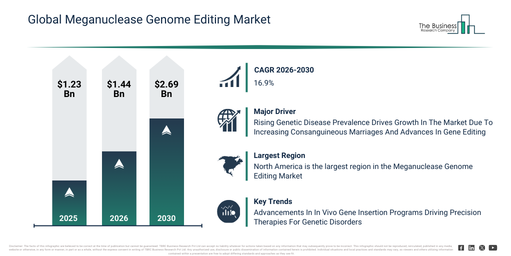
    The meganuclease genome editing market has experienced rapid expansion in recent years. It is expected to grow from $1.23 billion in 2025 to $1.44 billion in 2026, achieving a compound annual growth rate (CAGR) of 17.2%. Historically, this growth can be ascribed to the development of meganuclease genome editing technology, the dependence on zinc finger nucleases and talens, increasing research into genetic engineering, the limited precision of early genome editing tools, and a surge in academic research initiatives.

    The meganuclease genome editing market is anticipated to experience swift expansion over the coming years. This market is projected to reach $2.69 billion in 2030, exhibiting a compound annual growth rate (CAGR) of 16.9%. The projected increase during this period can be attributed to several factors, including the advancement of megaTALs and sophisticated meganuclease variants, a broader range of clinical applications and therapeutic developments, the increasing implementation of ex-vivo and in-vivo genome editing techniques, a rise in both governmental and private investment in gene editing, and the integration with diagnostic tools and precision medicine strategies. Key developments expected during the forecast timeframe include the broadening of meganuclease therapeutic uses, an increase in agricultural and plant genome engineering activities, a greater uptake of ex-vivo and in-vivo delivery approaches, a surge in partnerships between academic bodies and biopharmaceutical firms, and the creation of homing endonuclease-based precise therapies.

    Get A Free Sample Report With In-Depth Market Insights:

    https://thebusinessresearchcompany.com/sample_request?id=89110386&type=smp&name=Meganuclease%20Genome%20Editing%20Market%20Report%202026&utm_source=Blogs&utm_medium=Paid&utm_campaign=Oct_PR

    Meganuclease Genome Editing Market Expansion Drivers: What’s Shaping Future Growth?

    The growing occurrence of genetic ailments is projected to boost the expansion of the meganuclease genome editing market. These are conditions resulting from alterations or mutations in an individual’s DNA, which disrupt typical bodily functions. The rise in genetic diseases is attributed to the increasing incidence of consanguineous marriages, heightening the probability of inheriting such disorders. Meganuclease genome editing precisely cuts DNA to rectify, remove, or substitute faulty genes, facilitating targeted gene therapies with reduced unintended effects and offering potential remedies for hereditary conditions. As an illustration, in May 2024, data from the National Health Service, a UK-based government department, indicated that in England, approximately 17,000 people are affected by sickle cell disease, an inherited blood disorder, with around 250 new diagnoses annually. Consequently, the escalating incidence of genetic diseases is fueling the expansion of the meganuclease genome editing market.

    Meganuclease Genome Editing Market Segments: Where Is Growth Concentrated?

    The meganuclease genome editing market covered in this report is segmented –

    1) By Technology: Clustered Regularly Interspaced Short Palindromic Repeats (CRISPR) Or Cas9, Transcription Activator-Like Effector Nucleases (TALENs) Or Meganuclase-Transcription Activator-Like Effector Nucleases (MegaTALs), Zinc Finger Nucleases (ZFN), Meganuclease, Other Technologies

    2) By Mode: Contract, In-house

    3) By Delivery Method: Ex-Vivo, In-Vivo

    4) By Application: Genetic Engineering, Cell Line Engineering, Plant Genetic Engineering, Animal Genetic Engineering, Clinical Applications, Diagnostics Development, Therapy Development, Other Applications

    5) By End-User: Biotechnology And Pharmaceutical Companies, Academic And Government Research Institutes, Contract Research Organizations

    Subsegments:

    1) By Clustered Regularly Interspaced Short Palindromic Repeats (CRISPR) Or Cas9: Clustered Regularly Interspaced Short Palindromic Repeats (CRISPR)-Cas9 Gene Editing, Clustered Regularly Interspaced Short Palindromic Repeats (CRISPR)-Cas12, Clustered Regularly Interspaced Short Palindromic Repeats (CRISPR)-Cas13

    2) By Transcription Activator-Like Effector Nucleases (TALENs) Or Meganuclase-Transcription Activator-Like Effector Nucleases (MegaTALs): Genome Editing Applications, Therapeutic Applications, Agricultural Biotechnology

    3) By Zinc Finger Nucleases (ZFN): Zinc Finger Nucleases Gene Editing, Transcription Activator-Like Effector Nucleases

    4) By Meganuclease: Homing Endonucleases, Self Splicing Introns

    5) By Other Technologies: Base Editing, Prime Editing

    Meganuclease Genome Editing Market Strategic Trends: What Defines The Next Growth Phase?

    Leading companies in the meganuclease genome editing market are concentrating on developing advanced solutions, such as in vivo gene insertion programs, to improve therapeutic applications and broaden the scope of correcting genetic diseases. In vivo gene insertion programs deliver genetic material directly into living organisms to insert or modify specific genes within their natural cells, thereby enabling precise therapeutic interventions for addressing genetic disorders inside the body. For example, in May 2024, iECURE Inc., a US-based gene editing company, launched ECUR-506, an in vivo gene insertion program aimed at treating neonatal onset ornithine transcarbamylase (OTC) deficiency, which received a fast track designation from the U.S. Food and Drug Administration (FDA). This is a gene editing therapy intended to treat neonatal onset ornithine transcarbamylase (OTC) deficiency. The therapy is designed for newborn males with severe neonatal-onset OTC deficiency and seeks to restore functional OTC enzyme activity through a single intravenous infusion. It has demonstrated a complete clinical response in the first infant treated, facilitating the discontinuation of ammonia scavenger medications and a return to normal protein intake, with reported manageable side effects.

    Meganuclease Genome Editing Market Key Participants And Competitive Landscape

    Major companies operating in the meganuclease genome editing market are Thermo Fisher Scientific Inc., Danaher Corp., Merck KGaA, Lonza Group Ltd., Charles River Laboratories International Inc., Genscript, Takara Bio Inc., Applied StemCell Inc., Cellectis SA., New England Biolabs, Precision Biosciences Inc.

    View The Full Meganuclease Genome Editing Market Report:

    https://thebusinessresearchcompany.com/report/meganuclease-genome-editing-global-market-report?utm_source=Blogs&utm_medium=Paid&utm_campaign=Oct_PR

    Meganuclease Genome Editing Market Regional Outlook: Where Is Opportunity Concentrated?

    North America was the largest region in the meganuclease genome editing market in 2025. The regions covered in the meganuclease genome editing market report are Asia-Pacific, South East Asia, Western Europe, Eastern Europe, North America, South America, Middle East, Africa.

    Reach Out To Our Team:

    The Business Research Company: https://www.thebusinessresearchcompany.com/

    Americas: +1 310-496-7795

    Asia: +44 7882 955267 & +91 8897263534

    Europe: +44 7882 955267

    Email us at: marketing@tbrc.info

    Follow us on:

    LinkedIn: https://in.linkedin.com/company/the-business-research-company

    YouTube: https://www.youtube.com/channel/UC24_fI0rV8cR5DxlCpgmyFQ

    Global Market Model: https://www.thebusinessresearchcompany.com/global-market-model
  • Medulloblastoma Drug Market Growth Outlook From $3.28 Billion In 2026 To $4.49 Billion By 2030

    Medulloblastoma Drug Market Growth Outlook From $3.28 Billion In 2026 To $4.49 Billion By 2030

    Built to provide research that’s more actionable and strategically valuable, The Business Research Company’s 2026 market reports include market attractiveness analysis, total addressable market sizing, company benchmarking matrices, interactive Excel dashboards, broader supply chain intelligence, emerging startup tracking, and in-depth product insights.

    Medulloblastoma Drug Market Size Forecast: How Big Could The Market Get By 2030?

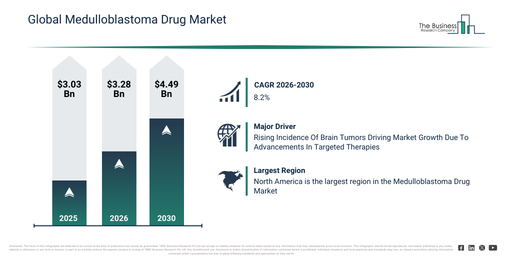
    The medulloblastoma drug market has seen significant expansion in recent years. Its valuation is predicted to increase from $3.03 billion in 2025 to $3.28 billion in 2026, reflecting a compound annual growth rate (CAGR) of 8.3%. The growth observed in previous periods is attributable to advancements in pediatric oncology, a rise in brain tumor diagnosis, the standardization of chemotherapy protocols, the expansion of cancer hospitals, and better surgical outcomes.

    The medulloblastoma drug market is projected to experience substantial expansion over the upcoming years. Its valuation is set to reach $4.49 billion in 2030, exhibiting a compound annual growth rate (CAGR) of 8.2%. This projected increase during the forecast period is attributable to the advancement in targeted brain cancer research, improved survival rates, heightened investment in pediatric oncology, the proliferation of specialty medical centers, and increased funding for rare diseases. Key trends anticipated during this period encompass the increasing adoption of combination chemotherapy protocols, an intensified focus on pediatric oncology care, a surge in clinical trial endeavors for uncommon brain tumors, the broadening of hospital-centric cancer treatment options, and expanded investigation into targeted brain cancer therapies.

    Get A Free Sample Report With In-Depth Market Insights:

    https://thebusinessresearchcompany.com/sample_request?id=10894745&type=smp&name=Medulloblastoma%20Drug%20Market%20Report%202026&utm_source=Blogs&utm_medium=Paid&utm_campaign=Oct_PR

    Medulloblastoma Drug Market Development Factors: What’s Supporting Demand?

    The increasing occurrence of brain tumors is anticipated to boost the expansion of the medulloblastoma drug market in the future. Brain tumors are defined as unusual cellular growths within the brain or spinal canal, which can be either non-cancerous or malignant, with potential impacts on brain functionality. This rise in brain tumor cases is linked to improved detection methods, an aging demographic, environmental influences, greater public awareness, and inherited genetic susceptibilities. Treatments for medulloblastoma, such as chemotherapy, radiation, and specific targeted therapies, work by reducing tumor size, eradicating cancer cells, and halting their progression. For example, the American Cancer Society, a US-based non-profit organization dedicated to cancer research and patient assistance, projects that in January 2025, approximately 14,040 new cases of brain tumors and other nervous system cancers will be reported in males and 10,780 in females for 2025, alongside an estimated 18,330 total fatalities. Consequently, the growing number of brain tumor diagnoses is a key driver for the medulloblastoma drug market’s expansion.

    Medulloblastoma Drug Market Segment Analysis: What Are The Core Market Categories?

    The medulloblastoma drug market covered in this report is segmented –

    1) By Drug Candidate: Dianhydrogalactitol, Investigational Medicinal Product 5471, Ipilimumab, Indoximod, Other Types

    2) By Product: Chemotherapy Drugs, Targeted Therapy Drugs, Radiation Therapy Drugs

    3) By Route Of Administration: Intravenous, Oral, Intrathecal

    4) By Distribution Channel: Hospital Pharmacy, Online Pharmacy, Retail Pharmacy

    5) By End-Users: Hospitals, Homecare, Speciality Centres, Other End-Users

    Subsegments:

    1) By Dianhydrogalactitol: Dianhydrogalactitol Oral Formulations, Dianhydrogalactitol Intravenous Formulations

    2) By Investigational Medicinal Product 5471: Oral Investigational Medicinal Product 5471, Intravenous Investigational Medicinal Product 5471

    3) By Ipilimumab: Ipilimumab Monotherapy, Ipilimumab Combination Therapy

    4) By Indoximod: Indoximod Oral Formulations, Indoximod Combination Therapy

    5) By Other Types: Temozolomide, Lomustine, Cyclophosphamide, Targeted Therapy Drugs

    Medulloblastoma Drug Market Top Companies Driving Competitive Growth

    Major companies operating in the medulloblastoma drug market are Pfizer Inc., Novartis AG, Roche Holding AG, Bristol-Myers Squibb Company, Merck & Co. Inc., AstraZeneca plc, Eli Lilly and Company, Amgen Inc., Sanofi S.A., Bayer AG, Eisai Co. Ltd., Teva Pharmaceutical Industries Ltd., Takeda Pharmaceutical Company Limited, Ipsen S.A., Daiichi Sankyo Co. Ltd., Jazz Pharmaceuticals plc, Sun Pharmaceutical Industries Ltd., Dr. Reddy’s Laboratories Ltd., Curtana Pharmaceuticals Inc., Biodexa Pharmaceuticals plc.

    View The Full Medulloblastoma Drug Market Report:

    https://thebusinessresearchcompany.com/report/medulloblastoma-drug-global-market-report?utm_source=Blogs&utm_medium=Paid&utm_campaign=Oct_PR

    Medulloblastoma Drug Market Geographic Landscape: Which Region Leads Industry Growth?

    North America was the largest region in the medulloblastoma drug market in 2025. Asia-Pacific is expected to be the fastest-growing region in the forecast period. The regions covered in the medulloblastoma drug market report are Asia-Pacific, South East Asia, Western Europe, Eastern Europe, North America, South America, Middle East, Africa.

    Reach Out To Our Team:

    The Business Research Company: https://www.thebusinessresearchcompany.com/

    Americas: +1 310-496-7795

    Asia: +44 7882 955267 & +91 8897263534

    Europe: +44 7882 955267

    Email us at: marketing@tbrc.info

    Follow us on:

    LinkedIn: https://in.linkedin.com/company/the-business-research-company

    YouTube: https://www.youtube.com/channel/UC24_fI0rV8cR5DxlCpgmyFQ

    Global Market Model: https://www.thebusinessresearchcompany.com/global-market-model
  • Dermo Cosmetics Market Projected For Strong Expansion Through 2030: Key Trends And Future Outlook

    Built to provide research that’s more actionable and strategically valuable, The Business Research Company’s 2026 market reports include market attractiveness analysis, total addressable market sizing, company benchmarking matrices, interactive Excel dashboards, broader supply chain intelligence, emerging startup tracking, and in-depth product insights.

    Dermo Cosmetics Market Forecast: What Value Will The Market Reach By 2030?

    The dermo cosmetics market size has experienced robust growth over recent years. It is anticipated to increase from $52.05 billion in 2025 to $57.11 billion in 2026, demonstrating a compound annual growth rate (CAGR) of 9.7%. This expansion in the past can be attributed to heightened consumer knowledge about skin health, a greater occurrence of skin conditions, progress in dermatology research, the broadening of retail skincare distribution channels, and the ongoing demand for anti-aging solutions.

    The dermo cosmetics market is projected to experience robust expansion over the coming years. By 2030, its valuation is anticipated to reach $83.49 billion, expanding at a compound annual growth rate (CAGR) of 10.0%. This projected growth is driven by several factors, including the increasing adoption of AI-driven skincare diagnostics, a surge in demand for tailored dermo cosmetics, greater integration with digital wellness platforms, expanding e-commerce penetration, and advancements in bioactive skincare ingredients. Key trends expected during this period encompass personalized skincare formulations, the embrace of clean and natural ingredients, the development of anti-pollution skincare solutions, the rise of at-home dermatological treatments, and seamless integration with wellness and lifestyle applications.

    Get A Free Sample Report With In-Depth Market Insights:

    https://thebusinessresearchcompany.com/sample_request?id=99447717&type=smp&name=Dermo%20Cosmetics%20Market%20Report%202026&utm_source=Blogs&utm_medium=Paid&utm_campaign=Oct_PR

    Dermo Cosmetics Market Growth Momentum: What Factors Are Shaping Demand?

    Increased exposure of consumers to elevated ultraviolet (UV) radiation is anticipated to drive the expansion of the dermo cosmetics market in the future. UV radiation is defined as a form of unseen electromagnetic energy emanating from both the sun and man-made origins, capable of entering the skin and impacting living cells. Elevated consumer exposure to UV radiation is escalating, attributed to global warming and the thinning of the ozone layer. These phenomena diminish the atmosphere’s inherent capacity to screen out detrimental ultraviolet rays, thereby permitting a greater quantity to reach the planet’s surface. Dermo cosmetics offer protection against significant UV radiation exposure for consumers, achieved through sophisticated skincare offerings that include sun protective and skin-restorative components. These ingredients work to avert harm, diminish early aging, and sustain general skin well-being. As an illustration, data from September 2024, provided by the Australian Bureau of Statistics, an Australia-based government department, indicated that roughly 60.6% of Australians spent in excess of 15 minutes outside during intense UV periods from November 2023 to February 2024. During these periods of high UV, men showed a greater propensity for exposure than women, with 64.8% of males engaging in outdoor activities compared to 56.6% of females. Consequently, the increasing consumer exposure to elevated ultraviolet (UV) radiation is fueling the expansion of the dermo cosmetics market.

    Dermo Cosmetics Market Segment Analysis: What Are The Core Market Categories?

    The dermo cosmetics market covered in this report is segmented –

    1) By Product: Skin Care, Skin Brightening, Anti-Aging, Acne Treatment, Eczema Treatment, Hair And Scalp Care, Anti-Dandruff, Anti-Hairfall

    2) By Distribution Channel: Pharmacy Stores, Supermarkets And Hypermarkets, E-Commerce

    3) By End User: Male, Female

    Subsegments:

    1) By Skin Care: Cleansers And Face Washes, Moisturizers And Creams, Serums And Concentrates, Face Masks And Packs, Toners And Mists

    2) By Skin Brightening: Vitamin C Based Creams, Pigmentation Correction Serums, Dark Spot Reduction Creams, Brightening Night Creams, Radiance Boosting Lotions

    3) By Anti-Aging: Wrinkle Reduction Creams, Firming And Lifting Serums, Retinol Based Creams, Collagen Boosting Formulations, Age Defense Moisturizers

    4) By Acne Treatment: Salicylic Acid Cleansers, Benzoyl Peroxide Creams, Acne Control Serums, Oil Control Moisturizers, Spot Treatment Gels

    5) By Eczema Treatment: Medicated Moisturizing Creams, Barrier Repair Ointments, Anti-Itching Lotions, Soothing Emollient Creams, Dermatological Relief Balms

    6) By Hair And Scalp Care: Scalp Nourishing Oils, Strengthening Shampoos, Conditioning Treatments, Scalp Repair Serums, Hair Revitalizing Masks

    7) By Anti-Dandruff: Zinc Based Shampoos, Ketoconazole Formulations, Herbal Anti-Dandruff Shampoos, Scalp Exfoliating Treatments, Medicated Dandruff Control Lotions

    8) By Anti-Hairfall: Hair Strengthening Serums, Root Activating Oils, Protein Enriched Shampoos, Hair Growth Stimulation Tonics, Follicle Nourishing Conditioners

    Dermo Cosmetics Market Trends Redefining Industry Growth

    Leading companies in the dermo cosmetics market are prioritizing the development of innovative products, including dermatologically tested skincare formulations, to address sensitive skin concerns while ensuring both safety and effectiveness. These dermatologically tested skincare formulations are products that undergo testing under dermatologist supervision to confirm their safety, gentleness, and efficacy for the skin, thereby helping to reduce irritation, allergic reactions, and other adverse effects when compared to traditional cosmetics. For instance, in November 2025, L’Oréal India, an India-based dermatological skincare company, launched La Roche‑Posay products in India as part of its Dermatological Beauty Division. This introduction presented a range of advanced dermo‑cosmetic products specifically formulated for sensitive skin and particular issues such as dark spots and UV protection. The product line encompasses items like the Mela B3 Serum for reducing pigmentation, Anthelios broad-spectrum UVA/UVB sunscreens, Cicaplast formulations for skin barrier recovery, and Effaclar solutions for acne-prone skin. Each of these is enriched with La Roche‑Posay Thermal Spring Water, known for its soothing and antioxidant properties, and developed with clinical testing to ensure both efficacy and tolerance for sensitive skin. These new offerings signify a shift from conventional skincare, combining high-performance active ingredients with dermatological research to provide benefits such as enhanced tolerance, proven results, and suitability for various sensitive skin types.

    Dermo Cosmetics Market Leading Companies And Competitive Benchmarking

    Major companies operating in the dermo cosmetics market are Unilever PLC, Johnson & Johnson Services Inc., L’Oreal S.A., Beiersdorf AG, Shiseido Company Ltd., Stiefel Laboratories Inc., Galderma S.A., Amorepacific Corporation, Genomma Lab Internacional S.A.B. de C.V., La Prairie Group AG, Pierre Fabre Group, Kanebo Cosmetics Inc., NAOS SAS, Bioderma Laboratoire Dermatologique, Ducray Laboratoires Dermatologiques, Jan Marini Skin Research Inc., ZO Skin Health Inc., VLCC Health Care Limited, Sebamed GmbH & Co. KG, Ultimate Skin Aesthetics GmbH, In’oya Laboratory SAS.

    View The Full Dermo Cosmetics Market Report:

    https://thebusinessresearchcompany.com/report/dermo-cosmetics-market-report?utm_source=Blogs&utm_medium=Paid&utm_campaign=Oct_PR

    Dermo Cosmetics Market Top Region By Revenue And Market Share

    North America was the largest region in the dermo cosmetics market in 2025. Asia-Pacific is expected to be the fastest-growing region in the forecast period. The regions covered in the dermo cosmetics market report are Asia-Pacific, South East Asia, Western Europe, Eastern Europe, North America, South America, Middle East, Africa.

    Reach Out To Our Team:

    The Business Research Company: https://www.thebusinessresearchcompany.com/

    Americas: +1 310-496-7795

    Asia: +44 7882 955267 & +91 8897263534

    Europe: +44 7882 955267

    Email us at: marketing@tbrc.info

    Follow us on:

    LinkedIn: https://in.linkedin.com/company/the-business-research-company

    YouTube: https://www.youtube.com/channel/UC24_fI0rV8cR5DxlCpgmyFQ

    Global Market Model: https://www.thebusinessresearchcompany.com/global-market-model
  • Deoxyribonucleic Acid (DNA) Damage Repair Enzyme Mixes Market Outlook 2026–2030: Growth Trends, Market Dynamics And Emerging Opportunities

    Deoxyribonucleic Acid (DNA) Damage Repair Enzyme Mixes Market Outlook 2026–2030: Growth Trends, Market Dynamics And Emerging Opportunities

    Backed by market attractiveness analysis, total addressable market sizing, company benchmarking matrices, interactive Excel dashboards, wider supply chain intelligence, emerging startup coverage, and detailed product-level insights, The Business Research Company’s 2026 market reports are designed to offer research that is more actionable and strategically valuable than ever.

    Deoxyribonucleic Acid (DNA) Damage Repair Enzyme Mixes Market Size Outlook: How Quickly Will Revenue Expand Through 2030?

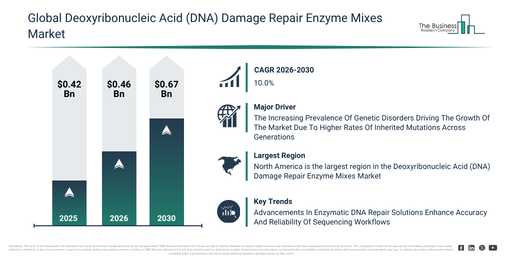
    The market for deoxyribonucleic acid (DNA) damage repair enzyme mixes has seen substantial growth in recent years. It is expected to expand from $0.42 billion in 2025 to $0.46 billion in 2026, at a compound annual growth rate (CAGR) of 9.8%. This historical growth can be attributed to various factors including the rising demand for molecular biology research, increasing applications in genomics and sequencing, the development of single enzyme repair mixes, the expansion of biotechnology research institutes, and the adoption of standard DNA repair protocols.

    The market size for deoxyribonucleic acid (DNA) damage repair enzyme mixes is anticipated to grow rapidly over the next few years. It is projected to reach $0.67 billion in 2030, demonstrating a compound annual growth rate (CAGR) of 10.0%. This expansion during the forecast period can be linked to the increased adoption of automated DNA repair platforms, their integration with AI-driven genomic analytics, the development of broad-spectrum repair mixes, the expansion of pharmaceutical research and development, and a growing demand for next-generation sequencing restoration kits. Significant trends expected during this period include next-generation DNA repair kits, multi-enzyme repair solutions, automated DNA damage detection, targeted base excision repair, and integration with genomic analysis platforms.

    Get A Free Sample Report With In-Depth Market Insights:

    https://thebusinessresearchcompany.com/sample_request?id=56756321&type=smp&name=Deoxyribonucleic%20Acid%20%28DNA%29%20Damage%20Repair%20Enzyme%20Mixes%20Market%20Report%202026&utm_source=Blogs&utm_medium=Paid&utm_campaign=Oct_PR

    Deoxyribonucleic Acid (DNA) Damage Repair Enzyme Mixes Market Expansion Drivers: What’s Shaping Future Growth?

    The deoxyribonucleic acid (DNA) damage repair enzyme mixes market is anticipated to expand due to the rising occurrence and better identification of genetic conditions. These disorders encompass medical issues stemming from gene or chromosome abnormalities or mutations, which can be inherited or spontaneous, exemplified by conditions such as cystic fibrosis, sickle cell anemia, Down syndrome, Huntington’s disease, and hemophilia. The increase in diagnosed instances is primarily linked to progress in genetic screening methods, broader newborn and carrier testing initiatives, enhanced understanding of diseases, and better patient survival, rather than a shift in fundamental mutation rates. Deoxyribonucleic acid (DNA) damage repair enzyme mixes are crucial for genomic research and diagnostics, as they enhance DNA integrity and minimize sequencing errors throughout the stages of sample preparation and analysis. For example, data from the Cystic Fibrosis Trust Annual Report 2023, a UK charity, showed that registered cystic fibrosis patients in the UK grew from 11,148 in 2022 to 11,318 in 2023. Consequently, the growing frequency of genetic disorders is fueling the expansion of the deoxyribonucleic acid (DNA) damage repair enzyme mixes market.

    Deoxyribonucleic Acid (DNA) Damage Repair Enzyme Mixes Market Segment Breakdown: Which Categories Lead On Revenue?

    The deoxyribonucleic acid (DNA) damage repair enzyme mixes market covered in this report is segmented –

    1) By Product Type: Deoxyribonucleic Acid (DNA) Repair Enzyme Mixes, Deoxyribonucleic Acid (DNA) Restoration Kits, Base Excision Repair Enzyme Mixes, Oxidative Damage Repair Mixes, Ultraviolet Damage Repair Mixes

    2) By Damage Type: Single Strand Break Repair, Double Strand Break Repair, Oxidative Base Damage Repair, Abasic Site Repair, Deaminated Base Repair

    3) By Distribution Channel: Direct Sales, Distributors, Online Sales, Other Distribution Channels

    4) By End User: Academic And Research Institutes, Pharmaceutical And Biotechnology Companies, Diagnostic Laboratories, Forensic Laboratories, Hospitals And Clinical Research Centers, Other End Users

    Subsegments:

    1) By Deoxyribonucleic Acid (DNA) Repair Enzyme Mixes: Single Enzyme Repair Mixes, Multi Enzyme Repair Mixes, Broad Spectrum Repair Mixes, Target Specific Repair Mixes

    2) By Deoxyribonucleic Acid (DNA) Restoration Kits: Fragmented Deoxyribonucleic Acid Repair Kits, Chemically Modified Deoxyribonucleic Acid Repair Kits, Formalin Fixed Sample Restoration Kits, Next Generation Sequencing Library Restoration Kits

    3) By Base Excision Repair Enzyme Mixes: Glycosylase Based Repair Mixes, Endonuclease Based Repair Mixes, Polymerase Assisted Repair Mixes, Ligase Supported Repair Mixes

    4) By Oxidative Damage Repair Mixes: Oxidized Base Repair Mixes, Reactive Oxygen Species Damage Repair Mixes, Strand Break Repair Mixes For Oxidative Damage, Comprehensive Oxidative Damage Repair Mixes

    5) By Ultraviolet Damage Repair Mixes: Pyrimidine Dimer Repair Mixes, Photoproduct Repair Mixes, Excision Based Ultraviolet Repair Mixes, Comprehensive Ultraviolet Damage Repair Mixes

    Deoxyribonucleic Acid (DNA) Damage Repair Enzyme Mixes Market Strategic Trends: What Defines The Next Growth Phase?

    Major companies in the deoxyribonucleic acid (DNA) damage repair mixes market are prioritizing the advancement of enzymatic formulations to enhance DNA repair performance, exemplified by improved FFPE DNA repair modules that integrate more comprehensive damage correction into preparation workflows for next-generation sequencing. Enhanced FFPE DNA repair modules denote enzyme-based formulations developed to more effectively correct common forms of damage in DNA sourced from formalin-fixed, paraffin-embedded (FFPE) samples while concurrently streamlining their integration with sequencing library workflows. For instance, in September 2024, New England Biolabs Inc., a United States-based biotechnology company, unveiled the NEBNext FFPE DNA Repair v2 Module, which delivers greater repair efficiency for cytosine deamination and oxidative lesions, a simplified workflow that requires no intermediate cleanup, and a versatile buffer system supporting both DNA repair and subsequent end-repair steps during sequencing library preparation.

    Deoxyribonucleic Acid (DNA) Damage Repair Enzyme Mixes Market Industry Leaders And Competitive Landscape

    Major companies operating in the deoxyribonucleic acid (DNA) damage repair enzyme mixes market are Thermo Fisher Scientific Inc., Merck KGaA, Agilent Technologies Inc., QIAGEN N.V., GenScript Biotech Corporation, Promega Corporation, Takara Bio Inc., R&D Systems Inc., New England Biolabs Inc., OriGene Technologies Inc., Enzo Life Sciences Inc., ABclonal Biotechnology Co Ltd., Santa Cruz Biotechnology Inc., Oxford Gene Technology Ltd., BioDynami Corporation, Apexbio Technology LLC, Creative Enzymes Inc., AffiGEN Inc., Boster Biological Technology Co Ltd., Avam Life Sciences Pvt. Ltd.

    View The Full Deoxyribonucleic Acid (DNA) Damage Repair Enzyme Mixes Market Report:

    https://thebusinessresearchcompany.com/report/deoxyribonucleic-acid-dna-damage-repair-enzyme-mixes-market-report?utm_source=Blogs&utm_medium=Paid&utm_campaign=Oct_PR

    Deoxyribonucleic Acid (DNA) Damage Repair Enzyme Mixes Market Regional Analysis And Top Geography

    North America was the largest region in the deoxyribonucleic acid (DNA) damage repair enzyme mixes market in 2025. Asia-Pacific is expected to be the fastest-growing region in the forecast period. The regions covered in the deoxyribonucleic acid (DNA) damage repair enzyme mixes market report are Asia-Pacific, South East Asia, Western Europe, Eastern Europe, North America, South America, Middle East, Africa.

    Reach Out To Our Team:

    The Business Research Company: https://www.thebusinessresearchcompany.com/

    Americas: +1 310-496-7795

    Asia: +44 7882 955267 & +91 8897263534

    Europe: +44 7882 955267

    Email us at: marketing@tbrc.info

    Follow us on:

    LinkedIn: https://in.linkedin.com/company/the-business-research-company

    YouTube: https://www.youtube.com/channel/UC24_fI0rV8cR5DxlCpgmyFQ

    Global Market Model: https://www.thebusinessresearchcompany.com/global-market-model

  • Artificial Intelligence (AI) Dermatology Imaging Market Forecast Highlights A $2.9 Billion Opportunity For Industry Participants

    Artificial Intelligence (AI) Dermatology Imaging Market Forecast Highlights A $2.9 Billion Opportunity For Industry Participants

    Built to provide research that’s more actionable and strategically valuable, The Business Research Company’s 2026 market reports include market attractiveness analysis, total addressable market sizing, company benchmarking matrices, interactive Excel dashboards, broader supply chain intelligence, emerging startup tracking, and in-depth product insights.

    Artificial Intelligence (AI) Dermatology Imaging Market Growth Potential: How Will Market Size Shift Through 2030?

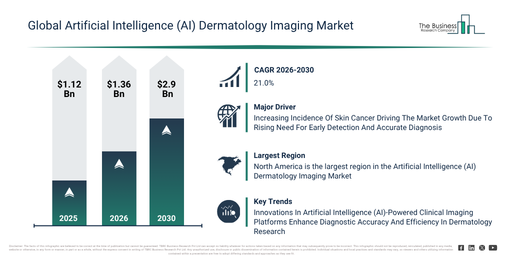
    The artificial intelligence (AI) dermatology imaging market has experienced substantial expansion in recent years. It is forecast to rise from $1.12 billion in 2025 to $1.36 billion in 2026, achieving a compound annual growth rate (CAGR) of 20.7%. Historically, this growth can be attributed to the rising prevalence of skin conditions, an increasing need for accurate dermatology diagnoses, the integration of dermatoscopic and clinical imaging, the expansion of dermatology clinics and hospital facilities, and a growing enthusiasm for telehealth solutions.

    The artificial intelligence (AI) dermatology imaging market size is anticipated to see substantial expansion in the coming years. It is projected to grow to $2.9 billion in 2030 at a compound annual growth rate (CAGR) of 21.0%. The increase during the forecast period is attributable to the expanding integration of AI-enabled analytics, the rising adoption of cloud-based deployment models, a growing demand for automated disease screening and triage, the broadening of research applications in dermatology imaging, and an intensifying focus on teledermatology and remote patient monitoring. Key trends for the forecast period include the increasing adoption of cloud-based AI dermatology platforms, a surging demand for multispectral and total body imaging solutions, the wider integration of teledermatology services, the development of AI-enabled treatment monitoring tools, and a heightened focus on workflow automation and data management solutions.

    Get A Free Sample Report With In-Depth Market Insights:

    https://thebusinessresearchcompany.com/sample_request?id=80395884&type=smp&name=Artificial%20Intelligence%20%28AI%29%20Dermatology%20Imaging%20Market%20Report%202026&utm_source=Blogs&utm_medium=Paid&utm_campaign=Oct_PR

    Artificial Intelligence (AI) Dermatology Imaging Market Demand Drivers Opening New Revenue Streams

    The increasing occurrence of skin cancer is expected to propel the growth of the artificial intelligence (AI) dermatology imaging market going forward. Skin cancer refers to the irregular growth of skin cells, frequently due to UV radiation exposure, leading to malignant tumors like melanoma and non-melanoma types. The prevalence of skin cancer is rising because of heightened exposure to ultraviolet (UV) radiation from the sun and artificial tanning beds, which harms skin cells and elevates the risk of malignant growths. AI in dermatology imaging improves the early detection and accurate diagnosis of skin cancer by analyzing images of skin lesions with advanced algorithms, identifying subtle patterns and abnormalities that might be missed by the human eye, and enabling quicker, more reliable clinical decisions for prompt treatment. For instance, in January 2026, according to the Skin Cancer Foundation, a US-based non-profit organization, the number of new melanoma cases diagnosed is projected to rise by 10.6 percent. Therefore, the increasing incidence of skin cancer is driving the growth of the artificial intelligence (AI) dermatology imaging market.

    Artificial Intelligence (AI) Dermatology Imaging Market Segmentation: How Does The Market Break Down By Category?

    The artificial intelligence (AI) dermatology imaging market covered in this report is segmented –

    1) By Component: Software, Hardware, Services

    2) By Imaging Modality: Dermatoscopic Imaging, Clinical Imaging, Reflectance Confocal Microscopy, Optical Coherence Tomography, Total Body Photography, Multispectral Imaging

    3) By Deployment Mode: Cloud-Based, On-Premises

    4) By Application: Disease Diagnosis, Treatment Monitoring, Screening And Triage, Teledermatology, Research Applications

    5) By End User: Dermatology Clinics, Hospitals, Telehealth Platforms, Primary Care Networks, Other End Users

    Subsegments:

    1) By Software: Cloud Based Solutions, On Premise Solutions, Artificial Intelligence Enabled Analytics Platforms, Image Processing And Visualization Tools, Data Management And Integration Platforms, Workflow And Reporting Solutions

    2) By Hardware: Imaging Devices And Scanners, High Performance Computing Systems, Storage And Data Servers, Display And Visualization Systems, Networking And Connectivity Equipment, Peripheral Input And Output Devices

    3) By Services: System Integration And Deployment Services, Maintenance And Technical Support Services, Consulting And Implementation Services, Training And Education Services, Managed And Cloud Hosting Services, Upgradation And Optimization Services

    Artificial Intelligence (AI) Dermatology Imaging Market Trends Powering Strategic Industry Growth

    Leading firms within the artificial intelligence (AI) dermatology imaging market are prioritizing the creation of advanced solutions like AI-powered clinical imaging platforms. These innovations aim to improve diagnostic precision, optimize clinical trial processes, and deliver objective, real-time evaluations of skin conditions. Such platforms integrate sophisticated skin imaging with artificial intelligence algorithms to automate the capture, analysis, and scoring of dermatological conditions, enabling clinicians and researchers to achieve quicker, more objective, and consistent assessments than those derived from conventional manual methods. An example of this trend occurred in September 2025, when QuantifiCare, a France-based medical imaging company, collaborated with Legit.Health, a Spain-based AI healthcare company, to introduce the inaugural AI-powered dermatology imaging platform specifically designed for clinical trials. This particular platform merges QuantifiCare’s 2D and 3D imaging systems with Legit.Health’s AI algorithms, thereby offering instant severity grading, real-time insights into treatment response, and automated scoring for more than 300 skin conditions. Its core attributes encompass standardized imaging workflows, excellent reproducibility, a decrease in administrative tasks, and improved reliability of clinical endpoints, making it a robust instrument for sponsors, CROs, and investigators looking to expedite dermatology research.

    Artificial Intelligence (AI) Dermatology Imaging Market Top Companies Driving Competitive Growth

    Major companies operating in the artificial intelligence (AI) dermatology imaging market are Google LLC, Microsoft Corporation, Perfect Corp., Canfield Scientific Inc., Proscia Inc., Behold.ai Inc., FotoFinder Systems GmbH, SmartSkin AI Inc., MetaOptima Technology Inc., QuantifiCare SA, SkinVision B.V., DermaSensor Inc., Skin Analytics Ltd, Haut.AI Inc., First Derm Inc., Enspectra Health Inc., SkinIO Inc., SciBase Holding AB, SkinIO LLC, GlamAR Group Inc., IQONIC.AI Inc., TeleSkin d.o.o., DermAI Inc.

    View The Full Artificial Intelligence (AI) Dermatology Imaging Market Report:

    https://thebusinessresearchcompany.com/report/artificial-intelligence-ai-dermatology-imaging-market-report?utm_source=Blogs&utm_medium=Paid&utm_campaign=Oct_PR

    Artificial Intelligence (AI) Dermatology Imaging Market Global Footprint: Which Region Leads The Industry?

    North America was the largest region in the artificial intelligence (AI) dermatology imaging market in 2025. Asia-Pacific is expected to be the fastest-growing region in the forecast period. The regions covered in the artificial intelligence (AI) dermatology imaging market report are Asia-Pacific, South East Asia, Western Europe, Eastern Europe, North America, South America, Middle East, Africa.

    Reach Out To Our Team:

    The Business Research Company: https://www.thebusinessresearchcompany.com/

    Americas: +1 310-496-7795

    Asia: +44 7882 955267 & +91 8897263534

    Europe: +44 7882 955267

    Email us at: marketing@tbrc.info

    Follow us on:

    LinkedIn: https://in.linkedin.com/company/the-business-research-company

    YouTube: https://www.youtube.com/channel/UC24_fI0rV8cR5DxlCpgmyFQ

    Global Market Model: https://www.thebusinessresearchcompany.com/global-market-model