Blog

  • Adeno-Associated Virus (AAV) Packaging Services Market Growth To $2.52 Billion Creates New Opportunities Across The Industry

    Adeno-Associated Virus (AAV) Packaging Services Market Growth To $2.52 Billion Creates New Opportunities Across The Industry

    Featuring market attractiveness scoring, total addressable market sizing, company benchmarking matrices, interactive Excel dashboards, deeper supply chain intelligence, emerging startup tracking, and granular product-level insights, The Business Research Company’s 2026 market reports are built to deliver research that is both more actionable and more strategically valuable.

    Adeno-Associated Virus (AAV) Packaging Services Market Revenue Growth On Track For A 11.3% CAGR Through 2030

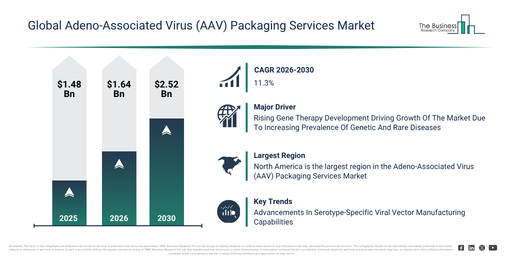
    The adeno-associated virus (AAV) packaging services market size has witnessed rapid expansion in recent years. This market is anticipated to expand from $1.48 billion in 2025 to $1.64 billion in 2026, achieving a compound annual growth rate (CAGR) of 11.1%. The historic period’s growth can be attributed to several factors, including an increase in gene therapy research activities, greater funding directed towards rare disease research, the expansion of preclinical and clinical trial pipelines, the emergence of more biotechnology startups, and advancements in viral vector production technologies.

    The adeno-associated virus (AAV) packaging services market is projected to experience swift expansion in the coming years. It will grow to $2.52 billion in 2030 at a compound annual growth rate (CAGR) of 11.3%. This anticipated growth during the forecast period is primarily fueled by a rise in gene therapy approvals, increasing demand for commercial-scale GMP manufacturing, greater investments in precision medicine, the broadening of cell and gene therapy pipelines, and a surge in strategic collaborations between biotechnology companies and CDMOs. Furthermore, significant trends expected over this period include a heightened demand for high-titer and high-purity AAV production, the expanded availability of GMP-compliant clinical-grade AAV packaging, an intensifying focus on scalable large-scale manufacturing solutions, the increasing use of advanced analytical and release testing services, and the growing practice of outsourcing AAV vector manufacturing to CDMOs.

    Get A Free Sample Report With In-Depth Market Insights:

    https://thebusinessresearchcompany.com/sample_request?id=54093627&type=smp&name=Adeno-Associated%20Virus%20%28AAV%29%20Packaging%20Services%20Market%20Report%202026&utm_source=Blogs&utm_medium=Paid&utm_campaign=Oct_PR

    Adeno-Associated Virus (AAV) Packaging Services Market Growth Factors Behind Sustained Expansion

    The increasing need for gene therapy development is anticipated to drive the expansion of the adeno-associated virus (AAV) packaging services market in the future. Gene therapy development involves the creation of treatments designed to alter or substitute defective genes for disease management. The demand for gene therapy development is escalating due to the increasing occurrence of genetic and rare diseases, thereby heightening the necessity for sophisticated treatments that address the fundamental genetic origins of these ailments. Adeno-associated virus (AAV) packaging services facilitate gene therapy development by offering expert viral vector production and purification, ensuring a scalable and premium AAV supply for both clinical investigations and therapeutic applications. For example, data from July 2023, provided by the American Society of Gene & Cell Therapy (ASGCT), a US-based professional membership body, showed that 247 gene therapies were in Phase II at the close of the first quarter of 2023. This figure subsequently grew by 5%, reaching 260 by the conclusion of the second quarter. Consequently, the growing requirement for gene therapy development is fueling the expansion of the adeno-associated virus (AAV) packaging services market.

    Adeno-Associated Virus (AAV) Packaging Services Market Segment Analysis: What Are The Core Market Categories?

    The adeno-associated virus (AAV) packaging services market covered in this report is segmented –

    1) By Service Type: Research-Grade Adeno-Associated Virus (AAV) Packaging (RUO), Good Manufacturing Practice (GMP) Clinical Adeno-Associated Virus (AAV) Packaging, Good Manufacturing Practice (GMP) Late-Stage And Commercial Supply, Analytical And Release Testing, Process Development And Tech Transfer

    2) By Vector Type: Adeno-Associated Virus (AAV) 2, Adeno-Associated Virus (AAV) 5, Adeno-Associated Virus (AAV) 8, Adeno-Associated Virus (AAV) 9

    3) By Scale Of Production: Small-Scale Production, Mid-Scale Production, Large-Scale Production

    4) By Therapeutic Application: Ophthalmology, Neuromuscular And Central Nervous System, Metabolic Or Rare Genetic Disorders, Oncology, Cardiovascular, Other Indications

    5) By End User: Biotechnology And Biopharmaceutical Companies, Academic And Research Institutes, Contract Research Organizations, Contract Manufacturing Organizations, Healthcare And Diagnostic Laboratories

    Subsegments:

    1) By Research-Grade Adeno-Associated Virus (AAV) Packaging (RUO): Small Scale Production, Pilot Scale Production, Custom Vector Design, Preclinical Study Supply

    2) By GMP Clinical Adeno-Associated Virus (AAV) Packaging: Phase One Clinical Supply, Phase Two Clinical Supply, Phase Three Clinical Supply, Patient Specific Batch Production

    3) By GMP Late-Stage And Commercial Supply: Commercial Batch Production, Technology Transfer Support, Large Scale Manufacturing, Regulatory Submission Support

    4) By Analytical And Release Testing: Potency Testing, Purity Testing, Identity Testing, Safety Testing, Stability Testing

    5) By Process Development And Tech Transfer: Upstream Process Development, Downstream Process Development, Scale-Up Process Optimization, Technology Transfer To Manufacturing, Process Characterization

    Adeno-Associated Virus (AAV) Packaging Services Market Industry Trends Fueling Future Revenue Growth

    Major companies in the adeno-associated virus (AAV) packaging services market are prioritizing the development of innovative solutions, including on-demand AAV viral vector packaging platforms, to improve flexibility, accelerate research schedules, and ensure consistent, high-quality viral vector manufacturing. On-demand AAV viral vector packaging platforms are services designed to provide custom AAV production in specific serotypes with integrated quality controls, helping researchers conserve time and obtain reliable, high-titer vectors for gene delivery applications. As an illustration, in January 2025, Addgene Inc., a US-based nonprofit scientific organization, launched its “Packaged on Request” AAV packaging service. This service allows scientists to select from over 3,000 AAV plasmids within Addgene’s repository and request packaging in serotypes such as AAV1, AAV2, AAV5, AAV8, and AAV Retrograde capsids. Each preparation undergoes extensive quality control procedures, including ddPCR titering, purity testing, sterility testing, and viral genome sequencing, guaranteeing research-grade standards comparable to their in-stock viral preparations. The service also simplifies legal approvals and technology transfer processes, thus reducing administrative burdens while maintaining high titers suitable for various in vivo and in vitro uses.

    Adeno-Associated Virus (AAV) Packaging Services Market Top Companies Driving Competitive Growth

    Major companies operating in the adeno-associated virus (AAV) packaging services market are Thermo Fisher Scientific Inc., AGC Biologics Inc., Lonza Group AG, Charles River Laboratories International Inc., Resilience Biotechnologies Inc., GenScript Biotech Corporation, Takara Bio Inc., OxB CDMO Inc., 3PBIOVIAN, VectorBuilder, Genezen Labs, Addgene Inc., PackGene Biotech Inc., Porton Advanced Solutions Ltd., Creative Biogene, Yposkesi SAS, AAVnerGene Inc., Virovek Inc., WuXi Advanced Therapies Co. Ltd., BioInnovatise Inc.

    View The Full Adeno-Associated Virus (AAV) Packaging Services Market Report:

    https://thebusinessresearchcompany.com/report/adeno-associated-virus-aav-packaging-services-market-report?utm_source=Blogs&utm_medium=Paid&utm_campaign=Oct_PR

    Adeno-Associated Virus (AAV) Packaging Services Market Global Footprint: Which Region Leads The Market?

    North America was the largest region in the adeno-associated virus (AAV) packaging services market in 2025. Asia-Pacific is expected to be the fastest-growing region in the forecast period. The regions covered in the adeno-associated virus (AAV) packaging services market report are Asia-Pacific, South East Asia, Western Europe, Eastern Europe, North America, South America, Middle East, Africa.

    Reach Out To Our Team:

    The Business Research Company: https://www.thebusinessresearchcompany.com/

    Americas: +1 310-496-7795

    Asia: +44 7882 955267 & +91 8897263534

    Europe: +44 7882 955267

    Email us at: marketing@tbrc.info

    Follow us on:

    LinkedIn: https://in.linkedin.com/company/the-business-research-company

    YouTube: https://www.youtube.com/channel/UC24_fI0rV8cR5DxlCpgmyFQ

    Global Market Model: https://www.thebusinessresearchcompany.com/global-market-model
  • Wound Skin Substitutes Market Explained: What Is Fueling Growth To $1.91 Billion By 2030?

    Built to provide research that’s more actionable and strategically valuable, The Business Research Company’s 2026 market reports include market attractiveness analysis, total addressable market sizing, company benchmarking matrices, interactive Excel dashboards, broader supply chain intelligence, emerging startup tracking, and in-depth product insights.

    Wound Skin Substitutes Market Poised To Hit $1.91 Billion By 2030 With A 10% CAGR

    The market size for wound skin substitutes has exhibited robust growth in recent years. It will grow from $1.19 billion in 2025 to $1.3 billion in 2026 at a compound annual growth rate (CAGR) of 9.7%. Historically, this expansion has been driven by a rise in burn injury cases, an increasing prevalence of diabetic ulcers, a growth in surgical procedures, the historic adoption of collagen dressings, and the expansion of wound care centers.

    The wound skin substitutes market is projected for substantial growth over the next few years, with an expectation to reach $1.91 billion by 2030, demonstrating a compound annual growth rate (CAGR) of 10.0%. This expansion during the forecast period is driven by factors such as an aging population suffering from chronic wounds, the increasing prevalence of diabetes, advancements in regenerative medicine, a rise in spending on advanced wound care, and the proliferation of outpatient wound clinics. Significant trends anticipated during this time include bioengineered regenerative skin matrices, cell-based advanced wound covers, composite biosynthetic skin substitutes, growth factor-enriched dressings, and smart moisture-balancing wound covers.

    Get A Free Sample Report With In-Depth Market Insights:

    https://thebusinessresearchcompany.com/sample_request?id=68541373&type=smp&name=Wound%20Skin%20Substitutes%20Market%20Report%202026&utm_source=Blogs&utm_medium=Paid&utm_campaign=Oct_PR

    Wound Skin Substitutes Market Growth Momentum: What Factors Are Shaping Demand?

    An increase in pressure ulcers is projected to drive the expansion of the wound skin substitutes market in the future. These are specific injuries to the skin and deeper tissues resulting from continuous pressure, typically over areas with bones close to the surface. The frequency of pressure ulcers is increasing, attributed to an aging demographic, given that elderly individuals frequently experience limited mobility, delicate skin, and chronic medical conditions, rendering them more prone to skin damage. Wound skin substitutes help prevent pressure ulcers by shielding the skin, fostering tissue regrowth, ensuring appropriate moisture levels, and improving overall skin strength, collectively lowering the likelihood of skin degradation in at-risk regions. For example, data from November 2023, provided by the National Health Service (NHS) England, a UK-based government department, indicated that from October 1, 2022, to October 1, 2023, 193 inpatients were documented as having developed bedsores, pressure sores, or pressure ulcers while hospitalized. Consequently, the rising occurrence of pressure ulcers is stimulating the growth of the wound skin substitutes market.

    Wound Skin Substitutes Market Segmentation And Category Overview

    The wound skin substitutes market covered in this report is segmented –

    1) By Product Type: Biologic Skin Substitutes; Synthetic Skin Substitutes; Biosynthetic Skin Substitutes; Collagen Dressings; Acellular Dermal Matrices; Cultured Epithelial Autografts; Allograft Skin; Xenograft Skin; Hydrogel Dressings; Foam Dressings

    2) By Technology: Static Skin Substitutes; Dynamic; Smart

    3) By Application Or Indication: Diabetic Foot Ulcers; Pressure Ulcers; Burns; Surgical Wounds; Trauma Wounds; Chronic Wounds

    4) By Distribution Channel: Direct Sales Or Institutional Sales; Medical Device Distributors; Online Retail Or E-commerce

    5) By End User: Hospitals And Burn Centers; Ambulatory Surgical Centers (ASCs); Specialty Wound Care Clinics; Academic And Research Institute

    Subsegments:

    1) By Biologic Skin Substitutes: Human Derived Skin Substitutes; Animal Derived Skin Substitutes; Cellular Based Skin Substitutes; Growth Factor Enriched Skin Substitutes

    2) By Synthetic Skin Substitutes: Polymer Based Skin Substitutes; Silicone Based Skin Substitutes; Polyurethane Based Skin Substitutes; Synthetic Composite Skin Substitutes

    3) By Biosynthetic Skin Substitutes: Collagen And Silicone Based Skin Substitutes; Polymer And Collagen Composite Skin Substitutes; Semi Synthetic Skin Substitutes

    4) By Collagen Dressings: Native Collagen Dressings; Oxidized Regenerated Collagen Dressings; Collagen With Antimicrobial Agents; Collagen With Silver

    5) By Acellular Dermal Matrices: Human Acellular Dermal Matrices; Animal Acellular Dermal Matrices; Cross Linked Dermal Matrices; Non Cross Linked Dermal Matrices

    6) By Cultured Epithelial Autografts: Keratinocyte Based Autografts; Epidermal Sheet Autografts; Spray On Cultured Epithelial Cells

    7) By Allograft Skin: Fresh Allograft Skin; Cryopreserved Allograft Skin; Lyophilized Allograft Skin

    8) By Xenograft Skin: Porcine Derived Xenograft Skin; Bovine Derived Xenograft Skin; Processed Xenograft Skin

    9) By Hydrogel Dressings: Amorphous Hydrogel Dressings; Sheet Hydrogel Dressings; Impregnated Hydrogel Dressings

    10) By Foam Dressings: Polyurethane Foam Dressings; Silicone Foam Dressings; Adhesive Foam Dressings; Non Adhesive Foam Dressings

    Wound Skin Substitutes Market Trends Redefining Industry Growth

    Major companies operating in the wound skin substitutes market are directing their efforts towards developing innovative products, such as advanced bioengineered skin grafts, to accelerate wound healing, mitigate infection risks, and enhance tissue regeneration. These advanced bioengineered skin grafts are laboratory-grown or tissue-engineered skin substitutes crafted to mimic natural skin, providing living cells and scaffolds that foster faster wound healing, support tissue regeneration, and reduce the likelihood of infection compared to standard dressings. For instance, in May 2025, Tides Medical, a US-based medical device company, introduced Artacent Wound. This next-generation wound skin substitute utilizes an Arta-Pure Process to carefully preserve the complete structure of amniotic tissue, including its crucial spongy intermediate layer, thereby maximizing the graft’s natural integrity. The product features a dual-layer design that can be applied on either side, stays securely in place without requiring sutures, and aids clinicians in treating chronic wounds by maintaining a biologically active matrix that facilitates tissue repair and lessens inflammation, differentiating it from traditional dehydrated or highly processed grafts.

    Wound Skin Substitutes Market Leading Companies And Competitive Benchmarking

    Major companies operating in the wound skin substitutes market are 3M Company, Stryker Corporation, Essity Aktiebolag, Smith & Nephew plc, B. Braun Melsungen AG, Coloplast A/S, ConvaTec Group plc, Mallinckrodt Pharmaceuticals, Integra LifeSciences Corporation, AVITA Medical Inc., MTF Biologics, Organogenesis Inc., MiMedx Group Inc., Vericel Corporation, LifeNet Health, Anika Therapeutics Inc., AlloSource, BioTissue Inc., Tissue Regenix Group plc, Gunze Medical Co. Ltd., and Molecular Biologicals Inc.

    View The Full Wound Skin Substitutes Market Report:

    https://thebusinessresearchcompany.com/report/wound-skin-substitutes-market-report?utm_source=Blogs&utm_medium=Paid&utm_campaign=Oct_PR

    Wound Skin Substitutes Market Top Region By Revenue And Market Share

    North America was the largest region in the wound skin substitutes market in 2025. Asia-Pacific is expected to be the fastest-growing region in the forecast period. The regions covered in the wound skin substitutes market report are Asia-Pacific, South East Asia, Western Europe, Eastern Europe, North America, South America, Middle East, Africa.

    Reach Out To Our Team:

    The Business Research Company: https://www.thebusinessresearchcompany.com/

    Americas: +1 310-496-7795

    Asia: +44 7882 955267 & +91 8897263534

    Europe: +44 7882 955267

    Email us at: marketing@tbrc.info

    Follow us on:

    LinkedIn: https://in.linkedin.com/company/the-business-research-company

    YouTube: https://www.youtube.com/channel/UC24_fI0rV8cR5DxlCpgmyFQ

    Global Market Model: https://www.thebusinessresearchcompany.com/global-market-model
  • Wearable Neurotech Market Trends Reshaping Industry Growth Through 2030

    Backed by market attractiveness analysis, total addressable market sizing, company benchmarking matrices, interactive Excel dashboards, wider supply chain intelligence, emerging startup coverage, and detailed product-level insights, The Business Research Company’s 2026 market reports are designed to offer research that is more actionable and strategically valuable than ever.

    Wearable Neurotech Market Growth Potential: How Will Market Size Shift Through 2030?

    The wearable neurotech market has witnessed substantial growth in recent times. It is anticipated to increase from $2.18 billion in 2025 to $2.61 billion in 2026, exhibiting a compound annual growth rate (CAGR) of 19.4%. The historical period’s expansion is due to factors including advancements in EEG miniaturization, an increase in digital health devices, the broadening of brain-computer interface research, the emergence of mental wellness technology, and a greater uptake of wearable sensors.

    The wearable neurotech market is projected for significant expansion in the coming years. It is anticipated to reach a valuation of $5.34 billion by 2030, demonstrating a compound annual growth rate (CAGR) of 19.7%. This projected growth is driven by factors such as the rise in remote neuro monitoring, increased demand for cognitive enhancement tools, the spread of neuro digital therapeutics, greater utilization of sports performance analytics, and the proliferation of personalized brain health programs. Key trends anticipated during this period encompass the development of consumer brain computer interfaces, increasing uptake of neurofeedback wearables, the availability of more portable eeg devices, the incorporation of cognitive monitoring apps, and a surge in home use neurostimulation devices.

    Get A Free Sample Report With In-Depth Market Insights:

    https://thebusinessresearchcompany.com/sample_request?id=23454689&type=smp&name=Wearable%20Neurotech%20Market%20Report%202026&utm_source=Blogs&utm_medium=Paid&utm_campaign=Oct_PR

    Wearable Neurotech Market Growth Factors: What’s Supporting Expansion?

    The increasing occurrence of neurological conditions is anticipated to drive the expansion of the wearable neurotech market in the future. These disorders are defined as health issues affecting the brain, spinal cord, or nerves, which can influence movement, senses, cognitive functions, or behavior. The rise in neurological disorders is attributed to the worldwide aging population, leading to a higher incidence of age-associated neurological conditions. Wearable neurotech offers assistance for neurological disorders by continuously monitoring brain and nerve activity, thereby facilitating early diagnosis, tailored therapies, and symptom management in real-time. As an illustration, the Alzheimer’s Association, a US-based nonprofit voluntary health organization, stated in March 2023 that 6.7 million Americans aged 65+ are affected by Alzheimer’s, a number predicted to reach 13.8 million by 2060. Consequently, the growing occurrence of neurological disorders is a significant factor boosting the growth of the wearable neurotech market.

    Wearable Neurotech Market Segment Analysis: What Are The Core Market Categories?

    The wearable neurotech market covered in this report is segmented –

    1) By Product Type: Electroencephalography Headsets; Brain Computer Interface Devices; Neurostimulation Wearables; Neurofeedback Wearable Devices; Wearable Neural Sensors

    2) By Technology: Electroencephalography Technology; Functional Near Infrared Spectroscopy Technology; Magnetoencephalography Technology; Transcranial Direct Current Stimulation Technology; Other Neural Sensing and Stimulation Technologies

    3) By Distribution Channel: Online Stores; Specialty Retail Stores; Direct Sales; Other Distribution Channels

    4) By Application: Healthcare; Consumer Electronics; Sports and Fitness; Other Applications

    5) By End User: Hospitals and Clinics; Research Institutes and Laboratories; Consumer End Users; Sports and Fitness Centers; Academic and Educational Institutions

    Subsegments:

    1) By Electroencephalography Headsets: Portable Electroencephalography Headsets; Wireless Electroencephalography Headsets; Clinical Electroencephalography Headsets

    2) By Brain Computer Interface Devices: Non Invasive Brain Computer Interface Devices; Invasive Brain Computer Interface Devices; Hybrid Brain Computer Interface Devices

    3) By Neurostimulation Wearables: Transcranial Direct Current Stimulation Wearables; Transcranial Magnetic Stimulation Wearables; Vagus Nerve Stimulation Wearables

    4) By Neurofeedback Wearable Devices: Real Time Neurofeedback Wearable Devices; Home Use Neurofeedback Wearable Devices; Clinical Neurofeedback Wearable Devices

    5) By Wearable Neural Sensors: Electroencephalography Sensors; Functional Near-Infrared Spectroscopy Sensors; Magnetoencephalography Sensors; Electromyography Sensors; Cognitive Monitoring Sensors; Brain Computer Interface Sensors

    Wearable Neurotech Market Industry Trends: What’s Reshaping Demand?

    Major companies within the wearable neurotech market are prioritizing advancements in non-invasive neurostimulation solutions, such as wearable vagus nerve and electrical muscle stimulation devices, to aid in rehabilitation, promote wellness, or facilitate neural restoration. Wearable vagus nerve devices are non-invasive mechanisms worn on the body that provide electrical impulses to the vagus nerve, contributing to general health, well-being, or specific therapeutic results. For instance, in February 2025, Neuvotion Inc., a US medical device company, unveiled NeuStim, an FDA-cleared, non-invasive, wearable neurostimulation system that precisely stimulates muscles to assist in regaining hand movement following a stroke or spinal cord injury. The device features a lightweight, wrist-worn design, a clinician-friendly touchscreen for targeting stimulation, and customizable programs accessible via a mobile interface. Similarly, in 2025, Lithuania-based Pulsetto launched or broadened the availability of its wearable vagus nerve stimulation device aimed at stress reduction and sleep support. This neck-worn device administers low-frequency transcutaneous stimulation, offers multiple preset programs through a companion app, and is designed for daily, drug-free use. Both devices underscore the increasing prominence of non-invasive, wearable neurotechnologies for health and rehabilitation.

    Wearable Neurotech Market Leading Players And Competitive Positioning

    Major companies operating in the wearable neurotech market are Kernel Labs Inc., Nuro Corporation, NeuroSky Inc., BrainCo Inc., Emotiv Inc., Cognito Therapeutics Inc., Neuroelectrics Barcelona S.L.U, Q30 Innovations Inc., Halo Neuroscience, Thync, Neurable Inc., Neurovalens Ltd., Neurovalens Ltd., Bitbrain Technologies S.L., Muse (InteraXon), OpenBCI Inc., BrainBit, Nexstem Technologies Pvt. Ltd, Nalu Medical Inc., Alphabeats, Motif Neurotech.

    View The Full Wearable Neurotech Market Report:

    https://thebusinessresearchcompany.com/report/wearable-neurotech-market-report?utm_source=Blogs&utm_medium=Paid&utm_campaign=Oct_PR

    Wearable Neurotech Market Regional Split: Which Areas Are Fueling Growth?

    North America was the largest region in the wearable neurotech market in 2025. Asia-Pacific is expected to be the fastest-growing region in the forecast period. The regions covered in the wearable neurotech market report are Asia-Pacific, South East Asia, Western Europe, Eastern Europe, North America, South America, Middle East, Africa.

    Reach Out To Our Team:

    The Business Research Company: https://www.thebusinessresearchcompany.com/

    Americas: +1 310-496-7795

    Asia: +44 7882 955267 & +91 8897263534

    Europe: +44 7882 955267

    Email us at: marketing@tbrc.info

    Follow us on:

    LinkedIn: https://in.linkedin.com/company/the-business-research-company

    YouTube: https://www.youtube.com/channel/UC24_fI0rV8cR5DxlCpgmyFQ

    Global Market Model: https://www.thebusinessresearchcompany.com/global-market-model

  • Foot And Mouth Disease Diagnostics Market Size Growth: From $1.14 Billion In 2026 To $1.56 Billion By 2030

    Built to provide research that’s more actionable and strategically valuable, The Business Research Company’s 2026 market reports include market attractiveness analysis, total addressable market sizing, company benchmarking matrices, interactive Excel dashboards, broader supply chain intelligence, emerging startup tracking, and in-depth product insights.

    Foot And Mouth Disease Diagnostics Market Growth Analysis: How Will Revenue Trend Over The Forecast Period?

    The foot and mouth disease diagnostics market has experienced robust expansion over recent years. This market is projected to expand from $1.06 billion in 2025 to $1.14 billion in 2026, showing a compound annual growth rate (CAGR) of 7.9%. Historically, this expansion has been driven by factors such as recurrent outbreaks of foot and mouth disease, a global increase in livestock populations, the proliferation of veterinary diagnostic laboratories, governmental disease surveillance initiatives, and a heightened understanding of animal health management.

    The foot and mouth disease diagnostics market size is projected to experience substantial expansion over the upcoming years. Its valuation is set to reach $1.56 billion by 2030, driven by an 8.1% compound annual growth rate (CAGR). This anticipated growth during the forecast timeframe is propelled by factors such as the increasing need for prompt and swift disease identification, greater investments in veterinary healthcare infrastructure, the evolution of molecular diagnostic technologies, heightened surveillance of cross-border livestock movements, and the creation of portable diagnostic tools. Key developments during this period encompass the rising uptake of real-time PCR diagnostic kits, an escalating need for swift point-of-care testing, broader development of multiplex assays, increased application of lateral flow immunoassays in field environments, and the introduction of highly sensitive ELISA kits.

    Get A Free Sample Report With In-Depth Market Insights:

    https://thebusinessresearchcompany.com/sample_request?id=61257622&type=smp&name=Foot%20And%20Mouth%20Disease%20Diagnostics%20Market%20Report%202026&utm_source=Blogs&utm_medium=Paid&utm_campaign=Oct_PR

    Foot And Mouth Disease Diagnostics Market Expansion Drivers: What’s Shaping Future Growth?

    The increasing numbers of livestock are projected to drive the expansion of the foot and mouth disease diagnostics market moving forward. Livestock populations refer to the aggregate count of domesticated animals, such as cattle, pigs, and sheep, raised for food production, dairy, or various economic purposes. These animal populations are growing due to a surge in global demand for meat and dairy products, prompting agricultural producers to maintain larger herds. Higher densities of animals elevate the potential for rapid disease transmission, thereby increasing the necessity for prompt detection and continuous surveillance to avert widespread outbreaks and significant economic losses. For instance, in June 2025, according to the Australian Bureau of Statistics, an Australian-based government administration, 30.4 million cattle were on farms as of 30 June 2024, which represented a 1.6% increase compared to June 2023. Thus, the escalating livestock populations are propelling the growth of the foot and mouth disease diagnostics market.

    Foot And Mouth Disease Diagnostics Market Segment Analysis Spotlighting Growth Areas

    The foot and mouth disease diagnostics market covered in this report is segmented –

    1) By Technique: Enzyme-Linked Immunosorbent Assay Kits, Polymerase Chain Reaction Kits, Immunoassays, Chromatography, Other Techniques

    2) By Product Type: Kits And Reagents, Instruments, Software, Other Product Types

    3) By Animal Type: Cattle, Swine, Sheep And Goats, Other Animal Types

    4) By End-User: Veterinary Hospitals And Clinics, Diagnostic Laboratories, Research Institutes, Other End Users

    Subsegments:

    1) By Enzyme-Linked Immunosorbent Assay Kits: Indirect Enzyme-Linked Immunosorbent Assay Kits, Sandwich Enzyme-Linked Immunosorbent Assay Kits, Competitive Enzyme-Linked Immunosorbent Assay Kits, Capture Enzyme-Linked Immunosorbent Assay Kits

    2) By Polymerase Chain Reaction Kits: Conventional Polymerase Chain Reaction Kits, Real-Time Polymerase Chain Reaction Kits, Multiplex Polymerase Chain Reaction Kits, Reverse Transcription Polymerase Chain Reaction Kits

    3) By Immunoassays: Lateral Flow Immunoassays, Radioimmunoassays, Fluorescent Immunoassays, Chemiluminescent Immunoassays

    4) By Chromatography: Thin Layer Chromatography, High Performance Liquid Chromatography, Gas Chromatography, Ion Exchange Chromatography

    5) By Other Techniques: Western Blotting, Hemagglutination Assays, Agar Gel Immunodiffusion, Flow Cytometry

    Foot And Mouth Disease Diagnostics Market Strategic Trends: What Defines The Next Growth Phase?

    Leading firms in the foot and mouth disease diagnostics market are prioritizing the creation of novel techniques, including real-time polymerase chain reaction (PCR) assays, to achieve quicker and more precise identification of FMD outbreaks. These real-time PCR assays function as molecular diagnostic tools, capable of detecting and quantifying viral genetic material in real-time, thereby facilitating rapid and accurate identification of foot and mouth disease for efficient outbreak management. As an illustration, BioStone Animal Health LLC, a US-based biotechnology firm, introduced AsurDx Real-Time PCR kits in May 2025 for FMD detection. This represents an advanced molecular diagnostic solution engineered for the swift, sensitive, and multiplex identification of various FMD virus types (A, O, Asia1). These PCR kits include pre-validated reaction mixes, primers, probes, enzymes, and all essential reagents and controls, which ensures quick and dependable setup. Compatible with numerous thermal cyclers, they allow for the quantitative detection of viral genes with significant accuracy and reproducibility. Compared to conventional ELISA tests, these PCR kits deliver swifter and more accurate results, thereby supporting routine diagnostics, outbreak surveillance, and global monitoring initiatives, ultimately enhancing FMD control efforts across the globe.

    Foot And Mouth Disease Diagnostics Market Key Players Shaping Industry Direction

    Major companies operating in the foot mouth disease diagnostics market are Thermo Fisher Scientific Inc., Zoetis Inc., IDEXX Laboratories Inc., Bio-Rad Laboratories Inc., QIAGEN N.V., Neogen Corporation, IDvet Inc., Creative Diagnostics Inc., Krishgen Biosystems Pvt. Ltd., AdvaCare Pharma Inc., Biovet Inc., Acro Biotech Inc., Ring Biotechnology Co. Ltd., BioNote Inc., BIO X Diagnostics Inc., GlobalVet Solutions LLC, Median Diagnostics Inc., BioVenic Inc., Avicena LLC, Svanova Biotech AB.

    View The Full Foot And Mouth Disease Diagnostics Market Report:

    https://thebusinessresearchcompany.com/report/foot-and-mouth-disease-diagnostics-market-report?utm_source=Blogs&utm_medium=Paid&utm_campaign=Oct_PR

    Foot And Mouth Disease Diagnostics Market Regional Analysis: Which Region Leads By Revenue?

    North America was the largest region in the foot and mouth disease diagnostics market in 2025. Asia-Pacific is expected to be the fastest-growing region in the forecast period. The regions covered in the foot and mouth disease diagnostics market report are Asia-Pacific, South East Asia, Western Europe, Eastern Europe, North America, South America, Middle East, Africa.

    Reach Out To Our Team:

    The Business Research Company: https://www.thebusinessresearchcompany.com/

    Americas: +1 310-496-7795

    Asia: +44 7882 955267 & +91 8897263534

    Europe: +44 7882 955267

    Email us at: marketing@tbrc.info

    Follow us on:

    LinkedIn: https://in.linkedin.com/company/the-business-research-company

    YouTube: https://www.youtube.com/channel/UC24_fI0rV8cR5DxlCpgmyFQ

    Global Market Model: https://www.thebusinessresearchcompany.com/global-market-model

  • Fever Screening Systems Market Growth Outlook For 2026: Drivers, Trends And Future Opportunities

    Featuring market attractiveness scoring, total addressable market sizing, company benchmarking matrices, interactive Excel dashboards, deeper supply chain intelligence, emerging startup tracking, and granular product-level insights, The Business Research Company’s 2026 market reports are built to deliver research that is both more actionable and more strategically valuable.

    Fever Screening Systems Market Set To Climb From $2.47 Billion In 2026 To $3.48 Billion By 2030

    The fever screening systems market size has experienced substantial growth in recent years. It is forecast to increase from $2.27 billion in 2025 to $2.47 billion in 2026, at a compound annual growth rate (CAGR) of 8.8%. The historical expansion of this market can be attributed to the occurrence of global infectious diseases, intensified public health surveillance measures, greater awareness of infection control, the adoption of infrared thermography devices, and government mandates for temperature screening.

    The fever screening systems market is projected to experience significant growth over the next few years. It is forecast to expand to $3.48 billion by 2030, achieving a compound annual growth rate (CAGR) of 9.0%. This anticipated growth during the forecast period stems from factors such as increasing investment in smart health infrastructure, enhanced integration with access control systems, a growing need for real-time health monitoring, the expansion of AI-based anomaly detection, and a heightened focus on workplace health safety standards. Prominent trends within this period include a greater adoption of contactless temperature screening, increased deployment in high-traffic public areas, a rising demand for portable screening devices, the integration of automated alert and threshold systems, and the broader availability of multi-person thermal scanning solutions.

    Get A Free Sample Report With In-Depth Market Insights:

    https://thebusinessresearchcompany.com/sample_request?id=59648019&type=smp&name=Fever%20Screening%20Systems%20Market%20Report%202026&utm_source=Blogs&utm_medium=Paid&utm_campaign=Oct_PR

    Fever Screening Systems Market Growth Drivers: What’s Behind The Acceleration?

    Growing worries about infectious diseases are projected to boost the fever screening systems market in the future. These illnesses originate from detrimental microorganisms like bacteria, viruses, fungi, or parasites, and their quick dissemination is particularly aided by expanding urban areas and worldwide travel. Such elements have increased public health consciousness and the need for prompt detection methods in various public and medical environments. Fever screening technologies aid in controlling infectious diseases by allowing swift identification of people with high body temperatures, which facilitates quick action and minimizes the chance of broad contagion. For example, in June 2024, data from the UK Health Security Agency, a government body in the UK, indicated that 1,681 patients were admitted to critical care with confirmed influenza in the UK from week 40 of 2022 to week 15 of 2023. This demonstrates the considerable impact of infectious diseases and the increasing requirement for proactive screening. Consequently, the escalating concerns regarding infectious diseases are fueling the expansion of the fever screening systems market.

    Fever Screening Systems Market Segmentation And Category Overview

    The fever screening systems market covered in this report is segmented –

    1) By Product Type: Infrared Thermography, Thermal Scanners, Non-Contact Thermometers, Other Product Types

    2) By Technology: Fixed, Portable

    3) By Application: Hospitals And Clinics, Airports, Public Places, Corporate Offices, Other Applications

    4) By End-User: Healthcare, Transportation, Commercial, Industrial, Other End Users

    Subsegments:

    1) By Infrared Thermography: Handheld Infrared Thermography Devices, Fixed Infrared Thermography Cameras, Portable Infrared Thermography Systems, Industrial Infrared Thermography Solutions, Medical Grade Infrared Thermography Devices

    2) By Thermal Scanners: Handheld Thermal Scanners, Fixed Thermal Scanning Systems, Body Temperature Thermal Scanners, Industrial Thermal Scanners, High Resolution Thermal Scanners

    3) By Non-Contact Thermometers: Digital Non-Contact Thermometers, Infrared Non-Contact Thermometers, Medical Non-Contact Thermometers, Industrial Non-Contact Thermometers, High Precision Non-Contact Thermometers

    4) By Other Product Types: Temperature Screening Kiosks, Thermal Screening Gateways, Automated Fever Detection Systems, Wearable Temperature Monitoring Devices, Smart Fever Screening Solutions

    Fever Screening Systems Market Top Companies Driving Competitive Growth

    Major companies operating in the fever screening systems market are NEC Corporation, Leonardo S.p.A., Hikvision Digital Technology Co. Ltd., Ametek Land Inc., Omron Corporation, Dahua Technology Co. Ltd., Drägerwerk AG & Co. KGaA, Fluke Corporation, Testo SE & Co. KGaA, DALI Technology A/S, Mobotix AG, FLIR Systems Inc., Guangzhou SAT Infrared Technology Co. Ltd., Thermoteknix Systems Ltd., Vicon Industries Inc., Cantronic Systems (Canada) Inc., Infrared Cameras Inc., Omnisense Systems Ltd., Optotherm Inc., InfraTec GmbH, Guide Sensmart Tech Co. Ltd.

    View The Full Fever Screening Systems Market Report:

    https://thebusinessresearchcompany.com/report/fever-screening-systems-market-report?utm_source=Blogs&utm_medium=Paid&utm_campaign=Oct_PR

    Fever Screening Systems Market Global Footprint: Which Region Leads The Industry?

    North America was the largest region in the fever screening systems market in 2025. Asia-Pacific is expected to be the fastest-growing region in the forecast period. The regions covered in the fever screening systems market report are Asia-Pacific, South East Asia, Western Europe, Eastern Europe, North America, South America, Middle East, Africa.

    Reach Out To Our Team:

    The Business Research Company: https://www.thebusinessresearchcompany.com/

    Americas: +1 310-496-7795

    Asia: +44 7882 955267 & +91 8897263534

    Europe: +44 7882 955267

    Email us at: marketing@tbrc.info

    Follow us on:

    LinkedIn: https://in.linkedin.com/company/the-business-research-company

    YouTube: https://www.youtube.com/channel/UC24_fI0rV8cR5DxlCpgmyFQ

    Global Market Model: https://www.thebusinessresearchcompany.com/global-market-model

  • Fetal Aneuploidy Confirmation Testing Market Size Forecast From 2026 To 2030: Key Industry Trends

    Built to provide research that’s more actionable and strategically valuable, The Business Research Company’s 2026 market reports include market attractiveness analysis, total addressable market sizing, company benchmarking matrices, interactive Excel dashboards, broader supply chain intelligence, emerging startup tracking, and in-depth product insights.

    Fetal Aneuploidy Confirmation Testing Market Forecast: Value Set To Climb From $1.58 Billion To $2.36 Billion

    The fetal aneuploidy confirmation testing market size has seen rapid expansion in recent years. It is projected to grow from $1.43 billion in 2025 to $1.58 billion in 2026, at a compound annual growth rate (CAGR) of 10.4%. The historical growth can be attributed to rising maternal age pregnancies, an increasing prevalence of chromosomal abnormalities, growing awareness of prenatal screening programs, advancements in cytogenetic testing methods, and the expansion of hospital-based diagnostic laboratories.

    The fetal aneuploidy confirmation testing market is projected to experience substantial expansion over the upcoming years. This market is anticipated to reach $2.36 billion by 2030, exhibiting a compound annual growth rate (CAGR) of 10.6%. This growth during the forecast period can be linked to several factors, including the wider acceptance of precision medicine strategies, the increasing incorporation of AI-powered genetic analysis tools, a heightened need for non-invasive prenatal testing confirmation, the proliferation of genomic research projects, and increased funding for healthcare infrastructure in developing economies. Key developments expected within this period involve the greater uptake of next-generation sequencing technologies, an elevated requirement for prompt and precise prenatal diagnosis, a stronger inclination towards confirmatory diagnostic testing following positive screening results, the extended application of advanced chromosomal microarray analysis, and an expanding supply of specialized prenatal diagnostic services.

    Get A Free Sample Report With In-Depth Market Insights:

    https://thebusinessresearchcompany.com/sample_request?id=30698761&type=smp&name=Fetal%20Aneuploidy%20Confirmation%20Testing%20Market%20Report%202026&utm_source=Blogs&utm_medium=Paid&utm_campaign=Oct_PR

    Fetal Aneuploidy Confirmation Testing Market Growth Factors Behind Sustained Expansion

    The increasing age at which women become mothers is projected to fuel the expansion of the fetal aneuploidy confirmation testing market. Maternal age refers to a woman’s age when she becomes pregnant or gives birth. This age is on the rise as women often postpone starting families to advance their education and careers. Fetal aneuploidy confirmation testing plays a crucial role in mitigating the risks linked to older maternal age by precisely identifying chromosomal abnormalities, which are more prevalent in pregnancies among older women, enabling prompt medical advice and well-informed choices regarding pregnancy. For example, data from June 2025, from the US-based government agency, the Centers for Disease Control and Prevention, showed that the average age of mothers at their first birth rose from 27.4 years in 2022 to 27.5 years in 2023, marking an increment of 0.1 years. Consequently, the rising maternal age is a key factor boosting the growth of the fetal aneuploidy confirmation testing market.

    Fetal Aneuploidy Confirmation Testing Market Segment Outlook: Which Categories Are Growing Fastest?

    The fetal aneuploidy confirmation testing market covered in this report is segmented –

    1) By Test Type: Non-Invasive Prenatal Testing, Invasive Testing, Other Test Types

    2) By Technology: Next-Generation Sequencing, Polymerase Chain Reaction, Fluorescence In Situ Hybridization, Microarray, Other Technologies

    3) By Application: Trisomy, Sex Chromosome Aneuploidy, Microdeletions, Other Applications

    4) By End-User: Hospitals, Diagnostic Laboratories, Specialty Clinics, Other End Users

    Subsegments:

    1) By Non-Invasive Prenatal Testing: Cell-Free Fetal Deoxyribonucleic Acid Testing, Maternal Serum Screening, Ultrasound-Based Risk Assessment, Next-Generation Sequencing-Based Non-Invasive Prenatal Testing, Chromosomal Microarray Analysis

    2) By Invasive Testing: Amniocentesis, Chorionic Villus Sampling, Cordocentesis, Fetal Biopsy, Fetal Karyotyping

    3) By Other Test Types: Preimplantation Genetic Testing, Targeted Gene Panels, Multiplex Polymerase Chain Reaction Testing, Fluorescence In Situ Hybridization Testing, Comparative Genomic Hybridization Testing

    Fetal Aneuploidy Confirmation Testing Market Leading Players And Competitive Positioning

    Major companies operating in the fetal aneuploidy confirmation testing market are Thermo Fisher Scientific Inc., Laboratory Corporation of America Holdings, Quest Diagnostics Incorporated, Eurofins Scientific SE, Agilent Technologies Inc., Illumina Inc., PerkinElmer Inc., SYNLAB AG, Myriad Genetics Inc., CapitalBio Technology Co. Ltd., BGI Genomics Co. Ltd., Centogene N.V., Yourgene Health plc, MedGenome Labs Ltd., Fulgent Genetics Inc., Annoroad Gene Technology Co. Ltd., CeGaT GmbH, LifeCodexx AG, Variantyx Inc., Igenomix S.L.U.

    View The Full Fetal Aneuploidy Confirmation Testing Market Report:

    https://thebusinessresearchcompany.com/report/fetal-aneuploidy-confirmation-testing-market-report?utm_source=Blogs&utm_medium=Paid&utm_campaign=Oct_PR

    Fetal Aneuploidy Confirmation Testing Market Regional Distribution: Which Areas Power Market Growth?

    North America was the largest region in the fetal aneuploidy confirmation testing market in 2025. Asia-Pacific is expected to be the fastest-growing region in the forecast period. The regions covered in the fetal aneuploidy confirmation testing market report are Asia-Pacific, South East Asia, Western Europe, Eastern Europe, North America, South America, Middle East, Africa.

    Reach Out To Our Team:

    The Business Research Company: https://www.thebusinessresearchcompany.com/

    Americas: +1 310-496-7795

    Asia: +44 7882 955267 & +91 8897263534

    Europe: +44 7882 955267

    Email us at: marketing@tbrc.info

    Follow us on:

    LinkedIn: https://in.linkedin.com/company/the-business-research-company

    YouTube: https://www.youtube.com/channel/UC24_fI0rV8cR5DxlCpgmyFQ

    Global Market Model: https://www.thebusinessresearchcompany.com/global-market-model

  • Fecal Occult Blood Test (FOBT) Market Set To Expand From $2.67 Billion In 2026: Growth Outlook Through 2030

    Fecal Occult Blood Test (FOBT) Market Set To Expand From $2.67 Billion In 2026: Growth Outlook Through 2030

    Featuring market attractiveness scoring, total addressable market sizing, company benchmarking matrices, interactive Excel dashboards, deeper supply chain intelligence, emerging startup tracking, and granular product-level insights, The Business Research Company’s 2026 market reports are built to deliver research that is both more actionable and more strategically valuable.

    Fecal Occult Blood Test (FOBT) Market Value Growth And Long-Term Outlook

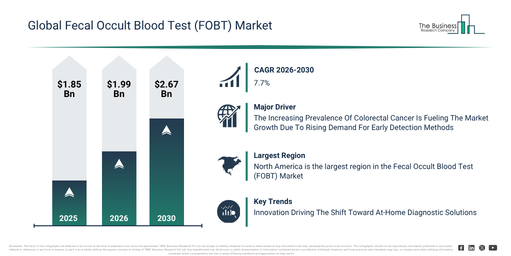
    The fecal occult blood test (FOBT) market size has shown significant expansion in recent years. It is anticipated to increase from $1.85 billion in 2025 to $1.99 billion in 2026, exhibiting a compound annual growth rate (CAGR) of 7.5%. Historically, this growth can be attributed to the rising prevalence of colorectal cancer, growing awareness of preventive health screening, expansion of national cancer screening programs, increasing geriatric population, and improvements in diagnostic laboratory infrastructure.

    The fecal occult blood test (FOBT) market is projected to experience substantial expansion over the upcoming years. This market is anticipated to reach a valuation of $2.67 billion by 2030, exhibiting a compound annual growth rate (CAGR) of 7.7%. Factors contributing to this growth during the projected period include a surging demand for non-invasive diagnostic techniques, the increasing uptake of at-home testing solutions, escalating healthcare spending in developing economies, the broadening of personalized medicine strategies, and the greater incorporation of digital health platforms. Key trends anticipated during this forecast period involve the rising adoption of immunochemical FOBT kits, an increased inclination towards home-based screening examinations, an intensified emphasis on the early detection of colorectal cancer, the proliferation of point-of-care FOBT devices, and the accelerated development of high-sensitivity test reagents.

    Get A Free Sample Report With In-Depth Market Insights:

    https://thebusinessresearchcompany.com/sample_request?id=19380326&type=smp&name=Fecal%20Occult%20Blood%20Test%20%28FOBT%29%20Market%20Report%202026&utm_source=Blogs&utm_medium=Paid&utm_campaign=Oct_PR

    Fecal Occult Blood Test (FOBT) Market Growth Backed By Core Demand Fundamentals

    The rising occurrence and public health burden of colorectal cancer are anticipated to drive the expansion of the fecal occult blood test (FOBT) market in the future. Colorectal cancer, a malignancy originating in the colon or rectum, frequently evolves from unusual growths called polyps. Its increasing presence is linked to elements like inactive lifestyles, an aging demographic, and dietary patterns, all of which elevate the likelihood of cancer forming in the digestive system. The fecal occult blood test (FOBT) aids in screening for colorectal cancer by identifying concealed blood in stool early, thus allowing for prompt diagnosis, better treatment results, and slower disease advancement. As an example, the Office for National Statistics (ONS), a UK-based government department, reported in February 2025 that approximately 15,552 colorectal cancer deaths were recorded in England and Wales in 2023, with 2024 provisional data showing a comparable figure. This underscores the substantial impact of the disease and the heightened demand for early screening and preventative diagnostic instruments. Consequently, the growing incidence of colorectal cancer is stimulating the expansion of the fecal occult blood test (FOBT) market.

    Fecal Occult Blood Test (FOBT) Market Segments: Where Is Growth Concentrated?

    The fecal occult blood test (fobt) market covered in this report is segmented –

    1) By Product Type: Guaiac-Based Fecal Occult Blood Test, Immunochemical Fecal Occult Blood Test, Other Product Types

    2) By Sample Type: Stool-Based, Other Sample Types

    3) By Application: Colorectal Cancer Screening, Gastrointestinal Bleeding, Other Applications

    4) By End User: Hospitals, Diagnostic Laboratories, Clinics, Home Care Settings, Other End Users

    Subsegments:

    1) By Guaiac-Based Fecal Occult Blood Test: Manual Guaiac Test Kits, Automated Guaiac Test Systems, Point-Of-Care Guaiac Test Devices, High Sensitivity Guaiac Reagents

    2) By Immunochemical Fecal Occult Blood Test: Qualitative Immunochemical Test Kits, Quantitative Immunochemical Test Systems, Point-Of-Care Immunochemical Devices, High Sensitivity Immunochemical Reagents

    3) By Other Product Types: Deoxyribonucleic Acid-Based Fecal Occult Blood Test Kits, Enzyme Immunoassay Test Kits, Chromatographic Fecal Occult Blood Test Devices, Combination Fecal Occult Blood Test Systems

    Fecal Occult Blood Test (FOBT) Market Growth Trends Reshaping The Competitive Landscape

    Major companies operating in the fecal occult blood test (FOBT) market are concentrating on the development of innovative products, such as at-home over-the-counter (OTC) FOBT kits, to elevate early detection rates and enhance patient convenience. At-home over-the-counter (OTC) FOBT kits represent non-invasive testing options that empower individuals to collect stool samples at home for the purpose of detecting hidden blood, thereby aiding in early colorectal cancer screening and offering increased convenience compared to traditional lab-based tests. For instance, in December 2023, DiaCarta Inc., a US-based precision diagnostic company, launched the iColon Fecal Occult Blood Test, an OTC at-home test designed to enable the early identification of blood in stool, which is clinically relevant for both gastrointestinal disorders and colorectal cancer. The iColon test has been developed to be user-friendly and non-invasive, permitting patients to gather samples without the need for medical supervision. It integrates sensitive detection methods that enhance accuracy beyond conventional guaiac-based FOBTs, consequently reducing false negatives and facilitating earlier intervention. Additionally, it promotes timely follow-up with healthcare providers if abnormal results are found, contributing to proactive colorectal health management.

    Fecal Occult Blood Test (FOBT) Market Competitive Landscape: Which Companies Lead The Industry?

    Major companies operating in the fecal occult blood test (fobt) market are F. Hoffmann-La Roche AG, Siemens Healthineers AG, Medline Industries Inc., Quest Diagnostics Incorporated, Sysmex Corporation, Quidel Corporation, Randox Laboratories Ltd., BIOMERICA Inc., Aidian Oy, Meridian Bioscience Inc., CTK Biotech Inc., Eiken Chemical Co. Ltd., Hemosure Inc., Alfa Scientific Designs Inc., AdvaCare Pharma Inc., Biohit Oyj, Immunostics Inc., Apacor Ltd., Humasis Co. Ltd., Firstep Bioresearch Inc., Biopanda Reagents Ltd, Ameritek Inc.

    View The Full Fecal Occult Blood Test (FOBT) Market Report:

    https://thebusinessresearchcompany.com/report/fecal-occult-blood-test-fobt-market-report?utm_source=Blogs&utm_medium=Paid&utm_campaign=Oct_PR

    Fecal Occult Blood Test (FOBT) Market Regional Outlook: Where Is Opportunity Concentrated?

    North America was the largest region in the fecal occult blood test (FOBT) market in 2025. Asia-Pacific is expected to be the fastest-growing region in the forecast period. The regions covered in the fecal occult blood test (fobt) market report are Asia-Pacific, South East Asia, Western Europe, Eastern Europe, North America, South America, Middle East, Africa.

    Reach Out To Our Team:

    The Business Research Company: https://www.thebusinessresearchcompany.com/

    Americas: +1 310-496-7795

    Asia: +44 7882 955267 & +91 8897263534

    Europe: +44 7882 955267

    Email us at: marketing@tbrc.info

    Follow us on:

    LinkedIn: https://in.linkedin.com/company/the-business-research-company

    YouTube: https://www.youtube.com/channel/UC24_fI0rV8cR5DxlCpgmyFQ

    Global Market Model: https://www.thebusinessresearchcompany.com/global-market-model

  • Fast Sterility Testing By Adenosine Triphosphate (ATP) Bioluminescence Market Size And Growth In 2026: Key Factors Shaping Future Demand

    Built to provide research that’s more actionable and strategically valuable, The Business Research Company’s 2026 market reports include market attractiveness analysis, total addressable market sizing, company benchmarking matrices, interactive Excel dashboards, broader supply chain intelligence, emerging startup tracking, and in-depth product insights.

    Fast Sterility Testing By Adenosine Triphosphate (ATP) Bioluminescence Market Poised To Hit $1.76 Billion By 2030 With A 12.9% CAGR

    The market for fast sterility testing employing adenosine triphosphate (ATP) bioluminescence has seen significant expansion in recent years. Its value is set to increase from $0.96 billion in 2025 to $1.08 billion in 2026, exhibiting a compound annual growth rate (CAGR) of 12.7%. This historical growth can be attributed to several factors, including the escalating requirement for quicker sterility assessments in pharmaceuticals, the inherent limitations of conventional culture-based methodologies, a heightened regulatory focus on contamination management, the development of biotechnology production facilities, and the expansion of hospital infection control initiatives.

    The fast sterility testing by adenosine triphosphate (ATP) bioluminescence market is poised for significant expansion over the next few years. It is forecast to achieve a size of $1.76 billion in 2030, exhibiting a compound annual growth rate (CAGR) of 12.9%. This growth throughout the forecast period stems from factors such as the increasing adoption of automated rapid testing platforms, augmented investment in advanced microbial detection technologies, a rising demand from food and beverage safety testing, the expansion of cleanroom manufacturing environments, and a heightened focus on quality assurance and compliance standards. Prominent trends for the forecast period include the increasing embrace of rapid microbial detection methods, an escalating need for real-time sterility assessment, the growing utilization of luminometer-based systems, the proliferation of automated bioluminescence analyzers, and a shift towards replacing culture-based testing methods.

    Get A Free Sample Report With In-Depth Market Insights:

    https://thebusinessresearchcompany.com/sample_request?id=77953217&type=smp&name=Fast%20Sterility%20Testing%20By%20Adenosine%20Triphosphate%20%28ATP%29%20Bioluminescence%20Market%20Report%202026&utm_source=Blogs&utm_medium=Paid&utm_campaign=Oct_PR

    Fast Sterility Testing By Adenosine Triphosphate (ATP) Bioluminescence Market Growth Catalysts And Demand Drivers

    The expansion of the pharmaceutical and biotechnology sectors is anticipated to drive the fast sterility testing by adenosine triphosphate (ATP) bioluminescence market’s growth in the future. These sectors encompass industries involved in researching, developing, manufacturing, and marketing medications, vaccines, and biologics for disease prevention or treatment. Growth within the pharmaceutical and biotechnology sectors stems from rising research and development investments, empowering companies to innovate new drugs, enhance treatments, and boost production capacity to satisfy increasing healthcare needs. Fast sterility testing by adenosine triphosphate (ATP) bioluminescence aids these sectors by quickly identifying microbial contamination, thereby guaranteeing the safety and quality of pharmaceutical products and biologics, and facilitating quicker manufacturing processes while adhering to stringent regulatory requirements. For example, Eurostat, a government agency based in Luxembourg, reported in April 2025 that EU exports of medicinal and pharmaceutical products saw a 13.5% rise in 2024 compared to 2023, totaling $316.38 billion (€313.4 billion). Additionally, the BioIndustry Association (BIA), a UK trade association, indicated in January 2025 that the UK biotech sector achieved significant growth in 2024, attracting £3.5 billion (approximately $4.4 billion) in investment, which marks an impressive 94% increase over the prior year. Consequently, the expansion within the pharmaceutical and biotechnology sectors is propelling the growth of the fast sterility testing by adenosine triphosphate (ATP) bioluminescence market.

    Fast Sterility Testing By Adenosine Triphosphate (ATP) Bioluminescence Market Segment Analysis: What Are The Core Market Categories?

    The fast sterility testing by adenosine triphosphate (atp) bioluminescence market covered in this report is segmented –

    1) By Technology: Adenosine Triphosphate Bioluminescence, Membrane Filtration, Direct Inoculation

    2) By Product Type: Instruments, Reagents And Kits, Consumables

    3) By Application: Pharmaceutical And Biotechnology, Food And Beverage, Medical Devices, Water And Environmental, Cosmetics And Personal Care, Other Applications

    4) By End-User: Hospitals And Clinics, Laboratories, Research Institutes, Other End-Users

    Subsegments:

    1) By Adenosine Triphosphate Bioluminescence: Luminometer Based Systems, Handheld Rapid Detection Kits, Automated Bioluminescence Analyzers

    2) By Membrane Filtration: Vacuum Filtration Units, Gravity Filtration Systems, Automated Membrane Filtration Instruments

    3) By Direct Inoculation: Broth Culture Methods, Agar Plate Culture Methods, Automated Inoculation Systems

    Fast Sterility Testing By Adenosine Triphosphate (ATP) Bioluminescence Market Trends Shaping Long-Term Demand

    Major companies operating in the fast sterility testing by adenosine triphosphate (ATP) bioluminescence market are focusing on developing innovative methods, such as accelerated sterility tests, to shorten batch release times and improve QC efficiency. These accelerated sterility tests, which utilize rapid detection techniques like ATP bioluminescence to identify microbial contamination, contribute to decreasing batch release periods, reducing quarantine times, and enhancing overall quality control efficiency. For instance, in January 2026, Biotactical B.V., a Netherlands-based biotechnology company, unveiled its accelerated rapid sterility testing platform. This innovative solution combines ATP bioluminescence with accelerated growth media to detect microbial contamination in just 48 hours. The system is specifically designed for GMP-compliant environments and supports complex, short-shelf-life products, including advanced therapeutic medicinal products (ATMPs). This platform delivers expedited detection, minimizes handling time and contamination risk, and adheres to USP <71>, <73>, <1223> and Ph. Eur. 2.6 and 5.1.6 standards. This capability enables faster batch release and more efficient inventory management, effectively addressing a critical bottleneck in pharmaceutical quality control workflows.

    Fast Sterility Testing By Adenosine Triphosphate (ATP) Bioluminescence Market Competitive Landscape: Who Leads The Industry?

    Major companies operating in the fast sterility testing by adenosine triphosphate (atp) bioluminescence market are 3M Company, Merck KGaA, Lonza Group AG, SGS SA, Kikkoman Biochemifa, Charles River Laboratories, BioMérieux, Hach Company, Neogen Corporation, Charm Sciences, Promega Corporation, LuminUltra Technologies, Sopex d.o.o., Nelson Laboratories LLC, Hygiena LLC, PCE Instruments, Berthold Technologies, BioThema AB, Pharmetric Laboratory, Biotactical B.V., Promicol BV.

    View The Full Fast Sterility Testing By Adenosine Triphosphate (ATP) Bioluminescence Market Report:

    https://thebusinessresearchcompany.com/report/fast-sterility-testing-by-adenosine-triphosphate-atp-bioluminescence-market-report?utm_source=Blogs&utm_medium=Paid&utm_campaign=Oct_PR

    Fast Sterility Testing By Adenosine Triphosphate (ATP) Bioluminescence Market Geographic Landscape: Which Region Leads Industry Growth?

    North America was the largest region in the fast sterility testing by adenosine triphosphate (ATP) bioluminescence market in 2025. Asia-Pacific is expected to be the fastest-growing region in the forecast period. The regions covered in the fast sterility testing by adenosine triphosphate (atp) bioluminescence market report are Asia-Pacific, South East Asia, Western Europe, Eastern Europe, North America, South America, Middle East, Africa.

    Reach Out To Our Team:

    The Business Research Company: https://www.thebusinessresearchcompany.com/

    Americas: +1 310-496-7795

    Asia: +44 7882 955267 & +91 8897263534

    Europe: +44 7882 955267

    Email us at: marketing@tbrc.info

    Follow us on:

    LinkedIn: https://in.linkedin.com/company/the-business-research-company

    YouTube: https://www.youtube.com/channel/UC24_fI0rV8cR5DxlCpgmyFQ

    Global Market Model: https://www.thebusinessresearchcompany.com/global-market-model

  • Fast Healthcare Interoperability Resources (FHIR) Integration Services Market Forecast 2026–2030: Market Size, Trends And Growth Opportunities

    Backed by market attractiveness analysis, total addressable market sizing, company benchmarking matrices, interactive Excel dashboards, wider supply chain intelligence, emerging startup coverage, and detailed product-level insights, The Business Research Company’s 2026 market reports are designed to offer research that is more actionable and strategically valuable than ever.

    Fast Healthcare Interoperability Resources (FHIR) Integration Services Market Size And Revenue Outlook Through 2030

    The market size for fast healthcare interoperability resources (FHIR) integration services has experienced significant expansion in recent years. It is projected to increase from $1.53 billion in 2025 to $1.85 billion in 2026, exhibiting a compound annual growth rate (CAGR) of 20.4%. Historically, this growth can be attributed to the increasing digitization of healthcare records, the growing adoption of electronic health record systems, a rising need for healthcare data standardization, government mandates for interoperability compliance, and the expansion of health information exchange networks.

    The fast healthcare interoperability resources (FHIR) integration services market is projected to experience substantial growth over the next few years. It is expected to expand to $3.91 billion by 2030, achieving a compound annual growth rate (CAGR) of 20.7%. This expansion during the forecast period is driven by factors such as the increasing adoption of cloud-native healthcare platforms, greater integration of AI-driven clinical decision support, a rising demand for patient-centric care models, the broadening of telehealth and remote monitoring services, and increased investment in healthcare data analytics. Significant trends anticipated for this period include the growing adoption of FHIR-based API integration, a heightened demand for real-time clinical data exchange, the expanding implementation of EHR interoperability solutions, the wider deployment of cloud-based FHIR models, and an intensified focus on secure patient data sharing.

    Get A Free Sample Report With In-Depth Market Insights:

    https://thebusinessresearchcompany.com/sample_request?id=77412184&type=smp&name=Fast%20Healthcare%20Interoperability%20Resources%20%28FHIR%29%20Integration%20Services%20Market%20Report%202026&utm_source=Blogs&utm_medium=Paid&utm_campaign=Oct_PR

    Fast Healthcare Interoperability Resources (FHIR) Integration Services Market Opportunity Drivers: What’s Unlocking New Revenue Potential?

    The increasing embrace of electronic health records is anticipated to boost the expansion of the fast healthcare interoperability resources (FHIR) integration services market. Electronic health records (EHRs) are digital archives of patients’ medical histories, maintained by healthcare providers, encompassing details like diagnoses, prescriptions, treatment regimens, vaccination schedules, sensitivities, radiology scans, and lab outcomes. The heightened adoption of EHRs stems from their capacity to enhance patient well-being and security through offering precise, immediate access to comprehensive health data, mitigating mistakes, and facilitating more informed clinical choices. These digital records optimize fast healthcare interoperability resources (FHIR) integration services by supplying standardized, organized patient information, thus enabling smooth data exchange, instant availability, and superior interoperability across various healthcare systems. For example, the Department of Health and Social Care, a UK government body, reported in March 2024 that the proportion of National Health Services trusts in the UK utilizing electronic health records rose from 90% in December 2023 to 100% in March 2025. Consequently, the rising prevalence of electronic health records is propelling the growth of the fast healthcare interoperability resources (FHIR) integration services market.

    Fast Healthcare Interoperability Resources (FHIR) Integration Services Market Segment Breakdown: Which Categories Lead On Revenue?

    The fast healthcare interoperability resources (FHIR) integration services market covered in this report is segmented –

    1) By Component: Software, Services

    2) By Integration Type: Fast Healthcare Interoperability Resources Application Programming Interface Integration, Electronic Health Record Integration, Health Information Exchange Integration, Cloud Based Fast Healthcare Interoperability Resources Integration, Mobile Health Application Integration, Clinical Data Repository Integration

    3) By Deployment Mode: On-Premises, Cloud-Based

    4) By Application: Clinical Data Exchange, Patient Management, Population Health Management, Other Applications

    5) By End-User: Healthcare Providers, Payers, Pharmacies, Other End-Users

    Subsegments:

    1) By Software: Fast Healthcare Interoperability Resources Engine Software, Interface Engine Software, Data Mapping Software, Application Programming Interface Management Software, Clinical Data Integration Software

    2) By Services: Implementation Services, Consulting Services, Training Services, Support And Maintenance Services, Data Migration Services

    Fast Healthcare Interoperability Resources (FHIR) Integration Services Market Innovation Trends Shaping Future Development

    Major companies operating in the fast healthcare interoperability resources (FHIR) integration services market are concentrating on developing innovative platforms, such as interoperability engine platforms, to improve seamless data exchange, enhance EHR integration, and ensure adherence to healthcare interoperability standards. An interoperability engine functions as a software platform that allows different healthcare systems, applications, and devices to exchange, interpret, and utilize data without friction. For instance, in July 2025, EMR Direct Inc., a US-based health information technology software company, launched enhanced HL7 FHIR services for its Interoperability Engine 2026, specifically targeting health IT developers. This update enables secure patient access and business-to-business data exchange, while also ensuring compliance with ONC Health IT certification criteria and the medicare promoting interoperability program. These advancements are designed to streamline healthcare data interoperability, improve information sharing among providers, and support the rising demand for standardized, efficient health IT solutions.

    Fast Healthcare Interoperability Resources (FHIR) Integration Services Market Company Landscape And Competitive Strategy

    Major companies operating in the fast healthcare interoperability resources (FHIR) integration services market are Google LLC, Microsoft Corporation, Salesforce Inc., Tata Consultancy Services Limited, Cognizant Technology Solutions Corporation, Infosys Limited, InterSystems Corporation, Eclinical Works LLC, Medical Information Technology Inc., Veradigm Inc., 1upHealth Inc., Epic Systems Corporation, Mindbowser Inc., DreamSoft4U Private Limited, Health Gorilla Inc., Taction Software LLC, BM Coder LLC, CapMinds Technologies Private Limited, Edenlab LLC, Firely B.V., Health Samurai Inc., Healthcare Integrations LLC, Smile Digital Health Inc., and Techbit Solutions Pvt. Ltd.

    View The Full Fast Healthcare Interoperability Resources (FHIR) Integration Services Market Report:

    https://thebusinessresearchcompany.com/report/fast-healthcare-interoperability-resources-fhir-integration-services-market-report?utm_source=Blogs&utm_medium=Paid&utm_campaign=Oct_PR

    Fast Healthcare Interoperability Resources (FHIR) Integration Services Market Largest Region: Which Geography Holds The Biggest Share?

    North America was the largest region in the fast healthcare interoperability resources (FHIR) integration services market in 2025. Asia-Pacific is expected to be the fastest-growing region in the forecast period. The regions covered in the fast healthcare interoperability resources (FHIR) integration services market report are Asia-Pacific, South East Asia, Western Europe, Eastern Europe, North America, South America, Middle East, Africa.

    Reach Out To Our Team:

    The Business Research Company: https://www.thebusinessresearchcompany.com/

    Americas: +1 310-496-7795

    Asia: +44 7882 955267 & +91 8897263534

    Europe: +44 7882 955267

    Email us at: marketing@tbrc.info

    Follow us on:

    LinkedIn: https://in.linkedin.com/company/the-business-research-company

    YouTube: https://www.youtube.com/channel/UC24_fI0rV8cR5DxlCpgmyFQ

    Global Market Model: https://www.thebusinessresearchcompany.com/global-market-model

  • Exon Skipping Therapies Market Size Reaches $2.81 Billion In 2026: What Is Driving Growth?

    Exon Skipping Therapies Market Size Reaches $2.81 Billion In 2026: What Is Driving Growth?

    Featuring market attractiveness scoring, total addressable market sizing, company benchmarking matrices, interactive Excel dashboards, deeper supply chain intelligence, emerging startup tracking, and granular product-level insights, The Business Research Company’s 2026 market reports are built to deliver research that is both more actionable and more strategically valuable.

    Exon Skipping Therapies Market Growth From $2.81 Billion In 2026 To $5.9 Billion By 2030 At A CAGR Of 20.4%

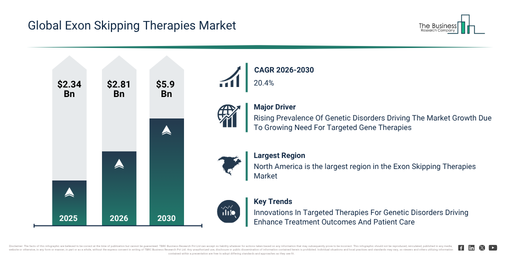
    The market size for exon skipping therapies has experienced substantial growth in recent years. This market is projected to expand from $2.34 billion in 2025 to $2.81 billion in 2026, driven by a compound annual growth rate (CAGR) of 20.1%. The historical expansion can be traced to several factors: a rise in the prevalence of Duchenne muscular dystrophy, intensified research into RNA splicing mechanisms, early regulatory approvals for antisense therapies, increased funding for rare disease research, and the growth of partnerships in biotechnology.

    The exon skipping therapies market is poised for substantial growth over the next few years. It is projected to expand to $5.9 billion by 2030, exhibiting a compound annual growth rate (CAGR) of 20.4%. This anticipated growth during the forecast period is driven by the increasing adoption of personalized genetic medicine, an expanding pipeline of exon-targeted therapies, rising investment in advanced delivery systems, broadening approvals across inherited neuromuscular disorders, and increased collaboration between research institutes and biopharmaceutical companies. Prominent trends throughout this period include advancements in antisense oligonucleotide chemistry, a heightened focus on rare genetic disorders, the expansion of combination genetic therapy approaches, growing investment in RNA-based therapeutics pipelines, and an increase in clinical trials for exon-specific mutations.

    Get A Free Sample Report With In-Depth Market Insights:

    https://thebusinessresearchcompany.com/sample_request?id=24185023&type=smp&name=Exon%20Skipping%20Therapies%20Market%20Report%202026&utm_source=Blogs&utm_medium=Paid&utm_campaign=Oct_PR

    Exon Skipping Therapies Market Growth Momentum: What Factors Are Shaping Demand?

    The expanding incidence of genetic disorders is projected to propel the growth of the exon skipping therapies market throughout the forecast period. Genetic disorders are health conditions stemming from irregularities in an individual’s genetic material (DNA), encompassing single-gene mutations and chromosomal changes that can result in inherited or acquired illnesses. This noticeable rise in genetic disorder prevalence is primarily due to breakthroughs in diagnostic tools and the broader implementation of genetic testing and newborn screening programs, which facilitate earlier and more precise detection of previously undiagnosed instances. Exon skipping therapies are formulated to target specific genetic mutations by selectively removing defective exons during messenger RNA (mRNA) processing, thereby enabling the production of partially or fully functional proteins. This focused therapeutic strategy directly addresses the fundamental molecular origins of certain genetic conditions, particularly rare and previously untreatable ones, generating considerable clinical and commercial appeal. For instance, in October 2024, the National Health Service (NHS) England, a UK government body, initiated a landmark newborn screening program across NHS hospitals to screen numerous newborns for over 200 rare genetic conditions, with aspirations to extend screening to as many as 100,000 babies across England. Consequently, the increasing prevalence of genetic disorders is fueling the expansion of the exon skipping therapies market.

    Exon Skipping Therapies Market Segmentation: How Does The Market Break Down By Category?

    The exon skipping therapies market covered in this report is segmented –

    1) By Product Type: Antisense Oligonucleotides, Synthetic Ribonucleic Acid Molecules, Exon-Targeted Gene Therapy Kits, Combination Therapy Formulations, Other Product Types

    2) By Route Of Administration: Oral, Intravenous, Subcutaneous, Other Route Of Administration

    3) By Distribution Channel: Direct Sales, Distributors, Online Pharmacies, Other Distribution Channel

    4) By Application: Duchenne Muscular Dystrophy, Becker Muscular Dystrophy, Spinal Muscular Atrophy, Other Inherited Diseases, Other Applications

    5) By End-User: Hospitals And Clinics, Research Institutes, Biopharmaceutical Companies, Specialty Genetic Centers, Other End Users

    Subsegments:

    1) By Antisense Oligonucleotides: Phosphorodiamidate Morpholino Oligonucleotides, Peptide Conjugated Oligonucleotides, Gapmer Oligonucleotides, Steric Blocking Oligonucleotides, Splice Modulating Oligonucleotides

    2) By Synthetic Ribonucleic Acid Molecules: Messenger Ribonucleic Acid Molecules, Small Interfering Ribonucleic Acid Molecules, Guide Ribonucleic Acid Molecules, Modified Ribonucleic Acid Molecules, Therapeutic Ribonucleic Acid Constructs

    3) By Exon-Targeted Gene Therapy Kits: Viral Vector Delivery Kits, Non-Viral Delivery Kits, Plasmid-Based Gene Therapy Kits, Targeted Editing Delivery Kits, Tissue Specific Delivery Kits

    4) By Combination Therapy Formulations: Gene Therapy And Drug Combination, Oligonucleotide And Small Molecule Combination, Multi-Target Genetic Therapy, Supportive Protein Therapy Combination, Sequential Genetic Therapy Formulations

    5) By Other Product Types: Peptide Based Genetic Modulators, Nanoparticle Delivery Formulations, Lipid Based Delivery Systems, Targeted Molecular Complexes, Personalized Genetic Therapy Formats

    Exon Skipping Therapies Market Trends Redefining Industry Growth

    Leading firms in the exon skipping therapies market are increasingly prioritizing the creation of advanced treatment options, like experimental antibody-oligonucleotide conjugate (AOC) therapies, to optimize targeted drug delivery and boost dystrophin generation in individuals with Duchenne muscular dystrophy (DMD). These AOC treatments signify an advanced method that unites a monoclonal antibody and a synthetic oligonucleotide, facilitating the precise delivery of exon-skipping agents straight to muscle cells. As an example, in July 2025, Avidity Biosciences Inc., a U.S.-headquartered biotechnology firm, obtained Breakthrough Therapy designation from the U.S. Food and Drug Administration (FDA) for delpacibart zotadirsen (del-zota), an experimental AOC therapy designed to treat DMD in patients with specific mutations suitable for exon 44 skipping. Del-zota is composed of a specialized monoclonal antibody linked to phosphorodiamidate morpholino oligomers (PMOs), which aid in exon 44 skipping during the mRNA processing stage. This treatment is presently undergoing Phase 2 clinical development, with intentions for regulatory filing bolstered by strong biomarker and clinical effectiveness information. These progress points emphasize the increasing focus on distinct delivery systems within the exon skipping therapies market and demonstrate the transformative role of AOC technologies in developing future precision treatments for inherited neuromuscular conditions.

    Exon Skipping Therapies Market Key Players Shaping Industry Direction

    Major companies operating in the exon skipping therapies market are Daiichi Sankyo Company Limited, BioMarin Pharmaceutical Inc., Sarepta Therapeutics, Nippon Shinyaku Co. Ltd., Ionis Pharmaceuticals Inc., PTC Therapeutics, Ionis Pharmaceuticals Inc., Entrada Therapeutics Inc., Wave Life Sciences, PepGen Inc., ProQR Therapeutics NV, NS Pharma Inc., Genethon, Astellas Gene Therapies, SQY Therapeutics, AUM Biotech Inc., Cure Rare Disease Inc., Autotelic Bio Inc., Dyne Therapeutics, Skip Therapeutics.

    View The Full Exon Skipping Therapies Market Report:

    https://thebusinessresearchcompany.com/report/exon-skipping-therapies-market-report?utm_source=Blogs&utm_medium=Paid&utm_campaign=Oct_PR

    Exon Skipping Therapies Market Regional Analysis: Which Geography Leads On Revenue?

    North America was the largest region in the exon skipping therapies market in 2025. Asia-Pacific is expected to be the fastest-growing region in the forecast period. The regions covered in the exon skipping therapies market report are Asia-Pacific, South East Asia, Western Europe, Eastern Europe, North America, South America, Middle East, Africa.

    Reach Out To Our Team:

    The Business Research Company: https://www.thebusinessresearchcompany.com/

    Americas: +1 310-496-7795

    Asia: +44 7882 955267 & +91 8897263534

    Europe: +44 7882 955267

    Email us at: marketing@tbrc.info

    Follow us on:

    LinkedIn: https://in.linkedin.com/company/the-business-research-company

    YouTube: https://www.youtube.com/channel/UC24_fI0rV8cR5DxlCpgmyFQ

    Global Market Model: https://www.thebusinessresearchcompany.com/global-market-model