Blog

  • E-Prescribing Platforms Market Size In 2026: Growth Outlook And Forecast Through 2030

    Backed by market attractiveness analysis, total addressable market sizing, company benchmarking matrices, interactive Excel dashboards, wider supply chain intelligence, emerging startup coverage, and detailed product-level insights, The Business Research Company’s 2026 market reports are designed to offer research that is more actionable and strategically valuable than ever.

    E-Prescribing Platforms Market Growth Potential: How Will Market Size Shift Through 2030?

    The e-prescribing platforms market has experienced rapid expansion in recent years. It is anticipated to increase from $3.83 billion in 2025 to $4.8 billion in 2026, achieving a compound annual growth rate (CAGR) of 25.5%. The expansion observed in the past can be attributed to the rising acceptance of electronic health records, an increased emphasis on minimizing medication errors, developing regulatory requirements for digital prescriptions, the growth of healthcare IT infrastructure, and a greater demand for workflow efficiency.

    The e-prescribing platforms market is projected to expand significantly over the coming years. Its valuation is anticipated to reach $12.02 billion in 2030, exhibiting a compound annual growth rate (CAGR) of 25.8%. This expansion during the projection period stems from factors such as the increasing embrace of cloud and hybrid e-prescribing solutions, enhanced integration with AI-powered clinical decision tools, a growing need for real-time prescription oversight, the broadening scope of telemedicine services, and a heightened emphasis on patient safety and adherence. Key developments expected during the forecast timeframe involve the increasing uptake of cloud-based e-prescribing platforms, greater integration with pharmacy management systems, an elevated focus on medication safety and clinical decision support, the expansion of telehealth and remote prescription services, and a rising requirement for compliance and regulatory oversight.

    Get A Free Sample Report With In-Depth Market Insights:

    https://thebusinessresearchcompany.com/sample_request?id=10989780&type=smp&name=E-Prescribing%20Platforms%20Market%20Report%202026&utm_source=Blogs&utm_medium=Paid&utm_campaign=Oct_PR

    E-Prescribing Platforms Market Development Factors: What’s Supporting Demand?

    The expanding utilization of Electronic Health Record (EHR) solutions is anticipated to fuel the expansion of the e-prescribing platforms market throughout the projection period. These EHR solutions are digital frameworks crafted to store, manage, and securely disseminate patient health data across various healthcare environments, thereby enhancing care coordination and operational efficiency in clinics. The uptake of EHR systems continues its upward trend, propelled by governmental directives, regulatory demands, and financial incentives designed to hasten the shift from traditional paper records to a connected digital healthcare infrastructure. E-prescribing platforms represent a fundamental element of clinical workflows enabled by EHR, integrating fluidly with digital patient records to empower healthcare professionals to create, send, and oversee prescriptions digitally. For example, in July 2024, data from the European Commission, an organization based in Belgium, indicated that average access to electronic health records via online portals throughout the European Union hit 79%, marking an increase from 72% in 2022, which demonstrates significant progress in EHR adoption. Consequently, the growing acceptance of Electronic Health Record (EHR) solutions is propelling the expansion of the e-prescribing platforms market.

    E-Prescribing Platforms Market Segment Analysis Spotlighting Growth Areas

    The eprescribing platforms market covered in this report is segmented –

    1) By Component: Software, Services, Other Components

    2) By Deployment Type: Cloud-Based Platforms, On-Premise Platforms, Hybrid Platforms

    3) By Distribution Channel: Direct Sales, Software Integrators, Online Platforms, Resellers, Other Distribution Channels

    4) By Application: Controlled Substances, Non-Controlled Substances, Other Applications

    5) By End-User: Physicians, Pharmacists, Healthcare Organizations, Government Agencies, Other End-Users

    Subsegments:

    1) By Software: Prescription Management Software, Medication History Management Software, Clinical Decision Support Software, Pharmacy Integration Software, Data Security Management Software

    2) By Services: Implementation And Deployment Services, Training And Education Services, Maintenance And Support Services, Consulting And Integration Services, Data Migration Services

    3) By Other Components: Hardware Integration Components, Data Storage Components, Network Connectivity Components, Security Infrastructure Components, User Interface Components

    E-Prescribing Platforms Market Transformation Trends: What Innovations Are Driving Change?

    Companies leading in the eprescribing platforms market are concentrating on developing innovative solutions, such as secure digital private prescription management systems, to elevate prescription security, improve workflow efficiency, and ensure regulatory compliance. Secure digital private prescription management systems are electronic platforms designed to facilitate the encrypted creation, authentication, transmission, and storage of prescriptions, which helps in reducing medication errors, preventing fraud, streamlining communication between clinicians and pharmacies, and enhancing patient convenience when compared to traditional paper-based prescribing. For instance, in January 2024, eHealth Solutions Ltd, a UK-based digital healthcare technology company, launched ePrivate Prescription (EPP) Version 2.0, a secure digital private prescription management system within the ePrescribing platforms market. EPP 2.0 enables the secure, encrypted electronic conveyance of prescriptions using Advanced Electronic Signatures, thereby ensuring authenticity and data protection. The platform also introduces prescription tokens that patients can present at participating pharmacies, which enhances flexibility and accessibility in prescription dispensing. It further allows clinicians to print controlled drug prescriptions directly from the software, eliminating manual handwriting and reducing errors while maintaining compliance.

    E-Prescribing Platforms Market Leading Companies And Competitive Benchmarking

    Major companies operating in the e-prescribing platforms market are McKesson Corporation, Oracle Health Inc., GE HealthCare Technologies Inc., Epic Systems Corporation, CompuGroup Medical SE & Co. KGaA, eClinicalWorks LLC, Medical Information Technology Inc., AdvancedMD Inc., Surescripts LLC, ScriptSure Systems Inc., DrFirst Inc., RXNT Inc., Healthie Inc., Elation Health Inc., TherapyNotes LLC, DoseSpot Inc., PS3G Inc., iCoreRx LLC, MDToolbox Inc., WriteUpp Ltd.

    View The Full E-Prescribing Platforms Market Report:

    https://thebusinessresearchcompany.com/report/e-prescribing-platforms-market-report?utm_source=Blogs&utm_medium=Paid&utm_campaign=Oct_PR

    E-Prescribing Platforms Market Top Region By Revenue And Market Share

    North America was the largest region in the eprescribing platforms market in 2025. Asia-Pacific is expected to be the fastest-growing region in the forecast period. The regions covered in the eprescribing platforms market report are Asia-Pacific, South East Asia, Western Europe, Eastern Europe, North America, South America, Middle East, Africa.

    Reach Out To Our Team:

    The Business Research Company: https://www.thebusinessresearchcompany.com/

    Americas: +1 310-496-7795

    Asia: +44 7882 955267 & +91 8897263534

    Europe: +44 7882 955267

    Email us at: marketing@tbrc.info

    Follow us on:

    LinkedIn: https://in.linkedin.com/company/the-business-research-company

    YouTube: https://www.youtube.com/channel/UC24_fI0rV8cR5DxlCpgmyFQ

    Global Market Model: https://www.thebusinessresearchcompany.com/global-market-model
  • Enzyme Stabilizers For Point-Of-Care Market Trends Supporting 9.6% CAGR Growth Through 2030

    Enzyme Stabilizers For Point-Of-Care Market Trends Supporting 9.6% CAGR Growth Through 2030

    Featuring market attractiveness scoring, total addressable market sizing, company benchmarking matrices, interactive Excel dashboards, deeper supply chain intelligence, emerging startup tracking, and granular product-level insights, The Business Research Company’s 2026 market reports are built to deliver research that is both more actionable and more strategically valuable.

    Enzyme Stabilizers For Point-Of-Care Market Value Analysis: What Growth Lies Ahead Over The Forecast Period?

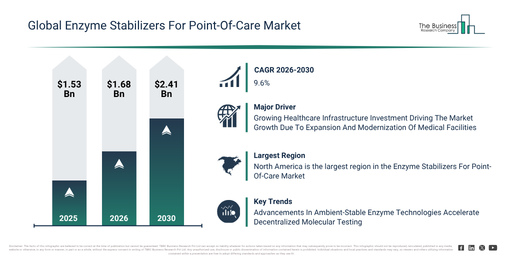
    The enzyme stabilizers for point-of-care market size has shown robust expansion in recent years. This market is expected to increase from $1.53 billion in 2025 to $1.68 billion in 2026, demonstrating a compound annual growth rate (CAGR) of 9.3%. The drivers behind this historic period’s growth include the escalating use of point-of-care diagnostic tests, a rising demand for enzyme-based rapid tests, the broadening of home care testing, an increasing requirement for temperature-stable formulations, and the integration of lyophilized enzyme technologies.

    The enzyme stabilizers for point-of-care market size is anticipated to undergo significant expansion over the next few years, projected to reach $2.41 billion in 2030, exhibiting a compound annual growth rate (CAGR) of 9.6%. This expected increase during the forecast period is fueled by several factors, including the expanding deployment of multi-assay enzyme kits, a rising demand for portable diagnostic enzyme kits, the increasing adoption of protein-based stabilizer solutions, the broader application of field testing and clinical enzyme kits, and a heightened emphasis on shelf-life extension and cold chain independent formulations. Furthermore, prominent trends during this period encompass a growing demand for lyophilized enzyme formulations, a greater uptake of ready-to-use liquid stabilizer solutions, an intensified focus on room temperature stable enzyme kits, the broadened use of enzyme stabilization in rapid diagnostic devices, and an increasing preference for multi-enzyme preservation tablets.

    Get A Free Sample Report With In-Depth Market Insights:

    https://thebusinessresearchcompany.com/sample_request?id=46526290&type=smp&name=Enzyme%20Stabilizers%20For%20Point-Of-Care%20Market%20Report%202026&utm_source=Blogs&utm_medium=Paid&utm_campaign=Oct_PR

    Enzyme Stabilizers For Point-Of-Care Market Industry Drivers: What’s Behind The Revenue Growth?

    Increased spending on healthcare infrastructure is projected to propel the expansion of the enzyme stabilizers for point-of-care market throughout the forecast period. This investment in healthcare infrastructure entails channeling both public and private capital towards developing, enhancing, and updating healthcare facilities, diagnostic labs, medical apparatus, and associated systems to boost the caliber, effectiveness, and reach of healthcare services. These expenditures are escalating due to an aging global populace, an increasing prevalence of diseases, and the expanding demand for sophisticated and localized diagnostic solutions. Within these contexts, enzyme stabilizers play a crucial role by maintaining the effectiveness and dependability of enzymes utilized in rapid diagnostic tests across diverse storage and operational settings, thereby guaranteeing precise and uniform results for on-site testing. For example, in May 2023, the UK Department of Health and Social Care reported that the government affirmed the New Hospital Programme would be allocated over $27.02 billion (£20 billion) for hospital infrastructure. Consequently, the expanding investment in healthcare infrastructure is fueling the growth of the enzyme stabilizers for point-of-care market.

    Enzyme Stabilizers For Point-Of-Care Market Segment Performance And Emerging Opportunities

    The enzyme stabilizers for point-of-care market covered in this report is segmented –

    1) By Product Type: Lyophilized Enzyme Formulations, Liquid Enzyme Stabilizer Solutions, Enzyme Preservation Tablets, Pre-Formulated Enzyme Kits, Other Product Types

    2) By Formulation: Liquid, Lyophilized, Other Formulations

    3) By Distribution Channel: Direct Sales, Distributors, Online Sales, Other Distributional Channels

    4) By Application: Diagnostic Devices, Biosensors, Rapid Test Kits, Other Applications

    5) By End User: Diagnostic Kit Manufacturers, Hospitals And Clinics, Home Care Settings, Research Laboratories, Other End Users

    Subsegments:

    1) By Lyophilized Enzyme Formulations: Freeze Dried Single Enzyme Preparations, Freeze Dried Multi Enzyme Preparations, Long Shelf Life Formulations, Room Temperature Stable Formulations, Cold Chain Stable Formulations

    2) By Liquid Enzyme Stabilizer Solutions: Aqueous Stabilizer Solutions, Buffered Stabilizer Solutions, Glycerol Based Stabilizer Solutions, Protein Based Stabilizer Solutions, Ready To Use Stabilizer Solutions

    3) By Enzyme Preservation Tablets: Rapid Dissolution Tablets, Controlled Release Tablets, Room Temperature Stable Tablets, Blister Packed Tablets, Multi Enzyme Preservation Tablets

    4) By Pre-Formulated Enzyme Kits: Single Assay Enzyme Kits, Multi Assay Enzyme Kits, Portable Diagnostic Enzyme Kits, Field Testing Enzyme Kits, Clinical Testing Enzyme Kits

    5) By Other Product Types: Enzyme Stabilizing Beads, Enzyme Stabilizing Films, Coated Enzyme Strips, Encapsulated Enzyme Particles, Immobilized Enzyme Matrices

    #Enzyme Stabilizers For Point-Of-Care Market Growth Trends: What’s Shaping The Future Outlook?

    Major companies within the Enzyme Stabilizers for Point-of-Care market are prioritizing the development of innovative solutions, including controlled and consistent DNA fragmentation, to improve assay reliability, lessen variability, simplify workflows, and facilitate rapid, decentralized molecular testing at the point of care. Controlled and consistent DNA fragmentation refers to the precise and repeatable breaking of DNA into specific fragment sizes through enzymatic or mechanical methods, ensuring uniformity for dependable downstream applications such as sequencing or diagnostics. For instance, in February 2026, Meridian Bioscience, Inc., a U.S.-based life science and diagnostic raw materials company, introduced its Lyophilized NGS Enzymatic DNA Fragmentation Kit. This ambient-temperature stable enzymatic reagent system is designed to streamline next-generation sequencing workflows for point-of-care and decentralized testing by eliminating the need for cold-chain storage, enabling accurate time-controlled DNA fragmentation with sustained activity after prolonged ambient storage, reducing handling complexities, and supporting a wide array of sequencing applications where stability and ease of use are crucial.

    Enzyme Stabilizers For Point-Of-Care Market Industry Leaders And Competitive Landscape

    Major companies operating in the enzyme stabilizers for point-of-care market are market are F. Hoffmann-La Roche AG, Thermo Fisher Scientific Inc., Siemens Healthineers AG, Merck KGaA, Becton Dickinson Company, Agilent Technologies Inc., Bio-Rad Laboratories Inc., Novonesis Inc., QIAGEN N.V., Amano Enzyme Inc., Surmodics Inc., Arista Biologicals Inc., BBI Solutions Ltd., Sisco Research Laboratories Pvt. Ltd., Advanced Enzyme Technologies Ltd., Codexis Inc., Enzo Life Sciences Inc., Biocatalysts Ltd., Enzyme Solutions Inc., Creative Enzymes Inc.

    View The Full Enzyme Stabilizers For Point-Of-Care Market Report:

    https://thebusinessresearchcompany.com/report/enzyme-stabilizers-for-point-of-care-market-report?utm_source=Blogs&utm_medium=Paid&utm_campaign=Oct_PR

    Enzyme Stabilizers For Point-Of-Care Market Regional Analysis And Top Geography

    North America was the largest region in the enzyme stabilizers for point-of-care market in 2025. Asia-Pacific is expected to be the fastest-growing region in the forecast period. The regions covered in the enzyme stabilizers for point-of-care market report are Asia-Pacific, South East Asia, Western Europe, Eastern Europe, North America, South America, Middle East, Africa.

    Reach Out To Our Team:

    The Business Research Company: https://www.thebusinessresearchcompany.com/

    Americas: +1 310-496-7795

    Asia: +44 7882 955267 & +91 8897263534

    Europe: +44 7882 955267

    Email us at: marketing@tbrc.info

    Follow us on:

    LinkedIn: https://in.linkedin.com/company/the-business-research-company

    YouTube: https://www.youtube.com/channel/UC24_fI0rV8cR5DxlCpgmyFQ

    Global Market Model: https://www.thebusinessresearchcompany.com/global-market-model
  • Environmental Monitoring Quantitative Polymerase Chain Reaction (qPCR) Panels Market Forecast Highlights A $2.02 Billion Opportunity For Industry Participants

    Built to provide research that’s more actionable and strategically valuable, The Business Research Company’s 2026 market reports include market attractiveness analysis, total addressable market sizing, company benchmarking matrices, interactive Excel dashboards, broader supply chain intelligence, emerging startup tracking, and in-depth product insights.

    Environmental Monitoring Quantitative Polymerase Chain Reaction (qPCR) Panels Market Size Forecast: How Big Could The Market Get By 2030?

    The market size for environmental monitoring quantitative polymerase chain reaction (qPCR) panels has demonstrated significant growth recently. This sector is anticipated to expand from $1.39 billion in 2025 to $1.49 billion in 2026, achieving a compound annual growth rate (CAGR) of 7.6%. Contributing factors to its historical expansion include a rise in environmental regulations, increased scrutiny of industrial pollution, the uptake of qPCR technology in laboratory environments, growing anxieties about water and air quality, and the broader implementation of public health initiatives by governments.

    The market for environmental monitoring quantitative polymerase chain reaction (qPCR) panels is projected to experience robust expansion over the coming years. This market is anticipated to reach $2.02 billion by 2030, demonstrating a compound annual growth rate (CAGR) of 7.8%. Factors driving this growth throughout the forecast period include an intensified focus on pathogen surveillance, greater adoption of AI for data analysis, increased demand for automated qPCR workflows, broadened environmental monitoring applications within the pharmaceutical sector, and a heightened requirement for wastewater and soil surveillance. Key trends expected during the forecast period encompass a wider uptake of multi-pathogen detection panels, an increased emphasis on real-time environmental monitoring, enhanced integration with laboratory information management systems (LIMS), the proliferation of water and air quality surveillance initiatives, and a surging demand for compliance testing in industrial and pharmaceutical contexts.

    Get A Free Sample Report With In-Depth Market Insights:

    https://thebusinessresearchcompany.com/sample_request?id=74834489&type=smp&name=Environmental%20Monitoring%20Quantitative%20Polymerase%20Chain%20Reaction%20%28qPCR%29%20Panels%20Market%20Report%202026&utm_source=Blogs&utm_medium=Paid&utm_campaign=Oct_PR

    Environmental Monitoring Quantitative Polymerase Chain Reaction (qPCR) Panels Market Growth Factors: What’s Supporting Expansion?

    The escalating occurrences of environmental contamination are anticipated to propel the expansion of the environmental monitoring quantitative polymerase chain reaction (qPCR) panels market in the coming years. Environmental contamination denotes the presence of harmful substances in natural environments like water, soil, and air, which pose risks to human health and ecosystems. These contamination incidents are increasing due to heightened industrial activities and aging infrastructure, which more frequently release harmful chemicals and pollutants into soil, water, and air. Environmental monitoring qPCR panels assist in managing environmental contamination by swiftly detecting and quantifying detrimental microorganisms, pathogens, and chemical residues in soil, water, and air, thereby enabling timely interventions to prevent the spread of pollutants and safeguard public health. For instance, in August 2025, the Environment Agency, a UK-based non-departmental public body, indicated that pollution incidents stemming from sewerage and water supply assets had risen by 29% compared to 2023, marking the third successive annual increase. Therefore, the growing incidences of environmental contamination are driving the growth of the environmental monitoring quantitative polymerase chain reaction (qPCR) panels market.

    Environmental Monitoring Quantitative Polymerase Chain Reaction (qPCR) Panels Market Segment Landscape And Growth Outlook

    The environmental monitoring quantitative polymerase chain reaction (qpcr) panels market covered in this report is segmented –

    1) By Product Type: Pathogen Detection Quantitative Polymerase Chain Reaction Panels, Microbial Contamination Quantitative Polymerase Chain Reaction Panels, Water Quality Quantitative Polymerase Chain Reaction Panels, Air Quality Quantitative Polymerase Chain Reaction Panels, Soil And Surface Contamination Quantitative Polymerase Chain Reaction Panels

    2) By Sample Type: Water Samples, Air Samples, Soil Samples, Surface Swab Samples, Other Sample Types

    3) By Application: Water Testing, Air Quality Monitoring, Soil Testing, Wastewater Surveillance, Other Applications

    4) By End User: Government And Public Health Agencies, Environmental Testing Laboratories, Industrial Manufacturing Facilities, Pharmaceutical And Biotechnology Companies, Academic And Research Institutions, Other End Users

    Subsegments:

    1) By Pathogen Detection Quantitative Polymerase Chain Reaction Panels: Bacterial Pathogen Detection Panels, Viral Pathogen Detection Panels, Fungal Pathogen Detection Panels, Parasitic Pathogen Detection Panels, Multi Pathogen Detection Panels

    2) By Microbial Contamination Quantitative Polymerase Chain Reaction Panels: Total Microbial Load Detection Panels, Bacterial Contamination Detection Panels, Fungal Contamination Detection Panels, Yeast And Mold Detection Panels, Indicator Organism Detection Panels

    3) By Water Quality Quantitative Polymerase Chain Reaction Panels: Drinking Water Testing Panels, Wastewater Testing Panels, Recreational Water Testing Panels, Industrial Water Testing Panels, Groundwater Testing Panels

    4) By Air Quality Quantitative Polymerase Chain Reaction Panels: Indoor Air Monitoring Panels, Outdoor Air Monitoring Panels, Bioaerosol Detection Panels, Hospital Air Monitoring Panels, Cleanroom Air Monitoring Panels

    5) By Soil And Surface Contamination Quantitative Polymerase Chain Reaction Panels: Agricultural Soil Testing Panels, Industrial Site Soil Testing Panels, Surface Hygiene Monitoring Panels, Facility Surface Monitoring Panels, Environmental Surface Pathogen Panels

    Environmental Monitoring Quantitative Polymerase Chain Reaction (qPCR) Panels Market Industry Trends: What’s Reshaping Demand?

    Major companies engaged in the environmental monitoring quantitative polymerase chain reaction (qPCR) panels market are primarily focused on implementing innovative solutions like nanoliter-scale qPCR systems to improve throughput, reduce costs, and enhance detection accuracy in antimicrobial resistance surveillance. Nanoliter-scale qPCR systems function as platforms that conduct PCR reactions in exceptionally small (nanoliter) volumes, leading to reduced reagent consumption, minimized variability, increased throughput, and enabling swift, cost-effective, and highly accurate simultaneous detection of multiple targets. As an illustration, in September 2024, Takara Bio USA Inc., a US-based biotechnology company, launched the SmartChip ND real-time PCR system, an advanced high-throughput nanoliter-scale qPCR system specifically designed for research-use-only (RUO) applications. The SmartChip ND system is capable of processing up to 5,184 reactions per chip with under 30 minutes of direct hands-on time, utilizing nanoliter-scale reactions that decrease variability and expenses while eliminating the need for preamplification, allowing for highly precise measurements with minimal reagent volumes. Its flexible nanoliter-scale qPCR platform supports extensive surveillance panels, making it an ideal choice for environmental monitoring laboratories aiming to track AMR genes across various sample types, including wastewater and environmental DNA. This system embodies a next-generation methodology by integrating speed, scalability, and accuracy within a compact, user-friendly design.

    Environmental Monitoring Quantitative Polymerase Chain Reaction (qPCR) Panels Market Key Participants And Competitive Landscape

    Major companies operating in the environmental monitoring quantitative polymerase chain reaction (qpcr) panels market are Thermo Fisher Scientific Inc., Danaher Corporation, Agilent Technologies Inc., Illumina Inc., IDEXX Laboratories Inc., PerkinElmer Inc., Bio-Rad Laboratories Inc., QIAGEN N.V., Promega Corporation, Takara Bio Inc., Analytik Jena AG, Standard BioTools Inc, LuminUltra Technologies, Enzo Life Sciences Inc., Bioneer Corporation, PathogenDx Inc., Norgen Biotek Corp., Jena Bioscience GmbH, Eurofins Scientific SE, GeneCopoeia Inc., Kraken Sense Ltd.

    View The Full Environmental Monitoring Quantitative Polymerase Chain Reaction (qPCR) Panels Market Report:

    https://thebusinessresearchcompany.com/report/environmental-monitoring-quantitative-polymerase-chain-reaction-qpcr-panels-market-report?utm_source=Blogs&utm_medium=Paid&utm_campaign=Oct_PR

    Environmental Monitoring Quantitative Polymerase Chain Reaction (qPCR) Panels Market Geographic Analysis: Where Is Demand Rising Fastest?

    North America was the largest region in the environmental monitoring quantitative polymerase chain reaction (qPCR) panels market in 2025. Asia-Pacific is expected to be the fastest-growing region in the forecast period. The regions covered in the environmental monitoring quantitative polymerase chain reaction (qpcr) panels market report are Asia-Pacific, South East Asia, Western Europe, Eastern Europe, North America, South America, Middle East, Africa.

    Reach Out To Our Team:

    The Business Research Company: https://www.thebusinessresearchcompany.com/

    Americas: +1 310-496-7795

    Asia: +44 7882 955267 & +91 8897263534

    Europe: +44 7882 955267

    Email us at: marketing@tbrc.info

    Follow us on:

    LinkedIn: https://in.linkedin.com/company/the-business-research-company

    YouTube: https://www.youtube.com/channel/UC24_fI0rV8cR5DxlCpgmyFQ

    Global Market Model: https://www.thebusinessresearchcompany.com/global-market-model
  • Emergency Contraception Market Outlook Through 2030: Understanding The Growth Opportunity

    Featuring market attractiveness scoring, total addressable market sizing, company benchmarking matrices, interactive Excel dashboards, deeper supply chain intelligence, emerging startup tracking, and granular product-level insights, The Business Research Company’s 2026 market reports are built to deliver research that is both more actionable and more strategically valuable.

    Emergency Contraception Market Growth Analysis: How Will Revenue Trend Over The Forecast Period?

    The emergency contraception market size has experienced robust expansion in recent years. Its projected expansion is from $1.55 billion in 2025 to $1.66 billion in 2026, demonstrating a compound annual growth rate (CAGR) of 6.7%. Factors contributing to this growth in previous periods include heightened awareness regarding emergency contraception, an increase in contraceptive failure rates, wider reach of retail pharmacy networks, an escalating need for hormonal contraceptives, and successful regulatory approvals for emergency contraceptive pills.

    The emergency contraception market is projected to experience substantial expansion over the upcoming years. Its size is anticipated to reach $2.16 billion in 2030, exhibiting a compound annual growth rate (CAGR) of 6.9%. This anticipated growth during the forecast period is attributable to factors such as the increasing uptake of online pharmacy platforms, a rising need for homecare delivery solutions, the development of awareness programs tailored to specific age groups, a growing inclination towards non-hormonal and herbal options, and the launch of products with higher doses and multiple formulations. Key trends expected over this period involve the greater accessibility of over-the-counter emergency contraceptives, a surge in the use of online pharmacies and home delivery services, an enhanced emphasis on awareness initiatives targeting adolescents and adults, the broader availability of high-dose and multi-formulation choices, and increased incorporation of copper intrauterine devices and non-hormonal approaches.

    Get A Free Sample Report With In-Depth Market Insights:

    https://thebusinessresearchcompany.com/sample_request?id=94977472&type=smp&name=Emergency%20Contraception%20Market%20Report%202026&utm_source=Blogs&utm_medium=Paid&utm_campaign=Oct_PR

    Emergency Contraception Market Growth Drivers: What’s Behind The Acceleration?

    The escalating incidence of unprotected intercourse is anticipated to stimulate the expansion of the emergency contraception market moving ahead. Unprotected intercourse is defined as sexual activity performed without utilizing any type of barrier contraception, such as condoms, or other dependable birth control methods, which places participants at risk for unwanted pregnancies and sexually transmitted infections. The rise in unprotected intercourse is attributed to decreasing condom usage and inconsistent adoption of other contraceptive practices among sexually active individuals, especially young adults and adolescents, which consequently increases the probability of unprotected sexual encounters. Emergency contraception offers a crucial backup option after unprotected intercourse by preventing unintended pregnancies, directly addressing the outcomes of forgotten or absent contraception, and reducing the immediate danger associated with unprotected sexual activity. For example, according to the 2023 National Youth Risk Behavior Survey conducted by the Centers for Control and Prevention, a US-based government agency, in a 2023 survey of U.S. high school students, 32% reported having engaged in sexual intercourse at least once, and 48% indicated they did not use a condom during their most recent sexual encounter. Therefore, the growing rates of unprotected intercourse are fueling the growth of the emergency contraception market.

    Emergency Contraception Market Segment Analysis And Revenue Potential

    The emergency contraception market covered in this report is segmented –

    1) By Product Type: Levonorgestrel, Ulipristal Acetate, Mifepristone, Other Product Types

    2) By Dosage Form: Tablets, Injections, Other Dosage Forms

    3) By Age Group: Adolescents, Adults

    4) By Distribution Channel: Hospital Pharmacies, Retail Pharmacies, Online Pharmacies, Other Distribution Channels

    5) By End-User: Hospitals, Clinics, Homecare, Other End Users

    Subsegments:

    1) By Levonorgestrel: Single Dose Tablets, Two Dose Tablets, Over The Counter Formulations, Prescription Based Formulations

    2) By Ulipristal Acetate: Single Dose Tablets, Prescription Based Tablets, High Dose Formulations, Low Dose Formulations

    3) By Mifepristone: Low Dose Emergency Use, Combination Regimen Formulations, Prescription Based Tablets, Clinical Setting Formulations

    4) By Other Product Types: Copper Intrauterine Devices, Combined Hormonal Regimens, Non Hormonal Methods, Herbal Based Formulations

    Emergency Contraception Market Trends: What’s Defining The Industry’s Next Phase?

    Leading companies in the emergency contraception market are concentrating on developing innovative products, such as over-the-counter emergency contraceptives, to enhance accessibility and offer swift, effective pregnancy prevention. Over-the-counter emergency contraceptives are oral tablets containing hormones like levonorgestrel that can be acquired without a prescription and assist in preventing pregnancy by postponing ovulation or fertilization when taken shortly after unprotected sexual activity. For instance, in August 2024, Verséa Health Inc., a US-based healthcare company specializing in diagnostics and consumer health solutions, introduced empowered choice, a U.S. Food and Drug Administration–approved over‑the‑counter emergency contraceptive intended to expand accessible options through mainstream retail and online channels. The introduction involved nationwide distribution agreements with major pharmacies and e-commerce platforms, alongside a comprehensive educational campaign designed to increase awareness regarding emergency contraception choices, correct usage, and optimal timing for effectiveness. This initiative aimed to reach a broader audience, lessen the stigma surrounding emergency contraception, and ensure individuals could obtain the product rapidly and discreetly. The product utilizes a simple oral levonorgestrel formulation that guarantees effective emergency pregnancy prevention, is available without a prescription, and grants individuals greater autonomy and flexibility in making reproductive health decisions.

    Emergency Contraception Market Leading Players And Competitive Positioning

    Major companies operating in the emergency contraception market are Pfizer Inc.; Bayer Aktiengesellschaft, Teva Pharmaceutical Industries Ltd., Sun Pharmaceutical Industries Ltd., Perrigo Company plc, Cipla Limited, Amneal Pharmaceuticals Inc., Lupin Limited, Gedeon Richter Plc, Zydus Lifesciences Limited, Alkem Laboratories Ltd., Glenmark Pharmaceuticals Ltd., Mankind Pharma Limited, Piramal Pharma Limited, CooperSurgical Inc., HLL Lifecare Limited, Zhejiang Xianju Pharmaceutical Co. Ltd., AdvaCare Pharma, Afaxys Inc., Syzygy Healthcare Solutions, Foundation Consumer Healthcare, Shanghai Dahua Pharmaceutical Co. Ltd.

    View The Full Emergency Contraception Market Report:

    https://thebusinessresearchcompany.com/report/emergency-contraception-market-report?utm_source=Blogs&utm_medium=Paid&utm_campaign=Oct_PR

    Emergency Contraception Market Regional Split: Which Areas Are Fueling Growth?

    North America was the largest region in the emergency contraception market in 2025. Asia-Pacific is expected to be the fastest-growing region in the forecast period. The regions covered in the emergency contraception market report are Asia-Pacific, South East Asia, Western Europe, Eastern Europe, North America, South America, Middle East, Africa.

    Reach Out To Our Team:

    The Business Research Company: https://www.thebusinessresearchcompany.com/

    Americas: +1 310-496-7795

    Asia: +44 7882 955267 & +91 8897263534

    Europe: +44 7882 955267

    Email us at: marketing@tbrc.info

    Follow us on:

    LinkedIn: https://in.linkedin.com/company/the-business-research-company

    YouTube: https://www.youtube.com/channel/UC24_fI0rV8cR5DxlCpgmyFQ

    Global Market Model: https://www.thebusinessresearchcompany.com/global-market-model

  • Electroencephalogram (EEG) Analysis Artificial Intelligence (AI) Market Growth Potential: What The Latest Forecast Reveals

    Built to provide research that’s more actionable and strategically valuable, The Business Research Company’s 2026 market reports include market attractiveness analysis, total addressable market sizing, company benchmarking matrices, interactive Excel dashboards, broader supply chain intelligence, emerging startup tracking, and in-depth product insights.

    Electroencephalogram (EEG) Analysis Artificial Intelligence (AI) Market Forecast: What Value Will The Market Reach By 2030?

    The electroencephalogram (EEG) analysis artificial intelligence (AI) market has experienced rapid expansion in recent years. The market is projected to grow from $0.92 billion in 2025 to $1.08 billion in 2026, at a compound annual growth rate (CAGR) of 17.6%. This historical growth can be attributed to the increasing prevalence of neurological disorders, rising adoption of eeg devices in clinical diagnostics, growth of neuroscience research initiatives, advancements in signal acquisition technologies, and an increasing focus on patient safety and diagnostic accuracy.

    The electroencephalogram (EEG) analysis artificial intelligence (AI) market is projected to experience rapid expansion over the next few years, with its size expected to reach $2.08 billion in 2030, demonstrating a compound annual growth rate (CAGR) of 17.8%. This anticipated growth during the forecast period is driven by the increasing integration of AI-powered EEG analysis software, growing connections with brain-computer interfaces, a surge in demand for real-time cognitive assessments, the expansion of remote monitoring and tele-neurology services, and an intensified focus on predictive diagnostics and personalized neurology. Significant trends for this period include the rising adoption of cloud-based EEG analysis platforms, greater integration of real-time brain monitoring systems, an increased emphasis on automated clinical decision support, the proliferation of portable and wearable EEG devices, and a heightened demand for data visualization and interpretation tools.

    Get A Free Sample Report With In-Depth Market Insights:

    https://thebusinessresearchcompany.com/sample_request?id=40188057&type=smp&name=Electroencephalogram%20%28EEG%29%20Analysis%20Artificial%20Intelligence%20%28AI%29%20Market%20Report%202026&utm_source=Blogs&utm_medium=Paid&utm_campaign=Oct_PR

    Electroencephalogram (EEG) Analysis Artificial Intelligence (AI) Market Growth Factors Behind Sustained Expansion

    The electroencephalogram analysis artificial intelligence market is anticipated to experience growth due to the escalating incidence of neurological disorders. These conditions, which involve diseases of the nervous system, impair the typical functioning of the brain, spinal cord, or nerves. The rise in neurological disorder prevalence is linked to aging populations, as advanced age elevates the risk for ailments such as Alzheimer’s, Parkinson’s, and stroke. Artificial intelligence-driven Electroencephalogram (EEG) analysis assists in addressing neurological disorders by automatically identifying abnormal brain patterns, predicting seizures, and contributing to early diagnosis and personalized treatment strategies. For instance, data from the Australian Institute of Health and Welfare, an Australia-based government agency, indicated in December 2025 that around 425,000 Australians were living with dementia in 2024. This number is projected to increase 2.5 times, surpassing 1.1 million by 2065, with approximately 662,000 women and 390,000 men expected to be affected. Hence, the growing prevalence of neurological disorders is a key driver for the expansion of the electroencephalogram analysis artificial intelligence market.

    Electroencephalogram (EEG) Analysis Artificial Intelligence (AI) Market Segmentation And Category Overview

    The electroencephalogram (EEG) analysis artificial intelligence (AI) market covered in this report is segmented –

    1) By Component: Software, Hardware, Services

    2) By Deployment Mode: On-Premises, Cloud Based

    3) By Application: Clinical Diagnostics, Neuroscience Research, Brain-Computer Interface, Cognitive Assessment, Sleep Analysis, Other Applications

    4) By End-User: Hospitals And Clinics, Research Institutes, Academic Centers, Ambulatory Surgical Centers, Other End Users

    Subsegments:

    1) By Software: Signal Processing Software, Data Analysis And Visualization Software, Machine Learning And Artificial Intelligence Software, Brain Mapping And Modeling Software, Clinical Decision Support Software

    2) By Hardware: Electroencephalography Headsets, Amplifiers And Signal Acquisition Devices, Electrode Caps And Sensors, Wireless Electroencephalogram (EEG) Recording Devices, Portable Electroencephalogram (EEG) Monitoring Devices

    3) By Services: Installation And Configuration Services, Training And Education Services, Maintenance And Calibration Services, Cloud Data Storage And Management Services, Technical Support And Consulting Services

    Electroencephalogram (EEG) Analysis Artificial Intelligence (AI) Market Industry Trends Fueling Future Revenue Growth

    Leading companies within the electroencephalogram analysis artificial intelligence market are prioritizing the development of innovative solutions, such as AI-driven point-of-care electroencephalography devices, aimed at enabling swift and accurate brain activity analysis, thereby supporting real-time clinical decision-making at the bedside. An AI-driven point-of-care electroencephalography device is essentially a bedside system that utilizes AI to analyze electroencephalography signals and offer immediate clinical insights. A notable example occurred in May 2025, when Natus Medical Incorporated, a US-based neurodiagnostics company, unveiled BrainWatch, an AI-driven point-of-care EEG solution. This solution is specifically designed to enhance neurodiagnostics in critical care settings. The wearable, wireless device integrates FDA-cleared Persyst algorithms, facilitating on-device seizure detection, burden assessment, and electrographic status epilepticus diagnosis, allowing for rapid setup in under five minutes and remote neurologist review through any web browser.

    Electroencephalogram (EEG) Analysis Artificial Intelligence (AI) Market Competitive Overview And Top Companies

    Major companies operating in the electroencephalogram (EEG) analysis artificial intelligence (AI) market are NeuroPace Inc., NeuroSky Inc., Natus Medical Incorporated, Nihon Kohden Europe GmbH, BioSerenity, BIOPAC Systems Inc., Cumulus Neuroscience Inc., Neuroelectrics, Advanced Brain Monitoring Inc., Persyst Development Corporation, Compumedics Limited, Emotiv Inc., iMediSync, BrainScope Company Inc., BESA GmbH, ELMIKO Medical Equipment, ScienceBeam, SOMNOmedics GmbH, Brainify.AI, dEEGtal Insights SA, and Avinya NeuroTech.

    View The Full Electroencephalogram (EEG) Analysis Artificial Intelligence (AI) Market Report:

    https://thebusinessresearchcompany.com/report/electroencephalogram-eeg-analysis-artificial-intelligence-ai-market-report?utm_source=Blogs&utm_medium=Paid&utm_campaign=Oct_PR

    Electroencephalogram (EEG) Analysis Artificial Intelligence (AI) Market Top Region: Where Does Most Revenue Come From?

    North America was the largest region in the electroencephalogram (EEG) analysis artificial intelligence (AI) market in 2025. Asia-Pacific is expected to be the fastest-growing region in the forecast period. The regions covered in the electroencephalogram (EEG) analysis artificial intelligence (AI) market report are Asia-Pacific, South East Asia, Western Europe, Eastern Europe, North America, South America, Middle East, Africa.

    Reach Out To Our Team:

    The Business Research Company: https://www.thebusinessresearchcompany.com/

    Americas: +1 310-496-7795

    Asia: +44 7882 955267 & +91 8897263534

    Europe: +44 7882 955267

    Email us at: marketing@tbrc.info

    Follow us on:

    LinkedIn: https://in.linkedin.com/company/the-business-research-company

    YouTube: https://www.youtube.com/channel/UC24_fI0rV8cR5DxlCpgmyFQ

    Global Market Model: https://www.thebusinessresearchcompany.com/global-market-model

  • Disposable Sleeve Cover Market Growth To $1.45 Billion By 2030: What’s Driving The Expansion?

    Built to provide research that’s more actionable and strategically valuable, The Business Research Company’s 2026 market reports include market attractiveness analysis, total addressable market sizing, company benchmarking matrices, interactive Excel dashboards, broader supply chain intelligence, emerging startup tracking, and in-depth product insights.

    Disposable Sleeve Cover Market Revenue Growth On Track For A 7.3% CAGR Through 2030

    The disposable sleeve cover market has experienced significant growth in recent years. It is projected to increase from $1.02 billion in 2025 to $1.09 billion in 2026, showing a compound annual growth rate (CAGR) of 7.1%. Historically, this market expansion can be linked to increasing healthcare and laboratory safety standards, rising awareness of cross-contamination risks, growth of food processing and manufacturing industries, adoption of disposable protective equipment, and the expansion of hospital and clinical facilities.

    The disposable sleeve cover market is projected to experience substantial expansion over the upcoming years. Its size is forecasted to reach $1.45 billion by 2030, exhibiting a compound annual growth rate (CAGR) of 7.3%. This expansion during the forecast period is propelled by an increasing emphasis on sustainable and biodegradable sleeve covers, elevated demand from the chemical and pharmaceutical sectors, the proliferation of online sales platforms, the incorporation of advanced barrier materials, and stricter industrial hygiene regulations. Key trends anticipated within the forecast timeframe encompass a surge in the need for latex and nitrile elastic cuff sleeve covers, broader utilization of arm-length protective sleeve covers in laboratory settings, increased deployment of specialized chemical-resistant sleeve covers in manufacturing processes, the broadening of online and specialty store distribution networks, and an emphasis on developing lightweight, breathable, and comfortable sleeve materials.

    Get A Free Sample Report With In-Depth Market Insights:

    https://thebusinessresearchcompany.com/sample_request?id=53812717&type=smp&name=Disposable%20Sleeve%20Cover%20Market%20Report%202026&utm_source=Blogs&utm_medium=Paid&utm_campaign=Oct_PR

    Disposable Sleeve Cover Market Expansion Drivers: What’s Shaping Future Growth?

    The increasing focus on food safety is anticipated to fuel the expansion of the disposable sleeve cover market in the coming years. This concern for food safety stems from an elevated awareness and apprehension regarding potential health hazards linked to tainted, adulterated, or improperly handled food items. The growing prevalence of foodborne illness outbreaks is a key factor intensifying this concern, drawing attention to contamination risks and the necessity for more stringent safety protocols. Disposable sleeve covers play a crucial role in enhancing food safety by establishing a protective barrier that reduces the transmission of bacteria and other contaminants from workers’ arms to food products, thereby upholding hygiene standards in food processing environments. For instance, data from December 2024, reported by the European Food Safety Authority, an Italy-based government agency, indicated that in 2023, campylobacteriosis was among the most commonly reported zoonoses in humans, with 148,181 cases (45.7 cases per 100,000 population), showing a 4.3% rise from 2022. Consequently, the escalating concern for food safety is propelling the growth of the disposable sleeve cover market.

    Disposable Sleeve Cover Market Segmentation: How Does The Market Break Down By Category?

    The disposable sleeve cover market covered in this report is segmented –

    1) By Product Type: Standard Disposable Sleeve Covers, Elastic Cuff Sleeve Covers, Arm-length Protective Sleeve Covers, Specialized Chemical-Resistant Sleeve Covers

    2) By Material Type: Polyethylene, Polypropylene, Non-woven Fabric, Other Material Types

    3) By Distribution Channel: Online Stores, Supermarkets or Hypermarkets, Specialty Stores, Other Distribution Channels

    4) By End-User: Hospitals And Clinics, Food Industry, Manufacturing, Laboratories, Other End-Users

    Subsegments:

    1) By Standard Disposable Sleeve Covers: Polyethylene Standard Sleeve Covers, Non-Woven Fabric Standard Sleeve Covers, Polypropylene Standard Sleeve Covers

    2) By Elastic Cuff Sleeve Covers: Latex Elastic Cuff Sleeve Covers, Nitrile Elastic Cuff Sleeve Covers, Neoprene Elastic Cuff Sleeve Covers

    3) By Arm-length Protective Sleeve Covers: Waterproof Arm-length Sleeve Covers, Breathable Arm-length Sleeve Covers, Reinforced Arm-length Sleeve Covers

    4) By Specialized Chemical-Resistant Sleeve Covers: Acid-Resistant Chemical Sleeve Covers, Solvent-Resistant Chemical Sleeve Covers, Heat-Resistant Chemical Sleeve Covers, Anti-Static Chemical Sleeve Covers

    Disposable Sleeve Cover Market Leading Companies And Competitive Benchmarking

    Major companies operating in the disposable sleeve cover market are Cardinal Health Inc., Honeywell International Inc., 3M Company, Medline Industries LP, Kimberly-Clark Corporation, Bunzl plc., DuPont de Nemours Inc., Owens & Minor Inc., Ansell Limited, Protective Industrial Products Inc., Shenzhen Selen Static Scientific Co. Ltd., Xiantao Rayxin Medical Products Co. Ltd., Aspen Surgical Products Inc., Mölnlycke Health Care AB, Lakeland Industries Inc., Alpha Pro Tech Ltd., Berner International GmbH, Zhejiang Langqi Fashion Co. Ltd., Cellucap Manufacturing, Jiya Surgichem Pvt. Ltd.

    View The Full Disposable Sleeve Cover Market Report:

    https://thebusinessresearchcompany.com/report/disposable-sleeve-cover-market-report?utm_source=Blogs&utm_medium=Paid&utm_campaign=Oct_PR

    Disposable Sleeve Cover Market Largest Region By Revenue And Market Share

    Asia-Pacific was the largest region in the disposable sleeve cover market in 2025. Asia-Pacific is expected to be the fastest-growing region in the forecast period. The regions covered in the disposable sleeve cover market report are Asia-Pacific, South East Asia, Western Europe, Eastern Europe, North America, South America, Middle East, Africa.

    Reach Out To Our Team:

    The Business Research Company: https://www.thebusinessresearchcompany.com/

    Americas: +1 310-496-7795

    Asia: +44 7882 955267 & +91 8897263534

    Europe: +44 7882 955267

    Email us at: marketing@tbrc.info

    Follow us on:

    LinkedIn: https://in.linkedin.com/company/the-business-research-company

    YouTube: https://www.youtube.com/channel/UC24_fI0rV8cR5DxlCpgmyFQ

    Global Market Model: https://www.thebusinessresearchcompany.com/global-market-model

  • Direct-From-Blood Pathogen Detection Market Growth To $3.09 Billion Creates New Opportunities Across The Industry

    Featuring market attractiveness scoring, total addressable market sizing, company benchmarking matrices, interactive Excel dashboards, deeper supply chain intelligence, emerging startup tracking, and granular product-level insights, The Business Research Company’s 2026 market reports are built to deliver research that is both more actionable and more strategically valuable.

    Direct-From-Blood Pathogen Detection Market Poised To Hit $3.09 Billion By 2030 With A 12.4% CAGR

    The direct-from-blood pathogen detection market has experienced substantial growth recently. This market is projected to expand from $1.72 billion in 2025 to $1.93 billion in 2026, demonstrating a compound annual growth rate (CAGR) of 12.2%. Historically, this expansion has been driven by factors such as the rising occurrence of bloodstream infections, a greater need for quick diagnostic methods, the development of hospital and clinical laboratory infrastructure, advancements in molecular diagnostics technology, and heightened understanding of antimicrobial resistance.

    The direct-from-blood pathogen detection market is poised for swift expansion in the upcoming years. It is anticipated to grow to $3.09 billion in 2030, exhibiting a compound annual growth rate (CAGR) of 12.4%. This growth during the forecast period is propelled by factors such as the increasing adoption of digital and automated pathogen detection platforms, expanded use of multiplex PCR and targeted sequencing, escalating demand for point-of-care rapid diagnostics, the expansion of hospital and diagnostic laboratory networks in emerging markets, and a heightened focus on personalized antimicrobial therapy. Prominent trends observed in this period encompass the rising acceptance of rapid PCR-based diagnostics, increased application of next-generation sequencing for pathogen detection, broader implementation of mass spectrometry in clinical laboratories, growing deployment of immunoassay-based detection systems, and an intensifying focus on microfluidic and biosensor technologies.

    Get A Free Sample Report With In-Depth Market Insights:

    https://thebusinessresearchcompany.com/sample_request?id=33549401&type=smp&name=Direct-From-Blood%20Pathogen%20Detection%20Market%20Report%202026&utm_source=Blogs&utm_medium=Paid&utm_campaign=Oct_PR

    Direct-From-Blood Pathogen Detection Market Industry Drivers: What’s Behind The Revenue Growth?

    The direct-from-blood pathogen detection market is anticipated to grow as the incidence of infectious diseases continues to rise. Infectious diseases are defined as conditions caused by detrimental microorganisms that invade and reproduce within the body, with the potential to spread to others. This increase in infectious diseases is attributed to urbanization, where higher population densities in cities promote the quicker dissemination of pathogens through close human contact and shared resources. Direct-from-blood pathogen detection plays a crucial role in identifying infectious diseases by enabling the rapid, sensitive, and precise identification of pathogens directly from blood samples. It consequently shortens diagnostic waiting times, guides timely therapeutic decisions, and improves patient outcomes by fostering early intervention and targeted treatments. For instance, in 2023, according to the UK Health Security Agency, a UK-based government agency, the rate of yeast-related bloodstream infections across England rose by 4% compared to 2022. Therefore, the escalating prevalence of infectious diseases is a key factor driving the expansion of the direct-from-blood pathogen detection market.

    Direct-From-Blood Pathogen Detection Market Segment Analysis Spotlighting Growth Areas

    The direct-from-blood pathogen detection market covered in this report is segmented –

    1) By Technology: Polymerase Chain Reaction (PCR)-Based, Next-Generation Sequencing, Immunoassay, Mass Spectrometry, Other Technologies

    2) By Pathogen Type: Bacterial, Viral, Fungal, Parasitic

    3) By Application: Sepsis, Bloodstream Infections, Hospital-Acquired Infections, Other Applications

    4) By End-User: Hospitals, Diagnostic Laboratories, Research Institutes, Other End Users

    Subsegments:

    1) By Polymerase Chain Reaction (PCR)-Based: Real-Time Polymerase Chain Reaction (qPCR), Digital Polymerase Chain Reaction (PCR), Multiplex Polymerase Chain Reaction (PCR)

    2) By Next-Generation Sequencing: Whole Genome Sequencing, Targeted Sequencing

    3) By Immunoassay: Enzyme-Linked Immunosorbent Assay (ELISA), Lateral Flow Assays, Western Blot

    4) By Mass Spectrometry: Matrix-Assisted Laser Desorption or Ionization Time-of-Flight Mass Spectrometry, Liquid Chromatography–Tandem Mass Spectrometry

    5) By Other Technologies: Electrochemical Biosensors, Optical Biosensors, Microfluidic Chips

    #Direct-From-Blood Pathogen Detection Market Growth Trends: What’s Shaping The Future Outlook?

    Companies active in the direct-from-blood pathogen detection market are prioritizing the development of novel solutions, such as unbiased shotgun metagenomic pathogen detection assays. These advancements aim to facilitate comprehensive, culture-independent identification of a wide array of pathogens directly from blood samples, leading to quicker and more accurate diagnosis of bloodstream infections. An unbiased shotgun metagenomic pathogen detection assay is defined as a sequencing-based diagnostic approach that examines all genetic material in a sample without initial pathogen targeting, thereby identifying both known and novel infectious agents through a single analysis. For example, in February 2026, MedGenome Labs Limited, an India-based health tech enterprise, introduced MetaSeq, a metagenomic next-generation sequencing (NGS) blood test designed to detect over 1,400 pathogens, including bacteria, fungi, parasites, and DNA viruses, from one sample. This culture-free technology overcomes the limitations of traditional blood cultures, delivering results in around five days to allow for more rapid, targeted treatment of bloodstream infections, especially for immunocompromised patients.

    Direct-From-Blood Pathogen Detection Market Key Participants And Competitive Landscape

    Major companies operating in the direct-from-blood pathogen detection market are F. Hoffmann-La Roche Ltd., Thermo Fisher Scientific Inc., Abbott Laboratories, Becton, Dickinson Company, Illumina Inc., Charles River Laboratories, Hologic Inc., BIOMÉRIEUX, Bruker Corporation, Bio-Rad Laboratories Inc., QIAGEN N.V., Tecan Group Ltd., Fluxergy Inc., Q-linea AB, DNAe Group, Karius Inc., T2 Biosystems Inc., Spectral Platforms Inc., BOA Biomedical, Deepull Diagnostics S.L.

    View The Full Direct-From-Blood Pathogen Detection Market Report:

    https://thebusinessresearchcompany.com/report/direct-from-blood-pathogen-detection-market-report?utm_source=Blogs&utm_medium=Paid&utm_campaign=Oct_PR

    Direct-From-Blood Pathogen Detection Market Geographic Analysis: Where Is Demand Accelerating Fastest?

    North America was the largest region in the direct-from-blood pathogen detection market in 2025. Asia-Pacific is expected to be the fastest-growing region in the forecast period. The regions covered in the direct-from-blood pathogen detection market report are Asia-Pacific, South East Asia, Western Europe, Eastern Europe, North America, South America, Middle East, Africa.

    Reach Out To Our Team:

    The Business Research Company: https://www.thebusinessresearchcompany.com/

    Americas: +1 310-496-7795

    Asia: +44 7882 955267 & +91 8897263534

    Europe: +44 7882 955267

    Email us at: marketing@tbrc.info

    Follow us on:

    LinkedIn: https://in.linkedin.com/company/the-business-research-company

    YouTube: https://www.youtube.com/channel/UC24_fI0rV8cR5DxlCpgmyFQ

    Global Market Model: https://www.thebusinessresearchcompany.com/global-market-model

  • Digital Rounding Tools Market Expected To Grow At 13.5% CAGR Through 2030: What Businesses Need To Know

    Backed by market attractiveness analysis, total addressable market sizing, company benchmarking matrices, interactive Excel dashboards, wider supply chain intelligence, emerging startup coverage, and detailed product-level insights, The Business Research Company’s 2026 market reports are designed to offer research that is more actionable and strategically valuable than ever.

    Digital Rounding Tools Market Growth From $3.01 Billion In 2026 To $5 Billion By 2030 At A CAGR Of 13.5%

    The market size for digital rounding tools has seen rapid expansion in recent years. It is anticipated to increase from $2.66 billion in 2025 to $3.01 billion in 2026, exhibiting a compound annual growth rate (CAGR) of 13.3%. This historical growth can be attributed to the adoption of electronic rounding systems, a rising demand for clinical quality audits, integration with electronic health records, an increasing focus on patient experience, and the need for workflow efficiency improvements.

    The market for digital rounding tools is projected to experience substantial expansion in the coming years. This market is anticipated to reach a valuation of $5 billion by 2030, demonstrating a compound annual growth rate (CAGR) of 13.5%. This anticipated growth during the forecast period stems from factors such as the increasing deployment of AI-enabled rounding solutions, the rising adoption of cloud-based rounding platforms, a growing requirement for integrated multi-department systems, the expansion of real-time patient feedback mechanisms, and a heightened emphasis on staff engagement and the oversight of clinical safety. Key trends identified for the forecast period encompass a greater uptake of integrated rounding systems, an escalating demand for rounding tools accessible via mobile applications, a broader implementation of web-based platforms designed for workflow enhancement, the broader deployment of AI-enabled rounding tools, and an increased concentration on systems for real-time alerts and feedback collection.

    Get A Free Sample Report With In-Depth Market Insights:

    https://thebusinessresearchcompany.com/sample_request?id=93206355&type=smp&name=Digital%20Rounding%20Tools%20Market%20Report%202026&utm_source=Blogs&utm_medium=Paid&utm_campaign=Oct_PR

    Digital Rounding Tools Market Demand Drivers: What’s Powering Industry Growth?

    The anticipated expansion of the digital rounding tools market is propelled by the increasing adoption of digital transformation initiatives. These initiatives represent strategic endeavors by organizations to leverage digital technologies for improving processes, enhancing customer experiences, and driving innovation. Organizations are intensifying their digital transformation efforts to elevate operational efficiency through streamlining processes, minimizing errors, and optimizing resource allocation. Furthermore, digital transformation initiatives support digital rounding tools by incorporating data analytics, mobile platforms, and real-time reporting, which collectively streamline patient monitoring, improve workflow efficiency, and facilitate timely clinical decision-making. As an illustration, a report issued by the Central Digital and Data Office, a UK government body, indicated in November 2023 that the government’s commitment to digital transformation led to a 9% growth in the Government Digital and Data profession over the preceding six months, bringing the total count of professionals in this area to 28,337. Hence, the growing embrace of digital transformation initiatives is a key driver for the growth of the digital rounding tools market.

    Digital Rounding Tools Market Segment Landscape And Growth Outlook

    The digital rounding tools market covered in this report is segmented –

    1) By Product Type: Mobile Applications, Web-Based Platforms, Integrated Rounding Systems, Other Product Types

    2) By Deployment Mode: Cloud-Based, On-Premises

    3) By Organization Size: Large Hospitals And Health Systems, Community Hospitals And Clinics, Long Term Care Facilities

    4) By Application: Service Recovery, Quality Audit And Compliance, Clinical Safety Monitoring, Staff Engagement

    5) By End-User: Hospitals And Clinics, Educational Institutions, Hotels, Enterprises, Other End Users

    Subsegments:

    1) By Mobile Applications: Patient Rounding Mobile Applications, Nurse Rounding Mobile Applications, Physician Rounding Mobile Applications, Real Time Alert Mobile Applications, Patient Feedback Collection Mobile Applications

    2) By Web-Based Platforms: Browser Based Rounding Platforms, Cloud Hosted Rounding Platforms, Centralized Dashboard Rounding Platforms, Web Based Patient Experience Platforms, Web Based Reporting And Analytics Platforms

    3) By Integrated Rounding Systems: Electronic Health Record Integrated Rounding Systems, Workflow Integrated Rounding Systems, Communication Integrated Rounding Systems, Analytics Integrated Rounding Systems, Multi Department Integrated Rounding Systems

    4) By Other Product Types: Voice Enabled Rounding Tools, Artificial Intelligence Enabled Rounding Tools, Patient Experience Survey Tools, Customizable Rounding Workflow Tools

    Digital Rounding Tools Market Innovation Trends: What Developments Are Reshaping The Industry?

    Companies operating in the digital rounding tools market are primarily focused on developing innovative solutions, such as generative AI-driven patient summarization, to automate clinical note-taking, condense patient information, and offer real-time practical advice to healthcare staff. Generative AI-driven patient summarization refers to an AI technology that automatically condenses patient data into concise, actionable summaries, thereby enabling faster clinical decision-making. For instance, in June 2024, CipherHealth Inc., a US-based SaaS-based healthcare technology company, launched AI Summaries as part of its CipherRounds toolkit to streamline patient rounding in healthcare settings. This generative AI tool aggregates fragmented patient data from multiple sources into concise, unified snapshots, delivering tailored insights, talking points, and priority flags to clinicians prior to room entry. It streamlines preparation, reduces errors, enhances direct patient interactions, and transforms traditional rounding workflows, significantly boosting staff efficiency, care quality, and satisfaction at organizations like Norton Healthcare.

    Digital Rounding Tools Market Leading Players And Competitive Positioning

    Major companies operating in the digital rounding tools market are Lenovo Group Limited, Infor Inc, Huron Consulting Group Inc, Medical Information Technology Inc, Sonifi Health Inc, Mobile Heartbeat LLC, RLDatix Limited, LIO Health Ltd, Aiva Health Inc, NRC Health Inc, Veoci Inc, Uniguest Inc, CareView Communications Inc, CipherHealth Inc, GetWellNetwork Inc, Readiness Rounds Inc, RoundingWell Inc, Seyzo Health Inc, Palarum Inc, Zyter Inc, and Q-Rounds Inc.

    View The Full Digital Rounding Tools Market Report:

    https://thebusinessresearchcompany.com/report/digital-rounding-tools-market-report?utm_source=Blogs&utm_medium=Paid&utm_campaign=Oct_PR

    Digital Rounding Tools Market Regional Distribution: Which Areas Power Market Growth?

    North America was the largest region in the digital rounding tools market in 2025. Asia-Pacific is expected to be the fastest-growing region in the forecast period. The regions covered in the digital rounding tools market report are Asia-Pacific, South East Asia, Western Europe, Eastern Europe, North America, South America, Middle East, Africa.

    Reach Out To Our Team:

    The Business Research Company: https://www.thebusinessresearchcompany.com/

    Americas: +1 310-496-7795

    Asia: +44 7882 955267 & +91 8897263534

    Europe: +44 7882 955267

    Email us at: marketing@tbrc.info

    Follow us on:

    LinkedIn: https://in.linkedin.com/company/the-business-research-company

    YouTube: https://www.youtube.com/channel/UC24_fI0rV8cR5DxlCpgmyFQ

    Global Market Model: https://www.thebusinessresearchcompany.com/global-market-model

  • De Novo Genome Assembly Market Growth Outlook From $2.28 Billion In 2026 To $3.96 Billion By 2030

    De Novo Genome Assembly Market Growth Outlook From $2.28 Billion In 2026 To $3.96 Billion By 2030

    Featuring market attractiveness scoring, total addressable market sizing, company benchmarking matrices, interactive Excel dashboards, deeper supply chain intelligence, emerging startup tracking, and granular product-level insights, The Business Research Company’s 2026 market reports are built to deliver research that is both more actionable and more strategically valuable.

    De Novo Genome Assembly Market Size, Value And Growth Trajectory Through 2030

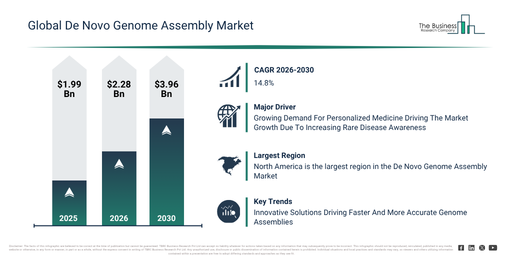
    The de novo genome assembly market has experienced significant expansion recently. It is projected to grow from $1.99 billion in 2025 to $2.28 billion in 2026, at a compound annual growth rate (CAGR) of 14.6%. The historical growth in this market can be attributed to several factors including the increasing use of next-generation sequencing, the growth of academic research initiatives, the adoption of genome assembly software, a rising demand in clinical diagnostics, and the development of plant and microbial genomics projects.

    The de novo genome assembly market size is projected to experience swift expansion over the coming years. Its valuation is anticipated to reach $3.96 billion by 2030, demonstrating a compound annual growth rate (CAGR) of 14.8%. This projected growth can be ascribed to several factors, including the incorporation of AI into genome assembly processes, the proliferation of cloud-based bioinformatics platforms, an increasing need for rapid custom genome sequencing, the advancement of precision medicine applications, and heightened investment in evolutionary and environmental genomics. Key developments expected during this forecast period encompass automated genome assembly pipelines, sophisticated cloud-based data analysis, the integration of high-throughput sequencing, tailored bioinformatics services, and improvements in visualization and annotation capabilities.

    Get A Free Sample Report With In-Depth Market Insights:

    https://thebusinessresearchcompany.com/sample_request?id=76808656&type=smp&name=De%20Novo%20Genome%20Assembly%20Market%20Report%202026&utm_source=Blogs&utm_medium=Paid&utm_campaign=Oct_PR

    De Novo Genome Assembly Market Development Factors: What’s Supporting Demand?

    The escalating demand for personalized medicine is anticipated to drive the expansion of the de novo genome assembly market moving forward. Personalized medicine refers to medical treatments and therapies specifically designed for individual patients, based on their unique genetic makeup, biomarkers, and particular disease characteristics. This demand is on the rise due to advancements in genomic technologies and molecular diagnostics, which enable treatments to be customized according to an individual’s genetic profile, thereby improving outcomes and reducing side effects. De novo genome assembly enhances personalized medicine by reconstructing an individual’s genome from scratch, allowing for the discovery of unique genetic variants and structural alterations that are vital for precision therapies, tailored drug selection, and early disease intervention. For instance, in February 2024, the Personalized Medicine Coalition, a US-based non-profit organization, reported that the U.S. Food and Drug Administration approved 16 new personalized treatments for rare disease patients in 2023, an increase from six in 2022, comprising seven cancer drugs and three for other diseases and conditions. Thus, the increasing need for personalized medicine is a key factor propelling the growth of the de novo genome assembly market.

    De Novo Genome Assembly Market Segmentation: How Does The Market Break Down By Category?

    The de novo genome assembly market covered in this report is segmented –

    1) By Component: Software, Services

    2) By Organism Type: Human, Animal, Plant, Microbial, Metagenomic Or Mixed Samples

    3) By Technology: Next-Generation Sequencing, Third-Generation Sequencing, Sanger Sequencing, Other Technologies

    4) By Application: Clinical Diagnostics, Agricultural Genomics, Environmental Genomics, Evolutionary Biology, Other Applications

    5) By End-User: Academic And Research Institutes, Pharmaceutical And Biotechnology Companies, Hospitals And Clinics, Other End-Users

    Subsegments:

    1) By Software: Sequence Alignment Software, Genome Assembly Software, Error Correction And Quality Control Software, Visualization And Annotation Software

    2) By Services: Genome Sequencing Services, Data Analysis And Interpretation Services, Custom Genome Assembly Services, Consulting And Bioinformatics Support Services

    De Novo Genome Assembly Market Transformation Trends: What Innovations Are Driving Change?

    Leading companies in the de novo genome assembly market are concentrating on developing innovative solutions, such as high-throughput genome assembly platforms, to accelerate genome reconstruction and enhance accuracy for complex and diverse organisms. These advanced systems integrate long- and short-read sequencing data to rapidly reconstruct complete genomes with high precision, enabling researchers to generate contiguous assemblies more quickly and manage intricate or repetitive genomic regions more efficiently than traditional methods. For instance, in May 2024, Dovetail Genomics Inc., a US-based genomics technology company, introduced the AssemblyLINK Assay, a high-throughput genome assembly platform engineered to expedite genome assembly workflows and boost the accuracy of de novo assemblies. The AssemblyLINK Assay combines proprietary scaffolding technology with existing sequencing data to produce highly contiguous genome assemblies, simplifies data processing through streamlined computational pipelines, and supports a broad spectrum of organisms, ranging from plants and animals to microbial communities. Its distinctive characteristics include compatibility with multiple sequencing platforms, minimized manual intervention, and optimized performance for complex and large genomes, making it especially valuable for biodiversity research and conservation genomics.

    De Novo Genome Assembly Market Key Participants And Competitive Landscape

    Major companies operating in the de novo genome assembly market are Thermo Fisher Scientific Inc., Eurofins Scientific SE, Illumina Inc., QIAGEN N.V., Novogene Corporation, Oxford Nanopore Technologies Ltd., Pacific Biosciences of California Inc., Medgenome labs pvt. Ltd, DNASTAR Inc., Nucleome Informatics Pvt Ltd, Seven Bridges Genomics, DNAnexus Inc., Strand Life Sciences Pvt. Ltd., BaseClear B.V., Dovetail Genomics LLC, SoftGenetics LLC, CosmosID Inc., Microba Life Sciences Ltd., GenomeScan B.V., BGI Genomics Co. Ltd., Macrogen Inc., SeqMatic LLC, NeuGen Biologicals.

    View The Full De Novo Genome Assembly Market Report:

    https://thebusinessresearchcompany.com/report/de-novo-genome-assembly-market-report?utm_source=Blogs&utm_medium=Paid&utm_campaign=Oct_PR

    De Novo Genome Assembly Market Geographic Analysis: Where Is Demand Rising Fastest?

    North America was the largest region in the de novo genome assembly market in 2025. Asia-Pacific is expected to be the fastest-growing region in the forecast period. The regions covered in the de novo genome assembly market report are Asia-Pacific, South East Asia, Western Europe, Eastern Europe, North America, South America, Middle East, Africa.

    Reach Out To Our Team:

    The Business Research Company: https://www.thebusinessresearchcompany.com/

    Americas: +1 310-496-7795

    Asia: +44 7882 955267 & +91 8897263534

    Europe: +44 7882 955267

    Email us at: marketing@tbrc.info

    Follow us on:

    LinkedIn: https://in.linkedin.com/company/the-business-research-company

    YouTube: https://www.youtube.com/channel/UC24_fI0rV8cR5DxlCpgmyFQ

    Global Market Model: https://www.thebusinessresearchcompany.com/global-market-model

  • Cryo Peptides Market Growth Forecast Through 2030: Market Size And Trends In 2026

    Cryo Peptides Market Growth Forecast Through 2030: Market Size And Trends In 2026

    Backed by market attractiveness analysis, total addressable market sizing, company benchmarking matrices, interactive Excel dashboards, wider supply chain intelligence, emerging startup coverage, and detailed product-level insights, The Business Research Company’s 2026 market reports are designed to offer research that is more actionable and strategically valuable than ever.

    Cryo Peptides Market Value Growth And Long-Term Outlook

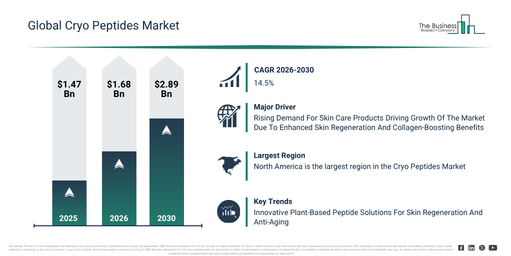
    The cryo peptides market size has experienced rapid expansion in recent years. It is anticipated to grow from $1.47 billion in 2025 to $1.68 billion in 2026, achieving a compound annual growth rate (CAGR) of 14.3%. This historical growth can be attributed to factors like increasing consumer demand for anti-aging skincare, a heightened awareness of peptide benefits, the adoption of cryogenic preservation technologies, the expansion of dermatology clinics, and a rise in research activities related to cosmetic peptides.

    The cryo peptides market is anticipated to experience significant expansion over the coming years. Its valuation is projected to reach $2.89 billion by 2030, exhibiting a compound annual growth rate (CAGR) of 14.5%. This anticipated expansion during the forecast period is driven by factors such as the increasing embrace of personalized skincare, the wider application of sophisticated cryo peptide formulations, an uptick in demand from medical aesthetic facilities, the enlargement of the premium beauty consumer demographic, and the incorporation of peptides into versatile cosmetic products. Key market developments expected in this period encompass the growing acceptance of anti-aging cryo peptides, a heightened call for skin repair cryo peptides, the increasing appeal of firming and lifting cryo peptides, the proliferation of hydrating cryo peptide options, and an intensified emphasis on both professional and medical aesthetic procedures.

    Get A Free Sample Report With In-Depth Market Insights:

    https://thebusinessresearchcompany.com/sample_request?id=61326748&type=smp&name=Cryo%20Peptides%20Market%20Report%202026&utm_source=Blogs&utm_medium=Paid&utm_campaign=Oct_PR

    Cryo Peptides Market Growth Factors Behind Sustained Expansion

    The increasing need for skin care items is anticipated to fuel the expansion of the cryo peptides market in the future. Skin care products are formulations crafted to cleanse, safeguard, moisturize, and enhance the well-being and look of the skin. The consumption of these products is rising due to heightened understanding of the significance of protecting and preserving healthy skin. Cryopeptides support skin care products by encouraging skin regeneration, increasing collagen synthesis, and mitigating inflammation, which leads to better elasticity, firmness, and overall skin health. As an illustration, in August 2024, the British Beauty Council, a UK-based not-for-profit organization, reported that in 2023, the beauty and personal care industry directly added £13.5 billion ($18.2 billion) to the UK GDP and an additional £13.6 billion ($18.4 billion) indirectly through its supply chain and employee spending, amounting to a total of £27.2 billion ($36.7 billion). Consequently, the rising demand for skin care products is propelling the growth of the cryo-peptides market.

    Cryo Peptides Market Breakdown By Product Type And Application

    The cryo peptides market covered in this report is segmented –

    1) By Product Type: Anti-Aging Cryo Peptides, Skin Repair Cryo Peptides, Firming And Lifting Cryo Peptides, Hydrating Cryo Peptides, Other Specialty Formulations

    2) By Peptide Type: Signal Peptides, Carrier Peptides, Neurotransmitter Peptides, Enzyme Inhibitor Peptides

    3) By Formulation: Serums, Creams, Masks, Ampoules

    4) By Application: Facial Care, Eye Care, Neck And Décolletage Care, Professional Treatments

    5) By End User: Premium Beauty Consumers, Dermatology Clinics, Medical Aesthetic Centers

    Subsegments:

    1) By Anti-Aging Cryo Peptides: Palmitoyl Tetrapeptide, Acetyl Hexapeptide, Tripeptide-1, Copper Peptide, Other Anti-Aging Peptides

    2) By Skin Repair Cryo Peptides: Matrixyl Peptide, Hexapeptide-9, Oligopeptide-68, Pentapeptide, Other Skin Repair Peptides

    3) By Firming And Lifting Cryo Peptides: Palmitoyl Pentapeptide, Acetyl Octapeptide, Tripeptide-10, Myristoyl Tetrapeptide, Other Firming Peptides

    4) By Hydrating Cryo Peptides: Dipeptide-2, Hexapeptide-11, Palmitoyl Tripeptide, Acetyl Tetrapeptide, Other Hydrating Peptides

    5) By Other Specialty Formulations: Anti-Inflammatory Peptides, Brightening Peptides, Collagen Stimulating Peptides, Antioxidant Peptides, Other Specialty Peptides

    Cryo Peptides Market Industry Trends Fueling Future Revenue Growth

    Key companies in the cryo peptides market are concentrating on developing innovative products, such as plant-derived collagen analogs, to improve skin regeneration, enhance anti-aging effects, and meet the growing consumer demand for sustainable and effective skincare ingredients. A plant-sourced collagen analog is either bioengineered or naturally obtained from plants, designed to mimic the structure and function of animal-derived collagen, providing similar benefits like enhanced skin elasticity, hydration, and regeneration, without utilizing animal components. For example, in May 2023, DERMA E, a natural skincare brand from the US, introduced an advanced Peptides and Flora Collagen Cryo-Gel Mask. This vegan, cruelty-free mask features a distinctive cryo-gel formula enriched with multiple peptides, Flora-Collagen™, and plant stem cells. The cooling gel texture immediately reduces puffiness and revitalizes the skin, while the complex of peptides works to boost firmness and elasticity. The formulation also includes Edelweiss Extract to help shield skin cells from environmental stressors, preparing the skin for subsequent daytime or nighttime regimens without causing irritation.

    Cryo Peptides Market Competitive Landscape: Who Leads The Industry?

    Major companies operating in the cryo peptides market are Lonza Group Ltd., Almac Group Ltd., Piramal Pharma Solutions, Bachem Holding AG, GenScript Biotech Corporation, CordenPharma Inc., PolyPeptide Group AG, CPC Scientific Inc., Revision Skincare, SkinCeuticals Inc., Hybio Pharmaceutical Co. Ltd., Aurigene Pharmaceutical Services Ltd., Creative Biolabs Inc., AnaSpec Inc., BioSynth Group Ltd., Allies of Skin Pte Ltd., Phoenix Pharmaceuticals Inc., AAPPTec LLC, Peptide Institute Inc., PeptiOrigin.

    View The Full Cryo Peptides Market Report:

    https://thebusinessresearchcompany.com/report/cryo-peptides-market-report?utm_source=Blogs&utm_medium=Paid&utm_campaign=Oct_PR

    Cryo Peptides Market Geographic Landscape: Which Region Dominates Industry Growth?

    North America was the largest region in the cryo peptides market in 2025. Asia-Pacific is expected to be the fastest-growing region in the forecast period. The regions covered in the cryo peptides market report are Asia-Pacific, South East Asia, Western Europe, Eastern Europe, North America, South America, Middle East, Africa.

    Reach Out To Our Team:

    The Business Research Company: https://www.thebusinessresearchcompany.com/

    Americas: +1 310-496-7795

    Asia: +44 7882 955267 & +91 8897263534

    Europe: +44 7882 955267

    Email us at: marketing@tbrc.info

    Follow us on:

    LinkedIn: https://in.linkedin.com/company/the-business-research-company

    YouTube: https://www.youtube.com/channel/UC24_fI0rV8cR5DxlCpgmyFQ

    Global Market Model: https://www.thebusinessresearchcompany.com/global-market-model