Blog

  • Bioinductive Implant Market Size In 2026: Regional Growth, Key Segments And Future Outlook

    Bioinductive Implant Market Size In 2026: Regional Growth, Key Segments And Future Outlook

    Built to provide research that’s more actionable and strategically valuable, The Business Research Company’s 2026 market reports include market attractiveness analysis, total addressable market sizing, company benchmarking matrices, interactive Excel dashboards, broader supply chain intelligence, emerging startup tracking, and in-depth product insights.

    Bioinductive Implant Market Forecast: Value Set To Climb From $2.14 Billion To $3.2 Billion

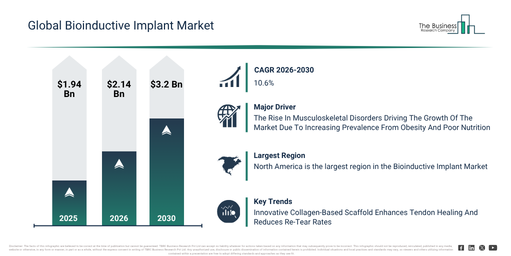
    The bioinductive implant market size has observed rapid growth over recent years. It is anticipated to expand from $1.94 billion in 2025 to $2.14 billion in 2026, at a compound annual growth rate (CAGR) of 10.3%. This historical growth can be ascribed to factors like the increasing prevalence of orthopedic and cardiovascular disorders, the growing adoption of implantable medical devices, rising investments in biomedical research, the development of synthetic resorbable polymers, and the expansion of hospital and clinical infrastructure.

    The bioinductive implant sector is projected to experience substantial expansion over the coming years. Its valuation is anticipated to reach $3.2 billion by 2030, exhibiting a compound annual growth rate (CAGR) of 10.6%. This projected expansion during the forecast period is driven by several factors, including the increasing need for personalized implants, the greater embrace of bioabsorbable composite materials, the expanded application of nanofiber and multilayered scaffold implants, the growth in dental and orthopedic surgical procedures, and a heightened emphasis on regenerative medicine and tissue engineering. Key developments expected within this period encompass the wider acceptance of biodegradable implants, a growing demand for 3D printed and customized implant solutions, the increased incorporation of growth factor-embedded technologies, the advancement of electrospinning and nanofiber-structured implants, and a sharpened focus on applications in orthopedics and dentistry.

    Get A Free Sample Report With In-Depth Market Insights:

    https://thebusinessresearchcompany.com/sample_request?id=65687162&type=smp&name=Bioinductive%20Implant%20Market%20Report%202026&utm_source=Blogs&utm_medium=Paid&utm_campaign=Oct_PR

    Bioinductive Implant Market Demand Drivers Opening New Revenue Streams

    The expansion of the bioinductive implant market is anticipated to be spurred by the increasing occurrence of musculoskeletal disorders (MSK). These disorders encompass a wide range of conditions impacting muscles, bones, joints, tendons, and ligaments, frequently leading to discomfort, restricted movement, and functional limitations. Factors contributing to the rising frequency of these conditions include higher obesity rates, inadequate nutrition, and inactive lifestyles, all of which progressively increase mechanical strain on joints and weaken musculoskeletal structures. Bioinductive implants facilitate recovery by encouraging natural tissue regeneration, improving the repair of tendons and ligaments, and fostering lasting healing while minimizing the chance of re-injury. For instance, in January 2024, the Office for Health Improvement and Disparities, a UK-based government department, stated that the proportion of individuals aged 16 and over experiencing a long-term musculoskeletal condition rose from 17.6% in 2022 to 18.4% in 2023. Consequently, the increasing prevalence of musculoskeletal disorders (MSK) is propelling the growth of the bioinductive implant market. The upward trend in sports-related injuries is projected to fuel the expansion of the bioinductive implant market moving forward. Sports-related injuries refer to physical damage or harm to the body’s muscles, bones, joints, ligaments, or tendons that occur during athletic pursuits or exercise. This escalating incidence of sports-related injuries stems from greater participation in high-intensity sports, which puts more strain on muscles, joints, and ligaments. Bioinductive implants assist in the recovery from sports-related injuries by supporting tissue regeneration and improving the healing process for damaged tendons and ligaments. For example, in October 2024, according to Inside World Football, a UK-based web-based news-driven service, sport injuries totaled 4,123 during the 2023-24 season, representing a 4% rise compared to 2022-23. Therefore, the increasing occurrence of sports-related injuries is driving the growth of the bioinductive implant market.

    Bioinductive Implant Market Segment Analysis Spotlighting Growth Areas

    The bioinductive implant market covered in this report is segmented –

    1) By Type: Biodegradable, Non-Biodegradable, Other Types

    2) By Material Type: Biological Grafts, Synthetic Resorbable Polymers, Hybrid Bio Synthetic Implants, Recombinant Protein Based Materials

    3) By Technology: Electrospinning, 3D Printing, Other Technologies

    4) By Application: Orthopedic, Cardiovascular, Dental, Other Applications

    5) By End-User: Hospitals, Clinics, Ambulatory Surgical Centres, Other End-Users

    Subsegments:

    1) By Biodegradable: Natural Polymer Based Implants, Collagen Based Implants, Gelatin Based Implants, Polylactic Acid Based Implants, Polyglycolic Acid Based Implants, Polycaprolactone Based Implants, Chitosan Based Implants, Bioabsorbable Composite Implants

    2) By Non-Biodegradable: Silicone Based Implants, Polyethylene Based Implants, Polyurethane Based Implants, Titanium Reinforced Implants, Stainless Steel Reinforced Implants, Permanent Composite Implants, Ceramic Based Implants

    3) By Other Types: Partially Degradable Implants, Smart Responsive Implants, Drug Eluting Implants, Growth Factor Embedded Implants, Nanofiber Structured Implants, Multi Layered Scaffold Implants, Customized Patient Specific Implants

    Bioinductive Implant Market Trends Powering Strategic Industry Growth

    Leading companies within the bioinductive implant market are increasingly concentrating on creating advanced solutions, including collagen-based and resorbable implants, aimed at fostering tendon regeneration and enhancing surgical results for rotator cuff repair. These collagen-based and resorbable implants are medical instruments crafted from natural or engineered collagen substances, offering transient structural support, encouraging tissue repair, and progressively dissolving within the body as the healing process unfolds. As an example, during July 2023, Smith & Nephew plc, a medical technology firm from the UK, introduced the REGENETEN Bioinductive Implant. This collagen-based scaffold is engineered to enhance rotator cuff repair by providing biological support for tendon healing, surpassing traditional sutured repair methods. This implant is inserted arthroscopically via a minimally invasive cut and has a size roughly equivalent to a postage stamp. It offers a biocompatible structure that utilizes the body’s natural healing mechanisms to stimulate the development of new tendon-like tissue, is completely absorbed over time, and has demonstrated associations with lower re-tear rates and better functional results when contrasted with solely traditional repair approaches.

    Bioinductive Implant Market Industry Leaders And Competitive Landscape

    Major companies operating in the bioinductive implant market are Baxter International Inc, Zimmer Biomet Holdings Inc., Smith Nephew plc, Arthrex Inc., CONMED Corporation, Footprint International Holdco Inc, MiMedx Group Inc., LifeNet Health Inc., Anika Therapeutics Inc., ZimVie Inc, Danimer Scientific Inc, Smurfit Kappa Group, NatureWorks LLC, Mondi Group, Novamont S.p.A, Tissue Regenix Group plc, Stora Enso Oyj, Collagen Matrix Inc., Polymateria Ltd, BioSphere Plastic LLC.

    View The Full Bioinductive Implant Market Report:

    https://thebusinessresearchcompany.com/report/bioinductive-implant-market-report?utm_source=Blogs&utm_medium=Paid&utm_campaign=Oct_PR

    Bioinductive Implant Market Regional Analysis And Leading Geography

    North America was the largest region in the bioinductive implant market in 2025. Asia-Pacific is expected to be the fastest-growing region in the forecast period. The regions covered in the bioinductive implant market report are Asia-Pacific, South East Asia, Western Europe, Eastern Europe, North America, South America, Middle East, Africa.

    Reach Out To Our Team:

    The Business Research Company: https://www.thebusinessresearchcompany.com/

    Americas: +1 310-496-7795

    Asia: +44 7882 955267 & +91 8897263534

    Europe: +44 7882 955267

    Email us at: marketing@tbrc.info

    Follow us on:

    LinkedIn: https://in.linkedin.com/company/the-business-research-company

    YouTube: https://www.youtube.com/channel/UC24_fI0rV8cR5DxlCpgmyFQ

    Global Market Model: https://www.thebusinessresearchcompany.com/global-market-model
  • Bioconjugation Reagents Market Analysis: $2.74 Billion Market Size In 2026 And Future Growth Prospects

    Bioconjugation Reagents Market Analysis: $2.74 Billion Market Size In 2026 And Future Growth Prospects

    Featuring market attractiveness scoring, total addressable market sizing, company benchmarking matrices, interactive Excel dashboards, deeper supply chain intelligence, emerging startup tracking, and granular product-level insights, The Business Research Company’s 2026 market reports are built to deliver research that is both more actionable and more strategically valuable.

    Bioconjugation Reagents Market Value Growth And Long-Term Outlook

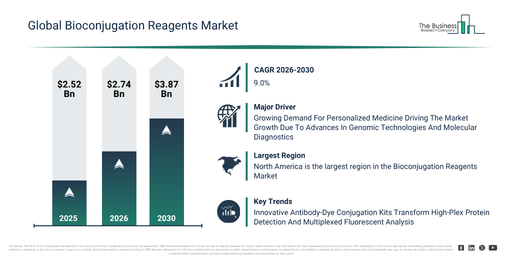
    The bioconjugation reagents market has experienced substantial growth in recent years. It is forecast to increase from $2.52 billion in 2025 to $2.74 billion in 2026, at a compound annual growth rate (CAGR) of 8.8%. This historical expansion can be linked to several key drivers, including heightened pharmaceutical and biotech research and development, the embrace of conventional bioconjugation reagents, a surging demand for proteomics and genomics research, the development of academic and research institutions, and the broadening of applications in diagnostics and molecular imaging.

    The bioconjugation reagents market is projected to experience substantial expansion over the upcoming years, reaching a valuation of $3.87 billion by 2030, demonstrating a compound annual growth rate (CAGR) of 9.0%. This growth during the projection period can be primarily attributed to several factors, including the escalating demand for antibody drug conjugates, the wider embrace of click chemistry and covalent conjugation techniques, an increased emphasis on precision medicine applications, the broadening availability of bioconjugation kits for oligonucleotide and enzyme research, and the incorporation of AI-driven reagent design and analytics. Key trends anticipated within the forecast timeframe encompass the expanding utilization of click chemistry-based conjugation methods, a surging requirement for antibody drug conjugates (ADC) in various applications, the increasing deployment of biotinylation and fluorescent labeling reagents, the development of covalent conjugation kits tailored for protein and enzyme research, and a heightened focus on high-precision molecular imaging and diagnostics.

    Get A Free Sample Report With In-Depth Market Insights:

    https://thebusinessresearchcompany.com/sample_request?id=53468548&type=smp&name=Bioconjugation%20Reagents%20Market%20Report%202026&utm_source=Blogs&utm_medium=Paid&utm_campaign=Oct_PR

    Bioconjugation Reagents Market Growth Catalysts And Demand Drivers

    The bioconjugation reagents market is anticipated to expand due to the increasing need for personalized medicine. This approach involves medical treatments and therapies customized for individual patients, considering their genetic profile, biomarkers, and particular disease traits. Enhanced genomic technologies and molecular diagnostics are fueling this demand, empowering doctors to customize treatments based on a patient’s genetic makeup, thereby improving treatment results. Bioconjugation reagents are crucial for developing personalized medicine as they facilitate the exact attachment of drugs, biomarkers, or imaging agents to specific molecules. This process enables targeted therapies and precise diagnostics, customized to an individual’s distinct genetic and molecular profile. For example, data from the Personalized Medicine Coalition, a US-based non-profit organization, indicates that in February 2024, the U.S. Food and Drug Administration approved 16 new personalized treatments for rare disease patients in 2023, a rise from six in 2022. These approvals included seven cancer drugs and three treatments for other diseases and conditions. Consequently, the escalating demand for personalized medicine is propelling the expansion of the bioconjugation reagents market.

    Bioconjugation Reagents Market Segment Landscape And Growth Outlook

    The bioconjugation reagents market covered in this report is segmented –

    1) By Product: Crosslinkers And Coupling Agents, Activated Esters, Thiol-Reactive Reagents, Amine-Reactive Reagents, Click Chemistry Reagents, Labeling Reagents And Linkers, Conjugation Kits, Covalent Conjugation, Click Chemistry-Based

    2) By Chemistry Type: Amine-Based Chemistry, Sulfhydryl-Based Chemistry, Carboxyl-Based Chemistry, Azide-Alkyne Chemistry, Photoreactive Chemistry

    3) By Sales Channel: Direct Sales, Distributors And Wholesalers, Online Platforms And Ecommerce, Specialty Retailers

    4) By Application: Drug Development, Antibody Drug Conjugates, Diagnostics, Molecular Imaging, Proteomics Research, Genomics Research

    5) By End-User: Pharmaceutical And Biotechnology Companies, Academic And Research Institutes, Diagnostic Laboratories, Other End Users

    Subsegments:

    1) By Crosslinkers And Coupling Agents: Homobifunctional Crosslinkers, Heterobifunctional Crosslinkers, Zero Length Crosslinkers, Cleavable Crosslinkers, Non Cleavable Crosslinkers

    2) By Activated Esters: N Hydroxysuccinimide Esters, Sulfo N Hydroxysuccinimide Esters, Tetrafluorophenyl Esters, Pentafluorophenyl Esters

    3) By Thiol-Reactive Reagents: Maleimide Reagents, Iodoacetyl Reagents, Pyridyl Disulfide Reagents, Bromoacetyl Reagents

    4) By Amine-Reactive Reagents: Isothiocyanate Reagents, Succinimidyl Ester Reagents, Carbodiimide Reagents, Imidoester Reagents

    5) By Click Chemistry Reagents: Azide Reagents, Alkyne Reagents, Strained Alkyne Reagents, Tetrazine Reagents

    6) By Labeling Reagents And Linkers: Fluorescent Labeling Reagents, Biotinylation Reagents, Enzyme Labeling Reagents, Polyethylene Glycol Linkers

    7) By Conjugation Kits: Antibody Conjugation Kits, Protein Conjugation Kits, Oligonucleotide Conjugation Kits, Enzyme Conjugation Kits

    8) By Covalent Conjugation: Amide Bond Formation, Thioether Bond Formation, Disulfide Bond Formation, Hydrazone Bond Formation

    9) By Click Chemistry-Based: Copper Catalyzed Azide Alkyne Cycloaddition, Strain Promoted Azide Alkyne Cycloaddition, Inverse Electron Demand Diels Alder Reaction

    Bioconjugation Reagents Market Trends Shaping Long-Term Demand

    Key companies operating in the bioconjugation reagents market are focusing on developing innovative products like antibody-dye conjugation kits to enable customizable, high-precision protein detection and multiplexed analysis. These kits allow researchers to attach fluorescent dyes to antibodies for targeted protein detection and aid in customizable, high-precision, and multiplexed analysis in assays such as flow cytometry and fluorescent western blots. For instance, in January 2025, Bio-Rad Laboratories Inc., a US-based life sciences and diagnostics company, launched the Trailblazer Tag and Trailblazer StarBright Dye Label Kits. These antibody-dye conjugation kits utilize SpyTag and SpyCatcher chemistry to covalently link StarBright Blue and StarBright Violet dyes to virtually any antibody. Such kits offer rapid, efficient conjugation with minimal antibody loss, enabling researchers to design bespoke high-plex panels for flow cytometry and streamline multiplex integration in fluorescent western blots. They provide flexibility in dye selection and compatibility with a wide range of antibodies, enhancing experimental customization while maintaining consistent fluorescence performance.

    Bioconjugation Reagents Market Top Companies Driving Competitive Growth

    Major companies operating in the bioconjugation reagents market are Thermo Fisher Scientific Inc., Merck KGaA, Danaher Corporation, Lonza Group Ltd, Bio-Rad Laboratories Inc., GenScript Biotech Corporation, Maravai LifeSciences, Santa Cruz Biotechnology Inc., Rockland Immunochemicals Inc., Amerigo Scientific, Creative Biolabs Inc., Bio-Synthesis Inc., TriLink BioTechnologies, Tonbo Biosciences, Lumiprobe Corporation, Biotium Inc., Jena Bioscience GmbH, Promega Corporation, SETA BioMedicals Srl, Dojindo Laboratories Inc., CellMosaic Inc.

    View The Full Bioconjugation Reagents Market Report:

    https://thebusinessresearchcompany.com/report/bioconjugation-reagents-market-report?utm_source=Blogs&utm_medium=Paid&utm_campaign=Oct_PR

    Bioconjugation Reagents Market Global Footprint: Which Region Leads The Industry?

    North America was the largest region in the bioconjugation reagents market in 2025. Asia-Pacific is expected to be the fastest-growing region in the forecast period. The regions covered in the bioconjugation reagents market report are Asia-Pacific, South East Asia, Western Europe, Eastern Europe, North America, South America, Middle East, Africa.

    Reach Out To Our Team:

    The Business Research Company: https://www.thebusinessresearchcompany.com/

    Americas: +1 310-496-7795

    Asia: +44 7882 955267 & +91 8897263534

    Europe: +44 7882 955267

    Email us at: marketing@tbrc.info

    Follow us on:

    LinkedIn: https://in.linkedin.com/company/the-business-research-company

    YouTube: https://www.youtube.com/channel/UC24_fI0rV8cR5DxlCpgmyFQ

    Global Market Model: https://www.thebusinessresearchcompany.com/global-market-model
  • Bioactive Bone Substitutes Market Reaches $3.16 Billion In 2026: Forecast And Growth Opportunities

    Bioactive Bone Substitutes Market Reaches $3.16 Billion In 2026: Forecast And Growth Opportunities

    Featuring market attractiveness scoring, total addressable market sizing, company benchmarking matrices, interactive Excel dashboards, deeper supply chain intelligence, emerging startup tracking, and granular product-level insights, The Business Research Company’s 2026 market reports are built to deliver research that is both more actionable and more strategically valuable.

    Bioactive Bone Substitutes Market Growth From $2.24 Billion In 2026 To $3.16 Billion By 2030 At A CAGR Of 9%

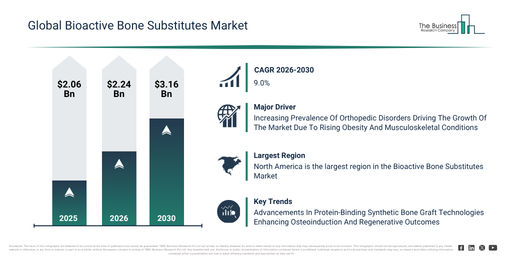
    The bioactive bone substitutes market has witnessed significant growth over recent years. The market is anticipated to expand from $2.06 billion in 2025 to $2.24 billion in 2026, demonstrating a compound annual growth rate (CAGR) of 8.7%. This historical expansion can be attributed to several factors, including the increasing occurrence of orthopedic and dental conditions, the embrace of synthetic hydroxyapatite and calcium phosphate materials, technological advancements in biomaterials, a rising number of dental and orthopedic surgical procedures, and heightened awareness of bone regeneration solutions.

    The market size for bioactive bone substitutes is anticipated to experience substantial growth in the upcoming years. Its value is projected to reach $3.16 billion in 2030, expanding at a compound annual growth rate (CAGR) of 9.0%. This forecasted growth can be attributed to the increasing adoption of bioactive glass and polymer-based substitutes, a rise in the usage of injectable and putty formulations, an expansion in the volumes of dental and orthopedic procedures, growing demand for nano hydroxyapatite composites, and advancements in collagen-ceramic composite matrices. Key trends for the forecast period include a heightened acceptance of injectable and paste formulations, an increased demand for nano hydroxyapatite and porous scaffolds, a stronger focus on composite regeneration matrices, the broadening of dental and orthopedic applications, and a growing preference for bioactive glass and polymer-based substitutes.

    Get A Free Sample Report With In-Depth Market Insights:

    https://thebusinessresearchcompany.com/sample_request?id=55375081&type=smp&name=Bioactive%20Bone%20Substitutes%20Market%20Report%202026&utm_source=Blogs&utm_medium=Paid&utm_campaign=Oct_PR

    Bioactive Bone Substitutes Market Expansion Drivers: What’s Shaping Future Growth?

    A heightened occurrence of orthopedic conditions is projected to stimulate the expansion of the bioactive bone substitutes market throughout the forecast period. These conditions encompass a wide array of ailments affecting bones, joints, muscles, ligaments, and other elements of the musculoskeletal system, often resulting in pain, limited mobility, and functional impairment. Several factors contribute to the rising incidence of these disorders, including an aging demographic, increasing levels of obesity, inactive lifestyles, and injuries related to sports. Bioactive bone substitutes assist in the management of orthopedic disorders by encouraging natural bone regeneration, improving structural integrity, accelerating the healing process in fractures and bone defects, and decreasing the requirement for subsequent surgical procedures. For example, in January 2024, as per the Office for Health Improvement and Disparities, a UK-based government department, 18.4% of individuals aged 16 and over in the United Kingdom indicated they had a long-term musculoskeletal condition in 2023, which was an increase from 17.6% in 2022. Thus, the escalating prevalence of orthopedic disorders is boosting the growth of the bioactive bone substitutes market.

    Bioactive Bone Substitutes Market Segmentation And Category Overview

    The bioactive bone substitutes market covered in this report is segmented –

    1) By Product: Calcium Phosphate Ceramics, Hydroxyapatite-Based Grafts, Bioactive Glass Materials, Polymer-Based Substitutes, Composite Regeneration Matrices

    2) By Material: Hydroxyapatite, Tricalcium Phosphate, Bioactive Glass, Collagen, Other Materials

    3) By Form: Granules, Putty, Blocks, Injectable Formulations, Paste

    4) By Application: Orthopedic Surgery, Dental Procedures, Trauma Reconstruction, Synthetics, Biologics Or Allografts, Hybrids Or Xenografts

    5) By End User: Hospitals, Dental Clinics And Specialized Dental Centers, Ambulatory Surgical Centers, Specialty Orthopedic And Dental Distributors

    Subsegments:

    1) By Calcium Phosphate Ceramics: Tricalcium Phosphate Ceramics, Biphasic Calcium Phosphate Ceramics, Injectable Calcium Phosphate Cements, Porous Calcium Phosphate Scaffolds, Calcium Deficient Phosphate Ceramics

    2) By Hydroxyapatite-Based Grafts: Synthetic Hydroxyapatite Grafts, Nano Hydroxyapatite Grafts, Porous Hydroxyapatite Blocks, Hydroxyapatite Granules, Collagen Hydroxyapatite Composites

    3) By Bioactive Glass Materials: Silicate Based Bioactive Glass, Phosphate Based Bioactive Glass, Borosilicate Bioactive Glass, Bioactive Glass Putty, Bioactive Glass Particulates

    4) By Polymer-Based Substitutes: Polylactic Acid Based Substitutes, Polyglycolic Acid Based Substitutes, Polycaprolactone Based Scaffolds, Collagen Based Matrices, Chitosan Based Substitutes

    5) By Composite Regeneration Matrices: Ceramic Polymer Composite Matrices, Collagen Ceramic Composite Scaffolds, Bioactive Glass Polymer Composites, Hydroxyapatite Polymer Composites, Fiber Reinforced Regeneration Matrices

    Bioactive Bone Substitutes Market Strategic Trends: What Defines The Next Growth Phase?

    Leading companies within the bioactive bone substitutes market are concentrating on developing innovative solutions, such as protein-binding synthetic bone graft substitutes, to boost osteoinductive performance, accelerate bone regeneration, and improve clinical outcomes in orthopedic and dental applications. These protein-binding synthetic bone graft substitutes are engineered biomaterials designed to attach and retain growth factors or proteins at the implantation site, thereby enhancing bone regeneration by stimulating natural healing and new bone formation. For example, in November 2025, Acuitive Technologies Inc., a US-based biomaterials company, introduced CitreGraft, a protein-binding synthetic bone graft substitute developed to improve protein binding and bone regeneration. CitreGraft is composed of a citrate-based polymer integrated with hydroxyapatite, which allows for strong protein affinity and improved cellular signaling at the defect site. This material mimics the natural composition of bone, supports osteoconduction, and promotes early-stage bone healing by facilitating growth factor retention. It is resorbable, biocompatible, and suitable for use in orthopedic trauma, spinal fusion, and dental bone grafting procedures. Its unique citrate chemistry differentiates it from conventional calcium phosphate grafts by enhancing biological interaction and mechanical stability.

    Bioactive Bone Substitutes Market Competitive Landscape: Which Companies Lead The Industry?

    Major companies operating in the bioactive bone substitutes market are Medtronic Plc, Stryker Corporation, Zimmer Biomet Holdings Inc., Globus Medical Inc., Orthofix Medical Inc., Bioventus Inc., ZimVie Inc., Xtant Medical Holdings Inc., Biocomposites Ltd., BONESUPPORT AB, Geistlich Pharma AG, Botiss Biomaterials GmbH, Kuros Biosciences AG, Ceraver, Thommen Medical AG, Osteogenics Biomedical Inc., Curasan AG, NovaBone Products LLC, Purgo Biologics Inc., Teknimed SA.

    View The Full Bioactive Bone Substitutes Market Report:

    https://thebusinessresearchcompany.com/report/bioactive-bone-substitutes-market-report?utm_source=Blogs&utm_medium=Paid&utm_campaign=Oct_PR

    Bioactive Bone Substitutes Market Regional Outlook: Where Is Opportunity Concentrated?

    North America was the largest region in the bioactive bone substitutes market in 2025. Asia-Pacific is expected to be the fastest-growing region in the forecast period. The regions covered in the bioactive bone substitutes market report are Asia-Pacific, South East Asia, Western Europe, Eastern Europe, North America, South America, Middle East, Africa.

    Reach Out To Our Team:

    The Business Research Company: https://www.thebusinessresearchcompany.com/

    Americas: +1 310-496-7795

    Asia: +44 7882 955267 & +91 8897263534

    Europe: +44 7882 955267

    Email us at: marketing@tbrc.info

    Follow us on:

    LinkedIn: https://in.linkedin.com/company/the-business-research-company

    YouTube: https://www.youtube.com/channel/UC24_fI0rV8cR5DxlCpgmyFQ

    Global Market Model: https://www.thebusinessresearchcompany.com/global-market-model
  • Bead-Linked Transposase Library Kits Market Growth In 2026: Market Size, Key Drivers And Future Outlook

    Built to provide research that’s more actionable and strategically valuable, The Business Research Company’s 2026 market reports include market attractiveness analysis, total addressable market sizing, company benchmarking matrices, interactive Excel dashboards, broader supply chain intelligence, emerging startup tracking, and in-depth product insights.

    Bead-Linked Transposase Library Kits Market Expansion Outlook: What Revenue Opportunities Are Ahead?

    The market size for bead-linked transposase library kits has expanded rapidly in recent years. Projections show it will increase from $1.13 billion in 2025 to $1.26 billion in 2026, achieving a compound annual growth rate (CAGR) of 11.4%. Historically, this expansion has been spurred by the increasing adoption of next-generation sequencing, the growth of genomics research, rising demand from academic and research institutes, technological advancements in bead-linked transposase systems, and the broadening scope of pharmaceutical and biotechnology research.

    The market for bead-linked transposase library kits is set for considerable expansion in the upcoming years. Its value is projected to reach $1.95 billion by 2030, demonstrating a compound annual growth rate (CAGR) of 11.6%. This growth during the forecast period is fueled by increasing demand for clinical diagnostics applications, expanding use in personalized medicine, a rise in the adoption of automated and high-throughput library kits, growth in metagenomic and transcriptomic studies, and greater integration with bioinformatics and AI-driven data analysis. Significant developments anticipated include the growing embrace of DNA library kits for high-throughput sequencing, an increasing need for RNA library kits in clinical diagnostics, an amplified focus on customized library preparation solutions, the broadening of single-cell and targeted sequencing applications, and the rising incorporation of automated library preparation workflows.

    Get A Free Sample Report With In-Depth Market Insights:

    https://thebusinessresearchcompany.com/sample_request?id=78021014&type=smp&name=Bead-Linked%20Transposase%20Library%20Kits%20Market%20Report%202026&utm_source=Blogs&utm_medium=Paid&utm_campaign=Oct_PR

    Bead-Linked Transposase Library Kits Market Development Factors: What’s Supporting Demand?

    The expanding occurrence and enhanced detection of genetic disorders are anticipated to boost the bead-linked transposase library kits market. Genetic disorders are conditions resulting from alterations or mutations in an individual’s DNA, which can be inherited or emerge spontaneously. The heightened identification of these disorders is largely attributable to advancements in diagnostic technologies and the expansion of genetic screening initiatives, which facilitate earlier and more thorough detection of genetic conditions that were previously undiagnosed. Bead-linked transposase library kits are crucial in genetic research and clinical genomics, enabling quick, efficient, and high-quality DNA library preparation for next-generation sequencing (NGS). For instance, in October 2024, the National Health Service (NHS) England, a UK-based government department, reported that as part of a pioneering study in NHS hospitals, hundreds of newborns are now being screened for more than 200 rare genetic conditions, with the program aiming to test up to 100,000 babies across England. Consequently, the rising prevalence of genetic disorders is fueling the expansion of the bead-linked transposase library kits market. Increased investments and government funding in genomics are projected to drive the growth of the bead-linked transposase library kits market going forward. Genomics is the field of biology focused on studying an organism’s complete set of DNA, including all its genes. Investments and government funding in genomics are escalating due to the growing recognition of its vital role in advancing precision medicine and improving public health outcomes. Such funding enables the expansion of large-scale sequencing projects, strengthens laboratory infrastructure, and accelerates research initiatives, thereby increasing the demand for sophisticated sample preparation technologies like bead-linked transposase library kits that support efficient and high-throughput genomic analysis. For instance, in February 2025, the Government of Canada, a Canada-based federal authority, launched the Canadian Genomics Strategy, backed by a federal investment of $175.1 million starting in 2024–25, to enhance genomics research and commercialization efforts. Therefore, the rising investments and government funding in genomics are propelling the growth of the bead-linked transposase library kits market.

    Bead-Linked Transposase Library Kits Market Segment Outlook: Which Categories Are Growing Fastest?

    The bead-linked transposase library kits market covered in this report is segmented –

    1) By Product Type: Deoxyribonucleic Acid (DNA) Library Kits, Ribonucleic Acid (RNA) Library Kits, Custom Library Kits, Other Product Types

    2) By Distribution Channel: Direct Sales, Distributors, Online Retailers, Other Distribution Channels

    3) By Application: Next-Generation Sequencing, Genomics Research, Clinical Diagnostics, Other Applications

    4) By End User: Academic And Research Institutes, Hospitals And Clinics, Pharmaceutical And Biotechnology Companies, Other End-Users

    Subsegments:

    1) By Deoxyribonucleic Acid (DNA) Library Kits: Whole Genome Library Kits, Targeted Sequencing Library Kits, Amplicon Library Kits, Exome Library Kits

    2) By Ribonucleic Acid (RNA) Library Kits: Messenger Ribonucleic Acid (mRNA) Library Kits, Total Ribonucleic Acid (RNA) Library Kits, Small Ribonucleic Acid (RNA) Library Kits, Long Non Coding Ribonucleic Acid (RNA) Library Kits

    3) By Custom Library Kits: Custom Targeted Library Kits, Custom Amplicon Library Kits, Custom Whole Genome Library Kits, Custom Ribonucleic Acid (RNA) Library Kits 4) By Other Product Types: Single Cell Sequencing Kits, Targeted Sequencing Kits, Whole Genome Sequencing Kits, Metagenomic Sequencing Kits, Epigenetic Sequencing Kits, Transcriptome Sequencing Kits, Custom Library Preparation Kits, Rapid Library Preparation Kits, Low Input Library Kits, High Throughput Library Kits

    Bead-Linked Transposase Library Kits Market Competitive Landscape: Who Leads The Industry?

    Major companies operating in the bead-linked transposase library kits market are F. Hoffmann-La Roche Ltd., Thermo Fisher Scientific Inc., Eurofins Scientific SE, Agilent Technologies Inc., Illumina Inc., PerkinElmer Inc., Bio-Rad Laboratories Inc., BGI Genomics Co. Ltd., Novogene Co. Ltd., Takara Bio Inc., Twist Bioscience Inc., Oxford Nanopore Technologies plc, Pacific Biosciences of California Inc., New England Biolabs Inc., Watchmaker Genomics Inc., Eurofins Genomics, Zymo Research Corporation, Yeasen Biotechnology Co. Ltd., Norgen Biotek Corp., Lexogen GmbH, Vazyme Biotech Co. Ltd., Gencove Inc., MagBio Genomics Inc., Aline Biosciences Inc.

    View The Full Bead-Linked Transposase Library Kits Market Report:

    https://thebusinessresearchcompany.com/report/bead-linked-transposase-library-kits-market-report?utm_source=Blogs&utm_medium=Paid&utm_campaign=Oct_PR

    Bead-Linked Transposase Library Kits Market Geographic Landscape: Which Region Leads Industry Growth?

    North America was the largest region in the bead-linked transposase library kits market in 2025. Asia-Pacific is expected to be the fastest-growing region in the forecast period. The regions covered in the bead-linked transposase library kits market report are Asia-Pacific, South East Asia, Western Europe, Eastern Europe, North America, South America, Middle East, Africa.

    Reach Out To Our Team:

    The Business Research Company: https://www.thebusinessresearchcompany.com/

    Americas: +1 310-496-7795

    Asia: +44 7882 955267 & +91 8897263534

    Europe: +44 7882 955267

    Email us at: marketing@tbrc.info

    Follow us on:

    LinkedIn: https://in.linkedin.com/company/the-business-research-company

    YouTube: https://www.youtube.com/channel/UC24_fI0rV8cR5DxlCpgmyFQ

    Global Market Model: https://www.thebusinessresearchcompany.com/global-market-model
  • Balloon Ablation Catheters Market Size And Forecast 2026–2030: Trends Driving Industry Expansion

    Balloon Ablation Catheters Market Size And Forecast 2026–2030: Trends Driving Industry Expansion

    Backed by market attractiveness analysis, total addressable market sizing, company benchmarking matrices, interactive Excel dashboards, wider supply chain intelligence, emerging startup coverage, and detailed product-level insights, The Business Research Company’s 2026 market reports are designed to offer research that is more actionable and strategically valuable than ever.

    Balloon Ablation Catheters Market Growth Potential: How Will Market Size Shift Through 2030?

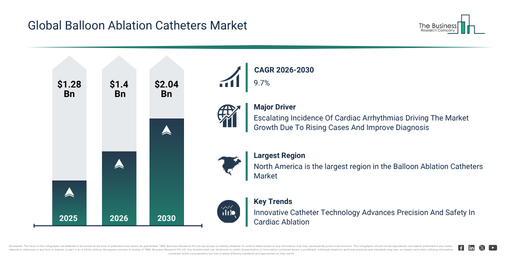
    The market for balloon ablation catheters has experienced significant expansion in recent years. This market is set to expand from $1.28 billion in 2025 to $1.4 billion in 2026, showing a compound annual growth rate (CAGR) of 9.5%. The historical growth of this market can be linked to factors such as the increasing occurrence of cardiac arrhythmias, the adoption of less invasive ablation procedures, continuous advancements in catheter technologies, a heightened awareness of cardiovascular diseases, and the expansion of hospital-based cardiac care units.

    The balloon ablation catheters market size is projected to demonstrate significant growth in the upcoming years. It is foreseen to expand to $2.04 billion in 2030, achieving a compound annual growth rate (CAGR) of 9.7%. The expansion over the forecast period is attributed to the increasing need for atrial fibrillation treatments, a rise in the adoption of advanced energy delivery mechanisms, the expanding use of catheter-based therapies in specialty clinics, the proliferation of ambulatory surgical centers, and enhanced integration with imaging and monitoring systems. Prominent developments anticipated in the forecast period include a greater embrace of single-use balloon ablation catheters, an escalating demand for radiofrequency and cryo balloon catheters, a heightened emphasis on minimally invasive cardiac procedures, an broadening of reusable balloon ablation catheter applications, and increased integration of catheter systems with real-time imaging.

    Get A Free Sample Report With In-Depth Market Insights:

    https://thebusinessresearchcompany.com/sample_request?id=59689800&type=smp&name=Balloon%20Ablation%20Catheters%20Market%20Report%202026&utm_source=Blogs&utm_medium=Paid&utm_campaign=Oct_PR

    Balloon Ablation Catheters Market Industry Drivers: What’s Behind The Revenue Growth?

    The increasing prevalence of cardiac arrhythmias is anticipated to fuel the expansion of the balloon ablation catheters market in the foreseeable future. These conditions involve an abnormal heart rhythm—either excessively fast, slow, or inconsistent—stemming from issues with the heart’s electrical signaling. The rise in cardiac arrhythmia cases is attributed to the demographic shift towards an older population, given that elderly individuals exhibit a greater susceptibility to such heart rhythm irregularities. Balloon ablation catheters serve to address cardiac arrhythmias by accurately delivering energy to specific heart tissue regions, thereby interrupting aberrant electrical paths, re-establishing a regular heart rhythm, and mitigating the dangers linked with erratic heartbeats. As an illustration, the Centers for Disease Control and Prevention (CDC), a U.S. government body, reported in March 2024 that approximately 12.1 million individuals in the United States are predicted to develop atrial fibrillation (AFib) by the year 2050. Consequently, the growing occurrence of cardiac arrhythmias is a primary factor propelling the demand within the balloon ablation catheters market.

    Balloon Ablation Catheters Market Segment Landscape: Which Areas Lead Development?

    The balloon ablation catheters market covered in this report is segmented –

    1) By Product Type: Single-Use Balloon Ablation Catheters, Reusable Balloon Ablation Catheters

    2) By Application: Cardiac Arrhythmia, Atrial Fibrillation, Ventricular Tachycardia, Other Applications

    3) By End User: Hospitals, Ambulatory Surgical Centers, Specialty Clinics, Other End-Users

    Subsegments:

    1) By Single-Use Balloon Ablation Catheters: Cryo Balloon Catheter, Radiofrequency Balloon Catheter, Laser Balloon Catheter, Microwave Balloon Catheter

    2) By Reusable Balloon Ablation Catheters: Cryo Balloon Catheter, Radiofrequency Balloon Catheter, Laser Balloon Catheter, Microwave Balloon Catheter

    #Balloon Ablation Catheters Market Growth Trends: What’s Shaping The Future Outlook?

    Leading companies operating within the balloon ablation catheters market are concentrating on developing innovative products, such as next-generation pulsed field ablation catheters, to enhance safety, reduce procedure duration, and improve patient outcomes. These advanced balloon-based devices, known as next-generation pulsed field ablation catheters, deliver precise electrical pulses to treat abnormal heart rhythms, contributing to shorter procedure times, minimized tissue damage, and improved patient recovery. For instance, in December 2025, Abbott Laboratories, a US-based medical device company, obtained U.S. Food and Drug Administration approval for its Volt Pulsed Field Ablation System, an innovative balloon-in-basket pulsed field ablation (PFA) catheter that is integrated with the EnSite X electroanatomical mapping system. This device empowers clinicians to map, pace, and ablate cardiac tissue using a single catheter, providing precise, non-thermal energy to create targeted lesions while minimizing damage to surrounding tissue. Its balloon-in-basket design, featuring multiple active splines, ensures optimal tissue contact and uniform energy delivery, thereby enhancing procedural efficiency and safety compared with traditional thermal ablation catheters. Designed to treat both paroxysmal and persistent atrial fibrillation, the system reduces procedure times and supports faster patient recovery.

    Balloon Ablation Catheters Market Company Landscape And Competitive Strategy

    Major companies operating in the balloon ablation catheters market are Johnson & Johnson, Abbott Laboratories, Medtronic plc, Toray Industries Inc., Boston Scientific Corporation, Cook Medical LLC, Biotronik SE & Co. KG, Merit Medical Systems Inc., CONMED Corporation, Lepu Medical Technology (Beijing) Co. Ltd., MicroPort Scientific Corporation, Avanos Medical Inc., Japan Lifeline Co. Ltd., AngioDynamics Inc., Imricor Medical Systems Inc., Kardium Inc., B. Braun SE, ERBE Elektromedizin GmbH, CathVision A/S, Osypka AG, CathRx Ltd., Pulse Biosciences Inc., CardioNXT Inc., Shanghai MicroPort EP MedTech Co. Ltd., Aurigen Medical Inc.

    View The Full Balloon Ablation Catheters Market Report:

    https://thebusinessresearchcompany.com/report/balloon-ablation-catheters-market-report?utm_source=Blogs&utm_medium=Paid&utm_campaign=Oct_PR

    Balloon Ablation Catheters Market Largest Region: Which Geography Holds The Biggest Share?

    North America was the largest region in the balloon ablation catheters market in 2025. Asia-Pacific is expected to be the fastest-growing region in the forecast period. The regions covered in the balloon ablation catheters market report are Asia-Pacific, South East Asia, Western Europe, Eastern Europe, North America, South America, Middle East, Africa.

    Reach Out To Our Team:

    The Business Research Company: https://www.thebusinessresearchcompany.com/

    Americas: +1 310-496-7795

    Asia: +44 7882 955267 & +91 8897263534

    Europe: +44 7882 955267

    Email us at: marketing@tbrc.info

    Follow us on:

    LinkedIn: https://in.linkedin.com/company/the-business-research-company

    YouTube: https://www.youtube.com/channel/UC24_fI0rV8cR5DxlCpgmyFQ

    Global Market Model: https://www.thebusinessresearchcompany.com/global-market-model
  • At-Home Thyroid Testing Market Size In 2026 And Beyond: Understanding Future Growth Potential

    At-Home Thyroid Testing Market Size In 2026 And Beyond: Understanding Future Growth Potential

    Built to provide research that’s more actionable and strategically valuable, The Business Research Company’s 2026 market reports include market attractiveness analysis, total addressable market sizing, company benchmarking matrices, interactive Excel dashboards, broader supply chain intelligence, emerging startup tracking, and in-depth product insights.

    At-Home Thyroid Testing Market Forecast: What Value Will The Market Reach By 2030?

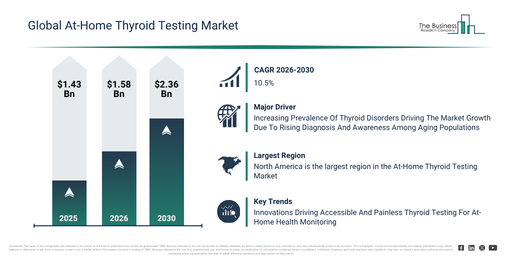
    The at-home thyroid testing market has witnessed substantial expansion in recent years. This market is set to increase from $1.43 billion in 2025 to $1.58 billion in 2026, progressing at a compound annual growth rate (CAGR) of 10.2%. The past growth in this sector can be attributed to factors including heightened awareness of thyroid disorders, an increase in the use of laboratory-based thyroid tests, a rising demand for convenient testing methods, the adoption of immunoassay-based diagnostics, and the expansion of online pharmacy platforms.

    The at-home thyroid testing market size is projected to experience substantial expansion in the next few years. This market is anticipated to grow to $2.36 billion in 2030, demonstrating a compound annual growth rate (CAGR) of 10.5%. The expansion during the forecast period can be attributed to the increasing adoption of digital and remote health solutions, a growing demand for rapid and accurate thyroid testing, the expansion of home healthcare services, rising integration with AI and predictive analytics, and an increasing consumer focus on preventive health. Key trends in the forecast period include the increasing adoption of at-home thyroid testing kits, a rising demand for rapid thyroid function assessment, growing integration with online and retail distribution channels, the expansion of molecular diagnostics-based tests, and an increasing focus on personalized health monitoring.

    Get A Free Sample Report With In-Depth Market Insights:

    https://thebusinessresearchcompany.com/sample_request?id=86346117&type=smp&name=At-Home%20Thyroid%20Testing%20Market%20Report%202026&utm_source=Blogs&utm_medium=Paid&utm_campaign=Oct_PR

    At-Home Thyroid Testing Market Demand Drivers Opening New Revenue Streams

    The expanding occurrence of thyroid ailments is anticipated to drive the future expansion of the at home thyroid testing market. These disorders are conditions where the thyroid gland’s hormone production is either excessive or insufficient, impacting metabolism and general well-being. The rise in thyroid disorder prevalence stems from an aging global demographic, coupled with heightened awareness and screening efforts, resulting in more individuals receiving diagnoses for conditions like hypothyroidism, hyperthyroidism, and various other thyroid malfunctions. At-home thyroid testing offers individuals a convenient method to monitor their thyroid hormone levels, identify early indicators of dysfunction, and track the efficacy of treatment, thereby facilitating proactive management of thyroid disorders without requiring numerous clinic visits. As an illustration, data from September 2023, provided by the Endocrine Society of Australia (ESA), an Australia-based non-profit body, indicates that hypothyroidism stands as the most prevalent thyroid disorder in Australia, impacting approximately 1 in 33 people, and is observed more often in women than in men, as well as in individuals over 60 years of age. Consequently, the growing occurrence of thyroid conditions is stimulating the expansion of the at home thyroid testing market.

    At-Home Thyroid Testing Market Segment Trends And Revenue Contributors

    The at-home thyroid testing market covered in this report is segmented –

    1) By Test Type: Thyroid Stimulating Hormone (TSH) Test, Triiodothyronine (T3) Test, Thyroxine (T4) Test, Thyroid Antibody Test, Other Types

    2) By Sample Type: Blood, Saliva, Other Types

    3) By Technology: Immunoassay, Molecular Diagnostics, Other Technologies

    4) By Distribution Channel: Online Pharmacies, Retail Pharmacies, Other Distribution Channels

    5) By End-User: Individuals, Diagnostic Laboratories, Other End-Users

    Subsegments:

    1) By Thyroid Stimulating Hormone (TSH) Test: Third Generation Thyroid Stimulating Hormone Test, Fourth Generation Thyroid Stimulating Hormone Test, Rapid Thyroid Stimulating Hormone Test, Laboratory Based Thyroid Stimulating Hormone Test

    2) By Triiodothyronine (T3) Test: Total T3 Test, Free T3 Test, Reverse T3 Test, Laboratory Based T3 Test

    3) By Thyroxine (T4) Test: Total T4 Test, Free T4 Test, Thyroxine Binding Test, Laboratory Based T4 Test

    4) By Thyroid Antibody Test: Thyroid Peroxidase Antibody Test, Thyroglobulin Antibody Test, Thyroid Stimulating Immunoglobulin Test, Thyroid Stimulating Hormone Receptor Antibody Test

    At-Home Thyroid Testing Market Trends Powering Strategic Industry Growth

    Leading companies in the At-Home Thyroid Testing market are prioritizing the development of innovative offerings, specifically clinical-grade home thyroid testing kits, to provide accessible, precise, and affordable thyroid monitoring without requiring laboratory visits. Clinical-grade home thyroid testing kits serve as at-home diagnostic tools capable of delivering lab-quality thyroid hormone measurements using small blood samples, thereby enabling users to accurately and conveniently monitor their thyroid health from home. For example, in February 2026, SiPhox Health Inc., a US-based biotech startup, introduced SiPhox Home, a novel at-home thyroid testing platform designed to measure TSH, Free T4, Free T3, TPOAb, TGAb, and TG for $79/month. This product seamlessly integrates with a digital health dashboard, allowing users to track results over time, synchronize with their doctors, and access telehealth support for individualized guidance. By leveraging silicon photonics to miniaturize lab-grade instruments, SiPhox Home reduces testing costs without sacrificing accuracy, thereby making frequent, at-home thyroid monitoring more widely available.

    At-Home Thyroid Testing Market Key Participants And Competitive Landscape

    Major companies operating in the at-home thyroid testing market are Labcorp OnDemand, Redcliffe Labs LLC, Apollo Diagnostics Inc., Dr. Lal PathLabs Ltd., Metropolis Healthcare Ltd., LetsGetChecked Ltd., Function Health Inc., Everlywell Inc., Healthians Pvt. Ltd., HealthPlix Inc., ZRT Laboratory LLC, Jane Software Inc., Paloma Health Inc., HealthLabs.com Inc., InsideTracker Inc., Verisana GmbH, myLAB Box Inc., Ulta Lab Tests LLC, Walk-In Lab LLC, Bloom Diagnostics Inc., SelfDecode Inc., Check My Body Health Inc., Blue Horizon Blood Tests LLC, Forth With Life Inc., Orange Health Labs Inc.

    View The Full At-Home Thyroid Testing Market Report:

    https://thebusinessresearchcompany.com/report/at-home-thyroid-testing-market-report?utm_source=Blogs&utm_medium=Paid&utm_campaign=Oct_PR

    At-Home Thyroid Testing Market Geographic Analysis: Where Is Demand Rising Fastest?

    North America was the largest region in the at-home thyroid testing market in 2025. Asia-Pacific is expected to be the fastest-growing region in the forecast period. The regions covered in the at-home thyroid testing market report are Asia-Pacific, South East Asia, Western Europe, Eastern Europe, North America, South America, Middle East, Africa.

    Reach Out To Our Team:

    The Business Research Company: https://www.thebusinessresearchcompany.com/

    Americas: +1 310-496-7795

    Asia: +44 7882 955267 & +91 8897263534

    Europe: +44 7882 955267

    Email us at: marketing@tbrc.info

    Follow us on:

    LinkedIn: https://in.linkedin.com/company/the-business-research-company

    YouTube: https://www.youtube.com/channel/UC24_fI0rV8cR5DxlCpgmyFQ

    Global Market Model: https://www.thebusinessresearchcompany.com/global-market-model
  • At-Home Dermatology Devices Market Reaches $17.7 Billion In 2026: Key Developments Shaping Expansion

    At-Home Dermatology Devices Market Reaches $17.7 Billion In 2026: Key Developments Shaping Expansion

    Backed by market attractiveness analysis, total addressable market sizing, company benchmarking matrices, interactive Excel dashboards, wider supply chain intelligence, emerging startup coverage, and detailed product-level insights, The Business Research Company’s 2026 market reports are designed to offer research that is more actionable and strategically valuable than ever.

    At-Home Dermatology Devices Market Size Outlook: How Quickly Will Revenue Expand Through 2030?

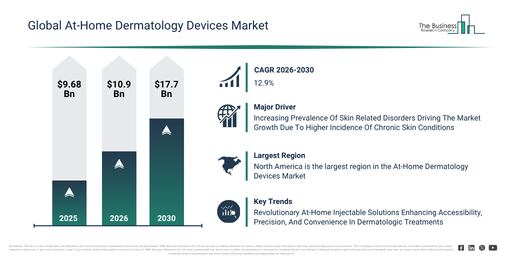
    The at-home dermatology devices market size has experienced rapid growth in recent years. This market is projected to expand from $9.68 billion in 2025 to $10.9 billion in 2026, at a compound annual growth rate (CAGR) of 12.6%. Historically, this growth can be attributed to heightened consumer awareness regarding skin health, increasing demand for anti-aging solutions, the rising popularity of non-invasive home treatments, advancements in laser and light therapy technology, and the expansion of e-commerce channels for skincare devices.

    The at-home dermatology devices market size is poised for substantial growth in the upcoming years. It is projected to expand to $17.7 billion by 2030, achieving a compound annual growth rate (CAGR) of 12.9%. This anticipated growth can be attributed to several factors, including the increasing incorporation of AI and diagnostic sensors into devices, a rise in the adoption of personalized skin treatment solutions, the development of online and subscription-based distribution models, the proliferation of multi-functional and combination therapy devices, and a heightened focus on safety and regulatory compliance for home-use dermatology tools. Noteworthy trends expected during this forecast period involve the growing adoption of portable at-home dermatology devices, an escalating demand for combination skincare therapy devices, the expanding integration of light and laser-based treatment devices, the widening use of automated microneedling and serum delivery systems, and an increased emphasis on online and direct-to-consumer distribution channels.

    Get A Free Sample Report With In-Depth Market Insights:

    https://thebusinessresearchcompany.com/sample_request?id=87340391&type=smp&name=At-Home%20Dermatology%20Devices%20Market%20Report%202026&utm_source=Blogs&utm_medium=Paid&utm_campaign=Oct_PR

    At-Home Dermatology Devices Market Growth Backed By Core Demand Fundamentals

    The expanding occurrence of skin conditions is anticipated to fuel the future expansion of the at home dermatology devices market. These disorders encompass conditions like eczema, dermatitis, psoriasis, and various other chronic or acute inflammatory skin ailments. The rise in their prevalence stems from evolving lifestyle factors, including inadequate diet, heightened stress, insufficient physical activity, and increased exposure to environmental contaminants, all of which can initiate or exacerbate conditions like eczema, acne, and psoriasis. At-home dermatology devices empower individuals to proactively manage these conditions through features such as real-time monitoring, tailored treatment application, and progress tracking, thereby decreasing reliance on face-to-face consultations and enhancing overall skin health. For example, in August 2023, Skin Health Institute Inc., a non-profit organization based in Australia, reported that psoriasis impacts an estimated 2–3% of the population in Australia, underscoring its status as a relatively common skin ailment. Consequently, the growing incidence of skin related disorders is a key impetus for the expansion of the at home dermatology devices market.

    At-Home Dermatology Devices Market Segment Analysis Spotlighting Growth Areas

    The at-home dermatology devices market covered in this report is segmented –

    1) By Product Type: Light Therapy Devices, Microdermabrasion Devices, Laser Devices, Radiofrequency Devices, Microneedling Devices, Other Product Types

    2) By Distribution Channel: Online Stores, Pharmacies, Specialty Stores, Other Distribution Channels

    3) By Application: Acne Treatment, Hair Removal, Skin Rejuvenation, Wrinkle Reduction, Psoriasis, Other Applications

    4) By End-User: Individuals, Home Care Settings

    Subsegments:

    1) By Light Therapy Devices: Blue Light Therapy Devices, Red Light Therapy Devices, Combination Red And Blue Light Therapy Devices, Portable Light Therapy Devices

    2) By Microdermabrasion Devices: Crystal-Based Microdermabrasion Devices, Diamond-Tip Microdermabrasion Devices, Handheld Microdermabrasion Devices, Professional-Grade At-Home Microdermabrasion Devices

    3) By Laser Devices: Fractional Laser Devices, Non-Ablative Laser Devices, Ablative Laser Devices, Portable At-Home Laser Devices

    4) By Radiofrequency Devices: Monopolar Radiofrequency Devices, Bipolar Radiofrequency Devices, Tripolar Radiofrequency Devices, Portable Radiofrequency Skin Devices

    5) By Microneedling Devices: Manual Microneedling Rollers, Automated Microneedling Pens, At-Home Microneedling Kits, Combination Microneedling And Serum Devices

    6) By Other Product Types: Ultrasonic Skin Devices, Hydration And Infusion Devices, Light Emitting Diode Facial Mask Devices, Combination Skincare Therapy Devices

    At-Home Dermatology Devices Market Growth Trends Reshaping The Competitive Landscape

    Leading companies in the At-Home Dermatology Devices market are concentrating on developing innovative products, such as at-home microneedle injectable devices, to offer convenient, effective, and self-administered treatments for common skin conditions. These compact tools deliver precise doses of medication directly into the skin, aiding in the reduction of inflammation, treating acne or other dermatologic conditions, and providing professional-level results within the home setting. For instance, in October 2025, Indomo Therapeutics Inc., a US-based clinical-stage company, introduced ClearPen, an investigational at-home injectable candidate designed for treating inflammatory acne lesions. ClearPen integrates a proprietary microneedle delivery device with triamcinolone acetonide, a corticosteroid consistent with American Academy of Dermatology guidelines. The device enables accurate, low-dose intradermal injections that decrease inflammation and lesion size, allowing patients to safely self-administer treatment at home. Its design emphasizes ease of use, accuracy, and convenience compared with traditional in-office intralesional injections. Beyond acne, Indomo aims to broaden the platform for other corticosteroid-responsive conditions, such as keloids and hidradenitis suppurativa, thereby providing wider access to timely dermatologic care.

    At-Home Dermatology Devices Market Top Companies Driving Competitive Growth

    Major companies operating in the at-home dermatology devices market are Procter & Gamble Co., Panasonic Corporation, L’Oréal S.A., Koninklijke Philips N.V., Nu Skin Enterprises Inc., YA-MAN Ltd., Therabody Inc., FOREO AB, CurrentBody Ltd., Home Skinovations Ltd., Project E Beauty Inc., The Beauty Tech Group Inc., LightStim Inc., Beurer GmbH, PMD Beauty Inc., ZIIP Beauty Inc., Microderm GLO LLC, BSG Aesthetics Solutions Inc., Nood Ventures LLC, Reviva Labs Inc., Kenzzi Limited, Homiley Brands LLC, Nooance Inc.

    View The Full At-Home Dermatology Devices Market Report:

    https://thebusinessresearchcompany.com/report/at-home-dermatology-devices-market-report?utm_source=Blogs&utm_medium=Paid&utm_campaign=Oct_PR

    At-Home Dermatology Devices Market Global Footprint: Which Region Leads The Market?

    North America was the largest region in the at-home dermatology devices market in 2025. Asia-Pacific is expected to be the fastest-growing region in the forecast period. The regions covered in the at-home dermatology devices market report are Asia-Pacific, South East Asia, Western Europe, Eastern Europe, North America, South America, Middle East, Africa.

    Reach Out To Our Team:

    The Business Research Company: https://www.thebusinessresearchcompany.com/

    Americas: +1 310-496-7795

    Asia: +44 7882 955267 & +91 8897263534

    Europe: +44 7882 955267

    Email us at: marketing@tbrc.info

    Follow us on:

    LinkedIn: https://in.linkedin.com/company/the-business-research-company

    YouTube: https://www.youtube.com/channel/UC24_fI0rV8cR5DxlCpgmyFQ

    Global Market Model: https://www.thebusinessresearchcompany.com/global-market-model
  • Artificial Intelligence (AI)-Assisted Variant Reinterpretation Market Forecast 2026–2030: Market Size, Trends And Growth Opportunities

    Artificial Intelligence (AI)-Assisted Variant Reinterpretation Market Forecast 2026–2030: Market Size, Trends And Growth Opportunities

    Backed by market attractiveness analysis, total addressable market sizing, company benchmarking matrices, interactive Excel dashboards, wider supply chain intelligence, emerging startup coverage, and detailed product-level insights, The Business Research Company’s 2026 market reports are designed to offer research that is more actionable and strategically valuable than ever.

    Artificial Intelligence (AI)-Assisted Variant Reinterpretation Market Value Growth And Long-Term Outlook

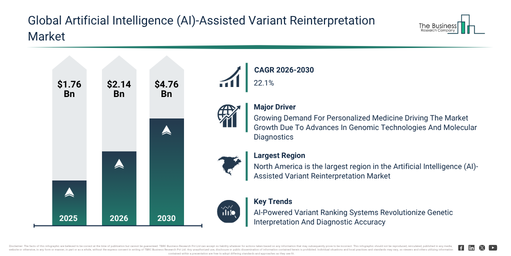
    The market size for artificial intelligence (AI)-assisted variant reinterpretation has experienced rapid expansion recently. This market is projected to increase from $1.76 billion in 2025 to $2.14 billion in 2026, demonstrating a compound annual growth rate (CAGR) of 21.8%. Factors contributing to its historical growth include the increasing availability of genomic data, the escalating demand for precise variant classification, the integration of AI into clinical research, heightened regulatory focus on diagnostic accuracy, and the proliferation of precision medicine initiatives.

    The artificial intelligence (AI)-assisted variant reinterpretation market is projected to experience substantial expansion over the upcoming years. This market is anticipated to reach $4.76 billion by 2030, demonstrating a compound annual growth rate (CAGR) of 22.1%. Factors contributing to this growth during the forecast period include the increasing incorporation of machine learning and deep learning platforms, wider acceptance of natural language processing for literature review, a surge in demand for cloud-based deployments, the expansion of AI-driven drug development, and an intensified focus on real-time variant monitoring and reinterpretation. Key trends anticipated during this period encompass the growing uptake of cloud-based variant reinterpretation platforms, an escalating demand for AI-powered clinical decision support, greater integration with electronic health records (EHR), the proliferation of real-time data annotation and labeling tools, and an increasing emphasis on personalized medicine and patient-focused diagnostics.

    Get A Free Sample Report With In-Depth Market Insights:

    https://thebusinessresearchcompany.com/sample_request?id=10106601&type=smp&name=Artificial%20Intelligence%20%28AI%29-Assisted%20Variant%20Reinterpretation%20Market%20Report%202026&utm_source=Blogs&utm_medium=Paid&utm_campaign=Oct_PR

    Artificial Intelligence (AI)-Assisted Variant Reinterpretation Market Industry Drivers: What’s Behind The Revenue Growth?

    The increasing need for personalized medicine is anticipated to fuel the expansion of the artificial intelligence (AI)-assisted variant reinterpretation market throughout the forecast period. Personalized medicine involves customizing medical treatments and therapeutic approaches for individual patients based on their distinct genetic profiles, biomarkers, and disease characteristics. This escalating demand stems from advancements in genomic sequencing technologies and molecular diagnostics, which enable more precise identification of genetic variants and facilitate individualized treatment decisions that lead to improved clinical outcomes. AI-assisted variant reinterpretation plays a vital role in personalized medicine by efficiently scrutinizing and re-evaluating genetic variants as novel clinical evidence emerges. Such solutions empower clinicians and researchers to generate accurate, patient-specific insights essential for diagnosis, treatment selection, and risk assessment, simultaneously reducing the time and complexity typically associated with manual variant interpretation. For instance, in February 2024, the Personalized Medicine Coalition, a US-based non-profit organization, reported that the U.S. Food and Drug Administration approved 16 new personalized treatments for rare disease patients in 2023, a significant increase from six in 2022. Consequently, the rising demand for personalized medicine is a key factor driving the growth of the artificial intelligence (AI)-assisted variant reinterpretation market.

    Artificial Intelligence (AI)-Assisted Variant Reinterpretation Market Segment Outlook: Which Categories Are Growing Fastest?

    The artificial intelligence (AI)-assisted variant reinterpretation market covered in this report is segmented –

    1) By Component: Software, Services

    2) By Technology: Machine Learning, Deep Learning And Neural Networks, Natural Language Processing

    3) By Deployment Mode: Cloud-Based, On-Premises

    4) By Application: Clinical Diagnostics, Research, Drug Development, Personalized Medicine, Other Applications

    5) By End-User: Hospitals And Clinics, Research Institutes, Pharmaceutical And Biotechnology Companies, Diagnostic Laboratories, Other End-Users

    Subsegments:

    1) By Software: Machine Learning Platforms, Natural Language Processing Platforms, Computer Vision Platforms, Speech Recognition Platforms, Data Labeling And Annotation Tools, Model Training And Development Tools, Model Deployment And Monitoring Tools, Decision Support Systems

    2) By Services: Professional Services, Managed Services, Consulting Services, Integration And Implementation Services, Support And Maintenance Services, Training And Education Services

    #Artificial Intelligence (AI)-Assisted Variant Reinterpretation Market Growth Trends: What’s Shaping The Future Outlook?

    Companies operating within the artificial intelligence (AI)-assisted variant reinterpretation market are increasingly concentrating on developing innovative solutions, such as explainable AI–powered variant ranking systems, to streamline genetic variant interpretation and enhance diagnostic accuracy. An AI-powered variant ranking system is a machine-learning–based tool that automatically scores and prioritizes genetic variants based on their likelihood of pathogenicity, allowing clinicians and geneticists to focus on the most clinically relevant findings. For example, in October 2024, SeqOne S.A.S., an AI-driven genomic software company based in France, introduced the DiagAI Score. This explainable AI–powered metric evaluates and ranks genetic variants on a 0–100 scale, taking into account pathogenicity, phenotype relevance, inheritance patterns, and data quality criteria. The solution integrates advanced components like the Universal Pathogenicity Predictor (UP²) and Phenogenius to generate clinically meaningful scores while ensuring human expert oversight.

    Artificial Intelligence (AI)-Assisted Variant Reinterpretation Market Key Players Shaping Industry Direction

    Major companies operating in the artificial intelligence (AI)-assisted variant reinterpretation market are Illumina Inc., Tempus Labs Inc., Invitae Corporation, MedGenome Labs Private Limited, SOPHiA GENETICS S.A., Genomenon Inc., DNAnexus Inc., Alstronix Technologies Pvt Ltd, Lifebit Genomics Ltd, Strand Life Sciences Private Limited, Galatea Bio Inc., Clear Labs Inc., Congenica Ltd, Epigene Labs Pvt Ltd, Genoox Ltd, Breakthrough Genomics Inc., Genix.ai Inc., Nostos Genomics Inc., Variant Bio Inc., SeqOne Systems S.A.

    View The Full Artificial Intelligence (AI)-Assisted Variant Reinterpretation Market Report:

    https://thebusinessresearchcompany.com/report/artificial-intelligence-ai-assisted-variant-reinterpretation-market-report?utm_source=Blogs&utm_medium=Paid&utm_campaign=Oct_PR

    Artificial Intelligence (AI)-Assisted Variant Reinterpretation Market Regional Analysis: Which Region Leads By Revenue?

    North America was the largest region in the artificial intelligence (AI)-assisted variant reinterpretation market in 2025. Asia-Pacific is expected to be the fastest-growing region in the forecast period. The regions covered in the artificial intelligence (AI)-assisted variant reinterpretation market report are Asia-Pacific, South East Asia, Western Europe, Eastern Europe, North America, South America, Middle East, Africa.

    Reach Out To Our Team:

    The Business Research Company: https://www.thebusinessresearchcompany.com/

    Americas: +1 310-496-7795

    Asia: +44 7882 955267 & +91 8897263534

    Europe: +44 7882 955267

    Email us at: marketing@tbrc.info

    Follow us on:

    LinkedIn: https://in.linkedin.com/company/the-business-research-company

    YouTube: https://www.youtube.com/channel/UC24_fI0rV8cR5DxlCpgmyFQ

    Global Market Model: https://www.thebusinessresearchcompany.com/global-market-model
  • Artificial Intelligence (AI) For De Novo Drug Design Market Trends Supporting 33.7% CAGR Growth Through 2030

    Artificial Intelligence (AI) For De Novo Drug Design Market Trends Supporting 33.7% CAGR Growth Through 2030

    Featuring market attractiveness scoring, total addressable market sizing, company benchmarking matrices, interactive Excel dashboards, deeper supply chain intelligence, emerging startup tracking, and granular product-level insights, The Business Research Company’s 2026 market reports are built to deliver research that is both more actionable and more strategically valuable.

    Artificial Intelligence (AI) For De Novo Drug Design Market Expansion Outlook: What Revenue Opportunities Are Ahead?

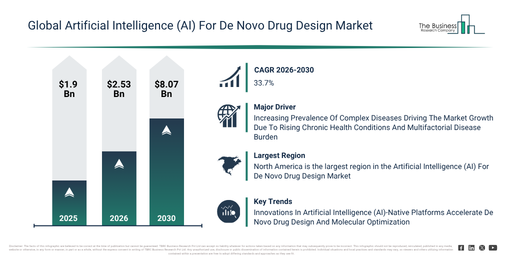
    The artificial intelligence (AI) for de novo drug design market has seen a significant increase in its size over recent years. It is projected to grow from $1.9 billion in 2025 to $2.53 billion in 2026, exhibiting a compound annual growth rate (CAGR) of 33.4%. The historical expansion can be attributed to factors such as elevated research and development costs in traditional drug discovery, a rising need for expedited drug development, the adoption of computational chemistry tools, increased pharmaceutical investments, and broader academic and research collaborations.

    The artificial intelligence (AI) for de novo drug design market is anticipated to experience substantial growth in the coming years. It is projected to reach $8.07 billion in 2030, exhibiting a compound annual growth rate (CAGR) of 33.7%. This expansion during the forecast period is propelled by factors such as the increasing integration of AI for lead compound generation, a rising utilization of ADMET prediction models, the growing convergence of cloud and on-premises deployment, the broadening of model development and data annotation services, and enhanced collaboration between pharmaceutical and biotech companies. Significant trends for the forecast period include the increasing adoption of cloud-based AI platforms, a surge in demand for deep learning-based drug design software, the progressive incorporation of workflow automation in drug discovery, the expansion of molecular property prediction tools, and an intensified focus on targeted therapeutic area applications.

    Get A Free Sample Report With In-Depth Market Insights:

    https://thebusinessresearchcompany.com/sample_request?id=50176632&type=smp&name=Artificial%20Intelligence%20%28AI%29%20For%20De%20Novo%20Drug%20Design%20Market%20Report%202026&utm_source=Blogs&utm_medium=Paid&utm_campaign=Oct_PR

    Artificial Intelligence (AI) For De Novo Drug Design Market Growth Factors Behind Sustained Expansion

    The escalating occurrence of complex diseases is anticipated to drive the expansion of artificial intelligence (AI) for the de novo drug design market in the coming years. Complex diseases are medical conditions resulting from a mix of genetic, environmental, and lifestyle elements, frequently impacting multiple bodily systems and necessitating sophisticated or extended medical care. The rise in these diseases is linked to unhealthy lifestyle choices, which elevate the likelihood of chronic illnesses like diabetes, cardiovascular diseases, and specific cancers. Artificial intelligence (AI) in de novo drug design facilitates the identification of new treatments by examining intricate biological information and forecasting promising drug candidates, thereby tackling the difficulties presented by complex, multifactorial, and chronic conditions. As an illustration, in February 2024, the World Health Organization, an international body situated in Switzerland, projected over 35 million new cancer cases by 2050, indicating a 77% increase relative to the estimated 20 million cases reported in 2022. Consequently, the growing incidence of complex diseases is fueling the development of the artificial intelligence (AI) for de novo drug design market.

    Artificial Intelligence (AI) For De Novo Drug Design Market Segment Breakdown: Which Categories Lead On Revenue?

    The artificial intelligence (AI) for de novo drug design market covered in this report is segmented –

    1) By Component: Software, Services

    2) By Therapeutic Area: Oncology, Neurological Disorders, Infectious Diseases, Cardiovascular Diseases, Rare Diseases, Metabolic Disorders, Other Therapeutic Areas

    3) By Deployment Mode: On-Premises, Cloud-Based

    4) By Application: Target Identification, Lead Compound Generation, Molecular Property Prediction, Absorption, Distribution, Metabolism, Excretion, And Toxicity (ADMET Prediction), Other Applications

    5) By End User: Pharmaceutical Companies, Biotechnology Companies, Academic And Research Institutes, Contract Research Organizations, Other End Users

    Subsegments:

    1) By Software: Cloud Based Software, On Premise Software, Machine Learning Software, Deep Learning Software, Molecular Modeling Software, Data Analytics Software, Workflow Automation Software

    2) By Services: Consulting Services, Integration Services, Maintenance And Support Services, Training And Education Services, Managed Services, Data Annotation Services, Model Development Services

    Artificial Intelligence (AI) For De Novo Drug Design Market Industry Trends Fueling Future Revenue Growth

    Leading companies operating within the artificial intelligence (AI) for de novo drug design market are concentrating on developing innovative solutions, such as AI-native drug discovery platforms, to accelerate the design and optimization of novel small molecules. These artificial intelligence (AI)-native drug discovery platforms are integrated systems that utilize AI models to generate, predict, and select new molecules from the ground up, thereby speeding up drug discovery by identifying promising compounds more quickly and efficiently than traditional trial-and-error methods. For example, in November 2025, Terray Therapeutics, a US-based biotechnology company, introduced EMMI (Experimentation Meets Machine Intelligence), an AI-native drug discovery platform specifically engineered for de novo small molecule design. This platform integrates Terray’s proprietary ultra-miniaturized experimental hardware with a highly automated laboratory and the Chemistry-Oriented AI Transformer Interface, third generation (COATI3) chemistry foundation model, to generate millions of novel molecules, predict their potency, select the most promising candidates, and iteratively optimize them. The platform’s generative AI employs reinforcement learning to propose synthetically accessible molecules, while predictive AI models rapidly evaluate properties like potency, selectivity, solubility, metabolism, and clearance, and the selection AI optimizes which molecules to synthesize to reduce time and cost by up to threefold compared to industry standards. EMMI is applicable across internal immunology programs as well as partnerships targeting previously unexplored chemical space, establishing it as a transformative tool for de novo drug design.

    Artificial Intelligence (AI) For De Novo Drug Design Market Key Participants And Competitive Landscape

    Major companies operating in the artificial intelligence (AI) for de novo drug design market are Schrödinger Inc., XtalPi Holdings Ltd., Owkin Inc., Insilico Medicine Inc., Recursion Pharmaceuticals Inc., Deep Genomics Inc., Iktos SA, Atomwise Inc., Terray Therapeutics Inc., Evogene Ltd., Genesis Therapeutics Inc., Insitro Inc., Verge Genomics Inc., DeepCure Inc., Cloud Pharmaceuticals Inc., Gero LLC, Chai Discovery Inc., Latent Labs Ltd., BioAge Labs Inc., Peptone Ltd., Generate Biomedicines Inc.

    View The Full Artificial Intelligence (AI) For De Novo Drug Design Market Report:

    https://thebusinessresearchcompany.com/report/artificial-intelligence-ai-for-de-novo-drug-design-market-report?utm_source=Blogs&utm_medium=Paid&utm_campaign=Oct_PR

    Artificial Intelligence (AI) For De Novo Drug Design Market Geographic Analysis: Where Is Demand Accelerating Fastest?

    North America was the largest region in the artificial intelligence (AI) for de novo drug design market in 2025. Asia-Pacific is expected to be the fastest-growing region in the forecast period. The regions covered in the artificial intelligence (AI) for de novo drug design market report are Asia-Pacific, South East Asia, Western Europe, Eastern Europe, North America, South America, Middle East, Africa.

    Reach Out To Our Team:

    The Business Research Company: https://www.thebusinessresearchcompany.com/

    Americas: +1 310-496-7795

    Asia: +44 7882 955267 & +91 8897263534

    Europe: +44 7882 955267

    Email us at: marketing@tbrc.info

    Follow us on:

    LinkedIn: https://in.linkedin.com/company/the-business-research-company

    YouTube: https://www.youtube.com/channel/UC24_fI0rV8cR5DxlCpgmyFQ

    Global Market Model: https://www.thebusinessresearchcompany.com/global-market-model

  • Arenavirus Diagnostics Market Outlook Through 2030: Understanding The Growth Opportunity

    Arenavirus Diagnostics Market Outlook Through 2030: Understanding The Growth Opportunity

    Featuring market attractiveness scoring, total addressable market sizing, company benchmarking matrices, interactive Excel dashboards, deeper supply chain intelligence, emerging startup tracking, and granular product-level insights, The Business Research Company’s 2026 market reports are built to deliver research that is both more actionable and more strategically valuable.

    Arenavirus Diagnostics Market Size Forecast: How Big Could The Market Get By 2030?

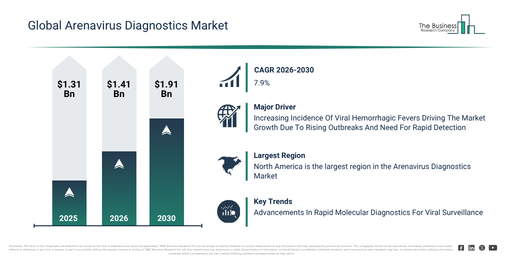
    The arenavirus diagnostics market size has demonstrated robust growth in recent years. This market is expected to expand from $1.31 billion in 2025 to $1.41 billion in 2026, reflecting a compound annual growth rate (CAGR) of 7.7%. The surge observed in the past can be ascribed to an increase in arenavirus infection cases, the incorporation of molecular diagnostic techniques, the proliferation of hospital and clinical laboratories, a heightened demand for serological testing, and an escalation in research dedicated to hemorrhagic fevers.

    The arenavirus diagnostics market size is projected to experience substantial growth in the upcoming years, reaching a valuation of $1.91 billion by 2030, exhibiting a compound annual growth rate (CAGR) of 7.9%. This expansion during the forecast period is fueled by factors such as the increasing uptake of automated PCR and ELISA systems, a rising need for swift point-of-care diagnostics, the proliferation of research facilities dedicated to viral diseases, the growing incorporation of AI-powered diagnostic analytics, and enhanced funding for infectious disease diagnostics. Key developments anticipated in this period include a greater embrace of PCR-based arenavirus diagnostic methods, increasing demand for quick diagnostic testing tools, the wider integration of next-generation sequencing technologies, the broadening of diagnostic testing services, and an intensified focus on ensuring laboratory validation and quality assurance.

    Get A Free Sample Report With In-Depth Market Insights:

    https://thebusinessresearchcompany.com/sample_request?id=59044754&type=smp&name=Arenavirus%20Diagnostics%20Market%20Report%202026&utm_source=Blogs&utm_medium=Paid&utm_campaign=Oct_PR

    Arenavirus Diagnostics Market Growth Catalysts And Demand Drivers

    The rising occurrence of viral hemorrhagic fevers is anticipated to drive the future growth of the arenavirus diagnostics market. Viral hemorrhagic fevers (VHFs) are severe illnesses caused by viruses that damage blood vessels, hinder the body’s clotting ability, and can result in extensive bleeding, multi-organ failure, and high mortality. The frequency of VHFs is increasing due to greater human interaction with wildlife and natural reservoirs, which elevates the risk of virus transmission from animals to humans. Arenavirus diagnostics facilitate the rapid and accurate detection of arenaviruses, allowing healthcare providers to identify these fevers early, implement prompt treatment, and effectively contain outbreaks. For example, in May 2023, the World Health Organization, a Switzerland-based international organization, reported that Nigeria recorded 877 confirmed cases of Lassa fever, a type of viral hemorrhagic fever, leading to 152 deaths. This represented a 20% increase in cases compared to the 733 confirmed cases reported during the same period in 2022. Therefore, the growing incidence of viral hemorrhagic fevers is a key driver for the expansion of the arenavirus diagnostics market.

    Arenavirus Diagnostics Market Segment Analysis Spotlighting Growth Areas

    The arenavirus diagnostics market covered in this report is segmented –

    1) By Product Type: Instruments, Reagents And Kits, Services

    2) By Technology: Polymerase Chain Reaction, Enzyme-Linked Immunosorbent Assay, Immunofluorescence Assay, Rapid Diagnostic Tests, Other Technologies

    3) By Application: Clinical Diagnostics, Research, Other Applications

    4) By End-User: Hospitals And Clinics, Diagnostic Laboratories, Research Institutes, Other End-Users

    Subsegments:

    1) By Instruments: Polymerase Chain Reaction Instruments, Enzyme-Linked Immunosorbent Assay Analyzers, Next-Generation Sequencing Systems, Rapid Diagnostic Testing Devices

    2) By Reagents And Kits: Polymerase Chain Reaction Reagents And Kits, Enzyme-Linked Immunosorbent Assay Reagents And Kits, Antigen Detection Kits, Antibody Detection Kits

    3) By Services: Diagnostic Testing Services, Laboratory Validation Services, Quality Control And Assurance Services, Technical Support And Maintenance Services

    Arenavirus Diagnostics Market Trends Shaping Long-Term Demand

    Leading firms within the arenavirus diagnostics market are concentrating on creating novel strategies, including molecular diagnostic kits for quick virus identification, aimed at strengthening early outbreak management and bettering patient health results. These molecular diagnostic kits facilitate rapid virus detection by swiftly and precisely pinpointing viral genetic material (RNA or DNA), thereby assisting in the early discovery of infections, informing prompt therapeutic actions, and curbing wider dissemination. A notable example occurred in March 2024, when the Gorgas Commemorative Institute for Health Studies (ICGES), a public health research organization situated in Panama, partnered with the Centers for Disease Control and Prevention (CDC) of the United States and the Pan American Health Organization (PAHO) to bolster regional capabilities for arenavirus monitoring via molecular diagnostic projects. Such endeavors encompassed the creation and standardization of molecular methodologies for detecting the virus, which included RNA sequencing, collecting field samples from rodents, and providing training to laboratory staff in the region. This particular initiative significantly boosted the accuracy, celerity, and practical use of arenavirus diagnostics across several nations, leading to prompt outbreak discovery, refined epidemiological oversight, and evidence-based public health responses.

    Arenavirus Diagnostics Market Competitive Overview And Top Companies

    Major companies operating in the arenavirus diagnostics market are Thermo Fisher Scientific Inc., Merck KGaA, Danaher Corporation, bioMérieux SA, Hologic Inc., PerkinElmer Inc., Sysmex Corporation, Bio-Rad Laboratories Inc., DiaSorin S.p.A., Chembio Diagnostic Systems Inc., BioPerfectus Technologies Inc., Amerigo Scientific Inc., Altona Diagnostics GmbH, Creative Diagnostics Inc., Novacyt Group, QIAGEN N.V., Aldatu Biosciences Ltd, GenMark Diagnostics Inc., Zalgen Labs Inc., Shanghai ZJ Bio-Tech Co. Ltd., Luminex Corporation.

    View The Full Arenavirus Diagnostics Market Report:

    https://thebusinessresearchcompany.com/report/arenavirus-diagnostics-market-report?utm_source=Blogs&utm_medium=Paid&utm_campaign=Oct_PR

    Arenavirus Diagnostics Market Leading Geography: Which Region Contributes The Most Revenue?

    North America was the largest region in the arenavirus diagnostics market in 2025. Asia-Pacific is expected to be the fastest-growing region in the forecast period. The regions covered in the arenavirus diagnostics market report are Asia-Pacific, South East Asia, Western Europe, Eastern Europe, North America, South America, Middle East, Africa.

    Reach Out To Our Team:

    The Business Research Company: https://www.thebusinessresearchcompany.com/

    Americas: +1 310-496-7795

    Asia: +44 7882 955267 & +91 8897263534

    Europe: +44 7882 955267

    Email us at: marketing@tbrc.info

    Follow us on:

    LinkedIn: https://in.linkedin.com/company/the-business-research-company

    YouTube: https://www.youtube.com/channel/UC24_fI0rV8cR5DxlCpgmyFQ

    Global Market Model: https://www.thebusinessresearchcompany.com/global-market-model