Blog

  • Catheter-Associated Urinary Tract Infections Treatment Market Forecast To Reach $1.67 Billion By 2030: Key Trends Explained

    Catheter-Associated Urinary Tract Infections Treatment Market Forecast To Reach $1.67 Billion By 2030: Key Trends Explained

    Backed by market attractiveness analysis, total addressable market sizing, company benchmarking matrices, interactive Excel dashboards, wider supply chain intelligence, emerging startup coverage, and detailed product-level insights, The Business Research Company’s 2026 market reports are designed to offer research that is more actionable and strategically valuable than ever.

    Catheter-Associated Urinary Tract Infections Treatment Market CAGR Outlook And Future Development

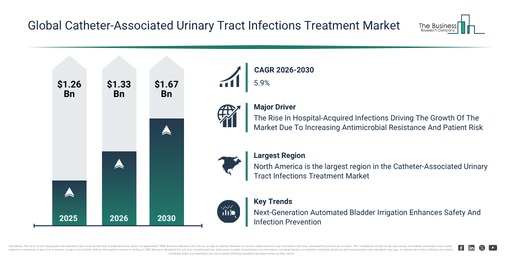
    The catheter-associated urinary tract infections treatment market has experienced robust expansion in recent years. It is projected to grow from $1.26 billion in 2025 to $1.33 billion in 2026, at a compound annual growth rate (CAGR) of 5.7%. This historical growth can be attributed to the increasing prevalence of catheter-associated urinary tract infections, a rise in patient volumes within hospitals and clinics, the adoption of antibiotics for treatment, the development of healthcare infrastructure, and heightened awareness of infection control measures.

    The catheter-associated urinary tract infections treatment market is poised for significant expansion over the coming years. Its valuation is projected to reach $1.67 billion by 2030, demonstrating a compound annual growth rate (CAGR) of 5.9%. This anticipated growth during the forecast period is primarily driven by factors such as the increasing embrace of urinary catheter coatings, the rising application of probiotics and immunotherapy, a heightened need for personalized treatment options, the expansion of online drug delivery and telehealth services, and a greater emphasis on preventive care and early intervention. Key developments expected in this period encompass the growing preference for non-antibiotic therapies, an escalating demand for catheter coatings and antimicrobial devices, a reinforced focus on customized CAUTI treatment approaches, the broadening of online and retail drug distribution channels, and enhanced public awareness regarding the early detection and prevention of CAUTI.

    Get A Free Sample Report With In-Depth Market Insights:

    https://thebusinessresearchcompany.com/sample_request?id=35565477&type=smp&name=Catheter-Associated%20Urinary%20Tract%20Infections%20Treatment%20Market%20Report%202026&utm_source=Blogs&utm_medium=Paid&utm_campaign=Oct_PR

    Catheter-Associated Urinary Tract Infections Treatment Market Expansion Drivers: What’s Shaping Future Growth?

    Future growth in the catheter-associated urinary tract infections treatment market is anticipated to be fueled by an increase in hospital-acquired infection rates. These rates signify how often patients acquire infections while hospitalized, which were not present upon their admission. The main cause of this increase is antimicrobial resistance, enabling pathogens to withstand typical treatments and spread readily within medical environments. Catheter-associated urinary tract infections treatment contributes to decreasing hospital-acquired infections by efficiently preventing and managing those linked to indwelling catheters, consequently boosting patient safety and diminishing healthcare-associated complications. As an illustration, the Center for Infectious Disease Research and Policy (CIDRAP), a US-based disease research organization, reported in May 2024 that approximately 4.3 million patients annually in hospitals throughout the European Union and European Economic Area contracted at least one healthcare-acquired infection during 2022 and 2023. Thus, the escalation in hospital-acquired infection rates is a key factor propelling the expansion of the catheter-associated urinary tract infections treatment market.

    Catheter-Associated Urinary Tract Infections Treatment Market Segment Landscape: Which Areas Lead Development?

    The catheter-associated urinary tract infections treatment market covered in this report is segmented –

    1) By Treatment Type: Antibiotics, Non-Antibiotic Therapies

    2) By Drug Type: Penicillin And Combinations, Quinolones, Cephalosporin, Aminoglycoside Antibiotics, Sulphonamides, Azoles And Amphotericin B, Tetracycline, Nitrofurans, Other Drug Types

    3) By Indication Type: Asymptomatic Catheter-Associated Urinary Tract Infection, Symptomatic Catheter-Associated Urinary Tract Infection

    4) By Distribution Channel: Hospital Pharmacies, Gynaecology And Urology Clinics, Drug Stores, Retail Pharmacies, Online Drug Stores

    5) By End-Users: Clinic, Hospital, Other End-Users

    Subsegments:

    1) By Antibiotics: Penicillins, Cephalosporins, Fluoroquinolones, Aminoglycosides, Sulfonamides

    2) By Non-Antibiotic Therapies: Urinary Catheter Coatings, Probiotics, Cranberry Extracts, Immunotherapy, Bladder Irrigation Solutions

    Catheter-Associated Urinary Tract Infections Treatment Market Strategic Trends: What Defines The Next Growth Phase?

    Companies operating within the catheter-associated urinary tract infection treatment market are increasingly focusing on the development of advanced solutions, such as automated bladder irrigation systems, to enhance infection prevention and standardize catheter care practices. These automated systems represent a technology designed to control the inflow and outflow of irrigation fluid via sensors, thereby delivering safe and consistent cleansing cycles while minimizing contamination risks through a closed-system design. As an illustration, in January 2026, UMED Inc., a healthcare company from South Korea, globally unveiled UroRinse Light at CES 2026. This product was introduced as the world’s first fully automated and standardized bladder irrigation system specifically engineered for individuals using long-term urinary catheters. The system employs sensor-based automated control to manage irrigation flow, ensuring reproducible treatment cycles and significantly reducing contamination thanks to its closed structure. It supports usage across various environments, including hospitals, care facilities, and home settings, thus enabling patients and their caregivers to perform safe and repeatable bladder irrigation procedures beyond conventional clinical environments. Furthermore, the device integrates with a mobile application and a cloud database to record irrigation history and track patient status, with future plans for integration into EMR systems and remote care platforms to bolster continuous monitoring and proactive infection prevention efforts.

    Catheter-Associated Urinary Tract Infections Treatment Market Leading Players And Competitive Positioning

    Major companies operating in the catheter-associated urinary tract infections treatment market are Cardinal Health Inc., Pfizer Incorporated, Bayer Aktiengesellschaft, AstraZeneca Public Limited Company, Medline Industries, Limited Partnership, Becton, Dickinson Company, B. Braun Societät mit beschränkter Haftung, Merck Company Inc, Coloplast A/S, Teleflex Incorporated, ConvaTec Group Public Limited Company, Hollister Incorporated, Vygon S.A., Wellspect Healthcare AB, Urocare Products Inc, Paul Hartmann Aktiengesellschaft, Bactiguard AB, NanoVibronix Inc, WellLead Medical Co Limited, Poiesis Medical LLC.

    View The Full Catheter-Associated Urinary Tract Infections Treatment Market Report:

    https://thebusinessresearchcompany.com/report/catheter-associated-urinary-tract-infections-treatment-market-report?utm_source=Blogs&utm_medium=Paid&utm_campaign=Oct_PR

    Catheter-Associated Urinary Tract Infections Treatment Market Regional Distribution: Which Areas Power Market Growth?

    North America was the largest region in the catheter-associated urinary tract infections treatment market in 2025. Asia-Pacific is expected to be the fastest-growing region in the forecast period. The regions covered in the catheter-associated urinary tract infections treatment market report are Asia-Pacific, South East Asia, Western Europe, Eastern Europe, North America, South America, Middle East, Africa.

    Reach Out To Our Team:

    The Business Research Company: https://www.thebusinessresearchcompany.com/

    Americas: +1 310-496-7795

    Asia: +44 7882 955267 & +91 8897263534

    Europe: +44 7882 955267

    Email us at: marketing@tbrc.info

    Follow us on:

    LinkedIn: https://in.linkedin.com/company/the-business-research-company

    YouTube: https://www.youtube.com/channel/UC24_fI0rV8cR5DxlCpgmyFQ

    Global Market Model: https://www.thebusinessresearchcompany.com/global-market-model
  • Catheter-Associated Urinary Tract Infection (CAUTI) Prevention Urology Products Market Analysis: Understanding The Drivers Behind 8.7% CAGR Through 2030 Growth

    Catheter-Associated Urinary Tract Infection (CAUTI) Prevention Urology Products Market Analysis: Understanding The Drivers Behind 8.7% CAGR Through 2030 Growth

    Featuring market attractiveness scoring, total addressable market sizing, company benchmarking matrices, interactive Excel dashboards, deeper supply chain intelligence, emerging startup tracking, and granular product-level insights, The Business Research Company’s 2026 market reports are built to deliver research that is both more actionable and more strategically valuable.

    Catheter-Associated Urinary Tract Infection (CAUTI) Prevention Urology Products Market Set To Climb From $3.23 Billion In 2026 To $4.51 Billion By 2030

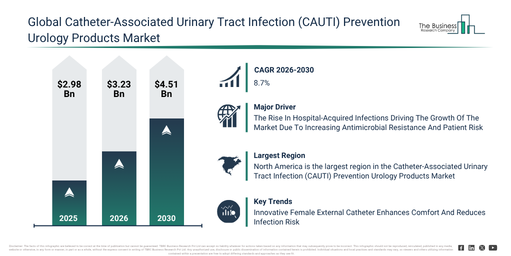
    The catheter-associated urinary tract infection (CAUTI) prevention urology products market has experienced robust expansion in recent years. It is projected to increase from $2.98 billion in 2025 to $3.23 billion in 2026, achieving a compound annual growth rate (CAGR) of 8.4%. This historical growth can be attributed to several factors, including the increasing incidence of catheter-associated urinary tract infections, a growing patient population within hospitals and long-term care facilities, the widespread adoption of infection control protocols, heightened awareness of urinary hygiene, and the expansion of urology-focused medical devices.

    The market for catheter-associated urinary tract infection (CAUTI) prevention urology products is projected to experience robust expansion over the coming years. This market is set to reach $4.51 billion by 2030, exhibiting a compound annual growth rate (CAGR) of 8.7%. This projected growth is driven by several factors, including the increasing acceptance of antimicrobial and intelligent catheters, greater integration with patient monitoring systems, an uptick in demand within home care environments, the proliferation of minimally invasive urology procedures, and a heightened emphasis on regulatory adherence and preventing infections. Key trends anticipated during this period encompass the growing use of antimicrobial urinary catheters, an increased need for closed system intermittent catheters, the broader integration of catheter securement devices, the availability of advanced smart foley catheters equipped with monitoring capabilities, and an elevated focus on catheter solutions for both home care and long-term care settings.

    Get A Free Sample Report With In-Depth Market Insights:

    https://thebusinessresearchcompany.com/sample_request?id=84312878&type=smp&name=Catheter-Associated%20Urinary%20Tract%20Infection%20%28CAUTI%29%20Prevention%20Urology%20Products%20Market%20Report%202026&utm_source=Blogs&utm_medium=Paid&utm_campaign=Oct_PR

    Catheter-Associated Urinary Tract Infection (CAUTI) Prevention Urology Products Market Development Factors: What’s Supporting Demand?

    An anticipated increase in hospital-acquired infection rates is projected to drive expansion within the catheter-associated urinary tract infection (CAUTI) prevention urology products market. Hospital-acquired infection rates quantify how often patients contract infections while hospitalized, distinct from conditions present upon their admission. A major contributor to the increase in these infection rates is antimicrobial resistance, enabling pathogens to withstand typical treatments and facilitate their dissemination within healthcare environments. Products for preventing catheter-associated urinary tract infection (CAUTI) contribute to lowering hospital-acquired infection rates through their action of reducing bacterial colonization and biofilm development on indwelling catheters, consequently diminishing the likelihood of urinary tract infections among hospitalized individuals. For example, data from May 2024, supplied by the US-based disease research organization, the Center for Infectious Disease Research and Policy (CIDRAP), indicated that approximately 4.3 million patients annually acquired at least one healthcare-acquired infection in hospitals throughout the European Union and European Economic Area during 2022 and 2023. Consequently, the escalating hospital-acquired infection rates are a key impetus for the expansion of the catheter-associated urinary tract infection (CAUTI) prevention urology products market.

    Catheter-Associated Urinary Tract Infection (CAUTI) Prevention Urology Products Market Segments: Where Is Growth Concentrated?

    The catheter-associated urinary tract infection (CAUTI) prevention urology products market covered in this report is segmented –

    1) By Product Type: Antimicrobial Urinary Catheters, Intermittent Catheters, Foley Catheters, Catheter Securement Devices, Urine Collection Bags

    2) By Material Type: Silicone, Latex, Hydrogel Coated, Silver Alloy Coated

    3) By Application Outlook: Urinary Incontinence Management, Acute Surgical Perioperative Care, Benign Prostatic Hyperplasia And Obstructive Urology, Neurogenic Bladder And Spinal Cord Injury, Other Applications

    4) By End Use Outlook: Hospitals, Long Term Care Facilities, Home Care Setting, Ambulatory Surgical Centers, Other End Users

    Subsegments:

    1) By Antimicrobial Urinary Catheters: Silver Alloy Coated Urinary Catheters, Nitrofurazone Impregnated Urinary Catheters, Antibiotic Coated Urinary Catheters, Hydrophilic Coated Antimicrobial Urinary Catheters, Antiseptic Coated Urinary Catheters

    2) By Intermittent Catheters: Hydrophilic Intermittent Catheters, Pre Lubricated Intermittent Catheters, Closed System Intermittent Catheters, Uncoated Intermittent Catheters, Single Use Sterile Intermittent Catheters

    3) By Foley Catheters: Two Way Foley Catheters, Three Way Foley Catheters, Silicone Foley Catheters, Latex Foley Catheters, Temperature Sensing Foley Catheters

    4) By Catheter Securement Devices: Adhesive Anchor Securement Devices, Leg Strap Securement Devices, Stat Lock Securement Devices, Stabilization Platform Devices, Adjustable Catheter Securement Systems

    5) By Urine Collection Bags: Leg Mounted Urine Collection Bags, Bedside Drainage Urine Collection Bags, Closed System Drainage Bags, Anti Reflux Valve Urine Collection Bags, Graduated Measurement Urine Collection Bags

    Catheter-Associated Urinary Tract Infection (CAUTI) Prevention Urology Products Market Transformation Trends: What Innovations Are Driving Change?

    Leading companies operating within the catheter associated urinary tract infection (CAUTI) prevention urology products market are concentrating on developing innovative solutions, such as female external catheter devices, to enhance patient comfort, decrease infection risk, and improve overall urinary care outcomes. A female external catheter device represents a non-invasive medical apparatus worn externally over the female genital area to safely and comfortably collect urine, thereby assisting in managing urinary incontinence and reducing the potential for infection. For example, in January 2026, Wellspect HealthCare, a Sweden based medical device company, introduced the Surity Female External Catheter, an innovative non-invasive product for urinary incontinence management that supports women experiencing severe urinary incontinence and their caregivers. It is engineered for easy placement, helps prevent leakage, protects skin integrity, and supports extended overnight use while integrating with compatible urine collection systems, addressing a notable gap in continence care where few options have existed. Its design prioritizes comfort, reliability, and predictable daily use in both home and healthcare settings as a modern alternative to indwelling catheters.

    Catheter-Associated Urinary Tract Infection (CAUTI) Prevention Urology Products Market Competitive Overview And Top Companies

    Major companies operating in the catheter-associated urinary tract infection (CAUTI) prevention urology products market are Cardinal Health Inc., Medtronic plc, Medline Industries Inc., Stryker Corporation, Becton, Dickinson Company, Boston Scientific Corporation, B. Braun Melsungen AG, Olympus Corporation, Nipro Corporation, Coloplast A/S, Teleflex Incorporated, Cook Medical LLC, ConvaTec Group PLC, Hollister Incorporated, Merit Medical Systems Inc., Amsino International Inc., Laborie Medical Technologies Inc., Cathetrix Inc., Bactiguard AB, Poiesis Medical Inc.

    View The Full Catheter-Associated Urinary Tract Infection (CAUTI) Prevention Urology Products Market Report:

    https://thebusinessresearchcompany.com/report/catheter-associated-urinary-tract-infection-cauti-prevention-urology-products-market-report?utm_source=Blogs&utm_medium=Paid&utm_campaign=Oct_PR

    Catheter-Associated Urinary Tract Infection (CAUTI) Prevention Urology Products Market Leading Geography: Which Region Contributes The Most Revenue?

    North America was the largest region in the catheter-associated urinary tract infection (CAUTI) prevention urology products market in 2025. Asia-Pacific is expected to be the fastest-growing region in the forecast period. The regions covered in the catheter-associated urinary tract infection (CAUTI) prevention urology products market report are Asia-Pacific, South East Asia, Western Europe, Eastern Europe, North America, South America, Middle East, Africa.

    Reach Out To Our Team:

    The Business Research Company: https://www.thebusinessresearchcompany.com/

    Americas: +1 310-496-7795

    Asia: +44 7882 955267 & +91 8897263534

    Europe: +44 7882 955267

    Email us at: marketing@tbrc.info

    Follow us on:

    LinkedIn: https://in.linkedin.com/company/the-business-research-company

    YouTube: https://www.youtube.com/channel/UC24_fI0rV8cR5DxlCpgmyFQ

    Global Market Model: https://www.thebusinessresearchcompany.com/global-market-model
  • Cardiopulmonary Resuscitation (CPR) And First Aid Training Market Forecast: Breaking Down The Numbers Behind Future Expansion

    Cardiopulmonary Resuscitation (CPR) And First Aid Training Market Forecast: Breaking Down The Numbers Behind Future Expansion

    Built to provide research that’s more actionable and strategically valuable, The Business Research Company’s 2026 market reports include market attractiveness analysis, total addressable market sizing, company benchmarking matrices, interactive Excel dashboards, broader supply chain intelligence, emerging startup tracking, and in-depth product insights.

    Cardiopulmonary Resuscitation (CPR) And First Aid Training Market Poised To Hit $11.3 Billion By 2030 With A 8.4% CAGR

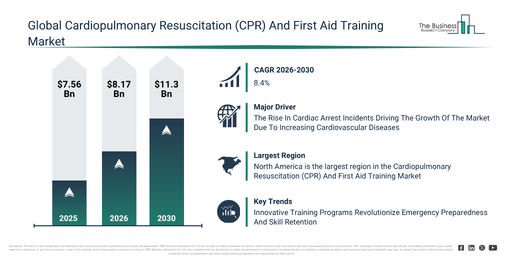
    The cardiopulmonary resuscitation (CPR) and first aid training market size has shown significant development in recent years. This market is expected to expand from $7.56 billion in 2025 to $8.17 billion in 2026, achieving a compound annual growth rate (CAGR) of 8.2%. Factors contributing to its historical growth include greater public understanding of cardiac arrest and the necessity of emergency response, an increase in corporate health and safety initiatives, the implementation of structured first aid programs within schools, rising training demands for healthcare providers, and strengthened regulatory requirements for safety in the workplace.

    The cardiopulmonary resuscitation (CPR) and first aid training market is projected to experience robust expansion over the upcoming years. Its value is forecast to reach $11.3 billion by 2030, exhibiting a compound annual growth rate (CAGR) of 8.4%. This anticipated growth is driven by several factors, including the increasing integration of digital and hybrid training platforms, a surge in demand for AI-powered simulation training, a heightened emphasis on community emergency preparedness, the broadening of corporate and institutional training initiatives, and a greater focus on pediatric and advanced life support curricula. Key trends anticipated during this period encompass the growing popularity of online and mixed-mode training programs, a heightened need for pediatric and specialized CPR courses, an increased dedication to workplace first aid and safety adherence, the expansion of community-centric and public awareness initiatives, and a greater incorporation of simulation alongside hands-on practical training.

    Get A Free Sample Report With In-Depth Market Insights:

    https://thebusinessresearchcompany.com/sample_request?id=74445111&type=smp&name=Cardiopulmonary%20Resuscitation%20%28CPR%29%20And%20First%20Aid%20Training%20Market%20Report%202026&utm_source=Blogs&utm_medium=Paid&utm_campaign=Oct_PR

    Cardiopulmonary Resuscitation (CPR) And First Aid Training Market Growth Drivers: What’s Behind The Acceleration?

    The rising occurrence of cardiac arrest is anticipated to boost the expansion of the cardiopulmonary resuscitation (CPR) and first aid training market in the coming years. Cardiac arrest signifies an abrupt medical crisis where the heart suddenly ceases effective pumping, leading to an instant cessation of blood circulation to the brain and other crucial organs, necessitating immediate action. This surge in cardiac arrest cases is mainly linked to the increasing prevalence of cardiovascular conditions that compromise heart function and heighten the likelihood of sudden heart failure. Training in CPR and first aid provides individuals with the necessary abilities and assurance to react swiftly and competently during cardiac arrest incidents, substantially enhancing survival outcomes and minimizing the chance of lasting neurological issues. Heightened recognition of the value of prompt intervention has resulted in broader acceptance of CPR and first aid training initiatives in various environments, including workplaces, schools, and public areas. As an illustration, the Sudden Cardiac Arrest Foundation (SCAF), a US-based nonprofit organization dedicated to addressing sudden cardiac arrest, reports that approximately 350,000 out-of-hospital cardiac arrests (OHCAs) happen each year in the United States, highlighting the essential requirement for extensive emergency response education. Consequently, the growing number of cardiac arrest occurrences is propelling the expansion of the cardiopulmonary resuscitation (CPR) and first aid training market.

    Cardiopulmonary Resuscitation (CPR) And First Aid Training Market Segment Trends And Revenue Contributors

    The cardiopulmonary resuscitation (CPR) and first aid training market covered in this report is segmented –

    1) By Training Type: Cardiopulmonary Resuscitation (CPR) Training, First Aid Training, Combined Cardiopulmonary Resuscitation And First Aid Training

    2) By Delivery Method: In-Person Training, Online Training, Blended or Hybrid Training

    3) By End User: Individuals, Corporate, Schools And Educational Institutions, Healthcare Providers, Community Organizations, Other End Users

    Subsegments:

    1) By Cardiopulmonary Resuscitation (CPR) Training: Basic Life Support Training, Advanced Cardiac Life Support Training, Automated External Defibrillator Training, Pediatric Cardiopulmonary Resuscitation (CPR) Training

    2) By First Aid Training: Basic First Aid Training, Advanced First Aid Training, Workplace First Aid Training, Emergency Trauma Care Training

    3) By Combined Cardiopulmonary Resuscitation And First Aid Training: Basic Combined Training, Advanced Combined Training, Workplace Combined Training, Pediatric Combined Training

    Cardiopulmonary Resuscitation (CPR) And First Aid Training Market Trends: What’s Defining The Industry’s Next Phase?

    Leading companies within the cardiopulmonary resuscitation (CPR) and first aid training market are concentrating on creating innovative solutions, such as improved instructor-led and digital training initiatives, aimed at boosting skill retention and improving emergency response outcomes. These enhanced instructor-led and digital training programs represent modernized CPR and first aid courses that integrate expert-led in-person teaching with interactive online components, simulations, and multimedia resources to enhance learning, engagement, and skill retention. As an illustration, in December 2025, the American Red Cross, a US-based nonprofit humanitarian organization, introduced its advanced first aid, cardiopulmonary resuscitation, and automated external defibrillator (CPR/AED) program. This significantly upgraded curriculum was designed to elevate both the instructor and learner experiences, incorporating updated course content based on the latest scientific research, providing free digital instructor materials and lesson plans, establishing a centralized program administrative database for streamlined class management, and employing adaptive and peer-to-peer learning methods to improve engagement. Furthermore, it includes updated infant CPR techniques aligned with current evidence-based practices, offers optional skill boost modules covering topics such as life-threatening bleeding and opioid overdose response, and is supported by the complimentary Red Cross First Aid app for on-the-go guidance.

    Cardiopulmonary Resuscitation (CPR) And First Aid Training Market Key Players Shaping Industry Direction

    Major companies operating in the cardiopulmonary resuscitation (CPR) first aid training market are American Red Cross, Canadian Red Cross Society, Australian Red Cross Society, British Red Cross Society, Health Safety Institute, St. John Ambulance, National Safety Council, Pacific Medical Training, Safety First Aid Group, Resuscitation Council (UK), LifeSavers, Incorporated, Atlantic Training Center, Emergency First Response, First Aid Academy, GoRescue Limited, ProTrainings, First Response Training International, International CPR Institute, Training Solutions North West, VMEDO Academy.

    View The Full Cardiopulmonary Resuscitation (CPR) And First Aid Training Market Report:

    https://thebusinessresearchcompany.com/report/cardiopulmonary-resuscitation-cpr-and-first-aid-training-market-report?utm_source=Blogs&utm_medium=Paid&utm_campaign=Oct_PR

    Cardiopulmonary Resuscitation (CPR) And First Aid Training Market Regional Analysis: Which Geography Leads On Revenue?

    North America was the largest region in the cardiopulmonary resuscitation (CPR) and first aid training market in 2025. Asia-Pacific is expected to be the fastest-growing region in the forecast period. The regions covered in the cardiopulmonary resuscitation (CPR) and first aid training market report are Asia-Pacific, South East Asia, Western Europe, Eastern Europe, North America, South America, Middle East, Africa.

    Reach Out To Our Team:

    The Business Research Company: https://www.thebusinessresearchcompany.com/

    Americas: +1 310-496-7795

    Asia: +44 7882 955267 & +91 8897263534

    Europe: +44 7882 955267

    Email us at: marketing@tbrc.info

    Follow us on:

    LinkedIn: https://in.linkedin.com/company/the-business-research-company

    YouTube: https://www.youtube.com/channel/UC24_fI0rV8cR5DxlCpgmyFQ

    Global Market Model: https://www.thebusinessresearchcompany.com/global-market-model
  • Cardiometabolic-Sleep Comorbidity Treatment Market Expected To Grow At 11.1% CAGR Through 2030: What Businesses Need To Know

    Backed by market attractiveness analysis, total addressable market sizing, company benchmarking matrices, interactive Excel dashboards, wider supply chain intelligence, emerging startup coverage, and detailed product-level insights, The Business Research Company’s 2026 market reports are designed to offer research that is more actionable and strategically valuable than ever.

    Cardiometabolic-Sleep Comorbidity Treatment Market Size And Revenue Outlook Through 2030

    The cardiometabolic-sleep comorbidity treatment market size has experienced significant expansion recently. This market is projected to expand from $6.25 billion in 2025 to reach $6.94 billion in 2026, demonstrating a compound annual growth rate (CAGR) of 10.9%. Factors contributing to this historical growth include the increasing occurrence of obstructive sleep apnea and obesity, enhanced awareness of cardiometabolic disorders, the uptake of positive airway pressure devices, the widening reach of hospital and sleep clinic networks, and a greater emphasis on lifestyle interventions.

    The cardiometabolic-sleep comorbidity treatment market size is poised for rapid expansion over the coming years. It is projected to reach $10.58 billion in 2030, demonstrating a compound annual growth rate (CAGR) of 11.1%. This growth in the forecast period is attributable to the increasing adoption of AI-based risk scoring and predictive analytics, greater integration of telemonitoring platforms, a rising demand for combination pharmacotherapies, the expansion of personalized care-management services, and a growing emphasis on patient education and adherence programs. Prominent trends for the forecast period include the increasing adoption of wearable sleep and cardiometabolic monitoring devices, a surging demand for personalized lifestyle and care-management programs, the growing integration of telemonitoring and remote risk stratification, the expansion of multi-disorder therapeutic approaches, and a rising focus on weight-loss pharmacotherapy and medication optimization.

    Get A Free Sample Report With In-Depth Market Insights:

    https://thebusinessresearchcompany.com/sample_request?id=64032794&type=smp&name=Cardiometabolic-Sleep%20Comorbidity%20Treatment%20Market%20Report%202026&utm_source=Blogs&utm_medium=Paid&utm_campaign=Oct_PR

    Cardiometabolic-Sleep Comorbidity Treatment Market Growth Factors Behind Sustained Expansion

    The increasing occurrence of cardiometabolic conditions is projected to fuel expansion within the cardiometabolic sleep comorbidity treatment market throughout the predicted timeframe. These disorders encompass a group of interconnected ailments, such as cardiovascular diseases, type 2 diabetes, obesity, and metabolic syndrome, each substantially elevating the likelihood of heart disease, stroke, and enduring metabolic issues. The escalating impact of these conditions stems from several factors, including poor dietary habits, inactive lifestyles, an aging global population, and rising obesity rates. Treatments for cardiometabolic-sleep comorbidity tackle the significant two-way link with sleep disorders by concurrently managing both sleep disruptions and metabolic irregularities. For example, data from October 2024, provided by the US-based government agency, the Centers for Disease Control and Prevention, indicates that cardiovascular disease was responsible for 919,032 deaths in the United States in 2023, making up roughly one in every three deaths. Coronary heart disease continued to be the most common type of cardiovascular disease, with almost one in six associated fatalities affecting adults under the age of 65. Consequently, the increasing occurrence of cardiometabolic disorders is indeed fostering the expansion of the cardiometabolic sleep comorbidity treatment market.

    Cardiometabolic-Sleep Comorbidity Treatment Market Segment Analysis Spotlighting Growth Areas

    The cardiometabolic-sleep comorbidity treatment market covered in this report is segmented –

    1) By Treatment Component: Positive Airway Pressure Therapy And Sleep Apnea Devices, Weight-Loss Pharmacotherapy, Hypertension Or Diabetes Meds Optimization Programs, Remote Monitoring And Risk Stratification Analytics, Lifestyle And Care-Management Services

    2) By Comorbidity Pathways: Obstructive Sleep Apnea And Obesity Management, Obstructive Sleep Apnea And Hypertension Or Cardiovascular Risk Control, Obstructive Sleep Apnea And Type-2 Diabetes Management, Heart Failure And Sleep-Disordered Breathing, Other Metabolic Sleep Phenotypes

    3) By Therapeutic Area: Obstructive Sleep Apnea With Cardiometabolic Disorders, Insomnia With Cardiometabolic Disorders, Restless Leg Syndrome With Cardiometabolic Disorders, Other Sleep Disorders With Cardiometabolic Disorders

    4) By End User: Hospitals And Cardiometabolic Clinics, Sleep Clinics Or Durable Medical Equipment Networks, Retail Pharmacy Channel, Payers Or Population Health Managers

    Subsegments:

    1) By Positive Airway Pressure Therapy And Sleep Apnea Devices: Continuous Positive Airway Pressure Devices, Automatic Positive Airway Pressure Devices, Bi-Level Positive Airway Pressure Devices, Adaptive Servo-Ventilation Devices

    2) By Weight-Loss Pharmacotherapy: Glucagon-Like Peptide One Receptor Agonists, Lipase Inhibitors, Appetite Suppressants, Combination Therapies

    3) By Hypertension Or Diabetes Meds Optimization Programs: Antihypertensive Therapy Management, Antidiabetic Therapy Management, Polypharmacy Optimization, Medication Adherence Programs

    4) By Remote Monitoring And Risk Stratification Analytics: Wearable Devices, Telemonitoring Platforms, Predictive Analytics, Artificial Intelligence-Based Risk Scoring

    5) By Lifestyle And Care-Management Services: Nutritional Counseling, Exercise And Fitness Programs, Behavioral Therapy, Patient Education And Support

    Cardiometabolic-Sleep Comorbidity Treatment Market Industry Trends Fueling Future Revenue Growth

    Leading companies in the cardiometabolic sleep comorbidity treatment market are concentrating on developing innovative solutions, such as targeted pharmacotherapies, to concurrently address obesity, metabolic disorders, and obstructive sleep apnea. Targeted pharmacotherapies are medications designed to act on specific biological pathways or disease mechanisms, aiming to treat particular conditions more effectively with fewer side effects. For instance, in December 2024, Eli Lilly and Company, a US based pharmaceutical company, secured U.S. Food and Drug Administration approval for Zepbound, specifically for the treatment of moderate to severe obstructive sleep apnea in adults with obesity, marking the inaugural pharmacological therapy authorized for this condition. This approval was based on clinical trial data demonstrating significant reductions in apnea–hypopnea events and meaningful weight loss among patients using the drug alongside lifestyle interventions. This milestone provides a new treatment option for patients who experience challenges with conventional therapies like continuous positive airway pressure, thereby expanding the available management strategies for obstructive sleep apnea.

    Cardiometabolic-Sleep Comorbidity Treatment Market Competitive Analysis Of Leading Industry Participants

    Major companies operating in the cardiometabolic-sleep comorbidity treatment market are Pfizer Inc, Sanofi S.A, Novartis AG, Eli Lilly & Company, Novo Nordisk A/S, Medtronic PLC, Takeda Pharmaceutical Company Limited, Koninklijke Philips N.V., Boehringer Ingelheim International GmbH, Otsuka Pharmaceutical Co Ltd., AstraZeneca PLC, Omron Healthcare Co. Ltd., ResMed Inc., Dexcom Inc., Teladoc Health Inc., Fisher Paykel Healthcare Corporation Limited, BioSerenity SA, BMC Medical Co Ltd, CardiacSense Ltd, Compumedics Ltd.

    View The Full Cardiometabolic-Sleep Comorbidity Treatment Market Report:

    https://thebusinessresearchcompany.com/report/cardiometabolic-sleep-comorbidity-treatment-market-report?utm_source=Blogs&utm_medium=Paid&utm_campaign=Oct_PR

    Cardiometabolic-Sleep Comorbidity Treatment Market Geographic Spread And Regional Opportunities

    North America was the largest region in the cardiometabolic-sleep comorbidity treatment market in 2025. Asia-Pacific is expected to be the fastest-growing region in the forecast period. The regions covered in the cardiometabolic-sleep comorbidity treatment market report are Asia-Pacific, South East Asia, Western Europe, Eastern Europe, North America, South America, Middle East, Africa.

    Reach Out To Our Team:

    The Business Research Company: https://www.thebusinessresearchcompany.com/

    Americas: +1 310-496-7795

    Asia: +44 7882 955267 & +91 8897263534

    Europe: +44 7882 955267

    Email us at: marketing@tbrc.info

    Follow us on:

    LinkedIn: https://in.linkedin.com/company/the-business-research-company

    YouTube: https://www.youtube.com/channel/UC24_fI0rV8cR5DxlCpgmyFQ

    Global Market Model: https://www.thebusinessresearchcompany.com/global-market-model
  • Capsid Tropism Screening Platforms Market Outlook From 2026 To 2030: Key Growth Factors And Future Opportunities

    Capsid Tropism Screening Platforms Market Outlook From 2026 To 2030: Key Growth Factors And Future Opportunities

    Featuring market attractiveness scoring, total addressable market sizing, company benchmarking matrices, interactive Excel dashboards, deeper supply chain intelligence, emerging startup tracking, and granular product-level insights, The Business Research Company’s 2026 market reports are built to deliver research that is both more actionable and more strategically valuable.

    Capsid Tropism Screening Platforms Market Growth Potential: How Will Market Size Shift Through 2030?

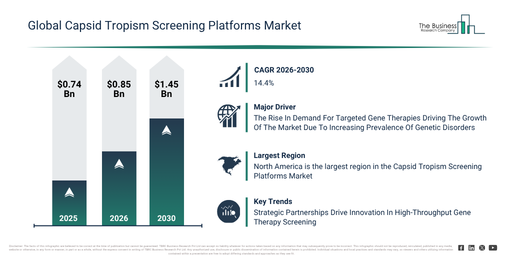
    The market size for capsid tropism screening platforms has seen rapid expansion in recent years. This market is expected to increase from $0.74 billion in 2025 to $0.85 billion in 2026, at a compound annual growth rate (CAGR) of 14.2%. The development observed in previous periods can be linked to increasing investment in gene therapy research, growing demand for viral vector optimization, adoption of flow cytometry and sequencing technologies, rising focus on personalized medicine, and expansion of pharmaceutical and biotech R&D infrastructure.

    The capsid tropism screening platforms market is anticipated to experience substantial growth in the coming years. It is projected to expand to $1.45 billion in 2030, demonstrating a compound annual growth rate (CAGR) of 14.4%. This projected growth can be attributed to several factors, including the increasing application of AI-driven capsid tropism analysis, the broader adoption of high-content imaging and microfluidics, a rising demand for single-cell sequencing and sophisticated screening platforms, the expansion of contract research organizations (CROs), and the enhanced integration of multiplex assay and digital PCR technologies. Furthermore, key trends for the forecast period include the increasing uptake of high-throughput screening platforms, an escalating demand for next-generation sequencing solutions, the wider integration of flow cytometry technologies, an expansion in the available assay kits and reagent offerings, and a heightened focus on gene therapy and vaccine development applications.

    Get A Free Sample Report With In-Depth Market Insights:

    https://thebusinessresearchcompany.com/sample_request?id=46680568&type=smp&name=Capsid%20Tropism%20Screening%20Platforms%20Market%20Report%202026&utm_source=Blogs&utm_medium=Paid&utm_campaign=Oct_PR

    Capsid Tropism Screening Platforms Market Growth Catalysts And Demand Drivers

    The heightened demand for targeted gene therapies is projected to fuel the expansion of the capsid tropism screening platforms market throughout the forecast period. These therapies focus on delivering therapeutic genetic material precisely to specific cells or tissues, aiming to correct, alter, or substitute flawed genes linked to illnesses. Several factors contribute to this escalating demand, such as the increasing occurrence of genetic and rare diseases, progress in vector engineering technologies, and greater investment in precision medicine strategies designed to enhance treatment effectiveness while reducing unintended side effects. Capsid tropism screening platforms are crucial in gene therapy development, as they facilitate the systematic assessment and selection of viral vectors that exhibit ideal tissue and cell specificity. For instance, in January 2024, according to the American Society of Gene & Cell Therapy, a US-based organization for gene and cell therapy, the number of gene therapies in Phase III clinical trials increased by 10% in the fourth quarter of 2023, representing the first quarterly increase since the third quarter of 2022. Consequently, the growing need for targeted gene therapies is a significant driver for the growth of the capsid tropism screening platforms market.

    Capsid Tropism Screening Platforms Market Breakdown By Product Type And Application

    The capsid tropism screening platforms market covered in this report is segmented –

    1) By Technology: High-Throughput Screening, Next-Generation Sequencing, Flow Cytometry, Other Technologies

    2) By Product Type: Assay Kits, Reagents, Instruments, Software, Services

    3) By Application: Gene Therapy Development, Vaccine Development, Drug Discovery, Other Applications

    4) By End-User: Pharmaceutical And Biotechnology Companies, Academic And Research Institutes, Contract Research Organizations, Other End-Users

    Subsegments:

    1) By High-Throughput Screening: Cell-Based Screening, Biochemical Screening, High-Content Screening, Automated Screening, Label-Free Screening

    2) By Next-Generation Sequencing: Short-Read Sequencing, Long-Read Sequencing, Targeted Sequencing, Whole-Genome Sequencing, Single-Cell Sequencing

    3) By Flow Cytometry: Conventional Flow Cytometry, Spectral Flow Cytometry, Imaging Flow Cytometry, Cell Sorting, Mass Cytometry

    4) By Other Technologies: Microfluidics-Based Screening, High-Content Imaging, Mass Spectrometry, Polymerase Chain Reaction And Digital Polymerase Chain Reaction, Immunoassay-Based Platforms

    Capsid Tropism Screening Platforms Market Trends Shaping Long-Term Demand

    Leading companies operating within the capsid tropism screening platforms market are forging strategic alliances to create innovative high-throughput and barcoded adeno-associated virus screening solutions. These strategic partnerships stimulate the expansion of the capsid tropism screening platforms market by facilitating the collaborative advancement of sophisticated adeno-associated virus screening technologies, diversifying product ranges, and expediting gene therapy research and its market entry. For example, in August 2025, PackGene Biotech Inc., a US-based biotechnology company, finalized a strategic licensing agreement with the Children’s Medical Research Institute (CMRI), an Australia-based independent organization, to commercialize barcoded high-throughput adeno-associated virus capsid screening kits. These kits empower researchers to swiftly assess multiple adeno-associated virus capsid variants simultaneously, leveraging a barcode system and next-generation sequencing. The aim of this collaboration is to accelerate gene therapy development through optimized capsid selection and improved access to advanced screening instruments.

    Capsid Tropism Screening Platforms Market Key Participants And Competitive Landscape

    Major companies operating in the capsid tropism screening platforms market are Sarepta Therapeutics Inc., Voyager Therapeutics Inc., Bluebird Bio Inc., Sangamo Therapeutics Inc., REGENXBIO Inc., MeiraGTx Holdings plc, Dyno Therapeutics Inc., 4D Molecular Therapeutics Inc., Asklepios BioPharmaceutical Inc., PackGene Biotech Inc., Creative Biolabs Inc., VectorBuilder Inc., uniQure N.V., Homology Medicines Inc., Capsida Biotherapeutics Inc., LogicBio Therapeutics Inc., Capsigen Inc., GeneMedi Inc., Spark Therapeutics Inc., Creative Biogene Inc.

    View The Full Capsid Tropism Screening Platforms Market Report:

    https://thebusinessresearchcompany.com/report/capsid-tropism-screening-platforms-market-report?utm_source=Blogs&utm_medium=Paid&utm_campaign=Oct_PR

    Capsid Tropism Screening Platforms Market Geographic Analysis: Where Is Demand Rising Fastest?

    North America was the largest region in the capsid tropism screening platforms market in 2025. Asia-Pacific is expected to be the fastest-growing region in the forecast period. The regions covered in the capsid tropism screening platforms market report are Asia-Pacific, South East Asia, Western Europe, Eastern Europe, North America, South America, Middle East, Africa.

    Reach Out To Our Team:

    The Business Research Company: https://www.thebusinessresearchcompany.com/

    Americas: +1 310-496-7795

    Asia: +44 7882 955267 & +91 8897263534

    Europe: +44 7882 955267

    Email us at: marketing@tbrc.info

    Follow us on:

    LinkedIn: https://in.linkedin.com/company/the-business-research-company

    YouTube: https://www.youtube.com/channel/UC24_fI0rV8cR5DxlCpgmyFQ

    Global Market Model: https://www.thebusinessresearchcompany.com/global-market-model
  • Bio-Stimulation Therapies Market Outlook 2026–2030: Growth Trends, Market Dynamics And Emerging Opportunities

    Bio-Stimulation Therapies Market Outlook 2026–2030: Growth Trends, Market Dynamics And Emerging Opportunities

    Backed by market attractiveness analysis, total addressable market sizing, company benchmarking matrices, interactive Excel dashboards, wider supply chain intelligence, emerging startup coverage, and detailed product-level insights, The Business Research Company’s 2026 market reports are designed to offer research that is more actionable and strategically valuable than ever.

    Bio-Stimulation Therapies Market Forecast: What Value Will The Market Reach By 2030?

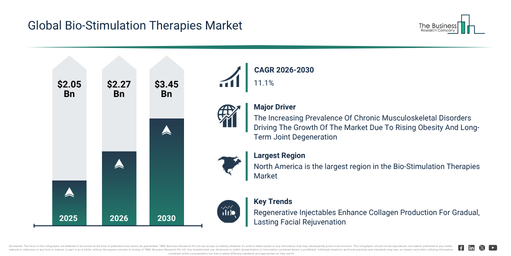
    The bio-stimulation therapies market has experienced rapid expansion in recent years. It is anticipated to increase from $2.05 billion in 2025 to $2.27 billion in 2026, demonstrating a compound annual growth rate (CAGR) of 10.8%. The historical growth of this market can be attributed to the rising demand for cosmetic and aesthetic procedures, the expansion of dermatology clinics and med spas, the acceptance of collagen-stimulating injectables, heightened patient awareness concerning non-surgical treatments, and technological innovations in energy-based devices.

    The bio-stimulation therapies market is expected to experience significant expansion over the next few years. It is projected to reach $3.45 billion in 2030, exhibiting a compound annual growth rate (CAGR) of 11.1%. The forecasted growth can be linked to factors such as the increasing demand for regenerative medicine therapies, the greater adoption of stem cell and autologous treatments, a rising need for minimally invasive orthopedic interventions, the broadening of wound care applications, and growing investments in advanced biostimulation technologies. Prominent trends within this forecast period include the expanding use of autologous biostimulation therapies, a surging demand for energy-based collagen induction devices, an increasing preference for poly-l-lactic acid and polycaprolactone stimulators, the expansion of minimally invasive aesthetic procedures, and a heightened focus on orthopedic and wound healing applications.

    Get A Free Sample Report With In-Depth Market Insights:

    https://thebusinessresearchcompany.com/sample_request?id=66969797&type=smp&name=Bio-Stimulation%20Therapies%20Market%20Report%202026&utm_source=Blogs&utm_medium=Paid&utm_campaign=Oct_PR

    Bio-Stimulation Therapies Market Industry Drivers: What’s Behind The Revenue Growth?

    A rise in chronic musculoskeletal disorders is projected to propel the expansion of the bio-stimulation therapies market throughout the forecast period. These disorders, referred to as MSKs, involve various conditions impacting muscles, bones, joints, tendons, ligaments, and nerves, frequently leading to persistent pain, swelling, rigidity, and impaired physical capability. Several factors contribute to the increasing incidence of chronic MSKs, such as an aging demographic, inactive routines, job-related stress, and a growing prevalence of obesity. Bio-stimulation therapies aid in managing musculoskeletal disorders by engaging the body’s inherent healing processes, fostering cellular renewal, mitigating inflammation, and expediting tissue recovery in bones, muscles, tendons, and ligaments. For instance, data from the Office for Health Improvement and Disparities, a UK-based government department, revealed that approximately 18.4% of people aged 16 and over in the United Kingdom reported experiencing a long-term musculoskeletal condition in 2023, an increase from 17.6% in 2022. Consequently, the growing occurrence of chronic musculoskeletal disorders is a key impetus for the bio-stimulation therapies market’s growth.

    Bio-Stimulation Therapies Market Segments: Where Is Growth Concentrated?

    The bio-stimulation therapies market covered in this report is segmented –

    1) By Therapy Type: Poly-L-Lactic Acid-Based Collagen Stimulators, Calcium Hydroxylapatite-Based Biostimulators, Polycaprolactone-Based Stimulators, Polymethyl Methacrylate Combined With Collagen Fillers, Energy-Based Collagen Induction, Autologous Biostimulation

    2) By Application: Aesthetic And Cosmetic Treatments, Dermatology, Orthopedics And Musculoskeletal Disorders, Wound Healing, Other Applications

    3) By End User: Dermatology Clinics, Plastic Surgery Centers, Med Spas And Aesthetic Chains, Hospitals And Ambulatory Centers, Independent Injectors

    Subsegments:

    1) By Poly-L-Lactic Acid-Based Collagen Stimulators: Injectable Fillers, Micro-Threads, Implants

    2) By Calcium Hydroxylapatite-Based Biostimulators: Injectable Microspheres, Bone Fillers, Soft Tissue Volumizers

    3) By Polycaprolactone-Based Stimulators: Injectable Fillers, Biodegradable Scaffolds, Collagen Induction Devices

    4) By Polymethyl Methacrylate Combined With Collagen Fillers: Injectable Fillers, Permanent Implants, Volume Enhancers

    5) By Energy-Based Collagen Induction: Radiofrequency Devices, Ultrasound Devices, Laser Devices

    6) By Autologous Biostimulation: Platelet-Rich Plasma Therapy, Stem Cell Therapy, Autologous Tissue Grafts

    #Bio-Stimulation Therapies Market Growth Trends: What’s Shaping The Future Outlook?

    Key players in the bio-stimulation therapies market are concentrating on developing innovative solutions, such as regenerative biostimulator injectables, to boost natural collagen production, enhance long-term aesthetic outcomes, and facilitate minimally invasive tissue regeneration. Regenerative biostimulator injectables are minimally invasive cosmetic treatments that stimulate the body’s inherent collagen production to gradually restore volume, improve skin structure, and promote durable tissue regeneration. For example, in April 2025, Galderma Group AG, a Switzerland-based dermatology company, unveiled Sculptra, a regenerative biostimulator injectable, in China, targeting its rapidly expanding aesthetics market. The product operates by encouraging the body’s natural collagen creation to replenish facial volume and refine skin texture progressively. Supported by over 25 years of clinical evidence, Sculptra delivers gradual, long-lasting results in contrast to traditional dermal fillers. It offers a minimally invasive choice for facial rejuvenation, providing natural-looking improvements that unfold progressively.

    Bio-Stimulation Therapies Market Competitive Landscape: Who Leads The Industry?

    Major companies operating in the bio-stimulation therapies market are AbbVie Inc, Boston Scientific Corporation, Galderma S.A., Cynosure Inc., Ipsen S.A., Merz Aesthetics Inc., Lumenis Ltd., InMode Ltd., Alma Lasers, Sinclair Pharma plc, Medytox Inc., Anika Therapeutics Inc., Cutera Inc., Suneva Medical Inc., Candela Corporation, Prollenium Medical Technologies Inc., Teoxane S.A., Bloomage BioTechnology Corporation Limited, EndyMed Medical Ltd., BIOPLUS CO LTD.

    View The Full Bio-Stimulation Therapies Market Report:

    https://thebusinessresearchcompany.com/report/bio-stimulation-therapies-market-report?utm_source=Blogs&utm_medium=Paid&utm_campaign=Oct_PR

    Bio-Stimulation Therapies Market Geographic Landscape: Which Region Dominates Industry Growth?

    North America was the largest region in the bio-stimulation therapies market in 2025. Asia-Pacific is expected to be the fastest-growing region in the forecast period. The regions covered in the bio-stimulation therapies market report are Asia-Pacific, South East Asia, Western Europe, Eastern Europe, North America, South America, Middle East, Africa.

    Reach Out To Our Team:

    The Business Research Company: https://www.thebusinessresearchcompany.com/

    Americas: +1 310-496-7795

    Asia: +44 7882 955267 & +91 8897263534

    Europe: +44 7882 955267

    Email us at: marketing@tbrc.info

    Follow us on:

    LinkedIn: https://in.linkedin.com/company/the-business-research-company

    YouTube: https://www.youtube.com/channel/UC24_fI0rV8cR5DxlCpgmyFQ

    Global Market Model: https://www.thebusinessresearchcompany.com/global-market-model
  • BioSignal Serums Market Growth Outlook From $5.73 Billion In 2026 To $7.48 Billion By 2030

    BioSignal Serums Market Growth Outlook From $5.73 Billion In 2026 To $7.48 Billion By 2030

    Featuring market attractiveness scoring, total addressable market sizing, company benchmarking matrices, interactive Excel dashboards, deeper supply chain intelligence, emerging startup tracking, and granular product-level insights, The Business Research Company’s 2026 market reports are built to deliver research that is both more actionable and more strategically valuable.

    BioSignal Serums Market Size Outlook: How Quickly Will Revenue Expand Through 2030?

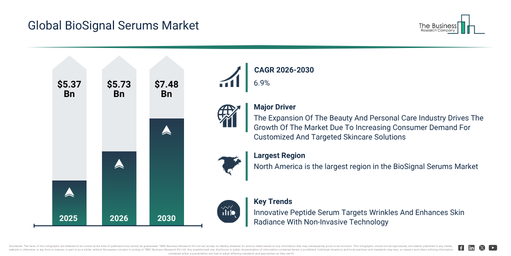
    The biosignal serums market size has shown robust growth in recent years. It is anticipated to expand from $5.37 billion in 2025 to $5.73 billion in 2026, registering a compound annual growth rate (CAGR) of 6.7%. The market’s historical expansion is largely due to factors such as increasing awareness of anti-aging skincare, the uptake of peptide and growth factor serums, the proliferation of dermatology clinics, rising consumer expenditure on medical aesthetics, and advancements in bioactive molecule formulation technology.

    The biosignal serums market is projected for substantial expansion in the coming years, with its value predicted to reach $7.48 billion by 2030, exhibiting a compound annual growth rate (CAGR) of 6.9%. This anticipated growth is largely propelled by elements such as the escalating demand for stem cell conditioned media serums, the growing clinical integration of cytokine infused serums, the rise of personalized skincare treatments, the broadening reach of online and e-commerce distribution, and increased research and development within biosignal serums. Furthermore, significant trends expected during this forecast period include a rising preference for peptide-based serums, the increased adoption of growth factor enriched serums, the expanded utilization of stem cell conditioned media serums, the broader availability of cytokine infused serums, and a heightened emphasis on professional dermatology and clinical applications.

    Get A Free Sample Report With In-Depth Market Insights:

    https://thebusinessresearchcompany.com/sample_request?id=10749348&type=smp&name=BioSignal%20Serums%20Market%20Report%202026&utm_source=Blogs&utm_medium=Paid&utm_campaign=Oct_PR

    BioSignal Serums Market Growth Factors: What’s Supporting Expansion?

    The biosignal serums market is anticipated to expand due to the burgeoning beauty and personal care industry. This sector covers various skincare, haircare, cosmetic, and wellness items, as consumers increasingly prioritize skin health, product effectiveness, and ingredient properties. Its expansion is largely propelled by higher disposable incomes, greater consumer understanding of skin health, and a rising demand for sophisticated skincare products that yield noticeable and enduring outcomes. Biosignal serums are in line with these trends, providing concentrated formulas with bioactive molecules engineered to engage with skin signaling pathways, thereby aiding specific skin repair, regeneration, and upkeep. For example, the British Beauty Council, a UK-based not-for-profit organization, reported in August 2024 that the beauty and personal care industry added £27.2 billion ($36.7 billion) to the UK economy in 2023, boosted by a 10% rise in household expenditure on personal care goods and services. Consequently, the surge in personalized skincare is fueling the expansion of the biosignal serums market.

    BioSignal Serums Market Segment Analysis: What Are The Core Market Categories?

    The biosignal serums market covered in this report is segmented –

    1) By Product Type: Peptide Based Serums, Growth Factor Enriched Serums, Cytokine Infused Serums, Stem Cell Conditioned Media Serums

    2) By Distribution Channel: Direct Sales to Clinics And Brands, Pharmaceutical And Medical Distributors, Specialty Cosmetic Retailers, Online Platforms And E-Commerce

    3) By Application: Anti-Aging or Wrinkle Reduction, Daily Skincare or Hydration, Pigmentation Treatment, Acne Treatment, Professional Dermatology Use

    4) By End User: Dermatology Clinics, Medical Aesthetic Centers, Hospitals And Specialty Clinics

    Subsegments:

    1) By Peptide Based Serums: Signal Peptides, Carrier Peptides, Enzyme Inhibitor Peptides, Neurotransmitter Peptides

    2) By Growth Factor Enriched Serums: Epidermal Growth Factor Serums, Fibroblast Growth Factor Serums, Vascular Endothelial Growth Factor Serums, Transforming Growth Factor Serums

    3) By Cytokine Infused Serums: Interleukin Serums, Interferon Serums, Tumor Necrosis Factor Serums, Colony Stimulating Factor Serums

    4) By Stem Cell Conditioned Media Serums: Adipose Derived Stem Cell Media Serums, Bone Marrow Stem Cell Media Serums, Umbilical Cord Stem Cell Media Serums, Induced Pluripotent Stem Cell Media Serums

    BioSignal Serums Market Industry Trends: What’s Reshaping Demand?

    Leading companies within the biosignal serums market are concentrating on developing novel solutions, such as sophisticated peptide-based serums, engineered to regulate cellular signaling and diminish the visible indications of aging. These advanced peptide serums are topical skincare formulations that utilize short chains of amino acids (peptides) to stimulate collagen production, modulate cellular signaling, and address concerns like wrinkles, firmness, and overall skin revitalization. For instance, in July 2024, SkinCeuticals LLC, a US-based medical skincare company, unveiled P TIOX, an innovative peptide serum designed to regulate wrinkle appearance and promote “glass skin” radiance. This is achieved through a patent-pending blend of advanced peptides (including 2% Acetyl Hexapeptide 8 and 2% Dipeptide Diaminobutyroyl), amplified by synergistic active components such as 5% polyhydroxy acid, 5% niacinamide, and 1% laminaria extract, aiming to hydrate, improve texture, and visibly correct up to nine types of expression lines without injectable treatments. This non-invasive formulation functions by combining neuromodulator-inspired peptides with exfoliating and hydrating agents to enhance smoothness and radiance across all skin types, providing benefits that go beyond those of traditional peptide or antioxidant serums by targeting both lines and overall complexion quality. It is also physician-tested to either complement professional procedures or function as an independent anti-aging solution.

    BioSignal Serums Market Company Landscape And Competitive Strategy

    Major companies operating in the biosignal serums market are Shiseido Company Limited, Obagi Cosmeceuticals LLC, Revision Skincare Incorporated, Biologique Recherche Paris, Sente Laboratories LLC, Neocutis S.A., NeoStrata Company Incorporated, ZO Skin Health Incorporated, Augustinus Bader GmbH, Zelens Limited, AQ Skin Solutions Incorporated, Cellese, Incorporated, Lifeline Skin Care Incorporated, Medik8 Limited, Rion Aesthetics Incorporated, ExoCoBio Incorporated, Suneva Medical Incorporated.

    View The Full BioSignal Serums Market Report:

    https://thebusinessresearchcompany.com/report/biosignal-serums-market-report?utm_source=Blogs&utm_medium=Paid&utm_campaign=Oct_PR

    BioSignal Serums Market Largest Region: Which Geography Holds The Highest Market Share?

    North America was the largest region in the biosignal serums market in 2025. Asia-Pacific is expected to be the fastest-growing region in the forecast period. The regions covered in the biosignal serums market report are Asia-Pacific, South East Asia, Western Europe, Eastern Europe, North America, South America, Middle East, Africa.

    Reach Out To Our Team:

    The Business Research Company: https://www.thebusinessresearchcompany.com/

    Americas: +1 310-496-7795

    Asia: +44 7882 955267 & +91 8897263534

    Europe: +44 7882 955267

    Email us at: marketing@tbrc.info

    Follow us on:

    LinkedIn: https://in.linkedin.com/company/the-business-research-company

    YouTube: https://www.youtube.com/channel/UC24_fI0rV8cR5DxlCpgmyFQ

    Global Market Model: https://www.thebusinessresearchcompany.com/global-market-model
  • Bioprocess Chemometrics Market Forecast To Reach $3.28 Billion By 2030: Key Growth Drivers And Industry Trends

    Bioprocess Chemometrics Market Forecast To Reach $3.28 Billion By 2030: Key Growth Drivers And Industry Trends

    Built to provide research that’s more actionable and strategically valuable, The Business Research Company’s 2026 market reports include market attractiveness analysis, total addressable market sizing, company benchmarking matrices, interactive Excel dashboards, broader supply chain intelligence, emerging startup tracking, and in-depth product insights.

    Bioprocess Chemometrics Market Size, Value And Growth Trajectory Through 2030

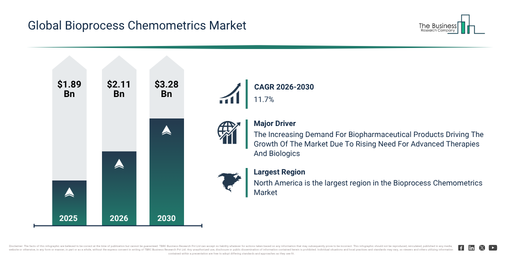
    The bioprocess chemometrics market size has shown swift growth in recent years. It is anticipated to expand from $1.89 billion in 2025 to $2.11 billion in 2026, registering a compound annual growth rate (CAGR) of 11.4%. The expansion observed in previous periods is primarily due to increasing biopharmaceutical manufacturing operations, the incorporation of analytical instrumentation, a rising need for process comprehension, technological breakthroughs in spectroscopy and chromatography, and an elevated demand for regulatory conformity.

    The bioprocess chemometrics market is anticipated to experience substantial growth over the next few years. It is forecast to attain a value of $3.28 billion in 2030, driven by a compound annual growth rate (CAGR) of 11.7%. This projected growth can be attributed to several factors, including the increasing deployment of AI-driven bioprocess analytics, the expansion of cloud-based bioprocess data platforms, the rising adoption of process automation, the broadening of food and environmental monitoring applications, and enhanced integration with bioreactor sensors and instrumentation. Notable trends expected during this forecast period encompass the increasing embrace of real-time bioprocess monitoring, a rising demand for advanced process modeling software, the growing integration of multivariate data analysis tools, an expansion of consulting and implementation services, and a heightened focus on process optimization within biomanufacturing.

    Get A Free Sample Report With In-Depth Market Insights:

    https://thebusinessresearchcompany.com/sample_request?id=40269341&type=smp&name=Bioprocess%20Chemometrics%20Market%20Report%202026&utm_source=Blogs&utm_medium=Paid&utm_campaign=Oct_PR

    Bioprocess Chemometrics Market Demand Drivers: What’s Powering Industry Growth?

    The increasing need for biopharmaceutical products is anticipated to fuel the expansion of the bioprocess chemometrics market. Biopharmaceutical products are biotechnologically produced medical drugs, encompassing proteins, antibodies, vaccines, and nucleic acids, designed to prevent, treat, or cure illnesses. The rising incidence of chronic and life-threatening diseases primarily drives the demand for these products, necessitating more advanced therapies and biologics to improve patient care. As biopharmaceutical manufacturing processes grow in complexity and scale, maintaining efficiency, consistency, and adherence to regulatory standards becomes progressively challenging. Bioprocess chemometrics addresses these challenges by employing advanced data analytics to monitor processes, streamline operations, and guarantee uniform product quality across different production scales. For instance, in July 2025, Sartorius AG, a Germany-based international life science technology company, reported that global sales of biopharmaceutical drugs reached USD 458 billion in 2024, representing 41% of the overall pharmaceutical market, an increase from 40% in 2023. Thus, the growing demand for biopharmaceutical products is expected to stimulate the bioprocess chemometrics market’s growth. The expanding demand for personalized medicine is projected to drive the growth of the bioprocess chemometrics market in the future. Personalized medicine involves medical treatments and therapies customized for individual patients based on their unique genetic profile, biomarkers, and specific disease characteristics. This demand is escalating due to advancements in genomic technologies and molecular diagnostics, which enable medical professionals to tailor treatments precisely to a patient’s genetic makeup, thereby enhancing therapeutic outcomes. Bioprocess chemometrics facilitates personalized medicine by analyzing intricate bioprocess data to optimize the creation of patient-specific biologics and therapies, ensuring greater efficacy and safety tailored to individual patient needs. For example, in February 2024, the Personalized Medicine Coalition, a US-based non-profit organization, stated that the Food and Drug Administration approved 16 new personalized treatments for patients with rare diseases in 2023, an increase from six in 2022, including seven cancer drugs and three for other conditions. Consequently, the rising demand for personalized medicine is propelling the growth of the bioprocess chemometrics market.

    Bioprocess Chemometrics Market Segment Breakdown: Which Categories Lead On Revenue?

    The bioprocess chemometrics market covered in this report is segmented –

    1) By Product Type: Software, Services, Instruments

    2) By Deployment Mode: On-Premises, Cloud-Based

    3) By Application: Biopharmaceutical Manufacturing, Food And Beverages, Environmental Monitoring, Chemical Industry, Other Applications

    Subsegments:

    1) By Software: Data Analysis Software, Process Modeling Software, Visualization Software, Workflow Management Software

    2) By Services: Consulting Services, Implementation Services, Training Services, Support And Maintenance Services

    3) By Instruments: Spectroscopy Instruments, Chromatography Instruments, Process Analyzers, Bioreactor Sensors

    Bioprocess Chemometrics Market Key Players Shaping Industry Direction

    Major companies operating in the bioprocess chemometrics market are JEOL Ltd., Siemens AG, ABB Ltd., Emerson Electric Co., Agilent Technologies Inc., Endress+Hauser Group, Mettler-Toledo International Inc., Yokogawa Electric Corporation, Sartorius AG, Shimadzu Corporation, Bruker Corporation, Revvity Inc., Bio‑Rad Laboratories Inc, HORIBA Ltd., Eppendorf SE, Metrohm AG, Advanced Chemistry Development Inc., Infors HT, Eigenvector Research Inc., FOSS Analytical A/S.

    View The Full Bioprocess Chemometrics Market Report:

    https://thebusinessresearchcompany.com/report/bioprocess-chemometrics-market-report?utm_source=Blogs&utm_medium=Paid&utm_campaign=Oct_PR

    Bioprocess Chemometrics Market Regional Analysis: Which Region Leads By Revenue?

    North America was the largest region in the bioprocess chemometrics market in 2025. Asia-Pacific is expected to be the fastest-growing region in the forecast period. The regions covered in the bioprocess chemometrics market report are Asia-Pacific, South East Asia, Western Europe, Eastern Europe, North America, South America, Middle East, Africa.

    Reach Out To Our Team:

    The Business Research Company: https://www.thebusinessresearchcompany.com/

    Americas: +1 310-496-7795

    Asia: +44 7882 955267 & +91 8897263534

    Europe: +44 7882 955267

    Email us at: marketing@tbrc.info

    Follow us on:

    LinkedIn: https://in.linkedin.com/company/the-business-research-company

    YouTube: https://www.youtube.com/channel/UC24_fI0rV8cR5DxlCpgmyFQ

    Global Market Model: https://www.thebusinessresearchcompany.com/global-market-model
  • Bioprocess Automation Software Market Research 2026: Market Size, Trends, Segments And Growth Forecast

    Bioprocess Automation Software Market Research 2026: Market Size, Trends, Segments And Growth Forecast

    Backed by market attractiveness analysis, total addressable market sizing, company benchmarking matrices, interactive Excel dashboards, wider supply chain intelligence, emerging startup coverage, and detailed product-level insights, The Business Research Company’s 2026 market reports are designed to offer research that is more actionable and strategically valuable than ever.

    Bioprocess Automation Software Market CAGR Outlook And Future Development

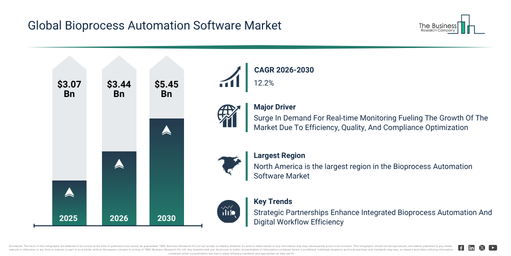
    The bioprocess automation software market has seen substantial expansion in recent times. Its value is projected to rise from $3.07 billion in 2025 to $3.44 billion in 2026, at a compound annual growth rate (CAGR) of 12.0%. This market’s historical growth can be attributed to several factors, including an increased demand for biopharmaceutical products, the uptake of automated process control systems, a growing need for consistent processes, the expansion of research and development activities, and the wider adoption of laboratory information management systems.

    The bioprocess automation software market is projected for swift expansion in the upcoming years. By 2030, this market is anticipated to reach a valuation of $5.45 billion, exhibiting a compound annual growth rate (CAGR) of 12.2%. This expansion during the projection period stems from several factors, including the increasing implementation of AI-powered process optimization, greater integration with cloud-based data management systems, an escalating need for predictive bioprocess monitoring, the broadening availability of hybrid automation solutions, and a heightened emphasis on minimizing human errors and operational expenditures. Key trends shaping the forecast period involve the wider embrace of cloud-based bioprocess automation software, an escalating requirement for real-time data analytics within bioprocessing, enhanced integration with IoT-capable bioreactors, the extension of automation for quality and regulatory compliance, and an intensified focus on optimizing both upstream and downstream processes.

    Get A Free Sample Report With In-Depth Market Insights:

    https://thebusinessresearchcompany.com/sample_request?id=70648650&type=smp&name=Bioprocess%20Automation%20Software%20Market%20Report%202026&utm_source=Blogs&utm_medium=Paid&utm_campaign=Oct_PR

    Bioprocess Automation Software Market Growth Drivers: What’s Behind The Acceleration?

    The increasing investment in research and development is anticipated to significantly advance the bioprocess automation software market. Research and development encompasses systematic activities undertaken by companies and institutions to generate new knowledge, improve existing offerings, or create innovative technologies and methods. This surge in R&D investment is primarily fueled by the rising demand for biologics and advanced therapeutics, leading pharmaceutical and biotechnology firms to dedicate substantial resources towards developing intricate biopharmaceutical products that necessitate sophisticated production processes. Such escalating R&D spending drives the demand for bioprocess automation software by requiring sophisticated digital systems to manage increasingly complex biomanufacturing workflows, ensure regulatory compliance, and optimize production efficiency across both research and commercial operations. For instance, in February 2025, the National Center for Science and Engineering Statistics (NCSES), a US-based government statistical agency, reported that U.S. research and development expenditures increased from $892 billion in 2022 to $940 billion in 2023, representing an expansion of $48 billion. Thus, the growing investment in research and development is a key factor boosting the bioprocess automation software market.

    Bioprocess Automation Software Market Segmentation: How Does The Market Break Down By Category?

    The bioprocess automation software market covered in this report is segmented –

    1) By Component: Software, Services

    2) By Deployment Type: On Premise, Cloud Based, Hybrid

    3) By Enterprise Size: Small And Medium Enterprises, Large Enterprises

    4) By Application: Upstream Processing, Downstream Processing, Quality Control, Manufacturing Operations, Data Management, Other Applications

    5) By End User: Pharmaceutical Companies, Research Institutes, Contract Manufacturing Organizations, Other End-Users

    Subsegments:

    1) By Software: Process Automation Software, Data Management Software, Quality Management Software, Regulatory Compliance Software, Analytics And Reporting Software

    2) By Services: Implementation Services, Consulting Services, Maintenance And Support Services, Training Services, Managed Services

    Bioprocess Automation Software Market Trends: What’s Defining The Industry’s Next Phase?

    Leading firms within the bioprocess automation software market are increasingly engaging in strategic collaborations. Their goal is to provide integrated digital solutions designed to enhance process control, strengthen data connectivity, and boost manufacturing efficiency. These strategic partnerships represent structured alliances where entities cooperate, leveraging their combined expertise and capabilities to achieve shared objectives. Such partnerships enable companies to foster innovation, access new markets, distribute risks, and reinforce their competitive standing, all without the need for a merger. An illustrative instance occurred in June 2024, when AGU, a German provider of bioprocess automation technologies, formed a partnership with Genedata, a bioinformatics software company based in Switzerland. This collaboration aimed to integrate AGU’s SmrtLine Data Cockpit middleware with the Genedata Biopharma Platform. The resulting unified bioprocess automation solution facilitates automated instrument data capture, optimizes data flow within GxP-regulated settings, and seeks to elevate efficiency and data integrity for biopharma process development.

    Bioprocess Automation Software Market Competitive Analysis Of Leading Industry Participants

    Major companies operating in the bioprocess automation software market are Honeywell International Inc., Danaher Corporation, Siemens Healthineers AG, Parker Hannifin Corporation, Rockwell Automation Inc., Yokogawa Electric Corporation, Getinge AB, Waters Corporation, Bioengineering AG, Eppendorf SE, Tecan Group Ltd., Repligen Corporation, Hamilton Company, Pierre Guerin SAS, Inscripta Inc., INFORS HT AG, Automated Control Concepts Inc., Synthace Ltd., Flownamics Inc., ILS Automation Inc., and PendoTECH Inc.

    View The Full Bioprocess Automation Software Market Report:

    https://thebusinessresearchcompany.com/report/bioprocess-automation-software-market-report?utm_source=Blogs&utm_medium=Paid&utm_campaign=Oct_PR

    Bioprocess Automation Software Market Geographic Distribution And Regional Opportunities

    North America was the largest region in the bioprocess automation software market in 2025. Asia-Pacific is expected to be the fastest-growing region in the forecast period. The regions covered in the bioprocess automation software market report are Asia-Pacific, South East Asia, Western Europe, Eastern Europe, North America, South America, Middle East, Africa.

    Reach Out To Our Team:

    The Business Research Company: https://www.thebusinessresearchcompany.com/

    Americas: +1 310-496-7795

    Asia: +44 7882 955267 & +91 8897263534

    Europe: +44 7882 955267

    Email us at: marketing@tbrc.info

    Follow us on:

    LinkedIn: https://in.linkedin.com/company/the-business-research-company

    YouTube: https://www.youtube.com/channel/UC24_fI0rV8cR5DxlCpgmyFQ

    Global Market Model: https://www.thebusinessresearchcompany.com/global-market-model

  • Biopharmaceutical Cold Chain Logistics Market Forecast 2026: Market Size, Competitive Landscape And Growth Drivers

    Biopharmaceutical Cold Chain Logistics Market Forecast 2026: Market Size, Competitive Landscape And Growth Drivers

    Featuring market attractiveness scoring, total addressable market sizing, company benchmarking matrices, interactive Excel dashboards, deeper supply chain intelligence, emerging startup tracking, and granular product-level insights, The Business Research Company’s 2026 market reports are built to deliver research that is both more actionable and more strategically valuable.

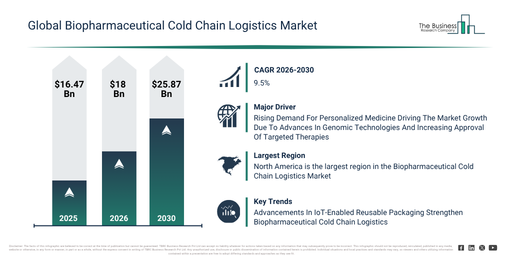
    Biopharmaceutical Cold Chain Logistics Market Set To Climb From $18 Billion In 2026 To $25.87 Billion By 2030

    The biopharmaceutical cold chain logistics market has seen substantial growth in recent years. It is forecast to expand from $16.47 billion in 2025 to $18 billion in 2026, demonstrating a compound annual growth rate (CAGR) of 9.3%. This historical development can be attributed to factors such as increasing biopharmaceutical production, higher demands for vaccine distribution, the expansion of clinical trial logistics, the development of refrigerated transport networks, and the implementation of passive insulated packaging.

    The biopharmaceutical cold chain logistics market size is anticipated to demonstrate substantial growth in the next few years. It is projected to reach $25.87 billion in 2030, expanding at a compound annual growth rate (CAGR) of 9.5%. This expansion during the forecast period is driven by factors such as the increasing implementation of active temperature-controlled containers, the heightened demand for cold chain monitoring services, the growing utilization of reusable thermal packaging, the broadening of short-term transit storage solutions, and the deeper integration with AI and IoT-enabled logistics systems. Noteworthy developments expected in this timeframe involve the greater adoption of temperature-controlled packaging solutions, the rising need for last-mile cold chain delivery, the increasing incorporation of real-time cold chain monitoring, the enlargement of refrigerated and cryogenic storage facilities, and an elevated focus on compliance and regulatory support services.

    Get A Free Sample Report With In-Depth Market Insights:

    https://thebusinessresearchcompany.com/sample_request?id=53471913&type=smp&name=Biopharmaceutical%20Cold%20Chain%20Logistics%20Market%20Report%202026&utm_source=Blogs&utm_medium=Paid&utm_campaign=Oct_PR

    Biopharmaceutical Cold Chain Logistics Market Growth Factors Behind Sustained Expansion

    The biopharmaceutical cold chain logistics market is projected to expand in the future due to the rising demand for personalized medicine. Personalized medicine is a strategy that customizes healthcare and treatments based on an individual patient’s distinct biological and personal characteristics. The utilization of personalized medicine is increasing, driven by developments in genomic technologies, which enable healthcare providers to analyze a patient’s genetic information swiftly and accurately, thereby facilitating more targeted and effective therapies. Biopharmaceutical cold chain logistics supports personalized medicine by maintaining the necessary temperature and handling conditions for individualized treatments, guaranteeing their effectiveness and safety until they are delivered to patients. For instance, in February 2024, according to the Personalized Medicine Coalition, a US-based non-profit organization, the FDA approved 16 new personalized treatments for rare disease patients in 2023, an increase from six in 2022. The personalized treatments newly approved in 2023 also comprised seven cancer drugs and three for other diseases and conditions. Therefore, the growing demand for personalized medicine is propelling the growth of the biopharmaceutical cold chain logistics market.

    Biopharmaceutical Cold Chain Logistics Market Segment Trends And Revenue Contributors

    The biopharmaceutical cold chain logistics market covered in this report is segmented –

    1) By Service Type: Transportation, Storage, Packaging, Other Service Types

    2) By Product Type: Vaccines, Clinical Trial Materials, Biopharmaceuticals, Other Product Types

    3) By Temperature Range: Refrigerated, Frozen, Cryogenic, Other Temperature Ranges

    4) By Mode Of Transportation: Airways, Roadways, Seaways, Railways

    5) By End-User: Pharmaceutical And Biotechnology Companies, Healthcare Providers, Research Institutes, Other End Users

    Subsegments:

    1) By Transportation: Refrigerated Road Transport, Temperature Controlled Air Freight, Insulated Sea Freight, Last Mile Cold Delivery

    2) By Storage: Refrigerated Warehousing, Frozen Storage Facilities, Cryogenic Storage, Short Term Transit Storage

    3) By Packaging: Passive Insulated Packaging, Active Temperature Controlled Containers, Reusable Thermal Packaging, Single Use Cold Chain Packaging

    4) By Other Service Types: Cold Chain Monitoring Services, Validation And Qualification Services, Inventory Management Services, Regulatory Compliance Support Services

    Biopharmaceutical Cold Chain Logistics Market Industry Trends Fueling Future Revenue Growth

    Major companies within the biopharmaceutical cold chain logistics market are concentrating on developing innovative solutions, such as reusable temperature-controlled pallet shippers, to ensure the safe, sustainable, and cost-efficient transportation of temperature-sensitive biologics. A reusable temperature-controlled pallet shipper is a durable, multi-use container designed to maintain stable temperatures for securely transporting sensitive biopharmaceuticals. For instance, in April 2025, Cold Chain Technologies LLC, a US-based packaging company, launched the reusable CCT Tower Elite, a 1600 L temperature-controlled pallet shipper specifically designed for life sciences logistics, which includes integrated IoT for real-time monitoring. This shipper is engineered to maintain stability for over 120 hours at temperatures such as <-60°C, +5°C, and +20°C through the use of phase-change materials, thereby supporting vaccines, biologics, and gene therapies in formats like RoSS® shells and API drums. Its lightweight, aircraft-compatible construction and global reuse network contribute to enhanced sustainability in pharmaceutical shipments.

    Biopharmaceutical Cold Chain Logistics Market Leading Companies And Competitive Benchmarking

    Major companies operating in the biopharmaceutical cold chain logistics market are Cencora Inc., DHL Group, United Parcel Service of America Inc., FedEx Corporation, A.P. Møller – Mærsk A/S, SF Holding Co. Ltd., Schenker AG, CEVA Logistics S.A., Nippon Express Holdings Inc., GXO Logistics Inc., Sonoco Products Company, Agility Public Warehousing Company K.S.C.P., Americold Realty Trust Inc., Marken Ltd., Pelican Products Inc., Cold Chain Technologies LLC, Controlant hf., Sensitech Inc., Envirotainer AB, QuickSTAT Global Life Science Logistics LLC, Cryopak Industries Inc., DGP Intelsius Ltd., Tower Cold Chain Solutions Ltd., and Snowman Logistics Limited.

    View The Full Biopharmaceutical Cold Chain Logistics Market Report:

    https://thebusinessresearchcompany.com/report/biopharmaceutical-cold-chain-logistics-market-report?utm_source=Blogs&utm_medium=Paid&utm_campaign=Oct_PR

    Biopharmaceutical Cold Chain Logistics Market Largest Region By Revenue And Market Share

    North America was the largest region in the biopharmaceutical cold chain logistics market in 2025. Asia-Pacific is expected to be the fastest-growing region in the forecast period. The regions covered in the biopharmaceutical cold chain logistics market report are Asia-Pacific, South East Asia, Western Europe, Eastern Europe, North America, South America, Middle East, Africa.

    Reach Out To Our Team:

    The Business Research Company: https://www.thebusinessresearchcompany.com/

    Americas: +1 310-496-7795

    Asia: +44 7882 955267 & +91 8897263534

    Europe: +44 7882 955267

    Email us at: marketing@tbrc.info

    Follow us on:

    LinkedIn: https://in.linkedin.com/company/the-business-research-company

    YouTube: https://www.youtube.com/channel/UC24_fI0rV8cR5DxlCpgmyFQ

    Global Market Model: https://www.thebusinessresearchcompany.com/global-market-model