Blog

  • Aptamer Diagnostic Kits Market Growth Outlook: Why Analysts Expect Continued Expansion

    Aptamer Diagnostic Kits Market Growth Outlook: Why Analysts Expect Continued Expansion

    Backed by market attractiveness analysis, total addressable market sizing, company benchmarking matrices, interactive Excel dashboards, wider supply chain intelligence, emerging startup coverage, and detailed product-level insights, The Business Research Company’s 2026 market reports are designed to offer research that is more actionable and strategically valuable than ever.

    Aptamer Diagnostic Kits Market Growth Analysis: How Will Revenue Trend Over The Forecast Period?

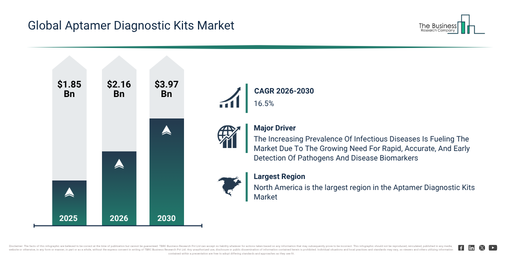
    The aptamer diagnostic kits market has seen rapid expansion in recent years. Its value is set to rise from $1.85 billion in 2025 to $2.16 billion in 2026, exhibiting a compound annual growth rate (CAGR) of 16.2%. The historical growth of this market can be attributed to the increasing prevalence of infectious diseases, a rising demand for sensitive diagnostic tools, the development of hospital and laboratory infrastructure, the adoption of enzyme-linked and colorimetric kits, and technological advances in aptamer synthesis.

    The aptamer diagnostic kits market is poised for significant expansion in the coming years, with projections indicating it will reach $3.97 billion by 2030, exhibiting a compound annual growth rate (CAGR) of 16.5%. This growth throughout the forecast period is primarily driven by factors such as the increasing use of RNA and peptide aptamer kits, enhanced integration with AI-based diagnostic analytics, a surging demand for personalized medicine applications, the broadening scope of point-of-care and rapid diagnostic testing, and its rising adoption in diagnosing cancer and cardiovascular diseases. Noteworthy trends during this period include the increased adoption of high-sensitivity aptamer kits, a growing need for multiplex diagnostic capabilities, the expanding integration of fluorescence and electrochemical technologies, wider application in infectious disease diagnostics, and a sharpened focus on rapid point-of-care testing.

    Get A Free Sample Report With In-Depth Market Insights:

    https://thebusinessresearchcompany.com/sample_request?id=85882150&type=smp&name=Aptamer%20Diagnostic%20Kits%20Market%20Report%202026&utm_source=Blogs&utm_medium=Paid&utm_campaign=Oct_PR

    Aptamer Diagnostic Kits Market Growth Momentum: What Factors Are Shaping Demand?

    The increasing prevalence of infectious diseases is anticipated to drive the expansion of the aptamer diagnostic kits market. These illnesses stem from pathogenic microorganisms such as bacteria, viruses, fungi, or parasites, and are capable of transmission between individuals, animals, or through environmental contact. Aptamer diagnostic kits play a crucial role in managing infectious diseases by providing rapid, highly sensitive, and specific detection of pathogens or disease biomarkers in patient samples, which facilitates early diagnosis, timely intervention, and improved monitoring and control. For instance, data from the Centers for Disease Control and Prevention in March 2024 indicated a rise in tuberculosis cases in the US from 8,320 in 2022 to 9,615 in 2023, representing an increase of 1,295 cases. Consequently, the growing incidence of infectious diseases is fueling the growth of the aptamer diagnostic kits market. The aptamer diagnostic kits market is projected to grow due to increasing investments in healthcare. Healthcare investments involve governments, institutions, or private entities allocating financial resources to enhance medical infrastructure, services, technologies, and access to healthcare. These investments are rising as governments and institutions increase funding to strengthen medical infrastructure, expand healthcare service access, and support the adoption of advanced medical technologies. Investments in healthcare facilitate the development and adoption of aptamer-based diagnostic kits, enabling faster, more precise, and cost-effective disease detection while ultimately improving patient outcomes. For example, according to the Centers for Medicare & Medicaid Services in January 2026, national health expenditure (NHE) is projected to increase at an average rate of 5.8% between 2024 and 2033, surpassing the average gross domestic product (GDP) growth of 4.3% and raising the health spending share of GDP from 17.6% in 2023 to 20.3% by 2033. Therefore, increasing investments in healthcare are stimulating the growth of the aptamer diagnostic kits market.

    Aptamer Diagnostic Kits Market Segment Landscape And Growth Outlook

    The aptamer diagnostic kits market covered in this report is segmented –

    1) By Product Type: Deoxyribonucleic Acid (DNA) Aptamer Kits, Ribonucleic Acid (RNA) Aptamer Kits, Peptide Aptamer Kits

    2) By Technology: Electrochemical, Optical, Colorimetric, Fluorescent, Other Technologies

    3) By Application: Infectious Disease Diagnosis, Cancer Diagnosis, Cardiovascular Disease Diagnosis, Neurological Disorders, Other Applications

    4) By End-User: Hospitals And Clinics, Diagnostic Laboratories, Research Institutes, Other End-Users

    Subsegments:

    1) By Deoxyribonucleic Acid (DNA) Aptamer Kits: Enzyme-Linked Deoxyribonucleic Acid (DNA) Aptamer Kits, Fluorescence-Based Deoxyribonucleic Acid (DNA) Aptamer Kits, Colorimetric Deoxyribonucleic Acid (DNA) Aptamer Kits, Electrochemical Deoxyribonucleic Acid (DNA) Aptamer Kits

    2) By Ribonucleic Acid (RNA) Aptamer Kits: Fluorescence-Based Ribonucleic Acid (RNA) Aptamer Kits, Electrochemical Ribonucleic Acid (RNA) Aptamer Kits, Colorimetric Ribonucleic Acid (RNA) Aptamer Kits, High-Sensitivity Ribonucleic Acid (RNA) Aptamer Kits

    3) By Peptide Aptamer Kits: Fluorescence-Based Peptide Aptamer Kits, Enzyme-Linked Peptide Aptamer Kits, Electrochemical Peptide Aptamer Kits, Multiplex Peptide Aptamer Kits

    Aptamer Diagnostic Kits Market Competitive Landscape: Who Leads The Industry?

    Major companies operating in the aptamer diagnostic kits market are Kaneka Corporation, Maravai LifeSciences, Nexus Dx Inc, Creative Biolabs, Aptitude Medical Systems Inc, Aptamer Group Limited, Base Pair Biotechnologies Inc, Aptamer Sciences Inc, Aptagen LLC, Vivonics Inc, AptaMatrix Inc, Aptus Biosciences, AuramerBio Ltd, Neoncorte Bio, Bio‑Connect B.V, Aptarion Biotech AG, SB Bioscience Co. Ltd, NeoVentures Biotechnology Inc, AM Biotechnologies LLC, NeoVentures Biotechnology Inc.

    View The Full Aptamer Diagnostic Kits Market Report:

    https://thebusinessresearchcompany.com/report/aptamer-diagnostic-kits-market-report?utm_source=Blogs&utm_medium=Paid&utm_campaign=Oct_PR

    Aptamer Diagnostic Kits Market Geographic Landscape: Which Region Leads Industry Growth?

    North America was the largest region in the aptamer diagnostic kits market in 2025. Asia-Pacific is expected to be the fastest-growing region in the forecast period. The regions covered in the aptamer diagnostic kits market report are Asia-Pacific, South East Asia, Western Europe, Eastern Europe, North America, South America, Middle East, Africa.

    Reach Out To Our Team:

    The Business Research Company: https://www.thebusinessresearchcompany.com/

    Americas: +1 310-496-7795

    Asia: +44 7882 955267 & +91 8897263534

    Europe: +44 7882 955267

    Email us at: marketing@tbrc.info

    Follow us on:

    LinkedIn: https://in.linkedin.com/company/the-business-research-company

    YouTube: https://www.youtube.com/channel/UC24_fI0rV8cR5DxlCpgmyFQ

    Global Market Model: https://www.thebusinessresearchcompany.com/global-market-model
  • Allergy Clinical Trial Services Market Explained: What Is Fueling Growth To $1.66 Billion By 2030?

    Allergy Clinical Trial Services Market Explained: What Is Fueling Growth To $1.66 Billion By 2030?

    Built to provide research that’s more actionable and strategically valuable, The Business Research Company’s 2026 market reports include market attractiveness analysis, total addressable market sizing, company benchmarking matrices, interactive Excel dashboards, broader supply chain intelligence, emerging startup tracking, and in-depth product insights.

    Allergy Clinical Trial Services Market Size Outlook: How Quickly Will Revenue Expand Through 2030?

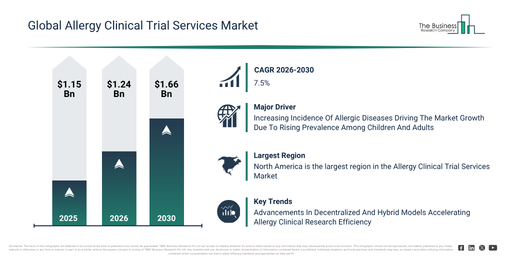
    The market for allergy clinical trial services has experienced substantial expansion recently. Projections indicate this market will expand from $1.15 billion in 2025 to reach $1.24 billion in 2026, demonstrating a compound annual growth rate (CAGR) of 7.3%. Factors contributing to its historical growth include the increasing occurrence of allergic diseases, greater investment in clinical research, the implementation of structured study protocols, the broadening of laboratory testing infrastructure, and the expansion of pharmaceutical and biotechnology firms.

    The allergy clinical trial services market is projected to experience substantial expansion in the coming years. By 2030, this market is predicted to reach $1.66 billion, demonstrating a compound annual growth rate (CAGR) of 7.5%. Several factors are expected to fuel this growth during the forecast period, including an increasing emphasis on precision medicine strategies, greater adoption of AI-driven analytics, a surge in demand for remote monitoring and decentralized clinical trials, the expansion of phase II and III allergy research, and a heightened focus on regulatory adherence and data stewardship. Key trends anticipated over this period encompass a wider uptake of remote clinical monitoring services, an escalating need for solutions to recruit and retain patients, the increasing incorporation of electronic data capture (EDC) systems, an expansion in bioanalytical and laboratory testing capacities, and a sharpened focus on regulatory compliance and medical writing services.

    Get A Free Sample Report With In-Depth Market Insights:

    https://thebusinessresearchcompany.com/sample_request?id=44788986&type=smp&name=Allergy%20Clinical%20Trial%20Services%20Market%20Report%202026&utm_source=Blogs&utm_medium=Paid&utm_campaign=Oct_PR

    Allergy Clinical Trial Services Market Development Factors: What’s Supporting Demand?

    The expanding occurrence of allergic conditions is anticipated to fuel the growth of the allergy clinical trial services market in the future. Allergic diseases are hypersensitivity reactions mediated by the immune system, including seasonal allergic rhinitis, eczema, and food allergies. The frequency of these conditions is rising, largely due to increased exposure to environmental allergens such as pollen, dust, and air pollutants, which are widely associated with heightened immune system hypersensitivity in susceptible individuals. Allergy clinical trial services facilitate the management and treatment of allergic diseases by enabling the development, testing, and evaluation of new therapies and interventions, thereby assisting healthcare providers in identifying effective solutions and improving patient outcomes. For instance, according to the 2024 National Health Interview Survey (NHIS) by the Centers for Disease Control and Prevention, a US-based government agency, approximately 29.5% of children in the United States had been diagnosed with a seasonal allergy, eczema, or a food allergy, up from 20.6% in the previous survey year. Therefore, the increasing incidence of allergic diseases is driving the growth of the allergy clinical trial services market.

    Allergy Clinical Trial Services Market Segment Analysis And Revenue Potential

    The allergy clinical trial services market covered in this report is segmented –

    1) By Service Type: Study Design And Protocol Development, Site Management And Patient Recruitment, Clinical Operations And Monitoring, Bioanalytical And Laboratory Services, Data Management And Biostatistics, Regulatory Affairs And Medical Writing

    2) By Clinical Trial: Phase I, Phase II, Phase III, Phase IV or Post-Marketing

    3) By Therapeutic Indication: Allergic Rhinitis, Allergic Asthma, Atopic Dermatitis, Food Allergies, Drug Hypersensitivity

    4) By End User: Pharmaceutical Companies, Biotechnology Firms, Academic Research Institutions, Government Organizations

    Subsegments:

    1) By Study Design And Protocol Development: Clinical Protocol Development Services, Trial Design Consulting Services, Feasibility Assessment Services, Endpoint Definition And Selection Services

    2) By Site Management And Patient Recruitment: Investigator Site Management Services, Patient Recruitment And Retention Services, Site Training And Support Services, Clinical Site Feasibility Assessment Services

    3) By Clinical Operations And Monitoring: On-Site Clinical Monitoring Services, Remote Clinical Monitoring Services, Study Progress Tracking Services, Compliance And Quality Assurance Services

    4) By Bioanalytical And Laboratory Services: Pharmacokinetic And Pharmacodynamic Analysis Services, Immunogenicity Testing Services, Biomarker Assay Development Services, Sample Processing And Analysis Services

    5) By Data Management And Biostatistics: Electronic Data Capture (EDC) Services, Data Cleaning And Validation Services, Statistical Analysis And Modeling Services, Report Generation And Interpretation Services

    6) By Regulatory Affairs And Medical Writing: Regulatory Submission Preparation Services, Clinical Study Reports Writing Services, Investigator Brochure Development Services, Regulatory Consulting And Compliance Services

    Allergy Clinical Trial Services Market Transformation Trends: What Innovations Are Driving Change?

    Major companies engaged in the allergy clinical trial services market are concentrating their efforts on conducting clinical trials aimed at developing innovative products, including novel anti-inflammatory drugs, to enhance symptom control and decrease disease severity in allergy patients. Novel anti-inflammatory drugs are newly formulated medications engineered to target specific immune pathways that cause inflammation, thereby helping to reduce allergic reactions, alleviate symptoms, and prevent disease flare-ups more effectively than traditional treatments. For instance, in December 2023, Innovaderm Research, a Canada-based clinical research organization, emphasized its pivotal role as a key collaborator in the clinical and study development of a recently released Phase 1 atopic dermatitis study. The study assessed the safety, tolerability, and initial effectiveness of an investigational therapy in patients experiencing moderate-to-severe atopic dermatitis, a chronic inflammatory skin condition frequently linked to allergic responses. Innovaderm contributed significantly to protocol formulation, regulatory strategy, site selection processes, patient enrollment, and overall operational management, ensuring adherence to clinical and scientific benchmarks. The company leveraged its dermatology-specific expertise, a specialized investigator network, and integrated data management capabilities to support precise data collection and efficient execution of the trial.

    Allergy Clinical Trial Services Market Key Players Shaping Industry Direction

    Major companies operating in the allergy clinical trial services market are Johnson & Johnson, Merck & Co. Inc., Sanofi S.A., Novartis International AG, GlaxoSmithKline plc, Teva Pharmaceutical Industries Ltd, Stallergenes Greer International AG, Torii Pharmaceutical Co. Ltd., ALK‑Abelló A/S, Allergopharma GmbH & Co. KG, Circassia Group plc, Inmunotek S.L., Biomay AG, Laboratorios LETI S.A., Alerje Inc., Inimmune Corporation, Siolta Therapeutics Inc., Allovate Therapeutics Inc., DBV Technologies S.A., Camallergy S.L.

    View The Full Allergy Clinical Trial Services Market Report:

    https://thebusinessresearchcompany.com/report/allergy-clinical-trial-services-market-report?utm_source=Blogs&utm_medium=Paid&utm_campaign=Oct_PR

    Allergy Clinical Trial Services Market Regional Analysis: Which Geography Leads On Revenue?

    North America was the largest region in the allergy clinical trial services market in 2025. Asia-Pacific is expected to be the fastest-growing region in the forecast period. The regions covered in the allergy clinical trial services market report are Asia-Pacific, South East Asia, Western Europe, Eastern Europe, North America, South America, Middle East, Africa.

    Reach Out To Our Team:

    The Business Research Company: https://www.thebusinessresearchcompany.com/

    Americas: +1 310-496-7795

    Asia: +44 7882 955267 & +91 8897263534

    Europe: +44 7882 955267

    Email us at: marketing@tbrc.info

    Follow us on:

    LinkedIn: https://in.linkedin.com/company/the-business-research-company

    YouTube: https://www.youtube.com/channel/UC24_fI0rV8cR5DxlCpgmyFQ

    Global Market Model: https://www.thebusinessresearchcompany.com/global-market-model
  • Airborne Pathogen Detector Market Growth To $3.63 Billion By 2030: What’s Driving The Expansion?

    Airborne Pathogen Detector Market Growth To $3.63 Billion By 2030: What’s Driving The Expansion?

    Built to provide research that’s more actionable and strategically valuable, The Business Research Company’s 2026 market reports include market attractiveness analysis, total addressable market sizing, company benchmarking matrices, interactive Excel dashboards, broader supply chain intelligence, emerging startup tracking, and in-depth product insights.

    Airborne Pathogen Detector Market Set To Climb From $2.12 Billion In 2026 To $3.63 Billion By 2030

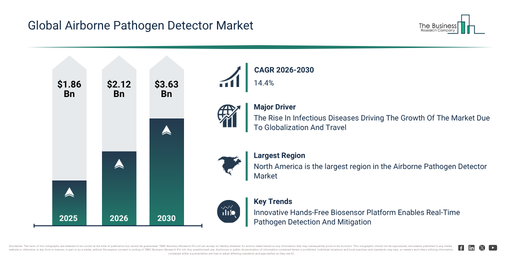
    The airborne pathogen detector market has experienced swift expansion recently. Projections indicate an increase from $1.86 billion in 2025 to $2.12 billion in 2026, demonstrating a compound annual growth rate (CAGR) of 14.1%. This historical growth can be linked to heightened awareness concerning airborne illnesses, the proliferation of public health monitoring programs, the uptake of fixed and stationary detection apparatus, advancements in pathogen sensing technologies, and the broadening of healthcare infrastructure.

    The airborne pathogen detector market is projected to expand significantly in the coming years. Its valuation is anticipated to reach $3.63 billion by 2030, exhibiting a compound annual growth rate (CAGR) of 14.4%. This expansion during the forecast timeframe is primarily driven by an increasing need for IoT-enabled detection tools, greater incorporation of AI-driven analytical solutions, a heightened requirement for portable and wearable pathogen surveillance devices, the broadening of safety protocols in industrial and commercial air environments, and wider deployment in transport hubs and public areas. Key developments expected during this period involve the greater acceptance of portable and wearable detection instruments, an escalating call for continuous pathogen surveillance, enhanced connectivity with cloud-based platforms, the broadening of capabilities for detecting multiple pathogens, and an intensified concentration on applications for healthcare and public safety.

    Get A Free Sample Report With In-Depth Market Insights:

    https://thebusinessresearchcompany.com/sample_request?id=60792190&type=smp&name=Airborne%20Pathogen%20Detector%20Market%20Report%202026&utm_source=Blogs&utm_medium=Paid&utm_campaign=Oct_PR

    Airborne Pathogen Detector Market Demand Drivers: What’s Powering Industry Growth?

    The anticipated expansion of the airborne pathogen detector market is linked to the growing occurrence of infectious diseases throughout the forecast period. These diseases, caused by pathogenic microorganisms, are capable of spreading through environmental exposure, notably via airborne transmission. Several factors contribute to the escalating prevalence of such illnesses, including heightened global connectivity and international travel, increasing urban populations and density, the rise of antimicrobial resistance, and the effects of climate change on pathogen survival and dissemination. Airborne pathogen detectors play a crucial role in enabling early detection and ongoing surveillance of infectious agents across various settings, both indoors and outdoors. This capability facilitates timely public health responses, aids in preventing outbreaks, and enhances infection control measures in critical locations like healthcare facilities, transportation hubs, and general public areas. For instance, data from March 2024, provided by the Centers for Disease Control and Prevention, a US-based government agency, indicated a rise in tuberculosis cases within the United States from 8,320 in 2022 to 9,615 in 2023, marking an increase of 1,295 cases. Consequently, the increasing prevalence of infectious diseases is a primary driver for the growth of the airborne pathogen detector market.

    Airborne Pathogen Detector Market Segment Landscape: Which Areas Lead Development?

    The airborne pathogen detector market covered in this report is segmented –

    1) By Product Type: Fixed Or Stationary Systems, Portable Devices, Handheld Detectors, Wearable Detectors

    2) By Pathogen Type: Viral Pathogen Detection, Bacterial Pathogen Detection, Fungal Pathogen Detection, Multi-Pathogen Detection

    3) By Connectivity: Standalone Systems, Cloud-Based Systems, Internet Of Things Enabled Systems

    4) By Application: Healthcare Facilities, Airports And Transportation Hubs, Industrial And Commercial Buildings, Military And Defense, Public Spaces, Other Applications

    5) By End-User: Hospitals And Clinics, Government And Public Health Agencies, Research Institutes, Commercial And Industrial, Other End-Users

    Subsegments:

    1) By Fixed Or Stationary Systems: Room Air Monitors, Duct Mounted Detectors, Facility Wide Surveillance Systems, Centralized Laboratory Based Systems, Industrial Grade Air Samplers

    2) By Portable Devices: Battery Operated Air Samplers, Backpack Mounted Detectors, Transportable Laboratory Systems, Field Deployable Units

    3) By Handheld Detectors: Single Pathogen Testers, Multiplex Assay Devices, Real Time Polymerase Chain Reaction Analyzers, Immunoassay Based Testers

    4) By Wearable Detectors: Personal Exposure Monitors, Badge Style Detectors, Clip On Sensors, Smart Clothing Integrated Sensors

    Airborne Pathogen Detector Market Innovation Trends: What Developments Are Reshaping The Industry?

    Leading companies in the airborne pathogen detector market are concentrating on developing innovative solutions, such as hands-free biosensor platforms, to enable rapid, real-time detection and mitigation of airborne pathogens. A hands-free biosensor platform functions as an automated device that continuously samples and analyzes air or surfaces for pathogens, eliminating the need for manual handling or intervention. For instance, in July 2025, SafeTraces, Inc., a U.S. biotechnology company, launched PathogenSentinel, the first integrated qPCR-based biosensor and software platform designed for the swift detection and management of airborne pathogens, marking a significant advancement in this technology. The system pairs a compact, desktop-sized unit with a high-flow air sampler and replaceable cartridges, capable of automatically detecting up to four user-specified pathogens. Complemented by a web-based application, it provides near real-time alerts, API integration, and data trending for proactive risk management. Its hands-free operation and laboratory-quality results substantially improve responsiveness and scalability in environments such as biosafety laboratories and other high-risk indoor settings.

    Airborne Pathogen Detector Market Industry Leaders And Competitive Landscape

    Major companies operating in the airborne pathogen detector market are Thermo Fisher Scientific Inc., Honeywell International Inc., 3M Company, Charles River Laboratories International Inc., Smiths Detection Group Limited, Sartorius Aktiengesellschaft, Shimadzu Corporation, Teledyne FLIR LLC, TSI Incorporated, Particle Measuring Systems Inc., Bertin Technologies SAS, Kanomax USA Inc., RION Co Ltd., Kromek Group plc, Climet Instruments Company Inc., Varro Life Sciences Inc., Aerosol Devices Inc., SafeTraces Inc., Health Enviro Testing Inc., Scanit Technologies Pvt. Ltd.

    View The Full Airborne Pathogen Detector Market Report:

    https://thebusinessresearchcompany.com/report/airborne-pathogen-detector-market-report?utm_source=Blogs&utm_medium=Paid&utm_campaign=Oct_PR

    Airborne Pathogen Detector Market Regional Analysis And Top Geography

    North America was the largest region in the airborne pathogen detector market in 2025. Asia-Pacific is expected to be the fastest-growing region in the forecast period. The regions covered in the airborne pathogen detector market report are Asia-Pacific, South East Asia, Western Europe, Eastern Europe, North America, South America, Middle East, Africa.

    Reach Out To Our Team:

    The Business Research Company: https://www.thebusinessresearchcompany.com/

    Americas: +1 310-496-7795

    Asia: +44 7882 955267 & +91 8897263534

    Europe: +44 7882 955267

    Email us at: marketing@tbrc.info

    Follow us on:

    LinkedIn: https://in.linkedin.com/company/the-business-research-company

    YouTube: https://www.youtube.com/channel/UC24_fI0rV8cR5DxlCpgmyFQ

    Global Market Model: https://www.thebusinessresearchcompany.com/global-market-model
  • Affinity Ligands Market Trends Reshaping Industry Growth Through 2030

    Affinity Ligands Market Trends Reshaping Industry Growth Through 2030

    Backed by market attractiveness analysis, total addressable market sizing, company benchmarking matrices, interactive Excel dashboards, wider supply chain intelligence, emerging startup coverage, and detailed product-level insights, The Business Research Company’s 2026 market reports are designed to offer research that is more actionable and strategically valuable than ever.

    Affinity Ligands Market Forecast: Value Set To Climb From $1.97 Billion To $2.66 Billion

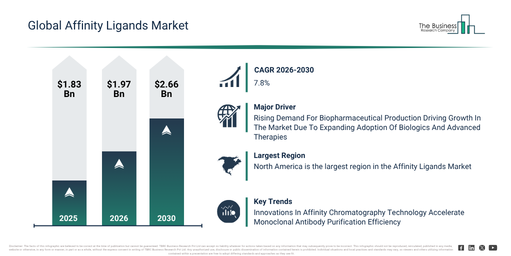
    The affinity ligands market has experienced substantial expansion in recent years. This market is projected to expand from $1.83 billion in 2025 to $1.97 billion in 2026, demonstrating a compound annual growth rate (CAGR) of 7.6%. Historically, this growth has been driven by several factors, including an escalating need for targeted purification methods, advancements in pharmaceutical and biotech research, the embrace of protein-based ligands, the increased application of antibodies in diagnostics, and the proliferation of academic and research institutions.

    The affinity ligands market is set for robust expansion over the next few years. It is projected to achieve a value of $2.66 billion by 2030, growing at a compound annual growth rate (CAGR) of 7.8%. This anticipated growth during the forecast period is fueled by the increasing adoption of aptamers and synthetic ligands, a surging demand for high-throughput drug discovery, the rising integration of biosensors in diagnostic applications, the broadening of environmental and food testing applications, and a growing emphasis on personalized medicine and therapeutics. Key trends expected in this period include the increased embrace of synthetic and peptide ligands, a heightened demand for affinity chromatography applications, expanded integration into drug discovery and diagnostics, the development of high-specificity biosensor platforms, and a strengthened focus on protein and enzyme purification techniques.

    Get A Free Sample Report With In-Depth Market Insights:

    https://thebusinessresearchcompany.com/sample_request?id=86026673&type=smp&name=Affinity%20Ligands%20Market%20Report%202026&utm_source=Blogs&utm_medium=Paid&utm_campaign=Oct_PR

    Affinity Ligands Market Growth Drivers: What’s Behind The Acceleration?

    The escalating demand for biopharmaceutical manufacturing is anticipated to drive the expansion of the affinity ligands market. Biopharmaceutical production entails the industrial-scale creation of intricate biological therapeutic items such as monoclonal antibodies, vaccines, and recombinant proteins, utilizing biologically derived systems and procedures. The need for biopharmaceutical production is expanding due to the rising occurrence of chronic and infectious diseases, necessitating advanced therapies, vaccines, and biologic drugs for effective treatment and management. Affinity ligands improve biopharmaceutical manufacturing by providing highly specific binding sites that capture target biomolecules from complex mixtures, thereby facilitating rapid, efficient purification and reliable product quality. For instance, in June 2023, figures from the European Federation of Pharmaceutical Industries and Associations (EFPIA), a Belgium-based trade association representing Europe’s pharmaceutical industry, showed that total pharmaceutical production in Europe amounted to €390,000 million ($422,803 million) in 2023, an increase from €363,300 million ($393,857 million) in 2022. Thus, the increasing requirement for biopharmaceutical production is fueling the growth of the affinity ligands market.

    Affinity Ligands Market Segments: Where Is Growth Concentrated?

    The affinity ligands market covered in this report is segmented –

    1) By Product Type: Protein-Based Ligands, Synthetic Ligands, Peptide Ligands, Aptamers, Other Product Types

    2) By Target Molecule: Antibodies, Proteins, Enzymes, Nucleic Acids, Small Molecules

    3) By Application: Affinity Chromatography, Biosensors, Diagnostics, Therapeutics, Research And Development, Drug Discovery

    4) By End-Use Industry: Pharmaceutical And Biotechnology Companies, Academic And Research Institutes, Diagnostic Laboratories, Contract Research Organizations, Food And Beverage Industry, Environmental Testing

    Subsegments:

    1) By Protein-Based Ligands: Antibodies, Enzymes, Lectins, Albumins

    2) By Synthetic Ligands: Small Molecules, Polymers, Dendrimers, Magnetic Particles

    3) By Peptide Ligands: Linear Peptides, Cyclic Peptides, Modified Peptides, Functionalized Peptides

    4) By Aptamers: Deoxyribonucleic Acid Aptamers, Ribonucleic Acid Aptamers, Peptide Aptamers, Spiegelmers

    5) By Other Product Types: Carbohydrate Ligands, Lipid Ligands, Nucleic Acid Ligands, Hybrid Ligands

    Affinity Ligands Market Trends: What’s Defining The Industry’s Next Phase?

    Companies within the affinity ligands market are concentrating on creating sophisticated purification methods, such as membrane-based protein A chromatography platforms. These efforts aim to enhance processing speed, improve binding capabilities, and streamline downstream bioprocessing workflows. Membrane-based protein Chromatography platforms represent advanced purification technologies that integrate protein A affinity ligands within membrane structures to specifically bind and isolate monoclonal antibodies from complex bioprocess fluids, thereby facilitating faster throughput and heightened efficiency in downstream biomanufacturing operations. For instance, in October 2024, Sartorius AG, a Germany-based biopharmaceutical solutions provider, unveiled Sartobind Rapid A Lab, a laboratory-scale membrane chromatography device crafted for the swift and efficient capture of monoclonal antibodies. This solution employs Protein A affinity ligands incorporated into membrane adsorbers to offer high binding capacity, short cycle times, and scalability from lab to manufacturing, which supports process intensification and accelerates biologics development.

    Affinity Ligands Market Key Participants And Competitive Landscape

    Major companies operating in the affinity ligands market are Thermo Fisher Scientific Inc., Merck KGaA, Cube Biotech GmbH, Tosoh Corporation, Avantor Inc., Agilent Technologies Inc., Kaneka Corporation, Sartorius AG, PerkinElmer Inc., Waters Corporation, Bio-Rad Laboratories Inc., QIAGEN N.V., Repligen Corporation, GenScript Biotech Corporation, Purolite Corporation, Promega Corporation, Takara Bio Inc., BioWorks Inc., Biotage AB, BIA Separation d.o.o., KNAUER Wissenschaftliche Geräte GmbH, JNC Corporation, Aptamer Group.

    View The Full Affinity Ligands Market Report:

    https://thebusinessresearchcompany.com/report/affinity-ligands-market-report?utm_source=Blogs&utm_medium=Paid&utm_campaign=Oct_PR

    Affinity Ligands Market Geographic Analysis: Where Is Demand Rising Fastest?

    North America was the largest region in the affinity ligands market in 2025. Asia-Pacific is expected to be the fastest-growing region in the forecast period. The regions covered in the affinity ligands market report are Asia-Pacific, South East Asia, Western Europe, Eastern Europe, North America, South America, Middle East, Africa.

    Reach Out To Our Team:

    The Business Research Company: https://www.thebusinessresearchcompany.com/

    Americas: +1 310-496-7795

    Asia: +44 7882 955267 & +91 8897263534

    Europe: +44 7882 955267

    Email us at: marketing@tbrc.info

    Follow us on:

    LinkedIn: https://in.linkedin.com/company/the-business-research-company

    YouTube: https://www.youtube.com/channel/UC24_fI0rV8cR5DxlCpgmyFQ

    Global Market Model: https://www.thebusinessresearchcompany.com/global-market-model
  • Trusted Exchange Framework And Common Agreement (TEFCA) Connectivity Services Market Growth Outlook: Why Analysts Expect Continued Expansion

    Trusted Exchange Framework And Common Agreement (TEFCA) Connectivity Services Market Growth Outlook: Why Analysts Expect Continued Expansion

    Backed by market attractiveness analysis, total addressable market sizing, company benchmarking matrices, interactive Excel dashboards, wider supply chain intelligence, emerging startup coverage, and detailed product-level insights, The Business Research Company’s 2026 market reports are designed to offer research that is more actionable and strategically valuable than ever.

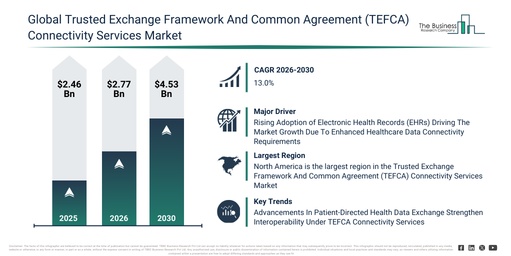
    Trusted Exchange Framework And Common Agreement (TEFCA) Connectivity Services Market Revenue Growth On Track For A 13% CAGR Through 2030

    The market for trusted exchange framework and common agreement (tefca) connectivity services has experienced rapid expansion in recent times. This market is projected to expand from $2.46 billion in 2025 to $2.77 billion in 2026, demonstrating a compound annual growth rate (CAGR) of 12.8%. Historically, this expansion has been driven by several factors, including the rising adoption of electronic health records, the escalating need for patient data interoperability, the heightened demand for secure health information exchange, the broader implementation of identity verification systems, and the expanding regulatory compliance mandates.

    The trusted exchange framework and common agreement (tefca) connectivity services market size is anticipated to undergo significant expansion over the next few years. It is projected to achieve a value of $4.53 billion in 2030, with a compound annual growth rate (CAGR) of 13.0%. This growth during the forecast period is propelled by several factors, including the widening reach of nationwide health information networks, the increasing adoption of cloud-based connectivity solutions, a rising need for real-time patient data access, the growing implementation of API-driven data integration, and an elevated focus on analytics and quality management. Prominent trends within the forecast period comprise the increasing uptake of FHIR-based interoperability solutions, a rising demand for API-based patient data access, the expanding deployment of identity verification and consent management services, the extension of event notification and record location services, and a heightened emphasis on data quality management and analytics enablement.

    Get A Free Sample Report With In-Depth Market Insights:

    https://thebusinessresearchcompany.com/sample_request?id=65769479&type=smp&name=Trusted%20Exchange%20Framework%20And%20Common%20Agreement%20%28TEFCA%29%20Connectivity%20Services%20Market%20Report%202026&utm_source=Blogs&utm_medium=Paid&utm_campaign=Oct_PR

    Trusted Exchange Framework And Common Agreement (TEFCA) Connectivity Services Market Growth Catalysts And Demand Drivers

    The increasing implementation of electronic health records (EHRs) is anticipated to fuel the expansion of the trusted exchange framework and common agreement (TEFCA) connectivity services market in the future. These digital systems serve to store, manage, and facilitate the exchange of patient health information among various healthcare organizations. The surge in EHR adoption primarily stems from federal policies and regulations, which motivate healthcare providers to implement certified health IT systems aimed at enhancing care coordination and minimizing medical errors. This growing adoption of EHRs, in turn, amplifies the need for TEFCA connectivity services, given that these systems necessitate standardized frameworks to achieve smooth, interoperable health information exchange between diverse healthcare entities. A notable example illustrates this trend: in December 2025, data from the Centers for Disease Control and Prevention (CDC), a US-based national public health agency, indicated that 95.0% of office-based physicians in the United States had adopted electronic health record (EHR) systems, with 83.6% specifically employing certified EHR technology compliant with federal standards. Consequently, the expanding use of electronic health records is a primary impetus behind the growth of the trusted exchange framework and common agreement (TEFCA) connectivity services market.

    Trusted Exchange Framework And Common Agreement (TEFCA) Connectivity Services Market Breakdown By Product Type And Application

    The trusted exchange framework and common agreement (tefca) connectivity services market covered in this report is segmented –

    1) By Service Type: Health Information Exchange, Patient Access Services, Data Integration, Interoperability Solutions, Other Service Types

    2) By Deployment Mode: Cloud-Based, On-Premises

    3) By End-User: Hospitals, Clinics, Health Information Networks, Payers, Other End-Users

    Subsegments:

    1) By Health Information Exchange: Query Based Exchange, Directed Exchange, Event Notification Services, Cross Network Exchange, Record Location Services, Master Patient Index Services, Consent Management

    2) By Patient Access Services: Patient Portals, Mobile Health Access, API Based Patient Data Access, Identity Verification Services, Consent Authorization Tools, Personal Health Record Integration

    3) By Data Integration: EHR Integration, Claims Data Integration, Laboratory Data Integration, Imaging Data Integration, Pharmacy Data Integration, Public Health Data Integration

    4) By Interoperability Solutions: FHIR Based Interoperability, HL7 Interface Solutions, API Management Platforms, Terminology Mapping, Data Normalization Services, Semantic Interoperability Tools

    5) By Other Service Types: Compliance And Security Services, Network Onboarding Services, Data Quality Management, Analytics Enablement, Audit And Reporting Services

    Trusted Exchange Framework And Common Agreement (TEFCA) Connectivity Services Market Trends Shaping Long-Term Demand

    Major companies in the trusted exchange framework and common agreement connectivity services market are prioritizing the development of sophisticated solutions, such as patient medical health records access systems. Their goal is to empower patients with secure access and control over their health data and to enhance seamless cross-network data sharing among healthcare providers. Patient medical health records access systems are secure digital solutions that allow individuals to access, collect, and manage their health information from various healthcare providers and networks. For example, in September 2025, HealthEx, a US-based health tech company, launched a new patient-directed health data exchange service under TEFCA to enable secure access, aggregation, and sharing of health information across providers, thereby boosting interoperability and patient-centered care coordination. This service allows patients to access, retrieve, and share real-time health records using individual access services (IAS). It performs identity verification, secures consent, and extracts data across QHIN networks in CCDA or FHIR formats, providing users with complete control and transparency.

    Trusted Exchange Framework And Common Agreement (TEFCA) Connectivity Services Market Key Players Shaping Industry Direction

    Major companies operating in the trusted exchange framework and common agreement (tefca) connectivity services market are Oracle Corporation, Epic Systems Corporation, Infor Inc., OpenText Corporation, athenahealth Inc., InterSystems Corporation, eClinicalWorks LLC, Redox Inc., Medical Information Technology Inc., Veradigm Inc., Netsmart Technologies Inc., PointClickCare Technologies Inc., Surescripts LLC, Health Gorilla Inc., CyncHealth, Healwell AI Inc., Kno2 LLC, Ciox Health LLC, CommonWell Health Alliance Inc., Contexture Health, and eHealth Exchange.

    View The Full Trusted Exchange Framework And Common Agreement (TEFCA) Connectivity Services Market Report:

    https://thebusinessresearchcompany.com/report/trusted-exchange-framework-and-common-agreement-tefca-connectivity-services-market-report?utm_source=Blogs&utm_medium=Paid&utm_campaign=Oct_PR

    Trusted Exchange Framework And Common Agreement (TEFCA) Connectivity Services Market Regional Analysis: Which Geography Leads On Revenue?

    North America was the largest region in the trusted exchange framework and common agreement (TEFCA) connectivity services market in 2025. Asia-Pacific is expected to be the fastest-growing region in the forecast period. The regions covered in the tefca connectivity services market report are Asia-Pacific, South East Asia, Western Europe, Eastern Europe, North America, South America, Middle East, Africa.

    Reach Out To Our Team:

    The Business Research Company: https://www.thebusinessresearchcompany.com/

    Americas: +1 310-496-7795

    Asia: +44 7882 955267 & +91 8897263534

    Europe: +44 7882 955267

    Email us at: marketing@tbrc.info

    Follow us on:

    LinkedIn: https://in.linkedin.com/company/the-business-research-company

    YouTube: https://www.youtube.com/channel/UC24_fI0rV8cR5DxlCpgmyFQ

    Global Market Model: https://www.thebusinessresearchcompany.com/global-market-model
  • Multi-Modal Pathology-Radiology Fusion Market Forecast To Reach $3.63 Billion By 2030: Key Growth Drivers And Industry Trends

    Multi-Modal Pathology-Radiology Fusion Market Forecast To Reach $3.63 Billion By 2030: Key Growth Drivers And Industry Trends

    Built to provide research that’s more actionable and strategically valuable, The Business Research Company’s 2026 market reports include market attractiveness analysis, total addressable market sizing, company benchmarking matrices, interactive Excel dashboards, broader supply chain intelligence, emerging startup tracking, and in-depth product insights.

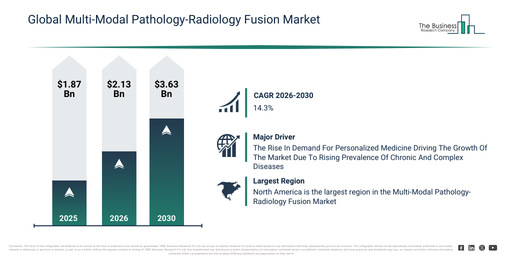
    Multi-Modal Pathology-Radiology Fusion Market Revenue Growth On Track For A 14.3% CAGR Through 2030

    The multi-modal pathology-radiology fusion market has experienced rapid growth in recent years. This market is set to expand from $1.87 billion in 2025 to $2.13 billion in 2026, achieving a compound annual growth rate (CAGR) of 14.1%. Historically, its expansion can be attributed to the rising prevalence of cancer and chronic diseases, the increasing adoption of digital pathology systems, a heightened demand for early and accurate diagnosis, the proliferation of advanced imaging modalities, and growing healthcare digitization initiatives.

    The multi-modal pathology-radiology fusion market is projected to experience substantial expansion over the coming years. This market is anticipated to reach $3.63 billion by 2030, exhibiting a compound annual growth rate (CAGR) of 14.3%. Factors contributing to this growth during the projected period include an escalating need for personalized treatment strategies, enhanced integration of multi-modal diagnostic systems, increased capital expenditure in cloud-based healthcare infrastructure, broader applications within oncology and neurology, and strengthened partnerships between healthcare facilities and research institutions. Key trends foreseen for this period encompass the widespread uptake of integrated diagnostic software, a heightened need for image registration and 3D reconstruction technologies, increased utilization of telepathology and teleradiology solutions, the broadening of workflow integration and clinical decision support functionalities, and a greater emphasis on investing in sophisticated medical imaging hardware.

    Get A Free Sample Report With In-Depth Market Insights:

    https://thebusinessresearchcompany.com/sample_request?id=95556419&type=smp&name=Multi-Modal%20Pathology-Radiology%20Fusion%20Market%20Report%202026&utm_source=Blogs&utm_medium=Paid&utm_campaign=Oct_PR

    Multi-Modal Pathology-Radiology Fusion Market Growth Backed By Core Demand Fundamentals

    The expanding need for individualized healthcare is anticipated to boost the multi-modal pathology-radiology fusion market in the coming years. Personalized medicine refers to a medical approach that tailors healthcare decisions, treatments, and interventions to the individual characteristics of each patient, such as their genetic profile, lifestyle, and environment. This heightened requirement for personalized medicine largely stems from the growing occurrence of chronic and intricate ailments, as bespoke therapies can more efficiently address specific patient requirements and enhance results. Multi-modal pathology-radiology fusion aids personalized medicine by combining cellular-level pathological understanding with extensive imaging information, allowing for accurate disease identification, optimized treatment strategies, and better forecasting of patient-specific responses to therapy. For instance, in February 2024, the FDA gave its approval to 16 novel personalized treatments for patients with rare diseases, an increase from six in 2022, according to the US-based non-profit organization, the Personalized Medicine Coalition. Consequently, the rising demand for personalized medicine is fueling the expansion of the multi-modal pathology-radiology fusion market.

    Multi-Modal Pathology-Radiology Fusion Market Segmentation And Category Overview

    The multi-modal pathology-radiology fusion market covered in this report is segmented –

    1) By Component: Software, Hardware, Services

    2) By Modality: Computed Tomography, Magnetic Resonance Imaging, Positron Emission Tomography, Ultrasound, X-ray, Digital Pathology, Other Modalities

    3) By Deployment Mode: On-Premises, Cloud-Based

    4) By Application: Oncology, Neurology, Cardiology, Orthopedics, Other Applications

    5) By End-User: Hospitals, Diagnostic Centers, Research Institutes, Other End-Users

    Subsegments:

    1) By Hardware: Robot Arms and Manipulators, Collaborative Robots (Cobots), End-Effectors and Grippers, Sensors and Perception Hardware, Actuators and Drives, Machine Vision Systems, Controllers and PLCs, Automated Guided Vehicle And Autonomous Mobile Robot, Safety Systems and Fencing, Power and Cabling Infrastructure

    2) By Software: Robot Operating Systems and Firmware, Simulation and Digital-Twin Software, Motion Planning and Path Optimization, Artificial Intelligence and Machine Learning Software, Vision and Perception Software, Cell and Fleet Management Software, MES or ERP Integration Software, Predictive Maintenance and Analytics, Cybersecurity Software, Low-Code or No-Code Programming Tools

    3) By Services: System Design and Engineering, Integration and Commissioning, Maintenance and Field Support, Training and Skill Development, Retrofit and Modernization Services, Custom Application Development, Robotics-as-a-Service (RaaS), Validation and Testing Services, Consulting and ROI Analysis, R&D and Co-innovation Services

    Multi-Modal Pathology-Radiology Fusion Market Competitive Landscape: Who Leads The Industry?

    Major companies operating in the multi-modal pathology-radiology fusion market are Google Health LLC, NVIDIA Corporation, Siemens Healthineers AG, Koninklijke Philips N.V., GE HealthCare Technologies Inc., FUJIFILM Healthcare Americas Corporation, IMERIT Inc., Barco N.V., Agfa HealthCare N.V., Tempus AI Inc., Aidoc Medical Ltd., Owkin Inc., Lunit Inc., PAIGE.AI Ltd., Proscia Inc., Canon Medical Systems Corporation, Imagene AI Ltd., Techcyte Inc., Mindpeak GmbH, and Akira AI Inc.

    View The Full Multi-Modal Pathology-Radiology Fusion Market Report:

    https://thebusinessresearchcompany.com/report/multi-modal-pathology-radiology-fusion-market-report?utm_source=Blogs&utm_medium=Paid&utm_campaign=Oct_PR

    Multi-Modal Pathology-Radiology Fusion Market Geographic Landscape: Which Region Dominates Industry Growth?

    North America was the largest region in the multi-modal pathology-radiology fusion market in 2025. Asia Pacific is expected to be the fastest-growing region in the forecast period. The regions covered in the multi-modal pathology-radiology fusion market report are Asia-Pacific, South East Asia, Western Europe, Eastern Europe, North America, South America, Middle East, Africa.

    Reach Out To Our Team:

    The Business Research Company: https://www.thebusinessresearchcompany.com/

    Americas: +1 310-496-7795

    Asia: +44 7882 955267 & +91 8897263534

    Europe: +44 7882 955267

    Email us at: marketing@tbrc.info

    Follow us on:

    LinkedIn: https://in.linkedin.com/company/the-business-research-company

    YouTube: https://www.youtube.com/channel/UC24_fI0rV8cR5DxlCpgmyFQ

    Global Market Model: https://www.thebusinessresearchcompany.com/global-market-model
  • Gait Analysis System Market Growth To $2.13 Billion Creates New Opportunities Across The Industry

    Gait Analysis System Market Growth To $2.13 Billion Creates New Opportunities Across The Industry

    Featuring market attractiveness scoring, total addressable market sizing, company benchmarking matrices, interactive Excel dashboards, deeper supply chain intelligence, emerging startup tracking, and granular product-level insights, The Business Research Company’s 2026 market reports are built to deliver research that is both more actionable and more strategically valuable.

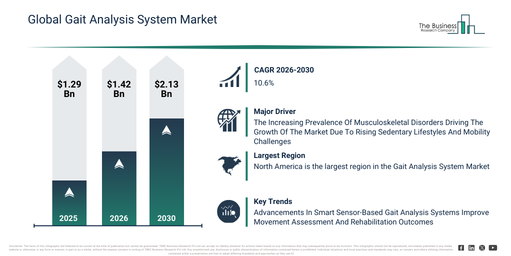
    Gait Analysis System Market Size And Revenue Outlook Through 2030

    The market size for gait analysis systems has expanded considerably over recent years. The market is projected to expand from $1.29 billion in 2025 to $1.42 billion in 2026, achieving a compound annual growth rate (CAGR) of 10.4%. Several factors contributed to its historical growth, including the rising incidence of musculoskeletal disorders, increased adoption of motion capture technology, broader utilization of gait analysis in athletic performance, the evolution of hospital-based rehabilitation programs, and technological enhancements in force plates and sensors.

    The gait analysis system market is projected for significant expansion over the coming years, reaching $2.13 billion in 2030 at a compound annual growth rate (CAGR) of 10.6%. This anticipated growth is driven by factors such as increasing adoption in tele-rehabilitation, integration with AI-driven predictive analytics, rising use in personalized sports training, expansion in research and academic institutes, and growing demand for cloud-based gait analysis solutions. Key developments expected during this period include a rising adoption of wearable gait analysis systems, an increasing demand for non-wearable sensor platforms, the integration of advanced motion tracking software, enhanced data visualization and reporting capabilities, and a heightened focus on optimizing clinical and sports performance.

    Get A Free Sample Report With In-Depth Market Insights:

    https://thebusinessresearchcompany.com/sample_request?id=19101919&type=smp&name=Gait%20Analysis%20System%20Market%20Report%202026&utm_source=Blogs&utm_medium=Paid&utm_campaign=Oct_PR

    Gait Analysis System Market Expansion Drivers: What’s Shaping Future Growth?

    The growing incidence of musculoskeletal disorders is projected to boost the expansion of the gait analysis system market in the future. These disorders encompass conditions affecting muscles, bones, joints, tendons, and ligaments, resulting in pain, rigidity, limited mobility, and functional constraints. The increase in musculoskeletal issues, spurred by increasingly sedentary lifestyles, leads to poor posture, reduced physical activity, and greater strain on muscles and joints, ultimately causing lasting mobility challenges. The gait analysis system assists in managing musculoskeletal disorders by allowing precise evaluation of walking patterns to identify anomalies early, support accurate diagnosis, and guide effective rehabilitation and treatment plans. For instance, in January 2024, according to the Office for Health Improvement & Disparities, a UK-based government agency, in 2023, 18.4% of individuals aged 16 and above reported having a long-term musculoskeletal (MSK) condition, reflecting an increase from 17.6% in 2022. Therefore, the rising prevalence of musculoskeletal disorders is fueling the growth of the gait analysis system market.

    Gait Analysis System Market Segment Landscape And Growth Outlook

    The gait analysis system market covered in this report is segmented –

    1) By Product Type: Hardware, Software, Services

    2) By Modality: Wearable Systems, Non-Wearable Systems

    3) By Deployment: On Premises Systems, Cloud Based Solutions

    4) By Application: Clinical Applications, Sports Applications, Rehabilitation, Research, Other Applications

    5) By End-User: Hospitals, Rehabilitation Centers, Clinics, Research And Academic Institutes, Other End Users

    Subsegments:

    1) By Hardware: Motion Capture Cameras, Force Plates, Pressure Sensors, Wearable Sensors, Treadmills, Inertial Measurement Units

    2) By Software: Gait Analysis Software, Data Visualization And Reporting Software, Motion Tracking Software, Kinematic And Kinetic Analysis Software, Patient Management Software

    3) By Services: Installation And Setup Services, Calibration And Maintenance Services, Training And Education Services, Consulting Services, Data Interpretation And Analysis Services

    Gait Analysis System Market Strategic Trends: What Defines The Next Growth Phase?

    Leading companies in the gait analysis system market are concentrating on developing advanced wearable and sensor-based solutions, such as new-generation smart insoles, to enhance the accuracy of movement assessment, support rehabilitation monitoring, and improve clinical and athletic performance outcomes. A new-generation smart insole is a sensor-equipped wearable device that consistently monitors foot pressure, gait, posture, and movement, providing actionable insights for health tracking, preventing injuries, and improving athletic performance. For instance, in October 2025, AlphaBio K.K., a US-based health-technology company, introduced the Walkpad Active, a smart insole designed to deliver real-time center-of-pressure (COP) measurement, plantar pressure analysis, and advanced gait analytics. This solution supports various applications including rehabilitation therapy, sports performance optimization, and diabetic foot monitoring, enabling data-driven clinical decision-making and personalized mobility care.

    Gait Analysis System Market Competitive Landscape: Who Leads The Industry?

    Major companies operating in the gait analysis system market are T T medilogic Medizintechnik GmbH, BTS Bioengineering Corp., Kistler Instrumente AG, Tekscan Inc, Motek Medical BV, Cometa Srl, Novel GmbH, Advanced Mechanical Technology Inc, Motion Analysis Corporation, Vicon Motion Systems Ltd, Qualisys AB, Zebris Medical GmbH, NaturalPoint Inc DBA OptiTrack, Xsens Technologies B.V., Delsys Inc, ProtoKinetics LLC, Gait Up SA, DIERS International GmbH, Simi Reality Motion Systems GmbH, BioSensics LLC, Sensor Medica Srl, Microgate Srl, CONTEMPLAS GmbH, STT Systems, and Moticon GmbH.

    View The Full Gait Analysis System Market Report:

    https://thebusinessresearchcompany.com/report/gait-analysis-system-market-report?utm_source=Blogs&utm_medium=Paid&utm_campaign=Oct_PR

    Gait Analysis System Market Geographic Landscape: Which Region Dominates Industry Growth?

    North America was the largest region in the gait analysis system market in 2025. Asia-Pacific is expected to be the fastest-growing region in the forecast period. The regions covered in the gait analysis system market report are Asia-Pacific, South East Asia, Western Europe, Eastern Europe, North America, South America, Middle East, Africa.

    Reach Out To Our Team:

    The Business Research Company: https://www.thebusinessresearchcompany.com/

    Americas: +1 310-496-7795

    Asia: +44 7882 955267 & +91 8897263534

    Europe: +44 7882 955267

    Email us at: marketing@tbrc.info

    Follow us on:

    LinkedIn: https://in.linkedin.com/company/the-business-research-company

    YouTube: https://www.youtube.com/channel/UC24_fI0rV8cR5DxlCpgmyFQ

    Global Market Model: https://www.thebusinessresearchcompany.com/global-market-model
  • Diagnostic Tools Market Expected To Grow At 5.8% CAGR Through 2030: What Businesses Need To Know

    Diagnostic Tools Market Expected To Grow At 5.8% CAGR Through 2030: What Businesses Need To Know

    Backed by market attractiveness analysis, total addressable market sizing, company benchmarking matrices, interactive Excel dashboards, wider supply chain intelligence, emerging startup coverage, and detailed product-level insights, The Business Research Company’s 2026 market reports are designed to offer research that is more actionable and strategically valuable than ever.

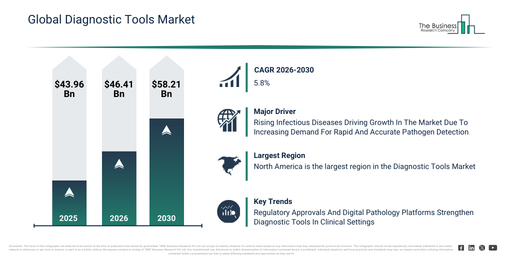
    Diagnostic Tools Market Growth From $46.41 Billion In 2026 To $58.21 Billion By 2030 At A CAGR Of 5.8%

    The diagnostic tools market has experienced significant expansion in recent years. It is forecast to grow from $43.96 billion in 2025 to $46.41 billion in 2026, achieving a compound annual growth rate (CAGR) of 5.6%. Historically, this growth has been fueled by elements such as the increasing prevalence of chronic diseases, a heightened demand for early disease detection, improvements in healthcare infrastructure, the wider adoption of laboratory testing devices, and expanding government healthcare initiatives.

    The diagnostic tools market is poised for significant expansion in the coming years. It is projected to reach $58.21 billion by 2030, growing at a compound annual growth rate (CAGR) of 5.8%. This anticipated growth during the forecast period is fueled by increasing telemedicine adoption, heightened investment in AI-driven diagnostics, the broadening of wearable health monitoring devices, a rising focus on personalized medicine, and the expansion of preventive healthcare services. Prominent trends throughout the forecast period include the increasing uptake of remote patient monitoring tools, a surging demand for point-of-care diagnostic devices, the development of imaging and radiology evaluation services, the expansion of laboratory testing and sample analysis solutions, and the integration of multi-parameter health screening systems.

    Get A Free Sample Report With In-Depth Market Insights:

    https://thebusinessresearchcompany.com/sample_request?id=47792717&type=smp&name=Diagnostic%20Tools%20Market%20Report%202026&utm_source=Blogs&utm_medium=Paid&utm_campaign=Oct_PR

    Diagnostic Tools Market Demand Drivers: What’s Powering Industry Growth?

    The expanding occurrence of infectious diseases is projected to boost the growth of the diagnostic tools market in the future. These diseases are conditions resulting from pathogens capable of transmission among individuals, animals, or from the environment. The escalation of infectious diseases stems from urbanization and population growth, which lead to increased close contact among people, thereby fostering optimal conditions for pathogens to proliferate rapidly. Diagnostic tools are crucial in combating infectious diseases by swiftly and precisely detecting and identifying the responsible pathogens, thus enabling prompt treatment and hindering further dissemination. For instance, in March 2024, the Centers for Disease Control and Prevention, a US-based government agency, indicated that tuberculosis cases rose from 8,320 in 2022 to 9,615 in 2023, marking an increase of 1,295 cases. Hence, the increasing prevalence of infectious diseases is a key factor propelling the expansion of the diagnostic tools market.

    Diagnostic Tools Market Segment Landscape And Growth Outlook

    The diagnostic tools market covered in this report is segmented –

    1) By Component: Software, Services

    2) By Deployment Mode: On-Premises, Cloud

    3) By Organization Size: Small And Medium Enterprises, Large Enterprises

    4) By Industry Vertical: Banking, Financial Services And Insurance (BFSI), Information Technology And Telecommunications, Healthcare, Retail, Manufacturing, Government, Other Industry Verticals

    Subsegments:

    1) By Software: Process Modeling And Design Software, Process Automation Software, Process Analytics And Monitoring Software, Process Integration Software, Case Management Software

    2) By Services: Consulting Services, Implementation Services, Training And Education Services, Managed And Support Services, Process Optimization Services

    Diagnostic Tools Market Innovation Trends: What Developments Are Reshaping The Industry?

    Major companies within the diagnostic tools market are concentrating on developing innovative solutions like digital pathology platforms to facilitate faster, more accurate disease detection and streamline clinical workflows. A digital pathology platform refers to a technological system that digitizes tissue samples and biopsy slides utilizing high-resolution scanners, allowing pathologists to view, analyze, and share these images on a computer or cloud-based platform, frequently enhanced with AI tools for quicker and more precise disease diagnosis. For instance, in June 2025, PathAI Inc., a US-based technology company, unveiled AISight Dx, a digital pathology image management system that received approval from the Food and Drug Administration (FDA), permitting its use for primary diagnosis in clinical settings. This system optimizes anatomic pathology workflows via intelligent case management, high-performance whole slide image review, multi-slide navigation, annotation tools, and real-time collaboration features. The system seamlessly integrates with scanners such as Hamamatsu NanoZoomer and Leica Aperio, enhancing efficiency and diagnostic consistency for laboratories and hospitals.

    Diagnostic Tools Market Leading Players And Competitive Positioning

    Major companies operating in the diagnostic tools market are F Hoffmann La Roche AG, Hitachi Ltd, Abbott Laboratories, Canon Medical Systems Corporation, Siemens Healthineers AG, Koninklijke Philips NV, Fujifilm Holdings Corporation, Danaher Corporation, GE HealthCare Technologies Inc, Becton Dickinson and Company, Konica Minolta Inc, Shenzhen Mindray Bio Medical Electronics Co Ltd, Illumina Inc, bioMerieux SA, Hologic Inc, Shimadzu Corporation, Bio Rad Laboratories Inc, DiaSorin SpA, Carestream Health Inc, and Sanrad Medical Systems Private Limited.

    View The Full Diagnostic Tools Market Report:

    https://thebusinessresearchcompany.com/report/diagnostic-tools-market-report?utm_source=Blogs&utm_medium=Paid&utm_campaign=Oct_PR

    Diagnostic Tools Market Regional Distribution: Which Areas Power Market Growth?

    North America was the largest region in the diagnostic tools market in 2025. Asia-Pacific is expected to be the fastest-growing region in the forecast period. The regions covered in the diagnostic tools market report are Asia-Pacific, South East Asia, Western Europe, Eastern Europe, North America, South America, Middle East, Africa.

    Reach Out To Our Team:

    The Business Research Company: https://www.thebusinessresearchcompany.com/

    Americas: +1 310-496-7795

    Asia: +44 7882 955267 & +91 8897263534

    Europe: +44 7882 955267

    Email us at: marketing@tbrc.info

    Follow us on:

    LinkedIn: https://in.linkedin.com/company/the-business-research-company

    YouTube: https://www.youtube.com/channel/UC24_fI0rV8cR5DxlCpgmyFQ

    Global Market Model: https://www.thebusinessresearchcompany.com/global-market-model
  • Cloud Based Drug Discovery Platform Market Growth To $6.75 Billion Creates New Opportunities Across The Industry

    Featuring market attractiveness scoring, total addressable market sizing, company benchmarking matrices, interactive Excel dashboards, deeper supply chain intelligence, emerging startup tracking, and granular product-level insights, The Business Research Company’s 2026 market reports are built to deliver research that is both more actionable and more strategically valuable.

    Cloud Based Drug Discovery Platform Market Value Growth And Long-Term Outlook

    The cloud based drug discovery platform market has seen rapid expansion in recent years. Its size is expected to increase from $3.61 billion in 2025 to $4.09 billion in 2026, achieving a compound annual growth rate (CAGR) of 13.1%. This historical growth can be attributed to the rising adoption of cloud computing in life sciences, increasing investment in r&d by pharmaceutical companies, growth of high-performance computing infrastructure, demand for faster drug discovery timelines, and expansion of bioinformatics research capabilities.

    The cloud based drug discovery platform market is poised for substantial expansion in the coming years. It is projected to achieve a value of $6.75 billion in 2030, demonstrating a compound annual growth rate (CAGR) of 13.4%. This anticipated growth during the forecast period is fueled by factors such as the increasing utilization of artificial intelligence for drug design, the expanding adoption of hybrid and private cloud deployment models, the growing integration of multi-omics data for drug discovery processes, the proliferation of contract research organizations and academic collaborations, and the rising demands for regulatory compliance and data security. Prominent trends expected in this period include the wider acceptance of cloud-based drug discovery platforms, a heightened demand for virtual screening and molecular simulation instruments, advancements in AI-driven predictive modeling for optimizing drug candidates, the expansion of secure collaboration and data management offerings, and the deeper integration of bioinformatics and computational chemistry solutions.

    Get A Free Sample Report With In-Depth Market Insights:

    https://thebusinessresearchcompany.com/sample_request?id=38889384&type=smp&name=Cloud%20Based%20Drug%20Discovery%20Platform%20Market%20Report%202026&utm_source=Blogs&utm_medium=Paid&utm_campaign=Oct_PR

    Cloud Based Drug Discovery Platform Market Demand Drivers: What’s Powering Industry Growth?

    The increasing acceptance of personalized medicine is anticipated to drive the expansion of the cloud based drug discovery platform market in the future. Personalized medicine defines a medical approach that customizes treatment and prevention strategies to an individual’s distinct genetic makeup, lifestyle, and environment. The rising adoption of personalized medicine is primarily attributed to advancements in genomics, which allow for precise identification of genetic variations and tailored treatments for individuals. Cloud-based drug discovery platforms enhance the uptake of personalized medicine by offering scalable computing power and advanced analytics for examining patient-specific genetic, molecular, and clinical data. These platforms accelerate the discovery of targeted therapies, improve drug efficacy, and enable customized treatment plans, thereby supporting more precise and effective healthcare solutions. For instance, in February 2024, the Personalized Medicine Coalition (PMC), a US-based nonprofit organization, reported that the U.S. Food and Drug Administration (FDA) approved 26 new personalized medicines in 2023, which was a notable increase from the 12 approved in 2022. Consequently, the growing adoption of personalized medicine is a key driver for the growth of the cloud based drug discovery platform market.

    Cloud Based Drug Discovery Platform Market Segmentation: How Does The Market Break Down By Category?

    The cloud based drug discovery platform market covered in this report is segmented –

    1) By Component: Software, Services

    2) By Drug Discovery Stage: Target Identification, Lead Discovery, Preclinical Development, Clinical Development

    3) By Technology: Machine Learning, Artificial Intelligence, Computational Chemistry, Bioinformatics

    4) By Deployment Model: Public Cloud, Private Cloud, Hybrid Cloud

    5) By End User: Pharmaceutical Companies, Bioscience Research Organizations, Academic Institutions, Contract Research Organizations

    Subsegments:

    1) By Software: Molecular Modeling Tools, Data Analysis Platforms, Predictive Simulation Software, Visualization Tools, Collaboration Platforms

    2) By Services: Consulting Services, Implementation Services, Integration Services, Training And Support Services, Data Management Services

    Cloud Based Drug Discovery Platform Market Innovation Trends: What Developments Are Reshaping The Industry?

    Leading companies in the cloud based drug discovery platform market are concentrating on creating advanced technological solutions, such as AI-driven drug discovery systems, to enhance efficiency, boost prediction accuracy, and minimize the time and cost involved in introducing new drugs to market. AI-driven drug discovery platforms are defined as sophisticated computational systems that utilize artificial intelligence, encompassing machine learning and structure prediction, to formulate and refine drug candidates by analyzing biological data and molecular structures. For example, in May 2025, Viva Biotech, a China-based biotechnology company, unveiled its AI-driven drug discovery (AIDD) platform, an advanced cloud-enabled tool designed for early-stage research. This sophisticated and comprehensive platform features three primary modules—V-Scepter, V-Orb, and V-Mantle—that combine structure prediction, molecular dynamics, and generative AI for novel drug design. The platform’s functionalities include AI-generated antibody sequences, which reduce initial discovery time from months to less than a week, alongside lab-in-the-loop iterative cycles and proprietary Free Energy Perturbation calculations.

    Cloud Based Drug Discovery Platform Market Company Landscape And Competitive Strategy

    Major companies operating in the cloud based drug discovery platform market are Microsoft Corporation, Accenture plc, International Business Machines Corporation, Oracle Corporation, Tata Consultancy Services Limited, Dassault Systèmes SE, WuXi AppTec Co. Ltd., SAS Institute Inc., Schrödinger Inc., Valo Health Inc., Owkin Inc., Insilico Medicine Inc., Recursion Pharmaceuticals Inc., Relay Therapeutics Inc., BenevolentAI Limited, Deep Genomics Inc., Collaborative Drug Discovery Inc., Iktos SAS, Nimbus Therapeutics LLC, and Optibrium Limited.

    View The Full Cloud Based Drug Discovery Platform Market Report:

    https://thebusinessresearchcompany.com/report/cloud-based-drug-discovery-platform-market-report?utm_source=Blogs&utm_medium=Paid&utm_campaign=Oct_PR

    Cloud Based Drug Discovery Platform Market Largest Region: Which Geography Holds The Biggest Share?

    North America was the largest region in the cloud based drug discovery platform market in 2025. Asia-Pacific is expected to be the fastest-growing region in the forecast period. The regions covered in the cloud based drug discovery platform market report are Asia-Pacific, South East Asia, Western Europe, Eastern Europe, North America, South America, Middle East, Africa.

    Reach Out To Our Team:

    The Business Research Company: https://www.thebusinessresearchcompany.com/

    Americas: +1 310-496-7795

    Asia: +44 7882 955267 & +91 8897263534

    Europe: +44 7882 955267

    Email us at: marketing@tbrc.info

    Follow us on:

    LinkedIn: https://in.linkedin.com/company/the-business-research-company

    YouTube: https://www.youtube.com/channel/UC24_fI0rV8cR5DxlCpgmyFQ

    Global Market Model: https://www.thebusinessresearchcompany.com/global-market-model

  • Cell Image Analysis Artificial Intelligence (AI) Market Expected To Grow At 24.2% CAGR Through 2030: What Businesses Need To Know

    Cell Image Analysis Artificial Intelligence (AI) Market Expected To Grow At 24.2% CAGR Through 2030: What Businesses Need To Know

    Backed by market attractiveness analysis, total addressable market sizing, company benchmarking matrices, interactive Excel dashboards, wider supply chain intelligence, emerging startup coverage, and detailed product-level insights, The Business Research Company’s 2026 market reports are designed to offer research that is more actionable and strategically valuable than ever.

    Cell Image Analysis Artificial Intelligence (AI) Market Size And Revenue Outlook Through 2030

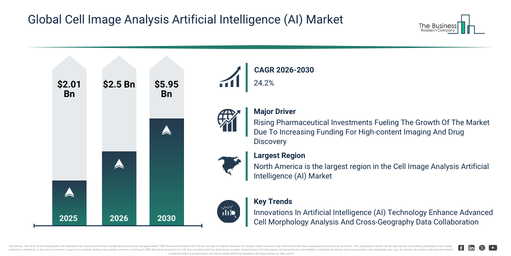
    The cell image analysis artificial intelligence (AI) market size has expanded significantly in recent years. It is projected to increase from $2.01 billion in 2025 to $2.5 billion in 2026, achieving a compound annual growth rate (CAGR) of 24.0%. This growth in the historic period can be attributed to several factors including intensified research in cell biology and molecular imaging, a heightened demand for drug discovery automation, the increasing integration of machine learning in life sciences, the proliferation of diagnostic laboratories, and greater investments in academic research institutes.

    The cell image analysis artificial intelligence (AI) market is projected to experience rapid expansion in the coming years, with expectations to reach a valuation of $5.95 billion by 2030, demonstrating a compound annual growth rate (CAGR) of 24.2%. This growth during the forecast period can be primarily attributed to the increasing adoption of personalized medicine applications, the greater integration of AI within diagnostic workflows, the rising embrace of cloud-based platforms, the expansion of high-throughput screening techniques, and the growing application of predictive analytics in pharmaceutical research. Significant trends anticipated over this period include the increased deployment of GPU-enabled workstations for image analysis, a surge in the use of multiplex and high-content imaging analytics, the development of more cloud-based cell image analysis platforms, the broadening of automated quality control and validation services, and an escalating demand for technical consulting and AI model training support.

    Get A Free Sample Report With In-Depth Market Insights:

    https://thebusinessresearchcompany.com/sample_request?id=69652213&type=smp&name=Cell%20Image%20Analysis%20Artificial%20Intelligence%20%28AI%29%20Market%20Report%202026&utm_source=Blogs&utm_medium=Paid&utm_campaign=Oct_PR

    Cell Image Analysis Artificial Intelligence (AI) Market Growth Factors Behind Sustained Expansion

    Increased financial commitments within the pharmaceutical sector are anticipated to boost the expansion of the cell image analysis artificial intelligence (AI) market in the future. Pharmaceutical investments involve capital deployment by firms, public bodies, and individuals into areas such as drug discovery, clinical trials, production, and cutting-edge research technologies, all aimed at creating novel treatments and enhancing health results. The primary driver behind the uptick in pharmaceutical funding is the escalating worldwide prevalence of chronic and intricate illnesses, necessitating an ongoing evolution of novel and more potent therapeutic solutions. These pharmaceutical expenditures support cell image analysis AI by financing high-content imaging systems, robust data infrastructure, and the creation of AI tools crucial for expediting drug discovery processes, conducting phenotypic screening, and generating profound cellular insights. As an illustration, the International Federation of Pharmaceutical Manufacturers & Associations (IFPMA), a global industry organization based in Switzerland that represents research-driven pharmaceutical entities, reported in February 2025 that the leading 50 pharmaceutical firms together invested around USD 167 billion in research and development in 2022. This spending is forecasted to increase by 6.7% annually, exceeding USD 200 billion by 2025. Consequently, the expanding financial commitments within the pharmaceutical sector are stimulating the growth of the cell image analysis artificial intelligence (AI) market.

    Cell Image Analysis Artificial Intelligence (AI) Market Segment Analysis Spotlighting Growth Areas

    The cell image analysis artificial intelligence (AI) market covered in this report is segmented –

    1) By Component: Software, Hardware, Services

    2) By Deployment Mode: On-Premises, Cloud

    3) By Application: Drug Discovery, Disease Diagnosis, Cell Classification, Image Segmentation, Other Applications

    4) By End-User: Pharmaceutical And Biotechnology Companies, Academic And Research Institutes, Hospitals And Diagnostic Laboratories, Other End-Users

    Subsegments:

    1) By Hardware: Robot Arms and Manipulators, Collaborative Robots (Cobots), End-Effectors and Grippers, Sensors and Perception Hardware, Actuators and Drives, Machine Vision Systems, Controllers and PLCs, AGVs and AMRs, Safety Systems and Fencing, Power and Cabling Infrastructure

    2) By Software: Robot Operating Systems and Firmware, Simulation and Digital-Twin Software, Motion Planning and Path Optimization, AI and Machine Learning Software, Vision and Perception Software, Cell and Fleet Management Software, MES or ERP Integration Software, Predictive Maintenance and Analytics, Cybersecurity Software, Low-Code or No-Code Programming Tools

    3) By Services: System Design and Engineering, Integration and Commissioning, Maintenance and Field Support, Training and Skill Development, Retrofit and Modernization Services, Custom Application Development, Robotics-as-a-Service (RaaS), Validation and Testing Services, Consulting and ROI Analysis, R&D and Co-innovation Services

    Cell Image Analysis Artificial Intelligence (AI) Market Industry Trends Fueling Future Revenue Growth

    Companies operating within the cell image analysis artificial intelligence (AI) market are concentrating on developing image analysis solutions, such as cloud-hosted AI-driven microscopy data platforms. These initiatives aim to facilitate the scalable processing of extensive microscopy datasets and deliver accurate, real-time cellular insights swiftly to laboratories and research centers. Cloud-hosted AI-driven microscopy data platforms are defined as online systems that leverage artificial intelligence to store, process, and analyze large volumes of microscopy images. This enables remote access, scalable computing power, and collaborative analysis without the constraints of local hardware. For example, in June 2025, ThinkCyte, a Japan-based biotechnology company, launched MorphoScan Cloud. This cloud-based platform is dedicated to AI-driven cell morphology data analysis and expands the capabilities of its VisionSort morphometric cell analysis system. It achieves this by providing secure cloud storage, enabling cross-geography data sharing, and offering access to advanced analytical tools powered by deep learning for both supervised and unsupervised insights. MorphoScan Cloud’s architecture integrates scalable cloud computing, built-in AI algorithms, and collaborative functionalities to streamline workflows, cut down processing times, and empower research teams to extract deeper biological understanding from complex cellular data, unhindered by local hardware limitations. Its applications include drug discovery, disease research, and cytometric studies.

    Cell Image Analysis Artificial Intelligence (AI) Market Competitive Analysis Of Leading Industry Participants

    Major companies operating in the cell image analysis artificial intelligence (AI) market are Danaher Corporation, Carl Zeiss AG, Lunit Inc, Deciphex Limited, OptraScan Inc, Proscia Inc, Deepcell Inc, Aignostics GmbH, Visiopharm A S, Indica Labs Inc, Ibex Medical Analytics Ltd, Deep Bio Inc, NucleAI Ltd, Reveal Biosciences Inc, TissueGnostics GmbH, ariadne AI AG, Vuno Inc, HistoIndex Pte Ltd, Aiforia Technologies Plc, and KOLAIDO GmbH.

    View The Full Cell Image Analysis Artificial Intelligence (AI) Market Report:

    https://thebusinessresearchcompany.com/report/cell-image-analysis-artificial-intelligence-ai-market-report?utm_source=Blogs&utm_medium=Paid&utm_campaign=Oct_PR

    Cell Image Analysis Artificial Intelligence (AI) Market Geographic Spread And Regional Opportunities

    North America was the largest region in the cell image analysis artificial intelligence (AI) market in 2025. Asia-Pacific is expected to be the fastest-growing region in the forecast period. The regions covered in the cell image analysis artificial intelligence (AI) market report are Asia-Pacific, South East Asia, Western Europe, Eastern Europe, North America, South America, Middle East, Africa.

    Reach Out To Our Team:

    The Business Research Company: https://www.thebusinessresearchcompany.com/

    Americas: +1 310-496-7795

    Asia: +44 7882 955267 & +91 8897263534

    Europe: +44 7882 955267

    Email us at: marketing@tbrc.info

    Follow us on:

    LinkedIn: https://in.linkedin.com/company/the-business-research-company

    YouTube: https://www.youtube.com/channel/UC24_fI0rV8cR5DxlCpgmyFQ

    Global Market Model: https://www.thebusinessresearchcompany.com/global-market-model