Blog

  • Microscopic Eye Surgery Robot Market Size Reaches $2.48 Billion In 2026: What Is Driving Growth?

    Microscopic Eye Surgery Robot Market Size Reaches $2.48 Billion In 2026: What Is Driving Growth?

    Featuring market attractiveness scoring, total addressable market sizing, company benchmarking matrices, interactive Excel dashboards, deeper supply chain intelligence, emerging startup tracking, and granular product-level insights, The Business Research Company’s 2026 market reports are built to deliver research that is both more actionable and more strategically valuable.

    Microscopic Eye Surgery Robot Market Expansion Outlook: What Revenue Opportunities Are Ahead?

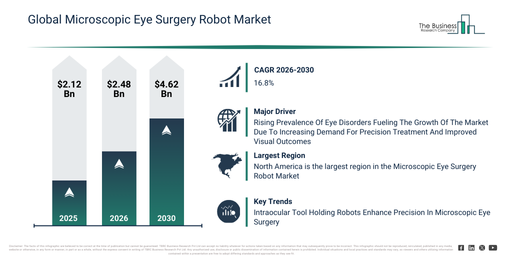
    The market for microscopic eye surgery robots has expanded quickly in recent years. This market is set to expand from $2.12 billion in 2025 to $2.48 billion in 2026, achieving a compound annual growth rate (CAGR) of 17.1%. Historically, this market’s expansion can be linked to a rise in ophthalmic surgical procedures, an increasing prevalence of retinal and cataract conditions, a growing need for precision in microsurgeries, wider adoption of minimally invasive eye operations, and greater understanding of surgical accuracy and safety.

    The microscopic eye surgery robot market is projected for significant expansion over the coming years. Its valuation is anticipated to reach $4.62 billion by 2030, exhibiting a compound annual growth rate (CAGR) of 16.8%. This projected expansion is driven by factors such as the increasing incorporation of AI into robotic surgery, rising investments in ophthalmic robotics research and development, the growing uptake of automated surgical platforms, broader availability of advanced intraocular imaging systems, and a heightened need for micrometer-precision robotic tools. Key developments expected during this period involve technological improvements in micro-robotic instrumentation, novel AI-powered systems for ophthalmic decision support, advancements in haptic feedback and tremor-elimination robotics, extensive research into remote and tele-robotic eye procedures, and the integration of real-time imaging analytics to guide autonomous surgeries.

    Get A Free Sample Report With In-Depth Market Insights:

    https://thebusinessresearchcompany.com/sample_request?id=31706542&type=smp&name=Microscopic%20Eye%20Surgery%20Robot%20Market%20Report%202026&utm_source=Blogs&utm_medium=Paid&utm_campaign=Oct_PR

    Microscopic Eye Surgery Robot Market Growth Catalysts And Demand Drivers

    The increasing occurrence of eye conditions is anticipated to drive the expansion of the microscopic eye surgery robot market in the future. These disorders are defined as health issues impacting the eye’s structure or function, resulting in vision impairment or loss. The surge in eye disorder prevalence is primarily attributed to an expanding aging demographic, given that age-associated deterioration of eye tissues elevates the likelihood of such conditions. Microscopic eye surgery robots assist in treating eye disorders by offering extremely precise, stable, and controlled motions during intricate eye operations. These robots enhance patient results through improved surgical exactness, fewer complications, and quicker visual recuperation. As an illustration, in May 2024, the Centers for Disease Control and Prevention, a US public health organization, reported that over 3 million Americans suffer from glaucoma. This figure is projected to increase to 6.3 million by 2050, driven by the aging population, with glaucoma imposing an annual cost of $2.86 billion on the United States economy through direct expenses and lost productivity. Consequently, the increasing incidence of eye disorders is fueling the expansion of the microscopic eye surgery robot market.

    Microscopic Eye Surgery Robot Market Segment Analysis Spotlighting Growth Areas

    The microscopic eye surgery robot market covered in this report is segmented –

    1) By Product Type: Vitreoretinal Surgery Robots, Cataract Surgery Robots, Corneal Surgery Robots, Glaucoma Surgery Robots, Refractive Surgery Robots

    2) By Technology: Fully Automated Robotic Systems, Semi-Automated Robotic Platforms, Robotic-Assisted Manual Systems, AI-Powered Robotic Solutions

    3) By Application: Retinal Detachment Surgery, Diabetic Retinopathy Treatment, Age-Related Macular Degeneration Surgery, Cataract Removal Procedures, Glaucoma Surgery, Corneal Transplantation, Epiretinal Membrane Removal, Vitreous Hemorrhage Treatment

    4) By End-User: Hospitals And Medical Centers, Ambulatory Surgical Centers, Specialty Eye Clinics, Academic And Research Institutions, Government Healthcare Facilities

    Subsegments:

    1) By Vitreoretinal Surgery Robots: Retinal Membrane Peeling Robots, Vitrectomy Assistance Robots, Retinal Laser Photocoagulation Robots, Intraocular Injection Assistance Robots

    2) By Cataract Surgery Robots: Lens Fragmentation Robots, Capsulotomy Assistance Robots, Intraocular Lens Positioning Robots, Phacoemulsification Assistance Robots

    3) By Corneal Surgery Robots: Corneal Transplantation Robots, Corneal Incision Assistance Robots, Corneal Suturing Robots, Keratoplasty Assistance Robots

    4) By Glaucoma Surgery Robots: Trabeculectomy Assistance Robots, Aqueous Shunt Implantation Robots, Canaloplasty Assistance Robots, Minimally Invasive Glaucoma Surgery Robots

    5) By Refractive Surgery Robots: Laser Vision Correction Robots, Corneal Refractive Mapping Robots, Corneal Reshaping Robots, Astigmatism Correction Robots

    Microscopic Eye Surgery Robot Market Trends Shaping Long-Term Demand

    Leading companies operating in the microscopic eye surgery robot market are prioritizing the development of advanced products, such as intraocular tool holding robots, with the goal of boosting surgical precision, enhancing surgeon capabilities, and reducing physical strain and operational complexity. These intraocular tool holding robots are sophisticated robotic systems for eye surgery designed to automatically or semi-automatically grasp and maneuver tools like illumination devices or endoscopes within the confined space of the eye. For example, in April 2023, RIVERFIELD Inc., a Japan-based medical device company, launched OQrimo, a surgical ophthalmic assistance robot that securely holds intraocular tools, thereby freeing both of a surgeon’s hands. It incorporates an intuitive touch panel and footswitch controls, and delivers guided real-time intraoperative visualization during vitrectomy and other procedures. The system’s intuitive touch panel interface and foot switch facilitate control, while its endoscope screen displays a guide indicating the current viewing position for enhanced visibility. This robot is recognized as the world’s first ophthalmic assistant robot developed in Japan, with its initial clinical uses successfully confirming its appropriate function in actual surgical environments for medical professionals.

    Microscopic Eye Surgery Robot Market Top Companies Driving Competitive Growth

    Major companies operating in the microscopic eye surgery robot market are Alcon Inc., Intuitive Surgical Inc., Bausch + Lomb Corporation, Johnson & Johnson Vision Care Inc., Johns Hopkins University, Cambridge Consultants, Carl Zeiss Meditec AG, Lensar Inc., ForSight Robotics Ltd., Preceyes B.V., Ophthorobotics AG, AcuSurgical, Horizon Surgical Systems Inc., Mynutia, Horizon Surgical Systems Inc., AcuSurgical, Ophthorobotics AG, OQrimo, Riverfield, UCLA Ophthalmic Robotics

    View The Full Microscopic Eye Surgery Robot Market Report:

    https://thebusinessresearchcompany.com/report/microscopic-eye-surgery-robot-market-report?utm_source=Blogs&utm_medium=Paid&utm_campaign=Oct_PR

    Microscopic Eye Surgery Robot Market Global Footprint: Which Region Leads The Industry?

    North America was the largest region in the microscopic eye surgery robot market in 2025. Asia-Pacific is expected to be the fastest-growing region in the forecast period. The regions covered in the microscopic eye surgery robot market report are Asia-Pacific, South East Asia, Western Europe, Eastern Europe, North America, South America, Middle East, Africa.

    Reach Out To Our Team:

    The Business Research Company: https://www.thebusinessresearchcompany.com/

    Americas: +1 310-496-7795

    Asia: +44 7882 955267 & +91 8897263534

    Europe: +44 7882 955267

    Email us at: marketing@tbrc.info

    Follow us on:

    LinkedIn: https://in.linkedin.com/company/the-business-research-company

    YouTube: https://www.youtube.com/channel/UC24_fI0rV8cR5DxlCpgmyFQ

    Global Market Model: https://www.thebusinessresearchcompany.com/global-market-model

  • Verluma Market Growth Outlook From $ Billion In 2026 To $ Billion By 2030

    Verluma Market Growth Outlook From $ Billion In 2026 To $ Billion By 2030

    Built to provide research that’s more actionable and strategically valuable, The Business Research Company’s 2026 market reports include market attractiveness analysis, total addressable market sizing, company benchmarking matrices, interactive Excel dashboards, broader supply chain intelligence, emerging startup tracking, and in-depth product insights.

    Verluma Market Revenue Outlook: What CAGR Lies Ahead Through 2030?

    The historical expansion was primarily driven by significant progress in nuclear imaging technologies, a rising incidence of colorectal and solid tumors, enhanced access to radiopharmaceuticals, the broadening of oncology diagnostic infrastructure, and increasing clinical adoption of targeted imaging agents.

    The growth projected for the forecast period can be attributed to several factors, including the increasing demand for personalized cancer diagnostics, rising investments in nuclear medicine facilities, the expansion of companion diagnostics within oncology, the greater use of molecular imaging in cancer staging, and continuous innovation in radiolabeled antibody fragments.

    Key trends anticipated during the forecast period involve the growing adoption of targeted radiolabeled diagnostics, an increasing application of CEA-targeted imaging agents, a rising demand for tools designed for early cancer detection, the expansion of nuclear medicine imaging applications, and the strengthening integration of precision oncology diagnostics.

    Get A Free Sample Report With In-Depth Market Insights:

    https://thebusinessresearchcompany.com/sample_request?id=89941206&type=smp&name=Verluma%20Market%20Report%202026&utm_source=Blogs&utm_medium=Paid&utm_campaign=Oct_PR

    Verluma Market Demand Drivers Opening New Revenue Streams

    The growing occurrence of cancer is projected to stimulate the expansion of the verluma market. Cancer encompasses various diseases marked by unchecked proliferation and dissemination of abnormal cells, capable of invading adjacent tissues and potentially migrating to other body parts via blood and lymph systems. The heightened incidence of cancer stems from demographic aging, evolving lifestyles, and the global spread of risk factors. Verluma functions as a therapeutic device leveraging sophisticated technology, such as electromagnetic fields or other non-invasive approaches, to potentially aid in cancer management by targeting and disrupting malignant cell growth, fostering recovery, and augmenting the body’s reaction to other treatments. For example, in 2024, the American Cancer Society, a US-based non-profit cancer advocacy organization, reported approximately 313,510 new cases of breast cancer diagnoses, an increase from the 300,590 cases noted in 2023. Consequently, the rising cancer incidence is fueling the verluma market’s growth. The escalating need for diagnostic imaging procedures is anticipated to drive the expansion of the verluma market. Diagnostic imaging involves diverse medical methodologies employed to generate internal body visuals for clinical examination and medical interventions. The heightened requirement for these procedures is a result of the rising prevalence of chronic conditions, a greater emphasis on early diagnosis and proactive healthcare, and improved healthcare accessibility. Verluma enhances diagnostic imaging by boosting image quality through advanced algorithms, facilitating more precise identification and assessment of medical issues, and improving patient results. As an illustration, in November 2023, the National Health Service, a UK-based government department, reported that England registered 45.0 million imaging tests in the year concluding March 2023, indicating a 2.2% rise from the 44.0 million recorded in 2022. Thus, the increasing demand for diagnostic imaging procedures is propelling the verluma market’s growth.

    Verluma Market Segment Trends And Revenue Contributors

    The verluma market covered in this report is segmented –

    1) By Indication: Cancer, Non-Cancer

    2) By Distribution Channel: Hospital Pharmacies, Online Pharmacies

    3) By End User: Adult, Geriatric

    Verluma Market Competitive Landscape: Which Companies Lead The Industry?

    Major companies operating in the verluma market are Boehringer Ingelheim International GmbH

    View The Full Verluma Market Report:

    https://thebusinessresearchcompany.com/report/verluma-global-market-report?utm_source=Blogs&utm_medium=Paid&utm_campaign=Oct_PR

    Verluma Market Geographic Analysis: Where Is Demand Rising Fastest?

    North America was the largest region in the verluma market in 2025. The regions covered in the verluma market report are Asia-Pacific, Western Europe, Eastern Europe, North America, South America, Middle East, Africa.

    Reach Out To Our Team:

    The Business Research Company: https://www.thebusinessresearchcompany.com/

    Americas: +1 310-496-7795

    Asia: +44 7882 955267 & +91 8897263534

    Europe: +44 7882 955267

    Email us at: marketing@tbrc.info

    Follow us on:

    LinkedIn: https://in.linkedin.com/company/the-business-research-company

    YouTube: https://www.youtube.com/channel/UC24_fI0rV8cR5DxlCpgmyFQ

    Global Market Model: https://www.thebusinessresearchcompany.com/global-market-model
  • Mental Health Tech Market Trends Supporting 19.9% CAGR Growth Through 2030

    Mental Health Tech Market Trends Supporting 19.9% CAGR Growth Through 2030

    Featuring market attractiveness scoring, total addressable market sizing, company benchmarking matrices, interactive Excel dashboards, deeper supply chain intelligence, emerging startup tracking, and granular product-level insights, The Business Research Company’s 2026 market reports are built to deliver research that is both more actionable and more strategically valuable.

    Mental Health Tech Market Size Forecast: How Big Could The Market Get By 2030?

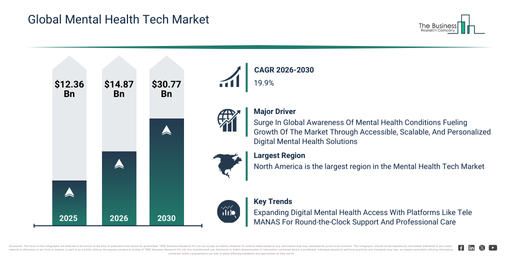
    The mental health technology market has experienced substantial expansion in recent years. Its value is expected to increase from $12.36 billion in 2025 to $14.87 billion in 2026, registering a compound annual growth rate (CAGR) of 20.2%. Historically, this market expansion can be linked to heightened recognition of mental health issues, increased embrace of digital therapy solutions, greater investment in health IT infrastructure for behavioral support, broader smartphone and internet penetration, and an intensified focus on employee well-being programs.

    The mental health tech market is projected to experience substantial expansion over the coming years, reaching a valuation of $30.77 billion in 2030, exhibiting a compound annual growth rate (CAGR) of 19.9%. This anticipated growth is driven by several factors, including the increasing need for tailored mental health support, the rising occurrence of stress and anxiety conditions, wider insurance provisions for online mental health services, the greater incorporation of mental health within primary healthcare, and expanding governmental programs promoting electronic mental health. Key developments expected during this period involve progress in AI-driven tools for mental health diagnosis and tracking, novel applications of VR- and AR-based therapies for exposure and relaxation, advances in wearable technology for ongoing mood surveillance, exploration into digital biomarkers for mental health, and the creation of compatible platforms to consolidate mental health data across various systems.

    Get A Free Sample Report With In-Depth Market Insights:

    https://thebusinessresearchcompany.com/sample_request?id=92837877&type=smp&name=Mental%20Health%20Tech%20Market%20Report%202026&utm_source=Blogs&utm_medium=Paid&utm_campaign=Oct_PR

    Mental Health Tech Market Expansion Drivers: What’s Shaping Future Growth?

    The growing worldwide understanding of mental health issues is projected to significantly contribute to the expansion of the mental health tech market in the coming years. Mental health awareness refers to the degree to which individuals, communities, healthcare systems, and governments acknowledge the prevalence, impact, and necessity for prompt identification and support for mental health conditions. This heightened awareness is propelled by broader public education initiatives, global advocacy campaigns, and coordinated observances aimed at reducing stigma and emphasizing mental health as a vital component of overall well-being. The mental health tech market aligns with this trend by offering accessible, scalable, and progressively personalized digital tools that enable individuals to recognize symptoms, seek early assistance, and engage with mental health services beyond traditional clinical settings. For example, in October 2024, according to the World Health Organization, a United Nations agency focused on global public health, World Mental Health Day was commemorated in over 150 countries, an increase from approximately 120 countries in 2023, indicating a substantial rise in global participation and institutional commitment to mental health awareness initiatives. Therefore, the increasing awareness of mental health conditions worldwide is driving the growth of the mental health tech market.

    Mental Health Tech Market Breakdown By Product Type And Application

    The mental health tech market covered in this report is segmented –

    1) By Component: Software, Hardware, Services

    2) By Deployment Mode: On-Premises, Cloud

    3) By Application: Teletherapy, Self-Help Apps, Mental Health Assessment Tools, VR Therapy, Other Applications

    4) By End-User: Hospitals, Clinics, Individuals, Other End-Users

    Subsegments:

    1) By Software: Clinical Information Systems, Non Clinical Information Systems, Artificial Intelligence Platforms, Data Management Tools, Analytics And Reporting Tools, Population Health Management Tools, Clinical Decision Support Systems

    2) By Hardware: Processors, Memory Devices, Network Equipment, Storage Devices, Sensors And Monitoring Devices

    3) By Services: Integration Services, Deployment Services, Maintenance Services, Managed Services, Training And Consulting Services

    Mental Health Tech Market Strategic Trends: What Defines The Next Growth Phase?

    Major companies operating in the mental health tech market are increasingly focusing on expanding digital mental health access through platforms such as Tele MANAS to deliver 24/7 support, self-care tools, and direct professional consultations via mobile and telephonic channels. Tele MANAS refers to a government-led digital mental health platform designed to provide accessible, confidential, and multilingual support, enabling individuals to connect with trained mental health professionals and access evidence-based stress management and self-care resources. For instance, in October 2024, the Government of India’s Ministry of Health and Family Welfare (MoHFW) launched the Tele MANAS mobile application, which offers self-care strategies, emergency guidance modules, and professional counseling through phone and video-based consultations. The platform supports more than 20 languages and has handled over 1.8 million calls since its inception, underscoring its role in improving mental health service accessibility across underserved and remote populations.

    Mental Health Tech Market Competitive Landscape: Which Companies Lead The Industry?

    Major companies operating in the mental health tech market are Lyra Health Inc., Headspace Inc., Charlie Health Inc., Talkspace Inc., Spring Care Inc., BetterUp Inc., Calm Inc., Modern Health Inc., SonderMind Inc., Unmind Ltd., Meru Health Inc., Woebot Labs Inc., KOA Health Digital Solutions Limited, Kaia Health Software Inc., Talkiatry Management Services LLC, Big Health Inc., Mental Fuel Inc., Wysa Ltd., Upheal Inc., Youper Inc.

    View The Full Mental Health Tech Market Report:

    https://thebusinessresearchcompany.com/report/mental-health-tech-market-report?utm_source=Blogs&utm_medium=Paid&utm_campaign=Oct_PR

    Mental Health Tech Market Regional Outlook: Where Is Opportunity Concentrated?

    North America was the largest region in the mental health tech market in 2025. Asia-Pacific is expected to be the fastest-growing region in the forecast period. The regions covered in the mental health tech market report are Asia-Pacific, South East Asia, Western Europe, Eastern Europe, North America, South America, Middle East, Africa.

    Reach Out To Our Team:

    The Business Research Company: https://www.thebusinessresearchcompany.com/

    Americas: +1 310-496-7795

    Asia: +44 7882 955267 & +91 8897263534

    Europe: +44 7882 955267

    Email us at: marketing@tbrc.info

    Follow us on:

    LinkedIn: https://in.linkedin.com/company/the-business-research-company

    YouTube: https://www.youtube.com/channel/UC24_fI0rV8cR5DxlCpgmyFQ

    Global Market Model: https://www.thebusinessresearchcompany.com/global-market-model
  • Veopoz Market Forecast To Reach $ Billion By 2030: Key Growth Drivers And Industry Trends

    Veopoz Market Forecast To Reach $ Billion By 2030: Key Growth Drivers And Industry Trends

    Backed by market attractiveness analysis, total addressable market sizing, company benchmarking matrices, interactive Excel dashboards, wider supply chain intelligence, emerging startup coverage, and detailed product-level insights, The Business Research Company’s 2026 market reports are designed to offer research that is more actionable and strategically valuable than ever.

    Veopoz Market Growth Analysis: How Will Revenue Trend Over The Forecast Period?

    Historical expansion stemmed from an enhanced comprehension of complement-related disorders, the accessibility of platforms for monoclonal antibody engineering, the broadening of orphan drug development initiatives, a greater frequency in diagnosing ultra-rare immune conditions, and encouraging regulatory support for therapies targeting rare diseases.

    The expansion observed during the forecast period is attributable to the proliferation of personalized immunotherapy approaches, increased investments in complement biology research, the widening adoption of precision medicine in rare diseases, enhanced healthcare spending on orphan drugs, and advancements in next-generation biologics manufacturing. Noteworthy trends throughout this period encompass the broadening use of complement inhibitors in rare diseases, a growing focus on targeted monoclonal antibody therapies, an increasing clinical emphasis on complement pathway modulation, the rising uptake of precision diagnostics for rare disorders, and strengthening regulatory support for orphan drugs.

    Get A Free Sample Report With In-Depth Market Insights:

    https://thebusinessresearchcompany.com/sample_request?id=15479896&type=smp&name=Veopoz%20Market%20Report%202026&utm_source=Blogs&utm_medium=Paid&utm_campaign=Oct_PR

    Veopoz Market Growth Backed By Core Demand Fundamentals

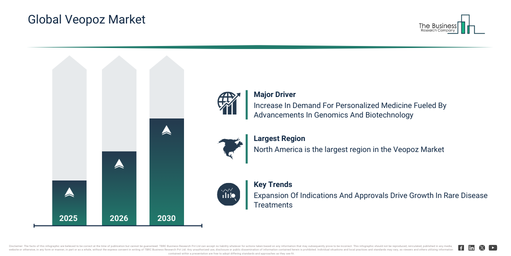
    The rising demand for individualized medicine is anticipated to propel the expansion of the veopoz market in the future. Personalized medicine, also known as precision medicine, represents a medical strategy that customizes treatment and healthcare decisions to align with each patient’s unique characteristics. This demand is fueled by advancements in genomics and biotechnology, which facilitate more targeted and effective treatments, leading to improved patient outcomes and minimized side effects. Veopoz (Pozelimab-bbfg) contributes as a personalized medicine by selectively targeting and inhibiting complement factor C5 activation, allowing for tailored treatment based on individual patient profiles, genetic factors, and disease severity in complement-mediated conditions. For instance, in February 2024, the Personalized Medicine Coalition (PMC), a US-based healthcare organization promoting understanding and adoption of personalized medicine concepts, reported that in 2023, personalized medicines comprised over one-third of Food and Drug Administration (FDA) drug approvals for the fourth consecutive year. This total included 16 new treatments for rare diseases, which was more than double the six approved in 2022. Thus, the escalating demand for personalized medicine is a key driver for the veopoz market’s growth.

    Veopoz Market Segment Analysis Spotlighting Growth Areas

    The veopoz market covered in this report is segmented –

    1) By Indication: Gastrointestinal Symptoms, Hypoalbuminemia, Edema, Hypogammaglobulinemia, Malnutrition

    2) By Distribution Channel: Hospital Pharmacies, Retail Pharmacies, Online Pharmacies

    3) By End User: Adult Patients, Pediatric Patients

    Veopoz Market Growth Trends Reshaping The Competitive Landscape

    A primary trend within the veopoz market involves broadening approvals for additional indications, thereby extending the drug’s market penetration and therapeutic uses. This expansion of approved indications is expected to enable the company to cater to a wider patient demographic and augment its share in the biologics and immunology sector. As an illustration, in August 2023, Regeneron Pharmaceuticals Inc., a US-based biotechnology firm, obtained Food and Drug Administration (FDA) approval for Veopoz, designating it as the initial therapy for CHAPLE disease, an ultra-rare inherited condition impacting adults and children from one year of age and above. Veopoz functions as a fully human monoclonal antibody, engineered precisely to target complement factor C5, with the objective of modulating this hyperactive immune response. This approval represents a notable achievement for Regeneron Pharmaceuticals, marking their tenth FDA-approved medication, and concurrently resolves crucial pre-approval inspection concerns concerning an unrelated product.

    Veopoz Market Leading Companies: Who Holds The Strongest Market Presence?

    Major companies operating in the veopoz market are Regeneron Pharmaceuticals Inc.

    View The Full Veopoz Market Report:

    https://thebusinessresearchcompany.com/report/veopoz-global-market-report?utm_source=Blogs&utm_medium=Paid&utm_campaign=Oct_PR

    Veopoz Market Global Footprint: Which Region Leads The Market?

    North America was the largest region in the veopoz market in 2025. The regions covered in the veopoz market report are Asia-Pacific, Western Europe, Eastern Europe, North America, South America, Middle East, Africa.

    Reach Out To Our Team:

    The Business Research Company: https://www.thebusinessresearchcompany.com/

    Americas: +1 310-496-7795

    Asia: +44 7882 955267 & +91 8897263534

    Europe: +44 7882 955267

    Email us at: marketing@tbrc.info

    Follow us on:

    LinkedIn: https://in.linkedin.com/company/the-business-research-company

    YouTube: https://www.youtube.com/channel/UC24_fI0rV8cR5DxlCpgmyFQ

    Global Market Model: https://www.thebusinessresearchcompany.com/global-market-model

  • Medical Release Liner Market Forecast Highlights A $3.94 Billion Opportunity For Industry Participants

    Medical Release Liner Market Forecast Highlights A $3.94 Billion Opportunity For Industry Participants

    Built to provide research that’s more actionable and strategically valuable, The Business Research Company’s 2026 market reports include market attractiveness analysis, total addressable market sizing, company benchmarking matrices, interactive Excel dashboards, broader supply chain intelligence, emerging startup tracking, and in-depth product insights.

    Medical Release Liner Market Revenue Outlook: What CAGR Lies Ahead Through 2030?

    The medical release liner market size has experienced robust growth in recent years. It is forecast to expand from $2.86 billion in 2025 to $3.06 billion in 2026, achieving a compound annual growth rate (CAGR) of 6.8%. This historical growth can be attributed to factors such as the expanding healthcare industry and medical device manufacturing, the increased uptake of silicone-coated and film-based liners, a surging demand for single-use and disposable medical products, the broadening scope of pharmaceutical and drug delivery applications, and stricter regulatory standards concerning sterility and quality.

    The medical release liner market is anticipated to experience robust expansion in the coming years. Its valuation is set to reach $3.94 billion in 2030, driven by a compound annual growth rate (CAGR) of 6.5%. Factors contributing to this growth during the forecast period include the increasing uptake of multi-layer and specialized liners, heightened investments in healthcare infrastructure within developing markets, an expanding need for high-precision adhesive uses, a sharpened focus on patient safety and product dependability, and broadened research and development efforts in sophisticated liner materials. Key trends anticipated for this period encompass improvements in silicone and polymer coatings, the evolution of multi-layer and specialty liners, the incorporation of automated production and precise coating systems, ongoing research and development into biocompatible and antimicrobial liners, and pioneering solutions in sustainable and recyclable liner technology.

    Get A Free Sample Report With In-Depth Market Insights:

    https://thebusinessresearchcompany.com/sample_request?id=53255907&type=smp&name=Medical%20Release%20Liner%20Market%20Report%202026&utm_source=Blogs&utm_medium=Paid&utm_campaign=Oct_PR

    Medical Release Liner Market Development Factors: What’s Supporting Demand?

    A future expansion of the medical release liner market is anticipated, driven by a rise in the number of surgical procedures performed. This surge in surgical procedures signifies an elevated count of both invasive and non-invasive medical interventions carried out to address various injuries, illnesses, and physical anomalies. Improved surgical methodologies coupled with an expanding elderly demographic are fueling this growth in surgical volumes, creating a demand for dependable and sterile medical provisions essential for optimal patient management. Medical release liners are instrumental in developing effective wound care products, as they safeguard the adhesive surface of surgical dressings and transdermal patches prior to use, thereby preserving sterility and facilitating simple application. For example, data from December 2024 released by the UK Health Security Agency, a government body in the UK dedicated to public health, indicated that 135,619 surgical operations were recorded for surveillance during the financial year 2023 to 2024, marking an 8.4% increase compared to the financial year 2022 to 2023. Additionally, operations under mandatory orthopaedic surveillance saw a 7.3% rise (from 102,027 operations to 109,491 operations), and operations under voluntary surveillance grew by 13.3% (from 23,070 operations to 26,128 operations). Consequently, the expanding volume of surgical procedures is a key impetus behind the growth experienced by the medical release liner market.

    Medical Release Liner Market Segment Analysis And Revenue Potential

    The medical release liner market covered in this report is segmented –

    1) By Type Of Material: Polyethylene, Polypropylene, Paper, Silicone, Other Type Of Materials

    2) By Release Coating Type: Silicone Coated, Polymer Coated, Foil Coated, Other Release Coating Types

    3) By Substrate Material: Paper-Based Liners, Film-Based Liners, Foil-Based Liners, Composite And Multi-layer Liners

    4) By Distribution Channel: Direct Sales To Medical Device Oems, Distribution Via Converters And Formulators, Sales Through Raw Material Distributors

    5) By End-User Industry: Healthcare, Food And Beverage, Electronics, Automotive, Other End-user Industrys

    Subsegments:

    1) By Polyethylene: Low Density Polyethylene, High Density Polyethylene, Linear Low Density Polyethylene, Cross-Linked Polyethylene, Co-Extruded Polyethylene

    2) By Polypropylene: Homopolymer Polypropylene, Random Copolymer Polypropylene, Block Copolymer Polypropylene, Filled Polypropylene, Oriented Polypropylene

    3) By Paper: Kraft Paper, Glassine Paper, Coated Paper, Laminated Paper, Specialty Paper

    4) By Silicone: Silicone Coated Paper, Silicone Coated Film, Medical Grade Silicone, Liquid Silicone Coating, High Temperature Silicone

    5) By Other Type Of Materials: Polyester (PET), Polyvinyl Chloride (PVC), Polyamide (PA), Fluoropolymer-Based Liners

    Medical Release Liner Market Transformation Trends: What Innovations Are Driving Change?

    Companies operating within the medical release liner market are increasingly concentrating on the development of sophisticated products, such as comprehensive data-integrated health platforms, to enhance treatment personalization, improve patient outcomes, and mitigate healing time and complications. These comprehensive data-integrated health platforms represent advanced digital systems capable of analyzing and correlating multiple streams of individual health data, providing customized nutritional and lifestyle guidance to optimize the body’s intrinsic healing processes. For example, in September 2024, InsideTracker, a US-based personalized health analytics company, introduced Nutrition DeepDive. This detailed food and supplement tracker evaluates an individual’s nutrition by considering their unique blood biomarkers, genetic data, and information from fitness trackers. While not a direct therapeutic intervention, this platform exemplifies the advanced, holistic data integration that is crucial for contemporary regenerative health strategies. By synthesizing these diverse data sets, it delivers personalized insights into dietary requirements and supplement regimens that can bolster systemic health, including factors essential for optimal wound healing such as inflammation control, immune function, and protein synthesis. This capability allows for precise, data-driven lifestyle interventions that can complement and enhance existing regenerative wound care protocols, ultimately aiming to improve recovery efficiency and long-term skin health for patients.

    Medical Release Liner Market Competitive Landscape: Who Leads The Industry?

    Major companies operating in the medical release liner market are Avery Dennison Corp., Mondi Group, Huhtamaki Oyj, AHLstrom Oyj, Lintec Corporation, UPM Raflatac Inc., Felix Schoeller Group, Loparex LLC, Flexcon Company Inc., ITASA, Twin Rivers Paper Company, Acucote Inc., Laufenberg GmbH, The Griff Network, Siliconature Corp., CoreTech Films, Advanced Coated Products Ltd., Xinfeng Group, Celestik Inc., Papertec Inc., Anhui Guangtai Group, Fox River Associates LLC, Brentwood Plastic Inc.

    View The Full Medical Release Liner Market Report:

    https://thebusinessresearchcompany.com/report/medical-release-liner-market-report?utm_source=Blogs&utm_medium=Paid&utm_campaign=Oct_PR

    Medical Release Liner Market Geographic Landscape: Which Region Leads Industry Growth?

    North America was the largest region in the medical release liner market in 2025. Asia-Pacific is expected to be the fastest-growing region in the forecast period. The regions covered in the medical release liner market report are Asia-Pacific, South East Asia, Western Europe, Eastern Europe, North America, South America, Middle East, Africa.

    Reach Out To Our Team:

    The Business Research Company: https://www.thebusinessresearchcompany.com/

    Americas: +1 310-496-7795

    Asia: +44 7882 955267 & +91 8897263534

    Europe: +44 7882 955267

    Email us at: marketing@tbrc.info

    Follow us on:

    LinkedIn: https://in.linkedin.com/company/the-business-research-company

    YouTube: https://www.youtube.com/channel/UC24_fI0rV8cR5DxlCpgmyFQ

    Global Market Model: https://www.thebusinessresearchcompany.com/global-market-model
  • Vectibix (panitumumab) Market Research 2026: Market Size, Trends, Segments And Growth Forecast

    Vectibix (panitumumab) Market Research 2026: Market Size, Trends, Segments And Growth Forecast

    Featuring market attractiveness scoring, total addressable market sizing, company benchmarking matrices, interactive Excel dashboards, deeper supply chain intelligence, emerging startup tracking, and granular product-level insights, The Business Research Company’s 2026 market reports are built to deliver research that is both more actionable and more strategically valuable.

    Vectibix (panitumumab) Market Forecast: What Value Will The Market Reach By 2030?

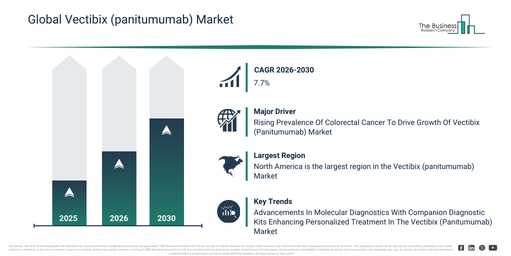
    The Vectibix (panitumumab) market has demonstrated strong expansion in recent years. Projections indicate it will advance from $1.37 million in 2025 to $1.48 million in 2026, achieving a compound annual growth rate (CAGR) of 8.0%. This growth during the historic period can be linked to its approval for metastatic colorectal cancer, proven efficacy in EGFR inhibition, widespread adoption by oncology specialists, a rise in colorectal cancer incidence, and ongoing advancements in targeted cancer drugs.

    The market size for vectibix (panitumumab) is anticipated to experience substantial growth in the upcoming years, projected to reach $2 million by 2030, at a compound annual growth rate (CAGR) of 7.7%. This expansion during the forecast period can be attributed to factors such as the increasing adoption of precision medicine, improvements in cancer diagnostics, the extension into new cancer therapies, a rise in oncology healthcare spending, and refined patient stratification. Significant trends over the forecast period encompass an enhanced utilization of targeted EGFR therapies, the broadening scope of precision oncology treatments, a growing reliance on biomarker-based patient selection, the uptake of hospital-based monoclonal antibodies, and the application of combination therapy in advanced cancers.

    Get A Free Sample Report With In-Depth Market Insights:

    https://thebusinessresearchcompany.com/sample_request?id=23220502&type=smp&name=Vectibix%20%28panitumumab%29%20Market%20Report%202026&utm_source=Blogs&utm_medium=Paid&utm_campaign=Oct_PR

    Vectibix (panitumumab) Market Growth Catalysts And Demand Drivers

    The growing incidence of colorectal cancer is projected to boost the expansion of the vectibix (panitumumab) market moving forward. Colorectal cancer originates in the colon or rectum, commonly developing from precancerous polyps. The increased occurrence of colorectal cancer is attributed to unhealthy lifestyle habits, as factors like poor diet, insufficient exercise, and obesity elevate the risk of polyp formation and subsequent cancer development. Vectibix (panitumumab) operates as a monoclonal antibody designed to target and inhibit the epidermal growth factor receptor (EGFR), which helps in slowing tumor growth and progression in patients with wild-type KRAS tumors. This offers an effective therapeutic choice for those who have not responded to conventional chemotherapy. For instance, in February 2025, the American Cancer Society, a US-based nonprofit organization, estimated 154,270 new colorectal cancer cases, an increase from 152,810 cases in 2024. Therefore, the rising prevalence of colorectal cancer is anticipated to drive the growth of the vectibix (panitumumab) market.

    Vectibix (panitumumab) Market Segment Performance And Emerging Opportunities

    The vectibix (panitumumab) market covered in this report is segmented –

    1) By Distribution Channel: Hospital Pharmacies, Online Pharmacies

    2) By Application: Colorectal Cancer Treatment, Other Cancer Treatments

    3) By End-User: Hospitals, Clinics, Ambulatory Surgical Centers

    Vectibix (panitumumab) Market Trends Shaping Long-Term Demand

    Leading companies in the vectibix (panitumumab) market are concentrating on developing advanced companion diagnostics to facilitate targeted therapies, enhance treatment effectiveness, and ensure patient safety. Companion diagnostics are tests that provide crucial information for the safe and efficient use of a corresponding therapeutic product. As an illustration, in October 2023, EntroGen Inc., a US-based biotechnology company, obtained U.S. Food and Drug Administration (FDA) approval for its CRCdx RAS Mutation Detection Kit, designated as a companion diagnostic for Vectibix (panitumumab). The CRCdx RAS mutation detection kit is a distinct molecular diagnostic instrument that signifies a considerable leap forward in precision medicine for colorectal cancer (CRC) patients. It holds the distinction of being the first real-time PCR-based test in the U.S. to secure premarket approval (PMA) and fully meet the biomarker identification stipulation for Vectibix. This innovative kit is engineered to accurately detect mutations in KRAS and NRAS exons 2, 3, and 4, offering superior sensitivity and specificity. It allows clinicians to efficiently pinpoint patients most likely to benefit from vectibix therapy, thereby minimizing unnecessary side effects and treatment costs.

    Vectibix (panitumumab) Market Key Players: Which Companies Lead Industry Competition?

    Major companies operating in the vectibix (panitumumab) market are Amgen Inc.

    View The Full Vectibix (panitumumab) Market Report:

    https://thebusinessresearchcompany.com/report/vectibix-panitumumab-global-market-report?utm_source=Blogs&utm_medium=Paid&utm_campaign=Oct_PR

    Vectibix (panitumumab) Market Regional Split: Which Areas Are Fueling Growth?

    North America was the largest region in the vectibix (panitumumab) market in 2025. Asia-Pacific is expected to be the fastest-growing region in the forecast period. The regions covered in the vectibix (panitumumab) market report are Asia-Pacific, Western Europe, Eastern Europe, North America, South America, Middle East, Africa.

    Reach Out To Our Team:

    The Business Research Company: https://www.thebusinessresearchcompany.com/

    Americas: +1 310-496-7795

    Asia: +44 7882 955267 & +91 8897263534

    Europe: +44 7882 955267

    Email us at: marketing@tbrc.info

    Follow us on:

    LinkedIn: https://in.linkedin.com/company/the-business-research-company

    YouTube: https://www.youtube.com/channel/UC24_fI0rV8cR5DxlCpgmyFQ

    Global Market Model: https://www.thebusinessresearchcompany.com/global-market-model

  • Medical Microfluidic Devices Market Analysis: How The Industry Is Evolving Toward A $12.79 Billion Future

    Medical Microfluidic Devices Market Analysis: How The Industry Is Evolving Toward A $12.79 Billion Future

    Backed by market attractiveness analysis, total addressable market sizing, company benchmarking matrices, interactive Excel dashboards, wider supply chain intelligence, emerging startup coverage, and detailed product-level insights, The Business Research Company’s 2026 market reports are designed to offer research that is more actionable and strategically valuable than ever.

    Medical Microfluidic Devices Market Growth Analysis: How Will Revenue Trend Over The Forecast Period?

    The market size for medical microfluidic devices has shown rapid growth in recent years. It is anticipated to increase from $6.35 billion in 2025 to $7.32 billion in 2026, at a compound annual growth rate (CAGR) of 15.3%. Historically, this growth has been driven by the increasing adoption of point-of-care diagnostics, the growing use of lab-on-a-chip in research laboratories, rising demand for microfluidic-based clinical testing, the expansion of pharmaceutical and biotech research and development applications, and the increasing utilization of polymer-based microfluidic materials.

    The medical microfluidic devices market is set to experience substantial expansion over the next few years, with its size projected to reach $12.79 billion by 2030, growing at a compound annual growth rate (CAGR) of 15.0%. This growth during the forecast period is primarily driven by the increasing demand for personalized medicine and organ-on-chip models, the expanding integration of microfluidics into decentralized and home diagnostics, the rising adoption of microfluidic platforms for monitoring infectious diseases, the broader application of microfluidics in high-throughput drug screening, and the increasing penetration of these devices in emerging healthcare markets. Significant trends expected in this period include technological advancements in integrated lab-on-a-chip platforms, innovations in droplet-based and paper-based microfluidics, developments in miniaturized biosensors and detectors, extensive research and development in organ-on-chip and tissue engineering systems, and technological enhancements in automated and AI-enabled microfluidic analysis.

    Get A Free Sample Report With In-Depth Market Insights:

    https://thebusinessresearchcompany.com/sample_request?id=15762452&type=smp&name=Medical%20Microfluidic%20Devices%20Market%20Report%202026&utm_source=Blogs&utm_medium=Paid&utm_campaign=Oct_PR

    Medical Microfluidic Devices Market Industry Drivers: What’s Behind The Revenue Growth?

    The growing occurrence of long-term illnesses is projected to drive expansion in the medical microfluidic devices market in the future. These conditions are enduring health issues that typically advance gradually, including examples like diabetes, heart disease, and arthritis, frequently demanding continuous medical care and lifestyle adjustments to manage signs and avert further problems. The rise in chronic diseases is primarily attributed to unhealthy habits, such as inadequate nutrition, lack of exercise, and smoking, which elevate the susceptibility to ailments like diabetes, heart disease, and obesity. Medical microfluidic devices assist in managing chronic diseases by allowing for precise manipulation and analysis of minute fluid samples for continuous oversight and diagnosis. These devices enhance patient care through facilitating quick testing, customized treatment modifications, and less invasive long-term disease tracking. For instance, in June 2024, data from the National Health Service, a UK-based government department, showed that 3,615,330 individuals registered with a general practitioner (GP) were diagnosed with non-diabetic hyperglycemia or pre-diabetes (a condition with elevated blood sugar levels, not high enough to be classified as diabetes) in 2023, representing an 18% increase from 3,065,825 cases in 2022. Consequently, the expanding occurrence of chronic diseases is fueling the expansion of the medical microfluidic devices market.

    Medical Microfluidic Devices Market Segmentation And Category Overview

    The medical microfluidic devices market covered in this report is segmented –

    1) By Product Type: Lab-On-A-Chip (LOC) Systems, Microfluidic Chips And Cartridges, Droplet-Based Microfluidic Systems, Paper-Based Microfluidic Devices, Continuous-Flow Microfluidic Systems, Organ-On-A-Chip Platforms

    2) By Material: Glass, Polymer, Silicon, Metals, Ceramics

    3) By Application: Point-Of-Care Diagnostics, Drug Discovery And Development, Organ-On-Chip And Tissue Engineering, Infectious Disease Monitoring

    4) By End User: Hospitals And Diagnostic Clinics, Diagnostic And Research Laboratories, Pharmaceutical And Biotechnology Companies, Academic And Research Institutes, Home Care Settings

    Subsegments:

    1) By Lab-On-A-Chip Systems: Clinical Diagnostic Chips, Environmental Monitoring Chips, Biochemical Analysis Chips, Single-Cell Analysis Platforms

    2) By Microfluidic Chips And Cartridges: Point-Of-Care Diagnostic Cartridges, Sample Preparation Chips, Cell Culture And Assay Chips, Polymerase Chain Reaction Chips

    3) By Droplet-Based Microfluidic Systems: Water-In-Oil Emulsion Systems, Oil-In-Water Emulsion Systems, Digital Droplet Systems, High-Throughput Screening Platforms

    4) By Paper-Based Microfluidic Devices: Lateral Flow Assay Strips, Three-Dimensional Paper Networks, Multiplexed Detection Devices, Colorimetric Analysis Strips

    5) By Continuous-Flow Microfluidic Systems: Microreactor Systems, Cell Sorting And Separation Systems, Micromixer Devices, Chemical Synthesis Platforms

    6) By Organ-On-A-Chip Platforms: Liver-On-A-Chip Models, Lung-On-A-Chip Models, Heart-On-A-Chip Models, Multi-Organ System Models

    #Medical Microfluidic Devices Market Growth Trends: What’s Shaping The Future Outlook?

    Major companies in the medical microfluidic devices market are concentrating on developing advanced platforms, such as fully integrated microfluidic chip-based platforms, to streamline the creation of biopharmaceutical therapies utilized in renal care and other conditions. Fully integrated microfluidic chip-based platforms are defined as lab-on-a-chip systems that consolidate multiple laboratory functions—including sample preparation, fluid handling, reaction, separation, and detection—onto a single micro-scale chip. For instance, in June 2023, AB Sciex LLC, a US-based life science analytical technology company, unveiled the Intabio ZT system, which is the first fully-integrated microfluidic chip-based platform combining imaged capillary isoelectric focusing (icIEF) separation and UV detection. This platform is engineered to acquire comprehensive data on charge isoforms for biopharmaceuticals, incorporating seamless coupling with the ZenoTOF 7600 system. The solution also provides sophisticated data processing via Biologics Explorer software to unlock deeper insights into protein therapeutics, thereby accelerating the delivery of safe and effective biological treatments.

    Medical Microfluidic Devices Market Company Landscape And Competitive Strategy

    Major companies operating in the medical microfluidic devices market are Roche Diagnostics, Thermo Fisher Scientific Inc, Abbott Laboratories, Danaher Corporation, Agilent Technologies Inc., Illumina Inc., BioMérieux, PerkinElmer Inc., Bio-Rad Laboratories Inc., Fluidigm Corporation, Spectrum Fluidics, Biosurfit SA, Cellix Ltd., 3M Company, Dolomite Microfluidics, Micronit Microtechnologies B.V., Sphere Fluidics Ltd., BioFluidica Inc., uFluidix Inc., Elveflow, On-chip Biotechnologies, Achira Labs Pvt. Ltd., Akkonni Biosystems Inc.

    View The Full Medical Microfluidic Devices Market Report:

    https://thebusinessresearchcompany.com/report/medical-microfluidic-devices-market-report?utm_source=Blogs&utm_medium=Paid&utm_campaign=Oct_PR

    Medical Microfluidic Devices Market Largest Region: Which Geography Holds The Biggest Share?

    North America was the largest region in the medical microfluidic devices market in 2025. Asia-Pacific is expected to be the fastest-growing region in the forecast period. The regions covered in the medical microfluidic devices market report are Asia-Pacific, South East Asia, Western Europe, Eastern Europe, North America, South America, Middle East, Africa.

    Reach Out To Our Team:

    The Business Research Company: https://www.thebusinessresearchcompany.com/

    Americas: +1 310-496-7795

    Asia: +44 7882 955267 & +91 8897263534

    Europe: +44 7882 955267

    Email us at: marketing@tbrc.info

    Follow us on:

    LinkedIn: https://in.linkedin.com/company/the-business-research-company

    YouTube: https://www.youtube.com/channel/UC24_fI0rV8cR5DxlCpgmyFQ

    Global Market Model: https://www.thebusinessresearchcompany.com/global-market-model

  • Medical Microbiology Testing Technology Market Outlook Through 2030: Understanding The Growth Opportunity

    Medical Microbiology Testing Technology Market Outlook Through 2030: Understanding The Growth Opportunity

    Featuring market attractiveness scoring, total addressable market sizing, company benchmarking matrices, interactive Excel dashboards, deeper supply chain intelligence, emerging startup tracking, and granular product-level insights, The Business Research Company’s 2026 market reports are built to deliver research that is both more actionable and more strategically valuable.

    Medical Microbiology Testing Technology Market Forecast: What Value Will The Market Reach By 2030?

    The medical microbiology testing technology market has demonstrated significant expansion in recent years. Its valuation is set to increase from $6.00 billion in 2025 to $6.50 billion in 2026, exhibiting a compound annual growth rate (CAGR) of 8.2%. This past growth can be attributed to several factors including a higher prevalence of infectious diseases, increasing understanding of antimicrobial resistance, greater expenditure in healthcare, the growth of clinical laboratories, and a rising embrace of automated systems.

    The medical microbiology testing technology market size is set for significant expansion in the coming years. It is projected to reach $8.82 billion by 2030, expanding at a compound annual growth rate (CAGR) of 8.0%. This growth during the forecast period is fueled by several factors, including the increasing demand for quick and accessible testing, expanding government initiatives and public health schemes, a greater emphasis on food and pharmaceutical product safety testing, market penetration into developing economies, and the growing integration of laboratory information systems. Key trends anticipated during this period encompass progress in molecular diagnostics, novel high-throughput testing platforms, advancements in multiplex and rapid diagnostic solutions, enhanced research and development in microbiology, and the technological merging with serological and immunological testing.

    Get A Free Sample Report With In-Depth Market Insights:

    https://thebusinessresearchcompany.com/sample_request?id=57265851&type=smp&name=Medical%20Microbiology%20Testing%20Technology%20Market%20Report%202026&utm_source=Blogs&utm_medium=Paid&utm_campaign=Oct_PR

    Medical Microbiology Testing Technology Market Growth Factors: What’s Supporting Expansion?

    The increasing need for quick pathogen identification and detection is projected to drive the expansion of the medical microbiology testing technology market moving forward. This involves diagnostic methods that swiftly and precisely identify microbes like bacteria, viruses, and other pathogens directly from patient samples, bypassing lengthy culture times, which speeds up diagnosis and supports quicker treatment decisions. Global public health systems and clinical laboratories are increasingly seeking rapid pathogen detection to enhance result turnaround times and to more effectively manage infectious disease outbreaks and the challenges of antimicrobial resistance. Advanced diagnostic techniques offered by medical microbiology testing technology facilitate rapid pathogen detection, allowing for the swift and accurate identification of infectious agents, thereby enabling prompt treatment and curbing the spread of infections. For example, the Infectious Disease Surveillance Center, a Japan-based public health body, reported in November 2025 that data from April 2025 showed 2,104 to 2,153 respiratory pathogen tests were performed per pathogen category within one reporting period, with positivity rates for severe acute respiratory syndrome coronavirus 2, influenza, respiratory syncytial virus, and parainfluenza ranging from 5.7% to 11.5%. Consequently, the growing demand for rapid pathogen detection and identification is a key factor propelling the expansion of the medical microbiology testing technology market.

    Medical Microbiology Testing Technology Market Segment Outlook: Which Categories Are Growing Fastest?

    The medical microbiology testing technology market covered in this report is segmented –

    1) By Product Type: Reagents, Instruments, Consumables, Software, Services

    2) By Testing Method: Culture Test, Polymerase Chain Reaction, Immunoassays, Deoxyribonucleic Acid Sequence

    3) By Technology: Cell Culture, Microscopy, Serology

    4) By Application: Infectious Diseases, Non-infectious Diseases, Research And Development, Clinical Trials

    5) By End Use: Hospitals, Diagnostic Laboratories, Pharmaceutical Companies, Research Institutes, Food And Beverage Industry

    Subsegments:

    1) By Reagents: Culture Media, Detection Reagents, Antigen And Antibody Reagents, Molecular Diagnostic Kits, Stains And Dyes, Antibiotic Or Susceptibility Testing Reagents

    2) By Instruments: Microscopes, Incubators, Automated Culture Systems Or Microbiology Analyzers, Spectrophotometers, Centrifuges, Colony Counters Or Plate Readers, Autoclaves Or Sterilizers, Bioreactors Or Environmental Monitoring Systems

    3) By Consumables: Petri Dishes, Test Tubes, Pipette Tips, Microplates, Sample Swabs Or Collection Containers, Slides And Cover Slips, Disposable Filters Or Membranes, Disposable Consumable Kits

    4) By Software: Laboratory Information Management Software, Data Analysis Or Result Reporting Software, Quality Control Or Workflow Management Software, Automated Instrument Control Software, Database Or Reference Strain Or Pathogen Registry Software

    5) By Services: Contract Testing Or Outsourced Microbiological Testing, Equipment Maintenance And Calibration, Training And Technical Support, Consulting And Compliance Services, Validation And Quality Assurance Services

    Medical Microbiology Testing Technology Market Industry Trends: What’s Reshaping Demand?

    Companies operating in the medical microbiology testing technology market are concentrating on developing advanced molecular analysis products, such as digital PCR (dPCR) assays, to enhance research efficiency, improve detection accuracy, and bolster public health surveillance. Digital PCR assays are highly sensitive technologies that can detect and precisely quantify specific DNA sequences, even at very low levels, allowing for accurate pathogen detection and monitoring. For instance, in June 2024, QIAGEN N.V., a Netherlands-based provider of molecular biology and life sciences solutions, introduced 35 new wet-lab tested digital PCR Microbial DNA Detection Assays for its QIAcuity digital PCR platform. These assays are available on QIAGEN’s research platform GeneGlobe and are engineered to target a wide range of pathogens linked to tropical diseases (e.g., Dengue, Chikungunya, Malaria), sexually transmitted infections (STIs), and urinary tract infections (UTIs).

    Medical Microbiology Testing Technology Market Key Players Shaping Industry Direction

    Major companies operating in the medical microbiology testing technology market are F. Hoffmann-La Roche Ltd., Thermo Fisher Scientific Inc., Siemens Healthineers AG, Danaher Corporation, Becton Dickinson and Company, bioMérieux SA, Hologic Inc., Sysmex Corporation, Bruker Corporation, Bio-Rad Laboratories Inc., QIAGEN N.V., Abbott Laboratories, Meridian Bioscience Inc., Fujirebio Diagnostics Inc., Seegene Inc., Oxford Nanopore Technologies plc, Molbio Diagnostics Pvt. Ltd., Hardy Diagnostics, HiMedia Laboratories Pvt. Ltd., Accelerate Diagnostics Inc., Liofilchem S.r.l.

    View The Full Medical Microbiology Testing Technology Market Report:

    https://thebusinessresearchcompany.com/report/medical-microbiology-testing-technology-market-report?utm_source=Blogs&utm_medium=Paid&utm_campaign=Oct_PR

    Medical Microbiology Testing Technology Market Regional Analysis: Which Geography Leads On Revenue?

    North America was the largest region in the medical microbiology testing technology market in 2025. Asia-Pacific is expected to be the fastest-growing region in the forecast period. The regions covered in the medical microbiology testing technology market report are Asia-Pacific, South East Asia, Western Europe, Eastern Europe, North America, South America, Middle East, Africa.

    Reach Out To Our Team:

    The Business Research Company: https://www.thebusinessresearchcompany.com/

    Americas: +1 310-496-7795

    Asia: +44 7882 955267 & +91 8897263534

    Europe: +44 7882 955267

    Email us at: marketing@tbrc.info

    Follow us on:

    LinkedIn: https://in.linkedin.com/company/the-business-research-company

    YouTube: https://www.youtube.com/channel/UC24_fI0rV8cR5DxlCpgmyFQ

    Global Market Model: https://www.thebusinessresearchcompany.com/global-market-model

  • Vaxneuvance Market Forecast 2026: Market Size, Competitive Landscape And Growth Drivers

    Vaxneuvance Market Forecast 2026: Market Size, Competitive Landscape And Growth Drivers

    Built to provide research that’s more actionable and strategically valuable, The Business Research Company’s 2026 market reports include market attractiveness analysis, total addressable market sizing, company benchmarking matrices, interactive Excel dashboards, broader supply chain intelligence, emerging startup tracking, and in-depth product insights.

    Vaxneuvance Market Size Outlook: How Quickly Will Revenue Expand Through 2030?

    The expansion observed historically can be linked to the broader implementation of routine pneumococcal vaccination programs, a rising number of pneumococcal infections, greater recognition of vaccine-preventable diseases, advancements in conjugate vaccine science, and improved access to healthcare.

    The projected growth during the forecast period can be attributed to escalating investments in next-generation vaccines, a heightened focus on immunizing the elderly, the expansion of national vaccination initiatives, an increasing demand for higher-valency vaccines, and their growing adoption within emerging healthcare systems. Key trends anticipated in this period include the wider acceptance of broad-spectrum pneumococcal vaccines, an intensified emphasis on preventing invasive diseases, the expanding coverage of pediatric and adult immunizations, advancements in conjugate vaccine technologies, and a stronger commitment to protecting high-risk populations.

    Get A Free Sample Report With In-Depth Market Insights:

    https://thebusinessresearchcompany.com/sample_request?id=48435206&type=smp&name=Vaxneuvance%20Market%20Report%202026&utm_source=Blogs&utm_medium=Paid&utm_campaign=Oct_PR

    Vaxneuvance Market Opportunity Drivers: What’s Unlocking New Revenue Potential?

    The widespread occurrence of pneumonia is anticipated to fuel the expansion of the vaxneuvance market in the future. Pneumonia is characterized as an infection leading to inflammation within the air sacs of one or both lungs, often filling with fluid or pus, which manifests as symptoms like coughing, fever, and breathing challenges. Several factors contribute to the prevalence of pneumonia, including viral and bacterial pathogens, diminished immune systems, atmospheric pollution, and an expanding elderly demographic, all of which heighten individuals’ vulnerability to respiratory ailments. Vaxneuvance assists patients by offering protection against pneumonia instigated by 15 strains of Streptococcus pneumoniae, thereby mitigating the danger of serious infections and associated complications. For instance, in 2024, as per the Johns Hopkins University, a US-based research university, the mean Pneumonia GAPPD (Global Action Plan for Pneumonia and Diarrhea) score observed across 15 countries was 56%, indicating an increase of 2% from 54% recorded in 2023. Consequently, the significant prevalence of pneumonia is driving the growth of the vaxneuvance market.

    Vaxneuvance Market Segment Landscape And Growth Outlook

    The vaxneuvance market covered in this report is segmented –

    1) By Indication: Pneumonia, Meningitis, Sepsis, Bacteremia, Otitis Media

    2) By Distribution Channel: Pharmacies, Hospitals

    3) By End User: Adults, Children, Geriatric Population

    Vaxneuvance Market Innovation Trends Shaping Future Development

    Leading enterprises within the vaxneuvance (pneumococcal conjugate vaccine) market are concentrating on creating innovative solutions, specifically next-generation multivalent conjugate vaccines, aimed at offering expanded defense against pneumococcal infections. These advanced vaccines, known as next-generation multivalent conjugate vaccines, are formulated to safeguard against numerous strains of a pathogen through the connection of polysaccharides from each strain to a carrier protein, thereby boosting the immune response. An illustrative example occurred in May 2025, when Vietnam Vaccine JSC (VNVC), a US-based corporation, unveiled the pneumococcal 15-valent conjugate vaccine (PCV15 or Vaxneuvance), intended to broaden protection against various strains of Streptococcus pneumoniae implicated in both invasive and non-invasive illnesses. This vaccine is indicated for children from six weeks of age and adults, providing enduring immunity and contributing to the reduction of pneumococcal bacteria transmission within the population. The introduction of this vaccine places VNVC prominently in modern pneumococcal vaccination in Vietnam, supplementing its current range of pneumococcal vaccines and reinforcing national immunization programs.

    Vaxneuvance Market Competitive Landscape: Who Leads The Industry?

    Major companies operating in the vaxneuvance market are Merck & Co. Inc.

    View The Full Vaxneuvance Market Report:

    https://thebusinessresearchcompany.com/report/vaxneuvance-global-market-report?utm_source=Blogs&utm_medium=Paid&utm_campaign=Oct_PR

    Vaxneuvance Market Top Region: Where Does Most Revenue Come From?

    North America was the largest region in the vaxneuvance market in 2025. The regions covered in the vaxneuvance market report are Asia-Pacific, Western Europe, Eastern Europe, North America, South America, Middle East, Africa.

    Reach Out To Our Team:

    The Business Research Company: https://www.thebusinessresearchcompany.com/

    Americas: +1 310-496-7795

    Asia: +44 7882 955267 & +91 8897263534

    Europe: +44 7882 955267

    Email us at: marketing@tbrc.info

    Follow us on:

    LinkedIn: https://in.linkedin.com/company/the-business-research-company

    YouTube: https://www.youtube.com/channel/UC24_fI0rV8cR5DxlCpgmyFQ

    Global Market Model: https://www.thebusinessresearchcompany.com/global-market-model
  • Medical Magnets Market Growth Potential: What The Latest Forecast Reveals

    Medical Magnets Market Growth Potential: What The Latest Forecast Reveals

    Built to provide research that’s more actionable and strategically valuable, The Business Research Company’s 2026 market reports include market attractiveness analysis, total addressable market sizing, company benchmarking matrices, interactive Excel dashboards, broader supply chain intelligence, emerging startup tracking, and in-depth product insights.

    Medical Magnets Market Size Outlook: How Quickly Will Revenue Expand Through 2030?

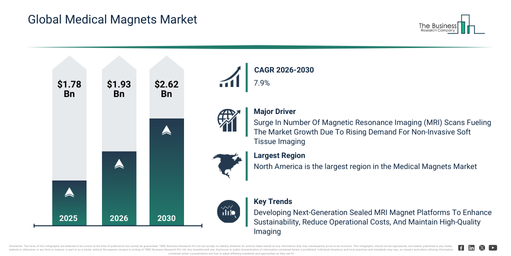
    The market for medical magnets has experienced strong growth in recent years. It is projected to increase from $1.78 billion in 2025 to $1.93 billion in 2026, at a compound annual growth rate (CAGR) of 8.2%. Historically, this expansion has been driven by the increasing adoption of MRI systems, the growing prevalence of neurological disorders, rising investments in diagnostic infrastructure, the broader expansion of magnetic therapy usage, and a growing production of high-performance magnets.

    The medical magnets market size is anticipated to experience robust expansion over the next few years. It is projected to reach $2.62 billion by 2030, exhibiting a compound annual growth rate (CAGR) of 7.9%. This growth during the forecast period is driven by factors such as the increasing demand for minimally invasive diagnostics, advancements in research and development within magnetic drug delivery, the rising adoption of TMS devices, the expanding applications of hyperthermia in cancer treatment, and the growing use of precision magnets in dental applications. Significant trends expected during this period include technological progress in high-field MRI magnet systems, innovations in TMS coil and magnet designs, the development of lightweight and high-strength magnets, ongoing research and development in magnetic hyperthermia therapy, and technological advancements in portable and compact magnetic devices.

    Get A Free Sample Report With In-Depth Market Insights:

    https://thebusinessresearchcompany.com/sample_request?id=82951679&type=smp&name=Medical%20Magnets%20Market%20Report%202026&utm_source=Blogs&utm_medium=Paid&utm_campaign=Oct_PR

    Medical Magnets Market Demand Drivers: What’s Powering Industry Growth?

    An anticipated driver for the expansion of the medical magnets market is the growing volume of magnetic resonance imaging (MRI) scans. These scans are non-invasive diagnostic procedures employing powerful magnets and radio waves to generate detailed views of internal organs and tissues. The rise in MRI usage is linked to the global increase in the elderly population, a demographic often experiencing chronic conditions that require precise, non-invasive soft tissue imaging for accurate diagnosis and treatment strategies. Medical magnets are crucial for MRI scans, as they create the robust, stable magnetic fields essential for producing intricate images of the body’s internal structures. They contribute to improved diagnostic accuracy and imaging quality by allowing high-resolution visualization of soft tissues without relying on ionizing radiation. For example, data from NHS England, a UK-based publicly funded healthcare system, revealed in December 2024 that magnetic resonance imaging scans in England rose from 361,705 in August 2023 to 365,270 in August 2024, with a cumulative 12-month total from September 2023 to August 2024 reaching 4,504,615 scans. Consequently, the increasing application of medical magnets in both therapeutic and diagnostic areas is fueling the growth of the medical magnets market.

    Medical Magnets Market Segment Landscape: Which Areas Lead Development?

    The medical magnets market covered in this report is segmented –

    1) By Product Type: High-Performance Magnets, Lower-Performance Magnets, Superconducting Magnets, Electromagnets

    2) By Material Type: Neodymium Iron Boron, Ferrite, Samarium Cobalt, Other Materials

    3) By Technology: Permanent Magnet Technology, Electromagnetic Systems, Superconducting Magnet Technology, Hybrid Magnetic Systems

    4) By Application: Magnetic Resonance Imaging, Transcranial Magnetic Stimulation, Magnetic Therapy, Drug Delivery, Dentistry

    5) By End User: Hospitals, Diagnostic Imaging Centers, Specialty Neurology Centers, Research And Academic Institutions, Rehabilitation And Wellness Centers

    Subsegment:

    1) By High-Performance Magnets: Neodymium Iron Boron, Samarium Cobalt, Alnico

    2) By Lower-Performance Magnets: Ferrite, Ceramic

    3) By Superconducting Magnets: Niobium Titanium, Niobium Tin, Magnesium Diboride

    4) By Electromagnets: Solenoid, Toroidal, Helical

    Medical Magnets Market Innovation Trends: What Developments Are Reshaping The Industry?

    Leading companies in the medical magnets market are concentrating on developing sophisticated technologies, such as helium-efficient MRI magnet technologies, with the aim of reducing operational expenditures and enhancing sustainability without degrading imaging performance. These helium-efficient MRI magnet technologies refer to next-generation superconducting magnet designs that utilize minimal or no liquid helium through sealed or cryogen-free cooling systems. This approach is intended to cut down on resource use, operational costs, and environmental impact while maintaining high-quality imaging. For example, in February 2025, GE Healthcare Technologies Inc., a US-based medical technology company, launched its Freelium sealed magnet platform. This platform features a helium-free design that consumes less than 1% of the helium required by traditional MRI magnets. It also incorporates intelligent sensor technology for remote monitoring and automated magnet recovery, and provides a permanent helium enclosure for sustainability. Additional capabilities include compatibility with AI-enabled imaging solutions and a design optimized for installation in locations with limited helium access, thus enabling wider deployment of high-performance MRI systems. This launch represents a significant stride in MRI technology by integrating environmental efficiency, operational reliability, and high-quality diagnostic performance.

    Medical Magnets Market Competitive Analysis Of Leading Industry Participants

    Major companies operating in the medical magnets market are Hitachi Ltd., Siemens Healthineers AG, Koninklijke Philips N.V., GE HealthCare Technologies Inc., Shin-Etsu Chemical Co. Ltd., Canon Medical Systems Corporation, Neo Performance Materials Inc., Ningbo Tongchuang Magnetic Materials Co. Ltd., Stereotaxis Inc., MagnetsTek LLC, SM Magnetics Inc., Zhejiang Zhaobao Magnet Group Co. Ltd., Bunting-DuBois Magnetics, I.M.A. Industria Macchine Automatiche S.p.A., Magnetica Limited, VACUUMSCHMELZE GmbH & Co. KG, Newland Magnetics Europe Ltd., Noveon Magnetics Inc., Goudsmit Magnetics Group B.V., MainRich Magnetics Co. Ltd.

    View The Full Medical Magnets Market Report:

    https://thebusinessresearchcompany.com/report/medical-magnets-market-report?utm_source=Blogs&utm_medium=Paid&utm_campaign=Oct_PR

    Medical Magnets Market Geographic Spread And Regional Opportunities

    North America was the largest region in the medical magnets market in 2025. Asia-Pacific is expected to be the fastest-growing region in the forecast period. The regions covered in the medical magnets market report are Asia-Pacific, South East Asia, Western Europe, Eastern Europe, North America, South America, Middle East, Africa.

    Reach Out To Our Team:

    The Business Research Company: https://www.thebusinessresearchcompany.com/

    Americas: +1 310-496-7795

    Asia: +44 7882 955267 & +91 8897263534

    Europe: +44 7882 955267

    Email us at: marketing@tbrc.info

    Follow us on:

    LinkedIn: https://in.linkedin.com/company/the-business-research-company

    YouTube: https://www.youtube.com/channel/UC24_fI0rV8cR5DxlCpgmyFQ

    Global Market Model: https://www.thebusinessresearchcompany.com/global-market-model