Blog

  • Vaxelis Market Size In 2026: Regional Growth, Key Segments And Future Outlook

    Vaxelis Market Size In 2026: Regional Growth, Key Segments And Future Outlook

    Backed by market attractiveness analysis, total addressable market sizing, company benchmarking matrices, interactive Excel dashboards, wider supply chain intelligence, emerging startup coverage, and detailed product-level insights, The Business Research Company’s 2026 market reports are designed to offer research that is more actionable and strategically valuable than ever.

    Vaxelis Market Size, Value And Growth Trajectory Through 2030

    The upward trend observed historically stems from broader childhood vaccination coverage, the integration of multi-vaccine formulations into public health initiatives, advancements in vaccine manufacturing scalability, increased governmental purchasing of vaccines, and heightened public understanding of preventable diseases.

    Growth throughout the forecast period is expected due to the broadening of global vaccination efforts, an increasing need for simpler immunization schedules, greater investment in vaccine innovation, a heightened focus on ensuring supply chain resilience, and the extension of immunization access in developing markets.

    Prominent trends anticipated in the forecast period include the growing acceptance of combination vaccines, an elevated emphasis on pediatric immunization programs, increasing demand for single-dose multivalent vaccines, the expansion of national vaccination timetables, and improved attention to cold-chain vaccine management.

    Get A Free Sample Report With In-Depth Market Insights:

    https://thebusinessresearchcompany.com/sample_request?id=49492023&type=smp&name=Vaxelis%20Market%20Report%202026&utm_source=Blogs&utm_medium=Paid&utm_campaign=Oct_PR

    Vaxelis Market Growth Momentum: What Factors Are Shaping Demand?

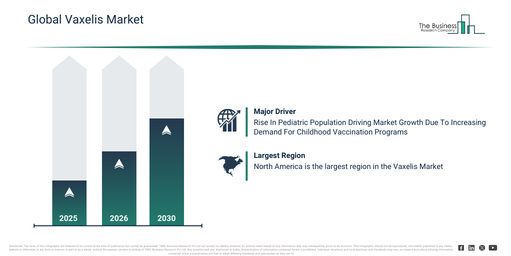
    The expanding pediatric population is anticipated to fuel the expansion of the vaxelis market. This demographic includes individuals from birth through adolescence, and its increase is attributed to advancements in healthcare, better nutrition, enhanced maternal care, lower infant mortality rates, and heightened awareness of child health and vaccination initiatives. Vaxelis offers protection against six serious ailments in a single vaccine, simplifying the immunization process for children. For example, Child Stats, a US-based federal interagency forum for child and family statistics, reported in December 2024 that the United States had 72.5 million children in 2022, a figure expected to rise to 78.2 million by 2050. Consequently, the increasing pediatric population is a key driver for the vaxelis market growth. The rising incidence of hepatitis B cases is projected to accelerate the expansion of the vaxelis market. Hepatitis B is a viral infection, caused by the hepatitis B virus (HBV), that targets the liver, potentially resulting in acute and chronic conditions like liver cirrhosis and liver cancer. The surge in hepatitis B cases stems from inadequate vaccination, underdeveloped healthcare infrastructures, risky behaviors such as sharing needles, and insufficient public knowledge regarding prevention. Vaxelis supports patients by offering immunity against hepatitis B, thanks to its formulation containing the hepatitis B surface antigen, thereby preventing infection and its associated problems. As an illustration, the Centers for Disease Control and Prevention, a U.S-based government agency, indicated in April 2025 that 2,214 new acute hepatitis B cases were reported in 2023, alongside 1,769 hepatitis B-related deaths in the same year. Consequently, the increasing prevalence of hepatitis B cases is a significant factor driving the vaxelis market’s growth.

    Vaxelis Market Breakdown By Product Type And Application

    The vaxelis market covered in this report is segmented –

    1) By Indication: Pertussis, Diphtheria, Tetanus

    2) By Distribution Channel: Hospitals, Retail Pharmacies, Government Supplies

    3) By End Use: Hospitals, Clinics, Ambulatory Care, Home Care

    Vaxelis Market Company Landscape And Competitive Strategy

    Major companies operating in the vaxelis market are Merck & Co. Inc., Sanofi S.A.

    View The Full Vaxelis Market Report:

    https://thebusinessresearchcompany.com/report/vaxelis-global-market-report?utm_source=Blogs&utm_medium=Paid&utm_campaign=Oct_PR

    Vaxelis Market Regional Breakdown: Where Is Demand Concentrated?

    North America was the largest region in the vaxelis market in 2025. The regions covered in the vaxelis market report are Asia-Pacific, Western Europe, Eastern Europe, North America, South America, Middle East, Africa.

    Reach Out To Our Team:

    The Business Research Company: https://www.thebusinessresearchcompany.com/

    Americas: +1 310-496-7795

    Asia: +44 7882 955267 & +91 8897263534

    Europe: +44 7882 955267

    Email us at: marketing@tbrc.info

    Follow us on:

    LinkedIn: https://in.linkedin.com/company/the-business-research-company

    YouTube: https://www.youtube.com/channel/UC24_fI0rV8cR5DxlCpgmyFQ

    Global Market Model: https://www.thebusinessresearchcompany.com/global-market-model

  • Mammography Workstation Market Analysis: Understanding The Drivers Behind 8.9% CAGR Through 2030 Growth

    Mammography Workstation Market Analysis: Understanding The Drivers Behind 8.9% CAGR Through 2030 Growth

    Featuring market attractiveness scoring, total addressable market sizing, company benchmarking matrices, interactive Excel dashboards, deeper supply chain intelligence, emerging startup tracking, and granular product-level insights, The Business Research Company’s 2026 market reports are built to deliver research that is both more actionable and more strategically valuable.

    Mammography Workstation Market Revenue Growth On Track For A 8.9% CAGR Through 2030

    The mammography workstation market has experienced robust growth in recent years. It is projected to expand from $1.13 billion in 2025 to $1.24 billion in 2026, demonstrating a compound annual growth rate (CAGR) of 9.2%. This historical expansion can be attributed to various factors including the increasing adoption of digital mammography systems, a growing demand for early breast cancer screening, a notable shift from film-based imaging to softcopy reading, the increasing deployment of mammography workstations in hospitals, and the growing use of the breast imaging reporting and data system (BI-RADS).

    The mammography workstation market size is set for significant expansion over the next few years, with projections indicating it will reach $1.74 billion by 2030, demonstrating a compound annual growth rate (CAGR) of 8.9%. This growth throughout the forecast period stems from the increasing adoption of three-dimensional breast tomosynthesis workstations, greater integration of multimodality breast imaging, and a rising demand for advanced clinical review and diagnostic screening tools. Furthermore, the expansion of government-led breast cancer screening programs and a heightened preference for workstation software upgrades and automation are also contributing factors. Prominent trends expected during this period include technological progress in artificial intelligence-assisted breast image analysis, innovations in high-resolution five-megapixel and eight-megapixel displays, developments in multimodality diagnostic imaging workstations, ongoing research and advancements in synthetic two-dimensional imaging and breast tomosynthesis, and improvements in workflow automation along with smart hanging protocols.

    Get A Free Sample Report With In-Depth Market Insights:

    https://thebusinessresearchcompany.com/sample_request?id=27716552&type=smp&name=Mammography%20Workstation%20Market%20Report%202026&utm_source=Blogs&utm_medium=Paid&utm_campaign=Oct_PR

    Mammography Workstation Market Growth Catalysts And Demand Drivers

    The escalating number of mammography exams is anticipated to stimulate the expansion of the mammography workstation market. This rise in annual breast imaging procedures is driven by an aging global populace and enhanced public health initiatives focused on early cancer identification. Progress in digital imaging technology mandates sophisticated tools to manage the growing volume of mammography exams, as they require high-performance systems for efficient interpretation of intricate 3D tomosynthesis data. Mammography workstations facilitate optimized diagnostic workflows through the incorporation of advanced visualization software and artificial intelligence, thereby assisting radiologists in detecting abnormalities with improved speed and accuracy. For example, the United States Food and Drug Administration (FDA), a US-based federal agency responsible for protecting public health, reported 8,823 total certified mammography facilities with 25,098 accredited units as of August 1, 2023, an increase from 8,790 certified facilities recorded on October 1, 2022. Consequently, the increasing mammography exam volumes are propelling the growth of the mammography workstation market.

    Mammography Workstation Market Segment Trends And Revenue Contributors

    The mammography workstation market covered in this report is segmented –

    1) By Product Type: Multimodality Mammography Workstations, Standalone Mammography Workstations

    2) By Modality: Two Dimensional (2D) Mammography, Three Dimensional (3D) Mammography, Digital Mammography, Other Modalities

    3) By Deployment Mode: On-Premises Workstations, Cloud-Based Workstations

    4) By Application: Diagnostic Screening, Clinical Review, Advanced Imaging, Other Applications

    5) By End-User: Hospitals, Diagnostic Centers, Specialty Clinics, Other End-Users

    Subsegments:

    1) By Multimodality Mammography Workstations: Breast Imaging Integration, Advanced Image Processing, Artificial Intelligence Assisted Analysis, Workflow Optimization Tools, Reporting And Documentation Modules, Quality Assurance And Compliance Tools

    2) By Standalone Mammography Workstations: Dedicated Image Viewing, High Resolution Display Systems, Image Storage And Archiving, Annotation And Measurement Tools, Case Management And Review, Data Security And Access Control

    Mammography Workstation Market Trends Shaping Long-Term Demand

    Companies operating in the mammography workstation market are concentrating on developing advanced products, such as deep learning reconstruction software, to enhance efficiency, boost diagnostic confidence, and minimize manual effort and reading time. Deep learning reconstruction software involves sophisticated algorithms that leverage artificial intelligence to process and reconstruct mammography images, thereby improving their clarity and detail. As an illustration, in November 2025, GE HealthCare Technologies Inc., a US-based medical technology company, secured U.S. Food and Drug Administration (FDA) Premarket Authorization for Pristina Recon DL, a deep learning-based 3D mammography image reconstruction technology. This new AI-driven technology utilizes two sequential deep learning models to distinguish meaningful signal from noise, yielding high-fidelity 3D volumes with fewer artifacts and clearer synthesized 2D views. The company states it is the first mammography technology to combine deep learning with iterative reconstruction for digital breast tomosynthesis (DBT) without increasing radiation dose. The system features zero-click acquisition and personalized protocols, allowing for seamless workflow integration and a patient-centric design, which improves operational efficiency for breast imaging centers.

    Mammography Workstation Market Leading Players And Competitive Positioning

    Major companies operating in the mammography workstation market are Siemens Healthineers AG, Fujifilm Holdings Corporation, Koninklijke Philips N.V., GE Healthcare Technologies Inc., Hologic Inc., Agfa-Gevaert N.V., Barco N.V., Carestream Health Inc., EIZO Corporation, Konica Minolta Business Solutions India Pvt. Ltd., Sectra AB, Candelis Corporation, Planmed Inc., iCAD Inc., Medequal Systems & Supplies Inc., Aycan Medical Systems LLC, Metaltronica S.p.A., Three Palm Software Inc., IMS Giotto S.p.A, Medi-Future Inc.

    View The Full Mammography Workstation Market Report:

    https://thebusinessresearchcompany.com/report/mammography-workstation-market-report?utm_source=Blogs&utm_medium=Paid&utm_campaign=Oct_PR

    Mammography Workstation Market Regional Split: Which Areas Are Fueling Growth?

    North America was the largest region in the Mammography Workstation market in 2025. Asia-Pacific is expected to be the fastest-growing region in the forecast period. The regions covered in the mammography workstation market report are Asia-Pacific, South East Asia, Western Europe, Eastern Europe, North America, South America, Middle East, Africa.

    Reach Out To Our Team:

    The Business Research Company: https://www.thebusinessresearchcompany.com/

    Americas: +1 310-496-7795

    Asia: +44 7882 955267 & +91 8897263534

    Europe: +44 7882 955267

    Email us at: marketing@tbrc.info

    Follow us on:

    LinkedIn: https://in.linkedin.com/company/the-business-research-company

    YouTube: https://www.youtube.com/channel/UC24_fI0rV8cR5DxlCpgmyFQ

    Global Market Model: https://www.thebusinessresearchcompany.com/global-market-model
  • Vaxchora Market Growth Forecast Through 2030: Market Size And Trends In 2026

    Vaxchora Market Growth Forecast Through 2030: Market Size And Trends In 2026

    Featuring market attractiveness scoring, total addressable market sizing, company benchmarking matrices, interactive Excel dashboards, deeper supply chain intelligence, emerging startup tracking, and granular product-level insights, The Business Research Company’s 2026 market reports are built to deliver research that is both more actionable and more strategically valuable.

    Vaxchora Market CAGR Outlook And Future Development

    The expansion observed historically was a consequence of greater international travel to regions experiencing outbreaks, alongside an increase in measures designed for cholera outbreak preparedness. Furthermore, the spread of travel medicine clinics, the granting of regulatory approvals for oral vaccines, and more effective vaccine distribution frameworks were also contributing factors.

    Future growth is expected, driven by escalating investments in worldwide disease prevention efforts, a heightened demand for single-dose vaccines, the expansion of travel health services, an intensified focus on strategies for outbreak prevention, and increased implementation within humanitarian aid and emergency response contexts. Significant trends anticipated during this period encompass a surge in the demand for vaccines associated with travel, heightened public understanding of cholera prevention, the increasing embrace of oral vaccine formats, the broadening of international travel immunization initiatives, and a stronger emphasis on achieving prompt immunization compliance.

    Get A Free Sample Report With In-Depth Market Insights:

    https://thebusinessresearchcompany.com/sample_request?id=48614496&type=smp&name=Vaxchora%20Market%20Report%202026&utm_source=Blogs&utm_medium=Paid&utm_campaign=Oct_PR

    Vaxchora Market Expansion Drivers: What’s Shaping Future Growth?

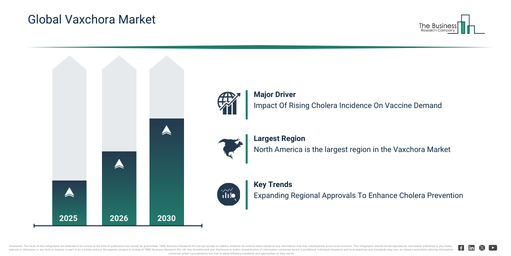
    The increasing number of cholera infections is projected to fuel the expansion of the vaxchora market in the future. Cholera, an infection resulting from the vibrio cholerae bacterium, causes severe diarrhea and dehydration, typically contracted through tainted water or food. The surge in cholera cases can be attributed to elements like insufficient sanitation, limited availability of clean water, shifts in climate, and greater population movement into areas where cholera is prevalent. Vaxchora provides protection against cholera by prompting the immune system to generate antibodies targeting Vibrio cholerae serogroup O1, thereby lessening the chance of severe diarrhea and dehydration resulting from a cholera infection. As an illustration, in August 2025, the UK Health Security Agency, a UK-based government agency, reported that in EWNI, 8 confirmed cholera cases were recorded from January to June 2025, marking an increase from 1 case during the same period in 2024. Consequently, the escalating incidence of cholera infections is propelling the growth of the vaxchora market.

    Vaxchora Market Segment Analysis And Revenue Potential

    The vaxchora market covered in this report is segmented –

    1) By Clinical Indication: Prevention Of Cholera, Prevention Of Gastrointestinal Infections Caused By Vibrio Cholerae

    2) By Distribution Channel: Hospital Pharmacies, Retail Pharmacies, Online Pharmacies, Travel Clinics

    3) By End User: Adult, Pediatric, Geriatric

    Vaxchora Market Strategic Trends: What Defines The Next Growth Phase?

    A prominent development in the vaxchora market involves extended regional approvals for vaccination, aiming to boost accessibility and satisfy the rising need for cholera prevention in regions prone to the disease and those deemed high-risk. These broadened regional authorizations contribute to enhanced public health results by facilitating wider immunization coverage and tackling the continuously escalating global requirement for effective strategies against cholera. As an illustration, during September 2024, Bavarian Nordic, a biotechnology firm based in Denmark, declared that Vaxchora was commercially accessible. This vaccine is the sole single-dose oral option approved in Canada for protection against cholera, which is characterized as an abrupt and severe intestinal infection causing acute watery diarrhea. Administered as a single oral dose, it offers protection within 10 days.

    Vaxchora Market Key Players Shaping Industry Direction

    Major companies operating in the vaxchora market are Bavarian Nordic A/S

    View The Full Vaxchora Market Report:

    https://thebusinessresearchcompany.com/report/vaxchora-global-market-report?utm_source=Blogs&utm_medium=Paid&utm_campaign=Oct_PR

    Vaxchora Market Geographic Landscape: Which Region Dominates Industry Growth?

    North America was the largest region in the vaxchora market in 2025. The regions covered in the vaxchora market report are Asia-Pacific, Western Europe, Eastern Europe, North America, South America, Middle East, Africa.

    Reach Out To Our Team:

    The Business Research Company: https://www.thebusinessresearchcompany.com/

    Americas: +1 310-496-7795

    Asia: +44 7882 955267 & +91 8897263534

    Europe: +44 7882 955267

    Email us at: marketing@tbrc.info

    Follow us on:

    LinkedIn: https://in.linkedin.com/company/the-business-research-company

    YouTube: https://www.youtube.com/channel/UC24_fI0rV8cR5DxlCpgmyFQ

    Global Market Model: https://www.thebusinessresearchcompany.com/global-market-model
  • Longevity Clinic Market Expected To Grow At 12.2% CAGR Through 2030: What Businesses Need To Know

    Longevity Clinic Market Expected To Grow At 12.2% CAGR Through 2030: What Businesses Need To Know

    Backed by market attractiveness analysis, total addressable market sizing, company benchmarking matrices, interactive Excel dashboards, wider supply chain intelligence, emerging startup coverage, and detailed product-level insights, The Business Research Company’s 2026 market reports are designed to offer research that is more actionable and strategically valuable than ever.

    Longevity Clinic Market Expansion Outlook: What Revenue Opportunities Are Ahead?

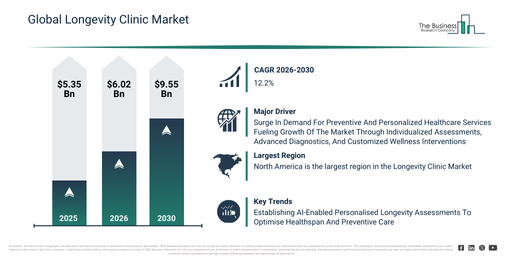
    The longevity clinic market size has seen swift expansion in recent years. It is projected to increase from $5.35 billion in 2025 to $6.02 billion in 2026, achieving a compound annual growth rate (CAGR) of 12.5%. This growth observed historically stems from various factors, such as the increasing demand for preventive healthcare, a rising awareness of anti-aging therapies, the growing adoption of personalized wellness programs, an increasing focus on healthy lifespan extension, and a rising interest in regenerative medicine services.

    The longevity clinic market is projected to experience substantial expansion in the coming years. Its valuation is set to reach $9.55 billion by 2030, exhibiting a compound annual growth rate (CAGR) of 12.2%. This anticipated growth during the forecast period stems from factors such as increasing consumer engagement with longevity services, heightened investment in regenerative medicine, broader uptake of digital wellness platforms, an amplified focus on tailored anti-aging treatments, and a growing inclination towards preventive healthcare approaches. Key developments expected within this period involve progress in biomarker-based diagnostics, advancements in regenerative medicine therapies, novel personalized longevity programs, innovative age-reversal treatment paradigms, and new cellular rejuvenation therapies.

    Get A Free Sample Report With In-Depth Market Insights:

    https://thebusinessresearchcompany.com/sample_request?id=98255836&type=smp&name=Longevity%20Clinic%20Market%20Report%202026&utm_source=Blogs&utm_medium=Paid&utm_campaign=Oct_PR

    Longevity Clinic Market Industry Drivers: What’s Behind The Revenue Growth?

    The longevity clinic market is anticipated to expand in the coming years, fueled by a rising need for preventive and personalized healthcare services. This type of healthcare involves medical strategies focused on proactive health risk identification, early intervention, and customized treatment and lifestyle regimens based on an individual’s genetic, metabolic, and behavioral characteristics. The escalating demand for these services stems primarily from increased public understanding of healthy aging, longer life expectancies, and the realization that prompt management of chronic disease risk factors can substantially enhance long-term health. Longevity clinics facilitate preventive and personalized healthcare through comprehensive individual evaluations, advanced diagnostic procedures, and tailored interventions designed to optimize healthspan and postpone age-related conditions. For example, survey results released by the National University of Singapore’s Academy for Healthy Longevity, a Singapore-based research institution, in July 2025, showed that around 58% of participants were interested in visiting healthy longevity or preventive medicine clinics offering personalized health assessments. This data also revealed a consistent upward trend in public interest, with reported levels climbing from roughly 40% in 2021 to almost 58% in 2025, signifying a growth exceeding 40% over four years. Consequently, the expanding need for preventive and personalized healthcare services is acting as a key driver for the growth of the longevity clinic market.

    Longevity Clinic Market Segment Analysis And Revenue Potential

    The longevity clinic market covered in this report is segmented –

    1) By Service Type: Preventive Care, Diagnostic Services, Personalized Medicine, Wellness Programs, Anti-Aging Treatments, Other Service Types

    2) By Therapy Type: Senolytic Therapies, Stem Cell Therapies, Peptide Therapies, IV Infusions And Nutrient Therapy, Hyperbaric Oxygen Therapy

    3) By Technology: Multi-Omics (Genomics, Epigenetics), Artificial Intelligence (AI) And Machine Learning Platforms, Wearable Devices And Sensors, Advanced Imaging And Diagnostics

    4) By Age Group: Adults, Geriatric, Other Age Groups

    5) By End-User: Hospitals, Specialty Clinics, Other End-Users

    Subsegments:

    1) By Preventive Care: Routine health screenings, Immunization services, Lifestyle counseling, Nutritional guidance, Chronic disease prevention programs

    2) By Diagnostic Services: Imaging diagnostics, Laboratory testing, Genetic testing, Biomarker analysis, Functional diagnostics

    3) By Personalized Medicine: Pharmacogenomics, Customized treatment planning, Gene-based therapies, Tailored nutrition plans, Precision drug selection

    4) By Wellness Programs: Stress management programs, Weight management programs, Physical fitness coaching, Mental wellness programs, Corporate wellness solutions

    5) By Anti-Aging Treatments: Hormone therapy, Skin rejuvenation treatments, Regenerative therapies, Cellular repair therapies, Nutritional anti-aging programs

    6) By Others Service Type: Telehealth services, Home healthcare support, Integrative medicine services, Alternative therapy programs, Remote monitoring solutions

    #Longevity Clinic Market Growth Trends: What’s Shaping The Future Outlook?

    Leading enterprises within the longevity clinic market are increasingly concentrating on the establishment of accredited healthy longevity medicine centres. These centres integrate AI-enabled personalised longevity assessments with the aim of broadening preventive healthcare, enhancing healthspan, and assisting in age-specific interventions. Such AI-enabled personalised longevity assessments are defined as clinical instruments that combine genetic, lifestyle, and biomarker information to produce bespoke prevention and wellness strategies. This capability allows clinicians to categorise risk, emphasize prompt interventions, and customize treatment plans for individual patients. For example, in November 2024, the Department of Health – Abu Dhabi, a government health authority based in the United Arab Emirates, inaugurated the Institute for Healthier Living Abu Dhabi, which stands as the region’s initial licensed Healthy Longevity Medicine Centre. This facility, built to offer extensive longevity-focused care, incorporates personalised diagnostics, lifestyle optimisation initiatives, and precise therapeutic planning. It also features collaborative multi-specialty care approaches and AI-driven risk stratification platforms, all designed to improve the provision of preventive care and long-term patient results.

    Longevity Clinic Market Key Players Shaping Industry Direction

    Major companies operating in the longevity clinic market are Six Senses, Healthspan Ltd., Fountain Life LLC, Cenegenics LLC, Parsley Health Inc., SHA Wellness Clinic S.L., The Golden Door, VIVAMAYR Medical Center, Longevity Medical Clinic USA, AEON Medical Pvt Ltd., Chenot, Defy Medical Inc., Nescens SA, AYUN Longevity Clinic, Paracelsus Clinic, Longevity Center Switzerland AG, Aluna Longevity Clinics, Vivant Medical Group, Optimum Performance Physical Therapy LLC, VidaVital Medical Clinics

    View The Full Longevity Clinic Market Report:

    https://thebusinessresearchcompany.com/report/longevity-clinic-market-report?utm_source=Blogs&utm_medium=Paid&utm_campaign=Oct_PR

    Longevity Clinic Market Regional Analysis: Which Region Leads By Revenue?

    North America was the largest region in the longevity clinic market in 2025. Asia-Pacific is expected to be the fastest-growing region in the forecast period. The regions covered in the longevity clinic market report are Asia-Pacific, South East Asia, Western Europe, Eastern Europe, North America, South America, Middle East, Africa.

    Reach Out To Our Team:

    The Business Research Company: https://www.thebusinessresearchcompany.com/

    Americas: +1 310-496-7795

    Asia: +44 7882 955267 & +91 8897263534

    Europe: +44 7882 955267

    Email us at: marketing@tbrc.info

    Follow us on:

    LinkedIn: https://in.linkedin.com/company/the-business-research-company

    YouTube: https://www.youtube.com/channel/UC24_fI0rV8cR5DxlCpgmyFQ

    Global Market Model: https://www.thebusinessresearchcompany.com/global-market-model
  • VariZIG Market Analysis: $ Billion Market Size In 2026 And Future Growth Prospects

    VariZIG Market Analysis: $ Billion Market Size In 2026 And Future Growth Prospects

    Built to provide research that’s more actionable and strategically valuable, The Business Research Company’s 2026 market reports include market attractiveness analysis, total addressable market sizing, company benchmarking matrices, interactive Excel dashboards, broader supply chain intelligence, emerging startup tracking, and in-depth product insights.

    VariZIG Market Value Growth And Long-Term Outlook

    Historical growth was driven by factors including the accessibility of plasma fractionation techniques, a heightened understanding of varicella complications, the expansion of hospital-based preventative protocols, regulatory authorizations for hyperimmune globulins, and a robust immunization framework.

    Expected market expansion during the forecast period is driven by the growing need to protect immunocompromised individuals, an increased focus on maternal and neonatal well-being, the expansion of plasma collection networks, advancements in screening for biologic safety, and rising investments in preventive immunotherapies. Concurrently, significant trends anticipated during this period include the wider application of passive immunization therapies, an enhanced focus on safeguarding high-risk patients, the diversification of plasma-derived biologic products, an increasing emphasis on prophylaxis after exposure, and improved practices for cold-chain management.

    Get A Free Sample Report With In-Depth Market Insights:

    https://thebusinessresearchcompany.com/sample_request?id=72433981&type=smp&name=VariZIG%20Market%20Report%202026&utm_source=Blogs&utm_medium=Paid&utm_campaign=Oct_PR

    VariZIG Market Development Factors: What’s Supporting Demand?

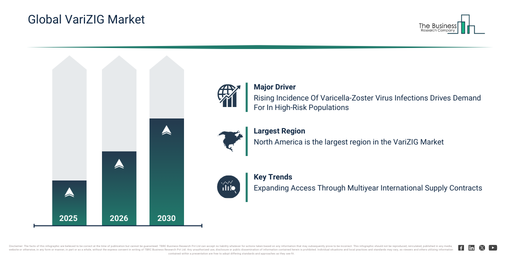
    The varizig market is expected to be driven by the increasing incidence of varicella-zoster virus infections in the future. The varicella-zoster virus (VZV) is an extremely contagious virus that initially causes chickenpox and can later reactivate to manifest as shingles (herpes zoster). The rise in VZV infections, which result in conditions such as chickenpox and shingles, is linked to factors including reduced vaccination rates, an aging population, and immune suppression due to various medical therapies. varizig aids varicella-zoster virus patients by offering passive immunity, thus diminishing the severity and length of chickenpox symptoms, preventing complications in high-risk groups such as immunocompromised patients, and providing protection against severe outcomes for neonates and pregnant women exposed to the virus. For instance, in November 2024, data from the Florida Department of Health, a US-based government agency, indicated that varicella cases in 2023 climbed to 653, an increase from 428 cases recorded in 2022. Therefore, the growing incidence of varicella-zoster virus infections is a key factor propelling the varizig market.

    VariZIG Market Segmentation And Category Overview

    The varizig market covered in this report is segmented –

    1) By Patient Condition: Immunocompromised Patients, Pregnant Women

    2) By Distribution Channel: Hospitals, Pharmacies, Healthcare Providers

    3) By End User: Adult, Geriatric, Pediatric

    VariZIG Market Transformation Trends: What Innovations Are Driving Change?

    Leading companies in the VariZIG market are prioritizing technological advancements, focusing on increasing manufacturing capacity and enhancing distribution logistics. This includes optimizing contract manufacturing, establishing regional supply-chain agreements, and improving cold-chain stability to ensure timely delivery of plasma-derived immunoglobulins to populations with high needs. Such manufacturing scale-up and distribution logistics encompass process and infrastructure innovations that boost production capacity, establish robust cold-chain and inventory management, facilitate regional supply agreements, and enable coordinated procurement contracts. These efforts transform specialized biologic products from limited availability into reliable, regionally accessible therapies. For instance, in January 2025, Kamada Ltd., an Israel-based biopharmaceutical company specializing in plasma-derived therapies, announced a $25 million three-year contract to supply KAMRAB and VARIZIG across Latin America from 2025 through 2027. This agreement secures regional supply and reduces the risk of shortages for at-risk patients, empowering hospitals and public health systems to plan prophylaxis and treatment with increased confidence. It also expands commercial access to a previously fragmented market by establishing predictable demand and distribution channels across multiple countries, supporting faster patient access. Finally, the contract bolsters public-health preparedness for varicella exposure in high-risk groups by guaranteeing an established supply pathway for an essential passive-immunity product.

    VariZIG Market Competitive Analysis Of Leading Industry Participants

    Major companies operating in the varizig market are Emergent BioSolutions Inc.

    View The Full VariZIG Market Report:

    https://thebusinessresearchcompany.com/report/varizig-global-market-report?utm_source=Blogs&utm_medium=Paid&utm_campaign=Oct_PR

    VariZIG Market Largest Region: Which Geography Holds The Highest Market Share?

    North America was the largest region in the varizig market in 2025. The regions covered in the varizig market report are Asia-Pacific, Western Europe, Eastern Europe, North America, South America, Middle East, Africa.

    Reach Out To Our Team:

    The Business Research Company: https://www.thebusinessresearchcompany.com/

    Americas: +1 310-496-7795

    Asia: +44 7882 955267 & +91 8897263534

    Europe: +44 7882 955267

    Email us at: marketing@tbrc.info

    Follow us on:

    LinkedIn: https://in.linkedin.com/company/the-business-research-company

    YouTube: https://www.youtube.com/channel/UC24_fI0rV8cR5DxlCpgmyFQ

    Global Market Model: https://www.thebusinessresearchcompany.com/global-market-model
  • Longevity BioTech Market Forecast To Reach $34.82 Billion By 2030: Key Trends Explained

    Longevity BioTech Market Forecast To Reach $34.82 Billion By 2030: Key Trends Explained

    Featuring market attractiveness scoring, total addressable market sizing, company benchmarking matrices, interactive Excel dashboards, deeper supply chain intelligence, emerging startup tracking, and granular product-level insights, The Business Research Company’s 2026 market reports are built to deliver research that is both more actionable and more strategically valuable.

    Longevity BioTech Market Growth Potential: How Will Market Size Shift Through 2030?

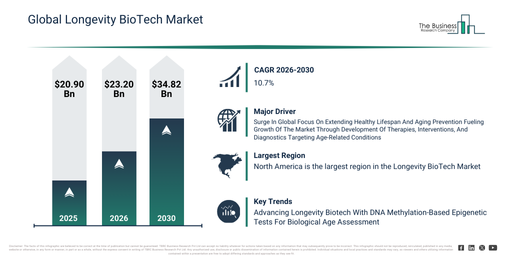
    The longevity biotech market has observed rapid expansion recently. It is set to expand from $20.90 billion in 2025 to $23.20 billion in 2026, achieving a compound annual growth rate (CAGR) of 11.0%. The growth witnessed over the historical period can be ascribed to intensified investment in anti-aging research, a climbing prevalence of chronic conditions linked to age, a burgeoning interest in extending healthspan, increased financing from biotech venture capital, and the rising uptake of genetic and cellular therapies.

    The longevity biotech market size is anticipated to experience substantial growth over the next few years. It is projected to expand to $34.82 billion in 2030, demonstrating a compound annual growth rate (CAGR) of 10.7%. This expansion during the forecast period can be attributed to factors such as the increasing development of regenerative medicine pipelines, a rise in partnerships between pharmaceutical companies and longevity biotech firms, growing demand for gene-based therapies, the emergence of personalized wellness diagnostics, and heightened collaboration between research institutes and biotech companies. Prominent trends for the forecast period include breakthroughs in cellular rejuvenation therapies, progress in gene-editing technologies, advancements in stem-cell-based regeneration, novel developments in senolytic drug creation, and innovative epigenetic reprogramming instruments.

    Get A Free Sample Report With In-Depth Market Insights:

    https://thebusinessresearchcompany.com/sample_request?id=66798955&type=smp&name=Longevity%20BioTech%20Market%20Report%202026&utm_source=Blogs&utm_medium=Paid&utm_campaign=Oct_PR

    Longevity BioTech Market Growth Factors: What’s Supporting Expansion?

    A heightened focus on extending healthy lifespans and averting age-related deterioration is anticipated to drive the expansion of the longevity biotech market moving forward. Healthy aging involves maintaining functional abilities, postponing the onset of diseases linked to age, and fostering physical and mental well-being across an individual’s life. This increasing emphasis on healthy aging is a result of demographic shifts, particularly the rapid growth of older populations, which has escalated the demand for medical innovation and proactive health solutions. Longevity biotechnology supports this goal by developing therapies, diagnostic tools, and preventive interventions that target the biological mechanisms of aging, improve cellular resilience, and reduce the risk of age-related conditions. For example, in November 2023, according to the World Health Organization, a Geneva-based global health authority, the global population aged 60 years and older is projected to increase from 1.1 billion in 2023 to 1.4 billion by 2030 and reach 2.1 billion by 2050, underscoring the growing scale of health challenges associated with aging. Therefore, the intensifying global focus on extending healthy life and preventing aging is fueling the growth of the longevity biotech market.

    Longevity BioTech Market Segmentation And Category Overview

    The longevity biotech market covered in this report is segmented –

    1) By Service: Longevity Consultation, Biological Age Testing, Preventive Health Programs

    2) By Therapeutic Approach: Senolytics, Gene Therapies, Regenerative Medicine, Metabolic Modulators, Mitochondrial Therapies

    3) By Technology: Gene Editing Technology, Artificial Intelligence And Machine Learning, Stem Cell And Regenerative Medicine, Multi-Omics Analysis Platforms, Advanced Drug Screening

    4) By Application: Healthcare, Biotech, Pharmaceuticals, Wellness, Aging Population

    5) By End User: Clinics, Hospitals, Research Institutes, Direct-To-Consumer

    Subsegments:

    1) By Longevity Consultation: Initial Health Assessment, Personalized Longevity Planning, Lifestyle And Nutrition Counseling, Risk Assessment And Mitigation Planning, Follow-Up Longevity Monitoring, Genetic And Epigenetic Review

    2) By Biological Age Testing: DNA Methylation Age Testing, Telomere Length Testing, Metabolic Age Assessment, Inflammatory Biomarker Testing, Hormonal Age Profiling, Organ-Specific Aging Analysis

    3) By Preventive Health Programs: Chronic Disease Prevention Programs, Nutrition And Diet Optimization Plans, Fitness And Mobility Enhancement Programs, Stress And Sleep Management Programs, Immune Strengthening Protocols, Personalized Supplementation Programs

    Longevity BioTech Market Industry Trends: What’s Reshaping Demand?

    Prominent entities within the longevity biotech sector are concentrating on the development of diagnostics for biological age, such as epigenetic Index tests based on DNA methylation that quantify biological age and specific system aging rates. These epigenetic Index tests assess patterns of DNA methylation at CpG sites to generate a biological-age estimate, which companies then employ as a metric for product advancement and gathering consumer feedback. For example, in March 2023, Elysium Health, a U.S.-based life-science company, unveiled the TIME-A longitudinal research study connected to its Index epigenetic test; this initiative recruits Index users, merges survey and epigenetic data for longitudinal mapping, and grants participants access to system-level biological-age readouts.

    Longevity BioTech Market Competitive Analysis Of Leading Industry Participants

    Major companies operating in the longevity biotech market are Insilico Medicine Inc., Calico Life Sciences LLC, Retro Biosciences Inc., Altos Labs Inc., LyGenesis Inc., NewLimit Inc., Halia Therapeutics Inc., Life Biosciences Inc., BioAge Labs Inc., Rubedo Life Sciences Inc., Juvenescence Limited, Cambrian BioPharma Inc., Elevian Inc., Oisin Biotechnologies Inc., Rejuvenate Bio Inc., Unity Biotechnology Inc., Cleara Biotech B.V., Junevity Inc., Liv Longevity Labs, Genflow Biosciences plc, Centenara Labs AG

    View The Full Longevity BioTech Market Report:

    https://thebusinessresearchcompany.com/report/longevity-biotech-market-report?utm_source=Blogs&utm_medium=Paid&utm_campaign=Oct_PR

    Longevity BioTech Market Geographic Distribution And Regional Opportunities

    North America was the largest region in the longevity biotech market in 2025. Asia-Pacific is expected to be the fastest-growing region in the forecast period. The regions covered in the longevity biotech market report are Asia-Pacific, South East Asia, Western Europe, Eastern Europe, North America, South America, Middle East, Africa.

    Reach Out To Our Team:

    The Business Research Company: https://www.thebusinessresearchcompany.com/

    Americas: +1 310-496-7795

    Asia: +44 7882 955267 & +91 8897263534

    Europe: +44 7882 955267

    Email us at: marketing@tbrc.info

    Follow us on:

    LinkedIn: https://in.linkedin.com/company/the-business-research-company

    YouTube: https://www.youtube.com/channel/UC24_fI0rV8cR5DxlCpgmyFQ

    Global Market Model: https://www.thebusinessresearchcompany.com/global-market-model
  • Large-Surface-Area Microcarrier Bioreactor Market Outlook 2026–2030: Growth Trends, Market Dynamics And Emerging Opportunities

    Large-Surface-Area Microcarrier Bioreactor Market Outlook 2026–2030: Growth Trends, Market Dynamics And Emerging Opportunities

    Backed by market attractiveness analysis, total addressable market sizing, company benchmarking matrices, interactive Excel dashboards, wider supply chain intelligence, emerging startup coverage, and detailed product-level insights, The Business Research Company’s 2026 market reports are designed to offer research that is more actionable and strategically valuable than ever.

    Large-Surface-Area Microcarrier Bioreactor Market Size, Value And Growth Trajectory Through 2030

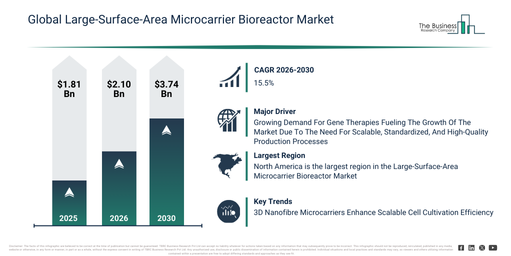
    The market size for large-surface-area microcarrier bioreactors has experienced rapid growth in recent years. It is projected to increase from $1.81 billion in 2025 to $2.10 billion in 2026, driven by a compound annual growth rate (CAGR) of 15.8%. Historically, this growth can be attributed to factors including the increasing adoption of large-surface-area microcarrier bioreactors, a growing demand for high-density adherent cell cultures, rising investment in regenerative medicine research, the expansion of automated cell expansion technologies, and the increasing utilization of single-use microcarrier systems.

    The large-surface-area microcarrier bioreactor market is anticipated to expand significantly in the coming years, reaching $3.74 billion in 2030 at a compound annual growth rate (CAGR) of 15.5%. This projected growth throughout the forecast period stems from an increased focus on scalable stem cell production, growing investments in advanced microcarrier bioprocessing, a rising demand for clinical-grade cell expansion, the expansion of biotechnology and pharmaceutical R&D efforts, and a strong uptick in the adoption of automated and high-precision platforms. Key trends expected in the forecast period include technological advancements in microcarrier bioreactors, innovations within automated cell expansion platforms, developments in high-density adherent cell culture techniques, research and development surrounding single-use microcarrier systems, and enhancements in real-time monitoring and process control.

    Get A Free Sample Report With In-Depth Market Insights:

    https://thebusinessresearchcompany.com/sample_request?id=71861363&type=smp&name=Large-Surface-Area%20Microcarrier%20Bioreactor%20Market%20Report%202026&utm_source=Blogs&utm_medium=Paid&utm_campaign=Oct_PR

    Large-Surface-Area Microcarrier Bioreactor Market Opportunity Drivers: What’s Unlocking New Revenue Potential?

    The expanding need for gene therapies is projected to fuel the advancement of the large-surface-area microcarrier bioreactor market in the future. Gene therapy is a medical method involving the modification or replacement of faulty genes to address or prevent illnesses. The heightened demand for gene therapy stems from progress in genetic sequencing and diagnostics, which facilitate precise identification of disease-causing genes for focused treatment. Large-surface-area microcarrier bioreactors support gene therapy by offering an extensive surface for the efficient proliferation of adherent cells utilized in gene-modified treatments. They improve therapeutic development by boosting cell yield, ensuring uniformity, and enabling the scalable manufacture of gene therapy products. For example, in December 2024, the American Society of Gene & Cell Therapy (ASGCT), a US-based non-profit medical and scientific organization, reported that the Food and Drug Administration (FDA) approved six gene therapy products in 2023, an increase from five approvals in 2022. Consequently, the rising demand for gene therapies is propelling the growth of the large-surface-area microcarrier bioreactor market. Increased healthcare spending is anticipated to drive the large-surface-area microcarrier bioreactor market forward. Healthcare expenditure signifies the total financial resources allocated to healthcare services, encompassing medical treatments, hospital care, medications, and public health initiatives, by governments, businesses, and individuals. The surge in healthcare spending is attributed to the growing prevalence of chronic diseases, which necessitate prolonged and costly treatments. Elevated healthcare expenditure benefits large-surface-area microcarrier bioreactors by allowing investment in advanced bioprocessing technologies that facilitate large-scale cell production. This enhances therapeutic development through improved efficiency, scalability, and consistency in the manufacturing of cell and gene therapies. For instance, in May 2024, the Office for National Statistics, a UK-based government department, indicated that total healthcare expenditure recorded a 5.6% rise in nominal terms in 2023, representing a 0.9% growth compared to 2022. Therefore, the increasing healthcare expenditure is fostering the expansion of the large-surface-area microcarrier bioreactor market.

    Large-Surface-Area Microcarrier Bioreactor Market Segment Trends And Revenue Contributors

    The large-surface-area microcarrier bioreactor market covered in this report is segmented –

    1) By Product Type: Single-Use Bioreactors, Multi-Use Bioreactors

    2) By Microcarrier Type: Synthetic Microcarriers, Natural Microcarriers, Hybrid Microcarriers

    3) By Distribution Channel: Hospital Pharmacy, Online Pharmacy, Retail Pharmacy

    4) By Application: Cell Therapy, Vaccine Production, Tissue Engineering, Stem Cell Research, Other Appplications

    5) By End User: Pharmaceutical And Biotechnology Companies, Research Institutes, Contract Manufacturing Organizations, Other End Users

    Subsegments:

    1) By Single-Use Bioreactors: Disposable Microcarrier Vessels, Pre-Sterilized Culture Chambers, Single-Cycle Expansion Units, Plug-And-Play Bioprocessing Modules, Disposable Agitation Systems

    2) By Multi-Use Bioreactors: Autoclavable Microcarrier Vessels, Cleanable Stainless Steel Chambers, Reusable Agitation Systems, Long-Term Operation Bioprocess Units, Reprocessable Culture Modules

    Large-Surface-Area Microcarrier Bioreactor Market Innovation Trends Shaping Future Development

    Leading companies in the large-surface-area microcarrier bioreactor market are prioritizing the development of advanced products, such as 3D nanofibre scaffolds, to boost operational efficiency, enhance cell proliferation, and reduce both process variability and overall development timelines. These 3D nanofibre microcarriers are sophisticated, biomimetic scaffolds that provide a three-dimensional environment suitable for cell adhesion and proliferation, mirroring the natural extracellular matrix. For example, in February 2025, Cellevate AB, a Sweden-based innovator in cell culture materials, unveiled the Cellevat3D nanofibre microcarrier. This customizable, synthetic microcarrier is designed for scalable cell cultivation, featuring a unique nanofibrous architecture that increases the surface area for superior cell attachment and yield. It incorporates precise control over biochemical and physical parameters, enabling optimal growth conditions for various cell types, including stem cells and therapeutic cells, without requiring extensive process re-development. Additionally, it offers xeno-free and animal-free material options, which enhances product safety and regulatory compliance for biopharmaceutical and cultivated meat producers.

    Large-Surface-Area Microcarrier Bioreactor Market Competitive Landscape: Which Companies Lead The Industry?

    Major companies operating in the large-surface-area microcarrier bioreactor market are Thermo Fisher Scientific Inc., Merck KGaA, Corning Incorporated, Lonza Group AG, Cytiva Sweden AB, Sartorius AG, Bio-Rad Laboratories Inc., Eppendorf SE, Repligen Corporation, Pall Corporation, PBS Biotech Inc., Applikon Biotechnology B.V., Esco VacciXcell, Meissner Filtration Products Inc., Distek Inc., Infors HT AG, Adolf Kühner AG, Kuhner Shaker GmbH, Cellexus Ltd., Solaris Biotech S.r.l.

    View The Full Large-Surface-Area Microcarrier Bioreactor Market Report:

    https://thebusinessresearchcompany.com/report/large-surface-area-microcarrier-bioreactor-market-report?utm_source=Blogs&utm_medium=Paid&utm_campaign=Oct_PR

    Large-Surface-Area Microcarrier Bioreactor Market Regional Outlook: Where Is Opportunity Concentrated?

    North America was the largest region in the large-surface-area microcarrier bioreactor market in 2025. Asia-Pacific is expected to be the fastest-growing region in the forecast period. The regions covered in the large-surface-area microcarrier bioreactor market report are Asia-Pacific, South East Asia, Western Europe, Eastern Europe, North America, South America, Middle East, Africa.

    Reach Out To Our Team:

    The Business Research Company: https://www.thebusinessresearchcompany.com/

    Americas: +1 310-496-7795

    Asia: +44 7882 955267 & +91 8897263534

    Europe: +44 7882 955267

    Email us at: marketing@tbrc.info

    Follow us on:

    LinkedIn: https://in.linkedin.com/company/the-business-research-company

    YouTube: https://www.youtube.com/channel/UC24_fI0rV8cR5DxlCpgmyFQ

    Global Market Model: https://www.thebusinessresearchcompany.com/global-market-model
  • Intravenous (IV) Compounding Robots Market Forecast To Reach $0.99 Billion By 2030: Key Growth Drivers And Industry Trends

    Intravenous (IV) Compounding Robots Market Forecast To Reach $0.99 Billion By 2030: Key Growth Drivers And Industry Trends

    Built to provide research that’s more actionable and strategically valuable, The Business Research Company’s 2026 market reports include market attractiveness analysis, total addressable market sizing, company benchmarking matrices, interactive Excel dashboards, broader supply chain intelligence, emerging startup tracking, and in-depth product insights.

    Intravenous (IV) Compounding Robots Market Set To Climb From $0.58 Billion In 2026 To $0.99 Billion By 2030

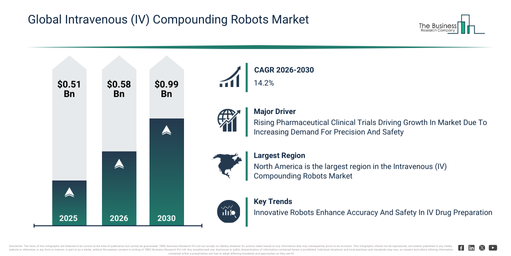
    The intravenous (IV) compounding robots market has seen substantial growth over recent years. Its value is anticipated to rise from $0.51 billion in 2025 to $0.58 billion in 2026, exhibiting a compound annual growth rate (CAGR) of 14.5%. This historical expansion can be attributed to a heightened emphasis on medication safety in hospitals, the increasing occurrence of chemotherapy drug preparation, greater integration of pharmacy automation systems, the development of centralized hospital pharmacies, and the ongoing necessity to lessen human compounding errors.

    The intravenous (IV) compounding robots market is anticipated to experience significant expansion over the next few years, with its size projected to reach $0.99 billion in 2030, demonstrating a compound annual growth rate (CAGR) of 14.2%. This growth within the forecast period can be attributed to a heightened demand for the secure handling of hazardous drugs, an increasing uptake of automated sterile compounding, growing investments in hospital automation infrastructure, the expansion of oncology treatment centers, and a rising need for operational efficiency in pharmacy workflows. Noteworthy trends during this period include technology-led innovations in robotic drug compounding, advancements in artificial intelligence (AI)-enabled dose verification, developments in closed system transfer integration, increasing research and development in precision pharmacy robotics, and innovations in real-time monitoring and quality assurance systems.

    Get A Free Sample Report With In-Depth Market Insights:

    https://thebusinessresearchcompany.com/sample_request?id=62126491&type=smp&name=Intravenous%20%28IV%29%20Compounding%20Robots%20Market%20Report%202026&utm_source=Blogs&utm_medium=Paid&utm_campaign=Oct_PR

    Intravenous (IV) Compounding Robots Market Expansion Drivers: What’s Shaping Future Growth?

    The rising number of pharmaceutical clinical trials is projected to fuel the expansion of the intravenous (IV) compounding robots market in the future. These trials are structured research studies designed to assess the safety, effectiveness, and appropriate dosage of new drugs or therapies in human participants. The growing demand for innovative treatments for intricate and emerging health conditions is contributing to the increase in pharmaceutical clinical trials. IV compounding robots assist clinical trials by guaranteeing the accurate and uniform preparation of investigational drugs, thereby improving the safety and dependability of study outcomes. For example, in December 2024, the Association of the British Pharmaceutical Industry (ABPI), a UK-based organization, reported that the number of pharmaceutical industry trials launched in the UK rose for the second year in a row, from 411 in 2022 to 426 in 2023. Consequently, the increasing number of pharmaceutical clinical trials is boosting the growth of the intravenous (IV) compounding robots market. The expanding adoption of personalized medicine and complex infusion protocols is anticipated to drive the intravenous (IV) compounding robots market forward. Personalized medicine involves customizing medical treatments, including drug choice and dosage, based on individual patient characteristics like genetics, biomarkers, and disease profiles. The increasing approval and clinical implementation of targeted therapies that necessitate highly customized intravenous dosing and preparation are propelling the growth of personalized medicine. IV compounding robots support personalized medicine by automating the precise preparation and individualized dosing of high-potency therapies, ensuring accuracy, safety, and consistency for patient-specific treatments. For instance, in November 2025, the Personalized Medicine Coalition, a US-based nonprofit organization, stated that the US Food and Drug Administration approved 18 new personalized medicines in 2024, making up over 25% of all new drug approvals, following 20 personalized medicine approvals in 2023, many of which require individualized IV preparation. Thus, the expanding use of personalized medicine and complex infusion protocols is propelling the growth of the intravenous (IV) compounding robots market.

    Intravenous (IV) Compounding Robots Market Segment Performance And Emerging Opportunities

    The intravenous (iv) compounding robots market covered in this report is segmented –

    1) By Component: Hardware, Software, Consumables

    2) By Product Type: Centralized Robots, Decentralized Robots

    3) By Technology: Gravimetric Dosing Systems, Volumetric Dosing Systems, Hybrid Dosing Systems

    4) By Application: Chemotherapy, Parenteral Nutrition, Monoclonal Antibodies, Other Applications

    5) By End User: Hospitals, Oncology Centers, Compounding Pharmacies, Other End Users

    Subsegments:

    1) By Hardware: Robotic Arms, Control Panels, Safety Enclosures, Sensors

    2) By Software: Workflow Management Software, Dose Verification Software, Inventory Management Software, Reporting And Analytics Software

    3) By Consumables: Syringes, Vials, Needles

    Intravenous (IV) Compounding Robots Market Strategic Trends: What Defines The Next Growth Phase?

    Major companies in the intravenous (IV) compounding robots market are developing innovative central pharmacy dispensing robots to enhance accuracy, safety, and efficiency in intravenous drug preparation, support personalized medicine, and reduce occupational exposure to high-potency and hazardous drugs. These central pharmacy dispensing robots are automated systems designed to store, retrieve, and dispense medications efficiently and accurately within a hospital or pharmacy setting, reducing errors and improving workflow. For instance, in October 2025, Ballad Health, a US-based healthcare company, launched three compounding robots for its central fill pharmacy at Bristol (Tenn.) Regional Medical Center. The implementation of these robots allows Ballad Health to streamline workflow, reduce turnaround time for IV medication preparation, and support personalized treatment protocols. This adoption also reinforces the hospital’s commitment to patient safety and regulatory compliance in handling hazardous drugs.

    Intravenous (IV) Compounding Robots Market Company Landscape And Competitive Strategy

    Major companies operating in the intravenous (iv) compounding robots market are Becton Dickinson and Company, Baxa Corporation, Grifols Engineering S.A., IMA Life S.p.A., ICU Medical Inc., Syntegon Technology GmbH, Omnicell Inc., OPTIMA Pharma GmbH, Marchesini Group S.p.A., Romaco Group, Trasis S.A., APOTECA S.p.A., ARxIUM Inc., Health Robotics S.r.l., Steriline Robotics, PharmaSmart Robotics, iPharma Automation, Robotic Automation Systems, Pharma Automation Solutions, Aesynt Inc., Aseptio Technologies LLC

    View The Full Intravenous (IV) Compounding Robots Market Report:

    https://thebusinessresearchcompany.com/report/intravenous-iv-compounding-robots-market-report?utm_source=Blogs&utm_medium=Paid&utm_campaign=Oct_PR

    Intravenous (IV) Compounding Robots Market Largest Region: Which Geography Holds The Biggest Share?

    North America was the largest region in the intravenous (IV) compounding robots market in 2025. Asia-Pacific is expected to be the fastest-growing region in the forecast period. The regions covered in the intravenous (iv) compounding robots market report are Asia-Pacific, South East Asia, Western Europe, Eastern Europe, North America, South America, Middle East, Africa.

    Reach Out To Our Team:

    The Business Research Company: https://www.thebusinessresearchcompany.com/

    Americas: +1 310-496-7795

    Asia: +44 7882 955267 & +91 8897263534

    Europe: +44 7882 955267

    Email us at: marketing@tbrc.info

    Follow us on:

    LinkedIn: https://in.linkedin.com/company/the-business-research-company

    YouTube: https://www.youtube.com/channel/UC24_fI0rV8cR5DxlCpgmyFQ

    Global Market Model: https://www.thebusinessresearchcompany.com/global-market-model
  • Intravenous (IV) Compounding Automation Market Research 2026: Market Size, Trends, Segments And Growth Forecast

    Intravenous (IV) Compounding Automation Market Research 2026: Market Size, Trends, Segments And Growth Forecast

    Backed by market attractiveness analysis, total addressable market sizing, company benchmarking matrices, interactive Excel dashboards, wider supply chain intelligence, emerging startup coverage, and detailed product-level insights, The Business Research Company’s 2026 market reports are designed to offer research that is more actionable and strategically valuable than ever.

    Intravenous (IV) Compounding Automation Market Forecast: Value Set To Climb From $2.45 Billion To $3.79 Billion

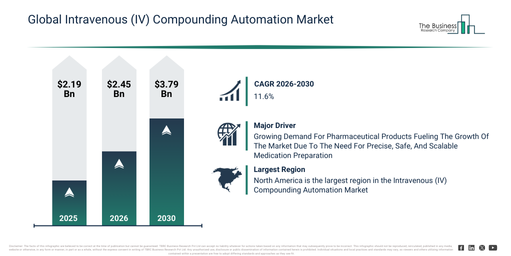
    The intravenous (IV) compounding automation market size has seen substantial growth in recent years. This market is anticipated to expand from $2.19 billion in 2025 to $2.45 billion in 2026, achieving a compound annual growth rate (CAGR) of 11.9%. The historical expansion of this market can be linked to the increased adoption of robotic compounding systems, a rising demand for chemotherapy automation, a greater emphasis on medication safety, the broadening of hospital and pharmacy automation, and enhanced awareness regarding workflow efficiency.

    The intravenous (IV) compounding automation market is anticipated to experience significant expansion in the coming years. This market is projected to reach $3.79 billion by 2030, exhibiting a compound annual growth rate (CAGR) of 11.6%. Factors driving this growth during the forecast period include greater investment in AI-driven compounding technologies, wider adoption of automated IV workstations, enhanced software integration with hospital information systems, broadened use of remote monitoring and predictive maintenance, and the progressive development of modular and customizable compounding systems. Key trends anticipated for the forecast period encompass breakthroughs in AI and machine learning for compounding, progress in robotic and automated devices, the evolution of smart pump and monitoring technologies, novel sterile compounding isolators and safety cabinets, and improvements in compact, space-efficient automation solutions.

    Get A Free Sample Report With In-Depth Market Insights:

    https://thebusinessresearchcompany.com/sample_request?id=15250584&type=smp&name=Intravenous%20%28IV%29%20Compounding%20Automation%20Market%20Report%202026&utm_source=Blogs&utm_medium=Paid&utm_campaign=Oct_PR

    Intravenous (IV) Compounding Automation Market Development Factors: What’s Supporting Demand?

    The increasing need for pharmaceutical goods is anticipated to fuel the expansion of the intravenous (IV) compounding automation market in the future. A pharmaceutical product refers to a substance or combination of substances designed for the diagnosis, treatment, prevention, or relief of diseases and medical conditions in humans or animals. IV compounding automation aids pharmaceutical products by facilitating the accurate, safe, and efficient preparation of intricate intravenous medications, ensuring precise dosages, mitigating contamination hazards, and enabling healthcare providers to satisfy the rising requirement for superior therapies. As an illustration, in November 2023, the European Federation of Pharmaceutical Industries and Associations (EFPIA), a Belgium-based trade association, reported that the total pharmaceutical production in Europe reached €390,000 million ($422,803 million) in 2023, an increase from €363,300 million ($393,857 million) in 2022. Consequently, the escalating demand for pharmaceutical products is propelling the growth of the intravenous (IV) compounding automation market.

    Intravenous (IV) Compounding Automation Market Segment Landscape And Growth Outlook

    The intravenous (iv) compounding automation market covered in this report is segmented –

    1) By Product Type: Robotic Compounding Systems, Automated Compounding Devices, Software Solutions, Other Product Types

    2) By Service: Installation, Maintenance, Training, Consulting, Support, System Integration, Validation, Software Updates, Calibration, Remote Monitoring

    3) By Application: Chemotherapy, Parenteral Nutrition, Antibiotics, Other Applications

    4) By End-User: Hospitals, Compounding Pharmacies, Oncology Centers, Other End-Users

    Subsegments:

    1) By Robotic Compounding Systems: Robotic Arm Based Systems, Closed System Robotic Compounding Units, Hazardous Drug Handling Robots, Sterile Preparation Robotic Platforms

    2) By Automated Compounding Devices: Volumetric Compounding Devices, Gravimetric Compounding Devices, Multi Chamber Compounding Units, Automated Parenteral Nutrition Compounding Devices

    3) By Software Solutions: Compounding Workflow Management Software, Dose Verification Software, Barcode Based Medication Safety Software, Compounding Data Analytics And Reporting Software

    4) By Other Product Types: Semi Automated Compounding Systems, Isolator Based Compounding Systems, Sterile Admixture Preparation Cabinets, Hybrid Compounding Assistance Devices

    Intravenous (IV) Compounding Automation Market Key Players Shaping Industry Direction

    Major companies operating in the intravenous (iv) compounding automation market are Becton Dickinson and Company, Baxter International Inc., Grifols S.A., ICU Medical Inc., Omnicell Inc., Fresenius Kabi AG, Equashield Medical Ltd., Health Robotics S.r.l., Loccioni Group, Loccioni Group, OPTIMA pharma GmbH, Medimix Systems AG, ARxIUM Inc., General Healthy Co. Ltd., PharmaScope Onco Automation B.V., Comecer SpA, Syntegon Technology GmbH, Parata Pharmacy Automation, B. Braun SE, Aesynt Incorporated, Shenzhen Broadcare Robots Co. Ltd.

    View The Full Intravenous (IV) Compounding Automation Market Report:

    https://thebusinessresearchcompany.com/report/intravenous-iv-compounding-automation-market-report?utm_source=Blogs&utm_medium=Paid&utm_campaign=Oct_PR

    Intravenous (IV) Compounding Automation Market Regional Analysis: Which Geography Leads On Revenue?

    North America was the largest region in the intravenous (IV) compounding automation market in 2025. Asia-Pacific is expected to be the fastest-growing region in the forecast period. The regions covered in the intravenous (iv) compounding automation market report are Asia-Pacific, South East Asia, Western Europe, Eastern Europe, North America, South America, Middle East, Africa.

    Reach Out To Our Team:

    The Business Research Company: https://www.thebusinessresearchcompany.com/

    Americas: +1 310-496-7795

    Asia: +44 7882 955267 & +91 8897263534

    Europe: +44 7882 955267

    Email us at: marketing@tbrc.info

    Follow us on:

    LinkedIn: https://in.linkedin.com/company/the-business-research-company

    YouTube: https://www.youtube.com/channel/UC24_fI0rV8cR5DxlCpgmyFQ

    Global Market Model: https://www.thebusinessresearchcompany.com/global-market-model
  • Intraoperative Neuromonitoring (IONM) Market Forecast 2026: Market Size, Competitive Landscape And Growth Drivers

    Intraoperative Neuromonitoring (IONM) Market Forecast 2026: Market Size, Competitive Landscape And Growth Drivers

    Featuring market attractiveness scoring, total addressable market sizing, company benchmarking matrices, interactive Excel dashboards, deeper supply chain intelligence, emerging startup tracking, and granular product-level insights, The Business Research Company’s 2026 market reports are built to deliver research that is both more actionable and more strategically valuable.

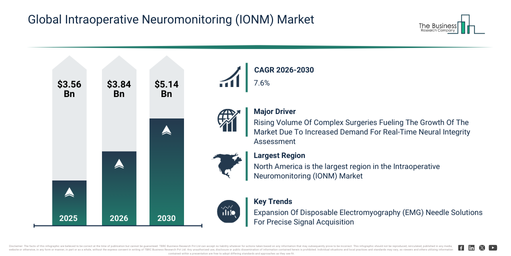
    Intraoperative Neuromonitoring (IONM) Market Revenue Growth On Track For A 7.6% CAGR Through 2030

    The intraoperative neuromonitoring market size has demonstrated robust growth over recent years. It is anticipated to expand from $3.56 billion in 2025 to $3.84 billion in 2026, achieving a compound annual growth rate (CAGR) of 7.9%. The market’s historical expansion can be attributed to factors such as an increasing need for safer surgical interventions, wider acceptance of intraoperative neuromonitoring during complex operations, a rise in neurological and spinal conditions, the development of hospital infrastructure in advanced regions, and a heightened focus on ensuring patient safety throughout surgical procedures.

    The intraoperative neuromonitoring market is projected to experience substantial expansion over the coming years, reaching $5.14 billion in 2030 with a compound annual growth rate (CAGR) of 7.6%. This anticipated growth during the forecast period is primarily driven by factors such as the wider acceptance of multimodality neuromonitoring systems, the increasing application of artificial intelligence for interpreting signals, heightened investment in research and development for neuromonitoring innovations, the proliferation of minimally invasive and robotic surgical procedures, and a growing supply of proficient neuromonitoring specialists. Key developments anticipated in this period encompass the advancement of multimodality monitoring techniques, the deepening integration of artificial intelligence into neuromonitoring setups, the rise of portable and cloud-enabled devices, the broader application of real-time data analytics in surgical settings, and emerging innovations in wearable and intraoperative monitoring sensors.

    Get A Free Sample Report With In-Depth Market Insights:

    https://thebusinessresearchcompany.com/sample_request?id=70125995&type=smp&name=Intraoperative%20Neuromonitoring%20%28IONM%29%20Market%20Report%202026&utm_source=Blogs&utm_medium=Paid&utm_campaign=Oct_PR

    Intraoperative Neuromonitoring (IONM) Market Industry Drivers: What’s Behind The Revenue Growth?

    The increasing number of complex surgical procedures is anticipated to drive the expansion of the intraoperative neuromonitoring (IONM) market moving forward. These intricate medical procedures are characterized by high risks, demand specialized skills, and often address severe or multi-system health issues. The volume of complex surgeries is on the rise as surgeons increasingly operate on older patients with multiple chronic conditions like diabetes, obesity, and heart disease, enabled by advancements in surgical techniques that make previously high-risk cases feasible. Intraoperative neuromonitoring (IONM) supports these surgeries by providing real-time feedback on neural function, thereby minimizing the risk of nerve damage during critical procedures. For instance, in January 2025, according to the Organ Procurement and Transplantation Network (OPTN), a US-based national system linking US professionals in organ donation and transplantation, total organ transplants in the United States grew to 48,180 in 2024, representing a 3.3% increase from 46,632 in 2023. Consequently, the rising volume of complex surgeries is a significant driver for the growth of the intraoperative neuromonitoring (IONM) market.

    Intraoperative Neuromonitoring (IONM) Market Breakdown By Product Type And Application

    The intraoperative neuromonitoring (ionm) market covered in this report is segmented –

    1) By Type: Systems, Accessories And Consumables, Services

    2) By Source Type: Insourced Monitoring, Outsourced Monitoring

    3) By Modality: Somatosensory Evoked Potentials, Motor Evoked Potentials, Electroencephalography, Electromyography, Brainstem Auditory Evoked Potentials, Visual Evoked Potentials, Other Modalities

    4) By Application: Neurosurgery, Spinal Surgery, Vascular Surgery, Cardiothoracic Surgery, Ear, Nose, Throat Surgery, Orthopedic Surgery

    5) By End-User: Hospitals, Ambulatory Surgical Centers, Specialty Clinics, Other End-Users

    Subsegments:

    1) By Systems: Electromyography Monitoring System, Electroencephalography Monitoring System, Somatosensory Evoked Potential Monitoring System, Motor Evoked Potential Monitoring System, Brainstem Auditory Evoked Potential Monitoring System

    2) By Accessories And Consumables: Electrodes And Probes, Cables And Connectors, Monitoring Software, Disposable Sensors, Stimulators And Pads

    3) By Services: Preoperative Assessment Services, Intraoperative Monitoring Services, Postoperative Analysis Services, Remote Neuromonitoring Services, Consulting And Training Services

    #Intraoperative Neuromonitoring (IONM) Market Growth Trends: What’s Shaping The Future Outlook?

    Leading firms within the intraoperative neuromonitoring (IONM) market are prioritizing the creation of product ranges, including advanced disposable concentric needle families, with the aim of boosting diagnostic precision and operational streamlined workflows. These specialized disposable concentric needle families are engineered to provide disposable needles featuring unwavering signal quality and accurate recording abilities, thereby removing the inconsistencies often linked with reusable instruments and ensuring excellent fidelity in electromyography (EMG) and nerve conduction velocity (NCV) studies. As an illustration, Rhythmlink International LLC, a US-based entity specializing in the design and manufacture of intraoperative neuromonitoring medical devices, introduced its Concentric Needle Family in October 2023. This particular product range supplies specialized disposable concentric needles across four sizes, crafted to integrate with a reusable cable specifically developed for the overall system. This solution furnishes clinicians with a top-tier, adaptable instrument for pinpointing and capturing data from specific muscle regions with extremely precise positioning, ultimately elevating the dependability of both intraoperative and diagnostic neurological evaluations.

    Intraoperative Neuromonitoring (IONM) Market Competitive Analysis Of Leading Industry Participants

    Major companies operating in the intraoperative neuromonitoring (ionm) market are Abbott Laboratories, Medtronic plc, Boston Scientific Corporation, Nihon Kohden Corporation, Nuvaise Inc., Natus Medical incorporated, Speciality care Inc., Brainlab AG, Neurosoft Ltd., Cadwell industries Inc., Neuromonitoring Associates LLC, Compummedics Ltd., Inomed medizintecknic Gmbh, Accurate Neuromonitoring Inc., Electrical Geodesics Inc., Blackrock NeuroTech LLC, Neuromonitoring Technologies Inc., Tucker Davis technologies Inc., Sentient Medical Systems Inc., Dr.Langer Medical Gmbh, Moller Wedel Gmbh, Ionm Solutions Inc., Axontronic GmbH & Co. KG, Alpha Omega Engineering Ltd.

    View The Full Intraoperative Neuromonitoring (IONM) Market Report:

    https://thebusinessresearchcompany.com/report/intraoperative-neuromonitoring-ionm-market-report?utm_source=Blogs&utm_medium=Paid&utm_campaign=Oct_PR

    Intraoperative Neuromonitoring (IONM) Market Geographic Spread And Regional Opportunities

    North America was the largest region in the intraoperative neuromonitoring market in 2025. Asia-Pacific is expected to be the fastest-growing region in the forecast period. The regions covered in the intraoperative neuromonitoring (ionm) market report are Asia-Pacific, South East Asia, Western Europe, Eastern Europe, North America, South America, Middle East, Africa.

    Reach Out To Our Team:

    The Business Research Company: https://www.thebusinessresearchcompany.com/

    Americas: +1 310-496-7795

    Asia: +44 7882 955267 & +91 8897263534

    Europe: +44 7882 955267

    Email us at: marketing@tbrc.info

    Follow us on:

    LinkedIn: https://in.linkedin.com/company/the-business-research-company

    YouTube: https://www.youtube.com/channel/UC24_fI0rV8cR5DxlCpgmyFQ

    Global Market Model: https://www.thebusinessresearchcompany.com/global-market-model