Blog

  • Motion Stimulation Therapy Market Analysis 2026: Market Size, Growth Trends And Industry Outlook

    Motion Stimulation Therapy Market Analysis 2026: Market Size, Growth Trends And Industry Outlook

    Built to provide research that’s more actionable and strategically valuable, The Business Research Company’s 2026 market reports include market attractiveness analysis, total addressable market sizing, company benchmarking matrices, interactive Excel dashboards, broader supply chain intelligence, emerging startup tracking, and in-depth product insights.

    Motion Stimulation Therapy Market Set To Climb From $2.13 Billion In 2026 To $2.89 Billion By 2030

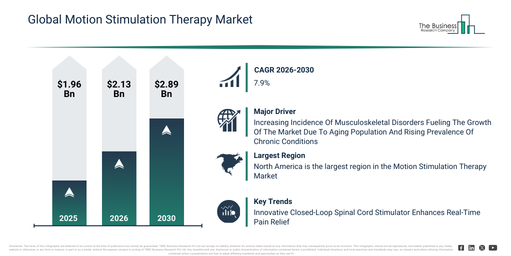
    The motion stimulation therapy market size has experienced significant expansion in recent years. It is projected to increase from $1.96 billion in 2025 to $2.13 billion in 2026, advancing at a compound annual growth rate (CAGR) of 8.7%. This growth in prior periods can be attributed to the rising prevalence of musculoskeletal disorders, increasing rehabilitation needs for aging populations, growing clinical acceptance of motion-based therapies, expansion of physical therapy infrastructure, and the availability of advanced therapeutic devices.

    The motion stimulation therapy market is anticipated to experience substantial expansion in the coming years, reaching a valuation of $2.89 billion by 2030, exhibiting a compound annual growth rate (CAGR) of 7.9%. This projected growth is driven by several factors, including a rising need for individualized rehabilitation approaches, the increasing implementation of remote and home-based therapeutic options, the broadening scope of neurological disorder treatment initiatives, the expanding incorporation of AI-powered therapy optimization, and greater healthcare spending on rehabilitation technologies. Key trends expected during this forecast period encompass the wider adoption of robotic-assisted motion therapy devices, the increasing integration of sensor-based motion feedback systems, the growing application of customized rehabilitation protocols, the expansion of therapy solutions designed for home use, and a heightened emphasis on outcomes related to neuromuscular recovery.

    Get A Free Sample Report With In-Depth Market Insights:

    https://thebusinessresearchcompany.com/sample_request?id=20133527&type=smp&name=Motion%20Stimulation%20Therapy%20Market%20Report%202026&utm_source=Blogs&utm_medium=Paid&utm_campaign=Nov_PR

    Motion Stimulation Therapy Market Demand Drivers Opening New Revenue Streams

    The rising occurrence of musculoskeletal disorders is projected to propel the expansion of the motion stimulation therapy market moving forward. Musculoskeletal disorders are conditions affecting muscles, bones, joints, tendons, and ligaments, causing discomfort or hindering movement. The increased prevalence of these disorders is linked to the global aging population, as individuals naturally encounter joint degeneration and reduced bone density over time. Motion stimulation therapy enhances the management of musculoskeletal disorders by promoting improved mobility and alleviating pain. It delivers targeted stimulation to affected regions, supporting faster healing and better patient outcomes. Therefore, the growing incidence of musculoskeletal disorders is driving the growth of the motion stimulation therapy market.

    Motion Stimulation Therapy Market Segment Performance And Emerging Opportunities

    The motion stimulation therapy market covered in this report is segmented –

    1) By Therapy Type: Functional Neuromuscular Motion Stimulation Therapy, Peripheral Motion Stimulation Therapy, Deep Brain Motion Stimulation Therapy, Therapeutic Electrical Motion Stimulation Therapy

    2) By Applications: Neurological Rehabilitation, Pain Management, Musculoskeletal Rehabilitation, Cardiovascular Diseases, Post-Surgical Rehabilitation, Others Applications

    3) By End User: Hospitals, Specialty Clinics, Other End Users

    Subsegments:

    1) By Functional Neuromuscular Motion Stimulation Therapy: Muscle Activation, Nerve Stimulation, Reflex Enhancement

    2) By Peripheral Motion Stimulation Therapy: Limb Motion Stimulation, Joint Motion Stimulation, Soft Tissue Motion Stimulation

    3) By Deep Brain Motion Stimulation Therapy: Subthalamic Nucleus Stimulation, Globus Pallidus Stimulation, Thalamic Stimulation

    4) By Therapeutic Electrical Motion Stimulation Therapy: Transcutaneous Electrical Nerve Stimulation, Functional Electrical Stimulation, Neuromuscular Electrical Stimulation

    Motion Stimulation Therapy Market Trends Powering Strategic Industry Growth

    Key companies in the motion stimulation therapy market are concentrating on developing innovative offerings, such as closed-loop spinal cord stimulators, to enhance real-time pain management and improve patient outcomes. Closed-loop spinal cord stimulators are advanced medical instruments that constantly monitor nerve signals and autonomously modify stimulation levels to deliver personalized and effective pain relief.

    Motion Stimulation Therapy Market Key Players: Which Companies Lead Industry Competition?

    Major companies operating in the motion stimulation therapy market are Abbott Laboratories, Boston Scientific Corporation, Medtronic plc, Ottobock SE & Co. KGaA, Nevro Corporation, Zynex Medical Inc., BTL Industries Inc., Onward Medical Inc., Enraf-Nonius B.V., Hocoma AG, Tyromotion GmbH, Ekso Bionics Holdings Inc., Mettler Electronics Corporation, Bioness Inc., Restorative Therapies Inc., ARPwave Therapy, Innovative Neurotronics Inc., St. Jude Medical Inc., Technomed Electronics Co Ltd., LivaNova PLC, NeuroMetrix Inc., EMS Physio Ltd., Chattanooga Group

    View The Full Motion Stimulation Therapy Market Report:

    https://thebusinessresearchcompany.com/report/motion-stimulation-therapy-global-market-report?utm_source=Blogs&utm_medium=Paid&utm_campaign=Nov_PR

    Motion Stimulation Therapy Market Geographic Landscape: Which Region Leads Industry Growth?

    North America was the largest region in the motion simulation therapy market in 2025. The regions covered in the motion stimulation therapy market report are Asia-Pacific, South East Asia, Western Europe, Eastern Europe, North America, South America, Middle East, Africa.

    Reach Out To Our Team:

    The Business Research Company: https://www.thebusinessresearchcompany.com/

    Americas: +1 310-496-7795

    Asia: +44 7882 955267 & +91 8897263534

    Europe: +44 7882 955267

    Email us at: marketing@tbrc.info

    Follow us on:

    LinkedIn: https://in.linkedin.com/company/the-business-research-company

    YouTube: https://www.youtube.com/channel/UC24_fI0rV8cR5DxlCpgmyFQ

    Global Market Model: https://www.thebusinessresearchcompany.com/global-market-model
  • Mosquito Borne Diseases Market Growth To $4.81 Billion Creates New Opportunities Across The Industry

    Mosquito Borne Diseases Market Growth To $4.81 Billion Creates New Opportunities Across The Industry

    Backed by market attractiveness analysis, total addressable market sizing, company benchmarking matrices, interactive Excel dashboards, wider supply chain intelligence, emerging startup coverage, and detailed product-level insights, The Business Research Company’s 2026 market reports are designed to offer research that is more actionable and strategically valuable than ever.

    Mosquito Borne Diseases Market Forecast: Value Set To Climb From $3.57 Billion To $4.81 Billion

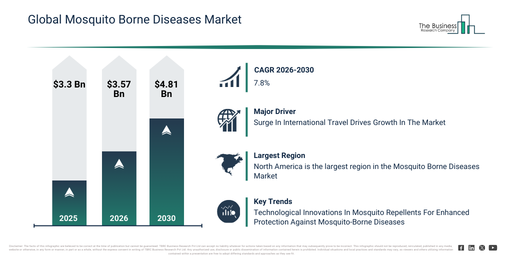
    The mosquito borne diseases market size has seen strong expansion over recent years. Its value is projected to climb from $3.3 billion in 2025 to $3.57 billion in 2026, demonstrating a compound annual growth rate (CAGR) of 8.1%. The historical increase can be attributed to several factors, including climate-induced mosquito expansion, restricted access to vaccines, a substantial disease burden in tropical regions, reliance on government eradication efforts, and an escalating incidence of dengue and malaria.

    The mosquito borne diseases market is poised for robust expansion over the next few years. This market is anticipated to reach $4.81 billion by 2030, exhibiting a compound annual growth rate (CAGR) of 7.8%. Factors contributing to this growth during the forecast period include the advent of genetic control technologies, the expansion of vaccination initiatives, a rise in global health funding, the quick uptake of digital disease surveillance, and an increasing need for sophisticated mosquito control solutions. Significant trends anticipated within the forecast period encompass an escalating demand for precision vector surveillance, the augmented utilization of AI-powered disease prediction models, the broadening of IoT-based mosquito monitoring systems, an uptick in eco-friendly and sustainable vector control solutions, and the incorporation of digital health platforms for remote disease tracking.

    Get A Free Sample Report With In-Depth Market Insights:

    https://thebusinessresearchcompany.com/sample_request?id=76791793&type=smp&name=Mosquito%20Borne%20Diseases%20Market%20Report%202026&utm_source=Blogs&utm_medium=Paid&utm_campaign=Nov_PR

    Mosquito Borne Diseases Market Growth Backed By Core Demand Fundamentals

    The rise in global travel is projected to fuel the expansion of the mosquito borne diseases market going forward. This increase in international travel is driven by elevated demand for leisure activities, business engagements, and family reunions in the post-pandemic era, alongside improved accessibility and enhanced travel infrastructure. Global mobility contributes to the proliferation of mosquito-borne diseases by heightening exposure to mosquito habitats, facilitating the movement of disease-carrying mosquitoes, and impeding effective vector control strategies. Consequently, the surge in international travel is fostering growth within the mosquito borne diseases market.

    Mosquito Borne Diseases Market Segment Landscape And Growth Outlook

    The mosquito borne diseases market covered in this report is segmented –

    1) By Disease Type: Malaria, Dengue, Yellow Fever, West Nile Virus, Chikungunya, Zika Virus, Other Disease Types

    2) By Treatment Type: Medication, Vaccination, Vector Control Methods, Immunotherapy, Supportive Care, Other Treatment Types

    3) By End User: Hospitals, Clinics, Diagnostic Centers, Research Institutes, Government Organizations, Non-Governmental Organizations, Other End Users

    Subsegments:

    1) By Malaria: Plasmodium Falciparum Malaria, Plasmodium Vivax Malaria

    2) By Dengue: Dengue Fever, Severe Dengue (Dengue Hemorrhagic Fever)

    3) By Yellow Fever: Acute Yellow Fever, Chronic Yellow Fever

    4) By West Nile Virus: Neuroinvasive Disease (Encephalitis, Meningitis), Non-neuroinvasive Disease

    5) By Chikungunya: Acute Chikungunya, Chronic Chikungunya

    6) By Zika Virus: Acute Zika Infection, Congenital Zika Syndrome

    7) By Other Disease Types: Japanese Encephalitis, La Crosse Encephalitis, Eastern Equine Encephalitis (EEE)

    Mosquito Borne Diseases Market Growth Trends Reshaping The Competitive Landscape

    Companies operating in the mosquito-borne diseases market are primarily focused on developing innovative products, such as advanced mosquito repellents, to improve the effectiveness of protection against conditions like malaria, dengue, and Zika. Advanced mosquito repellents are innovative solutions that utilize long-lasting, potent ingredients or technologies, including microencapsulation, natural compounds, or wearable devices, to deliver superior defense against mosquitoes.

    Mosquito Borne Diseases Market Competitive Landscape: Who Leads The Industry?

    Major companies operating in the mosquito borne diseases market are Johnson & Johnson, Merck & Co Inc, Sanofi SA, Novartis AG, GlaxoSmithKline plc, Serum Institute of India Pvt Ltd, Emergent BioSolutions, Valneva SE, Bharat Biotech, Syngenta, Orkin Inc, RTI International, Vector Control International, Clarke Environmental Mosquito Management, Oxitec Ltd, Abbott Laboratories, Takeda Pharmaceuticals, Sun Pharmaceutical Industries Ltd, Pfizer Inc, Roche Holding AG, Moderna Inc, BioNTech SE, CSL Limited, Bayer AG, BASF SE

    View The Full Mosquito Borne Diseases Market Report:

    https://thebusinessresearchcompany.com/report/mosquito-borne-diseases-global-market-report?utm_source=Blogs&utm_medium=Paid&utm_campaign=Nov_PR

    Mosquito Borne Diseases Market Largest Region: Which Geography Holds The Biggest Share?

    North America was the largest region in the mosquito borne diseases market in 2025. Latin America is expected to be the fastest-growing region in the forecast period. The regions covered in the mosquito borne diseases market report are Asia-Pacific, South East Asia, Western Europe, Eastern Europe, North America, South America, Middle East, Africa.

    Reach Out To Our Team:

    The Business Research Company: https://www.thebusinessresearchcompany.com/

    Americas: +1 310-496-7795

    Asia: +44 7882 955267 & +91 8897263534

    Europe: +44 7882 955267

    Email us at: marketing@tbrc.info

    Follow us on:

    LinkedIn: https://in.linkedin.com/company/the-business-research-company

    YouTube: https://www.youtube.com/channel/UC24_fI0rV8cR5DxlCpgmyFQ

    Global Market Model: https://www.thebusinessresearchcompany.com/global-market-model
  • Monocyte Activation Test Market Forecast: Breaking Down The Numbers Behind Future Expansion

    Monocyte Activation Test Market Forecast: Breaking Down The Numbers Behind Future Expansion

    Featuring market attractiveness scoring, total addressable market sizing, company benchmarking matrices, interactive Excel dashboards, deeper supply chain intelligence, emerging startup tracking, and granular product-level insights, The Business Research Company’s 2026 market reports are built to deliver research that is both more actionable and more strategically valuable.

    Monocyte Activation Test Market Revenue Growth On Track For A 14.6% CAGR Through 2030

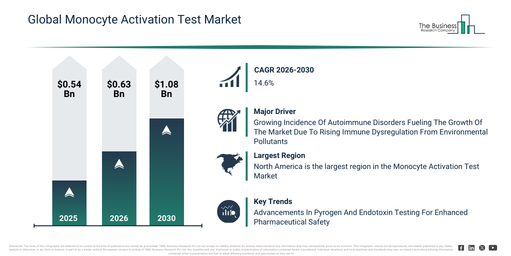
    The monocyte activation test market has experienced significant growth in recent years. This market is projected to expand from $0.54 billion in 2025 to $0.63 billion in 2026, exhibiting a compound annual growth rate (CAGR) of 14.9%. The historical growth of this market is attributable to various factors, including increasing biologics development activities, rising regulatory scrutiny on pyrogen safety, the replacement of animal-based testing methods, the expansion of pharmaceutical quality control testing, and growing investment in in vitro testing technologies.

    The monocyte activation test market is anticipated to experience substantial expansion in the coming years. This market is projected to reach $1.08 billion by 2030, exhibiting a compound annual growth rate (CAGR) of 14.6%. Several factors will drive this growth during the forecast period, including the increased uptake of advanced biologics and vaccines, the growing need for high-throughput safety testing, the expansion of automated laboratory processes, increasing regulatory backing for animal-free testing, and the greater integration of digital laboratory platforms. Key trends anticipated within this period involve a greater embrace of animal-free pyrogen testing, the increased deployment of automated mat assay systems, the expanding integration of data management software, the broader availability of gmp-compliant testing solutions, and a heightened emphasis on the regulatory acceptance of mat.

    Get A Free Sample Report With In-Depth Market Insights:

    https://thebusinessresearchcompany.com/sample_request?id=99579400&type=smp&name=Monocyte%20Activation%20Test%20Market%20Report%202026&utm_source=Blogs&utm_medium=Paid&utm_campaign=Nov_PR

    Monocyte Activation Test Market Growth Catalysts And Demand Drivers

    The rising occurrence of autoimmune disorders is anticipated to stimulate the expansion of the monocyte activation test market in the coming years. Autoimmune disorders are conditions where the body’s immune system mistakenly attacks its own healthy components, rather than defending against infections and foreign invaders. The increasing prevalence of these disorders largely stems from greater exposure to pollutants, which can disrupt immune regulation and trigger abnormal responses. The monocyte activation test (MAT) assists in identifying autoimmune disorders by offering a dependable method to evaluate immune system activation. It helps pinpoint unusual immune responses, vital for diagnosing conditions like lupus and rheumatoid arthritis, thereby enhancing early detection and management. Consequently, the increasing frequency of autoimmune disorders is fueling the growth of the monocyte activation test market. The expanding occurrence of healthcare-associated infections is expected to drive the progression of the monocyte activation test market in the future. Healthcare-associated infections are illnesses acquired by patients while receiving medical attention within a healthcare facility. The rise in these infections is primarily caused by the increased utilization of invasive medical devices, which can introduce pathogens into the body and elevate the risk of infection. The monocyte activation test helps manage healthcare-associated infections by early detection of pyrogens, facilitating safer medical devices and injectable products, and thus minimizing the risk of complications related to infection. For instance, in January 2025, the National Library of Medicine, a US-based organisation collecting and providing access to extensive biomedical literature and data, reported that out of 13,654 patients in 218 hospitals, 357 (2.6%) had 392 HAIs. Patients with HAIs were more often found in large hospitals, in critical care, compared to those without an HAI. Therefore, the increasing prevalence of healthcare-associated infections is propelling the expansion of the monocyte activation test market.

    Monocyte Activation Test Market Breakdown By Product Type And Application

    The monocyte activation test market covered in this report is segmented –

    1) By Product Type: Reagents, Test Kits, Assay Systems, Software Solutions

    2) By Technology: Enzyme-Linked Immunosorbent Assay (ELISA), Flow Cytometry, Polymerase Chain Reaction (PCR), Luminex Technologies

    3) By Distribution Channel: Direct Sales, Distributors Or Third-party Partners, Online Retailers, Institutional Sales

    4) By Application: Drug Development, Vaccine Development, Medical Device Testing, Other Applications

    5) By End-User: Pharmaceutical Companies, Biotechnology Companies, Research Institutions, Hospitals And Laboratories

    Subsegments:

    1) By Reagents: Endotoxin Standards, Cytokine Detection Reagents, Cell Culture Media, Limulus Amebocyte Lysate (LAL) Reagents, Blocking Agents And Buffers

    2) By Test Kits: Quantitative Monocyte Activation Test Kits, Qualitative Monocyte Activation Test Kits, Good Manufacturing Practice (GMP)-Compliant Test Kits, Endotoxin-Specific Test Kits, Pyrogen Detection Kits

    3) By Assay Systems: Benchtop Monocyte Activation Analyzers, Automated High-Throughput Systems, Microplate Readers, Cell Imaging Systems, Flow Cytometry-Based Systems

    4) By Software Solutions: Data Analysis Software, Laboratory Information Management Systems (LIMS) Integration Tools, Compliance And Audit Trail Software, Remote Monitoring And Control Software, Real-Time Result Interpretation Tools

    Monocyte Activation Test Market Trends Shaping Long-Term Demand

    Key players within the monocyte activation test market are concentrating on creating technologically advanced monocyte activation test (MAT) products, including pyrogen and endotoxin tests, to elevate test sensitivity and refine the identification of immune reactions. Pyrogen and endotoxin tests are utilized to pinpoint substances that trigger fever, particularly endotoxins derived from gram-negative bacteria.

    Monocyte Activation Test Market Company Landscape And Competitive Strategy

    Major companies operating in the monocyte activation test market are Merck KGaA, Becton Dickinson and Company, Eurofins Scientific, Lonza Group, Charles River Laboratories, Nelson Laboratories LLC, Solvias AG, Labor LS SE and Co. KG, BMG Labtech, Cellular Technology Limited, Creative Biolabs, FUJIFILM Wako Chemicals, Microcoat Biotechnologie GmbH, MAT BioTech B.V., Sanquin Diagnostiek B.V., PyroDex LLC, MAT Research B.V., Minerva Biolabs GmbH, Wickham Micro Limited, Rapid Test Methods Ltd.

    View The Full Monocyte Activation Test Market Report:

    https://thebusinessresearchcompany.com/report/monocyte-activation-test-global-market-report?utm_source=Blogs&utm_medium=Paid&utm_campaign=Nov_PR

    Monocyte Activation Test Market Regional Analysis: Which Geography Leads On Revenue?

    North America was the largest region in the monocyte activation test market in 2025. Asia-Pacific is expected to be the fastest-growing region in the forecast period. The regions covered in the monocyte activation test market report are Asia-Pacific, South East Asia, Western Europe, Eastern Europe, North America, South America, Middle East, Africa.

    Reach Out To Our Team:

    The Business Research Company: https://www.thebusinessresearchcompany.com/

    Americas: +1 310-496-7795

    Asia: +44 7882 955267 & +91 8897263534

    Europe: +44 7882 955267

    Email us at: marketing@tbrc.info

    Follow us on:

    LinkedIn: https://in.linkedin.com/company/the-business-research-company

    YouTube: https://www.youtube.com/channel/UC24_fI0rV8cR5DxlCpgmyFQ

    Global Market Model: https://www.thebusinessresearchcompany.com/global-market-model
  • Monkey Pox Treatment Market Expected To Grow At 13% CAGR Through 2030: What Businesses Need To Know

    Monkey Pox Treatment Market Expected To Grow At 13% CAGR Through 2030: What Businesses Need To Know

    Built to provide research that’s more actionable and strategically valuable, The Business Research Company’s 2026 market reports include market attractiveness analysis, total addressable market sizing, company benchmarking matrices, interactive Excel dashboards, broader supply chain intelligence, emerging startup tracking, and in-depth product insights.

    Monkey Pox Treatment Market Value Growth And Long-Term Outlook

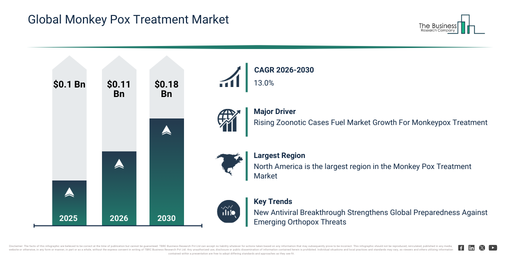
    The monkey pox treatment market size has experienced swift expansion in recent years. This market is projected to expand from $0.1 billion in 2025 to $0.11 billion by 2026, exhibiting a compound annual growth rate (CAGR) of 13.0%. The historical growth can be attributed to several factors such as previous outbreaks in endemic regions, limited access to vaccines, delayed diagnosis resulting from low awareness, reliance on supportive care, and its global spread during the outbreak.

    The monkey pox treatment market is projected to experience substantial expansion over the upcoming years. This market is forecast to reach a valuation of $0.18 billion by 2030, demonstrating a compound annual growth rate (CAGR) of 13.0%. Factors contributing to this anticipated growth can be attributed to the expanding antiviral pipeline, escalating global vaccination efforts, enhanced financial support for infectious disease research, the implementation of better diagnostic methods, and the proliferation of government readiness programs. Key trends identified for this timeframe encompass the advancement of precision-focused antiviral therapies, the integration of AI-driven models for outbreak prediction, the proliferation of digital tracking platforms for monitoring cases, the augmented utilization of IoT-enabled networks for disease surveillance, and an increasing need for environmentally responsible vaccine manufacturing techniques.

    Get A Free Sample Report With In-Depth Market Insights:

    https://thebusinessresearchcompany.com/sample_request?id=84431909&type=smp&name=Monkey%20Pox%20Treatment%20Market%20Report%202026&utm_source=Blogs&utm_medium=Paid&utm_campaign=Nov_PR

    Monkey Pox Treatment Market Opportunity Drivers: What’s Unlocking New Revenue Potential?

    The rising occurrence of zoonotic infections is anticipated to boost the monkeypox treatment market’s expansion. Zoonotic infections are illnesses spread from animals to people via direct interaction with infected surroundings or carriers. Heightened interaction between humans and animals, bringing them into closer proximity, escalates the risks of zoonotic infections. Furthermore, climate change exacerbates this danger by broadening the habitats of disease vectors and introducing harmful microbes to previously unaffected regions. Monkeypox treatments are utilized to manage zoonotic mpox, working to target the virus and relieve symptoms in both human patients and potentially affected animals. Consequently, the growing occurrence of zoonotic infections is a key driver for the monkeypox treatment market.

    Monkey Pox Treatment Market Segment Analysis And Revenue Potential

    The monkey pox treatment market covered in this report is segmented –

    1) By Treatment Type: Prophylactic Vaccines, Therapeutics

    2) By Dosage Forms: Solid, Liquid, Semi Solid

    3) By Route Of Administration: Oral, Topical, Parenteral

    4) By Distribution Channel: Retail Pharmacies, Hospital Pharmacies, Online Pharmacies

    Subsegments:

    1) By Prophylactic Vaccines: Vaccinia-Based Vaccines, Modified Vaccinia Ankara (MVA) Vaccines

    2) By Therapeutics: Antiviral Agents (Tecovirimat, Brincidofovir), Immune Modulators, Supportive Care Treatments

    Monkey Pox Treatment Market Innovation Trends Shaping Future Development

    Leading companies in the monkeypox treatment market are concentrating on developing innovative products, such as small-molecule antivirals, to bolster global health preparedness and stockpiling capabilities. These small-molecule antivirals function by inhibiting specific viral proteins to prevent the virus from spreading within the body and possess long-term storage potential, making them highly suitable for emergency responses. For example, in January 2025, SIGA Technologies, a US-based pharmaceutical company, successfully gained approval in Japan for TEPOXX (tecovirimat 200 mg capsules), which represents the first antiviral to address orthopoxviruses in that nation. This product has demonstrated a strong safety profile, supported by data from 15 clinical trials involving over 800 healthy volunteers, exhibited quantifiable pharmacokinetics within effective dose ranges, and showed robust preclinical efficacy in animal models by reducing both mortality and viral load. The drug operates by inhibiting the VP37 protein on the virus surface, thereby preventing viral egress from infected cells and allowing the immune system to clear the infection. SIGA has collaborated with Japan Biotechno Pharma as its exclusive distributor to facilitate the creation of Japan’s strategic national stockpile of TEPOXX.

    Monkey Pox Treatment Market Key Players Shaping Industry Direction

    Major companies operating in the monkey pox treatment market are Merck & Co Inc, Sanofi S A, Gilead Sciences Inc, BioNTech SE, Moderna Inc, Novavax Inc, Emergent BioSolutions Inc, Bavarian Nordic A S, SIGA Technologies Inc, Tonix Pharmaceuticals Holding Corp, Chimerix Inc, Emcure Pharmaceuticals Ltd, VBI Vaccines Inc, Pfizer Inc, Regeneron Pharmaceuticals Inc, GeoVax Labs Inc, Zydus Cadila Ltd, Serum Institute of India Pvt Ltd, Biological E Ltd, Dr Reddy’s Laboratories Ltd, Hester Bioscience Ltd, Indian Immunologicals Ltd, Reliance Life Sciences Pvt Ltd, Takeda Pharmaceuticals Co Ltd, KM Biologics Co Ltd, Meridian Bioscience Inc, NanoViricides Inc.

    View The Full Monkey Pox Treatment Market Report:

    https://thebusinessresearchcompany.com/report/monkey-pox-treatment-global-market-report?utm_source=Blogs&utm_medium=Paid&utm_campaign=Nov_PR

    Monkey Pox Treatment Market Geographic Spread And Regional Opportunities

    North America was the largest region in the monkey pox treatment market in 2025. Asia-Pacific is expected to be the fastest-growing region in the forecast period. The regions covered in the monkey pox treatment market report are Asia-Pacific, South East Asia, Western Europe, Eastern Europe, North America, South America, Middle East, Africa.

    Reach Out To Our Team:

    The Business Research Company: https://www.thebusinessresearchcompany.com/

    Americas: +1 310-496-7795

    Asia: +44 7882 955267 & +91 8897263534

    Europe: +44 7882 955267

    Email us at: marketing@tbrc.info

    Follow us on:

    LinkedIn: https://in.linkedin.com/company/the-business-research-company

    YouTube: https://www.youtube.com/channel/UC24_fI0rV8cR5DxlCpgmyFQ

    Global Market Model: https://www.thebusinessresearchcompany.com/global-market-model
  • Monkey Pox Testing Market Forecast To Reach $1.88 Billion By 2030: Key Trends Explained

    Monkey Pox Testing Market Forecast To Reach $1.88 Billion By 2030: Key Trends Explained

    Backed by market attractiveness analysis, total addressable market sizing, company benchmarking matrices, interactive Excel dashboards, wider supply chain intelligence, emerging startup coverage, and detailed product-level insights, The Business Research Company’s 2026 market reports are designed to offer research that is more actionable and strategically valuable than ever.

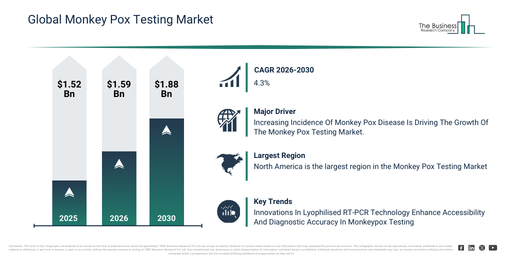
    Monkey Pox Testing Market Poised To Hit $1.88 Billion By 2030 With A 4.3% CAGR

    The monkey pox testing market has experienced consistent growth in its size over recent years. This market is projected to expand from $1.52 billion in 2025 to $1.59 billion by 2026, exhibiting a compound annual growth rate (CAGR) of 4.4%. Key drivers for its historical growth include the worldwide dissemination during the outbreak, restricted diagnostic resources, reliance on centralized lab facilities, a scarcity of test kits, and tardy case identification.

    The monkeypox testing market is projected to experience consistent growth in the coming years. It is anticipated to reach $1.88 billion in 2030, with a compound annual growth rate (CAGR) of 4.3%. This expansion during the forecast period can be attributed to several factors such as the increase in molecular testing capacity, the rising adoption of point-of-care diagnostics, enhanced government surveillance initiatives, a boost in research funding, and the development of rapid antigen technologies. Key trends during this period are expected to include the broader use of advanced molecular diagnostic platforms, the implementation of AI-based systems for outbreak prediction and case mapping, the growth of IoT-enabled remote testing infrastructure, the creation of high-throughput automated testing systems, and the increasing integration of cloud-based laboratory data networks.

    Get A Free Sample Report With In-Depth Market Insights:

    https://thebusinessresearchcompany.com/sample_request?id=50588317&type=smp&name=Monkey%20Pox%20Testing%20Market%20Report%202026&utm_source=Blogs&utm_medium=Paid&utm_campaign=Nov_PR

    Monkey Pox Testing Market Growth Momentum: What Factors Are Shaping Demand?

    The rising occurrence of monkeypox is anticipated to drive expansion in the monkey pox testing market moving forward. It is an uncommon viral illness resulting from the monkeypox virus, which belongs to the orthopoxvirus genus and shares a connection with the smallpox virus. The increase in cases can be attributed to heightened human-to-human spread, international travel, and diminished immunity stemming from the cessation of smallpox vaccination initiatives. Testing for monkeypox facilitates the early detection of infected persons, enabling prompt medical intervention and isolation to hinder further dissemination. Furthermore, it assists in monitoring outbreaks and comprehending the virus’s transmission dynamics. Consequently, the growing frequency of monkeypox is stimulating the expansion of the monkey pox testing market.

    Monkey Pox Testing Market Segmentation And Category Overview

    The monkey pox testing market covered in this report is segmented –

    1) By Technology: Polymerase Chain Reaction (PCR), Lateral Flow Assay (LFA), Other Technologies

    2) By Mode: Laboratory Testing, Point Of Care Testing

    3) By End-Use: Hospitals And Clinics, Diagnostic Laboratories, Other End-Uses

    Subsegments:

    1) By Polymerase Chain Reaction (PCR): Real-Time PCR (qPCR), Reverse Transcription PCR (RT-PCR), Multiplex PCR

    2) By Lateral Flow Assay (LFA): Immunochromatographic Lateral Flow Assays, Rapid Antigen Detection Kits

    3) By Other Technologies: Enzyme-Linked Immunosorbent Assay (ELISA), CRISPR-Based Testing, Serological Tests (Antibody Detection)

    Monkey Pox Testing Market Trends Redefining Industry Growth

    Leading companies within the monkey pox testing market are prioritizing the creation of advanced solutions, specifically lyophilised component RT PCR kits, to improve both the ease of access and dependability of diagnostics. This lyophilised component technology involves freeze-drying reagents, ensuring their stability at room temperatures and allowing for shipment without requiring cold chain logistics. This innovation lessens the need for cold storage, making it possible to deploy testing in remote regions while preserving the accuracy and reliability of the tests.

    Monkey Pox Testing Market Competitive Analysis Of Leading Industry Participants

    Major companies operating in the monkey pox testing market are F. Hoffmann-La Roche AG, Thermo Fisher Scientific Inc., Abbott Laboratories, Becton Dickinson and Company, Mayo Clinic Laboratories, Laboratory Corporation of America Holdings, Quest Diagnostics Incorporated, Sonic Healthcare Limited, bioMérieux S.A., Bio-Rad Laboratories Inc., QIAGEN N.V., Cepheid Inc., Aegis Sciences Corporation, Chembio Diagnostics Inc., Flow Health Inc., SeraCare Life Sciences Inc., BioGX Inc., Applied DNA Sciences Inc., CerTest Biotec S.L., Altona Diagnostics GmbH, Creative Biogene Inc., ACON Biotech (Hangzhou) Co Ltd.

    View The Full Monkey Pox Testing Market Report:

    https://thebusinessresearchcompany.com/report/monkey-pox-testing-global-market-report?utm_source=Blogs&utm_medium=Paid&utm_campaign=Nov_PR

    Monkey Pox Testing Market Top Region By Revenue And Market Share

    North America was the largest region in the monkey pox testing market in 2025. Asia-Pacific is expected to be the fastest-growing region in the forecast period. The regions covered in the monkey pox testing market report are Asia-Pacific, South East Asia, Western Europe, Eastern Europe, North America, South America, Middle East, Africa.

    Reach Out To Our Team:

    The Business Research Company: https://www.thebusinessresearchcompany.com/

    Americas: +1 310-496-7795

    Asia: +44 7882 955267 & +91 8897263534

    Europe: +44 7882 955267

    Email us at: marketing@tbrc.info

    Follow us on:

    LinkedIn: https://in.linkedin.com/company/the-business-research-company

    YouTube: https://www.youtube.com/channel/UC24_fI0rV8cR5DxlCpgmyFQ

    Global Market Model: https://www.thebusinessresearchcompany.com/global-market-model
  • Molluscum Contagiosum (MC) Treatment Market Size Forecast From 2026 To 2030: Key Industry Trends

    Molluscum Contagiosum (MC) Treatment Market Size Forecast From 2026 To 2030: Key Industry Trends

    Featuring market attractiveness scoring, total addressable market sizing, company benchmarking matrices, interactive Excel dashboards, deeper supply chain intelligence, emerging startup tracking, and granular product-level insights, The Business Research Company’s 2026 market reports are built to deliver research that is both more actionable and more strategically valuable.

    Molluscum Contagiosum (MC) Treatment Market Size And Revenue Outlook Through 2030

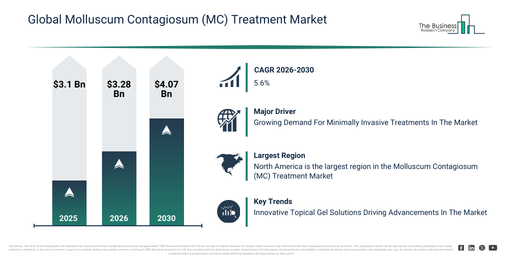
    The molluscum contagiosum (mc) treatment market has experienced significant expansion in recent years. Its value is projected to increase from $3.1 billion in 2025 to $3.28 billion in 2026, exhibiting a compound annual growth rate (CAGR) of 5.8%. This historical growth can be attributed to factors like a rising prevalence in children, limited understanding of available treatment options, a reliance on the infection’s self-resolving nature, restricted access to dermatology care, and a slow adoption of prescription therapies.

    The molluscum contagiosum (mc) treatment market size is projected to undergo significant expansion over the next few years. It is anticipated to grow to $4.07 billion by 2030, demonstrating a compound annual growth rate (CAGR) of 5.6%. This expected growth during the forecast period is attributable to an increased demand for effective topical solutions, the expansion of dermatology clinics, a growing inclination towards minimally invasive treatments, continuous product innovation, and the rising adoption of home-based treatment approaches. Key trends for the forecast period encompass the development of precision-based dermatological therapies, the integration of AI-driven tools for diagnostic support, the implementation of digital platforms for monitoring treatment, an increase in automation within dermatology product manufacturing, and a greater utilization of virtual consultation and remote care models.

    Get A Free Sample Report With In-Depth Market Insights:

    https://thebusinessresearchcompany.com/sample_request?id=27355778&type=smp&name=Molluscum%20Contagiosum%20%28MC%29%20Treatment%20Market%20Report%202026&utm_source=Blogs&utm_medium=Paid&utm_campaign=Nov_PR

    Molluscum Contagiosum (MC) Treatment Market Expansion Drivers: What’s Shaping Future Growth?

    An increasing need for minimally invasive therapies is projected to boost the expansion of the molluscum contagiosum treatment market. These treatments are defined as medical interventions executed with minimal bodily harm, typically involving small or no surgical cuts. The appeal of minimally invasive treatments stems from their capacity to shorten recovery periods, lessen surgical dangers, and improve patient results when contrasted with conventional methods. For molluscum contagiosum, minimally invasive approaches like cryotherapy and laser therapy are employed for efficient lesion removal, quicker healing, and reduced scar formation. Such treatments generally necessitate fewer appointments and are highly effective for addressing the frequently widespread lesions associated with molluscum contagiosum. Consequently, the increasing preference for minimally invasive treatments is fueling the expansion of the molluscum contagiosum treatment market.

    Molluscum Contagiosum (MC) Treatment Market Segment Outlook: Which Categories Are Growing Fastest?

    The molluscum contagiosum (mc) treatment market covered in this report is segmented –

    1) By Type: Molluscum Contagiosum Virus (MCV) -1, Molluscum Contagiosum Virus (MCV) -2, Molluscum Contagiosum Virus (MCV) -3, Molluscum Contagiosum Virus (MCV) -4

    2) By Treatment Type: Topical Therapy, Immune-Modulators And Procedural Treatments

    3) By Distribution Channel: Hospital Pharmacies, Retail Pharmacies, Online Pharmacies Or E-commerce

    4) By End User: Hospitals, Dermatology Clinics, Homecare Settings, Other End Users

    Molluscum Contagiosum (MC) Treatment Market Strategic Trends: What Defines The Next Growth Phase?

    Major companies operating in the molluscum contagiosum (MC) treatment market are prioritizing the development of innovative products, such as topical gels, to enhance treatment efficacy, improve patient compliance, and offer non-invasive treatment alternatives. A topical gel is a semi-solid preparation applied to the skin or mucous membranes for localized therapeutic or medicinal benefits.

    Molluscum Contagiosum (MC) Treatment Market Leading Companies And Competitive Benchmarking

    Major companies operating in the molluscum contagiosum (mc) treatment market are Verrica Pharmaceuticals, Novan Inc., Veloce BioPharma LLC, Polaryx Therapeutics, Aclaris Therapeutics Inc., MedCara Pharmaceuticals LLC, Pelthos Therapeutics Inc., Veradermics, Arcutis Biotherapeutics, Krystal Biotech, Connect Biopharma, AbbVie Inc., Pfizer Inc., Johnson & Johnson, Galderma S.A., LEO Pharma, Amgen, DermBiont, Almirall, Tyris Therapeutics, Abeona Therapeutics, Fibrocell Science, Amryt Pharma, Azitra

    View The Full Molluscum Contagiosum (MC) Treatment Market Report:

    https://thebusinessresearchcompany.com/report/molluscum-contagiosum-mc-treatment-global-market-report?utm_source=Blogs&utm_medium=Paid&utm_campaign=Nov_PR

    Molluscum Contagiosum (MC) Treatment Market Regional Analysis And Top Geography

    North America was the largest region in the molluscum contagiosum (MC) treatment market in 2025. Asia-Pacific is expected to be the fastest-growing region in the forecast period. The regions covered in the molluscum contagiosum (mc) treatment market report are Asia-Pacific, South East Asia, Western Europe, Eastern Europe, North America, South America, Middle East, Africa.

    Reach Out To Our Team:

    The Business Research Company: https://www.thebusinessresearchcompany.com/

    Americas: +1 310-496-7795

    Asia: +44 7882 955267 & +91 8897263534

    Europe: +44 7882 955267

    Email us at: marketing@tbrc.info

    Follow us on:

    LinkedIn: https://in.linkedin.com/company/the-business-research-company

    YouTube: https://www.youtube.com/channel/UC24_fI0rV8cR5DxlCpgmyFQ

    Global Market Model: https://www.thebusinessresearchcompany.com/global-market-model
  • Molecular Weight Marker Market 2026: Market Size, Growth Drivers And Emerging Opportunities

    Molecular Weight Marker Market 2026: Market Size, Growth Drivers And Emerging Opportunities

    Built to provide research that’s more actionable and strategically valuable, The Business Research Company’s 2026 market reports include market attractiveness analysis, total addressable market sizing, company benchmarking matrices, interactive Excel dashboards, broader supply chain intelligence, emerging startup tracking, and in-depth product insights.

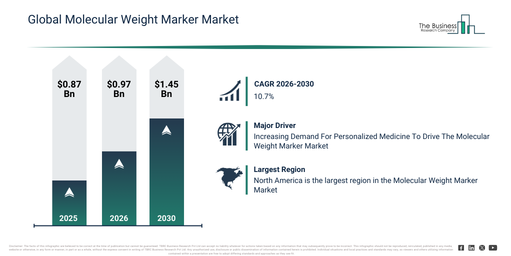
    Molecular Weight Marker Market Growth From $0.97 Billion In 2026 To $1.45 Billion By 2030 At A CAGR Of 10.7%

    The molecular weight marker market has seen substantial expansion in recent years. This market is expected to expand from $0.87 billion in 2025 to $0.97 billion in 2026, achieving a compound annual growth rate (CAGR) of 11.8%. The historical growth of this market can be attributed to several factors, including the increasing adoption of gel electrophoresis in research, a rising need for protein separation tools, the growth of academic molecular biology programs, the limited availability of advanced marker varieties, and a dependence on imported electrophoresis consumables.

    The market for molecular weight markers is projected to experience swift expansion over the coming years. This market is forecast to reach $1.45 billion by 2030, exhibiting a compound annual growth rate (CAGR) of 10.7%. Factors contributing to this anticipated growth include an increase in genomics and proteomics research, the growing uptake of automated gel systems, a heightened demand for precise molecular weight determination, expanded funding for biotechnology research and development, and increased application in diagnostic laboratories. Key trends expected during the forecast timeframe encompass improvements in precision molecular biology instruments, the incorporation of digital data management within electrophoresis processes, the implementation of AI-driven gel analysis solutions, the automation of lab procedures and marker manufacturing, and the proliferation of integrated and intelligent laboratory setups.

    Get A Free Sample Report With In-Depth Market Insights:

    https://thebusinessresearchcompany.com/sample_request?id=67663629&type=smp&name=Molecular%20Weight%20Marker%20Market%20Report%202026&utm_source=Blogs&utm_medium=Paid&utm_campaign=Nov_PR

    Molecular Weight Marker Market Development Factors: What’s Supporting Demand?

    The increasing embrace of personalized medicine is anticipated to fuel the expansion of the Molecular Weight Marker Market in the future. Personalized medicine defines a healthcare approach focused on customizing treatments and interventions to suit the unique needs of individual patients. This rise in personalized medicine is driven by the swift progress in omics technology, data integration, genetics, and a heightened understanding of the importance of customized patient-specific drugs and preventative measures. Molecular weight markers provide a robust foundation for advancing personalized medicine, achieving this through comprehensive proteomic analysis, aiding in biomarker identification, enhancing drug development and understanding treatment responses, and assisting in the development of tailored therapeutic plans. Consequently, the wider adoption of personalized medicine will boost the growth of the Molecular Weight Marker Market. Increasing financial commitments to research are projected to boost the expansion of the Molecular Weight Marker Market in the coming years. Research investments denote funds allocated by governments, academic bodies, and enterprises to facilitate scientific investigations and technological progress across diverse domains. The surge in these investments is spurred by governments increasingly prioritizing biomedical innovation, with greater public funding fostering expanded scientific capacities and accelerating groundbreaking findings in molecular biology and life sciences. Such research funding fuels the need for molecular weight markers, as scientists require accurate instruments for analyzing proteins and nucleic acids in their lab work and investigations. Consequently, the growth in research investments is propelling the Molecular Weight Marker Market forward.

    Molecular Weight Marker Market Segment Landscape: Which Areas Lead Development?

    The molecular weight marker market covered in this report is segmented –

    1) By Product: DNA Markers, Protein Markers, RNA Markers

    2) By Marker Type: Prestained Markers, Unstained Markers, Specialty Markers

    3) By Application: Nucleic Acid Application, Proteomics Application

    4) By End User: Academic Research Institutes, Pharmaceutical And Biotechnology Companies, Contract Research Organizations, Other End-Users

    Subsegments:

    1) By DNA Markers: Gene-Specific Markers, Fragment Length Markers, Plasmid DNA Markers

    2) By Protein Markers: Pre-Stained Protein Markers, Unstained Protein Markers, Recombinant Protein Markers

    3) By RNA Markers: mRNA Markers, Total RNA Markers, rRNA Markers

    Molecular Weight Marker Market Industry Leaders And Competitive Landscape

    Major companies operating in the molecular weight marker market are Thermo Fisher Scientific Inc., Roche Holding AG, Merck KGaA, Lonza Group AG, Sigma-Aldrich, Bio-Rad Laboratories, QIAGEN N V, Bio-Techne, Promega Corporation, Takara Bio, New England Biolabs, SERVA Electrophoresis, Enzo Life Sciences, GeneDireX Inc., LGC Biosearch Technologies, Applied Biological Materials Inc., Cell Signaling Technology Inc., GenScript Biotech Corporation, OriGene Technologies Inc., BioVision Inc., Rockland Immunochemicals Inc., Creative BioMart, Novus Biologicals Inc., Norgen Biotek

    View The Full Molecular Weight Marker Market Report:

    https://thebusinessresearchcompany.com/report/molecular-weight-marker-global-market-report?utm_source=Blogs&utm_medium=Paid&utm_campaign=Nov_PR

    Molecular Weight Marker Market Geographic Analysis: Where Is Demand Rising Fastest?

    North America was the largest region in the molecular weight marker market in 2025. Asia-Pacific is expected to be the fastest-growing region in the forecast period. The regions covered in the molecular weight marker market report are Asia-Pacific, South East Asia, Western Europe, Eastern Europe, North America, South America, Middle East, Africa.

    Reach Out To Our Team:

    The Business Research Company: https://www.thebusinessresearchcompany.com/

    Americas: +1 310-496-7795

    Asia: +44 7882 955267 & +91 8897263534

    Europe: +44 7882 955267

    Email us at: marketing@tbrc.info

    Follow us on:

    LinkedIn: https://in.linkedin.com/company/the-business-research-company

    YouTube: https://www.youtube.com/channel/UC24_fI0rV8cR5DxlCpgmyFQ

    Global Market Model: https://www.thebusinessresearchcompany.com/global-market-model
  • Molecular Tumor Board Solutions Market Set To Expand From $2.87 Billion In 2026: Growth Outlook Through 2030

    Molecular Tumor Board Solutions Market Set To Expand From $2.87 Billion In 2026: Growth Outlook Through 2030

    Backed by market attractiveness analysis, total addressable market sizing, company benchmarking matrices, interactive Excel dashboards, wider supply chain intelligence, emerging startup coverage, and detailed product-level insights, The Business Research Company’s 2026 market reports are designed to offer research that is more actionable and strategically valuable than ever.

    Molecular Tumor Board Solutions Market Expansion Outlook: What Revenue Opportunities Are Ahead?

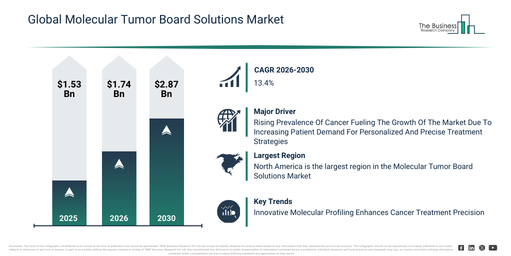
    The molecular tumor board solutions market size has seen rapid expansion in recent years. It is projected to increase from $1.53 billion in 2025 to $1.74 billion in 2026, at a compound annual growth rate (CAGR) of 13.7%. The historical growth of this market can be attributed to the expansion of precision oncology programs, increasing availability of genomic sequencing data, growth of multidisciplinary cancer care teams, rising adoption of clinical decision support software, and improved data sharing across oncology centers.

    The molecular tumor board solutions market is projected to experience swift expansion over the coming years. Its valuation is set to reach $2.87 billion by 2030, exhibiting a compound annual growth rate (CAGR) of 13.4%. This anticipated growth is driven by several factors, including heightened investments in customized cancer care, a surging need for molecularly guided treatments, the broadening use of cloud technology in healthcare, greater integration with platforms for clinical trial matching, and the increasing embrace of AI-powered oncology analytics. Key developments expected during this period involve the wider application of AI for variant interpretation, a greater merging of diverse genomic data, the proliferation of cloud-based tumor board platforms, an uptick in the utilization of cooperative decision support mechanisms, and a sharper emphasis on tailored oncology processes.

    Get A Free Sample Report With In-Depth Market Insights:

    https://thebusinessresearchcompany.com/sample_request?id=22892386&type=smp&name=Molecular%20Tumor%20Board%20Solutions%20Market%20Report%202026&utm_source=Blogs&utm_medium=Paid&utm_campaign=Nov_PR

    Molecular Tumor Board Solutions Market Industry Drivers: What’s Behind The Revenue Growth?

    The growing incidence of cancer is projected to fuel the expansion of the molecular tumor board solutions market in the coming years. Cancer describes a collection of diseases defined by the uncontrolled multiplication and spread of abnormal cells within the body. This increasing occurrence of cancer is linked to lifestyle choices such as inadequate nutrition, smoking, physical inactivity, and excessive alcohol consumption. Molecular tumor board solutions assist in cancer care by providing expert, multidisciplinary assessments of patients’ genomic and clinical data, which enables the creation of personalized treatment strategies. They improve clinical decision-making through the integration of molecular profiling and AI-driven insights, thereby enhancing patient outcomes and treatment precision. Thus, the escalating prevalence of cancer is propelling the growth of the molecular tumor board solutions market.

    Molecular Tumor Board Solutions Market Segments: Where Is Growth Concentrated?

    The molecular tumor board solutions market covered in this report is segmented –

    1) By Component: Software, Services

    2) By Deployment Mode: On-Premises, Cloud-Based

    3) By Application: Clinical Decision Support, Genomic Data Interpretation, Patient Management, Other Applications

    4) By End-User: Hospitals, Cancer Centers, Research Institutes, Other End-Users

    Subsegments:

    1) By Software: Clinical Decision Support, Data Analytics, Reporting And Visualization, Integration Platforms

    2) By Services: Consulting, Implementation, Training And Support, Maintenance And Upgrades

    #Molecular Tumor Board Solutions Market Growth Trends: What’s Shaping The Future Outlook?

    Leading companies within the molecular tumor board solutions market are concentrating on creating innovative solutions, such as molecular profiling tests, to improve the accuracy and efficacy of cancer diagnostics and treatment planning. Molecular profiling tests are diagnostic tools that examine a tumor’s genetic and molecular attributes to inform personalized cancer treatment decisions. For example, in April 2025, Guardant Health Inc., a US-based biotechnology and precision oncology company, introduced Guardant360 Tissue. This revolutionary molecular profiling test for tumor tissue incorporates extensive multiomic analysis, covering DNA, RNA, AI-powered PD-L1, and genome-wide methylation data. Powered by the Guardant Infinity smart liquid biopsy platform, this sophisticated test offers a more comprehensive and multifaceted view of cancer, facilitating higher resolution tumor classification and subtyping. Guardant360 Tissue provides results in under two weeks, is covered by Medicare for eligible patients, and seeks to enhance precision oncology by delivering deeper insights to guide treatment choices, including for therapies like poly (ADP-ribose) polymerase (PARP) inhibitors and immunotherapies.

    Molecular Tumor Board Solutions Market Key Participants And Competitive Landscape

    Major companies operating in the molecular tumor board solutions market are F. Hoffmann-La Roche Ltd, Thermo Fisher Scientific Inc., Siemens Healthineers AG, Koninklijke Philips N.V., Illumina Inc., Novogene Co. Ltd., QIAGEN N.V., Myriad Genetics Inc., BGI Genomics Co. Ltd., Guardant Health Inc., Caris Life Sciences Inc., Mayo Clinic Laboratories, Sectra AB, GenomOncology LLC, MedGenome Labs Ltd., Burning Rock Biotech Limited, NantHealth Inc., SOPHiA GENETICS SA, Variantyx Inc., Baylor Genetics, Molecular Health GmbH, PierianDx Inc., Oncompass Medicine, CureMatch Inc.

    View The Full Molecular Tumor Board Solutions Market Report:

    https://thebusinessresearchcompany.com/report/molecular-tumor-board-solutions-global-market-report?utm_source=Blogs&utm_medium=Paid&utm_campaign=Nov_PR

    Molecular Tumor Board Solutions Market Global Footprint: Which Region Leads The Market?

    North America was the largest region in the molecular tumor board solutions market in 2025. Asia-Pacific is expected to be the fastest-growing region in the forecast period. The regions covered in the molecular tumor board solutions market report are Asia-Pacific, South East Asia, Western Europe, Eastern Europe, North America, South America, Middle East, Africa.

    Reach Out To Our Team:

    The Business Research Company: https://www.thebusinessresearchcompany.com/

    Americas: +1 310-496-7795

    Asia: +44 7882 955267 & +91 8897263534

    Europe: +44 7882 955267

    Email us at: marketing@tbrc.info

    Follow us on:

    LinkedIn: https://in.linkedin.com/company/the-business-research-company

    YouTube: https://www.youtube.com/channel/UC24_fI0rV8cR5DxlCpgmyFQ

    Global Market Model: https://www.thebusinessresearchcompany.com/global-market-model
  • Molecular Modeling Market Size And Growth In 2026: Key Factors Shaping Future Demand

    Molecular Modeling Market Size And Growth In 2026: Key Factors Shaping Future Demand

    Featuring market attractiveness scoring, total addressable market sizing, company benchmarking matrices, interactive Excel dashboards, deeper supply chain intelligence, emerging startup tracking, and granular product-level insights, The Business Research Company’s 2026 market reports are built to deliver research that is both more actionable and more strategically valuable.

    Molecular Modeling Market Growth Potential: How Will Market Size Shift Through 2030?

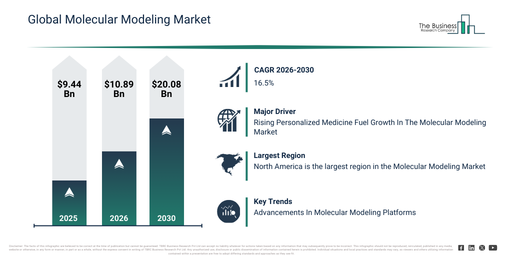
    The molecular modeling market has experienced swift expansion in its size over recent years. Projections indicate it will advance from $9.44 billion in 2025 to $10.89 billion by 2026, exhibiting a compound annual growth rate (CAGR) of 15.4%. This historical growth can be primarily linked to an increasing reliance on computational drug design, a boost in academic research contributions, the growing uptake of molecular mechanics tools, a significant need for 3D visualization solutions, and the technological constraints found in earlier modeling systems.

    The molecular modeling market size is projected for substantial expansion over the next few years. Its value is predicted to climb to $20.08 billion by 2030, maintaining a compound annual growth rate (CAGR) of 16.5%. Factors contributing to this growth over the forecast period include the expanding application of AI-based predictive modeling, increased pharmaceutical sector investment in simulation tools, broader integration of cloud computing, the intensifying requirement for accelerated drug discovery, and advancements in quantum chemistry capabilities. Noteworthy trends anticipated during this period encompass the integration of AI-driven molecular simulation tools, the widespread adoption of cloud-based modeling platforms, improved automation within computational chemistry workflows, a greater utilization of AR/VR interfaces for structural visualization, and an increase in precision-based predictive modeling techniques.

    Get A Free Sample Report With In-Depth Market Insights:

    https://thebusinessresearchcompany.com/sample_request?id=14454045&type=smp&name=Molecular%20Modeling%20Market%20Report%202026&utm_source=Blogs&utm_medium=Paid&utm_campaign=Nov_PR

    Molecular Modeling Market Growth Factors: What’s Supporting Expansion?

    The escalating adoption of personalized medicine is set to boost the molecular modeling market moving forward. Personalized medicine refers to a healthcare strategy that customizes medical decisions and therapeutic approaches for individual patients based on their distinct genetic, molecular, and clinical characteristics. In this context, molecular modeling serves to forecast individual patient reactions to various treatments, create bespoke drug therapies, and refine treatment plans in accordance with patients’ molecular profiles. Thus, the growing influence of personalized medicine is indeed propelling the molecular modeling market’s expansion.

    Molecular Modeling Market Segment Analysis: What Are The Core Market Categories?

    The molecular modeling market covered in this report is segmented –

    1) By Product: Software, Services

    2) By Approach: Molecular Mechanics Approach, Quantum Chemistry Approach

    3) By Application: Drug Development, Drug Discovery, Other Applications

    4) By End-User: Pharmaceutical And Biotechnology Companies, Research Centers And Academic Institutions, Other End Users

    Subsegments:

    1) By Software: Molecular Visualization Software, Molecular Dynamics Software, Quantum Chemistry Software, Docking Software, Simulation Software, Other Specialized Software

    2) By Services: Consulting Services, Custom Modeling Services, Training And Support Services, Data Analysis Services, Cloud-Based Services

    Molecular Modeling Market Industry Trends: What’s Reshaping Demand?

    Leading firms within the molecular modeling market are developing novel technologies, including molecular modeling platforms, to more effectively satisfy current customer demands. These platforms comprise a software suite offering instruments for visualizing, simulating, and analyzing molecules.

    Molecular Modeling Market Top Companies Driving Competitive Growth

    Major companies operating in the molecular modeling market are Thermo Fisher Scientific Inc., Dassault Systemes SE, Bruker Corporation, Physiomics plc, SilcsBio LLC, Certara Inc., Schrödinger Inc., Jubilant Biosys Ltd., Simulations Plus Inc., Genedata AG, Acellera Ltd., Advanced Chemistry Development Inc., Molsoft L.L.C., OTAVA Ltd., Chemical Computing Group, Optibrium Ltd., BioSolveIT GmbH, Cyclica Inc., Cresset Group, Cyrus Biotechnology Inc., 3D Molecular Designs LLC, Leadscope Inc.

    View The Full Molecular Modeling Market Report:

    https://thebusinessresearchcompany.com/report/molecular-modeling-global-market-report?utm_source=Blogs&utm_medium=Paid&utm_campaign=Nov_PR

    Molecular Modeling Market Regional Split: Which Areas Are Fueling Growth?

    North America was the largest region in the molecular modeling market in 2025. Asia-Pacific is expected to be the fastest-growing region in the forecast period. The regions covered in the molecular modeling market report are Asia-Pacific, South East Asia, Western Europe, Eastern Europe, North America, South America, Middle East, Africa.

    Reach Out To Our Team:

    The Business Research Company: https://www.thebusinessresearchcompany.com/

    Americas: +1 310-496-7795

    Asia: +44 7882 955267 & +91 8897263534

    Europe: +44 7882 955267

    Email us at: marketing@tbrc.info

    Follow us on:

    LinkedIn: https://in.linkedin.com/company/the-business-research-company

    YouTube: https://www.youtube.com/channel/UC24_fI0rV8cR5DxlCpgmyFQ

    Global Market Model: https://www.thebusinessresearchcompany.com/global-market-model
  • Molecular Biology Enzymes & Kits & Reagents Market Forecast 2026–2030: Market Size, Trends And Growth Opportunities

    Molecular Biology Enzymes & Kits & Reagents Market Forecast 2026–2030: Market Size, Trends And Growth Opportunities

    Built to provide research that’s more actionable and strategically valuable, The Business Research Company’s 2026 market reports include market attractiveness analysis, total addressable market sizing, company benchmarking matrices, interactive Excel dashboards, broader supply chain intelligence, emerging startup tracking, and in-depth product insights.

    Molecular Biology Enzymes & Kits & Reagents Market Value Analysis: What Growth Lies Ahead Over The Forecast Period?

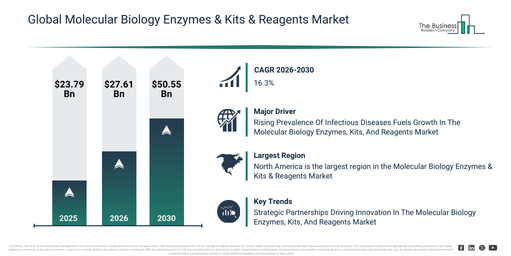
    The molecular biology enzymes & kits & reagents market has demonstrated significant growth in its size over recent years. It is projected to expand from $23.79 billion in 2025 to $27.61 billion in 2026, achieving a compound annual growth rate (CAGR) of 16.1%. The growth observed in prior periods can be attributed to several factors, including an increased adoption of PCR techniques, a rising demand for DNA extraction kits, an uptick in academic biotechnology research, the broadening of cloning applications, and a sustained dependence on traditional manual laboratory workflows.

    The molecular biology enzymes & kits & reagents market is anticipated to experience substantial expansion over the upcoming years. It is projected to reach $50.55 billion by 2030, exhibiting a compound annual growth rate (CAGR) of 16.3%. This projected growth during the forecast period is attributable to several factors, including the expansion of sequencing-based diagnostics, increased adoption of automation, the broadening of precision medicine initiatives, a surge in biotech research and development investments, and the advancement of polymerases. Key trends anticipated for this period encompass the integration of AI-powered workflow automation, the proliferation of cloud-based molecular biology platforms, a greater uptake of high-throughput sequencing technologies, the evolution of smart connected lab infrastructure, and improvements in precision genomic instrumentation.

    Get A Free Sample Report With In-Depth Market Insights:

    https://thebusinessresearchcompany.com/sample_request?id=76605020&type=smp&name=Molecular%20Biology%20Enzymes%20%26%20Kits%20%26%20Reagents%20Market%20Report%202026&utm_source=Blogs&utm_medium=Paid&utm_campaign=Nov_PR

    Molecular Biology Enzymes & Kits & Reagents Market Demand Drivers: What’s Powering Industry Growth?

    The escalating occurrence of infectious diseases is projected to stimulate the expansion of the molecular biology enzymes, kits, and reagents market moving forward. These diseases, caused by harmful microorganisms such as bacteria, fungi, parasites, and viruses, demand advanced molecular tools for their accurate detection and characterization. The rise in infectious disease cases intensifies the need for rapid and precise molecular diagnostics to facilitate timely treatment and robust public health responses. Molecular biology enzymes, kits, and reagents enable laboratories to isolate and analyze infectious agents, thereby improving disease surveillance and clinical decision-making. Thus, the growing prevalence of infectious diseases is driving the growth of the molecular biology enzymes, kits, and reagents market.

    Molecular Biology Enzymes & Kits & Reagents Market Segment Breakdown: Which Categories Lead On Revenue?

    The molecular biology enzymes & kits & reagents market covered in this report is segmented –

    1) By Product: Kits And Reagents, Enzymes, Polymerases, Ligases, Restriction Endonucleases, Reverse Transcriptases, Other Enzymes

    2) By Application: Sequencing, Cloning, PCR, Epigenetics, Restriction Digestion, Other Applications

    3) By End Users: Academic And Research Institutes, Pharmaceutical And Biotechnology companies, Hospitals And Diagnostic Centers, Other End Users

    Subsegments:

    1) By Kits And Reagents: DNA Extraction Kits, RNA Extraction Kits, PCR Kits, Sequencing Kits, Cloning Kits

    2) By Enzymes: DNA Polymerases, RNA Polymerases

    3) By Polymerases: Taq Polymerase, High-Fidelity Polymerases, Reverse Transcriptases

    4) By Ligases: DNA Ligases, RNA Ligases

    5) By Restriction Endonucleases: Type II Restriction Enzymes, Type I And III Restriction Enzyme

    6) By Reverse Transcriptases: M-MuLV Reverse Transcriptase, AMV Reverse Transcriptase

    7) By Other Enzymes: Exonucleases, Nucleases, Proteases

    Molecular Biology Enzymes & Kits & Reagents Market Innovation Trends: What Developments Are Reshaping The Industry?

    Leading companies in the molecular biology enzymes, kits, and reagents market are prioritizing the establishment of strategic partnerships to enhance product capabilities, bolster technological portfolios, and accelerate progress in sequencing applications. A strategic partnership involves a collaborative business arrangement where two or more firms combine their expertise and resources to stimulate mutual growth and innovation.

    Molecular Biology Enzymes & Kits & Reagents Market Leading Players And Competitive Positioning

    Major companies operating in the molecular biology enzymes & kits & reagents market are Thermo Fisher Scientific Inc., Merck & Co. Inc., Promega Corporation, New England Biolabs Inc., Illumina Inc., Takara Bio USA Holdings Inc., QIAGEN, Agilent Technologies Inc., F Hoffmann-La Roche AG, Bio-Rad Laboratories Inc., LGC Group, Jena Bioscience GmbH, Molecular Biology Resources Inc., Integrated DNA Technologies Inc., Randox Laboratories, ADS Biotec Inc., GE Healthcare, Lucigen Corporation, Bio Basic Inc., Bioo Scientific Corporation, Bioline, Biotechrabbit GmbH, BioWORLD, Epicentre, Hamilton Company, Omega Bio-tek, Sigma-Aldrich, Zymo Research, Abcam plc.

    View The Full Molecular Biology Enzymes & Kits & Reagents Market Report:

    https://thebusinessresearchcompany.com/report/molecular-biology-enzymes-and-kits-and-reagents-global-market-report?utm_source=Blogs&utm_medium=Paid&utm_campaign=Nov_PR

    Molecular Biology Enzymes & Kits & Reagents Market Top Region: Where Does Most Revenue Come From?

    North America was the largest region in the molecular biology enzymes, kits, and reagents market share in 2025. Asia-Pacific is expected to be the fastest-growing region in the forecast period. The regions covered in the molecular biology enzymes & kits & reagents market report are Asia-Pacific, South East Asia, Western Europe, Eastern Europe, North America, South America, Middle East, Africa.

    Reach Out To Our Team:

    The Business Research Company: https://www.thebusinessresearchcompany.com/

    Americas: +1 310-496-7795

    Asia: +44 7882 955267 & +91 8897263534

    Europe: +44 7882 955267

    Email us at: marketing@tbrc.info

    Follow us on:

    LinkedIn: https://in.linkedin.com/company/the-business-research-company

    YouTube: https://www.youtube.com/channel/UC24_fI0rV8cR5DxlCpgmyFQ

    Global Market Model: https://www.thebusinessresearchcompany.com/global-market-model