Blog

  • Moisturizing Crème Market Size Reaches $16.98 Billion In 2026: What Is Driving Growth?

    Moisturizing Crème Market Size Reaches $16.98 Billion In 2026: What Is Driving Growth?

    Backed by market attractiveness analysis, total addressable market sizing, company benchmarking matrices, interactive Excel dashboards, wider supply chain intelligence, emerging startup coverage, and detailed product-level insights, The Business Research Company’s 2026 market reports are designed to offer research that is more actionable and strategically valuable than ever.

    Moisturizing Crème Market Size Forecast: How Big Could The Market Get By 2030?

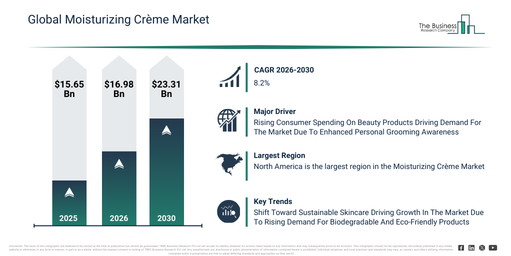
    The moisturizing crème market size has demonstrated robust expansion over recent years. Projections indicate it will advance from $15.65 billion in 2025 to $16.98 billion in 2026, achieving a compound annual growth rate (CAGR) of 8.5%. Historically, this growth has been driven by growing awareness of skincare routines, increasing prevalence of dry and sensitive skin conditions, expansion of cosmetic retail channels, rising influence of dermatological recommendations, and growth in personal care spending.

    The moisturizing crème market is expected to demonstrate robust growth over the next few years, with projections indicating it will expand to $23.31 billion by 2030, exhibiting a compound annual growth rate (CAGR) of 8.2%. This growth during the forecast period can be linked to factors such as the escalating demand for multi-functional skincare products, the increasing embrace of premium and clinical-grade moisturizers, the expansion of e-commerce channels for skincare sales, a heightened focus on tailored skincare solutions, and advancements in skin barrier science. Significant trends anticipated for this period include a wider adoption of dermatologically tested formulations, a growing need for barrier repair creams, an increasing preference for clean and natural ingredients, the proliferation of specialized creams for sensitive skin, and an intensified focus on achieving long-lasting hydration performance.

    Get A Free Sample Report With In-Depth Market Insights:

    https://thebusinessresearchcompany.com/sample_request?id=65692321&type=smp&name=Moisturizing%20Cr%C3%A8me%20Market%20Report%202026&utm_source=Blogs&utm_medium=Paid&utm_campaign=Nov_PR

    Moisturizing Crème Market Growth Drivers: What’s Behind The Acceleration?

    Increased expenditure on beauty products is anticipated to drive expansion in the moisturizing crème market. These products encompass substances or items utilized for improving or preserving the look of skin, hair, nails, and general personal aesthetics. Heightened consumer consciousness regarding personal grooming and outward appearance fuels this spending. A surge in beauty product spending consequently elevates the demand for moisturizing crème, as individuals increasingly seek efficient solutions for skin hydration and care. Consequently, the increased expenditure on beauty products is a key driver for the growth within the moisturizing crème market.

    Moisturizing Crème Market Segmentation: How Does The Market Break Down By Category?

    The moisturizing crème market covered in this report is segmented –

    1) By Type: Water-Based Creams, Oil-Based Creams, Gel Creams, Emollient Creams

    2) By Skin Type: Normal Skin, Dry Skin, Oily Skin, Combination Skin, Sensitive Skin

    3) By Distribution Channel: Online Retail, Supermarket And Hypermarkets, Specialty Stores, Pharmacy And Drugstores

    4) By Application: Face Moisturizers, Body Moisturizers, Hand And Foot Creams, Baby Moisturizers

    5) By End-User: Men, Women, Children, Infants

    Subsegments:

    1) By Water-Based Creams: Hydrating Day Creams, Lightweight Moisturizers, Oil-Free Moisturizers, Aloe vera-based creams

    2) By Oil-Based Creams: Night Repair Creams, Nourishing Balms, Shea Butter-Based Creams, Heavy-Duty Winter Creams

    3) By Gel Creams: Cooling Gel Moisturizers, Hyaluronic Acid Gel Creams, Oil-Control Gel Formulas, Mattifying Gel Creams

    4) By Emollient Creams: Barrier Repair Creams, Lanolin-Based Creams, Ceramide-Rich Emollients, Deep Moisturizers For Eczema

    Moisturizing Crème Market Trends: What’s Defining The Industry’s Next Phase?

    Major companies operating in the moisturizing crème market are prioritizing the development of sustainable products, such as biodegradable moisturizing crème, to meet the rising consumer demand for environmentally friendly options. A biodegradable moisturizing crème is a skincare product formulated with ingredients and packaging designed to naturally break down in the environment without causing harm. For instance, in February 2025, Cellugy ApS, a Denmark-based biotechnology startup, collaborated with Bioli ApS, a Denmark-based skincare company, to introduce a new Moisturizing and Protecting Day Cream. This product features EcoFLEXY, a biofabricated cellulose ingredient produced through sugar fermentation. The cream is formulated with 100% biodegradable, fossil-free, and environmentally friendly ingredients, suitable for all skin types, including sensitive skin. EcoFLEXY serves as a biobased rheology modifier, enhancing texture, and incorporates bioactive enzyme technology that delivers antioxidant protection. Developed to replace petrochemical components in skincare, this cream underscores the increasing demand for sustainable, high-performance alternatives within the cosmetics and personal care sector.

    Moisturizing Crème Market Competitive Overview And Top Companies

    Major companies operating in the moisturizing crème market are Johnson & Johnson, The Procter & Gamble Company, Unilever PLC, L’Oréal S.A., Colgate-Palmolive Company, Estée Lauder Companies Inc., Kao Corporation, Beiersdorf AG, Amway Corporation, Shiseido Company Limited, Coty Inc., Galderma S.A., The Body Shop International Limited, Avène, Dermalogica Inc., Weleda AG, Bioderma Laboratoire Dermatologique, Glossier Inc., Burt’s Bees Inc., Eminence Organic Skin Care Inc.

    View The Full Moisturizing Crème Market Report:

    https://thebusinessresearchcompany.com/report/moisturizing-creme-global-market-report?utm_source=Blogs&utm_medium=Paid&utm_campaign=Nov_PR

    Moisturizing Crème Market Regional Breakdown: Where Is Demand Concentrated?

    North America was the largest region in the moisturizing crème market in 2025. Asia-Pacific is expected to be the fastest-growing region in the forecast period. The regions covered in the moisturizing crème market report are Asia-Pacific, South East Asia, Western Europe, Eastern Europe, North America, South America, Middle East, Africa.

    Reach Out To Our Team:

    The Business Research Company: https://www.thebusinessresearchcompany.com/

    Americas: +1 310-496-7795

    Asia: +44 7882 955267 & +91 8897263534

    Europe: +44 7882 955267

    Email us at: marketing@tbrc.info

    Follow us on:

    LinkedIn: https://in.linkedin.com/company/the-business-research-company

    YouTube: https://www.youtube.com/channel/UC24_fI0rV8cR5DxlCpgmyFQ

    Global Market Model: https://www.thebusinessresearchcompany.com/global-market-model
  • Moist Wound Dressings Market Valued At $6.8 Billion In 2026: Key Trends And Growth Drivers

    Moist Wound Dressings Market Valued At $6.8 Billion In 2026: Key Trends And Growth Drivers

    Featuring market attractiveness scoring, total addressable market sizing, company benchmarking matrices, interactive Excel dashboards, deeper supply chain intelligence, emerging startup tracking, and granular product-level insights, The Business Research Company’s 2026 market reports are built to deliver research that is both more actionable and more strategically valuable.

    Moist Wound Dressings Market Revenue Outlook: What CAGR Lies Ahead Through 2030?

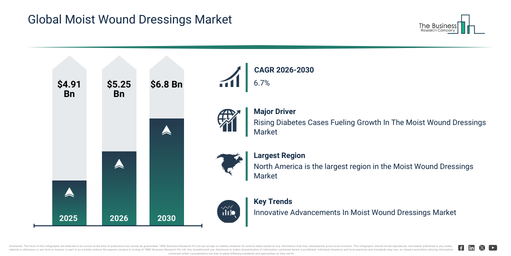
    The moist wound dressings market size has experienced robust growth in recent years. This market is projected to expand from $4.91 billion in 2025 to $5.25 billion in 2026, demonstrating a compound annual growth rate (CAGR) of 7.0%. Historically, this growth has been fueled by factors such as the increasing prevalence of chronic wounds, a rising adoption of foam and hydrocolloid dressings, the expanding use of wound care in hospital settings, a higher incidence of diabetic ulcers, and an early reliance on fundamental wound management materials.

    The moist wound dressings market is projected to experience robust expansion, reaching $6.8 billion by 2030, exhibiting a compound annual growth rate (CAGR) of 6.7%. This anticipated growth is primarily driven by factors such as the increasing prevalence of homecare wound treatment, the continuous development of sophisticated antimicrobial dressings, the growing demand from an aging population, the expanding application of hydrogel dressings, and heightened investment in research and development for wound healing. Key developments anticipated during this period encompass the progression of precision regenerative wound care, a growing shift towards eco-friendly and sustainable dressings, the expansion of automated manufacturing for sophisticated dressings, wider adoption of digital platforms for monitoring wounds, and the incorporation of AI-powered tools for wound assessment.

    Get A Free Sample Report With In-Depth Market Insights:

    https://thebusinessresearchcompany.com/sample_request?id=21560180&type=smp&name=Moist%20Wound%20Dressings%20Market%20Report%202026&utm_source=Blogs&utm_medium=Paid&utm_campaign=Nov_PR

    Moist Wound Dressings Market Growth Factors Behind Sustained Expansion

    The rising occurrence of diabetes is anticipated to boost the expansion of the moist wound dressings market in the foreseeable future. This chronic condition, marked by elevated blood sugar levels, frequently results in issues like foot ulcers and wounds that heal slowly, necessitating sophisticated wound care. The growing number of diabetes cases has consequently heightened the need for efficient wound management, with individuals suffering from diabetes depending on moist wound dressings and similar topical treatments to avert infections, aid recovery, and mitigate severe complications. Consequently, the rising prevalence of diabetes is a key factor propelling the expansion of the moist wound dressings market.

    Moist Wound Dressings Market Segment Trends And Revenue Contributors

    The moist wound dressings market covered in this report is segmented –

    1) By Product: Foam, Alginate, Hydrocolloid, Hydrogel, Other Products

    2) By Application: Burn Wounds, Pressure Ulcer, Diabetic Ulcer, Surgical Wounds, Other Applications

    3) By End User: Hospitals, Homecare, Other End Users

    Subsegments:

    1) By Foam: Non-Adhesive Foam Dressings, Adhesive Foam Dressings

    2) By Alginate: Calcium Alginate Dressings, Sodium Alginate Dressings

    3) By Hydrocolloid: Thin Hydrocolloid Dressings, Thick Hydrocolloid Dressings

    4) By Hydrogel: Sheet Hydrogels, Amorphous Hydrogels

    5) By Other Products: Silicone Dressings, Antimicrobial Dressings, Composite Dressings

    Moist Wound Dressings Market Industry Trends Fueling Future Revenue Growth

    Leading companies in the moist wound dressing sector are developing advanced products, such as foam dressings, to cater to broader customer bases, increase sales, and boost revenue. Foam dressings represent a category of wound care items specifically designed for the management of wounds that exude fluid.

    Moist Wound Dressings Market Competitive Landscape: Which Companies Lead The Industry?

    Major companies operating in the moist wound dressings market are 3M Company, Smith & Nephew PLC, Derma Sciences Inc., ConvaTec Group PLC, Coloplast A/S, Medline Industries Inc., Cardinal Health Inc., B. Braun Medical Inc., Mölnlycke Health Care AB, Integra LifeSciences Holdings Corporation, Advanced Medical Solutions Group PLC, URGO Group, Acelity L.P. Inc., Winner Medical Co. Ltd., Essity AB, AMERX Health Care Corporation, Johnson & Johnson, McKesson Medical-Surgical Inc., Hollister Incorporated, Lohmann & Rauscher International GmbH & Co. KG, Paul Hartmann AG, Kinetic Concepts Inc., Organogenesis Inc., Systagenix Wound Management Ltd.

    View The Full Moist Wound Dressings Market Report:

    https://thebusinessresearchcompany.com/report/moist-wound-dressings-global-market-report?utm_source=Blogs&utm_medium=Paid&utm_campaign=Nov_PR

    Moist Wound Dressings Market Geographic Landscape: Which Region Leads Industry Growth?

    North America was the largest region in the moist wound dressings market in 2025. Asia-Pacific is expected to be the fastest-growing region in the forecast period. The regions covered in the moist wound dressings market report are Asia-Pacific, South East Asia, Western Europe, Eastern Europe, North America, South America, Middle East, Africa.

    Reach Out To Our Team:

    The Business Research Company: https://www.thebusinessresearchcompany.com/

    Americas: +1 310-496-7795

    Asia: +44 7882 955267 & +91 8897263534

    Europe: +44 7882 955267

    Email us at: marketing@tbrc.info

    Follow us on:

    LinkedIn: https://in.linkedin.com/company/the-business-research-company

    YouTube: https://www.youtube.com/channel/UC24_fI0rV8cR5DxlCpgmyFQ

    Global Market Model: https://www.thebusinessresearchcompany.com/global-market-model
  • Mobile Vaccination Trailer Market Size In 2026: Growth Outlook And Forecast Through 2030

    Mobile Vaccination Trailer Market Size In 2026: Growth Outlook And Forecast Through 2030

    Built to provide research that’s more actionable and strategically valuable, The Business Research Company’s 2026 market reports include market attractiveness analysis, total addressable market sizing, company benchmarking matrices, interactive Excel dashboards, broader supply chain intelligence, emerging startup tracking, and in-depth product insights.

    Mobile Vaccination Trailer Market Growth Analysis: How Will Revenue Trend Over The Forecast Period?

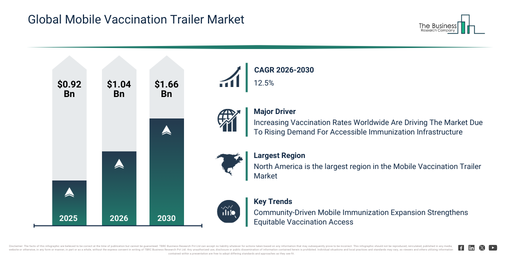
    The market size for mobile vaccination trailers has seen rapid expansion in recent years. It is forecast to rise from $0.92 billion in 2025 to $1.04 billion in 2026, achieving a compound annual growth rate (CAGR) of 12.8%. The growth observed historically can be credited to public health outreach efforts, extensive immunization drives, restricted access to established healthcare facilities, knowledge gained from pandemic response logistics, and the embrace of mobile healthcare delivery approaches.

    The mobile vaccination trailer market size is projected to experience rapid expansion in the next few years. It is anticipated to grow to $1.66 billion by 2030, demonstrating a compound annual growth rate (CAGR) of 12.5%. This growth over the forecast period can be attributed to the broadening of routine immunization coverage, increased funding for emergency preparedness, a surging demand for mobile public health infrastructure, advancements in portable cold storage technologies, and the increasing integration with digital health platforms. Prominent trends for the forecast period include the rising deployment of modular vaccination trailers, escalating demand for cold-chain integrated mobile units, the growing utilization of digital patient registration systems, the expansion of rapid deployment immunization infrastructure, and a heightened focus on regulatory-compliant mobile clinics.

    Get A Free Sample Report With In-Depth Market Insights:

    https://thebusinessresearchcompany.com/sample_request?id=91212873&type=smp&name=Mobile%20Vaccination%20Trailer%20Market%20Report%202026&utm_source=Blogs&utm_medium=Paid&utm_campaign=Nov_PR

    Mobile Vaccination Trailer Market Demand Drivers Opening New Revenue Streams

    The worldwide increase in vaccination rates is anticipated to fuel the expansion of the mobile vaccination trailer market moving forward. Worldwide vaccination rates denote the percentage of individuals across global populations who receive recommended immunizations as per established public health guidelines. These rates are climbing because of enhanced public awareness, as extensive health campaigns and convenient access to credible information prompt more individuals to grasp the advantages and get immunized. Mobile vaccination trailers become increasingly valuable with rising vaccination rates, as they offer immunization services directly to remote or underserved communities, simplifying access for more people as demand grows. Consequently, the increasing vaccination rates globally are driving the growth of the mobile vaccination trailer market.

    Mobile Vaccination Trailer Market Segment Analysis Spotlighting Growth Areas

    The mobile vaccination trailer market covered in this report is segmented –

    1) By Product Type: Single-Axle Trailers, Double-Axle Trailers, Expandable Trailers, Other Product Types

    2) By Power Source: Diesel, Electric, Hybrid

    3) By Application: COVID-19 Vaccination, Routine Immunization, Emergency Response, Other Applications

    4) By End-User: Hospitals And Clinics, Government Agencies, Non-Governmental Organizations (NGOs), Other End-Users

    Subsegments:

    1) By Single-Axle Trailers: Compact Immunization Units, Basic Clinical Service Units, Rural Outreach Units, Rapid Deployment Units

    2) By Double-Axle Trailers: Enhanced Capacity Immunization Units, Multiroom Clinical Units, Extended Travel Operation Units, High-Volume Vaccination Units

    3) By Expandable Trailers: Side-Expanding Clinical Units, Modular Expansion Units, Large Capacity Immunization Units, Multiuse Public Health Units

    4) By Other Product Types: Towable Clinic Pods, Custom-Built Immunization Units, Temporary Public Health Structures

    Mobile Vaccination Trailer Market Trends Powering Strategic Industry Growth

    Major companies operating in the mobile vaccination trailer market are prioritizing the development of inventive approaches, such as mobile vaccination programs, to broaden equitable access to immunization services. A mobile vaccination program is defined as a community-deployed model that mobilizes clinical resources and infrastructure to administer immunizations directly within local settings, thereby enhancing their reach and accessibility. For example, in July 2025, DocGo Inc., a US-based provider specializing in technology-enabled mobile health and medical transportation services, launched its Mobile Health Vaccination Program. This program delivers vaccination services across a diverse array of neighborhood locations and collaborates with community partners to strengthen outreach efforts and boost awareness. It also facilitates access for individuals with mobility limitations or restricted transportation, enabling them to receive essential immunizations within their immediate surroundings, which supports improved equity and overall public-health effectiveness.

    Mobile Vaccination Trailer Market Leading Companies: Who Holds The Strongest Market Presence?

    Major companies operating in the mobile vaccination trailer market are Winnebago Industries Inc., Crestline Coach Ltd., Kentucky Trailer, Airstream Inc., LDV Inc., ATC Group, Featherlite Trailers, Matthews Specialty Vehicles Inc., Farber Specialty Vehicles, SPEVCO Inc., CGS Premier, Summit Bodyworks LLC, Frazer Ltd., LifeLine Mobile Inc., La Boit Specialty Vehicles Inc., Craftsmen Industries Inc., Magnum Mobile Specialty Vehicles, Odulair LLC, Legacy Vehicles Ltd., Mobile Specialty Vehicles Inc.

    View The Full Mobile Vaccination Trailer Market Report:

    https://thebusinessresearchcompany.com/report/global-mobile-vaccination-trailer-market-report?utm_source=Blogs&utm_medium=Paid&utm_campaign=Nov_PR

    Mobile Vaccination Trailer Market Largest Region: Which Geography Holds The Biggest Share?

    North America was the largest region in the mobile vaccination trailer market in 2025. Asia-Pacific is expected to be the fastest-growing region in the forecast period. The regions covered in the mobile vaccination trailer market report are Asia-Pacific, South East Asia, Western Europe, Eastern Europe, North America, South America, Middle East, Africa.

    Reach Out To Our Team:

    The Business Research Company: https://www.thebusinessresearchcompany.com/

    Americas: +1 310-496-7795

    Asia: +44 7882 955267 & +91 8897263534

    Europe: +44 7882 955267

    Email us at: marketing@tbrc.info

    Follow us on:

    LinkedIn: https://in.linkedin.com/company/the-business-research-company

    YouTube: https://www.youtube.com/channel/UC24_fI0rV8cR5DxlCpgmyFQ

    Global Market Model: https://www.thebusinessresearchcompany.com/global-market-model
  • Mobile Stroke Unit Vehicle Market Trends Supporting 15.2% CAGR Growth Through 2030

    Mobile Stroke Unit Vehicle Market Trends Supporting 15.2% CAGR Growth Through 2030

    Backed by market attractiveness analysis, total addressable market sizing, company benchmarking matrices, interactive Excel dashboards, wider supply chain intelligence, emerging startup coverage, and detailed product-level insights, The Business Research Company’s 2026 market reports are designed to offer research that is more actionable and strategically valuable than ever.

    Mobile Stroke Unit Vehicle Market Forecast: What Value Will The Market Reach By 2030?

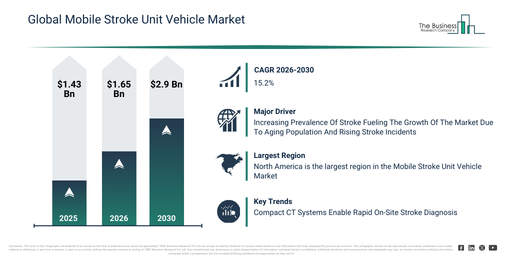
    The mobile stroke unit vehicle market has experienced rapid expansion recently. It is forecast to increase from $1.43 billion in 2025 to $1.65 billion in 2026, demonstrating a compound annual growth rate (CAGR) of 15.5%. Historically, this growth has been fueled by factors including a rising incidence of stroke cases, enhanced awareness of time-sensitive stroke treatment, the early adoption of mobile stroke programs, advancements in ambulance-based imaging technology, and improved emergency medical protocols.

    The market for mobile stroke unit vehicles is anticipated to experience swift expansion over the coming years. This market is projected to reach a value of $2.9 billion by 2030, exhibiting a compound annual growth rate (CAGR) of 15.2%. Factors contributing to this growth during the projected period include the broadening of tele-stroke networks, heightened government spending on emergency care facilities, the escalating need for quick neurological interventions, innovations in compact imaging technology, and greater integration with intelligent emergency response platforms. Key trends anticipated for this timeframe involve a greater deployment of vehicles for prehospital stroke diagnosis, increased incorporation of onboard imaging and telemedicine solutions, an intensified emphasis on prompt thrombolysis administration, the widening of urban and and regional stroke response networks, and improved collaboration with hospital stroke departments.

    Get A Free Sample Report With In-Depth Market Insights:

    https://thebusinessresearchcompany.com/sample_request?id=68140735&type=smp&name=Mobile%20Stroke%20Unit%20Vehicle%20Market%20Report%202026&utm_source=Blogs&utm_medium=Paid&utm_campaign=Nov_PR

    Mobile Stroke Unit Vehicle Market Growth Backed By Core Demand Fundamentals

    The rising occurrence of stroke is anticipated to drive expansion in the mobile stroke unit vehicle market in the future. Stroke prevalence is defined as the total count of individuals within a population who are currently or have previously experienced a stroke at a particular moment or over a specified duration. The escalating prevalence of stroke is linked to an aging population, given that older people face an elevated risk of stroke and associated cardiovascular issues. Mobile stroke unit vehicles aid in stroke management by delivering on-site diagnosis and treatment, positioning them as optimal for swift emergency intervention. These vehicles shorten the time to intervention through point-of-care imaging and telemedicine consultations, thereby enhancing patient outcomes and survival rates. Consequently, the growing incidence of stroke is propelling the mobile stroke unit vehicle market.

    Mobile Stroke Unit Vehicle Market Segment Performance And Emerging Opportunities

    The mobile stroke unit vehicle market covered in this report is segmented –

    1) By Vehicle Type: Ambulance, Van, Truck, Other Vehicle Types

    2) By Technology: Telemedicine, Imaging Systems, Point-Of-Care Testing, Other Technologies

    3) By End-User: Hospitals, Emergency Service Providers, Government Agencies, Other End-Users

    Subsegments:

    1) By Ambulance: Basic Life Support Ambulance, Advanced Life Support Ambulance, Specialized Stroke Response Ambulance, Mobile Intensive Care Ambulance, Telemedicine Enabled Ambulance

    2) By Van: Mobile Clinic Van, Imaging Equipped Van, Laboratory Enabled Van, Compact Stroke Response Van, Telemedicine Integrated Van

    3) By Truck: Modular Mobile Clinic Truck, Heavy Duty Imaging Truck, Extended Range Support Truck, Power Generation Truck, Laboratory Module Truck

    4) By Other Vehicle Types: Converted Bus Unit, Trailer Mounted Unit, All Terrain Vehicle, Compact Electric Vehicle, Drone Supported Response Unit

    Mobile Stroke Unit Vehicle Market Growth Trends Reshaping The Competitive Landscape

    Leading companies in the mobile stroke unit vehicle market are focusing on developing technologically advanced products, such as ambulance-integrated, compact computed tomography scanners, to expedite diagnosis and enable treatment decisions directly at the point of care. These ambulance-integrated compact computed tomography scanners are small, low-power computed tomography (CT) systems engineered to fit inside standard ambulances and deliver rapid, hospital-quality brain imaging, often connected to digital image transfer and teleneurology links for real-time interpretation by specialists. For instance, in February 2025, Siemens Healthineers AG, a Germany-based medical technology company, launched the Somatom On.site computed tomography scanner, which can be integrated into an ambulance. It provides high image quality comparable to stationary computed tomography scanners, allowing for the reliable detection of ischemia or intracranial hemorrhage. The scanner features a gantry that can be tilted 30 degrees for versatile patient positioning and utilizes specialized algorithms to produce diagnostic-quality images even in non-shielded environments. This allows clinicians to perform critical head scans at the point of care, eliminating the risks and logistical challenges of transporting unstable patients to a fixed radiology department.

    Mobile Stroke Unit Vehicle Market Key Players: Which Companies Lead Industry Competition?

    Major companies operating in the mobile stroke unit vehicle market are Siemens Healthineers AG, Stryker Corporation, Philips Healthcare, GE HealthCare Technologies Inc., Drägerwerk AG & Co. KGaA, Teladoc Health Inc., Nihon Kohden Corporation, Schiller AG, Sectra AB, Neusoft Medical Systems Co. Ltd., Excellance Inc., EMVision Medical Devices Limited, Jesai Healthcare India Pvt Ltd, RMA Special Vehicles, Weihai Guangtai Medical Technology Co. Ltd., LifePak, Zoll Medical Corporation, Mindray Medical International Limited, Braun Melsungen AG, CardioCommand Inc.

    View The Full Mobile Stroke Unit Vehicle Market Report:

    https://thebusinessresearchcompany.com/report/global-mobile-stroke-unit-vehicle-market-report?utm_source=Blogs&utm_medium=Paid&utm_campaign=Nov_PR

    Mobile Stroke Unit Vehicle Market Regional Analysis: Which Geography Leads On Revenue?

    North America was the largest region in the mobile stroke unit vehicle market in 2025. Asia-Pacific is expected to be the fastest-growing region in the forecast period. The regions covered in the mobile stroke unit vehicle market report are Asia-Pacific, South East Asia, Western Europe, Eastern Europe, North America, South America, Middle East, Africa.

    Reach Out To Our Team:

    The Business Research Company: https://www.thebusinessresearchcompany.com/

    Americas: +1 310-496-7795

    Asia: +44 7882 955267 & +91 8897263534

    Europe: +44 7882 955267

    Email us at: marketing@tbrc.info

    Follow us on:

    LinkedIn: https://in.linkedin.com/company/the-business-research-company

    YouTube: https://www.youtube.com/channel/UC24_fI0rV8cR5DxlCpgmyFQ

    Global Market Model: https://www.thebusinessresearchcompany.com/global-market-model
  • Mobile Phlebotomy Services Market Forecast Highlights A $2.98 Billion Opportunity For Industry Participants

    Mobile Phlebotomy Services Market Forecast Highlights A $2.98 Billion Opportunity For Industry Participants

    Featuring market attractiveness scoring, total addressable market sizing, company benchmarking matrices, interactive Excel dashboards, deeper supply chain intelligence, emerging startup tracking, and granular product-level insights, The Business Research Company’s 2026 market reports are built to deliver research that is both more actionable and more strategically valuable.

    Mobile Phlebotomy Services Market Size Outlook: How Quickly Will Revenue Expand Through 2030?

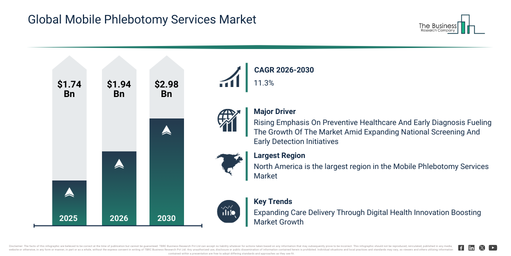
    The market for mobile phlebotomy services has witnessed significant expansion in recent years. This market is expected to increase from $1.74 billion in 2025 to $1.94 billion in 2026, reflecting a compound annual growth rate (CAGR) of 11.6%. In the past, this growth was primarily fueled by factors such as the expanding elderly population requiring home care, the escalating demand for routine diagnostic testing, the broader availability of home healthcare services, the rising prevalence of chronic diseases, and a greater embrace of mobile healthcare models.

    The mobile phlebotomy services market size is anticipated to undergo significant growth in the coming years. It is projected to expand to $2.98 billion by 2030, demonstrating a compound annual growth rate (CAGR) of 11.3%. This projected growth can be attributed to several factors including increasing investments in digital health platforms, rising demand for decentralized diagnostic services, the expansion of value-based healthcare models, growing adoption of remote patient monitoring, and increasing integration with telemedicine ecosystems. Furthermore, major trends foreseen in this period encompass an increasing demand for at-home diagnostic services, the rising adoption of remote healthcare solutions, a growing preference for patient-centric care models, the expansion of corporate and preventive health programs, and an enhanced focus on convenience-based medical services.

    Get A Free Sample Report With In-Depth Market Insights:

    https://thebusinessresearchcompany.com/sample_request?id=93175714&type=smp&name=Mobile%20Phlebotomy%20Services%20Market%20Report%202026&utm_source=Blogs&utm_medium=Paid&utm_campaign=Nov_PR

    Mobile Phlebotomy Services Market Growth Catalysts And Demand Drivers

    The increasing emphasis on proactive health measures and prompt disease identification is projected to stimulate the expansion of the mobile phlebotomy services market in the upcoming period. Preventive healthcare and early diagnosis involve the active employment of routine screenings, tests, and clinical assessments to identify conditions at an initial stage and diminish long-term health risks. The rise in preventive healthcare and early diagnosis is driven by increased investments from governments and health systems in national screening and early-detection programs, which promote regular testing throughout populations. Mobile phlebotomy services enhance preventive healthcare and early diagnosis by offering more accessible and convenient routine blood testing, thus leading to greater participation in screenings and earlier detection of health issues. Consequently, the escalating focus on preventive healthcare and early diagnosis is propelling the growth of the mobile phlebotomy services market.

    Mobile Phlebotomy Services Market Segment Landscape And Growth Outlook

    The mobile phlebotomy services market covered in this report is segmented –

    1) By Service Type: Routine Blood Draws, Specialty Blood Draws, Pediatric Blood Draws, Geriatric Blood Draws, Other Service Types

    2) By Application: Diagnostic Testing, Health Screening, Therapeutic Drug Monitoring, Other Applications

    3) By End-Use: Home Care Settings, Assisted Living Facilities, Nursing Homes, Corporate Or Worksite, Other End-Uses

    Subsegments:

    1) By Routine Blood Draws: Basic Health Check Panels, Fasting Blood Tests, Wellness Screening Tests, Chronic Condition Monitoring Tests, Homebound Patient Blood Tests

    2) By Specialty Blood Draws: Hormone Profile Tests, Genetic Marker Tests, Allergy Assessment Tests, Infectious Disease Tests, Advanced Metabolic Panel Tests

    3) By Pediatric Blood Draws: Newborn Screening Tests, Childhood Immunization Antibody Tests, Pediatric Developmental Disorder Tests, School Health Screening Tests, Pediatric Chronic Condition Monitoring Tests

    4) By Geriatric Blood Draws: Fall Risk Assessment Tests, Cognitive Health Monitoring Tests, Nutritional Deficiency Tests, Medication Effectiveness Monitoring Tests, Chronic Disease Progression Tests

    5) By Other Service Types: Mobile Specimen Pickup Services, Onsite Health Screening Services, Home Wellness Testing Services, Preoperative Blood Testing Services, Corporate Health Checkup Services

    Mobile Phlebotomy Services Market Trends Shaping Long-Term Demand

    Major companies operating in the mobile phlebotomy services market are increasingly integrating advancements in digital healthcare technology, such as mobile-enabled phlebotomy scheduling and logistics platforms, to boost patient access, operational efficiency, and the quality of care. These platforms are digital systems that allow users to book home specimen-collection visits, track phlebotomist arrival, manage specimen transport, and integrate with laboratory workflows, facilitating capabilities like real-time appointment booking, route optimization, and continuous specimen-status monitoring.

    Mobile Phlebotomy Services Market Competitive Landscape: Who Leads The Industry?

    Major companies operating in the mobile phlebotomy services market are Quest Diagnostics, NeoGenomics Laboratories Inc., Accu Reference Medical Lab, Sprinter Health, Getlabs, Phlebotek Solutions Corporation, PhlebX, myOnsite Healthcare LLC, Madison Core Labs, VeniExpress Inc., TravaLab LLC, Sunrise Pathology Services, Brio Clinical, Evexia Holdings Inc., Flebo.in, Medifyhome Health Solutions Private Limited, OptiVena, Caresticks Mobile Phlebotomy LLC, Concierge Phlebotomy LLC, Angel On Wheels Mobile Phlebotomy

    View The Full Mobile Phlebotomy Services Market Report:

    https://thebusinessresearchcompany.com/report/global-mobile-phlebotomy-services-market-report?utm_source=Blogs&utm_medium=Paid&utm_campaign=Nov_PR

    Mobile Phlebotomy Services Market Geographic Spread And Regional Opportunities

    North America was the largest region in the mobile phlebotomy services market in 2025. Asia-Pacific is expected to be the fastest-growing region in the forecast period. The regions covered in the mobile phlebotomy services market report are Asia-Pacific, South East Asia, Western Europe, Eastern Europe, North America, South America, Middle East, Africa.

    Reach Out To Our Team:

    The Business Research Company: https://www.thebusinessresearchcompany.com/

    Americas: +1 310-496-7795

    Asia: +44 7882 955267 & +91 8897263534

    Europe: +44 7882 955267

    Email us at: marketing@tbrc.info

    Follow us on:

    LinkedIn: https://in.linkedin.com/company/the-business-research-company

    YouTube: https://www.youtube.com/channel/UC24_fI0rV8cR5DxlCpgmyFQ

    Global Market Model: https://www.thebusinessresearchcompany.com/global-market-model
  • Mobile Imaging Services Market Analysis: How The Industry Is Evolving Toward A $29.54 Billion Future

    Mobile Imaging Services Market Analysis: How The Industry Is Evolving Toward A $29.54 Billion Future

    Built to provide research that’s more actionable and strategically valuable, The Business Research Company’s 2026 market reports include market attractiveness analysis, total addressable market sizing, company benchmarking matrices, interactive Excel dashboards, broader supply chain intelligence, emerging startup tracking, and in-depth product insights.

    Mobile Imaging Services Market Size, Value And Growth Trajectory Through 2030

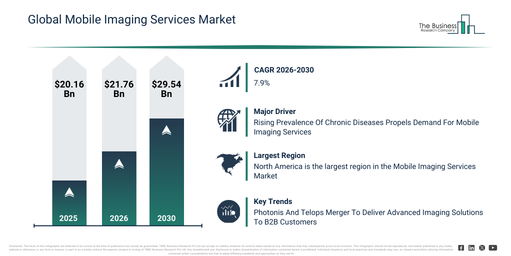
    The mobile imaging services market has experienced substantial growth in recent years. It is anticipated to expand from $20.16 billion in 2025 to $21.76 billion in 2026, achieving a compound annual growth rate (CAGR) of 8.0%. Historically, this growth has been driven by several factors, including an increased demand for portable imaging, the expansion of hospital outsourcing services, higher usage of mobile x-ray units, a rising geriatric patient pool, and a growing need for cost-effective imaging solutions.

    The mobile imaging services market is projected to experience robust expansion over the coming years. This market is anticipated to reach $29.54 billion by 2030, exhibiting a compound annual growth rate (CAGR) of 7.9%. Several factors are expected to drive this growth during the forecast period, including an increase in home healthcare utilization, a surge in the adoption of mobile MRI and CT units, greater investment in tele-imaging platforms, an expanding demand for sports injury imaging, and the accelerated development of point-of-care diagnostic technologies. Key trends identified for the forecast period encompass the integration of AI-based diagnostic interpretation, the broadening of connected mobile imaging platforms, an increase in smart mobility-enabled imaging units, the implementation of automated portable imaging technologies, and the proliferation of cloud-based storage and remote analysis solutions.

    Get A Free Sample Report With In-Depth Market Insights:

    https://thebusinessresearchcompany.com/sample_request?id=34076068&type=smp&name=Mobile%20Imaging%20Services%20Market%20Report%202026&utm_source=Blogs&utm_medium=Paid&utm_campaign=Nov_PR

    Mobile Imaging Services Market Opportunity Drivers: What’s Unlocking New Revenue Potential?

    The increasing occurrence of chronic diseases, including cancer, neurological disorders, and cardiovascular diseases, is anticipated to boost the growth of the mobile imaging services market during the forecast period. Chronic disease refers to a long-term health issue for which there is no cure; these conditions persist for over 1 year and necessitate continuous medical attention, or they would otherwise restrict daily living activities. Such diseases are generally not preventable through vaccines or curable by medication. Worldwide, chronic illnesses are a primary contributor to death and disability, with their rates progressively expanding across all regions and affecting individuals regardless of socioeconomic background. Mobile imaging services enable care providers to perform various vital screenings using diverse imaging technologies like X-Ray, EKG, and ultrasound. Therefore, the escalating prevalence of chronic diseases is a significant factor driving the expansion of the mobile imaging services market.

    Mobile Imaging Services Market Breakdown By Product Type And Application

    The mobile imaging services market covered in this report is segmented –

    1) By Product Type: X-Ray, Ultrasound, Computed Tomography (CT), Magnetic Resonance Imaging (MRI), Mammography, Bone Densitometry

    2) By Service Delivery Type: Mobile On-Site Imaging Units, Portable Equipment Deployed At Facility, Tele-Imaging Or Remote Diagnostics

    3) By End User: Hospitals And Private Clinics, Home Healthcare Providers, Rehabilitation Centers, Geriatric Care And Hospice Agencies, Sports Organizations, Other End Users

    Subsegments:

    1) By X-Ray: Portable X-Ray Machines, Digital X-Ray Systems

    2) By Ultrasound: Portable Ultrasound Devices, Point-of-Care Ultrasound Systems

    3) By Computed Tomography (CT): Mobile CT Scanners, Helical CT Scanners

    4) By Magnetic Resonance Imaging (MRI): Mobile MRI Systems, Open MRI Systems

    5) By Mammography: Mobile Mammography Units, Digital Mammography Systems

    6) By Bone Densitometry: Portable Bone Densitometers, Dual-Energy X-Ray Absorptiometry (DXA) Scanners

    Mobile Imaging Services Market Innovation Trends Shaping Future Development

    Leading firms within the mobile imaging services market are prioritizing strategic takeovers to broaden their technological proficiency, improve their service portfolios, and bolster their standing in the market. Such partnerships allow service providers to incorporate sophisticated imaging technology, extend their operational presence globally, and supply top-tier diagnostic solutions across various medical environments.

    Mobile Imaging Services Market Company Landscape And Competitive Strategy

    Major companies operating in the mobile imaging services market are Accurate Imaging Inc., Alliance HealthCare Services Inc., Axiom Mobile Imaging, DMS Health Technologies Inc., Front Range Mobile Imaging Inc., Imaging On Site Inc., Interim Diagnostic Imaging LLC, Jacksonville Mobile Imaging Services Inc., Digirad Corporation, TridentUSA Health Services, Atlantic Mobile Imaging, RAYUS Radiology, MobilexUSA, Mediscan Diagnostic Services, Mobile Imaging Diagnostics, Carestream Health, Center for Diagnostic Imaging Inc., InHealth Group Limited, Nuffield Health, Medica Reporting Ltd., Premier Diagnostic Services

    View The Full Mobile Imaging Services Market Report:

    https://thebusinessresearchcompany.com/report/Mobile-Imaging-Services-Global-Market-Report?utm_source=Blogs&utm_medium=Paid&utm_campaign=Nov_PR

    Mobile Imaging Services Market Top Region By Revenue And Market Share

    North America was the largest region in the mobile imaging services market in 2025. The regions covered in the mobile imaging services market report are Asia-Pacific, South East Asia, Western Europe, Eastern Europe, North America, South America, Middle East, Africa.

    Reach Out To Our Team:

    The Business Research Company: https://www.thebusinessresearchcompany.com/

    Americas: +1 310-496-7795

    Asia: +44 7882 955267 & +91 8897263534

    Europe: +44 7882 955267

    Email us at: marketing@tbrc.info

    Follow us on:

    LinkedIn: https://in.linkedin.com/company/the-business-research-company

    YouTube: https://www.youtube.com/channel/UC24_fI0rV8cR5DxlCpgmyFQ

    Global Market Model: https://www.thebusinessresearchcompany.com/global-market-model
  • Mobile Health (mHealth) Adverse-Event Reporting Apps Market Outlook Through 2030: Understanding The Growth Opportunity

    Mobile Health (mHealth) Adverse-Event Reporting Apps Market Outlook Through 2030: Understanding The Growth Opportunity

    Backed by market attractiveness analysis, total addressable market sizing, company benchmarking matrices, interactive Excel dashboards, wider supply chain intelligence, emerging startup coverage, and detailed product-level insights, The Business Research Company’s 2026 market reports are designed to offer research that is more actionable and strategically valuable than ever.

    Mobile Health (mHealth) Adverse-Event Reporting Apps Market CAGR Outlook And Future Development

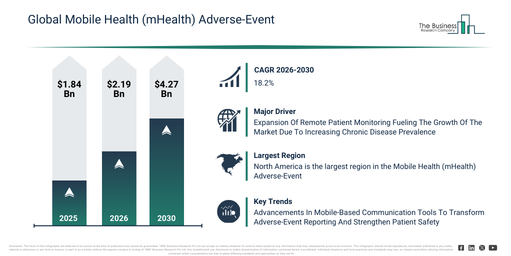
    The market size for mobile health (mhealth) adverse-event reporting applications has experienced substantial growth in recent years. This market is forecasted to increase from $1.84 billion in 2025 to $2.19 billion in 2026, exhibiting a compound annual growth rate (CAGR) of 18.5%. Factors contributing to its historical expansion include the growing penetration of smartphones in healthcare, the broadening of pharmacovigilance regulations, the proliferation of digital health platforms, an elevated focus on monitoring patient safety, and the increasing digitization of clinical trials.

    The mobile health (mhealth) adverse-event reporting apps market is anticipated to undergo significant growth over the next few years. Its valuation is projected to reach $4.27 billion by 2030, growing at a compound annual growth rate (CAGR) of 18.2%. This expected expansion during the forecast period is fueled by the increasing adoption of AI-driven safety analytics, a surging demand for real-time drug safety surveillance, the proliferation of decentralized clinical trials, a heightened regulatory focus on post-market surveillance, and the expanding integration of mhealth platforms into healthcare systems. Key trends for this period are set to include the growing uptake of real-time adverse event reporting, increased integration with electronic health records, the development of patient-centric safety reporting interfaces, a rising utilization of automated signal detection tools, and a stronger emphasis on regulatory-compliant data capture.

    Get A Free Sample Report With In-Depth Market Insights:

    https://thebusinessresearchcompany.com/sample_request?id=23015322&type=smp&name=Mobile%20Health%20%28mHealth%29%20Adverse-Event%20Reporting%20Apps%20Market%20Report%202026&utm_source=Blogs&utm_medium=Paid&utm_campaign=Nov_PR

    Mobile Health (mHealth) Adverse-Event Reporting Apps Market Growth Momentum: What Factors Are Shaping Demand?

    The expansion of remote patient monitoring is anticipated to propel the growth of the mobile health (mHealth) adverse-event reporting apps market going forward. Remote patient monitoring (RPM) refers to the use of digital technologies to collect medical and health-related data from patients outside traditional healthcare settings. The rise in remote patient monitoring is largely due to the increasing prevalence of chronic diseases, which drives the need for continuous, real-time monitoring of patients outside traditional healthcare settings to improve outcomes and reduce hospital visits. Remote patient monitoring supports the growth of mobile health (mHealth) adverse-event reporting apps by enabling continuous collection of patient health data, which allows timely reporting and tracking of adverse drug reactions or treatment side effects through mobile platforms. Therefore, the expansion of remote patient monitoring is driving the growth of the mobile health (mHealth) adverse-event reporting apps market. A key factor driving the Mobile Health (mHealth) Adverse-Event Reporting Apps Market is the increasing smartphone penetration, which fuels market expansion by enhancing digital accessibility and real-time reporting efficiency. Smartphone penetration signifies the proportion of the population owning and utilizing smartphones, reflecting the widespread embrace of mobile technology in daily life. This rise in smartphone ownership is driven by growing affordability and availability of mobile devices, particularly in emerging markets. High smartphone penetration facilitates broader access, quicker submission of incidents, and instant communication, thereby making mobile health adverse-event reporting applications more effective and scalable. Therefore, the expanding smartphone penetration is a significant catalyst for the growth of the mobile health (mHealth) adverse-event reporting apps market.

    Mobile Health (mHealth) Adverse-Event Reporting Apps Market Segment Analysis And Revenue Potential

    The mobile health (mhealth) adverse-event reporting apps market covered in this report is segmented –

    1) By App Type: Standalone Adverse-Event Reporting Apps, Integrated mHealth Platforms

    2) By Platform: Android, iPhone Operating System (IOS), Web-Based

    3) By Application: Pharmacovigilance, Clinical Trials, Patient Safety Monitoring, Other Applications

    4) By End-User: Hospitals And Clinics, Pharmaceutical Companies, Research Organizations, Patients, Other End-Users

    Subsegments:

    1) By Standalone Adverse-Event Reporting Apps: Patient-Centric Reporting Apps, Healthcare Provider Reporting Apps, Regulator-Focused Reporting Apps, Pharmacovigilance Reporting Apps

    2) By Integrated mHealth Platforms: Electronic Health Record Or Electronic Medical Record Integrated Reporting Modules, Telemedicine Platform-Integrated Reporting, Clinical Trial And Research Platform Integration, Hospital And Pharmacy Management System Integration

    Mobile Health (mHealth) Adverse-Event Reporting Apps Market Trends Redefining Industry Growth

    Leading companies in the mobile health (mHealth) adverse-event reporting apps market are prioritizing the development of advanced solutions, such as mobile-based communication tools, to accelerate the detection of adverse events and enhance overall drug safety monitoring. These mobile communication tools are digital platforms or applications that facilitate seamless interaction, reporting, and information exchange via smartphones or tablets, enabling real-time connectivity among patients, healthcare providers, and regulators for quicker decision-making and improved healthcare outcomes.

    Mobile Health (mHealth) Adverse-Event Reporting Apps Market Key Players Shaping Industry Direction

    Major companies operating in the mobile health (mhealth) adverse-event reporting apps market are IQVIA Holdings Inc., Veeva Systems Inc., ArisGlobal LLC, SafetyCall International PLLC, Medwatcher, Advera Health Analytics Inc., Itransition Group Inc., Saama Technologies Inc., Optimal Strategix Group Inc., OSP Labs Private Limited, K Health Inc., Healthy.io Ltd., InPhase Technologies Ltd., Tiga Healthcare Technologies Inc., Qualityze Inc., iVigee Services AS, Preventice Solutions Inc., Luscii Healthtech BV, My Mhealth Limited, Med

    View The Full Mobile Health (mHealth) Adverse-Event Reporting Apps Market Report:

    https://thebusinessresearchcompany.com/report/mobile-health-mhealth-adverse-event-reporting-apps-global-market-report?utm_source=Blogs&utm_medium=Paid&utm_campaign=Nov_PR

    Mobile Health (mHealth) Adverse-Event Reporting Apps Market Regional Analysis And Top Geography

    North America was the largest region in the mobile health (mHealth) adverse event reporting apps market in 2025. The regions covered in the mobile health (mhealth) adverse-event reporting apps market report are Asia-Pacific, South East Asia, Western Europe, Eastern Europe, North America, South America, Middle East, Africa.

    Reach Out To Our Team:

    The Business Research Company: https://www.thebusinessresearchcompany.com/

    Americas: +1 310-496-7795

    Asia: +44 7882 955267 & +91 8897263534

    Europe: +44 7882 955267

    Email us at: marketing@tbrc.info

    Follow us on:

    LinkedIn: https://in.linkedin.com/company/the-business-research-company

    YouTube: https://www.youtube.com/channel/UC24_fI0rV8cR5DxlCpgmyFQ

    Global Market Model: https://www.thebusinessresearchcompany.com/global-market-model
  • Mobile Health (mHealth) Market Growth Potential: What The Latest Forecast Reveals

    Mobile Health (mHealth) Market Growth Potential: What The Latest Forecast Reveals

    Featuring market attractiveness scoring, total addressable market sizing, company benchmarking matrices, interactive Excel dashboards, deeper supply chain intelligence, emerging startup tracking, and granular product-level insights, The Business Research Company’s 2026 market reports are built to deliver research that is both more actionable and more strategically valuable.

    Mobile Health (mHealth) Market Set To Climb From $116.85 Billion In 2026 To $217.91 Billion By 2030

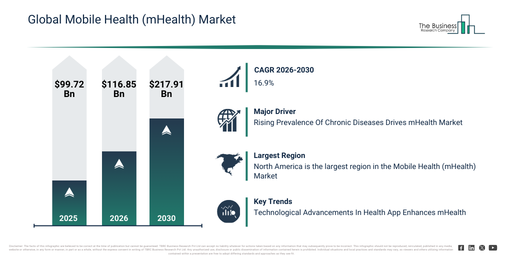
    The mobile health (mhealth) market has experienced significant expansion recently. Projections indicate it will increase from $99.72 billion in 2025 to $116.85 billion in 2026, demonstrating a compound annual growth rate (CAGR) of 17.2%. This historical growth is attributable to factors such as increased smartphone penetration in healthcare, a rising need for remote healthcare solutions, the growing occurrence of chronic illnesses, greater integration of digital health platforms, and enhanced mobile network connectivity.

    The mobile health (mhealth) market is projected to experience swift expansion over the coming years. This market is forecast to reach $217.91 billion by 2030, exhibiting a compound annual growth rate (CAGR) of 16.9%. This anticipated growth during the forecast period is primarily driven by factors such as the increasing incorporation of AI-driven diagnostics, escalating investments in digital healthcare infrastructure, the broadening of personalized mobile health solutions, a heightened focus on preventive healthcare, and strengthening regulatory backing for telehealth services. Key trends anticipated within the forecast timeframe encompass the expanding uptake of remote patient monitoring solutions, the growing utilization of wearable health devices, the widening reach of telemedicine platforms, an intensified focus on applications for chronic disease management, and the increasing integration of health data analytics.

    Get A Free Sample Report With In-Depth Market Insights:

    https://thebusinessresearchcompany.com/sample_request?id=74102680&type=smp&name=Mobile%20Health%20%28mHealth%29%20Market%20Report%202026&utm_source=Blogs&utm_medium=Paid&utm_campaign=Nov_PR

    Mobile Health (mHealth) Market Expansion Drivers: What’s Shaping Future Growth?

    The expanding incidence of chronic diseases is set to drive the expansion of the mobile health (mHealth) market in the future. Chronic diseases are defined as persistent or enduring health conditions, usually lasting a year or longer, often necessitating continuous medical care or restricting daily activities. The rise in these conditions is largely attributed to aging demographics, as extended lifespans lead to a greater number of long-term health issues. Mobile health assists in the management of chronic diseases by providing resources for health tracking, enhancing patient-doctor communication, and promoting adherence to treatment plans. Consequently, the increasing occurrence of chronic diseases is stimulating growth within the mobile health (mHealth) market.

    Mobile Health (mHealth) Market Segmentation And Category Overview

    The mobile health (mhealth) market covered in this report is segmented –

    1) By Type: Mobile Health (mHealth) Devices, Mobile Health (mHealth) Services

    2) By Application: Cardiovascular, Diabetes, Respiratory, Neurology, Other Applications

    3) By End-User: Patients, Providers, Payers, Other End Users

    Subsegments:

    1) By Mobile Health (mHealth) Devices: Wearable Devices, Mobile Health Applications, Diagnostic Devices, Remote Patient Monitoring Devices, Emergency and Alert Devices

    2) By Mobile Health (mHealth) Services: Telemedicine Services, Health and Wellness Services, Chronic Disease Management Services, Health Data Management Services, Education and Support Services

    Mobile Health (mHealth) Market Strategic Trends: What Defines The Next Growth Phase?

    Leading companies operating within the mobile health (mHealth) market are developing digital applications centered on whole-person care, designed to offer comprehensive and personalized healthcare solutions. A whole-person care digital app functions as a healthcare instrument that delivers extensive care by integrating physical, mental, and emotional health services onto a single platform.

    Mobile Health (mHealth) Market Competitive Analysis Of Leading Industry Participants

    Major companies operating in the mobile health (mhealth) market are Apple Inc., Samsung Group, Huawei Technologies Co. Ltd., Oracle Corporation, Abbott Laboratories, Xiaomi Corporation, Medtronic plc, Koninklijke Philips N.V., Stryker Corporation, GE HealthCare Technologies, Omron Corporation, Garmin Ltd., Hill-Rom Holdings Inc., Dexcom Inc., Masimo Corporation, Nihon Kohden Corporation, Polar Electro Oy, Verily Life Sciences LLC, Withings S.A.S., Empatica Inc., TempTraq, LifeSense Group B.V.

    View The Full Mobile Health (mHealth) Market Report:

    https://thebusinessresearchcompany.com/report/mobile-health-mhealth-global-market-report?utm_source=Blogs&utm_medium=Paid&utm_campaign=Nov_PR

    Mobile Health (mHealth) Market Geographic Analysis: Where Is Demand Rising Fastest?

    North America was the largest region in the mobile health (mHealth) market in 2025. Asia-Pacific is expected to be the fastest-growing region in the forecast period. The regions covered in the mobile health (mhealth) market report are Asia-Pacific, South East Asia, Western Europe, Eastern Europe, North America, South America, Middle East, Africa.

    Reach Out To Our Team:

    The Business Research Company: https://www.thebusinessresearchcompany.com/

    Americas: +1 310-496-7795

    Asia: +44 7882 955267 & +91 8897263534

    Europe: +44 7882 955267

    Email us at: marketing@tbrc.info

    Follow us on:

    LinkedIn: https://in.linkedin.com/company/the-business-research-company

    YouTube: https://www.youtube.com/channel/UC24_fI0rV8cR5DxlCpgmyFQ

    Global Market Model: https://www.thebusinessresearchcompany.com/global-market-model
  • Mobile Dental Cart Market Growth Outlook: Why Analysts Expect Continued Expansion

    Mobile Dental Cart Market Growth Outlook: Why Analysts Expect Continued Expansion

    Built to provide research that’s more actionable and strategically valuable, The Business Research Company’s 2026 market reports include market attractiveness analysis, total addressable market sizing, company benchmarking matrices, interactive Excel dashboards, broader supply chain intelligence, emerging startup tracking, and in-depth product insights.

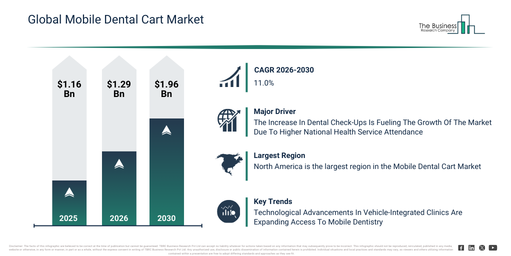
    Mobile Dental Cart Market Forecast: Value Set To Climb From $1.29 Billion To $1.96 Billion

    The mobile dental cart market size has experienced rapid expansion in recent years. It is projected to grow from $1.16 billion in 2025 to $1.29 billion in 2026, exhibiting a compound annual growth rate (CAGR) of 11.3%. The increase observed historically can be attributed to several factors including the rise in dental clinic establishments, a growing demand for flexible dental workstations, an increased focus on infection control practices, the expansion of outpatient dental procedures, and the availability of compact dental equipment designs.

    The mobile dental cart market is projected to experience substantial expansion in the coming years, with its value set to reach $1.96 billion by 2030, demonstrating a compound annual growth rate (CAGR) of 11.0%. This anticipated growth over the forecast period stems from factors such as the wider uptake of tele-dentistry solutions, increased investments in mobile healthcare infrastructure, the broadening of community dental initiatives, a rising need for ergonomic dental tools, and a heightened emphasis on integrating digital dentistry. Key developments anticipated during this period involve the greater use of portable and modular dental equipment, an increasing need for space-efficient clinical setups, the growing incorporation of digital imaging systems, the expansion of mobile and outreach dental services, and an improved focus on streamlining workflows.

    Get A Free Sample Report With In-Depth Market Insights:

    https://thebusinessresearchcompany.com/sample_request?id=82987968&type=smp&name=Mobile%20Dental%20Cart%20Market%20Report%202026&utm_source=Blogs&utm_medium=Paid&utm_campaign=Nov_PR

    Mobile Dental Cart Market Development Factors: What’s Supporting Demand?

    The mobile dental cart market is expected to grow as the frequency of dental check-ups increases. Dental check-ups encompass routine preventative oral examinations and cleanings where practitioners assess oral health and deliver or plan necessary treatments. The rise in dental check-ups is attributed to higher national health service (NHS) attendance as routine care recovers following the pandemic. Mobile dental carts support this trend by supplying chairside power, suction, air or water, handpieces, and organized storage, which streamlines workflows in clinics and enables outreach services. Therefore, the increase in dental check-ups is a significant driver for the mobile dental cart market.

    Mobile Dental Cart Market Segment Outlook: Which Categories Are Growing Fastest?

    The mobile dental cart market covered in this report is segmented –

    1) By Product Type: Electric Mobile Dental Carts, Pneumatic Mobile Dental Carts, Battery-Operated Mobile Dental Carts

    2) By Technology: Digital Imaging Technologies, Tele-dentistry Solutions, Computer-Aided Design (CAD) Or Computer-Aided Manufacturing (CAM) Systems, Laser Dentistry

    3) By Distribution Channel: Direct Sales, Third-Party Distributors, Online Platforms, Retail Outlets

    4) By Application: General Dentistry, Pediatric Dentistry, Cosmetic Dentistry, Orthodontics, Periodontics

    5) By End-User: Hospitals, Dental Clinics, Mobile Dental Units, Educational Institutions, Government And Non-Governmental Organization (NGOs)

    Subsegments:

    1) By Electric Mobile Dental Carts: Integrated Delivery System Carts, Electric Height Adjustable Treatment Carts, Imaging Ready Utility Carts, Power Distribution And Charging Carts, Electric Suction And Waste Separation Carts

    2) By Pneumatic Mobile Dental Carts: Air Driven Delivery Carts, Oil Free Compressor Integrated Carts, High Flow Evacuation And Suction Carts, Multi Instrument Pneumatic Support Carts, Portable Air Supply Trolley Carts

    3) By Battery-Operated Mobile Dental Carts: Cordless Treatment Delivery Carts, Battery Powered Suction And Evacuation Carts, Rechargeable Power Module Utility Carts, Mobile Charging And Power Backup Carts, Field Ready Lightweight Battery Carts

    Mobile Dental Cart Market Transformation Trends: What Innovations Are Driving Change?

    Prominent companies in the mobile dental cart market are concentrating on creating technological innovations, such as vehicle-integrated mobile dental cart clinics, to offer superior chairside care beyond conventional facilities. Vehicle-integrated mobile dental cart clinics are self-sufficient, robust systems that integrate power, suction, air and water supply, sterilization, storage, and a foldable dental chair within a mobile framework to facilitate complete dentistry in distant or resource-constrained environments.

    Mobile Dental Cart Market Leading Companies And Competitive Benchmarking

    Major companies operating in the mobile dental cart market are Dentsply Sirona Inc., Planmeca Oy, Midmark Corporation, A-dec Inc., Takara Belmont Corporation, DentalEZ Inc., Aseptico Inc., ASI Medical Inc., Summit Dental Systems Inc. (SDS), TPC Advanced Technology Inc., Beaverstate Dental Systems Inc., Flight Dental Systems Inc., Ajax Medical Group Inc., Bell Dental Products Inc., Heka Dental A/S, DNTLworks Equipment Corporation, BPR Swiss GmbH, Runyes Medical Instrument Co. Ltd., Sinol Dental Limited, Joinchamp Medical Device Co. Ltd.

    View The Full Mobile Dental Cart Market Report:

    https://thebusinessresearchcompany.com/report/global-mobile-dental-cart-market-report?utm_source=Blogs&utm_medium=Paid&utm_campaign=Nov_PR

    Mobile Dental Cart Market Global Footprint: Which Region Leads The Market?

    North America was the largest region in the mobile dental cart market in 2025. Asia-Pacific is expected to be the fastest-growing region in the forecast period. The regions covered in the mobile dental cart market report are Asia-Pacific, South East Asia, Western Europe, Eastern Europe, North America, South America, Middle East, Africa.

    Reach Out To Our Team:

    The Business Research Company: https://www.thebusinessresearchcompany.com/

    Americas: +1 310-496-7795

    Asia: +44 7882 955267 & +91 8897263534

    Europe: +44 7882 955267

    Email us at: marketing@tbrc.info

    Follow us on:

    LinkedIn: https://in.linkedin.com/company/the-business-research-company

    YouTube: https://www.youtube.com/channel/UC24_fI0rV8cR5DxlCpgmyFQ

    Global Market Model: https://www.thebusinessresearchcompany.com/global-market-model
  • Mixed Reality in Healthcare Market Forecast Insights: The Road To $11.78 Billion By 2030

    Mixed Reality in Healthcare Market Forecast Insights: The Road To $11.78 Billion By 2030

    Backed by market attractiveness analysis, total addressable market sizing, company benchmarking matrices, interactive Excel dashboards, wider supply chain intelligence, emerging startup coverage, and detailed product-level insights, The Business Research Company’s 2026 market reports are designed to offer research that is more actionable and strategically valuable than ever.

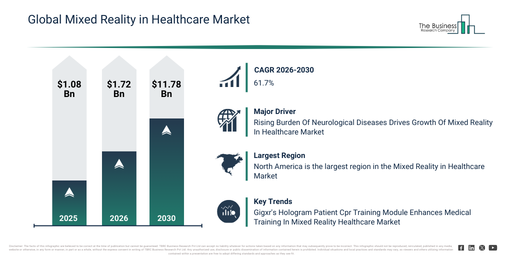
    Mixed Reality in Healthcare Market Revenue Growth On Track For A 61.7% CAGR Through 2030

    The mixed reality in healthcare market size has experienced significant expansion over recent years. This market is set to increase from $1.08 billion in 2025 to $1.72 billion in 2026, achieving a compound annual growth rate (CAGR) of 60.2%. The historical growth can be linked to the early uptake of VR training tools, a rising demand for virtual surgery simulation, greater application of AR in patient consultation, increasing remote treatment needs, and technological advancements in wearable displays.

    The mixed reality in healthcare market is projected to experience substantial growth over the coming years. This market is set to reach a valuation of $11.78 billion by 2030, demonstrating a robust compound annual growth rate (CAGR) of 61.7%. Factors contributing to this anticipated growth include the broadening of AI-driven mixed reality solutions, an increasing need for immersive medical training, swift uptake within surgical facilities, seamless integration with telehealth platforms, and heightened investment in mixed reality hardware and software. Key trends for the forecast duration involve the proliferation of augmented reality/virtual reality-based medical instruction platforms, the incorporation of AI-powered mixed reality for diagnostic purposes, the development of cloud-supported mixed reality healthcare environments, a rise in the utilization of IoT-connected mixed reality devices, and the advancement of mixed reality surgical assistance through automation and robotics.

    Get A Free Sample Report With In-Depth Market Insights:

    https://thebusinessresearchcompany.com/sample_request?id=24136850&type=smp&name=Mixed%20Reality%20in%20Healthcare%20Market%20Report%202026&utm_source=Blogs&utm_medium=Paid&utm_campaign=Nov_PR

    Mixed Reality in Healthcare Market Industry Drivers: What’s Behind The Revenue Growth?

    The growing prevalence of neurological conditions is set to drive the mixed reality in the healthcare market. Neurological diseases encompass a broad spectrum of ailments affecting the nervous system, leading to various physical, cognitive, and functional impairments. Mixed-reality technology is seeing increased implementation in the healthcare sector to enhance patient outcomes, particularly within the domain of neurological diseases. This technology can establish virtual environments that aid patients with conditions such as Alzheimer’s, Parkinson’s, and multiple sclerosis in improving their cognitive and motor skills. Consequently, the escalating burden of neurological diseases will propel the mixed reality in the healthcare market.

    Mixed Reality in Healthcare Market Segment Landscape: Which Areas Lead Development?

    The mixed reality in healthcare market covered in this report is segmented –

    1) By Device Types: AR Devices, VR Devices

    2) By Component: Hardware, Software, Content And Application

    3) By Application: Surgery And Surgery Simulation, Patient Care Management, Fitness Management, Medical Training And Education, Other Applications

    4) By End-User: Hospital, Surgical Centers And Medical Institutes, Other End Users

    Subsegments:

    1) By AR Devices: Smart Glasses, Head-Mounted Displays (HMDs), Mobile AR Applications, Projection-Based AR Systems

    2) By VR Devices: Head-Mounted Displays (HMDs), VR Software Platforms, Motion Tracking Devices, Controllers And Input Devices

    #Mixed Reality in Healthcare Market Growth Trends: What’s Shaping The Future Outlook?

    Leading companies within the mixed reality healthcare market are introducing innovative solutions, such as a new module centered on basic life support. This Basic Life Support system leverages mixed reality technology to mimic an individual requiring CPR or a defibrillator. Its purpose is to provide instructors with a tool to educate various groups—including first responders, healthcare providers, medical and nursing students, public safety personnel, and general community members—either remotely or face-to-face.

    Mixed Reality in Healthcare Market Industry Leaders And Competitive Landscape

    Major companies operating in the mixed reality in healthcare market are Atheer Inc., EchoPixel Inc., Firsthand Technology Inc., Microsoft Corporation, Oculus Labs, HTC Corporation, Surgical Theater Inc., Osso VR Inc., Medical Realities Ltd., Augmedix Inc., MindMaze SA, Orca Health Care India Private Limited, AccuVein Inc., Medivis Inc., Intuitive Surgical Inc., Philips Healthcare, Siemens Healthineers, GE HealthCare Technologies Inc., Magic Leap Inc., Varjo Technologies, Vuzix Corporation, Augmentix Corporation

    View The Full Mixed Reality in Healthcare Market Report:

    https://thebusinessresearchcompany.com/report/mixed-reality-in-healthcare-global-market-report?utm_source=Blogs&utm_medium=Paid&utm_campaign=Nov_PR

    Mixed Reality in Healthcare Market Regional Split: Which Areas Are Fueling Growth?

    North America was the largest region in the mixed reality in healthcare market in 2025. Asia-Pacific is expected to be the fastest-growing region in the forecast period. The regions covered in the mixed reality in healthcare market report are Asia-Pacific, South East Asia, Western Europe, Eastern Europe, North America, South America, Middle East, Africa.

    Reach Out To Our Team:

    The Business Research Company: https://www.thebusinessresearchcompany.com/

    Americas: +1 310-496-7795

    Asia: +44 7882 955267 & +91 8897263534

    Europe: +44 7882 955267

    Email us at: marketing@tbrc.info

    Follow us on:

    LinkedIn: https://in.linkedin.com/company/the-business-research-company

    YouTube: https://www.youtube.com/channel/UC24_fI0rV8cR5DxlCpgmyFQ

    Global Market Model: https://www.thebusinessresearchcompany.com/global-market-model