Blog

  • Healthcare Satellite Connectivity Industry Forecast to Hit $15.52 Billion by 2029 With a Strong 10.4% CAGR

    Healthcare Satellite Connectivity Industry Forecast to Hit $15.52 Billion by 2029 With a Strong 10.4% CAGR

    Unlock Global Insights – Save 20% on Market Reports with Code ONLINE20

    #What Are The Current (2025) And Forecast (2029) Sizes Of The Healthcare Satellite Connectivity Market?

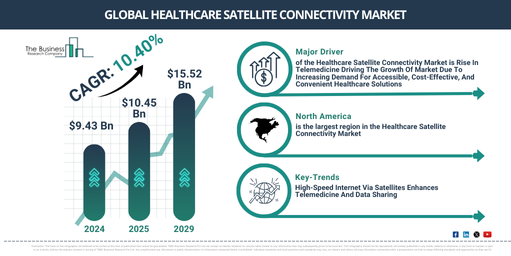
    The healthcare satellite connectivity market size has experienced swift expansion in recent years. Its valuation is predicted to climb from $9.43 billion in 2024 to $10.45 billion in 2025, demonstrating a compound annual growth rate (CAGR) of 10.8%. The growth observed in prior periods stems from an escalating requirement for disaster relief communication, increasing cross-border medical collaboration, a rise in global health awareness campaigns, a growing demand for maritime and aviation medical assistance, and enhanced healthcare backing for military operations.

    The healthcare satellite connectivity market size is poised for rapid expansion in the coming years. It is projected to increase to $15.52 billion by 2029, achieving a compound annual growth rate (CAGR) of 10.4%. This anticipated growth can be largely attributed to the escalating demand for real-time patient monitoring, a heightened focus on ensuring universal healthcare access, the critical need for seamless medical data transmission, the growth of a remote healthcare workforce, and the rising number of space-based health research programs. Throughout the forecast period, prominent trends will encompass advancements in low-earth orbit satellite deployment, the establishment of hybrid satellite-terrestrial healthcare networks, innovations in telemedicine platforms featuring satellite integration, improvements in portable satellite communication devices, and the evolution of artificial intelligence-powered satellite health monitoring systems.

    Unlock Your Free Sample Report for Exclusive Market Data:

    https://www.thebusinessresearchcompany.com/sample.aspx?id=28242&type=smp

    Which Drivers Are Impacting The Healthcare Satellite Connectivity Market?

    The growing adoption of telemedicine services is projected to stimulate the expansion of the healthcare satellite connectivity market. Telemedicine services are defined as the remote provision of healthcare and medical advice using digital communication technologies such as video conferencing, mobile applications, and web-based platforms. The uptake of telemedicine services is increasing due to a heightened need for healthcare options that are accessible, economical, and convenient, as it reduces travel and wait times while ensuring timely medical attention. Healthcare satellite connectivity facilitates telemedicine services by offering dependable high-speed communication and data transfer in isolated and underserved areas where ground-based networks are scarce or nonexistent. For instance, in April 2023, FAIR Health Inc., a US-based non-profit organization, reported that national telehealth usage climbed by 7.3%, increasing from 5.5% of medical claim lines in December 2022 to 5.9% in January 2023. Therefore, the rising adoption of telemedicine services is a key driver for the growth of the healthcare satellite connectivity market.

    What Are The Major Segment Types Covered In The Healthcare Satellite Connectivity Market?

    The healthcare satellite connectivity market covered in this report is segmented as

    1) By Connectivity: Mobile Satellite Services (Mss), Fixed Satellite Services (Fss), Specialty Markers

    2) By Component: Medical Devices, System And Software, Services

    3) By Frequency Band: Ku-Band, Ka-Band, C-Band, X-Band

    4) By Application: Telemedicine, Remote Patient Monitoring, Disaster Response And Emergency Communication, Asset Tracking And Supply Chain Management, Tele-Education

    Subsegments:

    1) By Mobile Satellite Services: Voice Services, Data Services, Broadband Services, Tracking And Monitoring Services

    2) By Fixed Satellite Services: Television Services, Data Transmission Services, Broadband Internet Services, Backhaul Connectivity Services

    3) By Specialty Markers: Remote Patient Monitoring, Telemedicine Services, Emergency Response Connectivity, Wearable Health Device Integration

    Which Competitive Trends Are Defining The Healthcare Satellite Connectivity Market Structure?

    Major companies in the healthcare satellite connectivity market are focusing on advancements in satellite technology, such as satellite broadband, to improve access to high-speed internet in remote areas, facilitate real-time data sharing, and enhance telemedicine and digital health services. Satellite broadband refers to high-speed internet delivered via satellites, enabling connectivity in distant and underserved regions. For instance, in May 2024, SpaceX, a US-based space exploration company, launched its Starlink satellite internet service on Indonesia’s Bali island to provide rapid connectivity to remote and underserved regions. This launch highlighted real-time speed tests conducted with health workers in isolated areas, showcasing its potential to improve healthcare, education, and business opportunities. The initiative also included agreements to enhance digital access across the health and education sectors, supporting Indonesia’s broader digital transformation goals.

    Who Are The Key Multinational Companies Dominating The Healthcare Satellite Connectivity Market?

    Major companies operating in the healthcare satellite connectivity market are Thales Group, Space Exploration Technologies Corp., ST Engineering Ltd., Société Européenne des Satellites, Viasat Incorporated, Eutelsat Communications S.A., European Space Agency, Telesat, Comtech Telecommunications Corp., Speedcast International Limited, Globalstar Inc., Avanti Communications Group plc, Astrome Technologies Pvt. Ltd., IEC Telecom Group, Kacific Broadband Satellites Group, Skylo Technologies Inc., X2nSat Inc., Expedition Communications Inc., Connecta Satellite Networks, Monogoto Inc.

    Download The Full Report For Exclusive Market Findings:

    https://www.thebusinessresearchcompany.com/report/healthcare-satellite-connectivity-global-market-report

    Which Region Is Expected To Witness The Fastest Growth In The Healthcare Satellite Connectivity Market?

    North America was the largest region in the healthcare satellite connectivity market in 2024. Asia-Pacific is expected to be the fastest-growing region in the forecast period. The regions covered in healthcare satellite connectivity report are Asia-Pacific, Western Europe, Eastern Europe, North America, South America, Middle East and Africa.

    Request A Customized Version Of The Healthcare Satellite Connectivity Market Report:

    https://www.thebusinessresearchcompany.com/customise?id=28242&type=smp

    Browse Through More Reports Similar to the Global Healthcare Satellite Connectivity Market 2025, By The Business Research Company

    Connected Healthcare Global Market Report 2025

    https://www.thebusinessresearchcompany.com/report/connected-healthcare-global-market-report

    Mobile Satellite Services Global Market Report 2025

    https://www.thebusinessresearchcompany.com/report/mobile-satellite-services-global-market-report

    Satellite Data Services Global Market Report 2025

    https://www.thebusinessresearchcompany.com/report/satellite-data-services-global-market-report

    Get in touch with us:

    The Business Research Company: https://www.thebusinessresearchcompany.com/

    Americas +1 310-496-7795

    Asia +44 7882 955267 & +91 8897263534

    Europe +44 7882 955267

    Email us at info@tbrc.info

    Follow us on:

    LinkedIn: https://in.linkedin.com/company/the-business-research-company

    YouTube: https://www.youtube.com/channel/UC24_fI0rV8cR5DxlCpgmyFQ

    Global Market Model: https://www.thebusinessresearchcompany.com/global-market-model
  • Healthcare Price Transparency Systems Market to Reach $3.76 Billion by 2029, Growing at a CAGR of 17.2%

    Healthcare Price Transparency Systems Market to Reach $3.76 Billion by 2029, Growing at a CAGR of 17.2%

    Unlock Global Insights – Save 20% on Market Reports with Code ONLINE20

    What Market Value Is The Healthcare Price Transparency Systems Industry Expected To Reach By 2029, Starting From 2025 Levels?

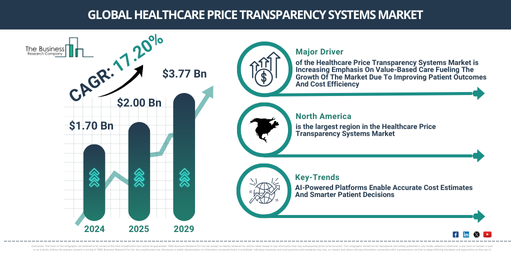
    The healthcare price transparency systems market has experienced substantial growth in recent years. It is forecast to increase from $1.70 billion in 2024 to $2.00 billion in 2025, exhibiting a compound annual growth rate (CAGR) of 17.5%. The expansion witnessed in prior periods can be attributed to factors such as escalating healthcare expenses, greater patient understanding, governmental directives and mandates, the necessity for cost comparison instruments, and the demand for billing precision.

    The healthcare price transparency systems market is anticipated to undergo significant expansion in the coming years, reaching a valuation of $3.77 billion by 2029, at a compound annual growth rate (CAGR) of 17.2%. This projected growth is largely due to factors such as increasing patient-centered care demands, the ongoing expansion of telemedicine services, a greater emphasis on value-based care approaches, rising consumer engagement in health, and the continuous need for cost containment strategies. Key trends expected in this forecast period include the incorporation of artificial intelligence, the utilization of machine learning for predicting costs, the application of blockchain for secure billing processes, the advancement of mobile health applications, the introduction of real-time price comparison instruments, and improved interoperability with electronic health records.

    Unlock Your Free Sample Report for Exclusive Market Data:

    https://www.thebusinessresearchcompany.com/sample.aspx?id=28241&type=smp

    Which Industry Drivers Are Expected To Accelerate The Healthcare Price Transparency Systems Market From 2025 To 2029?

    The growing focus on value-based care is anticipated to drive the expansion of the healthcare price transparency systems market in the future. This approach to healthcare delivery compensates providers based on improved patient results and cost reduction, as opposed to the quantity of services rendered. The heightened attention to value-based care stems from its ability to enhance patient outcomes, given its focus on quality and efficiency over the sheer volume of services provided. Healthcare price transparency systems facilitate value-based care by offering clear pricing data, allowing both healthcare providers and patients to make educated choices. These systems boost the effectiveness of care and patient contentment by aligning treatment options with clinical results and economic factors. An example of this trend is seen in November 2024, where a survey by America’s Health Insurance Plans (AHIP), a US-based trade association, indicated that value-based arrangements attained 45.2% in 2023, marking a 4% rise from 41.3% in 2022. Consequently, the expanding focus on value-based care is fueling the growth of the healthcare price transparency systems market.

    What Are The Major Segment Categories Driving The Healthcare Price Transparency Systems Market Growth?

    The healthcare price transparency systems market covered in this report is segmented as

    1) By System Type: Consumer-Facing Tools, Provider-Facing Solutions,

    2) By Technology: Basic Web-Based Platforms, Advanced AI-Driven Solutions,

    3) By Applications: Patient Cost Estimation, Healthcare Shopping Assistance, Price Transparency Compliance, Informed Healthcare Decision-Making,

    4) By End-User: Healthcare Providers, Insurance Companies, Consumers,

    Subsegments:

    1) By Consumer-Facing Tools: Price Comparison Platforms, Billing and Invoice Explanation Tools, Cost Estimation Calculators, Appointment Scheduling Interfaces, Payment Portals,

    2) By Provider-Facing Solutions: Claims Management Systems, Revenue Cycle Management Tools, Data Analytics Dashboards, Contract Management Platforms, Compliance Monitoring Software,

    What Are The Latest Industry Trends Transforming The Healthcare Price Transparency Systems Market?

    Leading companies operating in the healthcare price transparency systems market are concentrating on developing advanced analytical solutions, such as AI-powered data processing platforms, to provide accurate cost estimates and enhance patient decision-making. AI-powered data processing platforms are sophisticated systems that leverage artificial intelligence and machine learning to analyze extensive amounts of healthcare pricing data, converting complex information into actionable insights for strategic decision-making. For example, in May 2025, Aon plc, a UK-based professional services firm, introduced the Health Price Transparency Analysis, an advanced analytics tool designed to assist U.S. employers in utilizing publicly available healthcare pricing data. This solution enables plan sponsors to evaluate the negotiated rates between healthcare payers and providers, which aids in controlling escalating medical expenses and reducing fiduciary risks by offering clearer insights into pricing. Furthermore, it improves understanding of healthcare networks, facilitating more informed decision-making.

    Which Leading Players Are Enhancing Their Healthcare Price Transparency Systems Market Presence Worldwide?

    Major companies operating in the healthcare price transparency systems market are UnitedHealth Group, Experian Health Inc., TransUnion Healthcare LLC, Priority Health, Premier Inc., Waystar Inc., Zelis Healthcare LLC, Health Catalyst Inc., Appriss Health, Tebra Technologies Inc., Surescripts LLC, RevSpring Inc., Milliman MedInsight, Vālenz Health, Kyruus Health Inc., Clarify Health Solutions Inc., Turquoise Health Company Inc., Trilliant Health, Healthee Inc., and Avaneer Health LLC.

    Download The Full Report For Exclusive Market Findings:

    https://www.thebusinessresearchcompany.com/report/healthcare-price-transparency-systems-global-market-report

    Which Global Regions Are Influencing The Competitive Landscape Of The Healthcare Price Transparency Systems Market?

    North America was the largest region in the healthcare price transparency systems market in 2024. The regions covered in healthcare price transparency systems report are Asia-Pacific, Western Europe, Eastern Europe, North America, South America, Middle East and Africa.

    Request A Customized Version Of The Healthcare Price Transparency Systems Market Report:

    https://www.thebusinessresearchcompany.com/customise?id=28241&type=smp

    Browse Through More Reports Similar to the Global Healthcare Price Transparency Systems Market 2025, By The Business Research Company

    Healthcare Finance Solutions Global Market Report 2025

    https://www.thebusinessresearchcompany.com/report/healthcare-finance-solutions-global-market-report

    Healthcare Payer Solution Global Market Report 2025

    https://www.thebusinessresearchcompany.com/report/healthcare-payer-solution-global-market-report

    Healthcare Reimbursement Global Market Report 2025

    https://www.thebusinessresearchcompany.com/report/healthcare-reimbursement-global-market-report

    Get in touch with us:

    The Business Research Company: https://www.thebusinessresearchcompany.com/

    Americas +1 310-496-7795

    Asia +44 7882 955267 & +91 8897263534

    Europe +44 7882 955267

    Email us at info@tbrc.info

    Follow us on:

    LinkedIn: https://in.linkedin.com/company/the-business-research-company

    YouTube: https://www.youtube.com/channel/UC24_fI0rV8cR5DxlCpgmyFQ

    Global Market Model: https://www.thebusinessresearchcompany.com/global-market-model
  • Global Healthcare Middleware Market Size Projected to Reach $6.77 Billion During the Forecast Period

    Global Healthcare Middleware Market Size Projected to Reach $6.77 Billion During the Forecast Period

    Unlock Global Insights – Save 20% on Market Reports with Code ONLINE20

    What Is The Anticipated Size Of The Healthcare Middleware Market Over The Five-Year Period 2025–2029?

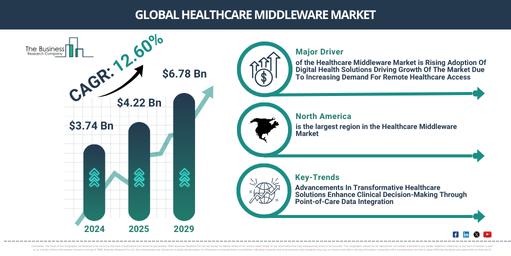
    The healthcare middleware market has experienced substantial expansion recently. Its valuation is projected to rise from $3.74 billion in 2024 to $4.22 billion by 2025, demonstrating a compound annual growth rate (CAGR) of 12.9%. This historical increase is primarily due to factors such as the expanding uptake of electronic health records, a greater necessity for interoperability among healthcare systems, an escalating requirement for real-time data exchange, an increase in healthcare data volumes, and the wider deployment of connected medical devices.

    The healthcare middleware market is set to experience swift expansion over the next few years, with its size projected to reach $6.78 billion in 2029, growing at a compound annual growth rate (CAGR) of 12.6%. This anticipated growth during the forecast period is primarily driven by the proliferation of telehealth and remote patient monitoring, an increased focus on value-based healthcare models, the rising adoption of cloud-based healthcare solutions, a growing emphasis on patient-centric care and engagement, and the essential need for improved cybersecurity and data protection in healthcare systems. Significant trends expected during this period include the integration of artificial intelligence and machine learning, the adoption of cloud-native middleware platforms, the deployment of active pharmaceutical ingredient-driven interoperability solutions, the utilization of blockchain for secure health data exchange, and the incorporation of Internet of Things-enabled middleware solutions.

    Unlock Your Free Sample Report for Exclusive Market Data:

    https://www.thebusinessresearchcompany.com/sample.aspx?id=28240&type=smp

    What Are The Top Growth Drivers Impacting The Healthcare Middleware Market Outlook?

    The increasing integration of digital health solutions is projected to fuel the expansion of the healthcare middleware market in the foreseeable future. Digital health solutions encompass the utilization of digital technologies, tools, and platforms aimed at enhancing health outcomes, optimizing healthcare service delivery, and boosting patient involvement. This surge in digital health adoption stems from the escalating demand for remote healthcare accessibility, with both patients and healthcare providers seeking convenient and time-saving alternatives to traditional face-to-face appointments. Healthcare middleware facilitates digital health initiatives by connecting Electronic Health Records (EHRs), medical devices, and telehealth platforms, enabling smooth, real-time data exchange. It also ensures interoperability, scalability, and secure information transfer, thereby improving the provision of remote care. As an illustration, in June 2022, the Department of Health and Social Care, a government body located in the UK, reported an anticipation that 100% of NHS trusts would have adopted electronic health records by March 2025, an increase from the 90% that had implemented them by December 2023. Consequently, the expanding use of digital health solutions is a key factor propelling the growth of the healthcare middleware market.

    How Is The Healthcare Middleware Market Segmented?

    The healthcare middleware market covered in this report is segmented as

    1) By Type: Communication Middleware, Platform Middleware, Integration Middleware, Other Types

    2) By Deployment: On-Premises Models, Cloud-Based Models, Hybrid Models

    3) By Application: Clinical, Financial, Operational, Administrative

    4) By End-User: Healthcare Payers, Healthcare Providers, Life Science Organization, Clinical Laboratories, Other End-Users

    Subsegments:

    1) By Communication Middleware: Message-Oriented Middleware, Remote Procedure Call Middleware, Data Distribution Service Middleware, Event-Driven Middleware

    2) By Platform Middleware: Database Middleware, Application Server Middleware, Web-Based Middleware, Transaction Processing Monitor Middleware

    3) By Integration Middleware: Enterprise Service Bus Middleware, Application Programming Interface Management Middleware, Business Process Management Middleware, Cloud Integration Middleware

    4) By Other Types: Mobile Middleware, Embedded Middleware, Internet Of Things Middleware, Legacy System Integration Middleware

    What Trends Are Redefining The Healthcare Middleware Market Dynamics?

    Leading companies within the healthcare middleware market are concentrating on developing sophisticated solutions, such as transformative healthcare solutions, with the goal of improving interoperability, enhancing clinical decision-making, and enabling efficient patient care delivery. Transformative healthcare solutions encompass innovative technologies and approaches that reshape how healthcare is delivered, managed, and experienced. They achieve this by utilizing data, digital tools, and advanced analytics to improve patient outcomes, optimize workflows, and lower costs. For instance, in January 2025, Vim Inc., a US-based provider of connected healthcare technology, introduced Care Insights, which is a transformative healthcare solution specifically designed to embed patient-specific recommendations. This application integrates actionable, patient-specific data directly into native EHR workflows, streamlining diagnosis and care gap management. It also enhances provider decision-making by consolidating data from multiple sources and providing real-time recommendations, thereby enabling informed, efficient decisions within existing clinical workflows and ultimately improving patient care outcomes.

    Which Major Firms Are Strengthening Their Position In The Healthcare Middleware Industry?

    Major companies operating in the healthcare middleware market are Redox Inc., InterSystems Corporation, Edifecs Inc., Innovaccer Inc., Orion Health Group Ltd., Verato Inc., 1upHealth Inc., Health Gorilla Inc., Validic Inc., CareEvolution Inc., Kno2 Inc., Particle Health Inc., PilotFish Technology Inc., Rhapsody, Interfaceware Inc., Smile Digital Health Inc., Firely RV, Health Samurai Inc., Onyx Health, and Medplum Inc.

    Download The Full Report For Exclusive Market Findings:

    https://www.thebusinessresearchcompany.com/report/healthcare-middleware-global-market-report

    What Are The Regional Market Dynamics Impacting The Healthcare Middleware Industry?

    North America was the largest region in the healthcare middleware market in 2024. Asia-Pacific is expected to be the fastest-growing region in the forecast period. The regions covered in healthcare middleware report are Asia-Pacific, Western Europe, Eastern Europe, North America, South America, Middle East and Africa.

    Request A Customized Version Of The Healthcare Middleware Market Report:

    https://www.thebusinessresearchcompany.com/customise?id=28240&type=smp

    Browse Through More Reports Similar to the Global Healthcare Middleware Market 2025, By The Business Research Company

    Home Healthcare Software Global Market Report 2025

    https://www.thebusinessresearchcompany.com/report/home-healthcare-software-global-market-report

    Healthcare Software As A Service Global Market Report 2025

    https://www.thebusinessresearchcompany.com/report/healthcare-software-as-a-service-global-market-report

    Healthcare Technology Global Market Report 2025

    https://www.thebusinessresearchcompany.com/report/healthcare-technology-global-market-report

    Get in touch with us:

    The Business Research Company: https://www.thebusinessresearchcompany.com/

    Americas +1 310-496-7795

    Asia +44 7882 955267 & +91 8897263534

    Europe +44 7882 955267

    Email us at info@tbrc.info

    Follow us on:

    LinkedIn: https://in.linkedin.com/company/the-business-research-company

    YouTube: https://www.youtube.com/channel/UC24_fI0rV8cR5DxlCpgmyFQ

    Global Market Model: https://www.thebusinessresearchcompany.com/global-market-model
  • Healthcare Digital Payment Industry Anticipated to Expand at 22.3% CAGR During the Forecast Period

    Healthcare Digital Payment Industry Anticipated to Expand at 22.3% CAGR During the Forecast Period

    Unlock Global Insights – Save 20% on Market Reports with Code ONLINE20

    What Are The Forecasted Market Size Estimates For The Healthcare Digital Payment Market Between 2025 And 2029?

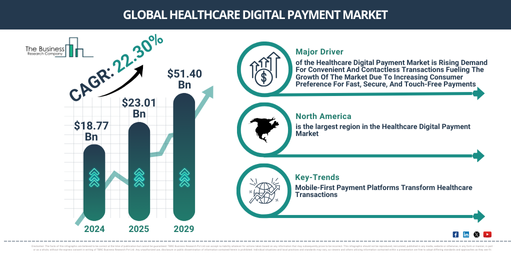
    The healthcare digital payment market has experienced rapid expansion in recent years. It is projected to increase from $18.77 billion in 2024 to $23.01 billion in 2025, at a compound annual growth rate (CAGR) of 22.6%. The historical growth can be attributed to the rising prevalence of smartphones, increased internet accessibility, a surge in demand for contactless transactions, wider adoption of e-commerce platforms, and a growing necessity for quicker billing processes.

    The healthcare digital payment market size is set for substantial growth in the upcoming years. It is predicted to expand to $51.40 billion by 2029, demonstrating a compound annual growth rate (CAGR) of 22.3%. The expansion observed during this forecast period is attributed to the increasing adoption of telemedicine, the broadening of health insurance coverage, a rise in government initiatives promoting digital health, and a surge in patient preference for cashless payment methods. Notable trends expected in the forecast period include advancements in biometric authentication, enhanced integration of wearable health devices with payment systems, the evolution of blockchain-based secure transactions, innovations in AI-powered billing solutions, and progress in real-time cross-border healthcare payments.

    Unlock Your Free Sample Report for Exclusive Market Data:

    https://www.thebusinessresearchcompany.com/sample.aspx?id=28239&type=smp

    Which Major Market Drivers Are Shaping The Future Of The Healthcare Digital Payment Market?

    The escalating preference for convenient and contactless transactions is anticipated to drive the expansion of the healthcare digital payment market. Convenient and contactless transactions refer to payments executed quickly and easily without the need for physical interaction with cash or cards. This increase in convenient and contactless transactions is a result of rising consumer demand for swift and effortless transactions that do not require physical contact or PIN input. Convenient and contactless transactions bolster healthcare digital payment systems by providing fast and secure payment options, making them ideal for clinics, pharmacies, and telehealth services. They contribute to less manual processing and shorter waiting times by enabling seamless, touch-free payments, thereby enhancing convenience for both patients and providers. For instance, in July 2024, UK Finance, a UK-based financial services company, reported that 18.3 billion contactless payments were made in the UK in 2023, indicating a 7% rise from 17 billion in 2022. Therefore, the growing demand for convenient and contactless transactions is a significant factor in the growth of the healthcare digital payment market.

    What Are The Key Segments In The Healthcare Digital Payment Market?

    The healthcare digital payment market covered in this report is segmented as

    1) By Type: Mobile Wallets, Point-Of-Sale (POS) Systems, Internet Banking, Mobile Banking, Cryptocurrencies, Other Types

    2) By Solution: Application Program Interface, Payment Gateway, Payment Processing, Payment Security And Fraud Management, Transaction Risk Management, Other Solutions

    3) By Deployment: Cloud, On-Premise

    4) By Technology: Near Field Communication (NFC), Quick Response (QR) Code Payments, Blockchain, Biometric Authentication, Other Technologies

    5) By End-User: Hospitals, Medical Clinics, Pharmacies, Health Insurance Companies, Telemedicine And Remote Health Services, Other End-Users

    Subsegments:

    1) By Mobile Wallets: Near Field Communication Payments, Quick Response (QR) Code Payments, Mobile App Based Payments, Cloud Based Mobile Wallets, Peer To Peer Transfers

    2) By Point Of Sale Systems: Countertop Terminals, Mobile Point Of Sale Terminals, Smart Point Of Sale Terminals, Contactless Point Of Sale Terminals, Integrated Point Of Sale Solutions

    3) By Internet Banking: Web Based Fund Transfers, Online Bill Payments, Account Management Services, Loan And Credit Services, Online Investment Services

    4) By Mobile Banking: Mobile Check Deposits, Mobile Fund Transfers, Account Balance Inquiries, Bill Payments Through Apps, Personalized Financial Alerts

    5) By Cryptocurrencies: Bitcoin Payments, Ethereum Payments, Stablecoin Transactions, Blockchain Based Remittances, Decentralized Finance Payments

    6) By Other Types: Biometric Payment Systems, Voice Activated Payment Systems, Wearable Device Payments, Smart Card Payments, Contactless Payment Rings

    How Are Emerging Market Trends Shaping The Healthcare Digital Payment Industry Landscape?

    Leading companies in the healthcare digital payment market are concentrating on developing advanced solutions, such as mobile-first payment platforms, to boost transaction efficiency, strengthen security, and improve patient and provider interactions. Mobile-first payment platforms are defined as digital payment systems optimized for smartphones and tablets, facilitating smooth, secure, and contactless transactions through integrated technologies including tokenization, biometric authentication, and cloud-based processing. For instance, in April 2025, Alternative Payments Ltd. (t/a Judopay), a UK-based mobile payments provider, launched a digital payments solution for UK pharmacies and healthcare providers aimed at simplifying and securing payment processing in the healthcare sector. This adaptable, fully compliant platform enables providers to accept payments online, in-app, in person, and through payment links, supporting all major payment methods like cards, Apple Pay, Google Pay, and contactless payments. It addresses key challenges in healthcare payments, such as strict data regulations, fraud risk, and complex underwriting, by providing fast onboarding, fraud prevention, and seamless integration with existing healthcare systems.

    Who Are The Primary Competitors In The Global Healthcare Digital Payment Market?

    Major companies operating in the healthcare digital payment market are American Express Company, Visa Inc., PayPal Holdings Inc., Mastercard Incorporated, HDFC Bank Limited, Fiserv Inc., Experian Health Inc., athenahealth Inc., Adyen N.V., Nets Group A/S, Cotiviti Inc., Waystar Inc., Precisely Software Incorporated, Paymentus Holdings Inc., Zelis Healthcare LLC, Flywire Corporation, Phreesia Inc., Availity L.L.C., RevSpring Inc., Rectangle Health Inc., AccessOne MedCard Inc., ClearBalance Healthcare Inc., PayZen Inc., and PatientPay Inc.

    Download The Full Report For Exclusive Market Findings:

    https://www.thebusinessresearchcompany.com/report/healthcare-digital-payment-global-market-report

    Which Region Shows The Highest Potential For Future Expansion In The Healthcare Digital Payment Market?

    North America was the largest region in the healthcare digital payment market in 2024. Asia-Pacific is expected to be the fastest-growing region in the forecast period. The regions covered in healthcare digital payment report are Asia-Pacific, Western Europe, Eastern Europe, North America, South America, Middle East and Africa.

    Request A Customized Version Of The Healthcare Digital Payment Market Report:

    https://www.thebusinessresearchcompany.com/customise?id=28239&type=smp

    Browse Through More Reports Similar to the Global Healthcare Digital Payment Market 2025, By The Business Research Company

    Digital Payments Global Market Report 2025

    https://www.thebusinessresearchcompany.com/report/digital-payments-global-market-report

    Digital Transformation In Healthcare Global Market Report 2025

    https://www.thebusinessresearchcompany.com/report/digital-transformation-in-healthcare-global-market-report

    Healthcare Payer Solution Global Market Report 2025

    https://www.thebusinessresearchcompany.com/report/healthcare-payer-solution-global-market-report

    Get in touch with us:

    The Business Research Company: https://www.thebusinessresearchcompany.com/

    Americas +1 310-496-7795

    Asia +44 7882 955267 & +91 8897263534

    Europe +44 7882 955267

    Email us at info@tbrc.info

    Follow us on:

    LinkedIn: https://in.linkedin.com/company/the-business-research-company

    YouTube: https://www.youtube.com/channel/UC24_fI0rV8cR5DxlCpgmyFQ

    Global Market Model: https://www.thebusinessresearchcompany.com/global-market-model

  • Global Haptic Virtual Reality (VR) Fitness Suit Market Projected to Expand at 27.5% CAGR by 2029

    Global Haptic Virtual Reality (VR) Fitness Suit Market Projected to Expand at 27.5% CAGR by 2029

    Unlock Global Insights – Save 20% on Market Reports with Code ONLINE20

    How Is The Haptic Virtual Reality (VR) Fitness Suit Market Size Likely To Evolve From 2025 Through 2034?

    The haptic virtual reality (VR) fitness suit market has seen its size surge dramatically in recent years. Its value is anticipated to rise from $1.25 billion in 2024 to $1.60 billion in 2025, exhibiting a compound annual growth rate (CAGR) of 27.9%. This past growth is attributable to several key factors, including increased awareness of physical rehabilitation benefits, an increasing preference for multisensory exercise experiences, greater engagement in remote or home-based training, a heightened demand for real-time performance feedback, and a growing interest in social and team-based virtual reality fitness activities.

    The haptic virtual reality (VR) fitness suit market size is anticipated to undergo significant expansion over the next few years. It is projected to reach $4.24 billion by 2029, exhibiting a compound annual growth rate (CAGR) of 27.5%. This growth in the forecast period can be attributed to the increasing adoption of immersive fitness solutions, a rising demand for personalized VR workouts, growing interest in gamified exercise programs, an increasing focus on home-based rehabilitation and training, and the rising popularity of social and multiplayer virtual fitness experiences. Major trends expected during this period include advancements in wearable haptic feedback systems, the development of AI-powered personalized VR workouts, innovations in multiplayer and social VR fitness platforms, improvements in sensor accuracy for real-time performance tracking, and the creation of integrated VR fitness and health monitoring solutions.

    Unlock Your Free Sample Report for Exclusive Market Data:

    https://www.thebusinessresearchcompany.com/sample.aspx?id=28238&type=smp

    What Are The Main Drivers Boosting The Haptic Virtual Reality (VR) Fitness Suit Industry’s Expansion?

    The increasing engagement in physical activities and consistent exercise is anticipated to drive the expansion of the haptic virtual reality (VR) fitness suit market in the future. These encompass both organized and informal actions aimed at boosting physical fitness, health, and overall well-being. The uptake of physical activities and regular exercise is on an upward trend, driven by increasing recognition of their importance in preventing lifestyle-related illnesses, improving psychological health, and contributing to general welfare. Haptic virtual reality fitness suits augment physical activities and regular exercise by delivering immediate tactile responses, thereby refining posture, enhancing movement precision, and fostering deeper immersion for more impactful training sessions. For example, data from the UK Fitness Report, released in November 2023 by PureGym Limited, a UK-based health club operator, revealed a 2% rise in UK gym memberships year-over-year, with 16% of the population now holding gym memberships. Furthermore, an additional 16% of individuals indicated plans to join a gym in 2024. Consequently, the increasing participation in physical activities and regular exercise is propelling the haptic virtual reality (VR) fitness suit market.

    What Are The Leading Segments Analyzed In The Haptic Virtual Reality (VR) Fitness Suit Market?

    The haptic virtual reality (VR) fitness suit market covered in this report is segmented as

    1) By Product Type: Full-Body Suits, Upper-Body Suits, Lower-Body Suits, Accessories

    2) By Technology: Force Feedback, Vibrotactile, Electroactive Polymers, Other Technologies

    3) By Distribution Channel: Online Stores, Specialty Stores, Retail Stores, Other Distribution Channels

    4) By Application: Personal Fitness, Professional Training, Rehabilitation, Gaming, Other Applications

    5) By End-User: Consumers, Fitness Centers, Rehabilitation Centers, Sports Institutes, Other End-Users

    Subsegment:

    1) By Full-Body Suits: Haptic Feedback Suits, Motion Capture Suits, Exoskeleton Suits

    2) By Upper-Body Suits: Haptic Vests, Haptic Arm Bands, Shoulder And Chest Harnesses

    3) By Lower-Body Suits: Haptic Leg Bands, Haptic Pants, Foot And Ankle Haptic Modules

    4) By Accessories: Haptic Gloves, Haptic Shoes Or Footwear, Wearable Sensors, Haptic Belts And Straps

    Which Key Trends Are Expected To Influence The Haptic Virtual Reality (VR) Fitness Suit Market In The Coming Years?

    Leading companies in the haptic virtual reality fitness suit market are concentrating on technological advancements, such as full-body tactile actuation, to enhance immersive workout experiences, improve user engagement, and enable the precise simulation of physical sensations for effective fitness training. Full-body tactile actuation utilizes distributed actuators embedded in wearable textiles to provide localized force or vibration feedback, thereby augmenting motion and exercise cues and improving real-time training fidelity. For instance, in November 2024, bHaptics Inc., a South Korea-based VR haptics company, introduced the TactSuit Pro. The TactSuit Pro offers a sophisticated combination of immersive feedback, comfort, and accessibility for users engaging in virtual reality activities, including fitness applications. This device is equipped with 32 haptic motors, which deliver localized tactile sensations and enhance realism during workouts or interactive sessions. A thumbwheel with a light emitting diode (LED) status ring positioned on the chest allows users to effortlessly adjust the intensity of sensations in real time, supporting both high-intensity exercise and lighter routines.

    Which Key Market Players Are Investing In Expansion And Innovation Of Haptic Virtual Reality (VR) Fitness Suit Market?

    Major companies operating in the haptic virtual reality (vr) fitness suit market are Shenzhen H&T Intelligent Control Co. Ltd, Ultraleap Limited, Dexta Robotics Inc., Woojer Ltd., Actronika SAS, HaptX Inc., SenseGlove B.V., Palladyne AI Inc., bHaptics Inc., Wave Company Inc., NeuroDigital Technologies S.L., AjnaLens Pvt. Ltd., Teslasuit Inc., SUBPAC Inc., VirZOOM Inc., AxonVR Inc., VRgluv Inc., Kaaya Tech Inc., Manus VR B.V., Valkyrie Industries Inc.

    Download The Full Report For Exclusive Market Findings:

    https://www.thebusinessresearchcompany.com/report/haptic-virtual-reality-vr-fitness-suit-global-market-report

    How Is Haptic Virtual Reality (VR) Fitness Suit Market Demand Varying Across Different Regions?

    North America was the largest region in the haptic virtual reality (VR) fitness suit market in 2024. Asia-Pacific is expected to be the fastest-growing region in the forecast period. The regions covered in haptic virtual reality (VR) fitness suit report are Asia-Pacific, Western Europe, Eastern Europe, North America, South America, Middle East and Africa.

    Request A Customized Version Of The Haptic Virtual Reality (VR) Fitness Suit Market Report:

    https://www.thebusinessresearchcompany.com/customise?id=28238&type=smp

    Browse Through More Reports Similar to the Global Haptic Virtual Reality (VR) Fitness Suit Market 2025, By The Business Research Company

    Virtual Reality Vr Fitness Game Global Market Report 2025

    https://www.thebusinessresearchcompany.com/report/virtual-reality-vr-fitness-game-global-market-report

    Virtual Reality Vr In Medical Simulation Global Market Report 2025

    https://www.thebusinessresearchcompany.com/report/virtual-reality-vr-in-medical-simulation-global-market-report

    Online Virtual Fitness Global Market Report 2025

    https://www.thebusinessresearchcompany.com/report/online-virtual-fitness-global-market-report

    Get in touch with us:

    The Business Research Company: https://www.thebusinessresearchcompany.com/

    Americas +1 310-496-7795

    Asia +44 7882 955267 & +91 8897263534

    Europe +44 7882 955267

    Email us at info@tbrc.info

    Follow us on:

    LinkedIn: https://in.linkedin.com/company/the-business-research-company

    YouTube: https://www.youtube.com/channel/UC24_fI0rV8cR5DxlCpgmyFQ

    Global Market Model: https://www.thebusinessresearchcompany.com/global-market-model
  • Genomic Selection Platform Market to Grow at a CAGR of 16.9% from 2025 to 2029

    Genomic Selection Platform Market to Grow at a CAGR of 16.9% from 2025 to 2029

    Unlock Global Insights – Save 20% on Market Reports with Code ONLINE20

    What Are The Growth Projections For The Genomic Selection Platform Market Size During 2025–2029?

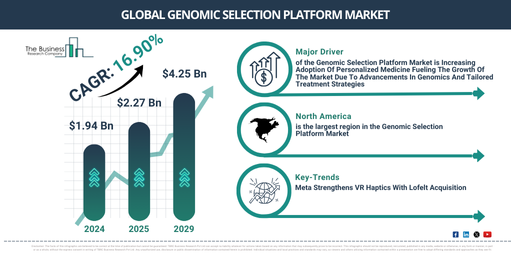
    The genomic selection platform market size has seen rapid growth in recent years. It is expected to expand from $1.94 billion in 2024 to $2.27 billion in 2025, achieving a compound annual growth rate (CAGR) of 17.3%. The market’s historic growth can be ascribed to several factors, including the advancement of agricultural biotechnology, the increasing prominence of quantitative genetics in breeding programs, a greater focus on disease resistance in crops and livestock, the expansion of collaborative research initiatives, and escalating disease pressures along with climate variability.

    The genomic selection platform market is projected for rapid growth in the coming years. It is expected to expand to $4.25 billion by 2029, demonstrating a compound annual growth rate (CAGR) of 16.9%. This projected growth can be attributed to escalating global food demand, the advancement of precision agriculture, an increasing focus on sustainable breeding practices, the broadening scope of livestock genomics, and the rise of contract breeding and genomic services. Significant trends anticipated during this period include further developments in next-generation sequencing (NGS), the integration with digital agriculture tools, the incorporation of AI and machine learning, the adoption of cloud-based genomic data platforms, and the merging of multi-omics data.

    Unlock Your Free Sample Report for Exclusive Market Data:

    https://www.thebusinessresearchcompany.com/sample.aspx?id=28237&type=smp

    Which Factors And Drivers Are Influencing The Genomic Selection Platform Market In 2025?

    The expanding integration of personalized medicine is anticipated to drive the future expansion of the genomic selection platform market. This medical methodology involves customizing treatment and prevention approaches based on an individual’s distinct genetic profile, lifestyle, and environmental factors. The growing embrace of personalized medicine is largely fueled by breakthroughs in genomics, which facilitate the accurate identification of genetic variations and the development of customized therapies. Genomic selection platforms play a crucial role in personalized medicine by offering precise genomic data, thereby enabling the customization of treatments for individual patients. These platforms streamline therapy selection by forecasting responses to interventions, thus enhancing treatment efficacy and patient outcomes and minimizing trial-and-error. As an illustration, in February 2024, data from the Personalized Medicine Coalition (PMC), a US-based nonprofit organization, revealed that the U.S. Food and Drug Administration (FDA) sanctioned 26 novel personalized medicines in 2023, marking a considerable rise from the 12 approvals in 2022. Consequently, the rising uptake of personalized medicine is a key driver for the growth of the genomic selection platform market. The increasing output from crops is projected to propel the expansion of the genomic selection platform market in the future. Crop yield signifies the volume of agricultural produce, such as grains, fruits, or vegetables, harvested from a specific land area. This increase in crop yield is largely attributable to progress in agricultural biotechnology, which improves plant genetics and robustness. Genomic selection platforms contribute to higher crop yields by allowing the precise identification and selection of superior-performing plant varieties, making them perfectly suited for contemporary agriculture and breeding initiatives. These platforms cut down on the time and expense associated with conventional breeding methods by delivering accurate genetic forecasts, thereby boosting farm productivity and ensuring food security. For example, in February 2024, as reported by the Department for Environment, Food and Rural Affairs, a UK-based government agency, the UK’s total cereal production, encompassing wheat, barley, oats, and other lesser cereals (like rye, triticale, and mixed grain), amounted to 24.3 million tonnes in 2022, representing an 8% increase compared to 2021. Consequently, the rising crop yields are a significant factor driving the growth of the genomic selection platform market.

    What Are The Segment Types Shaping The Genomic Selection Platform Market?

    The genomic selection platform market covered in this report is segmented as

    1) By Component: Software, Hardware, Services

    2) By Deployment Mode: On-Premises, Cloud-Based

    3) By Application: Plant Breeding, Animal Breeding, Human Genomics, Other Applications

    4) By End-User: Research Institutes, Biotechnology Companies, Agricultural Organizations, Other End Users

    Subsegments:

    1) By Software: Genomic Data Management Software, Bioinformatics And Statistical Analysis Tools, DNA Or RNA Sequencing Data Processing Software, Genomic Prediction And Modeling Software, Cloud-Based Genomic Platforms, Workflow Automation And Integration Tools

    2) By Hardware: Next-Generation Sequencing (NGS) Systems, Polymerase Chain Reaction (PCR) Instruments, Microarray Analyzers, High-Performance Computing (HPC) Systems, Data Storage Servers, Laboratory Automation And Robotics

    3) By Services: Sequencing And Genotyping Services, Data Analysis And Interpretation Services, Cloud Hosting & Data Storage Services, Custom Bioinformatics Solutions, Training And Technical Support Services, Consulting And Implementation Services

    What Are The Major Trends Driving The Growth Of The Genomic Selection Platform Market?

    Major companies operating in the genomic selection platform market are focusing on developing innovative solutions, such as targeted sequencing platforms, to enhance trait prediction and accelerate breeding programs. Targeted sequencing platforms refer to genomic technologies and systems designed to sequence specific regions of the genome rather than the entire genome. For instance, in October 2024, Element Biosciences Inc., a US-based life sciences technology company, launched Trinity, a breakthrough targeted sequencing platform that streamlines exome capture by integrating traditionally complex steps directly into its AVITI System. The platform eliminates the need for specialized equipment, reduces manual work by up to five hours, and offers a one-hour hybridization option for same-day results, making it ideal for time-sensitive studies. Trinity expands to support custom panels across diverse applications such as oncology, respiratory diseases, and minimal residual disease (MRD). It delivers faster, more cost-effective, and more accessible sequencing, marking the first major advancement in exome capture.

    Who Are The Core Companies Influencing The Genomic Selection Platform Market Landscape?

    Major companies operating in the genomic selection platform market are F. Hoffmann-La Roche Ltd, Thermo Fisher Scientific Inc., GE Healthcare Technologies Inc., Eurofins Scientific SE, Agilent Technologies Inc., Illumina Inc., Beckman Coulter Inc., Bio-Rad Laboratories Inc., QIAGEN N.V., MGI Tech Co. Ltd., Azenta Inc., 10x Genomics Inc., Oxford Nanopore Technologies plc, Ultima Genomics Inc., Element Biosciences Inc., DNAnexus Inc., Deep Genomics Inc., Epigene Labs Inc., Quotient Therapeutics Inc., Evogene Ltd., Nebula Genomics Inc., Verinomics Inc., InEdita Bio Inc., GenEmbryomics Inc., and Enigma Genomics Inc.

    Download The Full Report For Exclusive Market Findings:

    https://www.thebusinessresearchcompany.com/report/genomic-selection-platform-global-market-report

    Which Geographies Are Emerging As Strong Markets For The Genomic Selection Platform Industry?

    North America was the largest region in the genomic selection platform market in 2024. The regions covered in genomic selection platform report are Asia-Pacific, Western Europe, Eastern Europe, North America, South America, Middle East and Africa.

    Request A Customized Version Of The Genomic Selection Platform Market Report:

    https://www.thebusinessresearchcompany.com/customise?id=28237&type=smp

    Browse Through More Reports Similar to the Global Genomic Selection Platform Market 2025, By The Business Research Company

    Genomics Services Global Market Report 2025

    https://www.thebusinessresearchcompany.com/report/genomics-services-global-market-report

    Genomics Global Market Report 2025

    https://www.thebusinessresearchcompany.com/report/genomics-global-market-report

    Genomics Personalized Health Global Market Report 2025

    https://www.thebusinessresearchcompany.com/report/genomics-personalized-health-global-market-report

    Get in touch with us:

    The Business Research Company: https://www.thebusinessresearchcompany.com/

    Americas +1 310-496-7795

    Asia +44 7882 955267 & +91 8897263534

    Europe +44 7882 955267

    Email us at info@tbrc.info

    Follow us on:

    LinkedIn: https://in.linkedin.com/company/the-business-research-company

    YouTube: https://www.youtube.com/channel/UC24_fI0rV8cR5DxlCpgmyFQ

    Global Market Model: https://www.thebusinessresearchcompany.com/global-market-model
  • Global Genomic Data Clean-Room Platforms Market 2025–2029: Competitive Insights and Opportunities

    Global Genomic Data Clean-Room Platforms Market 2025–2029: Competitive Insights and Opportunities

    Unlock Global Insights – Save 20% on Market Reports with Code ONLINE20

    What Is The Global Market Value Of The Genomic Data Clean-Room Platforms Industry In 2025?

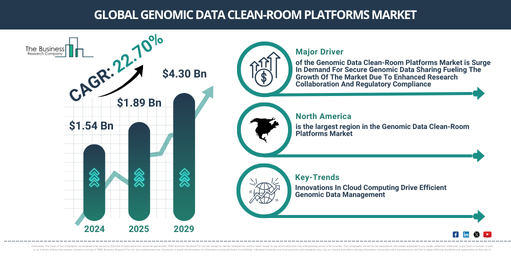
    The genomic data clean-room platforms market size has experienced rapid expansion in recent years. Projections indicate that this market will expand from $1.54 billion in 2024 to reach $1.89 billion by 2025, demonstrating a compound annual growth rate (CAGR) of 22.9%. Historically, this increase can be linked to factors such as the heightened embrace of precision medicine, an uptick in genomic research partnerships, a greater need for secure sharing of health data, the emergence of more stringent data privacy and compliance regulations, and the expanding incorporation of artificial intelligence within genomics.

    The genomic data clean-room platforms market size is expected to experience significant expansion in the coming years. This market is projected to reach $4.30 billion by 2029, with a compound annual growth rate (CAGR) of 22.7%. The anticipated growth during the forecast period is driven by the increasing necessity for large-scale genomic data analysis, heightened investments in healthcare data security, the expanding adoption of cloud-based genomic platforms, an uptick in multi-omics research collaborations, and the growing demand for personalized medicine solutions. Key trends influencing this period include advancements in privacy-preserving computation techniques, innovations in federated learning models, the integration of blockchain for secure data transactions, novel cloud-native clean-room architectures, and improvements in interoperability standards for genomic data platforms.

    Unlock Your Free Sample Report for Exclusive Market Data:

    https://www.thebusinessresearchcompany.com/sample.aspx?id=28236&type=smp

    What Are The Key Drivers Of Growth In The Genomic Data Clean-Room Platforms Market?

    The increasing need for secure genomic data sharing is projected to boost the expansion of the genomic data clean-room platforms market in the future. Secure genomic data sharing involves the exchange and utilization of genomic information while safeguarding individual privacy and adhering to regulatory guidelines. This rising demand stems from improved research collaboration, which facilitates wider access to pseudonymized genomic datasets without compromising patient privacy. Genomic data clean-room platforms address this need by offering controlled environments where researchers can access and analyze sensitive genomic datasets, guaranteeing privacy, compliance, and data security. For instance, in June 2024, as reported by the US-based federal government agency, the National Library of Medicine, South Korea revised its health data guidelines to remove the “reserved” status for pseudonymized genomic data, with >90% expert agreement. This change enabled the use of datasets from 872 individuals (642,563 SNPs and 13 STRs), where 90–98% of STRs matched corresponding SNPs, rising to 99–100% with 30 STRs. Consequently, the growing demand for secure genomic data sharing will drive the genomic data clean-room platforms market.

    What Are The Different Segment Classifications Within The Genomic Data Clean-Room Platforms Market?

    The genomic data clean-room platforms market covered in this report is segmented as

    1) By Component, Software, Services

    2) By Deployment Mode, On-Premises, Cloud-Based

    3) By Application, Pharmaceutical And Biotechnology Companies, Research And Academic Institutions, Healthcare Providers, Contract Research Organizations, Other Application

    4) By End-User, Hospitals, Research Centers, Diagnostic Laboratories, Other End User

    Subsegments:

    1) By Software, Data Integration, Data Analysis, Security And Compliance, Visualization Tools, Workflow Management

    2) By Services, Consulting, Implementation, Support And Maintenance, Training, Custom Development

    What Are The Major Trends Driving The Growth Of The Genomic Data Clean-Room Platforms Market?

    Leading firms within the genomic data clean-room platforms market are progressively adopting cloud-based offerings to enhance the scalability, security, and collaborative aspects of managing genomic data. These cloud-native infrastructures facilitate the hosting, storage, and analysis of genomic datasets exclusively within cloud environments, thereby supplying adaptable computing power, secure access mechanisms, and unified storage, eliminating the necessity for on-premises infrastructure. As an illustration, in 2024, SOPHiA GENETICS, a healthcare technology company from Switzerland specializing in cloud-native solutions, unveiled an improved whole genome sequencing analytics solution utilizing cloud platforms to provide quicker, more secure, and scalable insights for both researchers and clinicians. These advancements enable effective, privacy-conscious genomic data analysis, foster cooperative research endeavors, and stimulate expansion within the genomic data clean-room platforms market.

    Which Major Industry Participants Are Leading The Genomic Data Clean-Room Platforms Market Growth?

    Major companies operating in the genomic data clean-room platforms market are Amazon Web Services Incorporated, BC Platforms Aktiengesellschaft, IQVIA Incorporated, Illumina Incorporated, Snowflake Incorporated, Palantir Technologies Incorporated, Qiagen, Datavant Incorporated, Databricks Incorporated, Foundation Medicine Incorporated, Flatiron Health Incorporated, Verily Life Sciences LLC, Genomics England Limited, Velsera, Elucidata Incorporated, DNAnexus Incorporated, Lifebit Biotech Limited, Congenica, Genestack Limited, KnetMiner.

    Download The Full Report For Exclusive Market Findings:

    https://www.thebusinessresearchcompany.com/report/genomic-data-clean-room-platforms-global-market-report

    Which Region Is Projected To Lead The Genomic Data Clean-Room Platforms Market During The Forecast Period?

    North America was the largest region in the genomic data clean-room platforms market in 2024. The regions covered in genomic data clean-room platforms report are Asia-Pacific, Western Europe, Eastern Europe, North America, South America, Middle East and Africa.

    Request A Customized Version Of The Genomic Data Clean-Room Platforms Market Report:

    https://www.thebusinessresearchcompany.com/customise?id=28236&type=smp

    Browse Through More Reports Similar to the Global Genomic Data Clean-Room Platforms Market 2025, By The Business Research Company

    Genomics Services Global Market Report 2025

    https://www.thebusinessresearchcompany.com/report/genomics-services-global-market-report

    Genomics Global Market Report 2025

    https://www.thebusinessresearchcompany.com/report/genomics-global-market-report

    Data Cleaning Tools Global Market Report 2025

    https://www.thebusinessresearchcompany.com/report/data-cleaning-tools-global-market-report

    Get in touch with us:

    The Business Research Company: https://www.thebusinessresearchcompany.com/

    Americas +1 310-496-7795

    Asia +44 7882 955267 & +91 8897263534

    Europe +44 7882 955267

    Email us at info@tbrc.info

    Follow us on:

    LinkedIn: https://in.linkedin.com/company/the-business-research-company

    YouTube: https://www.youtube.com/channel/UC24_fI0rV8cR5DxlCpgmyFQ

    Global Market Model: https://www.thebusinessresearchcompany.com/global-market-model
  • Genomic And Proteomic Tool Market Trends 2025–2029: Forecasts for Key Growth Segments

    Genomic And Proteomic Tool Market Trends 2025–2029: Forecasts for Key Growth Segments

    Unlock Global Insights – Save 20% on Market Reports with Code ONLINE20

    By How Much Is The Genomic And Proteomic Tool Market Expected To Expand Between 2025 And 2029?

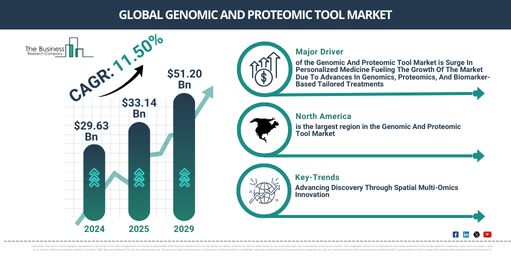
    The genomic and proteomic tool market has seen rapid expansion in its market size during recent years. This market is projected to grow from $29.63 billion in 2024 to $33.14 billion in 2025, exhibiting a compound annual growth rate (CAGR) of 11.8%. The historical growth can be attributed to the increasing incidence of cancer and rare diseases, the broadening of academic core laboratories, higher healthcare spending by high-income nations, the standardization of clinical guidelines for molecular testing, and more extensive reimbursement for molecular diagnostics.

    The genomic and proteomic tool market size is projected to experience swift expansion over the coming years, reaching $51.20 billion by 2029, driven by an impressive compound annual growth rate (CAGR) of 11.5%. This growth during the forecast period is attributable to several factors, including an aging global population leading to a greater burden of chronic diseases, the incorporation of precision medicine into national health services, broadened payer coverage for biomarker testing, an increase in clinical trials that necessitate molecular stratification, and the increasing adoption of value-based care models that incentivize targeted therapies. Key trends anticipated within the forecast period encompass advancements in deoxyribonucleic acid long-read sequencing, enhanced throughput for single-cell ribonucleic acid sequencing, in-situ spatial co-detection of ribonucleic acid and proteins, the application of digital polymerase chain reaction for absolute quantification, and the use of trapped ion mobility spectrometry in proteomic analysis.

    Unlock Your Free Sample Report for Exclusive Market Data:

    https://www.thebusinessresearchcompany.com/sample.aspx?id=28235&type=smp

    Which Drivers Are Supporting Growth Of The Genomic And Proteomic Tool Market?

    The growing embrace of personalized medicine is anticipated to fuel the expansion of the genomic and proteomic tool market moving ahead. Personalized medicine involves customizing prevention, diagnosis, and treatment for each individual based on their unique molecular profile, utilizing biomarkers obtained from deoxyribonucleic acid (DNA), ribonucleic acid (RNA), and proteins. This rising adoption stems from advancements in genomics, proteomics, and biomarker discovery, which facilitate customized treatments aligned with individual genetic profiles, thereby boosting demand for targeted therapies, enhanced diagnostics, and precise healthcare solutions. These advancements have specifically allowed for the creation of targeted treatments and more precise diagnostic methods, tailored to a patient’s genetic makeup. Genomic and proteomic tools are vital in this endeavor, helping to identify genetic variations and protein biomarkers, which empowers clinicians to refine treatments and achieve better patient outcomes. For instance, in February 2024, the Personalized Medicine Coalition, a US-based nonprofit organization, highlighted that the United States Food and Drug Administration (FDA) approved 16 new personalized treatments for rare disease patients, a significant rise from just 6 approvals in 2022. Consequently, the expanding use of personalized medicine is propelling the genomic and proteomic tool market.

    What Are The Primary Types Of Segments Analyzed In The Genomic And Proteomic Tool Market?

    The genomic and proteomic tool market covered in this report is segmented as

    1) By Product Type: Instruments, Consumables, Software, Services

    By Technology: Sequencing, Microarray, Polymerase Chain Reaction (PCR), Mass Spectrometry, Electrophoresis, Chromatography

    3) By Workflow Stage: Sample Preparation, Library Preparation, Data Analysis, Reporting

    4) By Application: Drug Discovery, Diagnostics, Personalized Medicine, Agriculture And Animal Research

    5) By End User: Academic And Research Institutions, Pharmaceutical And Biotechnology Companies, Diagnostic Laboratories, Healthcare Providers

    Subsegments:

    1) By Instruments: DNA Sequencing Systems, Polymerase Chain Reaction (PCR) Systems, Microarray Analyzers, Mass Spectrometry Instruments, Electrophoresis Systems, Chromatography Instruments, Flow Cytometers

    2) By Consumables: Reagents And Kits, Assay Kits, Sample Preparation Consumables, Sequencing Consumables, Protein Assay Reagents, Microarray Chips, Laboratory Chemicals

    3) By Software: Genomic Data Analysis Software, Proteomic Data Analysis Software, Bioinformatics Platforms, Clinical Data Interpretation Tools, Workflow Management Software, Cloud-based Analysis Platforms

    4) By Services: Next-Generation Sequencing (NGS) Services, Gene Expression And Genotyping Services, Protein Identification And Quantification Services, Biomarker Discovery Services, Structural Biology Analysis Services, Bioinformatics And Data Interpretation Services, Molecular Diagnostics Services

    What Trends Are Expected To Drive The Genomic And Proteomic Tool Market?

    Major companies operating in the genomic and proteomic tools market are focusing on innovation through spatial multi-omics technologies. These advancements enable same-cell, in-situ detection of RNA and proteins to integrate molecular data layers, preserve tissue architecture, and accelerate discovery. Spatial multi-omics entails measuring gene expression and protein markers simultaneously within intact tissue at single-cell or subcellular resolution, thereby offering richer biological insights than single-modality assays. For instance, in August 2025, 10x Genomics, a U.S.-based biotechnology company, introduced Xenium Protein, a first-of-its-kind assay for single-cell RNA and protein analysis on the Xenium in situ platform. This solution delivers a seamless, single-instrument workflow, eliminating the need for cross-platform data integration, and comes with validated, ready-to-use protein subpanels to simplify setup and quality control. These developments allow researchers to maintain spatial context while expanding biomarker panels for applications such as target validation, patient stratification, and mechanism-of-action studies.

    Who Are The Prominent Global Companies Shaping The Genomic And Proteomic Tool Market?

    Major companies operating in the genomic and proteomic tool market are F. HoffmannLa Roche, Thermo Fisher Scientific Inc., Danaher Corporation, Merck KGaA, Becton, Dickinson and Company, GE Healthcare, Eurofins Scientific SE, Agilent Technologies Inc., Illumina Inc., Bruker Corporation, Waters Corporation, Bio-Rad Laboratories Inc., QIAGEN N.V., PerkinElmer Inc., Promega, Novogene Corp., Oxford Nanopore Technologies Ltd., Pacific Biosciences of California, Inc., Sophia Genetics, LC Sciences.

    Download The Full Report For Exclusive Market Findings:

    https://www.thebusinessresearchcompany.com/report/genomic-and-proteomic-tool-global-market-report

    What Are The Key Regional Factors Influencing The Genomic And Proteomic Tool Market Growth?

    North America was the largest region in the genomic and proteomic tool market in 2024. Asia-Pacific is expected to be the fastest-growing region in the forecast period. The regions covered in genomic and proteomic tool report are Asia-Pacific, Western Europe, Eastern Europe, North America, South America, Middle East and Africa.

    Request A Customized Version Of The Genomic And Proteomic Tool Market Report:

    https://www.thebusinessresearchcompany.com/customise?id=28235&type=smp

    Browse Through More Reports Similar to the Global Genomic And Proteomic Tool Market 2025, By The Business Research Company

    Proteomics Global Market Report 2025

    https://www.thebusinessresearchcompany.com/report/proteomics-global-market-report

    Genomics Global Market Report 2025

    https://www.thebusinessresearchcompany.com/report/genomics-global-market-report

    Genomics Services Global Market Report 2025

    https://www.thebusinessresearchcompany.com/report/genomics-services-global-market-report

    Get in touch with us:

    The Business Research Company: https://www.thebusinessresearchcompany.com/

    Americas +1 310-496-7795

    Asia +44 7882 955267 & +91 8897263534

    Europe +44 7882 955267

    Email us at info@tbrc.info

    Follow us on:

    LinkedIn: https://in.linkedin.com/company/the-business-research-company

    YouTube: https://www.youtube.com/channel/UC24_fI0rV8cR5DxlCpgmyFQ

    Global Market Model: https://www.thebusinessresearchcompany.com/global-market-model
  • Genome-Wide Association Studies Market Forecast 2025–2034: Where Businesses Should Invest Next

    Genome-Wide Association Studies Market Forecast 2025–2034: Where Businesses Should Invest Next

    Unlock Global Insights – Save 20% on Market Reports with Code ONLINE20

    #What Is The Projected Market Size Of The Genome-Wide Association Studies Market By 2029?

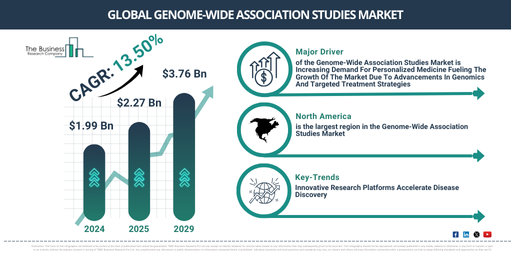
    The genome-wide association studies market has seen rapid expansion in recent years. It is anticipated to grow from $1.99 billion in 2024 to $2.27 billion in 2025, at a compound annual growth rate (CAGR) of 13.8%. This historical growth can be ascribed to the increasing incidence of chronic diseases, a heightened recognition of genetic influences in illnesses, wider adoption of genomic research, augmented government financial backing for genomics, and the expanding network of biobanks and genomic databases.

    The market for genome-wide association studies is projected to experience swift expansion in the coming years. This market is anticipated to reach $3.76 billion by 2029, exhibiting a compound annual growth rate (CAGR) of 13.5%. Factors contributing to this growth over the forecast period include the expanding application of pharmacogenomics in clinical environments, increasing embrace of multi-omics methodologies, escalating need for personalized medicine, intensified genomic research across varied populations, and the advancing creation of point-of-care genetic testing. Key trends anticipated during this period encompass technological progress in sequencing platforms, novelties in data analysis algorithms, evolution in functional genomics, ongoing research and development into gene-environment interactions, and breakthroughs in genome editing technologies.

    Unlock Your Free Sample Report for Exclusive Market Data:

    https://www.thebusinessresearchcompany.com/sample.aspx?id=28234&type=smp

    Which Drivers Are Shaping The Genome-Wide Association Studies Industry’s Market Share?

    The increasing demand for personalized medicine is projected to drive the growth of the genome-wide association studies market. Personalized medicine represents a medical approach that customizes treatment and prevention strategies based on an individual’s unique genetic makeup, lifestyle, and environment. The rising adoption of personalized medicine is primarily attributed to advancements in genomics, which allow for the precise identification of genetic variations and the development of tailored treatments for individuals. Genome-wide association studies (GWAS) bolster personalized medicine by identifying genetic variations linked to diseases, thereby enabling targeted treatment approaches. These studies enhance healthcare outcomes by offering insights into individual risk profiles and supporting precision therapies. For instance, in February 2024, the Personalized Medicine Coalition (PMC), a US-based nonprofit organization, reported that the U.S. Food and Drug Administration (FDA) approved 26 new personalized medicines in 2023, marking a significant increase from the 12 approved in 2022. Thus, the escalating demand for personalized medicine is propelling the expansion of the genome-wide association studies market.

    Which Key Segments Fueling The Genome-Wide Association Studies Market?

    The genome-wide association studies market covered in this report is segmented as

    1) By Product Type: Genotyping Services, Genotyping Kits And Reagents, Software And Data Analysis Tools, Other Product Types

    2) By Application: Drug Discovery, Disease Risk Assessment, Personalized Medicine, Other Applications

    3) By End-User: Pharmaceutical And Biotechnology Companies, Academic And Research Institutes, Hospitals And Clinics, Other End-Users

    Subsegments:

    1) By Genotyping Services: Whole Genome Sequencing (Wgs), Exome Sequencing, Targeted Genotyping

    2) By Genotyping Kits And Reagents: Dna Extraction Kits, Sequencing Reagents, Library Preparation Kits

    3) By Software And Data Analysis Tools: Bioinformatics Platforms, Data Visualization Tools, Statistical Analysis Software

    4) By Other Product Types: Sample Collection Devices, Quality Control Tools, Laboratory Consumables

    Which Trends Are Impacting The Genome-Wide Association Studies Market?

    Leading companies operating within the genome-wide association studies market are concentrating on developing innovative solutions, such as sophisticated research platforms, to accelerate the discovery of diseases and advance personalized medicine applications. An advanced research platform is an integrated system comprising tools and technologies that enable large-scale genomic data generation, analysis, and interpretation for genome-wide association studies. For instance, in January 2025, 23andMe Holding Co., a US-based biotechnology company, launched Discover23, a consumer-focused platform for genetic insights and ancestry exploration. This platform allows biopharma collaborators to access comprehensive genetic data through a trusted environment powered by Lifebit. It provides analysis-ready genome-wide association studies (GWAS) for over 1,000 disease cohorts, which are derived from billions of phenotypic data points from millions of consenting participants. The advanced research platform aims to accelerate drug discovery by assisting researchers in identifying novel disease biology and potential drug targets, thereby improving clinical trial success while consistently maintaining participant privacy.

    Which Key Players Are Driving Competition In The Genome-Wide Association Studies Market?

    Major companies operating in the genome-wide association studies market are F. Hoffmann-La Roche AG, AstraZeneca plc, Thermo Fisher Scientific Inc., GlaxoSmithKline plc, Regeneron Pharmaceuticals Inc., Eurofins Scientific SE, Laboratory Corporation of America Holdings, Daiichi Sankyo Company Limited, Agilent Technologies Inc., Illumina Inc., Revvity Inc., QIAGEN N.V., Databricks Inc., Broad Institute of MIT and Harvard, BGI Genomics Co. Ltd., deCODE genetics Inc., Genomics England Ltd., CD Genomics Inc., Veritas Genetics Inc., Finngen, and The Wellcome Sanger Institute.

    Download The Full Report For Exclusive Market Findings:

    https://www.thebusinessresearchcompany.com/report/genome-wide-association-studies-global-market-report

    How Do Regional Market Performances Compare Within The Genome-Wide Association Studies Industry?

    North America was the largest region in the genome-wide association studies market in 2024. The regions covered in genome-wide association studies report are Asia-Pacific, Western Europe, Eastern Europe, North America, South America, Middle East and Africa.

    Request A Customized Version Of The Genome-Wide Association Studies Market Report:

    https://www.thebusinessresearchcompany.com/customise?id=28234&type=smp

    Browse Through More Reports Similar to the Global Genome-Wide Association Studies Market 2025, By The Business Research Company

    Genomic Data Analysis And Interpretation Global Market Report 2025

    https://www.thebusinessresearchcompany.com/report/genomic-data-analysis-and-interpretation-global-market-report

    Genomics Global Market Report 2025

    https://www.thebusinessresearchcompany.com/report/genomics-global-market-report

    Genomics Personalized Health Global Market Report 2025

    https://www.thebusinessresearchcompany.com/report/genomics-personalized-health-global-market-report

    Get in touch with us:

    The Business Research Company: https://www.thebusinessresearchcompany.com/

    Americas +1 310-496-7795

    Asia +44 7882 955267 & +91 8897263534

    Europe +44 7882 955267

    Email us at info@tbrc.info

    Follow us on:

    LinkedIn: https://in.linkedin.com/company/the-business-research-company

    YouTube: https://www.youtube.com/channel/UC24_fI0rV8cR5DxlCpgmyFQ

    Global Market Model: https://www.thebusinessresearchcompany.com/global-market-model
  • Global Gene-Circuit Cell Therapy Market Analysis 2025–2029: Opportunities for Strategic Growth

    Global Gene-Circuit Cell Therapy Market Analysis 2025–2029: Opportunities for Strategic Growth

    Unlock Global Insights – Save 20% on Market Reports with Code ONLINE20

    How Much Was The Gene-Circuit Cell Therapy Market Worth In 2025, And What Is Its Anticipated Value By 2029?

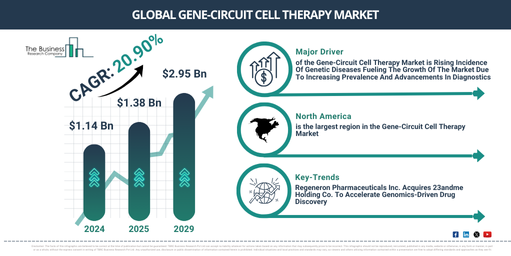
    The gene-circuit cell therapy market has seen considerable growth in its valuation over recent years. It is projected to expand from $1.14 billion in 2024 to $1.38 billion in 2025, with a compound annual growth rate (CAGR) of 21.3%. The historical increase can be attributed to an escalating demand for targeted and programmable therapies, augmented investment in cell and gene therapy research and development, the growing incidence of cancer and genetic disorders, and the widening scope of clinical trials for engineered cell therapies.

    The gene-circuit cell therapy market is projected to experience substantial expansion over the upcoming years, with its valuation anticipated to reach $2.95 billion by 2029. This growth trajectory is supported by a robust compound annual growth rate (CAGR) of 20.9%. This projected increase is driven by several factors, including the rising embrace of in-vivo delivery and non-viral platforms, enhanced regulatory backing alongside more efficient approval processes, increased capital injection from pharmaceutical companies and venture capitalists, the escalating need for readily available allogeneic cell therapies, and the broadening of both manufacturing capabilities and gene synthesis services. Key developments shaping this sector during the forecast period encompass breakthroughs in synthetic gene circuit design, novel applications in safety switches and controllable systems, progress in automated and scalable production methods, and the integration of technology for real-time surveillance and bioinformatics.

    Unlock Your Free Sample Report for Exclusive Market Data:

    https://www.thebusinessresearchcompany.com/sample.aspx?id=28233&type=smp

    What Are The Drivers Pushing New Developments In The Gene-Circuit Cell Therapy Market?

    The increasing occurrence of genetic disorders is projected to fuel the expansion of the gene-circuit cell therapy market in the future. These conditions stem from alterations or mutations in DNA, which may be inherited or arise spontaneously, impacting an individual’s health, development, or various bodily functions. The growing prevalence of genetic illnesses can be attributed to heightened awareness and progress in diagnostic tools, facilitating earlier and more precise identification of conditions that were previously undetected. Gene-circuit cell therapy improves the management of genetic diseases by providing highly specific and customizable treatments, rendering them suitable for conditions characterized by intricate or previously untreatable genetic flaws. This therapy enhances patient results through precise modification or regulation of cellular processes, alleviating disease symptoms, and presenting the possibility of functional cures. For example, in September 2023, the Cystic Fibrosis Trust, a UK-based national charity, reported that 11,148 patients were diagnosed with cystic fibrosis (CF) in 2022, an increase from 10,908 in 2021. Consequently, the increasing occurrence of genetic disorders is propelling the growth of the gene-circuit cell therapy market. The expanding acceptance of personalized medicine is anticipated to propel the gene-circuit cell therapy market’s growth in the coming years. This medical strategy involves customizing treatment and prevention methods based on an individual’s distinct genetic profile, lifestyle, and environmental factors. The heightened embrace of personalized medicine largely stems from progress in genomics, allowing for accurate identification of genetic differences and bespoke therapies for patients. Gene-circuit cell therapy complements personalized medicine by offering targeted and programmable treatment modalities, rendering it well-suited for intricate and long-term illnesses. It boosts therapeutic accuracy by customizing interventions to specific patient requirements, thereby enhancing treatment efficacy and overall health results. For example, in February 2024, the Personalized Medicine Coalition (PMC), a US-based nonprofit organization, reported that the U.S. Food and Drug Administration (FDA) authorized 26 novel personalized medicines in 2023, a notable rise from the 12 approvals in 2022. Thus, the increasing uptake of personalized medicine is stimulating the expansion of the gene-circuit cell therapy market.

    How Is The Gene-Circuit Cell Therapy Market Classified Into Different Segments?

    The gene-circuit cell therapy market covered in this report is segmented as

    1) By Product Type: Autologous, Allogeneic

    2) By Technology: Clustered Regularly Interspaced Short Palindromic Repeats (CRISPR), Transcription Activator-Like Effector Nuclease (TALEN), Zinc Finger Nuclease (ZFN), Other Technologies

    3) By Application: Oncology, Genetic Disorders, Infectious Diseases, Other Applications

    4) By End-User: Hospitals And Clinics, Research Institutes, Biotechnology And Pharmaceutical Companies, Other End Users

    Subsegments:

    1) By Autologous: Chimeric Antigen Receptor (CAR)-T Cell Therapies, T-Cell Receptor (TCR)-T Cell Therapies, Natural Killer (NK) Cell Therapies, Stem Cell-Based Therapies

    2) By Allogeneic: Off-The-Shelf Chimeric Antigen Receptor (CAR)-T Cell Therapies, Off-The-Shelf Natural Killer (NK) Cell Therapies, TT-Cell Receptor (TCR)-T Cell Therapies, Stem Cell-Derived Therapies

    What Long-Term Trends Will Shape The Future Growth Of The Gene-Circuit Cell Therapy Industry?

    Leading companies in the gene-circuit cell therapy market are concentrating on advancing therapeutic platforms, such as CRISPR-based gene editing systems, to improve treatment precision, elevate patient outcomes, and address previously untreatable genetic diseases. These CRISPR-based gene editing systems signify innovative technologies capable of precise genomic modifications, facilitating the correction of genetic defects or the introduction of therapeutic genes into cells. A key illustration occurred in December 2023, when Vertex Pharmaceuticals Inc., a US-based biopharmaceutical company, partnered with CRISPR Therapeutics Inc., a US-based biotechnology research company, and secured conditional marketing authorization from the United Kingdom (U.K.) Medicines and Healthcare products Regulatory Agency (MHRA) for CASGEVY (exagamglogene autotemcel, exa-cel). This treatment is indicated for patients aged 12 and older diagnosed with sickle cell disease (SCD) experiencing recurrent vaso-occlusive crises or transfusion-dependent beta thalassemia (TDT). CASGEVY operates by editing a patient’s hematopoietic stem cells to reactivate fetal hemoglobin production, which consequently diminishes or eliminates disease symptoms and provides a potential functional cure for these conditions.

    Who Are The Top Performing Companies In The Gene-Circuit Cell Therapy Market In Recent Years?

    Major companies operating in the gene-circuit cell therapy market are Tmunity Therapeutics Inc., Ginkgo Bioworks Holdings Inc., Arcellx Inc., Beam Therapeutics Inc., CRISPR Therapeutics AG, Intellia Therapeutics Inc., Orchard Therapeutics plc, Fate Therapeutics Inc., Rubius Therapeutics Inc., BlueRock Therapeutics LP (a subsidiary of Bayer AG), Precigen Inc., SparingVision, Alaunos Therapeutics Inc., Cartesian Therapeutics Inc., Lyell Immunopharma Inc., Synlogic Inc., Senti Biosciences Inc., Autolus Therapeutics plc, Cellectis S.A., and Sotio Biotech.

    Download The Full Report For Exclusive Market Findings:

    https://www.thebusinessresearchcompany.com/report/gene-circuit-cell-therapy-global-market-report

    Which Region Currently Holds The Largest Share Of The Gene-Circuit Cell Therapy Market?

    North America was the largest region in the gene-circuit cell therapy market in 2024. The regions covered in gene-circuit cell therapy report are Asia-Pacific, Western Europe, Eastern Europe, North America, South America, Middle East and Africa.

    Request A Customized Version Of The Gene-Circuit Cell Therapy Market Report:

    https://www.thebusinessresearchcompany.com/customise?id=28233&type=smp

    Browse Through More Reports Similar to the Global Gene-Circuit Cell Therapy Market 2025, By The Business Research Company

    Genes Therapy Global Market Report 2025

    https://www.thebusinessresearchcompany.com/report/genes-therapy-global-market-report

    Cell And Gene Therapy Clinical Trial Services Global Market Report 2025

    https://www.thebusinessresearchcompany.com/report/cell-and-gene-therapy-clinical-trial-services-global-market-report

    Nucleic Acid Based Gene Therapy Global Market Report 2025

    https://www.thebusinessresearchcompany.com/report/nucleic-acid-based-gene-therapy-global-market-report

    Get in touch with us:

    The Business Research Company: https://www.thebusinessresearchcompany.com/

    Americas +1 310-496-7795

    Asia +44 7882 955267 & +91 8897263534

    Europe +44 7882 955267

    Email us at info@tbrc.info

    Follow us on:

    LinkedIn: https://in.linkedin.com/company/the-business-research-company

    YouTube: https://www.youtube.com/channel/UC24_fI0rV8cR5DxlCpgmyFQ

    Global Market Model: https://www.thebusinessresearchcompany.com/global-market-model