Blog

  • Global Deoxycholic Acid Obesity Drugs Market Size Projected to Reach $0.85 Billion During the Forecast Period

    Global Deoxycholic Acid Obesity Drugs Market Size Projected to Reach $0.85 Billion During the Forecast Period

    Unlock Global Insights – Save 20% on Market Reports with Code ONLINE20

    By How Much Is The Deoxycholic Acid Obesity Drugs Market Expected To Expand Between 2025 And 2029?

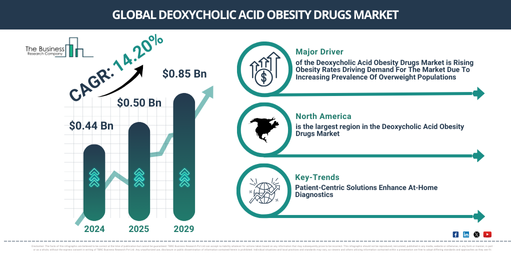
    The deoxycholic acid obesity drug market has experienced swift expansion in recent years. Its valuation is projected to increase from $0.44 billion in 2024 to $0.50 billion in 2025, achieving a compound annual growth rate (CAGR) of 14.6%. The growth observed in the historical period can be ascribed to a heightened preference for minimally invasive procedures, a proliferation of aesthetic clinics and specialized treatment centers, consumers’ increasing willingness to invest in cosmetic and obesity treatments, a growing body of clinical evidence affirming the efficacy and safety of deoxycholic acid injections, and an rise in regulatory approvals and supportive policies in key markets.

    The deoxycholic acid obesity drug market size is anticipated to experience substantial growth in the upcoming years. Its value is projected to reach $0.85 billion by 2029, achieving a compound annual growth rate (CAGR) of 14.2%. This growth during the forecast period is primarily driven by the rising prevalence of obesity, increasing demand for non-surgical fat reduction treatments, growing awareness of body aesthetics and cosmetic procedures, increased investment in research and development for new deoxycholic acid formulations, and the expanding availability of high-purity and combination therapy products. Significant trends for the forecast period include the advancement of combination therapies, innovations in medical technology and treatment protocols, technological progress in formulation, the integration of digital tools and artificial intelligence for treatment planning, and technological enhancements in injection lipolysis formulations.

    Unlock Your Free Sample Report for Exclusive Market Data:

    https://www.thebusinessresearchcompany.com/sample.aspx?id=28192&type=smp

    Which Drivers Are Impacting The Deoxycholic Acid Obesity Drugs Market?

    The increasing prevalence of obesity is projected to boost the expansion of the deoxycholic acid obesity drug market moving forward. Obesity rates signify the percentage of individuals in a population categorized as overweight or obese based on their body mass index (BMI). The rise in obesity rates is largely attributed to poor dietary choices, such as frequent consumption of processed foods and sugary drinks, which results in the storage of excess calories as body fat. Deoxycholic acid obesity drugs assist in mitigating obesity by breaking down and eliminating surplus fat cells, leading to targeted fat reduction and improved body contours. For instance, in September 2023, the Centers for Disease Control and Prevention, a US-based government agency, reported that in 2022, 22 states registered an adult obesity rate of 35% or greater, up from 19 states in 2021. Thus, the escalating obesity rates are a key driver for the growth of the deoxycholic acid obesity drug market.

    What Are The Major Segments Identified In The Deoxycholic Acid Obesity Drugs Market?

    The deoxycholic acid obesity drugs market covered in this report is segmented as

    1) By Drug Type: ATX-101 (Deoxycholic Acid Injection Or Kybella Or Belkyra), Experimental Or Compounded Deoxycholic Acid Formulations, Combination Therapies, Oral Deoxycholic Acid Products

    2) By Formulation: Injectable, Topical

    3) By Distribution Channel: Direct Sales, Retail Pharmacies, Online Pharmacies

    4) By Application: Submental Fat Reduction, Abdominal Fat Reduction, Thighs Arms And Flanks, Lipomas And Localized Fat, Cellulite Management

    5) By End-User: Aesthetic Clinics, Dermatology Clinics, Plastic Surgery Centers, Hospitals, Home Administration

    Subsegments:

    1) By ATX-101 (Deoxycholic Acid Injection or Kybella or Belkyra): Standard Injectable, High-Purity Formulations, Combination Injection Therapies

    2) By Experimental Or Compounded Deoxycholic Acid Formulation: Clinical Trial Formulations, Compounded Customized Formulations

    3) By Combination Therapies: Deoxycholic Acid + Lipolytic Agents, Deoxycholic Acid + Enzyme Therapy

    4) By Oral Deoxycholic Acid Products: Capsules, Tablets, Liquid Formulations

    Which Trends Are Impacting The Deoxycholic Acid Obesity Drugs Market?

    Leading companies in the deoxycholic acid obesity drug market are concentrating on developing advanced products, such as injectable deoxycholic acid obesity drugs, to boost treatment effectiveness and improve patient outcomes. These injectable medications employ deoxycholic acid, a substance that breaks down fat cells, and are administered through injection to specifically target and reduce fat in particular areas. For instance, in March 2024, LG Chem Ltd., a chemicals company based in South Korea, unveiled Bellacholine, aimed at reducing submental fat. This nonsurgical injection is engineered to safely destroy fat cells using deoxycholic acid, thereby diminishing moderate to severe submental fat (double chin). It provides advantages like a body-compatible pH, minimal sedimentation, and enhanced skin elasticity through collagen synthesis.

    Which Key Players Are Driving Competition In The Deoxycholic Acid Obesity Drugs Market?

    Major companies operating in the deoxycholic acid obesity drugs market are AbbVie Inc., Cipla Ltd., Glenmark Life Sciences Limited, Curia Global Inc., Daewoong Pharmaceutical Co. Ltd., Actylis, ICE Pharma, Cayman Chemical Company, Nacalai Tesque Inc., Sichuan Huiyu Pharmaceutical, Conscientia Industrial, Manus Aktteva Biopharma LLP, Jeevan Chemicals & Pharmaceuticals, Anhui Chem-Bright Bioengineering Co. Ltd., GlpBio Technology LLC, Legere Pharmaceuticals, Otto Chemie Pvt. Ltd., BOC Sciences, Guangzhou Green Cross Pharmaceutical, Prodotti Chimici e Alimentari S.P.A.

    Download The Full Report For Exclusive Market Findings:

    https://www.thebusinessresearchcompany.com/report/deoxycholic-acid-obesity-drugs-global-market-report

    Which Region Currently Holds The Largest Share Of The Deoxycholic Acid Obesity Drugs Market?

    North America was the largest region in the deoxycholic acid obesity drugs market in 2024. Asia-Pacific is expected to be the fastest-growing region in the forecast period. The regions covered in deoxycholic acid obesity drugs report are Asia-Pacific, Western Europe, Eastern Europe, North America, South America, Middle East and Africa.

    Request A Customized Version Of The Deoxycholic Acid Obesity Drugs Market Report:

    https://www.thebusinessresearchcompany.com/customise?id=28192&type=smp

    Browse Through More Reports Similar to the Global Deoxycholic Acid Obesity Drugs Market 2025, By The Business Research Company

    Metabolic Disorders Drugs Global Market Report 2025

    https://www.thebusinessresearchcompany.com/report/metabolic-disorders-drugs-global-market-report

    Weight Loss Drugs Global Market Report 2025

    https://www.thebusinessresearchcompany.com/report/weight-loss-drugs-global-market-report

    Weight Loss Supplements Global Market Report 2025

    https://www.thebusinessresearchcompany.com/report/weight-loss-supplements-global-market-report

    Get in touch with us:

    The Business Research Company: https://www.thebusinessresearchcompany.com/

    Americas +1 310-496-7795

    Asia +44 7882 955267 & +91 8897263534

    Europe +44 7882 955267

    Email us at info@tbrc.info

    Follow us on:

    LinkedIn: https://in.linkedin.com/company/the-business-research-company

    YouTube: https://www.youtube.com/channel/UC24_fI0rV8cR5DxlCpgmyFQ

    Global Market Model: https://www.thebusinessresearchcompany.com/global-market-model
  • De-Identified Health Data Industry Anticipated to Expand at 11.9% CAGR During the Forecast Period

    De-Identified Health Data Industry Anticipated to Expand at 11.9% CAGR During the Forecast Period

    Unlock Global Insights – Save 20% on Market Reports with Code ONLINE20

    #What Is The Projected Market Size Of The De-Identified Health Data Market By 2029?

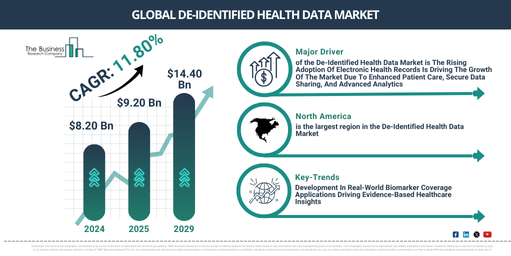
    The de-identified health data market has seen rapid growth in recent years. This market is expected to expand from $8.20 billion in 2024 to $9.20 billion in 2025, achieving a compound annual growth rate (CAGR) of 12.2%. Historically, this expansion has been propelled by the increasing adoption of electronic health records, a heightened awareness of patient data privacy, an upswing in healthcare analytics usage, more extensive research into population health management, the development of health information technology systems, and the increased application of data in clinical trials.

    The de-identified health data market size is projected for swift expansion in the coming years. This market is anticipated to reach $14.40 billion by 2029, exhibiting a compound annual growth rate (CAGR) of 11.8%. Key factors contributing to this anticipated growth involve the increasing application of artificial intelligence within healthcare, a heightened need for real-world evidence in pharmaceutical development, an elevated focus on the secondary utilization of health data, a significant rise in the demand for privacy-enhancing technologies, and the expanding requirement for precision medicine. Noteworthy developments expected during this period encompass the formulation of data privacy protocols, the creation of machine learning pipelines, integration efforts with electronic health records, connections with population health platforms, and advancements in data anonymization methodologies.

    Unlock Your Free Sample Report for Exclusive Market Data:

    https://www.thebusinessresearchcompany.com/sample.aspx?id=28191&type=smp

    Which Industry Drivers Are Expected To Accelerate The De-Identified Health Data Market From 2025 To 2029?

    The growing implementation of electronic health records (EHRs) is projected to drive the expansion of the de-identified health data market moving forward. Electronic health records (EHR) denote a digital version of a patient’s complete medical history, encompassing diagnoses, treatments, medications, lab results, and other health data securely stored and shared among authorized healthcare providers. The uptake of electronic health records is increasing due to their capability to enhance patient care and safety by providing accurate, real-time access to extensive medical information. De-identified health data complements electronic health records by facilitating secure data sharing and advanced analytics while safeguarding patient privacy, thereby refining clinical decision-making and healthcare outcomes. As an illustration, in June 2022, the Department of Health and Social Care, a UK-based government department, projected that by March 2025, all NHS trusts will have adopted electronic health records, marking an increase from the 90% adoption rate recorded in December 2023. Consequently, the escalating adoption of electronic health records (EHRs) is fostering the growth of the de-identified health data market.

    What Are The Emerging Segments Gaining Attention In The De-Identified Health Data Market?

    The de-identified health data market covered in this report is segmented as

    1) By Type: Clinical Data, Genomic Data, Patient Demographics, Prescription Data, Hospital And Provider Data, Pharmacogenomic Data

    2) By Application: Clinical Research And Trials, Public Health, Precision Medicine, Health Economics And Outcomes Research (HEOR), Population Health Management, Drug Discovery And Development, Healthcare Quality Improvement, Insurance Underwriting And Risk Assessment, Other Applications

    3) By End-User: Pharmaceutical Companies, Biotechnology Firms, Healthcare Providers, Insurance Companies Or Healthcare Payers, Research Institutions, Government Agencies, Other End-Users

    Subsegments:

    1) By Clinical Data: Electronic Health Records, Medical Imaging Data, Laboratory Test Results, Surgical Reports, Pathology Reports, Vital Signs Measurements

    2) By Genomic Data: Whole Genome Sequencing Data, Exome Sequencing Data, Single Nucleotide Polymorphism Data, Gene Expression Profiles, Epigenetic Data

    3) By Patient Demographics: Age Information, Gender Information, Ethnicity Information, Geographic Location, Socioeconomic Status, Marital Status

    4) By Prescription Data: Medication Orders, Dosage Information, Prescription Refill History, Drug Allergies, Pharmacy Dispensation Records

    5) By Hospital And Provider Data: Provider Performance Metrics, Care Delivery Outcomes, Billing And Claims Data, Resource Utilization Data

    6) By Pharmacogenomic Data: Gene–Drug Interaction Data, Adverse Drug Reaction Data, Personalized Therapy Response Data, Drug Efficacy Variation Data

    What Long-Term Trends Will Shape The Future Growth Of The De-Identified Health Data Industry?

    Leading companies in the de-identified health data market are concentrating on developing advanced solutions, such as real-world biomarker coverage applications, to facilitate evidence-based healthcare decision-making. These applications utilize de-identified patient data to monitor and evaluate biomarker patterns and effectiveness among diverse populations outside of clinical trials, thereby enabling researchers and healthcare providers to gain insights into treatment responses and disease trends. For instance, in July 2025, Datma Inc., a US-based healthcare technology company, introduced the Federated Biomarker Explorer, a free application designed for pharmaceutical teams to quickly validate real-world biomarker coverage across Datma’s federated network of participating data contributors. This tool delivers aggregated, cohort-level insights into biomarker presence, allowing teams to assess coverage rapidly without needing contracts or IT support. It also enables secure integration of users’ own data for overlap analysis and supports early-stage feasibility assessments with clinical and demographic filtering, which helps verify if datasets contain the necessary patient populations before committing resources.

    Who Are The Top Performing Companies In The De-Identified Health Data Market In Recent Years?

    Major companies operating in the de-identified health data market are UnitedHealth Group Incorporated, Oracle Corporation, IQVIA Holdings Inc, ICON Public Limited Company, Datavant Inc, Premier Inc., iMerit Technology Services Pvt. Ltd., Tempus Labs Inc., Medidata Solutions Inc., Veradigm Inc., Flatiron Health, Merative LP, Komodo Health Inc., Shaip Inc., Truveta Inc., Evidation Health Inc., TriNetX Inc., Clarify Health Solutions Inc., Akrivia Health Ltd., Gradient Health Inc.

    Download The Full Report For Exclusive Market Findings:

    https://www.thebusinessresearchcompany.com/report/de-identified-health-data-global-market-report

    What Regional Growth Trends Are Shaping The De-Identified Health Data Market Outlook?

    North America was the largest region in the de-identified health data market in 2024. Asia-Pacific is expected to be the fastest-growing region in the forecast period. The regions covered in de-identified health data report are Asia-Pacific, Western Europe, Eastern Europe, North America, South America, Middle East and Africa.

    Request A Customized Version Of The De-Identified Health Data Market Report:

    https://www.thebusinessresearchcompany.com/customise?id=28191&type=smp

    Browse Through More Reports Similar to the Global De-Identified Health Data Market 2025, By The Business Research Company

    Artificial Intelligence In The Diagnostic Global Market Report 2025

    https://www.thebusinessresearchcompany.com/report/artificial-intelligence-in-the-diagnostic-global-market-report

    Artificial Intelligence In Cancer Diagnostics Global Market Report 2025

    https://www.thebusinessresearchcompany.com/report/artificial-intelligence-in-cancer-diagnostics-global-market-report

    Ai In Medical Diagnostics Global Market Report 2025

    https://www.thebusinessresearchcompany.com/report/ai-in-medical-diagnostics-global-market-report

    Get in touch with us:

    The Business Research Company: https://www.thebusinessresearchcompany.com/

    Americas +1 310-496-7795

    Asia +44 7882 955267 & +91 8897263534

    Europe +44 7882 955267

    Email us at info@tbrc.info

    Follow us on:

    LinkedIn: https://in.linkedin.com/company/the-business-research-company

    YouTube: https://www.youtube.com/channel/UC24_fI0rV8cR5DxlCpgmyFQ

    Global Market Model: https://www.thebusinessresearchcompany.com/global-market-model
  • Global Deep Learning In Diagnostics Market Projected to Expand at 35.8% CAGR by 2029

    Global Deep Learning In Diagnostics Market Projected to Expand at 35.8% CAGR by 2029

    Unlock Global Insights – Save 20% on Market Reports with Code ONLINE20

    How Much Was The Deep Learning In Diagnostics Market Worth In 2025, And What Is Its Anticipated Value By 2029?

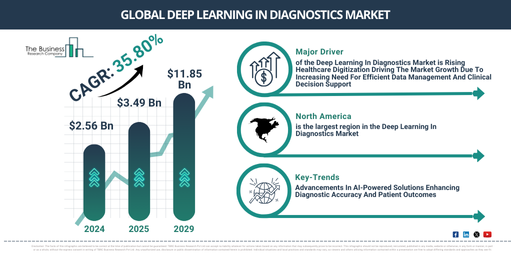
    The deep learning in diagnostics market’s size has seen exponential growth recently. It is projected to expand from $2.56 billion in 2024 to reach $3.49 billion by 2025, demonstrating a compound annual growth rate (CAGR) of 36.1%. This past growth is largely due to factors such as increased healthcare data accessibility via electronic health records, the escalating uptake of cloud-based diagnostic platforms, an increasing need for quicker diagnostic results, the rising requirement for economical diagnostic methods in emerging economies, and the expanding application of deep learning within genomics and precision diagnostics.

    The deep learning in diagnostics market size is anticipated to undergo substantial expansion over the next few years, projected to reach $11.85 billion by 2029, exhibiting a compound annual growth rate (CAGR) of 35.8%. This growth during the forecast period is driven by factors such as the increasing need for early and accurate disease detection, the rising prevalence of chronic and lifestyle-related diseases, greater investments in healthcare AI research and development, a growing imperative to reduce diagnostic errors and improve accuracy, and the expanding utilization of digital pathology and radiology solutions. Prominent trends expected in this period include advancements in AI-powered 3D imaging, the integration of AI with electronic health records, progress in predictive analytics for disease detection, the integration of AI with genomics and multi-omics data, and innovations in automated image interpretation.

    Unlock Your Free Sample Report for Exclusive Market Data:

    https://www.thebusinessresearchcompany.com/sample.aspx?id=28190&type=smp

    What Are The Top Growth Drivers Impacting The Deep Learning In Diagnostics Market Outlook?

    The deep learning in diagnostics market is projected to grow as healthcare digitization continues to rise. Healthcare digitization is defined as the implementation of digital technologies within healthcare systems to improve efficiency, accessibility, data management, and comprehensive patient care. The growth in healthcare digitization is propelled by its capability to ensure effective management and secure exchange of increasingly large volumes of patient data, fostering better care coordination and informed decisions. The digitalization of healthcare generates vast amounts of data from medical imaging, electronic health records, and connected devices, thereby creating a demand for deep learning in diagnostics, which can analyze this data efficiently and deliver faster, more accurate insights compared to traditional approaches. For instance, in June 2022, the Department of Health and Social Care, a UK-based government entity, announced that by March 2025, all NHS trusts are expected to have adopted electronic health records, a significant increase from 90% adoption by December 2023. Thus, the expansion of healthcare digitization is a key driver for the deep learning in diagnostics market’s growth.

    What Are The Major Segment Types Covered In The Deep Learning In Diagnostics Market?

    The deep learning in diagnostics market covered in this report is segmented as

    1) By Component: Software, Hardware, Services

    2) By Deployment Mode: Cloud-Based, On-Premises

    3) By Application: Medical Imaging, Pathology, Genomics, Drug Discovery, Other Applications

    4) By End-User: Hospitals, Diagnostic Laboratories, Research Institutes, Other End-Users

    Subsegments:

    1) By Software: Diagnostic Imaging Software, Pathology Analysis Software, Genomic Data Analysis Software

    2) By Hardware: Storage Devices, Networking Devices, Diagnostic Imaging Equipment

    3) By Services: Deployment And Integration Services, Training And Education Services, Consulting Services

    Which Market Trends Are Creating New Opportunities In The Deep Learning In Diagnostics Industry?

    Leading companies in the deep learning in diagnostics market are prioritizing the creation of advanced solutions, such as AI-driven deep learning technologies, to elevate diagnostic precision, speed, and personalized patient care. An AI-driven deep learning solution is defined as a sophisticated system that utilizes artificial intelligence and layered neural networks to autonomously process complex medical data, identify patterns, and generate remarkably accurate diagnostic insights with minimal human intervention. For example, in May 2025, GE Healthcare Technologies Inc., a US-based medical technology and diagnostics company, unveiled CleaRecon DL, specifically engineered to enhance image reconstruction and diagnostic accuracy. This innovation improves cone-beam CT (CBCT) images by efficiently removing streak artifacts, which results in significantly clearer and more precise imaging for interventional procedures. The technology boosts clinicians’ confidence in interpreting images and refines precision during interventions, with clinical studies indicating 98% clearer images and a 94% improvement in confidence. Ultimately, it supports better patient outcomes by optimizing workflow and enabling more effective, image-guided treatments.

    Which Leading Companies Dominate The Deep Learning In Diagnostics Market Share?

    Major companies operating in the deep learning in diagnostics market are International Business Machines Corporation, Siemens Healthineers AG, Koninklijke Philips N.V., GE HealthCare Technologies Inc., Tempus AI Inc., Qure.ai Technologies Pvt. Ltd., Freenome Holdings Inc., PathAI Inc., Aidoc Medical Ltd., Viz.ai Inc., SOPHiA GENETICS SA, Lunit Inc., Paige.AI Inc., Beijing Infervision Technology Co. Ltd., Indica Labs Inc., CureMetrix Inc., Deep Bio Inc., Enlitic Inc., ScreenPoint Medical B.V., VUNO Inc., Mindpeak GmbH, and Arterys Inc.

    Download The Full Report For Exclusive Market Findings:

    https://www.thebusinessresearchcompany.com/report/deep-learning-in-diagnostics-global-market-report

    Which Regional Markets Are Contributing Most To The Deep Learning In Diagnostics Industry Expansion?

    North America was the largest region in the deep learning in diagnostics market in 2024. Asia-Pacific is expected to be the fastest-growing region in the forecast period. The regions covered in deep learning in diagnostics report are Asia-Pacific, Western Europe, Eastern Europe, North America, South America, Middle East and Africa.

    Request A Customized Version Of The Deep Learning In Diagnostics Market Report:

    https://www.thebusinessresearchcompany.com/customise?id=28190&type=smp

    Browse Through More Reports Similar to the Global Deep Learning In Diagnostics Market 2025, By The Business Research Company

    Clinical Trial Management Systems Global Market Report 2025

    https://www.thebusinessresearchcompany.com/report/clinical-trial-management-systems-global-market-report

    Virtual Clinical Trials Global Market Report 2025

    https://www.thebusinessresearchcompany.com/report/virtual-clinical-trials-global-market-report

    Clinical Trial Management System Global Market Report 2025

    https://www.thebusinessresearchcompany.com/report/clinical-trial-management-system-global-market-report

    Get in touch with us:

    The Business Research Company: https://www.thebusinessresearchcompany.com/

    Americas +1 310-496-7795

    Asia +44 7882 955267 & +91 8897263534

    Europe +44 7882 955267

    Email us at info@tbrc.info

    Follow us on:

    LinkedIn: https://in.linkedin.com/company/the-business-research-company

    YouTube: https://www.youtube.com/channel/UC24_fI0rV8cR5DxlCpgmyFQ

    Global Market Model: https://www.thebusinessresearchcompany.com/global-market-model
  • Decentralized Clinical Trials Market to Grow at a CAGR of 17.5% from 2025 to 2029

    Decentralized Clinical Trials Market to Grow at a CAGR of 17.5% from 2025 to 2029

    Unlock Global Insights – Save 20% on Market Reports with Code ONLINE20

    What Is The Future Market Size Estimation For The Decentralized Clinical Trials Market Covering 2025–2034?

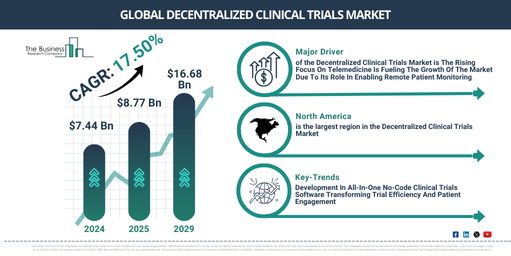
    The decentralized clinical trials market size has experienced significant expansion in recent years. It is projected to expand from $7.44 billion in 2024 to $8.77 billion in 2025, demonstrating a compound annual growth rate (CAGR) of 17.8%. This historical growth can be attributed to several factors, including the increasing integration of electronic data capture systems, the rising prevalence of wearable health monitoring devices, enhanced regulatory encouragement for patient-centric trials, a greater need for cost-effective trial frameworks, and the broader deployment of remote monitoring solutions.

    The decentralized clinical trials market is poised for substantial expansion over the next few years, with projections indicating it will reach $16.68 billion by 2029, growing at a compound annual growth rate (CAGR) of 17.5%. This anticipated growth is fueled by several factors, including the incorporation of artificial intelligence and machine learning in trials, the increasing implementation of blockchain for data security, the rising prevalence of rare and chronic diseases which necessitate decentralized models, the expanding use of real-world evidence in trial design, and the broader availability of 5G connectivity to support seamless trial operations. Additionally, key trends for the forecast period encompass the integration of artificial intelligence and machine learning, the adoption of wearable and biosensor technologies, a greater reliance on telemedicine and remote monitoring, the enhancement of data security and transparency through blockchain, and the development of cloud-based clinical trial management platforms.

    Unlock Your Free Sample Report for Exclusive Market Data:

    https://www.thebusinessresearchcompany.com/sample.aspx?id=28189&type=smp

    Which Major Market Drivers Are Shaping The Future Of The Decentralized Clinical Trials Market?

    The increasing emphasis on telemedicine is projected to stimulate expansion in the decentralized clinical trials market in the future. Telemedicine involves providing medical services from a distance using digital communication tools, allowing for health consultations and supervision without the need for patients to be physically present at medical centers. This heightened attention on telemedicine is largely due to the demand for easily accessible healthcare, especially given global health crises and the necessity for social distancing. Decentralized clinical trials leverage telemedicine to remotely interact with and oversee patients, thereby reducing face-to-face appointments while facilitating immediate data gathering, enhanced accessibility, and uninterrupted supervision. For example, in August 2023, Vivalink, a US-based healthcare technology firm, reported that 81% of clinicians currently utilize remote patient monitoring (RPM), a substantial increase from only 20% in 2021, marking a 305% surge. Additionally, 84% of existing RPM users plan to broaden their application of this technology during 2024. Consequently, the increased emphasis on telemedicine is fueling the expansion of the decentralized clinical trials market.

    What Are The Major Segment Categories Driving The Decentralized Clinical Trials Market Growth?

    The decentralized clinical trials market covered in this report is segmented as

    1) By Type: Interventional, Observational, Expanded Access

    2) By Technology Used: Wearable Devices, Mobile Health Applications, Telemedicine Platforms, Electronic Data Capture Systems

    3) By Study Phase: Phase I, Phase II, Phase III, Phase IV

    4) By Therapeutic Area: Oncology, Cardiology, Neurology, Infectious Diseases

    5) By End-User: Pharmaceutical Companies, Biotechnology Firms, Contract Research Organizations, Regulatory Authorities, Academic And Research Institutions

    Subsegments:

    1) By Interventional: Randomized Controlled Trials (RCTs), Non-Randomized Trials, Adaptive Clinical Trials, Pragmatic Clinical Trials

    2) By Observational: Cohort Studies, Case-Control Studies, Cross-Sectional Studies, Prospective Studies, Retrospective Studies, Longitudinal Studies

    3) By Expanded Access: Treatment Investigational New Drug (IND) Applications, Intermediate-Size Patient Population Investigational New Drug (IND) Applications, Single-Patient Investigational New Drug (IND) Applications, Emergency Use Investigational New Drug (IND) Applications

    How Are Trends Influencing The Decentralized Clinical Trials Market?

    Leading companies in the decentralized clinical trials market are concentrating on developing advanced solutions, such as integrated, no-code clinical trials software, to streamline trial setup and management, thereby enhancing overall efficiency and patient engagement. This type of all-in-one, no-code clinical trials software empowers researchers to design, manage, and conduct trials without requiring coding expertise, seamlessly integrating patient recruitment, data capture, monitoring, and analytics into a single user-friendly platform. For example, in August 2024, Medable, a US-based clinical technology company, launched Medable Studio, a comprehensive, no-code software solution engineered to simplify and accelerate the configuration, translation, validation, and deployment of electronic Clinical Outcome Assessments (eCOA), eConsent, Televisit, and sensors Plus into clinical trials. This innovation enables biopharmaceutical companies to create protocol-compliant study designs in hours rather than months, affording users greater control, transparency, and speed, while offering flexible self-service, full-service, or hybrid options that significantly reduce study startup timelines and costs. The platform’s objective is to revolutionize trial execution by making the study build process faster, more efficient, and less dependent on professional services.

    Who Are The Major Companies Operating In The Decentralized Clinical Trials Market?

    Major companies operating in the decentralized clinical trials market are Walgreens Boots Alliance Inc., Pfizer Inc., Oracle Corporation, Thermo Fisher Scientific Inc., IQVIA Holdings Inc., Labcorp Holdings Inc., ICON Public Limited Company, Dassault Systèmes SE, LEO Pharma A/S, Verily Life Sciences LLC, ProPharma, Signant Health Holding Corp., PCM Trials, Huma Therapeutics Limited, Medable Inc., Science 37 Inc., Obvio Health, EmVenio Research Inc., Grove AI Inc., Phesi Inc.

    Download The Full Report For Exclusive Market Findings:

    https://www.thebusinessresearchcompany.com/report/decentralized-clinical-trials-global-market-report

    How Does The Decentralized Clinical Trials Market Perform Across Key Geographic Regions?

    North America was the largest region in the decentralized clinical trials market in 2024. Asia-Pacific is expected to be the fastest-growing region in the forecast period. The regions covered in decentralized clinical trials report are Asia-Pacific, Western Europe, Eastern Europe, North America, South America, Middle East and Africa.

    Request A Customized Version Of The Decentralized Clinical Trials Market Report:

    https://www.thebusinessresearchcompany.com/customise?id=28189&type=smp

    Browse Through More Reports Similar to the Global Decentralized Clinical Trials Market 2025, By The Business Research Company

    Healthcare Data Annotation Tools Global Market Report 2025

    https://www.thebusinessresearchcompany.com/report/healthcare-data-annotation-tools-global-market-report

    Healthcare Data Integration Global Market Report 2025

    https://www.thebusinessresearchcompany.com/report/healthcare-data-integration-global-market-report

    Personal Health Record Software Global Market Report 2025

    https://www.thebusinessresearchcompany.com/report/personal-health-record-software-global-market-report

    Get in touch with us:

    The Business Research Company: https://www.thebusinessresearchcompany.com/

    Americas +1 310-496-7795

    Asia +44 7882 955267 & +91 8897263534

    Europe +44 7882 955267

    Email us at info@tbrc.info

    Follow us on:

    LinkedIn: https://in.linkedin.com/company/the-business-research-company

    YouTube: https://www.youtube.com/channel/UC24_fI0rV8cR5DxlCpgmyFQ

    Global Market Model: https://www.thebusinessresearchcompany.com/global-market-model
  • Global Data-Driven Precision Medical Service Market 2025–2029: Competitive Insights and Opportunities

    Global Data-Driven Precision Medical Service Market 2025–2029: Competitive Insights and Opportunities

    Unlock Global Insights – Save 20% on Market Reports with Code ONLINE20

    What Is The Expected Total Market Size Of The Data-Driven Precision Medical Service Industry By The Forecast Year 2029?

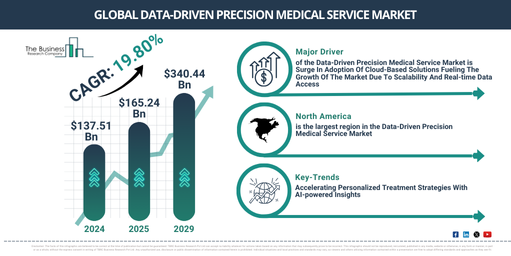
    The data-driven precision medical service market size has shown substantial growth in recent years. It is anticipated to increase from $137.51 billion in 2024 to $165.24 billion in 2025, achieving a compound annual growth rate (CAGR) of 20.2%. This historical expansion can be linked to the increasing adoption of electronic health records, the rising demand for personalized medicine, the greater integration of artificial intelligence in healthcare, the escalating need for accurate diagnostics, and the development of healthcare data analytics initiatives.

    The data-driven precision medical service market size is projected to experience substantial expansion over the coming years. By 2029, its value is forecast to reach $340.44 billion, growing at a compound annual growth rate (CAGR) of 19.8%. This anticipated growth during the forecast period stems from factors such as the increasing adoption of genomics and precision medicine, the expanded application of artificial intelligence and machine learning, a rising need for real-time patient monitoring, increased investments in healthcare data analytics, and a heightened emphasis on preventive and personalized healthcare approaches. Key trends expected in this period encompass improvements in artificial intelligence algorithms, novel developments in genomic data interpretation, the incorporation of cloud-based healthcare platforms, progress in predictive analytics for patient outcomes, and innovative strategies in personalized treatment planning.

    Unlock Your Free Sample Report for Exclusive Market Data:

    https://www.thebusinessresearchcompany.com/sample.aspx?id=28188&type=smp

    What Are The Main Drivers Boosting The Data-Driven Precision Medical Service Industry’s Expansion?

    The increasing integration of cloud-based solutions is anticipated to boost the expansion of the data-driven precision medical service market in the future. These solutions involve software, platforms, or infrastructure provided via the internet, allowing for immediate access, storage, and processing capabilities without needing local setup. Their widespread use is fueled by their inherent scalability, which enables organizations to rapidly modify computing resources according to needs, bypassing substantial initial infrastructure costs. This scalability particularly benefits healthcare entities, letting them quickly adjust resources to support real-time patient data analysis, predictive modeling, and tailored patient care. For example, as per Ace Cloud (Ace Cloud Hosting), a US-based cloud computing specialist for healthcare and HealthTech, the healthcare sector is quickly adopting cloud technology, with 95% of organizations utilizing it for managing patient data. In 2025, cloud adoption within healthcare saw a significant 41% year-over-year increase, representing the highest growth across all industry sectors. Consequently, the increasing embrace of cloud-based solutions is projected to fuel the expansion of the data-driven precision medical service market.

    How Is The Data-Driven Precision Medical Service Market Segmented?

    The data-driven precision medical service market covered in this report is segmented as

    1) By Types: Cloud Based, On-Premises

    2) By Technology: Artificial Intelligence And Machine Learning, Big Data Analytics, Genomics And Sequencing, Cloud Computing, Blockchain, Digital Twin Technology, Wearables And Internet Of Things

    3) By Application: Hospital, Clinic, Other Applications

    Subsegments:

    1) By Cloud Based: Public Cloud Deployment, Private Cloud Deployment, Hybrid Cloud Deployment

    2) By On Premises: Dedicated Server Infrastructure, Enterprise Data Center Deployment, Localized Computing Environment

    What Key Innovation Trends Are Fueling Advancements In The Data-Driven Precision Medical Service Market?

    Leading companies in the data-driven precision medical service market are increasingly prioritizing advanced innovations, such as deep learning for multi-omics discovery, to accelerate biomarker identification, refine personalized treatment strategies, and enhance clinical decision-making within oncology and other therapeutic areas. Deep learning for multi-omics discovery involves leveraging AI algorithms to analyze complex genomic, epigenomic, transcriptomic, and proteomic data, thereby enabling the identification of novel biomarkers and therapeutic targets. For instance, in January 2023, Guardant Health, a US-based biotechnology company, launched Guardant Galaxy, a comprehensive suite of advanced analytical tools. This platform, developed through both internal research and external collaborations, aims to improve the accuracy and clinical utility of Guardant Health’s existing cancer testing portfolio. By integrating cutting-edge analytics, Guardant Galaxy supports more precise patient diagnostics and personalized treatment planning, while also accelerating the discovery of new biomarkers and therapeutic targets, thus fueling the next generation of drug development.

    Which Global Market Leaders Are Shaping The Future Of The Data-Driven Precision Medical Service Sector?

    Major companies operating in the data-driven precision medical service market are Samsung Electronics Co. Ltd., Roche Holding AG, Novartis AG, Thermo Fisher Scientific Inc., Agilent Technologies Inc., Illumina Inc., BioNTech SE, QIAGEN N.V., Natera Inc., Precision Medicine Group Inc., Guardant Health Inc., Tempus Labs Inc., Flatiron Health Inc., Certara L.P., Verily Life Sciences LLC, GenomOncology Inc., SOPHiA GENETICS SA, Recursion Pharmaceuticals Inc., DNAnexus Inc., Biomea Fusion Inc.

    Download The Full Report For Exclusive Market Findings:

    https://www.thebusinessresearchcompany.com/report/data-driven-precision-medical-service-global-market-report

    Which Region Is Expected To Witness The Fastest Growth In The Data-Driven Precision Medical Service Market?

    North America was the largest region in the data-driven precision medical service market in 2024. The regions covered in data-driven precision medical service report are Asia-Pacific, Western Europe, Eastern Europe, North America, South America, Middle East and Africa.

    Request A Customized Version Of The Data-Driven Precision Medical Service Market Report:

    https://www.thebusinessresearchcompany.com/customise?id=28188&type=smp

    Browse Through More Reports Similar to the Global Data-Driven Precision Medical Service Market 2025, By The Business Research Company

    Precision Medicine Global Market Report 2025

    https://www.thebusinessresearchcompany.com/report/precision-medicine-global-market-report

    Artificial Intelligence Ai In Precision Medicine Global Market Report 2025

    https://www.thebusinessresearchcompany.com/report/artificial-intelligence-ai-in-precision-medicine-global-market-report

    Healthcare Data Integration Global Market Report 2025

    https://www.thebusinessresearchcompany.com/report/healthcare-data-integration-global-market-report

    Get in touch with us:

    The Business Research Company: https://www.thebusinessresearchcompany.com/

    Americas +1 310-496-7795

    Asia +44 7882 955267 & +91 8897263534

    Europe +44 7882 955267

    Email us at info@tbrc.info

    Follow us on:

    LinkedIn: https://in.linkedin.com/company/the-business-research-company

    YouTube: https://www.youtube.com/channel/UC24_fI0rV8cR5DxlCpgmyFQ

    Global Market Model: https://www.thebusinessresearchcompany.com/global-market-model
  • Brain Artificial Intelligence (AI)-Assisted Diagnosis Solution Market Growth Opportunities: Insights from 2025–2029

    Brain Artificial Intelligence (AI)-Assisted Diagnosis Solution Market Growth Opportunities: Insights from 2025–2029

    Unlock Global Insights – Save 20% on Market Reports with Code ONLINE20

    How Does The Market Size Of The Brain Artificial Intelligence (AI)-Assisted Diagnosis Solution Industry Compare Between 2025 And 2029?

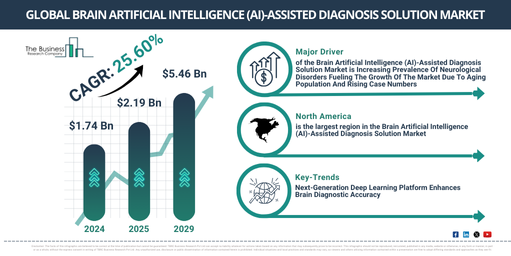
    The brain artificial intelligence (AI)-assisted diagnosis solution market has seen substantial growth in recent years. It is forecast to increase from $1.74 billion in 2024 to $2.19 billion in 2025, achieving a compound annual growth rate (CAGR) of 25.9%. This historical expansion can be attributed to several factors including the rising prevalence of neurological disorders, heightened healthcare awareness, the increasing burden of mental health conditions, a surge in the geriatric population, the expansion of hospital infrastructure, and the growing demand for early disease detection.

    The brain artificial intelligence (AI)-assisted diagnosis solution market size is anticipated to undergo significant expansion in the coming years, reaching a value of $5.46 billion by 2029, with a compound annual growth rate (CAGR) of 25.6%. This projected growth is driven by factors such as increasing government initiatives promoting healthcare digitization, a rising adoption of preventive healthcare practices, an expanding network of specialized diagnostic centers, a growing patient preference for non-invasive diagnostic approaches, and a surge in public-private collaborations within the healthcare sector. Noteworthy trends anticipated during this forecast period include advancements in neuroimaging, the development of personalized diagnostic platforms, innovations in hybrid therapeutic and diagnostic solutions, increased investment in artificial intelligence research and development, the integration of big data analytics into brain health management, and the incorporation of virtual reality-based cognitive assessments.

    Unlock Your Free Sample Report for Exclusive Market Data:

    https://www.thebusinessresearchcompany.com/sample.aspx?id=28153&type=smp

    Which Drivers Are Shaping The Brain Artificial Intelligence (AI)-Assisted Diagnosis Solution Industry’s Market Share?

    The rising occurrence of neurological conditions is projected to boost the expansion of the brain artificial intelligence (AI)-assisted diagnosis solution market in the future. These disorders are health issues impacting the brain, spinal cord, and nerves, resulting in various symptoms such as cognitive, motor, and sensory difficulties. The growing number of neurological disorders is connected to the world’s aging populace, since the aging process progressively diminishes neuronal functionality, decreases brain adaptability, and heightens oxidative stress, thereby fostering the onset and advancement of these conditions. Brain artificial intelligence (AI)-assisted diagnosis solutions assist in diagnosing neurological disorders through swift, precise, and impartial analysis of brain scans or electrical signals. Such solutions improve clinical decisions, facilitate the early identification of ailments like stroke, concussion, and Alzheimer’s, and allow for customized treatment strategies. For example, in July 2024, the National Health Service, a UK-based government agency, reported 487,432 patients diagnosed with dementia (a progressive brain disorder affecting memory, thinking, and daily activities) by June 30, 2024, marking an increase of 3,155 cases from May 31, 2024. Consequently, the rising incidence of neurological disorders is propelling the expansion of the brain artificial intelligence (AI)-assisted diagnosis solution market.

    How Is The Brain Artificial Intelligence (AI)-Assisted Diagnosis Solution Market Classified Into Different Segments?

    The brain artificial intelligence (AI)-assisted diagnosis solution market covered in this report is segmented as

    1) By Component: Hardware, Services, Software

    2) By Technology: Computer Vision, Deep Learning, Machine Learning, Natural Language Processing

    3) By Deployment: Cloud, On-Premise

    4) By Application: Disease Detection, Patient Monitoring, Radiology Analysis, Surgical Robotics Assistance

    5) By End User: Clinics, Diagnostic Centers, Hospitals, Research Institutes

    Subsegments:

    1) By Hardware: Imaging Systems, artificial intelligence (AI)-Optimized Processors, Data Storage Systems, Networking And Communication Devices, Workstations And Diagnostic Terminals

    2) By Services: Consulting And Integration Services, Training And Education Services, Deployment And Implementation Services, Support And Maintenance Services, Managed AI Services

    3) By Software: Diagnostic Imaging Analysis Software, Machine Learning And Deep Learning Algorithms, Natural Language Processing (NLP) Tools, Clinical Decision Support Systems (CDSS), Data Management And Analytics Platforms, Cloud-Based artificial intelligence (AI) Platforms

    What Are The Major Trends Driving The Growth Of The Brain Artificial Intelligence (AI)-Assisted Diagnosis Solution Market?

    Leading companies operating within the brain artificial intelligence (AI)-assisted diagnosis solution market are concentrating on developing technologically advanced solutions, such as deep learning platforms, to enhance diagnostic precision, real-time analysis, and clinical decision-making. These deep learning platforms are intelligent digital systems that harness sophisticated neural networks and data analytics to analyze brain electrical activity or imaging data, identify subtle abnormalities, and deliver actionable insights for clinicians. For instance, in June 2025, BrainScope Company Inc., a US-based neurotechnology company, introduced its next-generation deep learning platform, which features a Large Neural Model (LNM). This platform applies breakthroughs akin to large language models (LLMs) to electroencephalogram (EEG) data, facilitating automated analysis without requiring specialized quantitative EEG (qEEG) interpretation. It supports a range of brain health conditions, including concussion, stroke, and early Alzheimer’s detection, by providing rapid, objective, and clinically actionable insights. Additionally, the platform assists in the development of refined biomarkers for precision-driven clinical trial recruitment, early diagnosis, and personalized treatment.

    Who Are The Major Companies Operating In The Brain Artificial Intelligence (AI)-Assisted Diagnosis Solution Market?

    Major companies operating in the brain artificial intelligence (ai)-assisted diagnosis solution market are Viz.ai Inc., Aidoc Medical Ltd., RapidAI Inc., Qure.ai Technologies Pvt. Ltd., Ceribell Inc., Infervision Inc., Quibim S.L., Brainomix Ltd., Hyperfine Inc., QMENTA Inc., BrainScope Company Inc., BioMind Inc., Cortechs.ai Inc., Heuron Inc., Zeto Inc., icometrix NV, Cercare Medical AB, VUNO Inc., NeuraSignal Inc., Aikenist Inc., Avicenna.AI Inc., BrainKey Technologies Inc., and Deepwise AI Co. Ltd.

    Download The Full Report For Exclusive Market Findings:

    https://www.thebusinessresearchcompany.com/report/brain-artificial-intelligence-ai-assisted-diagnosis-solution-global-market-report

    What Regional Growth Trends Are Shaping The Brain Artificial Intelligence (AI)-Assisted Diagnosis Solution Market Outlook?

    North America was the largest region in the brain artificial intelligence (AI)-assisted diagnosis solution market in 2024. The regions covered in brain artificial intelligence (AI)-assisted diagnosis solution report are Asia-Pacific, Western Europe, Eastern Europe, North America, South America, Middle East and Africa.

    Request A Customized Version Of The Brain Artificial Intelligence (AI)-Assisted Diagnosis Solution Market Report:

    https://www.thebusinessresearchcompany.com/customise?id=28153&type=smp

    Browse Through More Reports Similar to the Global Brain Artificial Intelligence (AI)-Assisted Diagnosis Solution Market 2025, By The Business Research Company

    Artificial Intelligence In The Diagnostic Global Market Report 2025

    https://www.thebusinessresearchcompany.com/report/artificial-intelligence-in-the-diagnostic-global-market-report

    Artificial Intelligence In Healthcare Diagnosis Global Market Report 2025

    https://www.thebusinessresearchcompany.com/report/artificial-intelligence-in-healthcare-diagnosis-global-market-report

    Artificial Intelligence In Magnetic Resonance Imaging Mri Global Market Report 2025

    https://www.thebusinessresearchcompany.com/report/artificial-intelligence-in-magnetic-resonance-imaging-mri-global-market-report

    Get in touch with us:

    The Business Research Company: https://www.thebusinessresearchcompany.com/

    Americas +1 310-496-7795

    Asia +44 7882 955267 & +91 8897263534

    Europe +44 7882 955267

    Email us at info@tbrc.info

    Follow us on:

    LinkedIn: https://in.linkedin.com/company/the-business-research-company

    YouTube: https://www.youtube.com/channel/UC24_fI0rV8cR5DxlCpgmyFQ

    Global Market Model: https://www.thebusinessresearchcompany.com/global-market-model
  • Blood Clot Retrieval Devices Market Expansion Outlook: $4.48 Billion by 2029 Forecast

    Blood Clot Retrieval Devices Market Expansion Outlook: $4.48 Billion by 2029 Forecast

    Unlock Global Insights – Save 20% on Market Reports with Code ONLINE20

    What Is The Predicted Market Size Trajectory For The Blood Clot Retrieval Devices Market From 2025 To 2034?

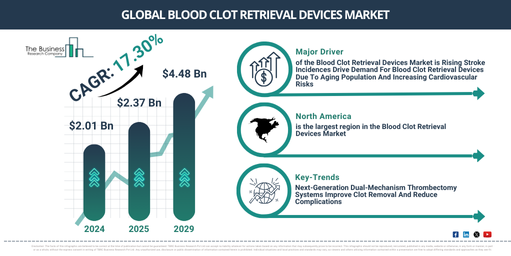
    The blood clot retrieval devices market size has seen rapid expansion in recent years. It is forecast to increase from $2.01 billion in 2024 to $2.37 billion in 2025, exhibiting a compound annual growth rate (CAGR) of 17.7%. The growth observed in prior periods can be attributed to an increasing prevalence of ischemic stroke, a rising adoption of minimally invasive procedures, improved awareness about stroke management, increasing healthcare expenditure, and a growing elderly population.

    The blood clot retrieval devices market size is anticipated to expand rapidly in the coming years, reaching $4.48 billion by 2029, at a compound annual growth rate (CAGR) of 17.3%. This projected growth during the forecast period is driven by factors such as the increasing incidence of cardiovascular diseases, rising demand for advanced neurovascular treatments, greater investments in healthcare infrastructure, an increasing focus on early stroke diagnosis, and patients’ growing preference for minimally invasive therapies. Significant trends expected in the forecast period include advancements in clot retrieval technologies, the integration of advanced imaging for stroke diagnosis, innovations in minimally invasive neurovascular devices, the incorporation of artificial intelligence into stroke treatment systems, and developments in catheter-based retrieval systems.

    Unlock Your Free Sample Report for Exclusive Market Data:

    https://www.thebusinessresearchcompany.com/sample.aspx?id=28152&type=smp

    What Are The Drivers Pushing New Developments In The Blood Clot Retrieval Devices Market?

    An increasing occurrence of strokes is anticipated to boost the expansion of the blood clot retrieval devices market in the future. Stroke is defined as a medical state where the brain’s blood supply is either cut off or diminished, thereby depriving brain tissue of vital oxygen and nutrients. The increase in stroke cases is fueled by an aging demographic, given that seniors are more susceptible to hypertension and vascular diseases which elevate the likelihood of strokes. These devices assist stroke sufferers by quickly extracting impeding clots from cerebral arteries, thereby re-establishing blood circulation and mitigating the potential for prolonged impairment. As an illustration, data from May 2024, provided by the Centers for Disease Control and Prevention, a US government body, indicates that approximately 795,000 individuals in the US experience a stroke annually. Consequently, the escalating frequency of strokes is stimulating the development of the blood clot retrieval devices market.

    What Are The Major Segments Identified In The Blood Clot Retrieval Devices Market?

    The blood clot retrieval devices market covered in this report is segmented as

    1) By Device Type: Mechanical Embolus Removal Device, Penumbra Blood Clot Retrieval Devices, Stent Retrievers, Aspiration Device, Ultrasound Assisted Devices

    2) By Technology: Mechanical Thrombectomy, Chemical Thrombectomy, Ultrasound-Assisted Thrombectomy, Laser-Assisted Thrombectomy

    3) By Stroke Type: Ischemic Stroke, Hemorrhagic Stroke, Pulmonary Embolism, Deep Vein Thrombosis, Transient Ischemic Attack, Other Stroke Types

    4) By Application: Coronary Arteries, Peripheral Arteries, Cerebral Arteries

    5) By End-User: Hospitals, Diagnostic Centers, Specialty Clinics, Ambulatory Surgical Centers, Other End Users

    Subsegments:

    1) By Mechanical Embolus Removal Device: Rotational Thrombectomy Systems, Suction Based Systems, Rheolytic Thrombectomy Systems

    2) By Penumbra Blood Clot Retrieval Devices: Aspiration Systems, Separator Devices, Reperfusion Catheters

    3) By Stent Retrievers: Self Expanding Stent Retrievers, Retrievable Stent Systems, Balloon Expandable Stent Retrievers

    4) By Aspiration Device: Large Bore Aspiration Catheters, Vacuum Assisted Aspiration Systems, Manual Aspiration Syringe Systems

    6) By Ultrasound Assisted Devices: External Ultrasound Assisted Thrombolysis Systems, Catheter Directed Ultrasound Assisted Systems, Portable Ultrasound Assisted Devices

    What Are The Major Trends Driving The Growth Of The Blood Clot Retrieval Devices Market?

    Leading companies in the blood clot retrieval devices market are prioritizing the development of advanced solutions, such as dual-mechanism thrombectomy systems, to boost clot removal efficiency and lessen complications during procedures. Dual-mechanism thrombectomy systems are instruments that incorporate both mechanical clot extraction and aspiration (suction) techniques within a single unit. This design facilitates more effective removal of acute-to-chronic blood clots, minimizes clot migration, and decreases the requirement for multiple interventions. For example, in March 2025, Inari Medical Inc., a US-based medical technologies company, unveiled the Artix Thrombectomy System, a dual-mechanism arterial thrombectomy device engineered to manage a broad range of arterial clots. This system integrates aspiration and mechanical clot extraction into one procedure, featuring an over-the-wire mechanical component, a low-profile kink-resistant sheath, and a covered nitinol mesh funnel to help prevent clot migration. The device aims to provide physicians with improved procedural control and adaptability, allowing for the efficient removal of both acute and chronic clots while sustaining vessel access throughout the intervention.

    Which Global Market Leaders Are Shaping The Future Of The Blood Clot Retrieval Devices Sector?

    Major companies operating in the blood clot retrieval devices market are Johnson & Johnson, Abbott Laboratories, Medtronic plc, Becton Dickinson and Company, Stryker Corporation, Boston Scientific Corporation, Terumo Corporation, Edwards Lifesciences Corporation, Cook Medical LLC, Merit Medical Systems Inc., Penumbra Inc., Surmodics Inc., AngioDynamics Inc., B. Braun Melsungen AG, Acandis GmbH, Phenox GmbH, Rapid Medical Ltd., Argon Medical Devices Inc., Shape Memory Medical Inc., Vesalio Inc.

    Download The Full Report For Exclusive Market Findings:

    https://www.thebusinessresearchcompany.com/report/blood-clot-retrieval-devices-global-market-report

    Which Regional Markets Are Contributing Most To The Blood Clot Retrieval Devices Industry Expansion?

    North America was the largest region in the blood clot retrieval devices market in 2024. Asia-Pacific is expected to be the fastest-growing region in the forecast period. The regions covered in blood clot retrieval devices report are Asia-Pacific, Western Europe, Eastern Europe, North America, South America, Middle East and Africa.

    Request A Customized Version Of The Blood Clot Retrieval Devices Market Report:

    https://www.thebusinessresearchcompany.com/customise?id=28152&type=smp

    Browse Through More Reports Similar to the Global Blood Clot Retrieval Devices Market 2025, By The Business Research Company

    Blood Collection Devices Global Market Report 2025

    https://www.thebusinessresearchcompany.com/report/blood-collection-devices-global-market-report

    Capillary Blood Collection Devices Global Market Report 2025

    https://www.thebusinessresearchcompany.com/report/capillary-blood-collection-devices-global-market-report

    Clot Management Devices Global Market Report 2025

    https://www.thebusinessresearchcompany.com/report/clot-management-devices-global-market-report

    Get in touch with us:

    The Business Research Company: https://www.thebusinessresearchcompany.com/

    Americas +1 310-496-7795

    Asia +44 7882 955267 & +91 8897263534

    Europe +44 7882 955267

    Email us at info@tbrc.info

    Follow us on:

    LinkedIn: https://in.linkedin.com/company/the-business-research-company

    YouTube: https://www.youtube.com/channel/UC24_fI0rV8cR5DxlCpgmyFQ

    Global Market Model: https://www.thebusinessresearchcompany.com/global-market-model
  • Global Biotech Collaborations Industry Trends: Where the Market Is Headed by 2029

    Global Biotech Collaborations Industry Trends: Where the Market Is Headed by 2029

    Unlock Global Insights – Save 20% on Market Reports with Code ONLINE20

    How Much Larger Is The Biotech Collaborations Market Expected To Become By 2029 Compared With Its 2025 Level?

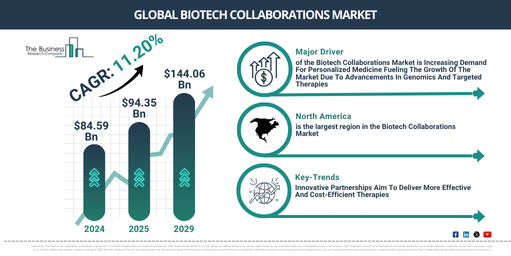
    The biotech collaborations market has experienced substantial expansion in recent years. Its value is projected to increase from $84.59 billion in 2024 to $94.35 billion in 2025, reflecting a compound annual growth rate (CAGR) of 11.5%. This historical growth can be attributed to several factors, including the increasing demand for novel therapeutics, growing research and development expenditure, a rising prevalence of chronic diseases, increasing regulatory complexities, and the growing adoption of advanced biotechnologies.

    The biotech collaborations market size is anticipated to experience significant expansion over the next few years, with projections indicating a rise to $144.06 billion by 2029, achieving a compound annual growth rate (CAGR) of 11.2%. This expected growth throughout the forecast period is primarily fueled by increasing investments in biotech startups, a growing demand for sustainable and green bioprocesses, an intensified focus on personalized medicine, the rising adoption of gene and cell therapies, and a growing need for cost optimization. Furthermore, key trends identified for this period encompass the development of next-generation biologics, the integration of omics data, the incorporation of digital health technologies, innovation in drug delivery systems, and the creation of sustainable bioprocesses.

    Unlock Your Free Sample Report for Exclusive Market Data:

    https://www.thebusinessresearchcompany.com/sample.aspx?id=28151&type=smp

    What Are The Emerging Market Drivers Creating New Opportunities In The Biotech Collaborations Industry?

    The anticipated expansion of the biotech collaborations market is driven by the rising need for personalized medicine. This medical strategy customizes treatment and prevention plans based on an individual’s distinct genetic profile, lifestyle, and environmental factors. Its growing acceptance stems mainly from genomic progress, allowing for accurate identification of genetic differences and bespoke therapies for patients. Biotech collaborations hasten personalized medicine’s progress by merging specialized knowledge and cutting-edge technologies, facilitating the creation of patient-specific targeted treatments. These partnerships shorten research durations and boost success rates, leading to more effective treatments and better patient results. For example, data from February 2024, provided by the US-based nonprofit Personalized Medicine Coalition (PMC), indicates that the U.S. Food and Drug Administration (FDA) authorized 26 novel personalized medicines in 2023, a notable rise compared to the 12 approvals in 2022. Consequently, the escalating need for personalized medicine fuels the expansion of the biotech collaborations market.

    What Are The Emerging Segments Gaining Attention In The Biotech Collaborations Market?

    The biotech collaborations market covered in this report is segmented as

    1) By Collaboration Type: Research And Development Collaborations, Licensing Agreements, Joint Ventures, Mergers Or Acquisitions, Other Collaborations

    2) By Application: Drug Discovery, Clinical Research, Diagnostics, Therapeutics, Other Applications

    3) By End User: Pharmaceutical Companies, Biotechnology Firms, Academic And Research Institutes, Other End-Users

    Subsegments:

    1) By Research And Development Collaborations: Preclinical Research, Clinical Trials, Translational Research, Drug Discovery

    2) By Licensing Agreements: Exclusive Licensing, Non Exclusive Licensing, In Licensing, Out Licensing

    3) By Joint Ventures: Strategic Alliance, Co Development, Co Marketing, Technology Sharing

    4) By Mergers Or Acquisitions: Horizontal Merger, Vertical Merger, Conglomerate Merger, Acquisition Of Assets

    5) By Other Collaborations: Research Consortium, Public Private Partnership, Academic Collaboration, Contract Research

    What Trends Are Expected To Drive The Biotech Collaborations Market?

    Leading enterprises within the biotech collaborations market are concentrating on creating innovative solutions, such as platforms for drug discovery powered by artificial intelligence, to expedite the identification of new therapeutics and enhance research and development productivity. These artificial intelligence-driven drug discovery platforms employ sophisticated algorithms and machine learning to examine biological data, forecast drug-target interactions, and streamline the creation of novel treatments. As an illustration, in January 2025, Iktos S.A.S., a biotechnology firm based in France, partnered with Cube Biotech GmbH, a German biotechnology company, to create new small molecule agonists aimed at the amylin receptor, which represents a promising therapeutic target for cardiometabolic conditions including obesity, diabetes, and metabolic dysfunction-associated steatotic hepatitis (MASH). This collaboration combines Iktos’ generative AI-driven drug discovery and robotic synthesis platform with Cube Biotech’s cutting-edge NativeMP membrane protein technology, protein stabilization techniques, and biophysical assay knowledge. The partnership aims to quicken drug discovery schedules, boost success rates, and tackle difficult membrane protein targets more efficiently, potentially yielding therapies that are more effective and economical than current treatments like GLP-1 receptor agonists.

    Which Industry Leaders Are Driving Innovation Across The Biotech Collaborations Market?

    Major companies operating in the biotech collaborations market are Johnson And Johnson, F. Hoffmann-La Roche Ltd., Merck And Co. Inc., Pfizer Inc., AbbVie Inc., Bayer AG, Sanofi S.A., Novartis AG, AstraZeneca plc, Bristol-Myers Squibb Company, GlaxoSmithKline plc, Eli Lilly And Company, Novo Nordisk A/S, Takeda Pharmaceutical Company Limited, Amgen Inc., Gilead Sciences Inc., C.H. Boehringer Sohn AG & Co. KG, CSL Limited., Regeneron Pharmaceuticals Inc., Vertex Pharmaceuticals Incorporated, and Biogen Inc.

    Download The Full Report For Exclusive Market Findings:

    https://www.thebusinessresearchcompany.com/report/biotech-collaborations-global-market-report

    How Does The Biotech Collaborations Market Perform Across Key Geographic Regions?

    North America was the largest region in the biotech collaborations market in 2024. The regions covered in biotech collaborations report are Asia-Pacific, Western Europe, Eastern Europe, North America, South America, Middle East and Africa.

    Request A Customized Version Of The Biotech Collaborations Market Report:

    https://www.thebusinessresearchcompany.com/customise?id=28151&type=smp

    Browse Through More Reports Similar to the Global Biotech Collaborations Market 2025, By The Business Research Company

    Biotechnology Services Global Market Report 2025

    https://www.thebusinessresearchcompany.com/report/biotechnology-services-global-market-report

    Biotech Ingredient Global Market Report 2025

    https://www.thebusinessresearchcompany.com/report/biotech-ingredient-global-market-report

    Bioengineering Technology Global Market Report 2025

    https://www.thebusinessresearchcompany.com/report/bioengineering-technology-global-market-report

    Get in touch with us:

    The Business Research Company: https://www.thebusinessresearchcompany.com/

    Americas +1 310-496-7795

    Asia +44 7882 955267 & +91 8897263534

    Europe +44 7882 955267

    Email us at info@tbrc.info

    Follow us on:

    LinkedIn: https://in.linkedin.com/company/the-business-research-company

    YouTube: https://www.youtube.com/channel/UC24_fI0rV8cR5DxlCpgmyFQ

    Global Market Model: https://www.thebusinessresearchcompany.com/global-market-model
  • Bioprosthetics Industry Forecast to Hit $8.95 Billion by 2029 With a Strong 9.3% CAGR

    Bioprosthetics Industry Forecast to Hit $8.95 Billion by 2029 With a Strong 9.3% CAGR

    Unlock Global Insights – Save 20% on Market Reports with Code ONLINE20

    #What Are The Current (2025) And Forecast (2029) Sizes Of The Bioprosthetics Market?

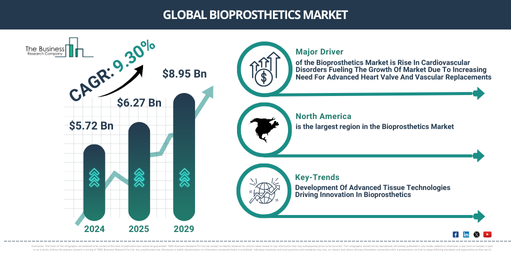
    The bioprosthetics market has demonstrated robust expansion recently. Projections indicate its value will escalate from $5.72 billion in 2024 to reach $6.27 billion by 2025, reflecting a compound annual growth rate of 9.7%. Historically, this growth has been fueled by factors such as the rising incidence of cardiovascular conditions, a heightened demand for less invasive surgical procedures, an expanding elderly demographic, improvements in healthcare infrastructure, and the greater uptake of tissue-derived implants.

    The bioprosthetics market is projected to experience substantial expansion over the upcoming years. Its valuation is anticipated to reach $8.95 billion by 2029, exhibiting a compound annual growth rate (CAGR) of 9.3%. This anticipated growth during the forecast timeframe is primarily driven by an increasing demand for tailored treatment options, rising healthcare expenditures in developing nations, the broadening scope of medical tourism, enhanced access to sophisticated surgical amenities, and a heightened emphasis on patient-focused healthcare. Key developments characterizing this period encompass enhancements in valve design technology, novel approaches in tissue preservation, progress in minimally invasive implantation procedures, breakthroughs in biocompatible materials, and ongoing advancements in regenerative medicine.

    Unlock Your Free Sample Report for Exclusive Market Data:

    https://www.thebusinessresearchcompany.com/sample.aspx?id=28150&type=smp

    Which Drivers Are Impacting The Bioprosthetics Market?

    The increasing prevalence of cardiovascular diseases is anticipated to fuel the expansion of the bioprosthetics market in the future. These diseases encompass a range of conditions impacting the heart and blood vessels, such as coronary artery disease, heart failure, irregular heartbeats, birth defects of the heart, and conditions like stroke affecting brain blood vessels. The uptick in cardiovascular diseases is partly linked to growing intake of detrimental diets rich in saturated fats, salt, and sugar, which in turn lead to conditions like obesity, high blood pressure, and elevated cholesterol. Bioprosthetics offer a solution for cardiovascular ailments by substituting impaired heart valves or blood vessels with biologically compatible implants, thereby improving cardiac function and reducing potential complications. For example, data from January 2024, provided by the American Heart Association, a US-based nonprofit, revealed a minor rise in cardiovascular-related deaths this year, reaching 931,578. This indicates a small increase of fewer than 3,000 fatalities compared to 928,741 recorded in the prior year. Consequently, the growing incidence of cardiovascular diseases is a key factor propelling the demand in the bioprosthetics market.

    What Are The Major Segment Types Covered In The Bioprosthetics Market?

    The bioprosthetics market covered in this report is segmented as

    1) By Type: Allograft, Xenograft, Autograft

    2) By Application: Cardiovascular, Orthopedic, Wound healing, Other Applications

    3) By End User: Hospitals, Specialty Centers, Other End Users

    Subsegment:

    1) By Allograft: Cartilage Allograft, Tendon Allograft, Meniscus Allograft, Dental Allograft, Skin Allograft

    2) By Xenograft: Porcine Heart Valve Xenograft, Bovine Heart Valve Xenograft, Porcine Dermis Xenograft, Bovine Pericardium Xenograft

    3) By Autograft: Bone Autograft, Tendon Autograft, Skin Autograft, Cartilage Autograft

    Which Trends Are Impacting The Bioprosthetics Market?

    Leading companies in the bioprosthetics market are concentrating on the creation of sophisticated technologies, such as advanced tissue technologies, to bolster the longevity and effectiveness of heart valve replacements. This advanced tissue technology involves specific treatment of bioprosthetic materials to diminish calcification and enhance long-term functionality. As an illustration, in September 2022, Edwards Lifesciences Corporation, a US-based medical device firm, introduced the SAPIEN 3 Ultra RESILIA valve subsequent to U.S. Food and Drug Administration (FDA) approval. The valve incorporates RESILIA tissue technology, employing bovine pericardial tissue processed with anti-calcification technology to extend its durability. SAPIEN 3 Ultra RESILIA is characterized by an inventive, low-profile delivery system engineered to simplify implantation and improve procedural accuracy. It stands as the sole dry storage transcatheter heart valve in the U.S., thereby facilitating ease of use, and is designed to ensure freedom from structural valve deterioration at five years, promising potential for extended clinical advantages.

    Who Are The Key Multinational Companies Dominating The Bioprosthetics Market?

    Major companies operating in the bioprosthetics market are Abbott Laboratories, Medtronic Plc, Boston Scientific Corporation, Edwards Lifesciences Corporation, Meril Life Sciences Pvt. Ltd., LivaNova PLC, Artivion Inc., LifeNet Health Inc., TTK Healthcare Limited, Corcym S.r.l., Biosensors International Group Ltd., Braile Biomedica, Xeltis NV, Peijia Medical Technology Co. Ltd., Labcor Laboratórios Ltda., Colibri Heart Valve LLC, Autotissue Berlin GmbH, Humacyte Inc., Bioprosthetics Inc., and Shijiazhuang Perfect Prosthetic Manufacture Co. Ltd.

    Download The Full Report For Exclusive Market Findings:

    https://www.thebusinessresearchcompany.com/report/bioprosthetics-global-market-report

    Which Region Is Expected To Witness The Fastest Growth In The Bioprosthetics Market?

    North America was the largest region in the bioprosthetics market in 2024. Asia-Pacific is expected to be the fastest-growing region in the forecast period. The regions covered in bioprosthetics report are Asia-Pacific, Western Europe, Eastern Europe, North America, South America, Middle East and Africa.

    Request A Customized Version Of The Bioprosthetics Market Report:

    https://www.thebusinessresearchcompany.com/customise?id=28150&type=smp

    Browse Through More Reports Similar to the Global Bioprosthetics Market 2025, By The Business Research Company

    Neuroprosthetics Global Market Report 2025

    https://www.thebusinessresearchcompany.com/report/neuroprosthetics-global-market-report

    Medical Biomimetics Global Market Report 2025

    https://www.thebusinessresearchcompany.com/report/medical-biomimetics-global-market-report

    Robotic Prosthetics Global Market Report 2025

    https://www.thebusinessresearchcompany.com/report/robotic-prosthetics-global-market-report

    Get in touch with us:

    The Business Research Company: https://www.thebusinessresearchcompany.com/

    Americas +1 310-496-7795

    Asia +44 7882 955267 & +91 8897263534

    Europe +44 7882 955267

    Email us at info@tbrc.info

    Follow us on:

    LinkedIn: https://in.linkedin.com/company/the-business-research-company

    YouTube: https://www.youtube.com/channel/UC24_fI0rV8cR5DxlCpgmyFQ

    Global Market Model: https://www.thebusinessresearchcompany.com/global-market-model
  • Bio Implant Allograft And Xenograft Market to Reach $3.72 Billion by 2029, Growing at a CAGR of 8.7%

    Bio Implant Allograft And Xenograft Market to Reach $3.72 Billion by 2029, Growing at a CAGR of 8.7%

    Unlock Global Insights – Save 20% on Market Reports with Code ONLINE20

    What Market Value Is The Bio Implant Allograft And Xenograft Industry Expected To Reach By 2029, Starting From 2025 Levels?

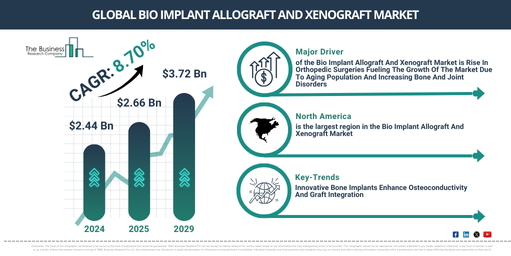
    The market size for bio implant allografts and xenografts has demonstrated robust growth in recent years. It is anticipated to increase from $2.44 billion in 2024 to $2.66 billion in 2025, achieving a compound annual growth rate (CAGR) of 9.1%. The expansion observed during the historic period can be attributed to an increasing demand for organ and tissue transplants, the rising prevalence of chronic orthopedic conditions, a growing awareness of advanced grafting procedures, the expansion of surgical applications within dental and cardiovascular care, and the rising adoption of trauma and reconstructive surgeries.

    The bio implant allograft and xenograft market is anticipated to experience substantial growth over the next few years. Its market size is projected to expand to $3.72 billion by 2029, growing at a compound annual growth rate (CAGR) of 8.7%. This expansion during the forecast period can be attributed to an increasing preference for minimally invasive grafting techniques, broader adoption in regenerative medicine applications, a growing demand for customized and patient-specific graft solutions, the expansion of healthcare infrastructure in developing regions, and increased utilization in complex multi-tissue surgeries. Significant trends for the forecast period include technological advancements in graft preservation, innovative decellularization and sterilization techniques, progress in bioengineered composite grafts, innovations in 3D printing for graft scaffolds, and enhancements in cold storage and cryopreservation methods.

    Unlock Your Free Sample Report for Exclusive Market Data:

    https://www.thebusinessresearchcompany.com/sample.aspx?id=28149&type=smp

    Which Industry Drivers Are Expected To Accelerate The Bio Implant Allograft And Xenograft Market From 2025 To 2029?

    An anticipated increase in orthopedic surgical procedures is projected to fuel the expansion of the bioimplant allograft and xenograft market in the future. These surgeries encompass medical interventions for identifying, managing, correcting, and preventing conditions and traumas impacting the musculoskeletal system, which comprises bones, joints, ligaments, tendons, muscles, and nerves. The uptick in orthopedic operations can be attributed to an expanding elderly demographic, given that seniors are more susceptible to conditions like arthritis and fractures affecting their bones and joints. In orthopedic procedures, bioimplant allograft and xenograft play a crucial role by supplying bone graft solutions that foster healing, better integrate grafts, and facilitate the regeneration of tissues. These implants mitigate surgical risks through their osteoconductive and osteoinductive characteristics, thereby enhancing patient recuperation and results. For example, data from December 2023, supplied by the Health Security Agency, a UK-based government agency, indicated that 102,025 orthopedic surgery procedures were reported for mandatory surveillance during 2022–2023. This represented a 10.2% rise compared to the 92,608 procedures documented in 2021–2022. Consequently, the increasing volume of orthopedic surgeries is propelling the expansion of the bioimplant allograft and xenograft market.

    What Are The Major Segment Categories Driving The Bio Implant Allograft And Xenograft Market Growth?

    The bio implant allograft and xenograft market covered in this report is segmented as

    1) By Product Type: Allografts, Xenografts, Composite Grafts

    2) By Storage Type: Freeze-Dried (Lyophilized), Fresh Tissue, Preserved Tissue

    3) By Distribution Channel: Direct Sales, Third-Party Distributors, Online Sales Platforms

    4) By Application Area: Orthopedic Surgery, Dental Surgery, Cardiovascular Procedures, Plastic And Reconstructive Surgery, Trauma Surgery

    5) By End-User: Hospitals, Ambulatory Surgical Centers, Specialty Clinics, Research And Academic Institutes

    Subsegments:

    1) By Allografts: Fresh Allografts, Frozen Allografts, Freeze-Dried Allografts

    2) By Xenografts: Bovine-Derived Xenografts, Porcine-Derived Xenografts, Equine-Derived Xenografts

    3) By Composite Grafts: Ceramic-Polymer Composite Grafts, Polymer-Metal Composite Grafts, Biologic-Synthetic Composite Grafts

    What Long-Term Trends Will Shape The Future Growth Of The Bio Implant Allograft And Xenograft Industry?

    Companies active in the bioimplant allograft and xenograft market are concentrating on developing innovative solutions, such as demineralized bone allograft implants, to boost osteoconductivity, improve graft integration, and accelerate bone regeneration. Demineralized bone allograft implants are derived from donor bone with minerals removed, while retaining collagen and growth factors to encourage new bone formation and integration in orthopedic, spinal, and dental procedures. For instance, in February 2024, Tetrous Inc., a US-based regenerative medicine company, unveiled the EnFix TAC, a 100% demineralized bone allograft implant designed to complement its existing EnFix RC implant for rotator cuff surgery. The EnFix TAC focuses on healing at the tendon-to-bone interface (enthesis), striving to improve biologic repair in situations where traditional surgery often results in scar tissue and high failure rates. This implant delivers osteoinductive and osteoconductive properties through proprietary demineralized bone fibers and is offered in two configurations to accommodate varying rotator cuff tear sizes.

    Which Leading Players Are Enhancing Their Bio Implant Allograft And Xenograft Market Presence Worldwide?

    Major companies operating in the bio implant allograft and xenograft market are Medtronic plc, Stryker Corporation, Zimmer Biomet Holdings Inc., Charles River Laboratories International Inc., Arthrex Inc., Institut Straumann AG, Integra LifeSciences, NuVasive Inc., Bioventus Inc., Orthofix Medical Inc., MTF Biologics, BioHorizons Inc., MiMedx Group Inc., RTI Surgical Holdings Inc., LifeNet Health, AxoGen Inc., AlloSource, Xtant Medical Holdings Inc., Alpha Bio Tec, Geistlich Pharma AG.

    Download The Full Report For Exclusive Market Findings:

    https://www.thebusinessresearchcompany.com/report/bio-implant-allograft-and-xenograft-global-market-report

    Which Global Regions Are Influencing The Competitive Landscape Of The Bio Implant Allograft And Xenograft Market?

    North America was the largest region in the bio implant allograft and xenograft market in 2024. Asia-Pacific is expected to be the fastest-growing region in the forecast period. The regions covered in bio implant allograft and xenograft report are Asia-Pacific, Western Europe, Eastern Europe, North America, South America, Middle East and Africa.

    Request A Customized Version Of The Bio Implant Allograft And Xenograft Market Report:

    https://www.thebusinessresearchcompany.com/customise?id=28149&type=smp

    Browse Through More Reports Similar to the Global Bio Implant Allograft And Xenograft Market 2025, By The Business Research Company

    Xenotransplantation Global Market Report 2025

    https://www.thebusinessresearchcompany.com/report/xenotransplantation-global-market-report

    Bio Implants Global Market Report 2025

    https://www.thebusinessresearchcompany.com/report/bio-implants-global-market-report

    Cosmetic Implants Global Market Report 2025

    https://www.thebusinessresearchcompany.com/report/cosmetic-implants-global-market-report

    Get in touch with us:

    The Business Research Company: https://www.thebusinessresearchcompany.com/

    Americas +1 310-496-7795

    Asia +44 7882 955267 & +91 8897263534

    Europe +44 7882 955267

    Email us at info@tbrc.info

    Follow us on:

    LinkedIn: https://in.linkedin.com/company/the-business-research-company

    YouTube: https://www.youtube.com/channel/UC24_fI0rV8cR5DxlCpgmyFQ

    Global Market Model: https://www.thebusinessresearchcompany.com/global-market-model